Tag: simplify

  • How to Clear the Emotional Clutter That Weighs You Down

    How to Clear the Emotional Clutter That Weighs You Down

    “Declutter your mind, your heart, your home. Let go of the heaviness that is weighing you down.” ~Maria Defillo

    I remember perusing through a used bookstore in a small New England town as a teenager. A book caught my eye—maybe because its spine was a MacIntosh apple red—and I slid it off the shelf. It was titled Clear Your Clutter with Feng Shui by Karen Kingston.

    Back at home in my apartment in Boston, I devoured it. That book shifted the trajectory of my life. Fast-forward seventeen years later and living clutter-free is not only my lifestyle, it’s my calling and my passion. It’s what I’ve used as the foundation to find home again, inside myself as much as out.

    I think I was eighteen when I was in that bookstore. I had devoted the last ten years of my life—sacrificed my childhood—to become a professional ballet dancer. “Sara the Ballerina” was my whole identity, who people knew me as, and the only way I knew myself. But because of very real burnout and a severely limited support system, I chose to go to college. Promising ballet career over.

    A commonplace habit in the ballet world, at least in my corner of it, was to never throw away your pointe shoes. We dancers had an intimate relationship with each and every pair, hand-sewing the ribbons and elastic on ourselves just to our liking, each pair my ally or sometimes foe on the battlefield of competitive, ever-unattainable beauty.

    Each pair was connected to a certain production, role, or memorable time of growth. Each shiny satin pair was a ticket to the elite club of Ballerina World. Not to mention each pair was $80-$100+ and always handmade. By the time I quit dancing I had bags of used pointe shoes filling up my entire closet and beyond.

    Like a good Virgo, I lived very mindfully regarding clutter and consumption through my twenties, in large part due to that book. By age twenty-six, I wanted to test the waters a bit more dramatically, and I let go of 80% of my belongings (including my pointe shoes) to move onto a thirty-foot sailboat with my partner.

    It was around this time that I found myself privately realizing just how deep clearing “clutter” goes. I started to independently use the term “emotional clutter,” only to return to my book and see that Karen Kingston wrote a whole chapter called “Clear Your Emotional Clutter.”

    I believe that in an intuitive way, I was yearning to simplify the hell out of my external environment so that I could free up the energy to tend to my inner environment. I knew I had internal baggage; I just couldn’t yet clarify what.

    You see, contrary to popular belief, when you are free of physical clutter, it doesn’t become rainbows and unicorns, an idea to which many TV shows and books allude. What happens is that what isn’t working in your life gets amplified. Like the surface of a lake clearing after a hard rainfall, clarity rises to the surface of your consciousness about certain things.

    One big thing for me was, to be blunt, that I felt miserable most of the time. Why? There were a few key reasons, but one big one was never grieving the stillbirth of my ballet career. This grief was sabotaging my life. It was emotional clutter that I now knew I needed to process and release. After simplifying my external environment and uncovering clarity, that is when the real work began.

    Fast-forward seventeen years, and my life is unrecognizable. I live in a different part of the world. My body is different, healthier. I’ve developed the courage and wisdom to only keep unconditionally loving and supportive people in my life (there’s a chapter in Kingston’s book about how people can be clutter too!). I’m re-wiring my brain and nervous system from C-PTSD.

    By framing outdated stuff, symptoms of C-PTSD, and old self-limiting beliefs all simply as “clutter” to process and let go, I was able to face a chaotic life and change it to one anchored in sane living.

    Now I know with all my heart that physical clutter is just a gentle starting point. By processing through my belongings mindfully, it tunes me into where I am. Where am I emotionally? What unfinished business do I have? What is weighing me down or holding me back? I now speak of it as mental, emotional, and spiritual clutter. This is how clutter-clearing is way more than getting rid of superfluous items.

    Clutter-clearing is an industry in itself now. But from comparing my personal experience with what I observe in the mainstream media, a lot of deeper practical wisdom is not making the cut (yet). If I want to live an intentional, empowered life, I have to regularly process all the mental/emotional input and physical extensions of myself in order to feed my spirit.

    If you’re also interested in clearing your emotional clutter, these four tips are a good start.

    1. A potent journal prompt is to answer these two questions for each area of your life (career, relationships, health, etc.): What unfinished business do I have? What is weighing me down or holding me back?

    2. Clutter-Clear! Choose an area of your home/studio/office to start. Curating through your belongings will tune you into what commitments, identities, or desires have expired for you.

    3. Emotional clutter that’s common:

    • Grief. Not just from loss of loved ones but also from loss of unfulfilled dreams or past versions of yourself.
    • Unhealed Trauma. Choose a trusted technique to process the emotional baggage and stick to it. I recommend eye movement desensitization and reprocessing (EMDR), inner child work, and support groups.
    • Self-Limiting Beliefs. We’ll subconsciously believe what authority figures told us about ourselves while growing up for our whole lives, unless we consciously choose otherwise when we’re adults.

    4. List out the values of the five people you interact with the most. If they don’t complement your values, life will be a much more intense emotional roller coaster ride.

    Remember that self-healing and growth aren’t about finding or discovering something new out there. It’s about letting go of all the junk that’s already there to uncover the real you.

  • A Life Full of Favorites: The True Essence of Minimalism

    A Life Full of Favorites: The True Essence of Minimalism

    “Happiness can only be found if you free yourself from all other distractions.” ~Saul Bellow

    What was your favorite toy as a child? Mine was a Spider-Man action figure. The limbs were adjustable, and there was a switch on his back that made his eyes light up.

    I played with that toy for years, even after his fingers broke off and his switch got stuck. While I had plenty of toys as a child, this is the one I remember best.

    Maybe you notice a similar trend in your own children. According to a study conducted by British researchers, the average 10-year-old has 238 toys but plays with 12 daily.

    Even if you don’t have children of your own, maybe you are inundated with your own toys. Outdated electronics that sit on the shelf, trinkets that sit in the closet, or old sweaters that you haven’t touched in the last decade. How many toys do you play with daily, and how many get in your way and cause havoc?

    What if I told you these things are getting in your way of living a happier and more meaningful life? What if you didn’t have to spend time paying off old junk that always needs to be fixed, maintained, cleaned, and repaired? What if you had more time to enjoy friendships, hobbies, and passions?

    As I started to ask myself these questions I noticed others, who called themselves minimalists, asking similar questions. After this discovery, I began my own minimalist journey and never looked back.

    People become intimidated when they discover minimalism because they think they have to sacrifice all their possessions and live like a monk.

    If you think like this, I can’t blame you. I wouldn’t like that either. My five-year-old self would’ve been devastated to get rid of that Spider-Man action figure.

    Fortunately, minimalism doesn’t require such sacrifices. In fact, minimalism doesn’t require anything. There are no rules, judgments, or requirements.

    If the term minimalism is intimidating, think of it as focusing on all your favorite things, every day. This may sound enticing, but what does it look like in practice? Let’s explore together.

    1. Visiting our wardrobe

    If I were to walk with you to your closet, there would be a few different types of clothes.

    Clothes for work.

    Clothes for a formal event.

    Clothes for a night out.

    Clothes for the gym.

    Clothes for lounging and watching Netflix.

    Within each of those categories, which outfits do you usually wear? Which outfits give you the most joy? Which outfits do you gravitate toward, and which outfits sit in the back and collect dust?

    What would your closet look like if you donated the clothes that took up space and hid your favorite apparel? If donating is too daunting, pack them in a box and stash it away for a couple months.

    Giving ourselves space and time helps us realize we never enjoyed, or used, any of that clothing anyways. This gives us the courage to donate the clothes with a sense of pride. If this sounds interesting, but you aren’t sure where to start, look up “Project 333” for some additional tips and support.

    2. Reconsidering our relationships

    In the 1990’s, British anthropologist Robin Dunbar discovered that people can only maintain an upper limit of 150 social relationships.

    Thirty years later, this number sounds like an underestimate. Many people have hundreds of Facebook friends and thousands of Instagram followers. In our everyday lives, this translates into the notion that having more friends leads to more popularity, likeability, and a happier life.

    But the quality of our friendships also matters. Out of hundreds of digital connections, how many people do you spend time with in real life? How many people can you depend on to lend a hand, listen to a problem, or provide feedback to help you improve and grow?

    When I thought about my own friend circles, I realized they were often dictated by proximity rather than by shared values or interests.

    As an avid reader, I like to surround myself with people who are passionate about reading. Using modern technology, I created a book club with members from my local community. What started off as monthly conversations around books turned into regular social gatherings.

    Through discussing our similar values and mindsets, we became close friends who have been a great source of support and joy for each other over the years. Instead of relying on surface level connections that were simply birthed out of proximity, I can now count on these rich and satisfying relationships to help me thrive.

    What would your life be like if you surrounded yourself with people who shared similar values or mindsets? How would your life be different if you spent time with people who enjoyed the same hobbies as you?

    Explore different options, like Facebook groups or Meetup activities, that match your interest. It takes time to foster deep and satisfying social connections, but they can last a lifetime.

    3. Evaluating our time

    I had one of my biggest revelations when I took a hard look at how I was spending my time. I spent all of my time checking my emails and looking productive, while sacrificing the chance to read, write, and spend my time in ways that help me feel happier. I did a lot on any given day, yet none of it was meaningful or fulfilling.

    Does this resonate with you? Look at the commitments and activities taking up your time. Can you delegate anything to someone else, or completely let go of it?

    Are there activities you’re doing because you think you should do them? Ask yourself these questions to pare down your to-do list:

    1) Does this task bring value to my life?
    2) What would happen if I didn’t do this task?
    3) Does this task align with my values?

    Shining light on our habits uncovers fascinating insights.  If someone were to ask me why I was engaging in habits like yoga or meditation, it was because it’s what I thought successful people did, not because I enjoyed those habits.

    Instead of yoga, I now go on walks. Instead of meditating, I express my thoughts through writing.

    Everyone has their own recipes to live a meaningful life, and it will look different for each individual in each season of their life. Consider what you need, what you enjoy, and what habits will be the best tools to help you get there.

    By questioning ourselves, we get better answers that best suit our own needs and desires. Start off with those three questions and add others you see fit.

    What’re your favorites?

    Imagine a life where you only wear your favorite clothing. A life where you surround yourself with people who lift you up and bring joy to your days. A life where you have the time to do the activities that you enjoy most.

    You already have your favorite clothes, friends, and activities. Minimalism isn’t about getting rid of everything, it’s about rediscovering our favorite things—some which aren’t even “things” at all.

    Being surrounded by our favorites can lead us to a happier and more fulfilling life. This switch may even cause our eyes to light up, like my favorite Spider-Man action figure from so many years ago.

  • How a Simple Action Word Can Guide You Through Even the Hardest Days

    How a Simple Action Word Can Guide You Through Even the Hardest Days

     “Our intention creates our reality.” ~Wayne Dyer

    What if you only had one thing you needed to accomplish today? One over-arching objective that encapsulates the multiple items on your to-do list or the meetings on your calendar? One word that you set in the morning and carry throughout the day to stay in focus and on purpose?

    Actors know that in order to convey a story well, they have to play an action versus an emotion. There has to be a verb involved in order to act. This might include something like provoke, seduce, destroy, or flatter, versus trying to portray an adjective such as humble, confident, or sad, which read neither truthful nor clear on stage or film.

    Simple action words, kept at the forefront of thought, can be powerful allies in keeping our thoughts, intentions, and actions clear as we move throughout the day.

    If you have a morning meditation, study, or stillness practice, the action word can come out of inspiration gained there and can be targeted to what the need of the day is calling for. Words might include focus, bless, or harmonize to name a few.

    What matters is that the word sits as an overlay atop the to-dos and the schedule for the day so that it infuses all of those seemingly disparate actions with a unified purpose, intent, and energy.

    If you hold a verb like harmonize at the top of your mind as you go about the activities of your day, you’ll see how the action of that verb seeps through in your tone, what you say, and how you treat people.

    I have seen action words come in handy when working with public speakers and executives giving presentations because they help to focus the energy, the intention, and the message.

    Most people don’t get up in front of others just to hear themselves speak. Most have an objective that is often obscured by data or too many slides. Identifying an action word at the outset of content creation, and keeping it top of mind as the story develops, is a simple and powerful way to keep a talk on track and achieve the objective the talk wants to achieve.

    Examples might include: motivate them to make their number, inspire them to serve in their community, or educate them on the hazards of too much sitting.

    I remember a time pre-Covid, where holding one word simply helped me to breathe through a perfect storm week of overwhelm and over-scheduling.

    I was in the middle of a tight-turnaround project with a grueling Fortune 10 client that demanded late nights. I was in tech week for a play opening in Silicon Valley. I was preparing a talk for an L.A. entertainment company, which required air travel, and I was trying to be present for a much-needed (and non-refundable) workshop getaway with my husband.

    While all of these commitments were of my choosing and were essentially positive when viewed separately, they were crashing and colliding in my mind. I couldn’t find the hours or the space that each seemed to need.

    My habitual physical reaction to such overwhelm is to lie awake in bed consecutive nights ruminating, catastrophizing, and fixing. And we all know that fixing anything in the middle of the night or during a day following a night of no sleep is about as effective as pouring hot water into a chocolate teapot.

    The word I leaned on? Surrender. I had to surrender the outcomes I wanted, or believed I needed, in order to relax and breathe.

    A wise mentor once used a golfing analogy to say that all we can do is execute the perfect swing and let the ball go where it will. By surrendering, I was allowing the balls to go where they would. I would show up and do the best I could do with each piece one by one as the demands arose and release the outcomes. The word surrender is also a powerful antidote to cortisol surges of stress. And it’s a great word to hold before bed if sleep stress is an issue.

    Holding an action word in mind can be applied to problems and demands as they crop up during the day. Try applying a word like release to traffic jams, cranky customers, or impatient bosses. Calling up the word to the forefront of thought can re-focus how you want to show up in the world. Or the moment. Scribble it on a post-it note and stick it to your monitor, workspace, or dashboard where you can prominently see it to be reminded throughout the day.

    In our distracted, hyper-connected world, sometimes the simplicity of one little word can help to cut through the mental static.

    Be.

    Serve.

    Listen.

    Simple in form, powerful in practice. Choose a word and lean on it for a full month. Or pick three verbs that define your year. Or change your mind at lunchtime and come up with a new verb for the second half of your day. The only rules are to choose something, keep it alive in your thinking, and ensure it is a verb so that it’s actionable.

    My favorite three verbs right now? Connect. Release. Love.

    What are yours?

  • Creating Calm in the Chaos: How I Found My Peace in NYC

    Creating Calm in the Chaos: How I Found My Peace in NYC

    “In the midst of movement and chaos, keep stillness inside of you.” ~Deepak Chopra

    I found my peace in New York City, where I spent a year as a consultant on a temporary work assignment.

    It may seem counter-intuitive that living in a city targeted by terrorists, clogged with traffic, and punctuated by sirens and honking horns could instill a kind of tranquility unattainable in Minnesota, where I currently live. After all, Minnesota is home to over 10,000 lakes, comforting casseroles of tater tots and cheese, and generations of Scandinavians who make Minnesota “nice.”

    So, what is it about the chaos and madness of New York City, as experienced in my year of living and working there, that helped me slow down, tame my neuroses, and rediscover a quiet place not present in my Minnesota life?

    It turns out New York City is a pretty good teacher. It pushed me to my limits (and no, not just how long I’ll stay in a subway car with a puddle of piss) and taught me three big lessons along the way.

    Lesson #1: Let go.

    It seems simple, right? Who hasn’t received this advice at some point in her life? For me, letting go speaks to short-circuiting the wiring in my brain that causes me to spend far too much energy worrying about things that objectively don’t matter.

    Back in Minnesota, I get hung up on things like people taking the parking spots in front of my house or the peeling paint on my neighbor’s windows or the landscaping crew that fires up when I step outside for my morning coffee.

    I’m one of those people who adjusts the angling of picture frames and positioning of salt shakers and wipes the fingerprints off my phone screen with a persistent regularity. If I had lived in Victorian times, I certainly would have been treated for my “delicate sensibilities” and spent my days on a fainting couch or taking in the air on the Continent.

    But living in my pre-war rented apartment on 23rd street in a building with over 900 apartments, I somehow managed to not care about a lot of things that likely would have triggered me back in Minnesota. For New York makes palpable the sense that I am part of something much larger than myself and my petty preoccupations. It puts my sense of my own importance into perspective.

    My particular concern at a given moment is not more important than anyone else’s.

    You don’t like sirens at 3am? Too bad—someone’s probably fallen down a flight of stairs or needs his stomach pumped.

    You find it rude and annoying that the woman down the hall parks her cruiser bike in the hallway in a blatant disregard of apartment policy? Deal with it. It’s not worth the risk of months of awkward elevator encounters if you say something.

    In those moments, instead of giving in to my frustration, I chose to let go of my urge to control and settle into a space of acceptance, knowing that New York City will not bow to my will and neither will most New Yorkers.

    Lesson #2: Be present.

    I know, this is another lesson that is boorishly common and desperately close to being trite. And it’s a lesson I’ve been trying to ace for a long time with fleeting success.

    My mind lures me into the future, pulling me along on a subtle but sustained undertow of discontent that prompts wonder about how things might be different if I found a new job or started doing yoga again or any number of “what if?” scenarios.

    It’s not uncommon for me to read or watch something or sit in a meeting and realize that I haven’t really absorbed anything—my mind was too busy thinking of other things. Sometimes it is serious stuff, like whether I’m saving enough for retirement, but more often than not, it’s random thoughts that could certainly wait, like what if dogs could whistle?

    The city demands a certain degree of presence to avoid being hit by a cab or taken down by a commuter on a Citibike.

    For me, the splendor of being in one of the world’s greatest cities inspired me to take in all the sights and sounds (but definitely not the smells) and feel truly alive.

    I remember sitting precariously on the ledge of my 16th floor window on a warm October night with only the faintest whisper of winter in the air. I watched dogs come home from their nightly walks, saw the specks of other humans in windows across the way, listened to the hum of the bus as it let people on and off. Above us all and our millions of anonymous lives, a harvest moon shone bright, lending an intimacy to a night alone balancing on the edge.

    In those moments I became more of an observer, experiencing the world as it was in that moment, divorced from any of my misplaced notions about how I think things should be.

    New York City rewards those who pay attention, whether it is those beautiful moments of feeling connected to humanity and grateful to be alive or the ridiculously absurd things you can overhear walking down the street that will have you laughing for days.

    Lesson #3: Simplify.

    This lesson gets to my inclination toward accumulation and the sense of satisfaction I get from filling my house with beautiful things. Being married to a general contractor who likes projects, I live in a big turn-of-the-century house built for a family with servants, yet currently home to only my husband, dog, and me.

    Despite acknowledging when we bought the house that it was far more space than we needed, I found myself becoming more and more attached to my house and cultivating an unconscious belief that I need a big house and lots of pretty things to be happy and feel successful.

    Living in my little rented apartment in New York City, with its sliver of a kitchen, I learned that not only can I be happy with much less, but the weight of those possessions and responsibilities creates a not insignificant amount of stress and anxiety.

    While NYC real estate certainly brings its own burdens, I discovered the value of scaling down and living a simpler life that is focused on how I live, not where I live and what I have.

    As my project comes to an end and it is time to return to Minnesota, I’m challenging myself to bring these lessons home and maintain my New York state of mind. In my own version of “What Would Jesus Do?” I need to ask myself: “’Would NY-me care?” If the answer is no, then I’m just going to breathe and let it go.

  • How Doing Less Can Help You Have More of What Matters

    How Doing Less Can Help You Have More of What Matters

    “Clarity about what matters provides clarity about what does not.” ~Cal Newport

    Our culture celebrates the image of being able to get it all done. Having it all. Juggling work and life, while being a massive success at both. Having the big house, the shiny new car, the wife or husband, kids, and pets waiting for us with big smiles at the end of each and every day. Always being happy. Feeling constantly fulfilled. Living a life packed full of sunshine, light, and adventure in every single moment.

    It’s a nice image. It’s pretty intoxicating. It’s also largely a myth. A myth that can lead us down a dangerous path. In response to the message that we can have it all, many of us try to do it all.

    We try to get too many things done at once. Chasing many goals at the same time. Multi-tasking, mental juggling, plate spinning, and general tail chasing soon follows. As it does, we begin to live in a state of constant distraction, getting further away from achieving anything of real value.

    Starting is so much easier than finishing, so we take on more and more, even though we are already overloaded. We exhaust ourselves. We start to feel flat. We know there must be a better way, but we’ve lost our sense of what that may look like along the way. We’ve gotten lost in busyness.

    A Different Way – Narrow Focus

    What if we tried going in a different direction? Instead of chasing more, we could choose to intentionally concentrate on less.

    We could commit to focusing on things more tightly. Shutting out the noise and discarding the distractions as best we can. We could focus on one thing at a time, get it done, then start on whatever’s next. Replace multi-tasking with single-tasking. Stop chasing the shiny and new and pursuing variety, for the sake of distraction, as we reconnect with the ability to focus deeply.

    The narrow and deep approach is becoming rarer in a world so attracted to distracted. Many of us are losing touch with our ability to sit and truly focus on one thing at a time. Instead of an inch-wide, mile-deep approach we go in the opposite direction. Spreading ourselves wide but rarely deeply.

    We face an overwhelming amount of information each and every day. Just switching on our smartphone opens up the world—quite literally. Alerts and pings tell us another incoming message is here, and we feel a mini-endorphin rush with each one. We meet friends for lunch but can’t resist the impulse to check our tiny screens every five minutes. We rush from this commitment to the next, never really feeling like we’re truly on top of things or present.

    We’re busy, no doubt, but what exactly are we getting done?

    The truth is these distractions are here to stay. If anything, they are likely to increase. We need to tap into our ability to focus deeply, in spite of the distractions. We need to take control back and appreciate the power of positive constraints.

    My Story: Hitting the Wall and Coming Back

    I appreciate the innate power of narrowing our focus because for a large chunk of my life, I lived another way.

    I worked long days. I kept a to-do list that got longer and longer. I covered the workload of ‘team’ members, either too lazy or incapable of doing their own work, and I definitely started earlier and stayed later.

    I woke up in the middle of the night thinking about the next deadline. I lived in urgent mode, a constant state of reaction. Caffeine helped fuel this state. Like a 100m sprinter waiting for the gun to go, I’d anticipate and be waiting for the next bang. And then, as you may have guessed, I suffered something of a burn out!

    I was exhausted, both physically and mentally. Not just tired but spent. Externally, I projected a sense of calm and being in control, but underneath I had been paddling too hard for too long. I needed to reset. I was on a path that definitely did not feel like my path.

    I knew there must be a better way. I knew this had become my life but couldn’t be my life. I wanted something different. More than that, I needed something different to thrive. So I took action.

    What followed was a paring down period. A commitment to simplifying my life and my approach to my work.

    I cut my to-do lists into pieces. Instead of trying to get everything done at once, I focused simply and purely on one or two main tasks a day. Once I got those done, I then gave myself permission to move on. I batched repeat tasks (phone calls, meetings, email, etc.) but refused to be imprisoned by inboxes any longer. I really started to purpose my days. I focused on less but ironically got more done.

    I was so committed and determined to make this new path, and the associated changes, stick that I went all in. Normally habit changing ‘experts’ recommend making small changes over time to let new habits ingrain. While this is sound advice on the surface, I knew I needed more immediate change. I had tried the other way and it had led me here. Here (at the time) was not where I wanted to be. I didn’t want to live my life constantly burnt out and stuck in reactive mode.

    So I continued down the rabbit hole of simplifying my commitments.

    I learned and used the power of “no.” I coached, mentored, and supported team members but stopped short of doing their work and thinking for them. I learned that doing the right things (and sometimes the tough things) up front, can mean other tasks no longer need doing at all. I realized someone else’s urgent doesn’t always make it my urgent.

    I embraced the power of 80/20 thinking and realized not everything needs doing. That means I concentrated on who and what means the most to me—the 20% of my life that provides 80% of the value—and let other demands on my time go.

    I got the white space back in my days and no longer felt I needed to rush from this to that. I got time back, I got energy back, I got my life back.

    And a funny thing happened in tandem. More so than ever before, other people started to notice that I was someone who got things done. Words like “organized,” “focused” and “takes his responsibilities seriously” regularly appeared in feedback.

    I became known for meeting deadlines with minimal fuss, someone who was trusted to prioritize my own workload and the workload of others.

    I became known as someone who could navigate complex projects and environments, focusing effort on where it matters most.

    Emboldened, I began to double down on my approach. I became self-employed and started using these skills to help organizations achieve their goals. I enjoyed my work more, and my rewards for that work increased. My freedom and flexibility in my work increased. I now had much more say in how I worked, my time and labors no longer completely at the mercy of others.

    My health, mindset, and outlook all improved. I got ‘me’ back.

    That was nearly ten years ago. If I can do it, I’m sure you can do it. Your journey will be your own, of course, but if you’ve hit the point where commitments are crowding in on you, and your time no longer feels like your time, it is time to pause and reset.

    Words will not do justice to how tough this process can be, depending on your circumstances. However, I promise you something, the effort will be worth it. If you do this, you’ll never want to look back.

    Letting Go of Having It All and Chasing It All

    Narrowing our focus means we have to give attention to a select few areas of our lives, at the expense of others.

    We identify the handful of things that mean most to us in life (relationships with loved ones, our health, our work, self-improvement, contribution) and we prioritize them. We let some of the other stuff go, or set very clear boundaries.

    In our working space, we identify the areas where we can offer our best point of contribution and we try our best to focus on those areas. Maybe that means less time in our inbox and less time in meetings (if that’s an option) so we have more time to plan, strategize, or create. Maybe it means something else.

    In our lives, it means we make time for those that matter most to us. We make this quality time and turn up truly present and fully invested. We listen, we share, we love, we contribute. We also make time for our passion projects and hobbies. We invest in our physical, mental, and spiritual well-being. We challenge ourselves but are also kind to ourselves.

    Choosing to Chase Less

    We can all use the power of positive constraints to chase less but focus more.

    Take on less but get more done.

    We can all take small steps to try to schedule our days for success.

    The result may be that we get more back than we ever thought possible. Personally and professionally, we may approach a point of our highest contribution. We may find that doing less, but doing it better, sets us free to be the best versions of ourselves.

  • Slow Down, Simplify, Clear Your Mind, and You’ll Get Better Results

    Slow Down, Simplify, Clear Your Mind, and You’ll Get Better Results

    “The real you, the inner you, is pure, very pure. It understands. It has patience. It will wait forever while your ego trots all over everywhere trying to figure life out.” ~Stuart Wilde

    There’s a common myth I think we all fall prey to: If something is important, it has to be complicated.

    Surely, if what we want is easy—be it a business venture or a happier life—then everyone would be going for it, wouldn’t they?

    Well, yes, in a way. But I’ve found that while the road to success and happiness isn’t always smooth sailing, it’s usually us who overcomplicate matters.

    When we learn to get out of our own way, we might actually get the results we want a whole lot faster.

    Slowing Down to Speed Up

    You see, I’ve been aware of this idea of creating space, slowing down, and simplifying for a long time, but it’s only recently that I’ve fully grasped what it’s all about from a deeper level of understanding.

    Growing up I was quite a creative soul, and as I moved into my teenage years, I began to write songs. It was then that I was first introduced to this idea of simplicity of both form and message.

    A teacher once told me that it wasn’t the notes you played that made the music special; it was the space between the notes. The beauty was in what you didn’t play.

    At the time I kind of understood what he meant, but more on an intellectual level than insightfully.

    I always felt I had to learn more, to put more notes and more ideas into the music I made. So I’d layer more guitars, buy new keyboards, put in whatever I could find to make it feel bigger, more accomplished.

    What I now know, of course, is that all I was doing was muddying the waters. This perhaps was why my musical career never took off in the way I wanted. Similarly, a few years after, I turned to another passion of mine and started acting. Again, I did okay by and large. I got myself an agent, did some short films, a few plays, a tour.

    But again, faced with fear, uncertainty, and doubt, I wobbled. I wrongly thought I needed more techniques—that, if I had more theory at my disposal, I’d never have to deal with the insecurity that came from exposing the real me.

    I steadily found myself overcomplicating my craft. One more course, one more book on acting, and I’d become the actor I could be.

    I trained and I read and I watched master classes until my head swam with so many different ideas that I eventually forgot the only real important part: to be present and connected with the other actor in front of me.

    Releasing Control Doesn’t Mean You Don’t Try

    In both these cases I found myself overcomplicating everything so much that it stopped being fun. I was trying to control something that never was meant to be controlled.

    The worst part of all this was that, intellectually speaking at least, I knew this. I knew that simplicity was the key to creating anything good in the world.

    When something is stripped down, pure and totally authentic, it cannot help but be rich with energy, spirit, and truth.

    I knew this, but I think back then I only knew it in my head, not in my heart. I wasn’t confident enough to trust in it. In a way, complicating things felt safer because it tricked me into thinking I was being productive while taking the focus off my own insecurities and vulnerability,

    And I think this is where a lot of us can struggle.

    We overcomplicate things because doing so takes the attention away from the root of who we are.

    We’re scared of sitting quietly with ourselves, so we do everything we can to keep the lights on and the dance floor full.

    We worry that if we let go of our habitual, insecure thinking, we might not like what we find in those quiet moments.

    Yet these quiet moments are actually the times when we can allow real progress to be made.

    When our minds are clear and we’re connected with who we are—before all the thinking and stories and beliefs we’ve piled on top of ourselves since birth—we are more resourceful and resilient than we might ever give ourselves credit for.

    We don’t ever need to think ourselves into getting better results; we just need to trust that our innate wisdom is always there if we slow down and connect with it.

    As Lao Tzu wrote, we turn clay to make a vessel, but it is in the space where there is nothing that the usefulness of the vessel depends.

    I think this is apparent more and more in this modern world, where we all willingly plug ourselves into the matrix.

    If we never slow down and get off the hamster wheel, we can avoid the emptiness we expect is waiting for us.

    Yet, this is an unfounded fear.

    Sure, it might seem that simplifying our lives and our experiences will leave us devoid of fun.

    It might appear that surrendering to the present moment will take us further away from the life we want.

    We might believe that unless we keep latched on to our thinking, we can’t possibly get to where we’re going.

    Yet, in reality, the space we allow to open up when we slow down and simplify actually fills up pretty quickly.

    And, instead of that cold, unforgiving abyss, what actually comes flooding in is love and resilience. And with it, a clarity of mind that promotes insight and high performance.

    In allowing ourselves this space, we access infinitely better results than if we stayed stuck in our heads, overcomplicating our lives with stressful thinking.

    I’m not suggesting we all just tune out of life and bury our heads in the sand. I’m suggesting that when we ground ourselves in the realization that insecure thinking never gets us what we want, we can then move forward with a much stronger footing.

    Overcomplicating matters never works well for us, whether writing music, acting, or figuring out what to do next in life.

    When we drop out of our thinking and connect to ourselves and the present moment, the answer often shows itself to us. Why? Because we’ve given it the space to appear.

    Without that space, all we have is the same old thoughts and ideas cluttering up our heads.

    These ideas haven’t served us well in the past, so why do we think we’ll find the answers there now?

    As Einstein wrote, the definition of insanity is doing the same thing over and over again and expecting different results.

    I used to believe that if I wanted to achieve something, or if I had a problem I had to solve, the only way I’d get there was to go up in my head and think my way to a solution.

    But this too was just a symptom of overcomplicating matters—a fear of surrendering to what is.

    As I’ve traveled further on my journey of self-awareness, I’ve come to understand the true inside-out nature of how life works. I recognize more and more how the old way of being never helped me, and that when we give ourselves space and clarity of thought, we allow new ideas to form.

    Whether we’re stressed, anxious, or trying to work out how best to achieve what we want, the less we have on our mind, the better life gets.

    So if we are learning to move away from thinking our way to solutions, what do we do instead?

    We slow down. We take away.

    The beauty of these concepts is that we don’t have to learn lots of new techniques to get the results we want. It’s not about adding things but simply stripping away all the stuff that inhibits us.

    Trust that going up into your head and doing loads of that really, really good thinking only really takes you out of the present moment.

    Usually in these moments you’ll be imagining a past that you think is warning you of something or a future event that scares you from moving forward. But the operative word here is “imagining.” These experiences aren’t real. Yes, it’s very easy to think your feelings about them are telling you something. They never are. You are only ever feeling your thinking in the present moment.

    When you become fully aware of this, you quickly reconnect with yourself and fall back into reality, where insights can happen and you can take action.

    To better help with this understanding and create a space for insight to happen, I find it helps to get away from distractions strategically throughout the day. Go for a walk in nature, book some quiet time with yourself for reflection, and actively disconnect from your emails and phone for an hour or so.

    Little acts like this create exponential results when you allow yourself the space and clarity to fully connect with yourself and the world.

    When we’re calmer and more relaxed, everything comes a lot more easily. By creating a peaceful, quiet space around us, we allow our innate wisdom and well-being to come to the surface.

    This is who you are before the world put all the thoughts and worries and stories on you.

    This is you, uncomplicated, unencumbered.

    Pure, elegant, resourceful.

    Think about it; did you ever really get any great ideas or solve any major problems when you were stressed, stuck in your head, and anxious? Don’t you usually get your best ideas when you’re calm, clear-headed, and relaxed? Perhaps in the shower or when out walking?

    Life was never meant to be a struggle.

    If I’d known this earlier, maybe I’d have been a more successful songwriter or a better actor. Yet, I wouldn’t change anything about my journey, and with these new insights I have no desire to be anywhere else than where I am: here. In the moment. Connected.

    The bottom line is simple: learn to trust that when your head is clear of thoughts, this isn’t you not trying; this is exactly the right condition to allow new insights and ideas to appear.

    With this new understanding, you free yourself up to fully connect with who you really are.

    You are free to play music, act, or do whatever you see fit, from a place of simplified ease. You surrender any ego-driven desire and enjoy your present reality.

    Letting yourself go and really trusting in that stillness will take courage, but when you do, I think you’ll find that life suddenly feels a whole lot richer and less complicated in the best possible way.

  • Simplify These Things and You’ll Enjoy Life a Lot More

    Simplify These Things and You’ll Enjoy Life a Lot More

    happy-woman-meditating

    “I have just three things to teach: simplicity, patience, compassion. These three are your greatest treasures.” ~Lao-Tze

    So said Lao-Tze, perhaps one of the greatest teachers humankind has ever had.

    When I committed myself to the most important journey of my life (of course I’m talking about the spiritual one), I was focused on gaining patience. I worked hard to free my mind and soul from all clutter and emotional charge.

    There was one aspect I kept ignoring: getting rid of the clutter. When one of my closest friends was in my room, she didn’t wait too long before noticing, “You have too much stuff all around.”

    What stuff? I had no idea I was living in a mess. I even had a name for it: creative chaos.

    You know how everything seems to fall into place at certain periods of time? It was that very same day when I encountered Lao-Tze’s quote. It just popped up on my Facebook feed.

    At that moment, I realized I was focusing on gaining patience and compassion, but I was forgetting about a really important part of the journey: simplicity. And I knew my friend was right: you can’t declutter your mind if you don’t simplify your life.

    I didn’t limit that change to material possessions; I expanded it beyond that aspect of living. This was part of my journey, and I can’t find the right words to express the relief I felt as soon as I started making my life simpler. Hopefully, my experience will help you make that change, so I decided to share a few steps that will lead you to the bliss of living simply.

    Understand what possessions are. Get rid of them!

    Do you own too many things? That’s not a real problem if you need them. If, however, you’re collecting a pile of stuff you never use, then you have a real problem.

    This was the mindset I adopted: “I own these things. But they also own me!” You’ve probably heard the same advice many times before: don’t allow stuff to possess you.

    You need a car? I understand that. But would you go completely crazy over a scratch?

    Our material possessions drain our energy because we have to take care of them. As soon as you get rid of the attachment, you’ll discover some true values.

    Simplify your work.

    If you have too many tasks on your daily schedule and you try hard to achieve them all, you’ll end up in complete chaos by the end of the day. I know. I’ve been there.

    Start your day by making a list of five important tasks you have to do. Which one of them has priority? Do it first!

    Then, continue working through your list of priorities. If you have space for any minor tasks, you’ll cover them. With time, you’ll realize you’re becoming much more effective in your work, but you’ve also simplified the way you cover daily obligations.

    Oh, here’s another thing that complicates your life: multitasking. You can’t check what’s trending on Twitter when you’re in the middle of writing a report. Go through your list of tasks in a really simple way: step by step.

    Make your relations more positive and sincere.

    If you really want to change your life, you need to think about the people you’re surrounded by. Do they drain your energy?

    There’s a friend I really love, but I started getting headaches every time we met. She was going on and on talking about a boyfriend she broke up with years ago. She wasn’t sharing her burden because she needed advice; she was just living in her own past, and she felt the need to go through the same memories every time we talked.

    Let’s make it clear: We should never have a problem with people who want to express their emotional pain. When our closest friends need advice, we should listen and try to help them in any possible way.

    If, however, it turns into constant complaints about superficial things and unwillingness to accept any help, it won’t work. I realized that instead of transferring my positive energy to her, she was sucking my enthusiasm away, and we both ended up being miserable afterward.

    So, I decided to change the course of our relations. Instead of talking to her over the phone, I started inviting her to walks and lunches. I introduced her to a large circle of friends, and I did my best to make our friendship more positive. It worked.

    You should definitely offer your shoulder to people who need it. If you have a friend in trouble and you feel really bad about the stuff they are going through, listen to them. Then, try to make things a bit more optimistic. You know, get them out of bed, eat tons of ice cream, watch movies and meet new people.

    Declutter your mind.

    In other words, learn to meditate. That was the most important lesson I learned in my life. When I started, I had some doubts about the effects meditation can have. But I can’t even describe the difference my teacher made in my life. Within a couple of weeks, after I learned the basics and started to practice daily, I felt a profound sense of calmness and relief.

    Meditation can also help you release resentment, hate, jealousy, and other emotions that drain you and complicate your life and your relationships. Negativity is completely natural, but the key is to not let it control you. Meditation helps with this, since it enables you to create space between your thoughts and emotions and your reaction to them.

    When you notice negative thoughts emerging while meditating, observe them without attaching to them. Don’t try to suppress them, and don’t allow yourself to get carried away. It’s like watching your thoughts on a TV screen. You don’t influence them in any way, and they eventually pass.

    When you declutter the negative thoughts in your mind, you’ll leave space for greatness.

    You don’t need to complicate communication.

    I’m a writer, so I’m used to communicating in the simplest way possible: through words. However, people somehow find a way to make communication more complex than necessary. We write emails, we follow each other on social media, and we send snaps of our daily existence. Instead of having real conversations, we express ourselves through GIFs and memes.

    Here’s what I decided to do: I started calling my friends and meeting them in person more often. I almost forgot how that felt.

    The old-school methods are usually simpler but more effective, too. Try not to rely on your Messenger when you have a really important conversation to make, and you’ll see what I mean. Social networking is great, but your social life shouldn’t be limited to it.

    Simplify your RSS feeds.

    Have you seen the list of pages you currently follow on Facebook? You realize you’re not even interested in what most of them have to offer, right? Why don’t you try getting rid of most of them?

    You’ll come back to a cleaner, more interesting feed that doesn’t encourage you to scroll down without paying attention to the posts.

    Make sure to get rid of all “news” pages that don’t deliver reliable information. Stick to relevant, reputable sources of information you can trust.

    Don’t be a spendthrift.

    Before buying something new, ask yourself, “Do I need this? I want it, but do I need it?”

    Shopaholism leads to attachment to material possessions. The sole act of buying things we don’t need defies one of the main purposes of the journey to self-awareness: detachment.

    Eat simply.

    “What should I make for dinner? What dessert should I treat myself with? I like cheesecake, but I ate that yesterday.”

    Why do we allow food to bring so much thinking, problem-solving, and questions into our lives? Why can’t we just eat something for the sake of filling our tummies? Actually, we can.

    For me, simplifying my eating habits meant eating as much raw food as I could. I started spending less time in the kitchen, and I finally found the time to take swimming lessons. See? I decluttered, and then I filled that space with something meaningful.

    Declutter your surroundings.

    I always liked Japanese minimalism, but my room was the complete opposite: paper and manuscripts, pens and notebooks all over the place.

    After that important visit and advice from my friend, I did a spring cleaning. I bought a nice cabinet, and I organized the papers I needed there. I organized them by color so I can easily find whatever I need.

    I can’t even tell you how much stuff I threw away that week (yes, I needed a week to clean that space up). The feeling of accomplishment was priceless.

    Simplify your goals.

    Is everything on your to-do list achievable? If that’s not the case, you’ll have to get rid of some goals, no matter how hard that is for you.

    When you simplify your goals, you’ll find more joy in work because you’ll have greater confidence in yourself. You’ll know that you can complete every task you start.

    Limit the consumption of resources.

    Our materialistic nature makes us buy more things that consume valuable resources, such as gas, water, and electricity. All those laptops, tablets, smartphones, TVs, dryers, deodorants, diamonds, and cosmetics cost us our planet.

    Getting things you don’t need, which you certainly think you need, has a name: consumerism. Such an attitude gets you attached to the things you buy, and you’re constantly finding new gaps to fill and more things to gain. Free your mind from come-and-go desires, always take time before you make your final decision, and be mindful of the planet you are living on!

    A Simple Future for Everyone!

    We don’t need all the stuff we have. We don’t need to buy more. We don’t need the mess in our heads.

    Try making simplicity part of every aspect of your life, and you’ll reach new heights of self-accomplishment.

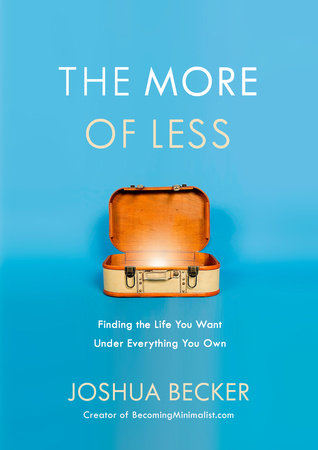
  • The More of Less: Finding the Life You Want Under Everything You Own (Giveaway!)

    The More of Less: Finding the Life You Want Under Everything You Own (Giveaway!)

    Simple Living

    UPDATE – The winners for this giveaway are:

    • CA Los
    • Joy Nicholson

    When I think of minimalism, I think of two things: freedom and Joshua Becker’s blog, Becoming Minimalist.

    I think of freedom because downsizing has enabled me to afford more experiences with people I love, travel more often, and do it all without the burden of storing and maintaining possessions I don’t really need.

    I think of Joshua Becker’s blog because I’ve turned to it many times over the years for insights and tips to help me simplify and declutter.

    For this reason, I was thrilled when Joshua reached out to me to share his latest book, The More Of Less: Finding the Life You Want Under Everything You Own.

    Currently a bestseller on Amazon, The More of Less explores how our stuff can hold us back from pursuing our dreams, and how getting rid of things we only think we want creates space for what we actually need.

    With personal stories and practical advice, The More of Less is the perfect guidebook to help anyone escape the trap and stress of consumerism.

    I’m grateful that Joshua took the time to answer some questions about his work and his book, and that he’s offered two free copies for Tiny Buddha readers.

    The More of LessTHE GIVEAWAY

    To enter to win one of two free copies of The More of Less:

    • Leave a comment below
    • For an extra entry, share this interview on Twitter or Facebook, and post a second comment with the link

    You can enter until midnight PST on Wednesday, May 18th.

    THE INTERVIEW

    1. Tell us a little about yourself and what inspired you to write this book.

    Eight years ago, after spending an entire Saturday cleaning my garage while my son played alone in the backyard, I made a life-changing realization: Everything I owned wasn’t making me happy.

    Even worse, everything I owned was actually distracting me from the very things that did bring me joy. So my wife and I began a journey to remove the nonessential possessions from our home and life.

    We discovered the first step to crafting the life you want is to get rid of everything you don’t.  That is the message of the book.

    2. Many people equate minimalism with deprivation—possessing the bare minimum and forgoing all luxuries. What does minimalism mean to you?

    Minimalism is not about deprivation; it’s about liberation. It’s less about the things you remove and more about the things you add.

    In the book, I define it this way, “Minimalism is the intentional promotion of the things we most value and the removal of anything that distracts us from it.”

    With that definition and understanding, minimalism becomes entirely freeing. Everybody is going to pursue it differently because everybody defines their values differently.

    3. What do you think are the top benefits of a minimalist lifestyle?

    There are countless benefits to owning less: more time, more money, more freedom, more energy, less stress, less worry, less distraction.

    We become better examples for our kids and better stewards of our environment.

    We quickly discover contentment, gratitude, and margin for generosity.

    Minimalism frees us to better pursue our greatest passions.

    4. Why do you think so many of us get ourselves into debt buying things we don’t need when it ultimately causes so much stress?

    There are reasons both internal and external. But no conversation on the causes of rampant consumerism in our society is complete without considering the effect that media and advertisements have on us.

    According to statistics, we see 5,000 ads every day. And every single advertisement carries the same message, “You’ll be happier if you buy whatever we’re selling.” And I think, because we see this message so many times and from so many places, we begin to believe it without even realizing we do.

    5. Is there anything that can help us resist the urge to over-consume in that moment when we might look to a physical thing to fill a psychological need?

    I think there are a number of ways to overcome consumerism in our lives. As we begin to purposefully own less and recognize the benefits of it, we become more aware of consumerism’s empty promises—that more doesn’t equal better—and we are more equipped to overcome those temptations.

    Others have found great success in establishing a two-day or three-day wait period before making purchases. That time away from the emotion of the purchase allows them to think deeper about the purchase.

    6. As someone who tries to keep clutter down, I’ve struggled when it comes to items with sentimental value, like childhood journals and photo albums. How do you recommend dealing with items like these when downsizing?

    There are definitely some tips and tricks for each of these items. It usually comes down to one important realization: “Less is different than none. And less is better than more.”

    For example, sentimental items. I wouldn’t encourage anyone to remove every piece of sentimentality from their lives. But people would benefit from sorting through their sentimental pieces and keeping only the most meaningful.

    Oftentimes, those who are the most sentimental have accumulated so many things over the years, the pieces are merely stored in boxes in the attic—bringing value to no one.

    Working through those items, perhaps trying to cut their collection in half, brings more value to the memories because the most important pieces are not buried underneath piles of unnecessary things.

    7. Many of us reserve de-cluttering for specific times of year—during Spring Cleaning, for example—but then clutter builds back up again. What are the top habits we can adopt to maintain a clutter-free (or less cluttered) environment?

    That is great insight Lori! For most families, stuff enters the home every single day (especially when kids are present). When we only declutter around certain times of the year, things begin to pile on top of each other—usually leading to frustration and a breaking point.

    It’s helpful to remember if you live in a home where things consistently enter, that you’ll need to consistently be removing things.

    Walk around your home and begin to notice the various “clutter hot spots” where things start to pile up first (kitchen counters, desks, bedroom dressers). Work hard to keep those areas clutter-free and they will set an environment for the entire home.

    8. Do you have any advice for someone who’d like to reap the benefits of minimalism, but shares space with a partner or others who aren’t on board?

    It’s always easy to see everyone else’s clutter than it is to see our own. It’s important to start with that realization.

    Additionally, I’ve become convinced over the years that the best thing we can do is lead by example, offer patience, and engage in constructive conversation (not conversations born from frustration or impatience).

    Focus on the benefits and the positive changes that could come from it. Remember, the simplifying conversation is really not one conversation at all. It’s almost always many conversations.

    9. With so many companies marketing varied products to kids, and so many parents buying them, how can we introduce minimalism to children without making them feel deprived or left out?

    Your young children have probably never heard of minimalism, much less thought about it in any depth. So begin by describing minimalism in simple terms.

    Explain why you and your spouse are choosing to embrace a lifestyle of less, as well as the benefits you are hoping your family will receive from it.

    Kids are often much smarter than we give them credit for. Yours will soon realize that you’re not punishing them; you’re doing this because you love them.

    10. What’s the main message you hope readers take away from your book?

    I want people to realize that their lives are too valuable to waste chasing and accumulating material possessions.

    I want people to know they were designed to accomplish more significant things than filling a big house with a lot of stuff.

    And I want them to realize that all the stuff they own is actually keeping them from fulfilling their biggest dreams.

    FTC Disclosure: I receive complimentary books for reviews and interviews on tinybuddha.com, but I am not compensated for writing or obligated to write anything specific. I am an Amazon affiliate, meaning I earn a percentage of all books purchased through the links I provide on this site.  

    You can learn more about The More of Less or grab a copy on Amazon here.

  • Declutter & Destress: How to “Live Tiny” in Your Not-Tiny House

    Declutter & Destress: How to “Live Tiny” in Your Not-Tiny House

    “Not what we have but what we enjoy constitutes our abundance.” ~John Petit-Senn

    I love the tiny house movement because it embraces simple living and diminishes the spiritual and financial burdens of materialism. However, I don’t really want to trade in the 1,700 square foot house I love for something that’s 200 square feet!

    If you’re like me, you may have felt the same pleasure watching shows like Tiny House Nation, but not known how to apply the ideas they present to life in your larger house.

    Well, I’ve found you really can “live tiny” in a not-so-literal way, and reap some of those tiny-living benefits in your bigger home!

    Step 1: The ruthless pare-down

    First of all, no one transitions to tiny living without trimming down the stuff they possess. I decided I didn’t need a living space reduction to inspire me to undertake an extreme pare-down.

    I commenced systematically sorting through everything in my seemingly uncluttered and organized home. (Those qualities were really only on the surface.) I didn’t give a pass to spaces that never got assessed because they seemed fine as-is. I went through my house thoroughly, basement, garage, and gardens included—no drawer, cardboard carton, or crawl space was exempt.

    A tiny-living-style purge requires something stricter than the usual “have I used it in the last year?” rule applied with frequent exceptions. For example, of course I hadn’t used my high school prom dress in the last year, but it always got spared in pare-downs due to sentimental value. This time I put the dress on, took a picture, and said goodbye to it.

    Here’s a tip regarding clothing reduction: You can easily see how often you use items in your closet by turning hangers to point to the front rather than the back when you wear something. If you find a long time goes by with many pieces on unturned hangers, you’ll see what a small sacrifice it would be to donate them to the needy.

    Now don’t be fearful as you purge! This process isn’t nearly the challenge tiny living requires. You have the leeway to take into account how your belongings contribute to your individual quality of life.

    Most people have glassware or coffee mugs gathering dust, making them perfect candidates for chucking. Me, I kept a few of every kind of bar glass imaginable—because mixology is one of my passions and I actually use them. But I gave away the eighteen duplicate tools we had between our upstairs tool drawer and our basement tool chest—because you don’t need two drills to be a home handywoman.

    The key is simple: As you evaluate each item, ask yourself, Can I have an excellent quality of life without this?

    Step 2: Don’t buy new when you can enjoy the old

    So, you’ve completed your purge and feel a great weight lifted from your soul. Now the task is to keep things that way! Again, look to the example of the tiny house lifestyle.

    I used to love finding a way to justify buying something new—don’t we all? Well, tiny house dwellers don’t have room to expand, so they think twice before making new purchases. And if you do that too, here’s what happens: First, you save a ton of money. Second, you keep your possessions level down. And third, you discover just how great the stuff is that you already have!

    Do you even fully know what you already have? I thought I did, but no. I found clothes, décor items, hobby supplies, dishes, etc. that I had forgotten completely but saw had real value. So now I use them! Odds are you too have a ton of possessions that could be a joy to rediscover and use, and it costs nothing.

    So, maybe the workhorse old mixer you own isn’t as exciting as a new Kitchenaid, but the money you save by living with it could pay for a month of groceries, a weekend getaway, or fifty eBooks. And why not revert yourself to the wise lifestyle of your grandparents? Mend and repair whenever you can!

    In those moments when you used to think, “Oh goody, we could use a new one of these!” ask yourself, Can I have an excellent quality of life without replacing this?

    Step 3: One in, one out

    So maybe you really do need that new item. You can still adopt the “one in, one out” principle employed by tiny homeowners. They literally have no choice but to make room for new items by removing the old, and that’s the way they keep their belongings at a steady level.

    You can discipline yourself to do the same, by finding an unnecessary item to “open a berth” for something new. This is something I’ve traditionally done right before the holidays, to make space for incoming gifts. Even better to apply the principle all the time; you’ll never have to do an extreme pare-down again!

    When you bring in the new purchase ask yourself, What can I spare to open up the space for this—who might make far better use of that item than I?

    Step 4: Maximize your space

    Tiny house dwellers have to get absolutely everything they can out of every square foot of space. They find hidden storage under beds and on the ceiling, and they have brilliantly clever furniture that does double duty as couch/bed or dining table/desk, etc.

    Take a good look around your house and make sure you are using all the space you own. (You may even find this inspires you to move to a smaller house!) Your purging could free up a closet that could become a modular home office space. A kitchen can double as a crafting room—I have my crafting materials in rolling storage that I can bring into the kitchen, and the table folds out into a larger size for claying or painting.

    One excellent way to gain storage space is by reducing your inventory of books. Keep a small library of special volumes to cherish, of course. Then consider collecting eBooks instead, which take up no physical space at all. Love to read books on paper? They are free at your local library! Or take a tip from Tiny Buddha founder Lori: buy used books and sell them back to the store later (one in, one out).

    If you’re short on closet space, look to the challenges met by tiny homeowners. Use an old trunk as a coffee table, under-bed boxes for clothing, and shelving added to vertical spaces. You don’t need to move to a larger home in order to have the space to meet your needs.

    Ask yourself, in HGTV parlance, How can I Love It rather than List It?

    Step 5: Discover the zen in being minimized and organized

    Living tiny in your big house isn’t just about reducing expense and consumption. You’ll be amazed at how following tiny house principles enhances your relationship with your belongings.

    Here’s a lesson from our cat toys. Previously we had cat toys in two drawers, two baskets, and four closets—they are now purged, mended, and organized. Now it’s easy to put away stray toys, I know where our stock of new ones is, and I’m not tempted to buy more. And better than that: I’m also more inspired to play with the cats!

    In other words, I’m more in tune with my home and all who dwell within it. With distractions reduced, I am more mindful of my environment and how I interact with it. Meanwhile, I don’t miss out on what I already own, and get more enjoyment out of my belongings.

    For example, I created a meditation corner with objects incorporating the feng shui elements. I found nearly everything I needed among my current stuff (I did treat myself to a Himalayan salt lamp). Not only do I now have this inspiring, Zen space, but things that were previously hidden away now have a purpose.

    Every day or so, find something in your house you haven’t engaged with in a while. Ask yourself gratefully, What is it about this that I really love—and how can I enjoy it even more?

    No pain, all gain

    If you’re like me and find the tiny house movement really inspiring, the reasons why are clear. Tiny is a great way to live! And in a bigger home, applying these ideas to your lifestyle is all upside. You won’t sacrifice necessary items, space, or privacy. All you give up are things like this:

    • Not knowing what you own or where it is
    • The stress of clutter and crowding
    • Not making full use of your stuff and your space
    • Unnecessary consumption and expense

    And you gain things like this:

    • Sharing your abundance by giving away what you don’t need
    • Gratitude for and appreciation of your possessions
    • More complete utilization of what you already have
    • Increased peace and serenity

    So join me in discovering the wonderful aspects of tiny living that we bigger home-dwellers can enjoy. Think tiny…and live large and well!

  • 7 Simple Ways To Make Life Simpler (Even If Your Life Is a Little Crazy)

    7 Simple Ways To Make Life Simpler (Even If Your Life Is a Little Crazy)

    Simplify

    “Any intelligent fool can make things bigger, more complex, and more violent. It takes a touch of genius—and a lot of courage—to move in the opposite direction.” ~E.F. Schumacher

    I used to live the most complicated life you could imagine.

    I tried to be perfect at everything. All the time.

    I was constantly proving myself. Trying to climb the corporate ladder while juggling work and family life. I would step into my boss’ shoes whenever she went on leave, no matter how little notice she gave.

    I’d extend my hours to ensure I had her work covered, along with my own. That’s right, I’d happily do two jobs at once.

    Was I insane?

    Looking back, it certainly seemed that way. Whenever anyone would ask how I was, I would answer, “I’m crazy-busy. I can’t stop and talk right now.”

    I kept thinking that I just had to work smarter and put in more effort to get over the “hump.” But I never got over the hump.

    For a while, I was too busy and overwhelmed to determine how to get out of that mess. I even thought I was having a nervous breakdown, so I went to see my doctor, and she put me on stress leave.

    That’s when it hit me—my job was costing my sanity, and my life was too precious for me to be stuck in that vortex.

    I had to make some serious changes to make my life simpler, easier, and more enjoyable. Here’s what I figured out.

    1. Don’t hide what’s inside.

    You might invest a lot of time and energy trying to be the way you “should” be and conforming to all those things that you think people expect of you. If so, you don’t even do it consciously.

    But in adhering to what you think other people expect of you, you’re adding a layer of complexity that you don’t need. It’s like you’re trying to be someone else.

    Start getting to know who you are and what you value so you can shed the extra layers and live on your own terms.

    Life is simpler when you satisfy yourself and meet your own expectations rather than try to satisfy everyone else.

    2. Reframe bad situations.

    We all have crappy stuff that happens to us. But when you find yourself thinking negative thoughts, stop and reframe.

    I don’t mean paste a smile on your face and try to convince yourself everything is rosy. That doesn’t work.

    But looking for the silver lining, or finding the opportunities behind the challenges, really improves your outlook.

    My workplace became a nightmare, and my doctor put me on stress leave because I was a mess. But that’s what gave me the necessary push to rebuild my life.

    Even when I was in the middle of the mess and feeling like my life was falling apart, I kept thinking maybe this is an opportunity; maybe this is just what I need to make a change.

    3. Use your understandascope.

    One of the biggest complexities in life can come from misunderstanding someone else. It can lead to anger, frustration, and damaged relationships.

    Instead, actively work on your ability to discover and view someone else’s perspective, or understandascope. Suspend judgment and get curious about the other person’s perspective.

    I did this recently with my ten-year-old daughter who was being disagreeable and downright horrid to everyone. I wanted to pull her into line, but I stopped myself.

    I got curious about her behavior, hugged her, and asked what was wrong. She explained that everyone loved her sister more than they loved her.

    Once I understood her perspective, life became much simpler. Instead of telling her off and upsetting her, I could discuss her feelings and provide reassurance.

    4. De-clutter your mind.

    Don’t you just hate when your mind gets chaotic?

    Like when it races around at 3:00AM going faster and faster and faster. Or when you try to remember all that stuff you’ve got to do, and you think your brain might just burst.

    The way to prevent that is to actively practice being calm for a few minutes every day. It de-clutters and slows your mind for a few minutes.

    Whether you meditate, practice mindfulness, daydream, or do yoga, the effect is to calm your mind and increase focus. Miraculously, the effects of practicing calm for a few minutes gives clarity and makes life easier all day.

    5. Re-evaluate your relationships.

    Consciously re-evaluate your relationships, one by one. Ask how the relationship enhances your life, how it serves you, and what you gain from it.

    This sounds calculating and manipulative, but it’s not. The healthiest relationships are ones where both parties are giving and receiving what they need in terms of happiness, support, and development.

    Whenever I realize that a relationship is not serving me well, I reduce contact with that person. Of course, I don’t do this just because a friend is going through a rough patch and needs support.

    I look at the full life of the relationship and establish if it’s healthy and beneficial for both of us. If not, I reduce contact and let the relationship drop away.

    6. Reconsider your corporate climb.

    Someone once told me that they’d found themselves climbing the corporate ladder, and then he realized it was against the wrong building. In other words, he was moving in the wrong direction.

    If you find yourself climbing the corporate ladder and wondering if it’s all worth it, maybe it’s time to re-evaluate. Moving up isn’t necessarily bad; just be sure it’s what you truly want.

    Will it give you the satisfaction, joy, and life balance you want? Will it fuel your passions and get you leaping out of bed each morning, eager to get to work?

    If the answer is not a loud “Hell, yeah!” then it’s worth looking at your options and evaluating what you want from life and how you can get it.

    7. Live your best life yet.

    Life is limited, but we take the time we have for granted. We get complacent.

    People who have a short time to live or have a serious health issue often find immense clarity and drive. They know what’s truly important to them.

    Thinking yourself unwell is a fairly challenging mindset to adopt; instead, embrace the idea of making the next six months the best period of your life to date. Use this as a lens to review every decision and establish what’s included in this best period of your life.

    What would make the next six months the best of your life? Work out what that would look like, and then set about ensuring those things happen.

    It truly is as simple as that.

    If It’s To Be, It’s Up To Me

    It would be nice if your Fairy Godmother could appear, wave her magic wand, and make your life perfect.

    She could wave away complexity, give you the perfect job, and rearrange your life so that it satisfies your every whim.

    Want to know why you’ll never actually see your Fairy Godmother?

    It’s because she’s inside you.

    It’s true. Her wand and her fairy dust are your direction and determination.

    They’re your ability to work out what you want and how to get it.

    You want to live a simpler life? Then establish what’s important, and eliminate as much of the rest as possible.

    It truly is that magically simple.

    So, what things are important to you?

    Simplify image via Shutterstock

  • How to KISS Your Way to A Less Stressful, Overwhelming Life

    How to KISS Your Way to A Less Stressful, Overwhelming Life

    Zen Woman

    “Simplicity is about subtracting the obvious and adding the meaningful.” ~John Maeda

    The past few months of my life were a myriad of things, to say the least: busy, chaotic, overwhelming, exhausting, frustrating, and stressful. I felt like my fuel tank was on zero, but I had to get up and do it all over again the next day.

    I wasn’t stopping to take it all in and check in with myself to see how I was doing. It took catching up with a friend in town on a whirlwind trip to give me a big, smack-bang wake-up call. I was filling her in on everything I was currently juggling (which looked like this):

    • Studying twenty hours per week
    • Working two part-time jobs
    • Running my little love bomb of a website
    • Packing our life into boxes as our rental was being sold (and dealing with open houses and constant intrusions to our physical space)
    • Being Mum to a four-year-old and six-year-old and everything that comes with running a family life (when the workweek entails solo parenting, as my hubby works long hours)
    • Having no family support to help with any of the above

    She looked at me like I was crazy, and asked with kindness, concern, and a little bit of disbelief, “How are you managing all that?”

    The fact of the matter was, I wasn’t. I wasn’t at all. And trying to answer her stumped me a little bit, because I hadn’t stopped to ask myself the same thing.

    I was so caught up in doing that I wasn’t being. I felt like I was constantly tired, stressed, and unhappy. And that’s not fun for me or anyone I love.

    I had to stop. Something had to give, and I needed to make the right kind of changes. I needed to start listening to my inner voice—because she was talking loud and clear, giving me all the signs and telling me how she was feeling, but I wasn’t listening.

    So I said “sorry” and poured as much loving compassion and self-kindness as I could into me.

    I started with resigning from the part-time job that I was struggling with the most. The days were long, my kids were finding it hard with a full day of school and daycare around my working hours, and I didn’t have weekends off to spend time with my family.

    I loved the people I worked with, but I knew that I wasn’t going to work a minimum wage job for the rest of my life, because I wanted to dedicate time to my dreams.

    It was scary to take that plunge from safety because I was comfortable. And I felt guilty and bad—like I should just be able to get on with it and make things work—but I had to shut down that mean girl voice stat and crank up the volume on the loving, kind, Oprah’s-got-your-back voice, pronto.

    Once I pressed send on my resignation email—sitting, eyes squeezed shut, and trepidation running through my veins—I checked in with my feelings.

    My authentic feelings, which I started to pluck from the weeds of guilt and doubt, began to surface. This felt good. This felt really good. I knew I was on a winning track and I wanted more.

    One by one, I started to make changes that were more in line with simplifying my life.

    I’d had a taste of authenticity and tuning in to my inner frequency, and it was amazing.

    Some things in life are non-negotiable, but it’s okay to work with the things that are flexible and be kind to ourselves with the things that aren’t as easy to maneuver.

    We have a choice, all the time, in everything we do. Was I choosing to do all of the crazy, hectic nonsense my life was filled with? I sure was. But I needed to make some different choices because they weren’t working out so well for me.

    So began my journey to getting a little extra loving in my life. I got busy KISSing. Anywhere and everywhere I could, I learned to K.I.S.S.

    How do you do that?

    Keep. It. Simple. Sweetheart.

    When things are getting too complicated for you, stop. And K.I.S.S.

    When things are getting out of control and you’re not sure where your head is at or what’s going on where and when and next and OH MY GOD! Just stop. Breathe. And then K.I.S.S.

    When you’re starting to feel like a rag doll being pulled in a million different directions and all your stitches are about to come undone, and your cute, mismatched buttons are ready to pop, just stop. Slow down. Give yourself the most loving, kindest gift of all. And that’s to K.I.S.S.

    We need to start checking in with ourselves more and listening to our inner voice. What is it saying? What does it want? What needs to give/stop/surrender/be put on pause in order to simplify and feel free?

    How are you coping with things, and what is in your power and in your choice to change?

    You have so much more strength and authority than you probably give yourself credit for to make choices that benefit you. And you’re allowed to make those choices.

    When I thought about leaving one of my jobs, I considered what my options were. I would have less income but the trade off for me was also less stress and more time with my family (and doing other things I enjoyed). That, for me, was priceless.

    I still had one job to help pay the bills and had to stick to a tighter budget, but my schedule became more manageable to do this. By far, the most important change was that I felt happier. That was how I really knew it was worth doing.

    It can be daunting at first, but learning how to simplify your life can start by simply being aware of the changes you want to make.

    Practice saying “no” when you feel you are overextending yourself. Start asking for help more often when you feel overwhelmed. Outsource anything someone else is capable of doing for you instead, and downsize or upgrade whatever it is that would make your life less complicated.

    As much as we love everyone in our lives and care about not letting others down, who is going to take care of you in the best way possible? You got it, sweetheart. You.

    You are the most qualified and most entitled to do just that, nobody else. And you can K.I.S.S. away anything you need, whether it’s in your relationships, work, or parenting.

    Where do you need a loving K.I.S.S. right now? Plant those babies everywhere and start feeling more aligned, more in tune, and way more freakin’ happy with what you’re doing in this lovely life of yours.

    Zen woman image via Shutterstock

  • 4 Ways to Know If You’re Ready for a Simpler Life

    4 Ways to Know If You’re Ready for a Simpler Life

    “Be who you want to be, not what others want to see.” ~Unknown

    Growing up in a consumer society has its obvious advantages—technology is abundant, restaurants are everywhere your eyes can see, and grocery store shelves are always full. All of this leads to the illusion that everything is available, in quantity, all of the time, and for the most part it is.

    I was born and raised in a consumer culture and I thought I had it all; the ability to buy whatever I wanted and needed was deeply ingrained in my psyche. In my childhood I had toys, stuffed animals to decorate my bed, Nintendo, a swimming pool in the backyard, a unicycle, my own little black and white portable TV, and a closet full of shoes.

    My tastes changed over time, but until I became an adult at the age of twenty-eight my perception about shopping and acquiring stuff was on the naive end of the spectrum.

    It didn’t matter where things came from, so long as they came and there was a temporary happiness associated with each and every purchase.

    Change. Something must change. I heard whispers in the night.

    The things I had accumulated were not bringing joy; what was more, they weren’t even being worn or used. I thought about the excess, my excess, others’ excess, the excess from stores that never gets sold and has to go somewhere, then I considered for a moment the environment.

    My husband and I moved from a one bedroom apartment in Seattle to the plains of southeastern Hungary to immerse ourselves in quiet country life.

    We had a strong desire to get away from the hustle and bustle of city life. We purchased a five hectare farm with cob buildings, built without foundations and just silt under the tile floors. Electricity, but no running water.

    It was ours—the trials, the warmth of the fireplace, the peace and quiet to reflect on life.

    After five years of spending mornings in silence, listening to the sounds of pheasants, guinea, and owls, our closeness to nature started to become rapidly apparent. Simplicity crept into our lives as an inkling of an answer of previously soft-spoken whispers.

    Drawing water from the well, bucket by bucket, spinning wool, and preserving fruit, the introduction of self-reliance into our lives was profoundly exciting and exhilarating at the same time.

    Paring down and wising up, we slowly became eco-minimalists.

    There are downsides to being “different”: We have lost friends along the way, our parents don’t quite understand our determined stance on living a simple life, and it isn’t easy being green. So, is living an unconventional simple life worth it? By all means, yes!

    The rewards are beautiful when you truly accept gratitude into your heart. Gratitude for the little things in life: the meaningful conversations, the love, the laughter, the roof over your head (never to be taken for granted), the ability to cook for yourself and sew your own clothes.

    How do you know if you are suited for a different kind of simple living? You are ready to live life on your own terms, for your own pursuit of happiness.

    Distancing yourself from society may be necessary to get out of the brain smog, so that you have the ability to think for yourself without the white noises of traffic, bells, and life on the street. Spending time in silence does wonders for restoring the soul and giving you time to emerge into a new persona, a more intelligent version of your former self.

    1. When memories become the real worth in your life, not things.

    Think about your past, your childhood. What memories stand out? The number of toys you owned or the family and friends that you shared those special toys with? That you got to go hiking in a canyon or shopping in a cityscape?

    Chances are good that it was the experiences that made life enjoyable, not the stuff—the people that you remember, the good times and the bad, the memories that last a lifetime.

    2. When connecting with nature is a desire, not a chore.

    Getting outside for fresh air daily is not only good for your lungs, it may help to simplify your life. It gives you the opportunity to walk, ride a bike, and move your limbs, a natural way to keep fit.

    Connect with the earth by walking barefoot, laying in the grass, looking up at the sky and by allowing yourself to feel small in the vast universe.

    3. When you are tired of the chase.

    A life lived slowly is a life well lived. When we rush we miss expressions, we miss flowers in bloom, and we miss moments that will fly right by. Slow down!

    Life is not a race. There is no competition; there is no need to whiz by. There is however a need to enjoy the details, to smile at the clouds and have the ability to wait. Patience is an esteemed virtue that we can all strive for.

    4. Interest-led learning excites you!

    Simple living is all about self-reliance. The ability to learn things on your own shows your determination, flexibility, and open-mindedness. When you learn new things out of your own interest, you are sure to embrace new ideas and take them far.

    We didn’t become the architects and engineers our family and friends wished us to be, we didn’t even become who we thought we would be. Instead, we became us—and we are extremely joyous and grateful for that.

    Wherever you go, be the change you would like to see in the world.

    You don’t need to change addresses or move mountains to discover simplicity. You don’t even need to travel. You can find it right in your own home. Create new memories, go for a walk and connect with nature, explore self-reliance and be open to taking your new life in, slowly.

  • Simplify Your Life by Eliminating These 7 Problems

    Simplify Your Life by Eliminating These 7 Problems

    Life has a tendency to become overly complicated and stressful, particularly because things change so quickly. I’ve identified seven problems that you can eliminate to make your life a whole lot simpler (which doesn’t mean boring or less interesting).

    Problem #1 – Too Much Responsibility

    Think back to a year or two ago. How much extra responsibility has come into your life since then? You may have too much stuff, too many possessions, too many projects, and too many commitments.

    Spreading yourself too thin reduces focus, increases stress, and lowers overall performance.

    Too much stuff could include anything from a new cell phone to a new swimming pool to a bigger house. It might be nice to have more possessions and new gadgets, but they often come with responsibilities and maintenance. Ask yourself if you’re being owned by the things you own.

    It’s also exciting to get caught up in many new hobbies or projects. I did this when I got into building websites. Before I knew it I was working on twenty projects at the same time and seeing minimal results across the board. It took me a while to realize that I was working like a maniac, yet none of my projects were anywhere near completion.

    These days I’m only working on two to three projects in total. Not only do I feel more relaxed because it’s easier to keep track of what I have to do, but I can also see significant progress in my work month after month since I am doing less.

    Try to simplify your life. Cut down your possessions, projects, and hobbies to relieve some of the responsibilities that you don’t really need to have. (more…)

  • 4 Ideas to Live Simply and Cheaply When Times Are Tough

    4 Ideas to Live Simply and Cheaply When Times Are Tough

    “Every day is a journey, and the journey itself is home.” ~Basho

    When I was a little girl growing up in the big woods of Maine, my mother used to say that gifts do not always come in the packages we expect. In many ways I’ve tried to live by her words, knowing that even during the rough times there are diamonds I can find if I look for them.

    Lately I’ve been thinking about the fact that, exactly three years ago, my husband Dan and I packed up our small car and journeyed west to Los Angeles with our dog, Hopper and cat, Ellison.

    It was the very beginning of the recession. I think I speak for many of us when I say that we had no idea how devastating this “downturn” would be. Dan’s job in Portland, Maine had been put to part time. So we decided to try our luck in the land of milk and honey.

    When we arrived in L.A., we had driven across the country from Maine—traversing mountains, deserts, and forests. And we were starting over.

    That week I became pregnant with our first child. After that, things got harder. I was sick in bed for much of my pregnancy with an unusual condition, and Dan was the only one who could work.

    But I made the best of it, because I remembered what my mom had told me. (more…)

  • 10 Steps to Simplify Your Work Life

    10 Steps to Simplify Your Work Life

    Office Buddha

    “Life is actually really simple, but we insist on making it complicated.” ~Confucius

    While I have always piled a lot on my plate professionally, I’ve recently introduced more varied elements. Formerly, I may have devoted a long workweek to freelance writing, but I’m now juggling writing, consulting, editing my upcoming book, and promoting my recent eBook.

    I’ve noticed that the biggest complication to my life isn’t necessarily the full, varied schedule; it’s how I think about that busy schedule.

    Sometimes I let my to-do list overwhelm me, carrying the weight of the whole through all of the parts.

    So, instead of just answering an email, I’m responding, thinking about the blog post I want to write later, worrying about the magazine deadline I might not make, and planning to be more effective so that I can get everything done without having to worry so much.

    That’s something I sometimes do.

    But on other days, I remind myself that I can’t worry my way out of worrying, and that the most effective use of any moment is to fully do whatever it is I’m doing. The rest will get done later. That, I’m learning, is the most important part of simplifying.

    The first step in simplifying anything starts with how we think about it.

    Of course, there’s a lot more to simplifying work than that (which I realize is ironic given that the subject matter is simplification). (more…)

  • Need Less, Have More: Life Expands When We Eliminate the Excess

    Need Less, Have More: Life Expands When We Eliminate the Excess

    “Knowledge is learning something new every day.  Wisdom is letting go of something every day” ~Zen Saying

    Simplicity, at its heart, comes down to eliminating the excess in our lives.

    Excess needs, wants, possessions. The list goes on.

    Society tries to sell us on the idea that having more in our lives should be the goal and is the answer. But is more really improving the quality of our lives?

    Do more possessions beyond a certain point really add value to our lives?

    Do more commitments in our diaries really help us feel less stressed and rushed?

    Does always wanting the latest gadget really improve the quality of what we have now?

    Is more even feasible for many of us who are struggling just to make ends meet and pay basic bills in these challenging economic times? Many can barely afford enough, let alone more.

    Living in the Moment

    Having more in our lives or buying into the concept that more is better can mean we miss living in the moment. We’re constantly waiting for our lives to be complete with more and striving for a day that will never come.

    We’re in a state of deferred living. Always assuming what we have now is not enough. Always wanting more.

    My Journey to Simpler and Less

    My own path to wanting to live a simpler life is, I’m sure, fairly typical.

    Around four to five years ago my life was going pretty well with little to complain about in the grand scheme of things. I had great friends and family, a good job, a roof over my head, and certainly knew where my next meals were coming from.

    However, I had also started to accumulate more in my life. More material possessions, more commitments, more meetings, more financial responsibilities, more hassle. Alongside this I felt like less and less of my time was, well my time.

    The quality of my time was decreasing as more was added to it.

    I was busy and in motion a lot of the time but wasn’t really getting what I truly wanted out of life. I had bought into the concept of more and that more would be the answer. I had lost track of my own goals a little.

    A period of reflection followed. In this period of reflecting, I started to identify more of what I truly wanted in life. I also started to uncover those things in life I would rather be without.

    I started to seek out books on the subjects of simpler living and lifestyle redesign. I had the good fortune to come across the work of some truly great authors and thinkers (Leo Babauta, Chris Guillebeau, and Tim Ferriss, amongst a few). These books challenged my thinking but also encouraged me further into the rabbit hole I was starting to disappear down.

    I also started to take action.

    I started to peel back and eliminate what didn’t matter.

    I started extracting myself from commitments and meetings I really had no interest in being at or didn’t feel I could add value to.

    I learned the value and power of a polite “no thanks” when requests on my time (meetings, social gatherings) didn’t excite me, add value, or help my goals along in some way. Importantly, I started to feel less guilt about saying no in these cases.

    I started to see that conventional wisdom doesn’t always have to be followed.

    I started to remove distractions and excuses I was making to myself.

    I started to focus more on the things and people that were important to me.

    I realized I value freedom and flexibility over the ability to just earn more and started to try to seek out ways of living accordingly.

    I started to accumulate fewer material possessions but enjoyed my money more (holidays, events, great dinners, etc.).

    In short, the quality of my life has improved since I have sought to simplify things and intentionally live with less.

    Was Making the Change Easy?

    In short, no. This is very much a journey and not an overnight fix. However, in my own case the process of working toward a focus on less has already made some powerful changes in my life. It has meant:

    I have set up my own one-man consulting company rather than chasing the corporate dream that never seemed to fulfil me with each climb up the ladder. This gives me an increased sense of flexibility, empowerment, and freedom in my work.

    Because I’ve spent less on stuff, I have been able to travel more for fun in the past two years than at any other time in my life (and the more amazing places I travel to the more I want to travel).

    I have realized that life can be rich and full of small pleasures without having to spend lots or buy more. For example, I love taking early morning, long walks before dawn breaks and then coming back to a make some freshly brewed coffee.

    I feel like I have more time to do what I want to do and to spend with the people I want to spend time with. (In reality, I have the same amount of time available to me but have been more selective in how I fill my time and what I say yes to.)

    For you, the list will of course look very different depending on your own circumstances and goals. However, a commitment to banishing the “more is better” mindset will, I’m sure, improve the quality of your own life in equally significant ways.

    Eliminate the Excess

    Eliminating the excess means living a life that can be slightly unconventional by modern standards.

    Perhaps we don’t change to the latest smartphone every other week.

    Perhaps we don’t fill our homes with clutter.

    Perhaps we don’t check our email obsessively.

    Perhaps we focus on and are grateful for what we do have rather than on what we don’t.

    Perhaps we think more carefully about clothes we purchase going for quality over quantity (or indeed have a very simple wardrobe of a few clothes we enjoy).

    Perhaps we intentionally create space in our diaries and life so you can breathe a little and enjoy the moment.

    Making changes is not necessarily easy initially. We are so programmed to think a certain way that making changes can involve a significant shift in thinking. However, what we get back by eliminating these false wants and needs makes any initial effort more than worthwhile. It can literally transform our lives for the better. It can mean:

    • More free time to do what we want to do (hobbies, passions, etc.)
    • More quality time with those we care about
    • Less stress
    • Less spending
    • Ironically, more quality possessions that we truly enjoy and give us value
    • More savings (for holidays and other things you enjoy doing)
    • Less pressure to keep up with those around us

    Now ask yourself, what is stopping you trying to find your own path to less and forever banishing the more is better mindset?