Tag: simple

  • Why People Who Bring Enough to Share Are Happier

    Why People Who Bring Enough to Share Are Happier

    Girls Sharing

    Joy comes not through possession or ownership but through a wise and loving heart.” ~Buddha

    We all have these random little personal philosophies or rules that we live by. Oftentimes, these rules are hidden beneath the surface, not in a form that we are aware of or is easily expressible.

    But I do have one particular “random little personal philosophy” that I live by (and am aware of!) and would like to explore further. It is my philosophy of tipping.

    This philosophy of tipping was thought up specifically with reference to tipping, say, in restaurants, but can easily be generalized. Here is the original formulation:

    I cannot afford to eat at this restaurant if I cannot also afford to give a large tip.

    Now, this doesn’t mean I need to give a huge tip each time—I just need to be willing to in advance.

    So, if I’m going to a restaurant where I know a decent meal will cost $20, I will commit before going in that I am willing to spend closer to $30. Generally, the tip will be fairly typical—about 20% for a good job—but the actual magnitude isn’t the point.

    What matters in this case is that I consider a large tip to actually be a part of the cost of the meal already. Of course, the tip is part of the cost of a meal, but I don’t think most people look at it that way.

    Rather, most people think of the menu price as the cost, and the tip is this annoying extra that you have to pay at the end. I’ve had friends who go out to eat with me, order whatever they want off the menu, and then find that they don’t have enough cash to pay for a tip at all.

    In my case, if I didn’t have the money available to give a sizable tip, I wouldn’t even make it inside the restaurant. After all, that would mean I couldn’t afford it.

    This may sound like a very simple life philosophy, and one that hardly seems worth reading about (let alone writing about). But the implications, when the principle is taken to its logical conclusion, are far more significant. Let’s generalize it now:

    If I am not willing to share something, I shouldn’t get it in the first place.

    Please, do not take this to be a legitimate moral or economic principle—it is pure and simply a life philosophy, or a heuristic for making choices in my own life. Your property is your own and you are certainly not an immoral person if you don’t share, but you may very well be happier if you do.

    A major benefit of all this is its fiscal sensibility. While you may end up spending more on tips and getting extras of certain things in order to share, you will ultimately end up being more careful with your finances and use your money less.

    This sort of mindset makes you far more likely to have a potluck with friends than to go out to eat, or to save money rather than spend it.

    But once you’ve really internalized the idea, you’ll also find yourself experiencing a significant happiness boost. Why? Because giving feels good. Being kind feels good. And sharing positive experiences with others feels good.

    Ultimately, it involves spending more time and money on others and less on yourself. You certainly shouldn’t be neglecting your own needs and desires. But when you do nice things for yourself, make sure you have a little extra so somebody else can enjoy it with you.

    Okay, great. So how does this work in practice?

    As a whiskey lover, I consider it a nice treat to drink a delicious, high quality whiskey. Jameson may be perfectly fine most of the time, but I like to have Johnny Walker Black Label around for special occasions.

    Unfortunately, JW Black is pretty expensive—it would be very easy for me to hoard it and not let other people drink any. Instead, I drink it primarily when I have close friends around. It’s a vastly better experience when shared!

    The nature of the material possessions that I tend to purchase is similar; I try to buy things that have more sharing potential. Most of my possessions at this point are books and DVDs, both of which I am routinely lending out to others or enjoying with them.

    Predictably, this lends itself to a more “simple” lifestyle. I buy a lot less than I could, but the things I do own have a high return on investment with regards to my happiness.

    A big part of this philosophy, though, is to share with strangers. If you are going out for a night of drinks in the city, throw an extra few singles in your pocket to give to the homeless people in the area. If you can’t afford $5 to give to five homeless people, then you can’t afford the $50-100 it would take to go out.

    It’s not just about money, either. The same principle can apply to the way you use your time.

    If you can afford to play video games all day Saturday, then you can spend an hour of that time volunteering at a soup kitchen or helping a friend move. In fact, studies have shown that spending time on others makes you feel as though you have more time available…cool!

    As with most areas in life, it is hard to apply a philosophy like this perfectly, but that’s not the point. I’m far from perfect with this, but even so, I’ve derived great benefits from focusing on this principle, and you can too.

    Friends sharing image via Shutterstock

  • How to KISS Your Way to A Less Stressful, Overwhelming Life

    How to KISS Your Way to A Less Stressful, Overwhelming Life

    Zen Woman

    “Simplicity is about subtracting the obvious and adding the meaningful.” ~John Maeda

    The past few months of my life were a myriad of things, to say the least: busy, chaotic, overwhelming, exhausting, frustrating, and stressful. I felt like my fuel tank was on zero, but I had to get up and do it all over again the next day.

    I wasn’t stopping to take it all in and check in with myself to see how I was doing. It took catching up with a friend in town on a whirlwind trip to give me a big, smack-bang wake-up call. I was filling her in on everything I was currently juggling (which looked like this):

    • Studying twenty hours per week
    • Working two part-time jobs
    • Running my little love bomb of a website
    • Packing our life into boxes as our rental was being sold (and dealing with open houses and constant intrusions to our physical space)
    • Being Mum to a four-year-old and six-year-old and everything that comes with running a family life (when the workweek entails solo parenting, as my hubby works long hours)
    • Having no family support to help with any of the above

    She looked at me like I was crazy, and asked with kindness, concern, and a little bit of disbelief, “How are you managing all that?”

    The fact of the matter was, I wasn’t. I wasn’t at all. And trying to answer her stumped me a little bit, because I hadn’t stopped to ask myself the same thing.

    I was so caught up in doing that I wasn’t being. I felt like I was constantly tired, stressed, and unhappy. And that’s not fun for me or anyone I love.

    I had to stop. Something had to give, and I needed to make the right kind of changes. I needed to start listening to my inner voice—because she was talking loud and clear, giving me all the signs and telling me how she was feeling, but I wasn’t listening.

    So I said “sorry” and poured as much loving compassion and self-kindness as I could into me.

    I started with resigning from the part-time job that I was struggling with the most. The days were long, my kids were finding it hard with a full day of school and daycare around my working hours, and I didn’t have weekends off to spend time with my family.

    I loved the people I worked with, but I knew that I wasn’t going to work a minimum wage job for the rest of my life, because I wanted to dedicate time to my dreams.

    It was scary to take that plunge from safety because I was comfortable. And I felt guilty and bad—like I should just be able to get on with it and make things work—but I had to shut down that mean girl voice stat and crank up the volume on the loving, kind, Oprah’s-got-your-back voice, pronto.

    Once I pressed send on my resignation email—sitting, eyes squeezed shut, and trepidation running through my veins—I checked in with my feelings.

    My authentic feelings, which I started to pluck from the weeds of guilt and doubt, began to surface. This felt good. This felt really good. I knew I was on a winning track and I wanted more.

    One by one, I started to make changes that were more in line with simplifying my life.

    I’d had a taste of authenticity and tuning in to my inner frequency, and it was amazing.

    Some things in life are non-negotiable, but it’s okay to work with the things that are flexible and be kind to ourselves with the things that aren’t as easy to maneuver.

    We have a choice, all the time, in everything we do. Was I choosing to do all of the crazy, hectic nonsense my life was filled with? I sure was. But I needed to make some different choices because they weren’t working out so well for me.

    So began my journey to getting a little extra loving in my life. I got busy KISSing. Anywhere and everywhere I could, I learned to K.I.S.S.

    How do you do that?

    Keep. It. Simple. Sweetheart.

    When things are getting too complicated for you, stop. And K.I.S.S.

    When things are getting out of control and you’re not sure where your head is at or what’s going on where and when and next and OH MY GOD! Just stop. Breathe. And then K.I.S.S.

    When you’re starting to feel like a rag doll being pulled in a million different directions and all your stitches are about to come undone, and your cute, mismatched buttons are ready to pop, just stop. Slow down. Give yourself the most loving, kindest gift of all. And that’s to K.I.S.S.

    We need to start checking in with ourselves more and listening to our inner voice. What is it saying? What does it want? What needs to give/stop/surrender/be put on pause in order to simplify and feel free?

    How are you coping with things, and what is in your power and in your choice to change?

    You have so much more strength and authority than you probably give yourself credit for to make choices that benefit you. And you’re allowed to make those choices.

    When I thought about leaving one of my jobs, I considered what my options were. I would have less income but the trade off for me was also less stress and more time with my family (and doing other things I enjoyed). That, for me, was priceless.

    I still had one job to help pay the bills and had to stick to a tighter budget, but my schedule became more manageable to do this. By far, the most important change was that I felt happier. That was how I really knew it was worth doing.

    It can be daunting at first, but learning how to simplify your life can start by simply being aware of the changes you want to make.

    Practice saying “no” when you feel you are overextending yourself. Start asking for help more often when you feel overwhelmed. Outsource anything someone else is capable of doing for you instead, and downsize or upgrade whatever it is that would make your life less complicated.

    As much as we love everyone in our lives and care about not letting others down, who is going to take care of you in the best way possible? You got it, sweetheart. You.

    You are the most qualified and most entitled to do just that, nobody else. And you can K.I.S.S. away anything you need, whether it’s in your relationships, work, or parenting.

    Where do you need a loving K.I.S.S. right now? Plant those babies everywhere and start feeling more aligned, more in tune, and way more freakin’ happy with what you’re doing in this lovely life of yours.

    Zen woman image via Shutterstock
  • Jump Off the Busy Train for a Simpler, More Passion-Filled Life

    Jump Off the Busy Train for a Simpler, More Passion-Filled Life

    Time concept

    “What you do today is important, because you are exchanging a day of your life for it.” ~Unknown

    A few years ago I was on the busy track. I was working a corporate nine-to-five job, studying at night, and trying to keep up a busy social life. I thought I was achieving it all by doing so many things at once, but really, I was just burning myself out.

    My life was a busy blur. I’d start my weeks feeling tired and end them completely exhausted. Time was a constant challenge. I was always rushing from one thing to the next, and in the little down time I gave myself off, I’d be so completely exhausted that all I could do was slump into the lounge chair and fall asleep in front of the television.

    Between working a high-pressure full-time job, studying my nights away, and maintaining a busy social life on the weekend, there was little time for me to just be. In the midst of the daily rush, there was no reflection or alone time. There was just busyness.

    Feeling this way, it didn’t take me long to realize that it was not what I wanted for myself. I was rarely happy or at ease, and I was feeling the strain big time. I pushed myself for answers and I realized that my pursuit of “doing it all” was in vain. I simply wasn’t happy.

    I wasn’t enjoying my job, and although it paid well and had some great career prospects, it drained every ounce of enthusiasm I had and left me dry.

    It would leave me feeling so dry that I’d throw myself into action during every ounce of time I had spare, to the point of exhaustion, as if to try and salvage those wasted forty-plus hours a week I’d spent at work.

    I was studying a design course three nights a week to make up for my lack of passion for my job and I was out all weekend drowning my sorrows, rewarding myself for just getting through another lackluster week.

    It was madness and something I couldn’t keep doing. Every day drained me and ate away at me just a little more, but still, time went on. The days became weeks and the weeks flowed into months.

    I wanted to jump off the busy train, but making a change was hard. Though I knew that my job wasn’t where my passions lied, I couldn’t just throw it all in and quit. I had bills to pay and my love of design was just that at the time—a love, not a moneymaker.

    I struggled for months with this decision, thinking of every possible way I could make things work. But none of them compelled me to action. The truth was, I was scared.

    Right when I was almost at breaking point, salvation came for me in the form of a company restructure. Cuts were being made and I was called up for retrenchment.

    My retrenchment was a blessing in disguise. While I was worried about how I would make it work, I knew it was the push I needed to live a simpler life, more in tune with my passions.

    With this in mind I was convinced I could make it happen. I decided, then and there, that I would pursue my studies full time to do what I loved and work whichever other jobs I needed to work to make it happen. I started looking for part-time office jobs, and to my surprise, there were some great ones.

    Within a month I’d found the perfect part-time job that would let me launch into my studies with full force while still making ends meet. I’d have to make some tough cuts to my spending to make it work, but I knew I could.

    The tradeoffs were tough at first, and living my newfound modest lifestyle wasn’t always easy, but it was more than worth it. What I soon realized was that for all the material things I’d lost, I’d gained the most valuable thing of all: the freedom of my own time.

    I now had time to breathe, think, and live.

    Today I’m living a simpler life, one of freedom and choices. I’m still actively doing things every day, but I’m doing things I truly love.

    With my design diploma in hand, I’m working as a fashion designer and writing about my creative journey on my very own website. I’m living with joy and I no longer feel busy and stressed. Instead, I am energized and passionate.

    We can get so caught up in the pursuit of busyness that we forget what we are losing. In busyness we lose our freedom, our options, and a little piece of ourselves.

    Time is freedom. It enables you pursue your dreams and go after what you love. How you spend it determines whether you experience happiness or not. And at the end of the day, it’s all you really have. 

    Jump Off the Busy Train and Reclaim Your Joy

    If you want to jump off the busy train to make a change to a simpler, more passion-filled life, here are three things you can do:

    1. Take the change step by step.

    Instead of launching right in and quitting your job without a solid plan, make sure you have everything in place to make it work.

    Look into your options for part-time work or more flexible working arrangements, like working different hours or from home. Weigh up your viable options to free yourself from busyness and determine how you can make it work financially.

    2. Accept a better outcome, even if it’s not the perfect one.

    We would all love to jump in and pursue our passions full time but often it’s not practical, at least not from the outset. Instead of striving for perfect, find a better outcome in the short term.

    It doesn’t need to be an all-or-nothing approach. Right now, it might mean pursuing a passion on the side. In a years time, it might mean transitioning to a part-time working arrangement. Sometimes, good things take time.

    3. Scale back in other areas of your life.

    There is always give and take in life, and if you want to move toward a simpler, more passion filled life, there are going to be tradeoffs.

    Scaling back might involve selling your car, moving into a smaller house, and cutting back on meals out. These might all sound like big changes, but the reward you will receive every day from living in tune with what you love will far outweigh the sacrifice.

    If you’re feeling the weight of busyness in your life, challenge yourself to slow down. Don’t sell your life to the highest bidder, trading your time for dollars at the expense of your own happiness and joy. Reclaim your freedom and find a way to do what you love. Your happiness depends on it.

  • How Simple Mini Habits Can Change Your Life

    How Simple Mini Habits Can Change Your Life

    “The only way to make sense out of change is to plunge into it, move with it, and join the dance.” ~Alan Watts

    It was late 2012, just after Christmas, and like many others I was reflecting on the year.

    I realized that I had ample room for improvement in too many areas of my life, but knowing that New Year’s Resolutions have a poor 8% success rate (University of Scranton research), I wanted to explore some other options. I knew I wanted to start before January 1st too, because arbitrary start dates don’t sit well with me.

    On December 28th, I decided that I wanted to get in great shape. In the previous days and weeks, however, I hardly exercised at all and felt quite guilty about it. My goal was a thirty-minute workout, and it seemed impossible.

    I wasn’t motivated, I was tired, and my guilt was making me feel worthless. Feeling stuck, I remembered a technique I learned from a book, and little did I know that this technique would change my life in a big way in 2013.

    The technique is from the creativity book Thinkertoys, and it is to consider the opposite of an idea you’re stuck on. So I looked at my thirty-minute exercise goal, and my giant fitness plan to get in great shape, and I thought about the opposite.

    You could say the opposite is eating fast food and sitting on the couch, but the opposite that came to my mind was one of size.

    What if, instead of carrying around this overwhelming fitness anvil on my shoulders, I just did one push-up?

    Initially, I scoffed at the idea. How absurd to do a single push-up and act as if it means anything! But when I continued to struggle with my bigger plans, I finally gave in to the idea and did one, and since I was already in push-up position, I did a few more.

    After that, my muscles were warmed up, and I decided to try one pull-up. Just like you guessed, I ended up doing several more. Eventually, I had exercised for thirty minutes.

    My mind was blown—did I just turn a single push-up into a full workout? Yes, yes I did.

    The One Push-Up Challenge Is Born

    From here, I challenged my blog readers to do at least one push-up per day for a full year. People have had great success with it, and here’s what it turned into for me: For the last three-plus months, I have gone to the gym three to six times per week to exercise and I’m in great shape because of it. Now I know why it works.

    I have always held a keen interest in psychology and neuroscience, and I study them for my writing. So when I read about the studies on willpower that show it’s a limited resource, everything started making sense.

    I couldn’t do my thirty-minute workout because my willpower wasn’t strong enough or was depleted. But I could do one push-up and segue into a thirty-minute workout because it only required a tiny amount of willpower to start, after which my body and mind stopped resisting the idea.

    Of course, this concept does not only apply to fitness, but to any area of your life you wish to change. And I believe I’ve found the perfect way to leverage this technique – habits.

    What’s More Important Than Your Habits?

    Nothing. Habits form about 45% of your total behavior, according to a Duke University study. Not only that, but they are behaviors that you repeat frequently, which compounds their significance in your life. Habits are your foundation, and if this foundation is weak, you won’t be happy with the way you live.

    The reason people fail to change their lives, and fail to instill new habits, is because they try to do too much at once. In simplest terms, if your new habit requires more willpower than you can muster, you will fail. If your new habit requires less willpower than you can muster, you will succeed.

    The calculation can’t just be for one instance, however, but also for when you’re tired and your willpower is zapped. Can you continue it then?

    One thing I’ve been wanting to do more is write. It’s therapeutic for me and I write for a living, so it’s fairly important that I practice. When I found that I wasn’t writing as much as I should, I found out how to combine the power of The One Push-Up Challenge with a habit plan.

    How To Change Your Life With Mini Habits

    Mini habits are exactly as they sound. First, you choose a desired habit or change you’d like to make—it could be thinking more positively, writing 1,000 words a day, or reading two books per week. I’ve had success doing three at once.

    Next, you shrink these habits down until they are “stupid small,” a term I made up because when you say the requirement out loud, it is so small that it sounds stupid. Here are mine:

    1. Write fifty words per day (article, story, etc.)

    2. Write fifty words per day (for the habits book I’m writing)

    3. Read two pages in a book per day

    Easy, right? I could complete this list in ten minutes total. So far, I’ve met these daily requirements 100% of the time, and then much more.

    I’ve actually written one to two thousand words and read ten to thirty pages per day, for these twelve days in a row and counting. Prior to this, I wasn’t reading at all and writing very little.

    It works because your brain falls for the bait.

    “Oh, only fifty words? I can write that.”

    And then you start. And you’ll find, like I have, that once you start, good things happen.

    Ten Daily Mini Habit Ideas

    1. Compliment one person

    2. Think two positive thoughts

    3. Meditate for one minute

    4. Name three things you’re thankful for

    5. Do one push-up

    6. Write fifty words

    7. Read two pages

    8. Do ten jumping jacks

    9. Go outside and take 100 steps

    10. Drink one glass of water

    You can change nearly any area of your life, and at one mini habit at a time, it’s easier than you think.

    When you remove the pressure and expectations, you allow yourself to start.

    What mini habit(s) will you start today?

  • 4 Ways to Know If You’re Ready for a Simpler Life

    4 Ways to Know If You’re Ready for a Simpler Life

    “Be who you want to be, not what others want to see.” ~Unknown

    Growing up in a consumer society has its obvious advantages—technology is abundant, restaurants are everywhere your eyes can see, and grocery store shelves are always full. All of this leads to the illusion that everything is available, in quantity, all of the time, and for the most part it is.

    I was born and raised in a consumer culture and I thought I had it all; the ability to buy whatever I wanted and needed was deeply ingrained in my psyche. In my childhood I had toys, stuffed animals to decorate my bed, Nintendo, a swimming pool in the backyard, a unicycle, my own little black and white portable TV, and a closet full of shoes.

    My tastes changed over time, but until I became an adult at the age of twenty-eight my perception about shopping and acquiring stuff was on the naive end of the spectrum.

    It didn’t matter where things came from, so long as they came and there was a temporary happiness associated with each and every purchase.

    Change. Something must change. I heard whispers in the night.

    The things I had accumulated were not bringing joy; what was more, they weren’t even being worn or used. I thought about the excess, my excess, others’ excess, the excess from stores that never gets sold and has to go somewhere, then I considered for a moment the environment.

    My husband and I moved from a one bedroom apartment in Seattle to the plains of southeastern Hungary to immerse ourselves in quiet country life.

    We had a strong desire to get away from the hustle and bustle of city life. We purchased a five hectare farm with cob buildings, built without foundations and just silt under the tile floors. Electricity, but no running water.

    It was ours—the trials, the warmth of the fireplace, the peace and quiet to reflect on life.

    After five years of spending mornings in silence, listening to the sounds of pheasants, guinea, and owls, our closeness to nature started to become rapidly apparent. Simplicity crept into our lives as an inkling of an answer of previously soft-spoken whispers.

    Drawing water from the well, bucket by bucket, spinning wool, and preserving fruit, the introduction of self-reliance into our lives was profoundly exciting and exhilarating at the same time.

    Paring down and wising up, we slowly became eco-minimalists.

    There are downsides to being “different”: We have lost friends along the way, our parents don’t quite understand our determined stance on living a simple life, and it isn’t easy being green. So, is living an unconventional simple life worth it? By all means, yes!

    The rewards are beautiful when you truly accept gratitude into your heart. Gratitude for the little things in life: the meaningful conversations, the love, the laughter, the roof over your head (never to be taken for granted), the ability to cook for yourself and sew your own clothes.

    How do you know if you are suited for a different kind of simple living? You are ready to live life on your own terms, for your own pursuit of happiness.

    Distancing yourself from society may be necessary to get out of the brain smog, so that you have the ability to think for yourself without the white noises of traffic, bells, and life on the street. Spending time in silence does wonders for restoring the soul and giving you time to emerge into a new persona, a more intelligent version of your former self.

    1. When memories become the real worth in your life, not things.

    Think about your past, your childhood. What memories stand out? The number of toys you owned or the family and friends that you shared those special toys with? That you got to go hiking in a canyon or shopping in a cityscape?

    Chances are good that it was the experiences that made life enjoyable, not the stuff—the people that you remember, the good times and the bad, the memories that last a lifetime.

    2. When connecting with nature is a desire, not a chore.

    Getting outside for fresh air daily is not only good for your lungs, it may help to simplify your life. It gives you the opportunity to walk, ride a bike, and move your limbs, a natural way to keep fit.

    Connect with the earth by walking barefoot, laying in the grass, looking up at the sky and by allowing yourself to feel small in the vast universe.

    3. When you are tired of the chase.

    A life lived slowly is a life well lived. When we rush we miss expressions, we miss flowers in bloom, and we miss moments that will fly right by. Slow down!

    Life is not a race. There is no competition; there is no need to whiz by. There is however a need to enjoy the details, to smile at the clouds and have the ability to wait. Patience is an esteemed virtue that we can all strive for.

    4. Interest-led learning excites you!

    Simple living is all about self-reliance. The ability to learn things on your own shows your determination, flexibility, and open-mindedness. When you learn new things out of your own interest, you are sure to embrace new ideas and take them far.

    We didn’t become the architects and engineers our family and friends wished us to be, we didn’t even become who we thought we would be. Instead, we became us—and we are extremely joyous and grateful for that.

    Wherever you go, be the change you would like to see in the world.

    You don’t need to change addresses or move mountains to discover simplicity. You don’t even need to travel. You can find it right in your own home. Create new memories, go for a walk and connect with nature, explore self-reliance and be open to taking your new life in, slowly.

  • Making Changes When the People Around You Resist Your Plan

    Making Changes When the People Around You Resist Your Plan

    Standing Alone

    “The greatest step toward a life of simplicity is to learn to let go.” ~Steve Maraboli

    So I took the plunge. I stated out loud that I wanted to simplify my life.

    I wanted to have a life where what I did for a living and how I lived were more in balance with the person I am and aspired to be. The waterfall effect of that verbal declaration catapulted my life into a stratosphere of change that I am still learning to just “go with.”

    Three weeks after that declaration, I got “downsized” at work. Okay, I thought, the universe is listening, so no turning back now.

    I started with putting my house up for sale. Up went the “for sale” sign.

    Next came the purge. Closets were emptied, for-sale ads were posted, and stuff began to clear out. I donated and sold what seemed to be the physical barrier to my new life of “less is more.”

    Finally came the decision: What did I want to be when I grow up? Who we are and what we do always seemed to melt into one for me, so now I had a clean slate, and the “life worth creating” journey began.

    I scoured the career guides, took all the personality tests, hired a life coach. All the while, my external search for career satisfaction was in misalignment with my new values and the journey I had begun.

    So, I finally decided: No more suits, no more cubicle life, and no more aspiring to climb a ladder that I did not even care about.

    I read a great quote: “Better to be at the bottom of the ladder you want than the top of the ladder you don’t.”

    I decided that I was not searching for a new job; I was creating a life. I wanted to write and share my adventures and experiences along the way. I had a dream of inspiring people to dare to dream and achieve what they once thought was impossible. So the new life career began.

    In all my newness and transformation the one thing I had not counted on was the resistance I would receive from those in my inner circle.

    I guess I had assumed that people would be genuinely happy for me if I were happy.

    Unfortunately, that was not the case. They questioned why I wanted to sell my house and belongings, and worse yet, even give my stuff away. People asked me daily where I was going to live.

    A friend runs a charity that enables physically challenged people to experience outdoor adventure. Fantastic, I thought!

    This was exactly in alignment with what I believed to be an essential part of my journey. A donation of gear to the charity enabled additional people to get out and adventure where they had never before.

    This brought about a series of objections and questions from multiple parties about why I wasn’t selling my stuff rather than donating. I was really starting to think that people were missing the point.

    The largest objection of all came in regards to my career, or lack of a career pursuit. A declaration of not wanting to go back to an office, sit all day under fluorescent lights, and climb the invisible ladder to misery seemed to stun family and friends alike.

    I frequently heard, “But you went to university and have all this experience,” especially from family members who helped fund the academic letters behind my name. No amount of explaining seemed to dull the sound of objections.

    So in all of this, I have managed to stay on course, even if it has been a bumpy road, by learning a few lessons and following a few guiding principles to keep the wolves at bay.

    If you’re also making a life change and experiencing resistance from the people around you, these ideas may help:

    1. Realize that other people’s objections often have more to do with the noise in their heads than the words you say.

    Safety, security, and a certain amount of life predictability cloak the people in my life like Linus’ security blanket.

    As they watched me doing the proverbial running naked down the street thing, throwing caution to the wind after acknowledging that there was no security net, no new career prospects, and that I wanted to create a life based upon writing and adventuring, there came about an incessant need to throw their blankets over my shoulders to keep me safe from my goal of living a life of simplicity.

    Objections are often about other people, not us.

    2. Those closest to you may believe they’re an expert on your life.

    If I had received a dollar every time I heard, “If I were you, I would…” I would already have a steady stream of income coming in. Remembering that I am the expert of my own life and know why I am on the path I am has helped dull the volume of platitudes I heard on a regular basis.

    Trust that you know what’s best for you.

    3. Prove to yourself this you’re making the right choice.

    Some days it felt like I was the weak animal waiting to get preyed on during my transformation into a new life, because as soon as I would show doubt, insecurity, or even waffle a tiny bit on whether I was doing the right thing for me, the people closest to me pounced.

    The best defense to these challenges was proof. As time went by and I stayed on course, their challenges began to decrease in volume. Anyone with doubt became less resistant and some even became satisfied as I became happier and in balance with my new life choices.

    When you stay the course, people start to accept it.

    4. Have a plan.

    I have learned in my new journey that without a plan, I am just a leaf blowing in the wind. It is not enough that I say that I want to make a change. That does not make a parent feel confident in their child’s quest for a new life or allow a partner to have faith that an income will be generated.

    So I have made an actionable plan, with milestones and tangible goals that, when achieved, help reinforce my adventurous journey of a new life.

    Making a plan helps you and reassures the people who are trying to look out for you.

    5. Be patient.

    I’ve learned to have patience with others and myself. Recognizing where people come from, the stories in their own heads, and the story in mine assists in keeping me on track.

    Keeping perspective and learning to let go of other people’s fears and objections enables you to continue on, one step at a time.

    I am by no means an expert on self-help, making life changes, or living a life of simplicity. What I have learned, though, is that other people’s objections can fuel the flame and reinforce our decision to create a new life.

    Photo by Alcino

  • More Peace and Connection: Recreating a Simpler Time

    More Peace and Connection: Recreating a Simpler Time

    “Enjoy the little things, for one day you may look back and realize they were the big things.” ~Robert Brault

    Yesterday, as my boyfriend and I were driving home from a quick trip to Vegas, we saw a sign for a ghost town and decided to do some exploring.

    I’ve always loved the idea of a ghost town—a place left untouched for years, still reflecting the people who once inhabited it, as if they’d just picked up and left mere moments ago.

    Though aged with cobwebs, marred by neglect, and long since deprived of life and laughter, it would seem like time had stood still. I imagined it would feel a lot like Thoreau’s cabin in the woods: minimal, modest, and quaint.

    In our high-tech, fast-paced world, very little feels simple. And while I love my home and environment in Los Angeles, I often long to find places that feel charming and uncomplicated.

    We quickly found it wasn’t a village left untouched for exploring, though much of it looked how it once did; it was a small slice of the land commercialized with little tiny shops, as is the American way.

    Still, I enjoyed roaming through the surrounding mountains and seeing nostalgic pieces within and outside the cottages—a few wooden carriages, an oil burning stove, and a deep claw foot tub.

    While walking around, I asked my boyfriend if he’d ever fantasized about living in a small village, with a self-contained community of people who all knew and supported each other.

    It’s something I’ve always romanticized. Instead of living in the hustle and bustle of our modern world, always consuming and pushing for the next big thing, we’d create with our hands and spend more time enjoying life’s simple pleasures together.

    We’d have access to everything we need within close proximity, and the vast world made seemingly larger through the web would shrink in feel and yet expand in possibilities.

    Not possibilities for earning money and succeeding professionally; possibilities for childlike joy and meaningful connection—the human wealth our tribal ancestors once enjoyed, before everything got bigger, faster, and automated. (more…)

  • Simplify Your Life by Eliminating These 7 Problems

    Simplify Your Life by Eliminating These 7 Problems

    Life has a tendency to become overly complicated and stressful, particularly because things change so quickly. I’ve identified seven problems that you can eliminate to make your life a whole lot simpler (which doesn’t mean boring or less interesting).

    Problem #1 – Too Much Responsibility

    Think back to a year or two ago. How much extra responsibility has come into your life since then? You may have too much stuff, too many possessions, too many projects, and too many commitments.

    Spreading yourself too thin reduces focus, increases stress, and lowers overall performance.

    Too much stuff could include anything from a new cell phone to a new swimming pool to a bigger house. It might be nice to have more possessions and new gadgets, but they often come with responsibilities and maintenance. Ask yourself if you’re being owned by the things you own.

    It’s also exciting to get caught up in many new hobbies or projects. I did this when I got into building websites. Before I knew it I was working on twenty projects at the same time and seeing minimal results across the board. It took me a while to realize that I was working like a maniac, yet none of my projects were anywhere near completion.

    These days I’m only working on two to three projects in total. Not only do I feel more relaxed because it’s easier to keep track of what I have to do, but I can also see significant progress in my work month after month since I am doing less.

    Try to simplify your life. Cut down your possessions, projects, and hobbies to relieve some of the responsibilities that you don’t really need to have. (more…)

  • 4 Ideas to Live Simply and Cheaply When Times Are Tough

    4 Ideas to Live Simply and Cheaply When Times Are Tough

    “Every day is a journey, and the journey itself is home.” ~Basho

    When I was a little girl growing up in the big woods of Maine, my mother used to say that gifts do not always come in the packages we expect. In many ways I’ve tried to live by her words, knowing that even during the rough times there are diamonds I can find if I look for them.

    Lately I’ve been thinking about the fact that, exactly three years ago, my husband Dan and I packed up our small car and journeyed west to Los Angeles with our dog, Hopper and cat, Ellison.

    It was the very beginning of the recession. I think I speak for many of us when I say that we had no idea how devastating this “downturn” would be. Dan’s job in Portland, Maine had been put to part time. So we decided to try our luck in the land of milk and honey.

    When we arrived in L.A., we had driven across the country from Maine—traversing mountains, deserts, and forests. And we were starting over.

    That week I became pregnant with our first child. After that, things got harder. I was sick in bed for much of my pregnancy with an unusual condition, and Dan was the only one who could work.

    But I made the best of it, because I remembered what my mom had told me. (more…)

  • 10 Steps to Simplify Your Work Life

    10 Steps to Simplify Your Work Life

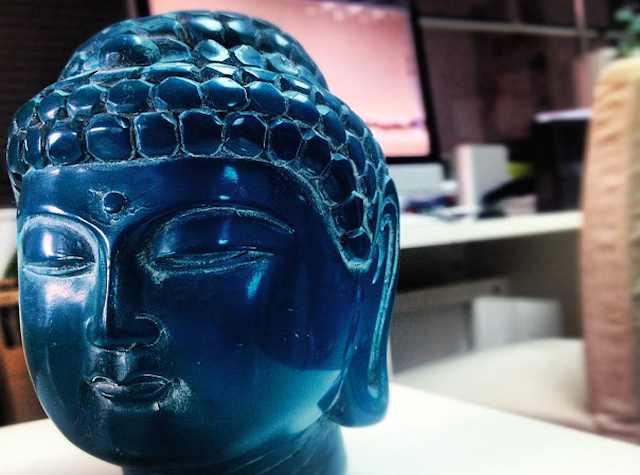
    Office Buddha

    “Life is actually really simple, but we insist on making it complicated.” ~Confucius

    While I have always piled a lot on my plate professionally, I’ve recently introduced more varied elements. Formerly, I may have devoted a long workweek to freelance writing, but I’m now juggling writing, consulting, editing my upcoming book, and promoting my recent eBook.

    I’ve noticed that the biggest complication to my life isn’t necessarily the full, varied schedule; it’s how I think about that busy schedule.

    Sometimes I let my to-do list overwhelm me, carrying the weight of the whole through all of the parts.

    So, instead of just answering an email, I’m responding, thinking about the blog post I want to write later, worrying about the magazine deadline I might not make, and planning to be more effective so that I can get everything done without having to worry so much.

    That’s something I sometimes do.

    But on other days, I remind myself that I can’t worry my way out of worrying, and that the most effective use of any moment is to fully do whatever it is I’m doing. The rest will get done later. That, I’m learning, is the most important part of simplifying.

    The first step in simplifying anything starts with how we think about it.

    Of course, there’s a lot more to simplifying work than that (which I realize is ironic given that the subject matter is simplification). (more…)