Tag: sick

  • What to Do When Someone You Love Is Sick and Struggling

    What to Do When Someone You Love Is Sick and Struggling

    “Love is not what you say. Love is what you do.” ~Unknown

    As a graduate student in public health, I spent my days talking about illness and death. Normal lunchtime conversations among students covered topics like: how to define a case of multiple sclerosis, the most effective strategy to stop HIV transmission among injection drug users, and the probability you’d be alive in five years after a breast cancer diagnosis.

    None of this talk about illness remotely prepared me for the experience of illness. I was blissfully naive when I started dating a man named Evan with a cough that wouldn’t go away.

    Over the course of a year, Evan got progressively worse in a series of fits and starts. He was in and out of the hospital and died toward the end of 2012. I was heartbroken and devastated. But within a few years, I healed and was back to participating in normal life.

    Then, I started getting dizzy spells and severe face pain. A few months later, a very large yet benign tumor was removed from one of my sinuses. I spent months confined to my apartment waiting for my sinuses to heal and the pain to subside.

    Through these experiences, I’ve seen how a lot of our well-intentioned responses to illness don’t have the intended impact. Here are the top eight lessons I’ve learned a lot about how to be a terrific support as a family member or friend.

    1. Do what is needed, not what you think you should do.

    At the lowest points in Evan’s illness, I had a hard time eating. I barely slept. I was always bracing for what would happen next.

    Evan spent twenty-one nights in the hospital over the course of eleven months. I didn’t spend any.

    Not because I didn’t want to. Because he asked me to leave. Because he wanted me to get enough rest so that he could count on me coming back.

    So that I’d be safe to drive and bring him outside food. So that he could trust me to research the doctor’s recommendations and help him communicate his choices.

    Because he could tell how scared I was, and my fear was making him feel anxious.

    Many of us have dreams of being the valiant caregiver who selflessly never leaves the hospital bedside for a moment. If that’s how you think it will go down, I want to tell you something: that may not be what your loved one needs from you.

    Leaving their side can feel awful. You may feel crushing guilt from not being able to do enough. Friends or family may question your commitment. And when things are really bad, there’s the gnawing fear that you’ll miss out on the moments when you were truly needed.

    But if going home to sleep, taking a walk, or spending an hour crying on your friend’s shoulder is going to make the difference between you being a guilt-laden, anxious wreck and your best self, that is what your loved one needs from you. Serious illness is a marathon. Don’t mistake it for a sprint.

    2. If your loved one wants to talk to you about death, listen.

    For most of the time that Evan was ill, we thought that he had a lung disease that was treatable. It was only in the last two weeks of his life, the day after they sedated him and put him on a ventilator, that we found out that he was terminal. A rare form of lung cancer.

    A month before his death, when he was still at home, Evan had talked to me about what he wanted me to do if he didn’t make it. I cut him off after one sentence.

    Of course I would do what he asked, but I told him that this wasn’t something we needed to talk about. He was going to get healthy!

    This conversation is my biggest regret.

    Evan didn’t think I deserved a boyfriend who was sick. He tried to break up with me twice so I could go find a “normal” boyfriend. I wasn’t having it.

    On that night, I wish I had acknowledged how scary things were for him. I wish I had let him know that whatever happened, I had no regrets about the time we spent together. Because I never got another chance.

    Don’t miss an opportunity to hear what your loved one wishes for you, because you think you’ll be able to do it later. Later, may never come.

    3. Every so often, check in on the support person.

    After Evan died I met up with my friends Derek and Tatiana who had been on their own journey through illness. They were engaged, and Tatiana had been in treatment for breast cancer during the same time that my boyfriend was ill. Derek had been taking care of her. When we met up we laughed about all the well-meaning people who emailed us “cures.”

    Derek and I agreed that one difficulty was how friends and family were so focused on how the patients were progressing that us caregivers often felt invisible and unappreciated. Everyone wanted to know how the patient was doing, what treatment we were trying, and if it was working. But few asked me and Derek how we were doing.

    It’s natural for people to be curious about what’s happening with the illness and the patient. But illness impacts all the people close to the patient, too. Caretakers shift our work schedules so we can be there at the important doctor appointments. We file the bureaucratic hospital paperwork. We learn the ins and outs of insurance companies.

    Being a support person is stressful and scary, yet caregivers often feel conflicted about asking for help themselves. They don’t want to draw attention or resources away from the patient. As a friend, regularly checking in on what you can do to help the support person can help them be a more reliable support.

    4. Don’t hide the fact that you’re unhappy for months.

    When your loved one is sick, you may decide that you want to put off a difficult conversation with them. I know, because I’ve been both the support person who has put off the conversation and the sick person who wasn’t told something.

    When I was sick, I wasn’t able to be the kind of friend that I was when I was healthy. I was grumpy. I wasn’t as quick to pick up on nonverbal cues. My thinking was muddled and foggy.

    During this time, I had a close friend who got tired of sick Lori. When I reached out to her, she would delay our get together, chalking things up to a busy work schedule. Eventually she would agree to meet up and then not enjoy the time we spent together.

    Months later, when I was feeling better I asked her if something was wrong. To her credit, she fessed up that she hadn’t been feeling satisfied by our friendship for months. She hadn’t said anything because she was worried I wouldn’t be able to take it. We are no longer friends.

    If you’re feeling unhappy about a relationship with a person who is sick, don’t bottle it up and hope it will go away. If you’re just showing up out of a sense of duty, you won’t have much staying power. And that day when you disappear with no chance of returning is more than a disappointment for your sick loved one. It’s a crisis.

    5. Understand that “cheering up” a sick person may backfire.

    The surgeon who took it out my tumor warned me that it would be months before I was pain-free and back to normal life. I shared this information with my family.

    Nevertheless, about two weeks after the surgery my mom started asking me if I was pain-free every time she texted me. Three weeks after surgery, she sent me pictures of her trip to Disneyworld with the rest of my family. We’re at the Magic Kingdom!!! There’s a new Under the Sea ride!!! Hopefully, you are out of pain by now!!!

    I’m sure that my mom’s intention was to try and cheer me up. To remind me that there were fun things to look forward to in life.

    Instead, those texts and photos broke my heart. They showed me that my mom was not ready to accept the seriousness of my situation.

    I was at the beginning of six weeks of excruciating pain and no effective medication to counter it. I spent a few hours each day screaming into a pillow and questioning whether life was worth this much pain. After those texts, I stopped asking my mom for emotional support, because I no longer believed she could give it.

    If your loved one is really sick, be sensitive. Acknowledge how tough things are before you gush about your magical vacation, your budding romance, or the wild dance party you went to last night. And if your loved one tells you they’re not in the mood for happy stories right now, honor their wishes.

    6. Realize that your chicken soup may not be wanted or helpful.

    Healing often means special diets. After my surgery I was on a paleo diet with a Chinese medicine twist. Every few weeks the Chinese medicine recommendations would shift as my body’s needs shifted.

    It was exhausting to keep track of what I was supposed to eat and what I wasn’t. But I couldn’t deny that the diet was helping. I was feeling better.

    So every time someone offered to make food for me I felt anxious. My dietary rules were complex and varying, and for a while I was in so much pain that I was communicating with a whiteboard, which made it hard to communicate the myriad ways you could mess up.

    There is nothing worse than receiving food that a kind person has made for you that you can’t eat. Even though you tried to tell them how they had to read the ingredients list on everything. Even rotisserie chicken. Because that “seasoning” contains gluten that you’re not supposed to eat.

    If you do make food for someone on a restricted diet, know that you are not just making food. You are making medicine. And your care and attention to detail needs to be the same as if you were preparing to give someone medicine.

    7. Be prepared for plans to change.

    Every year, my friend Charlotte invites a group of us out to dinner for her birthday. When she invited me in 2015, I told her it would be a long shot for me to go, but I wanted to try. Her birthday came two months after my surgery.

    I was in bad shape. I was having pain episodes that had me crying into a pillow a few times a day. I was also on a restricted diet and trying to limit my physical activity so I wouldn’t spark new pain episodes.

    Charlotte is one of my closest friends, and she did everything she could to make it work. She chose a restaurant that had food I could eat. She called ahead and asked about stairs and elevators. She figured out which of the options had the shortest possible distance between where she could drop me off and the front door.

    And I still couldn’t go. The pain was too bad and I was too tired. I didn’t want her birthday to be spent watching someone cry in pain at her table. Thankfully, Charlotte was understanding.

    If your loved one is sick, the fact that they need to change plans in no way reflects how much they care about you. They are not in control of what happens. Trust that they are doing their best. Don’t take it personally.

    8. Take all of these guidelines with a grain of salt.

    The one certain rule is that there are no certain rules. Depending on the circumstances and the people involved, all of these things could change. Some people may want you to distract them from the circumstances or the pain by pretending that everything is like it used to be. Or they may appreciate you holding your tongue.

    If you aren’t sure that what you are doing is feeling good to the sick person, ask them. Let them know that it’s okay to tell you the truth. You want to care for them and if there’s anything that you can do differently to take better care of them, you want to know what it is.

    Have you been ill? What did you find most supportive? Least supportive?

    Have you been a caregiver? What are you most proud of? What do you wish you had done differently?
  • Finding Freedom in Illness: A Guide to Suffering Less When Sick (Interview & Giveaway)

    Finding Freedom in Illness: A Guide to Suffering Less When Sick (Interview & Giveaway)

    Sick

    UPDATE: The winners for this giveaway include:

    • Naomi
    • KC
    • Lisa Pellegrino
    • Caroline Létourneau
    • Viktor Dmitriv
    • Kristin Kollinger
    • Heather S
    • Erica Lombard
    • Christine
    • Bridget Howe

    If you’ve ever been sick for a prolonged period of time, you understand how physically, mentally, and emotionally draining it can be.

    Maybe you don’t know what’s causing your illness, or how to treat it, and you’re tired of searching for answers.

    Maybe you blame yourself for repressing emotions, not exercising, or otherwise potentially causing your condition; or maybe you don’t hold yourself responsible, but fear that others do.

    Maybe you can no longer do the things you love; or maybe you can do them, but it’s much harder, and therefore, far less satisfying.

    While I’ve never struggled with a long-term physical illness, I’ve watched loved ones grapple with serious challenges; I’ve sympathized with their feelings, fears, and frustrations; and I’ve wished I could do something to help.

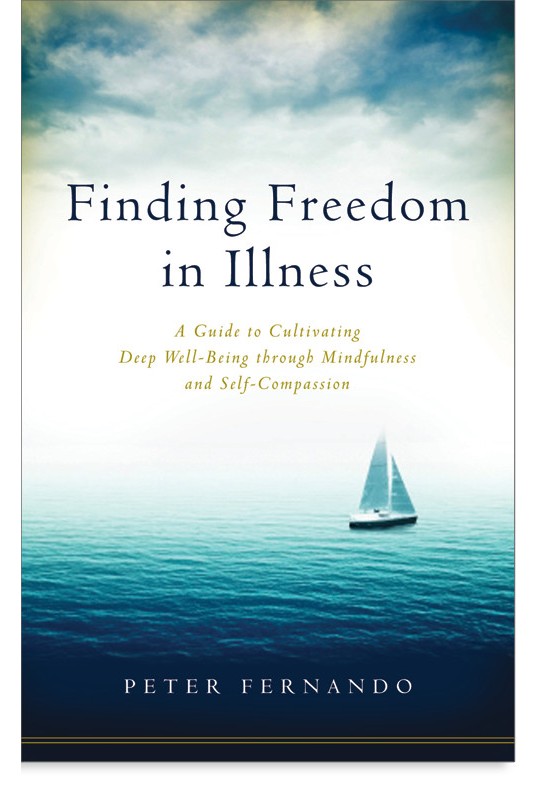
    Going forward, I will point them to Tiny Buddha contributor Peter Fernando’s new book, Finding Freedom in Illness: A Guide to Cultivating Deep Well-Being through Mindfulness and Self-Compassion. 

    Having struggled with various chronic illnesses through the years, Peter knows what it’s like to live a life that’s full of challenges and losses. He’s experienced prolonged periods of darkness, despair, desperation, and discomfort—and yet he still believes he’s lived a wonderful life.

    Why? Because he chooses to see his illnesses as spiritual teachers. And though he admits he would not have chosen them, he’s learned, through them, to free himself from the mental suffering that comes from judging the present.

    Profoundly insightful, Finding Freedom in Illness explores how anyone can free themselves from their suffering and access the liberating power of here-and-now awareness. Though the book is clearly intended for others dealing with physical conditions, anyone can benefit from the teachings related to mindfulness and self-compassion. I know I certainly have.

    I’m grateful that Peter took the time to answer some questions about his book, and that he’s offered ten free copies to Tiny Buddha readers.

    Finding freedom in illnessTHE GIVEAWAY

    To enter to win one of ten free copies of Finding Freedom in Illness:

    • Leave a comment below
    • For an extra entry, share this interview on Twitter or Facebook, and post a second comment with the link

    You can enter until midnight PST on Monday, May 9th.

    *Winners in the US will receive a print copy. Winners outside the US will receive a gift card to order a free digital copy.

    THE INTERVIEW

     1. Tell us a little about yourself and what inspired you to write this book.

    I’m a guy in his late thirties who was a Buddhist monk in his twenties. I’ve been living with various health conditions for most of my life, and bodily challenges have been a huge part of the path for me. I teach meditation in Wellington, NZ with Original Nature Meditation Centre, and run an online course, A Month of Mindfulness.

    The book arose of out conversations I had been having with other folks on the spiritual path, people who also have been living with illness—and a sense of the disorientation, distress, and confusion that can ensue when faced with such challenges and limitations. So, the main inspiration was wanting so share some love!

    On another level, my own situation has highlighted the difficulty in attending retreats or groups on a regular basis, and a need for a home-based practice that is tailored to the specific issues, emotions, and challenges that accompany the experience of being physically unwell.

    For example: When you can’t sit up for long periods of time, how do you meditate?

    When you are exhausted, how do you open your heart and find a real sense of kindness for yourself and others?

    When you are in pain, how do you find a place in yourself that is still okay?

    So I wanted to share some of the practices and perspectives I have developed through trial and error since my twenties, with the hope that they will be useful for folks in similar situations.

    2. I really appreciated your opening chapter, as I think a lot of spiritual people blame themselves for their physical ailments. Can you talk a little bit about the mind/body connection and the difference between taking responsibility for our part in healing and blaming ourselves for being sick?

    This subtle difference has and (continues to be) a central piece of living with illness, for me personally. The bottom line, I think, is don’t beat yourself up for being ill.

    Shame and guilt are so destructive and painful, and yet can easily follow theories of being absolutely responsible for being ill or healthy. Whatever makes you feel ashamed or guilty isn’t going to lead to well-being in the long run.

    From the perspective of the mind that wants to understand our illness (and of course, be as well as we can, on all levels), there is another key piece, for me: any belief is just a belief. It’s not experience.

    So the belief “I’m creating this illness—it’s my fault” is just an idea, right now. The belief “My mind has no bearing on the state of my body” is also just an idea.

    If there are certain mind-body connections that are contributing to our illness, they can only be known by us. Not through a theory, a doctrine, or even trying to mimic someone else’s healing journey. Of course, they are all useful as hypotheses, but not as fixed beliefs about what is going on.

    Awareness practice, on the other hand, takes us right into our own experience, where we begin to know directly what effects certain mind states have on the body, and what effects they don’t have.

    We become curious, and even innocent in our exploration. We don’t have to have a fixed belief in anything, which allows the tendency toward shame or self-blame to relax, and is also where the feeling of freedom begins to emerge. Curiosity and genuine interest in our mind, body, and heart, in this moment, is where the power lies.

    What the process of paying attention reveals about the mind/body connection is different for everyone. There may be one, and there may not be—that’s just how it is.

    Many enlightened teachers have died following long illnesses, such as the teacher of my teachers, Ajahn Chah. Many uptight and stressed out people live physically healthy, outwardly successful lives.

    So the only touchstone for what is real is our own experience, our own body-mind, in the intimacy of awareness. No shoulds, no guilt-trips, and no identity of being a failure. To me, that is what taking responsibility is about.

    3. How does mindfulness help us cope with physical illness, and what’s a simple mindfulness practice anyone can do daily?

    Mindful awareness helps us cope in every way possible! Without being aware of our reactions to pain, loss, social isolation, or fatigue, those reactions will take over.

    When we are aware of what is happening in the present moment, with an embodied awareness, there is a natural inclination to abide in states of being that feel good, and to relax those that don’t.

    If we don’t see them, they take on a life of their own and can become our entire identity, rather than the momentary arising of emotion or perception that they actually were.

    A simple practice I do daily is to stop, close my eyes, and take stock of what’s going on in the mind and heart, for five minutes. No agenda or desire for a specific outcome—just a real curiosity.

    I ask, “What am I doing, right now, in my heart?” And then, “Is this kindness to myself, or is it something else?”

    This is the gateway to authentic mindfulness, in my opinion. To me, an open, kind heart is an essential part of mindful awareness. Attending to its presence or absence goes a long way in tracking the quality of the mind throughout the course of a day.

    4. In chapter 3, you talk about the stories our minds tell us about the present, the past, and the future. Can you elaborate a little on these stories, how they keep us stuck, and how we can start letting them go?

    The word “stories” is a kind of shorthand to refer to the psychological narratives that arise in the mind’s eye, with regard to “Who I am, what others think of me, what I will be, what I was,” and so on.

    They are the first indicator of underlying heart-drives or emotions that are stirring in us. It’s important to say here that the word doesn’t refer to functional stories, which we need to survive. These are useful, when imbued with creativity and wellness of heart.

    Our psychological narratives, on the other hand, are habitual and don’t come from a sense of choice—they are knee-jerk reactions, often with deep historical roots, that take us into some form of stress, suffering, or emotional stuck-ness.

    The habitual, seemingly out-of-control nature of these is their defining characteristic. Starting to let these go is a process that requires sensitivity and patience, in my experience. It’s easy to say, “Just be present,” but to actually do it requires a journey into our own heart. Otherwise, it can become dissociation or avoidance, which doesn’t lead to well-being.

    For me, there are always three stages to the process. The first is mindfulness: seeing what is happening, with objectivity, rather then being caught in it. It’s a kind of stepping back. We realize we can see the mind, not just be caught in it. This is the miracle of mindful awareness, really.

    But seeing a story is one thing. Freeing attention from its grip is another. So the second part of the process is a receptive awareness, feeling how the energy feels in the body.

    This is more than seeing—it’s sensing, which requires a kind of awareness we may not be used to. So we can begin experimenting with it.

    When we feel what’s going on, we can then pan out to recognize that a story is just the branches of a core root feeling.

    For example, the story “I’m going to have a terrible time seeing my friends tomorrow” could just be the root energy of fear. Knowing it as such makes the story seem less personal, and we recognize that these are forces at work in the present, not realities that will happen in the future. It’s all happening now.

    The third stage in the process is relaxation. When we feel the root of a story we can consciously incline toward relaxing around it. Relaxation is another word for letting go. When we relax around an emotion or an energy, it begins to calm. It also has less power to solidify into a full-blown story. We find we can be with instead of be in. Life frees up as a result.

    5. In chapter 4, you wrote, “openness is courage.” Can you expand on this?

    Being open to what is here is perhaps what is most scary for us as humans, I think. Our lives are geared toward distraction, intellect, and ideas—so much so that sitting somewhere without checking our phone, for example, can feel disorienting and uncomfortable.

    It feels uncomfortable and scary because it means being open to what is actually here—including the body and mind and emotions, just as they are. So cultivating that ability is a courageous act.

    When it comes to illness, the stakes are even higher. We’re not just cultivating an openness to “boring life as it is,” but very often to unpleasant sensations, depleted energy, and physical pain.

    Trusting that our own compassionate awareness can meet that, too, is always an act of courage. Sometimes we just can’t, which is okay. And sometimes it’s just not the right thing to do—especially if it heightens the discomfort in the body or the stress in the mind.

    But when we feel resourced enough to rest in awareness, and be with the pure experience of this moment, we gain vistas into new worlds of possibility. If we remain there for a period of time, we may be surprised by a quiet sense of peace and ease that begins to emerge.

    6. In the section on meeting our dark emotions, you wrote that we need to stop judging anger, fear, and despair as “bad.” What do you think is the key to embracing these feelings without getting lost in them?

    Oh, good question! It’s a fine line isn’t it? For me it always comes back to the Buddhist maxim of the “Middle Way”: that poise in the middle of indulging in destructive emotions on the one hand and repressing them on the other.

    My tendency has been more toward the latter, so learning how to actually feel and un-shame them has been a big part of my own journey. However, if one’s tendency is to feed them, get lost in them, and rail against illness, some discernment and wise discrimination can be really useful.

    But most of us have a default setting that judges dark emotions and tries to push them away, to some extent. We believe this is what being “strong” means.

    From the meditative perspective, we are looking for strength in presence, not just strength of will, however. When presence, grounded in the body, meets a force like anger or fear, there is a transformation that can happen. Through not indulging the story, and not trying to push the energy down, we feel what is here, as just so.

    In Buddhist teachings, this is the essence of the third foundation of mindfulness—mindfulness of the heart. Through this poise, the primal energies of dark emotion begin to dissolve, and transfer their energy back to our core presence. They relax and calm without being pushed away. It’s an alchemy of sorts.

    Of course, sometimes we need to push them away temporarily, just to function. The above isn’t an absolute statement about what we should always do.

    But when we gradually train ourselves in the skill of meeting dark emotions as just so, and feel them in the body, we discover a new place in ourselves that can handle their intensity without resorting to self-judgment. This makes living with illness much easier in the long run, in my experience.

    7. Why do you think so many of us deny ourselves rest when we’re drained or unwell, and what mental shift do we need to make to start taking care of ourselves in this way?

    I think it’s something to do with the way we are conditioned to value ourselves. Modern society puts most value on doing, achieving, and “being somebody,” it seems, and very little on “just being.” So we get hooked into it.

    Rest means relaxing an identity of being useful or productive, which can be scary. If our identity is entirely dependent on value-through-doing, then it can feel intolerable to really rest and take care of ourselves. We believe it’s lazy, or self-indulgent, or that we are a failure and there are other people somewhere out there judging us.

    From the perspective of inner well-being and harmonizing with the limitations of our physical condition, however, we can find a different way of viewing conscious rest.

    On the level of the body, it just feels good, so that’s one thing. On the heart level, we realize that it actually reminds us of our real value rather than takes us away from it.

    Our deepest value is just in being us. When we feel that in our hearts, and relax the need to prove ourselves, be approved of, or the opposite sides to that coin, then paradoxically, a new kind of value emerges. It’s one that feels peaceful and meaningful through just being here.

    When we get a sense of that, it becomes much easier to feel confident about consciously resting.

    There’s always a bit of friction involved in changing gears, particularly if our lives are very busy, but it lessens the more we can tune in to the deeper kind of value that comes through letting go of the need to always be someone doing something useful. And weirdly, when we do that, energy to do useful things, within our capacity, often comes back quite naturally.

    8. Can you tell us a little about the difference between pain and suffering, and how we can suffer less?

    Well, that’s a huge topic, with a lot of subtlety involved, I think. For myself, the Buddhist teaching around the difference between painful or unpleasant sensation in itself, on a sensory level, and the existential dis-ease that usually accompanies it, has been very potent.

    Basically, the teaching says that they are two different things. We tend to think they are one in the same, but when we attend carefully and with sensitivity, we begin to notice that while physical pain or discomfort very often conditions suffering in the heart, it doesn’t ultimately have to. So, it’s a freeing teaching.

    It doesn’t mean liking pain, though, or trying to be fit into some kind of equanimous ideal where we never suffer in the face of it. As an ideal, that doesn’t go very far.

    The journey to suffering less around pain involves meeting exactly what is here, including our reactions to it. But by being curious about them, we discover how to relax the heart-contraction around pain.

    Very often, relaxing the contraction (and the stories, judgments, self-images, or predictions that come with it) can lead to more space opening up in our awareness. In this space, physical pain doesn’t have the same hold over the mind. We suffer less.

    9. It’s easy to get down on ourselves when we feel we’re not at our best. What has helped you stay out of this trap?

    Well, it’s a trap I am very familiar with, and definitely not free of! But it’s something I have gradually learned to relate to rather than be completely identified with.

    For myself, self-compassion has been the guiding light in this regard. I first used it as a concept, which, in itself, was very powerful. It’s a radical shift from the default position of inner-tyranny many of us live within. On the conceptual level, it takes a bit of reflection to come alive.

    I remember feeling like it was indulgent or selfish to be compassionate with myself, in the beginning. But it slowly started to make good sense, particularly when I saw directly that it actually increased my ability to relate to others in the same way.

    Then on the heart level, it’s been a cultivation—creating space around the identity of the me who is “wrong” in some way, and really holding that sense with a sense of great warmth and kindness.

    In this space, I began to feel what tyrannical mind actually does in the present moment: it generates pain. Compassion began to arise when I started being aware of this pain in a very direct but tender and patient way.

    It started to teach me. It was like, “Oh, okay. When I hold on to these self-images, this is the result. Wow—that’s really painful. Maybe I could start to relax that?”

    So the heart began to learn, naturally, when I took the time to bring awareness to bear upon what often seemed so real and true that I never questioned it.

    10. What’s the main message you hope readers take from this book?

    I think the main message I would like to communicate is that being physically ill doesn’t mean we can’t have a rich inner life. There are ways of living with the limitations of illness that can open us right into the magic of this existence.

    We don’t need to feel like we’ve failed, we are wrong, or there is no hope. The real treasures are right here underneath the surface—for all of us, healthy or not.

    FTC Disclosure: I receive complimentary books for reviews and interviews on tinybuddha.com, but I am not compensated for writing or obligated to write anything specific. I am an Amazon affiliate, meaning I earn a percentage of all books purchased through the links I provide on this site. 

    You can learn more about Finding Freedom in Illness on Amazon here.

  • 50 Volunteers Turn Sick Boy’s Room into Firehouse of His Dreams

    50 Volunteers Turn Sick Boy’s Room into Firehouse of His Dreams

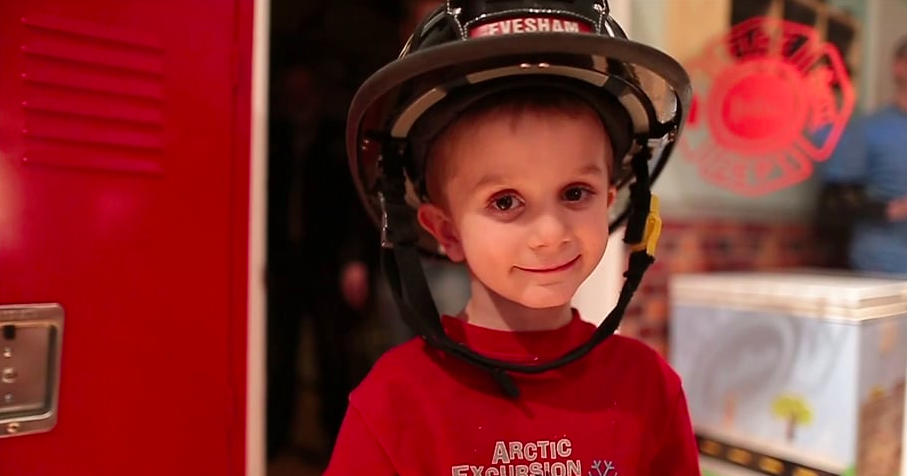
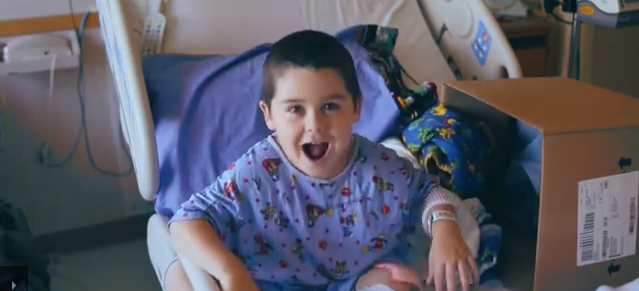
    Five-year-old John John, who dreams of one day being a firefighter, was diagnosed with Stage 4 anaplastic ganglioglioma in 2013. Last year, his parents learned he only had nine months to live.

    The Corner Kingdom Project raised close to $11,000 to turn his bedroom into the firehouse of his dreams. Dozens of companies and volunteers donated materials and time, and what an amazing job they did!


  • Children’s Hospital Performs Katy Perry’s Roar

    Children’s Hospital Performs Katy Perry’s Roar

    In this inspiring, heartwarming video, children and staff members at Children’s Hospital at Dartmouth-Hitchcock let out their inner lion and perform Katy Perry’s Roar.

    You can make a donation to support the kids of CHaD here, and you can learn more at chadhero.org and chadkids.org.

  • You Don’t Need to Fix Yourself to Be Healed

    You Don’t Need to Fix Yourself to Be Healed

    Calm Acceptance

    “Growth begins when we begin to accept our weaknesses.” -Jean Vanier

    I used to believe the word “healed” had a very specific meaning. In my mind, it described a state of perfection that always looked very different from the chronic health challenges I endured.

    Being born with VACTERL Association, a birth disorder that causes malformations in six of the body’s systems, meant that I entered the world needing a lot of fixes. There were surgeries, hospitalizations, treatments, and medications aimed at perfecting something inherently imperfect.

    The Search

    I grew up searching. To be like everyone else. For a cure. For Peace. Clarity. Happiness. Always searching for a technique or philosophy that could mold me into the ideal woman I imagined I should be.

    My search was fueled by a very narrow view of “normal,” “beautiful,” and “successful.” Images perpetuated on magazine covers and a myriad of self-help manifestos told me that life was good only if you could figure out how to become flawless, inside and out.

    I read hundreds of books, attended seminars, journaled, meditated, said affirmations, communed with my inner child, prayed, eventually begged, finally groveled. And nothing.

    Well, there was something. I found out that I was going to need a kidney transplant.

    I assumed this prognosis meant that I wasn’t being “spiritual” enough. I needed to try harder. I saw the decline in my kidney function as a manifestation of negativity in my emotions. Maybe the damage was subconscious?

    I saw healers and hypnotherapists. I listened to subliminal message tapes. I reviewed my memories, and looked, and looked, and looked for the cause of my current predicament. And still nothing.

    All that came out of my search was restlessness and desire to search more.

    I was operating under the assumption that if I meditated masterfully, became enlightened, or at least healed old emotional wounds than life would bend toward my will. It followed that since life was not yet how I wanted it, something must be wrong with me. I needed to find the fix.

    As I stewed in my own spiritual turmoil, my kidney function continued to decline. The pressure I had placed on myself to not just find the cure, but to become the cure was making things worse.

    Life is Suffering

    I thought “healed” meant that life became the way you wanted it to be. I could not have been further from the truth. I had missed the most basic of Buddhist principles: life is suffering.

    Becoming spiritual does not mean that we are no longer human. It doesn’t take away the pain, illness, and stress; it only reframes it. Suffering tells us that we are inherently human. Coping with human challenges does not mean that we are less-than or that we are damaged; it only means that we are experiencing things all human beings experience.

    The trick is not to bend life’s will to our personal desires. It is the other way around. We must find the flexibility to bend to Life. That is what I had been missing.

    There Was Nothing to Find

    All of that searching took me to the most basic of places: exactly right where I was. Nothing to fix. Nothing to do. Nothing to become.

    I no longer see “healed” as some form of perfection. It isn’t a certain health status, lab value, or lack of a diagnosis. Healed isn’t remission or cure. It isn’t any specific thing.

    Healed is the willingness to unconditionally accept whatever life is at this exact moment.

    My kidney is now flirting with the edge of kidney failure. Transplant plans are in the works. Sometimes I feel scared or worried. Sometimes I cry. Those are things I accept too. I no longer need to always be positive. I don’t force myself to be anything other than exactly what I am.

    I’m learning to yield. It is a practice. I still have latent urges to “figure this out” or to be the miracle doctors cannot explain, and those tendencies get welcomed into my experience as well.

    That’s the thing about acceptance: it doesn’t require searching. It is always available. Simply knowing that these rough edges are part of being here in a body, on earth, lifted a huge weight off of me.

    I am healed. Even as I face surgery and a lifetime of medication, I am healed. At peace. With clarity. Content. Happy.

    Photo by Cornelia Kopp

  • Body Betrayal: How to Cope with Chronic Pain and Illness

    Body Betrayal: How to Cope with Chronic Pain and Illness

    “As long as you make an identity for yourself out of pain, you cannot be free of it.” ~Eckhart Tolle

    Up until fairly recently, I often felt betrayed by my body. It was always breaking down, leaving me frustrated and bitter.

    No one else seemed to have as many problems.

    I’ve had Juvenile Rheumatoid Arthritis, an inflamed gall bladder riddled with stones that ended in surgery. Chronic migraines, chronic hives, Chronic Fatigue Syndrome.

    Whenever I get sick, it never seems to be something trivial. A cold becomes bronchitis. Hayfever leads to a sinus infection.

    One year after holidaying in Thailand, my partner returned home fit as a fiddle, whereas I got scabies, salmonella poisoning, and acute facet lock (or rye neck, which I did in my sleep!).

    Gah!

    The thing is, I’ve done a lot of healing over the years. I’ve consulted with counselors, acupuncturists, physios, osteos, hypnotherapists, and more. In a lot of ways, I’ve become more in tune and aware of my body and healthier than ever. I feel like I’ve grown as a person, have more resilience, and am able to celebrate the positive side of life.

    So when I found myself trying to heal my chronic lower back pain, I was disapointed to hear the old “poor me, why me?” tape start running again. One day I was lying down, feeling very sorry for myself when something occurred to me:

    What was the lesson that I hadn’t learned yet? What was my body trying to tell me?

    So I asked it.

    Yep, I said, “Excuse me body, I feel really betrayed by you. You always seem to be sick, sad, or sore. What are you trying to tell me?”

    And here was my body’s soft, small answer.

    “I’m not trying to betray you. But I have needs too. I try to let you know but you’re too busy hanging out with your mind. When you two get together, you get lost and sometimes I have to scream at you for you to hear me.”

    Woah. For me, this was an epiphany.

    I had an immense insight with images flashing in my mind from my past. (more…)

  • 5 Powerful Things to Do for Yourself When You’re Sick

    5 Powerful Things to Do for Yourself When You’re Sick

    “Your body is precious. It is our vehicle for awakening. Treat it with care.” ~Buddha

    Getting sick is rarely, if ever fun for anyone, but we all get sick. You can cheat on your taxes, but you can’t cheat on sickness.

    When we get sick, we all have a choice of how to work with illness. We can choose to be miserable or we can choose to learn about ourselves and grow from the experience. Since I have had such a hard time with the latter, I’ve investigated 5 ways to practice with illness.

    1. Reflect on the benefit of health.

    Often illness brings into focus what we wish we could be doing when we feel healthy.

    Once, back when I was a pack-a-day smoker, I got food poisoning, and I remember the smell or thought of cigarettes made me feel so much worse. At that time I vowed not to smoke anymore. I felt the frailty of my body and I didn’t want to live a life that hurt my body. I saw how much I needed my body, how bad it felt to not be able to rely on it.

    Unfortunately as soon as I felt better I forgot what I knew when I was really sick. Being sick gives us the chance to reflect on the value of health and what you want to do with your life energy when you do feel better. People who are in hospitals only have time to sit around and watch TV; is that what you want to do with your free time?

    We only have so many hours and days of health. How can we use each hour of our lives to benefit the people we love the most? (more…)

  • Being Sick Doesn’t Mean You’re Wrong: Enabling Real Healing

    Being Sick Doesn’t Mean You’re Wrong: Enabling Real Healing

    “You must love in such a way that the person you love feels free.” ~Thich Nhat Hanh

    A lot of people I know who have had chronic illness, including myself, have had a hard time letting go of the feeling of “wrongness” that arises with it, in the mind.

    I sometimes wonder where this comes from. When I look at our culture I get a feeling for where we get these messages. It doesn’t, generally, seem to emmanate non-judgmental compassion!

    In our age of consumerism, photoshopped bodies, and a million-ways-to-look-young-and-feel-great-forever, the body’s propensity to get ill is generally seen as some kind of mistake. This may not be the spoken message, but it’s there in the subtext.

    We are encouraged to believe that we can (and should) control our material universe, including our bodies, to be exactly the way we want.

    When attached to, these beliefs and ideals can lead to misery.

    If you’re sick, for example.

    Why?

    Because when it is taken as an absolute truth, we start to feel an uncomfortable stirring in the heart. A quake in the depths of ego. It usually goes something like this:

    “I’m creating these conditions. It’s my fault. I must be wrong because of this.”

    And if feeling like crap physically wasn’t enough, the ego-mind and the energy body join in on the party. Cue depression, self-hate, and often, a worsening of symptoms.

    With a bit of perspective, it’s easy to see that this is not wisdom. This is self-harm. From the inside though, it can feel absolutely real, especially when we’ve got some teaching or another to back it up. The voice of some guru in our head whispering, “It’s your fault. You just don’t want to be healthy enough.”

    Hmmm…

    Luckily, in deep teachings, and in the presence of beautiful people, you never find this sort of thing.

    What do you find?

    You find real compassion. (more…)