Tag: shame

  • Made a Big Mistake? What to Do Instead of Beating Yourself Up

    Made a Big Mistake? What to Do Instead of Beating Yourself Up

    “Note to self: Beating yourself up for your flaws and mistakes won’t make you perfect, and you don’t have to be. Learn, forgive yourself, and remember: We all struggle; it’s just part of being human.” ~Lori Deschene

    When I was in twelfth grade I took a World Issues class and learned about colonization, child soldiers, and how some children, by no fault of their own, had a much more challenging life than I’d had. After that, I wanted to help but wasn’t sure how.

    Then, at age twenty-three, I was hired at a non-profit organization where I had the opportunity to work with teenage girls in prison. Finally, I had a real opportunity to help and I wanted to be perfect.

    It was my dream job. I was excited. But then I made a big mistake.

    I walked into the prison and filled out the visitor’s sign in sheet. I waited until Sharon, the classroom teacher, came to meet me.

    She was rushing, as she often was, trying to accommodate me and keep teaching her class.

    “A couple of girls tried to knock themselves off last night, including Kate,” she said quickly, “so they’re not in class today. But it’s fine to go ahead with the interview.”

    “Attempted suicide?” I stammered.

    “Yeah,” said Sharon, “They’re just trying to get attention. Don’t worry too much about it.”

    I cringed. My breath got short and my stomach tightened. I couldn’t imagine that it was only about getting attention, and something felt off about going ahead with the interview.

    Before I really had time to process what had happened Sharon opened a door with her key card and held it open. “Kate’s in here with one of the staff, go ahead. She’s fine,” she said. I stepped through. She let go of the door and walked off quickly to get back to her class.

    I was interviewing Kate that day for a blog post. My organization wanted to profile her to show the breadth of work that we do. I had a list of questions I’d prepared and a recording device.

    I’d been working with her class for a couple of months. I was running a workshop on advocacy, so I went in once a week. I’d brought in guest speakers to inspire the girls, and now they were working on their own advocacy project—telling their stories through a short film.

    I liked Kate. She wasn’t afraid to share her opinion and was a bit of a class clown. She was seventeen and had had a difficult life but was tough and resilient. I could tell her sense of humor helped all the girls through the hard days.

    She seemed fine. We joked around and then got into my prepared questions. I turned on the voice recorder and started asking her about her childhood and her life.

    Half an hour passed quickly and then I packed up my voice recorder and said goodbye. A staff member took me through a series of magnetic lock doors and I left.

    When I got back to my office there was a message from the manager of the prison on my voicemail. She’d heard I’d asked Kate how she ended up in prison. Kate hadn’t answered, but since youth in Canada have special privacy rights when they’re involved with the law, the manager was very upset.

    She was also upset that that I’d interviewed Kate when she was in a vulnerable state and said that never should have happened.

    I felt terrible. My face got hot and breath shallow. I’d wanted so desperately to help and now I felt like I was making things worse.

    “What’s wrong with me?” I asked, “Why didn’t I follow my instincts and postpone the interview? Am I really making things better or am I just making things worse?”

    These thoughts ran through my head for weeks following the event and I began to seriously question if I could do this job.

    And I was scared of messing up again, so I became a perfectionist with everything I did. I would spend weeks editing a single email to make sure there wasn’t something inappropriate in it.

    And eventually it got to be too much. It was my dream job but it was too hard. The girls’ stories were too sad. I couldn’t do as good of a job as I wanted to.

    I could barely get up in the mornings. I was too tired, too depressed. I was burning out.

    So I quit.

    I knew I couldn’t look for another job; I’d just be looking for something similar. I’d landed my dream job but couldn’t do it. I needed to press the reset button on my life.

    So I moved to a yoga and retreat center in the Canadian mountains and spent two years learning to meditate, learning what was within my control, how I could help, and what was not my responsibility.

    And eventually, I learned how to forgive myself for the mistake I made with that young woman. I realized that my intentions were good, that I hadn’t meant to hurt her, and that I’d made a mistake but it wasn’t quite as big as I’d thought.

    And after two years of studying yoga, I went back to the same job. Working with youth with similar stories, I learned to do it better. I still made mistakes but was better at forgiving myself. And I could see that the positive impact I was making outweighed these errors.

    If you’ve made a big mistake (or even a small mistake!) you can forgive yourself too.

    Here’s how:

    1. Tell someone you trust.

    The best thing I did after making the mistake with Kate was call my boyfriend. He listened to the situation and then said, “Bryn, honestly, if I was in a rough place and had attempted suicide, you’re exactly who I would want to talk to the morning after. I’m sure your kindness helped.”

    My boyfriend wasn’t the type to give compliments, so I believed him and it started the process of forgiving myself.

    It might be hard to be vulnerable and share your mistake, especially if you’re feeling deeply ashamed and afraid of being judged. But odds are someone who loves you will view your mistake from a different perspective and help you see the positive intention behind the misguided action.

    2. Be radically kind.

    If you’re anything like me, your instinct after you make a big mistake will be to punish yourself for it. You’ll think, “I have to work harder to make up for it.” You might tell yourself, “I don’t deserve to take a bath or go for a walk in the woods.”

    So try your very best to be radically kind to yourself. Take that bath. Go to bed early and get enough sleep. Get outside or take a yoga class.

    We’re more prone to make mistakes when we’re tired or stressed. So if you take care of yourself, you’re less likely to make future mistakes.

    3. Realize you were doing the best you could with the resources you had.

    Maya Angelou said, “When you know better, you do better.”

    You probably were doing the best you could when you made the mistake. Maybe you were overwhelmed or exhausted which both make errors more likely.

    And now that you’ve made the mistake, you can learn from it and ensure you don’t make it again.

    4. See that beating yourself up isn’t helping anyone.

    Beating yourself up doesn’t take back the mistake and probably is just making you tired and maybe even depressed.

    According to shame researcher Dr. Brene Brown, when you tell yourself, “I am a mistake” it sends you into a shame cycle that is correlated with depression, addiction, eating disorders.

    The good news is when you tell yourself, “I made a mistake” you can learn from it and this is correlated negatively with depression, addiction, eating disorders.

    I learned a lot from my mistake. I blamed myself for hurting Kate when she was already having a terrible day. And, yes, if I could go back I would do things differently. But I eventually realized my mistake wasn’t as big as it originally seemed and my intentions were good, so I could forgive myself.

    I also realized it wasn’t just my mistake I felt bad about; it was also that Kate and the other girls had such difficult lives. I needed to learn that I can’t save people, and that’s okay. I can still make a positive impact, no matter how small, even if I’m not perfect.

    If you’ve made a big mistake, I get it. It can be very difficult to overcome. But taking one step at a time, you can learn to forgive yourself and ultimately this will free up your energy to do more good in the world.
  • Everyone Has Struggles, So Don’t Stigmatize Yourself

    Everyone Has Struggles, So Don’t Stigmatize Yourself

    “Shame corrodes the very part of us that believes we are capable of change.” ~Brené Brown

    From a psychological point of view, my childhood sucked.

    I didn’t have many friends, I rarely left the house, I was terribly shy, and I used to get bullied a lot, both physically and mentally.

    My teenage years weren’t any different. The psychological issues I had as a child amplified further and created more profound problems.

    When I started college, I didn’t magically become more confident or develop high self-esteem. I was almost the same person.

    Now, I proudly (and humbly) can say that I’ve gotten over most of my childhood and teenage problems, including the ones related to my social life.

    But I’m not here to tell you how I did that. That would probably take a book. And trust me, it’s not as glorious as I wish it were.

    Instead, I want to tell you about one factor that made all the difference during my journey of change and development.

    One factor that made my journey tolerable at times. Without it, I would have given up.

    I’m Bad, Aren’t I?

    When I was younger, I was shy, lonely, and depressed. My social skills were bad.

    That, in and of itself, was hard enough.

    Basically, I was witnessing my life falling apart in front of my eyes, socially and emotionally.

    But do you know what was worse than seeing my life falling apart before my eyes?

    It was feeling bad and ashamed of myself because my life was falling apart.

    It was believing there must have been something wrong with me, and that was why I was suffering.

    It was stigmatizing myself because of my problems.

    I was developing harsh feelings of shame because I was shy, lonely, and depressed. And for a long time, I couldn’t ever feel good about who I was as a person.

    In other words, I didn’t feel bad only because I wasn’t able to go out there and socialize. I also felt bad because I believed having these issues meant that I was worthless and inferior to other people. That I was unworthy of their attention or time.

    When you stigmatize yourself, the feeling of shame very well may cripple you. You likely will not take action to solve your problems. You will think you are already a loser, so why bother?

    Feelings of shame and stigma can never induce positive changes in your life. They will only induce fear, self-hatred, anxiety, and self-pity.

    This was what I did for years and years. I solved nothing. I sat there pitying myself.

    Am I Really Bad?

    We all share the desire to connect with each other. Connection is essential for our well-being. No one can live alone; the “lone wolf persona” is just a myth.

    And here’s where shame comes into play.

    It’s when you feel that you are so flawed that you don’t deserve this connection. It’s when you believe you are too bad for anyone or anything.

    It’s when you believe that, because you have certain problems or issues, you’ll never be as worthy as other people.

    It’s when you stigmatize yourself because of your problems and issues.

    It was only when I stopped doing this that I was able to get up and do something about my problems.

    You know it’s hard when you work with someone who is judgmental about your every action. Someone who believes you are bad because you have issues. What if that person was yourself?

    There’s a difference between guilt and shame. When you feel guilty, you’ll feel bad because of your actions, but you’ll likely do something to correct them. With shame, you’re more apt to do nothing but dwell in self-pity and self-destruction.

    And in the case of stigmatizing yourself because of your problems, it’s shame and not guilt.

    Own Your Problems, Flaws, and Mistakes

    I remember one of the first times I started to adopt this mentality.

    I was supposed to hold a microphone and talk in front of a lot of people. It wasn’t compulsory, but I was advised and expected to do it.

    At that time, I was working on my self-confidence and my social skills.

    But I chickened out. I escaped. I didn’t do it.

    I remember sitting down to have a cup of coffee right afterward. My inner critic was torturing me. I felt like a fraud and a coward.

    After all, I’d been working on my self-confidence, but I still couldn’t do it.

    I started beating myself up. Feelings of shame started to develop. I started to hate myself because I couldn’t be as confident as I believed I should have been.

    But then I stopped and noticed that I was stigmatizing myself because I’d chickened out and escaped. I was calling myself ugly names because I couldn’t overcome my low self-confidence.

    That wasn’t a healthy response. A healthy response would have been to feel bad (and guilty) about the action but not about who I was as a person.

    So, I stopped. And I told myself something like, “Hey, you have issues. But we all have issues because that’s life—everyone suffers somehow. The people around you have issues as well. Uncontrollable childhood events can screw up anyone. Work on a solution and do your best to improve. Feeling bad and inferior because you have problems is worse than the actual issues themselves!”

    And man, did that save my self-esteem from collapsing.

    Don’t Stigmatize; Do This Instead

    This concept isn’t only about social skills or self-esteem.

    It’s about any kind of problem or issue you are facing.

    In fact, it’s not about the actual problems or issues. It’s about every situation that makes you feel ashamed of yourself because you feel like you lack something or something is wrong with you.

    This feeling, the feeling that “something is wrong with me because I have X or Y,” is worse than the actual issues (the X and the Y).

    Whether it’s depression, anxiety, failure, rejection, financial problems, family problems, or any kind of such (usually personal) issues, the concept is the same. Don’t stigmatize yourself because of your problems. Just don’t. It’s destructive. And, from the deepest point in my heart, I know you don’t deserve to feel stigmatized. No one does.

    Instead, recognize that it’s not shameful to struggle, and it is possible to improve if you’re willing to accept responsibility for learning and growing.

    The younger me, who was very afraid then, realized that there was hope when I did that presentation (and a couple more public speeches after). I wouldn’t have made that presentation if I hadn’t held myself responsible for solving my problems. And I wouldn’t have held myself responsible for improving if I had stigmatized myself.

    It’s much easier is to make progress once you accept that having problems doesn’t necessarily mean you are a bad person or that the situation is helpless.

    This lesson is easy in theory, but it takes a large amount of self-awareness, self-care, and self-love to be applied. But once applied, it can move mountains. Mountains of emotional and psychological problems that were beating the hell out of you. Choose, right now, to do that for yourself when you need it the most, no matter how hard or uncomfortable it might be.

  • Loving Yourself Through Addiction and Relapse: Be Patient with the Process

    Loving Yourself Through Addiction and Relapse: Be Patient with the Process

    “The greatest glory in living lies not in never falling, but in rising every time we fall.” ~Nelson Mandela

    It’s a cold winter day. As I plunge my hand down into the wax paper bag, I fully expect to find another bite or two. But, alas, there are only crumbs.

    A distinct wave of sadness shoots through my heart. The chocolate scone is gone. And I don’t even remember eating it.

    It is in this moment that I wake up. I quickly shake my head from side to side, as if rousing myself from a long night of troubled dreams.

    What have I just done? What about the vow I’ve made to myself, again and again?

    For years I have known that the best thing for my body’s healing process is to eat fresh, whole, organic foods (lots of leafy greens, fruits, and nuts!) and to avoid ingredients that overstimulate my endocrine and nervous systems, such as sugar and wheat flour.

    And yet, today, here I am again. Eating some stupid, cheap scone I picked up on impulse at the local bakery. Full of who-knows-what ingredients.

    Here I am again. Ignoring my own wisdom. Falling back into the food addiction that has plagued me since childhood.

    Today I have lost control.

    I pull my car over into a parking lot. (Yes, I have been mindlessly scarfing that darned scone while driving!) I take a deep breath.

    Now is definitely the time for some self-love.

    Addiction is a Dirty Band-Aid 

    Whether you struggle with a food addiction like I do or you deal with drug or alcohol addiction, every addiction is the same. An addiction is a loss of control over one’s behavior.

    Our addictive behaviors don’t just randomly happen for no reason. They are a symptom of a deeper issue.

    Why do we get addicted?

    That scone or that cocktail or that cigarette brings about a temporary cessation of suffering. They block sadness, tension, fear, pain, boredom, and anger. They numb any and all negative emotions.

    To put it simply, an addiction is a coping mechanism. It allows us to trudge onward in life, but without really looking toward the deeper issues.

    An addiction may be a short-lived, temporary cure for the pain—but, as we all know, it’s not a long-term solution.

    Running to our addiction is like slapping a Band-Aid on the wound—a Band-Aid that is dirty. Over time, the wound gets infected with the dirt and grime, and it worsens rather than heals.

    The Addiction is Not the Problem

    Here’s the thing about addiction, dear friends: The addiction is not really the problem. The addiction is the glaring symptom.

    If we can look deeper than the symptom and see the situation from a holistic point of view, then we may begin to bring about a resolution to much of the suffering in our lives.

    So, what is the deeper issue? What lies at the root of addiction?

    Ultimately, all addiction—no matter the type or the severity—stems from a lack of connection. When we feel disconnected from other people, from our society, from our deepest hopes and dreams, and from a sense of love, then this disconnection brings about powerful emotions. These emotions hurt, and so we run to the seeming solace of the addiction.

    The addiction may seem, on the surface, as if it’s the problem, but actually it’s not. The addiction is, in reality, a helpful pointer, showing us that there’s some internal healing we need to do.

    The wonderful thing about addiction is that it is a powerful red STOP sign. It screams loudly: “Look! There’s a problem!”

    Addictions help us get in touch with our inner self. Just like a cough helps us connect with the needs of our lungs (do I need fresh air? do I need more exercise? do I need to take certain herbs?), an addiction helps us get in touch with the needs of our heart.

    Our heart is the seat of all emotion. Our heart is where feelings arise, are felt, and then released.

    When we feel a lack of connection and love, we do not feel safe. We do not feel safe enough to explore the many emotions that can arise as a human being in our daily lives.

    When we feel disconnected, negative emotions can feel overwhelming and scary. This is particularly true for those with abuse or trauma in their life history.

    The addictive behavior is a misguided attempt to self-soothe. We believe that if we eat that scone or we drink that beer, then those scary emotions will stop and we will somehow be safe, somehow feel connected again.

    But we all know that doesn’t work. What ends up happening is that, once the temporary high wears off, we are left feeling crappier than ever.

    The addiction is not the problem. The problem, rather, is the false perception that there is no love, no connection.

    Rising from Bottom

    The cliché of the “rock bottom” is a cliché because it’s true. Most addicts eventually experience it.

    Rock bottom looks different for everyone. It will have varying levels of intensity and consequences.

    For some, the bottom is drastic: a suicide attempt, an illness, or a hospitalization. For some, it will simply be a very sad day when they realize that the time has come to change.

    This time of rock bottom is the moment when we begin to wake up. It’s the time when the healing can truly begin.

    For me, my rock bottom with food addiction came when my body had disintegrated nearly to the point of death.

    I was on my perhaps my tenth round of antibiotics that year and having a severe allergic reaction to the medication. Delusional with a high fever, unable to lift myself from bed and barely able to call for help, I realized I probably would not live much longer if I did not change just about everything in my life. Shortly after, I began to explore the world of alternative medicine and began to clean up my diet.

    We can think of this rock bottom—this intense realization that things need to shift—as the bottom of a spiral. This spiral begins at ground zero, and it moves upward through time.

    As the days, weeks, and months pass, and we dedicate ourselves to a new way of being, we will have various challenges that arise. We will learn and grow and allow our emotions to be felt, rather than running from them. We will heal old wounds from childhood that have been lurking for many years.

    Over time, with patience, we will be slowly shifting our perspective. We will become a new and better version. We will be moving from contracted perceptions of disconnection, lack, and fear, into expanded perspectives of connection, abundance, and love.

    Through the adoption of various healing practices such as meditation, support groups, therapy, prayer, Reiki, or exercise, we come into greater harmony within ourselves. We learn to love ourselves.

    Relapses and the Spiral of Evolution

    In my struggle with addiction (not just with food, but with many other substances over the years), I have realized I am grateful to addiction. Addiction has played a very powerful role in my spiritual evolution.

    Addiction is a powerful point of change. It is a journey inward. It the journey of becoming aware and conscious.

    As we humans make this journey, and break the cycles of addiction, it’s so important to remember that change is not linear and it’s often not easy. Relapses happen.

    The spiral analogy can be helpful. If we imagine that we are travelling upwards in consciousness, to greater and greater levels of joy, power, and self-awareness, then we can avoid traps of self-blame when we do occasionally relapse.

    That day when I woke up to find scone crumbs on my lap was a challenging day indeed. I’d just had a disagreement with my roommate and was struggling with money issues. When I stopped at the bakery that day, intent on buying some tea, those scones whispered sweet love songs to me and I could not find the willpower to resist.

    In that relapse, I temporarily lost sight of my own truth: That I want to avoid sugar and wheat flour in order to heal my body.

    In that relapse, I was returning to the particular side of the spiral that was so known and comfortable: running to unhealthy food for comfort.

    And yet, even though I had returned to that old familiar side of the spiral, I actually experienced this relapse from a greater height! In other words, in this relapse, I was able to more quickly move past it and get back to my own power.

    It took just a few minutes and I forgave myself and moved into self-acceptance. I did not beat myself up.

    In that cold car on that cold winter day, I placed my hands on my heart, and whispered some words of love and reassurance to myself. In the past, in the beginning of my healing journey with food, I might have added a cookie or a brownie on top of the scone, as a way to escape the terrible emotions of self-judgment and guilt. But—this time I didn’t! 

    Love Yourself and Heal 

    A relapse is nothing to be ashamed of. It happens.

    If you or someone you love has been healing a pattern of addiction, please know that patience is key.

    The spiral of evolution will bring you situations that will test your courage and self-awareness. Sometimes you will succumb. And that’s okay!

    If you wake up and suddenly find yourself acting in a way that you know is not your highest good, then congratulate yourself for waking up. Take stock of your long-term changes and pat yourself on the back for coming this far.

    Notice how you can more quickly bounce back from the relapse, with greater levels of patience and self-love. Notice how awesome you are!

    Ultimately, the journey of addiction recovery is a journey of healing. And it’s a journey all humans go through, as we refine to greater and greater levels what it means to love and care for ourselves.

  • The Antidote to Shame: I Know I Am Enough

    The Antidote to Shame: I Know I Am Enough

    “You alone are enough. You have nothing to prove to anybody.” ~Maya Angelou

    I grew up with a father who was an addict. When I was fourteen my dad hit rock bottom and lost a job with a six-figure salary, my parents separated, my dad went to rehab for alcoholism and sex addiction, and I learned my dad had been cheating on my mom.

    My dad’s immense shame for his actions led to him being on suicide watch in the rehab hospital where he was staying. Even though I knew the word “shame” at the age of fourteen, I was not acutely aware of what it meant. But looking back, this was not only my dad’s overwhelming feeling, but also my own emotional state.

    I can remember a Sunday school member, from my mom’s class, coming over to give my mom a check to help with our house payment. It was such a wonderful, kind gesture, but I felt so embarrassed that my friend’s parents were giving up their own money, money they could use for themselves, in order to keep a roof over our heads.

    My feelings of shame deepened as I found our family depending on church and family members to keep us financially afloat.

    My mom was so depressed that our home quickly became a mess, which further isolated me, because I felt too mortified to invite friends over. I was deeply ashamed of my dad and our messy home, and without realizing it, I started to develop feelings of inadequacy.

    In my fourteen-year-old mind, my family defined who I was, and their mistakes left me feeling not good enough and not worthy. 

    At this young age I had never heard Maya Angelou’s words, “You alone are enough,” so I tried to prove my worth by getting a job at the young age of fourteen. And my work, school, and activities at church became a means to prove to others I was good enough.

    Now, at the age of thirty-nine, I still recognize this tendency to demonstrate my value to others. Because of my story, I will likely need to work at reminding myself of my beauty and worth for the rest of my life. Maybe this is true for you as well.

    I’ve realized that shame led me to spend a great deal of my life being a plastic surgeon of sorts, who constantly tried to cover up my imperfections. Shame encouraged me to keep a perfect house, always wear makeup, and to build a resume that said I was somebody.

    Obviously it’s not a bad thing to keep a clean house, maintain your physical appearance, or obtain graduate degrees. I don’t regret some of the accomplishments I’ve made along the way, and yet I’m aware that I’ve worked myself to death at times, in order to validate my worthiness.

    Shame is the voice in our heads that questions our own worth and beauty, and the devil on our shoulder that convinces us we don’t measure up.

    For me, it has been incredibly important to let go of the need to be perfect, in the process of healing my shame. If I don’t have to be perfect, I can then be honest and vulnerable with friends about the struggles I am facing in life.

    Early my marriage, it was important for me to create the illusion that I had the perfect marriage. But if you are married or in a relationship of any kind, you know sustaining a partnership can be incredibly tough. When I started to open up to my friends about this, I noticed they were more open with me about the struggles in their relationships.

    When we start to share the painful aspects of our story with others, it’s often as if we can hear the crickets, cicadas, our friends, and all of creation join in a mighty chorus of “me too.” And once we hear the “me too” somehow it normalizes our story, and reminds us we are all on this journey of being human together.

    Another important tool for me on the quest to free myself from shame has been to find people who offer me empathy and acceptance. 

    Shame can be a very isolating feeling that makes us feel like we are sinking in quicksand, but when we keep our story to ourselves, our profound feelings of self-loathing deepen and we descend further into the sand. However, one antitoxin to avert shame is finding safe people who will receive our stories and help pull us out of the sand that traps us.

    How do we find these people? I encourage you to think of someone in your circle of friends, at your workplace, in your family, or at your place of worship who is accepting, empathetic, free of judgment, and who it just feels good to be around.

    The person you are likely thinking of is type of person who kindly remembers when you’ve had a recent death in the family, and when they ask you how you are managing with the grief and loss, you really feel that they care about you.

    This is someone who it feels safe to share your darkest secrets with because you believe this person will confidently hold your story.

    When I was a teenager, the first people I really trusted to share my shame and pain with were counselors, the youth leaders at my church, and eventually I opened up to trusted friends.

    It can be incredibly scary to open up to others with our shame stories, and yet when we find the audacity to share parts of ourselves we are hiding, we then start to find our voice, see our strengths, and recognize our shared humanity with others.         

    It is so healing to experience people who receive our shame stories and who see and affirm us, even when we feel unworthy of this love. And even though I am aware these external voices of affirmation are paramount in the task of healing the shame that binds me, I am aware the most vital voice is my own internal voice.

    It is so important for us to see our beauty, accept ourselves, celebrate who we are, and to know that we matter. So when we start to doubt ourselves, it is very important for us to remind ourselves that we are enough.

    Knowing that we are enough means that we see our gifts. So what are the gifts we have to offer the world? And do we know deep down in our soul that we are enough? It is crucial in the process of healing the shame we internalize, to start affirming ourselves and our value.

    I have turned one of my favorite Maya Angelou quotes on it’s head and made it into the following mantra:

    Take a deep inhale and exhale and then say out loud or in your mind’s eye:

    I am enough.

    Take a deep inhale and exhale and then say out loud or in your mind’s eye:

    I don’t need to prove myself to anyone.

    Don’t end up like me and waste way too many years trying to prove your worth. You are complete, beautiful, and worthy just as you are.

    Let’s give up the exhausting task of becoming plastic surgeons who try to cover up our blemishes, and instead remember that our scars are actually signs of strength, life, resilience, and beauty.

    Instead of being a plastic surgeon who masks and hides shame, I am now making it my mission to become a soul surgeon. I believe the task of a soul surgeon is to operate on shame through: naming our vulnerabilities, surrounding ourselves with people who celebrate us, and making sure we find a voice from within that knows our own worth and value.

    We are truly enough. May we let this knowledge settle into our mind, bones, flesh, heart, and every part of our being.

  • How to Move Through Feelings of Body Shame

    How to Move Through Feelings of Body Shame

    “Only when we are brave enough to explore the darkness will we discover the infinite power of our light.” ~Brené Brown

    My husband’s legs are smaller than mine.

    I wish I could tell you that when I first realized this (when we were dating) I wasn’t emotionally triggered. And that I didn’t care.

    But, I can’t.

    Instead, I can tell you that I walked right up next to him, planted my thigh next to his, and awkwardly declared, “Ha! My legs are bigger than yours!”

    I can still see him looking right back at me, saying, “So? I love your legs.”

    I didn’t know what to say.

    I thought—even though it wasn’t true—he’d say my legs weren’t bigger.

    But, he didn’t. He told the truth. And that truth was that my legs were (and are) bigger.

    I said nothing to him in return, except a mumbled “thank you” and changed the conversation topic. All while my body insecurities and feelings of shame and embarrassment jumbled up inside of me.

    I had some thinking to do.

    What was that?

    This stuff was supposed to be behind me. But here it was, staring me in the face.

    So I rolled up my sleeves.

    I needed to move through these feelings of body shame.

    Below are the five steps I used and that you can use too to move through body insecurities when you’re emotionally triggered.

    Step 1: Name your shame.

    By naming your shame you’re shining light on something that feels dark. And something that you’re embarrassed about.

    For example, in this experience, I named my shame with the following: “I’m feeling shameful because my legs are bigger than a man’s, and culturally, I feel it should be the opposite. I’m used to seeing images of the woman being smaller than the man.”

    By naming my shame not only was I lifting up a rock to let light in, I was allowing myself to get really clear on what my feelings of shame actually are and where they stem from.

    When you get triggered about your body size, name your shame. Write it out in a journal or if you need more time, allow yourself the time to digest your experience and come back to it. By recognizing that you want to name your shame, it’ll come to you when you’re ready.

    Step 2: Observe (instead of judge) your experience.

    Give yourself a break and stop judging yourself (or your body). Allow yourself to get curious about the experience and observe what happened. A helpful tactic to do this is pretending that you were a fly on the wall, witnessing your experience.

    What would that fly say happened in your experience?

    This allows you to stop beating yourself up and to get out of your head.

    For example, my judgmental experience with the “leg incident” would be, “I acted like a three-year-old and got super awkward and weird and started telling my now husband how much bigger my legs are than his. I’m a loser and so over dramatic.”

    My observational, “fly on the wall” experience would be, “I was feeling insecure and got triggered when I realized my legs were bigger than my husband’s legs.”

    See the difference?

    By making your triggering experience observational, you remove yourself from the experience. You allow yourself a different perspective. And it’s in this space that you can really move through something and learn from it, instead of stay stuck in it.

    Step 3: Own your experience.

    When we can own our experiences, we step back into our power. And we realize that we have more power than we think. Because we’re creating part of the experience, especially our reaction.

    Take my incident. When I own my part in the experience, I see that I chose my reaction.

    I can choose to feel bad about my body. Or, I can choose to be grateful for what my body allows me to do and that I have a partner who is accepting of me for me.

    Whether you had a “horrible food day,” got called a mean name, or feel insecure after scrolling through social media, own those feelings. Because once you name your shame and look at your experience objectively, you’ll realize that you’re the creator of your own reality and that somewhere in here there is something more for you to learn about yourself.

    I needed to learn that in relation to a man, a bigger body size doesn’t mean you’re any less feminine. And that there was still a part of me that was living based off of what society says is normal (i.e. the man should be bigger than the woman).

    There is no such thing as normal. This is the same thinking that has us feeling that we need to shrink ourselves to worthiness. In reality, this just isn’t true. Our size does not equate our worth.

    You see, it’s not about shrinking ourselves into happiness. It’s about caring for ourselves into health and happiness.

    You can do this when you begin to own your experiences and your part in them.

    Step 4: Move through (not around) your emotions.

    When you get to this step, you’ve already done a ton of work. This step is simply a reminder that working through triggers and funky emotions, especially surrounding our bodies and insecurities is hard work. We’re not taught this stuff in school.

    And in all honesty, it’s easier to just get angry when triggers come up and then pretend they never happened. But, what generally happens here is that the thing you need to work through will present itself again and again until you work through it.

    So make time to dissect what came up. You don’t need to do it all in one swoop. But plant the seed and allow the answers to come up. They will once you allow yourself and your mind to relax. Then, you can heal the wound, move through the trigger (or the belief) holding you back, and grow. Ultimately, you’ll feel more at peace with yourself and your body.

    Step 5: Choose a story that serves you.

    This is by far the most fun step. And will allow your wound to become a scar. Plus, it’s simple.

    Choose a new story that serves you.

    For example, my old story was, “Women should always be smaller than men. Especially, the ones they’re romantically involved with.”

    My new story, “The size of my physical body doesn’t determine if or how I’m loved. Especially, by the right romantic partner who sees me for who I am on a deeper level.”

    You see, we humans love to make up stories. They’re how we connect with one another. But, they’re also how we heal.

    So in your healing process, choose a story that serves you, heals you, and honors the direction you want to go.

    It’s not always easy, but I promise it’s worth it.

  • How to Move Let Go of the Fear of Judgment and Break the Silence of Shame

    How to Move Let Go of the Fear of Judgment and Break the Silence of Shame

    “If we can share our story with someone who responds with empathy and understanding, shame can’t survive.” ~Brené Brown

    Every time I think I’ve unloaded most of the pain from my past, something surfaces that tells me I have more work to do.

    A couple of weeks ago, my boyfriend and I were cuddling one morning. I’m not sure what the trigger was, but out of nowhere, my thoughts rolled down a hill and into a painful memory that I must have blocked out.

    Tears rolled down my cheeks as my whole body curled up into the fetal position. He asked me what was wrong and I slowly told him about a sexual trauma I had experienced.

    We are radically honest with one another. Sharing the not so beautiful has deepened our connection. I thought I had shared my darkest secrets that carry shame.

    I was wrong.

    I had minimized and buried this story. Maybe subconsciously, I was afraid he would see this situation as my fault. He absolutely didn’t, and sharing my experience with him made me feel like a heavy burden was lifted.

    This last part rang especially true the following week when the #metoo hashtag went viral. It was during that week of teasing through my feelings and thoughts that I realized just how much confusion shame can create.

    The word shame can evoke such discomfort that we often don’t see how it shows up in our lives.

    If there’s one emotion I see as most prevalent and most hidden in the work I do, it’s shame. Every time I lead a workshop or retreat, there’s a common theme that I witness in nearly everyone. As humans, we all tend to feel in some way that we’re unworthy.

    Yet, the last thing we want to do is acknowledge our shame and vulnerability.

    But if left buried, shame inevitably causes harm to ourselves and our relationships. In my experience, I’ve seen firsthand how understanding and shedding light on shame can hold the key to healing.

    Shame is the emotion that says, “I am bad. I am unworthy.”

    It’s not that we did something bad and feel remorseful. That’s guilt. Guilt says, “I did something bad.” But shame is the internalization of “I am bad.”

    Most of us, even if we had kind, loving parents, grew up feeling a bit like we had to censor our true feelings and experiences. We may have done this to avoid dismay, protect others, or keep the peace in our families.

    We’re conditioned from a young age to feel shame when we learn who we shouldn’t be in the world. But as we get older, we don’t need others to make us feel shame. Shame becomes easily internalized and lives in that voice that says, “It’s dangerous to let others hear my story,” or, “They won’t love me if I share this secret.”
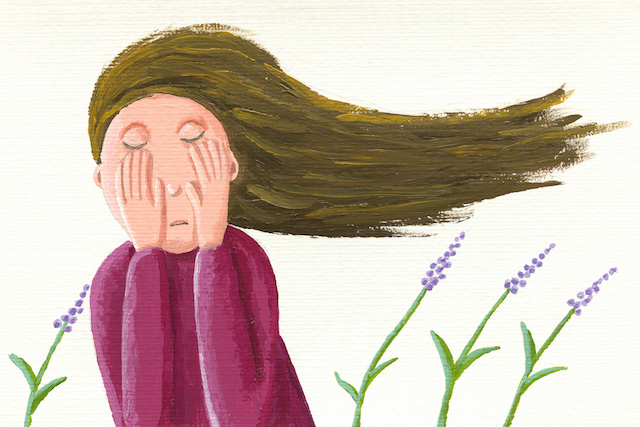
    Who we are becomes fragmented so that we hide the parts of ourselves we want no one to see. We unconsciously employ defense mechanisms. While those defense mechanisms might help us to survive, they’re bound to stand in the way of having healthy relationships and growing a sense of self-love.

    When we’re afraid to share our vulnerable side because we believe it would render us flawed, dirty, weak, and so forth, we’re carrying shame.

    Shame is carried silently and secretly for fear of judgment; yet, it is the self-judgment that grows the longer we conceal our vulnerability.

    I refuse to keep painful secrets festering inside of me, as I know that will only keep me repressed and disempowered in the long run.

    All humans experience shame, and it presents in many ways. Here are a few examples I’ve noticed within myself that maybe you can relate to:

    • Being too sensitive and emotional
    • Not doing enough to “save” my mother from her death
    • Being too selfish to fully want to be a mother myself
    • Feeling I’m not ambitious or smart enough to live up to my potential
    • Struggling to communicate clearly when I have too much in my head
    • Feeling too “needy” with my partner at times
    • Believing I was somehow at fault for the sexual abuses I have experienced

    My personal list could go on… But what I noticed when writing this list is that while many of the original sources of shame might be specific people or society as a whole, the critic is still me.

    When we keep shame locked away inside, we get stuck in feelings of inadequacy. Shame may cause us to feel mentally or physically ill. Feelings of inadequacy can be accompanied by emotions such as anxiety, anger, and loneliness. And when we feel inadequate, we sometimes develop destructive ways of relating to others: avoidance, lying, blaming others, attempts to control others, and so forth.

    So how can we deal with this lurking self-critic that wants to keep our stories in the dark?

    1. Speak kindly to yourself.

    Most likely, at some point you’ve heard the phrase, “Shame on you,” or, “You should be ashamed.” It can easily become habit to talk similarly to ourselves and challenging to learn to speak kindly.

    A simple framework for healing I teach comes from an ancient Hawaiian tradition called H’oponopono. H’oponopono means “to make right,” and it’s rooted in the essence of reconciliation and compassion.

    H’oponopono consists of four phrases: I’m sorry. I forgive you. Thank you. I love you. You can use these phrases speaking to another person. And you can use them with yourself. Here’s a personal example of the latter:

    Melissa, I’m sorry for making you feel the trauma you experienced was your fault.

    Melissa, I forgive you for placing blame on yourself and carrying shame all these years.

    Melissa, thank you for your courage to shine light on your vulnerability and resilience.

    Melissa, I love you and I commit to treating you with lovingkindness.

    2. Self-soothe with movement and massage.

    Think about what happens to your body when you recall a memory that carries shame. Often our bodies slump sinking our heart into the back body. Our gaze drops and our brows furrow.

    Emotions, including shame, reside in the body. Much of what I practice and teach relates to physical ways to release stuck emotion for this reason.

    If we want to reduce the unworthy and unlovable feelings we carry, it can help to self-soothe your body through dynamic movement practices like yoga and dance. Self-massage, tapping, and comforting touch while speaking kindly to yourself can help to release shame.

    3. Share your story.

    The most uncomfortable, but perhaps most effective method I can offer you is to share.

    You don’t have to share your vulnerability with the whole world. Many of my friends shared courageous, deeply personal stories on Facebook in response to #metoo. For a moment, I thought I had to share this way as well, but then I did some reflection.

    There are times I share my vulnerability through my blog or when I hold space for a group. But I don’t always want to share everything with strangers. In those cases, my partner is my greatest witness because of his ability to hold space for me.

    Whether you share in a twelve-step program, with a loved one, or therapist, or in an article for the world to see, there’s immense healing power in this process. When our voices are heard and we’re seen just as we are, we open up the door to growing a new sense of self-love and self-worth.

  • How Feeling Shame Freed Me from Suffering

    How Feeling Shame Freed Me from Suffering

    “Be gentle first with yourself if you wish to be gentle with others.” ~Lama Yeshe

    It was October, 2012. The U.S. Presidential Election was around the corner. I was paying an unaccustomed amount of attention to political news on TV and to political discussion sites online. At one site in particular, I was eager to become part of the community, to make a good impression, to build a reputation.

    To put it mildly, that didn’t work out well.

    One evening I was watching an interview with a politician whose name I recognized, but I didn’t know much about him. I thought he was making some cogent points about the topic at hand. I went to the online discussion site to see whether anyone had mentioned this interview yet, and when I found no one had, I hastily composed a post praising the politician and suggesting that others should watch the interview.

    The reaction was fast and fierce. How could I have anything nice to say about this nincompoop, who was renowned far and wide as a hypocrite? Where was my sense? Where were my ideals? Where was my head? What did I think I was doing there in the first place?

    I was mortified. I, who had always prided myself on intellectual acumen, had totally failed to do my homework. I hadn’t done even the most cursory research to learn anything about the politician’s history.

    I felt I’d made an ass of myself. I was so ashamed that I didn’t even visit the site for weeks. I was genuinely in pain.

    Now I’m going to have to briefly flash back in time so the next part of the story will make sense.

    At that time, in 2012, it had been almost ten years since a beloved spiritual teacher had died. I had shut down my spiritual life to a great extent after his death. You might say it was a long freeze. Or maybe “fallow period” would be a better description. Later events would make that seem like a good way to look at it.

    While I was ashamed and hurting in the aftermath of my online blunder, I recalled something I’d heard my teacher say more than once, something like this: “When you see a tack on your chair, sit on it.”

    That may sound enigmatic, but I think the metaphor is straightforward. What it meant to me, anyway, was that we should not flee from fully allowing an experience that might impart an important point. We should sit on the point, not avoid it.

    I made a vow then. I promised myself I wouldn’t avoid my intense sense of shame. I wouldn’t brush it under the rug. I wouldn’t cover it or deflect it with distractions, entertainments, excuses, or rationalizations. I would experience it fully, let it do its work, and see what happened.

    I’m not pretending that I had any specific practice beyond that. I’ve since learned some that I’ll mention a little later. But at the time, I simply stuck to my vow. Whenever the feeling of shame came to visit, I didn’t shoo it away or distract myself. I allowed myself to experience it.

    It’s not even that I was inclined to turn toward TV or eating or any other concrete distraction. What I mean by “distract myself” is subtler. It’s a small mental move of avoidance, of turning the attention away from something uncomfortable. Its opposite is mindful awareness, facing experience head-on come what may.

    Everything began to change within a few weeks. There was no one moment when the painful sense of shame evaporated, leaving nothing but clarity and peace. No, it happened gradually over a period of weeks. Each time I welcomed shame as a visitor, it lost some of its sting.

    What finally became of it? All I can say is it was transmuted. It dissolved, and in its place arose a sense of peace and a new, calm engagement with the truth of being.

    I recognized that whatever arises in experience is always already present by the time we can react. Whether it’s comfort or discomfort, joy or distress, calm or chaos, it can be witnessed with equanimity.

    I began to notice old friends posting on Facebook about spiritual teachers and teachings they liked. I looked into some of them and found I liked them too. The long freeze had given way to a thaw. The fallow period was coming to an end. I felt a sense of regeneration, of reawakening.

    How does this work? If it seems counterintuitive to you that diving into pain is a good idea, that amplifying discomfort can be helpful, consider this simple question: What are we doing when we feel that we’re suffering? In other words, what mental activity are we engaging?

    It seems to me that above all else, the answer is we’re actively refusing ourselves compassion. When faced with discomfort or pain, we try to resist it or deny it. We’re judging ourselves, chastising ourselves for the feelings that arise spontaneously. Most of us wouldn’t do it to another, certainly not to a loved one, yet we do it to ourselves. That’s the suffering right there.

    In this instance, the active mechanism was a kind of a thought loop. It went something like this:

    • That was really stupid, what I did.
    • How could I be so dumb? I’m smart, not dumb!
    • I humiliated myself in public.
    • I can never show my face there again.
    • (Repeat forever.)

    Each of those thoughts reinforces a sense of emotional pain, of suffering. They whirl around and seem to amplify each other. It feels as if there’s no way out. I kept beating myself up.

    That’s exactly what it was. I was beating myself up. I was pummeling myself with those ideas. I was treating myself entirely without compassion and empathy, as if I hated myself, and I didn’t seem to know how to stop.

    Notice that by this point the nature of the original mistake didn’t matter. It could have been as trivial as cursing out loud or as serious as committing a felony. The thought loop of suffering was running obsessively on its own momentum. It was no longer about the original offense. It was self-sustaining.

    It reminds me of an experience years ago. When I was a teenager, I was admitted to the hospital for an appendectomy. In the recovery room, as I slowly emerged from the anesthetic fog, the room seemed filled with loud screams. I barely had time to wonder what they were about when I noticed that I was the one who was screaming! I stopped immediately. There was pain, yes, but no need to make it worse by screaming.

    It’s an imperfect analogy, but I see a significant parallel: I had to notice the self-defeating action before I could stop it. In the instance of my shame it happened that by keeping my promise, by sitting on the tack, by diving into the pain, somehow I created a space where I had an opportunity to notice what I was doing and to stop it, gradually. I began to see an opportunity to embrace myself with kindness and compassion, and I took it.

    Practices

    As I mentioned, I’ve learned some specific practices to take advantage of the opportunity, to enhance and deepen the process.

    Metta (lovingkindess) meditation

    I find that this traditional meditation opens the heart and helps to cultivate compassion towards oneself and others. My version begins with visualizing the warmth and love I feel when seeing or meeting a loved one. It could be a spouse, child, parent, dear friend, or even a beloved pet. Then I say to myself:

    • May they be safe from harm.
    • May they be truly happy.
    • May they be free from suffering.
    • May they be loved.

    Then I picture myself at my most open and vulnerable, when I’m hurting and in need of that same love and compassion. And I say to myself:

    • May I be safe from harm.
    • May I be truly happy.
    • May I be free from suffering.
    • May I be loved.

    I can then extend that to my circle of friends, to the planet, and to all sentient beings everywhere. Practicing this regularly deeply affects the feeling nature.

    Ho’oponopono

    Based on a traditional Hawaiian practice for community healing, the modernized version I use resembles a variation I heard from Scott Kiloby. Here’s how I engage it:

    • When I notice a feeling that seems distressful, first I simply sit quietly with it, acknowledging it and allowing myself to feel it.
    • I ask for the stories surrounding the feeling to reveal themselves, and I allow hearing the stories to intensify the feeling. The thought loop I mentioned is a perfect example of those stories.
    • I dive into the feeling with naive curiosity, looking to sense all its aspects. I’m not trying to soften it or push it away, but at this stage it may begin to soften.
    • I say to the feeling: “I love you. You’re welcome to stay as long as you like.” The important thing is that I have to mean it. I have to be prepared to live with it indefinitely, to welcome it indefinitely. After all, it’s part of me. It is me.

    In retrospect, what I did by sitting on the tack of shame was closest to practicing Ho’oponopono.

    For me, the whole experience emphasizes how important it is to include the heart in our practice, in our lives. When we find ourselves relying on mental analysis, it’s often judgmental and hurtful, especially to ourselves.

    Both aspects can be useful, but the heart never judges, never condemns, never excludes. It knows how to heal us and make us whole.

  • What I Learned from Loving the “Wrong Person” and Why I Don’t Regret It

    What I Learned from Loving the “Wrong Person” and Why I Don’t Regret It

    “Some people come into your life for a reason, some a season, and some a lifetime. However long it was, be thankful for the gifts you received from them.” ~Unknown

    When I first met him, we instantly clicked. We became fast friends aided by the fact that I was dealing with my father’s death and he was by my side whenever I needed someone. He was empathetic, easy to talk to, and very open. I related to him immediately.

    Early on, it became clear to me that while we were friends, we would not make a good romantic pair. We had extremely opposing political views and philosophies on life, as well as different communication styles.

    For example, in the beginning we would get in arguments about religion. I consider myself spiritual, but I am not very religious. He would constantly try to get me to have religious conversations with him. From my point of view, it felt as if he was trying to push his beliefs on me. It was exhausting. I didn’t feel respected or heard in my spiritual journey.

    I also felt like he was a different person, depending on what group he was with, which made me uneasy. I try to be authentically me wherever I am, and I love who I am. As he shifted personalities, it was very confusing to me. It made me wonder, “Who are you really?”

    My friends shook their heads, telling me he wasn’t good for me. “Angela, he is too judgmental,” they’d say. “I just feel like there is something very off about him; he makes me nervous.”

    As I got to know him better I suspected that one reason for his behavior was that he had previously been involved in an extremely toxic relationship. In fact, it was so dysfunctional that law enforcement got involved.

    It made me ponder, “Do I really want to be with someone who attracts this kind of relationship into their life?” But I stuck by him during that time because he had been so present in my life when my father passed. I believed he deserved the same thing from me.

    On the day he kissed me, things started to get fuzzy. When we were alone, things felt very relationship-y. However, when were in our regular environment, we acted like best friends. I told myself that I could balance the division, but I couldn’t.

    I started to shove the multitude of reasons we shouldn’t be together under the rug, only to take them out occasionally to shame myself for wanting to be with him.

    As the months passed by and our weird relationship continued, I realized I was starting to have authentic feelings for him. I was wearing rose-colored glasses and only saw the good parts of him, but I still didn’t feel right about the nature of our relationship.

    One morning it finally hit me. I’d had a dream that he slapped me across the face. In the dream, I was sobbing, begging him for forgiveness as I held my hand over my black eye. I woke up crying because the dream felt so real. While in “real” life he had never physically hurt me, I realized I was feeling disrespected emotionally by him and myself. I knew I had to make a change.

    I broke things off with him about a week after that. It was beyond difficult. He was mature about it and apologized for his part in the ordeal, but it was not the route I wanted to go. So many parts of me wanted to go on acting like nothing was wrong, but my heart knew that it wasn’t a path I could travel any longer.

    While loving someone “who is not right for you” can be painful, you can also find some amazing lessons. Love isn’t always meant to stay forever. Sometimes it only stays for a season, but that doesn’t make it any less beautiful or valuable. Here’s what I learned from my relationship.

    1. Sometimes even when we know something won’t necessarily end well, we still have to go through it.

    When we took our relationship to the next level, I knew in my gut that this was likely not going end in a happy way. I would never change to be the agreeable, conservatively Christian girl he wanted to date and eventually marry. My mentor told me. My sister told me. My friends told me. But, I still wanted to go through it. Why do we this?

    I remember talking to a therapist a few years ago about this phenomenon. She said, “Honey, we aren’t here on this earth to rise above life. We are here to walk through the mud. The magic is in the mess.” We learn our lessons by going through intense life experiences, not by skipping through them.

    2. We need to release the shame.

    This goes along with lesson one. Shame is such a tricky emotion, and one I wrestle with daily. I felt so much shame for having feelings for someone I knew in my heart was not the best person for me. I would beat myself up constantly. I realized that if I wanted to move on I had to stop putting myself down. Shame was keeping me stuck.

    To release the shame, I would talk to myself like I would talk to my best friend. My best friend went through a similar situation this past summer and I always told her, “Honey, I don’t know if this is going to end well and this doesn’t look healthy. However, if this is what you need to go through for your growth, I will be here to hold your hand and catch you when you fall.”

    After she moved on from the situation, she told me how much this meant to her. “You were the only friend who didn’t judge me. You acknowledged my journey. It helped me move on a lot faster to have someone accept me exactly where I was.”

    In this case, I needed to be my best friend. I wish that in the past, I would have metaphorically taken my own hand and told myself that I would be there for myself through the mess. I needed to do that for me.

    3. Giving and receiving love are natural human needs.

    I realized that part of the reason I’d chosen to be with this man was that I wanted to give and receive love. That’s a beautiful thing. I love loving people romantically. It feels great, and when it was just us, living in the present moment, it was a beautiful experience.

    On the flip side, I do believe it’s important that give your love to someone who can receive it with a pure intention. I recently saw a quote by Lisa Chase Patterson, “I always say, never sleep with someone you wouldn’t want to be.” I wholeheartedly agree with Lisa, but I believe it goes deeper. Don’t give your heart romantically to someone you don’t want to be.

    4. Acknowledge the dark parts in yourself and love them.

    I have been involved in mindfulness studies since I was sixteen. I hold myself to a high standard and want to be an example of a mindful being, but I am still human.

    There are still parts of me that seek love out of neediness and wanting to be accepted. There are parts of me that are attracted to fixing people and feeling in control. While I have worked through a lot of pain and trauma in my life, there’s also still this little girl inside of me who wants everyone’s approval. These are parts of myself that I work on daily, but I have to be patient with myself.

    Lots of times we attach to beliefs about ourselves at a very young age and we have to peel them away layer by layer. It can take a long time. Patience is required. However, I think this process is what makes it beautiful. Life is not a race; it’s a journey.

    While this love story will not end in a relationship status update on Facebook or a proposal, it ended with some beautiful memories and some even more extraordinary lessons. I realized I don’t regret our kisses. I don’t regret sharing my secrets with him. And I especially don’t regret loving him. Instead, I choose to be grateful for how the relationship helped me grow.

  • 10 Ways to Practice Self-Compassion and Overcome Your Shame

    10 Ways to Practice Self-Compassion and Overcome Your Shame

    Self compassion

    Note: The winners for this giveaway are akarosco and Tyler Bel. Subscribe for daily or weekly emails to get wisdom in your inbox and learn about future giveaways!

    “This is a moment of suffering. Suffering is part of life. May I be kind to myself in this moment. May I give myself the compassion I need.” ~Kristin Neff

    I consider myself to be a very compassionate person, but I’ve struggled a great deal with self-compassion. Though I’ve now been sober for over six years, back when I was drinking I made a lot of mistakes, and it’s taken me a long time to have empathy and understanding for myself.

    While drinking, I did and said a lot of things that made me feel ashamed and unhappy. When I drank, one of my go-to moves was giving into a sudden, intense desire to leave (or attempt to leave) a bar or party.

    This feeling, as I vaguely remember it, hit me unexpectedly and aggressively. It was as if, at random, a little voice in the back of my head would start whispering, You have to leave. Right now. It doesn’t matter how you get home or how far from how you are, but you have to get back to there. NOW.

    I realize now that this voice piped up because, deep down, I am intensely introverted. Alcohol was the fuel I used to tolerate social situations that I just didn’t really enjoy. At some point in the evening, the “real me” would speak up and insist she’d had enough socializing and must leave. And I almost always listened.

    Sometimes this was a mere inconvenience—I left friends behind as I hopped into a cab solo or dragged them with me, convincing them the night was no longer fun and we should leave—but oftentimes it was downright dangerous.

    I hazily remember a night I simply left the bar and, realizing I couldn’t make it home in my inebriated state, decided to lie down in the middle of a city sidewalk. (This sounds comical, but it was not at all funny to those who found me or to the loved ones who had to negotiate with me to get me off the ground.)

    In another faded memory, I insisted I had to return home when I was staying the night at my aunt’s house—over an hour away from where I lived. Keys in hand, I stumbled to my car before being stopped by not one but three family members who were forced to stand in the freezing cold, bargaining and pleading with me until I eventually relinquished my keys.

    Similar situations played out many times over the course of all the years I was drinking, and friends and family were not always successful in their negotiations.

    After these must-leave-immediately outbursts, I would excuse my crazy behavior with a wave of the hand and a laugh, insisting I’d just had too much to drink and it wouldn’t happen again. Deep down, I was deeply ashamed of my behavior, and even more ashamed when it inevitably did happen again.

    And, to compound the shame, these strange, disruptive, and often dangerous outbursts were only one negative side effect of my drinking problem. For over a decade, I was trapped in a vicious cycle of drink -> do/say something stupid (like trying to leave when it was inappropriate or dangerous) -> feel bad about it -> drink to relieve the shame and pain, and then back to the start again.

    It was frustrating, disheartening, and agonizing. It wasn’t until I began having compassion for myself—truly experiencing concern over my suffering, rather than merely pointing a finger at myself in the mirror—that I was able to deal with my underlying pain and finally get (and stay) sober.

    While sobriety isn’t for everyone, the notion of using compassion to make more positive life choices applies to all of us. We all do and say things we feel ashamed of. And, because of that, we all need to compassionately care for ourselves in order to fully heal from our mistakes. Here are some of the best ways I’ve found to cultivate self-compassion:

    1. Transform your mindset.

    Sadly, it’s often challenging to lift yourself up (particularly if you’re feeling really low or ashamed), but if you want to create compassion for yourself, you have to change your mindset.

    For me, self-compassion started with changing my thoughts. I started focusing on the fact that my behavior was bad, not me. Once I started labeling behavior (instead of myself as whole), I was able to be kinder to myself and open up my mind to the possibility that I could make changes.

    2. Speak (and think!) kindly about yourself.

    Hand in hand with the first step is speaking and thinking kindly about yourself. Your words are incredibly powerful, and if you continuously tell yourself you’re unworthy, a mess, or unforgiveable, you’ll soon start to believe it.

    I did this for a long time, calling myself things like “crazy” or “out of control,” but once I started changing my words, stopping myself every time I wanted to laugh off my behavior with a negative label, I began having more compassion for myself.

    I was a person making bad choices, not a bad person. If you struggle with this step, imagine talking about yourself as you would talk about your best friend.

    3. Forgive yourself for your mistakes.

    Forgiveness is vital for self-compassion. We all make mistakes, but not all of us forgive ourselves for them. Depending on the mistake, this can be a very daunting task, but keep in mind that you cannot go back (no matter how badly you might want to), so the best thing to do is to choose forgiveness and forward motion.

    Whenever I did something inappropriate, instead of shrugging it off or excusing my behavior, I started apologizing for it, both to others and to myself. Again, I focused on the fact that I wasn’t bad; it was my behavior that was.

    4. Spend time doing things you truly enjoy.

    If you’re struggling with shame, enjoying pleasurable activities can be seen as something you don’t deserve. But each and every one of us deserves to engage in joyful, uplifting, and exciting experiences.

    Allowing yourself to experience true happiness—to take time from your life to do something you love—is an act of compassion.

    When I found myself feeling ashamed for a mistake I’d made, I began making a conscious effort to understand what situation provoked that act and I strove to make choices that put me in more positive situations.

    5. Strive to avoid judgments and assumptions.

    Though assumptions and judgments are often based on experience or knowledge of some sort, it’s very hard to predict what will happen in life. When you judge yourself or make an assumption about what you will do in the future, you don’t give yourself an opportunity to choose a different path. Instead of limiting yourself, be open to all possibilities.

    In my situation, I started assuming that I shouldn’t go to an event because I would inevitably cause a scene and have to leave. Little did I know that I’d eventually learn, with the help of therapy and self-compassion, to socialize sober. I had assumed that I would always be “wild,” but I’ve learned that you cannot know the future. Assumptions will only inhibit you.

    6. Find common ground with others.

    While self-compassion is about the way you care for yourself, one of the best ways to cultivate it is to create connections with others. When you open yourself up to sharing who you are with others, you’ll soon see that you’re not alone.

    We all struggle to treat ourselves with kindness, and recognizing this can make the struggle more manageable.

    At some point, I began admitting to friends and family that I had a problem. It was difficult to open up emotionally, but the more I did, the more I discovered that I wasn’t alone. Creating these stronger emotional ties made it so much easier to deal with my personal shame and to work toward more self-compassion.

    7. Take care of your mind and your body.

    One of the most compassionate things you can do for yourself is take care of your mind and body. Spend as much time as possible absorbing new information, and be sure to fill your mind and body with positive things (healthy food, good conversations, wisdom, etc.). Being mindful of what you consume and what you do with your energy is an important part of self-compassion.

    Once I began doing this, I was able to recognize what did and didn’t make me feel good about myself. Admittedly, I didn’t always continue to seek out positive things (and still struggle to do so at times), but the awareness of what would and wouldn’t impact my mind and body positively gave me the opportunity to make more conscious, compassionate choices for myself.

    8. Pay attention to where your passion lies.

    Most of us are passionate about something. We have things that really matter to us ¾ a career, a hobby, our loved ones. Whatever it is that gets you excited, allow yourself to focus on that, and do what you can to spend more time enjoying it. Self-compassion means allowing yourself to be passionate, without shame or fear.

    Around the time I started trying to get sober, I realized that my issues with alcohol were a reflection of deeper issues within my heart and mind. I started thinking more about my mindset and, as I explored this, I decided to start a blog to share what I found. It was at that time that my passion for self-discovery and my passion for writing merged, and Positively Present was born!

    9. Realize it’s not all about you.

    Rather than focusing on how we see ourselves, we often direct our attention to how we think others see us. It’s important not to do this for two reasons: (1) we don’t ever really know what others think and (2) more often than not, others aren’t thinking about you.

    Letting go of external validation is a very compassionate choice.

    It took me a long time to overcome this, particularly when it came to giving up drinking. For a long while, it felt like everyone was judging me, either because they thought I had a problem or, worse still, they themselves had a drinking problem and couldn’t understand why I was quitting.

    As time passed, I discovered that most people didn’t care whether or not I drank—they just wanted me to be happy—and realizing this made it so much easier to do what was best for me.

    10. Cultivate acceptance (even for your flaws).

    Just because you accept something doesn’t mean that you like it. We all have attributes we don’t love, but the more you focus on accepting the things you cannot change, the more content you become with who you are.

    One of the great challenges that came with my sobriety was realizing that I didn’t, in fact, like partying and barhopping as much as I’d claimed to. I’d made these things such a big part of my identity, and recognizing and accepting that they weren’t “me” was difficult (particularly because I had to overcome the notion that “introverted” was a negative characteristic).

    I still struggle at times with being introverted—I often wish I could be social butterfly—but accepting my limitations and my true nature has been the greatest act of self-compassion. Doing so has allowed me to direct my energy and attention to the things I love about my life: my creativity, my writing, and the people who love me just as I am.

    Embracing these ten tips has helped me to cultivate more compassion for myself, and I’ve found that the more compassionate I am with myself—particularly when I’ve made a mistake or feel ashamed—the more compassionate I am with others as well.

    The way you treat, think about, and talk to yourself isn’t just about you. It has a ripple effect that impacts all of your relationships and all of your choices, which is why it’s so important to choose self-compassion whenever possible. It changes your life and, in a greater sense, the world as well.

    The Giveaway

    Dani has generously offered to give two sets of her two new books Compassion and Forgiveness, to Tiny Buddha readers. To enter to win a free set:

    • Leave a comment below. You don’t have to write anything specific. “Count me in!” is sufficient.
    • For an extra entry, share this post on one of your social media pages and include the link in your comment.

    You can enter until midnight, PST, on Sunday, December 18th.

  • How to Release Shame and Stop Feeling Fundamentally Flawed

    How to Release Shame and Stop Feeling Fundamentally Flawed

    “But shame is like a wound that is never exposed and therefore never heals.” ~Andreas Eschbach

    Shame. Everybody has it. Nobody wants to talk about it. The less we talk about it, the more power it has over us.

    Shame goes to the core of a person and makes them feel there is something inherently wrong with them.

    I remember when I was a young girl, I struggled so much with feeling I was ‘less than’ others.

    There were many nights when I would say prayers to help change me. I didn’t like my freckles. I was so embarrassed by my body. I hated the fact that I had a lisp. My skin was either pale as a ghost or the color of a tomato. I would get blotchy when I was the center of attention. This list could truly go on and on. What I was really experiencing was a strong sense of shame.

    Shame is often the trademark in hurting families, and almost always part of the underlying matrix of psychological conditions.

    It may start with someone not owning their own feelings and making it about someone else. I was such a sensitive kid. I would get made fun of for having emotions, and this eventually led to my own struggles with insecurity that surfaced as depression and anxiety.

    In our society, shame and guilt are often intertwined. However, these two emotions are quite different.

    Guilt’s focus is on behavior. It’s about what we do. When we experience guilt, we have gone against our own code of ethics.

    Guilt tells me that I am not doing what has been expected of me. This emotion usually serves as being an internal conscience. It helps me to not act on harmful impulses. The great thing about guilt is our values get reaffirmed. There is a possibility of repair. We can learn and grow.

    Shame’s focus is on the self. It’s not that I did something bad, but that I am bad. It gives us the sense that we do not measure up to others. We are defective. We are damaged goods.

    A person cannot grow while they are in a space of shame, and they cannot shame others to change. This concept is like saying “you are worthless and incapable of change, but change anyway.”

    When we’re in shame, we don’t see the bigger picture. We feel alone, exposed, and deeply flawed.

    Oftentimes, we will respond to shame by moving away from it, moving toward it, or moving against it. Moving away from it means to withdraw, hide, and/or stay silent. Moving toward would be appeasing and/or pleasing others. Moving against suggests we try to gain power over others. We use shame to fight shame.

    As human beings, we are wired for connection. We come into the world needing connection in order to survive. When we are in shame we unravel our ability to connect. Our first reaction to shame is to hide.

    This may mean we work all the time, attach to someone in an unhealthy relationship, or withdraw from our community. More so, we may have difficulty with healthy levels of self-esteem. We may fluctuate between arrogance, grandiosity, and low self-worth. As a result of this dynamic, we are either one up or one down in a relationship. Relationships lack substance, honesty and meaning.

    According to the research of Brené Brown, shame needs three things to survive: silence, secrecy, and judgment.

    Shame thrives on being undetected. The only thing shame cannot possibly survive is empathy.

    We have to find courage to talk about shame. When we dig past the surface, we find that shame is what drives our fear of rejection, to not take risks, to hate our bodies, and to worry about the judgment of others.

    We are more likely to engage in self-destructive behaviors or to attack others. When we are honest about our struggles, we are less likely to get stuck in the black tar of shame. Shame cannot hold on when we name it.

    So, how do we become aware of shame? And, what can we do about it?

    Well, we first have to name shame when we are feeling it.

    When I make statements like “I am an embarrassment” or “I am such a failure,” what I’m really feeling is shame. When I attack my being, I need to recognize the shame and reframe the belief. “I am not an embarrassment, I just did an embarrassing thing.”

    The next step is to develop more awareness about when I am experiencing shame.

    We have to become mindful of our triggers to shame. Our feelings, beliefs, and actions are motivated by these triggers whether we acknowledge them or not. So, when we are feeling shame, we want to interrupt it with more positive thought patterns.

    Ego repair comes next.

    We have to track and replace that negative internal dialogue, and put ourselves around positive and meaningful influences. It’s important at this stage to practice loving-kindness to ourselves and others. A great practical tool is talking to and treating yourself the way you would someone you love dearly. You would never call someone worthless, right? So, why do that to yourself?

    Name and return shame.

    I was picked on a lot as a kid for being overweight. I experienced shame in my gut and in my chest. I would often feel sick to my stomach. Eventually, I developed beliefs that I was “worthless and unlovable.” These came from an ample amount of being hurt by my peers.

    As I grew into an adult, I lost a good amount of weight, but still held onto those beliefs. Of course, I learned that weight has nothing to do with worth and love. I was able to name where that shame came from, and put it back on my peers who hurt me out of their own ignorance, pain, or confusion.

    If we are unable to put shame back in its place, we will continue to attract people and situations that validate those negative beliefs and recreate shame in our lives.

    Avoid negative situations and build positive supports.

    It is crucial to place yourself around healthy and loving people. When I am active in my shame, I often want to cocoon. During these times of isolation, I feel more alone and shameful. If I am able to simply communicate what is happening with me to someone who loves me, the power of my shame diminishes.

    In order to understand where we are and where we want to go, we have to have self-acceptance about who we are. Shame can make for discomfort in relationships with others. If we could work on developing a loving relationship with ourselves, our ability to be intimate and authentic increases.

    It is vital that we learn to separate shame from the person.

    We need to understand that shame is an emotion. The concern, though, is many people have turned shame from an emotion to a state of being. We want to be able to transform it back into a feeling. All of our emotions have functions. Shame, similar to other feelings, is attempting to protect us from some sort of threat. However, it often is a misperceived threat.

    We cannot become resistant to shame, but we can develop resilience to it.

    We have to help one another know we are not alone in our experiences and in our feelings. It is helpful to have corrective, validating, and emotional experiences with someone we love. We have to understand that part of our shared humanity is having parts of ourselves we are scared to show, but we have to be brave enough to show them anyway.

  • 5 Reasons to Forgive Yourself and How to Do Better Going Forward

    5 Reasons to Forgive Yourself and How to Do Better Going Forward

    “At the end of life, the wish to be forgiven is ultimately the chief desire of almost every human being. In refusing to wait; in extending forgiveness to others now; we begin the long journey of becoming the person who will be large enough, able enough and generous enough to receive, at the very end, that absolution ourselves.” ~David Whyte

    The last time I saw my mother she was smiling and laughing at nothing in particular. My mother has had dementia for almost ten years now. Each visit brings an onslaught of guilt and uncomfortable feelings. Could I have done something different to ease this for her?

    For years I discounted my heritage and all my ancestors, and in doing so devalued her. How could I have been so heartless? How could I have stayed out all night and worried her to death when I was in my twenties? Why didn’t I stay with her in Boston after I married? The list goes on and on.

    I can count each transgression and easily relive the selfishness of a younger version of me. I want to reach back in time and slap that younger self, admonishing her for losing out on caring for the person that loves her most.

    I want to send her the warning that time is running out and she is wasting it on trivialities, ego-centric activities, and hurtful behavior. But I cannot reach back in time, and for many years I carried the burden of a wild adolescence that had no regard for the one who cared most about me.

    There have been times when, on bent knee, I pleaded silently and tearfully for her forgiveness, but she would have none of it. She simply continued her incoherent storytelling with a smile and eyes that were viewing something in the distant past. The best I could do was to stay present with her in her story, allowing her to share whatever needed to arise unconditionally.

    And then it happened.

    During one visit I was again listening to her storytelling, laughing with her, sharing her jokes and following the winding path of her conversation when she suddenly stopped. Something in her eyes shifted. It was as if a light turned on for a moment. And then she said it, even using my name, which she had not recalled for years.

    “Alicia, I’m fine. Let it go. Focus on your life and move on. I’m fine.”

    And with the same suddenness she disappeared into the fog, her eyes coated with the same film that hides the chapters of her life. I burst into tears.

    Grace is Found in Forgiveness

    We discover grace in forgiveness. We unburden the baggage we carry with us when we are forgiven, and when we forgive. Transgressions, real or perceived, carry an energetic and negative tether that creates a network of dark knots that expands as we continue to carry these transgressions through our relationships and into our lives.

    We believe that others hold the ability to release us through their forgiveness. When we surrender the power to forgiveness to someone else we lose the ability to recover our goodness and worth. In truth, we each hold the power to forgive simply because we are the ones that need to forgive ourselves.

    In the moment that my mother spoke I felt a release and then an awareness that the forgiveness I attributed to her was really within me. I needed to forgive myself for my behavior and lack of awareness that created the guilt I carried with me. What my mother did was make me aware that I needed to “move on.” And to do so meant to forgive myself.

    5 Reasons We Have to Forgive Ourselves

    1. The other person may not forgive you.

    For years, I was haunted by past transgressions that caused harm to someone else. The sting of the lies of the past and the impact on those that I cared about caused such shame in me that I became rigid about what was right and wrong. There was no one to call for forgiveness. Those relationships existed in the past and have long since moved on.

    I had to forgive the teenager and the young woman who foolishly thought the world revolved around her needs.

    If you look back into the past you’ll notice you may be carrying shame too. It’s time to forgive the person you were so that the person you are can keep growing.

    2. If you don’t forgive yourself then how will you keep going?

    You can’t make changes or move forward in your life carrying the weight of your mistakes.

    Imagine putting all your past mistakes into a bag, adding to it each time you make a new one. The bag would become so heavy, the burden so great, that it would be impossible to keep going.

    It’s time to put that bag down, take out each item, and forgive so you can let go of the past and move forward, having learned the lessons that will make you a better person than before.

    3. You can’t forgive others if you can’t forgive yourself.

    You have to learn how to forgive, starting with yourself. If you cannot offer yourself compassion and forgiveness, you will never be able to offer the same to others.

    Life’s missteps are an opportunity to learn. These mistakes are useful in that they point you away from the person you do not want to be and reveal the path of growth and authenticity that you can choose for your life.

    4. The shame of the past can only be transformed through forgiveness.

    I confess that I intentionally caused hurt to others out of ignorance or narcissism before I realized what true connection and love were. I’ve learned that when I lash out, it is a projection of the anger or discomfort I feel toward myself. Unless I forgive myself, I will carry that anger into the world and project it onto others.

    Change your anger into a call to attend to something that is hurting within you. Forgiveness is the alchemy that transforms shame into self-love.

    5. To accept and value yourself you must embrace both virtues and flaws.

    We human beings are flawed. We must accept that we are not perfect. We make mistakes, and sometimes we make mistakes that hurt others. However, our mistakes do not define us. They are opportunities to learn about ourselves, who we are and who we aspire to be. By acknowledging our flaws and our strengths, we can consciously choose how we live our life.

    I’ve learned to forgive myself and have adopted practices that help prevent those missteps that cause guilt, regret, and shame. These practices are integrated into my life today because yes, I still mess up.

    1. Practice conscious living.

    Too often we hurt others due to our sheer ignorance or lack of empathy. We are not caring for others when our lives are so full and busy that we are unable to stop and notice how someone else is feeling.

    When you are present to yourself and to those around you, you are conscious of your choices and actions. Your awareness of your environment increases. You will notice the person who is feeling sad or disappointed and offer them a kind word.

    So many of our regrets, the things we wish we had done or said, are due to sleepwalking through our lives. Observing yourself, learning about yourself, and choosing your thoughts and actions means you are conscious and present to your life and to others.

    2. Accept what you have done without denial or justification.

    It’s easy to justify our actions or to blame others for our mistakes. Take responsibility for your decisions and you empower yourself to choose wisely.

    This requires that you face your transgressions and tend to that wound so that you can begin to heal. Do this with an open heart and allow self-love to flow so forgiveness may transform the pain into peace.

    3. Identify what it feels like when you are angry, resentful, or sad so that those feelings do not hijack you into doing harm to others.

    These strong feelings can take us over, and we are left wondering how we could’ve behaved so badly. When you become self-aware, you notice when those feelings begin to arise so you can better manage your emotions. Of course you will feel these emotions at times. This is part of our human nature. Acting on them is what causes regret and shame.

    4. Practice meditation and mindful breathing.

    Through mindfulness, you begin to recognize the impermanence of things so you can make healthier choices. Nothing lasts forever, whether it’s joy or sadness. Sometimes we have to endure the discomfort of the moment by breathing through it until it passes. And it always passes.

    5. Forgive imperfection.

    Self-compassion means you accept that some days, you are doing the best you can do at the time. It’s not perfect but it’s good enough, and that’s fine. Perfection is a heroic standard that no one meets. It sabotages your confidence and self-esteem.

    How different would our world be if we forgave each other? Begin by forgiving yourself and let the waves of that forgiveness ripple out so that one day, maybe, the compassion and forgiveness you offer yourself can create more peace and tranquility in a world desperate for its own transformation.

  • 5 Reasons You Feel Alone (And How to Change That)

    5 Reasons You Feel Alone (And How to Change That)

    Alone

    “Two possibilities exist: either we are alone in the Universe or we are not. Both are equally terrifying.” ~Arthur C. Clarke

    “You are not alone” is a phrase we speak, hear, and read over and over again.

    Testimony and statistics prove that others have lived our types of misfortune. Given that evidence, why is it that so many of us feel as if we are somehow different than all the others who have triumphed over tragedy or are climbing those proverbial mountains?

    The seed was first planted ages ago when I was having a conversation with a loved one during a difficult time in her life. “I know how you feel,” I said, “I’ve been there.” How many times have you given or received this type of comfort?

    “You’ve never been where I am!” she shouted back at me. “My life’s a living hell.”

    Right then I had an AHA moment. “You’re right,” I said. “I’ve never been in the exact same place you’re in, but I’ve been right next door. Everyone’s hell is different, but everyone has their own.”

    In that moment I realized that, though others have experienced similar hardships and emotions, we can’t fully understand because we are nothing more than bystanders, albeit neighbors who can somehow relate.

    Years after that epiphany, something continued to plague me. Why, when we understand that we aren’t alone, do so many of us still feel alone?

    We are often faced with short-term situational aloneness. A job, school, or home relocation takes us away from friends, family, and associates, often causing a short-term sense of separation. Divorce often creates a shift in our relationships with others as we try to navigate a new social normal.

    Aside from these obvious forms of separation are more subtle, complex, and longer lasting causes.

    Here are five reasons we feel alone and what we need to know about them.

    1. We feel alone because we are alone in our heads and in our hearts.

    It might seem pretty basic, but for those of us who were introduced to “You are not alone” at a young age, or those like me who gravitate toward more straightforward interpretations, we might still internalize the quote more literally. The truth of the matter is that no one other than us can occupy our thoughts or the feelings that are our heartbreak.

    The key to overcoming this type of isolation lies in two things: 1) changing how we identify with the quote and 2) understanding that we are not alone in being alone in those areas. Though we can relate to one another’s situations and suffering, the details, breadth, and depth of every person’s experience is equally similar, yet as unique as our fingerprint.

    2. We compare ourselves to others.

    At some time, every single one of us has compared ourselves to another in a way that shut us down. We say things like “I wish I had her body/ brains/charm/courage/way with words/people.” Comparison comes from one of two places: an inner drive to improve ourselves or some unspoken/unidentified need to discount our abilities.

    When we balance ourselves against others in a way that says we don’t measure up, we invite such feelings as jealousy, resentment, and anger. It’s hard to cover up these types of emotions when we’re trying to connect with those we envy.

    This is an area I struggle to regularly reign in. I am surrounded by people I respect and wish only the best. Sometimes, however, I find myself thinking things like, Maybe if I’d finished my college degree—she graduated while raising a family/working two jobs/insert your whatever—I’d be further along in achieving my goals.

    In other words: I’m not good/ fast/smart/motivated enough/insert your whatever.

    Whether we’re avoiding intimate interaction due to intimidation or we’re pushing others away because of our misguided feelings, we place ourselves outside the circle in which we’d like to be.

    In an attempt to regain our position, we often resort to other problematic behaviors like hiding our vulnerabilities. Covering up who we are further feeds our feelings of isolation because, fundamentally, we are social beings who need to relate to others.

    When we use contrast in a healthy manner (recognizing admirable qualities we want to emulate), we can be motivated and inspired to make life changes. Identifying the underlying emotion (jealousy versus admiration) empowers us to change our thinking and position ourselves back inside that social circle.

    3. We are our own worst critics.

    We all have that inner critic who lets us know when we’re on the wrong path, when we’ve messed up, or aren’t measuring up to the standards we set for ourselves, or those adopted from other’s expectations.

    Common self-deprecating talk often contradicts truth and what we’re hearing from the outside world.
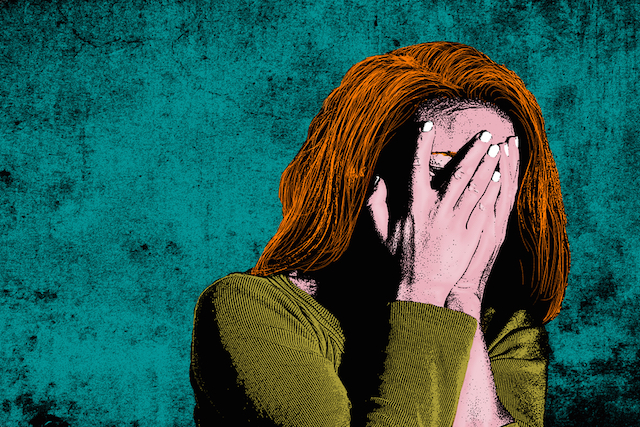
    I’ll never get this right. I’m such a screw up. What is wrong with me?

    This inner critic also masks itself as a protective partner, one that encourages us to feel good about giving up, which adds to our confusion about where and how we fit in. Ah, it’s not that important, anyway is an expression that lulls us into a false sense of security and persuades us to abandon people and purpose. This type of maladaptive comfort is a breeding ground for the comparisons mentioned above, further isolating us from others.

    In her article, Are You Sabotaging Your Relationship?, Lisa Firestone, Ph.D. encourages us to confront the dominating critical inner voice “as a third-party threat.” She writes, “Make sure to identify it and separate it from your real point of view.”

    Firestone goes on to say that acknowledging our power and challenging our defense mechanisms allows us to work on the only thing we have any real control over: ourselves.

    A therapist once asked me if I would hold another person to the same standards and treatment I was employing on myself. Being mindful of how we view ourselves and making room for constructive criticism incites productive change. This sort of kind evaluation allows us to realize that we are, like everyone else, human.

    4. We are filled with emotions such as guilt, shame, or self-loathing.

    These types of feelings attack our very character, our thoughts, and our worthiness. Unresolved remorse over something we said, did, or didn’t do can manifest itself into a perpetual state of shame or low self-esteem, which can morph into hatred for oneself if left untreated.

    When we think badly about ourselves, we often assume others are viewing us the same way. The fear of being judged poorly by others often causes us to conceal our true self.

    We might hide our flaws, cover up our mistakes, and sometimes go so far as to blame others as a way of avoiding ownership. This creates a vicious cycle that creates more internal conflict, pushes people away, and further separates us from social circles.

    In her article Shame: A Concealed, Contagious, and Dangerous Emotion, Mary C. Lamia Ph.D. wrote, “Hiding often accompanies behaviors that are themselves a trigger for further shame, such as addictions, compulsive behaviors, harsh self-criticism, or self-denigration.”

    Lamia goes on to suggest that recovering from shame requires a different perspective, one where we accept responsibility for our actions and are willing to recognize certain triggers.

    There was a time in my life where I shoplifted bizarre items like tuna fish. Despite overwhelming shame and fear, I never understood what compelled me, until I finally opened up to my long-term counselor. After numerous questions, he informed me that sometimes people do destructive things to reinforce their beliefs about themselves.

    An active community member on all fronts, people regularly exclaimed how valuable, loving, helpful, and intelligent I was, a direct contradiction to my beliefs that I was unworthy, unlovable, lacking, and not smart enough. That’s why I stole: to prove to myself that I was flawed. When I recognized this disparity and understood my subconscious motivations, the desire disappeared.

    When we stop hiding, take responsibility for our actions, and start to recognize those things that illicit our destructive thoughts and behaviors, we can begin to break down the conflicts that create our lack of confidence. Self-belief allows us room to trust in others, which in turn, makes us feel less alone, and makes us more welcoming and welcomed.

    5. We are distracted.

    This, too, might seem basic, but distracted behavior is often a major cause of separation.

    Think about all those times you’ve tried to have a conversation with your partner, your children, or a friend who is constantly checking a cell phone for social media updates. The message we often read into such behavior is that our time isn’t respected, or that the phone call, text, or update is more important than we are.

    How many times have you been involved in a conversation where someone hears only part of what you say or constantly asks you to repeat yourself? We begin to feel like the other person doesn’t really care. If this type of exchange is habitual, we might find ourselves not wanting to hang out with that individual simply because we want meaningful relationships.

    Many factors could cause us to act this way: We could be avoiding something; we could be bored; or we could have some physiological or psychological condition that makes it difficult for us to focus. Either way, when we are disengaged, people often don’t feel wanted, needed, or important, and they will eventually quit calling and coming around.

    Paying attention to how we are interacting with others and watching for signs that indicate we aren’t engaged will help keep us plugged in to our own availability and help us initiate and maintain active, healthy relationships with others and with ourselves.

    Being aware of our actions, emotions, and thoughts helps us stay connected to others.

    It is the sum of our human experience that can create our loneliness, and it is the sum of our shared human experiences that can unite us with other members of the human race. In the end, as long as there are others to interact with, we are not alone. We simply have to realize this and choose to connect.

  • Overcoming Shame: Forgive Yourself and Let Go

    Overcoming Shame: Forgive Yourself and Let Go

    “Stop beating yourself up. You are a work in progress; which means you get there a little at a time, not all at once.” ~Unknown

    I haven’t always been the woman I am today.

    I used to be scared. Of everything. And everyone. Painfully shy and insecure, I saw myself as a victim of my circumstances and was always waiting, on guard, for the next rejection. I masked my insecurity in a blanket of perfectionism, and worked hard to put forth the image that I had everything together and had it all figured out.

    I did a good job looking the part. On the outside most people just saw an attractive, intelligent, successful woman, and had very little awareness or understanding of the pain and fear that was living inside.

    To further protect myself, I oftentimes took advantage of knowing that others believed my facade.

    I believed myself to be unworthy of love or loving, and there were times when the only way I knew to feel good about myself was to treat others harshly, often by knowing I could intimidate them just by being my “perfect” self.  

    I had split the world into people that I was either better than or less than.

    It’s been said that someone once asked the Buddha whether it was possible to be critical and judgmental of other people and not treat oneself the same way.

    He said that if one is critical and judgmental of others, it is impossible not to treat oneself the same. And that while at times it appears that people can be judgmental toward others, but seem completely satisfied themselves, this is just not possible.

    How we treat others is how we treat ourselves, and vice versa.

    I’ve spent the last four years working on finding compassion for myself and those who I blamed for my pain, embracing the concept of self-love so that I could find a sense of peace within. I’m proud of myself for how far I’ve come and the life that I lead today.

    However, it was recently brought to my attention that, despite the hard work I’ve done and the large shifts I’ve made, there are still some people who have a negative perception of me, and some hurtful words were used to describe my qualities and attributes.

    When this was shared with me, I immediately felt the stinging pain of rejection and my automatic response was to go to shame. I felt really bad about myself.

    Aside from the fact that I don’t think it ever feels good to hear that someone doesn’t like you, I’ve spent a long time working to heal these very wounded parts of myself, and in a moment they were all brought back to the surface in a very painful way.

    When memories arise of behaviors and situations we’re not proud of, it can be easy to turn to shame. However, shame has very little usefulness, as it oftentimes serves to shut us down, isolate, and close ourselves off from others and our own healing.

    Seeing this reaction in myself was an indication that there was work I needed to do, something within that I needed to address.

    This situation showed me that I have spent years turning my back on this former image of myself, striving to be better, but what was still lacking was compassion and forgiveness.

    Pema Chodron describes emotional upheaval, feelings of distress, embarrassment, or anger that we assume is a spiritual faux pas, as actually being the place where the warrior learns compassion.

    When we learn to stop struggling with ourselves and dwell in the places that scare us, we are able to see and accept ourselves and others exactly as we are, complete with imperfections.

    We all act unconsciously and without consideration for others at times. When we allow ourselves to be honest about these behaviors, without the judgment of shame, we are left with remorse, which is a quality we are actually quite fortunate exists.

    Remorse can help us refine our actions and to live a more authentic life. It does not mean that we are useless and unworthy or that we made some horrible mistake beyond repair. It simply means that we are human, and that like all humans, we are in a learning process.

    Remorse can be a sign that we are becoming more aware and that what was previously unconscious is coming into consciousness.

    However, if we move into shame and beating ourselves up, we stop ourselves in our tracks, get stuck and likely remain in the mistake, and deprive ourselves of a lesson learned and opportunity to do things differently moving forward.

    In order to keep moving forward in the face of remorse, we need to be able to find compassion and forgiveness for ourselves. We all know, however, that forgiveness cannot be forced. But if we can find the courage to open our hearts up to ourselves, forgiveness will slowly emerge.

    The simplest way I know how to do this is to, in the face of painful feelings, start by just forgiving myself for being human. This can be done with a simple breath practice.

    By bringing awareness to our experiences and acknowledging our feelings, we can then start to breathe these feelings into our hearts, allowing our breath to slowly open it up as wide as possible. And then from this place, with our breath, we can send ourselves forgiveness.

    And then, in the spirit of not dwelling, we let it go. Breathe it out and make a fresh start.

    This practice of acknowledge, forgive, and start anew doesn’t magically heal our wounds overnight and it’s not a linear process.

    I find that forgiveness is a state that we move in and out of, and will continue to revisit, oftentimes, for many years, oscillating between shame (or anger, resentment, fear, etc) and compassion. Ideally though, with practice and patience the time spent in shame will become fewer and farther between.

    If we practice this way, continuing to acknowledge, forgive, and let go, we will learn to make peace with the feelings of remorse and regret for having hurt ourselves and others. We will learn self-forgiveness and eventually, we will learn to forgive those who have harmed us too.

    Photo by Don 

  • Falling Apart at Inconvenient Times: Why There Is No Shame in Public Pain

    Falling Apart at Inconvenient Times: Why There Is No Shame in Public Pain

    Sad Girl

    “The major block to compassion is the judgment in our minds. Judgment is the mind’s primary tool of separation.” ~David R. Hamilton

    On the evening of October 28, 2014, the phone rang. When I heard my stepmother’s voice, immediately, I thought, “This can’t be good.”

    Last I had heard, my father was resting comfortably after routine surgery earlier that day. Now it was past midnight in North Carolina.

    “Jill,” my stepmother implored, “please talk to the nurses. I have no idea what they are trying to tell me.” Sometimes we cannot listen to what we do not want to hear.

    The nurse came on the phone and confirmed my worst fears. My father had suddenly become septic and was quickly heading into multiple organ failure.

    In her “I’m trying to tell a complete stranger her father is dying in the nicest way possible” kind of voice, the nurse told me I might want to make plans to get out there as soon as possible; now would be good.

    I booked the first available flight. Sleepless and terrified, I boarded the plane. After settling into my seat, a lifetime of Dad memories raced through my mind. A lump in my throat began to rise and swell at the thought of seeing my father, helpless and frail, making his way from this world to the next.

    “Please don’t lose it on this plane,” I carefully cajoled myself.

    A distraction seemed in order, so I put the earbuds in, set the music to shuffle, and held my breath. As luck would have it, the first song depicted a powerful tale of loss that felt like an illuminated road sign on a dark, lonely highway. Death is a road we all travel.

    When I heard the words of my own story, told by someone I had never met, I couldn’t hold back anymore. First a few quiet tears, followed by the full-on ugly cry—right there in row 17, seat C.

    “Oh dear,” I thought, “I am officially that person.”

    We all know that person: the one who breaks into tears in the grocery line after discovering “happily ever after” was not to be. The co-worker stifling sobs behind the fourth-floor bathroom stall when he learns he is next to be downsized. Or, in my case, the middle-aged woman in 17C trying desperately to get home in time to say goodbye to her father.

    Amidst heaving sobs, I glanced across the aisle and met the gaze of a fellow passenger. With only his eyes, he kindly whispered, “Yep. You’re that person.” With only my eyes, in return, I answered, “Yep. You’re right.”

    It was as if life had stolen my undergarments and hung them in the public square to dry. I felt exposed, raw, ashamed. If only my feelings would have shown up on schedule, preferably in the privacy of my own home, thank you very much.

    Humans can be parsed into two categories: those who have been that person and those who will be. Like a rude party guest, the unsoothable pain of loss can show up, uninvited, at the worst possible times and demand from us things we don’t want to give.

    So often we shun grief or sorrow that cannot wait for a convenient time to be felt. Perhaps witnessing another’s sorrow ignites our own, so we create a safe distance with our judgment: “Some people really oughta learn how to keep it together.”

    We wouldn’t tell a child in pain to knock it off and keep it together. Why would we say this to ourselves? Why would we demand this from others?

    I regret to inform you feelings cannot be scheduled. There will be moments when the thread unspools faster than we can wind it. This is okay.

    Feelings do not need to be fixed because they are not broken; neither are you.

    It is when we are most vulnerable that we are most deserving of our own loving-kindness. Those song lyrics and the compassion in my aisle mate’s eyes were the only things I needed that day. While it didn’t make the pain stop, I did feel a little less alone with it, which made all the difference.

    We know that person because we are that person.

    When it is your turn in the cosmic hot seat, I invite you to offer yourself the blessing of your own loving grace. Speak to yourself as you would a child in pain. If you get the honor of bearing witness to another’s unspooling, why not offer your fellow human the same blessing: I see you. I hear you. I love you.

    Sad girl image via Shutterstock

  • No Matter What You Tell Yourself, There Is Nothing Wrong with You

    No Matter What You Tell Yourself, There Is Nothing Wrong with You

    “I wish I’d had the courage to live a life true to myself, not the life others expected of me.” ~Bronnie Ware from Top Five Regrets of the Dying.

    I wish I could remember the exact moment I mis-learned that being myself wasn’t going to cut it.

    It happened early. Maybe kindergarten. I didn’t do it consciously, but at some undetectable moment, I put my real self in a box and created someone else. This new me was so much better—always happy, very accommodating, super quick and witty, and an expert at everything.

    This new me was almost impossible to maintain. She required constant observations, self-sacrifices, and living in fear of being found out. But I knew she was necessary. The real me was not an option.

    Why? Because something was wrong with me. Even in elementary school, I had come to an unfortunate conclusion: Everyone is better than me. I can never let anyone see that.

    There was evidence. I had the only divorced parents in a conservative suburb. I had stringy hair that never congealed into the halo formation I desired no matter how much spray I applied. (It was the eighties!) I didn’t own any brand names. And, worst of all, my father was gay.

    My dad never told me he was gay. He just was gay one day when I was ten. The problem was, he left my mom for a man when I was three. That left seven years of deception in between.

    I went to gay parades with him because he “had some gay friends.” I slept over at the house he shared with his “roommate.” So when my mom finally sat me down to tell me the truth, I was shocked. And betrayed. They’d both been putting on a show for seven years. Why?

    My ten-year-old brain assumed they must have hidden it because it was supposed to be hidden. In a time before Ellen or even an inkling of gay marriage talk, I figured this was a secret so shameful that nobody should know about it.

    I wasn’t against my father or against homosexuality. I was against being different. Flawed. Weird. I was surely the only girl in elementary school who had seen assless chaps at a street fair. I wish I had owned it and flaunted a rainbow flag backpack, but I couldn’t then. I was too obsessed with being ‘the same.’

    I decided not to tell anyone. Not my friends. Not my teachers. No one.

    But a story has all the power when the only place it’s allowed to live is inside you.

    Keeping up a constant lie is exhausting. The anxiety alone about being found out can overtake your body. It controls the way you speak, the way you breathe, what you choose to share with friends. The latter kept all my friends at an arm’s distance. I craved so badly to feel closer to them. Connected. But connection was too scary.

    Six years after I found out about my father’s true self, he fell into one of his many deep depressions and took his own life.

    I had just gotten my driver’s license. His phone was off the hook, and I drove against my mom’s rules to see him. His apartment was a den of depression and his 6’5” body thinner than I’d ever seen. I gave him a hug, and when I drove away, I had no idea it would be our very last hug.

    At sixteen, there were few conclusions for me to make besides: See! Something is seriously wrong with me. My dad didn’t even want to stay to see me grow up.

    Outwardly, I pretended it was no big deal. I cried alone in my room, in my car, places where nobody could see. I wanted to rewind it all. I wanted to change everything. I wanted to go to sleep for years and wake up a happy adult with it all figured out.

    I jumped further into people pleasing. That guy needs a date to something? Let’s go. My teacher is handing out extra credit? I’ll do double. Smile. Smile. SMILE! I got my grade point average to 4.5 and was crowned homecoming queen. (Kids, take notes! You too can become homecoming queen if you simply accommodate every single person who is not you.)

    I went to college far away to get away from myself, but my self followed. My fear. My pretense. My anxiety followed. And as I compared my family to an even broader spectrum of strangers, it got worse.

    The only time I would talk about my personal life was when I was drunk and making jokes. Once a salesman told me to buy a present for my father. I laughed and said, “My father is in the ground!” Then I walked out of the store laughing as if it was the funniest thing I’d ever said.

    Years after college, I met a girl in a writing class. She was the tiniest person I’d ever met and had a voice to match. It happened that our leases ended at the same time, and we had a frank conversation about becoming roommates.

    “I am a loner,” I told her.

    “Me too. We can close our doors and we’ll know that it’s not a good time. Let’s do it.”

    We moved into a two-bedroom apartment in Los Angeles, and one month after combining our silverware, this girl washed the dishes I’d left in the sink. I didn’t get it. She wasn’t my mom. She didn’t have to. I could not grasp the concept of someone else actually wanting to do something for me without being forced or wanting something in return.

    She also insisted on driving me to the airport or paying for dinner or seeing if I needed anything from the store. She simply wanted the best for me. She was offering me the connection I’d craved, and I didn’t know how to handle it.

    We would lie on the carpet at night and stare at the popcorn ceiling. I tried to be vague when she asked me about my life. I was used to short answers, accustomed to my motto: Get done with the talking fast so the group can move on to someone better. But she wouldn’t let me off the hook.

    She reached for me. She held my hand. I’d never experienced such intimacy with a friend. I recoiled at first, but she persisted. It’s like she knew the terror inside my head—the terror to be close, to be discovered, to be guilty. She knew, and she was guiding me through.

    And so I told her my truth. I let it out. And she told me hers. And we cried and we laughed and we didn’t stop until our lives made a pile on the living room floor. She didn’t hate me. She didn’t abandon me. She didn’t tell me I was weird or different or wrong. She just held me and said it was all okay.

    At twenty-eight, she was my first real friend. At twenty-eight, I finally grieved openly for my father.

    This first friend of mine began to unravel the mask I had spent years sewing. She pulled the first thread, and then I began to write, which untied me even more. I posted an essay about my father on my blog and was met with solidarity and hugs. And love.

    Being real felt suffocating at first. I had to get used to awkward pauses when I’d say the word ‘suicide.’ I had to learn to relax and not be on constant alert during conversations in order to say the wittiest response first. I had to admit when I was wrong or didn’t know. I had to be willing to show others my imperfection.

    I’m still working on it all. Every day. But since I came clean, my world is completely different. I drink less alcohol because I don’t need to hide from my own terror-filled brain. I have a set of friends with whom I can share every tiny detail about myself. I feel fulfilled. I feel honest. I sleep well.

    And most of all, my story has lost its power. Once I began saying it out loud, I realized that every single person has felt shame at some point. No one thinks she or her family is perfect. But it takes sharing to find that out.

    I felt such a relief from letting go of my secret that it became my mission to spread the word.

    I started a show in Hollywood called Taboo Tales. I help people take their secrets and make them into emotional comedy pieces they tell on stage to a big crowd of strangers. It’s a mini version of what I’ve experienced over the last seven years. People get to tell their story, feel a relief from letting go, and then find immediate solidarity from the audience.

    Brene Brown says, “When we deny the story, it defines us. When we own the story, we can write a brave new ending.”

    It is the absolute truth. I have seen it firsthand countless times on stage. And I experience brave new endings every day. I have an entirely new life after learning to become vulnerable. To tell it all. To own what’s made me who I am. To be proud of my cool, gay, leather-wearing dad!

    Sure, I’m still working on figuring out who I am after faking it for so long. But I know for sure I’m doing my best. And I’m not following in my father’s footsteps. He let his shame simmer inside of him until it was too much. Not me. Vulnerability saved my life.

    If you’d like to taste some vulnerability, you can start with a tool I use in my Taboo Tales workshops. Set a five-minute timer and write a list of all the things you would never share with anyone else. The timer makes you keep going, and you’ll be surprised at what comes up.

    Take one of those things on your list—the scariest one— and write about it. You can burn everything later, but just getting the story out from inside where it festers is a necessary step. See where that takes you. Maybe read what you wrote to one person if you can.

    If not, start with small truths. Post an honest picture on social media instead of something posed and perfect. Let someone see your messy house or car when you may have made an excuse in the past. Respond with anything other than ‘fine’ when someone asks you how you’re doing. And something I really value in my own life: tell the truth when it’s time to break plans.

    “I’m really too depressed to hang out today” is actually what a good friend would want to hear instead of “I can’t make it.” Your honesty could open that friendship up to new and more intimate conversations.

    Friends are really important in your path to vulnerability. Could you tell any of those items on your list to a friend or two? If you feel like they would all judge you, maybe you could use a new, cozier friend. They’re out there, I promise.

    And one last tip: participate less in gossip. One thing that keeps us holding ourselves back is the fear of being judged. So I challenge you to not be a part of judging on the other side either. Once you begin letting go of your own judgments against others, the idea of being judged yourself becomes less scary.

    Tips or no tips, the goal is to tell your story, whether it’s big and taboo or not. Start small and work up to letting it out in whatever ways you can. Hey, if you want to start below, let’s make this comment section a judgment-free space where everyone’s allowed to share whatever it is they can. That can happen on the Internet, right?

  • Overcoming Shame When You Took a Risk and It Didn’t Work Out

    Overcoming Shame When You Took a Risk and It Didn’t Work Out

    “Live, travel, adventure, bless, and don’t be sorry.” ~Jack Kerouac

    There was no denying it. I had reached a dead-end. A year and a half spent living in a southern town that was simply too small for me; it was time to go. I needed a city, preferably a large one filled with numerous opportunities for a budding young writer.

    Ironically, the very day it dawned on me that it was time to move to a metropolitan area, love summoned me. It shouted to me from thousands of miles away, beckoning me to change the course of my travels.

    My long distance/Californian boyfriend, the one I designated the great love of my life, declared that he wanted to move in with me—to the very place I had deemed to be a dead-end. He was sick of his hometown. He wanted to come to mine so we could finally be together.

    I knew I couldn’t have my cake and eat it too. I had to make a choice. A city would wait for me; I wasn’t so sure love would.

    It took only two months of us living together in Deadendsville for him to suggest that we move. I was hoping he would maybe say Chicago or Boston or New York. Instead, he shocked me by saying he wanted to return to his suburban hometown in Northern California.

    I knew he wouldn’t go with me to a big city. He had made up his mind. He wanted me to follow him so he could teach me to surf, so we could camp at Big Sur, so we could have our tanned bodies tangled together every night.
    A more sensible person might have ignored such a romantic request, favoring sanity and security over things like sunshine, pheromones, and fun. But I, in my reckless abandonment of all that could potentially shield me from making a poor decision, refused to be sensible. I wanted (more than anything) to be true to my wild heart, which in that moment meant chasing after him.

    Like magic, the dead end disappeared and I found myself hurtling at 80 mph across the country toward California. I had no plan. No job lined up. No friends. Heck, I had never even been to the state of California, but there I was, road tripping on some lonely desert highway, pledging my allegiance to the west.

    At twenty-eight years old, I knew what was expected of me. I was supposed to be at the very least veering toward adulthood, making responsible decisions, preparing for my future.

    All of my peers were getting engaged, making down payments on houses, building their careers. Meanwhile, I was on a mad adventure, whizzing past cacti and mountains, feasting on chips and guacamole, in awe of my own defiant behavior.

    Sadly, my fiery romance burned out faster than a campfire in a hurricane, which ultimately spelled out all kinds of trouble for me. I had blown through my savings. I had no vehicle for transportation. No clue where the hell I was going. I also had a hole in my heart the size of Texas. I was beyond lost.

    Worst of all, shame swarmed all around me. Loved ones reminding me it was my fault for having such a flimsy plan. My own inner voice reminding me that I should have known better.

    I felt too old to be this naive, this bad at protecting myself. I could barely get out of bed, and yet I still had the energy to shame myself over and over again for the foolish choice I had made.

    Thankfully, my great aunt (whom I barely knew) invited me to stay on her ranch while I licked my wounds in Southern California.

    She too had moved to California in her youth for a love that did not last very long. Apparently, many broken-hearted women in my lineage had sought out comfort in her abode. It’s practically a rite of passage.

    Never once did my aunt say anything about my poor planning or taste in men. All she said was, “So what if you didn’t have a plan and you ran off with some jerk? You had an adventure. You come from a line of very strong women. You will get through this.”

    There it was. Lo and behold, the tiniest taste of the healing elixir my soul was so desperately thirsting for. I vowed to get well again, to build up my strength, to never again let shame bully me into forsaking my heart.

    On the long and winding road to recovering my sense of self-worth, this is what I learned…

    Sometimes, we do stupid stuff. We leap before we look. We make unsafe bets. We throw caution to the wind. We let lust lead the way.

    It is almost guaranteed that when we take those daring leaps, we become students of humility. We learn why skydivers carry parachutes and trapeze artists have safety nets. We come to understand why for better or worse it is smart to set up certain variables that will help cushion our fall.

    And yet, in this great hour of learning, if we forget about the love or the excitement that led us to leap from such great heights, we run the risk of inviting shame into our experience.

    When we do that, we make ourselves vulnerable to all sorts of nasty pathogens that seek to attack our inspiration, our courage, our joy.

    In case you weren’t aware of it, shame is one of fear’s favorite minions. Fear is very impressed by shame’s innate ability to make even the most gifted human being feel like they have nothing to offer.

    Fear and shame have been working together since ancient times, and sadly it does not look like they are going to break contract anytime soon. Together, they create much of the propaganda that has folks like you and me believing that we are the world’s shining examples of failure.

    The minute we allow shame to start broadcasting in our brains, there is no telling what other forces will join fear’s army of oppression. Regret. Guilt. Hatred. Disgust. All of them are sadistic opportunists who have no other way of gaining power than feeding off of yours. Still, it is tempting, isn’t it, to invite these ambassadors of fear to keep us company when we are feeling down and out?

    You must trust that there is nothing pleasant about having your heart raked over the coals. Nor is there anything so wondrous about sitting with your head hung low sputtering out the words “I’m sorry” or “I shouldn’t have” over and over again. It is actually quite dull. Shame, of course, will try to glamorize the whole act of penance.

    Try not to be dismayed by the fact that your thrilling moment of flight was followed by an equally epic fall. So what if the drastic descent blew your self-esteem to bits or fractured the very bones of your dearest relationship? It is not personal. It is not your fault. It is just gravity.

    Give the situation some time to heal. If you get lonely, call upon humor, but leave shame out of the picture. I can assure you, shame has no desire to see you put yourself back together.

    And what about that choir of onlookers that keeps singing the same four words over and over again: We told you so? Tell them it was one hell of a ride. Tell them you would do it all again—broken bones and all.

    Whatever mistake you think you made, whatever wrong turn you might have taken, if it was prompted by the desire to expand your capacity to live fully or love and be loved, then you have absolutely nothing to be ashamed of. You need not repent for a thing. So quit condemning your heart. It is likely that it has suffered enough.

    Here is the secret that lovers and fools and risk takers and geniuses have been whispering into one another’s ears for centuries: Never listen to the sober ones who refuse to drink from the cup that is inspiration.

    But you, who has gulped your way through life, unafraid to pair the sweet with the sour, you know why you answered the call, though it left you a bit bruised and battered. You know why you chose to move in a direction that was both surprising and intended.

    Hold onto that knowing. Protect it at all costs. Defend it with your sole existence. It is the medicine you must take to remember that embracing a path full of possibility and adventure is nothing to be ashamed of.

  • 5 Emotions We Try to Numb with Food (and How to Stop)

    5 Emotions We Try to Numb with Food (and How to Stop)

    “If music be the food of love, play on.” ~William Shakespeare

    This quote holds a very special place in my heart.

    Growing up, I was always surrounded by classical music. My grandfather loved the arts, and the first song I ever sang was “Edelweiss” from The Sound of Music.

    I remember recognizing what it felt like to have a big voice come out of a tiny body, how powerful and scary that was.

    Years passed, along with plenty of practicing and an expanded repertoire, and I found myself going to college to study vocal performance. This was where the power of my voice and what could come from it started to emotionally affect me.

    I felt a lot of pressure to maintain my scholarship and pass classes like music theory, with which I deeply struggled, and the experience of being away from home for the first time was difficult for me. So I started to overeat, using food as a way to comfort myself.

    At the time, I had no idea that I was using food to combat my emotions, and how that response was not only unhealthy for my body, but was a temporary Band-Aid to ease the current stressors in my life.

    Instead of going out to parties every weekend, I felt comfort in ordering a pizza and watching a movie.

    I eventually realized that in order to reach my healthiest potential I had to develop ways to identify and manage my emotions.

    Emotions themselves aren’t “good” or “bad”; in fact, our emotions can be useful tools that let us know where we need to make changes in our lives. But they can become toxic based on how we respond to them.

    I want to share with you five potentially toxic emotions that can lead to overeating and some ways I discovered to deal with them.

    Frustration

    If you find that you’re constantly frustrated in your life, be it with school, work, or relationships, it can be easy to turn to food as a way to distract yourself from those feelings instead of dealing with the source of the feeling itself.

    There is a reason the term “comfort food” exists, after all! Food is comforting, and in that moment it may help you mask those stresses and resentments, but then what?

    A simple, and all too often overlooked method for dealing with frustration is just to breathe. Try to allow yourself just ten minutes at the end of your day to sit alone with yourself in silence, focusing on nothing but your breathing.

    Taking some time to breathe will help you identify proactive things you can do to address your frustrations, and let go of things you can’t control. It’s an exercise that anyone can do; all it requires is that you give yourself permission to try.

    Boredom

    I noticed that I would feel incredibly bored at night, after completing a day full of tasks.

    Before I was aware of mindfulness and meditation, I would often sit alone and become overwhelmed with a sense of extreme boredom. This uneasy feeling was very easily resolved by ordering something yummy.

    The key is to have something to focus on that is outside the scope of our daily responsibilities. Something that is entertaining or educational that can help us to relax in a productive or healthy way.

    I highly recommend a coloring book. Yes, you heard me—coloring isn’t just for the little ones anymore. There are a number of fantastic options online, from downloadable templates to good old-fashioned books. It’s a sublime way to spend a little free time after a long day, and you have something beautiful to show for it afterward.

    You might prefer a different hobby, like baking, crafting, photography, yoga, or playing an instrument. The goal is to choose something that’s engaging, and as an added bonus, it will likely be stress relieving, as well.

    Fear

    When I was struggling with eating emotionally, fear played a huge part. Fear of all of the things I had to do, fear of not being good enough, fear of messing up a note in front of 300 people.

    Fear was also easily combatted by a familiar snack, but once that snack was done those feelings would come creeping back in again.

    Instead, I found that writing was a more effective way to mute the angst. By journaling about my fears, I started to gain strength to face them. Writing helps you work through them, and also visualize ways of confronting them.

    Loneliness

    If you recall in the beginning of this article, I talked about how I would much rather sit at home and watch a movie with a pizza instead of going out to a party.

    I don’t think there’s anything wrong with not being a party animal, but staying in as much as I did and using food as a friend was unhealthy.

    I changed this habit by setting weekly hiking adventures or going to the movies, simple activities that I enjoyed, and loved to share with friends.

    If you recognize that you’re feeling lonely, be proactive to address that. Call someone. Meet up with a friend to catch up. Go to a free local event to meet new people.

    Shame

    Shame for me would always rear its ugly head after I decided to eat a meal as a way of dealing with the other four feelings mentioned above. Shame would start creeping up as I was taking the last few bites.

    “Why did you do that? You didn’t need all of that food,” I would think to myself. This continued until I acknowledged that it was my overeating magnifying the negative emotion I was trying to escape.

    Learning to eat mindfully was truly eye opening, and I didn’t feel that crushing sense of shame anymore because I ate to feel satisfied, not to numb my feelings.

    It also had the added benefit of teaching me to approach food with love again, and not as something sinful.

    You might overeat in response to shame related to other events, for example, something hurtful you said or did.

    Instead of turning to food, sit with the feeling, recognize what happened as a learning experience, and forgive yourself for being imperfect. We all make mistakes. That uncomfortable feeling won’t go away by stuffing the feeling down with food. It will only go away when you embrace it and cut yourself some slack.

    What I learned through all of this is that being healthy and mindful is a life-long journey. Life isn’t always going to be easy, and there will be times when we will overeat or turn to things like food for an escape.

    Perfection isn’t the goal here—the key is in the willingness to keep trying. That is one of the main things I hope you take from this. Love yourself enough to keep trying. Every emotion is an opportunity.

  • Stop Shaming Yourself If You Want to Start Losing Weight

    Stop Shaming Yourself If You Want to Start Losing Weight

    Woman Hiding Face

    “Love yourself first and everything else falls into line.” ~Lucille Ball

    As I sat on my bedroom floor almost in tears that night, surrounded by all the clothes I’d just tried on before a night out with my friends, the same thoughts replayed through my mind. You’re fat, you’re ugly, and you’re disgusting for letting yourself get this way.

    I still cringe when I think about that, and the way I used to speak to (and about) myself. I would never think that of another person, let alone talk to them like that, yet it was second nature to say those things to myself!

    I canceled on my friends that night; I was so unhappy with how I looked and felt that I couldn’t face going out and worrying what other people thought of my shape and size.

    It’s ironic, isn’t it, that when we feel so low about ourselves, that’s the time when we’re most self-absorbed? We retreat into a small bubble that’s all about us. As if the people in the bar that night would care what I looked like! They were there to have a good time with their friends, and I should have been too.

    I struggled to lose weight during that time because I just couldn’t stay consistent or build new healthier habits. I’d do well for a while, but then I’d have one off moment and I’d give up, feeling like a failure. It was a vicious cycle, with my lack of consistency and results feeding my low self-esteem, and vice versa.

    That night that I canceled on my friends still sticks in my mind all these years later because it was a turning point for me. This was not the life I wanted to be living.

    If I could go back in time, I would tell that girl to get up off the floor and go and enjoy a great night out with her amazing friends. But that’s probably because I’m in a totally different place now and I no longer have those awful thoughts about myself.

    When this change first started happening and I grew my self-esteem, with that, I found it easier to take far better care of myself, and that’s when I really started to lose weight. Everything clicked into place. These are the steps I took to get here, and I hope they’ll help you make it too:

    1. Treat yourself as you would a close friend or loved one.

    Take stock of your thoughts as they come into your mind. Would you say that to a loved one? If not, get rid of it or reform it. If you wouldn’t say it to a loved one at all, discard it! If you would say it in the situation but word it differently, reform it.

    Try to always ask yourself: Is it true? Is it helpful? Is it inspiring? Is it necessary? Is it kind?

    2. Stop obsessing about yourself; start thinking about others.

    It’s so easy to get into that little bubble I mentioned earlier, but you need to get out of it and take your focus away from yourself sometimes. Try doing random acts of kindness, or helping someone you know, or even volunteering. Anything that helps you to remember there is much more in the world than yourself.

    3. Forgive yourself and release any guilt or anger.

    We’ve all done things we’re not proud of and messed up in some way. But our mistakes don’t define us as people. A friend of mine used this analogy when we were talking about this some time ago:

    Sometimes bad fruit can grow on good trees. The tree is good at its core, but it has produced something bad by mistake. But it’s also produced a lot of good fruit too!

    Good fruit never grows on bad trees. If a tree is bad at its core, it can never grow good fruit.

    If you’ve ever ‘produced good fruit,’ you are a good person at your core. Good people still sometimes do bad things, and ‘produce bad fruit,’ but it does not make you a bad person.

    4. Learn what your body needs.

    And start giving it those things! Learn about nutrition and healthy foods; find out which types of foods your body thrives on. Drink plenty of water each day to stay hydrated. Move your body—we’re not designed to sit at desks all day and then come home and sit on the sofa. Even if it’s not scheduled exercise, just getting more activity into your day, like taking the stairs, will help.

    And always remember to switch off and rest. With technology the way it is now, it can be difficult to unplug and unwind, but it’s so important to your well-being. Find out how much sleep your body needs to work at it’s best, and try to get those hours in each night; it’s different for everyone, so it’s worth testing out.

    5. Have more fun and connect with people.

    When we get into this place of low-self esteem it can affect our daily habits and our social life. Don’t forget the things that make you happy and light you up. Keep a list of them if you need to and make sure you do them regularly.

    Put yourself out there more and connect with people again. We all need human interaction and social bonds, we all need people we feel comfortable with. And it will help so much to have that group while you build your self-esteem.

    These points take time to go through; you won’t suddenly become confident and love yourself overnight. But they do work in helping you build healthier thoughts of yourself and enjoying your life more again.

    They help you want to take better care of yourself and, if you’re trying to lose weight and get in better shape, they will help you enormously.

    Woman hiding face illustration via Shutterstock

  • What Are You Practicing—Self-Judgment or Self-Compassion?

    What Are You Practicing—Self-Judgment or Self-Compassion?

    Woman with heart hands

    “You are what you practice most.” ~Richard Carlson

    “What are you practicing?” she asked in a gentle, lilting voice.

    The entire class was in triangle pose, and at that moment I was comparing my triangle to the young woman’s right next to mine, scolding myself for wobbling out of the pose and simultaneously harassing myself for not being “further along” in my career. (Because if you’re going to hate on yourself, my motto is GO BIG.)

    “Are you practicing judgment or comparison?” she tenderly probed.

    “WTF!” I thought. “Does this woman have a direct line to my brain?”

    “Are you practicing worry or blame?” she continued. “Perhaps youre practicing patience and love. Notice what youre practicing and know that you become what you practice. What you practice is what you live.”

    DAMN IT!

    I was three days into a five-day yoga retreat and I was far from blissed out. In fact, I had deftly managed to tie myself into a knot of comparison, self-doubt, judgment, confusion, shame, and embarrassment.

    With my inner critic having hijacked my brain I was a total wreck, and caught myself, more than once, crying through one of the two yoga classes I took each day.

    I should also mention I was pissed to be spending days of supposed relaxation and inner communion bumping up against every old demon that laid buried within me. Not a productive use of time, and if there’s anything I hate, it’s feeling unproductive.

    I had gone on the yoga retreat (my first ever, and a huge indulgence according to my inner critic) for a good dose of soul care. I was craving reconnection badly and knew an idyllic yoga retreat in the Berkshire mountains was just what I needed to come back to myself. Little did I expect that to get to that reconnection, I first had to wade through a number of stinky layers of self-perpetuated crap.

    And so there I was, wobbling in and out of triangle pose, in full blown comparison mode and hating on myself for not having written a book yet, for not being on SuperSoul Sunday, and for most certainly not being Zen during a yoga class.

    And then her soft words plucked me out of my maelstrom of negativity.

    “What are you practicing?”

    I took a breath.

    And then another, letting the fresh oxygen pulse through me.

    I took another, solidified my stance, stretched more deeply into the pose, and faced all I was practicing.

    I let the comparison and self-doubt wash over me. Let the judgment and shame flow. Let the embarrassment of this entire emotional debacle be there without feeling bad for feeling any of it.

    In the breath I found that I wasnt practicing the negative feelings and old stories. I was experiencing them. What I was practicing in feeling them (without kicking myself for experiencing them) was compassion.

    I let the compassion grow, filling every edge of my body, and watched it morph. First into curiosity for my feelings, then acknowledgement for my pained state, and then into deep love for myself for finding kindness where there had originally only been gripped anger and a cold heart.

    What I found in the instructor’s question was this: I can experience any number of painful thoughts and feelings, and in approaching them with compassion, it’s compassion I’m practicing, not negativity.

    I wish I could tell you with that realization my struggle ended, my demons were forever released, and I quickly became the blissed out, wise yogini I had wanted to be at the start of my retreat.

    Not so much.

    It took another few days (and will probably take the rest of my life) to continually soften, to come back to the breath, and to remember to practice compassion.

    But what her question did do was loosen the knot.

    It created space to find compassion where there had originally been none. It sparked the sloughing off of old layers, the questioning of painful stories, and the unfurling of my most sacred knowing to allow me to reconnect with myself.

    “What are you practicing” is a brave question, as it often brings us face to face with the uncomfortable emotional space we’re in. And yet, it’s in letting ourselves ask the question and getting curious about it that a crack is made for compassion to squeeze through.

    The next time you catch yourself in a maelstrom of comparison, anger, self-doubt, worry, or judgment, take a breath and ask, “What am I practicing?” Be gentle with what comes up (no judging yourself for being judgmental) and notice if in embracing your experience with tenderness, compassion has a chance to blossom.

    Know this: It’s impossible to practice love and patience all the time. That kind of every-second-of-every-day bliss was not built into us humans. We suffer, and that’s okay.

    And when we can be compassionate with ourselves when we’re practicing things other than love, our heart softens, our grip loosens, and suddenly we have a greater access to the love we were seeking all along.

    Woman with heart hands image via Shutterstock

  • How to Stop Shaming and Start Loving Yourself

    How to Stop Shaming and Start Loving Yourself

    Shame

    “Never bend your head. Always hold it high. Look the world straight in the face.” ~Helen Keller

    It’s discouraging, isn’t it?

    Walking around every day feeling as if you’re never enough?

    Comparing yourself to others and continually coming up short?

    You feel as if you’re not smart enough, talented enough, organized enough, or disciplined enough. You’ve made mistakes, some small and some big but all of them embarrassing.

    Fortunately, you and I are gloriously human and perfectly imperfect. We falter and fly, fall and triumph, cry, laugh, forget, remember, hurt, heal, dream, and love. Our one-of-a-kind uniqueness is amazing, really.

    I couldn’t appreciate this earlier in life due to a childhood in which I was too skinny, too clumsy, too emotional, too shy, too sensitive, too everything.

    When I was in kindergarten, I wanted nothing more than to stay inside alone and draw at recess. You can probably imagine how that went over.

    The teacher called my mother and informed her that I needed to go outside and play with the other children because I would never develop my large motor muscles.

    I already knew how to swing on the monkey bars, and I craved some quiet time. At the tender age of five, I decided there was something horribly wrong with me because too much noise and chaos set my nerves on edge.

    My secret guilt and shame for being so flawed began to unravel when I became a mother. Three babies in four years taught me more about love than I could ever have imagined.

    I wanted to protect and cherish the tender senses of self in my care, so I began reading every self-help book I could get my hands on. The more I honored the perfection in my children, the more generosity of spirit I developed for myself.

    My journey inward included books about dreams, intuition, and spiritual development, and in time I realized that my sensitive and nurturing nature was actually my greatest gift and not a trait to be deeply ashamed of.

    I can talk about it now from a genuine place of self-acceptance, but the pilgrimage from there to here was far from easy.

    What I have learned so far.

    It’s not about you.

    Stop taking it all personally. In the journey toward self-acceptance, this is rule number one. How others see you is largely a projection and has little to do with you.

    A great example of this is any politician. She may be viewed as an inspirational hero or incompetent fool depending on the person describing her. Same person just being viewed through vastly different lenses.

    If you have ever been brave enough to play the game where you ask several people who know you to describe you with one word, you’ve already seen the diverse range of perceptions people have about you.

    How people perceive you is more a reflection of the lens they are peering through than it is about you.

    Once you truly embrace this concept, it will free you from the weight of other’s opinions or judgments. How you feel and what you know to be true of yourself is what matters.

    Perfect people are annoying.

    Don’t try to be one of them. Nearly everyone I know and those I have consulted with have something about their pasts or their personalities they are deeply ashamed of or embarrassed by. It may be a dysfunctional family, failed relationships, or financial difficulties.

    We all hide our secrets convinced that if others knew, they would criticize, or worse, disown us. Some of us spend inordinate amounts of emotional energy trying to hide our embarrassing flaws, carrying around deep shame and guilt over our perceived shortcomings and mistakes.

    Unfortunate choices, bad hair days, saying too much, saying too little, getting jealous, and losing things are all part of what makes you gloriously human. Your mishaps are what make you relatable and loveable.

    None of us want picture-perfect friends because, frankly, they’re intimidating. We crave genuine friends. Friends who lock their keys in the car, fall for Mr. or Mrs. Wrong, and tangle up their Christmas lights.

    Embrace your weird self.

    I find it fascinating that billions of people walk the Earth and no two are exactly alike. If you are human, let’s face it, you have a few loveable quirks.

    Bask in your strangeness and you’ll attract your tribe. When you stop pouring energy into being someone you’re not, you have more time and energy to be who you are.

    In honor of my kindergarten teacher, I now stay inside and draw whenever I don’t feel like playing outside. So there.

    Words can and do hurt you.

    “Don’t be silly. You can’t do it. You mess everything up.” Sound familiar? If it wasn’t a harsh parent or teacher wagging a disapproving finger, it might have been coming from your own head.

    Stop the madness.

    If you wouldn’t dream of uttering such things to your best friend or child, then for Heaven’s sake stop saying them to yourself. “Oops cancel that” halts my negative self-talk in its tracks and helps me laugh at myself rather than heaping on more shame.

    A miraculous shift occurred when I began extending compassion and patience toward myself. I noticed that others began to mirror my improved inner attitude. My harshest critics were nowhere in sight, and my new friends were oddly fond of solitude.

    Now just imagine it. You make a mistake at work, at home, or in a relationship. This time, instead of beating yourself up, you calmly tell yourself that you’ll know better and do better next time because mistakes are great teachers.

    Doesn’t that feel better?

    Imagine being able to laugh at your blunders and accept your peculiarities.

    Go ahead, right now.

    Toss the burden of worry, shame, and guilt off your back.

    Sit up straight, toss your hair back, and say, “I am enough.”

    Ashamed girl image via Shutterstock