Tag: shame

  • What Happened When I Stopped Expecting Perfection from Myself

    What Happened When I Stopped Expecting Perfection from Myself

    “There is no amount of self-improvement that can make up for a lack of self-acceptance.” ~Robert Holden

    Six years ago, I forgot it was picture day at my daughter’s school. She left the house in a sweatshirt with a faint, unidentifiable stain and hair still bent from yesterday’s ponytail.

    The photographer probably spent less than ten seconds on her photo, but I spent hours replaying the morning in my head, imagining her years later looking at that picture and believing her mother had not tried hard enough.

    It’s strange how small moments can lodge themselves in memory. Even now, when life is smooth, that picture sometimes drifts back. The difference is that I no longer treat it as proof that I am careless or unloving. I see it as a reminder that no one gets it all right, no matter how hard they try.

    I tend to hold on to my “failures” long after everyone else has let them go. My daughter has never mentioned that photo, and one day, if she becomes a mother, she might discover that small imperfections are not proof of neglect. They can be a kind of grace.

    For most of my life, I thought being a good person meant being relentlessly self-critical. I stayed up too late worrying over things no one else noticed, like an unanswered text or a dusty shelf before company arrived. Sometimes I replayed conversations until I found the exact moment I could have been warmer or wiser.

    The list was endless, and my self-worth seemed to hinge on how perfectly I performed in every role. Somewhere along the way, I started expecting myself to already know how to do everything right. But this is the first time I have lived this exact day, with this exact set of challenges and choices.

    It is the first time parenting a child this age. The first time navigating friendships in this season. The first time balancing today’s responsibilities with today’s emotions.

    The shift came on a day when nothing seemed to go my way. I missed an appointment I had no excuse for missing, realized too late that I had forgotten to order my friend’s birthday gift, and then managed to burn dinner. None of it was catastrophic, but the weight of these small failures began to gather, as they always did, into a heaviness in my chest.

    I could feel myself leaning toward the familiar spiral of self-reproach when I happened to glance across the room and see my daughter. And in that instant, a thought surfaced: What if I spoke to myself the way I would speak to her if she had made these same mistakes?

    I knew exactly what I would say. I would remind her that being human means sometimes getting it wrong. I would tell her that one day’s mistakes do not erase years of love.

    I would make sure she knew she was still good, still worthy, and still enough. So I tried saying it to myself, out loud. “We all make mistakes.”

    The words felt clumsy, almost unnatural, like I was finally trying to speak the language I had only just begun to learn. But something inside softened just enough for me to take a breath and let the day end without carrying all its weight into tomorrow.

    Self-compassion has not made me careless. It has made me steadier. When I stop spending my energy on shame, I have more of it for the people and priorities that matter.

    Research confirms this truth. Self-compassion is not about lowering standards. It is about building the emotional safety that allows us to keep showing up without fear.

    And here is what I have learned about actually practicing it. Self-compassion is not a single thought or mantra. It’s a habit, one you build the same way you would strength or endurance.

    It begins with noticing the voice in your head when you make a mistake. Most of us have an internal commentator that sounds less like a mentor and more like a drill sergeant. The work is in catching that voice in the act and then, without forcing a smile or pretending you are not disappointed, speaking to yourself like someone you love.

    Sometimes that means literally saying the words out loud so you can hear the tone. Sometimes it means pausing long enough to remember you are still learning. Sometimes it means choosing kindness even when shame feels easier.

    It also helps to remember what self-compassion is not. It is not excusing harmful behavior or ignoring areas where we want to grow. It is acknowledging that growth happens more easily in a climate of patience than in one of punishment.

    The science supports this. When we practice self-kindness, our stress response begins to quiet, and our nervous system has a chance to settle. This does not just feel better in the moment; it makes it easier to think clearly and choose our next step.

    I’ve noticed other changes as well. Self-compassion makes me braver. When I’m not terrified of berating myself if I fall short, I am more willing to try something new.

    I take risks in conversations. I admit when I do not know something. I start things without obsessing over how they’ll end, and when mistakes inevitably happen, I don’t have to waste days recovering from my own criticism.

    Sometimes self-compassion is quiet, like putting your phone down when you begin to spiral through mental replays. Sometimes it is active, like deciding to stop apologizing for being human. Sometimes it is physical, like unclenching your jaw or placing a hand on your chest as you breathe.

    Over time, these small gestures add up. They rewire the way you respond to yourself, replacing the reflex of blame with the reflex of care.

    We are all walking into each day for the first time. Of course we will miss a detail or lose our patience. Of course we will get things wrong.

    But when we meet ourselves with kindness instead of condemnation, we remind ourselves that love, whether for others or for ourselves, has never depended on perfection.

    And that lesson will last far longer than any perfect picture.

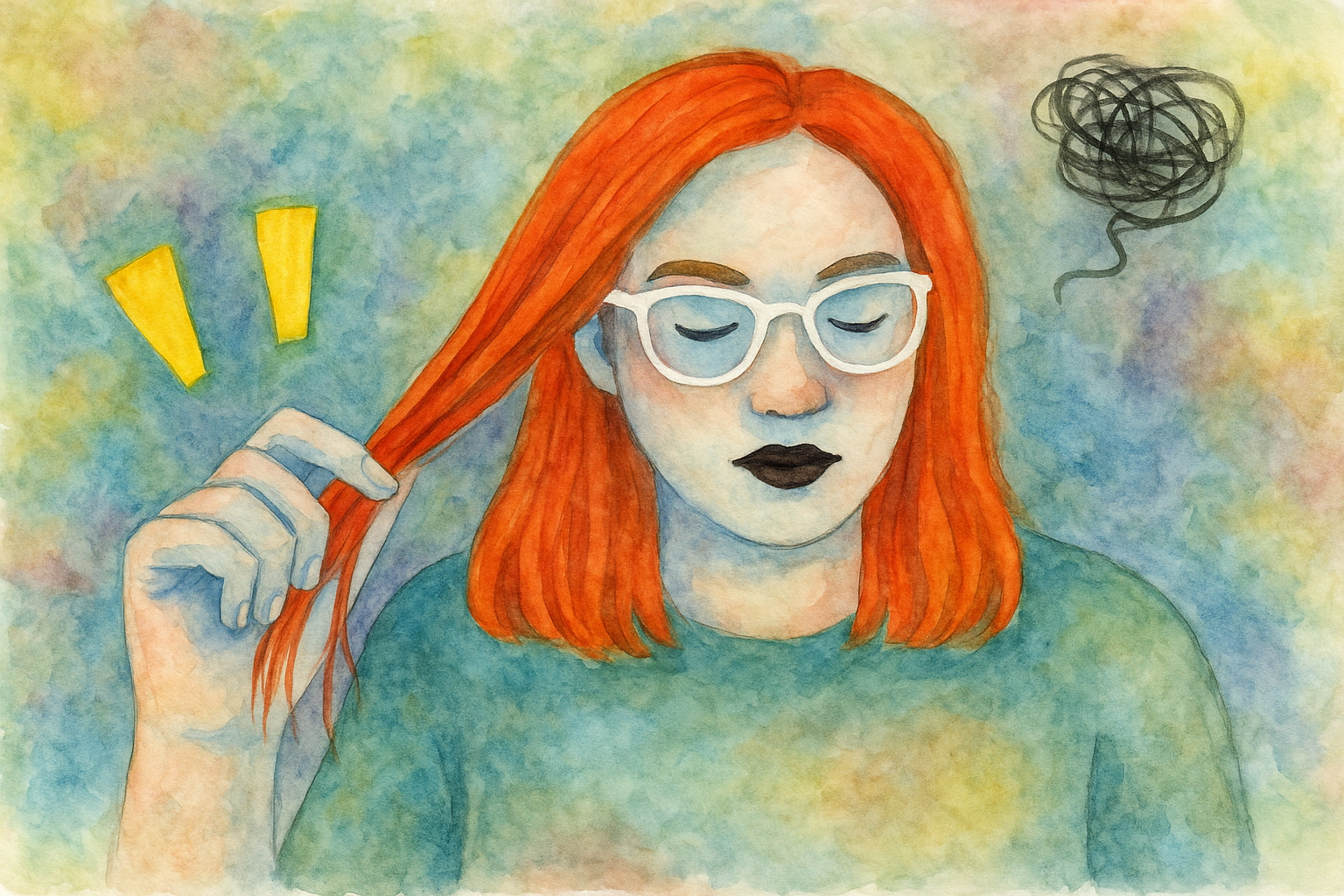
  • Trichotillomania to Triumph: How I Found Acceptance and Freedom

    Trichotillomania to Triumph: How I Found Acceptance and Freedom

    “Your either like me or you don’t. It took me twenty-something years to learn how to love myself. I don’t have that kinda time to convince somebody else.” ~Daniel Franzese

    Everyone has a bad habit or two, right? Whether it’s a major vice or a minor annoyance, we all feel the discomfort of at least some behaviors we would rather not have.

    You know, like nail biting, hair twirling, procrastination, having a car that doubles as a convenient trash receptacle…

    I’ve been guilty of all the above at one point or another in my life, but the one that has had the biggest impact on me is trichotillomania, or hair pulling.

    If you’re not familiar with it, “trich” is a condition akin to OCD (but not actually a type of OCD, as it is often mistaken for) in which people experience difficult-to-control urges to pull their hair out.

    Cases vary from mild to severe, and some pullers are able to manage their urges with strategies and coping tools so that their hair loss can go undetected by the casual observer. However, other sufferers are so afflicted by it that they end up missing entire rows of eyelashes or eyebrows or even become completely bald as a result.

    Chances are you know someone with this condition, although you may be unaware of it because so many people suffer in shame and silence. Estimated rates of trich in the US are about 1-4% of the population (although the actual number is probably much higher due to underreporting), making it about as common as having red hair.

    No one knew I was pulling my hair out for twenty years.

    I was twelve years old (trich commonly starts in adolescence) when my mom noticed that I had a couple of bald spots on my head. I honestly didn’t know the damage I was doing at first. Sure, I knew I played with my hair a lot and sometimes pulled it out, but surely, I wasn’t doing it enough to cause bald spots, right?? It was unclear, so I kept quiet as she made an appointment for me to see the doctor about it.

    When the first treatment for a fungal infection of the scalp didn’t yield improvement, the next step was to see a dermatologist. By that time, I knew I was the one causing my hair loss, but my shame and confusion kept me from speaking up about it. I didn’t understand why I couldn’t stop.

    The dermatologist ran some tests, including a biopsy, and diagnosed me with alopecia areata, a medical condition resulting in hair loss. Conveniently for me, around the same time, my grandpa developed (a real case of) alopecia areata. And when we were informed that it was a genetic condition, no one really questioned it for me.

    As a teen, it required much effort to style my hair to hide my bald spots, and from time to time I had to clean up my secret pile of hair between my bed and the wall, but mostly I went on to live a normal life. I found out in my mid-teens, while reading an article in the teen magazine Cosmogirl, that what I did had a name—a complicated one that I wouldn’t be able to remember for years, but it was my first inkling that I was maybe not alone in my weird compulsion.

    I graduated high school, got my associate’s degree, then got married and had kids. I was incredibly embarrassed about my missing hair, but when it couldn’t be concealed, I relied on the medical condition as my trusted excuse, even to my husband.

    I was thirty-two years old and working toward my master’s degree when I sat down in an on-campus therapist’s office and opened up for the first time ever about my hair pulling. The eighty-mile distance between home and school, plus the promised confidentiality of therapy helped ease my fears that others would find out just enough for me to go through with it.

    He was a new therapist, still in training. After I disclosed my humiliating habit, I remember he asked me, “Why are you shaking?”

    “Because I’ve never told anyone this before.”

    As I answered, I could see the surprise on his face. “You’ve never told anyone?”

    I saw him one more time before he completed his training and transferred me to another, more experienced, therapist. Now two people knew my life-long secret. It’s no exaggeration to say that this new therapist guided me to life-changing insights, but he still knew nothing about how to treat trichotillomania. “Let’s focus on all the other stuff first,” he redirected.

    A few months later, I collected enough courage to share my problem again with a close friend whose daughter had OCD. She felt safe because I had heard her talk with such concern and care for her daughter. Afterwards, I asked her, “Do you think I’m crazy?”

    Not long after, I disclosed my hair pulling to my husband, and he responded with what I now call “pseudo-support.” He wanted me to be helped, but only if he could be my savior. He was okay with me telling a couple of people in his family, but no one else.

    I had learned about a national conference hosted by an organization called TLC for people who pulled their hair or picked their skin, and I wanted to go. My husband agreed that it might be helpful but didn’t think I was capable of making the trip by myself (because I would almost certainly get lost in the airport or encounter some other tragic mishap), so he offered to come along.

    I attended the conference alone after I moved out and filed for divorce.

    What I experienced at the conference was incredible. I was surrounded by hundreds of people, knowing that I wasn’t being judged and learning more about trich in these few days than I had been able to in the years prior.

    At dinner that evening, I sat at a large round table for eight, chatting about our experience with hair-pulling and skin-picking. For the first time, I talked about my hair pulling as freely as I would have said what city I had flown in from. The experience was liberating, and I could feel the shame slowly starting to melt away.

    Gradually, I shared my trich with an ever-growing list of people, each time feeling a little less worried about their reaction. I began to weave it into casual conversations rather than treating it as a huge burden for me to offload.

    When I started dating again, I decided to tell men up front to help “weed out” anyone who had a problem with it. By then, I was cautiously optimistic that I might be worthy of acceptance, and anyone who responded with judgment wasn’t a good fit for me.

    Surprisingly, as I continued to speak up, I found that the information was generally well-received. Some people shared that they also had trich or knew someone who did. Others were curious and asked questions to understand it better. In other situations, the conversation just moved along naturally.

    Of course, there were occasional encounters where I felt awkward or misunderstood, but I kept moving forward in my quest to be seen. Over time, I realized that I had been hanging on to my secret for so long based on inaccurate assumptions that others would not accept me if they knew… but I was proving myself wrong with every new person I opened up to.

    Today, I’ve found that wigs are the perfect solution for me, and as many other wig-wearers have experienced, they’ve become a fun hobby. Wigs keep my hands from stealthily navigating to my hair to pull, and even when I do play with my (purchased) hair, the sensation stays in my hands rather than tracking to my scalp to initiate an urge. I’ve also noticed that the slight pressure on my head from the wigs significantly reduces my urges to pull.

    When someone compliments my hair, I’m very open about my wigs, and when curious minds ask why, I confidently share that I have trich. I understand that I could hold a boundary and decline to provide an explanation, but I choose to take the opportunity to spread awareness.

    It was not easy or comfortable transitioning through my paralyzing shame to radical self-acceptance, but it’s been well worth the journey. Through these experiences, I have a deeper understanding of shame, confidence, acceptance, and myself.

    I’ve learned that shame is toxic and isolates us from truly meaningful connections. When we hold a part of ourselves back in our closest relationships, we tell ourselves that we aren’t good enough just as we are. This perpetuates the belief that we are broken or unworthy and can only be accepted if we portray an alternate version of ourselves to the world.

    I’ve learned that when it comes to confidence, it’s best to start with a leap of faith, because waiting to feel confident first rarely works out. The transformation starts with us entertaining the idea that we might not be rejected if we share our true selves, then taking action to test it out.

    I’ve learned that we are all worthy—just as we are, no modifications needed, no strings attached—and when I accept myself for who I am, others follow along. When I encounter someone who expects me to be fundamentally different to fit their own agenda, I choose to limit the energy I put into that relationship.

    Most importantly, I’ve learned the power and freedom of being true to myself, and I won’t keep that a secret.

  • Discovering I Lived in Fear, Thinking It Was Love

    Discovering I Lived in Fear, Thinking It Was Love

    “Fear is the opposite of love. Love is the absence of fear. Whatever you do out of fear will create more fear. Whatever you do out of love will create more love.” ~Osho

    I did not realize I was driven by fear for most of my life.

    I thought I was making choices from love by being good, responsible, kind, and successful. Looking back, I see how much of my life was organized around keeping myself safe, and that came from a place of fear.

    From the outside, I looked successful, practical, and just fantastic at adult life. In the quiet moments, which I rarely allowed, I felt dull, disconnected, and like I was watching my life from the outside. I filled those voids and pushed away those feelings by doing. I had no idea that fear was in the driver’s seat. Fear spoke loudly and told me:

    • Keep yourself small.
    • Be careful about speaking up.
    • Try to be as good as others.
    • You’re not smart or good enough and need to work harder and do more.
    • Love has to be earned by proving yourself.

    And because I didn’t know it was fear, I listened. I thought these messages were the truth. I didn’t realize that I lacked the expansive, open power of self-love.

    The Moment I Realized Fear Was Running My Life

    I didn’t recognize fear until it had completely consumed me.

    In March 2020, I sat on my bed, crying, shrouded in the shame of failure. My husband and young kids were on the other side of the door, and I was scared. I did not want to face them and be home with them through the pandemic lockdown,with no school or work as respite.

    I feared that I would fail them, and that I could not hold it together to be the calm, loving mom and wife they needed. Mostly, I was scared of not being able to handle it. My alone time, as much as I was disconnected from myself and filled any quiet with noise and distraction, was when I recharged.

    I had spent so much of my life striving, pushing, proving, and performing, desperate to be good enough.

    But no matter how hard I worked or how much I achieved, it never felt like enough.

    That day, as I sat there, exhausted and broken, a thought rose inside me:

    “There has to be another way. I cannot go on like this.”

    And then, through the heaviness, I heard a quiet voice:

    “The work is inside you.”

    That was the moment everything started to change. I pulled that inner thread, and for the first time, I slowed down enough to feel.

    I let myself be still. I let myself sit with emotions I had spent a lifetime avoiding. Sadness, failure, shame, guilt, and resentment all rose to the surface. And as I unraveled, my heart started to open, and I realized that I had been living in a state of fear.

    I had spent years thinking my way through fear, trying to control it with logic. But real understanding—real change—came when I started listening to my body and its quiet whispers.

    Fear vs. Love

    Once I learned how to connect with my body, I noticed:

    • Fear is loud and demanding, while love is quiet and calm.
      Fear creates internal pressure: “Hurry! Move! You’re late!”
      Love is patient: “Take your time. The right answers are within you.”
    • Fear feels tight, restricted, and on edge, while love feels expansive, open, and at ease.
      Fear comes with shallow breathing, tension in the shoulders, and a racing heart.
      Love brings deep breaths, relaxed muscles, and a sense of wonder.
    • Fear lives in the mind, while love lives in the body.
      Fear spins stories. Love is present.
    • Fear keeps you small, while love invites you to grow.
      Fear says, “Stay where it’s safe.”
      Love says, “Step forward. You can handle this.”

    My biggest realization came with knowing that love doesn’t force or pressure or shame. I lived so many years feeling like I had to tread carefully and not make a mistake, or else I would be in trouble or be discovered as a fraud. This stemmed from childhood, where, as the oldest child, I didn’t want to cause problems for my parents. I know now that was straight out of fear’s playbook.

    Shifting from Fear to Love

    Fear will always be there. It’s part of being human. It’s not all bad. We want to feel fear when there’s real danger. But we don’t want it to be our mindset.

    Here’s what I do now when I feel fear creeping in:

    1. Get out of the mind and into the body.

    You can’t think your way out of fear. Instead, I:

    • Close my eyes.
    • Take a deep breath, inhaling through my nose and sighing out of my mouth.
    • Place a hand on my heart or belly.
    • Notice the sensations in my body—tightness, warmth, buzzing, stillness.
    • Ask myself, “What am I scared of?”

    2. Notice the difference between fear’s voice and love’s voice.

    When making a decision, I ask:

    • Does this thought feel urgent, pressured, or heavy? That’s fear.
    • Does this thought feel grounded, spacious, or light? That’s love.

    3. Move through fear—don’t push it away.

    Fear doesn’t disappear just because we wish it away. As researcher Jill Bolte Taylor says, with any emotion, if we can sit in it for sixty to ninety seconds without attaching a story or thought to it, the fear will pass. This can be uncomfortable and takes some practice.

    Instead of avoiding fear, try saying:
    “I see you. I know you’re trying to keep me safe. What do you want me to know?”

    One morning, after forgetting my son’s backpack at school drop-off, I felt fear in the form of harsh self-criticism. It sat heavy in my gut. I asked it, “What do you want me to know?” It told me I was a failure. As I dialogued with it, I discovered that underneath the anger and pressure was exhaustion—and a part of me that needed rest and reassurance.

    4. Make small choices from love.

    We don’t have to make massive leaps. Even small shifts—choosing self-compassion over self-criticism, presence over anxiety, truth over avoidance—begin to rewire our nervous system.

    Choosing Love, One Breath at a Time

    I spent years letting fear run my life without realizing it.

    I thought I had to think my way through everything. But the moment I dropped into my body, things changed. I am more present, compassionate, curious, appreciative, and embodied.

    Now, when fear arises, I no longer try to silence it. I don’t fight it. I don’t shame myself for feeling it.

    Instead, I breathe. I listen. I notice how it feels. And then I ask myself:

    “Is this fear speaking? Or is this love?”

    And whenever possible, I choose love.

  • Transmuting Shame: None of Us Need to Be Fixed

    Transmuting Shame: None of Us Need to Be Fixed

    “Shame is the intensely painful feeling or experience of believing that we are flawed and therefore unworthy of love, belonging, and connection.” ~Brené Brown, Atlas of the Heart

    This past year, I started the journey of investigating—maybe even befriending—“my” shame.

    I use quotes around the “my” because most of the shame is not mine; much of it is internalized sexism, racisim, anti-blackness and homophobia, and/or intergenerational—it was passed down to me. And while I didn’t choose to internalize or inherit it, it is my responsibility to care for “my” shame, to tenderize it with love and compassion so it may be transmuted. I get to alchemize and grow flowers rooted within the rich compost of my healing journey, fertilized by ancestral gifts.

    Shame is one of the most uncomfortable experiences, so much so that we often project our shame onto others to provide some relief from the discomfort. I learned this at the Mindful Self-Compassion (MSC) teacher training intensive I had the privilege to attend in the fall.

    During the MSC training, I received the blessing of the dharma of shame and learned about its antidote—mindful self-compassion. Five wise practitioners, including Chris Germer, one of the co-founders of the eight-week MSC program, guided about thirty individuals (from across the United States, including some folks from overseas) to experience the power of self-compassion through a week-long workshop.

    Chris shared a wisdom gem I will never forget: shame is rooted in our universal need and desire to be loved. The innocence of shame touched something deep in me; it felt like permission, or an invite, to see the exiled parts of myself battling shame.

    I had never really talked about shame before training to offer mindful self-compassion. It felt like if I talked about the shame, if I named it, you would see the thin film of shame that I felt covered my body for much of my childhood into young adulthood. It felt like if I named it, you would know I was not worthy of the love I felt desperate for.

    There was shame around being a girl, then a woman; there was shame around being expansive in my sexual orientation and gender expression; there was shame in being a survivor of domestic and sexual violence; there was shame around socioeconomic status… the list goes on.

    Mindful self-compassion has helped me look beyond the victim mentality I used to strongly identify with. I see that, like all of us, I have been shaped by early experiences with caregivers and by the environments I have grown in. I see that, like most of us, I have always done the best I could with the tools available to me at the time. And in my experience, I have leaned on—and clung to—many maladaptive tools like using substances to escape.

    Today, I am grateful to know the shame comes from an innocent place and that it can be transmuted into compassion for myself and for all beings everywhere.

    I don’t remember where I first learned this, but Brené Brown also talks about shame’s roots in the universal need for belonging. When we feel we are separate from the rest of the world, when we feel we don’t belong, there is a specific form of pain and suffering that emerges.

    In my experience, feeling like I did not belong, feeling separate, created deep wounds of unworthiness and otherness. Brené goes on to talk about “fitting in” being the opposite of belonging. And in my desperate attempts to belong and be loved, I leaned into the facade of “fitting in,” and the wounding deepened.

    In writing about my lived experience—releasing what’s been floating around for years in my mind-body space—I am reminded of Brené Brown’s Atlas of the Heart.

    She defines shame as “the intensely painful feeling or experience of believing that we are flawed and therefore unworthy of love, belonging, and connection.”

    She offers “shame 1-2-3s”: (1) We all have it. Shame is universal and one of the most primitive emotions that we experience. The only people who don’t experience it are those who lack the capacity for empathy and human connection. (2) We’re all afraid to talk about it. Sometimes we can feel shame when we just say the word “shame.” But it’s getting easier as more people are talking about it. And (3) The less we talk about it, the more control it has over us. Shame hates being spoken.

    So, here is my first writing—likely one of many—on shame, as I continue this sacred journey of becoming a mindful self-compassion teacher and offering one of the mindfulness-based programs for mental health that’s been most impactful for me.

    I’ll close with one more share, offered by a beautiful mentor, one of the facilitators of the teacher training intensive: “No one here needs to be fixed.

    As he shared this at the opening to the week-long intensive, I felt my body soften and exhale. It was received as a love note to little river exiles: I am not bad, I am not unworthy, I do not need fixing. Like all of us, I deserve love, belonging, and connection. We all do; no matter what has happened in the past, no matter what the future holds. Right here, right now, we deserve and are worthy of love, belonging, and connection.

    May we feel love, belonging, and connection. May we know we are loved, we belong, and we are interconnected. May we support each other on the journey of self-liberation.

  • Liberate Yourself: 5 Reasons to Share Your Truth

    Liberate Yourself: 5 Reasons to Share Your Truth

    “When we deny our stories, they define us. When we own our stories, we get to write the ending.” ~ Brené Brown

    Do you ever feel like a character in someone else’s play? More so, a victim in your own story?

    I spent many years of my life this way. I was so consumed with what others thought about me, I didn’t even know how to be myself. I would put on a show I thought everyone else wanted to see. I’ve learned we don’t have to perform in life; we just need to be ourselves. Speaking with openness and honesty from the heart is our most valuable tool for living an authentic life.

    Growing up, I was a ‘sensitive’ kid. I was ridiculed often for simply having feelings. I learned pretty quickly to shut down, numb, and medicate.

    I began to have struggles with anxiety and depression. I didn’t really know this was what it was until it progressed into something much more unmanageable. I tried to talk about my feelings and was often questioned and shunned for them. Eventually, these feelings manifested into a pretty significant eating disorder.

    No one recognized my eating disorder because being thin was ‘in.’ However, to put it into perspective, I was tracking 500 calories a day, working out one to two hours a day, and purging anything I put in my body.

    I was confronted about this by two friends in college. I remember feeling relieved but also ‘found out.’ From my perspective at the time, I thought I was functioning well in life. I was going to school and working full-time while maintaining friendships and a new relationship.

    Even during this intervention, I found myself justifying the behaviors. Keep in mind, they were only confronting me about the eating disorder, not the daily binge drinking I was also engaging in.

    Fast-forward five years. I found myself married and divorced in under a year. Prior to the divorce, I was hiding my drinking of one bottle of wine a night. I was functioning in one area of my life but falling apart in all the others.

    Surprisingly, my addictive patterns never impacted my career. I was living a dual life, providing therapy to others while hardly treading water personally.

    In 2010, I found myself with my first DUI. I never did anything real to rehabilitate from this. And I concealed it to the best of my ability, hoping it would just go away. However, experiences tend to repeat themselves until we learn what we are supposed to learn. I got a second DUI in 2013. After that, I did a bit of rehabilitating but still didn’t stop the drinking. I was just no longer driving after the drinking.

    I paid $10,000 in legal fees simply trying to plead my case of being not guilty when clearly, I was guilty. This was such a moral conflict for me.

    I applied for my therapy license in 2016 and was denied approval. While I was being honest with the board about my recent DUI, they learned I was dishonest with my current employer about my initial one. My integrity was completely destroyed. I was looked at as a liar. I was living a double life, and I was exhausted.

    When the board exposed the truth, I felt shame and liberation at the same time. They showed me that my insides were not matching my outsides.

    I made a commitment to myself then to never hide the truth again. That day, I got sober from alcohol and have been sober for eight years now.

    Recovery taught me to be honest and to focus on doing the next right thing. So I became brutally honest in all areas of my life. More so, I learned if people are uncomfortable about my story, it’s not my problem. I started to see everyone had problems. I also saw a blessing in being open and honest because it created space for others to do the same.

    I’ve been told often that I am “courageous and brave,” but I was simply tired of being ingenuine. I was healing out loud because I nearly died in silence.

    When I decided to be honest, my life became better. I didn’t have to remember my story anymore. All the shame dissipated, and I was able to start making better life choices. People around me respected me more for owning my story. If you tell the truth, no one can hold it against you. The power was lost. The best part of it all was that I began attracting beautiful, like-minded people.

    Many people struggle with authenticity and truth-telling because they are holding onto the fear of judgment. However, sharing your truth also unlocks the potential for self-growth, discovery, and connection. This could lead to profound personal transformation and the development of more meaningful relationships with others.

    This is a game changer. It allows you to say what you want, ask for what you need, express your emotions, and celebrate your achievements. Every time you do, you expand that sense of confidence, growth, and joy. Soon, you’ll see vulnerability as a strength, not a weakness.

    You have the power to change your life, one step at a time. Here’s what will come from you being brutally honest:

    Self-acceptance/Authenticity

    You will learn to no longer run from the painful parts of your story. Your story may be the hope someone else needs. You don’t have to live a double life where you keep changing hats depending on who you are around. You can simply be you.

    Empowerment

    You’ll be able to use your experience to gain autonomy and self-determination. You will be able to give others the tools and resources to do the same.

    Resilience/Growth

    You will continue to strengthen your internal muscle to adapt and recover from challenging life experiences. You can’t gain resilience without walking through hardships.

    Connection

    Your relationships will shift from surface level to a deeper emotional connection. You will take the lead by sharing feelings and being vulnerable, and you will gain a stronger sense of understanding with others.

    Inspiring Others

    You will lead by example. You will be able to impact and create a positive environment. This can be contagious and encouraging to others. You may become a catalyst for positive change.

    Life is a collection of stories, a unique narrative that each of us creates with our experiences, challenges, and choices. Your story is a reflection of your journey. This implies your wins, losses, and everything in-between.

    Owning your story can be daunting because it does require that vulnerability. You will have to look back at your past, which may be uncomfortable or painful. You will have to look at your mistakes, choices, and imperfections. This goes against a culture that often emphasizes perfection and success. Moreover, sharing your story means the possibility of judgment or rejection from others.

    However, embracing your own past allows you to shape your own narrative. You are able to turn adversity into strength. You can recognize your self-worth by forgiving yourself and being more forgiving of others. You learn to love yourself and appreciate your mistakes for what they taught.

    Offer the most precious gift of all—your authentic self—rather than trying to be all things to all people.

    “Owning our story and loving ourselves throughout that process is the bravest thing that we will ever do.” ~ Brené Brown

  • How to Turn Shame into Self-Love and Emotional Resilience

    How to Turn Shame into Self-Love and Emotional Resilience

    “The less we talk about shame, the more control it has over our lives.” ~Brené Brown

    The pain and suffering I experienced as a child, which I kept hidden for over a decade, was the very seed that gave me the strength, resilience, empathy, authenticity, and courage that I possess today—but only because I surrendered the old story to embrace a new one. I alchemized my pain into my fuel, my traumas as contributions to my triumphs, and my curses into my greatest blessings.

    But all of this came with a very hefty price.

    Growing up with a single mother who worked two jobs to keep a roof over our heads and food on the table and with an estranged, abusive father who robbed me of my innocence and self-worth taught me that life’s odds were against me. This shaped my identity.

    I believed I couldn’t rely on or be safe around men and that a scarce number of resources were available for me. The abuse plunged me into a world where I felt I wasn’t good enough to be loved, heard, or seen, or to have the shiny life that the “Jones’s” had.

    Over the next decade, this led me down a long, windy path of reckless rebellion. It wasn’t safe to be home, and it wasn’t safe to be in my own body, so I found outlets to continually check out from reality because, back then, reality sucked most of the time.

    I had no concept or actual experience of life having consequences besides being grounded occasionally. While my mother was doing her best to keep the lights on, and without a healthy masculine role model at home, nothing was slowing my self-sabotage down, or so I thought…

    Then one spring day, life came crashing down, and sheer chaos unfolded, all in a flash. A careless moment brought unspeakable chaos. It shattered families, a community, and life as I knew it—my friends, my identity, my safety, my privacy, and what little dignity I had left.

    This was the first time I faced real-life consequences, not from my parents but now from a judge. I was forced to be sober and sit with all my demons. For countless reasons, this was one of my life’s scariest moments. It was a time when I was constantly living in flight-or-fight, hating myself and fearing my own existence.

    Little did I know this hell would be my chrysalis of transformation.

    It was the first time I had no choice but to face what I had been running from. I was forced to stop pretending and face the truth.

    To my surprise, it was only when I had to dig deep into the dark, sticky, monstrous shadow within myself and sit in the excruciating truths that I found what I unknowingly wanted all along—to be accepted and feel worthy. But not the outside acceptance of validation and popularity. I’m talking about the internal acceptance of what I had been through. Realizing that I am still lovable, worthy, bright, and beautiful, even with the shameful experience of being abused and all the hurt I had caused thereafter.

    As this process of healing and transformation unfolded over many years, I learned this: shame cannot live where there is truth.

    When we either hit rock bottom or make the courageous choice to turn inward and face the parts of ourselves that we have denied, abandoned, sabotaged, ignored, or hidden, it is, in fact, the same place where we find inner peace and power.

    This is the most profound paradox of life. The darkness we avoid is precisely where the miracles and healing wait for us.

    So, although I was, as some may say, dealt a crappy hand with a traumatic start to life, it was the fertile soil I needed to grow.

    Here, I found my voice and learned the wild lesson of how hiding is much more painful than being seen. OMG, if I could scream that from every rooftop for everyone to hear, I would! So this is me shouting and sharing, not as a concept but as a lived experience.

    When we lean into making our hardest trials into our greatest attributes, it creates deep internal strength and emotional resilience. It allows us to have a new perspective on what actually matters, enabling us to let trivial things roll off our backs.

    Life is going to have its challenges, and it’s inevitably going to give us uncomfortable experiences. So, the question is, which discomfort do you want to live with? The discomfort of hiding your truth, staying in self-sabotage, and being a victim of your past, or the one of growth, courage, authenticity, and writing your new story?

    If you’re ready for the latter, here is my advice within four practices to ultimately create unshakeable self-love, emotional resilience, and the fearlessness to be seen for who you truly are.

    1. Share your shame.

    It is critical to find a trusted person (or people) to share your shame with.

    When I began sharing, it was first with my brother, my best friend, and then my therapist.

    When you hold on to the shame, it festers. This often leads to chronic feelings of inadequacy and unworthiness, which can turn into self-sabotage and destructive behaviors of self-harm and addiction.

    Shame also creates barriers in relationships because it often comes with a fear of vulnerability and being seen with flaws, which often leads to blaming others and being defensive, and in extreme cases, turns into abusive and toxic behaviors.

    Another way shame shows up is in a professional setting, contributing to imposter syndrome, lack of confidence, and feeling unworthy of success or accomplishment. Overall, holding onto shame can significantly reduce our quality of life, both personally and professionally.

    As I shared earlier, shame cannot live where there is truth because when you shed the light of truth onto the pain, it no longer carries its power over you; it dissolves. It turns from something to hide into a wish for something better.

    When you share with a trusted person, you get to experience being seen, heard, and accepted and feeling that you are still worthy of love.

    2. Seek discomfort.

    Yes, seek it. You’ve got to get out of your comfort zone.

    I first began to do this by sharing my shame, as I mentioned above. I know how excruciatingly uncomfortable it is to share a deep, dark, shameful secret for the first time. It nearly brings me to tears as I write this, because I still remember what it was like. But, speaking from experience, the thought of it is way more terrifying than doing it. I promise that when you do it with that trusted person, you will feel so relieved.

    I also sought out discomfort through embodiment practices like yoga. In the beginning, this was very foreign to me because I was so used to being disconnected from my body, but as time went on, I became obsessed with yoga and got certified as a teacher!

    Lastly, when I was sober from all substances for five years, this was the first time I truly felt the sadness, guilt, confusion, and shame that I carried for over a decade because of the abuse from my father. Talk about discomfort!

    Resiliency and inner strength are not created in your comfort bubble. When you step into new experiences that stretch what you already know about yourself, it not only expands your capacity to be vulnerable, but it also empowers you in new and profound ways.

    3. Be authentic.

    There’s nothing more diminishing to the soul than not being who you truly are, whatever that means for you at this stage in your life. Authenticity breeds authenticity. It is contagious. When people feel you are authentic, it takes the pressure off them to pretend and invites them to let their guard down and be authentic, too. It’s a win/win!

    If you have a hard time being authentic because you fear rejection or judgment, then keep reading because what I’m about to tell you is a hard truth and requires a dose of tough love.

    If your family, friends, co-workers, partner, followers, or whomever rejects you for being truly, authentically you, then they are not meant for you! The world needs your authentic expression. This life is too short and too precious to waste not being your most brave, wild authentic self!

    And as far as judgment goes, another truth bomb here: People are going to judge you no matter what! Literally screaming this in my head as I type. Seriously though, whichever path you pick, people will judge—so you might as well be judged for being you.

    Practice being authentic in a small, low-risk situation first. For example, say no to something that doesn’t align with your values, even if it’s something minor, or wear an outfit that feels more “you,” even if it’s outside your usual style.

    4. Let yourself be seen.

    As I mentioned earlier, hiding is much more painful than being seen. Being seen goes hand in hand with self-acceptance. The more you accept yourself, flaws and all, the more willing you are to be seen. And the more willing you are to be seen, the more you will accept yourself! It is a mirror that shows you how you feel internally. When you allow yourself to be seen for who you are, you disarm other people’s judgments because you have created confidence and embraced yourself.

    If you’re going through hardship now, or the next time life gives you a disguised blessing, come back to these steps. They were not only my saving light in the darkness, but they are also proven tools for creating resilience and living empowered.

    I could have stayed in my destructive behavior, but I chose to lean in when I was at the scariest point of my life because I knew deep down there was something better for me on the other side.

    Remember, we all have crappy hands dealt to us at times, but in the end, it’s how we play our hand that matters most.

  • How to Make Shame Your Ally

    How to Make Shame Your Ally

    “Shame is the intensely painful feeling or experience of believing we are flawed and therefore unworthy of love and belonging.” ~Brené Brown

    I was walking to my office one day when one of my colleagues gave me a compliment about what I was wearing. I was a little surprised and, without thinking, said something disparaging about my dress and darted off into my office.

    As I sat down, I noticed an intense wave of discomfort all over my body, and dark churning thoughts started attacking me.

    What is wrong with me? I asked myself. Why did I say such a stupid thing? Why couldn’t I just be normal and say thank you, take the compliment, and move on? Why am I always so awkward? 

    As I sat by my desk, I felt like I just wanted to shrivel up and disappear. If the ground had opened up for me right there, I would have willingly jumped into it.

    The reply I had given my colleague started to replay in my mind, each time bringing fresh waves of nausea in my stomach and icy chills running down my back.

    What was happening to me, and why was such a seemingly innocent event feeling so uncomfortable, so painful even?

    When I started to learn about emotions and the role they play in our lives, I noticed a standout feeling that seemed to be quieter, subtler, more invisible than other emotions, but that had possibly the most powerful force of them all. It felt like this emotion’s impact, and how it affected my life and that of many others, was stronger than gravity.

    That feeling was shame.

    When I talk to people about shame now, many people don’t even recognize they feel it. That’s why I consider it an invisible emotion. It exerts a powerful force in our lives, affecting how we behave and what we think of ourselves, and it leads many of us to get lost in loops of self-blame, punishment, and vicious, nasty, self-hating thoughts. 

    When we don’t recognize that we are feeling shame, not only does it erode our self-confidence, but it’s very hard to do anything about it. It’s hard for us to release ourselves from that vicious voice of an inner critic.

    Shame was what I was feeling in the office that day. Shame that I hadn’t been able to make an effortlessly charming reply to my colleague. Shame that I might have sounded stupid. Shame that I was getting it wrong socially, again.

    When I learned about shame, I realized how natural it was that it arose in a situation like this. How so many people feel shame in social situations—in different ways than perhaps me, but shame around other human beings nonetheless.

    Shame isn’t a useless emotion whose job is solely to torment us; it actually has a positive purpose. Shame can be an incredible guide and ally for us when we learn how it operates and why it shows up in our lives, then learn how to work it.

    The first barrier that we face in working with shame is that most of us are carrying too much of it.

    We have accumulated shame throughout our lives—shame that has perhaps been passed on to us by our families; shame that people have thrown at us because they couldn’t deal with their own; and the continuous drip that many of us experienced of being shamed as children, as our parents and caregivers might have used it as an easy and effective way to get us to do what they needed.

    There are myriad ways we accumulate shame, but we know that we have too much when we have this belief that we just aren’t good enough as human beings.

    When we accumulate too much shame but don’t know how to release it, it stays hidden within us, growing as we hide more of ourselves, judge more of ourselves, and continue to believe in the wrongness of who we are.

    We don’t ‘let shame out’ because shame is perhaps one of the most socially unacceptable emotions. If you are talking to friends and someone says, “Oh, I feel so guilty I missed that text you sent,” it would most likely be considered okay.

    But if you said, “I feel so ashamed of myself that I missed your text,” it would likely make the conversation awkward.

    People don’t talk about shame because that in itself can feel inherently shameful. It can activate other people’s shame, and it can add to our own expanse of shame when not properly handled. 

    There were many areas of my life where shame showed up. In my relationship, how I responded to my kids. I even started to notice intense shame when a childhood back injury would flare up, and I wouldn’t be able to walk properly. I would start feeling shame for not being mobile, like I needed to apologize for my injury.

    When I started learning about emotions, I realized how much I needed to unravel the shame I was carrying. So I made it my mission to learn and share everything I could so that I could start to live a life where I felt proud and free of who I was—not trying to make myself smaller or more acceptable, but brazenly free and confident instead. Here are some ideas to support you on your journey to healing and releasing shame.

    The Purpose of Shame

    Shame is a natural emotion that has a purpose, like all emotions. Shame’s job is to help us stay connected to our group by adhering to the group’s social rules, to keep us safe by being connected, and to ensure we stay in line with both the group and our own values and needs.

    For example, if we were told as children that we should be quiet, and at a family gathering we were very loud, shame might have appeared to remind us that our parents would be unhappy with us, so the shame would come to try to slow us down and not risk our connection.

    It makes sense for us to have these shame activations when we are children because our safety and survival relies on us staying in connection with our caregivers. But all too often we carry this shame from childhood into our adult life, where it inhibits us from thriving.

    Or as an adult, we’re going on holiday with a friend, and they suggest a much more expensive hotel than we’d normally pick. We start to feel uncomfortable and notice shame has arisen, and when we explore it, we see that shame is trying to remind us of our values of not spending our money in ways we don’t feel good about.

    This is where shame is trying to be our guide, our ally, so that we can retain both connection with our group and our ability to be authentic to our own needs and values.

    Of course, these shame activations don’t feel good, but when we learn why shame exists, it can support us to work with this emotion so it doesn’t feel so overwhelming.

    Shame Often Binds with Other Emotions

    Do you notice that when you feel certain emotions like fear or anger or grief, shame can appear as well? Like I feel bad for feeling how I am. That I shouldn’t be feeling angry, sad, lonely, fearful, etc.?

    This is because shame often binds with emotions that we might not have been allowed to feel as children, or we would get into trouble for. We might have been told off for feeling angry and shamed for doing so. So shame comes up to try and reduce the amount of anger we feel so we don’t get into trouble. And that pattern stays on into adulthood if we don’t recognize it and start to dismantle this shame bind.

    For me, I had a strong shame bind with fear. I would often be made fun of for always being a “scaredy cat” by my friends as a child, or told not to feel fear by the adults around me—that I was being silly.

    Shame identified fear as an emotion that caused problems in my relationships, so it would appear when fear came up to try and slow the fear down so I wouldn’t show it to other people, thereby protecting my relationships.

    How to Melt the Shame You Are Carrying

    Recognize it’s shame and not a factual report of all of your wrongdoings.

    For me, the first step in working with shame is recognizing that I am feeling shame, and that I am not getting a long, factual report of all the things I am doing wrong in my life.

    Shame is a lens that distorts our vision of ourselves. We don’t see who we really are when shame is activated within us.

    Ask yourself: What does shame feel like for me?

    Shame can feel like:

    • Being uncomfortable in your body.
    • Feeling shy and pulling away.
    • Having a flushed face.
    • Feeling tightness in your throat or nauseous.
    • Struggling to breathe.
    • Needing to look away; having trouble keeping eye contact.
    • Feeling like the bottom is falling out from underneath you.
    • Freezing, shutting down.
    • Being lost for words.

    What does shame feel like for you? What happens to your body when shame activates?

    The next step for me is noticing what I do when I feel shame. How do I respond?

    Potential reactions to shame include:

    • Putting yourself down.
    • Attacking or blaming others—trying to throw the shame onto someone else.
    • Suddenly forgetting what you are going to say.
    • Going blank or freezing.
    • Denying or avoiding.
    • Using an activity to numb out.
    • Withdrawing and pulling away or pulling in.
    • Wanting to disappear, vanish.

    For me, putting myself down and withdrawing from people are my two biggest reactions.

    When we know what it feels like for us, it’s easier to spot when it arises. And when we can acknowledge the shame we are experiencing, and not judge ourselves for having this very natural and normal human emotion, it can help us move out of the shame activation more quickly.

    Use gentle movement to move out of shame’s freeze qualities and connect to your body.

    When we experience shame, we often have this urge to shrink or disappear. And this comes with some rigid freezing sensations in the body. We can feel stuck in our bodies and find it hard to move.

    To support ourselves with this freezing, rigid state, we can offer ourselves some gentle, slow movement. Making sure we are staying connected to our breathing, and that we are indeed breathing, we can rock, sway, hug ourselves, move our hands, wrists, and arms—whatever feels both possible and positive in the moment.

    It can also feel very supporting to give ourselves some comforting physical touch—stroking our face and arms, putting a hand on our heart and giving ourselves a gentle rub, rubbing our arms and giving ourselves a hug, wrapping ourselves up in cozy scarves or blankets, offering gentle, kind, and loving physical support.

    Connect to your breath.

    Keeping in touch with our breath is vital. When we are emotionally overwhelmed, we can either hold our breath or have very shallow breathing, so taking some short inhales and long exhales can start our breathing again and also give us a sense of calm. (The long exhales activate the ‘rest and digest’ part of our nervous system.)

    Offer empathy, validation, and connection.

    All emotions yearn for empathy and validation. Emotions want to be acknowledged, to be seen, to be felt and heard. When we ignore our emotions, or judge ourselves for having them, we inhibit their ability to integrate and release from our bodies.

    Giving ourselves empathy in acknowledging our experience can be so soothing in the midst of a shame activation.

    “It’s so hard to feel all of the uncomfortableness of shame.”

    “It was so painful to feel so much shame around this experience. It makes so much sense though that I felt that.”

    “Shame isn’t easy for anyone to feel! I am going to stay and support myself while I move through this emotion.”

    Remember that curiosity is an antidote to shame.

    Curiosity is a very powerful tool to start melting shame. Curiosity can help us process and support any emotion, but it really supports us in working with shame.

    It feels pleasurable to be curious, so we can ask questions like: Might anyone else feels like this? What is happening to me? In my body? In my thoughts? How are my past experiences affecting how I am feeling now?

    It breaks some of the rigidity that shame creates with “always” and “never” statements: I am always getting this wrong. I never make any progress. I’m always a terrible person.

    When we start being curious and looking for new ideas, new ways of seeing, it can break us out of the tunnel vision, fixation part of shame. And when our vision expands, it feels better for our whole physiology.

    When we learn how to reduce the amount of shame we are carrying, as well as learn the message it’s trying to deliver, shame can be a powerful ally. It can show us where we are straying away from our authenticity and our own boundaries. It can remind us of what is important to us, and how we can stay in safe connection with each other.

    Learning the messages our emotions are trying to deliver is one of the most empowering journeys we can take toward self-healing, confidence, and authenticity.
  • What Toxic Shame Feels Like: 9 People Share Their Experiences

    What Toxic Shame Feels Like: 9 People Share Their Experiences

    “The curious paradox is that when I accept myself just as I am, then I change.” ~Carl Rogers

    My heart races as I raise my hand, eager to contribute yet terrified of the attention it brings. When the teacher picks me, the entire classroom turns toward me, putting me in the spotlight. I feel exposed. Shame floods over me like hot lava, twisting my stomach into knots and flushing my face with heat. I try desperately to stop it, but the throbbing intensity only grows. 

    I mutter words I can barely comprehend, feeling like a stranger in my own skin.

    In that moment of shame, I was an embarrassment to myself and all I wanted to do was vanish. This forty-year-old memory is as fresh as if it happened yesterday.

    Growing up in a status-oriented, conflicted home where love and connection were both unpredictable and scarce, I learned early on that I wasn’t safe to be myself in this world. I learned that to get my needs met, I had to change myself. That love and connection were unpredictable, and that I couldn’t just relax and be myself; I had to hustle for it.

    So, when the eyes of the classroom turned toward me, I couldn’t just be myself and answer the question. My programming told me that being myself equals abandonment and leads to rejection and pain. So I hustled to do things “right” to control the situation and avoid the pain of being exposed.

    But here’s the thing:

    When we’re disconnected from our authentic selves, we’re like a house on a shaky foundation—insecure, weak, and ready to fall into a mess at any moment.  And we feel that instability deep within. It’s precisely because of this disconnection that we’re overwhelmed with fear and anxiety, stumbling like fools through unfamiliar territory.

    These moments of shame were a regular part of my childhood. And it wasn’t limited to the classroom.

    When my piano teacher made eye contact, I instinctively looked away, wanting to vanish into the bench.

    When police cars passed me on the street, I’d quickly hide behind parked cars, fearing arrest for finding change under a school vending machine.

    I couldn’t explain these feelings; all I knew was the desperate need to escape that painful exposure.

    The constant anticipation of shame, never knowing when I would be engulfed in excruciating humiliation and loneliness, consumed me. It felt like a full-time job, and I fought against it with everything I had, desperate to regain control over the unpredictable.

    At school, I excelled, earning straight-A grades; at home, I became the perfect peacemaker, striving to manage the chaos of conflict. Eventually, I turned inward, seeking solace in a world consumed by counting calories, restricting food intake, and obsessing over numbers on the scale—a world where I exerted absolute control.

    Anorexia, perfectionism, and peacekeeping became my shields against shame for years. Despite the hospitalizations and brushes with death, they seemed like a safer refuge compared to confronting the raw agony of shame head-on, even if it wasn’t a conscious choice.

    There came a turning point in my journey. After years of battling anorexia, perfectionism, and the relentless pursuit of control, I hit a moment of truth. I realized the shields I’d built to protect myself were suffocating me, trapping me in a cycle of self-destruction.

    I then faced my inner turmoil head-on. With my boyfriend’s (now husband’s) support, I dove deep into studying everything I could about shame, healing, and self-discovery, eventually finding the most success with my own mix of radical acceptance, mindfulness, and somatic emotional release.

    Slowly, I started tearing down the walls I’d built, opting for vulnerability and authenticity instead. It wasn’t easy, and was full of setbacks, but it was a journey that enabled me to reclaim my true self from shame’s grip.

    Looking back, I wish I had known that shame is a fundamental part of the human experience—a challenging emotion that is especially prevalent among shame-sensitive individuals and those of us who’ve endured childhood trauma. Perhaps then, I wouldn’t have overlaid my shame with harsh self-judgment, letting those moments of shame carve themselves so deeply into my self-image.

    Instead, I might have understood that shame, while incredibly tough, is a universal emotion, particularly prevalent among those of us who’ve faced childhood traumas.

    As a culture, we need to grow in our collective understanding of shame. It’s high time we engage in open conversations about shame, fostering empathy and support for those struggling with it.

    That’s why I reached out to my newsletter subscribers and asked those who are living with shame to describe how it feels for them. Nine people shared their experiences. I hope through reading their quotes, it will help you deepen your own understanding of shame, and perhaps help you feel less alone. Here’s what they shared.

    1. Im constantly trying to hide how messed up I am.

    Shame feels like a constant pressure to not just do well but to go all out, trying to hide how messed up I am. I’m always worried that if someone sticks around or sees the cracks in my armor, they’ll never really love the true me. It’s like climbing this impossible mountain, always striving for perfection just to deserve love.” —Shelly P., 36

    2. I feel like I dont belong with normal” people.

    I feel like I don’t belong with others. I cringe when I hear myself talking. I read too much into facial expressions and the look in people’s eyes, and it’s a constant reminder that I’m different from everybody else. It’s as if I’m from another species and I don’t belong with ‘normal’ people. I get this overwhelming feeling of being an alien, of being wrong, of being off, of having no right and place to belong. I have the urge to disappear. I want to curl into a ball, be smaller, and evaporate.” —Jen R., 24

    3. Its discrediting any success I have.

    I discredit any success I have as being expected. I view it more asGreat! You did what a normal person should be able to do’ or Wow, am I that far gone in life that I’m celebrating bottom of the barrel normal behavior??’” —Kalisha C., 49

    4. It feels like every setback is deserved, even expected.

    It’s a never-ending feeling of unworthiness, being unwanted, and an overall feeling that I’m utterly disgusting in every conceivable way. It’s feeling like I don’t deserve happiness; that every setback is deserved, even expected, because I’m so terrible. It’s not being able to look in the mirror without cringing, and every photo I see of myself is a reminder of my disappointment and failure.” —Angela H., 52

    5. It’s like Im at war with myself.

    There’s always something that needs to be changed, improved. If I’m shy, something is wrong with my shyness. If I speak up, I sound stupid. If my opinion isn’t popular, my opinion must be wrong. Everything about me is invalidated. It feels like I live in a self-imposed prison of self-hatred.” —Michele L., 50

    6. I’m always curating myself.

    It feels like wanting to hide, to be unseen, unheard, and nonexistent to others. I’m always very cautious about what bit of information about myself I share, and with whom. When people get to know me, they’re often surprised by what I’m really like and they tell me how they had a different image of me in their minds. It’s like how I show up doesn’t match who I really am.” —Tina R., 28

    7. I cant make eye contact.

    It’s very physical for me: My skin feels hot and tingly, especially on my chest, my face, upper back, and the backs of my upper arms. I hunch forward, my head and eyes lower, and I feel frozen. I can’t make eye contact. My mind goes blank, and I struggle to think properly. And I often get angry and start blaming others. I get resentful and bitter. I hate everyone and I hate myself. It’s awful.” —John T., 32

    8. I’m always anticipating more shame.

    Shame feels like being sucked into a black hole. It feels like everyone’s looking at me and judging me because I’m so pathetic. It’s so painful that I’ll do anything to avoid it. Anticipating shame and trying to avoid it causes me a huge amount of anxiety.” —Brianna F., 47

    9. And it feels like it will never go away.

    I’ve done so much work on myself, had so many years of therapy, but it still feels like shame is untouchable, like nothing will ever make it go away  People tell me it’s possible to overcome chronic shame, but I’m not so sure. No matter how hard I try, every day still feels like a struggle. I feel like I’m broken, and nothing can fix me.” —Julia G., 32

    Can You Relate?

    If you’re nodding along with those quotes, rest assured you’re not alone in your journey to heal from shame. It’s entirely possible to heal, though it takes time and dedicated effort. Surround yourself with people, books, or therapists who understand shame from a positive perspective—those who can guide you with empathy and insight.

    It’s crucial to work with professionals who are at peace with their own relationship with shame. Therapists or friends who approach it with fear or condemnation may unintentionally perpetuate the cycle of self-loathing and judgment you’re striving to overcome. Seek out those who offer a non-judgmental space for exploration and healing.

    By engaging with shame compassionately and curiously, you open the door to profound transformation. Embracing shame as a teacher rather than an enemy reveals its hidden wisdom and leads to genuine self-acceptance and empowerment.

    After years of battling shame, I found my way out of the suffocating darkness not by burying or suppressing it, but by turning toward it. Educating myself about shame, I learned that it isn’t merely a byproduct of trauma; it’s a misunderstood yet inherently normal emotion with its own intrinsic value. This new understanding shifted my perspective from fighting against shame to approaching it with curiosity.

    I discovered that, despite its weight, shame holds invaluable power because it can teach us how to love ourselves—even in the darkest of times. When we experience ourselves as inherently flawed, it’s the perfect training ground for cultivating compassion and true self-love. And by caring for ourselves during the hardest moments, we’re reminded that even in our most vulnerable states, we are deserving of love and acceptance.

    Just as we cannot understand light without darkness, we learn to love ourselves through moments of feeling utterly inadequate. These moments, though excruciating, serve as catalysts for profound personal growth and transformation.

    Today, when I raise my hand to speak up in a public forum, I expect to feel a bit awkward and shy, and my face may even blush a little. But it doesn’t stop me from speaking up because I am no longer at war with shame. I know it’s just part of being the exquisitely sensitive human that I am. And I’m okay with that.

    *These quotes have been edited and condensed for length and clarity. 

  • Trapped in Shame: How I Found Mental Freedom After Prison

    Trapped in Shame: How I Found Mental Freedom After Prison

    “If you put shame in a petri dish, it needs three ingredients to grow exponentially: secrecy, silence, and judgment. If you put the same amount of shame in the petri dish and douse it with empathy, it can’t survive.” ~Brené Brown

    I was in two prisons.

    One physical. One mental.

    The physical version was Otisville Federal Prison.

    I was living so out of alignment with who I was and who I wanted to become and self-sabotaged in a colossal way, defrauding one of the largest tech companies in the world.

    My mental prison, my personal hell, was the all-consuming power of shame. Hurting the one I love, disappointing my family, and letting myself down. Ignoring the voice inside that told me not to commit the fraud.

    I believed with all my soul that I destroyed the most extraordinary gift life has to offer us: love.

    I was trapped in my head and couldn’t see a way out or even a reason to try.

    With every ounce of my being, I believed, “I am undeserving of love, happiness, forgiveness, and peace. I destroyed love and will never be worthy of it again. I deserve a lifetime of punishment.”

    This was my prison. This is where I lived, falling further into darkness every day with no end in sight.

    Shame is an insidious disease that lives, breathes, and grows in the darkness. Shame thrives in isolation, separation, and disconnection.

    Shame wants to be alone.

    Unless we do something about it, it will eat us alive from the inside out.

    What do we do with something that lives in the dark? Something that craves isolation, separation, and disconnection?

    We shine a light on it. We shine a light on it by speaking about it. By being open, by having the conversations we’re afraid to have.

    Shame withers and dies in the face of vulnerability.

    When we are vulnerable, not only do we shine a light on our shame, but we also give others permission to do the same.

    When we shine a light on shame, when we are vulnerable and open up, we take the first step out of the darkness.

    And we realize that we are not alone.

    I couldn’t jump headfirst into vulnerability; I was too afraid. But I knew that if I allowed shame to consume me, it would never release its grip on my life.

    How did I get to where I could be vulnerable, open, and share?

    Here are the first three steps I took.

    Accepting Reality

    I spent my days in prison wishing I wasn’t in prison.

    I spent my days wishing I hadn’t made the choices I made that landed me in prison.

    I wished and dreamed for life to be anything other than it was. I was fighting against a past and circumstance that couldn’t be changed.

    I would never have freedom from shame if I continued to fight for what couldn’t be changed. I had to do what I was so afraid to do.

    I had to accept reality.

    I didn’t want to. It felt like giving up; it felt passive. Fighting equals progress. But does it? What was I fighting against? As much as I wish there were, there is no such thing as a time machine Delorean.

    Accepting reality isn’t giving up; it isn’t passive. It was an act of courage for me to say, “I accept that I betrayed myself and chose to commit a crime. I hit the ‘enter’ button, the single keystroke that started it all. I accept I made the choice to continue in the face of the universe screaming at me to stop. I accept that I am in prison. I accept that I hurt the woman I love, my family, my friends….”

    A weight lifted off of me when I wrote that. I wasn’t trapped in the past. I felt something I thought was impossible in prison: freedom.

    Self-Trust

    I lost trust in myself. How could I possibly trust myself when I am the one who did this to himself?

    There is an emptiness that is all-consuming when you don’t trust yourself.

    It’s a horrible feeling.

    One day, scrolling through Twitter, my friend posted, “Surest path to self-confidence I know: making and keeping commitments to ourselves.”

    That struck a chord. My friend walks the walk; this wasn’t just lip service.

    From that one tweet, I committed to facing my biggest fear: public speaking. It took five years, but I eventually delivered a TEDx.

    The TEDx was incredible, no doubt, but there was so much more than that. It created a way of life for me.

    When you make and keep commitments, you change your inner narrative to one that’s empowering.

    You change your story to being a person who TAKES ACTION.

    You build trust because you kept your word to yourself. When we trust ourselves, we have confidence in ourselves.

    When we have confidence in ourselves, we believe in ourselves. We trust ourselves.

    Forgiveness

    Forgiveness is hard. It’s one of the hardest things I’ve done as I’ve rebuilt and reinvented my life.

    I had to forgive myself for the choices that resulted in my arrest by the FBI and my sentence to two years in federal prison and cost me everything: my marriage, my homes, my cars, my sense of self-worth, and my identity.

    I had to forgive myself for planning on killing myself.

    I didn’t think I was worthy of forgiveness. Who was I to let myself off the hook with all the damage I had caused?

    I had to take the first two steps of acccepting reality and cultivating self-trust.

    When I took those first two steps, I understood that forgiving ourselves is one of the biggest acts of love and compassion we can do for ourselves.

    When we forgive ourselves, we demonstrate that we are worthy of love and compassion.

    Forgiveness cultivates our self-trust as well.

    Forgiveness liberates you from a past that cannot be changed. You learn to let go of that baggage weighing you down.

    There’s great freedom when we let go.

    From these three steps, I reached a place where I could be vulnerable and, in turn, walk out of the prison of shame.

    When we own our story, we own our life. When our story owns us, it owns our life.

    Huge difference.

  • 8 Signs You’re Carrying Deep Shame and How to Start to Heal

    8 Signs You’re Carrying Deep Shame and How to Start to Heal

    “If you put shame in a petri dish, it needs three ingredients to grow exponentially: secrecy, silence, and judgment. If you put the same amount of shame in the petri dish and douse it with empathy, it can’t survive.” ~Brené Brown

    Did you know that one of the biggest causes of suffering is unacknowledged shame? It makes us believe that there’s something wrong with us and we’re not good enough.

    When we have deep shame inside, instead of being true to ourselves, we “dress to impress” so others will like us, which eventually makes us tired, depressed, and anxious because we’ve become disconnected from our true essence.

    Having shame isn’t the issue; the real issue is resisting or trying to cover it up. The more we try to keep shame hidden, the more we live in limitation and self-protection and experience stress in our system.

    We may experience self-hate and a constant critical inner voice. Those parts of us don’t want to be suppressed, forced to change, or told they’re bad or wrong; they want to be seen, heard, and embraced in unconditional acceptance and love.

    Many of us try to hide our shame because we don’t want to feel that deep pain. And if people look at us in a weird way, criticize, judge, or leave us, then what? We’ll be all alone. Well, that may not be true, but that’s what we may have experienced in the past, and we fear it happening again.

    We may want a new relationship and to be intimate, but a part of us may push it away because we’re afraid that they’ll see that we’re not perfect human beings and leave. Then that would re-affirm the false belief that we’re unlovable or unworthy.

    We may want to share our creativity and/or express ourselves in some way, but we’ve been shamed for doing so in the past, so we stop ourselves because we don’t want to be hurt again.

    We may want to do inner healing, but if we do, we’ll get in touch with the parts of us that are hurting, and feeling those feelings may seem overwhelming because we’re used to suppressing them and they’re attached to past pains or traumas.

    Some of us were shamed for making a mistake in the past, even though making mistakes is part of learning. When we fear making mistakes, we tend to self-sabotage or procrastinate.

    Sometimes we use food, drugs, alcohol, or being busy to try to numb and get away from our painful and shameful feelings.

    Sometimes shame manifests as chronic fatigue, self-criticism, depression, low self-esteem or painful sensations in our body. We may feel self-conscious, anxious, and insecure and have a hard time speaking up or receiving gifts and compliments because we don’t feel worthy of them.

    So what is shame really? It makes us believe that we’re bad, wrong, unlovable, or unworthy. Those ideas stem from not meeting other people’s expectations of how we should be, or from experiences that made us feel embarrassed.

    Because we didn’t know how to cope with or process our feelings at the time, we developed a negative lens through which we now see ourselves and others that dictates what we do and don’t do.

    If we were shamed for or felt shame about something as children, we usually try to find a way to compensate for it as adults. What do I mean?

    As a child, I was teased for being fat and ugly, and I blamed my body for me not having any friends and for my father criticizing and teasing me.

    At age thirteen, my doctor told me to go on a diet. When I lost weight I received compliments and recognition; however, I took it to the extreme, and at age fifteen I became a severe anorexic. No matter how many therapists or treatment centers I went to (which were numerous), I wouldn’t let go of the disordered eating behaviors that I thought kept me safe.

    I developed survival strategies, exercising non-stop and eating very little, so I would never be fat and teased again. However, as much as I tried to protect myself from the shame of being fat, I was now being shamed for how and what I ate and what my body looked like.

    My father told me he was embarrassed to be seen with me, and I was made fun of, criticized, and judged from people on the street, the therapists I was seeing, and the those in charge in the treatment centers I was in.

    So, in a sense, I was being shamed for trying to cope, feel safe, and survive.

    At age fifteen I became obsessed with money to try to compensate for the powerless, shameful feelings I was having.

    Money gave me a fleeting, false sense of power and worthiness. If I wasn’t working and earning money, I felt like a horrible person.

    I was trying to hide my deep shame and feel worthy, valuable, lovable, and safe by controlling my food and weight and how much money I made and saved, but none of that ever made me truly feel okay or healed my deep pain and shame. Deep inside, I was still experiencing depression, anxiety, a critical voice, and self-hate, and I was acting in self-harming and self-depriving ways.  

    When people used to say to me, “Debra, you just need to love yourself,” I thought, “Yeah right, what does that even mean? I don’t deserve to be loved and cared for. I’m bad. I deserve to suffer, to be punished, criticized, and deprived, and to struggle in life.”

    This is what unresolved shame does. It creates a shame-based identity. It runs our subconscious programming, disconnects us from our authenticity, and makes us believe that there’s something wrong with us—that we’re unworthy, unlovable, and not good enough.

    We don’t stop loving the ones who shamed and hurt us; we stop loving ourselves, and we start treating ourselves in the same ways they did. The external rejection becomes our own internal rejection.

    It may be helpful  to understand that people who blame, shame, or criticize us are also hurting and have deep wounds that make them feel as if they’re bad, unworthy, and unlovable. Their inner child is saying, “Please love me” just like ours is.

    When we feel a sense of shame, most often our attention is focused on fixing ourselves to fit into the standards of the world so we can be loved and accepted. By doing so, we often deny how we’re truly feeling and instead look for the “right things” to say and do, which keeps us from living our truth.

    Instead of fixing ourselves to cover up how we’re truly feeling, we need to take the time to understand why we’re feeling, thinking, and acting how we do, which may be coming from past traumas, hurts, and wounds. 

    If we keep our shame hidden, we may feel stuck inside, which makes us feel stuck in our lives because our minds and bodies continue to react automatically from the past painful and unresolved experiences.

    Not sure if you’re carrying deep shame? How much of this is true for you?

    • You’re unable to find inner peace. Deep inside you don’t feel good enough, like there’s something’s wrong with you.
    • You need to be loved and approved of by others in order to love and approve of yourself.
    • You feel insecure and unworthy and constantly compare yourself to others.
    • You see yourself and others through the lens of past painful experiences.
    • You’re afraid to try new things, share your creativity, share how you’re truly feeling, or ask for what you want and need because you don’t feel worthy, or you’re afraid of feeling embarrassed or shamed.
    • You mold yourself to try to fit in with what everyone else is doing instead of following what has true, heartfelt meaning for you.
    • You often feel anxious and afraid, and you have a constant critical inner voice.
    • You try to achieve as a way to prove that you’re worthy, valuable, and lovable.

    Since being shamed makes us want to hide those parts of ourselves that were unacceptable, healing happens when we bring those parts into the light of awareness and embrace them with unconditional acceptance and love.

    Healing starts to happen when we recognize and break free from the trance we’re living in. We do this by going to the root cause(s) of the shame and resolving that unresolved pain with compassion, love, and a new understanding.

    Healing starts to happen when we learn how to be more compassionate with ourselves and instead of saying “Why can’t I just…?” We ask ourselves “What keeps me from…? How can I help that part feel seen, heard, understood, and loved?”

    Healing starts to happen when we begin to uncover, discover, and embrace our natural qualities, talents, and abilities and allow those parts of us to be felt and seen.

    Healing starts to happen when we learn how to speak to and treat ourselves in more kind, compassionate, and loving ways, and also believe that we’re worth it.

    Please remember that healing is a process. Our system is conditioned to be a certain way, and our minds and bodies love to stay with what’s familiar. Working with our tender, hurting parts with love and compassion can help us break out of the trance of past hurt and wounds and experience what true love and inner peace really means.

    So, instead of trying to get rid of the shame or cover it up, embrace the parts you’re ashamed of with unconditional acceptance and love. Let yourself and your inner child know that you are beautiful, valuable, and lovable as you are, even with your wounds and scars.

  • 30 Reminders for Sensitive People Who Feel Drained, Ashamed, or Judged

    30 Reminders for Sensitive People Who Feel Drained, Ashamed, or Judged

    “Highly sensitive people are too often perceived as weaklings or damaged goods. To feel intensely is not a symptom of weakness, it is the trademark of the truly alive and compassionate.”~Anthon St. Maarten

    There are some words that get painfully etched into our memories as if with a red-hot poker. For me, growing up, those words were “you’re too sensitive.”

    I often caught this phrase in the fumbling hands of my shame after someone chucked it at me with callousness and superiority as a means to justify their cruelty.

    They may have said something vicious or condescending in private, or told embarrassing stories or outright lies about me in public.

    Either way, the results were the same: I’d take it personally, get emotionally overwhelmed, then either explode in anger or sob.

    But it wasn’t just cruelty that evoked my sensitivity, and I didn’t cry only when obviously provoked.

    Well-meaning people, who generally treated me with kindness, would gently remind me I’m too sensitive when I overanalyzed the smallest things other people did—like taking a while to call me back or “making a face” after I said something I thought sounded stupid.

    Or they might pull out this sage observation of my character when I took criticism to heart, struggled to let go of something painful, or experienced someone else’s pain deeply and intensely, as if it were my own.

    It was as if the whole world could see that there was something glaringly wrong with me. But I couldn’t seem to change the way I perceived, experienced, and reacted to life.

    Little did they know how deep this sensitivity ran, far below the surface.

    They had no idea that my mind was a web of constant reflection, pertaining to not only my own experiences, but also the suffering of everyone around me.

    They had no idea how frequently I felt drained and over-stimulated, and that just showing up to a crowded or loud environment took monumental strength (which I had to muster often growing up in a big Italian family).

    They had no idea how often I felt stressed, anxious, and jumpy because my nervous system was so dialed up.

    And I had no idea there was a biological explanation for all of this. It wasn’t until years later—decades, actually—that I found the term “highly sensitive person” and finally understood that my brain actually processes information and reflects on it more deeply than non-HSP brains.

    Over the years, I’ve learned to accept that some of my traits and behaviors are just part of being a highly sensitive person.

    I’ve learned that HSPs:

    • Are highly perceptive and empathetic
    • Feel everything deeply
    • Absorb other people’s emotions and can tell when something’s wrong
    • Pick up on subtleties other people might miss
    • Have heightened intuition
    • Easily feel drained or overwhelmed in loud, chaotic, or otherwise over-stimulating environments

    I’ve also learned that some of my former behaviors were responses to my sensitivity, for example:

    • Overanalyzing things other people said or did
    • Internalizing judgments as truth
    • Judging myself for my needs instead of honoring them
    • Drinking to numb myself in over-stimulating environments instead of simply avoiding them or making efforts to ground myself
    • Ignoring my intuition about people or situations that weren’t good for me
    • Taking on everyone else’s pain instead of setting boundaries

    Though I am by no means an expert on navigating life as a highly sensitive person, I know I’ve come a long way over the years. I still experience the world and my emotions intensely. But I feel less like a rag doll in a roaring tornado and more like a deeply rooted tree that may lose some of its leaves but can ultimately endure one hell of a storm.

    I’ve learned to take good care of myself, honor my needs, and worry less about what other people think of me. And I generally don’t judge myself as harshly as I once did.

    It helps that I not only have a toolbox for self-care—including meditation, walks in nature, and long baths—but also an arsenal of lessons to remember whenever my sensitivity gets the better of me.

    If you can relate to any of what I’ve shared, and if you frequently feel drained, ashamed, or judged, perhaps these reminders may be helpful to you, now or some time in the future.

    When You Feel Drained

    1. You are only responsible for your own emotions. You can’t take away everyone else’s pain, and if you could, you’d be robbing them of the chance to grow.

    2. You don’t need to fix anyone else’s problems. Just listening is enough—but you can only listen for so long before it gets to be too much.

    3. You don’t need to put yourself in environments that over-stimulate you, and choosing to do something different doesn’t make you weird or any less fun.

    4. It’s not worth forcing yourself to do something if you know you won’t enjoy it and you’ll end up feeling drained.

    5. You can choose to listen to your instincts instead of your anxiety. If you feel you need to leave but you’re worried about how you’ll be perceived, focus on the voice that knows what’s best for you.

    6. Other people and external situations can only drain you if you let them. You have the ability and right to set boundaries at any time.

    7. It’s not selfish to take care of yourself. As the saying goes, you can’t pour from an empty cup.

    8. Sleep isn’t a luxury; you need to get sufficient rest to handle the many parts of life that are emotionally exhausting.

    9. The most important question you can ask yourself, at any time, but particularly when you feel overwhelmed, is “What do I need right now?”

    10. It doesn’t have to be all-or-nothing. Even five minutes of a calming practice, like deep breathing or yoga, can make a huge difference.

    When You Feel Ashamed

    11. You can’t control or change that you have a highly sensitive nervous system, and you can’t help that you process everything deeply and experience emotions intensely. You wouldn’t feel ashamed of your hair or eye color, so why feel ashamed of something else you were born with?

    12. Sensitivity isn’t a weakness; it’s the source of your understanding, compassion, depth, and creativity—which means it’s actually a strength.

    13. There is nothing “wrong” with you, and you’re worthy of love and respect just as you are.

    14. You are not alone. According to psychologist Elaine Aron, who wrote the book on HSPs, highly sensitive people make up fifteen to twenty percent of the population.

    15. If someone else shamed you for your sensitivity, or for coping with it ineffectively because you didn’t know any better, you didn’t deserve it.

    16. Your shame comes from the story you’re telling yourself about yourself—and you can change that story to be more compassionate at any time.

    17. You don’t have to “fix” your emotional intensity. You simply need to observe your emotions so you’re less likely to get caught up in them.

    18. You are not what you do. If you act in a way you regret when you’re feeling emotionally overwhelmed or over-stimulated, you can simply apologize, forgive yourself, learn from the experience, and move on.

    19. Crying isn’t something to be ashamed of. It actually helps release stress and pent up emotions, and it’s a sign of immense courage if you let yourself cry instead of resisting vulnerability.

    20. If you sit with your shame instead of trying to numb it, it will eventually move through you. No emotion lasts forever.

    When You Feel Judged

    21. For every person who might judge you, there’s someone else who’d love, value, and accept you just as you are.

    22. You don’t need everyone to understand or like you; you just need to understand and have compassion for yourself.

    23. What other people think of you is their business, and their opinions and judgments can only hurt you if you let them.

    24. Just because someone else says you’re “too sensitive,” that doesn’t mean you’re doing anything wrong or you need to change.

    25. If other people don’t value you, they’re missing out on the chance for a deep, meaningful relationship with someone who’d always be there and would never hurt or judge them.

    26. If someone judges you, it’s a reflection of where they are in their life and development, not who you are as a person.

    27. Just because someone minimizes your feelings, that doesn’t mean your feelings aren’t valid.

    28. You have the right to end a conversation at any time if someone dismisses your feelings or violates your boundaries.

    29. It’s okay to walk away from a relationship if someone consistently devalues, disrespects, or hurts you.

    30. Just because you think someone is judging you, that doesn’t mean they are. Their silence, distance, or mood may have nothing to do with you.

    Of course, it’s far easier to jot down a list of lessons than it is to remember the most useful one in the moment when it can be most helpful. I’ve struggled to recall these insights many times, both in the distant and recent past. But it’s not about perfection; it’s about awareness and practice, as is everything in life.

    Read this, print it, put it somewhere you’ll see it often, and perhaps you can etch these ideas into your memory, as deeply but not as painfully as the criticisms you’ve likely heard over the years.

    And if you only take one idea into your day, let it be this:

    We are not defective. We don’t need to get harder or grow a thicker skin. We don’t have to “man up” or “suck it up” or stop caring so deeply.

    The world doesn’t need more guarded people, weaponized by apathy and bitterness. The world needs more people who aren’t afraid to reflect, to feel, and to love with hearts so open they overflow with empathy and kindness.

    The world needs us sensitive souls to see beauty others might not see and create beauty where it might never exist if we hadn’t filtered life through the kaleidoscope of our own unique perspective.

    But we can only give the best of ourselves if we take good care of ourselves, even if other people have different needs; if we value ourselves, whether others do or not; and we remember that judgment is inevitable, but it doesn’t have to control or define us.

  • How It Got Better: My LGBTQ+ Journey from Shame to Pride

    How It Got Better: My LGBTQ+ Journey from Shame to Pride

    2003 was when the “gay devil” (as I referred to him at the time) made his first appearance inside my unprepared thirteen-year-old mind. On a trip to Mexico that year, he sat perched on my shoulder while my family and I were out to lunch at an outdoor taqueria. The girl at the table next to us had tan skin and brown-blond hair, and wore sunglasses and a spaghetti-strap black tank top.

    My “gay devil” noticed her and made sure I did too. As the words “She’s hot” crash-landed from his taunting lips into my unsuspecting mind, I flinched—then turned around to make sure no one had heard.

    Luckily no one had. My dad simply smiled kindly into my worried eyes before passing me the bowl of tortilla chips.

    Over the next few years, the gay devil made frequent reappearances, continuing to deliver crushes to me that I wasn’t ready or willing to identify for what they were.

    He was often pretty rude in his delivery. At a Stevie Brock concert, when I realized my feelings for one of his fan club members far surpassed anything the boy pop star had ever made me feel, the gay devil taunted me: You’re not really here for Stevie, huh?

    At summer camp, after a girl I liked gave me a hug, he whispered: You liked that a little too much, didn’t you?

    **

    There were several reasons I didn’t feel safe coming out (not even to myself). One was that even though LGBT people had gained notable acceptance by the early 2000s, it still seemed like relatively few people were out”—fewer still in high school.

    Another was that despite my attending a fairly liberal high school, it still felt to me like a place where going against the grain—no matter if your difference came in the form of sexual orientation, temperament, or the way you looked and talked—was to open yourself to judgment and ostracizing.

    Some rare people are completely comfortable in their skins from a young age, blessed with rock-solid peer support groups and unshakeable self-confidence. I wasn’t one of them.

    So I hoped I could “wait the gayness out,” as if it were a passing affliction that might resolve with time.

    This concept of homosexuality as a sickness traces back to centuries ago. At one point (before it even started to be pathologized), it was simply so taboo that it wasn’t even spoken about.

    In Walt Whitman’s time, for instance, no discourse existed for understanding or discussing itfor which reason Whitman himself remained in denial, despite developing attractions to the wounded soldiers he treated during the Civil War. (Though Whitman had many relationships with younger men, his writing only implied this, rather than explicitly stating it.)

    After Whitman’s time, a dialogue around homosexuality finally began to emerge, but it was always in the context of illness. Psychiatrists like Richard von Krafft-Ebing described it as a “degenerative sickness.”

    The “homophile” movement emerged in the late 1950s to early 1970s to fight back against this, eventually promulgating a “Gay is Good” message (inspired by the Black Pride Movement) and seeking to build gay culture by way of theaters, music, and newspapers catering to the LGBT population.

    The movement also promoted and encouraged gay affirmative therapies (whose goal was not to change but be happy with one’s orientation) over gay conversion therapies.

    Still, homosexuality was listed as a psychiatric disorder in the DSM until 1973. In 2005, remnants of that disdain still seemed alive and well at my high school.

    Because shame kept me from putting it into words, for years I danced around the gay/lesbian label, filling the pages of my diary with circumlocutory fawning over my crushes, all of it coded as admiration.

    After finally taking the plunge—first to my diary at age fifteen, then to friends and family at eighteen—my self-acceptance slowly grew. Many firsts and milestones followed.

    Years earlier I never could have imagined I’d be interviewing a married lesbian Australian pop duo while interning for Curve Magazine, or that I’d attend queer prom with and then date a girl I’d met through my college campus’s LGBT Center, or that such a varied community of beautiful LGBT individuals awaited me, particularly in college but also in the years after.

    Little by little, as the years went on, pride replaced shame—and by now, all the shame is gone. But I still remember how it felt. I remember how it stifled me.

    I remember the negative effect it had on my mental health, how it exacerbated my feelings of isolation. As Colin Poitras wrote in his 2019 article (for the Yale LGBT Mental Health Initiative) The Global Closet is Huge: “Concealment takes its toll through the stress of hiding.”

    I also recognize that many queer people are still actively fighting to overcome their own shame. People like the many friends in the LGBT community I’ve known through the years—one whose mother, after he told them, cried inconsolably while his grandma accused him of being possessed by demons.

    Another whose mom, while out to lunch with her, tried to set her up with their male waiter right after she’d come out to her for the third time. Still another whose parents simply refused to ever speak about it with him.

    Referring to a new study by the Yale School of Public Health, Poitras writes that, “even with the rapidly increasing acceptance in some countries, the vast majority of the world’s sexual minority population—an estimated 83% of those who identify as lesbian, gay, or bisexual—keep their orientation hidden from all or most of the people in their lives.

    For these reasons, Pride and community spaces are still very much necessary.

    **

    If given the chance to speak to my teenage self, I’d say to her now: it gets better for you—and once it does, you’ll see that it doesn’t end with you. Celebrate the victories we’ve made—but don’t let them lull you into complacency.

    Not when many young queers—both in rural towns and more urban areas—remain in the closet, compartmentalizing who they are out of fear of familial rejection. Not when in some countries, people can still be killed for living openly as gay.

    And not when the rights of some members of our community (such as queer people of color and transgender people) remain under threat. A Black man who can marry his partner but still has to worry about violence at the hands of police isn’t experiencing equality in the full sense of the word.

    Keep living with eyes, heart, ears, and hands open to the issues affecting members of both our queer community and the larger human family—because if there’s one thing being LGBT has taught me, it’s the importance of not leaving people to suffer in silence. And it’s the power that community, support, and the pride fostered within them can have over combating shame.

  • Learning to Speak Up When You Were Taught That Your Feelings Don’t Matter

    Learning to Speak Up When You Were Taught That Your Feelings Don’t Matter

    A proper grown-up communicates clearly and assertively.”

    This is something I have heard many people say.

    By that definition, I wouldn’t have classed as a proper grown-up for most of my life.

    There was a time when I couldn’t even ask someone for a glass of water. I know that might seem crazy to some people, and for a long time I did feel crazy for it.

    Why couldn’t I do the things others did without even thinking about it? Why couldn’t I just say what I needed to say? Why couldn’t I just be normal?

    Those questions would just feed into the shame spiral I was trapped in at that time in my life.

    But the question I should have been asking myself was not how I could overcome being so damaged and flawed, but how my struggles made sense based on how I was brought up.

    Because based on that I was perfect and my behaviors made perfect sense.

    I was the child that was taught to be seen and not heard.

    I was the child whose feelings made others angry and violent.

    I was the child whose anger got her shamed and rejected by the person she needed the most.

    I was the child that got hit again and again until she didn’t cry anymore.

    I was the child whose needs inconvenienced those who were in charge of taking care of her.

    I was the child whose wants were called selfish, attention-seeking, or ridiculous.

    I was the child who was made wrong for everything she felt, wanted, or needed.

    I was the child who was called a monster for being who she was—a child.

    I was the child that grew up feeling unwanted, alone, and entirely repulsive.

    So why would that child ever speak? Why would that child ever share anything about herself? She wouldnt, would she? It all makes sense. I made sense. It was a way of living. A way of surviving.

    I had been taught that I didn’t matter. That what I wanted or needed and how I felt was something so abhorrent it needed to be hidden at any cost. And I did it to avoid getting hurt, shamed, and rejected. Even when I was with different people. Even when I was an adult.

    That pattern ran my life. I just couldn’t get myself to say the things I wanted and needed to say. It felt too scary. It felt too dangerous. It was too shame-inducing.

    So if you struggle to express yourself and feel embarrassed about that, I get it. I did too. But I need you to know this: It’s not your fault. It was never your fault.

    And yes, life is harder when you didn’t get to be who you were growing up. When the only way you could protect yourself was by being less of you. When you could never grow into yourself because that would have gotten you hurt. When you couldn’t learn to love yourself because that was the biggest risk of all.

    But today, that risk only lives on within you. In your conditioning. And thats where the inner healing work comes in.

    For me, that meant getting professional support to help me learn how to safely connect to myself and my truth, and how to banish the critical, demanding, and demeaning internal voice that told me my feelings, needs, and wants were wrong.

    It meant learning to regulate my nervous system so that I could get past my fear and be honest about what worked for me and what didn’t. This was a major turning point in my relationships because I started to represent myself more openly and assertively, which meant that my relationships either improved dramatically or I found out that the other people didn’t really care about me and how I felt.

    It also meant opening up emotionally and learning to understand what my feelings were trying to tell me. Since I’d learned to avoid and suppress my emotions growing up, I knew it would be challenging to truly get to know myself.

    I had the great opportunity of reparenting myself—giving myself the love, affection, and attention I didn’t receive as a kid.

    And that’s what ultimately allowed me to finally feel safe enough to express myself.

    The relationship I had with myself started to become like a safe haven instead of a battleground, and my life has never been the same since.

    Everything on the outside started to align with what was going on inside of me. The safer I became for myself, the safer the people in my life became, which allowed us to develop deeper, more meaningful and intimate relationships.

    So I know that that kind of change is possible. Even if it doesn’t feel like it right now. I know that it is possible because today I am the most authentic and expressed version of myself I have ever been.

    Just look at everything I am sharing here with you. That’s a far cry from asking for a glass of water.

    Today I no longer choke on the words that I was always meant to speak. I speak them.

    Today I no longer hold back my feelings. I feel them. I share them. Freely.

    Today I no longer deny my needs and play down my desires. I own them. I meet them. I fulfil them.

    Today I own who I am and I don’t feel held back by toxic shame in the ways that I once did.

    Back then I would have never thought this was possible for me.

    I hope that in sharing my story and my transformation you will follow the spark of desire in you that wants you to express yourself. To share your thoughts and desires. To express what its like to be you. To finally get to meet more of you and eventually all of you.

    That’s what you need to listen to. Not the voice of fear or shame. Not your conditioning. Not anything or anyone that reinforces your inhibitions or trauma.

    You were born to be fully expressed. That was your birthright. That is the world’s gift.

    Just because the people who raised you didn’t understand you as the unique miracle that you are, that doesn’t mean that you have to deprive the world, and yourself, of experiencing you. More of you. All of you.

    It’s never too late to open your heart and share yourself in ways that feel healing, liberating, empowering, and loving to you.

  • How Getting Sober Healed My Dating Life (When I Thought It Would Ruin It)

    How Getting Sober Healed My Dating Life (When I Thought It Would Ruin It)

    “Sometimes we motivate ourselves by thinking of what we want to become. Sometimes we motivate ourselves by thinking about who we don’t ever want to be again.” ~Shane Niemeyer

    When I faced the prospect of no longer drinking anymore (at age twenty-one!), after eight years of heavy boozing, I had so many questions about my dating life.

    Will I be fun anymore? Will I have FOMO? How will I cope with stress? What will I drink on dates? Will anyone want to be with me? What will sober sex be like? Omg!

    These questions paralyzed me, as I couldn’t imagine my life without alcohol, yet I couldn’t imagine my life with it either. I put down the drink and with it, I thought I surrendered my desirability and compatibility as a potential partner.

    That couldn’t have been further from the truth.

    Over time, I’ve realized plenty of people don’t mind that I’m sober; some even like it or are sober too. Ultimately, I found I didn’t really care what others thought because I was okay with myself.

    The reality was, slowly but surely, getting sober healed my dating, sex, and love life for good. Here’s how.

    Feeling My Feelings

    Gosh, alcohol seemed to solve everything. Stressed? Drink. Excited? Drink. Sad? Drink.

    I’m face-to-face with reality without picking up the bottle every time I have a feeling. I don’t get to check out. It’s a good thing, honestly. It means I feel the spectrum of feelings and am present with them, which helps me work through those feelings in a healthy way.

    I recently went through a breakup, and it destroyed me emotionally. Even though I was the initiator, I felt so many feelings.

    I spent the first few weeks running from my feelings by trying to meet people on dating apps (what a joke that was at such a raw point!), but I quickly realized this wouldn’t serve me. I had to face my feelings head-on.

    Now, it’s been almost two months, and I’m still sad, but I’m feeling the sadness. I’m leaning in to let the sadness visit, then leaning out when I’ve let it visit for long enough. I know now that the best way to move through sadness is to let it unfold within me, not fight it.

    Owning and Releasing My Stuff

    Alcoholism stunted my growth as a human. I think when I got sober, mentally, I was like sixteen instead of twenty-one. What sobriety has given me is a chance to catch up with that emotional maturity.

    I can take responsibility for my actions, knowing when something is my fault and when I owe someone an apology. For example, if I raised my voice at my ex-partner, I owed him amends or an “I’m sorry,” and I apologized promptly.

    I can also own when I don’t have a part in things and, instead, have to figure out what isn’t mine to carry. For example, I felt some guilt and shame about the traumatic aspects of my childhood, but this is not my stuff. I’ve learned that I need to let that go.

    Emotional maturity teaches me to make sense of what to own and what to reject as not mine.

    Becoming Okay with Being Alone

    When I was drinking, I was terrified of being alone. I was cheating on my partner because I couldn’t be with him but couldn’t be without him either.

    Once I got sober, I spent many years practicing being by myself. I took myself on dates to beaches and bookstores, learned proper self-care through relaxation and gentle but necessary productivity like doing my laundry, and learned that I’d be okay no matter what happened.

    I realized I was a lovable human being and that I could love myself.

    I’m alone again a few years later, and although I don’t love it, I’m thriving in solitude. I’m rediscovering my passions, such as yoga, writing, and spending time with loved ones. I’m embracing myself because I’m realizing I’m worth it.

    I can’t be with another person until I’m whole again, and I’m just not there yet. Today, I try not to use other people to escape my feelings through rebounding. So alone time it is.

    Engaging in More Communicative Sex

    When drinking excessively, it can be challenging to have consistent consent. I was assaulted several times during my drinking days, and although I never deserved that, I put myself at risk by blacking out and drinking to excess.

    Now, I have incredibly communicative sex. I don’t settle for anything less than enthusiastic consent.

    When I sleep with someone, we talk about it before it happens and make sure we know each other’s boundaries and needs. We communicate clearly during and even after. It’s magical! Sure, you don’t need sobriety for this, but with my drinking habits, I did.

    Getting Additional Support

    Getting sober in an alcohol twelve-step program made me realize I needed another twelve-step program for sex and love. I came to find out that, although getting sober did a lot for my sex and love life, more healing was necessary to level up. So I joined Sex & Love Addicts Anonymous, where they taught me self-love and how to date in a healthy way.

    They taught me how to avoid behaviors that harmed me, like having sex with randos and chasing unavailable people. In the evolved part of my life with my ex-partner, they taught me how to set boundaries and accept love. Now that I’m alone, I’m learning again how to face it.

    Final Thoughts for Others

    I have nothing against alcohol; it just didn’t work for me anymore. I was binge drinking, blacking out, cheating when I got too drunk, waking up in strange places, and just generally making an ass of myself. I was most definitely ruining my relationships!

    If you think you have a problem with alcohol, there are many resources for the non-drinker. I personally found Alcoholics Anonymous to be the most helpful, but whatever works for you is what you should do. It might just heal you and your relationships.

  • How I Learned That My Pain is Valid and Worthy of My Own Empathy and Love

    How I Learned That My Pain is Valid and Worthy of My Own Empathy and Love

    “Sit with it. Sit with it. Sit with it. Sit with it. Even though you want to run. Even when it’s heavy and difficult. Even though you’re not quite sure of the way through. Healing happens by feeling.” ~Dr. Rebecca Ray

    It’s July 2022 and I’m in the middle of a red tent at Shambala Music Festival in British Columbia.

    I sit elbow to elbow, knee to knee, heart to heart with a group of women who I am meeting for the first time.

    It’s hot and we’re sweaty.

    A teacher is leading a healing womb meditation, and she prompts us to identify a person that has caused us pain, so that we can release that person and the power they wield over us.

    I am coming up short, thinking…

    “No one has caused me any real pain.”

    “I don’t have any real trauma.”

    “The pain I have experienced isn’t bad enough.”

    So I directed my healing energy to two friends who I believed were in need of more healing than me.

    I instantly realized what I was doing. I was defining my friends by their perceived abundance of pain and trauma and defining myself by my supposed lack of pain and trauma.

    I knew in that moment that this was probably not fair to my friends or to me, but this way of thinking had been familiar to me throughout my thirty-two years of living.

    Over and over again, I have found myself feeling guilty for the fact that I don’t think I have any “real” trauma.

    I come from a stable home with parents who love and support me. Growing up, I had everything I needed and most things I wanted. I have a big brother who is one of the best men (best humans) I know. I grew up in a middle-class part of Maryland. I have white skin in America. I can see, hear, and move my body.

    I used to constantly wonder how the challenges I have experienced could possibly stack up against those of my friends. She who experienced the deepest sexual trauma at a young age; or she who had an alcoholic father who was physically and emotionally abusive; or she who is regularly profiled when she walks home to her apartment because of the color of her skin.

    Or how my challenges could stack up against students I’ve mentored…like a ten-year-old boy from Syria whose legs are decorated with shrapnel scars; or a fifteen-year-old boy from Eritrea who was a child soldier; or a sixteen-year-old young woman who is the caretaker for her sick mother and five younger brothers and sisters.

    Luckily for me, and for you, I have detached from my struggle story that my pain is not enough. I have learned quite a few things and shifted away from this unhealthy way of thinking about pain and trauma.

    First, I have learned, and will continue to re-learn, that there is no competition for who has suffered the most. Trauma and pain are not a comparison game. 

    All experiences, emotions, and feelings are valid. And we all get to practice empathy for and awareness of the experiences and heartache of others, and of ourselves.

    I have also learned that people are not defined by their trauma. 

    And I am deeply sorry to the people in my life who I have ever defined in this way.

    My final learning is that the things I have experienced are valid and enough to warrant my own empathy, healing, and love. 

    Like…

    The countless times having sex with a previous partner, even though I didn’t want to, because it was just easier to go along with it. Which resulted in a period of my life where I really didn’t like sex. I told myself, it’s not that big of a deal, it’s just sex.

    The pressure from a friend to mess around with her boyfriend while she watched. Even though I said, “I don’t want to.”  I told myself I was just being a prude. This should be fun. What’s wrong with me?

    The grabs and gropes on the street, in the club, at the bar. I told myself this just came with the territory of being a woman.

    The unwanted touch and advance from a friend. I told myself I’ll just forget this and move on.

    The shame of one-night stands, even though I knew he, whoever he was, felt not shame but something more akin to glory. I told myself it was my fault for having a one-night stand. I brought this shame upon myself

    All of these experiences, and more, have been buried deep within me for years and I had barely been aware of them, until recently, as I have embarked on a very intentional journey of self-excavation.

    For me, this journey has included meditation, prayer, journaling, somatic healing, and experiences like the one in the red tent.

    I embarked on this journey thinking I would unpack a few insecurities and move on with my life with relative ease.

    But what has actually happened is that I have uncovered so many hidden treasures in myself.

    These treasures are sometimes in the form of past pain. Other times they take the form of nuggets of ideas that I buried long ago for a rainy day. And yet other times, they are in the form of things that I used to love as a child but forgot about as I grew up and was told by the world what I was supposed to love and who I was supposed to be.

    And now I get to excavate even further to see what each of these treasures is here to teach me. For the ones I shared above, there is a clear theme of sexuality, and that theme has led me to deep dive into this space with myself. This looks like self-pleasure, dancing naked in the mirror, loving every part of my body, and speaking my desires out loud to my partner.

    This journey has plunged me into the depths of my own darkness. And in that plunge, I have been reminded of my own strength—of my ability to bask in the darkness, all while knowing I will be okay.

    I also get to remind myself that I am enough. My pain is valid. I am worthy of taking up space.

    Guess what. The same goes for you, love.

  • One Missing Ingredient in My Recovery and Why I Relapsed

    One Missing Ingredient in My Recovery and Why I Relapsed

    “The Phoenix must burn to emerge.” ~Janet Fitch

    Many people were shocked when I relapsed after twenty-three years of recovery. After all, I was the model of doing it right. I did everything I was told: went to treatment, followed instructions, prayed for help, and completed the assignments.

    After returning home from treatment, I joined a recovery program and went to therapy. Once again, I followed all the suggestions, which worked when it came to staying sober. I had no desire to drink or do drugs—well, at least for a long while.

    When I went to treatment, I was an emotional wreck. I would have done anything to get rid of the pain. But substances only intensified the pain and prevented healing.

    The worse I felt, the more I needed to medicate those emotions, but it was only causing the ache in my heart to be prolonged, driving me to suicidal thoughts. The moment I stopped using substances, the pain immediately subsided. I’d gone from struggling to get out of bed to engaging in my life fully.

    But going to treatment was only the tip of the iceberg. There was something much deeper underneath my addiction that I wrongly thought a relationship could fix. There was an underlying malaise and sense of shame I couldn’t identify. I knew something was wrong, so I kept searching for answers but couldn’t find the magic formula.

    Without the solution, relapse was inevitable.

    Most recovery programs address a single addiction, but I had many. After two years of sobriety, I stopped smoking but then started compulsive exercising. I didn’t eat right, spent too much, was codependent with needy people, and went from one addictive relationship to the next, never healthy enough to attract someone who could problem solve with me.

    I didn’t realize I was still substituting addictions for love.

    I wanted to make up for my troubled childhood, and I thought getting married and having kids would fix the problem, but after several attempts, it only made me feel more inadequate. Worse, I was a therapist and felt like a hypocrite. It wasn’t like I didn’t work at getting better; self-help was like a part-time job

    I spent decades in different kinds of therapy, not only as a patient but expanding my education in other modalities. I attended dozens of workshops and seminars doing inner-child work. I fully immersed myself in over twenty years of therapy, including psychoanalysis. My toolbox was overflowing, but I still felt disconnected for some reason.

    I didn’t realize those tools weren’t teaching me how to love myself.

    My journey took me on a lifelong spiritual quest. I found a higher power in recovery. I attended various churches and did some mission work in Haiti. I went to Brazil to be healed by John of God (later convicted of multiple cases of sexual abuse), on to a spiritual quest in Peru, on a visit to the Holy Land in Israel, and to Fiji to find my destiny but still felt something was missing.

    I read every spirituality book I could get my hands on and studied A Course in Miracles, but I was still disconnected from myself and others.

    Discouraged, I began to drift further away from all sources of help. I resigned myself to being an unhealed healer.

    I didn’t realize that all the therapy and spirituality were simply another form of addiction for me.

    Relapse began when I got breast cancer and was prescribed opiates after surgery. I got a taste of that forgotten high and made sure I took all the pills, whether I needed them or not. I also forgot how mood-altering substances affected my judgment.

    Instead of facing my fears about being ill and moving forward with my life, I reconciled with my ex-husband. I had little to no regard for how this affected my children. Like a piece of dust suctioned into a vacuum, despite feeling uncomfortable, I allowed my thoughts to suck me back into unhealthy choices—all the while in therapy.

    The next seven years were dark. Another divorce was followed by my former husband’s death, though I was grateful to bring him to our home and care for him until he passed. Then, a fire turned our newly renovated home into a mass of black and burnt-out walls, forcing another relocation for myself and youngest. Soon after, one of my businesses suffered severe damage from another fire resulting in six months of work and restoration.

    Three devastating hurricanes over two years damaged our home and business. One caused the foyer ceiling to cave in, another landed a large tree on our roof, and the third made our yard look like it had been run through a giant blender. One of my businesses was twice flooded and everything had to be thrown away.

    Soon after, our home was ransacked and burglarized. The stress of managing repairs, insurance claims, child-rearing, and working full-time felt like I was repeatedly set on fire and drowned.

    I kept trying to get better but felt emotionally shredded from the struggle. Desperate for support, poor decisions kept me in a whirlwind of insanity—more bad relationships. I was tired of trying, sick of hurting, and anger brewed within me.

    I stopped therapy, recovery meetings, and my spiritual quest, and decided to throw it all away. I went on a rebellious rampage. I’d been married at age sixteen and had a child, and now I was entirely alone. I decided to return to my pre-recovery lifestyle and live it up.

    Looking back, I lived a dual life of selfishness and a thirty-year career of helping others. I was self-will run riot but couldn’t see myself. I’d lived a life of making things happen and simultaneously wondered why my higher power didn’t deliver everything I wanted.

    Spirituality is a tricky thing. It’s so easy to think that God or some higher power is in control, but I believe, with free will, it’s a collaborative effort. Do the footwork and wait… if only I’d waited; impatience was my Achilles heel.

    My party life added a new heap of problems: disappointed children, bad judgment, and wrecked relationships. It didn’t take long to wind up in the same place that took me to treatment twenty-three years earlier, an emotional bottom. But this time, I was ready for the miracle of change.

    I finally found the missing ingredient to a happy life.

    The night was pitch black as I drove around emotionally deranged from grief and substances. After a near accident, I pulled into a parking lot and sobbed uncontrollably. I railed, “Whatever you are out there, why did you abandon me? Why haven’t you helped me? Why don’t you love me?”

    Immediately, a thought shot through my brain like an arrow through a cloud. “It’s not me that doesn’t love you. You don’t love yourself.” And for the first time in my life, I realized two things: I didn’t love myself and didn’t know what loving myself even meant.

    How would I learn to love myself? It never occurred to me that I didn’t. But now, I was armed with the missing ingredient to my happiness, and I intended to figure it out.

    Psychoanalysts are taught the importance of an infant’s basic needs for nurturing and bonding, but I’d never applied any of those concepts to myself. There were some missing parts in my childhood, so I had to learn how to provide for my physical, emotional, and spiritual needs,  as well as get proper nutrition, rest, and activity, in addition to responsibilities, play time, creative and quiet time, gratitude and appreciation, and loss of tolerance for unkind behavior (to and from others), all of which places I started the journey to self-love.

    I let go of what I wanted and focused on doing the next right thing for myself and others. The results were miraculous; peace engulfed me for the first time. By being the love I’d always wanted, I felt loved.

    I was always a doer and thought that spirituality was like getting a degree. Follow the steps, and everything will be okay. Whether or not that’s true, there’s a lot more to staying sober than following a set of directions. It’s important to find a higher power, clean up our act, apologize to those we’ve hurt, and stop using, but that won’t keep us sober if we don’t know how to love ourselves. My higher power became love.

    Correct behavior and self-love are not the same. Loving oneself starts with giving thanks to the sunrise and the sunset, cuddling with your pillow and those you love, acknowledging a universal intelligence and trusting guidance from your conscience, discovering and loving your mission, and nourishing your body, mind, and soul.

    Feed your body with nontoxic food; feed your mind with positive, stimulating information; and feed your soul with nature, good friends, healthy partners, and a higher power (of your own understanding) that inspires and uplifts you.

    If you’ve struggled with staying sober, you probably haven’t learned to love yourself. It’s never too late to start. When I started loving myself like a small child, I lost all substitutes for that godly love, and I finally began to blossom and grow.

    It took decades of failure to discover the missing ingredient to staying sober. I had to learn that love isn’t something I get. Love is an action I give to myself and others.

    Through being the love that I want, I then receive love. There’s a difference between staying sober and recovering. For all like me, who failed to stay sober, learn how to love yourself and then you will recover from the lack of self-love at the root of this tragic disease.

    It’s not enough to just stay sober, and life without happiness makes no sense. You were meant to have a life of love and joy. If you’ve tried everything and something’s still missing, try learning how to love.

  • We Are Both Darkness and Light: How to Reconcile Them and Grow

    We Are Both Darkness and Light: How to Reconcile Them and Grow

    “We have to bear our own toxicity. Only by facing our own shadows can we eventually become more light. Yes, you are kind. But youre also cruel. You are thoughtful. But youre also selfish. You are both light and shadow. I want authenticity. I want real. I claim both my light and my shadow.” ~Kerry Mangis
    Many of us can recall the painful moments that have shaped us. As we grow older, we become intimately aware of all the ways we were hurt, wronged, or betrayed. I think it’s a natural impulse, to number these moments and process them in order to heal.

    I reflected on this when on my way to the California River Delta—a peaceful marsh-land setting located between the Bay Area and Sacramento that I often sought refuge in.

    The night before I’d watched an episode of Thirteen Reasons Why that had dealt with the theme of the contradictory elements that live inside each of us. How difficult it is to arrive at a clean summary of good or bad once you’re made privy to all a person has been through, every feeling they’ve experienced or thought that’s run through their mind.

    My own list of hurts floats in and out of my mind, activating more on some days than on others. When I’m doing well emotionally, it largely fades to the background. When stress is higher and sleep has failed to restore me, it’s likelier to make an appearance.

    Here’s a little glimpse into how it reads:

    It started for you at the age of five, when you learned that the girl you’d considered your best friend  wasn’t as attached to you as you were to her. 

    In sixth grade your core group told you, seemingly out of the blue one day, that you could no longer sit with them. You didnt know why. You only knew that for whatever reason, people you’d trusted didn’t want you around anymore. Traits and mannerisms you hadn’t previously questioned were suddenly suspect now, and subject to intense self-scrutiny.

    The way you talked. Your interests. The sound of your voice. You just didn’t know. It could have been any of these. Or maybe all of them.

    Regardless of what that thing was, the message that resonated loudest of all was “Not good enough. Not worth keeping around.”

    A year later, self-esteem beaten down, you forged a friendship with a girl who showered you with positive attention one day and shoved you so hard you’d bleed (“jokingly” though) the next. This girl told you that you were selfish in order to get you to pay for things and comply to her wants.

    She rolled her eyes and called you “Dr. Phil” when you told her this hurt your feelings. Whenever you spoke up for yourself, it would lead to a fight. You’d sense this was toxic, years before learning what that word even means, but you’d also blame yourself, thinking maybe this was just what you deserved, or was the best you could do. Especially when there was no one else to turn to.

    Years later, dating hurt your heart too many times to count. You let down your guard and began to trust, only to realize you made a choice that wasn’t smart. Rinse and repeat.

    Your feelings were dismissed more times than you can count—sometimes because you were too afraid to be upfront about them; other times, even when you were. You felt like the carpet had been pulled out from under you, over and over and over again like a sinister movie on repeat.

    **

    I realized that day, as I drove to the California River Delta, that this narrative I’d carried for years wasn’t altogether wrong. Acknowledging those moments is an act of self-compassion. Once we validate what we went through, we can then begin to heal it.

    It was just that this narrative was incomplete. What I had yet to incorporate into my story was the harm that I too had left in my wake—and the way both of these, input and output, fed each other in a repeating cycle.

    And so, as I looked out at the blue-grey water after parking my car, my brain began expanding its narrative.

    You carried those childhood scars with you. They slept, only to activate. When they did, you saw from your vantage point and yours only, blinded to others’.

    You said hurtful things when at your breaking point, lashing out at friends and the people you dated. Consumed by your own issues, you sometimes failed to fully be there or show up for others in their time of need.

    You attached yourself to people and relationships, putting unconscious pressure and expectations onto them without their consent.

    You stayed with women you claimed had let you down, hoping they’d change, or trying to change them. You refused to accept the present moment on its own terms, instead insisting on seeing it for how you wanted it to be.

    Small acts of inconsideration built over the years, even when you weren’t blatantly mistreating someone or behaving in an overtly harmful way.

    My mind had briefly ventured to these uncomfortable places before—but that day, with only itself and the bucolic scenery to contend with, it stayed there for longer than its customary five or ten minutes.

    As I looked out at the water, I considered what attitudes, beliefs, and cognitive-road blocks often stop us from going here.

    How might we learn to move through (rather than away from) thoughts or memories of our mistakes when they surface? I wondered. Because taking accountability benefits not just the harmed person, but our own souls too.

    **

    I was able to see that shame is a big contributor. Brené Brown has said that when held back by this all-encompassing emotion, we cease to grow. So long as we remain stuck in its slog, we’re ironically more likely to repeat the very mistakes that pulled us down there to begin with.

    The character Bojack Horseman (from the Netflix show)—who hurts his friends, strings a good woman along, and even commits sexual assault—is one example of a person (er, horse) undoubtedly stuck in this cycle. He doesn’t see how his own conception of himself as irrevocably damaged largely contributes to the continuation of his harmful behaviors. If you’re just bad and there’s nothing you can do about it, then harming others is inevitable—so why even try to change?

    And so Bojack keeps drinking. He keeps hurting people. He keeps making the same mistakes. He himself continues to suffer. By shrouding himself in the shame robe, he self-protects—both from the hard work of change and from the extreme discomfort of examining the insecurities that underly his destructive actions.

    Those with trauma in our pasts developed coping mechanisms in response to what happened to us, often many years before fully understanding and contextualizing our pain. These defenses resulted in some level of collateral damage on the people around us.

    Some of us thought there was just something wrong with us. Or that these behaviors stemmed from character flaws we’d have to learn how to hide. We didn’t recognize them as signs pointing us toward what needed to be healed.

    Nor did we understand that rather than stay stuck in guilt and shame, we could allow it to guide us. That, when a fork in the road presented itself, we could let the sting of remembering direct us onto the kinder path.

    Black-and-white thinking also keeps us away from full acknowledgement of the past. We may think that if we’ve done bad things, it must mean we’re bad people. But it’s entirely within our control to learn from our past actions and become better every day.

    It took some wonderful people years of fumbling missteps to arrive at who they are today. If we were all judged solely by the single worst thing we’d done, many of us would be on our own right now.

    Sometimes we don’t acknowledge the past because it doesn’t line up with our image of ourselves as good people. Even though merely envisioning oneself as a loyal person or good friend doesn’t guarantee we’ll never act in ways that are hurtful.

    **

    Owning up to our role in past events doesn’t mean we’re forgoing self-compassion. I’ve found I can hold myself accountable and learn healthier replacements for destructive defenses while also maintaining compassion for what my younger self went through, and the struggles she didn’t yet understand.

    I wasn’t taught emotional regulation back when I was in school. Nor how to process my experiences. It’s hard to practice what you haven’t been taught. I remind myself, though, that I now have the tools to teach myself. That I can be that person to heal the hurting younger self who still lives somewhere inside me.

    Rather than allow the shame swamp of my past to ensnare me, I can seek to understand the unmet needs and unprocessed pain that prompted my negative behavior.

    We can extract the debris that led to insensitive actions until eventually we come upon that better and kinder self. The one who exists inside all of us.

    In my own journey, confronting regret hasn’t come without pain—but it has motivated change. Reminders compel me to be better now, to the people in my life currently. They also compel me to be a much better friend to myself.

    I’ve realized that acknowledging what was done to me is just one side of the coin when it comes to full healing and self-actualization. The other side is self-awareness and honesty. Looking not just at what’s most convenient, but also at our impact on others.

    That day on the dock, I gathered a few stones—each representing a person I’d harmed in some way. I held each one in my hands. I wished each person well and imagined filling them with a protective circle of love.

    And then I sent each stone on its way. Watched it fly through the air and land in the water with a small and almost imperceptible splash.

    Each of us is capable of so much better than the worst thing we’ve ever done. Yet much of how we strip those mistakes of their long-lasting power is by owning up to them—while at the same time, forgiving ourselves.

  • Dealing with Unrequited Love: How I Started to Let Go and Love Myself

    Dealing with Unrequited Love: How I Started to Let Go and Love Myself

    “If you don’t love yourself, you’ll always be looking for someone else to fill the void inside you, but no one will ever be able to do it.” ~Lori Deschene

    I was a simple girl who met a complicated boy and fell in love. It was unrequited. I loved him with all my heart for six months, and acted like a teenager with her first crush. It was humiliating. I did things that I should never have done—the incessant texting, calling, arranging meetups, and what not.

    Embarrassment doesn’t even cover the emotions I feel now. There is also a lot of guilt and pain.

    When I was kid, I learned by watching my parents to sacrifice myself and show up for others before myself.

    Gradually, my sense of self become entwined with others. I only felt worthy when I served a purpose in someone’s life, and otherwise, I didn’t think I mattered much.

    Every little thing became focused on other people—how I behaved, how I dressed, how I worked. I would mindread, try to control how people perceived me, and stretch beyond my limits to show up for people who probably never even cared about me.

    That is exactly what happened with the boy I loved. My life became all about him—what he said, what he never said. I was waiting for a proposal that was never going to happen. My mind had created all these stories about a fantasy relationship that would never be and was constantly lost in a daydream.

    Instead of loving myself, I was pouring all my time and energy into someone else. My family and friends knew what was happening, and they told me I needed to accept that he didn’t love me back, but I didn’t listen to them. I was on a high, addicted to the dopamine rush of seeing him and talking to him.

    One day, I suffered a nervous breakdown and cried. The boy I loved would never love me back. It was emotionally traumatizing, both for me and my family. The heart of it was my need for validation from someone else.

    It was hard for me to accept the fact that he would never love me. I wanted him. I loved him so much. Why couldn’t he see my love for him and love me back?

    It’s been one year since I’ve talked to him. My heart still beats a little faster when I think about him or see him.

    For a long time, I was ashamed of how I’d obsessed over him and pursued him. Sometimes I wish that I hadn’t met him. He was the beginning of a dark and depressing change in my personality. I was so sad. I couldn’t eat properly, sleep properly, think properly.
    I blamed it all on myself. It triggered a sense of worthlessness. I wasn’t good enough for his love, for him. I cried a lot. More than I should have.

    It felt silly. To cry over someone who doesn’t even know what you’re going through.

    For a long time, I didn’t forgive myself. I would wallow; I was in pain. I’d always struggled with low self-worth and self-esteem, and the pain of a broken heart was too much for my already broken self to handle.

    I had placed my worth in someone else’s hands instead of my own. I was cruel to myself, constantly criticizing myself and putting myself down, all because of a boy. I had been abandoning myself and treating myself far worse than I treated others. My mind was suffering; it felt rejected.

    But thankfully, support from the right people and therapy slowly helped me figure out what was going wrong and forgive myself.

    Therapy helped me rediscover myself. I was no longer the girl who placed her self-worth in someone’s hands.

    It also helped me recognize that my obsession was more about me and my issues than him. I already didn’t feel good enough; his rejection just magnified it.

    It was a gradual process, and at first, it was a little scary. I was fundamentally changing myself and rewiring my personality, learning to treat myself with kindness and compassion. Letting go of my old self wasn’t easy, as I had been so used to the pain and heartbreak.

    But I was patient with myself, and it paid off. I conquered my demons, and slowly, gradually, fell in love with myself.

    All of this happened last December and one year later, I can finally say that I’m letting go.

    It hasn’t been an easy journey. There are days when I don’t treat myself kindly. There are days when I still place my worth in someone else’s hands and expect them to ease my self-hatred and guilt and make me feel good enough. There are days when I end up sacrificing myself for people, but those are outnumbered by the days when I look at myself with loving kindness.

    There are far more days when I take care of myself instead of focusing on someone else who probably doesn’t care about what I’m going through.

    I have finally forgiven myself for all that happened. I look at the past and I wonder how I survived. I am far stronger and more resilient than I thought myself to be before, and now I can show up for myself, hold myself together, and be there for myself.

    I look at myself in the mirror and feel proud of coming so far. I love myself, and I’m not ashamed of what happened. Unrequited love teaches you a lot: It teaches you what you’re looking for and what you don’t want in someone.

    I know my worth, and I know that the right person will love me the way I deserve to be loved.

    But most of all, I know that I will love myself the way I want to be loved. I no longer look at myself with hatred. The pain of my heartbreak comes and goes, but I know I’m strong enough to handle whatever life gives me.

    I’m happy after a long time, and I want to hold on to this happiness and cherish all the good memories I’ve made.

    I have collected all my broken pieces and created art, writing down my thoughts and emotions, and also, appreciating all I’ve gained through my struggles has helped me work toward forgiveness and acceptance.

    Unrequited love can be a blessing because it gives us an opportunity to practice loving ourselves.

    Loving someone is hard but unloving someone and pouring all your love into yourself is even harder. It doesn’t happen overnight. Self-love is a journey, and it has its highs and lows, but it is worth it.

  • How I Learned the Power of Letting Go After My Father Developed Dementia

    How I Learned the Power of Letting Go After My Father Developed Dementia

    “There is beauty in everything, even in silence and darkness.” ~Helen Keller

    When I was eleven years old, I would force myself to stay awake until the wee hours of the morning.

    I was severely anorexic at a time when eating disorders were considered an “inconvenience” you brought on yourself. Anorexia was dismissed as a rich, white girl’s disease (although we were certainly not rich)—a disease that was easily curable with a prescription for a chocolate cake.

    Although my emaciated body was a dead giveaway of my condition, it was school that noticed the change in me first. My once stellar grades began to slip, and I was falling behind in the advanced academic and art program I was a part of.

    “Just eat already,” my teachers would tell me, and when I tossed my lunch into the garbage, I’d be sent to the nurse’s office to watch The Best Little Girl in the World. Again.

    At home, grape-flavored bubble gum and bouillon cubes were my foods of choice. I did toe-touches, crunches, and jogged at least four times a day, passed out some mornings, and hid my body under layers of flannel shirts on the hottest August days. But even as my disease raged, home was still my refuge, a place where my eating disorder could take its hair down and run wild.

    Thankfully, both my parents worked full-time and often through dinner, so mealtimes weren’t much of a struggle. And when we did eat together, I became as much of a master at hiding my food as I was at hiding my body.

    I was also smart. Or maybe conniving is a better word. A weekly trip to Friendly’s for ice cream (the irony of that name!) fooled my overworked parents into believing that I was fine.

    Puberty had simply shaved off any “baby fat” I had, they reasoned. What they didn’t know was that puberty never had a chance with me. No sooner did my period appear, I starved it away.

    But even with the ice cream trips and their growing awareness, I still felt fairly safe at home.

    Until that one moment that changed everything.

    On a sunny, unremarkable fall day (Isn’t that what Joan Didion tells us? We are most surprised by those tragedies and traumas that happen on “normal” and “beautiful” days…?), my father surprised me by picking me up early from school.

    Hurrying to the office for dismissal, there was a tiny, naive part of my eleven-year-old self that thought maybe he was surprising me with a trip to Disney World.

    That’s what happened to my friend, Mary, the previous year. When she returned from her impromptu trip, she was sporting tanned skin and a perpetual grin. She then spent most of our fifth-grade year with mouse ears glued to the top of her head.

    But there was no Magic Kingdom for me. Instead, without so much as an inkling as to where we were going, my father hustled me into his car, and we drove away. Sitting next to my father, a man who held all the power over me, my stomach ached as I wondered what was about to happen.

    My weak heart pounded in my chest, and as we drove, I prayed it wouldn’t give out. Catching a glimpse of my ashen skin and white, cracked lips in the rearview, I knew that I was nothing more than a stray dog in a shelter, ripped from my cage by a complete stranger, wondering if I was about to be put down, thrown into a fight, or worse.

    Finally, we arrived at our destination, a medical center in a strip mall. As soon as we walked through the front door, I gagged on the thick scent of medicine and grape lollipops that hung in the air. Without a second to catch my breath, I was whisked into a doctor’s office and onto a scale.

    Looking down her nose at me, the doctor snapped, “You’re too skinny. You need to gain weight.” While I stood there on the scale, she turned to my father and diagnosed anorexia nervosa.

    Then she looked at me. “If you don’t eat,” she warned in a sharp tone, “we’ll have you put in a place for ‘girls like you’.” She then informed me that once I was locked in that wretched prison of force-feedings and shackles (as I imagined it), I wouldn’t see my family again until I was “fixed.”

    When we returned to the car, my father spoke the first words he had said to me all day: “So? Will you gain weight?”

    “Yes,” I answered, too frightened to fight. Too scared to advocate for myself. Too terrified to tell him that this wasn’t a choice. I wasn’t choosing to starve myself; I was sick.

    But even if I had spoken, he wouldn’t have understood. No one did.

    From that moment on, I knew that I was completely alone. That’s when I began to stay up way past midnight, quietly jogging in place. I’d stop only to press an ear to the door, straining to hear what my parents were saying. Would they send me away? To that place?

    “I’ll never let it happen,” I assured myself. I would die before I’d go to a place where I was literally stripped of myself.

    For the next few years, the games continued, and although there were always doctors and threats, I kept myself just alive enough to stay out of that particular treatment center.

    ****

    Flash-forward almost forty years, and today, my father is an old man with dementia.

    As the Universe sometimes works in strange ways, I am now one of his primary caretakers. Although our relationship was strained for many years and I missed out on the experience of having a strong male figure in my life that I could trust, he did walk me down the aisle, and I am here for him now that he needs help.

    My father doesn’t remember that day that will forever be burned into my brain. He doesn’t remember the hell I went through the years that followed—the fear, the insecurities, the isolation, and the self-inflicted bruises I sported because I hated myself so very much. More than anything, he was, and is, clueless of the real battle scars—the ones that lay deep inside.

    He doesn’t know that that one “unremarkable fall day” when he pulled me from school started a negative spiral in my life, a time when I began aligning with damaging beliefs and inflicting self-harm.

    All he knows now is what his dementia allows him to—if the sun is out, if the squirrels ate the peanuts he tossed to them, and whether or not I am there to help him; to deliver his groceries, to take him out on drives, and to care for him.

    Yes, this could easily be the ultimate story of revenge, but years of teaching and practicing yoga have brought me down a different path.

    The path I have chosen is the path of letting go.

    Truthfully, my father’s dementia has left me no choice but to let go, at least of some parts of my life. I’ve needed to let go of expectations, of attachments to the outcome, and even, sometimes, like in those moments when he calls me “Sally,” my own name and identity.
    But in letting go, I have found that his disease has brought some gifts as well. I’ve learned to slow down and appreciate the daisy he wants to admire, the flock of chickadees darting in and out of a bush he’s watching, and the feel of the cool fall air on my face as I help him to and from a doctor’s appointment.

    Letting go has allowed me to experience all those things that I was previously too busy to appreciate. As Helen Keller said, “There is beauty in everything, even in silence and darkness.”

    But letting go because of his dementia wasn’t enough.

    I had to let go for me, too.

    To let go of the toxic weight from the past, I released that moment when everything changed, all those years ago.

    How? By simply deciding to put the weight down—and not just with regard to that event, but in all aspects of my life.

    Was it easy? No. But it was doable.

    In letting go, I didn’t worry about forgiving (although it is an important step for healing), or seeing someone else’s perspective. I simply unhanded my tight grip on all the “wrongs” I had endured and still carried with me, as well as all those things for which I blamed myself.

    Every one of us will live through events, some that we consider positive, and others, not. The only control we have is in how we deal with the circumstances we’ve been given.

    We can choose not to shoulder the burden, and to unpack those weights we’ve been carrying. We can close our eyes, breathe deeply, and tell ourselves, “I will put that weight down.”

    That’s where our true power lies.

    Have I forgotten my past? Of course not. But I have let it go, and in letting go, I have reclaimed an important relationship with my father, and more importantly, with myself.

    By letting go, I have released my suffocating grip on life, and reclaimed my personal power.

  • If You’re Feeling Judged: One Thing You Need to Understand

    If You’re Feeling Judged: One Thing You Need to Understand

    “Peace cannot be kept by force; it can only be achieved by understanding.” ~Albert Einstein

    Most of us feel judged at times. We might feel judged for the way we look, the things we do (or don’t do), the things we say (and the way we say them), or for the things we believe.

    We might respond to feeling judged by retreating inside ourselves, hiding, and silencing our voice, or we might react in defense or retaliation as if we’re being attacked.

    It doesn’t feel good to feel judged. It can hurt, make us feel like we’re not good enough, and drain our energy.
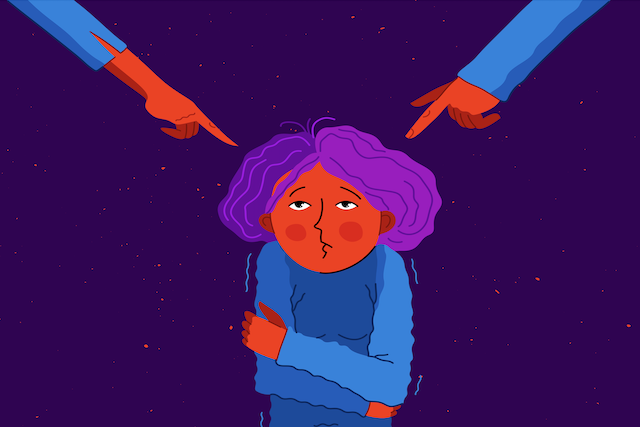
    But if we want to be free of the heavy burden of feeling judged, there’s something very important we need to understand.
    Feeling judged and being judged are not the same thing!

    This is such an important distinction. And understanding it can make the difference between feeling insecure or stable.

    It’s the difference between hiding and shining.

    Feeling Judged vs. Being Judged

    When we feel judged, it’s something we experience inside ourselves.

    It’s a feeling, not necessarily a fact.

    It’s important to understand that how we feel and react to others is up to us. It’s a result of our conditioning, traumas, fears, emotions, insecurities, attitudes, and the things we believe (whether they’re actually true or not), but it’s ours.

    It may be triggered by what someone says, but the feeling is still ours.

    Being judged is something else. It’s something people outside of us do. Whether someone passes judgment on us through their words, actions, a certain look, or a sneering sound under their breath, it’s an external thing… and we can react to it, or not.

    I’m not suggesting it’s easy to not react or take it personally, but understanding the distinction is important.

    Taking Things Personally

    If someone questions something we’ve said or done or why we believe something, we might take it personally and feel like that person is judging us.

    Have you ever felt judged because someone asked you a question?

    Be honest!

    We might act defensively or angrily when someone questions something we believe, but that person may genuinely want to understand us better.

    If we’re insecure about who we are, or if our sense of self is deeply attached to our beliefs, then any question can feel like an attack or judgment.

    But that doesn’t mean it was a judgment.

    I’m a very curious person. I’ve always been curious to understand myself, my mind and emotions. I know this comes through self-inquiry—meaning to question myself and my beliefs—and sometimes that is uncomfortable.

    But it’s more than just understanding myself, it’s a curiosity to understand the human experience. This also means understanding others. This curiosity to understand is also the desire to connect on a deep, authentic level.

    As Thich Nhat Hanh said: “Understanding is love’s other name. If you don’t understand, you can’t love.”

    Because of who I am and what I do, I often ask people questions about who they are and why they believe what they believe.

    Most of the time I’ve found people are quite open with me; however, occasionally people take my questions personally. Now, I know I had no sense of judgment in my questions, only my curiosity to understand and connect, yet there are times when the people I’m talking to become defensive.

    Even though I understand, when this happens, I can sometimes still feel a sense of being judged. Judged for something I didn’t do. But this is my reaction. I perceive their reaction as a judgment for my perceived judgment.

    I know, it sounds a little complicated, but that’s what happens sometimes. If I catch myself and feel what’s happening inside, I’m able to move through it and let it go.

    But it starts with recognizing and being mindful of my reaction.

    We Have a Choice

    In times when we feel judged, we can react, defend, and justify our emotions by trying to blame someone else, or we can use it as an opportunity to be curious about ourselves—to understand so we can learn and grow.

    Choosing to grow does not mean we don’t feel our emotions. We do. We feel them, and it can be uncomfortable at times. But choosing to grow means we feel our emotions consciously and recognize our reactions so we can take responsibility for them. Because we understand our emotions and reactions are ours.

    As long as we try to blame others for how we feel, we will always be the victim, because it will feel like we don’t have a choice.

    By learning to own our emotions by being present with them, we have the power to transform our relationship to them. We can then learn to navigate the landscapes of our mind.

    Let Go by Being Curious

    If you’re feeling judged—assuming someone is thinking badly of you and feeling bad about yourself in response—engage your curiosity.

    Follow your emotions mindfully. Just feel them. Be present with them (to the degree that you are able). Let them take you deeper into yourself.

    Ask yourself:

    Why do I feel judged?

    What beliefs am I holding onto?

    What do I not want to see about myself?

    What do I not want to admit?

    Am I judging myself? If so, for what?

    Why does it matter what someone else thinks?

    Don’t underestimate the power of our curiosity. It’s a superpower!

    It really can shift us from a closed and reactive state of mind into an open and receptive state of mind. Open and receptive is the place where we can break our self-imposed limits, connect to our heart, and grow.

    It’s also the place where understanding becomes love. Both within ourselves and within our relationships and interactions. It’s the place where we can heal our collective separation and bring back a sense of unity.

    Curiosity is the magic that can facilitate it.

    Journaling is a great assistant to curiosity. It helps us connect more deeply to what’s happening inside us. Any time you feel judged, take some time to sit quietly and reflect on your emotions, thoughts, and feelings. Writing them down can help to make it more tangible.

    Do this enough and you’ll start to see familiar patterns emerging.

    Find Your Strength

    It’s likely that people will judge you at some point. But remember, that doesn’t mean you have to take it personally or feel bad about yourself.

    Whenever you’re feeling judged, whether someone else is judging you or not, remember, it’s just a feeling. Use these times as opportunities to deconstruct your limits and insecurities.

    By doing this you connect with your true self and allow the strength of your heart to emerge.

    And the world needs your heart to shine!