Tag: shadow

  • The Prowler in My Mind: Learning to Live with Depression

    The Prowler in My Mind: Learning to Live with Depression

    “There is a crack in everything, that’s how the light gets in.” ~Leonard Cohen

    When depression comes, I feel it like a prowler gliding through my body. My chest tightens, my head fills with dark whispers, and even the day feels like night. The prowler has no face, no clear shape, but its presence is heavy. Sometimes it circles in silence within me. Other times it presses in until I don’t know how to respond.

    In those moments, I feel caught between two choices: do I lie still, hoping it passes by, or do I rise and face it? Often, I choose lying down—not out of paralysis but patience. Sometimes the only way to coexist with the shadow is to rest, to surrender for a while, to let sleep take me. And sometimes, when I wake, I feel a little lighter. Not free of the prowler but reminded that it is possible to live alongside it.

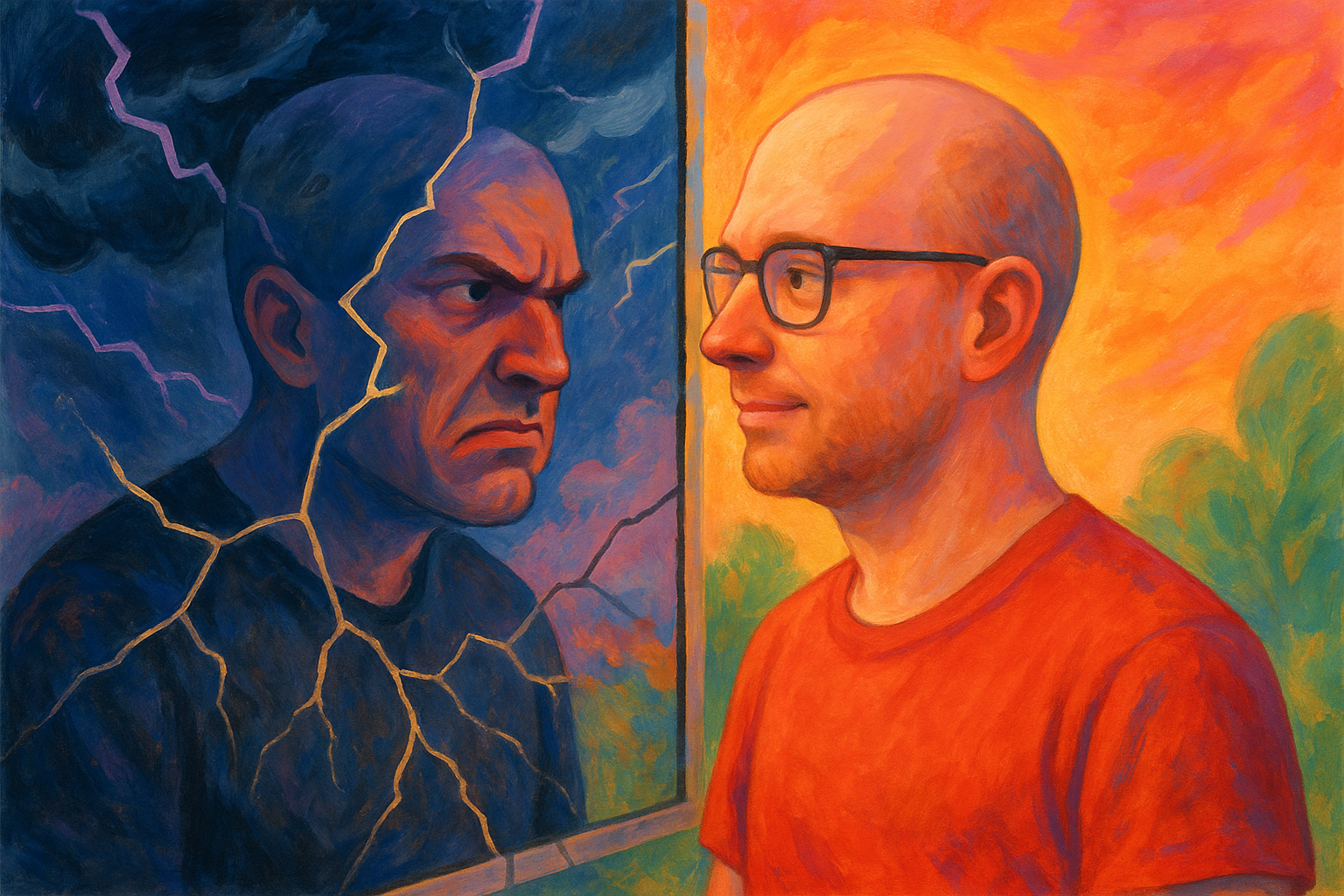
    Carl Jung once wrote, “Everyone carries a shadow, and the less it is embodied in our conscious life, the blacker and denser it is.” I know this to be true. The more I try to push my depression away, the heavier it becomes. But when I bring awareness—even reluctant awareness—its power weakens.

    The Shadow as Teacher

    The shadow is not only my enemy. It also serves as a teacher. Depression forces me to face the parts of myself I would rather outrun: shame, grief, fear, anger, discontent. But it also carries hidden truths. Jung suggested that the shadow holds not just what we reject but also forgotten strengths and possibilities.

    For me, the shadow’s message is humility. It reminds me I am not in control, that I can’t polish myself into perfection. It pushes me to listen more deeply—to the pain I carry and the struggles I see in others. It insists that healing doesn’t come from pretending the darkness isn’t there. It comes from being willing to see it.

    Buddhism and the Prowler

    Buddhism gives me another way to see this. The Buddha taught that suffering doesn’t just come from clinging to what we crave; it also comes from turning away from what we don’t want to face. That turning away is called aversion.

    When the prowler moves through me, my instinct is always to turn away. I want to push it out, distract myself, pretend it isn’t there. But each time I run from it, the shadow grows stronger.

    In meditation, I practice staying. I sit and breathe, whispering silently, “May I be free from fear. May I be at peace.” I’ll be honest, sometimes these words feel empty or even silly. They don’t always lift me. But saying them creates a pause—a moment of willingness to stay instead of running. The prowler doesn’t vanish, but it softens a little under the light of compassion.

    Creativity and the Shadow

    I’ve also discovered that my documentary work—filmmaking, writing, teaching—is only authentic when I acknowledge the shadow. My camera becomes a mirror. When I pretend everything is light, the images feel flat. But when I allow the complexity of shadow into my seeing, the work has depth.

    When I sit with people to listen to their stories, I often sense their shadows too—grief unspoken, fear beneath the surface, contradictions in how they see themselves. I can recognize those shadows because I have lived with mine. Facing my own shadow allows me to meet others with greater truth and compassion.

    To create honestly means letting the shadow into the frame. Without it, there’s no contrast, no tension, no truth.

    Caregiving as Light

    One of the greatest gifts in my life now is caregiving for my ninety-six-year-old mother. These small daily acts bring moments of unexpected reprieve.

    I remember one morning, bringing her a simple breakfast—just toast and tea. She looked at me and smiled, her face lighting up with gratitude. In that moment, the prowler loosened its grip. It was such a small thing, yet it fed the part of me that wanted to live.

    Playing her old-time tunes on my Gibson mandolin does the same. When I see her foot tapping or hear her hum along, something shifts inside me. Caregiving sheds light into the darker places of my heart. The simplicity of preparing food or sharing music reminds me that love and service are stronger than despair. These acts don’t erase the shadow, but they bring balance, showing me I am more than my depression.

    Feeding the Shadow, Feeding the Light

    I’ve come to see that I sometimes feed my depression. Not on purpose, but through worry, anxiety, and rumination. Each time I circle the same fears, I am handing the prowler a meal.

    And then there are other times when I feed something else. The words of meditation may feel hollow, the wolf story may sound idealistic, but the simple acts are real: making my mother breakfast, playing her a mandolin tune, writing with honesty, or even just breathing one steady breath.

    It reminds me of the well-known story of two wolves: A grandfather told his grandson that inside each of us are two wolves. One is fierce and destructive, filled with anger, envy, fear, and despair. The other is peaceful and life-giving, filled with compassion, hope, and love. The boy asked, “Which one will win?” The grandfather replied, “The one you feed.”

    For me, both wolves are real. The prowler and the peaceful one live side by side. I don’t deny my depression. I know it is part of me. But I also know I can choose, moment by moment, which one I will feed.

    Presence with the Shadow

    The prowler still comes. I suspect it always will. Some days it circles silently like a vulture. Other days it urges me to lie down and surrender. And sometimes, when I wake, I feel a small relief—a reminder that coexistence is possible.

    This is what presence has come to mean for me. Presence is not escaping into light or denying the dark. Presence is staying with what is—the prowler, the heaviness, the caregiving, the fear. It means breathing with it, resting with it, even sleeping with it, without running away.

    Both Jung and the Buddha point in this direction. Jung says we cannot become whole without making the darkness conscious. The Buddha says we cannot be free if we turn away in aversion. And I have learned that I cannot create or care for others or live fully if I refuse to face the prowler inside me.

    So I continue step by step. I breathe. I stay. I rest. I create. I bring my mother breakfast. I play her mandolin tunes. I feed the peaceful wolf. I coexist. The shadow still prowls, but I am here too—more awake, more human, more present.

  • The Hidden Lesson in Projection: It’s Never Really About Us

    The Hidden Lesson in Projection: It’s Never Really About Us

    “What others say and do is a projection of their own reality, their own dream. When you are immune to the opinions and actions of others, you won’t be the victim of needless suffering.” ~Don Miguel Ruiz

    For most of my life, I didn’t fully understand what projection was. I just knew I kept becoming the problem.

    I was “too much.” Too intense. Too emotional. Thought too deeply. Spoke too plainly.

    Again and again, I was blamed, misunderstood, and cast out for holding up a mirror to things no one wanted to see.

    But in my forties, I began doing shadow work in and out of therapy. At first, I thought the shadow was the broken part. The mess to fix. The thing to hide.

    But I slowly realized: the shadow is where the gold lives. It’s the part of us we disown—but it’s also the most authentic expression of who we really are.

    As a little girl, I was naive and blunt in the way that children often are. I remember saying I didn’t want to share the toys I’d just received for my birthday. My stepmother called me spoiled. But I wasn’t being selfish—I was just being honest. The toys were mine.

    What I didn’t understand then was that my words touched a nerve that had nothing to do with me.

    I think, deep down, my stepmother felt she was always sharing my father—with his past, with his pot-smoking, drug-dealing friends—and there wasn’t much left over for anyone else. Adding me into the equation was one more person who might “take” him from her. And when I voiced a desire to keep something all to myself, it reflected something she couldn’t have: all of him.

    Rather than face that pain, she projected it onto me. I became the one who was “too much,” “too selfish,” “too entitled.”

    My father didn’t know—he was always gone. And I was punished, not for being bad but for mirroring what she couldn’t name in herself.

    And so I learned to shrink. To share when I didn’t want to. To give more than I had. To stop being “the problem.”

    But I wasn’t the problem. I was just being real. And being real in a family built on denial was dangerous.

    Eventually, the truth would always find its way out—on my tongue, in my eyes, in the questions that slipped past my filter. And when it did, I paid for it. With silence. With exclusion. With shame.

    Again and again, I internalized it: I talk too much. I am too much.

    But the truth is—I was never the problem. I was the mirror.

    I reflected what others didn’t want to see in themselves. And people hiding from themselves don’t want mirrors near them.

    When someone’s identity depends on a carefully constructed mask, truth feels like a threat. And most people? They’re wearing masks.

    Therapy helped me see it differently. I stopped asking, “What’s wrong with me?” And I started asking, “What if this isn’t about me at all?”

    That question changed everything.

    When someone’s reaction to me was intense or filled with judgment, I learned to pause. To listen more closely.

    And most of the time, I realized they weren’t telling me about me. They were narrating their own wounds. Their history. Their fear. I just happened to be standing close enough to reflect it back.

    Because that’s what mirrors do. They don’t distort. They reveal.

    Eventually, I stopped defending myself. Stopped over-explaining. Stopped pleading to be understood by people who had already cast me in a role I didn’t choose.

    I just stood still. Reflected what I saw. Sometimes I might say, “You seem really bothered by what I just said—what’s that about?” Not because I’m better. Not because I’m more evolved. But because my gift is clarity. I see and name what’s real.

    I still ask for clarity—and that’s the reason for the question. But the question itself often raises awareness of that person’s own motivations, their own inner truth or knowing. Some people pause and reflect. Most don’t—or at least I don’t get to see it. And that’s okay with me.

    I don’t chase belonging anymore. I don’t shrink myself to fit.

    Because now I understand: this is my gift. I see clearly. I speak clearly.

    My clarity doesn’t always make people comfortable. But it’s mine. And I won’t abandon it anymore.

    Because I now know that when someone reacts strongly to me, it’s rarely about me at all. It’s about what my presence reflects. And I don’t need to defend against that—I just need to stay clear, stay kind, and stay me.

  • To My Narcissistic Friend: Thanks for Being My Toxic Mirror

    To My Narcissistic Friend: Thanks for Being My Toxic Mirror

    “It’s okay to let go of those who couldn’t love you. Those who didn’t know how to. Those who failed to even try. It’s okay to outgrow them, because that means you filled the empty space in you with self-love instead. You’re outgrowing them because you’re growing into you. And that’s more than okay; that’s something to celebrate.” ~Angelica Moone

    I’ve had the most unusual, baffling, and frustrating experience with someone recently. And yet, it’s also been a massive catalyst for growth. I’ve seen myself more clearly by observing the behavior of someone who, in some ways, is a lot like me.

    For me, it’s been the purest demonstration of the phrase “Others are your mirror.”

    This person—let’s call him Simon—has been incredibly toxic.

    He’s insulted me deeply, hurled cruel names, and used gaslighting, manipulation, and blame-shifting to twist reality.

    At times, he cloaked control in false compassion, pretending to help while subtly undermining me.

    He projected his insecurities onto me so persistently, I began to doubt my own sanity—wondering if I really was as terrible as he claimed.

    Thankfully, I’m in a strong place mentally right now. I can see how someone more vulnerable could be shattered by Simon. In fact, I know he’s left a trail of broken relationships behind him. People abandon him left, right, and center—the moment they get close, his toxicity flares.

    At his worst, Simon has been absolutely vile. He ticks nearly every box for narcissistic traits. He can’t handle even mild criticism. When I offered gentle, constructive feedback, his ego erupted, and he lashed out with shocking viciousness. He claims to want self-improvement, but when real opportunities arise, his ego slams shut. Growth is blocked at the gates.

    And yet, despite all this, I feel deep compassion for him. I’ve read enough about narcissists to understand where this behavior might come from. He’s going through hell: job loss, depression, drug use. I’ve been in a scarily similar place. So my empathy kicks in hard. Even though he’s been monstrous, I see pieces of myself in him.

    After clashing with him multiple times, I gave it one final try. I knew by then that avoiding narcissists is usually the wisest route—they rarely change—but I extended one last olive branch.

    It lasted less than a day. He snapped it in half and flung it back in my face.

    It feels like I’m some kind of unbearable truth agent to Simon. His soul just isn’t open enough to withstand my presence. I’m far from perfect, but I’ve worked hard on myself. I try to stay humble, self-reflective, and growth-oriented—and that’s like kryptonite to someone with such a fragile, inflamed ego.

    So now, Simon is blocked. I’m proud I tried. It didn’t work. And for my own well-being, I had to let go.

    I’ve grieved the friendship that might have been. Because, believe it or not, Simon has redeeming traits in spades. He’s brilliant, creative, charismatic. He seems to care about others—though I wonder if that’s driven more by ego than empathy.

    So what good came out of all this chaos? Watching Simon’s worst traits has helped me examine my own.

    Don’t get me wrong—I’m pretty sure I’m not a narcissist, and I don’t think I’ve ever been as vile as Simon.

    But. I have lashed out. Especially when my ego’s taken a hit.

    Back when I was addicted to drugs, I had a devastating fallout with one of my oldest friends—let’s call him Anthony. He was deeply concerned about my behavior. He had a young son, and didn’t trust me—with good reason.

    I’d promised I wouldn’t take drugs on a lads’ holiday, then did it anyway. I betrayed his trust. Later, when we tried to arrange a meetup, Anthony did something incredibly difficult: he told me I wasn’t welcome at his home. He couldn’t risk me having drugs on me—in case his son found them.

    Anthony tried to handle it with kindness and care. But it crushed my ego. My best friend thought I was a danger to his child.

    I exploded. I did a Musk. In a blaze of rage, I told my best friend to go F himself.

    That ended a fifteen-year friendship. I was already depressed, but after that, I spiraled into suicidal depths. Deep down, I knew I was to blame—but my ego couldn’t take it. Blaming Anthony was easier than facing myself.

    He wouldn’t speak to me for years. Eventually, we reconciled, but something had died. The warmth was gone. He kept me at arm’s length, understandably. Now, we don’t speak at all. It’s clear he’s given up on me again. That still stings, but I accept it.

    So can you see why I felt a connection to my new friend Simon?

    Watching him lash out recently awakened something primal in me. It reminded me of my worst moments. And I never want to go there again. I want to master myself; build emotional intelligence; stop letting my volatility hurt people.

    Simon showed me how bad it can get when you’re spiraling—and it’s terrifying.

    All my life, I’ve struggled with emotional volatility. I don’t lose my temper often, but when I do, it’s nuclear. Words are my sword, and when I swing carelessly, the damage is brutal.

    Which brings me to a truth I’ve come to believe: Strong men don’t lack the capacity for destruction—they master it.

    They walk with a sheathed sword, drawing it only when absolutely necessary. It’s restraint, not weakness. It’s honor. It’s the way of the gentleman, the noble warrior. My blade is my voice—sharp, but it’s best when kept in check.

    Weak men lash out at the slightest wound. I refuse to be a weak man.

    Meeting someone as damaged as Simon has clarified my mission. I must continue to heal. I must shed the worst parts of myself. I saw my shadow in him—distorted and exaggerated. It horrified me. And it inspired me to rise above it.

    I’ve started psychotherapy. I’ve even been using ChatGPT as a kind of therapist—surprisingly helpful. This past month has been a surge of self-development. And I have Simon, of all people, to thank.

    Is he doomed to remain toxic? Maybe. The scientific literature suggests that the odds aren’t good. But it’s not my burden anymore. He didn’t want my help. I have to put my own well-being first.

    By cutting him off, I protect myself from future pain.

    And in doing so, I’ve gained greater empathy for those who once cut me off. They saw someone chaotic, unsafe, emotionally destructive. I wish they could see how much I’ve changed in the last ten years. But I respect their choice to keep their distance.

    We can’t change the past. Some bridges are too obliterated and irradiated to ever rebuild.

    But if we choose humility and self-reflection, we can always choose to grow.

  • Dancing with Darkness: How to Reclaim Your Whole Self

    Dancing with Darkness: How to Reclaim Your Whole Self

    “Shadow work is the way to illumination. When we become aware of all that is buried within us, that which is lurking beneath the surface no longer has power over us.” ~Aletheia Luna

    For years, I believed healing was about transcending pain. I took the courses, read the books, learned every energy-healing technique I could find, and became a healer myself.

    And for a while, I felt better. I had breakthroughs. My anxiety lessened.

    My depressive episodes became fewer. But they never fully disappeared. Even after all the inner work, there were still days when I felt unbearably low. Days and nights when my thoughts raced, full of fear and doubt.

    I told myself that if I was truly healing, these feelings shouldn’t exist anymore. That if I was really evolving, I wouldn’t feel this way.

    And worst of all, if I was a healer, how could I possibly still struggle?

    Surely, I was doing something wrong.

    I started questioning myself. Maybe I wasn’t “good enough” as a healer. Maybe I wasn’t doing enough inner work. MaybeI just wasn’t meant to be on this path.

    So I doubled down. I meditated longer. Journaled more. Cleared my energy. Did affirmations.

    And yet, the sadness still found me. The anxiety still whispered its fears. No matter how much I tried to fix myself, these emotions refused to leave.

    It wasn’t until I stopped fighting my pain that something shifted. I realized I had spent years treating my emotions as something to get rid of. But healing isn’t about eliminating pain: it’s about becoming intimate with it.

    So instead of suppressing my darkness, I started getting to know it. Instead of running from my emotions, I sat with them—fully present, without trying to fix them.

    I let my sadness speak through poetry.

    I let my anxiety move through dance.

    I let my shadows express themselves through art, writing, and stillness.

    And something unexpected happened. The more I embraced my pain, the less power it had over me. The more I let myself feel without judgment, the more compassion I had for myself.

    I learned that healing isn’t about reaching some perfect, pain-free version of yourself. It’s about integrating every part of you—even the ones you used to reject.

    I realized that being a healer doesn’t mean being free of struggle. It means having the courage to meet yourself exactly as you are—without shame, without resistance, and with deep, unwavering love.

    Because healing isn’t about erasing your darkness.

    It’s about learning to dance with it.

    What is the Shadow Self?

    Our shadow consists of the parts of ourselves that we’ve been taught to hide: our fears, suppressed emotions, unprocessed pain, and even our untapped strengths.

    Maybe you were told as a child that expressing anger was “bad,” so you learned to suppress it.

    Maybe you grew up believing that vulnerability was weakness, so you built walls around your heart.

    The shadow isn’t just made up of things we perceive as negative; it can also include hidden gifts. Some of us hide our power because we were taught it wasn’t safe to shine.

    Some of us suppress our intuition because we fear being wrong. Some of us bury our true desires because we’ve been conditioned to think they’re unrealistic or selfish.

    But here’s the thing: Whatever we suppress doesn’t disappear. It just works against us in unconscious ways.

    Our unhealed wounds can show up as:

    • Feeling stuck in the same painful patterns
    • Emotional triggers that seem to come out of nowhere
    • Self-sabotage, procrastination, or fear of success
    • Overreacting to certain behaviors in others (often mirroring what we reject in ourselves)
    • Feeling disconnected, numb, or unfulfilled despite “doing the work”

    So how do we begin integrating our shadow instead of fearing or avoiding it?

    5 Ways to Begin Shadow Integration

    1. Get curious about your triggers.

    One of the easiest ways to identify our shadow is to pay attention to what triggers us.

    Have you ever felt an irrationally strong reaction to something? Maybe a passing comment made you feel deeply insecure, or someone else’s confidence irritated you.

    Our triggers are messengers. They reveal wounds that are still waiting to be healed and integrated.

    Reflection prompt:

    • Think about the last time something upset or irritated you. What was the deeper emotion beneath it?
    • Does this remind you of a past experience or belief?
    • If this was a message from your inner self, what would it be saying?

    When we can sit with our reactions instead of judging them, we open the door to healing.

    2. Identify what youve been taught to suppress.

    Many of our shadow aspects were created in childhood. We learned that certain emotions, traits, or desires weren’t “acceptable,” so we buried them.

    Ask yourself:

    • What parts of myself did I feel I had to hide growing up?
    • What qualities do I judge in others (and could these be aspects I’ve rejected in myself)?
    • What dreams or desires have I talked myself out of because they feel “unrealistic” or “selfish”?

    For example, if you were taught that being sensitive meant being weak, you might suppress your emotions and struggle with vulnerability. If you were raised in an environment where success was met with jealousy, you might unconsciously fear stepping into your full potential.

    By bringing awareness to these patterns, you can begin to rewrite them.

    3. Practice sitting with uncomfortable emotions.

    Most of us weren’t taught how to sit with our emotions. We were taught how to suppress, avoid, or “fix” them.

    But emotions are not problems. They are messages.

    Instead of pushing away sadness, frustration, or fear, try welcoming them as temporary visitors.

    Try this:

    • When a difficult emotion arises, pause, and say, I see you. I hear you. I am listening.
    • Notice what sensations arise in your body.
    • Breathe deeply and allow yourself to sit with it, without rushing to change it.

    The more you practice this, the less power your emotions will have over you.

    4. Reconnect with your inner child.

    Much of our shadow is rooted in childhood experiences—times when we felt abandoned, unworthy, or unsafe.

    Healing these wounds requires reparenting ourselves with love and compassion.

    A simple inner child exercise:

    • Close your eyes and imagine your younger self standing in front of you.
    • Picture them at an age when they felt most vulnerable.
    • Ask: What do you need to hear right now?
    • Offer them the love, validation, and reassurance they may not have received.

    This simple practice can be incredibly powerful in healing past wounds and integrating your shadow.

    5. Express what youve been holding back.

    Shadow integration isn’t just about recognizing our hidden parts. It’s about allowing ourselves to express them in healthy ways.

    If you’ve suppressed your voice, start speaking up.

    If you’ve buried your creativity, allow yourself to create freely.

    If you’ve been afraid of taking up space, start owning your worth.

    Challenge yourself:

    • Identify one way you’ve been keeping yourself small.
    • Take one small step toward expressing that part of yourself this week.

    When we integrate our shadow, we reclaim the full spectrum of who we are.

    Embracing Your Whole Self

    Healing isn’t about becoming perfect. It’s about becoming whole.

    The parts of us that we once rejected hold immense wisdom, creativity, and strength. When we integrate them, we unlock a new level of self-awareness, freedom, and inner peace.

    So, the next time your shadows appear, instead of running from them, try sitting with them.

    Instead of fighting your fears, try listening to what they have to teach you.

    Instead of rejecting the parts of you that feel unworthy, try offering them love.

    Because healing isn’t about erasing your darkness.

    It’s about learning to dance with it until it, too, becomes light.

    I would love to hear from you: What’s one part of yourself you’re learning to embrace? Drop a comment below.

  • Shadow Parts: How to Recognize and Release Them

    Shadow Parts: How to Recognize and Release Them

    “When we are aware of our weaknesses or negative tendencies, we open the opportunity to work on them.” ~Allan Looks

    Last year, I took my then-six-year-old son to a kite festival. He was ecstatic about flying his kites, and we spent a lot of time doing just that!

    At one point, his kite string got tangled with another lady’s kite string. Both kites crashed to the ground, and the lady and I started working to untangle the strings.

    In his excitement, my little one repeatedly asked if we were done yet and if he could fly his kite again. I reassured him, saying I understood his excitement and that his kite would be ready soon.

    However, the lady, visibly annoyed, gave him judgmental looks and eventually told him he was being impatient and needed to stop asking.

    Calmly, I explained to her that he was just excited to fly his kite and reminded her that he was only six years old.

    This incident made me observe her shadow of impatience. She was essentially impatiently telling a young, excited child to be patient without recognizing her own impatience. This is what we call a shadow.

    Recognizing our own shadows can be challenging because they are hidden within us, much like how a computer operates with its set of programs without being aware of them. Our shadows are ingrained from early childhood, making it difficult for us to see them clearly.

    Here are some common examples of shadows I’ve witnessed in clients, family, friends, and even myself:

    • A parent yelling at their child to stop yelling.
    • A parent (or anyone) being impatient with their child’s impatience.
    • Someone badmouthing another person while complaining about that person’s meanness, not realizing that badmouthing is unkind.
    • Someone desiring more benevolence from others but gossiping behind their backs.
    • I often feel unsure if someone wants me in their life or business, but the truth is, I am the one who is indecisive.

    Shadows make us judgmental and inhibit our capacity for love, compassion, joy, presence, and understanding. They limit our experience of life. This is why I believe shadow work is crucial for living a joyful and connected life.

    So, how can we shine a light on and release our own shadows? Here are a few steps:

    1. Bring Awareness: Notice your triggers—when you feel frustrated, impatient, annoyed, or judgmental towards someone else.

    2. Acknowledge the Emotion: Allow yourself to feel the emotion fully, without judgment or resistance.

    3, Be Curious: Curiosity transcends judgment. Ask yourself: What is it about this person that makes me feel this way?

    4. Identify the Shadow: Recognize that the part of yourself you have denied or repressed is being projected onto others. Ask yourself why you are judging them.

    5. Observe Honestly: Be radically honest and observe this shadow part of you. Acknowledge it by saying, “I see you.”

    6. Understand the Cause: Ask yourself why this shadow is showing up. Often, a younger, wounded part of yourself needs healing and love.

    7. Nurture the Wounded Part: Identify who you are protecting—perhaps a little girl who was scolded or punished. Hold this part of yourself with love, acceptance, and compassion.

    8. Heal with Love: Send love, patience, and kindness to this part of yourself. Give her what she needed at the time.

    9. Apply this Love Now: Extend this love to your current self and observe how it changes your feelings toward the situation or person.

    10. Practice Regularly: Repeat these steps until it becomes easier. As you nurture these parts of yourself, they will trust you more, and you will feel more grounded and loving.

    By shining a light on our shadows, we can transform judgment into understanding and impatience into patience, and ultimately live a more joyful and connected life.

  • Bulletproof Self-Love: How to Build an Unshakeable Relationship with Yourself

    Bulletproof Self-Love: How to Build an Unshakeable Relationship with Yourself

    “Before you put yourself down, please consider everything you’ve accomplished to get to this point, every life you’ve touched, and every moment you’ve pushed beyond your fears. You are a champion, a fighter. You are worthy of nothing less than the deepest love you have to share.” ~Scott Stabile

    It seems that we’re being bombarded daily with heart-felt messages to love ourselves more. It’s everywhere—from our Instagram newsfeed to handprinted tote bags to the “You are worthy” mural at your local coffee shop.

    I appreciate the society-wide agreement we seem to have made to remind ourselves to choose self-love.

    But endless commandments like “Put yourself first!” and “Remember your worth!” rarely explain how to actually follow through with it. We talk about self-love and self-worth as though it’s a matter of remembering to floss your teeth at night—as if you can choose better relationships, set healthy boundaries, and take care of your body by just remembering to do so.

    If it doesn’t come easily, loving yourself might feel like walking into a new job with no training and being expected to figure it out without a manual or supervisor. Through no fault of your own, you may not have developed the muscle for self-love and care.

    I know this because I’ve had in-depth conversations with people who flat out told me, “I don’t know how to have compassion for myself.”

    You don’t have an arduous, uphill struggle to feel worthy and self-loving because you lack the inner capacity for it.

    If you know how to feel hand-on-chest, lower-lip-puckered-out sympathy and compassion for others—even if it’s for endangered polar bears—then you have the capacity to cultivate this feeling for yourself. And it’s not your fault if you feel lost on where to begin.

    Working with Your Unloved Parts

    The culprits that thwart your best efforts to practice self-love often come from your shadow—an unconscious receptacle that safeguards all the parts of yourself that’ve been rejected and pushed away. Your shadow deploys a lot of unconscious strategies to make sure you keep sabotaging yourself and avoiding your rejected parts.

    Because laziness was deeply entrenched in my shadow, I learned early in life to cope with my unlovable parts by overworking myself. Every nook and cranny of my calendar was chock full of social outings, chores, hurried “leisure” walks, and things to occupy my mind. I only felt good enough when I was constantly busy, so I developed a wicked good avoidance strategy that kept the inner scarcity just below my level of awareness.

    Eventually, I noticed this endless game of tag between me and the horrific emptiness. I learned to stop pushing it away and instead developed a capacity to be with the sensations it stirred up in my body.

    There are remarkable benefits to working with any fear or disgust you have toward your shadow parts, but a lot of folks run into roadblocks because we’re wired to avoid pain and move toward pleasure.

    When the terror of shadow parts arises in the body, our visceral reaction is often to push it away, lodging it further away into our psyche.

    Neuroscience has also shown us that negative self-talk can actually give you a dopamine hit if it’s what your brain thinks is “correct,” even if the beliefs are negative and sabotaging.

    This leads us to push away our unloved parts and berate them.

    Thankfully, there’s another option.

    Integrate your shadow parts by creating a safe space for them—more specifically, for the uncomfortable emotions that emerge around them. For example, if you habitually feel anxious in social situations because you think of yourself as being awkward, you can practice integrating your “awkward self” by creating space for the disgust or fear associated with it.

    Being with difficult emotions means being with the sensations without feeding them negative thoughts. This actually sends signals of safety to your brain and nervous system that lowers the internal red flags. With continued practice, your brain loses a reason to push the pedal to the metal on stress responses like anxiety, and the uncomfortable sensations begin to subside. This is the true meaning of “facing your fears.”

    When you reach the other side of a difficult emotion, it often feels divinely euphoric and empowering—like you’re walking across the finish line of a marathon. Allowing emotions to pass through your body builds resilience. Every time you practice the art of allowing, it becomes easier to anchor back into your power.

    Practicing Self-Love

    Nurturing your capacity to think self-loving thoughts, be self-loving, and feel the sensations of self-love is also a necessary practice.

    You might be surprised to learn that you could be projecting all your love onto other people. Whether it’s a romantic partner, friend, or tv character, if you shower them with adoration, there’s love inside you, but perhaps it doesn’t feel quite at home. Parts of you might feel deeply flawed or incomplete—whether you’re conscious of it or not—so you’re shoving your love into the hands of someone else instead. Projecting love onto others is a way of defending yourself against inner parts you’ve deemed unlovable. Everyone does this in some form or another.

    The remedy to this situation is taking back those projections and investing time and energy into finding and loving those qualities in yourself.

    We all have a negativity bias in our brains, so we pay more attention to what’s wrong, unsafe, or not good enough about ourselves and the world around us. If this default setting is left unchecked, it leads to major brain ruts—and well, we’ve all met a curmudgeon before!

    If you want to lean into what’s radiantly loveable about yourself, you have to shamelessly focus on what you want to love about yourself. If you’re not sure what that is, then choose something and nurture the hell out of it. Tenacity goes a long way when you want to reverse old patterns.

    Around the time I began learning to face my own inner void, I took myself on a journey of self-love and self-care through embodied sensual movement and pole dancing.

    I call it my divine intervention.

    Seemingly out of nowhere, I instinctively knew one day I wanted to become a pole dancer. Even though I had literally zero background in dancing or physical exercise in general, I realized that I had a dancer’s heart inside of me. As luck would have it, a brand-new studio had just opened up in my city six months earlier.

    I signed up for an assortment of classes, but it was the feminine movement pole dancing class that captivated me. I’d been in a rush my whole life—for no particular reason at any given moment—but this slow-as-honey practice forced me to start paying attention to myself in ways I never had before.

    I invested in myself by taking these classes. It allowed me to stop feeling guilty for being lazy. I didn’t need to overstuff myself with work, relationships, or other outside sources of validation anymore. I learned to slow down, feel my body, and take better care of myself.

    Learning to love yourself and know your worth is like having direct access to your inner authority. The self-doubt, sabotage, and low self-esteem lose their power and you finally get to take the helm. If you’re ready to stop second-guessing and minimizing yourself, here’s how to get started.

    5 Ways to Start Loving Yourself

    1. Expand your capacity to be with your unloved parts.

    Every time you create space for an unloved part, you’re changing the relationship between you and that part. Even if you have lots of deep wounds, your relationship to yourself is always changing. The key to creating safe space for your parts is staying with the sensations of fear or disgust and away from stories. If you allow thoughts of worry or self-judgment to run the show, the unloved parts won’t get reconditioned.

    The best way to do this is to work with emotions in real time. Find a quiet place to breathe through the sensations. Emotions run a lifespan of ninety seconds at most if you don’t retrigger the emotion with negative thoughts.

    2. Open up your nervous system to receive love.

    This is about practicing the art of receiving goodwill and kindness in all forms—positive feedback, compliments, and words of affirmation.

    How often do you fully accept a compliment? How often do you pause to let kind words—whether it’s a thank-you email from a friend or gratitude from a stranger—land in your body? We’re so quick to brush off affirmations, so what if you rewarded yourself by unapologetically receiving them instead? Make a practice of slowing down enough to take it all in. When you do, you’re reinforcing the pathway to connection and self-love in your nervous system.

    3. Affirm yourself with the love you give to others.

    If you already have the capacity to love others, then there’s an existing pathway to self-love. It just needs to be rerouted back to you.

    On a neurological level, if self-love feels like a stranger to you, the neural networks related to your self-image probably have a poor association with the biochemicals related to emotions around love and worthiness. Thankfully, neurons that fire together, wire together!

    Try this exercise in front of a mirror. Think of someone you deeply love and would describe as being super “loveable.” Close your eyes, see that person in your head, and think about why you love them so much that you can literally feel the tingly sensations coursing through your body. Then quickly open your eyes and repeat to yourself while looking in the mirror, “I am so loveable” with an extra emphasis on “I.” Make sure to work up the feeling on a visceral level in your body before you open your eyes. You’re “borrowing” the feel-good neurons while activating the self-image neurons to create new neural pathways.

    Have fun with this and change out “loveable” with other qualities you want to feel toward yourself in each round. Repetition matters, so make this a regular practice.

    4. Create actionable self-love.

    If you truly loved yourself in the way you wanted to, what would you do differently? Make a list of specific behaviors you want to change. For each one, ask yourself, “What’s the absolute smallest step I can take to work toward creating this behavior—something so small, I can do it right now?”

    Hint: the smallest step is always smaller than you think. For instance, if you want to ask for the pay raise you deserve, you might think the next smallest step is writing a letter of justification. If you feel head-to-toe inspired to do that right now, by all means, please do! But give yourself permission to start even smaller if the thought of drafting a letter immediately gives you anxiety. The goal is to start building momentum right NOW, so keep the steps super small and easy to do.

    5. “Drop in” to your embodied self-worth.

    You have access to your self-worth any time you want because it’s inherent. There’s nothing you ever need to do to earn it. Even if you’re not sure what it feels like, your worthiness is always there, waiting for you to reconnect to it.

    Getting into your body senses is a fantastic way to find where dignity lives in your body so that you can deepen your relationship with it. Make it a regular practice to take a few minutes to turn inward and “get to know” your non-negotiable worthiness. Where is it located? If it was a color, what color would it be? If it was a shape, what shape would it be? What’s the texture, movement, and sound of your self-worth? Bring it to life and revisit it often. Remember that every good relationship requires nurturing.