Tag: sensitive
-
What’s Really Going on When Someone Seems “Too Sensitive”
“For a seed to achieve its greatest expression, it must come completely undone. The shell cracks, its insides come out and everything changes. To someone who doesn’t understand growth, it would look like complete destruction.” ~Cynthia Occelli
The whole time I was growing up, I was told, incessantly, that I was “too sensitive.” These words, when I first heard them, came from the mouth of the person I vowed I would never become.
And yet, as I grew up, these words didn’t stay within the darkness of my childhood home. They began to roll out of the mouths of kids on the playground, boyfriends, classmates, friends.
“Wow, you’re really touchy.”
“You’re so emotional.”
“You’re turning really red. Are you, like, really offended right now? You should take a chill pill.”
“You can’t take a joke.”
Often, my reaction was to a joke—an insulting one. I’ve never liked insult humor, and yet it’s followed me throughout my life. It was (and still is) there in my Eastern European origins, and it was there every step of the way when I came to Canada as an immigrant.
They were right. I just couldn’t take a joke.
Each time this would happen, I would own it. Yes, I was too sensitive. It was my fault. I had to try to hide it better. I came up with all these tactics to hide my volatile emotions, but they failed.
Even if I didn’t cry, I’d turn red. Even if I didn’t turn red, my lips would quiver and my body would tense up. Someone would never fail to point it out.
“Wow, you get really red—like a tomato!”
“Hey, lighten up. You take things so seriously.”
I left the toxic environment of my childhood when I was seventeen years old, having counted down the days until I could be free. An old journal of mine from around then says, “I’m so glad I’m over the past.” I thought changing locations was the end of the story.
I had focused so much on getting free that, when I got to that freedom, I didn’t know what to do. Slowly, I developed serious mental health issues that grew from not healing. I became more than just sensitive. I became what my ex called “crazy.”
After my first relationship—which quickly turned into mutual emotional abuse—dissolved, something broke inside of me. I became cold, distant, intolerant. I began to make comments about other people being too sensitive when they reacted, because I no longer did.
And you know something? It felt good. It felt so good to, for once, not be the one that felt ashamed of my emotions. I felt powerful. I felt like everything would be okay.
I became everything I had fought so long and so hard against: loveless, distant, cynical. I became the bully I once feared. I began my journey to become the abuser I vowed to leave in my childhood memories.
Thankfully, I had a breakdown. I say thankfully, because those weeks of unbearable pain were nothing compared to a lifetime I could have lived as yet another abuser recreating her past.
As I allowed myself to feel again, I felt a flood of regret and guilt for the people I’d hurt. I felt terrible about shaming those emotions in others that I’d had shamed in me. I used this feeling to forgive the people who had hurt me, realizing that their actions were by-products of abuse in their pasts as well.
I had escaped hurting myself and hurting others by healing the pain of the past, which was only possible by feeling the pain of the past. And I realize now that this was what I was trying to do all those times I would overreact—heal. I was trying to heal.
When we get ignored or put down, it hurts. It leaves a wound. And then, when we’re in a safer situation, that wound tries to heal.
Each time I reacted emotionally to a situation that didn’t seem appropriate, my wound was trying to heal.
Each time I would react to a joke with pain, my wounds were trying to heal.
Each time I’d get this rush of anger or anxiety or self-hatred, triggered by some little thing someone did that reminded me of the abuse of the past, my wounds were trying to heal.
But what did the world say?
When I needed someone to hold me while I cried about being insulted and pushed down after being triggered by something little and silly, people would say, “You’re too sensitive.”
When I needed someone, anyone, to just look at what was happening in my life and listen to me, having no communication skills and able only to start drama, people would say, “You’re doing it for attention.”
I came so close to killing myself before I had a breakdown. If I had, wouldn’t they have said, “We didn’t see it coming”?
Abuse has been rampant in my family for generations. In my work, I see every day how rampant emotional abuse is in our society.
Abuse makes people “sensitive.” I put this in quotation marks because there’s a difference between perceiving a person’s sensitivity as a characteristic and perceiving that person as having gaping wounds, which are sensitive because they’re healing.
And our cultural tendency to push down the healing process in those who have been abused is the most silent killer of them all.
As human beings, we need to connect, to love, to belong. We need to feel like we are accepted and respected for who we are. And how many of us had those needs shattered at a young age? If not by our parents, by a group of peers. If not by a group of peers, by a partner.
As soon as we get hurt, we start to heal. This goes for paper cuts as much as it goes for emotions. We can allow that healing, or we can block it.
Those who appear outwardly sensitive and touchy are actually doing something incredibly brave. They are choosing to stay with their emotions, which are pathways to healing, instead of shutting down and joining the abuse statistics.
So next time you hear someone being called too sensitive, know this: there are only so many times a person’s healing process can be repressed before they can’t take it anymore. And the way a person breaks out is either through ending their life or ending their emotional life by becoming abusive themselves.
This is happening everywhere, and we can all do our part to stop it.
Jon Briere said, “If we could somehow end child abuse and neglect, the eight hundred pages of DSM […] would be shrunk to a pamphlet in two generations.”
We can all do our part in this, and the way we can start is by understanding the connection between emotional release and healing, by allowing people to experience emotions in front of us without judging or backing down, and by allowing ourselves to experience those emotions, to heal, and to find people who will allow us to do so.
Like this, we can build a better world together. But we can’t do it alone. We need you. We need all of us.
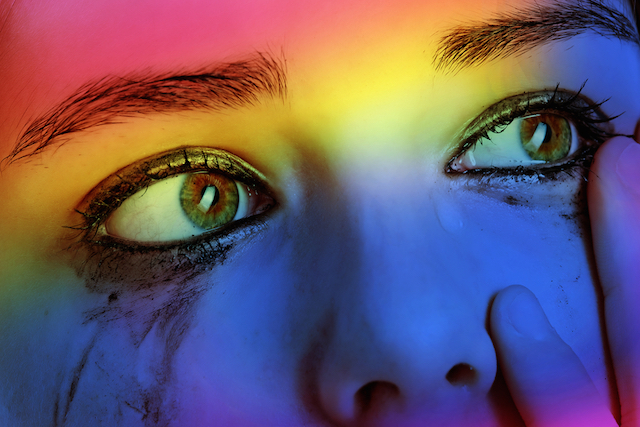
Crying eyes image via Shutterstock
-
Sensitivity Is a Gift: How to Thrive with a Bleeding Heart
“You are not a mess. You are a feeling person in a messy world.” ~Glennon Doyle Melton
I can recall crying myself to sleep at night when I was a little girl. Not a loud bawl, more of a soft weep.
My mom would tuck me in goodnight and as soon as she turned the lights on her way out, I would be left with a feeling of fear and sadness. Not because I was afraid of the dark, but because I was afraid of my dark.
The thoughts that entered my mind that kept me from falling into a peaceful slumber as an elementary school kid were rife with pain and suffering.
Mom would say, “Think good thoughts, honey.” But I didn’t. I couldn’t. I was too affected by all the suffering I saw.
I cried for all the injustice in the world.
I cried for all the pain I couldn’t necessarily see but could sense in others.
I cried for the kids getting bullied at my school.
I cried for myself getting teased at school.
I cried because people died and I didn’t get why they had to.
Somewhere along the way I received the message that it wasn’t okay to cry, or feel anything other than fine. That it was somehow bad to feel emotion. That to be a good little girl, I had to conceal and go along.
The only problem was, I had a lot of feelings. All the time I had them, intensely strong ones.
The world is not set up to honor sensitive people. When we see someone crying, we also usually see someone rush to their side and say “Oh, don’t cry.”
My question is, why?
Why can’t we cry? What is so bad about crying?
I want to scream from the rooftops:
I reserve the right to be sad if I’m sad.
I reserve the right to be mad if I’m mad.
And I reserve the right to cry if I feel like crying. It’s my life and I’ll cry if I want to.
Crying is a sign of life, by the way. It means you are alive. It’s the first thing we want to hear when a new baby is born—their cry. It is one of the most natural human reflexes we have.
But growing up as sensitive or empathetic, we learn that we are oversensitive, too much, too emotional, cry babies, wimps, too fragile, over-reactors. So what is given to us as a gift—our sensitive nature—is often squashed, repressed, and stifled.
And when we don’t know how to use our superpower sensitivities for good, the weight of the world’s suffering will most definitely crush us. My sensitivity felt like a wicked curse for a long time, before I learned how to treasure it like the blessing it is.
Some things I have learned:
Honor your sensitive nature.
Do this by affirming yourself and realizing that this is how you were made. Make the best of it and turn it from a commonly perceived negative trait to your biggest asset.
Maximize the strength of being highly sensitive by making sure you have a creative outlet. It is essential to have a place for it all to go. Whatever it is for you, go there as much as you can to release the myriad of emotions from any given day. Find it, do it, love it, and let it rejuvenate you.
Find your fellow heart-bleeders.
It can be alienating to feel like you’re the only one feeling so deeply. But there are so many of us out there, I assure you. There’s even a book called If You Feel Too Much.
Kindle up friendships with these people and create your tribe. There is such strength and power in connecting with like minds. You will know who they are by the way you feel around them—they see and accept and love your depth of feeling, they do not shame you for it or tell you to change your nature.
Reserve the right to cry.
Crying is a release and a ritual of mine. I love when a good, hard cry sneaks up on me in yoga. It’s just so healing. My emotions can overwhelm me, from unbearable grief to overstimulating joy. I cry to help release that energy overflow; otherwise, my heart might explode. I am moved to tears on a regular basis and let them come and go as they please, even welcome them now.
You do not have to be the suffering-holder and pain-keeper.
Just because you are acutely aware of the pain and emotional nuances of those around you doesn’t mean you need to take it on and make it your own. In fact, you really can’t. It’ll bring you down with them.
There is a beautiful word in the English language known as boundaries. Compassion is also a beautiful word. Boundaries and compassion can, in fact, co-exist. The way to be compassionate and have boundaries at the same time is to show your love and caring for others without taking responsibility for their pain and problems by trying to fix them.
—
Being born extra-sensitive is a gift, so long as we choose to see it that way. It was my fatal flaw until I learned what to do with it. When we can learn to work with it, rather than against it, we can undoubtedly make it our greatest strength and the source of all the magic and richness in this life.
-
How to Overcome Emotional Overload When You’re Highly Empathetic

“When someone throws you a stone, throw back a flower.” ~Gandhi
“Ouch,” I cried out instinctively as my husband, Barry, and I walked through the beach parking lot, barefoot. It was only when Barry turned to me and asked me why I yelled out that I realized it was him who stubbed his toe, and not me.
“Because it hurts,” I answered him. He looked at me curiously and said, “But it didn’t hurt you. It hurt me. I’m the one who stubbed my toe.”
It hadn’t dawned on me that feeling other people’s pain wasn’t a “normal” reaction.
All my life I have been extremely empathic, but for the first half of my life I didn’t even realize that this was a unique character trait, that not everyone shares.
When I was in close contact with people who were yelling, I would literally shake. When those around me were sad or scared, I would drink in those feelings like a sponge, not realizing that these feelings weren’t my own.
As a result, I felt on edge a lot of the time, as I was carrying not only my own feelings but also the emotions of many people around me. However, I was not in touch with this anxiety—I didn’t even know it was there. It was unconscious.
Because I was empathic, I was often sympathetic to the plights and concerns of friends and family.
Even as a child, people turned to me for guidance in resolving their problems. At the time, I didn’t mind because I was happy to offer whatever support I could.
However, as I entered my teen years, the burden of other people’s emotions, on top of my own unresolved feelings, became too heavy to bear. But I didn’t know that consciously. I wasn’t even aware of what was happening for me.
I turned to food, alcohol, and other substances to numb the intensity of what I felt.
I felt a strong need to withdraw and I could no longer be in the same room or the same house with people who carried intense, often unconscious, emotions.
I had to learn ways to manage the emotional energy—both my own feelings as well as the energy of others—that I was absorbing.
This was a major key for me in breaking free from food and all other addiction. There were many bumps along the road as I learned to do this. Over time, I discovered four powerful ways to help manage emotional energy.
1. Practice awareness.
I noticed that if I wasn’t aware of what I was feeling, either in response to an internal shift, such as a hormonal or mood change, or a reaction to another person’s strong emotion, I was much more likely to be reactive and act out in a way that wouldn’t feel good to me.
With awareness, I could consciously choose a response and an action that I could feel good about.
2. Understand the nature of energy.
A big key to healing for me has been the understanding that my response to my environment also feeds the energy. Therefore, if someone throws me a stone and I throw another stone back, or worse, a rock, I am going to exacerbate the problem.
Not only will I add fuel to the fire and cause pain for the other, but I will be increasing my own suffering. Energy feeds on energy.
If my daughter comes home from a long day at school expressing negativity, if I feed on that, consciously or unconsciously, by being in any way critical, negative, or judgmental myself, I will only increase the dark energy that is now in the kitchen.
Instead, if I can give her love and sweetness, most likely that will be healing to her and the energy will shift to something that’s supportive and healing for both of us. That’s because love is all the soul seeks and when we can come back to a loving place, everything else in life becomes manageable.
When we drift from a place of love, kindness, wholeness, and forgiveness, we feel “out of sorts” and often express bad energy (anger, fear, complaining, etc.).
3. Don’t take anything personally.
One of the main reasons I came to see that I absorbed and hung on to other people’s dramas and intense energies is because I bought into their suffering at some level. But over time I realized that nothing means what I think it does.
I don’t have to force open the caterpillar’s cocoon to help it become a butterfly. I realized that the same power within me that has turned every difficulty and challenge I have faced into an ultimate lesson and blessing is in everyone else, too.
I have learned to trust that other people, even those I love the most, need to learn life’s lessons through their own experiences and insights.
I’m not responsible for fixing the energy or the situation. My only responsibility was and is how am I managing my own energy: am I adding goodness, love, and warmth to the space and people around me, or am I contributing to the creation of a frenetic and fearful environment?
4. Balance yourself.
The key to staying balanced for me is to continuously stay connected to my heart—my deeper, spiritual self—and when I stray from there by getting caught up in the voices in my head or the drama unfolding around me, to know the short-cut back to center.
For me, the most powerful way to do this is with a form of meditation that I call self-hypnosis.
This method helped me to heal so many aspects of my life, including my health, which had deteriorated at a young age, my weight, and food addiction issues as well as my relationships. Any type of meditation—and even just a few minutes of deep breathing—can help us center ourselves.
Being empathic and super sensitive to energy is not something that I can just decide to change, but I can become more aware of how it affects me.
The empowering thing is the realization that I can change my reactions and my own behaviors, no matter how overwhelming the emotions, my own and others’, feel to me, in the moment.
Because 90% of the behaviors we do are habitual—meaning we are only doing them because we did them yesterday—we can literally re-train the brain to respond in a new way to the exact same stimuli.
I used to think my only two choices were to react to negative energy with negativity or to withdraw and detach. Neither option was conducive to building strong, supportive relationships or to my own happiness.
I now know that when someone throws me a stone, I can throw back a flower (as a wise spiritual teacher once recommended), and I can feel great about it!
I wouldn’t change my empathic nature even if I could because, on a positive note, it has helped me to understand people and open my heart to them—to realize that we are all on the same human journey together, seeking compassion and love, even if we’re not going about it in the most effective way.
Every cloud has a silver lining, and the blessing of empathy and feeling emotions strongly is the opportunity to connect to our deepest strength and transmit something greater that can bring healing to our self and others.
-
A Life-Changing Guide for Emotionally Sensitive People (and a Giveaway!)
Update: The winners for this giveaway have been chosen:
You’re too sensitive. You’re making a big deal out of nothing. Why are you letting that bother you? Why can’t you just let it go? Really, you’re crying? What’s wrong with you?
If you’re an emotionally sensitive person, like me, you may have heard some of these phrases throughout your life. And, like me, you may have concluded that your emotions made you tragically flawed.
For the longest time, I felt a deep sense of shame about my sensitivity. And I found it difficult to deal with everyday life—not just because I felt everything so deeply and often reacted irrationally, but also because I absorbed other people’s feelings as if they were my own.
I remember in elementary school when most of my peers had to get shots from the school nurse. I’d already gotten one at my pediatrician’s office, so I sat in the hallway as, one by one, they approached her office to meet certain doom.
I could recall the fear and dread I’d felt in the moments before the needle pierced my skin, and I relived it, over and over again, as each student approached the door. In fact, my vicarious anxiety was so intense that I threw up, right there in the hallway.
I didn’t just empathize with their pain—I felt it. Deeply. And repeatedly.
I constantly felt emotionally overwhelmed, and often confused about the root of my feelings. All I knew was that I hurt—a lot—and I wanted to make it stop.
When I first realized I wasn’t alone with my emotional sensitivity, it was like someone rubbed a soothing balm on the achy heart I wore on my sleeve.
And it was even more liberating to realize I could leverage my sensitivity for good, as I have through Tiny Buddha.
Suddenly, it wasn’t something I had to hide; it was something I could openly acknowledge and harness in a positive way.
Still, I’ve had to work at managing my emotions, and I’ve had to learn to challenge destructive thoughts and behaviors that only exacerbate my pain.
If you too experience intense emotions, you don’t need to feel bad about yourself, or powerless to your heightened sensitivity.
Psychologist Karyn D. Hall has written a life-changing book that can help you manage your emotions so they don’t take over your life.
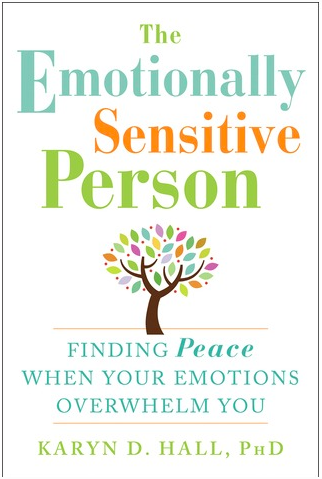
The Emotionally Sensitive Person: Finding Peace When Your Emotions Overwhelm You offers proven strategies to identify emotional triggers, challenge negative thought patterns, and recover from emotions more quickly.
I wish I’d read this book years ago. It’s insightful, practical, and chock-full of effective strategies to transform your sensitivity from a burden to a gift.
I’m grateful that Karyn took the time to provide some incredibly detailed answers to my questions about emotional sensitivity, and that she’s provided two free copies of The Emotionally Sensitive Person for Tiny Buddha readers.
 The Giveaway
To enter to win one of two free copies of The Emotionally Sensitive Person:
- Leave a comment below
- For an extra entry, tweet: Enter the @tinybuddha giveaway to win a copy of The Emotionally Sensitive Person http://bit.ly/1KZGNnL
You can enter until midnight PST on Friday, May 22nd.
The Interview
1. Tell us a little bit about yourself and what inspired you to write this book.
I’m a therapist who works with emotionally sensitive people and I’m an emotionally sensitive person too.
I noticed that many people were suffering because they felt different, rejected, and flawed because of their emotional sensitivity. Many of them had heard statements like, “You’re just overreacting,” and “Stop being so dramatic,” for most of their lives.
In my work I found that if emotionally sensitive people could understand and accept their sensitivity, and not judge themselves because of it, that could ease some of the suffering they experience. I also believe that learning to manage intense emotions is part of decreasing their suffering.
Being emotionally sensitive is not an illness, but it does mean you are more vulnerable to anxiety and depression and other disorders. Judging and hating yourself for being sensitive is part of the pain and suffering that happens.
I wanted to write a book that could help emotionally sensitive people accept their sensitivity and learn to manage their intense emotions to help them live the life they want to live.
2. What causes emotional sensitivity?
Emotional sensitivity is biological. Research shows that some individuals are born with more intense emotions, meaning you react faster to emotional situations, your emotions are more intense, and your emotions take longer to fade. Events in a person’s life could also influence that emotional sensitivity.
3. Emotionally sensitive people, like myself, often feel shame for being this way. What can help people like me feel less ashamed, more accepting, and perhaps even proud of their emotional sensitivity?
First of all, ask yourself if the shame you experience is based on facts. All emotions have a purpose, and the role of shame is to keep you from behaving in ways that would get you kicked out of groups that are critical to your survival.
Most likely being an emotionally sensitive adult will not get you kicked out of important groups. Is the shame from being judged by others as flawed? Perhaps as a child? Maybe from people who didn’t understand? Perhaps give some thought as to what specifically the shame is about and how it came to be.
So if shame is not justified, that being emotionally sensitive is not something that warrants shame, then consider that the way to overcome shame is to do the opposite behavior to that which shame urges you to do.
Shame urges you to hide. So the opposite behavior is to not hide. To do the opposite is to look people in the eye, and stand up proud of your sensitivity. When people say, “You’re overreacting,” respond with pride, “Actually, this is exactly how I feel—I feel emotions intensely.”
Many times it is the discomfort that other people have with emotions that leads them to criticize your emotional reactions.
Our culture tends to value logical, analytical thinking. That doesn’t make their way better. In fact, emotionally sensitive people are the ones who become passionate about causes and make changes in the world. They are artists and caregivers and those who contribute to humanity.
The positives of being emotionally sensitive are often overlooked. If you consider it very carefully, what could or are you proud of about your emotional sensitivity? Make a list and review it often. Keep the positives in your mind to help you keep a balanced view of your emotional sensitivity.
Let yourself really see what your sensitivity is about—check out reality and let go of myths you might have accepted along the way about the “wrongness” of emotional sensitivity. Do you care intensely about others? Do you express yourself authentically?
Another idea is to practice self-compassion in place of judging yourself. Respond to yourself as you would a friend who feels emotions strongly.
If your emotional sensitivity leads to depression or anxiety or to behaviors that you know are not effective or helpful, then focus on changing the behaviors and learning ways to manage your emotional sensitivity that work for you rather than judging your sensitivity.
It’s not wrong, it’s just different. Judging your sensitivity is like judging yourself for how short or tall you are. It just is. It’s not helpful to continually berate yourself for your height, and in the same way seeing your sensitivity as wrong or yourself as flawed only adds to your distress and suffering.
4. What are the two different types of emotional sensitivity, and how do they manifest?
The two types I’ve identified are reactive and avoidant. People who are reactive act on feelings without thinking and are very quick to respond to emotional triggers. They have strong impulses that come with their emotions. They can be spontaneous and fun and also may act in ways that cause difficulties for themselves.
The avoidant type attempts to push away or avoid uncomfortable emotions and/or situations. The avoidant type might not attend gatherings if someone at the event was upset with her and would avoid other situations that might involve difficult feelings, such as confronting someone who owed her money or saying no to someone who asked for a favor.
5. What are some things we can do to improve our ability to manage our emotions?
There are many options to improve your ability to manage your emotions. One area is prevention.
This means that you make sure that you get sufficient sleep, eat a nutritious diet, take prescribed medications, take care of your physical health, exercise, and create positive experiences to build your resiliency. Work to develop safe and emotionally intimate relationships so you have a support network.
Let go of judging, stop avoiding your emotions, learn ways to change your emotions, and stop feeding or building difficult emotions. The book discusses the specifics of these ideas. In addition, I have a subscription website opening soon called DBTCoaching.com that focuses on coping skills.
6. You wrote that emotionally sensitive people tend to “catch” other people’s emotions. Can you tell us a little about this, and how we can stop doing it?
Emotionally sensitive people are often tuned in to the emotional experiences of other people, so much so that they may experience the emotion that someone else is having. If you are with someone who is sad, you may feel sadness too, for example.
Awareness that you are experiencing an emotion that actually belongs to someone else is helpful in letting go of it.
If someone is relating an experience that made them sad, then you can say to yourself, “Not my experience, her experience,” to help maintain the boundary.
If you experience emotions that you imagine others might have, such as “She must be so sad,” then remind yourself that someone else’s experience is not necessarily the same as yours. For example, if someone is moving, he might be excited and happy instead of sad or scared or vice versa.
7. In reading the “Identifying Your Emotions” section of the book, I realized I’ve mislabeled many thoughts as feelings, compromising my ability to cope with my actual emotions effectively. Can you share a few examples of mislabeling thoughts as feelings, and how we can identify what we really feel?
Some examples of mislabeling thoughts as feelings can be as simple as, “I feel like I’ll never succeed,” “I feel like I don’t fit in anywhere,” and “I feel like I’m different from anyone else.”
Those expressions are actually thoughts. To be more accurate your would say, “I think I don’t fit in anywhere and that makes me sad,” and “I think I’m different from anyone else and that makes me sad.” Then you either challenge the thoughts or find ways to cope with the feelings that come with the thought.
It’s difficult to challenge statements when you express them as feelings. “I am scared because I think I’ll never succeed” gives you the information about both the feeling you are having and the thought.
You recognize that as a negative thought and you can challenge it. Is that statement true? In what situation do you think it is true? Do the facts back it up? If so, what do you need to do differently? The emotion of sadness would indicate coping skills to help you deal with that specific emotion.
8. In Chapter 6, you wrote, “Judgments hide primary feelings.” What did you mean by this—and how can we challenge our judgments?
We often judge when we are emotionally upset. “He is a complete jerk,” is a judgment. What led to that thought and emotion? Maybe you were embarrassed because you spilled wine all over yourself and your date didn’t offer to help clean up. You use the judgment of him to cover the embarrassment.
“I spilled wine all over myself and I felt hurt that he didn’t help me clean it up,” might be more accurate.
9. The chapter that was most helpful to me personally was the one on decision-making—particularly the part about separating the decision from the emotion and accepting emotional consequences. Can you expand on this?
I’ve found that many emotionally sensitive people believe they can’t make decisions but they actually avoid decisions because of the emotional consequences of those decisions.
There are few choices that don’t have emotional consequences. Even picking a restaurant for a group dinner means someone will likely not agree with the choice and may be disappointed or critical. You know which restaurant you want, but you struggle with the decision because of the emotional consequences of the decision. You don’t want anyone upset.
If you can separate the two, the choice of restaurant and the emotional consequences of the choice, then you can be clear about what the issue is and how you want to manage it.
10. What do you think is the most important thing an emotionally sensitive person can do for their well-being?
Accept themselves as they are, completely and totally, and also work on changing behaviors that are keeping them from being effective in building the life they want to live.
You can find The Emotionally Sensitive Person on Amazon here.
FTC Disclosure: I receive complimentary books for reviews and interviews on tinybuddha.com, but I am not compensated for writing or obligated to write anything specific. I am an Amazon affiliate, meaning I earn a percentage of all books purchased through the links I provide on this site.
Girl under rain clouds image via Shutterstock
-

4 Simple Questions That Can Revamp a Sensitive Soul’s Health
“Quality questions create a quality life.” ~Tony Robbins
Have you ever wondered, maybe even worried, “Why is it easier for others to take care of their health? Why do they have more willpower? Less struggle?”
And, “What am I doing wrong?”
I used to ask myself all this, and more. It was confusing; I tried to eat healthy and exercise, but my body argued back. Weight issues. Fatigue. Chronic pain. Injury after injury.
The answer seemed obvious.
Try harder.
But doing so made the issues worse, or another problem started. Or both.
The doctors all said my symptoms didn’t make sense. I wondered: is it in my head? They told me to stress less. I worried: is anxiety making me worse? They said they couldn’t help. I panicked: am I unfixable?
Sensitivity Isn’t a Disorder (and You Don’t Need to Fix It)
The diagnosis was an over-reactive nervous system, which led me to the term Highly Sensitive People. Dr. Elaine Aron, a psychotherapist and researcher, estimates 15-20% of people are highly sensitive.
This simple trait means our nervous systems process stimuli intensely.
We think a lot. We feel deeply (physically and emotionally). We’re easily overstimulated.
Sound familiar?
Thoughts are stimuli that affect our highly tuned nervous systems. The more negative, the more we suffer; the more positive, the more we thrive (even compared to others).
Questions are a potent type of thought. They trigger our brains to search for answers, discover evidence, and create links and stories, long after we turn our conscious minds to something else.
The problem was simple.
I was asking lousy questions.
And the solution became obvious. Ask good questions.
It worked. I’ve bounced back from burnout with more health and happiness than in my twenties and thirties. I learned to ask the following four questions every day.
1. Am I focused on the vitality I want or the discomfort I don’t want?
It sounds easy: focus positively on the health you want.
But being highly sensitive means you’re hardwired to ponder issues from all different angles. It’s a gift of cautiousness—your early warning system. And it means you end up obsessing over things you’re trying to ignore.
Your mind is powerful. If you stay focused on soreness in your body, you sensitize your nervous system into noticing more pain. If you worry about getting injured, you subconsciously set yourself up for injury.
When you focus on problems (or the gap between your current health and the health you want), you create tension. Physical and emotional. Which makes you feel rotten, intensifies the health issue, and even creates new issues.
But focusing on well-being sends a powerful message to your brain and body to shift you toward better health. While helping you relax into enjoying more of life, right now (even if your health isn’t perfect).
Tip: If you catch yourself preoccupied with what you don’t want, stop. Appreciate your gift of considering different perspectives. Then re-focus on the vitality you want.
2. Am I whizzing through healthy habits or delving into their worth?
Being sensitive means you mull over decisions and are quick to second-guess yourself. But it’s easy to get entangled in the rush of life and leap from one health habit to the next.
Sinking your teeth into why you want better health helps you commit to healthy habits. You understand their worth.
But it’s not enough to know that a habit is worthwhile just because it makes you energized, healthier, and fitter. You need to dig deeper into your why to discover what that gives you that’s even more important.
Perhaps being fitter brings more ease and flow or enables you to connect more with family and friends.
Some of my deepest whys are comfort, blending, and connection. For example, I’ve learned to avoid strict diets that compartmentalize allowed and not allowed (and lead me to binge on junk). Instead, to allow any foods but plan ahead my wholesome and comforting meals. To blend healthy snacks into my day. To mindfully connect with tastes and textures.
Uncovering your deepest why helps you discover which specific habits spur you on from within. Even when the going gets tough (as it will).
Not only will your self-care work better, but you’ll also notice less whizzing and more sticking.
Tip: Slow down and tap into the qualities that are meaningful to you and your health. Then choose the habits to support those qualities.
3. Am I analyzing my health or tuning in to my body’s wisdom?
High sensitivity means you feel deeply. It’s tempting to stay stuck in your head, to hide from the intensity of your emotions and your sharp awareness of subtleties.
Doing so numbs you from your body’s wisdom.
You begin to worry about your health—analyzing problems and searching endlessly for solutions. Discomfort becomes a foe to avoid. A problem to fear. An assault to stop or dull (rather than a healthy message).
When I hurt my back, for example, the pain lasted months longer than the injury took to physically heal. The therapists prescribed gentle exercises. The more I tried, the more the pain intensified or spread to other areas. It didn’t make sense.
But tuning in to my body, I could feel the tension of trying too hard, too often. Of stiffening constantly, in fear of the possibility of pain. Of overprotecting and overcompensating. I learned to relax and soften to allow myself, more and more, to move naturally. In doing so, my body came into balance and the pain disappeared.
When you tune in to how you’re feeling, the physical sensations become a compass for tweaking your self-care. For correcting course. You hear your body whispering, “This, not that. Ease up; push harder.”
You re-ignite your instinctual knowing. You build your intuition muscles. You make healthy choices that reflect who you are.
Tip: Think about an aspect of your health or self-care, and then notice how it triggers sensations in your body. Where and what do you feel? Is it a sense of lightness or heaviness? Openness or constriction? Feel into which thoughts and habits support you.
4. Am I under healthy pressure or beating myself up?
We all need a certain amount of oomph to improve our health and stay healthy. But it’s easy to slither from self-motivation into self-judgment. Being highly sensitive means you’re your own biggest critic.
We see others breeze through long hours at work followed by intense cardio at the gym, fueled with crappy diets and little sleep. We’re tempted to follow suit. But when our sensitive bodies fizzle out or overreact, we’re left confused and deflated.
“I’m lazy. I hate my body. I’m never going to get there.”
Your nervous system responds to self-talk as though it’s the hard truth. Often, it’s not.
It’s simple to pinpoint whether you’re feeling healthy or unhealthy pressure. Ask, “Does this [feeling or self-talk] make me want to act in a different way that’ll honestly make me feel better?”
If the answer is no, let it go. It’s unhealthy. It’s not serving you.
If the answer is yes, choose an action that feels good to take. And appreciate yourself for getting a handle on the pressure and not burying it.
Tip: Be gentle and curious about your self-talk. Check if it’s helping you. Then, act accordingly. Treat yourself with the same loving compassion you’re so good at giving others.
Answer Back With Your Super Power
You’re blessed with an inquisitive mind and a highly tuned inner guidance—gifts to help you make wise choices in your health when you slow down and pay attention.
Use your heightened awareness to detect your self-talk, emotions, and feelings.
Deliberately ask empowering questions and get curious about your answers. Without judgment.
Treat yourself with kindness, no matter what choices you make (and keep going in your self-care).
No, this isn’t a one-fix wonder. You’ll correct course every day of your life. But well-being comes from sculpting a supportive partnership between your mind and body.
Ask positive questions. Tune in to the answers. Take heart-felt action. You can’t help but make healthier self-care choices from that better-feeling place.
So what are you asking for?
Now it’s your turn. Do you consider yourself highly sensitive? If so, tell us a question that’s made a powerful positive difference in your life?
Jumping woman image via Shutterstock
-

How Sensitivity Can Be a Gift (And How to Give it to the World)
“We cannot be more sensitive to pleasure without being more sensitive to pain.” ~Alan Watts
Are you good at noticing subtle details? Are you able to learn without really being aware that you are learning? Do you notice other people’s moods? Do these moods affect you?
Are you sensitive to pain? Are you equally sensitive to beauty?
If you answered yes to these questions, chances are that you, like me, are a Highly Sensitive Person (HSP). Chances are, you are constantly trying to make sense of how being sensitive fits into a world where a certain amount of insensitivity is seen as the key to getting ahead.
Chances are, you have both deeply valued your sensitivity and pushed away from it. While it makes up the core of who you are, it also makes life complicated.
Like you, I have struggled with being sensitive. First, it was because I had absorbed the cultural definition of sensitivity as weakness. And then when I did start understanding what being an HSP meant, starting from reading Elaine Aron’s classic The Highly Sensitive Person, I struggled to integrate this knowledge in my life.
Today, while I still find my sensitivity tricky, I have started seeing it differently. Now, when I think about sensitivity, the picture that comes to mind is of a thoroughbred horse.
This horse has a lot of nervous energy. It also has many gifts.
When I can direct this horse properly, it has the capability to perform at the highest standards. But if I misunderstand it, the horse’s energy is scattered, out of control. It can’t even get out of the gate.
So, how do we guide and direct this horse? How do we gallop out into the world instead of shying away from it? How do we bring our sensitive gifts to life?
Let’s look for some answers.
As sensitive people, we first need to ask: What holds me up?
At some point in your life, you might have absorbed the words that most HSPs hear: “You are too sensitive,” “You feel too much.” You might have believed these negative injunctions and gone through life in the absence of people who could see your gifts and champion them.
If you are still looking for those people, now is the time to go on a quest for them. While it may take time to find a friend or adviser, the process of exploring can itself be rewarding.
As an HSP, I have greatly benefited from being a part of online HSP groups. They help me see that I am not the only one having my experiences. I have also found people walking ahead on the path, and seeing them lead their lives shows me the way for leading mine.
We all need this—to be seen and validated for who we are. And when we find our believing mirrors, whether HSPs or non-HSPs, we can have the containers that shelter us from the storms of over-stimulation and anxiety.
And while we are working to find our champions, we also need to move inside and learn how to give ourselves what we need. When I moved from India to the United States two years back, I struggled with exactly this. In the absence of a support network, I did not know how to take care of myself.
How could I give myself love and attention? Wasn’t it what someone else gave to you?
Then, out of sheer necessity and through some trial and error, I started getting a glimpse of what nourishing ourselves means. I volunteered as a reading tutor, took photography classes, and embarked on my dream of being a writer.
In those moments when I felt connected to something bigger, I felt whole. There was nothing missing.
I started understanding that this was my area of growth, that this is what Elaine Aron means when she says that “part of maturing into wisdom is transferring more and more of your sense of security from the tangible to the intangible containers.”
So, think of all your safe harbors, all the containers in your life. Do you have enough of the intangible ones—work, faith in something bigger, a spiritual practice? Know that you can create an internal structure that holds you up, that sustains you emotionally even as people move away or life changes.
Once you have this inner stability, you can ask:
How do I participate in the world more?
As an HSP, being on the margins of the culture might have contributed to you feeling “less than.” Or you might have had a traumatic experience that you felt keenly, and you might not have found your way out of it.
Whatever the basis of low self-esteem, the truth is that without having a basic sense of self, we are adrift. Among other things, one of the reasons that I clung on to my ill-suited corporate job for years was the feeling that I would crumble into nothing without it. And I wasn’t very sure that I deserved something better.
In his wonderful Honoring the Self, Nathaniel Branden talks about this, and says, “The greatest barrier to achievement and success is not lack of talent or ability but rather, the fact that achievement and success, above a certain level, are outside our self concept, our image of who we are and what is appropriate to us.”
So, if we don’t believe that we deserve something better, we will often unconsciously put up barriers to getting it. The good news is that we can build our sense of self, brick by brick.
I strengthened my self-esteem by taking small risks, which grew into something bigger.
I left my low self-worth job for a better one. I freelanced on the side.
In effect, I worked hard and took concrete actions to earn my own respect.
Having once earned it though, it’s important that we keep acting to maintain our self-belief. For some time during my transition to the United States, my sense of self became shaky again. In the last several months, I have started remembering what I had learned—that action builds our sense of self.
I started to take risks again. One of them was coming out as an HSP through my writing.
My entire experience of life has been colored by my sensitivity, and yet I felt like it was something I needed to hide, fearful that people would label me. They still might. But I am a little more okay with sharing myself discerningly; reaching out in those spaces where I feel it can be helpful to others.
Whoever you are, wherever you stand, the task of building yourself up and finding your lost spaces is not going to be easy. But it is going to be worth it when you can stand in your center, and live from that place.
In the end, the fundamental question that we are all asking is:
How can I be more of myself?
As HSPS, we have the additional task of unlearning all that we have learned. We might have adapted in the wrong ways. Instead of learning to manage our feelings of overwhelm, we might have started avoiding the world altogether. Or we might have shrunk inside, hurt at being misunderstood.
But the world needs people like us—people who can empathize, who care, who can feel others’ pain. It is both our privilege as well as our challenge to learn how to do this effectively.
We need to take up more space, to show up as who we are. We need to unfurl.
It’s time to bring our sensitive gifts into this world.
Photo by Marta Nørgaard
-

Are You a Highly Sensitive Person?
“Trust yourself. You know more than you think you do.” ~Benjamin Spock
I used to believe that I was my thoughts. I really believed that everything happened well because I had analyzed and planned and prepared. I didn’t even know that I was doing this. I didn’t know there was any more to me than my thoughts.
I also used to believe that there was something seriously wrong with me, so thinking about how to fix myself was my main pastime.
All my life people told me, “You’re too sensitive,” “so intense,” “you’re just so emotional.”
I told this to myself, and plenty of other people told it to me too, both directly and indirectly.
I didn’t know how to live. I had an analysis of life rather than an experience of life when I was with others. When alone, my life was deep and vivid and rich. I felt it all. Little did I know then, no one knows how to live. We do it.
It only felt safe to feel it all alone. I’d get sideswiped by inexplicable emotion at inconvenient times. So, I just tried to keep it all under wraps, keep it all under conscious control.
I didn’t trust myself at all. I didn’t trust my body. I didn’t trust anything other than my thoughts. My body was so unpredictable and confusing, this sensitivity was so out of control.
Then, when I was twenty-five and married, after just graduating with my Master’s degree as a marriage and family therapist, I couldn’t do it anymore. It all fell apart. I realized that there was more to me, and the life I was living was a fake, a construction based on my thoughts.
I got divorced. I quit my job. I moved. I dropped it all. Realizing how much of my life was a lie and how directly I could connect with and trust my body made me see that I couldn’t keep living that life. It was a beautiful break down.
It was then that I started studying hypnosis in depth and I came in direct contact with my subconscious.
It was a funny paradox that it was so hard for me to relax because it was hard for me to let things be easy. I thought that every thing took a lot of effort.
I couldn’t believe that I could have such immediate and powerful results from a seemingly simple process of listening to my sensations and using them to give my body what it wanted. (more…)