Tag: self-worth

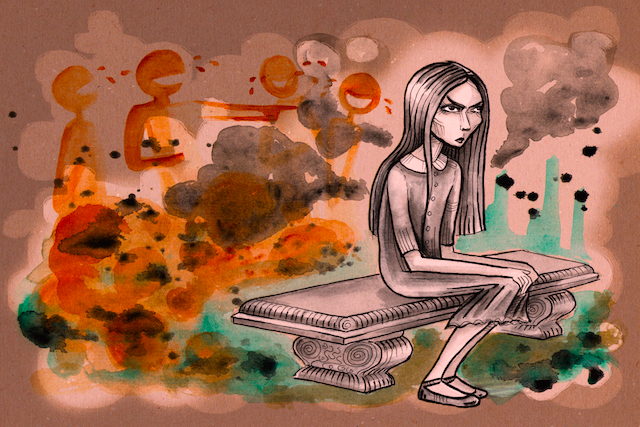
  • When People Judge: Why It’s Not Really About You

    When People Judge: Why It’s Not Really About You

    “Doubt yourself and you doubt everything you see. Judge yourself and you see judges everywhere. But if you listen to the sound of your own voice, you can rise above doubt and judgment. And you can see forever.” ~Nancy Lopez

    You and I, we judge others. And they judge us. We all do it. Sometimes we judge with positive or non-harming intentions.

    Unfortunately, our judgment often comes from a negative place, with darker intent.

    Why Do We Judge?

    Though we judge for many reasons, we often do it when:

    • We don’t know a person well (yet)
    • We cannot identify with a person’s belief system, values, or behavior
    • That person somehow threatens how we perceive ourselves

    I believe we judge for the first reason because our minds want to simplify the processing of information by putting environmental clues into categories. This just makes things so much easier, doesn’t it?

    For me personally, when I judge for the second and third reasons, I have especially negative emotions and thoughts toward others.

    I try hard not to judge, and have been doing so less and less, but I still have a ways to go. 

    How I’ve Judged Others

    I used to judge people, especially men, when I learned that they had been unfaithful to their girlfriends.

    As soon as I learned about the situation, I would feel resistance and anger building up inside me. I would immediately begin insulting them in my head, and sometimes would actually verbalize it if there was someone to discuss it with.

    Today, I rarely react like this. I know not to judge someone based on their actions because everyone makes mistakes, and some people prefer to behave in a way not everyone else can relate to.

    I still don’t find it appropriate or fair to cheat on someone, but I stopped letting that define the worth I assign to that person.

    I know now where that strong negative response comes from. Someone once cheated on me, and it caused me a lot of pain. As a result, I have developed a pretty rigid mindset around that topic.

    In the past, I also judged women when I felt threatened by them, especially those who I perceived to be extremely attractive.

    I compared my body to other women’s bodies because I feared I didn’t look as hot as they did, which was clearly a matter of low self-esteem. The conversation in my mind went something like this:

    “Oh, look at that girl in that red dress—her tight body and her perfect curves. And look how she moves. I’m sure she must get a lot of attention and admiration from the guys around here. She has to be really arrogant.”

    This inner chatter made it pretty apparent what was going on inside me in those moments. First, I began comparing myself to someone who I perceived to be better than me physically, then I decided I couldn’t measure up. This, of course, made me feel threatened.

    So I judged her by using a big generalization to put her down so I could feel better about myself.

    What Can We Do About It?

    I’ve noticed that my increased level of self-love has helped me judge a lot less. (You can find some helpful tips to increase your own self-love here.)

    Also, I’m more aware of it now when I judge because I feel threatened, and with awareness, I am able to step back and ask myself whether my initial judgment is true.

    I almost always have to own up to the fact that no, just because someone is attractive, that doesn’t have to mean she’s arrogant.

    I’m not saying that we all have to learn to stop judging others. Maybe it isn’t even possible to do so because of the way we’re wired as human beings.

    But what we can learn is that our judgments mostly have to do with us, not the people we judge, and the same is true when others judge us.

    In most cases, we judge others in order to feel better about ourselves, because we are lacking self-acceptance and self-love.

    If we could learn to embrace ourselves as we truly are, would we still be so judgmental toward others? Most likely not. We would no longer need a reason to put someone else down just to raise ourselves up.

    This is only one of the many reasons why self-love is so important and powerful. If we could all learn to love ourselves, we would make our world a much more compassionate and much less judgmental place.

  • We All Deserve to Receive What We Need (and It’s Not Selfish)

    We All Deserve to Receive What We Need (and It’s Not Selfish)

    Woman with Open Arms

    “We think that we have to learn how to give, but we forget about accepting things, which can be much harder than giving…Accepting another person’s gift is allowing him to express his feelings for you.” ~Alexander McCall Smith

    We all know the importance of giving. In fact, it feels rather nice to give to others; we have all experienced that warm glow in the stomach when we do something thoughtful for another person or exchange kind words. To make someone smile is one of the best feelings in the world.

    But sometimes, do we get so caught up in the giving that we forget to receive? And in doing so, do we give too much?

    I have always been a people pleaser.

    My parents were divorced when I was five years old. It was a complicated situation, one that I didn’t fully understand as a child.

    My sister and I grew up with our grandparents, having contact with our dad during holidays, while the contact with our mum dwindled down to nothing.

    I hadn’t realized until recently that my five-year-old self felt completely abandoned by my parents. We never talked about the situation as a family; feelings were not something you shared, so they stayed bottled up.

    I grew up with the belief, deep down, that my parents left me because I wasn’t good enough.

    As a consequence, I tried my best to be as agreeable as I could to everyone around me. This meant having no opinion, going along with what others wanted all the time, not communicating my needs, and trying my best not to upset anyone.

    Then maybe, I would be good enough to love. This was pretty exhausting.

    I developed OCD for a period of time, frequently staying in the bathroom for hours, performing hand-washing rituals until my hands were raw and brushing my teeth until my gums bled.

    If I performed these rituals, bad things wouldn’t happen anymore. My granddad, who developed terminal cancer, eventually gave up his battle to the disease after a long period of suffering, and the rituals stopped.

    Instead, I sunk further into depression.

    As a result of my negative thinking patterns and my deeply held beliefs, I fell into a series of damaging relationships.

    Just wanting to be loved, by them, by anyone, I desperately tried to make things work with guys who were either not right for me or, more often than not, emotionally unavailable. I was replicating the relationships that I had known from my childhood.

    Relationships are equal give and take, not the constant giving that I had developed in the hope of making people love me back. Instead, ironically, this pushed people away.

    The thing was, I was desperately looking for love, when deep down, I didn’t like let alone love myself. Secretly, I believed I didn’t deserve to be loved. I wasn’t good enough for anyone; what could I offer to anyone?

    I would sleep with men early on in the relationship, figuring that giving my body was the only thing of worth that I could offer.

    It all came to a head when yet another relationship failed. Each time, the other person ended the relationship, which dealt a blow to my already fragile sense of self-esteem.

    I’d slide into depressive episodes with scary frequency, when I would cry constantly, finding it a mammoth task to even just get out of bed, having no interest in life and isolating myself from people.

    Then one day, I had serious thoughts of ending my life. It was then that I knew it was time to change.

    Reaching out and receiving the help I needed was the best decision of my life. I spoke to my GP who referred me on to a Cognitive Behavioral Therapy counsellor.

    This time, I was completely honest about what I was feeling; I told them about the suicidal thoughts, about not wanting to be here anymore so I wouldn’t feel the constant pain.

    It felt like a weight had been lifted. I was able to tell them everything. I have had counselling before, but it hadn’t been right for me. Like most things, you need to keep trying until you find what speaks to you.

    CBT, which challenges negative thoughts, helped me to realize that I was automatically thinking negatively. It showed me that my thoughts were not fact. I started to understand about my deeply held beliefs, which colored everything I thought.

    Above all, it showed me that I actually had needs and wants; there were things that I wanted to do with my time and not just go along passively with other peoples’ decisions.

    In giving all my time and attention to others and not taking the time to receive back from them, I was hiding from the fact that I didn’t feel I was worth other peoples’ efforts.

    I was hiding from myself that I had deep-rooted issues that needed to be dealt with—and that I needed people to help me to do this.

    There are a few things that I have learned through therapy:

    1. Show yourself that you are worth caring for by starting to care for yourself.

    A tendency of people pleasers is to give relentlessly without a thought for themselves. Take time for yourself, pamper yourself—do something kind for yourself each day.

    2. Allow others to help you when it is needed, and don’t be scared to reach out.

    You can start with small things, like asking a friend to pick up a parcel for you when they are passing the shop.

    3. Surround yourself with people who help make you feel good about yourself.

    I’m so lucky to have an incredibly supportive and loving sister who listens to me and helps when times are tough as well as good. Spend as much time as possible with people who reinforce your self-worth, not bring it down.

    4. Say “no” occasionally.

    It’s important to assess what your needs and wants are and communicate these with people. Saying “no” sometimes does not make you selfish; it means you are taking care of yourself, and you will attract more respect from others as a result.

    5. Keep a positive journal.

    Note anything that happens that makes you feel good—positive feedback from a boss, a kind word from your friend, a compliment from a stranger—and remember to accept these, not dismiss them.

    6. Think about what you want from life.

    Think about what makes you tick and therefore a more contented person, able to receive from others.

    I’ve discovered my passion for photography, which has built up my confidence and therefore lessened my need to please people all the time.

    7. Don’t be scared to have an opinion.

    Occasionally, we really don’t mind either way. But if you do genuinely have an opinion on something, don’t be scared to speak up. People want to know the real you, not someone you think they want.

    I am working through this journey of self-discovery, and no doubt, always will be.

    I am learning to accept the good things that people do for me and the kind words they say. I’ve realized that you don’t have to be perfect for people to love you. You don’t have to constantly give for people to want to spend time with you.

    I am enough.

    For the first time in my life, I’m devoting the time and attention I normally would reserve solely for other people to myself. You don’t want to forget about others, but you also don’t want to forget about yourself.

    In doing so, I’m building up my sense of self-worth and becoming more able to accept love from others. And just maybe, I’m also letting that other person feel a warm glow in their stomach too.

    Woman with open arms image via Shutterstock

  • How to Stop Tying Your Worth to Things Outside Yourself

    How to Stop Tying Your Worth to Things Outside Yourself

    Woman Relaxing

    “If you find yourself constantly trying to prove your worth to someone, you have already forgotten your value.” ~Unknown

    There’s nothing like being one of the few black kids in your school to make you feel like the odd person out.

    Well, that was my experience, anyway. I appreciate my parents’ desire to provide my brother and me with a safe neighborhood to live in and a good education, but growing up in a predominantly white area really affected me. I very rarely felt like I fit in among my peers.

    That didn’t stop me from trying, though. I did all I could to get people to like me—to feel accepted. Perfectionism quickly became my best friend.

    The pressure I put on myself to be perfect wasn’t completely unproductive. I ended up earning the honor of being my school’s first black valedictorian. I also lost seventy pounds and became a renowned soloist in my school district.

    But those accomplishments still weren’t enough to make me feel worthy. Deep down, what I really wanted was a boyfriend. Maybe if I could find a boy to like me, I thought, I wouldn’t feel so different from my peers.

    Unfortunately, finding a boyfriend proved to be difficult. It wasn’t until I was twenty-one years old that I had my first kiss and met my first serious boyfriend. Finally, I felt normal—all because a man believed I was special.

    The problem with connecting my relationship status with my self-worth is that I desperately clung to my boyfriend, despite the many red flags present within our relationship. It took nearly four years before I accepted that his behavior toward me was rather abusive and that I needed to leave.

    By the time I left that relationship, my sense of worth was pretty shot. It’s ironic that low self-worth is what led me to the relationship, kept me in the relationship, and what I had to deal with once I left the relationship.

    I learned the hard way that when we connect our worth with anything outside of ourselves, we’re setting ourselves up for failure.

    Yes, it’s a common trap many of us find ourselves in, but it’s a dangerous one. During the last five years of healing from abuse, I’ve eventually come to realize that my worthiness is an entity separate from my appearance, relationship status, and success.

    Yours is too.

    These days, I firmly believe that a deep sense of self-worth is the foundation each person needs to fully thrive in his/her work, relationships, and other life endeavors. Despite what society likes to tell us, weight loss, engagement rings, and becoming the CEO of your company aren’t what make us worthy. Such things just don’t have that power in the long-term.

    On the contrary, it is because we are worthy that we’re able to accomplish and enjoy such wonderful things. And when we believe we’re worthy, we bring more of our light into the world. We tend to attract similar light too.

    So, how exactly does one develop a deep sense of self-worth?

    That is the question—and the challenge.

    Here are a few tips to keep in mind when you’re looking to deepen your self-worth. The following list is certainly not a formula, but it just might get you thinking about how you can get in touch with your own worthiness.

    Acknowledge when you are seeking external validation.

    It’s common to seek validation from others, so I wouldn’t expect you quit that habit cold turkey. You’re human!

    That said, it’s important to at least acknowledge when you’re seeking it. “I’m looking for people to validate me so I feel worthy” might sound like a silly thing to say aloud, but you can’t address a problem until you acknowledge its existence.

    Then, think about why external validation is so important to you.

    Sometimes, when I find myself pining for more Facebook likes or a quick compliment from my husband, I stop myself and think. There’s certainly nothing wrong with wanting people to appreciate my work or my husband to tell me I’m attractive, but if I’m wrapping up my entire well-being in either of those things, I’m in for some major disappointment.

    Other people weren’t created to make me feel good about myself; that’s my own issue that I need to work on.

    Usually, when we’re urgently seeking external validation, there’s a fear underlying our desperation. Getting in touch with those fears is important because then we can determine whether our fears are reality or just fears. Most of the time, they’re just fears, and we shouldn’t give them more power than they deserve.

    Practice self-love by caring, comforting, and soothing yourself.

    Often, when we’re longing for validation, it’s because we’re in need of attention. Caring, comforting, and soothing ourselves, particularly during hard times, need to become common practices. A lot of times we can give ourselves the attention we’re yearning for; we just have to get used to doing so.

    I’m not suggesting that individuals can replace the role of community in their own lives; we still need loved ones to share life with us. But when we really value something, we treat it well. And you deserve to be at the top of the list of things you value, especially if you haven’t been for a significant period of time.

    In other words, treat yourself like you know you’re worth it and one day, you just might believe it.

    Be willing to believe you are worthy.

    You might not have a whole lot of self-worth today, but that doesn’t mean you never will. So, while you’re doing the work of deepening your self-worth, believe that you are capable of doing so too. Otherwise, what’s the point?

    Commit to the journey.

    Deepening your sense of self-worth is no easy feat. It is, indeed, a journey. And because of all the topsy-turvy feelings this journey might invoke, it’s wise to commit to it prior to taking the first step.

    Humans make significant decisions every day that require displays of commitment (i.e.: getting married, buying a house, adopting a pet). While I don’t think you have to plan a wedding ceremony for yourself (unless you really want to), I do think the decision to deepen your self-worth should be viewed as a significant one requiring the utmost commitment.

    In fact, I’d say deepening your self-worth is one of the most significant commitments any person can make. Don’t you?

    Grasping the connection between my self-worth and the way I treat myself was life-changing for me. If you’re struggling to believe in your own worthiness, I strongly suggest that you embark on your own journey towards doing so. That journey just might change your life too.

    Besides, you’re worth it.

    Woman relaxing image via Shutterstock

  • Addicted to Approval: Reclaim Your Self-Esteem

    Addicted to Approval: Reclaim Your Self-Esteem

    Happy Woman

    “To be beautiful means to be yourself. You don’t need to be accepted by others. You need to accept yourself.” ~Thich Nhat Hanh

    The past few years have been full of hard but necessary lessons that I needed to learn about my relationships with others—their limits, boundaries, what healthy relationships are and are not.

    I realized that the foundation for some of my relationships (the unhealthy ones) was my need for attention and approval. This, of course, was futile, because we can only truly feel good about ourselves despite outside opinions.

    Because I felt inadequate and overly self-critical due to a past full of put-downs and personal failures (real or perceived), I needed “proof” that I mattered and was worthy in the eyes of people who represented the very individuals from my past who had shamed me, abused me, ignored me, and devalued me.

    Growing up, I was always the outlier, and in a lot of ways I still am—the girl with the wild imagination and unpopular hobbies (art over sports, unique tastes over trends, time alone in introspection over socializing).

    I was also the middle child who didn’t quite measure up to the overachieving big sister and gifted little brother—often ignored, humored, my “little” achievements dismissed.

    While I was not mistreated or neglected in any major, obvious way, the lack of attention and validation culminated over time to make me feel like a general disappointment as a human being.

    Even after many major accomplishments, I felt inadequate. I earned a master’s degree, married a wonderful man, quickly built an impressive career, made amazing friends, moved to my dream town and into a gorgeous home, but I still sought validation from others that I was worthy and wanted (and still occasionally do).

    I recently realized that I was holding onto some people not because they were friends I needed (they were actually quite toxic and manipulative), but because they seemed to want or need me. They occasionally fed me a crumb of self-esteem—complimenting me, asking to spend time with me, and telling me how much they liked me.

    These friendships were superficial and damaging to me because of all the times they made me feel just the opposite, because they were too busy or self-absorbed and I interpreted that as a negative reflection on me.

    They reminded me of the people I’d failed to win over in my past. People I was still intent to gain approval from but never will. And I needed to let that expectation go.

    I have ended or distanced myself from these relationships and I often feel heavy with sadness about no longer being close to them. But I know that the grief I feel has more to do with the loss of attention (“approval”) I got from them, not necessarily them.

    It was selfish that I had held onto them for an (artificial) ego boost and out of a sense of duty, because a relationship had been established; that was unfair to them and unhealthy for me. I needed to be selfish in another way: focus inward and provide myself with that ego-boosting energy.

    In approval-addiction friendships, both people seek validation and attention from each other instead of truly being there for one another, unselfishly. That’s a no-win situation.

    I am now on a journey toward self-love and acceptance from within. I have developed four “mantras” I repeat to myself when I find myself drifting back into old relationship patterns, clinging to other people and things to gain feelings of self-worth.

    Self-Love Mantras

    1. No one else can prove your self-worth.

    True friends can help boost it, but only temporarily. Authentic, lasting personal validation exists when you value and approve of you.

    2. You are who you are, and that’s good enough.

    You will have moments, even phases when you’ll doubt this, and that’s okay. Just remember: bad things are going to happen. Some people aren’t going to like you. But these are not a negative reflection of the awesome person you are.

    3. Your friendship, time, and thoughtfulness are precious.

    Invest these wisely and with integrity. You deserve it, as do your loved ones.

    4. Be proud of yourself and all you do.

    Depending on others to confirm that you’re worthwhile is a recipe for disappointment. No one will approve of everything you do. You don’t either, right? You have more than enough to be proud of and that pride should come from within and be unshakeable at its core.

    Photo by kris krüg

  • Change Your Life by Changing Your Mind About Yourself

    Change Your Life by Changing Your Mind About Yourself

    Happy Woman

    “The way you treat yourself sets the standard for others.” ~Sonya Friedman

    I’d had enough.

    Once again, I’d sent follow-up emails to guys who had shown interest in my dating site profile. Once again, I’d included full-length photos with those emails, unlike the headshot that went along with my online profile.

    And once again, days later, my inbox was a virtual ghost town.

    Didn’t these guys know how much courage it took for me to set up a profile in the first place? I was twenty-six years old and been on fewer than a dozen dates in my life—including my senior prom, to which I took a freshman.

    I was morbidly obese for most of my twenties and had only recently lost fifty pounds. I was still overweight but in better shape than I’d been in years. And yet it still wasn’t good enough.

    As soon as these once-interested guys got past my witty, self-deprecating profile full of catchy phrases like “loves to cook,” “enjoys watching football,” and “can quote The Godfather” and saw me head-to-toe, they remembered that it doesn’t matter if a girl likes watching sports or can cook a mean Sunday dinner—as long as she’s “fit and athletic.”

    My self-esteem was lower than low. This was just as bad as being ignored to my face in bars and at parties.

    I felt like I had to apologize for the way I looked. “Hey, sorry I’m fat, but I’m a really nice person! And I’ve spent a lot of time developing my sense of humor while the rest of you were out dating and stuff!”

    I’m not sure what finally flipped the switch inside my head, but I remember the date the switch got flipped: March 7, 2006.

    I’d had enough. I realized (somehow, for some reason) that I didn’t have to apologize for anything about myself.

    That there were plenty of girls who looked just like me and managed to find love on their own terms—who managed to live life regardless of the voices in their head which tried to tell them they weren’t allowed to.

    I got mad, both at the world and at myself for wasting so much time feeling apologetic. Like I had to gratefully accept any little crumbs thrown my way.

    So I went on a rant. And I took that rant to the bastion of all that’s sketchy about the internet.

    Yes, I went to Craigslist. Hey, why not? I had nothing to lose at this point.

    I wish I’d kept that rant because it was gold. I derided the nameless men who let me know without saying a word that I wasn’t good enough once they got a look at the full package. I called it exactly as I saw it, with all the vitriol I could manage.

    I then announced to all of the world that I wore a size 14/16, and that anyone who had a problem with that shouldn’t bother wasting my time.

    I listed the same qualities I’d listed on my dating profile, and asked if my size really mattered in the face of all I had to offer. My humor, intelligence, hatred of reality TV, love of old timey movies, insanely huge music collection spanning six decades, mad cooking skills…did my size matter all that much, really?

    I may even have referred to myself as “a catch.” I don’t know, it all became a blur after a while.

    And much to my surprise, my inbox exploded with responses. Many of them were immediately deleted—you know, pictures of genitals and all that. (Craigslist will always be Craigslist.) Some were practically unintelligible, so I moved past them pretty quickly, too.

    But one reply…one reply caught my eye.

    The guy could spell and knew how to use punctuation. He seemed warm and friendly and smart, and appreciative of what I had to say. The fact that he liked to cook earned him points, too. (Ladies, I think we can all admit that we get a little swoony over a man who knows his way around the kitchen—men, pay attention!)

    I knew immediately that if nothing else, this guy and I would be friends. What I didn’t know at the time was that I would marry him in September 2008.

    See, I know now that the moment I decided to start treating myself like I was worth loving—no apologies, no holds barred—was the moment the Universe breathed a great big sigh of relief and said, “Finally.”

    That’s when a man who’s called me beautiful every day since we first met found me. Things started clicking within minutes of me publishing that post.

    For years I had assumed that everyone else saw me the way I saw myself: fat, unattractive, worthless. I know now just how deep my self-loathing went, and I wish I could go back and hug that old version of me.

    That sort of thinking is a vicious cycle—the worse you think you are, the more you cut yourself off from others, which makes you feel even worse than you did before.

    All I had to do was change my mind about myself, about what I was worthy of, about what I was willing to accept from others.

    Bonus: Because I was so utterly myself—snarky, sassy, smart, sarcastic—I attracted someone who likes those qualities and I never have to pretend to be any other way.

    If you’re in a situation where you feel as though you have to change yourself in order to measure up, or like you have to put up with someone else’s mess because you can’t do any better (be it in a relationship or a job), change your mind.

    Know that it’s just your insane, misguided ego trying to keep you small and quiet—and that’s understandable, because your ego wants to avoid going out on a limb and possibly being hurt.

    But you absolutely have to ignore that fearful voice and start speaking and living your truth anyway. And as soon as you put yourself out there, your life will start to change.

    This doesn’t have to be anything on an epic scale—no Lifetime movies-of-the-week here. It can just be something as small as posting a rant online, claiming your worth, and announcing that you’ve had enough of feeling “less than.”

    Maybe you’ll simply start holding yourself to a higher standard when it comes to the way you talk about yourself and others.

    And maybe that new way of talking about yourself will leak into the way you talk to yourself. You might actually start smiling when you see yourself in the mirror.

    You might then start seeing all the ways you’re playing small in your life, and you might start making subtle shifts in how you handle things going forward.

    You’ll stop putting yourself last. You’ll start speaking up when a situation doesn’t feel right to you. You’ll stand a little stronger every day.

    And the Universe will breathe a great big sigh of relief and say, “Finally.”

    Photo by kris krüg

  • How to Heal From Rejection: 5 Steps to Soothe the Pain

    How to Heal From Rejection: 5 Steps to Soothe the Pain

    Feel Alone

    “Never confuse a single defeat with a final defeat.” ~F. Scott Fitzgerald

    I spent years training as a psychologist, waiting for the day I would graduate and finally have time to explore my second passion—writing.

    When I opened a private practice I left my mornings free, and over the next fourteen years I wrote six screenplays, two novels, and a children’s book. But mostly I wrote letters, thousands of them, to agents, editors, and producers, asking them to read my work.

    They rejected every manuscript I sent them.

    After fourteen years of rejection, my mood, my confidence, my motivation, and my hope of ever being published or produced were fading. I felt too drained, too wounded to continue writing. I knew I needed to heal.

    Since I was a psychologist, my first move was to check out the latest research on rejection. I was especially curious to see if anything was known about why rejections cause such strong emotional pain. (As we all know, social and romantic rejections can be excruciating.)

    What I found was rather surprising. Functional MRI studies have revealed that the same areas of the brain become activated when we experience rejection as when we experience physical pain. In other words, rejections hurt because they literally mimic physical pain in our brain.

    I also discovered there are five things we can do to soothe the emotional pain rejections elicit, as well as to speed our psychological recovery:

    1. Stop the bleeding.

    One of the most common reactions people have to a rejection is to become self-critical. We list all our faults, lament all our shortcomings, and chastise ourselves endlessly. Romantic rejections cause some of us to employ an inner dialogue so harsh that it verges on abusive. We then convince ourselves we somehow deserve it.

    Yet, by kicking our self-esteem when it’s already down, we are only making our psychological injury worse, deepening our emotional wounds, and significantly delaying our recovery.

    2. Revive your self-worth.

    The best way to restore confidence, motivation, and especially self-esteem after a bruising rejection is to use a self-affirmation exercise. Self-affirmations remind us of our actual skills and abilities and by doing so, affirm our value in the domain in which we experienced the rejection.

    The exercise has two steps. First, make a list of qualities you have you know have value, and second, write a brief essay about one of them. (I wrote about what I believed was my strongest attribute as a writer—my perseverance.) By writing a couple of paragraphs about one of our strengths, we remind ourselves of what we have to offer and revive our self-esteem.

    3. Connect to those who appreciate and love you.

    Getting rejected also destabilizes our ‘need to belong,’ which is why we often feel so unsettled and restless after a romantic or social rejection. Our need to ‘belong’ dates back to our days of living in small nomadic tribes, when being away from our tribe was always dangerous and sitting among them was a source of comfort.

    One way to settle ourselves after a rejection is to reach out to our core group—be they friends, colleagues, or family members—to get emotional support from them and remind ourselves we’re valued, loved, and wanted.

    4. Assess potential changes.

    At times we might need to reassess our strategy, especially after multiple rejections (or in my case, many hundreds).

    Perhaps the friends who’ve fixed us up with romantic prospects who are never interested aren’t the best matchmakers. Maybe our online profile or pictures need to be updated, or it’s possible we’re getting rejected from potential jobs because we need to brush up our interview skills.

    My own aha moment (an insight that was obvious to everyone except me) came when a writer friend said to me, “Fourteen years, huh? Have you thought maybe you should skip the novels and write about psychology, since you know, that’s what you do…?”

    5. Try again soon.

    Another common reaction to rejection is to avoid any situation that might expose us to additional pain. We might not want to date for a while, or go on new job interviews, or make new friends, or in my case, start another writing project.

    But that’s an impulse we have to fight.

    Avoiding situations only makes us more fearful of them. Hesitant as I was to start writing again, I decided to heed my friend’s advice. I did a few months of research and started writing again. This time, it was a non-fiction proposal for a psychology/self-help book.

    I held my breath and sent it to an agent. She liked it and submitted it to several publishing houses.

    They did not reject it.

    Rejection is a form of psychological injury, one that can and should be treated. The next time your feelings hurt after a rejection, take action, treat your emotional wounds, and heal.

    Photo by Tanya Little

  • Your Reality Is a Reflection of What You Believe You Deserve

    Your Reality Is a Reflection of What You Believe You Deserve

    Reflection

    “You are very powerful, provided you know how powerful you are.” ~Yogi Bhajan

    Over the last ten years I have learned time and time again that our reality is a reflection of what we believe we deserve, often on an unconscious level.

    I discovered this about a decade ago while living in Belize—a diving vacation hotspot on one end and gang-infested, poverty-ridden land on the other.

    Back then I was avoiding the 9-5 life. You may say I was running from something, such as routine and following the status quo, but I was also looking to find my worth by escaping my everyday life.

    I now see that my self-worth was pretty close to zero, and the concept of self-love hadn’t had a chance to make its way on my radar.

    Despite the fact that I had the financial savings, my fear and inner lack of deservingness led me to a cockroach-infested wooden four by four. I can’t call it a cabin since there was neither a kitchen nor a bathroom, but luckily there was an outhouse outside.

    Essentially, I had manifested my own jail cell, which represented what I thought I deserved.

    I had seen other gorgeous living spaces that, in reality, were cheap, but when I saw them I thought, “I don’t deserve to be in a place like this.”

    So I settled for a cockroach-infested box that scared the heck out of me. Ultimately, it was too much to bear, and I went off to the next country, once again in a living space that smelled horrendous. I stuck it out as long as I could until I was so low that I had no choice but to leave once again.

    At the time I wasn’t able to see that what I had chosen was a reflection of my low self-worth. I felt like dirt and lived in it.

    For years to come, that fear and lack of deservingness followed me in less than ideal living situations.

    As I started to look at self-love, and practice affirmations, yoga, and meditations in nature, it was like a light went on, mostly unconsciously, until the day came when I consciously realized: I deserve better.

    That was all it took. The moment I made that connection, I released my fear of my small paycheck and took action to improve my reality. I knew I had to take the first step and then the universe would follow and take care of me.

    That belief and faith helped me look for better opportunities, which I finally believed I deserved, and put myself out there to pursue them.

    I discovered that I had to do my part, and then I had to surrender and trust that whatever was in the highest good would manifest.

    As my inner self-worth grew and I took conscious action to improve my circumstance, I finally got my own apartment and a better job.

    The magic in this was that I had quit the old job where I was undervalued even before I heard back from any of the other places I had reached out to.

    I took the risk and made the first step to let go of the old job that was wearing me down, and trusted that all my hard work would manifest a new opportunity.

    That was exactly what happened.

    What amazes me is that our practice of deeper self-love is continually evolving and growing.

    It’s not like one day you wake up and everything is perfect. In reality, it’s common to wake up some days questioning your value, feeling down, and finding yourself in less than ideal situations.

    This is why awareness is the magic key.

    Once you are aware of this, you can change it. Once you can see that you are sabotaging yourself, you can choose to deepen your spiritual practices. This will energize you and increase your faith, helping you take action, which always leads to a more fulfilling reality.

    Through the years I have continued to let go of work opportunities that no longer helped me grow or that negated my value. It’s scary every time you let go of something that feels safe (even if it is draining) but without fail I have found that when you release something that no longer serves your highest potential, you open yourself up to something better.

    And yet the shadow of self-worth still comes up. Sometimes I’ll catch myself looking at something and thinking, “That’s too nice for me.”

    But the difference between now and way back in the past when I lived with cockroaches is my awareness.

    The moment I recognize my old habit pattern of self-worth emerging, I am able to tame the beast and realize that I am worthy, and it is okay to want and enjoy nice things.

    Awareness is the first step in releasing the old habitual patterns of lack so that you can start living and breathing the feelings of a full life.

    This doesn’t mean “full” of physical things, since true abundance comes from within. It’s also having proper living conditions that feel safe and peaceful, having healthy food to eat, and the ability to enjoy some of life’s pleasures.

    So if you find yourself in a less than healthy and ideal situation, take a moment and ask yourself:

    1. Does this relate at all to your feelings of self-worth and self-love?
    2. Is there any way that you are responsible for creating the reality that you are living?

    Take some time reflecting on these two questions, and then sit in silence for about five minutes as you follow the rhythm of your breath and focus your attention on your heart center.

    Be aware of what arises. Notice without judgment, and then for the next five minutes repeat “I am worthy” or “I love myself.”

    This is like creating your own mantra that you breathe in and out. It is effective at changing your self-talk so that you feed your mind positive thoughts about yourself instead of negative ones.

    What you feed your mind grows and becomes your reality.

    Then ask yourself:

    How do you want to be living? And, how can you inject your own self-love into this equation?

    Once you know your worth, once you truly care about yourself on a deep soulful level, you will want to take care of yourself and give yourself the best. Through self-love and self-worth you will find the courage to take action to live a better life.

    And if you are having difficulty with this process, please remember it is a process, and rarely does this change happen overnight. But it does happen.

    You can create a better life. Start by being aware of how you treat yourself. You can pray, meditate, practice affirmations, and ask your inner guidance for help.

    All of these actions will increase your faith and energy, which will lead to increased positive actions to enhance your life. Start being kinder in how you talk to yourself, how much time you give yourself, and how often you treat yourself to something lovely. (This can be as simple as a warm cup of cocoa.)

    Love yourself first and the world will love you back.

    Photo by Aevar