Tag: self-trust

  • The Gift of Being Single (More Joy, Less Fear)

    The Gift of Being Single (More Joy, Less Fear)

    “The greatest thing in the world is to know how to belong to oneself.” ~Michel de Montaigne

    Some people fear spiders. Some fear public speaking.

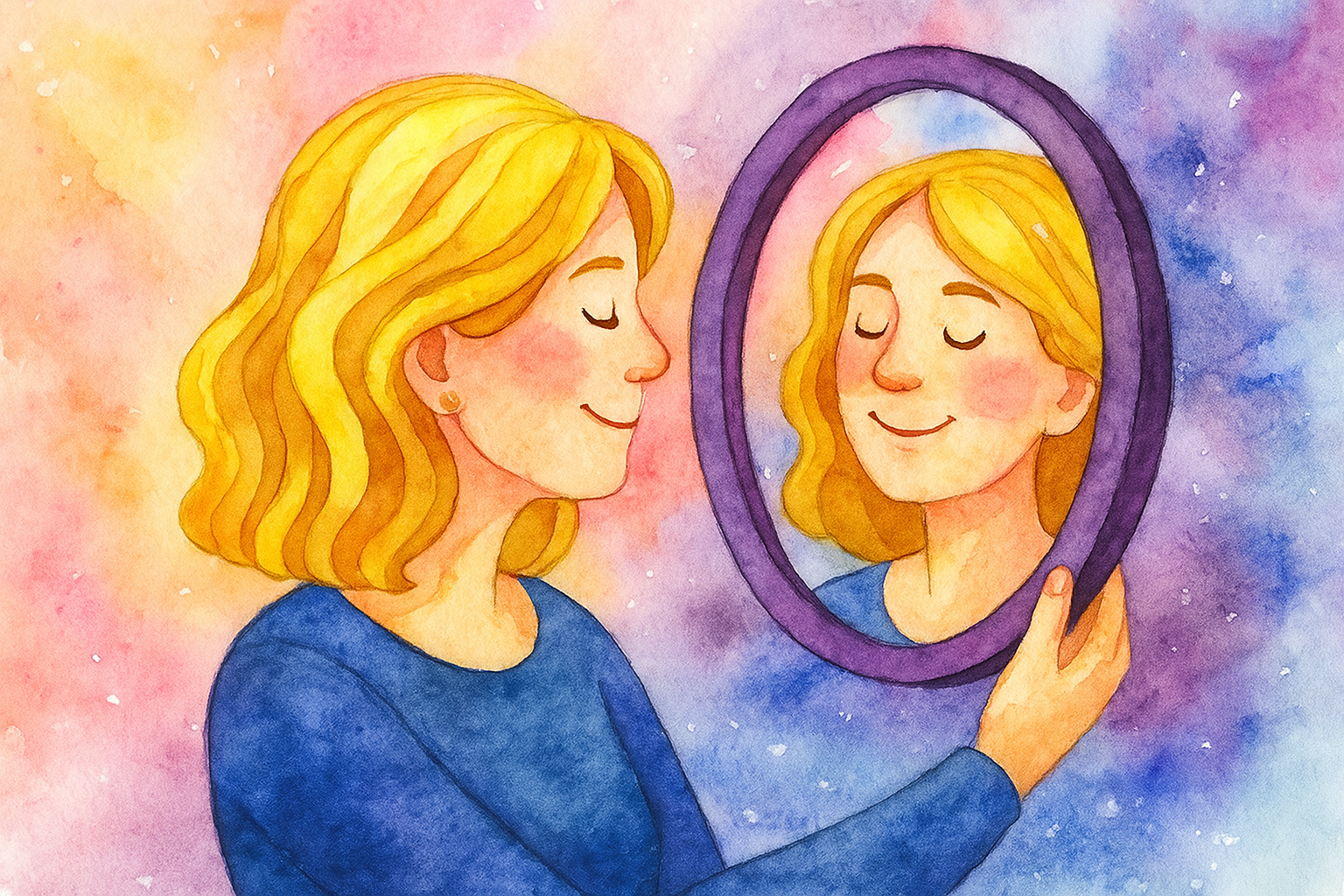
    My biggest fear? That my plus-one will always be my own reflection.

    More and more people are finding themselves in the single life—not because they joyfully signed up for it, but because they’ve quietly resigned themselves to it. Being alone forever is one of the worst things most people can imagine. And yet, nobody’s talking about it.

    I have no interest in bashing men—I love them. And I’m not here to shame relationships—I’d still love to experience conscious partnership or marriage one day. But what I am here for is giving a voice to the other side: the reality of singlehood. A reality that has been shamed, underrepresented, and spoken over for lifetimes.

    Yes, humans of all kinds fear being single. I happen to live it in the skin of a woman, but the fear itself is cultural, primal, and deeply conditioned.

    Not a Witch, Not a Spinster, Not a Divorcee

    The stigma of singlehood is sticky and insidious. It convinces people to stay in relationships they’ve outgrown because it’s “better than the alternative.” It whispers that you’re not enough without a partner. And the biggest problem? We have so few role models of people living single, fulfilled lives.

    I’m not a witch. I’m not a spinster. And I’m not divorced.

    Funny story—when I was once applying for a work visa abroad, the form asked me to declare my relationship status. The options? Married. Divorced. Spinster. That was it. Guess which box I had to begrudgingly tick? I still laugh about it, but it says everything: if you’re not partnered, you must be a problem to categorize.

    It’s in Our Bones

    The roots of this run deep. For most of history, women’s survival was directly tied to men—financially, socially, legally. That dependency shaped generations of cultural messaging we all still carry in our bones, regardless of gender. We’ve been taught that wholeness comes from someone else.

    For anyone who has spent long stretches of life single, there’s a peculiar kind of grief that shadows us, not for something lost, but for something never felt. We grieve the idea of intimacy we were promised, the mythical “other half” we were told to need. It’s less about absence and more about a haunting—mourning the story we’ve been handed rather than our own lived truth.

    Maybe Disney messed us up. Maybe it was Jerry Maguire’s iconic “you complete me.” But the truth is, our obsession with relationships is far older than pop culture. It’s centuries old. And it’s led so many of us on a quest for “another” long before we’ve gone on the quest for ourselves.

    And now? The dating industry has taken that centuries-old conditioning and turned it into a multi-million-dollar business model.

    It shows up in quiet moments, like the friend fresh out of a twenty-year relationship who whispers, “What if I never find someone else?” as if that’s the worst fate imaginable.

    Legacy, Good Girl, and the Seventh-Grade Soothsayer

    We may have moved beyond needing a partner for a bank account or a roof over our heads, but inside many of us lives a whole cast of characters who haven’t gotten the memo.

    In my case, they look like this:

    • The legacy-burdened one—the part that still believes worth is sealed only once I’m chosen.
    • The good girl, who doesn’t want to disappoint the family, who smiles politely when someone says, “You’ll find someone soon.”
    • The people pleaser who wonders if they should tone themselves down to be “more dateable.”
    • And the inner child who still remembers the sting of being told in seventh grade, “You’ll never have a boyfriend” and worries, even now, that maybe it was a prophecy.

    Different faces. Same message: You’re not enough on your own.

    Swiping Right on Your Insecurities

    The modern dating industry has taken this centuries-old programming and turned it into a goldmine. Apps, relationship coaches, matchmaking services, and self-help books all thrive on making your relationship status yet another problem to be solved.

    Not long ago, I was on a twenty-four-hour road trip listening to yet another relationship self-help book. This one at least was about “becoming the one,” but even then, the end goal was still to get the partner. Where are the books about deepening your relationship with yourself, not as a prelude to love, but simply to live your damn best life?

    And can we please stop acting like every contrived meeting arranged on an app is a “date”? We used to meet organically in coffee shops or elevators; now we swipe because we’re too afraid to make eye contact in real life.

    The funniest part? Friends in relationships often get more excited about my first meets than I do—as if I’m finally about to be rescued from the great tragedy of my singlehood.

    Love, Yes; Panic, No

    Biology matters. We are wired for connection. We crave intimacy and belonging. This is not about pretending otherwise.

    What I’m talking about here is the fear of being single—the panic that drives bad decisions, keeps us in misaligned relationships, and has an entire industry profiting off our insecurities.

    Rather than pouring all that longing into loving and being loved by one person, we could simply be… loving. Period. Creating a more compassionate relationship with ourselves. Spreading kindness. Offering to everyone the kind of love that heals the world. Because when we’re busy running from the fear that something is inherently wrong with us, we miss our greatest capacity—to love, in every direction.

    The Gift of Being Unpartnered

    Here’s the thing nobody tells you: I can literally do anything I want.

    If there are socks on the floor, they’re mine.

    If the yogurt is gone, I ate it.

    I can book a trip on a whim, sleep diagonally, and never negotiate over the thermostat. Netflix isn’t infiltrated with someone else’s questionable taste, and no one wakes me up in my sleep—except my dog.

    If I’m honest, my unfiltered fear about being single forever isn’t loneliness. It’s choking on a piece of toast and no one finding me. Or never experiencing the kind of deep intimacy and vulnerability I still hope for.

    But here’s the freedom side: I’ve gotten to know myself in a way I never could have if I’d always been in a relationship. I’ve formed an identity that’s mine—unshaped by a partner’s wants or habits. And I want anyone living single to know this is not a consolation prize. This is one valid, powerful way to live. You haven’t failed. Your worth is not measured in anniversaries.

    For me, soulmates show up in friendship as much as romance. My best friend and I joke we’ll probably live side by side when we’re old. Deep connection isn’t confined to coupledom, and that truth is liberating.

    Single By Trust, Not Default

    Seeing singlehood as a radical act of self-trust in a culture obsessed with coupling is… well, radical. And honestly, it’s 2025. We’ve accepted gender fluidity. Sexuality can be expressed on any spectrum you choose. So why are we still categorizing people by relationship status? Why is this still the metric we use to size up someone’s life?

    And this isn’t about some performative empowerment—people determined to prove they’re so strong, so independent, so “I don’t need anyone.” That’s still a posture that defines itself in relation to others. What I’m talking about is living fully for yourself, without apology, without your relationship status being a headline of your life.

    So maybe the real question isn’t “Will I end up alone?” but “Who can I be if I’m not waiting to be chosen?”

    And if you need me, I’ll be training for my next big adventure: walking the Camino trail in Portugal next summer—a pilgrimage powered entirely by my own two feet, my own heart, and absolutely no plus-one required.

  • Letting Go of the Life You Were Told to Want

    Letting Go of the Life You Were Told to Want

    “To be yourself in a world that is constantly trying to make you something else is the greatest accomplishment.” ~Ralph Waldo Emerson

    Ever since I was about four years old, I knew I was different from the other kids. I was always on the outside looking in. As I approach middle age, I’ve never shaken that feeling—the knowing—of being different.

    We live in a noisy world where we find whatever we seek. If we’re looking for validation that we don’t belong, that’s exactly what we’ll find.

    While flawed, the standard ‘life blueprint’ hasn’t quite sailed off into the sunset. The path to happiness, according to societal norms and expectations, goes something like:

    • Getting the degree
    • Climbing the corporate ladder
    • Finding ‘the one’
    • Having children and the ‘dream’ family
    • Buying the fancy house, the car or whatever else we desire
    • Buckling up for retirement and living ‘happily ever after’

    Let’s Stop Selling People the Fairytale

    For many, life’s expectations sink so deeply into their bones that they hardly pause to ask: Do I actually want this life? Am I simply following the path I was told to walk?

    The reality is that, as someone living through the experience, choosing a life that doesn’t look like everyone else’s can be confronting. I’m single at thirty-eight and have no kids and live alone.

    I always say everything has its pros and cons, but when I am alone with no outside noise to sway me, I am genuinely content. I feel this at my core. I’m home.

    The Heavy Weight of the Word ‘Should’

    I despise the word “should.” It’s a heavy word because it comes wrapped in fear. More pointedly, fear of letting people down, of being rejected, of daring to dream of something that isn’t on the tried and tested path, and ultimately, the fear of getting lost in uncertainty.

    I was never a fan of ticking boxes. Even more so when I learned through experience that every box left me feeling emptier.

    Recently, I’ve become increasingly interested in the origins of societal ideas. We are the only people walking in our shoes and experiencing this world as we do. Checklists may seem comforting thanks to their supposed certainty, but I speak from experience when I say they are suffocating when they fail to align with who we truly are.

    What would happen if you engaged in a self-audit on the “shoulds” in your life? You’d be surprised at how often the word pops up. I know I was.

    Being Open to Curiosity

    Curiosity is a superpower. If people asked questions more than they assumed, the world would be a softer place.

    When I was younger, I remember a family member saying something along the lines of, “Everyone wants to find their person, settle down, and have kids.”

    Even as a teenager, I knew that assertion didn’t sit right with me. How can everyone on this planet have the same life path and desires?

    Permitting ourselves to ask the uncomfortable questions is a gift in the long term because it helps to prevent us from creating a life where we are playing a character rather than truly living.

    • What if I don’t want children?
    • What if owning a home isn’t important to me?
    • What if [enter whatever your greatest desire is] doesn’t make me feel how I think it will?

    Listening to the Wisdom of Our Body

    It’s odd to me how we compartmentalize mental, physical, and emotional health and well-being. There’s no mental health without physical health and vice versa. The body knows before the mind latches on.

    That sinking heaviness in your chest when you picture a future you don’t truly want. The flutter of lightness when you imagine an alternative that feels more aligned, even if it scares you. This is not your imagination.

    Our bodies are constantly speaking to us on a 24/7 basis, willing us to listen. Learning to listen to our body’s signals can be a compass.

    If a decision leaves you feeling constricted, drained, or resentful, it may not be congruent with your values. If it leaves you feeling expansive, calm, or quietly excited, it may be pointing you toward your version of freedom.

    Of course, this doesn’t mean the path will always be easy (it won’t), but it will be yours. And there is peace in that.

    Facing the Fear of Judgment

    Let’s be honest: choosing a life that is counterculture often means facing judgement. Lots of people think all kinds of things about me. I let them because correcting them isn’t important to me.

    Here’s what I know for sure:

    • Family often question our choices
    • Friends don’t always understand
    • People fear change and the uncommon

    Here’s the truth: People are often most unsettled not by our choices, but by the mirror our choices reflect back to them.

    When you step outside the script, you remind others that they, too, have the option to choose differently. For some, that’s inspiring. For others, it’s threatening.

    Creating Your Own Life, Not Someone Else’s

    The beauty of life lies in diversity. Your version of a meaningful life may shift and evolve as you do, and that’s okay. What matters most is you choose it consciously rather than by default.

    Choosing a life that doesn’t look like everyone else’s isn’t about rebellion for the sake of it. It’s about alignment.

    It’s about living in a way that honors your values, nourishes your well-being, and allows you to show up authentically.

    I’m not here to offer fun tips and tricks. I assure you that if you feel you are destined for something greater or more, you’re not alone.

    So what will you choose?

    If you feel your life doesn’t fit into a standard mold, you aren’t broken. You are simply hearing the call to create something authentic for yourself.

    It takes courage to step off the well-worn path. And every time you choose your own version of enough—your own rhythms, joys, and definitions of success—you make space for others to do the same.

    The world doesn’t need more cookie-cutter lives; it needs people who are brave enough to live in alignment with their hearts.

  • How I Learned to Trust Myself One Small, Simple Step at a Time

    How I Learned to Trust Myself One Small, Simple Step at a Time

    “Sometimes, the hardest person to trust is ourselves. But when we do, everything changes.” ~Unknown

    For a long time, I thought the key to changing my life was out there—somewhere.

    I thought that if I just found the right program, the perfect plan, or the expert with all the answers, then I’d finally feel in control and like I was doing it “right.”

    So, I chased every plan, bought the books, signed up for the courses, and followed all the steps.

    And for a while, it felt good—safe, even. But deep down, I still didn’t trust myself. Because no matter how much I followed, I was still outsourcing my power. I didn’t believe I could create lasting change without someone else telling me how.

    It wasn’t until I hit a moment of pause—when life got quiet and the excuses disappeared—that I finally asked myself: What do I actually want? And can I trust myself to go after it?

    The honest answer? I didn’t know. I’d been listening to everyone else for so long, I’d lost the sound of my own voice.

    And that realization was equal parts terrifying and freeing.

    Because if I didn’t know what I wanted, I had to figure it out for myself—and that meant letting go of what everyone else thought I should be doing. It meant tuning out the noise and tuning in to something I hadn’t prioritized in years: me.

    Self-Trust Doesn’t Come from Thinking; It Comes from Doing

    That was the turning point.

    I realized that self-trust isn’t something you just wake up with. It’s something you build. And for me, that started with the smallest steps.

    I began showing up for myself in tiny ways—drinking water first thing in the morning, walking for ten minutes, writing for just a few minutes a day. Nothing fancy. But they were promises I made to myself—and kept.

    Each small habit became a tiny brick in the foundation of self-trust.

    And slowly, those micro-wins turned into momentum. I didn’t need a full plan anymore. I didn’t need someone to tell me what came next. I was proving to myself, day by day, that I could count on me.

    When I first committed to writing ten minutes a day, it didn’t feel like a big deal. But doing it every day—even when I was tired, or uninspired, or unsure—was quietly revolutionary. It wasn’t about how good the writing was. It was about showing up for myself and keeping a promise. That shift became a building block not just for my creativity but also for my confidence.

    That consistency created a ripple effect. If I could trust myself to write, I could trust myself to move my body. If I could move my body, I could nourish it better. If I could nourish my body, I could speak more kindly to myself. Each action reinforced the belief that I could do this—that I didn’t need to be fixed; I just needed to believe.

    And let’s be honest—it wasn’t always easy. There were days when I didn’t feel like doing any of it. Days I wanted to hide, to go back to following someone else’s checklist. But I reminded myself that this time, I was building something that belonged to me.

    Consistency Builds Confidence

    It wasn’t perfection that changed me. It was consistency.

    Every time I kept a promise to myself—even something as small as sitting in silence for two minutes instead of reaching for my phone—I sent a powerful message: I’ve got you.

    And the more I showed up, the more my mindset shifted. I stopped asking, “What should I do?” and started asking, “What feels right for me?”

    That’s when everything changed. Not in a dramatic, fireworks kind of way. But in a grounded, real way.

    And that realness is what made the change last.

    I wasn’t becoming someone new—I was returning to myself. And it felt like coming home.

    You Don’t Need Another Plan; You Need to Believe in Yourself

    We live in a world that constantly tells us we need to be fixed. That someone out there knows better. That the answers are just one step away—if only we buy the next thing, follow the next leader, or change just a little more.

    But here’s what I’ve learned:

    You don’t need more noise. You need more trust.

    You need to know that you already have wisdom inside you. You just have to give it room to speak—and find the courage to act on it.

    And that starts with showing up for yourself in small, meaningful ways. Not perfectly. Just consistently.

    When you build a solid relationship with yourself—when you become someone who keeps promises to yourself—that’s where the shift happens. Not because you’ve mastered some fancy process, but because you’ve started living in integrity with the person you’re becoming.

    And in doing so, you step into a quiet kind of power—one that doesn’t need to prove itself to anyone.

    Start Small, Stay Honest, and Keep Going

    If you’re in a season of doubt, or if you’ve forgotten what your own voice sounds like, you’re not alone.

    Start with one tiny habit that reflects the person you want to become. Let that be your anchor. Let that be your proof.

    Because self-trust isn’t a lightning bolt. It’s a quiet build. And one small shift at a time, you’ll hear your voice again—and this time, you’ll believe it.

    And when you do, you’ll find something even better than the perfect plan—you’ll find your power.

    And that’s where real change begins.

  • Why Codependents Don’t Trust Themselves to Make Decisions and How to Start

    Why Codependents Don’t Trust Themselves to Make Decisions and How to Start

    “Slow, soulful living is all about coming back to your truth, the only guidance you’ll ever need. When you rush, you have the tendency to follow others. When you bring in mindfulness, you have the power to align with yourself.” ~Kris Franken

    Codependency previously created a lot of pain and agony in my life. One of the ways it manifested was in my inability to trust myself. I would overthink decisions to death, fearful that I would choose the “wrong one” or upset someone if they didn’t agree or were disappointed by my choice.

    I was terrified of “making a mistake,” and I exhausted myself trying to collect everyone’s opinion (to ensure they would be pleased with me) before finally settling on a choice.

    As annoying as it was, for me and everyone around me, I couldn’t seem to stand firm in my decisions. I longed to be more confident in my choices but couldn’t understand why it was so hard for me.

    Growing up with an authoritative, controlling parent, I didn’t have the opportunity and support I needed to feel my feelings and let my intuition guide my choices. I didn’t get to learn from my mistakes. When I made a mistake, it felt like death. I was often blamed, shamed, and criticized, all too much for my empathetic system to bear.

    I learned that if I placated and pleased, others were happy. And because I became so others-focused from such an early age, I never learned how to build my muscle for good decision-making.

    Feelings and emotions were not welcome in my world, so my only way through was to disconnect from feeling at all—though I felt responsible for others’ mood swings and feelings. I learned that sharing my needs or opinions was triggering for others, and I didn’t have the skills to navigate the weight of that. All this combined felt mentally paralyzing, so I began to look outside of myself to others for advice and guidance eventually.

    When you’re reliant on other people’s opinions and guidance, you’re much like a feather in the wind—susceptible to any small or big gust that comes along. You aren’t in control of your life, and you give others way too much power over how you feel.

    One of the best ways to begin to build self-trust and heal from codependency is to begin feeling your feelings again, living from the neck down as I like to say. Moving from our cognitive thinking brain (because I know you know making decisions shouldn’t be this hard) to the wisdom of our bodies.

    I believe that in order for us to really build this self-trust muscle, we have to learn how to trust our feelings. And that requires us to build a sense of awareness around why we might be codependent in the first place.

    Perhaps, like me, you were programmed from an early age not to trust your inner knowing, or intuition. This results in low self-worth. And this happens for a number of reasons.

    • You were abused or neglected (physically and/or emotionally).
    • Your feelings and needs were minimized.
    • You were judged, shamed, or mocked for your feelings, maybe even being called “too sensitive.”
    • Your feelings and needs weren’t as important as other people’s.
    • You didn’t have at least one parent or caregiver validating your feelings and sense of worth. You didn’t have someone mirroring back to you your value.

    If you experienced any amount of neglect, or had emotionally unavailable parents, like me, you probably learned to suppress your feelings in order to survive. And what we resist persists, so those feelings that we try to shove down only intensify.

    3 Tools to Build Self-Trust

    These three tips might help you learn to trust your inner wisdom so you can make decisions from an empowered place.

    TOOL #1: Do a daily check-in of your feelings.

    When we check in with our feelings regularly so we can meet our needs, we learn to trust in our ability to do what’s best for ourselves.

    When I first started doing this, I would set four alarms on my phone. When the alarm went off, I would do a quick check-in by asking myself, “What am I feeling? What am I experiencing right now?”

    Often, we run through life, not checking in to see how we are doing and feeling (especially if we struggle with people-pleasing and codependency). We do a lot of things every day, all day—go to work, make decisions, parent our kids—but we often don’t check in with ourselves and ask if we need to shift something.

    This is a big part of self-love, checking in and asking, before I have this conversation with my child, my partner, my boss, or customer service rep for my computer, what’s going on with me? Oh, I’m feeling ornery or hungry; here’s how I can address that before I have this conversation.

    You can also do this by journaling. Keeping track of your feelings in a journal can be a beautiful way to understand, process, and look back on your experiences.

    Here are some journaling questions to help you get started:

    • What do I need to hear from myself?
    • What do I need to do for myself to feel my best?
    • What do I love about my life right now?
    • Today I woke up feeling (fill in the blank).
    • Am I living a life aligned with my values?

    TOOL #2: Reparent your inner child.

    Reparenting your inner child is a beautiful way of giving your inner little one the things that he or she needed and never received in childhood. You become the parent you needed when you were a child. And, by giving to yourself what you didn’t receive then, you free yourself from the past.

    So much of reparenting yourself is about making choices every day in your own best interest. It’s becoming aware of your patterns and behaviors, understanding why you do what you do, and carving out time to give yourself what you really need. When you give yourself what you need, you start worrying less about other people abandoning you because you know you won’t abandon yourself.

    One of my favorite ways to reparent myself is to give myself the words I never got to hear as a small young child.  Words like:

    • I love you.
    • I hear you.
    • You are perfect and complete.
    • You didn’t deserve that.
    • I see that really hurt you.
    • What do you need right now?
    • That must have been very difficult for you.
    • I’m so sorry that happened to you.
    • You are smart.
    • You did your best.

    TOOL #3: Practice creating safety within.

    Because we, as codependents, were raised by either emotionally unavailable or narcissistic caregivers/parents, we developed what I refer to as “a hole in the soul.”

    Our parents’ responsibility is to mirror back to us our worth and value, but when they fail to do that, we will look to someone or something outside of ourselves to show us our worth and, in essence, feel safe.

    It’s an endless battle of trying to fill that hole. Low self-worth, self-value, self-esteem, and self-regard are typical for codependents. We look outside of ourselves for safety and approval, becoming dependent on that next hit or rush. That safety might last for five minutes, five hours, and if we’re lucky, a whole day.

    One of my trusted and reliable systems for safety was shopping. I would spend frivolously, buying things we didn’t need with money we didn’t necessarily have. This created a lot of stress and conflict between my husband and me, and further decreased my self-trust.

    He couldn’t understand why I had this insatiable push to spend, and I didn’t either. I just knew that my system felt safe and relaxed once I made my purchases—until the excitement wore off, which usually happened quite quickly, and I was back in the store, searching and spending, trying to get my next fix.

    I had a lot of stress and guilt because I knew what I was doing wasn’t healthy. Yet it was compulsive. I couldn’t stop.

    I longed for the connection and safety that I never received as a child but didn’t know how to get it in healthy ways. So I suppressed my needs in relationships and tried to fill that hole with shopping.

    It didn’t happen overnight, but once I learned how to create that feeling of safety within myself (with lots of support through trauma-informed coaching, therapy, breathwork, meditation, and proper nutrition, and after learning to speak up for myself), my codependent strategies (shopping, relationship addiction) slowly seemed to disappear.

    I no longer needed to rely on my old strategies because I knew how to trust myself and offer myself what I truly needed.

    I invite you to try this: Close your eyes and imagine something that makes you feel at ease, calm, and safe (maybe your favorite forest or beach, perhaps a little cabin nestled in the woods). Notice where the sensation of ease lives in your body. Be with it for a moment—just sit with and experience it. That feeling you just created was created by you. It is yours.

    Every time you do this exercise you release the belief that you can’t create this feeling alone. That you can’t be trusted, and that you must rely on things outside of you to create safety.

    When I first started this practice, I had to implement it every time I entered a store. I took a few moments while I sat in my car and created that feeling of safety within. That way, I felt a sense of calm and ease as I was shopping, keeping my prefrontal cortex online so that I could make rational purchases that I felt confident and good about.

    I started to build evidence that I could, in fact, trust myself to make healthy decisions. It was incredibly empowering and freeing to walk into a shop and simply admire the textures, patterns, scents, and products without feeling an overwhelming compulsion to put things in my cart that I simply didn’t need.

    Every time we connect with ourselves this way, we prove to ourselves that we can create safety within. And every time we make healthy choices from that place of internal safety, we deepen our trust in our ability to discern and do what’s best for us.

  • How to Stop Letting Other People’s Opinions Guide Your Life

    How to Stop Letting Other People’s Opinions Guide Your Life

    “What other people think of me is none of my business.” ~Wayne Dyer

    Do you feel it too?

    That discomfort rising inside when someone imparts their clever wit on you. Not just any kind of wisdom, but the one that makes you feel small, in a here-you-go, punch-to-the-stomach kind of way.

    A covert little criticism implying that you might not be doing something right or may have the wrong ideas.

    Your first reaction is disbelief. Followed by denial. How can they be so rude to come out with such a comment? Why can’t they be more tactful or careful with their words?

    Then your anger takes over, and you shout from the top of your voice, “Did I even ask for your opinion?”

    Unfortunately, what seemed like shouting was just a thought. That witty retort you wanted to scream at them? Never left your lips.

    You only disagreed with them in your mind.

    And worst of all? After you leave the scene and mull the incident repeatedly, you begin to think they might be right. And that’s a tragedy.

    Because, ultimately, you can wind up feeling that what you know and who you are don’t matter.

    Thinking this way for too long leads to low self-esteem and a loss of confidence in your abilities.

    But it doesn’t have to stay that way forever.

    Inject Self-Trust

    I used to believe that other people’s bad opinions of me didn’t affect me, so I was shocked to discover they literally paralyzed me and stymied my progress.

    I clearly remember when a girl at school remarked, “Stop behaving so spoiled.” This is one of the earliest memories I have of being accused of something not even based on reality, but I actually believed that what she said was right.

    I spent years trying not to appear “spoiled,” without knowing or pausing to contemplate what it really meant. This applied to all the other “wrong” behaviors I stopped doing in hopes that I’d then be more acceptable to the world.

    But that never happened. I could not achieve a state where I pleased every person. I continued picking up subtle signs from others, telling me where I went wrong, or what needed correcting.

    This led to putting up with a lot of intimidation at work from peers, in my adult life. Not only was I too shy to strike back, I faced humiliation in front of the group when a boss called me a geek once. As if that was the worst sin in the world.

    Furthermore, I became a “psychic” over time. Others’ nagging voices had become my own, to the point I was second-guessing what people might have been thinking of me.

    The situation changed when I recognized I was living within the bounds of my limiting thoughts, including those that were formed from others’ limited opinions.

    What I needed to escape this loop was a good old dose of self-trust.

    Because other people don’t live your life, you can only live it for yourself. And for that, you must stop listening to others’ inflated belief systems.

    Immunize Against Opinions

    The following ideas will help you shed chilling spells of self-doubt and embrace the loving warmth of self-assurance: 

    Unravel the ball.

    Like a wool of yarn, the kind of reactions you learn and display to each situation you encounter get layered and imprinted in your mind over the years. Try and look beyond the obvious issues (top layers) to get to the root (core) of it.

    I spent years trying to behave “appropriately” so that other people would accept me, because underneath I felt like my true self was unworthy and underserving. Once I unravelled this ball I realized that I was just as worthy and deserving as anyone else, and I could start being myself—my true self. 

    Fire the culprits.

    The people who impact us at an early age can leave deep, lasting impressions on a young mind. What messages did they leave you with? By careful introspection, you can now examine the validity of such judgment. Is it wise to still carry their opinions, or can you now move on? Give yourself permission to kick them out of your life.

    That girl who told me I was spoiled? I was able to shake her opinions by seeing the absurdity of the moment. I finally understood that at that age, she barely knew herself, and she might not have known the consequences of her talk. 

    Find your “double.”

    With seven billion people inhabiting Earth right now, with all different personalities and opinions, you won’t have to look far to find those who agree with you. Seek out your own kind for mutual support and growth.

    Being around people who share your visions and goals is tremendously more helpful than trying to change those who have the opposite agenda of yours. It’s no coincidence hobbies were invented—regardless of what you’re into, a local group has already sprung up near you to bring together passionate and kindred spirits.

    Know thyself.

    Find what you’re good at by clarifying your personal strengths.

    Too many of us fall into the trap of making wrong career choices based on others’ opinions. Maybe you were particularly drawn to creative work but decided to become an accountant because your parents thought that was more sensible. Furthermore, you ended up focusing on improving weaknesses, which can never measure up to the power of just working with your strengths.

    If you live up to who you naturally are daily, you’ll be one of the few who follows an authentic life. By flowing with your strengths, you gain greater work satisfaction and become invincible in your character.

    Reset your reality.

    Thoughts are curious creatures. Have you ever stopped to ponder what they are, where they come from, and what they do to you? Find truth each day by doing ten minutes of thought-stopping meditation, and recognize just how much your thoughts are influenced by people outside yourself.

    What do you believe as a result of your mother’s negative views, or the heavily biased statements you read in the newspaper? Thoughts become disturbing when you take them too seriously. With a little meditation every day, you can widen the distance between your sanity and them. 

    Blinker yourself.

    Other people’s negative opinions are likely reflecting their own limiting beliefs about life. Develop the skill to recognize and ignore these. You don’t have to disagree with them on the spot if it doesn’t feel comfortable just yet. But put the mental blinkers on, and try visualizing how you’d go about creating a different outcome next time.

    Get out of your body.

    Zoom out of yourself to place a particular opinion in perspective. Keep going upward until it’s nothing more than a speck of sand. These opinions look quite different from 100 miles above.

    Or imagine looking back from ten years time. This incident will fade into shameful insignificance. As if it never happened. Think about this as you’re weighing up a certain opinion’s merit.

    Blow it up.

    When someone says something negative or belittling to you, exaggerate it as much as you can in your mind, to the point that it becomes funny. Comedy has an incredible power on the brain, releasing feel-good chemicals and allowing you to let go.

    Blow up the person who’s saying it into a large balloon, and send them out into the stratosphere. And release a huge belly laugh with it! The bigger, the more powerful.

    Share it out.

    Bring the troubling thought out in the open by telling a close friend about how you feel. As soon as you’ve done that, you start to see the triviality of the situation. Keeping it to yourself can be a bad idea if it festers and eats into you. “Trouble shared is trouble halved.”

    Be vulnerable enough to tell someone if a silly remark bothers you. It does more harm staying inside. So let the critter out, and disperse it into tiny particles.

    Go Your Own Way

    Don’t get sucked into some clever clog’s reckless opinion, no matter how convincing it might sound.

    You could spend your whole life trying to meet other people’s standards. But that’s not a strategy for a fulfilling life.

    Now is the time to start honoring your authentic values.

    Get to know yourself. Hang out with your own kind. Put others’ opinions in perspective. Only then will you be free to live your life, your way.