
Tag: self-talk

  • Increase Your Self-Love: 8 Ways to Be Good to Yourself

    Increase Your Self-Love: 8 Ways to Be Good to Yourself

    “You yourself, as much as anybody in the entire universe, deserve your love & affection.” ~Buddha

    Someone asked me a couple of years ago out of ten, how much did I love myself? I said four. I had to give my immediate, intuitive answer, as this was the honest truth.

    Four! That came as a shock to me. It’s low. I thought I was pretty good with myself. I’m smart, multitalented, not bad looking, generally happy, I have lots of friends and enjoy life.

    But now the truth began to shine. With introspection I could see why the answer was four. My thoughts, feelings, words, and actions showed how I really felt. What I thought was self-love was largely a superficial gloss on the surface of my life.

    What’s more, this lack of self-love was playing out in my life and keeping me from experiencing real joy and freedom.

    My strict Indian upbringing had me believe that my job was to conform to other people’s rules, from how I dressed and socialized down to whom I would marry. My true self had no place here; it was to be hidden away. But it never goes away; it’s always there waiting to be loved and accepted by us.

    Below are some of the areas I was lacking in self-love, which perhaps you can relate to. Taking conscious action to increase our self-love in these areas can make life much more magical. And we deserve magic!

    1. Set boundaries.

    A good sign of how much you love yourself is how you let other people treat you.

    Do they walk all over you?

    Do you go to the ends of the earth to please them, at the detriment of yourself?

    Do they speak or act unkindly to you, put you down, and trample on your dreams?

    Do they put you at the bottom of their list?

    Although I’ve experienced all of these things, people-pleasing was my big one. I always said yes to people for fear of upsetting them. As a result, I spent my precious time and energy in situations that I didn’t even want to be in.

    Setting boundaries is often as simple as knowing when to say no. We worry that people will stop liking us if we do this. But I find that if you do it confidently and lovingly, those who care will respect you for it and even change their behavior with you. And those who do walk away, do you really want them there anyway?

    2. Watch your self-talk.

    I once read, “If you spoke to your friends the way you speak to yourself, would they still be your friends?” In my case they certainly wouldn’t, because I’d be saying things like:

    You’re thirty-two and you still get pimples, your teeth are wonky, and you’re getting out of shape.

    You’re not going to achieve your goals.

    You don’t have a right to ask for what you want or speak your mind—keep quiet.

    Other people are more important than you; their wishes should come first.

    Imagine saying that to your friends! You’d never say it to them, so don’t say it to yourself.

    With self-awareness and practice we can notice these thoughts in our minds and make a conscious decision to stop them or reverse them into positives.

    3. Take time to “do you.”

    There’s always someone who wants a piece of you—your boss, spouse, kids, friends, parents, siblings, the bank manager. Do you know who else wants and needs a piece of you? You!

    When we truly love someone, we take time to nurture their well-being. How often do you do this for yourself?

    I know life is busy, but I always make time to do things that make me feel looked after—exercise, time alone, a little pampering. Giving yourself permission to nurture yourself creates the beliefs that you are worthy and loved.

    4. Be honest with yourself and others.

    If someone’s dishonest with you, you don’t like it. Same goes for when you are dishonest with yourself—it hurts! Being honest in my eyes means that our words and actions reflect the truth of our heart and soul—in front of anyone and everyone.

    For years I was dishonest with my family about who I really was.

    I liked to party, drank alcohol, had relationships, and had no interest in getting an arranged marriage. This may seem normal to most, but these things were all frowned upon by my family. So although I did them, I also hid them.

    This dishonesty seemed harmless until I realized that I was sending an unloving message to myself that who I really was, was wrong and shameful.

    Being honest about my feelings is my biggest challenge, as it makes me feel vulnerable. But in vulnerability lies great power, so I try and speak my truth as often as possible.

    The more you do it, the easier it becomes, and as long as you are not hurting anyone, expression from a place of honesty opens up so much space inside you. You feel free. You feel worthy. You feel loved.

    5. Allow yourself to feel painful emotions, and nurture yourself through them.

    For some reason we have learned to shun feelings of hurt, sadness, fear, depression, hopelessness, and so on, as if they are somehow wrong. When I was sad and hurt after a breakup, pride took the part of me that was sad and tried to shut it away.

    I had little compassion or acceptance for my own feelings of rejection, hurt, and unworthiness. I tried to quickly move on from heartbreak, dealing with everything in my head rather than my heart. So this pain remained inside me, unloved and unhealed.

    What if a small child were sad? We’d comfort them because we love them and want them to feel supported. They are fragile. But so are you. We are all fragile when in pain, so we must support ourselves, comfort ourselves, and love ourselves when we need it most.

    6. Let yourself off the hook.

    There’s no such thing as perfection, though you could say that you are perfect in your imperfection. Everyone makes mistakes or struggles at some things, it’s natural. I’m pretty sure it’s impossible to get everything right.

    So isn’t it funny that we berate ourselves—the opposite of love—for not meeting a standard that’s impossible to reach in the first place? There’s no winning there! The only way to win is to let yourself off the hook.

    7. Watch who you spend time with.

    They say you turn out like the five people you spend most time with.

    Many years ago I remember being surrounded by people who had quite a negative outlook on life. We all go through dark times, but none of us want to get trapped in them.

    I realized the most loving thing we can do to help ourselves out of a negative state is surround ourselves with positive energy. The goal isn’t to find people who are always positive—none of us are. It’s to spend time around people who are making a conscious effort to release negativity.

    Your life is too precious. Love yourself enough to distance yourself from people who dim your light and find those who help you shine brighter.

    8. Know who you really are.

    Because when you find out who you really are, you won’t be able to help but love yourself.

    Did you know that almost every element on Earth was formed at the heart of a star? So your body is made of stardust! Your soul is a pure and powerful energy. Your life, as you know it, is a unique expression in consciousness that will never exist again. You are a miracle. Who doesn’t love a miracle?

    So if you were to ask me now, how much do I love myself? I’d say six or seven. I’ve still got work to do, and decades of conditioning to be dissolved. But life is a journey. Few things come to us instantly, especially this sort of transformation.

    Learning to love ourselves may be our life’s work. And true joy comes from the realization that not only do you deserve love, you are love.
  • Create a Kinder Mind: How to Stop Your Mean, Hurtful Self-Talk

    Create a Kinder Mind: How to Stop Your Mean, Hurtful Self-Talk

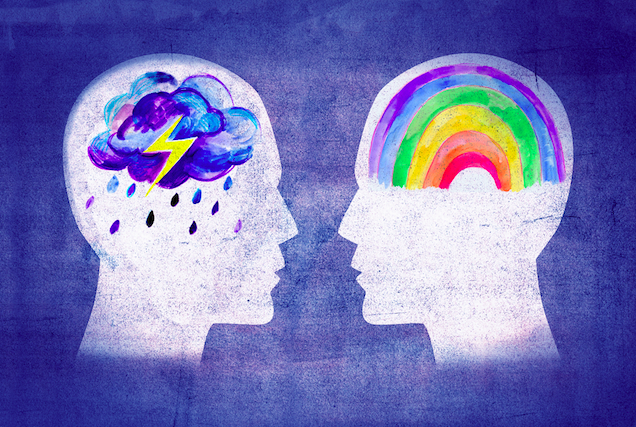
    Two Kinds of Brains

    “You have been criticizing yourself for years, and it hasn’t worked. Try approving of yourself and see what happens!” ~Louise Hay

    In my quest to learn to love myself I did therapy, read plenty of self-help books, and took personal development courses, hoping I could learn to love myself like I could learn accounting.

    This was all helpful; however, when I reached the self-talk stage my progress came to a standstill.

    Before then, I hadn’t consciously realized that I used powerfully negative words when speaking to or about myself. I was the first to put myself down, the first to criticize and chastise myself, and my own harshest critic.

    While this helped me push through some physical and mental barriers and, therefore, achieve things that I never thought possible—such as completing an Ironman triathlon and running ultramarathons—these moments were the exception, not the rule.

    I hid behind the excuse that it motivated me in order to justify being mean to myself, perpetuating the cycle. My so-called valid reasons were holding me back from changing my life and loving myself so that I could be happier and more fulfilled.

    I recognized that I spoke so terribly to and about myself because I suffered from incredibly low self-esteem.

    I was trying to measure up to my own high, unrealistic standards of who I thought I needed to be in order to be loved, approved, and accepted. But these destructive and critical habits were actually in conflict with what I really needed, as they didn’t allow me to give myself love.

    I needed to change the way I spoke about myself, and I needed to do it quickly!

    I realized I’d formed these habits as a result of both conscious and unconscious decisions I’d made in the past. And if my thoughts about myself came from decisions I had made in the past, I had the same power today to make different decisions to shape the person that I would be in the future.

    These are some of the tricks and tools that I’ve used to overcome my self-esteem issues and begin speaking to myself more kindly:

    1. Journaling.

    Before I began changing my self-talk, I had used my diary to vent what I was feeling. It was painful to read what I had written. Among the negative thoughts and feelings were momentous and joyous events, but the painful memories and thoughts overshadowed them.

    When I purchased a new journal I decided to focus instead on what I did or said for and about myself that demonstrated love and kindness.

    So for instance, if I felt fat and was beating myself up about my thighs being too big, I would write that I was grateful that my big thighs were strong enough to help me run marathons.

    You too will find that after a few days of consistently doing this you will be able to catch mean thoughts before they spiral into something bigger.

    2. Eliminating the words should/must do/have to.

    I have stopped using these words and replaced them with kinder words such as “I choose to,” as I found that “should,” “must do,” and “have to” were causing me to feel unnecessary guilt.

    As an example, when I set my alarm clock at night instead of saying that “I should wake up early and exercise,” I now say to myself, “I choose to wake up early and exercise.”

    Stop ‘shoulding’ all over yourself and you too will feel much better about yourself.

    3. Smiling.

    In my most recent marathon, instead of beating myself up for not being faster, I started the race with the intention of smiling for as much of as it as I could. It was the best thing that I could have done.

    It made me feel good, and the spectators noticed it and cheered me on, which in turn filled me with more positive energy.

    Try smiling now and see how much better you feel. Imagine yourself doing this all the time when crossing the road or even when answering the phone. You will find that a little smile becomes a big smile in no time.

    4. Saying yes to yourself and no to others.

    I have learned to say yes to myself, which sometimes means saying no to others.

    I now examine my motives for saying yes to someone else. If it is to be loved and/or accepted, it will likely create disappointment when I don’t get what I expect in return.

    Imagine if we all said yes to others only when we really felt it in our hearts. There would be no resentment, and when we do things for others it would be done with joy, creating more positive feelings about ourselves.

    5. Accepting that we don’t all have to like each other.

    I have started to also worry less about what others think of me and my decisions, so long as I am comfortable with my choices, and they come from a place of integrity and honesty.

    This has helped me with my self-talk, as I no longer tell myself that I am a bad person if someone doesn’t like me.

    Just as we don’t like everyone else, everyone won’t like us, and that’s okay. You might be surprised how liberating it feels when you are okay with not being liked by everyone else.

    6. Asking, “How does this decision make me feel about me?”

    I measure every choice against how it makes me feel about myself. I ask myself, “Does this make me feel good about myself? If not, what needs to happen for me to feel good about me?”

    For instance, before I accept an invitation to see ‘an old friend,’ I now stop and ask myself, “Would spending time with this person make me feel good about myself?” If the answer is no, then I make a decision to spend my time with someone else whose presence empowers me.

    Ask yourself this question and you too will make more choices that build you up instead of tear you down.

    7. Setting achievable goals and celebrating progress.

    I now set achievable goals and celebrate them. I also don’t beat myself up anymore if I don’t achieve them, or don’t achieve them in the way I had hoped to.

    You can celebrate your small accomplishments by going to dinner with friends or buying yourself a small gift as a reward. Whatever it is, make sure that you are present in the moment when you celebrate, as this will reinforce that you are a wonderful person and you deserve credit for all the good you do.

    8. Walking away.

    I have also learned to walk away from people who don’t treat me with respect. It’s not an easy thing to do; however, if I allow others to be disrespectful toward me, then I perpetuate the cycle and I am also giving myself permission to do the same to me.

    You too deserve to be treated with love and kindness—both by yourself and others.

    How does your self-talk reflect the way you feel about yourself? Could you be kinder and more loving to yourself?

    Two brains image via Shutterstock

  • Stop Beating Yourself Up: 40 Ways to Silence Your Inner Critic

    Stop Beating Yourself Up: 40 Ways to Silence Your Inner Critic

    “To be beautiful means to be yourself. You don’t need to be accepted by others. You need to accept yourself.” ~Thich Nhat Hanh

    If you’re anything like I used to be, your inner critic packs a powerful punch.

    You’ve got a vicious voice bad mouthing you for much of the day. And when it’s in one of those moods, wow, are you going to suffer.

    It’s no wonder you feel small, disappointed, and ashamed of who you are.

    It’s the reason you lie in bed at night feeling like a failure, convinced you’re a nobody, certain you’re a serial mistake maker.

    It was exactly why I used to just lie in the dark, a lot. Most days in fact. Not sleeping, not even thinking, just lying.

    I was forever longing for my life to go away. I’d gotten so good at beating myself up that each day seemed to present more opportunities to fail, to feel insignificant and never good enough.

    Alone in the dark, I could pretend that all my problems disappeared and that I was free of the stress. I could make-believe that the pressure had evaporated.

    You see, I’d taken on one of those jobs, one of those supposed leaps up the career ladder. But hell, being the head of a college department turned out to be a bad life choice … given my oh-so critical inner voice.

    Every day added to my imagined portfolio of failures. Every day blew another hole in my smokescreen of having any confidence in my ability. And every day, I became more fearful of being exposed as the ‘fake’ I believed I was.

    I felt like I was constantly aching yet feeling numb at the same time, which became too painful to bear. I dragged my shameful self into the college and quit. I left my entire library of books on the table along with my resignation.

    Four years on, even though I’d tried to move on, even changing countries, I still felt the same. No more confident and no less self-critical.

    That’s when I learned that even if I hadn’t packed any belongings, I still took a devastating amount of baggage with me. Even worse, I’d allowed my inner critic to ride passenger.

    That voice—that mean, vicious, ever-present voice—had to go if life was going to be worth living.

    Consciously and patiently, I set out to understand why this self-critical person had become such a huge part of me. I learned how to recognize and counter the habitual negative messages and destructive behavior patterns. I learned how to beat my inner critic, for the most part.

    And now it’s your turn.

    Because it’s time you felt free from the pain of constant self-criticism as well. It’s time you finally stopped beating yourself up over everything you say or do. And it’s time you were able to breathe, smile, and be pleased with yourself, just as you are.

    How? With one simple, small action at a time.

    Some of these ideas will speak to you; some will shout. Others will only mumble. Try a handful that grab your imagination. Add in others from the list over time as you learn to build them into an inner-critic-beating habit.

    1. Keep a self-praise journal.

    Pocket-size is best. Each time you feel pleased by something you’ve done or said, jot it down. Flip through the pages every time you feel your critical voice starting to pipe up.

    2. Write a positive self-message.

    Use a permanent marker and inscribe it on the inside of your shoes.

    3. Diminish your inner critic’s power.

    Repeat a negative thought back in a silly voice.

    4. Update your Facebook status:

    “Happy to be me. Work in progress.”

    5. Send yourself a loving text.

    Keep it, and re-read it often. Appreciate yourself.

    6. Add a positive self-message to an image.

    Put it on your phone and laptop.

    7. Draw a caricature.

    Give your inner critic a silly feature that makes you laugh. Stick it on your fridge.

    8. Make a face or blow a raspberry.

    At your inner critic, not yourself!

    9. Visualize your inner critic.

    Imagine it as an evil gremlin squatting on your shoulder. Each time it speaks up, turn and flick it away.

    10. Look in the mirror.

    Smile and compliment yourself on one quality or trait you like.

    11. Keep a list of self-forgiveness quotes.

    Or sign up to receive daily emails from Tiny Buddha.

    12. Write a list of qualities others like about you.

    Keep it in your purse or wallet.

    13. Write a list of qualities you like about yourself.

    Add it to your purse or wallet as well.

    14. Remind yourself

    “No one can do everything, but everyone can do something.” ~Unknown.

    15. End each negative thought with a positive.

    For example, “But I’m human and I can learn not to make the same mistake,” or, “But I have the power to change this.”

    16. Jot down one thing you’d like to be better at.

    Then take one tiny step toward that.

    17. Remember “not good enough” doesn’t exist.

    “I don’t know a perfect person, I only know flawed people who are still worth loving.” ~John Green

    18. Ask yourself why you think you should be good at everything

    We all have our strengths and weaknesses. Concentrate on your strengths.

    19. Find one thing each day to reward yourself for.

    Make it something you truly look forward to.

    20. Apologize to yourself.

    Do this every time you recognize self-criticism (tell yourself you’re sorry out loud if you can).

    21. Ring someone you haven’t spoken to in ages.

    Tell them how much they mean to you. The best way to feel better about yourself is to make someone else feel better.

    22. Remember that self-hate is not an option.

    You’re the only person you can guarantee you’ll be in a relationship with from birth to death, so learn to love yourself.

    23. Remember there’s no shame in messing up.

    You’re trying to do something, grow, and contribute.

    24. Break the cycle.

    Admit you made a mistake and ask, “Now what can I do about it?”

    25. Look at a mistake or “failure” in context.

    Will it really matter in a week, a year, or ten years from now?

    26. Recognize that you make fewer mistakes than you think.

    You just criticize yourself repeatedly for the same few.

    27. Drown out your inner critic.

    Put on your favorite feel-good music.

    28. Stop trying to do too much.

    Strike one task from your to-do list that won’t stop Earth from revolving if it isn’t done.

    29. Reflect on how you’re only on this planet for a short time.

    You can either spend it beating yourself up and being miserable or learn to love yourself and be happy.

    30. Stop focusing on the one thing you got wrong.

    Focus on the many things you got right.

    31. Recognize the good you do for others.

    The more you beat yourself up, the less good you do.

    32. Keep a daily, written tally of positive self-messages.

    Increase this by at least one each day.

    33. Physically pat yourself on the back.

    Do this for everything you’ve done well this week.

    34. Look at a satellite image of the earth.

    Realize that you are an important part of this amazing creation.

    35. Realize that over six billion people in the world don’t care.

    Only you care that you made a mistake.

    36. Think of a fun, positive adjective.

    Adopt this as your middle name so that every time you criticize yourself by name, you’ve described yourself in a positive way.

    37. Buy a houseplant.

    When you tend it remind yourself you need this much love and attention.

    38. Note down kind words from others.

    Write them on slips of paper and keep them in a compliment jar. Dip into this whenever you need to counter a negative self-message.

    39. Halt a negative self-thought.

    Use an act of self-care. For example apply hand cream, or give yourself a neck rub.

    40. Stop comparing yourself to others.

    Remember Dr. Seuss: “Today you are You, that is truer than true. There is no one alive who is Youer than You!”

    Stop Beating Yourself Up Once and for All

    Beating yourself up leaves you feeling horrible.

    All that constant self-criticism is exhausting. It leaves you aching inside.

    Small, simple actions can bring great leaps in breaking this negative cycle—for good.

    Let these ideas speak to you. Pick the ones that shout loudest.

    Defeat self-depreciating thoughts you’ve heard over and over with conscious, positive acts of self-compassion.

    Stop letting your inner critic overpower you. Fight back with self-love.

  • Find Happiness Now Instead of Chasing It in the Future

    Find Happiness Now Instead of Chasing It in the Future

    Happy

    “You can only grow if you’re willing to feel awkward and uncomfortable when you try something new.” ~Brian Tracy

    I found myself at a crossroads last year. I had reached the end of my time in college, and I had no post-graduation commitments.

    I was working at the time on my applications to medical school, as I have wanted to become a doctor for a long time. However, I knew that medical schools are inundated with qualified applicants every year, but only have a few seats to offer. Thus, my vision of myself as a doctor still seemed to be only a dream, and I didn’t see myself on the path toward becoming a doctor yet.

    Paradoxically, during this commitment-free time, my realization that an infinite number of paths were available paralyzed me. What if I made a wrong turn?

    I searched for clues as to which path might be best for me.

    I first observed the doctors I had met as an example of what my life could become. Fear and anxiety manifested as a “negativity lens” that altered my field of vision. I found fault with every doctor I encountered, even the ones who were happy with their career—so many more were burnt-out, insisting that I still had time to change my mind.

    I was scared of becoming like them. I decided to mentally let go of my commitment to this career path as I imagined other possibilities. Perhaps I could be a stay-at-home mom instead, or maybe a chef, as I had always loved to cook.

    I looked to each of the two aforementioned types of people for inspiration again. Unsurprisingly, I hated everything I saw. My blue-tinted binoculars were in full effect as I looked ahead on the path to becoming a full-time family woman, leading a life plagued by a lack of fulfillment and resentment.

    I explored the path to becoming a chef and saw myself dealing with ungrateful customers and having no freedom to be creative in what I cooked.

    None of the paths had a surefire destination of happiness. As I noticed myself judging everything so harshly and reflected on why I was doing so, I realized that I had convinced myself that the path I chose could lead me to a state of mind that I didn’t already have.

    My paranoia over becoming unhappy in the future had become my way of avoiding my present unhappiness.  

    Once I became aware of this unhappiness, my first reaction was to judge myself. Self-judgment for me was a persistent, angry voice in my head that screamed and berated me for wallowing and being pathetic.

    When I explored why I judge myself, it seemed to stem from a discomfort with who I am as a person. I didn’t like myself.

    This led me to deny and change my every quality in a quest for perfection.

    For instance, I tend to be introverted in nature. I recognized this in myself, called myself (and listened when others called me) words like a loner and a recluse, and alternated between pushing myself so far out of my comfort zone in social situations that I felt inauthentic and fake, and withdrawing deeply within to a place of self-loathing.

    I couldn’t see that being introverted is just a personality trait that is associated both with positives and negatives, and that if I embraced it and stopped trying to twist it, I would feel natural.

    Once I recognized how deeply the negative self-talk went, I was able to start changing. Since it seemed to stem from not knowing who I am, I started by identifying my core traits.  

    The first time I attempted to explore this, I was so confused and uncertain that I couldn’t come up with a single trait. Self-judgment had made me fearful of being anything at all.

    I talked to friends and family who know me well, and sifted through things I had written both recently and further into the past, to remind myself of who I am at my core. I wrote them down, acknowledging both the good and the bad associated with them.

    Every morning, I practiced saying the things that I am to myself. It felt awkward at first, but eventually became natural as I practiced it more and more.

    I also became aware of the messages I directed at myself throughout the day. Many were cruel, full of blame for how I wasn’t “enough.” Especially in the aftermath of a situation that I wished had gone differently, my inner voice yelled and put me down.

    I was unsure of how to change until I thought of how I would speak to someone I love. If I had a friend who was in my position, would I have blamed her for her feelings and screamed until she “surrendered” to happiness? Absolutely not.  

    I started cultivating a new voice in my mind, one that didn’t shout but was gentle and caring the way a good friend is. I feared that I would let myself go entirely and spiral into laziness if I “coddled” myself.

    As I continued to develop this new voice, I began to realize the difference between coddling and being kind. I am still allowed to have expectations for myself, but instead of beating myself down when I don’t meet an expectation, I explore it by listening to my inner kind-but-firm voice.

    With this practice, too, I notice that I judge others less. It seems that practicing self-compassion is allowing me to be truly empathetic toward others, instead of outwardly compassionate while silently judging as I once was.

    Nonetheless, judgments about others still arise in my mind on occasion, but I am better able to notice them, examine where they might be coming from, and then dismiss them.

    Through this practice of being kind to myself, I now see that happiness is available to me right now instead of waiting at the end of some path.

    With this newfound positivity, I choose to continue moving toward realizing my goal of becoming a doctor. After I submitted my applications and found a few moments of stillness while I waited for responses, I reflected and questioned again if I felt right on this path.

    In truth, now that I have a positive state of mind and am experiencing joy much more readily, I could choose any path and be happy. However, I still arrived at the same conclusion: I not only want, but I feel called to become a doctor.

    This time, that answer is enough for me to move forward with confidence because practicing kindness is helping me develop trust in myself.

    I recognize that the road to becoming an MD will present many challenges, many of which cannot be predicted from where I stand now, and that’s okay.  I feel confident in my ability to handle those challenges because now, I can recognize when fear is starting to ensnare me.

    Instead of blaming myself for feeling fear, I have the strongest tools available—love and kindness—to free me from that grip, examine myself and my circumstances, and consciously move forward.

    To anyone who can relate to any aspect of my story, I encourage you to hit “pause” throughout the day. Notice your actions and your feelings. Always allow yourself the opportunity to ask, “Why? Why am I acting or feeling this way?”

    I invite you also to notice the tone in which you address yourself. If you find that the tone in which you ask yourself “why?” carries disgust or judgment, the way I did, do not lose hope. You can cultivate self-compassion and self-kindness.

    In moments where you regress to old habits, of which I have had many, try not to dwell on how you have “failed.” Instead, allow yourself to learn from the setback, remember the progress you have made, and approach your practice of self-compassion with renewed energy.

    Photo by Mustafa Khayat

  • Learning to Love Your Body: 4 Steps to Self-Care

    Learning to Love Your Body: 4 Steps to Self-Care

    Yoga on the Beach

    “Your body is precious. It is our vehicle for awakening. Treat it with care.” ~Buddha

    My life has been one big hate-fest of my body.

    I don’t know when or how it developed, but I have been comparing my body to others’ for as long as I can remember. I was never happy, never good enough. There was always work to be done, goals to achieve.

    Not only was I constantly on the latest diet that most likely was extremely bad for me, but I was also mentally beating myself up every step of the way.

    The self-talk was brutal and relentless. “Why can’t I just lose weight?” “Why am I so fat?”

    The negativity didn’t stop there. I hated others too. Women with “perfect” bodies were a major source of jealousy and envy for me.

    The few times that I achieved some sort of ideal, I found myself uncomfortable with my appearance. I projected my hatred and jealousy of others onto myself, and just kept falling down the negativity rabbit hole.

    Achievements felt shallow, undeserved, and were always short-lived and followed by a period of self-sabotage.

    Finally, after a difficult divorce, left as a single mother raising three young children alone, some sort of light bulb went off in my head. No one else was going to take care of me. I was sick of the misery and mental anguish.

    I realized more than ever that I needed to take care of myself so that I could have the energy to get through my demanding life. Something had to give, and what I was doing was not working.

    I began by simply realizing that I didn’t feel good physically with the way that I was eating. I noticed a daily sugar crash that was leaving me depressed and with no energy. I decided to start there and started eating more whole foods and less sugar.

    Taking a new attitude toward my diet increased my awareness of how good health affected me, and that choice built upon itself daily.

    I researched what else I could do to develop better health, and began to properly care for myself. In turn, my life became more manageable, I felt happier, and I was a better mom and person. As a nice bonus I actually lost 30 pounds and became an athlete.

    If you’re tired of the self-hate game and ready to begin taking care of yourself, you may want to try the steps that I followed. (more…)