Tag: self-respect

  • How to Stay Kind Without Losing Yourself to Toxic Behavior

    How to Stay Kind Without Losing Yourself to Toxic Behavior

    “The strongest people are the ones who are still kind after the world tore them apart.” ~Raven Emotion

    A few months ago, I stopped being friends with my best friend from childhood, whom I had always considered like my brother.

    It was a tough decision, but I had to make it.

    In the past five years, my friend (let’s call him Andy) had become increasingly rude and dismissive toward my feelings.

    Not a single week went by without him criticizing me for being optimistic and for never giving up despite being a “failure.”

    Still, I tried to be understanding. I really did.

    I knew he was always stressed because he was going to graduate from college two years later than his peers.

    And I knew he felt insecure about not being as rich and successful as “everyone else.”

    But one can only take so much, and after so many years, I just couldn’t anymore.

    It’s hard to keep showing up with warmth and patience when the other person not only doesn’t appreciate you but even attacks you for being “naive in the face of reality.”

    (Yeah, he’d somehow convinced himself that I was in denial about my lack of success—as if the only way to react to failure were to get angry and frustrated.)

    If you’ve always tried your best to be kind and gentle, you too might have been in a similar situation and wondered at least once, “Why bother?”

    Because even though we don’t expect trophies or medals, a complete lack of appreciation can become difficult to accept after a while, and a simple “thank you” can start to matter more than we wish it did.

    I’ll admit that, because of Andy, I almost gave up on being a kind person multiple times.

    Luckily, I didn’t, and in the months that led to my difficult decision, I learned some important lessons on how to stay kind even when it starts to feel like there’s no point to it.

    I hope these lessons will help you stay true to yourself, too.

    1. Make sure you’re not using kindness as a bargaining chip.

    Just as positivity can become toxic, there is such a thing as a harmful way of sharing kindness.

    Here’s what I mean.

    In my teenage years, I used to be what some would call a “nice guy.”

    You know, the type of guy who prides himself on being nice, except he’s really not.

    In typical “nice guy” fashion, I treated kindness as a transaction. (”I’m doing all these things for them, so they should do the same for me” was a typical thought always floating in my mind.)

    I would be nice and generous to others, but I would always compare what they did for me to what I had done for them.

    Then, if they didn’t reciprocate in a way that I found satisfactory, I would secretly start to resent them.

    It’s not my proudest memory, but it shows how even something positive like kindness can be weaponized.

    And it’s not just “nice guys” who do that, either.

    Many parents make the same mistake: they try to guilt their children into showing gratitude or obedience by bringing up all the sacrifices they’ve made for them.

    Of course, all this does is make the kids feel bad and even distrustful, as they may start to wonder whether their parents’ sacrifices were made out of love or selfish motives.

    Because when kindness is given conditionally, it stops being about helping—it becomes about satisfying one’s desperate need for appreciation.

    Needless to say, this is unhealthy for all parties involved.

    That’s why it’s best to…

    2. View kindness as an expression of who you are.

    It’s easy to forget—especially when it goes underappreciated for too long—that kindness should be, fundamentally, an expression of yourself.

    You are kind because it’s who you are, not because you want someone else’s approval.

    When I look back on my friendship with Andy, I’m obviously not happy about all the times he attacked my self-esteem, dismissed my feelings, and put cracks in our relationship without a second thought. However, I can at least be proud that I didn’t let that break me and instead stayed strong.

    Because that’s what this is about.

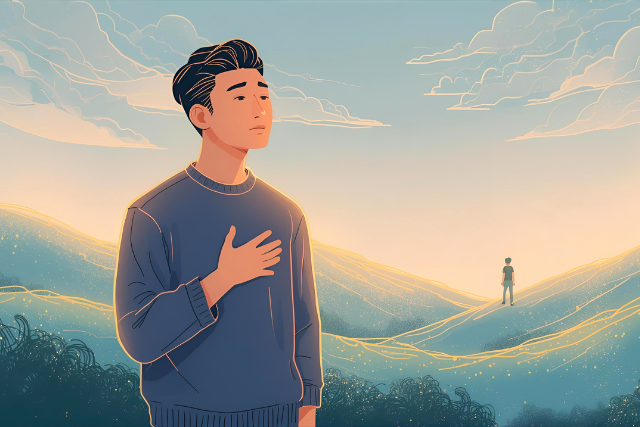
    Being kind, even in the absence of thanks, is an act of self-respect.

    It’s not about wanting others to notice.

    It’s about staying true to yourself, regardless of how unappreciative others might be.

    3. Remember you’re allowed to withdraw your kindness.

    Kind people always struggle with this.

    We worry that if we quit going above and beyond for someone, it might mean that we’re not good people anymore.

    This is why it took me so many years to finally stop being best friends with Andy: I was afraid of being told I wasn’t really kind after all.

    I didn’t want that to happen, so I kept being as generous as possible, despite how often he hurt me.

    For years, I kept cooking, doing the dishes, vacuuming, mopping, and doing all sorts of chores that normally would be divided equally among roommates.

    I wanted to do my best to give him as much time and space to focus on his studies (although I was in his same situation and had my own studying to do).

    I refused to see that he didn’t plan on treating me any better.

    In fact, years before, he’d already made it clear he didn’t believe I deserved to be repaid for all the things I did.

    Yet, I just let him disrespect me and hurt me and kept being kind to him. Because kindness shouldn’t be conditional, right? Because it should just be an expression of yourself, right?

    But here’s what I now understand: just because you shouldn’t expect people to treat you well in exchange for your kindness, it doesn’t mean you should accept being treated badly.

    There’s a limit to how much thanklessness you can tolerate before it starts eating you up inside.

    You have every right to pause or withdraw your kindness when you’re being treated poorly. This is about setting healthy boundaries. You’re not being selfish or arrogant.

    I can’t believe how long it took me to realize that unconditional doesn’t mean boundaryless.

    Kindness with zero boundaries isn’t kindness at all but self-abandonment.

    There’s nothing noble about completely neglecting yourself just to be as generous as possible to someone else.

    Be kind because that’s who you are, but don’t let yourself be taken for granted.

    4. Don’t let negative people convince you to quit.

    We all know people who are never content with feeling miserable by themselves, so they try to make others feel just as miserable.

    And when they keep criticizing you for being a “goody two-shoes” just because you have a positive attitude, it’s hard to stay unperturbed.

    You may even start to question yourself and if you should maybe stop being a positive person.

    But let me assure you: letting negative people decide what kind of person you should be and what kind of life you should live is NEVER a good idea.

    Because, again, some people just want to tear others down.

    You could change your whole personality and become exactly like them, and they would still criticize you and judge you.

    Why? Because the reason they hurt others in the first place is that they’re (unsuccessfully) wrestling with their own problems.

    It’s not about you being “too nice” or “fake.” It’s about them not being able to find it in themselves to be patient and generous and always choosing to just lash out instead.

    Good people are never going to criticize you for being kind.

    Even if they believed that your brand of kindness might not be pleasant in some instances, they’d just tell you. They wouldn’t try to make you feel bad.

    Stay True to Yourself

    When kindness feels thankless, it’s easy to wonder if it’s even worth it—especially if the thanklessness comes from someone we care about.

    I’ve been there more times than I can count, and yes, it always feels awful.

    But kindness isn’t merely a way to please others—it’s how we respect ourselves.

    You have the right to press PAUSE or STOP when someone disrespects you too much.

    You don’t have to let others take you for granted just because you’re worried they might have something to say about your genuineness.

    Because, honestly, what if they did?

    You don’t need their approval.

    You’re kind because you’re kind. It’s that simple.
  • When Friendship Is One-Sided: Letting Go of Someone Who Was Never Really There

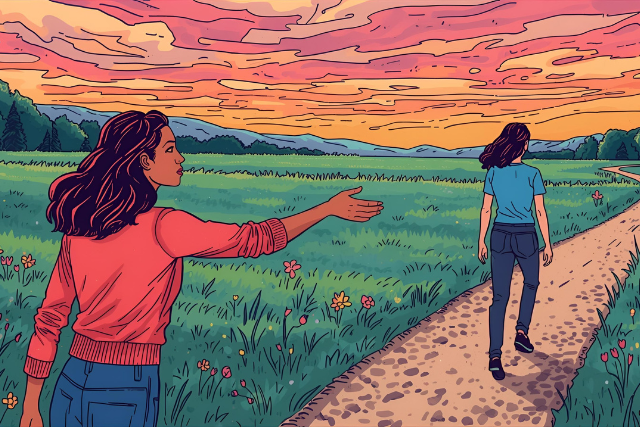
    When Friendship Is One-Sided: Letting Go of Someone Who Was Never Really There

    “Finally, I realized that I was never asking too much. I was just asking the wrong person.” ~Unknown

    Friendship should nourish the soul. And in my life, for the most part, it has. I have a small, longstanding circle of friends steeped in a long-shared history. We’re basically a real-life, thirty-five-year-long John Hughes film.

    However, every now and then, a hornet in disguise has buzzed into my life and stung.

    He was one of them. A bad sting.

    Love Bombing

    Right off the bat, knowing him felt amazing.

    I was still reeling from the aftereffects of living with an abusive man who died a few months after I finally got away. Emotionally raw, my nervous system felt like it was covered in third-degree burns being scrubbed with a Brillo pad.

    But this new friend? He felt safe. Quiet. Peaceful.

    He wanted to see me multiple times a week. He introduced me to his child. We spent time watching TV, going out for drinks and dinner, living in what felt like a comforting routine. His good morning texts became a comfort for my sleepy eyes.

    It felt good. Really good.

    Until it didn’t.

    A Bouquet of Red Flags? For Me?

    Small things began happening that just didn’t sit well.

    He began to speak ill of others in our mutual friend group. If he’s talking about them like this, what is he saying about me? Then I’d dismiss it. No, Jennifer. He’s a good friend.

    Once, when I asked him to repay money he owed me, I received a semi-scathing text accusing me of not being a “real friend,” because “real friends” don’t expect repayment. Am I here to subsidize your income?

    You’d think I walked away entirely at that point. No, not quite.

    When There’s No Communication, There’s No Friendship

    Instead, I drank too much one night and made out with him. (Stop judging me.)

    I felt uncomfortable and needed to talk about it. I asked if I could come over for a quick chat. He declined. He was “too busy gardening.”

    Right. Gardening. Okay.

    The good morning texts stopped. The invitations to hang out vanished.

    Days later, I texted, “Are you upset with me? We usually see each other all the time, and I haven’t heard from you.”

    His reply: “I’m not upset.” No explanation. No elaboration.

    Five weeks passed. Silence. Crickets.

    And it hurt—more than I expected. I had let someone in after a traumatic experience. I was vulnerable, open, willing to trust again. But the friendship only existed on his terms. Everything was fine—until I asked for emotional accountability.

    Inner Work and Uncomfortable Truths

    After doing a lot of inner work, I realized something painful: I have a pattern of projecting qualities onto people that they simply don’t possess. I want people to be kind, emotionally intelligent, and loyal. So, I make them that way in my mind.

    But people are who they are—not who I wish them to be.

    And for my own well-being, that pattern had to end.

    Not everyone is ready to do the work. And that’s fine. I can only be responsible for my healing, my boundaries, my growth.

    In any relationship—be it romantic, familial, professional, or platonic—every individual has a right to be seen, heard, and valued. To be acknowledged as a complete person with thoughts, feelings, and needs.

    Our voices and wants should be respected and celebrated. Without this foundation of trust, emotional safety, and genuine connection, we begin to feel invisible, diminished, or invalidated.

    And sometimes the most loving thing we can do for ourselves is to leave a space that no longer aligns with who we are.

    It’s not about giving up on people too quickly but recognizing when staying becomes a quiet betrayal of our own needs.

    Self-Respect and Goodbye

    So how did I move forward?

    After acknowledging a deeper truth—that I had lived in a place of unworthiness for far too long, repeatedly allowing myself to be manipulated and emotionally abandoned—I decided to no longer chase breadcrumbs and worked hard on setting clear boundaries. And if those aren’t respected, I give myself permission to walk away.

    And I walked away from him. I declined invites where I knew he’d be present and performed a digital detox: the phone number, the photos, the threads—all deleted. Unfollow. Unfollow. Unfollow.

    And none of it happened out of anger or malice, but from a place of peace. A place of self-respect.

    In the end, we teach others how to treat us by what we allow, and leaving is sometimes the most powerful way to be seen and heard—by ourselves most of all.

    I was whole before I met him. And I remained whole after saying goodbye.

    A Final Note

    Not every friend is meant to stay. Not every connection nourishes the soul.

    Some buzz in for a bit, give a quick sting, and buzz right back out.

    The lesson? To stop letting ourselves be stung over and over again.

  • All the Wrong Reasons I Slept with Men Before and Why I’m Changing Now

    All the Wrong Reasons I Slept with Men Before and Why I’m Changing Now

    “We think we want sex, but it’s not always about sex. It’s intimacy we want. To be touched. Looked at. Admired. Smiled at. Laugh with someone. Feel safe. Feel like someone’s really got you. That’s what we crave.” ~Anonymous

    I have not had sex in years. I was meditating one day, and my mind was silent (an extremely rare event), then I heard “Do not have sex until you are married.” Something I heard often growing up as a southern Baptist.

    I started breathing fast, and my thoughts immediately started racing. I am pretty sure I cried, if not in that moment, later on. I felt I had been given clear instructions on what to do to take my life to another level.

    The problem was that marriage was not on my to-do list. I do like the idea of monogamy, but I don’t like the idea of being legally bonded to someone for life. Then, if for whatever reason that does not work out, I have to go through the legal system for my breakup.

    I also thought that would mean I would never have sex again, so my mind was all over the place. Fear had taken over. But then I actually listened to that message.

    The first thing I became clear about was how, on a subconscious level, I was having sex with men before I was ready because I lacked the confidence to say no. I had a fear that if I did not have sex with them, they would not like me or stick around. 

    I also learned that I was using sex to get my needs met. Sometimes I was just lonely and wanted to cuddle or be held, but I would not communicate that. I felt that no one would give me that, so ultimately, I would end up knocking boots with someone.

    I learned that I had a belief that my value was tied to my sexuality. I also learned that when I have sex with someone, I develop a strong attachment to them. I was not able to think clearly. It no longer became about growth or love but about ego. Are they going to call me? Do they like me? I never asked myself if I liked them.

    Although I have no clue as to when I will be sexually active again, I do know this: I have redefined my definition of marriage to one of a spiritual partnership. A union, not legally bound but soulfully bound for whatever time period it flows. And that’s what I’m waiting for now.

    To me, this non-legal marriage is about growth. It is a safe space to evaluate whether or not the relationship should continue. Maybe with a weekly or monthly check in. If it feels right, you keep going forward; if someone decides it’s not working for whatever reason, you move on. People grow and change. Sometimes you grow together, sometimes you grow apart. There is not this underlining pressure to stay bonded to someone your twenty-year-old self attracted.

    A spiritual partnership is a place where it is safe for us to be our authentic selves. We encourage each other, support one another. Explore our sexuality. There is a comfort in telling the other person what feels good and what does not. It is safe to say and share what we think and feel. I think we may find this type of spiritual partnership ends up lasting much longer than most marriages.

    Another lesson I have learned since I received the message about not having sex is that I always thought sex was something that you had to do. I didn’t think a person could function without it. Turns out you can. I have become more familiar with my body and what I like and what feels good to me. I have become more confident and learned that my worth and value is not at all related to my sexuality.

    I have also learned patience, trust, and surrender. We have a tendency to settle because of fear. This is something I want to challenge.

    I want to see what it is like to wait. To be patient and trust that I will form a meaningful relationship in time if I don’t jump on anyone who shows interest in me because I’m afraid of being alone. I have a feeling it will be much more rewarding than I can imagine. 

    I have learned that my body is sacred, that I want to share this with one person and give this to them as gift. I want to wait to have sex until I am in a spiritual partnership not because someone told me to but because that feels right for me. Not having sex helped me learn to love my self, develop my own set of beliefs outside the religion I was raised in, and flourish into someone that I like and respect.

    If you find yourself having thoughts like “Men are always taking advantage of me” or “There are no good men out there” or maybe “I feel like I am being used,” I highly recommend getting quiet with yourself and asking yourself: What role am I playing in this? What am I doing to create this reality for myself? What can I do differently to get different results?

  • How Weight and Food Obsessions Disconnect Us and Why This Is So Harmful

    How Weight and Food Obsessions Disconnect Us and Why This Is So Harmful

    “We are hard-wired to connect with others, it’s what gives purpose and meaning to our lives, and without it, there is suffering.” ~Brené Brown

    I was inducted into diet culture in my early teens and then into the health and fitness industry in my early thirties, when my “fitness journey” had finally really taken off, and I ultimately became a personal trainer and nutrition and wellness coach.

    Once we’ve given enough years of our life to diet culture, many of us begin to recognize the ways that it’s harming us and all the things it’s stealing from us.

    Peace of mind. Self-worth and self-trust. Mental, emotional, and physical health and well-being.

    My grandmother’s cookies.

    The ability to just eat and enjoy food without fear.

    Self-respect.

    Body trust.

    But we don’t notice all the ways “health and fitness” are promoted in our culture and how they do the same thing. And there are so many other things it steals from us that we often don’t think about or notice.

    One of the biggest examples of this for me, and the women I work with, was connection.

    Connection with myself and connection with others.

    I didn’t start losing my ability to connect because of my induction into diet culture. That started earlier as a result of growing up with an abusive, alcoholic father.

    But those industries preyed on it, fueled it, flamed it, and then ran away with it for decades.

    Feeling connected is a core human need. According to Maslow’s hierarchy of needs, love and belonging are right up there after things like food, water, and safety.

    We are hardwired to connect.

    Recent research has suggested that the brain processes the pain of feeling disconnected or rejected the same way it processes physical pain. Nearly every aspect of our health and well-being relies on connection.

    And while it may seem like we’re constantly connected, especially now through things like social media or video calls, it’s not actually the case.

    Loneliness has been on the rise, worldwide.

    Chatting about what food we should or shouldn’t eat; commiserating over how much we hate our bodies, how much weight we gained, the latest diet attempt we just failed; bragging about how we did in the gym, how much weight we lost, how many steps we took, or how “clean” we’re eating—this isn’t connection. It’s not connecting with others, and it’s definitely not connecting with ourselves.

    In fact, those things keep us from being able to connect with ourselves because we’re so focused on controlling external “shoulds.”

    We may form friendships around those things, but they aren’t based on genuine connections.

    Curating the picture-perfect Instagram feed, gathering around mutually hated or demonized “others,” and sharing memes or videos of the latest TikTok trend are also not the same as real, genuine human connections.

    It’s all just filling space with mindless, external distractions.

    It’s not truly allowing ourselves to be raw, real, and vulnerable. To be seen, heard, and valued for who we uniquely are as individuals—not just the perfectly curated image we present to the world but the messy, raw, and real parts we try so hard to hide.

    The parts we fear make us most undeserving of love and belonging.

    I certainly hid behind many of those things. I used them as a cover, as a tool to hide behind. A mask. A role I played, behind which I could feel (somewhat) safely tucked away and protected.

    My “passion for health and fitness” allowed me to play the badass.

    (In reality, I was scared all the time.)

    It allowed me to play the inspirational “success” story.

    (In reality, I was terrified of putting an ounce of weight back on because I desperately craved the praise and validation I was receiving. And it was destroying my mental, emotional, and physical health and well-being).

    The strong, fearless, confident “fitness freak” that could do anything she put her mind to.

    (Which, in reality, hid the fact that I was so scared and emotionally fragile and felt so broken that I needed the physical strength I could build through exercise just to get through the day.)

    I was good at these roles. I loved these roles, at least in the early years.

    Just be what people expected. Be what I’d seen get celebrated in others. Easy, right? Sure, until it isn’t.

    The longer I wore the mask, the more it started to hurt.

    The harder I worked to keep up those appearances, to maintain that external image of perfection through my body and what I was eating, the more damage it was doing.

    Externally, I was doing everything “right.”

    In reality? I ended up a binge eater, bulimic, clinically depressed, and living with generalized anxiety disorder and panic attacks. For many reasons, not the least of which because I was completely disconnected—from myself, my body, and from others.

    I was so focused on trying to be something I thought I was supposed to be, so I’d be liked, admired, impressive, that I lost who I was and what I needed.

    I lost what truly mattered to me and in life.

    I lost the ability to trust myself, to trust others, to let them in and truly see me.

    In fact, I was terrified of being really seen.

    Because I didn’t like myself and I didn’t believe anyone else would either if they knew the real me.

    So I hid behind what my body looked like. My external strength. The image I built.

    Holy cow, it got exhausting. And soul-crushing.

    You simply cannot simultaneously spend your life worried about what other people think about you (or your body), trying to micro-manage and control the image you project, and also be truly connected to yourself and others in any meaningful way. 

    Because in order to keep up those appearances, you have to actively work to hide parts of yourself—large parts of yourself that you’re terrified will be seen if you dare take off the mask.

    If you’re actively hiding parts of yourself, you’re not able to truly feel seen, heard, and valued… because you are hidden away. Locked in some dark, dusty corner of your inner world, and in my case, stuffed down with food.

    After a while, I didn’t even remember who I was. My identity became so wrapped up in who I thought I was (a worthless failure who was completely undeserving of love or acceptance) and who I was trying to be (the perfect, badass inspiration) to hide it, that I was lost.

    And completely disconnected. From myself and others.

    What I wanted or needed didn’t matter because my entire existence was being driven by fear and the disconnection that causes.

    Fear of rejection and abandonment if I stopped playing the role.

    Fear of weight gain and not looking “good enough.” Fear of not being good enough. Fear of what the binge eating was doing to my health. Fear of what would happen if I stopped micro-managing every morsel of food I ate and just trusted myself with food.

    Fear of judgment.

    And every time I turned around, there were diet, “health and wellness” cultures swooping in and stoking those fears.

    Eventually, I recognized that I couldn’t keep it up. I couldn’t keep playing the role. I was too tired, and it had completely broken me. I couldn’t keep caring about trying to be impressive or accepted. I had to start caring about being healthy and at peace with myself.

    In order to do that, I needed to find my way back to myself. I needed to shut out the garbage that was keeping me disconnected and learn how to connect.

    First with myself, because how could I ever truly connect with others if I didn’t even know who I was when I wasn’t playing the role?

    And how could I heal all that weight and food stuff if I stayed in the fear and obsession that kept me so disconnected from myself?

    I couldn’t.

    So I started working on being present with myself, not an easy feat when you don’t much like yourself. But required, nonetheless.

    I started getting curious and practiced connecting with my body, my thoughts, my emotions, my needs… my inner world.

    Who was I, really?

    What really mattered to me in life?

    Forget what I thought I should eat or do… what did I need?

    Was I really put here to spend my life hating myself, obsessing over these things that are destroying me, distrusting myself, and fearing real, meaningful connection with others?

    What if I could find a way to unconditionally accept myself and my body? How would that change the way I treated it and showed up in the world?

    What did I want to eat? Forget what I was “supposed to” eat; what did I want? How were the foods I was eating making me feel? How did I want to feel in my body?

    Forget what it was supposed to look like or weigh; how did I want it to feel to live in? How were my thoughts and conditioned patterns with food and exercise impacting that? Were they helping or harming? How could I learn to change them if they weren’t?

    And I started practicing being more intentional with my thoughts, beliefs, and actions. Intentionally making choices that were loving and kind, that helped me feel better, in general and about myself. Anything that wasn’t helping me live or feel better, and more connected with myself, could have no place in my world anymore.

    Once I started feeling deeply connected with myself and my body, I slowly started working on learning to connect with others.

    That’s still something I find difficult and am learning to do, but I’m still practicing. In baby steps.

    Because what I learned when I started reconnecting with myself was how much living with an alcoholic father impacted me as an adult.

    It taught me that not only is the world scary, but people are. They’re scary and unpredictable. It also created abandonment issues, and it’s where the fear of not being good enough, and the feeling that I needed to play a role to be loved or accepted, had actually begun. No wonder I had so much trouble connecting.

    I share this story because I’ve come to realize that most of us have an underlying fear around not being good enough that started in childhood for one reason or another. And those predatory industries sneak into every corner of our world, capitalizing on our fear with broken promises that do nothing but make things worse.

    The weight and food obsessions are a diversion.

    A socially acceptable, surface-level distraction that keeps us so externally focused and consumed that we spend most of our adult lives not even knowing that we’re disconnected—or that we’re living in fear and we’re just trying to “fix it” by making ourselves feel more socially acceptable.

    All while disconnecting us more and more. From ourselves and others.

    Because we’re hiding behind diversions and masks.

    Well, my mask is finally off.

    Under it, I have belly rolls. I have wrinkles. I have gray hair. I dye it because I prefer dark hair, but sometimes I put it off and rock a solid skunk stripe of gray down the middle of my head.

    Like all bodies, mine changes.

    None of that means I let myself go. It means I let myself just be.

    I’ve overcome a lot of things in my life, but still struggle with some others.

    I screw up a lot, even fail sometimes. Often, actually.

    I’m exceptionally good at some things and full-on suck at even more.

    I can’t do everything myself. Sometimes I need help and support. I’m still not very good at asking for it, but I’m working on it.

    All of that simply means that like you, I’m human. And I cannot connect with myself or anyone else if I’m trying so hard to be impressive that I’m not being real.

    So I don’t anymore.

  • Sick of Toxic Relationships? Love Yourself Enough to Walk Away

    Sick of Toxic Relationships? Love Yourself Enough to Walk Away

    “There comes a time in your life when you walk away from all the drama and people who create it. You surround yourself with people who make you laugh. Forget the bad and focus on the good. Love the people who treat you right, pray for the ones who do not. Life is too short to be anything but happy. Falling down is a part of life, getting back up is living.” ~José N. Harris

    Letting go of relationships that impact your well-being and make you feel unsafe may seem like a simple act for many, but for those of us who are cut off from our emotions, it is a challenge even to know how we feel around other people.

    Some of us have lived with a feeling of unsafety since birth. It was our normal from the beginning. It was in our first homes and in our first relationships.

    This was my experience for most of my life.

    I was born into a house where my mum had felt unsafe while pregnant with me. That fear she felt living with her in-laws and my dad was real. She had an arranged marriage at twenty-two and had no idea her father-in-law was an alcoholic.

    Her first experience of alcoholism was mine too, but I was a newborn. I have memories of her being too scared to go into the house. My body still remembers how this feels.

    So I came into this world on high alert, waiting for an eruption to occur at any given moment. I remember being terrified in my crib. This experience wired me to be sensitive to energy. As a baby I could feel the tension and would almost hold my breath around my family.

    I learned early that people were unsafe. I learnt about fear and how to contract my body. For me, fear was normal, and I felt constantly on the lookout for any perceived threat.

    My poor little body didn’t know how to survive, and my parents were preoccupied with dramas in our house, so I learned survival skills like freezing, not speaking, and pleasing my adult caregivers to keep the peace. When they were calmer, I got connection and love and was able to survive.

    We all learned young how to survive in the family we were born into, and our nervous systems were wired accordingly.

    As I got older and came in contact with people I felt unsafe with, I would do the same—freeze, rescue, or please others and silence myself. It crushed my self-esteem and made me quite the doormat for other people’s drama.  It made me suicidal, as I wanted to escape the pain yet felt trapped in these patterns.

    I let people talk to me awfully. I let people work out their trauma on me. I saw my parents doing the same and didn’t know it wasn’t normal. I thought being a punch bag for other people’s trauma was okay.

    I didn’t know how to express my truth or have boundaries.

    As I got older it became obvious to me that I had become a magnet for toxic relationships. I was constantly reliving these unsafe feelings from my childhood.

    I gravitated toward people who needed me to help them with emotional regulation, just as I’d learned to do as a child. These relationships drained me and kept me in a constant cycle of pain, yet I was almost addicted to these interactions

    I had become so needless and wantless myself that I didn’t know who I was without these people. I would get a dopamine high from getting their love and acceptance for a small moment after making them feel better.

    I was always chasing the love and safety I longed for in my childhood home. 

    I was attracted to people who required rescuing due to their own trauma and addictions. I was either trying to save them or letting them persecute me.

    I would say nothing when they blamed and shamed me without justification, internalizing their blame—just as I had as a child when my dad persecuted me for all the stress he felt. “If Dad says everything is my fault, then it must be,” I thought.

    I saw it as my job to take care of other people’s emotions. If they were sad, I would help them feel better, and if they were angry, I let them take it out on me, as I always had done. If someone was angry with me, I believed it must have been my fault.

    One day, I came across the drama triangle, and it made me look at my relationships in a whole new way. A drama triangle has three points:

    Persecutor: blames others for their pain

    Victim: feels powerless to a persecutor

    Rescuer: tries to rescue others to manage their emotions

    I found myself in the role of victim and rescuer for many of my relationships. I felt powerless to other people’s emotions and behaviors. Like I just had to accept them.

    The time came for me to take responsibility for my own happiness and build my strength to end this pattern I had been in my whole life. No more being a victim to other people’s trauma. 

    After hitting rock bottom, I finally started to invest my time, money, and energy in myself. I started small with little acts of love—walking in nature, meditating, exercising, and cooking myself healthy, nutritious meals.

    I started to notice feeling calm and relaxed in my body. I became aware of my own feelings and needs. I began to connect with the voice within me, which I couldn’t hear previously. It was always overpowered by other people’s voices.

    This voice guided me to begin to say no to certain events and prioritize my own time. This voice guided me to get therapy, read books on healing, and join support groups.

    There was no way I could make my relationships healthier until I had a healthier, more stable relationship with myself. Building this foundation is what gave me the strength to make more difficult decisions further down the line.

    Over time I became more grounded in my own energy, something I had never experienced before. I noticed which relationships felt safe and when I was getting what I was giving.

    It also became apparent which relationships didn’t feel good and negatively affected my well-being. 

    When I began this journey, I was in a workplace where, unknowingly, I was highly triggered on a daily basis. Once I started to incorporate self-care before and after work and during my lunch breaks, it became apparent that this job had to go!

    I had never expressed my truth in relationships, not even the ones I felt safe in. I just kept it all in and came up with my own stories and assumptions about how the other people felt about me. I drove myself crazy like that.

    I began to change this behavior by expressing my feelings in relationships I felt safe in. I realized how communication can make relationships healthier and more fulfilling.

    Self-expression in relationships created true Intimacy. I had always hidden my true self away.

    I had been single for most of my life because of my previous patterns, but after building a foundation of self-love, I was able to form a relationship with a man who is now my fiancé, who gave me what I’d learned to give to myself—unconditional love and safety.

    As my relationship with myself grew, so did my strength to walk away from relationships that felt unhealthy for me. Some of these were easier than others. I had never been okay with hurting people’s feelings, putting my needs first, or causing trouble.

    I was always the good girl. It took courage not to be.

    I became the one who was seen as selfish or the troublemaker in the family.

    After growing and experiencing relationships in which boundaries are respected, you cannot accept it when people ignore your boundaries and have complete disregard for your feelings. I realized it’s not healthy for someone else to avoid taking responsibility for their actions, blame you, and focus solely on winning an argument.

    You cannot ignore the drama in a drama triangle when you step outside of it.

    Some people just do not want to respect your boundaries because of where they are in their own healing journey.

    You will realize that walking away from some people you have loved your whole life is essential for your own well-being, whether it be for a short period of time or forever. You cannot keep putting yourself last to continue a relationship that does not feel good for your health, no matter who they are. Especially when your inner voice is shouting at you to walk away.

    Many family systems run on the drama triangle with us each taking on our role. But when we step out of it, we give others the opportunity to grow and emotionally regulate themselves.

    It is natural for your family to have a reaction to changes to the family dynamics. But it is not your responsibility to ease that discomfort for them. That is down to each individual.

    My self-love journey empowered me to heal my nervous system from past trauma and stress. My body did not function properly anymore because of the wear and tear from my relationships. I finally listened.

    I invested in body-based treatments such as cognitive breathing, craniosacral therapy, trauma-release exercise, and qi gong. These modalities helped my nervous system heal from the past.

    It took bravery and courage to step away from the toxic relationships in my life, but it’s been my greatest act of self-love to date.

    Begin to tune into the relationships in your life. How do they make your body feel? What is your body telling you? Is it time to set a boundary, express your truth, or step away?

    If that all feels too scary right now, just focus on building that foundation of self-love. And recognize that you don’t deserve to be blamed or shamed for someone else’s issues, and it’s not your responsibility to fix or save them.

    In time, as your love for yourself grows, so will your strength to put yourself first and no longer accept relationships in which you are not treated with kindness, love, and respect.

    You are worthy of relationships that make you feel loved, energized, and happy. Most importantly, you are not responsible for rescuing anyone else or being the place where they project their pain.

  • A Simple, Super Effective Shortcut to Loving and Respecting Yourself

    A Simple, Super Effective Shortcut to Loving and Respecting Yourself

    “Love is loving things that sometimes you don’t like.” ~Ajahn Brahm

    You’ve probably heard the saying “You can’t find love until you learn to love yourself.” What this really means is that when you love yourself, you’re also fully able to accept another’s love for you because you know that you deserve it.

    Unfortunately, some people misunderstand this saying to mean that you’re basically not worthy of love unless you love yourself. And that’s a load of toxic rubbish.

    If it were true, any number of people with trauma or certain mental illnesses would never stand a chance of finding love. And that’s simply not true.

    However, it’s certainly *nice* to love yourself. It makes you feel at home in your own skin, less dependent on others’ approval, and even happy. It also helps you attract people who treat you with love and respect.

    Not loving yourself or respecting your own needs and wishes tends to make you vulnerable to other people who don’t respect you either. From my own experience, I can tell you: it sucks. It hurts like hell, and of course, it also tears your already shaky self-respect down further.

    I know because this is an issue I’ve carried around with me for most of my life.

    Apart from the pain and humiliation of being disrespected, the worst part is that people kept telling me: “What others think of you shouldn’t concern you. Just ignore them!”, as though I didn’t know, in theory, that my self-worth doesn’t depend on other people’s perception or treatment of me.

    The knowledge didn’t make any difference, though, and was as useful as telling someone to stop bleeding after they’d been stabbed with a knife.

    The Roots of Missing Self-Love and Self-Respect

    Before I continue, I’d like to point out that I’m well aware love and respect aren’t the same thing. But they function in similar ways in this particular context. For some people, the issue is a lack of self-love; others, like me, struggle more with respect.

    Lack of self-love or self-respect manifests in all sorts of struggles and behaviors, from eating disorders and addiction to anxiety and depression: You name the dysfunctional behavior, a psychologist can show you how it results from a reduced ability to love and/or respect yourself. In most cases, like mine, it goes back to one’s childhood.

    I had a seemingly idyllic childhood in a loving family, but there was dysfunction also, and I’m highly sensitive. I was also the youngest child by a large margin and therefore ended up rather alone when I was very young, without anyone who would take me seriously. At best, they found me cute and silly.

    Nobody meant to hurt me, but when they laughed at my “art” and my early attempts at writing, it didn’t exactly build my self-confidence. This left me wide open to being truly hurt by the usual school-years experiences of being mocked or teased by classmates, which most others seemed to simply shrug off.

    It took many years for me to realize that even as an adult, even going into middle age, I still had very little respect for myself. I also continued to draw people into my life who didn’t take me seriously. When the connection to my childhood began to dawn on me, I knew something had to change.

    “Just Love Her”

    There are few things more daunting than trying to heal trauma, overcome a mental illness, or simply shake off the lifelong re-enforcement of unhelpful beliefs and behaviors. I’m not saying it’s not possible, but it’s usually a long process that takes years. It’s absolutely worth it, but I’ve found there’s no need to wait for it to be done in order to start loving and respecting oneself.

    That’s right: There’s a shortcut.

    In his famous book 7 Habits of Highly Effective People, Stephen Covey tells a story about a man who came to him and said that he no longer loved his wife. Covey told him to simply “love her.” To which the guy responded, you don’t understand, I just said I don’t anymore.

    Covey went on to explain that love is a verb, and instead of waiting for a feeling to appear, he should just act in a loving way toward his wife. The short of the long story is that apparently, this saved the man’s marriage.

    And this is where it clicked for me. Maybe I didn’t feel a lot of self-respect, but I could certainly act as though I did! I admit that this is one of those things that sound too simple to be true. I can tell you from my own experience, though, it’s also one of the things that really are as simple as they sound.

    Fake It Until You Become It

    What you do—what I did—is first brainstorm ways your current behavior doesn’t reflect self-love or self-respect. If this is difficult, imagine another person, like your best friend. Anything you do or say that you wouldn’t do or say to your best friend, is probably not respectful or loving behavior.

    Examples:

    • Yelling at yourself (“Stupid me,” “I’m such a clutz,” etc.), either out loud or in your mind
    • Not doing what you know is good for you, even if you actually enjoy it (such as going for a walk or eating a yummy, healthy meal, as though you didn’t deserve it)
    • Not doing what lights you up (as in, you love playing the piano, but you catch yourself scrolling through social media for two hours instead)
    • Staying in jobs and relationships that aren’t nourishing you
    • Tolerating disrespectful or toxic behavior by others, even when you have an option of removing yourself from the situation

    Watch out for these behaviors, and when you catch yourself at them, say “Stop!” out loud. Then immediately do something that nourishes yourself. This might be any number of things; again, think of what you would do to reassure or nurture someone you love, like your best friend or maybe your child.

    From my own experience as well as my work with my clients, I know that kindness and gentleness beat “tough love” any day. Here are a few ways to establish new, loving, and respectful behaviors and habits.

    1. Gently ask yourself what you need at this precise moment.

    This sounds weird and at first, and you might not get anywhere. Persist, though, and after some days or weeks, you will get an answer. Then, resist the urge to tell yourself you can’t or shouldn’t or don’t deserve it, and do whatever your need is (a nap/cup of tea/hug/bath/etc.).

    2. Remember that you are worth the effort to…

    …be comfortable where you sit, wear comfortable clothes, be clean and healthy, get plenty of sleep, eat the food you love, do things you enjoy, and take care of yourself. Remind yourself of this every day. And then make the effort.

    3. Treat yourself.

    Instead of splashing out on expensive luxury items, select a few, meaningful items that make you feel good about yourself, such as a lovingly hand-sewn dress from a tailor on Etsy or an organic home-cooked meal. This is a simple way to reinforce that you deserve your own love and kindness.

    Grand gestures might feel good in the moment, but in order to truly change your perception of yourself, you need to perform lots of small, seemingly insignificant acts of love and self-compassion. It works like magic.

    These days, I still feel myself slipping sometimes, but I catch it early and course-correct— so that I feel better about myself and attract more people who give me the respect I deserve. The change it has made, in terms of the quality of my life and my levels of happiness, is astonishing.

  • How I’ve Stopped Attracting One-Sided Relationships That Leave Me Feeling Empty

    How I’ve Stopped Attracting One-Sided Relationships That Leave Me Feeling Empty

    “Curiosity will save your soul.” ~Danielle LaPorte

    When I was a young girl, about age five, my mother volunteered weekly at a nursing home. Because she was a stay-at-home mom, I was required to tag along with her.

    While she would wheel all the residents into the front room and sing prayers and read devotionals, I simply couldn’t sit still for 2.5 seconds. I was a busy girl with an agenda. I had people to see and things to do.

    Weekly, I would pop in and out of residents’ rooms while my mom banged on the piano down the hall. In and out of each room I would float, loaded with question upon question for each resident.

    At the ripe age of five, I knew something about these people that many struggle to see. I didn’t see them as sick, helpless people preparing to leave this world.

    Oh, I was fully aware that their last and final days would be spent in this place. I was fully aware that many of the folks sat day after day with no visitors, no family, and no sense of community. And while that broke my heart, I saw these people as productive individuals—teachers, attorneys, homemakers, and accountants who had stories to share and things to offer.

    I saw them as humans who had contributed to society, using their gifts and talents to leave the world a better place.  

    I loved cruising those dark and dim hallways just to see who would make eye contact with me so I could strike up a conversation.

    My curiosity wasn’t just contained to the hallways of the nursing homes. Many times, my mother would find me at a neighbor’s house down the street, following them along while they tilled or pulled weeds in their garden, asking question upon question to experience just a snippet of their worldview and hear their life stories.

    Often, I think my mom was taken aback by this behavior, thinking it was intrusive rather than a gift. Many times, I was told not to bother folks or to be quiet. She didn’t do it to be coldhearted or cruel; I think sometimes my endless curiosity and questions just felt exhausting to her.

    While I have come to see my curiosity as a beautiful gift and one of my strongest skills, I didn’t always see it that way.

    In school, I was often told I was too social, too talkative, by teachers and coaches. My love and curiosity for others weren’t things a lot of other people appreciated. As a child who was also highly empathic, I felt everything. I was very attuned to other people’s feelings and emotions.

    I didn’t really know what my boundaries were, and so I often was overly attuned to others and took responsibility for their emotions, neglecting my own needs and preferences.

    Looking back, I can see how I have always been the cheerleader and the “yes girl” within my friend groups. I was the one who would rally the girls and include everyone because I believed from an early age that everyone mattered, and everyone’s story mattered.

    And frankly, I am not willing to stop using this precious gift of mine. Holding back on using my curiosity in my relationships would be out of integrity for me and mean not showing up as my authentic self.

    However, over these past few years my curiosity led me to realize that these relationships I seemed to care about so deeply were beginning to feel a bit one-sided. Most folks love being around me. I am fun, vibrant, always asking questions and always holding space for others. I love deep conversations and getting to know someone’s heart.

    However, I started to realize that while I was getting to know someone, they really weren’t getting to know me.  

    I started to pay attention to how I felt after being around certain people. It was evident that when I would return home after time with particular friends, I felt empty. Sure, we may have had a “good time,” a few good laughs, but for me, something was missing.

    I turned my own gift of curiosity on myself to explore what that might be.

    I began to realize that many of my relationships were, in fact, one-sided. In order for a relationship to be healthy and to deepen, it has to go both ways.

    While I love getting to know people and deeply understanding them, I crave and need to be known by the other person too.

    I need my relationships to be two-sided.

    Because that is a sign of a healthy relationship. Give and take. Two-sided. Holding space for one another.

    It’s easy for me to allow my curiosity to run rampant when building relationships, but now that I am aware of this deep need within myself there are a few questions I ask myself before giving my time and energy away. Maybe these will be helpful to you too.

    1. Do you take turns sharing about various aspects of your lives?

    2. Do they know about your interests or struggles, just as you know about theirs?

    3. Does this person reach out to you? Or are you the only one initiating?

    If you want to develop healthy relationships, the first thing you have to do is to identify the unhealthy ones. It’s hard to forge healthy friendships if you’re spending all your time and energy on dead-end relationships. So while it never feels good to release old friendships, in order to make room for the new, sometimes you have to release the old.  

    Healthy relationships aren’t created by luck. They are created by knowing what you need and what matters to you and then seeking out or asking for that in your relationships.

    Knowing and communicating our needs is key to intimacy and honesty in our relationships. When we take this step, we are actually teaching people how to be successful in a relationship with us. They get to decide if they have the capacity or desire to meet our needs. Their feedback is all we need to know to either move forward and create greater depth or back away, understanding that this may not be a friendship we want to invest a lot of energy into.

    The truth is that for us recovering people-pleasers, we were often taught to:

    • Be nice.
    • Get along with others.
    • Be polite.
    • Never rock the boat.

    However, being nice, having good manners, and working to make the waters smooth for other people is not how you make good friends. It’s how you become a wonderful houseguest.

    I want more. And I want more for you.

    I want us to learn how to move far away from toxic relationships and pull in healthy ones.

    I want us to have friends who share in our heartaches and celebrate our successes.

    I want us to have friends who know us inside and out.

    In order to have relationships like that—even just one relationship like that—we are going to need to decide we deserve two-way relationships with people who cherish and adore us for who we are, and we’re not willing to settle for less.

  • What to Do When You Can’t Seem to Love Yourself

    What to Do When You Can’t Seem to Love Yourself

    “You’ll be amazed at what you attract when you start believing in what you deserve.” ~Unknown

    You just need to love yourself more.

    I’ve heard that advice so many times when I’ve felt rejected, inadequate, and not enough. And instead of that advice helping me, it has just made me feel even more rejected, inadequate, and not enough.

    Don’t get me wrong, I wasn’t angry at the person giving me the advice—I was angry with myself for not being able to love myself unconditionally.

    It’s easier to feel love for yourself when things are going well. When you succeed at something, feel appreciated by someone, or when you feel good about yourself and your life. That’s not when the rubber hits the road. Instead, that happens when things don’t go well. When you fail, mess up, or find yourself with a heart smashed into a thousand pieces.

    It’s in those moments of darkness that love and appreciation for myself have been replaced by judgment, self-loathing, and criticism. That’s when I ‘should’ all over myself.

    It’s in those moments when I’ve been in the company of shame, rejection, and inadequacy that I’ve been told to love myself more. And that’s frankly, much easier said than done.

    Building solid self-esteem is crucial, no doubt about that. But there are different ways to build it. If you also fall into the category of people who struggle with your self-esteem, here’s another approach that truly helped me.

    You Can’t Jump from Inadequacy to Self-Love in an Instant

    In a tough period of my life, I spoke to a therapist. She told me, like so many before her had, to focus on loving myself in those dark moments. When I asked her if she herself was capable of this brilliant advice, her reply was “Oh, I know, it’s actually really hard.

    Something can sound good in theory, but if it’s not doable to put into practice it won’t make any difference. I needed some more concrete advice I could actually use in my daily life.

    For years, I was under the impression that self-love meant loving yourself in all circumstances, no matter what. In times of happiness, success, satisfaction, gratitude, and joy—as well as in moments of darkness, failure, misery, hurt, and feelings of unworthiness.

    Later on, I realized that the step I was asked to take in those moments was too high. I understood that you can’t go from feeling angry, hurt, or inadequate to loving yourself in an instant. That’s like asking someone to walk a long staircase in one giant step. It’s pretty much impossible.

    In my experience, trying to jump too far too fast means setting yourself up for failure. And what does this lead to? Yep, even more frustration, anger, and feelings of inadequacy.

    Don’t get me wrong, it’s great to practice self-love and to tell ourselves “I love you.” But this may only resonate when you are in a somewhat good-feeling place.

    When I’ve tried to fetch too far on the love scale in moments of stress, despair, and frustration it’s made my mind go: “What the h*ck are you talking about?!” Instead of letting those words sink in, my mind has given me a long list of reasons I don’t love myself at that moment.

    And you know what? I’ve realized that’s perfectly okay. Because it’s hard to think thoughts beyond what we feel in a given moment when that emotion is overpowering. If you’re angry, you access angry thoughts. If you’re feeling insecure, you reach thoughts related to insecurity. If you’re feeling hopeful, you have thoughts connected to hopefulness.

    My point is this: We need to go step by step. We can’t expect ourselves to feel self-love, self-appreciation, and self-respect when we’re not even close to feeling these things. Instead, we need to take the next logical step that will help us feel better about ourselves. Then from that place, we can take another step in the right direction.

    Replace Love with Acceptance

    For me, everything changed when I stumbled upon these words: “I’m enough.” According to Marisa Peer, a world-renowned speaker and pioneering hypnotherapist trainer, these three words will actually change your life.

    “In my three decades as a therapist […], I’ve discovered that the root of so many modern problems— smoking, excessive drinking, compulsive shopping, depression, and overeating—come right back to a need to fill the inner emptiness of not feeling enough’ with external things.”

    Although loving ourselves under all conditions would be ideal, it’s not easy. Maybe it’s not even realistic. And what I’ve realized is that we don’t necessarily need to feel love for ourselves at all times. Instead, what we need to reach in those dark moments is a place of acceptance.

    All of our insecurities and, at times, dislike of ourselves, come from a place of not feeling enough. That time I was standing in front of a crowd, sweating and shaking, I didn’t feel competent enough. Those times I’ve questioned myself in meetings and have kept my mouth shut as a result, I haven’t felt smart enough. Those moments when I’ve looked at other people’s pictures and compared myself, I haven’t felt pretty enough.

    When we feel low on self-esteem we don’t feel enough, simple as that.

    And it’s no wonder that many of us don’t feel enough. That’s what the media and advertising keep telling us over and over again. “You need to weigh this much to be sexy.” “You need this jacket to prove that you’re in style.” “You need this car to show people that you’ve made it.” All in all, they take advantage of our insecurities.

    Self-esteem is about your overall sense of self-worth or personal value. And to truly know and feel that you are worthy, you need to feel that you are enough.

    So, to boost your self-esteem, you need to tell yourself these simple but powerful words: “I’m enough.” To remind yourself over and over and over again (because this is how adults learn: by repetition) that you are enough, no matter the circumstances.

    Realizing this was a huge relief to me. There was nothing wrong with me. There was nothing major that needed to “be fixed.” There was no need to dig into my past to figure out where my self-esteem got bruised. Instead, it’s about repeating and telling yourself that you’re enough.

    If you fail at a project and mess up, remind yourself that you are enough.

    If you come late to a meeting and feel bad for making everyone wait for you, tell yourself that, no matter the situation, you are enough.

    If you get rejected, stood up, or are left with a bruised heart, keep reminding yourself that you are enough, that you’ve always been enough, and that you always will be enough.

    Feeling enough is the baseline to strive for when you feel bad. To remind yourself that, no matter what is going on in your life, you are enough. You are smart enough, pretty enough, valuable enough, kind enough, and intelligent enough. You are enough and that is enough.

    Focus on Your Bounce-Back Rate

    What makes us often fail? That’s right, when we set the bar too high. So even if we’ve put it on a reasonable level by going from loving ourselves to knowing that we are enough, we still can’t expect that we’ll feel enough 24/7 (let’s be realistic here).

    So here’s another piece of advice that has helped me come back faster and quicker than before: When you dip into a dark hole, focus not on why you are lacking self-esteem, but on your bounce-back rate.

    How quickly can you go from feeling insecure, inadequate, and shameful to coming back to feeling enough?

    Take count, not on how many times you fall down, but instead on how quickly you manage to come back. When you fall back into negative thoughts and patterns, use it as your signal to shift and to remind yourself that you are enough.

    Remind Yourself of the Three Little Words

    Developing and nurturing your self-esteem and sense of value is crucial in life. It’s the key to giving and receiving love. It’s the doorway to self-love, self-respect, and self-compassion. And it starts with feeling enough, just the way you are.

    So, use the words “I am enough” as your foundation. Keep reminding yourself of this over and over again, until your mind starts believing you. Put up reminders on your phone, notes in your drawers, and write “I’m enough” on your bathroom mirror.

    Simply, set yourself up for success and solid self-esteem by constantly telling your mind that, no matter what is going on in your life, you are enough. “I’m enough” is the small, but very powerful sentence that will boost your self-esteem.

    Whenever you fall back into a dark hole, remind yourself that it’s not about the number of times you fall down, but about your bounce-back rate.

  • 7 Self-Love Practices That Helped Me Heal from a Devastating Divorce

    7 Self-Love Practices That Helped Me Heal from a Devastating Divorce

    “Unlike self-criticism, which asks if you’re good enough, self-compassion asks what’s good for you?” ~Kristin Neff

    My husband and family were my world. Although I’d found joy in my passion of writing, my heart revolved around my marriage. I thought we were happy. Then one day, he dropped the bomb: “I don’t love you anymore.”

    Two weeks later, I found out he’d fallen in love with another woman who lived across the world. He didn’t want me anymore.

    Sure, I’d known for a while something was wrong—that knowing deep in your gut that you can’t put your finger on, that tackles you in the quiet hours of the night, making it hard for you to sleep. That taunts you with fear when he doesn’t act as loving toward you as he used to. But I ignored it, because he was my world.

    I’d fallen in love with him at a time when my self-esteem wasn’t too good. Social rejection at school, losing a parent at a young age, and being steeped in a very strict religion had all played their parts in making me feel that I wasn’t good enough. He made me feel loved and wanted. I was codependent and I didn’t even know it.

    The next few months, after he took the rug out from under my world, I felt like I was dying. The pain, the rejection, and the hurt were all-encompassing, but I had a little light inside me. It was called hope. I suddenly had this hunger to heal, to become strong, and to find my truth. I began my self-love journey.

    It all started when I read Choosing Me Before We, by Christine Arylo. She spoke about self-love in her amazing book. I realized that if I ever went into another relationship, I would put myself first. I wouldn’t go into something giving and giving and giving, knowing my own needs weren’t met. I would run far away from a man who used me in any way. I would turn away from anything less than true intimacy and love.

    The problem was, in the loneliness, I entered into a rebound relationship, despite what I’d decided. The deep hole left in my heart made me blind to how harmful it was. The relationship was much worse than anything I’d experienced in my sometimes dysfunctional marriage. I had to learn the hard way. I eventually turned away, eyes finally wide open. But I’ve grown. And grown.

    This is how I’ve healed through self-love, because self-love is the foundation of emotional and mental well-being.

    Non-Judgment

    When divorce hits you right between the eyes, you get flung into the five stages of grief with no mercy. They assault your soul like a tsunami. But they also wash over you and heal you.

    I learned to let myself grieve. It was painful. I had to keep coming back to the same pain and sorrow, the same anger and “why?” questions, over and over again. But I let the waves hit me again and again. After awhile, they were smaller, gentler, more manageable.

    I didn’t judge myself for my pain. I grew in my self-compassion and non-judgment. I learned to love, nurture, and coddle myself. Gentleness was my motto. And that helped me heal.

    Self-Respect

    When you’re steeped in a judgmental, strict religion, it’s hard to grow up with self-respect. You believe you were born in sin, and that you are this weak being who is bound by it. You are hard on yourself because of the rules imposed on you.

    As the scales fell away from my eyes, I began to see that I’m a beautiful being. I’m worthy of respect. I am good to the core. We all are, but sometimes the mirror is cracked.

    It’s hard to always respect yourself, but once I made that decision, I grew by leaps and bounds. I also realized how my ex’s words and actions had broken me down at times—or more so, I’d allowed his perception of me to affect the way I saw myself.

    Now I could accept myself no matter whether I was having a good hair day or not, and even though I wasn’t this skinny youngster anymore. I could accept myself even when I didn’t act like a saint or I didn’t feel great! Non-judgment—I’m a work in progress.

    No matter what shape my body is, I respect it because it’s beautiful and does amazing things. I still have bad days when I want to pull my curls out as they don’t cooperate or I want to get rid of the rolls around my middle, but then, mindfully, I remind myself that it’s the heart that matters. And that society has lied to me on what is beautiful. Society has honored perfection, not authenticity and true beauty.

    Boundaries

    This is a hard one for me, but as I’ve begun to set boundaries around me, to protect myself from people taking advantage, my sense of safety has increased. I’ve chosen to be single for now, as I know I’m not ready to enter into a relationship without falling back into codependency and losing myself again. I’m relishing in my freedom and the growth of self-love.

    If I entered into a relationship now, I wouldn’t keep up the right boundaries because I would jump over hoops to keep this person in my life—hoops that hurt me. I have often given parts of myself to a man before I wanted to, just to keep him interested. No more!

    Boundaries comes in all shapes and sizes, and whenever we say “yes” when we want to say “no,” we are being unkind to ourselves. It’s hard because there is a spot inside of us that loves to help and please people. And it feeds something in us. So, we have to find the balance. I’m a student of self-love and I’m learning the balance every day.

    Self-Nuture

    I’ve learned to find ways to nuture myself, and I’ve actually had a blast. In making sure I have a daily spiritual ritual, I’ve bought myself a few special things, I’ve joined a dance group to meet people and to just have fun, and I’ve taken up a hobby to just unwind; I’m thoroughly enjoying my freedom.

    I didn’t realize how much of my energy I’d put into making my husband happy. All because I was afraid he would leave me. I bent over backward for him and oftentimes, didn’t feel free to just be myself and put “me” first.

    I’m loving putting me first; even with having three teens to look after and running a busy household, my downtime is my time. It’s been healing my soul. I feel like I’m just starting on this journey of self-nuture and self-love. I can’t wait to discover more. But even the little bit I’ve learned has changed my whole mindset on life.

    A Spiritual Practice

    I began a meditation practice around about the time my marriage broke down. It grew as my desperation grew, especially during a very difficult time after experiencing crime as a single woman. This practice has become the lifeblood of my existence. It has helped me to calm deep anxiety, find peace, grow spiritually, and learn mindfulness.

    As I’ve become more mindful, I’ve grown aware of when I sabotage myself with negativity and anxiety. It’s not always easy. But I have hope and my peace is growing.

    Meditation has taught me how to be me and how to connect with the divine. It’s taught me the value of silence and taking things slower, of breathing and resting. The joy of listening and tapping into higher consciousness and the higher self.

    Alongside my meditation practice, I also have a self-Reiki practice every day to balance my energy, heal me, and give me peace.

    I’ve been devouring spiritual books and growing in my faith in the Universe and my knowledge. I’ve opened my eyes to see truth in many faiths and practices. It’s enlightened my soul. It’s put me on the path of love and peace.

    Self-Knowledge

    I’ve learned to tap into my intuition. Yes, I’ve had several men take an interest in me. I’ve learned to say “no,” because my gut says “no.” It’s been hard. When you’re lonely, you’re keen to have someone in your life, but I’ve learned to listen to that voice inside and say “no” when it hasn’t felt right deep in my gut.

    I’ve grown in my intuition practice by doing Reiki, reading oracle and tarot cards for myself (such a powerful mirror into the soul), practicing soul writing, and just plain going with that deep, inner voice. I’ve grown more aware of miracles and synchronicities; I’ve grown in gratefulness.

    Finding tools to get in touch with my higher self / Spirit has been essential in this time of my life. I’ve had to grow up fast. When I married my husband, I was young and naïve. He was the main breadwinner and head of the home. I’ve had to learn greater responsibilities and make big decisions for my family, instead of relying on him to steer the ship.

    Being able to access my higher self has led me to make more guided and calmer decisions. It’s increased my sense of peace and wholeness as I’m following my true desires and that still, gentle voice that’s deep inside. It’s enabled me to navigate difficult relationships and situations with a sound mind. Yes, I sometimes get it wrong, but it’s like a fitness routine—the more you practice it, the better you get.

    Letting Go

    I think the hardest part for me has been to let go and forgive. Together, hurt and resentment have been the one wave that has broken most violently upon my shore. But part of self-love is forgiveness.

    We only harm ourselves when we refuse to forgive those who have hurt us. Yet, as much as we know this fact, it’s not always possible to feel forgiveness straight away. In fact, it’s taken me one and a half years since that dreadful day to start to see the light. Today, I prayed for the well-being of my ex and the woman he left me for. And I meant it! I want their highest good.

    The thing that has actually helped me to forgive the most is to realize my own worthiness. As soon as I chose to believe that I wasn’t responsible for what happened or that there wasn’t something dreadfully flawed about me which made him leave me, the desire to blame disintegrated. I released and validated myself and it became easier to release him. I began to see him as a human being with his own hurt and pain—that’s why he’d hurt me.

    I have to choose daily to release him and what happened back to the Universe. I choose daily to believe that what has happened is being used for my good. And it is. I can see how much I’ve grown. I can see how love has worked this whole thing out to make me feel more loved and more supported.

    What I’d deeply feared happened to me, and I’m still okay. I’m more than okay! I now know that it will always be okay. That deep inside, no matter what happens to us, we’ll be okay. We are whole; we are love; we are connected. We are growing and evolving toward better beings. We are deeply, irrevocably loved!! I’m going to practice that love every day. It’s called self-love.

  • Be Good to Yourself: 10 Powerful Ways to Practice Self-Love

    Be Good to Yourself: 10 Powerful Ways to Practice Self-Love

    “Self-love, self-respect, self-worth: There’s a reason they all start with ‘self.’ You can’t find them in anyone else.” ~Unknown

    It was one of those nights.

    I was in a busy New York bar, having fun and enjoying myself. That was, until someone asked me: “So, what do you do?

    Within a few seconds my fun, happy, playful side vanished and in entered a girl full of doubts and insecurity.

    The truth was… I had no freaking idea about what I was doing! I had just left my corporate job and now I was on a journey to discover what I truly wanted to do in life.

    That question stripped me down to feeling naked and exposed. Because I didn’t have a job title.  (Unless “I-don’t-know-what-I’m-doing-with-my-life” works?) I had nothing externally to “prove” my worthiness with.

    I’ve always been pretty confident. My dad used to give me incentives for challenging myself. “Climb up that wall and I’ll buy you an ice cream.” “Be Santa Claus for your siblings and you’ll get that nail polish you really want.”

    So, I never had a problem saying yes to things, such as taking job offers abroad and accepting challenging positions and demanding projects. Of course I had moments of doubt, but even when I doubted myself, I always said yes and found a solution one way or another.

    Until that moment in the bar, I had (unconsciously, of course) proved my worth through my achievements. I had thought of myself as someone who valued herself no matter the job title, relationship status, or bank account condition.

    But, when I left my job and other external things fell apart, so did my value. Or at least, that’s what it felt like.

    In short, I had confused self-confidence with self-esteem. Oops!

    Here’s what I mean by this:

    Self-confidence is about trusting yourself and your abilities. For example, you can be confident in one area, such as cooking, dancing, or communicating, but then insecure in another, such as dancing or public speaking.

    Self-esteem, on the other hand, is about how you see yourself. It’s about your perception of your worth. No matter what happens on the outside, do you treat yourself with love, care, and respect or not?

    As a high-achiever, it’s easy to trick yourself and think you have self-esteem. I mean, as long as you perform and do well, it’s all good, right?

    Yeah, until you don’t. That’s when the sh*t hits the fan…

    When I realized that I saw myself as less worthy, cool, and interesting because of my external circumstances, I decided this wasn’t good enough for me. And it shouldn’t be good enough for you either, if this resonates. As they say, your biggest breakdowns often become your greatest breakthroughs.

    So, I got to work. This time, not by proving my value, but by practicing self-love. Below are some of the most powerful ways I’ve discovered to do just that:

    1. Focus on being someone who loves.

    If you’re in a place today where you don’t love yourself, it’s hard to take a quantum leap and become someone who does. Just like when you’re building muscles, self-love takes consistent practice.

    Instead of loving yourself, focus on being someone who loves. That is, allow love to flow through you as often as possible. Focus on what you love about the people you meet. Focus on what you appreciate while going to the store, sitting in a meeting, or while speaking to someone. Simply, adjust your body to positive emotions by finding as many things to love and appreciate as possible.

    2. Tap into what it looks and feels like to be loved.

    It’s easy to be loving toward ourselves when things go as planned, when we succeed and people like us. Not so much when stuff falls apart, we screw up or get rejected. When we struggle the most, that’s also when we tend to be hardest on ourselves.

    In those moments, ask yourself how someone who loves you deeply you would act. What would they say? What would they do? How would they behave? Odds are, they wouldn’t criticize, judge, and berate you. They’d offer you kindness, compassion, and acceptance. If you can’t think about a specific person or memory, imagine how the most loving human on this planet would be toward you. Then practice being that toward yourself.

    3. Stop comparing yourself.

    Comparison is a killer to self-love. And we aren’t usually very nice when it comes to comparisons, right? Instead, we take our greatest flaws and compare them to someone else’s greatest success. In short, you’re doomed to fail.

    Instead, realize that you write your story. Realize that you can’t compare your life to someone else’s because no matter how well you know them, you never know how they feel or how they perceive their life. Instead, spend your time and energy to nourish and build your path.

    4. Take baby steps to create the life you long for.

    Desires are powerful. And so, to take action turn those dreams into reality is to honor and care for yourself. By taking daily actions, you signal that you’re worthy of living the life you desire.

    It doesn’t have to be big action—just small and consistent steps in the direction that stirs joy, care, and excitement. This demonstrates that you care and respect your dreams and thus yourself. Has there ever been a better time to do that than now?

    5. Ask your guidance system for help.

    Imagine that your emotions are guiding you. When you feel good about yourself, it means that what you’re thinking is aligned with how your soul/higher self sees you. When you feel bad about yourself, it’s a red flag telling you that a change of perspective is needed

    If you think a thought such as “I am [something you don’t like about yourself],” how does that feel? Probably not so good, right? Then it’s a sign to think a different thought. Try to replace that with something kinder. For example, “I’m just so lost and confused” can be replaced with “I’m doing the best I can to move forward.”

    6. Surround yourself with people you feel good with.

    Oh, this is an important one! You may have heard Jim Rohn’s famous quote before: “You are the average of the five people you spend the most time with.” Think about who those people currently are. Do they inspire, fill you up, and want what’s best for you?

    Just because you’ve been friends doesn’t mean you need to keep spending time together. Just because you’re taking a break from someone, doesn’t mean you won’t be close again. Be picky about who you spend your time with—don’t give it away in the spirit of mercy. (That’s not nice, neither to you or the other person). Be there because you want to; otherwise, don’t.

    7. Be compassionate when sh*t hits the fan.

    So many of us (myself included) tend to beat ourselves down when we need our love the most. When we fail or screw up or someone rejects us, that’s the time we often get even more down on ourselves. Beating someone who’s lying down, sounds fair? Um, nope.

    So instead, choose to be most loving and forgiving with yourself when things don’t go as planned. When you stumble and fall. When you say the wrong things. When someone rejects you or a project fails. Ask yourself what you need and then spray that all over yourself.

    8. Make room for healthy habits.

    Yep yep! Start truly caring for yourself by mirroring that in what you eat, how you exercise, and what you spend time doing. Do stuff, not to “get it done” or because you “have to,” but because you care about you.

    Don’t feel like going to the gym? Then maybe put on a soul-soothing podcast and go for a walk. Create habits that are healthy, not just mentally but also emotionally.

    9. Postpone your worry and negative thoughts.

    Are you ready for a really great tip? If so, then get excited. A very powerful technique I recently discovered is called a “worry-free month” (named it myself). Think about how much of your worry that actually serves you. Sure, some of the worry has a purpose, as it tends to give us a little kick when we need to get our sh*t together and start acting.

    But, my guess is that 97% of it is useless. Whenever those thoughts enter your mind, tell them, “Thanks, but I’ll deal with this next month.” By telling your mind that you’ll deal with it later (plus saying when), you stop feeding negative thoughts and thus decrease its momentum. Then, you simply do this month after month.

    10. Accept what you cannot love.

    This might have been the greatest game-changer for me. Because let’s face it: It’s easy to love what you love about yourself and not so easy with the things you don’t. So, instead of even aiming to love those parts, which will probably just make your mind go “Are you kidding me?”, focus on accepting them.

    One thing I’ve had a hard time accepting about myself is that at times, and for no real reason, I can get very nervous. Simple things, such as going to the supermarket can feel very difficult. Instead of rejecting or trying to love this nervous side of myself, I’m reminding myself to accept it. When it happens, I’ll tell myself something along the lines of “It’s okay, I can be nervous going to the supermarket today. It’s not the end of the world.”

    You don’t need to love everything about yourself to develop self-love; all you need is acceptance. Next time something happens that makes you want to get down on yourself, see this as your practice to accept what is.

    Care for the World by Caring for Yourself’

    Life is full of ups and down. Health can transfer into disease. Successes can be turned into collapses. Romantic love can be transformed into coldness. But, no matter what happens on the outside, we can still have a solid foundation built on self-love.

    Self-love isn’t a luxury; it’s a necessity in today’s society. So, start implementing some of the practices above and most of all, have compassion with yourself when you fall short. Then simply brush yourself off and get back into it again. As they say, practice makes perfect.

    Finally, realize that by caring for yourself, you care for this world. Your actions have a ripple effect on others.

  • How I Stopped Trying to Please Everyone and Started Prioritizing Myself

    How I Stopped Trying to Please Everyone and Started Prioritizing Myself

    “When you say ‘yes’ to others, make sure you don’t say ‘no’ to yourself.” ~Paolo Coehlo

    My whole body was shaking. Tears streaming down my face, my nose blocked and throat sore from crying. Yet, no sound escaped my mouth except an occasional gentle sigh or hushed sob I was unable to control.

    My husband was lying in bed next to me. I held my breath and lay motionless whenever he stirred in his sleep.

    He had an early start ahead and needed rest. I didn’t want to disturb him, bother him with my silly crying fits. I didn’t want him to know that I was unhappy.

    He wouldn’t understand, I didn’t even understand myself. I had a good life. A loving family, caring friends, a promising career I enjoyed.

    I should have been happy, fulfilled, and grateful for the blessings in my life. But instead I felt numb, empty, and lifeless, as if a grey veil was covering every part of my being. And the crushing wave of desperation washed over me night after night.

    Because the nighttime tears were my only release. I drowned in overwhelm, stress, and exhaustion. I was so tired.

    Drained and worn out by the myriad of tasks every new day had in store. Weighed down by tons of work projects, household chores, family demands, and favors. Broken from being kind, loyal, considerate, caring, and hardworking for others, non-stop.

    I never had time to rest and relax. I couldn’t even remember when I last read a novel, walked on the beach, or followed my passions. And I had pushed my dreams to the back burner so many times that they lost all their pull and sparkle.

    I was trapped in an endless loop of “work, eat, cry, sleep,” and I couldn’t escape. Too many people relied on me, depended on my help, and counted on my support.

    I couldn’t let them down. They would be upset, displeased, maybe even angry. And they would be disappointed if they discovered the truth: that I wasn’t strong enough to cope with it all, that I was a failure.

    That night, as I secretly cried in my pillow, I realized that I was on the fast lane to burnout. I couldn’t go on like this without killing myself. And I knew something had to change.

    The Impossible Task of Relaxation

    In the following days, I attempted to take time out for myself—do things I enjoyed, pursue my hobbies, have a well-deserved nap. But my diary was too full, bursting with appointments, events, and meetings.

    My boss expected me to take on yet another project, my work colleagues asked for support with their problems, my friends needed help with wedding preparations, house moves, and childcare. My charity volunteering position as a treasurer of a local cat shelter demanded constant attention, and the household suffered in silence even without me taking a break.

    And how could I not put my family first in everything I did? I was their wife, sister, daughter, and mother. I loved them, was responsible for them, and wanted them to be happy and healthy.

    But sometimes I struggled to find the motivation, energy, and strength to get out of bed. And nobody noticed; nobody offered help or support. They took for granted that I would get it all done. They didn’t realize that I hated myself for being too weak to juggle it all.

    I felt overburdened, resentful, abused, and irritated. Why did they all take advantage of my good nature? Why did they not see how exhausted I was, how their demands swallowed my life?

    How could they do this to me? I knew nothing back then.

    The True Problem of the Ever Helpful, Chronically Selfless, and Desperately Exhausted

    I spent several weeks angry and resentful. People around me wondered why I was so unbalanced, upset, and grumpy.

    They had no idea that I was suffering because of their unrealistically high demands and expectations. That they were selfish, mean, and inconsiderate for shifting their burdens on to me. At least that’s what I thought.

    But then they started to ask whether something was wrong, whether I needed to talk about it, and what they could do to help. “Just holler,” they said. “Anything you need, any time, we are there for you, okay?”

    I was gobsmacked. I had convinced myself that they didn’t care, that they were taking me for granted and considered me their personal property.

    But the truth was that I had kept my suffering a secret. I never told them that I was stressed and exhausted; I never said “no” if they asked me for yet another favor. They didn’t know that it was all too much, that I wasn’t coping.

    They weren’t malicious, exploitative, or taking advantage. But they saw me smile, heard me say that “I was fine,” and were used to me helping out without a second thought.

    I had fooled them all those years with my happy face and bubbly spirit. So I could help, support, save, and rescue. So they could be grateful and I could feel useful, valuable and appreciated.

    There was no way around it: I was a people pleaser. I needed the praise, recognition, and gratitude of others to feel worthwhile. I was addicted to serving others.

    And I was hurting myself in more ways than I realized.

    6 Compelling Reasons to Break the People-Pleasing Addiction

    I knew that my people pleasing compulsion left me exhausted and drained of energy and joy. But only when I examined my predicament more deeply did I recognize the devastating impact it had on my life:

    1. I lost myself.

    Because I was so desperate to please others, I not only did what they expected from me, I also was who I thought they wanted me to be. I assimilated their interests, behaved according to their preferences, and kept my opinions to myself. My true self was buried under an enormous pile of adaptation and lies in the hope to please others.

    2. I felt unloved.

    I was always ready to help others but, when I needed support, I felt that nobody cared. They were taking from me without any intention to give back. Many of my friends back then only contacted me when they had a problem but seemed to forget about me when things were going well. Simply because they weren’t used to me asking for anything in return.

    3. I created co-dependencies.

    Many of my relationships relied on me giving and the other person receiving. I depended on the service to get my fix of appreciation and recognition. The others depended on me for my help and support. And I was never sure whether the relationships were based on affection or co-dependence.

    4. I was vulnerable.

    Because of my overwhelming desire for acknowledgement and appreciation, I would have done anything to please others. Looking back now, I understand how vulnerable this made me. How easily somebody could have abused me, forced me to do things to “make them happy.” I was lucky, but others might not be.

    5. I damaged my health.

    Because I was hard-wired to please others, I ignored my body when it screamed for rest. I couldn’t stay in bed if I had promised others my help or my company. I couldn’t live with myself if I let them down. So I ploughed through the exhaustion and drained my immune system until I seemed to have colds, coughs, and flus non-stop.

    6. I beat myself up.

    And when I was lying in bed with a high fever I still beat myself up for disappointing others. I felt down and upset because I was a useless inconvenience. I was horrified my family and friends would get sick of me if I bothered them too much and needed help. And I wondered how I could justify my existence if I got seriously ill or too old and frail to please everybody all the time.

    As I saw the damage my people pleasing caused in my life, I knew it had to stop. I had to break my addiction this time. I would finally learn to say “no.”

    But it was far more difficult than I imagined.

    The Real Motivation of a People Pleaser

    After the shocking realization of the true consequences, I was mindful of my people pleasing tendencies. I was determined to prioritize myself.

    But, while my body cried out for a rest, I felt lazy every time I settled down for a nap. I felt selfish when I indulged in a hobby and inadequate if I didn’t give 400% in everything I did.

    Whenever I attempted to do something for myself, rest, or say “no,” I was gripped by crippling guilt. It spread through my body, stinging in my chest, choking my breath, and weighing on my heart.

    My mind was racing with all the tasks I should do, all the chores I ought to complete, and all the support I was supposed to provide.

    Instead of enjoying my me-time, I beat myself up for not focusing on more pressing matters. Instead of deriving pleasure from my hobbies, I punished myself for letting others down. Instead of recharging vital energy, I condemned myself for not cleaning the bathroom.

    The guilt sucked all the joy out of my life and left me in an unbearable state of self-punishment, self-loathing, and self-condemnation. It seemed like I had only two options in my life: be miserable because of overwhelm, or be unhappy because of guilt. And none of these choices was acceptable.

    But why could I not prioritize myself? Why did I feel so guilty?

    The Tragic Reason Why We Sacrifice Ourselves to Please Others

    As I contemplated these crucial questions, I soon discovered that all my problems were caused by lack of self-worth.

    I was pleasing others because I believed that I wasn’t good enough for their friendship, respect, and attention. I didn’t deserve their love.

    I was convinced that others only tolerated me as long as I was useful, contributed my share, and proved my worth. I was terrified that they would abandon me if I didn’t comply, disappointed them, or ever dared to say “no.”

    Low self-worth caused fear of rejection. And fear of rejection produced guilt. An all-consuming pressure to do more, be better, and try harder if I wanted to maintain my relationships and keep my job.

    So pleasing others became an addiction. A compulsive overcompensation for my lack of self-worth and self-love. With guilt overpowering me every time I withdrew from my self-invalidation and chose to prioritize myself.

    I was burning myself out, sacrificing my life for others. Not because they demanded it but because I was convinced it was necessary to be accepted. Because I thought I had nothing to offer but my tireless service, commitment, and dedication.

    Because, deep down, I believed I was unacceptable, unlovable. Worthless.

    I knew that I had to say “no” to others if I wanted to prioritize myself. Yet, I never could. At least not without feeling like a nasty, unhelpful, selfish bastard.

    Yes, I could force myself to say “no.” But afterward, I would plummet into a turbulent sea of unhappiness, guilt, and self-punishment. It wasn’t the way out.

    Because my people pleasing addiction wasn’t the real problem, it was merely a symptom. If I wanted to learn to prioritize myself without suffering I had to treat the root cause. I had to heal my low self-worth.

    Learning to Prioritize Yourself

    I grew up believing that our worth is defined by our achievements, our usefulness to others and society. That we are inherently worthless but can earn worthiness by gaining qualifications, wealth, popularity, and success. And that we are only deserving of love and friendship if we sacrifice ourselves to please others.

    But I was wrong because the truth is that we are worth personified. Worth isn’t the result of our actions, accomplishments, and possessions; it isn’t increased by self-sacrifice. It is the essence of our being, the foundation of our existence.

    And it is our task to remember. To let go of our society’s misunderstanding and wake up to the exquisite value and deservedness that is inherent to all of us. To realize our infinite worth that does not depend on any outside factors.

    We are worth. And as long as we treat others with respect and kindness we will always be good enough to deserve their love—without sacrificing our happiness, damaging our bodies, and betraying our values.

    I must have repeated “I am worth” a million times. I affirmed it twenty times a day, told myself when I felt guilty for putting myself first. And I assured myself when I finally told my colleagues, family, and friends that I was stressed and exhausted, that I couldn’t go on like this, that I needed time for myself.

    And they understood. All those years I was horrified they would leave me if I didn’t cater to all their needs. But they knew my true worth better than I did.

    They cared for me, not for the tasks and favors I did for them. They respected my needs. And, after a while, I managed to prioritize myself.

    I now have time to pursue my dreams, give my body the rest it needs, and read a book in the sun. Without guilt or fear of rejection.

    I still enjoy helping and supporting others, granting favors, and doing my best at work. But my motivation has changed. I no longer do it because I am terrified of negative consequences.

    I do it because it makes me happy. And I now know that I deserve happiness. I deserve love, rest and time for myself. Because I am worth.

    And so are you.

  • Tiny Buddha’s Guide to Loving Yourself Interview: Amyra Mah

    Tiny Buddha’s Guide to Loving Yourself Interview: Amyra Mah

    amyra-mah

    It’s day four in the pre-order promotion for Tiny Buddha’s Guide to Loving Yourself, a book about taming your inner critic that features 40 stories from Tiny Buddha contributors. 

    Over the next month, you’ll have a chance to meet some of them through daily interviews here on the blog.

    Today’s featured contributor is Amyra Mah of unusualwisdom.com. Having formerly struggled with depression, addiction, and body image issues, she now works as a spiritual coach, addiction therapist, intuitive counselor, writer, and blogger.

    Her contribution for the book focuses on feeling our feelings instead of running away from them (and ourselves).

    A little more about Amyra…

    1. Tell us a little about yourself and your self-love journey. 

    Loving myself was a perplexing concept, since I had spent most of my life believing that I was unworthy of anyone loving me. I saw myself as “damaged goods” and spent many years abusing myself through self-destructive thoughts and behaviors.

    When I first came across the idea of self-love, I really struggled to understand where this love was to come from. My entire journey of healing and spiritual growth has been about finding this source of love within myself.

    Through trials and tribulations, as well as unexpected miracles, I met different aspects of myself and discovered, bit by bit, my worthiness.

    Years ago, I reached a point where I wasn’t driven so intensely to sabotage myself anymore. Today, I’m still finding new aspects of myself in my ongoing journey of coming home to wholeness.

    2. Have you ever felt there’s “something wrong with you”? If so, why, and what’s helped you change your perception?

    I remember as a child being very creative and expressive. I saw colors, energies, felt connected to nature, had an expanded understanding of life. At some point, I received the message that it was not okay to be myself, and I started to judge all that I was to be bad.

    One of the processes that really helped me in my recovery from depression and addictions is reconnecting to those qualities. In reclaiming them as part of my innate self, I learned to stop rejecting myself.

    I realized that in denying my natural traits, I had become someone I was not; that misalignment with my natural self had translated into feeling there was something wrong with me.

    3. Have you ever thought something was a flaw only to realize that other people actually appreciate that about you? What was the “flaw”?

    When I was a teenager suffering from depression, I felt trapped in a world I couldn’t escape from. So I escaped into my mind, where I pretty much lived for the rest of my childhood. I developed an introspective, deep-thinking ability as I sought alternative ways to perceive the world.

    I had a knowing that somehow we are limiting ourselves as people and that what we see isn’t the full picture. In other words, there must be more to life than what we’re putting up with.

    Mentally, I became very creative in exploring the philosophy of life, challenging what most people have accepted as the truth. It became my default throughout most of my adult life, as well.

    Since it was borne out of the bleakness of my depression, I associated this tendency with being dark, depressing, and too intense. I saw it as a flaw that needed to be eradicated.

    It wasn’t until I started being a writer and a therapist that I realized how much people appreciate that about me. It gave me the ability to write good material and create many innovative processes that have allowed me to help many people.

    4. What was your biggest mistake (that you’re willing to share), and what helped you forgive yourself?

    In earlier years, I was so afraid of people getting close to me that I hurt a lot of people who cared about me. I remember a few of my colleagues organized a small party for me after I had resigned and was about to relocate to another country.

    I was so entrenched in my feelings of inadequacy that I couldn’t bring myself to go out and be around people. So I didn’t show up; I didn’t even tell them that I wasn’t coming.

    I felt so guilty that I couldn’t bear to talk to them again. Several years later, I was told that my friends were very hurt and disappointed. They’d even bought a cake for me.

    For a long time after that, I couldn’t get the image of my friends sitting around a cake waiting for me out of my mind. In time, I allowed myself to feel the full remorse of my actions, and heal myself from the guilt of this and many other events.

    I realized that in those days, I simply did not have the resources to act otherwise because I was crippled by pain. Learning to accept this fact helped me to forgive myself.

    5. Complete this sentence: When other people don’t like me, I…

    …no longer get angry. I used to feel so much rage in me whenever I perceived people to judge me and I would act out harshly toward them. But it only intensified my self-hatred and I ended up beating myself up over and over.

    I’ve learned to be calmer about what people think about me. I try to see everything from a spiritual perspective these days, which helps me to recognize the spirit in everyone, no matter how we’re operating in the physical world.

    Whenever I find myself reacting internally to others, I know it points to somewhere in me that needs more healing. So I use that as a “gateway” for more healing and transformation.

    6. What are some areas in your life where you’ve compared yourself to other people, and what’s helped you let go of these comparisons?

    I used to envy others who appeared to be relaxed, light-hearted, and free in expressing themselves in social situations, whereas I would battle constantly with self-berating thoughts, even as I put on a performance outwardly.

    The conflict between the anguish I felt inside and how I wanted to be made me perceive other people superficially.

    As I learned to accept myself, I began to relate to people on a deeper level and saw that everyone comes with their own pains and struggles. I learned to appreciate them for their “flaws” as much as their strengths, which in turn helped me to accept myself more.

    7. What’s one thing you would tell your younger self about looking to other people to complete you?

    Looking to other people to complete you is dangerous. If you rely on others to validate you and make you feel good about yourself, the wounds in you are still there.

    They are begging to be healed and your soul will bring you opportunities to return to more wholeness. So if you’ve been covering up your inadequacy with external validations, you’ll come to a point where you’re stripped of the false, quick-fix cover-ups.

    It could come in the form of people abandoning, deceiving, or betraying you, which are ultimately a loving gift from your soul, but you can avoid ending up in that soul-directed “last resort” by addressing and healing your deep inadequacy before such painful events become necessary.

    8. Have you ever felt afraid to show people your “real” self? Why—and what’s helped you move beyond that?

    In my mind, I was flawed, and didn’t fit in. It was a lonely place to be in. I wanted to fit in, yet didn’t want to fit in. It made me awkward, being pulled by two opposing forces.

    I didn’t know how to be in this world. I didn’t even know who the “real me” was.  Nothing felt authentic about me, so I covered up my insecurity with an image of perfection, decked up with materialism.

    For some time, I tried to convince myself that I was happy and secure living this way. But there was a strong drive in me to break out of this false self I had constructed.

    Within a relatively short period of time, I managed to deconstruct this life, and I began a journey of discovering who I really was. But what was underneath the façade was all the pain I’d been trying to cover up.

    So my “real self” then was really just a person in a lot of pain. It was challenging for me to show my vulnerability: that I am far from perfect, that I haven’t figured it all out yet, that I am still wounded and capable of behaving in stupid ways.

    I am still learning, and ironically, it is through this process that I’ve been able to connect with my true beauty and worth.

    9. What are the top three things you personally need to do to take good of yourself, mentally and emotionally?

    • Taking time out, no matter how busy I am, to sit in silence, meditate, still my mind, connect with my emotions, bring in positive energies.
    • Getting together with friends.
    • Physical exercises.

    10. What’s something you do regularly that makes you feel proud of the difference you’re making in the world?

    I am constantly looking for new, creative ways to help people transform their experience in life and grow spiritually.

    My passion to help liberate people from their suffering has come out of my own struggles. Thus, it’s usually easy for me to respond with compassion and empathy whenever I see people in need of some guidance. Being in a position to make a difference in someone else’s life is both humbling and moving for me.

    *Note: I edited this post to remove info about the pre-order promotion, which ended on October 8, 2013. You can learn more about Tiny Buddha’s Guide to Loving Yourself here.

  • Tiny Buddha’s Guide to Loving Yourself Interview: An Bourmanne

    Tiny Buddha’s Guide to Loving Yourself Interview: An Bourmanne

    an-bourmanne

    It’s day three in the pre-order promotion for Tiny Buddha’s Guide to Loving Yourself, a book about taming your inner critic that features 40 stories from Tiny Buddha contributors. 

    Over the next month, you’ll have a chance to meet some of them through daily interviews here on the blog.

    Today’s featured contributor is An Bourmanne of ownyourlifecoaching.com. Born in Belgium, she now lives in Brussels where she works as a consultant-coach in a financial services company and mentors people pleasing perfectionists so they can do their thing, unapologetically.

    Her contribution for the book explores how we often get stuck by stressing about everything we think we should be doing—and what we can do to both relieve that pressure and live up to our potential.

    A little more about An…

    1. Tell us a little about yourself and your self-love journey.

    Well, if I would describe the me I was about 15 years ago, I’d describe her as a chameleon, always adapting and blending in, striving for perfection and working hard to be a good girl, living the life she was supposed to live, doing the things she was supposed to do, forgetting what she wanted and needed, evaluating herself through the eyes of others, analyzing their every move for signs of approval or—oh, drama!—disapproval.

    And the interesting thing is, I didn’t realize that I was being a chameleon.

    It was only when lightning struck (as in being seriously ill), that I started to question the way I lived my life.

    And no, I didn’t turn my life upside down—on the outside, very little changed in those first few years, but on the inside, things started shifting.

    I read every self-development book I could get my hands on (after I managed to overcome my Everest-high resistance against anything that even remotely looked like self-help). I absorbed blogs.  And most of all, I started seeing things from a fresh perspective—an empowering, nurturing one instead of that exhausting people-pleasing-perfection-driven one.

    I allowed myself to do things that fascinated me (even though my mind screamed “silly!”). I allowed myself to do things that made me lose track of time (even though my mind screamed “waste of time!”). I allowed myself to do new things, make mistakes, and fail.  I allowed myself to not being liked by everyone. I allowed myself not getting approval from everyone.

    And gradually, things started shifting in my outside world too. I took photography classes, I reconnected with my long-lost love for writing, I took loads of personal development classes, I started mentoring and teaching.

    2. Have you ever felt there’s “something wrong with you”? If so, why, and what’s helped you change your perception?

    Oh my! I sure have! That’s what that sneaky voice of people-pleasing perfection tends to do with us—finding flaws everywhere.

    Don’t like the books they like? You are such a failure. Haven’t been to that hip restaurant yet? What’s wrong with you? Haven’t got those bigger-than-life stories to tell? You are so boring and ah, well, let’s just face it—there is something wrong with you.

    What changed my perception were the self-loving, compassionate, empowering perspectives I read in books and blogs.

    It was embracing some harsh, yet undeniable truths—you will fail, not everyone will like you, you will be judged.

    It was questioning my crappy thoughts—seeing how they were (most of the time) not true and (all of the time) not helpful. It was taking lots of teeny tiny actions that brought clarity, confidence, and the quiet trust that I got what it takes to do my thing.

    3. Have you ever thought something was a flaw only to realize that other people actually appreciate that about you? What was the “flaw”?

    Ah, reconnecting with my writing has been a real struggle. I believed I was no good and that writing was just a waste of time and not something worthy and valuable. But I allowed myself to start playing with it nonetheless.

    The beginning of my writing journey looked a lot like a game of “attract and repel”! I’d start writing a thousand times, I’d stop a thousand times, only to be pulled toward the writing again so much that I’d pick it up time and again.

    And gradually, I started uncovering my voice (if you’d have asked me upfront, I never ever would have thought I’d be writing poem-styled perfection busters—that is the magic of allowing yourself play!) and owning that I am a writer. And that feels so good.

    4. What was your biggest mistake (that you’re willing to share), and what helped you forgive yourself?

    Did you know I am an engineer? No? Well, I am, even though engineering is not my thing.  Yet, engineering felt like logical thing to do. I was good at math (and you need a lot of that!), got good grades, and sailed smoothly through the one week of entry exams. So what’s a girl gotta do? Right!

    Am I angry with myself or anyone else for having done these five year-long intense studies only to find out it was not my thing? No, I am not.

    Do I forgive myself for making that choice so many years ago? Well, the funny thing is that I don’t tend to argue with the past, but rather focus on creating what lies ahead of me.

    And so I actually don’t feel any need to forgive as I feel there’s nothing that needs to be forgiven. It was part of my journey and I fully accept and honor that. And there’s so much I gained—a bunch of good friends, loads of skills, and a ton of maturity and persistence.

    5. Complete this sentence: When other people don’t like me, I…

    …accept that they don’t.

    6. What are some areas in your life where you’ve compared yourself to other people, and what’s helped you let go of these comparisons?

    Oooh, I used to be in comparing mode quite often, even though I didn’t realize it back then.  I was always looking at others, and, most importantly, falling short in comparison. Not fast enough, not good enough, not creative enough, not funny enough, not serious enough…

    It was when I started to see how draining and exhausting and unfulfilling it was to live in constant comparing mode that I promised myself to start doing my thing, at my pace, with my voice and my style.

    Does that mean that I don’t look at others, ever? Sure I do. But instead of using their achievements and unique style as a reason to bring myself down, I use it to get inspired, to ignite fresh ideas, to learn from their stories and wisdom.

    Instead of seeing them as a measure of my worth, I started to see them as an example of what is possible. And that is much more fun and helpful!

    7. What’s one thing you would tell your younger self about looking to other people to complete you?

    Looking at other people to complete you just depletes you and makes you less of you. You are complete and you don’t need anybody else to complete you, nor can you complete anybody else.

    Let more of your unique you out, so others can genuinely love you for you.

    8. Have you ever felt afraid to show people your “real” self? Why—and what’s helped you move beyond that?

    Sure! I was afraid that they might not like what they saw, that they would walk away and that I would end up alone.

    But the irony is that I when I don’t show my real self, but some manufactured version of myself, I still feel alone, even though I’m surrounded by other people. I just find myself working hard to get a conversation going on some topic that doesn’t really interest me, and I don’t feel that genuine sense of connection and belonging.

    Now the amazing thing is that when I talk about something that genuinely interests me, and they get me, that is where the magic of genuine connection happens.

    And yes, as I started sharing more of me, some people disappeared from my life or connections just faded out, because all of a sudden it showed that they were never the nurturing connections I pretended and hoped they were.

    But there are also old connections that have gotten deeper and better, because we now really see each other. And there are new ones that feel like “home.”

    9. What are the top three things you personally need to do to take good of yourself, mentally and emotionally?

    • Writing (I just love it!)
    • Resting (I often need to remind myself! though)
    • Hiking (I love soaking up the fresh air and the beauty of nature!)
    • And – sneaking in a 4th one 🙂 – taking pictures (I love Instagram!) 

    10. What’s something you do regularly that makes you feel proud of the difference you’re making in the world?

    Writing my weekly poetry-style blog posts. Sharing nurturing, self-loving, and empowering perspectives to inspire brilliant women (that forgot how brilliant they are) to do their thing in the world (because they are so much more than they give themselves credit for!).

    *Note: I edited this post to remove info about the pre-order promotion, which ended on October 8, 2013. You can learn more about Tiny Buddha’s Guide to Loving Yourself here.

  • Tiny Buddha’s Guide to Loving Yourself Interview: Alison Hummel

    Tiny Buddha’s Guide to Loving Yourself Interview: Alison Hummel

    alison-hummel

    Today marks day two of the pre-order promotion for Tiny Buddha’s Guide to Loving Yourself, a book about taming your inner critic that features 40 stories from Tiny Buddha contributors. 

    Over the next month, you’ll have a chance to meet some of the book’s contributors through daily interviews here on the blog.

    Today’s featured contributor is Alison Hummel of the thedreamadventure.com. Formerly an alcoholic who felt like an outsider looking in, Alison now works offers “Dream Catchers Sessions” to help people live their own “Dream Adventures.”

    Her contribution for the book focuses on accepting ourselves and finding gifts in our struggles.

    A little more about Alison…

    1. Tell us a little about yourself and your self-love journey.

    I have come a very long way, but I’m definitely still on my way.

    One of the ways I have learned to accept and love myself is through being in service to others. When I see another person struggling with a similar problem—low self-esteem, anger, anxiety, or some other form of negativity—I find it easier to love them through it than I would if I were just trying to love myself through the same thing.

    By developing compassion for others, I have learned to apply that to myself.

    2. Have you ever felt there’s “something wrong with you”? If so, why, and what’s helped you change your perception?

    Yes, absolutely. I believe that is one of my greatest lessons to learn: I am completely fine just the way I am. I think this feeling that there is something wrong with me stemmed from looking outside of myself for validation and acceptance.

    When I look to others to validate and accept me and I see other people with different, perhaps better “stuff” or a better body or job, I subconsciously believe I need to have that in order to feel loved.

    Acknowledging that this is happening helps me defuse it.

    Also, being in nature has been a great tool to accept myself because in nature there is beauty in all things, not just the perfect flower or tree, or perfect sunny day. The best trees for climbing don’t stand straight up and the coziest days happen when it rains.

    3. Have you ever thought something was a flaw only to realize that other people actually appreciate that about you? What was the “flaw”?

    Probably my ability to speak up for myself and others. At times I fear that I am saying “too much” by speaking up, but I know that other people appreciate it because they have thanked me for my honesty and energy. They have said that it gave them the courage to speak up for themselves, too.

    4. What was your biggest mistake (that you’re willing to share), and what helped you forgive yourself?

    My biggest mistake was definitely hurting the people I love the most throughout my active addiction to alcohol. I am still working through completely forgiving myself. I have heard people say that forgiveness is a journey, not a destination. And I can really agree with that.

    I have begun to forgive myself by being there for my family now. By staying sober. By accepting other people’s flaws. By talking to myself in a kinder way about my past.

    If I have a memory of something that brings up shame, instead of running away from it through shopping, eating junk, or lashing out at someone else, I do my best to just sit with the uncomfortable emotion and practice present moment awareness.

    5. Complete this sentence: When other people don’t like me, I…

    Must be getting better at being myself, because we are all unique and some people might not like me. I can’t please everyone.

    6. What are some areas in your life where you’ve compared yourself to other people, and what’s helped you let go of these comparisons?

    Oh goodness—every area of my life. I have actually been able to let go of those comparisons through actively trying to be someone I am not. That is very painful. And through that pain, I have had to look for other answers. Being myself is the only show in town these days.

    7. What’s one thing you would tell your younger self about looking to other people to complete you?

    You will learn your greatest lessons through experience, so if you need to look outside of yourself for completion, do it with complete fervor. This way, you will always have your own experiences to draw upon to make better choices in the future.

    I’ve seen a lot of people flounder in just crummy situations because they were trying to make their life decisions through other people’s mistakes. It’s okay to make your own mistakes.

    8. Have you ever felt afraid to show people your “real” self? Why—and what’s helped you move beyond that?

    Yes, absolutely. I talk about this in my article in the book. The therapy I had for my OCD helped me deal with anxiety and general discomfort. In reality, I don’t fear what others think of me; I fear being uncomfortable. Because that is really the worst that could happen. Learning tools to deal with feeling uncomfortable has helped me the most.

    9. What are the top three things you personally need to do to take good of yourself, mentally and emotionally?

    • Stay connected to my sober brothers and sisters.
    • Meditate.
    • Work out.

    10. What’s something you do regularly that makes you feel proud of the difference you’re making in the world?

    I would have to say staying sober. I don’t necessarily feel “proud,” because I believe sobriety is truly a gift, but I will say without it, I would have nothing. My family is so important to me. With it, I can accomplish anything I set my mind on.

    *Note: I edited this post to remove info about the pre-order promotion, which ended on October 8, 2013. You can learn more about Tiny Buddha’s Guide to Loving Yourself here.

  • Tiny Buddha’s Guide to Loving Yourself Interview: Alesha Chilton

    Tiny Buddha’s Guide to Loving Yourself Interview: Alesha Chilton

    alesha-chilton

    Today is an exciting day here at Tiny Buddha! It’s the pre-order launch day for Tiny Buddha’s Guide to Loving Yourself, a book about taming your inner critic that features 40 stories from Tiny Buddha contributors.

    Throughout the September, I plan to publish 21 “self-love profiles,” introducing you to some of the book’s contributors.

    I’m excited to start with an interview with Tiny Buddha member Alesha Chilton, a mother and MBA graduate whose contribution for the book focuses on believing that we’re good enough.

    A little more about Alesha…

    The Interview

    1. Tell us a little about yourself and your self-love journey.

    It has taken a while to dig down deep and love myself just as I am. And it didn’t happen magically, miraculously, or suddenly. It happened a little at a time, slower than a snail it seemed, over the course of many years.

    I battled bulimia, bullying, and self-belittling. My eyes are still being opened every day—and that’s the joy of life. We get to have revelations and light bulb moments in the midst of enshrouding darkness, just when we have almost given up hope.

    Through the bad and good, realize that this too shall pass.

    2. Have you ever felt there’s “something wrong with you”? If so, why, and what’s helped you change your perception?

    Of course I have felt—and sometimes still feel—like there is something wrong with me. Being a perfectionist doesn’t lend or cut you any slack. However, I’ve learned to lower my expectations about my body, my time, and my abilities.

    So what if I don’t look like a supermodel in a bikini? What’s important is that I am healthy, which I am. And I’m not supermom by any means, but my child is happy and healthy. That’s all that really matters at the end of the day.

    3. Have you ever thought something was a flaw only to realize that other people actually appreciate that about you? What was the “flaw”?

    I used to think that being short was a flaw because I couldn’t reach the dishes on the top shelf or play the hitter position in volleyball. But I practiced a lot and did a lot of conditioning, becoming the fastest player. Soon my coaches appreciated my hard work ethic and my quickness, and so did I.

    4. What was your biggest mistake (that you’re willing to share), and what helped you forgive yourself?

    My biggest mistake was getting into and being involved in an abusive relationship. I felt so ashamed, hurt, confused, and guilty.

    I forgave myself in many different ways as I learned more about why people get into abusive relationships. I realized that I was young and insecure. I thought that I could “fix” or change him if I was loving and caring enough. I didn’t know what red flags to look for when dating. I didn’t truly believe that I could find a “soul mate.”

    5. Complete this sentence: When other people don’t like me, I…

    …do some self reflection to see if the problem lies in my attitude, tone, words, or actions. Sometimes other people can shed light on our not so attractive qualities, and thus help us become a better person.

    I try to be understanding and compassionate with others, even though I fail sometimes. I don’t let someone not liking me ruin my day. Often the problem lies within themselves.

    Whenever I’m annoyed or don’t like someone, I try to do some self-reflection as to why. Once you understand why you dislike someone, you can learn and grow into a better, less judgmental person.

    6. What are some areas in your life where you’ve compared yourself to other people, and what’s helped you let go of these comparisons?

    I’ve compared myself to the strong, independent woman traveling around the world. I’ve compared myself to the mom with perfect abs, who still finds time to make organic meals. And I’ve compared myself to the summa cum laude Harvard lawyer graduate earning six figures.

    I’ve learned to let go and not compare myself to these people in varying ways. They are on a different journey than I am. That doesn’t make my journey less valuable, less successful, or less meaningful.

    I judge my success on happiness and being able to provide the basics for my family. Recently, I have become enlightened enough to take more risks. Taking risks is scary, but taking healthy risks—like applying for jobs and calling potential employers—is good for the soul.

    If we doubt our capabilities, we doubt ourselves. Although you may encounter many failures, you can also encounter great success! Idleness will keep you on the same boring road.

    7. What’s one thing you would tell your younger self about looking to other people to complete you?

    I would tell myself that it’s nice to have someone by your side, but it’s more important to learn to be happy on your own. You have to be with yourself every single day. There is no escaping yourself.

    8. Have you ever felt afraid to show people your “real” self? Why—and what’s helped you move beyond that?

    I was bullied for being “weird” when I was younger and I let that define me. I was afraid of revealing my whole true self for fear of rejection. But I’ve learned that the world has a place for everyone and that people appreciate confidence, even if you are a little strange compared to others. You just have to accept yourself first. There are lots of people like you, but it’s up to you to see the similarities, not only the differences.

    9. What are the top three things you personally need to do to take good of yourself, mentally and emotionally?

    I need sleep, intellectual stimulation, and reflection.

    Getting a good night’s sleep allows for clearer thinking and deeper reflection. I need intellectual stimulation so that my mind doesn’t focus on trivial worries and negative things. I need reflection in order to become a more mentally stable and happy individual.

    10. What’s something you do regularly that makes you feel proud of the difference you’re making in the world?

    Lately I have been making and putting anonymous love letters in random public places (see www.moreloveletters.com). It helps me feel good knowing that my letter can help inspire someone, give them hope in humanity, and help them have a better day.

    The smallest differences are sometimes the biggest in the end. I try to smile and be friendly with people, even if I’m feeling grouchy myself. People need to know that others care about and appreciate them.

    *Note: I edited this post to remove info about the pre-order promotion, which ended on October 8, 2013. You can learn more about Tiny Buddha’s Guide to Loving Yourself here.

  • Becoming Friends With Yourself: You Deserve Your Love

    Becoming Friends With Yourself: You Deserve Your Love

    “You, yourself, as much as anyone in the entire universe, deserve your love and affection.” ~The Buddha

    Bodhicitta. Metta. Loving-kindness. Compassion. Whatever you call it, this is what spiritual practice is all about, right? Long story short, the teachings instruct us to generate these vast motivations and wishes that all sentient beings be free from suffering and experience true and lasting happiness.

    It sounds wonderful, doesn’t it?

    So why is it that so many of us are still unhappy, even after years of sitting on the cushion? Why do we still struggle with depression, anxiety, fear, and even self-loathing?

    Now, I’m not the first practitioner to point this out, but the main reason is that we forget the most important word in these prayers, aspirations and practices: all.

    This, as they say, means you.

    This would seem easy, wouldn’t it? To include ourselves in this great wish for limitless happiness seems to be nothing short of the most common sense. After all, you want to be happy, don’t you?

    But the truth is, this is very hard for us here in the west. At a very deep and wounded level, we don’t really think we deserve any of that. So even though we might spend a great deal of time thinking about others, we wholeheartedly neglect ourselves.

    At least I do.

    You see, before I discovered Buddhism and meditation, I was a drug addict. During those twenty-three years of madness, clinging, and sorrow, I hurt a lot of people. But mostly, out of self-loathing and shame, I hurt myself.

    When I finally made the choice to give recovery a real shot, I had to begin the long, slow, and always painful process of making amends, not only with my friends and family, but also with myself. (more…)