Tag: self help

  • How I Used Self-Help to Justify a Toxic Relationship and What I Now Know

    How I Used Self-Help to Justify a Toxic Relationship and What I Now Know

    “You can ignore reality, but you can’t ignore the consequences of ignoring reality.” ~Ayn Rand

    The first person who introduced me to personal development was my ex. He once said, “It’s like you’re already doing some of these things.”

    What a compliment, right? Being a high-level person on the path of constant evolution, self-revolution, always changing and growing. Who wouldn’t want to be that?

    Beyond the compliments, I also felt a kinship with many personal growth concepts because they reminded me of some aspects of psychology and philosophy. If I could watch Seligman’s TED talk about positive psychology, why couldn’t I listen to a Tony Robbins lecture? It didn’t seem like a huge gap.

    The books filled my thoughts with wisdom and magic. The audios filled my grocery store trips and bus journeys with fiery motivation. In so many personal development gurus, I felt I had real friends who truly understood me.

    Self-help, and my ex for that matter, caught me at a sensitive time in my life. I had recently hit rock bottom and decided to change my life. I quit drugs, clubs, and smoking. I stopped pathologically lying and hurting myself for attention.

    I wanted to be alert and lucid. I wanted to explore and reach my potential.

    One thing that empowered me about personal development was getting rid of the victim mentality and shedding my traumatic stories. I didn’t have to carry the past around the way I did. What was the point? It just made me miserable and regretful and vengeful, never leading to anything productive.

    At first, the idea of taking responsibility for my destiny felt like a tough pill to swallow. I was supposed to take responsibility for the abuse I’d endured in various family and romantic relationships? But when I examined the situations closer, I could see that I had a side in co-creating those dynamics. I wasn’t simply a victim of what people were doing to me. I was constantly triggering their actions and reacting to them. I was part of a cycle.

    What was at first difficult evolved over time into a new approach to life. All I had to do was find a way to hold myself responsible for my emotions, for my life, for my behaviors. No matter how other people acted, I always had a choice.

    I carried this empowerment with me day to day; it helped in many ways. It helped me quit a day job I disliked. It helped me take charge of my career. It helped me let go of being annoyed and held back by the toxic actions of grouchy cashiers and judgmental family members. But taking responsibility for my part in everything started harming my life long before I recognized what was happening.

    I carried my victimless self-empowerment to the street corner where my ex drunkenly yelled at me in public, calling me all kinds of names, as I escorted him into a cab. I carried it to his house where he threw coat hooks at my face and cussed at me before passing out in the bed. I carried it the night I woke up to him vomiting all over the bed after another blackout-drunk night. I carried it through the years I lent him thousands of dollars to gamble away on affiliate marketing while paying my bills and our bills, cooking, cleaning, and providing him with unlimited emotional support, day in and day out.

    Back then, I had a blog. I wrote about finding self-love through obstacles in my work, reaching self-understanding in difficult encounters with yoga teachers and friends, learning from negative reviews, and so on. I didn’t blog about my ex’s alcoholism or verbal abuse. It felt like I was being respectful. If I was going through a hard time—which is how he framed it every time I told him I wanted out—I’d want the same thing.

    He kept me addicted to promises of a future where he’d get better. Sunk-cost bias is a real thing. He would cite Elon Musk’s first wife and how she was there for all the awful things and never got to enjoy his success. He wouldn’t want that to happen to me: to see him at his worst, support him through it, and then not get to enjoy his best. At the time, these justifications made perfect sense.

    Personal development taught me to lose myself in the service of others. It felt right to give to him as unconditionally as possible. Most of the time, I honestly felt like a good person. When he was spewing insults in my face as I remained nonreactive, I felt like I was holding space. That’s what holding space is, right?

    The trouble is that when someone yells and screams while drunk, they’re not safe, no matter what kind of space you create for them. By the next morning, all progress is lost. This is something I could see happening, but I denied it. I learned to find tiny shreds of growth and hold onto those as proof that I should stay.

    Taking responsibility for my part wasn’t the only thing keeping me there. It was also the stories about how I’d drawn this situation upon myself.

    Sometimes, I’d bring up that he was a completely different person when I first met him: patient, kind, loving, and curious about exploring my personality, my body, my views. He’d claim the way he was at the beginning was unsustainable. How could I have expected anything else?

    When we met, I was in the middle of healing sexual assault trauma. When he and I would get close to being intimate, I would sometimes freeze up and turn away. He once said this rejection was difficult for him and unsustainable.

    The first time we had sex felt like a violation. The moment I realized what happened, I felt like running away, but I didn’t. After all, I’d had a few drinks and wasn’t on my guard. Besides, I already had triggers about this kind of thing. How could I blame him without also blaming myself?

    The first time he yelled at me, I sat in front of my mirror, crying, looked myself in the eyes, and said, “If he did it once, he’ll do it again. You know that. Run. Go. Now.” But I didn’t. After all, I’d hurt people I cared about when I was at my worst. I changed. How could I deny him the opportunity to do the same?

    I filled up private journals with angry words. Then, I burned them. I thought: Isn’t this what any evolved person would do? Holding onto past traumas and breeding rageful narratives seemed like unhelpful patterns. I reframed my bypassing as patience and kindness and, worst of all, unconditional love.

    Anger, it turned out too many years later, was a useful signal I kept ignoring. This felt strange to discover. How could I have missed it? After all, personal development is crawling with ideas about decoding your emotions, honoring yourself, and respecting boundaries. For a few years after I got the courage to leave, I kept asking myself: How could I have been so intent on practicing self-awareness while ignoring the most blatant issues in my life?

    Ah, but I hadn’t been ignoring them. I was experiencing excruciating chronic pain symptoms and explaining them away with physical causes. Too long after leaving my ex, I began to understand how these unaddressed issues had begun as dissociative symptoms in response to violation. I also realized how much worse these symptoms became from living for seven years with a person whose presence felt like a violation. How could I have stayed in that environment daily while also daily practicing (and, embarrassingly, also teaching people about) the art of self-love?

    It took me years of soul-searching and decluttering and truth-speaking and running around in circles trying to heal the physical and emotional symptoms of feeling chronically unsafe to even begin to understand the answer. It’s simple: There’s a lot of wisdom out there, and there are many contradictory wise messages. We hear what we want to hear.

    I do believe that personal development can be used to truly improve a life, to help people reach their highest potential. I have also experienced first-hand how we can use it to keep ourselves in toxic situations. It’s not like self-help is to blame for me staying with him, but it didn’t help me escape either. It’s not information that helps us at the end of the day. It’s courage. It’s honesty. It’s community.

    Unfortunately, community is something I didn’t have when I began realizing all these things. I thought I did. I thought I had many friends who were deeply into self-healing and self-love and emotional authenticity. But when I started to get real about the things that were affecting me, like sexual assault and repressed rage and the war back home and my indigenous roots and the predators inside the “conscious community,” I felt more and more alone. After years of supposedly inspired living, I had no real friends to turn to when things got rough.

    With all the advice columns and how-to articles and 10-step lists, somehow personal development had left out the most important part: humanity. Learning to be ourselves alone and with each other.

    Again, it’s one of those things that we only see when we want to see them. As Lao Tzu said, “The greatest wisdom seems childish.”

    I read so many books and listened to so many audiobooks searching for answers about how to become the best version of myself, but the opportunities, the lessons, and most importantly, the answers had been there in front of my face all along. I just had to be brave enough and honest enough with myself to see what was already there.

  • A Life-Changing Insight: You Are Not a Problem to Be Fixed

    A Life-Changing Insight: You Are Not a Problem to Be Fixed

    “I decided that the single most subversive, revolutionary thing I could do was to show up for my life and not be ashamed.” ~Anne Lamott

    I remember one particular clear, cold winter morning as I returned home from a walk. I suddenly realized that I had missed the whole experience.

    The blue, clear sky.

    The lake opening up before me.

    The whisper of the trees that I love so much.

    I was there in body but not embodied. I was totally, completely wrapped up in the thoughts running rampant in my mind. The worries about others, work, the future; about everything I thought I should be doing better and wanted to change about myself… it was exhausting.

    Alive, but not present to my life. Breathing, but my life force was suffocated.

    This was not new. In fact, up until that point I had mostly approached life as something to figure out, tackle, and wrestle to the ground. This included my body, my career, and the people around me. 

    My tentacles of control, far-reaching in pursuit of a better place, said loudly, “What is here now is not acceptable. You are not acceptable.”

    “You can improve. You can figure it out. You can always make it better.”

    But this time, rather than indulging in the content of this particular struggle, I observed the process I was in and realized profoundly that even though the issues of the day changed regularly, the experience of struggle never did.

    And I would continue struggling until I stopped resisting and judging everything and started accepting myself and my life.

    This wasn’t the first time I’d had thoughts like these, but this time there was no “but I still need to change this…” or “I can accept everything except for this thing.” I knew it was 100% or nothing.

    I knew then I only had two choices:

    I could continue to resist reality, which now seemed impossible and exhausting (because it was). Or I could accept myself and the moment and make the best of it.

    “What if there is actually nothing to struggle against? What if I let go of the tug-of-war that I called my life?”

    The choice was before me. The one that comes to people when they have suffered enough and are tired: to put down the arms.

    This doesn’t have to mean accepting unhealthy relationships or situations. It just means we stop living in a constant state of needing things to change in order to accept ourselves and our lives. It means we learn to let things be—and even harder, to let ourselves be.

    Whenever I have a conversation with people who are struggling, I’ve recognized that they have this innate feeling of I should be doing better than this. Or, I should not be feeling like this.

    It might seem obvious that “shoulds” keep us in a contracted position of never-being-enough.

    But I have found that letting them go is not as simple as a quick change of thought.

    It seems like denying ourselves has become the generally accepted and encouraged modus operandi of our culture.

    Denying our feelings.

    Minimizing our pain.

    Hating our body parts.

    This leads to disconnection from the life that is here, the life that is us.

    Self-loathing has become the biggest dis-ease of our time.

    When we are disconnected from who we are in this moment, there is a tension between right here and the idealized self/state.

    This disconnection or gap is a rupture in our life force that presents itself as a physical contraction, a shortness of breath, an inner critic that lashes out harshly and creates a war within. This war contributes to pain, illness, and I’d guess 80% of visits to a medical doctor.

    Even some of the best self-help books promote this gap…

    Don’t think those thoughts.

    Don’t feel those negative feelings.

    Don’t just sit there—you should be doing something to improve yourself and your life

    All of the statements above might seem like wise advice. But we’ve missed the biggest step of all—mending the gap between who we are and who we think we should be so that we don’t feel so disconnected from ourselves.

    Disconnection is the shame that tells you that you’ve got it wrong, that it is not okay to feel or think the way you do in this moment. That you have to beat yourself up so you can improve, be more than you are now, be better.

    That you are a problem to fix.  

    This is the catch-22 of self-help when taken too much like boot camp. Self-help can be helpful, but it can create an antagonistic relationship with our true selves if it doesn’t include a full acceptance of who we are in this moment.

    The belief of “not-enoughness” is at the root of so much physical and emotional pain, and I, for one, have had enough of it.

    What if we allowed ourselves to be, or do, in the knowing that we are okay, that we are doing the best we can, given what we know at this point in time?

    Do you feel the fear-gremlins coming out that tell you that you will lie down on the couch and never get up again? Or perhaps you will never amount to anything or be good enough?

    This is the biggest secret of all: It’s all a lie to keep the consumer culture alive. 

    People who are scared and in scarcity need to consume something outside of themselves to gain fulfillment. But it never really comes because there’s always something new to change or attain.

    It can be so difficult for us humans to accept not only ourselves, but that everything just might be okay in this moment.

    That this feeling is just right. Even if it hurts.

    It’s okay to be right here, right now. Pain is here, and I don’t have to fight it.

    Our relationship with ourselves is the most important relationship we will ever have.

    Because we are truly sacred, no matter how we feel.

    Maybe the only question to ask today is not “What do I need to do to change?” but “How can I love myself, just as I am?”

    Maybe the act of loving ourselves is as simple as taking a breath to regulate our nervous system and come back to the present moment.

    Maybe healing involves not so much changing ourselves but allowing ourselves to be who we are.

    Which is exactly what I did that day when I realized I had missed my whole walk because I was caught up in my mind, worrying about everything I wanted to change. I shifted my focus from the thoughts I was thinking to the feelings in my body. I realized that I was enough in this step, in this breath, and that’s all there is.

    I promise the results of moving into acceptance will feel far better than the shame, disconnection, and cruelty that come from the constant pursuit of self-improvement.

    The truth is…

    You are not a problem to fix.

    You are a human to be held.

    To be held in your own arms and loved into wholeness.

    Take care of your human.

  • Congruent Depression: What It Is and How to Overcome It

    Congruent Depression: What It Is and How to Overcome It

    “Not all of the depression that people experience is an illness… Unlike clinical depression, congruent depression is actually appropriate to your situation.” ~Dr. K

    ​Every day is the same. Every day I’m stiff. Every day I’m tired. These are the two main things that people with fibromyalgia deal with. It’s been like that for a couple of years now. Six to be exact.

    I’ve faced so much hardship all at one time: no job, no income, no friends, dealing with an emotionally immature/narcissistic mother, and not living where I want to live. All of this is making me sleep poorly.

    It’s all been chaotic and stressful and hasn’t helped my fibro or been helpful since discovering my highly sensitive personality trait a year and a half ago.

    I read that when you have fibro, you’re often depressed. However, anyone would feel mentally down in the dumps if they experienced these painful sensations all the time. Then for a little while, I started to believe that maybe I ​was​ truly depressed. I met all the criteria, after all.

    So I hopped onto the free listener service, 7 Cups. I’ve been using it for almost two months, and it’s helped me somewhat. It‘s good to have somewhere safe to vent, to feel heard and validated. It’s also nice to know someone is actively listening to what you’re saying. Still, despite this intervention I’ve had days where I’ve felt down.

    However, today, the clouds parted.

    I watched a video on YouTube by Dr. K on congruent depression.

    It’s a type of affective depression that occurs​:

    -When you’re in circumstances that you can’t control or have little control over

    -When you have no fulfilling purpose

    -When something is lacking from your life

    This type of depression is actually normal. You’re experiencing a very human reaction to a slew of negative situations that you feel you have no power over. It is your body telling you that something needs to change.

    It can also happen if you feel you have no direction, or the paths you’ve taken have always led to bad outcomes.

    ​Congruent depression can be remedied if one does the following​:

    1. Find purpose of some kind.

    Life purpose is complex nowadays, and our brains haven’t caught up. There’s very little physical labor needed to survive. Most of us don’t have to chop wood, work in fields, or trudge back and forth to a well, and I’m pretty sure no one rides horses on dirt roads. It’s harder to find true purpose when you don’t really need to do anything because everything is done by a machine.

    But we can still find purpose by working on something that matters to us personally, fighting for causes that we believe in, finding ways to help other people, and pursuing our interests and passions.

    2. Connect with people (to deflect loneliness).

    As humans, we are wired to be social/connect, but our modern digital world doesn’t help with this. We’re the most connected we could have ever possibly imagined, yet we are very disconnected. I believe this, aside from social media, is also another factor in the increasing rates of suicide.

    We need to connect with friends and family—face to face. And we need to really be present with them, honest with them, and open to their honest feelings so we can connect on a deeper level. When we can’t connect face to face, virtual connecting works just fine, so long as physical distance doesn’t turn into emotional distance. This is why I’m trying to post more to social media—so I can genuinely connect with people and feel less alienated.

    3. Find some way to deal with mind-numbing boredom (that doesn’t involve gaming, binge watching, social media, etc.).

    Our leisure activities in the hyper-digital age are all about consumption, not creation. There’s less painting, playing instruments, working with our hands—the kind of things that bring pleasure and joy to the person and society at large.

    Find a hobby that you can immerse yourself in, something physically engaging and maybe even creative—something that will get you out of your head and into a state of flow.

    4. Address the issues that contribute to your feeling of helplessness.

    Re-locate, find another job, or break off toxic relationships, if these things are contributing to your depression. None of these things are easy, but just taking steps to create positive change can help you feel empowered and more in control of your life.

    I’m actually considering moving at some point, pending COVID updates and my health, because I know this would go a long way toward improving my state of mind.

    5. Focus on self-discovery/self-help.

    Uncover your past traumas and commit yourself to healing. Work on identifying and overcoming limiting beliefs. Discover how you’re sabotaging yourself or holding yourself back so you can get past the blocks that keep you stuck.

    It’s only by learning about oneself, without the input of others prejudices or judgments, that one can find peace and happiness.

    *Self-help resources are free and plentiful nowadays. There are eBooks, podcasts, YouTube channels, blogs, websites, and Facebook groups to help with your personal development. You can also use astrology, the Myers-Briggs Type Indicator, and the enneagram to get a better look at yourself on an individual level. I personally have been using astrology and tarot to understand myself and have found both very helpful, and I’m loving the book Becoming Bulletproof by Evy Poumpouras.

    You can take all the prescriptions you want, do all the therapy there is out there, but for many, these are costly, time-consuming Band-Aids. They are not fixing what’s actually wrong—the drudgery of working a dead-end job you hate, the pain of staying with an abusive spouse, etc.

    That’s not to say taking medication or doing therapy is wrong. However, if you’re doing therapy and taking medication and nothing seems to improve, then you need to do more. You have to make actual changes in relationships, jobs, and lifestyles, to really feel different.

    Medication and therapies are simply aids to help you regain a better footing in the physiological and psychological sense. The rest is truly up to you.

  • Why Self-Help Shouldn’t Be About Trying to “Fix” Yourself

    Why Self-Help Shouldn’t Be About Trying to “Fix” Yourself

    “Stop trying to ‘fix’ yourself; you’re not broken! You are perfectly imperfect and powerful beyond measure.” ~Steve Maraboli

    The other day I had some time to kill before a meeting, so I decided to go to one of my favorite places, Chapters Bookstore. When I walked in, I immediately headed toward the self-help section to pick up Brene Brown’s Rising Strong (great read, by the way).

    As I was searching for her book, I noticed an unusual number of people browsing the same shelves, searching for their self-help book of choice.

    Of course, there is nothing wrong with this. The desire to learn, grow, and be the best version of yourself is something that takes commitment, which I applaud.

    But, there was a time when going to the self-help section of the bookstore was done discreetly, not wanting others to think you needed that kind of help.

    There was this silent insinuation that something was wrong with you; you needed to be fixed because you were “working on yourself.”

    Now, with the personal growth movement in full effect, it’s widely accepted, with sales in self-help books soaring! Yet that silent insinuation has not quite fully left.

    Some who seek help increasing their confidence or decreasing self-doubt, or doing anything else for their own personal growth, believe that:

    • “I need fixing,”
    • “There really is something wrong with me,” or
    • “If I loved myself enough I would/would not (fill in the blank).”

    If you connect with what I’m saying, then I’m here to tell you that none of that is true! How do I know? I used to carry those same beliefs.

    So I ask you, why do you seek personal growth? Your answer will determine your outcome.

    I believe there are two motivators as to why people seek personal growth: love and fear.

    When you seek personal growth from a place of love, your relationship with yourself changes. No matter how many mistakes or wrong turns you feel you have made, you are willing to use those as learning opportunities, not as a reason to judge, criticize, or blame yourself.

    You acknowledge that you are doing the best you can with whatever life throws at you. You are there for yourself with acceptance, understanding, and forgiveness. As a result, true growth happens.

    When you approach self-help from a place of fear, you believe that you or your life is lacking in some way. You hang on to the hope that if you just get the right self-help book, or sign up for that life-changing workshop, retreat, or program, that uncomfortable feeling will go away and all will be well again.

    If you hang on to this belief, that is not personal growth.

    This is looking outside of yourself for happiness, self-acceptance, or inner peace, or to bring security, guarantees, or the love you desire.

    It’s a temporary fix. It will continually leave you feeling unfilled and in a cycle of looking for the next best thing to fill you up, creating more fear within you because you are not getting the long-lasting results you want.

    I was in that cycle about six years ago. The end of a promising relationship left me heartbroken.

    I was about to turn forty, I wasn’t happy with where I was in my career, and I was struggling financially. Although grateful for my supportive family and friends, I knew it was all on me to do things differently. But I was feeling lost, empty inside, and unsure of myself, and I had no idea of my next steps.

    What I had envisioned for my life up until that point was definitely not where I had landed. This scared me. I felt alone most of the time. I felt like everything was falling down around me, and it jolted me to my core.

    It opened up insecurities I was unknowingly carrying, or thought I had resolved. My self-doubt was high, and I constantly second-guessed myself. But you would have never known it, because I was very good at putting on a mask to get through the day.

    I shed many tears. I prayed for help. I blamed. I was angry. I felt cheated.

    I didn’t realize it at the time, but this was the best place for me to be in. This emotional time in my life pushed me to challenge and redefine the type of relationship I had with myself, which ultimately impacted my relationship with life.

    A self-awareness journey had begun like never before in the midst of believing I needed fixing.

    My whole life I had always dabbled in personal growth, always having a curiosity about life, the purpose of it, wanting answers on how to find fulfillment. So I felt I was pretty well versed in spiritually and well-being.

    I would soon find out that this time would be different.

    I began to soak up all the information I could on the “how to’s” of personal growth and development, to help me get to a better place in relationship with myself.

    And it did help me—to a certain point.

    While I learned a lot from books, retreats, and online courses, my subconscious intention was to fill that void within me. So nothing really stuck long term.

    All the happiness, love, and peace I felt lasted as long as my boyfriend approved of me, or people only had nice things to say about me, or I was the perfect friend, daughter, employee, or boss.

    I was still operating from a place of inner emptiness and a lack of self-love, so I didn’t fully see my own beauty. As I went deeper within, unraveling layers of myself that I had never tapped into before, some I didn’t even know existed within me, my fear started to evolve into self-love.

    I realized that we are taught how to love others, how to get love, how to be lovable, but we’re never taught how to truly love ourselves—at all, let alone unconditionally. Why? Because on some level, our society believes that it’s egotistical, not important, or narcissistic.

    What I now know for sure is that each time we depend on others or things to give us happiness, approval, to make us feel loved, important, successful, to receive guarantees, peace, or security, we give a piece of ourselves away.

    We give what is happening outside of ourselves permission to dictate our level of happiness and self-love.

    For me, that evolved into people pleasing, because I allowed others to be my lifeline to feeling good. I didn’t realize that I didn’t need fixing; I just needed to be re-introduced to who I truly was and I have always been. Whole and complete.

    Once I stopped giving away my power to everyone but myself, my relationship with myself changed, and so did my life.

    When you meet yourself with love, you allow the process of personal growth to be about fulfillment rather than filling in. You begin to be kinder to yourself, more understanding, compassionate, and supportive of your journey. The love for yourself expands.

    Self-love is not about the ego or selfishness; it’s a pure, positive, compassionate attitude toward yourself. So when we hear that voice within saying, How dare you love yourself? I ask, How dare you not?

    Personal growth is a lifelong process that is not about getting to a destination, but the journey itself. There is no right or wrong way of going through this process.

    Each of our life journeys is unpredictable. The only thing you truly have control over is yourself—your actions, your effort, your words, your fun and play, your ideas, your mistakes, or your behavior. You have the power to decide how you will continue along your journey. So ask yourself…

    Will my decisions come from a place of love or a place of fear?

    Build a solid foundation from within by tapping into your beauty, confidence, strength, resilience, and all the other good stuff that may be buried away and forgotten, so that you don’t lose yourself during life’s ups and downs.

    Know that nothing or no one can validate you, because you are already valid.

    There is no “fixing” that needs to be done, nor are you “flawed” for seeking help and guidance. It just means that you are ready to experience yourself and your life in a new way, because what you’re doing is no longer working.

    The next time you pick up a self-help book, go to a spiritual healer, hire a life coach, see a counselor, or attend a personal development workshop, let these resources be a means to support. Let them help and guide you toward true fulfillment rather than inviting them to be a substitute for your true happiness.

    You are perfect, whole, and complete exactly as you are!

  • Stop Trying to Fix Yourself and Start Enjoying Your Life

    Stop Trying to Fix Yourself and Start Enjoying Your Life

    Enjoy

    “You think that the goal is to be over there, and we say the goal is the journey over there; the goal is the fun you have along the way on your way to over there.” ~Abraham

    I have a clear memory of my mother looking at my bookshelves several years ago and commenting, “You’re always reading all these self-help books, and where has it gotten you?”

    I responded with a quip about how I’ll always be working to align my personality with my soul, to which she scoffed and said, “When will you grow up and realize you have a great life, a great job, and great friends—and just enjoy it?!”

    Of course, all I heard was “When are you going to grow up?” Her point, however, was a wise one: Just enjoy your life. She made a similar comment a couple of years later.

    I had just been told the place I was living was going to be turned into an art studio for my landlady. Thankfully, she gave me two months notice to find a new place. But man, I loved my cinder block house on the river and was crushed by the news.

    I called my mom in tears. I complained about how I’d never find someplace else so wonderful and how unhappy things were with my job. I talked about wanting to just sell everything I owned and take a walkabout.

    Mom didn’t say a lot at the time. However, when I got up the next morning I had a long email from her. My favorite paragraph is this one:

    Shannon, you should stop buying all that self-help crap and going off to retreats to find yourself. You are not perfect, never will be, and no one in the world is either. You make mistakes; we all do. Just live with it. You are a warm, intelligent woman—just live the best honest life you can.

    All of my self-help books and years of spiritual study, and my mom nailed it in one simple paragraph. Granted, her delivery could use some work, but the essence of what she wrote was right on. Again.

    I will, of course, continue to read personal development books and go on personal retreats. However, I no longer do those things because I think something was wrong with me. Now, I do them because I love myself.

    However, I think the best message here is to just live the best honest life we can and let that be enough.

    For the majority of my life, I’ve spent massive amounts of time beating up on myself. My inner critic is a loud and obnoxious voice that has seemed unstoppable. My biggest judgment of myself has been how I tend to “slumber” and “awaken” in my consciousness.

    For example, when I was on a personal retreat in the mountains this summer, I was really feeling inspired, in the flow, and motivated to become a successful writer and speaker. I was excited about this new life I am creating and about feeling fully conscious again. I was sure I was going to maintain my awareness.

    Then I came down off the mountain. Once back to the routine of my everyday life, I easily slipped back into distraction. I stopped meditating every day. I played computer games instead of writing. I vegged out to my favorite show on Netflix.

    Once again, my inner critic rose up and I started to get really down on myself. It’s ironic that what inspired me to get out of my funk was my own voice recording from when I had been on retreat. Listening to it, I was reminded that slumbering and awakening are just a part of life.

    I heard myself say, “When we do stumble, when we do fall, when we are capsized, we learn to have compassion and simply laugh at our humanness.”

    I’ve realized it’s so easy for me to get caught up in this idea that I need to be perfect. If I only drink enough green smoothies, go to yoga class, and chant an hour each day, then I can be happy. However, the minute I skip some part of this self-imposed regimen, I beat myself up and feel like a total failure.

    Life is about slumbering and awakening. It’s about falling off the wagon, the exercise routine, the diet, the spiritual practice. Anyone who appears to always be perfectly aligned is most likely not being fully authentic. We are human, and this is what being human means.

    My dear mother, at age eighty-three, has got this message without having read or studied any of the numerous discourses on this subject. She just enjoys her life.

    At the end of the day, what is most important is how we answer the question: Were we kind to one another? And, equally important, were we kind to ourselves?

    People jumping image via Shutterstock

  • Why Self-Help Might Not Help, and What Will (Interview & Book Giveaway)

    Why Self-Help Might Not Help, and What Will (Interview & Book Giveaway)

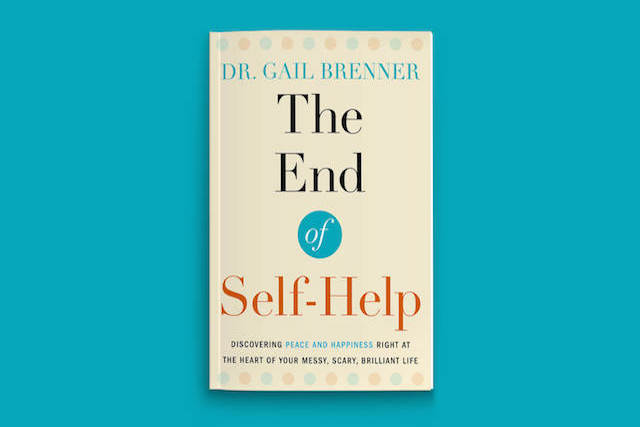
    the-end-of-self-help

    Update: The winners for this giveaway have been chosen. They are:

    When I first found what looked like a self-help book called The End of Self-Help, I thought it was a tad ironic. And I wondered if perhaps the author was suggesting that self-help is inherently harmful.

    As someone who’s bounced back from overwhelming adversity using some very powerful self-help tools, this didn’t quite sit right with me.

    Then I decided to stop wondering what this book was all about and instead find out by reading it. I couldn’t be more grateful that I did.

    Powerful and insightful, Dr. Gail Brenner’s book touches upon a common misconception that might lead us to self-help resources—the idea that we’re broken and need to be fixed.

    This mindset keeps us focused on the possibility of happiness in the future instead of enabling us to create happiness and fulfillment right now.

    But there is another way. We don’t need to embrace personal development from a place of inadequacy. It is possible to simultaneously empower ourselves to grow and allow ourselves to feel whole and happy in the present.

    The End of Self-Help teaches us how to do the latter.

    If you’ve ever felt trapped by your thoughts and feelings, if you’ve ever felt fundamentally damaged, if you’ve ever felt incapable of feeling peace in the present, The End of Self-Help could be life-changing for you.

    I’m grateful that Gail took the time to provide some incredibly detailed answers to my questions, and that she’s provided five free copies of her book for Tiny Buddha readers.

    The Giveaway

    To enter to win one of five free copies of The End of Self-Help:

    • Leave a comment below
    • For an extra entry, tweet: Enter the @tinybuddha giveaway to win a free copy of The End of Self-Help http://bit.ly/1iNkb2f

    You can enter until midnight PST on Monday, September 28th.

    The Interview

     1. Tell us a little bit about yourself and what inspired you to write this book.

    First, Lori, I’d like to thank you so much for this opportunity to connect with your readers. We get to talk about my favorite topic—peace and happiness!

    By profession, I’m a clinical psychologist based in Santa Barbara, and I’ve loved my work with the elderly and their families, specializing in aging, loss, and dying.

    For as long as I can remember, I’ve been on a quest to be happy. Even after fifteen years of psychotherapy and reading many self-help books, I was still experiencing anxiety and wondering how I could truly feel happy and fulfilled.

    Like many of us, I was a self-help failure, but I kept searching!

    Finally, I turned to spiritual teachings where I discovered this truth: that unhappiness is a case of mistaken identity. When we suffer, we’re defining ourselves by conditioned ways of thinking that aren’t necessarily true. And when we stop clinging to these identities, we’re happy.

    I’m passionate about the liberating fact that who we are is not the limited, unlovable person our thoughts tell us we are. I wrote this book because I want everyone to have the opportunity to live fully, without fear, in openhearted contentment and love.

    2. What differentiates your book from most self-help books—and do you believe self-help can be positive and, well, helpful?

    The intention of self-help is pure—we just want to be happy. We don’t want to live our lives feeling broken and inadequate. It makes sense that we look to self-help offerings to help us discover the peace we’re so desperately looking for.

    But here’s the problem. The phrase “self-help” contains an incorrect assumption about who we are. It assumes that we are broken and damaged selves who need to be helped.

    And while we’re searching for help and trying to fix ourselves, what is our present moment experience? It’s not happiness, fulfillment, and the simple enjoyment of life. We feel anxious and inadequate, and we mistakenly think we’re missing what we need to be whole.

    The premise of The End of Self-Help is that we can always find our way to happiness and peace in any moment. Instead of waiting for happiness, we get to live it right now. This is a marvelous discovery!

    That said, self-help can teach us about specific topics, such as communication skills, strategies to change habits, or ways to maintain healthy boundaries.

    But if we spin our wheels relentlessly looking outside ourselves for that one tip—or person or situation—that will finally make us happy, we’re believing we need to be fixed, and we won’t be successful.

    The solution is to make a U-turn with our attention inward to discover the inner aliveness always here at the core of our being. Every time we return here, we’re naturally happy.

    3. As someone with a tendency to overanalyze, I found the section on thinking to be quite powerful—particularly the idea that we don’t need to stop our minds to be peaceful and happy. Can you elaborate a little on this?

    Trying to get rid of thoughts resists the fact that thinking is present. And as the saying goes, what we resist persists.

    Instead of fighting with our thinking, the way to find peace is to be unattached to the content of our thoughts, to not take them as true. Then it doesn’t matter if thoughts are present or not.

    I know that sounds challenging, so let’s start with some bold truths about most of our thinking.

    It’s useless and repetitive.

    • It’s fear-based.
    • It doesn’t actually solve problems.
    • It’s negative and critical.
    • It’s distorted and not based on facts.

    The most authentic, palpably alive experience of this precious life is right here, outside the thinking mind. But when our attention is absorbed into thinking, mostly about the past and future, sadly we miss it.

    It’s possible, in any moment, to consciously lose interest in thoughts. Instead of compulsively thinking, we can take a breath and open our attention to what this now moment is actually offering us outside of our thoughts about it. Because this topic is so important, I devote a whole chapter of the book on ways to undo our attachment to thoughts.

    In case you’re wondering, life is just fine without all our thinking about it. If I’m wrestling with a problem, I find that creative solutions come not from thinking, but from resting my attention in the space of silence and stillness underneath the thoughts—and listening for the answers.

    4. I’ve always believed that happiness has a lot to do with the questions we ask ourselves, so I especially appreciated the section on curiosity. How can shifting from “why?” to “what?” decrease our suffering and increase our happiness?

    I love curiosity, too, Lori. It was a huge moment of transformation for me when I started being genuinely curious about my inner experience. Being curious means that we explore what’s present from a place of deep openness with no expectations about what we will find.

    When we ask why we feel a certain way or why things are as they are, we answer with the mind, which only feeds more mental activity. We blame ourselves, others, the situation, or our childhood, and these thoughts don’t lead us to peace.

    But asking “what” changes everything. Instead of going into more story, we get curious about our in-the-moment experience, asking:

    • What exactly is happening right now?
    • What thoughts are present?
    • How does this experience feel in my body?
    • Can I just be here, breathing and aware?
    • What do I really want for this moment?

    As we go beyond our stories and wake up to the reality of right now, we realize the possibility of being peaceful with things just as they are.

    5. As you wrote in Chapter Seven, we’re constantly bombarded with messages about what we’re lacking. How can we start to experience freedom from our feelings of inadequacy?

    This is such an important topic because people have so much pain around inadequacy. And we start by understanding exactly what we’re experiencing in those moments when we feel inadequate.

    When we shine the laser light of our awareness on this experience of inadequacy, we’ll find a subtle stream of thoughts that may be barely conscious that convince us we’re inadequate. These thoughts tell us a distorted story about ourselves that criticizes, compares, and doubts.

    Then we might find some bodily sensations of contraction and tension that physically make us feel small and separate.

    Now we get to follow these breadcrumbs to freedom.

    • First, when this pattern arises, take a breath and shift your attention to being present.
    • Notice that when you observe these thoughts and sensations, there’s a gap between you and them. You’re not completely gripped by them.
    • When you feel stable in observing, shift your attention to the observing presence itself, and expand into this peaceful awareness.
    • Rinse and repeat, a thousand times a day if necessary, as each time chips away at the power of this pattern.

    Over time, we’re less driven by this conditioned belief that we’re lacking. And we become more transparent to our natural vibrancy and uniqueness that starts shining out everywhere!

    6. The crux of your book, it seems, is that separation disconnects us from the truth of who we are and leads to suffering. What’s the alternative to living life this way?

    As we shed our false and distorted identities about who we think we are, we become more available to life as it’s unfolding right now. I have found that everyday living becomes so delicious!

    Where before we were fear-driven, constantly needing to protect and defend ourselves, now we come from wholeness and love. We encounter familiar relationships, some with their familiar, unsatisfying dynamics, but we can show up in them freshly, which changes everything.

    We no longer need to spend energy avoiding difficult feelings or analyzing ourselves and other people. Welcoming everything without resistance, there is free space for creativity to arise, for simply enjoying ourselves, and for love and appreciation.

    We stop taking life situations so seriously, so we don’t need to ruminate about them. Stress diminishes, as it’s seen as the product of a busy, anxious mind. And without our attention being occupied by worry and regret, we are quiet, listening within, and moving in the world with greater clarity.

    It’s not at all that we’re eternally blissful and that difficult situations and feelings never again arise. But we open up to our experience rather than avoid it, meeting our emotional reactions with love and understanding so they no longer control us.

    7. What’s the main message you hope readers take from your book?

    No matter what your mind tells you, you are not broken or damaged, and you don’t need to be fixed. Be diligent about looking within to discover your essential wholeness, which is boundless, unlimited by any ideas, luminous, and infinitely peaceful.

    Then go out there and enjoy your life!

    You can learn more about The End of Self-Help on Amazon here.

    FTC Disclosure: I receive complimentary books for reviews and interviews on tinybuddha.com, but I am not compensated for writing or obligated to write anything specific. I am an Amazon affiliate, meaning I earn a percentage of all books purchased through the links I provide on this site. 

  • There Is No Expert on You

    There Is No Expert on You

    Confused Woman

    “Believe nothing no matter where you read it, or who said it, no matter if I have said it, unless it agrees with your own reason and common sense.” ~Buddha

    Sometimes it seems to me that we are collectively obsessed with expert advice.

    In some cases, it makes sense to consult an authority.

    When you’re planning for retirement, it’s smart to seek out a financial planner. When you’re starting a business, by all means, sit down with someone who’s done what you aspire to do. And when your dog gets sick, it’s probably smart to call your veterinarian instead of relying on your gut instincts.

    But when it comes to the decisions we need to make for ourselves, the experts can easily become a crutch.

    When I first arrived in San Francisco, I accepted my first full-time writing job for a company that published senior care guides. I was new to blogging, and so were my employers.

    After a few months of writing polished articles that received hardly any traffic, the editor-in-chief decided the key to attracting a wider audience was to create a panel of experts who would cover a wide variety of relevant topics.

    What struck me is that readers often asked questions when they needed to make a difficult decision and were looking more for validation than information. The best example was when a woman with an aging mother asked if seniors with no prior mental health issues frequently get depressed in nursing homes.

    It seems to me that what she was looking for was less about statistics—which she could also have found by Googling—and more about confirmation that her elderly mother wouldn’t be unhappy if she moved her into a home.

    But no expert can provide that answer. Sometimes there isn’t an answer, and there won’t be until we act and then learn the consequences of our choices.

    I can understand the allure of confirmation. (more…)

  • When Self-Help Doesn’t Help: Doing What’s Best for You

    When Self-Help Doesn’t Help: Doing What’s Best for You

    Man Reading

    “Your inner knowing is your only true compass.” ~Joy Page

    Are you someone who devours self-help books, blogs, and articles?

    Do you take pleasure in checking out the latest advice from this “expert” or that “guru”?

    Are you someone who puts into play the advice proposed but are still left feeling somewhat unfulfilled afterward?

    The Trouble with Self-Help

    The trouble with self-help advice is that sometimes it leads us down the path of us not helping ourselves at all. Sometimes we get so caught up in someone else’s vision that we lose sight of our own.

    Truth be told, what I consider to be a great life may leave you wanting for more (or perhaps less). What you consider to be extremely ethical I may consider less so. And that’s as it should be.

    Our value system, beliefs, ideas, and ideals should be our own—informed by the outside, without a doubt, but we need to process and own them for ourselves.

    Part of the problem with self-help type advice is that we can start to lose sight of what we really see as success or a successful outcome. We get so caught up in what we’re reading that we can start viewing it as the Holy Grail.

    If I lose weight, then I should feel like this.

    If I simplify my life, then I should be immediately happier.

    If I run a marathon, I should feel the greatest sense of achievement I ever have.

    Sometimes these areas do live up to expectation and leave us with a deep sense of accomplishment. However, sometimes they don’t and can lead us all the way back to square one, or actually make us feel worse than we did originally.

    Falling into the Trap

    I personally have fallen into the trap of overdosing on self-help and self-development books, blogs, and writers over the years—reading book after book but then not implementing the changes suggested, or implementing them but feeling underwhelmed by how I felt afterward. This often led me in circles.

    I take my self-development seriously and I love to read about simplicity and lifestyle redesign, in particular. In fact, left unchecked, I could quite happily bury myself in books and blogs that fall under these categories all day.

    However, in my quest for perfection, I have taken paths that were anything but perfect for me.

    One example would be trying to be more minimalist than I am happy being. Reading about others living as minimalists, giving away most of what they own, or living with only fifty items, I had envisioned myself leading a similar life.

    That vision helped me to a certain point on my own version of simpler living, but then I tried contorting myself a little bit too much.

    I liked some of the stuff, even it was just stuff. I like the convenience of a car. I love going away on exotic travels as often as I can afford. I realized a little minimalist suited me, but not too much. Sounds contradictory, perhaps, but hey, that’s me!

    Another example would be working on being more mindful. I read the work of people who sound like they live in a permanent state of calm. I liked this as an ideal.

    I consider myself a pretty calm and patient person most of the time and see those as personal strengths, but I also have my limits, and I’m not above losing my cool at times.

    Rather than accepting this as part of me, I tried to “fix” it. It didn’t work.

    We’re human, not robots, and sometimes we lose our cool. I’m perfectly fine with that now but wasn’t for a time, as I saw it as a weakness. My expectations were unrealistic, and the advice, as well meaning as it might have been, didn’t completely fit me.

    Although these experiences left me a little dejected at the time, they led me to a better place overall. I came to realize that I am the best master of my own destiny with regard to my goals. I learn and take from external sources, of course, but I own the goals.

    I make the output suit me and know that no one person has all the answers. The result is a happier me, and something that I can implement into my own life, making any changes I make more likely to remain lifestyle changes rather than a five-minute fix that then gets discarded.

    Through the above process I started to realize the problem wasn’t the books or authors themselves, but me and my own expectations. Sometimes I was guilty of falling into the author’s view of what a good outcome would be rather than being focused on my own needs and wants. I worked on that.

    These days, I can still regularly be found leafing through books that fall neatly into the self-development area. And my bookshelves are full of such books. I still love the genre and indeed write in that genre myself.

    However, now I am very clear about what it is I want to get from each read. I’m more selective about who and what I read. I’m clearer on the version of my life I’m trying to get to. If someone else’s experience can help me get there quicker, all the better.

    What Does Success Look Like for You?

    To answer this question, we first need to know:

    • What it is and who it is we value most
    • Who it is we want to be in life
    • What kind of life we want for ourselves
    • How we want to feel when we see ourselves staring back in a mirror

    Only we can truly know what that version of ourselves and our lives looks like.

    Self-help should help. Make it your own and it just might do that.

    Make sure you’re building and supporting your own unique vision of what a great life is and are doing your best to make that your reality. Use what helps along the way, but don’t get caught up in comparisons or in someone else’s vision of what your life should look like.

    Set your own compass and live a life very much in line with your own terms.

    Man reading image via Shutterstock