Tag: self-hate

  • How I Learned the Power of Letting Go After My Father Developed Dementia

    How I Learned the Power of Letting Go After My Father Developed Dementia

    “There is beauty in everything, even in silence and darkness.” ~Helen Keller

    When I was eleven years old, I would force myself to stay awake until the wee hours of the morning.

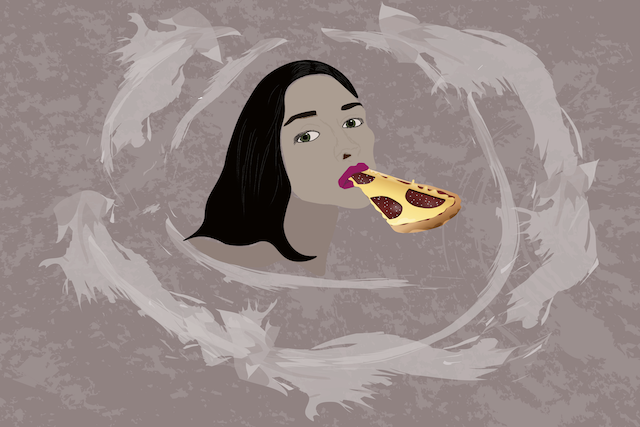
    I was severely anorexic at a time when eating disorders were considered an “inconvenience” you brought on yourself. Anorexia was dismissed as a rich, white girl’s disease (although we were certainly not rich)—a disease that was easily curable with a prescription for a chocolate cake.

    Although my emaciated body was a dead giveaway of my condition, it was school that noticed the change in me first. My once stellar grades began to slip, and I was falling behind in the advanced academic and art program I was a part of.

    “Just eat already,” my teachers would tell me, and when I tossed my lunch into the garbage, I’d be sent to the nurse’s office to watch The Best Little Girl in the World. Again.

    At home, grape-flavored bubble gum and bouillon cubes were my foods of choice. I did toe-touches, crunches, and jogged at least four times a day, passed out some mornings, and hid my body under layers of flannel shirts on the hottest August days. But even as my disease raged, home was still my refuge, a place where my eating disorder could take its hair down and run wild.

    Thankfully, both my parents worked full-time and often through dinner, so mealtimes weren’t much of a struggle. And when we did eat together, I became as much of a master at hiding my food as I was at hiding my body.

    I was also smart. Or maybe conniving is a better word. A weekly trip to Friendly’s for ice cream (the irony of that name!) fooled my overworked parents into believing that I was fine.

    Puberty had simply shaved off any “baby fat” I had, they reasoned. What they didn’t know was that puberty never had a chance with me. No sooner did my period appear, I starved it away.

    But even with the ice cream trips and their growing awareness, I still felt fairly safe at home.

    Until that one moment that changed everything.

    On a sunny, unremarkable fall day (Isn’t that what Joan Didion tells us? We are most surprised by those tragedies and traumas that happen on “normal” and “beautiful” days…?), my father surprised me by picking me up early from school.

    Hurrying to the office for dismissal, there was a tiny, naive part of my eleven-year-old self that thought maybe he was surprising me with a trip to Disney World.

    That’s what happened to my friend, Mary, the previous year. When she returned from her impromptu trip, she was sporting tanned skin and a perpetual grin. She then spent most of our fifth-grade year with mouse ears glued to the top of her head.

    But there was no Magic Kingdom for me. Instead, without so much as an inkling as to where we were going, my father hustled me into his car, and we drove away. Sitting next to my father, a man who held all the power over me, my stomach ached as I wondered what was about to happen.

    My weak heart pounded in my chest, and as we drove, I prayed it wouldn’t give out. Catching a glimpse of my ashen skin and white, cracked lips in the rearview, I knew that I was nothing more than a stray dog in a shelter, ripped from my cage by a complete stranger, wondering if I was about to be put down, thrown into a fight, or worse.

    Finally, we arrived at our destination, a medical center in a strip mall. As soon as we walked through the front door, I gagged on the thick scent of medicine and grape lollipops that hung in the air. Without a second to catch my breath, I was whisked into a doctor’s office and onto a scale.

    Looking down her nose at me, the doctor snapped, “You’re too skinny. You need to gain weight.” While I stood there on the scale, she turned to my father and diagnosed anorexia nervosa.

    Then she looked at me. “If you don’t eat,” she warned in a sharp tone, “we’ll have you put in a place for ‘girls like you’.” She then informed me that once I was locked in that wretched prison of force-feedings and shackles (as I imagined it), I wouldn’t see my family again until I was “fixed.”

    When we returned to the car, my father spoke the first words he had said to me all day: “So? Will you gain weight?”

    “Yes,” I answered, too frightened to fight. Too scared to advocate for myself. Too terrified to tell him that this wasn’t a choice. I wasn’t choosing to starve myself; I was sick.

    But even if I had spoken, he wouldn’t have understood. No one did.

    From that moment on, I knew that I was completely alone. That’s when I began to stay up way past midnight, quietly jogging in place. I’d stop only to press an ear to the door, straining to hear what my parents were saying. Would they send me away? To that place?

    “I’ll never let it happen,” I assured myself. I would die before I’d go to a place where I was literally stripped of myself.

    For the next few years, the games continued, and although there were always doctors and threats, I kept myself just alive enough to stay out of that particular treatment center.

    ****

    Flash-forward almost forty years, and today, my father is an old man with dementia.

    As the Universe sometimes works in strange ways, I am now one of his primary caretakers. Although our relationship was strained for many years and I missed out on the experience of having a strong male figure in my life that I could trust, he did walk me down the aisle, and I am here for him now that he needs help.

    My father doesn’t remember that day that will forever be burned into my brain. He doesn’t remember the hell I went through the years that followed—the fear, the insecurities, the isolation, and the self-inflicted bruises I sported because I hated myself so very much. More than anything, he was, and is, clueless of the real battle scars—the ones that lay deep inside.

    He doesn’t know that that one “unremarkable fall day” when he pulled me from school started a negative spiral in my life, a time when I began aligning with damaging beliefs and inflicting self-harm.

    All he knows now is what his dementia allows him to—if the sun is out, if the squirrels ate the peanuts he tossed to them, and whether or not I am there to help him; to deliver his groceries, to take him out on drives, and to care for him.

    Yes, this could easily be the ultimate story of revenge, but years of teaching and practicing yoga have brought me down a different path.

    The path I have chosen is the path of letting go.

    Truthfully, my father’s dementia has left me no choice but to let go, at least of some parts of my life. I’ve needed to let go of expectations, of attachments to the outcome, and even, sometimes, like in those moments when he calls me “Sally,” my own name and identity.

    But in letting go, I have found that his disease has brought some gifts as well. I’ve learned to slow down and appreciate the daisy he wants to admire, the flock of chickadees darting in and out of a bush he’s watching, and the feel of the cool fall air on my face as I help him to and from a doctor’s appointment.

    Letting go has allowed me to experience all those things that I was previously too busy to appreciate. As Helen Keller said, “There is beauty in everything, even in silence and darkness.”

    But letting go because of his dementia wasn’t enough.

    I had to let go for me, too.

    To let go of the toxic weight from the past, I released that moment when everything changed, all those years ago.

    How? By simply deciding to put the weight down—and not just with regard to that event, but in all aspects of my life.

    Was it easy? No. But it was doable.

    In letting go, I didn’t worry about forgiving (although it is an important step for healing), or seeing someone else’s perspective. I simply unhanded my tight grip on all the “wrongs” I had endured and still carried with me, as well as all those things for which I blamed myself.

    Every one of us will live through events, some that we consider positive, and others, not. The only control we have is in how we deal with the circumstances we’ve been given.

    We can choose not to shoulder the burden, and to unpack those weights we’ve been carrying. We can close our eyes, breathe deeply, and tell ourselves, “I will put that weight down.”

    That’s where our true power lies.

    Have I forgotten my past? Of course not. But I have let it go, and in letting go, I have reclaimed an important relationship with my father, and more importantly, with myself.

    By letting go, I have released my suffocating grip on life, and reclaimed my personal power.
  • 9 Things I Would Tell My Younger Self to Help Her Change Her Life

    9 Things I Would Tell My Younger Self to Help Her Change Her Life

    “You are one decision away from a completely different life.” ~Mel Robbins

    At twenty-six years old, I lost my dad to suicide. I was heartbroken and so angry.

    My dad was not the best. Ever since I was little, he would criticize everything I did. I was never good enough for him, and I was a place he discharged his anger through emotional insults.

    It never stopped, and I was always on high alert around him. Right until the moment he took his life.

    He could also be loving, kind, funny, and warm, but my nervous system could never relax around him. He was a Jekyll and Hyde. I never knew what behavior would set him off.

    Then all of a sudden, he was gone.

    I was angry because he had caused me a lot of pain growing up, and now he had left me.

    I was angry that I loved this man so much and felt such deep pain without him. It made no sense to me. Surely my life should be better now that his constant abuse was over.

    But it was just the beginning of my emotional breakdown. Children love their parents unconditionally, no matter how we are treated. But if our parents project their pain on to us, we end up not loving ourselves.

    Now that the abuse had stopped, it was time to deal with all the emotional wounds he’d inflicted over the years.

    But I resisted this and got stuck. I struggled in romantic relationships, unconsciously dating versions of my dad.

    I was full of self-hate. He may have died, but his criticism was very much alive in my head! And I was the one now persecuting myself for everything.

    I may have loved him, but I had no love for myself, as he had taught me that I wasn’t worth that.

    I felt powerless and in so much pain. I numbed this pain with the tools he had given me—wine, TV, food, and caretaking others. I had the busiest diary so I would never have to feel.

    I had no idea how to stop feeling so awful and like I was doomed for life because of this childhood trauma I had suffered. I was in denial that I had even experienced childhood trauma.

    The man who had caused me the pain had gone, so why did I feel the same, if not worse?

    I would lie in bed at night with this huge ache, longing to be loved by someone but looking for it in all the wrong places.

    I felt trapped in my emotions and like there was no way out.

    I sit in my front room now, over fifteen years later, in a life I didn’t think was possible, in a home that feels safe and peaceful. No longer abusing myself. Doing a job that I love and married to the most amazing man.

    I feel like life is a gift and there is no dream I cannot make a reality. That pain that kept me awake at night is no longer there but replaced with love for myself, and even for my dad.

    If I could go back in time, I would tell myself these nine things to get me moving forward to the life I’ve since created. If you also grew up with an abusive parent, my list may help you too.

    1. It was not your fault.

    We put our parents on a pedestal as children because we have no choice. We need them to survive. When my dad persecuted me for not being quiet enough or not pleasing him, I translated that as “I am not good enough” and that everything was my fault.

    We often take all the blame when our parents mistreat us. But what were their stories? How did they grow up? Did someone teach them how to balance their emotions?

    I see now that my dad was struggling. He was grieving the loss of his parents and a difficult childhood. He was not given any tools to manage his emotions. He was shown how to lash out and project them. He was shown how to drink to numb them out.

    He would come home from a job he felt he had to do, feeling tired and stressed, and blame others to help himself calm down.

    Realizing this helped me let myself off the hook. It has also helped me forgive him, which has brought me peace. I started to understand him and his traumas. He was repeating a pattern of survival that his parents had taught him.

    This is generational trauma, and it wasn’t his fault. But it was his responsibility to keep his children safe, which he didn’t fulfill because he had no idea he was traumatizing them!

    2. Reparent the wounded child within.

    The versions of me that still hurt and felt this ache to be loved still lived within me, many years later. The seven-year-old who was shouted at for being too loud, the thirteen-year-old who didn’t study enough, and the twenty-five-year-old that wasn’t there for my dad. All these parts of me had unmet needs and were in pain.

    We can’t change the past, but we can go back in time in our imagination and be the parent we needed.

    I have imagined taking baby-me out of the house where I was born to live with adult me. Telling my parents to get some therapy and sort themselves out before they can have the baby back.

    I’ve imagined holding her and telling her how special she is. Over time, this helped that deeper pain to heal.

    3. Work on self-love.

    I was always seeking love and validation outside of myself.

    I was never taught or shown that self-love and self-care are necessities. You have to be able to fill up your own cup in order to love others.

    I would tell my younger self to take a step back from pleasing others and finding a man. I would tell her to focus on giving herself the love she longed for.

    For example, speaking to myself with love and kindness, having quality alone time, buying myself gifts—these were all things I longed for from a man, but I needed to start doing them for myself.

    I needed to spend time every day giving myself love and listening to my needs, not ignoring them. Do I need rest? Water? A healthy meal? To just breathe? To be in nature to calm my anxiety?

    Learning to listen to my own needs and fulfill them took time. It felt unnatural. It was a new behavior I had to repeat every day, and then soon enough it became second nature.

    4. Get to know your shadow.

    We all have parts of us that are dysfunctional and behaviors that are not serving us.

    For me, it was emotional eating, drinking wine, pursuing emotionally unavailable men, and caretaking my family. The last two made me miserable.

    But I blamed the men and my family for being needy. I didn’t take responsibility for my own behavior.

    I felt powerless over how others treated me. I was trapped in this victim state, and then I would numb with food and booze.

    Getting to know my shadow and recognizing my toxic behaviors were the first two steps to change.

    When a man didn’t treat me well, I stopped trying to prove my worth and changed my behavior to move away from the relationship.

    When it hurt, I learned how to love myself instead of chasing someone else’s love.

    Ask yourself: What am I doing that hurts me? Then work on a step-by-step plan to change the behavior. Baby steps are key in this process, as you can get overwhelmed by trying to do too much at once.

    5. Get support.

    It takes time and work to change toxic behavior and heal. I would give my younger self permission to get help when I was struggling with a change. For example, giving up toxic relationships and booze was a real challenge for me. Finding people who had already been through the transformation I was seeking was so valuable.

    Sometimes this would mean listening to a podcast or reading a book, blogs like this one, or posts on social media, and other times it would be investing in working with someone who had already done the work.

    When you work with someone who’s already made the change you’re seeking, they can outline the steps they took, which saves time and energy and makes you feel less alone.

    6. Get in your body.

    I once was a floating head and very disconnected from my body. It didn’t feel safe to feel fear, so I had to be that way to survive my life!

    I would tell my younger self to slow down and notice how her body feels. That it was safe to do that now.

    For example, certain relationships made my heart race out of fear. This was a sign that they weren’t good for me.

    I would also tell her to find ways to bring the body back into balance by discharging the stress and fear.

    For example, breathwork techniques, movement, and Emotional Freedom Technique (EFT) tapping all help us process our emotions rather than running away from them.

    7. It’s safe to speak your truth.

    I have always been incredibly loyal in relationships. Growing up with a dad who was awful meant I had few boundaries and expectations in relationships. This was the only way I could have some form of a relationship with my dad.

    I would let my younger self know it is okay to step back or walk away from relationships that don’t feel good or safe, even family.

    I would let her know that she can always express her truth in relationships and explain when a boundary has been crossed, but that also it’s okay to walk away. Especially in relationships that feel unsafe and abusive.

    8. Celebrate all your progress.

    A journey of healing and transformation takes time! It’s a marathon, not a sprint. It’s so important to celebrate the smallest of wins daily. For example, “I meditated every day this week,” or “I said no to an invite so I could take care of myself when I used to say yes all the time.” Change starts small and grows big.

    At the beginning especially it is so important to track everything because it feels like such a mountain to climb. It will motivate you to carry on. Seeing the little changes shows your efforts are paying off.

    Younger me didn’t have a family that celebrated small wins and growth. They focused on my imperfections and were highly critical. By celebrating myself, I help that little girl feel enough!

    9. Set intentions and dream big.

    Each month, set little goals to improve your life and keep you moving forward. This could be for your personal growth, relationships, physical health, emotional health, money, love, or work.

    Make the goal super small, for example, “In January, I will not text my ex.”

    You may want to set an intention to take better care of yourself. Break this down into daily tasks to repeat for the month. And if you don’t know what you need to work on, maybe your task for the month is to read a book to help you find out.

    With intention you can create the life you dream of. But often we don’t know what our dreams are. Get still and explore what would bring you happiness.

    I think of younger-me who looked out of her bedroom window wishing for a safe home.  I think of that little girl and the life she deserves. A full, fulfilling life, just like I’d want for my own child. This has helped me to dream bigger to create a life that is not only safe but also makes me happy.

    You too deserve an amazing life! Not a life stuck in patterns of surviving and playing it small, but one where you heal and thrive. Your parents treated you the way they did not because you were not enough but because they were wounded. You were always enough, and now you have the power to take daily steps to change your reality so it is not longer tainted by trauma.

    I have the most incredible life now, and it has and continues to be a journey of healing. I wish I would have done these things sooner, but it’s never too late to take the first steps on a new path! There is hope, and I believe in you.

  • How Weight and Food Obsessions Disconnect Us and Why This Is So Harmful

    How Weight and Food Obsessions Disconnect Us and Why This Is So Harmful

    “We are hard-wired to connect with others, it’s what gives purpose and meaning to our lives, and without it, there is suffering.” ~Brené Brown

    I was inducted into diet culture in my early teens and then into the health and fitness industry in my early thirties, when my “fitness journey” had finally really taken off, and I ultimately became a personal trainer and nutrition and wellness coach.

    Once we’ve given enough years of our life to diet culture, many of us begin to recognize the ways that it’s harming us and all the things it’s stealing from us.

    Peace of mind. Self-worth and self-trust. Mental, emotional, and physical health and well-being.

    My grandmother’s cookies.

    The ability to just eat and enjoy food without fear.

    Self-respect.

    Body trust.

    But we don’t notice all the ways “health and fitness” are promoted in our culture and how they do the same thing. And there are so many other things it steals from us that we often don’t think about or notice.

    One of the biggest examples of this for me, and the women I work with, was connection.

    Connection with myself and connection with others.

    I didn’t start losing my ability to connect because of my induction into diet culture. That started earlier as a result of growing up with an abusive, alcoholic father.

    But those industries preyed on it, fueled it, flamed it, and then ran away with it for decades.

    Feeling connected is a core human need. According to Maslow’s hierarchy of needs, love and belonging are right up there after things like food, water, and safety.

    We are hardwired to connect.

    Recent research has suggested that the brain processes the pain of feeling disconnected or rejected the same way it processes physical pain. Nearly every aspect of our health and well-being relies on connection.

    And while it may seem like we’re constantly connected, especially now through things like social media or video calls, it’s not actually the case.

    Loneliness has been on the rise, worldwide.

    Chatting about what food we should or shouldn’t eat; commiserating over how much we hate our bodies, how much weight we gained, the latest diet attempt we just failed; bragging about how we did in the gym, how much weight we lost, how many steps we took, or how “clean” we’re eating—this isn’t connection. It’s not connecting with others, and it’s definitely not connecting with ourselves.

    In fact, those things keep us from being able to connect with ourselves because we’re so focused on controlling external “shoulds.”

    We may form friendships around those things, but they aren’t based on genuine connections.

    Curating the picture-perfect Instagram feed, gathering around mutually hated or demonized “others,” and sharing memes or videos of the latest TikTok trend are also not the same as real, genuine human connections.

    It’s all just filling space with mindless, external distractions.

    It’s not truly allowing ourselves to be raw, real, and vulnerable. To be seen, heard, and valued for who we uniquely are as individuals—not just the perfectly curated image we present to the world but the messy, raw, and real parts we try so hard to hide.

    The parts we fear make us most undeserving of love and belonging.

    I certainly hid behind many of those things. I used them as a cover, as a tool to hide behind. A mask. A role I played, behind which I could feel (somewhat) safely tucked away and protected.

    My “passion for health and fitness” allowed me to play the badass.

    (In reality, I was scared all the time.)

    It allowed me to play the inspirational “success” story.

    (In reality, I was terrified of putting an ounce of weight back on because I desperately craved the praise and validation I was receiving. And it was destroying my mental, emotional, and physical health and well-being).

    The strong, fearless, confident “fitness freak” that could do anything she put her mind to.

    (Which, in reality, hid the fact that I was so scared and emotionally fragile and felt so broken that I needed the physical strength I could build through exercise just to get through the day.)

    I was good at these roles. I loved these roles, at least in the early years.

    Just be what people expected. Be what I’d seen get celebrated in others. Easy, right? Sure, until it isn’t.

    The longer I wore the mask, the more it started to hurt.

    The harder I worked to keep up those appearances, to maintain that external image of perfection through my body and what I was eating, the more damage it was doing.

    Externally, I was doing everything “right.”

    In reality? I ended up a binge eater, bulimic, clinically depressed, and living with generalized anxiety disorder and panic attacks. For many reasons, not the least of which because I was completely disconnected—from myself, my body, and from others.

    I was so focused on trying to be something I thought I was supposed to be, so I’d be liked, admired, impressive, that I lost who I was and what I needed.

    I lost what truly mattered to me and in life.

    I lost the ability to trust myself, to trust others, to let them in and truly see me.

    In fact, I was terrified of being really seen.

    Because I didn’t like myself and I didn’t believe anyone else would either if they knew the real me.

    So I hid behind what my body looked like. My external strength. The image I built.

    Holy cow, it got exhausting. And soul-crushing.

    You simply cannot simultaneously spend your life worried about what other people think about you (or your body), trying to micro-manage and control the image you project, and also be truly connected to yourself and others in any meaningful way. 

    Because in order to keep up those appearances, you have to actively work to hide parts of yourself—large parts of yourself that you’re terrified will be seen if you dare take off the mask.

    If you’re actively hiding parts of yourself, you’re not able to truly feel seen, heard, and valued… because you are hidden away. Locked in some dark, dusty corner of your inner world, and in my case, stuffed down with food.

    After a while, I didn’t even remember who I was. My identity became so wrapped up in who I thought I was (a worthless failure who was completely undeserving of love or acceptance) and who I was trying to be (the perfect, badass inspiration) to hide it, that I was lost.

    And completely disconnected. From myself and others.

    What I wanted or needed didn’t matter because my entire existence was being driven by fear and the disconnection that causes.

    Fear of rejection and abandonment if I stopped playing the role.

    Fear of weight gain and not looking “good enough.” Fear of not being good enough. Fear of what the binge eating was doing to my health. Fear of what would happen if I stopped micro-managing every morsel of food I ate and just trusted myself with food.

    Fear of judgment.

    And every time I turned around, there were diet, “health and wellness” cultures swooping in and stoking those fears.

    Eventually, I recognized that I couldn’t keep it up. I couldn’t keep playing the role. I was too tired, and it had completely broken me. I couldn’t keep caring about trying to be impressive or accepted. I had to start caring about being healthy and at peace with myself.

    In order to do that, I needed to find my way back to myself. I needed to shut out the garbage that was keeping me disconnected and learn how to connect.

    First with myself, because how could I ever truly connect with others if I didn’t even know who I was when I wasn’t playing the role?

    And how could I heal all that weight and food stuff if I stayed in the fear and obsession that kept me so disconnected from myself?

    I couldn’t.

    So I started working on being present with myself, not an easy feat when you don’t much like yourself. But required, nonetheless.

    I started getting curious and practiced connecting with my body, my thoughts, my emotions, my needs… my inner world.

    Who was I, really?

    What really mattered to me in life?

    Forget what I thought I should eat or do… what did I need?

    Was I really put here to spend my life hating myself, obsessing over these things that are destroying me, distrusting myself, and fearing real, meaningful connection with others?

    What if I could find a way to unconditionally accept myself and my body? How would that change the way I treated it and showed up in the world?

    What did I want to eat? Forget what I was “supposed to” eat; what did I want? How were the foods I was eating making me feel? How did I want to feel in my body?

    Forget what it was supposed to look like or weigh; how did I want it to feel to live in? How were my thoughts and conditioned patterns with food and exercise impacting that? Were they helping or harming? How could I learn to change them if they weren’t?

    And I started practicing being more intentional with my thoughts, beliefs, and actions. Intentionally making choices that were loving and kind, that helped me feel better, in general and about myself. Anything that wasn’t helping me live or feel better, and more connected with myself, could have no place in my world anymore.

    Once I started feeling deeply connected with myself and my body, I slowly started working on learning to connect with others.

    That’s still something I find difficult and am learning to do, but I’m still practicing. In baby steps.

    Because what I learned when I started reconnecting with myself was how much living with an alcoholic father impacted me as an adult.

    It taught me that not only is the world scary, but people are. They’re scary and unpredictable. It also created abandonment issues, and it’s where the fear of not being good enough, and the feeling that I needed to play a role to be loved or accepted, had actually begun. No wonder I had so much trouble connecting.

    I share this story because I’ve come to realize that most of us have an underlying fear around not being good enough that started in childhood for one reason or another. And those predatory industries sneak into every corner of our world, capitalizing on our fear with broken promises that do nothing but make things worse.

    The weight and food obsessions are a diversion.

    A socially acceptable, surface-level distraction that keeps us so externally focused and consumed that we spend most of our adult lives not even knowing that we’re disconnected—or that we’re living in fear and we’re just trying to “fix it” by making ourselves feel more socially acceptable.

    All while disconnecting us more and more. From ourselves and others.

    Because we’re hiding behind diversions and masks.

    Well, my mask is finally off.

    Under it, I have belly rolls. I have wrinkles. I have gray hair. I dye it because I prefer dark hair, but sometimes I put it off and rock a solid skunk stripe of gray down the middle of my head.

    Like all bodies, mine changes.

    None of that means I let myself go. It means I let myself just be.

    I’ve overcome a lot of things in my life, but still struggle with some others.

    I screw up a lot, even fail sometimes. Often, actually.

    I’m exceptionally good at some things and full-on suck at even more.

    I can’t do everything myself. Sometimes I need help and support. I’m still not very good at asking for it, but I’m working on it.

    All of that simply means that like you, I’m human. And I cannot connect with myself or anyone else if I’m trying so hard to be impressive that I’m not being real.

    So I don’t anymore.

  • How I Overcame Shame from Sexual Assault and Began to Love Myself

    How I Overcame Shame from Sexual Assault and Began to Love Myself

    “Our lives begin to end the day we become silent about things that matter.” ~Martin Luther King Jr.

    It was Saturday, August 29th, 2020, when I admitted to myself, for the very first time, that I was a victim of sexual assault as a child.

    Twenty-five years of complete denial that this ever happened, and suddenly all I could think of was the fact that my innocence was taken at the age of five. “Why now?” I wondered. “Why does it suddenly matter? Was I so resentful of my trauma that I denied its existence altogether?”

    Between the ages of five and eight, I was repeatedly molested by a family member. Although I wasn’t sure what was happening, I knew two things: This felt pleasurable, and therefore, there was something inherently wrong with me.

    I carried this shameful image of myself into adulthood, unaware of how it impacted my self-esteem, my sexuality, and my overall perception of myself as a woman.

    As the sexual abuse eventually ended, so did any thoughts about it. No one knew that it had ever happened, and I planned for it to stay that way.

    From the time I became sexually active, I struggled. I never felt safe while being intimate, even when I was with my ex-husband. I always carried this feeling of shame, and the more pleasure I felt from having intercourse, the more shame I experienced.

    When I finally stopped denying that I was a victim of sexual assault, I knew there was no coming back. Once I became brave enough to admit the truth and accept the discomfort of it, I remembered all those times when the assault took place. It was terrifying and intimidating.

    I felt disgusted, shameful, and angry. I was upset that this event was suddenly present in my life. My plans were to build my online business, make money, and have fun with friends, while making sure I consistently whitened my teeth and maintained my Florida tan.

    Instead, I was forced to face my demons and address the truth I’d buried so well. All I could think of was “What’s wrong with me?”

    For many victims of sexual assault, especially young children who can’t comprehend what’s happening, it’s easy to develop a belief that we are sick, dirty, undeserving, and not enough. We develop a strong survival mechanism where we pretend, guard up, in some cases become promiscuous while self-sabotaging any real connection with anyone else.

    Our trauma supports the belief that we can’t trust anyone, everyone is out to get us, and that feeling any pleasure for ourselves is bad and sinful.

    What I couldn’t wrap my head around, and what also brought unbearable shame, was the pleasure I felt when the assault happened. Logically, it didn’t make sense to me.

    These were my thoughts: “I didn’t do anything about it, and there wasn’t any force or rebuttal present. I let it happen over and over, and in a sense, I enjoyed it. How can I ever say that I am a victim of sexual assault? If it was wrong, I would do something. Instead, I did nothing. There must be something wrong with me.”

    What you just read is a common thought process for many victims of sexual assault. It is why we stay silent; why we let the shame grow each day and exercise self-hate full force. Many of us truly believe that there is something inherently wrong with us, and this is where speaking your truth and seeking help comes into play.

    Shame was probably the most intense emotion I observed, but I wasn’t sure how to deal with it. So, as a master in denial, I let it go, again. Or so I thought.

    A year went by, and nothing happened. I kept the truth hidden and didn’t talk about it too much while convincing myself that I’d already addressed it and all this messiness was behind me.

    Then a few months ago one of my friends mentioned the nonprofit RAINN—the nation’s largest anti-sexual violence organization that helps survivors and victims of sexual assault heal and recover.

    I knew this information showed up in my life for a reason. My shame was still present, and my sense of unworthiness wasn’t subsiding. It was time to call their hotline and get help.

    I dialed and hung up four times before I was brave enough to stay on the phone. The process was easy, and I was able to get a counselor within a few days, at no cost.

    It was time for my first session. I was nervous and guarded, but I clicked with my counselor, so it eventually became easier to open up and start sharing.

    At first, we started addressing the elephant in the room: How could I feel pleasure while being sexually assaulted, and would my shame ever go away?

    I learned in my recovery that arousal during a sexual assault is common. It is one of the best-kept secrets that prevent us from speaking up, sharing our trauma, and breaking the shame once and for all.

    We are terrified that no one will understand us and will judge us instead. Considering the amount of judgment and shame we already exercise daily, the idea of criticism and more shame is just too much to bear. Therefore, we stay silent and often let the shame get out of control.

    Although I am not a doctor and can’t impress you with some Ph.D. explanation, here is what I now understand:

    Being aroused during any form of sexual assault doesn’t mean we want it, it doesn’t mean we consent, and it certainly doesn’t mean there is anything wrong with us. Physical pleasure is a natural bodily reaction, even during sexual assault.

    As I progressed with my sessions, I was able to open up about things I never said out loud. Things like excessive masturbation during childhood or using self-pleasure and intercourse in my adult life to punish myself and feel disgusted. Without seeking help and getting a counselor, I might have never been able to overcome my self-destructive beliefs.

    This is the best part about therapy: it provides a safe space to say the things you’ve kept inside. And that, in and of itself, provides healing.

    During my therapy, I learned some powerful coping skills. Things like recognizing my triggers, soothing myself with compassion while drowning in self-hate, pausing, taking a step back, and reevaluating the situation before it gets out of control. These skills were especially useful when I spiraled into one of my shame attacks, wanted to punish myself, or felt overwhelmed by self-judgment.

    I learned the importance of self-love in this process; how to approach myself when feeling defeated, sad, upset, or shameful. Mostly, I understood the universal truth every victim of sexual assault needs to understand and focus on: Recovery requires us to stop questioning what’s wrong with us and instead face what happened to us.

    At the time of this writing, my therapy sessions are coming to an end. If I were asked what’s been the most impactful part of my recovery, I would say it’s the ability to speak up and share my story while exercising empathy and compassion for myself.

    As Brené Brown said, the best way to break the shame is to speak about it with those who deserve to hear our story—people we trust, people who have been through the same or similar situations, and people who are educated enough to understand our trauma. People who aren’t afraid to offer empathy and hold space while withstanding the discomfort of the conversation.

    Although my therapy is ending and the time to run solo is approaching, I know that to heal, I must commit and stay committed to my recovery. I understand now that healing is available to all of us, and all it takes sometimes is five minutes of courage to make a phone call and say, “I need help.”

    As my recovery progresses, my hope for living a happier life grows each day. I am beginning to understand that no matter what I go through or how deep my trauma is, I can make different choices and live my life from the most empowering place that’s available to me—from within.

  • Where Our Inner Critic Comes from and How to Tame It

    Where Our Inner Critic Comes from and How to Tame It

    “Your inner critic is simply a part of you that needs more self-love.” ~Amy Leigh Mercee

    We all have that critical and judgmental inner voice that tells us we’re not good enough, smart enough, pretty enough, etc.

    It tells us we don’t do anything right. It calls us stupid. It compares us to other people and speaks harshly about ourselves and our bodies. It tells us all the things we did or said “wrong” after communicating or connecting with someone.

    Sometimes it projects criticism outward onto others so we can feel better about ourselves. Other times we try to suppress our inner critic through overachieving, being busy, and accumulating more and more things.

    Sometimes it’s a protective mechanism that’s trying to keep us focused on our self-judgments so we won’t be authentic, because, if we are, we may be rejected and not get the love and acceptance we want.

    But, by doing this, we’re creating even more pain and suffering because we’re disconnecting from and rejecting our own essence.

    Just ignoring the critical voice doesn’t always make it go away. It may initially, but soon enough it will resurface if we haven’t healed/embraced our hurts, traumas, and wounds and shifted our internal patterning, which is where it comes from. 

    Have you ever heard the expression “What we resist persists?” Have you ever told an angry person to “just calm down” or a screaming child to stop crying? Does it work? Not when our energy is in a heightened state.

    Why is someone angry? Why is a child screaming and crying? Because there’s something going on internally that’s creating how they’re behaving. There’s often an unmet need or pain that’s asking for attention.

    Thinking a more positive thought to compensate can sometimes work, but sometimes it just creates an inner debate and mistrust in ourselves because deep inside we don’t believe what we’re saying.

    As children, many of us were taught to suppress those “bad” feelings because if we expressed them, we may have been or were punished. Welcome to the beginning of the critical voice; it’s often a frightened part of us that’s wounded and asking for attention. It wants to be seen, heard, and understood.

    My dad used to get really frustrated with me and constantly told me, “Damn it, Deb, you never do anything right.” Hearing that many times left an imprint in my subconscious. I started living with that interpretation of myself, and the critical voice kept me “in check” with being this way.

    For me, the critical voice was my dad’s voice as well as the deep shame I was feeling for making mistakes and not doing things the “right way.”

    I was holding in suppressed anger, sadness, guilt, unforgiveness, resentment, traumas, and pain that I tried to keep hidden with a smile on my face, but eventually it turned into a shame-based identity.

    My inner voice criticized me whenever I fell short or wasn’t perfect according to society or my family’s expectations.

    Just like when we’re triggered by another person, our critical voice is asking for our attention and guiding us to what needs healing, resolving, forgiving, understanding, compassion, and unconditional love.

    When it comes to the surface, we’re experiencing an automatic regression; it’s a part of us that’s frozen in time. It’s a reflection of our unhealed wounds, which created ideas of not being enough or that something’s wrong with us. Basically, it’s a trance of unworthiness.

    When we’re in a trance of unworthiness, we try to soothe ourselves with addictive behaviors. It’s hard to relax because we think we need to do something to be better and prove ourselves, so not doing anything, resting, isn’t safe.

    When we’re in a trance of unworthiness, it’s hard to be intimate with others. Deep inside we think there’s something wrong with us, so we don’t get close because they may find out and leave. This keeps us from being authentic because we don’t feel okay with who we are.

    Deep down I felt unworthy, unlovable, and undeserving, and the critical voice showed me what I was feeling and believing. I didn’t feel safe in life or in my body. How could I? I was living with so much hurt, pain, and shame inside.

    The critical voice is often stronger for those of us with unhealed wounds and who are hard on ourselves, and it tries to get us with shame and guilt. We’re always looking at ourselves as the “good self” or “bad self,” and if we’re identified with a “bad self,” we’ll act in accordance with that in all areas of our life.

    If we’ve become identified with the critical voice, it’s who we think we are; it just seems normal. And when we start to be more kind and loving, it doesn’t seem right because our identity becomes threatened and our system registers that as danger.

    That happened for me. Eventually I became identified with being a “bad girl” who’s critical and hard on herself, and, even when I started being a little kinder, more compassionate, and more loving, I felt an angst in my body. It wasn’t familiar, and even deeper, it wasn’t okay for me to be this way. My survival was at stake, so I would automatically go back to self-criticizing and judging, without conscious awareness.

    The critical voice didn’t only speak to me harshly; it also told me to do self-abusive things like cutting my wrists and face, starving my body or eating lots of sweets, and exercising for hours like a mad woman to get rid of the food I ate, whether it was a carrot or sweets, because I felt guilty. 

    Even after twenty-three years of going in and out of hospitals and treatment centers, taking medication, and doing traditional therapy, nothing ever changed; the critical voice had a hold on me.

    It was a powerful force, and when I tried to stop it, it would get louder. It thought it was protecting me in a backwards sort of way; if it hurt me first, no one else would be able to do so.

    When people used to say to me, “Debra, you just need to love yourself,” I looked at them like they were crazy. I had no concept of what that even meant because I had no experience of it.

    What I’ve come to see with myself and those I assist in their healing is that the more we keep our deep hurts, traumas, anger, guilt, shame, and pain hidden, the more the critical voice chimes in.

    And, for some, like me, it seems overpowering, so we try to find relief through smoking, drinking, eating, or being busy, and/or we experience severe depression, anxiety, or self-harming.

    When we’re consumed by the critical voice, we’re disconnected from our true essence, and when we’re disconnected from our true essence, the love within, we feel a sense of separation; we don’t feel safe with ourselves or others, and we don’t feel lovable for who we are, as we are.

    This is why many people can change, be happy for a day, but then go back to their critical and/or judgmental ways. Our automatic programming, stemming from our core beliefs, kicks in. It’s just like an addiction, and in a sense it is.

    We can try meditating, deep breathing, and positive thinking, but, unless we address the underlying cause, we’re likely to keep thinking the thoughts our internal patterning dictates. They come from a part of us that doesn’t feel loved or safe.

    So, what do we do when the critical voice comes to visit?

    What do we do when it’s what we’re used to, and it just happens automatically?

    What do we do when we don’t know how to be with ourselves and how we’re feeling in a kind and compassionate way?

    What do we do when we have no concept of what it even means to experience self-love or ease in our bodies?

    First off, please don’t blame yourself for how you’re being. Awareness isn’t about judgment; it’s about kindness, compassion, and love.

    Working with and healing our traumas, where the critical voice was formed, is key in shifting our internal energy patterning. Many people call this inner child healing and/or shadow working. 

    This is a soft and gentle process of moving through the layers of trauma with compassion and love and making peace with our protector parts.

    Through inner child healing, we can shift and transform that “negative” patterning and how the energy is flowing in our body. We can help that part of us that’s frightened, hurting, and maybe feeling separate have a new and true understanding so we can feel loved and safe in our bodies.

    When we pause and take a deep breath when we first hear or sense the critical voice, it allows our nervous systems to reset and helps us come back to the present moment; this allows space for compassion, healing, and investigation.

    Why do I believe that?

    Where did I learn that?

    Is it true?

    How does my higher self see this and me?

    Does the critical voice totally go away? No, it may still chime in; it’s part of being human. But once we realize where it’s coming from and heal/shift that energy pattern, more love can flow through, and we can experience our truth. When we learn how to be our own loving parent and meet the needs our caregivers didn’t meet when we were children, the critical voice often softens.

    Remember, the critical voice is just a scared part of us who really wants attention, love, and a way to feel safe. When we no longer take it personally, when we’re no longer attached to it as our identity, we can offer ourselves compassion, understanding, love, truth, and whatever else we’re needing.

    Life can be messy, and our thoughts can be too. This isn’t about perfection; this is about experiencing a deeper connection with our loving essence.

    There’s a sweet and tender spirit that lives within you. This spirit is your deepest truth. This spirit is the essence of you. You’re naturally lovable, valuable, and worthy. You’re a gift to humanity. So please be kind, gentle, loving, and caring with yourself.