Tag: self esteem

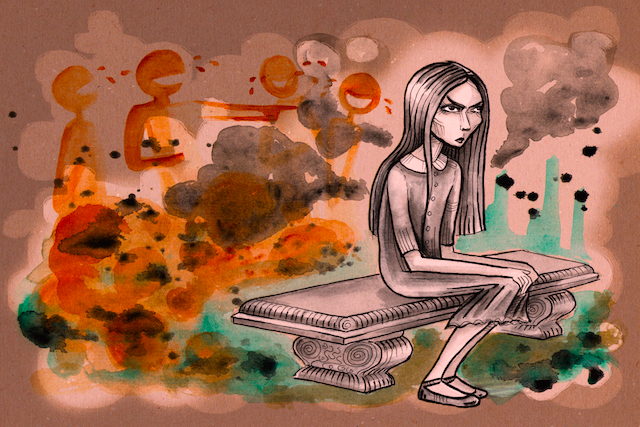
  • Confessions and Lessons from a Former Approval Addict

    Confessions and Lessons from a Former Approval Addict

    “It’s not your job to like me. It’s mine.” ~Byron Katie

    I’m short. I’m stumpy. My nose looks like a pig’s. My inner thighs touch when I walk. My gums show too much when I talk. I have to change the way I look. Maybe then you’ll like me.

    I obsess. I overanalyze. I get caught up in my head. I dwell on things I should let go. I can never simply go with the flow. I have to learn to be laid back. Maybe then you’ll like me. 

    I’m shy. I’m anxious. I’m dependent on reassurance. I ask for advice way too much. I look for validation as a crutch. I have to be more confident. Maybe then you’ll like me.

    Day in, day out, plotting away—that’s how I spent my life. I didn’t like who I was, so I hoped you’d do it for me.

    If only you’d tell me I was okay. If only you’d confirm that I didn’t have to change. If only you’d give me permission to be myself. Maybe then I’d like me.

    It’s what led to more than a decade of self-torture.

    I’d cut myself to feel relief and create a physical representation of the pain I feared no one else could see.

    I’d stuff myself with food to the point of bursting, then hide myself away to purge it, up to thirteen times day.

    I’d curl up in my bed and cry for hours, hoping maybe my tears would wash away the most offensive parts of me.

    I remember once, when I was in a residential treatment center for bulimia, an art therapist asked me to draw a self-portrait.

    I drew a bag of vomit with me curled up inside. That was how I saw myself.

    I know why I grew into this needy, insecure person. I can trace the moments that, bit by bit, eroded my self-esteem and caused me to question my worth.

    But it doesn’t really matter why I learned to feel so small and insignificant. What matters is how I learned to tame the fears that once imprisoned me.

    Notice I wrote tame, not destroy. For some of us, the fearful thinking never fully goes away.

    I have never seen myself as a before and after picture, because it’s never felt black and white to me.

    There wasn’t a distinct turning point when my life went from painfully dark to light.

    It’s been a slow but steady process of cleaning layers of grime from the lens through which I view myself—and sometimes, just after chipping away a massive piece of dirt, I catch a splash of mud in the spot that was briefly pristine.

    I live, day in and day out, in a messy mind that, despite my best efforts, has never been fully polished.

    But it’s far clearer now than it once was, and I have the tools to clean it a little every day—and to accept the times when I simply must embrace that it’s still dirty.

    Perhaps you can relate to the lost, lonely younger me, desperately seeking approval. Or perhaps you’ve come a long way, but you still struggle with confidence every now and then.

    Maybe you sometimes feel like a fraud because you’re human and imperfect.

    Maybe you still want to fit in and belong—who doesn’t? We’re social creatures, and wired to seek community.

    But there’s a difference between looking for connection and looking for permission to be.

    There’s a difference between depending on people for support and depending on them for self-esteem.

    Here’s what’s helped me shift from seeking praise and approval to knowing I deserve love and support.

    Become aware of the layers of grime on your lens.

    You may see yourself as someone else once saw you, years ago when you were too young and impressionable to realize they weren’t viewing you clearly.

    Or perhaps your grime built up later in life, when people close to you projected their own issues onto you and convinced you that you were somehow lacking.

    Most likely, a combination of both led you to form a harsh, critical view of yourself, backed up by caked on beliefs, reinforced through consistent self-critical thoughts.

    Understand that, much like those other people, you are not seeing yourself clearly—or fairly.

    You may see small mistakes as evidence that you’re unworthy. You may interpret your challenges as proof that you’re incompetent. Neither of these things is true, and you don’t have to believe them.

    Learn how to clean your lens daily.

    While I wish I could say I know how to power wash that lens, I’ve yet to discover such a process. But I can tell you how I’ve slowly chipped away at the mud:

    Change your beliefs.

    Once you identify a limiting belief—such as I’m not lovable—you can start to change it by looking for evidence to support the opposite belief.

    Once upon a time I believed I was ugly. I truly believed my face was offensive when not covered in makeup, because I have light features.

    I know where this belief came from—when I was a kid, someone told me light-skinned blonds are homely. And because this person valued physical appearance, and I desperately wanted them to accept me, I started caking on layers of paint.

    Over the years I’ve met people with varied looks who I found to be incredibly beautiful, and it had nothing to do with the color of their skin, eyebrows, or eyes.

    It had to do with the light in their eyes and the joy behind their smile.

    I, too, possess the capacity to shine from within and exude joy. More importantly, I feel good about myself when I access my inner spark, and how I feel about myself matters far more than what I look like.

    Challenge your thoughts.

    While you can identify evidence to support a new belief, it’s likely you’ll get stuck in engrained thought patterns from time to time. It’s a process, not a one-time choice.

    My mind will occasionally formulate reasons I am not good enough.

    You aren’t where you should be professionally.
    You didn’t respond to that conflict wisely.
    You reacted too emotionally.  

    As often as I can, I catch these thoughts and challenge them with compassion:

    There’s nowhere you should be professionally—and you’ve done a lot more than you give yourself credit for.
    You could have responded better to that conflict, but that’s okay; this is an opportunity for growth.
    You reacted emotionally, but that’s okay too—you’re not a robot. And at least you’re self-aware enough to recognize when there’s room for improvement.

    You may not catch every self-critical thought, but over time you’ll catch more and more, and tiny bits of progress add up.

    Slow your thoughts. 

    It’s all well and good to challenge thoughts, but if they’re coming at you like baseballs from a pitching machine, you’ll probably end up feeling too overwhelmed to be effective.

    I’ve come up with a list of mindfulness practices that help me find relief from my loud, persistent inner monologue. These are the ones I’ve found most effective:

    • Five minutes of traditional meditation or deep breathing
    • A five to ten minute walk, focusing on my senses and the experience of being in nature
    • A yoga class or five to ten minutes of deep stretching, synced with my breath
    • Listening to music (on YouTube) with subliminal messages for confidence
    • A repetitive creative outlet, like crocheting
    • Anything that gets me into a state of flow, like dancing

    Take a little time every day to clear your thoughts, and it will be a lot easier to tame the fear-based voice that makes you feel bad about yourself.

    Change for the right reasons.

    With all this talk about accepting yourself and taming the voice that makes you feel unworthy and dependent on approval, you may assume you should never again strive to change.

    When I considered that possibility, I came up against a lot of internal resistance. But it wasn’t because I felt I needed to become someone else to be lovable. It was because I realized growth provides me with a sense of possibility and purpose.

    In much the same way I wouldn’t berate my child, if I had one, for having more to learn, I didn’t have to motivate change from a place of self-disgust; instead, I could encourage myself to continually grow into a stronger, wiser version of myself.

    I could regularly identify areas for improvement without concluding I needed to change because I was intrinsically flawed.

    If you’re not sure how to tell the difference between change rooted in shame and change rooted in self-love, ask yourself: Do I want to make this change because I know I deserve the results, or because I fear I’m not good enough unless I do this?

    Take power back from others.

    I still want you to like me. I do. I want you to think I’m witty, and funny, and wise, and interesting, and worthy of your attention.

    But these days I focus a little more on you and a little less on your approval. I think back to times when you were witty, and funny, and wise, and interesting, and I’m grateful that I get to give you my attention.

    And if you don’t feel the same about me, well, it can hurt. On days when I’m at my strongest, I’ll acknowledge the pain and let it run through me.

    Then I’ll remind myself that I can like me even if you don’t. Because that’s what happens when you learn to view yourself through a clearer, more compassionate lens: You start seeing how lovable and wonderful you really are.

    I am imperfect in so many ways. I’ve made more mistakes than I can remember or count. I have struggles that I sometimes think I should have completely overcome.

    But I’ve been through a lot. I’ve been beaten down. And I’ve risen up every time. I’ve kept playing my hand when it would have been easier to fold. I’ve learned and grown when it would have been easier to stagnate.

    I am no longer ashamed of where I’ve been; I’m proud of the journey through it.

    I am no longer ashamed of being imperfect; I’m proud that I’m brave enough to own it, and humble enough to continually grow.

    That shift in perception has helped me accept that you may or may not accept me.

    I’m going to show you who I am, in every moment when I find the strength and courage to be authentic. Maybe then you’ll like me. And if you don’t, it might hurt, but that’s okay. Because I’m going to love myself through it.
  • You Don’t Have to Believe You’re Not Good Enough

    You Don’t Have to Believe You’re Not Good Enough

    “I don’t know a perfect person. I only know flawed people who are still worth loving.” ~John Green

    “I’m not good enough.”

    I cannot possibly count the number of times this thought has passed through my head over the years. It’s been applicable to nearly every aspect of my life from childhood to my current status as an adult, parent, and business owner.

    Still, both the frequency with which this thought enters my head and the length of time I spend believing it have dropped considerably, so I think my story and the lessons I’ve learned are worth sharing—especially since I know I’m not alone in struggling with this belief.

    One of my earliest memories, if not my very first one, is of teetering on the edge of a nubby brown armchair, putting my head between my father’s downward cast eyes and whatever book it was in which he was so engrossed.

    Alas, my repeated attempts to get his attention did nothing. What could a preschooler assume in this instance? Even now, more than thirty years later, I don’t see how anything other than “not good enough” or “not interesting enough” could have crossed my mind.

    That was certainly not the last time my father’s behavior fed my worries that I was not enough. However, he has since passed from this world and blaming him does absolutely nothing to help me move forward; I am now an adult capable of making my own assessments of my value as a human.

    In other words: I am responsible for allowing myself to feel not good enough.

    But I didn’t know that for a long, long time, and I let others take me down a notch without ever questioning it.

    When a boy in my gym class made a mean comment about the size of my thighs, I never questioned him; instead, I simply believed he was correct and that I should feel badly about my body.

    When a close friend chose another friend over me and then, years later, a boy over me, I took the blame: obviously I was not enough. It never occurred to me that maybe she was the one with the issue.

    When I got paid less than I was worth, when I my writing was rejected, when I couldn’t solve every single one of my clients’ problems, when someone unsubscribed from my mailing list, I took all of this personally. I took it as proof that I was not good enough.

    Yet the years have certainly changed me for the better. In 2008 I learned that I was, in fact, in control of my thoughts. I could choose to believe or not believe the stories I was telling myself.

    I also learned that everyone struggles with feeling good enough, and that I was not alone.

    I learned that I could spend more time feeling good about myself if I chose to. I learned that the people who taught me I wasn’t good enough didn’t do it on purpose; they struggled with their own self-worth.

    Today I am a grownup who is mostly satisfied and happy with herself and confident in her place in the world.

    Yet it still creeps in. There are times, especially when it comes to motherhood and running a business, when I feel ill-equipped. When I feel the world crashing down around me, and the familiar “you’re not good enough” slithers into my thoughts, nearly undetected.

    But when it does happen, I have the means to turn it around. It doesn’t own or control me anymore. Here are the basics of turning “I’m not good enough” into “I’m really okay the way I am.”

    Your thoughts create your world, and you can absolutely take charge of them.

    It’s impossible to overstate the importance of paying attention to what stories you’re telling yourself and learning how to change those stories into ones that best serve you.

    Yes, you can spend your life repeating “I’m not good enough” over and over, but why? You can write a new script. You can also learn to let your negative thoughts float on by, like a feather in the breeze, instead of grabbing hold of them and getting sucked in.

    Try telling your story a new way.

    Building upon the previous point, try this exercise: Think of the most important events in your life, or a particularly trying period of your life. Write your story down the way you normally would tell it.

    Next, pretend you’ve been told to write the same story, but with a humorous slant. Then write it again, this time as though you were attempting to inspire others with your tale of overcoming adversity. And again, as though you were writing about a great adventure.

    The purpose of this exercise is to see how the same set of events, the events that shaped your beliefs, life, and thoughts, can take on many dimensions depending on your perception of them. Just knowing this may help you see yourself in a new light.

    There is plenty of proof out there that you are good enough, you just need to look for it.

    I bet you can think of a million ways you’re not good enough but struggle to list just a couple of ways in which you are. For instance, sometimes I struggle to feel like I’m interesting enough to be heard, and thus have trouble saying what I’m feeling and thinking.

    To counteract that, I must take the time to list the evidence that I am, indeed, enough. I actually write down the proof in a journal, or say it out loud to my husband so that it feels concrete.

    In this case, examples that I am in good enough include:

    • I do my very best to be open, honest, and authentic, which I know gives my words value.
    • I care deeply about others, so when I speak, I am trying my best to be supportive and helpful, which I believe makes me interesting and worthy of being heard.
    • Others have asked me to tell my story, asked for my help, or just wanted to get together to talk, so I must have something worthwhile to contribute.

    To try it yourself, pick one area in which you’re particularly struggling to feel like you’re enough. From there, look for any proof, any scrap of evidence, that you are. Write down every single thing you can think of, and make a regular habit of rereading the list and adding to it.

    Remember that you’re not alone.

    I’ve never met anyone who hasn’t, at one time or another, felt insecure about their worth or value or skills or intelligence. Somehow I find it helpful to know that even the most put-together, successful person out there struggles with the same things I do.

    Reach out to others, even if it’s only in your mind.

    If you have someone in your life that loves and cherishes you, why not ask for a little boost? I have gone to my husband many times when I felt down on myself, and hearing his perspective or just feeling his embrace does wonders to turn things around.

    Or perhaps you’ve got no one nearby, or want to rely on yourself to feel better. In that case, try thinking about yourself from the perspective of your parent, child, best friend, sibling, or spouse.

    Also, depending on your spiritual beliefs, you can try to see yourself through the eyes of your higher power, if you believe in one.

    In either case, write down what they might say and what they see in you for maximum impact and memorability.

    The truth is, I am good enough, and so are you.

    Maybe you’re not a good enough ball player to make it to the big leagues, maybe you’re not a good enough dancer to make a career of it, but as a human, you are just right. And when it comes to what’s most important, just do your best and tell yourself a new tale: I am good enough.

    Smiling woman image via Shutterstock

  • The Path to Freedom: Facing Painful Thoughts and Feelings

    The Path to Freedom: Facing Painful Thoughts and Feelings

    Sad Man

    “Life is an endless process of self-discovery.” ~James Gardner

    My thoughts lately have been so hurtful.

    Things like: I’m not a good writer. I’m ugly. I’m stupid.

    I’m not funny. I can’t carry a meaningful conversation. I’ll never be special.

    The world is out to get me. People take advantage of me. I’m boring and don’t matter.

    Like I said, hurtful. Crippling, demoralizing thoughts. One not-so-nice thing after another, and it makes me want to cry.

    Why the pain? Why the negative thoughts? Well, recently I spent two weeks playing a video game.   From the time I walked through the door at work till the time I left to go home at the end of the day I played.

    It was my escape. Finally, just recently, I put the game away. I took the toy away from the little boy.

    What I’m left with is that which I try to escape from—my negative thoughts and feelings.

    Whether it’s through video games, women, Instagram, Facebook, or food, to name a few distractions, I’ll use just about anything to check out from me. To not be present with my feelings of low self-worth and low self-esteem.

    That’s what I did with the video game for two weeks. I opted to numb out rather than sit with my thoughts and feelings and the struggles I’ve been facing with writing my first book. The video game was easier than dealing with the pain.

    Funny thing is, the pain from two straight weeks of video games and the inability to put them down became much worse than the pain of sitting still with my thoughts and feelings.

    Each day my eyes would hurt and my contacts would blur so much I couldn’t focus. Each day every muscle in my body would tense up as I followed around a little man on a dirt bike racing around on a tiny computer screen.

    No wonder I’ve had a stiff neck the past few days. No wonder my head feels like it’s in a vice. I’ve been hurting myself.

    We do that, don’t we? Run from our thoughts and feelings, that is. We run from anger, pain, shame, guilt, and fear.

    We run from thoughts that tell us horrible things. Things like we wont amount to anything, that we are not likable, not lovable, and don’t matter. We run and actually think that we’re helping ourselves.

    News flash: Running, checking out, numbing yourself, or whatever you want to call it isn’t helping. It’s hurting. It’s taking you away from the gift of being fully present with yourself. Yes, I just called it a gift. So then why run?

    For me it’s because I was never taught how to like and love myself. I was never taught how to deal with my emotions nor a head full of negative thoughts. Self-esteem? I had none.

    See, my mother died when I was three-and-a-half years old, and I grew up alone with my rageaholic father. Through him, I learned to believe that everything was my fault, that the world was out to get me, and that I didn’t matter. No wonder I want to escape.

    Feel feelings of low self-worth? No, thank you. I think I’ll check out with a video game.

    Don’t know how to esteem myself? Let’s find a woman. She can esteem me and solve all my problems.

    Yet in the end, don’t we always come right back to where we started? Doesn’t checking out from ourselves and our feelings only offer a temporary solution? It sure did, and still does, for me.

    For years I thought a woman was the answer to all my problems. A woman to complete me and make me whole. Yeah, not so much.

    My problems were right there waiting for me when it didn’t work out with the girl. Hi, ugly! So, I’d try again with a different girl thinking I’d get a different result. Nope. Same result. My pain and low-self worth were still right there waiting for me.

    I repeated this pattern for the better part of my adult life, until one day I realized that it wasn’t about finding something or someone to make me feel better about myself; it was about me. I realized that it was about me and my inability to esteem myself. My inability to like and love myself.

    So I did something I had never done before, ever: I turned inward and chose the path labeled self-discovery rather than continue down the one labeled self-pain. Most of us have or we wouldn’t be here on this beautiful site. Be proud of that; love yourself for that.

    Turning inward for me looks like learning how to love the side of myself that’s in so much pain.

    It looks like putting down the video game, wrapping my arms around that side of myself, and remembering that I’m okay and that I always have been. It also looks like me getting honest and sharing what I’ve shared with you here today.

    The path to freedom is learning to sit still with my thoughts and feelings, not a video game. In return, I get better at esteeming myself and recognizing the true authentic me, the beautiful man that I was born to be.

    San man image via Shutterstock

  • When People Judge: Why It’s Not Really About You

    When People Judge: Why It’s Not Really About You

    “Doubt yourself and you doubt everything you see. Judge yourself and you see judges everywhere. But if you listen to the sound of your own voice, you can rise above doubt and judgment. And you can see forever.” ~Nancy Lopez

    You and I, we judge others. And they judge us. We all do it. Sometimes we judge with positive or non-harming intentions.

    Unfortunately, our judgment often comes from a negative place, with darker intent.

    Why Do We Judge?

    Though we judge for many reasons, we often do it when:

    • We don’t know a person well (yet)
    • We cannot identify with a person’s belief system, values, or behavior
    • That person somehow threatens how we perceive ourselves

    I believe we judge for the first reason because our minds want to simplify the processing of information by putting environmental clues into categories. This just makes things so much easier, doesn’t it?

    For me personally, when I judge for the second and third reasons, I have especially negative emotions and thoughts toward others.

    I try hard not to judge, and have been doing so less and less, but I still have a ways to go. 

    How I’ve Judged Others

    I used to judge people, especially men, when I learned that they had been unfaithful to their girlfriends.

    As soon as I learned about the situation, I would feel resistance and anger building up inside me. I would immediately begin insulting them in my head, and sometimes would actually verbalize it if there was someone to discuss it with.

    Today, I rarely react like this. I know not to judge someone based on their actions because everyone makes mistakes, and some people prefer to behave in a way not everyone else can relate to.

    I still don’t find it appropriate or fair to cheat on someone, but I stopped letting that define the worth I assign to that person.

    I know now where that strong negative response comes from. Someone once cheated on me, and it caused me a lot of pain. As a result, I have developed a pretty rigid mindset around that topic.

    In the past, I also judged women when I felt threatened by them, especially those who I perceived to be extremely attractive.

    I compared my body to other women’s bodies because I feared I didn’t look as hot as they did, which was clearly a matter of low self-esteem. The conversation in my mind went something like this:

    “Oh, look at that girl in that red dress—her tight body and her perfect curves. And look how she moves. I’m sure she must get a lot of attention and admiration from the guys around here. She has to be really arrogant.”

    This inner chatter made it pretty apparent what was going on inside me in those moments. First, I began comparing myself to someone who I perceived to be better than me physically, then I decided I couldn’t measure up. This, of course, made me feel threatened.

    So I judged her by using a big generalization to put her down so I could feel better about myself.

    What Can We Do About It?

    I’ve noticed that my increased level of self-love has helped me judge a lot less. (You can find some helpful tips to increase your own self-love here.)

    Also, I’m more aware of it now when I judge because I feel threatened, and with awareness, I am able to step back and ask myself whether my initial judgment is true.

    I almost always have to own up to the fact that no, just because someone is attractive, that doesn’t have to mean she’s arrogant.

    I’m not saying that we all have to learn to stop judging others. Maybe it isn’t even possible to do so because of the way we’re wired as human beings.

    But what we can learn is that our judgments mostly have to do with us, not the people we judge, and the same is true when others judge us.

    In most cases, we judge others in order to feel better about ourselves, because we are lacking self-acceptance and self-love.

    If we could learn to embrace ourselves as we truly are, would we still be so judgmental toward others? Most likely not. We would no longer need a reason to put someone else down just to raise ourselves up.

    This is only one of the many reasons why self-love is so important and powerful. If we could all learn to love ourselves, we would make our world a much more compassionate and much less judgmental place.

  • How to Stop Believing You’re Not Good Enough

    How to Stop Believing You’re Not Good Enough

    Insecure

    “All that we are is the result of what we have thought. The mind is everything. What we think we become.” ~Buddha

    Have you ever heard the phrase “your thoughts create your reality”? Have you ever wondered what this means?

    Go back to your childhood and recall a time when you got into trouble. I am sure you have at least one of these memories. This doesn’t have to be a major event. It can just be a time where you were scolded for knocking over your drink.

    Now remember your parents’ reaction. Were they angry or frustrated? Did they yell or give you an annoyed look? Did they send you to your room?

    How did it make you feel? Most likely you felt like you did something really bad or that you were bad.

    This feeling, multiplied by all your other similar experiences, created a belief within you. Through this belief you probably, without your knowledge, created a reality of being bad or not good enough.

    Now fast forward to the present and watch these memories from a new perspective. Have your friends join in. What are your thoughts now? What reactions do they have?

    Through different eyes, through different perspectives, we see and experience different realities.

    Here is a personal experience of mine. I was maybe six or seven, and my family and I were sitting around the kitchen table frosting cookies. This was an annual event at our house. We had all the colors of the rainbow of sugary, spreadable, delectable frosting.

    I was using the green frosting, spreading it oh so carefully on my cookie. When I was finished with the green I set the knife back into the frosting bowl. The knife, not secure in its vessel, tipped backward, sliding gracefully out of the bowl with a loud and splattering of green onto the linoleum floor.

    I don’t remember exactly what my mother said but I do remember her being upset, and I remember feeling like I really messed up and ruined things for my mother and the rest of my family. 

    This experience, along with other similar childhood situations, created a belief that if I did something wrong I would make someone angry or ruin a situation—essentially, I would be bad.

    So what did I do? Whatever I could to not elicit a reaction, including staying silent.

    Now we are going to fast-forward to the present. I can look back at this situation with new eyes. I didn’t do anything wrong. I didn’t ruin the situation, and my mother wasn’t mad at me or even angry.

    The knife was too heavy and long for the shallow bowl, which caused it to tip. It was beyond my control.

    My mother’s reaction was one of frustration not because of green frosting on her easily moppable floor, but probably because she had a long day taking care of four kids and a house and was stuck in an unhappy marriage.

    Similar scenarios often happen to us as adults. I am a natural introvert. Walls are my friend.

    In a crowd of people I usually remain in the shadows, merely observing the happenings around me. In my observations I will notice groups of people maybe glancing in my direction while continuing to talk.

    My thoughts then go into super sensitive mode and create stories of being talked about. My thoughts go on an imaginative ride of insults and attacks, all on me, by those people across the way.

    Now I feel attacked. I am no longer having fun. I no longer want to be where I am.

    My thoughts created a false reality out of nothing. My thoughts had no basis in fact, yet they created a reality for me, true or not.

    Perspective can change the reality of any situation. Really, what is reality but an experience? And if everyone has a different experience from a different perspective, then doesn’t that mean there isn’t just one reality? That reality results from the arbitrary thoughts of many people?

    If we can acknowledge that each person’s thoughts and memories of a same experience are different, then can’t we admit that our thoughts of our experience are no more valid than the next person’s?

    If we have formed opinions about ourselves through the eyes of our thoughts and we have concluded that thoughts have no basis in truth, then aren’t our opinions of ourselves based solely on our thoughts, not truth?

    Is it possible to re-look at our thoughts and see them as just thoughts formed from different perspectives of memories?

    Are you willing to redefine your opinion that you’re not good enough with re-formed thoughts of being more than enough?

    Can you choose to see your thoughts as the controlling factor of your self-worth?

    If you can acknowledge that they are arbitrary thoughts, then the reality formed by said arbitrary thoughts are no more valid than a stranger’s thoughts about you.

    From here on out choose your thoughts wisely, because in some way they will be your reality.

    Insecure man image via Shutterstock

  • 4 Tips to Start Loving and Stop Criticizing Yourself

    4 Tips to Start Loving and Stop Criticizing Yourself

    Happy Woman

    “You have been criticizing yourself for years, and it hasn’t worked. Try approving of yourself and see what happens.” ~Louise L. Hay

    I used to give myself quite a hard time. I felt like I wasn’t measuring up or doing enough or achieving as much as my peers.

    I decided to make a note of the way I was speaking to myself and treating myself. What I found surprised me.

    I noticed that I’d berate myself for days if something didn’t go exactly to plan, convinced that there was something wrong with me and that was why I had messed up.

    I’d tell myself that I was stupid, useless, and a thoroughly incompetent, unworthy human being. Pretty mean stuff, really!

    I wouldn’t even speak to my worst enemy that way I was speaking to myself. It was time to make a change.

    Are you at war with yourself?

    It’s been said many times that a lack of self-love is at the root of all of our problems, and I agree.

    Our addictive behaviors are so often interlinked with self-esteem issues, not feeling good enough or valuing our own worth. At times, food or drugs may be a way of self-medicating or even self-harming.

    If we’re stressed or anxious, we’re putting too much pressure on ourselves, telling ourselves that things should be a certain way—that we need to be different or try harder. We’re not accepting ourselves and the situation as it is right now.

    When we take good care of ourselves, nurture ourselves, and accept ourselves completely, stresses seem more manageable, healthy choices are natural, and we feel better within ourselves.

    Many of us think we need to be harsh and critical of ourselves in order to progress and move forward. However, evidence suggests that harsh criticism is actually demotivating and stressful, not helpful.

    If you’re sick of being at war with yourself and are ready to love yourself more and become calmer, happier, and healthier, try these four steps.

    1. Speak to yourself as you’d speak to someone you love and want to encourage.

    Would you tell them that they’re no good? Would you give them a hard time? I don’t think so.

    Tune into how you’re speaking to yourself throughout the day. Once you become aware of a harsh tone, work on changing this to a tone that is patient, compassionate, and accepting.

    Giving yourself a hard time isn’t effective at helping you to do your best. I like to remind myself that I’m doing my best, that every experience is a learning experience, and that I’m already good enough.

    2. See yourself as your loved ones see you.

    When I first met my boyfriend I didn’t believe him when he told me he loved me. I wasn’t able to see past my own self-criticism to see what he could see.

    By imagining how he saw me, I was able to perceive myself in the way that he did—all the good points, the strengths, the sense of humor, the quirks, the vulnerability, and yes, the flaws, but on the whole, I could see a worthwhile and lovable person.

    Imagine a person that loves you and picture them sitting in front of you now. Notice the way they look at you in way that lets you know that they love and accept you completely.

    Now imagine you can step into their shoes and see yourself through their eyes, with love, care, and kindness. Notice all your amazing qualities and even all of your flaws, and send yourself a lot of acceptance for all of it. Now step back into your own shoes but bring with you this new perspective.

    3. Make a daily list of the things you appreciate about yourself.

    It could be that you’re a good friend, or maybe you always remain calm in a crisis. So often we’re programmed to notice our deficiencies and the things we lack. Challenge this instinct by noticing the things you appreciate instead.

    Recently, I’ve appreciated myself for being a good listener, for making great cakes for my friend’s birthdays, for my willingness to work on myself, and for the fact that I can now do twenty whole pushups!

     4. Remember that you are a human being and are therefore fallible.

    You and everyone else on the planet are a work in progress. You don’t need to be perfect; you are always learning, always changing, and getting better every day.

    Aim for progress rather than perfection. We are all doing our best with the tools and abilities that we have at our disposal. So give yourself a break and remember that you’re doing just fine.

    I’d love to hear about the ways that learning to love yourself has helped you, or could help you. What strategies do you have for loving yourself more?

    Happy woman image via Shutterstock

  • 6 Tips to Love and Support Yourself and Become a Happier You

    6 Tips to Love and Support Yourself and Become a Happier You

    Closeup of Smiling Woman

    “Awaken; return to yourself” ~Marcus Aurelius

    Darkness. Resentment. Detachment. Extreme discomfort.

    Those are the words I would use to describe my internal experience during my adolescent years up to young adulthood.

    Depression was something I was all too familiar with. Fear was running my life and I was exhausted. I now understand that a lot of it had to do with the dysfunctional family I grew up in and the pain that ensued.

    Determined to break this unhealthy way of being, I’ve been on a road of healing and self-growth over the past few years.

    However, my transition into a stronger relationship with myself really kicked into gear after my heart got broken for the first time. But it didn’t just get broken—it got completely shredded. Little did I know this would be the best thing that had ever happened to me.

    As I was deep into the break-up process, I was awakened by the fact that I had completely abandoned myself in the relationship. My confidence was low, I had no self-worth, and I relied on the one I loved to save me and carry me.

    I became delusional about the reality of my relationship and the man I was in love with.

    Harsh realization to come to terms with, but that was my starting point.

    Eventually, I was able to slowly put myself back out into the world. I kept running into situations that led me to discover all of these core values I was lacking in the relationship.

    After a few months of insightful encounters, I came to understand the path I was on: building a stronger, healthier relationship with myself.

    Even though I was going through heartbreak, I felt lighter, different. It was weird. After a while everything seemed to have “clicked” and kept progressing.

    From that point on I became devoted to myself. I was determined to rely on myself for the things I was constantly depending on other people/outside sources for. Below are the steps that helped me move toward myself.

    1. Practice self-compassion.

    Get to know this. Make it your new religion. This is the core for a stronger relationship with yourself because it creates a gentler tone within you.

    Self-compassion helps you acknowledge when you’re going through a hard time and release judgments toward yourself, which then opens you up to self-love.

    Even though it was hard, I practiced this during my break-up. I would put my hand on my heart and say things such as, “You poor thing, this is such an incredible amount of pain to deal with. This hurts so bad.” And I’d stay with that pain for a moment.

    I’d then finish off by reminding myself that I’m doing the best I can right now and I’m actually handling the situation really well.

    Doing this gave me the courage to ease into intense emotions and feel them fully, which helped me heal. It also empowered me as it made me feel not as codependent.

    Realizing that I was able to take care of myself during this incredibly painful time was a huge moment for me. Ultimately, it restored all of this self-love in me that I never knew existed.

    I suggest reading Kristin Neff’s book on self-compassion. I was able to grasp the concept just from this book. However, as someone who has been extremely hard on myself my whole life, it was difficult to be open to the idea at first and took a lot of practice.

    2. Get in touch with your feelings and body.

    I spent a lifetime repressing feelings not even understanding what they were. I now realize this is not okay.

    Our bodies are constantly filling us up with sensations trying to let us know what they feel and need. I’ve found that the more I try to identify my feelings, the closer I become to my intuition.

    Recently, I had to choose a new roommate and met with a ton of people. As I tried to get to know everyone, I made sure I became aware of the feeling that filled up inside me. I would notice warm yet powerful sensations, tightness, or nothing at all. After a while I began to trust those feelings and based my decisions off of them.

    It has also made me treat my heart and body with more respect, so I take better care of them.

    One time when I was working a lot I felt an illness coming on. After I came home that day, I listened very carefully to what my body needed to feel better. I ate whatever sounded good (sweet corn sounded like heaven, oddly enough), drank lots of water, took a bath, gave myself a ton of self-love, and went to bed super early.

    I felt amazing the next day.

    Meditation is also a great exercise for this that will heighten your awareness of any feelings that arise.

    3. Discover your values.

    We all have values, but do we ever really analyze what they are and why we choose some over others?

    I went through a list of values one day that I found online and highlighted the ones that spoke to me the most. I became so much closer to myself after establishing this.

    I discovered that I deeply value my physical and mental health, kindness, authentic connection with myself and others, and efficiency.

    It felt like I was rediscovering my identity. I simply allowed myself to embrace my authenticity and it felt amazing.

    4. Understand your needs and boundaries.

    Identifying my values led me to recognize what my needs are.

    Since I value my physical and mental health, taking care of my mind and body has become my number one need. I’ve come to learn that my mind and body are very sensitive, so I need to nurture them in order to maintain a healthy level of comfort.

    With that understanding, I essentially created a boundary for myself. I made sure I did my best to honor that need in most situations. Whether it meant missing a night out with friends to catch up on good sleep, avoiding pushing myself too hard at the gym, or taking a moment for myself to release any built up emotions.

    Once my needs were established, I had a better idea of what my boundaries are in work, in relationships, and with myself. Ultimately, it created an awareness of when my sense of identity was being challenged or reinforced.

    5. Avoid relying on external validation.

    This one takes practice and is where a lot of the steps I just listed get put to the test.

    We have such quick, easy access to external validation nowadays (Facebook, Instagram, anything with a “like” button). We often become confused on where the most important source of validation should come from.

    Lately, I’ve been making an effort to become conscious of when I get caught up in the desire for someone’s approval. I see it as an opportunity to check in with the status of my self-love. If I’m happy with who I am and am confident behind my decisions, I remind myself that I don’t need someone else’s approval.

    It’s a very empowering process.

    There are times, however, when I struggle with it, which is okay because it’s part of the human experience. I just try to be understanding and explore those insecurities.

    6. Recognize where the pain is coming from.

    This is one of the hardest steps. Take it slow. Be gentle. Start by being honest with yourself to see if you notice a behavior pattern that comes off in an unhealthy way (such as relying heavily on external validation). Try to identify the deeper reasons behind it and explore them.

    Once I understood that the way I was viewing my love interests was not healthy, I eventually realized it stemmed from a deep pain of neglect from my parents. From there, I began the process of breaking this pattern.

    Intense emotions will come up, but if you welcome them with open, loving arms (aka self-compassion!) you can ease into this process with a sense of safety.

    You might need help from another source such as a self-help book, therapist, or friend to identify the unhealthy habits.

    Building a stronger relationship with yourself is an incredibly fulfilling and liberating process. It takes time, patience, and understanding. Try to go into it with an excitement and curiosity rather than an expectation.

    I’ve come to find that when you have a better sense of your identity, you become empowered. When you become empowered, you gain self-esteem. When you gain self-esteem, you are more driven to take better care of yourself. One thing always leads to another. 

    Most importantly, however, love and support from myself creates a happier me.

    Closeup of smiling woman image via Shutterstock

  • How to Boost Your Self-Esteem When You’re Insecure

    How to Boost Your Self-Esteem When You’re Insecure

    “To be beautiful means to be yourself. You don’t need to be accepted by others. You need to accept yourself.” ~Thich Nhat Hanh

    When it comes to self-esteem, I’ve had a bumpy ride. Throughout my school life I was severely bullied and, consequently, I grew up intensely insecure and self-critical.

    I constantly measured my self-worth against the opinions of others, and when opinions weren’t forthcoming, I simply filled in the blanks by imagining the worst.

    By my twenties I measured my self-worth in terms of my popularity, how successful I was compared to my friends, my appearance, and my love life.

    If I had a bad hair day it was catastrophic—I instantly felt ugly, unlovable, and alone. Everything hinged upon my desire to measure up, and if I felt I wasn’t (which I usually did) I would berate and bully myself.

    It was as if there was this volcano inside of me simmering away with self-loathing that could burst into outright hatred at any time. Because I didn’t like myself, I was constantly searching for outside validation, someone else that could make me happy and whole again.

    Looking back, I think that’s why I found it so hard to be single. I hadn’t learned to like myself, so it made perfect sense that to be left in my own company would cause me unease.

    In 2009 it all came to a head when I had what can only be described as a catastrophic breakdown, or as I like to put it, breakthrough.

    I finally sought treatment for my trauma, which helped build my self-esteem. I was extremely privileged to have had access to world-class care; however, the steps I took to overcome my low self-esteem—the very same I share with you today—can be achieved by anyone with the aid of a notepad and pen.

    Step 1: Create a positive qualities record.

    The biggest step I took toward learning to love myself was to remind myself of the kind of person I could be.

    Shockingly simple, I know, but nevertheless challenging when you don’t like yourself very much. I remember struggling to think of positive qualities that I could honestly claim as my own and trying to silence my inner critic as it discounted each one I thought of.

    The more I persisted, the easier I recalled them, one by one. If you find it difficult at first, keep at it—trust me, it will pay off.

    Essentially, you are training your brain to look for evidence that supports a higher level of self-esteem, and this exercise is extremely effective. Aim to write down just fifteen positive qualities that relate to your character.

    As I re-read my list, I remembered I had qualities I liked and was proud of. The process of writing them down had reassured me that I had worth after all. I then went through the list and wrote down examples of when I had displayed those qualities.

    You don’t have to do this for all of your fifteen qualities. Simply pick your five favorite qualities from your list and note down the times when you have shown those traits to others.

    When I did this for my own positive qualities record, I really had to search for examples, but the sense of validation I felt was well worth it. I now had concrete evidence that I possessed the qualities I had attributed to myself—a powerful silencing tool for my inner critic!
    Step 2: Create an activity diary for achievements, fun, and relaxation.

    This step had the biggest impact upon my self-esteem by far. I was given instructions to list daily entries with an A (for Achievement), an F (for Fun), or an R (for Relaxation) besides each task or activity. I was also told to list small things for A’s to build up my confidence before listing bigger tasks.

    These simple instructions transformed how I saw my time and, most importantly, how I viewed self-care. No longer did I think of fun and relaxation as frivolous or insignificant. I now saw them as equally valid to tasks and an important use of my time.

    Day by day I ticked off the A’s, F’s, and R’s in my diary and almost immediately my confidence and self-esteem grew. I had a sense of achievement and inner pride from knowing I was practicing self-care and being productive. Moreover, my confidence in my capabilities grew tenfold.

    I started to have guilt-free fun and rediscovered the joy it brought. I learned what I found relaxing and I became calmer as a result.

    The truth is, these same benefits are available to you right now. All you need is a diary and a pen—nothing fancy—just something to write down two tasks each day. List one Achievement and either one Relaxation or one Fun activity. Then take pleasure in seeing your self-esteem rise.

    Step 3: Adjust negative core beliefs.

    The problem with core beliefs is that we believe them at our very, well, core. Unsurprisingly, one of my negative core beliefs was that I was unlovable. The first thing I did was to write it down and then challenge it to discover a more realistic, balanced core belief.

    It was hard at first, but after some time I came up with “I may not be perfect, but there are many people that love me and find me lovable.” This was definitely a more accurate and balanced core belief, and one I would do well to adopt.

    I then wrote the new balanced core belief at the top of a new page and below it drew two columns. On top of one, I wrote, “Evidence for New Core Belief—Past & Present” and on top of the other, “Evidence for New Core Belief—Future.”

    I then listed all the evidence for my new core belief to date.

    I listed all of the people who I knew loved me. I listed my positive qualities as lovable traits and examples when others had been loving toward me. In the second column I listed: noticing when people pay me compliments, paying attention to loving gestures, and making note of when people tell me “I love you.”

    The more I reflected on the evidence, the less I believed that I was unlovable and the more weight my new realistic and balanced core belief held. I suddenly felt lighter, relieved even, as if I had just woken up from a nightmare that now had no place in reality.

    By their very nature core beliefs are deeply rooted, but if you regularly look over the evidence you’ve written for your new balanced core belief, you too can overcome its grasp!

    I’m happy to say that the insecure and self-critical years I spent in my twenties seem like a distant memory now. I’m kinder to myself. I’m more forgiving of my flaws and don’t equate them to my self-worth.

    Sometimes, when I’m feeling particularly confident, I even go out without make-up on—just to prove to myself I can and that I am more than the summation of my looks.

    What others think of me no longer bothers me in the way that it once did because I know that I am a loving, kind, generous person with a lot to offer people.

    As I write that, it sounds arrogant on the page, but that’s what I believe and that’s what my internal dialogue has become.

    Don’t get me wrong, my inner critic sometimes pops his ugly head up every now and again, but I now have a vast array of ammunition to throw at him.

    By following these steps you will accrue your own arsenal to throw at your inner critics so they too can be silenced and, as Thich Nhat Hanh would say, so that you can accept yourself—both wholeheartedly and completely, for the beautiful person you were born to be.

  • Why I Don’t Need Success and Validation to Be Happy

    Why I Don’t Need Success and Validation to Be Happy

    “The way you treat yourself sets the standard for others.”~ Sonya Friedman

    Five years ago I was driven, determined, and thriving. I was in the middle of a career in financial services that had started in sales, led to management, and, at that point, had me pushing myself and competing as a director in the retail banking business.

    I was proud of what I had achieved and what I intended to achieve. I had the trappings of success as I saw them—the house, the car, the salary, and job title that reflected my level of achievement—and I had a huge and very sensitive ego to accompany all of this.

    When I refer to my ego, I really mean that my self-esteem was dependent upon my accomplishments. I perceived that the external and visual signs of success were directly linked to the person I was inside.

    Then, one day, I heard voice saying, “You must leave, you have to get out of this place…”

    Before you imagine that I was hearing things, I’ll add that this was my boss. He was telling me that the company was in a “change process” and I was one of the casualties. At that moment I saw my career leave the room, out the window, with my self-esteem jumping after it.

    Over the weeks that followed, my family and friends, seeing my distress, sought to comfort me with words similar to “Don’t worry, we still love you whether you are refuse collector or a chief executive.”

    While I smiled at these words, my internal dialogue was something different. It went something like: “It doesn’t matter what you think of me. I won’t love myself unless I show how successful I can be.”

    At that time I did not know how true that statement was. I also did not realize that this was both my greatest motivator and, at the same time, the greatest barrier to long-term happiness.

    My Awakening

    Over the years I had been interested in my personal development and had read quite widely. I often came across the concept of loving myself and dismissed it as fluffy, ephemeral, and completely non-masculine.

    Then I started to read about my emotional needs, the needs that I expect the rest of the world to meet in order for me to be happy, such as my need to be loved, respected, validated, and listened to.

    As I reflected, I realized that I used a lot of “needy” behavior in order to manipulate the environment to meet my needs. I would act the victim and the martyr on social media in order to get sympathy and attention. I would over assert myself (aggressively) in order to be respected.

    I would outperform other directors in order to get the validation and appreciation from my boss and peers that I desperately needed. I would tell my wife I love her in order to get the response “I love you, too.”

    I had been relying on everyone else and making it their responsibility to make me happy. If they responded to my hints and nudges, then I was happy and they topped up my self-esteem.

    “What’s the problem?” I hear you ask. “People meet your needs, you feel good, problem solved.”

    Here’s the issue: unhealthy self-esteem is like a monster that grows the more you feed it.

    A four-bedroom detached house with a double garage, once achieved, becomes too small, and you need a five-bed with a pool. Job title inflation becomes the norm, and you must upgrade the ultimate status symbol, the car, as often as possible.

    Soon, I get to the point where telling me you love me is not enough. You have to prove it, and guess what? The more you prove it, the more you have to. Every effort, thought, and gift has to be better than the last one; otherwise, you obviously don’t care.

    Those of you imagining this is a caricature, please examine your own behavior. What little tactics and strategies do you use to get the attention you crave? How do you manipulate your environment to get your needs met?

    So what changed for me?

    I slowly started to take responsibility for my happiness and meeting my own needs. I started to like myself and moved on to respecting myself, and I eventually lost my reliance upon others for validation.

    As I started this slow transformation, a funny conundrum revealed itself to me. When I used to demand respect, validation, and love, I never got enough of them. As I started to respect myself, I found others respected me more, and now I have an abundance of respect, love, and validation.

    Does that sound smug?

    I hope not. By taking responsibility for my needs, I am now able to have healthy, giving relationships that are not based upon giving in order to receive. By having a healthy relationship with myself, I have healthy relationships with others.

    Start with You

    It started for me with a seismic shock wave that rocked my world. It does not have to happen like that.

    Start by raising your awareness.

    Observe the needy, manipulative behaviors in others; it’s easier that way. Then start to notice them in yourself and identify what need you’re trying to get others to meet for you.

    From there, ask yourself: What does it really mean to like and respect myself?

    For me, this means that I make myself a priority, give myself the time I need for my interests, and set clear boundaries around my work and life.

    Next, close your eyes and ask yourself: How would that look? How would that feel? What would I see myself doing and hear myself saying?

    I can see myself setting clear space in my diary and feeling in control, and taking clear steps to make space for family time. I can hear myself saying, “Thanks for the offer, but I have other commitments that day. I can offer you two other alternatives.”

    Finally, ask yourself: What small steps could I take now to start this process?

    My first small step was to set time aside to make sure I was not overcommitted and my time was protected.

    I started this post by sharing that I was successful. This may imply that I no longer am.

    My measurements of success may have changed a little, but I am comfortable with that.

    I am not worried about job titles, and I prefer to measure success by the impact my work has. I drive a twelve-year-old car because I like it. When I tell my wife I love her, it’s because I do and she deserves to hear that.

    In case you are reading this and wondering if meeting my own needs makes me less ambitious, absolutely not. I have great ambitions and plans. Whether those ambitions and plans are successful or not will not be a factor in my happiness.

    To put it another way, I am happy and will be so whether or not I realize my plans and aspirations.

  • How to Be Who You Really Are, Beyond Your Ego and Fears

    How to Be Who You Really Are, Beyond Your Ego and Fears

    Shadow

    “Whenever something negative happens to you, there is a deep lesson concealed within it.”~ Eckhart Tolle

    For much of my life, I was ashamed of how my classmates perceived me in my youth.

    My chagrin and regret began in the spring of my senior year in high school when I opened our yearbook for the first time.

    The seniors got center stage in the yearbook, as usual, with a big picture of each of us along with a four-year list of our activities and awards. I was proud of my list of five sports, especially my letters in wrestling and football and my participation in the choir and the boy’s quartet.

    Next to each senior’s picture there was also a short, affectionate phrase describing the essence of the person.

    Judy Johnson: Dainty and neat from head to feet.

    Clayton Thomas: To be liked by all in this age and day is the highest compliment we can pay.

    Anna Mae Westphal: Who could ask for anything more?

    Ah, my best friend, Don Denkinger: Never a dull moment.

    I turn to Gary Stokes, and there I am in my gray flannel suit, shirt, and tie. I am not smiling in my picture, but gazing off stoically into what?—my future, perhaps. My descriptive phrase: Reserved pessimist.

    It was the only negative description in the senior pictures. Of course I checked to make sure. One negative description embedded with 124 positive descriptions.

    I Wonder Who I Am

    I was angry with the yearbook editor, a long-time classmate and neighbor. Maybe she had not written my description, but she approved of it. So did the faculty sponsor.

    I was embarrassed but never complained to them. Instead, I held a grudge against them and sustained it well into adulthood.

    I mulled over those two words for years.

    Reserved. Pessimist.

    Maybe this was the first of the many challenges to my ego that I would encounter over the next few decades, challenges that would help me learn, develop, and become my true self—a magical being.

    But at eighteen, I couldn’t figure it out.

    Was I reserved? I didn’t see it. I had friends. I liked most people. I had a beautiful, brilliant girlfriend who would very soon be my wife when we ran away and got married six months after high school graduation. My read on myself was that I was an ordinary, friendly guy.

    Was I a pessimist? This appellation was even harder to figure out. I didn’t worry about the future. I didn’t think things would turn out badly.

    I examined myself, but I couldn’t see any reserve or any pessimism.

    I finally concluded that someone on the yearbook staff didn’t like me and wanted to give me a jab. Ouch. It worked.

    So, did I discover as an adult that I am by nature reserved—difficult to know in some way—and that I am by nature pessimistic, throwing cold water on hopes about how people or things will turn out?

    The Yearbook Signaled the Need for Some Introspection

    I would eventually have to face some pretty negative things about myself.

    In several marriages I would discover that I had built up some armor around my lack of self-esteem.

    I was the most well defended person she had ever met, one of my wives told me.

    I wasn’t able to admit my fears, so I hid behind a mask of supreme confidence. Some, no doubt, experienced me as reserved, difficult to know.

    To boost my own ego, I was often critical of others. I became expert at dissecting the personalities and faults of those around me. In spite of the fact that I was a successful national leader in my field, I needed to assert my superiority continuously.

    Those closest to me may have heard my criticisms as expressing a fundamental pessimism about the lives of my fellow human beings. At times they objected to my criticisms. I countered that I was merely describing others accurately.

    In other words, I was a real human being and also a false human being—a complicated mix of ego and authenticity made up of love, passion, vision, competitiveness, cockiness, self-pity, and victimhood.

    If there had been a mid-life yearbook, the summary next to my picture might have been “He may be a warrior, but he still makes mistakes.”

    I Learn That I Am, and We All Are, Magical Beings

    Over time, I was able to see the magical being behind my fears and ego disguises and able to see the magical being that everyone else is as well. How are we magical beings?

    • Each of us is a perceptual dynamo, our bodies a master work of sensitivity, able to examine our lives, learn, change, and emerge into our full powers.
    • We are the most conscious beings in the universe, as far as we know, the only creatures able to explore the cosmos, peer back into its origins, and begin to explain how it works.
    • We are the only creatures who can laugh at ourselves, create comedies for each other, and find delight in almost anything.
    • We are able to love, each of us able to nurture other human beings, able to intuit and imagine the needs of others and to create the support and understanding they need for emergence.

    Ah, I am a magical being and so are you.

    How to Become a Magical Being

    My journey from reserved pessimist to magical being has been full of detours, bad maps, accidents, and late arrivals.

    But it has also been a journey of discovery, wonderful surprises, breakthroughs, and heavenly destinations.

    Looking back on my discovery that we are all magical beings, I see these key milestones in my learning. If you’re also feeling disconnected from who you really are, these steps may help.

    1. Identify and confront the fears behind your front.

    My long-term fear: I was afraid that I couldn’t be loved, that somehow I wasn’t likable enough and attractive enough. Didn’t my yearbook spot this problem early? Didn’t my recent divorce provide more evidence?

    I devoted every day to stalking my fears. Instead of avoiding them, as I had always done, I sought out opportunities to confront them, test myself, and learn. It was an exciting time, as I opened myself to intimate relationships in a new way. I gave love without worrying about it being returned and I saw that there was nothing to fear.

    One joyous day I realized that I was no longer afraid of anything. That day my love of life flowed without reserve.

    You can overcome your fears. They are phantoms and will evaporate with your scrutiny. Muster your courage, identify them, go looking for them every day, and confront them. You will discover that your fears were simply bad explanations for what is going on.

    2. Acknowledge self-pity and victimhood.

    I was still vulnerable to having my self-importance pricked by others. Hiding below my ego’s need to be respected, I saw my self-pity.

    My victim stories always followed a pattern—criticizing the person who had challenged me in some way.

    With the help of a loved one, I stalked my self-pity like a warrior hunter until I exposed my ego for what it was—a false self. And then I laughed, full of optimism about life without pretense.

    Notice how the ego gets angry, irritated, and resentful, always creating the bad explanation that someone or something outside yourself is creating your life. Dump the ego and fly free. You’re a magical being capable of creating the emotions you want to feel.

    3. Learn how to sustain poise, no matter what challenges face you.

    I discovered that my full powers are available only when I am present, connected, grateful, creative, and light hearted. Poise is the state of consciousness I choose every moment.

    Poised, I live a vibrant life of joy and practical advantage.

    In your magical state, you can transform every challenge into opportunity, adventure, and valuable learning. Welcome the challenges, embrace them, and say yes to them. Remember, magical beings are creative dynamos.

    The Reserved Pessimist Wasn’t Real

    Had my high school yearbook writers been more prescient about me than they were, they might have said: “He doesn’t know it yet, but he is a magical being.”

    We all are.

    Photo by rohit gowaikar

  • Stop Over-Depending on Others and Seeking Their Approval: How to Set Yourself Free

    Stop Over-Depending on Others and Seeking Their Approval: How to Set Yourself Free

    woman girl stylized like marionette puppet on string

    “Some people think it’s holding tight that makes one strong, but sometimes, it’s letting go.” ~Unknown

    I got a week off of work recently to spend with myself, which is always a wonderfully centering experience for me. I’m an introvert, so I love my alone time. But as I took the time to introspect about some relationships in my life, my Zen-like vacation mindset disappeared.

    It had happened again, and my mood alternated between mad and depressed all weekend. You see, sometimes I turn into a puppet.

    You probably know the feeling, even if you’re not sure what I’m talking about yet.

    There’s a sense of being a little out of control of your life, powerful emotions pulling you in different directions, a nagging sense of worry that never lets up, and losing your grip on that sense of who you are and what’s important to you. That’s my least favorite part—the loss of identity.

    “A lie keeps growing and growing until it’s as plain as the nose on your face.” ~The Blue Fairy, Pinocchio

    For me, these feelings come from becoming overly emotionally dependent on others, usually particular relationships in my life. For many others, and maybe for you, it might not be so specific. The dependency might be spread out over your peers, friends, coworkers, or parents.

    What is Over-Dependency?

    Let’s start out with this: dependency is not a weakness. It’s actually healthy, as long as you can keep it balanced with independence.

    We all need to be taken care of, validated, encouraged, and given support. When we can receive these things from others and use them to nurture our spirits, this is healthy dependency. When we draw strength from these experiences, it allows us to more easily be independent at other times—relying on and caring for ourselves, and being the one to support others.

    This is called interdependence, and it’s a beautiful ebb and flow in relationships of both giving and being able to receive. As social as we human beings are, this is pretty necessary for our survival. The instincts for it run deep in our nature.

    Over-dependency is when you find yourself struggling to return to emotional independence when needed. For me, this involves a lot of worry and obsessing over what someone else thinks of me.

    It feels like an intense need for someone’s approval, otherwise I’m not okay or enough. Sometimes it comes out as continuous attempts to prove myself, or be perfect, or seek compliments. Other times, I give up too early or avoid people who I feel may never approve of me.

    You might see it in others—you know, those genuinely great people in your life who never admit to being good enough.

    When we try so hard to constantly please someone else, we start to become unreal. Over-dependency gives us feelings of emptiness, inadequacy, loss, confusion, and insignificance. We feel unreal not because we don’t matter to others, but because we are making ourselves fake.

    Where Does It Come From?

    This varies for different people. Maybe it was the way you were parented, or being bullied in school. How about becoming a teenager and suddenly feeling the cultural pressure to be a model/genius/super-star? Maybe it was being treated badly in a romantic relationship.

    Mine comes from an abusive relationship I experienced several years ago. My abuser was highly psychologically manipulative, cornering me into compliance with threats, insults, intimidation, blaming, guilt tripping, shaming, and praise.

    He praised me highly when I did what he wanted and attacked my self-worth when I did not. I learned to feel fear and anxiety any time he wasn’t happy because I knew it meant I was at risk for being told that I was unlovable and inadequate.

    It was highly victimizing to know that my worth in his eyes was conditional and dependent on how I made him feel, rather than being recognized as a valuable human being with my own needs and emotions.

    Becoming a puppet was a way to try and protect my little scrap of self-esteem.

    But when I left and cut ties with him, I didn’t realize my puppet strings were still trailing behind me. My victim mentality followed me into other areas of life, and it has taken great courage and a lot of practice to learn how to take it off and let my self-worth stand on its own again.    

    Whatever your own experience, over-dependence usually happens when we try to rely on someone in a healthy way and get hurt instead of being supported. Our instincts kick in, and we try new strategies, looking for ways to get the love we need and avoid the hurt.

    But the more we try, the more we tend to lose sight of ourselves. Slowly, we start trading our unique face for a closet of masks and a set of puppet strings. It’s a cheap trade in the end because we only get temporary approval where we needed unconditional acceptance and love.

    Ways to Ease Back into Interdependence

    Pinocchio: “Don’t hurt him, Jiminy. He’s my best friend.”

    Jiminy Cricket: [outraged] “Your best friend? And what am I? Just your conscience? Okay! That settles it!”

    1. Let your conscience be your guide.

    Listen to the small voice inside you. It’s our warning for when things are becoming unhealthy. Be aware of yourself and how you start to act and feel when you’re wrapped up in pleasing others. Think honestly about how you’ve been caring for yourself lately.

    2. Get some distance.

    Try spending some time with yourself to see if it clears your head. It’s also a good way to mentally check your relationships. The healthy people in your life will give you space when you need it, then be glad to see you return.

    If you don’t do this often they might express concern, but in a way that isn’t blaming, guilt tripping, or desperate. This helps you realize you are a real boy, after all. Maybe you don’t need those puppet strings.

    3. Give yourself love.

    Others aren’t the only ones who can fulfill your need for love. In fact, if you don’t love yourself, you might have a hard time accepting or feeling like you deserve their love.

    Take some time to really accept yourself. When you do this, there’s no need to tell fibs and watch your nose grow just to be loved. Yes, you are flawed; this makes you no less lovable. You deserve time, attention, care, acceptance, appreciation, honesty, and gentleness. Take a weekend to give yourself these things.

    4. Give others love.

    Strangely, over-dependency becomes highly self-focused. I’ve found the easiest and warmest way to slip back into the ebb and flow of interdependence is to give in small ways to other people around me, without expecting anything back.

    This is different from being a puppet, where I’m dancing around just for the sake of earning some cheap affection.

    Gently release those puppet strings and make your own decisions about how you want to interact with people. When I’m focused on giving, it’s also easier to recognize when others are trying to give to me. Then you can accept it back with gratitude.

  • Addicted to Approval: Reclaim Your Self-Esteem

    Addicted to Approval: Reclaim Your Self-Esteem

    Happy Woman

    “To be beautiful means to be yourself. You don’t need to be accepted by others. You need to accept yourself.” ~Thich Nhat Hanh

    The past few years have been full of hard but necessary lessons that I needed to learn about my relationships with others—their limits, boundaries, what healthy relationships are and are not.

    I realized that the foundation for some of my relationships (the unhealthy ones) was my need for attention and approval. This, of course, was futile, because we can only truly feel good about ourselves despite outside opinions.

    Because I felt inadequate and overly self-critical due to a past full of put-downs and personal failures (real or perceived), I needed “proof” that I mattered and was worthy in the eyes of people who represented the very individuals from my past who had shamed me, abused me, ignored me, and devalued me.

    Growing up, I was always the outlier, and in a lot of ways I still am—the girl with the wild imagination and unpopular hobbies (art over sports, unique tastes over trends, time alone in introspection over socializing).

    I was also the middle child who didn’t quite measure up to the overachieving big sister and gifted little brother—often ignored, humored, my “little” achievements dismissed.

    While I was not mistreated or neglected in any major, obvious way, the lack of attention and validation culminated over time to make me feel like a general disappointment as a human being.

    Even after many major accomplishments, I felt inadequate. I earned a master’s degree, married a wonderful man, quickly built an impressive career, made amazing friends, moved to my dream town and into a gorgeous home, but I still sought validation from others that I was worthy and wanted (and still occasionally do).

    I recently realized that I was holding onto some people not because they were friends I needed (they were actually quite toxic and manipulative), but because they seemed to want or need me. They occasionally fed me a crumb of self-esteem—complimenting me, asking to spend time with me, and telling me how much they liked me.

    These friendships were superficial and damaging to me because of all the times they made me feel just the opposite, because they were too busy or self-absorbed and I interpreted that as a negative reflection on me.

    They reminded me of the people I’d failed to win over in my past. People I was still intent to gain approval from but never will. And I needed to let that expectation go.

    I have ended or distanced myself from these relationships and I often feel heavy with sadness about no longer being close to them. But I know that the grief I feel has more to do with the loss of attention (“approval”) I got from them, not necessarily them.

    It was selfish that I had held onto them for an (artificial) ego boost and out of a sense of duty, because a relationship had been established; that was unfair to them and unhealthy for me. I needed to be selfish in another way: focus inward and provide myself with that ego-boosting energy.

    In approval-addiction friendships, both people seek validation and attention from each other instead of truly being there for one another, unselfishly. That’s a no-win situation.

    I am now on a journey toward self-love and acceptance from within. I have developed four “mantras” I repeat to myself when I find myself drifting back into old relationship patterns, clinging to other people and things to gain feelings of self-worth.

    Self-Love Mantras

    1. No one else can prove your self-worth.

    True friends can help boost it, but only temporarily. Authentic, lasting personal validation exists when you value and approve of you.

    2. You are who you are, and that’s good enough.

    You will have moments, even phases when you’ll doubt this, and that’s okay. Just remember: bad things are going to happen. Some people aren’t going to like you. But these are not a negative reflection of the awesome person you are.

    3. Your friendship, time, and thoughtfulness are precious.

    Invest these wisely and with integrity. You deserve it, as do your loved ones.

    4. Be proud of yourself and all you do.

    Depending on others to confirm that you’re worthwhile is a recipe for disappointment. No one will approve of everything you do. You don’t either, right? You have more than enough to be proud of and that pride should come from within and be unshakeable at its core.

    Photo by kris krüg

  • Change Your Life by Changing Your Mind About Yourself

    Change Your Life by Changing Your Mind About Yourself

    Happy Woman

    “The way you treat yourself sets the standard for others.” ~Sonya Friedman

    I’d had enough.

    Once again, I’d sent follow-up emails to guys who had shown interest in my dating site profile. Once again, I’d included full-length photos with those emails, unlike the headshot that went along with my online profile.

    And once again, days later, my inbox was a virtual ghost town.

    Didn’t these guys know how much courage it took for me to set up a profile in the first place? I was twenty-six years old and been on fewer than a dozen dates in my life—including my senior prom, to which I took a freshman.

    I was morbidly obese for most of my twenties and had only recently lost fifty pounds. I was still overweight but in better shape than I’d been in years. And yet it still wasn’t good enough.

    As soon as these once-interested guys got past my witty, self-deprecating profile full of catchy phrases like “loves to cook,” “enjoys watching football,” and “can quote The Godfather” and saw me head-to-toe, they remembered that it doesn’t matter if a girl likes watching sports or can cook a mean Sunday dinner—as long as she’s “fit and athletic.”

    My self-esteem was lower than low. This was just as bad as being ignored to my face in bars and at parties.

    I felt like I had to apologize for the way I looked. “Hey, sorry I’m fat, but I’m a really nice person! And I’ve spent a lot of time developing my sense of humor while the rest of you were out dating and stuff!”

    I’m not sure what finally flipped the switch inside my head, but I remember the date the switch got flipped: March 7, 2006.

    I’d had enough. I realized (somehow, for some reason) that I didn’t have to apologize for anything about myself.

    That there were plenty of girls who looked just like me and managed to find love on their own terms—who managed to live life regardless of the voices in their head which tried to tell them they weren’t allowed to.

    I got mad, both at the world and at myself for wasting so much time feeling apologetic. Like I had to gratefully accept any little crumbs thrown my way.

    So I went on a rant. And I took that rant to the bastion of all that’s sketchy about the internet.

    Yes, I went to Craigslist. Hey, why not? I had nothing to lose at this point.

    I wish I’d kept that rant because it was gold. I derided the nameless men who let me know without saying a word that I wasn’t good enough once they got a look at the full package. I called it exactly as I saw it, with all the vitriol I could manage.

    I then announced to all of the world that I wore a size 14/16, and that anyone who had a problem with that shouldn’t bother wasting my time.

    I listed the same qualities I’d listed on my dating profile, and asked if my size really mattered in the face of all I had to offer. My humor, intelligence, hatred of reality TV, love of old timey movies, insanely huge music collection spanning six decades, mad cooking skills…did my size matter all that much, really?

    I may even have referred to myself as “a catch.” I don’t know, it all became a blur after a while.

    And much to my surprise, my inbox exploded with responses. Many of them were immediately deleted—you know, pictures of genitals and all that. (Craigslist will always be Craigslist.) Some were practically unintelligible, so I moved past them pretty quickly, too.

    But one reply…one reply caught my eye.

    The guy could spell and knew how to use punctuation. He seemed warm and friendly and smart, and appreciative of what I had to say. The fact that he liked to cook earned him points, too. (Ladies, I think we can all admit that we get a little swoony over a man who knows his way around the kitchen—men, pay attention!)

    I knew immediately that if nothing else, this guy and I would be friends. What I didn’t know at the time was that I would marry him in September 2008.

    See, I know now that the moment I decided to start treating myself like I was worth loving—no apologies, no holds barred—was the moment the Universe breathed a great big sigh of relief and said, “Finally.”

    That’s when a man who’s called me beautiful every day since we first met found me. Things started clicking within minutes of me publishing that post.

    For years I had assumed that everyone else saw me the way I saw myself: fat, unattractive, worthless. I know now just how deep my self-loathing went, and I wish I could go back and hug that old version of me.

    That sort of thinking is a vicious cycle—the worse you think you are, the more you cut yourself off from others, which makes you feel even worse than you did before.

    All I had to do was change my mind about myself, about what I was worthy of, about what I was willing to accept from others.

    Bonus: Because I was so utterly myself—snarky, sassy, smart, sarcastic—I attracted someone who likes those qualities and I never have to pretend to be any other way.

    If you’re in a situation where you feel as though you have to change yourself in order to measure up, or like you have to put up with someone else’s mess because you can’t do any better (be it in a relationship or a job), change your mind.

    Know that it’s just your insane, misguided ego trying to keep you small and quiet—and that’s understandable, because your ego wants to avoid going out on a limb and possibly being hurt.

    But you absolutely have to ignore that fearful voice and start speaking and living your truth anyway. And as soon as you put yourself out there, your life will start to change.

    This doesn’t have to be anything on an epic scale—no Lifetime movies-of-the-week here. It can just be something as small as posting a rant online, claiming your worth, and announcing that you’ve had enough of feeling “less than.”

    Maybe you’ll simply start holding yourself to a higher standard when it comes to the way you talk about yourself and others.

    And maybe that new way of talking about yourself will leak into the way you talk to yourself. You might actually start smiling when you see yourself in the mirror.

    You might then start seeing all the ways you’re playing small in your life, and you might start making subtle shifts in how you handle things going forward.

    You’ll stop putting yourself last. You’ll start speaking up when a situation doesn’t feel right to you. You’ll stand a little stronger every day.

    And the Universe will breathe a great big sigh of relief and say, “Finally.”

    Photo by kris krüg

  • 7 Things to Remember When You Think You’re Not Good Enough

    7 Things to Remember When You Think You’re Not Good Enough

    “We can’t hate ourselves into a version of ourselves we can love.” ~Lori Deschene

    Sometimes I am really terrible to myself, and I relentlessly compare myself to other people, no matter how many times I read or hear about how good enough or lovable I am.

    On an almost daily basis, I meticulously look for evidence that I am a nobody, that I don’t deserve to be loved, or that I’m not living up to my full potential.

    There is generally a lot of pressure to “stack up” in our culture. We feel as if there is something wrong with us if, for example, we’re still single by a certain age, don’t make a certain amount of money, don’t have a large social circle, or don’t look and act a certain way in the presence of others. The list could truly go on forever.

    Sometimes in the midst of all the pressure, I seem to totally forget all the wonderful, unique things about myself.

    I get stuck in my head and allow my inner critic to completely tear apart my self-esteem until I hate myself too much to do anything except eat ice cream, watch daytime television, and sleep.

    The other day, while I was beating myself up over something I can’t even recall at the moment, I read a comment from one of my blog readers telling me that one of my posts literally got them through the night. Literally. And if that one simple word was used in the intended context, this person was basically telling me that one of my posts saved their life.

    I get comments like these on a pretty regular basis, and they always open my eyes to just how much I matter, regardless of my inner critic’s vehement objections.

    Such comments also open my eyes to all the things we beat ourselves up over that don’t matter—like whether or not we look like a Victoria’s Secret model in our bathing suit, or whether or not we should stop smiling if we’re not whitening our teeth, or whether or not the hole in our lucky shirt is worth bursting into tears over.

    Lately I’ve been trying harder to catch myself when I feel a non-serving, self-depreciating thought coming on. And I may let these thoughts slip at times, but that’s okay because I’m only human.

    While my self-love journey is ongoing, here are a few things I try to remember when I’m tempted to be mean to myself:

    1. The people you compare yourself to compare themselves to other people too.

    We all compare ourselves to other people, and I can assure you that the people who seem to have it all do not.

    When you look at other people through a lens of compassion and understanding rather than judgment and jealousy, you are better able to see them for what they are—human beings. They are beautifully imperfect human beings going through the same universal challenges that we all go through.   

    2. Your mind can be a very convincing liar.

    I saw a quote once that read, “Don’t believe everything you think.” That quote completely altered the way I react when a cruel or discouraging thought goes through my mind. Thoughts are just thoughts, and it’s unhealthy and exhausting to give so much power to the negative ones.     

    3. There is more right with you than wrong with you.

    This powerful reminder is inspired by one of my favorite quotes from Jon Kabat-Zinn: “Until you stop breathing, there’s more right with you than wrong with you.”

    As someone who sometimes tends to zoom in on all my perceived flaws, it helps to remember that there are lots of things I like about myself too—like the fact that I’m alive and breathing and able to pave new paths whenever I choose.

    4. You need love the most when you feel you deserve it the least.

    This was a recent epiphany of mine, although I’m sure it’s been said many times before.

    I find that it is most difficult to accept love and understanding from others when I’m in a state of anger, shame, anxiety, or depression. But adopting the above truth really shifted my perspective and made me realize that love is actually the greatest gift I can receive during such times.  

    5. You have to fully accept and make peace with the “now” before you can reach and feel satisfied with the “later.”

    One thing I’ve learned about making changes and reaching for the next rung on the ladder is that you cannot feel fully satisfied with where you’re going until you can accept, acknowledge, and appreciate where you are.

    Embrace and make peace with where you are, and your journey toward something new will feel much more peaceful, rewarding, and satisfying.

    6. Focus on progress rather than perfection and on how far you’ve come rather than how far you have left to go.

    One of the biggest causes of self-loathing is the hell-bent need to “get it right.” We strive for perfection and success, and when we fall short, we feel less than and worthless. What we don’t seem to realize is that working toward our goals and being willing to put ourselves out there are accomplishments within themselves, regardless of how many times we fail.

    Instead of berating yourself for messing up and stumbling backward, give yourself a pat on the back for trying, making progress, and coming as far as you have.     

    7. You can’t hate your way into loving yourself.

    Telling yourself what a failure you are won’t make you any more successful. Telling yourself you’re not living up to your full potential won’t help you reach a higher potential. Telling yourself you’re worthless and unlovable won’t make you feel any more worthy or lovable.

    I know it sounds almost annoyingly simple, but the only way to achieve self-love is to love yourself—regardless of who you are and where you stand, and even if you know you want to change.

    You are enough just as you are. And self-love will be a little bit easier every time you remind yourself of that.

  • How to Embrace Your True Beauty (Not the Media’s Ideal)

    How to Embrace Your True Beauty (Not the Media’s Ideal)

    simplereminders.com-you-are-beautiful-scottlynn-withtext-displayres

    “Beauty is not in the face; beauty is a light in the heart.” ~Kahlil Gibran

    A few years shy of my fiftieth birthday, I went on a road trip with one of my best friends from high school. We’d taken some version of this trip many times during our teens and twenties, but as we started raising young children, we didn’t have much time for getaways.

    But on this occasion, our kids were old enough to fend for themselves, and we hit the road with same excitement and silliness that characterized all of our youthful adventures.

    We spent the next few hours talking, laughing, listening to music, singing, and generally feeling like carefree teenagers again.

    At some point along the way, we had to stop for gas and snacks and pulled into a Citgo. We went inside the store still laughing, singing, and acting silly, and as we walked back out to the car, I caught a glimpse of a middle-aged woman in the mirrored glass windows of the store.

    She was laughing and talking with another woman, and for just a moment I thought, “Who is that woman? Doesn’t she know how ridiculous she looks?”

    It only took a nanosecond to realize the woman was me. For just that moment, I was perceiving myself as an outsider, and the judgment came down hard and fast.

    Even though I was feeling young and beautiful and carefree on the inside, my own distorted self-perceptions around aging and appearance quickly brought me back to the reality of who I was on the outside and how I was supposed to behave.

    Of course, this glimpse of myself at the Citgo wasn’t my first reminder that my once youthful attractiveness was fading. I’d been carefully monitoring every new wrinkle and added pound for years.

    I’d stared in the mirror many times pulling the skin back on my face to see how many years a facelift might remove. But the Citgo event was the first time I realized the subtle toll my self-perceptions were taking on my psyche and self-confidence.

    Somewhere inside of me I believed middle-aged women didn’t sing and laugh and act silly. That was reserved for the young and beautiful.

    The Messages Around Us

    In our youth and beauty-obsessed culture, every time we open a magazine, turn on the TV, or drive past a billboard, we see how far our personal reality is from the standard perpetuated by the media. These messages were obviously entrenched in me, but I didn’t truly wake up to it until I applied the harsh judgment to myself.

    Was I really going to allow these messages to keep me from feeling beautiful and carefree? And more importantly, as my physical appearance continues to change, is my self-worth going to diminish more and more over time because society tells me I’m no longer relevant?

    These images and messages don’t just affect those pushing forty or beyond. Young women in today’s culture see more images of exceptionally beautiful women in one day than our mothers saw throughout their entire teenage years. It’s no wonder that eight out of ten women are dissatisfied with their appearance.

    And it’s not just a female issue. A survey from the Centre of Appearance Research at the University of West England reveals that men also have high levels of anxiety about their bodies with some resorting to compulsive exercise, strict diets, laxatives or making themselves sick in an attempt to lose weight or get toned.

    Simply put, we are obsessed with beauty and appearance. And it’s not just an issue of aging. Nearly all of us are impacted by feelings of unworthiness related to our looks. The levels of attractiveness promoted by the media are achievable by less than 2% of the population. The beauty elite are dictating the standards for the masses.

    A Beauty Revolution

    But what if we started a beauty revolution? What if we pushed back against the brainwashing of Hollywood and the media and proclaimed a new definition of beauty?

    What if true beauty were defined by who we are rather than how we look?

    My own internal revolution began one summer day in the parking lot of a Citgo somewhere in south Alabama. I was feeling young and happy, and I almost allowed my self-judgment to steal the joy from the day. But truthfully, I was beautiful that day.

    Were I to look back at the reflection of the woman in the Citgo window, I’d see someone brimming with aliveness and fun. And that’s who I really am, in spite of my changing appearance.

    What if our true beauty rested in simply being who we are, with the face and body we own, and joyfully embracing that every day?

    What if it was okay to have flaws, to be less-than-perfect—not only okay but actually preferred and even celebrated?

    When the focus is removed from our faces and bodies and how we don’t measure up to impossible standards, then we’re emotionally and psychologically free to express and explore who we are authentically, our true selves and our true beauty.

    Of course, from an individual perspective, this true beauty revolution is easier said than internalized. It is still a work in progress for me. We spend years focusing on all of our physical flaws, and it takes a real mind shift to reject all of the cultural messages and embrace that beauty is expressed from the inside out.

    If you accept the premise that “true beauty” is much more than having a model-perfect appearance, there are ways to begin retraining your thinking and igniting your own internal beauty revolution. Here are some thoughts that helped me release self-judgment and embrace my true beauty . . .

    Look Around You

    Take a good look at the people in your life that you love—your spouse, your children, your parents, your siblings, and your close friends. It’s likely the majority of these loved ones aren’t model beautiful, and yet, are they not beautiful to you?

    The familiar faces, the twinkling smiles, the kind gestures, the comforting bodies and arms that embrace you. Each person has an inner beauty, a unique character and light that makes them who they are.

    You see them as truly beautiful—and these people view you the same way. Remind yourself every day that the people who truly count recognize your beauty and try to validate their good opinion by believing it yourself.

    Stop Struggling

    This was a huge shift for me that has led to self-acceptance. Yes, there are some elements of our faces and bodies we simply cannot change. Rather than resisting and struggling against these things, relax into them and accept them with love.

    Struggle and resistance do nothing but push us further away from recognizing our true beauty. Acknowledge and accept those parts of your appearance you have grown to hate. View them as children who long for and deserve your love and acceptance.

    Take Care

    As I’ve gotten older, I realize how much more beautiful I feel when I take care of my body.

    Sometimes we become so disconnected from our true beauty that we neglect and mistreat our bodies, further entrenching us in low self-confidence. But as you begin to treat your body more lovingly, you will feel better mentally and physically, affording the clarity to recognize your true inner and outer beauty.

    Feed your body with whole, nutritious foods. Move your body through exercise every day for at least twenty to thirty minutes. Acknowledge the bad habits that are harming your body, and work to release those habits over time.

    Acknowledge

    This is an exercise I love. For a moment, mentally step outside of yourself and pretend you are your most loving, best friend. From the perspective of this friend, write down all of the personality traits, skills, behaviors, and qualities that you think are beautiful. Don’t allow your negative voice to intrude on this exercise.

    Also ask this friend to write down the physical traits that are beautiful—your eyes, your hands, the curve of your neck. Remember, you have a choice about where you want to place your mental focus.

    Keep this list nearby whenever you find yourself focusing on your flaws. Read the list and remember you have more positive qualities than negative—so choose to focus on the positive.

    Redirect

    As I’ve grown older, I’ve consciously redirected my focus away from dwelling on my appearance. Yes, I still do what I can to look attractive and presentable. I exercise and eat a healthy diet. But I try not to obsess about the changes my face and body are undergoing.

    Instead, I focus on my passions for helping others through personal development, writing, and teaching courses. I recognize that my true beauty shines from expressing my authentic self, from the joy I experience in daily life, and from my interactions with loving friends and family.

    For me, true beauty comes from living fully, being who I am, and experiencing the beauty all around me.

    When you find yourself doubting your own true beauty, please remember, as Khalil Gibran so eloquently reminds, “Beauty is not in the face; beauty is a light in the heart.”

    Allow the light in your heart to shine for yourself and others, and in so doing, your entire being will glow with a fire of beauty. You will be a beacon of attractiveness to everyone you encounter.

    Photo by Simple Reminders

  • 5 Habits of High Self-Esteem to Adopt If You Want to Be Happier

    5 Habits of High Self-Esteem to Adopt If You Want to Be Happier

    “Stop beating yourself up. You are a work in progress; which means you get there a little at a time, not all at once.” ~Unknown

    Ten years ago, when I was in my early twenties, I wasn’t really my own best friend.

    I was in college and although things were going okay with my studies, I wasn’t very happy.

    When I made a mistake or failed I beat myself up for days or sometimes weeks.

    I mostly focused on the negative and rarely took the time to appreciate the small and wonderful things about my life and myself.

    I compared how I looked, my results in school, and success while dating—or more accurately, the total lack of dates—to what other people had and their results.

    I was stuck in a rut of negativity and low self-esteem. Not a good place to be in.

    But finally, after many years, I broke out of that rut.

    It wasn’t easy. But step by small step I made changes in how I thought and how I viewed the world and myself. I stumbled along the way and many times I fell back into my old negative habits.

    Today I’d like to share five habits that helped me to make that big change in my life, that I still rely on to this day and every day to maintain and build my self-esteem.

    1. Compare yourself to yourself.

    One of the first things I decided that I needed to stop doing was comparing myself and what I had to other people and what they had.

    But what to do instead, since replacing a habit tends to be more successful than trying to just stop doing it?

    I decided that I would compare myself to myself instead.

    To look at how I had grown. How far I had come. How I had become more successful in small or bigger ways.

    2. Be kinder toward other people.

    One interesting thing I discovered was that when you are kinder toward other people in your life, you tend to think about and treat yourself in a kinder way, too.

    And the other nice thing about this is that how you treat others is how they tend to treat you in the long run.

    So I have found it very helpful to focus on being kind in my daily life.

    This kindness doesn’t have to be about big things.

    It can simply be to:

    • Just be there and listen fully for a few minutes as you let someone vent
    • Give a genuine compliment
    • Let someone into your lane while driving
    • Take a few minutes to help someone out in a practical way by giving advice, using Google to help them find something, lifting a heavy table, or making arrangements for a dinner at a restaurant

    3. When you stumble, be your own best friend.

    Instead of beating yourself up when you make a mistake, fail, or stumble in some way, ask yourself: How would my best friend or parent support me and help me in this situation?

    Then simply do things and talk to yourself like he or she would.

    This simple change in perspective can help you to not fall down into a valley of depressed thoughts, but to be constructive and optimistic about what you do from here on out.

    4. Leave perfectionism behind.

    One of the biggest reasons why I beat myself up so much was that I often wanted things to be perfect.

    And so I held myself to an inhuman standard, in school and whatever I did, really.

    A big problem with this mindset was, of course, that I often did not do things at all because I was afraid that I could not do them perfectly. Or, I felt it would be too much work and quit before I had even gotten started.

    Just realizing how this mindset was hurting me and people around me helped me to let go of it and adopt a healthier outlook.

    Also, reminding myself that there is a thing called “good enough” and focusing on reaching that instead of perfection helped me not only to get better results, but also perform better in all areas of my life.

    It also helped me to stop procrastinating so much and to take a lot more action to improve my life step by step.

    5. Keep in mind why your self-esteem is so, so important.

    Here is my experience with improving my own self-esteem in the past few years:

    • Life will become simpler and lighter, because you will not make mountains out of molehills nearly as often anymore.
    • You’ll be less needy and more stable as a human being. When you like yourself more, when your opinion of yourself goes up, then you’ll stop trying so eagerly to get validation and attention from other people.
    • You’ll sabotage yourself less. By raising and keeping your self-esteem up, you will feel more and more deserving of good things in all areas of your life. So you’ll go after these good things more often and with more motivation. And when you get them, then you’ll be a lot less likely to self-sabotage because you know that you deep down actually deserve to have them in your life.
    • You’ll be more attractive in any kind of relationship. With better self-esteem you’ll get the benefits listed above. And all of that is highly attractive in any kind of relationship. No matter if that relationships is with a friend, at work, in school, or with a partner.

    All these huge benefits have also made my life happier. And as I move through my days I keep these very important reasons for keeping my self-esteem up and improving it in the forefront of my mind.

    Doing this simple thing has done wonders for my own self-esteem and for my motivation to make it a top priority in my life.

  • Win a Free Copy of Tiny Buddha’s Guide to Loving Yourself

    Win a Free Copy of Tiny Buddha’s Guide to Loving Yourself

    Tiny Buddhas Guide Cover 3D

    UPDATE: The winners for this giveaway have already been chosen. 

    The winners:

    • Antwanette Miller
    • Rebecca

    This may seem like Déjà vu, because I published an almost identical post last Friday. It’s now a new week (soon to be weekend) and a new chance to win a copy of Tiny Buddha’s Guide to Loving Yourself!

    For those of you who already bought a copy, I hope you’re enjoying it!

    And I have a special request for you: Since it’s brand new, there are currently only four reviews on Amazon. (Thank you so much to those of you who responded to my request last week and wrote one!)

    Those reviews go a long way in influencing people who may benefit from the book.

    If you’ve found the site and the book helpful, I would be so grateful if you would take five or ten minutes out of your day to support me and the site by reviewing Tiny Buddha’s Guide to Loving Yourself

    Whether you write two words, two sentences, or more, it will make a tremendous difference.

    Now on to today’s giveaway!

    This one’s a little different, in that you won’t be entering to win a copy for yourself; instead, its an opportunity to have a copy mailed to someone you love, directly from my publisher, with a special note from you. 

    About Tiny Buddha’s Guide to Loving Yourself

    Tiny Buddha’s Guide to Loving Yourself is a collaborative book featuring a collection of stories from Tiny Buddha contributors, along with tips to help you feel good about yourself and your life.

    The book shares 40 unique perspectives and insights on topics related to loving yourself. It will help you:

    • Release shame about your past and the limiting beliefs that keep you stuck
    • See yourself as beautiful and valuable, with all your flaws and weaknesses
    • Accept yourself more and judge yourself less
    • Forgive yourself for your mistakes and stop being hard on yourself
    • Minimize the need for approval to feel more confident
    • Let go of the comparisons that keep you feeling inferior
    • Feel complete so that you no longer look to others to fill a void within yourself
    • Find the courage to share your authentic self for deeper connections with others
    • Learn to take care of yourself instead of putting everyone else’s needs first
    • Believe that you’re valuable so you can start creating a life you love

    I started Tiny Buddha and created this book because I believe there is a healing power in recognizing that we are never alone with our challenges.

    And there’s nothing wrong with us for what we’ve been through or what we’re going through.

    No matter how we’ve struggled, no matter what our flaws or weaknesses, we are worthy of being fully seen—and we can make a difference in the world by doing it.

    I hope this books helps you remember, in times of doubt, that you are beautiful, imperfections and all, and you can thrive not in spite of them, but because of them.

    The Giveaway

    To enter to win one of two free copies of Tiny Buddha’s Guide to Loving Yourself, to be mailed to someone you love with a special note from you:

    • Leave a comment on the post sharing one thing you think other people appreciate about you
    • Tweet: RT @tinybuddha Enter to win a free copy of Tiny Buddha’s Guide to Loving Yourself! http://bit.ly/16yY2ru

    If you don’t have a Twitter account, you can still enter by completing the first step.

    You can enter until midnight PST on Monday, October 28th. Have a great weekend everyone!

  • Book Giveaway: Tiny Buddha’s Guide to Loving Yourself

    Book Giveaway: Tiny Buddha’s Guide to Loving Yourself

    Tiny Buddhas Guide Cover 3DUPDATE: The winners for this giveaway have already been chosen. They are:

    • Sunny Kharbanda
    • UnicaPoet

    It’s been 10 days since the launch of Tiny Buddha’s Guide to Loving Yourself, and I’m excited to share that the book has been a bestseller in Amazon’s self-esteem category since then.

    For those of you who already bought a copy, I hope you’re enjoying it!

    And I have a special request for you: Since it’s brand new, there’s currently only one review on Amazon. Those reviews go a long way in influencing people who may benefit from the book.

    If you’ve found the site and the book helpful, I would be so grateful if you would take five or ten minutes out of your day to support me and the site by reviewing Tiny Buddha’s Guide to Loving Yourself

    Whether you write two words, two sentences, or more, it will make a tremendous difference.

    Now on to today’s giveaway!

    This one’s a little different, in that you won’t be entering to win a copy for yourself; instead, its an opportunity to have a copy mailed to someone you love, directly from my publisher, with a special note from you. 

    About Tiny Buddha’s Guide to Loving Yourself

    Tiny Buddha’s Guide to Loving Yourself is a collaborative book featuring a collection of stories from Tiny Buddha contributors, along with tips to help you feel good about yourself and your life.

    The book shares 40 unique perspectives and insights on topics related to loving yourself. It will help you:

    • Release shame about your past and the limiting beliefs that keep you stuck
    • See yourself as beautiful and valuable, with all your flaws and weaknesses
    • Accept yourself more and judge yourself less
    • Forgive yourself for your mistakes and stop being hard on yourself
    • Minimize the need for approval to feel more confident
    • Let go of the comparisons that keep you feeling inferior
    • Feel complete so that you no longer look to others to fill a void within yourself
    • Find the courage to share your authentic self for deeper connections with others
    • Learn to take care of yourself instead of putting everyone else’s needs first
    • Believe that you’re valuable so you can start creating a life you love

    I started Tiny Buddha and created this book because I believe there is a healing power in recognizing that we are never alone with our challenges.

    And there’s nothing wrong with us for what we’ve been through or what we’re going through.

    No matter how we’ve struggled, no matter what our flaws or weaknesses, we are worthy of being fully seen—and we can make a difference in the world by doing it.

    I hope this books helps you remember, in times of doubt, that you are beautiful, imperfections and all, and you can thrive not in spite of them, but because of them.

    The Giveaway

    To enter to win one of two free copies of Tiny Buddha’s Guide to Loving Yourself, to be mailed to someone you love with a special note from you:

    • Leave a comment on the post sharing one thing you love about yourself
    • Tweet: RT @tinybuddha Enter to win a free copy of Tiny Buddha’s Guide to Loving Yourself! http://bit.ly/GTjqRC

    If you don’t have a Twitter account, you can still enter by completing the first step.

    You can enter until midnight PST on Monday, October 21st. Have a great weekend everyone!

  • Increasing Self-Esteem and Happiness: 8 Steps to a Fulfilled Life

    Increasing Self-Esteem and Happiness: 8 Steps to a Fulfilled Life

    man-with-arms-raised

    “All that we are is the result of what we have thought. The mind is everything. What we think we become.” ~Buddha

    A few nights ago I did a search on Google Ad Words to compare the words “self-esteem” and “happy.” I discovered that over fifty-five million people search for the word “happy” every month, whereas just 800,000+ people search for “self-esteem.”

    Okay, I get it; we just want to be happy. But in order to be happy we need the foundation first, and the key ingredient is a healthy self-esteem. Once we increase our self-esteem, happiness comes with it.

    Creating a healthy sense of self-esteem might mean tons of work for some of us. It all starts with disciplining our thoughts.

    When I was in my twenties I was as far away from understanding this as you can imagine being. I used to think I was the ugliest person on the planet. I went through two terrible depressions, and I even contemplated suicide.

    All of this happened because I lacked gratitude for being alive, and I struggled with self-acceptance, discipline, and forgiveness. I had trouble forgiving myself because I would be too tough on myself whenever I made a mistake, and I had trouble forgiving others because I used to take things too personally, when in reality what other people say is a reflection of them, not me.

    Growing up I didn’t develop confidence in my ability to create change. I was allowing things to happen to me instead of making things happen for me.

    The last time I was depressed was twelve years ago. I could have died after taking a whole box of sleeping pills. After that I finally realized how ungrateful and selfish I had been by only focusing on myself.

    I decided to take 100% responsibility for my life because the idea of dying was scarier than the idea of living. If I was going to live, I decided I will do it in the best possible way.

    And I did. In the process I laid a strong foundation for high self-esteem and ultimately became much happier.

    Now, I love my life, I’m extremely grateful, and I continually learn how to keep improving as a human being while also teaching what I learn.

    Being the woman I am today doesn’t mean I never get sad, or that I never have problems.

    Being happy with who you have become, being grateful for the opportunity to live and for all you’ve experienced so far, being open to teaching and helping others helps you to deal better with challenges that life puts into your journey.

    Life is a cycle. Sometimes everything is great and sometimes everything falls apart in a matter of seconds. But we can choose to see each experience as something that will help us grow and become wiser.

    My conclusion after years of self-growth work is that a high self-esteem equals a high level of happiness, which leads to a fulfilled life. The keys?

    1. Understand why you need to change your thoughts and habits.

    It takes discipline to direct your thoughts to love, to increase your good habits, and to look after your body and soul every day.

    One way to increase your discipline is to write down the “why’s.” Ask yourself, why it is important to improve the quality of your thoughts?

    How would you feel having more loving thoughts? How would you feel if most of your thoughts were self-hating? Can this be a compelling reason? How would your life change if you treated your mind as sacred? How would life be if you treated it with respect?

    I used to have very low self-discipline, but step by step I kept improving it because I found compelling reasons to do so. Find your “why’s” and start with the first step. Today.

    2. Enlist support.

    Ask your family and friends for support, join a community, or seek professional help as you work toward increasing your self-esteem. Alone we won’t get anywhere.

    3. Use affirmations and mantras.

    Choose a mantra that will guide you through this process and repeat it three times a day (thirty times each time). One of my favorite mantras is “Every day I am better in every area of my life.”

    4. Filter your inner circle.

    We can’t always avoid negative people; they’re everywhere. But you can choose to surround yourself with people who support you and encourage you to be a better human being, while you also do the same for them; and you can create some distance in relationships where this isn’t the case.

    Trust that by creating some distance, you will make space for more healthy relationships. Give yourself the opportunity to be surrounded by great souls. You won’t be alone, I promise.

    5. Practice gratitude for yourself.

    Every day is a new life. It’s not that hard to be grateful when everything is okay. The tough part comes when you need to continue being grateful during hard times.

    When I’m feeling down, I thank my body for being able to breathe, I thank my eyes for being able to see, I thank my hands for being able to create, and I thank my values for leading me toward positive experiences.

    Write down everything you are grateful for and read it every morning or any time you’re feeling low.

    By practicing gratitude for parts of yourself you may otherwise not think to acknowledge, you will value more who you are, and this will help you to create a higher sense of self-love.

    6. Be present.

    By learning to not worry so much about the past and the future, you can start focusing on the moment, seeing each day as a new opportunity to do your best.

    By being in the present you will have more confidence because you’ll know that whatever negative experience you had in the past does not have to repeat itself. You will feel empowered to create a compelling future regardless of what’s happened before, which will strengthen your sense of self-worth.

    7. Help others.

    When you’re feeling helpless, go out and help someone else. Perhaps you can join a non-profit to volunteer your skills.

    This will allow you to see other realities, which will help you appreciate how fortunate you really are. It will also make you more confident because you will feel you can add great value to others in need.

    8. Trust in something bigger than yourself.

    We are not alone; we are all connected. Whenever I find myself trusting only my own strengths, I get insecure. But if I have done all that I could in a particular situation and then I also trust that the universe is supporting me, insecurities go away and miracles happen.

    Get out there, do the best you can, and allow the universe to give you a hand.

    I’d love to know what your challenges with self-esteem and happiness are! Will you take these important steps? What else would you add to this list?

  • Love Yourself and Your Life: 7 Reasons to Buy the New Tiny Buddha Book

    Love Yourself and Your Life: 7 Reasons to Buy the New Tiny Buddha Book

    Tiny Buddhas Guide Cover 3D

    10/9/13: The pre-order promotion is now over. You can learn more about Tiny Buddha’s Guide to Loving Yourself here!

    If you visited the blog any time during September, you likely saw some of the many self-love interviews featuring contributors from the new book Tiny Buddha’s Guide to Loving Yourself: 40 Ways to Transform Your Inner Critic and Your Life.

    I’m excited to announce that today is the official launch date! If you already ordered a copy on Amazon, it’s possible that you already received it, as I’ve recently learned they shipped a little early.

    If you haven’t redeemed the free bonus pack yet, please forward your order confirmation email (for hardcopy or digital, from any book vendor) to bookbonus(AT)tinybuddha(DOT)com.

    For those of you who didn’t yet order a copy of Tiny Buddha’s Guide to Loving Yourself, today is the final day to receive the self-love bonus pack—including 8 digital items, valued at over $150—as a free gift with your purchase.

    About the Book

    Including 40 blog posts from tinybuddha.com, Tiny Buddha’s Guide to Loving Yourself offers more than just advice; it offers in a window into our shared human experience, and universal lessons we can all apply to feel happier with ourselves and our lives.

    These posts have reminded more than 1.5 million monthly readers that we are never alone, and we don’t have to live life controlled by our inner critic. They touch upon ideas that will help you:

    • Release shame about your past and the limiting beliefs that keep you stuck
    • See yourself as beautiful and valuable, with all your flaws and weaknesses
    • Accept yourself more and judge yourself less
    • Forgive yourself for your mistakes and stop being hard on yourself
    • Minimize the need for approval to feel more confident
    • Let go of the comparisons that keep you feeling inferior
    • Feel complete so that you no longer look to others to fill a void within yourself
    • Find the courage to share your authentic self for deeper connections with others
    • Learn to take care of yourself instead of putting everyone else’s needs first
    • Believe that you’re valuable so you can start creating a life you love
    • The stories are categorized into 10 chapters, connected to each of these themes.

    At the end of each chapter you’ll find four tips—one from each of the four posts in that section. They’re ideas you can turn to whenever you need help changing your thoughts, and consequently, your feelings and experience of the world.

    About the Bonuses

    Today only, anyone who orders Tiny Buddha’s Guide to Loving Yourself will receive instant access to the “Self-Love Bonus Pack,” which includes 8 digital resources, valued at more than $150.

    Those items include:

    • From Coping to Thriving: How to Turn Self-Care into a Way of Life, by Hannah Braime
    • Flowing Through the Void: Creating Miracles Out of Struggles by Activating Presence, Power, and Passion, by Amyra Mah
    • Complete Confidence eCourse, by Emma Brooke
    • An Awakened Life: A Journey of Transformation, by Julie Hoyle
    • Create a Brilliant Vision for Your Life and Business, by Margie Beiswanger
    • 5 Days of Self-Compassion, by Joanna Weston
    • Be You, Unapologetically by An Bourmanne
    • Tiny Wisdom: On Self-Love, by Lori Deschene (me)

    7 Reasons to Buy Tiny Buddha’s Guide to Loving Yourself 

    If you’re still not sure that Tiny Buddha’s Guide to Loving Yourself is worth the cost ($13.50 on Amazon for hardcover, $9.99 for Kindle—both including the free self-love bonus pack for today only), consider these 7 benefits of owning a copy:

    1. The book features 40 candid firsthand accounts of overcoming physical and emotional challenges…

    …including abandonment, abuse, addiction, depression, eating disorders, and obsessive compulsive disorder, to name a few. If you’ve feared that no one can understand or relate to your pain, this guide will help you realize that you are not alone.

    2. You’ll find practical tips to help you deal with a wide range of issues related to self-acceptance and self-love…

    …including insecurity, perfectionism, jealousy, shame, self-judgment, rejection, confidence, self-care, and the fear of being alone.

    3. It’s Tiny Buddha, off the web.

    You could spend time searching through the archives for posts related to loving yourself, and then print them out for reading at home. Or you could purchase this book to have all those stories in one anthology—complete with summaries of the main insights and a collection of related quotes.

    4. You’ll find one story from my experience in overcoming shame, self-loathing, and self-destruction.

    I’ve never before written about my former battle with bulimia. In addition to exploring the lowest point of my struggle, I shared the main message of hope that’s helped me forgive and accept myself, and not just survive, but thrive.

    5. The book is easy to read—at home or on the go.

    With 40 stories in 10 chapters, you can easily read one story each night before bed, or jump around to the sections that feel most relevant to you. And with its compact size, it’s easy to carry in your purse or bag for a boost of clarity and confidence, wherever you go.

    6. Tiny Buddha’s Guide to Loving Yourself has received wonderful advanced reviews.

    As Amanda Owen, author of The Power of Receiving, wrote: “If you are ever hard on yourself—and who isn’t—you need to read this book.” And according to Dr. Kristin Neff, author of Self-Compassion, “This wonderful collection of personal stories and words of wisdom will help you become kinder and more compassionate to yourself, and ultimately show you how to lead a happier and more fulfilling life.”

    7. It’s a tiny book that can have a massive impact.

    Despite its small size and short stories, this guide explores feelings and challenges that could potentially limit your potential for peace and happiness—and also offers some powerful, effective practices to overcome them so you can feel good about yourself and your life.

    You can order your copy of Tiny Buddha’s Guide to Loving Yourself here. To claim the self-love bonus pack, forward your order confirmation email (for hardcopy or digital, from any book vendor) to bookbonus(AT)tinybuddha(DOT)com.

    I hope you enjoy reading this book as much as I enjoyed the collaborative process of creating it. As always, I thank you for your loving presence here at Tiny Buddha!