Tag: self esteem

  • When Positive Messages Feel Bad: Why I’m Changing How I Use Social Media

    When Positive Messages Feel Bad: Why I’m Changing How I Use Social Media

    “How wonderful that we have met with a paradox. Now we have some hope of making progress.” ~Niels Bohr

    Social media is indeed a paradox in that it has the power to be both good and evil simultaneously. Ironically, one of the most harmful things about social media is the abundance of “positive” messages.

    You’re probably wondering how something that creates so much comparison, self-doubt, and anxiety can be “too positive.” What I mean is that social media messaging is starting to put a lot of pressure on us to be grateful and optimistic about our life no matter what we’re going through—also known as “toxic positivity.” This seems to especially be applied to mothers.

    Optimism and happiness are of course wonderful when they’re authentic for you. However, if you try to pass over your uncomfortable emotions or ignore what you’re going through, it’s similar to spiritual bypassing, where you try to skip over being a human and struggling through life’s challenging times.

    What feels like toxic positivity to one person can feel completely empowering to another. It depends on where you’re at in this moment and how a specific message lands with you.

    There does seem to be an overall trend, however, of emphasizing how grateful and fulfilled we should be without the counter-messaging that sometimes life just sucks.

    One of the hardest things about social media is staying in tune with ourselves. We go to our phone for comfort, distraction, and entertainment. Once we arrive, our brain gets hijacked by the content, and we have to buckle up for whatever ride the algorithm sends us on. Even with the best intentions going in, we can get turned around by one video or post and find ourselves feeling like we aren’t measuring up.

    When I first became I mother I was obsessed with the idea of gentle parenting. I consumed everything I could find on this parenting style. I gave it my best go, but every day I felt like a complete and worthless failure.

    I was bombarding myself with an idealized version of this parenting style that social media made look so easy. After reading any social post, I felt like I was an idiot for sucking at it.

    How hard is it to just speak in a calm voice and not lose your patience with your one-year-old? He’s literally an innocent baby! One that hits the dog, bites you while breastfeeding, or turns and runs into the street with a mischievous smirk on his face.

    In my frustration I would go straight to social media to flagellate myself with messaging that had a toxic effect on me. I pivoted against my husband who had a more relaxed attitude toward parenting and put more pressure on myself to be a “perfect” mom. This created tension in my marriage and physical and emotional burnout for me.

    Don’t get me wrong here’; I don’t think there is anything inherently wrong with social media. The way it connects us with each other is truly wonderful. The current messaging to parents and mothers sounds so beautiful at first glance.

    “Your babies grow up fast, so you should savor each moment.”

    Motherhood is the most challenging job, but so worthwhile.”

    “Your house is a disaster, but you shouldn’t care about that when you have young children.”

    My issue is that we are using social media as a weapon to inflict self-harm. Instead of taking these messages in the way they are intended—to inspire us—we criticize and judge ourselves against them. 

    We can start to feel bad that we actually care if our house is a giant mess or that we don’t enjoy every moment.

    Or we might feel guilty for not feeling grateful. Or bad about feeling sad. Or frustrated because we can’t just “choose to be happy” when we’re feeling down.

    My solution is not to delete all your social media apps (but go for it if that sounds amazing to you). What I recommend is to start actually noticing how each reel, TikTok, or post feels in your body. It doesn’t matter that it has beautiful music, photos, or a positive message.

    If your brain is twisting that message to be used against you, it is not yours to absorb.

    It is easier to spot the types of messages that we instantly don’t agree with. Any time I see a perfectly put-together mom with three kids in matching, neutral-toned outfits, I mentally reject it. It doesn’t matter what the content is; this is always a pass for me. What messaging bothers you or feels toxic is completely personal.

    Our brain gets conflicted when something seems really positive, but doesn’t feel good to us. Since our brain doesn’t like being confused, we unknowingly spend mental energy trying to make sense of the discordance that we feel. Becoming aware of your emotional reactions helps you quickly accept or reject the messaging coming at you, so you aren’t as negatively affected by it.

    We don’t need to villainize the content creators here either. I don’t think anyone (hopefully) is going out there intentionally using pretty messaging to turn us against ourselves. So much of the messaging we see is meant to be inspiring and helpful.

    A lot of times I feel connected and motivated by the positivity I encounter on social media.  Especially content that is less perfected and less filtered.

    When you come across a “positive” message that makes you feel critical of yourself, I suggest you mentally “pass” on it and move on. 

    I like to compare social media messaging to a food sensitivity. Tomatoes are not inherently bad, but if your body doesn’t react well to them, then they aren’t for you right now. You may heal or grow out of some particular food sensitivities and be fine with them in the future.

    Giving yourself the power to pass on or to accept every message that comes your way gives you complete control over your experience on social media, regardless of what you scroll through.

    You get to decide what “positive” things feel good to absorb and what “positive” things aren’t for you right now. My wish for each of you reading this is that you update your relationship with social media to be one that fully empowers and supports you.

  • How I Turned My Disability into Desirability with a Simple Perspective Change

    How I Turned My Disability into Desirability with a Simple Perspective Change

    “Stop thinking in terms of limitations and start thinking in terms of possibilities.” ~Terry Josephson 

    I was affected by the deadly poliovirus when I was six months old. Most people infected with it die. Even today, there is no cure for it. I miraculously survived, but lost my ability to walk.

    During the first twenty years of my life, I evolved through crawling on the floor, lifting my leg with my hands, wearing prosthetics, using canes, and finally learning to walk, painfully, with crutches. As I grew up, I experienced post-polio syndrome, which weakened the other parts of my body.

    Some forty-five years ago, there were no educational or medical facilities in the remote area of India where I lived. That slimmed my chances of getting any education. When I reached the age to go to school, the only way possible was to wear prosthetic braces weighing forty-five pounds on my leg, which was more than my weight. It was incredibly painful to walk while wearing them. In those braces, I could barely take one baby step at a time.

    Experiencing Victim Mode

    The result was me being bullied, left behind, and teased by my classmates all the time. There were times when I had to drag my iron-casted leg back home alone for over a mile using the strength of my stomach muscles. It used to take me two hours, which felt like a lifetime. That cycle repeated for many years, and my emotional pain grew more and more.

    Every time, I asked, “Why me?” The more I asked, the more unpleasant the answers got in my mind.

    Stepping into Fighter Mode

    That misery got me into a fighter mode. I remember that many of the motivational books I read stressed one thing: “Break the walls.” So I secretly subjected myself to the harshest physical exercises, torturing myself, hoping someday I would get better at my disability. But the more I tried, the more my emotional and physical problems escalated—to the point of a breakdown. Charged with much willpower, I did not realize that perhaps I was fighting against the wrong wall. I failed.

    As I see it now, the actual wall that was limiting me was less my physical disability and more my self-limiting beliefs. I had made up unreal, perceived walls in my mind, thinking that I wouldn’t be accepted unless I walked like ordinary people.

    These made-up walls were the ones that were actually stopping me. I was doubly disabled—externally and internally.

    Spotting the Windows

    Every time I was left behind, I made a pact with myself: If I couldn’t walk with my legs, I would walk faster with something else. But the big question was: with what? But then, a simple perspective shift I call “windows through the wallschanged my life and put me on the path of personal transformation to achieve excellence.

    I gradually realized that my disability gave me some gifts I did not recognize earlier. I had no social interruptions, no spoiler friends, and not much mobility. Because of those three things, I had plenty of distraction-free time at my disposal, which was a gifted environment. What could I do with this unique leverage?

    Reading books was the best thing I could do while being contained in a chair. I remember the first book I read, by Dale Carnegie, was much ahead of my age. Soon I mastered poetry, physics, palmistry, psychology, and philosophy while reading any book I could afford to buy or borrow.

    By rigorous reading and learning through science books, I became an engineer at the age of twenty-one, and a year later, I became a technology scientist. It stunned the people who never believed I could do so. The hunger to learn faster led me to earn two doctorates, more than 100 international credentials, and some of the world’s highest certifications.

    “I couldn’t walk with legs—now I teach people how to walk faster in what they do.”

    My lack of speed made me obsessed with gaining it in another area. That became the unique expertise that took me places. I became a performance scientist, helping people speed up their learning and performance skills.

    Not only this, I leveraged my ability to learn and started sharing my learnings with others. My social isolation did not persist, and soon I had one of the largest friendship circles around.

    With my circumstances, I could engage in daydreams that developed my vivid imagination. Soon, a writer inside me woke up. I wrote dramas, stories, poetry, articles, and many things at a very young age. While I could not afford to buy one book then, I have authored twenty books now.

    While glued to that chair, I had similar leverage as other kids—that is, my hands. I developed my skills in painting, drawing, and sketching and received an international award for my art from back then.

    As I reflect back on it, my disability hardly ever got in my way while achieving these things. Rather, it helped me go faster. When I saw my crisis, my disability, my limitations, I did not see them as walls that I should break. Instead, I chose to spot windows among them—windows of opportunities, leverages, and advantages. I’ve leveraged everything my limitations ever offered me.

    Two Important Lessons

    I learned two important lessons in my journey.

    First, not all the walls that seem to be limiting us are real. We need to find the wall that indeed is limiting us and then break it.

    Second, we don’t always need to break every wall because some have windows. No matter the circumstances, we all should focus on spotting the windows.

    Once we change our perspective, we will be surprised at the number of advantages we find in our adversities, desirability in our disabilities, and leverages in our limitations.

    Are We Enough?

    When we experience a loss, we may feel less than others. That’s okay. Sometimes, the crutch I use as an aid for walking reminds me of what I lack. But that’s okay because I wouldn’t be where I am today if it was not for my disability. I think my loss, my disability, defines who I was yesterday, who I am today, and who I am going to be tomorrow.

    However, some of us have been groomed to chant motivational mantras like “I am enough.” It is like convincing our minds that the glass is full, so our minds might stop looking for possibilities.

    But when we realize our glass is half-empty, we become hungry to find windows of leverages in our misfortunes or limitations to fill it up somehow. That’s when we create new possibilities for ourselves.

    Leverage Your Losses

    Think about the losses that you have experienced due to your adversities, failures, or misfortunes. How could you leverage these losses to go from feeling less than others to being a lesson for others?

  • How Mindfulness Made Me an Empowered Introvert (and How It Can Help You)

    How Mindfulness Made Me an Empowered Introvert (and How It Can Help You)

    “Introverts live in two worlds: We visit the world of people, but solitude and the inner world will always be our home.” ~Jenn Granneman, The Secret Lives of Introverts: Inside Our Hidden World

    Never at any point in my life did I think I was an introvert. I always thought I was just a regular kid flowing with life’s experiences just like everyone else, and there was nothing strange about me.

    That was until I started being told I was too quiet, serious-faced, shy, and a nerd. I liked, and still do like, my own space and doing things by myself or with a very close friend. Spending time at home surfing the web, learning new things, and obsessing over the latest technology has always been my thing.

    I never liked the idea of being around groups of people, attending parties, and socializing for long periods of time because I felt weighed down and lacked energy for such activities.

    I would always feel anxious and self-conscious walking outside, and whenever someone approached and started talking to me, things would end up being awkward no matter how hard I tried to keep a steady conversation going.

    Such was my life. As I kept growing, it became so much of a bother that it started affecting how I perceived myself.

    I became more anxious—stressed about socializing and being outside, making friends, and even expressing myself in serious situations like job interviews.

    I also had a bad temper back then, and whenever I got angry, I turned into this ugly and angry bear that could not be calmed down by anyone. After my moments of anger, regret would slowly creep in, and I would chew myself up for all the mean things I’d said and done to others.

    “This is not the kind of life I want to live to my old age,” I thought to myself. Being the introverted nerd I was, I decided to do deep research and look for permanent solutions to change the situation for the better.

    In the research phase I stumbled upon the practice of mindfulness. The idea of training your mind to remain in the present moment and being aware of your thoughts, feelings, and sensations was kind of interesting to me, and I felt it could work for me.

    So, I took up the responsibility of learning about mindfulness and how I could get started and use it to improve upon myself.

    A few years down the line, after immersing myself in the practice and doing it daily, I have seen much improvement in my life and how I do things, and I couldn’t be prouder of myself.

    I have become more empowered and equipped to handle the aspects of my life that I had problems with before, and I’ve seen good results with them.

    5 Ways Mindfulness Empowered Me as an Introvert

    Here are the five ways mindfulness changed and improved my life for the better.

    1. Mindfulness made me feel comfortable in my introvert skin.

    Initially, I thought the only way my life was going to improve was by training myself to be extroverted.

    I had even created a strategy of how I would slowly become more talkative and vulnerable—how I would force myself to attend more social events, talk to as many people as I could, and tell them everything about my life. Then they would feel I’m being open with them and in turn open up to me, and life would become amazing.

    Looking back, that strategy was designed to help me live a lie. It was supposed to teach me to be everything besides myself, and I’m glad I didn’t get to execute the plan because I discovered mindfulness shortly after considering it.

    After practicing mindfulness for a while, I became aware of my nature as an introvert and how I did things in my life. I noticed that while there were many drawbacks to introversion, there were also many advantages.

    And extroverts face problems that spring from their extroversion just as introverts get criticized for their introversion.

    As an introvert, I often appeared to be boring and quiet, so many people disliked me, but a friend told me that because he was an extrovert, he had many fake friends who hurt him.

    That’s when I discovered no side is better than the other. Introversion and extroversion both had advantages and disadvantages.

    With that realization, I became comfortable being the introvert I was, and I thought to myself, “I’m going to hold onto my nature as an introvert. It may not be perfect, but at least I won’t be living a lie by pretending to be someone I’m not.”

    2. Mindfulness made me more confident.

    Self-acceptance is perhaps the best thing I got from mindfulness because it helped me feel comfortable with who I was, and as a result, my confidence increased.

    I no longer believed that it was bad to be an introvert and instead, focused more on the positive side of it. I also came to learn that extroverts envied me just as I envied them.

    While I thought being an extrovert was cool, I remembered that extroverted friends had once told me they wished they were like me. They thought my quietness gave me a mysterious personality, and being comfortable staying alone for long periods also made me powerful and independent. Remembering this added to my overall confidence and self-acceptance.

    I went from “Man, I wish I was more social and talkative!” to “Man, I love how I’m quiet and comfortable being alone!”

    Also, being aware of the anxious and stressful thoughts and feelings I had when I was among people helped me realize that they were baseless, and they were just that—thoughts and feelings. Things that would keep coming and going.

    They were neither the reality nor the truth.

    I had created exaggerated scenarios in my mind, which made me feel anxious and awkward around people. By simply being aware of them, without doing anything, they became powerless and the social anxiety slowly disappeared from my life.

    3. Mindfulness gave me mental clarity and focus.

    By learning to be aware of my thoughts, sensations, and feelings in the present moment, I had fewer thoughts and was also able to have more control over my feelings. Fewer thoughts, especially the anxiety-inducing thoughts, translated to more mental clarity and focus.

    Instead of having negative thoughts about how other people perceived me when I was interacting with them, or about how awkward I felt talking to them, I became more open and aware of the experience of speaking with people, and began going out more without overthinking it.

    That slight change of approach made it possible for me to look people in the eye when talking to them and keep a normal and steady conversation without someone realizing I was once a “socially disabled” introvert.

    On top of that, the reduction of distracting thoughts and the emotional control I got from the practice helped me improve my level of productivity in my education and work.

    It turns out when you have fewer thoughts to explore, your mind can maintain focus for a long period and your attention span increases.

    4. Mindfulness increased my self-awareness.

    By being constantly mindful throughout the day, I was able to understand myself better. I discovered the specific areas in my life I was good at as well as those I needed to work on.

    For instance, I noticed that when speaking to people, I would think before I spoke. This helped me avoid the embarrassment of saying thoughtless words that would make me look like a fool or hurt the person I was conversing with.

    I also realized that while I was strong with my communication, I lacked when it came to taking action. I took many thoughtless actions, which got me into trouble.

    With the tiny observations I made, and through the reflection of better approaches combined with determined and disciplined effort, I was able to improve and became a better person.

    5. Mindfulness brought me peace and inner harmony.

    Within a couple of years, I went from a socially awkward, constantly anxious, self-loathing person to a self-loving, more confident, mentally and emotionally stable person, which helped me feel more peaceful and in sync with myself.

    I didn’t have to pretend or think and do things from an extrovert’s point of view so that I would be accepted. I accepted myself as I was and discovered how other people love my introverted traits, and this brought me a feeling of satisfaction with myself.

    Moreover, I was free to think and act according to my nature, and that has made everything in my life work in harmony.

    How I Made Mindfulness Work in My Life (And How You Can Too)

    After researching and reading articles, watching videos, and listening to podcasts and teachings on mindfulness, I decided to take action.

    I began with mindfulness meditation because it is the easiest and most rewarding first step to mindfulness. It not only helps you learn how mindfulness feels and how to cultivate it but also trains you to be mindful without much effort.

    It is even more rewarding when you use guided meditations for mindfulness meditation. I worked with guided meditations for a couple of months before I could begin meditating on my own, and I saw good results.

    A guided mindfulness meditation will walk you through your whole experience, with the help of an expert who’ll explain how to relax your mind and body so you can have a fulfilling session.

    It’s simply the best place to start building mindfulness in your life.

    I began meditating for one or two minutes and increased the duration to five minutes, then ten, and then twenty as I felt more at ease with the practice.

    After I got comfortable with meditating, I started incorporating mindfulness into my daily life, practicing while eating, listening and speaking, showering, walking, and working.

    These techniques really improved my level of mindfulness and helped me be more aware of myself. The best approach is to begin incorporating these techniques into your life one by one. Begin with the one you feel is easiest to work with and stick to it for a few weeks. Then take up another technique and do the same until you find it natural to do all of them throughout the day.

    The goal is to do the regular activities more mindfully, and as a result, increase your moments of mindfulness through the day.

    I have seen mindfulness turn my life around as an introvert, and if I was able to become that empowered through it, I believe you can too. I invite you to work closely with mindfulness and see how it can spice up your life.

  • For More Love in Your Relationship, Love Yourself More (5 Tips)

    For More Love in Your Relationship, Love Yourself More (5 Tips)

    “If you don’t love yourself, you’ll always be looking for someone else to fill the void inside you, but no one will ever be able to do it.” ~Lori Deschene

    Two years ago, I sat in my basement with tears streaming down my face. I had just found a copy of an old letter I’d written to an old boyfriend years before. In it, I was practically begging for his love, and also complaining and even shaming him for not loving me well.

    As I read, I was overcome by three insights, all of which brought up big emotions:

    The first was that for well over the first half of my life, I had been so hungry for love, so needy for it, that in this and subsequent relationships, including my first marriage, I created a lot of pain and discord.

    I was so desperate to feel loved that I constantly focused on how I wasn’t being cared for enough, how my current romantic partner was not loving me right.

    Then I’d try to get him to do better by complaining, criticizing, having multiple-hour long talks explaining what I wanted, and crying to him so he’d see how deeply I needed his love and he’d finally change and give me the adoration I so wanted–which inevitably led to conflict, disconnection, and feeling less loved and connected!

    The second insight was that I did all of this because I simply didn’t love myself well. So the only way I could feel the love I needed (because we all need love) was from outside—which made it my partner’s job to fill that emptiness inside me. (I have since learned this is not a job anyone wants to do for too long, as it becomes burdensome, exhausting, and restricting, nor are many people well-equipped to do it!)

    My big tears really came from this second insight. And such deep compassion for that old me. Tears of forgiveness, tears of remembering the pain I was in for many years, tears of joy, too, that I no longer suffer the way my old self did.

    Because I now have such true love for this woman that I am, with all my human imperfections. 

    The third insight was that I was now so happy—years into my second marriage—not because my husband was the most adoring of men, but because I loved myself enough that I was able to recognize and receive his love in the natural way he gave it!

    In other words, I was able to feel it, to take in his love deeply, because I knew myself to be so lovable. Because I love myself so much. So I was no longer pushing away the love I love. I just enjoyed it deeply!

    After I processed all this, and the tears of recognition and forgiveness and love were complete, I walked out of that basement with such a sense of accomplishment. Really in triumph.

    Because I had chosen to do the work it takes to learn how to really love myself. And it had paid off in such beautiful ways.

    The thing is, we humans don’t come naturally wired to love ourselves. We don’t come into this world feeling all warm and cozy about ourselves. To naturally feel great about who we are, it takes a kind of nurturing in the early days of our lives by caregivers—and then a consistent modeling of self-love as we grow—that is rare in this world.

    Many of us don’t get that. And we are never taught how to love and deeply admire ourselves (in large part because our caregivers were not modeled that, themselves!).

    It is even harder for highly sensitive people, like myself.

    As youngin’s we often get the signal from the world around us that we’re a little weird, a little abnormal—that something’s a bit wrong with us—and this makes it even harder for us to feel good about ourselves.

    So, as adults, we need to actually learn how to have deep fondness for the humans that we are.

    I am happy to say that loving myself now feels natural to me.

    To be clear, this doesn’t mean I smittenly stare at myself in the mirror, or that I think I’m better than anyone. But I truly enjoy who I am. I know I can rely on myself for a sense of security. And I feel truly lovable whether others find me so or not.

    This makes it so much easier to love and feel loved in my marriage: to do the work and take the risks it takes to have one of the most ever-evolving, deeply loving, fun, joyful, passionate marriages I know of.

    I spend a lot of time simply enjoying the love I feel from my husband, and the love I am easily able to feel for him, because I am so rooted in love for myself.

    I want the same for you in your relationship!

    I notice that many highly sensitive people know they should love themselves more, but many say they don’t know how.

    If you feel the same, I want to help take the mystery out of it for you.

    Here are five pieces of the process I used to develop real love for myself.

    1. Understand where self-love comes from.

    Loving or not loving yourself starts in the thoughts you have about who you are, what you believe about your goodness and worthiness (or lack of it), and ideas you have about what makes a person lovable or not.

    Of course, most of the non-loving thoughts you currently think about yourself come from what you were taught to believe about yourself by caregivers, teachers, friends, and acquaintances—even magazines and movies!

    As young, impressionable beings, we unconsciously take on other people’s ideas about us, and messages we receive from our society—many of which are simply misperceptions and misunderstandings—and these ideas harden into who we think we are.

    For example, many highly sensitive people think they’re “too sensitive” or “too emotional.” We got that message from others! But when we think that about ourselves, we feel self-aversion, not self-love.

    The amazing news is that your thoughts, ideas, and beliefs are not fixed, and they are not fact. Even though we all have a natural negativity bias (meaning it’s easy for our brains to find fault with ourselves) we do not need to believe what our brains tell us. Nor do we need to continue to regurgitate other people’s critical, judgmental—and frankly wrong—ideas about ourselves, now that we are grown adults.

    You can decide what you want to believe about yourself—no matter what others have implied about you, and no matter what you have believed about yourself up until today. The choice is truly yours.

    2. Supervise your old thinking.

    Start by disbelieving all the crappy things your brain tells you about yourself, like: ”You’re too anti-social, too grouchy, etc.,” or the sneakier first-person version, like: “I’m not smart enough. I’m too reactive. Something’s wrong with me.

    To start “disbelieving” such things, take some time to question the negative beliefs you’ve adopted about yourself that came from others, as well as the ones that come from the flaw-seeking part of your brain.

    For example, my parents told me I was the “artistic one” while my brother was the “intellectual one.” Though they didn’t intend any harm, I took that to mean I wasn’t smart. That was something I told myself for thirty-five more years of my life, until I took the time to investigate how true that was. Turns out, I’m both artistic and intellectually smart.

    Your turn: Ask yourself, “Whose negative thoughts about me am I believing without questioning?” And “How were they wrong about me?” (I promise, they were wrong! Remember, they had flaw-seeking brains, too, that overlooked so much of your amazingness.)

    When those negative thoughts about yourself come up again (and they will, because they’ve been programmed in there), gently keep de-programming them by telling yourself some version of this: “There goes my flaw-seeking brain again in judgment-mode.” Or “That’s an old, outdated, painful thought. But it’s just a thought, not a truth.”

    3. Create a “soft landing” inside yourself for the moments when hard feelings flare.

    Think of this as a friendly zone in your own head and heart reserved for meeting yourself with the warmth you would give a dear friend when she’s upset or hurting. A metaphoric place you can retreat to comfort yourself. As if you had the coziest snuggly blanket inside your heart you could wrap yourself in when needed.

    So then, even when you’ve made a mistake, like we all do, or said something you regret, failed at a goal, been judged by someone—or even yourself!—or you’ve done something you don’t feel good about, you can turn toward yourself and be met with kindness and warmth from within.

    To begin to create that for yourself, answer these questions: How would I be there for my best friend or child if they were hurting? What would my attitude be toward them? What would I say? How would I be with them?

    Then do and say these exact things to yourself when something’s gone “wrong.” This will help you build a loving relationship with yourself even when you aren’t living up to any of your higher standards. This is the beginning of unconditional self-love.

    4. Choose to focus on what you appreciate and enjoy about yourself.

    It can be as simple as asking yourself, “In what ways am I likable (or lovable)—to me?” Let your brain go looking for lots of little answers. Nothing is too small.

    As you find things to admire about yourself, you will feel more good feelings toward yourself, since emotion follows thought.

    You’ll need to be intentional about all this for many weeks or months. Over time, this will rewire your brain so you naturally and effortlessly see your goodness and feel really good about who you are. If you are an HSP like me, this article will give you some great starting places.

    5. Set small, achievable goals for yourself that prove it’s possible to become someone you love and admire more and more.

    Keep in mind, you do not need to improve yourself to love yourself. You are lovable exactly who and how you are right now.

    But, not only is it a gesture of self-love to follow through on your goals for yourself, becoming more of who you want to be grows your confidence and pride in yourself by leaps and bounds, and naturally inspires more self-love.

    For example, if you’d feel great about being a more patient person with your loved ones, purposefully grow your patience, perhaps by putting yourself in some situations that gently test and strengthen your patience muscles. (i.e., playing a board game with a four-year-old). I’ve had three of them, so lots of patience-strengthening-practice and now more reason to feel good about myself!

    Has learning how to love myself made it so that I never worry or feel awkward? Or that my husband and I never have conflict? Or that we have a perfect sense of love and joy all the time?

    Of course not.

    But I love myself through all of it. I know I always have my own safe, gentle arms to turn back to for absolute support and love through the good times and the bad.

    And I can give my husband love way more freely because I have so much of it inside myself, and I’m not needing to get it from him all the time (like that hurting younger me did.)

    I can focus on being the person I want to be, and on loving him as he is fully. So he feels free and safe and happy around me (no shaming criticisms landing on him), which ironically has him loving me all the more obviously day in and day out!

    Learning how to love myself has also made a major impact on other areas that deeply matter to me in my life. I can do courageous things in the world that I used to back away from—like hosting my own podcast and helping people in way bigger ways than I ever would have before.

    I’ve also genuinely healed relationships with some of the more challenging people in my life, like my father, and old lovers who for so long I’d thought had done me wrong. And instead of feeling sadness, hurt, or longing when I think of these people, I feel love. Which feels so fulfilling and good.

    All because I chose to learn self-love, and keep choosing it every day.

    This is all possible for you, too, when you put in the intentional effort to learn to love yourself.

  • How Weight and Food Obsessions Disconnect Us and Why This Is So Harmful

    How Weight and Food Obsessions Disconnect Us and Why This Is So Harmful

    “We are hard-wired to connect with others, it’s what gives purpose and meaning to our lives, and without it, there is suffering.” ~Brené Brown

    I was inducted into diet culture in my early teens and then into the health and fitness industry in my early thirties, when my “fitness journey” had finally really taken off, and I ultimately became a personal trainer and nutrition and wellness coach.

    Once we’ve given enough years of our life to diet culture, many of us begin to recognize the ways that it’s harming us and all the things it’s stealing from us.

    Peace of mind. Self-worth and self-trust. Mental, emotional, and physical health and well-being.

    My grandmother’s cookies.

    The ability to just eat and enjoy food without fear.

    Self-respect.

    Body trust.

    But we don’t notice all the ways “health and fitness” are promoted in our culture and how they do the same thing. And there are so many other things it steals from us that we often don’t think about or notice.

    One of the biggest examples of this for me, and the women I work with, was connection.

    Connection with myself and connection with others.

    I didn’t start losing my ability to connect because of my induction into diet culture. That started earlier as a result of growing up with an abusive, alcoholic father.

    But those industries preyed on it, fueled it, flamed it, and then ran away with it for decades.

    Feeling connected is a core human need. According to Maslow’s hierarchy of needs, love and belonging are right up there after things like food, water, and safety.

    We are hardwired to connect.

    Recent research has suggested that the brain processes the pain of feeling disconnected or rejected the same way it processes physical pain. Nearly every aspect of our health and well-being relies on connection.

    And while it may seem like we’re constantly connected, especially now through things like social media or video calls, it’s not actually the case.

    Loneliness has been on the rise, worldwide.

    Chatting about what food we should or shouldn’t eat; commiserating over how much we hate our bodies, how much weight we gained, the latest diet attempt we just failed; bragging about how we did in the gym, how much weight we lost, how many steps we took, or how “clean” we’re eating—this isn’t connection. It’s not connecting with others, and it’s definitely not connecting with ourselves.

    In fact, those things keep us from being able to connect with ourselves because we’re so focused on controlling external “shoulds.”

    We may form friendships around those things, but they aren’t based on genuine connections.

    Curating the picture-perfect Instagram feed, gathering around mutually hated or demonized “others,” and sharing memes or videos of the latest TikTok trend are also not the same as real, genuine human connections.

    It’s all just filling space with mindless, external distractions.

    It’s not truly allowing ourselves to be raw, real, and vulnerable. To be seen, heard, and valued for who we uniquely are as individuals—not just the perfectly curated image we present to the world but the messy, raw, and real parts we try so hard to hide.

    The parts we fear make us most undeserving of love and belonging.

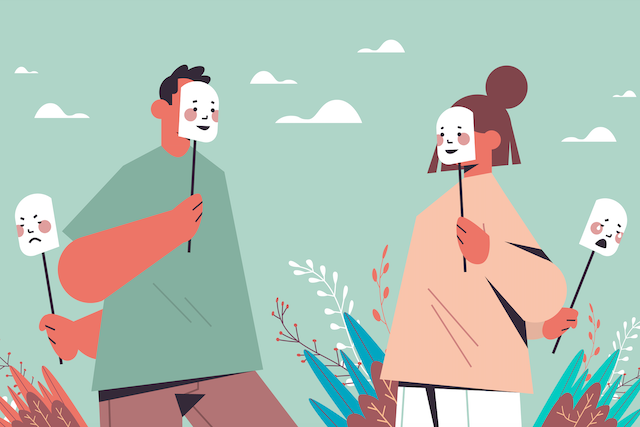
    I certainly hid behind many of those things. I used them as a cover, as a tool to hide behind. A mask. A role I played, behind which I could feel (somewhat) safely tucked away and protected.

    My “passion for health and fitness” allowed me to play the badass.

    (In reality, I was scared all the time.)

    It allowed me to play the inspirational “success” story.

    (In reality, I was terrified of putting an ounce of weight back on because I desperately craved the praise and validation I was receiving. And it was destroying my mental, emotional, and physical health and well-being).

    The strong, fearless, confident “fitness freak” that could do anything she put her mind to.

    (Which, in reality, hid the fact that I was so scared and emotionally fragile and felt so broken that I needed the physical strength I could build through exercise just to get through the day.)

    I was good at these roles. I loved these roles, at least in the early years.

    Just be what people expected. Be what I’d seen get celebrated in others. Easy, right? Sure, until it isn’t.

    The longer I wore the mask, the more it started to hurt.

    The harder I worked to keep up those appearances, to maintain that external image of perfection through my body and what I was eating, the more damage it was doing.

    Externally, I was doing everything “right.”

    In reality? I ended up a binge eater, bulimic, clinically depressed, and living with generalized anxiety disorder and panic attacks. For many reasons, not the least of which because I was completely disconnected—from myself, my body, and from others.

    I was so focused on trying to be something I thought I was supposed to be, so I’d be liked, admired, impressive, that I lost who I was and what I needed.

    I lost what truly mattered to me and in life.

    I lost the ability to trust myself, to trust others, to let them in and truly see me.

    In fact, I was terrified of being really seen.

    Because I didn’t like myself and I didn’t believe anyone else would either if they knew the real me.

    So I hid behind what my body looked like. My external strength. The image I built.

    Holy cow, it got exhausting. And soul-crushing.

    You simply cannot simultaneously spend your life worried about what other people think about you (or your body), trying to micro-manage and control the image you project, and also be truly connected to yourself and others in any meaningful way. 

    Because in order to keep up those appearances, you have to actively work to hide parts of yourself—large parts of yourself that you’re terrified will be seen if you dare take off the mask.

    If you’re actively hiding parts of yourself, you’re not able to truly feel seen, heard, and valued… because you are hidden away. Locked in some dark, dusty corner of your inner world, and in my case, stuffed down with food.

    After a while, I didn’t even remember who I was. My identity became so wrapped up in who I thought I was (a worthless failure who was completely undeserving of love or acceptance) and who I was trying to be (the perfect, badass inspiration) to hide it, that I was lost.

    And completely disconnected. From myself and others.

    What I wanted or needed didn’t matter because my entire existence was being driven by fear and the disconnection that causes.

    Fear of rejection and abandonment if I stopped playing the role.

    Fear of weight gain and not looking “good enough.” Fear of not being good enough. Fear of what the binge eating was doing to my health. Fear of what would happen if I stopped micro-managing every morsel of food I ate and just trusted myself with food.

    Fear of judgment.

    And every time I turned around, there were diet, “health and wellness” cultures swooping in and stoking those fears.

    Eventually, I recognized that I couldn’t keep it up. I couldn’t keep playing the role. I was too tired, and it had completely broken me. I couldn’t keep caring about trying to be impressive or accepted. I had to start caring about being healthy and at peace with myself.

    In order to do that, I needed to find my way back to myself. I needed to shut out the garbage that was keeping me disconnected and learn how to connect.

    First with myself, because how could I ever truly connect with others if I didn’t even know who I was when I wasn’t playing the role?

    And how could I heal all that weight and food stuff if I stayed in the fear and obsession that kept me so disconnected from myself?

    I couldn’t.

    So I started working on being present with myself, not an easy feat when you don’t much like yourself. But required, nonetheless.

    I started getting curious and practiced connecting with my body, my thoughts, my emotions, my needs… my inner world.

    Who was I, really?

    What really mattered to me in life?

    Forget what I thought I should eat or do… what did I need?

    Was I really put here to spend my life hating myself, obsessing over these things that are destroying me, distrusting myself, and fearing real, meaningful connection with others?

    What if I could find a way to unconditionally accept myself and my body? How would that change the way I treated it and showed up in the world?

    What did I want to eat? Forget what I was “supposed to” eat; what did I want? How were the foods I was eating making me feel? How did I want to feel in my body?

    Forget what it was supposed to look like or weigh; how did I want it to feel to live in? How were my thoughts and conditioned patterns with food and exercise impacting that? Were they helping or harming? How could I learn to change them if they weren’t?

    And I started practicing being more intentional with my thoughts, beliefs, and actions. Intentionally making choices that were loving and kind, that helped me feel better, in general and about myself. Anything that wasn’t helping me live or feel better, and more connected with myself, could have no place in my world anymore.

    Once I started feeling deeply connected with myself and my body, I slowly started working on learning to connect with others.

    That’s still something I find difficult and am learning to do, but I’m still practicing. In baby steps.

    Because what I learned when I started reconnecting with myself was how much living with an alcoholic father impacted me as an adult.

    It taught me that not only is the world scary, but people are. They’re scary and unpredictable. It also created abandonment issues, and it’s where the fear of not being good enough, and the feeling that I needed to play a role to be loved or accepted, had actually begun. No wonder I had so much trouble connecting.

    I share this story because I’ve come to realize that most of us have an underlying fear around not being good enough that started in childhood for one reason or another. And those predatory industries sneak into every corner of our world, capitalizing on our fear with broken promises that do nothing but make things worse.

    The weight and food obsessions are a diversion.

    A socially acceptable, surface-level distraction that keeps us so externally focused and consumed that we spend most of our adult lives not even knowing that we’re disconnected—or that we’re living in fear and we’re just trying to “fix it” by making ourselves feel more socially acceptable.

    All while disconnecting us more and more. From ourselves and others.

    Because we’re hiding behind diversions and masks.

    Well, my mask is finally off.

    Under it, I have belly rolls. I have wrinkles. I have gray hair. I dye it because I prefer dark hair, but sometimes I put it off and rock a solid skunk stripe of gray down the middle of my head.

    Like all bodies, mine changes.

    None of that means I let myself go. It means I let myself just be.

    I’ve overcome a lot of things in my life, but still struggle with some others.

    I screw up a lot, even fail sometimes. Often, actually.

    I’m exceptionally good at some things and full-on suck at even more.

    I can’t do everything myself. Sometimes I need help and support. I’m still not very good at asking for it, but I’m working on it.

    All of that simply means that like you, I’m human. And I cannot connect with myself or anyone else if I’m trying so hard to be impressive that I’m not being real.

    So I don’t anymore.

  • How Befriending My Anxiety and Depression Helped Ease My Pain

    How Befriending My Anxiety and Depression Helped Ease My Pain

    “‘What should I do?’ I asked myself. ‘Spend another two miserable years like this? Or should I truly welcome my panic?’ I decided to really let go of wanting to block, get rid of, or fight it. I would finally learn how to live with it, and to use it as support for my meditation and awareness. I welcomed it for real. What began to happen was that the panic was suspended in awareness. On the surface level was panic, but beneath it was awareness, holding it. This is because the vital first step to breaking the cycle of the anxious mind is to connect to awareness.” ~Yongey Mingyur Rinpoche

    I have suffered with anxiety and depression for at least fifteen years. I can’t remember a time when I didn’t. They both almost killed me, but I have learned that living with them, rather than fighting them, is far more fortuitous in bringing relief.

    Fortunately, at no stage did I act on suicidal thoughts, but I would be a liar if I said I never had them. Not in terms of making plans, but the general idea did creep up on me, and for a while it was all-consuming. I also reached a stage where I didn’t care if I died.

    Alcohol became a crutch and, in a strange way, beer actually may have been responsible for saving my life. The one day I ever seriously had intentions of ending everything, I walked past a pub after leaving work, went in, and proceeded to get exceedingly drunk. I reached a stage where I was incapable of doing anything worse to myself, and my inebriated state led to my wife telling me I needed to get urgent help.

    Trying to put my finger on precisely why I started feeling anxious and depressed would be like trying to pick up mercury with a fork. It would be equally impossible to pinpoint at what age I began to suffer. I think I was always a worrier, even from early childhood.

    In many ways I had a blessed upbringing. I had loving parents; we weren’t a wealthy family, but we didn’t struggle either. There was always enough food, and I was warm, clothed, and felt cherished.

    That said, things weren’t perfect, as my dad worked away from home a lot. He did it to provide for his family, us; I am proud of him and in no way resentful. It did leave a hole in the home, though, and put a lot of extra responsibility on my mum, and maybe I have separation issues as a result.

    My parents had high standards when it came to behavior. I recognize this now as having made me the person I am today. They gave me strong principles, for which I am grateful.

    It wasn’t always easy to live up to my mum and dad’s expectations, though. I remember being stressed quite often about this and having a fear of being shouted at. In comparison with what some children sadly have to tolerate, I feel a little silly saying that, but I’m trying to give an explanation for my anxiety in later life.

    Bullying was also an unwelcome companion throughout my childhood. Ridiculing, name-calling, and physical abuse all left their indelible mark. I can clearly remember the indignity of being drowned in another, older, bigger, stronger child’s spit.

    The main focus of my tormentors was that I was “ugly”, “nobody would ever fancy me,” and that I would “never find a girlfriend.” I managed to disprove all three as an adult. Well, maybe I am “ugly,” but, frankly, as a happily married man, as long as my wife doesn’t think I am, I’m not sure it matters all that much.

    What does matter, though, are the scars this taunting left. I’ve never really regained my confidence after them. I’m not sure I can, and they cause me to be hard with myself, leading to anxious and depressed thinking.

    Maybe it was the bullying that really fed my depression and anxiety. I’ve been the victim of domineering, abusive behavior as an adult too, and there is a fragility inside me when faced with such onslaughts. I also have a very keen idea of justice and don’t enjoy seeing it being compromised.

    Notwithstanding, I have never felt able to definitely put my finger on bullying as the cause of my, at times, poor mental health. Without the ability to do that, I believe I’m destined for anxiety and depression to be lifelong companions. That may sound defeatist, but my reality isn’t as gloomy as that last sentence might suggest, and the reason for this is something I can definitely point to.

    GPs treated me for years for depression and made no mention of anxiety. The day following my escapism from suicidal thoughts through inebriation, my wife made me go to the A&E Department at our local hospital. There, finally, a doctor listened attentively, made a first, tentative diagnosis of anxiety leading into depression, and suggested things I could do alongside taking medication to aid real recovery.

    Of all the advice that medic gave me, the suggestion that has been most instrumental in regaining my health was to meditate. I’d dismissed meditation in the past as “hocus pocus,” laughing at and pouring scorn on it. Something in me reacted positively to the suggestion that day, and I am eternally grateful for that.

    The hospital, among other things, gave me a list of places where I could find helpful tools for meditating. Apps, recordings, videos. I decided I had nothing to lose and everything to gain, so I started following their guidance.

    I burned through the resources the doctor gave me within a few days. That was enough to convince me that this could really help. I still felt anxious and depressed, but for the period of time while I meditated I got, for the first time in years, a real sense of relief that wasn’t alcohol-fueled.

    Unsure of where else I could find guided meditations, something triggered in my brain and a thought emerged: “I am sure Buddhism has something to do with meditating.” I went onto YouTube and typed in “Buddhist meditation” and got a huge number of results. So began my real journey with mindfulness practice.

    Meditation didn’t miraculously cure my anxiety and depression. As I said, I still live with them. But it offered a glimmer of light through which I felt certain I could better learn to cope and give a quality to my life that had been missing for years.

    I can’t say specifically how meditation has changed things for me. I just know it has. I have read that the brain is plastic. That it can develop and change over time. The idea that activities like meditation help develop new, healthier, neural pathways makes sense to me. It’s almost as if the change has happened subconsciously. What I do know is that, as a result of meditating regularly, I’m calmer and better able to deal with crises than I had previously been.

    As I made meditating a daily practice, I began looking more into Buddhist philosophies. They are what worked for me and it is eminently possible to get the same benefits from other philosophical teachings, both religious and not. One idea I hit on was the concept of not fighting negative emotions but rather befriending them.

    This sounds counter-intuitive. When we get a feeling we don’t like, whether it be anxiety, depression, or anything else uncomfortable, we naturally want to run from it. This only strengthens the emotion, though, and does nothing to relieve it.

    Perhaps that’s why people get locked in cycles of negativity. They fight the uncomfortable feeling, thereby strengthening it, so they fight it all the more. Round and round goes the vicious circle.

    Instead, by accepting the emotion, letting it be, and recognizing that the feeling isn’t inherently wrong, that it’s just a sensation, it somehow softens it.

    The first person I ever heard talking about this process was Yongey Mingyur Rinpoche whose quote I have cited above. He often speaks about how revelatory it was for his panic attacks, and so it has proven to be for me with my anxiety and depression.

    It was this charming, charismatic Nepalese Buddhist who got me hooked on meditation. I specifically remember the moment I found his video “A Guided Meditation on the Body, Space, and Awareness with Yongey Mingyur Rinpoche,” on YouTube. With his gentle and humorous approach, I could almost feel his arms holding me as he guided me through the process. Despite meditating daily for the last four years, I still return to this video when I feel I need to get back to basics.

    The belief that somehow anxiety and depression will up sticks and leave me is not something I possess. However, they don’t frighten me anymore, and I have learned to cope with them. I would wish them “good riddance” if they did pack their bags and go, but they don’t dominate me anymore. I live with them and they aren’t going to prevent me from enjoying a positive existence.

    There is a wealth of resources available online that both talk through this novel concept and provide guided meditations on it. Some are religious or spiritual, though plenty of others are purely secular. It is an idea that can be used by anyone in whatever format they wish.

    My life has changed because of these few, simple practices. I’m more content than I can ever remember being and like to think of this transformation as proof that anyone who suffers similarly can regain happiness. I would be lying if I said it isn’t hard work, or that there aren’t periods that are more difficult than others, but it is so worth it.

    As a result of these improvements, I was able to kick my alcohol habit over three years ago, something that has also benefitted my mental health. Again, I found I felt better from not drinking, but this is not to say that being teetotal is an elixir for wellness. Plenty of people find a beer or a glass of wine actually helps how they feel, and if this is you, go for it.

    This article is not prescriptive. I don’t believe anyone can offer a recipe for wellness, as it is dependent on the individual, and I strongly doubt that two people would ever find that what works for one, works exactly the same for the other. If the above text offers hope and nothing else, the writing of it will have been worthwhile.

  • How Our Self-Talk and Language Can Sabotage or Support Us

    How Our Self-Talk and Language Can Sabotage or Support Us

    “Today I want you to think about all that you are instead of all that you are not.” ~Unknown

    “Love the pinecones!”

    This was a comment from a friend on one of my Facebook photos from a beautiful seaside hike filled with wildflowers and other natural wonders.

    When I responded with “It was a puzzle figuring out how to best photograph them” (not what I originally planned to write), she wrote, “Gregg, that’s such a fun part, isn’t it?” That comment was the brightening of a bulb that had already been going off in my head. It led to deeper self-reflection and awareness around my own self-talk patterns.

    We’ve all heard that how we speak to ourselves has a huge impact on our life. If your self-talk is largely negative, it lowers your self-confidence, drive, creativity, spirit, and enthusiasm for life. In short, it limits your self-expression and access to joy. If your self-talk is compassionate, understanding, and loving, it helps you to move through your life with much greater flow and ease.

    There are the more obvious ways negative language patterns show up, and then there are more hidden, subtle, or unconscious ways. Amongst the more obvious are the habitual ways we berate ourselves or call ourselves names.

    For example, if you are making dinner and just as you finish you knock the whole thing on the floor, how might you respond? It makes total sense to be upset or disappointed, but how does that upset manifest within you?

    Perhaps you think, “Geez, I’m such an idiot!” or “I’m so stupid!” If so, rather than simply expressing your disappointment over the action or result, you are taking one moment in your life and using that to malign yourself at your core.

    Even calling yourself clumsy can become a self-fulfilling prophecy. Maybe you feel it’s actually true. Perhaps others have told you that as well. The thing is, whatever we choose to tell ourselves, whether unkind or gracious, our brain looks for ways to prove those thoughts are true.

    You can acknowledge a mistake, express frustration over an experience, or even decide you want to be more careful in the future, all without casting aspersions on yourself. Name-calling or harsh language directed at ourselves is an example of the more readily visible forms of self-talk. But what about those hidden or unconscious patterns?

    That kind of negative self-talk can be far more insidious and more prevalent than you may suspect. I know it was for me. It’s something I’ve been internally exploring lately and why I was struck with my friend’s comment on my post. Discovering the hidden ways I hold myself small has led to developing more empowering language that serves me on a daily basis.

    Though I was affected by ADD (attention deficit disorder) my whole life, it was not until I was in my forties that I was diagnosed. The first book I read on the topic and perhaps my favorite is called You Mean I’m Not Lazy, Stupid, or Crazy?

    I loved the lessons I got from the book and all that I learned about the workings of my brain. For several years, though, I felt at odds with the title. After all, I reasoned, I never spoke of myself in those pejorative terms. At least not that I was consciously aware of anyway.

    Over time, though, I realized there is a part of my brain that has been actively trying to prove I’m not those things. And if part of my brain is trying to prove I’m not that, then another part must in some way be telling me that I am lazy, crazy, or stupid. That’s when I decided it would be helpful to start consciously examining my unconscious patterns for the voice in my head.

    I’ve noticed my persistent stories of “I don’t know how” or “it will be too hard,” which have been a mantra in my head since childhood. I’ve long been mired in those stories, though they can show up in sneaky ways.  For example, if I see a picture of a place I’ve never been, I have a habit of thinking with melancholy “I’ve never been there” or even feeling jealousy or envy for the photographer.

    While it’s not wrong to have such thoughts, and it makes sense for them to come up from time to time, I noticed I was letting a beautiful photograph put me in a state of dissatisfaction, or even feeling sorry for myself. I was perpetuating limiting patterns of victim stories instead of empowering myself. I decided when I recognized that pattern to play with new thoughts.

    That might involve using that beautiful photograph of a place I’ve never been to remind myself of all the amazing places I have been. Or it might be feeling a sense of joy that such places exist or gratitude that others get to enjoy them.

    Or it could be as simple as thinking, “Oh that looks so interesting.” Or even “How do I get there?” That last one could be said with an air of resignation as a way of holding myself small and complaining, or it could be excitement over the possibility, all depending on how I choose to hold that thought.

    It’s not just the specific words we use but what meanings we ascribe to them that give them their energy and power. I’ve found it invaluable to notice my energy as well as the words I choose.

    With the Facebook exchange about my picture and the puzzle of figuring out how to best photograph the pinecones, my first thought was to write, “I was struggling to figure out how to photograph them.”

    But then I thought, “Why am I saying it that way?” I did not feel in struggle. Why would I want to frame it that way to myself or anyone else? So I altered the wording. That change definitely felt more empowered and certainly less stuck in victim mode. But again, it’s not just the words, but noticing the energy as well.

    Because depending on how I choose to hold it, “a puzzle” could be a game or it could be a chore. I was already leaning toward the more positive aspect but with residue from my initial thought of “struggle.”

    So when my friend chimed in with “Gregg, that’s such a fun part, isn’t it?”, I felt light, happy, and energized. And in all honesty, I initially felt a little bit of embarrassment too. Because it really highlighted for me the heavier energy I had been unconsciously creating over an experience I had thoroughly enjoyed.

    That awareness brought excitement for the deepening realization over the ways I can allow my word patterns to create disappointment and sadness or excitement and joy in my nervous system.

    It’s not just about whether we overtly beat ourselves up but what patterns we use. I’ve had a lot of unconscious patterns that have kept me in the mode of victim of the world rather than the creator of my life.

    It’s an awareness that I am continuing to deepen. As I do, I notice I feel more resilient, get stuck in negative emotions for shorter periods of time, and have more access to joy and aliveness. In an instant I can change how I feel just by the way I speak to and about myself.

    You can create that for yourself as well. Here are a few steps to do so. Outside of step one, they are not in chronological order and may even happen simultaneously.

    1. Start simply by slowing down and noticing your patterns.

    Do you berate yourself? Do you use words that feel untrue or create some kind of internal discord or discomfort that would not otherwise exist, as I had when I was going to use the word “struggle”? If so, explore how you can change those patterns and choose more empowering phrasing.

    This is not about denying that sometimes we do struggle or feel sad or have hard things happen. But you might find that your language actually influences your perception and your feelings about your circumstances. You can view the same situation as an obligation or an opportunity; it all depends on how you choose to see it and talk about it.

    2. Revise your word choice.

    On my journey of monitoring my patterns, I noticed that I’d write things like “I can’t figure out xyz” when, for example, I wrote to a company asking for technical support. The word “can’t” has such a disempowering connotation. So I started changing my word choice to things like, “I would like your help to figure out…” or “I would like to understand how to xyz.” This difference can seem subtle, but the impact on my psyche was immense.

    With the word “can’t” I was literally stating I’m incapable of something, whereas in the other two examples, I’m simply acknowledging information that I lack. Which of those feels more empowering to you?

    The language can seem new and uncomfortable or foreign at first. Perhaps you don’t feel sure how to make the shift. Again, the first step is simply to notice. The more awareness you create, the more your brain will automatically start looking for ways to shift toward your desired outcome.

    In the meantime, if you feel comfortable sharing your journey, you can ask a trusted friend, family member, or coach to point out disempowering language when you use it.

    3. Notice how your word choice affects your energy.

    In the example above about asking for technical support, I noticed how my habit of saying “I can’t figure out how to xyz” was subtly chipping away at my self-confidence. It kept me in a state of frustration and my energy small and insecure.

    Making the change to “I would like to understand how to xyz” felt more expansive. I was declaring a desire to make a change rather than declaring what I was not capable of. That feels more empowering in my nervous system, but still not with the aliveness I’d most desire. Now I’d say something more akin to “I’m learning your system” or “I’m gaining clarity around your system. Please explain to me how to xyz.”

    Sharing in that way, I’m speaking to my growth instead of declaring a deficit. In my body, that last one feels powerful and assertive while still asking for the support I need. What feels most powerful for you?

    4. Be kind and compassionate with yourself.

    Don’t expect perfection. Be compassionate with yourself. If you notice you’re reverting to old patterns, rather than berate yourself, use it as an opportunity to be excited. Because it means you are noticing. As in meditation, the idea is to notice your wandering thoughts and come back. Each time you notice you are creating an opportunity for new and more empowering patterns to flow.

    It can be like learning a foreign language. Because in a sense you are. And just like learning any new language can open up whole new avenues of possibility, this one will as well, releasing shame and self-judgment while brightening and uplifting your world.

    For myself, changing my hidden patterns has helped mitigate the impact of historical victim stories that I’ve held. I feel more empowered, with greater energy to achieve my goals. If you give it a try, I’d love to hear what you are noticing.

  • Sick of Toxic Relationships? Love Yourself Enough to Walk Away

    Sick of Toxic Relationships? Love Yourself Enough to Walk Away

    “There comes a time in your life when you walk away from all the drama and people who create it. You surround yourself with people who make you laugh. Forget the bad and focus on the good. Love the people who treat you right, pray for the ones who do not. Life is too short to be anything but happy. Falling down is a part of life, getting back up is living.” ~José N. Harris

    Letting go of relationships that impact your well-being and make you feel unsafe may seem like a simple act for many, but for those of us who are cut off from our emotions, it is a challenge even to know how we feel around other people.

    Some of us have lived with a feeling of unsafety since birth. It was our normal from the beginning. It was in our first homes and in our first relationships.

    This was my experience for most of my life.

    I was born into a house where my mum had felt unsafe while pregnant with me. That fear she felt living with her in-laws and my dad was real. She had an arranged marriage at twenty-two and had no idea her father-in-law was an alcoholic.

    Her first experience of alcoholism was mine too, but I was a newborn. I have memories of her being too scared to go into the house. My body still remembers how this feels.

    So I came into this world on high alert, waiting for an eruption to occur at any given moment. I remember being terrified in my crib. This experience wired me to be sensitive to energy. As a baby I could feel the tension and would almost hold my breath around my family.

    I learned early that people were unsafe. I learnt about fear and how to contract my body. For me, fear was normal, and I felt constantly on the lookout for any perceived threat.

    My poor little body didn’t know how to survive, and my parents were preoccupied with dramas in our house, so I learned survival skills like freezing, not speaking, and pleasing my adult caregivers to keep the peace. When they were calmer, I got connection and love and was able to survive.

    We all learned young how to survive in the family we were born into, and our nervous systems were wired accordingly.

    As I got older and came in contact with people I felt unsafe with, I would do the same—freeze, rescue, or please others and silence myself. It crushed my self-esteem and made me quite the doormat for other people’s drama.  It made me suicidal, as I wanted to escape the pain yet felt trapped in these patterns.

    I let people talk to me awfully. I let people work out their trauma on me. I saw my parents doing the same and didn’t know it wasn’t normal. I thought being a punch bag for other people’s trauma was okay.

    I didn’t know how to express my truth or have boundaries.

    As I got older it became obvious to me that I had become a magnet for toxic relationships. I was constantly reliving these unsafe feelings from my childhood.

    I gravitated toward people who needed me to help them with emotional regulation, just as I’d learned to do as a child. These relationships drained me and kept me in a constant cycle of pain, yet I was almost addicted to these interactions

    I had become so needless and wantless myself that I didn’t know who I was without these people. I would get a dopamine high from getting their love and acceptance for a small moment after making them feel better.

    I was always chasing the love and safety I longed for in my childhood home. 

    I was attracted to people who required rescuing due to their own trauma and addictions. I was either trying to save them or letting them persecute me.

    I would say nothing when they blamed and shamed me without justification, internalizing their blame—just as I had as a child when my dad persecuted me for all the stress he felt. “If Dad says everything is my fault, then it must be,” I thought.

    I saw it as my job to take care of other people’s emotions. If they were sad, I would help them feel better, and if they were angry, I let them take it out on me, as I always had done. If someone was angry with me, I believed it must have been my fault.

    One day, I came across the drama triangle, and it made me look at my relationships in a whole new way. A drama triangle has three points:

    Persecutor: blames others for their pain

    Victim: feels powerless to a persecutor

    Rescuer: tries to rescue others to manage their emotions

    I found myself in the role of victim and rescuer for many of my relationships. I felt powerless to other people’s emotions and behaviors. Like I just had to accept them.

    The time came for me to take responsibility for my own happiness and build my strength to end this pattern I had been in my whole life. No more being a victim to other people’s trauma. 

    After hitting rock bottom, I finally started to invest my time, money, and energy in myself. I started small with little acts of love—walking in nature, meditating, exercising, and cooking myself healthy, nutritious meals.

    I started to notice feeling calm and relaxed in my body. I became aware of my own feelings and needs. I began to connect with the voice within me, which I couldn’t hear previously. It was always overpowered by other people’s voices.

    This voice guided me to begin to say no to certain events and prioritize my own time. This voice guided me to get therapy, read books on healing, and join support groups.

    There was no way I could make my relationships healthier until I had a healthier, more stable relationship with myself. Building this foundation is what gave me the strength to make more difficult decisions further down the line.

    Over time I became more grounded in my own energy, something I had never experienced before. I noticed which relationships felt safe and when I was getting what I was giving.

    It also became apparent which relationships didn’t feel good and negatively affected my well-being. 

    When I began this journey, I was in a workplace where, unknowingly, I was highly triggered on a daily basis. Once I started to incorporate self-care before and after work and during my lunch breaks, it became apparent that this job had to go!

    I had never expressed my truth in relationships, not even the ones I felt safe in. I just kept it all in and came up with my own stories and assumptions about how the other people felt about me. I drove myself crazy like that.

    I began to change this behavior by expressing my feelings in relationships I felt safe in. I realized how communication can make relationships healthier and more fulfilling.

    Self-expression in relationships created true Intimacy. I had always hidden my true self away.

    I had been single for most of my life because of my previous patterns, but after building a foundation of self-love, I was able to form a relationship with a man who is now my fiancé, who gave me what I’d learned to give to myself—unconditional love and safety.

    As my relationship with myself grew, so did my strength to walk away from relationships that felt unhealthy for me. Some of these were easier than others. I had never been okay with hurting people’s feelings, putting my needs first, or causing trouble.

    I was always the good girl. It took courage not to be.

    I became the one who was seen as selfish or the troublemaker in the family.

    After growing and experiencing relationships in which boundaries are respected, you cannot accept it when people ignore your boundaries and have complete disregard for your feelings. I realized it’s not healthy for someone else to avoid taking responsibility for their actions, blame you, and focus solely on winning an argument.

    You cannot ignore the drama in a drama triangle when you step outside of it.

    Some people just do not want to respect your boundaries because of where they are in their own healing journey.

    You will realize that walking away from some people you have loved your whole life is essential for your own well-being, whether it be for a short period of time or forever. You cannot keep putting yourself last to continue a relationship that does not feel good for your health, no matter who they are. Especially when your inner voice is shouting at you to walk away.

    Many family systems run on the drama triangle with us each taking on our role. But when we step out of it, we give others the opportunity to grow and emotionally regulate themselves.

    It is natural for your family to have a reaction to changes to the family dynamics. But it is not your responsibility to ease that discomfort for them. That is down to each individual.

    My self-love journey empowered me to heal my nervous system from past trauma and stress. My body did not function properly anymore because of the wear and tear from my relationships. I finally listened.

    I invested in body-based treatments such as cognitive breathing, craniosacral therapy, trauma-release exercise, and qi gong. These modalities helped my nervous system heal from the past.

    It took bravery and courage to step away from the toxic relationships in my life, but it’s been my greatest act of self-love to date.

    Begin to tune into the relationships in your life. How do they make your body feel? What is your body telling you? Is it time to set a boundary, express your truth, or step away?

    If that all feels too scary right now, just focus on building that foundation of self-love. And recognize that you don’t deserve to be blamed or shamed for someone else’s issues, and it’s not your responsibility to fix or save them.

    In time, as your love for yourself grows, so will your strength to put yourself first and no longer accept relationships in which you are not treated with kindness, love, and respect.

    You are worthy of relationships that make you feel loved, energized, and happy. Most importantly, you are not responsible for rescuing anyone else or being the place where they project their pain.

  • How Overthinking Ruined my Relationships and How I Overcame It

    How Overthinking Ruined my Relationships and How I Overcame It

    “Overthinking ruins you. It ruins the situation. And it twists things around. It makes you worry. Plus, it just makes everything worse than it actually is.” ~Karen Salmansohn
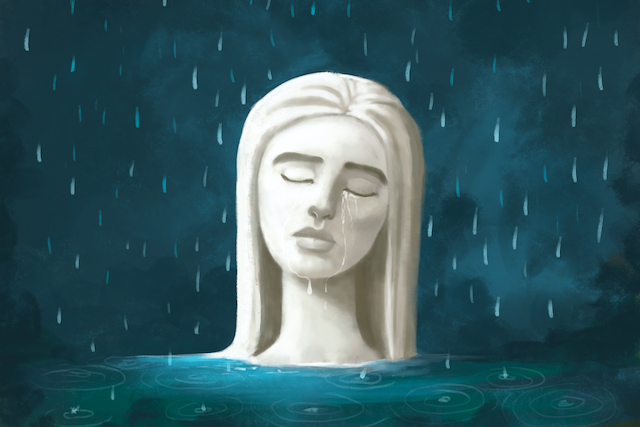
    I grew up with parents who believed a kid shouldn’t have friends and should be indoors always. Because of that, I never had real friends in my childhood, except those I met in school and church.

    Since my early teenage years, loneliness has been my forte, and I have learned to pay too much attention to details. When people talk, I look at them, how they react, their facial expressions, etc. I try to draw out details from the tiniest cues and put a lot of thought in them.

    Conversations, of course, are meant to be enjoyed; however, for me, that isn’t the case. During a discussion, I think of a million ways it could go wrong. I wonder what I’ll say next after I get a reply. And a slight change in a listener’s facial expressions makes me think I’m bothering them—they dislike me, I’m boring, I need to stop talking.

    Having real friends has been difficult for me. I find it challenging to maintain a friendship for long. When I meet with someone for the first time and we both “connect,” I start fantasizing about how we might become everyday gist mates, lifetime buddies, and even in a romantic relationship (for ladies).

    Sometimes, I get tired and want to stop overthinking, but it always seems impossible. The tiniest of details always want to be thought of and processed. And instead of taking action on what I think, I continue thinking about it.

    So many opportunities have slipped through my fingers, making me not confident enough to take action. Except this one time I wanted to enroll in a writing competition. I tried every possible way to discourage myself from applying. I reminded myself of harsh critics and writing rejections I’ve faced in the past, but I never gave in to the voice. I tried to shut it up and applied for the competition—and I won.

    I don’t think I’ll ever fully stop overthinking. I’ve accepted it as a part of me I have to live with, but I’ve also made great progress in getting past it.

    If overthinking has affected your confidence and held you back as well, perhaps some of my techniques will help.

    1. Acknowledge that you’re overthinking.

    When overthinking starts ruining your mood or stops you from taking action, acknowledge it. Don’t beat yourself up or hate yourself for it.

    If you’re anxious to do something because you’ve been obsessing about it, acknowledge that you’re afraid. When we acknowledge something, our brain has a way of providing solutions for us.

    In fact, I started making real progress when I accepted myself as a big overthinker and this helped me love and accept myself instead of hating myself.

    2. Declutter your mind regularly.

    Decluttering your brain is the key to having a settled mind. You could speak to someone—it helps—or write down every thought running through your mind (my favorite technique to calm my mind).

    If, for instance, someone offends you and you can’t get it off your mind, talk to them about it. If you’re obsessing about an interaction with someone you can’t talk to, journal about it. The goal is always to take action whenever possible instead of ruminating on things that are bothering or worrying you.
    3. Don’t expect too much from people.

    The truth is, people will disappoint you. And this will hurt you even more when you place high hopes on them.
    To be on the safer side, don’t place so many expectations on people. People change; things happen, and people go back on their words.

    If you expect that people will disappoint you sometimes, you’ll be less likely to overthink things when they do. Instead of wondering why it happened and if you did anything to contribute to the situation, or if you should have done something differently, you’ll simply accept that people often don’t keep their promises, and you don’t need to take it personally.

    4. Work on developing self-confidence.

    Most times, overthinking is caused by a lack of self-confidence.

    There were times when I found it hard to connect with people. I believed I was a boring conversationalist, so whenever I was talking with someone, I’d always try hard to prove my belief wrong—sometimes unnaturally—to keep a pointless conversation going when I could end it.

    If you aren’t confident in what you bring to the table, you will always overthink your way into believing it’s always your fault if a conversation or something doesn’t go as expected. So instead of telling yourself that you’re lacking in some way, work on believing in your worth, and this will help you question yourself less in difficult situations.

    5. Know when to take a break.

    During a stressful day, it’s normal to have a lot running through your mind.

    Whenever you start worrying about mistakes you’ve made with other people or find the thoughts in your head feel overwhelming, take a break. Take nap, take a walk, practice deep breathing, or do an activity you enjoy to help you get out of your head.

    6. Resist the urge to impress people.

    Most overthinkers have a strong urge to impress and please other people. When in a conversation, they may carefully pick their words, and then obsess about whether they’ve said anything stupid or wrong.

    That said, a friendship based on trying to impress or please another person will be one-sided and may not last.

    People don’t want to feel like they’re being worshipped in a friendship. They want to know the real you—both the exciting and boring parts of you—so it turns them off when you make a conversation about them alone.

    When talking with people, say what you mean in the way you want to say it and trust that the right people won’t pick apart everything you say and will actually appreciate you for being you.
    7. Accept that you can’t be friends with everyone.

    Even as you try to make friends, you should know that not everyone will like you.
    You may try hard to make someone acknowledge you and be friends, but you won’t click with everyone, and you don’t have to overthink it.

    You aren’t meant for everyone, so if someone disrespects or ignores you, it isn’t your fault. You have to find people who like you and let go of the ones who don’t.

    8. Enjoy the moment and try not to think about tomorrow.

    In all you do, make sure you’re present in it. You can’t be in two places at the same time. In the same way, you can’t expect to enjoy the present if you worry too much about the past and future.

    Make it a rule to always be in the moment, focusing on the people right in front of you. If you let yourself be fully in the moment with them, you’ll worry a lot less about what they’re thinking of you (and about everything else, for that matter).

    Ever since I started practicing all I mentioned above, I’ve been happier in life than ever before. Making friends with people and holding conversations has become much easier for me.

    I failed many times when trying to rewire my brain, but I never gave in. I made the end goal, to make good friends and enjoy life as much as possible, my mantra. Now I overthink a lot less and connect with people more, and I believe you can do it, too!

  • Why Belonging Is So Difficult for Survivors of Domestic Abuse

    Why Belonging Is So Difficult for Survivors of Domestic Abuse

    “Our sense of belonging can never be greater than our level of self-acceptance.” ~Brené Brown

    Sitting there watching The Greatest Showman, with tears pouring down my face, I asked myself why does this song, in fact this whole film, make me cry so much? Why does it evoke so much emotion in me?

    “I am brave,

    I am bruised,

    I am who I’m meant to be.

    This is ME.”

    “Look out cos here I come,

    And I’m marching on to the beat I drum,

    I’m not scared to be seen,

    I make no apologies.

    This is ME.”

    I am brave, I am bruised, and I know, after many years of working on myself, that I am who I am meant to be. But if I am honest, I am still not marching to the beat of my drum, I am still scared to be seen, and I am still apologizing.

    The reason why this film makes me so emotional is because it brings up emotional scars that have still not fully healed. It highlights a part of me that still needs work. I watch these people who have lived their lives as outcasts and have never before found somewhere they belong, and I empathize.

    I have never been cast out of anywhere. I grew up in a stable, loving family, but I am familiar with the feeling of not belonging because for many years I have been scared to show the real me.

    This fear or inability to be me started the minute my ex pushed me over for voicing my opinion and trying to argue my point. It grew with every punch, kick, threat, humiliation, criticism, and brush off. It grew as the secrets I was keeping mounted up, as the lies I was telling became bigger and bigger.

    From the moment my relationship became abusive I did not belong anywhere because I was no longer free to be me.

    I hid what was going on, and when it was obvious something was happening because of the bruises, I made light of it and played it down.

    I withdrew from myself, becoming just a shell of a person. When I was at home with my partner, I was who he expected me to be; when I was with my family, I tried to be just like them. When I was at work, I was who I thought they wanted me to be.

    I found some sense of belonging when I gave birth to my first son. As I lay there in hospital with him in my arms this new feeling came over me—nothing else mattered apart from this wonderful little person. However, I quickly learned to be the mum my partner wanted me to be rather than the mum I wanted to be, and that broke my heart.

    Friends disappeared, work colleagues were unsure how to treat me, and on the one occasion I reached out for help (to one of my son’s teachers), I was brushed off. It was a private school, and domestic abuse was not something that was part of their agenda. I did not belong there.

    When I finally left for good, I turned up to a women’s refuge, with my seven-year-old son, in a place that I did not know, miles away from my family and friends. I thought that was it, that all my pain was going to stop. While the physical pain obviously stopped, the pain on the inside has taken much longer to heal.

    Over fifteen years later, after years of inner work and a happy marriage, I still do not feel that I belong in many places. This is because I am still holding myself back from being me.

    My self-preservation tendencies, which were once so vital for my survival, are now holding me back. The fear that kept me on high alert, that helped me to evaluate my words and actions before speaking or acting, to keep me safe, was so strong that even after all these years, it is still there.

    What if I do something to upset my husband, will he leave me?

    If I voice an opinion that is different to someone else’s, will they brush me off and think I am stupid or stop liking me?

    What if I say something and open myself up and no one cares or listens? That will just make me feel worthless and unimportant again.

    If I do what I really want to do and get it wrong or fail, others will think I am useless.

    Why would anyone want to listen to what I say?

    Making decisions that everyone agrees with means I am doing the right thing, even if I am not sure that is what I want.

    This fear has prevented me from finding places I belong.

    Yes, I fit in wherever I go because I speak and act in a way that suits the situation, that ties in with everyone else. I sit on the fence and do my best to understand and accept everyone’s point of view without voicing my own because then everyone will like me, and I will not get hurt.

    But just fitting in is not good for your self-esteem. It just cements the belief that you need to hide the real you.

    Being a good communicator involves adapting to suit the environment and situation that you are in, but it should not be at the expense of your own values and opinions, which are just as important as everyone else’s. Pleasing everyone else at the expense of yourself means that you are not giving them the best of you, because that can only come from being wholly and truly YOU.

    As a result of domestic abuse, I suffer from low self-esteem. It has got a lot better over the years, but it still pops up now and again.

    I go through times when my self-love and self-worth are purely based on what others think of me. One unkind word, one difference of opinion, one moment of feeling ignored has me plummeting into the depths of self-hatred and self-doubt.

    It normally happens when I meet someone new or join a new group. I am overly concerned with what they think of me, so I mold myself into someone I think they want me to be, ensuring that they like me. I still hold back now and again with my husband, preventing a disagreement that could potentially result in him deciding he doesn’t love me anymore.

    The truth is, everyone who meets you genuinely wants to meet the real you. The best you is the authentic, bruised, brave, perfectly imperfect you.

    There are times when I genuinely feel that I belong, when I feel comfortable being my funny, hyper, jokey self, when I can speak up and voice my opinion, when I have the confidence to make a mistake and to listen to and act on my intuition.

    At these times I feel content, my head is not working on overdrive trying to figure out what I should say and do, my heart is open, and I feel safe to be me. And I know that during these times I am able to give the best of me. These are the times when I feel I am just as important as everyone else. When I feel that I am an equal.

    I want to feel like this all of the time! I don’t want to just fit in. I want to belong wherever I go. I want to march to the beat of my own drum. I want to fulfill my potential and be all I can be.

    I know, however, that there is only one place I truly need to belong and feel safe to be me, and that is within.

    I need to know who I am, what I want, what I like, and what I don’t like. I need to be clear on what my values are and what my dreams and aspirations are. I need to be honest with myself about how I am feeling. I need to work on that overpowering self-preservation mode that is still on autopilot by recognizing that I am safe, that I will not get hurt if I open up and let my true self out.

    I need to give myself a break from the ridiculously high expectations I have of myself and treat myself with compassion and respect. I need to love and accept myself for who I am, not just when I have achieved something.

    Only then will I truly belong, will I be able to unapologetically be me and shout from the rooftops “THIS IS ME!”

  • Why I’d Rather Be Vulnerable with People Than Pretend I’m Perfect

    Why I’d Rather Be Vulnerable with People Than Pretend I’m Perfect

    “Give up being perfect, for being authentic. Give up the need to be perfect, for the opportunity to be authentic. Be who you are. Love who you are. Others will too.” ~Hal Elrod

    I’m not perfect. Not that this would come as any kind of surprise to anyone who knows me. But I often feel pushed in the direction of trying to represent myself as someone who has it all together. Especially because of the nature of my work as a coach and facilitator. What about you? Do you ever feel like you’re putting on a show for others?

    The more I find myself trying to represent a perfectly put-together person, the less confident I feel in who I am because I know I am being inauthentic. It’s a big part of what took me off social media a few years ago.

    I don’t like that social media has the ability to mold what you think about yourself by way of comparison and encourage posturing. It’s a slippery slope, as we’re hardwired to yearn for love and connection as part of our survival. For me, it didn’t feel like the kinda place I wanted my love and connection to come from.

    Having the ability to talk about our flaws, what’s going wrong in our lives and where we’re getting stuck, is a huge part of human evolution that we often forget about. If we don’t have an environment to talk about our vulnerabilities, the wounds never get a chance to heal.

    Before getting into therapy, my life was a bloody mess because I pretended like these wounds didn’t exist.

    I don’t remember a period in my life without depression. Even as a teen it followed me around like a shadow.

    I believed the world would be better without me. I felt worthless—like I shouldn’t even have a seat at the table with other humans. I should have been in an alley eating scraps of food with sewer rats. No matter what I did or how hard I tried, the shadow mocked me for dreaming of a better future. My unwillingness to unpack those thoughts meant the infection spread to all areas of my life.

    I grew up in the nineties, when no one was talking about mental health. You struggled in silence.

    I battled demons in high school. I only lasted till eleventh grade before dropping out. I couldn’t stand the thought of spending another day being somewhere that made my life hell—but really, hell was inside me.

    The voice inside my head was (and still is at times) vicious. Every day it was like the Vikings raided and settled into my thoughts to destroy my existence. Those thoughts have left scars that would look like battle wounds of lobbed-off arms if you could see them.

    The voice inside my head was a reminder that I sure as hell would never do anything my parents would be proud of. It was easier to do nothing so that nothing was expected of me. I didn’t feel stupid if I didn’t try, so it made my reality an easier pill to swallow.

    I did graduate and made my way to university, but my life became increasingly dysfunctional. My love for being black-out drunk on Sailor Jerry rum became the perfect way to cope with a chaotic mind I didn’t understand.

    This comes back to not treating open wounds. Everything I resisted continue to persist.

    I had next to no insight into what I was going through because I wasn’t willing to share that I was struggling.

    At the time, my problems took on the weight of the world because I didn’t let people stand by my side to support me. I burned through relationships like a brushfire. I had no idea how to be in an open and communicative relationship because I barely had a relationship with myself.

    Once the wounds became visible through therapy, I could stop the infection from poisoning my ability to think and function. Vulnerability saved my life. I have no doubt that if I didn’t get that support, I would not be here today.

    We forget that our survival depends on being vulnerable. Author Brad Stulberg talks about this in his book, The Practice of Groundedness. He writes, “Our ancestors who survived weren’t those who were the strongest by traditional measures, but those who were most effectively able to share their weaknesses with one another and work together to overcome them.”

    If I didn’t share what I’ve been through, would you still be reading this? Probably not. It would be just another fluff piece on embracing your vulnerability.

    Without openness, there is no love and connection.

    Without openness, you and I wouldn’t be sharing this moment.

    Without openness, you and I can’t heal and grow together.

    The idea of being vulnerable scares the sh*t out of most of us. No one wants to be perceived as weak or admit they have flaws. We’re afraid that the lions of the world will sense our weaknesses and pick us off one by one.

    Except I’ve never actually been mauled by a wild animal when I’ve asked for help, or taken responsibility for a mistake. It’s actually had the opposite effect. Through my writing and vulnerability, I’ve connected with people on every continent of earth.

    It becomes impossible for me to pretend my vulnerabilities are mine alone if people from all over the world have said I’ve captured what they’re struggling with.

    This idea is backed up by research from The University of Mannheim, in Germany, that Stulberg references in his book.

    He writes, “They repeatedly found that the individual doing the sharing felt that their vulnerability would be perceived as weak, as a negative. But the person on the other end of the conversation, the listener, felt the exact opposite: the more vulnerable the sharer was, the more courageous they perceived him or her to be. The listener viewed vulnerability as an unambiguously positive trait.”

    And I think this is why a lot of us continue to feel stuck. We’re so damn wrapped up in worrying about what others will think of us when we open up that we miss the chance to connect.

    When we feel we need to be perfect, it becomes impossible to grow because we’re not being honest with ourselves about how we’re struggling and what would help. My life couldn’t move forward if I refused to see the reality that partying, substance abuse, and pleasure chasing was an attempt to escape depression.

    When you choose the illusion of perfection over vulnerability, you become a stunted version of who you’re capable of becoming.

    The first place you get to take the armor off is when you’re staring at the reflection you see in the mirror.

    Are you willing to be vulnerable with the person staring back at you?

    Are you willing to admit that life is not going the way you want it to?

    Are you willing to put aside judgment so you can get the help and support you need?

    We all want changes, but are we willing to make the choices that give us that change?

    These questions have the potential to shake the core of your foundation free from all the bullsh*t that accumulates over the years. It’s bloody liberating to let go of stories that no longer serve you—stories about who you need to be and what you need to do or have in order to be happy and loved.

    I didn’t need to achieve a promotion or drive a sports car to receive love from my parents. I didn’t have to do anything to show the world that I mattered. I needed to ground myself in vulnerability, rather than an image of perfection, so I could show up as my authentic self and make a difference for other people by being the real, imperfect me.

    Pretending to be somebody you’re not is exhausting work. Not to mention it does the complete opposite of what you want it to do. If vulnerability gives you the power to connect, lead, and grow, that means the inverse is also true. A lack of vulnerability means you end up feeling disconnected, a fraud, forever stuck with a fragile version of what you’re capable of because your ego is afraid of getting hurt.

    Putting a name to what you’re facing puts the power back in your hands. So recognize that you too may be pretending to be perfect to avoid admitting you’re struggling and feeling vulnerable. That single choice to embrace vulnerability could be the most important decision you ever make in your life. And it just may give you the confidence to know you can face anything and rise above it.

  • Why I Despised My Skin Color & 5 Strategies That Improved My Self-Image

    Why I Despised My Skin Color & 5 Strategies That Improved My Self-Image

    “Beauty begins the moment you decide to be yourself.” ~Coco Chanel

    I believed I was ugly and blamed it on my dark skin. I hated my skin color. Looking back, I realized it’s because I didn’t fit in with the white kids, nor did I fit in with the black kids.

    I am mixed race. I have a black father and a white mother. Until I started school, I never considered myself different. My family and I were close, and I felt love and acceptance.

    When I started second grade, I developed a crush on a boy, who never noticed me and fawned over the pretty blonde girl in class. She was beautiful, with springy blonde curls and a soft, feminine voice. She wore colorful dresses that enhanced her beauty. I felt drab and plain next to her. Thus, began my dislike of my dark, frizzy afro.

    As I grew older, the name calling occurred. I was called zebra, Oreo, and n*gger. I spent a lot of my youth in tears.

    I wish I could say that it got easier as I grew older. I grew envious of the blonde girls, who caught the boys’ attention. I even envied my two sisters. One had no trouble getting boys to like her, and the other had beautiful hair that fell naturally down her neck in wavy curls.

    However, entering the seventh grade solidified my hatred of my skin color and frizzy hair.

    I sat in the back of my math class working on my assignment, while passing notes to my friends. Exhibiting a form of bravery, I tossed a note to my secret crush named Mike. He wrote back which pleased me.

    In one particular note, I asked him why he didn’t like me. As I handed it to him, I hoped with all my might that he’d tell me I was wrong. When he gave me the note back, he smiled, and I grew hopeful. I opened it and tears formed in my eyes. My heart plummeted to my stomach and bile rose to my throat. His words seared my brain as if he said them aloud.

    “Because you’re ugly.”

    Devastation enveloped me. I crumbled up the note, but the words couldn’t be as easily destroyed like the piece of paper. It sat in the back of my mind as an explanation to me why boys didn’t like me.

    In ninth grade, I was called a dog and had spitballs spat at the back of my head. I left them there, too embarrassed to even rummage through my thick frizzy mass to find them.

    “Why did you let them throw spitballs at you?” the substitute teacher asked me after class, as she removed the wet globs from my hair.

    I shrugged and left the room thinking, “Why didn’t you stop them?”

    By the time I graduated from high school, I pretty much gave up on finding somebody to love me for me. I did go on dates, but I had to do the asking. Even as I went out with them, I could tell that they’d have preferred to be anywhere else but with me.

    I struggled with my self-esteem but hid it all behind a smile. I decided to just be myself, be friendly, be kind, and smile. In private, I would cry as I wrote my feelings in stories and journals.

    Then one day at the college computer room, I met Rick. He spoke to me and showed an interest in me. When he asked me out, I accepted. Unfortunately, my life never went like I had hoped. I got pregnant. He left me.

    Deciding to keep my baby, I raised him with the help of my parents and went back to college to get my degree. I decided then to focus on myself and my little boy. Naturally, obstacles surfaced, but I chose to be myself and incorporated five strategies that slowly helped me start liking myself.

    1. I practiced self-care.

    Although self-love needs to come from within, I knew I’d feel better about myself if I put more effort into my appearance, so I bought new clothes and changed my hairstyle. This reinforced that I was worth the effort. Wearing flattering clothes and makeup enhanced my skin tone and body shape.

    I also took care of myself mentally by reading books that centered on personal growth and following steps to keep my thoughts positive, such as reciting positive affirmations and being more aware of my negative thoughts so I can reframe my thinking patterns.

    Taking care of my mind and body really helped me see myself differently. When I felt more comfortable in my skin and more at ease in my own mind, my self-confidence grew.

    2. I stopped worrying about what people thought.

    I had always been shy and introverted, and I was afraid of being judged. Being in college helped me break out of that shell. I spoke up in class and asked questions. I stopped worrying what people would think about me because I knew this was holding me back. My entire focus centered on what I wanted to learn and get from the classes I took.

    My best friend at the time told me that I should walk with my head up and back straight. She taught me that with my shoulders back and my head held high, I’d appear confident, and when I felt confident, no one’s opinions could hurt me. I adopted that form, and believe me, it felt great to walk with extremely good posture and feel the confidence exude from within me.

    3. I focused on the positive.

    Being positive had always been hard. I would wallow in self-pity and then wonder why I didn’t have many friends or couldn’t get a date. I changed my mindset and focused on the good things in my life and positive changes I wanted to make.

    I spent a lot of time with my son and worked on my writing skills, because being a writer was very important to me, and still is! I learned everything I could about business management and continuously developed my skills. I also started hanging out with positive people with healthy self-esteem and emulated their free spirit and vivacious personalities. Spending time around people who see the world through a positive, empowering lens has helped switch my mindset and feel better about myself and life.

    4. I started smiling more.

    By smiling more, I felt positive and happy more often. I wanted people to view me as someone approachable and friendly, so I smiled and showed my courtesy to those around me. It’s amazing what a smile can do for yourself as well for others. Smiling at someone in passing could touch that person and ease whatever pain they’re enduring. It could brighten their day and, and in turn help you feel good about yourself.

    When I was on my way to work one day, after picking up a hot chocolate at a nearby food court, I walked down a few steps toward the exit. An unkempt man entered and held the door open for me. I flashed him a smile and thanked him. He did a doubletake and then smiled hesitantly at me. It was then that I realized the power of a smile. It made me feel good to acknowledge this man because of a courteous gesture on his part.

    By being kind and grateful, I shared a moment with a complete stranger and it felt good.

    5. I found the courage to be myself.

    After practicing the steps above, I was no longer afraid to be myself. I broke out of my comfort zone and even spoke in public at church and seminars I took. Being myself freed me from living in a shell, where the walls I had built at a young age came crashing down.

    Today, my skin color no longer bothers me. I still hate my hair, but that’s beside the point. The fact is I realized that it wasn’t my skin color that was stopping me from making friends and finding love. It was me all along. I need to love and take care of myself first before anyone else could love me.

    I now have a wonderful, gorgeous husband who treats me the way I’ve always wanted to be treated by a man. He values me and loves everything about me—flaws and all!

    Exercising these five strategies created a life for me that I’m quite proud of. In retrospect, I wish I could tell my teenage self that life will get better, just be patient, and enjoy your naturally built-in tan.

    I’m proud to be half black and white. It is a blend of both my parents, who I love very much. Without them, I wouldn’t be the woman I am today.

  • Why I Stopped Measuring My Self-Worth and Trying to Prove Myself

    Why I Stopped Measuring My Self-Worth and Trying to Prove Myself

    “You alone are enough. You have nothing to prove to anyone.” ~Maya Angelou

    How do you measure your self-worth? By the salary you make each year? By the length of your resume? By the number of people who follow you on social media?

    Now what if you never had to measure your self-worth again? That is what I want to do.

    I grew up as a gifted kid with high expectations to boot, always pushing myself to meet them. I earned the best grades I could, secured a full-ride scholarship to a local university, and soon enough ended up at one of the top law schools in the country.

    Thanks to all the achievements, my self-worth was high. I believed I was outshining my peers, boosting my ego. I felt safe in this comfort zone I’d created. 

    Law school drastically changed my perspective of the world. My peer group became some of the smartest and most talented people in the country. I tried competing against them to prove myself, but I struggled more than ever to stand out and feel accomplished.

    In just a few months, my ego began crumbling apart, taking my once lofty feelings of worth down with it. I was out of my comfort zone and felt invisible.

    I turned to strangers online in an attempt to put the pieces back together and resurrect my worth. I relied heavily on social media to put myself out there for superficial likes and comments. I turned lifelong hobbies into side hustles, trading content I cared about for bits of validation here and there.

    I was desperate to find some new measure of success on which I could rely. But I never noticed the damage that desperation was doing to my psyche until it had already taken its toll.

    My ego had protected me for so long from doubt that as soon as it was gone, I never felt good enough. Once I believed I was a failure, I only kept confirming my demoralizing feelings by pushing myself to excel immediately in new areas. I compared myself to the best of the best and treated myself like the worst of the worst.

    I was trapped in a downward spiral leading to worthlessness. It was only when I slowed down to reflect on my mental health that I realized my life looked like an endless rat race to find some proverbial cheese. I strained to earn my worth and ended up empty-handed.

    If you always chase after self-worth, you never stop to see if you have found any.  

    How is it so many of us believe our worth is conditional? I believe it is a long, grueling process.

    Many of us learned growing up to associate self-worth with achievement of some kind. As we discovered authority figures gave us the most positive feedback and attention when we were doing a great job, we linked our worth to excelling. Without that encouragement, we were lost.

    The world around us exploits this correlation on a daily basis. To some extent, it makes the world go round.

    Western culture, in particular, thrives on permanently tying worth to achievement: the more people pursue success in what they do, the more productive they are and the more money that flows. Accordingly, society constantly tries to push the idea that hard work is sacred and will ultimately lead us to a life of achievement, ergo worth.

    Western culture does not reward those happy to just be. Instead, we are expected to keep laboring away until we can do something well. Even then, some types of work are highly valued over others, so we have to find the right work to do just to get by. 

    So, if you do not feel happy and fulfilled, do you not just have to work harder?

    Yet, not all hard workers reap the benefits. After all, achievement requires meeting a certain standard, inevitably doing better than someone else. Only significant time and effort may lead to a worthy triumph.

    There will inevitably be haves and have-nots because the system at play rewards a limited number of people who play the system best, who achieve the most success. The more limited the rewards, the more everyone forces themselves to try harder day in and day out.

    Unfortunately for us, the reward is merely the validation we apparently need to go about our lives. If our worth is dependent solely on our achievements, we have no choice but to compete with one another over a limited, essential resource. Achievements are only as valuable as they are rare.

    But this competition cannot be won. There will always be more to do. And someone will always do more.

    External validation never makes you content. It only keeps you hungry for more.

    In my struggles, I have had a difficult time understanding how to view my worth.

    How much worth do I have? How does it compare to other people’s worth? Does it go up and down?

    When am I finally worthy once and for all?

    To answer these questions, I vehemently tried to attach a number to my worth whenever possible. After all, a number is a concrete, self-explanatory concept. I could tell when I had more or less than someone.

    Thus, using numbers allowed me to measure my worth and other people’s worth with ease. This gave me a way to understand my place in the world.

    Using numbers also allowed me to gauge how my worth was changing. For example, if I received more likes than usual, I was happier than usual since I must have been doing something right. If I received less, I was in need of quick improvement.

    Except numbers are hollow. They have no value unless we agree to give them value, but our obsessive nature often gives extraordinary value to the benign.

    We use shortcuts like numbers to explain concepts we have a hard time comprehending. Self-worth certainly seems to be one of those trying concepts, always just out of reach like an elusive fruit hanging above us or a receding pool of water.

    Breaking away from society’s expectations provided me the room to realize self-worth is only as complicated as I make it.

    If self-worth need not exist conditionally, it can exist inherently. In fact, it exists now without exception.

    Your worth cannot be assigned a value. It simply is. 

    By virtue of the fact that you are alive, you are just as worthy as anyone else who has lived before, lives now, or will live after.

    We all come into the world the same, and we all leave the same way. Our lives may differ widely in content, but not in value. Nothing separates us at the most fundamental level.

    And none of us start out deficient in worth. We need not go on a lifelong journey to earn our worth by moving up in the world. Our worth remains steadfast regardless of how our lives take shape.

    Work does not shape our worth. No matter how you decide to share your skills and talents, the world will be better off, even if you alone trust the value in what you do and who you are.

    Society may try to tell us how we should view and feel about ourselves, but we are not obligated to listen. Fighting those ingrained ideas of what others think we should do is never an easy battle, but it is worth the independence.

    No matter how one does or does not measure worth, it does not vary, and it does not waver.

    We are all enough as is, right now.

    There exist millions of ways to compare ourselves to others, but we owe it to ourselves to make light of differences and revel in our shared humanity.

    So how do we move forward knowing that we cannot improve or reduce our worth?

    Well, the possibilities are endless. The doors open up to a life where you can be you unabashedly. And more importantly, you can be a part of something bigger than yourself without feeling small.

    Waiting for others to prove you are worthy is time better spent sharing your true self. 

    After spending the last few years of my life trying to prove myself without ever reaching the level of success I wanted, I realized my definition of success kept changing until I made it impossible to feel fulfilled. I stopped myself from being happy unless I was universally revered.

    I lived thoughtlessly, spending what free time I had attempting to make myself look accomplished rather than enjoying the time. I conformed to what I thought people would like rather than let myself flourish.

    My true self was suffocated. Receiving even the most primitive criticism felt like being stabbed in the chest. I was more distanced from others than ever before because I did not feel like I deserved to be liked anymore.

    But I do deserve to be me, to take up space, to contribute to the world in my own way. And you do too.  

    Knowing that what you do cannot change who you are promotes freedom in how you want to live, freedom not just from others, but also from expectations and doubt.

    Knowing you always have worth allows you to connect with the people around you more deeply, empathize with them, and support their journeys through life.

    It is with this knowledge you can find and share true joy.

    You can pursue what you love instead of what you feel you ought to do. You can work at your pace to be the person you want to be. You can stay present knowing neither praise nor disapproval affects your worth.

    Many will struggle to agree with you, though, that you can exist in peace without having to fight to prove your value. Even I still struggle to keep not just naysayers, but also my inner, learned uncertainties at bay in regard to whether I offer anything worthwhile.

    Learning more about your inherent worth means unlearning those harsh, ingrained principles of life as we have known it. These principles will never fade away completely, but we can make a choice every day to drown them out.

    Take it from me, your life will not immediately change in discovering your own worth, but it can improve a little day after day the more you take your discovery to heart. As is the case with any transition, there will be ups and downs. I still have doubts creeping in when I least expect them.

    But the more you live openly and share yourself with others, the more those principles will take hold and the stronger you will be in challenging what life throws your way. Instead of seeking achievement and improvement, you will be content, one with the universe.

    You will be free.

  • How I Broke My Stress Eating Habit When Nothing Else Worked

    How I Broke My Stress Eating Habit When Nothing Else Worked

    “The pain seems so much more difficult than the cookies. But it’s not. The pain covered in cookies becomes pain covered in fat covered in more pain.” ~Brooke Castillo

    Do you ever eat when you’re stressed, sad, tired, alone?

    Bag of chips after a hard day?

    Ordering the take-out when your partner’s away?

    I did.

    Seven years ago, my newborn baby cried every evening.

    I’d feed her, change her, and blow raspberries on her neck. Still, she screamed—like a smoke alarm you couldn’t stop.

    I tried singing to her, burping her, begging her…

    I felt useless, desperate.

    In my journalism job, before maternity leave, I’d often doubted my capability. But my new job as a parent? Totally out of my depth.

    I envied my husband, swanning off to the office. The second he got back, I’d thrust the howling baby at him.

    “Tell me what to do!” he’d yell over the din.

    At my wits’ end, I’d put on the sling, wrestle her in, and head into the Berlin streets.

    If I bounce-walked, muttering “Hi Ho, Hi Ho, it’s off to sleep we gofour billion times, she’d sleep. Then I’d feel like I deserved a medal. Or, failing that… an ice cream? (My district was renowned for boutique ice cream shops.) Black cherry and mascarpone! Perfect.

    “Dinner’s ready,” my husband would say when we got back. I’d wipe my chin. Afterward, I’d be mega full.

    First few times it happened, I promised myself I’d nix the habit before anyone noticed. But every day from then on, when the witching hour arrived again, you know where I’d go. Before long, I knew every kiosk, every flavor, and often ran to double scoops.

    Honestly? I was overeating at home too.

    When my baby girl dozed off breastfeeding, I didn’t dare move a muscle. I’d sit there, peeling slices of Emmental out the packet.

    It was fifteen years since I’d recovered from binge eating and bulimia, so this new eating problem was scary. Plus, my post-baby waist already bulged over my leggings.

    Over the next couple of months, I Googled emotional eating tips for what to do instead.

    I tried substituting healthier snacks, but ate whole bags of carrots and prunes.

    I tried to “feel my feelings” more, but as I wallowed in self-pity, I wondered if I was doing it right.

    I talked to my friends. Over coffee and cake, of course.

    I read a book about mindful eating. On my phone, over lunch.

    The fact is, I was just trying superficial fixes, without understanding how my mind worked.

    When I finally understood how emotions fuel our behaviors, it changed not just my eating, but my handling of life too. I even lost my baby weight, eventually.

    But more importantly, my emotional eating has shown me how to manage my mind.

    So, if you’re eating when you’re not hungry, whether through stress from parenthood or something else, this is for you.

    Let me show you where I got confused so you can solve your eating more easily. Because solving emotional eating isn’t complicated. It only seems hard because we get it mixed up with self-judgment, and because we think we need to take the stress away to stop the eating.

    Confusion 1: I spent time dealing with feelings that were just drama, not the real scary emotions.

    I probably should have cried more after my baby screamed so much. But I didn’t want to scare her.

    I would have liked to kneel on the floor and wail with exhaustion, and anger at the rejection I felt. Those were my heartfelt feelings. Real, raw, ugly, unflattering and immature, but true.

    By eating instead of feeling, I brushed those emotions under the carpet. And then covered the area with more mental mess: food-related self-doubt, regret, blame, failure, victimhood, despair, more eating.

    I’m not saying decluttering your brain of food drama is a waste of time—actually, in the process we learn to cut ourselves some slack, and that’s golden.

    But the shame from all the self-judgment is only the surface layer of mess, and ultimately, you have to aim to clean deeper.

    Feel deeper. Feel beyond guilt.

    Confusion 2: Believing it’s wrong to use food to numb your feelings.

    I hold my hands up: eating ice creams was pure escape. Afterward, I’d feel like I’d abandoned myself and my baby. That didn’t feel right, but it doesn’t make it wrong.

    If you’re eating to avoid your emotions, you’re not naughty, or bad, or wicked, or greedy, or weak.

    Sure, in an ideal world, we’d eat when we were genuinely hungry, not just craving relief. But eating when you’re physically hungry is a skill, not a rule. You have to learn skills. Not just beat yourself up.

    “I didn’t need to eat. Why do I always do this? I’m getting fat.” 

    It makes no sense to bully yourself into changing when you’re still figuring out how. It’d be like me yelling at my baby for not being able to communicate with words.

    My husband laughed once when I called myself an emotional eater. He was like: “What is that?

    So I could ask that too, and tell myself: “I’m not sure what’s going on yet, but bit by bit, I’m going to understand this.”

    Big difference!

    Confusion 3: Labeling yourself as a problem person if you eat in a disordered way.

    I kept having this thought:

    I can’t help it, it’s my personality. I had eating disorders.

    To be fair, I did act like an addict.

    I mean, one minute I’d be breastfeeding. And the next minute I’d come to my senses with an empty muesli box on my side table and wheat flakes crusted onto my pajamas.

    And I’d go: What is wrong with me??

    So I Googled. Took personality tests on the internet. Felt helpless and doomed.

    Then, I read something cool: “Your personality is just a collection of habits.” Bingo! I didn’t have to label myself an “overeater” or a “binge eater” or “an addict,” which made me feel bad about myself and made it harder to stop.

    For now, I could just be “someone who overeats sometimes.”

    The grace I gave myself when I said that washed through my body like a relief.

    From thereon in, I started figuring it out, one tiny change at a time.

    Confusion 4: Playing wac-a-mole with triggers.

    A habit, as I’m sure you know, is a chain reaction. Something sparks a thought that food would be good. That trigger can be a feeling, a time of day, that buttery croissanty smell…

    So, you might think you’re at the mercy of whatever presses your buttons and start trying to avoid your triggers. But tiptoeing around triggers isn’t the answer.

    First: not practical. Avoiding your mum because she mentions your weight. Walking past Delice de France with a clothes peg on your nose.

    Second: pointless. Why? Because the reason your emotional eating began isn’t the reason you keep doing it.

    Let’s go back to Berlin—I want to show you how my emotional eating habit evolved.

    The first day I went out with my crying baby, I wasn’t intending to eat ice cream. I saw the Eis kiosk, and I thought, “I want something for myself.” That day and that day only, there was a fully conscious decision.

    My brain took notes. After that, any time I felt less-than, it said, “Let’s eat again! That was easy!” Pretty soon, I was eating whenever I felt rubbish.

    Eating biscuits, overwhelmed by my messy flat.

    Eating biscuits, resentful of others’ great sleep.

    Eating weird instant soup, because I’d run out of biscuits.

    You can’t eradicate triggers. You’d have to solve life. But breathe. You don’t have to.

    The solution to emotional eating is to not rush to solve anything.

    When I was stress eating in Berlin, I was so busy trying to solve my stress—or eating—I wasn’t really paying attention to the thoughts or feelings in each moment.

    It was all flying under my radar in a hailstorm of pretzel crumbs and salt crystals.

    I started noting the actual sentences that I’d told myself in the moments before I had overeaten. Sometimes I just wrote a word in a circle. A feeling. An urge!

    Bit by bit, I realized, I’d avoided my feelings because I thought it was bad of me to have them.

    For instance, I resented the enormous responsibility and daily duty of caring for a baby, and feared my creative, rock ‘n roll life was over—but I dismissed that feeling as selfish.

    I envied my husband for going to work and I missed my ambition—but I judged that sadness and jealousy as “ungrateful.”

    I desperately missed getting praise, or pay, or achieving things on a to-do list—but I cringed at my neediness for someone else to tell me I was doing a good job.

    Turns out, I did want something for myself. Not just an ice cream! An identity beyond motherhood.

    But with self-judgment so harsh, I can see why I couldn’t admit those feelings.

    I didn’t need to express my true feelings—to paint huge canvases, or sing my lungs out in my car.

    Or shove them down.

    Or spend any time on a psychiatrist’s couch exploring the gaps in my own upbringing.

    Or instantly solve them.

    I just had to live with the dilemma for a while. Acknowledge the emotional conflict. I needed to witness it.

    Same as I had to be there for my daughter.

    I couldn’t stop her crying! She got born, she wasn’t cool with that, and I don’t blame her—it’s a pretty exposing, vulnerable business being alive.

    My job was just to hang in there with her, going, “I know you’re crying, I’m here, I can’t make it better, but I’m not going to abandon you.”

  • Why I Felt Broken and Unworthy of Love and What Changed Everything

    Why I Felt Broken and Unworthy of Love and What Changed Everything

    “How people treat other people is a direct reflection of how they feel about themselves.” ~Paulo Coelho

    He used to tell me no one else would love me because I’m damaged goods.

    And I believed him.

    Because I received messages for most of my life that there was something wrong with me.

    I wasn’t good enough. Too sensitive. Too weak. Too sickly. Too different.

    I realize now those messages were passed on to me by concerned parents who saw in me parts of themselves they didn’t fully accept.

    And those messages were from parents whose own parents had used criticism as a way to motivate them to do better. They didn’t know another way. They were just trying to help me succeed.

    But my little HSP soul took it to heart. I took it literally.

    Then I ventured into the world as an adult choosing romantic partners who confirmed every single belief I’d held about myself since my developmental years.

    This is a common cycle we perpetuate when we’re not aware that programmed conditioning is running the show.

    I attracted romantic partners that played out all the emotional dysregulation from my family of origin—to confirm to me that everything my caregivers had told me was indeed true.

    But I was also looking for someone to give me the love and acceptance I felt I had been lacking my whole life. I thought that would finally make me feel “normal.” I thought I would finally feel whole.

    Almost a decade ago, when I was in the worst (and most dangerous) romantic situation of my life, I tried to leave.

    Looking back, my friends told me they were truly concerned for my safety and my life while I was in that relationship.

    I had stayed because I felt that I deserved the treatment I received. That if someone who said they loved me spoke to me the way that he did, there must be a good reason.

    Although deep down inside, I had an inkling that this didn’t feel right. That perhaps being on my own was better than feeling terrible in this relationship.

    When I finally stood up for myself, he made sure I knew that if I left, I’d be destined to suffer alone forever because no one else would be willing to love a broken soul like me, and that I would indeed suffer greatly.

    He told me over and over again until I broke. Until I believed him.

    It took two whole years to finally free myself.

    In the end, what helped was seeking professional support—a wonderful counselor who helped me see that the situation I was in was harming me.

    Truly, my soul was dying. I was becoming a shell of who I was, and I hate to think where I’d be now had I stayed.

    The counselor helped me come to a new agreement with myself of what I was willing to tolerate in my life.

    It was the first step in an awakening to some important truths I hadn’t seen before.

    And I then committed to the inner healing.

    I spent many a moment in a sobbing mess on my yoga mat.

    I sat with the emotions that came up, even if they were uncomfortable. The fear, shame, guilt, anger. All of it.

    I listened to the messages these tough emotions had for me. And there were many.

    I met and befriended my inner child and realized she was scared. And that the only person that could really give her the assurance and comfort she truly desired was me.

    I had a dark night of the soul. My second (of three to date). Just as uncomfortable as the first.

    Just as the initial one had, this dark night delivered a deep realization that the path I was on was not leading me in a direction of my truth. I was moving away from my own inner light, not toward it.

    It was the jolt I needed to change. It was then that I finally mustered the strength to leave and not turn back.

    I didn’t yet know where I was going, but I knew it was going to be a different direction than where I had been. It had to be.

    I had changed my perspective about myself, and as a result, my life changed completely

    The people who then showed up were of a completely different caliber. Supportive, encouraging, and accepting of me for who I am: quirks and all.

    Or rather, I stopped letting in the wounded who didn’t accept me in all my bright, shiny perfect imperfection. I created new boundaries that prevented those uncomfortable with my light from trying to destroy it.

    As a result, I created more room around me for people who shine themselves.

    I’m now in a healthy, emotionally stable, and incredibly supportive relationship. It’s like night and day. I can see the difference now, and the contrast is remarkable.

    I now see that those manipulations and insults my ex threw at me were his way to control me because he didn’t feel in control himself. It was his coping mechanism.

    This behavior was most likely modeled to him from his own family of origin. This is how wounds are passed down.

    But at the time I didn’t understand, because I was taking in those comments from a completely different perspective.

    I was hearing those comments from the belief that there was something wrong with me, and so I assumed what he was saying to me was the truth.

    Please know, beautiful soul, that you are worthy of love in every way—especially and most importantly love from yourself.

    Anyone who tells you otherwise is coming from a place of woundedness. Do not let them pull you into their wounds.

    Stay in your light. Stay strong to your truth.

    Some may think your light is too bright, but that’s because it illuminates the wounds they’re not yet ready to face.

    As a result, they’ll try to dull your light to protect themselves.

    The ones who are meant for you will love your unique brightness and encourage more of it.

    Because they also live their truth and shine their light bright, and they understand the importance of supporting others to do the same.

    My love does this every single day.

    He doesn’t think I’m broken—he thinks I’m beautiful, inside and out.

    He knows I have wounds.

    And the lessons I’ve learned and strength I’ve gathered because of those wounds makes me wiser.

    He loves that about me. The emotional maturity I’ve gained through my journey makes me that much more appealing to him.

    And I’ve also come to realize on my journey that I don’t need his love or anyone else’s in order to find my own within. That’s the most important lesson of them all.

    You’re not broken, lovely human. Don’t let anyone convince you otherwise.

  • Breaking the Toxic Cycle: My Family Dysfunction Stops with Me

    Breaking the Toxic Cycle: My Family Dysfunction Stops with Me

    TRIGGER WARNING: This post references physical abuse and may be triggering to some people.

    “Forgive yourself for not knowing better at the time. Forgive yourself for giving away your power. Forgive yourself for past behaviors. Forgive yourself for the survival patterns and traits you picked up while enduring trauma. Forgive yourself for being who you needed to be.” ~Audrey Kitching 

    I will never forget, when I was twelve years old, I went to sit on my father’s lap and he told me, “No! You’re too heavy to sit on my lap!” What does an adolescent girl do with a comment like that? She hides it away and adds it to the ammunition she has begun to store up in her arsenal of self-flagellation. Shame knows no boundaries.

    My father was never intentionally cruel to me. He had demons of his own. I knew that he had been physically abused as a boy and he used to tell us, or rather proclaim, “I vow to NEVER hit any of my kids!” He neglected to realize that words can hurt even more than a physical slap. And even more hurtful was when nothing was said at all.

    Silence is a killer that there are no words for.

    His father used a leather razor sharpening strap to beat him, and my father hung it in the kitchen of our house. I would wonder if it was a reminder of what happened to him, or was it a warning of what could happen to us? I made sure I toed the line so I would never find out. The beginning of my perfectionism.

    Growing up, the one message that was crystal clear to me was that my body was not acceptable. It was reinforced in so many ways. The times my father would suggest I attend Weight Watchers meetings with my mother. But the biggest reinforcement was once a month when the Playboy Magazine would arrive in the mail. That was what a real woman’s body was supposed to look like! And the only point of reference I had.

    I dealt with this by going within. I hid food and binged in secret. I used running and sports to try to counter the caloric intake. I became the perfect daughter on the outside, knowing it didn’t matter because I would never be acceptable. I fought a battle that there was no way to win. I just didn’t know it at the time. I was a teenager trying to find love in all the wrong places, with all the wrong people. In all the wrong ways.

    And I wasn’t the only one. I was the oldest of four children, and my siblings all had their own demons they were fighting as well. Some people would say that the family that plays together stays together. I would add that the dysfunction in a family can not only rip a family apart, but it can also pick them off one by one.

    My father was the first to fall victim. He died when I was thirty-six from pancreatic cancer after suffering a massive stroke. I am convinced that his stroke was a direct cause of his drinking and lifestyle.

    My youngest sister died when I was thirty-nine years old. She was in a physically abusive relationship for nine years. Her partner and the father to her two children beat her to death.

    The hardest loss was my mother, who died when I was fifty-two. She had suffered from dementia for years. but ultimately it was lung cancer that caused her death.

    At fifty-six, my second sister died of an accidental overdose of heroin. She was fifty-five.

    And lastly, my only brother, who is still living, is recovering from laryngeal cancer and now uses an artificial voice box.

    For the longest time, I would wonder when my time was coming. People would tell me that my family was cursed, and the temptation to fall into that camp was appealing. Just let the chips fall where they may! But the truth of the matter was that, like for us all, there are consequences for our choices. I know that sounds harsh considering that I have lost most of my family, but I cannot make it be anything it is not. And believe me, I’ve tried!

    My codependency was strong, and I tried to save them all! And in the process, I was losing myself. I was tired. I was sad, I felt defeated. But enough was enough.

    I had made the decision, when my husband and I adopted our only daughter, that the dysfunction was going to stop with me.

    I had a lot of work to do on myself. I had to uncover all the lies I had believed about myself. About my life. And then I had to choose new things to believe. I had to unearth all the ammunition I had used to build the walls I had cemented around myself. The walls that would have strangled me if I had let them.

    But that is my work to do now. And because I made the decision to do that work, my daughter is a healthy, well-adjusted young woman in her third year of college.

    I don’t say that to pat myself on the shoulder necessarily, but why not? I chose to walk a different path then my biological family. And choosing that different path also offered me different choices. And it will also my daughter different choices.

    I learned about the boundaries I needed to place around my own family unit, and I was not popular for that. Those boundaries were not popular, and I was ostracized and called out for them.

    My work was to take the box down from the closet. You know the one, where the secrets hide. And if I just keep it up there, no one needs to know. But I knew I had to open that box and take them all out. Then I could decide which were real and which were imagined. Which ones had to go and which ones I could work with.

    Life is a series of turning points. And we get to decide, at any time whether we keep moving forward or whether it’s time to turn around and begin again. We are never too old to keep moving forward. And we have never made a mistake that cannot be forgiven. A wrong that cannot be made right. I have forgiven myself for many mistakes. Many hurts I have caused. I have made amends. I keep taking the next right step.

    I am fifty-eight. I have forgiven those who have needed to be forgiven. I have grieved the family I wished I had. And I continue to grieve the loss of those who have died far too young. And the relationships that will never be.

    I no longer run from the loneliness that catches up to me from time to time. I just don’t stay wrapped in it for too long. I have shed the shawl of shame I have carried around me and work everyday to find the light and the beauty within.

    And I continue to remind myself, every single day, that it is not too late to become who I was created to be. My work is to keep doing the work and find my way home. Home is a place within. A place of wholeness. A place where self-forgiveness and self-acceptance merge. And beauty abounds.

  • How I’m Healing from Codependency After Growing Up with an Alcoholic Parent

    How I’m Healing from Codependency After Growing Up with an Alcoholic Parent

    “The only person you can now or ever change is yourself. The only person that it is your business to control is yourself.” ~Melody Beattie

    In 2019, I decided to leave my marriage and start over. Although my relationship with my ex-husband brought deep pain and many months of suffering, I felt content with my decision.

    In a short time, I began to feel great. I developed a healthy routine, exercised regularly, began meditating every day, spent time in nature, maintained healthy and deep connections with people, and tried to focus on the positive.

    For a few months, it seemed to be working. Until I met a man and got emotionally involved with him. I realized then I’d really been living in denial.

    The moment I began dating or seeing someone more intimately, my life felt unmanageable. Suddenly, I would abandon my daily routine and spend days preoccupied with what this person was doing or why it would take them thirteen minutes to respond to my message. I’d become obsessed and wonder, “What’s wrong with me?”

    I was quick to throw a tantrum to create more drama and fights. In some twisted and weird way, it felt exciting. I had something to resolve and take care of. I was feeding off the extreme lows and highs with people I dated.

    As an adult child of an alcoholic, I didn’t understand what it meant to be addicted to excitement, as stated in the famous laundry list. Now I do.

    My need to control the other person, the fear of abandonment, my obsession over people’s feelings, and my desire to fix their problems while ignoring mine brought an unbearable pain I couldn’t ignore anymore.

    It all broke down this year. I met someone who once again triggered my codependency and challenged my trauma wounds. Shortly after we started talking, I began to feel crazy again. Constant anxiety, fear of loss, desire to control and manipulate situations, were coming to the surface until the relationship ended. Another failed attempt to be in a relationship.

    What followed was intolerable emotional pain. I never felt so lost in my entire life. I couldn’t function properly, I couldn’t eat, I couldn’t work, and I was paralyzed by desperation, hopelessness, and loneliness.

    Meanwhile, somewhere between my pain and inability to see my worth, I broke through. 

    For the very first time, I was forced to feel my emotions. Although it felt brutal at times, I was at least feeling. The pain cracked me open in my core and didn’t allow me to numb anymore. Anger, worthlessness, guilt, shame, fear of loss, the pain of believing I am hard to love—it all came pouring out full force.

    Who would have ever thought that a broken heart, or at least what I perceived as a broken heart, would uncover my codependency and lead to emotional healing and more authenticity?

    For the next couple of months, I would come home, lie on the floor in the middle of my bedroom in a fetal position, and brace myself for the emotional outburst that was about to come. I was processing and releasing my emotions, and there was no coming back.

    I would breathe heavily and cry uncontrollably for days and weeks to come. I would cry at work, at the store while picking avocados, when I was falling asleep, or watching a TikTok video. It didn’t matter. For the first time in my life, I was feeling my feelings and didn’t push them away.

    Honestly, I wasn’t quite sure what was happening. I had no logical explanation for this emotional rollercoaster until I talked to one of my good friends, Gaia. She mentioned a book she was reading, Codependent No More, and suggested I check it out.

    I never considered myself codependent. By definition, I was the opposite of it. I had my apartment, paid my bills, lived on my own, worked while building my business, and took care of myself.

    However, I decided to give it a shot and read it. What followed was epiphany after epiphany and a few A-ha moments. I began to understand why I felt crazy when entering any intimate relationship or a possibility of one. I began to see how the pain from my codependency allowed me to open up.

    As I was sitting in my studio apartment while contemplating everything I’d learned and now understood about codependency, I knew that this was about to significantly transform my life if I did the work and didn’t stop.

    Living with a person with chemical dependency shapes you into a control freak with unhealthy survival mechanisms. Codependency is one of them. The only way to change is to be willing to face the truth and commit to deep inner healing. 

    So, the question was, “What is the next best step I can take right now to heal and recover?”

    At first, I needed to take personal inventory and be honest with myself. Who am I? What are my toxic traits, and when does my codependency step in? When do I manipulate people? Am I trying to fix people’s problems to increase my value and prove my worth? How can I stop doing that and rely on myself for approval and validation?

    I remember the day when my mum called and let me know that our dog, Aida, had suddenly passed away. Shortly before her call, I’d had one of my emotional relapses and picked a fight with a person I was seeing at that time. I then used this disturbing news and my sadness as a tool to manipulate the other person. The victim façade I put on made them forget about my toxic behavior and feel sorry for me instead. What can I say? Manipulation at its best.

    Honestly, it was not easy, admitting to myself that I manipulated people, that I was emotionally dependent on them and wanted to control them. This was not the type of resume I would want to show around, but at least it was real.

    I was standing in my authenticity, and it felt incredible.

    Once I became aware of my behavior, it was time to forgive.

    The tricky part about growth and healing is that once you become aware of your shortcomings and trauma sabotaging techniques, it is easy to move from practical awareness to self-judgment. 

    So, I needed to forgive, forgive, and forgive some more. Therefore, I incorporate forgiveness into my meditation practice. I didn’t understand how utterly guilty I felt until I sat down to practice forgiveness through meditation for the first time.

    After I closed my eyes and said out loud, “I forgive myself,” I had to pause the recording. My emotions came pouring out. It felt as if I had been holding my breath and finally exhaled after many years of keeping things inside. The guilt and shame came washing over me, and I began to release them.

    I finally gave myself a break and instead of harsh judgment and criticism, I offered myself acceptance and empathy.

    One of the most common patterns of codependent people is that we constantly feel guilty and not enough, and we limit ourselves from anything good or loving since we don’t believe we deserve it. The only way through this madness is to use compassion and understanding toward what we have done or who we believe we are. It’s about empathizing with our past, becoming aware about what happened to us and the impact it had.

    No one is born to manipulate and control. It’s not who we are. It’s who we become as a survival mechanism. We adopt these toxic traits until we are brave enough to look in the mirror, admit to our mistakes, and break our patterns. And the only way is through self-forgiveness.

    I started to work the 12-step program for codependents. I also learned that recovering from codependency is a journey, not a destination. Healing codependency is about self-control, constant self-care, practicing detachment, surrendering, and developing a healthy relationship with power.

    As I learned from Melody Beattie, an author of numerous books on codependency, recovery is the only way to stop the pain.

    Growing up in a household with chemically dependent people or in a home that doesn’t provide safety and proper nurturing, you may develop an unhealthy relationship with power as a coping mechanism. You may believe that if you can control and predict everything and fix people’s problems, you’ll be fine. You’ll be in control. You’ll be loved and enough.

    But the only thing you can fully manage is yourself. Any time you try to control things or people, you’ll experience pain when they don’t meet your expectations. As you may already know, people do what they want, and many situations don’t play out the way we envision. 

    One of the biggest lessons I’ve learned this year is to find my power by looking into a mirror. Stopping the pain is about practicing detachment, letting go, working on my recovery to overcome the fear of loss and abandonment, and giving myself as much love as I possibly can.

    The need to control often results in desperation that brings suffering, while practicing detachment and caring for yourself brings peace and allows healing.

    Today, I say with confidence, “I am codependent.”

    I am aware that to live healthier, I must stay truthful to my recovery. Sometimes I win, and sometimes I fail. Over time, there will be fewer losses and more wins. It comes with practice. I am mindful of the emotional and mental relapse that comes with the process. I know that I will fall into my old patterns and then struggle to get back on track.

    However, I know I have the power to make different choices. When things seem to fall apart on the outside, it’s time to go inside, feel, process, and forgive. That’s my new way of life. Although it challenges and triggers wounds I need to heal, it gives me hope to believe those good things can happen for me too.

  • How I’ve Dealt with the Shame and Embarrassment of a Failed Career

    How I’ve Dealt with the Shame and Embarrassment of a Failed Career

    “If we can share our story with someone who responds with empathy and understanding, shame can’t survive.” ~Brené Brown

    The embarrassment you feel upon realizing you don’t actually have what it takes to make a success of yourself. The shame of knowing you spent years training to do one thing and then you bailed right at the finish line. The fear of what to tell people when they ask you what you’re up to.

    Of course, you don’t tell anyone how you feel, as you’re too embarrassed to admit you even have these feelings, so you just bury it all away.

    I know these feelings all too well, as I’ve been through them all. It took me years to finally face up to what I actually felt and deal with it. As a coach once told me, “Buried emotions never die.”

    I knew I always wanted to be in the arts. I loved dance and drama, and I wanted to be an actor. I could feel it so strongly that I never even considered a different career.

    I started dance classes at the young age of six, and at eleven years old I went to a performing arts school. So my training began.

    After school I went to a reputable college where I did a further three years of training. I was sixteen years old and was told to lose weight and wear heels and make-up. I didn’t realize it at the time, but this wasn’t the healthiest thing to tell a teenager.

    After three exhausting years I graduated. All the training, the hard work, the sacrifice had led up to this moment. I was going to get an agent, start working in theater, and move into TV and film.

    But that didn’t happen.

    Instead of going full steam into my career, I froze. The last term of college crushed me.

    The last term all led up to our final show. The show ran for a few weeks in different locations around the city, and it was meant to be an opportunity for us performers to show off our talent. Everyone was meant to invite agents in the hopes of getting signed.

    However, I didn’t invite anyone. I was so ashamed of my performance. I felt I had been cast in utterly the wrong role, and no matter how much I tried, I just couldn’t make it work, and no one seemed to care.

    I remember wishing I would fall down the stairs of the tube station so I would break my leg and not have to perform; I was so humiliated.

    Rather than leaving college confident and excited, I left with my confidence at rock bottom.

    I never did anything with my training. All those years, all those dreams, all those aspirations, but when push came to shove, I didn’t do anything with it.

    For years I told myself that the last term was so tough that it broke me, and that is why I never continued after college. I blamed everyone else.

    It took me years to admit that it was actually my decision to quit. It took me even longer to understand why that was. I realize now I was scared.

    In fact, I was petrified that I wasn’t as talented as I thought I was. I knew if I put myself out there and tried to make a career out of it and failed, I would have proof that I wasn’t talented.

    If I blamed everyone else and quit before I got started then, in my head, I could always be amazing and could have always potentially had a career in the arts.

    Emotions are so complex, though, that it took me a long time to dig deep enough to find this truth.

    Thus, I found myself aged eighteen years old, with no formal education, and all I had ever wanted to do was perform, so what now? I was totally lost.

    I just froze. I didn’t get an agent; I didn’t go to auditions. I just quit.

    I had spent my entire life working toward this moment, and at the final hurdle I fell. It really shook me up; I felt like an utter failure and was humiliated.

    I was so ashamed and embarrassed that I stayed in contact with no one from college, except two friends.

    I remember walking down Oxford High Street and seeing two of my former classmates. I jumped into a shop to hide from them because I was afraid they would ask what I had been up to.

    All I could think was, “What would I tell them?” They were probably off in West End Shows, and what was I doing? I was a failure. Of course, this was before social media, so no one knew what I was or was not doing.

    Eventually I decided I would take some time out and go to Thailand. I ended up spending a year there. I became a diving instructor, and I met the man that would become my husband.

    Once back home, I got a job in recruitment and my career went from strength to strength. I thought I had moved on and was happy with my life.

    Yet whenever I would meet someone who asked about my education or what I did at school, I would panic. “What do I tell them? How do I explain that I trained, but never turned it into a career?” They would know my dirty secret, that I was an untalented failure.

    I would lie and make up stories as to why I decided to change careers after my education.

    I couldn’t understand why I still cared so much about this. Why did I feel I had to lie?  Although life was great, deep down I felt that something was missing. It sometimes felt like there was a dark mass in the pit of my stomach.

    I had a session with my coach about this feeling, and what came up? The arts, my love for dancing, my failed career, my shame, my embarrassment. I remember breaking down in tears. I was so angry that twenty years later I still hadn’t moved on.

    I was so angry that this was still such a big thing in my life. That it was still there with me. I just wanted it to go away. It felt pathetic that it still had such a huge hold over me; what was wrong with me? I just kept saying, “This is so ridiculous, why can’t I just let it go?”

    But remember what I said earlier? Buried emotions never die. They never leave you; they’re just festering

    I was so confused by it all, I didn’t understand why it still had such a hold on me. Why I felt so embarrassed and full of shame. My coach helped me unpack it all.

    The lies I had told myself had become so much a part of me; I had to work hard to pick it all apart to find the truth.

    After so many years, I was finally able to face up to what had happened. I was just a scared teenager. I was so scared of failure and rejection that I found a way to protect myself by making up a lie and quitting.

    I needed to make peace with this, and I needed to accept responsibility. I found this hard to do, as I didn’t like this version of me. It was much easier to blame everyone else than to see it was my fear that stopped me.

    I needed to forgive myself.

    I stopped telling myself lies and admitted that when I graduated, I was petrified of failure, so I quit before I could fail. I realized I still had a love for the arts and I needed to find an outlet in my life.

    It was hard work and took many sessions to really dig into the truth, but once I did, I was finally able to talk about the arts and my past without shame or embarrassment. I could finally move on.

    I did a lot of work re-connecting with teenage Alice. Writing letters to her, forgiving her, and showing her compassion. I also did a lot of work on acknowledging what I had achieved and who I had become.

    I know I’m not alone in what I felt and what I went through. I wish I could have started this healing process a long time ago because as much work as I have done, I know there is still more to do.

    For anyone who is experiencing what I did, know that you’re not alone and you’re not silly for feeling the way you do. Also know, you can change it.

    I learned so many things in the process.

    You can’t just ignore what you feel.

    At the time I was so confused by what I felt. Instead of trying to understand what was happening, I just buried everything.

    Eventually I had to look my shame and embarrassment in the eye and understand what they were telling me about myself. What was the message?

    There is always a message behind your feelings and emotions; you just need to be brave enough to hear them. I found journaling really helped with this.

    It takes time.

    If, like me, you have already spent years ignoring what you felt, that also means you’ve likely spent years telling yourself lies. What you are feeling is complex, and it will take time to work through it. Don’t expect an overnight change.

    Things still come up now that I have to work through. Human beings are extremely complex, and it takes time to break through all our barriers.

    Share what you’re feeling because you won’t be alone.

    I remember telling my old manager about how I felt. He had the same background as me, and he said, “Alice, I felt exactly the same way.” He told me he moved cities just to get away from people he knew.

    Just hearing that made me know I wasn’t insane. It was amazing to hear he understood.

    We hear it all the time, but sharing what you’re going through really does help. So share your story.

    Stop punishing yourself and have fun.

    For anyone reading this who can relate, you have likely boxed away something you loved. It’s time to take it out of the box and allow yourself to have fun again. You don’t need to keep punishing yourself.

    I didn’t allow myself to dance for years. It was too painful. However, my body was screaming out for it. I realized it wouldn’t be a career, but that didn’t mean I had to cut it out of my life completely. I could still enjoy it.

    It’s been a long journey for me. Mainly because when I quit twenty years ago, I had a rush of feelings and emotions, and I didn’t know how to deal with them, so I pushed them away and lied to myself. It took a long time to undo all the stories I had told myself.

    You don’t need to be embarrassed or feel ashamed, but also know it’s okay if you do feel this way. Just don’t hide from these feelings. Understand them, embrace them, and make peace with them. That way you can allow yourself to move on.

  • Why I Relied on My Ego to Survive but Now Need My Soul to Thrive

    Why I Relied on My Ego to Survive but Now Need My Soul to Thrive

    “Create a life that feels good on the inside, not one that just looks good on the outside.” ~ Unknown

    Since childhood I have been a high achiever. As a kid I was a perfectionist, driven to succeed, to be the best at what I did. I wanted to do well so that both my parents would be proud of me and love me, especially after they divorced.

    At school and college I worked hard to get straight A’s. Anything less seemed like a failure to me. I was always top of my class, and I won awards. However, this didn’t do me any favors with my classmates. They teased me for being a teacher’s pet and bullied me to bring me down a peg or two. I found it difficult to make friends, and I was often left out.

    I spent a lot of my time alone reading, drawing, and painting. These things helped me escape into different world. However, my real passion was dance and my dream was to be a dancer, but I knew how difficult it was to be successful enough to make a career at it.

    My egos job was to protect me and make sure my needs for survival, safety, and security were met.

    It told me I needed to be practical, to go to university and get a degree that would help me get a job with good career prospects and income. However, I found my studies difficult, I struggled, and the voice of my ego, my inner critic, told me that I wasn’t clever enough.

    After university, I didn’t have a gap year to go off traveling or to find myself, like a lot of people did. I did what was expected of me—use my degree to get a good job straight away to start earning my way.

    I wanted to do well in my new job and impress people. However, when I was given feedback in an appraisal, if nine things were positive and only one was negative, I only remembered the one negative. My ego did not handle criticism well. I took everything personally and would get upset.

    I continued to progress in my career, but I felt insecure, and my ego needed praise and recognition from others that I was doing a good job.

    I lived by the saying “Dress for the job you want, not for the job you have.” The managers dressed in smart, expensive clothes, which put mine to shame, and I felt inferior and not good enough.

    I wanted to look the part so I’d have the confidence to apply for promotions and new jobs, so I started to dress like them too, even though I couldn’t afford it.

    When I started a new job, I wore my new clothes as armor, to make a good impression, so that I looked like I could do the job, even though on the inside I was worried that I would fail.

    Society and the media judge success on beauty, thinness, qualifications, wealth, status, and popularity. I compared myself to others and felt I was lacking.

    My self-esteem was tied up in external and material things—getting the highest marks, awards, the best career; how many promotions I got, how much money I earned, weight loss, my appearance, romance, what type of car and house I had… I falsely believed that if I had more, I was worth more.

    By listening to the voice of my ego, I had made my life all about being a successful career woman; however, that came at a price. It was very stressful, and the higher up the ladder I went, the less I liked my job. I didn’t have any friends at work to socialize with, so I used to go shopping at lunchtime and buy things to make myself feel better, although that feeling didn’t last long.

    As I reached middle age, younger people were biting at my heels for my job and started to get the promotions I wanted. They ended up overtaking me and became my boss, even though I felt I was better qualified and more experienced for the role, which was humiliating. I got overlooked and became invisible, excluded, ignored, and bullied. I felt devalued, unappreciated, and worthless. This led to anxiety and depression, and I was let go.

    The rug had been pulled out from under me: I suddenly found myself out of a job. Life events had beaten me down, and my ego was bruised. I went into a downward spiral, I lost my self-esteem and self-confidence, and I wasn’t in a good place mentally to be able to look for another job.

    I felt that I had lost my identity, as it had been built around my career. My ego had always presented my best self and best life to others, so that they could see how well I had done and would be impressed.

    Now that I had no job, my ego told me I was a failure, I was useless, I had no value. My life felt meaningless. I was suffering from depression and anxiety and believed everything my inner critic said.

    As I now spent most of my time at home, I knew I needed to use this time wisely, to take stock of my life, to find out what I truly wanted deep down inside—what would make me happy—but I also needed to start looking after myself.

    I now listen to relaxing music and do guided meditations. I enjoy swimming, as it helps me switch off. I take long walks with my dog in nature or along the beach. While walking, I often talk to myself about what’s on my mind or what’s worrying me, and I pay attention to what’s around me.

    The answers to my problems or ideas just pop into my head, or I see a sign that means something to me, or I have a dream that gives me a message or shows me what I should do next. I realize that this is my intuition talking to me.

    Intuition is an innate sense that we are all born with, but often we dont know how to connect with it. It is an ability to understand or know something immediately based on our feelings rather than facts.

    It is the voice of our heart and soul, the voice of truth and love. Since it is quiet, calm, and peaceful, I didn’t used to hear it. I only heard my ego’s loud, dominant, critical voice and believed everything it said. We can often feel our intuition in our stomach area as a “gut instinct.”

    My soul told me I was loveable. I didn’t need to be perfect or prove myself to others, I was valuable and good enough just as I was, and I was necessary to this life. I could never be worthless, because worth is part of my true self, and no one can take that away from me. I just had to start believing in myself.

    I am a logical, analytical person and good at solving problems and coming up with rational solutions, which made me very successful in my career. I never used to pay attention to my intuition, as it didn’t make sense logically.

    So many times, when going for a new job or buying a house or a new car, I have had a gut instinct that this was not right for me, but my ego has ignored that and done it anyway. My ego’s decision was based on what would look most impressive to others and not what was best for me. Most of the time I later regretted it and wished I’d gone with my gut instinct.

    Problems begin when our soul and our ego are in conflict or out of balance. We feel one thing but do another; we self-sabotage. Our actions are not in line with our true values. We need to align our inner and outer selves to lead an authentic life. Knowing the difference between our soul talk and our ego talk can be the key to finding fulfillment. 

    Our soul knows our true needs before we do. It can clarify what we really want and improve our life. It can point us in the right direction when we don’t know what to do. If we feel off about something, most often that’s our soul telling us it’s not something we should do.

    All we have to do is listen to our intuition and trust it enough to go where it leads. When we are on the right path everything feels effortless and starts to fall into place. The right people, places, and circumstances often turn up just when we need them because we’re putting ourselves in the path of what’s best for us.

    When I first met my husband, he wasn’t my usual type, but I had a good feeling about him. My intuition told me to give him a chance, and I’m so glad I listened to it. He loves me and wants what’s best for me. He is my greatest supporter and is there for me through difficult times, as I am for him.

    Now I just need to work out the other areas of my life.

    I have learned that it’s important when making a decision to base it on logic and facts, but also to listen to my intuition. What is my gut instinct telling me? If all three are aligned, then this is the right decision for me.

    I now recognize when my ego is talking to me, as it is loud, negative, critical, and the voice of doom and gloom, and I try not to pay attention to it. The more I slow down, quiet my mind, and hear and trust my intuition, the stronger and more noticeable it becomes. 

    My intuition told me to start writing as a way to get in touch with my inner most thoughts and feelings, understand myself better, learn from my experiences, and try to make sense of my life, something I hadn’t done before.

    Once I started writing, I couldn’t stop. Words started pouring out of me and triggered strong emotions. I realized that I had unresolved issues from my childhood—fear of abandonment, low self-esteem, and other insecurities—which I had buried and now needed to work on to heal myself.

    I know now that my ego is just my outer self, it is not who I really am. It’s the mask I wear to face the world, to hide my imperfections from others. It’s my position in society, all my titles and roles.

    My soul is my inner self, who I really am behind all of that. It’s my true self. It is something we are all born with; it doesn’t change and it will be with us forever.

    Our soul knows what’s best for us. It is always there for us, to love, protect, and support us, to give us answers and guide us onto the right path, once we learn how to hear and trust it.

    In the first half of my life my ego was in the driver’ seat, and I focused on my outer self. However, it was not a wasted journey, as I learned valuable lessons along the way, and it brought me to where I am today.

    I have now reached a crossroad. It’s time for my ego to take a back seat and for my soul to take over so I can focus on my inner self and begin the journey of finding more meaning in my life.

    I hope whatever journey you are on, you can follow your soul’s wisdom too.

  • Discovering Pleasure in Movement Instead of Exercising from Fear

    Discovering Pleasure in Movement Instead of Exercising from Fear

    “The choice that frees or imprisons us is the choice of love or fear. Love liberates. Fear imprisons.” ~Gary Zukav

    I come from a family of runners. When I was a young girl, my father would rouse us out of bed on the weekends to run the three-mile par-course at the local park, competing with my siblings for who could do the most sit-ups at the stations along the route. We would end the event with a bunch of chocolate eclairs from the local 7-11 as a reward.

    As benign as this story may be, it describes a pattern of connection between exercise and food that, by my late teens, became a rigid and dominating force in my life.

    The rules were clear: if you run or swim, you’re allowed to eat ice cream (my favorite treat); if you burn enough calories each day, you are a valuable human being who deserves to be on the planet and feel good about yourself. These beliefs crept in and took hold in my mind and became a kind of religion, complete with rules and a doctrine, as well as self-inflicted emotional punishments for deviation.

    As many of us do, I received messages from the world about needing to control my body and food.

    One family member told me that “making friends with my hunger” was an admirable power I should strive to achieve. Another time a complete stranger hit on me in a bar and when I declined to talk to him further, he said he thought at first I was “fat” (or maybe “phat”?) but now decided I was just “large.” I guess one was a compliment and the other an insult, but I found both mortifying.

    In a strange way, I think becoming bulimic saved me from this rigidity. If I ate too much and didn’t feel like exercising, I had another way to repent of my apostasy: I could always purge. I read somewhere that people with bulimia can be described as “failed anorexics,” and maybe this was true for me.

    By the time I reached my early twenties, I had made great strides in healing my eating disorder through psychotherapy, taking a deep dive into spiritual practices like meditation, and tuning into bodily wisdom and intuition. But my inner critic continued to torture me with demands for intense exercise.

    I gained more weight than I ever had before as I let go of the most dangerous part of the eating disorder—the purging—yet it was more difficult to surrender the last line of defense between me and the fat, ugly, undisciplined mess I was sure I was doomed to become.

    One of my mentors made a gentle suggestion that I give up exercise completely. I thought she was out of her mind! Her suggestion posed a threat to my ego’s fragile illusion of control over my body, so I pretended to entertain the idea but secretly shoved it away.

    Eventually, though, I took a good, raw look at the state of my body and mind. I had chronic shin splints from high school and college sports that had never fully healed; my body was always hurting as a result of developing an autoimmune disorder; I had come to hate exercise; and outside of the ephemeral moments of peace I found during meditation, I was depressed and anxious.

    It was time to put things on the line and test out the radical new approach to self-love, of not exercising.  So I decided that I wouldn’t exercise unless my body asked for it. For-real asked for it, not obeying the dictates of mental compulsion.

    I waited.

    One month passed.

    The first month was the hardest. Lots of self-criticism emerged, as well as fears about gaining weight. I breathed and talked to friends, did manual work cleaning houses (my gig at the time), journaled, meditated, prayed to a feminine divine presence whose wisdom I had begun to trust—if only just a little bit.

    Then the feelings came. Lots of feelings. Crying, memories of things I had forgotten about from a childhood riddled with trauma and loss, fear about the future. Feelings of shame about my eating disorder, my body, my lack of accomplishments despite a higher education.

    The second month.

    I started to notice more pleasant feelings. Pockets of peace and well-being, even moments of joyful laughter began to open like surprise packages from myself. Without exercise, my days became slower, more meandering and unstructured, and I felt free for the first time since I was quite young.

    The third month.

    I became aware of an effervescent feeling inside my legs, a bubbly, tingly sensation. I asked myself—what the heck was that? Then it came to me, my body wanted to move!!

    That day I took the most delicious walk in Golden Gate Park, not having any agenda about where I was going or how long I’d walk for. I found a grove of eucalyptus trees that shrouded me in complete silence, the kind of silence that is a palpable presence against your skin, like a hug, and I sat down in the middle of the grove and wept with joy. In that moment, I knew I was going to be okay.

    In that moment, I didn’t care how big or small my body was. I just wanted more of this moving-for-pleasure, this moving that comes from deep within. Moving because I’m in a body that wants to express itself with joy, grief, play, and all the emotions in between.

    That’s what happens when we stop pushing ourselves from a place of fear—fear of losing control, gaining weight, and not being good enough. We eventually feel pulled by a sense of love—for ourselves, for our bodies, and for the deeply satisfying and invigorating act of moving.

    Did I ever feel “fat” again and try to force myself to run to make the “feeling” go away? Or suffer an attack from my inner critic? Yes, of course.

    But what I discovered was that the journey out of an overexercising pattern doesn’t come from listening to the same old toxic and relentless demand for exercise. I had to rediscover the deep and spontaneous source of my body’s own desire to move in order to begin to heal.

    Once I found that natural aliveness, even though the old fearful and manipulative thoughts preyed on my mind from time to time, they didn’t have as much power as before, and I could hear another, kind and compassionate voice, stemming from deep-body-listening.

    My practice after that was to wait for that tingly bubbly feeling in my legs, which usually happened every four days or so, and use that sensation as a guide. Then I would take my bus pass, put on my running shoes, and walk or run as far or as little as I wanted.

    Sometimes I made it miles to Ocean Beach and sat on the wall meditating, then took the bus back.  Other times I just went to my favorite grove of trees and prayed and cried and felt so incredibly lucky to have listened to the small, quiet voice bubbling up from within.