Tag: self-compassion

  • Compassion Is the Key to Overcoming Hardship (and Insomnia)

    Compassion Is the Key to Overcoming Hardship (and Insomnia)

    “You can never know how many lives you’ve touched, so just know it’s far more than you think. Even the tiniest acts of love, kindness, and compassion can have a massive ripple effect. You have made the world a better place, even if it doesn’t seem like it.” ~Lori Deschene

    I never had trouble sleeping until I got divorced. I never had a nervous breakdown either. Bankruptcy, fighting for custody of my children, and losing my business and my home definitely pushed things over the edge.

    What made matters worse is that unabated, stress-related sleep deprivation can lead to difficulty functioning, depression, and incredible self-loathing.

    In other words, insomnia completely messes with your mind.

    Having a psychiatrist in the family should have been helpful; at least he was well-intended. And, while it’s not exactly best practice to prescribe for a relative, I was literally frozen in my bed, eyes wide open for way too many nights in a row, with two small children to care for.

    I was living in Las Vegas and desperate for help. He was in New York, near the rest of my family. Out of love and pity, he conceded.

    We started with Ambien for the first few nights. Nothing. We tried Lunesta which made me more wakeful. I am pretty sure the move into Restoril is what made me break. 

    According to rxlist.com, Restoril can “cause paranoid or suicidal ideation and impair memory, judgment, and coordination.  “

    Taking Restoril did not restore my sleep. It caused me to temporarily lose my mind.

    Lying in bed, my eyes were glued wide open in panic. I was convinced that my children would be taken away to be raised by their father and his girlfriend, while I would be locked up in some random psych ward, forever wearing a white hospital gown.

    I would lose everything and bring complete shame to myself and my family.

    What had gone wrong?

    I was born happy and easygoing; nothing much ever fazed me. I was an independent, self-assured child who had grown into a strong, grateful woman. I was a free-spirited artist, always known for “looking on the bright side.”

    Now, lying in sleepless wait, taking my own life frequently floated in and out of my extremely messed-up mind. Thankfully, I always concluded that I could never abandon my children or destroy my family.

    Still, I was so completely traumatized that I literally could not move unless absolutely necessary. My meditation cushion was next to my bed; I had just started this practice and did not yet have strong skills. All I knew was that after I sat, I could gather myself enough to care for my sons.

    I can’t recall if it was two or three weeks that passed in what I now refer to as my “psychotic break.”

    I do remember my relative, the doctor, saying, “Elizabeth, I’ve given you enough sedatives and tranquilizers to take down an elephant, and you’re still not sleeping. There is a chance you are bipolar. It can have a very fast onset, and it runs in our family.”

    Bipolar? Me? Little Miss Sunshine?? That was all I needed to hear.

    I had started a business designing clothes that had taken off too quickly, requiring me to spend time in Los Angeles. Since my children were with their father two weeks of the month, I had rented a tiny studio in Topanga Canyon, a beautiful, peaceful, hippie enclave between the Valley and Malibu.

    I knew my only hope for sanity was in that canyon, but my lease was up and I had no money. My mother, terrified for my sanity, gave me the last month’s rent.

    I tossed out the meds, got into my car (against better judgment), and drove the four hours from Vegas to Topanga. On the way, I stopped at Whole Foods and bought at least three different natural sleep remedies with clear instructions on how to use them.

    The first few nights I tossed, sweated, and pitched. My meditation cushion was the only place I could find relief, so I was sure to sit on and off, even just for a few minutes, whenever I could drag myself out of bed.

    During the day, I forced myself to take short walks because I knew if I did things that were “normal,” eventually I would be.

    After four days and nights detoxing, I finally slept. Not soundly and not all the way through, but the spell was clearly broken. I was taking Valerian, a remedy called “Calms,” and melatonin. 

    By the end of the week, my nightmare seemed to be over.

    Months later, I realized I’d had a nervous breakdown. My nervous system was shot, and I suffered tremendous repercussions for well over a year.

    After that, my meditation practice grew stronger by the day. And, while my sleep improved, the rest of my life was still extremely challenged. My business failed badly. My former business partner sued me and put a lien on the house I had purchased with borrowed money. My ex-husband filed bankruptcy, which fell onto me.

    With no business, no income, and no way to sell my house because of the lien, I was looking at huge debt plus a mortgage I had no way of paying. I had very little alimony or child support. The relationship with my ex had become a battleground, littered with the torn parts of our once happy life.

    I had one choice: to step up or give up.

    I remember wondering, if I was having such a hard time getting through a divorce, how did people overcome the worst things imaginable? 

    How could a mother survive losing a child?

    I made up my mind to find out that answer and share it with others.

    I knew I could write but needed help with marketing. An ad on Craigslist led me to Angela Daffron, who ran a small marketing business. She was a stalking victim who had become an advocate for other victims.

    Angela’s story was devastating, and she clearly had become empowered through helping others. But I needed to understand surviving pain on an even deeper level.

    I tracked down Candace Lightner, whose fourteen-year-old daughter Cari was killed by a drunk driver with four prior convictions. Candace had led a one-woman, grassroots, pre-Internet crusade against drunk driving and founded MADD (Mothers Against Drunk Driving). Today, MADD has been estimated to have saved close to 600,000 lives.

    More recently, Candace had founded “We Save Lives,” another non-profit devoted to ending drugged, drunk, and distracted driving.

    I needed to know how Candace got out of bed the day after Cari was killed.

    I found her email online and reached out. Candace was incredibly generous with her time—that conversation was the first of many that evolved into a deep, lifelong friendship.

    Keeping others safe on the highway was Candace’s life’s mission, and she let nothing get in her way.  Cari’s life had to serve a purpose; through that, Candace discovered a path through her pain.

    I continued interviewing women who had been through hell and back, so I could learn. So I could share. So I could recover. A pattern emerged:

    Mary Griffith’s son Bobby was gay, and Mary could not accept him. Bobby killed himself by jumping off an overpass into ongoing traffic.

    Mary became one of the greatest LGBT advocates of her day.

    Eva Eger had been forced to dance for famed SS leader Joseph Mengele in Auschwitz. She survived the Holocaust but lost her entire family.

    Eva became a psychotherapist.

    Deanne Breedlove’s son Ben passed from heart disease at just eighteen years old. Before he died, unbeknownst to anyone, Ben made a video that shared a near death experience with all of the peace, love, beauty, and angels that he experienced.

    Ben passed on Christmas Day 2011. By the next morning, his video had gone viral around the world.

    Deanne devoted her days to volunteering at Dell Children’s Hospital, where Ben had spent so much of his life. She offers love and support to parents with sick and dying children.

    My learning continued. Writing stories about loss, rape, and homelessness with everything in-between, made it clear: Compassion was key to overcoming hardship.

    And, it wasn’t necessary to write a book, change laws, or start a non-profit. Compassion could mean showing up for anyone in some small way… even if that “anyone” was you.

    I became more compassionate. I meditated, spent more time in nature, and took better care of my body. I paid more attention to my roles as a daughter, sister, friend, and mother. I learned to pause and make sure that, if someone needed me, I was there.

    I became a much better listener, especially with my children.

    I was also fired up with the purpose of sharing what I had learned with others.

    With all of these changes, my outer world hadn’t yet caught up with my inner world. My spirit was stronger, but I was still struggling financially and emotionally. I still could not reconcile the mess I had made of my life. 

    I fell into the bad habit of continually beating myself up for my mistakes, spending sleepless nights doing the life review of all the ways I had messed up, over and over again.

    I also did not know that the unconscious mind cannot differentiate the past and the present.  Somewhere deep in my psyche I believed that difficulty sleeping meant I would go off the deep end again.

    The anxiety around sleep became worse than the insomnia itself.

    I went to a sleep specialist to ensure there was nothing physically wrong. My internist prescribed medication for when insomnia hit really hard. I found a hypnotherapist who helped re-train my subconscious. When I woke in the night, I meditated so my body could find rest.

    This time, sleep deprivation was not taking me down. 

    I was referred to a website called WIFE.org, which stands for the Women’s Institute for Financial Education. WIFE was the nation’s longest running non-profit devoted to female financial literacy. On the home page, I saw that, for $1, I could order a bumper sticker that read, “A Man is Not a Financial Plan.”

    In that moment, I understood that if I could personally help women through their divorces, I would survive.

    Two days later, I landed on co-founder Candace’s Bahr’s doorstep. She and her partner, Ginita Wall, were two of the nation’s greatest advocates in helping women become financially literate. They had also been running a workshop called “Second Saturday: What Every Women Needs to Know About Divorce” for almost twenty-five years.

    Second Saturday provided free legal, financial, and emotional advice for women in any stage of divorce, beginning with just thinking about it.

    I let Candace and Ginita know I was going to advocate, volunteer, and work for them. I told them they were “never getting rid of me.” Within one year, I raised enough money to help them roll Second Saturday out nationally.

    Three years later we had gone from two locations to over one hundred and twenty.

    Every Second Saturday, I bared my soul and told my awful tale to groups of women in the most vulnerable possible way I could. Just as I had been, they were terrified. I wanted them to know that they were not alone, and they would survive.

    I also wanted to let them know that their lives would unfold in remarkable ways.

    In sharing my darkest moments, I helped them get through theirs. From that space, my true healing began.  

    When I was helping others, I forgot my own pain. And, when I saw how my story helped others, my journey of forgiveness began, beginning with myself.

    With all of this new awareness and an amazing, supportive community, my struggles had less and less impact. I continued working with Candace and Ginita, and slowly but surely, my outer life began to shift.  I made art to soothe my soul and created a program to share artmaking with other women.

    My children were the true center of my world, and I made the most of every moment I had with them. I became more and more grateful for every part of my life, including—and especially—the struggles.

    Had I not gone through a terrible divorce, I never would have met Candace Lightner, Mary Griffith, Eva Eger, Deanne Breedlove, Candace and Ginita, and so many other remarkable people.

    I never would have helped thousands of women get through their own struggles.

    I would never have understood that we are all born with infinite gifts that we were meant to share with others.

    Insomnia had led to compassion and purpose.

    Eventually, I fell in love and married again. This time with a man who supported every part of my being, including my artist’s soul. My purpose in helping others transformed to our joint purpose: sharing the healing benefits of art.

    We founded “The Spread Your Wings Project,” a non-profit with a mission of being an uplifting response to the tragedies faced by our nation today. We are blessed to make massive pairs of angel wings in community with children.

    We are humbled and grateful to have worked with Dell Children’s Hospital, and the city of Las Vegas, in honor of lives lost on 10/1/17.

    Today, we are incredibly honored to be partnering with Dylan’s Wings of Change, a foundation borne of the Sandy Hook shooting. Ian Hockley lost his beautiful six-year-old Dylan on that tragic day. In Dylan’s honor, he founded DWC and “Wingman,” an educational curriculum that teaches children compassion, empathy, and inclusion.

    What could be more important than that?

    We are launching “Spread Your Wings with Wingman,” where we will build massive angel wings with schoolchildren across the country.

    What an incredible gift for someone who believed her life was worthless!

    Two weeks ago, I had a few rough nights. Instead of spiraling down the insanity vortex, my older, wiser self took over. I embraced my sleep struggles as a sign to practice more self-love.

    I slowed down. I listened to the trees. I created more boundaries with people and technology. I counted my blessings that everyone I love is healthy and well, at least in this moment. I sent more prayers and gratitude to the amazing people who, through their stories, helped me re-write mine.

    I dove into preparation for “Spread Your Wings with Wingman,” and remembered everything I learned, beginning with this:

    Compassion—beginning with self-compassion—is the key to a good night’s sleep.

  • How to Avoid Emotional Burnout This Holiday Season

    How to Avoid Emotional Burnout This Holiday Season

    Whether you celebrate or not, the holiday season can be stressful for many reasons. From experiencing difficult emotions like grief, anger, or resentment that seem to resurface out or nowhere, to the pressures of making everything perfect for everyone, there’s a lot of opportunity for emotional burnout.

    I’m no stranger to painful emotions re-emerging around this time of the year. Christmas used to trigger in me the feelings of loneliness and guilt for years, following my move across the country and away from my family and friends.

    Moving was a conscious choice my husband and I made soon after we married. We were no strangers to uprooting our lives—we left behind most of our families, friends, and even parts of ourselves moving to America a decade earlier. But it’s one thing to do that when you’re single, and another when you’re growing as a new family and don’t have your parents and siblings supporting you through the thick and thin of building a life.

    One of the unintended consequences we had not considered was not being with our families around the holidays, birthdays, and other important moments in our lives. Once we had children, it was often impossible to travel home, and as much as we tried to make the best of it, holidays had an underpinning of sadness, isolation, and depression.

    The most painful for me was that our children had no grandparents, aunts, or cousins around throughout most of the year—and this pain was magnified around the holidays.

    In the early years especially, I felt an enormous amount of guilt for taking that feeling of community and familial support away from my children. The sadness was often crippling. I tried to put on a happy face for my babies, but inside I was often lonely and depressed.

    I also had to face the mounting sense of abandonment I felt every time my family couldn’t or wouldn’t spend the holidays with us. For many years I felt unsupported, unimportant, and unloved. This only brought my childhood experiences of feeling neglected and unseen to the surface. Eventually, I realized I had to heal my past in order to shift how I experience the present.

    Over the years I learned to step back from my pain and look at it differently. My perspective slowly shifted as I learned to set healthier boundaries, have more realistic goals and expectations, resolve my past traumas, reach out for support, and take care of my own needs. Mindfulness and the willingness to do the work is what made it all possible.

    1. Practice mindfulness.

    When things get hard, we must try to accept and allow what is happening in the moment—this is the core of mindfulness. Blinders off, we can learn to observe what is happening and ride the wave of our feelings around that.

    This is difficult work, so we tend to avoid it. We run in the other direction. We bury ourselves in work, get a drink to take the edge off, or turn our TV on to distract ourselves. We pretend we’re fine and we push through, thinking we’ve outsmarted our feelings. But the pain is still there, lingering, festering, ready to explode in the least opportune moment.

    It’s important to practice mindfulness during less tumultuous times and learn to observe our thoughts and feelings when things are relatively easy. Then, once we build our mindfulness muscle, we can practice bringing it into more difficult moments to ride them out.

    Don’t be afraid to feel your feelings—the more you resist the stronger they get. If you’re tend to get overwhelmed easily, plan ahead. Schedule time to feel bad, to rage, to cry, to talk to someone, to journal. Do it in a safe space and preferably with the support of a friend or a professional.

    The goal is to feel whatever feelings you’re holding onto and release that pressure in a mindful way, so it doesn’t come out inappropriately (or misdirected) around the holiday table.

    2. Validate your feelings.

    Allowing, accepting, and validating your feelings is vital to emotional well-being. Whether it’s guilt, anger, or grief you are feeling, they have their place and are all valid. Neither good nor bad, our feelings are messengers—they inform us as we go about our lives. And we need to listen in.

    Growing up in an invalidating environment, this was my weakest link. My feelings were never accepted, and I was often threatened to stop displaying them or I’d get in trouble. It was incredibly invalidating to have no one say, “I understand.” Instead, my displays of emotions were met with disdain, anger, and punishment. I learned to bury my feelings and disconnected from my emotional self.

    As an adult, I kept looking to other to validate me. This was frustrating, and often left me feeling rejected, lonely, and insecure. Eventually, I learned to listen to my feelings and acknowledge that it was okay to feel the way I felt, that I had a right to feel this way, and that it made perfect sense I felt the way I did given what happened. I learned to allow my feelings to just be.

    Let yourself feel and listen to what the feeling is trying to tell you. Maybe you need to apologize and repair a lost connection (guilt). Maybe it’s time to draw new boundaries to restore balance or protect your mental or physical well-being (anger). Maybe you need to accept that an important relationship failed and move on (grief).

    Our feelings are there to guide us, to help us make the most informed decisions. The better we listen the faster we learn and recover.

    3. Practice self-compassion and body-mind self-care.

    We tend to revert back to our pre-programmed patterns and behaviors around our nuclear family, replaying our childhood roles and falling into habits we thought we shed long time ago. Don’t beat yourself up when this happens—it’s natural and your awareness of it is the first step to changing it. And we can start by putting ourselves first, practicing self-compassion, and taking care of our needs.

    My programming was that of the perfect daughter/wife/mother who would bend over backwards to take care of everyone’s needs, to my own detriment. I neglected my own needs, both physically and emotionally. I planned elaborate menus, invited friends out of obligation, and tried to be everything for everyone: cheerful, helpful, supportive, forever patient and giving, saying “yes” to everyone but myself. It was physically and emotionally draining.

    Through reflection, and a lot of journaling, I realized I was on a path of self-destruction. My overfunctioning was harming me both physically and emotionally, and I had to do something different. The one thing that made a huge difference was learning to put myself first and set healthy boundaries in my relationships with others.

    It’s beautiful to have a giving personality and want to be there for others, but when we do that to our own detriment everyone suffers. Neglecting yourself is not a virtue. Everyone is responsible for their own feelings and needs—you can’t do this work for others. Your job is to take care of yourself, body, mind and heart. When you fill your own tank, you then can be there for others, but not before.

    Don’t neglect yourself. Take a long, soothing bath or shower, walk your dog, eat protein-rich breakfast, spend time in solitude, bake your favorite cookies, reconnect with yourself though journaling and meditation, practice gratitude, learn to say “no,” reach out for support, take a nap. Pay attention to what you need and respond with love and nurturance.

    And when you stumble, love yourself. When you make mistakes, talk too much, get sucked into family drama, lose your way—this is when it’s really important to love yourself anyway. Love your shadows and your imperfections remembering they once helped you survive. In time, you will transform them into strength, change, and growth.

    4. Tap into your resilience.

    You will be challenged around the holidays, that’s a given. Trust that you are strong enough to ride the waves of emotions mindfully. This shift in perspective will empower you to make better choices when faced with difficulty.

    Before I built my resilience toolbox, I would get emotionally reactive to something as simple as mean comments, bickering children, or people being late, simply because I was under a lot of stress (a lot of it self-imposed).

    With mindfulness, I learned to take a pause between trigger and my reaction. I watched as my body tensed, my heart started racing, and negative thoughts came rushing in. And I breathed through it, watching it change, and eventually pass. If it didn’t pass, I’d take some action to take me out of the situation and reset, like go for a walk. Or I’d ask myself, “What do I need right now?” and gave that to myself. Then, I could come back and respond, typically from a much calmer and supportive place.

    Chose to be kind to yourself when you’re struggling. Learn few coping strategies you can employ in time of need: embrace yourself when you feel like falling apart, take five extra deep breaths to reset your nervous system, step outside to catch some fresh air, put headphones on and play your favorite resilience song really loud (mine is “Unstoppable” by Sia).

    There are many things you can do to soothe your nervous system and strengthen your resilience muscle, practices that will help you explore, sort out, and process your emotions. Yoga, journaling, long walks, sitting in silence for five minutes every day, or dancing are all beneficial.

    The point is to pay attention to your inner world, recognize when you’re struggling, and give yourself what you need to recover.

    5. Avoid unhealthy coping mechanisms.

    Temptations are always around—food, alcohol, binge-watching Netflix, scrolling social media, holiday shopping, etc. These are perfectly fine in moderation and often handy as a short-term break from the heaviness.

    But we must be mindful of when we try to distract and numb ourselves in order to escape, because that only prolongs our suffering and delays the healing process. When we numb, we avoid vulnerability—the core of meaningful human experience—and we never resolve and move past our issues. Engage in your life consciously, be open, and accept what is. No more escaping. Trust that you are strong enough to walk through the pain and come out the other side.

    I used to feel like I had to survive the holidays somehow. I was perfecting and overfunctioning to counter the internal feelings of lacking, guilt and abandonment.

    It was most difficult when I was a new mom, didn’t have adequate support, and had unresolved feelings from childhood that were being triggered without my conscious awareness. These days, holidays are a mixture of joy and sadness, cherishing, and letting go, and I don’t get so easily overwhelmed by it all.

    I now focus on growth and health, on building my own family traditions, cherishing sweet memories, and enjoying the moment. I no longer wallow in self-pity and feeling like a victim of circumstances, and I no longer let negative thoughts and feelings take over my head and my heart. I stay mindful, and when I stumble, I remind myself that even though I’m imperfect, I am enough.

  • How to Ease Your Suffering and Confusion by Deciphering Your Emotions

    How to Ease Your Suffering and Confusion by Deciphering Your Emotions

    “The symphony of bodily feeling, mental thoughts, and images is emotion. It is the symphony on which people must learn to focus, to understand their inner stirrings and to harness its message.” ~Dr. Leslie Greenberg

    Like most people in our Western culture, I didn’t learn to read the language of emotions growing up. I had no clue that our emotions are purposeful information about ourselves, our relationships, and our experience in the world around us. They actually carry messages about what to do—what actions to take to meet our needs for safety, balance, and contentment.

    Like all people, my parents were a product of their generation and their family dynamics. Both of their childhoods consisted of emotional deprivation and trauma.

    Like all humans, they did their best to survive.

    Their intolerance to deal with the transgenerational trauma they carried led them to numb themselves through partying and drinking every weekend to avoid their pain. In the eighties this resulted in relying on pretty much any kid from the neighborhood to babysit me and my brother. One of those babysitters sexually assaulted me when I was seven.

    I had no skills to deal with all of my feelings from this and other life experiences. Like all kids, I adapted quite automatically and unconsciously to my environment.

    Like many victims of abuse, I tried to numb out and not feel. I started experimenting with drugs at age fourteen, not having any insight that I was drawn to teens doing the same because we were all trying to self-medicate—to cope. When I didn’t have drugs to help me zone out, I ate. And ate and ate and hated myself for it.

    Of course, the uncomfortable feelings would be only temporarily anesthetized, inevitably reappearing with equal or more intensity. I felt like an open funnel where any soothing, satisfaction, or peace I experienced siphoned through, leaving me again faced with my vulnerability, like a dark cloud I couldn’t shake that brought with it more anguish than I could bear.

    The illusion of love and care from boyfriends became another way to detract from the shadow within and distract myself from negative feelings.

    A history of ignoring and trying to avoid my feelings meant that I also couldn’t hear their messages telling me “This relationship isn’t good!” I heard the whispering inner voice that said “leave this jerk,” but I stayed far too long, not trusting or believing my feelings mattered.

    The earlier abuse and unresolved trauma I carried had eroded my sense of self-worth. Without knowing how to read the cues of my emotions that told me otherwise, the internalized belief that I didn’t matter, that I wasn’t worth protecting, was the one I acted from.

    Although I was desperate to just feel better, the choices I made because of these unconscious beliefs and disconnection from my emotions left me feeling worse and worse, running from a dark shadow that followed me always with mere momentary lapses of relief.

    Like for many people, it took a level of pain and despair that was no longer tolerable for me to change the course of my life.

    The means I used to numb myself lost their effectiveness to numb the pain. The emotional abuse I endured by my boyfriend put me in a trance of darkness so far from myself that “brainwashed” is the closest descriptor that comes to mind.

    It took the depth of this darkness before I finally listened to the inner whisper—the voice of something or someone inside me that said “Enough.” I woke up out of what seemed like a trance and left the dysfunctional community I was in. But still a dark cloud followed me.

    I made many steady positive changes towards being healthy. I cut out the toxins—both substances and relationships. I went back to school and exercised regularly (to feel better, not just to look better).

    I learned about mindfulness and began meditating daily. I ate healthier food and slowly and steadily started to treat myself like my own close friend. Though smaller, and with breaks of light, the dark cloud continued to follow me.

    I was accepted into graduate school to become a therapist and I met my soul mate, but I still didn’t understand my emotions.

    The aha moment came while sitting in a training course to learn about emotion-focused therapy from its developer, Dr. Leslie Greenberg. The missing piece of the puzzle that had eluded me finally landed.

    Dr. Greenberg taught that emotions are actually purposeful, important, and meaningful information. Like data, when understood and translated, emotions can help us connect with our needs and values. They are the clues to the path to find meaning and happiness in our life.

    I had spent my life avoiding, pushing down, and viewing feelings as the greatest nuisance—something to try to shut down and get rid of. It rocked my world to learn that they are actually purposeful, natural, and wise—they are there for a reason!

    “How is everyone not freaking out right now?” I wondered.

    How is this knowledge not everywhere, in every school, so we can all learn the skills to deal with our emotions and not suffer so much? Why is knowledge about emotions so esoteric?

    After that epiphany, I became a devout emotion-focused therapist, training as a clinician and finding true healing working with Dr. Greenberg as his student and client. I finally rid myself of the hanging cloud by learning how to process my deeply suppressed emotions and resolve my unfinished businesses of the past.

    Transforming my relationship to my emotions was the missing piece that allowed me to fully heal. Learning to be with my emotions, investigate them, and process them was like letting go of 100-pound chains shackled around my body all these years.

    I felt free and empowered, knowing I no longer had to run from myself. I could decipher the inner sensations of my emotions and actually use them to get out of life what I want and need for peace and happiness.

    For the past decade, I have taught hundreds of people how they too can ease their suffering and confusion by relating to their emotions differently, with mindfulness and compassion, and by processing the unresolved emotions that have been stored as their own personal shadows.

    Here is a brief synopsis of my knowledge about emotions, as well as some practices that can help you transform your relationship to—and experiences with—them.

    The Different Types of Emotions

    All emotions are not equal. There are different types of emotions—some are healthy and helpful, while others, linked with social conditioning and internalized from negative experiences are less healthy. To complicate things, emotional expression can also be used as a tool to try and get our needs met.

    Understanding the different types of emotions is a great first step in being able to read what type of emotion we might be feeling.

    1. Core Emotions

    Core emotions are a source of intelligence, hard-wired into us and available from two months old. These emotions tell us about what to get more of, what to avoid, and about the state of our relationship with others in the world.

    For instance, core anger informs us when we are being violated or our boundary is being crossed. Sadness is a core emotion we feel with any loss, and fear is a hardwired survival emotion to let us know when there is a threat to our safety.

    Core emotions tell us what action to take (e.g., core anger wants assertive empowered action, sadness typically wants acceptance and comfort, whereas fear will tell us to flee for safety).

    If they are responded to well (considered valid, without added judgment or resistance), they leave the body fairly quickly.

    But if core emotions are not responded to well by others in childhood, and especially if there is trauma, the emotions can be imprinted in a skewed and negative way.

    This is where people tend to feel stuck in painful emotions, which can last long after the situation that caused them—sometimes for years (e.g., feelings of shame, destructive rage, and unresolved grief).

    For me, feelings of shame and unworthiness were imprinted as a result of abuse. These core emotions (that include thoughts and beliefs) needed to be experienced and activated in order to access the adaptive and healthy emotions to help heal, such as core anger and self-compassion.

    2. Secondary Emotions

    Secondary emotions mask the core emotions. They are influenced by our judgment about emotion. They include internalized messages from culture about what is permissible (e.g., “boys don’t cry”). They can also be a form of self-protection or as a defensive mode (e.g., afraid of one’s anger or ashamed of one’s fear).

    These are the feelings that are created from thoughts. For example, if you have a negative thought about yourself, this will trigger a negative feeling, which in turn triggers another negative thought and there you are, caught in a negative ruminative loop.

    3. Instrumental Emotions

    This is a type of emotion that small children try on to see if they can get their wants met by expressing emotion, like the toddler who cries when Mommy says “No” to a second cookie (i.e. “Crocodile tears”).

    If Mommy gives in and gives the child the second cookie, the child learns that by using certain expressions of emotion, one can get what one wants. This reinforces the use of instrumental emotion, which is basically expressing certain emotions to manipulate others to get one’s wants/needs met.

    Anger, for example, can also be instrumental, like when people walk on eggshells around a family member and give into their demands in order to avoid the consequences of their anger. Here, anger is not primary, but is instrumental and as you can imagine, a big problem for all involved.

    Practices that Help You Get Better at Feeling

    While it may take some time, following these steps is a good start to change your relationship with your emotions and help you feel better by become emotionally literate.

    1. Meditate

    Practice mindfulness meditation or yoga to help build your capacity to stay present in your body. Mindfulness meditation has been proven to help expand your “window of tolerance,” which refers to the capacity to be with all of your sensory experiences, including uncomfortable emotions.

    2. Mindset

    Bringing an attitude of curiosity and care to your inner emotional world will help you start to connect with your emotions. Investigate and challenge any internalized myths/beliefs that emotions (i.e. tears) are weakness. Understand that your emotions are not who you are—they are energy, sensation, and experiences all humans are hardwired to have. They do not define you.

     3. Self-reflection

    Learning to pause and go inward to investigate your emotions is essential to see what type of emotion(s) you’re experiencing.

    Ask yourself: What am I feeling? Can I stay with it long enough to see if there’s something underneath? See if you can name what you might be feeling. It’s okay to guess if you’re not sure. (“Is this sadness? Fear? Anger?”)

    If you feel a negative emotion, like shame, question the truth of the thoughts that accompany it to help get underneath to the core emotion. For example, if the thought is “I suck at everything,” you might ask yourself, “Is that true?” Then ask, “Where did I learn that I’m not good enough?”

    Write down the messages you were taught and from whom. You might be able to see that you learned this from somewhere.

    Remember, just because it feels real, doesn’t mean it’s true. It is most likely one of those skewed, negative, unhealthy emotions that came with painful learning in childhood or from negative or traumatic experiences in your life.

    Recognizing our use of instrumental emotions is important to check ourselves. If you are using emotional expression to get another person to respond in a certain way, choose to be truer in your emotions. Investigate what it is you really want and speak directly with the person in your life about what you really feel and what you need.

    The practice of mindfully witnessing and reflecting on my emotions allowed me to know myself, understand my feelings and needs, and ultimately see that I am not my emotions. They are important information, but they do not stay stuck and they do not define me. This felt incredibly helpful and freeing.

    4. Express your emotions

    Journal/write/paint/create to begin to connect with and express your inner feelings in some way.

     5. Self-compassion

    Sometimes staying with our emotions is hard. Sometimes we close off or shut down from our emotions, which, particularly in cases of trauma, can be adaptive. Bringing an attitude of care and friendliness to our difficult emotions is essential.

    Not knowing what we’re feeling, or feeling something other than happy, needs to be held without judgment.

    As we work to learn the language of our emotions and relate to ourselves with understanding, it helps to approach our experiences with kindness, patience, and compassion. We are all feeling beings, and we all suffer at times in our lives. Reminding ourselves of this is paramount to healing and being better at feeling.

    You will find that practicing these steps will transform your experience of feeling. Over time, you will come to see that many emotions, when they arise and are not judged, dissolve naturally without activating stories of the mind or creating drama or painful narratives.

    When we investigate the stronger emotions that have deeper meaning for us and relate to issues of importance, we can close in on them with curiosity and openness, able to identify their inherent messages and heed their call to connect with our inner most needs and desires. We can connect with our true self.

    Getting better at feeling completely transformed my life. Thinking back to the times when I couldn’t bear to be with any of my feelings, drowning myself in anything I could to not feel, it’s like I was a completely different person. Eons away from my true self.

    Of course, I was still me. The difference is, I learned that my emotions are an importance source of intelligence in life. I learned how to read the messages of my emotions and to use them to connect with myself, which ultimately led me to pursue my dreams and my purpose. Which I realized is to help others do the same.

  • The Life-Changing Benefits of Two-Minute Meditations

    The Life-Changing Benefits of Two-Minute Meditations

    “Smile, breathe, and go slowly.” ~Thich Nhat Hanh

    I felt everything, from my lower back pain flaring up to tightness in my jaw where I clinch and carry my stress. With my eyes still closed, I rolled my shoulders and repositioned the pillow under my butt. Five minutes had passed, and I had no idea how I would ever make it to forty.

    I opened my left eye to see if anyone around me was fidgeting as well and saw rows of people sitting in perfect, cross-legged lotus position with straight necks and relaxed jaws next to me.

    Our teacher, mindfulness author David Richo, sat in front, a relaxed calm floating around him like morning mist. I sighed, shut my eye again, and tried to concentrate on not concentrating so I could make it through the rest of the group meditation.

    Once I remembered that I’d forgotten to pick up my dry cleaning and that I still hadn’t called my best friend back, I relaxed a little more and tried to just “be.” I heard a rooster crowing in the wilderness above the Spirit Rock property, noticed it, and let it go. I re-recognized the back pain and let that go as well.

    Next, I heard what sounded like a cross between a snorting pig and an old rusty shed door opening up. The crackling sound lasted a couple of seconds before it caused my body to jerk and jolt both of my eyes open.

    I looked around confused. No one else moved, and I realized that the sound had come from my nasal passages. I had fallen asleep and snored on or around the twenty-seven-minute mark.

    Mortified, I clasped my hand to my mouth, shut my eyes tight, and prayed to disappear. So much negative talk flooded my brain, I had to stop it right down at, “You suck at this. Who are you trying to be here, Michelle?”

    I nervously picked up my notebook and reread what David had taught us that day. To be healthy, we must be kind and patient with ourselves.

    I took a deep breath and remembered that my meditation skills were new, and that forty minutes simply might have been too much to expect at that particular time in my life. Despite my attempts at self-compassion, my cheeks still burned with red embarrassment.

    I didn’t feel like trying again, so I sat quietly and continued to review my notes from Richo’s lecture while the rest of the group finished. I pined over the snore for the remainder of the afternoon and found it impossible to simply love myself for being human.

    In Eat, Pray, Love, Liz Gilbert writes about spending entire days struggling to meditate at an Ashram in India. I remember, when the book came out, reading a FAQs page on her website where she addressed questions and encouraged beginners not to start out at the ashram. Hours of meditation are difficult even for experienced meditators. Forty minutes is still hard for me.

    What I have found is that I am much more comfortable practicing small doses of meditation throughout a day, rather than forcing myself to plan extended stretches that make me so anxious, I end up avoiding the meditation all together. Even just two minutes can make a tremendous difference.

    Meditation and yoga force us to sit with ourselves. That means we sit with anything we are avoiding, as well as anything that is hurting us mentally and/or spiritually. I have a tendency to avoid feeling discomfort.

    So, sitting still is incredibly counter-intuitive for me and, I believe, many other people. By going easy on myself with how long I “should” sit, I am more likely to sit at all.

    Through practicing short meditations, I have seen the positives in my life grow and the negatives decrease.

    Self-Compassion 

    I’ve cultivated more self-compassion through meditation. The more I can get quiet and turn the Michelle who is a “human-doing” off, the gentler I am with myself. By giving myself the time to be still, even if it’s for two minutes, I am showing self-love and learning to become more comfortable in my skin. In that stillness, I am able to see where I am self-critical in a clearer way.

    For instance, in meditation, I often criticize myself for not being able to quiet my mind enough. I also look at what I didn’t accomplish that day rather than what I did. Inside of the practice, I am given the space to see these things so I can bring compassion to my critical mind and practice loving kindness instead.

    Acceptance of Discomfort

    When I can sit with painful feelings, I usually realize fairly quickly that the wolf at the door wasn’t as big as I thought. Meditation reminds me that I am more than capable of handling the thing I am dealing with.

    Some of the biggest discomfort I encounter is related to conflict with others. Even if the problem is small, like when I had to ask my guitar teacher to stop texting during our lesson last week, I still feel uncomfortable. My teacher kindly apologized, and once again I remembered that conflict is part of life. Meditation helps me to approach conflict with grace and to remind myself that the world isn’t going to end if someone reacts negatively when I speak up.

    Pronounced pain, like disagreements with family members, takes more time for me to process. The strength that’s grown out of facing that pain through meditation, has helped me to approach uncomfortable emotions with less fear.

    Compassion for Others

    Sometimes when I meditate, I send out positive energy toward people I’m not super fond of. I bring compassion for them into my body and out into the universe, and I feel less pissed off as a result. I wish for them the best of everything, and this often helps me to let go of the thing I was mad about in the first place.

    I don’t understand why this happens, but it does, and holding as little negative energy as possible eases tension and makes me gravitate toward the next meditation.

    Ability to Pause

    The more I meditate, the more I am able to pause in tough real-life situations where I might have reacted in the past.

    Road rage comes to mind here. Most of us have gotten mad at someone else’s driving skills at some point. What I think about now in the pause is that I don’t know what the other driver is going through or who else is in the car. I usually have no context as to why they are driving the way they are. Where I used to honk, now I can wait and calmly move around them.

    A yogi once told me, “Imagine that driver is a cow standing in the parking space you want. You would probably laugh and just find another space. When it’s a person, why do we suddenly rush to honk and yell?”

    Meditation simply makes me calmer. It is far from perfect, but it has given me more of a capacity to marinate before I respond to sticky situations.

    Increased Connection

    Meditating reminds me that I am a tiny part of an incredibly larger whole. My problems feel smaller when I can stop and remember that I am a grain of sand in a giant universe. The practice puts life, and my place in the world, into perspective.

    It really doesn’t take much to experience these benefits. Two minutes of meditation can make a huge difference. Focus on your breath. When you think of or hear something, notice it, and then get back to your breathing. See how you feel, and then, if you’re able, work your way up.

    You can sit quietly, or you can also listen to the myriad of guided meditations available through YouTube, iTunes, and many other platforms. Sometimes it helps in the beginning to listen to a nice soft voice telling you what to do.

    There are also meditations that include cool music with those bowl sounds as well. Just make sure the sounds aren’t so relaxing that they put you to sleep and then you snore in front of 200 people. Let it go, Michelle.

    I could be better and more consistent with meditating. I could also harness more self-compassion and less negative self-talk. I know that the more I meditate in short increments, the closer I will get to achieving these things.

  • 6 Ways Meditation Improves Your Life

    6 Ways Meditation Improves Your Life

    “Letting go gives us freedom, and freedom is the only condition for happiness. If, in our hearts, we still cling to anything—anger, anxiety, or possessions—we cannot be free.” ~Thich Nhat Hanh

    Back in 2001, I was a freshman in college, and my saving grace from anxiety was a yoga class. More specifically, it was the most glorious of poses we call savasana that kept me sane.

    For those unfamiliar, savasana—or corpse pose—is a pose of surrender and noticing thoughts and sensations without judgment, much like meditation. (It’s the pose that looks like everyone is just lying around napping.)

    Back then, yoga and meditation were still mostly seen as these hippie things that flaky people do. There were certainly no yoga classes anywhere near my hometown in Connecticut, so I hadn’t had the chance to even try yoga before college. And as far as I knew, meditation was something that monks did on a mountain side.

    Without the three physical education credits my college required, it likely would have been years before I experienced the peace that is savasana.

    College was a very stressful time for me, as it is for most people. I still had no idea at this point that what I had been experiencing most of my life was anxiety. All I knew was that there was a bee’s nest living inside my chest, vibrating at an angry frequency that made my skin crawl.

    I rarely went to parties or out to bars (even though I had my handy fake ID, which was surprisingly easy to get back then). The fear of what the “much cooler” kids would think of me kept me in my dorm room watching Empire Records, Tommy Boy, and The Emperor’s New Groove on VHS over and over and over again (we didn’t have cable and YouTube wasn’t a thing yet).

    The worry of making my parents proud exhausted me. The fearful anticipation of being called on in class and not knowing the answer haunted me. The pressure to be at the top of every class crushed me under the weight of receiving a B.

    I didn’t know how to escape these feelings. I wasn’t given the tools. I wasn’t told what it was. I was raised in a “suck it up” kind of household and thought I just needed to “deal with it.”

    To distract myself from the internal pain, I started inflicting some externally. I’d gnaw at my skin with a dullish blade or dig my nails into my arms—not to break the skin, but to have a more tangible pain to focus on. One that I could control, one that I could look at and point to and know where it came from.

    I knew it wasn’t constructive or healthy, but I didn’t seem to have the words to talk about how I felt. I just knew that was the best idea I had at the time.

    That “solution” thankfully didn’t last for long. Soon I was introduced to the saving grace that was the last eight minutes of yoga class.

    The class was held on the hard, barely carpeted, cold concrete floor of my dorm building’s basement. It was right in the middle of the day, and the beautiful final pose of the class always made me feel fantastic. It became the reason I went and still is my favorite part.

    The peace would last anywhere from five to ten minutes. I was told to listen to the space between my breaths. I started to notice that there was this place I could go that didn’t have noise that would last for mere seconds, though it felt much longer.

    It was so tranquil. It sometimes felt like a rush of calming chemicals were being released in my brain. It was, for lack of a better term, amazeballs.

    Amazeballs
    a·maze·balls (əˈmāzbôlz)
    Adjective, informal
    Extremely good or impressive; amazing.

    In those moments there was no bee’s nest, no crawling skin, no need to escape. For a few minutes a day for three days a week, I felt peace.

    After a while I noticed that I was carrying that stillness with me through the rest of my day. It fueled me.

    But sometimes I thought I was doing it wrong because I couldn’t “shut my brain up.” I didn’t realize that I was essentially meditating. I didn’t truly know what I was learning through the process. I had no idea just how impactful it was. I only knew I felt great afterward.

    That is why I’m writing this post. Through years of meditation practice since those glorious days on the cold basement floor, I’ve learned how and why meditation was helping me and my anxiety, my confidence, and my overall mental health.

    These are the things I wish I knew meditation was doing for me earlier in life. Had I known these back then, I would have sought out a proper teacher much sooner and made it a daily practice instead of weekly, and learned to practice mindfulness off the cushion as well.

    1. Meditation teaches us the difference between ourselves and our thoughts.

    When we meditate, we learn to notice when a thought is happening, as well as when it has taken our attention and we’ve become absorbed in it. Once we recognize this, we bring our attention back to a point of focus.

    In learning meditation you will be introduced to the concept that you are not your thoughts. That they are not one in the same.

    This idea blew my mind when I was first heard it. “If I’m not my thoughts, then what am I??”

    Some call it our Wise Advocate. Others call it our Inner Self, or our Soul. I just call it Me.

    Think of your brain like another sensing organ. The eyes see, the ears hear, the brain thinks. You are not your thoughts as much as you are not the things you see.

    Our brains serve up ideas, not truths. A thought is merely a sentence constructed by the neurons in our brains. It’s up to us to decide if we believe the thought, or if we want to choose another one that feels more true to ourselves and our values.

    When we differentiate between the two—there’s me and there’s my thoughts—it gives us the power to choose. We are not subjected to or victims of the ideas we hear our brains serve up.

    When thoughts like “I suck” or “I can’t handle this” or “No one will like me” come to mind, these are not truths, these are ideas our brains came up with.

    It’s up to us to recognize that is a thought, not us. We can choose to believe it or choose to question it, reframe it, and find a thought that serves us better.

    Meditation is a practice that builds this skillset of noticing thought, recognizing it for what it is, and stepping back far enough from it to choose where to go next.

    2. Meditation teaches us how to let go of thoughts, and improves sleep.
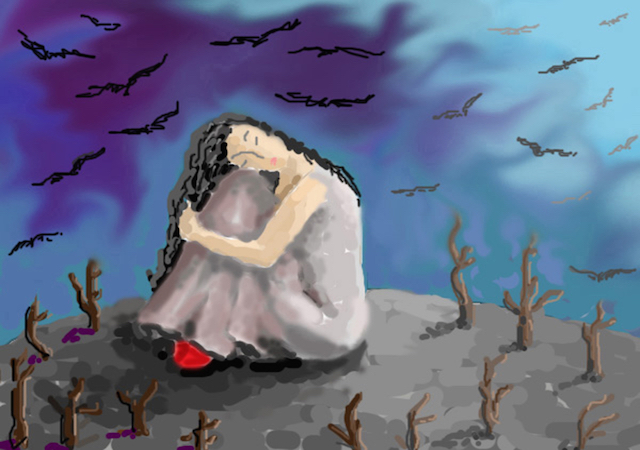
    “My brain won’t shut up!!!” I told my doctor when I asked him for something to help me sleep.

    Meditation is like a workout for your brain. Except instead of picking up weights to build muscle, you’re putting down thoughts to build strength of mind.

    When we meditate, we notice when thoughts arise, then gently bring our awareness back. That awareness could be on the movement of your breath, the feel of your body, the sound of a mantra, or the visual of a mandala—an anchor to bring you back to the present moment.

    Then your mind will wander again. Then you bring it back. Then it wanders. Then you bring it back.

    It’s like doing reps at the gym. You’re building the “muscles” that bring your mind back to the present moment, giving you more control over the direction of your attention.

    And over time your ability to let go of thoughts—especially those that do not serve you—grows. This makes it easier to fall asleep, to get out of a funk, and to clear your mind and find more peaceful moments in life.

    Thoughts, worry, rumination, fear—these keep us up at night. These thought patterns became so habitual for me that it even felt impossible to let go daydreaming while I was trying to fall asleep.
    By learning to disengage from the thoughts spinning on the hamster wheel, we’re able to drift off to sleep.

    3. Meditation teaches us self-compassion and patience.

    Meditation is a pretty simple concept, but it isn’t always easy, especially when we are just starting out.

    Thoughts come and go all the time. That’s what our brains do—it’s one of it’s jobs, to give us thoughts. When we meditate we’re continually recognizing that we are thinking. “Ah, that’s a thought.”

    Learning to not attach ourselves to that thought takes practice. And practice takes time.

    Just like how you can’t force yourself to fall asleep, you can’t force yourself to ‘go deeper’ into meditation. You allow it to happen. It takes patience.

    And a lot of our anxiety comes from a place of impatience for the feeling to be over, for something in the future to make us happy.

    With practice, meditation teaches us acceptance.

    There may be times where you feel like you were thinking the whole time you’re meditating and you may find that frustrating, like you’re doing something wrong.

    Or you may have been meditating for some time and feel you “should” have progressed faster in your ability to not get attached to your thoughts so often.

    But, through the practice, we learn that we need to be kind to ourselves and accept that this is how our brain works. That there isn’t anything wrong with us.

    It takes self-compassion to accept the present moment for what it is, especially when the present moment isn’t to our liking.

    4. Meditation teaches us to be less judgmental.

    We’re constantly judging ourselves and others. We put labels like “good” or “bad” on people based on their actions or appearance.

    Judgment separates us from others. It’s isolating.

    And when we judge ourselves we do the same. We’re separating ourselves from others. We might feel like we’re bad because we’re not as pretty, or smart, or talented. This judgment puts us in another category, separate from others, which is a lonely place to be.

    Non-judgment is an important part of meditation, especially in mindfulness meditation.

    Mindfulness is paying attention, on purpose, to the present moment, without judgment. That means experiencing without labeling in judgement.

    Nothing is good or bad in this moment, it just is. A thought in and of itself isn’t good or bad. It’s just words or pictures. Just a fleeting idea. It is meaningless unless we choose to apply meaning to it.

    When we meditate we witness our thoughts. We observe our feelings. We experience our bodily sensations. But we don’t judge them.

    We approach them with curiosity. “Isn’t that interesting, I felt self-conscious when I noticed my stomach roll while sitting here.” Then back to the breath.

    5. Meditation teaches us to not run away from our feelings and become confident.

    During meditation, we’ll notice emotions coming up. Some are pleasant, some are not. But since we’re learning to not judge these things that come up, we’re also learning to allow them to happen.

    When we experience emotions that are unpleasant—fear, anger, sadness, irritation—we naturally want to avoid them, hide from them, or dull them with food, alcohol, drugs or TV.

    We gravitate toward comfort because comfort in our minds equates to security.

    But emotions aren’t things that can physically harm us. They can cause muscle tension, queasiness, heat, a sense of heaviness… but there is no physical harm involved in a single instance of an emotion.

    When we feel this afflictive emotion, we think “I don’t want to feel this, I shouldn’t feel this, it is bad to feel this.” And this resistance causes us more pain.

    It’s like getting hit with a second arrow. The first arrow caused the negative emotion. This happens and it is part of our lives—we are meant to experience a range of emotions, both pleasant and unpleasant.

    The second arrow, however, is avoidable. Pain is inevitable, but suffering is optional. When we apply resistance to that negative feeling, instead of leaning in and allowing it to be and to flow through us, we cause ourselves more pain.

    We need to allow these feelings, to let them flow through and watch them pass. We witness how a thought or a feeling can’t harm us. It’s just passing by.

    This is such an empowering skill because it makes us feel like we can handle anything. It builds confidence, because confidence is simply the willingness to experience a negative emotion.

    6. Meditation can help you break habits and literally rewires your brain with new patterns.

    Did you know that your thoughts can shape your brain? Like, literally. What you think and what you experience shapes the connections in your brain.

    Thoughts and behaviors form neurological connections. If we do something often enough, or if our actions result in a desired outcome then the brain says, “Hey, let’s store this as a habit.” Like saving a computer program.

    Worry, rumination, anxiety, stress, even daydreaming—these all can become habits.

    The brain likes habits. It helps it work more efficiently. If you’ve done something in the past and it worked even a little, it will store that in a secure part of the brain for safe keeping.

    For example, rumination can be a habit. If in the past you worried about something and that felt like it was helpful to prepare for what is coming, the brain sees that as a successful pattern and voila! You have a habit of worry.

    In the future, your brain will play this program when something stressful arises, because that is easier and more efficient than coming up with a new idea from scratch.

    Just like it would be a lot of effort to have to re-learn how to drive every time you get into a car, you store those behaviors and automatically run that program once you sit in the driver’s seat.

    Meditation rewires your brain through the process of neuroplasticity, which is the brain’s ability to form new connections (you can teach an old dog new tricks!). Habits start to break. And we start to gain more control over what we think, how we feel, and what we do.

    I think this is the coolest part about meditation. It eventually allows us to respond to situations in the way we choose instead of always automatically reacting with our old, afflictive patterns. It allows us to fully become the person we know we are, the person we want to be.

  • How to Journal Away Your Disappointment in Yourself

    How to Journal Away Your Disappointment in Yourself

    “Forgive yourself for not knowing better at the time. Forgive yourself for giving away your power. Forgive yourself for past behaviors. Forgive yourself for the survival patterns and traits you picked up while enduring trauma. Forgive yourself for being who you needed to be.” ~Audrey Kitching

    “I can’t do this.”

    “Why do I look so fat? I’m disgusting!”

    “I haven’t done enough today. I am so useless.”

    “I shouldn’t have said that. I shouldn’t have said that. I shouldn’t have said that.

    “Oh my god, why did this happen to me? What am I going to do now?”

    Since I was a teenager, there has always been a voice inside my head telling me that things are not going to be okay because I am not enough.

    At school, it told me I wasn’t popular or cool enough. At Arts university, that my work wasn’t original or deep enough. At my first job (which I disliked), that I wasn’t happy enough. In my current work (which I love), that I am never productive enough. And as the cherry on top throughout all these years, guess what—I’ve never been thin enough, talkative enough, or proactive enough.

    This voice has become so present and loud that it has led to severe anxiety attacks.

    One day, the feeling of self-loathing and despair was so strong that my usual journaling affirmations and gratitude practice were not enough. My soul, wounded by all the negative self-talk, needed something stronger. More than being fixed, it needed to be held in a tight, comforting hug.

    So that’s what I did: I knew that journaling was still the way, I just had to find a way to hug myself with it.

    Without thinking, I started writing to myself what a wise mother or a loving mentor would tell me in this situation.

    “My dear, I know you are feeling anxious about not having completed all your tasks for today. I know it makes you doubt if you will ever be able to achieve your goals. I know it makes you fear that you will end up out of money, out of friends, out of love. But here’s the truth: it doesn’t matter that you had a bad day. I know you’re trying hard. I know you’re giving your best. You deserve a rest. You are amazing, and you’re going to make it.”

    The effects were immediate: like with nothing else I had ever tried before, I felt a deep sense of comfort and relief.

    I had just discovered my new soul-medicine.

    How This Exercise Works

    The reason why so many of us constantly push ourselves to be more and do more (and blame ourselves when we fail) is because we’re trying to get from others the approval we have never learned how to give ourselves.

    This exercise teaches us to do just that: to give ourselves the appreciation we crave so much.

    But there’s one more reason why it is so powerful: it’s because it’s written in the second person.

    We are used to valuing more the compliments we hear from others than the ones we give ourselves. Therefore, it’s like having your adult self give your inner child the love and validation it has always wanted and needed, and that’s why it’s so healing.

    On top of that, writing it on paper instead of just thinking it in your head keeps your mind focused, and your heart fully immersed in the process. And it’s also quite relaxing!

    How To Do This Exercise

    1. Whenever your negative self-talk or your anxiety kicks in, grab your journal and a pen.

    2. Observe the thoughts and feelings that are happening right now. Don’t look away. Dive in.

    3. Now, imagine that the person thinking those thoughts and feeling those feelings is your inner child. Try to feel compassion and empathy towards their pain.

    4. Then, ask yourself: “Who is someone I look up to and what words would I like to hear from them in this situation?” This can be a higher power, a parent, a teacher, or whoever gives you comfort and guidance.

    5. Now, try to put yourself in that person/entity’s shoes, and start writing those words to yourself—to your inner child. Here are some examples:

    “I can see that you feel lost. You don’t know where to go next, and you doubt that you will ever know. But you will. I can assure you that you will. And when you know it, you can pursue it. You’ve made it so far, haven’t you? You have more in you than you think you do. You are kind to others, you are taking care of yourself the best way you can, you are doing everything at your reach. You always have. Just keep holding on, my love. This, too, shall pass.”

    “It’s okay to feel angry. Your anger is valid. I love you no matter what. You know what? You can scream. Scream, my beautiful creature. You are stunning when you scream. You are full of power, raw energy, and the time will come to use it well. You are simply taking your time. It doesn’t matter that things didn’t go well this time; but they will, when they have to. You are doing great.”

    As you write it down, let the words flow freely. Get fully immersed in the exercise. It might be helpful to imagine that you are hugging your inner child, and definitely focus on giving love, nurturing, caring.

    At points, the words you’re writing might feel like huge clichés, but it doesn’t matter: all that matters is that you feel them—that’s how you know it’s working.

    All You Need Is Love

    It’s easy to get trapped in a negativity loop: you feel bad because you failed to meet your own expectations; then you feel anxious because you’re feeling bad, and so afraid to get trapped into a negativity spiral that you don’t even notice you’re already in it.

    You can’t fight negativity with negativity. To break the loop, you need love.

    You have been hard enough on yourself. Give yourself the words and love you have been longing to hear. Do it from a different perspective—I guarantee, this will rock your world.

  • How to Replace Body-Hate with Self-Compassion

    How to Replace Body-Hate with Self-Compassion

    “Loving yourself is the greatest revolution.” ~Unknown

    I’ve spent most of my life struggling with my weight and trying desperately to fit the idealistic image of beauty that our culture celebrates.

    As a young teen, I was obsessed with magazines and all their secrets to be prettier and have a better butt and get your crush to notice you. I see now how desperate I was at such a young age to feel beautiful. Nothing seemed to work, though, as years passed and my need to fit the ideal beauty image only increased.

    In high school I learned to skip meals, and in college I learned to combine food restriction with exercise. Even then, I don’t remember being happy with my body.

    Over many years my body and my weight have changed drastically. Also, struggling with depression and anxiety has meant trying different prescriptions, all with weight gain as a side effect. It’s contributed to more body changes, especially in recent years.

    The more my weight changed, the harder it became to reside in my own body. I didn’t feel like myself anymore, and I didn’t look or move like I once did.

    I looked back on when I was thinner and remembered that I was unhappy at that size, but now I’d kill to have that old body back.

    It was painful to look at myself in photos. I started avoiding old friends and acquaintances because I didn’t want anyone to see my new body. Every pound I weighed carried shame and self-blame. My body was the enemy and I was at war.

    In the midst of trying new ways to manage my anxiety and depression, I came across yoga therapy. It was life changing for me. I found that I felt better after every session, even amid a severe depressive episode. To feel a mood shift in the slightest degree was miraculous, and I was hooked.

    I needed more yoga in my life and, being the academic that I am, I decided to study it. I found a local program that specialized in training yoga teachers and yoga therapists, and a new journey began.

    The first thing I learned was that yoga means union. It aims to unify the mind, the spirit, and (lucky me) the body. As a woman currently waging war on her body and studying yoga at the
    same time, things were about to hit the metaphorical fan.

    Not too many months into my yoga studies, I found myself in treatment for an eating disorder. I had to learn, or in some ways, re-learn, how to connect with my body. Turns out there are a variety of sensations and sensitivities in the body that we can (and should) tune into.

    Our bodies give us subtle cues all the time, and when I started approaching my body mindfully, I became more aware of them. For example, as I was more mindful of my breath, I noticed that I’d stop breathing when I had a difficult thought or when I challenged my body to do something it wasn’t ready to do.

    My body responded to every negative thing I did to it. When I starved myself or pushed my body past its limits, it responded with headaches and overuse injuries.

    Once I realized these things were all related, I began to ask questions: Why am I so tired? Why do I feel so overwhelmed? Why am I pushing myself so hard? How do I begin to recharge? How do I honor my own needs?

    This body I’d been at war with for so long turned out to hold the key to healing many wounds.

    When I began listening to my body’s limitations and needs, I began to change. Learning to honor my body gave me the confidence to ask for what I needed. I tuned into when I was tired or hurting, and I set up new boundaries. Taking breaks when I needed them and stepping back from certain relationships actually left me feeling more connected and capable.

    I realized it was time to end the war. My body deserved peace. It deserved compassion.

    All those years of struggle have left a mark on me. I still tend toward eating disordered behavior from time to time, and still find myself comparing my body to those around me. Sometimes the body-hate speech in my head can still get so loud that I can’t hear myself think.

    In my recovery, I’ve realized that countering negative self-talk is key. I’ve found a few things that help, and I’d like to share them in hopes of helping someone else who needs it.

    1. Every time you notice body envy, thank your body for something it does well.

    This will require you to be mindful about when you are comparing yourself to others or checking yourself in a mirror. Take a moment to purposely think about something your body does that is good for you. Doing this may not create an instant change in mindset, but it will, over time, help to re-wire some old thought patterns.

    Some things you could thank yourself for are breathing, talking, hearing, and thinking. Maybe thank your body for transporting you from place to place, walking, frolicking, twirling. Feel free to be creative!

    2. Find body movements that suit you.

    Bodies are magnificent! They are capable of doing so many things. When we tune into our body’s capacity for movement and we’re active, we feel more connected to our bodies. In those moments of connection, we are more likely to be proud of what our bodies can do instead of ashamed of how they look.

    Not every person is a natural athlete, so I’m not going to insist everyone start running marathons. You know your body and you know what you’re capable of doing.

    Personally, I love yoga, as all good yoga teachers do. I also love the camaraderie of running activities, but I’m a walker. I walk 5ks and am planning to participate in a walker-friendly half marathon within the next year. It’s accessible to me and I feel good doing it.

    Maybe for you it’s swimming or dancing or hiking. You don’t have to be the best at it, just enjoy it.

    3. Scrub your social media feed.

    Nourishing ourselves goes way beyond just what we put in our mouth; it includes what enters our minds.

    Nearly everyone has some contact with social media these days whether it’s Twitter or Facebook or Instagram. These places are ripe for talk of new diets and weight loss before and after photos. Of course, it’s mostly full of weight loss stories because no one seems to post their weight gain to social media.

    Anyway, I find it important to unfollow anything that’s unhelpful to you. If it elicits negative feelings about yourself, I beg you to consider deleting or unfollowing. Replace these feeds with more body neutral or body positive or health-at-every-size feeds. Add stories and images of successful people who look like you and who behave in ways that make you feel good.

    4. Buy clothes you feel comfortable in.

    I am so uncomfortable in tight fitting clothes, and I’m not present when I wear them. My mind is constantly focused on how others may be seeing me or interpreting my outfit when I’m uncomfortable in the clothes I wear.

    So, I recommend going out and going shopping for a few new pieces that make you feel good. Ignore the numbers and go by how it makes you feel. Take a friend with you for support if you need it. It does improve your confidence when you wear clothes that really fit you.

    5. Have honest conversations with your loved ones.

    Set boundaries around diet talk. If certain topics and conversations trigger you to feel poorly about yourself, it’s important to talk to people you trust about your sensitivities. Loving friends will want to support you in this and are often really receptive.

    I’m lucky to have lovely friends who are respectful of my boundaries and who are honest with me when I ask them questions about my insecurities.

    I’ve asked my friends not to discuss diets around me and to avoid calling themselves “bad” for having seconds or eating dessert. Also, we agreed not don’t put our bodies down. Those things really affect me, so I’m grateful to have friends that understand that. I encourage you to find people you can trust and let them support you.

    Finding ways to stand up to your own body-hate speech is so important. These little exercises may seem small, but over time can help make a difference. When we habituate self-compassion, our lives will change. Sometimes the smallest things can make the biggest impact.

  • How to Make Vulnerability Your New Superpower

    How to Make Vulnerability Your New Superpower

    “Ring the bells that still can ring. Forget your perfect offering. There is a crack, a crack in everything. That’s how the light gets in.” ~Leonard Cohen

    We human beings are social creatures. For the most part, we like to be with people, and we want people to like to be with us. The trouble is that we get all tied up in trying to communicate a version of ourselves that we think people will find attractive.

    We want to appear successful, interesting, in control—and a winner! To keep up this image, we work hard to hide away the parts of ourselves that we are not sure about, or we feel don’t work so well. The last thing we want to do is appear weak or somehow insufficient. So, we project some kind of perfect version of ourselves that will ensure that we are loved and wanted.

    The truth is that it’s impossible to keep this act together. Inevitably a moment comes when something gets to us so strongly that we can’t pretend any longer. We appear as we actually are—flawed, brave, struggling, and absolutely human.

    This is the moment when we can experience vulnerability as a superpower. When we allow ourselves to be vulnerable, we are not pretending, we are not hiding—we are simply present with whatever is going on inside us. Ironically, it is this very feeling of authenticity that draws people to us, not the brittle effort of perfectionism.

    Zero Tolerance for Vulnerability

    For many of us, our upbringing did not teach us how to be vulnerable; we’ve had to learn as we’ve faced the challenges life’s put in our way.

    My mother was an Ulster Protestant from a large, working-class family with no patience for emotional frills. Her family was loving but tough, and she brought me up in the same way. I was her first child—emotional, sensitive, curious—and had to bear the brunt of everything she missed about Ireland when she decided to marry an Englishman and settle in London.

    From my early years, I can remember my mother urging me to hide my feelings from other people and never, ever let them see when I was hurting or in pain. She warned me that if I did, then I would be seen as showing weakness, and then I would be fair game to be taken advantage of, and ultimately, made a fool of.

    She was my mother, and she was trying to protect me by instilling in me the values she herself had grown up with. It took me years—and sometimes I still fall back—to realize that the voice in my head urging me not to make a fool of myself, to keep my distance, was my childhood internalization of my mother’s fears.

    The idea of finding strength in allowing myself to be vulnerable was a remote flicker on the edge of my consciousness.

    Shame as Vulnerability’s Implacable Enemy

    Brené Brown is a leading researcher into shame and vulnerability. She defines shame as “the intensely painful feeling or experience of believing that we are flawed and therefore unworthy of love and belonging.”

    Kristen Neff, a well-known self-compassion researcher, tells us that shame was the evolutionary way of hiding our defects from others so that they would include us in the group. Being kicked out of the tribe meant certain death.

    For shame to exist, it needs secrecy, silence, and a sense of judgment. It’s very hard for us to speak out about the things we are ashamed of. So, when we make a mistake, it’s more automatic to try and cover it up or blame someone else than to admit that we got something wrong—because then we’d be showing that we are vulnerable.

    My Own Story of Shame and Vulnerability

    There came a moment in my life when it became clear that I was unable to have children. I had always wanted a large family, and the idea of having no children at all was devastating.

    Of course, there was a tremendous grief to deal with, but what took me unawares was the intense feeling of shame. My younger sisters were starting families, as were several of my friends, and I felt excluded from an important female rite of passage. My parents’ disappointment was palpable—never mind that other areas of my life were going well; I was not going to be a mother.

    I remember how drawn I was to babies and young children, viewing them as if from the other side of a huge divide. One awful day I found myself walking around the baby department of a large department store, looking at all the tiny outfits and toys. I realized how nervous I was, guiltily looking over my shoulder to see if anyone was watching me.

    There was a voice in my head saying, “You are not a proper woman. Don’t hang around in here; they will be on to you and throw you out. You have no right to be here!”

    It was so insidious that I left the store.

    Instead of caring for my sorrow and accepting my feelings of vulnerability, I felt inadequate and ashamed. It seemed I was the worst person on the planet, someone who had no right to even think of being a mother. Eventually I was fortunate enough to find an excellent counselor at a woman’s center who helped me work it through and accept my situation without shame.

    Recognizing Another Person’s Vulnerability Helps You Accept Your Own

    I remember feeling so ashamed of not being able to have children that I forgot all the other people who discover that they are infertile for one reason or another. My feeling was that I was the lowest of the low and that nobody could be as pathetic as I was. Many years later, while having radiotherapy treatment, a very different perspective opened up for me.

    Anyone who has had cancer and undergone a period of radiotherapy knows that it involves a daily visit to the hospital, five days a week, for a number of weeks. You show up to the same place every day and meet the same hospital staff—you become a regular.

    The thing you don’t tend to think about so much is that just as you are turning up every day, so are a whole bunch of other people. You get to recognize some of them; you maybe even get to talk a bit. Most of the time, people come with a partner, a family member, or a friend.

    You can always tell which person is sick—they have an air of vulnerability about them. You can see their friend doing their best to care for them. There was a deep sense of care and even love in the waiting area.

    I remember an elderly woman who had obviously already been through chemotherapy. She was wearing a wig, but it did not fit so well. I saw her husband gently straighten it on her head with such tenderness. It brought home to me that vulnerability is part of the human condition.

    We all have to face stuff that challenges us and frightens us. No one is immune to suffering and pain. As human beings we are all in the same boat, doing our best to navigate our way through whatever life puts in our way.

    Seeing other people as vulnerable helped me to accept my own vulnerability. Allowing myself to be vulnerable was a tremendous relief, a starting place for some kind of self-awareness.

    Observing all these people facing their fears and anxieties with patience, and quiet dignity, brought home to me that it’s when we allow ourselves to be vulnerable that we can find our deepest courage and strength.

    The Japanese art of Kintsugi

    I came across this art form almost by accident. Broken pottery is mended with lacquer mixed with powdered gold, silver, or platinum. Instead of trying to mend the pieces invisibly, hiding the fact that they were ever broken, the cracks are transformed into decorations. The pieces become more valuable because of their flaws.

    For me, this is the perfect symbol of vulnerability as a superpower. We move from trying to hide it to accepting that it is there and arrive at a place where we can transform the lessons we have learned into wisdom and understanding.

  • How to Heal a Broken Heart Using Mindful Self-Compassion

    How to Heal a Broken Heart Using Mindful Self-Compassion

    “It’s not your job to like me—it’s mine.” Byron Katie

    Why are breakups so painful? Whether we are the dumper or the dumpee, the range of emotions we feel is universal: devastation, sadness, and anger. Oh, and there’s the acute pain, as if your heart had been gouged from your chest, stabbed a dozen times with a butter knife, and booted to the curb.

    Am I right?

    Of course I am. I’ve been there. We all have. I intimately experienced a broken heart and its rippling effects when my partner and I ended our seven-year relationship. I admit that I was the architect of the break-up. I was mostly shut off, insecure, and jealous during the tenure of the relationship. Our breakup was sticky. It was messy. It was ugly…downright.

    As if the pain isn’t enough, we can’t sleep, we lose our appetite or eat like a cow, we stop bathing, we look homeless, and we watch YouTube playlists of How to Get Your Ex Back in Thirty days. Sad days.

    You see, a breakup is a loss. It’s a death of a relationship. It’s a death of an identity that was entangled with our ex partner. The stages of a breakup are similar to grief: denial, anger, bargaining, depression, and acceptance. It’s no wonder we’re a mess when we split from an ex.

    The good news is that there is an antidote to our hot-messed-up heart: mindful self-compassion.

    What is Mindfulness?

    When I first came across the practice of mindfulness, I had a difficult time grasping it: to be aware on purpose, in the present moment, without judgment. Huh?

    What I found helpful was to understand its opposite: mindlessness.

    In the past I often turned to food to make myself feel better. During the breakup I gorged mindlessly, frequently finishing pints of ice cream and large bags of chips and popcorn without ever being present to the eating.

    For example, one particular day I was listening to music and a song came up that reminded me of my ex. Instantly, I became sad. This prompted me to grab a bag of popcorn and start eating. Next thing I knew the bag was almost empty. Then I muttered to myself, “I’m such a fat cow.”

    When our brain is on autopilot, we are not present in our experience of life. In the case of the popcorn, I had been mentally checked out, lost in my thoughts of my ex, as I nearly finished the bag. Then I chastised myself for it.

    Studies have shown that when our minds wander, we’re unhappy. When I look at my own life, I see that being mindless, not mindful has led to a lot of suffering in the forms of anger, shame, anxiety, and depression.

    The practice of mindfulness, then, is to pay attention, on purpose, to what we’re thinking, what we’re feeling (emotions and bodily sensations), and what is happening in our environment, without judging it.

    In other words, we are an engaged and impartial observer to what we’re experiencing in the present moment. We don’t use labels or preconceptions, and we don’t believe our thoughts or take them personally.

    How Can Mindfulness Mend a Broken Heart?

    A stressful event, such as a breakup, can cause our minds to explode. Often, we’re spinning on our thoughts and we don’t know how to stop it. There may be thoughts and feelings of rejection, regret, shame, and unworthiness, and a host of destructive beliefs.

    After my ex and I split, I had a lot of regret, and my thoughts involved punishing myself for how my actions had led to the undoing of the relationship. I replayed past events over and over in my head. I kept wishing that I could have done things differently.

    I thought I could have been more open, trusting, and loving. And I wished I hadn’t been so scared to share my vulnerability and fears, because if I had, perhaps that would have strengthened the relationship instead of weakened it.

    The breakup was excruciatingly painful, yet I felt it necessary to hurl more insults at myself.

    Fortunately, there are many forms of mindfulness that can help us get over a breakup and our ex. This is what I did to heal myself.

    Mindful Self-Compassion

    Self-criticism is very common. And in the context of a breakup, when we’re in pain, we tend to open the floodgates of self-berating thoughts. We are ruthless, and very good at it.

    We might think:

    • “I’m such a loser.”
    • “I’m fat and ugly.”
    • “I’m such an idiot for screwing things up.”
    • “I’ll never find someone as good as my ex.”
    • “My ex is dating and happy, and I’ll always be alone and miserable.
    • “I deserve to hurt.”

    When we believe these harsh thoughts it exacerbates our suffering.

    According to Kristen Neff, author of Self-Compassion – The Proven Power of Being Kind to Yourself, self-criticism has a strong association with depression and dissatisfaction with life. And underneath our self-attacks are deep insecurities about our own personal worth and value.

    This was true for me. I had often discounted my talents and abilities because I had a core belief that I wasn’t good enough. And my breakup only further triggered my negative self-perception.

    Fortunately, mindful self-compassion can snap us out of our mindless self-judgment, and provide us comfort when we need it most.

    Being compassionate means recognizing that there is suffering, being moved by the suffering, leading us to alleviate it, and understanding that suffering is part of our shared human experience.

    The practice of mindful self-compassion is being aware of the self-critical thoughts that cause us pain, offering kindness and love to ourselves to allay it, and recognizing that we’re not alone—what we’re going through is part of life, and we all have imperfections.

    There are many self-compassion exercises, but this is one of my favorites:

    Self-Compassion Exercise: A Letter to Yourself

    1. Grab your journal or a piece of paper and pen, and write about the thoughts and feelings of inadequacy and insecurity you may have as a result of the breakup. Write about any emotions that arise—shame, regret, anger, or sadness.

    2. Think about a real or imaginary friend who is kind, gentle, compassionate, and unconditionally loving. This friend knows you intimately—what you’re going through, your life history, your strengths, your weaknesses, your thoughts of inadequacies and insecurities.

    3. From the viewpoint of your compassionate friend, write a letter to yourself. Using deep compassion and loving kindness, what would s/he say about your thoughts of inadequacy? How would s/he address the suffering that you’re experiencing as a result of your self-attack? How would s/he point out that you are only human and that we all have strengths and weaknesses?

    4. Once you finish writing the letter, put it down. Do something else like go for a walk or make a cup of tea.

    5. Pick up the letter and read it. Let the words of kindness and compassion penetrate your being. Receive the love, the tenderness, and the acceptance.

    The “aha” moment for me when I first did this exercise, in the context of my breakup, was that I was shocked at how harsh I had been toward myself. How had I allowed the self-attack when I would have considered the same behavior, if inflicted on others, unconscionable?

    As a result of the exercise, I recognized that I was hurting and I gave myself permission to receive kindness and love from myself instead of rebuke.

    The practice of self-compassion allowed me to hold space around my thoughts and feelings, and it created an expanded awareness of who I am—that, even if I’d made mistakes in my relationship, I am lovable, I have wonderful qualities, I am capable of a lot of things, I am resilient, and most importantly, I am enough. Further, it helped me realize that we are all connected through similar experiences, whether good or bad. We are never alone.

    Benefits of Mindful Self-Compassion

    Some of you may be thinking, why bother with this self-compassion thing, when I can just go to my best friend or mom and have a good cry with them and they’ll make me feel better? This is fine as well. It’s important to have a good support system.

    The thing is, when we learn how to be self-compassionate, we become our own source of love and happiness. We stop relying on the external to feel good about ourselves.

    To boot, there is evidence that the practice of self-compassion can make us more resilient, more joyful, more productive, and less depressed. I can attest to this, having come out of my rut happier, stronger, and more at peace. I also learned ways to offer myself love and kindness, which I can apply whenever I feel the slightest of discomfort.

    Some of the ways I give myself care are:

    When we experience a devastating event, we have a choice in how to respond. Some choose to get out of dodge mentally and deny their feelings through unhealthy coping mechanisms. Others take the route of self-punishment for their flaws and inadequacies.

    There is an alternative: mindful self-compassion. If you want to get over a broken heart, this practice should be at the top of your healing arsenal.

  • Lessons from a Life Lost Too Soon: Don’t Let Your Inner Critic Destroy You

    Lessons from a Life Lost Too Soon: Don’t Let Your Inner Critic Destroy You

    “What you tell yourself every day will lift you up or tear you down. Choose wisely.” ~Unknown

    It was a story I just couldn’t get out of my head. A young teen had died in a town not far from where I live, a town where I used to live. I knew people who had kids who knew this girl.

    I heard she was a swimmer, bright and popular. At first the talk was about how she’d died. I heard someone surmise that she was killed. Someone else said it was a horrible accident, and of course, there were murmurings that maybe she had done it herself. And then, I heard nothing.

    Months passed and I eventually put the whole incident out of my mind, until I came across an article in our major metro newspaper. The girl’s parents had come forward to share the terrible truth about their beautiful teenage daughter who threw herself off an overpass.

    What could make a girl who seemingly had it all make that terrible choice? Her grades were good, she had friends, she was an athlete, and she had mad robotics skills. No one knew the depth of her suffering, and that’s just how she wanted it.

    At one point, the girl vaguely confessed to a teacher that she was stressed, and the teacher immediately shared this information with her parents. They in turn brought her to therapy, but the therapist never learned the truth or depth of this girl’s suffering. No one did, until it was too late. Not surprisingly, the girl’s parents were completely blindsided when they learned what their daughter had done.

    So how did her parents come to understand what led to this terrible tragedy? And what did they hope to achieve by sharing their daughter’s painful story with the reporter? The answer was in the girl’s journal, excerpts of which were featured in the article.

    The parents had not even been aware that their daughter had kept a journal until after her passing. What they learned upon finding her journal was that for one year prior to her suicide she had written a daily diatribe of the worst, most hateful insults directed at herself. This is something she allowed no one to see—not her closest friends, not her parents, not her therapist, no one.

    As I read through the excerpts, one word kept coming to my mind over and over again. The word was “indoctrination.”

    This girl had utterly been indoctrinating herself as if she had joined a cult, hell bent on getting her to feel nothing but utter contempt for herself.

    The reporter even pointed out that one of the many cruel, self-demeaning excerpts was written on a day when the girl and her robotics team had experienced a triumph at a competition, yet not one utterance of this victory was reflected in her writing. She had convinced herself that she was worthless, and she was not going to allow any evidence to the contrary to challenge that perception.

    Why am I telling you this story? First, let me ask you a question. Do you have a voice inside your head that tells you that you are unworthy, undeserving, ugly, stupid, or any number of other similarly hateful messages? I do. It’s harsh and it’s painful and it’s shameful. It’s the voice of self-abuse, and it can prevent us from enjoying life by shaming us for even our most minor imperfections.

    Those of us who live with this voice, tolerate it. While we know it’s not pleasant, we don’t typically see it as deleterious to our health. We don’t challenge it; we endure it. We sometimes try to drown it out with food or sex or alcohol.

    This girl however, took it to another level. She gave that voice power, she wrote down the toxic words in her head every day and drank them in even as they slowly poisoned her mind into believing that she didn’t deserve to live. That thought, that realization, hit me like a sledge hammer.

    It was at that moment that I asked myself a question. If the words she wrote down, reinforcing every ill-conceived, misguided, self-negating thought she had about herself, had the power to kill her, what would the opposite have done?

    What if every day she’d come home and filled her journal with thoughts of self-compassion, self-forgiveness, and unconditional love and respect? Could the power of those words have saved her life? Could they have defeated her cancerous self-hate such that she’d be alive today to share her amazing journey back from hell with the world? I believe the answer to that question is, yes!

    I can’t bear the thought of this precious girl dying in vain, so in a way, I write this article on her behalf even though I never had the pleasure of meeting her. I feel I owe her a debt of gratitude. She helped me understand the immense power we have to either convince ourselves that we are worthy or that we are worthless.

    We can choose to let self-hatred breed and grow in silence, or we can notice it and challenge it. The funny thing is, I agree with her initial action. I believe that writing down or at least saying our self-deprecating thoughts out loud is a necessary first step for exposing the lies we mistake as truths. We can’t stop there though; we then need to move to self-compassion and take on the difficult task of writing a different narrative.

    Let me just say up front that this will not be easy. In fact, this may seem like a Herculean task. It’s essentially forcing a runaway train to change direction. Reflecting on my own experience of trying to turn the train around, I find that I often fall back into old habits, drifting toward the familiar path of self-hate, but I now understand it is imperative that I stay the course and continue my efforts to change. If I don’t, I will ultimately be consumed by my self-destructive inner dialogue.

    Most of us who grapple with our inner critic never choose to end our life physically, but make no mistake when we allow that voice to take over, we are killing ourselves. What this girl’s story did for me, and what I hope it will do for you, is stop the complacency around self-denigrating self-talk.

    While I still hear my negative thoughts, I don’t feed them. Instead, I spend time every day intentionally focusing on the positive, and when life is hard and I don’t do as well as I’d hoped I would, I do my best to meet myself with love and compassion.

    So, what would happen if you committed to indoctrinating yourself daily with nothing but self-love, self-praise, self-compassion, and gratitude? How might your experience, your outlook, your world change? Your words are powerful. Your choices are powerful. Choose self-kindness. After all, you deserve it.

  • Loving Yourself When You’ve Become Addicted to Self-Improvement

    Loving Yourself When You’ve Become Addicted to Self-Improvement

    “Whatever purifies you is the right path.” ~Rumi  

    I’m tired of being good. It’s time to be deliciously free.

    How I wish I could say that without rushing in to assure you that I promise I’ll still be good.

    The truth is, I worry. Less than I used to, but still, I do.

    I’ve probably had every kind of worry you could imagine. There’s the kind about things that haven’t happened yet, things that didn’t but very nearly could have, things that are highly unlikely if not impossible, things that are commonplace; I’ve worried about the things I want and the things I don’t, the purpose and the impermanence of life.

    Underneath, they all seem to stem from the same big fear that I am not good enough.

    This worry manifests itself as indecision, overthinking, holding grudges, and comparison. My expectations and criticisms originate there.

    Peek inside my head in my most afraid moments and you’re sure to find a motivational poster gone horribly wrong:

    We all have the same twenty-four hours, so what’s your excuse? Hustle! No pain, no gain! Stop playing small. Take massive action, go all-in. They’re crushing it, why aren’t you? The steps to success are quick, easy, and proven. Do whatever it takes. You miss 100% of the shots you don’t take. The universe loves speed. #YOLO. 

    I’ve spent a lot of time and mental energy on what I thought was self-improvement. Now, I’m seeing it for what it really was: self-medicating. The pressure to always be moving, always be achieving, faster, faster, hurry up and keep up was an addiction.

    This addiction was a symptom of losing trust in my own worth.

    I’d wear the way I treated myself like a badge of honor as if it somehow made me more worthwhile. Yet, I criticized myself about it, too. “Don’t be so rigid,” I’d command myself, followed up quickly by, “But be more disciplined.”

    I thought for a while that my worries were about control, but now I’m seeing that control was never the problem. I thought maybe it was perfection I sought. That wasn’t it, either.

    This was never really about success or approval, and certainly not improvement. What I’ve been seeking all along is freedom, and that’s what scared me the most.

    My indecision wasn’t about the decision itself, it was about doubting my ability to decide freely. Staying in relationships even though they hurt me wasn’t about the love or the loss, it was about doubting my right to choose myself, freely.

    Underneath every fear, every worry, every grudge and comparison was doubt in who I am, what I’m worth, and what right I had to take up the time and space to figure this out.  

    And now that I see things more clearly, I am clear about what I truly want. I want liberation.

    I want to free myself from the ghosts of the past and fears of the future. I long to be free from shame and the barriers I’ve built against my own peace. I want to use my voice freely and heal my steadfast heart. I want to freely and lovingly inhabit this body that’s stood by me no matter how much I’ve abused it.

    I want to rise up, thank the day, and carry on. Freely.

    Even as I’m writing these words to you, I’m learning what I need to do to stop the cycle.

    I need to practice making different choices and voicing different beliefs: Time is not money, it’s medicine. I need not be so disciplined but discerning. Not productive but perceptive.

    I’m learning the difference between moving quickly and moving honestly, and I’m replacing “should” with “I can if I so desire.”

    Oh, and I feel the resistance to this. The resistance is withdrawal, and it’s a natural part of the recovery process.

    But even with this insight, the fear of the unknown and the craving of familiarity are still there.

    Who will I become if I were truly free?  
    What value will I have?
    What if I fail?
    What if I disappoint? 

    Each time I set myself free, I will fly back to my cage until I trust the process of healing and love myself unconditionally.

    This is the painful part about finding and expressing yourself that no one really talks about. Loving yourself and trusting fully in your inherent worth is risky.

    You will surely fail at your previous rules and fall short of your old expectations as you explore new, more open ways of being. Someone is bound to be disappointed when you start existing as yourself, for yourself. The people who thought they knew you when you were only a fraction of yourself will say you’ve changed. They may not know what to do with you anymore.

    There may be judgment and misunderstanding. There may be rejection. You may feel lost. You may get less done, things may take longer, your work may be less popular or less profitable.

    And there will be the trappings of who you said you were everywhere. I still have a drawer full of makeup and hair products, perfume, and high heels that I will never use again. Maybe it’s time to let that version of me go.

    As you move closer to freedom, the ghost of who you tried to be will linger, haunting you. It will show up as a craving for likes and shares, for affirmation from someone else of your worth.

    Little by little, as you shed the security blankets put down over the years, you will move away from the conditions of your worth. Through forgiveness, setting and enforcing boundaries, more authentic yes’s and no’s, and growing more clear in what you want and where your true priorities lie, you will find new depths of freedom and space. It will be empowering and terrifying.

    What I’m discovering now is that you need to meet these challenges with grace and compassion.

    Letting go gives you space, but it needs space, too. Space brings solace and allows expansion. If you need to, stabilize. There’s no need to feel like a complete stranger in your own skin. Seek comfort and familiarity, but do it consciously. If you fall into old patterns, treat yourself with kindness, not judgment.  And then carry on, consciously.

    Have the courage to ride the cravings out. Resist the habit of proving your worth and earning your freedom. The doubts will try to convince you that they’re making you better, more worthy. Remember that it never worked that way before.

    I’m seeing now that what I do or don’t do, how far I do or don’t go, what I do or don’t achieve has never been the question. The question is, what frees me?

    I may not know what my freedom holds, and I may still face that uncertainty with some degree of fear, but I’m learning to trust that the pins and needles of waking up are the cure to what’s really ailing me.

    The greatest opportunities are not found in safety or certainty. Just as in facing any fear, the old beliefs about your worth need to be threatened in order to be changed.

    Each time we practice asking ourselves what will set us free, we’ll learn to speak the language of our intuition that much more fluently.

    Each time we practice validating our own perspective, we’ll learn to distinguish between wisdom and sound bites that much more naturally.

    One layer at a time, we will build a foundation of trust in ourselves and our inherent worth, and I have to believe that this will set us free.

  • How I Transformed My Anxiety and What to Do If You Feel Emotionally Stuck

    How I Transformed My Anxiety and What to Do If You Feel Emotionally Stuck

    “There is still vitality under the snow, even though to the casual eye it seems to be dead.” ~Agnes Sligh Turnbull

    For as long as I can recall, I have always been a fretful and anxious person. Mine was a low-key anxiety that’s always colored the background of my life, a constant companion of ambiguous dread and imminent doom (just around the corner!)

    The annoying part was that I never quite knew why the anxiety hung around. There weren’t any real situations in my life that evoked this constant, nagging fear.

    I have tried various techniques to manage my anxiety. I tried deep breathing. I tried to balance out the fearful thoughts that sometimes follow the feeling of fear with logical investigation of the facts.

    I tried self-hypnosis—imagining a safe place in the depths of my psyche protected by multiple layers of force fields. I tried going toward the fear instead of running from it by putting myself in fear-inducing situations, so I could learn to tolerate it better. I tried self-psycho-analysis.

    All these produced various small results, but always, always there was something missing. I somehow felt like I did not go all the way to the bottom of my anxiety. 

    Then I picked up mindfulness, in those days before it became so well known. I learned on my own and in various courses, to make space for my anxiety.

    Above all, I discovered that my anxiety wasn’t me. That was an important piece of the puzzle. And yet, there was still a lot of the puzzle missing. My gut feeling was telling me, there’s got to be more.

    And then I came upon a book on Focusing. This is a method discovered by the late psychologist-philosopher Eugene Gendlin. He discovered that people who engaged in a specific kind of internal exploration of their experiences often came away feeling that their emotional struggles have transformed, quite literally.

    They no longer felt the same way before they started the internal exploration process. Even though the situation that had caused them to feel that way remained unchanged, how they understood it and felt about it had become radically different.

    I was entranced, so I read everything I could about this method. I tried it out on myself…

    And fell flat on my face. It didn’t work and I was still anxious. Only now, I was even more anxious because it was tinged with a near panicky sense that what I needed was just within my reach but I could not grasp it! I pictured my anxiety flashing the victory sign in my mind.

    Then thankfully, I took a course with a Focusing teacher in the United Kingdom and I got it.

    My anxiety started to shift.

    How I Understand It: Vital Emotions and Blocks

    We are all born with naturally flowing emotions that guide us and give us information about our lives, our worlds, and our needs. I call these “vital emotions.” No matter what form they take (joy, anger, grief, gratitude, and so forth), the experience of them moving within and through us unfettered makes us feel alive.

    Just look at babies. They are always experiencing naturally flowing emotions and they are little bundles of vitality. When they are angry, they scream without concern. When happy, their mirth is disinhibited.

    However, as we grow up, we learn to cut off these emotions. For instance, some people become overly rational at the expense of feeling emotions, like Sheldon from The Big Bang Theory. Alternatively, some of us fall into stuck emotional patterns that repeat over and over again without getting us anywhere but into trouble (my anxiety is one example).

    I call cutting off emotions or stuck emotions “blocks.” We tend to pick them up as we bump along in life. Focusing is a method to help us free up our blocks and get in touch with our vital emotions.

    What I Learned About My Emotions

    I learned in Focusing to take on a curious and self-compassionate approach to my emotions. I also learned to drop my awareness down into body to experience the sensations of my emotions in real time, and use these sensations to guide my discovery of the layers of information contained within my emotions.

    From there, I learned to decode what my emotions are telling me that I needed at that point in time. When I accessed this new understanding, I started to feel my anxiety transform.

    When I focused on my anxiety block in an open-minded and compassionate manner, I discovered that it felt like a kind of jittery electricity coursing through my body, and occasionally thickening into a lump in my chest.

    Fascinatingly, I also found that I had a tendency to hold back in my actions, my breathing, and even my voice (I had trouble projecting my voice). It was like I had put the brakes on inside myself.

    Through gentle and persistent questioning around these bodily responses, I discovered that I picked up my anxiety block because the adults in my life had subtly and not so subtly put me down when I tried to express my vital emotions.

    I remembered being shamed for showing my vital emotions like anger or even dizzy joy. Then I was told I was too sensitive when I was feeling vulnerable and upset. My anxiety was telling me that I could not let my guard down. I could not afford to be myself fully.

    At this point, my anxiety had started to shift physically and it was replaced by another emotion—sadness. Sadness that I wasn’t allowed to be myself.

    As I paid the same gentle attention to how my body held this sadness, it shifted once more and transformed into anger. I was angry that people could do this to me, no matter how well meaning their intentions. How dare they! How could they?

    With that line of thought, I knew that I wasn’t going to let people discount my emotions again! I felt physically stronger with this new determination. I had moved pass my anxious block and touched the procession of my vital emotions hiding by it. And then, I realized that my anxiety was trying to protect me from the devastating forces of shame and ridicule. I needed to feel safe in an unsafe environment.

    They only way I knew how was to block off my vital emotions least showing them got me into trouble. This realization gave rise to a warm feeling of self-compassion—I was doing the best I could to protect myself and my anxiety was my warning system.

    A Realistic Transformative Method

    Needless to say, I fell in love with focusing and undertook more training in it. I have found my method of transforming my life-long anxiety. Do I still struggle with it? Of course, but now it feels different. It no longer is a pervasive unknown fear. It has shrunk and only occasionally pops up. And when it does, I know how to engage with it to transform it.

    Try This Out

    The next time you feel emotionally stuck or have an inexplicable emotional reaction, take a moment to pause and focus on how it feels in your body as a sensation. Notice where in your body you feel it the strongest.

    A good place to start noticing is the space within your throat, chest, and belly. Simply spend a minute or two trying to describe the raw sensation of the emotional reaction, in real time—“Right now, how does it feel?” You might notice that the sensation changing. If it does, simple stay on top of it by describing the new sensation.

    Simply tuning in this way helps you create a unique and open-minded relationship to your emotions. It is also one of the crucial steps in focusing. See if you could make this into a daily habit. Remember, emotions transform when we try to understand them in an open-minded way.

  • Radical Acceptance with Tara Brach: If You’re Hard on Yourself, Read On

    Radical Acceptance with Tara Brach: If You’re Hard on Yourself, Read On

    Have you ever thought, “Something’s wrong with me”? I suspect we all have at one time or another.

    We’ve thought we’re too quiet, too loud, too eager, too lazy, too sensitive, too dramatic, or generally not good enough.

    And social media doesn’t help much. Every time we log on to Facebook or Instagram we’re bombarded with everyone else’s accomplishments, adventures, and best angles, which can easily lead us to conclude our life is somehow lacking—that we are somehow lacking.

    From there, it’s just a quick leap to self-flagellation.

    We can all be our own harshest critics. We can beat ourselves up for our mistakes, flaws, and failures, as if we’re supposed to be perfect. As if we’re supposed to have everything together and should never have bad days, negative thoughts, or painful emotions.

    But this is all part of being human. These aren’t shameful defects to hide or change. They’re realities to accept.

    If you’ve found it difficult to accept your humanity and treat yourself with kindness and compassion, you may benefit from Tara Brach’s eCourse Radical Acceptance.

    A world-renowned psychologist, author, and meditation teacher, Tara Brach has a talent for helping people embrace the present moment and overcome the blocks that prevent them from giving and receiving love.

    Her books and courses have helped millions of people heal and find peace and presence, and this particular course has received close to 600 glowing reviews.

    I’m happy to share that Udemy has offered a discount for Tiny Buddha readers, bringing the cost down to just $9.99 from now until February 19th.

    The eCourse includes four and a half hours of on-demand videos, broken down into bite-sized pieces, that you can access any time, anywhere. It’s powerful, easily digestible, and chock-full of life-changing wisdom.

    You can get instant access to Radical Acceptance by joining here, and browse through Udemy’s many other course offerings here.

    I hope the course is helpful to you!

    **Though Udemy is a Tiny Buddha sponsor, you can trust that I only recommend products and courses that speak to me personally. If you have any trouble getting the course for the discounted rate, you can contact Udemy’s customer support here.

  • Why Self-Compassion Is the Key to Living the Life You Want

    Why Self-Compassion Is the Key to Living the Life You Want

    “The curious paradox is that when I accept myself just as I am, then I can change.” ~Carl Rogers

    When was the last time you stopped trying to improve something about yourself or your life?

    I’ve spent a lot of my life chasing goals. I guess it goes with the territory as a cancer survivor who always felt like she had something to prove, even twenty years later.

    For everything the doctors told me I could not do because of my Hodgkin’s Lymphoma (or as a result of the chemotherapy that healed me), I gave my all to accomplish and strive until I’d shown them they were wrong.

    Can’t run a marathon because you’ve incurred lung damage? “You can do anything you set your mind to” was my mantra to run not just one, but five marathons.

    Except that guess what? I was not just a goal setter. I was a perpetually unsatisfied goal setter. No matter what I did, or how much I told myself I was engaging in “healthy striving” as Brené Brown writes, it was never enough.

    I thought that I’d put my goal-setting ways behind me when I found my yoga practice and tried learning to surf.

    These adventures propelled me into a level of inquiry and a journey to find clarity and purpose with determination instead of expectation. It was about the big and little moments, I told myself. The learning, the feedback, the process—dropping attachments to live with more intention.

    In many ways it made sense. I spent eighteen months trying to rid myself of cancer. I was so supremely focused on the final destination of going into remission and then being cured that it seemed superfluous to notice anything that happened along the way. It finally occurred to me that I’d lived most of my life in denial instead of in acceptance—always trying to forge ahead instead of face the present moment.

    But guess what? As much as I tried to walk the walk, there was still a subtle, underlying thread of needing to improve that ran through my veins.

    Even my yoga—the practice that I equate to the ultimate masterclass in acceptance—was driven by subliminal expectations.

    Take, for instance, my heart-centered intention to strengthen my (non-existent) inversion practice. I told myself that flying upside down symbolized me being able to support myself. I’d labeled it as an intention, but the more I worked on it, the more I realized my focus that was cloaked by a belief that my core was too weak to magically levitate into a headstand or a “simple” arm balance. One goal (hidden in an intention costume), had veered stealthily into a scarcity mindset.

    And once that mindset takes hold, it spreads quickly and without discrimination into a constant echo of pervasive thoughts.

    I’d tried (many times) to use the mantra “I am exactly where I need to be in this moment.” On my yoga mat, in my work, and in my relationships. But nothing worked to help me flip the switch away from the gaps in my success and towards the celebration of the present moment and progress.

    And then summer happened.

    I had time in my schedule and I started to wonder, maybe I am supposed to use this season of my life to practice acceptance. Maybe all of my free-time isn’t a judgment or an indicator of lack of progress but is an opportunity to nourish and nourish myself.

    What if instead of wanting to be something that I wasn’t, I actually needed to nurture my practice (and life) with more tenderness? Could I be grateful and give myself permission to find nourishment instead of judgment?

    A friend encapsulated my thinking. She remarked simply: It sounds as if you are noticing self-compassion instead of self-improvement.

    Wow. Yes. That was it!

    What if acceptance, transformation, and progress have nothing to do with self-improvement?

    What if true acceptance of the present moment and long-term transformation were actually powered by the process of nurturing myself with the nourishment of love and kindness?

    “Build inner strength instead of outer dependencies.” ~Danielle LaPorte

    Suddenly these words and ideas started to appear everywhere. Each of these messages or examples reminded me of what happens when you nurture the parts of you that matter most and nourish my your spirit with what feels delicious. The universe was sending me nudge after nudge—it was up to me to notice and pay attention.

    Yes, I meditated daily. Yes, I was writing my morning pages each day. Yes, I was starting each work day thinking about how I wanted to feel when I went to sleep at night. But was I actively and intentionally nurturing the deeper layers of me with nourishment that was aligned to my values and dharma?

    So often we think about compassion as something we need to have for others, but what about ourselves? I’m good at taking care of everyone else, but somewhere along the way, I’d forgotten that my heart and soul needed the same gift of understanding and compassion—and that I was the only one that could supply the unique medicine it needed.

    What if the magic to creating the change you want in your life is less about self-improvement and more about self-compassion?

    Now, don’t get me wrong. We all have desires. Those are not going away (nor should they).

    But desire should not be our compass for daily life. Our values and life’s purpose are vastly more powerful navigational tools.

    So if not desire or self-improvement, then what?

    Imagine for a moment what it would feel like to go to bed tonight believing that you’d nourished and nurtured your mind, body, and spirit with the simple acknowledgment that you are exactly where you need to be in this moment.

    How would your day be different if you gave yourself permission to be as you are, replacing judgment or labels with awareness and presence?

    A funny thing happened when I started to make nurturing and nourishment my focus.

    I made food choices with intention and then noticed how I felt afterward.

    I chose tender yoga practices instead of heat-building ones.

    I trusted that I was actively planting seeds each day to cultivate connection and relationships rather than waiting for opportunities to present themselves.

    I considered the open times in my schedule as opportunities to play with my daughter and puppy instead of criticizing myself.

    I chose to read instead of watch television. My to-do lists became less cluttered and more aligned with my values.

    Ideas started to flow more freely. My stillness practice felt deeper. I noticed sounds, colors, and scents with more boldness.

    And most importantly? I felt hope inside of me and remembered that everything I’ve ever thought I “needed” was already inside me, just waiting to be revealed.

    4 Steps to Practice Nurturing and Nourishing Yourself with Self-Compassion

    1. Tune into your awareness. 

    No, I’m not going to add to the number of articles that you’ve read that says you need to meditate. But deepening your connection to yourself means becoming aware of the physical sensations and emotions that you feel each day instead of letting the millions of thoughts that travel through your mind each day take over.

    It can be as simple as pausing at the end of a task or activity. Notice how your body feels without rushing to label what you are sensing as good or bad. This might take practice, and it might be subtle at first. Invite your body to be a benevolent messenger of information even for sensations that feel less than delicious.

    2. Ask yourself: What is going right in this moment? 

    This gratitude practice helps you move from noticing the gaps toward the celebration of wins big and small.

    When I went surfing recently, our instructor encouraged us to make a big first pump after every wave we “caught” regardless of how long we rode the wave of energy or whether we stayed on our belly or popped up. Noticing the victories—no matter the size or magnitude—sends a message that the journey is more important than the final destination.

    3. Check in with your truth: Is your day full of “have to’s” or “want to’s”?

    This is a big one. Making a list of priorities and things to do can be a great tool to stay focused, except when everything on that list is out of alignment with your values.

    Sure, there are some things in life that just have to get done. Maybe you can ask for help with tasks that bring up intuitive flags, or maybe you can find some aspect of the task to get excited about and change the perspective. Or maybe, you can simply let that task go.

    Recently, a friend asked me if I’d be at one of our favorite power vinyasa classes. As much as I wanted to see my friend, I noticed a gentle tug in my heart and I took a moment to get quiet and check in with my truth.

    That class felt like a should, based on a belief that I needed to keep up with the practice that I’d depended on to build physical and mental strength. But what I was really craving was something quieter. Something that would nourish that which was hidden. A yin practice. So I said no and cherished a nurturing and nourishing home practice, knowing that I could make plans to see my friend another time.

    4. Make a list of what feels delicious to your heart, mind, and body and then let yourself PLAY. 

    Do you love coffee? Find a lovely new cafe for a midday treat.

    Does paddleboarding light you up? Rent one or take a class.

    Play—even quiet activities like going for an evening walk, taking a bath, or spending an evening reading—nourishes the heart and mind. In fact, play helps inspire creativity and often makes us more productive, even when we’ve taken time off to engage in the activity.

    Can it really be that easy? Four steps to cultivate self-compassion as the ultimate tool for living the life you really crave?

    Well, no. These practices are never easy. It is a practice for a reason, mainly that it takes daily effort. But believing that you have everything you need already inside you offers a transformational opportunity to nurture, nourish, and accept the reflection that you see in the mirror as this moment’s best version of you.

  • How Feeling Shame Freed Me from Suffering

    How Feeling Shame Freed Me from Suffering

    “Be gentle first with yourself if you wish to be gentle with others.” ~Lama Yeshe

    It was October, 2012. The U.S. Presidential Election was around the corner. I was paying an unaccustomed amount of attention to political news on TV and to political discussion sites online. At one site in particular, I was eager to become part of the community, to make a good impression, to build a reputation.

    To put it mildly, that didn’t work out well.

    One evening I was watching an interview with a politician whose name I recognized, but I didn’t know much about him. I thought he was making some cogent points about the topic at hand. I went to the online discussion site to see whether anyone had mentioned this interview yet, and when I found no one had, I hastily composed a post praising the politician and suggesting that others should watch the interview.

    The reaction was fast and fierce. How could I have anything nice to say about this nincompoop, who was renowned far and wide as a hypocrite? Where was my sense? Where were my ideals? Where was my head? What did I think I was doing there in the first place?

    I was mortified. I, who had always prided myself on intellectual acumen, had totally failed to do my homework. I hadn’t done even the most cursory research to learn anything about the politician’s history.

    I felt I’d made an ass of myself. I was so ashamed that I didn’t even visit the site for weeks. I was genuinely in pain.

    Now I’m going to have to briefly flash back in time so the next part of the story will make sense.

    At that time, in 2012, it had been almost ten years since a beloved spiritual teacher had died. I had shut down my spiritual life to a great extent after his death. You might say it was a long freeze. Or maybe “fallow period” would be a better description. Later events would make that seem like a good way to look at it.

    While I was ashamed and hurting in the aftermath of my online blunder, I recalled something I’d heard my teacher say more than once, something like this: “When you see a tack on your chair, sit on it.”

    That may sound enigmatic, but I think the metaphor is straightforward. What it meant to me, anyway, was that we should not flee from fully allowing an experience that might impart an important point. We should sit on the point, not avoid it.

    I made a vow then. I promised myself I wouldn’t avoid my intense sense of shame. I wouldn’t brush it under the rug. I wouldn’t cover it or deflect it with distractions, entertainments, excuses, or rationalizations. I would experience it fully, let it do its work, and see what happened.

    I’m not pretending that I had any specific practice beyond that. I’ve since learned some that I’ll mention a little later. But at the time, I simply stuck to my vow. Whenever the feeling of shame came to visit, I didn’t shoo it away or distract myself. I allowed myself to experience it.

    It’s not even that I was inclined to turn toward TV or eating or any other concrete distraction. What I mean by “distract myself” is subtler. It’s a small mental move of avoidance, of turning the attention away from something uncomfortable. Its opposite is mindful awareness, facing experience head-on come what may.

    Everything began to change within a few weeks. There was no one moment when the painful sense of shame evaporated, leaving nothing but clarity and peace. No, it happened gradually over a period of weeks. Each time I welcomed shame as a visitor, it lost some of its sting.

    What finally became of it? All I can say is it was transmuted. It dissolved, and in its place arose a sense of peace and a new, calm engagement with the truth of being.

    I recognized that whatever arises in experience is always already present by the time we can react. Whether it’s comfort or discomfort, joy or distress, calm or chaos, it can be witnessed with equanimity.

    I began to notice old friends posting on Facebook about spiritual teachers and teachings they liked. I looked into some of them and found I liked them too. The long freeze had given way to a thaw. The fallow period was coming to an end. I felt a sense of regeneration, of reawakening.

    How does this work? If it seems counterintuitive to you that diving into pain is a good idea, that amplifying discomfort can be helpful, consider this simple question: What are we doing when we feel that we’re suffering? In other words, what mental activity are we engaging?

    It seems to me that above all else, the answer is we’re actively refusing ourselves compassion. When faced with discomfort or pain, we try to resist it or deny it. We’re judging ourselves, chastising ourselves for the feelings that arise spontaneously. Most of us wouldn’t do it to another, certainly not to a loved one, yet we do it to ourselves. That’s the suffering right there.

    In this instance, the active mechanism was a kind of a thought loop. It went something like this:

    • That was really stupid, what I did.
    • How could I be so dumb? I’m smart, not dumb!
    • I humiliated myself in public.
    • I can never show my face there again.
    • (Repeat forever.)

    Each of those thoughts reinforces a sense of emotional pain, of suffering. They whirl around and seem to amplify each other. It feels as if there’s no way out. I kept beating myself up.

    That’s exactly what it was. I was beating myself up. I was pummeling myself with those ideas. I was treating myself entirely without compassion and empathy, as if I hated myself, and I didn’t seem to know how to stop.

    Notice that by this point the nature of the original mistake didn’t matter. It could have been as trivial as cursing out loud or as serious as committing a felony. The thought loop of suffering was running obsessively on its own momentum. It was no longer about the original offense. It was self-sustaining.

    It reminds me of an experience years ago. When I was a teenager, I was admitted to the hospital for an appendectomy. In the recovery room, as I slowly emerged from the anesthetic fog, the room seemed filled with loud screams. I barely had time to wonder what they were about when I noticed that I was the one who was screaming! I stopped immediately. There was pain, yes, but no need to make it worse by screaming.

    It’s an imperfect analogy, but I see a significant parallel: I had to notice the self-defeating action before I could stop it. In the instance of my shame it happened that by keeping my promise, by sitting on the tack, by diving into the pain, somehow I created a space where I had an opportunity to notice what I was doing and to stop it, gradually. I began to see an opportunity to embrace myself with kindness and compassion, and I took it.

    Practices

    As I mentioned, I’ve learned some specific practices to take advantage of the opportunity, to enhance and deepen the process.

    Metta (lovingkindess) meditation

    I find that this traditional meditation opens the heart and helps to cultivate compassion towards oneself and others. My version begins with visualizing the warmth and love I feel when seeing or meeting a loved one. It could be a spouse, child, parent, dear friend, or even a beloved pet. Then I say to myself:

    • May they be safe from harm.
    • May they be truly happy.
    • May they be free from suffering.
    • May they be loved.

    Then I picture myself at my most open and vulnerable, when I’m hurting and in need of that same love and compassion. And I say to myself:

    • May I be safe from harm.
    • May I be truly happy.
    • May I be free from suffering.
    • May I be loved.

    I can then extend that to my circle of friends, to the planet, and to all sentient beings everywhere. Practicing this regularly deeply affects the feeling nature.

    Ho’oponopono

    Based on a traditional Hawaiian practice for community healing, the modernized version I use resembles a variation I heard from Scott Kiloby. Here’s how I engage it:

    • When I notice a feeling that seems distressful, first I simply sit quietly with it, acknowledging it and allowing myself to feel it.
    • I ask for the stories surrounding the feeling to reveal themselves, and I allow hearing the stories to intensify the feeling. The thought loop I mentioned is a perfect example of those stories.
    • I dive into the feeling with naive curiosity, looking to sense all its aspects. I’m not trying to soften it or push it away, but at this stage it may begin to soften.
    • I say to the feeling: “I love you. You’re welcome to stay as long as you like.” The important thing is that I have to mean it. I have to be prepared to live with it indefinitely, to welcome it indefinitely. After all, it’s part of me. It is me.

    In retrospect, what I did by sitting on the tack of shame was closest to practicing Ho’oponopono.

    For me, the whole experience emphasizes how important it is to include the heart in our practice, in our lives. When we find ourselves relying on mental analysis, it’s often judgmental and hurtful, especially to ourselves.

    Both aspects can be useful, but the heart never judges, never condemns, never excludes. It knows how to heal us and make us whole.

  • 9 Ways to Silence Self-Criticism and Embrace Self-Love

    9 Ways to Silence Self-Criticism and Embrace Self-Love

    Girl with flowers

    “I don’t know a perfect person. I only know flawed people who are still worth loving.” ~John Green

    Do you ever wonder if that voice in your head is right?

    Do you relive events, scouring through every detail to look for places where you went wrong in your actions?

    Do you ever walk away from a conversation with your inner voice ranting that you should have done better—that you should have said this or that instead?

    That self-critical voice became a prominent friend of mine. I called it the gremlin. The gremlin leapt onto my shoulder after every conversation with a friend or acquaintance. Whispering in my ear in a snarky voice, repeating every sentence and telling me what I should’ve said instead.

    The gremlin and I would have dinner together after a shopping trip and review how much I’d spent, critiquing what I should have left at the store. We would then scrutinize the meal I’d just eaten and have a dash of dessert, since I had already gone overboard. This would inevitably be followed by a vicious verbal attack on my body.

    The worst part was that the gremlin played on my insecurities, exposed my weaknesses, and actually made me more critical of others (in an attempt to silence my criticism of myself).

    I realized how detrimental a friend the gremlin was when I was diagnosed with depression and anxiety. During a group therapy exercise, I could not write down two people who I thought would have something good to say about me. I just sat there with tears from my ugly-cry falling in my lap. It robbed me of any joy in relationships with others and myself.

    It was a devastating eye-opener.

    Allowing the gremlin to run the show had eroded my self-love and ruined my self-esteem.

    Self-criticism had dirtied my mind into thinking that nothing would ever go my way. I had nothing left inside that seemed admirable. All that I had experienced and achieved up until that point had no meaning for me.

    I eventually managed to break it off with my self-critical voice and built unconditional self-love. But it took consistent practice in searching for my own valuable qualities.

    These are some of the methods that worked for me:

    1. Confront your own gremlin.

    Confrontation is difficult, especially if it’s a part of yourself that you’re confronting.

    But if you want to rid yourself of your gremlin, you have to do it.

    How?

    One of the first things I did was consciously examine every thought. I listened to the tone of my internal dialogue. I found that it was not a loving or supportive voice.

    It was hard to recognize at first, but with practice I heard the distinct voice of my gremlin. I began to question its validity. Were its criticisms actually true? Was it taking things out of context?

    I questioned the beliefs about myself that the gremlin had been whispering to me all those years. I realized I had taken many things out of context, and my inner criticisms were extreme and punitive.

    Would it surprise you if I told you it is actually very satisfying to call out your gremlin and put it on sabbatical? It is a relief to confront the unending criticism and listen for a more supportive voice. When you stop taking its criticisms to heart, you’ll finally open yourself to self-love.

    2. Choose gentle observation.

    This world is a competitive place, and it’s easy to fall into the trap of scrutinizing your abilities. You have a lot invested and want to control the outcome of your experiences. This can create high expectations and disappointment when things do not run smoothly.

    At one of my past jobs, if I made a mistake, I would end up falling into the pattern of berating myself all day long. This accumulated until I no longer felt I did a good job, lowering my self-esteem.

    Now I choose to gently observe my productivity and monitor my progress. If I make a mistake, I correct it to the best of my ability and move on.

    It is through repeated acknowledgement that your self-love is able to blossom. Create a habit of recognizing a kinder vision of yourself—one that is more humane.

    3. Forgive yourself, and then forgive yourself again.

    We all make mistakes, but even tragic ones do not warrant withholding self-love. Self-forgiveness is an art that needs to be practiced and reinforced, especially when you’ve got a harsh internal self-critic.

    My gremlin has berated me through the years about not being a dedicated parent due to my time spent on self-care. To prevent myself from slipping back into depression and anxiety, self-care has become my lifeline and a way to maintain good health. Occasionally I have to put it before my family so I may attend groups or self-improvement classes.

    My family feels the impact of it, and when they protest, my self-critic whispers until I feel guilty.

    So I forgive myself for the time I’ve spent away. I forgive myself for forgetting something important that they told me because I was preoccupied with keeping my mind quiet. I forgive myself for putting myself at the top of my priority list.

    Forgiveness is a skill to be honed and perfected. The main benefit is freedom from the scorn of your inner critic. So forgive yourself daily.

    Every night before you go to sleep, make some time in your bedtime ritual to forgive yourself for something, even if it’s just a small mistake or done out of necessity. Tell yourself it’s okay, that these things happen, and see if there is a way to improve the situation.

    4. Expand your view.

    Sometimes you only see what is in focus. But when you focus on something too closely, you miss all the beautiful scenery. A Monet painting looks like mere splotches if you scrutinize it closely. But when you look at it from a distance, its beauty is breathtaking.

    In the past, whenever a friend hadn’t returned a call or was late for a night out, my gremlin would tell me they didn’t like me anymore. It would tell me it’s me and I was sliding down the popularity scale.

    But this was never the case. Whenever I expanded the view, I realized my friends had their own lives keeping them busy, and they missed me as much as I missed them. When we would finally get together, we had a great time, and I would experience all the love that was available to me.

    Your inner critic will always focus on the negative possibilities and make everything your fault. But when you expand your view, you’ll see the world is a very intricate, complicated piece of art meant to be appreciated as a whole.

    5. Let go of judgment.

    Life unfolds, and conversations evolve in the moment. It is when we look back with the benefit of hindsight that we judge ourselves for what was said and done. This habit is difficult to break.

    Recently, I had a conversation with my daughter. It really could have gone better. We ended up yelling, screaming, and crying. I let my emotions control my responses.

    My gremlin started in, and I immediately shut it down. I could have easily let it rage on with the judgments. I recognized that I could’ve done a better job of pausing and controlling my emotions.

    When you recognize those moments in which you’re judging yourself, show yourself compassion. You didn’t know how that moment would develop. You were just doing the best you could.

    It’s okay to think about what went wrong, but only in the spirit of improving yourself so that you don’t make the same mistakes.

    6. Choose something different.

    The inner critic often falls into certain thought patterns, and recognizing these patterns can help you develop different ones. A common phrase your inner critic may use, for example, is, “You always . . .”

    My self-critic would tell me, “You always interrupt people when they are talking.”

    It was true. I felt an inner excitement to share my experience when someone was talking with me, and I would interrupt them. I started to purposefully pause and became a deep listener. It has given me a deeper connection to the people I encounter.

    Listen for your inner critic’s distinct phrases; it’s a key time to evaluate the situation and try a different approach or reaction. This is probably one of the only times your inner critic is being helpful.

    When you choose a different way to act or react, you hone your skills and gain confidence in making choices that are beneficial to yourself and others.

    7. Remove the shackles.

    Sometimes being chained to your self-critic becomes comfortable and keeps you in familiar surroundings. The voice tells you to stay put, or you risk failure.

    What part of you is afraid to try something new? The freedom to explore new opportunities can uncover talents you possess, build upon your strengths, and may even lead to a new career or hobby.

    I benched my inner critic and started playing ice hockey at forty-three years old despite the fact I couldn’t skate at first. I gained new friends, improved my health, and learned some teamwork skills.

    The next time you recognize that your self-critic is keeping you safe, sign up for that class you’ve been eyeing or do something epic. Call that crazy friend of yours who is always going skydiving, and give it a try. You may just find an activity you become passionate about.

    8. Recognize yourself in others.

    We can often see others’ strengths more clearly and forgive their mistakes more easily than our own. But the qualities you see in other people are in you as well. It’s called the mirror effect.

    If you practice thinking kindly of and speaking kindly to others, it’s easier to recognize your common strengths.

    For example, pick two people now. What strengths do you admire in them? What do you normally compliment them on? Make a list of those strengths. Where do you see them in yourself as well?

    Optimize how you can rely on those strengths to help build more self-love.

    9. Unwrap your imperfection like a gift.

    Your gremlin has been sharing your imperfections with you for years. Acknowledge how those traits can work for you in your life.

    I have always been obsessive to the point that it has prevented me from finishing projects and kept me up all hours of the night. Simple projects that someone else would complete as “good enough” would become epic projects exacting perfection for me.

    My gremlin would tell me if I didn’t do something the right way, I shouldn’t bother doing it at all.

    But while this obsessiveness can be a curse, it can also be a blessing. You’ll never find me delivering sloppy work.

    For instance, when I was a teenager, I had pleasantly surprised my parents when they had me sand the peeling bathroom ceiling, and it came out as smooth as silk.

    And as an adult, I ran a large craft fair. I’d obsess over every detail for months, but this resulted in every fair going off without a hitch for the five years I helped.

    No matter what perceived flaws you have, you are an extraordinary human being. When have these flaws actually been helpful, and when have they hindered you? Choose to work on two flaws that would vastly improve your life, and accept the others as unique personality traits.

    Live free from Self-Criticism and Embrace Self-Love

    Since I’ve been challenging my inner critic, I no longer waste time putting myself down. Instead, I have developed a deep appreciation for my personal strengths and feel more confident. My depression is gone, and my anxiety has subsided. My mind doesn’t race after every conversation, and I feel a sense of peace most days.

    You too can experience this kind of freedom.

    It takes a simple awareness that will develop easily if you pick one or two of these methods and start to use them mindfully. Your skills at recognizing your self-critic will slowly build until you are not listening to it at all.

    Give yourself permission to let that cantankerous voice go and replace it with a supportive, empowering recognition of your strengths.

    Radiate so much love for yourself that the gremlin will be stunned into silence.

  • 10 Ways to Practice Self-Compassion and Overcome Your Shame

    10 Ways to Practice Self-Compassion and Overcome Your Shame

    Self compassion

    Note: The winners for this giveaway are akarosco and Tyler Bel. Subscribe for daily or weekly emails to get wisdom in your inbox and learn about future giveaways!

    “This is a moment of suffering. Suffering is part of life. May I be kind to myself in this moment. May I give myself the compassion I need.” ~Kristin Neff

    I consider myself to be a very compassionate person, but I’ve struggled a great deal with self-compassion. Though I’ve now been sober for over six years, back when I was drinking I made a lot of mistakes, and it’s taken me a long time to have empathy and understanding for myself.

    While drinking, I did and said a lot of things that made me feel ashamed and unhappy. When I drank, one of my go-to moves was giving into a sudden, intense desire to leave (or attempt to leave) a bar or party.

    This feeling, as I vaguely remember it, hit me unexpectedly and aggressively. It was as if, at random, a little voice in the back of my head would start whispering, You have to leave. Right now. It doesn’t matter how you get home or how far from how you are, but you have to get back to there. NOW.

    I realize now that this voice piped up because, deep down, I am intensely introverted. Alcohol was the fuel I used to tolerate social situations that I just didn’t really enjoy. At some point in the evening, the “real me” would speak up and insist she’d had enough socializing and must leave. And I almost always listened.

    Sometimes this was a mere inconvenience—I left friends behind as I hopped into a cab solo or dragged them with me, convincing them the night was no longer fun and we should leave—but oftentimes it was downright dangerous.

    I hazily remember a night I simply left the bar and, realizing I couldn’t make it home in my inebriated state, decided to lie down in the middle of a city sidewalk. (This sounds comical, but it was not at all funny to those who found me or to the loved ones who had to negotiate with me to get me off the ground.)

    In another faded memory, I insisted I had to return home when I was staying the night at my aunt’s house—over an hour away from where I lived. Keys in hand, I stumbled to my car before being stopped by not one but three family members who were forced to stand in the freezing cold, bargaining and pleading with me until I eventually relinquished my keys.

    Similar situations played out many times over the course of all the years I was drinking, and friends and family were not always successful in their negotiations.

    After these must-leave-immediately outbursts, I would excuse my crazy behavior with a wave of the hand and a laugh, insisting I’d just had too much to drink and it wouldn’t happen again. Deep down, I was deeply ashamed of my behavior, and even more ashamed when it inevitably did happen again.

    And, to compound the shame, these strange, disruptive, and often dangerous outbursts were only one negative side effect of my drinking problem. For over a decade, I was trapped in a vicious cycle of drink -> do/say something stupid (like trying to leave when it was inappropriate or dangerous) -> feel bad about it -> drink to relieve the shame and pain, and then back to the start again.

    It was frustrating, disheartening, and agonizing. It wasn’t until I began having compassion for myself—truly experiencing concern over my suffering, rather than merely pointing a finger at myself in the mirror—that I was able to deal with my underlying pain and finally get (and stay) sober.

    While sobriety isn’t for everyone, the notion of using compassion to make more positive life choices applies to all of us. We all do and say things we feel ashamed of. And, because of that, we all need to compassionately care for ourselves in order to fully heal from our mistakes. Here are some of the best ways I’ve found to cultivate self-compassion:

    1. Transform your mindset.

    Sadly, it’s often challenging to lift yourself up (particularly if you’re feeling really low or ashamed), but if you want to create compassion for yourself, you have to change your mindset.

    For me, self-compassion started with changing my thoughts. I started focusing on the fact that my behavior was bad, not me. Once I started labeling behavior (instead of myself as whole), I was able to be kinder to myself and open up my mind to the possibility that I could make changes.

    2. Speak (and think!) kindly about yourself.

    Hand in hand with the first step is speaking and thinking kindly about yourself. Your words are incredibly powerful, and if you continuously tell yourself you’re unworthy, a mess, or unforgiveable, you’ll soon start to believe it.

    I did this for a long time, calling myself things like “crazy” or “out of control,” but once I started changing my words, stopping myself every time I wanted to laugh off my behavior with a negative label, I began having more compassion for myself.

    I was a person making bad choices, not a bad person. If you struggle with this step, imagine talking about yourself as you would talk about your best friend.

    3. Forgive yourself for your mistakes.

    Forgiveness is vital for self-compassion. We all make mistakes, but not all of us forgive ourselves for them. Depending on the mistake, this can be a very daunting task, but keep in mind that you cannot go back (no matter how badly you might want to), so the best thing to do is to choose forgiveness and forward motion.

    Whenever I did something inappropriate, instead of shrugging it off or excusing my behavior, I started apologizing for it, both to others and to myself. Again, I focused on the fact that I wasn’t bad; it was my behavior that was.

    4. Spend time doing things you truly enjoy.

    If you’re struggling with shame, enjoying pleasurable activities can be seen as something you don’t deserve. But each and every one of us deserves to engage in joyful, uplifting, and exciting experiences.

    Allowing yourself to experience true happiness—to take time from your life to do something you love—is an act of compassion.

    When I found myself feeling ashamed for a mistake I’d made, I began making a conscious effort to understand what situation provoked that act and I strove to make choices that put me in more positive situations.

    5. Strive to avoid judgments and assumptions.

    Though assumptions and judgments are often based on experience or knowledge of some sort, it’s very hard to predict what will happen in life. When you judge yourself or make an assumption about what you will do in the future, you don’t give yourself an opportunity to choose a different path. Instead of limiting yourself, be open to all possibilities.

    In my situation, I started assuming that I shouldn’t go to an event because I would inevitably cause a scene and have to leave. Little did I know that I’d eventually learn, with the help of therapy and self-compassion, to socialize sober. I had assumed that I would always be “wild,” but I’ve learned that you cannot know the future. Assumptions will only inhibit you.

    6. Find common ground with others.

    While self-compassion is about the way you care for yourself, one of the best ways to cultivate it is to create connections with others. When you open yourself up to sharing who you are with others, you’ll soon see that you’re not alone.

    We all struggle to treat ourselves with kindness, and recognizing this can make the struggle more manageable.

    At some point, I began admitting to friends and family that I had a problem. It was difficult to open up emotionally, but the more I did, the more I discovered that I wasn’t alone. Creating these stronger emotional ties made it so much easier to deal with my personal shame and to work toward more self-compassion.

    7. Take care of your mind and your body.

    One of the most compassionate things you can do for yourself is take care of your mind and body. Spend as much time as possible absorbing new information, and be sure to fill your mind and body with positive things (healthy food, good conversations, wisdom, etc.). Being mindful of what you consume and what you do with your energy is an important part of self-compassion.

    Once I began doing this, I was able to recognize what did and didn’t make me feel good about myself. Admittedly, I didn’t always continue to seek out positive things (and still struggle to do so at times), but the awareness of what would and wouldn’t impact my mind and body positively gave me the opportunity to make more conscious, compassionate choices for myself.

    8. Pay attention to where your passion lies.

    Most of us are passionate about something. We have things that really matter to us ¾ a career, a hobby, our loved ones. Whatever it is that gets you excited, allow yourself to focus on that, and do what you can to spend more time enjoying it. Self-compassion means allowing yourself to be passionate, without shame or fear.

    Around the time I started trying to get sober, I realized that my issues with alcohol were a reflection of deeper issues within my heart and mind. I started thinking more about my mindset and, as I explored this, I decided to start a blog to share what I found. It was at that time that my passion for self-discovery and my passion for writing merged, and Positively Present was born!

    9. Realize it’s not all about you.

    Rather than focusing on how we see ourselves, we often direct our attention to how we think others see us. It’s important not to do this for two reasons: (1) we don’t ever really know what others think and (2) more often than not, others aren’t thinking about you.

    Letting go of external validation is a very compassionate choice.

    It took me a long time to overcome this, particularly when it came to giving up drinking. For a long while, it felt like everyone was judging me, either because they thought I had a problem or, worse still, they themselves had a drinking problem and couldn’t understand why I was quitting.

    As time passed, I discovered that most people didn’t care whether or not I drank—they just wanted me to be happy—and realizing this made it so much easier to do what was best for me.

    10. Cultivate acceptance (even for your flaws).

    Just because you accept something doesn’t mean that you like it. We all have attributes we don’t love, but the more you focus on accepting the things you cannot change, the more content you become with who you are.

    One of the great challenges that came with my sobriety was realizing that I didn’t, in fact, like partying and barhopping as much as I’d claimed to. I’d made these things such a big part of my identity, and recognizing and accepting that they weren’t “me” was difficult (particularly because I had to overcome the notion that “introverted” was a negative characteristic).

    I still struggle at times with being introverted—I often wish I could be social butterfly—but accepting my limitations and my true nature has been the greatest act of self-compassion. Doing so has allowed me to direct my energy and attention to the things I love about my life: my creativity, my writing, and the people who love me just as I am.

    Embracing these ten tips has helped me to cultivate more compassion for myself, and I’ve found that the more compassionate I am with myself—particularly when I’ve made a mistake or feel ashamed—the more compassionate I am with others as well.

    The way you treat, think about, and talk to yourself isn’t just about you. It has a ripple effect that impacts all of your relationships and all of your choices, which is why it’s so important to choose self-compassion whenever possible. It changes your life and, in a greater sense, the world as well.

    The Giveaway

    Dani has generously offered to give two sets of her two new books Compassion and Forgiveness, to Tiny Buddha readers. To enter to win a free set:

    • Leave a comment below. You don’t have to write anything specific. “Count me in!” is sufficient.
    • For an extra entry, share this post on one of your social media pages and include the link in your comment.

    You can enter until midnight, PST, on Sunday, December 18th.

  • Increase Your Self-Love: 8 Ways to Be Good to Yourself

    Increase Your Self-Love: 8 Ways to Be Good to Yourself

    “You yourself, as much as anybody in the entire universe, deserve your love & affection.” ~Buddha

    Someone asked me a couple of years ago out of ten, how much did I love myself? I said four. I had to give my immediate, intuitive answer, as this was the honest truth.

    Four! That came as a shock to me. It’s low. I thought I was pretty good with myself. I’m smart, multitalented, not bad looking, generally happy, I have lots of friends and enjoy life.

    But now the truth began to shine. With introspection I could see why the answer was four. My thoughts, feelings, words, and actions showed how I really felt. What I thought was self-love was largely a superficial gloss on the surface of my life.

    What’s more, this lack of self-love was playing out in my life and keeping me from experiencing real joy and freedom.

    My strict Indian upbringing had me believe that my job was to conform to other people’s rules, from how I dressed and socialized down to whom I would marry. My true self had no place here; it was to be hidden away. But it never goes away; it’s always there waiting to be loved and accepted by us.

    Below are some of the areas I was lacking in self-love, which perhaps you can relate to. Taking conscious action to increase our self-love in these areas can make life much more magical. And we deserve magic!

    1. Set boundaries.

    A good sign of how much you love yourself is how you let other people treat you.

    Do they walk all over you?

    Do you go to the ends of the earth to please them, at the detriment of yourself?

    Do they speak or act unkindly to you, put you down, and trample on your dreams?

    Do they put you at the bottom of their list?

    Although I’ve experienced all of these things, people-pleasing was my big one. I always said yes to people for fear of upsetting them. As a result, I spent my precious time and energy in situations that I didn’t even want to be in.

    Setting boundaries is often as simple as knowing when to say no. We worry that people will stop liking us if we do this. But I find that if you do it confidently and lovingly, those who care will respect you for it and even change their behavior with you. And those who do walk away, do you really want them there anyway?

    2. Watch your self-talk.

    I once read, “If you spoke to your friends the way you speak to yourself, would they still be your friends?” In my case they certainly wouldn’t, because I’d be saying things like:

    You’re thirty-two and you still get pimples, your teeth are wonky, and you’re getting out of shape.

    You’re not going to achieve your goals.

    You don’t have a right to ask for what you want or speak your mind—keep quiet.

    Other people are more important than you; their wishes should come first.

    Imagine saying that to your friends! You’d never say it to them, so don’t say it to yourself.

    With self-awareness and practice we can notice these thoughts in our minds and make a conscious decision to stop them or reverse them into positives.

    3. Take time to “do you.”

    There’s always someone who wants a piece of you—your boss, spouse, kids, friends, parents, siblings, the bank manager. Do you know who else wants and needs a piece of you? You!

    When we truly love someone, we take time to nurture their well-being. How often do you do this for yourself?

    I know life is busy, but I always make time to do things that make me feel looked after—exercise, time alone, a little pampering. Giving yourself permission to nurture yourself creates the beliefs that you are worthy and loved.

    4. Be honest with yourself and others.

    If someone’s dishonest with you, you don’t like it. Same goes for when you are dishonest with yourself—it hurts! Being honest in my eyes means that our words and actions reflect the truth of our heart and soul—in front of anyone and everyone.

    For years I was dishonest with my family about who I really was.

    I liked to party, drank alcohol, had relationships, and had no interest in getting an arranged marriage. This may seem normal to most, but these things were all frowned upon by my family. So although I did them, I also hid them.

    This dishonesty seemed harmless until I realized that I was sending an unloving message to myself that who I really was, was wrong and shameful.

    Being honest about my feelings is my biggest challenge, as it makes me feel vulnerable. But in vulnerability lies great power, so I try and speak my truth as often as possible.

    The more you do it, the easier it becomes, and as long as you are not hurting anyone, expression from a place of honesty opens up so much space inside you. You feel free. You feel worthy. You feel loved.

    5. Allow yourself to feel painful emotions, and nurture yourself through them.

    For some reason we have learned to shun feelings of hurt, sadness, fear, depression, hopelessness, and so on, as if they are somehow wrong. When I was sad and hurt after a breakup, pride took the part of me that was sad and tried to shut it away.

    I had little compassion or acceptance for my own feelings of rejection, hurt, and unworthiness. I tried to quickly move on from heartbreak, dealing with everything in my head rather than my heart. So this pain remained inside me, unloved and unhealed.

    What if a small child were sad? We’d comfort them because we love them and want them to feel supported. They are fragile. But so are you. We are all fragile when in pain, so we must support ourselves, comfort ourselves, and love ourselves when we need it most.

    6. Let yourself off the hook.

    There’s no such thing as perfection, though you could say that you are perfect in your imperfection. Everyone makes mistakes or struggles at some things, it’s natural. I’m pretty sure it’s impossible to get everything right.

    So isn’t it funny that we berate ourselves—the opposite of love—for not meeting a standard that’s impossible to reach in the first place? There’s no winning there! The only way to win is to let yourself off the hook.

    7. Watch who you spend time with.

    They say you turn out like the five people you spend most time with.

    Many years ago I remember being surrounded by people who had quite a negative outlook on life. We all go through dark times, but none of us want to get trapped in them.

    I realized the most loving thing we can do to help ourselves out of a negative state is surround ourselves with positive energy. The goal isn’t to find people who are always positive—none of us are. It’s to spend time around people who are making a conscious effort to release negativity.

    Your life is too precious. Love yourself enough to distance yourself from people who dim your light and find those who help you shine brighter.

    8. Know who you really are.

    Because when you find out who you really are, you won’t be able to help but love yourself.

    Did you know that almost every element on Earth was formed at the heart of a star? So your body is made of stardust! Your soul is a pure and powerful energy. Your life, as you know it, is a unique expression in consciousness that will never exist again. You are a miracle. Who doesn’t love a miracle?

    So if you were to ask me now, how much do I love myself? I’d say six or seven. I’ve still got work to do, and decades of conditioning to be dissolved. But life is a journey. Few things come to us instantly, especially this sort of transformation.

    Learning to love ourselves may be our life’s work. And true joy comes from the realization that not only do you deserve love, you are love.

  • 10 Powerful Practices to Take Good Care of Yourself

    10 Powerful Practices to Take Good Care of Yourself

    Woman Meditating

    “You don’t pass or fail at being a person, dear.” ~Neil Gaiman

    I discovered my spiritual path early. As a teenager I would read my mother’s self-help books. I spent most of my twenties actively pursuing self-development by studying, attending workshops, and going on retreats all over the world.

    At the time, I thought I was searching for happiness and inner peace. I see now that I bought into a rigid idea of what a ‘spiritual person’ was and tried to live up to that.

    My inner world was not happy or peaceful. The way I treated myself was far from soulful. In fact, it was down right abusive.

    I thought I needed ‘fixing’ because even after all the learning and work I had done, I would still beat myself up whenever I wasn’t perfect. My internal story about myself continued to be judgmental and negative, and I remained fixated on gathering evidence to prove I wasn’t good enough.

    Over a decade later, I was married with a child and had gained many qualifications that helped solidify a life without self-abuse. It didn’t occur to me until I had my second child—nine years after my first—that I wasn’t really being nurturing or caring toward myself either.

    I knew I was doing something right, because my experience the second time around was completely different; it was a lot more joyful.

    I reflected on exactly what the difference was between my two experiences. I came to realize that the answer was me.

    I had changed so much—my thoughts, my expectations, my beliefs, the way I responded to emotions and stress, all of which had a flow-on effect that influenced everything else in my life.

    Then something so minuscule happened. I would escape the house and my newborn for thirty minutes, once a week to read an inspirational Tiny Buddha article over coffee.

    This was enough to keep me ‘topped up’ so I wasn’t completely depleting myself while caring for my family during those first few months. No big revelation really that taking time out for yourself is going to be a good thing.

    Yet, this simple act had such a huge impact on me. I really started focusing on self-care. It became an intention.

    Instead of forcing myself to exercise and lose weight, I listened to what my body needed (as a result I didn’t beat myself up if exercise wasn’t achieved).

    I stopped expecting myself to complete everything on my to-do list.

    I questioned certain beliefs (like defining what being a mother, wife, and woman meant to me).

    If any unkindness about myself crept into my thoughts, I challenged it. If there was some truth to the thought, I met that with acceptance, which invoked a compassion that wasn’t present before.

    I started paying attention to what was different from a good day to a bad day. I explored when I felt pain and suffering trying to locate why it was there (hint: usually when reality was different from what I wanted it to be). All this eventually turned into an inner practice for me.

    An inner practice doesn’t tell you what to think, or what to do. It invites you to explore how you think, and why you do something (or don’t do it).

    Here are some tips for creating your own inner practice:

    1. Connect with yourself.

    Self-awareness is being able to explore aspects of yourself with curiosity instead of judgment. Once we develop this ability we can deepen the connection we have with ourselves—not just our mental self, but emotionally, physically, and spiritually.

    2. Connect with acceptance.

    Acknowledge what’s true about yourself, today, in this moment, exactly as you are—without seeking to immediately change anything. This is acceptance.

    Ignoring, rejecting, or refusing to acknowledge any part of yourself will never bring about effective change. Acceptance brings the possibility of transformation. A caterpillar transforms into a butterfly; it doesn’t change into one or become a better caterpillar. When we practice self-care, transformation shows up in our life.

    3. Connect with self-kindness. 

    Offer yourself kindness. You are not any less special from anyone else on the planet, so why would you show others kindness and not yourself? Is abuse toward anyone (including yourself) ever acceptable?

    You have a choice whether you meet your inner world with kindness, ambivalence, or meanness. (Tip: life is easier with kindness in it).

    4. Connect with self-compassion.

    Have compassion for yourself when you aren’t able to achieve kindness. Acknowledge your flaws, faults, and failing by meeting them with compassion.

    Either being human and judgment go hand-in-hand, or you align yourself with being human and compassionate. Which would you rather? Only one can exist at a time.

    5. Connect with your needs.

    Most of us spend our lives caring for others. Sometimes we sacrifice our own needs, but is it really the grand loving gesture we convince ourselves it is? Do you over-give to others so you don’t have to listen to what might be lacking in your life?

    What do you need physically, emotionally, mentally, and spiritually? What do you feel deprived of?

    We have to decide that our needs are non-negotiable and put boundaries in place to ensure that we receive what is vital for our well-being.

    If you asked yourself how your life would be different if your needs were met, the answer would be a positive one. (Although it is important to note that needs and wants are completely different things).

    6. Connect with your thoughts.  

    If we have been unkind to ourselves for a long time, it can take a while to break that habit. Being aware of your thoughts gives you the opportunity to choose whether they are true or not. You should challenge a thought’s truth, kindness, and purpose.

    Sometimes we aren’t even aware of how a single thought can ruin a good mood. For example, have you ever looked at a photo of yourself from a few years ago and thought, I was much prettier /slimmer/ happier/more fun, then? Wouldn’t you think it was a bit rude if a friend said those same things to you?

    Or, do you place your future self on a pedestal like I used to. Future Belinda had achieved so much more than me; she was way more confident, wiser, more spiritual, happier, and healthier. It’s so unkind (and painful) to compare yourself to a version of you that doesn’t exist.

    7. Connect with your beliefs.

    Sometimes our feelings don’t match what our logical brain is telling us. When this happens, the answer often to that contradiction lies in our beliefs.

    We formed a lot of our beliefs about the world as children. As adults we can still unconditionally continue to believe what a child interpreted as truth.

    Self-care is exploring what beliefs you hold—giving yourself the option of whether you wish to continue to believe them or not. Start with your beliefs about self-care—do you think that it’s selfish or self-preservation?

    8. Connect with your expectations. 

    Our expectations can change the way we view everything in our life. I notice that on days I am able to completely disable my expectations, I usually have a really good day because there are no conditions placed upon it.

    What happens if you don’t achieve the expectations you place on yourself? Why is the expectation there? Self-care is ensuring that your expectations serve you—not you serving them.

    9. Connect with your wants.

    There is a gap between how things are now and how we want them to be. Sometimes we fill this gap with worry, pain, and stress.

    Explore this gap between what is and what you want. What exactly would you like to be different? What would be useful to help narrow this gap?

    10. Connect with your intention. 

    Intention is behind everything we do. For one day, one week, or one month, make your main intention self-care.

    That means that every decision you make is with the conscious intention of doing what is best for you and your health. Do you think that you would make the same choices? How would life be different?

    We are all perfectly imperfect, so we are going to temporarily fail at some point. The main thing to remember when creating any practice is: begin, continue, and repeat.

    Woman meditating image via Shutterstock

  • What Are You Practicing—Self-Judgment or Self-Compassion?

    What Are You Practicing—Self-Judgment or Self-Compassion?

    Woman with heart hands

    “You are what you practice most.” ~Richard Carlson

    “What are you practicing?” she asked in a gentle, lilting voice.

    The entire class was in triangle pose, and at that moment I was comparing my triangle to the young woman’s right next to mine, scolding myself for wobbling out of the pose and simultaneously harassing myself for not being “further along” in my career. (Because if you’re going to hate on yourself, my motto is GO BIG.)

    “Are you practicing judgment or comparison?” she tenderly probed.

    “WTF!” I thought. “Does this woman have a direct line to my brain?”

    “Are you practicing worry or blame?” she continued. “Perhaps youre practicing patience and love. Notice what youre practicing and know that you become what you practice. What you practice is what you live.”

    DAMN IT!

    I was three days into a five-day yoga retreat and I was far from blissed out. In fact, I had deftly managed to tie myself into a knot of comparison, self-doubt, judgment, confusion, shame, and embarrassment.

    With my inner critic having hijacked my brain I was a total wreck, and caught myself, more than once, crying through one of the two yoga classes I took each day.

    I should also mention I was pissed to be spending days of supposed relaxation and inner communion bumping up against every old demon that laid buried within me. Not a productive use of time, and if there’s anything I hate, it’s feeling unproductive.

    I had gone on the yoga retreat (my first ever, and a huge indulgence according to my inner critic) for a good dose of soul care. I was craving reconnection badly and knew an idyllic yoga retreat in the Berkshire mountains was just what I needed to come back to myself. Little did I expect that to get to that reconnection, I first had to wade through a number of stinky layers of self-perpetuated crap.

    And so there I was, wobbling in and out of triangle pose, in full blown comparison mode and hating on myself for not having written a book yet, for not being on SuperSoul Sunday, and for most certainly not being Zen during a yoga class.

    And then her soft words plucked me out of my maelstrom of negativity.

    “What are you practicing?”

    I took a breath.

    And then another, letting the fresh oxygen pulse through me.

    I took another, solidified my stance, stretched more deeply into the pose, and faced all I was practicing.

    I let the comparison and self-doubt wash over me. Let the judgment and shame flow. Let the embarrassment of this entire emotional debacle be there without feeling bad for feeling any of it.

    In the breath I found that I wasnt practicing the negative feelings and old stories. I was experiencing them. What I was practicing in feeling them (without kicking myself for experiencing them) was compassion.

    I let the compassion grow, filling every edge of my body, and watched it morph. First into curiosity for my feelings, then acknowledgement for my pained state, and then into deep love for myself for finding kindness where there had originally only been gripped anger and a cold heart.

    What I found in the instructor’s question was this: I can experience any number of painful thoughts and feelings, and in approaching them with compassion, it’s compassion I’m practicing, not negativity.

    I wish I could tell you with that realization my struggle ended, my demons were forever released, and I quickly became the blissed out, wise yogini I had wanted to be at the start of my retreat.

    Not so much.

    It took another few days (and will probably take the rest of my life) to continually soften, to come back to the breath, and to remember to practice compassion.

    But what her question did do was loosen the knot.

    It created space to find compassion where there had originally been none. It sparked the sloughing off of old layers, the questioning of painful stories, and the unfurling of my most sacred knowing to allow me to reconnect with myself.

    “What are you practicing” is a brave question, as it often brings us face to face with the uncomfortable emotional space we’re in. And yet, it’s in letting ourselves ask the question and getting curious about it that a crack is made for compassion to squeeze through.

    The next time you catch yourself in a maelstrom of comparison, anger, self-doubt, worry, or judgment, take a breath and ask, “What am I practicing?” Be gentle with what comes up (no judging yourself for being judgmental) and notice if in embracing your experience with tenderness, compassion has a chance to blossom.

    Know this: It’s impossible to practice love and patience all the time. That kind of every-second-of-every-day bliss was not built into us humans. We suffer, and that’s okay.

    And when we can be compassionate with ourselves when we’re practicing things other than love, our heart softens, our grip loosens, and suddenly we have a greater access to the love we were seeking all along.

    Woman with heart hands image via Shutterstock