Tag: self-compassion

  • How I Broke My Stress Eating Habit When Nothing Else Worked

    How I Broke My Stress Eating Habit When Nothing Else Worked

    “The pain seems so much more difficult than the cookies. But it’s not. The pain covered in cookies becomes pain covered in fat covered in more pain.” ~Brooke Castillo

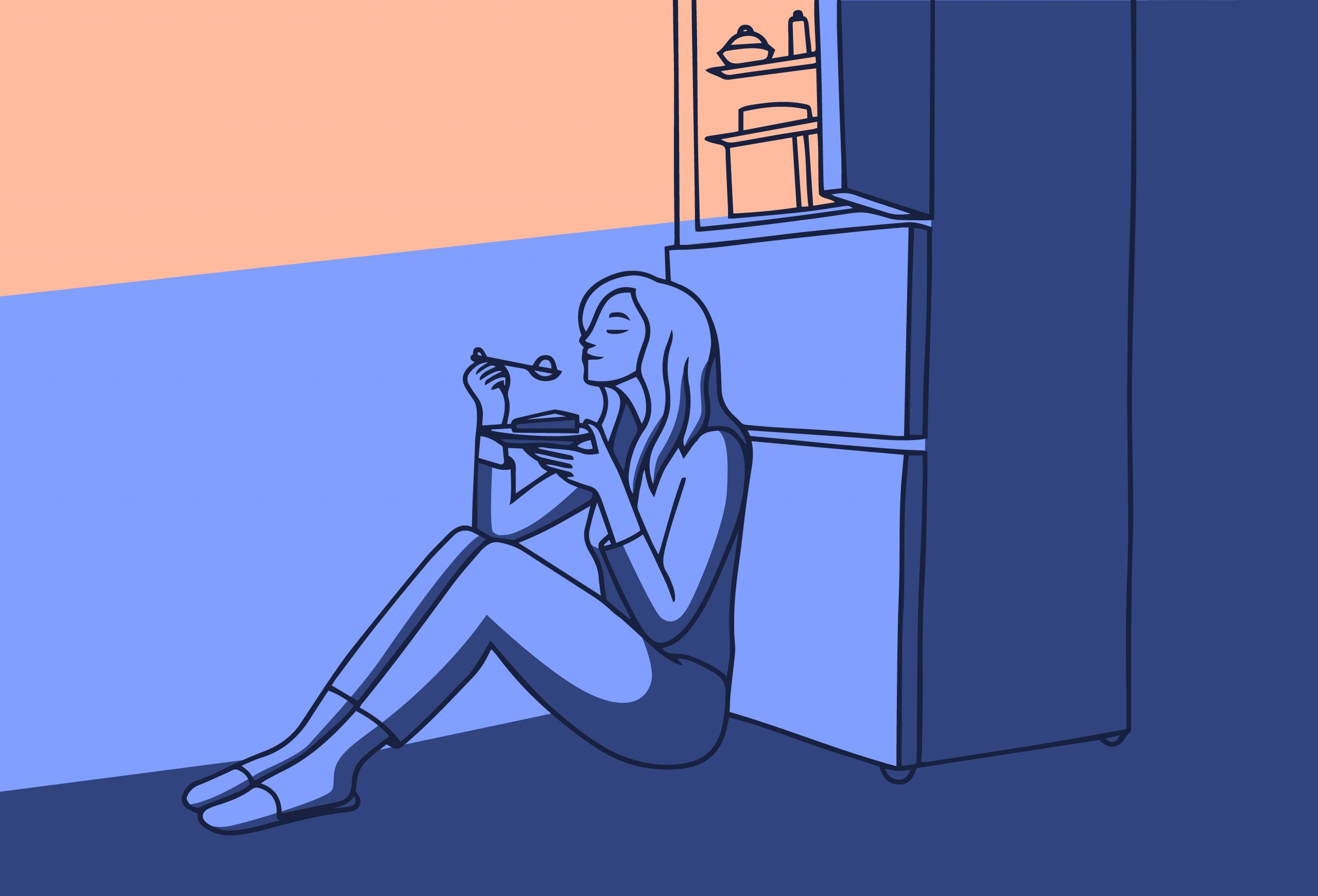
    Do you ever eat when you’re stressed, sad, tired, alone?

    Bag of chips after a hard day?

    Ordering the take-out when your partner’s away?

    I did.

    Seven years ago, my newborn baby cried every evening.

    I’d feed her, change her, and blow raspberries on her neck. Still, she screamed—like a smoke alarm you couldn’t stop.

    I tried singing to her, burping her, begging her…

    I felt useless, desperate.

    In my journalism job, before maternity leave, I’d often doubted my capability. But my new job as a parent? Totally out of my depth.

    I envied my husband, swanning off to the office. The second he got back, I’d thrust the howling baby at him.

    “Tell me what to do!” he’d yell over the din.

    At my wits’ end, I’d put on the sling, wrestle her in, and head into the Berlin streets.

    If I bounce-walked, muttering “Hi Ho, Hi Ho, it’s off to sleep we gofour billion times, she’d sleep. Then I’d feel like I deserved a medal. Or, failing that… an ice cream? (My district was renowned for boutique ice cream shops.) Black cherry and mascarpone! Perfect.

    “Dinner’s ready,” my husband would say when we got back. I’d wipe my chin. Afterward, I’d be mega full.

    First few times it happened, I promised myself I’d nix the habit before anyone noticed. But every day from then on, when the witching hour arrived again, you know where I’d go. Before long, I knew every kiosk, every flavor, and often ran to double scoops.

    Honestly? I was overeating at home too.

    When my baby girl dozed off breastfeeding, I didn’t dare move a muscle. I’d sit there, peeling slices of Emmental out the packet.

    It was fifteen years since I’d recovered from binge eating and bulimia, so this new eating problem was scary. Plus, my post-baby waist already bulged over my leggings.

    Over the next couple of months, I Googled emotional eating tips for what to do instead.

    I tried substituting healthier snacks, but ate whole bags of carrots and prunes.

    I tried to “feel my feelings” more, but as I wallowed in self-pity, I wondered if I was doing it right.

    I talked to my friends. Over coffee and cake, of course.

    I read a book about mindful eating. On my phone, over lunch.

    The fact is, I was just trying superficial fixes, without understanding how my mind worked.

    When I finally understood how emotions fuel our behaviors, it changed not just my eating, but my handling of life too. I even lost my baby weight, eventually.

    But more importantly, my emotional eating has shown me how to manage my mind.

    So, if you’re eating when you’re not hungry, whether through stress from parenthood or something else, this is for you.

    Let me show you where I got confused so you can solve your eating more easily. Because solving emotional eating isn’t complicated. It only seems hard because we get it mixed up with self-judgment, and because we think we need to take the stress away to stop the eating.

    Confusion 1: I spent time dealing with feelings that were just drama, not the real scary emotions.

    I probably should have cried more after my baby screamed so much. But I didn’t want to scare her.

    I would have liked to kneel on the floor and wail with exhaustion, and anger at the rejection I felt. Those were my heartfelt feelings. Real, raw, ugly, unflattering and immature, but true.

    By eating instead of feeling, I brushed those emotions under the carpet. And then covered the area with more mental mess: food-related self-doubt, regret, blame, failure, victimhood, despair, more eating.

    I’m not saying decluttering your brain of food drama is a waste of time—actually, in the process we learn to cut ourselves some slack, and that’s golden.

    But the shame from all the self-judgment is only the surface layer of mess, and ultimately, you have to aim to clean deeper.

    Feel deeper. Feel beyond guilt.

    Confusion 2: Believing it’s wrong to use food to numb your feelings.

    I hold my hands up: eating ice creams was pure escape. Afterward, I’d feel like I’d abandoned myself and my baby. That didn’t feel right, but it doesn’t make it wrong.

    If you’re eating to avoid your emotions, you’re not naughty, or bad, or wicked, or greedy, or weak.

    Sure, in an ideal world, we’d eat when we were genuinely hungry, not just craving relief. But eating when you’re physically hungry is a skill, not a rule. You have to learn skills. Not just beat yourself up.

    “I didn’t need to eat. Why do I always do this? I’m getting fat.” 

    It makes no sense to bully yourself into changing when you’re still figuring out how. It’d be like me yelling at my baby for not being able to communicate with words.

    My husband laughed once when I called myself an emotional eater. He was like: “What is that?

    So I could ask that too, and tell myself: “I’m not sure what’s going on yet, but bit by bit, I’m going to understand this.”

    Big difference!

    Confusion 3: Labeling yourself as a problem person if you eat in a disordered way.

    I kept having this thought:

    I can’t help it, it’s my personality. I had eating disorders.

    To be fair, I did act like an addict.

    I mean, one minute I’d be breastfeeding. And the next minute I’d come to my senses with an empty muesli box on my side table and wheat flakes crusted onto my pajamas.

    And I’d go: What is wrong with me??

    So I Googled. Took personality tests on the internet. Felt helpless and doomed.

    Then, I read something cool: “Your personality is just a collection of habits.” Bingo! I didn’t have to label myself an “overeater” or a “binge eater” or “an addict,” which made me feel bad about myself and made it harder to stop.

    For now, I could just be “someone who overeats sometimes.”

    The grace I gave myself when I said that washed through my body like a relief.

    From thereon in, I started figuring it out, one tiny change at a time.

    Confusion 4: Playing wac-a-mole with triggers.

    A habit, as I’m sure you know, is a chain reaction. Something sparks a thought that food would be good. That trigger can be a feeling, a time of day, that buttery croissanty smell…

    So, you might think you’re at the mercy of whatever presses your buttons and start trying to avoid your triggers. But tiptoeing around triggers isn’t the answer.

    First: not practical. Avoiding your mum because she mentions your weight. Walking past Delice de France with a clothes peg on your nose.

    Second: pointless. Why? Because the reason your emotional eating began isn’t the reason you keep doing it.

    Let’s go back to Berlin—I want to show you how my emotional eating habit evolved.

    The first day I went out with my crying baby, I wasn’t intending to eat ice cream. I saw the Eis kiosk, and I thought, “I want something for myself.” That day and that day only, there was a fully conscious decision.

    My brain took notes. After that, any time I felt less-than, it said, “Let’s eat again! That was easy!” Pretty soon, I was eating whenever I felt rubbish.

    Eating biscuits, overwhelmed by my messy flat.

    Eating biscuits, resentful of others’ great sleep.

    Eating weird instant soup, because I’d run out of biscuits.

    You can’t eradicate triggers. You’d have to solve life. But breathe. You don’t have to.

    The solution to emotional eating is to not rush to solve anything.

    When I was stress eating in Berlin, I was so busy trying to solve my stress—or eating—I wasn’t really paying attention to the thoughts or feelings in each moment.

    It was all flying under my radar in a hailstorm of pretzel crumbs and salt crystals.

    I started noting the actual sentences that I’d told myself in the moments before I had overeaten. Sometimes I just wrote a word in a circle. A feeling. An urge!

    Bit by bit, I realized, I’d avoided my feelings because I thought it was bad of me to have them.

    For instance, I resented the enormous responsibility and daily duty of caring for a baby, and feared my creative, rock ‘n roll life was over—but I dismissed that feeling as selfish.

    I envied my husband for going to work and I missed my ambition—but I judged that sadness and jealousy as “ungrateful.”

    I desperately missed getting praise, or pay, or achieving things on a to-do list—but I cringed at my neediness for someone else to tell me I was doing a good job.

    Turns out, I did want something for myself. Not just an ice cream! An identity beyond motherhood.

    But with self-judgment so harsh, I can see why I couldn’t admit those feelings.

    I didn’t need to express my true feelings—to paint huge canvases, or sing my lungs out in my car.

    Or shove them down.

    Or spend any time on a psychiatrist’s couch exploring the gaps in my own upbringing.

    Or instantly solve them.

    I just had to live with the dilemma for a while. Acknowledge the emotional conflict. I needed to witness it.

    Same as I had to be there for my daughter.

    I couldn’t stop her crying! She got born, she wasn’t cool with that, and I don’t blame her—it’s a pretty exposing, vulnerable business being alive.

    My job was just to hang in there with her, going, “I know you’re crying, I’m here, I can’t make it better, but I’m not going to abandon you.”
  • Why I Felt Broken and Unworthy of Love and What Changed Everything

    Why I Felt Broken and Unworthy of Love and What Changed Everything

    “How people treat other people is a direct reflection of how they feel about themselves.” ~Paulo Coelho

    He used to tell me no one else would love me because I’m damaged goods.

    And I believed him.

    Because I received messages for most of my life that there was something wrong with me.

    I wasn’t good enough. Too sensitive. Too weak. Too sickly. Too different.

    I realize now those messages were passed on to me by concerned parents who saw in me parts of themselves they didn’t fully accept.

    And those messages were from parents whose own parents had used criticism as a way to motivate them to do better. They didn’t know another way. They were just trying to help me succeed.

    But my little HSP soul took it to heart. I took it literally.

    Then I ventured into the world as an adult choosing romantic partners who confirmed every single belief I’d held about myself since my developmental years.

    This is a common cycle we perpetuate when we’re not aware that programmed conditioning is running the show.

    I attracted romantic partners that played out all the emotional dysregulation from my family of origin—to confirm to me that everything my caregivers had told me was indeed true.

    But I was also looking for someone to give me the love and acceptance I felt I had been lacking my whole life. I thought that would finally make me feel “normal.” I thought I would finally feel whole.

    Almost a decade ago, when I was in the worst (and most dangerous) romantic situation of my life, I tried to leave.

    Looking back, my friends told me they were truly concerned for my safety and my life while I was in that relationship.

    I had stayed because I felt that I deserved the treatment I received. That if someone who said they loved me spoke to me the way that he did, there must be a good reason.

    Although deep down inside, I had an inkling that this didn’t feel right. That perhaps being on my own was better than feeling terrible in this relationship.

    When I finally stood up for myself, he made sure I knew that if I left, I’d be destined to suffer alone forever because no one else would be willing to love a broken soul like me, and that I would indeed suffer greatly.

    He told me over and over again until I broke. Until I believed him.

    It took two whole years to finally free myself.

    In the end, what helped was seeking professional support—a wonderful counselor who helped me see that the situation I was in was harming me.

    Truly, my soul was dying. I was becoming a shell of who I was, and I hate to think where I’d be now had I stayed.

    The counselor helped me come to a new agreement with myself of what I was willing to tolerate in my life.

    It was the first step in an awakening to some important truths I hadn’t seen before.

    And I then committed to the inner healing.

    I spent many a moment in a sobbing mess on my yoga mat.

    I sat with the emotions that came up, even if they were uncomfortable. The fear, shame, guilt, anger. All of it.

    I listened to the messages these tough emotions had for me. And there were many.

    I met and befriended my inner child and realized she was scared. And that the only person that could really give her the assurance and comfort she truly desired was me.

    I had a dark night of the soul. My second (of three to date). Just as uncomfortable as the first.

    Just as the initial one had, this dark night delivered a deep realization that the path I was on was not leading me in a direction of my truth. I was moving away from my own inner light, not toward it.

    It was the jolt I needed to change. It was then that I finally mustered the strength to leave and not turn back.

    I didn’t yet know where I was going, but I knew it was going to be a different direction than where I had been. It had to be.

    I had changed my perspective about myself, and as a result, my life changed completely

    The people who then showed up were of a completely different caliber. Supportive, encouraging, and accepting of me for who I am: quirks and all.

    Or rather, I stopped letting in the wounded who didn’t accept me in all my bright, shiny perfect imperfection. I created new boundaries that prevented those uncomfortable with my light from trying to destroy it.

    As a result, I created more room around me for people who shine themselves.

    I’m now in a healthy, emotionally stable, and incredibly supportive relationship. It’s like night and day. I can see the difference now, and the contrast is remarkable.

    I now see that those manipulations and insults my ex threw at me were his way to control me because he didn’t feel in control himself. It was his coping mechanism.

    This behavior was most likely modeled to him from his own family of origin. This is how wounds are passed down.

    But at the time I didn’t understand, because I was taking in those comments from a completely different perspective.

    I was hearing those comments from the belief that there was something wrong with me, and so I assumed what he was saying to me was the truth.

    Please know, beautiful soul, that you are worthy of love in every way—especially and most importantly love from yourself.

    Anyone who tells you otherwise is coming from a place of woundedness. Do not let them pull you into their wounds.

    Stay in your light. Stay strong to your truth.

    Some may think your light is too bright, but that’s because it illuminates the wounds they’re not yet ready to face.

    As a result, they’ll try to dull your light to protect themselves.

    The ones who are meant for you will love your unique brightness and encourage more of it.

    Because they also live their truth and shine their light bright, and they understand the importance of supporting others to do the same.

    My love does this every single day.

    He doesn’t think I’m broken—he thinks I’m beautiful, inside and out.

    He knows I have wounds.

    And the lessons I’ve learned and strength I’ve gathered because of those wounds makes me wiser.

    He loves that about me. The emotional maturity I’ve gained through my journey makes me that much more appealing to him.

    And I’ve also come to realize on my journey that I don’t need his love or anyone else’s in order to find my own within. That’s the most important lesson of them all.

    You’re not broken, lovely human. Don’t let anyone convince you otherwise.

  • How I’ve Eased My Anxiety by Being More Present: 4 Practices to Try

    How I’ve Eased My Anxiety by Being More Present: 4 Practices to Try

    “Breathe. Let go. And remind yourself that this very moment is the only one you know you have for sure.” ~Oprah Winfrey

    In 2012, during my community college years, I began to experience mild anxiety.

    I assume it was the stress and fear that came with maintaining a good GPA in hope of transferring to a well-known university, alongside deciding what I wanted to do for the rest of my life. Or perhaps it was because of the time I knew I’d wasted slacking in high school to fit in with what I was surrounded by and to preserve my loud-mouthed drama-seeking status.

    The next few years, I thought about the past and future a lot, cried, and grasped for many breaths during anxiety attacks near the campus pond.

    In late 2016 I faced my first severe anxiety attack in the laundry room of my parents’ home while sitting against the washing machine and holding onto my legs curled up against my chest.

    For the first time ever, I felt a heavy pain in the core of my body as if there were rocks piling up all the way to my throat and closing my airway to breathe. I had never felt so disheartened, lost, empty, and hopeless.

    Soon, my anxiety attacks got to the point where I faced numbing and tingling sensations in my head, face, hands, and feet.

    It wasn’t until countless severe anxiety attacks in that I had a glimpse of awareness behind my ongoing stream of thoughts. I found that I was experiencing stress and fear about what had happened in the past or would happen in the future and realized that I’d lost the present moment.

    Many of us face day-to-day suffering through anxiety. We worry about progressing in our careers, getting an education, making a decent income, being there for our families, putting food on the table, and always working toward a means to an end.

    I realized that many of us are constantly on the run to the future trying to be certain about what’s next, and if we slip and fall along the way, we worry about why it happened, which takes us into the past—eventually emerging from an egoic-state of fears, wants, needs, and expectations. That was me.

    There’s always going to be something new that we’ll want, need, and expect while trying to stay up to par with the people and situations that surround us. We’ll spend a lot of time sulking over setbacks, failures, and loss. Ultimately, suffering from stress and anxiety will bury what we’re meant to experience, learn, and grow from in this moment, the present moment. Because we can’t fully immerse ourselves in this moment if we’re worrying about the next or regretting the one prior.

    I’ve spent the last few years exploring, reading, learning, and practicing how to heal stress and anxiety with the simple, yet profound practice of being present, conscious, and aware.

    With this practice, I’ve strengthened my ability to acknowledge and allow suffering to take its course when facing life’s inevitable difficulties and challenges.

    The following are a handful of ways I practice presence, which has not only dissolved my anxiety, but also awakened my gratitude for the great joy and peace we can experience once we become conscious and aware in this moment.

    4 Ways to Practice Presence

    1. Practice non-judgment, non-attachment, and non-resistance.

    You can lose yourself into the past and future when you’re judging, getting attached to, and resisting what is. This is because we become fixated on our wants, needs, and expectations of the moment instead of fully experiencing it. If we want to minimize our suffering, we need to be here in the present moment and allow what is to be and pass.

    I know this practice is easier said than done.

    I’ve had days where I was over the moon with immense joy during moments of achievements, when sharing laughs with family, and while celebrating milestones like my wedding. I also became attached, wanting the moments to last forever and feeling saddened that they had to come to an end.

    On the contrary, I’ve also had days where I felt gutted and devastated over the loss of my dad, and I couldn’t help but judge and resist the experience of losing him. I had expected him to be around for future milestones and heartfelt moments.

    Yet, I’ve learned that moments are undeniably and inevitably temporary. Joy doesn’t last forever, but neither does pain. Allow the painful moments to be and pass and truly savor the good ones with your presence and full attention.

    Practice being and experiencing this moment as it is without judgment, attachment, and resistance. Enjoy the good moments and learn and grow from the ones that aren’t that great.

    This will allow you to surrender to and accept the process and flow of life, which is the key to decreasing your suffering.

    2. Focus on your breath.

    Realize that you have no control over your past or future breath, only the one in this moment right now. Similarly, you have no control over what happened in the past and can never be certain of the future.

    In many experiences in life, from meditation, yoga, exercise regimes, and sports to childbirth and even suffering, we’re always reminded to just breathe. It’s the breath that guides us into the present moment where the actual being and doing is.

    Try your best to concentrate on the inhaling and exhaling momentum at a gentle and patient pace throughout your day. It’s a form of meditation that can be done anywhere and anytime to dissolve any stress and anxiety you face.

    I practice this throughout my day all the time whether I’m at work or on the couch, just to redirect my focus into the now, especially when I become aware of nonstop thoughts, which can set the stage for suffering.

    This practice brings you out of your head and into your body and allows you to immediately shift your focus away from your worries, fears, and regrets.

    3. Immerse yourself in nature.

    Have you ever felt immense peace while looking at the sunrise or sunset and a calmness when around trees, flowers, plants, rivers, lakes, and waterfalls?

    When you’re with nature, you instantly become connected to its stillness, silence, and simplicity.

    Even during the roughest storms, nature reminds us to become in sync with what is to allow the storm to take its course and pass.

    To be in nature, you don’t have to go far. Step into the backyard or take a walk around the block. Pay attention to the beauty of the flowers or the rustling wind in the trees and embrace the peace and joy that arises from it.

    You’ll find that nature truly has a way of reconnecting you to this moment.

    4. Be grateful and trust what is.

    So grateful, I whispered to myself as I stood outside in the backyard watching my puppy Oakley running back and forth on the grass, my husband playing with him and the sun setting.

    It would have been easy to lose myself to thoughts about what’s next and why I still at times feel lost and hopeless, but those thoughts never resolve how I feel and only ignite my anxiety. I decided to instead be grateful for the blessings in that moment, trust that what’s next will get here when it does, and for now, practice being present with what is.

    Be grateful for what is right now, even if you’re going through challenging times. Let your trust for the process be bigger than your fear, stress, and anxiety. When you trust the process, you tell life that you are one with its flow and allow the experience to make you stronger, teach you something new, and guide you onto a path of growth.

    Take a breath to recenter yourself into this moment and look around to see what you can appreciate. Perhaps it’s this blog, a family member, your pet, a plant, a cup of coffee, or a meal. Maybe it’s the sun or rain.

    It’s easier to let go of the past and stop trying to control the future when you’re fully immersed in the now. Whatever your life entails in this moment, be present with it, because that is the ultimate path to healing and finding your power in life.

  • How to Increase Your Sense of Control and Boost Your Resilience

    How to Increase Your Sense of Control and Boost Your Resilience

    “You may encounter many defeats, but you must not be defeated. In fact, it may be necessary to encounter the defeats, so you can know who you are, what you can rise from, how you can still come out of it.” ~Maya Angelou

    When I look back, I am amazed at how differently I dealt with adversity the first few decades of my life.

    Growing up in a stressful home primed me to experience life with caution. Whether it was being afraid of physical harm, loneliness, or failure, I’ve lived my life with an exaggerated fight-flight response to everything. Adversity seemed around every corner, and no one was ever there to save me.

    I developed maladaptive mechanisms to minimize, avoid, or go around the things I was afraid of.

    I became a quiet and obedient kid to avoid my father’s anger.

    I accepted whatever sliver of love my chronically overwhelmed mother was able to give me.

    I settled for the last pick on the team. I quit afterschool theater after I was assaulted on the way home one evening.

    I gave up on art school because my father wanted me to be a teacher.

    I went to a music school as he wanted and quietly accepted my instructor’s abuse.

    On and on, hurt and disappointment became my constant companions, and I learned to just take it. No one seemed to care that I struggled. No one saw me.

    Over time, I learned to accept that the world was just cruel and indifferent to my pain. I learned that I have little control over my circumstances. I learned that I can either fight and fail or stay quiet and survive. I learned helplessness.

    I know now that my childhood wasn’t that unique, but for a kid, it was isolating and debilitating. I thought I was the only one who struggled like this. I felt different, alone, and somehow deficient. I developed low self-esteem and anxiety that soon morphed into this chronic feeling of impending doom.

    I carried that sense of dread and defeat into adulthood. Hypersensitive to stress, I avoided things that would challenge and overwhelm me. I looked to others for permission, approval, and validation. I allowed things without a fight, latched onto any good thing that came my way, and accepted crumbs from others never daring to stand up for myself and ask for more.

    They say that what doesn’t break you makes you stronger but for many—those without a healthy foundation—life’s big and small traumas build up and eventually show up as anxiety, depression, substance abuse, or PTSD. I developed most of these.

    Resilience Can Be Strengthened

    We all respond to adversity differently. Research shows that a loving, emotionally responsive, and supportive environment during childhood fosters psychological resilience throughout life. But even if we didn’t get that strong foundation growing up, we can still build resilience now.

    We can learn to overcome helplessness by increasing our sense of control.

    Finding Peace in the Present Moment

    The most significant practice that allowed me to shift out of state of helplessness and offer me some sense of control was mindfulness.

    Instead of reliving the past—the pain, resentments, and disappointments—or worrying about the future, I could find peace in this moment, right now. I couldn’t change what happened and can’t control what’s to come, but I can decide how I move now. In this very moment, I can control how I respond to life.

    A deep inhale, noticing my child’s smile, the scent of garlic as I cook dinner—I can focus on here and now, fully absorbing life through all my senses, knowing that in this moment I am okay.

    And, if I’m feeling stressed or unsettled, I become curious instead of trying to outrun it. I start paying attention to my body, tracking sensations, observing where I’m feeling tightness, consciously releasing the tension as I breathe in and out. This way, I can help regulate my nervous system and shift the patterns of reactivity. I remind myself to breathe as I ride the wave, trusting the discomfort will eventually pass.

    Learning to Move Through Negative Thoughts

    Once I allowed myself to feel what was going on in my body in times of high stress, I began noticing what I’m thinking and feeling in the midst of turmoil.

    It can be difficult to not get overwhelmed by the negative thought patterns engraved deeply in our minds, patterns we’ve been falling into for decades, without much conscious examination. Looking at those now, I realized how detrimental my mental scripts were to my well-being.

    With the help of my journal, I learned to reframe negative events, bring perspective into my experiences, and focus on what I could learn from them.

    For example, I’ve carried with me this feeling of failure as a young parent. For those first few years, I was living in a constant state of overwhelm, and there was a lot of guilt for not being good enough of a mom, feeling like a fraud and a failure. When I took a step back, I realized there was a multitude of circumstances going against me that made this part of my life extremely difficult, and I was just doing my best.

    I had three children super close together (three under three), which in itself was a Sisyphean task. I had just moved across the country and had no real friends or family to support me. My husband worked long hours, many weekends, often out of state. It was a lot to take on, and I was virtually on my own.

    Looking at this part of my life, I realized I had unrealistic expectations of what it meant to be a good parent. I also realized my perfectionist tendencies and the relentless pressure I put on myself stemmed from my fears of perpetuating generational trauma.

    This way of thinking wasn’t constructive—it was making me miserable. Slowly, I began noticing when these tendencies showed up, and instead of feeding them, I’d just watch them come and go.

    Mindfulness allowed me to move through negative thoughts and memories instead of getting stuck in them. I would observe what was going on inside my mind, breathe through the turbulence offering myself compassion for my struggles, and remind myself that I was doing the best I can. Over time I stopped being so hard on myself, and eventually shifted out of the habit of ruminating for good.

    Enjoying Something That You Do Well

    Spending time doing something that I can do well reminds me how it feels to succeed.

    I have always enjoyed gardening. It is my escape from the hustle and stress of today’s fast-paced world—my garden is my sanctuary.

    Watching my garden transform over the decade from a lot of dirt to where it is today—with all the fruit trees, veggie boxes, shrubs, grasses, and blooming annuals—brings me a sense of accomplishment and fulfillment.

    Finding something that you do well, and practicing it regularly builds confidence, self-esteem, and fortifies a healthy ego. It is imperative to have hobbies that you excel at and can turn to in times of stress or unpredictability.

    Spending Time in Nature

    We live in a world of chronic stress and anxiety. We are always plugged in and on the go, constantly planning, thinking, and doing, all the while feeling disconnected from ourselves and the world around us.

    Modern-day life means living in our heads a lot. To counter that, we need a practice that will ground us and bring us back to balance. And nature is one of the most grounding elements that we have.

    Being in nature down-regulates our nervous system and brings about relaxation. Even a short walk can improve our mood and reduce anxiety. Disconnecting from our daily grind this way—all the responsibilities, worries, and electronics—rebalances our body, mind, and soul. Our problems become less significant and impending. We can exhale, if only for now.

    There are many ways we can ground ourselves in nature this way. Gardening, walking, or even taking care of houseplants can be grounding. I like watering my garden in the evening, repotting plants on Saturdays, and long walks around a lake on Sunday mornings. Find your own natural zen. Soak in nature’s energy as often as you can—it’s healing.

    Caring for and Nourishing Your Body-Mind-Soul

    We can’t be resilient if we are depleted.

    When my kids were little, I barely had time and energy for self-care. I neglected my needs—whether physical, emotional, or mental—just like I was raised to ignore them growing up. Self-neglect is a trauma response, and years went by before I realized I was just perpetuating old wounds.

    As a result, I felt chronically depleted and anxious. Every little mishap or challenge would stress me out, whether it was a kid’s tantrum or packing up for a weekend trip. I was living in a state of chronic overwhelm, emotional dysregulation, and low-grade depression.

    As kids grew older and more independent, my healing turned a corner. I could finally go beyond basic self-care like showers and eating well, and focus on truly nourishing my body, mind, and soul. I now prioritize self-care like my life depends on it because it does.

    Focusing on the basics, I prioritize sleep, movement, and practices that nourish and relax me—long baths, longer walks, healthy food, reading, gardening, music. I rely on boundaries to protect my energy and inner peace. I practice mindfulness and do things with intention. I plan ahead to avoid rushing or multitasking. I fill my own bucket.

    With so much out of our control, caring for ourselves—body, mind, and heart—is the one thing we can do.

    ——

    While challenging times are a given in life and we can’t always change our circumstances, we can have a different relationship with what’s going on outside of us. We can learn to surf the waves if we stay mindful of practices that strengthen resilience. And that is empowering.

  • Who Are You Protecting? Why Telling Your Story Is Powerful

    Who Are You Protecting? Why Telling Your Story Is Powerful

    “There is no greater agony than bearing an untold story inside you.” ~Maya Angelou

    Throughout my childhood experiences I did what every child does and rejected parts of myself. It makes sense because kids depend on adults for survival, so I was in no position to reject my parents. But as an adult I feel it is now my job to reclaim those parts of myself.

    While I had two parents that loved me and what I’d describe as a normal childhood, nonetheless I became hyper-attuned to others, over-sensitive to criticism, and a perfectionist, particularly under stress. It led to all sorts of pain within relationships and, upon becoming parent, I could see I needed to address some things. I had little sense of self and had to learn about having and holding healthy boundaries.

    I have been fortunate not to have been directly subjected to any of the more readily recognized trauma (sometimes known as big-T trauma), like addiction, violence, or sexual abuse. But my childhood was dominated by the kind of trauma that descends from the big stuff.

    The aspects of my dysfunctional persona I mention above come under the heading of developmental trauma. I think it’s important to expose these aspects of who we become in the world as they have been getting perpetuated subtly throughout families all over the world for generations and they prohibit our collective growth.

    Yet, for all the personal experiences I have shared, one I have never spoken of until recently is probably the one that shaped me more than anything else. Simply put, I had a mother who did not cope well when looking after us kids on her own. I learned to think ten steps ahead and project into the future in order to avoid any major meltdown. It drove perfectionist behavior in me, and I learned to choose my words carefully.

    Why have I never spoken about it? I suspect this is multifaceted and ranges from things like not wanting to air dirty laundry, so to speak, to knowing that both my parents (like most parents) did the best they could with what they knew and the resources they had available to them at the time. Yet these were my experiences, for better or worse they shaped me, and if I tell my story it might help someone else.

    To be more specific, mum used to often drop into this hyper tense state when she was alone with my brother and me; something I now readily recognize as a trauma state. She would say she was “up to high doh” (an old Scots expression) with our behavior, then snap at us, scream and yell, and chunter on afterward for a period of time somewhere else in the house.

    When she would yell at me or chunter afterward, I now know it was most likely a deflection of her own pain. As my bedroom was above the kitchen I could hear the aggressive slights about me “being a bitch” or a “slut” or “a selfish cow” even though I was only a child.

    When my father got home she would immediately approach him using a baby voice, another thing I could hear from my bedroom, conveying just how stressed she was (we kids usually being at fault). In the evenings Mum would then sit in front of the TV sucking her thumb, which I suspect were signs that she was likely regressing into her child self.

    Watching this cycle, at the time, made me feel disgust and anger on top of the fear I already felt in being under her watch each day. My nervous system was under constant alert not knowing what aspect of her would show up.

    Everything was our fault because we had broken the rules. With hindsight, and far more knowledge of children’s development, I now know we were just going through the normal growth and development cycles that kids go through rather than being bad kids.

    Because it was probably a dissociative state that emerged when my mother was in flight-or-fight mode, it is possible (especially since Mum never did any meditation or therapy around this) that she had no clear memory of acting like that, or the frequency with which it occurred. I expect she was too identified with the thoughts of how bad we were and how bad it made her feel.

    Dr. Gabor Maté’s words ring true: “It is often not our children’s behavior, but our inability to tolerate their negative responses that creates difficulties. The only thing the parent needs to gain control over is our own anxiety and lack of self-control.”

    My mother was not able to do that, and nor are most people to be fair. It is far easier to blame people or circumstances than take a good hard look at ourselves and have a willingness to explore the hidden depths that we are held hostage to.

    All this was unspoken with my mum. It is like it never happened, as if my brother and I somehow lived in a parallel universe.

    Likely looking after young kids on her own was overwhelming and activated the trauma stored within her, perhaps in response to her own father’s violence and/or possibly the disgust at my grandmother’s passivity about it, or her own guilt in not doing something more (even although she was incredibly young at the time and couldn’t possibly have intervened).

    However, when she was diagnosed with cancer my mum did say, “You know how I like to stick my head in the ground” when I tried to share with her the metaphysical possibilities related to the disease. Since my mother was most often too open with her opinions and usually gave us direct answers to questions we asked, sticking her head in the proverbial sand wasn’t something I immediately associated with her.

    But now in retrospect I wonder whether, on some level, she may have been acknowledging her dissociative behavior when bringing us up, and the effects it may have had on us kids. Certainly it wasn’t something she ever directly acknowledged.

    Though she did not readily share details during her life, she was simply what I would have called very dark on her father and her eldest brother. Just before she died I discovered her father was an abusive alcoholic. I also knew her eldest brother, a half sibling, abandoned the family as his father before him had abandoned him.

    My mum, like a lot of people, never saw any value in revisiting those childhood experiences; she couldn’t fathom why anyone would partake in coaching never mind counseling, perhaps because she felt herself adequate enough and externalized her feelings. She certainly did not believe she was in any way held hostage to her experiences, which is what most of us would like to believe I expect.

    As a result, I felt very alone and invalidated. My parents had each other, whereas my brother and I were left to deal with our emotions alone. Certainly it often felt our needs were not important (which was the predominant theme of the “do as I say and do not argue/we know best” approach to childrearing that had gone on for centuries).

    While, like anyone, I could express many more things in my childhood that have stuck with me, experiencing my mother’s own trauma when we were alone with her, which was for significant amounts of our early life, elicited a feeling of constantly being on edge.

    As I grew I spoke up more, unwilling to accept the emotional load being put on me, which resulted in a lot of raging arguments in my teenage years.

    No one except my brother would have much of an appreciation for this, because around others my mother was quite different. In fact, around others, especially my father, she would have felt safer and, therefore, calmer. This Jekyll and Hyde behavior obviously made it very difficult for me to bond with a mum who, for all that I knew loved me, because my internal shields were well and truly up.

    While I did not have the words for any of this back then, having caught myself descending into this chuntering state with both my partner and our own kids at times was a red flag for me. I knew I had to address my own reactions to break the cycle.

    All that said, I feel blessed with my experiences because they helped shape me and to relate to others’ struggles and other dysfunctional behavior. I feel strongly that I have come into this life to shine a light on this more insidious type of trauma, one that lives in all of us in various guises, and help break the chain of pain that is occurring in pretty much every home across the planet. So in this sense, um was the perfect mother for me.

    I also recognize that this was but one facet of my mum, one I have come to see with compassion, and she had many more that were far more positive. As a grandparent she was generous and loving, as a friend she was insightful and loyal, and as my parent she was all those things too; I always knew I was wanted and loved, it just did not always feel that way, especially when she was “up to high doh.”

    It seems to me that through shame, guilt, and pain very few of us talk about our experiences, not realizing the person next to us is living their own twisted version of the same. The systemic issues we face in society today are all fed by the ongoing cycles of trauma within us and can only be solved by bringing them into the light. 

    We don’t all have to share our stories publicly. Even just opening up to a trusted friend or therapist can help us understand what we experienced, chip away at our shame, and break the cycle of pain so we don’t unknowingly repeat the same patterns.

    So who are you protecting? What trauma shaped you? Is it time to tell your own story? Maybe sharing is the key to your healing, or helping heal someone else.

  • How I Get Through Hard Times Using Curiosity, Compassion, and Challenge

    How I Get Through Hard Times Using Curiosity, Compassion, and Challenge

    “Sometimes the worst things that happen in our lives put us on the path to the best things that will ever happen to us.” ~Unknown

    Until I was thirty-seven, I thought I’d led a pretty charmed life: I had a supportive family and good friends, I’d done well academically, always got the jobs I’d applied for, and met and married the perfect man for me.

    In 2013, when I was thirty-five weeks pregnant with my second child, I was diagnosed with stage 3 breast cancer. My baby was induced at thirty-seven weeks, and my chemo started ten days later. In a funny way I was relieved; Okay, I thought, I’ve been seriously lucky up until now that no one has been ill in my life, so if I can survive this, then this is as bad as it gets.

    And that year was bad—moving home, caring for a toddler and a newborn, and going through aggressive cancer treatment was horrendous, but I hunkered down, tried not to think too much about it, and survived.

    In December 2014, literally as we were clinking champagne glasses to celebrate my all-clear results, my husband had a devastating call from his mum in New Zealand. She had just been diagnosed with a rare and incurable cancer. Early the following year my dad was diagnosed with stage 4 bowel cancer, and my mother-in-law died that spring.

    It was at this point I started to feel weighed down with a heaviness. This wasn’t the deal… I’d taken the cancer hit for the team, everyone else was supposed to stay well. I started to lose my trust in the world.

    My urge to control everything and everyone around me, which I now realize I have had since childhood, went into overdrive. I became fearful of change and made list upon list to organize and reorganize my life until I had anticipated everything that might go wrong and put things in place to deal with it.

    My brave dad endured a variety of invasive and aggressive treatments, but his health continued to decline. I could not control what was happening or the sense of loss and grief that at times I felt were swamping me.

    Something had to change: I started journaling, yoga, and meditation. Slowly I felt my anxiety and my panicked grip on my life begin to lessen. I looked inward and I started to notice familiar feelings and patterns, recognized myself responding to roles and labels that I no longer felt to be true.

    There were shifts; very, very small shifts, but with two small children, a husband working long hours, and a dad with rapidly declining health, even small shifts made a difference to my capacity to cope.

    Toward the middle of 2015 my husband started to get awful headaches, nausea, and dizzy spells. He was in a very stressful job, so decided to leave work at the beginning of 2016 to get his health back and decide what he really wanted to do with his life. However, in the spring of 2016 he was diagnosed with an incurable brain tumor. At that stage my children were three and five.

    The next couple of years were consumed by medical appointments for my dad and my husband, alongside the busyness that goes hand in hand with raising young children, but I continued my inner work. I examined my feelings. Was that really how I felt? Had I felt that way before? What helped then, what might help now? Is the story I’m telling myself about this true? What do I need right now?

    In spring 2018 my dad died, in spring 2019 my husband died, and in spring 2020 the UK went into its first lockdown due to Covid-19.

    Every year since 2014 I’ve said to myself, well surely the worst has happened, this year has to be better, and yet each year something else monumental and life-changing has happened. The past seven years have been relentless, and at times I have been overwhelmed by the responsibility of caring for the people I love most in the world.

    People used to hear my story open mouthed and ask, “How do you cope?” I would reply in a way designed to brush them off, remove their focus of attention, and minimize my pain by saying, “Oh well, you know, you just deal with what life throws at you.” I knew that this wasn’t true, but a flippant reply was easier than the truth. After years of continual inner work however, this is my honest reply:
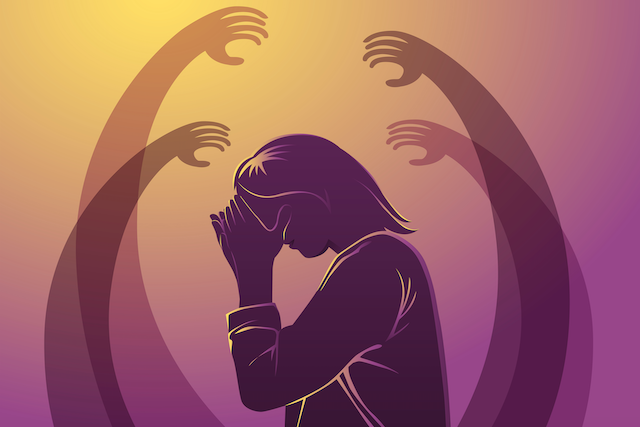
    To boost your resilience, to heal, and to ultimately thrive you have to be prepared to turn over the picture-perfect patchwork quilt of your outer life that you present to the world and take a good look at the messy stiches on the underside.

    You need to be prepared to look at the messiest of those stiches and painstakingly unpick them so that you can find the knots, the tangles, and the imperfections. It’s only when you connect with your authentic self that you’re able to respond to your unique needs in times of crisis and learn what you need to do to foster your own resilience.

    The way of doing this will be different for everyone, but if I could boil it down to one pithy statement it would be to always keep in awareness the 3 C’s: curiosity, compassion, and challenge.

    Here are some ways I’ve applied this in the last seven years to help me, and perhaps these ideas might help you too.

    Allow your feelings.

    Other people are allowed to feel uncomfortable about this, but that is not your responsibility. Your responsibility is to embrace your emotions so you can process them and work through them instead of repressing, denying, or numbing them with substances and distractions.

    In my life this idea of numbing or distracting has taken shape in many ways. One is the compulsion to check my phone rather than sit with feelings of restlessness, boredom, or uncertainty. Sometimes I find myself opening my fridge or cupboard, not because I’m hungry, but because I’m anxious or agitated.

    Recently, I’ve needed to work on sitting with my feelings when I say “no” to someone and worry there will be painful repercussions if I don’t keep other people happy.

    These are all hugely uncomfortable realizations, but offer an opportunity to spot patterns—do I always reach for food after a specific event, do I always reach for my phone when I feel a certain way in my body?

    Once I’ve shown a curiosity about my choices, I can have understanding and compassion for why and challenge myself to do something else. Instead of food can I do some rounds of a breathing exercise? Instead of the phone can I practice some simple yoga poses? Can I pause before saying “yes” to something I know won’t serve me and think of the times I’ve said “no” and there haven’t been negative repercussions?

    Key questions here are: What do I really need, what am I afraid of, and how can I soothe my threat system in that moment before reacting?

    Put your needs first.

    I learned that however much I was needed by other people (and with a dying dad, a dying husband, and two small children I was needed a lot), I had to start the day knowing that at some point I was going to make time to put my needs first.

    Sometimes that was getting up early to enjoy a hot chocolate in peace, often it was taking some quiet time in nature. I joined a gym with a pool because swimming is something I find hugely supportive for my mental health, and I joined an online yoga site as I no longer had the lengthy chunks of time I needed to get to a class in person.

    Embrace ritual and routine.

    Decision fatigue contributes massively to how overwhelmed I can become; routines provide a secure framework for my family to feel supported and give me more energy for the unexpected things that life inevitably throws at me.

    My routine includes:

    • Planning my week ahead on a Sunday—I have a simple document with columns for appointments, reminders, to-do list, and well-being
    • Putting out school clothes and making lunches the night before
    • Having a grocery delivery booked in for the same day and time each week
    • Menu planning and pre-preparing simple meals for the nights of the week that I know will be busy or I am working late

    Put together a well-being toolkit.

    Explore ideas and suggestions that you might find supportive, but don’t feel beholden to it. You don’t need to use all of the tools all of the time. Learning to listen to what you need in the moment (and giving yourself permission to act on it!) is really empowering.

    My well-being toolkit includes…

    • Breathing exercises
    • Journaling
    • Yoga
    • Reading
    • Running
    • Meeting friends for tea
    • Trying out new recipes
    • Sitting still—either meditating, focusing on my breath, or just letting my mind wander

    Build a supportive team around you and know their individual strengths.

    No one person can deliver everything you need. Manage your expectations about what each treasured person can bring to your life and learn who to go to for what.

    Challenge the narratives, expectations, and labels in your life (my 3 C’s).

    Do they still serve you or feel true; where do they come from; what do you need in order to let some of them go

    There were ways I perceived myself and labels others had given me that only addressed the way I presented myself outwardly. By turning over the quilt and looking at the stiches that made up these labels with curiosity and compassion I was able to challenge them.

    For example, am I really “standoffish,” or is that just my defense against crippling social anxiety? Am I really “bossy,” or am I just frightened of how unsafe the world will feel if I lose control? Am I really “capable” or just terrified of asking for help and being rejected?

    I would never suggest this is a simple process, and reaching even a modicum of self-awareness is a daily and never-ending challenge for me. There are no black-and-white answers, so it’s important to become accepting of living in the grey area.

    Ultimately, I believe that approaching each day, every response, every feeling with curiosity invites compassion and understanding, which helps us challenge and address underlying insecurities and outdated narratives that keep us down and stuck.

    Supporting ourselves to see beyond the labels, roles, and responsibilities layered on through our lives allows for the possibility of the emergence of the authentic self.

    This is a work in progress, I am a work in progress, and always will be.

    Some days I am overwhelmed with sadness, a heavy heart, and a sense of loss; some days I awaken already infused with a sense of gratitude and joy. Every day, however, I wake up prepared to be curious and interested, to approach all interactions with myself and others with compassion, and to do what I can to challenge thoughts and beliefs that I don’t want to take into my future. I just know that next year will be a better year.

  • I Thought Meditation Would Fix My Anxiety – Here’s Why It Wasn’t Enough

    I Thought Meditation Would Fix My Anxiety – Here’s Why It Wasn’t Enough

    “Your mind, emotions, and body are instruments and the way you align and tune them determines how well you play life.” ~Harbhajan Singh Yogi
    The earliest memory of my anxiety was at ten years old in fifth grade.

    I remember it so vividly because in middle school the bus came at 6:22am exactly in the morning.

    Each night I would look at my Garfield clock and think, “If I fall asleep now, I’ll get five hours of sleep…. If I fall asleep now, I’ll get four hours of sleep… If I fall asleep now, I’ll get three hours of sleep…”

    And without fail, my sister would slam my door open at 6:15 because my alarm didn’t wake me, yelling that we’re going to miss the bus, and this is the last time she’s going to wake me up.

    I didn’t know I had anxiety.

    When my doctor asked my mother, “How is she sleeping?” the answer was always “She’s never been much of a sleeper.” And that was that.

    Or when I couldn’t concentrate in school and do my homework, the “answer” was ADHD and I was given medication, which helped a little but didn’t solve the problem.

    In high school, the anxiety about going to school was worse. I couldn’t eat breakfast because I was too nauseous in the morning from stress.

    By college, my TMJ was so bad that there were months when I could barely open my mouth because my jaw was so tight. I had started scraping at my knuckles with a dull butter knife as a physical distraction from the angry swirl of anxiety in my stomach.

    More of this as the years went on.

    In my late twenties, after panic attacks that sent me to the emergency room, codependent relationships driven by the fear of rejection, and a wreck of a body with daily tension headaches, stomach issues, and a barely existent immune system… I finally figured out that this was all anxiety.

    It was starting to make sense why my pursuit of symptom relief for all my physical ailments was not working—I wasn’t getting to the root of the problem.

    In came meditation into my life.

    And it helped—a lot!

    It helped calm me. It taught me how to breathe properly. It gave me time every day to care for myself.

    And because I was also practicing yoga, eating a healthy, vegetarian diet, going to the gym, smoking pot, and taking medication, my anxiety symptoms improved. But my anxiety didn’t go away… yet.

    Without really understanding what anxiety is and why meditation helps (and what is missing from the equation), I was stuck from progressing further in my recovery.

    What is Anxiety, Really?

    We often confuse stress and anxiety.

    Stress is an important bodily system.

    Stress happens when a triggering event (like a bear or a tight deadline) activates our sympathetic nervous system to send cortisol and adrenaline through our body so that we can fight or flee our situation in order to keep ourselves safe.

    It diverts energy and resources from “non-essential” systems like digestion and reproductive and immune systems so that it can divert it to our heart, lungs, and large muscles.

    This is a reaction that lasts give or take twenty minutes (or until the immediate danger is no longer present).

    Anxiety is when our thoughts continually activate our stress response.

    While our bodies are built to recover from acute stress, they were not built for prolonged stress.

    And that’s why we end up with symptoms like:

    • Exhaustion
    • Muscle tension
    • Gastro-intestinal disorders
    • Immune suppression
    • Fertility and menstrual disorders
    • Headaches
    • (and like a hundred other things)

    How Meditation Can Help with Anxiety

    Like I said, I was definitely seeing the benefits of meditation, but I wasn’t seeing more progress with my anxiety.

    That’s when I realized I had to change how I meditated and learned how to “practice” even when I wasn’t meditating.

    Meditation is more than just focusing on your breath. It is a training exercise for your mind.

    The goal isn’t to relax (though that is often a wonderful side effect), it is to change your relationship with the thoughts that come into your head.

    That was the first lesson that made a world of difference in my practice, learning that “you are not your thoughts.” It blew my mind at first, but then it made sense. I have thoughts. I have ideas, stories, and sentences constructed by my brain to try to explain a situation. They are not me or the truth, just neurons firing off ideas.

    A focused-attention meditation, like mindfulness meditation, teaches us three main things: notice, acknowledge, and redirect.

    When we meditate, we notice when our attention has been taken away from our focal point (like our breath).

    Then we acknowledge this without judgment, maybe even label what we were thinking about like “planning” or “worrying.”

    And then we gently release our hold on that thought and redirect our attention back to where we want it—our breath.

    This process of noticing, acknowledging, and redirecting teaches us how to:

    • Be in the present moment
    • Become consciously aware of our thoughts
    • Choose curiosity over judgment
    • Practice self-compassion and patience
    • Let go of control

    These are all skills essential to learning how to relate differently to the thoughts that cause our anxiety.

    Once I started thinking of meditation as practice—like football practice—I began to realize that each two, five, or twenty-minute session of meditation was really preparing my mind to handle the real-world stressors off of my meditation cushion.

    So, when I texted a friend and she didn’t text back (an old trigger of mine), I was learning how to:

    • Notice: “Ah, I’m feeling anxious because I am thinking the reason she hasn’t replied is because she doesn’t like me as much as I like her, and I’m believing that her reply would prove that I am good enough and likable.”
    • Acknowledge: “This is an uncomfortable feeling, but I will allow it to be here until it has passed. Even though she hasn’t replied, I choose to love and accept myself.”
    • Redirect: “I open to the possibility that her lack of reply could have another explanation—she may be busy or sick or forgot to reply. I can wait or I can message her again. Even if she is angry with me, I can make amends because I am a good person.”

    Instead of swirling down the rabbit hole of “what is wrong with me?”, I was learning to recognize these thoughts as just ideas that my brain served up based on a habit I’d cultivated after years of believing I wasn’t good enough.

    While this understanding didn’t stop me from having those thoughts, it reduced them, and it taught me to change my relationship with them. Instead of believing them as truth, I was now able to see them for what they are—a defense mechanism to try and keep me safe.

    But even after I understood that meditation is really a training practice, I was still missing an important piece of how it can help with anxiety.

    Even though I had made huge strides with my anxiety, I still kept feeling some of the physical symptoms that went along with it like tightness in my chest and a constriction in my throat.

    This is when I learned that meditation engages our parasympathetic nervous system—our rest and digest mode.

    We have a sympathetic nervous system to engage our defenses, and a parasympathetic nervous system to disengage that defense system.

    That’s why we often find meditation relaxing. Anxiety keeps our fight-or-flight mode engaged, so by slowing down, focusing on the breath, and relaxing our body, we’re able to tell our nervous system that we’re safe and it’s okay to chill out.

    Our Emotions Get Stored in our Bodies

    Even though I’d made huge progress in disengaging from anxious thoughts, and I was able to stop believing the ideas that “I’m not good enough and no one likes me,” I still felt that physical anxiety tension in my body.

    That’s the piece that was missing for me for many years—the knowledge that our emotions get stored in our physical body. By that I mean we carry a muscle memory of how our body responded to our stress triggers in the past.

    Have you ever had a meeting coming up that you know you are ready for, yet still you feel nervous? Or you try to relax, and you have nothing to be stressed about, yet your body is still tense? That’s what I’m talking about.

    While meditation helped me reduce these physical symptoms, I still held that tension. I came to realize that we each need find the right tools for us—beyond meditation—to continually and regularly engage our calming systems.

    There are lots of ways to do that. Practicing yoga, walking or dancing, laughing, singing, petting a cute puppy… all of which helped me some.

    There are other embodiment practices as well that can send sensory information directly to our vagus nerve (a huge part of our parasympathetic system) that we are safe and we can relax

    I found it fascinating to learn that it is our nervous system that creates our muscle tension. For example, if you were put under anesthesia, your muscles would go limp. Once you woke up, your nervous system would remember where it was tense and tighten back up.

    This feeling of physical tension sends a signal back up to our brains that we are not completely safe, and that’s why it’s hard to shake that feeling of anxiety even when all is well.

    The practices in addition to meditation that helped me personally to release that lingering tension were things like:

    • Acupuncture (I had a huge physical release after a session once that blew my mind!)
    • Tapping (EFT)
    • Reiki
    • Kundalini breathwork
    • And a few simple vagal nerve stimulation practices that send sensory information directly to the nervous system

    One example of vagal nerve activation is to lie on the floor with your nose pointed toward the ceiling. Using just your eyes, look to the right and hold the gaze until you notice a shift in your energy, a need to swallow, a sigh, or a deep breath. Then relax back at neutral and repeat by looking off to the left.

    If you’ve practiced meditation to help with your anxiety and it didn’t work, or didn’t completely work, try the notice, acknowledge, and redirect technique I mentioned above to take power back from anxious thoughts. And if you still feel the emotions trapped in your body, perhaps trying new embodiment practices can help you release that stored tension.

  • How I’ve Dealt with the Shame and Embarrassment of a Failed Career

    How I’ve Dealt with the Shame and Embarrassment of a Failed Career

    “If we can share our story with someone who responds with empathy and understanding, shame can’t survive.” ~Brené Brown

    The embarrassment you feel upon realizing you don’t actually have what it takes to make a success of yourself. The shame of knowing you spent years training to do one thing and then you bailed right at the finish line. The fear of what to tell people when they ask you what you’re up to.

    Of course, you don’t tell anyone how you feel, as you’re too embarrassed to admit you even have these feelings, so you just bury it all away.

    I know these feelings all too well, as I’ve been through them all. It took me years to finally face up to what I actually felt and deal with it. As a coach once told me, “Buried emotions never die.”

    I knew I always wanted to be in the arts. I loved dance and drama, and I wanted to be an actor. I could feel it so strongly that I never even considered a different career.

    I started dance classes at the young age of six, and at eleven years old I went to a performing arts school. So my training began.

    After school I went to a reputable college where I did a further three years of training. I was sixteen years old and was told to lose weight and wear heels and make-up. I didn’t realize it at the time, but this wasn’t the healthiest thing to tell a teenager.

    After three exhausting years I graduated. All the training, the hard work, the sacrifice had led up to this moment. I was going to get an agent, start working in theater, and move into TV and film.

    But that didn’t happen.

    Instead of going full steam into my career, I froze. The last term of college crushed me.

    The last term all led up to our final show. The show ran for a few weeks in different locations around the city, and it was meant to be an opportunity for us performers to show off our talent. Everyone was meant to invite agents in the hopes of getting signed.

    However, I didn’t invite anyone. I was so ashamed of my performance. I felt I had been cast in utterly the wrong role, and no matter how much I tried, I just couldn’t make it work, and no one seemed to care.

    I remember wishing I would fall down the stairs of the tube station so I would break my leg and not have to perform; I was so humiliated.

    Rather than leaving college confident and excited, I left with my confidence at rock bottom.

    I never did anything with my training. All those years, all those dreams, all those aspirations, but when push came to shove, I didn’t do anything with it.

    For years I told myself that the last term was so tough that it broke me, and that is why I never continued after college. I blamed everyone else.

    It took me years to admit that it was actually my decision to quit. It took me even longer to understand why that was. I realize now I was scared.

    In fact, I was petrified that I wasn’t as talented as I thought I was. I knew if I put myself out there and tried to make a career out of it and failed, I would have proof that I wasn’t talented.

    If I blamed everyone else and quit before I got started then, in my head, I could always be amazing and could have always potentially had a career in the arts.

    Emotions are so complex, though, that it took me a long time to dig deep enough to find this truth.

    Thus, I found myself aged eighteen years old, with no formal education, and all I had ever wanted to do was perform, so what now? I was totally lost.

    I just froze. I didn’t get an agent; I didn’t go to auditions. I just quit.

    I had spent my entire life working toward this moment, and at the final hurdle I fell. It really shook me up; I felt like an utter failure and was humiliated.

    I was so ashamed and embarrassed that I stayed in contact with no one from college, except two friends.

    I remember walking down Oxford High Street and seeing two of my former classmates. I jumped into a shop to hide from them because I was afraid they would ask what I had been up to.

    All I could think was, “What would I tell them?” They were probably off in West End Shows, and what was I doing? I was a failure. Of course, this was before social media, so no one knew what I was or was not doing.

    Eventually I decided I would take some time out and go to Thailand. I ended up spending a year there. I became a diving instructor, and I met the man that would become my husband.

    Once back home, I got a job in recruitment and my career went from strength to strength. I thought I had moved on and was happy with my life.

    Yet whenever I would meet someone who asked about my education or what I did at school, I would panic. “What do I tell them? How do I explain that I trained, but never turned it into a career?” They would know my dirty secret, that I was an untalented failure.

    I would lie and make up stories as to why I decided to change careers after my education.

    I couldn’t understand why I still cared so much about this. Why did I feel I had to lie?  Although life was great, deep down I felt that something was missing. It sometimes felt like there was a dark mass in the pit of my stomach.

    I had a session with my coach about this feeling, and what came up? The arts, my love for dancing, my failed career, my shame, my embarrassment. I remember breaking down in tears. I was so angry that twenty years later I still hadn’t moved on.

    I was so angry that this was still such a big thing in my life. That it was still there with me. I just wanted it to go away. It felt pathetic that it still had such a huge hold over me; what was wrong with me? I just kept saying, “This is so ridiculous, why can’t I just let it go?”

    But remember what I said earlier? Buried emotions never die. They never leave you; they’re just festering

    I was so confused by it all, I didn’t understand why it still had such a hold on me. Why I felt so embarrassed and full of shame. My coach helped me unpack it all.

    The lies I had told myself had become so much a part of me; I had to work hard to pick it all apart to find the truth.

    After so many years, I was finally able to face up to what had happened. I was just a scared teenager. I was so scared of failure and rejection that I found a way to protect myself by making up a lie and quitting.

    I needed to make peace with this, and I needed to accept responsibility. I found this hard to do, as I didn’t like this version of me. It was much easier to blame everyone else than to see it was my fear that stopped me.

    I needed to forgive myself.

    I stopped telling myself lies and admitted that when I graduated, I was petrified of failure, so I quit before I could fail. I realized I still had a love for the arts and I needed to find an outlet in my life.

    It was hard work and took many sessions to really dig into the truth, but once I did, I was finally able to talk about the arts and my past without shame or embarrassment. I could finally move on.

    I did a lot of work re-connecting with teenage Alice. Writing letters to her, forgiving her, and showing her compassion. I also did a lot of work on acknowledging what I had achieved and who I had become.

    I know I’m not alone in what I felt and what I went through. I wish I could have started this healing process a long time ago because as much work as I have done, I know there is still more to do.

    For anyone who is experiencing what I did, know that you’re not alone and you’re not silly for feeling the way you do. Also know, you can change it.

    I learned so many things in the process.

    You can’t just ignore what you feel.

    At the time I was so confused by what I felt. Instead of trying to understand what was happening, I just buried everything.

    Eventually I had to look my shame and embarrassment in the eye and understand what they were telling me about myself. What was the message?

    There is always a message behind your feelings and emotions; you just need to be brave enough to hear them. I found journaling really helped with this.

    It takes time.

    If, like me, you have already spent years ignoring what you felt, that also means you’ve likely spent years telling yourself lies. What you are feeling is complex, and it will take time to work through it. Don’t expect an overnight change.

    Things still come up now that I have to work through. Human beings are extremely complex, and it takes time to break through all our barriers.

    Share what you’re feeling because you won’t be alone.

    I remember telling my old manager about how I felt. He had the same background as me, and he said, “Alice, I felt exactly the same way.” He told me he moved cities just to get away from people he knew.

    Just hearing that made me know I wasn’t insane. It was amazing to hear he understood.

    We hear it all the time, but sharing what you’re going through really does help. So share your story.

    Stop punishing yourself and have fun.

    For anyone reading this who can relate, you have likely boxed away something you loved. It’s time to take it out of the box and allow yourself to have fun again. You don’t need to keep punishing yourself.

    I didn’t allow myself to dance for years. It was too painful. However, my body was screaming out for it. I realized it wouldn’t be a career, but that didn’t mean I had to cut it out of my life completely. I could still enjoy it.

    It’s been a long journey for me. Mainly because when I quit twenty years ago, I had a rush of feelings and emotions, and I didn’t know how to deal with them, so I pushed them away and lied to myself. It took a long time to undo all the stories I had told myself.

    You don’t need to be embarrassed or feel ashamed, but also know it’s okay if you do feel this way. Just don’t hide from these feelings. Understand them, embrace them, and make peace with them. That way you can allow yourself to move on.

  • When Life Gets Hard: 4 Lessons That Eased My Suffering

    When Life Gets Hard: 4 Lessons That Eased My Suffering

    “In some ways suffering ceases to be suffering at the moment it finds a meaning.” ~Viktor Frankl

    When life goes sideways, it can be hard to take one more breath, let alone find meaning.

    Trust me. I know.

    In the same year, I had breast cancer, chemo, radiation, and a divorce I didn’t want. There’s more to the story (there always is), but in essence, I lost everything—my health, my love, my home.

    During all of this, I lost sight of myself, quit trusting myself. I was sure I was to blame for everything.

    At the same time, within twenty-four hours of leaving the house I loved, six friends had given me the keys to their houses, telling me I always had a place to stay. My family showed up for me in ways that had me weeping.

    Also during this time, I had two powerful dreams and one still small voice—these three messengers told me the very things I needed to hear to go on.

    My first dream involved someone cooking something delicious in a kitchen. I couldn’t eat what she was making, because taste often goes awry with chemo, but I remember the cook saying, “Honey, there’s more sugar than salt in this recipe.”

    In other words, life’s sweetness would return. Just give it time.

    The second dream I had is that I dropped deep into the earth where every last bit of me was burned away. All that was left was a fierce and shining bone.

    This dream promised me that there was something deep inside that was indestructible, and it had everything to do with fierceness and light.

    And that still small voice? No matter what was happening, deep inside there was this wise and quiet Me who refused to let me be hurt anymore. What do I mean by that?

    I knew I needed something to help me survive, but this grounded Me knew I needed to be intentional about how I chose to survive. Because I wanted to make myself better, not worse.

    I began to write and record mini-meditations. I called them “A Hit of Hope.” A friend told me that the best place to record was in a closet, so there I sat, on top of my shoes, talking into my phone—using my voice and my words to name my pain and to convince myself that things would get better.

    Any human being will have pain and trauma. Any human being will have things happen to them that they would rather avoid. But as long as we are alive, we can know that life will go sideways. In big and small ways, we will suffer. So as much as it pains me to say this, why suffering happens is irrelevant. The only question we can answer for ourselves is how we will choose to be in the midst of pain and suffering.

    While there are still days when the bus of emotions can run me down, and while I have made more than my fair share of missteps in my recent journey, I have learned a few things along the way.

    1. When there are big, and out-of-control life events, radical self-love and emotional recovery are the first order of business.

    When you are hurting, put down the metaphorical gas can or salt or knives. Don’t make the fire any bigger or the wounds any deeper than they already are.

    What do I mean by that? Make choices that keep your head clear, choices that keep your body and spirit safe.

    For instance, a friend of mine, who was going through a divorce at the same time, was told by his best friend, “Just get roaring drunk, and stay that way for three months.” While that might help numb the pain, that kind of behavior would only create more problems in the long run. It would be far more healing to embrace journaling, yoga, or some other form of self-care.

    Also, even if you messed up, don’t beat yourself up. Can you admit to how you contributed to the situation? Absolutely, but think of yourself like a kid on the playground. More scolding and finger wagging usually does little to help the situation. Often, it’s a big ol’ hug that is needed to stop the tears. So, get centered, get settled, and heap loads of love on your hurting self.

    2. You get to feel every ounce of what you are feeling.

    Do not be ashamed of your feelings. A Buddhist concept relates to this: first and second darts. The first dart is the emotion (sadness, fear, anger), and because we are human, it is right and good to let those emotions flow through us.

    The second dart is our reaction to our emotion. Why do I always do this? If I were a better person, I’d… You know the drill. Feel your feelings, so that they can rise up and flow away, leaving you calm and clear.

    3. There is no time to lose, but there is no need to hurry.

    What in the heck does that mean? That bold statement doesn’t mean you should fly into manic or panic mode, but there is nothing like a life-threatening illness to remind a person that this now matters. In fact, this is the only now you are assured of getting. “You never know what’s coming,” a friend often says.

    The idea is to live each day fully. To make the small choices, the day-to-day decisions that bring you the most joy, the most delight. This might mean starting that novel or business, calling that friend you’ve been missing, getting on your bike or yoga mat, or climbing that mountain and yodeling until the grizzlies roar back in response.

    Simply put, there is not one day, one decision that will magically poof us to the good life for the rest of time. There are the small choices that add up—and either bring us toward more wholeness or continue to tear us to bits.

    4. Meaning is what helps us to survive.

    This last one is something Viktor Frankl, a survivor of four Nazi death camps, pointed out. In the worst of the worst, it can feel almost impossible to find meaning, but doing so is essential. It’s here that the why matters.

    When life assails, it can be easy to ask, “What’s the point?” To feel adrift. Untethered. Rocked this way and that by wind and wave, all threatening to pull you under.

    You have to find your why, your meaning, your sense of purpose or intention. What can you—you—do that makes life feel fuller, richer, more vibrant and alive?

    For me, it was helpful to think about active verbs. I wanted to move, create, heal, serve.

    What did this look like? I would work out each morning, because that helped me to feel strong in my own body. Then I would sit down and write my meditations, getting lost in the joy of doing something creative. This process not only healed my own struggling spirit, but I hoped it might do so for others. When I posted them, I did so with the intention of letting them serve others.

    If you have a hard time finding your own sense of meaning, take a look at your life. What do you do that makes you lose time, something you get lost in? That’s often a great indication of what brings you meaning. Or what is something you do that makes you feel better when you are done? How can you incorporate that into your life more?

    If you are still struggling, ask a friend to help you brainstorm. Or take a walk, and let your mind wander along with your feet. Your spirit often just needs some time, space, and quiet to speak deeply to you.

    This might sound like fluffy advice, but it’s not. As Frankl famously said, “He [or she or they] who has a why to live for can bear almost any how.”

    To be clear, this isn’t easy, nor does it happen in a day, a week, a month, or even a year. But create the right conditions and good things are far more likely to come.

    Last week, I happened to be sitting on my front porch. When I got up to go inside and make myself tea, I noticed my orchid in the front window.

    A friend gave it to me before I started chemo. Every morning, I look at it as I sit inside and write, but this was the first time I’d seen it from the outside. From this new perspective, I could see a gathering of buds, pressed up against the window, the direction from which the light comes.

    The soon-to-be blossoms were hidden entirely by the pot and the leaves when I sat inside in my leather chair.

    That orchid offered me a message, just like my dreams. Those flowers showed me a deep and profound truth: sometimes, the blossoming is on the other side.

  • The Vault in Our Hearts: How I’m Learning to Fill It with My Own Love

    The Vault in Our Hearts: How I’m Learning to Fill It with My Own Love

    “If you don’t love yourself, you’ll always be looking for someone else to fill the void inside you, but no one will ever be able to do it.” ~Lori Deschene

    This year I have fallen in and out of love. Not once, not twice, but three times.

    Firstly, I fell deeply into being held, being heard, and being supported. For the first time, in a long time, I understood what it meant to be loved.

    Secondly, I flew quickly into a spontaneous soul, who lit up my world and reminded me who I was.

    Thirdly, I surrendered earth-shatteringly into something that would force me to grow; someone who would crack my heart wide open and inspire my soul.

    And each time I fell a little more softly than the last; a little more tenderly, a little more lovingly, and a little more openly from my soul. Yet, with all this falling and flying, laced with twisted heartstrings and crying, I am still here trying to feel my way through the vault in my heart.

    The black hole that is almost instantaneously filled with the love of another, like stardust filling my heart. The black hole that is continuously expanding and shifting, then engulfing itself.

    The love also expands and shifts, it swirls and grows—I feel temporarily full until I begin to lose my glow. And then I wonder, how I am sat here again with tears in my eyes and a chest full of doubt? And it hits me, like a meteor of light—gold dust running through my veins and lightning in my heart.

    My vault is to be filled, not by the love of another, not by the way I think it should feel, but by my hopes, my wonder, and my soul-powered dreams; the technicolor life I have always wanted to lead.

    And so, I sit here, laughing and crying and sentimentally smiling at the irony of life, as I realize that the love that I have always wished for will never be enough. No one will keep me cradled in my heartstrings and permanently high on love.

    This person, your person, may light up your soul, but they will never fill the vault of your full-blown world. And so, we must vow to ourselves—we must allow ourselves—to fall in and out of love, not just with another, but with our true selves. Not with synchronizing with another but with aligning with our hearts, every single day.

    We must vision our life, our way, the way we want it to be. We must trust that it will yield to us everything we need. And on our paths, others may unlock our souls with golden keys of hope, vulnerability, longing, loss, and growth. But we must stay true to our paths, investing our time in a love that will last.

    The vault in our hearts needs to be filled, with visions of desire and hopes and dreams. Because in all this loving, I refuse to be stagnant. I refuse to let someone fill me and take away my passion. I want to feel it all, even if it means constantly falling and flying, contracting and expanding.

    This is the only way to stay true to my highest self, where my pain meets my madness, and my perspective shifts itself. My vault keeps unlocking and shimmering with gold, but this gold will always fade if I do not feed my soul. And now, I know. It doesn’t just have to be a temporary glow.

    I don’t want to be loved. I want to BE love.

    I want to feel it all, see it all, be it all. I want to journey with another, yet stay true to myself.

    And so here I am again, falling deeply and completely into the path of love; navigating a new relationship, and remembering what I have learned. They will never be enough unless I stay aligned with my true self. But who is my “true self”?

    She is creativity and joy, freedom and passion. She is travel, she is adventure, she is writing and compassion. She is singing from my heartstrings and rolling around in hugs, she is feeding my body good food and taking naps at lunch.

    She is grounding my body and rooting my earthly soul, she is reminding myself to take it easy and schedule in time for myself. She is having space to reflect, to vision, and to create—to live my best possible life every single day.

    She is dancing around my bedroom with a full and open heart, she is appreciating little flower buds and gazing at the milky way above. She is stopping for a moment to enjoy the simplicities of life and dancing in the rain even when storms rage outside. She is crying from my heart center, even when I don’t know what it’s about, she is cleansing my body with long baths and bucket loads of Epsom salt.

    She is moving my body and releasing emotions from deep within, she is letting go of yang and settling into yin. She is expressing my soul in a way that feels good to me, birthing zesty creations that fill me with energy. She is being honest with others even when it hurts, she is sharing my story and lighting up the world.

    She is diving into oceans with sweet and salty hair, drowning in my sorrows and shooting up for air. She is bathing in the sunshine and filling my body with light, allowing myself to rest when my eyes feel dim and tired. She is asking for guidance and praying from my heart, she is surrendering softly and letting life take its course.

    She is asking for help when I feel lost and broken, calling up a friend and sharing what I’m feeling. She is connecting with source and being committed every day, to filling up my cup and sharing it along the way. She is spending time with others who value my time and soul, who give with equal balance, and are committed to the path of growth.

    She is shining so bright that it blinds passers-by, inspiring others gently to shake up their own lives. She is standing bravely, boldly, and oh so lovingly so, when conversations are had and pain begins to show. She is forgiving the past, and not running to the future, living in the now and creating life from a balanced center.

    This is my love, my infinite love—my true self.

    And while I am open to falling into another, I will fall softly and deeply while honoring my center. The journey of love has taken me so far, but what it always teaches me is that I am capable of creating from my heart. And until it stops beating, I will allow it to shimmer and glow, igniting my dreams and letting my vault know—I will fill you. Every single day.

  • The Most Important Questions to Ask Yourself If You Want to Be More Authentic

    The Most Important Questions to Ask Yourself If You Want to Be More Authentic

    “Authenticity is the daily practice of letting go of who we think we’re supposed to be and embracing who we are.” ~Brené Brown

    Have you ever just wanted to relax, let go, and let yourself be?

    Why is this so challenging for so many? Why don’t we just live naturally and allow our authenticity to be felt, expressed, and seen?

    Well, when many of us were little, being authentic was not okay, so we focused on trying to do things the “right way” according to what others had to say, because our survival was at stake. The more we did this, the more we disconnected from our true essence.

    We’re not bad or wrong, we needed to do this in order to be loved and accepted instead of rejected, because to a child, being rejected is like death.

    The more we were shamed for how we were feeling, what we were doing, or how we were being, the more we learned that being true to ourselves was not okay. This was the beginning of self-abandoning—disconnecting from our authenticity and believing that there was something wrong with us.

    When I was growing up, if I did or said anything that my parents didn’t like, they would punish me, scream at me, or give me the silent treatment; that was the worst one to me.

    I used food to comfort myself because no one validated my feelings or comforted me. This was the consistent trauma I experienced as a child—not being seen, heard, or acknowledged for how I was feeling. This was especially hard when I was afraid or crying.

    I would often hide in my closet and under my bed with food. Eating was how I self-soothed and how I created my own safety.

    Eventually I would have to come out and interact with my family and society, which made me anxious and afraid because I was always trying to figure out the “right things” to do and say.

    And even when I thought I was doing and saying the right things, my father often screamed at me and said, “Damn it, Deb, you never do anything right.”

    Soon enough I became so afraid of speaking, sharing how I was feeling, and asking for what I wanted or needed that I suppressed that energy and turned into a people-pleaser. Then, when I was thirteen my doctor told me to go on a diet, and at age fifteen I became a full-blown anorexic, living in severe deprivation.

    I created a shield around me to protect myself. And no matter how much I tried to let go of the anorexic behaviors of depriving and denying myself of everything that was nourishing—even after twenty-three years of going to therapy and being in hospitals and treatment centers—I still held on tightly, or maybe “it” held onto me for survival and safety.

    This is what happens with our coping mechanisms, they serve at a time but then keep us in a bind; we want to let go but something inside says no.

    How did it keep me in a bind? I judged myself and got mad at myself for doing the eating/starving/exercising routine, and then I judged myself and got mad at myself for not being able to stop, which created even more self-hatred and feelings of hopelessness.

    I also had severe anxiety and depression because I was suppressing my true feelings. I wasn’t allowed to be me; instead, I had to be how everyone else wanted me to be. I resisted this internally and then needed relief from all that conflict, which the eating/starving/exercising routine gave me.

    Eventually I got so tired of fighting against my own biology and not being allowed to be me that I became suicidal. I thought that if I took my life, I would finally be free, but all those attempts just made my family even more mad at me, and they put me in another hospital for “not behaving.”

    I felt so lost, lonely, and confused; trying to fit into a mold of other people’s opinions, putting all my attention on trying to be the right person, which created fear in my system and a sense of separation from my true essence; my authentic expression.

    Being authentic in a world where social consequences are at stake if we don’t behave according to what others say isn’t easy; it takes a lot of courage, strength, and feeling comfortable with who we are.

    Being authentic is being vulnerable and real, sharing how we truly feel. Some of us don’t even know what that may be, because we’ve spent our lives numbing, protecting, or projecting, and/or telling ourselves we shouldn’t be feeling how we’re feeling—just as our parents may have done.

    When people ask me, “Debra, what did you want to be when you were growing up?” I always reply with “I just wanted to be me,” but I didn’t even know who “me” was, I was so disconnected from my true essence.

    It’s been a process to get to where I am today, living in a more authentic way; however, it wasn’t easy. I experienced rejection, pain, and people getting mad and leaving me for not meeting their expectations.

    At the beginning it was challenging to honor and take loving care of myself because it went against my family’s rules and the ways I was used to being. It was challenging to share so openly and honestly, realizing not everyone will agree or like me; however, being authentic is one of the greatest blessings I’ve ever experienced on my life journey.

    It’s helped free me from the eating disorders, self-harming, and depression, and it’s helped me find ease with my anxiety because I no longer hide how I‘m truly feeling—my fears, pain, shame, and insecurities. By embracing them, I started feeling more at peace with myself.

    I’ve “come out of the closet” in many ways. I’ve embraced that I’m gay. I’ve uncovered and am still discovering some of my natural talents, gifts, and abilities. I share openly and honestly about how I’m feeling and about my life journey—the things I’ve learned along the way, the things I’m still learning today. And I flow in my natural, authentic way. In “essence” I’ve come back home to myself.

    If you’re struggling with any type of addiction, an eating disorder, depression, anxiety, or self-harming, please be kind and gentle with yourself. Those symptoms are often responses to our childhood traumas. Those symptoms are not the problem, and neither are you.

    The real trauma isn’t what happened to us; it was a disconnection from our true essence, our authentic expression, and the stories we concluded about ourselves and our life experience that may still be running the show.

    In order to heal and feel at ease internally, so we can shine authentically, we need to heal the trauma and shame we’ve been carrying. We need to make peace with ourselves and what we’re experiencing. And we need to embrace all parts of our being with the understanding that everything we do is meeting a need. Finding healthy ways instead of unhealthy ways to get those needs met is key.

    If you’re like me, you may be afraid of noticing and feeling your deep shame; however, it was in my shame that I uncovered some of my greatest qualities that make me uniquely me—qualities I once needed to hide so I would feel loved, accepted, and safe.

    This was where the healer in me lived. This was where the poet in me lived. This was where the author, writer, artist, speaker, singer, and dancer in me lived. This was where my inspiring, fun, creative, wild and free spirit lived. This was where the honest explorer and curious part of me lived, where the one who knows how to be compassionate and loving with myself and others lived

    This was where I met my authentic self—by going into my shadows and embracing those fearful and tender parts that had been hurting and hiding. By making them feel safe by embracing, understanding, hearing, loving, and seeing them, and giving them permission to express themselves naturally.

    We need to forgive ourselves for abandoning ourselves to be loved and accepted by others. We did what we needed to do at the time, and now we can give ourselves permission to flow with our authentic rhyme—by discovering/uncovering our unique ways of expressing and learning how to meet our needs, physically, mentally, emotionally, and spiritually.

    To be authentic is to be vulnerable, and to be vulnerable is to soften our heart, to let down the walls of armor and protection and allow ourselves to feel, process, and express how we’re truly feeling; this allows us to have truer and deeper connections with ourselves and others.

    To be authentic is to connect with our inner child. They hold the keys to our talents, gifts, true joy, creativity, and natural ways of being and expressing. This is healing, allowing our true revealing, feeling safe in our bodies and allowing ourselves to fully be ourselves again, blooming from the inside out.

    I love this quote from Jim Carrey: “We have a choice to take a chance on being loved or hated for who we really are.” I would add, or we can suppress who we truly are and just add to our wounds and scars, and never get to experience the sincerity and divine greatness of who we can be.

    When we start to live authentically, we can enjoy life in the present moment because our mind is no longer trying to figure out how we “need to be” or trying to protect us from our pain, shame, vulnerabilities, and insecurities. By embracing them we feel more at ease, and we don’t have a need to numb or suppress with coping strategies that may not be healthy

    Here are a few questions you can ask yourself to help you identify what’s standing in the way of your authenticity:

    • What were you rewarded for as a child?
    • What did you get punished for as a child?
    • How did your parents want you to look, dress, wear your hair, etc.?
    • What were you told that success looks like?
    • What were you judged and criticized for?
    • What were you told not to be like? For example, “Don’t be loud, don’t cry, don’t get angry, don’t do or say or feel…, etc.”
    • What were you told was wrong or bad about you? For example, “You’re too sensitive, you’re too needy, you never do anything right, you ask for too much, you’re not good enough, etc.”

    Here are a few questions you can ask yourself to help you find your authentic expression:

    • What comes easy and natural for me?
    • Who am I when no one is looking?
    • What do I value?
    • What am I inspired to do but my head tells me not to?
    • What did I love to do as a child?
    • What do I truly enjoy doing now?
    • What is real about me, regardless of whether I judge it as good or bad?
    • What are my best qualities? “I’m caring, I’m loving, I’m empathetic, etc.”

    Here are some questions for self-inquiry:

    • Am I enjoying what I’m doing, or am I doing what I think I “should” be doing?
    • Do I always try to find the right things to say, or do I say how I truly feel?
    • Do I pretend to not be bothered when I really am?
    • Do I try to look good to others and create a false self-image, so I’ll be loved and accepted?
    • How do I feel about myself? Do I feel like I’m being true to who I know myself to be?
    • How do I relate to myself when I’m happy?
    • How do I relate to myself when I’m feeling sad or angry?

    Here’s the simple truth I know about beautiful and amazing you: You are inherently good, you’re naturally valuable and lovable, your uniqueness is a gift, you are divinity perfect. You’re worth taking up space, you’re an important part of this human race, you matter. This isn’t about striving for perfection, it’s about embracing your authentic expression.

  • Why Rest is the Ultimate Protective Gear in a Busy, Chaotic World

    Why Rest is the Ultimate Protective Gear in a Busy, Chaotic World

    “The time to relax is when you don’t have time for it.” ~Sydney J. Harris

    No matter what airline you fly, there are safety instructions at the start of every flight that the flight crew goes over with everyone on the plane.

    The important ones are also listed out on a card or brochure located in the seat back pocket in front of you. Besides letting you know where the exits are, there is always some version of the following statement: “In the event of a change in cabin pressure, oxygen masks will automatically drop from the ceiling. Put your own oxygen mask on before helping others.”

    Many times, there’s no further explanation about this particular safety feature and procedure. I suppose that if there were, it would necessarily sound a bit dark. Something along the lines of “There’s no use ub you starting to help someone else and failing, and then both of you passing out.”

    The phrase “put your own oxygen mask on first” is so commonplace that people use it in other contexts. Medical personnel or counselors say it to caretakers when they mean to remind those people to take care of themselves; some bosses say it to their harried employees who are in the process of burning out.

    On the one hand, it’s similar to the advice given by the Six-Fingered Man, Count Rugen, to Prince Humperdinck in the movie The Princess Bride. “Get some rest. If you haven’t got your health, you haven’t got anything.” It is a way of advocating that the listener engage in basic self-care by maintaining their health.

    On the other hand, it can sound puzzling or even contrary to what we believe. What’s so bad about putting the needs of others first? Isn’t it selfish of us to prioritize ourselves when other people need us to care for them? How can we rest when there is so much to be done?

    I know I used to scoff at the idea of putting my own oxygen mask on first, but I learned the hard way to pay attention to this particular platitude.

    A little more about me, so you know where I’m coming from: I have rheumatoid arthritis (RA) and fibromyalgia. I came down with RA almost twenty years ago, when I was a single mom taking care of my two young daughters, working a full-time job as an attorney, taking care of my own house and yard, cooking, cleaning, and doing ALL THE THINGS.

    I almost never asked for help, and on the one occasion that I asked my mom to watch the kids for a weekend just so I could get a break, she turned me down. Her message, and the one I had already internalized, was that mothers don’t get to rest.

    I put my kids first, my job second, and the house third, and to be honest, I am not sure I was even on the list of my top five priorities. In the end, I paid for it with my long-term health.

    After my diagnosis with RA in 2002, I ended up on long-term disability (because I was fortunate to have good disability coverage at work). It’s been nearly twenty years, and I still can’t commit to a “regular job” outside my home because (a) stress causes my conditions to flare and (b) even if I can show up for a day or week, there’s no guarantee I can do it longer than that without my symptoms acting up.

    The link between stress and the onset of RA is fairly well-documented, and I had stress of all sorts back then. Also, and I tell you this to make it clear, I ignored myself.

    I ignored my health, my need for sleep, and my mounting stress levels. To the extent that I thought of myself and my own needs, my self-talk was a nonstop negative inner critic, constantly telling me what I was doing wrong, etc. It quickly shut down any thoughts that I deserved a break or any assistance.

    I was so low on my own list that I ran myself down when all the caution lights were flashing. I now have chronic health issues and am considered immune-compromised due to the medications I take for my RA. I no longer practice law since a full-time job or even any regular work outside my home is out of the question.

    In the context of my own life, “putting my own oxygen mask on first” might have looked like asking for some help or hiring some help. It might have looked like reducing how many hours I was working. It might have looked like me putting myself to bed at a decent hour every night instead of burning the midnight oil to do client work, sew Halloween costumes, and clean the house.

    It most certainly would have looked like getting more rest. Since I did none of those things, it is little wonder that my health took a beating until I was forced to slow down and rest.

    These days, I know to listen to my body when it sends out a warning. To take a rest the first time I notice things starting to act up, because if I don’t, a flare is certain to follow. I schedule recovery days for the day after travel, or the day after an infusion treatment.

    Over the years, I’ve arrived at an analogy that I prefer to the oxygen mask one. It has to do with firefighters. If you like, they can be hot, hunky firefighters, although that part doesn’t really matter.

    As I think about things, I picture two firefighters who go about things in very different manners.

    The first of these two firefighters sees that your house is on fire, so he runs toward the house in his T-shirt and shorts. He grabs a garden hose that he sees lying nearby and has to run close to the house in order to get the water in that garden hose to reach the flames.

    He is now very close to the house. If the flames explode or the wall falls down, he will be injured or killed, and others will have to rush in to rescue him.

    He runs a serious risk of smoke inhalation. His garden hose might be helping, but only a little. Due to the heat, smoke, and flames, he has to back away after only a few minutes. The house continues to burn.

    The second firefighter grabs her helmet and respirator. She puts on her flame-retardant suit and her boots and gloves. As a result, it takes her longer to get to the house, but she is now fully prepared to take the high-pressure hose and use it, and can hang in there and work until the flames are out.

    If your house is on fire, which firefighter would you rather be? The one who rushes in without thinking or taking care of themselves, or the one who takes the time to ensure that she is protected and prepared?

    Our natural instinct is to rush in and help, to do all we can right away.

    But sometimes, it is better for us to take just a bit of time away from that burning house so that we can take care of ourselves and our bodies—our own equipment—so that we can hang in there and be of assistance much longer.

    It is not selfish if you take time to preserve or improve your physical and mental health. Under either the oxygen mask or the firefighter analogy, it’s using the proper equipment for you to be able to continue to do all the things that need to be done to take care of the others who depend on you.

    Of course you want to do the best you can under whatever circumstances you face. Taking care of yourself, taking breaks, asking for help: all of those things will allow you to hang in there a bit longer and do the job a bit better. You deserve nothing less.

  • How I Stopped Arguing with People in My Head and Cultivated Calm

    How I Stopped Arguing with People in My Head and Cultivated Calm

    “Thoughts fuel emotions. If you don’t like what you’re feeling, step back and examine what you’re thinking. Pain is inevitable, but you’ll suffer a lot less if you disengage from your thoughts.” ~Lori Deschene

    The warm droplets from the shower are bouncing off my skin. I could be relishing in the warmth. I could be exhilarated by the cleansing power of this precious water.

    Instead, I am entranced by an argument.

    I’m animated and tense. Gesticulating wildly and frowning.

    In the shower.

    There’s no one else there. I’m not shouting or even speaking out loud. This is all happening in my mind.

    Over and over, I rehash my position. Imagining my opponent’s rebuttal and conjuring up another defense. Each time I hone my argument feeling more certain that this is the winning strategy.

    Finally, I realize I’ve been in the shower for far too long. So I step out and start my day, barely noticing what had just happened.

    I’m driving to the shops. I could be singing along to my favorite tunes or discovering a new idea via a podcast.

    Instead, I am arguing in my head again.

    Yes, I’m paying attention to the road. Driving safely. Yet in the back of my mind the wheels are turning in constant mental warfare.

    I’m cozy in my bed, lying next to my beloved partner. I could be enjoying his reassuring presence. I could be calmly drifting off to sleep.

    Instead, I am resisting rest by mentally rehearsing conflict. Lost for minutes, hours perhaps? Time slipping away in a fog of hostility.

    In these quiet moments that I could be relishing, I’m filled with stress and tension.

    Who am I fighting? It doesn’t matter. It could be anyone.

    These arguments could be with family members, friends, or even strangers on the internet. If someone, somewhere has said something I disagree with, the mental argument is on!

    It took me years to realize how much my mental energy I wasted this way. And once you’ve seen it, you can’t unsee it.

    When I realized that these subconscious arguments were occurring, I began to see how frequent they were.

    Endless opportunities for calm and clarity were stolen by arguing with people in my head.

    Why I Would Mentally Argue with People

    In my quieter moments—showering or drifting to sleep—my subconscious thoughts were becoming conscious.

    Feeling like my nervous system was on high alert was not a new feeling to me. But realizing how much stress I was creating in my body and mind during these argumentative moments was confronting.

    It took so much effort for me to be a calm person, and I had been practicing for years. I thought I was making progress. I thought I was calmer than I had ever been.

    But witnessing this internal mental conflict was disheartening. My mind was a merry-go-round of malevolence.

    In her seminal book, How Emotions Are Made, neuroscientist Lisa Feldman Barrett outlines a new theory of how emotions work.

    Emotions are not a reaction to a stimulus. Emotions are stories that we construct from the internal and external sensory information presented to our brain from moment to moment.

    As Lisa says, “An emotion is your brain’s creation of what your bodily sensations mean, in relation to what is going on around you in the world.”

    I was constructing arguments to deal with stress I felt on a regular basis.

    And that stress? It was from complex trauma.

    How My Trauma Gave Rise to Mental Arguments

    It’s common to think of trauma as big things. War, violence, abuse, or neglect. But trauma isn’t about the event itself: it’s about how your body processed it.

    Trauma is a fundamental feeling of threat. A perceived lack of safety. It is anything that overwhelms your ability to cope. And there’s a lot that can overwhelm a child.

    And in the face of overwhelm, without consistent soothing from a calm caregiver, a child will grow up with a model of the world that is unsafe, inconsistent, and uncertain.

    Growing up as a highly sensitive person in an insensitive world, coupled with intergenerational trauma, led to a lot of overwhelm, anxiety, and depression for me.

    And as a traumatized highly sensitive person, my felt sense of safety was lacking.

    So I thought my mental arguments were a way for me to feel safe with other people. If I could get people to agree with me, and think like I did, then I knew they wouldn’t be a threat. We would all get along because we would all agree.

    But I misunderstood the purpose of these arguments. I thought I was dress rehearsing conflict in order to create safety.

    In reality, I was conflating existing stress with the need to argue.

    My body was feeling stress from unresolved trauma, and my brain was constructing stories of similar times I felt stress. During arguments.

    I wasn’t stressed because I was arguing, I was arguing because I was stressed.

    How I Stopped Arguing with People in My Head

    You’ve probably heard the term “safety first.” I couldn’t get to a place of mental calm without first developing a felt sense of safety in my mind and body.

    And even though I had been practicing meditation for years, there were a few very specific tools that helped me to find that safe feeling.

    1. EMDR

    EMDR stands for Eye Movement Desensitization & Reprocessing. It’s an incredible somatic therapy that is at the cutting edge of trauma treatment.

    Finding an EMDR therapist was a game changer. She helped me release many traumatic memories and start to feel safer overall.

    2. Cultivating calm

    The mind-body connection is well established. So, in order to have calm thoughts, I realized I also needed a calm body. In meditation I would practice embodying calm as much as possible.

    How much deeper could I make my calm? How much more could I sink into the bed or chair? How much more could I let go?

    3. Self-regulation

    A well-regulated nervous system can easily shift from stress to calm. And activating calm is a learned skill, called self-regulation.

    Learning to self-regulate as an adult was a difficult practice. First, I needed to pay attention to when dysregulation or stress was occurring.

    For me, signs I’m becoming dysregulated are talking more loudly, biting my nails, or constant movement like playing with my hair or jiggling my legs.

    Learning to recognize my increasing stress and breathe deeply or practice being still helped me to embody calm outside of my meditation practice.

    4. Calm relationships

    We are hardwired to need each other. And I think this gets overlooked a lot in the self-help world.

    Self-regulation is a vital skill. And there’s lots of ways you can learn to self-soothe. But we also need calm relationships. Calm families. Calm communities.

    In fact, regulation can happen through relationships. This is called co-regulation. Ideally, it begins in childhood being consistently soothed by our caregivers.

    But co-regulation also continues in adulthood. And it happens through secure attachments with our friends and intimate partners. Co-regulation can even exist in a relationship with a trusted therapist.

    Having a few close people that I could co-regulate with was vital for helping me to feel safe and calm.

    5. Letting go

    The final piece of the puzzle was realizing I didn’t need people to agree with me in order to feel safe. I can have strong values and disagree with people and still be okay.

    Letting go of the need to be right… of the need to change someone else’s mind… of the need to create safety through validation… was liberating.

    I’m no longer as triggered by differences of opinions. I’ve freed up so much mental energy. My creative output has skyrocketed. And I regularly feel a sense of calm clarity.

    Takeaway

    Becoming a calm person isn’t easy. We are buffeted by chaos and suffering all around us. But learning to feel safe in my body, to let go of mental conflict, and embodying calm has been life changing for me. I hope that by sharing my story, you can find a greater sense of calm in your life too.

  • How I Healed My Body and My Life by Embracing My Sensitivity

    How I Healed My Body and My Life by Embracing My Sensitivity

    “I used to dislike being sensitive. I thought it made me weak. But take away that single trait, and you take away the very essence of who I am.” ~Caitlin Japa

    “You’re making people uncomfortable,” my mother would say. “Stop being so sensitive,” she would then quip.

    I have always been sensitive for as long as I can remember. Now I understand there’s a name for it: highly sensitive person (HSP).

    The scientific term is sensory processing sensitivity (SPS). As it turns out, 15-20% of the population has this trait.

    As a highly sensitive person, my nervous system filters less information. I take in more from my environment.

    It’s theorized this can often be a survival mechanism set up during early developmental years—particularly if the environment the baby is in does not feel safe.

    Often, this can be due to the emotional state of the parents, especially if they exhibit emotional unpredictability or volatility.

    This isn’t always the case, but it’s very common. It was the case for me.

    Babies can’t regulate their own nervous system. They need their caregivers to attune to them in order to regulate. If they don’t get that, their little systems figure out what they can do to adapt. Like develop a high degree of sensitivity so they can pick up on any threat at the earliest possible moment.

    It left me highly emotional. I cried a LOT. And got shamed a lot for it.

    I had a hard time with clothes. Seams and tags left me with painful rashes.

    I struggled with loud sounds. They were just too much for my little ears (and still are!). And any new, unexpected loud sound still startles me to this day.

    I had a hard time with people. Anyone upset affected me deeply, and I didn’t know what to do with all of those big feelings.

    It was overwhelming. And I thought something was wrong with me.

    I carried shame, guilt, and doubt around with me for years.

    I tried to hide myself. Make myself small so no one would notice me. So that I wouldn’t make people feel uncomfortable.

    I tried to be who people expected me to be so that I could feel accepted. Because, as a highly sensitive person growing up, I didn’t exactly fit in with my peers. And it left me feeling deeply ashamed of myself.

    So I had to be what others were so that I could fit in. That’s how it works, right?

    Year after year I did the things that I thought would help me fit in—with my family, friends, and society.

    I stayed quiet and kept my thoughts to myself to detract attention.

    I tried to mimic what others were doing so that I could appear “normal.”

    I prioritized others’ needs before my own, because if I could just make sure others were happy and taken care of, then maybe I would be more likely to be accepted.

    I made life choices based on what others wanted and expected, hoping that would lead me to the mysterious normalcy that society advertised.

    But I wasn’t happy.

    I was overwhelmed, confused, tired, and resentful

    I often felt like I was drowning.

    I started to get sick.

    It started with bone-crushing fatigue. Life felt impossible to get through.

    Then the migraines started. It was so hard to think, let alone function.

    The sinus infections followed suit.

    And then the hives, rashes, and weird swellings that doctors had no idea what to do with.

    All non-stop. And none of which could be rectified with any amount of medication. Doctors told me I’d just have to “live with it.”

    I figured out through my own investigation that by cutting out dairy and gluten, my physical symptoms improved. It opened my eyes to a whole new way of thinking about my body and what I put in it that I had never before considered.

    But the anxiety remained.

    That feeling I was drowning worsened. Even though my body felt better. Not great, but better.

    It took going through a dark night of the soul to realize that the path I was on was not right for me. It was not my own. I was doing what other people wanted me to do.

    And ignoring my own personal truth was destroying me.

    I had to make a change. I didn’t have a choice at this point.

    I had to find my own True North instead of trying to comply with what others wanted, because it was making me sick.

    And what a journey it’s been.

    I learned many things along the way, including the fact that I’m an HSP. And that those with HSP have a higher chance of developing conditions of immune dysfunction, like autoimmunity and endometriosis—both of which I also discovered I have.

    When the nervous system is highly active, as is the case with sensory processing sensitivity, messengers called inflammatory cytokines can be produced, which cross-talk with the immune system, triggering over-activity and increasing chances of conditions like autoimmunity and allergies, and worsening their symptoms or progression.

    What I’ve discovered on this journey is that the best way to help all of it is to understand my nervous system, embrace the sensitivity, and find my own personal True North.

    When I stepped into my own uniqueness rather than shaming or hiding from it, everything changed.

    It was a journey to get here.

    To learn that when others react to me with their judgements and opinions, it’s actually about them. They’re reacting to something about themselves they haven’t yet healed, accepted, or integrated.

    It’s not about me at all. It took a long time to learn that lesson. But when I finally did, it liberated me. To follow my own path, despite what the naysayers say. And to take responsibility for my own life, letting go of the need to soothe or heal others. Even if I could feel their pain. Even if they expressed their discomfort.

    The only way I could truly find my own healing so that I’m not suffering was to heal me first. To find my own way first.

    Focusing on trying to keep others happy and comfortable didn’t work, nor would it ever work.

    I learned through my journey that embracing my sensitivity as a gift—as a superpower—is what healed me.

    Improving my diet and lifestyle choices has helped me physically feel better. But only got me so far. They are important, but not the entire solution.

    What got me the rest of the way was learning to love, accept, and embrace myself for who I truly am, sensitivity and all. Find my own unique path and follow it.

    That’s what holds up the light for other souls to follow suit. That’s what can heal the world.

  • The Grief We Can’t Run from and Why We Should Embrace It

    The Grief We Can’t Run from and Why We Should Embrace It

    “I will not say: do not weep; for not all tears are an evil.” ~J.R.R. Tolkien, The Return of the King

    Grief creeps up on you when you least expect it. It reminds you of the person you have lost when you’re out for coffee with friends, watching people hug their loved ones goodbye at the airport, and when you’re at home thinking about people you should call to check-in on.

    Even when you think that enough time has passed for you to be over it, grief pulls at your heartstrings. You think about all the ways that life has changed, and your heart longs to have one last conversation with the person you have lost, one last hug, and one last shared memory.

    A wise person once told me that when you love someone the hurt never really goes away. It grows as we do and changes over time becoming a little bit easier to live with each year.

    Grief is not something we can run from. I know this now from trying to run, hoping I would never have to feel the pain I was carrying deep within my heart.

    In November of 2020 I lost my godfather, a person I loved and cared for deeply. I also learned about my estranged father’s death when I googled his name. The reality that my estranged family had not had to decency to tell me of his death stung. I also lost people I had known and were connected to in my community.

    The news of these deaths hit me with an initial shock—they did not seem real. For a day after discovering the news of each loss I found myself walking around in a blur, unable to eat or sleep. The next day I was able to force myself to function again. It was as if the people I had lost were not really gone.

    When friends and family learned of the losses I had faced they reached out to me and offered support. I assured them that although I was sad, I was fine. Growing up in an unsupportive family I did not know how to accept their support, as it felt foreign to me. So, to avoid talking about my feelings and facing my pain, I turned the conversation back to them and asked about their work and/or their children. Slowly, people stopped asking how I was doing or how I was feeling because on the surface I seemed more than fine.

    I was functional in my professional roles, writing articles, engaging in research, mentoring students, collaborating with colleagues, and making progress in my PhD program. I appeared like myself during online work and social events. I continued to support my friends and neighbors as if nothing had changed. Silently, I was fighting a battle that even I knew nothing about.

    Each day I would force myself out of bed and tackle a lengthy to-do list comprised of personal and professional work and obligations. In the evenings I would force myself to work or engage in physical activity so that I did not have time to feel. In the initial darkest moments, I convinced myself that if I kept going, kept moving forward, I would not have to feel the pain I carried in my heart. 

    I became more productive than normal. I wrote more academic and non-academic articles, I volunteered and provided support to online communities, and I readily volunteered to edit colleagues’ work. In the few moments of downtime I gave myself each day I would either sit blankly staring at my computer or find myself crying. I couldn’t feel sad, I did not have time to feel sad, I needed to keep going I told myself.

    The pandemic made it easier to live in denial about my losses and pain because normal rituals associated with death, like funeral services, had either been postponed or restricted to a select number of individuals. Perhaps if these rituals had been in place, I would have been forced to address my grief in a healthier manner.

    I continued to run from my pain by adding accolades to my resume and taking on as many projects as I could find. Spring blurred into summer, and I found myself becoming irritated by the slightest annoyance. Sleepless nights and reoccurring nightmares became normal. I had less patience for my students, and I struggled to be there for the people who needed me.

    I found my mind becoming slower, and by the end of June I was struggling to function. Yet, because I knew what was expected of me and did not want my friends or family to worry, I hid it.

    As pandemic restrictions began to ease, and other people’s lives began to return to normal, I became painfully aware that my life could not. I saw my friends hugging their fathers in pictures on social media. Friends recounted seeing family for the first time in over a year and shared pictures of them hugging their loved ones. People in my life began to look forward to the future with a sense of hopeful anticipation. Work began to talk of resuming in-person activities.

    I could no longer use the pandemic to hide from my grief, and I became paralyzed by it. I had to feel the pain. I had no choice. I couldn’t function, I couldn’t sleep, and I could barely feel anything except for the lump in my throat and the ominous weight in my chest.

    My godfather, my biggest cheerleader and the person who made me feel safe, was gone. It felt as though anything I did or accomplished didn’t matter the same way anymore. I longed for conversations with him I would never be able to have. The passing of time made me aware of the changes that had taken place in my life and how much I had changed without him.

    Throughout July I found myself crying constantly, but I was compassionate with myself. I no longer felt I had to propel myself forward with a sense of rigid productivity. Instead, I focused on slowing down and feeling everything. I asked work for extensions on projects, which I had previously felt ashamed to do. Other obligations I either postponed or cancelled.

    I found myself questioning my own life’s purpose. Had I truly been focusing on the things that mattered? What mattered to me now that the people I cared about most were gone? How could I create a fulfilling life for myself?

    There were days I didn’t get out of bed from the weight of my grief. Yet there were also days when I began to feel again—feelings of sadness, peace, joy, and even happiness that I had been repressing for months.

    I allowed myself to cry when I needed to or excuse myself from a social event when I was feeling triggered. When feelings of longing washed over me, I accepted them and acknowledged that a part of me would always miss the people I had lost. Within the intense moments of pain and loss I found comfort in the happy memories, the conversations, and the life we had shared.

    Slowly, the nightmares disappeared, and I began to sleep better again. Although I was sad, I also began to experience moments of happiness and feel hopeful again.

    The grief I had tried so desperately to run from became a strange source of comfort. Grief reminded me that the people I had lost had loved me, and the fabric of their lives had intertwined with mine in order to allow me to be the person I am today.

    The questions that plagued me, about what mattered to me, gradually evolved into answers that became action plans toward a more fulfilling life. In running toward grief and embracing it I made myself whole again and discovered a life I never would have otherwise known.

    We instinctively want to avoid our grief because the pain can feel unbearable, but our grief is a sign we’ve loved and been loved, and a reminder to use the limited time we have to become all that we can be.

  • Why Feeling Anxiety Was the Key to My Happiness

    Why Feeling Anxiety Was the Key to My Happiness

    “Lean into the discomfort of the work.” ~ Brené Brown

    Anxiety was the core of my existence for decades.

    When I look back at my life over that time, what comes to mind first is the constant tension in my chest, a knotted stomach, and a lump in my throat.

    From the outside, my life looked great. I was college-educated, had a good job, was in a relationship; I lived in a nice place, had a decent car, and enough money to buy organic food and a gym membership.

    But I was miserable.

    Not only was I anxious all the time, worrying that people would judge me, I felt like I couldn’t feel happiness.

    Even when the situation around me was a happy one—a surprise birthday party for me, getting gifts on Christmas, a lazy Sunday morning with nothing to do but enjoy a nice cup of coffee, or a hilarious scene in a comedy movie—true happiness never seemed to surface.

    Those were all my favorite things, but I couldn’t feel the happiness in my chest and my gut. I felt like I could only intellectualize happiness.

    All I really felt was discomfort, and not just because of my anxiety but because I was constantly resisting it. I refused to accept sadness and fear as perfectly normal emotions. I thought I shouldn’t feel them, so whenever I felt that familiar tension in my mind and body, I shut down, trying to block out all the negatives.

    My Resistance to the Discomfort of Anxiety Blocked Me from True Happiness

    We can’t turn off one emotion without blocking the others. It took me a long time to learn this. In my journey to learn how to stop worrying about what other people thought of me, practicing meditation to calm my body and strengthen my mind, or learning how to deal with heartache in a healthy way, I began to lean into the discomfort.

    By that I mean I gave the tension and discomfort permission to be there. It’s like the difference between trying to pull your fingers out of a Chinese finger trap as opposed to pushing your fingers together to loosen the grip of the trap so you can eventually wiggle your fingers out.

    Years of anxiety left me feeling numb. I thought I would never truly feel happy. That was for lucky people. Or people were just lying about how happy they were.

    But as I progressed along my journey, leaning into the discomfort allowed it to flow through me instead of staying stuck.

    I leaned into the discomfort physically, mentally, and emotionally. I would sit there and breathe slowly, relax the tension and resistance in my body, and allow the discomfort to be there. I would think, “Okay, this sadness is uncomfortable. I feel it in my stomach and my chest. I give you permission to be here while you work through me.”

    And I would sit and watch the emotion instead of fighting it. It brought the wall down. I would feel the intensity lessen as I was compassionate toward it and to myself. I felt it shift. Sometimes it went away completely. It made me feel more in control. Which is a funny irony, gaining control by letting go.

    Our Emotions Can Become Stuck in our Bodies

    When our stress response is triggered, it sends cortisol and adrenaline through our veins to give us the energy and motivation to fight or flea. Once the danger has passed, if there is extra adrenaline in the body, we mammals naturally shake it off to burn the rest of it.

    For example, if you almost get in a car accident, you might notice your body shaking after. Or maybe you laugh out loud (even though it’s not ha-ha funny). These are ways we naturally “finish” our stress response.

    But us smarty-pants humans often stop this process from finishing. We get stressed at work and hold in our emotions so we don’t look weak. We experience a loss, so we hold in laughter because “it’s inappropriate” to feel happy right now. We feel sad or afraid and we stuff it down to ignore it.

    All this ends up leaving us disconnected from our full emotional experience. You can’t deny fear without also blocking joy. You can’t hide from sadness without also hiding from happiness.

    Paradoxically, by leaning into the discomfort, without fear, without judgment, we get closer to happiness.

    Without Anxiety, I Cry More

    Today I no longer “suffer” from anxiety. Sure, I get anxious if I have something important coming up—that’s perfectly natural. But I accept that anxiety and let it move through me instead of fighting it and shutting down.

    For the most part, I’m the chill person I’d always hoped I could become.

    And the funny thing I’ve noticed lately is how much more I cry. Not tears of sadness, but of happiness, pride, appreciation, and gratitude.

    I watch the news every day, and there’s almost always a feel-good story at the end. So nearly every day as I sit there sipping my coffee, I look forward to that energetic surge swelling up from my gut, through my chest, up my throat, and watering my eyes.

    Watching a talent show like America’s Got Talent, I cry every time someone does a great job feeling incredibly proud of this stranger who I know nothing about.

    I love feeling genuinely happy for others. It’s something I never fully appreciated before. I couldn’t embody the emotions even when I mentally knew “this is great.”

    If you find yourself feeling numb to happiness, know that there is hope if you’re willing to start letting yourself feel the full range of emotions.

    It may take some time, but don’t be afraid to lean into the uncomfortable feelings that arise. Anger, frustration, shame, envy—none of these feelings are “bad.” And they won’t consume you. You just have to open up, feel them, and let them naturally pass.

    Relax your body, focus on your breath, and let the energy of the emotion work its way through. Know that this is only a moment that is uncomfortable. It isn’t causing you long-term harm, and it won’t damage your body (note, if you feel truly unsafe during a practice like this, it is better to do so under the supervision of a licensed mental health professional).

    It’s like the story of the second arrow. A soldier got hit with an arrow and it hurt. Pain happens, right? When that soldier started shouting in anger, upset that this shouldn’t have happened, wailing over the unfairness of it all… he created suffering on top of the pain.

    If you were watching this soldier, you would know that if he were to just sit, take some deep breaths, and relax his body, the pain would lessen. That resistance to the pain created more physical pain as his body tensed up, and mental pain as he fought the idea of what happened.

    Here are a few resilience-building practices that can further teach you the art of letting go and leaning into discomfort:

    • Relax your body in cold water instead of tensing up
    • Resist quenching an urge like eating a cookie when you know you aren’t hungry or reaching for your phone when you feel bored
    • Mono-task instead of multi-task, especially when you feel worried about getting things done

    And as you work through the emotions that arise in these scenarios, be sure to speak kindly to yourself.

    On your journey through your anxiety, or whatever “negative” emotion you’re tempted to resist, know that you might come across some interesting things, like joy and crying, and it’s all so worth it.

  • How to Trust Yourself After the Trauma of Being Dismissed and Invalidated

    How to Trust Yourself After the Trauma of Being Dismissed and Invalidated

    “Have the courage to follow your heart and intuition. They somehow already know what you truly want to become.” ~Steve Jobs

    I was a sensitive child growing up, and I felt everything deeply. Unfortunately, my childhood home was dominated by chronic tension, fear, and anger—not an ideal environment for anyone, let alone a perceptive and empathic child.

    My father was rather authoritative and controlling, and he disciplined us harshly. I was raised to obey without questioning and punished for mistakes or not falling in line.

    Love was only assumed but never shared, and so I grew up feeling alone, unsupported, and like I was never enough. Craving my parents’ love and attention, I became the good girl, the overachiever, the people pleaser, the caretaker—the chameleon who knew how to morph herself to fit the environment in order to feel accepted. Over the years, I lost a sense of who I was, never really feeling like I belonged.

    Instead, I felt like I had no voice. My feelings were chronically dismissed or invalidated—there was no room for what I wanted, felt, or needed.

    I grew up thinking others knew what was good for me better than I did myself. I grew up seeking their approval, attention, and affection. I grew up disconnected from my own feelings and instead hyper-attuned to what others needed from me. Disconnected from my emotions and judgments, I second-guessed myself, never quite trusting my instincts about what was healthy and what was not.

    Loyal to a fault, I tolerated toxic relationships, unable to leave people who gave me just enough attention to keep me around but not enough for me to feel fulfilled. I ended up chasing people who were unavailable, invalidating, and unsupportive; love entangled with pain was all I knew.

    I became a caretaker who forgot she has needs too. I compromised my values, kept giving chances to people who’d take me for granted, eventually erecting walls to protect myself from the world that just didn’t get me, didn’t value me—a world that didn’t care.

    Isolated, lost, and depressed, I finally realized that the hurt inside me was hurting the people I love the most—my own children. I didn’t want to pass my trauma and my parents’ trauma down to the next generation, so I made a promise to myself to heal as best I could.

    This was the first step on my journey back to myself. It took me years, but I eventually came home.

    Trauma Leaves an Imprint on the Body, Mind, Heart, and Soul

    Adverse experiences in childhood leave a mark on a developing brain, personality, and a sense of self, especially if we did not receive adequate support and nurturing through the crisis. Worse yet if the trauma was chronic.

    The reality is that trauma during childhood affects us to the core and rattles our sense of self. Not receiving the love, care, support and validation we need at our most vulnerable time leaves us feeling less than, undeserving, abandoned, and broken.

    We often grow up internalizing fear, anger, guilt, shame, helplessness and a feeling of being unsafe in the world. Overwhelmed, we push the pain away and put on masks in order to survive. This isolates us and disconnects us from ourselves and the world around us, keeping us small, scared, and unfulfilled.

    Growing up in an unstable or abusive home means we often become hypersensitive to stress, emotionally reactive, and unable to assert ourselves or go after what we want in life. We’re ridden with self-doubt, anxiety, and chronic overwhelm.

    We lose our sense of agency and safety. We stop trusting our own judgment and trusting in the flow of life.

    We become overly controlling, perfecting, pleasing, and performing. Desperately trying to mask our shame and the feeling like we don’t belong, we become a warped version of ourselves, stuck in a cycle of fight-and-flight, push and pull, constantly negotiating between states of avoiding and reacting.

    This affects us on physical, mental, emotional, and energetic levels. We get cut off from our intuition, our authenticity, and our higher self. We lose sight of who we are and what makes us happy.

    Childhood Trauma Destroys Trust

    When those who are supposed to love and protect us harm or neglect us instead, trust is broken. When our caregivers don’t reflect our worth back to us, we never learn to internalize it. We grow up believing that we don’t deserve love, care, and attention.

    If our feelings and emotions are not validated growing up, we begin to believe that they are invalid, that we shouldn’t feel them, that they are wrong. We begin to doubt ourselves and how we feel. Our sense of trust in our own experience is shaken.

    Instead of listening to our inner voice, we let the outside world dictate how to live, feel, and behave. We lose a sense of who we are, what we want, and how we feel. This disconnect from our innermost self means that we end up living a life that isn’t really ours—it’s perhaps a successful life by modern standards, but not an authentic and fulfilling life.

    This was my experience—until I learned to tune into my intuition.

    Your Intuition is Your Superpower

    Our intuition is the bridge connecting our body, mind, and soul. This is not the loud voice of our ego, but the quiet yet steady one underneath our judgments, assumptions, and interpretations.

    Just as our body communicates through our senses, our spirit speaks to us through insights, hunches, dreams, and gut feelings—our intuition. Listening to that inner wisdom and allowing it to guide us toward what is best for us in the moment—and then following that intuitive knowing—opens the doorways for higher knowledge to enter our consciousness.

    Aligning with the higher self this way doesn’t remove challenges and difficulties from our lives, but it fortifies our strength and courage and helps us find a path toward fulfillment.

    Rebuilding Self-Trust

    Trust is the foundation of any relationship, and that includes the one we have with ourselves. Without being able to trust ourselves, we’re unable to make decisions, we lack confidence, and we feel like we have no control over our own lives. Instead, we are plagued with confusion, fear, and self-doubt.

    Fortunately, self-trust can be nurtured and strengthened. Here’s what helped me learn to trust my emotions, intuition, and judgment after the trauma of being dismissed and invalidated as a kid.

    Spend time alone and reconnect with yourself.

    Carve out some time in the day to just be and enjoy yourself—without any distractions. This may mean sitting in silence in your garden, meditating, or just listening to nature. Maybe you best connect with yourself on long walks. Or maybe you best hear yourself by writing your thoughts out—journaling about what matters to you, the lessons you learned from the past, or dreams you have for the future.

    Whatever you choose, daily alone time will help you reset and renew, reconnect with who you are, and realign you with your true nature. The goal is to silence your mind and create space so that insight can come into your awareness.

    Practice mindfulness.

    Slow down and check in with yourself throughout the day. Sense into your body. How does it feel right now? What sensations are you noticing? What emotions are coming up? What wants to be heard? Fully tune into your inner experience in the moment. Consciously observe what is happening internally and take in any messages that you are receiving.

    For example, you may find that you need to put up a boundary with a friend or a loved one. Perhaps you need to say no to an expectation in order to protect your mental health. Maybe you need to speak your truth or let something go if it no longer serves you. Follow these internal cues—they are your guides to what you want and don’t want in your life.

    By tuning in and listening to your inner voice, you stay true to yourself. Instead of reacting habitually out of fear—saying yes out of a sense of obligation, staying quiet in order to keep the peace, or choosing others over yourself—you learn to respond from your inner wisdom and become more aligned with your wants and needs. You learn to have your own back.

    Process stuck energies.

    Take the time to feel any pain and trauma you’re still holding onto instead of repressing your feelings and distracting yourself with work, mindless scrolling, or substances. Gently and lovingly, acknowledge what happened and allow the hurt to come up, whether through physical sensations, feelings, or thoughts.

    Sit with the discomfort watching it ebb and flow through your body. Observe it, embrace it, and surround it with kindness. Extend compassion to yourself for going through that experience alone. Give yourself the love and nurturing you needed but never received. Finally, consciously release it as if it’s just a cloud in the sky passing through, imagining feeling lighter and lighter.

    Allowing the stuck energies to move through your physical body dissolves their power so that you’re no longer controlled by your past conditioning, painful experiences, and knee-jerk reactions. The trick is learning to surrender and allow the process to complete, one breath at a time.

    The more painful the experience, the more time it takes to heal it. Be patient with yourself. You may have to sit with your pain again and again, but each time you will get closer to releasing its grip and finding peace.

    Put yourself first.

    This isn’t selfish—it’s taking ownership. And it’s empowering. Nurture your body, mind, and heart, prioritizing your own needs before you give to anyone else.

    Create boundaries to protect your energy. Love yourself enough to keep commitments to yourself, your healing journey, and your growth—by showing up to do the work no matter how hard it gets.

    Have your own back and stand up for yourself. Encourage yourself through hard times and celebrate your successes. Practice kindness, not perfection. Become your best friend and your loudest supporter. Be authentically you!

    When I started putting myself first, my whole energy shifted. Instead of looking to others for validation and approval, I reached within. Instead of waiting for them to fulfill me, I started giving myself the love, care, and attention I craved. By focusing on meeting my own needs first, I was able to give to others from a place of love instead of obligation.

    I used to feel anxious, burnt out, resentful, and taken for granted. Now I was showing others how I wanted to be treated.

    By prioritizing myself, I was sending a message that my needs are just as important, and I deserve love and care too. The more I showed up for myself, the more I trusted that I was worth showing up for. As I drew boundaries, released the need to hold onto toxic or one-sided relationships, and started building the life I wanted to have, I found inner peace. I found my worth. I came home to myself.

    Reclaiming your sense of self and the ability to trust your feelings and intuition is not only paramount to healing but also creating a fulfilling life.

    By reconnecting with myself, practicing mindfulness, processing stuck energies, and putting myself first, I’ve learned to access and trust my intuition about what I need and what’s best for me. I reclaimed my worth and rebuilt a strong sense of self. As a result, I no longer attract or accept toxic relationships or situations. I trust that I deserve better—and I know you do too.

  • How I Stopped Resisting Change and Embraced the Road Ahead of Me

    How I Stopped Resisting Change and Embraced the Road Ahead of Me

    “Just when the caterpillar thought her life was over, she became a butterfly.” ~Unknown

    Change is constant, from small changes like trying a new hobby to big changes like making a drastic career move. Even though change is all around us, it can feel scary. While change could lead you to something great, there are a lot of unknowns with something new, and that can cause anxiety.

    When I was younger, I used to embrace change. For example, each school year was a new and exciting experience.

    But somewhere along the way, I started to resist change.

    What Does Resisting Change Look Like?

    For some, resisting change might involve remaining in a situation that feels boring or mundane just because taking a different path can feel daunting or like a lot of work. For others, it might involve staying in a situation that’s unhealthy for them because making a change feels scary.

    I resisted change by focusing on the negative aspects of any new experience I was going through as a means to protect myself.

    If I failed at trying something new, then I would have something to blame it on. I could give the impression to others that the change didn’t work out because of some outside factor beyond my control.

    For example, when I began a master’s degree program, I moved to a brand-new city fifteen hours away from my hometown. I didn’t know a single person—in fact, the closest friend to me was six hours away.

    When I chose to attend this program, I was excited. It felt like a fresh start and an adventure because I’d get to live in a cool place, make new friends, and move into a different career path.

    I spent months preparing for the change, finding a place to live, and doing some pre-work for the program. About a week before I moved, the nerves kicked in. I suddenly felt like it was a crazy idea to move to a place where I didn’t know anyone and had no idea what I was doing.

    But there was no turning back; everything was already arranged. And deep down, I knew this was the right decision for me even though it felt uncomfortable.

    During the first couple of weeks in the new city, my mind took note of every undesirable thing it could find. Not only did I notice these things for myself, but I also complained to my friends and family. In a way, I was subconsciously building a case against this new situation so that if I failed, it wouldn’t look like it was all my fault.

    I complained about everything: “The people aren’t friendly.” “The street across from my apartment looks so sketchy.” “My program is really tough—we have so many requirements it doesn’t feel possible to get everything done.”

    Less than a month in, I was already considering transferring to a different program at my undergraduate college. I could move back to a city I knew, where I had several friends still living nearby. It felt like a safe and comfortable option.

    But then something happened: I started making friends with some people in my program. As I got to know this group of girls, I realized they had a lot of the same fears that I did! Not only were we able to bond over that, but we were also able to help and support each other.

    Suddenly, I didn’t feel so alone.

    After all that time trying to convince others and myself that this situation was horrible, I was finally able to admit to these new friends that I had worries about our new situation. Through their advice, I found healthier ways to deal with the new aspects of my life.

    For example, I began meditating every morning, which helped me manage my stress. I also found that, although I was far away from friends and family, when I stayed connected via phone calls and video chats, I felt less alone.

    Over time, my fears around this change fell away. And you know what? The two years I lived there turned out to be some of the best years of my life so far.

    I made lifelong friends. I gained so much knowledge—both practical and academic—as I developed as a professional and moved into a great job after graduation. I also met my fiancé during that time, someone who I can’t imagine my life without now.

    Had I left just a few weeks in, like I was tempted to, I would have missed out on all of that.

    While this is not the only example of when I resisted change, it’s a good one because it shows exactly how I would sabotage myself amidst the discomfort of something new.

    One of the biggest takeaways that I learned over time is that change is something most people find uncomfortable, so you are never alone. Rather than focusing on the negative aspects of a new change and telling others about all the reasons why it’s not good for you, share your fears with the people you are close to, with the intention of overcoming them.

    Why is sharing your fears about change with others so important?

    Your support system is called that for a reason—they are there to support you! Just like you don’t judge friends and family when they come to you for help, they won’t judge you either. We are often so much harder on ourselves than we are on anyone else.

    By sharing your fears with others, you’ll likely find that they can offer you advice or even just a shoulder to cry on so that your feelings don’t seem so overwhelming. When you keep those worries inside, they can start to build up in your mind and feel even more daunting. In a way, voicing your fears out loud takes their power away.

    What else can you do to manage change when it feels hard?

    Focus on what you can control.

    When faced with change, it can feel like everything is out of your control. However, one of the best ways to face change is to focus on what you can control in this situation. Ask yourself, “What can I take responsibility for right now?”

    For example, I accepted that I couldn’t control how overwhelming my schoolwork felt. However, I could control how organized I was, so I bought a planner and wrote out all my deadlines and when I needed to have tasks completed by, which made things feel more manageable.

    By taking control of your own fate where you can, change will feel less intimidating because it won’t be just something happening to you; it will be something you’re intentionally choosing.

    Take time for yourself—because you deserve it!

    Self-care is important during any time of your life, but especially when you’re faced with anxiety about difficult situations. We tend to be hard on ourselves when we’re struggling with something new. Self-care is a way of telling ourselves we deserve to be comforted through it.

    Self-care can also help you calm your mind and keep things in perspective when everything feels scary and overwhelming. Whether you just changed jobs, graduated, or ended a relationship, taking time for yourself is critical to maintaining a healthy mindset.

    Choose activities that help you relax. For me, that includes meditating and journaling. For you, that might mean practicing yoga, relaxing in the sun, or walking in nature. Other self-care ideas include developing a skin care routine, reading a book, or eating a healthy meal.

    Play around with different practices to find the ones that work best for you. You might also want to consider speaking with a mental health professional if you feel like you could use some extra support during this time of transition.

    Give yourself some credit.

    When faced with something new, you might find yourself thinking about all the many ways it can go wrong. To ease your fears, think about a time when you navigated change successfully.

    Walk yourself through how that situation went and the positive result. Use what you learned in that situation to walk through this new change.

    And as you start to make progress, don’t forget to reward yourself. Give yourself some kudos for all the effort you have put into your development and personal growth.

    Remember that the transitional phase is only temporary.

    If, like me, you’ve struggled when making a big life change, be kind to yourself through this transition.

    The discomfort we feel when faced with change is only temporary. While daunting at first, each new change will soon become your new normal and feel much more comfortable.

    Admitting that I had nerves about the situation to others around me was the first step to feeling at peace within my new adventure.

    It’s how you take away the power behind those fears and start to embrace the change in front of you as an opportunity to become even better because of it.

  • What Creates Anxiety and How We Can Heal and Ease Our Pain

    What Creates Anxiety and How We Can Heal and Ease Our Pain

    “Beneath every behavior there is a feeling. And beneath each feeling is a need. And when we meet that need, rather than focus on the behavior, we begin to deal with the cause, not the symptom.” ~Ashleigh Warner

    Do you ever wonder what creates anxiety and why so many people are anxious?

    Anxiety doesn’t just come from a thought we’re thinking, it comes from inside our body—from our internal patterning, where unresolved trauma, deep shame, and painful experiences are still “running.”

    It often comes from false underlying beliefs that say, “Something’s wrong with me, I’m flawed, I’m bad, I’m wrong, I don’t belong.”

    Anxiety can be highly misunderstood because it’s not just a symptom, it often stems from what’s going on subconsciously as a result of past experiences, mostly from when we were little beings. And yes, the body does keep score and remembers even if the mind doesn’t.

    Anxiety is often a signal/experience that happens automatically from our nervous system. It’s emotions/sensations letting us know that we don’t feel safe with ourselves, life, or the person we’re with or situation we’re in. It’s our inner child saying, “Hey, I need some love and attention.”

    Maybe, instead of blaming, shaming, or making ourselves feel bad or wrong for experiencing anxiety, we can be more compassionate and caring, knowing it often comes from deep unresolved pain.

    Just taking a medication or doing symptom relief may help ease the anxiety, but are we really healing the “root” cause? Are we taking time to understand what the anxiety is conveying? Where it’s actually coming from and what it’s showing us about what we need?

    Many people are living with anxiety but aren’t even aware it’s happening. Our minds and bodies aren’t at ease, and we may try to soothe them by being busy, over-eating, drinking alcohol, scrolling through the internet, smoking, compulsive shopping, over-achieving, or constantly working.

    From my earliest memory I felt anxious. I didn’t feel safe at home or at school. I felt different than the other kids; in a sense I was an outcast.

    I was alone a lot, and food became my companion and coping mechanism. When I was eating, I felt like I was being soothed. It gave me a way to focus on something else to avoid my painful feelings, and it also helped me cope with being screamed at or ignored by my family.

    At age eight I started experiencing dizziness, which was another form of anxiety showing up in my body. My parents took me to the doctor, and they checked my ears and did other tests but couldn’t find anything wrong with me physically.

    That’s because the dizziness wasn’t caused by something physically wrong with my body, it was stemming from the fear and anxiety I was experiencing. I was afraid of everyone and everything—I was afraid of living and being.

    I was experiencing extreme panic. I didn’t know how to be, and no one comforted me when I was afraid; instead, my father called me a “big baby.”

    When I was ten my parents started leaving me at home alone, sometimes at night, where it was very scary for me, and I cried and sat at the door waiting for them to walk in. When they did, there was no acknowledgment. They just said, “Go to bed.”

    They didn’t meet my needs for connection; my needs to be heard, loved, seen, and accepted; or my needs for safety and comfort when I was hurting and afraid. Because of that, I experienced severe panic and anxiety. I didn’t know how to be with myself when those feelings were happening, which was constantly.

    Then, when I was thirteen, my doctor told me to go on a diet. I became afraid of food and started using exercise to soothe my anxiousness. Little did I know I would exercise compulsively, to the point of exhaustion, daily, for the next twenty-three years of my life.

    I couldn’t sit still for a minute. If I did, my heart would race, and my body would sweat and shake. My trauma was surfacing, and I didn’t know how to be. The only way I felt okay was if I was constantly moving and being busy. 

    I was also self-harming and limiting my food intake, so at age fifteen I entered my first hospital for anorexia, depression, cutting/being suicidal, and anxiety.

    Was there really something wrong with me? No, I was just a frightened human being trying desperately to feel loved, accepted, and at peace with who I was. I just wanted to feel safe in some way.

    I didn’t realize what was going on at the time, and the people who were “treating me” didn’t understand true healing. They were just doing symptom relief, which never took care of my inner pain, the trauma my mind/body was stuck in.

    Deep down I was living with the idea that there was something wrong with me, that I wasn’t a good enough human being, I didn’t fit into society. I had a shame-based identity, and I was trying to suppress my hurt and pain.

    I was stuck in fear and worried about the future and what would happen to me. I was trying to make the “right” decisions, but no matter what I did my father called me a failure. No wonder I was so anxious all the time. I couldn’t meet the standards on how I should be according to my family and society, and I never felt safe.

    When I was old enough, I started working and found that when I made money, I finally felt worthy, which temporarily eased my anxiety.

    This became an obsession, and I became a workaholic, basing my identity on my income and trying to prove myself through my earnings.

    I also hid my thoughts, feelings, and needs because I never knew, when I was a kid, if I would be punished for doing, saying, or asking for anything. This left me with many unmet needs and continuous anxious feelings. 

    How can someone live that way? We can’t. It’s not living, it’s running. It’s trying to just get through the day, but then the next day comes and the panic sets in, and the routine starts all over again. Living in proving, self-preserving, and trying to find a way to feel safe—what a life, eh?

    I also had to deal with the anger my family projected onto me for “being a sick puppy.” They said I was ruining the family, not to mention all the money my parents spent on treatment that never helped me get better. That really upset my father and made me feel guilty.

    All that panic, fear, guilt, shame, pain—feeling not good enough, unlovable, and unworthy—was going on unconsciously, and because I was trying to suppress how I was truly feeling I experienced the symptom of anxiety, as well as depression, eating disorders, cutting, and other ways of self-harming.

    Many people have these feelings but do a great job of covering them up through physical means. Internally, they’re at war.

    That’s why I share my story: I know there are other people out there who feel this too. If this is you, please be kind and gentle with yourself.

    Please know that whatever your survival/coping mechanisms, you’re not bad or wrong; in fact, you’re pretty damn smart, you found a way to help yourself feel safe.

    And, if you’re experiencing anxiety, please know it’s not your fault; it’s how your nervous system is responding to what’s happening internally and externally. 

    Sometimes anxiety can mean that we care deeply and we’re in a situation or with a person who means a lot to us. We want to be loved and accepted, so we get anxious about trying to do and say the right things, which makes it hard to express ourselves authentically.

    Anxiety can also be a response from our nervous system letting us know we’re in dangerous situations or our needs for belonging, safety, and love aren’t being met. However, there’s a difference between a real threat and a perceived threat based on outdated neuro patterning stemming from traumatic past experiences.

    Here’s the simple truth: We all have some anxiety—it’s part of being human—but when anxiety shows up in our daily living and it’s extreme like it was for me, it can be helpful to notice it with compassion and loving so we can do some inner healing.

    I started feeling at ease by embracing the part of me that was experiencing anxiety, listening to why it was feeling how it was feeling, and giving it what it needed; this is called inner child healing, loving re-parenting.

    I started feeling at ease when I made anxiety my friend and I saw it as a messenger from within. By taking the time to listen, I saw how anxiety was serving me; sometimes I really needed protection or a shift in perception, or to speak up or leave a situation, and I only knew this by listening.

    When I started loving and accepting myself unconditionally—my insecurities, my imperfections, my wild ways of being, my free, authentic, and crazy expression, the ways I love and care deeply and the things that frightened me—I became truly free.

    We’ve all been conditioned to be a certain way in order to be loved and accepted, and this often creates a disconnection from our soul’s loving essence and can cause us to be anxious with the false ideas that we’re not good enough and there’s something wrong with us. 

    For those of us who experienced trauma too—the trauma of not being heard, seen, or comforted when we were frightened or hurting, or not having our needs met as a little being, or being beaten physically or emotionally—well, it’s understandable that we would feel unsafe and anxious.

    When we’re in situations that trigger our anxiety, we need to take a deep breath and ask ourselves:

    What am I afraid of?

    What is this experience bringing up for me?

    What am I feeling and what am I believing to be true about myself, the other, and/or what’s happening?

    Is that really true?

    What do I need? How can I give this to myself?

    One thing that has really helped me is the idea that it’s not really about the issue or the other person, it’s about how I’m feeling, what I think it means, and what’s going on internally, as we all see the world through our own filters, beliefs, and perceptions.

    We find ease with anxiety when we make it our friend, relate with it, and respond to it instead of from it, and offer ourselves compassion instead of judgment. 

    We find ease with anxiety when we forgive ourselves for betraying ourselves to get love and approval and/or forgive ourselves for past mistakes, seeing what we can learn from them and how we can change.

    We find ease with anxiety by taking risks and making small promises to ourselves daily, which helps us learn how to trust ourselves and our decisions, so we don’t feel anxious when there’s no one around to help us.

    We find ease with anxiety when we realize there’s nothing wrong with us, and we take time to find out what unrealistic expectations we’re trying to meet in order to be a “good enough human being.”

    We find ease with anxiety when we have a safe place to share our fears, shame, and insecurities so we no longer have to suppress that energy.

    We find ease with anxiety when we notice the “war” between our mind and our heart—our conditioning and our true being.

    We also find ease with anxiety when we see it as a positive thing. Because of my anxiety, I’m empathetic and sensitive to my own and other people’s feelings and needs. This helps me understand what I need, as well as what my friends, clients, and other people need and what they’re experiencing internally.

    We find ease with anxiety when we understand what’s causing it internally; express, process, and resolve our anger, hurt, shame and pain; and offer those parts of ourselves compassion, love, and a new understanding.

    We find ease with anxiety when we pause, take a deep breath, put our hands on our heart, and say, “I am safe, I am loved.” This calms our nervous system and brings us back to the present moment.

    We find ease with anxiety when we experience a re-connection with our soul’s loving essence; this is where we experience a true homecoming, a loving integrating.

    If you’re someone who has experienced trauma, please don’t force yourself to sit with your feelings alone. Find someone who can lovingly support you in your healing, someone who can assist you in working with those parts of you that are hurting to feel safe, loved, heard, and seen.

    Oh, and one more thing, please be kind and gentle with yourself. You’re a precious and beautiful soul, and you’re worth being held in compassion and love.

  • 19 Techniques to Calm a Highly Sensitive Nervous System

    19 Techniques to Calm a Highly Sensitive Nervous System

    “You can’t calm the storm, so stop trying. What you can do is calm yourself. The storm will pass.” ~Timber Hawkeye

    The sun is setting, and the cold wind is gently blowing in my face. I’m sitting on a rock that’s about ten feet tall, overlooking the Peruvian city of Cuzco. I can hear dogs barking, groups of teenagers laughing, the low hum of traffic, and the music blaring from cars in the distance. As it goes dark, the lights of thousands of houses begin to flicker on like fireflies.

    I should be enjoying this picturesque scene, but I’m not. My mind is racing too fast for me to make sense of anything that I’m thinking.

    The only thing I’m able to fixate on is the intense ball of worry that sits in the top of my chest. Every thought introduces a new problem and a restless attempt to solve it. But the thoughts themselves aren’t that important. They’re really just a manifestation of a physical tension that I’ve been holding onto for far too long.

    This was my life with relentless anxiety.

    For years I didn’t understand why I would get anxious, nor did I have the capacity to relax my body when the physical symptoms came to visit. Was I just born with a sensitive nervous system? Had life experiences conditioned me to be that way? Was it both? Ultimately, it didn’t matter. Anxiety was there, and it was making itself heard, loud and clear.

    Fortunately, I learned, slowly but surely, in both my work with others and my own personal experience, that anxiety could be tamed and reversed. But it was only after I was able to bring greater awareness to my body and progressively convince my nervous system that I was safe and it was okay to be calm that I was able to make any lasting change.

    Calming your body and mind doesn’t happen overnight. It takes practice, but it’s a real possibility.

    Here are nineteen ways to calm a highly sensitive nervous system.

    1. Focus on the calmest part of your body.

    Instead of sitting directly with uncomfortable feelings, sensations, and tensions, we can place our attention on wherever in our body we find a sense of calm. By doing that, we can familiarize ourselves with relaxation and sit with it until it deepens. For example, your legs may be twitching, but perhaps you feel stillness at the back of your neck. Draw your attention there.

    2. Set boundaries and manage your energy wisely.

    If you’re dealing with anxiety, then you’re burning more energy than you usually would. And when your energy is low, it’s more difficult to regulate your feelings. That’s why it’s important to manage your energy wisely and not be afraid to set boundaries and say no to things that you don’t feel are in your best interest.

    3. Self-soothe through affirmations.

    Affirmations are only useful if they’re having a helpful impact on your state of being. Repeating positive phrases that you don’t truly believe in can actually have the opposite effect. So instead, choose an affirmation that feels true to you, such as “I am strong enough to survive this panic.” And try experimenting with how you talk to yourself—the tone of voice, pace, care behind the words—instead of just focusing on the words you are saying. A slow, calm, and reassuring internal voice can be a great tool to calm the body.

    4. Journal from the perspective of your stress.

    Sometimes your anxious thoughts just need to be respected and expressed coherently by getting them out of your head and down on a piece of paper. Writing from the perspective of stress, exploring what’s fueling it and what it wants us to know, also helps us take a step back from our worries.

    5. Journal from the perspective of your calm.

    When you’ve written down your stressful thoughts, you can dialogue (and reason) with it from the perspective of a calmer and wiser voice.

    6. Try Taoist Inner Smile Meditation.

    This meditation is one where you feel a smiling energy in your body. Most people find this easiest to do by visualizing a smile or bringing a slight smile to their face. The effect of the inner smile meditation is cumulative, and it can be an effective way to signal to your brain that you’re not under any threat.

    7. Finish the sentence “My nervous system wants to…”

    This is another journal exercise that helps connect your thoughts to your feelings so you can take a step back from your thoughts. You may discover that your nervous system wants you to take a break, rest, or get some fresh air.

    8. Create compassionate imagery.

    Like the inner smile meditation, compassionate imagery is a way to tell your brain that you’re safe and it’s okay to relax. You might want to visualize a person or a place, either real or fictitious, where you’d feel the most calm, safe, and connected.

    9. Increase bodily awareness.

    Anxiety can feel like it comes out of nowhere, but that’s rarely the case. By increasing bodily awareness, either through meditation, yoga, or just regularly checking in with how you’re feeling, you can catch the early signs of tension in your body before they get too difficult to manage.

    10. Slow down to six breaths a minute.

    Studies have shown that six breaths a minute seems to be the number at which we get the most benefits in terms of relaxation. As most of us breathe a lot quicker than this, any attempt to reduce the rate at which we breathe—with a focus on extending the exhalation—is a useful practice.

    11. Play around with your body language.

    How we position our bodies and physically move through the world has a big impact on our emotional state. Bringing more awareness to how you’re holding your body from moment to moment—how you sit, stand, communicate, etc.—can help you to address habits of tension.

    12. Establish a mindful movement practice.

    It can be hard to remember to be aware of our bodies, which is why a daily or weekly embodiment practice is useful. You might want to try yoga, qigong, or tai chi, the Feldenkrais method or the Alexander Technique, or any other practice. Just try to find something you enjoy and that works for you.

    13. Dance.

    Dancing is a great way to reduce stress and increase your bodily awareness. If you don’t like the idea of a formal practice, then this might be for you. And the good thing is you don’t need to get any special training or even leave your house—you can just blast your favorite song and get moving.

    14. Visualize a future calm self.

    Our minds are largely predictive machines, so when we expect to be anxious, that’s what will happen. We can begin to disrupt this cycle by visualizing a future state of calm, which sets a more useful expectation.

    15. Imagine your mind in slow motion.

    This is just another trick to break out of unhelpful patterns. An anxious mind will move rapidly, whereas a mind that is intentionally moving slowly will start to move us out of a state of anxiety.

    16. Laugh (even if it’s forced).

    Laughter is another great way to take our body out of a state of stress. In fact, the reason we laugh might be an evolutionary signal that everything is okay and that a perceived threat has been averted. It doesn’t matter if it feels forced; your brain will still get the message, and you might even find that you end up really laughing anyway.

    17. Try chanting or singing meditation.

    Both chanting and singing slow your breathing down and stimulate the vagus nerve, which is another quick way to transition from a state or fight-or-flight to rest-and-digest.

    18. Hum.

    Some people don’t like to chant or sing, but luckily humming does pretty much the same thing.

    19. Visualize healthy and rewarding social situations.

    A lot of bodily tension comes from an unconscious perceived threat in the world—particularly the social world. By visualizing healthy relationships and positive social situations, either real or imagined, we are convincing the social part of our brain that we’re connected and safe.

    If my experience with anxiety and my work as a therapist have taught me anything, it’s that there is no best way to manage our nervous systems. There is only the way that works for you. By permitting yourself to experiment and play around with different techniques, you’ll be better positioned to uncover the most effective way to calm your highly sensitized nervous system.

    Let us know in the comments which techniques have worked for you and if there are any that we might have missed!