Tag: self-compassion

  • 45 Work Self-Care Ideas for Your Physical, Emotional, and Mental Health

    45 Work Self-Care Ideas for Your Physical, Emotional, and Mental Health

    “Self-care equals success. You’re going to be more successful if you take care of yourself and you’re healthy.” ~Beth Behrs

    Does your job ever seem to take over your life?

    Mine has, more than once, despite some drastic changes to stop it each time.

    For twelve years I worked a sixty-hour-a-week consulting job in London, UK. I loved my team, and much of my work, but I wasn’t good at switching off.

    Whiplash from a minor car accident initiated a chronic pain condition that grew worse and worse with each passing day.

    I didn’t think I was allowed to take care of myself at work. At work, I felt my focus should be on being productive, getting more done, being the best, getting promoted, earning more—on success.

    But my definition of success wasn’t bringing me happiness.

    Breaking Point(s)

    The moment when my chronic pain was such agony that I spent an entire conversation with a beloved team member holding back tears, not hearing anything they said, was a wake-up call.

    I told myself what a bad manager I was, piling negative feelings on in addition to the grinding, constant physical hurt.

    I created suffering on top of the pain.

    After a lot of soul searching, I took a sabbatical where I planned to “lie on a beach and rest.”

    But I took my personality with me. I never went back to my job, but within a few years, I’d created a new life, that I also loved, but I worked in 25 countries and took 100 flights a year.

    Oh, and I caught strep throat seven times in that same year.

    This time, when I realized what was happening, my suffering was a little less. I was frustrated, but at this point, I had developed a self-care practice. I had more tools, more self-kindness, more self-compassion.

    Last year, another busy year when I wrote a book about work wellness and ran an international consulting practice, I went to the emergency room several times.

    What I thought was my chronic pain had gotten so bad I admitted I needed help.

    At the hospital, they decided to do exploratory surgery. And found endometritis, which had caused a 6cmx4cm cyst and spread infection throughout my abdomen. It took the removal of the cyst and a further eight days of intravenous antibiotics before they’d send me home.

    I took some time off….

    Now while I can’t say I’m never going to go through this loop again, what these experiences have taught me is that in order to be the best version of ourselves, it’s as critical to take care of ourselves at work as is it as at home.

    It’s not just okay to take care of yourself at work, it’s obligatory.

    Despite the fact our job often takes up a third of our waking hours or more, most of us feel it’s inappropriate to think about ‘fluffy’ concepts like work wellness, or self-care, while we’re working.

    We’re wrong.

    If we neglect habits of kindness to ourselves in this arena, our thoughts, feelings, and behaviors at work can lead to burnout, resentment, anger, or exhaustion.

    Be Intentional

    Bringing an attitude of self-kindness and self-compassion to work is likely to make you a better employee. You’ll have more energy to work with the difficult customers and challenging employees, or on the complex and confusing tasks that are dumped on you.

    The following are ideas you can try at work to ensure you nourish yourself in that context. They are designed to be small and inexpensive. Leave those that don’t speak to you, but make the choice to include several in each week—and start today.

    Simple Self-Care for Physical Work Wellness

    1. Clean your tech mindfully. Take three minutes to wipe down your phone, laptop, screen, anything technological you use for work. As you do, be grateful for what these technologies add to your life.

    2. Sit up straight. We all have a tendency to slump over our keyboards. Adjust your posture: pull your shoulders back and align your head with your spine.

    3. Take one deep breath. Just one. But make it a good, long one. Breathe out and imagine that breath flushing through your body and going into the earth to ground you.

    4. Plot a route. Plan a short (20-minute) easy walk you can take at lunch or during breaks at least twice a week. Put it in your diary.

    5. Stand up. Use a box or books to lift your keyboard and screen so you can stand up to work. Vary your position during the day between standing and sitting.

    6. Scents memory. Find an essential oil or item that you can smell at your desk to energise you, like mint or citrus—especially useful in that post-lunch slump.

    7. Light up. Ensure your lighting is sufficient and as natural as possible, and your screen is at an appropriate brightness.

    8. Step up. Take the stairs. If you work on the 30th floor, you don’t have to take every flight. Try one flight for a week, then add in more over time.

    9. Add color. Wear one small item of your favourite color to work. A tie, pantyhose, socks, cufflinks, lipstick, a hairband, a necklace, earrings, bag etc.

    10. Pre-plan health. Identify three healthy meals at your three most-visited lunch places. At least once a week, don’t even look at the menu, order one of those.

    11. See green. Spend a few minutes a day looking at something green and alive. If you can’t see out of a window, get a plant.

    12. Return to neutral. At the end of the day take two minutes to tidy clutter away and wipe the surface down. This will make the next morning a nicer experience.

    13. Stretch while sitting. Roll your shoulders back, straighten each leg and point your toes, lift your arms above your head, and point your fingers to the sky. Move your body for a few seconds in a way that feels good.

    14. 20:20:20. Every 20 minutes, look at something for 20 seconds, 20 feet away, to help prevent eye strain.

    15. Object of solace. Bring to work an item that brings you physical comfort. A soft sweater, a smooth pebble, a stress ball—anything that grounds you in your senses and can bring you secret consolation on a difficult day.

    Simple Self-Care for Emotional Work Wellness

    16. Choose a soundtrack. Find a song that energises you, and play it just before you start work (on headphones!) or on your commute to put you in the right mood.

    17. Focus on others. When you interact with colleagues (or suppliers, clients, other freelancers) ask them a couple of questions about themselves before you talk about you.

    18. Be vulnerable. Share something small about your personal life—a hope, fear, dream, wish, desire—with a work colleague. Ask them about theirs.

    19. Build connection. Ask someone new to lunch or for a coffee.

    20. Take notice. Say happy birthday or congratulate someone on something they achieved on one of their tasks or projects.

    21. Know your personal brand. Write down the five words (qualities, behaviors, knowledge, etc.) others are most likely to associate with you at work.

    22. Push through a small emotional discomfort. Take an action you find mildly uncomfortable—talking more in a meeting, talking less, sharing a mistake etc. It will then be easier to do later when you don’t have a choice.

    23. Deepen a workplace relationship. Identify someone at work you want to know better. Increase the quality and quantity of your interactions.

    24. Connect to a positive memory. Choose a physical item to go on your desk that uplifts you because of its associations (e.g., a foreign coin from a holiday, a special photo).

    25. Celebrate. Take a moment to celebrate (privately or with colleagues) a small work win before you rush on to the next task.

    26. Create a workplace tradition. Connect colleagues with “Pizza Friday/; or “morning-coffee-and-catch-up,” even if it’s through Zoom.

    27. Look forward. Always have something at work you’re looking forward to. Create that thing yourself, if necessary.

    28. Build a positive attitude. Think of three things that make work great for you (a friend, a project, a client, a café you visit in your lunch hour), and write a list of these over time. Include one in each week.

    29. Take the long view. When upset about a mistake you made, or something that happened, ask yourself, will this still matter to me in five years?

    30.What matters? Take a helicopter view, and think about—what do I gain from this job? What does it bring me? Is there a balance between the rewards and the work?

    Simple Self-Care for Mental Work Wellness

    31. Use physical boundaries. Help your brain switch off via “thresholding” at the bookends of your day. Step through the door that leads into your workspace and tell yourself “I am at work’ “Step out of your workspace and tell yourself “I have left work.”

    32. Find your values. Write down the things that are important to you at work and circle the top three to four. Use these to guide decisions.

    33. Get feedback. Ask five people who know you well what they see as your top three strengths and development areas.

    34. Improve one thing. Choose a behavior that is not working for you and experiment with doing it differently.

    35. Have a walking meeting. Ask a colleague with whom you have a meeting planned if you can do this while outside and moving.

    36. Get unstuck. When working on a creative challenge, set a timer and free write for five minutes on the problem.

    37. Expand your perspective. Ask a colleague to talk you through how they approach a common issue you both experience.

    38. Use a timer. Choose a task you do regularly where you know roughly how long it takes, and set a timer for 10% less than that. Complete the task in less time.

    39. Learn something. Listen to a podcast, read a blog article or several pages of a non-fiction book at the start or end of your day.

    40. Know where you’re going. Pick a small career goal and write down three actions that would get you closer to it. Complete one action.

    41. Be curious. Always have something you’re learning or developing relevant to your work—a book, course, discussions, professional development etc.

    42. Distance self-talk. Create some objectivity in your thoughts by talking to yourself using your name, or second or third person.

    43. Make a “small pleasures at work” list. Write down the smallest behaviours (e.g., smile at a friend) you can do that bring you joy in the workplace. Include one in every day.

    44. Determine a downer. What one activity do you find most draining at work? What small action can you take to make that activity just a fraction easier for yourself?

    45. Enjoy the process as much as the outcome. Achieving a goal can bring delight, but the journey to get there is likely to take longer, so find ways to make the process just as enjoyable.

    We Are What We Do Every Day

    In the end, the actions we do most often are those that make up who we are.

    If we’re going to be our best self, we need to keep self-compassion and self-care in mind at work as well as outside it.

    Treat your work as an integral piece of who you are as a whole.

    Break out of your loop. Pay attention to your work wellness.

    Pick one of the ideas and try it today.

    **Ellen has generously offered five copies of her new book, Your Work Wellness Toolkit: Mindset Tips, Journaling, and Rituals to Help You Thrive at Work, to Tiny Buddha readers. Offering 100 simple and super-effective exercises, Your Work Wellness Toolkit is a practical guide to nurturing yourself at work so you can feel calmer, more productive, and more energized, every day.

    To enter to win a copy, leave a comment below sharing which self-care exercise above resonated with you most strongly, then email the link to your comment to Ellen at ellen@ellenbard.com with “Tiny Buddha Giveaway” in the subject line.

    You can enter until midnight PST on Friday, February 18th. She’ll choose the winners at random and contact them soon after! 
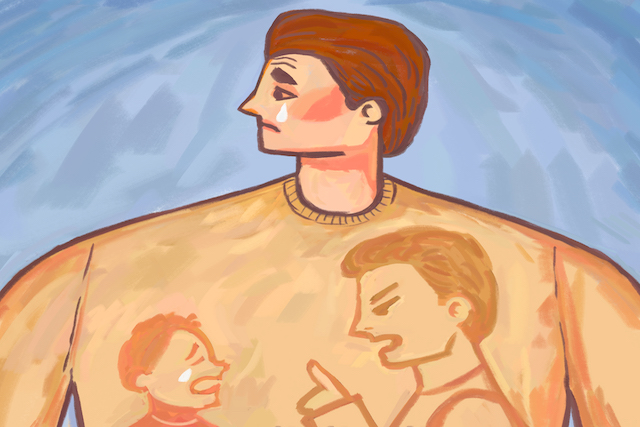
  • How Our Parents Impact Us: The Childhood Wounds That Shape Our Lives

    How Our Parents Impact Us: The Childhood Wounds That Shape Our Lives

    “The way we treat our children directly impacts what they believe about themselves.” ~Ariadne Brill

    Growing up, I always felt odd. I often wondered what was wrong with me. I compared myself to my friends and always thought they had a better life than me. They had both parents still together, went on family vacations. It was not that I was jealous or bitter, it was just that they seemed to be ‘normal’ and happy. Whatever that means.

    I never remember my parents being together. My parents divorced when I was two. I lived with my mother and older sister, who was eight years older than me.

    My mother was a nurse, and we grew up in various nurses’ residences, as she did not have money to buy a house.

    She was diagnosed with depression, and I remember nights and weekends with her being totally detached from us. She often seemed like a statue just sitting in the lounge chair or lying on her bed watching TV.

    She was morbidly obese and ate to control her emotions. She never went out except to go to work and back home. When we did go out, she was anxious and always worried about everyone around her.

    She was the kindest person I have ever known—she would give her last cent to help a needy person or animal. She was also the most intelligent person I have ever come across. She knew about everything. Her general knowledge was exceptional. But she never believed she was good enough and never had any self-confidence. She was insecure and self-conscious.

    My father was an alcoholic womanizer. Unlike my mother, he needed to be out and about and to be seen. He appeared confident, had hordes of women falling at his feet, and he never seemed shy or insecure. He was the love of my life. I adored him and couldn’t wait for him to fetch me on a weekend to get away from my mother and sister. It was an escape for me.

    My mother would constantly put my sister and I down. She would say we were too fat and could not go out “looking like that.” Or we were too thin—both my sister and I had anorexia nervosa at a stage in our lives.

    Our clothes had to match perfectly. I can still remember her saying that no decent woman goes out without matching shoes and bag. She would say that only prostitutes wore makeup and ask why we would want to degrade ourselves in that way.

    When we did well at school, she told us we needed to work harder and that we would never get anywhere in life if we didn’t. She told us that men were Satan’s children who only ever wanted sex from a woman and that they never loved anyone but themselves. A woman’s place was to just make a man happy while he went off to have affairs.

    Starting when I was a young age, she would say, “You can never trust a man, Samantha. They are all the same.” When we got injured, she would be angry with us for showing emotion. She would say only weak people cried. She would never hug us or tell us she loved us.

    My father, on the other hand, treated me like a princess. He detested my sister and excluded her from everything. I never understood this behavior until many years later. He had written her off as she had bipolar disorder, and he couldn’t deal with that.

    Everything I did was perfect in his eyes. He took me everywhere with him when he fetched me. This would include going to his numerous girlfriends’ houses, bars, clubs. But I loved every minute with him and never felt unsafe. I remember begging him to let me stay with him to avoid going to my mother.

    Unlike many people in this world who blame their parents for how they turn out, I have never done that.

    I know my mother tried her best under the circumstances. She was brought up in a toxic environment herself, so she did not have any positive role models to base her experiences on.

    My father grew up with alcoholic parents who beat the children almost daily. He never had positive role models either.

    My sister committed suicide in 2007, as she was too wounded to carry on in this life.

    I had never thought about how my childhood had affected my adult life until I left a toxic relationship in March this year and finally realized that perhaps it is true that the way I was treated as a child has directly impacted how I am in adulthood. How the choices I have made have been a direct result of my upbringing.

    At forty-eight, I can confidently say the following about myself:

    I trust no one, I am insecure, I have zero self-confidence and self-image. All my clothes are a size bigger to hide my body. The only time I ever wore makeup was the day I got married.

    I push myself beyond my limits to achieve perfection in my work.

    I am terrible at managing my finances.

    My relationships have all been disastrous—I have just had toxic people all around me all my life.

    The only good thing that has come out of my life are my two precious boys.

    When I had my first son, I promised myself that I would not be my mother with him. I hugged him and told him constantly that I loved him. I told him he was good enough, clever enough, that he was doing his best. I did the same with my second son.

    With my new understanding and mindfulness, I am trying daily to shift my thinking and telling myself that I too am good enough and that I too deserve love and kindness.

    We can only try our best, and while it is not easy, we have a choice to break free of our childhoods and become the best version of ourselves. No matter how old we are.

    We have a choice to recognize how our upbringing affected us, heal the wounds they gave us, and break the cycle so we can raise children who believe they’re worthy of love—and treat themselves with love.

  • 5 Important Life Skills I Learned in Grief After My Husband Died

    5 Important Life Skills I Learned in Grief After My Husband Died

    “Sit with it. Sit with it. Sit with it. Sit with it. Even though you want to run. Even when it’s heavy and difficult. Even though you’re not quite sure of the way through. Healing happens by feeling.” ~Dr. Rebecca Ray

    When my husband died from terminal brain cancer in 2014, I learned all about deep grief. The kind of grief that plunges you into a valley of pain so vast it takes years to claw your way out. In the beginning, I didn’t want to deal with grief because the pain was too intense. So, I dodged grief and circled around the pit of despair, trying to outrun or outwit it.

    My biggest grief fault was imagining an end. In my naiveté I figured I’d reach a point where I could wash my hands of it and claim, “Whew, I’m done!” But that’s not how grief and living with monumental loss works.

    Grief doesn’t like to be ignored. The hardest lesson for any griever is learning that grief never goes away. You just figure out how to make room for it.

    A few years after my husband died, I kept seeing the quote “what you resist persists.” It was like grief sending me a message to stop running and pay attention.

    This message reached me at a critical time because I was exhausted from avoiding the pain, so I decided to let myself feel the sadness and see what happened instead. I stopped asking, why me? and started asking, what am I supposed to learn from this? Instead of evading grief, which was too grueling anyway, I let grief teach me what I needed to know.

    Much to my surprise, amid the discomfort and sorrow and suffering, I learned a whole new way of living.

    I didn’t realize I was morphing into a new, more self-actualized me because it’s hard to see the changes happening in real time. You can’t possibly appreciate your progress until you look back at how far you’ve come.

    With the benefit of hindsight, I can see how grief’s guidance taught me the following important life skills I never would have learned without it.

    How to Accept My Feelings

    Prior to my husband’s death, I didn’t have time to feel my feelings. I kept busy with distractions, and whenever a tsunami of emotion surrounded me, I shut down.

    The mistake I used to make was thinking my emotions meant something about me as a person. I convinced myself that sadness meant I was weak, and I couldn’t possibly be healing if I still cried over my husband’s death years later. I thought, I must be an angry person because I get angry so often, or something must be wrong with me because I feel overly judgmental sometimes.

    Because grief brings with it a whole slew of emotions, it forced me to get better at feeling everything. With practice, I started naming my emotions, and I uncovered what I was feeling and why. Instead of labeling my feelings as good or bad, I accepted them as nothing more than the brief emotional surges they are.

    I took a deep dive into all the self-help guides I could find to determine that every emotion has its place. We feel things so we can process what’s happening in our lives, learn from it, and eventually express its meaning. None of my feelings were better or worse than the others. None of them meant anything about my healing or how well I coped.

    I learned I’m not an angry person, I’m just a person who occasionally feels anger. I’m not a judgmental person, I just feel judgmental sometimes. And sadness doesn’t mean I’m weak. It means I’m a human being experiencing a human emotion.

    It took me a while to believe that my feelings were nothing more than blips on the radar screen of my human existence. If it weren’t for grief, I might not have uncovered the secret to accepting all my feelings –they mean nothing about me as a person.

    If I’m being honest, I still get angry way more than I want to. But I don’t keep busy with distractions anymore. I feel my feelings when they come up, let them pass through and thank them for giving me an opportunity to understand myself on a deeper level.

    How to Be More Vulnerable

    In the past, I rarely admitted when I made mistake, when someone hurt me, or when I was afraid. As far back as I can remember, people viewed me as strong, brave, and determined because that’s what I portrayed. Few people ever saw the anxious, disappointed, or terrified side of me.

    So, it was no surprise after my husband died, when card after card poured in with the same sentiment: “I’m so sorry for your loss. But I know how strong you are. If anyone can get through this devastation, you can.”

    It comforted people to think I was “strong” enough to endure my loss. As if “strong” people grieved less than their more fragile counterparts. But their condolences were of little comfort to me after I learned a very basic principle of grief; it doesn’t discriminate. It tests the mettle of everyone’s soul.

    Grief forced me to expose myself emotionally. I had to show my vulnerable side because fear took over and I didn’t know how to conceal it anymore. It seeped out of my pores

    The upside of exposing my vulnerability was building deeper, more authentic relationships. I never knew how much people craved to see the real me until I noticed a favorable shift in my personal connections after I admitted my fear, shame, and regret. When I was honest about the intense stress of grief and the toll it took on me, others trusted me with their innermost secrets too.

    I much prefer letting others in now. I never want to go back to keeping people at arm’s length and pretending to be someone I’m not. I did a grave disservice to myself by appearing so aloof for so long. Before my husband died, I got away with it. After he died, there was nowhere left to hide.

    I’m not afraid of being afraid anymore. I can readily admit now when I’m scared. I also admit that I cry and break down and throw an occasional temper tantrum when life gets to be too much.

    If it wasn’t for grief, I would’ve never known the benefit of letting others see the real me.

    How to Ask for Help

    As a person who avoided feelings and shunned vulnerability, I never knew how to ask for help. Not that I didn’t need help. I just hated asking because I assumed people would say yes when they secretly wanted to say no.

    I didn’t want to be a burden on anyone.

    After my husband died, I needed help with lawn maintenance, household repairs and childcare, among other things. I realized quickly I couldn’t do it all on my own and it took everything I had in me to ask for help because it was such a foreign concept.

    One of the biggest things I learned on my grief journey is that healing requires honesty. And honesty requires practice. When people said, “let me know what you need” I understood what they really meant was, “I have no idea what to do! I feel so helpless and I’m begging you to please just tell me what you need, and I’ll do it!” People aren’t mind-readers, so I practiced being as honest and explicit as I could.

    It took me a while to get good at asking for help. But I appreciate how wonderful it is for the person on the receiving end to get specific instructions. People want to help and now I let them.

    My healing heart and relationships have vastly improved by implementing this one simple change.

    How to Settle in with Uncertainty

    I used to think I controlled the universe—until my husband died. Control is an illusion, and that truth smacked me upside the head the day his doctor diagnosed him with terminal cancer.

    I’ve never liked uncertainty. I’m not a spontaneous person. My world works better when I know what’s going on and no one has any surprises up his or her sleeve. But after my husband’s diagnosis, we lived each day with uncertainty because we knew for sure he would die from his disease—we just didn’t know when.

    The twelve months between his diagnosis and death were pure torture. However, we settled in with uncertainty anyway because we had no choice. Instead of focusing on the when of the future, we made the most of the present.

    After he died, I learned that grief and uncertainty go hand in hand. When you’re grieving, you don’t know what emotional wave will hit you from day to day. You go through life without the security of knowing what will happen next because something terrible already happened and it could happen again. And you can’t control it. This is both a blessing and a curse.

    The curse is the uncertainty, of course, but the blessing is you get to take the responsibility of the world off your shoulders. You surrender because you understand you were never in charge, anyway.

    Now, I welcome the peace of surrender and not knowing. I discovered it’s easier to live in the moment instead of focusing on things outside of my control. Talk about lifting an enormous burden! I ride the emotional waves as they come and remind myself to stop forcing things and just let them be.

    Whenever the control urge starts to churn and makes me think I have a chance to influence an outcome, I imagine my husband tapping me on the shoulder and whispering, “remember how we used to surrender? Please do that with me until this feeling passes.”

    How to Allow Others to Have Their Own Feelings

    When I got better at feeling my feelings, allowing vulnerability, and settling in with uncertainty, I also learned one of the most important life skills—how to let other people have their own feelings, too.

    Because I know I’m not in charge and I don’t control the Universe, I know I can’t control what other people think or feel either. If grief has taught me anything, it’s that everyone has their own way of doing things and thinking about things and expressing their feelings about things. And none of it means anything about me.

    I used to get upset when someone else was upset or get offended if someone else offended me. I tried to fix people and things to make everyone happy because I thought it was my responsibility to help others live in harmony.

    Death put the kibosh on that distorted way of living.

    I no longer had the time or inclination to teach everyone how to live in harmony because my world was one breath away from potential collapse. I had to concentrate on myself. When I focused on getting my mind right, making peace with grief, and learning how to handle my feelings, I understood it was an inside job. No one else could do it for me. And I couldn’t or shouldn’t try to do that for anyone else. Everyone comes from their own level of understanding about themselves and the world.

    It took me a long time to understand this because it took me a long time to understand me.

    Now I don’t pretend to know what or how or why someone else should think or feel a certain way. When other people tell me how they feel, I believe them.

    It’s not my job to try and change someone else’s feelings any more than it’s their job to try and change mine.

    The Way It Is Today

    I don’t wish my monumental loss on anyone, but looking back now, I see how my crooked, confusing, and soul-crushing path taught me essential life skills I wouldn’t have learned otherwise.

    Even though I’ve had my fair share of hard days and months and years, I became a more compassionate and considerate person with grief’s guidance. I changed my worldview because pain changed me. And these days, I surrender to what is instead of trying to change circumstances outside of me.

    It’s only after spending time with your pain that you develop an understanding of its purpose. I never thought I’d find an upside to grief because I thought grief was all about death. But I found out that grief teaches you about more than just death and surviving loss.

    It teaches you how to live.

  • How a Highly Sensitive Person Can Get Over a Breakup And Move On

    How a Highly Sensitive Person Can Get Over a Breakup And Move On

    “A shoutout to everyone who is trying right now… Trying to do the right thing. Trying to stay open. Trying to keep going. Trying to hold on. Trying to let go. Trying to find their flow. Trying to stay afloat. Trying to meet each new day. Trying to find their balance. Trying to love themselves. Trying new things and new ways. I see you. I’m there too. We’re in this together.” ~S.C. Lourie

    Breakups are devastating, and the pain is real. But if you’re a highly sensitive person (HSP), it can take an extreme toll on your system because HSPs feel everything twice as deeply.

    For the HSP, the pain of a breakup can be completely overwhelming and trigger a heightened emotional state.

    When a relationship ends, it can make you feel insignificant. Regardless of who initiated the ending, you experience a tremendous impact in your life that can drive you into despair, confusion, and rage. Not only do you feel emotionally affected, but you may feel as if you are physically wounded as well.

    My whole world came crashing down when my partner went radio silent. He refused to answer my texts and avoided any form of contact. I felt lost and confused, not knowing what to do or where to turn. Each day felt harder than the day before.

    I knew for months that things were not going well, but I was clinging on to hope that the situation would somehow improve. When my partner left without a word, I knew that was the end. I did not get any closure, not that I require it because I realized it would not make me feel even the least bit better even if I did.

    I’ve heard stories from fellow HSPs who took a long time to get over a breakup, and I didn’t want that same experience for myself. But the pain of dragging my broken heart around and the intense emotional stress were not getting any easier on me.

    A day felt like a month, and I wasn’t sure I could survive until the end of the month because the experience was so devastating. I wanted to get over to the other side quickly and get on with my life.

    These are the steps that helped me recover within a shorter time than I feared it would it take.

    1. Forcing Myself to Get Out

    When the realization that we’d never be together again hit my brain multiple times a day, I lost functionality. My entire system broke down. I could not think clearly or act normally. All I wanted to do was vegetate and cry, which only made the situation worse.

    To reset my brain, I tried to get out of the house as often as I could. My body and brain would fight me. I was already exhausted and feeling hopeless. It took a tremendous amount of willpower to drag myself out of bed. The moment I succeeded, I realized it wasn’t half as bad as I thought it would be. I just had to win the mind game.

    I engaged in simple activities such as dropping in for a cup of coffee at the local café, taking a drive to nowhere, sitting alone watching children play in the park, or just enjoying the sunset. Beauty has a way of distracting us from our thoughts and soothing our nervous system. It drew my mind temporarily away from the problem and provided relief at the moment.

    2. Affirming My Self Worth

    Whenever my mind started reminding me it was over, I blamed myself. I imagined there was something I could have done differently. Or that it was my fault it had happened. I beat myself up and placed the entire burden on my shoulders.

    Knowing there was nothing I could do to reverse the situation, I attempted to tell myself a different story, even though I did not believe it in the beginning. I assured myself I was worthy of love, that I deserved to have someone love me as I was, and I required no validation from others to feel good about myself. I made those affirmations out loud so I could hear myself speak.

    In the beginning, it was a struggle. I would sneer, criticize, or ridicule myself every time I said an affirmation because I did not believe my own words. I persisted between tears and disbelief. Thankfully, it got better over time. Gradually I stopped criticizing myself and what remained were purely affirmations. As I continued to hear myself speak, I gained my own acceptance.

    3. Practicing Self-Compassion

    Research suggests that practicing self-compassion can help us become better adjusted and significantly improve our mental health. But it doesn’t come easily to HSPs.

    We tend to have unlimited compassion for everyone else but struggle to offer the same compassion to ourselves. We often judge ourselves as weak when we’re struggling with emotional pain. But that’s when we need self-compassion the most.

    As I gradually came to terms with reality, I indulged in more positive self-talk. I spoke to myself as I would my best friend. I told myself that I was the main character in my story, and I needed to heal. Despite what was going on, I assured myself I could feel better and rise above the situation.

    I focused on myself, telling myself that I would get out of this episode just fine. I convinced myself that soon, the pain would go away, and the awful feelings would end. Again, in the beginning, there were no significant changes. I persisted and gradually experienced mental clarity that showed me I was on the right path.

    4. Dealing With Relapse

    As I began to heal, I noticed the gap between the time I crumbled and the time I could hold up became further apart. It was not uncommon for me to break down multiple times throughout the day. Sometimes, I managed to get by without crying for an entire day. To me, that was a breakthrough because it showed a marked improvement.

    Some days I unexpectedly suffered a relapse after a period that I thought was an improvement. That took me completely by surprise. Gradually, I accepted that I was still in the process of healing, and that it was normal for my brain to revert to the lingering memory.

    When that happened, I revisited what I practiced earlier—getting out, affirming my self-worth, and practicing self-compassion. Self-talk was a crucial part of my healing process.

    I had to listen to my own words long enough to believe they were true. I had to avoid giving in to the mental chatter about my role in the breakup and my worth.

    We generally act on what we believe about ourselves. If we believe we deserve to hurt, we don’t do the things we need to do to heal.

    Moving On With My Life

    In slightly less than two months, I woke up with no brain fog and was able to go through an entire day without breaking down. I was able to resume my normal activities and focus on the day ahead.

    For me, the whole healing process was a battle of willpower. Some days were tranquil, although most days were difficult. Typically, it was one step forward and two steps backward. Whenever I struggled, I reminded myself that I wanted to heal and feel better. That generally got me on my feet and out of the house.

    A breakup can have a huge impact on a highly sensitive person, since we are more susceptible to stress and extreme anxiety. Although healing takes time and often we have to allow nature to run its course, there is no need to prolong the pain longer than necessary.

    Once you decide you are ready to receive healing and do everything you need to accommodate the process, you can come out of the episode faster and move on with your life.

  • 3 Reasons Why It’s Hard to Set Boundaries and What to Do About It

    3 Reasons Why It’s Hard to Set Boundaries and What to Do About It

    “Care what other people think, and you will forever be their prisoner.” ~Lao Tzu

    I love this quote because it is such truth. But I also recognize the difficulty and the uncomfortable feelings that arise when working toward living this quote.

    There’s a reason why it feels so hard to set healthy boundaries, and that is what this article is going to show you.

    Discovery #1: Understanding our hard wiring

    Our minds were not created to care about healthy boundaries. Say what? Let me explain.

    From the beginning of time, we humans were hard wired for connection. We are not solitary creatures; we are similar to herd animals. Back in the caveman days, we needed a hive or a pack because we were more powerful when we were together. If we didn’t lean on our tribe, we were eaten by a saber tooth tiger.

    We were built to care about others, to rely on others, to let others watch out for our safety and for us to watch out for them too. Staying in our herd, our hive, our pack, our tribe is how we stayed safe. And it worked!

    Our tribe was important to us back then for our survival. If your pack wasn’t happy with you, you were outta there. Your tribe is what kept you alive, and so the human brain learned, “Oh, we must keep people happy with us and then we get to live.”

    If you struggle with people-pleasing, I hope you will understand that we come by our people-pleasing instincts naturally. They are quite literally part of our survival set up. It is part of being human. It is perfectly normal to have the urge to people-please.

    Wanting to serve and please others is a perfectly good and often wonderful thing. The problem with people-pleasing in today’s world is when we don’t have good boundaries to go with it.

    Our brain today says, “Let’s do whatever keeps the tribe happy. Let’s do whatever we need to, to be part of the gang.” Most of the time that looks like acquiescing, going along to get along, and doing whatever we can to “not upset the apple cart.”

    As children we gain information from all types of sources around us—our traumas, personality, health status, our race, ethnicity, gender, family of origin, our class, economic status, and more! Each one of these alone comes with a handbag of rules that instruct us how to behave, act, what to think and what to say in order to please our tribe. Our poor mind has to put all of these pieces together somehow in a way that makes sense and keeps us alive.

    Discovery #2: The Rulebook

    In essence, our sweet mind creates a sort of rule book in terms of what will keep us safe. We start to notice from the time we are small that if our people are not happy with us, we do not feel safe. We start to notice this in our bodies, our feelings, the look on someone’s face, the tone, what is not being said, the iciness of the room.

    When we are children, we are 100% dependent on our caregivers. They are quite literally everything to us. Remember the tribe, the pack, the hive that I talked about earlier? Well, to our little toddler minds, they are our first tribe.

    It is our caregivers’ job to mirror to us who we are in the world. And hopefully with healthy caregivers, we are shown that we are loved, cherished, worthy, important. This is what creates our self-esteem. This is what relays the message to us that we matter.

    This gets written into the rule book or the rolodex file of our little child brain.

    However, many folks did not grow up this way. Those of us who may have grown up with caregivers who were harsh, unloving, absent, unpredictable, neglectful, and even abusive, their little, sweet mind recorded a whole different set of rules into the rulebook of life.

    It may sound something like I am not loveable, I don’t matter, I’m a nuisance, I am a bother, I should never take up space. It might sound like I’m loved as long as I’m good, or performing, or agreeable.

    (Please note, much of the time our parents did the best they could with the skills and tools that they had in their awareness. However, to our innocent, little, childlike selves, it simply wasn’t the message that we needed. The message was misconstrued, and we wound up feeling as though we somehow did not matter).

    Often this gets passed down generation after generation.

    So now are you starting to understand that the mind’s idea of boundaries is to do whatever it needs to do to keep you alive?

    Perhaps when you were little, if you were constantly told to be quiet, that you were too loud, too much, or to simply go away, then the mind created a belief that came into agreement with this. A rule was filed away that it was better to not disrespect your elders and continue to be loud or to take up space.

    The problem is that of course this is nonsense (you were just being a sweet and normal child), but you never questioned the rule. You questioned Santa Claus, the Easter Bunny, and the Tooth Fairy. Yet, you never stopped or questioned your rules or beliefs about yourself. You wrote those things in the rule book as absolute truth.

    Your mind doesn’t care that you are older now and that the situation is different now. To the mind, a rule is a rule. And remember what happened to humans who questioned the rules in the past? They didn’t survive!

    Let me tell you a little bit about my own rulebook…

    Several years ago, I was deeply terrified of what other people thought of me. Growing up in a small town, it was written in my rulebook that all eyes were on you. Boundaries were one of my biggest struggles because it meant breaking free of the people-pleasing pattern in order to speak my truth.

    Having struggled with codependent patterns and low self-esteem, I didn’t even know what my truth was, what my needs and values were, or what mattered to me.

    What I did know was that I needed people to like me, to not talk ill of me and to think of me in a certain way—nice, kind, giving, good.

    I couldn’t excuse myself from a phone conversation.

    I couldn’t end playdates at the time I needed to even if my kids were throwing a full-blown temper tantrum.

    I couldn’t remove myself from a conversation that made me uncomfortable because of the topic.

    I laughed at jokes that, deep down, I found offensive.

    I agreed with others’ opinions because I either didn’t know my opinion or if I did, I didn’t feel confident sharing it.

    I talked incessantly because silence felt unbearable.

    I couldn’t even be on time, because I was rushing from one activity to the next, just trying to show face and that I was doing my part to be the nice girl and make everyone around me feel good.

    Speaking my truth was so uncomfortable that many years ago I actually had a seven-hour coffee date.  I didn’t want a seven-hour coffee date. The idea was come over for a couple hours, chit chat a bit, and move on with our day.

    However, this woman arrived promptly right after the kiddos left on the school bus in the morning and was still there when they got home on said school bus at 3:30pm.

    I can recall the massive headache I felt because I wanted so badly to ask her leave and tell her I had things to do, but I couldn’t.

    I remember that I never invited her back again, even though she was a great gal in many ways. I was clueless in how to handle these situations, so my answer was to cut the relationship off and move forward by avoiding her.

    At the time I was a young mom with a husband who worked long hours, and I often felt lonely. I wanted so badly to connect with other women and be a part of a community, and I thought the way to connection was through self-abandoning any of my needs so that I could focus on appeasing what other people in my life needed.

    This was all written in my rulebook. All of this worrying about what others thought and not wanting to upset anyone caused me severe stress, anxiety, and overwhelm.

    I was trying to function on fried adrenals and walking on eggshells. I was unhappy, and it showed up in my relationship with my partner, my kids, and mostly, the relationship I had with myself. But there was something always driving me to keep pleasing, keep appeasing, and that leads me to our next discovery.

    Discovery #3: But why do I always feel so guilty?

    Why do we feel so darn guilty when we try to set a boundary? Well, anytime we step outside the rulebook, the mind pushes a great big, huge alarm bell.

    Remember, our mind thinks that this is a rule created for our safety. I share this because hopefully you can start to relax and realize that there is absolutely nothing wrong with you. The mind simply is perceiving danger.

    From there we may experience bodily reactions—our palms get sweaty, we have a million butterflies in our stomach, our temperature rises, our throat constricts.

    Our brain’s one and only job is to keep us alive, so it often uses guilt to get us to acquiesce and once again, go along to get along.

    How many times have you been invited to a baby shower or a barbecue on a Saturday and absolutely dreaded it? You’ve worked fifty hours this week, you coached soccer two nights, ran the carpool this week, and are utterly exhausted. You know you need a day to get caught up, sleep in, and take a little time to yourself. But there it is—guilt lurking around the corner, “What will Aunt Betty think if you don’t show your face at Cousin Amy’s shower?”

    That guilt pushes on you, making you feel as if you are doing something wrong. So, what do you do? You RSVP that you will gladly be there. Oh, and you will also make and bring the punch.

    Pretty effective strategy to get you to follow the rules, right?

    This is why boundaries feel so challenging. Because they are not part of our original hardwiring.

    So where do we start if we want to set healthy boundaries?

    1. Understand that boundaries are first and foremost an internal job.

    Yes, we create parameters and limits with institutions and people. But ultimately, before we can ever do that, we have to start on the inside.

    When we aren’t taught how to properly do the internal work, our boundaries come off as rigid walls and we are left isolated and lonely. I have been that person because I didn’t understand what boundaries were, how to set them, and I certainly wasn’t going to entertain any sort of an uncomfortable conversation that looked like any type of repair or reconciliation work. I was left alone and miserable.

    Boundary work starts by addressing our own issues. And as the inner work is done and healing occurs, it organically flows into changed outer behaviors, habits, and choices. We can be empowered to have loving and compassionate conversations that build bridges of connection rather than walls of isolation.

    2. You have to realize that boundaries are in fact healthy.

    If you don’t believe this then it will be hard to lean into them. Make the agreement right now, or work toward believing, that setting boundaries is healthy for you to do.

    3. You have to know your needs.

    Do you know your needs? Have you ever thought about them? Many people don’t, so if you haven’t, know that it’s not uncommon.

    Start by thinking of what a “good” parent would do for their child. What needs do they help their child remember to meet? I.E., even if the child does not want to go to bed, they help them to calm down and go to sleep. Start by making a list of the needs a good parent will help a child to meet.

    When you’re done with that list, circle the needs that you are not meeting for yourself (or inconsistently meeting).

    For each circled need, respond to the following questions:

    • How do I respond to this need?
    • What gets in the way of responsiveness or consistency?
    • How do I respond to other people when they have this need?
    • How would my life improve if I responded to this need?

    For each need, create an intention that you will honor by setting boundaries if necessary. Focus on one intention a week to get a need met more fully and consistently. I know you want to do more, but remember, your mind will fight you because it wants you simply to stay safe and alive. It will douse you with that guilt working you toward acquiescing and shape shifting, so let’s just focus on nailing one for now. Keeping it simple is key!

    Write out your intentions weekly by finishing the sentence stem:

    My intentions are:

    If you’re working to build up the strength to bring more integrity to your relationships and set healthy boundaries, please understand that you don’t have to go it alone. Be consistent and trust that your hard work in your boundary journey will pay off.

  • How To Make Yourself Stronger When Facing Health Challenges

    How To Make Yourself Stronger When Facing Health Challenges

    “The beautiful thing about setbacks is they introduce us to our strengths.” ~Robin S. Sharma

    This has been the worst year of my life. Financial stress. Relationship problems. Being separated from my family because of the pandemic. Mentally I’m a mess. I thought I had hit rock bottom. But the worst was yet to come.

    I had been ignoring health issues for years and finally dragged myself in for an ultrasound. I already knew I had a fibroid and had booked the ultrasound to check on it. However, as the sonographer explained, I now had innumerable fibroids. They had taken over my uterus and ultimately my life.

    I remember starting to feel numb as she talked me through my scan. I knew there was no other option. I needed a hysterectomy, and I was terrified. I was scared about what this meant for my body and my future, but I also have extremely high anxiety about doctors and hospitals. You can imagine how I felt about surgery.

    One of my favorite motivational speakers, Eric Thomas, talks about how pressure creates diamonds. Just when you think you’ve had enough pressure and all you can bear, life turns up the heat. I felt like I was burning.

    I knew surgery was inevitable and I needed to get my mindset right. As much as positivity eluded me the past year, I had to be mentally and physically strong going into the surgery because I wanted to come out a diamond.

    The Japanese call this kensho, which means growth through pain or finding positivity in life’s challenges. If you want to become a diamond or a stronger version of yourself from whatever you are facing, here are some strategies that will help.

    1. Allow yourself to feel everything. It’s normal.

    When coping with health challenges, you’ll probably filter your feelings with shoulds:

    I shouldn’t feel anxious (angry, sad).

    I shouldn’t act so irrationally.

    I should think more positively.

    I should feel grateful it’s not worse.

    I should hold myself together for those around me.

    Truth is, though, you are going to feel all the emotions. You’re also going to feel your body’s symptoms. It’s easy to get stuck in the pain because, until it stops, it’s hard to see the good in life.

    Give yourself permission to feel everything. If life is continually knocking you down, of course you’ll feel angry. In fact, some anger is probably going to help. It’s the fuel you need to rise up and change things.

    When I started to cry in theatre before surgery, I felt guilty and embarrassed. The nurses kept telling me it’s perfectly normal. And, you know what? It is perfectly normal to feel scared before surgery. It would be weird if you weren’t.

    Allow yourself to feel every miserable thing without the guilt. It’s part of grieving and healing. You may need some time to grieve the loss of something physical or a way of life you imagined that now has to change. You may need to set aside some quiet time to check in with yourself and feel whatever you feel. Grieve what you need to let go.

    But the way you make sure it doesn’t consume you is by allowing yourself to feel the good too. And it’s the good that you want to blow up and make bigger in your mind.

    I bet there are so many little things you can appreciate about your life. You can take a moment to savor a healthy meal or feel the sun on your skin. I find a lot of happiness in my cat’s funny antics and cuddles, so I always make sure I am fully present around him.

    Small goods won’t fix your big problems. Believe me, I know how hard it is to find the positives when anxiety takes over. No amount of mindfulness is ever going to fix the misery of a health problem that confines you to bed or the house. Nor will it take away the physical pain that you have to endure daily.

    But the good can soften the bad and give you strength to keep going.

    2. Build your mental fortitude.

    You have a choice as to how you are going to face this health problem. You can let it take you down or you can use it as an opportunity to become a stronger version of yourself.

    Surgery was inevitable. Anxiety was inevitable. Pain was inevitable. Despite all this, I made a promise to myself that I would face it with strength and hope for a better future.

    Unfortunately, after a really difficult year, I knew I wasn’t in the right headspace for it. I had to start “training my brain” in the same way you might train your body for a big mountain climb or fitness event.

    You can train your brain in a variety of ways. You can get support from positive people in your life. You can get counseling. But you also need something you can do daily on your own.

    One of the best ways to train your brain is through selective use of social media and Google.

    If you Google your health problem, you’ll find positive stories, but you’ll also find a lot of negative and scary information. In my case surgery was inevitable and I knew the risks. Why needlessly worry about outcomes I couldn’t control?

    Instead, I ignored my inclination to over research everything, and in preparation for surgery I decided to read or watch one positive hysterectomy story each day. That’s all I allowed myself to look at. This was one of the best things I did for my mental health.

    I also trained my mind by going for a walk everyday and listening to a motivating video or podcast. This was a way to calm and connect with myself and to keep building my mental strength for surgery and recovery. I really felt the benefits of this practice the day of surgery.

    You have to find videos and speakers that speak to your soul, and everyone will be different. I prefer a tough love approach, and as I mentioned before, one of my favorite speakers is Eric Thomas.

    On the day of surgery, whenever I would feel a wave of anxiety, I would say to myself “pressure creates diamonds.” This idea gave me strength and reminded me that this surgery was a gift I was giving myself so I could have a better future.

    3. Put one foot in front of the other.

    There will be days it seems impossible to get out of bed. You will start to feel better and then you’ll feel worse. You will get overwhelmed and discouraged. No one is perfect, but you can be better day by day even with setbacks.

    In the gym you build strength through progressive overload. This means doing a bit more each time you train. When I coach my clients, I teach them that little steps lead to big results. It’s all about consistency and patience.

    When I was recovering from surgery, I had to apply the same principles. First, I had to learn to sit up. Then I was able to walk around my hospital room. A few days later I was walking around my yard and eventually I started walking down the road. Each day I literally walked a few more steps. I set my sights on being able to walk to a bridge down the road and two weeks post surgery I got there.

    Before surgery I was hitting personal bests in the gym with big deadlifts, squats, and presses. I know it will be a long time before I have that strength again, but I will get there. Step by step I will build myself up to be even stronger than before.

    Along the way I will be patient and kind with myself and give my body what it needs. Some days I have to give in and just sit in the sun with my cat because that’s all I can manage.

    I know how hard it can be to deal with health challenges. Sometimes you have to let yourself cry and feel angry—or whatever else you feel. In the face of setbacks always remember this is your opportunity to get stronger and healthier than ever before. Pressure creates diamonds, and you are on your way to becoming the most beautiful gem.

  • How Shifting Your Attention Can Be the Cure for Anxiety

    How Shifting Your Attention Can Be the Cure for Anxiety

    “Anxiety was born in the very same moment as mankind. And since we will never be able to master it, we will have to learn to live with it—just as we have learned to live with storms.” ~Paulo Coelho

    “Am I focusing too much on my anxiety?”

    This very question weighed heavily on my mind as I found myself in yet another bout of anxiety. I was playing professional baseball at the time, and I just couldn’t seem to free myself from the constant and unending worrisome thoughts racing through my head.

    A lot of these thoughts centered around how I would perform the next game. What my teammates were thinking of me, whether they saw me as a valuable part of the team. I often thought about why I was playing baseball and if I was wasting my time.

    All of these worries did nothing but lead to further thoughts, centering around much of the same, leading to a terrible cycle.

    This was not the first time I realized the presence of anxiety in my life. It has been something I’ve dealt with for as long as I can remember.

    In college, I even worked with a sport psychologist who taught me coping mechanisms to alleviate the anxiety I felt surrounding baseball.

    We addressed my self-talk, with him generating a routine I could use the night before games. He also focused heavily on process goals. As focusing on the process, rather than the outcome, is a major way to reduce anxious thinking.

    After completing a master’s in psychology and beginning work as a mental performance coach, I felt as though I had a solid understanding of how to cope with anxiety. Why was it then that I once again found myself in its grasp?

    Well, the truth is, no matter how strong you build your mind and how much work you put in, anxiety will still find its way into your life. Some time or another, those pesky worrisome thoughts will enter your head.

    What matters is how long you allow those thoughts to stick around. And what’s interesting is, sometimes the more we try to rid ourselves of anxiety, the more we invite it to stay.

    That is the mistake I made, and why, after all my years of work and learning, I found myself faced with great difficulty.

    Energy Flows Where Attention Goes

    Have you ever heard this saying before?

    I’ve heard different interpretations of its meaning, but one I really resonate with is, wherever we place our attention will be amplified.

    This means the more we focus on our anxiety, the greater the strength we give it.

    So if we want to not feel anxious, one of the worst things we can do is try to not feel anxious.

    When I recognized I was giving my anxiety too much attention, I realized what needed to happen instead. The decision I made involved the same techniques I’m going to show you later in the article.

    For now, I want to address just a little bit about why we focus so much on anxiety in the first place.

    Can’t I Just Will It Away?

    I’m the first to admit to having fallen into this type of thinking in the past.

    Whenever I would grow overly anxious before a game or experience anxiety in my daily life (which was all too often), my natural response was to try and force the anxiety out.

    But that only worsened the problem. I remember feeling the anxiety actually grow within the more I tried to get it out.

    So why do we continue to believe we can rid ourselves of anxiety through focusing on it?

    The main reason is due to the fact we are anxious people in the first place. Do you know how hard it is to stop thinking about something? Especially when that which has captured your attention is as powerful an emotion as anxiety.

    So, one, the easiest option is to grow anxious over the anxiety, thus focusing on trying to will it away. Two, anxiety is a scary feeling. Having uncontrollable thoughts that lead to a dizzying feeling of dread is not fun.

    As a result, we try to get rid of it as quickly as we can. Removing our attention from the anxiety and trusting in some other technique does not feel as safe as simply focusing on how terribly we feel and hoping the anxiety will go away.

    But as I already said, giving too much attention to our anxiety only makes it worse. So, what can we do instead? The answer lies in attention, the shifting of attention that is.

    The Power of Shifting Your Attention

    Since we know where we place our attention is where our energy will be directed, a shift in focus can drastically improve our mental state.

    When I questioned whether I was focusing too much on my anxiety, it became clear to me that I was obsessing over why I experienced it, where it came from, and how I could get rid of it.

    So, I decided to make a switch and instead, give my attention to how I wanted to feel. This meant focusing on ways to feel confident, relaxed, and so on.

    Do you see the major difference? Understanding that everything is heightened based on how much attention we give it, you realize it’s only hurting you further to focus on what you don’t want.

    Once you accept the anxiety you feel, it’s now time to turn your attention onto how you wish to feel instead. Always focus on things in the affirmative rather than the negative. Pay attention to how you want to feel, not how you don’t want to feel.

    To become more relaxed and confident I employed the use of meditation and visualization.

    Using Meditation and Visualization to Train Focus

    I sit for mindfulness meditation twice a day and just relish in the moment.

    I have found the practice so powerful in training my mind to focus on the present moment. Not only has it taught me to give attention to feeling relaxed and calm, but the more present I am, the less anxiety I feel.

    That’s because anxiety, by definition, is a child of the future. To feel anxious means you are worried about what may happen or something not happening the way you wish.

    To practice mindfulness meditation, simply follow these steps:

    1. Get into a comfortable position with your back straight. I prefer sitting on my knees, but feel free to sit in a chair if that’s more comfortable.

    2. Set your timer. You do not want to be wondering if you’ve meditated long enough. Give yourself five to ten minutes if you’re a beginner. Choose a calming alarm, as you don’t want to be startled out of your mindful state.

    3. Close your eyes and begin breathing deeply and rhythmically. Focus on your breath and as your mind wanders, simply return your focus, without judgment. Thoughts will keep coming. The goal isn’t to stop them. It’s to allow and observe them, then let them pass.

    I also use mindfulness is during the day. Whenever I feel anxious, I’ll pause and take a few breaths to center myself in the present.

    I usually add some count breathing into this—breathing in for a count of five and out for ten.

    Visualization has been an equally powerful tool in training my mind to manage worrisome thoughts.

    After my meditation is complete and I’m relaxed, I visualize myself full of confidence, calm, and relaxed in different scenarios where I typically feel anxious.

    Once again, I am not seeing myself as not anxious, but rather as the way I wish to be.

    Usually, I’ll decide on one situation each day and visualize it in detail—what’s going on in my environment, who’s around me, what they’re doing. This allows me to mentally practice facing these situations with ease.

    Throughout the day, whenever I feel anxious, I bring this image back into my mind, reminding myself to operate off my ideal vision of myself rather than my past conditioning.

    These techniques have been tremendously helpful in shifting my attention off anxiety. And the less attention I give to feeling anxious, the less hold anxiety has on my life.

    If you are struggling with anxiety, I encourage you to ask yourself the same question I did, “Am I focusing too much on my anxiety?” You might be surprised by how your anxiety eases when you stop giving it so much attention.

  • How I Stopped Worrying All the Time and Started Feeling Good About Life

    How I Stopped Worrying All the Time and Started Feeling Good About Life

    “We don’t see things as they are. We see things as we are.” ~Anais Nin

    When I was young, I used to stare out into the big, blue sky and ask, “Is this really the right place?” “Did they drop me off on the wrong planet?” I wondered.

    It felt like I didn’t fit in or belong. Things seemed so much easier for others. They moved forward with ease even when something was painful, while I felt an arrow pierce my heart every time a loved one was in pain, or a difficult situation arose.

    When I looked around, I saw so much suffering. Being incredibly sensitive, I did more than watch, I jumped right in the suffering. At the time, I judged myself vehemently for being emotional. I didn’t know that about 20% of the population is highly sensitive and that it’s a trait filled with gifts as well as deep feelings.

    Quietly observing my surroundings, I watched with teary eyes as my family struggled. I felt with deep-rooted sensitivity when my mom felt afraid. I watched the news and thought, “Look at all the horrible things happening out there.” Everything I saw and felt reflected back to me what I decided was true as a child: the world isn’t a safe or good place.

    It was during these early years that I developed a habit of worrying about my loved ones and the world. For me, life was a tornado of worst-case scenarios, and the what-ifs consumed me.

    I didn’t realize at the time that thinking was my way out of feeling my feelings. The pain felt so earth-shattering that I never let it touch me. Instead, I tried to control situations with my thoughts. I didn’t wait and see how things would unfold; I began making negative conclusions so that I could feel safe. If I already knew it was bad, I wouldn’t be shocked when horrible things happened.

    I took on the role of helper to save others. They were in so much pain. I believed that if they weren’t suffering, I wouldn’t suffer and could finally live. I believed I was more powerful because I could hold their pain, connect to it, and help them.

    Since I was in a constant state of overwhelm, my nervous system was on overdrive to protect me from all the thoughts and perceptions I’d adopted about life. Years later, I was diagnosed with Hashimoto’s Disease and saw firsthand the way years of stressing, living in my head, and avoiding my emotions impacted my health.

    A turning point came for me when I realized that all this suffering was my own doing. After receiving painful news about a family member, I had a breakthrough. My reaction to the news was filled with so much pain and fear that I sensed it wasn’t about the circumstances at all.

    It was about me. I had created a life that revolved around fixing others. Needing to help them so that I could feel safe. Believing that the pain I felt was because of them, their hardships, and this dark world we live in.

    The truth was, I was in a lot of pain that had nothing to do with them. I put on my super woman cape with the hope of saving others because it was easier than focusing on myself.

    At the time, I had no idea who I was or what I wanted. I’d been hiding behind the mask of “perfect helper” so I didn’t have to acknowledge that I was struggling with my identity and purpose and commit to the work of discovering and embracing my true self.

    With this sudden awareness, I realized there must be a different way of looking at life. I let my guard down enough to feel, and the emotion erupted through me like a volcano.

    I looked a little deeper and saw that beneath the murky, dark water of my emotions there was a golden door, and the only way into that door was swimming through the water. I used the deep-rooted love I felt for everyone around me and sent it inwards, to the one that needed it most, myself.

    I did this by hiring my first life coach. It was the first time I’d ever invested in myself for the sole purpose of loving and caring for myself. It wasn’t to change the way I looked, to earn more money, to gain a relationship; it was for my heart and soul. To speak up, to be heard, to receive love, and to shine a light on the tangled web I held inside of me.

    I knew that life could be filled with laughter, joy, and confidence if I started focusing more on my own issues and needs than everyone else’s. I was ready to take the weight of the world off my shoulders. I began imagining my life as exciting, filled with adventures, romance, and most of all peace of mind!

    When I turned on the light inside, I discovered I had a deep-rooted belief that my life was in my hands, I held the reins, and I knew wholeheartedly that anything I wanted was possible.

    I recognized that my worries and fears were within me too, and that meant I had the power to shift them.

    That golden door began to feel closer each day as I empowered myself with love and awareness, swam through the waters of pain, and challenged two limiting beliefs—that I needed approval from others to be safe and needed to appear perfect and strong to be worthy.

    I learned that my body was constantly on guard trying to protect me from my worries. Our bodies can’t tell the difference between actual danger and perceived danger. Since I was constantly thinking negative and fearful thoughts, my nervous system perceived danger and was ramped up in case I needed to fight. As I practiced breathwork, yoga, and physical exercise, my nervous system calmed and neutralized.

    Instead of fighting to give up my addictions to worry and anxiety, I began to add in self-love, compassion, and acceptance. I sat with my feelings and invited them to tea. It was scary and shaky but with time and support, I trusted that my life experiences were happening for me and not to me.

    There would always be unknowns in life. Rather than fear or control them, I began to embrace them and accept that whatever was happening was for the highest good. In fact, all the difficulties I encountered became the catalyst for reconnecting with my true self. Rather than see life as good or bad, I removed the label and saw it as all as part of one whole experience.

    The trust and love weren’t hard to find, they were within me. Just as everything is within you right now. The difference was my focus and perspective—instead of leaning on fear and worry and trying to fix and change the world, I began to slow down and let go of the illusion of control.

    Putting myself first and seeing myself meant looking at the broken pieces along with the whole and saying I love it all! I accept it all! I trust it all!

    When I think about life now and the planet my soul dropped onto, I am in awe and wonder of the beauty and magic I see all around me. It is in my daughter’s bright eyes, the warm hug of friend, the sound of the waves crashing on the beach. I now can see what was hidden from me when I was in constant fear.

    The boundless love I have given myself has created a sense of safety that enables me to experience life with far less fear and worry.

    I know that no matter what happens in life, I have my own back. I am listening to my needs and honoring what is present by loving myself through the difficulties that may arise instead of judging or hiding from myself.

    The first step to any great change is awareness. When you meet your awareness with loving arms, magic can happen.

    If you too feel overwhelmed by all the pain around you and think you need to control it to be safe, shift your focus back to yourself. Trust that both the dark and light serve a purpose—for all of us—so you don’t need to save or fix anyone else. You just need to take care of yourself, honor your own needs, and trust that no matter what happens, with the strength of your own self-love, you can handle it.

  • How to Better Manage Stress So Little Things Don’t Set You Off

    How to Better Manage Stress So Little Things Don’t Set You Off

    “It’s not stress that kills us, it’s our reaction to it.” ~Hans Selye

    I was driving home from work, minding my own business, when a car cut in front of me.

    Pretty common in Sydney traffic, right? Normally, I would just brush it off.

    But not today. For some reason I couldn’t explain, that simple event set me off. I got so irritated that I pressed both my hands on the horn and started shouting at the other driver—who just gave me the finger and continued on his merry way.

    That’s when I lost it. How dare he do something like this?

    I was determined to get even. To teach him a lesson.

    I was so immersed in rage that I almost caused an accident just to prove a point.

    Not my proudest moment, I know.

    Have you ever been through something like this? Something trivial suddenly escalating to a new level of crazy?

    Well, the other day I witnessed my neighbor screaming from his balcony at a dude passing by, just because he had gangster rap blasting out of a speaker. Okay, I can understand that you don’t agree with his musical preferences, but is this a reason to pick a fight with a stranger?

    Or, one Christmas Eve at a crowded parking lot of the local supermarket, I had a lady lash out at me for touching her car door with mine, when I was trying to hop in while holding a couple of grocery bags. I had to use all my self-control not to jump down her throat.

    I guess this sort of things happen to all of us. You know, you lose your cool and end up shouting at your kids in the food court of the shopping center. Or, you snap at your partner for loading the dishwasher the “wrong way.”

    It is as if we all have a Mr. Hyde waiting to come out.

    But why does this happen? And most importantly, how can we control the impulse to kill someone?

    The thing is that the “event” in itself is never the root cause of a rage fit. It is just the last drop on a very full cup.

    For instance, the day of my road rage episode, I was going home from a day that didn’t go as planned. While driving, I was ruminating on the things that didn’t work and I was already on edge.

    So, when the other driver cut me off, it just unleashed something that was already in the making. And if it wasn’t this event, it would have been something else.

    I was simply stressed out and unable to be my best self.

    And you know what? All of us are continually exposed to stressors. From our worries and anxieties, relationship conflicts, existential crises, and poor lifestyle choices to background noises, overstimulation, and information overload.

    Which means that our cups are constantly full. And if we don’t deal with it, we’ll always be one drop away from overflow.

    But is it realistic to think that you can completely eliminate stress from your life?

    Heck no. This type of expectation would only create more stress. You’d be stressing about not getting stressed.

    So what can we actually do to live better?

    Well, you have two options: you can empty your cup on regular basis, or you can upgrade your cup size (if you work on both, even better).

    Emptying your cup is what is known as stress-relief strategies. Those are the things you do on regular basis to blow off steam, like going for a jog or taking a bubble bath.

    These activities help you take your mind off your problems, creating space for your body to calm down. During this time, your body shifts from “fight or flight” to “rest and digest” mode, which is necessary to replenish your energy and recover from stress.

    But the key word here is REGULAR.

    Because these strategies are not likely to work when you are already bursting at the seams (you know what I mean if you ever tried meditating when you had a lot in your mind).

    Nope. They need to be part of your daily self-care routine. My suggestion is to create the habit of blocking off space in your calendar for a little “me time.”

    I know what you’re thinking. “Are you kidding? I don’t have time for that.”

    Seriously, self-care is not a luxury. It is a necessity. For your sanity, and the safety of others around you.

    Now, there will be times in which you may not be able to relax even after a whole hour of deep tissue massage. Those are the times you get restless, lose sleep, and can’t function properly. That’s why you need to build a bigger cup (or a bucket) so that you’re better able to tolerate potential stressors.

    Upgrading your cup simply means investing time in building mindset skills. Skills to help you manage stress, deal better with adversity, and become a problem solver. As a result, you’ll be able to take more on without going cuckoo.

    It’s like developing a superpower.

    How? Here’s a little framework that can help you respond more wisely to stressful situations and minimize unnecessary stress.

    1. Becoming aware

    Awareness means noticing (without judgment) what is going on in your mind and body. It’s learning to identify emotions and feelings, thought patterns, and responses (how you react when something happens).

    This way you’ll be able to discover what sets you off and put a stop on knee-jerk reactions that you may have on autopilot.

    For instance, noticing that you get irritated when you feel disrespected, which leads to an acid remark from your part. Awareness gives you the opportunity to pause and choose a better way to respond.

    2. Practicing mental hygiene

    Mental hygiene means going through our mental rules and deciding on what is useful and what only causes us stress.

    The mind creates mental rules based on array of past experiences. The thing is that these mental rules end up defining how you’ll respond to an event in the future. That’s how we get stuck in vicious cycles.

    We create rules about how things “should” be done, how people “should” act, how they “should” respond in certain situations, how the world “should” work… With so many ideas of how things should be, we end up living in defense mode, constantly fighting against everything our mind judges as “wrong.”

    To move on, you’ll need to learn to let go.

    For example, I made a rule in my head that said that things needed to be neat all the time after growing up with a neat father. This was totally fine while I lived on my own. But when I moved in with my partner, it became a constant source of attrition. My Mr. Hyde often came out when my partner’s behaviors went against my internal rules. So, I decided to let go of this rule in order to have a peaceful home life.

    3. Rewriting the rules

    The truth is that all beliefs serve a purpose. They are the code of conduct that guides our behaviors. So when we decide to get rid of a rule, we need to make sure that the unconscious need behind is being met in another way.

    For instance, to be able to let go of the rule I mentioned above, I had to ask myself why it was so important to have things organized. With a little bit of soul searching, I came to realize that when my environment was neat and orderly, I could process thoughts and emotions more efficiently, which meant that I felt more in control of my life. This helped me put things into perspective and develop new guidelines.

    Now, I allow myself to make things neat, but I don’t obsess about it anymore. That means that I don’t get upset when my husband leaves a dirty sock here and there. I just remind myself that having a peaceful environment is more important. And I developed other ways to feel in control of my mind and body like adopting a meditation practice and building an exercise routine.

    So now I ask you, how full is your cup? And most importantly, what can you do to prevent spillage?

    If this’s all very new to you, you could start by creating a self-care routine that helps you empty your cup on regular basis. And if you already have one, then work on upgrading your cup. This way you’ll be less likely to explode over little things.

    Oh, and don’t get put off if you have slip-ups. Keep in mind that stress management is a skill that gets better (and easier) with practice.

  • How to Overcome Ultra-Independence and Receive Love and Support

    How to Overcome Ultra-Independence and Receive Love and Support

    “Ultra independence is a coping mechanism we develop when we’ve learned it’s not safe to trust love or when we are terrified to lose ourselves in another. We aren’t meant to go it alone. We are wounded in relationship and we heal in relationship.” ~Rising Woman

    Do you feel like you have to do everything on your own?

    Is it difficult for you to ask for and receive help in fear of being let down?

    Have you ever heard the expression “Ultra-independence may be a trauma response”?

    If this is you, I get it; that was me too.

    Please know there isn’t anything wrong with you. I lived most of my life this way. This way of being was a survival strategy that kept me safe, but it was also very lonely. I lived in a constant state of anxiety, and it wore me out physically because I thought I had to do everything myself.

    We often become ultra-independent because we don’t trust others and/or we may not feel worthy of being loved and supported. Or, we may believe that by denying support from others and doing things ourselves we’ll gain love and acceptance, because we’re not being a burden.

    Maintaining connections and receiving support from others are basic human needs. If we’re saying we don’t need anybody, that’s often coming from a part of ourselves that wants to protect us from hurt, abuse, criticism, disappointment, or rejection.

    If we even consider the possibility of wanting, needing, and/or receiving support from other people, something in us may say, “No way, it’s not safe,” so we keep these thoughts at bay.

    We may think that if we ask for anything then we’re weak or being too needy, and that’s codependency. But we’re not meant to do everything on our own; there is such a thing as healthy codependency.

    Ultra-independence may also be an extreme unspoken boundary, so, what may be important is to learn how to set healthy boundaries so we can feel safe in situations where we thought we’d lose ourselves.

    Sometimes we feel the need to be ultra-independent because we don’t feel safe being vulnerable and letting people in, because if we do, they may see our flaws and insecurities, or they may trigger our unresolved traumas and wounds.

    We may be carrying deep shame, and we don’t want to feel it or have others see it, so we stay away from connecting with and receiving support from other human beings.

    One of the hardest things to fathom is that, although we’ve been hurt in relationships, in supportive relationships we can experience healing and a sense of safety. 

    That didn’t make sense to me, because in my relationships I often experienced criticism, hurt, rejection, and being screamed at for having natural human feelings and needs.

    A part of me wanted support and connections, but another part of me was afraid, because as a child it made my father angry when I asked  for anything. It was hard living in a world where I felt all alone, believing I had to do everything on my own while watching everyone else receive support and connect with their family and friends.

    For me, being ultra-independent eventually led to denying and suppressing my needs and feelings because it got too overwhelming to try to do everything on my own, especially at such a young age.

    At age fifteen I became anorexic, and I struggled with depression, anxiety, and self-harm for over twenty-three years.

    In the midst of that, at age twenty, I let my guard down and got a boyfriend, who I thought loved me because he bought me anything I wanted, but there were strings attached. If I didn’t do what he wanted he would take back the gifts. He became obsessed with me, waited outside of my house when I wouldn’t talk to him, and would draw me in again with gifts and words of seduction.

    This left me confused. “Do I only receive support and things when I’m a slave to somebody?” I wondered. After I finally broke up with him, I made a vow to myself that I would never receive anything from anyone again. 

    I got the opportunity to heal that vow later in my life when I went to Palm Springs with a friend. We were playing the slot machines and he put in $20. I told him “It’s your money if we win.” We won $200 on the first spin, and he told me, “Cash out, you won.”

    When I cashed out, I chased him around the casino, trying to put the money in his pocket. I didn’t want to receive from him because I thought, “Then I owe him, and he owns me.”

    Thankfully, he’s someone I can share anything with, and we talked about it. He told me he knew my struggle, that he didn’t want anything in return, and that it makes him happy to give to his friends and family. This experience helped me see things differently.

    My healing journey really began at age forty when I started learning how to reconnect with myself, my needs, and my feelings and started healing the trauma I was carrying. I also learned how to ask for support, which wasn’t easy at the beginning; some people got mad at me, and some people were happy to fulfill my requests and needs.

    Instead of blaming and shaming myself for believing I had to do everything on my own, I made peace with the part of me that felt it didn’t need anybody. By listening to its fears I started understanding why it thought I needed protecting.

    It revealed to me the pain it felt of being rejected, hurt, and screamed at for having human feelings and needs, and that it didn’t want to experience that pain again.

    As I listened to this part of myself with compassion, I acknowledged and validated the fear and pain it experienced, thanked it for doing what it was doing, and let it know it was now loved and safe.

    I asked it what it really wanted, and it said, “I want to have true connections. I want to feel safe with and receive support from others, but I’m afraid.”

    This younger part of me was stuck in perspective from my childhood wounding and the experience with the guy I was dating. By giving this part of me a chance to speak and tell me its intentions, I was able to help it/me have a new understanding and feel loved and safe.

    I also began to have a more realistic view of who is and who isn’t safe, instead of seeing no one as safe based on outdated neuro programming stemming from my past traumas, hurts, and pains.

    Being ultra-independent did help me heal from all those years of struggling with anorexia, depression, and anxiety. Even after twenty-three years of going in and out of hospitals and treatment centers and doing traditional therapy and nothing working, I finally took my healing into my own hands, and yes, I did most of it on my own.

    However, even doing it on my own, I found it was also helpful to be in a loving and supportive environment with people who didn’t try to fix, control, or save me.

    We’re not meant to be or do life alone, but being alone can be comforting if we fear being hurt by others. 

    This doesn’t mean we should force ourselves to ask for and receive support from others, especially if we’re afraid; it means we need to create a loving and caring relationship with ourselves and understand where the need to be ultra-independent is coming from as a first step toward letting people in.

    A great question to ask yourself is “Why is it not okay for me to receive support?” Be with that part of you, allow it to show you what it believes, and take time to listen with compassion. Then ask it what it really wants and needs.

    Receiving support isn’t about being totally dependent on others, that’s just a setup for frustration and disappointment; it’s also important to learn how to be independent and meet our needs. This isn’t either/or, it’s both.

    Learning how to connect with our feelings and needs and how to communicate them and make requests is also important.

    For instance, if you’re going through a challenge and you would like support from someone, you can say, “I’m having a hard time right now, and I would really like someone who I can talk to, someone who will just listen without trying to change me or my situation. Is that something you would be willing to do?”

    If this feels impossible for you, it might help to repeat some affirmations related to letting people in and receiving support. If some of these don’t resonate yet, instead of using “I am” start with “I like the idea of…”

    I am worthy of being supported and loved.

    I am worthy of having heartfelt connections.

    It’s safe for me to have this experience.

    I am worthy of being seen, heard, and accepted,

    I am worthy of being loved and cared for by myself and others.

    I am worthy of shining authentically,

    I am worthy of receiving help and support.

    There isn’t anything you need to earn or prove. You are worthy because you are beautiful and amazing you.

    If you’re shutting people out because of your past traumas, as I once did, know that you don’t need to do everything on your own just because you were hurt in the past. Some people may let you down, but there are plenty of good people out there who want to love and support you—you just have to let them in.

  • Ending My Toxic Relationship with My Mother Was an Act of Self-Love

    Ending My Toxic Relationship with My Mother Was an Act of Self-Love

    “It’s okay to let go of those who couldn’t love you. Those who didn’t know how to. Those who failed to even try. It’s okay to outgrow them, because that means you filled the empty space in you with self-love instead. You’re outgrowing them because you’re growing into you. And that’s more than okay, that’s something to celebrate.” ~Angelica Moone

    I was taught to love my family and to just accept the love they give. With the passage of time and the dawning of maturity, I began to doubt this kind of unquestioning love. The chronic emotional and mental stress of the relationship with my mother came into a new light after the birth of my youngest daughter.

    I could no longer avoid and just accept a toxic relationship that was void of emotion and affection. I began to look at the dysfunctional familial relationship with her through the eyes of a new parent and started to see things differently.

    I started asking myself questions like “Would I ever purposely treat my child with such indifference and disregard them so callously?” So many more questions I asked myself were met with “no.” So, why would I just accept this behavior? Why was I allowing this constant stress to take up so much energy in my life?

    I can look back and see now that I was holding out hope for a grand gesture while craving to receive maternal feelings of love and security.  My inner child was holding out for love from the person that gave birth to her, but the adult in me sees that the love I was truly needing was love for myself. 

    The walls to unquestioning family loyalty came tumbling down around me about five years ago. My husband and I had been living in the Bay Area and felt strongly that it would be nice to raise a family near family. So, before the birth of our youngest, we decided after fifteen years of living in California to move across the country to Connecticut.

    During our plans to move, I held on to the delusion that if I lived closer, my mother would want to be part of our lives. She even called me while packing up our last few moving boxes to tell me how thrilled she was that we were moving back and that she could not wait to visit us all the time. She never came to visit; I had built up the illusion that she wanted to be part of our lives.

    The coup de grace was when she called me out of the blue on her drive up from Florida, where she vacations in the winter, tell me she was planning on stopping for a quick visit on her way home to Massachusetts. Giving me a time frame as to when she would be arriving.

    As the week passed, she did not call or visit. However, I did receive an out of the blue message three months later to say hi, which never acknowledged the previous plan to visit.

    It was after this final act of indifference that I made the decision, I could no longer allow the hurt and manipulation to continue. What was I teaching my children about boundaries if I was not creating healthy boundaries?

    My therapist once asked me “Would you go shopping at a clothing store for groceries”? When I answered, no, it dawned on me that I wouldn’t, so why was I expecting something different from my mother?

    I once read that people can change, but toxic people rarely do. Toxic individuals, according to this adage, seldom change. Because if someone isn’t accepting responsibility for their acts and lacks self-awareness, how can you expect them to alter their ways? The change I was waiting for was not her to change but my willingness to change.

    At first, I questioned my decision to end this relationship. Was it cruel of me to not allow my children to know their grandmother? However, at the same time the realization came that she was not really a part of our lives.

    Unraveling this toxic tie has been an act of self-love. For myself, for my inner child who is still healing, and for my children, so they can witness their mother loving herself enough to quit letting someone else harm her.

    Since this decision, I have had family try and talk to me about my decision. Telling me stories of how their friends severed their relationship with a family member and regretted it after their passing. When that time happens, I will grieve, I will grieve for what never was.

    Instead of clinging to this toxic relationship, I am teaching my children so much more by ending the cycle of neglect and creating healthy boundaries. I am showing my children how to love themselves.

  • Feeling Burnt Out? Meet Toxic Productivity & Grind Culture with Rest

    Feeling Burnt Out? Meet Toxic Productivity & Grind Culture with Rest

    “Caring for myself is not self-indulgence, it is self-preservation, and that is an act of political warfare.” ~Audre Lorde

    When you hear the word “productive,” you likely think of something positive: busting through that work assignment, making your house sparkly clean, or crushing your hobby.

    Productivity is what we all aim for, right? On workdays and even on our days off, we seek to make something happen.

    Grinding and hustling are seen as admirable, and something to work toward, always.

    If we fall short, we beat ourselves up, and sometimes even drag ourselves off the couch to force ourselves into productivity. We feel if we don’t complete all of the tasks, we’ve failed. We set crazy high expectations for ourselves then hate ourselves when we don’t meet them.

    What would happen if we scaled back, even just a little? What if we included rest in our practice?

    It seems we’d fall apart, we’d become piles of mush, not contributing to society or our own lives. This is bullsh*t. Toxic productivity grinds us down, not forward.

    The need to be productive all the damn time impedes our ability to enjoy life and take a breather once in a while.

    I’m not saying that all productivity and hustle are bad. I’m saying the culture around needing to be a robot of a human, producing 24/7, is what gets us into trouble.

    I’m guilty of it myself. When I got my first big girl job out of college, I worked for a fancy tech start-up. I was amped to be given so much responsibility at age twenty-three, so I worked all the hours I could to prove I was capable.

    The “work hard, play hard” culture was pushed at my job. After all, we had a ping pong table, avocados in our snack room, and bean bag chairs to nap on. Who needs an apartment when you’ve got everything at work?

    That was my mindset. I grinded, early mornings and late nights, extra coffee and minimal sleep. It was almost cool to be working in the office on a Saturday.

    I had a coworker who slept at the office multiple nights a week. We all thought she was crazy, but I wasn’t far off.

    On top of all my work, I had a gazillion hobbies. I was running a blog, playing hockey, volunteering at my meditation center, attending twelve-step meetings, and trying to date.

    The grind never ended. When did I rest? Never. Rest was for the wicked.

    It all eventually caught up to me when, one dreary winter evening, I sat in my therapist’s office sobbing about how I didn’t want to be alive anymore. I had burned the candle at both ends for too long, and it had all become too much.

    I was sent to a mental hospital, and my whole life came crashing down. I had been institutionalized for two whole weeks when I began to reconsider my life.

    “Is this what I want for myself?” I thought. “Can I even keep going like this?”

    The answer was no. My work and life patterns were not sustainable. I couldn’t keep “yes-ing” everything and everyone.

    Something had to give. I was bursting at the seams, with no coping skills to tie me together again. With no choice, I had to give up my job and submit to my healing.

    For a year, I didn’t work a full-time job. It was very unlike me. I was privileged to get on disability and was able to take the time to pick apart my life to find what wasn’t working.

    What I found to be toxic was the grind, or the pursuit of always needing to be doing something. It ate away at me and my perfectionist tendencies, always wanting to be the best.

    Instead, I embraced rest. I know I’m privileged in this because not everyone has the same chance to do such a thing. Some have no choice but to work forty-plus hours a week.

    Still, even now, with a full-time job, in grad school, in a relationship, and with several hobbies, I carve out space for rest. I know how important it is to my overall well-being.

    I do this by giving myself some space on a certain day of the week to just do nothing. I have full permission to kick back and do whatever I please: nap, read a book, watch tv, lay in the grass. The point is to not have to be productive for some time.

    Not only do I give myself an entire day, I try to carve out moments all throughout the week where I can just take a deep breath and be. Whether that’s getting up for a stretch or walk from my work computer or cuddling with my roommate’s cat for a moment, I enjoy life.

    Life isn’t just about how much I can produce. Being able to rest is essential to being the best human I can be and enjoying this short amount of time I have on Earth.

    The way that I suggest to drop the grind culture and toxic productivity is to examine your life. Ask yourself these questions:

    • Am I pushing myself beyond my limits?
    • Do I have too much on my plate?
    • How am I beating myself up?
    • What can I prioritize?
    • Where can I include more rest?

    Take a look at your life and see where you fall victim to toxic productivity. But don’t be overscrupulous! The point is to peek, not scour.

    With this information, you can make informed choices that intentionally include rest. Rest is the way out of this mess. Sometimes my productive brain even tells me, “If you rest, you’ll be able to work harder!” Maybe, but that’s not the point.

    The point is we need to recharge. There’s a reason why we sleep almost a third of our lives; we need the respite. Look at working out, one needs to rest in order to rebuild.

    Our bodies are sending us cues left and right that it’s what we need to do, but we often don’t listen until it’s too late and our gauge is past empty.

    You don’t need to wait until you’ve been hospitalized to rest. You can choose it today, in whatever increment makes sense for you. I promise it’s worth it.

  • 4 Powerful Lessons I’ve Learned from Grief Since My Mom Died Suddenly

    4 Powerful Lessons I’ve Learned from Grief Since My Mom Died Suddenly

    “Losing my mother at such an early age is the scar of my soul. But I feel like it ultimately made me into the person I am today. I understand the journey of life. I had to go through what I did to be here.” ~Mariska Hargitay

    At 6:07 pm on July 18, 2020, I was sitting on the couch with my boyfriend. It was a Saturday night, and I had canceled plans with my friends because I had a migraine. I had eaten dinner already, and I was in my pajamas, watching TV. My phone rang—my dad. “I’ll call him back later,” I said, flipping the phone over on the couch and returning my attention to the television.

    Three minutes later, I received a text from my dad to my sister and me.

    “Girls, I do not want to alarm you, but I am at the emergency room in Asheville. Your mother and I were riding our bikes, and she was hit by a car. An ambulance came very quickly, and they have her right now. I am doing some paperwork at the front desk, so I don’t know her condition. I will keep you posted. Love.”

    I read it to my boyfriend, concerned. I worried she had broken an arm or perhaps even a leg. My mother had never broken a bone before. I answered my father’s Facetime. I could see the hospital waiting room behind him. Crowded. I looked back at his face. My stomach tied itself into knots, and my migraine pounded.

    “God almighty, shit.” My dad’s refrain.

    I looked at my sister’s face. I stared at her, a tiny square on my phone. As my dad described what had happened, my eyes bore into my twin’s, as if I could make everything okay if I just looked at her hard enough.

    My dad told the story, occasionally stopping to speak to doctors or the hospital chaplain, Jim, who remained close by. That was the first sign to me that something was very wrong. All those people in the waiting room, and the chaplain was only speaking to Dad.

    I’ve heard this story thousands of times by now. I know every detail by heart. So I’ll tell it in my words, not his.

    Around 3:32 pm, Jane and John Beach left their cabin in Saluda, North Carolina, with their mountain bikes hitched to the back of their twenty-one-year-old Toyota Four Runner. They drove to Pisgah National Forest near Asheville, where they planned to go on a bike ride before stopping by their favorite brewery for dinner.

    At 5:21 pm, Jane and John were finishing their ride. They took a right on Brevard Road. John went first. And Jane followed.

    At 5:22 pm, twenty-five-year-old Hannah was driving down the road. If Jane had turned right seconds later, at 5:23 pm, Hannah would have sped right past. Instead, Jane was hit from behind by Hannah’s tan Buik Sentry.

    John heard the impact, skidded to halt, and threw his bike across the road. Sprinting to his wife, who was now lying in the street. Her bike was destroyed. Her helmet split in two. At the same moment, Hannah, with blood on her hood and a cracked windshield, drove away as quickly as she came.

    At Mission Hospital, Jane was intubated and treated with attention and care. At 7:18 pm, I learned over FaceTime that my mother had died. My father was crying.

    “God almighty, shit.”

    He continued to repeat.

    That day, the moment my mom died, I joined a community of hundreds of thousands of others who were grieving. If you’re reading this article, you’re probably part of my community, or maybe you love someone who is.

    During the months after my mother’s death, I would lie in bed at night and think about everyone I was connected to, everyone else who was lying in bed, unable to sleep because they were thinking of someone they loved and lost.

    Since then, I’ve learned a lot about grief through articles, books, podcasts, and speaking to other people who were going through similar experiences. I wanted to understand grief because I wanted to know how to recover from it. But what I learned along the way is that grief is not something you heal from. When you lose someone, you carry that around with you forever, and it becomes a part of you.

    Grief can actually mold itself into something beautiful that reminds you of your strength and your capacity to love and be loved so fiercely that it hurts.

    Dumbledore said it best when he said, “To have been loved so deeply, even though the person who loved us is gone, will give us some protection forever.”

    If we can learn how to live in harmony with grief, it can teach us so much and help us grow. Here are four powerful lessons I’ve learned from my grief.

    Lesson 1: Love yourself harder.

    After my mom died, I was a mess. Not only was I in physical pain, but I felt as if all of the mental health struggles I’ve wrestled with for most of my life (anxiety and hypochondria, to name a few) were bubbling back up to the surface and threatening a takeover.

    Grieving can bring up old wounds and make other emotions seem unbelievable overwhelming. That’s why self-love and self-compassion are essential to ease the suffering that comes with grief.

    Self-compassion isn’t an easy thing to learn, but a good way to begin is by making a list of things that comfort you and making time for those things. Put in an effort toward just showing yourself some love.

    Grief taught me the importance of nurturing myself. I like to take baths, curl up with a good book, and take long walks. I’ve found that these moments of stillness and calm help me get through the moments of chaos and sadness and fear and frustration.

    Lesson 2: Fully feel your emotions.

    Grief often stimulates an overwhelming range of different emotions. People who are grieving feel their emotions very strongly, whether it’s sadness, joy, fear, or relief. Even a year and a half after my mom’s death, my emotions still hit me like bricks, and sometimes I really don’t see them coming.

    It’s natural to try and avoid the more uncomfortable emotions, like anxiety or fear, but that just makes them stronger. Instead, try sitting with your emotion. Fully feel it, and allow it to exist without any avoidance.

    Mindfulness, or grounding yourself in the present moment, can really help when you find yourself pushing an emotion away because it’s too painful. Try sitting quietly in an empty room. Imagine your emotion sitting beside you. Remember, you are not your emotion. It doesn’t have to control you. You don’t have to push it away out of fear.

    Another thing that’s important to remember is this: it’s okay to feel things. It’s okay to feel sad or angry or frustrated. Don’t push away any feelings because you think they’re “wrong” or “not helpful.” When you’ve gone through the trauma of losing someone, all feelings are valid. Let emotions live freely and recognize that you’re going to have good days and bad days.

    Lesson 3: Rituals and reminders can be therapeutic.

    When my mom died, I struggled to think of her without feeling pain. I hid everything that reminded me of her and took down all of my photos. Remembering her felt like staring directly at the sun. But eventually, I started to take comfort in reminders. I wanted to talk about her and see her face.

    Now, I wear her wedding ring every day and think of her often when I look at it. I drink earl grey tea and remember the days we used to spend sipping hot drinks in the Barnes and Noble coffee shop. I wear her favorite sweatshirt and think about the day she got it when she wasn’t much older than I am now, and she was pregnant with me and my sister.

    Staying connected with your loved ones after they’re gone can be tremendously comforting. There are many rituals that can help you accomplish that feeling. Here are a few of my favorite ideas:

    • Read their favorite book
    • Sit in a spot they loved in the house
    • Talk to their childhood best friend and ask to hear stories about them
    • Look at old photos
    • Listen to the music they loved
    • Plant a tree or flowers in their memory
    • Donate to a charity your loved one supported

    Lesson 4: Find people who understand you.

    Talking to other women who have lost their moms in their twenties has been an essential part of my healing process. I’ve met so many strong women who have overcome loss and trauma and used their grief to become better versions of themselves.

    One of my most meaningful connections formed through an organization called The Dinner Party. A few weeks after my mom died, I signed up without thinking that I would really get anything out of it. A few weeks later, I got an email saying that I had a new “buddy”—a girl only a few years older than me who had lost her mom in a biking accident just one month before I lost mine. A year and a half later, we still facetime regularly and are a big part of each other’s lives.

    Talking to someone who shares such a huge life experience with you is a relief, and it feels great to be able to express your full range of emotions to someone who understands because they are feeling all of those things too. From how to support our newly single dads to how to bring up your dead mom to a new friend, we’ve talked through so many things that are meaningful and important to me. We’re close friends, and she has been a great joy to come out of this difficult tragedy.

    Losing my mom has undoubtedly been the most difficult experience of my life, but I’ve learned to love my grief throughout my journey. It has made me stronger and more compassionate, and I know myself and my purpose better now than I ever would have without my grief. I would trade it all to have my mom back, but I know she would be proud of me if she were here right now.

  • Why I Stopped Measuring My Self-Worth and Trying to Prove Myself

    Why I Stopped Measuring My Self-Worth and Trying to Prove Myself

    “You alone are enough. You have nothing to prove to anyone.” ~Maya Angelou

    How do you measure your self-worth? By the salary you make each year? By the length of your resume? By the number of people who follow you on social media?

    Now what if you never had to measure your self-worth again? That is what I want to do.

    I grew up as a gifted kid with high expectations to boot, always pushing myself to meet them. I earned the best grades I could, secured a full-ride scholarship to a local university, and soon enough ended up at one of the top law schools in the country.

    Thanks to all the achievements, my self-worth was high. I believed I was outshining my peers, boosting my ego. I felt safe in this comfort zone I’d created. 

    Law school drastically changed my perspective of the world. My peer group became some of the smartest and most talented people in the country. I tried competing against them to prove myself, but I struggled more than ever to stand out and feel accomplished.

    In just a few months, my ego began crumbling apart, taking my once lofty feelings of worth down with it. I was out of my comfort zone and felt invisible.

    I turned to strangers online in an attempt to put the pieces back together and resurrect my worth. I relied heavily on social media to put myself out there for superficial likes and comments. I turned lifelong hobbies into side hustles, trading content I cared about for bits of validation here and there.

    I was desperate to find some new measure of success on which I could rely. But I never noticed the damage that desperation was doing to my psyche until it had already taken its toll.

    My ego had protected me for so long from doubt that as soon as it was gone, I never felt good enough. Once I believed I was a failure, I only kept confirming my demoralizing feelings by pushing myself to excel immediately in new areas. I compared myself to the best of the best and treated myself like the worst of the worst.

    I was trapped in a downward spiral leading to worthlessness. It was only when I slowed down to reflect on my mental health that I realized my life looked like an endless rat race to find some proverbial cheese. I strained to earn my worth and ended up empty-handed.

    If you always chase after self-worth, you never stop to see if you have found any.  

    How is it so many of us believe our worth is conditional? I believe it is a long, grueling process.

    Many of us learned growing up to associate self-worth with achievement of some kind. As we discovered authority figures gave us the most positive feedback and attention when we were doing a great job, we linked our worth to excelling. Without that encouragement, we were lost.

    The world around us exploits this correlation on a daily basis. To some extent, it makes the world go round.

    Western culture, in particular, thrives on permanently tying worth to achievement: the more people pursue success in what they do, the more productive they are and the more money that flows. Accordingly, society constantly tries to push the idea that hard work is sacred and will ultimately lead us to a life of achievement, ergo worth.

    Western culture does not reward those happy to just be. Instead, we are expected to keep laboring away until we can do something well. Even then, some types of work are highly valued over others, so we have to find the right work to do just to get by. 

    So, if you do not feel happy and fulfilled, do you not just have to work harder?

    Yet, not all hard workers reap the benefits. After all, achievement requires meeting a certain standard, inevitably doing better than someone else. Only significant time and effort may lead to a worthy triumph.

    There will inevitably be haves and have-nots because the system at play rewards a limited number of people who play the system best, who achieve the most success. The more limited the rewards, the more everyone forces themselves to try harder day in and day out.

    Unfortunately for us, the reward is merely the validation we apparently need to go about our lives. If our worth is dependent solely on our achievements, we have no choice but to compete with one another over a limited, essential resource. Achievements are only as valuable as they are rare.

    But this competition cannot be won. There will always be more to do. And someone will always do more.

    External validation never makes you content. It only keeps you hungry for more.

    In my struggles, I have had a difficult time understanding how to view my worth.

    How much worth do I have? How does it compare to other people’s worth? Does it go up and down?

    When am I finally worthy once and for all?

    To answer these questions, I vehemently tried to attach a number to my worth whenever possible. After all, a number is a concrete, self-explanatory concept. I could tell when I had more or less than someone.

    Thus, using numbers allowed me to measure my worth and other people’s worth with ease. This gave me a way to understand my place in the world.

    Using numbers also allowed me to gauge how my worth was changing. For example, if I received more likes than usual, I was happier than usual since I must have been doing something right. If I received less, I was in need of quick improvement.

    Except numbers are hollow. They have no value unless we agree to give them value, but our obsessive nature often gives extraordinary value to the benign.

    We use shortcuts like numbers to explain concepts we have a hard time comprehending. Self-worth certainly seems to be one of those trying concepts, always just out of reach like an elusive fruit hanging above us or a receding pool of water.

    Breaking away from society’s expectations provided me the room to realize self-worth is only as complicated as I make it.

    If self-worth need not exist conditionally, it can exist inherently. In fact, it exists now without exception.

    Your worth cannot be assigned a value. It simply is. 

    By virtue of the fact that you are alive, you are just as worthy as anyone else who has lived before, lives now, or will live after.

    We all come into the world the same, and we all leave the same way. Our lives may differ widely in content, but not in value. Nothing separates us at the most fundamental level.

    And none of us start out deficient in worth. We need not go on a lifelong journey to earn our worth by moving up in the world. Our worth remains steadfast regardless of how our lives take shape.

    Work does not shape our worth. No matter how you decide to share your skills and talents, the world will be better off, even if you alone trust the value in what you do and who you are.

    Society may try to tell us how we should view and feel about ourselves, but we are not obligated to listen. Fighting those ingrained ideas of what others think we should do is never an easy battle, but it is worth the independence.

    No matter how one does or does not measure worth, it does not vary, and it does not waver.

    We are all enough as is, right now.

    There exist millions of ways to compare ourselves to others, but we owe it to ourselves to make light of differences and revel in our shared humanity.

    So how do we move forward knowing that we cannot improve or reduce our worth?

    Well, the possibilities are endless. The doors open up to a life where you can be you unabashedly. And more importantly, you can be a part of something bigger than yourself without feeling small.

    Waiting for others to prove you are worthy is time better spent sharing your true self. 

    After spending the last few years of my life trying to prove myself without ever reaching the level of success I wanted, I realized my definition of success kept changing until I made it impossible to feel fulfilled. I stopped myself from being happy unless I was universally revered.

    I lived thoughtlessly, spending what free time I had attempting to make myself look accomplished rather than enjoying the time. I conformed to what I thought people would like rather than let myself flourish.

    My true self was suffocated. Receiving even the most primitive criticism felt like being stabbed in the chest. I was more distanced from others than ever before because I did not feel like I deserved to be liked anymore.

    But I do deserve to be me, to take up space, to contribute to the world in my own way. And you do too.  

    Knowing that what you do cannot change who you are promotes freedom in how you want to live, freedom not just from others, but also from expectations and doubt.

    Knowing you always have worth allows you to connect with the people around you more deeply, empathize with them, and support their journeys through life.

    It is with this knowledge you can find and share true joy.

    You can pursue what you love instead of what you feel you ought to do. You can work at your pace to be the person you want to be. You can stay present knowing neither praise nor disapproval affects your worth.

    Many will struggle to agree with you, though, that you can exist in peace without having to fight to prove your value. Even I still struggle to keep not just naysayers, but also my inner, learned uncertainties at bay in regard to whether I offer anything worthwhile.

    Learning more about your inherent worth means unlearning those harsh, ingrained principles of life as we have known it. These principles will never fade away completely, but we can make a choice every day to drown them out.

    Take it from me, your life will not immediately change in discovering your own worth, but it can improve a little day after day the more you take your discovery to heart. As is the case with any transition, there will be ups and downs. I still have doubts creeping in when I least expect them.

    But the more you live openly and share yourself with others, the more those principles will take hold and the stronger you will be in challenging what life throws your way. Instead of seeking achievement and improvement, you will be content, one with the universe.

    You will be free.

  • How I Recognized My Fear of Failure and How I’m Mindfully Overcoming It

    How I Recognized My Fear of Failure and How I’m Mindfully Overcoming It

    “The only way to ease our fear and be truly happy is to acknowledge our fear and look deeply at its source. Instead of trying to escape from our fear, we can invite it up to our awareness and look at it clearly and deeply.” ~Thich Nhat Hanh

    My daughter began taking tumbling classes a week before her eighth birthday. She had been dancing since the age of three, and those classes included instructions for cartwheels and roundoffs. The harder stuff, like the back walkover, required tumbling or gymnastics classes, and she wanted the chance to be able to show off those moves during the annual dance recital.

    My wife wasn’t interested in watching our daughter repeatedly and blindly dive backward in a bendy arch, each time hoping her hands met the ground firmly enough to slow down the momentum of her trailing head and torso. But I was interested.

    Her dancing wasn’t exciting to me at that point because the skills involved weren’t physically challenging yet. That would come later. But each back walkover was a potential catastrophe, and that made them fun to watch.

    Tumbling classes aren’t cheap, and it was apparent to me that a single class a week was a slow way to acquire a skill. So we came to an agreement that we would try to spend at least a little time each day practicing things she was learning in class. This would be like quality father-daughter coaching time except I had no background in tumbling, coaching athletics, or not being an overbearing control freak. I would be the one doing most of the learning.

    A YouTube Tumbling Coach

    Obviously, there’s no technical challenge too complex that it cannot be mastered by watching two or three related YouTube videos by experts whose credentials you have not bothered to verify and are not qualified to assess.

    That’s where my training began—with good intentions and numerous short videos of young girls in leotards plunging backward into smooth backbends while their lead legs fluttered up and over their bodies and their trailing legs followed seamlessly after in a graceful full-body hinge.

    The cheaply produced clips became a source of embarrassment when my YouTube account synched with my work laptop. I remember stammering through an explanation to my students for the video recommendations that followed a TED Talk I had shown them on a classroom projector. They collectively grimaced.

    Not being aware of any of the finer points of the movements only fueled my coaching confidence and my daughter was soon mastering bridge kickovers, then backbend kickovers, and then, a short time later, the back walkover. She would appear at her weekly class suddenly able to easily perform a skill that was out of reach the week before. I loved that.

    Within months, I had assembled a trampoline in the yard without consulting my wife or daughter first.

    The basement’s piles of assorted clutter were repositioned to make room for a large gymnastics tumbling mat. A smaller one was added later as some of the clutter was donated to area charities. A third would eventually stretch the combined mats the length of the room diagonally with the last section rising vertically against the far wall as a protective barrier against my daughter’s growing gymnastics awesomeness.

    With the basement a de facto shrine to her hobby, I was emboldened to live vicariously through my only child’s growing list of technical accomplishments. Which I’m to understand is always completely healthy and never a problem…except when it is.

    Mindful of Being Way Too Much

    Relatively early in our collaboration, I treated my daughter to the sort of pep talk that makes eight-year-olds cry and not want to learn anything from you. It would not be the last.

    She kept working with me though. Even if I occasionally barked at her about her attitude like a stereotypical high school football coach, she still wanted to practice and improve. That willingness to endure my nonsense quickly became important.

    The back handspring was not conquered as easily as the previous dozen or so skills, and that was frustrating for the both of us. We tread water for months, her arms refusing to support the weight of her backward springing body, and she seemed to enjoy our practice time less than before. That was true for me as well.

    It was great being a successful inexperienced, unqualified tumbling coach. The less successful version just felt painfully aware that he wasn’t experienced or qualified to know how to address a repetitive breakdown in form. Do I yell at her arms? Can you motivate an appendage like a drill sergeant? It was a mystery.

    I cannot recall how many YouTube clips, message board recommendations, poorly described alignment changes, and conditioning drills I subjected her to over that time. It was too many and our shared frustration made me harder to be around. But I was confronting the reality of my coaching limitations one failed experiment after the other.

    With hindsight, this was the most important period for our collaboration and my growth as her coach. Nothing was working, progress was invisible, and the only thing I could do was to behave in a way that encouraged her to continue.

    Thankfully, my mindfulness practice was helping me develop my own skills. And those mindfulness skills would help me recognize the detrimental role fear was playing in my coaching.

    Noticing the Fear of Failure Is a Win

    Our time in the basement became a laboratory for my own mindfulness practice. Barely six months after beginning our collaboration, my daughter had lost faith in herself and the process. Just bringing my full presence to her in that atmosphere was a challenging spiritual exercise—especially when I assisted her with repetition after repetition of back handsprings and every part of me wanted to shout at her bending elbows for failing us both.

    The first move for this practice was to go into the basement with the intention to practice mindfulness.

    Yes, if you are a mindfulness maximalist like me you are usually trying to practice bringing a deeper level of attention to whatever you are doing. But more challenging situations can benefit from clearer intentions.

    My next move was to deconstruct the reactions I was experiencing.

    Those reactions consisted of mental images, mental talk, and emotional body sensations. Noticing the sensations that arise when I am frustrated gives me a handhold for dealing with the reaction skillfully.

    The third move was to bring my attention to prominent sensations.

    In those practices, thinking is a sensation, and I would try to get a clear sense of my inner chatter and visuals. Fixing a reactive sensation in attention while supporting your daughter’s lower back as she leaps backward is a bad idea, so I would consciously pause between repetitions.

    The frustrated thoughts and emotions expressed by the body could be embarrassingly dramatic. I was occasionally angry at reality for not honoring my efforts. Did reality not understand how much time I had spent on YouTube?

    Importantly, I didn’t dismiss or dispute the content of my thoughts. I practiced acceptance and non-engagement. The assumption here is that resisting your emotional resistance only creates more resistance, like trying to smother a brush fire with dried leaves.

    That was my fourth move: to have equanimity with what I was feeling.

    Except when I couldn’t. Then I tried to have equanimity with my inability to have equanimity with what I was feeling. Failing that, I tried to have equanimity with my failure to have equanimity with my lack of equanimity. It was equanimity all the way down.

    My fifth and final move was to recognize insight.

    It is easy to dismiss some insights as common sense or something you should have already known about yourself. But that might lead to a missed opportunity to learn and grow, especially if you are already experiencing emotionally immature reactions in response to reality being mean to you.

    The insight that emerged from my mindfulness practice during that period of stagnation was that I was afraid of failure.

    I was afraid that I would fail as a coach and my daughter would fail as a gymnast. And there was nothing I could yell at her elbows to change that.

    I was maybe most afraid that I was teaching an eight-year-old hard work doesn’t always pay off, your best isn’t always good enough, and it isn’t always worth the time and effort to learn how to do hard things.

    Those lessons aren’t entirely wrong, they’re just beside the point. My greatest fear should have been for her to no longer enjoy doing something she wants to do…because of me.

    I knew from the season I ineptly YouTube coached her soccer team a couple years earlier that young children have an incredible ability to still enjoy the things well-meaning adults are accidentally making less fun. But this was different.

    My fears weren’t just making me less effective as a coach; they were sending the message that our time together could only be enjoyable if she was making clear progress. I didn’t believe that and didn’t want her to believe it either. I committed to change my approach.  

    By the time the back handspring became another easy skill, coaching had become a deliberate practice of being present with my daughter. I would encourage her to explore her boundaries and to celebrate her efforts even when they did not represent visible progress.

    Several years later, I still offer myself the same encouragement when my own practice of being present falls short of my expectations, as it often does. To be fully present for the other, even for a moment, we cannot habitually neglect to offer the same openness to our own difficult features. And fear can make those features particularly hard to view with compassion.

    Each time we descend the stairs to the basement, we do so as different versions of ourselves. It is wise to be generous and assume the well-meaning tumbling coaches in all of us are trying their best. There is nothing broken in us that patience, consistency, and the right YouTube video cannot fix.

  • Why I Blamed Myself for My Ex’s Suicide (and Why It’s Not My Fault)

    Why I Blamed Myself for My Ex’s Suicide (and Why It’s Not My Fault)

    “No amount of guilt can change the past and no amount of worrying can change the future.” ~Umar Ibn Al Khattab

    I don’t remember the exact day the message came through. It was from my son, Julian, and he needed to talk to me. It sounded pretty serious. He never really needs to talk to me.

    His father was found dead earlier that week. He’d hung himself.

    While this news hardly affected Julian at all, it hit me like a ton of bricks, and I cried.

    Our Marriage

    We met in a taxi thirty-three years ago. He was the driver, I was a drunk passenger. He was super handsome and flirty. He brought me home, and we exchanged numbers and instantly began a relationship.

    Within six months of dating, I found out I was pregnant. Since I didn’t want to be an unwed mother, we were married within a month and began our lives. We both had good jobs. I worked at a bank, he was an HVAC technician. Life was pretty good in the beginning.

    Then his job took us to a different city. We moved and for the first time in my life, I was alone with no friends and no family. I was twenty-six years old. Our marriage was okay, and we got along well.

    About six months after we moved to this new city, he started coming home later and later from work, some nights not until 2am. He always told me he had to work late. I believed him. He was on call a lot. I was home alone a lot.

    A few months later I made the decision to return to our hometown. He was to find a job there, which wouldn’t be hard. I didn’t want to be alone in this big city anymore, and I was just about to give birth. I wanted my family around.

    Life After Our Move

    We stayed at my parents’ house when we returned, and within a month had found our own apartment.

    He found a job almost instantly, and I delivered Julian two days after we got home. Life was going well.

    About a year into our lives with the baby, things started to get bad. He was out “working late” an awful lot. He would come home around two or three in the morning, smelling of alcohol. By the time Julian was eighteen months I had had enough and asked him to leave. This wasn’t the life I wanted for my son.

    He moved out and for the next six months, my life was a living hell. He would come over drunk at night, force sex on me, threaten to take my baby away from me, threaten to kill us both. He threatened me almost daily. Many nights I’d stay at a friend’s house just to feel safe. Many times the police were called.

    He finally moved out of province, and it was years before we heard from him again.

    The Divorce Agreement

    The day had come to file for divorce and put this whole marriage nightmare behind me. I filed for sole custody with no visitation allowed to him. He was unstable, dangerous, and violent, and I was not taking any chances with my son. The fact that he lived far enough away was my saving grace.

    Also stated in the divorce agreement was no child support payments. I wanted to completely cut all ties with this man. So I did just that.

    Twelve Years Later

    It may have been longer, maybe thirteen or fourteen years later, we received a package from him via his brother. It was sent to Julian. A picture of himself and a silver chain with a St. Christopher pendant.

    It meant nothing to Julian. He didn’t even know who this person was. I questioned his gesture. Was he trying to make amends? Was he trying to prove that maybe he’d changed and he wanted to start a relationship with his son?

    I never got the answer to any of those questions. He never reached out again after that.

    When my son moved away to university, he lived only a couple of hours away from his father. He made an attempt through his uncle to maybe meet up with his dad, but his dad wasn’t interested and declined the offer.

    And life simply carried on.

    Every now and then, throughout the years, Julian’s uncle would update us on what his father was doing and how he was doing. It seemed alcohol and depression were major parts of his life.

    I couldn’t help but feel responsible for this.

    Was he depressed because I took his only child away from him? Was this my fault? Whenever we got another update, I just felt guilty. Did I do this to him?

    The Call

    When I got the call, I was in complete shock. I had no idea his depression was that bad. How would I have known? Were there other factors that played a part in his suicide? Or was it just years of anguish knowing he had a son who was never a part of his life… because of me?

    Could this have been prevented if his son had been a part of his life? Did I do this??

    I cried for a week. I had never felt so much sorrow, and guilt. SO much guilt. Was I responsible for someone’s suicide?

    Dealing with My Grief and Guilt

    It took me a while to wrap my head around his suicide. It also took me a while to convince myself I was not responsible for it, nor should I feel guilty about it. I didn’t talk to anyone about this. No one would understand my feelings, and they were hard to explain.

    I realized, though, that he had been battling demons that had nothing to do with me. I made the best choice for my son, and that was the most important thing to me.

    He had made his choices as well. And I had nothing to do with them. Me not allowing him any visitation to his son was a result of his actions and choices. He chose his behavior. Not me. I chose to not have his behavior damage my child.

    I had to talk myself through that. It’s not your fault, Iva. He could have chosen to change his life, improve his life, reach out to his son more often, anything. And he chose not to.

    It’s not your fault, Iva.

    There is a tiny part of me inside that wishes things would have been different. If only he got help for his depression and alcoholism. If only he could have been a part of Julian’s life. If only he could have tried to help himself.

    I’m sorry his life ended so tragically. I’ll always feel sorry for that. But I won’t feel guilty about it anymore.

    It’s Not Our Fault

    It’s so easy to take responsibility for a loved one’s suicide, especially when you set a hard boundary for your own well-being. “If only I had done this or done that” or “if only I would have not done that,” but the reality is, it’s not our fault.

    We are not in control of how people think, act, react, or live their lives. We can only control our own lives. What people do with their own life is out of our hands. We can offer them tools and help, but it’s up to them to accept it and/or use it.

    If they don’t, that’s not our fault either. It’s easy to think that we should have/could have done more, but we did as much as we could. The rest was up to them.

  • Are You Highly Emotionally Reactive? You May Be Stuck in Survival Mode

    Are You Highly Emotionally Reactive? You May Be Stuck in Survival Mode

    Survival mode is supposed to be a phase that helps save your life. It is not meant to be how you live.” ~Michele Rosenthal

    Childhood is the most cherished time for many. However, nobody gets to adulthood unscathed. We all go through incidents with our friends, family, and at school or otherwise that leave us feeling emotionally bruised or scarred.

    Growing up in a household where my parents were busy raising three kids and working hard to better their economic status, somewhere along the way I felt neglected. Not that they did anything intentionally, but I was often plagued, even overwhelmed, by feelings of being misunderstood, lonely, not good enough, and generally not deserving.

    It was only after years of people-pleasing, choosing a wrong master’s degree, and climbing the corporate ladder with a great job that the suppressed feelings erupted like a volcano. The result? It made me physically sick with allergies, constant body aches, and rashes that didn’t allow me to sleep, pushing me to a complete breakdown.

    That’s when I realized that my body was trying to talk to me. It had been giving me warning signs since childhood.

    I used to cry a lot, and hence was called sensitive. I was often sick, and my parents called me a “weakling.” I would scream and shout or just shut down and recede into my room. Either way, they told me to not be so reactive. It became a vicious cycle of feeling overwhelmed and then hating myself for not behaving in a normal way.

    Back to my breakdown in adulthood, lying on the floor sobbing, I decided that I wanted to quit my job and pursue psychology. It wasn’t an easy ride from there, but nevertheless studying this subject helped me answer why I was the way I was.

    It turns out I wasn’t overreactive or sensitive at all. I was in survival mode, and my body and mind perceived everything as a threat. My body tried to keep me safe from anything remotely different by putting me into a fight, flight, or freeze state. My mind was generally hypervigilant of others’ moods and reactions. So, my body didn’t know how to relax, and it was exhausted over the years.

    Our bodies are designed to tackle threats and then move back into a relaxed mode. However, when our minds are unable to process, regulate, or tolerate huge emotions, they go into an “always on guard” mode to protect us. However, the protection turns into our own enemy when we can’t turn off the alarm bells, and we end up living with anxiety.

    The cherry on top is that we often live in this state for so many years that it starts feeling normal and comfortable. We then crave drama and attract friends and partners that trigger us, only to go into a tailspin, which keeps us feeling emotionally charged.

    But there’s a way out. It takes effort and courage to rewire our mind and body to function optimally and to live a more fulfilling life, but it is possible.

    Everybody’s journey is unique, and we must all find out what works best for us. However, here are a few things that worked for me. I sincerely hope that they might be of help if you resonate with my experiences.

    1. Remind yourself that you can handle whatever happens.

    When we’re in survival mode, we create unhelpful stories in our heads and forecast the worst possible outcomes as a means to keep ourselves safe. The key to releasing our fear-based need to protect ourselves is accepting that we can’t control everything. No amount of worrying can ensure that nothing hurts us.

    All we can do is address what’s within our power and then consciously choose empowering thoughts. Remind yourself that even if things don’t work out as you planned, you can handle it, and you’ll be safe.

    2. Rewire your brain through awareness.

    Regularly ask yourself if your thoughts are creating your emotions or your emotions are creating your thoughts. You’ll be amazed to realize that our mind creates statements that cause us to feel a certain way.

    For example, if a friend doesn’t respond back to a text/call, you might make up stories about how maybe you said something to upset them or that something is wrong with them, and that elicits emotions in you accordingly. If you think they’re just busy, you’ll feel differently. So practice becoming aware of your stories so you don’t go into panic mode over thoughts that likely aren’t facts.

    3. Scan your body.

    Your body speaks in subtle ways. Always check in to know how you are really feeling. Is there tension somewhere? Is your heart beating faster? Is your jaw tight? When you’re curious about your physical sensations, you’ll start to recognize when you’re emotionally charged from reacting to a perceived threat. This enables you to proactively calm your nervous system—perhaps through deep breathing, petting your dog, or getting out in nature.

    4. Be compassionate toward yourself.

    It isn’t an easy journey, and you must be compassionate toward yourself. You’ve done your best to survive, and now it’s time to become conscious so you can thrive.

  • How Perfectionism and Anxiety Made Me Sick and What I Wish I Knew Sooner

    How Perfectionism and Anxiety Made Me Sick and What I Wish I Knew Sooner

    “Perfectionism is the exhausting state of pretending to know it all and have it all together, all the time. I’d rather be a happy mess than an anxious stress case who’s always trying to hide my flaws and mistakes.” ~Lori Deschene 

    “That’s not how you do it!” I slammed the door as I headed outside, making sure my husband understood what an idiot he was. He’d made the appalling mistake of roasting potatoes for Thanksgiving instead of making stuffing.

    He was cooking while I studied, trying to make sure I got a semblance of a holiday. We lived away from our families, and I had exams coming up. I was on the verge of losing it most of the time—and he was walking on eggshells. Or roasted potatoes.

    I was in my first year of law school. Every student knows that if you look to your left and then to your right that one of those people won’t be there next year—they will have dropped out or failed. I was terrified of failing.

    Every morning, I had a pounding headache that no amount of painkillers touched. My shoulders sat permanently around my ears (try it, you’ll see what I mean). I had insomnia, was highly irritable, and often felt panicked. 

    My friendly barista made me a triple vanilla latte each morning at 7:00, and by 10:00, I was out of energy. I bought Red Bull by the case to get through the rest of the day, and in the evening, I’d switch to red wine. My digestive system was distressed to say the least.

    I was hustling so hard, trying to get it all right. And then, I got a C on my Torts midterm. And sobbed for three days.

    I know this must sound ridiculous. A big part of me thought it was. I beat myself up for being such a “drama queen” and not being able to move past it.

    But at the time it was devastating. My sense of self-worth was so inherently tied to my achievements that I felt like a giant failure.

    I didn’t tell anyone. I was too embarrassed. What would they think of someone who got that upset?

    I knew that I appeared to be highly functioning externally, and that was something. I had friends, I went out to dinner, I went to the gym, I walked on the beach. Internally, though, I was in turmoil.

    My husband encouraged me to go to the doctor. He could see how hard I was on myself and how it was impacting me. As I relayed my physical symptoms, she asked whether I was under much stress. I replied, “No, not really. Just the usual.”

    I didn’t know what to tell her. Partly because I’d lived much of my life this way and didn’t know it was anxiety, partly because I felt so out of control, partly because I was ashamed, partly because I assumed she’d only be able to help with the physical.

    And … part of me knew that saying it out loud would shatter the illusion of having it all together. 

    So, I went away with a diagnosis of irritable bowel syndrome. It wasn’t funny, but it makes me laugh now. My bowel was definitely irritable, but that irritability was nothing compared to what was going on in my head. It was a piece of the problem, but certainly not the whole problem.

    It wasn’t so long ago that I figured out I’d struggled with anxiety for a long time before I even knew what it was. Like many of us, I learned that if a feeling wasn’t “positive,” it wasn’t acceptable. So I stuffed down all the “negative” emotions we’re not supposed to have: fear, rage, jealousy, and sadness.

    Because I’m a highly sensitive person, I have a lot of big, deep feelings. A lot to shove down, or suppress, deny or project. I was good at this, and I looked down on people who expressed their feelings.

    I thought they must be needy. The truth is, I was scared of my feelings. And I didn’t know I had needs.

    Rather than daring to let either my feelings or needs show, I used perfectionism to make it seem like I had it all together. Perfectionism made me feel like an anxious mess. But I couldn’t admit that because it would be acknowledging a problem.

    That makes it hard to ask for help. It’s also exhausting. As Lori Deschene said in her quote at the beginning, “I’d rather be a happy mess than an anxious stress case always trying to hide my flaws and mistakes.”

    Life is hard enough without stressing about how we appear to everyone else. It’s just not worth it. When I allow myself to be fully human, I can laugh at myself, talk about my struggles, and show up in my imperfections. It makes life so much easier.

    Here are five things I wish I’d known earlier:

    1. Perfection is unattainable because it can’t be quantified.

    What is perfection anyway? Do we actually know? I don’t.

    It’s something I kept setting up for myself—an arbitrary standard I thought I was supposed to meet. But once I’d achieved something, I was already looking for the next thing.

    Where does it end? It doesn’t, and that’s the problem.

    2. No one looks back on their life and wishes they’d had worse relationships.

    This seems obvious, but it’s something I think about. I don’t know if I’ll ever completely untie my self-worth from my achievements, or find an amazing balance where I feel fulfilled yet not striving. Maybe? One can hope.

    I do know that when I’m on my deathbed, that’s not what’s going to matter. My people will matter. And I don’t want my striving or perfectionist tendencies to get in the way of those important relationships.

    3. Anxiety feels very real, and it’s just a feeling.

    If you’ve experienced anxiety you’ll know how awful it feels. For me, it’s a racing heart, shaking hands, flushed face, and a feeling of dread.

    It’s important to remind yourself to breathe. And to keep breathing. It will pass.

    Anxiety is fear, and fear can’t hurt you, as much as it can seem like it might.

    4. Anxiety is the stress response in action. It’s physiological and nothing to be ashamed of.

    Anxiety was my brain telling my body that it believed there was a dangerous situation. That’s it.

    While the fear of falling short is hardly a saber toothed tiger running toward you (as our cavemen ancestors had to worry about), my brain didn’t know the difference. And where’s the big stigma in that? To be clear, I believe there should be no stigma around mental health either, but I’m painfully aware that there is.

    Reminding myself there was no tiger, and thus no real danger, was useful.

    5. Imagining the worst in every situation isn’t as helpful as you’d think.

    Going straight to the worst-case scenario did seem helpful at the time. On some level, I believed if I could plan for the worst, I’d be prepared for it. But it can also create a lot of unnecessary anxiety about unlikely (even extremely unlikely) possibilities.

    For example:

    “If I get a C, I’m not going to make it through the first year. I’ll get kicked out. That would be a disaster. It also means I’m a failure. People might pity me. They will definitely think differently of me.”

    Helpful thoughts would have been:

    “If I get a C, that means … I got a C. Nothing more. Perhaps I could learn differently. Perhaps I could seek extra help. Or perhaps I could remember that I’m doing my best and that is enough.”

    Unravelling what fuels anxiety, learning to manage it differently, and being able to extend a lot of compassion to myself has been a journey. Wherever you’re at with yours, I hope something here makes a difference for you.

  • What Your Anger Is Trying to Tell You and How to Hear It

    What Your Anger Is Trying to Tell You and How to Hear It

    “When we embrace anger and take good care of our anger, we obtain relief. We can look deeply into it and gain many insights.” ~Thich Nhat Hanh

    It just took a few words from my husband before I felt my body move from calm to a boiling cauldron of rage. My whole being was alight, in flames. Energy felt like it was moving through me and shattering everything inside me.

    I hated it. Anger is so intense, and so big, that most of us can’t bear to feel it in our bodies.

    I wanted to do a lot of things—shout at him, throw things, scream the house down, offer rageful thoughts to anyone who would listen.

    I wanted this anger out of my body. NOW.

    In the past I have reacted to these inner sensations and launched arguments that could last hours or even days. I would rarely get anything other than anger back from my husband, and a continuous wrangling over who was wrong and why.

    It was painful and corroding to our relationship, feeling like a bomb would go off and we would spend days dealing with the damage.

    Until I learned that the source of my anger wasn’t my husband. Or my kids, or that person on Facebook, or politicians or corrupt business people.

    The source of my anger wasn’t outside of me, but within. And it was situations that were activating this anger. Until I learned how to deal with the anger, it would keep coming up over and over again, in ways that felt too overwhelming and painful for me.

    I was suppressing anger most of the time because I didn’t feel safe letting it out, but when it did come out it felt too strong and too damaging. It felt repulsive, overwhelming, dominating.

    Boiling rage. Painful flames of righteous anger tearing through my body. A sensation that the anger was smashing bits inside me.

    Anger is a hard emotion for most of us to feel. It’s got so much energy, so much force, so much intensity to it. And as an emotion, if we express anger, we usually get the most negative response back.

    Anger is frightening. It’s unbearable to hear, it sends shivers through us if we walk past someone angry and fuming.

    But when we suppress anger, when we don’t allow it to come up it gets trapped in our bodies, the energy of it creating havoc inside. For me it felt like it was trapped in my jaw, which was so often sore from clenching and squeezing my muscles.

    I didn’t want to feel overwhelmed by anger anymore. I wanted to be a woman who could be with it, feel it, and not explode or fall apart or trap its tension in my body.

    I started to become intimate and friendly with my anger. I started to recognize when it was coming up in my body—in small doses sometimes, activating minor annoyances in my life.

    “Oh, anger! There you are, I see you lurking there in the shadows.”
    And the times when I would feel a huge surge of it in my body, when my kids would say something, or I’d receive an unpleasant email or read something on Facebook.

    “Oh, lots of anger here now! Okay, I see your anger. You’re here, I understand.”

    And by noticing when it came up inside of me, I began to see how often it was a thread in my life. And by noticing it I started, in a small way, to provide some relief for myself.

    The thing that I would then do, which made such a beautiful and healing difference, especially when huge surges of anger came my way—like when my husband said that thing and I wanted to shout shout shout at him—is to give myself time, space, love and support

    I stay with myself and don’t react externally.

    I don’t blame what I see as the source of my anger, but really isn’t.

    I tend to myself with a loving touch of my heart. (When touch on the body lasts over twenty seconds it releases oxytocin, the love hormone.)

    I give myself loving words—Di, I see this anger is really painful. It’s so big, so overwhelming.

    I ask myself, where is this in my body, how is it feeling?

    All of this attention on myself, at my reactions and how I am feeling, gives my body the signal that I am being deeply and lovingly cared for. I am safe to feel this feeling.

    I might do some relaxing breathing, giving a short inhale, followed by a long exhale which activates the rest-and-relax mode.

    I stay with myself as long as the emotion is there. “I’ve got you, Di! I can be with you through this feeling. I love you, Di.”

    And if I need to move and do something to help the energy pass through me, I do. I go for a walk, smash some rocks, squeeze or punch a pillow.

    Why this is so very important, why this makes so much of a difference in how we handle our emotions, is that it gives us the chance to let the energy of the emotion pass through. And when we do this repeatedly, we teach our system that emotions like anger are safe to be experienced, that we can hold and support ourselves through what life brings us.

    It also doesn’t make the situation worse by exploding at the person who may or may not have said or done something you didn’t like.

    If this is a situation that needs to be sorted out, if what was said or done needs discussion, it is infinitely more effective to wait for your anger to move through you until you are out the other side, than to talk to someone when you are in a rage.

    That’s because you are highly likely to activate their anger, as anger in others can feel like an attack on ourselves.

    And when we are deeply emotional, we can’t truly hear and empathize with other people, so we are just giving a speech, which the other person can’t hear if they’re also emotional!

    We risk escalating the situation further by saying and doing things we deeply regret. And, of course, we can also put ourselves in danger.

    If we want to be truly heard by someone, and if we want to create change, we have to wait until the emotion has passed. Then we have the best possible chance of coming to a positive agreement with someone else about what we didn’t like or want.

    Anger, like all emotions, can give us a unique understanding of what needs we have that aren’t being met. When we see the roots of what has activated the anger, we can see that there are often unmet needs to explore.

    For me, after that big rageful explosion, after I moved through the flames of anger and out the other side, I saw that I wanted more private space for myself to work uninterrupted so I could fully concentrate.

    It was a need I had been thinking about on and off for a while, but that I hadn’t really realized that it was upsetting me. It gave me the sense that I was last on the priority list as everyone else in the family had a space for private time.

    And so seeing that, I could then work on meeting that need, and reducing the chances of anger being activated around that subject again.

    Anger, what are you trying to tell me? I asked, and it told me.

  • The Simplest Ways to Find Calm in the Middle of Life’s Constant Chaos

    The Simplest Ways to Find Calm in the Middle of Life’s Constant Chaos

    “When you are resting because you are worn out, you need to remember that you are not wasting time. You are doing exactly what you need to do. You are recovering.” ~Unknown

    I woke up at 3am when I heard my alarm ring. I slowly pulled my arm away from my son, who was half holding my arm and half lying on it, so that he didn’t wake up. I tip-toed out of bed while my husband and my son were sleeping.

    My eyes ached and were blurry from sleep deprivation. My head felt like I was floating in the air. But even so, I couldn’t sleep any longer.

    Knowing that just in a few hours, I would have another fully busy day at work, with deadlines all over my head, and I’d have to deal with all the mails marked “urgent” yesterday before getting to today’s mail.

    My sleepiness went away quickly as I started to feel butterflies in my stomach. Not in a good way.

    The deadlines, the rush and anxiety, all kicked in. I felt like I wanted to cry. And so I did a little.

    But I felt like I shouldn’t feel that way, that I should be grateful instead.

    The whole pandemic gave people hell. And I am so lucky that my family is safe, and we are doing fine.

    My husband could not work for six months, and I have been the sole provider since. But I am lucky that I still have a job.

    Compared with how other people go through their days, I should be grateful.

    But on a wild thought, I just wanted to open my laptop and send a resignation mail right away.

    Because I was tired.

    I was tired of being the sole provider.

    I was tired of trying and pushing so hard.

    I was tired of taking care of other people.

    I was tired of getting tired but not being able to sleep.

    I was tired of getting up so early alone.

    I was tired of working at different jobs all the time.

    I was tired of not getting enough breaks or not saying “screw it.”

    But I can’t. I have a family to take care of, I have a little boy to worry about.

    Being strong, being resilient is the only choice I have.

    So I turn on some music when feeling lonely, wipe my own tears when having a mental breakdown. Tell myself to stay strong, and always keep going forward.

    But today, I woke up and realized, I don’t have to feel that way.

    Life gives me responsibilities not to break me down. Responsibilities are the sublimation of love.

    Because of love, I wake up early and work while others are still sleeping.

    Because of love, I agree to do different jobs to be able to take care of my loved ones.

    Because of love, I need to take care of myself first.

    Because not only do I love them, but they also love me and want me to be happy.

    I realize I am not a superhero that never makes a mistake. I am a human being. I screw up sometimes. I oversleep sometimes. I miss deadlines sometimes. I act stupidly sometimes. I get lazy sometimes.

    And it is okay.

    It is okay for me to slow down and take a deep breath.

    It is okay to take a break so that I don’t get burnt out.

    It is okay to make mistakes and say “I don’t know” with pride.

    It is okay to know that I cannot control every single aspect in my life, and the good thing is I don’t have to.

    Because that’s how unexpected things happen. That’s the fun of life.

    And I know there is always a place that I belong and find peace: my home, my family, my heart.

    If you are like me, feeling the world is fighting against you, here are a few simple ways to find calm in the chaos.

    1. Stop what you are doing and take a deep breath.

    I learned this technique through one of Louise Hay’s books. You take a deep breath, tense your body as hard as you can, and hold it for a few seconds. Then release and exhale.

    Do it a few times whenever you feel worried or stressed. The butterflies-in-the-stomach feeling quickly dissolves.

    2. Find a peaceful place.

    No, you don’t have to call your boss to ask for an immediate vacation on a beach, nor do you have to go to the bathroom and cry (though you can do either if you think it would help).

    Look inside yourself and find your peaceful place—or person.

    Who do you love? Who do you do this for? Remember, responsibility is the sublimation of love.

    When I’m at work and I am about to have a panic attack, after taking a few deep breaths, I pull out my son’s videos and pictures. I remind myself that I love him, and he loves me no matter what.

    He gives me a reason to believe that I am worthy and I am loved and gives me the strength and motivation to keep going.

    3. Meditate daily, even just for five minutes.

    I learned that meditation is not about clearing your mind and thinking of nothing; it is about accepting who you are and not letting your wild thoughts control you.

    Don’t worry about learning how to meditate, just sit down in stillness as an act of love for yourself. Be present, aware of your thoughts.

    You will soon realize that meditation helps to untangle your thoughts so you don’t feel controlled by the chaos in your life.

    4. Thank yourself.

    Have you done it today? Have you thanked yourself for all the good you do and stopped to think about how proud of yourself you are?

    Look at how amazing you are taking care of your loved ones, how their lives are much better because of you, or how brave you are in all the things you do, or even how you are aware of this moment. There are thousands of reasons to be proud of yourself.

    Most of us focus more on what we think we’re doing wrong than all the things we’re doing right, and this creates a constant sense of anxiety. If you give yourself a little credit instead, you’ll likely feel instant relief. So remember to thank yourself at every chance you get.

    When life gets busy and overwhelming, it’s tempting to think you can’t relax until everything gets easier. That you need to escape or make it all stop, which generally isn’t an option. Fortunately, we don’t have to make major life changes or run away to find a little peace.

    Calm is not when you are at the beach enjoying a drink. Calm is right there in the middle of the storm. Calm is in your heart.