Tag: self-compassion

  • My Deepest, Darkest Secret: Why I Never Felt Good Enough

    My Deepest, Darkest Secret: Why I Never Felt Good Enough

    “Loving ourselves through the process of owning our story is the bravest thing we’ll ever do.” ~Brené Brown

    Lunge, turn, reverse, jump, land and rebound, push, pull, cut, run, double turn, fling, pause…

    Not good enough! Smooth the transitions, make it cleaner, find more ease!

    Heart pounds, ragged breath, muscles burn…

    You need more weight on the lunge and point your damn feet when you jump. Do it again.

    Repeat. Lunge, turn, reverse, jump, land and rebound, push, pull, cut, run, double turn, fling, pause…

    What is your problem? Why is it so sloppy? Clean it up! Do it again.

    Not good enough, do it again carved a deep groove into my brain, branding it like a wild bull by a hot iron. Not good enough. My mind, not my teacher, was brutalizing me, taunting me, teaching me “discipline” to improve my dancing.

    I improved—enough to become a professional dancer—but I couldn’t internalize or recognize any of my accomplishments. 

    Even after being asked to join a dance company before I graduated college, I continued to struggle with “not being good enough.” Despite the many compliments I received for my performance and choreography, I brushed them away thinking that they were lying to me, just placating me with false praise.

    I faltered in my performance, felt paralyzed by fear that would not always fade away once the performance began, distrusted my ability to remember the choreography, always fought the anxiety of being in front of an audience, and cried oceans of tears because I could never reach the bar I had set for myself. My confidence and faith in my ability to perform to the level that I wanted to plummeted.

    I loved dancing so much. I loved moving my body through space, the creative process, and working with a group of talented dancers to create shows. I loved rehearsals because I felt relaxed and at ease, like I could perform with the freedom that I couldn’t feel onstage. I loved refining and smoothing transitions and was described as a “liquid” dancer. I loved expressing my style through my movement.

    But the tension between my passion and my insecurity created an internal trip cord. I didn’t trust myself. In rehearsal I was militant about practicing the steps over and over, even when everyone was exhausted, because I still didn’t trust that I knew the choreography.

    I had made mistakes before, blanked out onstage, and felt deep humiliation and shame for not performing someone else’s choreography as well as I should have or meeting a paying audience’s expectations. I was proud that I had so much stamina to rehearse twice as hard as I needed to. If I rehearsed extra. then maybe it would finally quiet the critical voice in my head.

    It didn’t quiet the critic and the cycle continued.

    The shame of being a mediocre dancer led to working harder, but fear of making mistakes or not reaching the goal led to fear of being seen as mediocre, which led, once again, to shame. Shame is dark, subtle, slippery. Over and over, I went through this cycle, the shame cave becoming deeper and darker, until I was lost in it, burned out from so much effort and so little reward.  

    After ten years of pushing myself to learn, pushing against my fears, pushing myself to excel, and beating myself up along the way, I couldn’t push through any longer. I had nothing left to give. The trickling current of anxiety and depression became a flood and swallowed me up into a profound depression. Everything felt arduous, even the simplest daily tasks.

    I looked at people in the streets around me and thought, “How is everybody not depressed? How is anybody smiling?” But they were—smiling, laughing, moving through their days effortlessly, accomplishing wonderful things—and I was not. I was depleted of all vitality.

    I quit performing and turned to my yoga practice to help heal from the burnout. I learned therapeutic yogic principles about balancing effort and ease, surrender, non-grasping, contentment, non-violence (even toward oneself).

    It seemed only natural to become certified as a yoga teacher and, as I began to teach, I encountered the same insecurities. The same thoughts arose—I need to be an excellent yoga teacher, need to create excellent sequences, have excellent pacing, use excellent language to help guide students into an excellent experience. I felt the same performance anxiety—debilitating self-consciousness

    What are they thinking about me? Am I giving them what they need? There are so many different people in my class. They are different ages with different bodies and different life experiences. What do I know to teach other people?  I have only ever been a dancer so how do I know what other people need for their bodies?  

    I didn’t want to harm anyone because I didn’t know enough or have enough information and, once again, I quit after a couple of years.

    My deepest darkest secret, feeling inherently flawed and chronically inadequate, took up space in my heart and my throat. Rent-free. In fact, I was paying for its unwelcome residence. 

    My next strategy was simply to take the pressure off myself. I chose low-pressure jobs that didn’t require a big performance from me. I was lucky and these were jobs that I liked that suited me well as I slowly healed from years of chronic self-abuse.

    In my early forties I came across a term that I identified with—imposter syndrome.

    High achievers’ fear of being exposed as a fraud or imposter. Unable to accept accolades or compliments or awards for one’s talent, skill, or experience.

    Imposters suffer from chronic self-doubt and a sense of intellectual fraudulence that override any feelings of success or external proof of their competence.

    I thought, “That sounds like something I can relate to,” but I wasn’t ready to face it head on. I was finally feeling contented in a job that I liked, without the pressures of performing in ways that touched that deep insecurity, and I wanted to soak that contentment in.

    And then Covid-19 happened, and I lost that job.

    Midway through the pandemic, in an effort to be proactive about the next phase of my life, I turned my attention to developing a yoga therapy practice. Create a mission and vision. Come up with content and language. Identify my audience. Create a website and so on. And again, I came up against the deepest darkest secret that had been so blissfully dormant for several years. I was surprised at its potency, but I decided I was ready to face it head on.

    I remembered imposter syndrome and started researching again. Again, I checked all the boxes—except one. In so many articles that I read, examples were given of well-known people who struggled with imposter syndrome. These are people who have achieved extraordinary things, are in the public eye, and have either overcome or pushed through their demons to go on to incredible accomplishments.

    Naturally, I thought, “Well, I’m no celebrity, have no major awards or accomplishments to speak of, and I haven’t achieved that much in my career, so this probably doesn’t actually apply to me.”  

    Such is imposter syndrome.

    Comparison to others (who we deem higher achieving than we are) will trigger a cascade of shame and doubt. 

    Few people actually talk about imposter syndrome—either they don’t know about it or don’t want to discuss it because of the deep feelings of shame or insecurity that accompany it.

    I want you who silently struggle with imposter syndrome or dysmorphia or profound shame and insecurity to know that I, too, have struggled, but it’s getting better.

    Drop by drop, my cup fills as I take every opportunity to be kind to myself where in the past I would have criticized.

    Having studied positive neuroplasticity, I now understand our brains’ negativity bias and the protective role of the inner critic. I have a newfound appreciation for our natural protective mechanisms and gratitude for the ability of the brain to learn and grow new skills.

    I’m starting small, taking small steps to create an inner garden of welcome. A beautiful nurturing place where I invite one or two for tea and laugh and share experiences and stories.

    And after some time, I hope the garden will expand and the walls begin to crumble a little and I can have a small group for tea, stories, and dancing. And then gradually over time, the garden will expand further so that I can host more people in for tea, stories, dancing, and games.

    I can imagine that remnants of the walls will remain as a reminder of where I’ve been, and I can look at them with gratitude for keeping me safe for a while as I softened and settled and tended to the garden within.
  • 5 Ways to Start Healing from the Grief of Betrayal and Domestic Abuse

    5 Ways to Start Healing from the Grief of Betrayal and Domestic Abuse

    “If your heart hurts a little after letting go of someone or something, that’s okay. It just means that your feelings were genuine. No one likes ends. And no one likes pain. But sometimes we have to put things that were once good to an end after they turn toxic to our well-being. Not every new beginning is meant to last forever. And not every person who walks into your life is meant to stay.” ~Najwa Zebian

    It’s hard to describe what betrayal feels like. Unless you’ve experienced it, I mean, in which case you’ll know. You’ll know that moment—the punch to the gut, which in my case, even though I was standing in an empty room all on my own, literally knocked me to the floor. I’d seen something, you see.

    Proof that my partner had been cheating.

    It was a beautiful day, the sun was shining. I think I’d been listening to music, probably something upbeat in the hope it would squash the worry that something wasn’t quite right. Maybe (most likely, knowing me) dancing, to carry some of the nervous energy away. Scrolling on social media, distracting myself with other people’s realities, to stop me thinking about my own.

    And then something—something—made me look. A pull. An inexplicable urge. And so, of course, I did.

    There it was. What I’d known in my gut, but had been told repeatedly couldn’t be true. Labelled as “over-reacting,” “seeing things that aren’t there,” “being too sensitive.” What I now know to be gaslighting, that abuse isn’t always physical (even though in my case it was that too). Tangible evidence for all to see.

    And so here I was, in a heap. Collapsed to the ground like a house of cards that had been caught by a gush of air. But it wasn’t air that had taken my legs from underneath me. It was the end of a relationship.

    To this day, I don’t know how long I was lying there. I can picture it in my head even all these years later.  Like a boat that’s adrift. Wind knocked out of my sails. Listless.

    The night drew in, and with it came this incredible wave of noise. Like I was sitting in a busy café, and someone had turned the music up to try and compensate, but you couldn’t make anything out. Except no one could hear this noise, because it was all happening in my head. Thoughts about “what if?” and “if only,” ironically contributing to the din.

    I wanted a hand to reach out from the darkness and give me the answers. To say “It’s going to be fine.” But it wasn’t fine. It was painful. Distressing. Desperate.

    And then, something. A message. A friend. He had no idea what was going on; I hadn’t told a soul. But he knew. At least, he sensed it. So he had messaged me and gently reminded me that I have a right to be here.

    I look back on this moment in my life now as if it was another person. I’m still me, of course, but different, like we all are when we go through grief. Because grief doesn’t just belong to death. We experience it for anything that mattered to us that’s no longer there.

    A divorce.

    A redundancy.

    Even a child leaving for college.

    Endings mean we go through this process; not in stages, but a journey that takes as long as it takes.

    Here are a few insights and tips that might help if you’re on this journey now.

    1. Grieving is a unique experience.

    It’s raw at first; it can be messy, but it does look different to everyone. Some people feel rage, others feel numb. I felt completely lost for a while. There is no right way to mourn a loss; we just find our own way, hopefully with the support of others who get it. Even then, people need to resist the urge to cheer us up or “silver line” what’s happened.

    We don’t always need to find the “upside” of pain or be told “at least you can always get remarried” (sigh). What helped me that night was the generosity of a friend, a simple act of kindness in the willingness to just hold space with me.

    But of course my journey to recovery didn’t end there. Allowing myself to be open to the idea that I didn’t need “fixing”—that I just needed to go at my own pace, finding healthy ways to cope—was hugely beneficial.

    2. Feel what you feel.

    Sometimes we numb out with booze, food, or mindless scrolling so that we don’t have to feel the pain we’re enduring, and I get it; grief can be gnarly. But the reality is, whether we give our feelings a name or not, they’re there anyway. Sure, we can push them down for a while, but if we keep putting pain on top of pain, eventually it rises up and grabs us metaphorically by the throat.

    Give yourself permission to sit with your emotions when you can, or with someone else if it helps.

    3. Reach out.

    I am so grateful in my case that someone reached in, but in the weeks that followed I went in search of people and services that I knew would be able to help. I got in touch with a therapist to sit with my grief and found a mindfulness teacher—a Buddhist monk as it happens. He trained me to be still with the painful thoughts of rejection and abandonment I was having, and the trauma I had been through.

    I also found agencies who could offer practical help with housing and finances, as I literally had nowhere to go, having been isolated from friends and work, what I know now to be a common sign in these cases.

    If you or someone you know has been affected by domestic abuse or are suffering with difficult thoughts, find what services are available in your local area.

    4. Share what you know.

    I do not see what happened to me as a “lesson.” I didn’t need to experience trauma in order to be a “better” person; I was good enough before all this happened actually.

    Having said that, I did find meaning in these moments. I decided to use what happened to me to help others; I became accredited to work with victims of crime and now volunteer my time in a women’s refuge. I also work as an independent advisor to police authorities to help raise awareness of what helps (and what doesn’t), as well as writing and supporting people in other ways.  When you’re ready, you could use the benefit of your experience to help others too.

    5. Take care of yourself.

    I cannot emphasize enough how important it is that when you’re going through a difficult time, your needs matter too. You’re not saying “me first” to the people in your life; you’re just saying “me included.”

    For me, this meant making sure I was eating, getting enough sleep, and yes, even dancing round my kitchen—it all helps.

    I’ve always believed self-care is in the little things, like changing your bedding, putting out clean towels, and getting fresh air. But it can be other things, like spending time in nature, chatting with a friend, or learning new ways to cope healthily with what life throws at you.

    It doesn’t have to be expensive; in fact, restorative acts of self-care don’t have to cost a penny. I love taking myself off somewhere to enjoy a cup of tea and reading a book. You’re allowed to have and do nice things that can help lift your spirits. Give yourself permission to say no and make sure your tribe includes people that help you rise, not bring you down.

    We deal with endings all the time in life, and some might seem inconsequential, but that doesn’t mean we have to forget or pretend they didn’t happen. We can honor our experiences in helpful ways; we might just need to figure out how to do that for a while.

    Allow yourself time and space to discover what helps you best. This might mean taking time out or just taking a deep breath, revisiting your values to understand what really matters to you, setting new boundaries, or distancing yourself from those who don’t help. As Elizabeth Gilbert once so beautifully said, “We can love everybody, but some we must love from a safe distance.”

  • Addiction Is Messy, But These Things Help Me Stay Clean

    Addiction Is Messy, But These Things Help Me Stay Clean

    “Staying sober really was the most important thing in my life now and had given me direction when I thought I had none.” ~Bradley Cooper

    I remember that exact feeling of shame that washed over me when I was filling Yeti water bottles with 100 proof vodka instead of water. Then I chugged it, all while knowing it was the worst idea. Yet, I couldn’t stop.

    Addiction is messy.

    My social outings were with the wealthiest in the town, always with plenty of other alcoholics in my midst. I surrounded myself with people who drank like me because why on earth would I want to associate with someone who doesn’t drink? It looked like I was living the life when, in reality, I was dead inside.

    The truth is, sometimes your soul has to die before you decide to actually be alive. My soul died, but my body continued living, and I wore a shield, defending myself from people. I wanted them to see the person I was projecting; the person I wanted to be.  

    I wanted to be all of the things that I was showing them, but I was truly depressed, anxious, troubled, and lost.

    My addiction started with a boy. I was addicted to him, to love, to the idea of love, and eventually, to his drugs. He became my dealer, my controller, my manipulator, and my life.

    He introduced me to hard drugs, and I immediately latched on. He completely stripped me of any sort of normal life.

    But I would do anything for him. The occasional use turned into daily use.

    At the time, I was in college, and I was still managing to do well. However, he got a job offer in another city thousands of miles away. He said if I didn’t come with him, we were done.

    I went into a depression I had never known before. I remember sleeping for days in my parents’ basement. The thought of being apart from this boy completely broke me.

    So I moved with him. My messy addiction was getting worse.

    It wasn’t long before he found someone in our new city who knew a dealer. I got excited knowing there was something else to try, so I dove right in. These drugs led to complete destruction. 

    I was now failing school. Me, a straight-A honor student. My mom came out to visit for my twenty-first birthday. She could tell something was off, but I had been lying for so long.

    I wasn’t ready to tell anyone.

    I knew I was only in the relationship because he got me drugs. I was scared to leave because he was my first love, and I didn’t know anything else. My life was a mess.

    I dropped out of college, claiming an “emotional breakdown.” I didn’t have a job. I had no idea what I was doing with myself.

    I was completely lost.

    A few months after my birthday, I called my mom and told her I needed to come home. Of course, the next morning I regretted it, but it was too late. My parents were on their way to get me.

    My soul finally completely died because of the mess I was in.

    I broke up with the boy.

    I quit drugs cold turkey. Looking back, I have no idea how I did this; I don’t remember withdrawals or cravings. I was determined to start cleaning up my life, but addiction is messy, cunning, baffling, and powerful. So I replaced drugs with alcohol.

    I always drank to get drunk. I felt that I had missed out on college life, and I needed to make up for it. I had been controlled for too long; I was finally free.

    I did what I thought was normal for someone in her early twenties. I drank every day, starting at 5 p.m. That’s what adults do, right?

    I didn’t think I had a problem until I realized how much more alcohol I needed compared to my friends. Every time we went out, they were completely hammered, and I barely had a buzz. I started bringing my own shooters in my purse so that I could have extra on hand.

    I would pour vodka into mini shampoo bottles so that it wasn’t evident that it was alcohol. I’d buy 100 proof to get the job done quicker.

    I thought it was fun. It was my secret, and I liked hiding it. It was like a game.

    When people saw me drink three glasses of wine, they had no idea about the water bottles filled with vodka that I had chugged earlier. I’d gauge how much I was drinking by counting the number of gulps I took or by seeing how many shampoo bottles were empty.

    I hid how much I was drinking very well. I was a functioning alcoholic. I had a great husband, amazing friends, and a stable job. 

    In my mind, there was no way I was an alcoholic because I had all of these things.

    There were several incidents that should have been the end, but I was never ready. It took years of looking at myself in the mirror, thinking, Ellen, this has to stop. You can’t continue drinking like this. So, I would try drinking a different way.

    Only wine during the week.  Vodka on weekends. Svedka instead of 100 proof Smirnoff.

    Anything.

    The only thing that stayed consistent was that I never allowed anyone to see how much I was truly drinking. I knew it deep down in my dead soul that I would either die drinking or that I would have to admit out loud that I had a problem.

    The day finally came, the day I had been putting off for years because I was so scared. My last drink.

    I learned later that my last day drinking was one of my “yets.” The things that make you convince yourself that you are not an alcoholic. “I haven’t gotten a DUI… yet.” Or “I haven’t lost my job… yet.” Mine was “I’ve never brought alcohol into work… yet.”

    My last drink was really a continuation of several days of drinking. I had finished everything that was hidden in the closet by 6 a.m. before heading to work.

    I took my lunch break early (like 9:15 early) and drove to the first liquor store. It didn’t open until 10:00. I thought to myself “only an alcoholic would be caught waiting for a liquor store to open; I can’t do that.”

    So I went to another one nearby. Yes! It was open!

    I went in and got my usual. The cashier rang me up and said, “Why are you here so early today?” I was so embarrassed.

    Little did he know I needed this to calm my shakes, feel better, and make it through the morning.

    I had basically woken up still drunk and was just continuing the drunk in order to feel okay. I was completely wasted by lunch.

    I knew I would be fired if anyone noticed. I had to get out of the building.

    I called my husband. I knew he’d be upset, but I have the most supportive and compassionate husband. He picked me up from work.

    He was scared, confused, and completely sad. Why was I wasted at work on a Thursday by noon? On the drive home before passing out, I finally knew that something needed to change.

    I knew that I was the only person who could make that change. I didn’t want to live this way anymore.

    For me. The only way getting sober works is when you realize you have to do it for yourself.  No one else can do it for you.

    And that was it. I started my journey in recovery that day.

    My sober life is amazing. Yes, I still have regular life problems, but everything is so much more manageable without the haze. I can do things now that I never did before, and everything makes a little more sense.

    I’m back to being Ellen.

    I have amazing things in my life that keep me clean and sober. Addiction is messy, but we do recover. First and foremost, I have a strong program of recovery.

    It wasn’t until I went to a rehab center that I learned that people in this world could teach me how to live a sober life and develop healthy coping mechanisms. I know how to soothe myself without substances and how to navigate this world without numbing myself.

    I work a recovery program that includes meetings, steps, and constant interaction with like-minded people. I have mostly sober friends and have cultivated lifelong relationships that matter.

    Secondly, I was able to get pregnant and start a family once sober; I have twins! I believe that the Universe had all of this lined up for me. I could never have done any of these things in any different order.

    Finally, I have good relationships with loved ones and peers. I am not lying to them every day, hurting them, and treating them terribly. I know I am loved, and I am not alone.

    Everything is perfectly in place the way it is supposed to be according to my journey. And now I can actually see that clearly.

    Addiction is messy, but it made me who I am today. Without this mess, I would not have this life. Now that I am clean, my soul has been brought back to life.

  • 5 Ways to Use Movement (Not Exercise) to Support Your Mental Health

    5 Ways to Use Movement (Not Exercise) to Support Your Mental Health

    “Nothing is more revealing than movement.” ~Martha Graham

    It seems like only yesterday that I was at home with a newborn, a kindergartener, two dogs, and a husband who, just like me, was working from home, when we were thrown into the unthinkable COVID19 pandemic.

    It didn’t take long for the stress and tension to build in my body. The feeling of instability, uncertainty, and fear, not to mention the post-partum anxiety, took its toll on my body as it became more rigid, bound, immobile, and frozen.

    All the ways I had relied on movement as exercise were taken away, adapted to in-home and Zoom learning, which unfortunately did not work for my schedule or home life. It was the first time in a long time that I was not able to incorporate dance into my week.

    It seemed very hard to expand, stretch, even breathe, and that’s when it hit me. A little voice inside said, “You need to practice what you preach!” I needed to redefine movement and focus it on my mental health; connecting to movement for emotional well-being and not just for physical activity.

    When most of us think of movement we think of exercise. While all exercise is movement, not all movement is exercise.

    There are so many ways our bodies move, even involuntarily, that contribute to not only how we feel but what we think. Science tells us that molecules of emotion exist throughout the body, so wouldn’t it make sense that in order to manage those emotions, we need to tap into all the ways to move the body that houses them?

    First, let’s look at what movement is. Movement is anything that allows the body to change position or relocate. This can be something as grandiose as running a marathon, or a resting heartbeat, blood pumping, even breathing. All of these examples involve parts of the body or the whole body shifting its position.

    So, with this in mind, how are you moving right now? Now ask yourself, how is this movement impacting my mood in this moment? Is it supporting a healthy mindset or perpetuating a habit or behavior that contributes to a negative thought pattern?

    In my case, as mentioned above, my movement was very limited, confined, and rigid. It was often impeded by another person, my newborn, who through no fault of his own needed me for survival. I neglected my own body’s needs and it took a toll on my mental health.

    Changing the way you think or even feel actually comes down to changing how you move. So what can be done? Here are five ways you can use movement to support your mental health.

    1. Focus on your movement right now.

    When we focus on our movement in the present moment, we minimize the anticipation of what’s to come, which is often tied to fear or anxiety. We also mitigate dwelling on the past, which can harbor feelings of guilt and doubt.

    Every movement is an opportunity to be in the moment, because every moment is found in movement.

    Bring to mind one part of your body and simply become aware of its shape, how much space it takes up, if it has any rhythm, or even the lack of movement present. Begin to shift this part of the body in small ways and explore how this part moves.

    I began to recognize that my body was closed and tight. So I intentionally made an effort to check in with my posture, giving myself an opportunity to stretch and expand in my body to counter the negative effects I was experiencing.

    2. Cross the midline of your body.

    When we engage in any cross-lateral movement, like walking, marching, or giving ourselves an embrace, we encourage one hemisphere of the brain to talk with the other. This boosts neural activity across the corpus collosum, which increases neuralplasticity, otherwise known as the brain’s ability to change. This allows new pathways to develop which directly corresponds to our emotional resilience, ability to problem solve, and think critically.

    Begin by giving yourself a big hug or simply touching opposite hand to opposite knee. You could also try exercises or yoga poses that require you to cross your midline, like side bends, windmills, or bicycling while lying on your back.

    3. Move your spine.

    When you engage in movement of your spine, you tap into your self-awareness. This vertical plane of the body houses our core; beliefs, identity, moral compass. Bringing attention to the spine and any way it is able to move gives us the opportunity to become more aware of our inner world, how we feel, and what we need.

    Keep in mind that you do not have to be flexible, but gently explore all the ways you are able to move your spine, rib cage, and even hips.

    I like to start my day from the comfort of my bed, lying on my back, bringing my knees into my chest, and hugging my legs. As I tuck my chin, this allows my spine to curve as I attempt to connect head and tail.

    4. Play with timing and space.

    We move in familiar ways because we like comfort, even it that comes at a price for our mental health.

    Our bodies tend to stick to a certain timing, pace, and even shape as we move through our world. When we change up the timing and shape or the space our bodies take up, we begin to challenge our minds by moving out of our comfort zone. This can be uncomfortable, but done in small bouts and with ease, can increase our window of tolerance or ability to manage stress.

    Notice the natural pace of our movement (walk, gesture, etc.) and try speeding it up and/or slowing it down. Same thing with space, can you take up more space? How does that feel?

    5. Move more, not better!

    Increasing all the movements at our disposal makes us more resilient in our minds. When you only move in so many ways, then you can only think in so many ways.

    When we move our bodies more, in new and unfamiliar ways, building a robust movement vocabulary, we increase our ability to transition through life, manage challenges, or at the very least, begin to connect with ourselves in a different way. This can lead toward more self-compassion and empathy.

    When I began moving more throughout my daily life, I had more compassion for myself and my children, who were also struggling to make sense of the world, just like me. I could model my own need for regulation and safety in my body, and as a family we were better for it.

    Your body, and its movement, is your greatest resource for emotional well-being and mental wellness. It often starts with noticing all the ways your body currently moves and inviting in new ways of moving whenever possible.

    There is no wrong way to do this, as it is an individualized practice designed to harness your own mind-body connection. Furthermore, it’s not the movement alone that matters but the execution as well. Being mindful and intentional as you engage in this practice is vital.

    Integrating the aforementioned tips into your lifestyle is a guaranteed way to A.C.E. your mental health. By becoming more AWARE of our movement, we can CHALLENGE our current behaviors and EXPAND our minds in order to live more emotionally regulated lives.

  • How to Release the Fear That Holds You Back and Keeps You Small

    How to Release the Fear That Holds You Back and Keeps You Small

    “The purpose of fear is to raise your awareness, not to stop your progress.” ~Steve Maraboli

    I used to hate my fear because it scared me. It terrified me that when fear arose, it often felt like it was driving me at full speed toward the edge of a cliff.

    And if I were driven off a cliff, I would lose all control, all function, perhaps I would collapse, perhaps I would shatter into a million pieces. I was never totally clear on the details of what would happen if I let the fear get out of control. That’s because I spent most of my life trying to control it.

    It’s why, when things don’t go according to plan, when I am running late or things change at the last minute, I can get snappy and sound angry. I feel rage when people come along and do things that seem to amplify my fear—like my husband using the bathroom three minutes before the train is leaving, or not locking the front door at night with all its three locks.

    Oh, I had so much judgment around this fear. I hated it, but I hated even more that I seemed to be an overly fearful person. I felt disgusted and full of shame for not wanting to do things that other people seemed to find easy, like flying, or for freaking out when I was sick, thinking I was dying.

    I carried the shame of fear around with me, hoping I didn’t have to reveal it, and if I did, if I had to show people how terrified life made me, I would be horribly self-deprecating.

    Because I had this sense that I shouldn’t be like this. It wasn’t normal. So I blamed it on myself as a character default.

    That’s why I wouldn’t want to walk toward scary things. That’s why I avoided things that brought up the fear because if I didn’t, it would have driven me off the cliff so freaking quickly, and I’d think, how stupid could I have been to allow it?

    I see now that my fear lived at such a low-level frequency in my body that I didn’t notice it was there. It was on a low buzz all the time, like a refrigerator noise—not really in my awareness but controlling how I made decisions.

    I know this because, when I was really paying attention, I realized I was always trying to pick the least scary option. But when I kept choosing the least scary option, the least challenging to me, my life got smaller and smaller.

    I was not even really aware that I was doing this. It just felt like I was being sensible.

    But sometimes I would get this glimmer of another world where I did the most interesting and exciting things, like exploring alone somewhere new or taking a belly dancing class. Where I lived unleashed and unbounded by fear. I said what I meant, I did what I wanted, and I didn’t worry all the time about terrible things happening to my loved ones.

    Living a life immersed in fear felt like being bound with invisible rope that no one could see. And because people couldn’t see this rope, they would ask me to do things that I couldn’t possibly say yes to.

    Things started to change when I didn’t just ask how I could get the fear to stop, but I started to learn why there was so much fear in my body, where it came from, and how it was affecting how I experience life. So much of my fear came from a lack of emotional safety, and sometimes physical safety, as a child and young woman.

    When I learned to start being curious about the fear that confined me and not judge it as a character defect, I started unraveling it. This, along with some powerful emotional processing and nervous system regulation, transformed how I now experienced fear in my life.

    Here’s the thing: We don’t intentionally create bodies that can’t handle emotions like fear. We don’t intentionally create nervous systems that are jumpy and hyper-vigilant. We don’t create sensations of immense doom for pleasure.

    How we were taught to be with emotions, how we were taught to allow or not allow them, how we were cared for when we were in the midst of emotions—this all informs how we now deal with fear.

    It makes sense that fear feels too much for our bodies to handle when we have lived with too much fear; when we haven’t had enough emotional support of someone helping us hold that fear; when we’ve had experiences that have terrified us down to our very bones, that have stayed trapped in our bodies; when our lives have been rocked by tragedy; when sudden life-changing events shake any sense of stability from us; when fear has just been too much for too long.

    We need to learn how to provide deep emotional support, a sense of safety, love, empathy, and validation, to our bodies that have held so much pain and discomfort. We need to learn how to tend to and meet our needs.

    Emotions need to be seen, felt, and heard. When we haven’t learned how to do that, how to hold emotions and really be with them, we get pushed into a part of our brains where things feel deeply overwhelming and urgent—our survival reactions.

    It’s a part of our brain that uses primal methods for dealing with emotion—meant to be utilized in emergencies and when our survival is under threat, but too commonly used to discharge uncomfortable emotions. And none of these survival reactions feel good.

    When we are in our survival reactivity, we can feel doomed and trapped; we can feel like there are no options; we can feel the red mists of rage or a deep-freezing panic. We can go into overdrive doing too much, or sometimes we just slow down and shut off. Everything feels like too much.

    That’s why we feel we could go over the edge. That’s why we don’t feel safe. That’s why we desperately try to stay in control. Because we have this sense of an unknown, dark, and terrifying force in our bodies that feels like something beyond what we can handle.

    We don’t know how to deal with this part of our brain, these survival reactions, so we spend our lives attempting to control our fear, hoping that it won’t rear up and push us over the cliff edge.

    But there is another way. And it’s not by feeling the fear and doing it anyway. I couldn’t dislike that piece of advice more because of how wildly misunderstood it is. You can only feel the fear and do it anyway if you have a comfortable relationship with fear and it doesn’t push your nervous system into overwhelm and survival reactivity—where you feel like you are actually fearing for your life.

    If you are in survival mode, you don’t want to be pushing through anything.

    In fact, quite the opposite.

    You want to be doing everything to reassure yourself that you are physically safe, that there is no emergency, that all is well.

    And that is step number one. That’s the first place I go to when I feel the escalating sensations of fear.

    It’s learning to look after yourself and meet your needs in ways that maybe you have never done before. You learn to build your own safety, and to repair all the damage that has been done to that solid feeling of protection that others seem to have but you sense you deeply lack.

    There are several things you can do for this..

    1. Stop the overwhelm.

    My first suggestion is an exercise you can do when you feel you have entered that survival mode of things feeling like way too much—when you are overwhelmed, feeling doomed or trapped. This is an exercise called regulating breath. The aim is to activate your parasympathetic nervous system, which is where you are “resting and digesting.”

    It’s super simple—short, quick inhale, long exhale. Then repeat this until you are moving away from that deep overwhelm. It’s a signal to the brain that you aren’t unsafe; this isn’t an emergency; you are safe to move out of survival mode and back into your body. I use this breath daily to keep my nervous system regulated and feel a sense of physical safety.

    2. Be curious about why the fear is here.

    The fear didn’t just show up unannounced today. If the fear feels like too much, there is definitely a history that you can trace back. And when you know your history, it can help you drop a lot of the judgment that you feel about it.

    Ask your fear: Where have you been showing up in my life, and how far does this go back?

    3. Ask your fear what it needs.

    Uncomfortable emotions like fear are expressions of needs that have been unmet perhaps for all of your life. Needs like clarity, structure, peace, or consistency. When you can learn to really connect with your emotions and hear what they have to tell you, you can then start meeting those needs.

    I love to talk to my fear. I ask it questions on a regular basis. I ask my fear: What do you need? Why are you here? What are you trying to tell me?

    When I am able to really sit with the fear and hold it in my body, it will tell me things like: I’m just trying to keep you safe. I just want you to be protected. I don’t want you to do unsafe things!

    When I know that the fear just wants to keep me safe, I can then reassure it, and myself, that I can provide the safety that I need. That I know how to make good choices; I know, as an adult, how to look after myself.

    4. Offer empathy and validation.

    Give yourself the deeply nourishing support of validation and empathy. Fear is a normal emotion that manifests as physical reactions in the body because of how we’ve learned to be with emotion, or due to the limited support we have received around big, challenging experiences.

    When you recognize this, you can start to not judge your reactions. You can say to yourself: It makes sense that you feel like this. It’s okay, I’ll stay with you. I will support you through this. 

    You can give yourself the tender validation and empathy you would offer to someone you deeply love—your child, a friend, your partner. You can treat yourself as someone deserving of being wrapped in beautiful, loving empathy.

    When you do things like double-check the locks at night or keep checking your phone to see if your teenager has messaged, when you are asked to take a trip to a place you haven’t been to before, instead of getting lost in the fear or loading yourself down with shame about it, offer empathy and validation instead.

    “You know what? This is bringing up a lot of fear. And it’s understandable that I have fear around this; it’s completely okay. So I am going to support myself through this feeling. I am going to tend to my needs around this feeling. And I am only going to do what feels best for me. What feels right for my body right now.”

    By meeting the needs your emotions are expressing we start to change our relationship with the emotions we find most uncomfortable. When we try to white-knuckle through, we often end up more rattled, more exhausted, more overwhelmed, and sometimes with more trauma than if we had actually taken tender, gentle care of ourselves.

    And by taking loving care of ourselves, by showing up and giving our feelings—and our sense of overwhelm—attention, we can end up naturally starting to want to do those things that maybe we were too scared to do before.

    By giving ourselves the empathy that our emotions so yearn for, we create a much deeper, more loving and trusting connection with ourselves. When we know how to emotionally support ourselves then we can learn how to emotionally support other people.

    My relationship with fear is a work in progress. Sometimes it slips out of my grasp and escalates before I have the chance to process it. But I know now that I can always bring myself back from that edge. I can always bring my nervous system back into regulation, even when it feels a bit messy.

    When we know that we can handle any emotion that comes our way, we have so much more freedom in our lives to make the choices we want to make instead of just choosing the least scary thing.

    Fear is a normal part of life. It’s there to help us stay safe and protected and make good choices. But sometimes, when we have had experiences that have intensified our fear, we can end up keeping ourselves small. Changing how we take care of ourselves to support ourselves in these big emotions is a great first step to living a more exciting, fulfilling life. I hope these tips have been helpful.

  • How I Stopped Chasing Men Who Hurt Me and Found Healthy Love

    How I Stopped Chasing Men Who Hurt Me and Found Healthy Love

    “There are two things you should never waste your time on: things that don’t matter and people who think that you don’t matter.” ~Ziad K. Abdelnour  

    “What is wrong with me?” I asked myself. Crying in the dark of the night. “Why doesn’t he love me?”

    I’d tried to fold myself in all the ways I could to be loved and accepted, but it was never enough. I found myself repeating patterns of chasing men who just didn’t want me. Same cry in the night, different men.

    The more I chased them, the more they ran away, and the deeper I lost my self-worth. 

    I was addicted to them. They were my drug. These men who were wounded and just needed a loving, caring woman to come save them. I wanted to be the answer to their pain so then finally, a man would choose me. Finally, I would get the love I had longed for and chased my whole life.

    I always chased men that were unavailable in some way. They may have been addicts, in other relationships, or just not ready for a relationship. The more they didn’t want the relationship, the harder I would chase.

    I would be up late in the night, full of anxiety, obsessing about them. So preoccupied with trying to make them love me that I forgot to take care of myself.

    I had no boundaries and would accept any kind of awful behavior. It would break my heart and I may pull back for a moment, but then they would notice and come toward me, so the pull-push cycle would begin again.

    I lacked self-love and self-worth, and this pattern was destroying what little I had. I felt like nothing and like there was something fundamentally wrong with me.

    My happiness, my everything, was tied up in receiving validation from these unavailable men. The older I got, the worse it got, and the more obvious it was that something was not right. My friends were getting married, having children, and moving forward. But I was stuck ruminating about my latest obsession.

    I even drove my friends mad! No matter what they said to me, it wouldn’t stop me chasing a fantasy. When they stopped listening, I rang a psychic line multiple times a day for validation that the man I wanted was ‘the one.’ So not only did my self-worth disappear but my bank balance with it.

    It was exhausting and brought me to my knees in my mid-thirties.

    Then I noticed something. If someone was interested in me, available, and wanted to move forward, I would feel suffocated and tell myself there was no chemistry. But if someone showed some interest but was not available, I would want them more than anything.

    I felt like there was something really wrong with me because of this pattern, but I was determined to change, so I could have healthy, loving romantic relationships.

    I read You Can Heal Your Life, by Louise Hay, and decided to change my beliefs.

    Here are the five things I did to heal so I could open up to a healthier relationship:

    1. I adopted a daily self-care practice.

    It became painfully obvious to me that I knew how to love others but not myself. So I began with adding some practices to my day to help me build self-love.

    I listened to affirmations on Spotify and read them to myself looking in the mirror. I tried meditation and hot baths to begin my journey. I was always researching new ways to show myself love. In addition to developing a self-care practice, I invested in support to help me get better, including therapy.

    2. I began doing inner child work.

    I went back to my earlier story through meditation and discovered that younger-me was always chasing after my dad’s unavailable love. Trying to help him, to be seen. Trying to fix him so he would tell me I was enough. Seeking his validation, his connection, because he was unavailable due to his own childhood trauma. My inner child had internalized this to means I was unlovable.

    I began to say affirmations to a photo of my younger self. “You are loveable,” “You are enough,” “You are worthy.” I would literally talk to her and ask her how she felt and what she needed. I would imagine playing with her and showing her love.

    I explored my inner child’s story and learned lots about attachment theory. I realized that I had disorganized attachment from my father’s inconsistency, and that this was not my fault but just part of my old programming. The great news was I could change this! A book that helped me was Healing Your Attachment Wounds, by Diane Poole Heller.

    When I recognized why I sought love from men who couldn’t give it to me, that ache for unavailable love lessened.

    3. I set clear intentions.

    I grew up on my dad’s little crumbs of love. It made me feel starved for love and attention, so later in life, I would accept them from any man who showed me interest. Even if they weren’t the right fit for me. I had no idea what that was!

    When I realized this, I compiled a list of what I didn’t want. I tuned into what brought me pain and unhappiness growing up. Things that made me feel unsafe. These became my red flags. For example, emotional unavailability, anger, shouting, gaslighting, denying my reality, and addiction were a few items from my list.

    I became conscious about what I didn’t want so I wouldn’t blindly go into a relationship that made me feel unsafe again.

    I also compiled a list of things I did want—must-haves like kindness and safety.

    4. I ended contact with unavailable men.

    This was a hard one and felt very uncomfortable. I took a step back from my ‘drug.’ I even unfollowed people on social media to allow myself space to heal. Sometimes I would have a bad day and make contact, but slowly my addiction lessened.

    To support myself through this process, I read books, listened to podcasts, and even trained for a marathon to give me another focus. Books like Father Therapy, by Doreen Virtue, and Facing Love Addiction, by Pia Mellody, helped me to understand my pattern. I also found communities where I could share my story and not be judged.

    I learned how to stop numbing the pain from my past with these unhealthy relationships by learning how to soothe myself and let my wounds heal.

    5. I dated myself.

    I stepped back from dating and focused solely on learning to love and date myself. To start, I took myself on a trip for three days in Italy. I took my books, went on tours on my own, and journaled about my story. I  regularly spent time with myself and even found new hobbies. Before, I had been so obsessed with these men that pleasing them was my hobby.

    I found ways to enjoy my own time and have fun! To feel whole and enough on my own. I took myself to restaurants and treated myself to gifts. I became the person I always wanted. Validating, attentive, kind, and fun!

    Sure enough, in time, I found an emotionally available man who chose me and was everything I wrote on my intention list. He had no red flags, unlike any of my previous partners. He makes me feel safe every day, and most importantly, he gives me space to continue the most important relationship in my life. The one with me.

    If you can relate to this pattern of choosing emotionally unavailable partners, just notice the behavior. It is not you. It is just a behavior you are doing to keep safe. Thank this part and know that it is possible to change and find your healthy love.

  • 4 Anxiety-Calming Techniques I Wish I Used When I Freaked Out on a Plane

    4 Anxiety-Calming Techniques I Wish I Used When I Freaked Out on a Plane

    “When thinking about life, remember this: No amount of guilt can solve the past, and no amount of anxiety can change the future.” ~Unknown

    I was buckled in on a small, twenty-person airplane, and we were heading toward the runway, when I looked out the window and saw the airplane wheel was wobbling.

    I gathered my courage, unbuckled my seatbelt, and approached the flight attendant, who told me to sit back down.

    “I think there’s something wrong with the wheel,” I said.

    He looked out the window and said, “It’s fine.” But then he radioed the pilot, who turned the plane around.

    They checked it out, and it turns out the wheel was fine.

    In retrospect, I recognize I wasn’t responsible for the pilot turning the plane around. That was his decision, based on the information I’d provided. But the wheel wasn’t, in fact, wobbling. My anxious mind was just playing tricks on me.

    I felt guilty that one passenger, a surgeon, had to miss his scheduled surgery and that others were delayed. And the ironic thing was that I was on the flight to attend the somatic psychotherapy program where I was learning to reduce my anxiety and how to help others.

    I learned a lot from this experience and wanted to share the techniques that have helped me calm my anxiety since then.

    1. Move your body.

    Anxiety is part of the fight-or-flight response, which is designed to keep your body safe. The trigger for the anxiety is external, but you must complete the stress cycle on the nervous system level.

    In her New York Times bestselling book Burnout, Dr. Emily Nagoski shares that the stress cycle has a beginning, a middle, and an end. If you get stuck in the middle, you need to help your body complete the stress cycle.

    In the past, you would be chased by a lion, and then hopefully a neighbor would open the door and you’d run in, slamming the door behind you.

    It may seem like you’d feel better because the lion was gone, but on a scientific level, we now know you’d feel better because you ran and the endorphins helped you complete the stress cycle.

    If you’re feeling anxious, go for a walk around the block or put on your favorite song and dance. Even on the plane I could have pushed my feet into the floor and squeezed the arm rests to process some of my anxiety physically, but I didn’t.

    2. Feel your anxiety

    As best you can, detach from the thoughts and welcome the physical sensations of anxiety into your body. Notice where your anxiety is located in your body and what it feels like. Describe it: “I feel a buzzing in my chest.” “I feel a tightness in my throat.” And as best you can, welcome this vibration into your body. All humans get anxious; nothing has gone wrong, and you can handle this.

    When you believe that anxiety shouldn’t be happening, you actually create more anxiety about your anxiety. Welcoming it in reduces that.

    On the plane, I wasn’t at all aware of what was happening in my body. I was stuck in my mind, worrying about whether or not to say something. And thinking that I’d really regret if I didn’t say something and the plane crashed. I was completely detached from my body and fully overwhelmed by the feeling of panic.

    If I’d noticed where the anxiety was in my body, perhaps I’d have made a different decision. Or maybe I wouldn’t have; it’s hard to know…

    But what I know for sure now is, when I welcome the sensations in physically, I feel better afterward. So try this out.

    3. Voice your anxiety.

    Simply saying “I’m feeling anxious” can help you feel calmer. A recent study showed that putting your feelings into words reduces activity in the amygdala, the part of the brain that regulates emotions and stress.

    On the plane, a classmate had been sitting right behind me but moved so she could have her own row. After the plane landed, she wondered, if I had been able to tell her that I was feeling anxious about the wheels, would that have been enough for me to regulate my nervous system? Again, we can’t know for sure, but according to the research, that’s probably true.

    So if you’re feeling anxious, say out loud to yourself or someone else, “I’m feeling anxious.” This will help you observe and detach from the emotion just a little bit so it’ll feel less overwhelming.

    4. Make physical contact.

    If a child was scared or anxious, you’d instinctively hold their hand or pick them up to soothe the fear. And there’s research that hugging and self-soothing touch, like putting a hand on your heart, can lead to lower cortisol levels after a stressful situation.

    If I’d had a loved one to hold my hand or give me a hug, this would have soothed my anxiety to a degree.

    So hug your friend or your dog. And if you’re alone, put a hand on your heart to assure your nervous system that you’re safe.

    After this incident, I had to process the shame around making this mistake. At first I felt completely terrible, like a total nutcase and an out-of-control loser.

    But now I see it differently. I see myself as someone who experienced trauma in her childhood, who was on her healing journey and genuinely doing her best at that time. I’m proud that I stood up and used my voice and did what I thought was right in the moment.

    And also, I regret the negative impact it had on some of the passengers and crew. The surgeon was understandably upset. And others were probably too, even though they didn’t say anything.

    The pilot was super friendly and talked to me after checking out the wheel to reassure me that everything was fine. And one passenger came up to me at the end of the flight and thanked me for keeping an eye out and being brave, even though in this case everything was fine. His stance was that it’s better to be safe than sorry.

    Life is complex. I now fully forgive myself this even though I do see it as a mistake. I know I was doing my best at the time and I’ve learned from it.

    I still get anxious sometimes, but it’s reduced significantly. The more I get to know my body and the different techniques that help complete the stress cycle, the less my anxiety controls my life.

    I’m happy to report I haven’t turned around any airplanes or cruise ships since applying these techniques, so I wholeheartedly recommend you use them to reduce your anxiety too!!

  • How to Deal With Low Moods: A 4-Step Plan to Help You Feel Better

    How to Deal With Low Moods: A 4-Step Plan to Help You Feel Better

    “And some days life is just hard. And some days are just rough. And some days you just gotta cry before you move forward. And all of that is okay.” ~Unknown

    I have always struggled with low moods. I guess that considering that I spent close to twenty years of my life inactive and depressed, this could be seen as progress. But that still didn’t feel good enough.

    I wanted to feel more balanced, light, and happy, and I wanted to achieve it in natural ways without having to take any kind of medication since that hadn’t worked for me in the past.

    So I began to research. I asked around. I read books. I watched videos. I became a psychotherapist.

    Most people can’t tell you how you shift out of low or bad moods. Sit with it, they say.

    And sure, that is a huge help because, up until that point, I would beat myself up over being in a low mood, which just made things worse.

    So ditching that beating-myself-up habit did help a lot.

    But here’s how I went further with it.

    During my studies and my experiences as a psychotherapist, I realized that everything has a cause. It might look random, but it never is. So there had to be a reason for my low moods. It was time for a lot of self-observation and self-exploration.

    Funnily enough, my work with my clients helped me uncover what I was looking for. It is, after all, always so much easier to see it in other people than it is to find it in yourself.

    I discovered that my moods were primarily linked to two things.

    The first one was needs, or more accurately, unmet needs.

    The second one was feelings, unexpressed feelings.

    Before my healing journey, there was no way for me to change my mood in any way because I wasn’t aware of my needs, and all I ever did was suppress and inhibit my feelings.

    Both of these things logically result in low moods.

    So why didn’t I meet my needs or feel my feelings? These simply weren’t things I had been taught how to do. In fact, suppressing my feelings was encouraged. No, it was demanded.

    If I didn’t, I would get punished. I would get hit. And a child learns very quickly how to keep themselves safe, so that’s what I did.

    I remember this one time I got bullied really badly. As I walked into the family home, I collapsed on the floor and cried. This was not something I had ever done before. It was a rare occasion. I had a proper breakdown.

    My mother looked at me in disgust, stepped over me, and carried on with cleaning the house.

    I don’t exactly remember how long I lay there, but it must have been a long time because she repeatedly stepped over me and ignored me in my pain.

    So that’s what I learned to do to myself.

    Whatever was going on, I ignored it.

    I never stopped to ask myself what I needed or how I felt. I didn’t give myself any reassurance or encouragement. I didn’t help myself in any way, so my only go-to point was depression or a low mood.

    On the inside, I kept my loudly screaming needs and feelings locked up in a tiny little jar just waiting to explode. I had to keep my moods low to keep the pressure down. I had to be quiet to make sure I didn’t accidentally unlock the biggest scream the world had ever heard.

    Today, I realize that my low moods were symptoms of me ignoring myself, not feeling my feelings, and not meeting my needs.

    I didn’t know how to honor my feelings and needs then, but I learned how during my work and healing journey.

    When a low mood visits me today, I don’t step over myself. I don’t repeat the patterns of the past. I don’t repeat the lack of kindness and warmth. Instead, I do these four things:

    1. I dig deep instead of surrendering to my low mood.

    I no longer just leave myself in it. I don’t just tolerate it.

    I notice it, stay with it, and love myself too much to not do anything about it.

    Instead, I get curious.

    2. I accept instead of fighting my low mood.

    There’s no point in putting yourself down when you’re already feeling low.

    You’re not doing anything wrong when you feel bad.

    It’s just a sign that you need to check in with yourself and figure out what’s going on for you so that you can take care of yourself in a healthy and loving way.

    So that’s what I do.

    3. I ask, “What’s going on for me?

    Sometimes it’s obvious what’s impacting my mood. It could be a bad night’s sleep, an argument, or a cold.

    Sometimes it’s harder to figure out what’s going on, but then it’s important that I stay with it and don’t just shrug it off.

    In my experience, mood management has a lot to do with emotional self-care.

    I ask myself:

    • What feelings might I be suppressing?
    • In what ways might I be inhibiting or censoring myself?
    • Am I staying in the wrong kinds of relationships for me?
    • Do I forget to set boundaries?
    • Am I not having enough fun or variety?
    • Do I need to stretch myself more and grow?

    Learning how to meet my needs and feel my feelings were the two most important aspects of my healing journey. So much started to make sense once I knew what to do about my feelings or needs.

    My moods weren’t just random anymore. They made sense. And if they didn’t, I knew that I hadn’t found all of the puzzle pieces yet.

    4. I have compassion for myself.

    It’s wonderful to be a human. It’s also hard.

    We have feelings and moods and needs and relationships and dreams and fears and so much else going on.

    It’s not simple, and it’s not easy.

    We have to give ourselves some credit for all the great things that we achieve and do.

    But most of all, we have to appreciate who we are and how we are.

    We want to improve things. We want to feel better and be better for ourselves and for others. That alone needs to be celebrated!

    The not giving up. The striving to grow. The commitment to healing. All of that needs to be acknowledged.

    And all of you deserves compassion. Low mood or not.

  • How I’m Healing from Abuse After Going in Circles for Years

    How I’m Healing from Abuse After Going in Circles for Years

    TRIGGER WARNING: This post deals with an account of sexual abuse and may be triggering to some people.

    “Recovery is a process. It takes time. It takes patience. It takes everything you’ve got.” ~Unknown

    We are often told in therapy that we need to dig deep and explore our feelings until we find the root of our problem, as though we’ll finally have peace and relief just because we’ve found the “Nugget of Trauma.”

    The problem with long-term childhood trauma is that there was not just one Nugget, or one moment that we were left reeling from. For many of us abused as children, trauma encompassed our entire childhood and adolescent life.

    When I was in my early twenties my memories became a deluge, flooding into my mind all at once. I started with talk therapy, and it seemed like the one recurring question being asked of me was, “What’s the issue or event that you are struggling with?”

    So, thinking that they must know more than me about how to deal with the chaos in my mind, I would focus on one aspect of my childhood to try an work through it with them.

    I had a lot to pick from: beatings, torture, rape, sodomy, abduction, neglect, and the big pulsing mass of guilt and shame.

    I was ashamed that I could not protect my brothers and that, each time I was raped, it was because of something I had done that required punishment, like not wringing out a wash rag tightly enough. All of my abuse and the abuse of my brothers was, according to my father, my fault because I wasn’t good enough.

    Sound familiar? For many of us, the manipulation of how we think about the abuse and ourselves is the most painful and long-lasting trauma, but going into detail about this in therapy is exhausting, mentally and physically, and can cause a spiral into deeper depression.

    I didn’t know all this when I was in my twenties, and I barely understood the concept of talk therapy, which was: You talk about something that happened to you, and then the therapist tells you about the side effects of that experience to help you understand your feelings and behavior.

    It took me a long time to learn that having a realization about a certain event and learning how it’s affecting me in the present doesn’t mean the problems associated with it go away. And, unfortunately, the clinical view that I was making progress with those realizations, or “breakthroughs,” was false.

    For many of us, having a “breakthrough” doesn’t even mean that in two years we’ll remember it, and we may go through the same cycles of dealing with the abuse all over again. Like a big Wheel of Trauma.

    It took me years to recognize I was cycling through the Wheel of Trauma:

    • A deep dive into depression
    • Leading to anger at being depressed and feeling “sick of living with this”
    • Then the realization of how a specific past experience was affecting me
    • Cue the tsunami of relief and giddy hopefulness and a false belief that I was getting better
    • The relief soon wears off
    • A deep dive back into depression where the realization is forgotten

    I may never have recognized it if a friend hadn’t pointed it out to me. To find out I’d been going in circles was devastating.

    After doing some independent research on the neurological damage caused by early childhood trauma, I have begun to wonder if my brain was cycling just so I could have those moments of relief as a way to feel something positive and hopeful. That might be wishful thinking, but this is one example of why it is so important to write things down and keep track of what is going on in your head, especially in dark times.

    Trust me, I know so well how scary it can be to put things down on paper and suddenly find yourself looking at something that your brain put away a long time ago to protect you.

    I’m not going to say it’s easy or fun. I’m not going to say that I haven’t been triggered by writing. I have been, but I also came through it, and the memories I was so afraid of, while painful, aren’t as scary now.

    If you’re like me, your mind protected you when you were too young to process what was happening to you. But you aren’t that child anymore; you’re older, your mind is more mature, and you’re better equipped to deal with those experiences now.

    Be gentle with yourself, but also have faith that you will come out the other side if you have to come face to face with a horrible memory, or what I have dubbed a Nugget of Trauma.

    I’ve also learned that you can grab a Nugget of Trauma and pull it into the light, metaphorically. I don’t mean to take it out and analyze every detail. The goal isn’t to hurt yourself with old trauma; the goal is to learn how to move forward with it, and figure out some basic reactions you may have to that memory Nugget.

    Do you recognize the feelings that memory, or Nugget, has entwined with it?

    Do you behave in a certain way every day based on those feelings?

    Do you avoid certain people or places because they trigger that feeling?

    Do you feel this every day or just in certain situations or around certain people?

    How does it affect how you react to other people?

    How does it get triggered, and does it send you spiraling into depression?

    How do you feel about yourself?

    The goal isn’t to make it go away because it may never go away completely. But you can learn how to take care of yourself with this knowledge in hand and create new habits to counter the poison of the trauma.

    If something happens and you begin to feel a certain way, you will more likely recognize that feeling as something that is not associated with the present, and you can make a plan to take care of yourself in that situation.

    For example, I have come to recognize a sensation I sometimes feel when I’m with one or more people in an enclosed space, like a conference room or office. It is a physical, slimy, crawly feeling that I have to focus on and consciously control until I can make an excuse and leave.

    I’ve learned to recognize it so I can take care of myself in those situations. I leave, usually to a bathroom, and allow time for it to go away so I can feel safe again. If I can’t leave, I will hold a notepad or something in front of my chest as a barrier.

    Other things that may work for you are saying some soothing mantras, making a cup of tea, or taking a break and just writing it out. Smells can be a great way to break through a triggered response. Maybe keep some lotion or something else scented to help calm yourself and bring you back to the present. I love VapoRub for this.

    Your knowledge of yourself is the key to taking care of yourself, lessening past’s hold on you, and breaking the cycles.

    This means being completely honest with yourself and observing things you say and do without judging.

    When you can really see yourself without all the rationalizations, defenses, and excuses you cover your psyche with, you can better recognize your triggers, behavior patterns, and reactions.

    In my case, I am badly triggered by any cinama-graphic representation of rape. I will get up and walk out of the room, usually in a state of high agitation, and get really catty with anyone who tries to touch me or invade my personal space, which at that moment is about 1000 meters wide.

    It’s not a surprising trigger, and it doesn’t require a lot of analysis to figure out why it’s upsetting to me, but that isn’t really the point. The point is to truly be with myself in those moments to keep myself from spiraling down to the depths or physically harming myself.

    I’ve had to learn how to deal with my brain being doused in visual memories of rape and all the skin-crawling feelings that come with them. For me, this is where self-comfort and care has become vital.

    It’s almost like I have to be two people at the same time; while a huge part of me is freaking out, I have to be able to step outside of that, see myself in pain, and comfort myself back to safety and calm. And considering that I perceive most other people as threats when I’m triggered, I really only have myself.

    This was originally a hard lesson because I could listen to advice from friends or doctors or people on TV, but it was hard for me to take those ideas from “yeah, that sounds logical and smart” to actually living with those tools at my disposal and using them when I needed them.

    The first step was learning how to get myself to a mental state where I could use them. When you’re in the dark in your own mind and you can’t see the reality in front of you there is no logic that can break through.

    The damage isn’t logical, so it’s not an issue of logic or understanding; it’s a matter of taking care when your mind is in that painful moment and getting yourself back to the point where you have more control and are able to use those tools.

    It takes a lot of practice, patience, and honesty to develop self-care routines based on self-love and understanding. That understanding can’t always come from other people telling you what’s going on or why you’re reacting in a certain way. It’s best when understanding comes from caring enough about yourself to get your hands dirty and learn what’s really going on in your head.

    Admittedly, I have had long runs of not knowing what to make of the chaos in my mind, sometimes not even knowing what I was feeling, or what was real, or what was an attack from my past. In some moments of terror, not even knowing how old I was. It can be really bad at times, and I totally get that.

    The best course of action is to write as much as you possibly can every day about everything that is going through your mind. This gives you some idea of what your brain is fighting with.

    When you’re done writing, get some sleep or cry or go for a walk or talk to yourself on a voice recorder, or do something that will help calm your thoughts a bit. Later, you can look at what you’ve written and really see what you’re going through.

    This can be harsh at times, so be prepared for what comes out of your head. One of my dark writing sessions showed a seething self-hatred that was quite frightening.

    A lot of people take this journey with a therapist, and that can be a safe way to venture into the sometimes-ugly reality of our thoughts and being, like having someone with a life preserver waiting to pull us out of the muck if we get too deep and can’t get back out. I’ve had hit-or-miss experiences with therapists, but as mental health knowledge around early childhood trauma expands and improves, it is becoming a more viable option for some people.

    If you haven’t tried it yet, do some research and make an appointment. It takes time to build trust with someone, so be patient and remember to be kind to yourself.

    When I went to my last therapist I made a list of boundaries. I had been placed with a male against my noted preference, but I wanted to give it a shot, so I made a list letting him know things that would make sessions more difficult for me, like having him stand between me and the door. Little things to some people, but triggers for me.

    Don’t be ashamed of letting people know how best to help you. And know what helps you might change over time.

    After doing this for so many years I have learned that a method of self-care that worked for me in the past may not work for me today. Or a method that never sounded quite right for me before might now make sense. Allow yourself time and space to learn and grow and regress and progress.

    First priority: be good to yourself.

  • All the Ways I Tried to Numb My Loneliness and What Actually Helped

    All the Ways I Tried to Numb My Loneliness and What Actually Helped

    “A season of loneliness and isolation is when the caterpillar gets its wings.” ~Mandy Hale

    I feel so alone right now. Like, crawling out of my skin, I’ll do anything I can do to not feel this way alone.

    I haven’t felt this way in a long time. Thank goodness I have tools to take care of myself. Let me explain.

    My earliest childhood memory is my mother’s empty bed. The sheets are white, untucked, and messy.  The duvet cover is loose and hanging halfway on the floor. The room is quiet, there’s no sign of mom, and I am all alone.

    That’s when I met loneliness for the first time. When I was three-and-a-half years old and my mom had just passed away.

    Loneliness came upon me before I could understand what was going on. It came upon me when I was unprotected and exposed, when I was vulnerable and needy, and it pierced me to my core.

    As I got older, loneliness made me feel unworthy and different—as if I was the only person in the world that felt that way. It made me feel flawed and defective, and it liked to catch me off guard.

    Being in this headspace was so intense and overwhelming, I would do anything I could to make it go away. I would binge watch television, emotionally eat, play video games, and watch pornography (yes, I just admitted that).

    I didn’t have the emotional tools to ride out the discomfort of feeling alone, so I made myself feel better the only way I knew how—by numbing out.

    If I had a tough day at work, I’d come home and “escape” my feelings with television. If a girl I was interested in didn’t show interest in me, I’d watch porn so I didn’t have to deal with my fear of abandonment and loneliness.

    Upon first look, the solution seemed simple: learn to be comfortable in solitude. Ha! That’s like telling someone who wants to lose weight “Just eat less and move more.”

    If letting go of our patterns were that easy, none of us would suffer. This is why healing and self-intimacy aren’t for the faint of heart.

    It’s called inner work for a reason. I digress.

    What I discovered was that my “pattern” of escaping was actually a coping mechanism. I was trying to help myself, albeit in a not-so-healthy way.

    My fear of being alone felt too big to meet, so instead, I used television, food, video games, and porn to help manage it. To squelch the inner anxiety going on inside of me.

    And it wasn’t even conscious. I didn’t wake up each day thinking, “I’ll watch porn today to escape my feeling of loneliness.”

    In fact, it was the opposite. I would go to bed each night saying I was done with this type of behavior only to repeat the pattern the next day.

    It was default programming that was running on its own—until I slowed down to be with what was running it. As soon as I courageously did this, my patterns shifted.

    With the help of a mentor, I’ve developed a practice where I connect with loneliness rather than run away from it. After all, loneliness is part of the cast of characters that live inside each and every one of us.

    Any time I feel this way, I come up with a list of five to ten questions, like: Why are you here? What are you here to teach me? Will I be okay if I just sit in the discomfort of what’s coming up for me? I then invite loneliness to pull up a chair next to me and I interview my greatest fear. I work on the relationship rather than running away from it.

    When I sit with my loneliness I remember I am whole and complete, just the way I am. I often think about my mom during this time and have gone back to that place as a little boy to let him know that he is okay and remind him that his mother loves him very much.

    In the beginning I shed many tears, but after a while I was no longer plagued by a constant sense of longing. In fact, I began to enjoy being alone. Go figure!

    This got me thinking—what if our patterns of binge watching TV, checking out on social media, watching pornography, etc. are well-intentioned? What if they are here for us?

    We humans play this game all the time. We try to manage our feelings through acts of busyness, distraction, overwhelm, food, alcohol, pornography, work, and more. We use something outside of us in order for us to feel better on the inside.

    What I’ve realized is that management is a defense—a protector trying to help. It’s innocent and wonderful in its own way. Yet, real help only comes when we go within and meet what’s going on inside of us.

    Loneliness doesn’t go away. It’s a part of who we are.

    It’s a normal human emotion and can teach us a lot about ourselves. It can teach us patience and the importance of self-love.

    Building a relationship with this part of you takes time. It’s a process.

    So the next time you feel the twinge of loneliness creeping in, don’t try and run from it. Rather, lean into it and see how your life changes for the better.

    Loneliness created the urge to numb my emotions. Learning to be comfortable in solitude strengthened my esteem.

    It’s your choice. Self-pity or self-love.

    Today I intentionally shift this relationship. Take the beginning of this article for example.

    My wife is away on a work trip for the next twelve days, and I’m feeling isolated and alone. Rather than binge watch television or escape via porn, I’m going to reconnect with loneliness by simply sitting with it and see what it has to teach me.

    Where are you managing your fears and feelings? And how can you meet them instead?

  • The Truth About Mr. S.: The Sexual Predator from My High School Band

    The Truth About Mr. S.: The Sexual Predator from My High School Band

    TRIGGER WARNING: This post deals with accounts of sexual harassment and assault and may be triggering to some people.

    “There can be a deep loneliness that comes from not having a family that has your back. I hope you can find supportive people who show up for you.” ~Laura Mohai

    I feel and have felt extreme sadness, anger, isolation, and fear over several sexual harassments and assaults in my life.

    The first time I was sexually assaulted I was seven. I was at a friend’s birthday pool party. My friend’s dad put his hand down my swimsuit and grabbed my undeveloped chest, then said that once “these” grow, I’d be irresistible and a hot f*ck. I was seven.

    After that, my stepfather bought the first pair of “sexy” underwear I ever had, when I was ten, and made me model them for him, among other things.

    From these early formative experiences, I wanted to hide from the world.

    My mom was cruel and never protected me. She knew my stepdad would leer after me and that I hid in my closet. She just sneered and told me that I wasn’t special or that pretty. As a result, I learned from a young age that I didn’t matter, that I wasn’t going to be protected, and that I wasn’t special. This backward thinking allowed me to be prey to other men, one of whom was a teacher.

    I was sexually harassed and assaulted numerous times by a “valued” community member. Mr. S was my band director during my junior and senior years of high school. His behavior with me during my years as a student was completely inappropriate. He should be in jail. Yes, jail. I am certain I am not the only female who experienced his advances.

    Mr. S, as the students called him, preyed on the fact that I was very naïve and beaten down, came from a single-parent household, didn’t have much of a relationship with my father, and wanted to be a professional musician.

    My senior year of high school, I had early release but didn’t have a car. My mom worked, so I often had to stay very late after school to wait to be picked up. I would go to the band hall to practice during early release. Every single day, Mr. S would hide my clarinet somewhere so I’d have to come and ask him where it was. It was his way of making sure he got to see me, to control and harass me.

    He would leave lengthy typed “love” letters and lifesavers in my case every day. I was appalled. I told him to please stop. I never reciprocated and did not want this kind of attention. I just wanted to practice my clarinet, and he knew this, but preferred to toy with me.

    Before he would “allow” me to take my clarinet from him and go practice, he would make me sit with him in his office. He would pull his chair up to me and sniff my hair, telling me to never change my use of Finesse shampoo, as he associated me with that “lovely” smell.

    He would ask me if I read his love letters, and then he’d pester me as to why I never replied or reciprocated. I was very shy and didn’t say anything. I was scared. I felt ashamed, though I didn’t do anything wrong. I was embarrassed and knew many kids noticed that he gave me “special” attention, and I hated it.

    He controlled when I could leave his office. He knew I had no transportation of my own, so if I tried to leave to go to a practice room or to the library, he would tell me that I couldn’t because I still had lots of time to be with him.

    He would sometimes help me with my music, as it appeared that I was just in his office for that purpose. It wasn’t. He was obsessed with me. I am now closing in on middle age, and until last night, I had never told anyone that he used to come to my Spanish class and pull me out to take me places. How this was allowed, I will never know.

    Mr. S would tell my Spanish teacher that I had Drum Major duties, and that it was urgent, and then she would allow him to whisk me away. I hated it.

    He would often take me to Lake Lewisville, where he and his wife owned a sailboat. He would make me get in the boat, and then he would tell me how he wanted to sail the world with me. Again, I was silent. I was afraid.

    He would force me to sit leg-to-leg with him and would kiss my cheek, putting his arm around me. I would sit there like a statue, then I would try to pull away, but he would forcefully pull me back and tell me that it was mean to deny his advances and affection.

    Typing this now makes me want to vomit. It’s repugnant. The woman I have grown to be would never allow this behavior. However, I was sixteen and had no guidance and not much self-esteem.

    Looking back, I cannot understand how a man who had a wife and three daughters could be so disgusting, cross so many boundaries, and be so creepy.

    The time he crossed the line in the most extreme way was when he pulled me to him, held me next to his body, and forced a mouth-to-mouth kiss on me, while pressing his hard-on into my stomach, in San Antonio at All State. I was terrified, and pulled myself away from him, ran back to the hotel, and cried the entire night.

    I wanted someone to rescue me from his nastiness. “Can’t everyone tell he’s a creep and I’m miserable?” I would think to myself.

    You are probably thinking, “Why didn’t you tell someone?” I was afraid. He brainwashed me into thinking that if I told anyone, he wouldn’t write any recommendation letters for me and no one would believe me (I know this is not true now). And he would remind me that I didn’t want to stress out my mom, who already worked a lot. He guilt-tripped me and shamed me.

    It wasn’t until college that I eventually told someone, a childhood friend who attended the same school I went to. I showed him the letters Mr. S had written and told him about it. My friend was livid and then threw all the letters away. (I now wish I had kept the disgusting letters so that I could have them published.)

    Mr. S would call me at college and tell me he missed me. I told him to never call me again, but he continued until I stopped picking up the phone.

    Mr. S was a child predator who never should have taught children. He tried to Facebook friend me several years ago. I immediately shut that down. The gall, the nerve. No shame, no conscience. I am tired of being silent. I will not spare his peace to keep this quiet any longer. I can only imagine how many other teenagers and young girls were forced to be at the mercy of his sickness. I will be silent no more.

    The above abuses and others caused my judgment to be clouded and for me to take routes that weren’t always best for me. For example, I turned down a full scholarship from Baylor University to attend Eastman because I was terrified of my stepfather and Mr. S. I wanted to get as far away as possible from them. I jeopardized my financial future by taking out loans to pay for flights and college in order to escape Texas.

    I have beat myself up too many times over some of my poor decisions and my methods of survival. I won’t continue to vilify myself for finding ways, good or bad, to try to be and feel safe. I did the best I could, and I can now see that I am proud of myself for surviving. As a child and as a young adult, I should have been protected, cherished, loved, and guided, but I received none of those necessities.

    To those who have experienced abuse, who were not protected, who were not valued or cherished, you should have been. You matter. Find your truth. Abusers gaslight to disorient you. You are smart, you are brave, and you can proceed with life.

    I give myself kindness and love now. You deserve that too. You should have had those things before, but now you must give them to yourself. Be your own biggest cheerleader and know you are not alone.

  • How My Narcissist Ex Was a Catalyst to My Healing and Self-Love

    How My Narcissist Ex Was a Catalyst to My Healing and Self-Love

    “It’s okay to let go of those who couldn’t love you. Those who didn’t know how to. Those who failed to even try. It’s okay to outgrow them, because that means you filled the empty space in you with self-love instead. You’re outgrowing them because you’re growing into you. And that’s more than okay, that’s something to celebrate.” ~Angelica Moone

    I thought I had married the love of my life. I had never felt a connection so strong before. I was sure he was my soul mate, and I thoroughly believed he was my twin flame—my one and only.

    I can’t even begin to tell you the horror that started to unfold after we got married. The accusations that my beloved other started to hurtle at me. That I didn’t care about him and I didn’t love him enough. He was convinced I was having affairs behind his back, and conspiring against him, and was clearly out to take his money.

    I was not just perplexed by this, I was shattered. How could he not see that I loved him unwaveringly, without question, and that I never even considered having eyes for anyone else? And trying to take his money? That was incredibly bizarre because I discovered, contrary to his initial proclamations, that he hardly had any.

    Yet I didn’t care. I loved him. I tried to love him, and I was convinced that my love would be enough—that he would know that I loved him, and we would soon return to the comfort and the knowing that our love for each other was real, safe, and forever.

    No matter how much I tried to love him, things were spiraling out of control. I couldn’t be five minutes late from the supermarket without suffering his wrath. Life outside of “us” was getting smaller and smaller.

    If I looked out the window, I was thinking the wrong thing or looking at something the wrong way. If I didn’t take his hand when we were together, I was advertising that I was single. Visiting friends or family or working outside of the property became as possible as flying to the moon.

    Eventually it happened: I stopped trying to love us back to unity and fought back. Initially to try to stop the despair that he didn’t trust me, then for my literal sanity, freedom, and autonomy. Without these things I was losing my soul.

    None of it worked. As my attachment to him became more panicked and devastated and I was losing control of my reactions, his abuse accelerated, and then I realized I was coming close to losing my life.

    I had complicated post-traumatic stress disorder. I shook. I sweat. I couldn’t eat. I could barely sleep. Everything and everyone I cared about was turning away from me.

    I had married a narcissist. I didn’t realize it at first, because back then, fifteen years ago, not many people were talking about narcissism.

    I had always believed that narcissists were arrogant people who were “up on themselves.” I had no idea that they were people who presented in our lives offering the love, total acceptance, validation, and “life” that we thought we had wanted our entire life. I had no idea that someone like this could enter my life and they would feel so right to fall in love with.

    The day that the word “narcissist” popped into my head, and I googled it, I nearly fell off my chair. I was ticking every point that was so “him” off a list of traits and behaviors. I was in shock.

    Entitled—tick. Can’t take personal responsibility for wrongdoings—tick. Has hair-trigger reactions to things that most adults don’t get bent out of shape about—tick. Argues in circles in ways that make your head spin—tick. Pathologically lies while looking you straight in the eye—tick … and on and on the list went. I needed to get to the punch line: Could a person like this be fixed? Could they get well from this disease?

    I searched high and low; I turned over every possibility and read all the research I could find. The answer was a flat “no.” Then, believing there is always a solution, I was determined to heal him, to fix our marriage, to return to the dream of the “one and only” that I just knew he must have been.

    It didn’t turn out well. In fact, it turned out terribly. Now I was experiencing things I never believed I could or would: Mental and emotional abuse that had me curled up in a corner. Physical abuse that had me fearing for my life. Financial abuse that was ripping my life to shreds. At times, for self-preservation, I had to escape. Eventually, I left him and relocated.

    But I wasn’t getting better away from him. I was totally unprepared for feeling so haunted. By the fact that he was in the home I had bought, seeing other women and seemingly having a great life while I was so empty, devastated, and traumatized that it hurt to breathe, it hurt to live, and I thought that I was going to die.

    I returned to him countless times. Either because he would contact me and promise to change, or I missed him so much I couldn’t function.

    Every time I returned, it got worse. The makeup periods were briefer, and the explosions more damaging and horrifying. Then, I broke. I had a complete psychotic and adrenal breakdown. I was told I would never heal from it and would need three anti-psychotics to be able to function, but I would never be the same again. I was told I now had permanent brain and nervous system damage.

    Of course, he didn’t care. He did what he had always done when I needed him—he discarded me. It was then that I decided to die. So, I started trying to formulate how to do this in the kindest way for my family and son.

    However, my soul had a different idea for me. A voice in my head kept insisting, “No, there is another way.” I thought it was just my madness speaking. I argued with it, but it wouldn’t let up. In desperation I walked into my bathroom, fell on the mat, put my hands in the air, and shrieked, “Help me, I can’t do this anymore!”

    In that moment the most incredible thing happened. It was like my head parted and the blinding truth entered me. I had never known such clarity in my entire life. Maybe you have to be “out of your mind” to really know the truth?

    The voice in my head told me that my husband was a catalyst. He was never meant to grant me my “self” and my “life”; rather he had come into my life to show me the parts of myself that were unhealed, that I hadn’t healed yet, to generate my true self and true life.

    A whirl of incidents and truths flashed into my mind. The ways I was so hard on myself and was always needing more, saying to myself, “Melanie, I can’t even like you (let alone love you) if you don’t get your to-do list all done, if you don’t lose ten pounds, if you don’t look like this or that … “ and how he had treated me the same—as not good enough, right, or acceptable.

    How I had always kept busy rather than “be” with myself, care, validate, and love myself. How I had terminally self-avoided and self-abandoned my inner being, and how I had yelled at him, “You don’t even know who I really am!” yet had never taken the time to have a real relationship with myself.

    On and on, the realizations came hard and fast. And I knew, he hadn’t treated me how I had treated him; he had treated me how I had really felt about and treated myself.

    I knew that if I let go of him, healed, and came home to my inner self, I would recover. I would save my sanity, life, and soul. I knew I could heal, get better, and do better. I knew that finally my life and love could be real and work.

    I knew this because in this divine intervention experience, I had been thrust into a vision in the future where I was healed and whole, and I had felt it for real. I saw who I was. I saw what I had and most importantly, I felt who I had become.

    He wasn’t the healer of my wounds; he was the messenger of them instead.

    I let go. I turned inward. I healed.

    This I now know at the highest level of truth: A twin flame, as the nemesis who reflects back to us our unhealed parts in intensely painful ways, offers the greatest love of all—the returning home to ourselves. From there my life has blossomed, from this true relationship with myself, life, and others in ways that I could never have previously imagined.

    I am love. I am self-acceptance. I am free.

  • How I Found Peace and Self-Love After a Toxic Relationship

    How I Found Peace and Self-Love After a Toxic Relationship

    “Bravery is leaving a toxic relationship and knowing that you deserve better.” ~Unknown

    When my marriage ended, it left a huge void that I desperately needed to fill, and quickly.

    Along with my divorce came the unbearable feelings of rejection and being unlovable. To avoid these feelings, fill the void, and distract myself, I turned to dating. And it turns out, it was much too soon.

    What seemed like a harmless distraction soon became what I needed to feel wanted and loved. This was a way to avoid doing the harder work of learning to love myself instead of needing outside validation to feel good about myself.

    The online dating scene was a complete circus that I didn’t know how to navigate with all of my wounding. I ended up falling for a guy—let’s call him Steve.

    Steve seemed nice enough when I met him. He was quiet and seemed like he may have been a little too passive for me, but he was really into me, so I kept coming back for more. It was nice to feel wanted again.

    We had some things in common, and he was handsome and sweet. We had fun together, and he was always texting me to say hello and chat—again, that made me feel wanted.

    Eventually, Steve grew more distant. When I brought it up, it only seemed to get worse. But at this point, I was addicted to the feeling of being with someone again. I was addicted to feeling wanted and loved, so leaving wasn’t an option I was willing to entertain.

    The unconscious programming in my brain that would do anything to avoid rejection kicked in. I began to justify everything that should have been a red flag. I found myself constantly doing whatever I thought I needed to do to keep Steve from rejecting me, but it never seemed to be enough. I became unconsciously obsessed with being who I thought I needed to be to win his love and approval.

    Steve and I had both been through divorces and were both dealing with mental health issues. The relationship became very codependent, and I began putting my own needs aside to be his caretaker. He would never return the favor unless it was convenient for him, so I would just try harder to get him to want to return the favor.

    It never worked.

    As each day went by, I was becoming less and less of myself to be loved and accepted by someone who would never be able to give me what I wanted or needed. He just wasn’t capable of it. There was no possible way that I would ever be enough for him.

    He ended up breaking up with me, but shortly after we resumed our relationship on a casual basis. Deep down, I didn’t feel this was showing myself respect, but I allowed it to happen because again, I was trying to be who he wanted me to be—a casual friend-with-benefits.

    Our relationship eventually started to get more serious again, and it seemed we were headed back to exclusive relationship status when I found out he was dating other women behind my back. I’m so thankful I found out about this because it was the singular event that made me stop and get intentional about respecting myself.

    I realized how completely I had lost myself in this dysfunctional, codependent, and toxic relationship, where my only concern was avoiding feelings of rejection and being unlovable. It was the last straw for me, and I decided I was done tolerating it. I was done abandoning myself to get something he was never going to give me.

    I cut off all contact with Steve that day.

    You’d think that it would be easy to leave a relationship that is toxic. I mean, who wants toxicity? But the truth is, it isn’t easy.

    Why do we get into these tricky situations in the first place?

    My divorce had left me in so much pain, feeling rejected and unloved, that I was willing to do anything to avoid those feelings. Instead of being discerning and heeding the red flags that were, in hindsight, obvious, I jumped in and continued the pattern of proving that I was worthy of love.

    When you’re always trying to feel loved and accepted, you’ll ask yourself questions like, “Who do you need me to be to love me?” You’ll shape-shift to fit someone else’s needs and abandon your own. You may over-give, or shower your partner with gifts and affection, all in an effort to win their love so you can feel loved.

    The end result is similar to being rejected because you end up feeling alone—except this time it’s because you’ve abandoned yourself and your truth.

    You lose yourself, which, in the end, can be just as lonely as feeling rejected and unloved. That’s how it was for me. I spent so much time trying to prove my worth that I lost sight of who I was and what I deserved.

    I didn’t realize at the time that I needed to come home to myself first and love and accept myself before anyone else could ever give that to me.

    It turned out that leaving that relationship was an act of self-love and the beginning of finding peace.

    Was it easy? No. There were so many feelings that came up for me when I left the relationship. There was embarrassment that I had chosen him over myself so many times. There was the loneliness and pain that go along with the end of any relationship. And, of course, there was fear that I would never find that love and acceptance that I craved so desperately.

    So how did I do it? How did I find inner peace after leaving that toxic relationship?

    What it really came down to was finding peace within myself.

    When there is a void of some sort, we naturally want to try to fill it with something else. But when you try to fill the void with something external, it never works.

    If I had kept looking to fill that void with things outside of myself after my relationship ended, I would have likely bounced from one toxic relationship to another until I learned to turn inward and fill myself up from the inside.

    So how do you turn inward? Part of the reason you’ve gotten into a toxic relationship in the first place is that you don’t know how to do that.

    The act of leaving the relationship was the first step for me. It was a huge step. The feeling you get when you decide you’re no longer going to pretend you’re someone you’re not in order to gain someone’s love is empowering, and gives you a little boost of confidence that you’ve got your own back.

    It’s an act of love toward yourself.

    At the time, I didn’t think of it as an act of love, but in unpacking it later, I can see that it was. It was the first step in rebuilding my relationship with myself.

    The next part of the process for me was to reconnect with myself.

    We tend to get our identities tangled up with our partners’, and it’s easy to forget who we are without our relationships. That happened to me after seventeen years of marriage, and bouncing right into an unhealthy relationship didn’t help. I spent so much time worrying about who I was being and if I was good enough to be loved that I totally lost sight of my true self.

    Reconnecting with myself meant spending a lot of time with myself. I had become great at staying busy to avoid loneliness, but I knew I needed to learn how to sit with the discomfort of being alone in order to heal.

    I spent a lot of time connecting with nature. I started taking myself out on solo dinner dates and I went to movies by myself. And when the loneliness didn’t feel good, I sat with it while I cried tears of sadness, learning how to show myself compassion for what I was feeling instead of pushing the feelings away.

    For someone who has spent a lot of time avoiding rejection, being alone can be difficult. But it’s a necessary part of reconnecting with your truth, and you will learn, like I did, that it’s really not that bad. It’s actually refreshing and beautiful to have time with yourself.

    I also reconnected with my support system. When I was in the relationship with Steve, I didn’t make my friends and family as much of a priority as I once had. In my quest for feeling loved, I became so focused on the relationship that I not only abandoned myself but also some of the most important people in my life. I made some questionable choices when I was being who I thought I needed to be for him, and after leaving the relationship, it was time for me to reconnect with my true support system.

    But the most important thing I did to find peace after this toxic relationship was to learn to love myself.

    I started with a list of all of the reasons I didn’t deserve to be treated the way Steve had treated me, written with dry-erase marker on my bathroom mirror. Every time I looked in the mirror, I was reminded of why I deserved more. I also kept a list of all the things I wanted to believe about myself. I wrote a new list each day and eventually, one by one, I started to believe the things on that list.

    I made the decision not to date for a while so I could focus on strengthening my confidence in who I am without someone else. Through therapy and working with a life coach, I learned that my self-love issues were rooted in perfectionism, so I worked to lower the expectations I had for myself to a more realistic level.

    I learned that I was much happier when I was just focusing on enjoying the moment being an average human. In fact, I adopted the idea that we are all just average human beings. We all have unique gifts and talents, and there is no need to compete with one another to be exceptional. Average is a fine place to be, and I found embracing this attitude helped me navigate life with more compassion toward myself and others.

    The most important step I took toward self-love was learning how to surrender and accept the present moment as it is. If I was feeling a lack of self-love, I learned to sit with it and send love to the part of me that was feeling that way. I learned to not get hung up on the what-ifs and to appreciate who I am being in this very moment, which is all I know I have for certain.

    The journey to loving yourself is the most important one you will ever make. Self-love is a work in progress, of course, but knowing where you’re headed helps to know who you are, know your worth, and remind you to always choose yourself unapologetically.

    While the relationship with Steve was traumatic in many ways, I am grateful for it because I learned and grew so much from it. Needing to heal from the codependency and toxicity of the relationship created a beautiful space in which I was able to ground myself and find peace in knowing that no matter what, I always have my own back and I will always choose myself.

    It’s a serene feeling and I wish this for you too.

  • The Childhood Wounds We All Carry and How to Heal Our Pain

    The Childhood Wounds We All Carry and How to Heal Our Pain

    “As traumatized children, we always dreamed that someone would come and save us. We never dreamed that it would, in fact, be ourselves as adults.” ~Alice Little

    Like most people, I used to run away from my pain.

    I did it in lots of different and creative ways.

    I would starve myself and only focus on what I could and couldn’t eat based on calories.

    I would make bad choices for myself and then struggle with the consequences, not realizing that I had made any choice at all. It all just seemed like bad luck. Really bad luck.

    Or I would stay in unhealthy relationships of any kind and endure the stress that was causing. Again, I didn’t see what I was contributing or how I was not only keeping my pain going but actually adding to it.

    These are just a few examples of the many ways I ran away from my pain. The real pain. The one below it all. The one that started it all. The core wound.

    The wound of unworthiness and unlovability.

    The wound that stems from my childhood.

    And my parents’ childhoods.

    And their parents’ childhoods.

    But this is not a piece on how it all got started or who is to blame.

    No. This is about me wanting to share how I got rid of my pain.

    Because discovering how to do that changed my life in ways I never thought possible.

    It is something I would love for you to experience too because life can be beautiful no matter what has happened in the past. I don’t want you to miss out on this opportunity. Especially because I know it is possible for you too.

    Hands on the table, I am a psychotherapist and I have been for almost ten years. I also train and supervise other psychotherapists, so I should know what I’m talking about.

    But, let me fill you in on this: There are plenty of professionals who haven’t done ‘the work’ on themselves. I know, I’ve met them.

    And I have met hundreds of people who don’t have any qualifications, but they have done the work on themselves. I know, I’ve felt them.

    Doing the work, in the shortest possible summary, is all about facing your pain. It’s when you stop—or when you’re forced to stop, which is so often the case—and you’re done with running away from it.

    It’s when you finally give up.

    Sounds like a bad thing, right? But it isn’t.

    To heal, you have to see the pain.

    We all think we see it or feel it or know it, but we don’t.

    We know what it feels like to run away from it and the pain and stress that causes. The constant anxiety, the pressure, the breathlessness, the numbness. That’s what we know.

    But that’s not the pain, not the pain of the core wound. Those are the symptoms of not dealing with the wound, of not healing it because you’re too afraid to even look.

    It’s fear that stops us from healing.

    It’s not the process of healing itself that scares us; it’s what we imagine healing means. And it usually is nothing like we imagine it to be!

    Healing just means facing the pain.

    Let me try to make it more practical:

    Do you remember a time when you were very little, maybe three or five, or maybe a little older?

    Do you remember, in your body, how it felt to be misunderstood? How to want something and then not get it? How to be punished for something you didn’t do? How to be shouted at for no reason at all just because someone else was stressed out and couldn’t control themselves?

    Do you remember how that felt?

    I do.

    That’s the origin. All those little incidents when we were too young to understand what was going on, but we made it mean something negative about ourselves.

    Because what was reflected back to us by the world, by the people we loved the most, was that something was wrong with us, that in some way we were flawed, wrong, or bad.

    Our brains were too young to take a different perspective, to defend ourselves from unfair judgments and punishments, and so we took it all in.

    And believing something horrible about yourself that isn’t true hurts. Believing that you’re not good enough hurts. Believing that you’re unlovable hurts.

    It also scares us, and so we no longer feel safe.

    Safe to be ourselves. Safe to love. Safe to be loved.

    We start to hide from ourselves and our pain. We start to hide our truth and inhibit the great humans that we actually are.

    Because in those moments, those moments of misunderstanding, we receive the wrong message—that we are not worthy of being heard, trusted, held, or loved.

    We are pushed away, through being ignored, threatened, or punished.

    And then we start doing that to ourselves.

    We want or need something—just like we needed it then when it was inconvenient to a parent who shouted at us and invalidated what we wanted or needed—and we deny it or minimize it.

    We want to say “enough” and set a boundary with someone—just like we wanted to when we were little but were told we didn’t know what was good for us—but we don’t do it.

    We want to choose what we like or are excited by—just like we tried to when we were young but were told we were being stupid, childish, or silly—but then go for the boring, reasonable option instead.

    We carry the pain on.

    We don’t stop to ask ourselves whether that’s actually what we should be doing.

    We try to avoid re-experiencing the pain from our childhood by treating ourselves in exactly the same ways as we were treated back then.

    We don’t realize that we’re keeping that usually unconscious pattern going.

    The most obvious example I can give you from my life is that I didn’t grow up surrounded by emotionally available adults. So obviously I didn’t become one either. I wasn’t emotionally available to myself, and I didn’t choose emotionally available partners in my relationships.

    As a result, I got to relive my childhood experiences over and over again while not understanding why I kept feeling so depressed, unloved, and worthless.

    I kept the pain going by being closed off to how I was feeling and by choosing partners who would shame, reject, or ignore me and my feelings the same way my parents had.

    But I broke that cycle.

    I broke it when I faced my pain.

    I broke it when I stayed within myself when I felt something, no matter what it was.

    When I felt disappointed that I didn’t get the grade I wanted on an important university assignment, I stayed with that disappointment.

    I didn’t talk myself out of it. I didn’t talk down to myself and tell myself what a useless waste of space I was. I didn’t pity myself or blame my lecturer. I didn’t numb myself by binge-watching Netflix and eating chocolate.

    No, I stayed with the disappointment.

    It was like I was sitting opposite my disappointed three-year-old self, and I stayed with her.

    I didn’t shout, mock her, invalidate her, leave her, or make her wrong for feeling how she was feeling.

    I stayed with her. I saw her disappointment. I saw her pain. I knew what she was making it mean and I stayed with her.

    I didn’t push her away. I didn’t push the pain away.

    And guess what happened?

    It started to speak to me! And it made sense!

    It wasn’t scary or weird or awkward or crazy! It made complete sense.

    And it needed me to hear it, to understand it, and to parent it.

    Just like I parent my children.

    “Of course, you feel disappointed. You have put so much work into this, and you didn’t get the result you wanted. I get it. I’m here to listen to you. I want to understand you.”

    Do you know what that does? It calms you down. Truly.

    It calms you down. It’s such a relief!

    Finally, someone wants to listen! Finally, someone doesn’t turn away from me like I am the biggest threat they have ever encountered. Finally, someone looks at me with understanding and compassion.

    This is what I do with all of my feelings.

    If there is jealousy, I am there for it. I’m not shaming it, not judging it—I’m just here to listen, to soothe, to understand, and to act on it if it feels like that’s what it needs.

    So I turn toward the pain, the feeling; I try to understand what it’s all about and see if there is anything it needs from me, something more practical.

    Does my disappointment need me to ask my lecturer for feedback to improve my work for the next assessment?

    Does my jealousy need me to remind myself how worthy and lovable I am? Or does it need me to choose something beautiful for me to wear because I’ve not really paid that much attention to my appearance recently? Or does it need to speak to my partner because he’s much friendlier with other women than he is with me?

    A lot of the time the pain tries to alert us to doing something we need to do for ourselves.

    By not facing the pain, by not tending to it, we can’t know what it is that it needs us to do—and it’s always something that’s good for us.

    And so we go without what we want and need, and the pain only grows bigger and louder like the tantruming toddler that is only trying to express herself in an attempt to be heard, held, soothed, and taken care of by their parent.

    It’s time to stop doing that to ourselves.

    I did many years ago, and I feel like a different person. The way I live my life is different. The way I feel about myself is different. I no longer go without what I want and need.

    That can’t happen as long as you use up all your energy to run away from the pain.

    The pain is your invitation to do the healing work. It invites you to stay and listen, to find out what’s really going on below all distractions and symptoms.

    What is the feeling that needs to be felt?

    What is the pain that needs to be witnessed and understood?

    And what does it need you to do for it so the core wound can finally heal?

    You have the power to heal it. You are the only one you need to heal it. But you have got to stay and learn to be there for it, learn to be there for yourself.

    That’s it.

    Unlike other people, you don’t walk away. You don’t say no to yourself. You don’t go against yourself and make yourself wrong.

    You stay. You feel it. You give it what it needs.

    And that’s when it heals.

  • Why Stability Feels Unsettling When You Grew Up Around Chaos

    Why Stability Feels Unsettling When You Grew Up Around Chaos

    “Refuse to inherit dysfunction. Learn new ways of living instead of repeating what you lived through.” ~Thema Davis

    For anybody that experienced a chaotic childhood, stability in adulthood is unfamiliar territory.

    When you grow up in an environment where shouting is the norm, unstable relationships are all you observe, and moods are determined by others in your household, it’s hard to ever feel relaxed.

    As an adult dealing with the long-term effects of childhood instability and chaos, I jump at the slightest sound now.

    And I know I’m not alone when I say instability is all I have experienced.

    I recall one recent occasion when my flatmate asked jokingly, “What’s wrong with you? I live with you!” as she came out of her bedroom, and I was startled again.

    Stability, peace, and quiet are all unfamiliar to me.

    When chaos really is all you know, all that you are familiar with, stability is actually unsettling.

    Sabotaging Stability

    Stability can feel so unsettling to me that I’ll unconsciously sabotage its presence in my life, for example, by overthinking and causing myself anxiety over things being ‘calm.’

    If everything seems to be going well, I’ll subconsciously look to create some sort of problem in my life.

    Perhaps a friend texts me a message that seems less friendly than usual, but we’ve been close and getting on for months. I may choose to cause an issue with them and bring it up, simply because things feel stable.

    My mind is an expert at creating problems that really aren’t there.

    The battle against stability is most prevalent in my relationships. Of course, I’ve done the necessary work (in therapy and beyond) and know that this is largely due to complex trauma and my disorganized attachment style, but it doesn’t make things easier.

    In fact, sometimes knowing all of this can make it even more challenging, as everything seems so complex and difficult to overcome.

    Why Stability Is an Unpleasant Experience

    My therapist told me that in adulthood, we often recreate the family dynamics we experienced as children. For me, this has been very true.

    I have entered relationships where I have had to fight to be loved and accepted. I’ve also recreated the abusive cycle many times by accepting and tolerating emotional and sometimes physical abuse.

    It was only a year or so ago that I realized this. As you can probably imagine, it was quite an epiphany moment.

    For me, it’s taken a lot of courage to move away from drama-fueled relationships and to look instead for stability.

    Since we’re hardwired to expect instability and chaos when we have a turbulent background, stability can often feel boring. More often than not, this is the case for me.

    Without the drama, shouting, and familiar abuse, many adults struggle to function. Simply put, their identity or relationships are threatened when there is stability, as they aren’t sure how to behave or feel when the instability is taken away.

    How I’m Learning to Grow Comfortable with Stability

    It’s a process for sure for many of us, but not an impossible one. Or at least that’s what I remind myself.

    Sometimes I find it totally baffling that I’m more comfortable with instability rather than stability. However, I do know that our brains are powerful enough to be trained, and we can always learn new ways as humans.

    Once we gain greater self-awareness and realize we do not have to engage in abusive or chaotic relationships, we are ready to accept stability.

    It takes a lot of inner work to understand why we often choose emotionally unavailable or abusive partners. There is indeed such a thing as love addiction, which involves seeking out abusive relationships in order to ‘save’ or be a ‘savior.’

    One book I’ve found to be extremely insightful and useful for exploring the concept of love addiction is Women Who Love Too Much, by Robin Norwood. Written for those, like me, who have found themselves repeating toxic patterns in relationships, the book recalls various case studies involving women who enter unhealthy relationships in order to intentionally face chaos and abuse.

    Interestingly, the author also explores why women do this and how they are recreating familiar experiences from childhood, along with affirming their low sense of self-worth. Again, something I can relate to.

    Why Self-Love Is Key to Healing

    When we begin to love ourselves and put in the work to get to know ourselves, we start to recover and heal. In order to accept and attract stability into your life, it must first come from within.

    For me, I’m still not fully healed and try to sabotage stability in many ways. However, I am far healthier and content than I’ve ever been—and all of this has come from revisiting and confronting my childhood to gain an understanding of who I am and what has shaped my life, along with my relational tendencies.

    When you continually pour love into yourself and work to understand how your past has shaped you, you’re in a better position to create a brighter future.

    I’m finally beginning to accept the love I give to myself and the love from others. While I still get urges to sabotage or feel bored without drama, I can see and understand when I’m entering such a state.

    For me, this means I’m able to better prevent the sabotaging behavior, give myself love, and accept the stability that I deserve.

  • Dear Everyone Who Tells Me I Should Reconcile with My Parents

    Dear Everyone Who Tells Me I Should Reconcile with My Parents

    “You are allowed to terminate your relationship with toxic family members. You are allowed to walk away from people who hurt you. You don’t owe anyone an explanation for taking care of yourself.” ~Unknown

    You might think I’m a monster because I don’t have a relationship with my parents. I don’t spend holidays with them; I don’t call them and reminisce; they don’t know pertinent details about my life, my friends, my family, my work, or even the person I have become. Do these facts shock you?

    It is possible that you have only known loving, supportive parents. Parents who were open to discussing and negotiating your relationship, respecting your boundaries, and truly being a part of your life. That’s probably why you can’t understand how I don’t feel the same way about my parents.

    When you learn that I don’t have a relationship with my parents your instinct is to deny my reality. You try to tell me that my parents love me unconditionally, that my mother still cares about me, and that my parents acted out of love for me. You assert that I should try and reconcile with my family, and tell me over and over that I will regret it if I don’t.

    I don’t agree that they love me unconditionally, that they still care about me, that their actions are based on good intentions, or that they abused me in order to make me a better person. I am sorry if this upsets you or challenges your understanding of what a family looks like.

    You become aggressive telling me that I should try harder, that I should adapt and be accommodating and compassionate toward my parents. You tell me that I should forgive them for the things I claim they have done to me and tell me over and over that forgiveness will lead to peace and healing.

    But you don’t get it; I have already healed by not having them in my life, by accepting my painful reality.

    You think that I should call my parents and have a reasonable conversation that would magically lead to a Hollywood ending filled with apologies, validation, love, and reconciliation. You believe that if I do this, I will have the family I have always wanted, and our relationship will be stronger, healthier, and more supportive.

    I need to stop you and be firm. Your lack of understanding about my situation is re-traumatizing me. I cannot contact my parents and reconcile with them. Do you think I didn’t try to have the conversations that you’re suggesting? Don’t you realize that I tried so hard to adapt, to do what they wanted, to apologize and accommodate my parents, yet nothing ever changed? I was never enough!

    Each interaction affirmed how much they despised me, how little they thought of me, and how reluctant they were to listen to me, get to know me more, or even to take the time to understand where I am coming from. Over and over, I tried harder and harder, my heart breaking each time. The picture of the perfect family shattering off the wall and the reality of my family becoming clearer and clearer.

    These were not parents who loved me unconditionally the way parents should love their child. These were parents that might love me if I was better at school, did more for them around the house, and accomplished something they could brag about to elevate their own social position.

    These were not parents who could be bothered to get to know the person I had become, because they believed they knew the flawed, evil monster they had conjured up in their minds. Yet I was not the evil monster; I was an adult child desperate to have a healthy relationship with my parents. I was a teenager who made a few mistakes, and finally I was an adult who saw and understood the family dynamics clearly and accurately.

    Cutting contact with my parents was one of the hardest choices I have ever had to make in my life. Contrary to what you may think, I did not wake up one morning and decide that I did not want to have a family anymore. Rather, I woke up one morning and realized that if I didn’t end the relationship, I would continue to get hurt by my parents for the rest of my life.

    Cutting contact with my parents, formally known as estrangement, allowed me to accept the reality of my situation and build a life that led to self-validation and healing.

    This path has been painful, and there are times when I question whether I did the right thing. However, there are also times when I realize how much better my life is without my parents’ lack of compassion, respect for my boundaries, or willingness to work with me to have a healthy relationship.

    Each time you cling to the Hollywood notion of reconciliation, you traumatize me. I know that I can’t have a relationship with my parents because this relationship will never be healthy. Yet each time you suggest I reconcile you cause me to question myself.

    Questioning myself is something I have grown good at over the years because society does not affirm my choice as socially acceptable, nor does it condone the reasons I chose to cut contact in the first place.

    Questioning myself and my own self-worth is something my parents helped me to become very good at over the years. You see, I couldn’t be doing what was best for me because to them, I was wrong, I was a bad person, and I never remembered situations and events accurately.

    Maybe you don’t mean to cause me to question myself, but each time you bring up reconciliation and the notion that the relationship with my family could be fixed it takes me back into that space. I’m forced to remind myself of all the reasons why I had to cut contact. I’m forced to relive the painful conversations and the intense, overwhelming longing for apologies, validation, and love I know I will never get from my parents.

    Before you tell me I need to see things differently and that most relationships can be fixed, I’m going to stop you. I’m going to remind you that it is hard for people to change. It is much easier for people to say that they have changed in order to save face or absolve themselves of any feelings of guilt and anguish.

    People don’t change for others; they change for themselves because they realize that there are benefits to adjusting their behavior. An uncaring, disconnected parent is not likely to change for a child they never really could love.

    I know that my choices make you feel uncomfortable. I took your family picture and I broke it into a million pieces, pieces that can never be put back together. I challenged your notions of the loving, supportive, forgiving family because that is not my reality, although for your sake, I am glad if that is yours.

    Don’t tell me that time can heal all wounds or that time fixes relationships. Time has taught me that I made the right choice.

    Incredible longing still washes over me when I see some of you interacting with your parents. You have support, love, and mentorship from your family that I will never know. Instead, I will look through the window at the seemingly perfect family, at your family, longing to know what it feels like to be loved and supported the way that you are.

    I will always feel the pain of not having that picture as my own. Part of me will always question why I was not worthy enough to have it in the first place. A piece of my heart will ache with pangs of longing, longing I have learned and accepted is a natural part of life when you don’t have parents who are loving and supportive.

    Don’t downplay my pain or deny my lived experiences. Don’t tell me that how I feel now will not be the same way I feel six months or six years from now. I don’t mean to be harsh, but you have not lived my life or walked in my shoes, and I am relieved for you.

    Don’t remind me that my siblings have a great relationship with my parents, so therefore, I might be able to improve my relationship with them.

    Let me remind you that in families like mine, not all children are treated the same way

    Some children are the golden children, showered with love and support, while others are the neglected children who are barely noticed yet continue to maintain contact in the hopes that one day the relationship will improve. Other children within the toxic family system are scapegoats. Scapegoats are not really loved, and are blamed for things beyond their control.

    In adulthood, some children in these families choose to deny the reality of the dysfunction because society teaches us that everyone needs a family. They choose to hang on and stay in touch with uncaring parents because the alternative choice is so stigmatizing and painful.

    Stop! Don’t remind me of the way my mother acted when you were over at my house growing up. Don’t tell me that she treated you well over the years and was very interested/invested in your life. Please don’t tell me she asks about me every time she sees you or that she has no idea why I cut contact with her.

    I don’t want to hear about how kind my father was. I don’t want to relive backyard barbecues where my parents acted kind and hospitable. You see, they acted.

    Toxic parents can often be kind, compassionate, and caring to everyone else except for their own children. Behind closed doors, when you and the rest of the world were not watching, they were very different people.

    You may have seen them treating me with kindness or pretending that they cared. This was all an act. I don’t want to show you who they really were behind closed doors because I doubt that you will believe me. I know this makes it harder to understand my perspective, but I don’t want to live in the pain of the past. I want to dwell in the present and look to the future with an open heart and an optimistic mind.

    Let me reiterate this: the choice not to have family is both stigmatizing and painful. The pain and stigma flow from not being understood. From assumptions that there must be something wrong with me for cutting contact, that I must be inherently bad or have done something catastrophic to deserve to be cast out of the family.

    Let me shatter that picture again. The only thing I did wrong is challenge your understanding of a loving supportive family.

    Let me ask you something: If your friend criticized and judged everything you did and did not accept you as a person, would you stay friends with that person?

    What if I told you that after interactions with that friend you were anxious, your entire body hurt, you felt like you did something wrong, you couldn’t sleep, and you questioned your judgment? You replayed the interaction over and over in your head each time, remembering more of the abusive comments, the judgmental actions, and the dismissive words you had endured during your visit.

    Could you really stay friends with that person? No, you couldn’t. So why are you encouraging me to reconcile and stay in contact with my parents given that this is how they make me feel? Is it so hard for you to grasp that an unhealthy relationship can occur between family members?

    Hold on tight to your family picture, but don’t ask me to repair mine. Instead, understand and accept my shattered picture.

    Don’t ask me to cut myself with the shards of glass through forgiveness, reconciliation, and false hopes of unconditional love and acceptance. I’m sorry if what I’ve said makes you feel uncomfortable. Society makes me feel uncomfortable each time I am asked to deny my reality, pick up a piece of glass, and expose my family wound that you could easily help me heal by accepting it.

  • How I Healed My Mother Wound and My Daughters Are Healing Theirs

    How I Healed My Mother Wound and My Daughters Are Healing Theirs

    “Your children are not your children. They are the sons and daughters of Life’s longing for itself… You may give them your love but not your thoughts, for they have their own thoughts. You may house their bodies but not their souls, for their souls dwell in the house of tomorrow…” ~Kahlil Gibran

    Now that my daughters are in therapy trying to heal their relationship with me, I have more compassion than ever for my mom. I haven’t felt angry at her in years. But when I was a teen, I earnestly desired to kill her more than once.

    I was in my forties when my mom died. Afterward, I had frequent dreams about her chasing me around, telling me I wasn’t good enough. The dreams lasted nightly for about six months and occurred for a few more years when I felt stressed. The last one I remember, she was chasing me under the covers of the bed, screaming my worst fears—that I was unlovable and unworthy—reinforcing my wounded child.

    About twelve years after she died, I was able to come to a place of comfort with her. While in deep meditation I saw a vision of her spirit bathed with light and love. Freed from her mental and physical sufferings, I saw her as I had seen her when I was a child—my universe.

    Unfortunately, she couldn’t see herself as I did in those days. I knew that she was beautiful. I remember thinking about it as a young child, and when she was dying. How often I’d searched her face, looking for her to see me.

    Like my dad, I have prominent facial features. I wished I had her cute small nose and her pretty lips that always looked beautiful in her Berry Berry Avon lipstick. She had blue eyes, which I rarely saw straight on. She was uncomfortable with her looks. I don’t remember any direct eye contact with her unless she was angry, though I realized there must have been.

    She was born with a crossed eye. Her story was that her parents were accused of having a sexually transmitted disease that caused it, which brought great shame. My mom was also dyslexic. Sometimes at school, she had to wear a dunce cap and stand in the corner or hall because she couldn’t spell. These challenges shaped her self-worth from a young age.

    I loved looking at pictures of her in her twenties with long dark wavy hair, stylish glasses, and a beautiful smile.

    When she died, I didn’t cry. I proclaimed that her reign of terror had ended, and I held on to my anger for twelve more years. That day in meditation, when I was able to break through the veil of outrage that kept me in my darkness, I saw her as a bright light in my life. 

    I had known for years that some of my healing depended on letting go of the story of my time with my mom—one of mental health issues, abuse, and unhappiness. I needed to take time to process our relationship and see her beyond her earthly life. When I was finally able to, I felt better than I expected.

    Through my experience and my work with other women, I’ve learned that the mother wound—our unresolved anger at the flawed woman who birthed or raised us—is two or threefold.

    Our first challenge is processing the actual events that happened as we were growing up.

    The second is letting go of our reluctance to be fully responsible for our mental and physical health as adults.

    And, if we have children, the third is not wounding ourselves—realizing that there was never a scenario where we could be the perfect parent we had hoped to be, no matter how self-sacrificing we were.

    Processing Our Childhood

    Our work as adults is to make a conscious effort to process the hurt, anger, and betrayal that we endured from the female authority figure that raised us (or the figure who was our primary caregiver).

    Even if we resolve that our mother did her best, we are still left to sort through our shame over not feeling loveable or good enough, and the feeling that we missed out on the experience we should have had growing up. Processing and healing could mean seeing a therapist, journaling, or even stopping all contact with our mother.

    I moved far away from my mom, which minimized my contact and gave me space to process. But I kept the past alive in my thoughts. Now when I look back, I see that holding on to my anger well into adulthood added to the years of feeling like I was missing out on a normal life. In the end, I was responsible for my own healing, and it didn’t happen overnight.

    Now, at this place in my life journey, I see the hard parts of my life as the foundation for my life’s purpose, and I don’t feel like I’m missing out.

    I’ve met enough people to know that even those who had the perfect parents—like we all wanted—also have challenges as adults. My work to heal has led me to a deep understanding of the human condition and fueled my passion to love and to help uplift the suffering of all.

    How Our Commitment to Self-Care Helps Heal Our Mother Wound

    We looked to our mother to provide emotional and physical nourishment. Her inability to do this (or do it consistently) created our feeling that we were wronged by our mother. Now, as adults, we need to let go of thinking our mother will take care of us and do our own nurturing work for ourselves. That might seem like a harsh statement, but it enables us to move on.

    The second part of healing my mother wound was letting go of the part of me that doesn’t take care of myself. That little voice in my head that apathetically whispers, “I don’t care” about little things that would improve my health, help me sleep better, or feel successful.

    That little voice doesn’t have as much power over me anymore. So instead of overeating in the evening, which would affect my ability to sleep well, I can override it—most days. I’m also able to notice that when I don’t take care of myself, I open myself up to being the wounded child again.

    We didn’t have a choice when we were young, but now the choice is ours. We need to decide when and how we take up the torch.

    When Our Mother Wound Becomes a Mothering Wound

    My mother wound turned into a mothering wound when I didn’t live up to my hopes of being a perfect parent. Of course, I had intended to be the loving, nurturing, protecting mother, who produced adults without any challenges, but alas, I was not. How could this happen? I tried so hard. 

    I was able to find alternatives to the punitive, violent punishments, shaming, and blaming tactics that my mother used, but as a young parent, I was still challenged with low self-worth issues and an eating disorder.

    Although some of the things that occurred during the three marriages and two divorces that my daughters and I experienced together were horrific, we were luckily able to process a lot of them in real time with therapy and tears.

    Now, with their adult awareness, my daughters are processing their childhood, including my addictions, insecurities, and mistakes. It is almost torture to watch them do that, even though I know they must. And they are so busy with their lives now—as they should be. I miss them.

    To weather this time of my life and continue to grow, I need to employ my practices of understanding, compassion, and detachment, and take deep care of myself. Continuing to love my daughters deeply, to be on call whenever they need me, and at the same time be detached from needing them, has called me to deeper depths of my character.

    We all deserve to be treated respectfully and kindly. As daughters and mothers, we can role model compassion—empathy in action—and boundaries with our mother and our children. We can strive to create relationships that mutually nourish loving-kindness.

    We can focus on healing our past and taking care of our future. We all need to communicate this clearly to our mothers, partners, and children. And, although we can’t walk away from our underage children, we can set boundaries that facilitate healthy relationships now.

    We can be clear—our children don’t need their lives or their mother to be perfect. They need to know that they are loved, and they need to see us love ourselves. Holding on to this love for them and for ourselves when our children are troubled, distant, or even estranged is one of our biggest tests as parents. My heart goes out to any mother dealing with these challenges, especially if you are dealing with them alone.

    I never stopped wanting my mom to be happy. She is now at peace, maybe even joyful. I strive to let myself be at peace. I let myself live in this place of deep tenderness for her—and now for me. I understand that my experience is universal. I needn’t feel alone.

    I realized that this confident and peaceful version of me is the best I can do for my daughters as they heal their mother wounds and take care of themselves, as I am doing for myself.

    To heal our mother wound is to remember that it is ultimately a spiritual journey. Not only are we trying to figure out the depths of our own purpose, but we are bound to the journeys of our kin.

    As with all spiritual journeys, there will be rough passages that tear our heart open and ask us to become more. The journey of the mother is the journey of love. We need to remember, no matter what rough journey is behind us, we are the designers of the path ahead.

  • For More Love in Your Relationship, Love Yourself More (5 Tips)

    For More Love in Your Relationship, Love Yourself More (5 Tips)

    “If you don’t love yourself, you’ll always be looking for someone else to fill the void inside you, but no one will ever be able to do it.” ~Lori Deschene

    Two years ago, I sat in my basement with tears streaming down my face. I had just found a copy of an old letter I’d written to an old boyfriend years before. In it, I was practically begging for his love, and also complaining and even shaming him for not loving me well.

    As I read, I was overcome by three insights, all of which brought up big emotions:

    The first was that for well over the first half of my life, I had been so hungry for love, so needy for it, that in this and subsequent relationships, including my first marriage, I created a lot of pain and discord.

    I was so desperate to feel loved that I constantly focused on how I wasn’t being cared for enough, how my current romantic partner was not loving me right.

    Then I’d try to get him to do better by complaining, criticizing, having multiple-hour long talks explaining what I wanted, and crying to him so he’d see how deeply I needed his love and he’d finally change and give me the adoration I so wanted–which inevitably led to conflict, disconnection, and feeling less loved and connected!

    The second insight was that I did all of this because I simply didn’t love myself well. So the only way I could feel the love I needed (because we all need love) was from outside—which made it my partner’s job to fill that emptiness inside me. (I have since learned this is not a job anyone wants to do for too long, as it becomes burdensome, exhausting, and restricting, nor are many people well-equipped to do it!)

    My big tears really came from this second insight. And such deep compassion for that old me. Tears of forgiveness, tears of remembering the pain I was in for many years, tears of joy, too, that I no longer suffer the way my old self did.

    Because I now have such true love for this woman that I am, with all my human imperfections. 

    The third insight was that I was now so happy—years into my second marriage—not because my husband was the most adoring of men, but because I loved myself enough that I was able to recognize and receive his love in the natural way he gave it!

    In other words, I was able to feel it, to take in his love deeply, because I knew myself to be so lovable. Because I love myself so much. So I was no longer pushing away the love I love. I just enjoyed it deeply!

    After I processed all this, and the tears of recognition and forgiveness and love were complete, I walked out of that basement with such a sense of accomplishment. Really in triumph.

    Because I had chosen to do the work it takes to learn how to really love myself. And it had paid off in such beautiful ways.

    The thing is, we humans don’t come naturally wired to love ourselves. We don’t come into this world feeling all warm and cozy about ourselves. To naturally feel great about who we are, it takes a kind of nurturing in the early days of our lives by caregivers—and then a consistent modeling of self-love as we grow—that is rare in this world.

    Many of us don’t get that. And we are never taught how to love and deeply admire ourselves (in large part because our caregivers were not modeled that, themselves!).

    It is even harder for highly sensitive people, like myself.

    As youngin’s we often get the signal from the world around us that we’re a little weird, a little abnormal—that something’s a bit wrong with us—and this makes it even harder for us to feel good about ourselves.

    So, as adults, we need to actually learn how to have deep fondness for the humans that we are.

    I am happy to say that loving myself now feels natural to me.

    To be clear, this doesn’t mean I smittenly stare at myself in the mirror, or that I think I’m better than anyone. But I truly enjoy who I am. I know I can rely on myself for a sense of security. And I feel truly lovable whether others find me so or not.

    This makes it so much easier to love and feel loved in my marriage: to do the work and take the risks it takes to have one of the most ever-evolving, deeply loving, fun, joyful, passionate marriages I know of.

    I spend a lot of time simply enjoying the love I feel from my husband, and the love I am easily able to feel for him, because I am so rooted in love for myself.

    I want the same for you in your relationship!

    I notice that many highly sensitive people know they should love themselves more, but many say they don’t know how.

    If you feel the same, I want to help take the mystery out of it for you.

    Here are five pieces of the process I used to develop real love for myself.

    1. Understand where self-love comes from.

    Loving or not loving yourself starts in the thoughts you have about who you are, what you believe about your goodness and worthiness (or lack of it), and ideas you have about what makes a person lovable or not.

    Of course, most of the non-loving thoughts you currently think about yourself come from what you were taught to believe about yourself by caregivers, teachers, friends, and acquaintances—even magazines and movies!

    As young, impressionable beings, we unconsciously take on other people’s ideas about us, and messages we receive from our society—many of which are simply misperceptions and misunderstandings—and these ideas harden into who we think we are.

    For example, many highly sensitive people think they’re “too sensitive” or “too emotional.” We got that message from others! But when we think that about ourselves, we feel self-aversion, not self-love.

    The amazing news is that your thoughts, ideas, and beliefs are not fixed, and they are not fact. Even though we all have a natural negativity bias (meaning it’s easy for our brains to find fault with ourselves) we do not need to believe what our brains tell us. Nor do we need to continue to regurgitate other people’s critical, judgmental—and frankly wrong—ideas about ourselves, now that we are grown adults.

    You can decide what you want to believe about yourself—no matter what others have implied about you, and no matter what you have believed about yourself up until today. The choice is truly yours.

    2. Supervise your old thinking.

    Start by disbelieving all the crappy things your brain tells you about yourself, like: ”You’re too anti-social, too grouchy, etc.,” or the sneakier first-person version, like: “I’m not smart enough. I’m too reactive. Something’s wrong with me.

    To start “disbelieving” such things, take some time to question the negative beliefs you’ve adopted about yourself that came from others, as well as the ones that come from the flaw-seeking part of your brain.

    For example, my parents told me I was the “artistic one” while my brother was the “intellectual one.” Though they didn’t intend any harm, I took that to mean I wasn’t smart. That was something I told myself for thirty-five more years of my life, until I took the time to investigate how true that was. Turns out, I’m both artistic and intellectually smart.

    Your turn: Ask yourself, “Whose negative thoughts about me am I believing without questioning?” And “How were they wrong about me?” (I promise, they were wrong! Remember, they had flaw-seeking brains, too, that overlooked so much of your amazingness.)

    When those negative thoughts about yourself come up again (and they will, because they’ve been programmed in there), gently keep de-programming them by telling yourself some version of this: “There goes my flaw-seeking brain again in judgment-mode.” Or “That’s an old, outdated, painful thought. But it’s just a thought, not a truth.”

    3. Create a “soft landing” inside yourself for the moments when hard feelings flare.

    Think of this as a friendly zone in your own head and heart reserved for meeting yourself with the warmth you would give a dear friend when she’s upset or hurting. A metaphoric place you can retreat to comfort yourself. As if you had the coziest snuggly blanket inside your heart you could wrap yourself in when needed.

    So then, even when you’ve made a mistake, like we all do, or said something you regret, failed at a goal, been judged by someone—or even yourself!—or you’ve done something you don’t feel good about, you can turn toward yourself and be met with kindness and warmth from within.

    To begin to create that for yourself, answer these questions: How would I be there for my best friend or child if they were hurting? What would my attitude be toward them? What would I say? How would I be with them?

    Then do and say these exact things to yourself when something’s gone “wrong.” This will help you build a loving relationship with yourself even when you aren’t living up to any of your higher standards. This is the beginning of unconditional self-love.

    4. Choose to focus on what you appreciate and enjoy about yourself.

    It can be as simple as asking yourself, “In what ways am I likable (or lovable)—to me?” Let your brain go looking for lots of little answers. Nothing is too small.

    As you find things to admire about yourself, you will feel more good feelings toward yourself, since emotion follows thought.

    You’ll need to be intentional about all this for many weeks or months. Over time, this will rewire your brain so you naturally and effortlessly see your goodness and feel really good about who you are. If you are an HSP like me, this article will give you some great starting places.

    5. Set small, achievable goals for yourself that prove it’s possible to become someone you love and admire more and more.

    Keep in mind, you do not need to improve yourself to love yourself. You are lovable exactly who and how you are right now.

    But, not only is it a gesture of self-love to follow through on your goals for yourself, becoming more of who you want to be grows your confidence and pride in yourself by leaps and bounds, and naturally inspires more self-love.

    For example, if you’d feel great about being a more patient person with your loved ones, purposefully grow your patience, perhaps by putting yourself in some situations that gently test and strengthen your patience muscles. (i.e., playing a board game with a four-year-old). I’ve had three of them, so lots of patience-strengthening-practice and now more reason to feel good about myself!

    Has learning how to love myself made it so that I never worry or feel awkward? Or that my husband and I never have conflict? Or that we have a perfect sense of love and joy all the time?

    Of course not.

    But I love myself through all of it. I know I always have my own safe, gentle arms to turn back to for absolute support and love through the good times and the bad.

    And I can give my husband love way more freely because I have so much of it inside myself, and I’m not needing to get it from him all the time (like that hurting younger me did.)

    I can focus on being the person I want to be, and on loving him as he is fully. So he feels free and safe and happy around me (no shaming criticisms landing on him), which ironically has him loving me all the more obviously day in and day out!

    Learning how to love myself has also made a major impact on other areas that deeply matter to me in my life. I can do courageous things in the world that I used to back away from—like hosting my own podcast and helping people in way bigger ways than I ever would have before.

    I’ve also genuinely healed relationships with some of the more challenging people in my life, like my father, and old lovers who for so long I’d thought had done me wrong. And instead of feeling sadness, hurt, or longing when I think of these people, I feel love. Which feels so fulfilling and good.

    All because I chose to learn self-love, and keep choosing it every day.

    This is all possible for you, too, when you put in the intentional effort to learn to love yourself.

  • My Mother’s Abuse and the Two Things That Have Helped Me Heal

    My Mother’s Abuse and the Two Things That Have Helped Me Heal

    “I love when people that have been through hell walk out of the flames carrying buckets of water for those still consumed by the fire.” ~Stephanie Sparkles

    I have a tattoo on my back of Charles Bukowski’s quote “What matters most is how well you walk through the fire.” It spoke to me as I had been walking, often crawling, through a fire for much of my life.

    At times, I took different paths, skipping through fields of flowers, but eventually I would find my way back to what I knew, which gave me a strange sense of comfort—the fire whose roots had begun in childhood, with my abusive mother.

    I used to be consumed by this fire. I have another tattoo on my foot that reads “Breathe.” For years I lived with a very dysregulated nervous system, constantly alerting me to the threats of the flames forming around me, and breath was something that eluded me.

    How could I breathe when at any moment she could walk up the stairs and find something to lash out at me over?

    How could I breathe when no one wanted to hear how I felt, and my emotions were something I did not understand, nor know how to handle?

    How could I breathe when everything was so frightening?

    How could I breathe when no one ever showed me how?

    Those entrusted to my care were in their own fires that they had never learned to come out of. So of course, as I grew, I felt unsafe and uneasy. And I learned to ignore my breath, ignore that others were able to feel it move through their body, and learned to see only flames everywhere. 

    I grew up in a traditional home as a child of immigrants who had come to the USA for work and to give their children a better life. I went to Catholic school, where I threw myself into academics as a way to be seen, and excelled. My parents were excellent cooks and displayed their love for us through the kitchen table. I had all of my physical and academic needs met.

    I spent my early childhood playing with my brother, who I latched onto as a support system. My mother’s inability to soothe us as babies and toddlers created very sensitive, shy children, deeply afraid of the world around us and deeply connected to each other.

    Unfortunately, my brother and I began to distance during our preteen years. We had created different survival strategies to navigate my parents, and he began to view me as the problem, as my mother was teaching him. I then began to view myself through the same lens.

    I was ridiculed, abandoned emotionally, shamed, and made to believe the dysfunction of the family lay entirely on me. There was a period of physical abuse as well, but during these situations, I at least felt seen.

    I was gaslit to question everything I believed to be true and found myself in imposed isolation in my childhood and teen years, later self-imposed. The world felt too frightening to face. As I grew older, I rebelled against the isolation by looking to others to help soothe me, especially romantic relationships.

    If they didn’t soothe me as I wanted, I grew angry and hurt, isolating myself more and more, or lashing out internally or externally.

    I looked to ease the suffering inside with external gratifications, shopping, traveling, and sex. Unfortunately, nothing could soothe the pain I was feeling.

    In my early twenties I went to a therapist and could do nothing but cry. After a few months of not being able to communicate, she insisted I take benzodiazepines or we would be unable to continue working together.

    My symptoms worsened both emotionally and physically, and I now needed “saving” from both. The helplessness I learned early on continued, as did my need to have others make me feel safe. Both my body and brain became impossible to withstand, and proved to me that I was a victim of life and no one cared about me.

    I found relationships to validate this idea, with addicts, narcissists, and codependents who all eventually grew tired of my need to be loved and soothed out of my pain.

    I was attracting the familiar in these people, who could not show me the love and safety I needed. In other words, I was attaching myself to others to regulate, but they too were stuck in a cycle of dysregulation.

    I found various ways to hurt myself, overspending, starving myself, overexercising, and on more than one occasion taking too many medications to calm myself down, and finding myself in an emergency room. The familiar was living in my nervous system and demanded to be entertained.

    After decades of chronic health issues due to emotional and physical trauma, they finally hit a peak when I was forty-seven and no longer able to work, the one area of my life I’d had some control of. I had to learn to breathe or be completely extinguished by the flames. During this time, I began to learn how to put out the fires.

    I worked hard on retraining my nervous system out of the fight-or-flight state it had entered when I was not soothed as a baby, and rewiring thoughts and behavior patterns created as an extension of that state. In this process, I found the authentic part of myself, the inner child, which brought a deep peace, the peace of integration.

    An integral part of my healing came from practices of forgiveness and compassion. As I rewired old patterns living in my nervous system, I learned about how the brain works, how trauma is stored there, and how our realities are shaped by early experiences.

    Each day in my practices I discovered new associations, when new thoughts and behaviors had started, and had to look at these strategies and their results with self-compassion and forgiveness.

    At first, this was difficult, as it was new to my brain, but as I practiced it became easier, and I started feeling self-compassion and self-love for the first time.

    As I worked with my own toxic personality in these practices, I experienced deep grief for the past and what I was not able to enjoy as a result. Anger was holding on, and I knew it was time to let go. So, I began a practice of curious empathy for the woman who had started my fires, my mother. Awareness of my own dysfunction, self-compassion, and now self-forgiveness allowed me to do the same for others, including her.

    In this case, curious empathy meant becoming aware of her patterns and where they came from by connecting to my own experiences and empathy.

    I had observed her throughout my life to learn about what I was experiencing and how to navigate her, as well as others in the world. I also read tons of self-help books about personality disorders and toxic people, but cognitive knowledge wasn’t enough to understand my mother.

    I watched, listened, and heard stories from my father about my mother’s childhood. I drew upon my own strategies and where they originated. I opened myself up to curiously knowing her, at first from a distance (during this time of healing), and then I incrementally exposed my healing nervous system to her with empathy.

    When I felt balanced and regulated enough, I rejoined our relationship, but with strict boundaries—for both of us. And I found a somewhat different human in front of me, one who had softened in her old age but still retained old behaviors when “triggered.”

    I began to identify her triggers and remained strong when she reacted. I now knew no other way; my nervous system and heart had been retrained into compassion.

    I came to understand that she had created toxic survival strategies because of an inability to communicate and soothe emotions and needs in an effective way. She had been stuck in a fight-or-flight state that prevented her from seeing the world as it was, and seeing the motivations of others clearly.

    And I had learned (and now unlearned) similar methods of interacting with the world.

    I often pictured her as a child or a teen and connected with this version of her through my own inner child. In the moment, I was able to change the hurt and anger I felt to compassion for the way she was trying to get what she needed. This was followed by an inner forgiveness and releasing of the negative emotions.

    I made it clearly known what I would accept, and often joked with her about the way she was acting. She responded with smiling or laughter.

    It became clear that she reacted when she felt vulnerable, and I understood that throughout her childhood, vulnerability was not acceptable, and she was shamed in it. 

    In identifying her methods of showing love, I felt loved and seen, and it was easier to react to her with forgiveness and compassion. It became natural to me to speak as the “parent” (adult) when her old armor of defense came up.

    In daily forgiveness and compassion practices, I find enormous love for the woman still stuck in a fight-or-flight state created in her childhood. There are times I pull away to reinforce that her behavior is unacceptable, but these times are not as prevalent as before.

    As I changed my behavior toward her, she began to change hers toward me. As I regulated my nervous system into safety, it seemed to soothe hers, and she inched closer to the idea of vulnerability with me.  As I let go and replaced the anger with compassion, she felt safe. It is with this safety that she is able to chip away a tiny piece of her armor in our interactions.

    I cannot ever change her, and she will pass with the trauma state she is in as her identity. But, for my own well-being, I chose forgiveness and compassion, to bring her a small drop of water each time I see her. Remaining in the fire with her, by being angry, was not an option any longer. 

    I found my way out of a fire that had nearly taken my life and hope to continue sharing my experience of healing. These days I find myself skipping through fields of flowers on a regular basis, and feel it is a blessing to share it with those who have not yet gotten there—and those who may never.

    **I am not suggesting that anyone should keep people in their lives that they feel are “toxic.” We all need to do what we feel is best for us based on our own unique experience.

  • The Joy of Unexpected Kindness and 3 Reasons It’s Hard to Be Kind

    The Joy of Unexpected Kindness and 3 Reasons It’s Hard to Be Kind

    “Small acts, when multiplied by millions of people, can transform the world.” ~Howard Zinn 

    Have you ever experienced an unexpected act of kindness that completely changed your day?

    I have, and I sincerely hope you have too.

    Please pause for a moment and try to remember the last time that happened. How were you feeling before? What happened? And how did the act of kindness impact you?

    If I look back on my own life, I can find countless moments where the suddenness, the unexpectedness of an act of kindness, shook me awake.

    It might sound strange, but this seems to have been especially so when it came from a stranger.

    That’s not to say that the kindness of those close to us isn’t important, because it is. The kindness of our friends, family, and colleagues can keep us going when life throws challenges in our way, and their joy in our happiness makes the good moments radiate even stronger.

    But there is something about an act of kindness from an unexpected source that causes its healing ripples to be especially powerful.

    And most of the time this isn’t some great or inspiring act but just a very small gesture: a smile, a friendly greeting, a sincere question, a few words from someone who genuinely seems to wish you a good day.

    I remember the first time I went backpacking, feeling lost in a city, staring at my map, when a random stranger offered me his help in pointing out the way.

    I remember feeling tired and lost in thought after a long drive, stopping for gas and a quick bite, and the man working behind the counter at the restaurant clearing my mind with the pleasure he took in his work, smiling with a disarming friendliness.

    I remember sitting in a train in Thailand for fourteen hours, anxiously moving toward my first month-long meditation retreat, and suddenly getting a few genuine words of encouragement and advice from a pair sitting across the aisle.

    I remember a woman sitting in her car, rolling down her window to share her joy in seeing my son race down a hill on his bike.

    I remember yesterday, when the cook at our canteen advised me on what to choose, doing her best to prepare my dish with full attention and then sincerely wishing me a good day.

    In all these situations I was not only left with a feeling of joy, but also a sense of connection.

    Kindness can bring a short moment of relaxation in an otherwise busy day, or a complete change from feeling stressed and chagrined to feeling elated, open, and interconnected with the world.

    Kindness is just that powerful.

    And the beautiful thing is that we all have the chance, every single day, to contribute to this kindness in the world.

    So, again, pause for a moment and this time think about the last time when you were the kind stranger. When was that? How did it make you feel?

    To start with the second question, my guess would be that it made you feel good. The first question might be more difficult to answer. Looking at myself, although I would love to say “today,” that just isn’t true.

    Interesting, isn’t it.

    So, kindness is very powerful and important, it helps us and others, it doesn’t cost us anything, yet it still is difficult to give every day.

    I can think of many reasons why it is difficult, but to keep it simple I’ll list three:

    1. You can only give what you have.

    If you want to give somebody money, you must first have money in your bank account. If you want to give kindness, you must first practice being kind to yourself.

    That is why, for example, Buddhist meditation on loving-kindness (mettā) begins by giving loving-kindness to yourself, and only then to others.

    But don’t worry, you don’t have to spend hours each day meditating; just start with a few minutes every morning (or any other time that fits your schedule) by wishing yourself and those close to you happiness and health. Then try to act on this throughout the day by honoring your needs and prioritizing things that bring you peace and joy.

    It’s okay to wish yourself happiness; it’s not selfish. If you are happy you will be able to radiate that happiness outward, making spontaneous acts of kindness easier to do.

    As your ability to do so strengthens, you can always add a few minutes to wish the same to people you know but about whom you do not have a specific feeling, or a neutral feeling. If that gets easier and easier you can even start adding people you dislike, strengthening the power of your kindness further and further.

    2. You have to see the other person.

    If you are anything like me, then you probably live most of your life in a form of zombie state. Moving from place to place, working, talking, acting on what’s happening, checking your smartphone way too often, all without any form of true consciousness or mindfulness.

    You can do the following test to check this for yourself.

    At the end of the day, look into the mirror and ask yourself how often that day you truly noticed how and what you were doing. That’s all.

    Chances are the honest conclusion will be that you just rushed through the day (again).

    If you don’t notice how you are during the day, if you are not mindful of your own state of mind, if you do not see yourself, then how can you truly see another person?

    It all comes down to how much conscious space we have—how open our mind is toward ourselves and those around us.

    Consciousness tends to expand when we harbor wholesome qualities such as patience, energy, calm, and so on, and it tends to narrow when we harbor unwholesome qualities such as anger, desire, envy, and so on.

    Fundamentally, these mental qualities depend strongly on mindfulness, on our ability to see our mind for what it is.

    If you let a goat loose in a field of grass it will just do whatever it pleases and eat wherever it pleases. If you tie the goat to a pole, the goat will only eat the grass within the circumference of the rope and pole.

    Mindfulness is like the rope that binds our mind to ourselves, keeping it within. Keeping the mind within prevents it from creating all kinds of illusions and personal realities that cause the unwholesome aspects of your mind to arise.
    Keeping the mind within helps bring calm and contentment.

    To strengthen your mindfulness, you do not necessarily have to sit down on a meditation cushion as is often suggested. Mindfulness is something you can practice every day, whatever you are doing.

    Just pick a few routines you do every day and cultivate the intention to do them as mindfully as possible. Do only what you are doing, with all your attention, and if you find your mind drifting off bring it back to your task.

    The more you practice this, the more it will become an ingrained aspect of your mind, bringing with it the experience of calm and openness—and the better you’ll be able to really see other people and recognize opportunities for kindness,

    3. You have to practice regularly and be patient with yourself.

    In the end, kindness isn’t different from other skills. Every human possesses the potential to be kind, but you have to practice it in order to bring that potential to fruition.
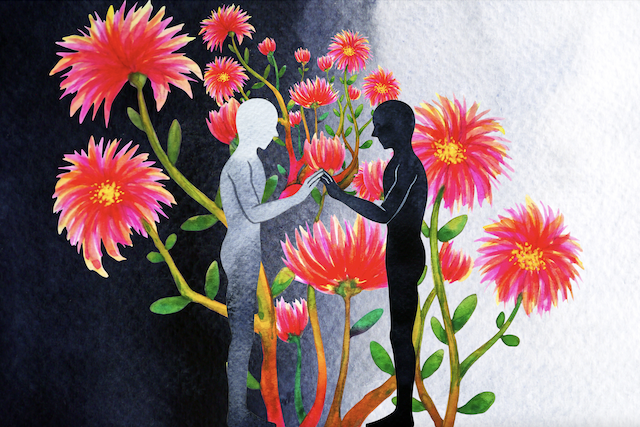
    Research by the University of Wisconsin showed that compassion can be learned. Just like a muscle can be trained by weightlifting, people can build up their compassion.

    The most direct route I know of is training through meditation—by practicing loving-kindness meditation and the practice of being mindful, as mentioned about, even if it is only for a few minutes every day.

    But don’t go at it with the businessman’s approach most of us grew up with. A businessman’s approach means expecting results relative to the time you invest. Developing the mind, developing kindness, doesn’t work that way.

    We all have our own personal qualities and hindrances, and just as with other skills, to some it comes natural, while others need more time and effort.

    Don’t worry too much about the results; getting on the path to becoming a kinder person is the most important thing. If you keep practicing patiently you will develop the power of kindness within yourself sooner or later. And it will become second nature to offer those small gestures of support, appreciation, and encouragement that can completely change someone’s day.