Tag: self acceptance

  • The Key to Happiness: Accept Yourself & Stop Seeking Approval

    The Key to Happiness: Accept Yourself & Stop Seeking Approval

    Happy Woman with Dandelions

    “Acceptance is not submission; it is acknowledgment of the facts of a situation, then deciding what you’re going to do about it.” ~Kathleen Casey Thiesen

    I think many of us get caught in a vicious cycle of thinking that leads us to believe we can only be happy if we gain acceptance from others. We think to ourselves, “The only way I can ever love myself is if others do.”

    This leads us down a path of self-deprecation and hopelessness. We end up making decisions purely for the sake of gaining approval and acceptance, when really we should make decisions that reflect our authentic self and life goals and aspirations.

    This was me just one short year ago. I was in school full time and I was working so hard that I was pushing myself to the brink of destruction.

    I’m a cancer survivor, and since I got sick at fourteen, my health has never quite been the same.

    I pushed and pushed through school because it made others happy. I ignored the important task of taking care of my mind, body, and spirit because I felt that there was no time in my life for any of these things.

    Acceptance and love from others was paramount in my mind, and love and acceptance from myself took a back seat. However, this sort of thinking is a slippery slope. Eventually, I got the wake up call I needed.

    When I was seventeen I developed a chronic and relentless case of insomnia and was prescribed Xanax. I was severely physically dependent on this medication until I was twenty-one. It distorted the way I perceived the world in ways I am only just now beginning to understand.

    When I turned twenty-one in September, I finally could see the forest for the trees and saw that my life was falling apart.

    I sought treatment for my substance abuse issues and suddenly I began to experience moments of clarity that helped me understand what I had been doing wrong for so many years.

    Ever since my cancer treatments I have been chronically ill. It has made walking a traditional path in life very difficult. But I never really wanted to walk a traditional path; I only did so because I was caught in the trap of seeking approval from others.

    I spent many years having a pity party for myself and wondering why I was such a good person who had to endure such a bad thing. I spent thousands of dollars on medical treatments hoping that I could one day be the person I was before I got sick.

    This led to a deep depression when I was at the crux of much of my substance abuse issues. It wasn’t until I went to treatment that I realized that accepting my situation didn’t mean I was giving up; it meant I was granting myself the right to have some peace in my life.

    I finally surrendered to the fact that there were aspects of my life I just couldn’t change, and trying would only further the insanity. I finally realized it was time to move on.

    So, once again, I need to stress that accepting your situation does not have to mean you become complacent. In fact, for me, it was quite the opposite.

    For the first time I met myself where I was and loved and nurtured myself in a way I never had known how to before.

    Stemming from this self-love and acceptance something magical happened. For the first time I stopped looking at myself as a broken, sick person with no future, and I saw positivity, power, and abundance in my life.

    I started focusing on what I would like to cultivate in my life and what sort of path I could walk given my circumstances. I started making lists of things that I had wanted to do but had put off because I believed I would never be well enough.

    As my confidence grew, I started to envision a positive and wonderful future for myself. I had always wanted to move to Berkeley ever since I was sixteen, and so I set out to do that. I had always wanted to sell on eBay but was too fearful of failure to try it.

    For the first time I decided to take a risk and so I started to do that too. I had wanted to take a break from school and so I granted myself permission to do that as well. The end result? I now have a successful eBay store and just moved into a cute little apartment in Berkeley.

    I took some time off from school to gain clarity and will be returning next semester. However, I will only go at the pace that is reasonable for me, and I will no longer compare my path to the path of others or do things a certain way purely for approval and acceptance.

    I will do what I can while still leaving plenty of time to care for myself in this deep and powerful way that has led me to my current situation. These are the kinds of changes that you can make in just a few short months, and all you need is a little self-love and self-acceptance.

    So what have I learned this year that perhaps can be helpful to you? First and foremost, I have learned that we should never compare our path to the path of others. Our focus should be on walking the path that is the most reasonable for us while still having time to genuinely love and take care of ourselves.

    Further, I learned that sometimes the biggest risks in life reap the greatest rewards.

    Lastly, I have learned that cultivating a deep sense of happiness and well-being from within will ultimately provide us with the strength to manifest what we want in our lives.

    When you focus on the internal, rather than trying to directly influence the external aspects of your life, inevitably the external aspects of your life also change for the better. It all starts with you.

    Girl with dandelions image via Shutterstock
  • What Self-Love Means: 20+ Ways to Be Good to Yourself

    What Self-Love Means: 20+ Ways to Be Good to Yourself

    “Self-love requires you to be honest about your current choices and thought patterns and undertake new practices that reflect self-worth.” ~Caroline Kirk

    If one more person told me to “love myself” I was going to levitate into the air and pull one of those impossible martial arts moves from Crouching Tiger, Hidden Dragon. I was sick of it!

    What the heck does loving myself mean? Were they talking about bubble baths, pedicures, and cucumber masks? It turns out there is so much more to self-love than just pampering ourselves. I found this out the hard way.

    About a year and a half ago, I almost died after a bad breakup. I had devoted so much of my energy to making the relationship work that I had completely neglected my own needs, and had given away my power and my responsibility for happiness.

    As I wrote about here, when I finally developed the courage to end an addictive and painful relationship, I had to live with the effects of lack of self-love.

    I struggled to eat, sleep, or continue my daily functioning. I spent every waking hour to myself, trying to understand how and why I had gotten there. I had to know, because whatever it was, if I did not attend to it, this was going to be the end of the road for me. I knew it.

    I made mixed media collages, journaled, watched The Notebook five more times, cried, and called up friends to keep me company while I ate my few bites each day.

    During this whole time, I found places in my story where I was not present to my own life, my body, or my spirit. I was just there. I found the places where I had abandoned myself and then gotten mad at the other person for not meeting my needs.

    The truth was, I did not have a big enough inner container to hold the love I so desired even if I received it, because my self-love tank had shrunk down to the size of a bottle cap.

    It finally became very clear to me that there was one core reason I had gotten there: I did not know anything about self-love.

    This realization launched me into a relentless search for the meaning of self-love, internally and externally.

    I found that self-love is a not a destination; it’s a practice. Self-love is the foundation on which we build a happy life. Without self-love, we have nowhere to put the love or abundance that comes to us.

    Not sure what it looks like to love yourself? Here is what I’ve learned. Self-love is…

    1. Choosing ourselves, even if it means upsetting others and not being popular anymore. Even if it means we leave a party before anyone else because we feel tired, overwhelmed, or just plain feel done with the crowd.

    2. Telling what is true for us, not swallowing words that express what we truly feel, think, or want to do.

    3. Giving our body the nurturing, rest, exercise, and comfort it needs to the best of our ability.

    4. Wearing clothes that make us feel good and fit our personality instead of wearing clothes that are in fashion that we use to impress others.

    5. Building a life that we love while we are single instead of waiting for our prince/princess to show up to explore life and to be happy.

    6. Accepting ourselves with the good, the bad, the ugly, the sexy, and the smelly—all of it—and appreciating ourselves as whole people.

    7. Making time to do whatever we love, just to play, without worrying about wasting time.

    8. Owning our inner and outer beauty and complimenting ourselves without feeling guilty, arrogant, or entitled.

    9. Not rehashing our past mistakes and dragging ourselves to a dark place when we know that we can only learn from the past; we can’t change it.

    10. Spending some quality, connected time with ourselves instead of always watching TV or wasting time on the Internet.

    11. Using discretion when sharing our heart, self, and dreams with others.

    12. Trusting the path that our soul is on and making a genuine effort to become a conscious co-creator of our destiny.

    13. Not blaming our parents for our current issues, and looking for ways to heal our wounds and change our dysfunctional patterned behaviors by reaching out to ministers, therapists, coaches, and healers.

    14. Following what our gut/intuition says instead of living out of our brain and ego.

    15. Staying in our integrity, both when it comes to ourselves and when interacting with others out in the world. This includes keeping ourselves in check regarding patterns such as lying, manipulating, co-depending, withholding, and pretending.

    16. Allowing ourselves to dream big, without contaminating these dreams with judgments, our perceived limitations, or a lack of sense of deserving.

    17. Knowing how we’re spending our emotional, mental, financial, and physical energy, and whether these activities bring back joy, connection, nurturing, rest, and creativity to our lives.

    18. Taking responsibility for all of our experiences. Knowing that we have the ability for deeper self-awareness and access to our intuition when it comes to making life choices.

    19. Not labeling ourselves with others’ opinions of us, while having the courage to look inside to see if there might be some truth to them.

    20. Learning to set boundaries that protect and nurture our relationships, with ourselves and others.

    21. Allowing ourselves to make mistakes and not berating ourselves for making them. Instead, choosing to appreciate our desire to learn and grow.

    22. Refusing to seek permission or approval to be ourselves. Recognizing that we, like everyone else, deserve to take up space on this planet just as who we are right now.

    And lastly, self-love is:

    23. Loving and accepting ourselves even when we fail miserably at some of these self-love goals.

    No one else can offer these things to us. No one else can take our vitamins for us or prevent us from going into a self-loathing attack.

    Even if we land the best partner on the planet, this person won’t be able to make us happy and feel loved unless we create the space for it inside by practicing self-love. This is why self-love is an inside job.

    From my heart to your heart…

  • How Self-Acceptance Enables Us to Connect with Others and the Moment

    How Self-Acceptance Enables Us to Connect with Others and the Moment

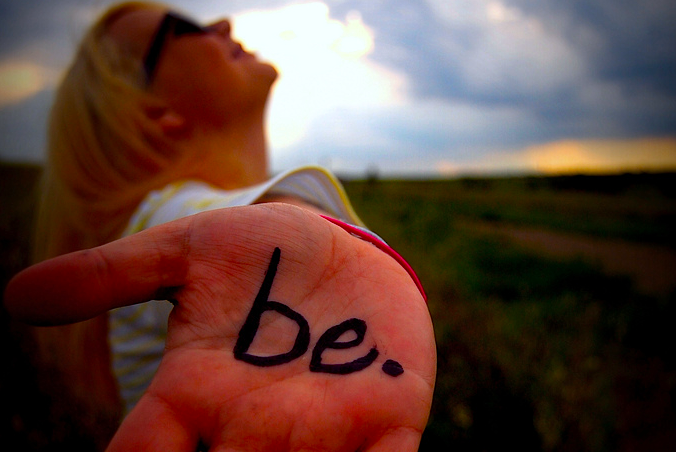
    Be

    “By accepting yourself and being fully what you are, your presence can make others happy.” ~Jane Roberts

    I recently received one of the nicest compliments from a co-worker.

    As nice as it was to hear someone validate all of the hard work I do and recognize my passionate desire to use music as a way empower people, I found that the compliment was just one, all-too-brief moment in a day dominated by schedules, meetings, and not nearly enough time for me to enjoy what was happening around me.

    I should have felt great, but I was so distracted by my work that I did not have access to feeling good.

    As soon as I went to my next appointment, I immediately focused on what that person was thinking of me. Did this co-worker think I was any good at the project? Did I have enough time to finish everything I promised to do that day?

    As the afternoon went on, I noticed that I was not present to the people around me, and things that I would normally take in stride were really starting to annoy me.

    By the end of the day, I found myself focusing on the negative in a way that that did not coincide with the same person who my co-worker had complimented.

    A short five hours later, I had almost totally forgotten the compliment had ever happened.

    Then the guilt set in. How could I be the person that the co-worker had complimented when, by the end of the day, I was negative, grouchy, and not feeling deserving of any praise at all?

    The negativity was so bad that I found myself thinking, “If he knew the real me, he would probably take back the compliment.”

    I was leaving a voicemail for a dear friend, relating the accounts of my day, when the following words came out of my mouth: “Why is it that I am so quick to dwell on the things that are not going the way that I would want, and I miss the magic all around me every day?”

    Reaching out to a trusted friend instantly gave me perspective. It also brought me the clarity to see that I was letting my own expectations of myself blind me to all of the good happening right there and then.

    It is only when I recognize that the good around me that I feel confident enough to risk just living from my deepest truth.

    What is the point of living the life of your dreams without also having the awareness that it is happening?

    My life is amazing. I am surrounded by wonderfully supportive people. I always have everything I need, even if it does not come to me in the way or time that I expect. I know this is true, so why wasn’t I able to see that?

    Somewhere along the way I started to believe that I needed to pretend to be perfect or have all of the answers to have people accept me. I forgot that it is when I am my imperfect self, who has more questions than answers, that I am able connect with others.

    The real me is more than enough. Any time I believe anything different and stop giving of myself, I do a disservice to the people around me and myself.

    After having this realization, I slept a deep and peaceful sleep and woke up renewed.

    I made a conscious decision to focus on being my authentic self, being grateful for all of the good around me, and ignoring anything that did not match up with that belief.

    Through this experience, I learned:

    1. Accepting yourself allows you to be present to your self.

    That next day was just as busy as the previous, in fact, even more so. Armed with my new outlook, I felt more comfortable risking being who I really am, and the results were amazing.

    As soon as something came up that had the potential to knock me out of myself, I checked in with myself and asked, “What does my authentic, deepest self think is the next right thing in this situation?”

    I then shared that best part of myself with the people around me and found to my shock, not only did they accept what my truth offered in the situation, but also they were grateful that I was being myself.

    When you stop pretending to be something you’re not, you give yourself space to simply be—and like me, you may find that others accept and appreciate you for who you really are.

    2. When you are present to yourself, you can be present to others.

    I was enough. Not only that, when I stopped pretending to have all the answers, stopped trying to be perfect, when I was able to stop being so attached to what everyone was expecting of me, I was free to enjoy everything that was happening around me.

    Being connected with myself allowed me to be more present to the people in my life. I work with large groups of people on a regular basis; being present to large groups people is an integral part of what I do.

    Sometimes when you share a part of yourself that you think isn’t your best, it can be that very thing that makes you most compelling to others. Someone else may see your perceived brokenness as a gift.

    3. When you can be present to others by being yourself, it allows the ordinary to become extraordinary.

    The group I worked with later that day commented that something was different about our performance. One person related that everyone was smiling from the inside out. Colors seemed more vibrant, smells seemed more aromatic, and sounds were more melodious.

    When you are able to be present to yourself, you can be present to others, and this allows you to connect to something more than you ever could be on your own.

    When I get caught up in my day, I start to lose touch with myself and soon after start to lose touch with others, as well.

    When I give myself permission to be less than perfect, it allows me to see that everything is just the way it needs to be, including me.

    Photo by s.h.u.t.t.e.r.b.u.g.

  • Why Self-Compassion Is the Key to Being Our Authentic Selves

    Why Self-Compassion Is the Key to Being Our Authentic Selves

    Arms Outstretched

    “To be beautiful means to be yourself. You don’t need to be accepted by others. You need to accept yourself.” ~Thich Nhat Hanh

    I was raised in a family where outward appearance and reputation were important. Standing out was only encouraged if it was within the bounds of what was considered “normal.”

    No one ever explicitly told me, “What other people think of you is more important than being your true self,” yet that’s what I learned to believe. It became my mission to be accepted by others, because I thought that only then would I be worthy of love.

    I spent most of my middle school and high school years pretending to be somebody that I wasn’t. I would “chameleon” to blend in with people around me.

    I suspect that due to my less-than-stellar acting skills, a lot of people could tell that I was being phony and didn’t want to hang out with me. This only increased my hunger for external validation and acceptance.

    At the age of thirteen, I attended my first personal development seminar.

    It was an incredible experience for me, and when I was in the seminar room, something inside of me came alive. Being in that space awakened my passion for personal development, a passion that has only grown over the last fifteen years.

    In the next decade that followed, I’d spent more than 350 hours participating in personal development seminars, and in July 2009, I finally received the honest feedback that would change my life forever:

    I showed up as arrogant, selfish, self-righteous, superior, and judgmental.

    The feedback hit me like a ton of bricks. I was simultaneously composed and totally shocked.

    I was composed because I knew that people experienced me in those ways: I was a condescending know-it-all with judgment by the boatload, and little tolerance for people “doing it the wrong way” (not my way). My demeanor was often cold and closed off, and I could easily insult people where I knew it would hurt.

    I was shocked, because when I received that feedback from somebody that I’d met less than six hours earlier, I felt completely vulnerable. I didn’t know what to do with myself in that moment of being completely exposed.

    The walls that I’d created to “protect” my authentic self were only pushing (or rather, shoving) everyone else away. I finally decided to make a change. And thus began my journey of rediscovering my true self.

    To say that it was a battle would be a grave understatement. The little voice inside my head had gotten really good at convincing me of “truths” that were actually just thoughts based in my false beliefs about reputation and acceptance.

    Lying to myself had become such a subconscious process for me that bringing it into my consciousness on a daily basis was a struggle.

    Right after receiving the feedback, I’d keep “be authentic” on the forefront of my mind for a few days at a time. But more often than not, my commitment to being authentic would slowly fade behind my decades of pretending to be somebody else, and I often wouldn’t even notice the shift.

    When I’d realize that I wasn’t being perfectly authentic, every moment of every day, I’d go into beat-up mode and would berate myself for being a failure.

    My new awareness seemed like a game of lose-lose: if I ventured out into authentic living and slipped back into my old ways, I’d go into beat-up mode; if I acted like I was okay with being my pretending old self, I’d feel sick to my stomach about who I was pretending to be. I didn’t know how to win that game.

    I spent a couple of years on the rollercoaster ride of stepping out and being authentic, slipping back into my old ways, and beating myself up about it; it was exhausting. But then I learned that personal development isn’t a switch, it’s a journey.

    I couldn’t just turn off my old behaviors and turn on some new authentic behaviors.

    Creating lasting change would take commitment, practice, and most importantly self-compassion.

    Commitment meant truly committing myself to being authentic, and doing it for nobody else but me. And practice meant making conscious choices to set my authentic self free instead of staying in the box I’d built for myself.

    The self-compassion piece was the most important because it determined whether or not I wanted to pick myself back up, dust myself off, and give it another go.

    If making a mistake was only going to end in me beating myself up about it, then I’d rather not have even attempted it. But if making a mistake was met with a desire to learn, and then re-approach my ways of being in a new way, it was a much easier choice to make.

    Throughout my journey of discovering and living as my authentic self, I have experienced moments of immense joy and freedom, which have encouraged me to continue moving forward.

    One of my most impactful experiences of letting my authentic self shine took place at the end of November 2013, when I shaved half my head.

    One of my friends shaved part of her head in mid-2013, and I loved how it looked. I thought it was a perfect combination of sexy and tough. I immediately wanted to shave my own head, but hesitated…for six months.

    I thought, “What are other people going to think when they see you? Everyone is going to judge you. People are going to think that you’re weird.”

    The little voice in my head was going crazy. My head and my heart weren’t coming to an agreement because that little voice was repeating phrases I’d heard my entire life.

    But one day—and I can’t remember exactly when it happened—I just decided to do it. I knew that deep down in my heart I wanted to, so I refused to let that little voice stop me anymore. If people were going to think that being my authentic self was “weird” then so be it!

    I wish I could say “and then I shut the little voice up forevermore and lived happily ever after,” but that wouldn’t be true. My little voice was screaming when I finally sat down to get my head shaved. But I just chose to acknowledge the screaming and shave it anyways.

    After it was all done and I looked in the mirror, I fell in love. I fell in love with me! For the first time in my life, I felt completely aligned in my outward appearance and my inner authentic self. I felt free.

    Sure, people stare at me in public. But I just smile and walk on by. Everyone has an opinion about my hairstyle, but there’s only one opinion that matters—mine. And I love it!

    That was one of the biggest and most tangible steps that I’ve taken toward letting my authentic self truly shine. Now, if I start letting to the voice inside my head get to me, I can just look in the mirror or touch the shaved part of my head to remind myself of who I really am.

    One of my biggest lessons throughout my head-shaving experience was this: when I limit myself because of my fear of what others might think of me, I’m limiting what I think of me. When I truly embrace my authentic self, I am free.

    Abraham Maslow said, “What is life for? It is for you.” I’m finally living my life for me, and I’ve never felt more empowered, joyful, or authentic.

    How are you holding yourself back?

    Would you be making different choices in your life if you weren’t worried about the acceptance of others?

    How different do you think your life would be if you stepped outside of your comfort zone one time every day?

    I encourage you to get uncomfortable and to let your authentic self shine. You might be surprised at how freeing it can be.

    I certainly was.

    Photo by AJ Leon

  • Accepting Yourself as an Introvert and Loving Your Inner Tortoise

    Accepting Yourself as an Introvert and Loving Your Inner Tortoise

    tortoise

    “We can’t underestimate the value of silence. We need to create ourselves, need to spend time alone. If you don’t, you risk not knowing yourself and not realizing your dreams.” ~Jewel

    Tortoises are out of fashion. They are no longer the wise ones, taking one patient step after another, coming out victorious in the end. Today, they are the ones who can’t cross the road fast enough, the ones most likely to get hit by a car.

    There is shame involved in being a tortoise.

    And so I have spent a considerable chunk of my life trying to turn into an extroverted hare, coming up with rationalizations for why I am not, most definitely not, an introverted tortoise.

    For one, I don’t move slowly. In fact, I love to dance. I am quick in perceiving and understanding what people say and mean. I am not slow-witted.

    But these explanations don’t quite cover what it means to be a tortoise—how their rhythms are slow and deep, how they enjoy taking in the scenery instead of rushing past, how they need the shell that protects their most vulnerable, precious self.

    As introverts, it’s easy for us to get alienated from our own nature because of the extrovert bias in the culture at large. So, how do we reconnect with and start celebrating ourselves? It starts with self-awareness and living our own truths.

    The Way We Manage Energy

    As opposed to extroverts who turn to other people to recharge and renew themselves, too much interaction saps our energy. Introverts turn inward and need quiet spaces to recharge. This is why we turn to nature, to prayer, to solitary hobbies.

    We already know this from our own experience. What we often struggle with is the validity of this preference for time alone. I’ve wrestled with this too, thinking that there is something wrong with me if I am not excited about going to a party or socializing at the end of a hectic day.

    It’s only recently that I’ve begun to let go of this internal dialogue. By going deeper into my own creativity—writing more, doing photography—I’ve realized that what I am actually lonely for is a connection with myself. When I’m taking a photograph, for example, I feel present and whole.

    Engaging in activities that make us happy helps us focus on all that is right with us, instead of wondering whether we are faulty.

    As introverts, we need to start giving ourselves permission to go deeper into our own nature. If building legos, reading books, or watching birds gives us joy, that’s what we should be doing instead of going along with what other people think is fun.

    It might be fun for them, but is it fun for us?

    Another thing that I’ve learned is that although I need time alone, not all interactions affect my energy in the same way. While many social interactions leave me feeling depleted, there are some that have the opposite effect.  In her wonderful book, The Introvert’s Way, Sophia Dembling discusses this with Cognitive scientist Jennifer Grimes.

    Grimes says that the real issue is not how much energy we put in a situation, but whether we get an adequate return on this energy investment.

    She says, “There are people who like to invest a lot of energy and get a lot back. Some people don’t want to invest a lot and don’t expect a lot back. The people who are deemed the extroverts in pop literature, the people who are social butterflies, what they get back on an interpersonal level is sufficient for them.”

    As introverts, we need to be aware of this. While small talk is draining for us, meaningful conversations are energizing. They require us to expend energy, but they also give us energy back.

    Haven’t we all talked for hours about something we are passionate about, and been at a loss about what to say when we are talking politely with an acquaintance?

    The Rhythms of Social Conversation

    As an introvert, social conversations can be a challenge for me. I didn’t realize earlier that one of the reasons for this is the difference in the rhythms of how introverts and extroverts communicate.

    When we are asked a question, introverts usually pause to think about it before replying. We need this space to formulate our answers. This is different from extroverts, who formulate their answers while talking.

    Because of this difference, when we are silent, extroverts can perceive this as meaning that we have nothing to say and rush in with their own thoughts. And while they are talking, we can’t think. This dynamic renders introverts mute.

    For me, understanding this has been extremely important. Instead of getting frustrated that I didn’t get a chance to speak, I’ve started responding differently. By showing the other person that I am still thinking by providing visual cues (like furrowing my brows), I hold my ground better in a conversation.

    I’ve also started letting myself interrupt the other person. And in the case of those people who are extreme talkers, I’ve understood that it’s okay to disengage and simply walk away. By doing these things, I’ve created more space and freedom in my interactions.

    While understanding this basic difference between extroverts and introverts is important, we also need to be aware of the mistakes we can inadvertently make in social situations. One of these is being too quiet in a new group setting. Introverts don’t realize that it is the silent person in the group who gains more and more power as the conversation goes on.

    Elaine Aron talks about this dynamic in her wonderful book The Highly Sensitive Person. She says that if we remain silent in a new group, other people can be left wondering if we are judging them, unhappy about being part of the group, or even thinking of leaving the group. As a defence mechanism, the group might reject us before we have a chance to reject them.

    So, in a new group, it becomes extremely important for introverts to communicate what they are thinking, even if it is just to say that we are happy to listen and will speak up when we have something to say.

    The Focus on all That’s Right with Us

    As introverts, most of us have heard messages about all the things that are wrong with us. We are too intense, too solitary, not fun enough.

    What’s wrong with thinking deeply? What’s wrong with solitude? What’s wrong with enjoying one-on-one conversations instead of a big party? And fun according to whom?

    Once we give ourselves permission to ask these questions, we can also start seeing our own strengths more clearly. What the culture considers an aberration is what makes the best part of us.

    Thinking deeply gives us new insights. It helps us see new relationships between things. The solitude we love is also the springboard for our creativity. It gives us the chance to imagine and re-imagine our world.

    Aren’t these all amazing things?

    As introverts, connecting with our essence is what will help us actualize our talents. Not acting like an extrovert. I am sure it’s great to be a hare, but not if you are a tortoise.

    Photo by Lee Ruk

  • 3 Powerful Benefits of Accepting Yourself and Your Differences

    3 Powerful Benefits of Accepting Yourself and Your Differences

    Differences

    “Live your life for you not for anyone else. Don’t let the fear of being judged, rejected or disliked stop you from being yourself.” ~Sonya Parker

    Our common culture is one that values acceptance from the group over self-acceptance. We base our self-worth on how we measure up against who society tells us to be, and our culture views those who are different as being anomalies that could bring the group down.

    And yet deep in our hearts (and in the books that tell our collective history) we know that individuals who go against the grain are the ones that help society progress.

    When my father died in front of me, my ability to go to college and progress into the next phase of life (adulthood) passed away with him. We didn’t have the funds to send me to University, as I was now considered a non-resident and would have to pay more than the average Brit.

    But that was the furthest thing from my mind, as the pain of losing the only person on earth who understood me and embraced my radical nature had just died abruptly in front of my nineteen-year-old self.

    Months turned into years. I moved to the states and began living with my brother, who is also an artist. He tried to encourage me to continue my studies in some form or another, but at that time I was still paralyzed by sadness and confusion. I was basically unemployable and I knew this all too well, which furthered my feelings of inadequacy.

    Eventually, I came to accept the two things I was struggling with.

    In my soul I knew that Dad had been sick for years, treating himself poorly with toxic substances that eventually killed him. And I also knew that despite being different and perhaps undervalued in how I fit into the world, I had a purpose.

    Slowly but surely, I began to embrace the fact that I was a third culture kid and writer. That was that. There was no changing the fact that I act like an absent minded professor (books strewn around the house and nothing in its place) and have a panic attack if I merely think about waking up at 7AM to go to a job.

    I’m not skinny and will never be. And I have no interest in ever embracing that view of how a woman should be. In fact, I quite like curves and have accepted that a woman can have them and be healthy at the same time.

    My inability to complete the I.B. program (equivalent to senior year in high school) or enroll in college is a thing of the past. I am a devoted life long learner, bibliophile, and polymath, and I happen to like self-education more than being stuck in a classroom.

    If potential employers had an issue with my lack of diploma then they were obviously not the right fit for working with me.

    I found and married my soul mate and we became parents to a little angel with curly hair and a voracious appetite for travel and adventure. Several years after her birth I finally embraced what my father had pursued himself: the role of entrepreneur.

    My passion for travel, food, and culture mingled with my love of the written word and photography.

    Living a dream-driven life is not easy in many respects. It requires courage and devotion, with a lot of trial and error. The most important thing for someone who wants to devote their life to their passions is to accept themselves just as they are, right here and now. 

    Whether or not you improve your supposed flaws in the future is no matter.

    Whether or not you get a new degree or network with the right people is of no matter either if you can’t first allow yourself to be who you areThat may sound simplistic, but it’s actually complex if you look at just how narrow the path we have been told to take really is.

    That road is one of subservience to an idea or meme that may, in fact, not be healthy or even based in logic.

    Empowerment occurs when we accept ourselves.

    This doesn’t denote we become egotistical or self-absorbed. Rather, we have now accepted that our path differs from that of others, and there is no need for us to judge ourselves according to the world’s standards. When there is acceptance of who we are, right here and now, we find peace.

    Freedom occurs when we accept ourselves.

    No matter one’s disabilities, dissatisfactions, or disturbances, we must accept ourselves in order live a passionate life. How can we accept others if we cannot accept ourselves?

    No one can attain happiness if they are hung up on what is lacking; we must transcend the need to compare ourselves to others and let go of our apparent flaws and shortcomings. This frees us from self-imposed judgment and the need to fit into society’s standard of what we should look like, be, act, and do.

    Happiness occurs when we accept ourselves.

    We tend to judge our potential for having an enjoyable life on how much stuff we accrue or social statuses we have gained. Again, this is an illusion and denotes a lack of self-love, as all of the things we truly need to have a passionate life are inside of us, perhaps yet to be discovered.

    Happiness can never be purchased and others can never designate it to us. It comes from within.

    Sometimes I still get hung up on what I lack and what I could have done with my life had I made better decisions or hadn’t had such a traumatic event happen in my teens. But this feeling quickly subsides when I recognize it for what it’s worth (comparison to social memes) and count the blessings for all that I have within me and around me, no matter how small.

    Photo by George Goodnight

  • Live Your Life for You: 5 Benefits of Embracing Who You Really Are

    Live Your Life for You: 5 Benefits of Embracing Who You Really Are

    “Live your life for you, not for anyone else. Don’t let the fear of being judged, rejected or disliked stop you from being yourself.” ~Sonya Parker

    I have struggled with my different-ness since I was young. I grew up trying to change the things that made me different in order to fit in. At home, my parents were doing their best to raise three young children, which I can imagine would’ve been very hard.

    I can still remember the first time I asked myself, “What is wrong with me?” I loved to take my time and have everything neat and tidy; my family, on the other hand, was the complete opposite.

    Being neat and tidy reflected in the way I would dress myself. One morning, when I was getting ready for my first day of school, my parents gave me socks to wear that didn’t match. I got very upset, and although they tried to understand what the problem was, they couldn’t help but be frustrated with me, as I was making the morning more difficult.

    We were also running late. I wanted to take my time and not be hurried. This caused us to run even later and made my parents even more stressed. I felt so guilty to have made them feel like this. 

    I wanted to belong and feel loved by them, so I tried my hardest to change the things about me that seemed to cause them stress.

    Trying to change these things that were a big part of who I was created inner conflict, and I would have big tantrums as a result. This would cause my parents stress as well, so eventually I stopped expressing my feelings.

    I became ashamed of the things that made me different. I was shy. I loved lots of time on my own. I had dark skin.

    I wanted to be accepted to avoid judgment and rejection. During school, other kids teased me for not having many friends. I felt so hurt and alone that I started a constant battle within myself to change my different-ness.

    I forced myself to be more social. I searched for ways to change the color of my skin. I stopped giving myself the alone time I wanted. I stopped expressing how I was feeling.

    This went on for the next twenty years. Since I spent my whole life trying to fit in, I never really got to know my true self. It was incredibly exhausting and I was very unhappy.

    It took having kids to wake me up. The love I had for my two boys gave me the drive to search for another way to live.

    I wanted my boys to love and accept themselves for who they were, differences and all, but how was I to teach them if I didn’t even know how? I needed to be the example.

    I finally discovered some things that empowered me to embrace my differences. I was amazed at the life changing effect it had on me. 

    When you embrace who you are:

    1. You stop living in fear.

    The choices I make in life are no longer dependent on what other people will think and whether I will be judged, disliked, or rejected. I just focus on being me.

    In the past, I feared what people would think of me for choosing to have a few close friends instead of a huge social circle and spending a lot of time on my own. Now that I accept that this is me, I feel a sense of freedom.

    Trying to be someone you’re not is exhausting. Being your true self is a courageous thing to do in a world that is constantly trying to change you. When you realize that living the life you want is more important than pleasing other people, suddenly you feel free.

    2. You form deeper, more connected relationships.

    In the past, I’ve had my fair share of not-so-good relationships. People would connect to the fake me, so they were never genuine relationships.

    I was able to sift through my relationships by loving my differences and being myself. This allowed the right people to come into my life who loved the real me. My relationships are now all fulfilling and genuine.

    If you want people to accept you for who you are, you first have to show them who that is.

    3. You treat yourself more kindly.

    I saw myself as weird so I would constantly put myself down and beat myself up. The negative self-talk was painful.

    In accepting my “weirdness,” I went from telling myself, “Because of my differences, I’m worthless and no one will ever love me,” to “I have to be true to myself. The people who really matter will accept me for who I am.”

    It was so liberating, I started to feel the happiest I’ve ever felt.

    4. You’re better able to find your passion.

    When hiding my true self, I could never know my strengths. I’m a compassionate person, which makes me good at helping people. I found that this is what I love to do and it’s my passion.

    After learning this about myself, I was able to offer my friends and family advice when they needed help. I also branched out and started my own blog, which is my main creative outlet where I can combine my passion for writing and helping people.

    Once you allow yourself to be who you are, you’re free to find what you’re good at and what you love to do.

    5. You start appreciating yourself.

    When you truly embrace your differences, you begin to find reasons to appreciate them. I’ve always been ashamed of my introverted nature, thinking it was a weakness. Only recently have I started to embrace it. I now appreciate that it allows me to enjoy time on my own, which is where I’m the most creative.

    I’ve finally discovered my strengths and weaknesses. I own them and I am grateful for them both because they make me who I am.

    When you start seeing your “weaknesses” as potential strengths, you develop a whole new sense of appreciation for yourself.

    I hope these lessons can help you learn to embrace your differences without having to become a parent to do it—and if you are already a parent, then I hope this can inspire you so you too can pass on self-acceptance to your children.

  • Change Your Life by Changing Your Mind About Yourself

    Change Your Life by Changing Your Mind About Yourself

    Happy Woman

    “The way you treat yourself sets the standard for others.” ~Sonya Friedman

    I’d had enough.

    Once again, I’d sent follow-up emails to guys who had shown interest in my dating site profile. Once again, I’d included full-length photos with those emails, unlike the headshot that went along with my online profile.

    And once again, days later, my inbox was a virtual ghost town.

    Didn’t these guys know how much courage it took for me to set up a profile in the first place? I was twenty-six years old and been on fewer than a dozen dates in my life—including my senior prom, to which I took a freshman.

    I was morbidly obese for most of my twenties and had only recently lost fifty pounds. I was still overweight but in better shape than I’d been in years. And yet it still wasn’t good enough.

    As soon as these once-interested guys got past my witty, self-deprecating profile full of catchy phrases like “loves to cook,” “enjoys watching football,” and “can quote The Godfather” and saw me head-to-toe, they remembered that it doesn’t matter if a girl likes watching sports or can cook a mean Sunday dinner—as long as she’s “fit and athletic.”

    My self-esteem was lower than low. This was just as bad as being ignored to my face in bars and at parties.

    I felt like I had to apologize for the way I looked. “Hey, sorry I’m fat, but I’m a really nice person! And I’ve spent a lot of time developing my sense of humor while the rest of you were out dating and stuff!”

    I’m not sure what finally flipped the switch inside my head, but I remember the date the switch got flipped: March 7, 2006.

    I’d had enough. I realized (somehow, for some reason) that I didn’t have to apologize for anything about myself.

    That there were plenty of girls who looked just like me and managed to find love on their own terms—who managed to live life regardless of the voices in their head which tried to tell them they weren’t allowed to.

    I got mad, both at the world and at myself for wasting so much time feeling apologetic. Like I had to gratefully accept any little crumbs thrown my way.

    So I went on a rant. And I took that rant to the bastion of all that’s sketchy about the internet.

    Yes, I went to Craigslist. Hey, why not? I had nothing to lose at this point.

    I wish I’d kept that rant because it was gold. I derided the nameless men who let me know without saying a word that I wasn’t good enough once they got a look at the full package. I called it exactly as I saw it, with all the vitriol I could manage.

    I then announced to all of the world that I wore a size 14/16, and that anyone who had a problem with that shouldn’t bother wasting my time.

    I listed the same qualities I’d listed on my dating profile, and asked if my size really mattered in the face of all I had to offer. My humor, intelligence, hatred of reality TV, love of old timey movies, insanely huge music collection spanning six decades, mad cooking skills…did my size matter all that much, really?

    I may even have referred to myself as “a catch.” I don’t know, it all became a blur after a while.

    And much to my surprise, my inbox exploded with responses. Many of them were immediately deleted—you know, pictures of genitals and all that. (Craigslist will always be Craigslist.) Some were practically unintelligible, so I moved past them pretty quickly, too.

    But one reply…one reply caught my eye.

    The guy could spell and knew how to use punctuation. He seemed warm and friendly and smart, and appreciative of what I had to say. The fact that he liked to cook earned him points, too. (Ladies, I think we can all admit that we get a little swoony over a man who knows his way around the kitchen—men, pay attention!)

    I knew immediately that if nothing else, this guy and I would be friends. What I didn’t know at the time was that I would marry him in September 2008.

    See, I know now that the moment I decided to start treating myself like I was worth loving—no apologies, no holds barred—was the moment the Universe breathed a great big sigh of relief and said, “Finally.”

    That’s when a man who’s called me beautiful every day since we first met found me. Things started clicking within minutes of me publishing that post.

    For years I had assumed that everyone else saw me the way I saw myself: fat, unattractive, worthless. I know now just how deep my self-loathing went, and I wish I could go back and hug that old version of me.

    That sort of thinking is a vicious cycle—the worse you think you are, the more you cut yourself off from others, which makes you feel even worse than you did before.

    All I had to do was change my mind about myself, about what I was worthy of, about what I was willing to accept from others.

    Bonus: Because I was so utterly myself—snarky, sassy, smart, sarcastic—I attracted someone who likes those qualities and I never have to pretend to be any other way.

    If you’re in a situation where you feel as though you have to change yourself in order to measure up, or like you have to put up with someone else’s mess because you can’t do any better (be it in a relationship or a job), change your mind.

    Know that it’s just your insane, misguided ego trying to keep you small and quiet—and that’s understandable, because your ego wants to avoid going out on a limb and possibly being hurt.

    But you absolutely have to ignore that fearful voice and start speaking and living your truth anyway. And as soon as you put yourself out there, your life will start to change.

    This doesn’t have to be anything on an epic scale—no Lifetime movies-of-the-week here. It can just be something as small as posting a rant online, claiming your worth, and announcing that you’ve had enough of feeling “less than.”

    Maybe you’ll simply start holding yourself to a higher standard when it comes to the way you talk about yourself and others.

    And maybe that new way of talking about yourself will leak into the way you talk to yourself. You might actually start smiling when you see yourself in the mirror.

    You might then start seeing all the ways you’re playing small in your life, and you might start making subtle shifts in how you handle things going forward.

    You’ll stop putting yourself last. You’ll start speaking up when a situation doesn’t feel right to you. You’ll stand a little stronger every day.

    And the Universe will breathe a great big sigh of relief and say, “Finally.”

    Photo by kris krüg

  • 5 Tips to Accept Your Imperfections, No Matter How Different You Feel

    5 Tips to Accept Your Imperfections, No Matter How Different You Feel

    Cheerful Girl

    “I follow four dictates: face it, accept it, deal with it, then let it go.” ~Sheng Yen

    Growing up different isn’t easy for anyone.

    I was born normal, happy, and healthy. I had five fingers and five toes. I reached all my developmental milestones and showed promise as a vivacious, energetic child. It all changed when I was ten months old.

    I became violently ill with bacterial meningitis. I battled the infection with a strength I was naturally graced with at birth. One week into my hospital stay, I was finally able to lift my head; two weeks later, I was back home.

    I was lucky to escape with my life from the meningitis. When it’s not fatal, it can result in long-term complications, such as low IQ, cognitive impairment, loss of limbs, and learning difficulties, to name a few.

    I came away with profound hearing loss. Not quite deaf, but enough loss to have it impact on my daily functioning.

    At seven years of age, I got my first pair of hearing aids. It opened my world to a whole new experience. I could hear a lot more and I have this vivid memory of hearing a leaf scatter across the pavement for the first time. I couldn’t for the life of me figure out what that noise was.

    It brought challenges along with it too.

    I was known as the kid with “the things in her ears.” I was bullied for being different. I hung out with the boys playing football and cricket because the girls didn’t want a bar of me.

    It left me emotionally dead. I was really good at burying all the pain inside and trudging along every day.

    I became a master robot—a mechanical human being incapable of trusting and feeling. It was my survival mechanism doing its best to avoid accepting who I really am.

    Entering the real world after school became a shock. Out of my comfort zone, I had to enter a world of large groups, noisy parties where I couldn’t hear what anyone was saying, large lecture rooms, and meeting new people. I had to suddenly be more than okay with my hearing loss.

    I had to be okay with being a little different.

    It was the biggest lesson of my life—my own perceived fears are far more powerful than anything else.

    I perceived people would treat me different or look at me differently if I told them I had hearing loss. By believing this, I practically encouraged them to treat me differently without realizing it.

    So there I was, in my late teens, brewing with years of buried emotions and a confronting new reality of accepting who I am. So what did I do? Partied hard of course. The emotions came out in a flurry of binge drinking and hangovers worthy of a death bed.

    It took me three years to finally wake up. Three years to finally realize that I must accept every part of me in order to live the life I want. Negative emotions continue to build up when we cannot accept ourselves for who we really are, and burying our emotions is no different to avoiding our true self.

    Accepting who we are is a beautiful, bone-achingly hard thing to do. It’s about being vulnerable, consciously opening our eyes to our flaws, and seeing them in a whole new light. It hurts at first, but it’s a pain worth a thousand lifetimes.

    By changing our perception to see our flaws as neutral traits that are both good and bad, we change how we choose to react to things. It will ultimately change our life for the better.

    I’ve learned to see the benefits of my hearing loss. I’m a world-class lip reader who can probably “hear” better than you in loud settings. I’m more visually aware and observant than most, which has been incredibly handy in understanding human behavior.

    I had to face my hearing loss through accepting it as a genuine, unique part of me. I am absolutely in love with my life, despite all its challenges and pitfalls, and I have no doubt that if I didn’t have this unique part of me, I would be in a very, very different place.

    If I could give you five tips to help you accept who you are, they would be this:

    1. See your perceived flaws in a whole new light.

    Nothing is ever completely good or completely bad. In fact, everything is in perfect, harmonious balance. Find the benefit of that one thing you have trouble accepting, and change your perception to see that it’s not so bad having it after all.

    2. Practice gratitude daily.

    We all have so much to be grateful for. Gratitude helps to cultivate a positive mindset, which will help you to accept yourself for who you really are.

    Create a daily gratitude journal and list three things for which you are grateful. Do this in the morning to start your day on a positive note.

    3. Recognize that you are not your thoughts.

    We get so lost in the story that goes through our minds. Our egoistic mind is, in fact, our greatest storyteller. And too often, we believe everything it tells us.

    Learn to recognize that thoughts are created by an egoistic, survival-focused mind. It sees the threat in everything. Start to separate yourself by asking your mind this: “Does this thought serve me and my purpose? Does this thought actually help me?”

    4. Be vulnerable with others.

    You will be pleasantly surprised to know that you are not alone in this big, beautiful world. Someone out there has gone through your tribulations and trials, and they will understand what you are going through.

    We can feel so alone with our ego at times, so sharing with others can help us to see the light at the end of the tunnel. It also helps us to change our perception, as others can guide us to a different angle.

    5. Look after yourself.

    Eat a nourishing diet, move regularly, rest often, and be mindful. We, too often, underestimate how the mind and body work both ways. By looking after your body, you are creating a sacred environment for your true being. It makes acceptance a lot easier when you look after the house your soul resides in.

    It wasn’t until I started applying these five tips that I finally began the arduous process of accepting every little part of me, including that ever so tough one of my hearing loss. Every day, I accept myself a little more.

    I just want you to remember this: you are imperfectly perfect, just the way you are.

    Photo by g-imagination

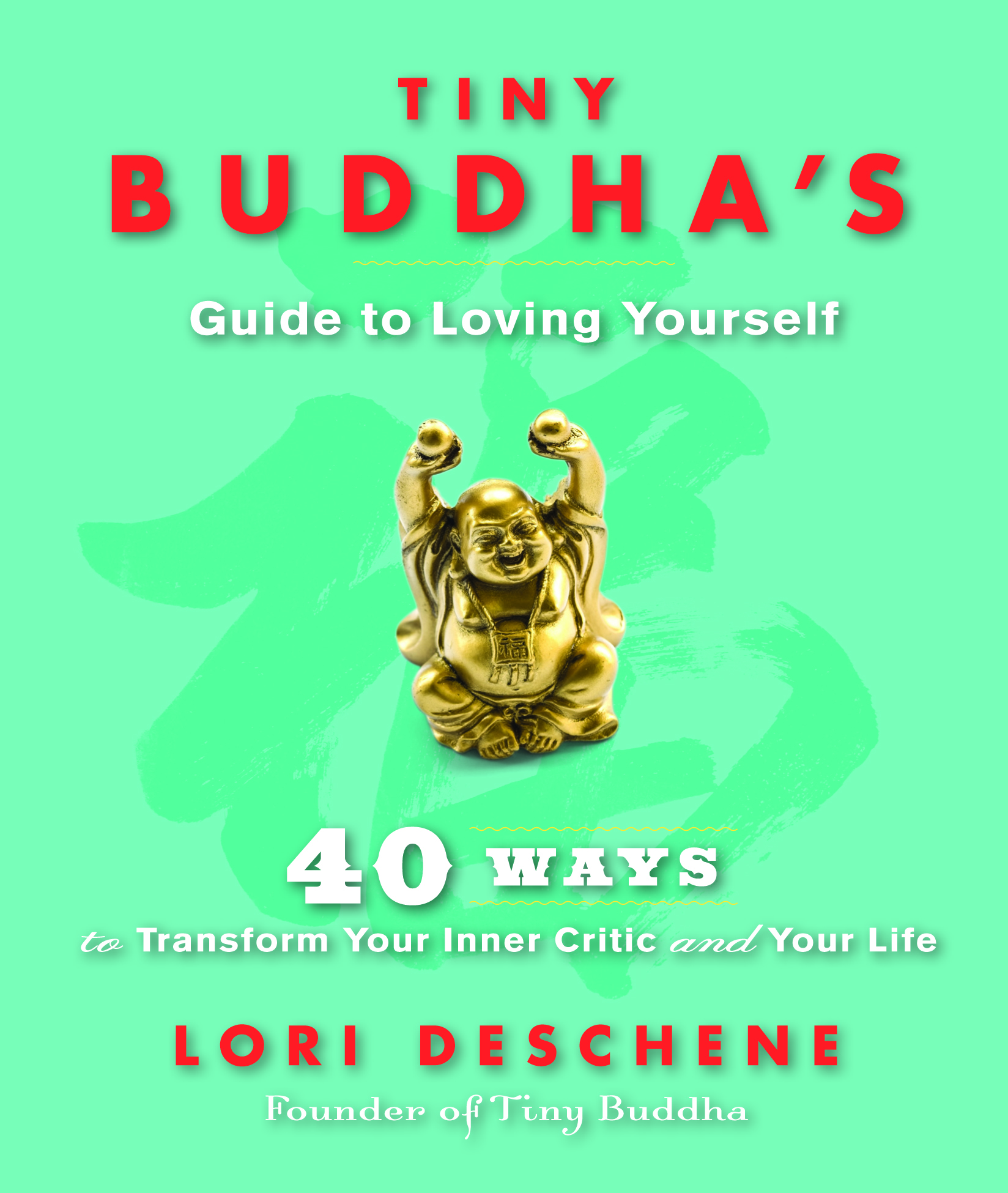
  • Tiny Buddha’s Guide to Loving Yourself (and the Self-Love Bonus Pack)

    Tiny Buddha’s Guide to Loving Yourself (and the Self-Love Bonus Pack)

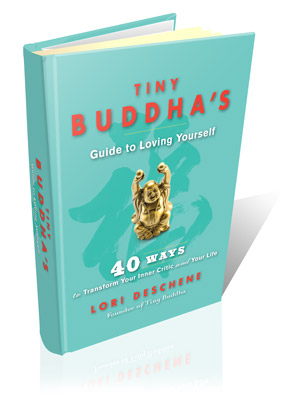
    Tiny Buddhas Guide Cover 3D

    10/9/13: The pre-order promotion is now over. You can learn more about Tiny Buddha’s Guide to Loving Yourself here!

    Two years ago I surveyed the Tiny Buddha community to crowdsource wisdom for my second book, which was going to break apart the idea of success.

    Around the same time, I experienced a series of life-altering events, including a major surgery, financial hardship, a break-in, and the death of my grandmother.

    Within the following months, I dramatically decreased the amount of time I devoted to blogging. After almost three years of regularly sharing my feelings, I wanted space to explore my conflicting emotions without having to put them into words.

    Despite having chosen to do this, I felt immense guilt in seemingly “abandoning” the community. I also felt embarrassed and disappointed in myself.

    After not only announcing my book but also soliciting insight from others, I realized I wasn’t in the right headspace to work on the project. Even though I knew I’d had a tough few months, this inability to deliver deeply distressed the perfectionist in me.

    I planned to work on this later in the year, but when the time came I wanted to work on something different—a book that felt more personally relevant in light of my recent challenges, and extended naturally from the philosophy of this site.

    I wanted to create a collaborative book about self-love, for a few reasons.

    For one thing, it’s something that many of us struggle with, which makes it difficult, if not impossible, to fully love others and life.

    Secondly, my former lack of self-love was the foundation of all my greatest struggles. I once thought my life was a mess because I struggled with depression and an eating disorder, and didn’t have purpose, money, or a relationship, but at the heart of all those troubles was my unwavering self-loathing.

    Lastly, it tied into an unexpected consequence of making, what seemed like, a massive public mistake: announcing a plan and then not following through reinforced that I need my empathy the most when I feel most resistant to giving it.

    It also reminded that sometimes mistakes are opportunities to do something good—and I believe I have with this book.

    Including 40 blog posts from tinybuddha.com, Tiny Buddha’s Guide to Loving Yourself offers more than just advice; it offers in a window into our shared human experience, and universal lessons we can all apply to feel happier with ourselves and our lives.

    These posts have reminded more than 1.5 million monthly readers that we are never alone, and we don’t have to live life controlled by our inner critic. They touch upon ideas that will help you:

      • Release shame about your past and the limiting beliefs that keep you stuck
      • See yourself as beautiful and valuable, with all your flaws and weaknesses
      • Accept yourself more and judge yourself less
      • Forgive yourself for your mistakes and stop being hard on yourself
      • Minimize the need for approval to feel more confident
      • Let go of the comparisons that keep you feeling inferior
      • Feel complete so that you no longer look to others to fill a void within yourself
      • Find the courage to share your authentic self for deeper connections with others
      • Learn to take care of yourself instead of putting everyone else’s needs first
      • Believe that you’re valuable so you can start creating a life you love

    The stories are categorized into 10 chapters, connected to each of these themes.

    At the end of each chapter you’ll find four tips—one from each of the four posts in that section. They’re ideas you can turn to whenever you need help changing your thoughts, and consequently, your feelings and experience of the world.

    Tiny Buddha’s Guide to Loving Yourself launches on October 8th. Over the next month, I’m going to run a pre-order promotion that will involve daily self-love interviews with some of the book’s contributors.

    During the month of September, anyone who pre-orders the book will receive instant access to the “Self-Love Bonus Pack,” which includes 8 digital resources, valued at more than $150.

    Those items include:

      • From Coping to Thriving: How to Turn Self-Care into a Way of Life, by Hannah Braime
      • Flowing Through the Void: Creating Miracles Out of Struggles by Activating Presence, Power, and Passion, by Amyra Mah
      • Complete Confidence eCourse, by Emma Brooke
      • An Awakened Life: A Journey of Transformation, by Julie Hoyle
      • Create a Brilliant Vision for Your Life and Business, by Margie Beiswanger
      • 5 Days of Self-Compassion, by Joanna Weston
      • Be You, Unapologetically by An Bourmanne
      • Tiny Wisdom: On Self-Love, by Lori Deschene (me)

    You can pre-order a copy of Tiny Buddha’s Guide to Loving Yourself here.

    Please note that you will not receive your copy of the book in the mail until October. You will, however, will receive instant access to the bonus items once you forward your sales confirmation email to the address listed on the sales page.

    Thank you to everyone who’s involved with this book—which is all of you. You make this community what it is. You make a difference, and you’re appreciated.

  • Accept Yourself as You Are, Even When Others Don’t

    Accept Yourself as You Are, Even When Others Don’t

    What other people think of me is none of my business.” ~Wayne Dyer

    “You’re too quiet.”

    This comment and others like it have plagued me almost all my life. I don’t know how many times I’ve been told that I needed to come out of my shell, to be livelier, or to talk more.

    As a child and teenager, I allowed these remarks to hurt me deeply. I was already shy, but I became even more self-conscious as I was constantly aware of people waiting for me to speak.

    When I did, the response was often, “Wow! Louise said something!”

    This would make me just want to crawl back into my shell and hide. I became more and more reserved.

    The older I got, the angrier I became. Each time someone told me I was “too quiet,” I wondered what exactly they were hoping to achieve anyway. Did they imagine I had a magic button I could press that would turn me into Miss Showbiz?  

    If only it were that simple, I thought. I felt I should be accepted as I was, but apparently that wasn’t going to happen. There was only one thing for it; I would have to become the extrovert the world wanted me to be, but how?

    At seventeen, I thought I’d found the perfect solution: alcohol.

    When I was drunk, everyone seemed to like me. I was fun and outgoing; able to talk to anyone with no problems at all. However, it began to depress me that I needed a drink to do this or for anyone to like me.

    Another strategy was to attach myself to a more outgoing friend. I did this at school, university, and later when I began to travel a lot in my twenties.

    Although I didn’t do it consciously, wherever I went I would make friends with someone much louder than me. Then I’d become their little sidekick, going everywhere with them, trying to fit in with all their friends, and even adopting aspects of their personality.

    Sometimes I just tried faking it.

    When I was twenty-four, I began teaching English as a Foreign Language, and a month into my first contract in Japan, I was told my students found me difficult to talk to. I was upset because I thought I had made an effort to be friendly and I didn’t understand what else I could do.

    After crying all night because once again I wasn’t good enough, I went into work the next day determined to be really lively and talkative. Of course, it didn’t work because everyone could see I was being false.

    It seemed that I was doomed. I would never be accepted. Being a naturally loud person was the only way to be liked.

    Or maybe not.

    Over the years, I’ve spoken to several talkative, extroverted people who’ve been told they’re too loud or that they talk too much. It seems whatever personality you’ve got you’re always going to be “too much” of something for someone.

    What really matters is: do you think you need to change?

    My shyness has made some areas of my life more difficult. It’s something I’ve been working on all my life and I always will be in order to do all the things I want to do.

    However, I’ve realized I’m always going to be an introvert, which is not the same thing.

    I enjoy going out and socializing, but I also enjoy being alone. At work I talk to people all day, every day. I like my job, but as an introvert, I get tired after all that interaction, so later I need some quiet time to “recharge my batteries.”

    I can overcome my shyness. I can’t overcome my introversion, but actually, I wouldn’t want to because I’m happy being this way.

    Be kind to yourself if you decide to change.

    While I’m still shy, I no longer worry about it.  When speaking to new people, if something comes out wrong or I get my words mixed up, I just laugh to myself about my nervousness rather than telling myself how weird the other person must’ve thought I was.

    In the past I was terrified of any form of public speaking. Now my job is getting up in front of people and talking. After a rocky start in Japan, my students now see me as funny (sometimes!) and confident.

    So I think I’m doing alright. No, I don’t understand why I can’t just be like that with everyone, but I’m not going to beat myself up about it. I’m doing my best and that’s all I can do.

    Don’t be afraid to lose false friends.

    When you’re always being told you’re too much of this or not enough of that, it’s easy to start thinking you have to be grateful that anyone is willing to spend time with you.

    I used to put up with friends who treated me badly because I thought if I stood up for myself, I’d lose their friendship and I’d end up all alone.

    Eventually, in my last year teaching abroad, I did stand up for myself and my worst fear came true. I was left completely friendless.

    And you know what? It was okay. The time alone taught me to enjoy my own company, and gave me the chance to learn more about myself. This has gradually led to me attracting more positive people into my life.

    Could your supposed weakness actually be your strength?

    I’m a good listener, so friends feel able to talk to me if they have a problem and they know I’m not going to tell anyone.

    I’m an efficient worker because I just get on with the job. I can empathize with shy students in my class. I don’t force them to speak but leave them alone, knowing that they’ll talk when they feel more comfortable.

    There’s a reason why you were made the way you are. If we were all supposed to be the same, we would be.

    I’ve stopped trying to make everyone like me and I’ve stopped trying to be something I’m not. As a result, any changes in my character happen naturally as my confidence continues to grow.

    The “quiet” comments are also now few and far between. When you learn to accept yourself, you’re likely to find that others will accept you too.

    But if they don’t, it really doesn’t matter.

  • Writing a Letter to Your Future Self: Love Who You’ll Become

    Writing a Letter to Your Future Self: Love Who You’ll Become

    Time

    Tension is who you think you should be.  Relaxation is who you are.” ~Chinese Proverb

    Yes, I had reached the age of twenty-five. Still, I doubted this letter from my past would make it to me, all these years later. It was a simple creative writing assignment from when I was fifteen.

    The teacher collected our letters to our future ourselves in self-addressed envelopes with stamps and promised to mail them ten years later. But, so much time had passed; would he keep his word? Would he even remember?

    Thinking back on the letter, I tried to remember writing it. I vaguely recalled giving my future self some advice.

    In my recollection, my fifteen-year-old self wanted to make sure I would continue to write and figure skate, and she probably assumed I’d be married and have a baby by now.

    When you’re fifteen years old, twenty-five seems like a grown-up age, but I wasn’t feeling as grown up as I believed my younger self expected me to be.

    Then, on a family vacation in San Diego, my parents brought me the mail from home. And in scrawled ink, there was a letter addressed to myself. I knew it was the one! I laughed delightedly and could not believe what was in my hands. I opened it eagerly and was astounded by the results.

    The letter began in true, snarky fifteen-year-old fashion: “How much do you bet that this letter will never get to you?”

    It continued to greet me casually as if we were having an IM chat.

    Here are two key nuggets from the essence of the letter, which I found salient and beautiful: (more…)

  • Do You Judge the Person You Used to Be?

    Do You Judge the Person You Used to Be?

    “If you judge people, you have no time to love them.” ~Mother Theresa

    It was the second time I’d gone out to lunch with a new friend I met through this site.

    We’d experienced some of the same things in life, and I instantly admired her attitude and perspective.

    Sometimes when I meet up with people I’ve met through Tiny Buddha, I feel a sense of inner conflict. One the one hand, I want to live up to everything I imagine they expect of me.

    I want to be positive, present, and upbeat—all qualities I aspire to embody in my life and through my work.

    But I also want to be free to just be, in whatever state I find myself on that given day, without worrying about how I’m perceived.

    That’s been my lifelong journey—learning to show up as I am, without fearing whether or not other people will accept that.

    My greatest drive in my life is to be authentic. But if I’m not mindful, I can easily get in my own way.

    As we sat chatting, I found myself feeling more and more comfortable, and relieved that after all the years I’d spent isolating myself, I’d finally learned to relax and be myself in the company of new people.

    We broached the topic of crowds, something I’m pretty vocal about disliking. I made a sarcastic comment, something along the lines of “People are best in small doses.” I meant that I prefer intimate groups of people, but I immediately questioned how it came across.

    That didn’t sound very Tiny Buddha-ish, I thought. Then I reminded myself, “She’ll know what I mean. Clearly I don’t hate people.”

    I wasn’t quite so confident when she said, “Are people best from a computer screen, when you’re sitting alone in your living room?”

    This hit me like a jolt to the stomach, completely knocking the wind out of me. (more…)

  • Learning and Unlearning: A Journey of Self-Acceptance

    Learning and Unlearning: A Journey of Self-Acceptance

    Sitting by the Water

    “What you are is what you have been. What you’ll be is what you do now.” ~Buddha

    A teacher of mine once said, “Don’t show up as the person you think you are. Show up as the person you want to be.”

    A powerful statement, but I didn’t know who I wanted to be. Even if I did, I wasn’t sure if I could pull it off.

    I knew who I didn’t want to be: self-critical, self-conscious, and always focusing on my shortcomings. I wanted to learn how to get out of my own way.

    For a long time, I thought improving my external situation by becoming richer, thinner, and smarter meant that I was learning. Not to say that accomplishing those things isn’t learning. However, in that cycle I wasn’t learning, but repeating the same story.

    I kept trying to get from A to Z by pushing myself and always expected my results to meet my expectations. And the vicious cycle continued. I thought I’m not good enough; I’m pathetic and I’ll never get it right.

    Ironically, my desire to learn continued to work against me. (more…)

  • 10 Ways I Know There’s Nothing Wrong with You (or Me)

    10 Ways I Know There’s Nothing Wrong with You (or Me)

    Different People

    “On a deeper level you are already complete. When you realize that, there is a joyous energy behind what you do.” ~Eckhart Tolle

    At seventeen I had it all. I made straight As, was the vice president of the Honor Society, held two jobs, took the lead in four community theater performances, and joined Donnie Osmond onstage as part of the children’s chorus in Joseph and the Amazing Technicolor Dreamcoat.

    I was busy. I did things well. I got attention. I was ready to snap.

    I was so hungry for success and approval I’d do anything to get it, even if it meant exhausting and dehydrating myself straight to the ER.

    What’s worse, I was continually dissatisfied with everything I did. I was my own punching bag.

    Thirteen years later I don’t do nearly as much. I don’t take any classes. I don’t work much at the moment. I don’t perform anymore. On the other side of overexertion, I’ve still beaten myself up.

    I still don’t know what I want to be when I grow up—there’s something wrong with me.

    I live across the country from my family and haven’t justified it by becoming a massive success—there’s something wrong with me.

    I’m obsessed with self-improvement, but I’m still not perfect—there’s something wrong with me.

    Stop. Revelation. Cue the spotlight: There’s nothing wrong with me.

    And there’s nothing wrong with you.

    Here’s how I know both of these statements are true:

    1. You’re playing the game of life as best you know how and trying to get better every day.

    You can’t possibly do someone else’s best, so there’s no point in stressing about it.

    2. You make mistakes like everyone else, which allows you to learn as you go.

    That means you’re doing what you should be.

    3. You’re unique, whether you’re introverted or outgoing, book smart or street smart, creative or technical…

    …the list goes on and on. You’re the world’s only opportunity to know a person just like you. The only hope to share what only you can.

    4. There’s no such thing as the way you should be.

    If you do what you enjoy and don’t harm other people, you’re living a beautiful life.

    5. You will never become someone—you are someone right now…

    …whether you influence millions of people or mean the world to just one person. Your impact is powerful, whether you realize it or not.

    6. If someone hurts you, you don’t deserve it.

    No one does. End of conversation.

    7. You feel emotions and respond to them.

    That’s the way this whole humanity thing works. If you could stand to improve the way you respond, newsflash: everyone could.

    8. You have a pulse right now, and it’s your choice what you do with it.

    There’s no right or wrong answer. (Unless what you want is to maim a puppy or something equally perverse.)

    9. You choose what you think is best, or else you wouldn’t choose it.

    As you get new information and grow stronger and smarter, you’ll make different choices.

    10. You are beautiful, inside and out.

    I’ve printed this out and put it in my nightstand where I can read it when I get hard on myself. I hope it gives you comfort when you start thinking there’s a good reason to not enjoy right now.

    Photo credit