Tag: self acceptance

  • When You’re Tired of Fixing Yourself: How to Stop Treating Healing Like a Full-Time Job

    When You’re Tired of Fixing Yourself: How to Stop Treating Healing Like a Full-Time Job

    “True self-love is not about becoming someone better; it’s about softening into the truth of who you already are.” ~Yung Pueblo

    One morning, I sat at my kitchen table with my journal open, a cup of green tea steaming beside me, and a stack of self-help books spread out like an emergency toolkit.

    The sunlight was spilling across the counter, but I didn’t notice. My eyes kept darting between the dog-eared pages of a book called Becoming Your Best Self and the neatly written to-do list in my journal.

    Meditation.
    Gratitude journaling.
    Affirmations.
    Ten thousand steps.
    Hydration tracker.
    “Inner child work” 
 still unchecked.

    It was only 9:00 a.m., and I’d already meditated, journaled, listened to a personal development podcast, and planned my “healing workout” for later.

    By all accounts, I was doing everything right. But instead of feeling inspired or light, I felt
 tired. Bone-deep tired.

    When Self-Improvement Becomes Self-Criticism

    I didn’t realize it at the time, but I had turned personal growth into a job I could never leave.

    Every podcast was a strategy meeting. Every book was an employee manual for a better me. Every quiet moment became a chance to find another flaw to address.

    And if I missed something, a day without journaling, a skipped meditation, a workout cut short, I felt like I had failed. Not failed at the task itself but failed as a person. I told myself this was dedication. That it was healthy to be committed to becoming the best version of myself.

    But underneath, there was a quieter truth I didn’t want to admit:

    I wasn’t growing from a place of self-love. I was hustling for my own worth.

    Somewhere along the way, “self-improvement” had stopped being about building a life I loved and had become about fixing a person I didn’t.

    Self-Growth Burnout Is Real

    We talk about burnout from work, parenting, and caregiving, but we don’t often talk about self-growth burnout. The kind that comes when you’ve been “working on yourself” for so long it becomes another obligation.

    It’s subtle, but you can feel it.

    It’s the heaviness you carry into your meditation practice, the quiet resentment when someone tells you about a “life-changing” book you have to read, the way even rest feels like you’re falling behind in your own healing.

    The worst part? It’s wrapped in such positive language that it’s hard to admit you’re tired of it.

    When you say you’re exhausted, people tell you to “take a self-care day,” which often just becomes another checkbox. When you say you’re feeling stuck, they hand you another podcast, another journal prompt, another morning routine to try.

    It’s exhausting to realize that even your downtime is part of a performance review you’re constantly giving yourself.

    The Moment I Stepped Off the Hamster Wheel

    My turning point wasn’t dramatic. No breakdown, no grand epiphany. Just a Tuesday night in early spring.

    I had planned to do my usual “nighttime routine” 
 ten minutes of breathwork, ten minutes of journaling, reading a chapter of a personal growth book before bed. But that night, I walked past my desk, grabbed a blanket, and went outside instead.

    The air was cool, and the sky was streaked with soft pink and gold. I sat down on the porch steps and just
 watched it change. No phone. No agenda. No trying to make the moment “productive” by mentally drafting a gratitude list.

    For the first time in years, I let something be just what it was.

    And in that stillness, I realized how much of my life I’d been missing in the chase to become “better.” I was so focused on the next version of me that I’d been neglecting the one living my actual life right now.

    Why We Keep Fixing What Isn’t Broken

    Looking back, I can see why I got stuck there.

    We live in a culture that profits from our constant self-doubt. There’s always a “next step,” a new program, a thirty-day challenge promising to “transform” us.

    And there’s nothing inherently wrong with learning, growing, or challenging ourselves. The problem comes when growth is rooted in the belief that who we are today is inadequate.

    When every action is motivated by I’m not enough yet, we end up in an endless loop of striving without ever feeling at peace.

    How I Started Shifting from Fixing to Living

    It wasn’t an overnight change. I had to relearn how to interact with personal growth in a way that felt nourishing instead of punishing. Here’s what helped me:

    1. I checked the weight of what I was doing.

    I started asking myself: Does this feel like support, or does it feel like pressure? If it felt heavy, exhausting, or like another form of self-criticism, I paused or dropped it completely.

    2. I let rest be part of the process.

    Not “rest so I could be more productive later,” but real rest—reading a novel just because I liked it, taking a walk without tracking my steps, watching the clouds without trying to meditate.

    3. I stopped chasing every “should.”

    I let go of the belief that I had to try every method, read every book, or follow every guru to heal. I gave myself permission to choose what resonated and ignore the rest.

    4. I practiced being okay with “good enough.”

    Instead of asking, “How can I make this better?” I practiced noticing what was already working in my life, even if it wasn’t perfect.

    What I Learned

    Healing isn’t a ladder you climb to a perfect view.

    It’s more like a rhythm—one that includes rest days, quiet seasons, and moments where nothing changes except your ability to notice you’re okay right now.

    I learned that sometimes the most transformative thing you can do is stop. Stop chasing, stop fixing, stop critiquing every part of yourself like you’re a never-ending renovation project.

    Because maybe the real work isn’t fixing yourself into a future you’ll finally love. Maybe the real work is learning to live fully in the self you already are.

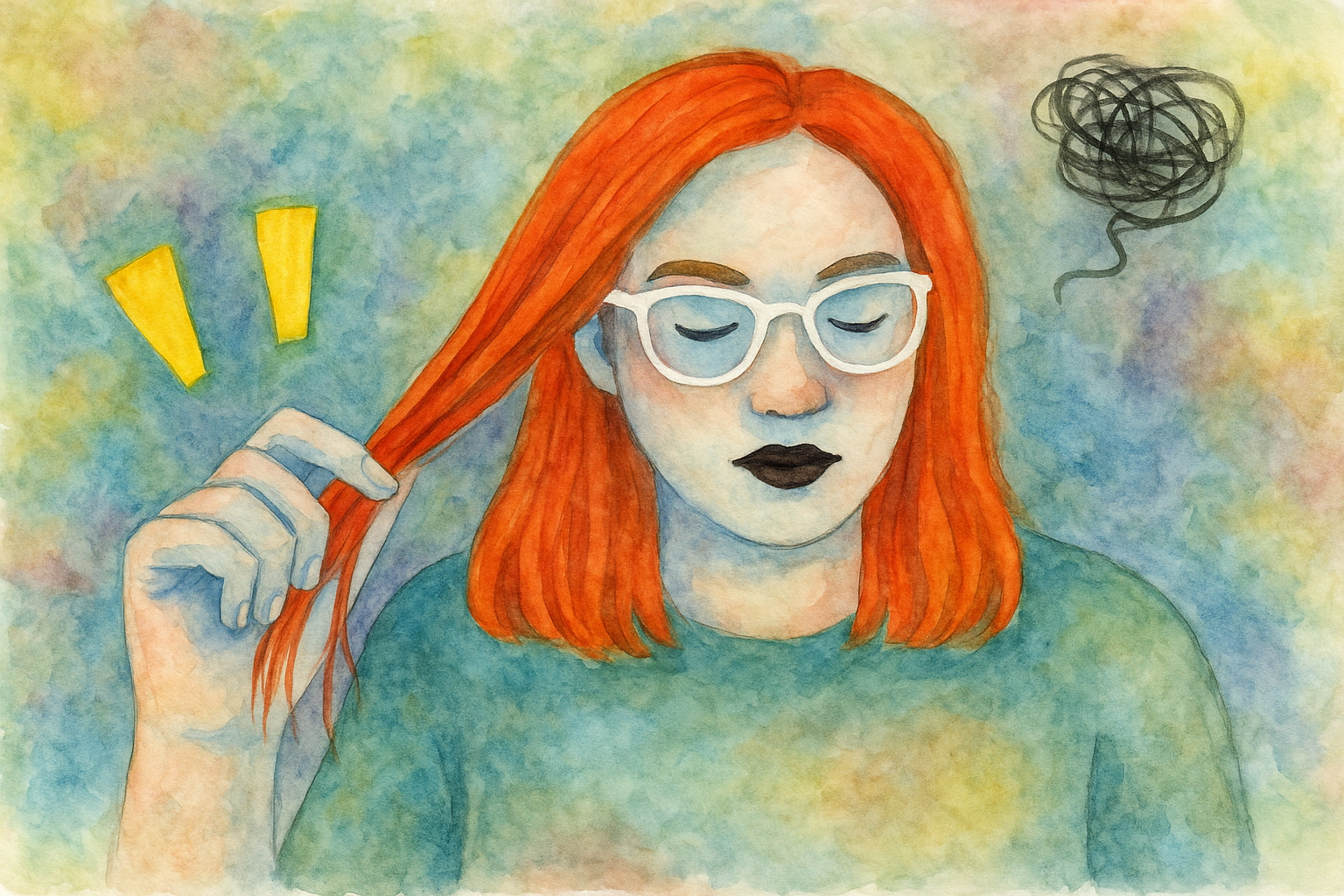
  • Trichotillomania to Triumph: How I Found Acceptance and Freedom

    Trichotillomania to Triumph: How I Found Acceptance and Freedom

    “Your either like me or you don’t. It took me twenty-something years to learn how to love myself. I don’t have that kinda time to convince somebody else.” ~Daniel Franzese

    Everyone has a bad habit or two, right? Whether it’s a major vice or a minor annoyance, we all feel the discomfort of at least some behaviors we would rather not have.

    You know, like nail biting, hair twirling, procrastination, having a car that doubles as a convenient trash receptacle


    I’ve been guilty of all the above at one point or another in my life, but the one that has had the biggest impact on me is trichotillomania, or hair pulling.

    If you’re not familiar with it, “trich” is a condition akin to OCD (but not actually a type of OCD, as it is often mistaken for) in which people experience difficult-to-control urges to pull their hair out.

    Cases vary from mild to severe, and some pullers are able to manage their urges with strategies and coping tools so that their hair loss can go undetected by the casual observer. However, other sufferers are so afflicted by it that they end up missing entire rows of eyelashes or eyebrows or even become completely bald as a result.

    Chances are you know someone with this condition, although you may be unaware of it because so many people suffer in shame and silence. Estimated rates of trich in the US are about 1-4% of the population (although the actual number is probably much higher due to underreporting), making it about as common as having red hair.

    No one knew I was pulling my hair out for twenty years.

    I was twelve years old (trich commonly starts in adolescence) when my mom noticed that I had a couple of bald spots on my head. I honestly didn’t know the damage I was doing at first. Sure, I knew I played with my hair a lot and sometimes pulled it out, but surely, I wasn’t doing it enough to cause bald spots, right?? It was unclear, so I kept quiet as she made an appointment for me to see the doctor about it.

    When the first treatment for a fungal infection of the scalp didn’t yield improvement, the next step was to see a dermatologist. By that time, I knew I was the one causing my hair loss, but my shame and confusion kept me from speaking up about it. I didn’t understand why I couldn’t stop.

    The dermatologist ran some tests, including a biopsy, and diagnosed me with alopecia areata, a medical condition resulting in hair loss. Conveniently for me, around the same time, my grandpa developed (a real case of) alopecia areata. And when we were informed that it was a genetic condition, no one really questioned it for me.

    As a teen, it required much effort to style my hair to hide my bald spots, and from time to time I had to clean up my secret pile of hair between my bed and the wall, but mostly I went on to live a normal life. I found out in my mid-teens, while reading an article in the teen magazine Cosmogirl, that what I did had a name—a complicated one that I wouldn’t be able to remember for years, but it was my first inkling that I was maybe not alone in my weird compulsion.

    I graduated high school, got my associate’s degree, then got married and had kids. I was incredibly embarrassed about my missing hair, but when it couldn’t be concealed, I relied on the medical condition as my trusted excuse, even to my husband.

    I was thirty-two years old and working toward my master’s degree when I sat down in an on-campus therapist’s office and opened up for the first time ever about my hair pulling. The eighty-mile distance between home and school, plus the promised confidentiality of therapy helped ease my fears that others would find out just enough for me to go through with it.

    He was a new therapist, still in training. After I disclosed my humiliating habit, I remember he asked me, “Why are you shaking?”

    “Because I’ve never told anyone this before.”

    As I answered, I could see the surprise on his face. “You’ve never told anyone?”

    I saw him one more time before he completed his training and transferred me to another, more experienced, therapist. Now two people knew my life-long secret. It’s no exaggeration to say that this new therapist guided me to life-changing insights, but he still knew nothing about how to treat trichotillomania. “Let’s focus on all the other stuff first,” he redirected.

    A few months later, I collected enough courage to share my problem again with a close friend whose daughter had OCD. She felt safe because I had heard her talk with such concern and care for her daughter. Afterwards, I asked her, “Do you think I’m crazy?”

    Not long after, I disclosed my hair pulling to my husband, and he responded with what I now call “pseudo-support.” He wanted me to be helped, but only if he could be my savior. He was okay with me telling a couple of people in his family, but no one else.

    I had learned about a national conference hosted by an organization called TLC for people who pulled their hair or picked their skin, and I wanted to go. My husband agreed that it might be helpful but didn’t think I was capable of making the trip by myself (because I would almost certainly get lost in the airport or encounter some other tragic mishap), so he offered to come along.

    I attended the conference alone after I moved out and filed for divorce.

    What I experienced at the conference was incredible. I was surrounded by hundreds of people, knowing that I wasn’t being judged and learning more about trich in these few days than I had been able to in the years prior.

    At dinner that evening, I sat at a large round table for eight, chatting about our experience with hair-pulling and skin-picking. For the first time, I talked about my hair pulling as freely as I would have said what city I had flown in from. The experience was liberating, and I could feel the shame slowly starting to melt away.

    Gradually, I shared my trich with an ever-growing list of people, each time feeling a little less worried about their reaction. I began to weave it into casual conversations rather than treating it as a huge burden for me to offload.

    When I started dating again, I decided to tell men up front to help “weed out” anyone who had a problem with it. By then, I was cautiously optimistic that I might be worthy of acceptance, and anyone who responded with judgment wasn’t a good fit for me.

    Surprisingly, as I continued to speak up, I found that the information was generally well-received. Some people shared that they also had trich or knew someone who did. Others were curious and asked questions to understand it better. In other situations, the conversation just moved along naturally.

    Of course, there were occasional encounters where I felt awkward or misunderstood, but I kept moving forward in my quest to be seen. Over time, I realized that I had been hanging on to my secret for so long based on inaccurate assumptions that others would not accept me if they knew
 but I was proving myself wrong with every new person I opened up to.

    Today, I’ve found that wigs are the perfect solution for me, and as many other wig-wearers have experienced, they’ve become a fun hobby. Wigs keep my hands from stealthily navigating to my hair to pull, and even when I do play with my (purchased) hair, the sensation stays in my hands rather than tracking to my scalp to initiate an urge. I’ve also noticed that the slight pressure on my head from the wigs significantly reduces my urges to pull.

    When someone compliments my hair, I’m very open about my wigs, and when curious minds ask why, I confidently share that I have trich. I understand that I could hold a boundary and decline to provide an explanation, but I choose to take the opportunity to spread awareness.

    It was not easy or comfortable transitioning through my paralyzing shame to radical self-acceptance, but it’s been well worth the journey. Through these experiences, I have a deeper understanding of shame, confidence, acceptance, and myself.

    I’ve learned that shame is toxic and isolates us from truly meaningful connections. When we hold a part of ourselves back in our closest relationships, we tell ourselves that we aren’t good enough just as we are. This perpetuates the belief that we are broken or unworthy and can only be accepted if we portray an alternate version of ourselves to the world.

    I’ve learned that when it comes to confidence, it’s best to start with a leap of faith, because waiting to feel confident first rarely works out. The transformation starts with us entertaining the idea that we might not be rejected if we share our true selves, then taking action to test it out.

    I’ve learned that we are all worthy—just as we are, no modifications needed, no strings attached—and when I accept myself for who I am, others follow along. When I encounter someone who expects me to be fundamentally different to fit their own agenda, I choose to limit the energy I put into that relationship.

    Most importantly, I’ve learned the power and freedom of being true to myself, and I won’t keep that a secret.

  • From Pain to Power: Letting Go of Approval to Love Myself

    From Pain to Power: Letting Go of Approval to Love Myself

    “If you love yourself, it doesn’t matter if other people like you because you don’t need their approval to feel good about yourself.” ~Lori Deschene

    For most of my life, I worried about what others thought. Every move I made felt like a performance for someone else. I’d built my life on their approval.

    Then came the losses. Three family members were gone in a matter of years. Each time, the grief hit like a fist to the gut.

    My mother was my pillar of strength; my father, who might not have always been there for me but was still my father, went next, and then my younger brother—a cruel fate.

    Their absence left a void that seemed impossible to fill.

    I felt hollow, like someone had punched all the air out of me. I was left winded and empty. Grief, relentless and heavy, kept knocking me down.

    I tried to keep up appearances, but inside, I was stuck. Couldn’t move. I didn’t know how.

    I remember one day after my younger brother died, I sat alone in the garden. The sun was out, but I felt nothing.

    It was close to Easter, and I had a list of commitments. Things I’d agreed to, people I had to see. Each one felt like a chain around my neck.

    I stared at my phone, anxious and tired. ‘’Where are you?” the message read. My hands were shaking. That’s when I put it down.

    It was a moment of liberation. I realized I didn’t want to do this anymore. I didn’t want to worry about what everyone else wanted.

    It was time to let go. And in that release, I found a new sense of freedom and hope.

    I picked up my phone again and texted, “Sorry, I will not make it today.” And I hit send.

    One message turned into two, then three. “I’m sorry, I won’t be coming.” The words felt strange, as if I were speaking them for the first time.

    One small act, one message, was enough to break the chains. For the first time in years, I felt like I could breathe. The tightness in my chest eased.

    It was a turning point in my journey to self-acceptance.

    I didn’t know it then, but that was the beginning of reclaiming my life. Just a few words and the weight started to lift.

    Grief Changes Everything

    Grief stripped away everything I thought mattered. The “should” and “have to” layers fell away like dead skin. I was left with nothing but raw, aching truth.

    I saw my life clearly for the first time. It was built on everyone else’s expectations. There was no space left for me.

    That was the most challenging part to accept. I had spent so long trying to be what everyone else wanted. And now I didn’t know who I was.

    But the losses kept coming, pushing me deeper into emptiness. Each time, it took something from me. And each time, I was forced to look harder at myself.

    I began to see a pattern. I was living for others, not for myself. It was a painful truth, but grief can uncover what’s hidden.

    The Realization

    One day, I stood in front of the mirror. The reflection, looking back, was a stranger. My face, my clothes, how I stood—it was all for someone else.

    That was the moment when I decided I needed to change. I didn’t want to live like this. I needed to stop.

    I didn’t need the approval of others. I didn’t need to be perfect for anyone but myself. It was time to break free.

    It wasn’t easy. The habit of pleasing others ran deep. But I started with small steps.

    Steps Toward Freedom

    First, I listened to my thoughts. When I found myself worrying about someone’s opinion, I stopped. “Is this helping me?” I’d ask.

    The answer was almost always no! So I let the thought go. It was redemptive.

    Slowly, the worrying and sleepless nights of being a people-pleaser lessened.

    Next, I set boundaries. The most challenging boundary was with me. I had to stop pushing past my limits, physically, emotionally, or mentally.

    I began saying no. I stopped feeling guilty for choosing myself. Setting boundaries was empowering and made me feel more in control of my life.

    It was a declaration of my needs and desires, a step toward asserting my worth.

    I distanced myself from people who drained me and people who made me question myself. It was a gradual process.

    I started by reducing the time I spent with them, and eventually, I found the courage to communicate my need for space.

    I started creating space, which allowed me to breathe and focus on my well-being.

    Slowly, I started doing what felt good: walking in the rain instead of counting steps; I just walked for pleasure.

    I stopped trying to please everyone; instead, I pleased myself.

    This focus on my desires and needs was an essential aspect of my journey to self-acceptance and self-love.

    I stopped playing host because others required it. The first Christmas after my younger brother passed away, I took a vacation with just my children, starting a tradition that centered on what worked for me. Now I only host when it feels right on my terms.

    I also stopped being the one to reach out constantly to family or friends. I realized I didn’t have to check in or hold relationships together single-handedly. Trusting that real friendships wouldn’t crumble without my constant effort was freeing.

    Each small action was a step closer to who I was. Each “no” brought me back to myself. It wasn’t a sudden transformation but a slow, steady shift.

    Healing Through Action

    There’s freedom in not needing anyone’s approval. I started to feel it in my bones. I began to laugh again.

    The weight lifted. I noticed the world again—the way the sky changes colors at dusk, the way the wind feels on my face. Life was waiting for me.

    I started to walk more—no destination, no purpose—just walking. I felt the ground under my feet, solid and real.

    The loss of my loved ones will always be there. But it doesn’t define me anymore. It’s part of the story, not the whole of it.

    Moving Forward

    If you’re stuck seeking approval, start small—one step at a time. You don’t have to change everything at once.

    Ask yourself: What do I want today? Just for today, choose that. It’s enough.

    Reflect on the moments when you felt trapped—times when you felt overwhelmed by external pressures and were trying to meet everyone’s expectations; when you sacrificed your own needs and desires to please others; or when you found yourself constantly worrying about the opinions of others. By reflecting on these moments, you can identify what has been holding you back and take the first step toward living authentically.

    Self-reflection is a crucial part of the journey to self-love and self-acceptance. It’s a mirror that allows you to see yourself more clearly, understand your wants and needs, and be free to fulfill them.

    It takes time to break free. The habits run deep. But each small step chips away at the chains.

    Embracing Self-Acceptance

    Self-acceptance wasn’t easy. It felt foreign, like trying on clothes that didn’t fit. But little by little, I got used to it.

    I stopped chasing what others thought was beautiful. I looked at my imperfections and decided they were mine. The quirks became markers of who I was.

    Writing helped. It was messy and unfiltered, but it was real.

    I saw my patterns. The way I bent over backward to fit in. The way I swallowed my voice to keep others happy.

    So, I began taking small actions. For instance, I started embracing my uniqueness by wearing clothes that made me smile (like a short mini skirt!).

    I spent more time with people who supported me. The ones who made me feel seen. Their encouragement helped me believe that I didn’t have to change to be worthy.

    The Healing Process

    Of course, there were setbacks. Days when I slipped back into old habits. But each time, I chose to keep moving forward.

    It’s not a straight path. There are twists and turns. But each small step makes you stronger.

    There’s freedom in not needing anyone else’s approval. I started to feel it grow. I felt lighter, unburdened.

    Conclusion

    Grief changed everything. But through it, I found strength. I found my worth buried beneath all the noise.

    You don’t need anyone’s approval to feel good about who you are. The only person who can define your worth is you.

    So ask yourself today: Who’s writing my story?

    If the answer isn’t you, it’s time to take the pen back.

  • Liberate Yourself: 5 Reasons to Share Your Truth

    Liberate Yourself: 5 Reasons to Share Your Truth

    “When we deny our stories, they define us. When we own our stories, we get to write the ending.” ~ BrenĂ© Brown

    Do you ever feel like a character in someone else’s play? More so, a victim in your own story?

    I spent many years of my life this way. I was so consumed with what others thought about me, I didn’t even know how to be myself. I would put on a show I thought everyone else wanted to see. I’ve learned we don’t have to perform in life; we just need to be ourselves. Speaking with openness and honesty from the heart is our most valuable tool for living an authentic life.

    Growing up, I was a ‘sensitive’ kid. I was ridiculed often for simply having feelings. I learned pretty quickly to shut down, numb, and medicate.

    I began to have struggles with anxiety and depression. I didn’t really know this was what it was until it progressed into something much more unmanageable. I tried to talk about my feelings and was often questioned and shunned for them. Eventually, these feelings manifested into a pretty significant eating disorder.

    No one recognized my eating disorder because being thin was ‘in.’ However, to put it into perspective, I was tracking 500 calories a day, working out one to two hours a day, and purging anything I put in my body.

    I was confronted about this by two friends in college. I remember feeling relieved but also ‘found out.’ From my perspective at the time, I thought I was functioning well in life. I was going to school and working full-time while maintaining friendships and a new relationship.

    Even during this intervention, I found myself justifying the behaviors. Keep in mind, they were only confronting me about the eating disorder, not the daily binge drinking I was also engaging in.

    Fast-forward five years. I found myself married and divorced in under a year. Prior to the divorce, I was hiding my drinking of one bottle of wine a night. I was functioning in one area of my life but falling apart in all the others.

    Surprisingly, my addictive patterns never impacted my career. I was living a dual life, providing therapy to others while hardly treading water personally.

    In 2010, I found myself with my first DUI. I never did anything real to rehabilitate from this. And I concealed it to the best of my ability, hoping it would just go away. However, experiences tend to repeat themselves until we learn what we are supposed to learn. I got a second DUI in 2013. After that, I did a bit of rehabilitating but still didn’t stop the drinking. I was just no longer driving after the drinking.

    I paid $10,000 in legal fees simply trying to plead my case of being not guilty when clearly, I was guilty. This was such a moral conflict for me.

    I applied for my therapy license in 2016 and was denied approval. While I was being honest with the board about my recent DUI, they learned I was dishonest with my current employer about my initial one. My integrity was completely destroyed. I was looked at as a liar. I was living a double life, and I was exhausted.

    When the board exposed the truth, I felt shame and liberation at the same time. They showed me that my insides were not matching my outsides.

    I made a commitment to myself then to never hide the truth again. That day, I got sober from alcohol and have been sober for eight years now.

    Recovery taught me to be honest and to focus on doing the next right thing. So I became brutally honest in all areas of my life. More so, I learned if people are uncomfortable about my story, it’s not my problem. I started to see everyone had problems. I also saw a blessing in being open and honest because it created space for others to do the same.

    I’ve been told often that I am “courageous and brave,” but I was simply tired of being ingenuine. I was healing out loud because I nearly died in silence.

    When I decided to be honest, my life became better. I didn’t have to remember my story anymore. All the shame dissipated, and I was able to start making better life choices. People around me respected me more for owning my story. If you tell the truth, no one can hold it against you. The power was lost. The best part of it all was that I began attracting beautiful, like-minded people.

    Many people struggle with authenticity and truth-telling because they are holding onto the fear of judgment. However, sharing your truth also unlocks the potential for self-growth, discovery, and connection. This could lead to profound personal transformation and the development of more meaningful relationships with others.

    This is a game changer. It allows you to say what you want, ask for what you need, express your emotions, and celebrate your achievements. Every time you do, you expand that sense of confidence, growth, and joy. Soon, you’ll see vulnerability as a strength, not a weakness.

    You have the power to change your life, one step at a time. Here’s what will come from you being brutally honest:

    Self-acceptance/Authenticity

    You will learn to no longer run from the painful parts of your story. Your story may be the hope someone else needs. You don’t have to live a double life where you keep changing hats depending on who you are around. You can simply be you.

    Empowerment

    You’ll be able to use your experience to gain autonomy and self-determination. You will be able to give others the tools and resources to do the same.

    Resilience/Growth

    You will continue to strengthen your internal muscle to adapt and recover from challenging life experiences. You can’t gain resilience without walking through hardships.

    Connection

    Your relationships will shift from surface level to a deeper emotional connection. You will take the lead by sharing feelings and being vulnerable, and you will gain a stronger sense of understanding with others.

    Inspiring Others

    You will lead by example. You will be able to impact and create a positive environment. This can be contagious and encouraging to others. You may become a catalyst for positive change.

    Life is a collection of stories, a unique narrative that each of us creates with our experiences, challenges, and choices. Your story is a reflection of your journey. This implies your wins, losses, and everything in-between.

    Owning your story can be daunting because it does require that vulnerability. You will have to look back at your past, which may be uncomfortable or painful. You will have to look at your mistakes, choices, and imperfections. This goes against a culture that often emphasizes perfection and success. Moreover, sharing your story means the possibility of judgment or rejection from others.

    However, embracing your own past allows you to shape your own narrative. You are able to turn adversity into strength. You can recognize your self-worth by forgiving yourself and being more forgiving of others. You learn to love yourself and appreciate your mistakes for what they taught.

    Offer the most precious gift of all—your authentic self—rather than trying to be all things to all people.

    “Owning our story and loving ourselves throughout that process is the bravest thing that we will ever do.” ~ BrenĂ© Brown

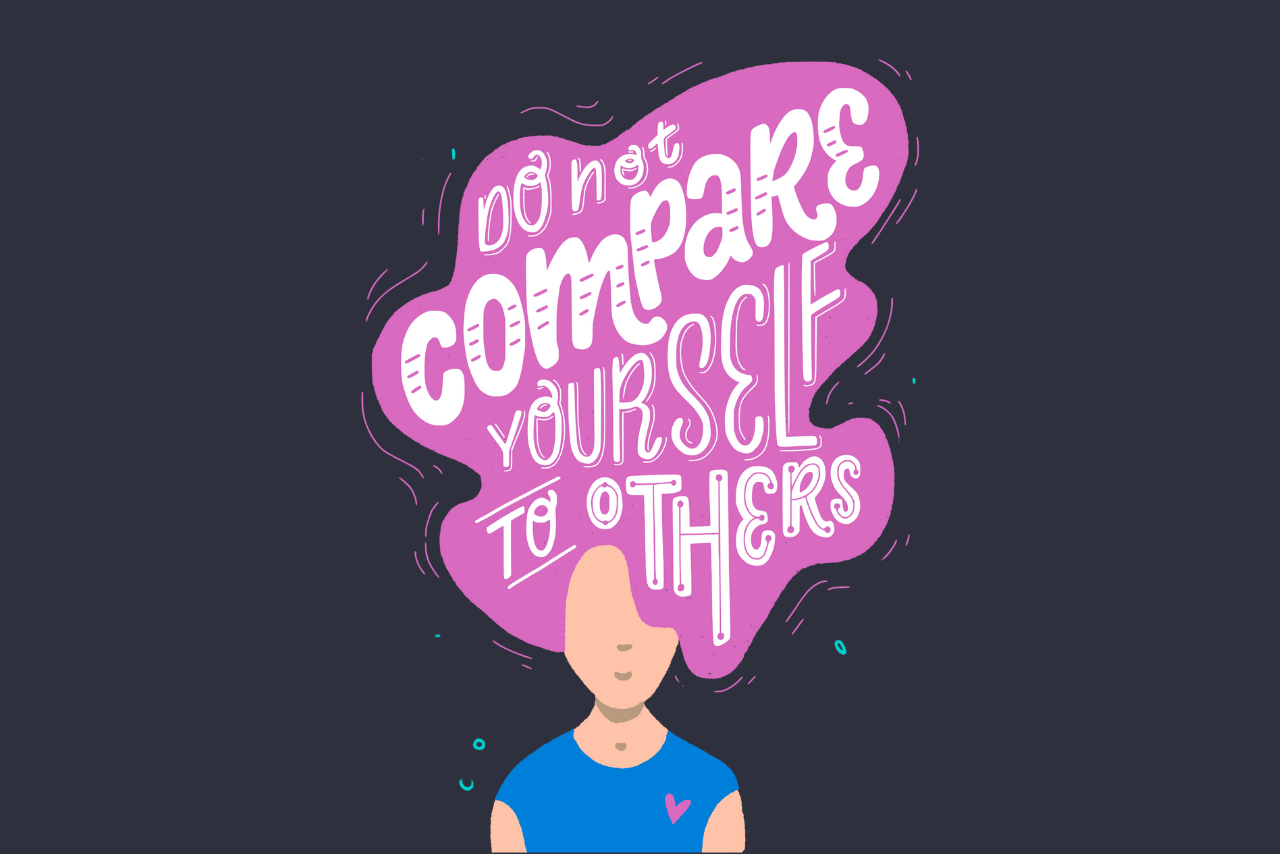
  • The Breakthrough That Helped Me Stop Comparing Myself to Others

    The Breakthrough That Helped Me Stop Comparing Myself to Others

    “Comparison is the thief of joy.” ~Theodore Roosevelt

    In March 2020, the UK went into its first Covid lockdown, and the country was swept with anxiety and sadness. When would we see our loved ones again? Would our health be okay? Was my job safe? And more pressingly, how the heck was I expected to teach my kids?

    Along with everyone else, I first received the news with a sense of impending doom and tried to make the best of a bizarre situation. “Normal life” consisted of stressful home schooling, online working, mask wearing, and (in the UK at least) stockpiling toilet paper!

    We were forced to slow down and retreat because nobody was allowed to socialize or engage in any activity outside of work or home. This was hard at first, but then, after a few weeks, something strange happened. I realized I’d never felt happier.

    You see, before lockdown, I might have appeared happy on the outside, but inside, I was an insecure mess. My mind was full of all the things I thought I “should” be doing: planning more exciting weekend plans, engaging in better hobbies, and making a bigger group of friends. Unless I was at the latest summer festival or spending my Wednesday evenings doing yin yoga, I didn’t feel good enough.

    After a busy day at work, scrolling through Facebook just gave me another list of things to do. An empty schedule felt like failure, and everyone else’s lives looked so much more exciting.

    So I lived for the future, constantly in planning mode and looking over my shoulder for approval. The pressure to keep up and always be doing something was exhausting. It caused rows with my husband (who couldn’t care less what everyone else was up to!), made me ignore my own needs, and reinforced low self-worth.

    If I wasn’t thinking about plans, then I was thinking about people. I compared myself to (what I assumed were) other people’s busy social lives and felt obliged to organize group nights out or always have people over for dinner. Even when I wasn’t seeing friends, I was always preoccupied with them. Were they a good friend? Was I? Why hadn’t they replied to that text? Do they even like me?

    Just below the surface of all the “planning” and “people” chatter that filled my brain was the ever-present noise of self-criticism.

    If you’re not making the most of life every minute, you’re failing.

    If you don’t have the perfect gang of besties like everyone else, then there’s something wrong with you.

    Your life is boring compared to everyone else’s.

    Nobody finds you interesting.

    Do more!!

    What made it all worse was assuming I was the only one with this nagging need to keep striving and do more just to feel good enough.

    I now know that, not only am I not the only one, but this type of thinking is natural.

    When I trained as a compassion-focused therapist, I learned all about how social comparison is wired into our brains. This is because having the biggest tribe and highest status gave us protection in Stone Age times.

    What gives us a sense of status these days? How big our social media following is, how many likes we get, and how amazing our social feed looks! We can’t help sharing if we’ve done something exciting because that inner caveman is driving us to compete.

    The problem is that when we don’t feel like we’re keeping up, our brain will turn on our inner critic because it thinks it’s helping (thanks brain!). It also has a negative bias, which makes us focus on the ways that everyone else seems to be doing better than us. And the false images we see on social media don’t help!

    Although this tendency is natural and we cannot help it, we are living in an age of unprecedented information about what everyone else is doing, and it’s putting our innate comparison nature into overdrive! This puts a strain on us all.

    For me, this started to change when the country closed down. Since everyone’s social calendar was empty, I no longer had anything to compare myself to. Since there were no longer any events or classes, there was nothing I felt like I “should” be doing.

    I spent my evenings and weekends doing what was in front of me because there was no other option. I’d take a local walk, relax in the garden, watch TV, and make it an early night.

    Surprisingly, rather than feeling unhappy and bored, like my critic told me I would, I felt relaxed, deeply content, and at peace. No more feeling like I was missing out; no internal should-ing; no self-criticism for being “boring.” The world had gone quiet, and so had my mind.

    I also realized how small my social circle needed to be. I know that many people felt crushingly alone and understandably missed those vital connections, but for me, it wasn’t an issue. I had my husband and kids, and, for the most part, that’s all I needed.

    Seeing very few people felt incredibly liberating, and it occurred to me that my desire to have a large social circle came from a need for validation. I liked my own company and was an introvert. Who knew?

    As life started to open up again, I was determined to hold on to this deep sense of contentment, and I didn’t want the world to have to stop again for me to keep it.

    Here are five useful steps I practice regularly that have helped me do that.

    1. Practice mindful self-compassion.

    As a newly trained therapist and committed mindfulness practitioner, I’ve found that mindful self-compassion is a powerful tool that helps keep comparison and criticism at bay. It’s becoming a widely used method taught by psychologists and spiritual leaders to improve mental well-being and self-acceptance.

    So, when I find myself being self-critical and comparing myself to others, I pause and bring a curious attention to my thoughts so that they are less consuming. Something simple like “I am noticing I am having self-critical thoughts” can be enough to recognize it’s just a thought, not a fact.

    Next, I tune into how I am feeling in my body so that I can label my emotions and allow any discomfort to be there. There might be a tightness in my chest from turning down an invitation or a heaviness in my stomach from feeling not good enough.

    Then, rather than judge how I feel, I remind myself that I cannot help it and that everyone feels like this from time to time. This step is so powerful because it releases the self-judgment cycle that makes us feel worse and opens up space for compassion.

    Finally, I ask myself what I need to hear, what would be helpful in this moment, or what I would say to a friend. Inevitably, I am able to tap into a deeper wisdom to remind myself that I am good enough already, that my needs are important, or that we have no idea what other people’s lives are really like.

    2. Give myself permission to be boring.

    We can be perfectly happy with our relatively chill weekend or evening, but as soon as we scroll through social media and see what other people are up to, we think there’s something wrong with us, and we experience FOMO.

    If you’re an active type and love staying busy, then great. But for me, the constant need to be doing something came from social pressure, and quiet evenings in front of the TV were what I craved the most after a busy day at work.

    Giving myself permission to be ‘boring’ honors who I am and helps me tune into my needs, which helps me know and like myself more. If the self-critical thoughts creep in, it’s a perfect time to practice self-compassion, and I remind myself that nobody is paying attention anyway.

    3. Keep my circle small.

     Many friendships changed for everyone during Covid because we were forced to focus on who mattered. I felt grateful that Covid made me realize that a large social circle was not actually making me happier, and social comparison had been a big driver for that.

    Not everyone has or needs a big gang, like my self-critic had told me. So, instead of going back out there and rekindling all my friendships, I made a point of keeping my circle small. I now focus on one to two close friendships and am able to be friendly with others without feeling like I have to be best friends with everyone!

    4. Embrace my inner introvert.

    It can be easy to think that introverts are quiet, bookish types, and if you met me, you would know that I do not fit that description at all. “Life and soul,” “chatterbox,” and “super-confident” are words that might more accurately describe me. But, as an empath, I have limited social reserves to be around people constantly, and I don’t need to either.

    I am perfectly happy in my own company and need lots of time to recharge in between socializing. Such tendencies do not suit a lifestyle with a busy social calendar and wide friendship circle. Acknowledging and accepting my introversion has allowed me to tune into what I need rather than thinking I need to be like everyone else.

    5. Work on my self-worth.

    Although we are all prone to social comparison, we are much more likely to do it if we lack self-worth. This is because our default “not good enough” belief makes us automatically assume other people are better than us, so to feel good enough, we try to keep up and secure imaginary approval.

    But it’s a slippery pole we can never get to the top of because it’s coming from a faulty belief that won’t go away just because we have external conditions. We therefore need to accept that we are already okay as we are, focus on what is important to us, and leave other people to their own lives.

    For me, using self-compassion and self-worth meditations, acting as if I was already good enough, and offering myself positive self-worth validations really helped.

    Learning to let go of destructive social comparisons and having the courage to be myself has been life changing, and I haven’t looked back since. There was so much about the pandemic that was negative, but I am grateful for the changes it helped me make.

  • Think You Need to Prove Your Worth? A Simple Exercise That Might Help

    Think You Need to Prove Your Worth? A Simple Exercise That Might Help

    “You alone are enough. You have nothing to prove to anyone.” ~Maya Angelou

    A few years ago, I operated on the belief that my worth was tied to what I could offer others. If I couldn’t assist with job opportunities, provide transportation, or support someone in some way, I didn’t see the point of forming a connection.

    This mindset stemmed from a period in my life when I was married to someone battling drug addiction. He often remarked, “Without you, I’d probably be in jail or dead,” and deep down, I knew it was true. It was a perfect match, and I felt that my sole purpose was to serve and help him.

    Many people in our circle lauded this dynamic, praising my loyalty and dedication. It gave me a sense of purpose and self-worth. I even became a marriage mentor, guiding others down the same path I had trodden. Concurrently, I was a workaholic, and if you’d asked me about my week, weekend plans, or hobbies, I’d have recounted work-related stories—they were my only experiences at the time.

    Throughout this period, I battled chronic gut issues. While not debilitating, they were a constant annoyance, with my stomach reacting negatively to most foods. I tried various remedies, including doctor visits, medications, and dietary changes, but nothing seemed to work. So I went on, living with this persistent discomfort.

    Then came the day I woke up with a haunting thought: “It hurts to live.”

    Overwhelmed, exhausted, and still grappling with gut problems, I found myself in a dark place. I had no understanding of depression or why this thought had taken root in my mind. All I knew was that I didn’t want to get out of bed.

    A compassionate colleague sensed my struggle and introduced me to her therapist. I had no experience with therapy and wasn’t sure what you even did in a therapy session, but I knew I had to make a change. So I began therapy right away.

    Unveiling the Root of My Suffering

    Fast forward a few years, and my life has transformed dramatically. I am divorced, free from gut issues, no longer a workaholic and, most importantly, I’ve realized that I am a human being, not a human doing. It was during this journey of self-discovery that I had a profound revelation about what had likely caused my suffering for so long.

    In his book, The Myth of Normal: Trauma, Illness & Healing in a Toxic Culture, author Gabor MatĂ© MD outlines five personality features commonly found in individuals with chronic illnesses. One of these features struck a chord with me: “overdriven, externally focused multitasking hyper-responsibility based on the conviction that one must justify one’s existence by doing and giving.” It described me during those years with astonishing accuracy.

    Does this description ring a bell for you or someone you know?

    This belief, deeply ingrained in my psyche, permeated every facet of my life—my work experience, my choice of partners, my circle of friends, my health, and much more.

    But here’s the thing: I didn’t consciously choose this way of being. I didn’t wake up every day and think, “Today, I’ll justify my existence by putting everyone and everything above myself.” These patterns often develop subconsciously, often as coping mechanisms, especially in childhood when resources may have been scarce.

    For example, if in your family, achieving more translated to receiving more love and affection, you might find yourself overachieving to secure that love. Over time, these behaviors become normalized and even celebrated by society and those around us. By the time you become aware of them, they’ve become deeply embedded in your identity, making it challenging to differentiate between these learned personality features and your authentic self.

    Embracing Self-Worth Just for ‘Being’

    The path to reclaiming your self-worth involves looking inward, getting curious, and embracing your true self. Since the belief that you must justify your existence by constant action isn’t a conscious choice, tapping into your subconscious can be a powerful means of shifting this perception.

    One approach is to identify and befriend the parts of yourself that are trying to keep you safe through excessive external focus and action. Integrating these parts can help you move forward and rediscover your innate worth just for being yourself.

    Techniques for this journey can be found in Susan McConnell’s book, Somatic Internal Family Systems Therapy: Awareness, Breath, Resonance, Movement, and Touch in Practice. Additionally, Dr. Lucia Capacchione developed a non-dominant handwriting technique to access your subconscious and uncover the needs of these inner parts.

    Here’s how you can try the non-dominant handwriting technique:

    1. Gather a pen, journal, and take a moment to calm your mind.

    2. Reflect on a recent experience where you noticed yourself justifying your existence through excessive action and giving.

    3. Pay attention to the emotions you felt during that experience.

    4. Engage in a handwritten conversation with the part of you that believes it must focus on external actions to stay safe. Use your dominant hand for your rational thoughts and your non-dominant hand for the subconscious part. You can even use different pen colors for each hand.

    • Start with a simple greeting using your dominant hand.
    • Allow your non-dominant hand to express itself.
    • Acknowledge and affirm the subconscious part using your dominant hand.
    • Continue the conversation, repeating the process.
    • Conclude with a message of support and understanding from your dominant hand.

    Spending time befriending and integrating these parts can help shift your belief from “I am a human doing” to “I am a human being.” You are enough simply by existing. If you struggle to believe this, try the exercise and see what emerges. Your journey to self-discovery and self-acceptance is uniquely yours, and there are many paths to explore.

  • How I’ve Learned to Love My Inner Weirdo

    How I’ve Learned to Love My Inner Weirdo

    “I want to think again of dangerous and noble things. I want to be light and frolicsome. I want to be improbable, beautiful and afraid of nothing, as though I had wings.” ~Mary Oliver

     I was a beautiful, wild, and exhilarating kid. I marched to the beat of my unicorn drum and, to the confusion of adults, I did not fit into the typical boxes they had been anticipating.

    This little kid was ready to thrive!

    The freedom did not last long. My zest for life and unicorn drum beat quickly symbolized my weirdness. Adults tilted their heads in perplexity as they pointed out my offbeat thinking. I frequently found myself in “time out” or enforced “alone time” for being disruptive, lost in my inner world, and not listening.

    I did not understand. I was thrilled to be me!

    Without my consent, my self-expression was labeled as problematic.

    Looking back, I know what I needed. This kid needed to run around in the forest, study wildlife in the river, and have a science teacher like Ms. Frizzle in the Magic School Bus.

    At six years old, my mom died. This loss added a new layer of complexity, amplifying my “issues.” I was weirder and wilder and, suddenly, these qualities didn’t feel fun anymore.

    I felt alone.

    In first grade, my teacher gave us a test: how to read an analog clock with hour and minute hands tucked inside the belly of a teddy bear. I was shocked. WHEN HAD WE LEARNED THIS? Everyone filled in their test knowingly, and I just colored the bears in neon marker.

    ADHD was in its infancy as a diagnosis. Nobody had heard of it. My parents found a doctor researching the nascent disorder, and he believed I was outside of a (subjective) range of ‘normal behavior.’

    Before I understood what was happening, I was on medication.

    Learning to Mask

    As I hit high school, I started taping my meds to the inside of my journal to hide them. I had officially learned to mask. Masking is an act where an individual attempts to hide, suppress, or overcompensate for symptoms to appear neurotypical.

    The good news is that I learned the necessary skills to navigate a conventional lifestyle.

    But deep down, my inner fire was brewing. And the pressure to be normal was soul-crushing.

    The Lesson of the Platypus

    At this juncture, I want to introduce you to the gloriousness of Ornithorhynchus anatinus, also known as the platypus. #egglayingbreastfeedingduckbeaverotter,

    This semi-aquatic mammal, native to Australia and Tasmania, is a biological enigma, boasting a suite of features that defy categorization. They lay eggs like a reptile and nurse their young with milk like a mammal.

    They sport a bill and webbed feet like a duck and come equipped with venomous spurs on their hind limbs. And let’s not forget their ability to sense electric fields through the bill, a skill typically associated with certain fish species.

    Scientists continue to argue over which (imperfect) scientific category we need to stuff this little soul into. Does it occur to us that the categories are restrictive if everyone doesn’t fit into them? I mean, without a label, how will we know how to make sense of the world?!

    I love the platypus.

    The Strange World of Adulting

    Adulting is confusing. I watched my friends achieve career status, navigate the dating world, and generally appear to function in society. Go to work, hang out with friends, and do it again.

    But I was sinking. I was an alien on a foreign planet. My spacecraft had landed here, and I was in culture shock. Keeping up the pretense was now the leading cause of my turmoil.

    I wanted to run wild and free and live without expectations or restricting rules. I was terrified to follow the rigid path before me.

    My inner fire was turning into a massive flame.

    I felt deep shame for not just doing the obvious: college, job, don’t rock the boat, wear these outfits, something about a house with a fence. What if being the real me meant I would fail at all of life?

    Even simple acts of wearing office-approved outfits felt like extreme acts of self-betrayal. Why was I having a dramatic reaction to simple requests from society? I felt shame and guilt.

    Most of all, being different was going to disappoint my family. I was embarrassed that I was different.

    The harder I tried to squish the inner flame, the more I stoked the fire.

    The masking was not working. It was causing crushing anxiety and self-destructive behavior.

    Fire. It cannot be ignored.

    Thus began my journey toward radical self-love. To embrace my inner platypus.

    I found myself at my first underground party involving a sidewalk corner drop-off point, a second bus ride, and an abandoned warehouse. I was sitting on a handcrafted platform that looked directly down at the DJ controls.

    My eyes were wide, and I was quiet. Soaking in the people, the art, the music.

    As I looked down, with my feet dangling over the edge, a magical woman was turning dozens of knobs; with her elbows tucked in, her hands were moving at the speed of light, and from my intimate view, she was in her creative zone.  She was wild and free, effortlessly and manically matching beats. She was in the flow.

    My inner flame sparked. My unicorn drum was ready to come out of the closet.

    Who was this magical being who used her music to express her inner light?

    The tonic to isolation was going to be a community that valued expression.

    I needed to find my fellow Platypuses. My divergent community.

    Turns out, this community is everywhere!

    They were at the bookstore, in yoga class, at my job, and they were my friends. The very ones that I thought had it all together.

    The wall I had built that made me feel separate from others was an illusion. Everyone is weird! Of course I created my wall for protection. I had been informed for most of my life that being me was a not-so-good idea. Tone it down. Way down. Well, no more.

    Once I found an expressive community, I felt safe to explore my wild. I danced in the desert in my underwear, spinning fire toys. I spent a year on a farm in Costa Rica planting pineapples and chocolate, and I ignored my fancy college degree, favoring a career at a dog hotel where being yourself is 100% encouraged by said dogs.

    I created awkward moments, voiced my imperfect opinions proudly, let my career swerve, and followed my serotonin to dead ends, risky decisions, and messy lessons.

    Insights and Lessons from the Wild

    The qualities I was embarrassed by—too impulsive, unproductive, out of control, unfocused, too much energy—are a beautiful part of me. They deserve to be nourished, explored, and encouraged to grow.

    My value as a human is inherent.

    In the case of our platypus friends, scientists created an entirely new scientific class just so our beloved platypus didn’t collapse the labeling system for evolutionary theory.

    The platypus inspires me to be authentic and allow myself the freedom to create my own labels and my own rules. Like a platypus, we are all originals, one of a kind, who deserve even brief moments of wild expression.

    I now explore in the forest and protect wildlife in the river. I am that science teacher I always needed.

    If you are curious to embrace your inner platypus and embrace your weirdness, I encourage you to test a few undisciplined and unproductive practices.

    Exploration One: Dance in the Dark (with Mood Lighting)

    Dance out loud in the darkness and solitude of your own space. Play your favorite songs. Be you with you. As Bessel van der Kolk states in his book, The Body Keeps the Score, “Traumatized people chronically feel unsafe inside their bodies.” I encourage you to fall in love with yourself in your safe space.

    Exploration Two: Blow Your Own Mind

    Dare to be unproductive and revel in being distracted.

    Go outside, find a favorite leaf, and save it for an art project you never intended to complete. Head out to a workout class and go to lunch instead. Read the last page of a new book.  Brush your teeth with your other hand.

    By stepping outside of our routine, we invite our brains to forge new pathways, and in these unscripted moments of beingness, we might find ourselves deeply connected to a part of us that enjoys just being alive.

    Exploration Three: Live and Let Live

    Wild authenticity starts with coexisting with each other. Our planet is exploding with diversity, with extremes, with the unusual, the weird, and the specialized. Commit to being so honest with yourself that you can appreciate all the other weird around you. Let’s celebrate each other!

    As Mary Oliver asks, “Tell me, what is it you plan to do with your one wild and precious life?”

  • A Mindfulness Technique to Overcome Perfectionism and Step into Self-Love

    A Mindfulness Technique to Overcome Perfectionism and Step into Self-Love

    “When we allow ourselves to be vulnerable, we are not pretending, we are not hiding—we are simply present with whatever is going on inside us. Ironically, it is this very feeling of authenticity that draws people to us, not the brittle effort of perfectionism.” ~Maureen Cooper

    Most of my life I have been really good at following the have-tos and oughts of perfectionism.

    I have to keep the house clean. What will the company think?

    I ought to be pleasant and pleasing. Stop being stubborn. Worse yet, stop being angry.

    I should not have told that long story to my coworker. They looked bored. Oh, yes, they were probably bored.

    Doing what I thought other people wanted and doing it in just the right way was my attempt to use perfectionism to belong.

    We all want to belong, and some of us, myself included, learned that belonging comes with strings attached. If I could control those “strings,” then I wouldn’t have to feel rejected and judged. Perfectionism was a way of exercising that control.

    The intense need to meet my too high expectations filtered into every area of my life: relationships, academics, body image.

    I remember from an early age becoming obsessed with getting straight A’s in school. Anything less than a 100% was not good enough. Anything below an A- was a moral failing.

    I worked out until my BMI was low enough to still be considered “healthy” because I wanted to be pretty enough for other people.

    All the perfectionism in my life was a way to protect myself against the inevitability of being judged. Of being seen as someone less than, flawed, failing—human.

    And if I wasn’t judged, then I might be liked? Accepted? Maybe even loved? Even if I didn’t like, accept, or love myself.

    Perfectionism, at its core, is a drive toward accomplishment, characterized by an internal pressure to avoid harsh criticism and failure.

    The problem with this way of thinking is that you can’t control other people. No matter how perfect you try to be, someone will judge you. You will fail. No matter how hard you try, you won’t be able to maintain the facade of perfection.

    Perfectionism is the armor I have worn through my life to protect myself from what is underneath the judgment and criticism. Perfectionism protects me from the fear that I am not good enough. If I am not good enough, then I am not worthy of belonging.

    I desperately wanted to be loved, but in trying, I stopped loving myself.

    From small details, like what to wear to a party, to big problems, like the realities (and conflicts) of an authentic and healthy relationship, my high expectations made it impossible for me to relax into who I am.

    I was constantly beating myself up. I didn’t wear the right outfit. I look too dressed up/not dressed up enough.

    I was constantly biting my tongue, hesitating to share bits of myself. What will he think? That part of my personality is too weird, too different, too messy to be valued?

    My life was a constant struggle to meet unattainable ideals. The maintenance of which was stressful, all consuming, and riddled with anxiety. Furthermore, no matter how hard I tried, I still didn’t feel like I belonged.

    It was not until I decided that my relationship to myself was the problem that I started to see changes.

    If I wanted to feel connected to other people, belong to a community, a friendship, a partnership, I had to let go of being perfect.

    I had to let people see me authentically, and I had to be willing to let go of the too high expectations that were keeping me from being myself.

    To help me let go of perfectionism, I started practicing the art of mindful self-compassion.

    The tenants of mindful self-compassion are based off of the work of mindfulness teacher Tara Brach. To explain mindful self-compassion, she coined the term RAIN.

    RAIN stands for Recognize, Allow, Investigate, and Nurture.

    Recognize and allow your perfectionism to be what it is.

    Based on RAIN, the first two steps of mindful self-compassion are the basis of any mindfulness practice. Mindfulness is the practice of bringing non-judgmental awareness to your present moment experience.

    In other words, you first recognize or bring awareness to your lived experience in the now and then you allow, without judgment, that experience of thoughts and feelings to flow through you.

    When it comes to perfectionism, this means recognizing the need to worry over, hustle through, force, or avoid a particular way of being. It also means allowing those same feelings and thoughts to exist without trying to change them and without trying to act on them.

    For example, if I notice I am feeling the need to write and rewrite, edit and re-edit this essay because isn’t “good enough,” then instead of continuing on the track of perfectionist behavior, I can recognize that I am feeling worried and allow those feelings to exist without doing anything to change them.

    Investigate the deeper why.

    The next step of the RAIN mindfulness technique is investigate. Investigating and the last step of nurture are the two aspects of this technique that have helped me see the biggest changes in my own habit of perfectionism.

    Investigating means you dig a little deeper. You ask yourself, why are these feelings and thoughts here? What is actually at the heart of my need to control?

    Investigating requires you to be vulnerable with yourself. Are you worried about failing? Do you think that if you let go of control people won’t like you?

    In what ways are your perfectionist tendencies guarding your heart?

    If we go back to my writing example, the reason why I am trying to perfect the outcome of this essay is because deep down I really, really want you, dear reader, to like it. If you like it, then that means that I am a “good” writer, and I so desperately want to be a good writer.

    By investigating my feelings around perfectionism, I get to the real reason for my actions, which is that I want to be accepted. I want to be liked. I want to belong.

    Which brings me to the last component of RAIN, nurture.

    Nurture the feelings and thoughts behind the perfectionism.

    The last step of RAIN, nurture, asks you to take all of your feelings and care for them. How can you give love to the person you are today who is worried about being good enough and worried about belonging?

    Maybe this looks like reaffirming you are good enough and that everyone feels like you feel right now from time to time.

    Maybe this looks like journaling about your feelings or talking it out with a good friend.

    Maybe this looks like giving yourself a hug, taking a warm shower, or doing some breath work, then going back to the task when you feel ready.

    Ultimately, nurturing what is underneath the perfectionism means giving yourself a bit of a break. You don’t have to do everything just the right way for it to be enough.

    For me, in the context of perfectionism related to publishing this essay, I would take a break, go for a walk, and remind myself that 80% is good enough.

    Overall, RAIN is an incredible mindfulness technique for letting go of perfectionism.

    By using this technique, perfectionism is less at the forefront of my life. RAIN helps me let go of the big feelings and thoughts associated with perfectionism and tend to the underlying beliefs and assumptions I have about myself that contribute to it.

    Ultimately, I have learned that I don’t have to be perfect to be loved and that being imperfect still makes me worthy of belonging. The RAIN technique helps me see that I am good enough for others and, most importantly, I am good enough for myself.

  • 4 Happiness Tips from an Introvert Who Spent Years Trying to Change

    4 Happiness Tips from an Introvert Who Spent Years Trying to Change

    “Get comfortable being uncomfortable.” ~Jillian Michaels

    I’m an introvert. I need lots of time to myself to recharge after socializing with others, and I relish solitude, as it gives me the time and space to think and be creative. I’m quiet and can be shy on occasion, but I really enjoy spending time with close family and friends.

    Throughout my life, I’ve struggled with this part of my personality and focused a lot of energy trying to change it. However, the acceptance I have found over the last year has been life-changing, and I hope writing about my journey may help others find that acceptance sooner.

    Growing up, especially during primary school, I never really questioned who I was. I spent my childhood on an island off the West Coast of Scotland, and my memory of that time was mostly idyllic. Looking back, I can see how everything was in place for me to be the best version of myself.

    There was a big group of children where I lived, and after school my little brother and I would go home, get changed, and then meet up with everyone outside our house. We played with whoever turned up on the day. I was quiet, but no one ever really noticed, as we were all too busy playing.

    Although I didn’t realize it at the time, school was my place to recharge. I loved quietly working away and spending my time listening and learning. I didn’t feel any pressure to be social in school, as I had the group of friends at home, so being with others felt more relaxed and less draining.

    Unfortunately, that was to change. Just as I was about to start my first year at secondary school, we moved, and in an instant, all the friends I had grown up with were gone. My little brother, who was my best friend, also still had another year at primary school, so it felt like I had lost him as well.

    Furthermore, from the moment I started secondary school there was now a focus on me becoming more extroverted. This pressure wasn’t from other children but from the adults and the education system . Every report card would comment on my quietness and say that I needed to be more confident, more outgoing, more sociable.

    The daily comments  followed—”mouse,” “the quiet one,” “dark horse,” “it’s always the quiet ones you have to watch out for.” Again, these were from the adults in my life, very seldom from my school peers.

    I learned very quickly that to survive in life I should aspire to be someone else. To be more extroverted and less introverted. To me, my introversion was a flaw, a weakness to overcome. I needed to change and push myself into situations and “get comfortable with being uncomfortable.”

    Secondary school was also a far more social and busier place, and it stopped being a place for me to recharge. I couldn’t get the time or space that I had flourished with during primary schooI. So I started using my time away from school to recharge, but for the teenager I was, this became very lonely.

    Nothing in my life suited the core person that I was. I felt so much shame around being introverted and a failure for not being able to adapt better. Through this time my inner critic grew to a deafening level, as did my anxiety.

    I was convinced that if I could just change this part of me, then I would make more friends, be more confident, progress career wise, and be a better version of myself.

    I spent the next thirty years trying to do just that. Although I have had many wonderful adventures and a very privileged life that I wouldn’t change, nearly every choice I made and career path I chose was in some shape or form a way to reinvent myself into being more extroverted. To be more confident and outgoing. To get away from the quiet person I was.

    Although I always started out well, I would eventually slip back into my old ways, feeling disappointed in myself for not being this better version of myself that I thought I should be. I’d then move on to try something else to this time succeed at the infamous change I craved so much. This cycle helped to feed my inner critic and anxiety, which followed me throughout my life.

    Then COVID and lock down came and, although devastating in so many ways, the pressure to socialize was taken away. I didn’t need to keep forcing myself to go to events, be sociable, or pretend to be anything. It gave me the time to see what it was to be comfortable being myself again.

    However, the moment lockdown was over, I instantly returned to my same pattern. I took on a new project to help become ‘a new improved me.’ But this time life took me on a different path. After a number of unexpected bereavements and the loss of my business, which I had worked so hard to establish, I also started to go through the menopause.

    I remember at the time it feeling like my heart had physically broken. So no matter how hard I tried, I couldn’t return to how I was. I had no energy left to do any more changing. 

    Over this past year, I have gradually started to rebuild my life. It hasn’t been easy and it’s still a work in progress, but it is a life that suits me. It’s a life that celebrates my strengths and allows me to be who I am.

    I’m currently working in a job that has less responsibility than I have had in the past but that I really love. It also means I have time now to be creative through writing and painting, which brings me so much joy and peace.

    I am mindful that whatever new projects I am taking on, I am doing them because they’re right for me and they align with my personality and allow me what I need to stay healthy and happy. I’ve found that this in itself has helped me to grow holistically, without any pressure or negativity of not being good enough.

    My quiet times, which have in the past felt very lonely, have transformed to times for me to be creative, and the more I do this, the richer my life is becoming.

    I’ve realized that I’m not shying away from becoming “comfortable being uncomfortable,” and hopefully I will always continue to grow, but that my whole life can’t be uncomfortable because I’m not as extroverted as I feel I should be.

    Accepting that I am an introvert and allowing myself the time and space that I need has been so liberating. It has given me a fuller appreciation of life that I never thought possible and never felt like I deserved. So whether you are introverted, extroverted, or somewhere in between, here are four suggestions that helped me rediscover who I am.

    1. Know your ‘core.’

    Take the time to find out who the ‘core’ you is. What are your values and passions, and what would you like your life to look and feel like? Are you more extroverted or introverted? Do you like taking on responsibility or a less pressured role? How do you re-charge? Find out what the ‘core’ of you is and celebrate that. Do everything that helps to nourish you and let the person you are truly shine through.

    2. Take a minute.

    Whenever I make a decision now, I take a moment beforehand to check that I’m going into it for the right reason. In the past, I did a degree in communication with the expectation that I would become more outgoing, one of the reasons I became a teacher was because I felt it would make me more confident, and when I went into  business, I thought it would make me more sociable. When none of these things happened, I felt that I had failed. Your path in life should help you to flourish as the person you are.

    3. Let go of expectations.

    Don’t let expectations from others, as well as yourself, mold you. There can be so much pressure to keep driving you forward, to keep pushing yourself, whether it’s to be more sociable, more confident, reach for the next promotion, next house, etc. But if you need to change who you are for it, then it can become more destructive rather than motivational.

    4. Accept yourself.

    You don’t need to change. By appreciating all the gifts you already have and letting them shine through, in whatever way suits you, you are already everything you need to be.

    Having shifted from a place of constant self-criticism to one of more acceptance has been such a transitional moment for me. By leaning into things that bring comfort, peace, and joy, I have had the opportunity to remember how it feels to be content and deeply happy.

  • How I Reclaimed My Introversion as a Superpower Instead of Feeling Inadequate

    How I Reclaimed My Introversion as a Superpower Instead of Feeling Inadequate

    “We are each gifted in a unique and important way. It is our privilege and our adventure to discover our own special light.” ~Mary Dunbar

    “I don’t want to sit by Teresa. She doesn’t talk.”

    Ouch.

    I was ten years old and at a fundraising dinner for my travel softball team.

    It was that dreaded moment after I had gotten my plate of chicken, mashed potatoes, and green beans, and had to choose a seat at a big table.

    I sat down next to my teammate, whom I looked up to. She was two years older than me. She was fierce and badass. She said what was on her mind. She didn’t take shit from anyone.

    Clearly, she didn’t feel the same about me because in response to my sitting next to her, she said, “I don’t want to sit by Teresa. She doesn’t talk.”

    This happened twenty-three years ago, but I remember it so clearly, partly because comments like this one were not unfamiliar to me during my childhood. They had taken other forms, like: “Why don’t you talk more?” “Why are you being so quiet?” “What’s wrong?”

    Despite the frequency with which I received these comments, I was always caught slightly off guard by them because my mind was far from a quiet place.

    At the fundraising dinner, I remember thinking, “Was I really not talking? I guess I’m having a full-on conversation with myself in my head.”

    I remember noticing all the different types of people at the dinner. All the shapes and sizes of bodies. I remember how loud it sounded and how hectic it felt. Some people were rushing to fill their plates with chicken and mashed potatoes. Other people were standing in the corner, waiting until the line died down. Little kids were running around. Chairs were being moved and screeching across the floor. I was wondering why we had to do a silly fundraiser dinner.

    I was dreading that moment when I had to fill my own plate and choose somewhere to sit. I was conscious of how our team was dividing up into the usual cliques. I was unsure of where I belonged. I remember how uncomfortable I felt in my ten-year-old body.

    So, when my teammate commented that I didn’t talk, I was initially confused because my mind was very active. Then I was hurt and immediately started to question what was wrong with me.

    And I froze. Now I certainly wasn’t going to talk!

    If you’re introverted, quiet, or shy, then you know the debilitating effect such comments can have, especially as a kid.

    Through my teenage years and into my adult years, this incident, and many others, shaped the belief about myself that I was too quiet, which was really the big underlying belief that something was wrong with me. 

    I felt the pressure to bend and contort myself to fit the mold of a world that seemed more suited for the bold, loud, extroverted people than for the cautious, quiet, introverted ones.

    In high school, I remember hanging at friends’ houses so lost in my own head, spiraling about what I should say, which usually resulted in me freezing and not saying anything at all.

    In college, I tried to fix my inadequacy with drinking because I found that with a little liquid courage, I could open up and be “normal.”

    As an adult, I would hide out in the bathroom at conferences so I did not have to engage in awkward pleasantries with a stranger at a high-top table eating stale muffins and drinking bitter coffee.

    I didn’t really have a fear of talking, sharing, or raising my hand in class or in a meeting. It was that in-between time of socializing and small talk that was paralyzing. I felt like this time was for cracking jokes and witty comments, and I felt woefully unable to do such things.

    But now, at thirty-three years old, I have overridden that internal narrative of fear and inadequacy, and I have written a new story that is grounded in intuitive knowing. It’s a knowing that


    1. My quietness is connected to my perceptiveness, and together, these are two of my greatest strengths.

    I am able to read the energy of a room of people and quickly intuit their needs and desires (sometimes!). My quietness also makes me an expert space holder for my clients.

    2. My grounding earth energy is welcome and appreciated.

    Just yesterday, I reconnected with a friend from high school, and she told me how she always admired my silent power.

    3. My verbal contributions to groups are few but thoughtful.

    Numerous people have told me that they know when I talk, they want to listen, because it will be something thoughtful and meaningful.

    4. Non-verbal communication that comes from deep within the body is sometimes even more powerful than words.  

    I have full-on conversations with strangers through the eyes alone, and sometimes these conversations leave me feeling fuller and more connected than any verbal conversation ever does.

    To uncover these knowings, I excavated my inner landscape through all the usual routes—you know, journaling, meditating, running, breathing, dancing. Let me pause on that last one. If there’s one thing I know for sure in this life, it’s this: dance more.

    I begin every morning by dancing to one song. During this practice, I deepen my connection to my body, to myself. Through dance, I express parts of myself that I am unable to express in words. I have released physical tension and overcome limiting beliefs simply by dancing them out. Sometimes our fears and worries are simply energy that needs to be moved through the body.

    Dancing is also about embodiment. We can do all the mindset work to overcome our beliefs, to understand why we are the way that we are, but at some point, we have to stop trying to fix ourselves and simply be who we are. And dancing is one of my favorite practices of being.

    I want to leave you with a few thoughts:

    Nothing is wrong with you. There is no “right” way to be or to express yourself, except for the way that feels true and safe for you. Each of us is a unique being with a multifaceted personality, and sometimes, we are full of paradoxes. We get to be introverted and extroverted, courageous and cautious, feminine and masculine. 

    Lastly, for those of you who do not identify as being an introvert, here are a few things that I want you to know about me, an introvert:

    1. If I am quiet, do not assume something is wrong. In fact, when something is wrong, I will clearly and boldly speak up about it.

    2. Don’t mistake my introversion for aloofness or pretentiousness. I am actually deeply aware of, engaged with, and inspired by all that is happening around me. I am simply taking it all in.

    3. I love people. And I also need time to recharge after socializing.

    4. When you call me out for being quiet at a social gathering, it feels like I’m being attacked. (Well, it used to feel this way, not so much anymore because I am confident in my quietness now.) But please trust that I will speak when I want or need to.

    5. At social gatherings, I love sitting back and observing. It brings me joy.

    6. Small talk is hard for me. But it does not mean I look down on small talk.

    7. Sometimes it takes me a little longer than others to formulate a response to a question. So have patience with me.

    Extroverts (and all who are reading!), I want to know about you too. Feel free to drop any things you want me to know about you in the comments below.

    Here’s to me being me, and you being you, and us being connected through it all.

  • How I Gained Self-Confidence and Self-Love Through Nude Yoga

    How I Gained Self-Confidence and Self-Love Through Nude Yoga

    “Growth is uncomfortable; you have to embrace the discomfort if you want to expand.” ~Jonathan Majors

    Click, the camera lens shutters as I stand barefoot in mud, waist deep in cold river water with lilies all around me, wearing nothing but a lace cloth draped across my body. I’ll never forget how nervous I was the first time I was professionally photographed nearly naked. Something greater than my fear had called me to do it.

    When I was growing up, my father was determined for me to model or act. I went to several model castings and auditions and was even in a beauty pageant. But those paths led me nowhere. It was as if I was completely unnoticed.

    I remember several times, after having photos taken for agencies, my father wouldn’t let me see the pictures. He would say, “They didn’t turn out good,” and I believe, to this day, that he was right and was protecting me. I was not photogenic in my youth. I was definitely a “late bloomer.”

    Those experiences gave me the belief that I clearly was not the girl people were looking for. That I couldn’t model, and I wasn’t pretty enough (no blame here on my father; it was the entire experience as a whole).

    In my adolescence I was far from confident; in fact, I was extremely judgmental of myself and engrossed in comparing my life to the popular girls. This made me feel and act even more awkward, and I really grew to dislike myself.

    Fast-forward a decade later, when I was avidly practicing and teaching yoga. Over several years I started to learn to be in my body, to accept my body for how it was that day, in that moment. I also started to heavily meditate and learn to detach from my judgments and harsh critical thoughts.

    During this time, I heard a woman talking about doing naked yoga. I couldn’t believe this
 what?! Naked yoga!? It sounded so intriguing. I had to try it!

    So, one day in my own home, completely alone, I undressed and stepped onto my mat. Seeing my naked body in the poses I had practiced hundreds of times, but now naked, was so intimate. It was like seeing my naked body for the first time. I’ll never forget how much I cried while moving from pose to pose and reciting the words “I love you” to the different parts of my body.

    From there it all unraveled. During this time, several girlfriends who were photographers asked me to model for them. It was then that I really started to come face to face with all the parts of myself that I was so insecure about seeing, let alone someone else seeing!

    I remember the day I was asked to pose nude for the first time, I rose to the occasion. It really added a deeper layer, or actually, it took all the layers off in my self-love journey!

    I felt shy, timid, judgmental, and quite frankly, I had no idea what I was doing. But this feeling of awkwardness forced me to get grounded, to breathe, and to tap into the environment around me. I had to let go of what I looked like, and then I started to be playful and have fun!

    When I first saw the photos, I was so embarrassed. It made me want to shrink and fade away. In time, as I continued to model, it became an ongoing journey of building confidence and learning to accept and love myself. I was drawn like a moth to a flame because I was embarking on something beyond my past experiences of fear, and it was transformative.

    I went on to model nude several more times, in various settings: the forest, the lake, the desert, the hot springs, and indoor studios. It became an act of freedom to have my body turned into art. A wild woman was born!

    I felt so free while modeling nude that it became a literal quest to overcome my insecurities and radically step into self-acceptance. To love my imperfections, to expose the raw and the unpolished parts of me.

    Now, all these years later, I see that these photoshoots are much bigger than just me being naked. It’s alchemizing shame into confidence, hatred into self-love. It’s about being a seed of inspiration for others to express freedom and the power that’s found through vulnerability.

    Naturally, we humans are creatures of comfort, but we do not grow and evolve when we stay in these zones. The power and healing that is on the other side of the familiar is immeasurable.

    If you feel the burning heart’s desire to step into greater leadership, share your talents with the world, take the leap in your life, and step into the best ever evolving version of you. You can extract what I have talked about above and implement it into your life. This doesn’t mean you have to get naked too, although that’s one way to get radical about it!

    Here are seven practices that you can implement into your self-care routines, morning or evening, to create greater self-love and boost your confidence.

    6 Self-Love and Confidence Boosting Tools

    1. Do mirror work with affirmations.

    Speak affirmations—positive “I am” statements”—into the mirror. I am joy. I am fierce. I am beautiful. I am ready.Notice and allow. What emotions, thoughts, physical sensations, or memories come up? Tuning into what these statements trigger inside you can help you identify areas for healing.

    For example, if you don’t believe you’re beautiful, why? What does beauty mean to you? When did you first start believing this? What happened, and who else was involved? What proof do you have that this is just a belief, not fact?

    2. Practice naked yoga.

    Roll out your mat at home, turn on music, light candles, and enjoy!

    You might feel uncomfortable doing this. You might focus on all the parts of your body you dislike and how you imagine you look while doing the poses. Embrace the fact that it’s just you—there’s no one to impress or please—so you truly can just be in your body, without judging it. Connecting with your body is the first step to accepting it, and accepting it is the first step to loving it.

    3. Seek discomfort.

    Do things that feel (just a little) scary, intimidating, and unfamiliar to you. If you’re naturally shy, start a conversation with a stranger. If you don’t usually speak in meetings, offer a suggestion. Put yourself in situations to stretch and impress yourself. There’s nothing that will create confidence faster.

    4. Try something new.

    Take a class, join a club, try a new hobby. Do something you’ve always dreamed of trying, or something you envy other people for doing.  Even if you’re not “good at it,” the fact that you tried builds courage.

    5. Pamper yourself.

    Get your hair/nails done, have a spa day, wine and dine yourself. Every time you take care of yourself or do something nice for yourself, you reinforce that you deserve it.

    6. Try a nude photoshoot.

    This can be done completely privately, photographed by you, or it can be as adventurous as you want. The choice is yours! Just be sure to choose a photographer you trust, someone who understands you’re doing this for self-empowerment and won’t pressure you into doing anything that you don’t feel comfortable with.

    Not only have these steps helped me cultivate a lifetime partnership of love with myself, but they are also proven practices of transformation!

    I could have easily stayed in my comfort zone instead of stepping into that muddy, cold river naked, but I was so inspired it beckoned me to step into the unknown, because I knew it meant stepping into greater power.

    This is your sign to lean into those juicy discomforts, to find power in vulnerability, to say yes and live fearlessly!

  • Thinner is Not Better – Healthy, Connected, and Happy Is

    Thinner is Not Better – Healthy, Connected, and Happy Is

    “Standards of beauty are arbitrary. Body shame exists only to the extent that our physiques don’t match our own beliefs about how we should look.” ~Martha Beck

    I have so many women around me right now—friends, mothers, clients that are on a diet—constantly talking about their weight and how their bodies look, struggling with body image.

    I am profoundly sad about the frequency and theme of those discussions.

    At the same time, I deeply get it; it is hard to detach from our conditioning.

    I too struggled with body image at one point in my life, and for a very long time. I suffered from anorexia in my late teens and early twenties. I was skinny as a rail and thought I was not thin enough. I hated the way I looked. I was never perfect enough.

    I controlled my food intake as a way to regain control over my life, as a way to maybe one day be perfect enough that I might feel loved. I almost ended up in the hospital, as my weight impacted my health, physically and mentally. I had no period, no healthy bowel movement. I was so unhappy and depressed. I had no energy.

    The messed-up thing is that the skinnier I looked, the more compliments I received from a lot of people, from family to friends: “You are so slim and gorgeous.” To me, this just validated the way I treated my body—and myself—with control, self-criticism, and harshness.

    Then there were the magazines, showing skinny models, getting so much positive attention. I was obsessed. The more my body looked like those magazine pictures, the better; though I could never quite get to a point where I looked at myself in the mirror and liked what I saw. It was an endless circle of judgment, control, and unhappiness. 

    It took me many years to change the way I saw my body and debunk the standards created by “society” for women.

    For many years I bit my tongue each time I would hear other women around me comparing and judging their body size and shape, repeating the same narrative of needing to lose weight. These conversations felt like an unbearable ringing in my ears, a knot in my stomach, the story in my head of “I am not good enough.”

    I was in the process of creating a new set of standards for myself, of what it was to be a woman in this world, but the old stories were hard to escape and easier to follow because they were the gold standard. I did not have any role models of women out there, younger or older, loving their body just the way it was.

    There was a point, though, when it was just too draining. I noticed that it was not the striving to get to a perfect body that brought me love. What brought me love was being vulnerable, authentic, sharing my inner life, supporting others, having deep talks, being kind with myself and others, and doing the things I loved.

    From then on, I started to soften and release all those standards that had been gifted to me. I allowed myself to be okay with how my body looked, to enjoy food, to enjoy movement, to enjoy my body. I learned to truly love my body, and with that came a different type of respect: I learned to rest when my body was tired. I learned to eat really nourishing food. I learned to move every day in a way that was respectful to my body and that I enjoyed.

    Thinner is not better. Healthy, connected, and happy is.

    Practicing yoga helped me so much in embodying this new belief, and studying neuro-linguistic programming as well.

    The truth is we are “society”—all of us, women and men—which means we are the agents of change. So let’s pause, reflect, and choose new standards. Is this constant need to lose weight healthy or serving anyone?

    There are a few different things to separate and highlight here.

    If your weight negatively impacts your health or your life, if you feel heavy in an unhealthy way and can’t do the activities you’d like to do, that is a different story; and yes, please, take care of your body, through what you think will work best for you: exercise, nutrition, mindset, support.

    Your body is your vessel to experience life, so finding your way to a healthy body is a worthwhile investment. And daily movement and good nutrition will have such a positive impact on your vitality and health, physical and mental, so yes, go for it, with love, softness and kindness—no control, judgment, or harshness.

    But if you feel that your body is strong and healthy, but you don’t like the way it looks
 I feel you. I was there. I felt the shame, the discomfort, the sadness, the feeling of not being good enough. Allow yourself to feel this pain. It is okay, and human nature, to feel concerned about your appearance. We all want to be part of the tribe, to be loved and admired.

    But then, ask yourself, is it me that does not like the way my body looks, or is it because of society’s beauty standards? Is it because of all the noise from my friends, constantly talking about weight and looks? Do I want to transmit those standards to the next generation? To my sons? To my daughters? Is it really the most important thing for us women, to look thin and good? Is this story serving us all? Is it love?

    No, it is not love, and it serves no one. Not the women suffering in silence because they believe their body is not slim enough. Not the partners of those women who can’t appreciate their true beauty and fullness. Not the daughters that will believe the same messages and suffer as well. Not the sons that will not know how to recognize beauty in its diverse shapes and forms. Not society as a whole, which will be robbed of having a happy, compassionate, loving, self-confident population.

    So let’s choose differently. Let’s celebrate our different body shapes and weights and strength. Let’s feel good and enjoy life, movement, and food without counting and restricting and denying love to our bodies and selves.

    Let’s stop talking about our weight constantly and find other ways to connect.

    Some might say that I am too slim to really speak about this subject, that I have it easy. This is not quite true. My body has changed so much throughout the years. I went from an ultra-skinny teenager and twenty-year-old with anorexia, to a healthy weight in my thirties, to ups and downs with weight throughout my two pregnancies and breastfeeding journeys. I have seen my body change quite a lot and have been judged for how I looked oh so many times. I have been judged for being skinny, or envied for being slim, and I have been judged for gaining weight.

    Today I am forty-three. My body is not as slim as it used to be. I have a bit of fat around my belly, and my breasts are not as round and firm as they once were, but I feel strong and healthy. And I am SO grateful for my body for enabling me to experience life so far, and for creating life and feeding life, that I don’t want to ever criticize or shame my body again.

    I have learned to love every scar, my stretch marks, my extra skin, because they are the witness of my life, my loves, my years.

    So thank you, body, for everything you allow me to experience.

    The alternative to loving my body—the constant internal criticism and self-doubt—is too draining.

    We, as humans, are society, so let’s change this conditioning. Let’s never transmit this idea of what a woman’s body should look like to our daughters, to our sons. Let’s invent a world where it does not matter what you weigh as long as you feel healthy and good within. Let’s change the chattering from what diet we are on to how our heart is feeling.

    Let’s celebrate bodies, in their diverse beauty and forms.

  • How I’m Overcoming Perfectionism and Why I’m No Longer Scared to Fail

    How I’m Overcoming Perfectionism and Why I’m No Longer Scared to Fail

    “Perfectionism is a self-destructive belief system. It’s a way of thinking that says: ‘If I look perfect, live perfect, and work perfect, I can avoid or minimize criticism and blame.’” ~BrenĂ© Brown

    I struggled with trying new things in my past. I learned growing up that failure was bad. I used to be a gifted child, slightly ahead of my peers. As I got older, everything went downhill.

    Whenever I tried out a new activity, I would quit if I wasn’t instantly perfect at it. If there was the slightest imperfection, I would get extremely frustrated and upset. I would obsess over the same mistakes in my past over and over.

    This made me procrastinate and avoid trying new things, fearing failure. I would simply tell my friends “I’m not interested” when they tried to get me to grow outside my comfort zone.

    I tried out various passion projects, solely focused on the results. Sketching was a fun hobby of mine, but I was slowly losing steam. “All the drawings I’m doing aren’t good enough! Argh!”

    I attempted public speaking competitions. “I didn’t get any prize? This is such a waste.”

    And even stopped having an interest in sports when I was dominated in a match by my friends.

    I didn’t know it at that time, but this was a clear case of unhealthy perfectionism.

    Growing up, I thought I was good at everything. I embodied this identity with pride. But when I did something that contradicted this identity, like failing at something, I did everything I could to not feel that pain again. Even if it meant I didn’t pursue my passions and feared failure my whole life.

    Now that I’ve grown internally more, I’ve realized that perfectionism is really about control—trying to control how people see you. Perfectionism is, at its core, about earning approval and acceptance.

    “Perfectionism isn’t striving to be our best or working towards excellence. Healthy striving is internally driven, perfectionism is externally driven with a simple, all-consuming question: ‘What will people think of me?’” ~BrenĂ© Brown

    Studies show that perfectionism actually hampers the path to success and leads to anxiety and depression. Achieving mastery is fueled by curiosity and viewing failures as opportunities for learning. Perfectionism kills curiosity.

    When I was struggling to reach my own high standards, I learned that it’s better to move on and figure out how to thoughtfully bridge the gap between where I was and where I wanted to be over time, rather than spinning my wheels and being stuck in place in an effort to get everything perfect today.

    Curing my unhealthy perfectionism and letting in authenticity, I believe, mainly came down to grace.

    I gave myself the acceptance and grace to be where I was that day, and to enjoy the process rather than the result. I allowed myself to make mistakes, be curious, and experiment. This was a major turning point in my life. I didn’t want to live with fear anymore, so I vowed to live authentically and be free.

    I stopped putting pressure on myself and let my childlike curiosity out. I became adventurous and started trying new things. Every time I did something outside my comfort zone (and a little scary), I wanted to jump with excitement. I felt truly alive and present.

    This is what it means to be successful—growing from failures and enjoying the journey instead of trying to do everything perfectly.

    I practiced mindfulness, self-love, and gratitude to further improve my mental state. I realized that I badly craved approval from the outside world, even though I used to deny it and have this “I don’t care what others think of me” attitude. I used to be wary of how others would judge me, so I focused on developing my relationship with myself and loving myself exactly as I was.

    But of course, the change wasn’t immediate, and it took me some time to fully cure my perfectionism. I started slowly changing my thought patterns by speaking kindly to myself, as if I was my younger self. I imagined myself as a young child who just needed love and acceptance. I forgave myself when I made mistakes, let go of the past, and moved on.

    I encouraged myself to keep improving and I continued to work on my passion projects—showing up every day. Now, it has led me here, where I can share my guidance and love with those who need it. I am more fulfilled and happier than ever.

    And I now know that failing doesn’t mean I’m a failure. It means I’m someone who’s brave enough to try new things, and that’s the identity I now embody with pride.

  • I Cheated on Him with My Higher Self (and We’re Still Going Strong)

    I Cheated on Him with My Higher Self (and We’re Still Going Strong)

    “It’s okay to let go of those who couldn’t love you. Those who didn’t know how to. Those who failed to even try. It’s okay to outgrow them, because that means you filled the empty space in you with self-love instead. You’re outgrowing them because you’re growing into you. And that’s more than okay, that’s something to celebrate.” ~Angelica Moone

    “How could you do this to me? It’s obvious you’re with someone else.”

    That was the third and final message I received from my partner of nearly three years, several weeks after we had finally decided to break up. I say “we” because initially it seemed that the decision was mutual, although it would later be revealed that it was me who wanted out.

    He was right, by the way. I had left him for someone else.

    No, not the lover that he had conjured up for me in his own mind. In fact, what had pulled me away was much more powerful and seductive than that. I had cheated on him with my higher self. And she had been trying to win me over for quite some time.

    My higher self: AKA my intuition, AKA my inner badass that will never be ignored. Yep, she’s the one I had left him for.

    Much like when I was nearing the end of my marriage, she had started off with a gentle nudge, a tap on the shoulder every now and again. I’ve noticed throughout my life that if I don’t stop what I’m doing, these attempts to get my attention will become more consistent, until what was once a whisper finally becomes a roar.

    Such was the case three years ago when she decided that I should shave my head. At that point, I had invested a lot of money turning my naturally dark brown hair into a platinum blond mane. This was before the pandemic, when I couldn’t imagine anything coming between me and my monthly visits to the salon.

    As with most suggestions that come from my higher self, my ego was not impressed.

    If the two of them had been sitting across from one another, the conversation would have gone something like . .

    “You want to do whaaaat??”

    “Shave it.”

    “Excuse me?”

    “Take it all off.”

    “All of it?”

    “All. Of. It.”

    So I attempted a compromise by shaving a bit off the side. I knew I was kidding myself when I thought that would be the end, but at least it was a start. Over the course of the next twelve months, I felt equal parts admiration and jealousy whenever I caught a glimpse of someone with a shaved head. This peculiar mix was familiar to me, and it signaled what was destined to happen next.

    When I had finally made the decision, it was a random Tuesday morning, and it made absolutely no sense to my logical mind. Unlike the ego that thrives on being booked and busy, the higher self loves white space. When we give ourselves the opportunity to tune out and tune in, our deepest desires have a funny way of being revealed.

    That fateful day I had decided to take an extra long walk with my dog through one of the parks here in Barcelona. There’s nothing like nature, movement, and a bit of solitude to help you cut through the noise and get to the heart of what you really want. Instead of returning to my apartment, we headed to the salon.

    As I took a seat at my hairdresser’s station and looked at myself in the mirror, my ego had a full-blown tantrum while my higher self popped open the proverbial champagne.

    In those moments of feeling the clippers pass over my scalp, watching my shoulder-length hair fall to the floor, I finally felt free. Whether it’s our hair, our jobs, or a relationship we’ve long outgrown, the higher self seeks our liberation, no matter what the cost.

    That day when I told my then partner what I had done, the conversation didn’t go as I had hoped but exactly like I had imagined.

    “You’re bald.”

    While this was indeed a fact, the tone made it feel like a personal attack. He asked me why someone so beautiful would intentionally make herself so ugly. For once in my life, being “pretty” hadn’t been the deciding factor. I wasn’t so concerned with how I wanted to look but rather how I wanted to feel. As I’ve come to learn since, life really changes when this perspective starts to shift.

    If his thoughts and feelings were any indication, I was no longer much to look at when it came to the male gaze. Ironically, all he could see was “a weirdo” while the person I saw with my own eyes was a queen. 

    While my ex couldn’t get past my shaved head, I couldn’t get over the luminosity and the brilliance that could fully shine through. As he continued to fixate on what I had lost, I knew the truth of what I had gained: freedom, courage, and beauty on my own terms.

    Perhaps I always knew that he would leave me over a haircut. No one likes to think that the future of their relationship comes down to the length of their hair, but he had told me from the beginning that shaving my head was the one thing I should never do. Funny the rules we’ll follow in an attempt to belong to other people while we strategically abandon ourselves.

    I had spent nearly four decades of my life searching for safety in the fulfillment of everyone’s expectations. I used to be an expert at figuring out what they wanted and becoming exactly that. Until one cold, cloudy morning in February 2021, when I decided I was done. Done with the pretending. Done with the pleasing. Done with the denial of what I knew to be true.

    I was finally ready for a different kind of love. And this time it was all my own.

    You could say that I cheated on my ex with my higher self, or maybe she was the one I was meant for all along. Either way, I’ve chosen to be faithful to my inner wisdom. And from what I can tell, we’re still going strong.

  • The One Thought That Killed My Crippling Fear of Other People’s Opinions

    The One Thought That Killed My Crippling Fear of Other People’s Opinions

    “Don’t worry if someone does not like you. Most people are struggling to like themselves.” ~Unknown

    For as long as I can remember, I have been deathly afraid of what other people thought of me.

    I remember looking at all the other girls in third grade and wondering why I didn’t have a flat stomach like them. I was ashamed of my body and didn’t want other people to look at me. This is not a thought that a ten-year-old girl should have, but unfortunately, it’s all too common.

    Every single woman I know has voiced this same struggle. That other people’s opinions have too much weight in their lives and are something to be feared. For most of us women, there is nothing worse than someone else judging our appearance.

    After that fear first came to me in third grade, I carried it with me every day throughout high school, college, and into my twenties. This led me to trying every diet imaginable and going through cycles of restricting and binging. I just wanted to lose those pesky fifteen pounds so I could finally feel better about myself and not be scared of attention.

    There was no better feeling than getting a new diet book in the mail and vowing that I would start the next day. Following every rule perfectly and never straying from the list of acceptable foods. I stopped going to restaurants and having meals with friends because I wouldn’t know the exact calorie count.

    All this chasing new diets and strict workouts was because of one simple thought that I carried for years. I just assumed everyone was judging my body and would like me more if I lost weight. I was constantly comparing my body to every other woman around me.

    This fear of what other people thought also led me to have a complicated relationship with alcohol in my late teens and early twenties. At my core I am naturally sensitive, observant, even-keeled, and sometimes quiet. But I didn’t like this about me; I wanted to be the outgoing party girl that was the center of attention.

    The first time I got drunk in high school I realized that this could be my one-way ticket to achieve my desired personality. With alcohol I was carefree, funny, and spontaneous, and I loved that I could get endless attention. I was finally the life of the party, and no one could take it away from me.

    I wanted everyone to think that party-girl me was the real me, not the sensitive and loving person that I was desperately trying to hide. Classmates were actually quite shocked if they saw me at a party because I was so different than how I appeared in school. It was exciting to unveil this persona to every new person I met.

    But the thing with diets and alcohol was that this feeling of freedom was only temporary. When the alcohol wore off or the new-diet excitement faded, I was back to the same feelings. In fact, I found that I was even more concerned about what people thought of me if the diet didn’t work or the alcohol wasn’t as strong. I feared that they would discover the real me.

    The irony was that whenever I drank, I felt worse about myself after the alcohol left my system. I felt physically and emotionally ill from the poison I was putting into my body. I would often be embarrassed about not remembering the night before or fearing that I said something I shouldn’t have. It was a nightmare of a rollercoaster that I no longer wanted to be a part of.

    I decided in my mid-twenties that alcohol would no longer have power over me. That I wouldn’t rely on it to feel confident and instead work on loving the real me. I decided to break up with alcohol and put it on the back burner. I was moving to a new city where I didn’t know anyone, so I figured this would be a good time to start fresh.

    Once I moved and started my new life, those same familiar fears and pangs of shame started to show up again. If I wasn’t the loud party girl, who would I be? What would people think of me if I wanted to stay in and read instead of partying? I wasn’t confident in my authentic self yet, and I was desperately looking for a new personality to adopt. That’s when I turned back to a familiar friend for help: dieting.

    In the span of five years, I tried every major diet out there: paleo, keto, vegetarian, vegan, counting macros and calories, you name it. I dedicated all my free time to absorbing all the information I could so I could perfect my diet even more. At one point I was eating chicken, broccoli, and sweet potatoes for every single meal. My body was screaming at me for nutrients, but I continued to ignore it.

    Then one day I hit that illustrious number on the scale and finally felt happy. Well, I assumed I would feel happy, but I was far from it. I felt like absolute crap. My hair was falling out, I had trouble sleeping for the first time in my life, my digestion was ruined, and I had crippling fatigue. I finally lost the fifteen pounds, but my health was the worst it had ever been.

    I felt betrayed. The scale was where I wanted it, but I wasn’t happy. I was more self-conscious of my body than ever before. I didn’t want people to look at me and notice my weight loss. That little girl that cared about what people thought was still ruling my life. I had to make a change, and I had to start loving the girl in the mirror no matter what I looked like. My life depended on it.

    It was during one of those nights where I felt so confused and lost that I stumbled into the world of self-development. I bought my very first journal and the first sentence I wrote was: “Self-love, what does it mean and how do I find it?” I vowed to myself that I would turn inward and get to know the real me for the first time in my life. 

    This new journey felt uncomfortable and scary and pushed me completely outside my comfort zone. I couldn’t just hide behind external sources anymore like I did with alcohol and strict diets. I had to get to know authentic Annie and show the world who she was.

    It was in this journey that I found my love of writing and inspiring people. I decided to follow my dreams and get certified as a life coach and finally make my writing public. But when I went to hit publish on my first post, that same fear reared its ugly head.

    This time I was deathly afraid of what my coworkers and friends would think. They would see the real me, the sensitive soul that had deep feelings and wanted to inspire other people. This fear caused me to deny who I was for far too long, again.

    I hesitated for years to share my writing because this fear stopped me. But this time I wasn’t going to let it have control over me anymore. One day this thought popped into my head and stopped me dead in my tracks. It was an enormous epiphany and one I couldn’t ignore. The thought was:

    When I am eighty years old and looking back on my life, what do I want to remember? That I followed the same path as everyone else or I followed my heart?

    As soon as that thought came to me it was like I was hit over the head. For the first time in my life, I understood it. I realized that if I kept living my life in fear of other people’s opinions, I wasn’t really living my own life.

    Every human is here to be unique and serve out their own purpose, not to just follow the crowds blindly. I couldn’t live out my purpose if I wanted to hide away.

    Self-acceptance and self-love come from knowing and respecting all parts of myself. It comes from acknowledging my shadow sides and still putting myself out there regardless of opinions. It comes from going after big and scary goals and having fun along the way. Because the absolute truth is this: other people’s opinions are not going to matter in one year. They won’t even matter five minutes from now.

    So now I want you to ask yourself the same question: What do you want to remember most about your life when you are at the end of it?

  • Why I Had to Stop Judging Myself to Start Healing from Childhood Trauma

    Why I Had to Stop Judging Myself to Start Healing from Childhood Trauma

    “I now see how owning our story and loving ourselves through that process is the bravest thing that we will ever do.” ~BrenĂ© Brown

    A few years ago, when I began recovering from childhood trauma, the first thing I learned was that I needed to master the skill of self-awareness.

    However, becoming aware came with some pretty hard truths about who I was, what I did, and how I acted because of what had happened to me.

    Although I eventually found the courage to face some challenging experiences from my past, I wasn’t ready to forgive and accept myself.

    When I acknowledged the impact of my past trauma and abuse on my current life, I immediately started blaming myself. It was difficult to accept that I pleased people to gain validation and stayed in toxic relationships since I didn’t feel worthy or lovable. Therefore, I went straight for what I knew and was accustomed to—judgment, guilt, and shame.

    As Bessel van der Kolk explained in his book The Body Keeps the Score:

    “While we all want to move beyond trauma, the part of our brain that is devoted to ensuring our survival (deep below our rational brain) is not very good at denial. Long after a traumatic experience is over, it may be reactivated at the slightest hint of danger and mobilize disturbed brain circuits and secrete massive amounts of stress hormones. This precipitates unpleasant emotions, intense physical sensations, and impulsive and aggressive actions. These posttraumatic reactions feel incomprehensible and overwhelming. Feeling out of control, survivors of trauma often begin to fear that they are damaged to the core and beyond redemption.”

    Although self-awareness is the first step toward nurturing change in our lives, many of us reach for judgment when faced with uncomfortable truths about ourselves and our past experiences. Ironically, the lack of self-acceptance blocks us from healing and moving past what happened to us.

    Is it possible we sabotage our healing by being overly hard on ourselves?

    For example, victims of sexual assault are often held hostage by the shame they carry around. Since speaking about the assault is terrifying, they remain silent while secretly taking responsibility for the abuse.

    If guilt and shame are predominating emotions we carry inside, how can we move toward successful recovery and accept our wounded inner child?

    We do it by letting go of judgment for what happened to us and, instead of taking responsibility for the harm we experienced, we become responsible for our recovery.

    I remember when I was about seven years old, my father got angry because my brother and I were playing around the house and making noise. He slammed our bedroom door so hard that the glass shattered. As he was moving toward me with his face red and furious, I urinated.

    Any time I looked back at this experience, I felt an overwhelming sense of shame and promised myself that I would never get weak and scared of anyone.

    As I got older, I adopted a survival mechanism of being a toughie. I would put on the mask of a strong woman while suffocating on the inside since I felt fragile, weak, easily offended, and anxious.

    However, I couldn’t stand facing my weaknesses.

    Anytime I felt sad, vulnerable, or emotional, I would judge myself harshly. In a sense, I became my biggest internal abuser.

    After I got divorced, I was haunted by self-judgment and felt worthless because of what I allowed while being married. Disrespect, pain, neglect, and lies. How can a worthy person allow such things? I couldn’t stop judging myself.

    Eventually, I began working on my guilt through writing and daily forgiveness meditations. Although I started to understand the importance of acceptance and forgiveness in my healing and recovery, I was only scratching the surface.

    The real challenge arose when I confronted who I was because of what happened to me. My focus started to shift from blame to self-responsibility. Although it was a healthy step forward, it was a long and intimidating process. Since I was deeply absorbed in my victim mentality and filled with shame and judgment, accepting myself seemed like a dream I would never reach.

    It was difficult to admit that I had stayed in a toxic relationship by choice, manipulated people with my tears, and created chaos and drama in my closest relationships to gain attention and feel loved. However, the discomfort I felt was a sign that I was on the right track. If I was willing to keep my ego at bay, I could achieve progress.

    Here’s how I overcame self-judgment and began healing my childhood wounds.

    1. I began to open up and speak the truth.

    At first, I had to face how disgusted I felt with myself. Once I began talking about what happened to me while finding the space of refuge with my therapist, coach, and close friends, judgment began subsiding and acceptance took over.

    My favorite piece of advice from Brené Brown is to share our story with people who deserve to hear it. Whether you speak to a therapist, a coach, a support group, or a very close friend or a family member, make sure this person has earned the right to hear your deepest and most vulnerable feelings and memories.

    Speaking our truth in the space of acceptance is one of the most beautiful ways to heal and process traumatic memories and experiences. A safe space and deep connections are fundamental when healing ourselves, especially if we get hurt within interpersonal relationships.

    2. I acknowledged what happened to me.

    The breakthrough during my recovery happened after I read a book by Oprah Winfrey and Dr. Bruce Perry titled What Happened to You? Suddenly, so much of my behavior started to make sense.

    I wasn’t the sick, disgusting, heartless human being I considered myself to be. I was a wounded adult who didn’t address her traumatic experiences from her childhood while acting from a place of survival and fear.

    When we begin healing ourselves and find the causes behind our (often) unconscious and self-sabotaging behaviors, we become more understanding of who we are and move away from judgment. There is a power in asking, “What happened to me?” instead of “What is wrong with me?”

    Understanding yourself from an open and compassionate place allows you to reach for the love and acceptance your inner child craves. I don’t believe that we are broken or need to be fixed. We are worthy and whole souls whose purpose is to find our way back to ourselves and reconnect with who we are at our core.

    3. I learned to silence my inner critic.

    Learning to recognize the little mean voice inside my head was challenging. My thoughts of judgment were so subtle that they passed by me without awareness.

    The easiest time to spot critical thoughts was when I was meditating. Even during meditation, I judged myself: “Sit up, make sure you focus on your breath. Oh, come on, Silvia, do it better. You aren’t good at meditating. Your mind just wandered again!”

    Since we have about 60 000 thoughts in a day, I decided to focus on my feelings. By observing my emotional state, I became better at identifying what I was thinking and was able to step in to change it .

    I remember one particular night when I was feeling very depressed and hopeless. I asked myself, “What am I thinking that’s making me feel this way?” The answer I observed was, “No one will ever truly love you.” It was the first time I decided not to believe these thoughts. I sat down and made a list of people who showed me love, care, and compassion.

    If you often judge yourself, you may need some practice  and loving patience. However, if you are working on your healing, understanding and accepting yourself is a way of telling your inner child, “I love you, I am here for you, and there is nothing wrong with you.”

    Once I discovered the positive effects of self-acceptance on my recovery, I realized that being overly hard on myself had nothing to do with healing but everything to do with the trauma I’d experienced.

    Today I understand that the little voice inside my head giving me all the reasons to stay stuck in survival mode is my inner child screaming, “Someone please love me.” And I am ready to do just that.

  • A Simple Guide for Introverts: How to Embrace Your Personality

    A Simple Guide for Introverts: How to Embrace Your Personality

    “To be yourself in a world that is constantly trying to make you something else is the greatest accomplishment.” ~Ralph Waldo Emerson

    The world has a preference for the extroverted among us. In school we learn public speaking, and we are expected to raise our hand and participate in discussions. We act as if what we hear and see from a person can tell us everything there is to know about them. But what about the unspoken, that magical light that lives within us?

    Here’s what I’ve learned about being an introvert that has helped me embrace, value, and honor myself.

    1. It’s okay not to love small talk.

    As an introvert, I grew up sometimes wondering why I was different. Quiet time felt like sustenance for my soul. I would relish in the serene morning glow, breathing in the fresh stillness in glorious solitude.

    Then I would go about my day. Often, I could get lost in my thoughts, which were then suddenly interrupted by small talk and chatter from those around me. It took me a while to learn how to do small talk in a way that felt comfortable but still authentic to who I am.

    It’s not that I don’t have a personality or don’t enjoy (meaningful) conversations with other people; it’s just that there is a rich, inner world inside that needs tending, like a garden needs water.

    2. Don’t feel pressured to change who you are.

    “You’re really funny when you come out of your shell!” my classmate told me. Wait? Does that mean I need to change? Should I try to be funny more often? It’s not uncommon for these types of comments to be directed at introverted personality types, like me.

    My classmate had the type of personality that was loud, boisterous, but also charming at times. A much more outgoing personality type, definitely. Luckily, the world has room for all of us, I learned. Not only that, but it needs all of us.

    “Why are you so quiet?” a new acquaintance asked. I tried to make some conversation but felt an awkward pressure to find just the right thing to say.

    I now know there’s nothing wrong with being quiet. It’s just the way I am, and I don’t need to analyze or defend it.

    3. Sometimes silence is best.

    A friend was telling me about the death of her father. Unfortunately, I know this kind of pain and loss myself. No words could change or take away those emotions for her, so I simply sat with her in the silence, just existing and letting it be.

    “I know this is hard,” I said. “Thank you,” she said. There was no more to say at that moment. Only the silence could speak just then. It said enough, and there was no need to interrupt it.

    Introverts don’t shy away from silence, which makes us well equipped to hold space for other people when others might attempt to talk them out of their feelings.

    4. A quiet presence can be powerful.

    While in training to become a teacher, I was told to “be more authoritative” and commanding. At the time I felt hurt by this comment. Now, years later, I look back at that and realize that who I am at my core is not in line with that type of persona. And that’s okay.

    It’s not even a bad thing. It’s just a misunderstood thing. Introversion is not good or bad. It’s just an orientation. The world doesn’t need only extroverts or only introverts. We need each other.

    Now, rather than feeling ashamed of my quiet presence, I know that the world values and needs my good listening skills. I’m good at making observations about people and the world around me. I think deeply and carefully craft what I say.

    5. Choose your environment and your people wisely.

    In college, I spent some time working in a busy restaurant that required a lot of juggling, constant interaction with many different people, and multi-tasking. I learned quickly that this was not the type of environment I could thrive in. It would take me an hour or more after coming home to just feel myself come out of the overwhelm.

    Now, I know that that was a good learning experience about the type of work atmosphere that isn’t compatible with my long-term happiness. I like working with people, but if I fully deplete my battery at work and then use my free time to recover from that, it’s an exhausting way to live.

    The time that we spend at work, at home, and with friends is precious. Choose where you spend your energy and invest wisely. Understand what overstimulates you and where you thrive. Keeping that balance helps to protect you from too much stress and overwhelm.

    6. Be kind to yourself.

    As an introvert, I spend a lot of time with my thoughts. Sometimes these thoughts can feel self-critical. We all have this tendency to be down on ourselves at times. It can feel easy to do this, especially when people are telling you to be more outgoing.

    Rather than being down on myself and self-critical about my skills, I try to leave more room for self-compassion and awareness. I may have a different style or way of being, but there’s just as much room for me in the world as there is for more extroverted types.

    7. Dare to be yourself.

    To my fellow introverts out there, know that you are enough and your rich inner world is beautiful. Don’t let the world pressure you into feeling that you should be louder, more outgoing, or different than you are. It’s the rich diversity of people and personalities that makes the world interesting.

    Also, be sure to take care of yourself so you can be your best. As an introvert, quiet and solitude recharge and energize you—it’s how you’re wired. It’s okay to tend to your need for space and quiet contemplation . Having enough alone time is as important of a need as sleep, food, or other areas of replenishment in your life.

    Sometimes living in a world of extroverted personality types can feel challenging or draining to navigate as an introvert. It’s okay to be different and allow space for that part of you. With time, those special extroverts around you may even get to know you and learn to respect and value you for just the skills and qualities that make you unique.

    “Introverts are collectors of thoughts, and solitude is where the collection is curated and rearranged to make sense of the present and future.” ~Laurie Helgoe

  • How to Protect Our Kids from a Lifetime of Food, Weight, and Body Image Issues

    How to Protect Our Kids from a Lifetime of Food, Weight, and Body Image Issues

    I went on my first diet when I was around fourteen or so because, as they often do in growing teens, my jeans started getting tight.

    And because I grew up in the same anti-fat culture we all have, I hated myself for it.

    Around the same time, an adult in my life who was always obsessed with “eating healthy” gave me a copy of the new book she was reading outlining the healthiest way to eat.

    It was a book on the Atkins/low-carb diet.

    The author spent the bulk of the book demonizing carbs, explaining in convincing-sounding detail all the science he supposedly had about not only how harmful carbs were but how they were the cause of weight gain.

    Three things happened from reading that book.

    1. I became scared of eating carbs and started trying to eliminate them because, while of course I wanted to be healthy, I was terrified of gaining weight.

    2. Instead of losing the five pounds or so that I wanted to lose, I gained about five pounds and a slow progression of weight gain continued for years. Because the harder I tried to eliminate the carbs, the more I craved and obsessed over them; always eventually caving, eating them, and then hating myself for it and promising to start “being good tomorrow.

    Eventually the caving led to overeating them because “as long as I was being bad anyway, I may as well eat them all and get them out of the house so I won’t be tempted when I start being good again.”

    3. An almost three-decades-long war with my weight, my body, myself, and food began. A war that resulted in a hospitalization in my early thirties, after my first foray into the world of “it’s not a diet; it’s clean, healthy eating,” for bulimia so severe I often felt like I was going to eat myself to death.

    And the whole time, I blamed myself for it. I believed I was stupid, weak, pathetic, a pig who needed to try harder to control myself.

    So I kept trying. For more than half my life I tried, and it almost killed me.

    I’ve been working with women around the whole weight and food thing in one form or another for over fifteen years now. I started sharing my story because after listening to other women describe their histories with food and weight, I realized that my story is not unique.

    Varying degrees of my story are the norm, and they all start in basically the same seemingly innocent ways.

    We want to lose weight or “eat healthier,” so we do what we’re taught we’re supposed to.

    We start a diet or “healthy eating plan” of some sort that tells us what we “should” and “shouldn’t be” eating. This leads to a lifetime of trying to control our intake and our bodies, which results in disordered eating patterns, weight cycling, and self-loathing.

    I regularly hear from women in their seventies or eighties who have spent their entire lives fighting this losing battle with themselves to “eat right” and lose weight.

    In one survey of US women a few years ago, 75% reported disordered eating behaviors or symptoms consistent with eating disorders.

    My recovery didn’t start until I realized a few basic truths.

    First, if I had any hope of healing, I had to figure out what was causing my eating issues. Ultimately, it came down to my conditioning: patterns of thoughts, beliefs, and behaviors that had developed over the course of my life as a result of many different things, not the least of which being:

    1. The stories I had learned to believe about bodies and the people in them: Big ones are bad, unhealthy, undisciplined, and lazy. Small ones are good, healthy, and disciplined, and they work hard.

    These misguided beliefs taught me not only to live in fear of weight gain and the harsh judgment of others if I gained weight, but also to judge myself and my body harshly when I did so. This contributed to not only the decades of weight gain and disordered eating but ultimately the eating disorder.

    2. The stories I’d learned about food: These are the good foods, the healthy foods, the foods you should be eating, and those are the bad foods, the unhealthy ones, the ones that cause all manner of disease, poor health, and weight gain. Those are the foods you have to give up forever, or only allow in moderation.

    These misguided beliefs taught me to live in fear of food and my body becoming unhealthy or fat if I dared to eat the “wrong” thing. This created the never-ending pattern of promising myself I was going to “be good” only to end up craving, caving, hating myself, and starting over that I felt trapped in for so many years.

    3. Disconnection with myself, my body, and my own needs: As long as I was trying to make myself eat or do the things I thought I “should” do in order to control my body and my food intake, I was stuck in my head. Stuck in fear. Disconnected from myself, my body, and even the decision-making part of my brain. Ruminating, promising, obsessing, hating.

    In that state, I had no ability to understand the messages my body was constantly sending me about what it needed, nor did I have any concept that my body was something that could be trusted to tell me that. I saw it as an enemy to be ruled over, controlled, and beaten into submission
 rather than the ally, healer, and communicator that it is.

    4. Self-loathing: I didn’t like, love, trust, or value myself, so my entire self-worth and relationship with myself relied on what my body looked like and my need to control how others saw me.

    The second truth I had to realize: if I had any hope of recovering and making peace with myself, my body, and food, I had to change the things that were causing the war.

    That meant giving up the obsession with my weight and eating or looking perfect.

    I had to recognize those things for what they were—distractions that kept me from dealing with the issues that were causing the problems in the first place and were making matters worse.

    So I put all my energy into changing the causes.

    It didn’t happen overnight, but one day I realized I couldn’t remember the last time I’d engaged in compensatory behaviors. The binges were getting fewer and farther between.

    And then I couldn’t remember the last time I binged or even overate, and I couldn’t even imagine ever doing it again.

    It’s been many years since those things were my daily reality, and I’m thrilled to say they simply don’t exist in me anymore because I changed the conditioning that was causing them. I learned to reconnect with and trust my body when it tells me what it needs or wants, and I learned to value myself enough that I cannot imagine treating myself or my body poorly anymore.

    Recovery and peace are blessings that I don’t take for granted for a second and I’m still grateful for every minute of the day.

    But disordered eating and eating disorder recovery are unbelievably difficult, prone to multiple relapses, and many aren’t so lucky.

    This brings me to my main points because the simplest solution to disordered eating or eating disorder recovery is to prevent those things from ever starting in the first place.

    That’s my dream, to save future generations from growing up with the disordered eating patterns/eating disorders and horrible body/self-images that ours has grown up with.

    It starts with us, as parents.

    What I Wish Parents Understood

    Living with disordered eating patterns or an eating disorder is a special kind of hell that I wouldn’t wish on anyone.

    It’s like living with the meanest, most self-destructive monster in your head one can imagine.

    You know the things you’re thinking and the choices you’re making are harming you, you know they’re making you miserable, you’re desperate to stop, and yet
 no matter how hard you try, you can’t.

    You feel powerless. Hopeless. Helpless. Trapped.

    Recovery was one of the hardest things I’ve ever done in my life—and I’ve not had an easy life, so that says a lot.

    Given this, it’s my view that in addition to helping those struggling recover, prevention at an early age needs to be a top priority.

    And parents, I’m not trying to place blame, but after fifteen years of hearing women talk about their struggles, I’ve come to realize that we are often a big part of the cause, although not purposely of course.

    We all have our kids’ best interests in mind.

    We want our kids to be the healthiest, most confident versions of themselves, and we’re all doing the best we can to help them get there.

    We want them to maintain healthy bodies and eat nutritious foods. Nobody doubts that we all want the best for our children and are doing our best.

    But the way we’re approaching it is almost guaranteeing that our kids are going to struggle with the same food issues, eating disorders, or a lifetime of disordered eating and failed diet attempts that so many in our generation have.

    They’re learning to fight the same wars we have in the same ways we learned to fight them.

    All the things we typically do to try to help encourage health (restricting “bad” foods, teaching them that some are “good” and some are “bad,” encouraging them to lose weight or even acknowledging their weight) are among the worst things we can do for the health of our children.

    It’s difficult to overstate the damage that weight and food shame does to adults, and that damage is worse in children.

    We also have to remember that they learn from us. If your kids watch you struggle with food and your weight, if they see you tie your mood and your self-worth to your scale, they are going to be at a significantly higher risk for developing an eating disorder or living with those same struggles themselves.

    So this is what I want parents everywhere to know: encouraging weight loss, labeling or restricting their food intake (good vs bad, allowed vs not allowed), discussing weight, restricting foods, and dieting yourself—all of those things that millions of us are doing every single day that diet and healthy eating cultures have taught us is expected or accepted—they’re putting our children at risk.

    Research has shown that the younger girls are when they go on their first diet, the more likely they are to engage in extreme weight control behaviors like vomiting and laxatives (that’s an eating disorder), abusing drugs and alcohol, and becoming overweight by the time they reach their thirties.

    One out of four dieters will develop some type of eating disorder. That’s a number that’s doubled in the last twenty years. And the majority of the rest develop very disordered eating patterns.

    Eating disorders are widely recognized to have the highest mortality rate of all mental illness, while also being among the most underdiagnosed and under/poorly treated.

    Not even to mention the levels of anxiety, depression, and self-loathing that typically come from years of living with disordered eating and battling with our weight.

    There is a better way.

    Encouraging Healthy Choices Without the Risk

    DON’Ts

    Don’t discuss weight, size, or bodies—not yours, not theirs, not anyone else’s.

    Don’t let other people discuss their weight in front of them—not their doctor, not relatives, no one.

    Don’t label foods—no good, no bad, no healthy, no unhealthy… no food labels. At all. Binary food labels can cause shame, create self-punishing behaviors, destroy our relationship with food, and contribute to overeat/binge/restrict cycles that can take years to heal.

    Don’t tell them they are what they eat—our food choices don’t determine our worth.

    Don’t restrict foods—let them eat what they want. Restriction leads to guilt, shame, overeating, or bingeing and fuels disconnection.

    Don’t force exercise or “burning off calories”—encouraging exercise as a means of weight loss is setting them up for trouble.

    DOs

    Do encourage them to consider how their food choices make their body feel. How does that big mac and fries make their body feel when they’re done eating? What about the candy for breakfast? Do they feel good when they’re done eating? Or do they feel sick? Would they rather feel good, or sick? How does skipping a meal make their body feel? Do they want to feel that way? Do they really want to ignore their body’s most basic human needs with restriction? Why?

    Do encourage them to consider why they’re eating. Are they physically hungry? No? Are they emotionally hungry? Teach them the difference and help them learn to accept, honor, and express the emotions they’re trying to feed or soothe rather than ignore or numb them.

    Do teach them the value of understanding the why behind the choices they’re making and how their choices are often a result of their relationship with themselves.

    Do teach them that the relationships they have with themselves, food, and their bodies are the most important relationships they’ll ever have in their lives and to protect and nurture them.

    Do lift them up, teach them to value themselves exactly as they are, for who they are, not what they look like, weigh, or how they eat. Teach them to value and respect others, no matter what size they are.

    Do teach them about self-acceptance, kindness, authenticity, self-compassion, and the power of mindful living.

    Do teach them to appreciate the wonder and magic of their bodies, no matter what size they are. Teach them how to stay present in the moment and in their bodies, so they learn to listen to and trust their own bodies.

    Do teach them humans come in all shapes and sizes—and that no one shape or size is any better than another.

    Teach them that they are enough, exactly as they are, and that neither their bodies nor their food choices define their worth.

    And that will all be way easier if you learn it for yourself first.

  • “Old” Isn’t a Bad Word: The Beauty of Aging (Gracefully or Not)

    “Old” Isn’t a Bad Word: The Beauty of Aging (Gracefully or Not)

    “Mrs. Miniver suddenly understood why she was enjoying the forties so much better than she had enjoyed the thirties: it was the difference between August and October, between the heaviness of late summer and the sparkle of early autumn, between the ending of an old phase and the beginning of a fresh one.” ~Jan Struther, Mrs. Miniver

    As an adolescent, I was always keen on looking and acting older than my age.

    As the youngest amongst three, I always felt that my siblings held more power and their grown up lives seemed more glamorous to me. They would prance off to college or to high school, carrying their own bags and packing their own lunches, while I had to wait for my mother to drop me off, holding her hand as we crossed the street!

    Naturally, I looked forward to my birthday each year, waiting for a sense of “grownup”ness to take me over even as I got giddy at the thought of opening gifts. Yet, over the past few years, my birthday gifts have come wrapped in a vague fear, that of becoming invisible.

    In a society that values youth to the point of insanity, reaching that terrible “middle age” seems like a ticket to the circus of Forget-Me Land!

    As I journal and reflect my way through all this, I wonder why this is a big deal at all. In fact, in many families across nature, growing older is a good sign. It’s a symbol of status and respect.

    Take the example of the silverback gorilla: all that gray hair on their back gives them the authority to make decisions for the group! Wolf leaders, elephant mothers, and older dolphins are all instances where nature favors age.

    Why, then, are humans obsessed with youth? From creams that remove wrinkles to references like “well-maintained” (as if we were a car!), we are told repeatedly that being younger is somehow better.

    Personally, growing older has taught me a few things, and I wish I could go back in time and share them with my younger self. However, that’s not possible unless we invent a time machine, so I’ll list them here and you can take what you will.

    To begin with, don’t obsess over beauty. Or rather, what society tells you beauty is.

    All through my growing up years, I pursued being beautiful even at the cost of my true talents. I underplayed my reading habit, and I acted meek so men would perceive me as “more beautiful.” I have no idea where I received these ideas, but they were debilitating. I wanted to be beautiful so I would be chosen by men, but I never stopped to ask myself: Which man?

    It is sad that I desperately wanted to be chosen by someone even as I rejected myself, day in and out. After battling toxic relationships and severe blows to my self-esteem, I realized that the pursuit of beauty has been absolutely useless.

    What really helped me during difficult times was my sheer bullheadedness and foolish optimism. Surprisingly, being myself, with gray hair, crooked teeth, and a few extra pounds, is easy to do and has also earned me some beautiful friendships, with men and women alike.

    Secondly, age is really just a number.

    My dog doesn’t know how old she is, so she is free to act as she pleases. She jumps on beds, goes crazy over sweets, and gets jealous. She runs if she wants and as much as her body allows. It’s easy for her to do all this and more because she doesn’t have that limiting belief called “age.”

    Ellen Langer, a Harvard psychologist, conducted an unusual experiment where elderly subjects were asked to live like it was twenty years earlier, in a simulated environment. The men who underwent the experiment supposedly showed improvement in memory, cognition, and much more.

    Even if the experiment seems outlandish to you, there’s an important takeaway: How you perceive your age makes a huge difference in how you approach it. So why not approach it with positivity?

    A few months ago, I read a very powerful quote, and it made a huge impression on me: Do not regret growing older; it’s a privilege denied to many.

    How true! My mind immediately goes to my own father, who passed away before he fulfilled many of his dreams. I am sure he would have welcomed many more years with open arms, warts and all.

    For a patient with a terminal illness, each day growing older can only be a blessing, even when the body feels frail. We don’t have to wait for something like this to feel grateful for our age. We have that opportunity each day and in each moment.

    You don’t have to ‘maintain’ yourself.

    You don’t have to look younger.

    You can be thin, overweight, or anything in between or beyond.

    Don’t hold yourself back from things you love just because you feel older/younger.

    Don’t feel the pressure to age gracefully or anything else that society tells you to do. You have the freedom to age messily if you like. Heck, it’s your life, and it’s in chaos that order is born!

    Maybe you don’t have a head full of black hair, but so what? You probably sucked your thumb at six, but you don’t do that anymore, do you? It’s the same thing.

    Nostalgia is only helpful if it uplifts you. If it’s taking you on a downward spiral of “how I wish I was that age again!”, then it’s high time you closed that album of old photos. New sunrises and sunsets await you. Make yourself some frothy cold coffee and move on!

    There’s nothing that you need to tick off by a certain age. We all have our own trajectories and our own truths to learn. Take inspiration from plants and animals. They don’t strive; they just are and their lives pan out beautifully! Be courageous enough to own your messy self and your messy life.

  • How I Stopped Chasing Men Who Hurt Me and Found Healthy Love

    How I Stopped Chasing Men Who Hurt Me and Found Healthy Love

    “There are two things you should never waste your time on: things that don’t matter and people who think that you don’t matter.” ~Ziad K. Abdelnour  

    “What is wrong with me?” I asked myself. Crying in the dark of the night. “Why doesn’t he love me?”

    I’d tried to fold myself in all the ways I could to be loved and accepted, but it was never enough. I found myself repeating patterns of chasing men who just didn’t want me. Same cry in the night, different men.

    The more I chased them, the more they ran away, and the deeper I lost my self-worth. 

    I was addicted to them. They were my drug. These men who were wounded and just needed a loving, caring woman to come save them. I wanted to be the answer to their pain so then finally, a man would choose me. Finally, I would get the love I had longed for and chased my whole life.

    I always chased men that were unavailable in some way. They may have been addicts, in other relationships, or just not ready for a relationship. The more they didn’t want the relationship, the harder I would chase.

    I would be up late in the night, full of anxiety, obsessing about them. So preoccupied with trying to make them love me that I forgot to take care of myself.

    I had no boundaries and would accept any kind of awful behavior. It would break my heart and I may pull back for a moment, but then they would notice and come toward me, so the pull-push cycle would begin again.

    I lacked self-love and self-worth, and this pattern was destroying what little I had. I felt like nothing and like there was something fundamentally wrong with me.

    My happiness, my everything, was tied up in receiving validation from these unavailable men. The older I got, the worse it got, and the more obvious it was that something was not right. My friends were getting married, having children, and moving forward. But I was stuck ruminating about my latest obsession.

    I even drove my friends mad! No matter what they said to me, it wouldn’t stop me chasing a fantasy. When they stopped listening, I rang a psychic line multiple times a day for validation that the man I wanted was ‘the one.’ So not only did my self-worth disappear but my bank balance with it.

    It was exhausting and brought me to my knees in my mid-thirties.

    Then I noticed something. If someone was interested in me, available, and wanted to move forward, I would feel suffocated and tell myself there was no chemistry. But if someone showed some interest but was not available, I would want them more than anything.

    I felt like there was something really wrong with me because of this pattern, but I was determined to change, so I could have healthy, loving romantic relationships.

    I read You Can Heal Your Life, by Louise Hay, and decided to change my beliefs.

    Here are the five things I did to heal so I could open up to a healthier relationship:

    1. I adopted a daily self-care practice.

    It became painfully obvious to me that I knew how to love others but not myself. So I began with adding some practices to my day to help me build self-love.

    I listened to affirmations on Spotify and read them to myself looking in the mirror. I tried meditation and hot baths to begin my journey. I was always researching new ways to show myself love. In addition to developing a self-care practice, I invested in support to help me get better, including therapy.

    2. I began doing inner child work.

    I went back to my earlier story through meditation and discovered that younger-me was always chasing after my dad’s unavailable love. Trying to help him, to be seen. Trying to fix him so he would tell me I was enough. Seeking his validation, his connection, because he was unavailable due to his own childhood trauma. My inner child had internalized this to means I was unlovable.

    I began to say affirmations to a photo of my younger self. “You are loveable,” “You are enough,” “You are worthy.” I would literally talk to her and ask her how she felt and what she needed. I would imagine playing with her and showing her love.

    I explored my inner child’s story and learned lots about attachment theory. I realized that I had disorganized attachment from my father’s inconsistency, and that this was not my fault but just part of my old programming. The great news was I could change this! A book that helped me was Healing Your Attachment Wounds, by Diane Poole Heller.

    When I recognized why I sought love from men who couldn’t give it to me, that ache for unavailable love lessened.

    3. I set clear intentions.

    I grew up on my dad’s little crumbs of love. It made me feel starved for love and attention, so later in life, I would accept them from any man who showed me interest. Even if they weren’t the right fit for me. I had no idea what that was!
    When I realized this, I compiled a list of what I didn’t want. I tuned into what brought me pain and unhappiness growing up. Things that made me feel unsafe. These became my red flags. For example, emotional unavailability, anger, shouting, gaslighting, denying my reality, and addiction were a few items from my list.
    I became conscious about what I didn’t want so I wouldn’t blindly go into a relationship that made me feel unsafe again.

    I also compiled a list of things I did want—must-haves like kindness and safety.

    4. I ended contact with unavailable men.

    This was a hard one and felt very uncomfortable. I took a step back from my ‘drug.’ I even unfollowed people on social media to allow myself space to heal. Sometimes I would have a bad day and make contact, but slowly my addiction lessened.

    To support myself through this process, I read books, listened to podcasts, and even trained for a marathon to give me another focus. Books like Father Therapy, by Doreen Virtue, and Facing Love Addiction, by Pia Mellody, helped me to understand my pattern. I also found communities where I could share my story and not be judged.

    I learned how to stop numbing the pain from my past with these unhealthy relationships by learning how to soothe myself and let my wounds heal.

    5. I dated myself.

    I stepped back from dating and focused solely on learning to love and date myself. To start, I took myself on a trip for three days in Italy. I took my books, went on tours on my own, and journaled about my story. I  regularly spent time with myself and even found new hobbies. Before, I had been so obsessed with these men that pleasing them was my hobby.

    I found ways to enjoy my own time and have fun! To feel whole and enough on my own. I took myself to restaurants and treated myself to gifts. I became the person I always wanted. Validating, attentive, kind, and fun!

    Sure enough, in time, I found an emotionally available man who chose me and was everything I wrote on my intention list. He had no red flags, unlike any of my previous partners. He makes me feel safe every day, and most importantly, he gives me space to continue the most important relationship in my life. The one with me.

    If you can relate to this pattern of choosing emotionally unavailable partners, just notice the behavior. It is not you. It is just a behavior you are doing to keep safe. Thank this part and know that it is possible to change and find your healthy love.