Tag: scared

  • Take Your Power Back: How to Release Fear and Trauma

    Take Your Power Back: How to Release Fear and Trauma

    TRIGGER WARNING: This post deals with an account of physical and emotional abuse and may be triggering to some people.

    “I say I am stronger than fear.” ~Malala Yousafzai

    “Don’t be scared.” It’s so easy to say, yet sometimes, for many of us, so hard to accomplish.

    When I was about three or four years old, my dad locked me in the chicken coop in our back yard. This was a punishment. I was naked and screaming, literally jumping up and down with terror.

    Another punishment consisted of my mother rubbing human waste in my face.

    There are other things they did, other things I went through, but I’ll let those two examples stand as confirmation of the physical and emotional abuse I suffered as small child.

    Then when I was nineteen, some friends and I were physically assaulted by another group of young men. No reason, no motive. We were ganged up on one at a time and not a single one of us managed any sort of self-defense.

    The police told us “not to bother” pressing charges, so we didn’t. Those guys went home free and clear, but a few months later, I unexpectedly found myself almost convulsing on my bedroom floor, unable to breathe or move, absolutely terrified that the next time I left my house, I would die.

    It was quite the one-two combination for a kid (and as a dad now, I very much consider nineteen as still being a kid). The events of my childhood coupled with the events of that night left me a changed person for the rest of my life.

    Maybe you know what that feels like. Maybe something has happened to you that has impacted your day-to-day existence. Before we go any further, let me just say: I’m sorry. And I understand.

    Between the assault and the things done to me at home (and at school), I eventually was diagnosed with post-traumatic stress disorder (PTSD) and panic disorder.

    My entire life, I had uncontrollable fits of blind rage that led to the destruction of many things around the house—doors, toys, trees, furniture, concrete blocks . . . anything that was handy and would make a good CRASH! when I broke it.

    I would utterly lose control, punching myself and anything nearby. I would scream until I couldn’t speak, then spend three days isolated in my room hating the world and debating the merits of staying alive.

    Eventually I’d “snap out of it” and resume my normal life, but within a few weeks, the whole cycle would start all over again, trigged by something as innocuous as the garage door not opening all the way on the first press of a button.

    I couldn’t handle sudden loud noises; they’d scare me half to death and put in me in a bad mood the rest of the day. If I had a near collision while driving, my entire day would be ruined as the adrenalin pumped through me on a non-stop loop.

    The flip side of my outrageous anger was my paralyzing fear that arose after I was assaulted. I could not leave the house after sunset, and could only go to certain “safe” places during the day.

    I couldn’t walk to the end of my street in the middle of the day without shaking. I once ditched my own birthday party because it was at another person’s house and I couldn’t make myself get in the car to go there.

    I could go on. But if you have ever had an anxiety or panic attack, you know the feeling. And the frequency. Even as I write this, quite safe and secure, my heart is racing and my stomach clenching.

    I didn’t get a professional diagnosis until I was almost forty, and the reason I did not get that diagnosis is because I didn’t tell anyone what really happened. Then when the diagnosis came, I fought it. I argued it and resisted it.

    I didn’t feel I had earned PTSD. That was a disorder for war veterans and first-responders. I’m an author—my most dangerous work is done on a laptop at a coffee shop. And as for panic attacks, that just meant I was a wimp. (I used a different word, though.)

    Here’s what I want you to know, because I want you to have the best life you can. These are the things I wish I had known ten or twenty years ago.

    First, I had to name the trauma.

    I had been to a raft of professional therapists, counselors, pastors, and friends, and even a psychiatric hospital stay, trying to find a way out of my angry and fearful lifestyle. While many were helpful, none really helped me recover because I didn’t tell them the whole story.

    I kept the darkest parts of my past to myself, worried about how I would be perceived. But the more frequently I share my story now, the more validated I feel. It becomes more and more apparent that I’m not some kind of freak or aberration.

    These things really happened, and they really were that bad. Which brings me to the next thing you need to know:

    I had to accept that I did “earn” my diagnoses.

    We mustn’t fall into the trap of comparison. We mustn’t say to ourselves, “Oh, well, Frank was in direct-action combat/had alcoholic parents/got locked in a basement, he had it worse than me.”

    No. Frank’s life is Frank’s life. Your life is yours. PTSD and anxiety are not a human being’s natural state of being. Something bad happened to you, and that is not okay. It left a lasting, damaging impression.

    The only way to begin moving forward, to reclaim our lives, is to let the truth of our story exist in its own authentic way without comparing ourselves to others.

    Third, there is a difference between being scared and being afraid.

    Being scared is a natural and healthy response to danger. It’s healthy because it can keep you alive when your instincts tell you something is wrong. That’s the whole point of being scared.

    Scared is an adrenalin dump, preparing your body to fight, flee, or freeze. If you are scared, there’s probably a very good and sane reason for it.

    “Afraid” is something different. Afraid is how you do life. It’s how you process the world around you: family, friends, career, hobbies, pets . . . everything.

    The night I was attacked, I was scared. And that was perfectly natural. Every night thereafter, I was afraid.

    If you’re afraid, your mind automatically screens every single decision you make through the filter of fear. What happens if I take this job? Go on this date? Travel to this place? Panic sets in, often resulting in complete and total inaction. Afraid is a thief. It steals everything from us.

    Finally, and perhaps most difficult: You will have no forward motion in your life without forgiveness.

    Author and speaker Rob Bell says that to have really forgiven, we must truly wish the best for those who have hurt us. It’s not enough to say the words, even if it’s face-to-face (and face-to-face might make things worse; the person you’re forgiving may have no honest grasp that what they did was wrong).

    What matters is that we truly release them and want the best for their lives. That is how we can know we have forgiven them. When we can do that, their power over us and the power of fear begin to wane.

    It’s been many years since I had a real panic attack. I do still have the symptoms of PTSD from time to time; it’s not like chicken pox that will run its course and leave me with the antibodies to prevent it from roaring back.

    But I am much less angry than I used to be. I don’t break things anymore. I don’t lose minutes, hours, and days nursing my grudges, time that I could have spent with my wife, my son, my friends, or my job. I still jump at sudden, surprise loud noises. It still takes me a while to recover from a near-miss in traffic.

    But the people who hurt me no longer have power over me because I have forgiven them. I want the best for them. It took (and can take) a long time. But it’s essential to becoming whole, to no longer being afraid.

    Remember that forgiveness is not condoning or making excuses for the wrong. You may need to remove yourself from people who have a habit of hurting you. And that is all right. You do not deserve to be hurt. No one does.

    Don’t be afraid.
  • 10 Ways to Feel Confident Doing Things That Scare You

    10 Ways to Feel Confident Doing Things That Scare You

    i Think I Can

    “With confidence, you have won before you have started.” ~Marcus Garvey

    It’s not a great feeling.

    Whether it’s meeting new people, speaking in front of a crowd, or learning a new skill, that inner knowing that you just aren’t feeling strong enough to competently complete the task ahead festers inside you.

    I’ve had this feeling on numerous occasions.

    As a kid I developed a fear of speaking out which emerged from a deep discontent with my body image, which translated later into a fear of socializing and public speaking.

    I would have thoughts running through my mind such as “what if they don’t like me?” and I was constantly worried about my physical appearance.

    I noticed this limited my ability to maintain friendships, as I couldn’t hold a natural, genuine conversation for long periods.

    As the years went on, however, I realized that a lack of confidence is something that we unconsciously acquire, not something that’s inherently built into our DNA.

    This spurred me to want to know how I can remove what I had accidently learned as a child.

    I also realized that confidence is not just a matter of being larger-than-life in the way we stand and speak.

    It’s a deeper level of a much simpler state: comfort.

    Comfort in your own skin, in your own body, or whatever the situation is.

    As an introvert, I still to this day prefer to avoid busy social situations or speaking with new people, but there’s not a fear or anxiety attached. It’s simply a preference.

    And one thing I know for sure is that confidence is not a matter of luck. It is, as many things are, a matter of mindset.

    Take the following simple, proven steps I took to become much more confident in all situations:

    1. Get crystal clear on the worst-case scenario.

    Popularised by Dan Gilbert in his book Stumbling on Happiness, our ability to predict accurately how good something will feel when something goes right, as well as how bad something will feel when something goes wrong, is vastly inaccurate. This is known as affective forecasting, and we are all prone to it.

    So instead of guessing, try writing down in words what would be the worst-case scenario if what you wanted to be confident in went completely wrong.

    You’ll notice that it’s never that bad. Life will still continue, and you can grow from the experience.

    Knowing this can put you at ease and prevent you from overestimating the consequences of taking that first step.

    2. Ready, fire, aim!

    Overthinking is the enemy of confidence. You’re better off jumping into the deep end and correcting errors rather than treading cautiously around the situation trying to pursue perfection, which is nothing other than an excuse for procrastinating.

    Show yourself you can be confident by doing the most confident thing of all: beginning.

    Take that first step and adjust accordingly afterward. You’ll make mistakes and feel a lack of confidence initially, but you’ll have laid the foundations for long-term inner strength and true confidence in the near future.

    3. Respect the law of excellence.

    As we all know, a few fundamentals are necessary to succeed in anything. We can all agree that repetition is one of them.

    If you want to gain confidence in something, you must do it over and over again.

    Why is practice so effective? Because confidence has a direct correlation with competence.

    Think about it; when you’re able to complete a task easily, don’t you naturally feel confident doing it?

    For example, when I wanted to develop more confidence talking to new people, I would simple practice talking to strangers as often as possible. With time, I realized that the worst-case scenario was never that bad, it’s better to say something before my mind could put me into fear, and I should repeat this as many times as possible.

    4. Watch your posture.

    Although confidence is not exclusively about the posture you hold and the gestures you make, as often stereotyped, posturing your body for confidence is important.

    Amy Cuddy, associate professor at Harvard Business School, became famous for her research that showed how standing and sitting confidently for a couple of minutes changes our biochemical layout in our brains, and thus actually affects how we feel.

    The takeaway: Our internal physiology responds to our bodily movements, including our posture and facial expressions. To instantly feel more confident, make your body first look as it would look if you felt confident. Simple, fast, free, and very effective.

    5. Maintain optimism, no matter what.

    When a situation makes us feel insecure, it’s really because we’re picturing an extremely negative outcome.

    The essence of being confident is to imagine a positive outcome instead of a negative one.

    Easier said than done, right?

    I agree! In my experience, however, the more you do this consciously, the more it becomes a habit, and eventually it becomes natural to think this way.

    In addition, the more competent you become in a given situation, the more you naturally develop a thought process where you imagine a positive outcome, every time.

    6. Step out of your comfort zone regularly.

    You’ll never know what you’re capable of until you touch the edges of your comfort zone on a regular basis.

    Once you reach the edge, you’ll have expanded your capabilities, and the circle of comfort will increase.

    This helps greatly because what you had previously felt was uncomfortable becomes second nature, and you have a new level of discomfort to challenge you to grow and expand your level of confidence.

    7. Remove all distractions.

    We want to know we can develop confidence not only authentically, but swiftly too. Like any skill, the more we remove unnecessary distractions, the quicker we can become better at it.

    For example, when I wanted to become more confident with public speaking, I regarded it as a new skill I was learning and developing, and thus I consciously decided to put everything else on the back burner so that I could focus solely on this one skill.

    In addition to harnessing your focus for faster improvements, removing distractions also creates extra time, which, as we discussed in tip #3, allows you to pursue excellence by increasing the frequency of practice.

    8. Be mindful of negative thoughts.

    This is by far one of the most virtuous habits to adopt for confidence.

    As mentioned before, a lack of confidence most often has its basis in thoughts that are unhelpful. To be able to step back and watch these thoughts, the moment they arise, causes an immediate release of negative emotional energy.

    It’s human nature to be self-critical at times: What if he doesn’t like me? What if she notices this flaw about me? Why do I always act this way?

    But none of these thoughts have power to bring us down without our belief in them. To reduce our attachment to them, we must first be aware of when they arise.

    From here, we can use the beautiful gift we have been given—our thought—to challenge these negative assumptions and eventually turn them around.

    With time and resilience, these thoughts will not even arise, and confidence will be a natural by-product.

    9. Exercise regularly.

    Our scientific understanding of neurophysiology proves that exercise has a beneficial effect on our moods.

    What many people don’t know, however, is that exercise has a direct impact on our confidence too.

    What’s even less known is that it’s not about how frequently you exercise, nor is it the intensity with which you exercise. It’s simply the mere act of exercising versus not exercising that can affect our levels of confidence.

    Researchers from the University of California reviewed fifty-seven case studies on how exercise influences mood and mental health, and they found that with the release of endorphins in the brain during exercise, we can develop a sense of increased self-confidence.

    So no need to enter the gym. Go for a pleasant walk every day. Your body and your mind will thank you for it.

    10. Feel the bass.

    Music is one of those universally loved forms of art. It can make us feel heightened states of emotion, both positive and negative.

    You can also use music to increase your confidence. Researchers from the Kellogg School of Management found that the right type of background music can be hugely effective in making you feel powerful and confident.

    Specifically, bass-heavy music can make us feel a boost in confidence. We often see this in stadiums before large sporting events, or when athletes or musicians psyche themselves up for an important performance.

    So don’t be afraid to get your headphones on and blast your favorite jams before your next event.

    Be Strong

    Remember, above all, you have the strength and intelligence within you to overcome any obstacle that’s in your way of living the life you truly deserve.

    Confidence is an attribute you can develop within yourself using these simple steps.

    Before you know it, you’ll be ready to take on the world with an unbeatable inner strength and power.

    And remember, never let anything get in your way.

    I think I can image via Shutterstock

  • If You’re Scared to Share Yourself and Your Gifts

    If You’re Scared to Share Yourself and Your Gifts

    Hiding Woman

    “True happiness involves the full use of one’s power and talents.” ~John W. Gardner 

    If you’re afraid…

    …to launch your project,

    to share your voice,

    to sing in front of someone,

    to dance in public,

    to write a book,

    to show who you really are to the world,

    to ask someone out,

    to tell someone you love them,

    to try something new,

    of what other people will think of you…

    if you’re afraid of any of these things or more, I have three simple words for you:

    Do it anyway.

    Do it anyway! Isn’t that liberating? Come on, isn’t it kinda?

    You don’t actually have to overcome your fears to do any of the things you’re afraid of. Every single time you become conscious that you’re frozen from fear you get to make a choice. You get to choose to continue to be stuck or you get to choose to move through the fear.

    Moving through the fear does not mean that fear is going to go away. And let’s just be clear here: trying to be fearless is a waste of our time and energy.

    Trying to be fearless is an attempt to make it easy to do something that feels difficult. It could also be called avoidance. Instead of avoiding, you can choose to feel the fear right now and do what you need to do in spite of it. Yes, it’s going to feel scary. But so what?

    If we want to focus on how things feel for a minute, let’s think about this deep desire you have to share your art. (When I say art, I’m speaking about your gifts, your service, the thing that your soul is screaming to share.)

    So, you have this deep calling to share your art but there’s also this other part of you that is afraid. So you think about all of the reasons you’re scared and you analyze them and you go back to your art and you try to make it more perfect so you can squelch any potential haters.

    Then it’s time to share and you get scared again, and this cycle goes on.

    This might look a little differently for you.

    You might just be frozen in fear. You might be so scared you haven’t even started your art. You might be avoiding it. You might be perfecting it, so convinced that a true artist spends a lifetime perfecting something when you’re really just scurrrred. Yes, you are.

    And all of this that I’m describing, all of it spells out A.N.X.I.E.T.Y. So let’s take the power out of fear.

    So let’s take the power out of fear. If we do it anyway, if we launch the project, if we stop perfecting, if we take any kind of leap that feels risky, we’re telling fear that its voice doesn’t hold any weight.

    Isn’t that more fun than all of the anxiety around avoiding the leap? Just jump. It’s the most difficult and yet the simplest thing you can do. And the trick is that once you do it the first time, it gets a little bit easier to jump the next time.

    One of my favorite Paulo Coelho quotes is handwritten on a chalkboard in my kitchen. It says, “No matter how you are feeling, get up every morning and prepare to let your light shine forth.”

    I write a lot about the fleeting nature of feelings. They come and go. They’re not stable. They blow with the wind. So yeah, it would be lovely to be stoked to share your gifts with world. But the truth is that when it comes to being seen and heard, most of us are scared, and most of us are scared of what other people think.

    What other people think about your work is none of your business. Your business is listening to your soul and abiding by it.

    Your business is connecting with the depths of yourself and living a life so fulfilling that there could never be such a thing as regret.

    Your job is not to worry about someone else, change yourself for someone else, or stifle yourself out of fear of someone else.

    And let’s just shift our perspectives a bit. We spend so much energy worried about whether people will misunderstand us, dislike us, or mistreat us. The truth is that most people are supportive. Most of the people we fear will surprise us and say, “Hey what you’re doing is awesome. I admire it.”

    And the very few who don’t, the ones who want to critique you instead of looking at themselves, they’re the last people you should be worrying about. Judgment comes from fear. And when someone else projects their fear onto you, it’s not worth an ounce of your energy. Keep it movin’.

    No, it’s not easy to do things that feel scary. It can be painful to show the parts of yourself that are really you. It can be really hard to hear people say mean things about your art.

    The truth is that there are really unpleasant things about being alive, but there are also things that are more important than feeling good.

    When your soul is screaming loud enough you’ll have no choice but to listen and leap. But maybe do it before then. Maybe choose to move through the fear as soon as it shows its face. Maybe do it anyway.

    Hiding woman image via Shutterstock

  • 5 Fear-Based Decisions that Limit Our Potential

    5 Fear-Based Decisions that Limit Our Potential

    The Sky is the Limit

    “The only thing we have to fear is fear itself . . .” ~Franklin D. Roosevelt

    You’ve heard that quote more times than you can count.

    You’ve also made fear-based decisions; we all have.

    Looking back, you can point to times it has happened and caused you to fall short of what you could have achieved.

    It has certainly has happened to me.

    I was three years into my first career as a high school science teacher. I had always wanted to live abroad, specifically Mexico, and I had always wanted to learn Spanish (after taking an embarrassing amount in high school and college without really ever picking it up).

    So when I met a lady that had a connection to a high school in Monterrey, Mexico, where they taught the classes in English and had an opening for a science/math teacher, I jumped on it.

    I contacted the school and expressed an interest. When they told me if I ever came through Monterrey they would be happy to speak to me, I immediately booked a flight and flew down during the upcoming spring break.

    I went to the interview and told them I would be happy to teach science or math, or both. They told me about the program, and that they support all of the teachers with intensive Spanish-immersion classes.

    It was exactly what I wanted—a way to live in Mexico, learn Spanish, and keep teaching.

    I left the interview excited.

    A couple months later, they contacted me and told me I had the job if I still wanted it.

    Perfect, right? I got exactly what I had been dreaming of.

    I turned it down.

    I rationalized the decision at the time because I had already told my current school I would be there the next year and had already committed to a trip to Europe with friends that I would have to miss because the school year started earlier in Mexico.

    The reality is that my school would have understood and my friends would still be my friends (and Europe wasn’t going anywhere) if I took this opportunity, which I had been talking about for years.

    The real reason I didn’t take the job was that I was scared. Scared to move to a new country where I didn’t know anyone. Scared to leave my comfort zone. Just generally scared of the unknown.

    Now, looking back, I have a lot of regret about that decision. Over ten years later, I still haven’t lived abroad and I still don’t speak Spanish fluently.

    But I have also learned from that experience to push back when fear pops up to stop me from moving forward.
    And importantly, I’ve gotten much better at recognizing when it is fear that is stopping me, even when it isn’t so obvious.

    And that’s what I want to share with you.

    How You Can Target Fear and Beat It

    Below are five common, but not-so-obvious, ways fear works to limit our potential.

    And importantly, how you can recognize that fear for what it is, and then push through anyway.

    1. You procrastinate.

    We have a lot of faith (for no apparent reason) that the version of us that wakes up on Monday will start that thing we want to do.

    It’s like we believe some other person will be responsible for getting us up and moving.

    It’s hard to start now, when we are the ones in charge. Why?

    Fear lives in starting. Because starting means one of two things will happen: You will do the thing you set out to do, or you will fail.

    And failure is scary; we fear it. So we decide to start later.

    The problem is that later is quite elusive. So the change never really happens.

    Even though you think you are protecting yourself from failure by procrastinating, you are actually just ensuring it. By not starting, you take success off the table; the only thing left is failure.

    The solution is simple, but not easy:

    Recognize your procrastination for what it is—you letting fear prevent you from moving forward.

    Move anyway. It doesn’t have to be a huge movement, but just do something that commits you to either success or failure.

    2. You create your “big-hairy goal” and then wait for the magic to happen.

    I know, you’ve been told to set a “big-hairy goal.”

    The problem is that the definition of a big-hairy goal is a goal that seems impossible. Because it seems impossible, you don’t actually believe you can achieve it. So you don’t act. You just wait for some cosmic shift to occur.

    You are scared that if you act you just will prove that it is impossible. That fear paralyzes you.

    To overcome this, you have to set smaller, more approachable goals, after you set the “big-hairy” one. Goals that you see as possible, but that add up to the end game.

    Come up with three small goals that you believe are doable and that will get you closer to the “big-hairy goal.” They don’t need to get you there. They just need to head you in the right direction.

    When you’re done with those, come up with three more. Keep that up and that almost-impossible goal will become inevitable.

    3. You let “emergencies” get in the way.

    Have you ever decided that something you’ve been “meaning” to do for months, like organizing your closet, has now become a must-do thing?

    You are probably using your newly minted “must-do” task to avoid starting something that might open you up to failure.

    While organizing a closet isn’t fun, you aren’t going to fail at it, so it’s not scary. Even though it feels very much like you are being productive, you are actually paralyzed.

    If you hear yourself saying things like, “I know I said I would do X today, but I actually can’t because I really need to get Y done first,” you are probably falling victim to this fear-based behavior.

    The solution is easy: Realize that you haven’t done Y for the past two months, and so not doing it today will probably be fine and do X instead.

    4. You focus on the judgment of others.

    As soon as you go from, “This is going to change my life for the better” to “What will so-and-so think about it?” you have almost certainly sunk your chances of moving forward.

    Everyone wants the approval of their peers and seeks to avoid their disapproval. But you can’t let fear of disapproval prevent you from acting.

    It’s not easy. But, when you feel judged by your peers, and you feel like it is stopping you from moving forward, consider these questions:

    • Does this peer lead a life I value?
    • What values are they using to judge me?
    • Do I even want to live up to those values?

    If you don’t want to live up to their values, just shrug off their judgment and move on.

    5. You forget that your life is one big science experiment.

    Science is all about failure. And your life should be all about failure too.

    Science comes up with an explanation for the data available, and then tests that explanation.

    As soon as the explanation fails, everyone goes back to the drawing board and comes up with a new idea, incorporating the data that was collected as a result of testing the first idea.

    Over time, science gets more and more right. That is what life is about.

    You aren’t going to live a perfect life. You aren’t going to achieve everything you could possibly achieve. But, you can get closer to perfect. You can achieve more than you have so far.

    But to do so, you have fail. You have to try something new. And doing so, you will fail. Which is great. Because then you get to learn from your failure, and try again.

    To start, try to get three people to tell you no every day, ask random people to do things for you, ask for discounts on retail or food, whatever.

    I know it sounds stupid, but the whole idea is to get used to failing and so dampen the fear of it. Then you can see failure for what it is:

    A big billboard telling you are going in the right direction but that you just need to adjust your course a tad to take into account what you learned from the failure.

    Now What?

    You have the tools to recognize fear for what it is and to shine a light on it when it pops up its ugly head—no matter what form it is using.

    Then you can then address that fear, knowing that it is largely, if not totally, of your own making. And you can stop the rationalizing that you will inevitably use to avoid doing the scary thing that led to the fear in the first place.

    Once you have done that, you will start pushing the envelope of your potential and achieving more than you thought possible.

    So look fear in the eyes. Call it out. And, keep moving.

    The sky is the limit image via Shutterstock

  • Fear Can Only Hurt Us If We Let It

    Fear Can Only Hurt Us If We Let It

    Scared Boy

    “Fear keeps us focused on the past or worried about the future. If we can acknowledge our fear, we can realize that right now we are okay. Right now, today, we are still alive, and our bodies are working marvelously. Our eyes can still see the beautiful sky. Our ears can still hear the voices of our loved ones.” ~Thich Nhat Hanh

    I lay in bed staring into the darkness feeling physically ill with an acute sense of anxiety the like of which I hadn’t experienced in quite some time.

    It felt like I had a soccer ball sized, black, dense object consuming the entire center of my stomach, causing nausea to ripple up into my throat uninvited.

    I knew it wasn’t that hot, with the air conditioning on full, yet my legs were sweating, as was the back of my head. I could feel the damp pillow under me and the bed sheets sticking to me whenever I moved.

    I cursed my own stupidity and replayed the previous week’s events over and over again in my mind as though under some illusion that the more I did this the easier things would become. As a coping strategy it wasn’t one of my proudest moments.

    You may think I’m describing some event from my dim and distant past. When the high stress of working in big-ticket sales would cause me endless sleepless nights as I fretted over deals missed and even deals made that may go wrong.

    But this was last month.

    Wind back in time to April with tax day looming. After I forgot to send some bank statements to my accountant she had to file for an extension to help avoid a fine from the IRS.

    I had put aside some money based upon what my tax bill was last year with a little bit extra. I called my accountant a few weeks later and asked her if she could estimate the amount I would owe.

    In fairness to her she was reluctant to do so, but the figure she gave me after much prompting had me punching the air in delight, imaginary high-fiving my dogs, and grinning like a demented Cheshire Cat. It was way lower than I anticipated.

    Shortly after, we got the confirmation that our best friends were coming over to stay for two weeks later on in the year. It was going to be the first time they’d visited in almost five years and to celebrate I suggested we go on a five-day Caribbean cruise.

    They agreed and shortly after everything was booked and I was chilled and thrilled. Then it all went wrong. Horribly wrong.

    No more than forty-eight hours later I got an e-mail from my accountant saying the final tax bill wasn’t what she had advised, but eight times higher.

    How could that be? I called her and she apologized profusely, but it was what it was and there was nothing more she could do.

    As I lay in bed that night I was cursing myself for rushing to book the cruise and for not making higher regular payments to the IRS as I had been advised.

    I have said many times, “I have no sympathy with people complaining about their tax bill, as they can’t charge you for what you haven’t earned.” In the early hours of the morning this was the biggest stick I had to beat myself with, and trust me, it was a very big stick.

    Stress, fear, and anxiety are all much the same thing. They all stem from a feeling that we’re not in control of life’s events. This stimulates the fight, flight, or freeze reaction triggered by the sympathetic nervous system, courtesy of the Limbic System in the brain.

    There was no way I could fight the IRS and I’m not sure where I would fly to, so I lay in bed frozen with anxiety.

    After several hours lying there listening to my own self-recrimination, I remembered to tell myself that it was okay to feel anxious under such circumstances. That it was a perfectly natural response to a negative event, and it was just a feeling.

    And fear is only a feeling, albeit a powerful one. There is no thing called “fear.” You cannot touch it, smell it, see it, or taste it. As with any emotion, you can only feel it.

    Also, we cannot experience fear if we are truly and congruently living in the present moment. Fear is always the mind projecting an inability to cope with a future event or situation.

    It’s not real per se. Fear itself cannot hurt you. It’s how you respond to the perceived threat that hurts you.

    Fear has a valuable evolutionary purpose in the survival of the human species because (for the most part) it stops us doing things that can threaten our health, safety, and well-being.

    However, the worst strategy in dealing with fear is to fight it by resisting. Or to feed it by seeking out the worst possible scenarios to relatively benign situations.

    I was doing both. I was feeding it by dragging myself through an imaginary court of stupidity in my own mind. At the same time I was also resisting it by telling myself I was being stupid to worry about such a thing.

    Finally common sense kicked in and I decided to observe it, to be curious about it and to drop the futile resistance that was only giving it more strength.

    I thanked it for its concern and reminded it that between the two of us we had dealt with every single-issue life has thrown at us for over half a century, and that we would deal with this also.

    I could feel the black ball start to slowly melt and the nausea subside.

    You too have dealt with everything life has thrown at you to date otherwise you wouldn’t be reading this post.

    There is nothing in your life you haven’t coped with and there is nothing you won’t cope with. Sure, there will be times when it doesn’t feel like that, when the fear demon is whispering in your ear that things won’t be okay and you start to let it take control.

    But, he is mistaken and the only power he has is the power you give him. Just hug him (or her) and say with sincerity, “Thank you for looking out for me. I know you have the best intentions, but everything will be okay. I promise.”

    Scared boy image via Shutterstock

  • 6 Fears That Keep You Busy and How to Enjoy More of Your Life

    6 Fears That Keep You Busy and How to Enjoy More of Your Life

    “All the mistakes I ever made in my life were when I wanted to say no, and said yes.” ~Moss Hart

    Do you ever feel like you’re always too busy to truly enjoy life?

    I know the feeling.

    I work multiple jobs to care for my family and have many responsibilities at work and at home. My to-do list never seems to end, leaving precious little time for leisure and rest.

    But here’s the funny thing: whenever I do have some downtime, my anxiety kicks in because I’m thinking about all the things I “should” do to help move my life and career forward.

    Some days, I become so overwhelmed with all the things I “need” to do that I struggle to be present with my family and those I love. I struggle to find contentment in simply doing nothing.

    As I’ve reflected on these struggles, I’ve learned that my need to keep busy has been driven in large part by six subconscious fears. I’ve learned that by facing them, I can begin to let go of my busyness so that I can enjoy my life in the moment.

    If you’re always swamped and struggling to enjoy your life, consider if any of the following fears are the cause of your need to keep busy as well:

    1. The fear of missing out.

    So pervasive is the fear of missing out that it’s referred to simply as FOMO. This fear is based on the overwhelming feeling that something more exciting is happening elsewhere or that there are more attractive options than the one chosen.

    This fear is behind my compulsion to multitask while I work—most notably, switching between multiple tabs on my browser or even viewing multiple computer screens at once.

    It’s the force behind my need to purchase the next breakthrough product or program, or chase down every opportunity that comes my way.

    Worst of all, it’s the fear behind my mindless web surfing or constant email checking when I could be spending time with my family.

    FOMO drives us to be busier (or appear to be busier) than we need to be.

    Fortunately, we don’t have to let our FOMO control us. You can face your FOMO by accepting the fact that it is impossible to pursue every great opportunity.

    By acknowledging and accepting that you cannot have everything, you can focus your limited time and energy on the few things that truly matter. That way, you’ll never miss out.

    2. The fear of being bored.

    Kids are famous for how quickly they become bored, but adults get bored too, especially with the daily grind of life. This boredom is constantly tempting us to take on the new and the novel.

    I took a while to realize that I struggle with the fear of being bored. I become bored fairly quickly. I actually enjoy working in multiple settings because it keeps me from being in one place or doing one set of tasks all day long.

    But working in multiple settings means that I always have something to do and sometimes I get overwhelmed.

    To counteract the effects of the busy life I’ve created for myself, I frequently set aside time for prayer, meditation, and reflection. And as I began to reflect on my fear of boredom, I began to see that:

    Boredom is a privilege.

    It is not something to run from but something to enter into. Boredom means that all my basic needs are met. I’ve never heard the hungry, the poor, or the person in danger say they were bored. I can, so I give thanks when I’m bored.

    You, too, can begin to face your fear of boredom by expressing gratitude for all the comforts you enjoy.

    3. The fear of facing difficult tasks.

    Do you dread working on your taxes, your marriage, or that year-end report? Most of us in a similar situation would instinctively busy ourselves with the trivial and the meaningless to avoid facing the difficult stuff now.

    This busywork is simply a form of procrastination. But it can be hard to spot if we’ve thoroughly convinced ourselves that the busywork is important. In doing so, we manage to not do the things that are truly important.

    Avoiding difficult tasks may work in the short-term but may also have disastrous effects in the long-term. In my own life, I’ve found that this behavior only leads to prolonged and magnified pain.

    Facing this fear means learning to reframe how you think about the unpleasant and difficult tasks we all must deal with from time to time. Instead of seeing them as burdens to avoid, we can view them as opportunities for breakthroughs in our finances, our relationships, and our work.

    4. The fear of looking lazy or unaccomplished.

    It’s no secret that being busy, or looking busy, has become a sign of accomplishment in our culture.

    Sometimes, this fear manifests itself in my own life. I may feel insecure if the person I’m speaking with gets interrupted with a phone call or text – I’ve responded to such interruptions before by surfing the web on my phone (or checking my empty email inbox) to appear just as busy.

    Or I might feel inadequate by comparing my life to a busy professional who travels every week for work.

    I remember once feeling small compared to an acquaintance who frequently traveled for work. Somehow, I felt less important because my work did not take me to interesting locations across the country.

    I began to change my thinking about this when I later learned that this person eventually lost his marriage. The news caused me to re-examine my priorities. Instead of feeling inadequate, I began to be thankful that I could go home to my family every day after work.

    Facing this fear means giving up your insecurities about appearing lazy or unaccomplished so that you can focus on what truly matters.

    5. The fear of being alone.

    Is your busyness driven by the fear of being alone? We often think that to enjoy life, we must constantly be in the company of others.

    We learn from a young age that being alone is undesirable. If you’ve been labeled a loner at some point in your life, people may think you’re a loser, a weirdo, or even dangerous.

    We may fear being alone because we fear being labeled, we’re afraid to be with our own thoughts, or we’re afraid of being lonely.

    Always-having-somewhere-to-be is an effective strategy to deploy when we’re afraid to be alone, but it also robs us of the ability to enjoy our own company. In her book Between Dark and Daylight, Sr. Joan Chittister writes:

    “We love to be told that we are social beings, yes, but we also know deep in the core of us that we are not frantically social beings.”

    Facing the fear of being alone means embracing the moments we get to ourselves in order to rest, recharge, enjoy a good book, or enjoy your own company.

    6. The fear of not being well-liked.

    We all want to be liked, but sometimes this need drives us to say yes to every request that comes our way. We’re afraid that saying no will cause people not to like us.

    This fear has also been a big driver of my busyness. As a recovering people pleaser, I know what it’s like to suddenly find myself caught in a hectic schedule filled with the priorities of other people. It’s utterly exhausting and demoralizing.

    Whenever I’ve said yes to win the approval of others, I almost always emerge from the experience feeling resentful toward the person and myself. Furthermore, instead of winning the admiration of that person, I become an easy target for future requests, and their estimation of me may actually decrease.

    Giving up this fear means accepting the risk of being disliked by deciding to set (and stick to) clear boundaries. Once I learned to say no—with kindness—I began to feel happier for gaining control of my time again. And people rarely reacted as negatively as I imagined for politely declining their requests.

    Stop Keeping Yourself Busy and Enjoy Your Life Instead

    If you’ve always wondered why you can’t seem to stop being busy, one or more of these fears may be driving your busyness.

    You may have fallen for the myth that being busy means having social status and prestige.

    But you also know that all the status and prestige in the world is no good if it prevents you from enjoying your life.

    Yes, these six fears are powerful, but you have what it takes to overcome them.

    You have the power to drop these illusions right now.

    Acknowledge the fears. And release them today so that you can regain control of your time and enjoy your life.

  • Most of the Things We Fear Are Highly Unlikely to Happen

    Most of the Things We Fear Are Highly Unlikely to Happen

    Fear

    “Only when we are no longer afraid do we begin to live.” ~Dorothy Thompson

    Australia is full of biting, pecking, threatening animals.

    Swarms of mosquitos puncture our skin every summer, flies are everywhere, we’ve got spiders bigger than my hand, our magpie birds swoop and peck at our heads during spring, and don’t get me started on the sharks and crocodiles and those mighty big bites.

    I am most scared of the snakes. Australia has twenty of the top twenty-five most venomous species of snakes in the world. We have a hundred and forty species of land snakes and thirty-two species of sea snakes. That’s a lot.

    I grew up in the Australian bush. My family had a small property that was covered in trees and long grass.

    Throughout my youth my parents and others constantly reminded me that I had to be watchful and careful of animals that bit, pecked, or did other horrible things, particularly snakes.

    If we were walking anywhere outdoors, it was important to make noises to scare snakes away. I sang, whistled, and stamped a lot and saw almost every stick as a potential snake. The longer the grass, the more noise I made and the more I watched for any movement.

    It didn’t help that when I was very young my parents had a bonfire. It was dusk and I trotted over to the fire, all happy and youthful, and a black snake reared up in front of me.

    I’ve never forgotten the shiny eyes, the glisten on its scales. It was absolutely terrifying. We stared at each other for a moment and then I employed a bit of first class noise creation by screaming at the top of my lungs, and it slithered away.

    Dad also used to tell stories of growing up in country Australia in a big old house with snakes everywhere.

    One his favorite stories was of the time he walked into their outdoor toilet and got a big shock when he saw a two meter long brown snake curled up on the floor enjoying the afternoon sun.

    The toilet was a bench of wood with a hole, and because there were so many snakes, Dad was in the habit of crouching over the hole rather than sitting on it for fear of snakes biting his bottom.

    It didn’t end there. There was also a small island on the lake in front of where he lived called Snake Island, and it was apparently infested with them.

    I’ve seen Snake Island and it’s covered in long grass and bushes, the perfect holiday destination for slithering scary things. Oh yes, and the big brown snakes could swim, yes, swim. That’s how they could go on their holidays to the island.

    Can you imagine how much I loved hearing these stories, as every kid loves a scary story, but also how much these and other snake stories impacted a child with a very big imagination?

    It didn’t help that snakes were spotted on the property every now and again. As I grew up and throughout my adult years I never stopped watching for snakes in the bush. That’s a long time to be scared of the outdoors.

    The Camping Trip & the Confrontation with the Slithering Things

    Two months ago I went on a camping trip with my family. We were camping at a remote dam surrounded by beautiful arid bush, lots of gum trees, crickets buzzing, rough ground, and dare I say it, lots and lots of sticks. A gazillion sticks, actually.

    After the sun set over the lake and we’d eaten apricot chicken in front of a campfire flickering away in a rusty old bin, I took my torch and proceeded to walk the five minutes in the darkness to the toilet block to brush my teeth.

    My snake routine started again: torch flashing over ground, eyes seeing long thin objects, stamping my feet as I walked, some humming. It didn’t help that my torch was dimming and nearly out of batteries.

    There were shadows and movement everywhere and so many sticks. These sticks could bite me at anytime and inject me with deadly poison, and our campsite was far from medical help.

    And then it happened. I hadn’t camped in a while or been out in the bush in a while. I had been through a period of my life where I had suffered terribly from an illness and had faced many fears and had overcome many of them. I was in the habit of facing things head on.

    I thought, “What’s the chance of being bitten out here? Had my father who had basically lived in snake kingdom in his youth ever been bitten? Had anyone I know, any friends of friends, anyone, ever been bitten?”

    I watched myself looking over the dim ground. I watched my brain wanting to invent snakes, seeing movement when the only movement was the shadows cast by the torch and the wind in the gum leaves. I was dumbfounded. What had I been doing all these years?

    As soon as I got back to my tent, I got onto Google and looked up exactly how many people had been bitten by snakes in Australia. It turns out that out of Australia’s population of twenty-three million people only one or two people die from snakebites per year.

    Most bites are because people try to pick up the snake or kill it. If I wanted to get bitten I would have to chase the snake down and pick it up and hug it. I also found out that sharks only kill one or two people in Australia per year as well, and the average is only a little higher for crocodiles.

    I lay back on my sleeping bag and comprehended what Google was saying. That all my life from a young age I’d been programmed to be fearful of something that was extremely unlikely to happen. 

    It dawned on me that my sense of alarm and my fastidious watchfulness was misplaced. It had taken years and years of reinforced programming to get me to a place that I couldn’t walk in the bush without being fearful.

    What a silly state to be in. I remembered that a couple of years ago I’d hiked through New Zealand and one of the truly delightful days was walking through grass as high as my waist without fear. There are no snakes in New Zealand. I’ve never forgotten the ecstasy of it.

    Reminding Ourselves About the Nature of Fear

    My realization about snakes also highlighted to me how heavily programmed fear can make us completely lose our perspective. We don’t even question whether what we fear has any basis at all. We don’t test it. We don’t think about it other than to react.

    Albert Einstein said that we must not stop questioning, and this applies when we feel fear. We should question it, investigate the nature of it, and test our preprogramed and sometimes deeply subconscious hypothesis about the ways we should live our lives.

    Sometimes the result of our investigation will be that our fears are founded. For example, we probably should be fearful of walking across a canyon on a tightrope. But what if there’s no rational explanation?

    What if there’s a brilliant world out there that we are not experiencing to the fullest in this very short time on earth?

    We have some tough genetic programming to overcome. Our brains are used to looking for threats in the environment. In the past it was a tiger, now it’s whatever we deem threatening.

    I was recently doing some research on fish and found a study examining whether fish experience pain. It turns out that even fish avoid objects that have previously caused them pain.

    Our natural animal instinct is to avoid what has hurt us before or, similarly, what we perceive could hurt us in the future. Our alarm mechanisms are inbuilt.

    We also live in a complex world full of stimulation, and it’s hard for our brains to keep up with what is a true threat such as a car heading straight for us and what’s not. There’s just so much for our minds to deal with.

    The good news is that we are equipped with tools such as logic, information, and awareness to help us overcome our fears.

    I’m finding the more I confront my fears and do the opposite of what they are warning against, the more my consciousness understands that these things are a programmed mirage.

    I know we’ve all heard this wisdom, we all inherently know that most fears have no basis in reality, but my little snake adventure reminded me that I don’t often apply this knowledge to my everyday life. So this time I decided that it was about time that I did.

    So how does a woman who has treaded heavily all her life for fear of sticks learn to live again? I’ll tell you how I learned. Later that night I had to go to the bathroom and I ventured outside my tent, turned off the torch, and walked—not stomped, walked.

    I drank in the vision of the moonlight touching the gum trees, the lake, the rough dry land and it was glorious. That’s how.

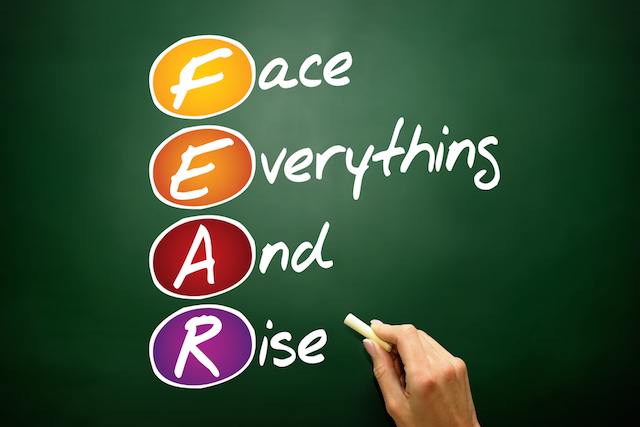
    Face everything and rise image via Shutterstock

  • How To Move Forward When You Feel Paralyzed by Uncertainty

    How To Move Forward When You Feel Paralyzed by Uncertainty

    “When you become comfortable with uncertainty, infinite possibilities open up in your life.” ~Eckhart Tolle

    A woman in a relationship that is breaking her spirit might remain there for fear of what leaving will bring.

    She doesn’t know if she will find another to care for her, and having a warm body is better than having no one. The uncertainty about whether or not she will survive that decision, and be happier for it, keeps her there.

    I know the harsh clutches of uncertainty all too well. It wasn’t long ago that I waffled and wavered about every decision I faced, feeling afraid to make one for fear that some mistakes cannot be undone.

    I resisted relationships because loving led to marriage and then divorce. I resisted starting my business because seven out of every ten businesses fail. I refused to quit the job because it was the only way I thought I could succeed.

    I allowed myself to fall in love only when I was certain that he loved me more and would stay. To ensure that it worked, I planned every detail of the relationship and the wedding.

    Feeling doubtful that this relationship was truly the one I wanted, I was unhappy and silently praying for something to happen to help me out. But I stayed the course because at least I knew what would happen next; I had it all planned.

    My awakening came when my engagement fell apart and there was nothing that I could do about it. I broke into a million pieces. I lost twenty pounds in one week and wept until there were no more tears.

    I had placed a certain level of trust in things working out and was certain that it would. The experience left me paralyzed because “I had it all planned.” What was I supposed to do then?

    I woke up daily gasping for air, knowing I’d go to work where I’d help people and come home to a crumbled life. It was then I knew that if I didn’t move I would die.

    I fought against the emotional pain of the break-up and decided that I would have no more of it. I quit my two jobs, went home, and began packing my bags.

    Two months later I sold my belongings, counted out the little savings I had stashed away for a safety net, and moved back to Jamaica to be with my family.

    I had no fear about what would happen; I had been so fearful for so long and life happened anyway. All I knew was that I needed to have a hand in my own life, to be an intentional co-creator of my reality, to accept uncertainty as a friend.

    So how do you move forward in uncertainty?

    1. Accept that at the root of uncertainty is a fear of failure.

    We’re not afraid that we don’t really know what’s going to happen tomorrow. We’re afraid that what happens tomorrow will be so painful that we won’t survive it. We have already created a worst-case scenario in our minds, and the likelihood of it becoming reality is what really keeps us bound, not uncertainty itself.

    Action Step: Examine your uncertainty. What lies at its root? What emotion comes up when you think about doing the thing that you’re uncertain about?

    2. Understand that failure is a natural part of life, and embracing uncertainty is key to defeating failure.

    Everybody fails, and failure holds the best opportunities for growth. When we succeed without experiencing failure, our account is narrow. A person who can speak to both failure and success has a much more textured life and can help others navigate both waters.

    For every success story that you hear, there are at least ten stories of failure to supplement it.

    Action Step: Talk with someone who you view as successful and ask about the times that they have failed.

    3. Embrace the idea that nothing is completely within your control.

    We saunter into the world daily, ignoring the many risks that we encounter. When we step out the door, we take an enormous leap of faith that we will get to our destination. We trust that other motorists are as diligent as we are. We hope that no one decides to harm us. We assume that we are healthy and nothing will happen to us.

    We hedge our bets with the universe, forgetting that nothing is guaranteed. It is just as likely that you will survive your break-up as it is that you will find another partner. It is just as likely that your business will succeed as it is that it will fail. Life is about taking risks, and without uncertainty, surprises would not exist.

    Action Step: Make note of everything that requires trust in the uncertain. Some of them are automatic, such as driving. Note the times you rely on others to make decisions in your best interest. What are you really in control of?

    4. Be willing to open up to the universe.

    When we release our expectations of what should happen for us, we allow the universe to deliver in ways far beyond our wildest dreams. By dwelling in uncertainty, we limit the space in which the universe has to work.

    Approaching the unknown with openness breeds a multiplicity of experiences that strengthen our resolve and help us grow. I learned my best lessons when I relinquished control.

    I quickly came to understand that in order for me to grow, I had to let go and leap. By choosing to remain paralyzed, I was choosing to rob myself of some of the best experiences of my life, like a new relationship that supports my growth and my beautiful daughter who helps me appreciate life.

    Action Step: Take a situation that you are uncertain about and imagine what could happen if it turns out ten times better than you hope it will. What emotions would you have attached to that experience? How would releasing expectation free you?

    5. “Make the best use of what is in your power and take the rest as it happens.”

    This quote by Epictetus is an excellent piece of advice. It provides a clear path through uncertainty—taking one step at a time. Sometimes we look at the first step as insufficient, but all you need is one step.

    Once you take that step, the next step becomes easier, and so on. Having too definite a path can serve to block opportunities disguised as surprises.

    Action Step: Think back on all the experiences in which you only saw the first step. How did they turn out? Was the second step anything that you could have predicted?

    6. Take your worst-case scenario and dissect it, asking “what if?”

    “What if?” is a powerful question. It primes us for possibilities and allows us to examine the constancy of our reality. If we are fully devoted to the process, asking “what if” can challenge our perceptions of what is possible for us.

    So what if you did quit your job and had no money? Would you be forced to use talents that you have kept hidden? Would you face your fear of asking for favors?

    What if you left the relationship and didn’t find someone right away? Would you sit with yourself getting to know the you that you forgot in that relationship? Is the worst thing that could happen truly that bad?

    Action Step: Complete this activity with a trusted friend and continue until you can’t think of anything worse. Build a scenario of survival and thriving from your rock bottom.

    7. Keep moving forward.

    Nothing beats uncertainty like facing your fears. Moving forward brings you face to face with risk but also with hope.

    Your life is not the same as it was last year, nor will it be the same tomorrow. When you make an intentional choice to embrace uncertainty, you take back your power. Not only will you be at peace with what may come, you will also have released your attachment to things going exactly as planned.

    Action Step: If you are facing a paralyzing fear of the uncertain, your best bet is to take a step forward. Everyone has experienced the negative effects of uncertainty. The majority has thrived. You are not alone and you can do it.

    What steps have you taken when faced with paralyzing uncertainty? How did you move through it?

  • Fear Is Inevitable but It Doesn’t Have to Paralyze Us

    Fear Is Inevitable but It Doesn’t Have to Paralyze Us

    Man on Edge of Cliff

    “Fear is inevitable, I have to accept that, but I cannot allow it to paralyze me.” ~Isabel Allende

    I woke up with a knot at the pit of my stomach, yet again. For as long as I could remember, I carried this intangible lump inside me. It went with me everywhere.

    I am fairly certain it woke up with me, and there was a small span of time when I was in the deepest of sleep when it took a break.

    Terrified—that’s how I felt all the time. Muscles taut and butterflies in my stomach. I was a wreck, ready for a meltdown anytime. It was many years later that I could put a name to it. It was fear.

    Through my teens and twenties, I tried to cope with fear of different kinds—fear of public speaking, fear of authority in school and at work, fear of displeasing someone, fear of saying “no,” fear of not being loved or appreciated, fear of my own shortcomings and their implications on my life…

    The list was very long and I couldn’t articulate it then, which made life much harder.

    Recognition of a problem is always the first step, and it was eluding me. Fear confused me because I could never point it out as that.

    We are not taught how to recognize and deal with fear in schools. (I really wish we were.) It was merely a “physically uncomfortable feeling.” “One day I will figure out what the hell this is.” That’s all I could muster at that time.

    Fear defined me. Omnipresent and overpowering, it was constantly present.

    I never thought I could reach out for help. Approach my parents with a “Mom, Dad, I suffer from great fear—fear of everything”? Nah! And coming out to friends would make me look weak or not good enough. Not happening!

    I often wondered if other people faced anything similar, or was it just me. It isolated me to a corner.

    Then one day, I stood up from the corner. Fear had consumed far too much of my time and I was tired of running from it. And frankly, I didn’t know what else to do.

    I started reading books on fear, watched any video I could find online on the topic, and journaling about my feelings. Devouring every piece of information I could find, I was ready to defeat it. Surprisingly, I started the process of understanding fear instead.

    And then came the AHA moment—the realization that I don’t need to protect myself from fear; I just need to accept it and then let go.

    It comforted me to know that it’s a universal phenomenon and that everybody, including the most successful people in the world, suffer from fear. I was not the only one after all. When fear came in, I knew it was normal to feel it, and the question then was: What am I going to do with it?

    Fear hasn’t left me yet. It drops by every chance it gets. But it’s no longer an enemy. It’s now a sticky friend who needs to be skillfully managed.

    Fear will never not be there, just like different experiences will always bring about the same gamut of emotions in us.

    Fear is largely based on the truths we have told ourselves. It’s a direct outcome of historic data in our minds, making millions of permutations and combinations of stories that may have nothing to do with our lives.

    One step that really helped in my journey was to question the underlying truth every time I experienced fear. A hundred percent of the time, I realized I completely made it up. I made up my “truths.”

    Slowly and steadily, I started changing the building blocks in my mind. For example, if I don’t say my “yes” to my boss for one more piece of work, he will not shoot me!

    Or, if I say “no” to my friend’s invitation, she will not hate me forever. (And even if she does, what’s the underlying truth there?)

    These things are just not factual or realistic; they’re at best hypothetical. The trick is to be honest about the underlying data we harbor. Once that cat is out of the bag, fear is vulnerable.

    What can we do?

    Separate yourself from your fear.

    The first big win is to recognize fear as a separate entity than us. This helps us with objectivity, which is precious in these situations.

    Accept fear.

    Know that fear will always try to sneak in. That’s just what it does. How we respond to it is in our hands.

    Study your fear.

    Really study it. What are you feeling? What is fear threatening you with this time? Is it really true that this can happen? If it does happen, what will it really do to you? Can you deal with what will happen?

    Connect with your soul.

    As long as we are centered and grounded, our soul will guide us. All fear finds its genesis in the risk of losing our lives. When we are really connected to our soul, we realize how formless and indestructible our true selves are. And that sets us free.

    How do we connect with our soul? Silence, prayer, and meditation are three tools that I bring into my days as much as I can. They help me ground and bring alignment into my life

    Last but not the least, be amused.

    Be amused by the heaviness it brings to our lives out of events that may be insignificant in the bigger scheme of things. Being late to a meeting, an uncomfortable conversation, failure of all kinds, they are never really as catastrophic as we make them out to be.

    A more balanced perspective will guide us through those trying times when fear gets the better of us. Let’s understand fear better instead of letting it control us. Life is too short and too beautiful to give in.

    Man on the edge of a cliff image via Shutterstock

  • Finding Happiness on the Other Side of Fear

    Finding Happiness on the Other Side of Fear

    Jumping Man

    “Most of us have two lives: the life we live, and the unlived life within us.” ~Steven Pressfield

    We are so scared of the unknown. Anything that we haven’t yet experienced can lead to fear.

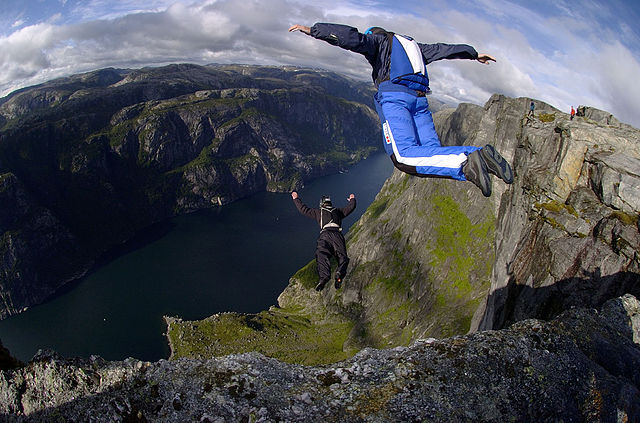
    I will forever remember my first time skydiving. I was absolutely terrified. Are you sure this parachute is going to open up? “No ma’am, it’s not for sure. But it’s highly likely.” Great.

    During pregnancy, I was scared nearly every day for nine months as I wondered, “How in the world is that going to come out of there?” Well, one thing was for sure—it was going to happen one way or another. I drove myself crazy wondering what in the world that was going to feel like.

    At the moment, I’m scared of mountain biking. This guy I’ve been hanging out with has been asking me to go with him for the last couple of weeks. He’s really good at it. He has been on a bike probably more than he’s been on foot, on average, throughout his entire lifetime.

    Let’s face it; I’m scared I’m going to fail. I’m scared I might not be able to make it up the bunny hill while he’s up ahead charging Mount Everest.

    Did you notice how I so safely called him this-guy-I’ve-been-hanging-out-with? I’m scared to call him my boyfriend because I haven’t had one for over four years.

    I don’t know what would happen if I did call him “boyfriend.” People might see me differently. He might not be ready for it. Maybe I wouldn’t be a challenge anymore and he would change his mind about me. Maybe I would change my mind about him.

    What if I suddenly had no more precious alone time?! I would surely die of exhaustion. We haven’t even been hanging out that long. Isn’t there some kind of time chart that I could reference for this? Yeah, clearly I shouldn’t call him boyfriend yet. Scary.

    I was severely depressed for the good majority of my life. I didn’t really know what contentment felt like. I didn’t realize that it came from within; I thought it came from the outside. 

    How could I be happy in the crap-hole town I lived in? How could I be happy with a slightly pronounced nose on my face? (I even got plastic surgery at age twenty because I was so unhappy with it.)

    How could I be happy with my peers around me always judging me? How could I be happy with these people picking on me? Oh, alcohol? Yes please, thanks. How could I be happy when I’m always hungover?

    How could I be happy when I lived in a low-end middle class family that never took me on vacations or took me on big back-to-school shopping trips that would fill my wardrobe with impressive fashion styles to show everyone else how cool I was?

    Oh, that popular chick is having a garage sale down the street? Score. My problems were probably small but they felt larger than life.

    I look back on my life at the point when I started to turn around my depression (because eventually I did, 100%). I was scared. Happiness was an unknown to me at the time.

    Happy was something that I was not, and I identified with who I was very well. Even though I was unhappy, I knew what that felt like. It oddly felt like home. It was familiar and safe.

    I knew what my day would look like and feel like and taste like and smell like. I knew that when somebody hurt my feelings I could retreat to my corner and cry it out and ask myself “Why me, oh unfair Universe, why me?!”

    You know what I was even more scared of? What if I succeeded? What if I became happy and lost my identity? Forgot who I was?

    What if my friends started calling me names and saying things like “Hey, here comes Andrea, that Happy Idiot. Man, she’s so annoying. Here she comes and she’s going to spew that happiness sunshine all over us again.”

    Would I even know how to deal with every situation that came my way when I became happy? What if I became happy and then went back to being unhappy again?

    Oh man, that would be even worse. To taste it and then somehow involuntarily spit it back out, as if somebody was giving me the Heimlich maneuver as I was attempting to swallow a delicious bite of the most heavenly chocolate cake on the planet. Yeah, no thanks. I love cake.

    Seriously, though, I did grow up with a mother who struggled to find her happiness for as long as I could remember. I wanted nothing in the world more than for her to be happy from day one.

    One of my greatest fears was that I would become happy and I would leave her behind. I didn’t want to rub it in her face. I wanted her to come with me. What if I succeeded… and she resented me? Why do I always feel so selfish?

    I went through with skydiving. It was one of the most thrilling, freeing, incredible, indescribable moments of my life. The parachute did actually open. If I didn’t ever jump out of that plane I would have no idea what it really felt like. It can’t be put into words.

    I did eventually have my baby following pregnancy (whew). She was born via planned C-section because she was breech. It was probably the most memorable moment of my life so far.

    I can remember the smell of the operating room, I can remember every word exchanged between the doctor and nurses. I can remember how the doctor remarked “1:11 PM” as my girl wailed her first cries of out-of-womb existence.

    Sometimes I’m a bit sad that I don’t actually know what labor feels like (yeah, crazy, I know). I still don’t know if I could successfully make that come out of there. But it was amazing all the same. My girl is the light of my life.

    I’m going mountain bike riding tomorrow. I’ll get back to you on it (if I survive). The guy-I’ve-been-hanging-out-with thing is going one day at a time, as it should, so I’ll get back to you on that too.

    I became happy. In fact I decided I wanted it so bad that I would do everything in my power to make it happen. I researched, I went to nutrition school, I read self-help books, I changed habits and perceptions.

    My mom is doing great. In fact, she seems happier now too. I still have my friends and they don’t call me Happy Idiot (to my face). I eat heavenly chocolate cake at least once a month, and I even swallow it entirely.

    My point is that happiness is often on the other side of fear. You know when you’re going to have one of the best moments of your life? It’s when you’re terrified and you somehow push through anyway.

    It’s when you stop procrastinating and you just do it because that’s where the magic is. We procrastinate when we’re afraid. It’s so much easier to avoid something than it is to face it. But we’re not here to take the easy way, oh no, we’re here to have incredible experiences.
    It’s time. Right now. Not tomorrow but today.

    Are you scared? Good, be excited instead. You’re about to have a soul-changing experience.

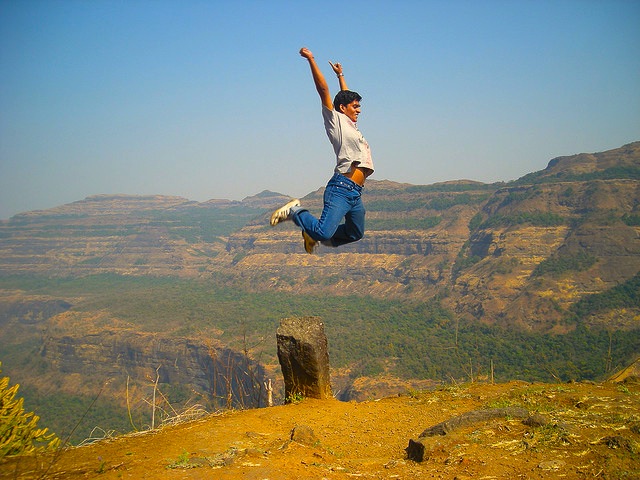
    Man jumping image via Shutterstock

  • Living an Exciting Life When You Fear Leaving Your Comfort Zone

    Living an Exciting Life When You Fear Leaving Your Comfort Zone

    On top of the world

    “One day your life will flash before your eyes. Make sure it’s worth watching.” ~Unknown 

    What if you realized on evening of December 31st, that the past 365 days were the best yet? Imagine a single year in which you scared yourself into your deepest fears and faced more challenges than you ever had from all the previous years combined?

    Moving forward, how would you feel about one-upping that year? Overwhelmed? Anxious? Scattered? Yeah, me too.

    This was the question that I asked myself on the last evening of 2013 that left me thinking back on distant memories, adventures, and the beginning of true uncertainty.

    The Best Year Yet: 2013.

    Last year began my personal journey of fully embracing the uncomfortable.

    I decided to seek the truth and hoped to eventually have enough courage to share my experiences with those who were curious. I left with no travel plans, but only a mission. Adventure.

    Thailand. Cambodia. Malaysia. Singapore. Laos. Vietnam. Hong Kong. Japan. Hawaii. San Fran.

    I experienced most in backpack form over the course of 108 days.

    My reality was completely shaken. I moved from confusion to clarity. What I believed to be important in my life no longer mattered. Returning home, I was filled with a deep sense of appreciation, gratitude, and really wide eyes.

    I leaned into what I thought was once impossible due to the laundry list of excuses I had created. Not enough money. No one will go with me. It’s not safe. This isn’t the right time.

    Those were only four of the hundreds of thoughts that swirled through my monkey brain, which was doing its best to protect me, right?

    This is the short form of the journey that scared the pants off of my fears. Along the way, I learned quite a few lessons. Some the hard way, others rather easy, but all well worth it.

    You’ll never have everything figured out.

    Imagine for just a moment that you stopped allowing your excuses to own you. There’s a part of you that wants to embrace change, yet every time you think about going after your vision, you’re dumbfounded with objections.

    Unfortunately, the only time that you won’t have an excuse will be when you’re six feet under. The fear that resides within each of us will always create a story; yet, we are the ones with the power to make the decision. Ready. Fire. Aim.

    It only takes one second to be courageous.

    Think about how long it actually takes to do anything you’ve ever wanted to do? It takes one second to make the decision.

    One second to click the submit button. One second to say hello. One second to smile. One second to jump in. One second to leave no chance for regrets. One second to hand over your two week notice. One second to say, “This isn’t working.” One second to believe. One second to choose. It only takes one second to be courageous.

    Befriend uncertainty.

    Whether you’re ready for it or not, the unpredictable will show its face. While we have a tendency to negatively associate with the unknown, realize that you can make the empowered decision to accept the reality.

    Byron Katie says this best, “When I argue with reality, I lose—but only 100% of the time.” Try bringing uncertainty along for the ride. You may notice a greater sense of meaning and fulfillment finding its way into your life.

    If it makes you feel safely uncomfortable, please proceed.

    If you find yourself in a situation that makes you feel safely anxious, awkward, nervous, and/or uneasy, it very well may be the best thing for you. As Tony Robbins says, “The quality of our lives is directly related to the amount of uncertainty we can live with comfortably.”

    Remember, though, these uncomfortable experiences must also align with your preferences and values. When in doubt, intuitively listen to your soul.

    As you continue to slowly build your uncomfortable muscles, you’ll gain more clarity around what feels right. Each adventure will not only contribute to rapid personal growth, but will also increase your threshold for dealing with such unsettling feelings.

    Replace “What will they think of me?”with“What’s really important to me?”

    Say hello to your ego. And now, please ask him/her to keep quiet. When we find ourselves in moments where we might be exposed to internal feelings of nervousness, embarrassment, or anxiousness, we usually tend to run the other way.

    We’ve got this incredible internal system that was designed to protect us from real danger, the fight or flight response. Unfortunately, our brain can’t distinguish the difference between our fear of public speaking versus being chased by a bear.

    However, you have the ability to differentiate between the two situations. When you find yourself safely immersed within an uncomfortable situation, try sitting with it. Before you know it, the related negative feelings will disappear.

    Each day, we get to paint our own canvas. What will you be remembered for, soul sibling?

    Give yourself permission to live uncomfortably. I dare you.

    Photo by Lara Cores

  • 5 Tips to Help You Take Action to Overcome Your Fear

    5 Tips to Help You Take Action to Overcome Your Fear

    “Thinking will not overcome fear, but action will.” ~W. Clement Stone

    I made it all the way to my thirtieth birthday without learning how to drive. After I turned twenty-one, people often asked me why I hadn’t learned yet. My go-to story was that I lived in a place with abundant public transportation options and never had any intention of buying a car.

    The truth is that I wanted to learn, but I was terrified, and the fear grew with each year.

    What if I got in an accident? What if people laughed at me for learning so late or honked angrily at me? What if I chose a bad driving school with unforgiving teachers?

    I used these fearful questions and the fear responses that came along with them as obstacles to stop me from taking any action toward learning. I felt as though their presence meant that I couldn’t take an action. I wanted them to go away before I took any steps.

    The one thing I was avoiding was the key to me overcoming my fear. It sounds so obvious, but how many of us have wanted to do something, felt afraid, and then spent more time thinking and talking about it than actually taking action?

    I put “learn how to drive” on my New Year’s resolution list for the last time and decided to find a way to make it happen, despite my fear.

    When you think of taking action, you might have some big, scary idea of what I’m talking about. I’m not talking about deciding one day that you want to jump out of a plane and then an hour later booking your flight. Or in my case, deciding that I wanted to learn how to drive and then getting right in the driver’s seat.

    None of this is necessary.

    I’ve learned five helpful things about taking action that helped me move from thinking about learning how to drive to getting behind the driver’s wheel and actually driving confidently.

    If you already know how to drive, which I’m assuming most of you do, these things can easily apply to anything else you’ve wanted to do but haven’t yet tried out of fear.

    1. Start at the beginning.

    One reason that we hesitate when we have something we are afraid to do is because we are thinking only of the end result and likely feel incapable of getting to that point from where we are now.

    Forget about the end result, or at least take your laser focus off of it long enough to determine what the first step might be. In my case, the first step was visiting my state’s Registry of Motor Vehicles website to find the process for getting a learner’s permit.

    The more you focus on all of the actions you have to take to get to the end result, the less likely you are to actually take any steps. So just focus on the first step and start there.

    2. Remember that small steps count too.

    Each action step doesn’t have to be big.

    Your brain, ego, or that limiting, fearful part within will try to convince you that your steps are too small. They couldn’t possibly count, it says, so better to just not try. It’s lying to you.

    Every accomplishment, like baking a cake, publishing a book, or learning to drive, is made up of small steps made over and over and over again.

    Learning about the learner’s permit process led to picking up a driver’s manual, which led to spending time every day studying the manual, which led to scheduling the permit test. All these small steps built up to me ultimately learning how to drive.

    3. Realize it’s not how you feel; it’s what you do.

    One of my obstacles was thinking that the presence of physical fear symptoms meant I couldn’t take action. You can be terrified, with a quick pulse or shaky hands or shallow breaths, and still take action.

    It’s the steps that count, not how you feel when you take them.

    When I had my first driver’s lesson, my hands shook so badly that I wasn’t sure I would be able to hold the steering wheel. But I got through the lesson, one step further in my journey to learn, and decided that I would celebrate the fact that I showed up, in spite of fear, rather than judging myself as a failure for how nervous I felt physically.

    4. Get high on taking action.

    There is this magically wonderful high that occurs after you’ve taken action that you were afraid to take. I’m not sure how many of you have experienced it, but talking to other people who have done things that terrified them, I found that I’m not alone in noticing this.

    Use that high to your advantage. Make it an incentive that leads you, especially in moments when you are doubtful, that you can handle the fear of taking another step.

    After my first lesson, I wrote down how I felt (excited, proud, happy) and I referred to it again before my next couple of lessons when I forgot how good I felt and needed a reminder to help tone down my fear.

    5. Know that action builds confidence.

    Deciding to take action to overcome my fear of learning to drive has not only meant a new skill, it has also brought me confidence in my ability to learn new things, handle mistakes, work toward and achieve a goal, meet new people, and much more.

    Action has many unintended opportunities for growth beyond the specific area we decide to work on.

    It’s in the action that we test our hypothesis about life and about ourselves. It’s in the action that we grow confident about ourselves and our abilities. It’s in the action that we find out what mistakes are experientially and how much stronger we are by learning from them as we go.

    So today I can say I know how to drive. I even look forward to it. I couldn’t have said that though had I just continued to wait to take action until I no longer felt afraid.
    What action can you take to overcome your fear today?

  • How to Be Your Real Self and What’s Been Stopping You

    How to Be Your Real Self and What’s Been Stopping You

    Hiding

    “The more of me I be, the clearer I can see.” ~Rachel Andrews

    This past year has felt a lot like I was running through a supermarket, naked.
    But not as chilly.

    As a life-coach for women, one of my brilliances has to do with supporting women in showing up fully as their shining, marvelous selves—and guiding them through all the work of facing fears, looking at self-worth, re-training brains to focus on abundance and feeling powerful, vs. scarcity and victim-hood, and so many other powerful pieces.

    I make no secret out of the fact that I have had to do all this myself in order to lead women through their own work.

    And working on visibility—showing up as my unique, in-progress, human self—has been at the center of most of the deeply transformational work I’ve had to do in the last year.

    As I’ve worked on building my ability to serve women, I noticed that I, myself, was hiding from shining fully. I was not showing up authentically, not speaking my whole truth, not reveling in who I am and how uniquely different from other coaches I am (as each one of us is!).

    Why was I hiding? What was going on that I was standing halfway in the shadow, afraid of shining in my brilliance, afraid of being 100% revealed as who I am and what I’m here to say?

    I was hiding for several reasons:

    • I had stories about what a successful female business owner “looked” like—and I wasn’t it.
    • I had stories about how I handle (or don’t handle) money—and deep fears about my ability to be responsible if I made a lot more money.
    • I had stories about showing up as an example of a woman building a life I love living because I told myself women wouldn’t look at my life and want to create something similar.
    • I had deep, unhealed wounds from being little, when I felt like I wasn’t seen or heard, when I felt like making my needs known didn’t necessarily get them met.
    • I also found powerful fears around being seen that were created as a pre-teen walking around the streets of NYC and feeling like a target for verbal abuse from men, which made me shrink myself really small so I wouldn’t be attacked.

    When you figure out what’s keeping you from showing up, you can learn how to heal it and move forward, into the light of what you love.

    Why might visibility as your authentic self be important for you?

    • Visibility as your authentic self enables you to create work you love.
    • Visibility as your authentic self allows you to form satisfying romantic relationships and rewarding and supportive friendships.
    • Visibility as your authentic self affects your ability to be generously compensated for the work you do.
    • Visibility as your authentic self affects your ability to create healthy boundaries for yourself.
    • Visibility as your authentic self reflects in your self-care and health—how clear you are about what you need, and then how fully you’re able to ask for what you need and prioritize it for yourself.

    Here’s what I’ve learned:

    The more authentic, honest, and visibly I show up in my life, my business, my friendships, my parenting, and my relationship, the better everything gets. Because everything I create is being built on a rock-solid foundation—a foundation of who I am at my wonderful, loving, talented core.

    And that stuff doesn’t wash away.

    So why are you hiding? See if any of the following reasons resonate for you:

    • It didn’t always feel safe for you to be visible.
    • You’re afraid you might offend, alienate, or intimidate people if you show up authentically.
    • People might not like you, might be jealous of you, or might get angry at you if you said what you think.
    • Success is terrifying.
    • You’re afraid of failure.
    • You have stories about why you’re not _____ enough to be who you are, have what you want, do what you love.
    • You’ve spent so much time hiding who you are, you’re not even sure what’s underneath anymore.
    • Who has time to be authentic?

    Take a second and write down for yourself, right now, how hiding from visibility or your authentic self has seemed to serve you.

    Now, write down how letting go of any fear or resistance to showing up fully you could serve you—what might become possible if you were to show up fully, 100% visible, and authentically you? What might be yours?

    When you are able to see how it once might have served you to hide, to be small, to stay quiet, you’ll be able to begin the work of releasing those old fears and beliefs and step out, into your light.

    Photo by findingtheobvious

  • Why Being Scared Means You’re Fully Alive

    Why Being Scared Means You’re Fully Alive

    I Can Fly

    “To be fully alive, fully human, and completely awake is to be continually thrown out of the nest.” ~Pema Chodron

    Last year I decided to do something I’d always longed to do but had never been brave enough to take the plunge: I started my own business. Not only was it a new venture, my business would be based around myself—my skills, knowledge, and experiences.

    Holy crap.

    My emotions swung from terrified to awkward and uncomfortable. Seriously, that’s how good it got, at least initially! It’s been exciting and exhilarating, but not in the least bit comfortable.

    Here I was, standing for the entire world to see as a self-proclaimed “person who knows quite a lot about some stuff.” I may as well of had my subconscious make me a T-shirt that read “Who the hell do you think you are?”

    Revealing things about myself was not comfortable at all. Opening up about my years living with depression—an illness whose superpower is convincing its host that they are worthless and weak—left me feeling vulnerable and exposed.

    To acknowledge my depression, and put myself out there as someone who knew quite a lot about a certain subject, was nothing short of excruciating at times.

    But I had my secret weapon. Over the years I’ve gathered a group of people who “get” me. People who love and approve of me and what I do. I’ve always felt like this tribe insulated me from the feelings of exposure and judgment I might get from other people.

    One person in particular, who’s been my teacher on one of my courses, is someone I particularly admire. I basked in the warm glow of his encouragement and positive feedback; I felt approved of, nurtured, and safe around him.

    Because learning is something I hold dear (and I was utterly clueless about it) when I started my business, I decided to take some courses in marketing and business building. This seemed a better strategy than stumbling my way through blindly, so I hovered up new information like I was starved of it.

    I started implementing. I made gazillion mistakes but I kept going. I kept remembering the phrase “There’s no failure, only feedback”—and I was getting a hell of a lot of feedback!

    But I learned that I was much more tenacious than I’d first thought. There were lots of challenges, but I overcame or circumnavigated them. I kept moving forward. I felt a teeny bit proud of myself.

    I gradually became more courageous and shared more of the real me with readers and workshop participants. I became less of the safe, corporate “me” and more of the real, flawed, goofy, “me”—complete with opinions, imperfections, and history.

    I told my story of experiencing depression for years and rather than being lambasted for it, the connections I made with my students and readers were profound and rewarding. No one told me they thought less of me for it; if anything, they thought I was brave.

    Work started to come in—a trickle, but definitely a move in the right direction. As I took my wobbly steps one after the other, I started to feel stronger and more confident. My tribe was great—super supportive and really encouraging. It felt good.

    Apart from one thing.

    The teacher I admired so much didn’t seem approving. In fact, he seemed critical and dismissive of what I was doing.

    And I felt crushed.

    When we’re trying something new we can feel fragile, and any little thing can dent our confidence and break our resolve. It’s even more acute when we’re putting ourselves out there, whether that is through our creative work or our personal stories.

    When someone doesn’t approve of our work, it’s like they don’t approve of us. And this is painful—especially when the person in question is someone we admire and crave approval from.

    I so wanted him to get it—to support and champion what I was doing. But he didn’t. He wasn’t nasty or cruel; he’s a kind and warm person and that would be totally out of character for him.

    But his response was somehow harder to deal with. He was dismissive and uninterested.

    I bundled up my courage and asked him if something was wrong.

    “No,” came the reply, complete with furrowed brow and an edge of confusion in his voice. “I don’t really get what you’re doing. For me, it doesn’t work.”

    Because all of this self-growth stuff is a journey without a destination (the journey is the destination) I know that I would have responded in different ways at different times in this journey. Here are some past options:

    1. Stop completely. This feels too hard/scary and unsafe. I am obviously not good enough and certainly not strong enough to carry on.

    2. Stop, retreat, and go back to my original, “safe” world. Try and replicate whatever advice my teacher gives me, encompassing his philosophy, beliefs, and experience. I disappear but at least I don’t risk feeling unlovable.

    3. Rationalize his behavior; put it down to envy at my emerging success, or insecurity on his part for moving on from his teachings. I mean what’s his problem?

    4. Carry on, feeling the pain but moving through it anyway.

    To be honest, all of these were tempting. Having an excuse not to be “out there” feeling exposed and vulnerable was very enticing. I could go back to being safe, anonymous, and totally invisible.

    Even though it would be like silently dying inside everyday.

    So that wouldn’t really be a viable option then! I needed to do something different. I needed a shift of perspective. My teacher isn’t a cruel or vicious man, and his comments weren’t meant to wound me. So why was I hurt that what I was doing didn’t work for him?

    That was it; that was the shift I needed. What I was doing didn’t work for him. Instead of beating myself up and falling into a pit of “what’s wrong with me?” I realized it wasn’t about me at all.

    I’m a keen cake baker, and if I make a carrot cake (one of my favorites) I don’t get offended if someone says “Oh, thanks but I don’t really like carrot cake.”

    I know that this situation is different from a cake, but the analogy still holds. My teacher wasn’t saying, “I don’t like you.” He was saying that what I was writing about and publishing as part of my business didn’t work for him.

    So this was the response I chose instead:

    Realize that we’re on different paths. I don’t need him to approve of and like 100% of what I do. I know he respects me; it’s just not his thing. It’s my thing.

    It’s carrot cake. And there are plenty of other people out there who really like carrot cake.

    I don’t need everyone to appreciate the same things as me. My sense of self isn’t entirely dependent on what other people think. Hell, I’m still human; of course it still feels great when other people affirm me, but I don’t need it to still be okay with myself.

    Inside the nest feels safe and warm.

    But outside of the nest is where we learn to fly—feeling scared, but awake, alive, and fully human.

    Photo by Anurag

  • Letting Go of Fear and Living in Peace

    Letting Go of Fear and Living in Peace

    At Peace

    “Peace cannot be kept by force.  It can only be achieved by understanding.”  ~Albert Einstein

    I sat in the waiting room of the dermatologist’s office waiting to be seen. For years I have had skin problems, from fungal infections to dermatitis. But when my dentist noticed an indentation the size of a mosquito bite on my upper lip that had not healed in the five weeks since I had seen her, she sent an urgent message to my primary care physician.

    The next day, I was seen by my primary care physician and referred immediately to a dermatologist. The medical receptionist handed me a piece of paper with a big green dot next to the words “cancer screening.”

    The word “cancer” brought up all sorts of images:  throwing up, losing hair, and sometimes death.

    Years ago, I was diagnosed with pre-cancer. Had it finally developed into the real thing? 

    There were two other patients in the waiting room. An older woman with yellow tinted sunglasses and a full head of wavy gray hair sat completely absorbed reading a magazine article.

    A younger woman with long brown hair clutched an explanation from the medical billing department about the cost of other services, but no matter how many times she glanced at the paper, her gaze quickly flickered away, as if she was preoccupied with other thoughts.

    Had she also come to discover whether or not she was cancer-free?

    An undercurrent of agitation swam beneath the waiting room calmness, and I closed my eyes briefly and practiced breathing.

    When I was in my twenties, my mind and body wellness doctor mentioned I had a tendency to hold my breath during crucial moments, locking emotions into my body long after the event had taken place. The key was to remember to breathe during those big moments and let the feelings flow through me instead of getting stuck.

    I thought about dying and realized I was not afraid to die.  I was at peace with myself and how I had lived my life. 

    Sure, I thought about the practical things: bills, savings, and life insurance. I also thought about the impractical things: husband and children. I even thought about my legacy: my books and my paintings.

    If I died, I had enough life insurance to pay off the mortgage and allow my husband time to remarry. If I died, my children would finish growing up without a mother but not without mother-figures. If I died, the books and paintings would go on to entertain and delight others.

    What surprised me most was I didn’t have an urgent need to execute a bucket list if I was told I had only six months or a year to live. I felt no desire to quit my job, travel the world, or race a formula one car. I would go on as I had always done: following the same routine every day until there were no days left.

    Why?

    Over the years, I had abandoned the emergency living I was accustomed to as a young adult in favor of the one-day-at-a-time practice of mindfulness I had adopted as a middle-aged woman.

    Gone were the spontaneous forays into carpe diem that led me down selfish roads that hurt the ones I loved.

    Gone were the days when I would miserably brood over the things others had done to hurt me, whether unknowingly or intentionally. Gone were the fantasies of a life full of adventure at the expense of abandoning a disabled child I struggled to love.

    Now carpe diem translated into loading the dishwasher for my tired husband although it was his assigned chore. Now I no longer brooded miserably over hurt feelings, but said something immediately to diffuse misunderstanding. Now I no longer pined for foreign adventures, but cherished spending quiet moments with my disabled son.

    Sure, I had moments of discontent. Who doesn’t? But a fight with my husband no longer propelled me into arms of another man.

    Sure, I still envied people who could travel to foreign countries without rearranging the lives of everyone around them. But I found contentment in reading about their adventures, knowing how exhausting it already was to hire and train a respite worker to care for my son just so my husband and I could have a night out.

    Sure, I still had hopes and dreams for a life of abundance, but I was no longer going to discount the blessings I already had.

    If I did have cancer and if I did die from it, I would not change a thing in my life.

    I was not afraid of dying. Dying meant leaving my body, a habitat everyone must eventually leave. Who was I to ask to have my body forever?

    No one knew what exactly happened to the soul, but I suspected it would transcend whatever limits the body had imposed on me. If nothing else, I would live on through the ones I had left behind and their lives would become inextricably connected with mine.

    When the nurse called my name, I stood up and went into the examination room. The dermatologist arrived shortly thereafter and examined me.

    He didn’t know whether or not the skin abnormality was cancerous or not, but he wanted me to try an experimental drug for one month before performing a biopsy and authorizing further treatment.

    I left the doctor’s office without a firm diagnosis. I still don’t know whether or not I have cancer. And, frankly, it doesn’t matter whether or not I have it or whether or not I will die from it.

    What matters is the life I have been given.

    None of us knows when our time on this planet will be up. But we all know we have choices on how we live the moments that have been given to us right now. Our thoughts and our actions illuminate who we are and what we have to give.

    Each moment, no matter how seemingly insignificant, is wrought with hope and faith and love. 

    Breathe in, breathe out. You cannot be afraid if you live in peace.

    Photo by Frank Volachek

  • 5 Steps to Make Change Work for You

    5 Steps to Make Change Work for You

    “The only way to make sense out of change is to plunge into it, move with it, and join the dance.” ~Alan Watts

    Life is a free-flowing, ever changing river. Riding the rapids is frightening, and the temptation to avoid it is alluring. However, the adventure it promises is equally attractive.

    We are naturally primed to adapt. Yet, the possibility of having to give up what is familiar is daunting. It can leave one paralyzed, disoriented, and unable to move forward.

    In my childhood, my family kept moving across cities and often within the same city. By the time I was ten, I had lived in three cities, in two different states, in about ten different residences, and had studied in seven different schools. A period of apparent stability followed this nomadic phase of my life.

    When I decided to get married, I had been living in the same city for about fifteen years. I had a job, a daily routine, a solid social circle, and everything else that speaks of a “settled” life. I was absolutely snug in the center of my comfort zone!

    Perhaps that is why the thought of moving to a new city post-marriage made me apprehensive.

    Marriage, in itself, is a huge life change. I knew full well that it would usher in a plethora of new roles, responsibilities, and demands.

    In addition to this, living away from my family, my friends, and everything that was familiar to me was a rather intimidating challenge.

    The doubts that my family and friends expressed with regards to my ability to adjust added to my anxiety. I started to have second thoughts about getting married.

    At the same time the idea of giving up on a wonderful man just because I was too afraid to make a few changes in my life seemed ridiculous. In the end, I decided in favor of getting married and moving to a new city—one that was very different from what I was used to.

    Two years later, I know I’ve made the right decision. Having taken on the challenge called “change,” I have made it work for me. In retrospect, I can describe the process of successful change as having five discrete steps/stages.

    1. Reaffirmation of self-belief.

    I had to trust myself. Handing in my resignation letter without having another job lined up was one of the toughest things I’ve had to do.

    I gave myself the confidence that I was skilled, and I would be able to find another job no matter where I went. I believed that no matter where life took me, I would find a way to put down roots and thrive.

    2. The willingness to move out of your comfort zone.

    It’s difficult and it takes a lot of courage to let go of the people, places, and things that we’re used to. These are emotional anchors that keep us rooted. They give us a feeling of security.

    To successfully make a change, however, one must be willing to let go and accept the ensuing discomfort—which is usually short lived and worth the trouble when you take the benefits into consideration.

    Accepting discomfort does not mean that you should disregard the unpleasant aspects of the situation and focus only on the positive. In fact, we may find nothing to like. Acknowledging the negatives is a better strategy than denial, and was in fact the third step I took toward making a smooth transition.

    3. Acknowledge what you don’t like.

    When we are open about what we dislike like about the situation, it presents us with opportunities for problem solving. There are many things that I don’t like about the city I live in now. However, acknowledging these things has enabled me to work around these issues.

    Of course, I didn’t do any of this in a hurry.

    When we juggle too many balls, we’re bound to drop a couple. Each one of us has our own momentum at which we are able to make adjustments.

    4. Find your own pace.

    As a new bride, my initial focus was on getting to know my new family better. From there I moved on to getting to know my immediate neighbors and locality well. I took my time to settle down before I started working again and exploring the city as a whole.

    This steady pace gave me the time to appreciate the positives—the final step.

    5. Appreciate everything you’ve gained.

    I began to notice that making the change had opened up a whole new world to me. This was a great opportunity to meet new people and to discover new places!

    Quitting my well-paying job—something that I dreaded before—became a blessing in disguise. I had always wanted to be a learning and development professional; however, I had been working as a marketing executive.

    Quitting my job in marketing in order to shift to the new city, though unpleasant, had now given me the perfect opportunity to make the desired shift in my career as well.

    A happy family life, a dream job, and the time to pursue my interest in writing—these are the greatest gifts that I have received as a result of making this change.

    When we begin to see the good that is the outcome of the change, we know that we have been successful in making a transition.

    Change can be unpleasant, uninvited, and unwanted. But every change opens a door to possibilities that can leave us pleasantly surprised. Whether or not we can take advantage of it depends on how we approach the new situation we find ourselves in.

    The best part about being human is that we have the ability to adapt consciously—by altering the situation that we are in or by adjusting to the circumstances. When seen through these lenses, change is not something to be feared and avoided. Rather, it becomes a tool for growth and self-development.

    We can make change work for us.

    Photo by Alaskan Dude

  • 4 Lessons on Embracing a Major Life Change

    4 Lessons on Embracing a Major Life Change

    In a Field

    “If you’re not terrified of the next step, you eyes are still closed. A caged bird in a boundless sky.” ~Jed McKenna

    It was day two of living at the Zen Center. Sitting on the side of the dirt path, I had my head buried in my knees.

    “I can’t do this babe,” I cried to my husband.

    Just 12 days prior to this, I was a corporate banker and real estate agent in Phoenix. Now, I was a full-time Zen student deep in the mountains of Carmel Valley, working in the dining room and serving summer resort guests.

    “I’ve never even waitressed before. I sat in front of a computer the past decade doing seemingly important work. And now—now, I’m scraping food into a compost bin?” I sniffled.

    An hour before then, I’d held back tears the entire time as the dining room crew head was showing me how to set up a tea table and fill tea caddies.

    Before coming to Carmel Valley, we’d rented out our comfortable, suburbia five-bedroom, three-bath home. Now, we were living in a 10 x 8 rustic Japanese cabin at the base of a canyon, completely offline from the digital world.

    I was sharing a bathroom with 10 other women.

    “I’m not a nature girl either. I can’t sleep alongside spiders. Each time I close my eyes, I see a creepy crawler,” I continued to vent, in between an endless stream of tears, gasping for air to get all the words out. “I grew up in suburbia with pest control.”

    This life was a radical change. It felt like I’d decided to go cliff jumping—and there was no net.

    My conscious decision to leave all the worldly ambitions behind and take this sabbatical year came from my deep belief in taking a pause. Iknew on so many levels that I needed to be there. (more…)

  • Leaving the Safety of Something Familiar When You Feel Scared

    Leaving the Safety of Something Familiar When You Feel Scared

    Base Jumping

    “To be fully alive, fully human, and completely awake is to be continually thrown out of the nest.” ~Pema Chodron

    Winter is a time for hibernation, I told myself, drinking a second cup of coffee under the duvet, flicking absent-mindedly through old magazines and self-help books bought in a brief conviction that I wouldn’t begin another year reading in bed.

    It seems perverse that, in the Northern Hemisphere at least, this time meant for reunion and resolution (neither of which is easy or straightforward) should occur in the darkest of seasons—when the sun barely even rises and the general inclination is to climb into a hole and only reemerge in spring.

    This year I had returned home after a five-year absence, which had seemed longer. During that time, I had spent Christmases in random parts of Asia that, if listed, would sound romantic and exotic—temples, jungles, and mountains.

    But that time had been largely marked by loneliness and bewilderment at why I always choose to be far from those I’m meant to be closest to.

    Travel, in its constant offering up of newness and discovery, always seems to promise another chance at reinvention. Maybe this is in part why I do it, never having found a version of myself I’m comfortable enough to settle with.

    And yet, once back in familiar surroundings and familiar relationships, it never takes long for this promise to fade and for old habits to reappear. Over the past weeks, I’ve had to keep checking photos, maps, postcards, just to remind myself that what had gone before was in fact something I lived, not merely a dream.

    The previous three months I had been traveling, over-ambitiously combining Thailand, China, and India in an attempt to compensate for a year of teaching in a chaotic Asian city.

    My intention had been to get myself out of the dysfunctional routine I had created while teaching—the six-day work-week, an addiction to HBO and my sofa, overreliance on a few good friends—and throw myself back into Life with a capital L.

    Unfortunately, over the course of the year, I had learned to become a person suited to precisely such a routine, cutting off the part of myself that secretly wanted connection and community even as I hid away.

    After all, old habits die hard. During the acute social phobias of my teens and twenties, I had become skilled at avoidance—often not stepping out onto a street for days on end—and while one of my tough-love strategies for overcoming the fear had been to start working as a teacher and traveling the world, it now became painfully clear that it was still there, still part of the baggage.

    So now I was out of the nest all right, but once more I had completely forgotten how to fly. Learning how to travel again was beautiful, awful, and everything in between. (more…)

  • Share Your Vulnerable Story: Find Strength by Letting Others In

    Share Your Vulnerable Story: Find Strength by Letting Others In

    Holding Hands

    “Pain is not a sign of weakness, but bearing it alone is a choice to grow weak.” ~Lori Deschene

    In February of 2011, I went to see my doctor because I was suffering from severe headaches that I figured were associated with using computers all day at my law job. After having a few tests, the doctor said that I wasn’t doing well and he suggested that I take a leave from work to focus on my health.

    The next few months, I found myself in and out of doctors’ offices, medical labs, and hospitals on a weekly basis. With a variety of tests already done, my doctor suggested we do an MRI of my brain. I went for my MRI in June of 2011.  

    Weeks passed by after my MRI, and assuming no news was good news, I made plans for my summer. I decided to have a change of scenery and went to San Francisco for a fun summer job that didn’t involve computer work.

    After a great summer there, I was in Toronto in late August for two weeks visiting my parents when I got a call from my neurologist in Vancouver.

    She told me I had a brain tumor.  

    The floor dropped beneath my feet, my heart sank, and my mind raced, contemplating how I would break this news to my parents. I put the phone down, walked into the kitchen, and I told them. We hugged and then we cried.

    In that moment, my life flashed before me. I was 28 years old, single, unemployed, and now, more lost than ever. I didn’t know if I would finish my law license, return to Vancouver, move back into my apartment, or when I would see my friends again.

    But, as it always does, life went on. (more…)

  • How to Find Peace When You Feel Scared About What Might Happen

    How to Find Peace When You Feel Scared About What Might Happen

    Uncertainty is the only certainty there is, and knowing how to live with insecurity is the only security.” ~John Allen Paulos

    I was in shock for about ten minutes after hearing the news, afraid while lying on the procedure table, and relieved when it was over.

    Six months ago I had a mammogram. My checkup was supposed to be for a general mammogram—the one you get when you turn forty—but when I got there and told the technician that two days ago I had discovered a small bump in my right breast, the prescription was changed to a diagnostic one.

    After some time waiting, the doctor came back and said that the small bump in my right breast was benign, but she had found calcifications in my left breast, and that another series of mammograms would be needed in six months.

    Earlier this month I went for my six-month follow-up. After several uncomfortable mammograms, I was told that I would need to have a biopsy (sampling of tissue removed) to determine whether the calcifications were benign.

    It turns out that in 20-30% of the population, calcifications are an indication of cancer.

    After the initial shock wore off, I decided I would get a burrito to eat and not worry about it. I knew that this was an opportunity to grow and I was determined not to miss it.

    Instead of using the two weeks before my biopsy as time to worry, I chose peace and serenity. I spent the time in reflection while de-cluttering my home and focusing on gratitude.

    I was at ease in the space of not knowing whether the calcifications were benign.

    I got the biopsy on November 19th. Two days later, at 12:00pm (the day before Thanksgiving), I received a call with the results of a negative report. Not only was I ecstatic about the results, I was also pleased with how I handled the uncertainty of the whole ordeal.

    What this experience taught me was: (more…)