Tag: scared

  • How to Coexist with Fear (and Spiders)

    How to Coexist with Fear (and Spiders)

    “If you are willing to look at another person’s behavior toward you as a reflection of their relationship with themselves rather than a statement about your value as a person, then you will, over time, cease to react at all.” ~Yogi Bhajan

    Several years ago, I hiked into the remote forestlands of Bukidnon, a mountainous province in the southern Philippines. I was there to make a documentary about the Pulangiyēn people, an Indigenous community living in the village of Bendum. No roads led there. No running water. Just a winding trail upwards, a slow-moving carabao pulling my camera gear, and a few kindhearted villagers helping me climb.

    I had come with the intention to listen—to observe daily life, record sounds, and learn what I could. What I didn’t know was that one of my deepest lessons would come not from the forest or the people, but from a spider.

    A very large spider. Hairy. Big and spidery.

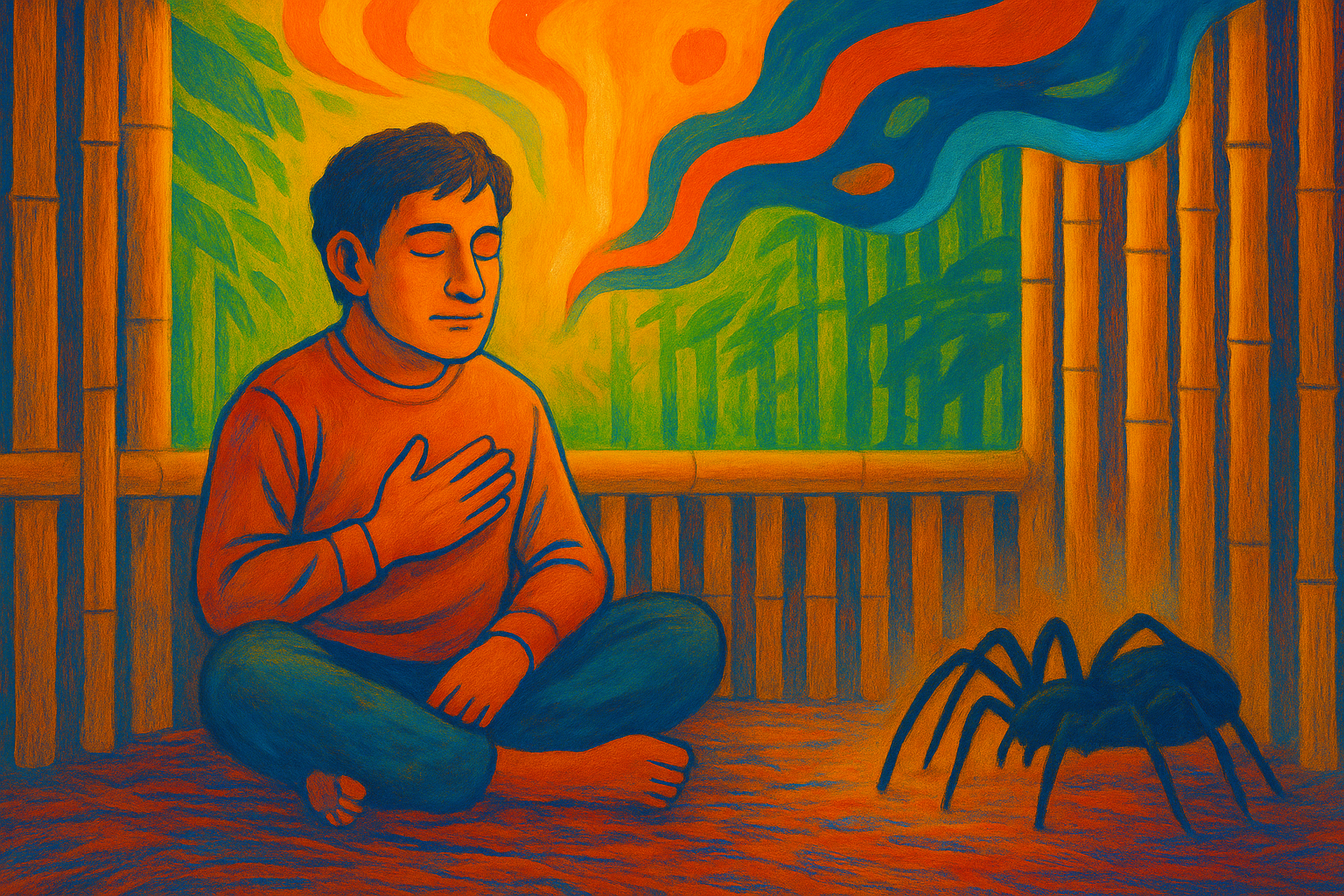
    My lodging was a small, hand-built hut with bamboo walls and a woven floor mat. I felt honored to stay there, grateful for the simplicity and peace and the respite from the rains. But my gratitude dimmed a little when I noticed, down on the floor in the corner of the room, a dark shape—a spider. Motionless. The size of my outstretched palm.

    I asked one of the locals if it should be, well… removed.

    They smiled gently. “It lives there,” they said.

    That was it. No concern. No plan to catch it in a cup and carry it away. The spider wasn’t a problem. In fact, to interfere might have been seen as disrespectful—not only to the spider, but to the spirits believed to dwell in all things, visible and invisible.

    So I had a choice: coexist or live in fear.

    The Challenge of Coexistence

    At first, I couldn’t sleep. Every creak of bamboo startled me. I imagined the spider descending on my face in the middle of the night. But day after day, the spider never seemed to move around much; at least I was not aware of any major roaming around by the beast. And slowly, I began to wonder—what exactly was I afraid of?

    It wasn’t just the spider. It was the unknown. The loss of control. The feeling of being vulnerable in a place far from what I understood.

    But here’s what I learned: coexistence is not about agreement or comfort. It’s about choosing not to reject or destroy what we don’t yet understand. It’s about pausing long enough to see whether what we fear is truly dangerous—or whether it’s just unfamiliar.

    That spider became a mirror.

    Fear Isn’t Always a Problem to Solve

    Over time, my relationship with the spider shifted. I stopped checking the corner obsessively. I still noticed it, but I didn’t react. I stopped trying to protect myself from something that wasn’t actually threatening me.

    In the quiet of those forest nights, I began to think about all the other things I’d tried to avoid or control in life—conversations, emotions, uncertainties, even my own sense of failure. The pattern was the same: discomfort would arise, and I’d try to evict it.

    But this experience showed me a different way: you don’t always need to solve the fear. Sometimes, you just need to sit with it. Let it stay in the corner.

    And over time, your relationship to the fear changes. You grow larger around it.

    In the Indigenous worldview of the Lumad people, coexistence isn’t an abstract concept—it’s life. Trees, rivers, stones, animals—everything has a presence, a role, a spirit. You don’t have to like every being you share space with. You just have to respect it.

    This is echoed in many traditions. In Buddhism, the practice of metta encourages us to extend loving-kindness not only to friends but to enemies, strangers, and even things that scare us. In modern mindfulness practice, we learn to observe our experience without judgment, to allow thoughts and sensations to come and go.

    Even ecology tells us: thriving systems are diverse, and balance depends on the peaceful presence of all things—even spiders.

    What I Tell My Students Now

    I’ve taught filmmaking and storytelling for many years. My students often wrestle with fear—fear of being seen, of not being good enough, of making mistakes. Before, I tried to coach them out of it. Now, I teach them to make room for it.

    I tell them about the spider.

    I tell them about the time I shared a hut with something I was afraid of—and how, by coexisting with it, I changed more than it did. The fear didn’t go away. But it stopped running the show.

    So the next time something in your life scares you—not because it’s harmful, but because it’s unfamiliar—see if you can let it stay in the corner a little while longer. Don’t push it away. Don’t judge yourself for feeling it. Just breathe.

    Let it be there.

    You might discover, like I did, that peaceful coexistence is possible—even with the things you never thought you could accept.

    And once you learn that, there’s very little left to fear.

  • Discovering I Lived in Fear, Thinking It Was Love

    Discovering I Lived in Fear, Thinking It Was Love

    “Fear is the opposite of love. Love is the absence of fear. Whatever you do out of fear will create more fear. Whatever you do out of love will create more love.” ~Osho

    I did not realize I was driven by fear for most of my life.

    I thought I was making choices from love by being good, responsible, kind, and successful. Looking back, I see how much of my life was organized around keeping myself safe, and that came from a place of fear.

    From the outside, I looked successful, practical, and just fantastic at adult life. In the quiet moments, which I rarely allowed, I felt dull, disconnected, and like I was watching my life from the outside. I filled those voids and pushed away those feelings by doing. I had no idea that fear was in the driver’s seat. Fear spoke loudly and told me:

    • Keep yourself small.
    • Be careful about speaking up.
    • Try to be as good as others.
    • You’re not smart or good enough and need to work harder and do more.
    • Love has to be earned by proving yourself.

    And because I didn’t know it was fear, I listened. I thought these messages were the truth. I didn’t realize that I lacked the expansive, open power of self-love.

    The Moment I Realized Fear Was Running My Life

    I didn’t recognize fear until it had completely consumed me.

    In March 2020, I sat on my bed, crying, shrouded in the shame of failure. My husband and young kids were on the other side of the door, and I was scared. I did not want to face them and be home with them through the pandemic lockdown,with no school or work as respite.

    I feared that I would fail them, and that I could not hold it together to be the calm, loving mom and wife they needed. Mostly, I was scared of not being able to handle it. My alone time, as much as I was disconnected from myself and filled any quiet with noise and distraction, was when I recharged.

    I had spent so much of my life striving, pushing, proving, and performing, desperate to be good enough.

    But no matter how hard I worked or how much I achieved, it never felt like enough.

    That day, as I sat there, exhausted and broken, a thought rose inside me:

    “There has to be another way. I cannot go on like this.”

    And then, through the heaviness, I heard a quiet voice:

    “The work is inside you.”

    That was the moment everything started to change. I pulled that inner thread, and for the first time, I slowed down enough to feel.

    I let myself be still. I let myself sit with emotions I had spent a lifetime avoiding. Sadness, failure, shame, guilt, and resentment all rose to the surface. And as I unraveled, my heart started to open, and I realized that I had been living in a state of fear.

    I had spent years thinking my way through fear, trying to control it with logic. But real understanding—real change—came when I started listening to my body and its quiet whispers.

    Fear vs. Love

    Once I learned how to connect with my body, I noticed:

    • Fear is loud and demanding, while love is quiet and calm.
      Fear creates internal pressure: “Hurry! Move! You’re late!”
      Love is patient: “Take your time. The right answers are within you.”
    • Fear feels tight, restricted, and on edge, while love feels expansive, open, and at ease.
      Fear comes with shallow breathing, tension in the shoulders, and a racing heart.
      Love brings deep breaths, relaxed muscles, and a sense of wonder.
    • Fear lives in the mind, while love lives in the body.
      Fear spins stories. Love is present.
    • Fear keeps you small, while love invites you to grow.
      Fear says, “Stay where it’s safe.”
      Love says, “Step forward. You can handle this.”

    My biggest realization came with knowing that love doesn’t force or pressure or shame. I lived so many years feeling like I had to tread carefully and not make a mistake, or else I would be in trouble or be discovered as a fraud. This stemmed from childhood, where, as the oldest child, I didn’t want to cause problems for my parents. I know now that was straight out of fear’s playbook.

    Shifting from Fear to Love

    Fear will always be there. It’s part of being human. It’s not all bad. We want to feel fear when there’s real danger. But we don’t want it to be our mindset.

    Here’s what I do now when I feel fear creeping in:

    1. Get out of the mind and into the body.

    You can’t think your way out of fear. Instead, I:

    • Close my eyes.
    • Take a deep breath, inhaling through my nose and sighing out of my mouth.
    • Place a hand on my heart or belly.
    • Notice the sensations in my body—tightness, warmth, buzzing, stillness.
    • Ask myself, “What am I scared of?”

    2. Notice the difference between fear’s voice and love’s voice.

    When making a decision, I ask:

    • Does this thought feel urgent, pressured, or heavy? That’s fear.
    • Does this thought feel grounded, spacious, or light? That’s love.

    3. Move through fear—don’t push it away.

    Fear doesn’t disappear just because we wish it away. As researcher Jill Bolte Taylor says, with any emotion, if we can sit in it for sixty to ninety seconds without attaching a story or thought to it, the fear will pass. This can be uncomfortable and takes some practice.

    Instead of avoiding fear, try saying:
    “I see you. I know you’re trying to keep me safe. What do you want me to know?”

    One morning, after forgetting my son’s backpack at school drop-off, I felt fear in the form of harsh self-criticism. It sat heavy in my gut. I asked it, “What do you want me to know?” It told me I was a failure. As I dialogued with it, I discovered that underneath the anger and pressure was exhaustion—and a part of me that needed rest and reassurance.

    4. Make small choices from love.

    We don’t have to make massive leaps. Even small shifts—choosing self-compassion over self-criticism, presence over anxiety, truth over avoidance—begin to rewire our nervous system.

    Choosing Love, One Breath at a Time

    I spent years letting fear run my life without realizing it.

    I thought I had to think my way through everything. But the moment I dropped into my body, things changed. I am more present, compassionate, curious, appreciative, and embodied.

    Now, when fear arises, I no longer try to silence it. I don’t fight it. I don’t shame myself for feeling it.

    Instead, I breathe. I listen. I notice how it feels. And then I ask myself:

    “Is this fear speaking? Or is this love?”

    And whenever possible, I choose love.

  • The Amazing Power of Listening to Your Inner Critic

    The Amazing Power of Listening to Your Inner Critic

    “Knowing yourself is the beginning of all wisdom.” ~Aristotle

    Over the past few years, I began to feel a shift in my career. Despite spending years earning certifications and degrees and building skills, my work no longer felt meaningful.

    As I contemplated a change, a persistent thought echoed in my mind: “Why can’t you just be grateful for what you have?” I had many things to be grateful for, yet I wasn’t happy and constantly judged myself for it. After months of unsuccessfully trying to push this thought away, I decided to sit with the feeling of guilt and approach it with curiosity.

    Here’s what I discovered: This was actually an inner critic part of myself that was created to keep me safe.

    My critic was telling me to feel grateful because it didn’t want me to make a change. If I was grateful for what I had, then, it reasoned, I wouldn’t pursue the things I really wanted, and I couldn’t fail. I also wouldn’t be seen, so I couldn’t be judged. These things were crucial to that part of me. And this is why ignoring it didn’t help.

    Understanding Your Inner Critic

    We’ve all heard the advice to silence our inner critic. For years, we’ve been told to push through and dismiss that critical voice. But ignoring your inner critic is one of the worst things you can do. It’s tempting, I know, because that voice can be harsh and relentless. However, pushing it aside is like telling a scared child to stop making noise and go away.

    Parts of you, like your inner critic or the parts that feel shame or guilt, were created during childhood to keep you safe. And they are really effective.

    If my inner critic tells me I’ll never be able to do something and I listen, I won’t try, and therefore, I can’t fail. It’s done its job of keeping me safe. However, if I ignore it and go for it anyway, I might make some progress, but it can feel exhausting and overwhelming because that part wasn’t on board. This creates a split in my energy.

    When these parts aren’t integrated, your self-worth takes a dip. That’s the key—you’ve got to start listening to and integrating these parts.

    Listening to Your Inner Critic

    So what do you do with a scared child? You listen. You sit with them, ask what they need, and provide comfort. When you do this, they start to calm down. The same principle applies to your inner critic. Instead of pushing it away, try listening to it.

    When you acknowledge your inner critic, you begin to understand where it’s coming from. Often, it’s trying to protect you from perceived danger or failure. By listening, you can address your underlying fears and anxieties. This doesn’t mean you have to agree with everything it says, but understanding its perspective can help you find more compassionate ways to respond to yourself.

    Practical Steps to Embrace Your Inner Critic

    Acknowledge Its Presence

    When your inner critic pipes up, take a moment to recognize it. Say to yourself, “I hear you. I see that you are scared.” This simple acknowledgment can start to defuse the intensity.

    Identify the Source

    Try to understand why your inner critic is being so loud. You could focus on it and journal in response to the prompt, “What do you need from me to feel safer?” Being curious and open can provide you with some understanding of what you might need to move forward in a more powerful way.

    Dialogue with Compassion

    Imagine your inner critic as a younger version of yourself who’s scared and needs reassurance. Speak kindly and offer the support you would to a friend or a child.

    Practice Self-Compassion

    Remind yourself that it’s okay to feel what you’re feeling. Validate your emotions and give yourself permission to rest, take a break, or seek help.

    Shift Your Perspective

    Instead of seeing your inner critic as an enemy, view it as a part of you that needs healing. This shift can transform the way you interact with your inner voice.

    The Power of Self-Compassion

    Embracing your inner critic is a powerful step toward greater self-compassion. When you listen to and address this critical voice with kindness, you create a more nurturing internal environment. This approach can lead to profound changes in how you handle stress, challenges, and setbacks.

    Remember, self-compassion isn’t about being complacent or lazy. It’s about recognizing you are a human being rather than a human doing and treating yourself with the same care and understanding you would offer to a loved one. It’s about finding balance and allowing yourself the space to rest and recharge when needed.

    My Journey to Self-Compassion

    Reflecting on my own experience, I realize that the more I’ve listened to my inner critic rather than pushing it away, the quieter it has become. With my inner critic on board, I’ve experienced significantly higher levels of creativity and productivity. This has been a clear reminder that taking care of myself leads to better outcomes.

    As I practiced self-compassion, I noticed a positive shift in my life. Tasks that once felt daunting became manageable, and I found joy in activities that previously seemed burdensome. By listening to my inner critic with empathy and understanding, I created a harmonious relationship with myself, leading to a more fulfilling and balanced life.

    The journey to embracing your inner critic is not always easy. It requires patience, practice, and a willingness to be vulnerable. But the rewards are immense. By listening to and understanding your inner critic, you open the door to greater self-compassion, which in turn enhances your overall well-being and productivity.

    The next time you hear that critical voice, take a moment to pause and listen. Ask what it needs and respond with kindness. Remember, your inner critic is a part of you that’s seeking love and reassurance. By embracing it, you take a significant step toward a more compassionate and fulfilling life.

    I encourage you to reflect on your relationship with your inner critic. How do you typically respond to it? What changes can you make to start embracing it with compassion?

  • 5 Hidden Fears That May Be Secretly Sabotaging Your Life

    5 Hidden Fears That May Be Secretly Sabotaging Your Life

    “Sometimes what you’re most afraid of doing is the very thing that will set you free.” ~Robert Tew

    I like to say I don’t regret much in life, because I know I’ve always done the best I could and have learned from every experience. But I’d be lying if I said I haven’t considered what my life might be like now if I’d overcome certain fears sooner.

    For years I shut people out because I feared I might ruin relationships if I opened myself up to them. And there was a good reason for that—I’d damaged many relationships in the past by acting in response to my trauma.

    I’d driven people away, sometimes with unnecessary drama that stemmed from insecurity and other times with dangerous behavior, like binge drinking, that required them to take care of me.

    The binge drinking was particularly terrifying to me because I couldn’t seem to stop once I started, and I often blacked out, which meant I didn’t trust myself.

    I didn’t trust myself to drink responsibly. I didn’t trust myself not to humiliate myself when alcohol lowered my inhibitions and opened the floodgates to my deepest pains. But most importantly, I didn’t trust myself not to confirm what I suspected everyone thought of me: that I was a mess. Unlovable. And not worth having around.

    I remember a time when I was working on a marketing tour, when I was twenty-three, taking a mobile appliance showroom from state to state. My boss and I would often get drunk together at bars, along with my one female coworker, after we powered down the showroom for the night.

    A few shots in and I’d be all over him on the dance floor, with him all too happy to accept the attention.

    At one stop, my coworker, who was also my hotel roommate, met a guy who stayed in our room for several nights. This meant I moved to my boss’s room, where we finally took things to the next level.

    In hindsight I see it had “bad idea” written all over it—and not just because it was clearly a crossed boundary, but also because I was an emotional mess back then. But that’s exactly why I didn’t see it at the time.

    I convinced myself that he loved me and I’d finally found “the one.” Something I feared would never happen after my college boyfriend left me, after three years of my self-destruction. Which made it all the more devastating when he told me we had to keep things professional once we hit the next city.

    On the final night of the tour, in NYC, where it had originated, we met up at a bar with several people who were going to be my boss’s new coworkers. I got black-out drunk and—as I’ve been told—cried hysterically in front of all of them, screaming at him, “You used me!”

    I don’t think I’ve ever felt shame like I did in the days that followed, and I’ve felt some pretty deep shame in my life. It wasn’t just that I’d lost control and humiliated myself, though that obviously stung. And it wasn’t because I’d hurt someone I claimed to care about, though, once again, realizing this was brutal.

    It was also that I’d revealed my darkness and my damage to people who I assumed were better than me, much like I had as a bullied kid. I had publicly exposed the most fragile, broken parts of myself.

    This wasn’t the first time, but it was the first time “relationships” and “work” overlapped in the Venn diagram of my fears. And that terrified me. Because now I wasn’t just afraid that I’d mess up my relationships with my emotional issues but my professional life as well.

    We don’t always talk about these kinds of things because no one wants to broadcast the experiences and fears that make them feel most ashamed and vulnerable.

    But when we don’t process these kinds of experiences, they fester inside us, growing into toxic blocks that prevent us from pursuing the things that would bring us love, joy, and fulfillment.

    They keep us hiding, playing small, depriving ourselves of the connections and experiences we deeply want to embrace—if only we weren’t so scared.

    Scared of what we can’t do. Scared of what we might do. Scared of what people will see. Scared of what they might think.

    We barricade ourselves into a corner of our minds, somewhere down the hall from all our fantasies about the life we really want—filled with people and passion and pleasure.

    Because it feels safer there. Because less can hurt us if we don’t put ourselves out there.

    But life is out there. Love is out there. Passion and purpose and contribution—all the things that make life worth living—are out there. Beyond the fears that many of us don’t even realize we’re holding.

    Not sure what fears are holding you back? Maybe one of these will sound familiar.

    5 Hidden Fears That May Be Secretly Sabotaging Your Life

    1. If I get into a good situation, I might mess it up.

    Maybe, like my former self, you fear ruining relationships. Or perhaps for you, this fear pertains to your work and taking on more responsibility. Maybe you’ve cracked in pressure-filled situations before and worry you will again. Or maybe you fear having kids because you’re afraid you’ll mess them up, even if you try your best to be a cycle-breaker (a fear I know all too well).

    I believe this a three-pronged fear, born from equal parts shame, mistrust, and perfectionism.

    We’re ashamed of things we feel we’ve ruined in the past, and we don’t want to relive that pain. We don’t trust that we can do better than we’ve done, or that we can handle it if the past repeats itself. But most importantly, we don’t realize that the goal isn’t to never again make mistakes but to know that we can repair and bounce back when we do.

    I’ve often felt I’ve messed up as a parent to young kids because I’ve had moments when I’ve failed to meet my high standards of calmness and gentleness. And maybe this is why I waited until thirty-nine to have my first son.

    But in those moments when I disappoint myself, I remind myself that what matters most is how I respond to my mistakes—because my sons are human and fallible too. Even if I could do everything perfectly, which I obviously can’t, it’s far more valuable for me to show them how to repair, learn, and grow when I inevitably fall short.

    When I look back, I recognize that every I’ve time I’ve messed something up—in parenting or other parts of life—I’ve learned something that’s helped me do better going forward. Which has enabled me to slowly become more confident in my relationships and my work.

    The key to overcoming this fear, I’ve realized, is diving in, accepting that the worst might happen, and knowing that getting through your worst moments is the key to getting closer to your best.

    2. If I put myself out there, people might find out I’m a fraud.

    If, like me, you’ve struggled with low self-worth, you might find it challenging to overcome the fear of being seen as inferior, incompetent, inadequate, unworthy, or somehow less than others. And this might compel you to sabotage opportunities to make a difference in the world.

    It feels a lot safer in a shadow than a spotlight because people can’t criticize what they don’t see. And you don’t have to worry about being exposed as a fraud if you’re never in a position to be scrutinized.

    But I’ve come to believe that most of us feel like we’re really just winging it. Most of us worry that someday people will find out we have no idea what we’re doing. That despite the degrees and credentials and filters and followers, we’re all just wounded kids underneath it all, trying to outgrow the limitations that our trauma and other people have imposed on us.

    This is partly why authentic sharing has been so compelling to me. When I put my cards on the table, no one can question if maybe I’m bluffing. Because here you go, I’m showing you! I don’t have the best hand. But I’m playing it the best I know how. We all are. And there’s something empowering about letting that be enough.

    3. If I don’t push myself, I might never prove my worth.

    This is the other side of the last fear, but instead of creating a sense of paralysis, it keeps us in a perpetual state of busyness—depriving ourselves of rest, connection, and fun so we can hurry up and matter.

    It’s the fear that tells us to keep working. Or networking. Trying to build the right thing or meet the right person so we can finally make a name for ourselves. And make the kind of difference that proves we’re valuable.

    It’s the ticking time bomb of pressure and productivity that eventually explodes in a breakdown or burnout, ironically pausing all our efforts to do something big and significant.

    When we’re driven by the fear of dying unimportant, we’re never truly able to devote ourselves to the things that are important to us. Both because we’re too busy to find the time for them and because our minds are too busy when we finally do.

    And what a shame that is—because the people we’re most important to don’t care what we do or what we earn. They just want us. Our presence. Our attention. But we can only offer those things if we fully accept that they’re just as valuable as anything we could accomplish or create.

    4. If I’m honest and authentic, people might judge, reject, or abandon me.

    Maybe you’re afraid to set boundaries or speak up about your needs. Or perhaps you’re afraid of sharing your trauma because you worry that people might look down on you, or worse, doubt or blame you.

    When we suppress our needs and deepest truths, we not only withhold our authentic selves in our relationships but also reinforce to ourselves that we need to hide. That what we have to say is wrong or shameful.

    This means we simultaneously sabotage our relationships with others while fracturing our relationships with ourselves.

    Looking back, I now realize my binge drinking was partly my authenticity trying to survive. It was the liquid courage that enabled me to release my social anxiety and say the things I wanted to say.

    But the irony was that lots of people rejected me when I was a sloppy, emotional drunk.

    It took me years to recognize that my binge drinking wasn’t just rooted in the fear of rejection. I drank to excess in social situations because I wanted to numb the voice in my head that told me it might happen. And that maybe I deserved it because I was fundamentally flawed.

    So really, the key to overcoming the fear of being rejected was to stop rejecting myself. To recognize that it was okay if some people didn’t like me, and it didn’t have to mean anything about me. It didn’t have to mean there was something wrong with me—just that we were wrong for each other.

    5. If I don’t settle for what’s right in front of me, I might end up with nothing.

    Every fear on this list stems from low confidence in ourselves and our worth, and this is a sad but common belief many of us with low self-esteem subconsciously hold—that we probably can’t get anything better than what we have right now.

    So we settle for unfulfilling jobs and dysfunctional relationships that leave us feeling drained and empty.

    We hold onto people and things that hurt us, thinking it’s better than having nothing at all.

    And we do it because we believe we need those people and things to feel happy and whole—without realizing they’re actually keeping us stuck in feelings of unhappiness and brokenness.

    They probably didn’t cause those feelings, though. Or at least they’re not the root cause. They’re just the most recent iteration of familiar dissatisfaction—a new level in a pattern we’ve been repeating for years because we don’t realize we’re playing out the past over and over, recreating the initial pain that led to our low self-worth.

    No one is born believing they deserve the bare minimum. We learn it when that’s when we’re given.

    Then many of us go through life without ever questioning why we accept so little, from others and ourselves. We hurt but don’t know why, and try to drink it away, smoke it away, eat it away, or love it away—all to avoid facing ourselves and our deepest wounds and fears.

    We may even convince ourselves those fears are just parts of our personality. I’m just quiet. I’m an overachiever. I’m a cautious person.

    But that’s not the real truth, or not the whole truth. The truth is that we’re living behind a wall of our fears, yearning for life on the other side while taking comfort in the perceived safety of not exploring it.

    And I get it. I really do. I want to feel safe. Safe with other people and, most importantly, safe with myself. I now know that starts with trusting myself.

    Trusting that I can do hard things—and bounce back if I fail.

    Trusting that I can put myself out there—and handle it if someone doesn’t like me.

    Trusting that I can face the pain that comes with a life unnumbed—and grow through every uncomfortable moment.

    And maybe that’s it—trust. Maybe that’s the antidote to fear.

    I’m not sure if it’s the result of boosting our self-worth or the path to doing it. But I know that trust is the reward for trying. Because we can never guarantee that we’ll do everything perfectly or that other people won’t judge or reject us. But we can trust that with every step we take in spite of our fears, we are growing a little further beyond them. And that the more we grow, the less our fears can limit us.
  • How to Release the Fear That Keeps Our Lives Small

    How to Release the Fear That Keeps Our Lives Small

    “Being cut off from our own natural self-compassion is one of the greatest impairments we can suffer.” ~Gabor Mate

    It was late at night, and I couldn’t sleep. I could almost hear the thudding of fear that was exploding in my chest. I tried to identify the singular cause of the fear, but it didn’t feel like there was just one thing.

    There were so many things.

    It was the world at large and problems in it; it was how my kid was feeling this morning when they got home from school. It was the rift between my husband and me, feeling so much like I couldn’t reach him to build a connection again. It was work and the state of my health. I was eating too much, always unexercised, ever stressed.

    And I could feel that night the icy fear that liked to crawl up my spine and fill me with abject horror.

    I just wanted my life to change in so many ways, so I could rid myself of this fear and be over it already.

    After this night, and the hundreds of other nights like it where I lay awake unable to sleep, feeling so very bad about my life, I learned something very important. That the fear that existed inside of me was actually very, very old, and it was the same fear that was simply playing on repeat, over all my life. Instead of dealing with the hundreds of things that scared me, I had to go to the source of the fear.

    Fear had embedded itself into my bones at an early age, passed on from my parents, and exacerbated by terrifying experiences that I’d had. And it had stayed locked in my body like a confined animal lying in wait, because I had never received enough emotional safety to allow it to release from my body.

    Oh, how I hated this fear.

    The list of things I was terrified about was overwhelming, and it filled me with such deep shame about who I was now—a grown adult with children, a business, and a husband. That I could be someone who was almost afraid of their own shadow repulsed me.

    When I reflect back and think now about that woman, that poor, terrified woman, looking out at the world and feeling so alone in her fear, I feel so much sadness. Not so much about how scared I was—I understand now why I had so much fear in my body and why it stayed there—but because I felt so much shame for feeling that way.

    It was like a double whammy of emotional pain—fear in itself is a big, hard, tough emotion to experience day in and day out. And it requires compassion and understanding. Adding deep feelings of shame that, somehow, I was wrong to feel like this, made the fear so much harder to handle.

    I yearn to scoop up that woman and hold her and say, “It’s okay. It’s going to be okay.”

    What made the difference to that woman lying in perpetual fear and to the woman I am now was that I learned about how emotions actually work. And I learned how to work with emotions so they didn’t stay trapped inside my body, growing ever bigger by the decade, creating a life that kept getting smaller as the fear seemed to have seeped out and tainted so much of it.

    I no longer have a growing list of things that scare me. In fact, I have an ever-shortening list of things that scare me, as I have learned how to not just work with the emotion of fear in the present, but to release the gigantic weight of the past fear that I had been carrying.

    Decades of fear that had stayed in my body, unable to release and coloring my world view so dramatically.

    What really helped me make a huge shift was when I learned to support myself through feeling the emotion of fear. To build a feeling of safety to hold these feelings in my body. To allow them, the sensations they create, in order to be fully present. Feel them and then they have the chance to release.

    And this is because our emotions want to be seen, felt, and heard. It may sound illogical, but just because we are feeling emotional doesn’t mean we are actually feeling our feelings.

    Most of us, to be honest, are resisting our feelings—trying to move away from them as fast as possible, thinking our way out of them, trying to talk our way out of our feelings or fix the situation/our lives/the people we feel are to blame.

    We aren’t accepting them, welcoming them, and allowing them—which is what our emotions want.

    When emotions arise, the first thing we need to do, instead of staying on the runaway train of thoughts—the endless cascade of thoughts that all humans have all of the time—is move our attention to our bodies.

    We notice: How is the emotion showing up in my body?

    What does it look like or feel like?

    What sensations am I noticing? Heat, heaviness, tension, constriction?

    And when we notice the sensations, maybe the sensations get stronger. I like to think of it like it’s relieved that, finally, we are paying attention to it.

    When we aren’t used to paying attention and staying with the sensations of, say, fiery anger or nauseating fear, it can feel like a lot. So we want to be gentle with ourselves, taking baby steps to learn how to tolerate the sensations the feeling is creating in our body. Taking tiny sips of the emotion until we can hold more.

    Emotions love to be met with empathy and understanding, so this is my next step. For many of us we have gotten so used to feeling aggrieved or scared by our feelings that we will feel judgment about the feeling being here.

    I shouldn’t feel like this!
    What’s wrong with me that I get so angry / sad / scared all the time?
    Why can’t I just stop feeling so ashamed?!

    So, if that’s you, if you load on judgment when you notice your feelings, try this instead.

    Offer a pause and some empathy.

    Oh, look, fear is here. That’s a tough one for me.
    It makes sense that I feel like this.
    It’s hard to be with this emotion, but I am going to support myself to feel this.

    We can then see what happens when we turn toward that feeling with an attitude of acceptance, understanding, and empathy. How does it respond? What does it feel like to be allowed to have that feeling in your body?

    All emotions are natural. All emotions are valid. What makes us human and able to live such rich and rewarding lives and relationships is that we have feelings. When we learn how to fully feel our emotions, we get to become aware of their purpose, their ability to guide us to living and being more authentic in our lives.

    Most of us don’t know how to be with the sensations our feelings create, so we get tangled up in how badly we feel about them.

    Now, we don’t want to pour our feelings onto people; we don’t want to shout or scare people. But we do want to fully acknowledge our feelings with compassion.

    When we can be curious about how we feel, it helps us open up to the possibilities of supporting ourselves through the feelings we are having. And when we offer ourselves compassion, it helps us develop a more trusting, loving, and gentle relationship with ourselves.

    Instead of trying to push through or ignore our feelings, when we turn toward them with compassion and empathy, it actually helps us to move through the feeling so much faster.

    Once the feeling has been fully felt, when we’ve been able to stay with the sensations that it creates, it will then release.

    And when we’ve released that feeling from our body, wow, we feel so much lighter, calmer, with a renewed sense of possibility.

    As an added bonus, once our feelings have been seen, felt, and heard, we get to access the part of us that is awesomely productive. The part that’s great at coming up with ideas and solutions, feels confident, and enjoys life. And we have a lot more energy.

    When we are able to be with our feelings, understand them, hold them with a feeling of safety and possibility in our body—and once we start doing this over and over again—this is where we get to reduce the amount of fear we hold in our body. And wow, that is a beautiful sensation!

  • How I’ve Learned to Stop Running from Things That Scare Me

    How I’ve Learned to Stop Running from Things That Scare Me

    “The beautiful thing about fear is when you run to it, it runs away.” ~Robin Sharma

    At the age of eighteen, I started running. It was a rainy night, and to get home quicker from the gym, I began to run. As I approached a park about a mile from my house, I decided to run around it rather than going straight home.

    It wasn’t a conscious decision but felt natural and necessary.

    The rain had gotten a bit heavier, but I wasn’t worried. All I could focus on was the lack of internal heaviness as I ran. That lack began to change to lightness with each stride. I had a walkman with me, so I put on a tape and my pace quickened even more.

    The lightness became openness, and visions of possibilities entered my mind. Solutions seemed simple. And awe at the newness of my mind opening made its way into my body.

    On my third loop, my pace quickened even more, and I began to sing along (out loud) to the tape in my walkman. It was dark, and I was soaked. I could feel the water pouring on my head, and I relished this feeling of being bathed by the sky.

    I stuck out my tongue to taste it, and with heavy soaked clothes at the end of my third loop, I stopped and began walking the mile toward my house. Noticeable was how slowly I was walking in a downpour, and how completely at ease, open, and elated I felt.

    On this dark, rainy night, I discovered a way out of myself: running. 

    Yesterday my head began to ache, my body became weak, and nausea set in. I sat on my floor crying for my mother and vomiting. The thought underlying all of this was “I have to get out of here.” I had not felt these symptoms in two years since healing from chronic issues, but here I was, suddenly in a relapse, with one thought running through my mind: “I have to leave.”

    “Leaving” was a pattern I knew well.

    As a child, I could not get out of situations I wanted to flee, so I did so only in my mind. Daydreaming, being quiet, and withdrawing were all methods of escape for me both in school and daily life.

    I “ran” from bullies, from friends, from friends I was afraid were turning into bullies, from teachers, and  I “ran” from family.

    Running in an active way was not available to me, so, as I said, my escape was withdrawing internally, or avoiding.

    In my all-girls high school, lunchtime was a source of angst because I did not have one set group of friends. Girls usually sat at the same table, same spot each day. It was with a group they had something in common with—the jocks, the rebels, the popular girls, the artists, etc.

    I floated to whichever table allowed me to. But I didn’t stay long. The next day, I would find a different table, exposing myself only minimally. When I had exhausted the cycle, I started to eat lunch alone near my locker.

    It was after high school that I started to physically run outside. From the first day of experiencing the ability to leave myself, I was hooked. Running became my top priority, and anything else, whether it was time with friends or family, came second.

    I completed half marathons, marathons, and even ultramarathons. It satisfied my desire to flee, but also helped me access emotions like joy and a state of calm I could not reach otherwise.

    As I began having intimate relationships, I withdrew anytime I sensed something was off, anytime I became uneasy based on a perception or reality. It was easier to run than to communicate my fears. It would be easier to run than to even acknowledge that there were fears.

    Sometimes, I ran after the person, but eventually, it would be me fleeing.

    At work, I started out with a group of friends and would spend lunch with them. But it wasn’t long before I found myself “running”  from group to group. When absolutely no one felt safe anymore, I started to take my sneakers to school and run outside by myself.

    Eventually, because I started to get overwhelming symptoms from chronic issues, my running became shutting off the lights in my classroom and sleeping at my desk. The same occurred even after work.

    Any movement I enjoyed began to dissipate, and my running turned into a state of freeze. I slept more and more. I was still  “getting out of here” in a different way.

    I hung onto running as much as I could, traveling any time I could, because it felt better to be away. Traveling, like daydreaming and avoiding, was another way to flee.

    When I finally completely crashed in 2018, there was no longer a way to run. I spent a lot of time in bed, sometimes unable to walk. The desire to flee showed up many times in the years I spent trying to heal, and once in a while I dragged myself outside, exhausted and in pain, and tried to run to satisfy the part of me needing this.

    It would end with walking slowly, but a part of me felt relief.

    I now had no choice but to listen to the sensations inside and notice the thoughts running in my mind.

    As much as I loved running, as much as it helped me, it was time to learn how to walk.

    I  learned to listen to this part longing to flee to see what she needed. Just closing my eyes and observing the sensations, I began a dialogue with a part of me I had not really listened to. Safety is what she asked for over and over.

    During this time of illness, I learned a way back into myself, being present with my inner sensations and the thoughts running behind them.

    Each day, I went inward and sent messages of safety to this very scared part of me. This fear began long ago, and now, as I could no longer run away, I began “running” to it. I met this trapped fear inside with love and compassion, or at least I slowly learned to.

    Along with these messages of love, safety, and compassion, I provided real evidence to this part of myself to prove that we were indeed safe, and I would always do my best to keep us so. My conversation with this part of me went something like this:

    “I understand, and I am sorry that you are scared, and you have every reason to feel this way. It was hard; it wasn’t your fault. You shouldn’t have been treated as you were. You are a very special little girl.  You deserved better. I love you and I will keep us safe now. I have kept us safe. Look at all the times I made good decisions for us. We live in a safe house. I cooked breakfast for us this morning. I make good money, I took a break from some things you are afraid of, and I am proud of you for letting go of some of that fear. You are safe and loved.”

    The physical responses were of release and a deeper sense of ease. Before, these feelings were only accessible through running.

    Slowly, I exposed myself to the things I was afraid of. I let go of those who didn’t want to stay. I made amends with those I’d wronged, as much as I was ready to. I forgave, as much as I was ready to. I faced the child inside asking me to keep moving and learned to nurture her instead of always giving into her. And I gave in to her, as much as I felt aligned with the desire.

    I learned to reframe my thinking and decided that in the future I would no longer run from; I would only run to.

    When I could, I walked slowly and mindfully, noticing each step. I spoke to flowers along the way. I watched clouds run across the sky before the rain. I watched sunsets. I spent time being still.

    I spent time connecting to all the different parts of me, all speaking through emotions and beliefs, and acknowledged and validated them.

    I gave myself grace.

    This morning, after that momentary relapse, I woke up fine. It was raining.  Memories flooded me, and I heard this part of me whispering, “Let’s go, I have to get out of here” again. In that moment, I spoke to this part of me who still longs to run when things are difficult and reminded her we were safe.

    And I reframed: “We are not running away, but sure, let’s run to…“

    So I put on my sneakers and running clothes and headed out, stopping once in a while to walk slowly, notice the flowers, watch the clouds running above, and relish in being bathed by the sky.

  • Accepting Fear and Sadness as Normal Parts of a Good Life

    Accepting Fear and Sadness as Normal Parts of a Good Life

    “Before you know kindness as the deepest thing inside, you must know sorrow as the other deepest thing.” ~Naomi Shihab Nye

    I knew it was around that time. When I opened my eyes, it was pitch black outside and I couldn’t yet hear the chickens in the distance waking up. It was 4 a.m. again.

    In the past few days, I have loved this gift of jet lag; transitioning to a thirteen-hour time change has afforded me this dark, mysterious quiet that has woken up inside of me the place from which I write—a place that spontaneously arises when the conditions are such that something flows through me.

    However, next to me in my bed, my daughter slept soundly. I lay there, paying attention to and feeling my body breathe, sensations arising and falling, and thinking about life—the past, present, and future.

    As I lay there, I noticed the sweet ebb and flow of my breath and the glorious feel of the air from the fan washing over my warm and rested body.

    Yet on this particular morning, I noticed my belly rumbling and my heart tensing. I placed my hands on my body and noticed.

    Nothing in that moment could provoke anything but peace, calm, and gratitude, and yet, wherever you go, there you are. Regardless of how far I am from my physical home, I know that what lives inside of me, travels with me.

    I asked these sensations in my body, what do you want me to know? Without hesitation I heard a voice, I am scared.

    There was nothing to be scared about in the moment. I was completely safe in every possible way other than being away from home. I didn’t feel any imminent threat or danger to provoke fear.

    I stayed curious and started seeing images of my father.

    Earlier in the day while on a boat with my teenage daughter, a memory washed over me with an image of him. He loved taking us places and giving us opportunities to explore life. As a teenager, I often and unfortunately remember rolling my eyes at him.

    When I was in the seventh grade, he took me and my brother rafting in the Grand Canyon. To get to our raft boats we took a helicopter into the canyon. That summer there had been massive rains, and the water was brown from the mud. This made the canyon waters muddy, which meant that my hair for five days was basically a brown ratted nest. I complained throughout the exquisite adventure that my hair was a mess.

    But what I thought about today in that moment on the boat was that he had gifted me curiosity, a little adventure, and a love of life in the moment. I felt a wash of gratitude and appreciation for him. The moment passed.

    I continued to lie in bed and stayed present to the sensations in my body. Memories and feelings started coming of when things started changing.

    I remember noticing there wasn’t as much food in the pantry, he began sleeping on the couch, he had more doctor’s appointments, and bill collectors started calling. And there were more fights between my parents and between us. Things slowly began to fall apart.

    The money from my college savings was gone. My wish for where I wanted to go to school wasn’t possible. And it wasn’t just me that was feeling all of this. It was all seven of his children.

    In the course of ten years, my father’s business had crumbled. My dad was an amazing people person and a fantastic salesman, but he wasn’t the best at administrative things. When the economy suffered a setback and changes in his industry began happening, he didn’t have the wherewithal to get support and ask for help.

    So we watched the unraveling of his business and felt the impact with no exact words to describe what was happening. Nobody talked about it. We just felt it.

    That stirring in my belly was familiar. That ache in my heart was also familiar.

    It was a mixture of fear and sadness.

    We are told to think positively and everything will work out. Everything will be okay. It sounds good to have that beacon of light as hope. But that wasn’t my experience. He never recovered financially; his health deteriorated over the years and life was exceptionally difficult for him and for his family; his body suffered terribly until he passed away at sixty-five years old.

    We don’t often talk about the fact that life sometimes doesn’t work out: people get sick and die early, businesses fail, marriages end, children get sick, and people change. We say that there are lessons in those failures; we will learn and something positive will come of it.

    Yes, there is truth in all of that. I live in the life lessons, see the positive in hardships, and trust that blessings are also a part of life, but we don’t also hold that life can be hard and that leaves an imprint inside of us.

    On this particular morning, as I lay in bed, I was reminded again of something important. The experience of watching my father lose his business and his health deteriorate over twenty years was scary. He told me in our last conversation before the fall that led to his death that he had entered into a dark hole many years prior.

    It was terrifying. It was also sad.

    What I continue to learn is that fear and sadness are not independent of each other but are related; it’s not just that I was scared, but I was also sad.

    Everything can be lost.

    We often want to heal what hurts and feels uncomfortable so that it will go away. Or we pretend that it doesn’t impact the way we live, see the world, are in relationship with others, or even raise our children. But the truth is that hurts like that, experiences like that, alter us. They change the trajectory of our life.

    I continue to learn to hold with love and understanding that fear and sadness are sacred parts of me. They ebb and flow. They are welcome to have a home inside of me. I am not flawed or any less human because I carry them with me; in fact, they probably influence my curiosity and my awe for our capacity as humans to heal, grow, and make peace and live with pain in our heart.

    Fear still comes. Sadness still comes.

    I get scared sometimes when I let uncertainty of the future get the best of me. I can worry too much about what’s to come. Fear that I, too, can lose everything.

    I feel my heart ache at what could have been. The grief of all that was lost.

    Life can be scary, and life can be sad. It can also be beautiful.

    Despite all my father went through, he always looked at the positive. He never complained even when he could barely walk, when he couldn’t take care of his body or afford basic things. He thought that it could always be worse and harder than his situation. 

    I think that it was a gift for him, that he could see the positive, because it helped him live with the pain and losses in a dignified way.

    The last phone call that I had with my dad, not knowing just a week later he would fall and lose consciousness, I told him, “I am so sorry that life was hard for you.”

    He replied, “I lived a good life, Carly.”

  • One Thing We Need to Survive Crisis, Loss, and Trauma

    One Thing We Need to Survive Crisis, Loss, and Trauma

    “What man actually needs is not a tensionless state but rather the striving and struggling for a worthwhile goal, a freely chosen task.” ~Viktor Frankl

    A couple of years ago, I was sitting in my little mountain cottage, writing away on a new novel. It was a cold and dark February afternoon. So, first, I felt pleasantly surprised when I saw something bright lighting up behind me: I thought it was the sun coming out. But when I turned around, I noticed that my porch was on fire!

    Before I knew what was happening, I was standing out in the snow in my slippers, looking back at the entrance and facade completely engulfed by flames.

    It was like a near-death experience. My mind quickly took an inventory of all the things that were inside the cottage now burning down—pretty much all of my personal belongings. However, in that moment, I realized that nothing else mattered but the manuscript I’d been working on.

    Hours later, after the fire-brigade had left and I took one last look at the charcoaled ruins of what used to be my home, I finally got into the car with Marius, my border collie. (The car key survived by nothing short of a miracle.)

    I was on my way to my mother’s house, nearly 100 miles away, where I would, or so I thought, crash, cry, get drunk, whatever. Any sort of self-care—bathing in chocolate or drugs, massive allowance for self-pity— seemed justified under these circumstances.

    Luckily, it occurred to me that some meditation and self-hypnosis may be a good idea also. And as I tried, I immediately received some deeper intuition about what to do.

    A voice of inner wisdom (or Higher Self, if you want to call it, that has access to cosmic intelligence) gave me some rules to follow in order to remain in a high state of mind, despite the misfortune that had happened.

    These were the rules given to me:

    • Do not, under any circumstances, drink alcohol.
    • Eat a vegan, fresh fruits and vegetables-based diet. Cut all sugar. Your system is under shock and won’t be able to eliminate the toxins without further damage.
    • Go to the gym every day and work out for an hour, vigorously. That will flush out the stress hormones and make you stronger.
    • For now, forget about the house. Live as simply as you can and concentrate on the project that carries the highest energy and greatest hope for the future; i.e., writing your novel. Make it your highest priority, give it regular time and attention, and protect the space in which it is happening.

    For sure, these were words of tough love. Wouldn’t it be, in moments of a great crisis, loss, or trauma, only natural to seek comfort and distraction? However, I’ll remain forever grateful to have received this different kind of inspiration at the right time. Otherwise, it would have been too easy to fall into a dark pit of self-pity, victimhood, and destructive patterns.

    In Andersen’s fairy tale The Little Match Girl, the orphaned child is trying to make a livelihood by selling matches on the street. It’s winter and she’s suffering from the freezing cold, so eventually gives in to the temptation to light one of those matches to warm her hands.

    In the moment of ignition, she feels like being back in her late grandmother’s living room, cozy with a fireplace, roast dinner, and a luminous Christmas tree. Her short-term escape, however, has a price. She gets addicted to lighting the matches; eventually, she wastes all her merchandise and dies. So can we, if we give in to temporary temptations of relief, live up all our resources, and slowly waste away.

    There is, however, a high path out of a crisis. Etymologically, the word crisis goes back to the Ancient Greek κρίσις, which means decision. In moments of great danger, loss, or threat, we are forced to focus our attention and see what really matters

    To me, it was in the moment when I stood there out in the snow, watching my house burn, that I realized what was the most important thing. Even before that, I took writing seriously, but only in the crisis did I learn to prioritize my soul’s calling against all odds.

    The essential question of decision that arises from the crisis is:

    Do we let our lives be determined by the trauma of the past, or do we have a future vision strong enough to pull us forward?

    Once I was at a conference on consciousness where a very interesting idea was brought forward.

    Many of us have heard of entropy: the tendency of closed physical systems to move forward in time, toward increased levels of chaos. (For example, an ice cube being heated up to liquid water (increased entropy as molecules are freer to move) and then brought to a boil (as the molecules in the vapor move around even more randomly.)

    It is, however, less often discussed that—following from the mathematical equations—there also must be a counterforce to it.

    This counterforce is called syntropy. Being the symmetrical law, it moves backward in time toward increased levels of harmony.

    It has been suggested that if entropy governs physical (non-living) systems, syntropy must be true for consciousness (life), which hence, in some strange and mysterious way, must be (retro-) caused by the future.

    Although intriguing, first, this sounded very much like science-fiction to me…

    However, when I began to think about it deeper, I realized how much practical truth there was in this. Psychologically, the future indeed can have a tremendous harmonizing and organizing effect on our present lives.

    Think, for instance, of an athlete who spends several hours a day swimming up and down the pool. When you ask them why they do that, they say because they are training for the Olympics. The Olympics is in the future, but it causes the swimmer in the present to follow an organized and structured training regime instead of just fooling around all day long.

    The life-saving effect of having a worthwhile future goal has been documented ever since the early days of psychology.

    World famous psychotherapist Viktor Frankl observed his fellow sufferers while incarcerated in Nazi concentration camps. Later, he taught that those who had a purpose to keep on living (e.g., a study or manuscript to complete or a relationship to rekindle) were also the ones most likely to survive even under those horrendous circumstances.

    Having worked for years with battered women, I made similar observations. In hypnotherapy we have a set of techniques under the umbrella of future life progressions, which gives the subconscious mind a chance to explore alternative futures. In one exercise, the women were asked to just imagine that overnight a miracle happened, and they were now waking up in their best possible future.

    Shockingly, the individuals most resistant to change were the ones who could not imagine any future day different from their current reality. As it turned out, even more important than healing the trauma of their past, was to teach their brains to imagine a new future

    If we want to take the high path out of a crisis, we must learn that—to imagine our future in the best possible way. It begins by focusing not on the trauma, the pain, and the past, but on the single thing that feels most valuable and worthwhile to pursue in our lives. Once we have found that, our worthwhile goal will serve as a light tower for us to safely sail into the future, no matter how obscure our present circumstances are.

    And what is my most worthwhile goal, you may ask. Ultimately, as Viktor Frankl also said, that is not something we must ask, rather realize that in life it is we who are being asked: “In a word, each man is questioned by life; and he can only answer to life by answering for his own life; to life he can only respond by being responsible.”

    What will your best response be?

  • 4 Anxiety-Calming Techniques I Wish I Used When I Freaked Out on a Plane

    4 Anxiety-Calming Techniques I Wish I Used When I Freaked Out on a Plane

    “When thinking about life, remember this: No amount of guilt can solve the past, and no amount of anxiety can change the future.” ~Unknown

    I was buckled in on a small, twenty-person airplane, and we were heading toward the runway, when I looked out the window and saw the airplane wheel was wobbling.

    I gathered my courage, unbuckled my seatbelt, and approached the flight attendant, who told me to sit back down.

    “I think there’s something wrong with the wheel,” I said.

    He looked out the window and said, “It’s fine.” But then he radioed the pilot, who turned the plane around.

    They checked it out, and it turns out the wheel was fine.

    In retrospect, I recognize I wasn’t responsible for the pilot turning the plane around. That was his decision, based on the information I’d provided. But the wheel wasn’t, in fact, wobbling. My anxious mind was just playing tricks on me.

    I felt guilty that one passenger, a surgeon, had to miss his scheduled surgery and that others were delayed. And the ironic thing was that I was on the flight to attend the somatic psychotherapy program where I was learning to reduce my anxiety and how to help others.

    I learned a lot from this experience and wanted to share the techniques that have helped me calm my anxiety since then.

    1. Move your body.

    Anxiety is part of the fight-or-flight response, which is designed to keep your body safe. The trigger for the anxiety is external, but you must complete the stress cycle on the nervous system level.

    In her New York Times bestselling book Burnout, Dr. Emily Nagoski shares that the stress cycle has a beginning, a middle, and an end. If you get stuck in the middle, you need to help your body complete the stress cycle.

    In the past, you would be chased by a lion, and then hopefully a neighbor would open the door and you’d run in, slamming the door behind you.

    It may seem like you’d feel better because the lion was gone, but on a scientific level, we now know you’d feel better because you ran and the endorphins helped you complete the stress cycle.

    If you’re feeling anxious, go for a walk around the block or put on your favorite song and dance. Even on the plane I could have pushed my feet into the floor and squeezed the arm rests to process some of my anxiety physically, but I didn’t.

    2. Feel your anxiety

    As best you can, detach from the thoughts and welcome the physical sensations of anxiety into your body. Notice where your anxiety is located in your body and what it feels like. Describe it: “I feel a buzzing in my chest.” “I feel a tightness in my throat.” And as best you can, welcome this vibration into your body. All humans get anxious; nothing has gone wrong, and you can handle this.

    When you believe that anxiety shouldn’t be happening, you actually create more anxiety about your anxiety. Welcoming it in reduces that.

    On the plane, I wasn’t at all aware of what was happening in my body. I was stuck in my mind, worrying about whether or not to say something. And thinking that I’d really regret if I didn’t say something and the plane crashed. I was completely detached from my body and fully overwhelmed by the feeling of panic.

    If I’d noticed where the anxiety was in my body, perhaps I’d have made a different decision. Or maybe I wouldn’t have; it’s hard to know…

    But what I know for sure now is, when I welcome the sensations in physically, I feel better afterward. So try this out.

    3. Voice your anxiety.

    Simply saying “I’m feeling anxious” can help you feel calmer. A recent study showed that putting your feelings into words reduces activity in the amygdala, the part of the brain that regulates emotions and stress.

    On the plane, a classmate had been sitting right behind me but moved so she could have her own row. After the plane landed, she wondered, if I had been able to tell her that I was feeling anxious about the wheels, would that have been enough for me to regulate my nervous system? Again, we can’t know for sure, but according to the research, that’s probably true.

    So if you’re feeling anxious, say out loud to yourself or someone else, “I’m feeling anxious.” This will help you observe and detach from the emotion just a little bit so it’ll feel less overwhelming.

    4. Make physical contact.

    If a child was scared or anxious, you’d instinctively hold their hand or pick them up to soothe the fear. And there’s research that hugging and self-soothing touch, like putting a hand on your heart, can lead to lower cortisol levels after a stressful situation.

    If I’d had a loved one to hold my hand or give me a hug, this would have soothed my anxiety to a degree.

    So hug your friend or your dog. And if you’re alone, put a hand on your heart to assure your nervous system that you’re safe.

    After this incident, I had to process the shame around making this mistake. At first I felt completely terrible, like a total nutcase and an out-of-control loser.

    But now I see it differently. I see myself as someone who experienced trauma in her childhood, who was on her healing journey and genuinely doing her best at that time. I’m proud that I stood up and used my voice and did what I thought was right in the moment.

    And also, I regret the negative impact it had on some of the passengers and crew. The surgeon was understandably upset. And others were probably too, even though they didn’t say anything.

    The pilot was super friendly and talked to me after checking out the wheel to reassure me that everything was fine. And one passenger came up to me at the end of the flight and thanked me for keeping an eye out and being brave, even though in this case everything was fine. His stance was that it’s better to be safe than sorry.

    Life is complex. I now fully forgive myself this even though I do see it as a mistake. I know I was doing my best at the time and I’ve learned from it.

    I still get anxious sometimes, but it’s reduced significantly. The more I get to know my body and the different techniques that help complete the stress cycle, the less my anxiety controls my life.

    I’m happy to report I haven’t turned around any airplanes or cruise ships since applying these techniques, so I wholeheartedly recommend you use them to reduce your anxiety too!!

  • 7 Reasons I Was Scared to Take up Space and How I Boosted My Confidence

    7 Reasons I Was Scared to Take up Space and How I Boosted My Confidence

    “You are allowed to take up space. Own who you are and what you want for yourself. Stop downplaying the things you care about, the hopes you have.” ~Bianca Sparacino

    I deserve to take up more space. Plain and simple. By taking the space I deserve, I further build the confidence I need to live a rich life that resonates with who I truly am.

    Over the past several years, I’ve had to navigate a new life after hard breakups, difficult career transitions, and moving back home. I’ve had to face the feeling that I’m not doing enough. That I am not enough. That I don’t deserve to take up space. To be seen, felt, and heard with all of the faults that scatter among all my strengths.

    I know I owe it to myself to show up. I know I owe it to myself to be present as I am. I know I owe it to myself to finally come out from the back curtains and take center stage where my heart can shine.

    I deserve to take more space in my presence around others and to be truly seen.

    I deserve to take more space in my voice in a loud world and to be truly heard.

    I deserve to take more space in my heart and take care of my needs first.

    Because I know these things, I now try not to make my voice small when I want to speak so loudly that it hurts.

    I try not to be apologetic for taking the time to express what I feel to others when the person I should be accommodating first is myself.

    I try not to bottle up my emotions because the longer I do, the longer it will take to get past ignoring them.

    After taking moments to pause and breathe, I gently remind myself again that I am enough. That I deserve to speak from the heart and to be heard. That my thoughts, opinions, and voice matter.

    Over time, I’ve recognized the reasons why I lacked the confidence to take the space I deserved, and I’ve also identified what I need to do to change.

    7 Reasons I Was Scared to Take up Space (And How I Changed)

    1. I lacked confidence in my communication and overused apologetic terms, which minimized my opinions.

    I used to say sorry a lot in my interactions, if I thought I’d made a mistake or I interrupted a conversation, for example.

    Research shows that when you say sorry, people tend to think less of you. I may have thought that I was displaying myself as a nice and caring person, but I was actually sending the message that I lacked confidence.

    “Sorry” isn’t the only word I needed to watch out for. These 25 limiting words diminished my statements. For example, with the word “just”—if I was “just wondering” or telling someone it will “just take me a minute.”

    There’s no need to use minimizing words. My needs and opinions are as important as others’. I built more awareness and confidence by flipping the script and being firmer in my conversations. I started saying phrases like “Thanks for pointing that out” or “Here, let me get out of the way” or “It will be a minute.”

    2. I thought it was unkind to say no, even if something didn’t align with my priorities.

    By consciously saying no to one area, I am confidently saying yes to another more important one. I don’t want to give my space away without consideration of what the true cost is. I need to protect my time like it is my most valuable commodity.

    Saying no is not a natural response for many of us, though. We often feel nervous about creating conflict with others and tend to value others’ needs more highly than our own.

    At least for me, I have learned to please others by being kind and helping those who ask for it. I tend to say yes because I want to be seen as caring, selfless, and generous. I didn’t realize that the ability to say no is closely linked to self-esteem.

    So how did I start to say no without feeling bad about it? I kept my responses simple and to the point. I learned how to strengthen my delivery and not over-apologize.

    Sometimes, when I provide too many details, I get caught up in the why behind my decision to say no. I’ve learned that there’s no need to overanalyze, and that I have the right to say no as much as yes. I just need to remember that I’m not saying no to the person, I’m saying no to the request. Also, I’ve learned not to take someone else’s no personally. Sometimes their no means “no for now.”

    3. I didn’t realize my thoughts can contribute to a richer conversation.

    Sometimes, it’s been easier for me to keep quiet and listen to the entire conversation without saying a word. I’ve learned that I have a seat at the table, and with every word I speak, the more confidence I gain.

    I know I have many valuable thoughts that could add a new perspective to the conversation at hand. Whether it’s in a work meeting or hanging out with friends, I consciously remind myself not to hold back my voice.

    The world benefits when we all find our voice. Whether it’s to elevate good ideas or discuss alternatives to bad ones, speaking up is how we arrive at the best outcomes.

    4. I struggled with being vulnerable because I worried about what people thought of me.

    Vulnerability is consciously choosing not to hide your emotions and desires from others.

    Being vulnerable with others is scary and uncomfortable for me because it’s letting go of what people think of me. When I’m not afraid of what other people think, that’s when true confidence begins to grow.

    Vulnerability bridges connections and helps me build confidence in the relationships I am creating. Vulnerability frees me up to share personal stories that others can relate to. Vulnerability sparks conversations that allow me to move beyond fear to a place of shared experiences.

    Connecting with others by being vulnerable—as opposed to overcompensating and trying to get everyone to like you—will result in some of the best interactions and relationships of your life.

    5. I felt insecure about sharing my dreams and achievements along with my mistakes and failures.

    I needed to let myself be excited and proud in order to build confidence in what I’ve accomplished. Sometimes I have to be my own cheerleader to keep the confidence going and be okay with that.

    By sharing my successes, I hope to inspire others and kickstart them in a direction that helps them on their journey.

    By sharing my failures, I accept the mistakes I’ve made along the way. I’ve built confidence by taking the lessons learned and continuing to strive toward my dreams.

    6. I felt uncomfortable asking for help.

    It’s hard to ask people for help. Like most people, I’ve been taught to carry all the weight on my own. To be independent. To be self-sufficient. When you ask for help, people may say no, but it doesn’t hurt to simply ask. Each ask will give you confidence for the next.

    Most people like helping others by sharing their time, knowledge, and experiences. I realized I am in a village where others look to help me, which in turn helps the entire village.

    Asking for help isn’t a sign of weakness, it’s a sign of strength. Asking for help is uncomfortable because it’s a behavior I wasn’t used to. But it gives me the confidence to know others are there along the way to support my dreams and goals.

    7. I didn’t realize how much I have to offer.

    There are times I thought I didn’t have much to offer to others, but I now know I do. I possess a wealth of experiences that can help others live a brighter, more confident life. Whether it’s sharing how I aced a job interview or how I created a fine-tuned budget, there are people out there seeking my help.

    As I started to offer my knowledge to others, I was surprised by how many people I began to help. By being of service to others, I built confidence that I have more to give than I realized. I am a wealth of knowledge and experience that can help others build their own confidence.

    I’ve learned that my thoughts and needs matter—that I matter. That I can speak up unapologetically, say no when I need to, share my successes and failures, ask for help when I need it, and make a real difference for other people. I just need to let myself take up space, knowing I deserve it, and the world is better off because of it.

  • The Wounded Child Who’s Scared and Running Your Life

    The Wounded Child Who’s Scared and Running Your Life

    “The cry we hear from deep in our hearts comes from the wounded child within. Healing this inner child’s pain is the key to transforming anger, sadness, and fear.” ~Thich Nhat Hanh

    We all have a wounded inner child. Recently, my wounded child was hurt that my sister hadn’t called or texted me for several weeks. It seems like I’m always the one who has to reach out to her, and my wounded child feels like she doesn’t really care about me.

    My wounded child was also scared the other day, because I didn’t have a lot of work in the coming week, and I was afraid that I wouldn’t have enough money. The wounded child inside me felt frightened and alone in a big, scary world.

    And then my wounded child was angry, but I really know it was about fear and hurt again. You see, my ex-husband is refusing to send the spousal support he’s supposed to give me, and he won’t answer my emails. Feeling helpless and victimized, my wounded child wants to yell and scream and get even with him!

    The wounded child is another, and more accurate, way to think about your ego.

    This wounded child isn’t “wrong” or “bad.” It’s really just a child trying to take care of its needs in the best way it can. The problem starts when we let the child run our reactions and our lives without seeing it for what it is.

    The fact that you and I have wounded children inside doesn’t necessarily mean that we were neglected or physically abused as children—there are plenty of emotional wounds that we all experience growing up. The tender little child that you once were lives on in your adult body, experiencing the world as a place of danger and fear, always ready to defend or attack in order to “survive.”

    Your wounded child probably doesn’t show itself much when life is going well and you feel in control, but when something important to you is threatened, or you feel left out or disrespected or taken advantage of, that small child inside can make itself felt in a big way!

    The surge of negative emotions you feel in these situations is your cue that the wounded child is taking over. Typically, the emotions are fear, hurt, or shame, but each of these can also masquerade as anger. In fact, you can almost always count on anger to be a cover for a deeper, scarier emotion.

    This is because the child inside feels stronger and safer putting on a show of anger than actually admitting to the fear, hurt, and shame underneath.

    To make matters worse, consider the domino effect that takes place when my wounded child’s instinctive reactions trigger your own wounded child!

    We respond to our outsized emotions of fear and hurt, often with an equally outsized reaction of anger—which leads directly to another round of fear and hurt in you, and another, probably even greater, display of anger in response. And this happens all day, every day, in homes, businesses, and even governments around the world.

    But what can we do about it? The first and most important thing is simply to become aware of your wounded child and when it has been triggered. When you feel an outsized emotion, or one that lingers inexplicably, tune in to it rather than accepting it without question. If the emotion is anger, look deeper.

    Does it feel as if someone is threatening you in some way? Do you feel unseen, overlooked, taken advantage of? Just as with real children, these are all situations that trigger the wounded child inside.

    Do you feel lonely, scared, ashamed or embarrassed? Children often feel inherently powerless and alone in a large and bewildering world.

    Remembering your own childhood, or thinking of the children in your life today, is the key to learning how to care for your own inner child. If there was a sad, frightened two-year-old in front of you right now, or even a very angry two-year-old, would you ignore or berate them? Would that help?

    The wounded child inside of you is exactly the same. He or she is trying very hard to make it in that large and bewildering world. When you take this perspective, it’s easy to see how our reactions are ruled by emotions that seem out of proportion to the events that triggered them. We aren’t reacting as the adults that we are, but as the powerless children we once were.

    When that happens, the best thing you can do to soothe your inner child is to have compassion for yourself. Recognize that you feel angry, hurt, or scared, and that your initial reactions are probably coming from your wounded child. Take a step back, take a deep breath, even put your hands over your heart.

    As with actual children, although we may not be able to solve the problem for them, compassion and recognition from an adult go a long way toward making it easier to bear.

    You can be that adult for your inner child, once you become aware of their needs. Often the emotions that felt so overwhelming in the moment will simply melt away once you understand their true cause. And, when you’ve acknowledged and cared for your inner child, you’ll be able to choose a reaction rather than letting it choose you!

    The process works in reverse as well:

    When you see that it is really a wounded child driving the actions of others, you can have compassion for them and cut off the cycle of action and reaction even before you’re triggered.

    This is (usually) what happens for me around my ex-husband now. I recognize that he’s actually feeling scared and ashamed, which leads directly to his anger and unkindness. It’s much easier to forgive him when I remember that he is also a wounded child! Nothing is served when I let my wounded child react in turn. At the very least, I suffer. At worst, the situation blows up even further.

    Any social arena you fear can also be made easier by remembering that other people, no matter how successful and confident they may appear, are harboring a wounded child who is every bit as scared and vulnerable as yours. This is especially true of people who appear aggressive and intimidating.

    Becoming aware of your own and others’ wounded children will transform your relationships and your experience of life. It is the key to self-compassion, which in turn leads to compassion for everyone else.

  • Walking Through Fire: Change Can Be Scary, But It’s Worth It

    Walking Through Fire: Change Can Be Scary, But It’s Worth It

    “What matters most is how well you walk through the fire.” ~Charles Bukowski

    I used to be scared to walk through the fire.

    I was scared to do deeply unsettling, terrifying, hard things.

    I was scared to face my biggest fears and struggles head on.

    And for the greater part of my twenties, I did everything I could to avoid the heat.

    In particular, there was one fire that scared me to my core.

    As I graduated college, I was the happiest I’d ever been: I’d met my very best friends, traveled to small, colonial Mexican towns, studied meaningful subjects, and earned top grades. I was a natural student—alive and excited as I learned new languages, read interesting books, and idolized my professors. I was energetic, excited, and passionate; I’d created purpose—layers and layers of purpose—in every part of my college experience.

    Naturally, I was scared to death to graduate.

    Would I feel this fulfilled ever again? Would I be able to learn like this, so unabashedly, so completely, so happily, ever again? Would I meet remarkable people like this ever again?

    I’d finally gotten everything figured out—purpose, happiness, friendships—and I had to start all over again. Start a new life.

    As we were packing up, getting ready to leave, a friend’s words stuck with me: “This has been the most amazing four years. But don’t worry, we’ll find this again. The best is yet to come.

    My heart sank. I didn’t believe him.

    With a heart full of dread, a mind full of doubt, and no clear path ahead, I graduated from college. I had to. But I vowed that I would always be my vibrant, college self—that the “real world” would never change me. That I would never grow up to be boring and dull. That I would avoid the pain of moving on for as long as possible.

    That next chapter of my life—becoming an adult, diving into a job, paving a career path, making new friends, moving out, settling down, becoming more responsible—was a big, blazing, hissing fire, probably the biggest I’d ever seen. God, it looked so scary.

    Instead of walking through that scary fire, instead of moving forward, I did nothing. I stayed exactly where I was, pain-free.

    I went back to my old college campus almost every weekend. I drove to different cities all over the east coast to visit my college friends. I half-assed a few corporate jobs. I partied heavily and frequently, like a college student on a never-ending spring break. I spent all my money like I had no future. I lived at my parents’ house, with no plans of moving out or moving on.

    As my friends were settling down and changing, walking through their own fires, I called them “lame” and “boring.” “At least I’m still my fun, college self,” I thought. I was the same old me and always would be—the life of the party.

    But that fire never stopped blazing in front of me. It was always waiting for me, taunting me, daring me to walk through it. “Turn the page.” “Grow.” “Be someone different.”

    As the years passed, six of them in a row, I was too afraid to even look at the fire. Even though it was getting harder and harder to ignore, I just couldn’t imagine how painful it would be to walk through it. To change, to grow.

    So I turned away from it. Instead, I drank a lot. I ate even more. I settled into dangerous routines—partying every weekend, sleeping a few hours, and eating takeout every night.

    I was waking up in the middle of the night, panting and gasping for air. I started to lose interest in all of my TV shows, my job, my social events, my health, and my family. I was living in a messy house with clothes everywhere. I was gaining weight uncontrollably—almost sixty pounds in a few years. I was at the doctor almost every week with sinus and coughing problems. I had no money, no credit, no motivation. Honestly, I was exhausted. Every day, I’d ask myself, “Is this it? Is this all there is to life?”

    The fire continued to burn more brightly than it ever had. But, for the first time, I wasn’t so afraid to look at it, to examine it more closely. Huh. That was weird, it didn’t look as scary as it used to.

    “Could I survive walking through it?” I wondered. I could almost hear it tell me, “You’re already in pain. Walking through the fire can’t be any worse than this.”

    So I had two choices: continue being the woman who clung to her college glory, her outgrown, empty life, or be the one who walked through the fire.

    So I did it. I finally walked in.

    And it wasn’t easy. As expected, it was painful as all hell.

    I started saving every penny. I quit my nine-to-five job—the one that had financed my drinking and partying—to take a trip to South America, where I was forced to sit with my scary thoughts.

    I said no to all of my social obligations—all of the weddings, the happy hours, the club hopping, the after parties—and wondered if my friends hated me.

    I started cooking at home, and my cooking was terrible.

    I dusted off my laptop and worked from home, doing data entry projects and transcription jobs, even though I desperately wanted to nap.

    I started a savings account when all I wanted to do was splurge at a restaurant and have a few beers.

    I went to bed early, even though I dreaded nighttime. I meditated. I cried. I scrubbed my house, from top to bottom, for hours at a time. I took long, soul-searching walks. I wrote in a journal with furious intensity. I had heart-to-hearts with my sister that ended with both of us in even more tears.

    Yeah, it was painful. The fire was changing and transforming me, just like I knew it would.

    But then, the pain started to subside.

    Glennon Doyle, my favorite writer, talks about walking through fires like this one. In the Big Magic podcast, she says that she actually runs toward fires, because they will (1) either warm you to your very core or (2) burn you up, creating a new, better person that walks out the other side.

    My fire did both.

    After the pain, I started to feel, well…warm. Like when I ate my first successful meal—my homemade meat sauce—and sat in a clean room for the first time in forever. When I hugged my journal after I wrote “I love me” in it. When I meditated with a world-renowned, enlightened guru. When I sat in front of beautiful fountains, lost in thought, in a Chilean park. When I snuggled up in my PJs, on a Saturday night, and watched the Disney Channel.

    At the same time, my fire burned me the hell up. It did. The old me, the one that I had preserved for years, was gone. I wasn’t the same people-pleaser anymore. I wasn’t the “partier” anymore. I wasn’t the tired, exhausted, sad girl anymore.

    In her place was a stronger woman—someone more spiritual, direct, and in tune with her feelings.

    I became a better friend, because setting boundaries had actually made me more loving, patient, and understanding with others.

    I became creative—a painter, a writer, and a planner.

    I became a goal-setter, and someone who could actually accomplish those goals.

    I became a person who will never run away from her fires again, because they’re life-changing and worth it, every time.

    So this is what I say to you.

    Run toward your fire. Don’t look back.

    Yes, the flames will hurt. But the most beautiful moments in life are not easy. They’re painful. They’re challenging.

    The pain of growth is better than numbness.

    You deserve to grow. You’re meant to grow.

    Let that fire warm you up, or change you, or both.

    The more fires you run toward, the warmer, stronger, and more loving you will become. You can do this.

    To walking into the fire! Onward!

  • What’s Helped Me Get Out of My Head and Do Things That Scare Me

    What’s Helped Me Get Out of My Head and Do Things That Scare Me

    “Don’t let the fear of what could happen make nothing happen.” ~Unknown

    I knew it was coming.

    But as I sat there on the first day of the seminar, my stomach still did a little turn when the trainer announced the exercise we’d be doing over our lunch break:

    The dreaded pizza walk!

    I knew this was the trainer’s wry (but equally as unnerving) riposte to Tony Robbins’ famous fire walks. But right then, I would have much rather taken my chances with the coals.

    The idea is simple: Go into a shop, restaurant, or other public establishment and make an absurd and bold request; for example, walk into a hardware store and ask for a pizza.

    Easy? Maybe.

    As we broke for dinner there was lots of nervous chatter amongst the trainees, but I chose not to engage with the others. I wanted to get out there and face these pizza demons as soon as possible.

    Now, the aim of the exercise on one level seemed obvious: to teach us to be more forthright, in businesses, in our relationships, in life.

    The bolder the requests we make, the less ridiculous they’ll seem, and the easier it will be to make other bold requests. Thus we can go home and feel more comfortable speaking our truth, asking for what we want, and generally showing up in life more confidently.

    Or so I thought. Because what I actually learned from this exercise was much more powerful.

    After leaving the building where we’d been, I walked down the main street, which was in fact the Baker Street.

    So, as I passed Sherlock’s ‘house’ and the eager tourists queuing outside, I began looking around for my target.

    There were a few souvenir shops I could pick. A Subway restaurant (of course!), a few bars, but nothing that really took my fancy.

    (Or rather, if I’m honest, I knew I had an hour to do this and it all felt too edgy and I wanted to put it off as long as possible.)

    So I ducked into a Nando’s Restaurant and had some chicken. (Oh, the irony!)

    As I ate my half Piri Piri chicken (medium-hot with rice, if you’re interested), I contemplated my task.

    It felt silly to be so up in my head and nervous about this simple, innocuous exercise.

    What was the worst that would happen? Perhaps a bemused stare from the shop worker at best.

    So why was I shaking just thinking about it?

    If you’re thinking I’m being daft and wussy as you read this, I encourage you to try this for yourself. It’s not as easy as it seems. In fact, making that bold request can feel pretty scary.

    But then again, is that really true?

    Because the insight I had next changed a lot of things for me.

    You see, I realized that what the trainer actually wanted us to learn from this experience was something completely different from my original notion.

    As the clock ticked away and I saw that we were due back in ten minutes, I knew it was now or never. I had to make my absurd request. I had to do the pizza walk.

    I also knew that I had to just get it done, to stop waiting to feel ready and just get to it. Action was key.

    So as I passed the next shop, a newsagent, I went in. I strolled up to the counter, looked the guy straight in the eyes, and, poker-faced, said:

    “Can I have a cheeseburger and large fries please?”

    And it was weird.

    My immediate feeling in that moment was actually one of real elation. I felt dizzy but happy, like I’d just nervously jumped out of a plane and now found that my parachute had opened and I could enjoy the float to earth.

    Of course, the man behind the counter didn’t appear to be experiencing any of this. He just looked a little confused and taken aback.

    Yet I also felt there was something else present in him. Compassion maybe? Concern?

    I’d jarred us both out of our day-to-day reality and allowed us to be supremely present with each other. We connected on a deeper level.

    In that moment, we dropped out of being on autopilot and a more profound interaction could take place.

    (Again, I’m not sure that the man behind the counter assessed it all this way, but I felt it!)

    Next he kind of stuttered something about having some sandwiches in the chiller, and I was suddenly overcome with warmth toward him—that even in this bizarre situation he was trying to help this strange man at his counter.

    From nowhere I heard myself say:

    It doesn’t matter about the cheeseburger actually. I’ll have a Lotto scratchcard, but can you make sure it’s the winning one?”

    I was having fun now. Still totally present and enjoying this interaction.

    Thankfully. I think my new friend was beginning to enjoy it too, as he play acted choosing the right scratchcard, which he assured me was the winning one.

    I thanked him, paid, and left. As I stepped outside onto that cold February afternoon I saw something I’d not truly, insight-fully seen up to now.

    You see, I’d spent the last hour stuck in my head worrying about this event.

    I’d been living in an imagined future where the event went really bad, where I felt silly, where I was ridiculed. And these thoughts had made me really fearful of making this silly request. My confidence had dropped and it had almost stopped me from taking part.

    But what actually happened was that when I did make the request I was truly in the moment. I was living in real life, not in my imagination about what this might look like.

    And more importantly, in the moment I was so much more resilient, confident, creative, and connected than I’d given myself credit for. So much so that I forgot all about that imagined reality and just lived in actual reality.

    This insight was massive for me because that’s how we can all be, quite a lot of the time.

    This is how we can show up with our careers, in our relationships, in life.

    We get so stuck in our thinking that we can almost talk ourselves out of doing things we want to do.

    We second-guess ourselves, we make stuff up about what people might think about us, and then we sit with those thoughts and go over and over them until they start to look real. In that process we always underestimate our resilience and our moment-to-moment creativity.

    What I really saw that day was that it’s never the future event we fear. It’s only ever our thinking about that future event.

    And if it’s just our own thinking—and not the imagined, self-created ‘event’—then why do we give it so much attention?

    I see now that there have been loads of times in the past when I’ve worried and stressed about things, only for them to be fine, even enjoyable when they actually happened.

    I’m sure you’ve got lots of examples you can recall right now as you think about your own life.

    The more we can explore this and shine a light on what’s going on, the more grounded and confident we become.

    What would it mean to you if you could use all this anxious energy for good use?

    What would it mean if you could quickly drop out of worrying about future events and stay present?

    Let’s be clear here, we are only ever able to do anything right now, in this moment. When we live in that scary future world we have no power. We don’t exist there except in our thinking.

    By exploring this deeper, I know it’s allowed me to be calmer, more confident, and more productive in my work. A better human being even.

    I don’t take things so personally any more. I don’t spend needless hours and days worrying about what might happen.

    I stay more in the moment, which means when I’m at work I’m no longer in my head wondering if people will want to hire me, or what they think of me, or if I’m going to be able to get them the results they want. When I’m with friends and loved ones I’m not living in my thinking about what’s going on; I’m enjoying being present and in the now with them.

    This frees up my attention to really listen to what they’re saying, to connect with them on a deeper level. And in doing so I can have so much more impact than if I was trying to second-guess the situation or worrying about what will happen next.

    How do you stay more present?

    Remind yourself that, no matter how real the future event looks in your mind, your feelings don’t indicate anything about the outcome of that event; they are just a response to your thoughts in that moment.

    Your feelings have no idea what will happen in the future.

    Like me, you might just find that what, in your imagination, seems really scary is actually incredibly liberating and enjoyable when it actually happens.

    So next time you catch yourself stuck in your head, simply take a moment to step back and notice where your attention is.

    Is it in your thinking, or in life?

    In asking yourself this you’ll automatically drop back into life, where you have everything you need to really connect with the person in front of you.

    And if you were wondering, it wasn’t the winning scatchcard.

    You can’t win ’em all!

  • Facing the Fear of Change: Big Risks Can Bring Big Rewards

    Facing the Fear of Change: Big Risks Can Bring Big Rewards

    “Change will not come if we wait for some other person, or if we wait for some other time. We are the ones we’ve been waiting for. We are the change that we seek.” ~Barack Obama

    If someone said to you, “Hey, you know how you are feeling the need for change and you’re not sure what to do? Well, I can’t tell you what to do, but I can guarantee that if you follow where your heart leads you, you’ll create the possibility of more joy than you’ve ever felt before. All you have to do is walk through the doors that will keep opening up for you and trust, completely, that you are on the right track. You may question it at times, but keep going. You’ll be fine no matter what.”

    What would you do? Would you follow the guarantee or would you keep doing what you’re doing?

    What if the caveat was added, “Oh, you should probably know that if you do this, you run the risk of losing much of what you’ve known and who you think you are now will look completely different the next time you look in the mirror.”

    Ummmm… hold up. Let me think about that.

    That’s basically what happens when you know it’s time to change up your life and you’re innately scared to do so.

    So, what do you do?

    I spend a lot of time in deep reflection and introspection. And it’s not because I want to; it’s because I am constantly trying to understand myself, to figure out where I’m headed and what’s potentially holding me back from getting there.

    Most of the time, I feel completely in the dark. And while my grandmother always told me that there is nothing in the dark that can hurt you, I’m human; I question this theory. And yet I continue to trust that she’s right. She lived over eighty years and was the most inspirational woman I’ve known; she must’ve learned something pretty valuable to be expressing these bold opinions.

    So I had the nudge to change myself and I went with it. No, that’s not accurate—I had the internal and external shove and I went for it.

    In the matter of a few short years, I got divorced, bought a house, lived alone with my kids, completely supported myself financially and then left my job, started a business, and changed the majority of my friends. I chose to start completely over in many ways.

    On paper, I looked a bit off balanced.

    Yet, I felt in my heart, in my soul, that I was supposed to make these changes. They were leading me somewhere I knew deep down I wanted to be.

    During that time of immense change, I took some huge hits. I lost my marriage, most of my friends, my sense of belonging, my financial stability, an understanding of who I thought I was, any semblance of security, consistent support from loved ones, and a ton of sleep.

    That was never part of my plan. I didn’t expect to lose so much, but it happened. I had to learn how to let go, regroup, and re-evaluate what I was doing. I had to learn to trust my decisions and that the discomfort was temporary and going to be worth its price.

    It was challenging. No, it was painful. And scary. And dark. Very, very dark.

    These changes, that proposed I’d grow into a better version of myself, came with a hidden tax. In order to get to where I was headed, I would need to dig deep and re-discover my strength, my passion, and my drive to keep moving forward no matter what.

    I would have to look at my fears dead on and question their weight. I would have to re-assess my standards and feel the guilt of changing not just for myself, but also for my kids.

    I questioned myself over and over again, interrogating my need to keep going—why I couldn’t quit. And what would I do if I just gave up? I had to evaluate my worth and see if I really had what it took to be this person, whoever she was.

    I met an amazing friend who seemed to be on the same path as me. She vocalized the same fears, as well as the same need to hope. We spent the first year of our leap of faith supporting each other through the ups and downs. She was my sense of relief. And then, with no warning, she died in her sleep. What I relied on was gone. My questioning began all over again.

    I cried often. I regularly found myself in the fetal position protecting myself from letting anyone in. More times than not, I felt completely alone.

    And yet, with every dark day came one full of light. Every tear I shed was followed up by a laugh with a new friend. Every moment of doubt was rewarded with some notion of peace and promise that the pain would dissipate and the joy would return.

    And it did. For every three friends lost, I found one that reminded me I was cherished, trusted, and not alone. For every time I questioned if I did right by my children, they showered me with love and gratitude to remind me that I was exactly what they needed. For the financial security I lost, came the abundant flow that surpassed what I had previously known, doing exactly what I loved.

    With the guilt came the opportunity to forgive myself. With the fear came the opportunity to trust myself. With the self-deprecation came the opportunity to love myself.

    This person I was becoming—who I am—was far braver than I ever knew. The fears continued to flood me, but I didn’t let them change my course. The more I let myself be vulnerable, the more I was able to see the next steps. I also saw myself in a light I had never seen—radiant, confident, full of flaws, but the kind I could work with.

    I was no longer a good mom; I was a great mom. I was no longer poor; I was rich with experience. As I let my heart open, I experienced more moments awe and gratitude than I had ever before in my life.

    I still cried a lot when I was alone. I prayed often and looked for signs of hope every single day. I still do. I will never stop. I need them.

    But this promise of change to be in a place my heart has longed for, where I am comfortable in my own skin—I have arrived.

    The fear doesn’t just go away. It asks to be seen and acknowledged. Yet the more I’ve learned to work with it, the less it has worked against me.

    I ask it questions. I examine the root of its discomfort. I look for alternatives to the boundaries it won’t budge on. I compromise decisions and reframe all the answers it gives me back. I hear the negatives and I search for the positives. I find the hope and spoon feed it to the fears who just want reassurance.

    My fears and I, we talk a lot. Like a child who just wants to feel safe, I speak to them in a way that doesn’t diminish their value, but reminds them they are not always right.

    Would I have taken this road if I knew what to expect? I don’t honestly know. But I do know I have no regrets, and this person I am, I like her. And I’m happy to have her as a friend. She inspires me.

    Maybe that’s what the change was all about.

    Truly living and growing requires risk. And not all risks pan out the way we hope or imagine. Sometimes those risks temporarily take us to places that are darker than the life we were living before. They may even require us to let go of what we think we need or what once brought us joy in order for us to grow.

    Yet with each risk comes the opportunity to discover something about ourselves—a hidden talent, a new passion, personal insight, or simply deep courage and internal strength that’s been waiting to be felt so we know it exists.

    There may not be a guarantee that we will experience more joy than before, but the only way to discover what’s possible is to take a chance, make a change, and find out.

  • Finding a New Path When You’re Attached to the Old and Scared of Failing

    Finding a New Path When You’re Attached to the Old and Scared of Failing

    “All endings are just beginnings. We just don’t know it yet.” ~Mitch Albom

    The difficulty of finding, let alone staying on a path was brought to mind recently when I got lost in a maze at a children’s amusement park. Seriously lost.

    In the end I scrambled under the maze to get out. I didn’t like the feeling of hitting up against walls, turning and trying, and then finding another wall blocking my path. Mazes are designed to confuse, and together with the summer heat, I’d had enough.

    As I came out from under the fence, someone jokingly called out “Cheater!” and they were correct. In that moment I wasn’t sticking at it.

    It made me think, isn’t this sometimes the label we give ourselves when we’re on a path that isn’t right or isn’t working, and we’re considering quitting? Or we want to take a shortcut, grasp an unexpected opportunity, or take a different path from our predecessors?

    It can be helpful to have a sense of direction. Not having a plan for what we want in life can result in low motivation and a sense of purposelessness. For many people it can be very stressful due to the societal pressure to have a plan for your life.

    Sometimes I’m surprised at how early this pressure arises. Some young people I work with in my clinic feel pressure to decide what path to take at ages thirteen and fourteen. They share their concerns about every single grade they receive and their fear that if they’re not good enough they’ll have no future and a bad job.

    Some might think that these young people are showing signs of being driven or highly motivated. From my perspective, it can make life quite narrow to live with so much anxiety and pressure about getting things right. Living in constant fear of a misstep is no way to live. After all, life is full of missteps.

    Other people feel overwhelmed about which path to choose. They ask, “What if I choose the wrong path? What if I make a mistake? What if when I actually choose something, I don’t like it? What if I’m no good at it?” 

    Some others will say, “I know what I don’t want to do, I just don’t know what I want to do.” Sometimes this leads to an almost paralyzed “I don’t know what I want to do position.

    In times gone by, people often finished school, got a job, and stayed in that career or job for life. However, modern life is not like this.

    Changing economic and market conditions mean people are required to be more flexible and change employment type over the course of their life. So, in some ways, it seems futile for people to feel pigeonholed into making one choice, as it’s likely there will be many choices down the road.

    When I talk with people who are struggling to choose or find a path, I often share my own story about how I became a clinical psychologist. My story is a classic example of how making a choice that’s not a good fit for you isn’t the end of the world. Often, like in my story, it can lead to an even better outcome.

    During my high school years I fell in love with singing and drama, so I hatched a plan to take up musical theatre as a career.

    The first sign that this probably wasn’t going to work out was when I didn’t get a place in my first choice of study. However, I chose to ignore this sign and, remaining hopeful, took up a position in a classical music program, even though I didn’t want to be an opera singer.

    As the year wore on it became clear to me that this was not for me. Studying music at school had been fun, but studying music full time and mixing only with other music students was stifling and even boring.

    A meeting with the dean mid-year, regarding my failure to progress at the level the program required, made the future clear. I saw the year out, but I knew I would only ever be an average music student. After spending a year around people who were more suited to it, I knew I had neither the talent nor the high levels of extraversion needed to succeed in a performance career.

    It was kind of embarrassing. It was my first experience of failure. It was also an opportunity.

    That part of me that was itching to learn more about the world, about people, about life outside of the narrow world of classical music, was set free. But what to choose? I’d spent years honing my musical ability and not considering doing anything else.

    Fortunately for me, doing what didn’t fit had helped me to define what might. So I chose something that would expand my knowledge and ideas and that would help me serve others.

    One of the things that had bothered me about classical music study is that it didn’t seem to contribute or benefit others much. I chose a general psychology degree based on the fact that I wanted to know more about people, and away I went.

    Instantly the fit was better. I felt engaged, stimulated, motivated to attend, and alive. These were good signs that I was on the right path.

    I share this story with people who are having difficulty making a choice because it incorporates two core areas that keep people stuck when finding or changing their path—fear of failure and letting go of past ideals.

    Dealing with the Fear of Failure

    Underpinning the struggle that many of us have with finding or changing a path is the fear of failure. If you don’t choose, you can’t fail. Conversely, if you don’t choose you cannot succeed either. How do we move past the fear of failure?

    1. Acknowledge that it’s normal to feel anxious about making a choice.

    Having some anxiety about your choice does not make it wrong. There is little certainty in any path, so there is unlikely to be a time where you will feel completely at ease with your decision.

    2. Practice managing your anxiety with breathing, mindfulness, and helpful self-talk.

    Deep breathing is key to managing physical anxiety symptoms, as it calms the nervous system.

    Mindfulness teaches us that we only have this moment and that it’s futile to try to control the future.

    Helpful self-talk helps ease anxiety by reducing the impact of negative predictions. For example: “If you failed this, you’ll fail everything” could be changed to “Many successful people have changed their path or experienced failures, so it doesn’t mean I will fail.”

    3. Look for stories of successful people who had missteps or changed their path.

    Reading about people who made a career change can lessen the hold of negative predictive thoughts and old beliefs about failure.

    Letting Go of Past Ideals

    The difficulty with changing your path can also be associated with investment in your old one.

    You may have put a lot of effort into achieving the goal at the end of that path. You may have told a lot of people about it. You may even be a little or a lot in love with the idea of reaching that goal.

    When you need to or have to change your path, it can involve a sense of loss. Your mind may tell you it’s all been a waste of time. To handle these difficulties:

    1. Let go of the goal by acknowledging your sense of loss and practicing acceptance.

    It’s normal to feel sad about letting go of a past. Acknowledge those feelings without sinking in them and getting stuck. Notice the feelings and let them pass.

    2. Address and challenge self-critical thoughts.

    If you experience self-critical thoughts about trying for your goal such as “Who are you to even think you could have that?” you may benefit from changing it to something more helpful, such as “I did my best but it wasn’t for me. I will find something for me” or the simple “I could never know if I didn’t try.”

    3. Focus on the positive of the current path.

    As much as you can, be in the present moment. Cultivate that skill through mindfulness practice.

    4. Address concerns about futility.

    Know that the time spent on your old path wasn’t pointless. You most likely gained skills and insights from your journey so far that will help you either now or in the future.

    For example, my knowledge of the performing arts has helped me more times than I count as a clinical psychologist. It helps me relate to clients who are musicians or that work or study in that area, and it helps me relate to performance anxiety.

    Life can be more rewarding when you’re on a path. In fact, many people say that the journey can be more satisfying than the final outcome. With these strategies, you can avoid becoming paralyzed by the common blocks that prevent people moving forward and experiencing life fully. Allow yourself to live life to the full by taking a path knowing that you can change it if you need to.

  • Don’t Try to Get Over Your Fear; Go Through It Instead

    Don’t Try to Get Over Your Fear; Go Through It Instead

    Woman with lantern

    “I must not fear. Fear is the mind-killer. Fear is the little death that brings total obliteration. I will face my fear. I will permit it to pass over me and through me. And when it has gone past I will turn the inner eye to see its path. Where the fear has gone there will be nothing. Only I will remain.” ~Frank Herbert, The Bene Gesserit “Litany Against Fear,” from the novel Dune

    When I was very small, my grandmother would watch me while my parents were at work. Nana often wanted a break, and her house held very little to stimulate a pre-schooler, so she’d put a VHS tape in and sit me down in front of the TV.

    The movie she put in most? La Bamba.

    Maybe you’ve seen it, maybe not. I’ll give you a bit of history. It’s the life of Ritchie Valens, leading up to that fateful night he, Buddy Holly, and the Big Bopper all died in a fiery plane crash in Iowa.

    So that was my introduction to air travel.

    I probably watched that movie twice a day for months at a time. I can still vividly picture the opening scene’s fiery mid-air collision.

    I haven’t seen La Bamba since I was seven or eight, but the deep, primal fear of flying it instilled in me lived on until I was almost thirty.

    Now slide forward to my teenage years, and the first time I gave up a free trip to New York City, and then a class trip to Australia, because I was afraid. Then to my early twenties, when I passed up vacations and travel outside the country. I limited the colleges I wanted to apply to based on whether or not they were in driving distance.

    And then, somehow, when I ended up moving all the way from Georgia to upstate New York for school, I drove that distance in a U-Haul, and didn’t see my family for years because it was too far to drive again. When I finally did see them, three years later, I drove the fifteen-plus hours (one way), most of it in snow.

    Not everyone needs to fly to have a happy life, but I think I did. I wanted to travel all over the world, but most of all, I hated that something so mundane was holding me back from anything. I needed to get over it, but I didn’t know how.

    I tried self-hypnosis and guided hypnosis. I tried just “sucking it up.” I tried learning the mechanics of flight so I’d understand, rationally, that it was safe. I considered drugging myself with tranquilizers and having my family haul me onto an airplane while I couldn’t think about it. But the fear lingered on for fifteen years after I decided I wanted to end it.

    The One Thing That Finally Helped Me Move Past My Fear

    I first bought the book Dune, by Frank Herbert, when I was in high school. I first read it about eight years later, when I could find interest in more than the cover art. Since then, it’s become my favorite book. My husband and I are reading it together now, me for the second time and him for the first.

    It’s a huge book. Epic, engrossing, transcendental—just like my fear of flying. If you haven’t read it, do. I can’t recommend any other book as highly, and not just for the literary value or entertainment, but also for the lessons it teaches—not overtly, not preachy.

    Dune teaches environmentalism, politics, race and gender issues, religion, and philosophy without saying it. When you read it, you internalize all of those issues without even realizing it.

    And that’s where I found the beginning of the ending to my fear.

    There is a mantra repeated several times, taught to the Bene Gesserit, a sect of women who are highly trained in physical and mental arts that skim the border between possible and impossible in our world. That mantra is the Litany Against Fear, quoted at the top of this essay. The Bene Gesserit, and the son of one, our hero in Dune, use the mantra to remind themselves not to bother with fear.

    It goes beyond looking in a mirror and telling yourself “you’re good enough, you’re smart enough, and doggone it, people like you,” as Stuart Smalley said on SNL.

    In Dune, the Litany Against Fear can change the entire mental space of the character reciting it. Its value is that it allows a person to defeat the chaos fear brings to our minds. If they defeat that chaos, Dune’s heroes can get through suicidal situations, or mentally slow their life processes down so they don’t need air for half an hour. While that kind of physiological control is probably outside of our human abilities, the value is still apparent:

    We can alter our response to fear.

    How Fear Causes Chaos

    Fear is a natural response, but it brings chaos with it. Our heads fill up with black, chaotic thoughts, and depending on how strong the fear is, we’re left stuck, unable to act. This is what happened to me with my fear of flying. I was stuck, constantly, in a state of indecision: I wanted to go places. I wanted to accept invitations. I couldn’t.

    Maybe if I wait a day or two, I could, I would think. But I never did.

    What Dune teaches us with the Litany is that humanity can overcome fear where animals can’t. Our primal urge when confronted with fear is to run, hide, escape. But as humans, we don’t have to do that. We don’t have to react just because fear acts.

    The second half of the Litany reads:

    I will face my fear.
    I will permit it to pass over me and through me.
    And when it has gone past I will turn the inner eye to see its path.
    Where the fear has gone there will be nothing. Only I will remain.

    There is the answer to the chaos fear causes.

    There is no inherent problem with fear. The problem comes when the fear remains because then that chaos lives on, affecting our minds and bodies with its insidious, chronic destruction.

    When I first read the passage containing the full Litany, I got chills. I realized I was facing this fear of flying over and over, day after day, without resolution, when I could just face it once, let it pass over me and through me, and once I’d landed, I could look back and there would be nothing.

    “Just face your fear” is way easier said than done. We all know that. But what if you looked at it differently? What if you didn’t tell yourself it would be okay, that it’s not actually as scary as it seems, that everything would be fine?

    I’ve heard that fear kills you over and over, when instead you could die just once at the end of a good life.

    What if you told yourself: I know I’m afraid. This is really scary. But, I’m doing this anyway because every time I fear this thing, it kills me over and over—just as much as if the plane really did go down. I may have to face the fear again in the future, but each time I do, I’ll be better at it and stronger than it.

    Because you can’t go through life letting fear stop you, or you’ll never start anything. And you’ve got a life for a reason. You’re meant to start something amazing with it. But you’ve got to accept your fear first.

    Don’t try to get over fear. Go through it instead.

    Let yourself be afraid the first time you do something that scares you. Let yourself feel the fear for a moment, and then acknowledge it and let it flow past you.

    Destroying the Chaos and Moving Past Fear

    When I fully internalized that realization, I knew I would never let fear dominate me again. I was afraid of flying, but so what?

    I got a single line from the Litany tattooed on myself, where few people would see it, and written backwards so that whenever I stood in front of a mirror, I’d see it, read it, and remember it.

    The day I first stepped onto an airplane, I stood in front of the mirror for a long time, staring at that tattoo. I told myself I was afraid. I told myself we might crash. And then I got on the plane.

    Now I look back and there’s nothing there.

  • Is Your Life Really as Perfect as It Looks on Facebook?

    Is Your Life Really as Perfect as It Looks on Facebook?

    Retro woman with phone

    “Most men would rather deny a hard truth than face it.” ~George R.R. Martin, A Game of Thrones

    So would most women.

    This is the way we have encountered life so far. Better to show the world just the socially acceptable and shove the rest under the rug. That’s where the hard truths go.

    But we all know the trouble with the rug. Stuff builds up under the rug and eventually you land on your face. Hard truths don’t go away.

    Social media is exacerbating the historical tendency to present only the pretty, so we’re justifiably, and understandably, really scared about putting the hard truth out there.

    Naturally, we don’t post that our relationship is in trouble, or that we’re going to lose our business, or that we have a physical illness, or some deep emotional stuff that we’re working through, or that we’ve been diagnosed with anxiety, or depression, or have an addiction.

    If we did, it might bring a whole slew of support, but it’s also a high-risk maneuver.

    I saw a meme the other day that read, “May your life be as amazing as you pretend it is on Facebook.”

    It made me laugh out loud. And I’m as guilty as anyone.

    I’m a big advocate of transparency and vulnerability. I’ve written publicly about my eating disorder, as well as depression and anxiety. Those were big.

    But you are unlikely to see me online yelling at my kids, crying after I’ve argued with my husband, or first thing in the morning, pre-caffeine and make-up.

    Recently, on Facebook, I posted a playhouse that I’d sanded it down and re-painted for my kids. I felt pretty damn pleased with myself.

    Here’s what I didn’t post.

    I actively encouraged my four-year-old to watch TV for a lot of the day while I painted.

    The next day my husband yelled at my six-year-old for turning on the electric sander without supervision. She cried. I was annoyed with him for watching rugby and not helping me, even though I didn’t really even want his help. I wanted to take credit for doing it all myself, and I did.

    This is hardly egregious behavior. It’s not super high on the shame scale. But still, I just posted the happy ending. My two girls standing by the white picket fence smiling.

    Actually, it’s a grey picket fence, and I think that’s a great metaphor. Because our lives are never black and white. A lot of life is grey.

    Having a crappy day (or week or month or year), getting the odd bit of road rage, feeling bitter and twisted toward our co-workers, worrying about our appearance, feeling overwhelmed and rushed, disliking the behavior of our children, getting sick—that’s grey.

    We’re ashamed of the grey because we think it is unacceptable.

    But the more unacceptable thing is to choose not to acknowledge it, and to pretend we’re not human. Because clearly we are.

    Part of being human is smiling kids, cute playhouses, and happy families. A big part. A beautiful part.

    But it’s not all of it.

    By ignoring what we perceive as not so beautiful, we do ourselves a disservice. We do our fellow humans a disservice. Because we are not telling the hard truth.

    But the reason we are not telling the hard truth is because it is hard. It feels way too vulnerable.

    We’ve all felt the pain of judgment, whether from ourselves, or from others. It’s a hard thing to recover from.

    It brings up shame, and nothing keeps you quiet like shame. Shame ensures we take the safe option. Picnics with our kids, holidays, sunshine, and happy faces.

    And you know what? This is okay. In the meantime.

    I don’t believe in feeling the fear and doing it anyway. Fear, like any other emotion, has something to tell us. Fear believes it is trying to protect us. So I believe in feeling my fear, acknowledging my fear, honoring my fear for what it’s trying to protect me from, and then letting it know that I’m doing it anyway.
    I wonder, can we honor our fear and allow it to help us be more vulnerable, and more real? To help us show up more? Little by little?

    Can we recognize our shame and our denial, too, and thank them for their role? Can we listen and learn so we can move on?

    Shame, denial, and fear are like misunderstood bad boys. They’ve put up a wall. They are trying to protect you from judgment, because they know how much it hurts.
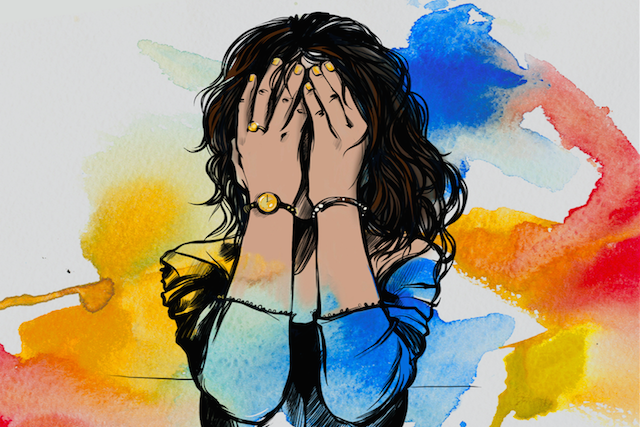
    Shame will tell you that you can never let anyone know, because whatever it is doesn’t measure up.

    Denial will tell you that if you don’t engage with the hard truth, it can’t hurt you.

    Fear will tell you that courage is a lofty goal you probably can’t reach.

    Like with bad boys, you know in your heart that it’s not healthy to stay in the relationship. You’ve got to learn from the relationship and find a way to leave as gracefully as possible.

    When I experienced depression and anxiety, I had a close relationship with all of them.  

    I wanted to believe there was no problem. If there was a problem I could explain it away with something else.

    I wanted to believe that if I just tried harder, these symptoms would go away. And try I did.

    I wanted to be courageous, but I couldn’t.

    I wasn’t ready to leave denial, and this resulted in a very difficult few years—for me, for my husband, and for my babies.

    When I did leave, I found a way to sort through the grey. Shame and fear were still frequent visitors. They needed time to let go.

    We all needed time to integrate. And this was okay. Not at the time so much, but in hindsight.

    Here is some of what I’ve learned about shame, denial, fear, and courage that I hope will help you:

    1. There was actually nothing wrong with me.

    Shame, fear, and denial stepped in because I thought there was. But there wasn’t.

    2. What was wrong was that I was basing my perception of myself on society’s perception of me.

    I was caught up in people-pleasing and perfectionism and trying to be someone I wasn’t. I had no idea how to handle my emotions, and no idea how my thoughts about myself and my emotions corresponded. This resulted in a long trip down to the bottom of the barrel, and a steady climb back up.

    3. There is something wrong with society’s perception of mental health issues.

    We change that one by one, by individuals understanding that society’s perception is the problem, and allowing ourselves to be honest about that. That is the truth, but it’s still a vulnerable statement, and becoming vulnerable is a journey.

    4. There is something wrong with continuing to seek the white picket fence and ignoring the grey in life.

    It’s not serving us well. We change that too by working toward transparency. Transparency is also vulnerable, and for me has been a work in progress.

    5. When we recognize that everyone has some kind of issue (it’s not just you), we gain courage.

    And trust me on this. Everyone has issues. Kind of like everyone has a belly button. When you come into this world, you get both.

    Opening up and being transparent, whether to family or friends or online, is risking engaging with shame, denial, and fear. It’s risking deafening silence or unhelpful comments.

    It’s not always going to feel safe. It’s not always going to be safe. You should feel no pressure to do it if you haven’t had a chance to work through the stuff that you need to work through.

    But it is something to work toward, little by little. Because grey is a very pretty color, really. And the truth, although hard, is still the truth.

    And only the truth will bring us closer to love.

  • Why It’s Okay to Feel Lost (And How to Find Your Way Again)

    Why It’s Okay to Feel Lost (And How to Find Your Way Again)

    “Feeling lost, crazy and desperate belongs to a good life as much as optimism, certainty and reason.” ~Alain de Botton

    Do you feel lost and alone?

    Adrift and confused about which way to go?

    Do you long for “something more” but have no clue what’s missing?

    Maybe you’re not miserable exactly, but you’re not animated and in love with life either.

    Your circumstances may even look pretty good on the outside.

    But on the inside, where truth resides, you are bored to tears, unfulfilled, and restless.

    Or maybe you are miserable, stuck in a painful place, silently suffering.

    Trust me; I know what that feels like.

    I felt lost as an introverted, highly sensitive soul struggling to conform to my environment.

    I felt lost as I endured the shame of a teen pregnancy and years of pent-up grief over the adoption of my baby.

    And I felt completely lost when I realized that I had spent over twenty years pursuing work that was utterly wrong for me.

    For decades, I tried to just ignore the disturbing aspects of my life. I became good at distracting myself with routines and habits that brought me a sense of peace, however superficial.

    Some of these habits even turned into addictions I had to overcome, but that’s another story.

    With no real sense of identity or direction, I mostly did as I was told, stayed on the periphery of things, and focused on giving others what I thought they wanted from me.

    Until I became so weary with my soul-crushing job and so depleted by not honoring my true nature that I felt like I’d die if I didn’t make a change.

    But if I wasn’t going to do this work anymore, what was I going to do?

    And how would I honor my true nature when I didn’t even know who I was or what I really wanted?

    I sure have lost my way a lot in life.

    It’s scary. But it’s okay. Because feeling lost can be a good thing. Let me show you why.

    Why It’s Okay to Feel Lost

    It means something better is waiting for you.

    All feelings arise to show you something about yourself and your life.

    Feeling lost doesn’t mean you’re doomed or that your life is hopeless. It simply means that something better is waiting for you.

    Maybe you’ve been conducting your life based on what others believe is right, and you lost sight of what you really want.

    Maybe you’ve been valuing the opinions of others over your own inner knowing.

    Maybe you’ve been spending too much time with people who drag you down rather than lift you up.

    These are all behaviors that, sooner or later, lead to discomfort. And they are all signs that something new and more suitable will ultimately happen.

    It’s an opportunity to rekindle your curiosity.

    Remember the sheer joy of discovery you experienced as a child when you learned things just because you were curious? Well, you can keep doing that as an adult, and it can be just as much fun.

    Genuine curiosity—the persistent pursuit of understanding that leads to awareness and improvement—is an invitation to look into something not only with your mind but also with your heart and soul.

    Asking lots of questions sparks interesting ideas and creates all kinds of connections; it opens up more options and opportunities.

    It gives you a chance to reconnect with yourself.

    Many of us have struggled to conform to our environment or life roles and lost sight of who we truly are.

    Feeling lost is an opportunity to slow down the hectic busyness of your life, listen to your heart, and discover what matters most to you.

    You can take time to rediscover your natural talents, the elements of your personality that have always been there. You can identify your deepest needs, values, and wishes.

    The more you understand yourself, the easier you can detect what wants to happen next.

    It can turn into an excellent adventure.

    We humans have a strong need to control, fix, and influence everything.

    The problem with thinking we know all the answers and trying to manage outcomes is that we end up shrinking, or getting stuck in place, rather than growing.

    Feeling lost and confused isn’t meant to stop you in your tracks. It’s meant to beckon you forward along the path intended especially for you.

    Venturing into this unknown territory can have an enchanting sense of possibility and freedom to it.

    Life is meant to be an adventure in becoming, a blossoming into who you are meant to be. The most excellent adventure of all.

    How to Find Your Way Again

    Remember that you are not alone.

    We’ve all struggled at one time or another with not knowing who we are, what we really want, or where we’re headed. Lessen your discomfort by reaching out to a friend you trust for empathy and gentle listening.

    A good friend can serve as a sacred container, especially during life’s transitions. Through dialogue and honest sharing, friends can often reach a higher level of insight together.

    Also remember that we belong to a larger universe that supports us and is an unwavering source of unconditional love, wisdom, and healing.

    Use prayer or any other practice you enjoy to build your personal connection to your higher power. This reliable connection can stabilize you during times of uncertainty.

    Practice calming your mind and your body.

    Meditation, deep breathing, quiet time in nature, yoga, journaling, arts, crafts, and exercise. These are all proven ways to increase well-being. Choose something that works for you, and do it every day.

    Stillness and silence are especially nurturing, and you can keep it simple. Try the following short breathing exercise.

    Close your eyes and focus your attention on your breath passing in and out through your nostrils. Smile as you breathe, and within a few moments, your whole body will start to relax.

    Several times a day, take sixty seconds to do this. That’s all—just sixty seconds. Allow your breath to take you to your quiet, calm center.

    “In the attitude of silence, the soul finds the path in a clearer light,” said Mahatma Gandhi, “and what is elusive and deceptive resolves itself into crystal clearness.”

    Explore, dream, discover.

    Reawaken your curiosity, your childlike sense of wonder and openness.

    The world is a fascinating place, and there are so many interesting things to learn about. Look around for inspiration and new interests.

    Stretch out of your comfort zone by trying new things and meeting new people.

    Use curiosity for self-understanding too. Ask yourself meaningful questions, and write about, draw, paint, or make a collage around anything that comes to you.

    The following questions can get you started:

    • What is something I’ve done that I’d love to do more of?
    • What do I want to learn? What skills do I want to master?
    • What do I know but don’t yet live?
    • What have I been avoiding that needs to change?
    • What could I do to make the world a better place?

    Access your authentic power.

    What does it mean to be a truly powerful human being?

    In the words of spiritual teacher Gary Zukaz, “Authentic power is energy that is formed by the intentions of the soul. And, you are only as powerful as that for which you stand.”

    So ask yourself, “What do I stand for?” And listen to your heart. You might also ask, “Who do I want to become?”

    It’s okay if the answers don’t come right away. Just keep asking and listening for as long as necessary. It will be worth the wait.

    Because the answers to those vital questions will reveal the very best you, the strongest, most generous you.

    Remember that no matter what your circumstances or how lost you feel, you have the power to choose your direction and how to use your energy.

    It’s Right Around the Corner

    One fine day you will find your way from confusion to clarity.

    Until then, stand tall in your unique personal power, and trust that all will be revealed to you when the timing is right.

    You are moving, changing, and growing at the exact right pace.

    Stay curious, and be gentle with yourself.

    Your something better is right around the corner, inspiring and surprising, just waiting to be found.

  • 10 Things to Remember When You Feel Lost and Alone

    10 Things to Remember When You Feel Lost and Alone

    “Accept what is, let go of what was, and have faith in what will be.” ~Sonia Ricotti

    I would lie awake at night aching for rest and relief from my racing mind. Hot milk with honey, yoga postures with my feet above my head, no chocolate after three in the afternoon—I had tried it all.

    I was weaning myself off sleeping pills. Wrenching myself from my love affair with the tiny white disc. I’d pop it under my tongue to slide from the shackles of adrenaline. They felt impossible to escape.

    I’d started using sleeping pills in my last semester of university, having begged my doctor for a prescription to stop the torture of lying awake night after night. One day running straight into the next, and the next, and the next. An endless horror-film loop.

    I felt lost.

    And alone.

    It wasn’t a new feeling. I’d felt that way for years.

    I’d lie awake and wonder why I didn’t feel better, wish I could feel like everyone else seemed to—content, confident, happy. Why wasn’t that my life?

    And then, one day, I decided to see what else was possible. If I could feel a different way. If I could feel better.

    It took time. And patience. Self-exploration. And courage. But I did get there.

    If you’re feeling like I felt then, here are ten things to remember.

    1. We’re all in this together.

    I’ve felt that way. All of my closest friends have felt that way. Family members of mine have felt that way. And, people who read Tiny Buddha—just like you—have felt that way. Or are feeling that way right now.

    One day a friend of mine surprised me. She was someone who always seemed positive and upbeat. Always sunny.

    I said to her, “Some days I just feel so alone, like nothing is okay.” She said: “Me too.” It made me feel better, and less alone. We’re all in this together.

    2. People share the highlights, not the lowlights.

    We can feel anxious, sad, and unhappy after going on Facebook or Instagram. We can end up feeling like we don’t have an awesome enough life;, like, if we don’t have a glamorous event to photograph and share, we suck.

    But people share the highlights, not the lowlights. I’ve talked with so many people whose lives look amazing on Facebook and Instagram who tell me, “I feel sad. I feel like no one cares. I feel alone.”

    3. It’s okay to be right where you are.

    Sometimes we think we need to be making progress and moving forward, that we need to be a shining ray of light all the time. But the truth is, we need times when we’re pausing.

    Those times are often when we feel more lost and alone. We’re figuring things out, re-evaluating what we thought we wanted. It helps to let ourselves rest in the knowledge that this time is natural and normal, rather than tell ourselves we need to be making progress and moving forward.

    4. Change happens in the mess.

    The truth is that we often can’t feel better until we have a little meltdown. Or a big one. Change means shifting into something different, and to do that we may need to let go of some things and allow them melt away. This can get messy.

    I had to let go of the thought that I needed to be what everyone else thought I should be. To do this, I started to notice my thinking, especially thoughts that included the words “should” and “have to.” Then I got myself to question those thoughts: Is that absolutely true? Do you have to?

    When I gave myself the time and space to explore those questions, a freedom came. It was the experience of being able to question my own thinking, which helped me see that I didn’t need to believe all of my thoughts. From there, I was able to choose other thoughts. From there, I was able to choose other actions.

    That change wouldn’t have happened without me getting messy, having a meltdown, and letting go of some things.

    5. New beginnings can feel like endings.

    Do you remember a time when you started something new? A new school year? A new summer break? A new relationship?

    I bet if you look back you’ll recognize that there was an ending that happened before that new beginning. And during that ending you might have been sad and felt alone. But eventually, those feelings transformed when the ending gave way to a new beginning.

    6. It’s easier if you let it be there.

    The harder we fight the way we’re feeling, the harder it is to feel that way. The more we let it be there, the easier it gets to feel that way. The feeling no longer feels scary, or like something we need to try to avoid.

    And often, as a result, the feeling will fade away. Sometimes quickly. But resisting the feeling can make it feel bigger and harder to handle.

    7. Being alone can bring you peace.

    When we’re alone, we’re faced with our feelings and our thoughts. It’s harder to distract ourselves.

    If we let these times of feeling lost and alone be all that they can be—messy, uncomfortable, hard—we can learn to handle them. We can learn that they don’t need to be avoided. And that helps us feel stronger, like we can handle anything, and that can bring us peace.

    8. Feelings can heal you.

    All of the emotions that arise when we feel lost and alone can point to what we need to heal within ourselves. They can be like signposts on the road to freedom, saying, “Look over here. Go this way.”

    The sadness I felt when I felt most alone was pointing my attention toward expectations I had of myself: that I had to be in a relationship in order to be happy, that I had to be busy and socializing all of the time in order to be like other people, that I had to live an exciting-all-the-time life.

    Letting go of those expectations helped me heal those misunderstandings within myself. Without the sadness, I wouldn’t have spotted them.

    9. It doesn’t mean anything is wrong with you.

    I hesitated to write this in this way. And I don’t mean it to sound harsh or unfeeling.

    Accepting that life is kind of sucky sometimes can help us get through the times where we feel lost and alone. It doesn’t mean anything is wrong with you. It’s just part of being alive.

    10. The sun will come out tomorrow.

    Okay, I know it might actually rain. But what will happen for sure is that a new day will dawn. And in the dawn of a new day, you might feel better.

    Also, be gentle. Be soft. Be caring. We’re all in this together. And there are other people who feel exactly the same way.

    Editor’s note: Lindsey has offered to give away two copies of her new book. From Darkness to Light: Devil Wears Prada meets Eat Pray Love. An uplifting story of personal transformation, travel, and starting over. To enter to win a free copy, leave a comment below.

  • When Something Has to Change: How to Push Yourself to Take Action

    When Something Has to Change: How to Push Yourself to Take Action

    Stressed woman

    “The truth you believe in and cling to makes you unavailable to hear anything new.” ~Pema Chodron

    At some point, there comes a defining moment when you know beyond a shadow of a doubt that you just can’t keep living the way you’ve been living.

    You know that something has got to give and realize that you only have two options—either change or stay the same.

    The idea of having to choose either one of those options feels absolutely unbearable, so you find yourself trapped between the two, in this awful purgatory of indecision.

    That’s exactly where I was trapped: unable to stay in an unhappy marriage, and unable to leave it.

    The prospect of changing required the long journey inward, having to look at myself honestly and courageously and do the things I was afraid to do.

    To change meant that I had to leap into uncharted waters, not knowing if I’d sink or swim. And in the face of that, I was easily lured back to the comfort of the familiar.

    I was quick to reassure myself that even in my unhappy situation, with all of its heartache and suffering, at least I knew what to expect. And that thought was comforting.

    In precise tandem with that thought was the awareness that if I couldn’t bring myself to leap off the cliff to change, I would be stuck living life in this state of unhappiness and dysfunction. And that thought was terrifying.

    I couldn’t stay where I was, but I was too afraid to move forward.

    This purgatory of indecision was an awful place to be. It was filled with its own unique despair. It was fraught with doubt, shame, anger, and huge amounts of fear. But in spite of that, it still wasn’t enough to propel me in any one direction.

    I was stuck in this purgatory for years. Eventually, I came to understand that my thoughts and beliefs didn’t actually come from me. They came from the very loud and dictatorial voice of my codependent mind.

    It had become so loud and powerful that it had all but drowned out my own voice. One of its most potent functions was to convince me that every terrible thing I told myself about myself was the gospel truth.

    I’ve learned to think of my codependency as a seed—and the same analogy applies for addiction, depression, and other struggles.

    There sits the seed of it, buried deep in our brain. And in some of us, at some point, something will happen to trigger it.

    That event acts as the water it needs to grow. If it’s allowed to set its roots down, it continues to grow stronger and stronger. The voice of that dysfunction slowly and steadfastly takes over and begins to drown out you.

    Eventually, this dysfunctional voice is the only one you hear, and so you recognize it as you, but it’s not.

    I think of it as two minds—my mind and the codependent mind. My co-dependent mind had grown so big, and its roots so deep, that it was calling all the shots.

    The mind of any dysfunction, regardless of where it originated, has its own unique sets of toolboxes. In my case, my codependent mind was a master at using fear and self-doubt to create confusion.

    Fear, along with self-doubt, whispers “you’re not good enough” or “you are not worthy,” and insists, “you can’t trust what you feel or what you think,” thereby creating all kinds of space for confusion to reign.

    There was a constant tug of war going on inside of me. I was convinced that what I wanted and needed was wrong if it wasn’t in alignment with what others wanted and needed from me.

    Daily, my codependent mind reminded me that I was inadequate, unlovable, unworthy, and incapable. And as the codependent voice got louder and louder, it eventually became the only voice I recognized and heard.

    But here’s the thing: The secret to silencing that voice of dysfunction is to challenge it. We must disbelieve what it’s saying.

    The problem was that any attempt at disagreeing with what my codependent mind created huge amounts of anxiety and fear.

    So you can see the predicament: To silence it, we have to disbelieve it. And to disbelieve it creates tremendous anxiety.

    The thing you need to know is that anxiety is the superpower of any dysfunction. It uses our disdain and discomfort for feeling anxious as a way of staying in control. This is what makes it so clever and difficult to outwit.

    And it was this desperate need to avoid feeling anxious that kept me from challenging my codependent thinking.

    As tough as it may seem, to be able to change your beliefs about yourself, you need to disbelieve what that voice of dysfunction is telling you, and do the very thing you think you can’t do.

    As you challenge it, you will experience anxiety and fear. But no one has ever died from feeling anxious or afraid. Ever.

    Feeling anxious or afraid will not kill you. But it will free you from the life you are trapped in, and from the incessant voice of your dysfunctional mind.

    I began by deciding to actively disbelieve any negative or unkind thoughts I had about myself.

    If they didn’t lift me up, I disbelieved them. Martha Beck, author and monthly columnist for O, The Oprah Magazine says: “All thoughts that separate you from genuine happiness are lies.” That became my daily mantra.

    As I practiced this new way of being—refusing to believe those negative thoughts as gospel truth—slowly but surely, my thoughts and beliefs about myself began to change.

    When my codependent thinking said I wasn’t capable, I chose to trust my capabilities were enough for that moment. When my codependent thinking said I wasn’t good enough, I chose to believe that I was enough.

    The more I decided I was lovable and worthy of love, the more confident, assured, and certain I became of who I was, and the more clearly I could hear my own voice.

    You must decide that you will no longer trust the voice of dysfunction. And once you do, I promise you, it will begin to retreat, and your voice—the voice of self-love, truth, and wisdom—will become loud and clear.

    Stressed image via Shutterstock