Tag: safety

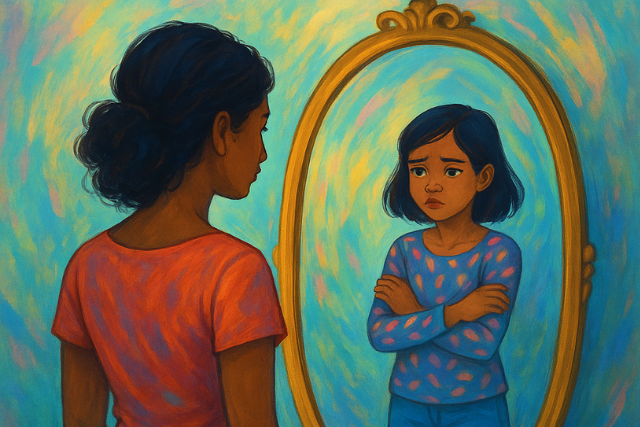
  • 5 Surefire Signs You Grew Up with an Emotionally Immature Parent

    5 Surefire Signs You Grew Up with an Emotionally Immature Parent

    “There’s no such thing as a ‘bad kid’—just angry, hurt, tired, scared, confused, impulsive ones expressing their feelings and needs the only way they know how. We owe it to every single one of them to always remember that.” ~Dr. Jessica Stephens 

    All children look up to their parents from the moment they enter this world. They have this beautiful, pure, unconditional love pouring out of them. Parents are on a pedestal. They are the ones who know what’s best! They are the grownups showing us how to do life!

    We don’t think for one moment that they could be showing us the wrong way.

    I, like many others, adored both my mum and dad. I could not see their flaws, their pains, or their trauma. I just loved them and wanted to spend time with them. If they shouted at me and told me I was wrong, I trusted that they were right, no question.

    When I had non-existent self-esteem, anxiety, and suicidal ideation because I believed I was not good enough, I blamed that 100% on myself. I had unconsciously recorded all those moments when their behavior had made me feel not good enough as my own fault for being ‘bad,’ not considering they could have had something going on themselves.

    When I struggled in romantic relationships, always chasing unavailable men, I held myself responsible and never for one minute thought that this pattern of behavior stemmed from my relationship with my parents. I believed what they had told me in different ways—that I was the problem!

    The reason I struggled in relationships, I later discovered, was that my parents were not actually okay when they were parenting me because of their own traumas and were emotionally immature.

    Here are five signs you had emotionally immature parents and how may it impact you.

    1. Their feelings and needs were more important than yours.

    Emotionally immature parents can be incredibly self-absorbed and distracted by their own feelings and emotions, and they want their child, you, to regulate them.

    For example, when my mum was upset, I would be affectionate toward her and soothe her. As I got older, she would be angry with me if I was not there to soothe her when she needed it, saying I was selfish and she had no one. I believed her.

    I was off playing with my friends and being a child, but this was not allowed if it meant I couldn’t meet her needs and calm her emotions. As a result, I learned it was not safe to choose my needs over hers, as she would withdraw her love from me, which felt so scary. My heart would race, and I would feel terror take over my body.

    As an adult, this meant I believed I was responsible for other people’s emotions, and if they were angry or upset, it was my fault. So I would always walk around on eggshells just in case someone might attack me for upsetting them. Because I believed everyone’s pain was my fault, I attracted more relationships like the one with my mum. These relationships made me feel powerless.

    2. Expressing your feelings or needs was not safe.

    When you expressed a feeling and it was met with a negative reaction from your parent, it created a world of panic inside your body. For example, sharing how you were struggling could have been met with a comment about how their lives were so much worse and you should stop being so dramatic.

    Expressing a need, like asking for a ride somewhere, could have launched an attack about how selfish you were—and didn’t you realize how hard your parents were working!

    So what happened? You stopped expressing your feelings and needs and buried them deep. (For me, I topped them with ice cream and sugar for comfort.) As an adult, you may now be so cut off from your own emotions and needs that you act as if you don’t have any.

    3. They did not take responsibility for their actions.

    They’d say or do something that really hurt you, but they wouldn’t acknowledge it, nor apologize. In fact, they may have just carried on as normal.

    Your relationship with them was not repaired as a result. You may have tried to resolve the situation, but you were the only one trying, and you may even have found yourself blamed for something you didn’t even do. The whole situation would leave you feeling crazy and like you didn’t know what’s true. You may even have started thinking it was your own fault.

    As an adult, you might repeat this dynamic in other relationships, feeling powerless to repair and resolve issues that arise. This leads to resentment and staying in unhappy relationships because you don’t know it can be any other way.

    4. They have no idea how to regulate their emotions.

    They walked around triggered by their emotions all day. They had no idea how to bring themselves back into balance. They’d come home exhausted from work, but rather than doing something to discharge from the day, they’d get stuck in their chores and then take out their emotions on others due to resentment over being so tired.

    They also might have had no idea what they were feeling. Maybe they were constantly angry because they lacked the self-awareness to recognize they were really feeling sad or anxious or overwhelmed. And because they didn’t know what they were feeling, they had no idea what they needed to do to feel better.

    5. You were forced to grow up before your time.

    It wasn’t okay for you to be a child. They found it way too stressful, so you were encouraged to be a little adult. Maybe even a little adult that parented them. It was also not safe for you to be a child. You couldn’t be loud or silly, as they could have lost their temper, so you walked around on high alert waiting for this. You may have learned to be the calm one because your parents weren’t.

    I found myself getting involved in their very grown-up arguments as a child just to try and keep the peace in the house. This is not the role of a child. If you had the same experience, you may find yourself attracting similarly codependent relationships as an adult.

    If this childhood sounds like yours, you are not alone. There are many of us. There is an inner child within you that missed out on so much love, nurturing, encouragement, and balance, which could be the reason you are struggling now as an adult.

    It is not because you are not good enough or because you are to blame for everything. It is because you were raised by emotionally immature parents. Effectively, you were raised by children in adult bodies.

    You could still be dealing with these patterns as an adult with your parents, as they could be children in even older bodies now!

    Learning how to be emotionally mature yourself so you don’t repeat the patterns with your own children is a wonderful gift to be able to give them, but also it means you can have healthy relationships and find peace within. Healing and reparenting your inner child means you will be able to express your emotions and have boundaries so others don’t think it is okay to do the same to you.

    I used to feel powerless when people treated me like this, not just with my parents but in other relationships too. I would try to be whatever they wanted me to be, but they would still react in the same ways no matter what I did. Stepping back from them and focusing on healing my inner child, understanding her feelings and needs, and holding space for her has changed my life. I was able to become the parent I always longed for.

    I understand now that my parents were emotionally immature, as they were raised by emotionally immature parents too. They were mature with money and jobs, but with emotions, they were out of their depth because no one showed them how to manage them, and unfortunately, they never learned.

    But we can be the generation that breaks this pattern by being the emotionally mature parent we needed. We can be the example of healthy relationship dynamics that we never had.

    **This post was originally published in 2022.
  • How to Calm Anxiety That’s Rooted in Childhood Wounds

    How to Calm Anxiety That’s Rooted in Childhood Wounds

    “Anxiety is a response to a nervous system that learned early on it had to protect itself.” ~Dr. Hilary Jacobs Hendel

    Anxiety shaped much of my life—how I showed up, how I held myself back, and how I connected with others. For years, I didn’t even know what it was. I just knew the pounding heart, the tight chest, the trembling hands. I knew the shame that followed every “failure,” big or small, and the fear I would never be enough.

    For a long time, I thought I was the problem. But anxiety isn’t a moral failing. It’s a part of me that learned to survive in environments where my emotional needs weren’t met, where fear and shame felt louder than safety.

    Where It Started

    The roots of my anxiety began in childhood.

    I was in first grade when I brought home my school report card and saw that I ranked seventh in my class. At that age, I didn’t know if that was good or bad. I was just excited to tell my dad.

    When he came to pick me up, I smiled and shared the news innocently. Instead of a hug or encouragement, his eyes glared at me. His sharp, aggressive tone cut through me as he shouted, “It’s bad!”

    Looking back, I can see his reaction came from fear—that my performance might limit my future and that shaming me would push me to improve. But as a child, I couldn’t see that. I felt shocked and humiliated. My small body trembled, and my younger brain concluded:

    “I’m only worthy of love if I perform better.”

    The next semester, I ranked third. My dad bragged about it to everyone, and I felt brief relief. But the fear returned quickly:

    “What if I can’t keep this up?”

    That was the beginning of a belief that no matter how much I achieved, I was never “enough.”

    This pattern followed me for decades, surfacing in unexpected places. As an adult, I would freeze with anxiety at gas stations, trembling as I pushed my motorbike forward even when no one was rushing me.

    Eventually, I connected it to another childhood memory: my dad shouting at me to move faster in line at a gas station, his glare and sharp tone burning into me again. When processing this as an adult, I realized he had a good intention—to move things along for the other people waiting. But before I began my healing process, my nervous system was wired to react to the present as if I were reliving the past.

    Even years later, the anxiety lived on in my body, and I didn’t know how to process it.

    The Breaking Point

    I carried this unprocessed anxiety into adulthood. When I was five weeks pregnant, my partner was in a tragic accident that left him in a coma for two weeks before he passed away. Suddenly, I was alone, grieving, and without money to survive.

    I didn’t have the privilege of avoidance anymore. Grief, financial instability, and the responsibility of carrying a child forced me to face emotions I had buried for years.

    This was when I learned the practices that helped me stop spiraling and regain my composure.

    10 Tips That Help Me Prevent and Manage Anxiety

    Important note: These tips are not a substitute for therapy, medication, or professional diagnosis. They are complementary practices to help restore balance and create a sense of safety in the body.

    1. The gratitude shift—turn anxiety into information.

    Instead of berating the intense sensations anxiety brings, I now try meeting it with gratitude. Anxiety is my body’s built-in alarm system.

    When I feel it rising, I say, “Hi, anxiety. I see you doing your job. Thank you for showing up.”

    Then I ask:

    What is this sensation trying to tell me?

    Where is this coming from in my history?

    What action can I take now to feel safer and more supported?

    This small act of acknowledgment makes space to feel more in control and invites curiosity instead of fear.

    2. Slow down and simplify your life.
    Too many distractions can block memories and emotions from surfacing. Simplifying my life gave me mental space for self-awareness.

    I released unnecessary obligations, overpacked schedules, and numbing habits like endless scrolling. When I slowed down, I could finally hear myself and recognize what was driving my anxiety.

    3. Trace the roots through quiet observation (and fasting).

    Closing my eyes and observing the first persistent memories that surface often reveals the root of anxiety.

    When I couldn’t afford therapy, I used intentional fasting to access clarity. (If you decide to give this a try, I recommend consulting with your doctor first. This is my personal spiritual practice, not a universal recommendation.) I started slowly with:

    • A twelve-hour fruit and vegetable fast, then
    • A twelve-hour water fast, then
    • A full-day fast (6 a.m. to 6 p.m.)

    Each time hunger arose, I named my intention out loud through prayer or journaling: “Please show me the root cause of this anxiety and how to release it.”

    Fasting, for me, was a deliberate way to quiet external noise so buried memories and insights could surface.

    4. Catch the first emotion—shock.

    My body often stores layers of pain, and shock is usually the first overwhelming emotion. If I can name it quickly, I can interrupt the spiral.

    For example, when I was feeling overwhelmed as a mother, I’d sometimes snap at my daughter. I’d get frustrated and angry with myself, but after fasting, the memory of my parents snapping at me came up quite vividly.

    Remembering this, I allowed myself to see, acknowledge, experience, and accept how painful and shocking it was for me to be treated that way.

    5. Write in detail what shocked you (and other emotions).

    After naming shock, I write the exact details of what triggered it: the sudden glare, the change in tone, the clenched jaw, the slammed door.

    Then I name the other emotions as honestly as possible: fear, humiliation, sadness, anger, or betrayal—whatever is true in that moment.

    Being radically honest in this process helps me release the experiences that I previously stored as trauma.

    6. Grieve the losses.

    Once I release the shock, I let myself grieve. I cry for the safety, compassion, and respect I needed but didn’t receive.

    Sometimes I use music to amplify the sadness so it can move through me. This isn’t weakness—it’s how the body processes pain instead of storing it.

    7. Name the unmet needs.

    Grief opens the door to understanding my needs.

    “When I was shouted at by my dad after making mistakes, I felt unsafe and ashamed. My need for emotional security was violated.”

    “When I was only praised for achievements, I felt unseen. My need for consistent acceptance was neglected.”

    Naming needs clarifies what’s important so I can ask for it clearly and assertively as an adult. It’s empowering to name the hurt and see how it helps me understand my emotional needs better.

    8. See the context—compassion for your parents’ limitations.

    Fasting and becoming a mother helped me understand the hardship my parents faced. Parenting a neurodivergent child with limited resources, little support, and financial stress is overwhelming.

    This doesn’t excuse the harm, but it helps me hold two truths:

    1. Their actions hurt me.
    2. They were also struggling humans who lacked the tools to parent better.

    This perspective softens resentment and breaks cycles.

    9. Write down the worst-case scenarios.

    While processing the past experiences that have contributed to my anxiety can help decrease anxious feelings in the present, it also helps to challenge how I think about the future.

    When I spiral, my brain floods me with worst-case scenarios. Positive thinking never helped—it only deepened my fear.

    Instead, I confront the fears by writing down every possible worst-case outcome, even the most extreme. I’ve lived through homelessness, earthquakes, and tragic losses. Pretending they couldn’t happen again didn’t work.

    By naming them, I strip them of their power.

    10. Prepare intuitive actions and identify help.

    After writing the worst cases, I ask:

    What is the first intuitive action I can take to prevent or reduce the impact?

    Who is the first person I can contact for help? Who else could I reach out to?

    Writing these down gives me agency. It tells my nervous system, “I’m not helpless. There are things I can do and people I can ask for help.”

    Anxiety is a part of me. Experiencing the spiral because I didn’t know how to name, process, and communicate it sucks.

    I’m still a work in progress when it comes to maintaining composure consistently, but I feel empowered knowing that I’m mastering emotional intelligence—skills I can pass down to my child.

    Healing is not linear, and some steps will feel harder than others. But with consistency, these practices can help you restore a sense of safety, reclaim your agency, and soften the belief that you must always be on high alert.

  • How to Return to Emotional Safety, One Sensory Anchor at a Time

    How to Return to Emotional Safety, One Sensory Anchor at a Time

    “In a sense, we are all time travelers drifting through our memories, returning to the places where we once lived.” ~Vladimir Nabokov

    I found it by accident, a grainy image of my childhood bedroom wallpaper.

    It was tucked in the blurry background of a photo in an old family album, a detail I’d never noticed until that day.

    White background. Tiny pastel hearts and flowers. A border of ragdoll girls in dresses the color of mint candies and pink lemonade.

    My body tingled with recognition.

    It was like finding a piece of myself I didn’t remember existed. Not the grown-up me, but the girl I used to be before a career, a mortgage, and the heavy quiet of adult responsibility.

    The Pull of the Past

    When I was small, the world felt bigger in a softer way.

    Colors seemed brighter, objects more alive, and the smallest things—the feel of my favorite stuffed animal companion in my hand, the scent of my mother’s bathwater—carried entire worlds of meaning.

    These aren’t just memories; they’re sensory anchors.

    I could forget a conversation from last week, but I can still picture the exact shade of the mint-green dress my wallpaper girl wore. I can still feel the gentle indentation of her printed outline, as if the wallpaper itself had texture.

    These details, it turns out, were never gone. They were simply waiting for me to come back.

    Nostalgia as a Regulation Tool

    I didn’t realize until recently that revisiting those sensory anchors could calm my nervous system.

    Of course, I know not everyone remembers childhood as safe or sweet. For many, those early years carried pain or fear. Some people find their sensory anchors in different chapters of life—a first apartment, a quiet library corner, or a beloved chair in adulthood. Wherever they come from, anchors can be powerful.

    For me, nostalgia isn’t about wanting to live in the past. It’s about finding small pockets of safety I can carry into the present.

    Touching the soft yarn hair of a Cabbage Patch Kid isn’t just cute, it’s grounding. Seeing those pastel hearts reminds my body what peace once felt like, and in that moment, I can feel it again.

    A few months ago, one of my children was in the hospital for a week. Those days blurred together: the beeping machines, the too-bright lights, the smell of antiseptic in the air.

    One afternoon, while she slept beside me in that cold plastic hospital chair, I scrolled on my phone and stumbled upon an online image of a toy I used to have. That single memory opened a door. I looked for another, and another. Each one reminded me of something else I had loved.

    Before I knew it, I was mentally compiling a list of toys I’d like to find again, and how I might track them down.

    That feeling—the rush of familiarity, the gentle spark of recognition—was more than just pleasant. It was regulating. In those moments of quiet, I felt a warmth that had been nearly forgotten.

    When she woke and the noise and decisions returned, I carried that warmth in my belly like a hidden ember.

    The Practice of Returning

    Since then, I’ve begun weaving these cues into my home.

    My shelf holds a cheerful line of 1980s toys in the exact colors I remember. At night, the soft glow of the wooden childhood lamp I sought out warms my space with a light that feels like safety.

    These touches aren’t just décor; they’re part of my emotional toolkit.

    When I feel overwhelmed, I step into that corner, touch the toys, take a slow breath, and remember who I was before life got so loud.

    Some of my collection lives in my walk-in closet, tucked away just for me. I choose when and how to share it. Sometimes I don’t share it at all. That privacy feels important, like holding a small, sacred key that unlocks a door only I am meant to open.

    This practice can look different for others. A friend of mine grew up with an entirely different story. His childhood was full of absence and stress, and he never had the GI Joes he longed for. Now, as an adult, he collects them one by one. For him, this is not nostalgia but repair, a way to heal by finally holding what once felt out of reach.

    How You Can Try It

    If you’d like to create your own version of a ritual of return, here’s how to begin:

    1. Identify your sensory anchors.

    Think about colors, textures, scents, or sounds from your happiest memories. If childhood feels heavy, look to other times. What do you remember most vividly? A kitchen smell? A favorite song? The feel of a well-loved blanket?

    2. Find small ways to bring them back.

    This doesn’t have to mean collecting big, expensive items. It could be a thrifted mug, a playlist of songs you loved at age eight, or a single scent that transports you.

    3. Use them intentionally.

    Place these cues where you’ll see or touch them often. Incorporate them into a morning or evening routine. Let them be part of how you calm yourself, not just pretty objects but companions in your present life.

    Why It Matters

    We can’t go back, and we don’t need to.

    But we can return, in small ways, to the places inside us where we first felt safe, joyful, or whole.

    For some, that means reclaiming the sweetness of childhood. For others, like my friend with his GI Joes, it means rewriting the story and creating what was once missing. Still others may anchor themselves in completely different seasons of life.

    What matters is the act of returning to something steady, something that belongs to us now.

    Each time we do, we carry a little more of that peace forward into the lives we are living now.

    I’m still searching for that childhood wallpaper—online, in vintage shops, in the corners of the internet where people post long-forgotten designs. The search brings almost as much joy as the finding.

    Because every time I search, I’m not just looking for wallpaper. I’m putting my hand on the door handle of memory. And when that door opens, I meet myself.

  • Vulnerability Is Powerful But Not Always Safe

    Vulnerability Is Powerful But Not Always Safe

    “Vulnerability is not oversharing. It’s sharing with people who have earned the right to hear our story.” ~Brené Brown

    Earlier this year, I found myself in a place I never imagined: locked in a psychiatric emergency room, wearing a paper wristband, surrounded by strangers in visible distress. I wasn’t suicidal. I hadn’t harmed anyone. I’d simply told the truth—and it led me there.

    What happened began, in a way, with writing.

    I’m in my seventies, and I’ve lived a full life as a filmmaker, teacher, father, and now a caregiver for my ninety-six-year-old mother. But as I’ve gotten older, I’ve also felt something slipping. A quiet sense that I’m no longer seen. Not with cruelty—just absence. Like the world turned the page and forgot to bring me along.

    One day in therapy, I said aloud what I’d been afraid to name: “I feel like the world’s done with me.”

    My therapist listened kindly. “Why don’t you write about it?” she said.

    So I did.

    I began an essay about age, invisibility, and meaning—what it feels like to move through a culture that doesn’t always value its elders. I called it The Decline of the Elders, and it became one of the hardest things I’ve ever written.

    Each sentence pulled something raw out of me. I wasn’t just writing; I was reliving. My mind circled through memories I hadn’t fully processed, doubts I hadn’t admitted, losses I hadn’t grieved. I’d get up, pace, sit down again, write, delete, rewrite. It was as if I were opening an old wound that had never really healed. The pain was real—and so was the urgency to understand it.

    Then came the eye injection—a regular treatment for macular degeneration. This time, it didn’t go well. My eye throbbed, burned, and wouldn’t stop watering. Eventually, both eyes blurred. Still, I sat there trying to write, blinking through physical and emotional pain, trying to finish what I had started.

    Everything hurt—my vision, my body, my sense of purpose. I didn’t want to die, but I didn’t know how to live with what I was feeling.

    So I called 911.

    “This isn’t an emergency,” I told the dispatcher. “I just need to talk to someone. A hotline or counselor—anything.”

    She connected me to the Suicide & Crisis Lifeline—a lifeline for people in imminent danger of harming themselves. If you are suicidal, please call. It can save your life. My mistake was using it for something it’s not designed for.

     I spoke with a kind young man and told him the truth: I was in therapy. I was writing something painful. I was overwhelmed but safe. I just needed a voice on the other end. Someone to hear me.

    Then came the knock at the door.

    Three police officers. Calm. Polite. But firm.

    “I’m okay,” I said. “I’m not a danger. I just needed someone to talk to.”

    That didn’t matter. Protocol had been triggered.

    They escorted me to the squad car and drove me to the psychiatric ER. I felt powerless and embarrassed, unsure how a simple call had escalated so quickly.

    They took me to the psychiatric ER at LA County General.

    No beds. Just recliner chairs lined up in a dim, humming room. I was searched. My belongings were taken. I was assigned a chair and handed a bean burrito. They offered medication if I needed it. One thin blanket. A buzzing TV that never turned off.

    I didn’t want sedation. I didn’t want a distraction. I just sat with it—all of it.

    And around me, others sat too: a man curled into himself, shaking; a young woman staring blankly into space; someone muttering unintelligibly to no one at all. Real pain. Raw pain. People who seemed completely lost in it.

    That’s when the shame hit me.

    I didn’t belong here, I thought. I wasn’t like them. I had a home. A therapist. A sense of self, however fractured. I hadn’t tried to hurt anyone. I’d just asked to be heard. And yet there I was—taking up space, resources, attention—while others clearly needed it more.

    But that too was a kind of false separation. Who was I to say I didn’t belong? I’d called in desperation. I’d lost perspective. My crisis may have looked different, but it was real.

    Eventually, a nurse came to interview me. I told her everything—the writing, the injection, the spiral I’d been caught in. She listened. And sometime after midnight, they let me go.

    My wife picked me up. Quiet. Unsure. I didn’t blame her. I barely knew what had just happened myself.

    Later that night, I sat again in the chair where it had all started. My eyes ached less. But I was stunned. And strangely clear.

    The experience hadn’t destroyed me. It had initiated me.

    I also realized how naïve I’d been. I hadn’t researched alternatives. I hadn’t explored my real options. I’d reached for the most visible solution out of emotional exhaustion. That desperation wasn’t weakness—it was a symptom of a deeper need I hadn’t fully acknowledged.

    And I learned something I’ll never forget:

    Vulnerability is powerful, but it’s not always safe.

    I used to think that honesty was always the best path. That if I opened up, someone would meet me there with compassion. And often that’s true. But not always. Systems aren’t built for subtlety. Institutions can’t always distinguish between emotional honesty and risk.

    And not every person is a safe place for our truth. Some people repeatedly minimize our pain or dismiss our feelings. We might long for their validation, but protecting ourselves means recognizing when someone isn’t willing or able to give it.

    Since then, I’ve kept writing. I’ve kept feeling. But I’ve also learned to be more discerning.

    Now I ask myself:

    • Is this the right moment for this truth?
    • Is this person or space able to hold it?
    • Am I seeking connection—or rescue?

    There’s no shame in needing help. But there is wisdom in learning how to ask for it, and who to ask.

    I still believe in truth. I still believe in tenderness. But I also believe in learning how to protect what’s sacred inside us.

    So if you’re someone who feels deeply—who writes, reflects, or breaks open in unexpected ways—this is what I want you to know:

    You are not weak. You are not broken. But you are tender. And tenderness needs care, not containment—care from people you can trust to honor it.

    Give your truth a place where it can be held, not punished. And if that place doesn’t yet exist, build it—starting with one safe person, one honest conversation, one page in your journal. Word by word. Breath by breath.

    Because your pain is real. Your voice matters.

    And when shared with care, your truth can still light the way.

  • How to Escape Cycles of Panic, Overwhelm and Dread

    How to Escape Cycles of Panic, Overwhelm and Dread

    “Neuroscience research shows that the only way we can change the way we feel is by becoming aware of our inner experience and learning to befriend what is going inside ourselves.” ~Bessel A. van der Kolk

    It’s early morning, and I wake with an intense sensation of foreboding. I say wake up, but really, it’s just coming fully into consciousness, as I’ve been semi-conscious all night. Fitfully tossing and turning, a deep anxiety gnawing at my chest.

    My mind has been flipping back and forth—across different subjects, even different times, collecting insurmountable evidence that my life is going terribly, and I’ll always feel like I’m just about hanging on by a thread.

    I drag myself out of bed, exhausted as usual, meeting the day with an intense feeling of disappointment in myself. Why am I always bouncing between anxiety and panic? Why can’t I control myself so that I stop being fed a constant stream of fearful, self-blaming, intrusive thoughts?

    Why can’t these terrible emotions just give me a break once in a while so I could complete some of the things that I’m so anxious about? Why is my life so riddled with overwhelm, and how on earth do I escape this?

    That early morning six years ago was a scenario that had played out on repeat for decades. Different worries plagued me at twenty than at forty. But the texture of my mornings, the texture of my days, was the same. Except that by forty I was more tired—my body exhausted from being in this perpetual state of different flavors of fear. I’d had more than enough. Enough was twenty-five years ago.

    I’d tried lots of different things—did different types of talk therapy, changed my diet, exercised, went on retreats, completed four different types of meditation training, read endless books, removed stressful-feeling friendships, moved several times, left the country… And while so many things gave me some good ideas, took the edge off things for a while, and at times felt really good, I would always return to the same baseline.

    When I missed a meditation, left the retreat, or walked out of the therapy office, I would feel just as alone, just as vulnerable to the forces of the world to take me down into pits of dread and despair. A baseline that was sinking from the weight of so much overwhelm and a life lived in a state of panic.

    I didn’t want to feel like this anymore. This wasn’t a life. This was living in glue and trying to battle my way through my days.

    Over time, I had made my life smaller and smaller so that there were fewer things to be stressed and anxious about. I’d see fewer people who I found difficult. I made my work and home life simpler. But my worries expanded to fit however small I made my life.

    I felt so lost, so alone in my struggles, like I was the only one feeling like this. No one else looked like they would panic if things didn’t go how they needed them to go.

    One day by chance, while researching something online for work, I randomly happened upon a coach and decided to give her a try. Over the next few months of working with her, I noticed a small but significant shift in how I was feeling.

    I felt a lot calmer; I woke up without punishing dread. I started sleeping better and felt less like I needed to carefully manage my life in order to cope.

    I was hooked.

    What had happened?

    My coach explained to me about the survival states of fight, flight, freeze, and fawn—how I’d been bouncing around between freeze and fawn my whole life, and that’s why I felt so terrible.

    Survival is a mode our nervous system goes into when there’s an actual physical threat on the horizon or there’s too much emotional pressure that we don’t know how to deal with.

    Like emotions are flooding us, and our nervous system says, “No! We need to protect against this emotional flood.” So survival mode gets turned on.

    Unfortunately, survival mode doesn’t feel good! It doesn’t help us live in a state where we are thriving, feeling calm, hopeful, productive, and like life is full of possibility.

    Living in survival mode feels awful because it’s a state that we aren’t meant to live in for long stretches of time.

    It’s a state we’re meant to access when there’s an actual threat to our survival, but because of how much emotional pressure so many of us carry, many of us are living there a lot of the time.

    All emotions are natural and valid; we aren’t meant to disconnect from or suppress them. But when we do, emotional pressure builds.

    Emotional pressure can come from an array of sources.

    1. When we had experiences as children that brought up a lot of emotions but were left alone to deal with them, and it was too much for our child selves.

    Experiences like our parents’ divorce, financial struggles, health issues, and alcoholism. Maybe we had an accident or witnessed abuse or experienced bullying or neglect.

    2. Any times when we had natural human emotions like fear, shame, guilt, sadness, and anger but received no emotional support to help us process these emotions as children.

    When we have families that don’t know how to process their own emotions, then they can’t support us in learning how to process ours.

    When we’re left alone to face terror, that terror is never processed, and the memories of it linger in our body, keeping us trapped in cycles of experiencing it without the opportunity for it to release.

    3. Or when our parents and families didn’t allow or tolerate our natural human emotions, like fear, sadness, grief, or anger.

    So we had to suppress our feelings, to numb against them, or release the pressure from them in unhealthy ways. Lashing out at others or engaging in destructive behaviors.

    When we had to be hyper aware of our parents’ emotions more than our own—instead of our parents being aware of our emotions—as is the case with so many people.

    These experiences disconnect us from ourselves, our emotions, and our needs. And when we don’t have the opportunity to process emotions and emotionally activating experiences throughout our lives, the emotional pressure builds over the years until, often late into adulthood, it starts to feel way too much. 

    What I needed—and what so many of us need—was to release the emotional pressure. To allow the emotions that had been building up to slowly and gently release through my body. And to feel safe to do so.

    To show my nervous system how to move out of a state of needing to be in survival mode and into a state of safety.

    To be able to feel emotions like fear, anger, sadness, and grief in a way that felt safe so that I wasn’t being pushed into a survival mode every time fear showed up. Or anger, sadness, or even joy.

    So where do we start if we want to stop living in survival mode?

    Know that it’s not who we are—it’s survival mode. 

    For decades I felt, as many of my clients do when they first come to me—that my reactions of panic and overwhelm, of struggling with dread and resentment, of feeling so often on edge, were somehow something to do with my personality.

    Oh, I am just a panicky person. 

    I am just someone who is very safety conscious and anxious.

    I am just someone who struggles to slow down and not be busy.

    I am a control freak—it’s just who I am.

    None of these things are personality traits. They are merely a reflection of a nervous system that has lived under too much emotional pressure for too long. It has survival mode on speed dial.

    Understanding this can give us some space between us and the reaction or behavior we exhibit in survival mode, which can help us support ourselves more effectively.

    Attune to ourselves and offer compassion.

    When we’ve been encouraged to disconnect from our emotions, or we’ve had too many experiences in our lives that created significant emotional impact that have been dismissed or ignored, one of the first, most powerful steps is to start attuning to our own emotions and needs.

    To know that every emotional reaction and survival response we have has a reason.

    Many situations, people, and experiences created this emotional pressure that we’re still carrying. And if there is emotional pressure and pain still within us, it means there hasn’t been enough emotional healing.

    Period.

    The body does not lie.

    Our emotions do not lie.

    Our feelings of unease, unsafety, and sensitivity do not lie.

    When we judge our reactions and our emotions, it feels like putting a stopper on the jar. It blocks our emotional healing.

    Instead, when we can turn toward ourselves with kindness, understanding, compassion, and curiosity about why we feel how we do, this is an incredibly powerful first step in healing.

    Coming out of long-term survival mode takes time.

    In my experience, there isn’t a quick fix for living through decades of survival in a body that’s been dysregulated by unhealed emotional pain from trauma. Taking a slow, gentle, but consistent approach is what has created the most profound, permanent, and expansive change for me and for my clients.

    The nervous system loves baby steps. And when we think in terms of how long we have lived in this state, taking time to unravel and rewire our reactions over months or years—that’s as long as it took to create these responses, right?

    Our nervous system has been pushing us into a protective state for a long time, so we want to acknowledge this push into survival and be gentle with ourselves as we emerge from it.

    Survival mode is a protective response—it doesn’t feel good, but your nervous system thinks you need to be in this mode because of the emotional pressures from the past.

    So we’re taking the long game here. The nervous system loves slow, gentle change.

    I love what the teacher Deb Dana says, “We want to stretch our nervous system, not stress it.”

    We can start by offering regular cues of safety to our nervous system. 

    We can’t generally talk our way out of survival mode; we need to create the conditions for our nervous system to move out of it.

    What the nervous system needs is to feel safe. That there isn’t an emergency or a threat to our survival on the horizon.

    By regularly doing things that turn on the parasympathetic part of our nervous system, which is the ‘rest and digest’ part, we can start to feel calmer and more grounded. This is the first step in healing. It means that we aren’t always stuck in this urgent state.

    Here are some simple ways we can start sending cues of safety to our nervous system so that we can turn down the dial of survival—that intense stress-overwhelm-hypervigilant state.

    Physiological sigh

    One of the simplest ways we can come out of survival or intense overwhelm is with this breath. Take a short, full inhale through the nose and then an extra inhale on top. And then a long, slow exhale. Often, doing this once or twice is enough, but you can do this for a couple of minutes to get to a deeper state of regulation and relaxation.

    Orienting to safety 

    When we are in survival mode, we get tunnel vision, and our minds loop on one subject. When we notice this tunnel vision or fixations, we can bring a cue of safety to our nervous system by expanding our vision.

    We can start, very slowly, letting our eyes drift around our space, turning our necks and looking above us, below us, and behind us. Take a few minutes to take in all of the space we are in. Going very slowly (slowness is also a cue of safety for the nervous system). Looking out of the window, especially if we can see a horizon line. The nervous system finds the horizon very soothing, and looking toward our exit too.

    This shows our nervous system there are no threats nearby.

    Reconnecting to our body with a body scan

    When we are in survival mode, we disconnect from our bodies. We may not realize this because we feel flooded with challenging, sometimes painful sensations. But when we ask ourselves, “Can I feel my feet? My fingers?” We see that we have disconnected from our body.

    Survival can feel like a very ‘head’ only experience, as we get locked into the terrible/terrifying/looping intrusive thoughts that survival mode creates.

    A simple body scan can help bring us into connection with our body and therefore into a sensation of safety. Gently going through our bodies, noticing each limb or section, wiggling or flexing the area if it feels numb, brings a strong cue of safety to the nervous system so that it can ‘turn off’ from survival mode.

    These simple exercises can be a powerful beginning, creating a gentle shift, one step at a time, toward creating a safe anchor within our body in which to land.

    Validating our emotions 

    This is also an incredibly useful step in this work of healing our survival mode reactions. When we understand that, in fact, all emotions are valid, all emotions are natural, and all emotions are looking to express needs, we can start to change our perceptions of our emotional experiences.

    Of course, we don’t want to throw our emotions at other people—shouting in anger or terrifying our kids because we feel scared. We want to take responsibility for our emotions—always.

    But we need to know that what emotions are yearning for is to be seen, felt, and heard. They want space, and they want to be acknowledged.

    Can we validate our emotions, offering them some compassion and understanding, instead of trying to push them away, suppress them, or argue with them?

    It’s in this brave and courageous act of turning toward and accepting our emotions that we get the chance to allow them enough space to release through our bodies—so we stop keeping them suppressed inside.

    Change—and rewiring our nervous system responses—is always possible.

    What has been the most hopeful and encouraging thing on my journey to release myself from punishing anxiety and persistent survival mode is recognizing that it’s possible for us to reconnect to our natural state of self-healing.

    Our nervous system is built to naturally release stress, overwhelm, and trauma. When we can bring safety to our bodies and start to powerfully attune to ourselves and our emotions, offering ourselves compassion and support, it’s possible to start reconnecting to that natural state. To rewire our patterns of overwhelm—from feeling on edge so often, quick to panic or anxiety to feeling calmer, grounded, and confident in ourselves.

  • The Dangers of Safety and How to Live Fully

    The Dangers of Safety and How to Live Fully

    “A ship in a harbor is safe, but that’s not what a ship is built for.” ~John Augustus Shedd

    Growing up in the Midwest in a traditional family steeped in Catholic values, safety was paramount. We adhered to conventional roles: father, mother, brother, and sister, with me as the baby sister.

    My parents were loving, but my mom parented through a lens of fear, constantly worrying about potential dangers. This fierce protection was a testament to her love, yet it ingrained in me the belief that taking the safe route was the only way to navigate life.

    One day, when I didn’t get off the bus because I went to a track meet after school, I was met with a sobbing woman when I got home an hour late. Now, as a mother, I can fully understand this. It was long before cell phones, but she taught me early on that safety was my priority, and I never wanted her to be scared for me again.

    In the Midwest, the traditional path is clear: go to school, come home, play outside with friends, graduate from high school, stay close for college, meet a partner, get married, and have kids. This is the safe plan. The thought of deviating from this path—being thirty, unmarried, or childless—was paralyzing.

    What if I didn’t follow the script? What if I dared to be brave and bold and leave the familiar zip code? What if I yearned for non-traditional roles and longed to explore the world? Who could I have become if I had let my heart lead instead of my fears?

    Safety is a universal desire. We plan for financial security, choose safe neighborhoods, and follow predictable paths. As a coach, I see this pattern repeatedly. Clients stay in marriages longer than they should out of fear of the unknown. They stick with toxic friends or jobs, fearing how their lives might change if they let go.

    This fear surfaces when people want to leave their industry or start their own business, worrying they are too old or lack the skills to succeed independently. Consequently, they live quiet, safe lives, confined by a small glass box that keeps them stuck.

    What if we were taught and supported early on to stretch beyond our comfort zones? To make brave decisions? To put ourselves out there, even at the risk of failing? We could maintain the safety net of “you’re always welcome at home, and home is safe” while also encouraging bold steps—go play, go away to school, travel the world. I often wonder who I would be if I had learned this lesson earlier.

    I followed the traditional plan to a T. I did what was expected and what was safe. I attended a nearby college, graduated, got a job, met a man, got married, and had two children—a boy and a girl. I thrived in business, got promoted, bought a house, and built another. I followed the rules and fit right in. I made friends and, by all accounts, was successful, checking all the boxes.

    But I was in an unhappy marriage, and things on the inside did not reflect the outside. Divorce wasn’t part of the plan. There wasn’t a checkbox for it, so I stayed. It wasn’t until my husband said, “You won’t divorce me, hotshot,” that I decided to let go of the checkbox and let myself take the reins of my life.

    I vividly remember sitting there with a racing heart, feeling like it would beat out of my chest. Did he call me “hotshot?” about our lives?

    The thing is, he was trying to call my bluff. I told him I was unhappy that the years of pain had finally caught up with us, but he knew, or at least he thought, that I would never leave. Because I followed the rules, he felt that we could continue the same abusive path that we had been on for a decade because I would not veer from the good girl path.

    This time, I boldly made the change. I called the lawyer and started the process of filing for divorce. This started my seven-year journey of trying to come back to who I am at my core. What do I want in my life, and am I living for my heart or out of fear?

    Only when I allowed myself to step outside the lines did I truly start living. I feared what others would think, but how could I continue living based on others’ expectations and not on what I wanted for myself? I took the brave step to file for divorce.

    This fear of judgment resurfaced when I wanted to leave my high-income corporate sales job to start my own business.

    I had just started with a company a few months earlier, went through training, and knew this wasn’t going to be a long-term fit. I hated corporate culture and the made-up rules that went along with it. We were governed by rules created out of fear. I knew I wasn’t going to survive in this role. But quitting after I just started was scary, and I agonized over what others would think.

    I knew I wanted to do something so much more, with deeper meaning, with the possibility of helping others. But this, again, was not something that was on the checklist. Start a business? Become a coach? What the heck is a coach anyway? Will people make fun of me behind my back? That thought made me want to play small.

    I explored every possible way to succeed without sharing my plans with those who knew me. Again, there wasn’t a checkbox for this. But I did it anyway.

    Looking back, I realize that staying small in my life has hurt me. I got married before I was ready, remained in a marriage longer than I should have, and worked corporate jobs with chauvinistic men who I wouldn’t say I liked because that is what I was supposed to do.

    My house was pretty, my Facebook pictures looked happy, and my salary grew. By all external accounts, I was a success. But these come at their own costs. Playing safe has confined me, limited my potential, and stifled my dreams.

    I have learned that safety, while comforting, can be dangerous. It can keep us from truly living, experiencing the fullness of life, and discovering who we are meant to be.

    So, I urge you to leap. Be brave. Step out of your comfort zone. Embrace the unknown.

    We are all given one chance here on this earth, and we spend it playing safe. What a shame not to allow your beautiful visions to become a reality. Safety may protect us, but it can also hold us back.

    Let go of the fear and let your heart lead the way. You might stumble, you might fall, but you will also soar. And in the end, you will find that the dangers of safety are far greater than the risks of living boldly.

  • The Amazing Power of Listening to Your Inner Critic

    The Amazing Power of Listening to Your Inner Critic

    “Knowing yourself is the beginning of all wisdom.” ~Aristotle

    Over the past few years, I began to feel a shift in my career. Despite spending years earning certifications and degrees and building skills, my work no longer felt meaningful.

    As I contemplated a change, a persistent thought echoed in my mind: “Why can’t you just be grateful for what you have?” I had many things to be grateful for, yet I wasn’t happy and constantly judged myself for it. After months of unsuccessfully trying to push this thought away, I decided to sit with the feeling of guilt and approach it with curiosity.

    Here’s what I discovered: This was actually an inner critic part of myself that was created to keep me safe.

    My critic was telling me to feel grateful because it didn’t want me to make a change. If I was grateful for what I had, then, it reasoned, I wouldn’t pursue the things I really wanted, and I couldn’t fail. I also wouldn’t be seen, so I couldn’t be judged. These things were crucial to that part of me. And this is why ignoring it didn’t help.

    Understanding Your Inner Critic

    We’ve all heard the advice to silence our inner critic. For years, we’ve been told to push through and dismiss that critical voice. But ignoring your inner critic is one of the worst things you can do. It’s tempting, I know, because that voice can be harsh and relentless. However, pushing it aside is like telling a scared child to stop making noise and go away.

    Parts of you, like your inner critic or the parts that feel shame or guilt, were created during childhood to keep you safe. And they are really effective.

    If my inner critic tells me I’ll never be able to do something and I listen, I won’t try, and therefore, I can’t fail. It’s done its job of keeping me safe. However, if I ignore it and go for it anyway, I might make some progress, but it can feel exhausting and overwhelming because that part wasn’t on board. This creates a split in my energy.

    When these parts aren’t integrated, your self-worth takes a dip. That’s the key—you’ve got to start listening to and integrating these parts.

    Listening to Your Inner Critic

    So what do you do with a scared child? You listen. You sit with them, ask what they need, and provide comfort. When you do this, they start to calm down. The same principle applies to your inner critic. Instead of pushing it away, try listening to it.

    When you acknowledge your inner critic, you begin to understand where it’s coming from. Often, it’s trying to protect you from perceived danger or failure. By listening, you can address your underlying fears and anxieties. This doesn’t mean you have to agree with everything it says, but understanding its perspective can help you find more compassionate ways to respond to yourself.

    Practical Steps to Embrace Your Inner Critic

    Acknowledge Its Presence

    When your inner critic pipes up, take a moment to recognize it. Say to yourself, “I hear you. I see that you are scared.” This simple acknowledgment can start to defuse the intensity.

    Identify the Source

    Try to understand why your inner critic is being so loud. You could focus on it and journal in response to the prompt, “What do you need from me to feel safer?” Being curious and open can provide you with some understanding of what you might need to move forward in a more powerful way.

    Dialogue with Compassion

    Imagine your inner critic as a younger version of yourself who’s scared and needs reassurance. Speak kindly and offer the support you would to a friend or a child.

    Practice Self-Compassion

    Remind yourself that it’s okay to feel what you’re feeling. Validate your emotions and give yourself permission to rest, take a break, or seek help.

    Shift Your Perspective

    Instead of seeing your inner critic as an enemy, view it as a part of you that needs healing. This shift can transform the way you interact with your inner voice.

    The Power of Self-Compassion

    Embracing your inner critic is a powerful step toward greater self-compassion. When you listen to and address this critical voice with kindness, you create a more nurturing internal environment. This approach can lead to profound changes in how you handle stress, challenges, and setbacks.

    Remember, self-compassion isn’t about being complacent or lazy. It’s about recognizing you are a human being rather than a human doing and treating yourself with the same care and understanding you would offer to a loved one. It’s about finding balance and allowing yourself the space to rest and recharge when needed.

    My Journey to Self-Compassion

    Reflecting on my own experience, I realize that the more I’ve listened to my inner critic rather than pushing it away, the quieter it has become. With my inner critic on board, I’ve experienced significantly higher levels of creativity and productivity. This has been a clear reminder that taking care of myself leads to better outcomes.

    As I practiced self-compassion, I noticed a positive shift in my life. Tasks that once felt daunting became manageable, and I found joy in activities that previously seemed burdensome. By listening to my inner critic with empathy and understanding, I created a harmonious relationship with myself, leading to a more fulfilling and balanced life.

    The journey to embracing your inner critic is not always easy. It requires patience, practice, and a willingness to be vulnerable. But the rewards are immense. By listening to and understanding your inner critic, you open the door to greater self-compassion, which in turn enhances your overall well-being and productivity.

    The next time you hear that critical voice, take a moment to pause and listen. Ask what it needs and respond with kindness. Remember, your inner critic is a part of you that’s seeking love and reassurance. By embracing it, you take a significant step toward a more compassionate and fulfilling life.

    I encourage you to reflect on your relationship with your inner critic. How do you typically respond to it? What changes can you make to start embracing it with compassion?

  • Finding Home: The Magic of Feeling Seen and Heard

    Finding Home: The Magic of Feeling Seen and Heard

    “The ache for home lives in all of us. The safe place to go where we can go as we are and not be questioned.” ~Maya Angelou

    In 2019, I found myself in a psychiatric institution sitting across from a psychologist who was grilling me about why I was there. She seemed angry.

    I told her how heartbroken I was that no one “believed” the physical symptoms I was dealing with, caused by chronic illness and benzodiazepine withdrawal. I told her how my nervous system had been hijacked, and I could not control the terror I felt daily. I told her how everyone just assumed I was crazy and making it all up, and that even with a doctor’s diagnosis, I found myself in this terror alone each day.

    She wore glasses and a blue suit, and I rambled, overexplaining to her the debilitating effects of withdrawal, derealization, extreme sensitivities, and depersonalization.

    I talked about the emotional issues I had from trauma, and how I knew that what had occurred in the last ten years was more than that. I was getting sicker and sicker, and doctors could not explain it until very recently when they found that I had chronic inflammatory reactions from an overreactive immune system and was also in withdrawal from benzodiazepines.

    I only took one pill a day and began having symptoms each day at around the same time. I told her how completely invalidated I felt and alone in my search for what was hurting my brain and body. She looked down and said, “That is really hard to believe.”

    Clearly, the “danger” that brought me there did not cease while sitting across from her; it intensified. I knew gaslighting well, and the shame that went with it.

    “I want to call my doctor, and I want you to speak with him,” I said, and then decided to stop talking. It became clear that this was not a place to be helped or heard, just a place to try to tolerate for a bit.

    That night I lay in my bed, envisioning somewhere warm, where people sat by the beach strumming guitars, drinking fruit juices, talking, listening, and connecting with each other. The sun shone, the blue ocean waves crashed on the shore, and the birds sang. I wore a beach dress and flowers in my hair, and everyone around me in this community loved me.

    The emotions I felt with this visualization were love, joy, and a feeling of being home with people who acknowledged me, wanted me around, and believed me. It helped to calm my highly activated body.  The home found in these visuals was what I sobbed for each day and used to soothe my nervous system.

    I remember sobbing on my mother’s floor, begging her to take me “to the beach” when in a wave of withdrawal. Helpless, she grabbed me, helping me up, and said she didn’t understand nor know how to help.

    It was true that I was already dysregulated before withdrawal. Disconnected since childhood from a stable home inside, I searched on the outside for this anchor. I suffered anxiety and bouts of depression along with other trauma-related dysregulation.

    The ache for home began long before taking my first benzodiazepine, and safety was a feeling I could not always access alone.

    It is also true that benzodiazepines exacerbated this tenfold and, together with the dysregulation, caused a whole host of chronic issues as well as perpetuated them. Unfortunately, my new doctor wearing blue did not believe me, nor did she believe the doctor I was working with on the outside who had called her.

    The next morning in my cold, sterile, blue and white room, I woke up to find a girl sleeping in the bed next to me. There was a guard sitting in our room. I showered and went to breakfast.

    There was a table of “regulars” who had been there for some time. They joked and talked loudly. I knew I was not welcome at this table. So I found a spot at a table where heads were down, and the energy was of middle schoolers on their first day of class, thinking of the right words to say, and the right “kids” to say it to.

    I turned to a girl next to me and introduced myself. She was short and thin with delicate features and black tight curls. Just like that, her story came gushing out. She didn’t feel heard by her ultra-religious parents as they got ready to move to a town she didn’t want to go, sending her to a school she didn’t want to attend.

    She sat next to another young woman, who often got up and danced around the room, fluttering about and sharing memories and a picture of her beautiful mother, who had passed when she was young. She was highly successful working in tech. She told me how much she “liked me already” and that when we got out, we should go dancing together.

    Across from me was a social worker, mid-thirties, who laughed about the irony of his job. He said he “freaked out” after being robbed during a one-night stand and was taken in. And he worried about his employer finding out.

    Another older man told us about how he was in and out of these hospitals intentionally. He came from a wealthy family and was not in contact with them any longer, and it was here that he felt safe. He didn’t know how to function on the outside, and each time he was released he found a way to return. He told us which hospitals had the best food, and which were the kindest.

    After some time, my roommate showed up. Her guard sat her at a desk alone and hovered over her.

    At my table, we talked, laughed, shared extra juices, and rested in the knowledge that we all understood each other—immediately. In my hospital gown, I felt the warmth of the sun, heard the ocean waves crash, and sipped my fruit juice as we shared stories, talking, listening, and  connecting.

    For the first time in a very long time, I felt connected and acknowledged.

    In the next couple of days, we consulted with each other before signing up for groups to be together, ate each meal at the same table, graduated to being able to wear tights under our gowns, shared socks, had an “intervention” for our older friend who couldn’t stay on the outside more than a few weeks, finally got to talk to my roommate who told us the reason she was monitored, and watched her expression evolve from pain and anger to peace and lightness.

    After dinner, there was free time. We spent it all together in the lounge, and an older woman talked of the days when she danced salsa and showed us some steps. We took turns making phone calls and seeing our doctors. We all had negative feelings toward the therapist in blue (as well as much of the staff, who were unnecessarily harsh), and I requested someone else. It was denied.

    We learned how to act in front of the nurses, who were all too happy to write down anything they perceived as “problem behavior” and held these “behaviors” as reason to keep us longer. At night, Katie (my roommate) and I whispered about how we expected a much gentler place, and how fortunate we were to have each other to go through our time here.

    Each day we spent our free time together, acted on our best behavior in groups so that we would all get out, and planned a reunion. We laughed and relished in how quickly we had bonded, how much we had in common and to share with each other, and how this could not be a coincidence.

    We all agreed that, somehow, we were placed here together for a reason, as it was exactly what each one of us needed—to be heard and to be seen.

    One by one, we were released, exchanged numbers, and promised to reunite. Of course I looked forward to going home, but I knew that I had spent the last week with the home I had been searching for, one of unconditional acceptance.

    I left resting in the knowledge that a group of people had acknowledged me, accepted me, and believed me.

    This was the beginning of my healing. It was in these moments that my body and brain could rest, and clarity began.

    I found in this unlikely place the home I had been searching for, amongst strangers who quickly became family. I also found a feeling of safety I could not find within myself, and soon after it began to grow inside of me.

    I think that’s the goal for all of us. Sometimes it just takes a while to find people who will see, hear, and accept us, but they’re out there. And they’re probably waiting to feel seen and heard too—by people just like us.

  • How I Learned That My Pain is Valid and Worthy of My Own Empathy and Love

    How I Learned That My Pain is Valid and Worthy of My Own Empathy and Love

    “Sit with it. Sit with it. Sit with it. Sit with it. Even though you want to run. Even when it’s heavy and difficult. Even though you’re not quite sure of the way through. Healing happens by feeling.” ~Dr. Rebecca Ray

    It’s July 2022 and I’m in the middle of a red tent at Shambala Music Festival in British Columbia.

    I sit elbow to elbow, knee to knee, heart to heart with a group of women who I am meeting for the first time.

    It’s hot and we’re sweaty.

    A teacher is leading a healing womb meditation, and she prompts us to identify a person that has caused us pain, so that we can release that person and the power they wield over us.

    I am coming up short, thinking…

    “No one has caused me any real pain.”

    “I don’t have any real trauma.”

    “The pain I have experienced isn’t bad enough.”

    So I directed my healing energy to two friends who I believed were in need of more healing than me.

    I instantly realized what I was doing. I was defining my friends by their perceived abundance of pain and trauma and defining myself by my supposed lack of pain and trauma.

    I knew in that moment that this was probably not fair to my friends or to me, but this way of thinking had been familiar to me throughout my thirty-two years of living.

    Over and over again, I have found myself feeling guilty for the fact that I don’t think I have any “real” trauma.

    I come from a stable home with parents who love and support me. Growing up, I had everything I needed and most things I wanted. I have a big brother who is one of the best men (best humans) I know. I grew up in a middle-class part of Maryland. I have white skin in America. I can see, hear, and move my body.

    I used to constantly wonder how the challenges I have experienced could possibly stack up against those of my friends. She who experienced the deepest sexual trauma at a young age; or she who had an alcoholic father who was physically and emotionally abusive; or she who is regularly profiled when she walks home to her apartment because of the color of her skin.

    Or how my challenges could stack up against students I’ve mentored…like a ten-year-old boy from Syria whose legs are decorated with shrapnel scars; or a fifteen-year-old boy from Eritrea who was a child soldier; or a sixteen-year-old young woman who is the caretaker for her sick mother and five younger brothers and sisters.

    Luckily for me, and for you, I have detached from my struggle story that my pain is not enough. I have learned quite a few things and shifted away from this unhealthy way of thinking about pain and trauma.

    First, I have learned, and will continue to re-learn, that there is no competition for who has suffered the most. Trauma and pain are not a comparison game. 

    All experiences, emotions, and feelings are valid. And we all get to practice empathy for and awareness of the experiences and heartache of others, and of ourselves.

    I have also learned that people are not defined by their trauma. 

    And I am deeply sorry to the people in my life who I have ever defined in this way.

    My final learning is that the things I have experienced are valid and enough to warrant my own empathy, healing, and love. 

    Like…

    The countless times having sex with a previous partner, even though I didn’t want to, because it was just easier to go along with it. Which resulted in a period of my life where I really didn’t like sex. I told myself, it’s not that big of a deal, it’s just sex.

    The pressure from a friend to mess around with her boyfriend while she watched. Even though I said, “I don’t want to.”  I told myself I was just being a prude. This should be fun. What’s wrong with me?

    The grabs and gropes on the street, in the club, at the bar. I told myself this just came with the territory of being a woman.

    The unwanted touch and advance from a friend. I told myself I’ll just forget this and move on.

    The shame of one-night stands, even though I knew he, whoever he was, felt not shame but something more akin to glory. I told myself it was my fault for having a one-night stand. I brought this shame upon myself

    All of these experiences, and more, have been buried deep within me for years and I had barely been aware of them, until recently, as I have embarked on a very intentional journey of self-excavation.

    For me, this journey has included meditation, prayer, journaling, somatic healing, and experiences like the one in the red tent.

    I embarked on this journey thinking I would unpack a few insecurities and move on with my life with relative ease.

    But what has actually happened is that I have uncovered so many hidden treasures in myself.

    These treasures are sometimes in the form of past pain. Other times they take the form of nuggets of ideas that I buried long ago for a rainy day. And yet other times, they are in the form of things that I used to love as a child but forgot about as I grew up and was told by the world what I was supposed to love and who I was supposed to be.

    And now I get to excavate even further to see what each of these treasures is here to teach me. For the ones I shared above, there is a clear theme of sexuality, and that theme has led me to deep dive into this space with myself. This looks like self-pleasure, dancing naked in the mirror, loving every part of my body, and speaking my desires out loud to my partner.

    This journey has plunged me into the depths of my own darkness. And in that plunge, I have been reminded of my own strength—of my ability to bask in the darkness, all while knowing I will be okay.

    I also get to remind myself that I am enough. My pain is valid. I am worthy of taking up space.

    Guess what. The same goes for you, love.

  • 10 Ways to Calm Anxious Thoughts and Soothe Your Nervous System

    10 Ways to Calm Anxious Thoughts and Soothe Your Nervous System

    “Everything you want is on the other side of fear.” ~Jack Canfield

    Freezing in fear is something I have done since I was a child.

    My first home was an unsafe one, living with my alcoholic granddad. Once upon a time, I didn’t know life without fear.

    I learned young to scan for danger. How were everyone’s moods? Were the adults okay today? I would freeze and be still and quiet in an attempt to keep myself safe and control an eruption.

    Unknown to me, between the ages of conception and seven years old, my nervous system was being programmed. The house I grew up in was shaping how safe I felt in my body.

    Living in a house with domestic abuse and alcoholism and losing my beautiful grandmother, who cared for me at five, was enough to make that foundation within me shaky.

    I learned to be on high alert, scanning for danger always, and became incredibly hypervigilant and super sensitive to the moods of others.

    Sometimes this superpower of mine kept me safe as a child. My dad wouldn’t always lose his temper if I was quiet enough. My mum would be available to me if I sensed her mood and provided her with comfort.

    As I grew, this superpower of mine caused me issues.

    I would worry all of the time about the thousand different ways something could go wrong.

    I couldn’t enjoy the moment and what I had right now, as my brain would be scanning for the next problem.

    I couldn’t sleep.

    My anxiety was like this monster in my mind, consumed by all the what-if scenarios, and as a result, I just couldn’t move forward.

    Life didn’t feel safe. Even though I no longer lived in an unsafe environment, my body and my brain were still there.

    This anxiety stopped me from applying for new jobs, challenging myself, dating, healing from the past, changing, and growing.

    I would be frozen by the fear of all that could go wrong. I felt stuck, frustrated with myself, and full of self-hate for living a life that made me miserable.

    The penny dropped one day. I finally realized that this fear was all in my head—99% of the things I worried about didn’t manifest into reality. My anxious thoughts didn’t make anything any better, but they were ruining what I had right now.

    Here are the ten steps that have helped reduce anxiety, fear, and overwhelm and help foster a life of happiness.

    1. Give that anxious, worrying voice in your head a name.

    This creates separation between you and the voice. You are not your thoughts. This is a voice from your ego concerned with survival, and you have the choice to listen or choose a more empowering thought. However, this voice could be sensing real danger, so listen to see if it is a risk to you right now or a potential risk that could happen.

    If real, then of course take action after some deep breaths. Otherwise, continue with the steps.

    2. The minute you hear the voice, recognize it is a sign that your nervous system is dysregulated and moving into fight-or-flight mode.

    Then choose to pause and take a few deep breaths. Coherent breathing can help calm down this response. This means take deep breaths in through your nose, inflating your belly for five seconds, and exhale while deflating your belly for five.

    3. Create a list of tools you can use when your mind and body are about to go down the what-if train.

    This might mean lying on the grass, dancing to your favorite song, EFT (emotional freedom technique) tapping, doing a yoga pose, or journaling to discharge fear. The minute you notice the voice, do something off the list.

    4. Repeat a mantra to calm your nervous system.

    Find a statement that helps calm you down and repeat it when the anxiety voice is back. My favorite is “If X happens, then I will deal with it.”

    5. Get in the present moment.

    What can you hear? What can you see? What can you smell? What can you feel? I like to get outside when I do this. Feel my feet on the grass and take in the moment.

    6. Place your hand on your heart and remind yourself you are safe.

    It probably doesn’t feel that way. But feelings aren’t facts, and your thoughts can only hurt you if you let them.

    7. Notice if you have moved into a freeze state.

    When we first start to worry, our nervous systems go into fight-or-flight mode, and adrenaline and stress hormones pump into our bodies. Then when it all feels too much, we freeze. We’re literally not able to do anything and go into despair.

    You can find the tools that work for you to move from freeze and slowly back up to fight or flight and then up to your calm state. It is a ladder with freeze at the bottom and calm at the top. (It’s called the polyvagal ladder.)

    You can split the list in point three into what helps you through freeze and what helps you out of fight/flight. A great way out of freezing is movement. Even five minutes of jumping jacks will get those stress hormones pumping. Then do something to calm you down, like deep breathing.

    8. Choose to trash the thought.

    Is this something that is a worry for another day? Imagine putting it in a trash bin. Or you can even write it down and put it in the bin physically.

    9. Start to notice your mental state throughout the day.

    Are you calm or triggered by worry? Are you frozen? Or is your heart pumping so your stress response is turned on and you are in fight-or-flight mode? What tool can bring you back to calm or move you up the ladder?

    10. Write what you are grateful for in this moment.

    Noticing what’s going well right now can disarm fear.

    Slowly, these steps can help you to regulate, discharge fear, and allow your nervous system to heal. You may not have been safe as a child, but you have the power to feel safe now.

    You have the power to change your circumstances and remove triggers that are recreating that feeling of unsafety.

    Your fear in your body could be very real and giving you information that maybe a particular relationship, job, or environment is not safe for you. Take notice and make baby steps to create a life that makes you feel safe, as this is the foundation for happiness. Give yourself what you longed for as a child.

    Yes, hypervigilance may be something that got programmed into your nervous system young to help you survive, but you don’t have to let it hold you back now.

    Changing, growing, and healing can feel scary and unsafe, but as you take those baby steps to create a healthier you, your confidence and self-esteem will grow. Your brain will get new evidence that you are safe, and those worrying thoughts will slowly disappear. A new worry may come, but then you can just repeat the process.

    These steps helped me stop living life small and in fear and allowed me to go after my big dreams—finding love, progressing in my career, and even buying a house.

    Anxious thoughts no longer hold me back. I just watch them with curiosity and know the steps I need to take to move through them. I took back the power I lost as a child, and I know you can too!

  • Why Codependents Don’t Trust Themselves to Make Decisions and How to Start

    Why Codependents Don’t Trust Themselves to Make Decisions and How to Start

    “Slow, soulful living is all about coming back to your truth, the only guidance you’ll ever need. When you rush, you have the tendency to follow others. When you bring in mindfulness, you have the power to align with yourself.” ~Kris Franken

    Codependency previously created a lot of pain and agony in my life. One of the ways it manifested was in my inability to trust myself. I would overthink decisions to death, fearful that I would choose the “wrong one” or upset someone if they didn’t agree or were disappointed by my choice.

    I was terrified of “making a mistake,” and I exhausted myself trying to collect everyone’s opinion (to ensure they would be pleased with me) before finally settling on a choice.

    As annoying as it was, for me and everyone around me, I couldn’t seem to stand firm in my decisions. I longed to be more confident in my choices but couldn’t understand why it was so hard for me.

    Growing up with an authoritative, controlling parent, I didn’t have the opportunity and support I needed to feel my feelings and let my intuition guide my choices. I didn’t get to learn from my mistakes. When I made a mistake, it felt like death. I was often blamed, shamed, and criticized, all too much for my empathetic system to bear.

    I learned that if I placated and pleased, others were happy. And because I became so others-focused from such an early age, I never learned how to build my muscle for good decision-making.

    Feelings and emotions were not welcome in my world, so my only way through was to disconnect from feeling at all—though I felt responsible for others’ mood swings and feelings. I learned that sharing my needs or opinions was triggering for others, and I didn’t have the skills to navigate the weight of that. All this combined felt mentally paralyzing, so I began to look outside of myself to others for advice and guidance eventually.

    When you’re reliant on other people’s opinions and guidance, you’re much like a feather in the wind—susceptible to any small or big gust that comes along. You aren’t in control of your life, and you give others way too much power over how you feel.

    One of the best ways to begin to build self-trust and heal from codependency is to begin feeling your feelings again, living from the neck down as I like to say. Moving from our cognitive thinking brain (because I know you know making decisions shouldn’t be this hard) to the wisdom of our bodies.

    I believe that in order for us to really build this self-trust muscle, we have to learn how to trust our feelings. And that requires us to build a sense of awareness around why we might be codependent in the first place.

    Perhaps, like me, you were programmed from an early age not to trust your inner knowing, or intuition. This results in low self-worth. And this happens for a number of reasons.

    • You were abused or neglected (physically and/or emotionally).
    • Your feelings and needs were minimized.
    • You were judged, shamed, or mocked for your feelings, maybe even being called “too sensitive.”
    • Your feelings and needs weren’t as important as other people’s.
    • You didn’t have at least one parent or caregiver validating your feelings and sense of worth. You didn’t have someone mirroring back to you your value.

    If you experienced any amount of neglect, or had emotionally unavailable parents, like me, you probably learned to suppress your feelings in order to survive. And what we resist persists, so those feelings that we try to shove down only intensify.

    3 Tools to Build Self-Trust

    These three tips might help you learn to trust your inner wisdom so you can make decisions from an empowered place.

    TOOL #1: Do a daily check-in of your feelings.

    When we check in with our feelings regularly so we can meet our needs, we learn to trust in our ability to do what’s best for ourselves.

    When I first started doing this, I would set four alarms on my phone. When the alarm went off, I would do a quick check-in by asking myself, “What am I feeling? What am I experiencing right now?”

    Often, we run through life, not checking in to see how we are doing and feeling (especially if we struggle with people-pleasing and codependency). We do a lot of things every day, all day—go to work, make decisions, parent our kids—but we often don’t check in with ourselves and ask if we need to shift something.

    This is a big part of self-love, checking in and asking, before I have this conversation with my child, my partner, my boss, or customer service rep for my computer, what’s going on with me? Oh, I’m feeling ornery or hungry; here’s how I can address that before I have this conversation.

    You can also do this by journaling. Keeping track of your feelings in a journal can be a beautiful way to understand, process, and look back on your experiences.

    Here are some journaling questions to help you get started:

    • What do I need to hear from myself?
    • What do I need to do for myself to feel my best?
    • What do I love about my life right now?
    • Today I woke up feeling (fill in the blank).
    • Am I living a life aligned with my values?

    TOOL #2: Reparent your inner child.

    Reparenting your inner child is a beautiful way of giving your inner little one the things that he or she needed and never received in childhood. You become the parent you needed when you were a child. And, by giving to yourself what you didn’t receive then, you free yourself from the past.

    So much of reparenting yourself is about making choices every day in your own best interest. It’s becoming aware of your patterns and behaviors, understanding why you do what you do, and carving out time to give yourself what you really need. When you give yourself what you need, you start worrying less about other people abandoning you because you know you won’t abandon yourself.

    One of my favorite ways to reparent myself is to give myself the words I never got to hear as a small young child.  Words like:

    • I love you.
    • I hear you.
    • You are perfect and complete.
    • You didn’t deserve that.
    • I see that really hurt you.
    • What do you need right now?
    • That must have been very difficult for you.
    • I’m so sorry that happened to you.
    • You are smart.
    • You did your best.

    TOOL #3: Practice creating safety within.

    Because we, as codependents, were raised by either emotionally unavailable or narcissistic caregivers/parents, we developed what I refer to as “a hole in the soul.”

    Our parents’ responsibility is to mirror back to us our worth and value, but when they fail to do that, we will look to someone or something outside of ourselves to show us our worth and, in essence, feel safe.

    It’s an endless battle of trying to fill that hole. Low self-worth, self-value, self-esteem, and self-regard are typical for codependents. We look outside of ourselves for safety and approval, becoming dependent on that next hit or rush. That safety might last for five minutes, five hours, and if we’re lucky, a whole day.

    One of my trusted and reliable systems for safety was shopping. I would spend frivolously, buying things we didn’t need with money we didn’t necessarily have. This created a lot of stress and conflict between my husband and me, and further decreased my self-trust.

    He couldn’t understand why I had this insatiable push to spend, and I didn’t either. I just knew that my system felt safe and relaxed once I made my purchases—until the excitement wore off, which usually happened quite quickly, and I was back in the store, searching and spending, trying to get my next fix.

    I had a lot of stress and guilt because I knew what I was doing wasn’t healthy. Yet it was compulsive. I couldn’t stop.

    I longed for the connection and safety that I never received as a child but didn’t know how to get it in healthy ways. So I suppressed my needs in relationships and tried to fill that hole with shopping.

    It didn’t happen overnight, but once I learned how to create that feeling of safety within myself (with lots of support through trauma-informed coaching, therapy, breathwork, meditation, and proper nutrition, and after learning to speak up for myself), my codependent strategies (shopping, relationship addiction) slowly seemed to disappear.

    I no longer needed to rely on my old strategies because I knew how to trust myself and offer myself what I truly needed.

    I invite you to try this: Close your eyes and imagine something that makes you feel at ease, calm, and safe (maybe your favorite forest or beach, perhaps a little cabin nestled in the woods). Notice where the sensation of ease lives in your body. Be with it for a moment—just sit with and experience it. That feeling you just created was created by you. It is yours.

    Every time you do this exercise you release the belief that you can’t create this feeling alone. That you can’t be trusted, and that you must rely on things outside of you to create safety.

    When I first started this practice, I had to implement it every time I entered a store. I took a few moments while I sat in my car and created that feeling of safety within. That way, I felt a sense of calm and ease as I was shopping, keeping my prefrontal cortex online so that I could make rational purchases that I felt confident and good about.

    I started to build evidence that I could, in fact, trust myself to make healthy decisions. It was incredibly empowering and freeing to walk into a shop and simply admire the textures, patterns, scents, and products without feeling an overwhelming compulsion to put things in my cart that I simply didn’t need.

    Every time we connect with ourselves this way, we prove to ourselves that we can create safety within. And every time we make healthy choices from that place of internal safety, we deepen our trust in our ability to discern and do what’s best for us.

  • After the Assault: What I Now Know About Repressed Trauma

    After the Assault: What I Now Know About Repressed Trauma

    TRIGGER WARNING: This article details an account of sexual assault and may be triggering to some people.

    The small park down the street from my childhood home: friends and I spent many evenings there as teenagers. We’d watch movies on each other’s MP3 players and eat from a bag of microwave popcorn while owls hooted from the trees above.

    Twigs lightly poked against our backs. Fallen leaves graced skin. Crickets hummed in the darkness. The stars shone bright through the branches of the redwoods.

    Eight years later at a park in Montevideo, Uruguay, darkness again surrounded me. Leaves and twigs once more made contact with my skin. This time, though, I couldn’t hear the crickets or notice the stars. Details of nature were dimmed out, replaced by the internal clamor of a rapidly beating heart and shock flooding through me.

    By day, Parque Rodo bustled with life. Later that year I would ride paddle boats there with my girlfriend of the time. I would feed crumbles of tortas fritas to the ducks alongside my Uruguayan housemate, while he shared with me his dream to become a dancer in New York City. I would do yoga on the grass with fellow English teacher friends. It would become a place of positive memories.

    That night, though, it was anything but.

    ~~~

    One week earlier, I’d moved to Montevideo to teach English and become fluent in Spanish.

    My first week passed by in a whir of exploratory activity. I traversed cobblestone streets past colorful houses resembling Turkish delights; past pick-up soccer games in the middle of some roads; past teenagers walking large groups of varied species of dogs.

    I learned Spanish tongue-twisters from native Uruguayans while drinking mate on the shores of the Rio de la Plata. I sand-boarded for the first time and became accustomed to answering the question “De donde sos?” (“Where are you from?”) in nearly every taxi I took and confiteria (pastry shop) I set foot in.

    Now that it was the weekend, I wanted to experience the LGBTQ+ night life (which I’d heard positive things about). Located on the periphery of the expansive Parque Rodo, Il Tempo was one of Montevideo’s three gay clubs, catering mostly to lesbians.

    I hadn’t eaten dinner yet, so my plan before heading in was to grab a chivito sandwich (one of Uruguay’s staple foods). Chiviterias abounded across Montevideo, present on nearly every corner, so I imagined I wouldn’t have to walk far to find one.

    After taxi-ing from my hostel, I asked the bouncer if he could direct me to the closest chiviteria. Pointing down the street, he told me to walk for half a block. I’d then make a right and continue down 21de septiembre until reaching Bulevar General Artigas.

    ” Y alli encontrarás una” (“And there you will find one”), he said.

    A few blocks didn’t sound like a lot, so off I went.

    I walked for what felt like a while, without crossing paths with any other pedestrians.

    Isnt this supposed to be a major street? I wondered. Also, shouldn’t there be some streetlamps?

    It was then that another pedestrian—a young man wearing a backward baseball cap—came into view.

    He was walking briskly toward me from the opposite direction. Pretty much the minute I saw him, I knew my evening wouldn’t be playing out as I’d envisioned. A chivito was no longer on the table. I wouldn’t be dancing with a cute Spanish-speaking lesbian at Il Tempo.

    “Adonde vas?” (“Where are you going?”) the man asked me as he got closer. Tension immediately took hold of my body, which I did my best to hide while quickly responding that I was on my way to a chivito spot.

    Yo sé donde comprar un chivito” (“I know where to get a chivito”), he said, gesturing toward the park. “Te muestro” (“Ill show you”).

    My heart hammered, but I again tried to obscure any signs of fear. Maybe if I exuded only niceness and naivety, it would buy me more time—because the grim truth (that there was nowhere within eyesight to run to) was quickly becoming apparent. The foggy pull of disassociation came for me, wrapping its wispy arms around my heart and mind.

    Similar to how Laurie Halse Anderson wrote in Shout: “The exits were blocked, so you wisely fled your skin when you smelled his intent.”

    I chose not to run—because who knew how long it would be before I found a more populated road, or even a passing car? And how far could I flee before the man caught up? He’d likely become angry and violent if and when he did. Also, flip-flops make for pretty dismal running shoes…

    Maybe if I kept walking with him, we’d cross paths with another person, went my reasoning at the time. No one else was present on that dimly lit street, but maybe in the park someone would be—a couple taking a late-night stroll, or a cluster of teenagers cutting through on their way to the next bar; or someone, anyone who could step in and become a buffer. Parque Rodo’s website had, after all, mentioned that many young people hang out there at night.

    ~~~

    I don’t remember what the man and I talked about as we walked. I do remember a half-eaten chivito lying atop a trash can off to the side of the path; the sound of my flip-flops crunching against the gravel; that we continued to be the only pedestrians on our path; and that after a minute or two, the man announced, “Weve almost made it to the chivito place.” I nodded in response, my appetite now completely nonexistent.

    Part of me still hoped I could buy time. That I could pretend I didn’t know what was about to happen, for long enough so that someone, or something, could intervene—so that maybe it wouldn’t.

    Nothing and no one did though. When the man finally grabbed me and pushed me against a tree, my feigned composure broke. Noticing the shift, he used both his hands to cover my mouth while whispering that he would kill me if I raised my voice (“Te mataré,” he repeated three times in a low hiss).

    Over those next few minutes, I kept trying to hold eye contact in attempt to get through to his humanity. I desperately and naively hoped that at any moment he would awaken to what he was doing and feel ashamed enough to stop.

    He didn’t though.

    When he tried to take my shorts off, a disorienting sequence of imagined future scenarios swiped through my mind like sinister serpants.

    They showed me dealing with an STD.

    Taking a pregnancy test.

    Getting an abortion.

    Doing all of these things on my own in a country 6,000 miles from home and from everyone who knew me.

    My fear of those imagined outcomes pushed me to speak up.

    ”You don’t want to go down there,” I warned, feigning concern for his well-being.

    He reached for my shorts anyways.

    And so I tried again, this time while looking him in the eye. Though I wouldn’t know the Spanish word for STD until years later when taking a medical interpreter certification course, I did have others at my disposal. Enough to explain that I’d once had “a bad experience” that left me with algo contagioso (something contagious).

    If this man cared at all about his health, he’d stop what he was doing, I explained.

    Maybe I was imagining it, but I thought I saw the slightest bit of uncertainty begin to share space with the vacancy in his eyes.

    Whether or not he believed me, he stopped reaching down and settled on a non-penetrative compromise.

    Afterwards he snatched up my shorts and emptied their pockets of the crumpled pesos inside them (the equivalent of about fifty U.S. dollars). Then after tossing them into a nearby bush, he ran off into the night.

    ~~~~

    As I stood up a dizziness overtook me, my soul quavering and disoriented in its return from the air above to back inside my skin.

    Still shaking, I found my way to the closest lighted path, walking quickly until I reached Il Tempo—the club I’d started at.

    I asked the bouncer if I could use the bathroom.

    Once inside I washed my mouth with soap—one time, two times, five then six. No number of times felt like enough.

    After returning to my hostel, I fell asleep, telling not a single soul. I wouldn’t for another six months.

    ~~~

    Part of it was that I didn’t want to bother anyone. What had happened was heavy, but it was over now. I was fine—and what was there to say about it? Telling people, this soon into the start of my year abroad, would just be needlessly burdening them. Not to mention disrupting the momentum of what I’d wanted to be a chapter of growth and new beginnings.

    Another aspect of it was that I feared the questions people might ask, even if just in their own heads:

    Why were you walking on your own at night? Why didnt you take a taxi? Why were you wearing shorts? Why didnt you run? Scream? Why did you follow him into the park? Why werent you carrying mace? Why didnt you…?

    I too had asked myself these questions. And I had answers to them.

    I was walking on my own because Id just moved here and didnt know anyone; I didnt take a taxi because I thought the walk would be quick, and taking one every time you need to walk even just a block or two gets expensive; I wore shorts because it was a hot summer night; I followed him into the park for the reasons outlined in my thought process above, and perhaps because fear was clouding and constricting my rational thinking.

    Still, I couldn’t shake free from the shame.

    The people I confessed to months later turned out to be wonderfully supportive. Looking back, I can see that though I’d worried about them judging me, I was the one judging myself—then projecting that self-judgment onto them.

    Still, even though my support group didn’t, I was also aware that society does lean toward placing accountability on victims—even more so in the years before the Me Too movement. Often, even now, the knee-jerk reaction is to question victims.

    After determining that the best way forward was to put the incident behind me, I then locked it away into a mental casket and began the burial process. I covered over it with mate and dulce-de-leche; with invigorating swims through the Rio de la Plata; with meeting lively souls in the months that followed.

    Though unaddressed, at least safely buried the memory couldn’t harm me. Or so went my thinking at the time.

    ~~~

    Following the assault, I began my teaching job at the English academy. I assimilated to Uruguayan culture as best as I could, all while providing positive updates to friends and family back home.

    The pushed-down trauma manifested in other ways though—in stress, depression, and near constant irritation. As Tara Brach put it, “The pain and fear don’t go away. Rather, they lurk in the background and from time to time suddenly take over.”

    I drank unhealthy amounts of alcohol (not just in groups, but also when alone). Many things overwhelmed me. Countless triggers seemed to set me off.

    The Uruguayan girl I’d been dating even said to me once, “Te enojas por todo” (“You get irritated by everything”). I ended up getting banned from that lesbian club I’d gone to the night of the assault, after arguing with the bouncer one night.

    Nightmares plagued me. I’d learned in my college psych class that one of the functions of sleep is to escape from predators. I wondered why, then, I came face to face with my predator every night in my dreams.

    ~~~

    I’d had other traumatic experiences prior to this one—many of which I’d stuffed away.

    The pain pile-up will level off, if only you just stop looking at it, I often tried to tell myself.

    It didn’t level off though. I’d flown down to Uruguay with the pile still smoldering, my conscious mind numbed to the fumes (having been trained to forget they were there). Following the assault, the pile grew—and continued to grow well into my return to the U.S.

    When we avoid processing, the traumas form a backlog in our hearts and minds, queuing up to be felt eventually. Numerous studies have found avoidance to be “the most significant factor that creates, prolongs, and intensifies trauma-reaction or PTSD symptoms.”

    It was only when I began inching closer toward my pain that I began to slowly heal the parts I’d stuffed down for so long.

    Healing took place when I began opening up to people. It took place in therapy and through getting a handle on my drinking. It took place when restructuring my network, prioritizing the friendships that were better for my soul, while trimming the ones that had served more of a distracting and numbing purpose.

    It took place in redirecting care to my relationship with myself—spending more gentle one-on-one time with her, out in nature or in a quiet room.

    Every time I run barefoot on a beach, my heart heals a little.

    Every time I leave a meaningful interaction (with either a human or the planet), my soul inches closer toward realignment.

    I practiced turning toward my truer self in all these ways—until eventually, as phrased beautifully by Carmen Maria Machado, “Time and space, creatures of infinite girth and tenderness, [had] stepped between the two of [the traumatic incident and me], and [were] keeping [me] safe as they were once unable to.”

    Though I want this for everyone who’s survived an assault, or any other serious trauma, it’s only within judgment-free space that true healing is possible. This means letting go of self-judgment, and surrounding yourself with people who can validate you.

    May the idea be wiped from our collective consciousness: that the choice to wear a particular item of clothing, or to consume a few drinks, or to seek out a snack late at night—basic things men can do without fearing for their safety—are responsible for what happened to survivors.

    May the prevailing understanding become that what is responsible—100%—is a person’s decision to assault. Full stop.

    May all of these things become true—because no survivor should have to experience shame alongside the pain that’s already so difficult to bear on its own. Because every survivor deserves a space to heal and reclaim what was taken from them: the ineffable sense of emotional safety that should be our birthright. We deserve a viscerally felt “you are okay” coursing through our veins. We deserve to feel completely at home inside our skin.

    May we arrive there some day.

  • You Can Be the Cycle Breaker: 9 Ways to Heal After Childhood Trauma

    You Can Be the Cycle Breaker: 9 Ways to Heal After Childhood Trauma

    “It’s up to us to break generational curses. When they say, ‘It runs in the family,’ you tell them, ‘This is where it runs out.’” ~Unknown

    I never even knew what I experienced was trauma. It was my normal. I was born into a world where I had to walk on eggshells, always on high alert for danger.

    I held my breath and always did my best to be good and to not cause an eruption of my dad’s temper. He literally controlled my every move through fear. I agreed to anything just to feel safe and to please him.

    I grew up with the example from my mum and my grandmothers that women were submissive to men. That men could do whatever; get drunk, not pay bills, blame, shame, and abuse their wives, and they would stay no matter what.

    They would allow their children to be hurt, as men were on this pedestal. I didn’t grow up in a violent home, but there was always the threat of it.

    It was the words that really haunted me for decades. They diminished my self-worth and self-esteem.

    I was terrified of men as a result. I unconsciously stayed single as an adult because the belief I had deep within my unconscious mind was that men were not safe.

    Any men I met reconfirmed that belief. I was determined that I wouldn’t bring children into a home like the one I grew up in. But I was not attracted to healthy men, so staying single kept me safe.

    This belief and my need for safety kept me very lonely. I just didn’t trust myself to not repeat the cycle I grew up watching. Especially since any men I was drawn to had some subtle abusive tendencies or emotional unavailability like my dad.

    I so wanted to be loved, but I was scared. So I began to take baby steps to become the cycle breaker in my family. My dream was to have a family, but I wanted a home that was safe and nourishing, with no tolerance for abuse.

    But I had no idea what that was. It was normal for me to experience the silent treatment or verbal abuse if I didn’t do as Dad wanted. He would be loving at times, giving me a crumb of love if I performed as he wanted.

    A crumb of love was normal for me. Having no boundaries and getting walked all over and treated badly was normal for me. I had to go on a healing journey to heal the wounds of the past and discover what normal and healthy actually was, as I had no idea.

    Here are my top tips for becoming a cycle breaker.

    1. Understand the generational trauma in your story.

    As small children we blame ourselves for how we are treated, but there are many reasons why our parents behave the way they do. It’s not our fault.

    Look at each parent and grandparent and review what traumas, big and small, they experienced. Look at the country your family is from to understand the bigger traumas your grandparents experienced like wars, poverty, political issues, etc. What happened in each person’s life to make them feel unsafe?

    It’s likely that your parents and grandparents didn’t seek help and therefore remained stuck in survival mode. This is the place in which you were born and brought up.

    This exercise helps you to understand their story. You don’t have to forgive them if you don’t want to because you deserved way better. But they brought you up the only way they knew how. They didn’t know how to regulate their nervous systems and take care of themselves, and that is what they taught you.

    2. Reparent your inner child.

    Take a close look at what you experienced as a child from birth to age seven. These are the years when your brain and nervous system were being developed. Your brain was taking in information on what was a perceived ‘threat’ and what felt unsafe.

    For example, I grew up around a lot of arguing, so raised voices overwhelm my body with fear. This is a childhood wound.

    Rather than being frozen by that fear in my adult life, I now reparent my inner child. I visualize going back in time to the memory where I felt unsafe or afraid and giving my inner child what she needed. Maybe some reassurance, validation, or love. I just let her know she is safe.

    This calms down the nervous system and helps heal wounds of the past.

    3. Review the family survival plan.

    We all have a survival program, as do our parents. For example, my dad learned to shout and control when he felt unsafe or his nervous system was dysregulated; I learned to be frozen and please in attempt to feel safe. We didn’t have any choice but to use these survival programs as children. We needed them.

    But as adults they could be causing us issues with loving ourselves, having healthy relationships, and maintaining our overall well-being.

    Take a moment and reflect on each family member’s survival programs. What is each person doing or what did they do during your childhood when emotions were triggered or that feeling of unsafety was intense?

    These behaviors are learned, not genetic! The first step is becoming aware of the behaviors that are not actually helping you to survive but are keeping you stuck.

    Examples of behaviors that are a nervous system response are:

    • Fight – control to connect and rage to feel safe e.g., narcissistic, explosive, controlling, entitled; a bully, a sociopath; demands perfection
    • Flight – perfect to connect and be safe e.g., OCD; adrenaline junkie, busy-aholic, workaholic; rushing, worrying, overachieving; compelled by perfectionism
    • Freeze – avoids connection and hides to be safe e.g., dissociative, hiding; hermit, couch potato; achievement-phobic, relationship avoidant
    • Fawn – merge with others to connect and grovel to be safe e.g., codependent, slave, doormat, domestic violence victim, parentified child, little adult, people-pleaser, relationship addict

    4. Work on behavior change.

    Once we’re aware of our unconscious toxic behaviors we can begin to take baby steps to change them. As we take small steps every day, over time, we’ll create new positive habits.

    First, we need to look at the behavior we are trying to change. For example, people-pleasing, which is a fawn nervous system response. We could introduce a new habit to pause for a half-hour before saying yes to someone. In this pause we can do something that makes us feel good and then make a decision if we authentically want to say yes instead of doing it just to please others.

    5. Get support.

    When we stop using old behaviors to numb feelings, pain from the past can rise up. When we sit and feel our feelings, they can pass in ninety seconds. But at the beginning this can feel scary and overwhelming.

    Create a support system to help you. This might include therapy, coaching, support groups, or working with a mentor. It doesn’t matter how you get support, just that it makes you feel safe. Working with people who are healing on the same journey can be helpful, as they can share tools with you.

    6. Cultivate daily practices to heal nervous system.

    This is one of the most important steps. A daily practice provides a moment in your day when your nervous system feels calm. Pick activities that make you feel safe and at ease. We are all different, so what works for one person may not work for another.

    Start small with just fifteen minutes and build as you need. You could try breathing, meditating, dancing, listening to your favorite music, journaling, repeating affirmations, or lying on the grass as examples.

    When you introduce a daily practice, you will notice what is triggering you to move you out of your calm state. Is it overworking? Or a particular relationship? When we are unconsciously moving through life we can’t tell!

    You can then start to bring in tools to help you calm your emotions when you get triggered. Maybe breathing or reparenting your inner child to get you back into balance rather than falling into old behaviors.

    7. Practice self-compassion.

    The transition from old toxic behaviors to new healthier behaviors is imperfect and bumpy. You may regress. You may get frustrated with yourself. Be kind to yourself through it all. You’re trying to unlearn generations of behaviors. Your subconscious mind does a lot of behavior automatically; it takes time to reprogram it, but slowly, you will notice you are getting there.

    Celebrate every tiny win, like “I did my breathing today,” and notice how these new behaviors make you feel.

    8. Learn to love yourself.

    When we grow up in dysfunctional families, we are desperate for external validation, as we may not have received this growing up. But all that love we want from others, we can give it to ourselves. By speaking to ourselves with kindness and love. By validating ourselves. By taking care of ourselves, mind, body, and soul.

    If you are great at loving others but not yourself, imagine your inner child and visualize yourself taking care of them. Nurture them, hold them, and show them love.

    9. Clear away beliefs that are not yours.

    We hold a lot of beliefs from our families. For example, a belief that I got from my childhood was “failure is not an option” because it was quite literally unsafe to fail! When I noticed that voice in my head a few times, I realized this was not my own but my dad’s.

    My belief is different. Failure is a part of growth and healing. This belief feels much better in my body, so I repeat this often with my hand on my heart to embed it.

    What beliefs do you hold that are not yours? What is a more empowering belief to support you and your journey? Repeat it as often as you can so it gets embedded in your subconscious mind.

    No matter what you experienced in the past, you can create a different future.

    Join me and become a cycle breaker. It’s where the happiness is at.

  • How I Stopped Carrying the Weight of the World and Started Enjoying Life

    How I Stopped Carrying the Weight of the World and Started Enjoying Life

    “These mountains that you are carrying, you were only supposed to climb.” ~Najwa Zebian

    During a personal development course, one of my first assignments was to reach out to three friends and ask them to list my top three qualities. It was to help me see myself the way others saw me.

    At the time, my confidence was low and I couldn’t truly see myself. I didn’t remember who I was or what I wanted. The assignment was a way to rebuild my self-esteem and see myself from a broader perspective.

    As I vulnerably asked and then received the responses, I immediately felt disappointed. All three lists shared commonalties, specifically around responsibility. The problem was, I didn’t see responsibility as a positive trait. In fact, I didn’t want to be responsible; I wanted to be light, fun, and joyful.

    Though I understood that my loved ones shared this trait in a positive light—as in I was trustworthy and caring—intuitively, I knew responsibility was my armor. I used it to protect and control while, deep down, I wanted to be free and true to myself.

    I didn’t trust life. I found myself unable to let go out of fear of what may or may not happen to myself and others. I let my imagination run loose in dark places and believed if I thought my way out of every bad scenario or was on guard, I could somehow be prepared to meet the challenges that arose.

    I thought that if I oversaw everything, it would get taken care of correctly and then I’d be safe from the pain of life. The pain in life was not only my own, but my family’s, the local community’s, and the world’s. I wanted to plan and plot a way to fix everything so that everything would be perfect.

    I saw myself as a doer—a person that takes actions and makes stuff happen. I relied heavily on pushing myself and coming up with solutions and, at times, took pride in my ability to work hard, multi-task, and be clever. With time, however, I felt resentful and exhausted.

    Over the years it became too heavy a burden. My shoulders could no longer carry the weight of the world, and I was incapable of juggling so many balls. I had to let go.

    There were so many things that were out of my control, including situations that had nothing to do with me, and yet there were so many people I loved and so many dangerous possibilities.

    Living in a state of constant responsibility meant I had to be alert; I had to be on guard. I was never present and thus unable to have fun. I didn’t understand how to enjoy life while being responsible. I saw these as competing desires and ended up avoiding joy totally.

    I believed I could save joy for a vacation or that wedding coming up next month. I always postponed joy until later so that I could resume being responsible.

    However, being a doer and taking responsibility for things that were not in my direct control had consequences. I was unhappy and drained, constantly wondering why I couldn’t just relax and enjoy life.

    Even when I went away on a vacation, I was unable to calm my mind and have fun. I told myself once x,y,z was taken care of, then I’d feel calm, but then something new would come up and I’d be thinking about that instead of enjoying my trip.

    This left me with a powerful realization: I felt safer feeling anxious and tense than I did feeling happy.

    In some twisted way, it served me. At the time, being happy was too vulnerable, while being on guard for the next catastrophe felt safer. This was not how I wanted to continue living life.

    I wanted to remove the armor. I wanted to trust and enjoy life, and I wanted to believe that whether or not I was on top of everything, things would work out.

    I knew that I could be responsible without carrying the weight of the world on my shoulders. That I could be dependable and caring without being stressed or serious. Those were expectations I had falsely placed on myself, and it was up to me to remove them.

    Once I realized that solving the world’s problems was harming my health and that I was choosing fear over joy out of a false sense of security, I decided to give myself permission to feel the discomfort and vulnerability of happiness. In doing so I found the courage to let go, trust, play, and love life.

    I began setting boundaries with myself. The person that had placed the badge of responsibility on my shoulders was me, and I had chosen to do it out of fear, not love. I had to let go of knowing everything that was going on in other people’s lives and the world and take space from social media, friends, and family to make space for me.

    I began to cultivate joy by practicing presence daily and taking the time to do things I enjoyed doing.

    I took yoga classes, watched comedy shows, went to the beach, and continued personal development courses.

    I learned that although I was great at multi-tasking and pushing through, it wasn’t what I wanted. I wanted to courageously follow my dreams and enjoy my precious life.

    That meant that I had to feel the uncertainty, sadness, and danger of life’s circumstances without jumping in to fix anything. I had to take a step back and bring awareness to my thoughts so I wouldn’t unconsciously join the merry-go-round of solving problems.

    I was a beginner at all these things, but the more I practiced, the more joy I experienced, and this spread onto others. Surprisingly, friends would tell me how I inspired and helped them—not by solving their problems but by being bold enough to enjoy my life.

    If you want to enjoy your life but stress yourself out trying to save everyone from pain, begin to set boundaries with yourself. Stay in your lane and focus on the areas you have direct control over—your attitude, your daily activities, and your perspectives.

    Try slowing down, investing time and energy into activities that light you up. You can’t protect anyone from what’s coming in the future, but you can enjoy your present by letting go and opening up to joy.

  • How to Release the Fear That Holds You Back and Keeps You Small

    How to Release the Fear That Holds You Back and Keeps You Small

    “The purpose of fear is to raise your awareness, not to stop your progress.” ~Steve Maraboli

    I used to hate my fear because it scared me. It terrified me that when fear arose, it often felt like it was driving me at full speed toward the edge of a cliff.

    And if I were driven off a cliff, I would lose all control, all function, perhaps I would collapse, perhaps I would shatter into a million pieces. I was never totally clear on the details of what would happen if I let the fear get out of control. That’s because I spent most of my life trying to control it.

    It’s why, when things don’t go according to plan, when I am running late or things change at the last minute, I can get snappy and sound angry. I feel rage when people come along and do things that seem to amplify my fear—like my husband using the bathroom three minutes before the train is leaving, or not locking the front door at night with all its three locks.

    Oh, I had so much judgment around this fear. I hated it, but I hated even more that I seemed to be an overly fearful person. I felt disgusted and full of shame for not wanting to do things that other people seemed to find easy, like flying, or for freaking out when I was sick, thinking I was dying.

    I carried the shame of fear around with me, hoping I didn’t have to reveal it, and if I did, if I had to show people how terrified life made me, I would be horribly self-deprecating.

    Because I had this sense that I shouldn’t be like this. It wasn’t normal. So I blamed it on myself as a character default.

    That’s why I wouldn’t want to walk toward scary things. That’s why I avoided things that brought up the fear because if I didn’t, it would have driven me off the cliff so freaking quickly, and I’d think, how stupid could I have been to allow it?

    I see now that my fear lived at such a low-level frequency in my body that I didn’t notice it was there. It was on a low buzz all the time, like a refrigerator noise—not really in my awareness but controlling how I made decisions.

    I know this because, when I was really paying attention, I realized I was always trying to pick the least scary option. But when I kept choosing the least scary option, the least challenging to me, my life got smaller and smaller.

    I was not even really aware that I was doing this. It just felt like I was being sensible.

    But sometimes I would get this glimmer of another world where I did the most interesting and exciting things, like exploring alone somewhere new or taking a belly dancing class. Where I lived unleashed and unbounded by fear. I said what I meant, I did what I wanted, and I didn’t worry all the time about terrible things happening to my loved ones.

    Living a life immersed in fear felt like being bound with invisible rope that no one could see. And because people couldn’t see this rope, they would ask me to do things that I couldn’t possibly say yes to.

    Things started to change when I didn’t just ask how I could get the fear to stop, but I started to learn why there was so much fear in my body, where it came from, and how it was affecting how I experience life. So much of my fear came from a lack of emotional safety, and sometimes physical safety, as a child and young woman.

    When I learned to start being curious about the fear that confined me and not judge it as a character defect, I started unraveling it. This, along with some powerful emotional processing and nervous system regulation, transformed how I now experienced fear in my life.

    Here’s the thing: We don’t intentionally create bodies that can’t handle emotions like fear. We don’t intentionally create nervous systems that are jumpy and hyper-vigilant. We don’t create sensations of immense doom for pleasure.

    How we were taught to be with emotions, how we were taught to allow or not allow them, how we were cared for when we were in the midst of emotions—this all informs how we now deal with fear.

    It makes sense that fear feels too much for our bodies to handle when we have lived with too much fear; when we haven’t had enough emotional support of someone helping us hold that fear; when we’ve had experiences that have terrified us down to our very bones, that have stayed trapped in our bodies; when our lives have been rocked by tragedy; when sudden life-changing events shake any sense of stability from us; when fear has just been too much for too long.

    We need to learn how to provide deep emotional support, a sense of safety, love, empathy, and validation, to our bodies that have held so much pain and discomfort. We need to learn how to tend to and meet our needs.

    Emotions need to be seen, felt, and heard. When we haven’t learned how to do that, how to hold emotions and really be with them, we get pushed into a part of our brains where things feel deeply overwhelming and urgent—our survival reactions.

    It’s a part of our brain that uses primal methods for dealing with emotion—meant to be utilized in emergencies and when our survival is under threat, but too commonly used to discharge uncomfortable emotions. And none of these survival reactions feel good.

    When we are in our survival reactivity, we can feel doomed and trapped; we can feel like there are no options; we can feel the red mists of rage or a deep-freezing panic. We can go into overdrive doing too much, or sometimes we just slow down and shut off. Everything feels like too much.

    That’s why we feel we could go over the edge. That’s why we don’t feel safe. That’s why we desperately try to stay in control. Because we have this sense of an unknown, dark, and terrifying force in our bodies that feels like something beyond what we can handle.

    We don’t know how to deal with this part of our brain, these survival reactions, so we spend our lives attempting to control our fear, hoping that it won’t rear up and push us over the cliff edge.

    But there is another way. And it’s not by feeling the fear and doing it anyway. I couldn’t dislike that piece of advice more because of how wildly misunderstood it is. You can only feel the fear and do it anyway if you have a comfortable relationship with fear and it doesn’t push your nervous system into overwhelm and survival reactivity—where you feel like you are actually fearing for your life.

    If you are in survival mode, you don’t want to be pushing through anything.

    In fact, quite the opposite.

    You want to be doing everything to reassure yourself that you are physically safe, that there is no emergency, that all is well.

    And that is step number one. That’s the first place I go to when I feel the escalating sensations of fear.

    It’s learning to look after yourself and meet your needs in ways that maybe you have never done before. You learn to build your own safety, and to repair all the damage that has been done to that solid feeling of protection that others seem to have but you sense you deeply lack.

    There are several things you can do for this..

    1. Stop the overwhelm.

    My first suggestion is an exercise you can do when you feel you have entered that survival mode of things feeling like way too much—when you are overwhelmed, feeling doomed or trapped. This is an exercise called regulating breath. The aim is to activate your parasympathetic nervous system, which is where you are “resting and digesting.”

    It’s super simple—short, quick inhale, long exhale. Then repeat this until you are moving away from that deep overwhelm. It’s a signal to the brain that you aren’t unsafe; this isn’t an emergency; you are safe to move out of survival mode and back into your body. I use this breath daily to keep my nervous system regulated and feel a sense of physical safety.

    2. Be curious about why the fear is here.

    The fear didn’t just show up unannounced today. If the fear feels like too much, there is definitely a history that you can trace back. And when you know your history, it can help you drop a lot of the judgment that you feel about it.

    Ask your fear: Where have you been showing up in my life, and how far does this go back?

    3. Ask your fear what it needs.

    Uncomfortable emotions like fear are expressions of needs that have been unmet perhaps for all of your life. Needs like clarity, structure, peace, or consistency. When you can learn to really connect with your emotions and hear what they have to tell you, you can then start meeting those needs.

    I love to talk to my fear. I ask it questions on a regular basis. I ask my fear: What do you need? Why are you here? What are you trying to tell me?

    When I am able to really sit with the fear and hold it in my body, it will tell me things like: I’m just trying to keep you safe. I just want you to be protected. I don’t want you to do unsafe things!

    When I know that the fear just wants to keep me safe, I can then reassure it, and myself, that I can provide the safety that I need. That I know how to make good choices; I know, as an adult, how to look after myself.

    4. Offer empathy and validation.

    Give yourself the deeply nourishing support of validation and empathy. Fear is a normal emotion that manifests as physical reactions in the body because of how we’ve learned to be with emotion, or due to the limited support we have received around big, challenging experiences.

    When you recognize this, you can start to not judge your reactions. You can say to yourself: It makes sense that you feel like this. It’s okay, I’ll stay with you. I will support you through this. 

    You can give yourself the tender validation and empathy you would offer to someone you deeply love—your child, a friend, your partner. You can treat yourself as someone deserving of being wrapped in beautiful, loving empathy.

    When you do things like double-check the locks at night or keep checking your phone to see if your teenager has messaged, when you are asked to take a trip to a place you haven’t been to before, instead of getting lost in the fear or loading yourself down with shame about it, offer empathy and validation instead.

    “You know what? This is bringing up a lot of fear. And it’s understandable that I have fear around this; it’s completely okay. So I am going to support myself through this feeling. I am going to tend to my needs around this feeling. And I am only going to do what feels best for me. What feels right for my body right now.”

    By meeting the needs your emotions are expressing we start to change our relationship with the emotions we find most uncomfortable. When we try to white-knuckle through, we often end up more rattled, more exhausted, more overwhelmed, and sometimes with more trauma than if we had actually taken tender, gentle care of ourselves.

    And by taking loving care of ourselves, by showing up and giving our feelings—and our sense of overwhelm—attention, we can end up naturally starting to want to do those things that maybe we were too scared to do before.

    By giving ourselves the empathy that our emotions so yearn for, we create a much deeper, more loving and trusting connection with ourselves. When we know how to emotionally support ourselves then we can learn how to emotionally support other people.

    My relationship with fear is a work in progress. Sometimes it slips out of my grasp and escalates before I have the chance to process it. But I know now that I can always bring myself back from that edge. I can always bring my nervous system back into regulation, even when it feels a bit messy.

    When we know that we can handle any emotion that comes our way, we have so much more freedom in our lives to make the choices we want to make instead of just choosing the least scary thing.

    Fear is a normal part of life. It’s there to help us stay safe and protected and make good choices. But sometimes, when we have had experiences that have intensified our fear, we can end up keeping ourselves small. Changing how we take care of ourselves to support ourselves in these big emotions is a great first step to living a more exciting, fulfilling life. I hope these tips have been helpful.

  • The Unconscious Vows We Make to Ourselves So the World Can’t Hurt Us

    The Unconscious Vows We Make to Ourselves So the World Can’t Hurt Us

    “You cannot protect yourself from sadness without protecting yourself from happiness.” ~Jonathan Safron Foer

    Are you aware that we all make unconscious vows early on, and they become our internal blueprint for life? These vows dictate who we can be and are often deeply engrained.

    Our vows are attached to a deeper need we’re trying to meet—the need for love, acceptance, safety, connection, and security. They’re not bad or wrong, and neither are we for having them; they come from a smart part of us that’s trying to help us feel safe.

    Vows are more than a belief; vows are a “never again” thing or “this is the only way to be because my survival is at stake.” 

    What is a vow, you may ask? Well, let me paint a picture for you.

    When I was a little girl, I was teased for being fat, stupid, and ugly. Soon enough, I started blaming my body for being hurt and teased. I thought that because I was “fat, stupid, and ugly” there was something wrong with me, and that was why I didn’t have any friends.

    At age thirteen my doctor told me to go on a diet, and that’s when I started to believe that I was a “defect” because I was fat. At that point I made a vow: “I will never be fat again.”

    I started cutting back on my food, I became a maniac exerciser, and being thin became the only thing that mattered

    Then, at age fifteen, I entered my first hospital for anorexia, and for over twenty-three years I was in therapy and numerous hospitals and treatment centers. No matter how much weight I gained in these programs, when I left, I went right back to losing weight by limiting my food intake and exercising excessively because I’d vowed to myself “I’ll never be fat again.”

    The process of gaining weight only added to the trauma and fears I was already experiencing. Instead of being compassionate and understanding and helping me offer love to the parts of myself that were hurting, staffers “punished” me when I didn’t eat my whole tray of food by taking away my privileges and upping my meds.

    When we experience trauma like I did as a child, it’s not what happened to us that stays with us; it’s the vows we made and what we concluded it meant about ourselves, others, and life in general that stay.

    We concluded who we needed to be in order to be loved and accepted by our family, and that became our unconscious blueprint that started dictating our thoughts, feelings, and actions.

    “I will never be fat again because if I am I won’t be loved and accepted” was a trauma response, which turned into a vow that carried a lot of fear and anxiety. I used undereating and compulsive exercising as survival tools, and I would not let go of this pattern no matter how much anyone told me I needed to.

    If I couldn’t exercise, especially after I ate, my heart would race and I would panic, sweat, and shake. Those symptoms were my body signaling to me that I needed to exercise so I wouldn’t get fat

    This was the only way I knew how to be. I was living in a trance, an automatic conditioned response. And no matter how much conscious effort I exerted to change my habitual ways, something inside would bring me back to limiting my food intake and exercising excessively.

    When we’re forced to let go of our survival mechanisms without healing the inner affliction, it feels like jumping out of an airplane with no parachute; it’s scary and overwhelming. This was why I became suicidal, too, especially when I perceived I was getting fat again; I would rather leave my body than be traumatized and teased.

    Eating disorders, addictions, depression, anxiety, pain, or illness are often symptoms showing us where our energy is frozen in time, where we’re carrying deep wounds and holding onto vows we made from traumatic or painful experiences.

    When someone is anxious or depressed, it may be because they’re not living their truth, and this may be because they feel they’re not allowed to. They may think they need to meet everyone else’s expectations, because if they don’t, they may be punished and/or abandoned. 

    They may use food, drugs, smoking, or drinking as a way to find ease with what they’re feeling and experiencing. They may be using a substance to numb the pain stemming from traumatic experiences or from the idea of not being “perfect” or not feeling “good enough.”

    Why is it hard for some people to love themselves and ask for what they want and need? Because, if you’re like me, you may have been screamed at or called selfish for doing these things when you were a child, so you may have made the unconscious vow “I’m not allowed to ask for anything or take care of or love myself.”

    The habits and behaviors we can’t stop engaging in, no matter how hard we try and how destructive or limiting they may be, are meeting a need. The goal isn’t to override our impulses and change the behavior; instead, a better approach is to understand why they exist in the first place and help that part of ourselves feel loved and safe.

    No matter how many affirmations we say or how much mindset work we do, our survival mechanisms and vows are more powerful, so a part of us will resist change even if it’s healthy.

    Often, when I’m working with a client who struggles with addiction, anxiety, depression, and/or loving themselves and allowing themselves to have fun, when we go inside and find the root cause, it’s because of a vow they made when they were little, when they were either being screamed at, teased, left alone, or punished.

    They concluded that they were bad or wrong for being true to themselves, asking for things, or wanting to be held and loved. They learned that having needs and acting naturally wasn’t okay, so they started suppressing that energy, which created their symptoms as adults.

    “I don’t need anyone; I’m fine alone” may be a vow and a way to protect ourselves from being hurt again. The challenge with this is that, as humans, we need approval and validation; we need love and caring. This is healthy and what helps us thrive and survive as human beings.

    When trauma gets stored in our body, we feel unsafe. Until we resolve it and reconnect with a feeling of safety in the area(s) where we were traumatized, we’ll remain in a constant state of fight/flight/freeze, be hypersensitive and overreactive, take everything personally, and seek potential threats, which makes it difficult to move on from the initial occurrence.

    So, how do we see what vows are dictating our life journey?

    We can notice our unconscious vows by being with the parts of ourselves that are afraid. They often come as feelings or symptoms in the body. For instance, I would panic, sweat, and shake if I couldn’t exercise, especially after I ate.

    When I sat with this part of myself with unconditional love and acceptance and a desire to understand where it originated, instead of using exercise to run away, it communicated to me why it was afraid. It brought me back to where it all began and said, “If I’m fat I’ll be teased, abandoned, and rejected, and I want to be loved and accepted.”

    Healing is about releasing that pent up energy that’s stored in the body and making peace with ourselves and our traumas.

    Healing is about reminding our bodies that the painful/traumatic event(s) are no longer happening; it’s learning how to comfort ourselves when we’re afraid and learning emotional regulation.

    Healing is about getting clear about where the hurt is coming from; otherwise, we’ll spend our time going over the details and continuously get triggered because we never get to the real source.

    Healing is not about forcing; it’s about accepting what’s happening. It’s a kind, gentle, and loving approach. We’re working with tender parts that have been traumatized and hurt. These parts don’t need to be pushed or told how to be. They need compassion; they need to be seen, heard, loved, and accepted; they need our loving attention so they can feel safe and at ease.

    They’ve been hiding; in a sense they’ve been disconnected. When we acknowledge them and bring them into our hearts, we experience a loving integration. When we experience a loving integration we experience a true homecoming, and in that we experience a sense of inner peace. Then we more naturally start taking loving care of ourselves and making healthy choices.

  • Why Belonging Is So Difficult for Survivors of Domestic Abuse

    Why Belonging Is So Difficult for Survivors of Domestic Abuse

    “Our sense of belonging can never be greater than our level of self-acceptance.” ~Brené Brown

    Sitting there watching The Greatest Showman, with tears pouring down my face, I asked myself why does this song, in fact this whole film, make me cry so much? Why does it evoke so much emotion in me?

    “I am brave,

    I am bruised,

    I am who I’m meant to be.

    This is ME.”

    “Look out cos here I come,

    And I’m marching on to the beat I drum,

    I’m not scared to be seen,

    I make no apologies.

    This is ME.”

    I am brave, I am bruised, and I know, after many years of working on myself, that I am who I am meant to be. But if I am honest, I am still not marching to the beat of my drum, I am still scared to be seen, and I am still apologizing.

    The reason why this film makes me so emotional is because it brings up emotional scars that have still not fully healed. It highlights a part of me that still needs work. I watch these people who have lived their lives as outcasts and have never before found somewhere they belong, and I empathize.

    I have never been cast out of anywhere. I grew up in a stable, loving family, but I am familiar with the feeling of not belonging because for many years I have been scared to show the real me.

    This fear or inability to be me started the minute my ex pushed me over for voicing my opinion and trying to argue my point. It grew with every punch, kick, threat, humiliation, criticism, and brush off. It grew as the secrets I was keeping mounted up, as the lies I was telling became bigger and bigger.

    From the moment my relationship became abusive I did not belong anywhere because I was no longer free to be me.

    I hid what was going on, and when it was obvious something was happening because of the bruises, I made light of it and played it down.

    I withdrew from myself, becoming just a shell of a person. When I was at home with my partner, I was who he expected me to be; when I was with my family, I tried to be just like them. When I was at work, I was who I thought they wanted me to be.

    I found some sense of belonging when I gave birth to my first son. As I lay there in hospital with him in my arms this new feeling came over me—nothing else mattered apart from this wonderful little person. However, I quickly learned to be the mum my partner wanted me to be rather than the mum I wanted to be, and that broke my heart.

    Friends disappeared, work colleagues were unsure how to treat me, and on the one occasion I reached out for help (to one of my son’s teachers), I was brushed off. It was a private school, and domestic abuse was not something that was part of their agenda. I did not belong there.

    When I finally left for good, I turned up to a women’s refuge, with my seven-year-old son, in a place that I did not know, miles away from my family and friends. I thought that was it, that all my pain was going to stop. While the physical pain obviously stopped, the pain on the inside has taken much longer to heal.

    Over fifteen years later, after years of inner work and a happy marriage, I still do not feel that I belong in many places. This is because I am still holding myself back from being me.

    My self-preservation tendencies, which were once so vital for my survival, are now holding me back. The fear that kept me on high alert, that helped me to evaluate my words and actions before speaking or acting, to keep me safe, was so strong that even after all these years, it is still there.

    What if I do something to upset my husband, will he leave me?

    If I voice an opinion that is different to someone else’s, will they brush me off and think I am stupid or stop liking me?

    What if I say something and open myself up and no one cares or listens? That will just make me feel worthless and unimportant again.

    If I do what I really want to do and get it wrong or fail, others will think I am useless.

    Why would anyone want to listen to what I say?

    Making decisions that everyone agrees with means I am doing the right thing, even if I am not sure that is what I want.

    This fear has prevented me from finding places I belong.

    Yes, I fit in wherever I go because I speak and act in a way that suits the situation, that ties in with everyone else. I sit on the fence and do my best to understand and accept everyone’s point of view without voicing my own because then everyone will like me, and I will not get hurt.

    But just fitting in is not good for your self-esteem. It just cements the belief that you need to hide the real you.

    Being a good communicator involves adapting to suit the environment and situation that you are in, but it should not be at the expense of your own values and opinions, which are just as important as everyone else’s. Pleasing everyone else at the expense of yourself means that you are not giving them the best of you, because that can only come from being wholly and truly YOU.

    As a result of domestic abuse, I suffer from low self-esteem. It has got a lot better over the years, but it still pops up now and again.

    I go through times when my self-love and self-worth are purely based on what others think of me. One unkind word, one difference of opinion, one moment of feeling ignored has me plummeting into the depths of self-hatred and self-doubt.

    It normally happens when I meet someone new or join a new group. I am overly concerned with what they think of me, so I mold myself into someone I think they want me to be, ensuring that they like me. I still hold back now and again with my husband, preventing a disagreement that could potentially result in him deciding he doesn’t love me anymore.

    The truth is, everyone who meets you genuinely wants to meet the real you. The best you is the authentic, bruised, brave, perfectly imperfect you.

    There are times when I genuinely feel that I belong, when I feel comfortable being my funny, hyper, jokey self, when I can speak up and voice my opinion, when I have the confidence to make a mistake and to listen to and act on my intuition.

    At these times I feel content, my head is not working on overdrive trying to figure out what I should say and do, my heart is open, and I feel safe to be me. And I know that during these times I am able to give the best of me. These are the times when I feel I am just as important as everyone else. When I feel that I am an equal.

    I want to feel like this all of the time! I don’t want to just fit in. I want to belong wherever I go. I want to march to the beat of my own drum. I want to fulfill my potential and be all I can be.

    I know, however, that there is only one place I truly need to belong and feel safe to be me, and that is within.

    I need to know who I am, what I want, what I like, and what I don’t like. I need to be clear on what my values are and what my dreams and aspirations are. I need to be honest with myself about how I am feeling. I need to work on that overpowering self-preservation mode that is still on autopilot by recognizing that I am safe, that I will not get hurt if I open up and let my true self out.

    I need to give myself a break from the ridiculously high expectations I have of myself and treat myself with compassion and respect. I need to love and accept myself for who I am, not just when I have achieved something.

    Only then will I truly belong, will I be able to unapologetically be me and shout from the rooftops “THIS IS ME!”

  • Why I Relied on My Ego to Survive but Now Need My Soul to Thrive

    Why I Relied on My Ego to Survive but Now Need My Soul to Thrive

    “Create a life that feels good on the inside, not one that just looks good on the outside.” ~ Unknown

    Since childhood I have been a high achiever. As a kid I was a perfectionist, driven to succeed, to be the best at what I did. I wanted to do well so that both my parents would be proud of me and love me, especially after they divorced.

    At school and college I worked hard to get straight A’s. Anything less seemed like a failure to me. I was always top of my class, and I won awards. However, this didn’t do me any favors with my classmates. They teased me for being a teacher’s pet and bullied me to bring me down a peg or two. I found it difficult to make friends, and I was often left out.

    I spent a lot of my time alone reading, drawing, and painting. These things helped me escape into different world. However, my real passion was dance and my dream was to be a dancer, but I knew how difficult it was to be successful enough to make a career at it.

    My egos job was to protect me and make sure my needs for survival, safety, and security were met.

    It told me I needed to be practical, to go to university and get a degree that would help me get a job with good career prospects and income. However, I found my studies difficult, I struggled, and the voice of my ego, my inner critic, told me that I wasn’t clever enough.

    After university, I didn’t have a gap year to go off traveling or to find myself, like a lot of people did. I did what was expected of me—use my degree to get a good job straight away to start earning my way.

    I wanted to do well in my new job and impress people. However, when I was given feedback in an appraisal, if nine things were positive and only one was negative, I only remembered the one negative. My ego did not handle criticism well. I took everything personally and would get upset.

    I continued to progress in my career, but I felt insecure, and my ego needed praise and recognition from others that I was doing a good job.

    I lived by the saying “Dress for the job you want, not for the job you have.” The managers dressed in smart, expensive clothes, which put mine to shame, and I felt inferior and not good enough.

    I wanted to look the part so I’d have the confidence to apply for promotions and new jobs, so I started to dress like them too, even though I couldn’t afford it.

    When I started a new job, I wore my new clothes as armor, to make a good impression, so that I looked like I could do the job, even though on the inside I was worried that I would fail.

    Society and the media judge success on beauty, thinness, qualifications, wealth, status, and popularity. I compared myself to others and felt I was lacking.

    My self-esteem was tied up in external and material things—getting the highest marks, awards, the best career; how many promotions I got, how much money I earned, weight loss, my appearance, romance, what type of car and house I had… I falsely believed that if I had more, I was worth more.

    By listening to the voice of my ego, I had made my life all about being a successful career woman; however, that came at a price. It was very stressful, and the higher up the ladder I went, the less I liked my job. I didn’t have any friends at work to socialize with, so I used to go shopping at lunchtime and buy things to make myself feel better, although that feeling didn’t last long.

    As I reached middle age, younger people were biting at my heels for my job and started to get the promotions I wanted. They ended up overtaking me and became my boss, even though I felt I was better qualified and more experienced for the role, which was humiliating. I got overlooked and became invisible, excluded, ignored, and bullied. I felt devalued, unappreciated, and worthless. This led to anxiety and depression, and I was let go.

    The rug had been pulled out from under me: I suddenly found myself out of a job. Life events had beaten me down, and my ego was bruised. I went into a downward spiral, I lost my self-esteem and self-confidence, and I wasn’t in a good place mentally to be able to look for another job.

    I felt that I had lost my identity, as it had been built around my career. My ego had always presented my best self and best life to others, so that they could see how well I had done and would be impressed.

    Now that I had no job, my ego told me I was a failure, I was useless, I had no value. My life felt meaningless. I was suffering from depression and anxiety and believed everything my inner critic said.

    As I now spent most of my time at home, I knew I needed to use this time wisely, to take stock of my life, to find out what I truly wanted deep down inside—what would make me happy—but I also needed to start looking after myself.

    I now listen to relaxing music and do guided meditations. I enjoy swimming, as it helps me switch off. I take long walks with my dog in nature or along the beach. While walking, I often talk to myself about what’s on my mind or what’s worrying me, and I pay attention to what’s around me.

    The answers to my problems or ideas just pop into my head, or I see a sign that means something to me, or I have a dream that gives me a message or shows me what I should do next. I realize that this is my intuition talking to me.

    Intuition is an innate sense that we are all born with, but often we dont know how to connect with it. It is an ability to understand or know something immediately based on our feelings rather than facts.

    It is the voice of our heart and soul, the voice of truth and love. Since it is quiet, calm, and peaceful, I didn’t used to hear it. I only heard my ego’s loud, dominant, critical voice and believed everything it said. We can often feel our intuition in our stomach area as a “gut instinct.”

    My soul told me I was loveable. I didn’t need to be perfect or prove myself to others, I was valuable and good enough just as I was, and I was necessary to this life. I could never be worthless, because worth is part of my true self, and no one can take that away from me. I just had to start believing in myself.

    I am a logical, analytical person and good at solving problems and coming up with rational solutions, which made me very successful in my career. I never used to pay attention to my intuition, as it didn’t make sense logically.

    So many times, when going for a new job or buying a house or a new car, I have had a gut instinct that this was not right for me, but my ego has ignored that and done it anyway. My ego’s decision was based on what would look most impressive to others and not what was best for me. Most of the time I later regretted it and wished I’d gone with my gut instinct.

    Problems begin when our soul and our ego are in conflict or out of balance. We feel one thing but do another; we self-sabotage. Our actions are not in line with our true values. We need to align our inner and outer selves to lead an authentic life. Knowing the difference between our soul talk and our ego talk can be the key to finding fulfillment. 

    Our soul knows our true needs before we do. It can clarify what we really want and improve our life. It can point us in the right direction when we don’t know what to do. If we feel off about something, most often that’s our soul telling us it’s not something we should do.

    All we have to do is listen to our intuition and trust it enough to go where it leads. When we are on the right path everything feels effortless and starts to fall into place. The right people, places, and circumstances often turn up just when we need them because we’re putting ourselves in the path of what’s best for us.

    When I first met my husband, he wasn’t my usual type, but I had a good feeling about him. My intuition told me to give him a chance, and I’m so glad I listened to it. He loves me and wants what’s best for me. He is my greatest supporter and is there for me through difficult times, as I am for him.

    Now I just need to work out the other areas of my life.

    I have learned that it’s important when making a decision to base it on logic and facts, but also to listen to my intuition. What is my gut instinct telling me? If all three are aligned, then this is the right decision for me.

    I now recognize when my ego is talking to me, as it is loud, negative, critical, and the voice of doom and gloom, and I try not to pay attention to it. The more I slow down, quiet my mind, and hear and trust my intuition, the stronger and more noticeable it becomes. 

    My intuition told me to start writing as a way to get in touch with my inner most thoughts and feelings, understand myself better, learn from my experiences, and try to make sense of my life, something I hadn’t done before.

    Once I started writing, I couldn’t stop. Words started pouring out of me and triggered strong emotions. I realized that I had unresolved issues from my childhood—fear of abandonment, low self-esteem, and other insecurities—which I had buried and now needed to work on to heal myself.

    I know now that my ego is just my outer self, it is not who I really am. It’s the mask I wear to face the world, to hide my imperfections from others. It’s my position in society, all my titles and roles.

    My soul is my inner self, who I really am behind all of that. It’s my true self. It is something we are all born with; it doesn’t change and it will be with us forever.

    Our soul knows what’s best for us. It is always there for us, to love, protect, and support us, to give us answers and guide us onto the right path, once we learn how to hear and trust it.

    In the first half of my life my ego was in the driver’ seat, and I focused on my outer self. However, it was not a wasted journey, as I learned valuable lessons along the way, and it brought me to where I am today.

    I have now reached a crossroad. It’s time for my ego to take a back seat and for my soul to take over so I can focus on my inner self and begin the journey of finding more meaning in my life.

    I hope whatever journey you are on, you can follow your soul’s wisdom too.

  • The World Is Not My Enemy – Why I’m Trying to Let My Guard Down

    The World Is Not My Enemy – Why I’m Trying to Let My Guard Down

    “Vulnerability is the core, the heart, the centre of meaningful human experiences” ~Brené Brown

    From a young age I learned that the world is not a safe place—that there are bullies out there that want to harm me and that I have to watch my back. I developed defense mechanisms in order to protect myself, or perhaps those mechanisms had been there all along, programmed into my psychology by millions of years of evolution.

    Maybe these mechanisms served me in certain situations as they did my ancestors; telling me when to fight and when to run away. But as I got older, I began to see how these mechanisms would often kick into gear when I didn’t want or need them to. Sometimes I would fight when there was no need to fight. Other times I would be afraid and hide when I wasn’t really in danger. Sometimes, I still do.

    This isn’t just my story; it is the story of all of us. Just pay attention to how people behave on the roads—especially when they’re stuck in traffic—or how they behave in comment threads on social media. Pay attention to how people behave in work situations, especially when their skills, capabilities, or ideas are being questioned. We walk around with psychological armor, and we use a lot of energy trying to prevent even the slightest kink in that armor.

    Some of us are also armed and will go off like an automatic rifle at the slightest touch of the trigger, leaving bullet-ridden relationships in our trail.

    Although these defense mechanisms are meant to protect us, they also cut us off from each other. Basically, most interactions are just egos interacting with other egos. Moments of real connection between people don’t happen every day, because that would require us to put down our armor and be vulnerable. But a couple of days ago, I had one such a moment…

    My kids stay with me over the weekends, and I usually pick them up at a golf course where their mom works and my oldest son plays golf. Before I can gain access, the guard at the gate has to scan the license disc of my car.

    As if 2020 wasn’t crazy enough, this year has already thrown a couple of curve balls my way. This particular Friday was just one of those days; I had a lot on my mind, and I wasn’t paying attention. So, while the guard was scanning my license disc, I took my foot off the break for just a second and rolled my car over his unsuspecting foot… crunch…

    Needless to say, he wasn’t happy. I felt like an idiot and could immediately feel my defenses going up—not just because of his reaction but because I’m programmed to get defensive, and this affects how I interpret situations, even when the other person hasn’t done anything wrong.

    “Why was his foot under my wheel?” I thought. “It was only an accident. I have a lot on my mind, okay.” At the same time, I realized that I had messed up, so I apologized profusely and drove off to pick up my kids.

    When I left, I felt compelled to stop at the gate and ask him if he was okay and whether he needed a doctor. He was limping a bit, but he said that he was okay. I gave him my business card anyway and told him to call me if he needed medical attention.

    Great, I thought as I drove away, this is the last thing I need, another potential bill to worry about. And what if he tries to take advantage me? What if he tries to sue me or something? Now I have made myself vulnerable to attack by giving him my details. But fortunately for me, the next few days came and went without any calls from a doctor’s billing department, or a lawyer.

    The next Friday I once again found myself at the gate to the golf course to pick up my kids, and I had to face the guy whose foot I potentially crushed. But I was relieved to see that he was no longer limping.

    I asked him how he was doing, and he assured me that he was okay. I expressed that I was really happy to hear that and before I could drive off, he stopped me. He told me that most people would have gotten defensive and just left it, and as you’ll remember, I almost did. But then he said that I came back and showed him support, which meant a lot to him, so he wanted to thank me.

    I was a bit surprised to be honest, because the last thing I expected was a thank you. But I felt good about this interaction. Not only was I happy that his foot was okay, but I was happy that we could part ways with good vibes between us. I appreciate how cool he was about it.

    An incident that could easily have turned ugly turned out pretty good. Somehow, we had both managed to drop our armor, and this allowed us to show compassion for one another. It was beautiful.

    The honest truth is that I still struggle with this all the time. I would be lying if I said that I have this stuff fully figured out and that I never get defensive or go on the attack. I am still learning, and what this incident taught me is that the world is not my enemy. Sometimes we can be vulnerable and drop our defenses. And most of the time, people will love us for it.

    Seeing the world as something we have to defend ourselves against or hide from cuts us off from those around us. But when we allow ourselves to be vulnerable and authentic, we allow for greater connection. This takes courage and sometimes we do get hurt. But when we start treating the world like a friendlier place, somehow, it starts feeling like one.