Tag: safe

  • How to Stay Mindful and Safe Amid the Coronavirus Outbreak

    How to Stay Mindful and Safe Amid the Coronavirus Outbreak

    EDITOR’S NOTE: You can find a number of helpful coronavirus resources and all related Tiny Buddha articles here.

    “We cannot always control everything that happens to us in this life, but we can control how we respond.” ~Lionel Kendrick

    The coronavirus is no longer isolated to just China. It’s here, affecting over ninety countries, and it continues to spread worldwide with new cases popping up daily. It’s all over the news and there is an inescapable sense of anxiety, stress, and uncertainty.

    Just within the last week, there were over fifty confirmed cases in the Bay Area, where I live. Am I scared? Yeah, especially for my elderly parents who are already immune-compromised. Anxiety thrives on uncertainty. And these are some very uncertain times.

    But then I am reminded to be mindful, not swept away by the constant news stories, office chatter, and Facebook stories bombarding my external environment. Being mindful doesn’t mean ignoring or avoiding the situation at hand. It means being present, aware, and discerning with all that is going on with the spread of the coronavirus.

    Here are some things that help me stay grounded and mindful:

    1. Be prepared for the things that you can control.

    We don’t have control over what happens in life, but we do have control over how we choose to respond. So how can you choose to respond to this outbreak? You can choose to react to the news, be driven by fear, causing anxiety and stress—or you can choose to be better prepared. Here are some examples:

    Physical Precautions: You might have trouble finding hand sanitizer, clorox wipes, masks, and other such supplies, but you can still wash your hands thoroughly with soap and water.

    Social precautions:  You might want to avoid or limit huge social gatherings. Switch to phone calls and video calls, to stay connected with friends and keep your sense of community.

    Relationship/Family: Discuss with family members extra precautions needed for their safety. Talking to your parents, older relatives, and children about the importance of handwashing and some (or all) of the other precautions listed here.

    I (with the tag team effort of my brother) finally convinced my elderly parents to cancel their upcoming international trip. When we were able to communicate our concern from a place of  love, not control, my (stubborn) parents were more receptive.

    Work: Discuss with your boss the possibility of work-from-home options, and make sure you have the necessary equipment and tools to work remotely.

    Finances: There is a possibility that you could be asked to stay home and not work for an extended amount of time. If you are not financially prepared for this, it is important to start thinking about it now. Some questions you may ask yourself are: Where are some areas I could cut unnecessary spending? How can I save more in the case of an emergency? Who could I reach out for financial support if I exhaust my resources?

    Fitness: Instead of going to the gym, you might think about taking a run in nature, or doing your workout at home.

    Disruptions such as school, work, and business closures can cause anxiety and stress. But these things are out of your control. The best thing you can do is be prepared for these disruptions to the extent that you can.

    2. What you choose to focus on, grows.

    Are you constantly watching the news, on top of every new case of the coronavirus, talking about the outbreak with every colleague, friend, or family member? Are you thinking, “Oh my God, what happens if I get it and spread it to my children? The whole world will be soon infected!” How are your anxiety and stress levels? I bet you believe you are at high risk.

    You can choose to grow your fear by being constantly inundated with this type of information, or you can choose to anchor yourself in a belief that is true for you. An example may be: “I am taking the necessary precautions to be as safe as possible.”

    If you are feeling anxious, a loving-kindness mantra may be helpful: “May I be safe, may I be healthy, may I live with ease.” My friend Dave Potter has a thirteen-minute loving-kindness meditation available here.

    Personally, I choose to limit my exposure to the news and refer to the Center for Disease Control and Prevention or World Health Organization for unbiased facts.

    I am not being ignorant by avoiding the news, I am being discerning of what information I expose myself to. I educate myself about the type of precautions I need to take—not out of fear, but out of discernment so that I can take the necessary precautions from an intelligent, clear, centered place. 

    3. Take care of your health (mind, body, spirit).

    This goes without saying, but taking care of your health should always be top priority. Especially during times like these, it is even more important to care for our health and build a strong immune system.

    Sleep well. Sleep affects your immune system. You are more likely to get sick after being exposed to a virus if not getting enough sleep (and quality sleep!). 

    Eat well and exercise. Healthy eating habits and exercise are vital to optimal health. Exercise and eating healthy promotes feelings of well-being and boosts immunity.

    Self-care/self-love. You can sleep well, eat well, and be in good physical shape but be running around frantically, mind racing a million miles per minute, trying to serve everyone else’s needs. Stop and do something for you. Whether that’s taking five minutes to soak in the warm sun, enjoying a hot bath, or taking a walk in nature. Do something (no matter how small) every day, just for you.

    Meditation/mindfulness practice. Breathe, sit in silence, observe your thoughts without judgment, be still. You know that meditating or practicing mindfulness has immense benefits to your health. Make it a priority.

    The coronavirus is a real outbreak and deserves appropriate attention. However, the more you stress, the more you decrease your immune functioning, the more susceptible you are to viruses.

    You can take the necessary precautions to be safe and decrease your chances of exposure, be discerning of what you choose to focus on, and keep your mind, body, and spirit in optimal health.

    May you be safe.
    May you be happy.
    May you be healthy.
    May you live with ease.

    If you found this helpful and want regular insight in your inbox, subscribe here for blog posts every weekday or a weekly digest on Friday.

  • Why I’m Done Standing on the Sidelines of Life

    Why I’m Done Standing on the Sidelines of Life

    “If you spend too much time thinking about a thing, you’ll never get it done. Make at least one definite move daily toward your goal.” ~Bruce Lee

    It’s easy to criticize others.

    It’s easier to sit outside a situation than be in it.

    Ironically, it’s easy to belittle someone else’s efforts without making any real effort ourselves.

    The safe side of the ropes is an easier choice than committing to being in the ring, truly baring something. It’s also a softer option.

    It’s much harder to have skin in the game.

    It takes guts, and a healthy degree of get up and go, to put ourselves out there. To put our work and ideas out there with no guarantee they will gain any traction. To commit ourselves to competition, with no guarantees our hands will be raised in victory.

    Personal Experiences: The ‘Writer’ Who Never Writes

    I know all about living on the safe side of the ropes, as for too many years I was a ‘writer’ who never wrote.

    Some people are blessed to know what they want to do with their lives from an early age. They follow that path, committed to making it work wholeheartedly. No backup plan required.

    I’ve never been that person. I’ve tried; I’ve tripped and fallen into all sorts of ways of earning a living. And I eventually landed in a space that fits my lifestyle for the most part, with the amount of freedom I have, and also pays me well for my time as a consultant and company of one (me).

    The downside is that this career path doesn’t always fulfill me. There is a creative gap at times.  I have ideas that don’t always belong in my client work but burn away at me anyway.

    Writing has always been something I’ve been drawn to. I’ve read books throughout my life and have always appreciated the beauty in a perfectly framed run of words.

    Much earlier in my life I had a few unspectacular efforts to write some articles. Some work ended in print, but most didn’t make the cut. Even back then, perhaps fueled with a young man’s inflated ego, I fancied myself as something of a writer but lacked the work ethic or skills to back up my ideals.

    I wasn’t willing to commit myself to the craft, not even close. I wasn’t willing to have ten ideas rejected by editors so the eleventh would possibly be accepted. So, other than crafting business cases or technical process documents for consulting clients, I didn’t write (creatively).

    I occasionally promised myself I’d write, I even postured that I could do better than those who did, but I continued to remain passively on the sidelines.

    Until one day, the inertia all became too much. Yes, the safe side of the ropes was easier to some degree, but it was also uncomfortable. An itch was being left unscratched. I decided it was time I put my skin in the game.  

    So I started a simple blog. Two blogs, in fact. One based on some of the ideas that had been burning away at me and one based around haiku. (I also fancied myself as a poet who, you guessed it, rarely wrote any actual poetry!)

    Did the world stand up and take notice? Of course not. In fact, I look back now and think my initial efforts were pretty awful and unstructured (some would argue my writing remains that way). However, something magical did start to happen in me.

    The creative itch and ideas that had gnawed at me started to see light. I started to commit more time to writing. I started to make it a priority in my days and weeks. I strived to get better.

    This process all started eight or so years ago. The blogs have changed (one being retired), but my writing has continued. Books have followed. Writing has become an important part of my life. An important way for me to express myself and share something in me that may have remained covered up otherwise.

    Is it how I pay all my bills now? No, and I’m really not sure that’s the point. Committing myself to the process of making my work the best it can be, of trying to make today’s work better than yesterday’s, is reward in of itself. I have invested myself in the process.

    Do I still dream of a day where I’m a full-time writer and the words I labor over support my lifestyle fully and pay for my travels? You bet I do. However, I’m also going to keep turning up to write regardless.  I’ll carry on turning up to write until I feel I have nothing left to say, and then I’ll stop. And, to be clear, I hope I never stop while breath remains in me.

    I’ve realized that the very act of putting skin in the game is reward enough. I’m in the (writing) ring, baring a little and sometimes a lot of myself. It’s hard work at times, but it’s also exhilarating.

    The Nobility of Applying Ourselves

    There is risk attached to putting ourselves in the mix. Daring where others dare not. Committing ourselves when others second guess, or stand on the sidelines. But there is something to be earned in putting ourselves to the test. It’s where we will often learn most about ourselves. It’s where we grow. Sometimes it’s even where we define ourselves.

    To test ourselves is to learn to trust in ourselves. Whether we try and succeed immediately, or more realistically, try and fall down, pick ourselves up again, and then succeed, each time we apply ourselves we bolster the habit of getting out of the blocks. We learn to embrace, and revel in, taking action. We liberate ourselves.

    Putting ourselves to the test can take many guises. It could be a first public speaking engagement, it could be a first marathon, it could be a first child, it could be flying solo with a business idea, it could be signing up for a competition. It could involve testing ourselves physically or mentally (and often both at once).

    There is honor to be found in applying ourselves. There is respect to be found in trying to be the best we can be. There is reward to be found in the toil of striving to get better, little by little, regardless of the outcome.

    Our Choices Shape Us

    The choice is ours to make.

    We can live a passive life, never truly putting ourselves out there, and possibly shooting down the efforts of others. We can live a life of itches never fully scratched. We can leave dreams left un-chased.

    Or we can commit ourselves to an all together different route.

    We can commit to try harder, to do better, to be better. We can bare something of ourselves to the world. We can put our skin firmly in the game. We can seek to make an impact in our own small but significant way.

  • You Have the Right to Feel Safe in Your Relationships (Even with Your Family)

    You Have the Right to Feel Safe in Your Relationships (Even with Your Family)

    Hugging

    “Anger is a signal, and one worth listening to[…]  It exists for a reason and always deserves our respect and attention.”  ~Harriet G. Lerner, The Dance of Anger

    My journey to authentic safety began, at long last, with my discovery of my own anger.

    Anger is my least favorite emotion. I don’t even particularly like its cousins—annoyance, irritation, frustration.

    The moment that cemented my profound dislike occurred when I was a teenager.

    I had tucked myself away in a corner of the house—in the dark den where my family kept the computer. (Just a word processor—this was in the dark ages before the internet.)

    I was doing homework, I think, and an extended family member who was staying with us—someone I had always trusted and looked up to—burst into the room to confront me about something. (I don’t recall what it was, but I doubt it was particularly bad. I was a straight-A student, a people-pleasing, we-must-ALL-play-strictly-by-the-rules kind of child and teen.)

    I don’t remember what I said or did; I think I felt distracted. In any case, I somehow neglected to give my family member what he wanted and he grabbed the printed pages I’d set next to the computer.

    They were the pages of an important piece of writing I’d recently handed in at school; they’d been returned with a good grade, and, to my pleased delight, some specific words of praise scrawled in my teacher’s handwriting.

    My family member grabbed the pages and tore them to express his impotent frustration at not getting the response he’d wanted from me. I so clearly remember the distorted, crazed look of pure rage on his face.

    I remember thinking something like,

    That’s really not okay. Those pages, with those handwritten words, can’t be replaced. You are out of control. YOU are acting like a tantruming, irrational, destructive child.

    Looking at this from an outsider’s perspective, I realize this would probably not strike most people as a bad outburst. It’s pretty mild.

    But to put it in context: On the one hand, my parents were pretty nurturing, and angry outbursts were rare. There was some dysfunction, but enough stability and normalcy that I had a strong inner sense of what things should look like between people.

    At the same time, there was a lot of mental illness in my immediate and extended family—a lot of weird, distorted thought and behavior, a lot of unpredictability. Part of why I was such a rule-follower, or, rule-worshipper, even, was that it made life feel safe. Contained.

    I just hated anything that felt out-of-control.

    I yearned for things to feel normal, reasonable, safe. My trusted family member’s irrational rage struck me as emotionally chaotic; the kind of extremely disorderly thing I despised.

    I remember moving into a very distant place inside myself, and vowing something along the lines of:

    I don’t ever want to behave like that. Ever. I will never be like that.

    Many, many years later, as a long-married adult, I experienced a dramatic counterpoint to that.

    I was in my own home, and thinking about someone I love very much and how they had recently been betrayed in a way that was cruel, unjust, and profoundly devastating.

    Thinking about the person who had done the betraying, I imagined picking up a heavy piece of furniture in the room (far too heavy for me to lift, in actuality), and throwing it at the wall.

    The image startled me and I paused. And then I realized:  “Oh. I’m angry. I’m feeling anger. This is what that feels like.”

    I now realize it was dangerous for me to distance myself so deeply from my own anger. Not because I’ve ever been likely to act out mindlessly on that repressed anger, but because I had placed myself out of hearing range of the vitally important information that anger holds for all of us.  

    I couldn’t hear myself scream.

    In The Dance of Anger, Harriet G. Lerner writes, “Our anger may be a message that we are being hurt, that our rights are being violated… or simply that something is not right.”

    Letting the signals of anger go unperceived is potentially quite risky; those messages may turn out to be important.

    It’s also risky to ignore things like: a feeling of discomfort, because something about a situation feels weird or “off,” a feeling of jitteriness. A feeling of I’d rather not be here.

    All of these sensations are ones that we’re often discouraged from acting on, but perhaps most especially, with our families. With families, distancing ourselves from our bodies and the unpleasant feelings and signals they may hold for us, is so common that it’s a joke.

    “Oh, the holidays are coming up? Time to get plastered!”

    The lesson our society seems to be teaching here is: it’s best just to ignore how you actually feel.

    Of course, our interpersonal lives are filled with friction; it’s impossible to feel totally at ease with everyone, all the time. It can be noble and constructive to avoid fights, to let little things go.

    But sometimes, kindly acting on the information that anger has given us is the most important, most constructive thing one can do.

    Friendships and family relationships require care and attention to be healthy. Acknowledging where we feel uncomfortable or angry or hurt, and taking gentle action as early and often as we reasonably can, is a way of honouring and protecting a vitally important connection. So that it doesn’t degrade; so that discord and distrust can be repaired; so that both people in a relationship feel safe and can grow, together.

    Ignoring things and hoping they’ll magically get better, well, it turns out, that doesn’t work so well.

    Anger deferred too long means that something (or someone) is getting extinguished. In the short term, it’s the person ignoring their own inner signals who is silenced. But that can only be endured so long.

    Ignored anger goes underground, but it doesn’t go away. Eventually a person’s boundaries must be protected. After enough pressure builds up, anger erupts, and, too often, breaks trust and destroys friendships.

    With families, even more is on the line. We are influenced and affected by family members in ways that are well below our conscious awareness. And there is an active risk of harm to that most vulnerable and emotionally vital part of you—that “inner child” deep within.

    I can speak from personal experience about something that all too many of us have had to go through.

    When healthier members of a family grow—go into therapy, learn to recognize inappropriate or dysfunctional (even abusive) patterns and behaviors—they naturally want to help bring those insights back into their family systems. To initiate healthier patterns, for everyone.

    Attempting that can bring about a negative outcome that is simply blindsidingly bad. (It’s hard to anticipate because most relationships don’t operate like family relationships.)

    That blindsidingly bad outcome is: that our family system will not only refuse to change along with us, but our family members will deny that there are any problems at all.

    Or, they will tell us both that we are wrong about there being a problem, and, that we are the problem.

    Which is crazy-making and awful.

    In families, there can be tremendous pressure to let our unallowable anger go unaddressed, to deny our own reality until we extinguish us—our truths, our rights, our authentic selves.

    That’s a tragic, awful, unjust outcome. That doesn’t have to happen; instead, find someone—or better, many someones—whom you trust, who believe you, and figure things out in a safe, secure, reliable space.

    We are far more whole and wiser,* when we listen to the truths that our bodies, minds, and hearts are desperately trying to communicate to us. This is far from a simple process; listening to our feelings does not mean (as I believed for a long time) melding with the strongest feeling, identifying with it, acting without reflection on whatever the feeling wanted me to do.

    Figuring out how to listen well to feelings, how to respond to them from a place of separate-but-compassionate insight, what to do with the awareness and energy they offer—this is a long-term process.

    Finding a way to stay safe within a family system, on top of all of that—well, to my mind, there is no absolute right course of action for this.

    Having the courage and insight to change, and the further courage to protect our evolving well-being inside our families, it can be so complicated, so challenging, (so grueling!) to navigate all of that.

    Self-protection might involve avoiding the family (or certain members) while you take time to figure things out; making gentle requests for a family member to do things a little differently; asking one or more members to go to meditation or therapy with you; it might mean a short, long, or forever period of limited or no contact. It might mean a whole host of other things, entirely.

    In other words, it can take a whole lot of exploring and planning with people you trust, who stand outside the family, who have expert knowledge and are absolutely committed to your well-being, to find the path that is right for you, that makes your inner self safe and secure. 

    It took years for me to understand that when I said “no” to owning and knowing my own anger, I was leaving an extremely wise, and powerfully protective piece of myself behind.

    Anger can feel combustible; but it’s also energetic and fierce. It can lend us its strength and bravery and confidence.

    Of course, everything that bothers or angers us does not, by itself, constitute a reason to take immediate or drastic action. A world of hair-trigger tantrummers would be a nightmarish one.

    But if we are made to feel violated or uncomfortable, invaded in a way that feels “not right” in certain intimate relationships, especially relationships within our family of origin, there is no higher or more urgent calling than to heed and protect that inner child.*

    You have the right to protect your heart. The little one within needs you. S/he doesn’t need you to commit arson or murder; s/he might even be safest if you lay low for awhile; but no external accusation against you has any merit whatsoever, if you are taking good care of him or her.

    It is not mean, it is not rude, it is not selfish, it is not disloyal, it does not make you a bad daughter/son, brother/sister, family member/friend, to protect that inner child.

    Protecting our hearts doesn’t make us “bad” people; vigilantly and nonviolently protecting our hearts is exactly what makes it possible for us to be good, kind, generous human beings.

    I still crave approval, like the kid and teen I once was. I still want people to think I’m a “good” person (daughter/ niece/ friend). I still hate to let people down.

    But that sort of concern doesn’t matter in the least when it comes to my inner child. For her sake, it is irrelevant whether anyone else likes me or my choices, my words, my behavior, my values.

    Ultimately, all that matters is that I protect her. Because her safety is what makes all the rest possible—my sanity, my well-being, my commitment to my values.

    I can offer the world my best when I am whole; when I feel safe in the ways that matter to my inner, sensitive, wisely aware child. She may not have the cognitive tools to make sense of what’s going on; she needs my help, to understand and to take right action. But she has a deep, instinctual knowledge of what is and isn’t safe for me/ us.

    My highest, most sacred duty is to protect my vulnerable inner self; if my inner child is crying for my attention, that is a more urgent concern than anything else. Caring for her doesn’t make me rude or selfish or disloyal or bad; it makes me a kind, whole, responsible adult.

    I value kindness above almost anything else; in my most drastically self-protective actions, I have tried to speak carefully, act gently. But I am ruthlessly committed to my well-being, because without it, I’m worse than “mean” or any other name you might call me—I’m nothing. I’m a powerless, silenced sufferer.

    My goodness is a fount that flows from my refusal to allow my inner child to be invaded or abused.

    My intact wellness—protected by heeding my inner signals and guarding my boundaries—is the source of my integrity and insight and strength.

    If something feels not okay, you and I have the right to disengage, to step out and walk away. At. Any. Point. Without permission or explanation. Even, and especially, within your family.

    In fact, the title of this post could have been:

    You Have the Absolute Right to Take the Nonviolent Actions Necessary For You to Feel SAFE, at All Times, Especially with Your Family

    Family patterns change slowly. All too often, violence, abuse, and other unhealthy patterns are passed along for generation after generation. We can interrupt this cycle by taking ruthlessly kind and compassionately wise care of ourselves.

    Let us make our world one that is safe for children, one inner child at a time.

    Footnotes:

    *I’m NOT an expert on this, but it’s my understanding that sometimes, in threatening, abusive situations, dissociating from the reality of what we’re feeling is actually a really effective coping strategy. Coping with and coming back from dissociation is, unfortunately, outside the humble scope of this article; but I hope it’s obvious that I symbolically lend my love and support to anyone on that journey.

    **I’m sensitive to the fact that responsible adults should actively nurture and protect their own actual child/ren first and foremost (and their inner child second). It seems a tricky thing to balance, and I hope that those seeking a resolution to this question will look, broadly and openheartedly, to the spirit and heart of what I have written here. Also, it is my hope, for all of us who parent or teach or mentor children, that we have been given or found the chance to do vital self-parenting work, first.  

    Finally: a few minor details included in this piece have been altered to protect the innocent.

  • How to Make Life More Exciting and the Benefits of Switching Things Up

    How to Make Life More Exciting and the Benefits of Switching Things Up

    “If you’re not living on the edge, you’re taking up too much space.” ~Stephen Hunt

    Isn’t it funny how metaphors for life exist in all of our everyday experiences?

    I found myself on a mountain the other day (no, that’s not the metaphor), where the route through the particularly rocky bits was marked with cairns. (For those non-mountain runners, a cairn is a man-made pile of little rocks indicating the pathway.)

    Even though I was following a fellow runner, I liked to lag behind to enjoy the solitude and absorb the surrounding energy of nature. That’s the hippie in me.

    There were a few times when I found myself gazing around, feeling lost, hands on hips, looking for those all-important cairns.

    I yelled, “Where’s the path?” to my patient partner far up ahead, who replied, “You’re always looking for the path! Just come straight up!”

    And there it is… my metaphor!

    My personal epiphany was that in my life, I’ve always looked for that proverbial path. The straight and narrow. The safe way. The known route traversed by many. Need I go on?

    Looking for the known path narrowed my focus to the immediate surroundings. It kept my world and experience small.

    Had I forged straight up the mountainside, I would have had to navigate through unknown territory on high alert, and with extreme attention and interest. I would have seen different views and experienced a sense of accomplishment and exhilaration.

    Yet, I followed the path.

    How often do we do the same in life?

    Ten years ago I ricocheted in and out of a volatile, toxic relationship.

    Each time I left I would vow to have a clean break and move on. Yet many times (way too many times) I found myself back in this destructive relationship simply because it seemed easier than finding the courage to venture into something new.

    I felt comfortable and safe, as I knew what I was getting. It didn’t matter that I was unhappy; it was the known path.

    We can get from A to B on the known, safe, predictable route, or we can explore a new route and open ourselves to new experiences, adventure, and opportunities.

    So where do we start?

    Acknowledge the Mundane

    Become aware of your daily routines and how they make you feel.

    Start noticing those things you do on automatic pilot, things as simple as your grooming routines. Do you brush your teeth the same way every day? How about what you have for breakfast and lunch? Do you make the same thing because it’s easier and quicker?

    And what do you feel when you’re doing these things? I’m guessing very little.

    Identify the New Possibilities

    Look at ways to do things differently, yet achieve the same (or better) results.

    Ever tried brushing your teeth with the other hand? Trust me, it’s more of a challenge than you think. (And it’ll make you laugh!)

    How about a completely new flavor of coffee? Or tea?

    Or step it up: try yoga in the park instead of the monotony of the gym.

    A spontaneous road trip somewhere new instead of yet another weekend of Netflix.

    The options are endless. Let your imagination lead..

    Plot a New Course for Excitement

    Decide how you’re going to forge new “paths” into your current everyday existence.

    Start with small steps and jot down a few things you can do differently every day.

    Take a different route to work or try a completely new recipe for dinner.

    Try soya milk. Or almond milk. You get the picture.

    Again, observe your feelings as you try new things. Any intrigue? Fascination? At least a bit of interest?

    The Benefits of Switching Things Up

    And now the good bit: You get to reap amazing benefits when you make changes.

    It encourages mindfulness.

    You’re more present, which means your life experience becomes richer and more relevant.

    If I run the same route every day, I fall into autopilot and lose myself in my head. I don’t notice my surroundings at all.

    In today’s chaotic existence it’s not unusual to spend most of our conscious day either looping helplessly in thoughts of the past or fretting aimlessly in thoughts about the future. Both are essentially useless and serve only to create (mostly) bad feelings.

    Being present is calm, interesting, and open.

    It fosters a sense of accomplishment.

    Can you imagine that sense of exhilaration inspired by something new and exciting?

    Go on—think of the last time you felt exhilarated by achieving a new goal. Can you?

    I remember when I completed my first ultra trailrun. I was completely undertrained, yet managed to drag myself through 80kms of mountains only to finish at the back of the field.

    Yet I was completely exhilarated! I’ve never felt more alive and able to conquer the world.

    Absolutely anything has become possible to me as a result of that achievement. I was Super Woman! (My version, at least.)

    I know, it’s a big example, but the message here is to seek out that sense of accomplishment. Daily.

    Smaller goals, more regularly.

    It inspires a sense of adventure.

    When you try something new, there are no habits and fewer rules in how you approach it. The task becomes an avenue of adventure. It’s like a blank slate. Perfect!

    When we repeat things over and over again, it’s human nature to start comparing ourselves.

    If I run the same route every day, I always start comparing my daily performance.

    Was I as quick as yesterday? Do I feel as strong?

    Unfortunately, this generally comes with a hefty helping of self-judgment. Not cool.

    If I’m slower, I feel despondent. Down. Flat.

    Who needs that? Really?

    Varying my routes (and leaving my watch at home) leave me interested and open. Far better.

    Leaping into the unknown can be scary, but it can also be exciting!

    Which leads right to the next point…

    We get to overcome our fears.

    Most of us follow the same paths because they’re safe. By diverting ourselves into the unknown, we’re facing our fears and challenging ourselves to be more courageous.

    I once entered a trail running event that scoured three peaks of a glorious mountain—at night!

    That in itself is a challenge, but add awful weather (gale force wind and horizontal rain) to the mix, and it becomes almost ridiculous!

    Yet I sucked it up and forged forward. Six exhilarating hours of being battered by the elements (did I mention it was dark?), with all my senses on extreme high alert, was nothing less than exhausting. But I cannot begin to describe the multitude of feelings I felt when I finished.

    Stimulated, rejuvenated, accomplished, simply brilliant!

    And if I can do that, what is there that I can’t do?

    Who’s afraid of the dark now?

    Our world expands.

    We know there’s no growth without expansion. When we look for new options we have no choice but to grow.

    To say that my little adventures into the mountains have had a domino effect on the rest of my life would be an understatement.

    Over the last five years I’ve made more changes and taken more risks than I would ever have imagined! Some worked out fantastically and some were more challenging, yet each time I’ve stepped onto a new path my world has expanded. Literally and figuratively!

    I’ve changed careers, relationships, and cities. In that order.

    It was scary, risky, and some would say stupid. Yet I feel great! And that’s just the beginning.

    Ultimately, the question remains: Why waste time doing something uninspiring? Life is simply too precious not to feel good feelings as often as we can.

    Are we actually aware of how much of our day falls into the category of the mundane?

    It’s easy to change.

    And it can be fun!

    Just “get off the path.”

  • Follow Your Heart: Stop Playing It Safe and Start Really Living

    Follow Your Heart: Stop Playing It Safe and Start Really Living

    Girl with Heart

    “If you do nothing unexpected, nothing unexpected happens.” ~Fay Weldon

    After an extremely harrowing time dealing with big life changes while working a very stressful job, I snapped.

    No, I didn’t reach for the nearest stapler and start attacking my colleagues (though this was a secret fantasy when the going got really tough). The words of that song by The Animals came to mind and I decided, “I got to get out of this place.” At least for a little while.

    And so, after much planning, globe spinning, and Google searching, I finally cobbled together an itinerary and nervously asked The Boss Man for six weeks off. Gulp. He said yes! Just goes to show, oftentimes, she who asks, gets.

    Fast forward a few months, the tickets are booked, accommodation arranged, I was off on a solo venture to Central America with nothing but a suitcase of dreams and me, myself, and I for company.

    Sometimes in life you get these crazy whims and suddenly decide to jump in the driver’s seat, grab the steering wheel, and make a hard right from the road of your life. To some, this may involve a lot of nerve and a yearning for adventure, and true, that is a small part of it.

    The other, more interesting part of it for me (for fear of sounding like a bumper sticker) was to feel the fear and do it anyway.

    It was about having faith that things will work out and trusting that the universe has my back. Keep the faith if you will.

    I didn’t know exactly why I was going away but just had a deep sense that this was what I had to do at this time in my life (or face a lengthy prison sentence for assault with a stapler).

    Funnily enough, the whole “the universe has my back” thing became the trip motto, and when I started to obsess over every last logistical detail, I had to give myself a stern talking to.

    “Girl, you don’t and can’t control the world. Let it go, it will all work out. And if not, then at least I tried. To quote that fine and wise Irishman, Samuel Beckett, “Ever tried. Ever failed. No matter. Try Again. Fail again. Fail better.” Truly words to live by.

    Once I let go of the expectation of what the experience should look like and put my inner control freak back in her place, the strangest things started to happen.

    I had a small stash of savings lined up that I like to refer to as the “F It Fund.” However, part of the deal with The Boss Man was that I was going to be taking unpaid leave. While paying for my apartment in Brooklyn. Those familiar with the rental market in New York City will feel my pain as I type this.

    I had my apartment advertised for sublet but no fish were biting. Instead of panicking, I just accepted that if I didn’t find anyone to rent my place I would be fine. That’s what an emergency credit card is for. As the young kids say these days #YOLO!!

    Again, once I had given up any attachment to outcome, three days before I was due to leave I had an email from the sublet agent. They had found someone last minute who wanted to rent my place for a month. Hallelujah!

    After much victory dancing in the kitchen, I readied my place for these subletters. I trundled downstairs to check my mailbox only to find a bunch of checks that were overdue to me and I had given up hope of receiving. Taxi! JFK, pronto.

    And so, the moral of this particular story is that sometimes in life you need to stop and listen to that little voice inside that’s desperately trying to get your attention. It’s trying to provide you with the wisdom to trust and follow your heart, not your head.

    Following your heart does not necessarily have to involve grinding your life to a halt and taking six weeks off work to travel; that’s just my experience. It’s about listening within to whatever it is that your heart is telling you.

    It may be telling you to work less and spend more time with your family. Or have more fun in life. Or cultivate more self-care by taking a yoga class on a regular basis, or even taking ten minutes of your day to sit quietly and just breathe.

    Whatever it is, know that in doing so you are subtly making a change. It really doesn’t matter how small or how big.

    Some people might go all out and create huge life changes, such as moving cities, ending a toxic relationship, or changing careers. Some might just choose to create more peace in their lives or remove a bad habit that no longer serves.

    The point is that whatever you choose, if it is coming from your heart know that you will be supported throughout whether you realize it or not.

    The end result might not look the way you anticipated or even have any resemblance to it. The universe works in mysterious ways, but will provide the best for you whether you like the outcome or not; after all, we are here to learn and evolve.

    Just get out of your own way, let go of attachment to outcome, and simply allow.

    Understand that this is a process and we are only human, so do the best you can. I chose to bat this little voice away time and time again, like a persistent fly, focusing instead on my job and generally trying to keep my head above water.

    But that little voice kept getting louder and louder until it was a roar in my ear. “Can you hear me now? Can you hear me now? I’m not going to stop poking you until you stop and listen.”

    Hands over my ears.

    “Still not listening? What if I push you out onto the corner of Awful Circumstance Ave & Bad Luck Street until you are so stressed out that you have no choice but to hold up a white handkerchief and surrender yourself?”

    It took me quite some time to finally concede, fully surrender, and accept that I had to make some big decisions, and from those decisions, big changes. But finally, cautiously, I stepped out of my comfort zone, peeking my head out much like a bear coming out of hibernation.

    It may feel strange deciding to let that little voice take the reins of your life, even for a short while, and even incredibly terrifying, but so far it’s been the best decision I have made in quite some time.

     Girl with heart image via Shutterstock

  • Emotions Are a Strength, Not a Design Flaw

    Emotions Are a Strength, Not a Design Flaw

    Teardrop

    “Eyes that do not cry, do not see.” ~Swedish Proverb

    Just get over it. Don’t be so sensitive. You should toughen up and grow a thicker skin…

    I’ve heard this advice so much over my life, but I’ve never seen it make anyone happy.

    Advised to toughen up with thicker skins so we can protect ourselves, we end up just bottling it up inside and pushing away how we feel, hoping it looks like we’re strong.

    It’s like trying to avoid our own shadow. We believe it’s gone because it’s behind us, but it’s totally visible to anyone else who cares to look.

    Instead of becoming stronger, this denying and rejecting behavior makes us more susceptible to danger, more fearful and wary, resulting in confusion and unhappiness, because we’ve thrown away the information we need to survive and thrive.

    The Rhino’s Lesson

    While I was in South Africa, volunteering for an animal conversation charity, I found myself in close proximity to a wild rhino in the early hours of the morning.

    She was beautiful.

    With only a few feet between us and little shrub to block her path, she did not seek to fight or flee; she just stood there.

    Although rhinos are quite blind, they have other strong senses, including smell, hearing, taste, external touch, and instinctual felt sense (internal and external nervous systems).

    They have thick, layered, armored skin that protects them from sharp, thorny bushes, but they are not insensitive and tough.

    In fact, their survival and ability to thrive is wholly dependent on their sensitivity.

    She didn’t run or charge because she didn’t feel I was a threat.

    Sensitivity Is Power

    Sensitivity means to be connected and aware of all our senses.

    Our bodies are descendants of mammals, so we’re sensory beings.

    This means, like the rhino, we are designed to use sight, hearing, smell, taste, touch, and felt sense to navigate the world around us and survive.

    This sensory information creates an internal response to everything, including danger and safety, separation and bonding, otherwise known as emotions.

    It’s a fact: We’re all emotional, male and female!

    Unlike our animal cousins, though, we have an evolved conscious awareness to this emotional information, so they become defined as feelings—the language of emotions to which we attach judgment.

    Instead of responding naturally and appropriately to this navigation system, we stress ourselves out, worry, shame, analyze, get embarrassed, get scared, get stuck, don’t act, ignore, or do the total opposite of what our body tells us to do.

    The rhino does not question the sensory information the brain collects; it just acts appropriately either by running away and avoiding the danger or standing still to assess and inquire.

    Or, it might run toward it, threatening with the full force of their size, strength, weight, and their strong, sharp horn. They don’t do this because they are bad tempered but because they must still protect their well-being, even though they are naturally shy, curious, and non-predatory.

    Confusing Safety and Danger

    Our brain continually processes sensory information to inform our responses to a situation or person by encouraging slowing down, moving toward or further away.

    Teaching us to ignore, shame, disregard, and disconnect from this emotional sensory information leaves us unarmed, unprotected, and unsafe. It’s like being in conversation but only talking, never listening, and assuming what the other person thinks and feels.

    The result:

    • We’re unaware of danger, so we don’t know how or when to protect ourselves.
    • We’re unaware or unsure if the people we choose to surround ourselves love, accept, and respect us, or are out to harm, belittle, or control us.
    • We lose the ability to know what is right for our happiness, peace, and love.
    • Our brains rewire to associate fear and danger with safety, and love and kindness with danger and being unsafe, so we seek the wrong thing.

    This would be like the rhino ignoring her survival senses, walking up to a pack of lions, and saying, “Hey, I’m just as big as you, can I come hang out…”

    How A War Zone Becomes Your Norm

    This behavior is most obvious in adults who experienced abusive childhoods or were parented inconsistently by alcoholics, drug addicts, or the mentally unstable, and if they were conditioned to be good girls and boys and shamed for expressing anger, desire, or tears.

    In these environments, a child absorbs the message “Don’t express how you truly feel.”

    If they accepted the sensory information they received, they would have had to accept that their home environment, where they needed to be cared and protected for survival, actually felt unsafe and rejecting to live in.

    It’s unimaginable for a child to acknowledge that the parents who they love might not be safe, even if they come to see a difference in other families.

    They learn not to respond appropriately, as it would result in possible physical danger, punishment, and abandonment. So they disconnect, desensitize, do as they are told, try to please to make it safer, and stop trusting their feelings, because they lie and let them down.

    If they continue this behavior into adulthood, they will keep seeking out the familiar—hurtful, disappointing, painful, unstable, rejecting, or even dangerous relationships and circumstances, to mirror the feelings of childhood.

    Getting Emotionally Reconnected

    I used think women who cried were pathetic. I thought they should just get over it and pull themselves together, as this was how I saw my own emotions.

    Every feeling I had was buried away, unspoken, and unshared, branded as either a sign of weakness (as regards to crying) or unacceptable (if it was anger). I considered every other feeling bad and dangerous.

    My exterior had toughened up until I was cold and as hard as an ice queen.

    I chose abusive lovers, friends, and bosses over and over again, even though when I met them all I had the same uncomfortable, withdrawing feelings. I just ignored them and believed I must be wrong. And I jumped into, at worst, dangerous and, at best, rejecting and unloving environments.

    Part of my self-discovery was learning to get out of my judgmental head and back into my body, and trusting its natural ability to know my boundaries and how to protect myself, so I could begin to make the right choices for my health, well-being, and happiness.

    I sought people who showed me how to demonstrate my emotions openly and gave me permission to feel angry and cry. I came to understand my body’s language, so, if I felt something, I got real and responded appropriately.

    If I felt happy and safe, I smiled.

    If I felt safe and laughed, I opened my mouth wide and laughed wholeheartedly from my belly.

    If someone tried to disrespect me, I called them on it or walked away.

    If I felt desire to touch and be touch, I trusted my intuition.

    No longer confused and distrusting of my sensitivity, I didn’t need to waste my energy fighting and denying how I felt.

    I was now open to love and intimacy, no longer terrified of it as dangerous, or afraid of rejection, because I felt safe in my ability to know and accept the truth.

    I was now listening to the whole conversation and all the information I was receiving, so that like the beautiful rhino I could own our greatest strength of all: our emotional instinct to navigate the wilderness and know who is part of our herd.

    Photo by Francesca Romana Correale

  • 10 Habits of Unhappy People (And How to Fix Them)

    10 Habits of Unhappy People (And How to Fix Them)

    “Ego says, ‘Once everything falls into place, I’ll feel peace.’ Spirit says, ‘Find your peace, and then everything will fall into place.’” ~Marianne Williamson

    Have you ever felt that something was missing in your life?

    Who am I kidding, everyone has.

    I used to be unhappy. But not just unhappy—miserable.

    I’d look at other people and wonder what they had that I didn’t. I was sick of living my life. And being sick of it was the tipping point that changed it all. It’s what got me moving in the direction of what made my heart sing.

    As I moved forward, I discovered that what was making me miserable wasn’t outside of me, but the habits I had built up over the years.

    I’d like to share with you what those habits were, and how I overcame them.

    1. Waiting for clarity.

    I thought that in order to do what I loved and be happy, I had to know where I was going.

    Turns out that wasn’t. It was just a thought that I believed.

    When I took action despite feeling confused, and simply did my best, I discovered that I could always take one step forward, clarity or no clarity.

    It was like walking in a heavy fog. As long as I kept moving forward, more of my path revealed itself. But if I stood still, nothing would happen.

    Fix: Don’t wait for clarity. Listen to your heart and take one tiny step forward. It doesn’t have to be perfect.

    2. Seeking permission from others.

    I wanted others to tell me I was on the right track. The more I did this, the emptier I felt inside.

    Why? Because I was giving my power away. Instead of listening to my own guidance system, I was relying on someone else.

    It was confusing and disempowering.

    I’ve never had an easy time trusting life. I worry a lot. But over the years I’ve realized that trusting myself is the only way toward living a fulfilling life.

    Once I stopped trying to seek permission, or figure things out, my inner wisdom grew stronger, because it was no longer clouded by thoughts.

    Fix: Don’t look to someone else for validation for your dreams. Go after what makes you come alive. That’s enough.

    3. Hoping for future salvation.

    Another unhelpful habit I have is living in the future, thinking that reaching my goals will make me happier.

    However, I’ve noticed that once again, this is just a thought that I give power to.

    I’ve also noticed that I’ve reached plenty of goals that I thought would make me happy, but didn’t.

    Like me, you’ve probably heard the following phrase over and over again: “Happiness comes from the inside. It’s available right here, right now.”

    For a long time, I wondered, “That’s all fine and good, but how do I use that in my life?”

    The answer was to witness my thoughts and let them pass by. I don’t have to believe every thought that tells me that the future holds the key to my happiness.

    Once I let those thoughts pass, I noticed that there’s a source of joy within, always available to me.

    Fix: When you find yourself living in the future, just notice what you’re doing. Let go of the tendency and observe what’s going on. This is a practice, so don’t worry if you don’t get it perfect.

    4. Wanting to take big leaps.

    When I get caught up in thinking that the future will save me, I want to take big leaps. I want to hurry to my goal.

    Yet this behavior makes reaching my goal less likely. It introduces sloppiness into my work. It produces an aroma of selfishness.

    But, if I let things take their time, and if I let those thoughts pass, there’s a sense of peace.

    As I write this, I’m not in a hurry. I sense the wanting to finish, but I witness it. I don’t get involved. Then I return my focus to writing and letting the words flow on paper.

    And my soul smiles. My heart nods. My breath deepens.

    I remember: “This is it. This is life.”

    Fix: Big leaps assume that happiness is in the future. Take a deep breath. Notice how much happiness is available right now. No big leaps needed, just a remembering of who you are.

    5. Having faulty expectations.

    For a long time, I believed that I could eliminate negativity from my life.

    But every day does not have to be a happy day.

    Life is sometimes difficult. The problem isn’t the difficulty, but how I relate to it. If I think it shouldn’t be there, I suffer.

    Again, it comes down to my thinking. Life is as it is; my thinking creates my experience of life.

    When I notice my expectations, I can let them be. This doesn’t mean I don’t feel the sting of something I label as bad; it simply means that I don’t have to pour more gasoline on the fire.

    I can’t control life, but I can control how I use my attention.

    I don’t have to change my thoughts; just notice what’s going on and how I’m creating my experience of the present moment.

    Fix: Notice how your expectations make you unhappy. Bring your attention to this moment. Do the best you can with what you have.

    6. Taking your thoughts seriously.

    “You’re not good enough.”

    “You’ll end up homeless if you follow your heart.”

    “What will people think of you?”

    We all have thoughts that freak us out. Yet I have days when I don’t care about those thoughts.

    So what’s different between the good days and the bad days? Simply my state of being. When I feel good, my emotional immune system is more stable.

    I remember that my feelings are simply an indication of how trustworthy my thinking is. When I feel bad, it’s a sign that I need to take my thinking less seriously.

    When I feel good, that’s when I can solve problems. But often I find that problems solve themselves, if I’m willing to get out of the way.

    So what I’m repeating over and over again is the fact that it’s our thinking that makes us unhappy, not our circumstances.

    Fix: Experiment with taking your thinking less seriously for sixty seconds at a time. See what happens and how you feel.

    7. Playing things safe.

    When I push the boundaries of my comfort zone, I tend to get anxious, afraid, and worried.

    But after a while the discomfort becomes comfortable. It becomes familiar.

    What changed? My thinking.

    When I let anxious thoughts pass, eventually my thinking returns to normal. But if I try to figure things out, I prolong the “healing” process.

    I’ve realized that to be fulfilled in life, I have to grow and challenge myself. To do that, I need to step outside my comfort zone. I have to stop playing things safe.

    There are no guarantees in this world.

    All I can do is follow my heart and be aware of my thinking. That’s it. I’ll have scary thoughts, but that’s okay. I can still take one tiny step forward.

    Fix: Become aware of the fact that being outside of your comfort zone is simply believing a different set of thoughts. You can always listen to your heart, and take the next step.

    8. Focusing on lack.

    I can have wonderful relationships, do work I love, and have life go swimmingly.

    But if one thing goes wrong, and I focus on it, I make myself miserable.

    And the thing about life is that there will always be something “wrong.”

    The key to happiness isn’t to get rid of your problems, but to learn to live with them. To notice how your thinking gets you in trouble.

    This doesn’t mean I neglect problems. It means that I don’t stress over them. I solve them as well as I can, but I don’t try to force solutions.

    I’ve noticed that when I stop thinking, I allow my inner wisdom to help me. I often get solutions to problems when I’m not thinking, such as when I’m on a walk, washing dishes, meditating, or in the shower.

    I do my best and then I let go.

    Fix: Notice your tendency to focus on the thoughts that tell you something is wrong. Rest your attention in the witness of those thoughts. You are not them. You can observe them, and breathe.

    9. Resisting obstacles.

    For years, I ran away from challenges because I saw them as obstacles to getting what I want.

    And I thought getting what I wanted would make me happy.

    But then something changed: I saw that these obstacles weren’t obstacles, but stepping stones helping me follow my calling.

    Instead of remaining in the habit of resisting obstacles, I get curious. I ask myself: What can I learn from this?

    Everything seems to have a purpose.

    The more I surrender to life, the more powerful I become. And to me, this surrender simply means not trying to figure everything out, or trying to control life.

    Fix: Don’t fight life. Embrace life. Become curious about the problems in your life. Don’t rush to fix them. Let them be for a while and notice the results.

    10. Neglecting your calling.

    Perhaps the biggest obstacle to happiness is neglecting your calling.

    When I neglect my heart, my purpose, my inner wisdom, I become miserable.

    And the way I neglect my calling is through thinking too much. Thinking that something is wrong, or that I’m on the wrong track.

    When I notice this mental habit, I let it be, and I take a deep breath.

    To follow my calling, I have to let go of what I think my path looks like.

    I can’t figure out where my life is going, I can only live it one moment at a time. That’s scary to my mind, but that’s okay. I can let thoughts pass, and I can rest my attention in my heart.

    Fix: Let go of what you think your life should be, and let it become what it was meant to be. Live life one moment at a time. It’s all you can do anyway.

    Happiness is not something you get, but something you are. What’s stopping you from being happy is taking your thoughts too seriously.

    You have wisdom within you, waiting to guide you. All you have to do is let go and observe how you stop yourself from accessing it.

    It’s not easy. It’s a practice. Sometimes it takes time.

    But notice that even the rush to get it right is a thought. Let it be.

    Do your best.

    Follow your heart.

    And remember to breathe.

  • How to Feel at Home Wherever You Are

    How to Feel at Home Wherever You Are

    At Home

    “Every day is a journey, and the journey itself is home.” ~Basho

    For over three years, I’ve been living out of a suitcase and traveling around the world doing a combination of volunteering, housesitting, and couch surfing.

    This journey started after I decided to drastically change my life. In the span of a week, I filed for divorce, quit my high-paying job in New York, left my PhD program at an Ivy League school, sold all my stuff, and flew to South America.

    After spending six months volunteering in Brazil, I began to realize that, while I was born and raised in New York, it never really felt like home.

    While I always knew I struggled with many aspects of the external environment, it was how I felt internally when I returned from South America that really made me realize how misunderstood and unhappy I was when I was there.

    So flying to South America turned out to be the first stop on a long quest to find a new home. Since then, I’ve driven to over thirty states in the US and have been welcomed into so many homes, I’ve lost count. I’ve viewed each of these experiences as an opportunity to learn how other people have created a sense of home for themselves.

    Here are five ways I’ve learned to develop a sense of home, and how you can too:

    1. Seek safety.

    Feeling safe is a basic human need and part of the foundation that allows us to relax and open up to the world around us. Feeling safe isn’t just a sense of physical well-being; it’s a sense of emotional and psychological well-being, as well.

    Many things can make a space feel unsafe, everything from unsettled relationships, to unfamiliar surroundings, to unsanitary living conditions. Growing up, there was a great deal of unspoken tension in the house, and when I got married, I never felt emotionally safe with my now ex-husband.

    As I’ve moved around over the last few years, I’ve confirmed that if we don’t feel safe, it’s impossible to feel at home. As a result, there have been places I thought I’d stay for weeks that I ended up leaving after a few hours, and there are places I thought I’d spend one night and ended up staying several months.

    Anyone or anything that disrupts your sense of safety will become an obstacle on your quest to feeling at home. Eliminate these obstacles by either moving on from unsettling situations or by developing healthy boundaries that help to maintain your safe space.

    2. Connect with people.

    While a physical space (home, apartment, condo) can provide a degree of structure and external stability, it’s the people we surround ourselves with that truly make or break a home. We all need a community of people in which we feel understood and supported.

    When I was living on Long Island, it appeared that I had a huge network of people surrounding me. But as I’ve traveled and found communities of like-minded individuals, I’ve realized just how misunderstood and disconnected I felt growing up. Once I experienced what it feels like to be embraced and accepted by those around me, it became impossible to settle for anything less.

    Connecting with others takes effort and time. Talk to those around you and really listen to what they’re saying. Notice how you feel when you’re with them; when you’re around those that feel like home, you’ll know. Keep searching until you find the community of people that feels right for you.

    3. Explore and try new things.

    It’s easy to take for granted everything that our environment has to offer. But chances are there is a great deal more going on than we realize. If we can learn to view life as though we are on an adventure, we’ll feel more inspired to explore that which is right in front of us.

    When I arrive at a new city, I have zero expectations about what I want to see or do; instead, I speak to the people in the community and ask them for advice. This is how I ended up on a river float in Missoula, Montana; learned salsa dancing in Boulder, Colorado; and explored artwork in a tiny park on the outskirts of St. Louis, Missouri.

    Bring a sense of enthusiasm into everything you do, as though you’re a child seeing everything for the first time. Be curious, ask questions, and learn details; every place and every person has a story. Be fearless and go out and explore; this exploration will help you build the deeper connection to the world around you that is needed to feel at home.

    4. Spend some time alone.

    Developing a sense of home is as much an internal discovery as it is an external one. Being present and aware of our feelings and intuitions will help guide us toward making the necessary changes needed to feel at home.

    Even though I’m moving around to different places, I still make time for myself every day. I wake up and do a yoga practice, go on long walks by myself, meditate, journal and spend long drives in silence as a way to clear my mind.

    Take some time alone each day and use this time to check in with your emotions. Inquire about how the people and environment make you feel. Journey within as much as you journey outward and ask yourself what you can do to make the space you’re in feel more like home.

    5. Slow down.

    It can be tempting to rush in and out of new environments, frantically trying to explore and connect. But to truly develop a sense of home, we must slow down long enough to really experience the people and places we find ourselves in; this same concept applies to environments that we’ve been living in our entire lives.

    There have been several moments over the past few years where I’ve found myself caught up in needing to see and do everything that every city has to offer. Not only is this impossible, but it’s also exhausting. Focusing on quality over quantity, in both my connections with others and in my experiences, has been far more powerful in creating a sense of home than having a laundry list of mediocre ones.

    Become an active participant in the world around you rather than sitting on the sidelines and observing life as it passes you by. Take the necessary time to fully process each and every experience and each and every person you meet along the way.

    Take one step today toward exploring your sense of home wherever you go.

    There are plenty of ways in which you can explore the world around you, but remember that you must also look inside yourself and let your gut be your guide.

    Home is where you feel safe, connected, understood, and loved. The more present and engaged you are with both yourself and the world around you, the easier it will be to feel at home anywhere.

    Photo by satemkemet

  • Accepting Uncertainty: We Can Be Happy Without All the Answers

    Accepting Uncertainty: We Can Be Happy Without All the Answers

    “The quality of your life is in direct proportion to the amount of uncertainty you can comfortably deal with.” ~Tony Robbins

    I’ve recently begun to feel as though I am at a crossroads in my career and, as a result, have been feeling very uncomfortable.

    I love what I do, working with clients and mentoring new therapists; however, I’m also a mom to two little ones and am feeling the ache of the impermanence of their childhood. This has left me wanting to spend more time at home with them and, therefore, possibly working less.

    If you would have asked me when I was twenty-five years old, I knew with absolute certainty that I would never want to be a stay-at-home mom.

    In fact, most of my life has been colored by a laser-sharp determination and an absolute knowing of what my next step was going to be. I’m a bit of a perfectionist and a lot of a control freak!

    Today, I’m sitting in a much different place; today, I’m sitting in uncertainty. I don’t know what the next step will be for me.

    There are so many unknowns at this point: do I want to work or do I want to stay home, what other options do I have, where can my practice grow from here, where can I grow from here, and so on. My automatic response to this uncertainty is to obsess endlessly until I figure it out.

    However, what I’ve come to realize is that all of my ideas of “knowing” actually block me from the truth more than they reveal it.

    Uncertainty makes us feel vulnerable and so we try and escape it any way that we can.

    We convince ourselves that we are fortune tellers and can therefore see the future. We make ourselves crazy, spinning our minds through the same handful of scenarios we come up with, over and over again, never feeling any closer to some sort of resolution.

    However, it seems a great paradox of life that it is actually through embracing the uncertainty that we thrive. Our lives are greatly determined by what we do when we get uncertain.

    Without uncertainty, we might never grow because we would never be pushed beyond our comfort zones.

    Many of us have experienced staying in a soul-sucking job or an unhealthy relationship because the uncertainty of leaving those situations created more anxiety than the certainty of staying in those unhappy situations.

    Many people do not end up following their true passions because it is seemingly impractical, or because there is a large degree of perceived uncertainty associated with following that path.

    There are no guarantees when we step into the unknown. But it is in these periods of discomfort that life’s most important adventures can arise.

    Making peace with uncertainty requires courage, faith, and trust that you will in fact be taken care of, that no matter what happens, you’ll find a way through it, that you don’t have to have all of the answers today.

    Contrary to popular ideas, not knowing exactly what will happen next in our lives is okay. In fact, it is actually liberating.

    The ability to let go, not know, and not try to totally control what will happen next is a necessary skill for living happy, joyous, and free.

    Most spiritual practices ask us to consider the possibility that there is a power greater than ourselves at work and, therefore, it is okay to let go of the reins sometimes.

    I have found it easier to let go in many circumstances when I’m able to recognize that I’m not the only force at play, that there are circumstances far beyond my control that are impacting life and what the future holds.

    If we fixate on “solving” problems, we tend to get tunnel-visioned and we walk around with blinders on, failing to see the possibilities.

    We can’t embrace a new uncertain future when we are fully attached to our old lives or an idea of how we think something should be.

    I have found that when I am in that anxious, fearful state, where I’m trying figure it all out on my own, that noise in my head that is trying to control everything will often drown out my intuition.

    When we accept that things are unknown, that we don’t have all of the answers, we can see that teachings are always available if we are paying attention. When we trust, let go, and embrace the uncertainty, that noise in our own minds subsides.

    Ironically, the quietness created by letting go of the need to know then allows contact with our own intuition, and we actually get clearer direction from within our own hearts and we can feel more certain about this direction.   

    I’ve heard it said that the furthest distance in the universe is from the head to the heart, but it is in stillness that we find this path. It is in the quiet space that we can get out of our heads and connect more deeply with ourselves, thereby allowing ourselves to be open to the possibilities when they arrive.

    I have found meditation to be an incredibly useful tool to facilitate this connection. Carving out time in my day specifically for getting quiet and getting still has allowed me to find some peace with the fact that, for today, I don’t have all the answers of what’s going to happen next.

    I’m able to set mindful intentions for myself to remain present and aware throughout my day, within the context that I am proceeding onto a new path in my life. With fearful dialogue in my head quieted, this skill is enhanced and I am open to new possibilities.

    I will continue learning to listen to my heart, which let’s me know that I am okay even though I don’t have all of the answers.

    And you are too.

  • Break Free from Fear: The World’s a Kinder Place Than You May Imagine

    Break Free from Fear: The World’s a Kinder Place Than You May Imagine

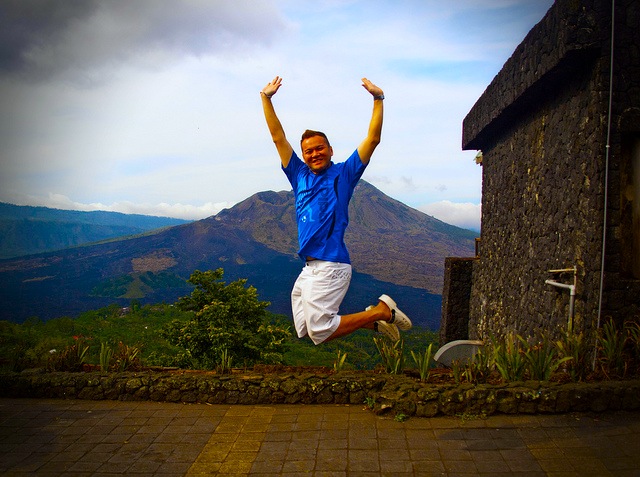
    Happy Jumping

    “A man who fears suffering is already suffering from what he fears.” ~Michel de Montaigne

    When I was an undergraduate in college I signed up to learn the Fundamentals of Modern Dance. My parents were less than thrilled.

    While many of my classmates likely took such a course for an easy A or a chance to revisit their leotard-clad youths, I picked my dance courses with an unannounced and secret ambition to be an instantly amazing dancer.

    This, I felt certain, was a sound place to rest my future livelihood upon.

    At the beginning of each class we were told to travel around the room in as many different ways as we could to warm up. We could roll or leap. A slow walk, a sprint, or a cartwheel were all acceptable.

    One day the teacher commented during this free form warm-up, “You can tell a lot about a person by watching the way they move.”

    I immediately imagined what I must look like to this grad student.

    Tall. Coordinated. Cautious.

    I would drop to the ground for a roll across my bottom ever so carefully, bracing myself so as to avoid any sudden, jarring impact.

    In the world of dance it is aggression and abandon that interest us. It occurred to me in class that day that I had a tendency to tiptoe. This realization began the slow and inevitable sinking of my dreams of being a yet to be discovered dance prodigy.

    And, just as my dance instructor’s words implied, my tendency to be overly cautious as a dancer was representative of how I engaged in other parts of my life.

    During my whole freshman year of college I visited only four places on campus—my classrooms, the gym, the cafeteria, and my dorm.

    Looking back, this seems like exceedingly strange behavior.

    I must have been trying to mimic the life I knew at my parent’s house, where my orbit was similarly contained within home, school, and sports practice.

    In high school the furthest I strayed from this well-monitored agenda was to covertly buy junk food from the convenience store near my house or to stay home from swim practice to watch Oprah.

    I clearly was not a big risk taker.

    At one point in the second semester of my freshman year of college I discovered I was quite bored with this predictable and caged existence.

    I remember sitting at my brightly lit desk in the corner of my dorm room, with my feet pulled up under me, and inspirational quotes on many tiny slips of paper all around me.

    I’d just spent the last hour or more journaling, and I’d run out of things to write about.

    My head felt dull and empty.

    I stared into space and thought of a pin that an elementary school friend had given me that read, “Life begins when you get one.”

    I’d always wondered if that pin had been a jab at my life skills as a fourth grader or if it had simply been a random trinket she’d passed on to me.

    I felt frustrated and cooped up, perhaps in a way I had felt for many years.

    It seemed as though I had much bigger wings than my little quadrant of a life on campus had room for. It was uncomfortable keeping them all bent and crumpled in that small space.

    That night I had the idea to try something new. To break free. To soar.

    It dawned on me that there wasn’t anything truly keeping me in those cramped quarters other than my habits, remnants of overprotective parents’ admonitions, and my own fears.

    Soon after this revelation I went to sleep.

    The next day my courage dawned anew. I would see the world, even if it killed me.

    I did the riskiest thing I could think of: I decided to take the metro into the city.

    I was pretty sure that by leaving the school grounds I was walking into treacherous terrain. My fear drew pictures of knife wielding, dementor-like beings who lived out at the fringes of my known world. If they didn’t get me I was pretty sure that my father would, when he found out I hadn’t listened to his directions to stay put on campus.

    A little before noon I gathered my courage, an apple, and a water bottle and put them into my backpack. I noticed the day was overcast as I walked to the train.

    Once on board I sat with the lumpy forms of my prized possessions clutched to my chest.

    My heart raced. My hands were perpetually sweaty. I was sure I would be found out, but still, I held my ground.

    It surprised me that I survived the metro ride without any harm befalling me. I got off at the Smithsonian stop on the National Mall. I was still frightened as I walked over to a nearby bench and sat down, gathering my wits about me.

    Here’s what I saw. People eating their lunch. People jogging. At one point my breath caught. It dawned on me that the world outside of campus was just regular people doing regular things. I ate my apple under a gray sky that has forever been etched in my heart.

    There really were not any monsters under the bed.

    I sat for a while longer and then turned around and got back on the train. Heading home to campus I felt a wave of pride and relief wash over me. I’d done it. The real world was laughably more benign than the world I’d concocted in my imagination.

    This heady success made me curious and determined to try more scary things. I began speaking up in class. I tried stand-up. I reached out to new people. I quit a job. I started a business. I’ve fallen on my butt in ways that I never would have previously allowed myself to in that dance class years ago. Through it all I’ve not only survived, but thrived.

    What I’ve ultimately learned is this: my fears of the unknown are usually big fat liars.

    Time after time I have tested these fears and found the world to be a much lovelier place than I would have guessed.

    So go ahead and do the one thing that scares you. You just may find that the world is a kinder place than your imagination.

    Photo by Kevin Poh

  • The Ultimate Letting Go: Release Your Fear and Be Free

    The Ultimate Letting Go: Release Your Fear and Be Free

    “Death is not the greatest loss in life. The greatest loss is what dies inside us while we live.” ~Norman Cousins

    It seems on some level we must know that nothing lasts forever. That knowledge must be built into our DNA; surely our cells know their own mortality, that entropy is an unavoidable fact of life.

    So why do we fight the inevitable? Why do we crave security and consistency? Illusion that it is, we look for promises where it’s not possible for them to be made.

    We buy all kinds of insurance, telling ourselves that if we spend that money, that bad thing won’t happen to us and we’ll be “safe.”

    We sign contracts, “ensuring” that that piece of property will always be ours and that that relationship, personal or professional, will never be anything but what it is today. We pour money into tricks to keep us young, seemingly viewing aging and death as the ultimate enemy of happiness and success.

    But what if we embraced change, not just as a necessary evil but even as a blessing?

    At a tender young age, I experienced the most significant loss of my life, the death of a very dear friend. Robbed of the innocence and naivete of youth, in the decade that’s followed I have learned far more painful, poignant, and enduring lessons that I know I would have otherwise.

    That loss also resulted in one big giant fear of the ultimate change—I was terrified of losing the people I cared about. It was nearly paralyzing, and this fear resulted in a lot of ugly insecurity. Ironically enough, that very fear may be just an unattractive enough quality that it could have driven away my loved ones and become a self-fulfilling prophecy.

    I am eternally grateful to the ones who loved me enough to stand by while I discovered this, building my confidence so that I could change from needing, clinging, and fearing their loss to loving freely and letting go.

    Whatever the nature of the relationship, there’s something about two people letting go of each other, knowing that the other doesn’t belong to you, that is so much more life-giving than those same two clinging tightly, bracing for the inevitable blows life will deal. It makes whatever comes that much more manageable.

    We are inexplicably linked to the ones we love. Whatever our religious or spiritual beliefs, we can all agree that when someone is lost, whether through death or change, they are not gone, in that if nothing else they remain in our heads and hearts.

    It is up to us to have the strength to remember that what has been has been real, and that it is not changed by the loss.  (more…)