Tag: sadness

  • Choose to Forgive and Grow from Your Pain, Because You Deserve to Be Happy

    Choose to Forgive and Grow from Your Pain, Because You Deserve to Be Happy

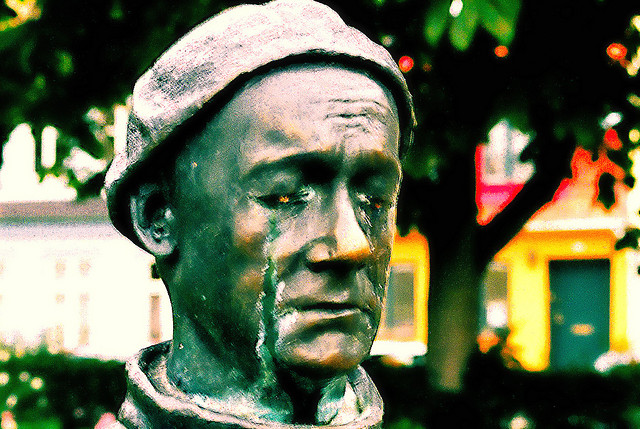
    Sad Man

    “Bad things do happen; how I respond to them defines my character and the quality of my life. I can choose to sit in perpetual sadness, immobilized by the gravity of my loss, or I can choose to rise from the pain and treasure the most precious gift I have—life itself.” ~Walter Anderson

    “Are you really okay?” I lost count of how many times my immediate family and friends asked me this question.

    My positive, light-hearted attitude seemed to be difficult for people to comprehend, but for me it was the only option and means for survival.

    I remember the situation like it just happened yesterday.

    I was driving home during a holiday weekend after hanging out with a couple of friends and received a text message stating, “This is his girlfriend.”

    At that precise moment, it felt like my heart stopped beating for a minute.

    I had to pull over at a gas station to catch my breath and allow the tears to flow down my cheeks so that the road could be visible again.

    I responded to the text and told her to call me. I spent over an hour listening to another woman cry and try to understand what was happening.

    The man that I had been dating for over a year had been with this woman for over five years and to put the icing on the cake, they live together.

    Fact vs. Fiction

    Imagine meeting your dream guy at a wedding party mixer. He was handsome, ambitious, athletic, family-oriented, fun, and the list goes on.

    He was the epitome of a typical “perfect mate” list so many people draft hoping to find that person.

    We had amazing chemistry, always laughing and enjoying good conversations. We spent a lot of time talking about our dreams, ambitions, family, and personal obstacles. It just seemed so easy, perfect in a sense.

    He and I both lived in different states, so we made travel arrangements to see each other.

    I would complain about us not seeing each other as often as I would have liked to, but his gentle reminder about the nature of his demanding job would quickly stroke my compassionate, understanding side.

    It was not until I moved closer that I began to question his behaviors.

    Originally, we lived over ten hours apart, but after I relocated due to a job promotion, we were now three hours apart. The excuses about not being able to travel due to his work schedule were a tad irrelevant at this point.

    His stories about his car being in the shop, which restricted his travel, and the story about his coworker moving in with him temporarily due to some personal problems did not seem to make sense after a while, but sometimes you want to believe the best in a person despite what your instincts are telling you.

    It was not until my hour-long conversation with his live in girlfriend of five years that I realized the extent of the lies he’d told. This dream guy was not the person I thought he was. I had been awakened from the dream.

    You Have a Choice

    It was at this moment, I had to make a decision. Did I want to react from an emotional, hurt place and focus on my pain? Or did I want to help this woman who had plans to marry this man, who lives with him, who has made many more sacrifices than I ever did to be with him?

    See, this woman had been with him to aid him while he transitioned careers, when his family disowned him, when he had nothing. Listening to her story tugged at my heartstrings and made me for a brief minute forget about my feelings.

    So many times in life we get so focused on ourselves and do not lend ourselves to be in the moment and hear others. Yes, what happened to me was like a scene out of your favorite Lifetime movie, but my situation was nothing in comparison to hers.

    I had the option to easily remove myself from the situation and allow time to heal the wound, while she had to literally undergo a complete lifestyle change.

    Life is about choices.

    You can choose to stay in bad circumstances.

    You can choose to listen to your instincts and your gut feelings that tell you something is not right.

    You can choose to support a complete stranger and be the listening ear during their time of need.

    You can choose to release a situation—the pain, the hurt, the sadness, the anger.

    And more importantly, you can choose to forgive someone you never received an apology from. Forgiving an individual who you feel may have hurt you initiates the healing process.

    The first step in the healing process was being able to truly address how I felt about the situation. Unfortunately, I did not have the opportunity to speak to this person to get an explanation or an apology, and I had to learn how to process my feelings without internalizing them.

    Using techniques such as journaling and exercising, as well as speaking to close friends and family about the situation, really helped with getting my thoughts out.

    However, I believe allowing myself to learn and grow from the experience is what helped me to move forward.

    It’s so easy for us to embrace the victim mentality and place blame on other people for their wrongdoing, but this is the very type of mentality that keeps us angry, bitter, and hurt.

    There is healing in accepting your role in each situation, and for me that was accepting the fact that I chose to avoid the signs.

    I wanted to believe that this person truly loved and cared about me and would never hurt me, so I chose to look the other way, and that is not a demonstration of self-love.

    Over the course of time, I was able to embrace the fact that every being is flawed and we all make mistakes. By no means was I or am I perfect, so who am I to hold this grudge and anger toward another being?

    At times, I thought to myself this man is delusional and absolutely crazy for trying to live a double life. However, for a brief moment, I realized he was probably miserable and seeking an escape from his reality and at that moment, I felt bad for him.

    For me, forgiving this man was pivotal for my life and well-being, because I was able to learn the value of self-love again.

    I found strength, joy, overwhelming gratitude, and peace. I also learned one bad relationship is not an indication that every relationship will be horrible.

    Choose to grow from your pain and learn to forgive, because you deserve to be happy.

    Sad man image via Shutterstock
  • We Can Be Positive Without Repressing Our Emotions

    We Can Be Positive Without Repressing Our Emotions

    “Im stronger because of the hard times, wiser because of my mistakes, and happier because I have known sadness.” ~Unknown

    One day at my part-time job, my supervisor told me that my boss wanted to talk to me. This was completely unexpected, so I was a bit concerned. Everything had been going so incredibly smoothly in my life for the past week or two, and all I wanted was to keep that oh-so-wonderful peacefulness going.

    But when I came into her office, I knew in my entire being that something was off. My stomach clinched up and I could feel my heart starting to sink down to my feet. As she spoke the words, “We are cutting your position, so we don’t need you anymore” I could feel my body wilting.

    It was as if I were a flower that had just been placed out in the middle of the Sierra Desert without any water or trees in sight.

    I could feel the tears in my eyes begin to emerge. I quickly resisted and held them in to maintain my composure and professionalism.

    As I drove home and began to tell my boyfriend, friends, and family what had happened, I noticed that I continued to maintain this composure. No crying. No tears.

    This was a bit weird for me, as in the past year or two it had been incredibly easy for me to breakdown and cry whenever I felt upset, stressed, or overwhelmed with emotion.

    The next day, I shared my bad news once again with some peers. In that sharing I noticed something that I was doing: Every time sadness came up in my being, I denied it by making a comment like, “But this is good because…” or “Well, the good thing is that…”

    I was restricting my emotions with my insistent thoughts telling me to focus on the positive.

    In a world where New-Age positivity is running rampant in the self-help or self-improvement sections of bookstores, it can be easy for us to get so caught up in the “be positive” mindset that we end up repressing our emotions.

    In repressing our true emotions, we end up hurting ourselves more than we would have if we simply expressed them from the get-go.

    However, at the same time, positivity is certainly not a bad thing. Striving to look on the bright side can help us reduce stress and accomplish things that wouldn’t have been able to if we had been sitting around sulking in self-pity, despair, or negativity for weeks or months.

    So, how can we manage to find a balance of living in a positive mindset while still being true to our own emotions?

    When the feeling emerges, just let it out!

    Yes, there may be some circumstances where you may need to wait a bit, but be sure to let it out. If you feel a surge of sadness come over you, cry it out. If you need to talk about your feelings, confide in someone you trust.

    Don’t tell yourself to “look on the bright side.” Don’t tell yourself to focus on all the positive things.

    Just accept the feeling that you are experiencing and allow yourself to release it. You’ll notice that you feel better in doing so.

    When the feelings feel “cleared,” speak to yourself kindly and positively.

    If you lost your job, tell yourself throughout the day, “I am capable of getting another job” or “I may find something even more fulfilling.”

    If you’ve just gone through a break-up, tell yourself, “I am worthy of a supportive relationship” or “I am creating loving relationships in my life.”

    Shifting negative, worrisome thoughts to more empowering ones can help us gradually shift our energy from negative to positive.

    Many self-help authors tell us to “be positive” because having a positive attitude helps us get more out of life. People are attracted to positive energy. And positivity helps keep us motivated to continue doing the things we need to do.

    Remember that some feelings are going to linger—and that’s okay!

    Even if you think you cried it all out or talked it through sufficiently, your feelings may linger.

    You’re always going to experience sadness, worry, anger, and so on. It’s part of being human.

    So remember to acknowledge and accept that. Though there are certainly positive, happy, successful people out there, know that they still have their low moments and hard days too.

    The key to dealing with them successfully is to completely accept whatever you’re feeling, and consciously choose to work through it so you can let it go.

  • Healing from Heartbreak: How to Lessen the Pain

    Healing from Heartbreak: How to Lessen the Pain

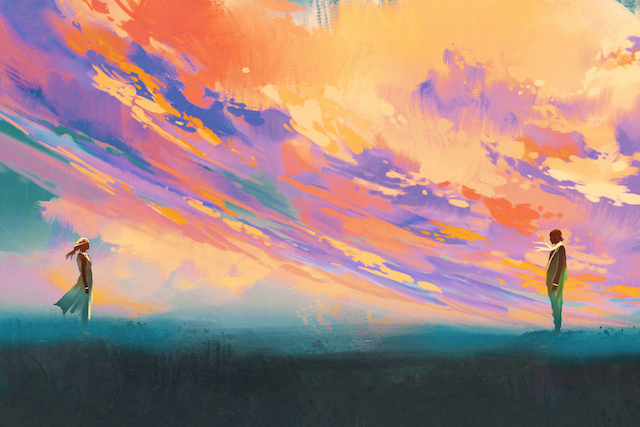
    Couple Back to Back

    To get over the past, you first have to accept that the past is over. No matter how many times you revisit it, analyze it, regret it, or sweat it…it’s over.” ~Mandy Hale

    Heartbreak. It’s a hard thing to go through. And the pain—it’s real, isn’t it? Like tangible pain. Almost as if that person, throughout the time we were with them, emblazoned our hearts with tiny little hooks and, one by one, they’re being wrenched out. Sounds dramatic, but that’s how it felt to me!

    This recent breakup has been the most significant in my life so far. I thought I was going to spend the rest of my life with this person. The harsh reality of that no longer being the case can be a lot to deal with.

    But you know time is a healer, right? As a tip, don’t ever say that to anyone who is going through heartbreak! While it’s true, it’s hugely unhelpful.

    Taking myself back to that place, I wanted to know how much time? Were we talking days, weeks, months, years? Relying on time isn’t good enough and it’s different for everyone. I wanted to feel better, even just a tiny bit better, right then.

    I thought I would share a few of the things I did in these first and very raw stages of heartbreak to lessen the pain a little. I really hope they might help you if you’re going through this right now.

    Wallow.

    Allow yourself some time to cry and hibernate at home if this is what you are drawn to do. For the first day or two, don’t worry about what you think you should do or what people tell you to do. You have to do what you need to do.

    Reach out to someone.

    You may have spent a few days on your own, so you need to step out of your own thoughts and spend time with someone who is close to you and who you trust. My own thoughts were my own worst enemy in that time of heartbreak.

    You might want to talk about the situation, which is good, but try not to vent so much that you conjure up more anger (and don’t spend time with someone who will encourage this either).

    I made this error at first, which resulted in more wasted mascara and feeling like I’d taken three steps back. So then I just let go and spent time with my mum and a couple of female friends who really looked after me, who I felt completely at ease with and didn’t have to put on a front for. It can be a real comfort to be around a nurturing person.

    Delete your ex from your social media accounts.

    The first thing I did was remove him from my Facebook friend list. Seems silly, but that in itself was a wrench. But I knew that having the temptation to look at what he was doing, who he was with, and then making assumptions about what was going on in his life would only exacerbate the pain and do nothing to heal the heartbreak.

    I also think that if the relationship ended particularly badly and there isn’t any valid reason to maintain contact (and really be honest with yourself on that one), delete their number so you won’t be tempted to text them. You will notice that after each day of no contact you will start to feel a little better.

    Do something new that you don’t associate with your ex.

    Reclaim your life as an individual. Often, what makes heartbreak so sad is that you feel a huge void. So start to create new memories to mark this new chapter, as it’s a great way to speed up the process of moving on.

    It can be anything, but make it something for you. Join a dance class, a course, or a sports group maybe—something that ideally involves other people too, as fresh social interactions and making friends is a great way to begin to get over heartbreak.

    Commit to not looking at old photos, letters, or texts or listening to songs that remind you of your ex for one month.

    I took off any songs on my iTunes that reminded me of him because I knew that hearing them so soon would have me feeling really low. I still actually haven’t put them back on. Eventually, these things may form fond memories but right now, dwelling on them will make the sadness and pain even more intense.

    By setting an initial time frame of one month, you can be comforted by knowing you’re not saying goodbye to them forever (you might decide you want to later down the line but you can think about that then). You’re just choosing to not put yourself though more pain by engaging with them right now.

    Laugh!

    Watch a funny film (a personal favourite of mine is Grown Ups), go and see some comedy, or go out with your close friends with the sole aim of having fun.

    I recommend that you don’t go overboard on alcohol, as that only seems to heighten any emotion I’m feeling at the time, and I don’t always make the best decisions in light of that. But that is personal to everyone.

    The aim is to go out and do whatever you think will make you laugh or at the very least smile, and be around people who make you feel good, lift you up, and show you that things will get better.

    Laughing is brilliant for an immediate shift in feeling, so do anything you can to laugh as much as possible!

    Learn and let go.

    If you’ve spent some time doing all the above, you’ll hopefully feel a little better and have a renewed sense of hope and perspective. You might even be ready to embrace this new chapter.

    This reminds me of that film 500 Days Of Summer, where the main character Tom starts sketching skylines on his wall. He’s broken through that initial pain of heartbreak and is spurred to channel the emotion in the direction of his passion for architecture.

    Think about all the things you want to do and achieve. Consider how you can use this experience as a way to move forward. What new habits would you like to introduce into your life, what kind of experiences do you want to have, what kinds of people would you like to meet?

    It’s still going to be tough, for a while, but that’s okay. Heartbreak is a crippling thing to go through but it’s also an amazing trigger for unleashing raw emotion and creativity that can be channeled in a positive way.

    It’s put me on a path of self-discovery, and although I have felt vulnerable, it’s forced me to look at things about myself that the relationship was perhaps concealing.

    Also, try your very best to let go of any anger, as it only makes you cling on tighter to that painful emotion. Forgiveness really is the key to moving on.

    Heartbreak is awful, there’s no doubt about it. All of these ideas are really just suggestions of things that have helped make my own journey that little bit easier.

    There’s no quick fix, but the more you start to gently push yourself in new directions every day, the more clarity you will start to get on the situation.

    I don’t think there can be any definitive conclusion on how to cope with heartbreak. Just that with every small step you take forwards, each time you look back, it won’t be quite so painful.

    Couple back to back image via Shutterstock
  • You’re Not Bad; You’re Crying Out for Help

    You’re Not Bad; You’re Crying Out for Help

    Help

    “A kind gesture can reach a wound that only compassion can heal.” ~Steve Maraboli

    My fourth grade teacher was named Mrs. King, and she was a no-nonsense, fairly stern presence who enforced the rules and kept us kids in line. I was a timid kid who wouldn’t have dared to break rules anyway, and I assumed that Mrs. King didn’t like any of us, especially not me.

    The only time we left Mrs. King’s classroom was to have our hour a week of “Music,” which meant trouping off to a downstairs room that contained a piano and a slightly manic woman who played us old folk songs to sing along with, like “Waltzing Matilda” and “Sixteen Tons.”

    One day in music class I transformed into a bad kid. Instead of quietly following the rules, I made cat noises during the songs. I poked other girls in the ribs. I loudly whispered forbidden things, like “Linda is a peepee head.”

    I don’t remember even wondering why this transformation had happened to me. It just happened.

    As we trouped back upstairs I felt defiant, but when I heard several of my classmates telling Mrs. King about my behavior, I began to deflate. “Ann was bad in music class,” one of them said. “She was meowing in the songs,” added another.

    “Ann,” said Mrs. King, “please come with me.”

    I was struck dumb with terror. Now I was going to discover what happened to bad kids. I didn’t know what it would be, but I was sure I wasn’t going to like it. Shaking, I followed Mrs. King out into the hall, and into the tiny teacher’s lounge. We sat down.

    “Ann,” she said. I didn’t dare look at her. My heart was pounding. What was she going to say about my misbehavior? What was my punishment going to be?

    The silence stretched on, and I realized she was waiting for me to look at her. I dared to peek at Mrs. King’s face, and I was astonished. I had never seen such compassion.

    She said, “I know your dog died…”

    It was true. A few weeks before, out on a walk with my beloved dog Trixie, I had let her off the leash, and she had been hit by a car when running across a street to rejoin me. My parents had quickly bought me another pet.

    There were no models in my family for allowing feelings to emerge. I remember being mystified when I saw my brother briefly weep for Trixie—and he hadn’t even been there when she was killed. I hadn’t been aware of feeling anything at all.

    In the teacher’s lounge with Mrs. King, under her kind gaze, my eyes filled up with tears. I nodded. Yes, my dog had died.

    “Maybe you would like to write a story about your dog. I know you like to write. Maybe you could give it a different ending if you want.”

    I did write that story, but even before I began, the shift had already happened. I had my self back. It was okay to feel sadness and shock.

    There was room in the world for my feelings, because someone with compassion had seen them.

    Having feelings in response to events is normal. When we can share those feelings with caring family and friends, it allows the feelings to go through a natural cycle of change.

    Understandings surface: “Oh, now I see what bothered me so much.” Our circle of support strengthens. After a while we feel refreshed, stronger, ready to go on.

    Many people, though, grow up, as I did, in a family and a culture where feelings are not welcome. Feelings are embarrassing, or they show we are weak, or they are something we “just don’t do” and nobody talks about.

    In some kinds of families, feelings are actually dangerous. “Stop crying or I’ll give you something to cry about.”

    When we repress and deny our feelings, we cut off a natural process of healing and self-understanding. When that avenue is closed, what is left to us is “acting out”—being “bad,” being depressed, addictive behavior of all kinds.

    Many of us deaden our feelings with unhealthy food, drugs and alcohol, video games, overwork. At some level we feel deeply out of balance, but we suppress that too.

    This can lead to a feeling of being inwardly at war, trying to stop whatever it is, feeling ashamed, yet finding ourselves still doing what we don’t want to do.

    What can change this is a process of bringing compassionate understanding to our warring parts, a process I call Inner Relationship Focusing.

    First, slow down. Pause and make contact with your body.

    Use this kind of language to describe the inner war: “Something in me wants to eat potato chips, and something in me says that that is disgusting.”

    Then say hello to each of the parts you have identified. “Hello, I know you are there.” (Notice how that already shifts how all this feels.)

    Next, assume, as Mrs. King did with me, that there is some life-serving reason why each part is behaving as it is.

    Lastly, ask each one: “What might you be wanting to help me with?” Wait for the answer to come from inside. When an answer comes, let it know you hear it. Don’t try to make it change. Change comes when something you feel is deeply heard with compassion.

    I am so grateful for all the ways that compassion shows up in my life. I have learned that every part of me is trying to save my life. And in bringing compassionate inner listening to my warring parts, I have healed from writer’s block, addictions, and social anxiety, to name just a few.

    And I never cease being grateful to Mrs. King, who showed me that day long ago that someone can look past outer “bad” behavior to the worthwhile person inside. A deep bow to you, Mrs. King.

    Helping hand image via Shutterstock
  • Why We Don’t Need to Try So Hard to Be Happy

    Why We Don’t Need to Try So Hard to Be Happy

    Smiling

    “Happiness is the absence of striving for happiness.” ~Chuang-Tse

    Everywhere we turn these days we seem to be bombarded by it.

    TV commercials try to lure you into buying their products on the promise they will give you it. Magazines scream it from the front pages via sultry images and sexy block titles. Gossip magazines practically have a mission statement that fame will guarantee it. Corporations equate money with it.

    So what exactly is it? What’s this one common denominator that seems to be a worldwide obsession? Happiness!

    There are thousands upon thousands of articles, seminars, webinars, TV shows, and more that try to teach us how to achieve it. How to be a happier you. How to make your family happy. And, not forgetting our furry friends: How to make your pet happier.

    It’s as if happiness is some salient commodity that will come to us if we just. Try. Hard. Enough.

    We are repeatedly told that it’s floating around out there in the world and that it can be ours. Just look at the model on the front cover of that magazine practically flaunting it with her beaming pearly white smile. Even Pharrell is in on the game and wants us to be HAPPY (and maybe do a little happy jig).

    I don’t know about you, but I’ve been seeing these types of juicy promises for years and, quite literally, bought right into them. Sure, if I just [insert the blank] enough, I will be happy. Surely this begs the question, have we pushed happiness over the cognitive horizon?

    Think about it, the purpose of all these happiness-promisers, when you scratch behind the surface, is more likely the pursuit of profit rather than the pursuit of happiness. There’s usually a reason they keep touting the wonders of this magic commodity—it sells!

    People love to read about quick fixes, how-to’s, and how not-to’s and willingly part with their hard earned cash to learn these supposed secrets. Spoiler alert…there are no secrets!
    If we choose to believe that what we as a collective species yearn for is just out of our grasp then will we keep hunting forever. Perhaps we need to take a fresh look at what happiness actually is and whether it really is attainable by following steps one, two, or three.

    Is it even designed to be a constant state of being? Who really walks around all day with a huge grin plastered on their face without the aid of narcotic substances or a seriously deranged mindset?

    The first mistake is believing that happiness is outside of us, and something that needs to be attained. It’s not. It’s a state of being, an emotion that can pass through us when we least expect it, usually when we aren’t paying it any attention.

    It can creep up silently sometimes for just a few minutes at a time before it skulks away from whence it came. As humans, we have a myriad of emotions, and as women, add a few hundred more on top of that.

    In just one day we can feel a sense of love, pain, loss, betrayal, jealousy, anger, or laughter. I don’t think that as humans we are designed to have one singular constant emotion; we are complicated creatures.

    So why don’t you see the media touting other less fun emotions? Why don’t we see articles titled “20 Ways to Feel Sadder,” “How to Cultivate More Rage in Your Life,” or “How Not to Ugly Cry”? No one would buy it! So why should we buy into the idea that we should be happy all the time?

    Some of my happiest moments have been unexpected. I find it’s usually when my brain is engaged in the flow of another activity I really enjoy that I feel a sudden sense of complete happiness.

    Another happiness inducer for me is being out in nature. That makes me feel really happy.

    There is no one-size-fits-all happiness inducer. It can vary from hanging out with your kids or your pets to a simple walk on the beach to cooking a family meal.

    My point is that it is not something that you have to work toward in the future, for it is not obtained through external effort. It is within us and we carry the possibility of it within us at all times whether we realize it or not.

    Once we understand that happiness is not something that we can buy, sell, trade, or exchange, we don’t need to worry so much when we have a bad day.

    However, do pay attention when it’s a great day, a positive day. Be thankful for it and acknowledge it. That way, when the smiley face pops up again (and it will, for nothing accelerates the good stuff in life like gratitude does) you are aware of it, again and again.

    It can even be a feeling that you start to look forward to, like a best friend popping over for a cup of tea and a chat. Understand and accept that the feeling is temporary but will return. After all, if you’re best friend popped over and announced she was going to be staying a while, like the rest-of-your-life-awhile you might not be so happy about that.

    If we didn’t have the sad, cry-on-your-way-home days, how could we learn to really appreciate the fun, exciting days?

    So, stop reaching, searching, and trying to buy your slice of happiness, as it’s not something that is out of your reach.

    Know that, and next time you’re standing in line at the grocery store, don’t reach for the magazine promising you the Disney fairy tale happy ending. It doesn’t exist—it’s a fairy tale!

    Instead, smile at the cashier and wish her a lovely day. You will make her day a little happier and in doing so, maybe some of that magic will rub off on you.

    Photo by ferobanjo

  • 7 Steps to Move Through Sadness (and What We Can Learn from It)

    7 Steps to Move Through Sadness (and What We Can Learn from It)

    Crying Man

    “Our sorrows and wounds are healed only when we touch them with compassion.” ~Buddha 

    He had been ignoring the symptoms for months, possibly even a year. When my husband came home from the doctors, he told me his PSA score was high, and he needed to have a biopsy. That date came and went, and we were waiting for the pathology report.

    The doctor assured us it was nothing.

    The image of standing in the car dealership parking lot, talking with my son and son-in-law will be forever etched in my memory. When the phone rang, I saw that it was he, and expecting it to be good news that I could share with my family, I answered it quickly.

    These were the words that I heard: “It’s not good; I have cancer.”

    Still holding the phone to my ear, I looked at my son. A million thoughts were racing through my mind. Should I tell him? I felt the weight of my husband’s words pressing me into the pavement.

    My son and son-in-law were carrying on their conversation as if the world had not stopped. In my mind, it had. How surreal.

    As I lowered the phone to my side, and I said, “Dad has cancer.” From that moment on, life as I knew it changed. I am well acquainted with the definition of sadness.

    Sadness is emotional pain associated with, or characterized by feelings of disadvantage, loss, despair, hopelessness, and sorrow. An individual experiencing sadness may become quiet or lethargic, and withdraw themselves from others. Crying is often an indication of sadness.” ~Wikipedia

    Over the past three years I have had to make multiple adjustments to the story I had envisioned for my life.

    I have a beautiful mobile with birds carved out of driftwood. It was as if someone had flicked one of the birds, sending the others (still tethered together) flying in all directions.

    Just as the birds seemed to settle down, they got flicked again, and then again, and then again.

    Did you know grief is an actual physical process that our brain goes through after a significant change? 

    The limbic system in our brain holds an internal image of life as we know it. When a major change takes place, new neuropathways must be built in order to accommodate an updated version of reality.

    Building a new picture literally takes a lot of energy and time depending on the nature of the change.

    If we didn’t understand that grieving is a necessary process in order to move forward, we might become impatient and want to skip this unpleasant period of time.

    Numbness, shock, feeling unsettled, and sadness are among the symptoms of grief.

    Out of the hundreds of emotions we experience, sadness is one of the basics. 

    From a survival perspective, it has been said that sadness was hardwired into us to keep us safe after significant loss. It is associated with a feeling of heaviness, sleepiness, and withdrawal from activity and social connections.

    That makes perfect sense when you consider that grief (or the time your brain is updating) causes impaired short-term memory, decreased concentration and attention span, absent-mindedness, forgetfulness, and distraction.

    After a major loss it would be unsafe to go hunting or gathering.

    Having said that, sadness remains the one emotion people try to avoid the most, and understandably so. To be sad is to be vulnerable, and again, from a primitive perspective, this is a threat to our very survival.

    We need to remind ourselves that our minds have evolved, and though it is unpleasant, we can survive sadness. Not only can we survive sadness, it can be our teacher if we let it.

    It is impossible to think of any benefit of sadness while in the midst of it, but pondering it before the fact can go a long way in lessening the blow when it occurs. Understanding is powerful.

    We can’t make sadness feel good, but we can navigate it better and even learn from it.

    What Can Be Learned from Sadness?

    • Sadness can help clarify our identity by showing us what we value.
    • If we are mindful of the visceral sensations of sadness, we become aware it is an emotion; it’s not who we are.
    • It is a signal that we are processing something we don’t want to let go of. We can explore our attachments from a non-judgmental stance.
    • As we become acquainted with sadness, we are able to have empathy for others, which strengthens our connections.
    • We are better able to appreciate the good times when we have something to contrast it with.
    • When we have the courage to handle sadness, we expand our capacity to handle other hard things.
    • When we honor our sadness, we learn that passing through it is expedited.

    “Getting over a painful experience is much like crossing monkey bars. You have to let go at some point in order to move forward.” ~C. S. Lewis

    Navigating Sadness

    1. Identify the source of your sadness.

    Emotions have more power when their triggers are kept secret. Name what is making you sad. It doesn’t have to be one thing.

    2. Determine if it is justified.

    Do yourself a favor and ask if what your sad about is true. If it is not, let it go. Usually if you are sad it is legitimate, even if the reason isn’t what you thought it was to begin with.

    3. Validate your emotion.

    Allow yourself to feel sad. What you are feeling is real.

    4. Practice self-compassion.

    Show yourself some love. Don’t be angry with yourself. In Tara Brach’s words say, “It’s okay, sweetheart.”

    5. Accept. 

    Unconditionally accept your new reality. You don’t have to like it, approve of it, or give life a pass. Acceptance allows you to manage change more effectively.

    6. Create a survivor’s picture. 

    Paint a new picture of your life with you being a courageous survivor. Find the meaning in your suffering. 

    7. Remember that every day deserves a new picture.

    Stay in the here and now, and allow a new picture to unfold each day. When you are flexible enough to allow for small changes regularly, big changes, though shocking, are easier to handle. 

    Navigating rather than running from sadness has deepened my perspective on life. It has helped me savor time with loved ones, be more compassionate with others who might be struggling, and not become unsettled over small things.

    It has taught me that I have little control over what comes to pass in my life, but I have courage to pass through hard times, knowing the sun will shine again, if I allow it.

    Most of all, I have learned that time and being compassionate toward myself are the most reliable healers.

    I can feel vulnerable and still know I will survive.

    Disclaimer: This article is in reference to non-depressive sadness. If you have been excessively sad for an extended period of time for no apparent reason, please seek professional help.

    Photo by Anders Ljungberg

  • How to Be Happier Without Really Trying

    How to Be Happier Without Really Trying

    “Happiness is the absence of trying to strive for happiness.” ~Chuang Zi 

    I sat in the café wondering why I wasn’t happy.

    I had been listening to all the happiness and self-help gurus. I was meditating every morning. I ate a healthy diet. I exercised four times a week. I was working hard on projects I was passionate about. I wasn’t wasting time and watching my life tick away.

    Yet somehow, as I sat in the café, I wondered how I could have been “doing it all right” and yet everything felt incredibly wrong.

    There is no mistaking the feeling of being unhappy. I wasn’t quite sure where it originated, but I constantly felt exhausted, uninspired, and like the energy was being sucked from my body.

    I had this mantra constantly running through my head: If you only get one life, the solution is to cram as much stuff into it, every minute, and waste no time so that you will die fulfilled.

    But it just wasn’t working.

    So I did what we naturally do. I went to Google, the mystical tech god, to help show me why I wasn’t happy and to help figure out what to do. 

    I tried all the usual suggestions. I started journaling and keeping a track of all my moments I was the most grateful for during the day.

    I started engaging in random acts of kindness; I would buy strangers’ coffee at Starbucks, pay for someone else’s toll, or leave a gift on someone’s windshield.

    I increased my meditation time to at least forty-five minutes per day and focused on staying mindful throughout the day. 

    But the big problem was still there. I felt stressed constantly, unhappy, and had the weird feeling that even though I wasn’t wasting any time, and was using my life wisely, I just wasn’t enjoying life that much. 

    I just could not understand why at the end of the day I felt so grumpy Every. Single. Time. 

    And then, as most coincidences in life happen, I stumbled upon an article written by Martha Beck, the famous life coach, about how there was one overlooked path to success—and it wasn’t hard work.

    In fact, quite the opposite. And it was something seriously in short supply in the modern world. 

    Play. 

    At first I thought, “What?” How is that possible? I’m having fun all day long. I go to work, come home, exercise (which I enjoy), work on my side project (which I enjoy), do some studying for a bonus class (which I enjoy). I play all day! 

    No, no, no, Martha’s article said. That is not play. Play needs to be restorative; it needs to be a time when your brain and body are turned off and simply in flow. 

    I decided to do an experiment. 

    Every guru since the dawn of time has mentioned how children are closer to “the truth,” and that by observing them we could learn quite a bit.

    So every day for a week I sat in a café. And I just observed. I did nothing but watch people interact, watched them come and go, and in particular, watched how children interacted. 

    The first thing I noticed was something obvious: Life is a game to kids.

    They spill milk and then laugh. Something breaks and they act scared for a moment, then laugh. It’s pouring outside and they jump in puddles and laugh. 

    It’s incredible the 180 that I (and many other adults) make. 

    Spilled milk? Annoying. Now my clothes are dirty. Broken wine glass? Great. Now I have to spend $15. Raining outside? Ecstatic. I get to run around freezing and potentially get a cold. 

    It was insanity. We were both experiencing the exact same things in life and I was giving myself a heart attack, while little kids were rolling on the floor laughing. Same situation. Big difference.

    I then did a flow test, where I wrote down every single moment of my daily schedule and analyzed whether I was having fun or not. 

    I quickly realized I wasn’t playing. I wasn’t engaging in the relaxed, restorative kind of play that leaves you feeling strong and healthy. 

    I was too concerned with “making this one life count” that I was jamming every minute of every day with some kind of activity, for fear of wasting a single minute.

    And the horrible irony was that I was seeking happiness by not wasting time, but “doing more” didn’t get me there.

    Isn’t that crazy? One of life’s most important practices is so easily overlooked because we take it for granted.

    There’s the old saying about how kids smile 400 times a day, but by the time they reach adulthood they only smile 10 times a day. I think it’s true.

    And for me, the real secret to enjoying life, beating unhappiness, and beginning to reverse depression was all about playing more in life.

    And, like meditation, everything can become an exercise in playfulness. 

    Maybe this life-changing secret will help you too: If you aren’t enjoying life enough, stop pursuing happiness and just play.

    Happiness will come as an unintended side effect.

  • Why Letting Ourselves Feel Bad Is the Key to Feeling Better

    Why Letting Ourselves Feel Bad Is the Key to Feeling Better

    “The more you hide your feelings, the more they show. The more you deny your feelings, the more they grow.” ~Unknown

    For as long as I can remember, I have been on a quest to heal myself. From a very young age I can remember feeling different from my peers. I was always painfully shy and paralyzed with insecurity and fear, which left me in a constant state of self-criticism.

    Hardships in my young life, including the suicide of my father, left me with the belief that life was just hard.

    Unfortunately, I also thought that it wasn’t supposed to be and that something was wrong with me because I had so much pain in my life. My head swirled with shame wondering, “What’s wrong with me? Why can’t I get over this, or that?”

    My solution to the pain I felt was to basically wage war on myself and conquer all of the difficult feelings I experienced.  

    I truly believed that I just needed to figure out the right formula, accomplishments, and milestones, and then I wouldn’t have these painful feelings and I would finally feel okay in my skin.

    Along the way, I hit all of the targets I had identified: I lost weight, I earned degrees, I made money, I did lots of therapy; I created a life for myself where everything looked the way it was supposed to, but I still struggled with fears and insecurity.

    This mission I was on to fix myself only added insult to injury, because my primary thought process was that something was seriously wrong with me and if I wanted to be happy, like I thought everyone else was, then I needed to stop having what I had deemed “bad” feelings.  

    Rather than giving myself a break, I found the path of greatest resistance.

    I was in a constant battle with myself, where every time I had an uncomfortable feeling I jumped on myself for feeling that way and immediately set out to change that feeling. I couldn’t distinguish the difference of “I’m having a ‘bad’ feeling,” from “I am bad.”

    When we react negatively to our own negative emotions, treating them as enemies to be overcome, eliminated, and defeated, we get into trouble. Our reactions to unhappiness can transform what might just be a brief, passing sadness into a persistent dissatisfaction and overall unhappiness.

    Unfortunately, no matter how hard we try to avoid emotional pain, it follows us everywhere. Difficult emotions, like shame, anger, loneliness, fear, despair, confusion, are a natural part of the human experience. It’s just not possible to avoid feeling bad.

    However, we can learn how to deal with difficult emotions in a new, healthier way, by practicing acceptance of our emotions, embracing them fully as they are, moment to moment. For me, this has meant creating space in my life for all of the parts of experience, the ups and the downs.

    Unfortunately, in Western culture very few of us have been given the tools to tolerate our own difficult feelings, or those of another person. Not only do we want to avoid feeling pain at all costs, we want to prevent the people we care about from feeling their own pain.

    Recently I found myself in a situation where I was confronted with a past loss, and although it has been two years since the loss, I found myself emotionally wrecked, as though it had just happened yesterday.

    In my sadness, I reached out to a few friends for comfort and was surprised at how difficult it was for them to tolerate my difficult emotions.

    In an effort to help, they wanted to battle the sadness and told me things like I was sitting in self-pity and feeling sorry for myself; that I needed to practice more gratitude in that moment.

    Again, they weren’t trying to be hurtful; they were just trying to help me stop feeling sad.

    Thankfully, I’ve done enough work on this path to know that that was not what I needed. In that moment, I simply needed to allow myself to feel sad.  

    I knew the feeling wasn’t going to last forever and I had a choice, I could either drag it out by waging war on myself, or I could recognize that, for whatever reason, in that moment, I just felt sad.

    Again, our reactions to our difficult emotions can transform what may have been just a brief, passing sadness (as was the case for me in this situation) into persistent dissatisfaction and unhappiness (two decades of my life).

    By learning to bear witness to our own pain and responding with kindness and understanding, rather than greeting difficult emotions by fighting hard against them, we open ourselves up to genuine healing and a new experience of living; this is self-compassion.

    If you’re someone who is used to beating yourself up for feeling sad or lonely, if you hide from the world whenever you make a mistake, or if you endlessly obsess over how you could have prevented the mistake in the first place, self-compassion may seem like an impossible concept. But it is imperative that we embrace this idea if we are to truly live freely.

    When we fight against emotional pain, we get trapped in it. Difficult emotions become destructive and break down the mind, body, and spirit. Feelings get stuck, frozen in time, and we get stuck in them.

    The happiness we long for in relationships seems to elude us. Satisfaction at work lies just beyond our reach. We drag ourselves through the day, arguing with our physical aches and pains.

    Usually we have no idea how many of these daily struggles lie rooted in how we relate to the inevitable discomfort of life. The problem is not the sadness itself, but how our minds react to the sadness.

    Change comes naturally when we open ourselves to emotional pain with uncommon kindness. Instead of blaming, criticizing, and trying to fix ourselves when things go wrong or we feel bad, we can start with self-compassion. This simple, although definitely not easy, shift can make a tremendous difference in your life.

    It’s important to remember that embracing your strengths and well-being does not mean ignoring your difficulties. We are measured by our ability to work through our hardships and insecurities, not avoid them.

    We are all fighting some sort of battle, and when we accept this truth for ourselves, and others, it becomes a lot easier to say, “I’m struggling right now and that is okay.”

    Not being okay all the time is perfectly okay.

  • How Pain from the Past Can Be a Gift in the Present

    How Pain from the Past Can Be a Gift in the Present

    “When something bad happens you have three choices. You can let it define you, let it destroy you, or you can let it strengthen you.” ~Unknown

    Don’t hate your past. No matter what it contained or what it did to you, the past shapes who you are, not just for the things you felt damaged you but for the lessons you can take from it.

    I love working with the people I call the world shakers. They’re the people who want to make a difference in the world so that they leave it in a slightly better way than they found it.

    I love these types of people because they’re so driven by their heart and passion for others. They’re kind. They value people.

    You know what else these people have in common? They have empathy for others and a desire to make the world a better place. Not in a showy, “give me the Nobel Peace Prize” kind of way (although a bit more showy-ness wouldn’t go amiss!) but in a gentle, modest way.

    Do you know what really amazes and inspires me about world shakers? They’ve had their own hurts, challenges, and heartbreaks but instead of letting those things harden them and make them brittle, they’ve allowed themselves to stay open and vulnerable.

    They’ve taken those things that have wounded, battered, and pierced them and transformed the experiences into fierce empathy for others.

    They can’t walk past the person who’s struggling because they know how it feels to struggle. They have a way of recognizing the human condition in all of us.

    They turn it outward and use it as a learning experience, one that enhances their ability to empathize and drives their conviction to change things for others.

    It could be the mother who refuses to pass on the cycle of abuse she experienced to her own kids, or the teacher who bans the world “stupid” from her classroom because she can remember how much it crippled her to hear it as a child.

    It could be the man who gives coffee to the homeless guy every day because he can knows what it’s like to feel like no one cares about you, or the recovering addict who works with troubled teens to try and save them the pain of his experiences.

    World shaking is often driven by a need to make things better because of the pain we’ve suffered ourselves. 

    Still, I still have to catch myself when I bemoan the things that have happened to me over the years. Like everyone, I’ve had my share of unpleasant, difficult, and down right heart breaking experiences.

    For the longest time I was angry at the world because I’d experienced them. I hated the mistakes I made. I berated myself for my screw-ups and stupid choices. I felt defined by them—embarrassed and soiled—like I should be wearing a T-Shirt with the words “Damaged Goods” on it.

    One day, a very wise person said these words to me:

    Everything that has ever happened to you is the perfect preparation for the person you’re destined to become.

    And everything flipped.

    Those things that I had regretted so much had shaped me. What’s more, I had a choice in it. I had inadvertently used those things that had happened to me as things that drove me forward. Many of the things I’d become interested in, my passions, and my values were driven by those very experiences.

    I’m a passionate advocate for reducing the stigma associated with mental health issues, and I started my whole journey of learning about personal development and emotional resilience because of my own battles with stress-related illness.

    I help people find joy, passion, and a sense of purpose at work and that’s undoubtedly because I spent so many years in jobs that didn’t suit or that where I didn’t feel I was making a difference.

    I’ve also struggled in jobs that really did suit me because I didn’t know how to handle the stresses and challenges our work can bring. I didn’t understand the importance of asking for help, having strong support networks, actively managing stress, and making sure I wasn’t mentally giving myself a hard time too often.

    Having to take a break due to burn out and stress felt horrible at the time it happened to me. But during that time out I studied, trained, and read—a lot!

    I realized that resilience is a practice, not some innate skill that you either have or you don’t. I learned how to develop my own resilience and that made me immensely driven to help others do it, too.

    My dark times also forged my sense of empathy, a key skill I bring to my work. If I’d had the “charmed” life I’d originally wanted, would this have been the case? Somehow I doubt it.

    All of the lessons I’ve learned led to wisdom that can only be gained through experiencing life’s ups and downs.

    Hard lessons learned are deep lessons. They shape us. Most of us are familiar with the term post-traumatic stress, but did you know there is also a phenomenon called post-traumatic growth?

    It’s the ability to grow through adversity—to come out the other end stronger, clearer, and with a renewed zest for life.

    I think that’s what many of us fail to recognize in ourselves, that those dark times, far from diminishing us, can give us the most profound of gifts—the gift of recognizing human life in all its messy, painful, courageous glory.

    We can take those gifts and use them to be a beacon to others to say, “It’s okay. I’ve been there. This too will pass.”

    And that surely is a real gift worth giving.

  • Setting Emotional Boundaries: Stop Taking on Other People’s Feelings

    Setting Emotional Boundaries: Stop Taking on Other People’s Feelings

    “The way you treat yourself sets the standard for others.” ~Sonya Friedman

    The longer I stayed on the phone, the more agitated I became. My mother was on the other end, as usual, dumping her emotions on me. I had moved to Los Angeles for graduate school in part to escape all of this—my mother’s unhappiness, my sense of responsibility, the pressure to be perfect.

    When I hung up the phone, I felt an overwhelming sense of anger. At the time, I could not (correction: would not) allow myself to admit that I was angry with my mother. I couldn’t reconcile having such negative feelings and loving my mother at the same time.

    After all, hadn’t she sacrificed so much for me? Hadn’t I always considered her to be my closest confidante? Didn’t I proudly declare her to be my best friend when I was younger?

    Even the most positive memories between my mother and me have been eclipsed by the shadow of her depression.

    As a young child, I could never understand why my mommy was so sad all the time. I cherished the rare days she was carefree and silly and held these moments close to my heart. When she slipped into a depressive state, sleeping days at a time in her dark room, I willed her to come out.

    Early on, I learned to temper my behavior and my own emotions so as not to instigate or prolong her sadness. In my young mind, I made myself responsible for her and was not able to separate her feelings from mine.  

    I wanted her to be happy and thought that if I was always “good,” she would be. When she wasn’t happy, I blamed myself.

    Unconsciously, my mother fed this belief when she constantly bragged to others that I was the “perfect daughter.” The pressure to live up to my mother’s expectations overwhelmed me. I suppressed many negative feelings and experiences in favor of upholding the ideal she and I had co-created.

    That day, I turned this anger toward a safer target, my co-worker. That day at work, I blew up. I can’t remember what I said, but I distinctly remember the look of confusion on her face. My frustration with my inability to express myself made me even angrier. I excused myself, ran to the bathroom, locked myself in the last stall, and bawled my eyes out.

    Soon after, I took advantage of the free counseling services on campus. Over the next several weeks, my counselor helped me realize that it was okay to feel the way I was feeling. This was a radical idea for me, and one I struggled with at first.

    Because I had suppressed my own feelings for so long, when I finally allowed them to surface, they were explosive.

    Anger, resentment, and disgust came alive and pulsed through my body whenever I spoke with my mother during this time. While she seemed to accept truth and honesty from other people, I tiptoed around certain topics for fear of upsetting her.

    I never felt I could share the difficulties and challenges I experienced in my own life because this contradicted who I was to her. I felt I had no right to be unhappy. When I attempted to open up about these things, she often interrupted me with a story of her own suffering, invalidating the pain I felt.

    She seemed committed to being the ultimate victim, and I resented her for what I perceived as weakness.

    I realized that to get through my graduate program with my sanity intact, I needed to limit the amount of time and energy I gave to her. Instead, I found ways to protect and restore my energy. Writing became therapeutic for me. I found I could say things in writing I was unable to verbalize to my mother.

    This won’t be an easy letter for you to read, and I apologize if it hurts you, but I feel like our relationship is falling apart, and one of the reasons is that I’ve kept a lot of this bottled up for so long. I never thought you could handle honesty from me, and so I lied and pretended everything was okay because I was always afraid I would “set you off” or that you would go into a depressed mood.

    You unconsciously put so much pressure on other people (me especially) to fill your emptiness, but that’s a dangerous and unrealistic expectation, and people can’t and won’t live up to it. And they start to resent you for it. I do want you to be happy, but I’m starting to realize that I can’t be responsible for your happiness and healing; only you can.

    Seeing my truth on paper was the ultimate form of validation for me. I no longer needed to be “perfect.” I gave myself permission to be authentic and honored every feeling that came up.

    When I was ready, I practiced establishing boundaries with my mother. I let her know that I loved and supported her, but it negatively affected me when she used our conversations as her own personal therapy sessions. I released the need to try to “fix” things for her.

    I took care of me.

    Do you have trouble establishing healthy emotional boundaries?

    Take a moment to answer the following questions adapted from Charles Whitfield’s Boundaries and Relationships: Knowing, Protecting and Enjoying the Self.

    Answer with “never,” “seldom,” “occasionally,” “often,” or “usually.”

    • I feel as if my happiness depends on other people.
    • I would rather attend to others than attend to myself.
    • I spend my time and energy helping others so much that I neglect my own wants and needs.
    • I tend to take on the moods of people close to me.
    • I am overly sensitive to criticism.
    • I tend to get “caught up” in other people’s problems.
    • I feel responsible for other people’s feelings.

    If you answered “often” or “usually” to the above statements, this might be an indication that you have trouble establishing healthy emotional boundaries.

    Like me, you’re probably extremely affected by the emotions and energy of the people and spaces around you. At times, it can be incredibly hard to distinguish between your “stuff” and other people’s “stuff.”

    It is incredibly important to establish clear emotional boundaries, or we can become so overwhelmed and overstimulated by what’s going on around us that it’s sometimes hard to function.

    Here are a few ways to begin the process of establishing healthier emotional boundaries.

    1. Protect yourself from other people’s “stuff.”

    I can feel when someone is violating a boundary because my body tenses up. I realize that my breathing is very shallow. I feel trapped, small, helpless.

    The first thing I do is to remind myself to breathe. The act of focusing on my breath centers me and expands the energy around me. In this space, I can think and act more clearly.

    When I feel myself becoming too overwhelmed, I try to immediately remove myself from the situation. Sometimes all it takes is a couple of minutes to walk away and regain my balance. Other times, I have had to make the decision not to spend time with people who consistently drain my energy.

    Having a safe space to retreat, practicing mindfulness and meditation, or visualizing a protective shield around yourself are other methods that can help restore balance when boundaries are invaded.

    Find out what works best for you.

    2. Learn to communicate your boundaries in a clear and consistent way.

    For many, this can be the most difficult part of the process for various reasons. We don’t like to appear confrontational. We’re afraid that if we set clear boundaries for ourselves, the people in our lives will begin to resent us. However, learning to communicate boundaries effectively is necessary for healthy relationships.

    I’m not comfortable with that.

    It doesn’t feel good to…

    I’m not okay with…

    I’d appreciate it if you wouldn’t…

    Please don’t…

    If you cringed at the thought of using any of these phrases, you’ll be relieved to know that communicating your boundaries doesn’t always have to be with words. You can also effectively communicate through the use of non-verbal.

    Closing the door, taking a step back, shaking your head, or signaling with your hands can be less threatening ways of letting others know what you will and won’t accept from them.

    3. Be patient with the process.

    When I first realized that I was taking on the negative emotions of my mother, I became extremely resentful and disgusted with her. Instead of taking responsibility for my role in allowing this dynamic to occur, I blamed her for every negative thing that had happened in my life.

    I closed myself off from her and shut her out completely. Our relationship became incredibly strained during this time as we both readjusted to the new boundaries I was setting.

    Eventually, I was able to allow her to have her own emotional experience without making it about me. I could listen and no longer become enmeshed or feel obligated to do something about what she was feeling.

    Whenever you change a pattern, it is natural to feel resistance from inside as well as outside the self. As you practice, your ego may start to act up and make you feel like you are “wrong” in establishing boundaries.

    Others may also become resentful of your newfound assertiveness. They may be used to a certain dynamic in your relationship, and any change has the potential to cause conflict.

    Remember to be kind to yourself through the process and repeat the following affirmation:

    I respect and love myself enough to recognize when something isn’t healthy for me, and I am confident enough to set clear boundaries to protect myself. 

  • Coping with the Pain of Loneliness After a Breakup

    Coping with the Pain of Loneliness After a Breakup

    Breakup

    “Relationships are like glass. Sometimes it’s better to leave them broken than hurt yourself trying to put it back together.” ~Unknown

    I am at a phase in my life right now where I’m struggling with loneliness.

    Most of the time, I feel a deep sense of disconnection from the world around me and the people I share it with.

    The mere fact that I am writing this in the small hours of the morning, deafened by the ear-splitting silence of an empty flat, unable to sleep, simply emphasizes this point to me even harder.

    The empty flat in question is mine. And the situation in which I find myself was not part of the plan that I had envisioned for my life at this moment in time.

    Everything that was once familiar has now changed.

    It was during the end of summer of last year that I split up with my long-term boyfriend. We had begun our six-year relationship stepping out into the big wide world, side by side, doing the grown-up thing of getting our first place together.

    It was new and exciting. The future looked promising. And to be fair, it did work, on and off, for a respectable number of years.

    However, fast forward past the cluster of good times and the occasional happy holiday, and I found myself having to face up to the heartbreak of a damaged relationship. In particular, the daunting prospect of sharing my future with another human being who, in essence, I just did not feel a connection with anymore.

    I could choose to spend my days feeling alone, on the surface still part of the relationship, but deep down feeling emotionally detached and distanced from him.

    I could patiently wait for the days where I felt an element of hope—the momentary optimism that everything would turn work out okay for us in the end. I could even reason with myself that this is only a rough patch in our relationship, just a little blip in the overall bigger picture.

    Or I could face up to the truth and accept the glaringly obvious: it was over, unfixable, and time to move on.

    For months my thoughts were in constant battle. The laborious task of trying to make things work seemed like it was set up to be life-long endeavor. Neither of us had the enthusiasm anymore. It seemed we had simply lost the passion.

    In the end, we knew what was coming. It was time to call it a day, move on, and go our separate ways.

    Here is what I’ve learned about dealing with loneliness:

    Feel your emotions.

    When you strip away a big part of your life, you feel exposed, empty, and vulnerable.

    During the time after my breakup, I experienced deep feelings of unshakable loneliness. And I still suffer with these feelings from time to time.

    However, I have learned that masking those uncomfortable feelings (my escapism being alcohol and meaningless dates) only leaves the pain unattended for a while longer.

    I started to understand that I needed to accept my loneliness as a true emotion. It would not just softly fade away, no matter how hard I tried to numb my feelings or look for distractions.

    As you experience your emotions, you start to feel lighter. Give them the time and space they need to be fully expressed. Write down your thoughts. Talk about them with someone. Acknowledge that they do exist and that what you are feeling is very real to you.

    Trust that the pain does eventually lose its intensity, making room for you to experience a sense of calmness and clarity amidst the difficulties.

    Listen to your own advice.

    I have indulged in my fair share of self-help books over the years, ranging from detailed accounts on depression, self-esteem issues, and more recently, tips and tricks on beating loneliness.

    These stories may offer a few moments of fleeting comfort as you flick through the pages. But they are not able to take the sting out of the raw emotions that you experience first-hand, such as during those times when you are sitting alone, feeling fed up and isolated from the world around you.

    Therefore, I have learned to take only the advice that works best for my own mind, body, and spirit, and leave the rest for someone else.

    Maybe you are someone like me who prefers to stay at home, enjoying a book, watching a film, or having a bath rather than getting “out there,” meeting people, and forging new relationships.

    Sometimes you just need to give yourself a break, making space during those times when you need to rest and restore. Go at your own pace. Understand that you are your own best teacher. And only you will know when it feels right to take the brave step out of your comfort zone into the unknown.

    Realize there is nothing to fix.

    We know the world is a busy place, crammed full of busy people with busy lives. But that doesn’t mean we need to rush around trying to mend everything that is seemingly wrong with us all of the time.

    While learning to stay with uneasy emotions, I realized that I didn’t need to find a speedy resolution for the difficult feelings. It’s okay to feel lonely; it’s just one of our many human emotions.

    In fact, it was a relief. There was no need to force myself to search in all the wrong places for the solution anymore. I am certainly not the only single person in the world. Why did I feel that I needed to fix this aspect of my life so soon? It wasn’t even broken.

    Try and enjoy the freedom that comes from being detached. Appreciate the opportunity to gain introspection on yourself. You may even discover new interests or familiarize yourself with old forgotten hobbies now that your life has shifted focus.

    Accept how it is.

    Accepting that there is nothing wrong with how I am feeling gave me the grace to relax. There is no problem right now; therefore, there is nothing I urgently need to attend to.

    I know that eventually life will change again; it always does.

    How I am feeling now may not be a true reflection on how I feel in a few weeks, months, or years’ time. And I trust that I will stumble across whatever it is I am looking for at some point again in the future.

    Right now, though, I am experiencing my life as it is, complete with its bundle of thought-provoking emotions that come as part of the package.

    I have learned to accept that this is just another passing chapter in my story, purposely placed here to keep life interesting and meaningful.

    It may not be a highlight, but it is still part of my life. And I can live with that.

  • Finally Letting Go of the Pain and Moving On after a Breakup

    Finally Letting Go of the Pain and Moving On after a Breakup

    “Getting over a painful experience is much like crossing monkey bars. You have to let go at some point in order to move forward.” ~C. S. Lewis

    Another year over and you’re still troubled by a relationship that ended last year or in years past. The whole thing is dragging on too long—why can’t you just get over it? But every time you think about it or bump into your ex, you feel ruined again

    How about giving your feelings another shake?

    Rattle them in any direction—a new one. If it turns out to be the wrong direction you can correct that later, but just move them, any which way, get them out of the rut they’re in. One way to do this is by talking it through, even more than you already have.

    Why Talk it Out?

    Perhaps something remains unsaid for you, even now. Perhaps that’s why your feelings remain so strong. Or perhaps they’re entangled with non-relationship issues—a sense of getting older, time passing, concern about not having children, or the life you hoped for.

    Perhaps part of you holds out hope you could get back together again. Perhaps you need to admit that and let go of it.

    Maybe you fear you won’t meet anyone else like your ex. You won’t, but you will meet someone. Just they will be different.

    Explore all this.

    How It Helped Me

    I attended a few counseling sessions a year after the end of a relationship. It had been a long, happy relationship that had started in my early twenties, but it burned out as our lives took us in different mental and geographic directions.

    For the year after the breakup I got on okay with life, but the shine had gone. A veil hung between me and true engagement with the world. I could smile but the smile never went to my eyes.

    I honestly thought I had done all the talking I could at the time of the breakup—my ex and I had even attended couple-counseling together—but a year later, something still felt stuck in my chest.

    So I sat myself down in front of a counselor. I didn’t want to or feel like it, but suddenly all this stuff came out of my mouth—stuff I found laughable or which fell away as I said it, stuff I didn’t know I’d been thinking. Apparently, it just wanted to get itself off my chest. And it had needed a year to mature sufficiently to do it.

    I kept apologizing to the counselor for talking endlessly and not letting her get a word in. But it worked. I realized I was over the relationship, but not the process of its ending—the fatigue, the accusations, the indecisions, the reverberation among friends and family.

    I was suffering a lingering childlike shock that such things could happen in life. Discovering this, and finally putting words to it, allowed those feelings to go.

    Some other things I’ve learned along the way:

    If You’re Feeling Overwhelmed By Emotion

    You’ve just bumped into your ex and you’re feeling highly emotional. Half of you wants to cry, half of you would do anything to get rid of those feelings.

    This is your mind panicking to get rid of emotions it cannot understand. The mind likes to understand things but can never understand the heart. Hearts have no logic.

    So, abandon trying to comprehend what happened or why. After all, at this stage, is there anything your ex could say or do that would change how you feel?

    Befriend the part of you that gets emotional. Don’t beat it up. It’s normal and healthy to feel how you feel. You’re alive!

    Besides, emotion shows you have a heart and would not wish the same sorrow on others. This aspect of your personality is to be treasured. Wouldn’t you love it in anyone else?

    So, instead of trying to quash emotion, ask “Is it possible for me to feel like this and still be okay?” Because your heart is stronger than you know; it is designed to handle being broken.

    Loving Someone Does Not Mean You Should Be With Them

    It also doesn’t mean that they’re good for you. Face this reality squarely. You can have a happy life, even with great sorrow in your heart, even while carrying loss.

    Physically, your body is probably keeping going just fine and it’s only your mind that has the problem. Its idea that “things should have been different” conflicts with what actually happened, so it wedges your mental wounds open.

    That causes the turmoil. Give in.

    Admit: “This is exactly how it should have been. This is exactly how it is.” Shrug while saying it. Facing the truth is difficult. As a result, life may feel more painful, yet perhaps also more peaceful, because conflict with it is reduced.

    Our Sorrowful Life And Happy Life Can Exist In Parallel

    Author A.S.Byatt has occasionally spoken about the longevity of bereavement. She lost her son forty years ago. He was eleven.

    Twenty years later she told an interviewer, “You don’t get over it and you suffer greatly from people supposing you will. You suffer from people not understanding the pain of grief.”

    Another twenty years on, Byatt shared with another interviewer a metaphor she developed with her friend Gill Cadell, a widow. It involves parallel train tracks:

    “One is appalling and one you just go along,” explained Byatt. “Gill said to me, ‘Is it alright to be pleased to see the flowers in the morning?’ And I said, ‘Oh yes, because the other track is always there.’”

    The interviewer asked, “You mean the appalling track?”

    “Yep.”

    “And it’s still there?”

    “Oh yes, it hasn’t changed.”’

    You see, winter trickles into the beginnings of spring. It’s okay to try loving a new person while still loving your ex. The heart can simultaneously run along multiple tracks.

    Making The Decision

    My friend, who dabbles in NLP, had a client who was still heartbroken eighteen months after breaking up with her boyfriend. The woman was explaining to my friend, in detail, how she felt—a curdle of sadness, anger, hurt—and how she was convinced she would never be able to move on.

    My friend stopped her, saying, “And now tell me, how you will feel when you are over him?”

    The woman described how free she would feel, how relieved that it was behind her, how keen she would be to get on with life, how confident and unafraid she would be if she happened to meet her ex.

    My friend suggested, “So why don’t you just feel that now?”

    The woman’s life transformed instantly.

    For her, it was about making a decision to move on. If it has been a while since your relationship ended, perhaps this choice is also available to you. Play with the idea.

    Five More Minutes And We’re Going On A Bike Ride

    I remember a story about Kylie Minogue that went something like this. She had recently been diagnosed with breast cancer and her boyfriend sometimes found her crying on the bathroom floor.

    He would firmly tell her, “Okay, honey, you can cry for just five minutes, then I’m taking you on the bike for a ride.”

    She’d think, “Hmm. Actually a bike ride sounds pretty good.”

    This is the attitude to take. It doesn’t matter if sorrow comes again and again, just each time draw a line in the sand. And beyond that line make something else happen.

    It Has Been Long Enough Now

    People may tell you it’s time you got over your relationship. Like with bereavement, you don’t ever have to “get over” it, but you may need to more forcibly move yourself on, and if you’re stuck, to take a new approach to doing so.

    Hurtful experiences, ones that emotionally and logistically reset our lives, leave us with two choices: open up more or close down.

    The braver choice—the one that will allow new things to enter your life—is to open up.

    So how about setting aside a few weeks to unfold this a little more? If you can’t climb out, dig out. Book yourself a few sessions with a counselor whether or not you feel like it or think it will help.

    Go in, sit down, see what happens. Give your heart the chance to say everything it wants regarding the relationship and whatever is entwined with it. What emerges may surprise you.

    Give yourself a new and different opportunity to leave it behind.

  • Dealing with Pain or Abuse: You Can Let It Destroy You, Define You, Or Strengthen You

    Dealing with Pain or Abuse: You Can Let It Destroy You, Define You, Or Strengthen You

    Strength

    “When something bad happens you have three choices. You can let it define you, let it destroy you, or you can let it strengthen you.” ~Unknown

    When I was twenty-four, leaving my ex was my “something bad.” It was about as bad as it could get.

    After four years of dating, I was certain marriage was right around the corner. Our lives were completely intertwined. I knew he wasn’t a great guy for me, but that didn’t matter because I truly believed I was ready to take the next step.

    One night changed everything.

    I found his drugs, confirming what I had suspected all along: his attempts at recovery were just an act. Admitting to flushing them initiated the scariest experience of my life. Immediately, he searched for his pills and destroyed my apartment when he couldn’t find them.

    When he finished looking, he came after me next, verbally and physically terrorizing me as if he had not already proven his anger. I broke free from his grip and fled, in search of help. This wasn’t our first incidence of violence, but enough was enough.

    I was tired of living alone in silent abuse.

    First, It Defined Me

    When I say that night changed everything, I mean it. Aside from the major life change, something shifted in my mind. I was no longer Akirah, but rather a single, lonely, and abused victim who would never find happiness.

    The abuse diminished my self-esteem, leaving me very little to rely on for healing. Low self-esteem made it easy for me to define myself as a victim. And I preferred it that way because doing so allowed me to remain focused on him.

    This continued for several months until I eventually grew tired of defining myself by my abuse. Unfortunately, being myself did not feel like a feasible option, as I had no clue who I was anymore.

    For four years I skipped out on traveling and making new friends because of our relationship. I never made even the tiniest decision without considering his feelings first. Recalling all the sacrifices I made for him gave me a sick feeling to my stomach.

    It was too much to think about. I needed to numb the pain.

    Then, It Destroyed Me

    My destruction occurred gradually, progressing with the help of alcohol and men. Every weekend was exactly the same routine: get dressed up, get drunk, get attention. I rarely skipped a week.

    My problem with alcohol was actually secondary to my addiction to male attention. Any hint of male validation caused a rush inside of me.

    A look was good. A smile was great. Wanting my name and number?

    Jackpot.

    I maintained an illusion of confidence because I read somewhere that men are attracted to that. But nothing else could be further from the truth. If anything, I had confidence in what I wanted and who I was trying to be, but certainly not in myself.

    After each short-lived relationship, I would think of my ex-boyfriend, wondering if I had maybe made a mistake. I knew deep down it would never be right between us. I could not imagine living my entire life being abused and controlled.

    So in order to avoid getting back together with him, I would find other men to distract me.

    Because, you know, being alone was not an acceptable option.

    I was destroyed. Yes, the abuse started it, but my refusal to heal brought me over the edge. It took one sentence during an episode of Oprah to change my perspective.

    Then It Strengthened Me

    “You have to walk through the fire of grief.”

    I did a double take.

    Fire? Grief? This advice did not sound enjoyable.

    But nothing else was working. Time was not healing my wounds; hangovers and breakups were becoming exhausting and embarrassing.

    Who was I becoming? Someone who needed to walk through the fire of grief, that’s who. So I tried it. It was terrifying at first, of course, but I tried it.

    My first order of business was crying. Can you believe I would never let myself cry? After deciding to walk through the fire of grief, I knew that needed to change. So I cried.

    Then I joined a support group for other survivors of abuse, which initiated even more crying. It felt awful talking about past violence and abuse, yet comforting to know I wasn’t alone. It was as if each tear gave me strength.

    And with that strength, I blossomed.

    I traveled across the country. I ran my first 10K. I even started wearing my hair in its natural state—my afro.

    My life was moving forward and I was choosing how. It felt wonderful. Hard. But wonderful.

    Strength Was In The Healing

    Yes, abuse is awful, but I don’t regret my experience.* I don’t regret how it temporarily destroyed me either. Because without that destruction, I would have no idea today of how strong I am.

    (Sometimes a breakdown can be the best thing to happen to a person.)

    Whether you are letting your “something bad” define you, destroy you, or strengthen you, remember this: Pursue healing.

    Rather than running away from the pain, feel it. If you’ve hit rock bottom, acknowledge it. If your “something bad” defines you, consider defining yourself as someone in healing instead.

    No matter what season you’re in, it’s never over until it’s over.

    So if you don’t feel strong right now, that’s okay. Don’t pursue strength; pursue healing. Because your strength is in your healing. And healing is wonderful.

    Hard.

    But wonderful.

    Plus, you deserve it.

    *Though my abuse was horrific, I did not marry my abuser or have children with him. Additionally, he did not seriously injure me or end my life. Too often I hear stories about others whose choice to safely leave their abusive relationships was tragically taken away from them. It is in their honor that I do the work I do. If you think you might be in an abusive relationship, I urge you to contact the National Domestic Violence Hotline for support and guidance. You are not alone. You are worth healing. 

    Photo by Hartwig HKD

  • Why Letting Yourself Feel Broken is the Key to Feeling Whole

    Why Letting Yourself Feel Broken is the Key to Feeling Whole

    “Life always waits for some crisis to occur before revealing itself at its most brilliant.” ~Paul Coelho

    I spent my twenty-fifth birthday crying alone at the foot of a mountain. While I had always found solace in spending time by myself, in that moment, I did not recognize my “self.”  Without my self, I had nothing.

    I was utterly alone.

    Three weeks earlier, a man was shot just feet away from my front door. My then-boyfriend and I performed CPR until an ambulance arrived, but the man had been killed on impact. The police left my home at 3 a.m.; at 7 a.m., I was headed to the airport for a family wedding.

    There is no mourning at a wedding.

    Forced to paste on a smile, I told myself and everyone around me that I was fine. Never mind the fact that I felt like all of the air had been sucked out of me. If you tell a lie enough times, you start to believe it yourself.

    For weeks, I assured myself that I was strong enough to bear the heavy burden of witnessing a violent crime. I always identified as a strong, independent woman. I couldn’t let go of that, I felt, or I might not ever get it back.

    But as the days passed, I started to realize that something was different. The girl who was known for her constant zest for life and naturally cheerful demeanor was replaced by a woman who was exhausted, short-tempered and—it took me weeks to realize—depressed.

    When the truth finally broke free, I was overwhelmed. Sitting there, at the base of my favorite Phoenix mountain, all I could think was, “I am not okay.”

    In that moment, I was not okay.

    But the truth has a funny way of setting you free. Faced with a sensation that was completely foreign and extremely uncomfortable to me—the idea that I was more vulnerable than I wanted to believe—I finally saw a glimmer of light.

    Only in honoring my emotions was I able to let them go.

    After crying myself weak, I climbed that mountain. As I reached the top, I inhaled deeply and felt my breath for the first time in weeks. The tears that flowed at the top were entirely different: they were tears of gratitude.

    The moment that I learned to allow myself to be “not okay” was a turning point in my adult life.

    To allow yourself to feel is to allow yourself to really live.

    Once I was able to look at my emotions honestly, I was able to look at my life honestly and to realize that I did, in fact, want to participate wholly in it. I appreciated life more deeply than ever before.

    Months later, when my dear friend lost her dear friend, I shared my secret: “It’s okay to be not okay.” Amidst all of the sympathetic wishes and “it will get betters,” that message resonated most deeply. Her grief was okay.

    Sometimes, people need permission to break. And it is from that broken place that they are finally able to become whole again.

    Time and time again, when faced with some of life’s hardest moments, I have shared my secret: “It’s okay to be not okay.”

    Accepting that simple truth has been exactly the remedy that allowed the people I love to move into a space where they are more than okay—they are thriving.

  • We Can Control How We Respond to Things We Can’t Control

    We Can Control How We Respond to Things We Can’t Control

    Deep in thought

    When we can no longer change a situation, we are challenged to change ourselves.” ~Viktor Frankl

    Every year, March 13th is difficult for me. This year, I marked the day with a long hike in the woods near my house and an extra-long hug for my wife, Kathleen. My sisters and I called each other and just said his name out loud. Wherever he is, we want him to know he is gone but not forgotten.

    March 13th would have been my brother Jimmy’s 64th birthday. He only made it to 26.

    But March 13th is also a time to reflect on what Jimmy meant to me, because although his death was a tragic event, it inspired me to choose a better life.

    April 23rd, 1975. A day that will be in my consciousness as long as I breathe.

    It was my sister Elizabeth’s 17th birthday and the day that my brother Jimmy, whom I worshipped, died.

    I was 11; Jimmy (as I said) was 26. My other older brother Robert (I am the youngest of eight) broke the news to me and my three other closest siblings, Michael, Madeleine, and Elizabeth.

    Robert told us and then held me in his arms as I screamed, “That’s not true! Jimmy can’t die! It’s a mistake!”

    But it wasn’t. He was gone, and my life changed that day forever.

    This devastating change was not my choice, but what I did next was. It was always my brother’s dream that his seven other siblings would escape our abusive father. I knew that, to honor Jimmy, I would never go back home.

    My mission from that day forward was to grow up and take control of my life. In the darkest moments—fighting with my foster parents, for example—I would say to myself, “Stay strong for Jimmy.”

    My path was far from smoothly paved; many bumps lay ahead. But I knew at that early age that whatever the universe threw at me, I could at the very least control my reaction and my journey forward, out of darkness into light.

    We choose to quit jobs, get married, adopt an animal, but of course there are many life events we don’t choose—a divorce, an accidental pregnancy, or the death of a loved one. Yet we can still choose how we deal with and react to these occurrences in our lives. 

    During tough times, our emotions run the gamut: denial, anger, fury, despair, numbness, isolation, desperation. In order to heal, we must feel. But we have a say in what we do with our feelings. 

    There are no right or wrong reactions, only what serves us and what doesn’t.

    It may help you to be angry and express your rage; it may help to be alone for some time. What is crucial when moving through a crisis is maintaining self-awareness.

    Check in with yourself daily, perhaps through meditation or journaling, and ask yourself: Where am I today? Is this helping me? What might be the next phase of this transition?

    While we have to relinquish control over the circumstances, we can still maintain our connection to ourselves. We can work with this knowledge, to paraphrase Victor Frankl, to face the challenge of changing ourselves.

    “Change” has become a dirty word in today’s world; advertisers avoid it because consumers associate the word with challenge and difficulty. 

    But whether we like it doesn’t really matter—life-altering events will change us, in one way or another. Instead of tuning out to avoid the pain, dealing with and even embracing tragedy and its consequences gives us an active role in guiding our own change and growth.

    Transformation is all around us. Transitions are the birthing pains, alternately exhilarating and difficult, that can bring wondrous, challenging, beautiful changes into our lives.

    What change are you dealing with now, and how are you responding to it?

    Photo here

  • Tragedy Can Help Us Find Our Life’s Purpose

    Tragedy Can Help Us Find Our Life’s Purpose

    Alive

    “Sometimes in tragedy we find our life’s purpose. The eye sheds a tear to find its focus.” ~Robert Brault

    Just over two decades ago, I happened to be planted in the Midwest. Chicago. The southside to be exact. A location once recognized as a haven for successful black people handling their business while their kids frolicked throughout the streets, making up secret handshakes, basking in the sun and enjoying their youth.

    And then, as the years progressed, things began to change; our haven was becoming less safe.

    As if a nebulous cloud began to form over our neighborhood with a torrential rainstorm of bullets impending, some parents forced their children to stay inside as the lightening and thundering began to rain down.

    The unfortunate news is that some children of varying generations were left out in the storm, with many, many lives lost due to senseless violence. And I wondered, “Why me?” Why do I deserve such shelter while so many of my brothers, sisters, aunts, and uncles must brave the storm and suffer?

    “Why was I so blessed?”

    You see, I may not have grown up with the riches of the world, but I was indeed wealthy—inundated with support, guidance, education, and love. I was recognized as “one who would make it out,” and indeed I did, but not without the scars, physically and emotionally, to show for it.

    As I journeyed forward, attending a top twenty university, my erudite persona led many of my classmates to believe that my younger years were a cake walk—that I must have come from a rich, wealthy and white neighborhood. But in fact, I was born amongst my own, tender brown, beautiful skin.

    But still, my peers did not believe me. I was in a battle. Lest did I know, it was much with myself.

    So I began to fear and hate where I was from so much that I often cried to my mother, screaming that I did not want to return home during the summer months. But I had to anyway. So I did—in mental steel shackles—going straight from work to the gym to home everyday in fear, feeding the hunger of my hatred even more.

    I was such a frustrated young man who had the world in the palm of his hands, but who had not yet recognized its power.

    It wasn’t until I began traversing that palm that I realized there was a much bigger world out there and that many more people had gone through far more than me, and interestingly enough, still had enough umph to persist and fight on.

    So I decided to give it a shot. Try it out. Test it out and venture to places, near and far away, discovering more of the world while discovery myself. As I did, the pain of Chicago traveled with me. A few years ago, right after I moved to the Dominican Republic, I received this email on January 7, 2010 from my mother:

    Hey babe. Some sad news, Cody was killed on Sunday right down the street. He was with Marlon in a car and a guy walked up and shot them both, but Cody died on Monday with 14 gunshot wounds. So sad. I love you.

    And then later again that year, a few days after I followed my dreams of moving to Los Angeles, I received a phone call from my mother stating these words:

    Marlon was killed just up the block from our house. He was with some people and someone came up and shot him in the neck and back. Be Careful. Love you.

    Out of all the people in my life that had passed on, why were these two more significant?

    Sure, we did not stay in the best of contact past high school, but we shared something much stronger—something much more powerful: childhood dreams. 

    As we played football and baseball in the abandoned lot directly across the street from my house, we dreamed of growing up to become the likes of Randy Moss and Derek Jeter. We had huge dreams—dreams that we knew would one day come true.

    But after I lost both of them, the dream deflated and the big question: “why me—why am I so freakishly blessed?” returned, until I was asked an even greater question: “Why not you, Alex?”

    Instead of counting your blessings and asking why you are so blessed, why don’t you live a life focused more on sharing those blessings?’

    “Sometimes in tragedy we find our life’s purpose. The eye sheds a tear to find its focus.”

    I cried a lot and it was not until others helped me meditate upon it and realize that all the bad and unfortunate events in my life could be leveraged as lessons to help me, instead of destroy me. And indeed, they did, but it took time—years.

    The shedding of those tears did in fact help me find my life’s purpose while understanding life’s purpose, which is to teach us, to expand us, to challenge us, to grow us—to evolve us to show us that nothing is permanent in life, and to be grateful for this year, this day, this moment.

    Gratitude, once taken into practice, can change your life.

    And now, I can honestly look back with a better understanding of my past while holding gratitude for what was and what is. I choose to trust the struggle moving forward, because the more I go through and learn, the more I can help others.

    And the same goes for you. You have the power to help others.

    We are not only here to share our stories of heroism, happiness, and jubilance, but also to share our stories of hurt, pain, and sadness to be an extra shoulder to cry on and to show others that there is someone out there that not only knows their pain, but also feels it.

    So today, I ask you: what lessons have you learned from the hardest times of your life and what would you say to the person who is going through something similar right now?

    Because I guarantee there are some individuals reading your comments that could really use the love and encouragement.

    This article is dedicated to Cody, Marlon, to the children of Chicago (of all generations) and to the world.

    Photo by Leland Francisco

  • 4 Lessons on Surviving and Thriving When Times Are Tough

    4 Lessons on Surviving and Thriving When Times Are Tough

    Joyful

    “Every day may not be good, but there’s something good in every day.” ~Unknown

    Five months ago, I was sitting outside with a friend when a mosquito bit me under the arm. I went to scratch the bite and felt a lump on the side of my breast. My doctor sent me for a mammogram, ultrasound, and fine needle biopsy. I had breast cancer.

    I am a 44-year-old single mother of two beautiful young girls with primary custody. I am also Director of a psychology practice and self-employed.

    The day I was diagnosed was the day I lost the carefully constructed control I thought I had mastered in my life. I juggled many balls in the air every day, and they all came falling down.

    I strongly believe in salvaging good from bad, but I struggled with finding the silver lining. The fear and anxiety waiting on test results to find out if the cancer had spread were crippling, and I was haunted by dark thoughts of death.

    I was lucky. The cancer had not spread, as far as they could tell. The tumor was contained and I had a genetic test done that showed minimal benefit from chemotherapy, assuming I had lumpectomy surgery, radiation, and then took a hormone drug called Tamoxifen for the next ten years.

    I think I have found the silver lining in this journey, and my dearest hope, over and above the cancer being gone for good, is that I hold onto these lessons:

    1. Let go.

    My life before breast cancer was highly organized, disciplined, and controlled. Every spare moment was productive. I saw clients back-to-back, I ferried my daughters to activities, I crammed my weekends with social events, and I had multiple to-do lists for each facet of my life.

    I have spent the past five months going where medical people tell me to go, doing what they tell me to do, and waiting. The radiation has made me extremely tired and my brain is simply not functioning.

    I returned to work three weeks after surgery in an advanced state of denial, and kept on trying to be the old me but finally accepted I was not.

    I don’t do very much now. I go to radiation treatment each day. I come home and do some household chores and then rest. For hours. I may read a book, listen to music, play the piano, I even started a painting. I then pick my girls up from school and spend time with them. And it is a revelation.

    Control is an illusion. Letting go of control is liberation.

    2. Stop asking, “Why me?”

    Why not me? That is the profound answer I have come up with to answer this most difficult of questions. Bad things happen to good people and life is not fair. The test is genuinely is how we cope with the adversity thrown at us.

    I am proud of how I have coped with having breast cancer. I have remained psychologically intact, albeit bruised and battered, and allowed myself to be vulnerable. I have dealt with the spectre of dying and have gotten my affairs in order just in case. I also now have a bucket list, and I am crossing things off one by one.

    The purpose of life, I have decided, is not to be happy. It is to realize our potential, to love and to be loved, to do new things and take calculated risks. I do not want to get to the end of my life, be it next year or in forty years, and have regrets.

    The biggest regrets are the things we did not say or do. So focus on what you can do instead of dwelling on why there are some things you can’t.

    3. Ask for support.

    I have never been good at asking for or accepting help. I have asked people to come to appointments with me, to pick up my children, to come and sit with me while I cry. I have never been good at crying either, and I have had crying jags that lasted hours since being diagnosed.

    I had friends over one day and as they were leaving, I slid to the floor and could not get up because I was sobbing so hard. They bundled the girls and me, took us to their home, and looked after us, me weakly protesting that I was fine. The loss of control and identity associated with melting down felt soul destroying.

    So many wonderful people have offered to help, and I am learning to say, “Yes, thank you, that would be lovely.” And it has made me and my relationships stronger, not weaker.

    Sometimes we have to ask for what we need and accept being vulnerable.

    4. Practice gratitude.

    In the blur of normal life, I think we are all guilty of wanting more. We forget to be grateful for what we have, and at its most fundamental, that is life. I would love to be able to write that I am now genuinely grateful for my life, but this would not be entirely true just yet. I slip into denial at times and fall back on old habits, but I am learning.

    I am grateful for the immense generosity of my parents, my friends, and my boyfriend, who have given of their time, money, and emotional energy. The parents at my children’s school who delivered us meals. My work colleagues, who have kept my business going, and acquaintances who have contacted me to express their concern.

    I have let go of the disappointment I felt over those people who I expected to be there for me but were not.

    I have also found myself grateful for things that I took for granted. For my beautiful children, a vase of flowers in the hallway, a good cup of coffee, a flock of birds on my walk, or the ability to pay the bills. I am grateful that I am not dead.

    Mindfulness and gratitude let us stay in the present and ward off anxiety, which comes from living in the future.

    I obviously do not know what the future will hold. My chance of dying from breast cancer related illness is a lot higher than average, but I am so lucky. I am lucky to be alive, and so are you.

    Every day we are not in the ground is a good day, a chance to remake ourselves and our lives into things of value and beauty. Tragedy and trauma can have silver linings. Sometimes it is hard to find them and even harder to hold on to them, but I am holding on tight.

    Photo by geralt

  • When Everything Goes Wrong: Getting Through One of Those Days

    When Everything Goes Wrong: Getting Through One of Those Days

    Stressed

    “You may not control all the events that happen to you, but you can decide not to be reduced by them.” ~Maya Angelou

    Sometimes you just have one of those days, where things happen to you over and over again, as if someone up above is testing to see if you really want to have a good day. Unfortunately, 95% of us give in and decide that it’s just going to be one of those days.

    What if one of those days really meant the happiest day of your life, despite the fact unfortunate events temporarily plague your existence?

    A few weeks ago, a highway patrolman took pity on me because I was having one of those days.

    It all started with a trip to the accountant. After spending a decent amount of time procrastinating on finding an accountant to dive into my complex taxes (freelancer, two businesses, consultant, full-time job, multi-state), I was finally behind the wheel hopeful for a decent return as I drove myself to a small town an hour away because of a terrific referral from a friend.

    Rushed as normal due to an extended, discipline-extinct session on Facebook, I didn’t notice that the address I entered into GPS was not actually where I wanted to go.

    (Note: Whenever dealing with directional streets, make sure your GPS doesn’t drop the actual name of the street and decide to take you to 109 West Street instead of 109 West Main.)

    Because I was listening to a business podcast, trying to multitask instead of wasting precious time in my day, I didn’t notice my final destination was a dirt road in the middle of a ranch until I actually arrived there. Now I was lost and very late.

    I called the accountant’s office for directions, mad at myself for not realizing earlier that something was not right. Because I had no idea where I was, the accountant’s office couldn’t tell me where to go. I begrudgingly re-trusted my GPS, extra careful to double-check that the directions were taking me to the real address.

    Operating with a faint trace of panic in the pit of my stomach, I pulled back out onto the highway from the dirt road, only to find myself in between an oversized truck and his escort car.

    The truck driver was not pleased that I broke his chain, and passed me a little too zealously. While I don’t think he intended to run me off the road, he did lack a basic understanding of how oversized his load actually was and off the road I went to save my car (and my life) from damage.

    Slightly annoyed, I pulled back onto the road, knowing I would now be a little later than I already was—except this time I was in between the oversized truck and his exterior escort. Not wanting to be a part of this relationship any longer, I decided to pass all of them. At 85 mph…on a 75mph highway.

    Enter the state patrol. At this point, I laughed. I really just wanted to get my taxes prepared; I wasn’t expecting getting lost on a dirt road in the middle of a ranch, getting run off the road by a wide-load truck, and getting pulled over by the highway patrol. It gets better.

    Obviously unhappy, the highway patrolman brusquely let me know that I was breaking the law and he would have none of that on his watch.

    He requested my driver’s license as standard procedure. As I rummaged through my oversized purse, I tried to explain that I was lost, late, and had just been run off the road by that wide-load truck in front of us, and I was just trying to get out of the way. My wallet was missing.

    With a smile, I politely informed the patrolmen that I didn’t have my driver’s license. It was at this point that he chalked up the events of the previous hour to one of those days.

    I nodded and proceeded to produce every form of document I had to help him find me in their “system.”

    We eventually found it, though it took a good ten minutes (hint: provide your full name, including middle initial if you’re ever in a situation where a police officer needs to find you in his “system”).

    I luckily got off with a warning, and went on my way. Miraculously, I arrived at the accountant’s office only thirty minutes late for my appointment.

    The meeting was easy because my rudimentary organization for filing my income and expenses was apparently all that the accountant needed. In less than fifteen minutes I was headed home.

    It was at this point that I realized how nutty the past hour and a half had been. It was only 11:00am. I had a full day ahead of me. It’s also at this moment when 95% of the population would have chosen to let these events define their day. I had too much to accomplish to let that happen.

    The secret to making it out of those days with a sense of peace and calm? A sense of humor, deep breaths, and an appreciation for the story.

    The thing is, I was able to understand that I am not my stories. I have good ones, but they don’t define me. They make others laugh and they make great blog posts and Facebook fodder, but they do not define me. I am more than my stories, my body, and my mind. I am better than that.

    Give yourself more power than your stories. Rewrite them, edit them, trash them, and rearrange the plot. Allow what comes to come as it may, and then take what works and let go of the rest.

    My story is a battle scar, but I cleansed my mind to allow the wound to heal quickly. I didn’t hold on, hold grudges, or hold back. I experienced it all—the panic, the fear, the laughter, the despair. And I moved on.

    The rest of my day was not bad at all, but it was funny to watch the reactions on Facebook. To the commenter who observed, “What a day,” I simply replied, “That was only the morning.”

    Don’t be so quick to bundle your unfortunate moments with your entire day. Think of all the moments you’re missing out on if you pre-assign them to the same fortune that found you in the past.

    P.S. It was worth it. My tax return will pay for a plane ticket to Europe!

    Photo by andronicusmax

  • Lessons from Dogs on Being Present and Healing After Loss

    Lessons from Dogs on Being Present and Healing After Loss

    Dog

    “If you learn from a loss you have not lost.” ~Austin O’Malley

    Every experience, including every loss, has something to teach us even when we are not up for a lesson.

    Losing one of my pets has been a chance for me to reflect on the value of the present, and has strengthened my commitment to engaging in each moment and not letting my worries and anticipation erode the possibilities of the now.

    In December, my fourteen-year-old golden retriever passed away. Ripley was an incredible companion who saw me through several jobs, moved with me five times, and outlasted my longest boyfriend by over ten years.

    If I was sick, she would curl up on next to me and ask for nothing until I felt better. If I was sad, she would push her head into my hand and offer as many dog kisses as I could stand. If I was just being lazy, she would bark at me until I got off the couch for a walk or a fierce game of tug.

    I was fortunate that she was a happy, vibrant dog up until the last few days of her life when she simply slowed down and passed away peacefully.

    The decision to let her go wasn’t easy but it was uncomplicated, and I felt a sense of clarity throughout the process of saying goodbye.

    What I didn’t anticipate was the depth of loss I have experienced since she passed. And I certainly didn’t know that my other dog, Keaton, would help me so much through the loss and guide me back onto my path.

    Ripley died a couple weeks before the holidays, which meant the weeks following were hectic and spent with people closest to me who understood the significance of my loss.

    After the holidays, Ripley’s absence started to sink in at the base level of loss that shows itself in the shift of your daily routines and spotlights the silly, simple ways that someone or something becomes ingrained in your life.

    It’s then I realized that as much as letting her go hurt, it wasn’t her actual passing that was the most difficult. It was going to be the gap created by her absence that would hurt and challenge me the most.

    The pain of saying goodbye was nothing compared to the poignant ache that was created once she was gone.

    Keaton is a tall, goofy, five-year-old golden retriever, and from the day I brought him home as a puppy, he pledged his allegiance to Ripley with the dedication of a novice cult member.

    When she passed, he spent the first week searching the house and whining in what I projected onto him as sadness; so there was some sort of transition happening that he could not have anticipated.

    The week before she died was filled with lasts—the last time they ate together, the last time they wrestled playfully growling fake growls, and the last time they banished the squirrels from the yard like a superhero and her faithful sidekick.

    And all the time he was sharing those experiences with her, Keaton wasn’t wondering when she would leave or what it would be like without her. Whatever he experienced was free, unmitigated by what might happen and unscathed by concerns if it was going to ever happen again.

    He reminded me of one of my favorite poems, The Peace of Wild Things, by Wendell Barry. In particular, one line reads, “I come into the peace of wild things, who do not tax their lives with forethought of grief.”

    Keaton and I are going through the loss in our own canine/human ways, but he never wasted time worrying about the possibilities, the future, the maybes and what-ifs that can rob us from a full experience.

    Whether those experiences are good, bad, joyful, funny, challenging, exhilarating, or exhausting—they are the beautiful arenas in which we exist, triumphing and screwing up just the same. Keaton’s moments with Ripley weren’t perfect because the squirrel was caught (they never caught one); they were perfect because they happened.

    How often do we step ahead of the moment and step toward concern, negativity, and anxiety? How easily are we drawn away by our thoughts of what might happen next? How hard is it, once we’ve taken that step away from the moment, to step back into the present?

    We are all on a path toward greater mindfulness (we’re all reading Tiny Buddha, right?) and the universe is always offering simple reminders and lessons that might lead us to profound change.

    I was crushed when Ripley passed, and was in no mood to look for lessons or even accept them. Perhaps thinking about Keaton’s experience with Ripley and then without her gave me the perspective from which I could accept the lesson being offered.

    My dogs have been great teachers, reminding me that disarming the anxiety of what may be, and the pain of what has been lost, frees me up to more fully engage in the present and challenge myself to bask in the joy of each moment. And that each of those experiences is invaluable.

    There will never be another moment just like that, no matter how good or bad, and that makes it precious.

    Every time I would let the dogs out, Ripley would stand at the edge of the deck, bark confidently, and then wait to see which neighborhood dogs would respond. All the while, Keaton never barked. The day after she passed, I let Keaton out and as I turned to go back into the house, I heard a deep, unfamiliar bark.

    I turned to see Keaton standing on the edge of the deck, looking across the yard with his ears up and tail wagging.

    Ripley was gone and Keaton was stepping up and into the moment. In that simple bark, he reminded me the best way to honor what has passed is to step into the present fully with my ears up and tail wagging.

    Photo by thezartorialist.com