Source: Million Feelings

“Everything you can imagine is real.” ~Pablo Picasso
The world is so broken. We are broken. We all need healing.
Recent events worldwide are terrifying and sad. This cold and dark time of year is a challenge for many.
Some of us feel every little thing. We feel everyone’s pain. We are empaths who care for every person, every animal, and the whole world.
Many of my loved ones and friends are like this. My partner’s father recalls that on a trip to a large city nearby (my partner was eight), they saw people living on the street and asking for change. The little eight-year-old wanted to give all of his tiny savings away. Obviously, it wasn’t much, and it wouldn’t make much impact on the poverty in the city.
It can feel hopeless. We feel like we will never have enough resources and time to give. We know we can’t solve everyone’s problems. But we want to. And if we don’t, we feel the pain of our perceived failures.
If you’re anything like me, you might struggle to balance the urge to do so much or to just give up altogether. How can we nurture our hopefulness in these uncertain days?
It’s a common negative thinking trap to make things all-or-nothing. If someone does something that hurts us, we can tend to believe that they are all “bad.” We distance ourselves from them in our minds to prove we aren’t like that.
It’s tough to recognize someone’s humanity in these situations, but we need to if we are going to keep our hope alive. People often lash out, spread hate, or act selfishly when they are hurt. They are feeling a deep, broken part of themselves and trying to compensate by making others feel bad too.
I’m not saying that their behavior should be tolerated. They should absolutely be held accountable for their behavior. At the same time, they are human and are still valuable.
Remind yourself that they are people, too, and probably feeling deep pain. This goes for the more extreme cases, but also for the other parent at your child’s school or your boss or politicians.
I feel hope when I remember this. The world is not full of evil people but hurt people who need love. Recognizing the humanity of others is a beautiful challenge for us to work on. This is an ongoing, lifelong practice.
Everyone seems exhausted these days. The weight of the world is on all of our shoulders. Whether it’s due to collective or personal struggles, people may be a little more irritable or inpatient with you.
Try your best to respond with kindness. It’s not about you. Someone may be acting immaturely or being a little rude, but if you can, try to let it go.
Visualize their insults rolling off of you, like water off of a duck’s back. Or use a technique I learned from a book, Radical Acceptance: Recognize that they are trying to pass their bad mood to you, and kindly say “no, thank you.” Do not accept their gift.
I usually feel better if I have responded to something in a caring way. Of course, we don’t always react as our best selves. You might be the one who is acting a bit rude sometimes, so try to respond to yourself with love about that too.
My grandmother used to say, “Don’t say someone should do that. Be a someone.” Action can help combat our lack of motivation and hope. If you find yourself thinking that someone should do something, try asking yourself: What can I do?
You can start small and very simply. One day a few months ago, I was in the midst of a personal crisis, and I sat crying on the curb of the road. A kind stranger approached me and gently asked if there was anything they could do.
I said an honest no. They responded by standing close by with their hand on my shoulder for a few minutes, then saying a few encouraging words and continuing on.
This small gesture made me feel much less alone in that moment. There are many small things we can do, depending on our ability. If you feel up to it, don’t just walk by; be the someone who stops.
I keep a quote by Picasso on my desk that reads, “Everything you can imagine is real.” When I am losing my hope, this reminds me that the world I want to live in, the one I can imagine, is real. It can be real because we create our world.
It’s empowering to recognize the magic we have within us that no one can take away. There is something inside you that no one can take away and you will always have. Remind yourself of your inherent value and hold on to your magic.
Everything you can imagine is real and possible. There are so many people working to build a kinder and more loving world. I recognize their magic and I affirm that magic in myself.
Hope image via Shutterstock

“Happiness is when what you think, what you say, and what you do are in harmony.” ~Mahatma Gandhi
While confiding in a friend one day, I mentioned how I’d been feeling a little blue.
“Snap out of it,” he said, matter-of-factly.
While this wasn’t the first time I’d received advice like this, or heard someone else being on the receiving end of the likes of it, it still left me feeling as if there was something wrong with me because I couldn’t just snap out of it.
He went on: “You’ve just got to be positive.”
If only it was that easy to turn off that negativity switch in your head permanently, and dial up the one labeled “sunshine and rainbows” to 24/7.
Let’s get real here: For someone who’s struggling with challenging circumstances like depression, heartbreak, or even major self-doubt, and isn’t ready to put on the rose-tinted glasses just yet, pretending to be positive isn’t going to work (nor is it healthy).
Forcing yourself to jump on the positivity bandwagon when you really feel like crawling into a cave may even create more feelings of confusion and disconnectedness (I’ve been there, done that), and distract you from the things you should be doing to get better.
Instead of trying to sweep difficult feelings under the rug and put on an upbeat front, here’s what you can do to make them work for you:
Sometimes, life does feels like crap.
It’s okay to feel that way—life doesn’t have to feel happy, positive, and easy all the time. I’m not asking you to wallow in self-indulgent pity indefinitely, but to be present with this emotion, giving yourself time to experience and respect it.
It’s also fine to be okay with the fact that that cheesy, motivational poster your friend emailed to you isn’t making it all better. You don’t need to feel guilty or embarrassed about not connecting with someone else’s way of coping with the hard stuff.
In fact, the “negative” emotions you experience are just as important as the positive ones in helping you cope with life’s ups and downs because they give you vital clues about what’s going on in your life, as well as help you evaluate and give meaning to your circumstances.
Often, these emotions point to the fact that something needs to be fixed, and while not every difficult situation has a straightforward solution, what you can do get through this time is to ask for help.
Take this opportunity to reach out to the people who are important to you—allowing yourself to be vulnerable to someone you care about will also give them permission to help and feel more deeply connected to you.
When I’m running low on my positivity reserves, one thing I find helpful with coping is to give myself compassion. This doesn’t mean skating over painful conflicts or letting myself off the hook when I make a mistake; it means that I:
There’s no need for a fake upbeat façade or over-the-top cheerleading here; just being understanding, kind, and nurturing toward you.
Now that you’ve deleted that cheesy motivational poster, ask yourself, “What steps can I take to help me feel better and get out of this slump?”
This could be:
Taking steps to change instead of faking an upbeat front can do wonders in helping you to lift those heavy, grey clouds off your shoulders.
And remember, small wins add up to bigger wins, and more reasons to start feeling happier, more confident, and in the perfect position to feel positive…when you really mean it.
Rose colored glasses image via Shutterstock

“We can always choose to perceive things differently. We can focus on what’s wrong in our life, or we can focus on what’s right.” ~Marianne Williamson
I was down in the dumps the other day and was feeling sorry for myself.
For some reason everything was just off. You know when you have one of those days when nothing seems to go right? And you get easily irritated and extra sensitive with everything?
It all began the night before. I was expecting a call from a guy who I’ve been getting to know. He said he was going to call but never did. I woke up the next morning feeling disgruntled.
My day proceeded with me stubbing my toe against the bed post, burning my toast, and then receiving a call from the bank to inform me that my debit card had been tampered with and someone had withdrawn over $1,000 from my account. (Luckily, my bank will be filing a fraud claim and I’ll get my money back, which is a blessing!)
After breakfast, I went to check out a health shop owned by a friend of a friend. We were introduced to each other via Facebook. On the way, I ran into every single red light possible, making me late.
When I got there I was enthusiastic to pass on a heartfelt hug from my friend, but it seemed her friend was surprised and a bit taken aback, as she leaned in for a lukewarm hug.
From there things felt awkward to me. Perhaps it was because I’d envisioned a different type of reception and expected my friend’s friend to be equally warm and enthusiastic. Instead, I felt like I was in an intense interview.
My ego started to stir, criticizing me because I was not prepared to respond to what seemed like 21 questions.
Feeling flustered over the visit, I was looking forward to meeting up with a friend whom I hadn’t seen in a long time for a catch up. To my dismay, I received a text saying she had to cancel and reschedule because something came up, but she promised she would make it up to me.
I then got lost in myself. The voices in my head got louder, debating about my worthiness. I felt like a loser that day, and my ego felt deflated.
My emotions got the best of me over the most trivial things. And as much as I’d like to blame it on my hormones being out of whack because of jetlag, the truth is I was acting like a child. I was focused on all the “wrong” things that were happening to me, and I was consumed with myself.
I knew I needed to purge what was on my mind, so I opened my laptop and started to type away. After about fifteen minutes, I felt better. My inner critic stopped and was under control.
I decided then to check my Facebook page with a strict intention to find an inspirational post or article.
Soon, I saw a post from a friend of mine who is one of the happiest people I know. She’s on a mission to make people smile and to change the world, one hug at a time.
In her Facebook post, she revealed that she recently learned she has a rare form of cancer. And although she was shaken by the news, she realized it’s just an unfortunate part of her life’s journey.
Instead of letting the news get her down, she is choosing not to feel sorry for herself, but to accept it and make the best of it. Or as she wrote, “laugh with cancer.” Because why live in misery, if she knows her time may be up soon? She might as well have fun and go out with a bang.
Reading her post brought me to tears. It made me realize how self-absorbed I was that day, and how I wasn’t able to appreciate the good things around me because of it. I also realized I’d closed my mind to different ways of seeing things. It was all about me. My expectations.
When my unspoken expectations weren’t met, I made up stories of what had happened, which led me to my self-pity party.
It was a great reminder for me to:
Once I shifted my attention, the world expanded. I stopped feeling sorry for myself.
I realized everything that happened to me within the last twenty-four hours was not just about me. There is more than what meets the eye, and it’s important to not be so quick to judge and form a conclusion about a situation.
Often the stories we create in our mind are just figments of our imagination, and they do not represent a holistic picture of reality.
For example, my friend’s friend was probably asking me a lot of questions because she was interested in getting to know me. But for some reason, because I was emotionally off that day, I interpreted her curiosity as interrogation.
So the next time you are feeling sorry for yourself, turn your focus away from yourself, put yourself in someone else’s shoes, or look at the situation from a third person’s perspective.
You’ll be amazed by how changing your focus and your thoughts will help soothe your mind and get you to a better feeling place.
Sad woman silhouette via Shutterstock

“I don’t want to be at the mercy of my emotions. I want to use them, to enjoy them, and to dominate them.” ~ Oscar Wilde
Would you describe yourself as emotional?
Do you feel like your mood can change instantly according to what happens in your day?
Then you may be a slave to your emotions.
Being an emotional person and leading with the heart can both be great qualities. Leaning into our feelings allows us to be more self-aware and helps connect us to others. But if we allow our emotions to dictate how we live our lives, it can lead to anxiety, depression, and even have a negative impact on our health and relationships.
As an empathetic person who feels things deeply, I have learned this lesson the hard way.
It took me many years to grasp the concept that all emotions stem from thought. As a young woman with low self-esteem, I didn’t realize that my negative self-talk and sensitivity to others’ opinions were having a profound effect on my emotions and moods.
After years of faulty thinking about who I was and what I had to offer in life, I found myself in my doctor’s office clutching a prescription for anti-depressants. My emotions had officially taken control of my life.
At the time I had no idea that each negative thought was having a compound effect on how I viewed myself and my life.
The older and wiser me has learned to be very aware of my emotions and to check in with myself on several levels before allowing them to have the final say.
Here are some of the lessons I’ve learned over the years to help me manage my emotions rather than allowing them to lead the way.
When you find yourself riding the wave of emotion, it’s important not to dismiss those feelings. Emotions can be a lot like unruly children in need of attention. Once we validate them, we allow them to be seen and have a voice.
Feeling our emotions is an important part of life; it’s what we do with them that can create problems.
For example, if I’m feeling bored, sad, or lonely, I tend to turn to food for comfort. This usually doesn’t end well. As I gain weight I then feel even worse because now my self-esteem suffers. Leaning into my emotions instead of numbing them with food has been a huge part of my process.
When we validate our emotions, we become more aware and accepting of them, and we begin to understand where they come from. It’s only in this place of awareness that we can see what power they may hold over us.
If you know you struggle with specific emotions, such as anger, jealousy, or fear, try to become aware of the circumstances that trigger them.
In my own life, I have learned that I often feel angry when I am disrespected or unappreciated. So if I ask my kids several times to do something and they ignore me, I feel anger beginning to rise inside.
Not too long ago I would have given in to the emotion and started to shout, whereas nowadays I’m able to tune in to the preceding thought—they don’t respect me—recognize that it isn’t true, and avert the anger.
Always remember that emotion is derived from thought. If we find ourselves experiencing strong emotions, it’s helpful to examine the thoughts that preceded them. Then ask the question, are these thoughts based on truth, or my perception of the truth?
One of the biggest tools in helping me deal with my emotions has been to write them down. I have been journaling daily for about three years now, always asking questions about my emotions and trying to dig beneath the surface-level thoughts.
If I feel at the mercy of my emotions, I’ll ask a simple question in my journal, such as, why do I feel so overwhelmed today? From there I can work back through the sequence of events and thoughts that have led me there.
I will then ask a positive action question to engage with another emotion, such as, what is one positive thing I can do for myself right now?
If you don’t have time to write, try to at least ask the questions.
How many times have you told someone that his or her actions made you feel a certain way? For example, “You made me angry when you were late.”
It’s true that other people’s words and actions affect us, but we also need to take responsibility for the emotions we feel in response to those words and actions. No one can make you feel anything; it’s always your choice.
So often the reactive emotions we feel are based on our own perception of the truth, and on the things that matter to us. Being late may be one of your triggers for anger, but for someone else it may be their norm and no big deal.
Consider also that people act a certain way based on many influences that differ from your own, such as culture, upbringing, beliefs, and life experiences.
When you’re strongly connecting with a negative reactive emotion, it’s important to take time away from the person or situation you are reacting to. Never act on strong emotion. Wait until you are feeling calm and have given yourself time to rationalize and think. Only then should you act.
Even if the emotion is a positive one, it can still lead you down a destructive path. How many times have you done something you later regret in the name of love?
It’s easy to say, “Take time away,” but hard to do in the heat of the moment. If I find myself beginning to anger and I’m not able or quick enough to remove myself from the situation, I try to connect with my mantra. A mantra is just a word or short phrase that helps you become aware of your emotion and not be controlled by it.
The word I use is “soft” because I associate this with a gentle temperament. For you it may be something completely different, depending on the emotion you are most reactive to.
Ultimately, it’s important to remember that you are not your emotions—you have the ability to decide if they lead you or if you lead them.
As you build awareness and learn to recognize your triggers, you will become increasingly savvy about when your emotions are serving you well and when you may need to take charge of them.
Emotions image via Shutterstock

“Our sorrows and wounds are healed only when we touch them with compassion.” ~Buddha
He had been ignoring the symptoms for months, possibly even a year. When my husband came home from the doctors, he told me his PSA score was high, and he needed to have a biopsy. That date came and went, and we were waiting for the pathology report.
The doctor assured us it was nothing.
The image of standing in the car dealership parking lot, talking with my son and son-in-law will be forever etched in my memory. When the phone rang, I saw that it was he, and expecting it to be good news that I could share with my family, I answered it quickly.
These were the words that I heard: “It’s not good; I have cancer.”
Still holding the phone to my ear, I looked at my son. A million thoughts were racing through my mind. Should I tell him? I felt the weight of my husband’s words pressing me into the pavement.
My son and son-in-law were carrying on their conversation as if the world had not stopped. In my mind, it had. How surreal.
As I lowered the phone to my side, and I said, “Dad has cancer.” From that moment on, life as I knew it changed. I am well acquainted with the definition of sadness.
“Sadness is emotional pain associated with, or characterized by feelings of disadvantage, loss, despair, hopelessness, and sorrow. An individual experiencing sadness may become quiet or lethargic, and withdraw themselves from others. Crying is often an indication of sadness.” ~Wikipedia
Over the past three years I have had to make multiple adjustments to the story I had envisioned for my life.
I have a beautiful mobile with birds carved out of driftwood. It was as if someone had flicked one of the birds, sending the others (still tethered together) flying in all directions.
Just as the birds seemed to settle down, they got flicked again, and then again, and then again.
Did you know grief is an actual physical process that our brain goes through after a significant change?
The limbic system in our brain holds an internal image of life as we know it. When a major change takes place, new neuropathways must be built in order to accommodate an updated version of reality.
Building a new picture literally takes a lot of energy and time depending on the nature of the change.
If we didn’t understand that grieving is a necessary process in order to move forward, we might become impatient and want to skip this unpleasant period of time.
Numbness, shock, feeling unsettled, and sadness are among the symptoms of grief.
Out of the hundreds of emotions we experience, sadness is one of the basics.
From a survival perspective, it has been said that sadness was hardwired into us to keep us safe after significant loss. It is associated with a feeling of heaviness, sleepiness, and withdrawal from activity and social connections.
That makes perfect sense when you consider that grief (or the time your brain is updating) causes impaired short-term memory, decreased concentration and attention span, absent-mindedness, forgetfulness, and distraction.
After a major loss it would be unsafe to go hunting or gathering.
Having said that, sadness remains the one emotion people try to avoid the most, and understandably so. To be sad is to be vulnerable, and again, from a primitive perspective, this is a threat to our very survival.
We need to remind ourselves that our minds have evolved, and though it is unpleasant, we can survive sadness. Not only can we survive sadness, it can be our teacher if we let it.
It is impossible to think of any benefit of sadness while in the midst of it, but pondering it before the fact can go a long way in lessening the blow when it occurs. Understanding is powerful.
We can’t make sadness feel good, but we can navigate it better and even learn from it.
“Getting over a painful experience is much like crossing monkey bars. You have to let go at some point in order to move forward.” ~C. S. Lewis
Emotions have more power when their triggers are kept secret. Name what is making you sad. It doesn’t have to be one thing.
Do yourself a favor and ask if what your sad about is true. If it is not, let it go. Usually if you are sad it is legitimate, even if the reason isn’t what you thought it was to begin with.
Allow yourself to feel sad. What you are feeling is real.
Show yourself some love. Don’t be angry with yourself. In Tara Brach’s words say, “It’s okay, sweetheart.”
Unconditionally accept your new reality. You don’t have to like it, approve of it, or give life a pass. Acceptance allows you to manage change more effectively.
Paint a new picture of your life with you being a courageous survivor. Find the meaning in your suffering.
Stay in the here and now, and allow a new picture to unfold each day. When you are flexible enough to allow for small changes regularly, big changes, though shocking, are easier to handle.
—
Navigating rather than running from sadness has deepened my perspective on life. It has helped me savor time with loved ones, be more compassionate with others who might be struggling, and not become unsettled over small things.
It has taught me that I have little control over what comes to pass in my life, but I have courage to pass through hard times, knowing the sun will shine again, if I allow it.
Most of all, I have learned that time and being compassionate toward myself are the most reliable healers.
I can feel vulnerable and still know I will survive.
Disclaimer: This article is in reference to non-depressive sadness. If you have been excessively sad for an extended period of time for no apparent reason, please seek professional help.
Photo by Anders Ljungberg

“The more you hide your feelings, the more they show. The more you deny your feelings, the more they grow.” ~Unknown
For as long as I can remember, I have been on a quest to heal myself. From a very young age I can remember feeling different from my peers. I was always painfully shy and paralyzed with insecurity and fear, which left me in a constant state of self-criticism.
Hardships in my young life, including the suicide of my father, left me with the belief that life was just hard.
Unfortunately, I also thought that it wasn’t supposed to be and that something was wrong with me because I had so much pain in my life. My head swirled with shame wondering, “What’s wrong with me? Why can’t I get over this, or that?”
My solution to the pain I felt was to basically wage war on myself and conquer all of the difficult feelings I experienced.
I truly believed that I just needed to figure out the right formula, accomplishments, and milestones, and then I wouldn’t have these painful feelings and I would finally feel okay in my skin.
Along the way, I hit all of the targets I had identified: I lost weight, I earned degrees, I made money, I did lots of therapy; I created a life for myself where everything looked the way it was supposed to, but I still struggled with fears and insecurity.
This mission I was on to fix myself only added insult to injury, because my primary thought process was that something was seriously wrong with me and if I wanted to be happy, like I thought everyone else was, then I needed to stop having what I had deemed “bad” feelings.
Rather than giving myself a break, I found the path of greatest resistance.
I was in a constant battle with myself, where every time I had an uncomfortable feeling I jumped on myself for feeling that way and immediately set out to change that feeling. I couldn’t distinguish the difference of “I’m having a ‘bad’ feeling,” from “I am bad.”
When we react negatively to our own negative emotions, treating them as enemies to be overcome, eliminated, and defeated, we get into trouble. Our reactions to unhappiness can transform what might just be a brief, passing sadness into a persistent dissatisfaction and overall unhappiness.
Unfortunately, no matter how hard we try to avoid emotional pain, it follows us everywhere. Difficult emotions, like shame, anger, loneliness, fear, despair, confusion, are a natural part of the human experience. It’s just not possible to avoid feeling bad.
However, we can learn how to deal with difficult emotions in a new, healthier way, by practicing acceptance of our emotions, embracing them fully as they are, moment to moment. For me, this has meant creating space in my life for all of the parts of experience, the ups and the downs.
Unfortunately, in Western culture very few of us have been given the tools to tolerate our own difficult feelings, or those of another person. Not only do we want to avoid feeling pain at all costs, we want to prevent the people we care about from feeling their own pain.
Recently I found myself in a situation where I was confronted with a past loss, and although it has been two years since the loss, I found myself emotionally wrecked, as though it had just happened yesterday.
In my sadness, I reached out to a few friends for comfort and was surprised at how difficult it was for them to tolerate my difficult emotions.
In an effort to help, they wanted to battle the sadness and told me things like I was sitting in self-pity and feeling sorry for myself; that I needed to practice more gratitude in that moment.
Again, they weren’t trying to be hurtful; they were just trying to help me stop feeling sad.
Thankfully, I’ve done enough work on this path to know that that was not what I needed. In that moment, I simply needed to allow myself to feel sad.
I knew the feeling wasn’t going to last forever and I had a choice, I could either drag it out by waging war on myself, or I could recognize that, for whatever reason, in that moment, I just felt sad.
Again, our reactions to our difficult emotions can transform what may have been just a brief, passing sadness (as was the case for me in this situation) into persistent dissatisfaction and unhappiness (two decades of my life).
By learning to bear witness to our own pain and responding with kindness and understanding, rather than greeting difficult emotions by fighting hard against them, we open ourselves up to genuine healing and a new experience of living; this is self-compassion.
If you’re someone who is used to beating yourself up for feeling sad or lonely, if you hide from the world whenever you make a mistake, or if you endlessly obsess over how you could have prevented the mistake in the first place, self-compassion may seem like an impossible concept. But it is imperative that we embrace this idea if we are to truly live freely.
When we fight against emotional pain, we get trapped in it. Difficult emotions become destructive and break down the mind, body, and spirit. Feelings get stuck, frozen in time, and we get stuck in them.
The happiness we long for in relationships seems to elude us. Satisfaction at work lies just beyond our reach. We drag ourselves through the day, arguing with our physical aches and pains.
Usually we have no idea how many of these daily struggles lie rooted in how we relate to the inevitable discomfort of life. The problem is not the sadness itself, but how our minds react to the sadness.
Change comes naturally when we open ourselves to emotional pain with uncommon kindness. Instead of blaming, criticizing, and trying to fix ourselves when things go wrong or we feel bad, we can start with self-compassion. This simple, although definitely not easy, shift can make a tremendous difference in your life.
It’s important to remember that embracing your strengths and well-being does not mean ignoring your difficulties. We are measured by our ability to work through our hardships and insecurities, not avoid them.
We are all fighting some sort of battle, and when we accept this truth for ourselves, and others, it becomes a lot easier to say, “I’m struggling right now and that is okay.”
Not being okay all the time is perfectly okay.
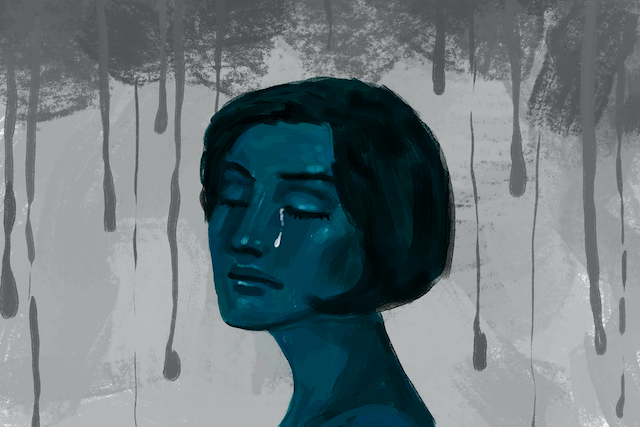
“The problem is not that there are problems. The problem is expecting otherwise and thinking that having problems is a problem.” ~Theodore I. Rubin
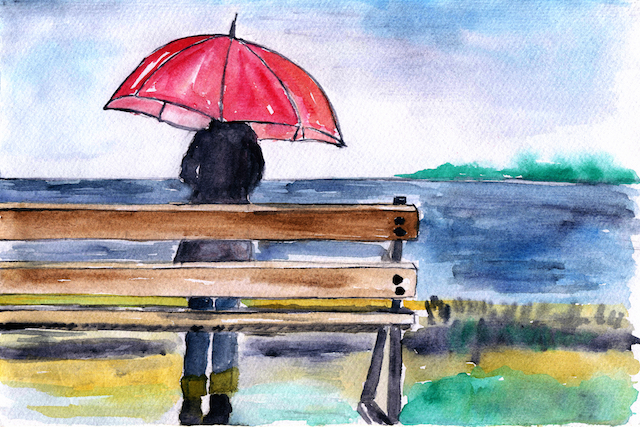
I live in a rainy city. For most of the winter it’s endless grey, weeks in which you’re lucky to get a glimpse of the sun at all.
It might be drizzling, it might be pouring, or it might be merely fog. It is certainly wet.
For me and a lot of the people who live here, it’s almost a deal breaker. When I first arrived, I spent a lot of time complaining that it was raining again. When the sun came out, I summarily dismissed it with “yeah, but for how long?”
Sometimes I still fantasize of moving somewhere nice and hot. Maybe I’ll melt all summer long, but at least there’s sun, right?
The bottom line is that I like living here. For a thousand reasons, it’s my home. I’m not going anywhere.
So my choice is this: embrace my decision with a full heart, rain and all, or live in bitterness, fearing the next cloud.
I can’t change the weather.
I also live in a rainy mind. Like everyone I’ve met, I have anxieties, fears, and a thousand other difficult moods that arise in me on days when I’ve counted on sunny, focused productivity.
For the last couple of years, it’s been panic attacks.
Everything is going so well until something derails and my world becomes scary, my breath comes with difficulty, and I’m falling down the rabbit hole again.
The hardest part to let go is my plans for the day. I was going to write a blog post, clean the kitchen, or go out with friends, but now I’m crouched in the corner expending all my energy to keep air pumping into and out of my lungs.
Not fun.
But recently I realized, I can’t change the weather.
Sure, I can do things to take care of myself so panic attacks are less likely, but if it’s not one thing it’s another:
I couldn’t sleep last night, and now I’m tired. My project isn’t coming along like I’d hoped, and now I’m cranky. The other people involved in my plans got sick, and now the plans are canceled.
Life isn’t always sunny. Life gets rainy.
And no, that’s not fun. Rain on a day you were hoping for sun is frustrating and sad. It can seem like everyone in the world expects constant sunny positivity from you, and when you can’t manage it, there’s shame and guilt.
But it’s kind of magical when you decide to look at it like it’s largely outside of your control. What if today’s mini disaster blew in on the wind with the clouds? What if that same wind will blow it out again?
Maybe today you’ll finally buy some rain boots so you can go for a walk without getting wet. Maybe today you’ll learn that the beach is different in the rain, but still kind of cool. Or you could spend today curled in a ball, cursing the grey.
Either way, it’s still raining. Either way, you’re still lovable. You don’t have to like the weather, but it’s an option.
And the funny thing that happens, once you stop fighting your internal weather, is it becomes calmer. It turns out that so much of the problem was the expectation that would things be different than they are, that everything would go smoothly.
Now when it rains, I tell myself I know that I will see the sun again. It might be two weeks, but it’ll happen. Probably sooner than I think.
When I feel anxiety creeping up, I remind myself that we all have emotions that are difficult for us. That I will feel calm and happy again, probably pretty soon.
And then I have the space to make the best of the day I was given, not the one I ordered.
Some thoughts that help (think of them as affirmations if you like):
1. This is the weather right now. I can’t change the weather, but I can take it into account to make myself more comfortable.
2. The sun always comes back. There are always days when things go right. This discomfort is temporary.
3. Everyone has hard days, even if not everyone talks about them. I’m still normal and lovable when my weather is rainy.
4. I’m allowed to feel disappointed that things aren’t going the way I wanted. I don’t have to be ready to make the best of it right away.
5. What if today were supposed to be rainy? What if this were exactly the right thing?
What helps you on days when things aren’t going according to plan?
“Most of the shadows in life are caused by standing in our own sunshine.” ~Ralph Waldo Emerson
How many times have you heard “Follow your heart” or “Let emotion be your guide”?
Too many to count, I’d bet.
It’s generally good advice; it’s certainly wiser to follow your own feelings than to blindly do what other people think you should do.
But reading into your emotions can also lead you astray.
You see, you are always feeling your thinking. You are not necessarily always feeling “the truth,” or even your own personal truth.
Every emotion, feeling, or mood you experience follows directly from the thinking you are experiencing. That thinking is not always accurate or important. It does not always indicate what’s best for you.
In reality, your feelings are nothing more than feedback about your thinking.
Feelings are not feedback about your mental health, the state of your life, or whether you have the “right” job, partner, or dietary habits.
I used to think they were. When something in my environment seemingly aroused negative emotion in me, I’d jump into action. Life became a game of adding in the “right stuff” and subtracting out the “wrong stuff” in order to feel as good as possible.
I thought this was very enlightened; after all, I was no longer willing to put up with what didn’t feel good and I was consciously choosing more of what did.
I’d notice some negative feelings about my job and immediately start looking for a new one. Clearly, my job wasn’t a good fit. I deserved a job where I could be nearly-always happy, I reasoned.
Predictably (in hindsight), the moment I decided the job wasn’t a good fit, a million examples of how it wasn’t perfect would show up—things I had never noticed before. I took those as “signs”—further evidence that I had better focus on that exit strategy, and fast.
Since I decided that my job was the cause of my distress and that I’d feel much better when I found a new one, that naturally led to the conclusion that that I wouldn’t feel better until I was in that new job.
I innocently set things up so that I couldn’t possibly be happy until I made the change that was supposed to fix everything.
I also did this in reverse, by the way, adding in more of the good-feeling “stuff” that I thought were the source of the positive emotions I craved.
Although I thought this an enlightened way to be, hunting and gathering good-feeling “stuff” and playing whack-a-mole with bad-feeling “stuff,” it was based on the gigantic illusion that my feelings were based on my surroundings.
In truth, my feelings were simply feedback about my thinking, and my thinking was not dictated by my job or anything else outside of myself.
Thinking isn’t dictated by anything. It just arises, with emotion tagging along, and we hold on to it and tell stories about it.
Or we don’t.
Nothing needs to be done.
Rather than jumping into addition or subtraction action, relax. There is nothing to do with or about bad feelings. Because thoughts are transitory, impersonal, and always in motion, feelings are too.
The word emotion means in motion, as in always moving.
From the time you woke up this morning to right now, you’ve probably had a few hundred thousand thoughts and feelings to which you paid virtually no attention. Paid no attention, they promptly floated away—in motion—and were replaced by new thoughts and feelings.
Each time your mind drifts from the morning staff meeting to your lunch plans and back to the meeting again, it’s happening. Each time you cycle through, “I’m having a fantastic hair day” to “Did I clean the cat hair off this jacket?” to “I hope it’s warm enough to go without a jacket tonight,” it’s happening.
Thoughts and feelings change all day every day with absolutely no effort or fanfare.
This would be true of all thoughts and feelings if you treated them all the way you treat the ones about meetings, lunch, and hair.
But since you’re human, you don’t treat them all the same. You hold on to some thoughts and spin them around in your mind. You give them importance and meaning. You imbue them with emotion and attention, which are the equivalent of mental superglue.
Thoughts are like breath—when you stop holding your breath, new breath rushes in. When you stop holding your thoughts, new ones rush in, bringing new feelings in tow.
All you ever have “to do” is nothing. The only position you ever have to take is of non-interference.
Nearly everyone I talk to wants bad feelings to go away. Even when they intellectually understand that bad feelings aren’t meaningful or harmful, and even when they intellectually get that feelings are always in motion, they feel down and instantly try to feel better.
They think I’m naive or unrealistically spiritual when I tell them that bad feelings don’t have to be a big deal. They don’t have to feel so “bad.”
“You don’t understand my emotions,” they say. “Mine hit harder than others’.”
Or, “But everyone knows shame is the hardest to handle,” or “I’ve had these since birth, so they’re more real than most.”
I still say they don’t have to be so bad.
The more you understand that your experience of life is entirely thought-created and that “you” aren’t what you think you are, your attachment to feelings—good and bad—begins to shift.
You connect and identify with something deeper, something beyond fleeting feelings.
It becomes obvious that bad feelings are only your surface psychology; they can’t touch who you truly are. You can rest in your true self which is always stable and always there.
As it turns out, much of the negative experience of emotions is the cover-up. It’s when you resist, hide, or try to change those emotions that you experience them as painful.
When you do that, you’re playing with mental superglue again. You’re putting so much pressure and focus on those emotions that they are held in place. Remember, when you don’t hold on to thought and emotion, new thought and emotion rushes in.
I can honestly say that my experience of bad feelings is drastically different than it once was. This may sound insane, but I don’t mind feeling “bad” so much anymore.
In fact, sometimes it’s kind of nice to settle into a bad mood. It’s a little like the comfort you might find in a rainy day once you accept that the rain is a reality and stop wanting it to change.
I find myself deciding to just lay low and ride out the mood, just like I would the rain. I know it will change. Paradoxically, when I approach bad moods in this way they end up changing before I have a chance to experience them as “bad.”
Emotions are naturally in motion. There is an awareness and distance that prevents me from being taken down by them.
This is completely possible for anyone, even you.

“It isn’t what happens to us that causes us to suffer; it’s what we say to ourselves about what happens.” ~Pema Chodron
Have you ever had something happen in your life that completely changed everything?
Wham. Suddenly you haven’t left your bedroom in days, you can’t remember what it feels like to shower, and it’s clear the only friend you can really count on is your cat.
And whether it’s a major life-suck event or a minor one, the question is: How can I feel contented and calm when things don’t go to plan?
That is what this post is about. Because a while back I had a M. A. J. O. R. Major event. It went like this:
I’d just graduated from college. I had a Masters Degree. In science. Human nutrition science, in case you’re wondering. I was excited about life!
Sure, I had a ridiculous door-to-door research job and my roommate was annoying, but I had plans—I’ll move in with my boyfriend, get a better job, travel, start a family, hang out with all my amazing friends, and live an awesome life.
But then I got sick. The kind of sick where raising your arms above your head makes you want to take a nap. And instead of starting the amazing life I’d planned, I moved home with my parents.
It was a shock, to say the least. Before that, I was tough. I hiked. My friends liked me. I stayed up late. I wasn’t a sick person.
And while my parents are sweet and kind, living in their basement in small town New Zealand, watching daytime re-runs of Dr Quinn Medicine Woman, and hanging out with a fluffy cat called Whisky was not the plan.
It wasn’t so bad at first. But months went by, then years, and it seemed no matter what I did, I was still sick.
I thought, why did this happen to me?
I cried. A lot. For seemingly no reason. And if someone asked why I was crying, I’d say, “I’m just so tired.” I cried so much some days that I’d go home and laugh with my sister on the phone over who I’d cried in front of that day. It was comical.
That was a few years ago now. And, of course, the whole experience turned out to be a huge gift. They often are, in my experience, anyway, but that’s getting ahead of things.
Here are three insights that helped during those “you’ve got to be freaking kidding me” times:
When a challenging event happens—a breakup, a sickness, or having your leopard pink car seat covers stolen—the human mind, being what it is, thinks this is why you feel badly.
You hear it all the time: “Oh, you poor thing for losing your car seat covers.” Or, “She’s such a rat to do this to you.”
The truth is, it’s your perception of the situation that makes you feel bad. This means that no matter how crumpled-in and dysfunctional you feel, you’re not. It’s just your thoughts that are a bit wonky. And actually, your thoughts on this were always wonky; the situation just exposed them.
Take my situation. Everything I’d based my self-esteem on was gone: work, grades, friends, boyfriend, the ability to sit up straight for more than half an hour.
I thought I was upset because I was sick, when the truth was, my situation had triggered every negative belief I had about myself. Things like:
“I’m only lovable if people like me.” “I’m only worthwhile if I’m busy doing things.”
I so strongly identified with all the things I did that when you took them away, I felt miserable. I’d been given the opportunity to see what I really thought about myself.
Someone could have told me “you’re worthy and lovable,” and I might have intellectually known this, but I didn’t feel it.
What I began to realize was that behind the pain, over time, my faulty beliefs were shifting. My sense of self-worth was beginning to heal by itself.
The pain is the faulty belief system being ripped out by its roots. You feel like you’re losing something dear. The trick is to understand that it’s just a faulty belief going away. And beneath it lays a pocket of self-love that you haven’t previously been able to access.
As poet Kahlil Gibran says, “Your pain is the breaking of the shell that encloses your understanding. Even as the stone of the fruit must break, that its heart may stand in the sun, so must you know pain.”
Most of us live in an intellectual way. We make plans for our life and then we try and follow them through. We think we know the best way for our life to proceed.
The truth is, a large part of our pain is caused by an attachment to our expectations.
For example, one of the reasons I felt so bone achingly sorry for myself was because I had a plan for how to have a good life—and it didn’t include Dr. Quinn.
I thought success came from going to college, getting a good job, and having a family. No one said anything about spending all this time in bed. But actually, it was the best thing for me.
To illustrate you how powerful your expectations are, try this exercise:
First, imagine you’re me.
Now, imagine you’d grown up thinking the best way to have an awesome life was to spend five years in bed cross-stitching cushions. That it was something everyone did.
“Oh yeah,” you’d say to your friend, “I’m just off to do my five-years-in-bed years.”
And they’d be like, “Oh cool. I hear you learn such amazing things, like how to feel self-assured, and you get clarity on your life direction, and you start to feel that inner calm we’re always reading about.”
Seriously.
Now think about your current situation and imagine that for your whole life, you believed that what is happening to you was going to happen. And not only that, but it’s the absolute best thing to happen.
So much of the pain we feel is because we can’t let go of how we think life should look. Your mind thinks it knows the best way for your life to work out—but simply put, it doesn’t; the plan it had was flawed in the first place.
Your mind can only see your life as it’s showing up right now. There is a bigger picture.
Learning about personal awareness and healing can be such a helpful thing, but remember, there’s no right or wrong way to feel.
Feeling grateful and “being positive” and so on is perfectly fine, and sure, it can be helpful, but if you don’t feel like it all the time, don’t worry about it.
Instead of attaching a judgment to how you’re feeling or what you’re thinking, try just noticing it.
I believe the act of simply noticing and accepting how things are, right now—no matter how messy and dysfunctional they seem—is the most powerful, healing thing you can do.
Photo by Dahl-Face Photography

“I have just three things to teach: simplicity, patience, compassion. These three are your greatest treasures.” ~Lao Tzu
I recently took seven weeks off of work and rented a place in Laguna Beach.
The trip was meant to be a relaxing vacation and possibly a change of residence; it turned out to be a wakeup call.
I started the trip out by going on my first date since 2010. The pollen count was high, and my sinuses were none too happy. I’m still not sure if it was being on a date or the medication that triggered so much anxiety; maybe it was a combination of both.
Later that evening, as I replayed the day in my mind, old insecurities came to the surface. That feeling of not being good enough engulfed my being.
I just smiled, shook my head, and thought to myself, “Really? Does this still ring true for you?”
The answer was no. But it still came up, so I had to explore it further. So I spent the next two and a half weeks in a battle with the Southern California Pollen Count and my inner self-worth issues.
Most of my life had been controlled by an underlying sense of anxiety.
In my teen years and throughout most of my twenties, I numbed it with drugs and alcohol. In 2005, after I celebrated my first year of sobriety, I started to really explore this feeling. I signed up for hundreds of newsletters, spent many hours in the Dana Point Library, and purchased over 100 books that year alone.
I read, listened, and put into practice anything that came across my path.
The movie “The Secret” spoke to part of me, and books from Deepak Chopra, Ester and Jerry Hicks, and countless others made me temporarily feel as if it were going to be okay.
I wanted so badly to just be happy, to be able to really look into the mirror and like what I saw.
By April 2009, I thought I had it all figured out. My goal-setting exercises were bringing my desires to fruition, my body was as healthy as it has ever been, and my love life was what I had always dreamed it would be.
A few months later it all fell apart. I found myself again back to square one. It didn’t make sense and all I wanted was to know was: What part of this equation was missing?
My mission to figure it out was renewed, and the way my life has unfolded since has been a long, strange trip indeed.
Looking back at my self-education is partially humorous and equally frustrating.
I now find it humorous that I worked so hard to “fix” something that wasn’t actually broken.
I find it a bit frustrating to have consumed so much information that perpetuated this seemingly endless cycle of self-help stupidity.
Two very popular self-help ideals come to my mind.
This may be worst thing you can say to someone who is depressed and sees no way out of it.
You read books on “how to attract everything you ever want in life.” You understand that positive thinking leads to positive results. Just when you start making progress, something happens and you feel frustrated or angry.
You find yourself upset at yourself for being upset. You think, “Why can’t I just be happy? What’s wrong with me?” The depression deepens.
Listen, you don’t have to be positive all the time.
It’s okay if you get upset or don’t feel happy every waking moment.
Before you can cultivate a positive mindset, you must first honor where you are and the journey that brought you here. Our general outlook on life is a mixture of genetics and experience. Some reactions are very deeply engrained and will take a concentrated effort over time to change.
You’re not broken if you can’t see the silver lining, which is why this next bit of wisdom needs another look.
It’s a catchy saying, but horrible advice.
The feelings you have present in your life are valid. The act of faking it is an act of denial, which can have some really negative effects on your psyche.
You can’t fake your way out of sadness and depression.
You can put on a happy face, and to some degree it will change your mood. But, during those times when you take away distractions and you have to sit alone with yourself, the act of faking it will make you feel like you’re crawling out of your own skin.
I didn’t realize that faking it perpetuated anxiety.
Being really comfortable with myself didn’t actually happen until I began to just sit still on a regular basis.
At first it was overwhelming; anxiety turned to frustration, to anger and rage, and finally to shame. I felt cracked wide open, exposed and raw.
The feeling really sucked and it lasted for almost six months.
But I sat with it. I owned it, and in that space of raw vulnerability I stopped faking it. For the first time in my life it felt okay to be me.
There is a real power in authenticity.
It is an act of love to honor where you are right now.
From my experience with sitting in my own stuff came my life as a writer. My first book followed and my newsletter audience grew.
Yet, with all that I’ve studied and think I know I still found myself experiencing that old worn out feeling of “you’re just not ever going to be enough.”
So, how did I find myself in Laguna Beach overwhelmed and feeling less than worthy of love and affection?
Well, that was actually pretty easy for me to discover. You see, I’m an avid note taker and list maker. It only took a few hours to sort through my 2012 notes to see that I had only half been walking my talk.
My practice of meditation had taken a backseat to my “trying to achieve things.”
My practice of mindfulness had eroded; evening meals were consumed along with DVDs and Facebook noise-feeds.
Three months of sunsets went unseen.
My reverence for the present moment had once again been lost while my mind searched for fulfillment in the future; the result of which was the rise of my existential anxiety.
From my experience thus far the first part of the plan is the most powerful; science backs up that claim. That’s why I am building my daily sitting meditation.
My dream is to see more authenticity in this world.
My belief is that this will lead to more compassion, which in turn will lead to more change.
How about you? Want to change the world too?
Then please join me by spending just a little bit of time doing absolutely nothing, every day for the rest of your life.
Who’s in!? Tell me you’re with me!
Photo by sierragoddess


“Sometimes the wrong choices bring us to the right places.” ~Unknown
“Six weeks ago the doctors told me he had six weeks to live. I don’t think he is going to survive the night.”
“Why didn’t you tell me this earlier?” I whimpered, my voice barely above a whisper. ‘We don’t have any time left.”
I didn’t think that as a 19 year old, seeing my father die in a hospital was going to be something I would experience. Wasn’t he meant to grow old and grey, with me taking care of him?
Nevertheless, in the early hours of the following morning, when the rest of the world was lying in a quiet slumber, I was sat at my dad’s bedside, holding his hand while it slowly grew cold. I wasn’t willing to let go, as letting go would mean accepting what was. I wasn’t ready for that.
My dad and I had always had such a difficult relationship. I was the rebel teenager and he was the frustrated father who just never knew what to do with me. In the end, when the cancer had really taken over, he just gave up. He knew I wouldn’t be his problem for much longer.
As the weeks and months passed, it became easier to be without him. But the one thing that followed me was the regret I felt—of not trying to understand him, and not making our relationship better.
The older I get, the more I realize that that period of life was meant to teach me some tough lessons—lessons that have stayed with me to this day.
Don’t wait for a good time. Life is beautiful and cruel in that it doesn’t tell you when your last day on earth will be. (more…)

“The secret of joy is the mastery of pain.” ~ Anais Nin
When I was eighteen, I got depressed and stayed depressed for a little over a year. For over a year, every single day was a battle with myself. For over a year, every single day felt heavy and pointless.
I have since made tremendous progress by becoming more self-aware, practicing self-love, and noticing the infinite blessings and possibilities in my life, but I still have days when those familiar old feelings sneak up on me.
I’m not always self-aware, I don’t always love myself, and sometimes I agonize over everything I don’t have or haven’t accomplished.
I call these days “zombie days.” I’ll just completely shut down and desperately look for ways to distract myself from my feelings.
I suspect we all have zombie days from time to time. I think it’s important to give ourselves permission to not always be happy, but there are also simple ways to improve our mood when we’re feeling down.
Everybody is different, and everybody has different ways of dealing with pain, but if you’re looking for suggestions, you may find these helpful:
1. Step back and self-reflect. Whenever I start feeling depressed, I try to stop, reflect, and get to the root of my feelings.
2. Reach out to someone. I used to bottle up my feelings out of fear that I would be judged if I talked about them. I’ve since learned that reaching out to a loving, understanding person is one of the best things I can do.
3. Listen to music. Music can heal, put you in a better mood, make you feel less alone, or take you on a mental journey.
4. Cuddle or play with pets. I have really sweet and happy dogs that are always quick to shower me with love whenever they see me. Spending quality time with a loving pet can instantly make your heart and soul feel better.
5. Go for a walk. Walking always helps me clear my head and shed negative energy. It’s especially therapeutic if you choose to walk at a scenic location. (more…)

“Letting go gives us freedom and freedom is the only condition for happiness.” -Thich Nhat Hanh
Most people I know are carrying extra weight—and I’m not talking about gaining a few pounds.
I’m talking about the mental and emotional weight we lug around with us. We carry it everywhere—like a backpack full of bricks—and it weighs us down.
Personally, much of my extra weight comes from the expectations I have for myself to be more—more present, more productive, more enlightened. Although these might be wonderful things to work toward, wanting to be more can easily translate to not being enough now.
In that way, each desire to be more than what I currently am equates to a few more bricks in my backpack. An extra load to haul around on my back, making life a little harder to navigate.
For me it happens to be expectations, but our habits can weigh us down too. Watching television that doesn’t nourish our souls, eating foods that don’t nourish our bodies, and holding on to thoughts that don’t nourish our minds. The effects add up.
And let’s not forget the hand-me-down beliefs. Beliefs like “Good things don’t happen to people like me,” or “I’m just not lucky in love.”
Or the old memories we replay, or the feelings we refuse to feel that bubble under the surface.
They are all heavy, needless weight.
So what?
Maybe you’re wondering, what’s the big deal? So what if you’re a little weighed down; it could be worse.
Or maybe you’re thinking that backpacks and bricks go hand-in-hand with responsibility. It’s your burden to bear; best to suck it up and carry on.
You certainly can go about your life with your backpack loaded up. The weight is rarely debilitating—and that’s exactly when it can be most harmful. (more…)

“It is better to be whole than to be good.” ~John Middleton Murray
Discouragement is usually an unwelcome guest. Every time it comes knocking on my door, I try to shoo it away or sweep it under the rug.
In fact, many of us want nothing more than for happiness to be our constant state of being, and have a hard time forgiving ourselves when we falter.
It happens: We can get immersed in the thick of discouragement for days, feeling mopey, downtrodden, physically, mentally, and emotionally “burnt out” and all in all “not ourselves.”
When I am in this state, I avoid the page, others, and even my own feelings, not wanting to face the dark and shadowy sides of my own being.
Though it doesn’t always coincide with the external weather, I can feel rainy inside my own experience and mind from time to time, and I usually struggle against this feeling, only making it worse.
I am so adamant about being a positive person and believe that shining brightly is far preferable to feeling crummy. I think many of us share this tendency toward wanting to hold onto the light—but then, what do we do with our inner storms?
Where do we get this notion that to be our truest and most beautiful selves we have to always be happy, elated, content, and sure of ourselves?
Why do we believe that we must feel confident and inspired, have all the answers, and be buoyant in order to be our best, or at least to “be okay”?
We are only human after all, and nothing in our instruction manuals or in our description before we were born promises that we will always be perfect and shiny. Yet, we carry this unrealistic pressure on ourselves to be so and often berate ourselves for falling short any time a bad mood strikes.
It’s tempting to only put our best foot forward. For example, on Facebook, we can often share our sunshine-y moments proudly but may be less apt to proclaim as boldly when we are feeling negative.
If not for wanting to hide our own seemingly fruitless negativity from others and even ourselves, we might also fear spreading the bad mood to others. (more…)


“There are two primary choices in life: to accept conditions as they exist, or accept responsibility for changing them” ~Denis Waitley
It’s still summer, and the last thing I want to be thinking about are the cold months ahead. There are still bike rides to take and gardens to enjoy, and I still haven’t taken that kayak ride that I wanted! But in the back of my mind I am already beginning to panic.
Many people in the more northern latitudes feel down in the winter—less energetic, less engaged, less motivated—and those people may start feeling apprehensive as winter approaches.
Other people slip into a bona fide depression, either because they suffer from Seasonal Affective Disorder or perhaps a predisposition to depression that simply worsens in winter, and those people are the ones who truly panic. I know, because I am one of them.
A few years ago I declared that I was through with suffering through every winter. I was ready to take control of my situation instead of letting the situation control me. That simple decision made all the difference because it changed my attitude.
The first thing I did was to address the biological basis for winter depression.
As the days become shorter and the light becomes less direct, we absorb fewer rays through our eyes. In some people, this leads to a reduction in serotonin (one of the important chemicals in our brain) and thus a reduction in mood and energy.
To combat the lack of sunshine, I purchased and began to use a light box. This is a specially designed light, packing in 10,000 lux. As a point of comparison, the average office is lit to 320 to 500 lux, while the sun provides approximately 10,000 to 25,000 lux in full daylight (more in direct sunlight).
Once I started sitting in front of my light box for 20−30 minutes every morning, I began to feel much more alert and in control. But it was not quite enough. I still felt out of sorts and foggy, like there was a roll of cotton between me and the rest of the world.
Over the next year or two, I learned that to truly cope with my winter funk I had to change the way I responded to not only the season, but the inevitable vagaries of life. (more…)
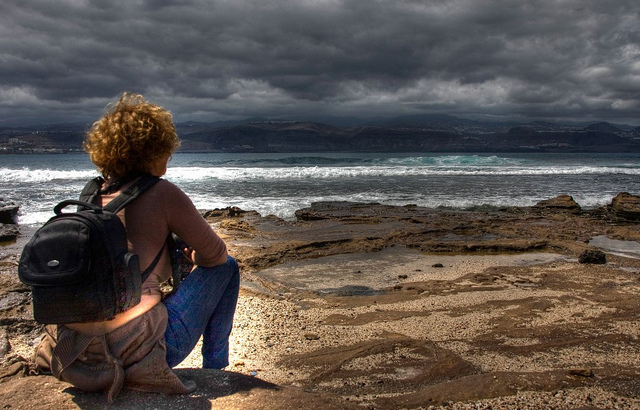
“The outer teacher is merely a milestone. It is only your inner teacher that will walk with you to the goal, for he is the goal.” ~Sri Nisargadatta Maharaj
Recently, I had a very bad day. It was a day when certain life events made me so scared, so panicked I felt like I was floating in a dark void with no connection to anyone or anything, certainly not myself.
It wasn’t one bad thing that happened, just an accumulation of family stresses, worries, questions, uncertainty, and self-doubt that flooded my spirit. I had been going-going for many days and lost touch with myself and it caught up with me—just like that. It spun me right off my center.
Although I know as humans we are imperfect, I judged myself as a fraud.
I’ve devoted myself to my inner-work for decades. I have a counseling psychology degree, published a self-help book and card deck set, and write articles with lessons about being peaceful, content, and happy.
But on this day, I needed to figure out how to help myself.
I tried to remember the amount of teachings spiritual, psychological, and creative I have collected in my toolbox over the many years.
I thought about the great teachers of the world that offer incredible valuable assistance to one’s growth and discovery. And remembered that without the application of the teachings, we remain a head full of knowledge rather than a being who is at peace and free.
I needed to be my own teacher in the moment, but I felt so weak and vulnerable I couldn’t connect to any of the teachings. This was a red flag of an emergency for me.
Lying on my bed in a temporary freeze, I thought about common emergency instructions we are given in case of disaster. The building’s sign: “In case of fire, take the stairs not the elevator.” The flight attendants: “Cover your own mouth first, then your child’s.” When a tsunami hits: “Run to higher ground.” The tornado: “Open the windows so that they will not shatter” or “Go to the nearest shelter” Even for the addict, “Pick up the phone and call your sponsor.” (more…)