Tag: rock bottom

  • How I Kept Going When I Wanted to End My Life

    How I Kept Going When I Wanted to End My Life

    “When you’ve reached rock bottom, there’s only one way to go, and that’s up!” ~Buster Moon, from the movie Sing

    When I first heard this saying, as I was watching the movie Sing on my way to another continent, a small light bulb lit up inside me. As I sat with this sentence, I came to the conclusion that I couldn’t agree more.

    After hitting my own rock bottom a couple of years ago, I know that once you get there, there is no place you can go that is lower. It’s the final breaking point.

    And if there is anything I have learned about the final breaking point, it’s that you have two choices: either give up or start over.

    This theory can apply to many aspects of life, like when you’re in a job or career that is no longer working, so you hit rock bottom in a health crisis or a mental breakdown. You have a choice: Be insane and keep going, when you know deep in your heart and gut that this decision isn’t right, or “give up” and finally pursue the career or job that you have always wanted.

    Sometimes, rock bottom gives us a good reflection point on what is no longer working in our life, as well as the opportunity to change. But what happens when your rock bottom is wanting to end your life?

    I remember it clear as day. It was summer 2020, during the Covid-19 pandemic, and I was working remotely from home, like many others. Nothing was unique about my situation, except the fact that I had ended a very toxic, karmic relationship just three weeks into a global pandemic.

    The things that most people do in order to get over a breakup—like see friends and go out and have fun—were all things the whole world had to put on pause. Oh, and top of that, I was worried about dying from Covid.

    I never realized the effects lockdown could have on my mental health. While I am naturally introverted, there is a significant difference between being forced to stay in and choosing to do so.

    I realized that I had hit rock bottom during a beautiful summer day. I was outside, staring into my backyard, when I realized that I felt nothing. I no longer wanted to live, and I could no longer see the beauty and miracles of everyday life.

    I was disappointed that I woke up every single morning, because that meant another day that I had to muscle through. Another day that I had to survive. While I’ve had bouts of depression my entire life, I never came as low as I did then.

    By the end of the summer, I knew I had two options: I was either going to save my life or end it. But I also came to a humbling moment when I knew I couldn’t do it myself. I needed therapy. No one else could help me through this except a professional that could help me dissect my feelings, trauma, and emotions, as well as myself.

    Starting therapy was a blow to my ego, as I imagine it is for many. It’s sitting there, across from your therapist, when they ask you, “Why are you here?” knowing damn well that you are there so that you don’t die. That you don’t want to suffer anymore. That you are wondering, “Why am I even suffering? Am I just being overdramatic?”

    There are so many hard truths that you learn about yourself through therapy. But also, so many enlightening things, like the fact that it wasn’t your fault you endured abuse, gaslighting, and manipulation in past relationships. Even though you thought it was.

    Or that trauma literally shuts off the frontal cortex of your brain, especially when you are in “fight or flight” mode, because your body is just trying to survive. This is why there are so many memories that, to this day, I cannot remember. They are little black holes in my brain history.

    When you’re in therapy, you don’t notice the gradual changes at first. It’s not until months down the line that you start to notice that little things are bringing you joy once again.

    How the sun, in the cold harsh winter, after days of cloudiness, brought a small smile to your face. Or how you realize that you no longer partake in OCD behaviors that you thought you could never break before starting therapy. Or how your irrational fears are no longer at the forefront of your mind anymore.

    While not everyone will notice these changes, you will. And you will then start to think about how and why you didn’t start therapy sooner. How and why you didn’t choose yourself sooner. Do not berate yourself; this was all part of your journey.

    If there is anything that I have learned by wanting to die, it was that inadvertently, I also wanted to live. I just no longer wanted to live my life through the same suffering and stories. The body, mind, and soul can only sustain pain for so long before it can no longer do it anymore.

    One of the most pivotal things about my life, hands down, was my rock bottom because, as the saying goes, I could only go up from there.

    Up doesn’t mean that you change your life drastically in one day, or even a couple of months.

    Sometimes up is showering after a week of not having the energy to do it. Sometimes up is allowing yourself to feel a slight feeling of joy again, after months and months of darkness. Sometimes up is remembering to eat again, because you never had the appetite to eat when you were at your lowest.

    If you’re struggling right now and can’t get out bed, I’m not telling you that you are wasting your life. You are not. Even in the depths of suffering, this is all a part of your journey.

    But I can tell you this: Living—not merely existing—is a choice made of lots of little choices. Like the choice to get help. The choice to believe things can get better. The choice to do the little things that help you feel better. And the choice to recognize the small wins along the way.

    Other people can support you, but no one can make these choices for you but you.
  • Why “Find Your Purpose” is Bad Advice and What to Do Instead

    Why “Find Your Purpose” is Bad Advice and What to Do Instead

    “The meaning of life is to find your gift. The purpose of life is to give it away.” ~Pablo Picasso

    I was fifty-two when I found my purpose. I wasn’t even looking. It literally just smacked me upside the head. That’s a funny thing about life. It throws things your way, and you either grab them and run with them or you turn a blind eye and walk on by.

    I used to turn a blind eye. I don’t anymore. These days I’m taking in all that life tosses my way. The good, the bad, and the ugly.

    How My Purpose Found Me

    I had just left an abusive relationship and declared bankruptcy. You could say my life was a complete mess. I had also just hit rock bottom and was starting the grueling climb out. It was frustrating and exhausting.

    During my healing and self-discovery journey I did something that changed the entire course of my life. I started volunteering at a homeless shelter.

    I’ll be honest with you, I did that for two reasons. One was selfish. The other, humanitarian (and sincere).

    I desperately needed to take my mind off all my problems, and I figured the only way to do that was to surround myself with people whose problems were way bigger than mine. And it worked. But something else happened.

    I fell in love with the homeless people I met and found a deep sense of purpose. Phew! I sure didn’t see that coming.

    I then made it my mission to do more of that. Help people, all people, even animals. I just wanted to help everyone and everything anyway I could, as often as I could.

    I had found my purpose, and that was to do my part to make the world a better place.

    I Never Understood the Meaning of “Find Your Purpose”

    I honestly thought that phrase was overrated and overused.

    It seems to suggest purpose is something outside ourselves that we miraculously stumble upon someday. “Oh, did you hear? Mary found her purpose today.”

    And it also creates a lot of stress and pressure to hurry up and figure it out. “I’m still looking for my purpose, and I’m frustrated that I’m having such a hard time with this.”

    I couldn’t understand why everyone was desperately seeking their purpose. I was just trying to navigate life the best way I knew how in order to have inner peace and be happy, while others were searching for this holy grail.

    I questioned myself. Should I be looking for this too? Do I need to find it before I die? Will my life be incomplete if I don’t? Will I die with regret then?

    I was confused. What’s the big deal about finding your purpose? It was starting to freak me out.

    My Aha Moment

    After my first night at the homeless shelter, I knew without a shadow of a doubt that I wanted to do that for the rest of my life. Just give and serve and make people happy. I wanted to turn frowns upside down and get hugs and make people’s lives better, any way I could.

    Did I finally discover my purpose without even realizing it? Was this what everyone was talking about?

    I assumed it was. I assumed that this was it! I’d found my purpose and now my life was complete. Or was it?

    I was puzzled by something.

    Isn’t This Everyone’s Purpose?

    I couldn’t understand why me serving homeless people and helping humans and critters in any way I could was some special purpose.

    Shouldn’t we all be doing that? As humans sharing the same planet in the galaxy, shouldn’t we all be doing our part to help other human beings (and critters)?

    It’s more than that, though. It’s so much bigger than that. It’s about finding joy and peace in knowing you did your part to make the world a better place.

    That’s what the definition of purpose should be.

    Stop Looking for Your Purpose

    Maybe we should just ditch the word purpose and replace it with something that doesn’t sound so foreboding. Maybe instead of saying, “I’m trying to find my purpose in life” we should try saying, “I’m doing my part to make the world a better place.”

    It just has a nicer ring to it.

    There’s so much anger, hurt, hatred, and frustration in the world today. The world needs more love. People need more love. When we see things and people through the eyes of love and compassion something magical happens.

    We understand, we don’t judge, we feel for each other, and it brings us all one step closer to having inner peace and joy.

    So how can you make the world a better place?

    What special gift, talent, or skill do you have that you can offer the world?

    It doesn’t have to be what you do for a living, though that’s clearly the ideal, since we spend so much time at our jobs. Maybe it starts as something you do on the side and grows over time. Or maybe it doesn’t, but maybe having something that fills you up will help make your 9-5 more tolerable.

    The important thing is that you find some way to help people that leverages your unique passions and interests. Then even if you don’t love your job, you’ll feel a sense of meaning, and you’ll feel good about yourself and the difference you’re making.

    Maybe you love animals and can volunteer at a shelter.

    Maybe you make people feel good about themselves by simply sharing kind words to strangers.

    Or maybe you’re passionate about  knitting or sewing or singing and you can find ways to use those talents to brighten other people’s lives. I mean, the possibilities are endless.

    We need to do more things that spread joy, hope, and love to the people around us, even if it’s something small. Sometimes it’s the smallest acts that have the biggest impact.

    If you’re stressing about the fact that you are getting older and haven’t found your purpose yet, stop. It’s overrated. Instead, find ways to serve and in turn, inspire others to serve.

    It’s not about finding your purpose. It’s about living your life to the fullest and knowing at the end of the day that you did your very best to make someone else’s day brighter and better. It’s about doing that every day until you die. That’s a life well-lived. And if you want to call that your purpose, so be it.

  • How to Get Through Your Darkest Days: Lessons from Addiction and Loss

    How to Get Through Your Darkest Days: Lessons from Addiction and Loss

    “You are never stronger…than when you land on the other side of despair.” ~Zadie Smith

    In the last years of my twenties, my life completely fell apart.

    I’d moved to Hollywood to become an actor, but after a few years in Tinsel Town things weren’t panning out the way I hoped. My crippling anxiety kept me from going on auditions, extreme insecurity led to binge eating nearly every night, and an inability to truly be myself translated to a flock of fair-weather friends.

    As the decade wound to a close, I stumbled upon the final deadly ingredient in my toxic lifestyle: opiates. A few small pills prescribed for pain unlocked a part of my brain I didn’t know existed: a calm, confident, and numb version of myself that seemed way more manageable than the over-thinking mind-chatter I was used to.

    At first the pills were like a casual indulgence—I’d pop a few before a nerve-wracking audition or first date, the same way other people might have a few drinks before going out on the town. But my casual relationship to opiates was short-lived: soon the pills were no longer reserved for awkward dates or nerve-wracking auditions, and instead necessary for any type of outing or interaction.

    I knew I’d crossed an invisible line when I began to feel sick without a “dose” of medication. The physical pain they’d been prescribed for had long subsided, but they’d created a need that only grew with more use. Soon I became sick if I didn’t take any pills, which is when I began going to any lengths to get more.

    I wanted so much to stop but felt trapped on a terrible ride: I’d wake hating myself for what I’d done the day before, and with deep shame I’d vow earnestly to quit—then afternoon would come and with it, withdrawal symptoms. As my stomach would turn and my head would spin, I’d lose the resolve to stop and begin searching for my next fix. With that fix would come a few hours of relief, followed by another cycle of self-loathing, a vow to quit, and more failure.

    It was a spin cycle that likely would have killed me had life not intervened in ways that at the time felt devastating; in a span of two weeks my “normal” façade collapsed and, with it, most pillars in my life. Like a house of cards toppling, I lost my job, car, relationship, and was evicted from my home.

    It felt like a cliché country song where the singer loses everything, except in those songs that person is usually likeable and innocent—but in my story, I felt like the villain.

    As I watched my entire life crumble around me, I felt no choice other than to return home and seek the shelter of the only person who had always been there for me—my mom.

    The mom who had raised me with morals like honesty, accountability, and kindness, although I hadn’t been living them for a while. The mom who had struggled raising two kids alone, gotten us off food stamps by going to nursing school, and who watched helplessly as I descended into the same cycle of addiction that had taken the life of my father.

    She told me I could stay if I was sober; I vowed to try, though I’d stopped believing my own promises long before.

    In the recovery program I found soon after, there was an oft repeated saying on every wall: “it’s always darkest before the dawn.” If taken literally, it makes you think about how dark the night sky is before dawn breaks… how heavy, looming, and consuming. Before the light returns, it can feel like the darkness will never end.

    That was how my early days sober felt.

    But as I cobbled together a few weeks and then a few months, I began to feel the faintest bit of trust in myself. Through abstinence and therapy, mindfulness and a sober community, the hopelessness that had seemed so all-consuming began to crack open and let in some light.

    I moved out into my own apartment, returned to school to complete a long-sought college degree, and had a waitressing job that I loved. Then, just after I achieved one year sober, I got a phone call from my brother that would change everything.

    “Melissa, you need to come home,” he said, his voice thick with tears. “It’s mom.”

    My stomach dropped as I gripped the phone, suddenly feeling about five years old. I’d find out later it was a heart attack.

    I felt the darkness descend again.

    In the days that followed her death I felt like a dependent child that was unable to care for myself. I dragged myself through brushing my teeth, dressing, and arranging her funeral; it felt like my heart had stopped along with hers.

    The same thought kept circling the drain of my head—how can I live the rest of my life without my mother?

    I couldn’t imagine not having her at my graduation, wedding, or when I became a parent. Her disappearance from my future brought up a dread much worse than that of the previous year— but as I began to settle into my grief, I realized I had a path through this moment, if I were willing to take it.

    The tools I’d forged in sobriety would prove to be useful in the dark days that followed. I share them below as an offering for anyone who travels through a dark night of the soul: simple steps to keep in mind when you can’t see a path forward.

    Take things one day at a time.

    In sobriety, you learn that imagining your whole life without another drink or drug can be so daunting that you just give up and get loaded. So instead of borrowing future worry, you learn to stay in the week, the day, and the moment.

    I didn’t have to know what having a wedding without my mother would be like—I just needed to eat breakfast. I didn’t need to imagine my graduation—I just needed to get myself through one more class. As I pieced my future together one moment at a time, I found that I could handle the emptiness in bite size pieces. I didn’t have to figure it all out—I just had to keep going.

    Allow feelings to come and trust that they will go.

    Much of what I’d been running from as an addict was the discomfort of my feelings. I didn’t want to feel rejection, so I contorted myself to be liked; I didn’t want to feel sadness, so I busied myself with the next activity. In recovery I learned that we can run from feelings all we want, but eventually they catch up to us in some form. Instead of running I’d learned to allow; instead of busying myself I’d been taught to turn toward pain and trust that it wouldn’t last forever.

    Though this was easier said than done, some part of me knew that running from the grief of my mom’s death would only snowball into a freight train later. I’d scream in my car as I seethed with the unfairness of it all; I’d rock with sobs on my couch when the sadness became too much. It wasn’t pretty and it felt terrible, but when I let the grief shake through me. I found that there would always be an end… that at the bottom of my spiral a thread of mercy would appear, and I would be able to go on.

    Tell the truth.

    From a young age, I felt much more comfortable in a mask of smiles and jokes than sharing how I was actually doing at any given moment. Though getting sober had helped me shed layers of the mask, I still found myself trying to likeable, approved-of, and “good.” But as grief zapped my energy and ability to make myself palatable, when people asked how I was doing I started to be honest.

    Sharing the pain I felt after my mom’s death was like standing naked in the middle of the street—I wasn’t used to crying in front of people and didn’t think they’d like me when they found out I wasn’t always “fun and easy going.” But it was exactly this type of vulnerability that allowed true friends to materialize, old connections to deepen, and the support I longed for to appear.

    Allow yourself to be forever changed.

    In recovery from addiction, I began to think of my sobriety date as a second birthday—the start of an actual new life. Though the way my former life had burned to the ground was painful, I welcomed the chance for a new start.

    But when my mom died, I didn’t realize that losing her would again scatter me into a thousand unrecognizable pieces—pieces I kept trying to fit back together but weren’t ever going to be the same, because I wasn’t.

    Once I allowed my life, relationships, and priorities to be changed by my grief, I found a self that was stronger, more resilient, and somehow more tender. I never would have chosen the form of this lesson, but I came through these experiences a more authentic version of myself… an overarching goal of my life.

    *

    It’s now been seven years since my mom’s death, and I’ve been sober for eight. As my journey continues to unfold, I never lose sight of how broken I once was and how dark things seemed. I also know that the struggles of life aren’t over; they’re part of being human and living a full life.

    But something I now keep in mind is that it’s always darkest before the dawn—I know I don’t have to always see the light…

    I just have to keep going.

  • How to ROCK Your Rock Bottom and Reinvent Yourself

    How to ROCK Your Rock Bottom and Reinvent Yourself

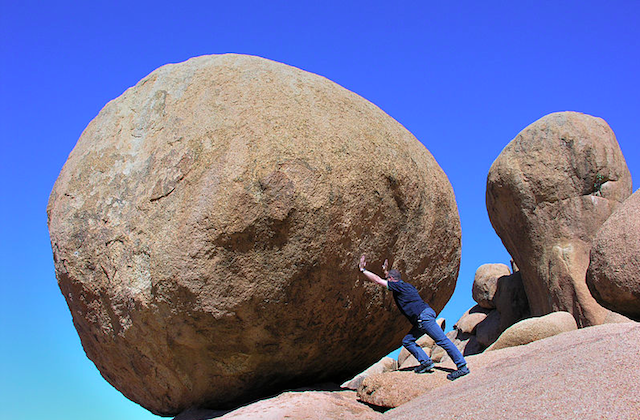
    Pushing Giant Boulder

    “When something bad happens you have three choices. You can let it define you, let it destroy you, or you can let it strengthen you.” ~Unknown

    I wasn’t always the ridiculously attractive (and humble) Jason you see before you. No, from a very young age I was overweight. I am an only child raised by a single, very hard-working mom. Her crazy work schedule meant that cooking meals was rarely a feasible option. This meant we ate at restaurants or had fast food quite often.

    Couple that with my extreme TV watching habits and only going outside when forced, and it’s easy to see how my unhealthy lifestyle led me to 250 pounds by the age of 15! You know, the age where kids are super compassionate and never cruel toward those who look different (insert sarcastic grunt here).

    Sad Kid to Sadder Adult 

    My adult life wasn’t any easier. Those patterns of poor eating and never exercising created a 330-pound 30-year-old.

    I had now made the transition from a chubby kid to a morbidly obese adult.

    You would think the high probability of various health problems and the very real concern of a premature death would wake me up, but sadly, it did not.

    For me, it wasn’t about health. It was about feeling like I never really fit in (literally and figuratively). From seat belts on planes to school desks, “fitting in” was a frustrating endeavor.

    I leveraged the only thing I thought I was good at, making others laugh, to create relationships since I thought I had nothing else to offer.

    I was always in the “friend zone” with girls (which was hell for a hopeless romantic like me), was made fun by the “cool kids,” and never felt comfortable in my own skin. My appearance, and the perception that everyone was constantly judging me, consumed my thinking on a daily basis.

    I was so sad, stressed, and depressed all because of my waistline and what I believed it meant about my self-worth.

    Sure, I became “successful” as an adult; prestigious job with a big salary, a condo in a ritzy-ish part of town, and a pimp ride, but that stuff was all a front!

    I couldn’t seem to decide what to do to alter the course I was on. And I was so hopeless sometimes that I don’t know if I would have taken the action even if I knew what to do!

    Then the Bank Got Involved 

    I remember like it was yesterday. I was at my highest weight, the Director of a technology firm, stomping across the lobby of our office building, angrily phoning the bank because my debit card was declined when I tried to make a purchase online.

    Fat JG was kind of a jerk sometimes—short on patience and quick to lose my temper whenever I felt like it. I was still the same loving, caring, and giving JG that I am now, but when I had a tantrum, it was like a vortex of schmuck that would suck everyone in! 

    I was giving the bank rep “the business.”

    “I know I have money in the account. Why is my damn card being declined? This is bullsh*t!”

    To which she replied, “I’m sorry for the inconvenience,” (you know the script) “but we have closed your card due to suspicious activity.”

    “Suspicious activity?” I inquired, “What are you talking about?!?!”

    “Well,” she continued, “yesterday there were four transactions at various fast food locations all across Orlando. It seemed suspicious that so many transactions would occur in a single day at different fast food establishments, so we shut down the card to ensure it hadn’t been stolen.” 

    The phone went silent. I was speechless. The charges were not fraudulent. They were mine. I had eaten at four different fast food restaurants in one day.

    I knew it was unhealthy, but it was just the norm for me. A multi-billion dollar corporation, however, knew something wasn’t right. My bank had essentially just told me I was an out-of-control fat ass and they were worried about me. Shame.

    I had truly hit rock bottom. 

    Let Your Future Pain Motivate You Now

    I had experienced my own rock bottom at the hands of the customer service rep at the bank, and it was now time for me to really reflect on what I was doing with my life.

    I was so lucky to have my wife Alicia to talk this through. (I could not have done this alone!) We talked about what I already missed out on and how this default life of mine was not going to get any better (it would actually get worse) unless I took bold action to change the trajectory of my health and life.

    I visualized the pain I was causing for my loved ones, not just myself. I saw a future where my wife became a widow because I had a heart attack. Where my mother would bury me, something a parent should never have to do.

    I pictured that my unborn children wouldn’t have their father at their high school graduation or wedding.

    Why was I being so selfish, taking away this joy from myself and from all of them?

    These are the questions that “rock bottom” hurls at your head and you owe it to yourself, and everyone you love, to answer them!

    Time for Some Action 

    Drastic times called for drastic measures. After researching for a year and going through every test, physical and psychological, they could throw at me, I decided to have weight loss surgery.  This was a huge decision that would require 100% commitment to healthy living if I were to be successful.

    Some people think this is an overnight fix, but it is far from it. Since surgery, I live a very healthy lifestyle including regular cardio and strength training, a vegetarian diet, and lots of thought about everything that goes into my pie hole. (I still splurge sometimes; there is no need to deprive ourselves of indulgence once in a while.)

    Prepping for, having and recovering from surgery was a six-month process, followed by another year of hard work to lose the rest of the weight. And now, almost three years later, I have lost 130lbs, kept it off and feel like 100 grand (the currency, not the candy bar)!

    My entire outlook on life has changed. I now know that if I was able to take action to reduce (or eliminate) issues in one area of my life, that doing the same for anything else I am, or will be challenged by in the future, is possible!

    Gravel or Boulder; The Choice is Yours

    Here is the beauty of rock bottom; it can have multiple interpretations.

    To me, the rock signifies heaviness, stillness, being centered. It is an opportunity, weighed down by this tremendous structure, to dig deep and decide in that moment what to do next, as if nothing else matters. Because in that moment, nothing else does.

    You can choose to be crushed by the rock. You can become gravel that outside circumstances push deeper into the earth, with no control over its own destiny. You can make excuses and pretend that this is your only option.

    But you would be wrong.

    There is another option. You can become the rock! You can use it as an example to become a boulder that is strong, unshakeable, and can steamroll anything in its path given the right direction and momentum.

    You can use the rock as a stepping stone (pun intended) to reach heights of re-invention that may have otherwise felt impossible.

    Remember, once you hit rock bottom, there is no place else to go but up!

    You Don’t Have to Wait for Rock Bottom to Rock It!

    Rock bottom did the trick for me, but the smarter way to conquer life’s difficulties is to anticipate when rock bottom may be a few feet away and to take action!

    What challenges are you facing that need action?

    Think of one, write it at the top of a sheet of paper, and then truthfully answer the following questions:

    1. What am I missing out on (personally, relationships, joy, professionally) if I don’t do something to change it?

    2. What do I stand to gain (personally, relationships, joy, professionally) if I take bold action to overcome it?

    3. Who are three people I can reach out to this week, to get guidance, direction or ideas on how to handle it?

    4. What is the smallest step I can take right now that will lead me in the direction of overcoming it?

    If you are reading this, it means you are the type of person that is committed to living on purpose and are fully capable of overcoming any challenges you may encounter. Rock on my friends, rock on!

    Photo by Hansueli Krapf