Tag: risk

  • One Question I Ask Myself Monthly Since Coming to Terms with Death

    One Question I Ask Myself Monthly Since Coming to Terms with Death

    “Death is not the greatest loss in life. The greatest loss is what dies inside of us while we live.” ~Norman Cousins

    On September 23, 2015, Loukas Angelo was walking to his after-school strength and conditioning class just a few hundred yards from Archbishop Mitty High School.

    He was approaching the outdoor basketball courts when he ran out into the street and was struck by a car traveling around thirty miles per hour. The impact sent Loukas flying down the street, and he was immediately transported to the closest hospital where he remained in critical condition.

    I remember sitting on the couch later that afternoon when my phone started blowing up. Feeling curious, I shoved aside my history homework and decided to see what was going on.

    Multiple people had sent some variation of the same text, “Yo. This is so sad. Did you hear about what happened with Loukas…?”

    Confused and a little bit scared, I turned to Twitter and started looking through my feed. I was absolutely floored by the tweets that were being sent out by my friends and our high school’s Twitter page.

    Similar to tragedies like the Boston Marathon, or 9/11, it was one of those moments in life where you’re always going to remember exactly where you were when you found out the news.

    It was almost inconceivable to think about the fact that I had walked across the same exact crosswalk where Loukas was hit just fifteen minutes prior.

    All throughout the night, support poured in from social media sites. The hashtag #PrayForLoukas was trending #1 on Twitter in my local area for several hours. I’m not a particularly religious person, but for the first time in years I said a prayer for Loukas before going to bed.

    The next day at school was one of the most eerie, heart-breaking days of my life. I arrived at Archbishop Mitty High school that day to a campus that was completely silent. Although there were plenty of people walking through the campus, no one said a word to each other

    As I walked toward my homeroom class, I remember seeing one kid carrying a ridiculously oversized backpack. It looked like he was at the airport preparing to leave for a month, and I let out a slight chuckle imagining what it was like to carry that thing around all day.

    However, my smile was wiped off my face completely when I stepped through the door of the classroom.

    Every one of my classmates was sitting there emotionless. Stone-faced. Not saying a word to each other. I sat down and did the same, as we were all preparing for an assembly in the gymnasium that was set to take place in about fifteen minutes.

    The 1400 students funneled into the gymnasium and took their seats. You could hear a pin drop.

    Our principal got up and gave a very powerful speech, which concluded with him leading the entire school in a prayer for Loukas. After a few others got up and spoke, the assembly concluded with a one-minute-long moment of silence.

    The day after the assembly, the news broke that Loukas had passed away after being in critical condition for around forty-eight hours.

    On September 25, 2015, Loukas Angelo lost his life at the age of fourteen years old

    Coming To Terms with Your Mortality

    As we go about our day-to-day lives, we are inundated with thousands of thoughts, most of them the same thoughts that ran through our head the day before.

    But very few of these thoughts, if any, are about our own mortality.

    It’s a little scary to think about the fact that you and everyone you know will perish from this world.

    No one knows when, but one day you will draw your last breath on this earth. Some people have the luxury of preparing for it, while others like Loukas have no idea that it’s coming.

    But at some point, death comes for each and every one of us.

    We all know this deep down, but it seems like so many of us live like we have unlimited time on this earth.

    We put off spending time with family even though they can be taken from us at any given moment.

    We refuse opportunities to get out of our comfort zone even though we have no idea how many of those opportunities we’re going to be given.

    In other words, most of us go through life without coming to grips with our own mortality.

    When Loukas passed, I obviously felt sorrow for his friends and family, who have to carry that burden around for the rest of their life.

    But mainly, I thought about Loukas.

    Given the nature of his death, he didn’t have any time to reflect back on his life. And given how young he was, if he did have that opportunity there wouldn’t be much to think about compared to someone on their deathbed at seventy or eighty years old.

    Yet, I couldn’t help but imagine what he would be thinking about in his final moments had he been given that opportunity. What regrets would he have? What moments would he replay in his head over and over again?

    Eventually, I started asking myself those same questions. It was a pretty cruel exercise that I was putting myself through, but it felt like a way to extract some meaning out of a terrible tragedy.

    As I imagined what it would be like to contemplate my existence at the end of my life, I didn’t feel happiness or satisfaction. I felt regret and shame.

    One common theme that permeated my consciousness was fear. I was only seventeen at the time, but I realized that essentially all of the regrets I’d have on my deathbed were a direct result of being afraid.

    Fear of rejection. Fear of failure. Fear of judgement.

    It was a brutal wake-up call. For the majority of my life, I had missed out on opportunities and experiences due to fear.

    I was here alive and breathing, but I wasn’t truly living. Merely existing, acting as if the end was never coming.

    How to Let Fear & Death Guide Your Actions

    I’m twenty-two now, and since then my approach to life has been simple.

    Twelve times per year, I do a monthly check-in with myself and ask myself one simple question:

    At this very moment, what am I avoiding in life because I’m afraid?

    The answers to this question inform me of exactly what changes that I should be making in my day-to-day life.

    Most people run from fear, but my suggestion is to lean into it. It’s actually an incredibly accurate predictor of the changes that you should be prioritizing in your life.

    It’s different for everyone.

    Some of you may be afraid of changing careers and pursuing something that you love because of the uncertainty that comes with changing professions.

    Some of you may be afraid of improving your social skills because that involves battling with the fear of rejection.

    Some of you may be afraid of moving to a different city because you’ll have to leave friends and family that you care about.

    If you have the courage to actually ask and answer the question, your fears will tell you exactly where your focus should be. It’s almost as if they’re calling out to you, saying:

    “Don’t forget about me. If you don’t take action, I’m going to torture your thoughts when you get to the end of your life.”

    Facing your fears is hard. Staying somewhere you don’t belong is even harder. But nothing compares to the pain of getting to the end of your life and knowing that you let fear stop you from doing the things you truly wanted to do.

    Just like Jim Rohn said, “We all must suffer one of two pains. The pain of discipline or the pain of regret. The difference is that discipline weighs ounces while regret weighs tons.”

    So I highly encourage you to ask yourself the question above each month and write down whatever comes to mind.

    Pick one of the things that you write down and make it the biggest priority in your life. You can’t fix everything about your life at once, as focusing on everything is the same thing as focusing on nothing.

    But once you’ve narrowed your focus, you can start taking small steps every day to overcome that fear.

    If you’re afraid of social interactions and have been for years, start saying hello to people as they walk by each day.

    If you’re afraid of starting a workout routine, start by walking for two minutes each day.

    These initial bursts of momentum that don’t seem like they make any difference are ultimately the foundation upon which your biggest changes take place.

    Do the things that you think you cannot do. Let the pain of not facing your fears override the pain of letting them fester for years and decades.

    Your future self will smile down at you.

    #LiveLikeLoukas
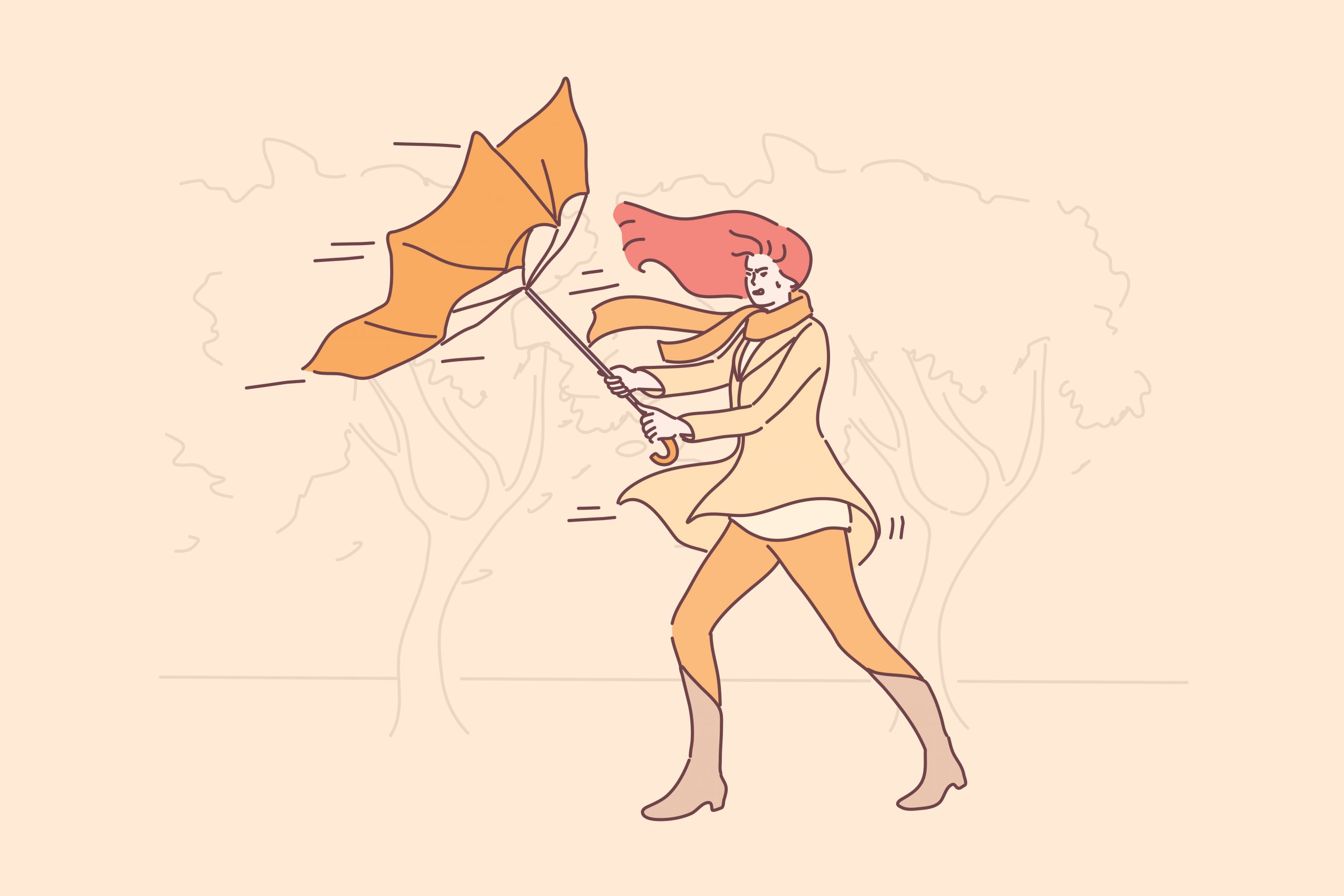
  • The Wind That Shakes Us: Why We Need Hard Times

    The Wind That Shakes Us: Why We Need Hard Times

    “The pessimist complains about the wind; the optimist expects it to change; the realist adjusts the sails.” ~William Arthur Ward

    I live in the windiest city in the world—Wellington, New Zealand. Perched between the North and South Island, this colorful little city gets hammered by wind. The winds from the south bring cold, and the winds from the northwest seem to blow forever. My body is regularly under assault. But amid all that blustering lies the answer to one of life’s great questions: How do we feel at home in the wind? Or better phrased, how do we live with the hard things that blow our way?

    This research can shed some light.

    The Biosphere 2 was a scientific experiment in the Arizona desert conducted in the eighties and nineties. A vast (and I mean massive) glass dome housed flora and fauna in a perfectly controlled environment. It held all of nature: trees, wetlands, deserts, rainforests. Animals, plants and people co-existed in what scientists thought was the perfect, optimal environment for life—purified air, purified water, healthy soil, filtered light.

    Everything thrived for a while.

    But after some time, the trees began to topple over. When the trees reached a certain height, they fell to the ground.

    This baffled the scientists at first. That is until they realized that their perfect environment had no wind, no stormy torrential weather. The trees had no resistance. The trees had no adversity.

    The scientists concluded that wind was needed to strengthen the trees’ roots, which in turn supported growth. The wind was the missing element—an essential component in the creation of tall, solid, and mighty trees.

    What can this science experiment teach us about real life?

    Everything.

    A life without storms is like the Biosphere 2. Sure, it sounds idyllic. But that’s just a perception. And I fell for it hook, line, and sinker.

    I thought a perfect life would make me happy. And it did, for a while. Good job, great husband, lovely home. But I knew deep down that something was missing. I always had a sense that life was incomplete. I longed for something; I just didn’t know what. It baffled me, just like it baffled the scientists.

    Without knowing it, I, too, had placed a biosphere around my heart. If any pain, any resistance, blew my way, my biosphere stopped it from penetrating. That is until I was diagnosed with blood cancer, and things began to crack. 

    Sitting in the office of a psychotherapist a few months after my diagnosis, nervously hunched and with hands under my thighs, I simply said, “I am really scared about my cancer.”

    That moment that I assumed was weakness turned out to be the exact moment my biosphere, my armor, began to crack.

    My diagnosis, my adversity, was nothing more than an opportunity to step outside of comfort and tell someone I’m scared. It jolted me enough to put me on an unexpected path of inner enquiry.

    Was it scary to open up? Hell yes! I wanted to stay in the biosphere. I really did. I kept searching for comfort within it, but I was unsatiated, and the wind crept in anyway and just grew stronger: I lost someone I loved to cancer, a close friend backstabbed me, my postpartum body broke, more wind, more pain, all while dripping in very small children. Just like those felled trees, I, too, toppled to the ground.

    When I could no longer withhold the wind, when I had to step out of the comfort of my biosphere and talk about my fears and look at my darkness, only then did I grow tall enough to find what I was looking for: I was longing to know the fullness of myself.

    I knew my old habits of perfecting and controlling life to avoid pain, numbing pain, or distracting myself from pain no longer worked. Those strategies did not lead me to the thing I wanted most: completeness. I had to go through the pain. Sit in it. Let it wash over and into me. I had to feel what it’s like to have cancer, be lonely, get hurt, lose someone I love, have a broken body. Only by going through it did I realize I could transcend it.

    Liberation was on the other side of pain. It existed outside of my biosphere. One therapy session at a time, one book at a time, one podcast at a time, one meditation at a time, one hard conversation at a time, slowly, things began to crack. Inch by vulnerable inch, eventually (like, years later), my biosphere crumbled to the ground.

    Brené Brown calls life outside the biosphere “living in the arena.” She said, “When we spend our lives waiting until we’re perfect or bulletproof before we walk into the arena, we ultimately sacrifice relationships and opportunities that may not be recoverable.”

    She also said, “I want to be in the arena. I want to be brave with my life. And when we make the choice to dare greatly, we sign up to get our asses kicked. We can choose courage or we can choose comfort, but we can’t have both. Not at the same time.”

    The courage to be vulnerable is the springboard out of the biosphere.

    If you’re in adversity right now—in lockdown, or the doctor’s office, or separated from a loved one— perhaps your biosphere, too, can no longer protect you from pain. COVID-19 has cracked open our collective armor and shown us how little control we have. It’s hard. It’s painful. But it is also an opportunity. When the outside world is crumbling, the only way is inward.

    When I look back, I see that pain or resistance only ever asked one thing of me—to look at it. It was a nudge (or a shove in my case) to look inward, get vulnerable, talk about my feelings, unpack my darkness, cry, unearth, read, listen, meditate, move forward in my awareness, expand my consciousness.

    And with time, I grew beyond the safety of the biosphere to a height that was inconceivable while I was in it. Without the wind, I would never have seen the height I could reach.   

    This process of unearthing all my fears and darkness eventually lead to a place of power. Now I have the awareness and power to choose when to act from fear and when to ignore it. The wind no longer rules me. I am at home in it—figuratively and literally.

    Living in the middle of Middle Earth has proven one thing: the wind is constant. We can’t avoid hardship any more than we can avoid day turning into night. The hard things in our life will keep on coming—more lockdowns, more sickness, more hurt—and the only way to be at home in the wind is not to fight it, to learn to live with it.

    We have a saying here in Wellington: You can’t beat Wellington on a good day. It’s true. When the sun is shining, Wellington is the most glorious city on earth. The wind has blown away the cobwebs, and majesty remains. The craggy coastlines glitter and the city’s heartbeat thumps and vibrates and enters the hearts of all who live here. On these days, the thrashing wind is forgiven, and we fall in love with our city again. And again. And again.

    Without the wind, there’d be nothing to forgive. There’d be no falling in love process. Life would exist on a flatline. Yes, there would be no gale. But we’d also miss out on awe. Life is both wind and sun, pain and beauty. By staying in the biosphere, we risk missing the magic that sits outside of it.

    I’m so glad I took that first vulnerable leap of faith all those years ago. Life outside the biosphere isn’t scary like I imagined. I didn’t remain on the ground like a rotting felled tree. I grew.

    I grew to a place where the air is clearer. I can breathe. Frustration or hurt or pain isn’t held onto for any sustained length of time. The waves of emotions come in, then go out. I observe it all without a sense of lasting entanglement. Fear is in the backseat. Pain is softened. Beauty is heightened. Love is everywhere, even in the wind.

    Deepak Chopra said, “The best way to get rid of the pain is to feel the pain. And when you feel the pain and go beyond it, you’ll see there’s a very intense love that is wanting to awaken itself.”

    That’s what is waiting for you outside the biosphere.

  • How We Can Overcome Our Obstacles When We Don’t Believe It’s Possible

    How We Can Overcome Our Obstacles When We Don’t Believe It’s Possible

    “If we can see past perceived limitations, then the possibilities are endless.” ~Amy Purdy

    Nature inspires me. There are hidden messages consistently on display. On my daily walks, I find myself interpreting these messages in relation to my life.

    One day, near the end of my walk, I was paying attention to the trees. A giant one caught my eye. Its magnificence was portrayed as morning sunlight peeked through the branches and bright green leaves.

    I noticed the enormity of its trunk, and then I saw the crooked fence.

    The giant tree trunk had grown so big that it pushed a section of the fence up off the ground. The fence barely had any balance left and looked as if it could topple over at any moment.

    As I watched all of this, I remembered another tree I had seen on one of my walks. The tree’s branches had grown so long and so thick, they struck through the slats on a metal fence. Big brown wooden knobs stuck out, encapsulating the thin wires. I was in such awe, I reached out and touched the chunky parts of the tree, thinking I could unwrap it from the fence. Not a chance. The fence had become a part of the tree.

    In seeing this tree, I thought, “Trees just do what they do. They continue to grow despite any objects that happen to be next to them.”

    These objects could appear as obstacles, but that does not stop the tree from growing. The tree adapts to its surroundings and keeps on keeping on. Depending on the barrier, the tree either continues to grow around it, or the tree ends up wiping out whatever is in its way.

    How is this symbolic in the life of a human?

    The nature of our true essence is to grow. Life seems to contain many events that are beyond our control. We find ourselves in situations where it seems we are being tested. Obstacles show up on our path, and we are faced with the question, “What do I do now?”

    But it really isn’t the obstacle that is in our way. It’s our beliefs about the obstacle that can stop us in our tracks. The tree doesn’t come up against the fence and stop growing. It just keeps doing what it’s supposed to do.

    Here is how this relates to an experience I went through in my early twenties. It was a true test of following my inner guidance instead of listening to the doubts of others around me, as well as my own uncertainties.

    At the age of twenty-two, I found myself pregnant, single, and living back at home with my mother. I was working an office job forty hours a week, making ten dollars an hour. Luckily, I had good health insurance, but what I didn’t have was a lot of self-confidence. I carried around shame.

    This was in the year 2001. Times had changed, right? Why was I so ashamed of being a young, pregnant, unwed girl?

    Because even in current times, that stigma was carried around deep in the trenches of society. And my own mother and older sisters had been through it, too. You could say the feeling of shame was passed down in many generations.

    After my son was born, I knew I had to do something different with my life. I received government help for food and baby formula, and my son was on government health insurance. Again, this only added to my shame because of the looks I would get at the checkout counter in the stores.

    But I knew I wanted to provide a better life for my son, and I knew there was something inside of me that wanted to grow beyond what I thought my potential was.

    I felt an inner calling to go into the medical field. So I decided to go back to college. Many obstacles showed up on my path once I decided to go for it.

    I hadn’t even enrolled in college yet, but when I began speaking aloud about my plan, fear set in, and people’s opinions fueled that fear.

    How would I attend college full-time with a four-month-old baby, work to provide for us, and find childcare in the meantime? Could I do it?

    Some people didn’t think so. They told me it would be too hard. They told me my son was too little, that I should wait until he was older.

    Attending college and raising my son would be too stressful. How did I plan to pay for tuition? Could I even get accepted into the highly competitive program, especially since I was already on academic probation?

    Right out of high school, I proved to lack ambition, and along with poor grades, I ended up dropping out of college after just two years of study. Now, how in the world was I going to get the university to accept me back, especially as a newly single parent?

    The obstacles kept appearing, left and right. A university advisor even told me that the program I wanted into was extremely challenging. He asked me, “Do you have family who can help you with your son? Because this program is rigorous and requires a lot of time.”

    Imagine, all of these stumbling blocks could have made me believe that I was not capable of pulling it off. I could have chosen to believe what I was hearing.

    I could have formed beliefs telling me my plan wouldn’t work. I had the choice to follow my inner guidance, my true essence, which pushed me ahead to grow, or I could believe my thoughts about it all being too hard. I could buy into the shame and the collective idea that I had no future.

    But there was something deep inside of me that knew I was meant to do this. I was meant to challenge all of the belief systems put in place that could hold me back.

    Back then, I did not know the power of positive thinking. I had never heard of manifestation. There were no tools in my toolbox to help push through any doubts. All I had was my inner guidance system and the strong desire to grow and show myself that I could do something really challenging.

    Four years later, after a lot of hard work, I graduated from college with a bachelor’s degree in respiratory therapy and was already employed at a local trauma hospital. I was living out on my own with my son and supporting us with my single income. I had found my passion for life, too. I was helping people who were sick.

    Our lives are a reflection of what we believe is true and possible. The belief systems we have in place guide our thoughts, desires, and the actions we take or do not take to make things happen.

    Instead of letting your beliefs hold you back, use this process to grow around them.

    How To See Through Your Belief System

    1. Choose a specific goal you would like to meet or choose a current situation you would like to change.

    2. Write down every belief you have about that goal or situation, specifically, any beliefs you sense are holding you back.

    These beliefs include:

    “I don’t have enough time.”

    “I’m not smart enough.”

    “I’m too old.”

    “I don’t have enough experience yet.”

    “My family would never approve.”

    3. Take some quiet time to engage with these beliefs. Sometimes I find it helpful to think about these during walks, while driving, or while I’m out in nature.

    4. Question where these beliefs came from. Usually, you will see the restrictive beliefs come from somewhere outside of you. They are ingrained from childhood, simply adopted from your parents and caregivers. You will even see a lot of beliefs come from society on a collective level.

    5. Once you can see where the beliefs come from, you have a choice whether to keep believing in them. What worked for me was not to try to change my beliefs into the opposite but to keep identifying that the belief was outside myself. The belief was not a part of my inner guidance. And then I would choose to move past it, not allowing it to hold me back.

    Forward Movement

    Seeing through your belief system is not an overnight process. More than likely, the systems have been with you for a long time. It can take discipline and effort to recognize them when they arise.

    Recognition of your inner guidance during this process is vital. It will not fail you.

    Keep listening to your inner guidance, your true essence. It will take you beyond your wildest dreams. It will be the tree that grows through fences.

  • How I Stopped Resisting Change and Embraced the Road Ahead of Me

    How I Stopped Resisting Change and Embraced the Road Ahead of Me

    “Just when the caterpillar thought her life was over, she became a butterfly.” ~Unknown

    Change is constant, from small changes like trying a new hobby to big changes like making a drastic career move. Even though change is all around us, it can feel scary. While change could lead you to something great, there are a lot of unknowns with something new, and that can cause anxiety.

    When I was younger, I used to embrace change. For example, each school year was a new and exciting experience.

    But somewhere along the way, I started to resist change.

    What Does Resisting Change Look Like?

    For some, resisting change might involve remaining in a situation that feels boring or mundane just because taking a different path can feel daunting or like a lot of work. For others, it might involve staying in a situation that’s unhealthy for them because making a change feels scary.

    I resisted change by focusing on the negative aspects of any new experience I was going through as a means to protect myself.

    If I failed at trying something new, then I would have something to blame it on. I could give the impression to others that the change didn’t work out because of some outside factor beyond my control.

    For example, when I began a master’s degree program, I moved to a brand-new city fifteen hours away from my hometown. I didn’t know a single person—in fact, the closest friend to me was six hours away.

    When I chose to attend this program, I was excited. It felt like a fresh start and an adventure because I’d get to live in a cool place, make new friends, and move into a different career path.

    I spent months preparing for the change, finding a place to live, and doing some pre-work for the program. About a week before I moved, the nerves kicked in. I suddenly felt like it was a crazy idea to move to a place where I didn’t know anyone and had no idea what I was doing.

    But there was no turning back; everything was already arranged. And deep down, I knew this was the right decision for me even though it felt uncomfortable.

    During the first couple of weeks in the new city, my mind took note of every undesirable thing it could find. Not only did I notice these things for myself, but I also complained to my friends and family. In a way, I was subconsciously building a case against this new situation so that if I failed, it wouldn’t look like it was all my fault.

    I complained about everything: “The people aren’t friendly.” “The street across from my apartment looks so sketchy.” “My program is really tough—we have so many requirements it doesn’t feel possible to get everything done.”

    Less than a month in, I was already considering transferring to a different program at my undergraduate college. I could move back to a city I knew, where I had several friends still living nearby. It felt like a safe and comfortable option.

    But then something happened: I started making friends with some people in my program. As I got to know this group of girls, I realized they had a lot of the same fears that I did! Not only were we able to bond over that, but we were also able to help and support each other.

    Suddenly, I didn’t feel so alone.

    After all that time trying to convince others and myself that this situation was horrible, I was finally able to admit to these new friends that I had worries about our new situation. Through their advice, I found healthier ways to deal with the new aspects of my life.

    For example, I began meditating every morning, which helped me manage my stress. I also found that, although I was far away from friends and family, when I stayed connected via phone calls and video chats, I felt less alone.

    Over time, my fears around this change fell away. And you know what? The two years I lived there turned out to be some of the best years of my life so far.

    I made lifelong friends. I gained so much knowledge—both practical and academic—as I developed as a professional and moved into a great job after graduation. I also met my fiancé during that time, someone who I can’t imagine my life without now.

    Had I left just a few weeks in, like I was tempted to, I would have missed out on all of that.

    While this is not the only example of when I resisted change, it’s a good one because it shows exactly how I would sabotage myself amidst the discomfort of something new.

    One of the biggest takeaways that I learned over time is that change is something most people find uncomfortable, so you are never alone. Rather than focusing on the negative aspects of a new change and telling others about all the reasons why it’s not good for you, share your fears with the people you are close to, with the intention of overcoming them.

    Why is sharing your fears about change with others so important?

    Your support system is called that for a reason—they are there to support you! Just like you don’t judge friends and family when they come to you for help, they won’t judge you either. We are often so much harder on ourselves than we are on anyone else.

    By sharing your fears with others, you’ll likely find that they can offer you advice or even just a shoulder to cry on so that your feelings don’t seem so overwhelming. When you keep those worries inside, they can start to build up in your mind and feel even more daunting. In a way, voicing your fears out loud takes their power away.

    What else can you do to manage change when it feels hard?

    Focus on what you can control.

    When faced with change, it can feel like everything is out of your control. However, one of the best ways to face change is to focus on what you can control in this situation. Ask yourself, “What can I take responsibility for right now?”

    For example, I accepted that I couldn’t control how overwhelming my schoolwork felt. However, I could control how organized I was, so I bought a planner and wrote out all my deadlines and when I needed to have tasks completed by, which made things feel more manageable.

    By taking control of your own fate where you can, change will feel less intimidating because it won’t be just something happening to you; it will be something you’re intentionally choosing.

    Take time for yourself—because you deserve it!

    Self-care is important during any time of your life, but especially when you’re faced with anxiety about difficult situations. We tend to be hard on ourselves when we’re struggling with something new. Self-care is a way of telling ourselves we deserve to be comforted through it.

    Self-care can also help you calm your mind and keep things in perspective when everything feels scary and overwhelming. Whether you just changed jobs, graduated, or ended a relationship, taking time for yourself is critical to maintaining a healthy mindset.

    Choose activities that help you relax. For me, that includes meditating and journaling. For you, that might mean practicing yoga, relaxing in the sun, or walking in nature. Other self-care ideas include developing a skin care routine, reading a book, or eating a healthy meal.

    Play around with different practices to find the ones that work best for you. You might also want to consider speaking with a mental health professional if you feel like you could use some extra support during this time of transition.

    Give yourself some credit.

    When faced with something new, you might find yourself thinking about all the many ways it can go wrong. To ease your fears, think about a time when you navigated change successfully.

    Walk yourself through how that situation went and the positive result. Use what you learned in that situation to walk through this new change.

    And as you start to make progress, don’t forget to reward yourself. Give yourself some kudos for all the effort you have put into your development and personal growth.

    Remember that the transitional phase is only temporary.

    If, like me, you’ve struggled when making a big life change, be kind to yourself through this transition.

    The discomfort we feel when faced with change is only temporary. While daunting at first, each new change will soon become your new normal and feel much more comfortable.

    Admitting that I had nerves about the situation to others around me was the first step to feeling at peace within my new adventure.

    It’s how you take away the power behind those fears and start to embrace the change in front of you as an opportunity to become even better because of it.

  • How to Stop Sabotaging Yourself and Feel Like a Success Even If You Fail

    How to Stop Sabotaging Yourself and Feel Like a Success Even If You Fail

    “If you love yourself it doesn’t matter if other people don’t like you because you don’t need their approval to feel good about yourself.” ~Lori Deschene

    In 2010, after a surge of post-ten-day-meditation-course inspiration, I publicly announced to the world that I was going to make a film about me winning the kayak world championships.

    A very bad idea in retrospect. But at the time I felt invincible and inspired.

    I had super high expectations of myself and of the film and thought it was all possible.

    Coming out of a four-year competition retirement meant a rigorous six-hour-a-day training schedule, while simultaneously documenting the journey, alone.

    I put an insane amount of self-imposed pressure on myself not only to be the best in the entire world, but also make an award-winning documentary at the same time, without a coach.

    To make a long story short, it was a disaster.

    Three days before the competition, my back went into spasm. I was so stressed out I couldn’t move.

    Jessie, a good kayaking friend, knocked on the door of my Bavarian hotel room.

    “Polly, take this, it’s ibuprofen and will help your back relax. Remember why you are here, you can do this,” she said.

    The morning of the competition I felt okay. I did my normal warm up and had good practice rides. “Okay. Maybe I can do this,” I thought.

    My first ride was okay, but not great. All I had to do was the same thing again and my score would be enough to make it through the preliminary cut to the quarter finals.

    Someone in the crowd shouted at me, “Smile, Polly!”

    I lost my focus, had a disastrous second ride, and made a mistake that I wasn’t able to recover from.

    The worst thing happened, and it all went wrong.

    Humiliated, embarrassed, and disappointed, I went on a long walk and cried.

    My lifelong dream of being a world champion athlete just vanished, and my heartbreak was compounded even more by the public humiliation I’d created for myself.

    I pulled it together and continued to film the rest of the competition and felt some protection by hiding behind my camera.

    “So, what’s next Polly? Are you going to keep training for the next World Championships?” Claire, the woman who won, asked me at the end of the event.

    “No,” I replied without even thinking. “I need to go to India.”

    India had been calling me for years, like a little voice that connected a string to my heart.

    “Being the world champion isn’t going to give me what I thought I wanted. There is more for me to learn. I want to approve of myself whether I win or lose. I want my thoughts to support me rather than sabotage me. I want to feel connected to something bigger than myself,” I told her.

    A year later, I went to the equivalent of the world championships of yoga.

    Three months of intensive Ashtanga yoga study with R. Sharath Jois, in the bustling city of Mysore, India.

    Practicing at 4:15 am every day on my little space of yoga mat, surrounded by sixty other people, with nowhere to run and nowhere to hide, I began the journey of facing my internal world.

    The toxic energy emitting from my mind, in the form of constant internal commentary of judgment and drama, looked and felt like an actual smokestack.

    I felt like a dog chasing its tail and was in a total creative block with editing my film.

    A yoga friend said, “Polly, even if your film helps only one person it is worth finishing it.”

    This was not what my ego wanted to hear.

    My ego wanted to inspire the world and had visions of, if not the Academy Awards, well then at least getting into the Sundance Film Festival.

    It took three years, and I finished the film. However, releasing it to the world brought up all of my insecurities. I felt exposed and like a huge fraud.

    How could I have made such a bold statement, failed, and then remind everyone about my failure three years later?

    I released the film and ran to North India, high in the Himalayas where there was no internet.

    Like leaving your baby on the doorstep of a stranger’s house, I birthed it and bolted.

    Even though Outside Magazine did a great article about the film, in my eyes it was a failure.

    It didn’t get into the big festivals I wanted it to get into and I didn’t bother submitting it to the kayaking film festivals it would have done well in.

    In 2019 I left India and returned to Montana to teach kayaking for the summer.

    It was the twenty-year anniversary of the kayak school where I spent over ten years teaching.

    The school had hired a young woman paddler named Darby.

    She told me, “You know, Polly, I watched your film about training for the Worlds, and it inspired me to train too. I made the USA Junior team and came second at the 2015 Junior World Championships. Thank you for making that film.”

    Humble tears of disbelief welled in my eyes.

    My film helped one person, and I was meeting her.

    The takeaway was that my ego and perfectionism got in the way of possibly helping even more people.

    I shot myself and my film in the foot so that my ego could continue to tell me I was not worthy.

    But this simply is not true.

    Hiding and running to keep my ego feeling safe no longer cuts it.

    The world is in a deep spiritual crisis right now.

    My ego would love to be in a cave in the Himalayas meditating away from it all.

    However, that is not what I have been called to do.

    Putting myself out there still feels uncomfortable, but I know that hiding is not going to help people. I have decided that good is good enough and am now taking small steps in the direction of my discomfort.

    I have learned a huge, humble lesson in self-acceptance, self-love, and self-compassion.

    The top fourteen lessons I now live by:

    1. Listen to the inner voice that whispers and tugs at your heart. If you’re passionate about something, don’t let anyone or anything convince you not to give it a go.

    2. Do the thing first. Enlist support from someone you trust but share about it publicly after you have done it so that you don’t create unnecessary pressure and feel like a failure if you struggle.

    3. Do things one small step at a time so you don’t feel overwhelmed and tempted to quit.

    4. Helping one person is a massive win.

    5. Drop all expectations—the outcome doesn’t have to be anything specific for the experience to be valuable.

    6. Do your best and let go of the results. If you’ve done your best, you’ve succeeded.

    7. Celebrate every small success along the way to boost your confidence and motivate yourself to keep going.

    8. Be proud of yourself every day for these small successes.

    9. Approve of yourself without needing the ego-stroking that comes with massive success and know that the results of this one undertaking don’t define you.

    10. True success is inner fulfillment. If you’ve followed your dream and done your best, give yourself permission to feel good about that.

    11. Do not compare yourself to other people. Set your own goals/intentions that feel achievable for you.

    12. Every “fail” is actually a step in the right direction. It redirects your compass and helps you learn what you need to do or change to get where you want to go.

    13. Growth means getting out of the comfort zone, but you don’t need to push yourself too far. Go to the edge of discomfort, but where it still feels manageable.

    14. If you freak out or feel resistance, take it down a notch. Move forward but in smaller steps.

  • The World Is Not My Enemy – Why I’m Trying to Let My Guard Down

    The World Is Not My Enemy – Why I’m Trying to Let My Guard Down

    “Vulnerability is the core, the heart, the centre of meaningful human experiences” ~Brené Brown

    From a young age I learned that the world is not a safe place—that there are bullies out there that want to harm me and that I have to watch my back. I developed defense mechanisms in order to protect myself, or perhaps those mechanisms had been there all along, programmed into my psychology by millions of years of evolution.

    Maybe these mechanisms served me in certain situations as they did my ancestors; telling me when to fight and when to run away. But as I got older, I began to see how these mechanisms would often kick into gear when I didn’t want or need them to. Sometimes I would fight when there was no need to fight. Other times I would be afraid and hide when I wasn’t really in danger. Sometimes, I still do.

    This isn’t just my story; it is the story of all of us. Just pay attention to how people behave on the roads—especially when they’re stuck in traffic—or how they behave in comment threads on social media. Pay attention to how people behave in work situations, especially when their skills, capabilities, or ideas are being questioned. We walk around with psychological armor, and we use a lot of energy trying to prevent even the slightest kink in that armor.

    Some of us are also armed and will go off like an automatic rifle at the slightest touch of the trigger, leaving bullet-ridden relationships in our trail.

    Although these defense mechanisms are meant to protect us, they also cut us off from each other. Basically, most interactions are just egos interacting with other egos. Moments of real connection between people don’t happen every day, because that would require us to put down our armor and be vulnerable. But a couple of days ago, I had one such a moment…

    My kids stay with me over the weekends, and I usually pick them up at a golf course where their mom works and my oldest son plays golf. Before I can gain access, the guard at the gate has to scan the license disc of my car.

    As if 2020 wasn’t crazy enough, this year has already thrown a couple of curve balls my way. This particular Friday was just one of those days; I had a lot on my mind, and I wasn’t paying attention. So, while the guard was scanning my license disc, I took my foot off the break for just a second and rolled my car over his unsuspecting foot… crunch…

    Needless to say, he wasn’t happy. I felt like an idiot and could immediately feel my defenses going up—not just because of his reaction but because I’m programmed to get defensive, and this affects how I interpret situations, even when the other person hasn’t done anything wrong.

    “Why was his foot under my wheel?” I thought. “It was only an accident. I have a lot on my mind, okay.” At the same time, I realized that I had messed up, so I apologized profusely and drove off to pick up my kids.

    When I left, I felt compelled to stop at the gate and ask him if he was okay and whether he needed a doctor. He was limping a bit, but he said that he was okay. I gave him my business card anyway and told him to call me if he needed medical attention.

    Great, I thought as I drove away, this is the last thing I need, another potential bill to worry about. And what if he tries to take advantage me? What if he tries to sue me or something? Now I have made myself vulnerable to attack by giving him my details. But fortunately for me, the next few days came and went without any calls from a doctor’s billing department, or a lawyer.

    The next Friday I once again found myself at the gate to the golf course to pick up my kids, and I had to face the guy whose foot I potentially crushed. But I was relieved to see that he was no longer limping.

    I asked him how he was doing, and he assured me that he was okay. I expressed that I was really happy to hear that and before I could drive off, he stopped me. He told me that most people would have gotten defensive and just left it, and as you’ll remember, I almost did. But then he said that I came back and showed him support, which meant a lot to him, so he wanted to thank me.

    I was a bit surprised to be honest, because the last thing I expected was a thank you. But I felt good about this interaction. Not only was I happy that his foot was okay, but I was happy that we could part ways with good vibes between us. I appreciate how cool he was about it.

    An incident that could easily have turned ugly turned out pretty good. Somehow, we had both managed to drop our armor, and this allowed us to show compassion for one another. It was beautiful.

    The honest truth is that I still struggle with this all the time. I would be lying if I said that I have this stuff fully figured out and that I never get defensive or go on the attack. I am still learning, and what this incident taught me is that the world is not my enemy. Sometimes we can be vulnerable and drop our defenses. And most of the time, people will love us for it.

    Seeing the world as something we have to defend ourselves against or hide from cuts us off from those around us. But when we allow ourselves to be vulnerable and authentic, we allow for greater connection. This takes courage and sometimes we do get hurt. But when we start treating the world like a friendlier place, somehow, it starts feeling like one.

  • The Only Way to Form Meaningful Relationships with People Who Get You

    The Only Way to Form Meaningful Relationships with People Who Get You

    “A friend is someone who gives you total freedom to be yourself.” ~Jim Morrison

    When I left my full-time position at an ad agency and ventured out on my own, I had a clear goal in mind—to connect with like-minded people who align with my highest good. As far as how I was going to do that, I had little clue.

    My life was full of relationships built from forced, sometimes toxic circumstances where we found each other out of need or convenience. I am grateful for each of those people because they were there when I needed them most, but there was always a part of me that felt unknown or misunderstood. They did not speak my language.

    After a couple of decades of those experiences, it became natural to think that no one understood who I was, and no one ever would.

    Being an idealist, I’ve always believed in true heart-to-heart connections with other human beings as the most fundamental component of strong relationships, above cultural backgrounds, titles, properties, or romance.

    Most of the people around me, however, seem to pursue relationships to either avoid being alone or to create financial security, without the desire to form a deeper connection with others. Perhaps they don’t believe in the type of connection I know exists and think of it as a fantasy. In the past, I was often criticized as being naive and impractical.

    My idealistic nature often shows up in work environments, too, unguarded and without an agenda, while I watch others focus only on their own goals.

    I’ve always cared about coworkers as well as clients, and I’ve been enthusiastic about creating great designs to help them succeed. Those efforts were often seen as an agenda to get promoted, even perceived as a threat at times by supervisors fearing I was after their job. So, I finally gave into conformity and kept these idealisms to myself and pretended I had the same drives as everyone else.

    I wanted to be perceived as professional, to have friends, and to live every day drama-free, so I showed the world just enough of me in order to fit in comfortably.

    It is no wonder, in hindsight, I never met anyone who truly got me, because no one really knew about the existence of that part of me. And if I ever mustered enough courage to share those deep thoughts and visions, the slightest pause in our conversation or a split-second blank stare would scare me back into my shell all over again.

    Interestingly enough, after my “release” into the ocean (as I like to call it) from the corporate pond, and since taking full advantage of my freedom to work with whomever I choose, I find myself attracting more and more like-minded people. Whenever I marvel at the miraculous synchronicities, I begin to realize more and more why that is…

    I unknowingly started to come out of my shell and show the world all that I am.

    I was no longer met with judging eyes, passive-aggressive statements, and indirect criticisms that conditioned me to refrain from expressing myself in ways that I wanted to. Without having to deal with constant judgment and negativity, I naturally opened up and let my walls down.

    I spent the three-month grace period I granted myself following the leave nurturing feelings of self-appreciation and comfort and self-reflecting. What kind of relationships did I want moving forward? And what type of professional relationships would I want to build for my long-term success? The answer from deep within brought tears to my eyes—whatever business endeavors awaited, I always wanted to be as happy as I was right then.

    This morning, on an introductory Zoom call with a client who came to us for marketing and PR services, I had déjà vu listening to her echoing my own recent experiences.

    She is a veteran in her industry, well-educated across all subjects, has a rich cultural background, and is already a highly successful entrepreneur; yet she expressed discomfort in telling her personal story because she felt she would be seen as weird and unrelatable, at the same time wondering how her unique perspective and her desire to better the world could come across to the right clients.

    I immediately felt my pulse a little stronger, blood flowing, and wasted no time in sharing what I had just gone through.

    I gave her the following advice in hopes she would be encouraged to share all that she is with the world and build the clientele she truly desires. I got my confirmation immediately when her eyes lit up and her wonderfully mischievous childhood stories began to flow out naturally and comfortably… (Joy!)

    Your “weirdness” is your uniqueness.

    Since I’ve allowed myself to be more authentic, I’ve crossed paths with many people who share the same fear of being seen as “weird.”

    Many of us carry this heavy weight, the shame we felt perhaps from a young age of being judged, reprimanded, or made fun of, just for being ourselves. We then spent decades trying to fit in, prove we were “normal,” and worthy of love and respect. We diminished all the amazing qualities that make up exactly who we are as unique individuals.

    If you ever feel the need to hide your history, struggles, or emotions to appear “normal” to the rest of the world, consider this: You are actually depriving the world of getting to know you.

    What if the world needs your unique personality? What if the world is waiting to hear your personal story? Every single one of your qualities, even those some may consider “weird,” is a contribution to who you have become and what you have to offer the world.

    If you have read this far, you most likely have a desire to be known, to be acknowledged, and you are likely already sharing pieces of yourself with others, at least on a surface level. I encourage you to gently peel off another layer and share a deeper part of yourself. Because not doing so will keep you wondering and feeling caged.

    Like-minded people are trying to find you, too.

    Finding people who click with you can seem like a challenge, even if you lead a dynamic and interesting life and/or have a rich inner world.

    As I get older, I value deep connections more and more because I enjoy getting into a state of flow over effortless, meaningful conversations. I spent many frustrating years trying to figure out how exactly to meet the right kind of people, but it had never occurred to me they were looking for me, too. And I hadn’t made it easy for them to connect with me.

    When I met new people, I stuck with superficial conversations because, again, I didn’t want to be perceived as “weird” and be rejected. When I formed a friendship, I tried to maintain it the same way I had earned it, by not being who I truly am. Needless to say, those relationships were unfulfilling and short-lived.

    Sharing who you are authentically in each present moment not only helps connect you to those similar to you but also filters the relationships that are incompatible from the get-go. By bringing your inner world to light, you acknowledge your own uniqueness and allow others to fully see you, thereby making a connection with you.

    The more you let other people in, the deeper the connections you will form.

    The levels of connection you can create with another person can be exhilarating but also a little intimidating. Relationships can form from a fun-loving, surface-level interaction into something that touches the most intimate parts of your souls. But you have to be willing to risk discomfort and rejection in order to find the right people.

    If you are tired of superficial relationships that bear little fulfillment and want deeper connections you can build on, then your only option is to be brave, open up about your inner world, and let other people in.

    How deep the connections are will depend on how vulnerable you allow yourself to become and whether or not others reciprocate. Not everyone will, and that’s okay. It’s worth opening up to people who’ll reject you to find the one who won’t.

    Conversely, you need to be prepared to reciprocate just the same when someone else trusts you enough to show you their inner world. While this may take some courage to build up to, it’s also well worth the risk.

  • How a Numb, Phony Zombie Started Singing Her Own Song

    How a Numb, Phony Zombie Started Singing Her Own Song

    “Alas for those that never sing, but die with all their music in them!” ~Oliver Wendell Holmes

    Six years ago, I came across a line from an old poem that punctured my present moment so profoundly it seemed to stop time.

    On an average Tuesday, there I was, sitting at my desk, ignoring the stack of papers I was responsible for inputting into a spreadsheet and procrastinating as usual on the Internet instead.

    At this particular time, Pinterest was my drug of choice—anyone else?

    As I was aimlessly scrolling through wacky theme party ideas and spicy margarita recipes, suddenly, here came this old-school poet Oliver Wendell Holmes with these words that leapt off of my laptop screen and stung me like fourteen different bee stings to the heart:

    “Alas for those that never sing, but die with all their music in them!”

    I was floored. It was as if Oliver’s invisible hand had reached into my day and popped the protective bubble of my well-established comfort zone, sending me crashing down to the ground of an uncertain reality that I had so expertly managed to hover above for years.

    When I landed inside of the truth of my life for the first time in a long time, here’s what I saw:

    A recent college grad whose dad had died in the first few weeks of her “adulthood,” who took a job in the marketing department of a reputable company because it “looked good,” who spent her time outrunning looming fears of growing up and grief by seeking refuge in extraneous purchases, greasy slices of pizza, late nights under laser lights, and the bottoms of bottles of wine.

    A numb, phony zombie in red lipstick who had forgotten her own song.

    As a little girl, effortless music oozed from my pores. I could laugh, cry, dream, question, create, and believe in magic, and other people, and myself, with such abandon; it was like I was a tiny conductor leading a spontaneous orchestra of full self-expression, always unrehearsed and totally freestyle.

    And I didn’t just speak, I SANG! And I didn’t just walk, I DANCED!

    Had I put no soundproof walls up around my being then? I could recall what it was like to feel that free. But the memory of my smaller, wilder self marching proudly to the beat of her own drum felt so distant from where and how I was living.

    So instead of continuing on with the endless spreadsheet that I was responsible for completing that afternoon, I decided to take a break. A long break. I found a sunny bench outside of my building where I could go to sit and think.

    Then suddenly, The Little Mermaid swam right into my stream of thought. I closed my eyes and saw the scene where Ariel trades in her powerful voice to the evil sea witch, Ursula, for a pair of legs. She is so certain that becoming a part of the human world is more important to her than speaking her own truth and singing her own song. And I wondered…

    In what ways am I living at the expense of my own inner music? 

    I began to examine the situations in my life where I found myself exchanging an authentic piece of who I was out of fear, in order to achieve a particular outcome in the world. Here are just a few places in my life where I discovered this was so:

    I’d sacrificed my passion, by accepting a job I merely tolerated, because I was afraid of failing and wanted to give the appearance of being successful.

    I’d pushed down my grief, numbing it with shopping, food, and alcohol, because I was afraid of breaking down and wanted to give the appearance of being “fine.”

    I’d sacrificed authentic connection for toxic friendships because I was afraid of being lonely while I found the right friends and wanted to give the appearance of being liked.

    I’d sacrificed my authenticity and ended up living a small life because I was afraid of vulnerability and wanted to give the appearance of being in control.

    That was the moment when I decided I was ready to ditch the legs—everything that was just about appearances—and dive deeply into my own true passion, grief, and longings for connection and authenticity.

    I quit my job and enrolled in a spiritual studies certification and celebrant ordination program.

    I hired a therapist to help me heal and a coach to help me dream; these two women would become some of the fiercest advocates for me and my inner music that I’d ever meet.

    I started taking courses in personal development, joined a business mastermind, and got myself into as many meditation circles and yoga classes as I could.

    I began to play around with my expression again, belting my favorite songs from my childhood, wearing colors that sparked aliveness in me, scribbling lines of poetry till I fell in love with my own heart’s language again, and dipping my fingers in rainbows of paint without a plan.

    It felt so good to seek for the sake of seeking, and to create for the sake of creating!

    I finally started to let some of the people that I loved and trusted in enough to really see, hear, and hold me.

    And I got present, like really, really present, slowing down for long enough to fully inhabit whatever moment I was in. From that place, it became so natural to tap into the very real magic that had always existed within and around me.

    I recognized the miraculousness of my two feet on the ground, the blessing of my breath, and the rhythm of my heartbeat. I started to notice the sound and sensation of my full-body NO and YES. This new level of awareness polished my lens of perception, allowing me to see my life through my child self’s eyes once again—from a place of curiosity, excitement, imagination, and hope!

    My dive has brought me to terrifying places where I’ve wanted to sell myself out to the sea-witch over and over again, but still, I keep on swimming.

    For my song cannot be silenced, and neither can yours, though both of us will spend months, if not years living in fear of what it will take to truly sing.

    There is so much music inside of you and me. And to be the highest expression of who we are here to be, we’ve gotta sing our songs and sing em’ loud! But to live like that, we’re going to have to give ourselves permission to feel, say, and do what’s true.

    So, maybe owning your truth doesn’t look like finally quitting a job or grieving the loss of a loved one. But I challenge you to really take some time to stop and scan through your life with no judgment, just wide-open eyes and a loving heart, and ask yourself:

    What do I desire? What fear arises in the face of my desire? Where am I selling myself out to run/hide from my fear? And what must I do to express the full potential and possibility of achieving my desire?

    Do you remember the fierce and fearless drive that you had as a child to learn and grow? Can you imagine how many times the little you tried and failed and tried again at mastering the skills you needed to really engage with life—walking, reading, writing, using your words to ask for what you want, feeding yourself, tying your shoes, wiping your own bum, etc.? Where does that invincible tenacity go?

    The answer is: YOU’VE STILL GOT IT!

    It has been and always will be within you. You and I have the capacity to thrive in any and all areas of our lives. How? By becoming brave enough to stop and listen to our own music, then allowing ourselves to be truly guided by it as we go!

    Belt out your song like your life and the lives of future generations depend on it, because they do. And if you miss a beat or sing a note or two out of tune, don’t be afraid to own it. It’s all just a part of the dance. 

    If you’re looking for me, I’ll be here, diving deep into the depths of my being, tuning into my own music, swimming through fear, and daring myself to sing. Over and over and over again until my very last breath.

    And you? It is my hope that you will have the courage and the willingness to go deep and begin unleashing the divine music that only you were born to sing.

  • When You Dance with Discomfort, Surprising Things Can Happen

    When You Dance with Discomfort, Surprising Things Can Happen

    “I wish for a world where everyone understands that discomfort is the price of legendary. And fear is just growth coming to get you.” ~Robin S. Sharma

    For years, I felt like the most incredible dancer. Whenever I heard music, no matter where I was, I would start moving, at first slowly and then, as the music started to infuse my soul, with increasing abandon. In that moment, I was filled with passion, and I completely let go. It was me and the music—no-one and nothing else. I was in another world.

    When I danced in front of others, I would take great delight and bask in all the applause showered upon me for sharing such a passionate performance. I couldn’t imagine doing anything else. Why would I? Dancing brought so much happiness into my life, and I felt free every time. That’s all I wanted: joy and freedom.

    But, no matter how many times I danced, it always ended in the same way: I would come crashing back down to earth with an almighty thud. You see, it wasn’t real. The dancing, the applause, the joy and freedom I felt; it was all a figment of my imagination. It had been going on for over five long years.

    The truth is, I wanted to dance not just in my head but for real. I wanted to take classes and learn to dance to the best of my ability, but I was too scared. I was scared of being ‘past it.’

    I believed that no-one my age took dance classes, or at the very least, only a few. And I didn’t like the idea of being the oldest in the class trying to keep up with the younger ones and only managing to look like some fool.

    But my desire to dance eventually overtook any fears I had. It’s as if the desire took on a life of its own, and the more I dreamt about dancing, the stronger my desire burned, until the point where it burned so strongly that it finally set my fear alight.

    And with my fear going up in flames, the ongoing thoughts that had such a hold on me weakened, and I found myself scanning websites for classes in my area. Finally, after all those years of being held back by fear, I booked myself onto a course. I was finally going to dance for real.

    I never expected to step into the studio and dance in the same way I danced in my head. I was a complete beginner after all. I certainly harbored a secret desire to pick up my chosen dance style effortlessly and without making barely any mistakes but of course, that didn’t happen.

    My perfectionist side reared its head often. I knew I had a long way to go and that I would make many mistakes but still, I wanted to dance properly, and I wanted instant gratification. My understanding that it would take time and my inner ‘Ms Perfection’ clashed greatly, but I kept going.

    Watching the other students in my class and falling into the comparison trap didn’t help. Even though it was a complete beginners’ class, everyone had different abilities. Some stumbled a lot, others seemed to pick everything up without having to think about it, or so it seemed, and still others looked as though they may have had some previous dance experience, perhaps in a different style.

    I would look at them and often wish I could be like them, but that was usually when I believed I wasn’t progressing quickly enough. That would lead to me becoming increasingly angry with myself and spoiling my own enjoyment of the very thing I had been wanting to do for years.

    The one thing I was relieved about the most, however, was not being the oldest, which happened only once and even then, it didn’t bother me as much as I thought it would.

    So there I was, fully immersed in my weekly dance class and loving every moment, when I wasn’t getting frustrated with myself, and all I could think about was other classes I could join. I never for one second imagined that there would be a bonus to following my heart’s desire, and I never expected to want to push myself further.

    As for the final surprise before the year’s end, I never would have thought it could have been possible. I thought that was it; I busted through my dancing fear—or rather, my desire engulfed my fears on my behalf—and I was happy.

    The bonus came in the form of a clearer mind, which makes sense, considering that I no longer spent hours stuck in my head dancing and then constantly thinking and worrying about why I couldn’t do it for real.

    And then, because I felt the need to stretch myself a little further, a few months down the line, I found myself enrolled on a drama course. Me, taking drama classes. It was, in fact, a course for the more quiet person, so although it was a slightly adapted version of what you might consider a traditional drama class, I did it, and it was a big deal for me.

    But the biggest surprise was quitting refined sugar. I always had a slight sweet tooth, but after thirty days of being on a wheat-, grain-, dairy- and sugar-free program, I didn’t want to go back.

    I was proud of the fact that I managed thirty days without sugar and wanted to continue, even if it were simply to see how long I could keep going. And to this day, nearly four years later, I’m still added-sugar-free and don’t feel the need to change anything. All this, I believe, came from honoring my soul’s calling.

    Would I have taken a drama class if I had never initially taken dance classes? I don’t think so. Would I have started a thirty-day wheat-, grain-, dairy- and sugar-free programme and continued with my added-sugar-free life? I don’t believe so. Why? Because dancing led to me wanting to grow in other areas. I was already expressing myself through dance, so wanting to improve how I expressed myself verbally followed.

    Because I was feeling good about the exercise I was getting each week through dance, I wanted to focus on my health even more. It now scares me to think what would have happened had I not ‘got over myself.’ I would have remained stuck in my head, pretending.

    I would never have given drama classes a second thought, and I probably would have kept on eating more refined, sugary foods than I had wanted, experiencing the uncomfortable sugar highs and lows. I’m overjoyed that I allowed my desire to take over and help me to ignore my fears of taking dance classes. So here’s to following our soul’s calling and allowing it to enrich our lives.

  • An Exercise That May Help You Make a Big, Scary Life Change

    An Exercise That May Help You Make a Big, Scary Life Change

    “Change your thoughts and you can change your world.” ~Norman Vincent Peale

    Making a major life change, such as changing careers or moving to a new state, can be really scary.

    Even if our hearts are pulling us in one direction, we may still be plagued with doubt, fear, and anxious thoughts, such as: How do I know if I’m making the right decision? What will my family think if I do this? Will I regret this?

    Even after we make the change, doubts and worries can still linger.

    In 2016, I was on the brink of a major life change. At the time, I was enrolled in a doctorate program in psychology. I had always dreamed of getting my doctorate. But after two semesters in the program, I realized the path I was on was making me miserable. While my advisor was passionate about his research, I didn’t feel anything close to passion.

    I came to realize I wasn’t in graduate school for the right reasons. I wasn’t there because I wanted to contribute to the field. What I wanted was to win the support and approval of my family.

    Once I realized that, I knew pursuing a doctorate wasn’t the right path for me. However, even though my intuition was screaming at me to leave, I didn’t trust those feelings. I fought with myself. I kept coming up with rational reasons for staying: I worked so hard to get here. I should be here. I’m smart enough to be here—I even passed the comprehensive exams in only my third semester!

    But no matter how hard my rational self struggled to sway me, my inner voice kept reminding me how unhappy and unfulfilled I was.

    I vacillated between leaving and staying. Deep down, I knew what I wanted to do. But I was terrified. My self-worth had always been linked to academic achievements. Without my status as a graduate student, I worried I’d feel worthless. Plus, what would my family and professors think if I left?

    Soon the pull of my intuition became too strong to ignore. I decided to leave my program. While my husband was very supportive of my decision, my family was not supportive—just as I feared. I tried to reassure myself. I continually reminded myself that I had left for the right reasons: to prioritize my happiness and pursue a more fulfilling life path.

    But the doubts and negative self-talk lingered. I started to believe that I was a failure, a loser. My family even said as much. A former professor was also disappointed with me.

    I became so wrapped up in my doubts and negative self-talk that I lost sight of the reasons why I left in the first place.

    Then serendipity hit.

    For some time, I had a side project in writing uplifting letters to strangers. I would write positive messages and leave them in places I thought would be helpful, such as inside self-help books at used bookstores.

    One day, while writing a letter, I suddenly got the idea to write a letter to myself, a letter reminding myself that in leaving graduate school, I was doing what was right for me—being true to myself and prioritizing my happiness.

    “Dear You,” I began. I spent the next hour crafting a letter to myself. I wrote as if I were a compassionate friend writing to myself.

    In the first paragraph, I briefly acknowledged my doubts and feelings.

    Next, I told myself to stop being so hard on myself—I had left graduate school to do what was right for me and my happiness.

    Then I wrote about why I knew graduate school was the wrong path for me. I recalled how happy I was before starting graduate school, and that my happiness rapidly declined since pursuing this path. I reminded myself that I was now free to let happiness back into my life. In the end, the letter ran to just under one thousand words.

    After particularly hard days, I would read the letter. What I found was remarkable: the letter instantaneously swept away all of the self-critical thoughts I had about leaving graduate school. It broke the pattern of my thinking negatively about myself and made me see, in my own words, why what I had done was right.

    Each time I finished the letter, I would be confident about my decision again and proud of my choice.

    But then, a day or two later, something would trigger me to feel badly again. The negative thoughts and fears and doubts would return. In the evening, I’d read the letter again and feel confident once more.

    Clearly, reading the letter was helpful in boosting my mood and confidence in the moment. So I thought: What if I started reading the letter every day? Would it help me feel better about my decision in the long-term? And so I started reading the letter every morning. It was often one of the first things I did after I woke up. In the beginning, I read it several times a day.

    Reading the letter every day proved to be powerful. Within a couple of weeks, I noticed that the things that had triggered me to feel badly, no longer had that effect. Instead, when confronted with these triggers, I found myself automatically thinking about the sentiments I had expressed in my letter.

    After a month of reading the letter every single day, my thought patterns had completely changed. No longer did I think less of myself for leaving my graduate program. Instead, I felt proud.

    In leaving my doctorate program, I had done what was right for me. I had listened to my intuition and bravely made a move toward pursuing a more fulfilling path. Sure, I was more than capable of being in graduate school and finishing the program, but it wasn’t the right path for me, and that was okay.

    And my letter had helped me stay on the path that was right for me.

    Are you facing a major life change and struggling with doubt, fear, or negative self-talk? If so, writing a letter to yourself and reading it consistently may be helpful in transforming your thoughts.

    Tips on Writing a Letter to Yourself

    1. Acknowledge your current thoughts and feelings.

    In the first paragraph, you might start off by acknowledging your current feelings or thoughts. For example, I started off my letter by writing, “I know you may be doubting yourself right now…” Reading this made me feel comforted and soothed, as if I were reading a letter from a friend who completely understood where I was coming from.

    2. If you’re having trouble coming up with reassuring thoughts to include in your letter, talk over your situation with a supportive friend.

    I talked over my situation constantly with my husband. I thought that my being sad to let go of my program was evidence that I was about to make the wrong decision. But he reminded me that it was normal to feel that way; after all it was a dream I had held for so long. It made sense that it would be a little sad to let that go, even if I knew it wasn’t right for me. This sentiment made its way into my letter.

    3. Make it conversational.

    I found my letter more impactful when it was written in a conversational way. Don’t worry so much about spelling or grammar. It doesn’t need to read like an essay.

    4. Use positive words.

    In her studies of the subconscious mind, Dr. Sherry Buffington found that the subconscious can only understand words that produce a mental image or picture. Words such as don’t, not, and no do not form an image or picture. Therefore, the subconscious doesn’t recognize them.

    For example, when you write, “You are not weak,” your subconscious only recognizes you and weak, and interprets this statement as, “You are weak.” Yikes! That’s not at all what you meant! If you use positive words, your subconscious will recognize the words and interpret the statement correctly. In this example, if you write, “You are strong,” your subconscious sees exactly as you intend: “You are strong.”

    5. Make it accessible.

    I wrote the letter in a Google Doc, which is stored within my Google Drive. That way I could access it easily on my phone. This might be helpful for you, or you may prefer a handwritten letter instead. Ultimately, you want to choose a method that will allow you easy access every day.

    6. Be open to revision.

    I know that my letter is just right when I feel comforted and soothed when reading it. If a sentence or paragraph doesn’t have the right effect, you may need to revise it a little.

    7. Read it every single day!

    For the letter to help you stay the course, it’s important to read it every day—for as long as you need to.

    Making a big life change can trigger a lot of fear, doubt, and negative self-talk. These overwhelming feelings and thoughts can become so habitual that you can feel stuck and unable to break free from them.

    Writing an empathetic, empowering letter to yourself can remind you why making a life change is so important to your happiness and well-being. And reading it regularly can help reprogram your thought patterns and keep you on the right track.

  • Why I’m Done Standing on the Sidelines of Life

    Why I’m Done Standing on the Sidelines of Life

    “If you spend too much time thinking about a thing, you’ll never get it done. Make at least one definite move daily toward your goal.” ~Bruce Lee

    It’s easy to criticize others.

    It’s easier to sit outside a situation than be in it.

    Ironically, it’s easy to belittle someone else’s efforts without making any real effort ourselves.

    The safe side of the ropes is an easier choice than committing to being in the ring, truly baring something. It’s also a softer option.

    It’s much harder to have skin in the game.

    It takes guts, and a healthy degree of get up and go, to put ourselves out there. To put our work and ideas out there with no guarantee they will gain any traction. To commit ourselves to competition, with no guarantees our hands will be raised in victory.

    Personal Experiences: The ‘Writer’ Who Never Writes

    I know all about living on the safe side of the ropes, as for too many years I was a ‘writer’ who never wrote.

    Some people are blessed to know what they want to do with their lives from an early age. They follow that path, committed to making it work wholeheartedly. No backup plan required.

    I’ve never been that person. I’ve tried; I’ve tripped and fallen into all sorts of ways of earning a living. And I eventually landed in a space that fits my lifestyle for the most part, with the amount of freedom I have, and also pays me well for my time as a consultant and company of one (me).

    The downside is that this career path doesn’t always fulfill me. There is a creative gap at times.  I have ideas that don’t always belong in my client work but burn away at me anyway.

    Writing has always been something I’ve been drawn to. I’ve read books throughout my life and have always appreciated the beauty in a perfectly framed run of words.

    Much earlier in my life I had a few unspectacular efforts to write some articles. Some work ended in print, but most didn’t make the cut. Even back then, perhaps fueled with a young man’s inflated ego, I fancied myself as something of a writer but lacked the work ethic or skills to back up my ideals.

    I wasn’t willing to commit myself to the craft, not even close. I wasn’t willing to have ten ideas rejected by editors so the eleventh would possibly be accepted. So, other than crafting business cases or technical process documents for consulting clients, I didn’t write (creatively).

    I occasionally promised myself I’d write, I even postured that I could do better than those who did, but I continued to remain passively on the sidelines.

    Until one day, the inertia all became too much. Yes, the safe side of the ropes was easier to some degree, but it was also uncomfortable. An itch was being left unscratched. I decided it was time I put my skin in the game.  

    So I started a simple blog. Two blogs, in fact. One based on some of the ideas that had been burning away at me and one based around haiku. (I also fancied myself as a poet who, you guessed it, rarely wrote any actual poetry!)

    Did the world stand up and take notice? Of course not. In fact, I look back now and think my initial efforts were pretty awful and unstructured (some would argue my writing remains that way). However, something magical did start to happen in me.

    The creative itch and ideas that had gnawed at me started to see light. I started to commit more time to writing. I started to make it a priority in my days and weeks. I strived to get better.

    This process all started eight or so years ago. The blogs have changed (one being retired), but my writing has continued. Books have followed. Writing has become an important part of my life. An important way for me to express myself and share something in me that may have remained covered up otherwise.

    Is it how I pay all my bills now? No, and I’m really not sure that’s the point. Committing myself to the process of making my work the best it can be, of trying to make today’s work better than yesterday’s, is reward in of itself. I have invested myself in the process.

    Do I still dream of a day where I’m a full-time writer and the words I labor over support my lifestyle fully and pay for my travels? You bet I do. However, I’m also going to keep turning up to write regardless.  I’ll carry on turning up to write until I feel I have nothing left to say, and then I’ll stop. And, to be clear, I hope I never stop while breath remains in me.

    I’ve realized that the very act of putting skin in the game is reward enough. I’m in the (writing) ring, baring a little and sometimes a lot of myself. It’s hard work at times, but it’s also exhilarating.

    The Nobility of Applying Ourselves

    There is risk attached to putting ourselves in the mix. Daring where others dare not. Committing ourselves when others second guess, or stand on the sidelines. But there is something to be earned in putting ourselves to the test. It’s where we will often learn most about ourselves. It’s where we grow. Sometimes it’s even where we define ourselves.

    To test ourselves is to learn to trust in ourselves. Whether we try and succeed immediately, or more realistically, try and fall down, pick ourselves up again, and then succeed, each time we apply ourselves we bolster the habit of getting out of the blocks. We learn to embrace, and revel in, taking action. We liberate ourselves.

    Putting ourselves to the test can take many guises. It could be a first public speaking engagement, it could be a first marathon, it could be a first child, it could be flying solo with a business idea, it could be signing up for a competition. It could involve testing ourselves physically or mentally (and often both at once).

    There is honor to be found in applying ourselves. There is respect to be found in trying to be the best we can be. There is reward to be found in the toil of striving to get better, little by little, regardless of the outcome.

    Our Choices Shape Us

    The choice is ours to make.

    We can live a passive life, never truly putting ourselves out there, and possibly shooting down the efforts of others. We can live a life of itches never fully scratched. We can leave dreams left un-chased.

    Or we can commit ourselves to an all together different route.

    We can commit to try harder, to do better, to be better. We can bare something of ourselves to the world. We can put our skin firmly in the game. We can seek to make an impact in our own small but significant way.

  • Why You Need to Embrace “Beginner’s Mind” to Live a Life of Adventure

    Why You Need to Embrace “Beginner’s Mind” to Live a Life of Adventure

    “The don’t-know mind… doesn’t fear, has no wish to control or foresee, steps off the cliff of the moment with absolute trust that the next step will land somewhere, and the next step somewhere else, and the feet will take us wherever we need to go.” ~Byron Katie

    I am fifty-five years old. I’ve raised a family, been through two divorces, bought and sold four houses, and had a successful professional career. And right now I’m doing one of the hardest things I’ve ever done, which is learning to host in a busy restaurant.

    My coworkers range from mid-twenties to early thirties. They are smart and hardworking. I feel like my brain is about to explode.

    Why am I doing this? Well, money, for one thing. For better or worse, I can’t go back to my original profession after taking two decades off to be a mom. But another large motivator is that I want to do something totally new and out of my comfort zone, to experience what Buddhists call the “not-know mind” or beginner’s mind.

    In my experience, adults older than about twenty-five are exceptionally good at stacking the odds in their own favor. We like to do what’s familiar, what’s comfortably in our wheelhouse.

    Let’s face it: It feels good to know what you’re doing—especially when you’re the oldest one in the room!

    Throughout childhood and young adulthood, avoiding new experiences is not optional (however much we might resist them). Every year in school we get a new teacher, perhaps new classmates, and continually new material to learn.

    Starting a new career, moving into new social roles and responsibilities, all require us to be a beginner, to not know for that uncomfortable initial period.

    Our goal in life is usually to reduce this sense of uncertainty and vulnerability as quickly as possible. Resisting new experiences, even the ones we actively desire, makes them still more uncomfortable. If we could crack this nut and truly embrace the vulnerability (and excitement!) of being a beginner, our lives would be more interesting—and a lot less stressful.

    The discomfort we feel is pure ego. Ego is the part of us that needs to look large and in charge at all times. It is not a fan of beginner’s mind. Ego tells us we’re in danger when we’re not in familiar territory. Its job is to keep us “safe,” and if that means living a small and boring life, so be it.

    I have to actively calm and soothe my ego each night when I report to work, filled with unfamiliar butterflies. I use self-talk that sounds exactly like what I say to my daughter when she embarks on a new experience:

    “Just do your best. No one expects you to know everything right off the bat. New things are always scary, but you learn more every night.”

    One of the keys to beginner’s mind is humility—a characteristic not highly regarded in this society. We are mostly about pumping ourselves up (there’s ego again). Humility requires us to acknowledge and honor what others know that we do not. For instance, I never knew how challenging restaurant work was before this, but I will never take a server for granted again!

    Humility and humiliation are not the same thing. Recognition isn’t a zero-sum game: Genuine admiration of someone else’s ability or expertise does not automatically make me “less than” as a person. In fact, it makes me stronger! To be humble in this sense is a mark of maturity and real self-esteem.

    Humility isn’t about falsely running ourselves down, but about seeing ourselves—our strengths and weaknesses—clearly. In this job, it doesn’t matter that I have a master’s degree (there are lots of servers with master’s degrees, I find) and no one cares what my previous profession was. What matters is that I’m willing to learn from anyone with the time to teach me.

    Beginner’s mind is all about being willing to learn, which can (and should) happen at any age. But you can’t learn something new if you only do what you’re already good at. You can’t learn if you insist on being the expert. You can’t learn if you’re not willing to get it wrong for a while, to make mistakes—even in public.

    The pay-offs are many, although it might be hard to convince yourself of that when you’re full of butterflies and dread. Life is an adventure, and adventures require us to step out of our comfort zones.

    Ask yourself: Am I really ready to settle for more of the same for the rest of my life? Isn’t it worth a little discomfort (even a lot) to learn a new skill, meet a new person, or discover a new aspect of myself?

    We can ask the ego to take a back seat for a while, and no one will be the worse for it. We can take our courage in our hands, and step out into the unknown, over the cliff, trusting that the next step will land somewhere.

    Usually, the worst that can happen is that we will feel uncomfortable, maybe even embarrassed. Maybe we’ll actually fail! I’ve considered that outcome and decided that I’ll survive if it happens. I’d rather try and fail than wonder if I might have succeeded.

    I hope that I’m providing a positive role model for my younger coworkers; maybe when they’re fifty-something they won’t hesitate to step out on a limb either. I know that I’m providing a good role model for my daughter. She texts me good luck almost every night on my way to work, and says things like, “I’m proud of us, Mom.”

    We lose touch with what our children are going through when we get too comfortable with our lives. They don’t put much credence in our advice to “just try it” when they never see us taking a risk. We can’t model courage, or how to handle mistakes and survive failure, if we always stay safely ensconced in our comfort zones.

    And the fact is, change will come even when we do our best to guard against it. The safety of a comfort zone is temporary, at best. In embracing humility and beginner’s mind, we really have nothing to lose and everything to gain. We’ll either succeed, or we’ll learn something—or, most likely, both. It’s a win/win (although you might never convince your ego of that)!

  • 7 Reasons to Abandon Your Comfort Zone and Why You’ll Never Regret It

    7 Reasons to Abandon Your Comfort Zone and Why You’ll Never Regret It

    “Everything you want is on the other side of fear.” ~Jack Canfield

    Imagine with me for a second. You wake up, roll over, and blindly reach to hit your alarm to start the routine of the day. Make the same thing for breakfast. Maybe go to a new coffee place…nah. Same place. Go to work on the same route to the same job you’ve been at for years.

    After a long day of struggling through your daily responsibilities, you come home tired and slink back into the comfort of your TV and couch. Watch the same shows. Pass out. Repeat. At long last, the respite of the weekend finally comes. You go to the same bars, and hang out with the same friends, and before you know it, it’s Sunday night. Time to repeat the whole process over again.

    Somehow down the road, you begin to feel like everything turned into too much of a routine. Nothing new happens anymore, and you can’t even remember the last time you really grew or progressed at something new—the last time you felt that burning sensation in your heart, that incomparable feeling of venturing into something new and scary.

    That was me.

    When I was a kid, I remember having this recurring nightmare. I was in prison, and my prison job was making license plates. That was my job for the rest of my life.

    I had to find every combination of letters and numbers, and if I ever made a mistake, I would have to start over. There was no goal. There was no challenge. Just repetition and routine. (There were a lot more intricate details, but I’ll probably just give myself anxiety trying to recall them).

    Anyway, I would wake up in a pool of sweat every night, wake my mom up, and tell her I was having the license plate dream again. She would just look at me like I was crazy; I don’t think I was very good at explaining why it freaked me out so much.

    I don’t think I knew why it freaked me out so much.

    Fast-forward a couple decades. I fell into a rut after a long period of falling into the same routines, day after day. Same jobs, long commute, long days, same weekends. It wasn’t even that I disliked my jobs—I worked in the music events and festivals industry. But my life had turned into such a routine, without challenges, without fear—just the same jobs, the same bars, the same everything, day after day.

    I woke up one day with a thought that scared the hello out of me—when did it all end? I didn’t even know what goal I was working toward. The license plate nightmare had manifested itself into real life.

    Dear God.

    That day, I quit both of my jobs and bought a one-way ticket to Southeast Asia. On this trip, I went through just as many cliché life realizations as the next traveler, but one stuck out far more than any other.

    The safety of my comfort zone was what was holding my growth and happiness back.

    I realized how crazy comfort—one of the biggest roadblocks to our growth—is something our bodies crave the most. However uncomfortable and unnatural it may feel to jump out of our safe zone, the benefits outweigh the initial discomfort drastically. It’s just hard to see the other side sometimes.

    Although the individual acts of leaving that safe space might vary from person to person—whether it’s quitting your dead-end job, traveling to a foreign place, finally talking to that person you’ve been too shy to engage, or simply diversifying your daily routine—I’m going to tell you some concrete reasons why leaving your comfort zone is so important for every person, and why you won’t regret it once you do.

    1. All development comes from outside your comfort zone, especially from failure.

    “We are all failures – at least the best of us are.” ~J.M. Barrie

    Let’s start with the basics. People tend to forget that struggle and discomfort are where all growth happens. Remember when you were a kid, and every single day was a challenge at something new? Your parents forced you to try scary new things you didn’t want to do, and either you succeeded or failed—and either way you were growing the entire time.

    Somewhere along the line, your parents stopped forcing you to do things, and your responsibilities added another layer of chaos into your life, forcing you to retreat into a comfortable routine to achieve a form of stability. In that process, many people start daring less to take a step outside of their comfort zone.

    Subconsciously, we attribute “learning” as a phase that only happens when we’re kids. That’s ridiculous. The learning process never ends, and there is always opportunity to grow, no matter what age you are or situation you’re in.

    We don’t like to try new things because we fear failure, but we need to understand that failure isn’t the end of the road, it’s the beginning. We learn and gain more from failure than we do from succeeding—and way more than if we never took the chance in the first place.

    Whether you succeed or fail at whatever you’re doing, it’ll be a hundred times more valuable to your growth than if you never took the chance in the first place.

    Whether it’s the soreness of your muscles after a long workout, the exhaustion of staying up all night chasing a goal, the fear of venturing into the unknown, or the feeling of failure, one old cliché always remains true: no pain no gain.

    Either you succeed and you grow or you fail and you grow, but trying anything is better than doing nothing.

    2. You’ll discover passions you never knew existed before.

    People often look for new hobbies that’ll fill their life with passion, but many are not only afraid to try new things, they don’t know where to look. They trudge through their daily routine, hoping something new will pop out of nowhere and save them from the repetition.

    Hey, sorry to break it to you, but it’s not going to happen. Nothing’s going to fall in your lap. You have to go find it.

    Not only will leaving your comfort zone help you take a crack at the things you’ve always wanted to do, but you’ll discover other things you never even knew you might’ve liked before.

    When I decided to quit my jobs and go on this trip to Southeast Asia, at one of my darker and lonelier moments (don’t ask), I found myself needing to write something, just to get some emotions off my chest. Little did I know I had just discovered my passion for writing.

    I started writing article after article, and decided to design a website to share them on. I started taking more and more pictures to combine with these articles, which even led to editing travel videos together.

    That’s four things, if you didn’t count. Four things I had never knew I had interest in before. All these newfound hobbies were borne from one thing that I discovered just moments after I left the comfort of my home.

    No matter how much you want to believe it, waiting around for something won’t get you anywhere, but the second you leave your comfort zone, you’d be surprised at how things just start falling into place.

    3. You’ll become more open-minded and understanding, making you appear wiser and more intelligent.

    Life is full of completely different and unique people, but when we get stuck in the same routine, we tend to gravitate toward people that are similar to us. When this is the only interaction in our lives, it leads us to become close-minded and cuts us off from the reality of the differences that exist between people.

    When you’re surrounded by the same people, who share the same opinions about everything, you gain a confirmation bias, and you start to think that a certain way of thinking is how all people think, or how all people should think. (Need an example? Go look at any political party ever.)

    Leaving the comfort of being surrounded by the people you are accustomed to will introduce you to different ways of thinking, which will not only lead to a better understanding of our differences, but an appreciation for them.

    This can be a whole different kind of uncomfortable, but the next time someone that has an opinion you disagree with, instead of immediately trying to convince them your side of the argument, try to understand why they came about that thinking in the first place.

    We all gather our opinions from a rich web of experiences and thousands of variables, yet sometimes we tend to think of other people’s opinions in black and white. Everyone has a reason for why they think the way they do, many of which are a lot deeper under the surface than you might be able to initially see.

    Opening your mind to other people’s cultural views and understanding what their ideologies are based out of (as opposed to just trying to confirm your already established beliefs) is the first step to gaining wisdom that applies to all people, rather than just the social group you’ve become accustomed to.

    4. You’ll gain clarity once you ditch mindless comfort-zone distractions.

    When we continue our routines and watch the same shows, go to the same places, or look at the same apps, we tend to turn our brains off and just follow muscle memory without even noticing. These routines make us feel comfortable and often put our minds to sleep.

    You’d be surprised at how much clearer your mind works once you simply turn your phone and TV off and go explore something new. Your brain will actually start going to work without you even trying.

    Something easy you can do today: Turn your phone off.

    Something harder you can aim for in the future: Turn your phone off for longer.

    5. You’ll become a more confident and sociable person.

    Talking to strangers is often an anxiety-provoking activity for people. We’re constantly fearing we’ll get judged or that we’ll say the wrong thing to the wrong person. First off, let me tell you, everyone feels the same way. That thought alone helped me become a more sociable person without worrying about the consequences of a “failed conversation” (sounds stupid when I put it like that, huh?).

    Interacting in situations with people you usually wouldn’t interact with is a great way to get out of your comfort zone. Go compliment someone you don’t know. What’s the worst that can happen?

    In a more non-direct approach, forget about other people for a second. When you spend your time trying new activities and experiencing things you haven’t done before, through the power of leaving your comfort zone, confidence eventually comes whether you were looking for it or not.

    The very act of being bold enough to try something you haven’t done before will raise your confidence on its own, and that in turn naturally minimizes the fear of interacting with people you don’t know.

    Confidence and social skills will be a byproduct of your breaking of the ordinary. Which leads to the next point…

    6. You’ll become a better storyteller without even trying.

    “No human ever became interesting by not failing. The more you fail and recover and improve, the better you are as a person. Ever meet someone who’s always had everything work out for them with zero struggle? They usually have the depth of a puddle. Or they don’t exist.” !Chris Hardwick

    Just as confidence and social skills come naturally when outside of your comfort zone, so will the stories. When you make a conscious attempt to leave your comfort zone, you’ll be surprised at how weird, crazy, and awesome things tend to happen more to you more.

    You’ll start amassing an inventory of interesting stories without even trying. All of your failures and successes somehow start to become more of a narrative, rather than a repetitive list of chores.

    Make your life a story that people would want to watch a movie about.

    7. You’ll discover entire worlds you never knew existed before and the communities that go along with them.

    Lastly, you’ll discover tons of different groups and cultures that will amaze you.

    Think about one thing you like to do. For instance, we’ll say you enjoy golf. Think about all the tiny intricacies, tactics, and elements of golf that make you love it so much, whether it’s the careful studying of equipment, the complexity of your body motion, the perfecting of a craft, or just the peace of enjoying a beautiful day. On top of that, think of the entire golfing community that you connect with because of a shared love of an activity.

    Now think about the fact that these passions and communities exist for an infinite amount of activities out there. Foodies for every kind of food. Music lovers of every genre. Fans of every sport. Professionals of every craft. Thousands of different cultures and communities that you have never experienced exist out there—all filled with people that possess as much love and passion for their craft as you do.

    Discovering and sharing new passions with people is one of the greatest joys in this world.

    The possibilities are endless. Go find some new worlds today.

    Feeling like there is no end in sight can be one of the most suffocating feelings in the world. I know from experience that deep, sinking feeling you get in your chest when you realize your life has become too predictable—when nothing new happens, when you feel like you’ve stopped growing as a person.

    The good news is it’s completely in your power to take control of your life and experience what’s out there, and turn that suffocation into freedom, curiosity, and excitement.

    “The first step towards getting somewhere is to decide that you are not going to stay where you are.” ~Chauncey Depew

    Taking the first step is always the hardest, but I can guarantee you that once you do it, the only thought you’ll have in your head is “Why didn’t I do this earlier?” Every second you spend in this world is precious, and you shouldn’t waste a single second of it wondering if you should have done something. Life is waiting for you to take the reigns.

    Imagine with me again. You wake up five minutes before your alarm, with a head buzzing full of ideas, ready to conquer the day. You go to work with a clear mind, with new goals formulating in your head at what seems like every minute of the day.

    Before you know it, the workday has gone by in a snap, and you race home to start progressing to your next goal, or to write your next idea down, or to plan your next big getaway. Life has become exciting and full of wonder once again.

    No more license plates.

  • Take a Chance: Don’t Let Your Inner Saboteur Hold You Back

    Take a Chance: Don’t Let Your Inner Saboteur Hold You Back

    “’It’s impossible,’ said pride. ‘It’s risky,’ said experience. ‘It’s pointless,’ said reason. ‘Give it a try,’ whispered the heart.” ~Unknown

    On my first day back in college, I sat on a bench outside a classroom and wrote in a tiny notebook. Glancing around at the young students lining up, my sunglasses slid down my nose as I hurriedly scribbled the thoughts buzzing around in my head.

    “I’m afraid of being unprepared. I’m afraid of not being smart enough. I’m afraid of being left behind in the coursework. I’m afraid of giving up like I did last time.”

    As evidenced in that journal entry, I was pretty terrified to be back in school.

    I felt too old, too far behind, too unsure of why I was even trying in the first place. Wasn’t it too late to “catch up” anyway? Weren’t all of my friends already done with their bachelors, done even with their graduate degrees, forging careers and buying houses and doing those things that we all say we’ll do when we grow up? Hadn’t I made my bed when I gave up college the first time?

    Really I just knew that it was too late to catch up to the one person I’d been chasing my whole life.

    She was magnificent, really. This person had gone to college when she was “supposed” to, had since forged a meaningful career path, hadn’t wasted years in bad relationships and bad behaviors. She’d chased her dreams and flossed her teeth, run marathons and won awards, had tons of friends and confidence and was now living wealthy and successful and madly in love…

    …all cozied up inside my head.

    That person was the woman I “wished” I was, and she was making my life a living hell. My constant comparison to the ghost life that I should have led would stop me in my tracks as I began to take steps toward goals: You’ll never be who you could have been, so why even try?

    It’s for this reason that my return to school was a surrender of sorts.

    A surrender to my inner perfectionist, the one who told me that if I didn’t do it “perfectly” or at the time other people had done it (whatever “it” was), then I shouldn’t do it at all.

    The perfectionist who told me it was too late, that I would fail, that trying to be successful (like really trying) was the surest way to feel badly in the near future. My inner shame cranker, my saboteur, the voice that was easiest to hear throughout all the static of daily life.

    Signing up for my first college class was waving the white flag at her door. It was saying, “Yes, I am imperfect, things didn’t go the way that I planned, but I may as well try.”

    So I showed up for one class and then two, glancing sideways at my classmates that were often far younger and seemingly more prepared.

    The first few weeks I felt like an awkward dinosaur, struggling to keep up and too nervous to raise my hand in class. As time went on, though, I began to get braver, approaching teachers with questions and relaxing around my classmates.

    When I opened my eyes a little wider I was forced to realize that I wasn’t actually all that different from the other people taking classes. Sure, most were younger, but some were older; some were strikingly intelligent but others were asking me for help. As I kept showing up and diligently doing the assigned work, I found that I actually felt pretty good.

    I liked seeing A’s on my papers, but what I liked even more was the feeling growing inside of me. Each week that I showed up for class was another week that I hadn’t given up; each time I raised my hand was another time I didn’t listen to the voice that told me my question was stupid.

    The weeks flew by and before I knew it, that first semester had passed. I felt like I’d completed my own marathon, the one I was running with myself, and decided to push the finish line a little further away. One more semester became two, then three, and soon I was preparing to transfer to a university.

    My “I-can-do-it” train had gathered steam, and although I would sometimes falter with the difficulty of the courses, the train never totally stopped. My small victories had accumulated for long enough that I began to trust myself: to learn, to grow, to continue.

    It took me longer than four years, but this past June I did in fact graduate.

    As I sat in a stadium surrounded by hundreds of bobbing graduation caps, I took a moment to remember that girl who had sat on a bench outside her first college class. The one who had written about how scared she was, how sure of failing, how inadequate she knew herself to be. I realized that she was the same person sitting in a cap and gown, smiling with excitement and preparing to cross a stage and be handed a diploma.

    The only difference was time spent proving the fearful voice wrong.

    Sure, I’ll never compare to the perfectionist inside of me. She’s definitely still there and she still crops up sometimes, trying to convince me not to take that chance or venture out onto another limb; whispering in my ear that I’m not doing it right and I’m sure to embarrass myself anyway.

    You know what I’ve figured out, though? I don’t have to listen to her. None of us do. (My inner perfectionist gets around. I told you she’s popular, so I’m assuming she’s in your head too.)

    The voices inside all of us no doubt serve a purpose, but sometimes that purpose is just to keep us safe.

    “Don’t take that chance; you could fail” protects our ego from the pain of disappointment. “Don’t expect much from yourself; you aren’t capable” means that we don’t have to get our hopes up. The flip side of that, though, is pushing through those thoughts and doing things anyway.

    Taking that class. Going on that trip around the world. Applying for that job or writing that book or telling someone about an idea you have.

    Not listening to the negative voices in our head begins with first realizing that they’re in there; they’ve often been playing on repeat for so long that they blend in with the soundtrack of our mind. They feel like us, but they’re not: they’re no more us than that ghost life is—the one that we wish we had led, the one that never existed in the first place.

    If there’s one thing that my return to college taught me, it’s that the surest way to drown out the doubt in my head is to put one foot in front of the other and prove it wrong. Thank that doubtful naysayer for her opinion, suggest she get back to being perfect, and go forth with whatever it is that will make this actual life even a little better.

    I’d say it’s time we all did that; bid those lame perfectionists farewell and live the imperfect and real lives that we were actually meant to live anyway.

  • Leaping into the Unknown: Why We Don’t Always Need a Plan

    Leaping into the Unknown: Why We Don’t Always Need a Plan

    “You don’t always need a plan. Sometimes you just need to breathe, trust, let go, and see what happens.” ~Mandy Hale

    Wake up.

    Wish I could go back to sleep.

    Get up and ready for work. Tell myself that today I’ll leave earlier but then leave the same time as usual.

    Walk to work. Pass all the same people I did yesterday. At the same time.

    Arrive at work. Listen to the same people complaining about the same things. Complain about the same things myself.

    Teach my classes. Tell people off for being late—the same people as yesterday and the day before that.

    Go home. Try to work toward my dream life. Collapse from exhaustion after about half an hour and wonder what the point is.

    Go to bed. Cry lots. Hope that I don’t wake up in the morning.

    Wake up again and repeat.

    This was my routine for a good number of months before I finally couldn’t take it anymore.

    Did I have the world’s worst job? No, not really. Did I live in a hell hole? Not at all. In fact, you could probably say that I didn’t have any problems, yet I was possibly more miserable than I’d ever been.

    I couldn’t believe it. How had I ended up like this? I’d tried so hard to change my life. I’d meditated, done yoga, followed my dreams, made a vision board, and bought lots of self-help books. I’d even read them, too!

    What more was a girl supposed to do? Why wasn’t my life changing?

    I desperately wanted to leave my job, but couldn’t. I wouldn’t have the money to pay the rent. I wanted to leave my apartment but I had nowhere to go. Not unless I went to stay with my mother and, I couldn’t do that—not at my age!

    So I plodded on, I tried to be a good ‘spiritual’ person and accept my life as it was. I tried to make the best of things. And sometimes, it worked, but not for long.

    Eventually the feelings of dissatisfaction would return. The feeling of helplessness. Feeling stuck. Wanting to escape.

    But there was no way out. I’d be repeating this day forever. And ever.

    Let It Go

    Around this time, I was reading a lot about how we need to close one door before another can open. I was also seeing colleagues leave work to pursue a life of their dreams.

    Rather than giving me hope, this made me feel more downhearted. It was all right for them; they had money, a partner, a new job, or an already-up-and-running business.

    I was all alone. I was broke. I had no husband to support me. No rich relatives to bail me out.

    Everything I’d done to try to make a living out of work that I loved had already failed. I didn’t even know what I wanted anymore. I just knew I didn’t want what I had.

    I’d get irritated when I’d read about how I had to simply quit my job, how I had to follow my heart. What if my heart was only telling me what I didn’t want? What if it was refusing to tell me what was next?

    What if I closed one door and the other one got stuck?

    What then?

    I was so afraid of what would happen, I held on for months, hoping for an answer to drop out of the sky.

    Until the pain of staying where I was suddenly became too much to bear. I couldn’t take it anymore. Suddenly, what happened next didn’t matter.

    I didn’t care.

    I saw the madness of what I was doing: staying in a job I didn’t want to do, to live in an apartment that I didn’t want to live in, to stay in an area that I didn’t particularly like. Just to survive. And even surviving wasn’t much fun.

    So I surrendered. I did what I’d felt called to do all along: I said goodbye to the security I’d been clinging to. With no idea of what was coming next. With no income and little money. And no idea where I was going to live.

    But as soon as I made my decision, I felt a huge sense of relief. I wondered what had taken me so long.

    Of course, it wasn’t long until the fear crept back in. I had moments when I wondered what I was doing and how I would survive.

    But even in those moments of doubt, there was a knowing that leaving my present situation was the right thing to do.

    All my life, I’d put survival first. Now it was time to put myself first.

    My happiness. My sanity. My peace of mind.

    The worst-case scenario may not be so bad. In fact, it might be quite good.

    I was lucky. I was never going to be out on the streets. I knew I had the option of returning to stay with my mother until I sorted myself out. But I really didn’t want to do that. I was far too old for that now.

    Besides, that would mean living in a town far away from anywhere, with no transport of my own. I’d be so lonely. I’d have even less chance of finding work I loved. I’d be even more stuck!

    Despite my best hopes that something else would magically turn up, I indeed ended up returning home. I tried telling myself it would be fine, but the scary thoughts were still lurking.

    However, within a couple of weeks of the move, I saw the new path begin to emerge—chance meetings with like-minded people, work opportunities in unexpected places, community events where I thought there’d be none.

    And for the first time in months, I actually felt happy. Because for the first time in my life, I was truly putting myself first. And I was truly living in the present. Survival was no longer the name of the game. My own peace of mind and happiness was.

    When the pain of being where you are is too much to handle, when life is shoving you in the direction of the unknown, dare to trust it.

    As I said, I was lucky. I know not everybody can do exactly as I did. Not everyone has someone who can help them out while they make a drastic life change.

    I also know how annoying it can be to be told to change your life when you simply don’t see how. But the point here isn’t to do what I did, but to let go where you can even if you have to face your own worst-case scenario.

    When you begin to take care of yourself, when you follow what feels good for you and put your own physical and mental health first, you’ll find the path will begin to open up. You’ll find support from unexpected places.

    You may even find that your worst-case scenario turns out to be the best thing you could have hoped for.

    What I’ve learned is that having a plan is overrated. Sometimes we really do need to let go and see what happens next.

  • How to Get Out of a Mental Rut by Trying Something New

    How to Get Out of a Mental Rut by Trying Something New

    “Move out of your comfort zone. You can only grow if you are willing to feel awkward and uncomfortable when you try something new.” – Brian Tracy

    Have you ever come to a crossroad in your life?

    You know something needs to change, but you have more than one option—and it feels like there’s a lot of pressure on you to make the right choice.

    That was me a few months ago.

    I was stressed, overworked, and in what you would probably call a rut. Fatigued and struggling to get things done, I initially thought that all I needed was a break. But I soon realized that that wasn’t the case.

    What had happened was that being tired had driven me to get stuck in a messy cycle of negative thoughts, and every time I tried to untangle little problems, things seemed to get worse.

    Everyone around me was telling me to take a rest. But intuitively, I didn’t think a rest was what I needed. I’m generally a confident guy, but if you spend enough time in your own head, doubt will always begin to plant its seeds.

    What I needed wasn’t a break—it was a confidence boost.

    So what was my cure for the escalating stress?

    What was my grand plan to beat this anxiety?

    I thought I’d try stand-up comedy.

    Yep. I thought I would do one of the most stressful things most people can imagine. I would get up in front of a crowd and try to make them laugh. So I did.

    In the lead up to the night of my set, all the anxiety that I had been feeling was amplified.

    As I sat behind the curtain waiting to go on stage, my palms sweaty, leg tapping furiously, I tried to breathe slowly to calm myself down, but my thoughts raced so quickly I couldn’t even make them out. Why was I doing this? Should I just get up and leave right now? Who would knowingly put themselves through something like this?

    It was too late. My name was called, I stood up, opened the curtain, and….

    It actually went really well.

    Don’t get me wrong. It was every bit as scary as I expected, but as I predicted, it shook my brain up enough to break free of the mental rut I was in.

    And while it didn’t solve everything overnight, it did set off a chain reaction of renewed attitudes and choices, which left me with more energy, vitality, and positivity than I had had for months.

    So without further ado, here are five ways pushing your comfort zone can pull you out of a mental rut.

    1. It gives you a reference experience for future challenges.

    When it’s been a long time since you really pushed yourself, a new challenge can seem incredibly daunting. Your first response is usually “How on earth am I going to do that?”

    If, on the other hand, you’ve done something difficult relatively recently, your brain will immediately look to that reference experience as an example.

    Since the night of the comedy, I’ve been fortunate to achieve quite a lot in a short amount of time. That’s because every time I face a difficult task, I try to think, “Well, could be hard, but if I could do stand-up comedy, I can definitely do this.”

    2. It makes you feel alive again.

    A mental rut will depress your emotions and that means you will feel less of the good stuff. The longer this goes on, the easier it is for your body to forget what vitality feels like.

    By having a huge rush of neurochemicals like adrenaline, dopamine, and serotonin, you immediately remember just how great it can feel to be alive.

    3. It can redefine your self-image.

    After having spent some time in a mental rut, I started to lose confidence. When I thought about who I was and what I was capable of, I started to constantly reflect on what I hadn’t been able to achieve.

    However, when I pushed myself out of my comfort zone, I started to again think of myself as the person who could do difficult things.

    Our self-image is such a vague and always changing idea in our minds, but it is one that unavoidably has a big impact on our lives. By doing things that allow you to have a positive self-image, you gather the momentum to pull yourself out of tough times.

    4. It will inspire others.

    Inspiring other people around you, by pushing your comfort zone, has a number of benefits.

    For one, it will change how they perceive you and how they act toward you, and in doing so alter the perception that you have of yourself.

    But maybe even more importantly, inspiring people around you can encourage them to push their own comfort zones, and their actions will in turn inspire you. When you spend more and more time around people who are helping each other grow, you’ll all benefit from each other’s positivity, and the boundaries of what you believe is possible will expand.

    5. It reminds you that emotions will come and go.

    For the last few years, I’ve made a big effort to try and embrace one of the fundamental truths in both eastern spirituality and western psychology: that emotions will come and go; they are just experiences and do not define you.

    But I’m only human. So like everyone else I’m constantly forgetting and re-remembering of this truth. Sometimes it’s as simple as noticing the differences in your mood change between morning and evening, and sometimes it’s more profound, such as doing something you never thought possible.

    So what does this mean about you?

    If you’re going through a mental rut or even a period of depression, and you don’t think it’s simply a matter of needing a rest, try doing something that takes you out of your comfort zone.

    I’ve heard of countless experiences of someone doing something new, whether it be surfing, jumping out of a plane, or even traveling to a new place, and it’s completely changed their situation. If you decide to do so, at the very least you’ll have a wonderful new experience to refer to.

    Remember that if you’re in a mental rut, you’re not alone. Everyone goes through it at one stage or another, and reaching out to others is important.

    How have you pushed yourself out of your comfort zone, and how did it help you?

  • Beautiful Things Can Happen When We Step Outside Our Comfort Zone

    Beautiful Things Can Happen When We Step Outside Our Comfort Zone

    Calm Woman Meditating on Sunset Beach, Relax in Open Arms Pose

    “As you move outside of your comfort zone, what was once the unknown and frightening becomes your new normal.” ~Robin S. Sharma

    I recently arrived in my new home city of New Orleans. I came here for a change and to refresh my spirits, and I’m so glad I did. It’s truly an uplifting and unique city. Coming here certainly shifted me out of my comfort zone, as I’m originally from California.

    However, what I know from past experience is that breaking free of what’s comfortable is an ongoing, step-by-step journey. Simply put, it’s not enough that I’m here. I have to consciously keep embracing this expansion.

    When I first arrived here I felt that feeling of love and happiness I get when I travel to places that truly feel special. A warm, humid breeze blew past my face when I stepped out of my car. The house I’ll be staying in had a big blue door, and I’ve found bright colors and old fashioned, French Creole homes are the norm here.

    As I was being checked into my house, some neighbors came out to let my landlord know her car was blocking their driveway. They all knew each other, so the exchange was friendly, and it ended with them saying they were having a party that night for an engagement.

    They invited me to come, and I wanted to say, “Really? You want me to come? But you don’t know me and I don’t know the people getting married!”

    There was something about their instant openness and receptivity that I wanted to question and second-guess. But they meant it. They really did invite me, an unknown and random person, to the engagement party they were throwing for a friend.

    I went home and I knew I had to go. It made me nervous, as I would be showing up to a private event alone, without any chance of bumping into a friendly face. There would be no buffers. No safety nets. Just me. And that’s why I had to go.

    I had to go because it would be uncomfortable. I had to go because we spend so much of our lives going out of our way to avoid this exact kind of scenario.

    There are few things we dread more than feeling stranded and awkward in a room full of strangers. But the funny thing is, we’re also obsessed with this exact feeling—the feeling that life happens outside of our comfort zone.


    You know those signs that say, “This is your comfort zone” and then have a circle drawn around the words? Somewhere outside of the circle it always says, “This is where the magic happens.” Yeah, you know. They’re kind of ridiculous signs. You cannot sum up what it means to get outside of your comfort zone in a quaint little sign.

    Getting outside your comfort zone comes with intense feelings. If there are too many unknown factors we tend not to want to go into that space at all.

    We do not think of magic and glitter when someone says, “This is going to make you deeply uncomfortable. You might feel embarrassed. You might feel alone. You might feel incapable and even afraid.” Instead, we tend to think of all the reasons we should say no to the opportunity.

    Part of this is because we don’t see every uncomfortable opportunity as being worth our time. Why should I go to a random engagement party and be weird and make other people feel weird? The reason is because these little moments of discomfort prepare you for the big ones.

    What you really want, that thing that really is outside of the circle and has all the rainbows and the unicorns, when it does show up, it’s going to rattle you and shake you up and turn your world upside down. But you can handle it. You can.

    The best way to know you can handle it is to practice and show up when it’s inconvenient, all the time, basically saying yes to everything. You will get so comfortable with being uncomfortable that the lines will in fact blur and you will flow with life, at ease no matter how rough the waters.


    After I showered and got myself dressed I walked like I knew what I was doing to the neighbor’s house. If you’ve never read up on how body posture can you make you feel powerful, you may want to. It’s honestly life changing knowledge.

    I walked into the party and everyone was dressed in suits and dresses. I was wearing leggings and a cotton striped shirt. It’s the nicest thing I had. It was okay though. I was expecting to be out of my comfort zone. I was diving in, head first.

    Had I let the clothing stop me, I would have missed seeing something amazing.

    A man showed up to this fancy party in a sleeveless Fred Flintstones shirt. The shirt had a tie painted on it, so in truth, he may have actually dressed better than me. But it just showed me that all of the time we obsess over not having the right clothes or look or whatever is so absurd.

    There is always going to be a person in the equivalent of a Fred Flintstones shirt, and more often than not, you’re going to wish you were that person because they are totally carefree.

    After getting a drink I found a couple at a table that looked uncomfortable and like they didn’t know anyone. I descended on them and introduced myself with a firm handshake.

    I let them know I didn’t know anyone, I was invited that afternoon, and I was just going with it. I had an okay time talking to them. Just okay. There was no magic.

Eventually they saw some other people they knew and I was abandoned.

    Everyone at the table was talking to someone but me. I wasn’t sure what to do. I knew at this point my presence was weird. But you know what? No one has ever died from being uncomfortable. So I just rolled with it.

    I sipped my drink, looked around, and considered if I should stay or go.
I decided to hang out a bit longer because I wasn’t quite ready to walk away.

    I lingered in the corner alone, probably looking a little creepy. I grabbed another drink and listened to a speech and I realized then that I didn’t want to leave. Being a little uncomfortable but surrounded by happy people, live music, and an amazing vibe sounded a lot better than being comfortable and sitting on the couch watching Netflix.

    I then grabbed some food and saw a guy standing alone at a table. This was when I finally found the magic. Not the kind of magic that ends in us realizing we’re soul mates. The guy was actually nineteen (I’m thirty-four), and soon after I started talking to him his mom came over.

    They were two of the most amazing people I’ve ever met. I was so relieved I hadn’t run off when it got hard. I was relieved I was there, to meet this guy, who was so smart and interesting and who made me think, “Wow, I wish I could follow his journey and see what kind of impact he makes. I know he’s going to do something awesome.”

    I was so delighted with these people who didn’t look at their cellphones the whole night. It’s been a long time since a stranger has given me that much of their time and attention just because. To feel a connection like that, with people I’d just met… magic.

    Magic. Glitter. Unicorns. It was all there. I just had to ride the wave and let it happen.

    And those other people who abandoned me and avoided eye contact the rest of the night? I bet they’ll never even remember meeting me. They aren’t thinking right now, “Wow, that girl was so weird. Who does she think she just is to just show up like that?”

    This is something we tend to do—we think other people are thinking about us more than they are. And even if they are talking about me, it’s hard to care because I won’t go away from this night remembering them.

    I’ll remember Harrison, the nineteen-year-old jazz cellist who would love to teach music.

    I’ll remember his mom, who wrote and created a photography book around flowers and an abandoned house in Detroit.

    I’ll remember twinkle lights in the trees.

    I’ll remember the soft breeze on a warm night.

    I’ll remember the unbelievable graciousness of a stranger who welcomed me into his home and his party.

    I’ll remember the man at the bar who totally understood why I came. He had also read Shonda Rhimes A Year of Yes and he loved it too.

    And most of all, I’ll remember that I don’t need armor in life. I don’t need to shield myself from the unknown. I don’t need to be comfortable at all times in order to feel I’m on the right path.

    I just need to show up. I need to flow with what’s happening. When you show up, it’s amazing how the Universe shows up for you in return.

  • What You Need to Know When You’re Considering a Big, Scary Change

    What You Need to Know When You’re Considering a Big, Scary Change

    “May your choices reflect your hopes, not your fears.” ~Nelson Mandela

    Ten months ago I found myself floating on my back in an outdoor pool somewhere in California. Overhead was a clear blue sky, leaves dancing in the breeze, and birds singing their morning song.

    I felt more alive in that moment than I had in years. And so I made a promise to myself, right there and then, not to forget this feeling. I made a promise that I’d follow it. I made a promise that this feeling wouldn’t just be a three-month trip to a new country, but that I’d make it my entire life.

    And that’s how I came to be selling the flat I’ve lived in in London, the UK’s capital, for the last eight years.

    That’s how I came to be standing on the edge of something entirely new and uncertain and unknown.

    That’s how I came to be on the verge of yet another adventure. By noticing something that made me feel alive and promising myself I’d do whatever it took to bring more of that feeling into my life, until that feeling was my life.

    So here I am, sitting at my kitchen table, tapping out these words surrounded by the beginnings of packed up boxes, bags for the local charity shops, and the promise of a new life. The promise of a life made up of “that” feeling.

    For me, “that” feeling is about nature, wide-open spaces and a large majority of my time spent outdoors.

    And I’m excited, I am. There’s real excitement there. But layered up over that excitement?

    Fear.

    Here’s why:

    Travel’s so exciting, right? It’s adventure and freedom and play and sun and ocean. It’s the romantic idea of exploring new places, meeting new people, and tasting new cultures.

    Except, I don’t want to travel. I have no desire to travel the world. No desire to move from place to place. No desire to live out of a suitcase or a backpack. No desire to jump on the Bali bandwagon.

    I want a home. A community. A base. I want to be around friends. I want some continuity. And I want a partner to share my life with.

    And I have all of that. Right here in London I have it all. (Except the partner, that is.)

    But what I also have is an environment that’s suffocating me. I feel hemmed in, limited, detached from my true nature. And I know it’s time to leave.

    But leave for what? For where? I’m packing up my life and I don’t even know!

    I’m afraid I’ll never find another place that feels like home. Afraid I’ll become a lonely drifter, never quite finding the place I fit in.

    I’m afraid I’ll never meet my life partner because I’m unable to settle anywhere.

    I’m afraid I’ll wake up one morning and find myself old and alone. I can’t tell you how afraid I am of being alone.

    But you know what I know, amongst all that fear?

    That without this next step I cannot pass Go, cannot collect $200, and cannot create the most beautiful vision I hold for my life.

    The reason I wanted to share this story with you is this:

    The beauty of your life is that you get to create it in any way you want. You can create the sort of life that feels truly fulfilling and deeply aligned in every way, but life will always require you to let go of something before the next thing is in sight.

    If you find yourself stepping out onto that cliff edge right now, or making a decision to take that step, not knowing what the outcome will be or where you’ll end up, these are things I hope will help:

    Sometimes you have to close a door before another will open.

    I remember back in 2012 when I left my job to “figure out what I wanted to do with my life,” there was some confusion amongst the people I knew at how I could leave a well-paid, respectable job behind without any real idea of what I wanted to do next.

    I didn’t have an answer for them.

    The only thing I knew at the time was, “this isn’t it.”

    Stepping into that uncertainty paid off. I wound up starting my own business, which I’m grateful for each and every day. And I know, without a shred of doubt, I wouldn’t be here today, doing work I love on my own terms, if I hadn’t made that leap.

    And as much as I’m afraid right now, I know this is the same.

    Sometimes there are ways to build a bridge between the life you have now and the life you want in the future. But even when that’s possible, at some point, you’re always going to have to make a final leap. And it’s that leap and the final letting go of what was, that opens the way for what will be.

    To be reborn, you first have to die. To rise from the ashes, you first have to burn.

    Closing doors is scary, yes. But I comfort myself with the knowledge that there are few doors in life that can’t be re-opened in some way, shape, or form. And the likelihood is you’ll never actually want to do that when you see all the new ones that open to you.

    Other people’s fear is just that, theirs. Don’t take it with you.

    To many people, selling property in London is equivalent to murdering your own child. It’s just not something any sane person does. Alongside my own natural worries and fears about my decision, I’ve had to cope with other people’s fear too.

    I’ve had to untangle myself from other people’s thoughts about my life. I’ve had to step aside from the fear other people hold on my behalf.

    After nearly four years out in the world carving my own path, this is something I know to be true:

    Other people’s fear has nothing to do with you. Do not take it with you. People see life through the lens of their own experience and sometimes they find it difficult to see that their experience might not be the same as yours.

    Don’t let other people’s fear hold you back.

    Have courage and trust.

    Like most people, I’ve lived through some significant, and often tough, life events in my thirty-three years on the planet.

    In each of those moments it’s felt like I might not come through. Like the world might end, even. Heartbreak, most recently.

    But every time I’ve come through, and I’m beginning to realize I can always handle it. That no matter what life brings, I will, in fact, always be okay.

    As you leave the comfort of what you know, whether that’s a relationship, a job, a place or something else, know that you have the strength inside you to cope with every situation life might conjure up.

    What happens if you remain where you are?

    At the end of the day, I ask myself, what happens if I stay?

    My own answer to this question right now is stagnation. And since I believe my ultimate purpose is to grow, I don’t really have much of a choice.

    When faced with the fear of stepping into an unknown future, ask yourself, what happens if I don’t? And is that something I’m willing to accept?

    Your answer might just give you that final little nudge you need to step into the void and find out what life has in store for you next.

    And if all that fails? Well, just remember Oprah, who said there are no wrong paths in life. And Oprah never gets it wrong, right?

  • You Don’t Have to be Shaken Up to Wake Up

    You Don’t Have to be Shaken Up to Wake Up

    “They always say time changes things, but you actually have to change them yourself.” ~Andy Warhol

    I’m in my late thirties now, but I remember getting my first car like it was yesterday.

    Even though I would have loved a shiny new car, my dad had suggested I go for a reliable junk box instead. Since I had been known to take out a few mailboxes and was somewhat of a menace on the road, I begrudgingly agreed.

    Dad had a friend who worked on cars, and I proudly purchased my first clunker for $1000.

    The catalyst for wanting my own set of wheels was the dreaded bus ride to my job. Day after day, I would stand at that overcrowded city bus stop in the cold, waiting for the bus to arrive like it was the second coming of Christ.

    Unfortunately, when it did come, the 7,000 other commuters and I would pile in like a pack of sardines. Was that handsome guy putting the moves on me, or were we just packed in too close? I guess I’ll never know.

    The only upside to the overcrowded bus was that the body heat kept us all warm.

    I’d stand there, hanging on for dear life, praying that a nice old lady or a woman with a baby carriage didn’t need to board. Don’t get me wrong—I love the elderly, and babies too, but those were the kind of situations that would delay my already late behind!

    When I’d finally arrive at my destination, I’d file out with all the other happy campers, smooth my wrinkled skirt, and be on my way.

    During that time, the commute was just the start to what I already knew would be horrible day. Not that anything bad or dramatic would happen at work; it was just the simple fact that I just didn’t want to be there. Just like I didn’t want to be on that crowded bus.

    My office job certainly paid the bills, but it came with a hefty price. I was unhappy, like really unhappy. 

    Sitting in my less than comfy chair, typing away on my keyboard, my body was there, but my spirit was somewhere else. It was like a daily out of body experience and I spent years living that way.

    Eventually the unhappiness got to be too much, and I was more than willing to make the sacrifices I needed to make in order to escape. Translation: I left my very comfortable paying job, moved back in with my parents, and took a job at a local animal shelter.

    And you know what? I was broke, but more importantly, I was happy.

    Instead of having to endure those previous out of body experiences, I was now fully present. I loved that I had traded in my desk and computer for pooper scoopers and leashes.

    My days now consisted of walking dogs and making sure that the cats in my care felt comfortable and safe. I didn’t have all the answers on what direction my life was heading in. But the wagging tails and licks on my face confirmed that I was on the right track.

    Making the move from my spirit-draining job gave me time to contemplate what I wanted to do with my life. Eventually, I went on to open my own pet sitting business and it became a great success! In fact, I made much more money than I did at my office job.

    When I look back now, I wonder why it took me so long to make a move. Why is it that when we find ourselves feeling unfulfilled, we just accept that this is just the way things are?

    Why is it that we get so stuck in such a rut that we become zombie-like and don’t question things or contemplate a different way of living? A different way of making a living?

    Unfortunately, it usually takes something negative to happen in our lives for us to look for a different solution.

    Sometimes it comes in the form of a layoff from our job, the death of a loved one, (life is short, what the heck am I doing?), or a scary health diagnosis. Things like these tend to shake us up and wake us up.

    The good news is that you don’t need your beloved Uncle Harry to die or your boss to fire you before you can make a change. I’m living proof of that. If you don’t like the way your life is going, decide to change it. Simple as that.

    Sure, it might take some initial sacrifices, but just like my days riding the bus, those are only temporary.

    You don’t need to know all the steps you need to take just yet; you just need to give yourself permission to contemplate something different. Ask yourself, what are the things that bring me joy?

    That was my first step. I simply thought about what made me happy. The answer wasn’t too hard to find—it came in the form of my cat sitting on my lap. Purr

    Once we declare that we want something better for ourselves, we get help in the ways we need. Ways we might not even see coming. The Universe is funny that way.

    Looking back, I realize how fortunate I was to be able to move back in with my parents during that time. Not everyone has that option, but your path to change doesn’t have to look like mine. In fact, it should be uniquely your own.

    Most times it’s the little, everyday choices we make that end up having the greatest impact over time.

    Maybe it starts with just taking a class or trying a new hobby. Or maybe your path to change involves letting something go—a bad habit, negative self-talk or the pressure to please others.

    It’s these small choices and actions that end up leaving us a trail of breadcrumbs to follow. One action, one decision at a time will eventually get you to where you need to go. And the best part is that you don’t need your life to be shaken up before that can happen.

    Take it from me, you don’t need the 7.0 earthquake to hit before you decide to head to safety. When you first feel the ground shake, that’s the time to make your move.

  • Overcoming Shame When You Took a Risk and It Didn’t Work Out

    Overcoming Shame When You Took a Risk and It Didn’t Work Out

    “Live, travel, adventure, bless, and don’t be sorry.” ~Jack Kerouac

    There was no denying it. I had reached a dead-end. A year and a half spent living in a southern town that was simply too small for me; it was time to go. I needed a city, preferably a large one filled with numerous opportunities for a budding young writer.

    Ironically, the very day it dawned on me that it was time to move to a metropolitan area, love summoned me. It shouted to me from thousands of miles away, beckoning me to change the course of my travels.

    My long distance/Californian boyfriend, the one I designated the great love of my life, declared that he wanted to move in with me—to the very place I had deemed to be a dead-end. He was sick of his hometown. He wanted to come to mine so we could finally be together.

    I knew I couldn’t have my cake and eat it too. I had to make a choice. A city would wait for me; I wasn’t so sure love would.

    It took only two months of us living together in Deadendsville for him to suggest that we move. I was hoping he would maybe say Chicago or Boston or New York. Instead, he shocked me by saying he wanted to return to his suburban hometown in Northern California.

    I knew he wouldn’t go with me to a big city. He had made up his mind. He wanted me to follow him so he could teach me to surf, so we could camp at Big Sur, so we could have our tanned bodies tangled together every night.

    A more sensible person might have ignored such a romantic request, favoring sanity and security over things like sunshine, pheromones, and fun. But I, in my reckless abandonment of all that could potentially shield me from making a poor decision, refused to be sensible. I wanted (more than anything) to be true to my wild heart, which in that moment meant chasing after him.

    Like magic, the dead end disappeared and I found myself hurtling at 80 mph across the country toward California. I had no plan. No job lined up. No friends. Heck, I had never even been to the state of California, but there I was, road tripping on some lonely desert highway, pledging my allegiance to the west.

    At twenty-eight years old, I knew what was expected of me. I was supposed to be at the very least veering toward adulthood, making responsible decisions, preparing for my future.

    All of my peers were getting engaged, making down payments on houses, building their careers. Meanwhile, I was on a mad adventure, whizzing past cacti and mountains, feasting on chips and guacamole, in awe of my own defiant behavior.

    Sadly, my fiery romance burned out faster than a campfire in a hurricane, which ultimately spelled out all kinds of trouble for me. I had blown through my savings. I had no vehicle for transportation. No clue where the hell I was going. I also had a hole in my heart the size of Texas. I was beyond lost.

    Worst of all, shame swarmed all around me. Loved ones reminding me it was my fault for having such a flimsy plan. My own inner voice reminding me that I should have known better.

    I felt too old to be this naive, this bad at protecting myself. I could barely get out of bed, and yet I still had the energy to shame myself over and over again for the foolish choice I had made.

    Thankfully, my great aunt (whom I barely knew) invited me to stay on her ranch while I licked my wounds in Southern California.

    She too had moved to California in her youth for a love that did not last very long. Apparently, many broken-hearted women in my lineage had sought out comfort in her abode. It’s practically a rite of passage.

    Never once did my aunt say anything about my poor planning or taste in men. All she said was, “So what if you didn’t have a plan and you ran off with some jerk? You had an adventure. You come from a line of very strong women. You will get through this.”

    There it was. Lo and behold, the tiniest taste of the healing elixir my soul was so desperately thirsting for. I vowed to get well again, to build up my strength, to never again let shame bully me into forsaking my heart.

    On the long and winding road to recovering my sense of self-worth, this is what I learned…

    Sometimes, we do stupid stuff. We leap before we look. We make unsafe bets. We throw caution to the wind. We let lust lead the way.

    It is almost guaranteed that when we take those daring leaps, we become students of humility. We learn why skydivers carry parachutes and trapeze artists have safety nets. We come to understand why for better or worse it is smart to set up certain variables that will help cushion our fall.

    And yet, in this great hour of learning, if we forget about the love or the excitement that led us to leap from such great heights, we run the risk of inviting shame into our experience.

    When we do that, we make ourselves vulnerable to all sorts of nasty pathogens that seek to attack our inspiration, our courage, our joy.

    In case you weren’t aware of it, shame is one of fear’s favorite minions. Fear is very impressed by shame’s innate ability to make even the most gifted human being feel like they have nothing to offer.

    Fear and shame have been working together since ancient times, and sadly it does not look like they are going to break contract anytime soon. Together, they create much of the propaganda that has folks like you and me believing that we are the world’s shining examples of failure.

    The minute we allow shame to start broadcasting in our brains, there is no telling what other forces will join fear’s army of oppression. Regret. Guilt. Hatred. Disgust. All of them are sadistic opportunists who have no other way of gaining power than feeding off of yours. Still, it is tempting, isn’t it, to invite these ambassadors of fear to keep us company when we are feeling down and out?

    You must trust that there is nothing pleasant about having your heart raked over the coals. Nor is there anything so wondrous about sitting with your head hung low sputtering out the words “I’m sorry” or “I shouldn’t have” over and over again. It is actually quite dull. Shame, of course, will try to glamorize the whole act of penance.

    Try not to be dismayed by the fact that your thrilling moment of flight was followed by an equally epic fall. So what if the drastic descent blew your self-esteem to bits or fractured the very bones of your dearest relationship? It is not personal. It is not your fault. It is just gravity.

    Give the situation some time to heal. If you get lonely, call upon humor, but leave shame out of the picture. I can assure you, shame has no desire to see you put yourself back together.

    And what about that choir of onlookers that keeps singing the same four words over and over again: We told you so? Tell them it was one hell of a ride. Tell them you would do it all again—broken bones and all.

    Whatever mistake you think you made, whatever wrong turn you might have taken, if it was prompted by the desire to expand your capacity to live fully or love and be loved, then you have absolutely nothing to be ashamed of. You need not repent for a thing. So quit condemning your heart. It is likely that it has suffered enough.

    Here is the secret that lovers and fools and risk takers and geniuses have been whispering into one another’s ears for centuries: Never listen to the sober ones who refuse to drink from the cup that is inspiration.

    But you, who has gulped your way through life, unafraid to pair the sweet with the sour, you know why you answered the call, though it left you a bit bruised and battered. You know why you chose to move in a direction that was both surprising and intended.

    Hold onto that knowing. Protect it at all costs. Defend it with your sole existence. It is the medicine you must take to remember that embracing a path full of possibility and adventure is nothing to be ashamed of.