Tag: risk

  • When You’re Ready for More: How to Access Your Inner Wanderer

    When You’re Ready for More: How to Access Your Inner Wanderer

    “Not all who wander are lost.” ~J.R.R. Tolkien

    Sometimes as humans we lose sight of our profound inner resourcefulness—the wellspring of creativity and strength that has kept humanity reinventing itself over and over again.

    It happens to everyone. We get lost in comfortable routines, become discouraged from trying new things, and forget how to play.

    When life feels disappointingly status quo, it’s easy to keep floating downcurrent as you tell yourself, “Welp, I guess this is as good as it gets.”

    I don’t know about you, but I’ve definitely caught myself in a trap of wondering if the best is behind me.

    Thankfully, one of our instinctual superpowers is knowing how and when to start over or ask for more.

    Found deep in your psyche, you have an archetype known as the Wanderer who carries a wisdom on how to help you let go of misaligned, limiting, or outright unhealthy situations in pursuit of something better—whether it’s a job, relationship, or lifestyle.

    Archetypes are universal personality types and instinctual behavior patterns that we inherit from our ancestors that cut across all cultures. They’re inherent structures found deep in our psyches that offer us gifts and strengths that make us whole and well-rounded.

    Archetypes are especially useful as inner allies that help us grow through different phases or challenges in our lives. Becoming a parent, solving a unique problem in your industry, or rediscovering yourself in mid-life are all occasions where a certain archetype may emerge.

    The Wanderer is about leaving behind the familiar and entering the unknown. We see the Wanderer making an entrance when someone undergoes big transitions, such as getting a divorce, changing careers, or initiating a spiritual journey.

    The Wanderer is one of my favorite archetypes because it’s helped me stay in touch with my heart, mind, and body during tumultuous periods of my life. In particular, there’s one leap of faith that I couldn’t have taken without the aid of this powerful archetype.

    A few years ago, I was working a nine-to-five job in international education for university students, where I would send students across the world for a semester or summer. It was a deeply fulfilling and enormously fun job, but eight years into the field, I started struggling with the lack of flexibility of a forty-hour office job, and my body rebelled against the sedentary nature of desk work.

    I ended up on partial disability due to computer-driven repetitive stress injuries in both arms. For eight months I suffered from severe inflammation. It gradually got better, but my doctor told me I would likely never fully return to normal.

    No longer physically able to work at a desk full-time, I had to reimagine my future.

    As a highly sensitive person with a history of chronic pain, I was determined to find a new line of work that wouldn’t require me to sacrifice myself. With a plan in mind of building my own business, I decided to leave my desk job permanently.

    I didn’t need anyone’s permission.

    I wasn’t waiting for a sign.

    I just made up my mind with the hard-headed tenacity that’s typical of the Wanderer—it was time to go.

    I had a vision for how I wanted to shape my future. It felt like an uncontrollable itch I needed to scratch. Even though I loved the security of a salaried job with benefits, I couldn’t ignore the flashing warning lights coming from my body. Admittedly, my gut had also been nudging me to go work for myself long before I ended up on disability.

    I considered the next couple of steps to leave my career, but I didn’t have a detailed long-term plan. I felt a sense of inner trust and authority that I would land on my feet. I was ready and willing to make a humble living in the service industry as I built my business in my spare time. So, with a lot of courage and plenty of unknowns, I started over.

    I thank my inner Wanderer for making it possible.

    I can point to several other occasions in my life where I made a sudden change following a period of feeling lost or unmotivated. One of the hallmarks of the Wanderer is that it often becomes “activated” after you’ve endured a period of misalignment in your life that becomes intolerable.

    It often feels like a courageous awakening when you realize what you must do for yourself. Everyone needs a fire under their ass from time to time, and the Wanderer is precisely good for it.

    The hallmark quality of the Wanderer is that it takes responsibility for creating change.

    It doesn’t blame other people or circumstances for their predicament.

    It doesn’t mope or complain.

    It doesn’t flounder needlessly.

    The Wanderer is about taking risks.

    Whether you’re considering leaving an unhealthy relationship, a toxic job, or a lifestyle you’ve outgrown, you have to take risks. It might be an emotional risk, a financial risk, or a risk of vulnerability.

    I like to think that the Wanderer is here to remind me of who I’m becoming. When I start to think to myself, “I made it!” I’m always amazed to discover that I still have far to go. But I know I can count on my ingenious Wanderer to support me in taking the next necessary risk.

    If you’re teetering on the fence in a certain aspect of life, here are some tips on how to partner with your Wanderer to rediscover what’s possible.

    Tips for Partnering with Your Wanderer

    Start small and move slowly.

    I am not a proponent of rapid, overnight growth and change. Most people crash and burn when they rush into new experiences.

    The truth is that you can only move as fast as your body will allow you—physically, emotionally, and spiritually. There are no shortcuts. Start where you are. Use the skills and resources you have. Grow your capacity to do big, extraordinary things little by little.

    The easiest way to do this is by identifying the next smallest step one at a time. You don’t need to worry about what step ten is or how you’ll manage step twenty when you haven’t even taken the first step. Just focus on what you can do right now.

    Choose your mindset wisely.

    The Wanderer’s perspective is that there are no failures in life, only feedback and learning. Embodying this mindset will save you countless hours wasted on self-sabotage, pointless self-blame, and stewing in a victim cycle.

    The key is staying curious. When you try something new that feels risky and it doesn’t go the way you want, get curious. Self-loathing is cheap and easy, but practicing curiosity and self-kindness is the admirable, high road.

    If you feel yourself spiraling into thoughts and emotions that are abusive or critical, you won’t find a shred of useful wisdom that will help you pivot and move forward. Negative thoughts are neural pathways that become stronger the more you reinforce them. But you don’t have to forcibly plaster shiny, positive thoughts on top of them.

    Instead, focus on regulating your nervous system.

    A triggered nervous system sees the world through a lens of danger, disappointment, and hopelessness. If you arm yourself with a few tools to self-regulate, you’ll find it easier to return to the curiosity and kindness of the Wanderer mindset.

    The best self-regulating tools are simple and quick. Here is a favorite go-to of mine. Start by gently tapping around your collarbone with your fingertips. Then, bring in breath. Take in an inhale for a count of four and exhale out twice as long. Repeat at least twice more, or continue for as long as it feels good.

    When you’re done, take a break from what has triggered you and do something that feels kind and nurturing. Revisit the situation at hand when you’re feeling resourced and have access to a completely different perspective. The best insight and creativity come when you’re grounded and regulated.

    Nothing can guarantee you a soft landing into the next chapter of your life—which is to say, the road can get pretty bumpy and uncomfortable.

    In fact, you can pretty much count on it.

    But the mishaps and curveballs will make you sharper and lighter on your toes. You don’t need to nail every risk you take. Let yourself fall apart so you can put the pieces back together better next time.

    The Wanderer is ultimately about self-discovery. What do you find out about yourself when you re-enter the dating world after twenty years of marriage or when you pitch your creative writing to ten different publishers?

    You can’t possibly know what you want in life or what you’re capable of if you keep floating downstream passively.

    Life is an adventure, so keep asking yourself: What would the Wanderer do?
  • If You’re Afraid of Making a Big Life Change

    If You’re Afraid of Making a Big Life Change

    “The only way to make sense out of change is to plunge into it, move with it, and join the dance.” ~Alan Watts

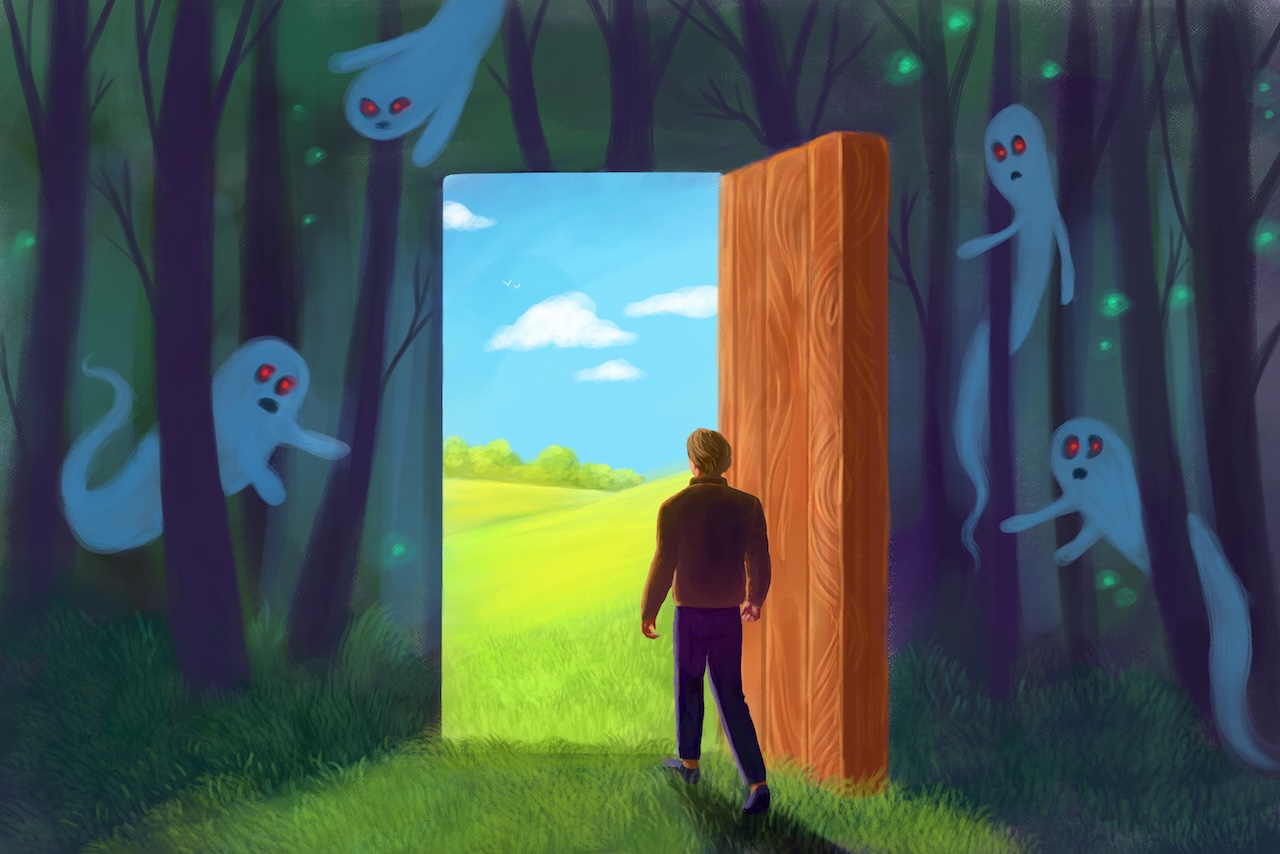
    I used to think that stability was the key to happiness. Stay in one place, build a career, nurture long-term relationships—these were the pillars of a successful life, or so I believed.

    My life was a carefully constructed fortress of routine and familiarity. Wake up at 6 a.m., commute to the same office I’d worked at for a decade, come home to the same apartment I’d lived in since college, rinse and repeat. It was safe. It was predictable. It was slowly suffocating me.

    As I approached my fortieth birthday, I found myself increasingly restless. The walls of my comfortable life felt more like a prison than a sanctuary. I’d scroll through social media, seeing friends and acquaintances embarking on new adventures, changing careers, and moving to new cities, and I’d feel a pang of envy mixed with fear.

    “I wish I could do that,” I’d think, quickly followed by, “But what if it all goes wrong?”

    It was during one of these late-night scrolling sessions that I came across a quote from Alan Watts that would change everything: “The only way to make sense out of change is to plunge into it, move with it, and join the dance.”

    I stared at those words, feeling as if they were speaking directly to my soul. What if, instead of fearing change, I embraced it?

    The next morning, I woke up with a sense of purpose I hadn’t felt in years. I decided to make a change—not a small one, but a seismic shift that would challenge everything I thought I knew about myself and my life. I was going to quit my job, sell most of my possessions, and travel the world for a year.

    The moment I made this decision, I felt a mix of exhilaration and sheer terror. What about my career? My apartment? My relationships? The questions swirled in my mind, threatening to overwhelm me. But beneath the fear, there was a spark of excitement that I couldn’t ignore.

    I gave myself six months to prepare. Those months were a whirlwind of planning, saving, and facing the reactions of friends and family. Some were supportive; others thought I was having a midlife crisis.

    My parents were particularly worried. “But what about your future?” they asked, echoing the same concerns they’d had when I switched majors in college.

    As the departure date drew closer, my anxiety grew. There were moments when I seriously considered calling the whole thing off. What if I was making a horrible mistake? What if I couldn’t handle the uncertainty?

    It was during one of these moments of doubt that I realized something important: The fear I was feeling wasn’t just about this trip. It was the same fear that had kept me trapped in a life that no longer fulfilled me. If I gave in to it now, I might never break free.

    So, I pushed forward. I boarded that plane with a backpack, a one-way ticket, and a heart full of both terror and hope. The first few weeks were challenging. I felt lost, not just geographically but existentially. Who was I without my job title, my routine, my familiar surroundings?

    But slowly, something magical began to happen. As I navigated new cities, tried new foods, and met people from all walks of life, I felt layers of my old self peeling away. I discovered a resilience I never knew I had. Problems that would have sent me into a tailspin back home became adventures and challenges to solve. I learned to trust my instincts, to find joy in the unexpected, and to embrace the unknown.

    One particularly transformative moment came three months into my journey. I was hiking in the mountains of Peru, struggling with altitude sickness and questioning my decision to attempt this trek.

    As I sat on a rock, catching my breath and fighting back tears, an elderly local woman passed by. She smiled at me and said something in Quechua that I didn’t understand. But her smile and the gentle pat she gave my shoulder spoke volumes.

    In that moment, I realized that kindness and human connection transcend language and culture. I also realized that I was stronger than I ever gave myself credit for.

    As the months passed, I found myself changing in ways I never expected. I became more open, more curious, more willing to try new things. I learned to live with less and appreciate more. The constant movement and change became not just tolerable but exhilarating. I was, as Alan Watts had said, joining the dance of change.

    But it wasn’t all smooth sailing. There were days of loneliness, moments of doubt, and times when I missed the comfort of my old life. I learned that embracing change doesn’t mean you never feel fear or uncertainty. It means you feel those things and move forward anyway.

    As my year of travel neared its end, I faced a new challenge: what next? The thought of returning to my old life felt impossible. I was no longer the person who had left a year ago. But the idea of continuing to travel indefinitely didn’t feel right either. I realized I was craving a new kind of stability—one built on the foundation of flexibility and growth I’d cultivated during my travels.

    I decided to move to a new city, one I’d fallen in love with during my travels. I found a job that allowed me to use my old skills in new ways, with the flexibility to continue exploring the world. I made new friends who shared my love of adventure and personal growth. I created a life that embraced change rather than feared it.

    Looking back on this journey, I’m amazed at how far I’ve come. The person who was once paralyzed by the idea of change now seeks it out as a source of growth and excitement. Here are some of the most important lessons I’ve learned.

    1. Fear is not a stop sign.

    Fear is a natural part of change, but it doesn’t have to control you. Acknowledge it, understand it, but don’t let it make your decisions for you.

    2. Discomfort is where growth happen.

    The moments that challenged me the most were also the ones that taught me the most about myself and the world.

    3. Flexibility is strength.

    Being able to adapt to new situations is far more valuable than trying to control everything around you because often, the only thing you can control is how well you adapt.

    4. Less is often more.

    Living out of a backpack for a year taught me how little I actually need to be happy.

    5. Change is constant.

    Instead of resisting change, learning to flow with it brings a sense of peace and excitement to life.

    6. It’s never too late.

    At forty, I thought I was too old to radically change my life. I was wrong. It’s never too late to start a new chapter.

    If you find yourself feeling stuck, yearning for something more but afraid to make a change, I encourage you to take that first step.

    It doesn’t have to be as dramatic as selling everything and traveling the world (though I highly recommend it if you can!). Start small. Take a different route to work. Try a new hobby. Have a conversation with someone you wouldn’t normally talk to. Each small change builds your resilience and opens you up to new possibilities.

    Embracing change doesn’t mean your life will always be easy or that you’ll never face challenges. But it does mean that you’ll be living fully, growing constantly, and experiencing the rich tapestry of what life has to offer.

    Your life is not a fixed path but a journey of constant evolution. Embrace the changes, learn from the challenges, and celebrate the growth. The world is vast, life is short, and the greatest adventures often begin with a single step into the unknown. So take that step. Join the dance of change. You might be amazed at where it leads you.

  • Getting Unstuck After an Unexpected Life Change

    Getting Unstuck After an Unexpected Life Change

    “If you don’t know where you are going, any road will get you there.” ~Lewis Carroll

    After an unfortunate layoff earlier this year, I found myself feeling stuck, spiritually, physically, and mentally. I had moved from Virginia to Los Angeles for my MBA, and I was working remotely as a product manager for a climate fintech company, which combined a lot of things I enjoyed.

    In the two years I had spent out west, I built a great group of climbing buddies, felt a sense of community, and was involved with local non-profits. Los Angeles wasn’t a perfect match for me, but I had made myself at home, and I was feeling settled.

    When the layoff happened, it was jarring. I felt I was an asset to the company, and I had built solid relationships and finished important work in my tenure there. But I wanted to maintain the go-with-the-flow attitude I aspire to, so I told myself everything was fine.

    After my computer dramatically shut itself off, I pulled out some Post-it notes. Then I added to my wall some goals that I wanted to accomplish in my personal and professional life, with my newfound lack of purpose. I knew a big shift was happening and it felt non-consensual.

    I had been content in my role. And previously, my life changes had been easy to predict. Graduate > get a job > apply to grad school > move near the grad school > get a job > aim for promotion. I had yet to experience a life change where I didn’t know what was next by the time the last chapter ended. I felt like I was in a sort of purgatory, waiting for something to happen to me.

    I started applying to jobs right away to numb that feeling and the discomfort it brought. Initially, I was searching for an exciting opportunity to magically appear and fill my time. 

    I didn’t expect much to change in my life, just the team and the name of the company I worked for. I expected to get hired and go back to what I was doing before—working on something I cared about, living in Los Angeles, and continuing my nice little life I had started to feel comfortable in.

    But I struggled. The market wasn’t great, and I found myself putting in great effort on applications only to be rejected automatically. Or I’d get interviewed, but they’d decide to hire internally instead. Nothing seemed to work out, and I couldn’t figure out why. I was networking, customizing my resume and cover letters, and getting referrals—everything I was supposed to be doing after a layoff. It was demoralizing.

    Eventually, I realized I was struggling because I was resisting the change. I was looking for the same situation I’d had—remote work as a product manager in climate tech. I was trying to resurrect the life I had been living before. But that version of reality was over, and there was no going back. 

    Even if I got a new role in the same industry and function, life would be different; it was a new chapter. And maybe seeking out something that already left my life wasn’t a great idea but was actually a way of clinging to the past.

    So I set out to intentionally figure out what was next. I decided to give myself some space to do that, and I spent time road tripping, climbing, and sleeping outside or in my car, living very simply and introspecting. I looked back at how I’d ended up in the situation I was in. I had always been good at fulfilling the expectations of others and doing what I was “supposed” to do.

    External forces had driven my life. I had always been pushed toward something or pulled by something. I got a job offer, so I took the job; I got admitted, so I matriculated.

    I had never given myself permission to turn down a “safe” opportunity that came my way. I had never taken a next step in life from a point of stillness, only as a result of some irresistible magnetic external force.

    It was time to exist in the stillness and choose which path to go down rather than wait for something to pull me. As a people-pleaser, it felt daunting to sit in the stillness and create my own vision for my future, not driven by an external magnetic force. But I was already unemployed, aka not doing what I was “supposed” to be doing, so I figured I might as well lean into the discomfort and really focus on what I wanted.

    I had to get in touch with my own gut, something I had long silenced. So I evaluated the parts of my life that I liked and the parts that I wanted to adjust. It looked a lot like my annual goal setting, which was full of goals that I wasn’t going to reach this calendar year anymore, including “get promoted to senior product manager,” among other things.

    I evaluated my satisfaction with my life, broken out by category. I looked at how I spent my time within each category and how I felt during that time. These are the categories I used:

    1. Career & Financial

    2. Relationships

    3. Wellness

    4. Fun & Hobbies

    5. Lifestyle

    I was left with a clearer picture of what I valued versus what was in my life due to external forces. I loved climbing; I didn’t love living downtown. I loved working on climate issues; I didn’t love driving in traffic. I started creating a vision for my life with these values in mind and I began to feel more at ease.

    “The direction of your focus is the direction your life will move.” ~Ralph Marston

    One big takeaway I got from the exercise is that I was leaving the city to go climbing (and therefore sleeping in my car) more nights than I was spending in my downtown LA apartment. Plus, I had insomnia when I was staying in LA. When I lived out of my car, I felt at ease. Everything felt simpler and made more sense. I didn’t feel frenetic or stressed, yet only my surroundings had changed.

    That’s how I realized that my downtown apartment had come to represent clinging to the past. I didn’t even like spending time in it—my insomnia was cured whenever I left. It was time to leave that apartment for good. LA wasn’t the problem, but what the apartment itself had come to represent was pointing to the problem—I had been playing it safe trying to please others and ignoring my own gut. It was time to rearrange my life to stay focused on the things that energized me.

    I wanted to live out of my car and just climb for a little while. But that felt like jumping off a cliff. I researched options and talked to friends living the so-called “climbing dirtbag” lifestyle.

    I gave myself permission to embrace the instability and the uncertainty. I canceled my apartment without another living space lined up and moved my things into storage. I knew I would have challenges and inconveniences in my life either way. At least this way I felt in alignment with my gut.

    The move created real momentum in my life. I was no longer waiting to be pulled by the external happenings in my life. I was intentionally creating movement in the direction of something I wanted.

    I was moving even though it was scary, and even though the change may have been small in the eyes of others, I didn’t know how the gaps would be filled in or what would be next.

    The change was an emotional rollercoaster. The planning phase was incredibly stressful, amplified by the questions others asked me, which I did not have answers for. But once I started acting on my move, I felt more relaxed, then elated and grief-stricken all at the same time.

    I was relaxed because I fell into a flow of checking off to-do items. I was elated because opportunities were opening for me. I began to see a vision for a future that was positive and that also looked very different than the past. I was grieving the loss of the job I’d enjoyed and the life I’d had.

    I realized a lot of feelings I had silenced right after the layoff were surfacing during this move. In my effort to “go with the flow,” I hadn’t let myself fully experience the present moment and the discomfort it brought. I resisted rather than surrendering.

    I learned that I have to actually experience the discomfort that is there in my life. I can’t avoid it, or it will keep resurfacing again and again, pushing me to make a change. And if I experience it, it will pass.

    For me, there was so much tied up in the apartment and what it had come to represent. The change was hard, but I felt more authentic. I was in the driver’s seat, and I was starting to feel more comfortable making decisions about the direction I wanted to take.

    Just taking some small decisive action in alignment with my own vision for my future made it possible for me to see good things that might come next—possibilities that felt exciting. It’s a lot easier to exist day to day from a place of playfulness when the uncertain future feels bright.

    If you’re at a crossroads after an unexpected change, like I was, take a pause before jumping into a life that looks a lot like the one you had before. Maybe this is a perfect opportunity to reevaluate your life and consider what would really make you happy. Surrender to the changes, and the flow of life might surprise you.

  • The Hidden Reasons You’re Stuck (And What to Do When Conventional Advice Fails)

    The Hidden Reasons You’re Stuck (And What to Do When Conventional Advice Fails)

    “The truth is that our finest moments are most likely to occur when we are feeling deeply uncomfortable, unhappy, or unfulfilled. For it is only in such moments, propelled by our discomfort, that we are likely to step out of our ruts and start searching for different ways or truer answers.” ~M. Scott Peck

    Have you ever been in a situation or a stage in your life where you’ve felt physically stuck, as if you’ve fallen into some kind of invisible quicksand that you can’t get out of?

    Or maybe it’s felt more like you have a thick, invisible elastic band around your waist, and no matter how hard you push forward, it pulls against you, holding you in place? Or maybe it’s like a sky-high brick wall that you can’t find your way through, around, or over?

    Getting stuck in life can feel frustrating, annoying, upsetting, and confusing. And if you’ve been stuck for too long or at a time when you really need to move forward, you’ve probably found yourself panicking and feeling afraid because if you don’t take action, it may seem like your life will collapse—that you may end up financially destitute, homeless, alone, or a failure.

    The Place Where You Are Stuck is Your Growing Edge

    Everyone gets stuck at times. It tends to occur when you arrive on the threshold of a new direction, taking a risk, doing something new, or needing to leave something behind and launch yourself into the unknown.

    I’ve been stuck many times in my life, sometimes briefly and sometimes for longer periods when I’ve had to accept that I needed to make big changes to my life and along with them, make choices and difficult decisions or learn something deeply and powerfully.

    This place where you are stuck is your growing edge. It is the threshold between the known and the unknown, who you are and who you’re becoming.

    Sometimes you might have no idea why you’re stuck, only that you can’t move forward. It’s a place that you may consciously or unconsciously try to escape by either avoiding your stuckness or trying to get over your edge and out of the discomfort too quickly.

    Sometimes we get stuck unnecessarily for way too long because we keep hitting the edge and avoiding it or keep applying strategies to get unstuck that don’t address the real cause.

    We often think of getting stuck as a problem to solve, but in my experience, it usually holds a bounty of insight, gifts, power to reclaim, and healing. It can even serve the unfolding of your life by keeping you aligned with your destiny and soul’s callings (or greater purpose, if you don’t believe in those things).

    Why Conventional Advice Didn’t Help You Get Unstuck

    Much has been written about how to get unstuck, but I’ve found that a lot of the advice is based on unnamed assumptions about the reasons you are stuck.

    A common assumption is that it is a mindset issue, so a lot of the advice relates to changing your thoughts and conscious beliefs, cultivating different attitudes and positive mindsets, or using willpower to keep going and find the next step.

    If you have followed any of this type of advice but failed to get unstuck, you may feel like something is wrong with you. But I want to lovingly tell you that there isn’t anything wrong with you. The problem is in the solution that simply didn’t address the root of your stuckness.

    My Experience of Being Stuck

    My most recent bout of stuckness was pretty painful and at times frightening in the context of my life. After pushing hard over several days to write a heap of content for my business, I woke up the next morning feeling depleted, empty, and sad. And I couldn’t write again for weeks.

    If I was writing for fun, then maybe I could have just completely surrendered and waited for the words to return, but as a self-employed business owner, writing forms a large part of my work. I write all of my own website, blog, and marketing content. Not being able to write was scary because it put my business at risk.

    Initially, I tried all the usual things: surrender, acceptance, movement, doing something fun, positive self-talk and encouragement, believing in myself, and looking for the next small step I could take. While these things were helpful, especially in terms of alleviating stress, they didn’t help me get unstuck because when I came back to writing, I was still blocked.

    The Real Reasons I Was Stuck and How I Discovered Them

    When the usual things didn’t help me get unstuck, I sat down with my journal to start inquiring in a loving, gentle way about was happening in my experience and inside me.

    To begin, I did some slow, deep belly breathing with one hand on my heart and the other on my belly. This is a polyvagal breathing exercise that helps to bring your nervous system into a state of relaxation and increases your sense of safety.

    Then I sat with my experience of stuckness and the uncomfortable feelings that arose and noticed what was happening inside me. A conversation with my body and soul unfolded that continued on and off over many days.

    This is what I discovered about why I was stuck.

    1. I had become too immersed in masculine energy in my approach to my writing: linear, direct, and factual.

    I had made it a problem to be solved, a task to be completed. While I cared about writing well and my audience, I had disconnected from the deeper voice within me that held the poetry, beauty, and wisdom of what I truly wanted to say. I call this my soul voice. Essentially, I was trying to write from my head and not my heart.

    2. I was trying to write what I thought others wanted to know or read, in a way I thought I should do it, which wasn’t congruent with what my soul wanted to express through me.

    I believed that I had to write in a certain way to connect with people and be liked rather than just write as myself. I was trying to people-please, which is an old trauma response.

    3. Different parts of me were in conflict, and their conflict needed to be listened to and resolved.

    My sensitive parts didn’t like my overly practical approach to writing and were actively pushing against the “let’s get on with it” part that was trying to get it done. You could think of it like my heart pushing back against my head in opposition, saying “this isn’t the way to proceed.”

    4. Less obvious was an inner critic that redirected me to write from my head.

    Its voice was quiet, blended in my thoughts. It was trying to stop me from writing as my true self to protect me from the risk of criticism that a young innocent part of me would find devastating—an old trauma.

    Once I recognized and sat with all of my insights about why I was stuck, I was able to hear my deeper self and find my way back into writing by listening to what my heart and soul wanted to express, while reassuring my anxious parts.

    I shared little chunks of writing on social media that I felt inspired to share, not because I thought I should or wanted to please anyone but myself. This trickle eventually found its way to become a greater river. My writer’s block ceased. My stuckness was gone.

    The Hidden Reasons You’re Stuck

    The reason you’re stuck is not necessarily a result of your mindset, attitude, or willpower, or solely because of your beliefs. The reasons you are stuck are deeper than that.

    They’re often hidden, obscure, or unobvious because they’re hanging out in your unconscious where you haven’t looked or been able to see them. They can be entangled and intertwined.

    We get stuck because of deep inner conflicts between parts of ourselves that we aren’t aware of or listening to, limiting beliefs created and held by young parts of ourselves, and trauma that has been protectively pushed down but may surface.

    We get stuck when we try to ignore or avoid difficult feelings, or when we’re scared of going for the thing that we want or need to do that our nervous system perceives as dangerous, sending us into a fight, flight, freeze or even fawn response to try and make unworkable situations work.

    Your conscious mind might think you want what you say you want, but unconscious parts of you say no.

    You might have inner critical figures meanly berating you or quietly discouraging you in a way that seems helpful or loving but isn’t. You might not have enough inner or outer allies to help you take the step you want to take or cultivate the skills you need to cultivate.

    You can also get stuck when the thing you’re trying to do isn’t aligned with your destiny or soul’s calling and your stuckness is a symptom of higher intervention.

    How to Find the Hidden Reasons You’re Stuck

    1. Offer yourself love and compassion, coupled with gentle curiosity about your stuckness.

    This will help your body relax and feel safe. You won’t discover what you are looking for by being forceful or unfeeling toward yourself.

    2. Befriend it.

    Before you can get out of your stuckness you must be willing to be with it and relate to it. Even if you try to detour your way around it or avoid it, the lessons that lie within it will appear again at another time in your life because you’re here to learn and grow.

    Life lessons we need to learn repeat. What you learn will serve you for the rest of your life.

    3. If you feel stressed and anxious about your situation, try some polyvagal breathing exercises to bring your nervous system into a state of rest and digest so you’ll feel safer.

    It’s hard to think and see clearly if your body is very activated or stressed or even in a freeze or shutdown.

    4. Find time to consciously hang out with your stuckness, breathe with it, and if you are able to, tune into your body.

    Ask, listen, and see what bubbles up and what you notice is going on beneath the surface. For me, meditation and journaling worked, but they’re not for everyone. Maybe intentional walking, dancing, praying, or talking into your phone is better for you.

    Here, you must be kind, gentle, and welcoming. Digging for answers and clues, especially in a forceful or problem-solving way, can make your sensitive inner world and young parts freeze up and not reveal anything because they feel unsafe.

    5. Hang out and breathe with your insights so you feel safe.

    This can often be enough for your stuckness to unfreeze or for you to form insights about your next step.

    Other times you will need to do some work to process emotions, work through inner conflicts and limiting beliefs, and heal your young parts and traumas. You may need therapeutic support for this.

    6. If you’ve tried the above and you’re still stuck, seek the help of a therapeutic practitioner or safe, compassionately honest loved one.

    We all have blind spots where we can’t see things clearly about ourselves. It’s human nature.

    You may have painful experiences kept out of your conscious awareness that need healing.

    Sometimes you just need help and a safe space to discover what you can’t see and to be held safely with your experience and what arises.

  • 4 Things to Try When You Want Change but Don’t Know What to Do

    4 Things to Try When You Want Change but Don’t Know What to Do

    “If you get stuck, draw with a different pen. Change your tools; it may free your thinking.” ~Paul Arden

    For a year and a half, I could feel a career shift coming. I had worked hard to cultivate a career I loved, but I began feeling disconnected from my work. The meaning I had originally felt from it was no longer there. Each time I started a new project, I felt tired and unmotivated.

    At first, I thought it might be burnout. So I took a few weeks off to see if I could reset myself into feeling excited about my work again. But when I returned, I felt the same. The things that I had built my career around, that previously gave me energy and meaning, no longer resonated.

    I thought about the type of work I did daily and couldn’t imagine myself still doing it ten years from now. But what could I imagine myself doing? I had no idea.

    I struggled and strived to figure out what a career shift might look like. I read several books, including Finding Meaning in the Second Half of Life by James Hollis (Ph. D.), but while I resonated with the ideas in several of them, I still felt no closer to an answer.

    I became very intentional about noticing when things gave me energy. At one point, I went to a dinner party where someone brought tarot cards and gave me a reading. It was so energizing! I went home and immediately ordered the same set of tarot cards. I began learning about them and started doing readings with friends and at parties.

    “What does this mean? Should I become a tarot card reader?” I thought. But that didn’t resonate for a variety of reasons.

    By this point, I was telling everyone who would listen that I was “directionless.” It was a new label I used often. When someone asked what I did for work, I would say, “Meh, I’m directionless.”

    Well-meaning friends and acquaintances started offering their opinions of what I should be doing next. I even googled, “How to make a career change.” I felt like I was walking around in a black fog where I could barely make out what was ahead of me. Sometimes I could see a slight shape—a glimmer of something that gave me energy. But what did it mean? And how could I use that information for what was next?

    I went through a cross-country move to a location where I had no friends. Because of this, I had more time to myself than usual. I spent each day going inward and connecting to my body through meditation, simple somatic practices, like stimulating my vagus nerve, and parts work.

    Finally, I realized that the answer was never in my head. It was in my body—wisdom that had been blocked by all the thoughts and old beliefs that had formed, and parts of me that wanted to protect me and keep me safe.

    I found that a part of me didn’t want a career change because it was too scary and unstable. Instead, it wanted to stay with what was known, dependable, and safe. I befriended this part and worked through the fears. As I spent more and more time going inward, the answer appeared clearer and clearer. It had been there all along, and finally, I was able to access it.

    If you’re feeling stuck, here are a few things to try.

    1. Identify parts that may be trying to tell you something.

    If you are feeling stuck, there may be a “part” of you that is keeping you there to protect you. These parts are often created during childhood when we might not have had as many resources as we do now.

    For example, maybe you learned during childhood that being seen by others can be unpredictable and dangerous. So a “part” of you could have been created that helped you make decisions based on that information. Now, as an adult, you likely have more resources, but that information never got to the “part” that was created.

    So, let’s say that you want to write a book and you just can’t seem to move forward. No matter what you do, you’re staying stuck. Why? One reason might be because this “part” knows that if you write a book, you will be seen by others, and based on experience, that can be unpredictable and dangerous. So it prevents you from stepping out and taking risks where you might be seen. You may not even be aware of this part consciously. Yet it could be there, working day and night to protect you.

    2. Meditate.

    Being stuck can sometimes prompt negative thoughts, such as “What if I’m stuck forever?” or “I’m not good enough.” These thoughts can then lead to negative emotions, which can then make us feel even more stuck and overwhelmed. It’s a vicious cycle. Meditation can help you break out of this cycle and receive clarity, which can help you find direction and move forward.

    Set a time each day to meditate. It doesn’t need to be that long—even just ten minutes is enough. If you have trouble sitting silently, you could search for a guided meditation on YouTube.

    Make it part of your routine and do it at the same time each day to keep momentum going. Doing it at the same time each day will help it become part of a habit and make it easier to remember.

    If you start thinking while you’re sitting silently, that’s okay! Just come back to your breath. You don’t need to be perfect. You just need to cultivate some stillness and silence. This practice helps you drop out of your mind and into your body, where so much wisdom lives.

    3. Stimulate your vagus nerve.

    Your vagus nerve regulates your entire nervous system. When your vagus nerve is activated, it helps calm your nervous system, which helps shift you into a more creative, open state of being. It is from this state that you can more easily access wisdom within yourself.

    There are a variety of ways to stimulate your vagus nerve. Because the vagus nerve is connected to your vocal cords, humming or singing is one way to achieve this:

    1. Focus on your breath and notice anything you feel in your body. Maybe you feel pressure on your chest, a pain in your neck, a burning in your throat, etc.
    2. Breathe in deeply.
    3. As you exhale, say “Voo” out loud for the entire length of the exhale.
    4. Sit and notice how your body is feeling now. Is there any difference?
    5. Continue steps two through four until you feel a shift.

    4. Change your environment.

    Have you ever taken a trip to a new place or gone on a great hike and felt a sense of renewed inspiration, clarity, or presence? The reason for this is because we grow when we’re out of our comfort zone.

    Being in a new environment, meeting new people, and having new experiences takes us out of our comfort zone, opens our minds, and provides us with the opportunity to grow and learn more about ourselves. It shakes things up from our normal day-to-day experiences.

    Get out into nature or go on an overnight getaway. It doesn’t need to be something fancy—anything that will get you out of your current space can help shift the stuckness.

    Is there an area of your life where you feel stuck or don’t know what to do? Which of these actions most resonates with you? Or, do you have an action you typically take that works best?

  • Why I Didn’t Trust Myself to Make Decisions (and What If It’s All Okay?)

    Why I Didn’t Trust Myself to Make Decisions (and What If It’s All Okay?)

    “Tell me, what is it you plan to do with your one wild and precious life?” ~Mary Oliver

    Lately, I’ve been taking time to think about what I actually want. Not what I “should” want or what other people want for me.

    One thing I have learned is that mistakes happen when you choose not to follow your inner guidance system. The problem is that, for many years, I chose not to listen to mine.

    Whenever it screamed and pulled at me, desperate to get my attention (“Don’t purchase a car from that shady car dealership! Don’t go out with that person who makes you feel very uneasy! Don’t spend thousands of dollars on a degree that doesn’t make you happy!”), I would simply override it. I would tune out everything my gut was telling me, and instead, justify in my head why doing xyz would be a perfectly fine idea.

    After enough of these experiences piled up, rather than arriving at the realization that I willfully chose to ignore my intuition and that’s what got me into trouble… I arrived at a somewhat different conclusion. I decided that I simply wasn’t good at making decisions.

    So I stopped trusting myself. Before making an important decision about anything, I’d always have another person “validate” it. You know, just in case. My justification was, if I end up making a totally messed up decision, well, I don’t need to feel too badly about it since it was backed by another human being. Evading personal responsibility at its best.

    Now, short term, this sort of worked.

    The people offering guidance and helping me with my decisions were sound-of-mind individuals who cared about me. In fact, some of their guidance was largely beneficial to me, and I’m glad I listened.

    The thing is, while listening to others can be very helpful, it should not be used as a crutch. If someone gently encourages you to make a decision that you know, deep down, is good for you, that is perfectly fine. However, if you are relying solely on input from others because you’re afraid to make the “wrong decision,” that needs to be examined.

    Three problems started to slowly arise for me.

    One, I started to lose my own voice. I started to forget my own taste and what I liked, disliked, agreed with, or disagreed with. I convinced myself that I honestly didn’t know. But oh, I knew. I just was terrified of admitting it to others, much less myself.

    Two, there were occasionally moments where someone’s advice did not resonate with what I wanted. Wait, disagreeing with someone?! Feeling like I might have a separate, completely valid opinion that is different than another human’s?? TOO MUCH TO HANDLE.

    And three, chaos ensued when multiple people had multiple opinions about how I should live my life. And every single person expected me to honor their advice and guidance. And oh my god, what do I even do now?

    After years of dealing with the anxiety caused by trying to do everything everyone wanted, as well as the deep depression that arose as I realized I had become a former shell of who I was, unsure of who I was or what I wanted, I knew that something needed to change. I was lost and slipping away.

    I started making small decisions. It felt terrifying.

    I would like to buy this shirt. I would like to eat sushi for lunch. I would like to stay in this evening, rather than go out.

    Little wins for self-advocacy!

    Then I started making bigger decisions.

    I would like a new job. I would like to stop “hustling” during my non-work hours and just do things that make me happy. I’d like to take more abstract, nature photos than cookie-cutter family photos.

    With each little decision I made, I also made sure to pay close attention to how I was feeling.

    If I felt a tightness in my chest and a feeling of uneasiness, I would pay attention to that. I’d think to myself, “You know what, brain… I know you might object to this for various reasons, but the heart is telling me to steer clear of this decision.”

    I slowly started becoming much more aware of everything my body was feeling at any given moment.

    I also started to realize something else. Maybe there truly are no “shoulds.”

    No matter what decision you make, there will be someone who is all for it and someone who disagrees completely. There are thousands of choices that a person can make in a day. It’s impossible to guarantee that everyone will like or approve of all of these little choices. From the decision to order a cinnamon dulce latte at Starbucks (yes, I see all you Dunkin’ Donuts diehards out there cringing), to the decision to dye your hair purple.

    What about the even bigger decisions? Such as the choice to work a certain job, have a family or not have a family, follow a certain political party, etc.

    What if the whole point is to simply live in accordance with our values, and honor other peoples’ desire to do the same?

    What if it is literally all okay?

    To plant down roots. To fly with wings.

    To be financially abundant and have more than you could need. To have just enough to live happily and comfortably.

    To be tall, short, skinny, fat, lean, muscular, and everything in between.

    To live on your own or to live with others. To be in a relationship or to be single. To work sixty hours a week or five hours a week. To have a job you adore or a job that pays the bills.

    To be a work in progress. To be sure. To be unsure.

    To still be learning. To still be searching. To be saved. To not believe. To be straight, gay, bi, or none of the above. To love men. To love women. To love animals. To simply love.

    What if it is okay to have hard ambition and dreams that are larger than life?

    What if it is okay to have soft ambition and dreams that are just right, which make us happy and honor our capacity?

    What if it is okay to not have any “ambitions,” per se, and to simply focus on cultivating habits rather than reaching goals?

    To experience satisfaction on our own terms without needing to prove anything to anyone, ever.

    What if being enough isn’t about trying to be everything to everyone? Rather, it is about being who you want to be, unstoppably, and nothing more?

  • A Simple Guide for Introverts: How to Embrace Your Personality

    A Simple Guide for Introverts: How to Embrace Your Personality

    “To be yourself in a world that is constantly trying to make you something else is the greatest accomplishment.” ~Ralph Waldo Emerson

    The world has a preference for the extroverted among us. In school we learn public speaking, and we are expected to raise our hand and participate in discussions. We act as if what we hear and see from a person can tell us everything there is to know about them. But what about the unspoken, that magical light that lives within us?

    Here’s what I’ve learned about being an introvert that has helped me embrace, value, and honor myself.

    1. It’s okay not to love small talk.

    As an introvert, I grew up sometimes wondering why I was different. Quiet time felt like sustenance for my soul. I would relish in the serene morning glow, breathing in the fresh stillness in glorious solitude.

    Then I would go about my day. Often, I could get lost in my thoughts, which were then suddenly interrupted by small talk and chatter from those around me. It took me a while to learn how to do small talk in a way that felt comfortable but still authentic to who I am.

    It’s not that I don’t have a personality or don’t enjoy (meaningful) conversations with other people; it’s just that there is a rich, inner world inside that needs tending, like a garden needs water.

    2. Don’t feel pressured to change who you are.

    “You’re really funny when you come out of your shell!” my classmate told me. Wait? Does that mean I need to change? Should I try to be funny more often? It’s not uncommon for these types of comments to be directed at introverted personality types, like me.

    My classmate had the type of personality that was loud, boisterous, but also charming at times. A much more outgoing personality type, definitely. Luckily, the world has room for all of us, I learned. Not only that, but it needs all of us.

    “Why are you so quiet?” a new acquaintance asked. I tried to make some conversation but felt an awkward pressure to find just the right thing to say.

    I now know there’s nothing wrong with being quiet. It’s just the way I am, and I don’t need to analyze or defend it.

    3. Sometimes silence is best.

    A friend was telling me about the death of her father. Unfortunately, I know this kind of pain and loss myself. No words could change or take away those emotions for her, so I simply sat with her in the silence, just existing and letting it be.

    “I know this is hard,” I said. “Thank you,” she said. There was no more to say at that moment. Only the silence could speak just then. It said enough, and there was no need to interrupt it.

    Introverts don’t shy away from silence, which makes us well equipped to hold space for other people when others might attempt to talk them out of their feelings.

    4. A quiet presence can be powerful.

    While in training to become a teacher, I was told to “be more authoritative” and commanding. At the time I felt hurt by this comment. Now, years later, I look back at that and realize that who I am at my core is not in line with that type of persona. And that’s okay.

    It’s not even a bad thing. It’s just a misunderstood thing. Introversion is not good or bad. It’s just an orientation. The world doesn’t need only extroverts or only introverts. We need each other.

    Now, rather than feeling ashamed of my quiet presence, I know that the world values and needs my good listening skills. I’m good at making observations about people and the world around me. I think deeply and carefully craft what I say.

    5. Choose your environment and your people wisely.

    In college, I spent some time working in a busy restaurant that required a lot of juggling, constant interaction with many different people, and multi-tasking. I learned quickly that this was not the type of environment I could thrive in. It would take me an hour or more after coming home to just feel myself come out of the overwhelm.

    Now, I know that that was a good learning experience about the type of work atmosphere that isn’t compatible with my long-term happiness. I like working with people, but if I fully deplete my battery at work and then use my free time to recover from that, it’s an exhausting way to live.

    The time that we spend at work, at home, and with friends is precious. Choose where you spend your energy and invest wisely. Understand what overstimulates you and where you thrive. Keeping that balance helps to protect you from too much stress and overwhelm.

    6. Be kind to yourself.

    As an introvert, I spend a lot of time with my thoughts. Sometimes these thoughts can feel self-critical. We all have this tendency to be down on ourselves at times. It can feel easy to do this, especially when people are telling you to be more outgoing.

    Rather than being down on myself and self-critical about my skills, I try to leave more room for self-compassion and awareness. I may have a different style or way of being, but there’s just as much room for me in the world as there is for more extroverted types.

    7. Dare to be yourself.

    To my fellow introverts out there, know that you are enough and your rich inner world is beautiful. Don’t let the world pressure you into feeling that you should be louder, more outgoing, or different than you are. It’s the rich diversity of people and personalities that makes the world interesting.

    Also, be sure to take care of yourself so you can be your best. As an introvert, quiet and solitude recharge and energize you—it’s how you’re wired. It’s okay to tend to your need for space and quiet contemplation . Having enough alone time is as important of a need as sleep, food, or other areas of replenishment in your life.

    Sometimes living in a world of extroverted personality types can feel challenging or draining to navigate as an introvert. It’s okay to be different and allow space for that part of you. With time, those special extroverts around you may even get to know you and learn to respect and value you for just the skills and qualities that make you unique.

    “Introverts are collectors of thoughts, and solitude is where the collection is curated and rearranged to make sense of the present and future.” ~Laurie Helgoe

  • A Simple Plan to Overcome Self-Doubt and Do What You Want to Do

    A Simple Plan to Overcome Self-Doubt and Do What You Want to Do

    “Don’t let others tell you what you can’t do. Don’t let the limitations of others limit your vision. If you can remove your self-doubt and believe in yourself, you can achieve what you never thought possible.” ~Roy T. Bennett

    Ahh yes, self-doubt. Something that affects every single one of us at different times and at different magnitudes—even those that seem supremely confident.

    Why do so many of us experience self-doubt, and how can we overcome it?

    On a personal note, I can tell you my self-doubt comes any time I am trying something new. I’ve learned over the years where this stems from, and it may be similar for you. It comes from my parents.

    Although my parents were always encouraging, they’d also say things like, “Are you sure this is the right move?”, “Are you sure you want to do this?”, and “Be careful.” In fact, every time I left the house, that’s what my dad would say: “Be careful.” “Drive safe.” Not, “Have fun,” “Have a fantastic time,” or something along these lines.

    In my twenties I realized that it had been ingrained in me to always be cautious, which then led to me doubting myself in certain scenarios, though I’ve never been someone who shies away from challenges or holds myself back. Over the years, I learned to identify what contributes to my self-doubt and then push through it.

    Now, this isn’t the case for everyone. Other things that contribute to self-doubt are comparing ourselves to others; feeling a lack of means, intelligence, or other things we think we need to succeed; past experiences; possibly being criticized; and the natural fear that we feel when attempting something new.

    When we doubt our ability, we are allowing fear to settle in and hold us back from forging forward and taking a leap. Without trying, we are feeding the self-doubt, which means it will likely compound the feeling the next time we are faced with or offered a similar opportunity.

    So how can we detach from self-doubt and make sure we are not missing out on what could be an amazing opportunity or journey for ourselves?

    First, we need CLARITY.

    We need to first get clear on where this self-doubt is coming from.

    What is striking this feeling within you that makes you think you shouldn’t try it or you can’t make something happen? Is it the fear of the unknown, or is it the feeling of not having the ability, or something else you think you need to succeed? Are you comparing yourself to someone else in the process? Or do you think you couldn’t handle it if you failed?

    Second, we need to recognize the FACTS.

    What do you know to be true? For example, what do you know about yourself that can help prove that you can attempt or accomplish this? Have you had any similar experiences that prove you can do this?

    If you’re comparing yourself to someone else, what are the facts in this? Meaning, are you comparing yourself to someone who has already succeeded? Or are you comparing yourself to someone who is at the same stage you are? Nobody gets from A to B without experience, practice, and even failure. So, try not to compare yourself to others, as you may not know the complete story to their success.

    There was a time when I was contemplating which direction to take my business degree. I’d majored in marketing because it’s a creative field that allows for variety, which aligns with my values. But as I was working in my first couple of “corporate” jobs, I was enticed by sales.

    My father wanted to steer me away from sales. He said that it’s a hard career, it’s mostly male-driven, and it’s extremely stressful and unpredictable. But what I saw was the fun interaction sales teams had with their clients and prospects. How they were able to basically chat on the phone 80% of the time and attend fun events.

    It was a fact that sales is stressful, unpredictable, and male-dominated, but I knew myself. I knew I was different than my father. I knew I was up for a challenge and taking risks, whereas he was risk adverse. I knew if it didn’t work out, I always had marketing to step into or maybe other options, whereas my father was opposed to change.

    I had to recognize that he was from a different generation. That although what he expressed was true, there were other factors to consider. If I compared myself to the majority of people occupying these roles I likely wouldn’t have attempted it and enjoyed a fifteen-year-plus career in sales and business development.

    Finally, GO FOR IT!

    The best way to conquer self-doubt is to put yourself out there, take action, and see what happens. No success comes without failure. If it works out, you’ll be glad you did it, and if it fails you’ll learn and can progress.

    Without acting on it you will never know. At least if you push through the doubt and try you will understand yourself and your ability a lot more.

    There was a time when I was considering making a big move that I had dreamt of for so long. I loved my friends and family, but I didn’t love where I was living or the lifestyle I was caught up in. When the timing was right I decided to take the leap and move to the other side of the county alone, without a job.

    I heard things like: “Do you really want to go?” “It’s so expensive out there. How will you afford it?” And “It rains so much there, and people get depressed.”.

    If I had listened to others’ fear and angst about the move I would’ve likely lived in a miserable cycle. Instead, seventeen years later, I still feel this was the best thing I’ve ever done for myself, for my life, for my soul.

    The move brought me an even greater awareness of how resilient we are when faced with change.

    And if it hadn’t worked out, I would have had an adventure, and who knows where it may have taken me? Maybe it would have led me to something else I didn’t even know I wanted until I opened myself up to new possibilities. New possibilities I would never have known about had I limited myself based on other people’s fears.

    Don’t let others’ doubt or success deter you from going after what you want or trying something new. Recognize that you can either let your doubt leave you with regret or feel the satisfaction of taking action. Who knows, your action might actually inspire others to ditch their doubt and take a leap into a life they’ll love.

  • Why Many of Us Chase Big Dreams and End Up Feeling Dissatisfied

    Why Many of Us Chase Big Dreams and End Up Feeling Dissatisfied

    “A dream written down with a date becomes a GOAL. A goal broken down into steps becomes a PLAN. A plan backed by ACTION makes your dreams come true.” ~Greg Reid

    We all have dreams, some of them really big. And if we are serious about achieving these dreams, the next logical step is to set a goal, make a plan, and start taking action.

    But we are missing out on one very important step in the dream-creating journey.

    This step is one that has taken me, personally, two decades to come to realize. And my first clue came from my kids’ bedtime story book, of all places!

    Down in the depths of the ocean lived a sad and lonely whale who spent his days searching and searching for the next shiny object, never feeling complete or fulfilled in his quest for more. Then one day, stumbling upon a beautiful reef, a clever little crab stops him and asks:

    “You are the whale that always wants more. But what are you really wanting it for?”

    We seem to spend our whole lives setting goals and planning out our dreams, but we rarely stop to ask ourselves what we want these things for. What do we want the new car, job, promotion or house for?

    If we stopped to think, and if we were really honest with ourselves, we would all have a similar answer. Because our goals and dreams often boil down to the same underlying human need for significance: to feel good enough, valued, validated, accepted, loved, or worthy.

    Most of our goals are essentially attached to our need to feel good enough in the eyes of others and ourselves.

    The Missing Step of Having an Unattached Goal

    Having an unattached goal is the missing step in our dream-living process. It is such an important step for two simple reasons. When we have goals that are conjoined to the need to be good enough, we can only end up with one of two finish-line photos:

    • You on the podium with the winning medal around your neck, but looking around at the next shiny medal to chase, not fulfilled by your achievement.
    • You not crossing the finishing line, with an “I’m a failure” sign around your neck, left with an even bigger hunger for validation and self-worth.

    Cease the Endless Quest for More

    Just like in the children’s book The Whale Who Wanted More, a typical pattern is to chase goal after goal, finding that we are never satisfied for long and continually hatching plans for the next shiny object to chase.

    It makes complete sense when you realize that these goals are forged together with the need for significance, acceptance, or validation. Because if we don’t fill those needs first and instead use our goals to meet them, there is no car, house, promotion, or partner that will. And we will always be looking for that next thing to meet those needs.

    Cease the Self-Sabotage

    Self-sabotage was my MO for many years. Just like an ironsmith beating his flame-red metal into shape, I had beat and bent my purpose so that it would fulfill what I lacked in self-worth and what I secretly craved in acceptance and validation. I would be enough only when I achieved my purpose-related goal.

    And here’s the kicker—I not only needed to live my purpose in order to fulfill my need for significance, I also had to swim against the undercurrent of feeling like I wasn’t capable of actually doing it.

    The fear of failure was so real, because if I failed at this I wouldn’t get the validation and worth that I needed. So any time I felt like failure was in sight, I would give up and hatch a new plan to reach my purposeful goal, and in doing so, sabotage my own path to it. My way of seeing the world had become: better to keep the dream of a possibility alive than have the reality of failure come true.

    The Question That Opened My Eyes to My Attached Goals

    I lived for twenty years under the guise of a pure purpose, a burning flame to help others. And though that was very much part of my drive and work over the years, it was subtly intertwined with the need for recognition and “becoming someone.” And it had slowly and silently transformed into a shackle for self-worth and significance.

    About a month or two after reading that bedtime book to my children, I heard a question that split my tug-of-war rope in half; a question that left my goal on one side and my self-worth safely on the other. It gave me the separation, distance, and freedom I needed to be me and to go after my goals with no emotional agendas, just pure passion and purpose.

    And the magic question was:

    If you don’t get what you want, what would that mean about you?

    When I first heard that question, my answer came so quickly:

    I’d be a failure.

    It seemed like a simple mathematical truth to me: don’t achieve my life-long goal equals failure. What other answer could there possible be?

    As it happens, there is only one right answer to this question. And it wasn’t the one I gave. The right answer sounded simple. There was nothing complicated about it, but it just didn’t sit, settle, or disperse in any way. It just kind of hung there in front of me, just waiting for something to happen.

    And something did happen, about a week later.

    I was running through my typical pattern: the way I would always approach my purpose-related goals and how, after seeing and concluding that nothing would ever come from my efforts, just give up.

    But that day, I suddenly remembered the question, if you don’t get what you want, what would that mean about you?

    And more importantly, I remembered the right answer:

    Nothing.

    Yes, you read that right. The right answer is nothing. Not getting what you want changes nothing about who you are. You are still you.

    You are still worthy. You are worthy, whether or not you achieve your goal. When we tie so much meaning and worth to what we are trying to achieve it becomes a huge block. And we end up chasing that goal or that dream for all the wrong reasons: so that we don’t feel like a failure; so that we feel loved, accepted, and recognized.

    Your goals do not complete you. You are complete whether you achieve them or not.

    When you truly feel that not getting what you want means absolutely nothing about you, you know that you have an unattached goal. And when you have an unattached goal, you are free to go after it without those typical self-sabotaging patterns and to enjoy achieving your goal when you reach it.

    A dream written down with a date becomes a GOAL. A goal broken down into steps becomes a PLAN. A plan backed by ACTION makes your dreams come true.

    But a dream unattached to your self-worth is the real dream come true.

  • Why You Should Stop Looking for Your Purpose and What to Do Instead

    Why You Should Stop Looking for Your Purpose and What to Do Instead

    “The meaning of life is to find your gift. The purpose of life is to give it away.” ~Pablo Picasso

    Twenty years is a long time when you know you’re meant to be doing something, but you don’t quite know what it is or how to go about doing it.

    To cut a two-decade story very short, I found the seeds of my purpose when volunteering in a hospital playroom with pediatric cancer patients in Romania one summer when I was twenty years old. And, though I have made many an attempt over the years, I am only now beginning to truly live the purpose I’ve felt a fire for these past two decades.

    Purpose anxiety is a common twenty-first century affliction. 

    So many of us today seem to struggle with this quest of finding our purpose. And then there’s the other side of that search; when you actually find what it is you’re here to do, how do you go about living it? And if you feel called to do something that feels so much bigger than yourself, how do you go about living up to that vision?

    I have struggled with both the before and after of finding my purpose. In the end, it took one small change to terminate my two-decade to-and-fro, and to finally start living my purpose  Though it might seem such an insignificant detail, what kept me stuck for so long was the word purpose.

    Purpose is just a seven-letter word, but it has a huge emotional charge.

    Purpose conjures up so many ideas, ideals, shoulds, and fantasies before you even start to consider what yours is. The pressure is on from the get-go. And this pressure isn’t conducive to finding it.

    The other thing about the word purpose is that it seems to live outside oneself—like something lost that you have to find. Another commonly used word for purpose is calling. It has the exact same effect. It’s like something is out there somewhere, guiding you to it, and you have to go on a search to find it.

    What finally set me free was changing the word purpose to another.

    I clearly remember the moment when I made this change in vocabulary and it all just clicked. I was, maybe quite cliché, looking out onto the horizon while walking along the beach and at the same time wrestling with my purpose-related demons.

    That day I seemed to see deeper than ever before into my patterns of self-sabotage and self-doubt, my fear of failure, and what failing would mean to my self-worth. And I remembered something I had heard recently about coming at life from the perspective of what we can give instead of what we can get from it.

    I realized that the dark clouds of fear and doubt had made me lose sight of the reason I was on this path in the first place. And I knew I had to get back to my purpose roots—to get back to just giving.

    The simple word swap was from purpose to gift.

    From that very moment I stopped chasing my purpose and started focusing on giving my gift.  With such a profound change in my attitude and action from such a simple change in terminology, I started reflecting on how powerful each word was and what shifts in perspective came from the switch.

    Here are three lessons I have learned from replacing the word purpose with gift.

    1. You finally end that external treasure hunt.

    When you change “What’s my purpose?” to “What’s my gift to share with others?”, the magnitude of the question diminishes. Your gifts live within you. You don’t have to look elsewhere to find them.

    So it no longer feels like a treasure hunt with no tools; instead, it becomes a realization that a purpose isn’t a mystical calling that visits us one day in a beam of light. It is quite simply a path of giving our gifts to the world.

    2. You realize that you don’t need to live just one true purpose.

    The trap of looking for our purpose is that we assume it’s just one big treasure chest that we are on a voyage for.

    When I made this subtle change in vocabulary, I suddenly saw that not only did I know what my gift was, but I realized that I had multiple gifts that I wanted to share (including writing). When we look at it as sharing our gifts, we realize that there are so many ways we can live purposefully, and that it can all be part of our purposeful journey through life. So the anxiety of “but is this my true calling?” diminishes.

    3. Those feelings of self-doubt or fear around doing something bigger than yourself break away.

    Over those twenty years my purpose had taken on a life of its own. If fact, you could say that living my purpose had become my purpose! I had built it up so much in my mind that, in the end, it felt an almost impossibility to make come true. I can’t tell you the number of times I froze at the first hurdle for fear of not living up to the 4D vision I had in my head. I felt incapable of bringing my purpose to life.

    But the day I flipped purpose on its head and started seeing it as merely sharing my gift with others, I instantly knew that I was so very capable of that. And the fear, self-doubt, cold feet, and self-sabotaging all just seemed to fade.

    So for anyone reading this who identifies as a purpose-seeker, I invite you to try being a gift-giver instead.

    Because after all, the point of purpose is to live it, not look for it.

    What gifts do you have to share with the world?

  • Searching for Purpose? 5 Ways to Embrace Not Knowing What You Want

    Searching for Purpose? 5 Ways to Embrace Not Knowing What You Want

    “Omnipotence is not knowing how everything is done; it’s just doing it.” ~Alan Watts

    We sometimes hear of remarkable people who just knew what they wanted to become from a young age. I, however, was not one of them.

    When I was about eight years old, I told my cousin that I wanted to become a scientist. Looking back, I find that pronouncement baffling since I wasn’t particularly interested in science at the time. What I did love doing, though, was making art.

    My interest in art eventually led me to study graphic design. I thought that design would be a perfect fit since I’m creative and logical. But at a certain point, I realized that while design made some sense logically, it didn’t feel right to me.

    I wondered, how could I have put so much time and effort into something I didn’t enjoy doing? It was only much later that I recognized my error: I believed that I had to have everything figured out completely.

    Embracing Not-Knowing

    What do you do when you realize what you worked so hard to attain isn’t what you want anymore? In this situation, many feelings may come up. I felt despair, fear, anger, resentment, sadness, hopelessness, and desperation.

    These powerful emotions can overwhelm us and bring us into a state of paralysis. I remember wanting to pivot, but seeing numerous obstacles before me. If I make a drastic change now, I will have to start from zero, I thought.

    I believe those thoughts and emotions stem from putting too much emphasis on the need to know. In the book The Overweight Brain, Lois Holzman, Ph.D., describes how our obsession with knowing “constrains creativity and risk-taking, keeps us and our dreams and ideas small, and stops us from continuing to grow and learn new things.”

    As Holzman explains, infants don’t know much of anything. However, they grow tremendously in a relatively short period. They can develop this way by “not-knowing growing,” which one does through play.

    Learning to Play Again

    Let’s think for a moment. When you play a game, do you want to know what will happen next? If you did, then the game wouldn’t be any fun—there would be no point in playing it.

    After working for seven years in my full-time job, I ended up quitting with nothing lined up and no idea of what to do next. Leaving your day job like this isn’t something I would suggest to everyone. But for me, it felt like the best thing to do at the time.

    Taking a risk like that was exhilarating. I felt like a newborn child, free to explore the world and its possibilities again.

    Before I made that decision, I used to sit in my office thinking, once I figure out what I want to do, I’ll be able to take some action. But I didn’t need to figure anything out. I just needed to begin by exploring.

    As I tried many new things, I gained insight into who I was becoming. By interacting with the world with openness and curiosity, I found the clarity I needed to create my life with purpose.

    Five Ways to Embrace Not-Knowing

    So, how do you start embracing not-knowing to realize your true potential? Here are five ways for you to consider.

    1. Question your situation.

    Notice the assumptions you’re making about what is and isn’t possible. Like a child, be curious about what opportunities are already available at this moment. Instead of thinking, “Things can’t change because (some reason),” ask yourself: “I wonder what would happen if I said this… looked that way… went over there… tried this and that…?”

    2. Take tiny risks.

    You don’t have to quit your job to find a sense of purpose. Once you’ve identified the possibilities by questioning your situation, see what would happen if you did something different.

    For example, if you’re passionate about diversity, inclusion, and belonging, how can you contribute to supporting that in your current role, or even outside your job? Perhaps you can spark a conversation about it with a few people. Because the risk is low, you may feel a rush of excitement from breaking your regular pattern.

    3. Alchemize the experiences you’ve gained.

    If you lose interest in something you worked hard for, realize that it wasn’t all for naught. Think instead, “Okay, so this is how I feel about it right now. How can I transmute this thing by combining it with other elements to produce something new and life-affirming?”

    For example, I already had design and writing skills. I also had an interest in anthropology, psychology, learning, and human development. So, I tried to combine my existing skills with my interest in learning and human development to become an instructional designer. That pivot eventually led me to join a team in designing an online course that teaches intercultural skills to internationally trained professionals.

    4. Give an improv performance.

    If you’re a person who feels the need to plan everything, see if you can give an improv performance of a different version of yourself. For example, you can perform the version of yourself that finds the unknown exciting. Go out and walk like that version of you, speak like that version of you, listen like that version of you, eat like that version of you.

    If it helps, imagine that you are an actor in a movie scene.

    5. Do something unexpected.

    Do you have a routine that you follow? What if you broke out of that routine for one day? Choose a day when you have no plans and do something that would surprise people who know you well. Maybe you will end up having a conversation with a total stranger and make a new friend.

    Final Thoughts

    From my journey, I’ve learned that not knowing what we want isn’t a sign that something’s wrong. It’s an invitation to walk the path of self-discovery. The journey is not a straight line—there are twists and turns, and sometimes we find ourselves at crossroads.

    Remember that we are constantly in a state of becoming. We can shape each instance of our life by choosing to stay open, be curious, and explore the world with a sense of child-like wonder, which releases us from the confines of the mind.

    Living this way, we give ourselves the space to grow into our true potential.

  • How I Stopped Procrastinating and Started Creating the Life of My Dreams

    How I Stopped Procrastinating and Started Creating the Life of My Dreams

    “Better to do something imperfectly than to do nothing flawlessly.” ~Robert H. Schuller

    Here’s a confession: I’ve wanted to be a writer since I was thirteen years old when I first discovered the magic of words.

    Here’s another: It was only at the ripe old age of twenty-six that I could truthfully call myself a writer.

    Why did it take me so long?

    I often think about that. Even today, when people ask me about my writing, I struggle to say that I am a writer. I am both proud and horrified, and I constantly wonder, what will I tell these strangers if I fail?

    It doesn’t begin like that, of course. As a teenager or as a child, the confidence you have in yourself is unnerving. For instance, I remember reading Agatha Christie and thinking, I could do that. Talk about confidence!

    Then, of course, comes the growing up bit. Being surrounded by comparisons, either by parents or teachers or peers, chips away at this faith in yourself. And there are discouraging comments, with their implications…

    “No one’s ever done this before” (so how will you?)
    “Most turn into failed writers” (as will you)
    “What do you want to write? Oh that? How will you earn a living with it?” (You will NOT)

    It was this kind of thinking that distanced me from my dream for a long time. I grew up in an environment where being financially independent was highly valued, and I just didn’t see how writing could help me achieve the same.

    Years went by, and I hardly wrote. There was the occasional poem, or a short fictional piece, but never anything substantial such as long posts or stories. It seemed I had all but given up, focusing instead on a steady, sensible career in engineering.

    Engineering was so far away from the pages that I never gave writing a second thought. I knew something was missing in my life, but I just didn’t know what!

    And then, something wonderful happened.

    Restless, I moved to a marketing career. Not only marketing but digital marketing. Here my first job was for a technology business, handling their blog, writing daily.

    Suddenly, I was back to my childhood dream. I was writing, editing, researching, and while I still had no answers to how I could sustain it, and what lay ahead, I knew one thing.

    I was enjoying it, even if nothing ever came of it.

    That was over five years ago, and since then I’ve taken step after step in the direction of my dreams.

    Here’s what I learnt:

    1. Don’t overthink it.

    If you’re anything like me, you probably spend a lot of time researching before actually starting anything. It starts with good intentions (to look before you leap), but before you know it, you have spent days and days on research without writing anything.

    I looked up everything: How to become a blogger? What should a writer look out for? Top five things new writers should know, etc.

    But ultimately, the only way to get writing was to write. And there was no way around it. In fact, if I had skipped overthinking it and just gone with the flow, I wouldn’t have ended up in what turned out to be a big waste of my time and energy.

    2. Detach your identity.

    For a long time, I didn’t pick up the pen because I was scared to try. You see. if I tried and it didn’t work out, I would become that failed writer.

    Without trying, I at least had the dream of being a talented, wonderful writer, albeit one that never wrote anything. It went on for some years, until I realized that time was passing without a single word from me.

    And each year that went by meant lesser time for me to be any kind of writer. And that scared me more than any of the reasons holding me back!

    I told myself, I will write. Now that doesn’t make me any kind of writer, it just makes me a person who writes. Who I am and what I have achieved isn’t defined AT ALL by my writing.

    With this statement, I detached my identity from the task, taking off the pressure and letting myself simply…write.

    3. Permit yourself to suck.

    The idea of what kind of writer I should be and how my style should evolve kept me off my desk for a while. Every article I researched felt wrong and when I did write, I never seemed to like the output.

    The problem? I was too wrapped up in who I should become and what should be said instead of being okay with mediocrity.

    It was only after multiple attempts that I realized that I sucked because I had hardly any experience. BUT that I could become better.

    All I had to do was accept that I sucked and work hard.

    Only by giving myself the approval to write poorly did I finally allow progress in my work.

    4. Block out the negative.

    Imagine you’ve finally gotten off the couch when a negative friend comes around. Oh, this? They say it will NEVER work. What if this friend comes around routinely?

    This friend can be an actual person, or it can be your own stressed, scared mind, throwing up objections and fears at you.

    In my case, it was my anxiety-riddled brain, torturing me with “You’re not good at this” thoughts. Just like with a toxic friendship though, you have to shut this narrative down.

    I did it simply—every time I started getting a thought like this, I would:

    a) Either distract myself OR
    b) Say “NO!” and cut it off before it took hold of me.

    Eventually, these thoughts become fewer and fewer until they stopped bothering me too often. Similarly, steer clear of negative friends who are likely to make you feel bad about your dream. It’s your dream—you must guard it with your life!

    5. Let go.

    A popular quote by Arthur Ashe reads:

    “Start where you are. Use what you have. Do what you can.”

    The most important tip of all? Don’t worry about what you cannot control. If you’ve done basic research (not too much) and taken the time to make up your mind, act.

    There will always be things outside your power—the future is not something you can foresee. The only thing you can control is your sincere effort, so jump in!

  • No One Starts Off at Their Best – Why We Need to Keep Going Anyway

    No One Starts Off at Their Best – Why We Need to Keep Going Anyway

    “Others have seen what is and asked why. I have seen what could be and asked why not.” ~Pablo Picasso

    This article is about the day I realized Picasso wasn’t born Picasso.

    If you’re already opening Google to find what his name was at birth, I’ll save you the typing and tell you here…

    He was born Pablo Ruiz Picasso. (His baptized name is wayyyy longer, but you get the point.)

    Okay, so he was always a Picasso.

    But he wasn’t always the Picasso.

    Let me explain by rewinding a few years back…

    I was in Spain for one of my best friend’s weddings, and I decided to spend an extra couple of weeks exploring the country.

    Of course, exploring the narrow winding streets and cultural history of Barcelona was high on my priority list (as well as eating endless tapas and indulging in delicious goblets of the most refreshing gin drinks to ever hit my lips haha).

    So many of the Great Creatives originated from Spain or left their mark in this beautifully complex country in one way or another.

    Put simply, I was in Heaven.

    I still remember the day I stepped foot in the Picasso Museum. With much anticipation I made my way up the stairs, one step at a time, until I was finally beginning my stroll down Picasso Memory Lane.

    Let me tell you… It was NOT what I was expecting.

    Confusion hit me first.

    “Wait, what? THIS is Picasso? Am I in the wrong place? Am I supposed to think these are incredible works of art?”

    Along with confusion, I was questioning my previous knowledge and what I thought I knew of this famous artist.

    I’m no art buff, but I’d like to think I know a thing or two about a thing or two.

    I weaved in and out of many more rooms, continuing to feel confused, kind of let down, and like there might be something wrong with me and my memory.

    I walked into the next room, almost feeling bored but trying to put on a super interested face by slightly tilting my head and nodding slowly as I took everything in.

    Then BOOM.

    There it was.

    The classic Picasso style we all know. The famous cube-like strokes and surrealistic images he was known for.

    I remember standing there in complete awe. It was a jaw-dropping moment for me, but it wasn’t because of the famous art I was staring at.

    It was because of all the not-so-famous art I had wandered past to get here.

    That’s when it hit me.

    PICASSO wasn’t born Picasso.

    He didn’t come out of the womb a world-famous painter, forging the way into a new era of art. He worked for it. Every. Single. Day.

    He was dedicated to his art.

    He was dedicated to the process, to the doing, to the journey of becoming the artist we all know today.

    In that instant, my perspective on the previous rooms and walls of art suddenly changed. I now saw those previous works of art as badges of honor. Of hours upon hours of self-exploration… Learning new techniques, putting images to thoughts, feelings, experiences, and words.

    Those paintings were a testament to his will and dedication not only to his art, but to himself.

    He didn’t give up just because he wasn’t acknowledged or celebrated right away.

    In fact, there were almost as many years of his work not being put on a pedestal as there were of his glory years.

    As a self-proclaimed perfectionist who has been afraid of “getting it wrong” or not being “good enough,” I’m letting go of the need to get it right.

    Yup, I’m doing it right now as I type. Eeks!

    This is a pivotal moment for me.

    I’ve realized I’ll never have the opportunity to “get it right” if I’m not willing to be okay with “getting it wrong.”

    And let’s be honest, the whole concept of “getting it right” is something that we all need to throw out the door ASAP.

    Let the “getting it wrong” begin and cheers to all of the ugly badges of honor I’ll create along the way.

    I’m realizing more than ever that like art, the exploration of self and quite simply, just living our lives, should be focused on what fuels our souls, what makes our heart sing, what makes us feel good, what makes us glow from the inside out—not how we’ll be received.

    Focusing on what feels good and true for us should be our number one priority.

    Of course, life comes with challenges, and there will always be tough times we need to wade through, but just imagine how much easier it would be to move through these times if we stayed committed to doing what brings us joy while we figure out the rest?

    This is what I think Picasso did.

    No matter what he was experiencing, he took paint to brush and brush to paper. It was his exploration, his self-expression, his therapy.

    He was the painter of his life, and he never stopped painting.

    I’m moving forward with a re-ignited, deepened knowing that while I may not be a painter, I am still the painter or rather, the creator, of my life.

    I get to paint the next picture, and there’s something very liberating and exciting about this.

    So, my question to you is simple….

    What’s the next picture you want to paint? And what would you try if you stopped worrying about doing your best work and simply followed your heart

  • Healing After Heartbreak: How to Turn Your Pain into Your Greatest Superpower

    Healing After Heartbreak: How to Turn Your Pain into Your Greatest Superpower

    “Blessed are the cracked, for they let in the light.” ~Spike Milligan

    Ever since I was a little girl, Disney films, story books, family, and friends unconsciously conditioned me to believe that the definition of happiness was a knight in shining armor galloping into my life to rescue me, sweeping me away, soothing all my problems as we ride off into the sunset to live happily ever after.

    However, it’s fair to say, that fairytale didn’t play out how I’d expected in real life. Nor does it for most, if any of us.

    For much of my teenage years, I had a turbulent relationship with my dad, who was absent a lot of the time (both physically and emotionally), as he battled with a toxic relationship with alcohol and mental illness. He was inconsistent, distant, and showed little interest in me or any of my achievements as I went through school and university.

    The story I told myself and the belief I adopted was that I clearly was not enough for this man, my own flesh and blood, to love me and to want to play a part in my life.

    I never recognized or processed all the negative emotions around him; the anger, hurt, resentment, and sadness that resided discreetly and comfortably in a deep dark corner of my heart, waiting for an opportunity to make their ugly appearance years later.

    I was twenty-three when I met the man that would years later become my husband. He was consistent, present, and loveable—all the things my dad was not. He loved me and made me feel like I was enough.

    Finally, my knight in shining armor had arrived—albeit not on a horse, but in a dark bar one Saturday night dressed as Spiderman. Regardless, I was sure it was going to be just like the fairytales.

    Like everyone else in my friendship group at that time, we progressed our way through the game of life like it was some kind of tick-box race:

    • Good job (tick)
    • Find a partner (tick)
    • Get engaged (tick)
    • Buy a house (tick)
    • Get married (tick)

    In all those films I’d watched and books I’d read, this was the equation for happiness. I’d seemingly completed the game successfully and nailed the equation. I’d gotten all those things I’d been yearning for, yet something was missing. I felt like I’d been cheated somehow. I didn’t feel truly happy, I didn’t feel really fulfilled, and I found myself asking: “is this it?”

    After a lot of contemplation and sleepless nights, I pressed the self-destruct button on my life and made the decision to walk away from my marriage and home. My friends thought I was mad. My family questioned my sanity. Somedays even I questioned my own decisions, but something deep inside me—my intuition, an inner knowing maybe—told me that I was not where I was meant to be.

    I reluctantly followed that pull, even though I was stepping into a terrifying unknown. My future looked dark and all the hopes, dreams, and plans that I had quickly fell to a thousand little pieces at my feet.

    I subsequently went from 0-100mph into full distraction mode. I threw myself into a new job, went traveling on my own, I dated, and from the outside I looked to be coping brilliantly. On the inside, however? I was far from brilliant. I felt lost, scared, and lonely, with an overwhelming feeling of failure with a sense that I just wasn’t “enough.”

    All those limiting beliefs and stories I had been telling myself since I was twelve bubbled up to the surface, and in my mind, had all been validated in one fell swoop.

    Crushed, I found I was frantically grasping for the things that once made me feel loved, safe, and secure, and there was nothing there. It gave me no choice but to go inward and be my own savior— my own knight in shining armor.

    This was the start of a journey of deep healing, rebuilding, and self-discovery—my comeback story. With the right support from a counselor and a coach, I processed and healed the wounds in my heart from my dad, and later from my divorce, which had unsurprisingly unearthed a lot of past trauma.

    I made a commitment that I was going to see this through no matter how tough and painful it was. I owed it to myself. I changed and transitioned, many times. I peeled back all the delicate layers of my heart and held each one up to the light with a compassionate curiosity. I had to break wide open in order for me to stick myself back together piece by piece.

    I took time to get to know myself. I healed and grew stronger and wiser. I expressed forgiveness and gratitude. I accepted all of myself. I learned to love myself. And slowly but surely, my natural confidence blossomed and spilled out. I realized that the more love I gave to myself, the more I had to pour into others.

    Self-love was the answer. For my whole life I had been looking to other people and external things to validate me, make me happy, and make me feel loved, when all along that was my job. I first needed to be enough for myself.

    I learned that it’s not about what you get in life. All of that ‘stuff’ is impermanent. Your looks? They’ll fade. Material stuff? Doesn’t mean anything, and you can’t take it all with you. Your job? Can be taken away. People? Can leave you. It’s who you become that’s really important.

    So, I made peace with my past and arrived at a place where I felt grateful for all of it. I then decided I was going to use every challenging experience to learn, grow, and become the best version of myself I could be.

    All healing begins with the ability to love yourself first—the ability to accept and acknowledge all of yourself and all your experiences, the good and the bad. Like water weathering a rock over time, your experiences have shaped you into the incredible, unique person that you are today.

    Forgiveness is another critical part of healing. You must find it in yourself to forgive others when they were doing the best with what they had, and to also forgive yourself for the mistakes you made when you were doing your best. If you don’t forgive, you are the person who suffers. It’s like walking around with an open wound; until you heal it, you will continue to bleed over every aspect of your life.

    After a lot of inner work, I healed and found the courage to shine a light on the biggest shadow that resided deep in my heart: that in some way I just wasn’t enough—not loveable enough. It pains me to see those words in black and white now, because they are no longer my truth.

    I carried the worry that people would judge my path because it looked different for too long. I chose to embrace the change, let go of caring what other people thought, and became the person I wanted to be. The person I always was underneath all the conditioning, limiting beliefs, and stories I’d made up as a result of my experiences.

    I thought, “What thoughts would the best version of me be thinking? How would she speak to herself? How would she treat others? How would she show up?” And I chose to become her.

    Since stepping into my authentic self, I have attracted the most incredible, diverse, inspiring people into my life. I had to choose to love some people from afar, but now I see how it was necessary in order for me to grow and evolve into the person I was always meant to become. The woman I am now proud to be.

    Don’t get me wrong, I still have days where I can wake up with a heavy heart or feel sad, but I’m human, and healing is by no means a simple or linear process. The difference is that now I am prepared with the mindset, awareness, and tools to approach challenging days with grace and self-compassion.

    We have been conditioned to think that a relationship ending means we are a failure. Yet, a relationship ending can often be evidence of strength, bravery, and empowerment. It can be the moment we stop settling for mediocrity and we finally say “enough” and choose ourselves.

    Although they do not feel like it at the time, endings are powerful containers for growth, learning, expansion, and exciting new beginnings.

    Yes, I lost a relationship with someone who I thought would be my forever person; we didn’t gallop off into the sunset and live happily ever after like I had expected we would. But through that messy, painful process of healing and re-building, I found the most secure, fulfilling, and loving relationship with a person who is going to be by my side until the day I take my last breath: me.

  • How I Recognized My Fear of Failure and How I’m Mindfully Overcoming It

    How I Recognized My Fear of Failure and How I’m Mindfully Overcoming It

    “The only way to ease our fear and be truly happy is to acknowledge our fear and look deeply at its source. Instead of trying to escape from our fear, we can invite it up to our awareness and look at it clearly and deeply.” ~Thich Nhat Hanh

    My daughter began taking tumbling classes a week before her eighth birthday. She had been dancing since the age of three, and those classes included instructions for cartwheels and roundoffs. The harder stuff, like the back walkover, required tumbling or gymnastics classes, and she wanted the chance to be able to show off those moves during the annual dance recital.

    My wife wasn’t interested in watching our daughter repeatedly and blindly dive backward in a bendy arch, each time hoping her hands met the ground firmly enough to slow down the momentum of her trailing head and torso. But I was interested.

    Her dancing wasn’t exciting to me at that point because the skills involved weren’t physically challenging yet. That would come later. But each back walkover was a potential catastrophe, and that made them fun to watch.

    Tumbling classes aren’t cheap, and it was apparent to me that a single class a week was a slow way to acquire a skill. So we came to an agreement that we would try to spend at least a little time each day practicing things she was learning in class. This would be like quality father-daughter coaching time except I had no background in tumbling, coaching athletics, or not being an overbearing control freak. I would be the one doing most of the learning.

    A YouTube Tumbling Coach

    Obviously, there’s no technical challenge too complex that it cannot be mastered by watching two or three related YouTube videos by experts whose credentials you have not bothered to verify and are not qualified to assess.

    That’s where my training began—with good intentions and numerous short videos of young girls in leotards plunging backward into smooth backbends while their lead legs fluttered up and over their bodies and their trailing legs followed seamlessly after in a graceful full-body hinge.

    The cheaply produced clips became a source of embarrassment when my YouTube account synched with my work laptop. I remember stammering through an explanation to my students for the video recommendations that followed a TED Talk I had shown them on a classroom projector. They collectively grimaced.

    Not being aware of any of the finer points of the movements only fueled my coaching confidence and my daughter was soon mastering bridge kickovers, then backbend kickovers, and then, a short time later, the back walkover. She would appear at her weekly class suddenly able to easily perform a skill that was out of reach the week before. I loved that.

    Within months, I had assembled a trampoline in the yard without consulting my wife or daughter first.

    The basement’s piles of assorted clutter were repositioned to make room for a large gymnastics tumbling mat. A smaller one was added later as some of the clutter was donated to area charities. A third would eventually stretch the combined mats the length of the room diagonally with the last section rising vertically against the far wall as a protective barrier against my daughter’s growing gymnastics awesomeness.

    With the basement a de facto shrine to her hobby, I was emboldened to live vicariously through my only child’s growing list of technical accomplishments. Which I’m to understand is always completely healthy and never a problem…except when it is.

    Mindful of Being Way Too Much

    Relatively early in our collaboration, I treated my daughter to the sort of pep talk that makes eight-year-olds cry and not want to learn anything from you. It would not be the last.

    She kept working with me though. Even if I occasionally barked at her about her attitude like a stereotypical high school football coach, she still wanted to practice and improve. That willingness to endure my nonsense quickly became important.

    The back handspring was not conquered as easily as the previous dozen or so skills, and that was frustrating for the both of us. We tread water for months, her arms refusing to support the weight of her backward springing body, and she seemed to enjoy our practice time less than before. That was true for me as well.

    It was great being a successful inexperienced, unqualified tumbling coach. The less successful version just felt painfully aware that he wasn’t experienced or qualified to know how to address a repetitive breakdown in form. Do I yell at her arms? Can you motivate an appendage like a drill sergeant? It was a mystery.

    I cannot recall how many YouTube clips, message board recommendations, poorly described alignment changes, and conditioning drills I subjected her to over that time. It was too many and our shared frustration made me harder to be around. But I was confronting the reality of my coaching limitations one failed experiment after the other.

    With hindsight, this was the most important period for our collaboration and my growth as her coach. Nothing was working, progress was invisible, and the only thing I could do was to behave in a way that encouraged her to continue.

    Thankfully, my mindfulness practice was helping me develop my own skills. And those mindfulness skills would help me recognize the detrimental role fear was playing in my coaching.

    Noticing the Fear of Failure Is a Win

    Our time in the basement became a laboratory for my own mindfulness practice. Barely six months after beginning our collaboration, my daughter had lost faith in herself and the process. Just bringing my full presence to her in that atmosphere was a challenging spiritual exercise—especially when I assisted her with repetition after repetition of back handsprings and every part of me wanted to shout at her bending elbows for failing us both.

    The first move for this practice was to go into the basement with the intention to practice mindfulness.

    Yes, if you are a mindfulness maximalist like me you are usually trying to practice bringing a deeper level of attention to whatever you are doing. But more challenging situations can benefit from clearer intentions.

    My next move was to deconstruct the reactions I was experiencing.

    Those reactions consisted of mental images, mental talk, and emotional body sensations. Noticing the sensations that arise when I am frustrated gives me a handhold for dealing with the reaction skillfully.

    The third move was to bring my attention to prominent sensations.

    In those practices, thinking is a sensation, and I would try to get a clear sense of my inner chatter and visuals. Fixing a reactive sensation in attention while supporting your daughter’s lower back as she leaps backward is a bad idea, so I would consciously pause between repetitions.

    The frustrated thoughts and emotions expressed by the body could be embarrassingly dramatic. I was occasionally angry at reality for not honoring my efforts. Did reality not understand how much time I had spent on YouTube?

    Importantly, I didn’t dismiss or dispute the content of my thoughts. I practiced acceptance and non-engagement. The assumption here is that resisting your emotional resistance only creates more resistance, like trying to smother a brush fire with dried leaves.

    That was my fourth move: to have equanimity with what I was feeling.

    Except when I couldn’t. Then I tried to have equanimity with my inability to have equanimity with what I was feeling. Failing that, I tried to have equanimity with my failure to have equanimity with my lack of equanimity. It was equanimity all the way down.

    My fifth and final move was to recognize insight.

    It is easy to dismiss some insights as common sense or something you should have already known about yourself. But that might lead to a missed opportunity to learn and grow, especially if you are already experiencing emotionally immature reactions in response to reality being mean to you.

    The insight that emerged from my mindfulness practice during that period of stagnation was that I was afraid of failure.

    I was afraid that I would fail as a coach and my daughter would fail as a gymnast. And there was nothing I could yell at her elbows to change that.

    I was maybe most afraid that I was teaching an eight-year-old hard work doesn’t always pay off, your best isn’t always good enough, and it isn’t always worth the time and effort to learn how to do hard things.

    Those lessons aren’t entirely wrong, they’re just beside the point. My greatest fear should have been for her to no longer enjoy doing something she wants to do…because of me.

    I knew from the season I ineptly YouTube coached her soccer team a couple years earlier that young children have an incredible ability to still enjoy the things well-meaning adults are accidentally making less fun. But this was different.

    My fears weren’t just making me less effective as a coach; they were sending the message that our time together could only be enjoyable if she was making clear progress. I didn’t believe that and didn’t want her to believe it either. I committed to change my approach.  

    By the time the back handspring became another easy skill, coaching had become a deliberate practice of being present with my daughter. I would encourage her to explore her boundaries and to celebrate her efforts even when they did not represent visible progress.

    Several years later, I still offer myself the same encouragement when my own practice of being present falls short of my expectations, as it often does. To be fully present for the other, even for a moment, we cannot habitually neglect to offer the same openness to our own difficult features. And fear can make those features particularly hard to view with compassion.

    Each time we descend the stairs to the basement, we do so as different versions of ourselves. It is wise to be generous and assume the well-meaning tumbling coaches in all of us are trying their best. There is nothing broken in us that patience, consistency, and the right YouTube video cannot fix.

  • Making Big Decisions: How to Discern the Whispers of Your Soul

    Making Big Decisions: How to Discern the Whispers of Your Soul

    “Intuition is the whisper of the soul.” ~Jiddu Krishnamurti

    “I can’t believe they are taking her side over mine. I gave this job so many years, and she decides to walk in and mess it all up for me,” I said to my husband.

    A few years back, when I was working full time at my corporate job, I got into a disagreement with a team member. It spiraled out of control to the point where my boss then had to have a sit-down with us. I was so humiliated and angry that he could not see my side.

    They will realize when they lose you, whispered my ego.

    That was when I decided to leave. I started to look for new jobs and got offers.

    Now here is the thing—I did have a great job, I had a great team, no long hours, and I liked what I did. But at that moment, due to that disagreement, I made a decision to leave it all from a place of anger.

    Tony Robbins often says It is in your moments of decisions that your destiny is shaped. I wish I knew this back then. I took the new job, but the moment I accepted the offer, I realized the colossal mistake I had made. I remember going to my farewell party and feeling like I might throw up. I remember trying to hide my tears.

    Your intuition often speaks to you through your body, and my body was clearly saying no. Unfortunately, the voice of my ego was stronger. It was too late to turn back. That wrong decision cost me two years of my life that I could have used toward my personal goals and business.

    Instead, I was stuck at the wrong job, working long hours, in misery, and hating every minute of it.

    There are many times when we feel the need to react, and the need to feel validated. The untrained mind often reacts the way I did, from fear and from anger. This is where the process of discernment comes in—discernment between whether you are making a decision to sate your ego or to truly evolve and expand yourself.

    The primitive, reactionary mind is not the best for making decisions because we are in a downward spiral and are tackling multiple negative thoughts in our heads. Nothing good can come out of this space—we are neither neutral nor can we listen to our intuition.

    In the grand scheme of things, when we ignore our intuition, we introduce complexities to our path. The reality is that in order to get to the next level, we must get out of victim mode and learn to take
    responsibility for our actions. There is always a choice in any decision that you make. That choice is between fear and love, between blame-shifting and personal responsibility.

    The easiest way to listen to your intuition is to ask yourself if you are making the decision out of fear or out of love. While this experience was unfortunate, it also taught me a very important life lesson. I rarely make big decisions in my life without “consulting” with my inner guidance or when I am not in the right headspace.

    The tool that I use for this is meditation. Over years, I have learned to use the art of meditation to hear the whispers of my soul. Anytime I get into a conflict or my life spirals out of control, I turn to my
    meditation pillow.

    Before I get into the meditation, I ask myself: Why is this happening to me? What is the lesson that I need to learn from this? Help me see the way. I am willing to do what it takes to feel and do better.

    And then I go into silence and complete surrender, without expectations that any insights or solutions will come through. The answer usually comes quite unexpectedly when the world around me is reduced to a silent hum. It is usually not the answer I was hoping for, but the answer I need at that moment.

    I often get asked what to do if the answer does not come. This just means that you are not detached enough and that you are still expecting an answer to come. This is fear itself.

    “Why is the answer not coming?”

    “Am I not doing this right?”

    “Maybe my intuition is broken?”

    Intuition comes when you are in a place of faith rather than fear.

    If this happens, try working out or watching or movie, anything that helps you not think about your problem. Then go back into meditation again with zero expectations, and you will be surprised at how soon the answer comes to you.

    It will be a quiet whisper, an inner knowing. It will happen in complete silence or when you are thinking about something completely different.

    It is akin to that little whisper that tells you that it may be a good idea to take the umbrella before you leave the house. But then you choose to ignore that whisper, and you later wish you hadn’t because it
    rained so much.

    One of the biggest benefits of meditation aside from intuition is that it helps you silence your mind. This helps you take bigger and bolder actions because there is no silent critic in your head judging and second-guessing your every move. Meditation helps you become more mindful and present. What others say or do does not affect your as much.

    Over time, you start experiencing the “observer effect,” where you feel as if you are directly experiencing life as a series of moments rather than evaluating and analyzing it.

    If you cannot meditate, journaling can help with this process too. Put on trance music in the background and free write. The trick to journaling is to let your pen flow without thinking.  You will notice that twenty to thirty minutes into it, your handwriting will start changing and your words will start looking different. The message will become more loving and compassionate. This is when you know that you are tapping into your intuition.

    Intuition is a powerful gift, but one that you can experience and learn how to recognize only in silence.

  • How I Find the Courage to Keep Jumping (Even Though the Net Never Catches Me)

    How I Find the Courage to Keep Jumping (Even Though the Net Never Catches Me)

    “The future never comes. Life is always now.” ~Eckhart Tolle

    “Jump, and the net will catch you.” “Leap, and the net will appear.”

    This piece of writing is to make a case for the following argument: there is NO net.

    Before I put forward my reasoning, please bear with me for a moment while my ego rattles off the times I have jumped (but the net never appeared).

    1. I quit my well-paid marketing role and traveled across the world to pursue a humanitarian dream job. I failed at the job interview and was jobless and in despair in a foreign land.
    2. I invested some of my savings into launching an online e-commerce site selling organic products but was diagnosed with blood cancer shortly after launch and had to give it up.
    3. I threw myself into the wellness industry in an attempt to heal my cancer. Nothing worked, and I ended up on the medication I was desperately trying to avoid.
    4. I poured my heart and soul into a memoir but have, so far, only received nice rejections from the publishing industry.

    Okay, I’m glad that is off my chest.

    Point number 4, my current life situation, has got me thinking about “the net.”

    The writing of my memoir felt different to points 1, 2 and 3. The writing process was one in which there was no outcome attached to it. I simply sat down to write the longings and yearnings and realizations that came from within. Four years of writing from that place flowed, quite naturally, into a book. There was no thought of a net. I just had to write.

    The net came later.

    The net came when I had finished my memoir, and people told me to publish it.

    The net came when I started researching the publishing industry and the how-tos and what-not-to-dos.

    My research began to form a perception. That perception started to develop a belief. A belief that said: to be signed by a literary agent and traditional publisher means you “have made it.” You are literary success. That belief grew stronger with every industry blog I read and podcast I listened to. The ropes of belief grew thicker and intertwined and formed what I perceived to be a net. A net in the form of a book deal from one of the top five publishers.

    My mind whirled and looped with the following thought: If I’m brave enough to share my story, if I jump, the net will catch me, I will get a book deal.

    I believed that thought. And I was brave. I put myself out there. I jumped.

    But, as I write, I have yet to be caught by any net.

    My ego looks back up at points 1 to 4 and screams, “FAILURE! The net never catches me. Stay small!”

    It is easy to get stuck in that stream of thought. That place is familiar. The is an almost comfort there. The ego blankets me with perceived safety—safety in the form of remaining small and quiet.

    But then I remember there is another aspect of myself. A place beyond the ego and beyond even thought. It is my core. My essence. The truest, most authentic part of me. When I carve out time for silence, I remember that place. I bring awareness into the present (without hanging on the past or projecting into the future) and get still. When I do that, the thought of a net dissipates.

    From this place, I see that the net was only a future concept. It was no more than a thought about something great that would happen in some distant time. The net was always only a thought about what success should look like: saving the world, a thriving business, healing from an incurable disease, and now a bestselling book.

    But freedom was found beyond the thoughts about how life should be. And every day, I come home to that place, home to myself. I get pulled into ego. I come back. I get pulled into thought. I remember.

    When my true nature aligns with the present moment, there is clarity in knowing what to do.

    Some moments my children want to play. And sometimes, I feel called to send a pitch off to a literary agent. There is a sense of surrendering to whatever is in front of me. When I’m flowing with life, there is no net. Or more, the net is no longer a result but rather a deep trust that everything will happen as it should.

    I have no idea how my book will be published. All I know is that if I keep coming back to the present moment, those seemingly minuscule steps pave the way for my soul to live out its true purpose: to bring awareness into the present and live life from that place.

    There is no net. There are only small awakened steps. Some steps are ordinary. Some ask us to be excruciatingly vulnerable. It is the latter that can feel like a leap of faith into the ether. But I no longer see those moments as a leap.

    Looking back, it was only ever one step, a simple stride on the path home to myself. Inch by vulnerable inch, moment by conscious moment, that is how I have come to feel whole. It is all perfect, even with a rejection letter to boot.

  • Why I Gave Myself Permission to Suck at New Things

    Why I Gave Myself Permission to Suck at New Things

    “Never be afraid to try new things and make some mistakes. It’s all part of life and learning.” ~Unknown

    A few months ago, I was warming up for a dance class. It was a beginners’ class, but the instructor was one of those people who have been dancing all their life, so movement came easy to her. This was the ninth week of a ten-week term, and we’d been working on a choreography for a while now.

    Then, the reception girl came in with a new student. She introduced the new girl to the instructor. “Hey B. This is Nat. She is new to the studio, and I offered her a trial class. Do you think you can take care of her?”

    “Of course. Hi Nat. We have been working on this “coreo” for a while, but I’ll explain each move as we go. I promise I’ll go really slow. Besides, everyone here is a beginner.”

    A little uncertain, Nat came in and took a spot at the back of the class. You could see she wasn’t very comfortable. But everyone encouraged her to stay, so she did.

    The truth is that the cues were confusing and the moves were hard to perform. Even though we were all beginners at that particular class, many of us had taken other classes before. Besides, we have been working on this choreography for eight weeks.

    Unable to follow the class, Nat burst out of the room in tears after only ten minutes. And on her way out, she said, “I’m sorry. I can’t do this. I’m clearly not good enough.”

    Have you ever been through anything like that? Feeling out of place and inadequate?

    I know I have. You see, I’ve never been what you call an athletic kid. Mostly because I never had the opportunity to become one.

    In my school, during PE classes, only the talented kids were chosen to play. Everyone else stayed in the sidelines. Watching.

    Also, I never participated in extra-curricular sports activities because my parents couldn’t afford it. So I grew up believing that I was not good with sports. Just a scrawny girl, uncoordinated and awkward.

    And that was my belief until my late twenties. But then, something happened.

    When I was twenty-eight, I decided to give the gym another try. Because I had no previous experience, I carefully chose classes that I believed I could follow. But apparently, the universe has a sense of humor.

    Through a mistake on the timetable printout, I ended up on an Advanced Step class.  Oh my. I’ve never been so embarrassed in my whole life. I was so bad at it that one of the ladies stopped following the class to try teaching me how to do the basic moves. I was mortified, but… I stayed until the end.

    At the end of the class, many of the ladies came to talk to me. I explained how I ended up in that class and was repeatedly apologizing for my lack of coordination. But the truth was that no one cared about my inability to perform the moves.

    I was welcomed into their group and encouraged to come again. They assured me that it would become easier with practice.

    Long story short, I was the one doing all the judging and criticizing. Nobody else. I was feeling inadequate because I believed that making mistakes would make me look bad in front of people. As if I was only allowed to do things that I could do well.

    But hey! You only learn through practice, right? And before you become good at something, chances are that you will suck at first. Or were you born knowing how to ride a bicycle?

    Anyway, that experience changed my life. Even though, it was “traumatic” in some ways (I still blush when I think of it), I learned so much from it.

    Before, I thought that I needed to be perfect at everything that I did. I had this belief that making mistakes was shameful and that people would think that I wasn’t good enough. Consequently, I shied away from trying new things, just in case I, well, “sucked.”

    The truth was that this misbelief was holding me back big time. If I wasn’t allowed to make mistakes, that meant that I was stuck with whatever I’d learned when I was a child. But I haven’t learned everything I wanted just yet, have I?

    No. I wanted to learn more, to become better, to grow. I was curious about lots of things but at the same time afraid to fail. Can you relate?

    I was at a crossroad. Be perfect but still, or imperfect but moving. So I chose growth. I chose to see mistakes as part of the process of learning. I chose to live a life of discovery and excitement rather than perfection and dullness. 

    The experience at the group class showed me that I was my worst critic, not others. And if I could be kinder to myself, I would find much easier to navigate the world.

    When I stopped taking myself too seriously, I started enjoying life more. Taking more risks and getting bigger rewards.

    Because of these learnings, I had the courage to continue my fitness path and become a personal trainer. Even though I was never an athletic kid. And despite my lack of coordination. (Which got better, by the way. With practice.)

    To remind myself what is to be a beginner, I often take classes that push me way out of my comfort zone. I call them my “vulnerability” classes. I step into these classes with no expectations to perform. In fact, I give myself full permission to “suck.” To look lost, to feel goofy, to not understand the instructor’s cues.

    It’s my way of being comfortable with feeling uncomfortable. The more I challenge myself, the stronger I get. This works not only for the body but also for the mind.

    So go ahead. Give yourself permission to “suck” and jump into that Zumba class you’ve always wanted to try. There is nothing shameful in being a beginner. No matter how old you are.

  • Why the Right Choice for You Isn’t Always an Immediate “Hell Yes”

    Why the Right Choice for You Isn’t Always an Immediate “Hell Yes”

    “If our hearts and minds are so unreliable, maybe we should be questioning our own intentions and motivations more. If we’re all wrong, all the time, then isn’t self-skepticism and the rigorous challenging of our own beliefs and assumptions the only logical route to progress?” ~Mark Manson

    I often hear people encourage others with the following advice: “If it’s not a hell yes, it’s a no.”

    Don’t get me wrong: I see where they’re coming from when they say it. Far too often we are dissuaded from listening to our gut feelings. Often, we follow the tyranny of shoulds. We compromise on our true needs and desires. We talk the inner voice away in favor of what’s expected of us.

    And yet I also see how this well-intended nugget of wisdom eliminates grey area. The more black-and-white view of the world that it inadvertently espouses may not be entirely helpful to everyone, especially those who struggle with depression or anxiety.

    Sometimes a maybe or an underwhelmed response means I don’t really want to do this. Other times it can mean I’m having complicated feelings that are worth unpacking and investigating.

    We often feel ambivalent about taking part in experiences that are outside of our comfort zones, even if those experiences may help us to grow. Our moods or current struggles can affect our commitment to activities we might ordinarily enjoy.

    Back in college when I was in the throes of a serious depression, for instance, I felt no pull to do anything—not even hobbies that I used to love. I said no to jogging and running. No to preparing nutritious meals. No to any experience that might bring me outside of my safe cocoon.

    The only activities I said hell yes to were invitations to go out and get wasted at house parties with friends—which, needless to say, made my depression even worse and perpetuated a vicious cycle.

    I wasn’t hell yes about healthy things. Drinking and escaping my pain were the only activities that elicited anything close to a passionate response from me.

    If I had misapplied the above advice, I might still be drinking in problematic ways and eschewing more mindful activities that align with my values, simply because I don’t always feel hell yes about doing them.

    Another example: a friend of mine told me there are weeks when she reads an hour before bed, and that the experience is lovely. When she becomes embroiled in a Netflix show, though, that habit dissolves. The thought of reading loses its appeal. Does this mean she doesn’t like reading? Is it a sign that she inherently prefers TV?

    I don’t think it is. What I do think it means is that activities involving passive consumption often have addictive properties.

    As David Foster Wallace wrote: “Television’s biggest minute by minute appeal is that it engages without demanding. One can rest while undergoing stimulation. Receive without giving.”

    Other examples: I’m drawn to sugar. Consuming it “feels right.” Picking up a celery stick feels more difficult. It doesn’t come as naturally.

    At certain points back in 2012 (before I moved to Uruguay), I wavered in my decision to teach abroad in South America.

    In 2019, when I considered the work and planning involved (as well as the money it would require), I even felt hesitant to take a vacation to Mexico City. Doubts and conflicting feelings dampened my “hell yes” into a “I don’t know, maybe….” shortly after my friend invited me.

    Did I still go, though? Yes! Did I have an amazing time? Also yes. Do I wish I could go back? One hundred percent.

    My point is this: don’t let ambivalence or a lack of “hell yes” convince you that you must just not really want to do something.

    It’s important to develop trust in our inner knowing; however, it’s also important to remember that our not always benevolent impulses sometimes masquerade as wise intuition.

    Even though we might pick up on a bad feeling, we never know what that bad feeling means. It could mean so many things. Instincts never come with clear instructions.

    That’s why it’s so hard to “just listen to them.” Listen to what? What action do we take in response to “this feels bad”?

    As for the hell yeses: especially for those of us with mental health struggles, immediate impulses and strong instantaneous reactions at times warrant further unpacking before being acted upon or blindly obeyed. It’s just not always true that they unequivocally have our best long-term interests in mind.

    A lack of an instant “hell yes” doesn’t necessarily signify that something isn’t right for us. It’s important that we allow room in our lives for the grey area, so as to ultimately act in alignment with our highest selves.