Tag: right
-

Rethinking Mistakes and Recognizing the Good in “Bad” Choices
“Sometimes the wrong choices bring us to the right places.” ~Unknown
For most of my life, I’ve seen the world in black and white, and I’ve felt constricted and pained as a result.
When I was a young girl, I believed there were good people and bad people, and I believed I was bad.
When I was an adolescent, I believed there was good food and bad food, and because everything tasty fell into the latter category, I channeled the shame from feeling bad into bulimia.
And when I grew into adulthood, I believed there were good decisions and bad decisions, which may sound like a healthy belief system, but this created extreme anxiety about the potential to make the “wrong” choice.
When you see life as a giant chess game, with the possibility of winning or losing, it’s easy to get caught up in your head, analyzing, strategizing, and putting all your energy into coming out victorious.
Back then, I thought for sure that if I made a misstep, I’d end up unhappy and unfulfilled, not to mention unworthy and unlovable—because there was a right path and a wrong path, and it was disgraceful to not know the difference.
One pointed toward success and bliss (which I desperately wanted to follow), and one led to certain doom.
With this in mind, I thought long and hard before moving to Spokane, Washington, at twenty-two. To live with a stranger I’d met on the Internet. And had only known for two months and met in person once.
Okay, so I didn’t really think long and hard. But I felt in my gut, when we first connected, that this was the right choice for me.
In fact, I felt certain, something I rarely felt about anything (except my innate bad-ness).
He told me we were soul mates, which was exactly what I wanted to hear, especially after spending six months bouncing from hospital to hospital, trying find the worth and substance locked somewhere within my cage of bones.
It made sense to me that, if I had a soul mate, he wouldn’t live right next door.
Disney may tell us it’s a small world, but it’s not; and I thought for sure there was something big awaiting me 3,000 miles from my hometown near Boston.
People told me I was making a mistake when I shared the details of my plan.
Some said I was too fragile to move out of my parents’ house, even if I’d planned to move close to home.
Some said I was a fool to think this man was my soul mate, or that I had one at all.
Some said I’d one day regret this choice and that they’d have to say “I told you so.”
But I felt absolutely confident in my decision—until he came to Massachusetts, two weeks before I was scheduled to move, to meet me for the first time.
I knew right then it was wrong, somewhere in my gut. I didn’t feel even the slightest spark, but my “soul mate” and I had already planned a new life together. Before we’d even met.
And I didn’t want to admit I’d made the wrong choice—not to him, who I was sure would be devastated, and not to the others, who I feared would be smug and self-righteous.
So I moved across the country anyway, thinking that maybe I’d feel differently after getting to know him better.
If you’ve ever seen a movie, you know exactly how things didn’t pan out. Since life isn’t a romantic comedy, I didn’t eventually realize he was my soul mate and fall madly in love.
Instead, our individual demons battled with each other, we fought for the better part of six months, and we eventually broke each other’s spirits, broke down, and then broke up.
You could say, after reading this, that I had made the wrong choice—especially knowing that I knew, the day I met him, that he wasn’t the man for me.
You could say I’d chosen a bad path, running away from home in a misguided attempt to outrun who I had been.
These are things I assumed I’d think if I ever decided it was time to leave.
And yet I didn’t think these things at all. In fact, this was the very first time I broadened my vision to see not just shades of grey, but a whole rainbow of vibrant colors.
Yes, I’d made an impulsive choice, largely driven by fear and fantasy. Yes, I’d acted against my instincts. And yet I knew, beyond a shadow of a doubt, that it had not been the “wrong” choice.
Because right then, I realized that, despite things not working out as I planned, I’d learned and grown through the experience, and it had served a purpose, even if not the one I originally envisioned.
Our demons colliding was a blessing, not a curse, because it forced us both to more closely examine how our issues affected our relationships—mine being toxic shame and destructive tendencies, and his being his business, and not for public consumption.
Moving so far away was valuable, not shameful, because it taught me the difference between running away from what I didn’t want and running toward what I did—a lesson I struggled to apply for many more years, but, nonetheless, now understood.
And acting against my instinct was a good thing, not a bad thing, because it taught me to listen to my intuition in the future, even if I might disappoint someone else—a lesson I may never have fully embraced without having had this experience.
That’s the thing about “wrong” choices; they usually teach us things we need to know to make the right choices for ourselves going forward, things we can only learn in this way.
Notice that I wrote “the right choices for ourselves”—not the “right choices.” Because the thing is, there are no right choices.
There isn’t one single way that we should live our lives, or else we’ll be unhappy. There isn’t one path that will lead us to success, bliss, and fulfillment.
There isn’t a straight ladder we’re meant to climb, hitting milestone after milestone until we emerge at the top, victorious, with the view to show for it.
There’s just a long, winding road of possibilities, each with lessons contained within it—lessons that can help us heal the broken parts of ourselves and find beautiful pieces we never knew existed. Pieces we couldn’t know existed until we made choices and saw how we felt.
If there’s one thing I’ve learned since that very first move, over a decade ago, it’s that life never offers any guarantees. And it can also be incredibly ironic.
Sometimes the people who seem to make all the right choices are the least happy with the people they’re being and the lives they’re leading.
We could spend our whole lives looking for external validation that we’re following a path that’s “good”—living in a narrow, black-and-white world, feeling terrified of making mistakes.
Or, we could commit to finding something good in every step along the way, knowing that the only real mistake is the choice not to grow.
I don’t know if this is right for everyone. But I know this is right for me.
On this Technicolor journey of unknown destination, I am not good nor bad, not right nor wrong, but most importantly, not restricted. In this world of infinite possibility, at all turns, I am free.
Thinking woman image via Shutterstock
-
How to Avoid Drama: Stop Taking Things Personally and Needing to Be Right
“Concern yourself not with what is right and what is wrong but with what is important.” ~Unknown
I remember quite distinctly the point where my rational self, less invested in the discussion, took a step back and pointed out that I was descending down the path of needing to prove that I was right.
It was precisely when I started seeing the other commenter as needling my position and attacking the ideas as mine.
What started out as an appeal to respect cultures that celebrate death as a normal part of life, turned into a mud-slinging event the moment I ceased to educate and instead went down the road of righteous anger.
Even if we were to keep our social network to the closest friends and family members, there will inevitably come the time when, as we scroll through our Facebook feed, we encounter something that we disagree with.
If we are not careful about the way we react or respond to these kinds of things, drama will arise.
And oh, such drama it was! Despite not participating any further once some ganging up occurred and outright insults were being flung, I came away from the debacle more furious with myself than anyone else.
In hindsight, it really was hilarious the way it quickly descended into a playground squabble where the crux of the matter was “I’m right, you’re wrong!”
But unlike childhood fights where it is rare that full-blown grudges develop (notice how children make up and play together easily?), the issues that adults tend to have petty fights over are a bit more complicated, simply because we are way more invested in it.
It isn’t over a fire truck belonging to us that can be easily shared with another child. It is occasionally belief systems and ideologies that we think define us, and so we do not take too easily to them being challenged.
I later received a long message from the other person that was essentially an attempt at civility after the earlier descent into childishness. But while the absence of trolling was a nice welcome, here too was another invitation to engage further in another bout of drama.
Ignoring the comments about my character and only clarifying issues I felt were relevant to the earlier discussion, I refused to bite.
What I’m slowly learning, and I am quite a slow learner when it comes to social interactions, is that personal affronts are key to the development of drama, and how we choose to respond to what the other person doles out will determine our state of being.
This isn’t something solely confined to social media interactions, either; Facebook, Twitter, and other sites like them are all just platforms where our interactions take place. Unnecessary drama and squabbles did not appear after the Internet but are simply magnified by it.
If you decide earlier on that personal attacks will not hurt you and that you will not yourself fling insults, you’ll be much more likely to have a discussion that’s conducive for education and sharing of ideas.
These attacks often come out innocuously enough. An adept practitioner of shade can fling one at you with much subtlety, so control is necessary in ensuring that you are always on the right road.
Unfortunately, I have yet to be gracious enough to not throw shade myself, and thus the initial eruption of drama stemmed from my lack of control. We cannot control will perceive or retaliate with, but we can choose how we respond to them.
The moment we choose to take the issues personally, we cease to participate in civil discourse as we insist upon the particular details that we feel attack our characters.
We feel the need to yell that we are right rather than strive to seek and communicate truth.
With that said, I am certainly not excusing those who choose to create conflict rather than communicate peacefully. Once you see things heading down that awful road, it’s best to simply disengage and leave because nothing fruitful will come out of it.
What matters at this point, I feel, is how you resolve your position, and it isn’t about how you appear to other people who may be watching (or reading the thread), but how you now feel about your beliefs and ideas.
Are ad hominem attacks ever conducive to the truth? The moment we associate ego and pride with our various ideologies, we miss the mark.
In a world of multivariate opinions, beliefs, and philosophies, friction is bound to occur when these ideas inevitably collide.
There are certain fields more volatile than others, like politics and religion, and they require careful treading. When in the thick of drama, especially with drama-hungry spectators egging us on, we lose the point and indulge, instead, in a battle of wits over who can yell the loudest in being right.
To keep drama at bay, it is necessary to maintain that, while ideas form much of what we think we are, they are merely constructs that only help us make sense of life and do not essentially form who we are.
If someone attacks what we believe, they’re not attacking us. They’re disagreeing with our opinion because they hold a different point of view. And if they choose to attack us personally, it’s likely not about us, but rather reflective of their fear-based attachment to their beliefs.
It is perhaps worth bearing this in mind whenever we feel the urge to take something personally.
-
Listen Instead of Correcting Others: What We Gain and Give
“When you judge another, you do not define them. You define yourself.” ~Wayne Dyer
I have a tendency to want to show off what I know, and in the worst cases, correct other people.
Instead of listening and connecting I unconsciously try to sell to others an image of myself that I wish to project. Some part of me believes that if people are impressed with me then they’ll like me and be interested in my knowledge and point of view.
In this way I fall into the trap of constructing the false self. This is the person I wish for others to see, a person without vulnerabilities, incorrect knowledge, or who makes mistakes. A thing that is more of a product than a person.
Many of us fashion these false selves not only as an idealized version of ourselves, but also to keep other people’s judgments of us at bay. Before we realize what has happened, we have made our skills and knowledge into weapons that we wield on others while all the while we hide our true selves behind a shield. Without planning to, we have declared war.
The constructed, false self is a one-way gate. Like a character in a stage play, the false self puts sights and sounds out to the audience while all the while it stands behind the fourth wall of separation from the observers. The audience sees the character, but the character doesn’t see the audience.
I have someone in my life who deals with a fairly severe mental illness. Through most of my life I have tried to help him by showing him what was “wrong” with his thinking and actions. I wanted to use my logic and knowledge to set his perceptions straight.
I didn’t realize it at the time, but I was mostly lecturing him. I did not listen and understand his point of view, but instead stayed behind my shield and wielded my weapons of logic at him. I thought I was being a good influence.
Constructive influence, though, flows through positive human connections. When we judge others we sever those connections and directly destroy our chances of influencing others with our best information and ideas.
But real, positive influence travels in both directions. Discovering wisdom works best as a collaboration formed through the conduit of relationships. There is give and take and neither person needs to be “the right one.”
When we give others space to make mistakes, to have different skills and expertise than our own, then we also give ourselves space for the same things. No one of us is an expert at everything, but when we come together we close the gaps into a working whole.
A few years ago, while preparing for a volunteer program, I took some training in listening. I learned that it’s more valuable to reflect back what people say, and to show understanding of them without judgment.
I learned that if I showed understanding of the other person’s feelings and thoughts, that alone would ease their burden and do worlds of good.
I learned that acceptance and understanding aren’t necessarily the same things as approval and agreement.
We needn’t be afraid that we are compromising our own views or knowledge when we simply choose to understand another’s. In fact, the openness of understanding can strengthen our own point of view.
We must receive what we wish to give and give what we wish to receive. If we want to be listened to, then we must listen to others. If we want to be valued for what we know, then we must value others for what they know.
And if we want to be forgiven and loved, then we must forgive and love others.
Lately I’ve been applying my new listening skills in conversations with my mentally ill loved one. I allow myself to relate to difficult things he experiences and have even tried to be brave enough to be honest when I see a bit of myself in him, when I see the same passions, fears, and mistakes.
The funny thing is that by backing off I’ve gained more of his trust. By not pretending to have all the answers for him, I’ve strengthened our bond.
Now I only give him my opinion if he asks for it. Sometimes this comes after a long spell of silence, when we are simply being together. And I’m honest enough to tell him when I don’t have a clue how to answer his question.
And you know, I’ve learned a whole lot from him, too.
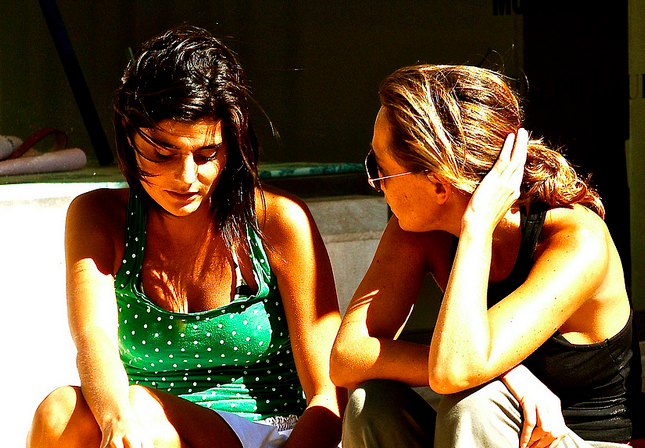
Photo by pedrosimoes7
-
What To Do When You Don’t Know What to Do
“He who deliberates fully before taking a step will spend his entire life on one leg.” ~Chinese Proverb
Here’s the thing: I don’t know what to do.
About this thing, about that thing. About big things and small things.
About anything.
Actually, to be honest, even the smallest thing seems big when I don’t know what to do about it. The state of “not knowing what to do” is like some kind of Miracle Grow for small things in my mind.
This is not a new thing. Not knowing what to do is a particular and well-honed talent of mine. I can even juggle several not knowing what-to-dos at once.
For example, at the moment I don’t know whether to go away with my friends this weekend or not. And if I do will I take the train? Or get a lift?
I don’t know whether to take that new job. And if I do, when should I start it? What about all those other job offers that will flood through the door the minute I say yes to this one?
I don’t know whether to start the diet tomorrow. Or today. Or next week. Or not at all. I don’t know whether to call my counselor or ride this one out alone.
I don’t know what is best, what is right. I don’t know what I want to do.
Do you know what else I don’t know? I don’t know what to do about not knowing what to do.
And whenever I feel like this (which is not always, but often), I start not knowing what to do about things I did know what to do about before. Things I had already made decisions on, things I felt excited and sure about before, now feel wobbly and wrong. Even though I know the decisions felt right when I made them.
My brain starts questioning it all: What if I didn’t really know what to do then either, and just decided on something that wasn’t really the right thing to do after all? What if it turns out to be “wrong”? What if I acted on impulse and didn’t think it all through properly?
It’s like I’m mourning all the other possible options that will never, ever happen now because I didn’t choose them.
The little voice in my head chides me: If you choose option a, then such and such might happen, which could lead to x and then that may mean y. Had I known in the beginning about y, maybe I wouldn’t have chosen that original thing. Or would I? How do I know?
And this uncertainty, the worry, the anxiety, the not knowing, it isn’t picky. It doesn’t just stick to the thing I’m not sure about. It leaks. It seeps into everything else, so instead of feeling uncertain or anxious about one thing in particular, about one decision specifically, I feel anxious, uncertain, and worried full stop. I forget what started it. I just feel it.
I feel it in my chest, near my heart. In my throat. It feels like guilt, muddled with regret, with overtones of panic and an undercurrent of fear. It feels hard and cold, like a vice-like grip.
And I don’t like it. But I just don’t know what to do about it. So I do nothing. Except worry and be anxious that doing nothing is not the right thing to do. It’s exhausting, it’s frustrating, and it’s totally and utterly unproductive.
And the only thing that makes it stop? Is to just decide and do something. To just do anything.
And the only way to know what to do? Well actually, there is no answer to that one.
Other than to not worry about worrying. To not feel anxious about feeling anxious. To accept that there is no right answer.
To breathe. To try to feel beyond the worry, to try to feel the answer rather than (over) think it.
To stop trying to second-guess every possible outcome of every possible decision. To stop trying to control and account for every accountability. It just isn’t possible.
To trust.
I can’t know what will happen. I can’t know how I will feel about any of it. I can’t know whether the decision I make is any better or worse than any other decision I could have made because I am only ever going to experience the one path I do choose.
So I can only react with what I have, what I know, and how I feel, right here and right now. And I don’t need to know how to do that; I just need to do it. I just need to allow it to happen.
Back to my decisions. Well, I still don’t know what to do. I still don’t know what the “right” thing is.
But maybe that’s not so much of a problem after all.
Because I do know what the wrong thing is. And that’s to make no decision at all. Even if the decision I make is not to decide just yet—that is still a decision. Own it.
A friend once said to me, “Whenever the time is right, it will be the right time.” It helps me relax about my decisions.
I often wonder: Am I the only one like this? I don’t know that either, but if you’re with me:
Stop thinking it through. Stop making up what might happen. Because that’s what’s happening here, you’re just making it up. Just make the decision instead and enjoy the ride. Whatever it turns out to be, it doesn’t really matter—you can change it later if you really have to.
Whatever the decision is, just make it. What’s the worst that can happen, really?
Just make the decision and then be glad you did. Enjoy the freedom and the relief that follows.
Enjoy the present, indecision free. Because while you’re busy worrying about what might happen tomorrow, guess what? You’re missing out on all the great stuff happening today.
So just decide. Just relax.
Want to know the good news? The decision thing is just as leaky as the indecision thing.
Once I get going again, I know there’ll be no stopping me. I’ll breeze through decisions that floored me before. I’ll put those small things back in their place. And if it feels wrong, I’ll change it. I won’t worry about it. Things that felt a bit wrong and weird before just won’t matter anymore.
I won’t know where this whole confident, decision making thing came from. I’ll just feel it.
I’ll feel it in my chest, near my heart. It will feel like contentment, embracing joy, tickled with peace and flavored with lightness. It will feel soft and warm, like molten honey trickling through my veins. It will make me smile.
And I will love it. And I will do all I can to hold on to it.
That I do know.
So let’s just get started. Let’s just relax. Let’s just decide. And let’s never look back.
Photo by J. Tegnerud
-

How the Need to Be Right Can Lead to Guilt and Regret
“The obstacles of your past can become the gateways that lead to new beginnings.” ~Ralph Blum
I think we all have this issue: guilt, followed by its sister, regret.
I didn’t realize how dark a blemish it was on my heart until I fully felt the anguish of my mother’s death. I never quite realized my full potential, courage, or strength until her passing.
Her greatest sacrifice, leaving this earth, proved to be my greatest motivation to search myself for the answer of whom I was and why; it was the major catalyst in my life for change.
Sometimes the best things for you are the hardest.
Admitting the darkness you’re carrying inside is one of the hardest things to do. Convincing yourself that you have been wrong and need to change can be even harder.
Forgiving yourself because you are human, and loving yourself enough to know you deserve more, and deserve to give others more, is the hardest task of them all.
I was an embittered person almost my whole life. I could hold a grudge with the best of them. I felt I had a lot to be resentful for, and truthfully, much of it was not unwarranted. But with my inability to never let go of things, I was miserable, making everyone else around me miserable, as well.
This went far beyond just being angry. I felt I was being terribly misunderstood and never heard. I also felt the constant need to have to defend myself and my views with a strong argument.
I had a very strained relationship with my mother starting when I was 14. I was at that age when I thought my parents knew nothing and I was smarter than they were.
I can now fully understand why I felt that way, beyond just normal teenage rebellion. I was projecting a lot of my older siblings’ perceived unpleasant experiences with my parents onto my own, and letting that determine my relationship with them.
There was a lot of friction between them, and I somehow felt that if I didn’t share their same resentment I was somehow betraying them.
Because of this, I went through my youth and into my adulthood expecting my mom to give more than she could and blaming her, instead of blaming myself for not having enough compassion and never taking the time to understand that she was a person, too.
I seemed to always be aggravated at everything she did.
I held onto the need to be right, never letting up and always needing to argue. I grew into this person who could never listen with a compassionate heart and lived with resentment instead of love, kindness, and forgiveness.
I was very hard-hearted instead of soft and pliable and forgiving.
We would have bouts of calm when we got along great, then something would shift in her mood or mine and it would turn volatile. I see now that, because we were so much alike, it caused much of that friction. This went on for our whole relationship, up until just a couple of years before she died.
I’m not saying she was without her faults, too. But now that she’s gone, and since I am much older, I can see everything so much clearer. That’s where the guilt comes in.
We had been working on our relationship, though we didn’t acknowledge that openly, and we were really making headway. You see, I couldn’t even hug her, hadn’t done since I was a kid. But I was getting closer to her and hugging her more because I knew she needed it, and so did I.
My great wall was crumbling.
We had always done things together for years, not that that stopped the bickering. But that was all but over for a long while. Not long enough, though. And this is where the regret comes in.
I wasted so much time being angry and self-righteous that I missed out on having a better relationship with my mother.
If I had only known then what I have learned in the last few years and especially since her death, I could have saved myself the burden of that guilt and regret.
There are so many moments each day where I will have a memory of us together and I will feel shame for the way I reacted to a situation. In my mind I can change the outcome to something that I should have done to handle the situation better.
When she would be difficult, and she could be at times, why did I have to make it worse? Why couldn’t I have just stayed calm and had compassion for her feelings instead of getting overwhelmed and lashing out?
I was incapable of doing that at the time because it’s hard to do when you are totally unconscious. You act before you think, lash out before you embrace.
Oh, how I wish I had known this calm before it was too late! I think about the agony I could be saving myself now, and I am filled with remorse. But it doesn’t have to be that way. You can save yourself from the pain that I am trying to overcome.
All it takes is a step in the right direction.
It is so important to put your prideful ego aside and try the softer way. Ask yourself these three questions:
1. Will it destroy me to “give in,” take the barriers down, and not have to be right all of the time?
When you “give in” it is not to lie down and be trampled on, but to slow down and reflect on what’s most important. The egotistical need to be right is what will ultimately destroy you. It leaves no room for compromise or compassion for another’s feelings, and will cause you more damage in the long run.
2. Is it worth it to be right, making the argument more important than making someone else happy?
When you constantly reinforce to the people in your life that you value your own opinions more than their feelings, it can cause a lot of hurt. Why not take the higher road and save the moment by saving your voice?
3. Will my actions now cause me pain and regret later?
My biggest lesson learned was that, if I had only known then what I know now, I could have prevented so much grief.
I wish I had had more generosity in my heart at that time. I wish I knew how to pause and let myself have that moment to feel the clarity that I needed to make a better choice in how I handled the situation at hand.
I know that, when she did things that I considered unforgivable, it’s because she didn’t know any better and was only doing the best she knew how at that time, as was I.
I am so grateful that I have learned these lessons now so that I can have the opportunity to live this way from here on out. I’m a big believer in things happening for a reason, and though I don’t quite know how to justify this one, I thank my mother every day for her sacrifice in that in losing her, I gained the greatest insight.
I just wished I’d learned these lessons sooner.
Photo by Kevin Krejci
-
Wanting to Feel Good and Look Good: Why Do We Do What We Do?
“Nothing is either good or bad, but thinking makes it so.” ~Shakespeare
Have you ever stopped to question why you do what you do? Or how it looks to other people?
I’ve done this pretty much all through my life. In fact, an outsider might say that I’ve spent more time analyzing my place in the world than experiencing it.
In some ways, this is true, and not uncommon for someone who’s chosen to be a writer.
As a young child I used to silently mouth the words of what I’d just said after every sentence I uttered.
Even as a kid, I felt this need to rethink my thoughts after speaking them, and because I was too young to realize it looked strange, I did this while moving my lips.
I wondered why I’d said what I’d said, and how others might have heard it.
This followed me through life, and later manifested in a desire to not only say the “right” thing, but also to do it.
Never was this more important to me than in my mid-twenties, after I’d spent the majority of my adolescent and young adult life self-destructing and unintentionally hurting others—something that, I feared, confirmed that I was a bad, selfish person (ironically, the same fears that led me to self-destruct).
I wanted so badly to be good. To do good. To look good. I imagined and hoped that this was the key to feeling good.
I didn’t want to be selfish—that was bad. So I concluded that I needed to be selfless.
I didn’t want to crave so much attention—that was bad. So I concluded that I needed to be humble.
I didn’t want to be or be seen as manipulative—that was bad. So I concluded that I needed to prove that I had good intentions.
In retrospect, I can see that these realizations and conclusions sparked my initial interest in the personal development industry six years back, and they informed how I did what I did. (more…)
-

A Couple of Simple Strategies to Let Others Be Happier
“Make the other person feel important, and do it sincerely.” ~Dale Carnegie
About 20 years ago, I read Dale Carnegie’s classic book, How to Win Friends & Influence People. I loved the book and passed it along to my wife, Marcie. She read a bit of it and returned it to me saying, “This is all common sense. I don’t need to read this.”
Marcie is naturally nice, no doubt one of the things that attracted me to her when we met 30 years ago. And indeed, Carnegie’s strategies, which largely revolve around being nice, were “normal, everyday behavior” for her.
I’ve always prided myself on being a nice person, but I learned a tremendous amount from Carnegie’s 1936 classic.
The first Carnegie suggestion that I recall applying is what I thought of as “Let others be right.” Carnegie tells a story of a dinner party he attended. The man sitting next to Carnegie told a humorous story, which included a quotation the gentleman attributed to the Bible. Carnegie knew that the quotation was from Shakespeare and said so.
They argued the point until a third party, a friend of Carnegie’s, was asked to settle the argument. The third party kicked Carnegie under the table and then agreed with the other man. After dinner, Carnegie’s friend explained that while Carnegie was right, making the other gentleman look bad served no good purpose.
I knew that I could apply that good advice. I had a habit of getting hung up on being precise, correcting other people because I didn’t like to let wrong information hang out there.
Carnegie’s story helped me to realize, to paraphrase the title of another favorite book, that I had a bad habit of “sweating the small stuff” regarding precise information that was not important—a habit I then set out to change.
Being precise is big stuff when you are building something—as the saying goes, “measure twice, cut once.” And it’s important to try to be precise if you are giving someone driving directions (make a left vs. make a right).
But precision is not important in so many other situations, and correcting friends, your spouse, your kids, or anyone else, is often not necessary, and something that’s much nicer to hold back from doing.
The first person with whom I had frequent opportunities to practice my new habit was my dad. He and I had started a company together about five years before I read Carnegie’s book. It had become a pet peeve of mine that he was never precise about dates. (more…)
-
Non-Dual Thinking: There Are Things We Don’t Know
“Nothing is either good or bad but thinking makes it so.” ~Shakespeare
It is not possible to grasp the infinite from a position that is finite. Seems like a good place to start.
“Dual” thinking, as I understand it, is the idea that something has to be “either/or.” That it’s either good or bad. Right or wrong.
Here’s another way describing it: The concept of up and down seems to make sense from an earthly or gravitational perspective, but if you are somewhere out in space, it suddenly makes no sense at all. There is no up or down.
The list of these polar opposites goes on and on, but they all have one thing in common—they are often laced with judgment, and the need for resolution.
I find myself doing it all the time—making judgments or assumptions about the people I come into contact with on a daily basis.
The waiter who doesn’t treat me as I deserve to be treated. The inconsiderate driver who cuts me off in traffic. The rude person on the phone that is completely unreasonable. My wife who has her own way of navigating through life.
Why don’t they see things my way, the way they are?
The fact is that dual thinking has become integrated in how I process things, and it is rooted in fear—fear of what I don’t know, fear of what I don’t understand, and fear of what I can’t control. A feeling of lack. Being right seems to quiet the screaming monkeys, at least temporarily.
And when I think in black and white, I miss all the shades of grey in between. Someone has to be wrong for me to be right. My relationships have suffered because they are stuck in “defending a position” mode.
I am so concerned about being right, of making sure that my viewpoint is heard, that I miss all the magic, learning, wisdom, and connection that are waiting to be discovered.
And if my relationships are based in this “either/or” way of thinking, is it any wonder that I continue to feel separate and isolated, from myself and others?
How can dual thinking represent “truth” when something can be right for one person, but wrong for another?
Truth is simply a matter of perspective, and no one person can be the judge and jury on that.
It is a very narrow, disrespectful, arrogant, and un-evolved way of thinking that I know does not serve me, or any of us. (more…)
-
Life Isn’t Good or Bad; It Just Is
“Freedom is instantaneous the moment we accept things as they are.” ~Karen Maezen Miller
Seemingly for months now, upon learning anything new, my seven-year-old daughter has asked me, “Is it good or bad?”
Not brushing at night—good or bad? One hundred degree temperatures—good or bad? Water leak in the furnace—good or bad?
Some things are more obvious than others, but it’s the stuff in the middle that requires a more subtle explanation, especially as I go through life with the stress and anxiety of trying to both deal with uncertainty and figure out life in the “new normal” called chaos.
I wrestled with trying to make her understand that sometimes life is neither good nor bad—it just is.
But like any child trying to adjust the settings on her moral compass, she had difficulty in trying to understand that there can be some things that fall neither in the good nor the bad category.
Recently something happened that tested this notion and, in some strangely profound way, might have helped me find a way to explain life (as I understand it) to my seven-year-old.
My wife’s grandmother passed away.
Having been raised by her grandmother for most of her young life in India, my wife was distraught and sad. Although my daughter had very little contact with her great-grandmother, given the vast ocean that separated them, she could tell that her passing affected her mom deeply.
At first we didn’t know how to explain the passing to our chirpy and inquisitive child. So we didn’t, for a day. We avoided it. But then, as seven-year-olds do, she overheard me on the cell phone explaining to someone what had happened.
Almost instantly, a happy-go-lucky child became eerily quiet upon hearing that her mom’s grandmother died. She didn’t have to ask if it was good or bad. It was bad.
But is it? (more…)
-
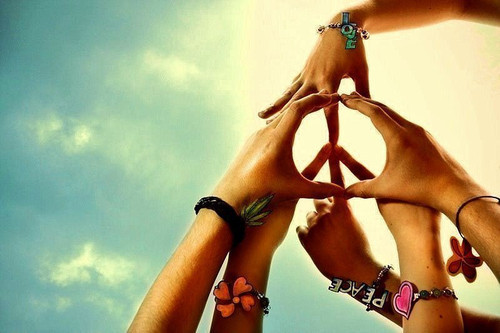
The Freedom of Not Needing To Be Right
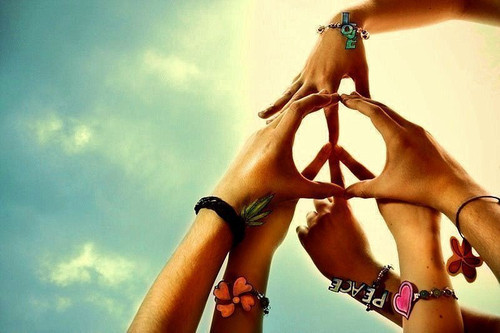
“You have your way. I have my way. As for the right way, the correct way, and the only way, it does not exist.” ~Friedrich Nietzsche
Yesterday I drove my mother and father to the VA hospital in Albuquerque for a doctor’s appointment. I had never been to a VA hospital before. I guess I should have expected the numbers of crutches and canes, armless and legless veterans, young and weathered faces alike.
I was personally witnessing the costs endured when humans war against each other.
“Isn’t it odd,” I said to my mother, “that human beings war with each other?”
Why in the world do we do that?
Then I considered the ways in which we war on an interpersonal level. We humans war to varying degrees with our partners, our friends, our bosses, our co-workers, our siblings, our parents—pretty much all in the name of our need to be “right” or the need not to be wrong.
We war over ideas and beliefs that we often have never questioned. These include ideas from our upbringings, our religions, our scars and wounds, and our existential need to identify ourselves in some way.
How early did we lose our childlike wonder? When did we lose that innocent state in which we did not judge others, nor need to be “right”—when we saw the best in everything and everyone, and when it did not matter that someone was Christian, Muslim, Buddhist, atheist, republican, democrat, omnivorous, vegetarian, gay, or of a different race?
When I observe my ten-year-old grandson, he appears to have no tendency to judge other people, not yet anyway. He has no need to diminish others, nor does he feel threatened by them.
Would we, as children, have told lies about someone just because we wanted to win an election? Would we have been dismissive or even cruel to someone because they were of another race or religion? I don’t think so.
As little children we only cared that we were loved. And we were still curious about everything.
Somewhere along the way we lose our innocence and start to judge others. This becomes a primary source of our social anxiety and the undermining of our self-esteem, because if we are judging others, we fear that we are also being judged. (more…)
-

Sometimes There Is No Right Way

“You have your way. I have my way. As for the right way, the correct way, and the only way, it does not exist.” ~Friedrich NietzscheI was raised in a home where a very common phrase was, “There’s a right way and a wrong way.”
The right way was the way my parents wanted things done. There were a great many rules surrounding the right way for nearly everything, in an attempt to ensure that we got it right, and, when the rules weren’t enough to enforce the rightness of our behavior, there were punishments, harsh words, and sometimes very public humiliation.
I’ve spent most of my adult life learning to deal with the fallout of this type of ingrained thinking, once important for emotional survival and physical safety, but no longer useful.
I work, now, to examine the precepts I live by, and whether they are helping me toward my goal of living a peaceful and conscious life. But there can still be some pretty huge blind spots in my view of things—places where I, myself, still expect those around me to conform to my concept of what is right.
Three years ago, when I began to practice the base principles of radical unschooling, I fell headlong into one of these traps. It caused a great deal of pain, and nearly cost me my oldest and dearest friend.
We altered the way in which we interacted with our children from an authoritarian style to a partnership model. And I decided I would be a missionary for every other family who showed a glimmer of dissension (as all families, even mine, do, sometimes).
I had found a piece that was missing from the puzzle of my own life, and I was awed by the rapid and wonderful changes I saw within my family once I placed it.
I hadn’t yet learned that zeal and epiphanies in our lives can also be pitfalls; that not everyone will benefit from what benefits us. I was certain my way was perfect and even necessary—for everyone. (more…)
-

Choose to Lose
“Being right is highly overrated. Even a stopped clock is right twice a day.” ~Unknown
We all know someone who always needs to be right.
She turns everything into an argument worthy of a courtroom, complete with counter arguments and below-the-belt accusations. She finds holes in everything you say, even if you were actually agreeing with her. And in the end she needs the last word, even if means belittling you or ignoring your feelings.
Not everyone acts this righteous all the time, but we’ve likely all tried to win in an argument at least once before.
Maybe it’s the rush of feeling like the more powerful or intelligent person, or perhaps it’s just a stubborn resistance to bending. Whatever the case, we all play to win in conversations on occasion.
The irony here is that winning rarely feels as sweet as the fighter imagines it will. Research shows competitve people take less pleasure in their successes than their less combative counter parts because they’re rarely satisfied with their accomplishments, ever-ready to seek the next win. (more…)