Tag: rest

  • Learning to Feel Safe Resting After a Lifetime of People-Pleasing

    Learning to Feel Safe Resting After a Lifetime of People-Pleasing

    “Rest is not idleness, and to lie sometimes on the grass under trees on a summer’s day, listening to the murmur of water, or watching the clouds float across the sky, is by no means a waste of time.” ~John Lubbock

    For years, I thought exhaustion was a sign I lived fully and did my best that day. I felt proud of being exhausted. I squeezed every bit out of the day, and there was nothing left.

    If I felt tired, I pushed myself to do just one more thing. It was always just one more thing. If I needed to lie down, I scolded myself for being weak. Around me, it seemed everyone else could keep going—working late, saying yes to every request, holding it all together, and getting everything done.

    So I pushed harder. I drank more coffee, ignored the pounding in my chest, and told myself I’d rest “later,” as a reward. And when that later finally came, I was so exhausted and empty, all I managed for myself was the easiest available comfort food and plopping down in front of the TV.

    Deep down, I wasn’t just tired from doing too much. I was tired from being someone I thought others needed me to be. I gave my everything, and nothing remained for me.

    I was tired from people-pleasing.

    When Rest Feels Unsafe

    People-pleasing is often misunderstood as kindness, but at its core it’s a survival strategy. Psychologists call it the “fawn response.” When fight or flight aren’t possible, some of us learn to stay safe by appeasing others—saying yes, staying agreeable, avoiding conflict at all costs.

    This might protect us in unsafe environments, but over time it takes a toll. The body stays on high alert— scanning for others’ needs, monitoring their tone of voice, ready to jump in and smooth things over.

    In that state, rest doesn’t feel like an option.

    When I tried to pause—sit quietly, lie down, even take a slow breath—my body rebelled. My chest buzzed with tension. My throat tightened, as if rest itself were dangerous. Doing nothing felt risky, as though someone might be upset or reject or abandon me if I wasn’t useful.

    So I stayed in motion. On the outside, I looked capable, dependable, “good.” On the inside, I was running on fumes.

    The Cost of Never Stopping

    When rest feels unsafe, exhaustion becomes a way of life.

    The body breaks down. I developed a stress knot in my shoulder, poor posture, and constant fatigue.

    The mind spirals. Anxiety grew louder, whispering that I wasn’t doing enough.

    The heart aches. Saying yes when I wanted no left me resentful and empty.

    I thought if I could just be more disciplined, I’d manage. But discipline wasn’t the problem—my nervous system was.

    It had learned, long ago, that slowing down invited danger. So it kept me on guard, pushing, performing, and erasing myself—all in the name of safety, belonging, being approved of and perhaps accepted.

    Realizing Rest Is Part of Healing

    The turning point came when I read about trauma and the nervous system. I learned that exhaustion and restlessness weren’t proof that I was lazy or broken. They were survival responses. My body wasn’t fighting me—it was protecting me, the only way it knew how.

    That realization softened something inside. For the first time, I saw my fatigue not as failure, but as evidence of how hard I’d been trying to survive.

    If my body could learn to see rest as danger, maybe it could also relearn rest as safety.

    Gentle Practices for Making Rest Safer

    The change didn’t come overnight. But step by step, I began inviting rest back into my life—not as laziness, but as medicine.

    Here are a few things that helped:

    1. Start small.

    Instead of trying to nap for an hour, I practiced lying down for five minutes. Just five. Long enough to notice my body but short enough not to panic. Over time, those five minutes grew.

    2. Anchor with touch.

    When rest stirred anxiety, I placed a hand on my chest or stomach. That simple contact reminded me: I’m here, I’m safe.

    3. Redefine rest.

    I stopped thinking rest had to mean sleep. Rest could be sitting quietly with tea, staring at the sky, or listening to soft music. It was anything that let my nervous system breathe.

    4. Challenge the story.

    When the inner critic said, “You’re wasting time,” I gently asked: Is it wasteful to care for the body that carries me? Slowly, I began rewriting that story.

    What I’ve Learned

    Rest still isn’t always easy for me. Sometimes I lie down, and my chest buzzes like it used to, urging me to get back up. Sometimes guilt whispers that others are doing more, so I should too.

    But now I understand: these feelings don’t mean I’m failing at life. They mean my body is still unwinding old survival patterns.

    And the more I practice, the more I see rest for what it truly is:

    • A way to reset my nervous system.
    • A way to honor my limits.
    • A way to reclaim the life that people-pleasing once stole from me.

    I used to believe safety came from doing more. Now I see that safety begins with stopping.

    Closing Reflection

    If you’ve ever avoided rest, told yourself you couldn’t afford to relax, or felt guilty when you tried, you’re not alone. Many of us carry nervous systems that equate worth with usefulness and safety with exhaustion.

    But what if the truth is the opposite? What if rest is not indulgence but healing? What if slowing down is not selfish but necessary?

    Rest may not feel natural at first. It may even feel unsafe and bring up feelings of panic, pressure to get going again, or a sense of falling behind. But with gentleness, patience, and compassion, the body can relearn what it once forgot: that it is safe to stop.

    You are not weak for needing rest. You are human. And in a world that pushes constant doing, choosing to rest might be the bravest thing you can do.

  • You Don’t Have to Be Strong All the Time

    You Don’t Have to Be Strong All the Time

    “Sometimes the strongest thing you can do is to ask for help.” ~Unknown

    We live in a world that praises strength—especially quiet strength. The kind that shows up, gets things done, and rarely complains. The kind that’s resilient, dependable, productive. But what happens when the strong one quietly breaks inside?

    “You are a superwoman!”

    “You’re so reliable!”

    “You’re the glue that holds everyone together.”

    I wore those compliments like badges of honor. For years, I believed them. Not just believed them—I built my identity around them.

    I’ve always been a multitasker. A jack of all trades. I managed work, home, relationships, and a hundred moving pieces in between. I cooked elaborate meals, remembered birthdays, bought thoughtful gifts, checked in on friends regularly, showed up for strangers when needed, pursued hobbies, supported others’ dreams, and pushed through physical pain or emotional fatigue without complaint.

    I was the one people turned to. And if they didn’t turn to me, I turned to them. If someone was going through a hard time, I’d show up with soup, a handwritten card, or a call that stretched for hours. I’d intuit needs before they were spoken.

    And when people said things like “Wow! How do you even manage all this?” or “You’re incredible,” my heart swelled with pride. It felt good to be seen. It felt powerful to be needed.

    But over time, I began to realize something quietly tragic.

    Underneath all that strength was someone tired. Not the kind of tired that sleep could fix—but the kind that comes from years of overriding your own needs for others. The kind that comes from confusing love with over-giving. The kind that sneaks up when you’ve worn the strong-one mask for so long, you don’t know who you are without it.

    I didn’t see it as people-pleasing back then—I truly loved being helpful. I believed that if I could ease someone’s burden, why shouldn’t I? Isn’t that what love looks like? Isn’t that what kindness does?

    But slowly, quietly, invisibly, it was taking a toll on me. My skin had withered, my hair had thinned, and I’d put on weight around my waist.

    As I grew older, I began to feel the shift. The same enthusiasm that once lasted until midnight now faded by sunset. The fatigue wasn’t just physical—it was emotional, spiritual. My body wasn’t breaking down, but my soul was whispering, “You can’t keep carrying everything.”

    And eventually, I listened.

    Because something beautiful and painful hit me all at once:

    Strength isn’t about holding it all together. Sometimes, real strength is in knowing when to let go.

    It’s in saying, “I don’t want to be strong today.”

    It’s in resting, without needing to earn it.

    It’s in telling the truth when someone asks, “How are you?” and answering, “I’m actually not okay.”

    It’s in giving yourself permission to be fully, messily, unapologetically human.

    The world doesn’t tell us that. It tells us to hustle. To push. To keep going. That rest is a reward, not a right. That slowing down is weakness. That softness is fragility.

    But now I know that softness is a kind of strength too. A brave kind. A kind that doesn’t scream or perform—it just is.

    So, How Do You Begin Letting Go of the “Strong One” Role?

    Letting go doesn’t mean giving up on your values. It means loosening the grip on the pressure to be everything to everyone. It means rewriting what strength means to you. Here’s how I began doing that:

    1. Check in with yourself daily.

    Ask: What do I need today?

    Not what’s on my to-do list or who needs me, but what would make me feel centered right now?

    Sometimes the answer is water. Sometimes it’s stillness. Sometimes it’s movement, or tears, or music. You won’t know unless you pause to ask. Even five minutes of silence—before bed, in the shower, or while sipping your tea—can reconnect you to yourself.

    2. Learn to receive help.

    You don’t have to carry everything alone. Let someone else cook the meal. Let someone else take the lead. If someone offers support, don’t reflexively say “I’m fine” or “I’ve got it.” Say thank you. Let them show up for you.

    I remember one day telling a friend that I was exhausted and just not in the mood to cook. She offered to send over food, and I accepted it—with gratitude and relief.

    Letting someone care for you like that doesn’t make you weak; it makes you human. Accepting help builds connection, allows others to show love, and often brings a quiet joy that’s just as nourishing as the support itself.

    3. Let go of the applause.

    Here’s the hard truth: validation feels amazing—but it can also be a trap. You start doing things not because you want to, but because others expect it from you. The cycle is addictive.

    Ask yourself: Would I still do this if no one noticed or clapped?

    If the answer is no, give yourself permission to step back. Choose joy over performance. Choose peace over praise.

    4. Set soft boundaries.

    You don’t need to explain or justify your “no.”

    For years, I would justify mine, feeling the need to explain or defend it. Slowly, I began changing the narrative. Now, I gently and unapologetically say, “I’d love to help, but I don’t have the capacity right now.” “Can I get back to you on this?”“I need some time for myself this weekend.”

    Boundaries aren’t about pushing people away—they’re about protecting your inner landscape. The more you honor them, the more spacious, calm, and kind your life becomes.

    5. Redefine what it means to be strong.

    We’ve been taught that strength is about endurance, resilience, and never showing weakness. But real strength can also be quiet, tender, and human.

    I remember one day, completely overwhelmed, a close friend came to check on me. When she asked how I was, I couldn’t hold it in—I just broke down. She didn’t try to fix anything; she simply held me, letting me pour out everything I’d been carrying. And in that moment, I felt lighter than I had in months.

    Strength isn’t always in doing more. Sometimes it’s in being fully present with yourself, in your softness, in taking a pause, and in saying “not today” without guilt.

    6. Prioritize rest like you would a deadline.

    Rest isn’t laziness. It’s fuel. It’s sacred.

    You don’t need to wait for burnout to rest. You don’t need to finish everything on your list to earn stillness. Schedule it. Guard it. Honor it.

    Make rest a daily ritual—not a rare luxury. Your body, mind, and spirit will thank you.

    Once I began prioritizing rest, I noticed a shift—not just in my energy, but in my clarity, mood, and ability to truly show up for myself and others. Life felt lighter, and I finally understood that honoring my body wasn’t selfish—it was necessary.

    To Those Who’ve Always Been the Strong Ones

    If you’ve always been the caregiver, the doer, the reliable one… I see you. I honor you.

    But I want to remind you of something you may have forgotten:

    You don’t need to prove your worth through over-functioning. You don’t need to sacrifice your well-being to be loved. You don’t have to keep showing up as the “strong one” when your heart is quietly asking for a break.

    You were never meant to carry it all.

    You can take the cape off now. You can exhale. You can cry. You can be soft. You can ask for help. You can choose rest. You can let someone hold space for you.

    Because you’ve already done enough. Because you are enough. And because strength isn’t about how much you carry—it’s about knowing when to let go.

    Let your new strength be rooted in gentleness. Let your softness lead. Let your heart exhale.

  • Why You Can’t Relax and How to Let Yourself Rest

    Why You Can’t Relax and How to Let Yourself Rest

    “Rest and be thankful.” ~William Wordsworth

    A few years ago, I caught myself doing something that made no sense.

    It was late evening, my kids were asleep, the house finally quiet. I’d been counting down to this moment all day—dreaming of sinking into the couch, wrapping myself in a blanket, maybe even reading a book without distractions.

    But when I lay down and closed my eyes, something inside me lurched. Within seconds, I reached for my phone. I didn’t even have anything urgent to check—just mindless scrolling. Five minutes in, I was already half-sitting up, wondering if I should fold the laundry or answer one last email. Before I knew it, I was back on my feet, tidying up the kitchen.

    I remember thinking, why can’t I just rest?

    The Invisible Weight That Keeps Us Restless

    Maybe you’ve felt this too. You plan a quiet evening—maybe a bath, a book, or just lying down in silence—but your mind buzzes with things you should be doing instead.

    Did I reply to that message? Should I wipe down the counters? Maybe I should check my notifications—just in case.

    It’s so easy to blame ourselves: I have no discipline. I’m addicted to my phone. I can’t sit still. But the truth is, our difficulty with rest runs deeper than bad habits or busy schedules.

    Sometimes our bodies and minds have learned that stillness isn’t safe.

    Why Does Rest Feel So Uncomfortable?

    I used to think I was just bad at relaxing—like I’d missed a class everyone else had taken. But over time, I realized there were reasons why lying still felt so wrong.

    Here’s what I’ve learned—and maybe you’ll see yourself here too.

    1. We equate stillness with danger.

    Deep down, part of our nervous system still believes we’re in the wild—where lying still too long could make us vulnerable. Even if our physical world is safe, our inner world might not feel that way.

    Many of us grew up in homes where we had to stay alert—watching moods, avoiding conflict, keeping busy to feel useful or unnoticed. Being on guard felt safer than relaxing.

    Even now, when the house is calm, our bodies may still whisper: Don’t settle. Something could happen.

    2. We tie our worth to doing.

    Growing up, I learned that being “good” meant being helpful—doing the dishes before being asked, getting top grades, staying busy. Rest wasn’t modeled as something normal; it was a luxury you earned only after everything was done perfectly.

    So when I lie down on the couch, an old voice pipes up: Have you really done enough to deserve this? Even now, I still catch myself folding laundry at 10 p.m. or working on my blog instead of just letting myself rest.

    3. Rest brings up uncomfortable feelings.

    Stillness creates space. And sometimes, that space fills with things we’d rather keep buried—worries we ignored all day, sadness we don’t want to name, thoughts that make us feel alone.

    So instead of resting, we keep busy. We scroll, clean, or half-watch TV while half-doing chores. Movement feels safer than meeting whatever rises in the quiet.

    4. Our brains crave the next hit.

    Our world feeds this cycle. Apps, notifications, endless news—tiny dopamine bursts that keep our minds buzzing. Even when we’re exhausted, our brains crave just one more swipe, one more update.

    So when we try to rest, it feels like a mini withdrawal. The silence can feel almost unbearable.

    The Good News: Rest Is a Skill We Can Relearn

    If you see yourself in any of this, you’re not broken. There’s nothing wrong with you. Rest just feels unfamiliar because your body and mind learned to survive without it.

    The good news is you can gently retrain yourself to feel safe doing nothing. Not by forcing it—but by meeting your restlessness with small, doable shifts.

    Small Ways to Make Rest Feel Safe Again

    1. Start tiny.

    I used to think rest meant lying still for an hour—meditating, deep breathing, total quiet. That was way too much.

    Instead, try building up your tolerance for stillness in small ways:

    Sit for ten slow breaths before grabbing your phone in the morning.

    Pause for a few seconds before switching tasks.

    Lie down for two minutes with your eyes closed before bed.

    I started with just a few slow breaths while breastfeeding. It helped both me and my baby settle a bit more.

    Tiny moments teach your body: Stillness doesn’t have to be scary.

    2. Notice the thoughts that rush in.

    Sometimes when we try to rest, thoughts pop up:

    You’re wasting time.

    You should be doing something useful.

    Just one more thing, then you can relax.

    When you notice these thoughts, name them. Gently remind yourself: Rest is useful. Doing nothing is not the same as being nothing.

    3. Give your body a gentle cue.

    Rest doesn’t have to mean lying statue-still. If stillness feels like too much, try calming your nervous system with small, soothing actions:

    Sip warm tea and notice its warmth. I love slowly brewing tea and taking a moment just to smell it before I drink.

    Wrap yourself in a blanket and sway gently.

    Sit in a rocking chair. Rocking can feel safer than stillness.

    4. Turn rest into a ritual.

    It helps to make rest intentional—a small, predictable act of care.

    Maybe you light a candle when you sit down. Or play soft music. Or put away your phone and focus on the warmth of a bath.

    A ritual makes rest feel like a gift, not wasted time.

    5. Let discomfort be there.

    Sometimes when we rest, feelings surface—sadness, guilt, unease.

    Instead of pushing them away, practice sitting with them for a few breaths.

    Try telling yourself, “I feel restless. That’s okay. I don’t have to fix it right now.”

    Like any feeling, it passes more easily when you stop fighting it.

    What Rest Really Means

    When I look back, I see that my struggle with rest wasn’t really about laziness or distraction. It was about trust.

    Learning to rest means trusting that the world won’t fall apart if we stop. Trusting that we’re worthy, even when we’re not “useful.” Trusting that what rises in the quiet won’t destroy us.

    It’s not easy work—but it’s gentle work. And every tiny moment you spend just being—without doing, fixing, or producing—teaches your body a new truth: You are allowed to rest.

    If you find yourself mindlessly reaching for your phone when you planned to do nothing, pause. Take one deep breath. Feel the weight of your body on the couch. Remind yourself: It’s safe to pause.

    Rest is not the opposite of living. Rest is what lets us show up fully for life.

  • 4 Ways to Get Better Sleep for Increased Spiritual Wellness

    4 Ways to Get Better Sleep for Increased Spiritual Wellness

    Happiness in simplicity can be achieved with a flexible mindset and nine hours sleep each night.” ~Dalai Lama

    It happened again. I got up after being awake all night, wondering where I’d gone for the past nine hours. I remember laying my head on the pillow, exhausted, happy to finally close my burning eyes. My body settled sweetly into the mattress, and I thanked the universe for our heavenly bed.

    Just moments away from slumbering bliss, I said my prayers and did my usual practice of releasing energy from the day and honoring my blessings. For the moment, my mind was still and peaceful.

    I fell into a space between the dream state and wakefulness. A place I know well. It’s not necessarily a bad place to be, but when I’m in it, I’m fully aware of the fact I’m not sleeping; my brain isn’t in REM. I tried breathing exercises and meditation only to feel like I was ready to run a marathon. After a few hours of this, sleep anxiety crept in, bearing gifts of thoughts and frustration.

    The countdown of the hours until it would be time to get up began. The list of things I needed to do the following day danced in my mind like a marching band tooting its horn and ringing bells—because if I couldn’t sleep, somehow running through my to-do list felt productive. When the morning came, I was not the calm presence I aspire to be. The Tiny Buddha inside was napping.

    When I was a kid, I had no problem falling asleep on the bus, in class, watching TV… pretty much anywhere I could lay my head down and close my eyes. But as Ive grown older, sleep hasnt always been as accessible. In fact, with everything going on in the world over the past few years, sleep has become a modern-day luxury.

    As a spiritual seeker, I find that when I dont get a good night of sleep, its harder to drop in for meditation. I’m more irritable. Less sharp. My intuition feels clouded. And my ability to focus on my goals and manifest my visions can be hindered.

    I wondered if I’d spend the rest of my life chasing sleep to catch up to my dreams.

    Then, I started talking to friends. They’re struggling too. Whether the problem is falling asleep or staying asleep, almost every person I talked to is suffering from some form of sleep deprivation. Is this a natural part of aging or an unspoken epidemic? Even my daughters in their early twenties wrestle with insomnia.

    These types of problems always make me ask, “What is the lesson here?” But as I started to look for answers, what became more interesting was the link between sleep and spirituality.

    As it turns out, there is a parallel between sleep quality and spiritual connection, which means prioritizing sleep hygiene is not only important for biological processes but for spiritual wellness.

    During sleep, the body repairs muscles, organs, and tissues. It also regulates hormones, detoxifies, and boosts the immune system. Sleep also bridges the conscious and subconscious mind. This allows us to process the experiences of our day, the emotions that may have arisen, and the spiritual insights that help us create meaning in our lives. Therefore, prioritizing sleep hygiene can be an act of spiritual self-care that nurtures the mind’s capacity for deeper spiritual insights and greater overall wellness.

    Its clear that sleep hygiene is extremely important both to our biological and spiritual processes, but lets take a closer look into the sleep-spirituality connection.

    If we are sleep deprived, we are not thinking clearly, and, therefore, we are less connected to our intuition, which is directly linked to our imagination. Studies have shown that a lack of sleep can have a major impact on our ability to access creativity and problem-solving skills, so it makes sense that struggling in these areas has a negative influence on our spiritual well-being. So, what can we do to ease this struggle that many of us share?

    4 Ways to Improve Your Sleep Hygiene for Increased Spiritual Wellness

    Nighttime routine

    Set a consistent time to go to sleep and wake up every day, even on weekends. A more structured sleep routine helps to align your circadian rhythm, resulting in more consistent sleep. 

    Sleep sanctuary

    Design your environment to support your sleep goals by reducing screen time, turning lights on low an hour before bed, mitigating noise pollution with healing frequency music or a white noise machine, and turning the thermostat to sixty-five degrees.

    Preparation practices

    Create a spiritual bedtime ritual that you devote yourself to every night in honor of sleep. My ritual includes taking a bath or shower, gratitude journaling, prayer, and yoga nidra. I spray the sheets with a lavender water and essential oil blend before I lay my head on the pillow and rub magnesium oil on the soles of my feet as a final good night. The key is to create a simple process that feels nurturing and peaceful.

    Track your sleep and spiritual practices for a month.

    Journal every morning with just a few words about the quality of your sleep and every evening about your meditation results for the day. By tracking how your sleep and spiritual wellness connect, you will be more motivated to stick to best practices for a good nights sleep. Ultimately this will benefit your mind, body, and spirit.

    The biggest lesson I’ve learned in this exploration is that we’re not alone in our quest for a nourishing night of sleep. We need to have compassion for ourselves on the nights where we find it challenging to drift off into dreamland.

    If you realize you’re in the pit of sleep anxiety, cut yourself some slack. You are not failing. Accept and surrender to the moment, and trust that simply resting will be enough to get you through the next day.

    Sleep restores a sense of peace and divinity within, but rest is just as important. By making sleep a priority, your mind will feel calmer, quieter, and more focused during meditation, allowing you to feel more spiritually connected to your life mission, every day.

  • Permission to Rest: What Happened When I Embraced Stillness

    Permission to Rest: What Happened When I Embraced Stillness

    “If you are continually judging and criticizing yourself while trying to be kind to others, you are drawing artificial boundaries and distinctions that only lead to feelings of separation and isolation.” ~Kristin Neff

    I was lying on my couch again, Netflix playing in the background, when I heard my husband’s footsteps on the stairs. Instinctively, I reached for my phone, desperate to appear busy—productive—anything but resting.

    For months, that had been my routine. As the severe anemia from my adenomyosis and fibroids worsened, I found myself increasingly couch-bound, dizzy, and exhausted. Yet each time my husband entered the room, I’d grab my phone and pretend to be working. Not because he expected it, but because I couldn’t bear to seem “lazy.”

    But this particular day, three weeks after my hysterectomy, something shifted. When he walked in, I didn’t reach for my phone. I just stayed still, watching my show, drowning in guilt.

    He smiled and said something so simple: “It’s good to see you resting.”

    That’s when it hit me—a realization that would transform how I understood my own worth: I’m not a burden. I’m healing. I’m allowed to rest. He didn’t marry me for my productivity.

    It shouldn’t have been a revelation, but it was.

    The Productivity Trap

    I’d always been in motion. Walking, working, cleaning, planning, doing. Even after having my son in 2019, I prioritized outings and experiences, determined to give him what financial limitations had prevented in my own childhood.

    My husband and I had carefully divided our family responsibilities—he worked longer hours at his job, and I took on more household management, childcare, and projects. We focused on each contributing equal time to our family’s needs. It was balanced and fair, and it worked.

    Until my body stopped cooperating.

    What began as increasingly heavy periods evolved into daily bleeding so severe I couldn’t stand without dizziness. I fought against it at first, pushing through fatigue to maintain my “contribution.” I’d drag myself through household tasks, schedule outdoor activities for my son, and maintain appearances—all while growing weaker.

    “If I’m not productive or contributing, then what good am I?” This thought haunted me as I sank deeper into the couch and further from the capable person I identified as.

    When the doctor reviewed my iron levels, he said if his were that low, he “wouldn’t have been able to get off the floor,” yet I still resisted treatment (the iron infusions cost over $1,000). Only when our insurance changed did I relent, but by then, it was like adding drops to an empty bucket.

    The diagnosis was clear: adenomyosis and large fibroids, a family legacy I’d inherited. Surgery—a hysterectomy—was inevitable, though I mourned the loss of having another child.

    The six-month wait for surgery stretched my identity to its breaking point. Who was I if not the doer, the organizer, the capable one? What was my value when I couldn’t contribute?

    The Hidden Voice

    Growing up, I’d absorbed messages about worth from my father, who seemed physically incapable of sitting still. “If you have time to lean, you have time to clean” was the household mantra. Rest was for the weak, the lazy, the unworthy.

    I’d spent a decade in personal growth work, deliberately unwinding these beliefs. Or so I thought.

    But physical vulnerability has a way of stripping us back to our core programming. In pain, exhausted, and feeling useless, I reverted to that critical inner voice:

    “You’re a burden. Everyone is suffering because of you. He’ll resent you for not doing your share. What value do you even have now?”

    This voice—let’s call her Task-Master Tina—had been with me so long I didn’t recognize her as separate from my authentic self. Her criticisms felt like objective truth, not the outdated programming they actually were.

    The surgery I thought would fix everything instead brought new lessons in surrender. The pain was excruciating. The recovery, slower than I’d imagined. And each time I attempted to rush back to “normal,” my body forced me back to the couch with unmistakable clarity.

    That’s when I realized I needed tools to navigate this self-worth crisis—not just for recovery, but for the rest of my life.

    Three Practices That Changed Everything

    Through trial, error, and many Netflix documentaries watched from my couch, I discovered three practices that transformed my relationship with myself.

    1. Name your inner critic.

    That voice telling you you’re worthless without productivity isn’t actually you—it’s a critic you’ve internalized from past experiences. By naming this voice (mine was “Task-Master Tina”), you create distance between your authentic self and these automatic thoughts.

    When I caught myself thinking, “I’m so lazy just lying here,” I’d pause and think, “That’s just Tina talking. She was programmed by my father’s workaholism. Her opinions aren’t facts.”

    This simple act of naming created space between the thought and my response—what I later learned to call the “magic gap” where choice lives.

    2. Challenge your limiting core belief.

    Behind every critical thought is a core belief. Mine was: “My worth depends on what I contribute.”

    To challenge this, I wrote down concrete evidence contradicting this belief:

    • My husband married me for who I am, not what I do.
    • Friends seek my company for connection, not productivity.
    • I would never measure a loved one’s worth by their output.
    • Worth is inherent in being human, not earned through action.

    This wasn’t just positive thinking—it was deliberately examining whether my belief stood up to rational scrutiny. It didn’t.

    3. Write yourself a permission slip.

    Remember those permission slips from school? It turns out adults need them too.

    I literally wrote on a piece of paper, “I, Sandy, give myself permission to rest without guilt while healing. I give myself permission to receive help without feeling like a burden.”

    I placed it on my nightstand where I’d see it daily. Something about the physical act of writing and seeing this permission made it real in a way that thinking alone couldn’t accomplish.

    When guilt surfaced, I’d read it aloud, reminding myself that I had authorized this behavior. It sounds simple, but this tangible permission slip became a powerful anchor during recovery.

    The Deeper Lesson

    As my physical strength gradually returned, I realized this experience had given me something invaluable: a new understanding of worth.

    Worth isn’t something we earn through productivity or contribution. Worth is inherent. We don’t question a baby’s right to exist without producing anything. We don’t measure a loved one’s value by their output. Yet somehow, we apply different standards to ourselves.

    I understand now that worthiness isn’t about productivity—it’s about authenticity. About aligning with your unique true nature rather than living your life to meet others’ expectations based on their personal values.

    Compassion ranks high among my personal values, yet for years, I’d excluded myself from receiving this compassion. I’d created an exception clause where everyone deserved kindness except me.

    Physical limitation forced me to extend to myself the same compassion I readily offered others. It wasn’t easy. It still isn’t. Old programming runs deep, and “Task-Master Tina” still visits occasionally.

    But now, when she arrives, I have tools. I recognize her voice as separate from my truth. I challenge her outdated beliefs with evidence. And I have standing permission to prioritize healing and rest without apology.

    This isn’t just about recovery from surgery. It’s about recovering the authentic self beneath layers of “shoulds” and external measures of value.

    When we define worth through productivity, we live in constant fear of the inevitable moments when illness, age, or circumstance limit our output. When we anchor worth in authenticity instead, nothing can diminish our inherent value.

    That’s the permission slip we all need but rarely give ourselves: permission to be worthy, just as we are, no matter what we produce.

  • What I Learned When My Brain and Body Shut Down

    What I Learned When My Brain and Body Shut Down

    “Almost everything will work again if you unplug it for a few minutes, including you.” ~Anne Lamott

    I used to believe that success meant always being available. Always saying yes. Always responding immediately to emails, Slack pings, texts, whatever was thrown my way. Because if I stopped—even for a second—I might fall behind. And if I wasn’t working harder than everyone else, was I even working hard enough?

    For years, that mindset worked. Or so I thought. Every win, every promotion, every new milestone felt like adding fuel to the fire. The more I ‘succeeded’ by society’s standards—the title, the career, the financial stability—the more I pushed myself to do more, to be more.

    My perfectionism kicked in, too. I didn’t just want to succeed; I wanted to be perfect at everything—career, leadership, motherhood, marriage, friendships. And I never removed anything from my plate—I just kept stacking it higher.

    I climbed the corporate ladder, became the first female VP in a 300-person marketing org at a Fortune 500 company, and checked every success box that should have made me feel accomplished. But instead of feeling fulfilled, I felt… empty. Exhausted. Like I was running on fumes but too scared to stop.

    And then one day, my body gave me no choice but to stop. It wasn’t a slow fade or a warning sign I could ignore—it was like someone pulled the plug. I went from a high-functioning overachiever to someone who couldn’t even form a sentence without feeling mentally drained.

    Not just stress. Not just exhaustion. A full-body, full-brain shutdown. Emails didn’t make sense. Conversations felt like static. I couldn’t process thoughts.

    My brain hit the off switch, and I didn’t know how to turn it back on. I sat at my desk, staring at my screen, and for the first time in my life, I physically couldn’t push through.

    That moment scared me more than anything.

    Five years before my full breakdown, I had already been on a collision course. In that short span of time, I became a mother, got promoted to director, took on more teams and responsibilities, lost my sister and grandmother, and moved into a new house—which promptly caught fire.

    But I still kept pushing, still kept performing, because slowing down wasn’t an option. Until my body made it one.

    I remember sitting in my car after work, gripping the steering wheel, staring blankly ahead. I had nothing left.

    It wasn’t just exhaustion; it was something deeper, something that made me feel like I had lost control over my own mind and body. I had built my entire identity on being productive, on being the go-to person, the one who always delivered.

    But now I had nothing left to give. And I had no idea how to fix it.

    What I Learned from My Breaking Point

    But how did I get to that point?

    How did I go from thriving on the hustle to completely shutting down?

    Looking back, the signs were all there—I just ignored them.

    The late nights, the skipped meals, the creeping exhaustion I kept brushing off as ‘just part of the job.’ My body had been warning me for years, and I didn’t listen. Until I had no choice.

    That breaking point forced me to ask myself something I had spent my whole life avoiding:

    What am I chasing, and at what cost?

    Here’s what finally made me realize I couldn’t keep going like this (and what I wish I had figured out before I hit rock bottom):

    1. Rest isn’t a reward. It’s a requirement.

    For the longest time, I thought sleeping more would fix everything. I watched a MasterClass with Dr. Matt Walker (a sleep expert) and learned all about chronotypes—morning larks vs. night owls. I knew I was a morning lark, so I figured, Great, I’ll just get to bed earlier, and that should do it!

    Except, it didn’t.

    I’d lie there at night, my body still, but my brain running marathons.

    • Did I give my kiddo his medication?
    • Did someone feed the dog?
    • Is my team member feeling better after being out sick?
    • Crap, I forgot to move the laundry. Now I have two choices: leave it and deal with the stink tomorrow, or drag myself out of bed to fix it.

    That’s when I realized that rest isn’t just about sleep. It’s about giving your mind and body a real reset.

    I found that when I spent time in my garden, I had more patience with others.

    I picked up crocheting for the first time in twenty-five years, making beanies like my life depended on it. They were adorable—and it brought me a peace I hadn’t felt in years.

    I started playing board games with my kids, laughing around the table instead of rushing them to bed just so I could jump back online and “get ahead.”

    For years, I treated parenting like a responsibility (which, to be fair, it is), but I never just let time be. Everything had been a task to complete, a schedule to follow. But slowing down, being present, laughing with my family—THAT felt like true rest.

    Rest isn’t just about stopping. It’s about resetting in a way that actually fuels you.

    2. Ambition and balance can co-exist.

    Let’s be real—I’m still a work in progress when it comes to boundaries. But one of the biggest shifts I made was realizing that everything in life is a season.

    I used to overthink every decision. Saying no felt heavy, like I was closing a door forever. But once I started thinking in seasons, everything changed.

    • Instead of “no,” I started saying “not right now.” This made boundaries feel lighter and easier to stick to.
    • I got clear on my non-negotiables. If something filled my cup, it got priority time. If something drained me? It was time to let it go.

    For years, I was the kind of leader who said things like “I support your decision” when someone needed time off—but the undertone was always “but we really need you here.” The unspoken pressure to overwork was real.

    Now, I build my life around people who encourage me to invest in myself—not just support it, but push me to do it. And that makes all the difference.

    3. If stopping feels scary, that’s a sign you need to stop.

    I was terrified to slow down. I had built my entire reputation on:

    ✔ Always being available (Praised!)
    ✔ Always performing at the top (Praised!)
    ✔ Living every aspect of hustle culture (Praised!).

    It was my identity. So, if I stopped… who even was I?

    What if I had worked my butt off for nothing?
    What if people stopped seeing me as “successful”—would they think I was a failure?

    I’m still in this transition, and honestly, it’s still scary. But leaning into the unknown is part of redefining success. That’s what makes it feel less terrifying.

    I used to believe success = status, power, money.
    Now, I see success as something bigger—health, joy, presence.

    And while I won’t pretend it’s easy, I can tell you this: it’s worth it.

    What This Means for You

    If you’re reading this, wondering why—despite all your effort—you still feel exhausted, stuck, or empty… I get it. I’ve sat in that same place, running on fumes, convinced that pushing harder was the answer. But it’s not. It never was.

    You don’t have to break before you start making changes. Small shifts—pausing, setting boundaries, rethinking what success actually means—can save you from ever reaching that breaking point.

    Take the break now. Reclaim your energy now. Redefine success now. Because the life you want isn’t waiting on your next achievement—it’s waiting on you to stop running long enough to actually live it.

  • A New Understanding of True Health: 6 Practical Tips

    A New Understanding of True Health: 6 Practical Tips

    “Your body is precious. It is your vehicle for awakening. Treat it with care.” ~Buddha

    For years, I thought I was healthy. I was eating what I thought was a “balanced” diet, working out regularly (mostly cardio and HIIT), and I felt like I was ticking all the boxes for self-care. On the surface, everything seemed fine. I thought I had health all figured out.

    But the truth is, I wasn’t actually healthy. I was caught up in a cycle of restriction and over-exercise, trying to make my body fit a version of health that wasn’t serving me. I was punishing my body, not nourishing it. And it wasn’t until I hit a breaking point that I finally started to question everything I thought I knew about health and well-being.

    The Illusion of “Being Healthy”

    Growing up, like most, I was surrounded by diet culture. Thinness was celebrated, and I was constantly told that my worth was tied to how I looked. I learned to equate “health” with being skinny, and any deviation from that ideal felt like failure.

    This mindset became a driving force in my life. I believed I had to earn my self-worth through extreme exercise and rigid food control. It wasn’t just about being healthy—it was about fitting into a certain mold. My body became a project, something to be molded, shaped, and controlled rather than something to be nurtured and cared for.

    I spent a lot of time believing I was healthy because I was always doing the “right things”—working out and eating “clean.” But I wasn’t really paying attention to how I felt. Cardio and random gym sessions were my go-to, and I never took any days off. The goal was always to burn calories, not to feel strong or energized. I thought that the more I exercised and the fewer calories I ate, the healthier I would become.

    And when it came to food, I was equally obsessed with control. I counted every calorie, avoided anything “bad,” and felt guilty every time I ate something that wasn’t on my list of approved foods. I never went out to eat, as it gave me too much anxiety. I wasn’t eating to nourish my body; I was eating to control it.

    Despite all these so-called “healthy” habits, I was exhausted. I was drained all the time, despite my best efforts to fuel myself with “good” food and work out regularly. My body was telling me something was off, but I wasn’t listening.

    The Wake-Up Call: Realizing I Wasn’t Truly Healthy

    The turning point came once I realized I was still unhappy with my body, even after pushing it to its limits. I had finally found myself in a healthy relationship, yet I was still trying to make myself as small as possible.

    That’s when it hit me: I wasn’t truly taking care of my body. I was pushing it too hard with exercise and restricting the food I ate, trying to mold it into some version of myself I thought was “healthy.”

    It was clear: Health isn’t about being obsessed with calories burned or how little I can eat. It’s about taking care of yourself holistically, nourishing your body, and respecting its signals.

    Strength Training: The Empowerment I Was Looking For

    Once I realized something had to change, I decided to shake up my routine. I swapped my hours of cardio for strength training with a plan. I was always under the impression that weightlifting would make me bulky, but I realized it was exactly what I had been missing. I wasn’t just exercising to burn calories or eating to punish myself—I was exercising and eating to become stronger, to take up space.

    Strength training taught me something profound: It’s not about punishing your body to fit into some ideal. It’s about building your body’s power and resilience, which translates to feeling stronger, more confident, and energized. I was working to feel strong and capable rather than just lean or toned. It wasn’t about what I looked like but how I felt in my own skin.

    As I started lifting weights, I noticed a huge shift. I felt more empowered. I was proud of my progress. Every time I got stronger, I felt more in tune with my body. I realized that true health comes from building resilience, not burning out.

    Nourishing My Body, Not Punishing It

    The next major shift for me was with food. I had spent so long treating food like the enemy—avoiding it, restricting it, and feeling guilty when I ate something “bad.” But I soon realized that nourishing my body was not about deprivation. It was about fueling it with the right nutrients to support my strength and energy.

    I started to focus on eating foods that made me feel good: healthy fats, lean proteins, complex carbs, and plenty of veggies. I stopped counting calories and started listening to my body. I ate when I was hungry and stopped when I was full, without guilt or shame.

    For the first time, food became a tool for nourishment, not something to control or punish myself with. I stopped labeling foods as “good” or “bad” and instead focused on what fueled my workouts, gave me energy, and helped me feel my best. Nourishing my body became a form of self-love.

    A New Understanding of True Health

    Looking back, I understand that true health isn’t about fitting into a particular mold or following strict rules. It’s not about punishing your body with excessive cardio or restricting what you eat. True health is about building a sustainable, balanced lifestyle that allows your body to thrive—physically, mentally, and emotionally.

    I thought I was healthy when I was obsessing over calories and pushing myself to exhaustion with cardio, but I was missing the bigger picture. Real health comes from nourishing your body, moving in ways that empower you, and caring for yourself with kindness and respect.

    Practical Tips for Shifting Toward True Health

    If you find yourself in a similar cycle of over-exercising, restricting food, and feeling drained, here are some tips to help you shift toward a more balanced approach.

    1. Focus on strength, not just cardio.

    If you’ve been stuck in a cardio-only routine, try adding two thirty-minute sessions of strength training per week. It doesn’t have to be intimidating. Start with bodyweight exercises or dumbbells and gradually increase the challenge as you build strength.

    2. Nourish your body.

    Shift your focus from restriction to nourishment. Eat foods that make you feel energized and strong—whole foods that support your body’s needs, like lean proteins, healthy fats, and lots of vegetables.

    3. Move with purpose.

    Instead of overdoing cardio, choose movements that make you feel good. Strength training, yoga, walking, swimming, or even dancing are great ways to stay active without overstressing your body.

    4. Let go of perfection.

    Health isn’t about being perfect; it’s about balance. Don’t stress about eating the “right” foods all the time or burning as many calories as you can. Focus on what makes you feel good and sustainable in the long run.

    5. Listen to your body.

    Your body is your guide. Pay attention to its signals. Eat when you’re hungry, move with purpose, and rest when you need to. Trust that your body knows what it needs to be healthy.

    6. Allow yourself to rest.

    Rest is just as important as movement. Don’t skip it! Your body needs time to recover and rebuild strength. Allow yourself to rest and recover without guilt.

  • My Quiet Breakthrough: 3 Self-Care Lessons That Changed Everything

    My Quiet Breakthrough: 3 Self-Care Lessons That Changed Everything

    “Rest and self-care are so important. When you take time to replenish your spirit, it allows you to serve others from the overflow. You cannot serve from an empty vessel.” ~Eleanor Brownn

    My breaking point came on a Monday morning at 6 a.m.

    It had been the same routine for months: up at 5 a.m., brush my teeth, put on my workout clothes, move my body, weigh myself.

    On this morning, the scale’s numbers glared back, stubborn as ever. My reflection in the mirror seemed foreign—tired eyes, face still sweaty, a body that felt like a lead weight. Outside, cars hummed past, oblivious. I’d woken early to squeeze in a workout, but all I could do was sit there, shaking with anger—at my body, at the relentless grind, at losing myself… again.

    That moment wasn’t just about the weight. It was the culmination of years of silent sacrifices: waking up much too early to move my body—because when else would I find the time? Cooking dinners through exhaustion, handing out store-bought fig bars while envying the “made-from-scratch” moms on social media, and collapsing into bed each night wondering, “Is this how it is now?”

    The Myth of the “Selfless” Woman

    For a long time, I’d absorbed a dangerous lie: that love and family meant erasing myself. My husband worked opposite shifts, leaving me racing against the clock each evening. We’d pass like ships in the night. Him heading to work as I scrubbed dishes. He envied my evenings at home, imagining cozy nights with the kids. I craved the solitude of his quiet days while the kids were in school, wishing for just one day alone in our empty house.

    Society whispered that a “good” mother was a martyr. But my breaking point taught me a harder truth: selflessness isn’t sustainable.

    When I snapped at my kids one night, abandoning story time and leaving them with a meditation instead, I realized my burnout wasn’t just hurting me—it was robbing my family of the calm, patient mom they deserved. The person I used to be was buried under layers of guilt and exhaustion. I wanted her back.

    The First Rebellious Act

    The first time I locked my bedroom door to exercise, my kids whined outside. “Mommy, why can’t we come in?” Guilt tugged at me as I turned on a workout video, letting their iPads babysit for thirty minutes. My husband supported me but would ask, “Why isn’t the scale moving faster?” I didn’t have answers—but for the first time, I’d chosen myself.

    This wasn’t selfishness. It was survival.

    The Three Lessons That Changed Everything

    1. Being quiet is a radical act.

    I began stealing slivers of silence: ten minutes of morning meditation, walks without podcasts, even turning off the car radio. In those moments, I rediscovered my own voice beneath the noise of expectations. Once, during a chaotic breakfast scramble, my six-year-old dropped a heaping spoonful of oats, spraying the counter and cabinets with the gooey mess.

    Instead of snapping in frustration, I breathed deeply—a skill honed in those stolen quiet moments. I’d found my patience again. “Let’s clean it together,” I said, my calm surprising us both.

    Try this: Start with five minutes of intentional quiet daily. No screens, no lists, no voices telling you how it should be done—just you and your breath. This time isn’t for silencing thoughts but sitting with them.

    2. Progress isn’t linear (and that’s okay).

    When my business flopped on social media, I felt exposed. Like I’d been forced to perform, not thrive.

    Letting go of others’ strategies, I rebuilt quietly: phone calls instead of reels, emails instead of hashtags, intimate workshops instead of lives. It was slower, but mine. One night, my son asked why I hadn’t “gone viral yet.” I smiled. “Because I’d rather talk to you, not my camera.” 

    Truth: Every “failure” taught me to trust my rhythm, not the world’s noise. Do what feels supported, not forced.

    3. Boundaries are love, not rejection.

    My husband started cooking on his nights home, shooing me off to go to meditate or move my body—whatever I needed in the moment. The kids built “cozy corners” with pillows, learning to honor their own need for space. Now, when my son says, “I need alone time,” I don’t panic or prod—he’s mirroring what I finally allowed myself.

    Action step: Name one non-negotiable this week. For me, it’s my morning movement. What will yours be?

    The Ripple Effect of Choosing Myself

    Quiet became my sanctuary. No voices, no demands—just soft lo-fi playlists and the hum of my breath. My business grows steadily, my workouts are kinder, and the scale? It’s just a number now. Progress isn’t a race; it’s the quiet hum of a life rebalanced.

    If I could write a letter to my former self, the woman racing to do it all “the right way” while drowning in guilt for every shortcut, this is what I’d say…

    A Letter to My Former Self

    Dear Matalya,

    You’re not failing. You’re drowning in a sea of “shoulds.” Let go. The dishes can wait. The store-bought snacks are enough. And that voice saying, “You’re selfish”? It’s lying.

    When you rest, the whole family breathes easier.

    —The Woman You’re Becoming

    A Metaphor to Remember:

    Self-care is like lovingly tending a garden. You don’t rush the roses—you water them, step back, and let the roots grow strong.

  • Why We All Need to Pause More Often and How to Do It

    Why We All Need to Pause More Often and How to Do It

    “Taking time to do nothing often brings everything into perspective.” ~Doe Zantamata

    I have always been that person who just cannot seem to slow down. An overachiever? That’s putting it mildly. In every aspect of my life—work, relationships, personal goals—I have always pushed myself to the absolute limit. It is like I have this internal drive that just won’t quit.

    At work, I am always the first one in and the last to leave. Deadlines? I would meet them days early. Projects? I would volunteer for extra ones, even when my plate was already full. And don’t even get me started on my personal life. Whether it was fitness goals, learning new skills, or maintaining relationships, I approached everything with the same intensity.

    I set these incredibly high standards for myself, and I didn’t ever want to fall short. The thought of not meeting my own expectations was like this constant knot in my stomach, anxiety at its peak. I was relentless, always pushing, always striving, never giving myself a break.

    And as for motives, once I set my mind to something, there was no going back. I would make these strict plans and stick to them religiously. It didn’t matter if I was exhausted or if life threw a curveball my way. I would power through, even during the hardest burnouts I ever had in my life.

    Looking back, I realize I was incredibly hard on myself. It wasn’t just about avoiding certain behaviors or sticking to my goals. It was this rigid, almost punishing approach to everything. I had this idea that if I wasn’t constantly pushing forward, I would somehow fall behind.

    Being strict to the core might sound admirable, but let me tell you, it comes at a cost. There were times when I would lie awake at night, my mind racing with all the things I needed to do and all the goals I hadn’t yet achieved. Relaxation was a foreign concept. Taking a break felt like failure.

    It’s funny, you know. People would often tell me to take it easy, to give myself a break. But in my mind, that was just an excuse for mediocrity. I couldn’t fathom the idea of not giving 110% to everything I did.

    Little did I know, this relentless drive was setting me up for a major wake-up call. But that’s the thing about being an overachiever—you don’t realize you are burning the candle at both ends until, well, there’s no candle left to burn.

    It wasn’t until I forced myself to take a step back that I realized the toll this constant cycle of proving myself was taking on my mental health. I remember a particular moment when I felt completely overwhelmed by the endless to-do lists and expectations that I could not meet, no matter what. Instead of powering through like usual, I decided to pause.

    It is like the saying goes: We need to step back to see the bigger picture. We, as humans, have tunnel vision. The pause from the chaos of daily life hustle made me realize what I had been missing all along.

    I realized that my worth wasn’t defined by perfection but by my ability to be present, to find joy in the journey, and to extend kindness to myself. I had personified myself into these roles. Great friendship and good mentorship made me realize what taking a pause really meant.

    I have always gone above and beyond to prove to everyone around me that I am capable of doing great things too. But that stopped when I paused and thought about living up to their expectations of a great life more than mine.

    So, did I stop doing everything?

    No, definitely not; stopping doing everything in life and taking a pause is different. Pausing is not about grinding to a halt or procrastinating. It’s about creating space—to breathe, to reflect, and to gain perspective. And ironically, it’s in those moments of stillness that we often find the clarity and inspiration to move forward with greater purpose and fulfillment.

    What exactly happened when I took a pause?

    I realized a few things when I started taking pauses in my life:

    Clear picture: Taking a pause made me look at my life and perceive what was really going on with a clear perspective. It made me look at my problems from a different angle.

    Focus: Although I gave importance to all the things around me, the constant grind and cycle of work kept me from focusing on things that really needed to be looked into. Pausing changed my focus from being a people-pleaser to what I want myself to be.

    Health: How many times have we all eaten what we got our hands on whenever we were hungry and regretted our food choices later? A better focus on my life made me want to look at my food choices and exercise routine differently. This change made a good impact on my health.

    Stress: The amount of stress I was relieved from as soon as I started taking breaks was good; nah, it was great! Stress is something everyone has in their lives nowadays. I bet you can’t find anyone who is stress-free in life. (Even the rich are stressed about how to invest their money better.) Taking a little pause from the stress of what’s next is great for everyone in life, not just me.

    Energy levels: It is indeed true that energy levels are boosted after a much-deserved break from any routine. My positive energy was high in dopamine; I had clear goals for what to do. I was motivated to do certain things I would have postponed if I hadn’t realized I deserved the pause.

    Better work: There are two types of people: those who want a break before doing great work, and those who can only take a break after their good work. (This was an Instagram meme, by the way.) Whichever category you fit in, you need a break to perform at your best. I have observed that I work better after a good coffee break; my creativity is then at its peak.

    How did I incorporate pauses into my life?

    You might be thinking, “I don’t have the time to take a pause. My time is valuable.” A motto I have also suffered from, like most people in life. Pauses need not be as big as becoming unemployed, dropping all that you usually do, and starting new things.

    Meditation: It can be as simple as a ten-minute mindfulness meditation session. All you have to do is breathe and release that cortisol out of your body.

    Exercise: If you are someone who doesn’t like to sit still, you can go for a walk or run perhaps. A quick adrenaline pump can make you energized. Research suggests that your energy levels stay the same even an hour after exercise.

    Work break: If you are someone who works a lot, you can take five-minute breaks to maintain your workflow. You can also practice the Pomodoro technique, which a mentor of mine taught. It involves working for twenty-five minutes, followed by a five-minute break.

    How did I recognize the signs that I needed a pause?

    It’s funny how our bodies and minds have ways of telling us when we need to slow down. It’s like they’re waving red flags, trying to get our attention. I started noticing these little signs popping up more and more.

    There were days when I would wake up feeling like I had run a marathon in my sleep: totally exhausted, head pounding, and shoulders so tense. And I could not focus on any of my tasks. It was like my brain had decided to take an unscheduled vacation without bothering to inform me.

    Emotionally? Let’s just say I wasn’t exactly winning any “most cheerful person” awards. I found myself snapping at the smallest things, feeling anxious over stuff that normally wouldn’t faze me. People were constantly walking on eggshells around me. It was like my emotional fuse had shortened.

    And then there were the behavioral changes. Suddenly, I was the queen of procrastination, putting off tasks I usually tackled head-on. My coffee consumption skyrocketed. I mean, how else was I supposed to function?

    It took me a while to realize that these were all signs pointing to one thing: I desperately needed a pause.

    But here’s the thing: Taking a break isn’t just about flopping onto the couch and zoning out (though sometimes that’s exactly what we need). It’s about creating an environment that actually lets you recharge.

    I started by decluttering my space. You’d be amazed by how much mental clarity you can get just by tidying up a bit. I carved out a little corner of my home that became my ‘pause zone’—no work allowed, just pure relaxation.

    Setting boundaries was a game-changer. I had to train my family and friends to understand that when I was in my pause zone, it was like I had an invisible “Do Not Disturb” sign hanging over my head.

    I got a bit fancy with it, too. I started using some lavender essential oil (turns out, it really does help you chill out) and found this great playlist of nature sounds. There is nothing like the sound of gentle waves to make you forget about your overflowing inbox, right?

    The point is, creating a space that encourages you to pause doesn’t have to be complicated. It’s about finding what helps you unwind and making it a regular part of your routine. Because, let’s face it, we all need those moments to step back, take a breath, and remind ourselves that the world won’t fall apart if we take a little break now and then.

    I have also come to realize that taking a break doesn’t always mean jetting off to some exotic location or spending a fortune on a lavish vacation. Sometimes, the most effective pauses are the small ones we take in our daily lives.

    It could be as simple as changing up your morning routine, like maybe taking a different route to work or savoring your coffee on the porch instead of rushing out the door. Perhaps it’s dedicating ten minutes to mindfulness before bed or taking a quick walk around the block during your lunch break.

    These mini pauses, these tiny shifts in our day-to-day patterns, are like little reset buttons for our minds. They give us a chance to step back, even if just for a moment, and see our lives from a slightly different angle.

    And often, it’s these small, consistent breaks that make the biggest difference. They remind us that pausing isn’t about escaping our lives but about being more present in them. So next time you’re feeling overwhelmed, remember: A meaningful break doesn’t have to be big. Sometimes, the smallest pause can offer the greatest perspective.

  • How I Created a Beautiful Life on the Other Side of Burnout

    How I Created a Beautiful Life on the Other Side of Burnout

    “If you dont give your mind and body a break, you’ll break. Stop pushing yourself through pain and exhaustion and take care of your needs. ~Lori Deschene

    For forty-five minutes, I lay on my yoga mat in child’s pose, unable to move.

    The exhaustion in my body felt like a thousand kilos, and the ache of failure pricked my eyes with tears.

    Despite all my early morning runs, after-work bootcamps, and restricted meals, my body did not look like the bikini models I saw on Instagram.

    Despite all my energy, efforts, and attention, my romantic relationship had fallen apart. No matter what I did or how hard I tried, he didn’t love me anymore, and I couldn’t understand what I had done wrong.

    Despite my long working hours and high levels of stress, my boss didn’t recognize me, and I had to face the fact that I just wasn’t the talented designer I was trying so hard to be.

    As I wallowed in my failure and the heartbreak of ‘not enough,’ I felt my body pleading with me.

    “Why don’t you love me?” she asked. “Why do you push me so hard? Why is it NEVER enough?”

    I was taken aback, as it was the first time I heard this voice, and it was full of the pain of rejection.

    In that moment, I realized that everything I had been pushing for had been sending the message that I was ultimately unacceptable as I was. I needed to change or be different in order to be loved, valued, and successful.

    The harder I tried to be perfect, to achieve, to prove my worth, the more exhausted, broken, and small I felt. By desperately trying to win other people’s approval, I was actually rejecting and abandoning myself.

    This realization flooded me with grief. What had I done to myself???

    Since this was clearly not working, I made a decision that changed my life.

    “Okay,” I said to my body. “We’re going to do things differently.”

    “From now on, I’m going to listen to you,” I promised. “We are going to do this TOGETHER.”

    As soon as I made this commitment, I felt my body exhale with relief. She had been waiting for this moment my whole life.

    In the months that followed, I left my job, I left my friendships, and I left the home my ex and I had built together.

    I found refuge on my parents’ couch with severe burnout. After years of pushing, my body had finally collapsed.

    My body struggled to walk to the end of the street. Being in a store was so overly stimulating that I felt like I was going to pass out. I couldn’t sleep for months. I had severe stomach pains and terrible migraines, and I couldn’t think straight. My heart was broken. I felt like my life was over.

    It was physically excruciating. It was emotionally devastating. It was the biggest blessing.

    My body was giving me the chance to start again.

    The thing about burnout is that you can never go back to how you were living before. That way was clearly not working: the lifestyle, the thought patterns, the identity, the environments—it was not serving you.

    Burnout burns it all to the ground and forces you to start over.

    My identity used to be a “hardworking, people-pleasing perfectionist addicted to external validation.” If I hadn’t done the inner work to let go of that pattern and completely rewire my identity, I would have ended up straight back in burnout just a few years later (which is, sadly, something that happens to others).

    Trust me, burnout is not something you want to repeat. I promised myself I would NEVER end up in that situation again.

    During my healing journey, I focused on building a relationship with myself and my body. Not one where I commanded and pushed my body, but one where I regularly checked in with her, learned to listen to her, and respectfully honored her needs.

    Every morning, I sat on my meditation cushion and took time to go within.

    What was I feeling?

    How was I speaking to myself? 

    Where was I judging myself?

    What did my body need from me that day?

    My burnout took two years, almost three, to recover from fully. To say I felt impatient to feel “normal” again is an understatement.

    Any time I felt frustration toward my body, I quickly shifted my attitude to compassion and gratitude, recognizing that my body had been through hell and was doing her best to recharge back to optimal health. My impatience was only adding more stress that, honestly, she didn’t need to deal with.

    It was in this way that I learned to love myself, as I was, without all the labels of achievement. Burnout had stripped away everything I had worked so hard for—my career, my relationships, my physique, my home. I had to learn to truly love myself without the badge of productivity.

    Through this loving commitment, my body guided me on how to live a life that was right for me.

    I found I was a Human Design Projector, which is an intuitive guide who needs to manage their energy to stay happy and healthy in this hectic productive-obsessed world. I adjusted my schedule based on my energetic rhythms to include more rest and play in my day (which, admittedly, was not easy at first with my workaholic tendencies, but now I can’t imagine any other way).

    Creating more space allowed me to find my soul’s purpose in teaching others how to connect to their bodies, love themselves unconditionally, and create successful lives in a sustainable way. I created a business based on what I love to do, began coaching women, and held retreats all over the world—without the extreme hustle I had been used to.

    All the pressure to shrink down was gone. Instead of counting calories and pushing my body to the extreme, I focused on nutrition and movement that felt good. I didn’t care if my cellulite was showing or what people thought of the outfits I chose. The space that this opened up in my mind after years of obsession was the most freeing thing ever.

    Learning to love my body changed my entire approach to life. It made me aware of my boundaries for the first time and helped me to create balanced relationships that felt truly fulfilling.

    I went from overworking in a job I hated and over-giving in terrible relationships to running a purpose-led business where I get paid to be myself and surrounding myself with truly supportive people.

    All because my body pulled the breaks on my old life and made me change direction. She showed me there was a more sustainable, more joyful, and more aligned way to make my dreams come true.

    And for that, I am eternally grateful.

  • Feeling Depleted? How to Overcome Your Internal Barriers to Resting

    Feeling Depleted? How to Overcome Your Internal Barriers to Resting

    “Rest is not necessarily a cessation of all activity but a means of going inward, going deeper. Rest is what allows us to go beneath the surface, if we make the time for it. Rest gives us the gift of perspective, and rest invites us into new ways of being and showing up in the world.” ~Ashely Neese

    I was probably about sixteen when my dad and I were driving down Main Street in our small town at about 1 or 2 o’clock in the afternoon.

    As my dad looked out the passenger seat window, he noticed a man out on an afternoon run. For most people, this wouldn’t be a topic to even give another thought to; however, to my dad, this was unimaginable.

    He turned, looked at me, and said, “What in the world do you think he’s doing?”

    My dad couldn’t comprehend that someone might be out midday enjoying themselves, doing something other than working.

    I’ve thought a lot about that day since, because it was the moment when I began to recognize where my view of rest, productivity, and my personal worth collided.

    All my father has ever known is work. This past year, he has suffered multiple heart attacks, and yet he still scoffs at the idea of rest.

    Work was where my dad learned early on to escape from his dysfunctional upbringing. Work was where he could hide from my mother’s constant nagging.

    Work was where my father felt he was enough.

    Growing up in this environment, work, productivity, and striving became deeply embedded in my nervous system. Productivity and proving myself were how I felt appreciated, seen, enough, and worthy.

    I never consciously thought about these things or said them out loud, but they showed up in subtle ways, like in my relationship with time. I never believed there was enough time, which caused me to feel behind, rushed, and internally chaotic.

    Until the past couple of years, I never knew what it was like to not live in urgency mode. I was trapped in a familiar anxious nervous system, which robbed me of the rest and renewal that my body desperately craved.

    Living in survival mode kept me rushing, busy, and frenetic, avoiding the deeper work that was required for me to slow down and create the space that I craved.

    My conditioning led me to believe:

    • If I wasn’t productive, I wasn’t worthy.
    • If I wasn’t producing, I was lazy.
    • If I wasn’t hustling, I would fall behind.

    These are what I call my COWs. My CONDITIONS OF WORTH.  

    It was as if I was codependent with the outside world, believing that everyone outside of me depended on me, and if I didn’t follow through and perform, please, and be productive, I wasn’t ‘good.’ All of this combined kept my nervous system heightened, causing me to live in a state of urgency. And urgency makes it impossible to rest.

    Between fried adrenals, constant anxiety, and extreme fatigue, I eventually had to succumb to the idea that rest might be the medicine I needed. I’ve worked with a lot of extraordinary modalities through my healing journey, but rest was a topic I had always resisted.

    I believed that rest was wrong, and in order to be good, I had to keep pushing and proving and make something of myself. Rest felt disobedient. Slowing down and becoming still brought up too much discomfort, so even though rest was the medicine I needed, I resisted.

    Maybe this resonates with you too. You know deep down that you need to rest, but the messaging you’ve received along the way is that rest will render you useless. With this belief system driving our lives, of course we resist rest. We are taught from early on to value speed, productivity, career, money, material things, competition, and financial success.

    Slowing down and noticing my COWs was life-changing for me, especially when it came to rest.

    Your COWs may sound a bit like this:

    • I don’t have time to rest.
    • It’s selfish to prioritize resting.
    • Rest has to look a certain way.
    • In order to rest, I have to get x, y, and z done first.
    • I am not good at resting.
    • I’ll rest once everything is checked off my to-do list.
    • I don’t have the support I need.
    • I will start resting tomorrow.
    • My mind is too active; I’m easily distracted.
    • I have too many urgent things to do.
    • My family and career depend on me; it’s just not possible for me to rest.

    Maybe your COWs are listed here, or maybe they sound like something different, but it’s worth giving your COWs (also called limiting beliefs) some thought.

    Ask yourself: What was I taught about rest? What do I believe about rest? Who, if anyone, modeled or practiced self-care or rest for me? What message did I receive about the worth of rest?

    While our COWs might seem ‘bad’ for us and things to be eradicated, I invite you to consider that COWs can be a portal to know ourselves better and heal.

    Bringing our COWs to the surface gives us a choice about how we are going to heal them and work through them. When we’re unaware of our COWs, the choices we make around rest are restricted to whatever our beliefs allow, making it challenging to rest.

    Examining our COWs around rest leads us to deep inquiry so that we can empower ourselves to slowly choose a better rhythm for our lives.

    We are a culture that is tired to the bone. Rest offers us a restorative healing balm for anxiety, exhaustion, overexertion, and illness. Rest is a potent medicine, as essential to the body as water. When we’re dehydrated, we’re miserable. And we feel the same when we are unrested.

    Urgency does not have to be our baseline. We can choose differently. We can untangle ourselves from the faulty programming of our culture, systems, and upbringings when it comes to rest. We can learn to slow down. We can learn to embody presence and ease. We can learn to rest.

    Rest still doesn’t come easily for me. At times, I fight it, wanting to get more done at a faster pace. That old, familiar rush of adrenaline feels familiar to my system, and yet deep in my bones, I know that urgency isn’t sustainable. Urgency is coming from a part of me that longs to be seen as worthy, good, loved, and enough.

    Softness, slowness, groundedness, and presence are the gifts that rest offers me. Life happens fast enough as it is, and when I’m unrested, I miss so much.

    My invitation is to begin exploring your relationship with rest. While it might seem simple or not worthwhile, I promise, it is some of the deepest and most rewarding work you will ever do.

  • The Simple Lifestyle Changes That Healed My Mind and Body

    The Simple Lifestyle Changes That Healed My Mind and Body

    “If you don’t give your mind and body a break, you’ll break. Stop pushing yourself through pain and exhaustion and take care of your needs.” ~Lori Deschene 

    When I collapsed that evening while fishing, I was fortunate not to land head-first into the water.

    It was April 2018, a few weeks before my fiftieth birthday, and after work, I decided to walk to the local pond and spend the remaining hours of light fishing.

    After a short time, though, I started to feel hot, a little lightheaded, and dizzy, and then the lights went out. I only blacked out for a second, but it was long enough to fall to the ground, and it scared the living you-know-what out of me.

    The next several months involved working with doctors who ran a number of tests to see what might have caused the event. With no one issue found that would explain the collapse, my primary doctor started asking about my lifestyle habits.

    She asked me to describe a typical week.

    I told her I got up early Monday through Friday, got to work by 8 a.m., and got home around 7 p.m. Except on nights when I went to visit my mom at the nursing home; then I got home around 9 p.m. unless she was in the hospital again, and then it was later. I’m her healthcare power of attorney, so when she goes to the hospital, I’m always there, too.

    On Saturdays, I’d wake up early, do the weekly chores, and run as many errands as possible by dinner time. Then, I’d eat, watch a few hours of TV, and go to bed.

    On Sundays, I’d get up early to finish any chores and errands, then spend the afternoon visiting my mom at the nursing home again, have dinner with her, and I would usually get back around 7 p.m., followed by a few hours of TV while doing some last-minute laundry, and then go to bed.

    She asked me how often I took vacations.

    My answer surprised me because I had never considered it before, but over the past five (or so) years, I have taken no vacations. All of my vacation and personal time accrued at work was either used up for doctor and hospital visits with my mom or because I was sick myself.

    She asked me about my hobbies and what I do for fun.

    I said I liked to go fishing for an hour or so when time permitted, but other than that, I really didn’t have anything else in my life. To be honest, this was a pretty humbling and embarrassing admission.

    She asked about my eating and exercise habits.

    My answer again surprised me: I did literally zero exercise, and I mainly ate based on cravings and convenience, which generally included high amounts of sugar and fat. Not to mention, I drink coffee all day at work and at home.

    She was polite in her delivery, but her message was stern as she explained the problem and resolution.

    Her assessment of the collapse I experienced had less to do with that one incident and more to do with a lifestyle that was more than my current mental and physical capacities could handle.

    Through years of neglect, she continued, my overall mental and physical health had declined. Those faculties needed to be built back up, which would require willpower on my part and time so nature could run its course to heal what was broken.

    She started listing all my problems, which included being overweight, having high blood pressure and terrible blood work, and feeling stressed out and tired all the time.

    I needed to start a daily regimen that included eating nutritiously and doing daily exercise. That did not surprise me.

    What surprised me was when she said I needed to fit more personal time for hobbies and activities into my week and more quiet time and rest into my days because both help our minds and bodies heal in different but essential ways.

    I nodded in agreement, and for the first few days, I did precisely that, but then the train flew off the tracks.

    Life happened, as it has a tendency to do, and I regressed back to my prior unhealthy ways. Instead of following my doctor’s advice, my routine started to center again around work, my mom, and doing chores.

    I felt tired, drained, and unhealthy all the time, but I stubbornly pushed myself through each day, somehow thinking (or maybe just wishing) that tomorrow would be better.

    Fast-forward about a year and a half, and COVID hit, and like everyone else, it added stress to my already overstressed life.

    My mind and body didn’t respond well.

    That’s when I started to have anxiety issues, and the associated panic attacks were so severe they landed me in the hospital several times over the next few months. These attacks became so repetitive that I started to have trouble leaving my home to go to work. Eventually, I even had difficulties going to the grocery store.

    I couldn’t believe I was so scared of the attacks that I couldn’t even leave home to get groceries.

    This was a low point for me. In fact, the lowest.

    During this time, my doctor told me point-blank that I needed to either get a handle on my lifestyle or start taking some medications for all this.

    As a related backstory, she knew I didn’t want to take medication. I’ve had depression most of my adult life (which, of course, added to all this) and, at one point, took medication to get it under control. I worked for a few years on managing that and was so happy when I was able to stop taking medication for it that I vowed I’d never take meds again (or at least it was going to be as a last resort).

    She stressed to me again how this was probably all fixable with some time and drastic lifestyle changes. I needed to stop doing so much each day, get more downtime, learn to be mindful of what my mind and body needed, and then be sure to provide those things so I could start to recover and get my health back.

    So I started to prioritize my health and wellness.

    First, I slowed down and started working fewer hours while focusing on maintaining productivity. I mostly accomplished this by not micromanaging people as much as I used to and spending less time on distractions like socializing by the water cooler.

    I started to prioritize my health by eating clean foods and exercising daily.

    I became a student of mindfulness, listening to what my body and mind needed and providing it daily. I tried my best to become a positive thinker, focusing on my own path, and stopped paying attention to others.

    My life became more about me, and I was stingy with my time.

    I pursued what made me happy, cutting out what didn’t. I reduced the time I spent using social media, reading, and watching the news and instead used that space for quiet time. I learned to use breathing exercises and simple stretching techniques to nurture a positive mindset.

    Instead of rushing around multitasking and trying to see how much I could get done, I focused on what needed to be done, ignored the rest, and only did one thing at a time.

    I now took breaks in between tasks.

    Most importantly, I started with small, realistic lifestyle changes and made only one or two new changes each day moving forward. This approach helped me maintain consistency while also improving and progressing in the following days, weeks, months, and years.

    In October 2020, I was more than seventy pounds overweight, I had high blood pressure and poor blood work, and I had trouble leaving my home to get groceries for fear of anxiety-induced panic attacks.

    In February 2022, I had lost seventy-five pounds, my blood work was perfect, my blood pressure and anxiety were gone, and leaving home was no longer a problem.

    I healed (and then some).

    At that time, I sold everything that didn’t fit into my (really nice) backpack. Now, I am slowly traveling Asia full-time as a digital nomad, starting a new career as a freelance writer.

    I share this journey with you for three reasons.

    First, as the quote at the beginning of the article suggests, if you don’t take care of your mind and body, the collective ‘you’ will eventually break. We are all wonderfully different, so how that plays out will vary, but minor issues left unchecked now can turn into more significant problems that are more difficult to fix later on.

    Second, if that does happen, don’t freak out. Just visit your doctor to get the professional help you need. Chances are, you just need to make lifestyle changes to turn things around. Our mind and body have amazing healing capabilities; we just need to get in tune with what they need and provide that daily.

    Third, there was a surprising life lesson in all this for me: When you learn to be mindful of providing your mind and body with what they need, you nurture an amazingly rewarding lifestyle.

    That’s because the process involves prioritizing what you need and what is important to you and choosing not to be concerned with everything else because they are distractions. This provides ample room for rest, quiet time, and everything else that replenishes and nourishes essential elements in your life instead of depleting and depriving you of them.

    What remains is a life filled with only the things you value and need, which, I must say, is pretty awesome.

    So don’t wait until things build up and hit you like a ton of bricks at once.

    Be mindful and pay attention to the signs that you are not feeling well along your way, mentally or physically, and then slow down to address those issues before moving on.

  • How I Broke Free from My Toxic Need to Achieve

    How I Broke Free from My Toxic Need to Achieve

    “If it’s out of your hands, it deserves freedom from your mind too.” ~ Ivan Nuru

    “Honey, we’re gonna call you an ambulance.”

    The woman on the other end of the phone at the hospital call center sounded stern as I lay on my bathroom floor in my robe, writhing in pain, barely able to speak.

    I never knew you could hyperventilate from pain, I remember thinking.

    It was December, and I’d just returned home from a stressful international work trip with jet lag and exhaustion as my souvenirs. The sensitive, introverted parts of myself I normally shoved under the veneer of Ms. Capable Can-Do-It-All were overstimulated by the constant activity and overwhelmed by interacting with so many coworkers in a city I didn’t know.

    During the trip, my cousin called me. They never call me.

    “Grandpa died,” they said.

    In my grief, I did my best to find last-minute flights back to see family in the US, but I missed my third connection and slept on the airport floor. I’d been pushing myself for months; by the time I finally walked through my apartment door, I was more than fried. I was burnt out. Then I came down with the worst flu of my life.

    And now, sudden stomach pains pulsed through my entire body, so intense I had to crawl to my phone to dial the hospital.

    As the EMTs arrived at my door, ready to whisk me away in an ambulance like an unglamorous Cinderella, I started being able to breathe again.

    Suddenly, I was much more aware of my surroundings. The awkwardness of two men in unfamiliar uniforms strapping me onto a stretcher and carrying me down the narrow stairwell like a cumbersome, delicate piece of furniture, into the back of the ambulance going only a few blocks away when I could usually walk there, was surreal. I felt detached from my life somehow, as if I was witnessing it from the outside.

    Right then, the whole situation struck me as, for lack of a better word, funny.

    I can’t wait to see what’ll go wrong next! I thought, almost laughing.

    As I sat quietly in my hospital bed with an IV in my arm and my pain finally eased, I realized something.

    In this moment, there was nothing I could do about my health. Whatever diagnosis the doctor was going to walk in and give me, I couldn’t change it.

    All I could do was be present. And I found that incredibly…freeing.

    I’d spent the better part of three years burnt out, mostly miserable, and continuing to push through, no matter how exhausted I was, or how much everything in my body and the back of my mind was telling me to STOP.

    However, I didn’t listen. I was too focused on succeeding in my dream job, the job I’d worked myself to the bone for years to land. I was damned if I’d let something as silly as my body get in the way of my dreams.

    But right then, in my blue-and-white-striped hospital gown, I had a gut thud of knowing that things had to change.

    I needed to let go. Of the dream that wasn’t really mine anymore. Of holding on so tight to what I knew that I wasn’t letting myself breathe or acknowledge what was true for me.

    I needed to let go of the idea that I could force myself into happiness by achieving more. It wasn’t working. I just felt empty.

    I needed to start trusting myself more. Not the loud inner dictator part of me who constantly scolded me for not working hard enough—I’d been trusting that part too much already. No, I needed to start trusting that gentle voice inside that whispered, “Hey, take a break…it’s okay to rest. It’s okay to just let yourself be.”

    I also realized I needed to start taking up more space in my life instead of giving it all away to work and other people. I wanted to live in a way that brought out my softer, more compassionate, more authentic self, not just the tough, competent leader part of me who fulfilled everyone else’s expectations first. I wanted to figure out how to be who I actually was, not just who I thought I should be.

    Because that part was so, so tired. Frankly, she needed to lie down and take a nap. And figure out who she was when she wasn’t performing.

    So ultimately, that’s what I did.

    (Yes, the nap. But also the figuring out.)

    Maybe you know what I mean. Maybe you’re at a crossroads where you don’t know where to go next, you just know it’s not where you are. Maybe you feel torn between your ambitious side and the part of you that knows that how you feel on the inside is more important than how your life looks on the outside.

    If so, here are a few things that helped me, and might help you, too.

    1. Embrace the pause.

    When you spend your whole life being rewarded for ignoring your body’s signals and pushing through for work, it can feel like sacrilege to give yourself a moment to rest. Do it anyway.

    Lie on your bed, breathe, and stare at the ceiling for five minutes. Commit to doing absolutely nothing, no matter how strong your urge is to be productive. And then do it again. Work can wait—your well-being is worth it. And ultimately, the more you include yourself and your needs in what you do, the more successful and productive you’ll be, even if it takes a little longer to get there.

    2. Listen to your inner nurturer.

    See what happens when you tune in to your inner world, and if you can hear the gentle voice inside that whispers, “Take a break; it’s okay to rest.” It might not be there right away; that’s okay. Being kind to ourselves is a practice, and it can take time to develop.

    How can you tell the difference between your inner dictator and your inner nurturer? The dictator, when you listen long enough from the place of mindful observation, usually starts to sound like your parent or teacher or middle-school volleyball coach. Your inner nurturer sounds like you, or if you grew up in the eighties, maybe like the Empress from The Neverending Story.

    You’ll know the difference because when you hear the first one, your body will tense up; when you hear the second one, your body will relax.

    3. Get curious about your self-worth.

    Sometimes as kids, we learn that we have to earn love and approval by working really hard, being responsible, or being good. When we grow up, this can translate beautifully to the working world, because there’s always a new way to improve, something else to do, or someone else to impress.

    But what if your sense of confidence didn’t depend on being the best, the most responsible, or the hardest worker? Take a moment and sit with the question: Who could I be if I felt loved and accepted just as I am, even when I’m relaxing and doing nothing? Even when I’m mediocre at something? Even when I’m just being? 

    Bring some curiosity, with as little judgment as you can muster, to when you feel most “worthy.” If it’s usually when you’re doing something for someone else, or in achieving mode, I invite you to see if you can expand your sense of worthiness to when you’re not doing anything at all. Or even, gasp, when you make a mistake. It can be a long road to finding peace and feeling worthy of love and connection just as you are, but in my experience, it’s worth it.

    4. Redefine success on your terms.

    Challenge the conventional definitions of success that may have guided your life so far. You can even journal about it: what does success actually look like for you based on your values, passions, and commitment to personal growth?

    True fulfillment comes not from meeting external expectations but from aligning your achievements with your authentic self. It doesn’t matter how fast you’re going if you’re headed in the wrong direction.

    We often get caught up in the pursuit of success, attached to goals that might have lost their relevance along the way. Just like I did. It’s easy to ignore the signs when our bodies are screaming for a pause, a moment of relief. But, as cliché as it might sound, life is pretty short, and it’s not worth it to sacrifice our well-being on the altar of ambition.

    So allow yourself the freedom to reassess your dreams when you need to, and adjust how you’re spending your time and energy at this stage in your life. See what it might be like to let go just a little bit; to trust that it’s okay to change, to evolve, and to prioritize your health and happiness over what others expect of you, or even what you used to expect from yourself.

    See if, in moments of overwhelm or uncertainty, you can take a breath, tune in to your body, and listen to your deepest knowing, trusting that the path you walk in every moment can be fulfilling in and of itself.

    Because isn’t that what life is all about?

  • How to Slow Down and Take Care of Yourself

    How to Slow Down and Take Care of Yourself

    “You are worth the quiet moment. You are worth the deeper breath. You are worth the time it takes to slow dow, be still and rest.” ~Morgan Harper Nichols

    “It’s great to see you without three laptops and two phones,” my cardiologist quipped. I nodded, remembering how, a year earlier, I’d sat in the ICU tethered to my to-do list while having a heart attack. Even as the doctors were attaching wires and monitors to me, I couldn’t put my laptop down. I believed that everything would fall apart if I stopped to take care of myself.

    It had taken two years—and a lot of work—but I was no longer the same person who’d sat in the ICU, unable to disconnect from work.

    “Your EKG looks great,” my doctor announced. “You are perfect!”

    “I’m not sure what you are doing, but keep doing it,” he added, after letting me know that my blood pressure was back to its baseline (which, for me, runs lower than average). Not only that, but I could also discontinue several of the medications he’d prescribed after my heart attack.

    I’d met him in the emergency room of the local hospital, and thankfully, he recognized that, although I was not clutching my chest and my symptoms were not typical, I was having a heart attack. Just four weeks earlier, I’d gotten cardiac clearance from another cardiologist, so a heart attack hadn’t even crossed my mind.

    But come to find out, I had a 90% blockage in my left main artery. A stent was placed, and I dutifully showed up to all my follow-up appointments, though I always hauled my laptops and phones along with me, still unable to disconnect.

    As a woman—specifically as a woman of color—I thought I had to carry the world. I had to prove myself. I had to show that I wouldn’t drop any balls, no matter what was going on in my personal life. I always had to be going, doing, striving. I didn’t believe I could just sit, rest, and take time to be.

    But with time, and a lot of work, I slowly learned how to take care of myself. I left my corporate career (and a seventy-eight-mile commute) and realized that my priorities needed to shift. Today, I look back at the woman clutching her laptops in the ICU, and I am thankful I am no longer stuck in the place of believing I couldn’t disconnect to take care of myself.

    These are the lessons I learned as I healed. If you, too, need to learn how to slow down and take care of yourself, I hope these lessons can help you on your journey.

    Sleep

    I know that getting at least eight hours of sleep is some of the oldest advice in the book when it comes to taking care of yourself, but it’s also some of the most ignored. How many times have you heard that advice and shrugged it off, thinking, “That’s fine for other people, but it doesn’t apply to me?”

    I used to brag about how I could get away with only four or five hours of sleep a night, and while I was technicallygetting away with it, I was doing damage to my body in the process. Sleep is critical.

    According to the NIH, “Good sleep improves your brain performance, mood, and health. Not getting enough quality sleep regularly raises the risk of many diseases and disorders. These range from heart disease and stroke to obesity and dementia.” (NIH, April, 2021). 

    Self-care

    It’s taken me a long time to get to a place where I can make time for myself without feeling guilty (as evidenced by the three laptops and two phones I took with me to the ICU), but I’ve finally realized that taking intentional time for myself helps me recharge. That’s nothing to feel guilty about.

    Sometimes self-care is as simple as pampering myself with a homemade face mask or taking a relaxing bath with candles. Other times, I splurge on a full spa day. Pushing myself to run on empty doesn’t do anyone any favors—not only is it a quick path to burnout for me, I also am unable to give my best self to my responsibilities if I’m exhausted and drained.

    Exercise

    I’m not running any marathons, but I’m dedicated to walking daily. Getting my steps in is an easy but effective way to make sure that I’m exercising. I don’t need any special equipment, and I can walk anywhere.

    Research shows that even short bursts of walking (like taking the stairs instead of the elevator or choosing to park on the far side of the parking lot) can make a difference. You don’t have to embark on a complicated, time-intensive, or expensive exercise routine to make a difference in your health; just put one foot in front of the other.

    New experiences

    Life is meant to be enjoyed. Opening yourself up to new experiences changes your perspective. Whether I’m planning a trip to a country I’ve always wanted to visit, or I’m choosing to enjoy a drive on the back roads with an audiobook playing instead of fighting the turnpike, doing something a little out of the ordinary makes me appreciate life more. Next up: I’m planning on taking a cooking class to get out of my comfort zone in the kitchen.

    Family time

    Whether I’m planning a date night with my husband of twenty-eight years or spending the day with my daughter or my dad, spending time with my family is a crucial part of my well-being. When my mom passed away in June of 2022, the reality that we never know how many days we have left hit me hard. Making the most of the time I have with my family gives my life meaning and purpose.

    Learning to meditate

    I’d heard about the benefits of meditation for years and had even given it a half-hearted try a few times. But after my heart attack, I knew I needed to figure out a way to clear my thoughts and calm my mind. I gave meditation another shot, and this time, it worked. Now, daily meditation is a key part of my routine, and I’m finally seeing the benefits I’ve heard others talk about for years (like lower blood pressure, better sleep, and less anxiety).

    If you feel like you are carrying the weight of the world, like if you stop to take a breath everything will crumble, I’m here to tell you: that’s not true. You can (and should) take time to take care of yourself.

    Learn from my lessons before you end up trying to tackle your to-do list from the ICU.

  • Workaholics: Why Staying Busy Feels Safe and How It Takes a Toll

    Workaholics: Why Staying Busy Feels Safe and How It Takes a Toll

    “The ego desperately wants safety. The soul wants to live. The truth is, we cannot lead a real life without risk. We do not develop depth without pain.” ~Carol S. Pearson

    Workaholism is the body’s wisdom in action, literally.

    Some people develop workaholic tendencies because they crave to be seen as the best through their accomplishments.

    But I’m not here to talk about people who’re obsessed over their image.

    The particular strain of “workaholism” that isn’t talked about enough is a perfectionist’s addiction to productivity.

    It has little to do with being recognized for your brilliance or achievements in the outer world, and much more to do with your own unattainably high standards for yourself and others.

    It’s not about winning a shiny trophy at the end of the day so everyone will know you’re the real deal, but knowing that you’ve improved yourself, others, or the environment around you–even if it’s just neurotically reorganizing your closet.

    It’s knowing that you made the world a better place and that you didn’t cut any corners to get there.

    Whether it’s your career, community projects, or personal to-do lists that consume your everyday life, your addiction to activity is problematic for many reasons. Once you get a dose of completing a job, an impulsive urge to drown yourself in more activity immediately creeps in. Without it, you experience a profound sense of worthlessness.

    You struggle with accepting your work as it is, and your inner critic never settles for okay enough.

    This kind of “improvement” workaholism is about self-worth and a felt sense of safety. Because idleness feels unsafe in the body of a workaholic, non-activity is misconstrued as uselessness, which feels like a gaping hole in your beingness. The wisdom of a workaholic’s body knows that not creating, producing, or improving oneself or the environment is on par with being an unlovable sack of garbage.

    So your body keeps you busy.

    Addiction to activity shows up in myriad ways. Doing your coworker’s job for them because they’re not meeting your standards. Working long hours to perfect a project that you logically know doesn’t need to be perfect. Cleaning the house when it’s not dirty. Pouring more energy than is necessary into helping your kids with their homework. An inability to rest, relax, or experience pleasure unless it’s “earned”–and even then, it’s a fleeting and rare occurrence.

    When the Body Goes to War

    My workaholic perfectionism took a toll on my body starting in my mid-twenties. It’s common for people fixated on perfectionism and activity to chronically hold tension in their bodies. I was so armored in my muscles that I injured my neck from stiffness, leading to some of the worst pain I’ve ever had.

    I was living in rural Japan at the time. Desperate for help, I drove forty-five minutes through snowy conditions down a country road to see specialists who spoke no English, and to this day I have no idea what their area of specialty is called–I’ve never seen it anywhere else. But they treated me in their home on a regular basis to bring me the relief I needed to keep my sanity.

    And that was just the beginning.

    From that point onward, I continued to injure my neck several times a year. After returning to the U.S., I saw chiropractors, physical therapists, and massage therapists on a recurring basis. They certainly treated my symptoms, but I didn’t understand why I was so chronically rigid and injury-prone.

    And then came the injury that changed the course of my life.

    In my early thirties, I developed tendonitis and a repetitive motion injury in my right arm from using the computer in my office job. I worked hard, perfecting every task, email, and spreadsheet that came across my desk. I continued to hold tension in my body, and I rarely took breaks. Desperate to keep working despite the pain in my right arm, I compensated with my left arm and injured it too.

    Different parts of my body were at war with each other–one part guilting me to stay in the hustle cycle, another part sending smoke signals to get me to slow down and rest.

    I ended up on disability for eight months.

    I struggled to take care of myself. Bathing, cooking, cleaning, and doing laundry were no longer feasible. I could not hold open a book to read. It took months to be able to return to normal activities. For someone who’s historically been addicted to staying busy, it was a nightmare to not be able to work per doctor’s orders.

    Two years later, my doctors agreed that I have a permanent partial disability. I am no longer able to work in any eight-hour desk job. A throbbing hand reminds me when it’s time to rest, and now I know to listen.

    Sprinkled through my late twenties and early thirties I also experienced episodes of suicidal ideation and general depressive states. I felt profoundly worthless even though I had my dream job in a beautiful coastal town of California.

    My monkey mind was full of chatter. I fixated on how to feel better, but I was just clinging to the same old habits of endless mental and physical activity.

    Through that difficult passage of time, I believe my psyche was taking me down the dark path of individuation, the transformative process of integrating one’s unconscious and conscious mind-body.

    It’s everyone’s birthright to return to wholeness—a magical reunion of parts that were separated and abandoned in the process of childhood. I discovered that I had banished lazy self-indulgence deep into my shadow.

    Jungian depth psychology and pole dancing opened me up. I healed through embodied sensual movement, accessing my creative inner guidance, making time for spontaneous play with no agenda, and finding peace in my deep stillness.

    Today I move with ease in my body. I find pleasure in places where I could not before. I know how to be in my deep stillness, and I have what feels like true, sustainable joy.

    It doesn’t mean I never slip into old habits. In fact, I still find new iterations of old patterns as I move through life, but I know how to work through them. It’s become my superpower.

    The Unconscious Driver in Your Mind and Body

    Often, we glorify hard work, refusing to admit the destruction it does to our minds and body when it’s become a habit.

    Many workaholics see their patterns as justified, always armed with a list of reasons why they must deliver the much-needed improvement or task despite the obvious sacrifices being made. They do not respond well to being told that they need to slow down or prioritize their well-being.

    Best case scenario, they agree that they work too hard but don’t know how to be any other way.

    If this resonates, maybe you beat yourself up for not being more present with yourself or your loved ones. And maybe you have a tendency to be your own worst critic due to your sky-high internal standards, so you’re particularly sensitive to critical feedback from others.

    The good news is that there’s nothing “wrong” with you. You’re not a bad person because you’re too busy to show up for others. You’re not a self-sabotaging idiot because you worked so hard that you injured yourself. You’re not broken because you can’t sit still.

    Just like any other addiction, workaholism is a coping strategy.

    Workaholism is a learned behavior that serves to protect you from feeling the pain and discomfort of being completely tuned in to your deep stillness without the activity. A work-oriented perfectionist unconsciously harbors a belief that they’re unworthy unless they’re busy fixing themselves or the world.

    Your workaholic tendencies have an incredible intelligence. Your body is brilliant, much more than your conscious mind and ego-persona, which think they know better. But they’re vastly mistaken.

    Five percent of your cognitive activity is conscious and the other 95% is unconscious.

    The 95% largely drives your actions, non-actions, urges, and beliefs. Your endless activity isn’t coming from your conscious thinking mind. You might be convinced that your sheer willpower and self-discipline are the reasons you’re so productive. But that’s simply not the case. You’re the result of unconscious conditioned patterns that influence your behavior in the world.

    If that isn’t humbling, then I don’t know what is.

    The urge to work longer and harder than is good for you is a felt sense in your body. Your impulses—if you pay really close attention—are a reaction to not wanting to feel a certain way. Ultimately, it’s to avoid the discomfort of being fully present to your perceived worthlessness in the midst of being idle, non-productive, and undisciplined.

    It’s so sneaky that you often never feel the first dose of discomfort because your body is so well programmed to keep you busy that it knows exactly how to keep you from feeling like a useless waste of space.

    Your body in its wholeness is so much smarter than your tiny fraction of conscious thoughts.

    It’s not your fault that you’ve never learned how to be any other way. It’s not your fault that most therapists, mentors, educators, and caregivers have no clue how to actually help you change your patterns.

    The great news is that you can change. Your mind-body is not permanently wired this way.

    Science and many different proven techniques tell us how we can change ourselves in ways that seem unimaginable. Unfortunately, these methods lag behind in formal education and the knowledge base of many healers. But, there are many entry points to working with your mind and body to transform how you show up.

    Mind-Body Practice

    While it’s not your fault that you’ve been conditioned to stay perpetually busy, it is your responsibility to do the inner work if you want to enjoy life as your best self who doesn’t need to work to feel worthy.

    If you have a conditioned tendency to avoid stillness because your body misconstrues it as dangerous, then you have to prove to yourself that endless activity is not the way to live fully in your pleasure, presence, and peace.

    Partner with your body and get lovingly curious about yourself.

    The precise activity that you avoid most, idleness, is one way to get acquainted with your inherent, non-negotiable worthiness. This will inevitably dredge up anxiety, depression, and other uncomfortable feelings.

    Learn to be in touch with what you’re feeling in your body, known as interoception. This alone is a practice that will pay you back tenfold in overall well-being, decision-making, and trusting your inner guidance.

    Observe where you’re holding any physical tension. Pay attention to places where discomfort begins to stir and notice what your first impulse is. Often, the urges that arise have a positive intention of squashing the discomfort. For someone with workaholism, that urge is productive activity.

    The body is excellent at reacting at warp speed to these signs of discomfort. Notice where the unease is showing up in your body and develop a practice of sitting with it–another practice that’s worth learning if you want to take the risk of being a human in a world of uncertainties. The treasures of life are found in the unknown.

    Over time, you will learn when your activity is exiting the healthy, productive realm and entering the unhealthy, self-sacrificing realm–so you can intervene.

    You’re incredibly capable of healing and changing your life. You’re not broken, no matter what your struggles are. Trust me, every practice I preach is one that I’ve used to transform my own life.

    Remember that you’re a beautiful creature who’s learning to exist exactly as you are—magnificent, perfect, and worthy.
  • Why It’s So Hard to Just Rest and Why We Need to Do It

    Why It’s So Hard to Just Rest and Why We Need to Do It

    “If you don’t give your mind and body a break, you’ll break. Stop pushing yourself through pain and exhaustion and take care of your needs.” ~Lori Deschene

    In November of 2021, my autoimmune issues flared up. My doctor and I are still unsure which of my conditions—rheumatoid arthritis or fibromyalgia—was the culprit, or if they were acting in cahoots, but the overall achiness and debilitating fatigue were a solid indication that something was more active than usual.

    I woke up tired, needed naps, and often ran out of spoons—a phrase familiar to many with chronic conditions, based on a gorgeous essay called “The Spoon Theory” written by Christine Miserandino.

    While I may not know the reason, the one thing that was certain was that my body was demanding rest.

    Do you have any idea how hard it is to just rest?

    I mean it.

    Knowing that I needed rest did not grant me the immediate ability to actually pull it off.

    I would sit down to watch a show and find myself trying to multitask. Or I would attempt to put off a nap like a recalcitrant toddler. Instead of throwing myself on the floor in a tantrum, I was trying to “push through” so I could finish typing an email or move a load of laundry into the dryer.

    Even with a body and brain that were crying out for rest, it was difficult to allow myself to do it. In the end, I had to reparent myself in order to be able to rest, enforcing stopping times and rest periods.

    Those of us in the western world, especially here in the United States where I live, are programmed to be productive. We are told—and we tell ourselves—all of the things that we “should” be doing in order to be busy. Work in all its forms, from job tasks to errands to chores, is what we are “supposed” to do.
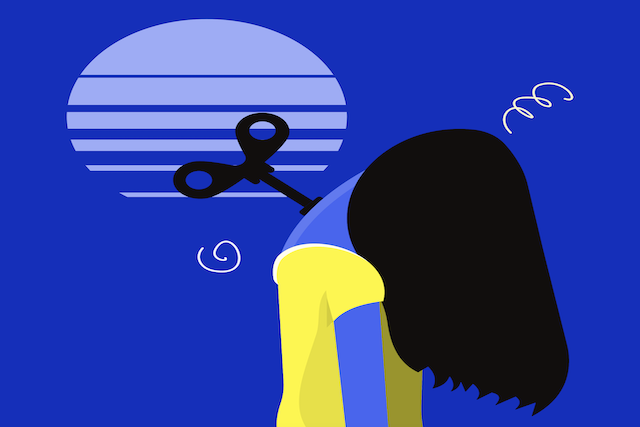
    We are conditioned to be productive and to stay busy from the time we are young. We hear people say things like “I’ll rest when I’m dead” and “no rest for the weary.” We are exhorted to “pay our dues” and “put in the work.”

    If we were somehow fortunate enough to avoid the overt messaging about staying busy and working hard, most of us received those messages indirectly by watching the people in our lives.

    We watched our parents come home from work with arms full of grocery bags, only for them to fix dinner while putting groceries away. Or we were asked what we were doing and made to feel wrong if our answer to the question was a child’s honest “nothing.”

    Long after dinner, once everything was cleaned up or tidied and it was “time to relax,” we watched our parents do additional work, both paid and unpaid. Or we watched them knitting, ironing, or puttering around the house.

    We have been told that we have to “work hard” in order to succeed. That “nothing good comes easy.” That we shouldn’t stop when we are tired, but only when we are “done.”

    Sitting down and resting is not prioritized. Those who decide to rest often must justify it: they have to have earned the right to rest.

    Rest doesn’t only mean sleep, although sleep is a large part of it. It also includes sitting comfortably doing not much of anything at all.

    It could mean listening to music or watching TV or meditating. Or perhaps working quietly on a jigsaw puzzle or craft or reading a book or article. Maybe playing solitaire, or looking out the window, or journaling.

    In the fall, as I was struggling with my autoimmune flare, it occurred to me that I should rest more. I was so accustomed to overriding my body’s signals that I hadn’t realized how far I’d pushed myself.

    When I tapped into how my mind and body were truly feeling, I was shocked to find that my mind and body were almost buckling, on the edge of collapse.

    I waited to notice what was happening until I’d reached the point where I was unable to do many tasks in the day at all. A banner day during that time might have involved doing a single load or laundry or cooking dinner for my husband and me.

    I was so fixated on staying busy that I could no longer assess my need for busyness in an honest manner. I had lost the ability to tune into my body to find out if it needed to move and stretch, or even to stretch out and sleep.

    Had I continued to push ahead for much longer, I’m certain that I would have fallen ill. As it was, I was dealing with brain fog, fatigue, and both joint and muscle pain, all of which made life unpleasant.

    It is easy to see now that I should never have allowed things to get to that state, but fatigue and pain and brain fog have a way of teaming up on you so that you can’t clearly assess much of anything. Nevertheless, when I hit the edge of collapse and burnout, I realized that some serious rest was in order.

    I essentially cleared my calendar for at least three weeks. I cleared my work calendar of appointments, scheduled some brief blog posts and emails, and took time off.

    It was torture at first.

    For one thing, my husband was still getting up and heading out into the world to teach tai chi and qigong classes, so he was modeling “proper” work behavior. For another, I discovered that I was incapable of “just resting.”

    I had to relearn how to listen to my body to discover what it needed. 

    I also had to reprogram my thoughts about rest as being an inherent right that we all hold, and not a reward for productivity.

    I also had to learn how to actually do it.

    I did all of the things I listed earlier as forms of rest, from naps to puzzles to sitting quietly. It was ridiculously difficult.

    I had to almost force myself to limit myself to single-tasking, which is doing one task at a time. That was especially hard if the task was mechanically simple, such as watching a television show. My inner monologue would kick up, chastising me for “just sitting there,” urging me to “be productive.”

    In those moments when I decided that rest meant watching a movie on TV, I sometimes sat on my hands to make sure that I didn’t pick up my phone or a crossword puzzle or something else. I often put my phone on silent and deliberately left it in another room, just to reduce temptation.

    Full disclosure: Even with taking affirmative steps to single-task, I didn’t always manage. I did, however, learn through reinforcement that there was nothing likely to arise in an hour or two of time that required me to give up on resting and take immediate action.

    I realized that in many ways, I was retraining my nervous system to allow itself to relax. It was so used to being in a state of alertness that resting and allowing it to have some time off took some getting used to.

    What I learned when I started to budget rest into my days was that I could start to tell more easily what signals my body was sending. It became easier to converse with my brain and body to find out how they were feeling and what they needed.

    It sounds a bit dissociated when put that way, but I have never felt more integrated than I do now. At any given moment, I can pause, tap into what I am feeling (mentally and physically), and act on my own needs in ways that are more nurturing and caring than before.

    When I realize that I am losing focus on a project—perhaps while typing a blog post or planning a workshop—I no longer push through. Instead, thanks to months of practice, I pause and check in with my brain and body. Thanks to practice, I can quickly ascertain whether I need to take a simple break, to get up and walk around for a bit, to take a walk outdoors, or to stop for the day.

    I am learning to embrace the idea that rest is an inherent right, not something that needs to be earned. It is no longer something that occurs only once I have pushed myself until the point of collapse. 

    As it turns out, the more I lean into rest and build it into my days, the more energy I have to actually accomplish all the things I want to get done in life.

    When I add time off or breaks during the day, I find I have better focus when I need to be working on a task. When I include rest in my days, I have the energy to exercise in the morning and also make a good meal for dinner.

    I invite you to join me in adding actual breaks into your day, where you do nothing “productive” at all. No catching up on phone calls or emails or texts—just rest. I’d love to hear if and how it works for you.

  • How to Prevent Burnout: 15 Simple Self-Care Ideas to Help You Recharge

    How to Prevent Burnout: 15 Simple Self-Care Ideas to Help You Recharge

    “It’s okay if you fall apart sometimes. Tacos fall apart, and we still love them.” ~Unknown

    Do you often find yourself saying, “I just have to get through this week…” and then that turns into every week? I know I do.

    Between work responsibilities, chores, and spending time with family and friends the calendar can start to fill up quickly. Unfortunately, there was a time in my life where I let those activities push self-care off my to-do list, leaving me constantly feeling exhausted and burned out.

    Before this experience, I always thought burnout was predominantly mental, not necessarily physical. But then I experienced a major wake up call.

    Recognizing the Signs of Burnout

    A couple of years ago, I was working long hours and filling my hours after work with hobbies, chores, and time with my significant other. This constant activity started to take a physical toll on my body.

    I felt tired all the time.

    I had gained ten pounds in a short amount of time. I was experiencing constant joint pain and headaches several times a week. Sometimes I would even get chest pain and a fever.

    Naturally, these physical symptoms were alarming, so I went to see my doctor. She thought I may have some kind of serious issue, so she sent me to get some bloodwork.

    As I waited for the results, I felt nervous. The prospect of facing a serious health issue in the midst of all of the other overwhelm I was experiencing felt like more than I could handle.

    When I got the email notifying me that my test results had come in, I took a deep breath and opened it.

    Everything was all clear. At first, I felt confused. How could nothing be wrong when I felt so sick?

    My diagnosis? Stress and burnout.

    After talking it over with my doctor, we determined that my lack of time to relax was causing me to feel so burned out that I was feeling physical symptoms in addition to the mental symptoms. I felt a little stunned. Could stress really cause me to feel that physically sick?

    Overcoming Burnout and Finding Relief Through Self-Care

    I knew then that I needed to change my lifestyle.

    Previously, I often turned to unhealthy ways of coping with stress like treating myself to fast food for dinner… every night.

    I would also have trouble falling asleep because it was difficult to turn my mind off at the end of the day. I wasn’t getting enough sleep and compensating with caffeine throughout the day instead of improving my sleep habits.

    As I started investing more time on self-care, I started to feel more like myself again. I was feeling rested, and those physical symptoms of burnout started to go away.

    If you’re also feeling burned out…

    Take items off your to-do list.

    Because burnout often stems from feeling overwhelmed by our schedule and how much we need to get done, I started by taking non-essential tasks off my to-do list and leaning on my support system. For example, asking my significant other to take care of dinner.

    Downsizing my to-do list allowed me to set a more realistic schedule for myself, so I was able to lower my expectations on how much I should accomplish every day.

    I learned to forgive myself for not completing everything on my to-do list. When feeling burned out, it’s important for us to be gentle with ourselves if the quality and quantity of what we accomplish isn’t up to our usual standards.

    It can be difficult to say no to people at first, but the more we do it the more comfortable we start to feel with letting others know we don’t have the bandwidth to support them right now.

    It’s also important to be realistic about time frames and what needs to be accomplished every day. When creating a to-do list and schedule, also estimate how long it will take to complete each task to avoid agreeing to too much.

    Take time to rest and relax.

    When feeling burned out, it is so important to give ourselves space to rest and recover.

    If we are feeling sick or experiencing physical pain from burnout, we need to take time and care to treat these ailments.

    It’s also important to mentally rest and recover. It can be easy to fall into a habit of coming home from work and watching Netflix on the couch all night. I used to drown out the stressful thoughts of everything I needed to get done by distracting my mind with TV shows and social media.

    Now, instead of binge-watching shows or scrolling, I make sure to spend some quiet time relaxing.

    Sleep is also really important in preventing burnout and exhaustion. If we find ourselves cutting back on sleep to make room for items on our to-do list, that tells us that we might be biting off a little more than we can chew.

    Find the right self-care activities.

    Self-care activities help us mentally decompress from the stressful impact of our daily schedule. Self-care isn’t just about relaxing, it’s about caring for yourself physically, mentally, and emotionally so you feel energized and strong enough to handle whatever the next day throws at you.

    Physical self-care ideas:

    • Do some yoga to stretch your muscles, reduce body aches, and help you get a better night’s sleep.
    • Get a massage to ease muscle tension and relax your body.
    • Hydrate to increase your energy and flush out toxins.
    • Eat a healthy meal to aid your digestion and boost your immunity.
    • Schedule a check-up with your doctor to stay on top of potential health issues.

    Mental self-care ideas:

    • Read a book to get lost in a story and give your mind a break from worries.
    • Take a mental health day to reconnect with yourself.
    • Unplug from technology for a while to find peace and stillness in the present.
    • Do a craft to boost your mood and get into a state of flow (research has shown crafting is a natural antidepressant!)
    • Listen to a podcast for inspiration, education, entertainment, or all three.

    Emotional self-care ideas:

    • Journal to identify and process your emotions.
    • Meditate to create space between your thoughts, emotions, and reactions.
    • Talk to a therapist to work through feelings you find difficult to address on your own.
    • Make a list of five things you are grateful for to boost your hope and optimism.
    • Set healthy boundaries for yourself to ensure you’re not taking on other people’s feelings.

    The key is finding self-care activities that are enjoyable and leave us feeling recharged and refreshed. That means getting clear on what works for you, knowing that may change on a day-to-day basis.

    Don’t choose activities that might be mentally or physically draining when you’re already feeling burned out. Today you might feel like running, tomorrow you might feel like walking, the next day you might feel like napping. Ask yourself what you need right now, then honor what you find, without judgment.

    There Is Hope

    We all feel burned out at times, because we all go through phases when life gets busier than usual. Just know there’s a light at the end of the tunnel if you release your high expectations of yourself, set boundaries around your time, and give yourself permission to put your well-being at the top of your priority list.