Tag: responsibility

  • When the Body Freezes: On Love and Grief in Midlife

    When the Body Freezes: On Love and Grief in Midlife

    “I was constantly seeking a balance between mourning what’s already been lost, making space for the time and moments we still had left, and making sense of this complicated process that felt like my heart was split between two contrasting realities: hope and heartbreak.” ~Liz Newman

    There is a quiet heaviness that begins to settle into many of us in midlife.

    It doesn’t announce itself with drama. It slips in through unanswered emails from an aging parent, through half-slept nights spent wondering how we will ever afford live-in care, or whether that one fall they had was the beginning of the end.

    It’s not grief exactly. It’s the shadow of grief that lingers before the loss, that creeps in through ordinary moments and whispers that everything is slowly, quietly, but undeniably changing.

    My mother has Parkinson’s. She lives alone in the UK while I live abroad—untethered by design, a traveling healer by choice—except now that freedom feels like it comes at a cost I never calculated.

    She has started falling. Backwards. Her voice is nearly gone. I can barely understand her over the phone anymore, and every time she forgets a detail or struggles to find a word, my stomach knots.

    I wonder when the dementia will get worse and instead of only forgetting my birthday, she will also forget about me: her eldest daughter. I wonder how long she can live on her own. I wonder what happens when things really go south.

    And I panic.

    The truth is, I can’t just pack up and move to the UK. Not anymore. Not with Brexit and visa restrictions. These days, my visits are brief, limited to a few weeks or months at a time. Right now, I’m here for the summer, doing what I can while I can.

    Add to that the financial uncertainty of running a healing business and the lack of steady income to support full-time care. The weight of it all settles quietly. Like many of us, I carry it in silence and swallow the worry. I fold it into my body, into the slope of my shoulders. The right one, to be exact.

    Until one morning I wake up, and I can’t move my right arm the way I used to. Turning it inward sends a sharp pain up through my upper arm. At first, I think I must have slept weirdly. But when the pain lingers for days, my hypochondriac side takes over. I start googling symptoms. And frozen shoulder pops up.

    I pause. Then I type in “spiritual meaning of frozen shoulder.”

    And everything clicks.

    In spiritual traditions, the shoulder is where we carry burdens that were never ours. It’s where we hold onto responsibility, overcare, and all the invisible weight of things unsaid.

    When a shoulder freezes, it may be our body’s way of saying, “I can’t carry this anymore.”

    A frozen shoulder can also signify:

    • Suppressed grief or emotion, often near the heart
    • Over-responsibility and carrying others’ pain
    • Fear of moving forward, or feeling stuck
    • A lack of energetic boundaries
    • A subconscious attempt to halt motion when our lives demand change

    All of these mirror how I feel about my mother. The anticipatory grief. The helplessness. The guilt. The stuckness of being in-between countries, in-between decisions, and in-between who I was and who I need to become. Wanting to take care of her and to sign the power of attorney papers and equally not wanting to do any of it because it’s just so damn painful.

    The Midlife Guilt That Has No Language

    There is no manual for this phase of life. For the moment when your mother still lives but is slipping. When you are still someone’s child but also now the one silently parenting the parent. When love no longer feels light but edged with dread and uncertainty.

    And unlike childhood, this stage has no defined rite of passage. We often endure it quietly, bravely, invisibly. We plan around it. We work through it. We cry into our pillows about it.

    We don’t want to be seen as selfish. We don’t want to fail them. We don’t want to map a life of meaning only to feel like we missed the most important chapter back home. And then the body begins to speak.

    Reclaiming the Self While Loving the Mother

    Healing my shoulder may take time. Physically and emotionally. But it has also been an invitation to ask: Where am I over-caring? Where am I still trying to prove my worth through sacrifice? What if I let myself hold love and limits?

    Maybe I don’t need to force myself to stay for an entire summer out of guilt that I otherwise don’t live nearby.

    I don’t yet have all the answers about my mother’s care. But I know this:

    • I don’t need to disappear to honor her: I don’t need to dim my joy in front of her so she doesn’t feel the contrast of what she’s lost.
    • I don’t need to break to be a good daughter: I don’t need to say yes to every request out of fear that one day, she won’t be able to ask, nor do I need to say “I’m fine” when I’m anything but.
    • I don’t need to put my dreams on hold to make up for the years I wasn’t there, or carry the weight of what I couldn’t prevent.

    Maybe the most radical thing we can do, in a world where many of us live oceans away from aging parents, is to stop blending ourselves into the expectations of those who stayed behind. Our parents. Our siblings. The ancestral and societal chorus of “You owe them everything.”

    Because the truth is we can’t always return. Not like generations before. The village is gone, the visa expired, the life we’ve built stretches across time zones and cultures.

    Maybe we need to learn to soften the guilt without hardening our hearts. I wonder if we can learn how to grieve the distance without erasing ourselves. Can we find a new kind of middle path where love is not measured by geography but by presence, honesty, and the quiet ways we still show up?

    What if love is no longer a burden carved from duty but a bond held with tenderness and boundaries?

    If your shoulder aches too, or your chest feels heavy or your body is acting up in any way, pause. Because we were never meant to disappear into devotion and carry too much. We were meant to love with presence. To grieve with grace. And to remain visible, even while honoring those we come from.

    I have come up with a few journaling prompts I will journal through myself. If they are in any way helpful on your own journey, please feel free to do the same:

    Journaling Prompts for the Tender Weight We Carry

    1. Where in my body am I holding what feels too heavy to say aloud? What does this part of me wish I would finally hear or honor?

    2. What roles or responsibilities have I inherited culturally, ancestrally, or emotionally that no longer feel sustainable? Am I willing to release or reimagine them?

    3. When I think of caring for my aging parent, what emotions arise beneath the surface and beyond obligation? What fears, guilt, or grief live there?

    4. What does love look like without self-sacrifice? Can I write a version of devotion that includes my wholeness?

    5. If my body were writing me a letter right now about how I’ve been living, what would it say? What boundaries or changes might it ask me to consider?

    If you do, share in the comments what realizations came up for you.
  • The Enormous Cost of Being the One Who Holds Everything Together

    The Enormous Cost of Being the One Who Holds Everything Together

    “For most of history, Anonymous was a woman.” ~Virginia Woolf

    There’s a kind of work in our society that doesn’t come with a title or pay, and for a long time, I didn’t even notice I was doing it. I just lived inside it. It shaped my days, my stress, my identity.

    These days, I see it more clearly. I can name it now. I don’t only live inside it, but I still return to it—especially as a parent, especially when things stretch thin. The difference is now, I pause. I reflect. I ask myself if I have to hold it all. Sometimes I still do. But not by default. Not blindly. Well, usually anyway.

    I’m writing to make the invisible visible. To name what I rarely heard said out loud, not just to others, but to myself. When I’m holding the center while everything pulls at the edges, absorbing what others don’t even realize needs carrying, I see myself. I’m not overreacting. I’m not asking for too much. I’m doing the work that holds lives together.

    I am often the one who remembers the dentist appointment, Mufti Day, the allergy meds, the forecast, the birthday, the swimming bag. Or the one who keeps the emotional boat steady—calming the toddler (or the adult acting like one), soothing tension between co-parents, biting my tongue so dinner doesn’t derail, all while managing the storm inside my own heart, or gut, or head.

    This work has many names to me: mental load, emotional labor, logistical labor and, especially, narrative labor (the effort of constantly explaining myself, justifying choices, making life make sense for everyone else). It’s the work that says, “I’ll just do it; it’s quicker.” Or, “It’s fine, I’ll figure it out” Or, “No one else will remember, so I’ll make a list.”

    But here’s what’s changed: I recognize it now. I’m no longer trying to prove I can handle everything. I’ve learned that sometimes, the quiet question inside—“Why is it always me?”—is actually wisdom, not weakness. It’s a sign to pause. To reset. To shift the pattern.

    While I see this most obviously in motherhood, I know it exists everywhere. In caring for aging parents. In supporting partners with chronic illness or disability. In blended families and complex co-parenting. In friendships and workplaces, where someone quietly holds the emotional glue.

    I’ve watched how, without this work, so many people and systems quietly fall apart. And I’ve also learned the cost of doing it all, all the time. That cost lives in the body.

    These days, my body can often feel like that old board game Operation—except the buzzer is jammed on and the batteries are dying. A constant low-level fog on my brain, with a weariness that sinks deep into my bones. It’s not always visible, but it’s there in my clenched jaw, racing thoughts at 3 a.m., or that strange, sudden overwhelm that never quite becomes tears.

    I used to downplay my own needs because there was no room for them. I kept things light even while crumbling, especially when my kids were young. I was the strong one everyone leaned on, even when I longed for someone else to take the weight.

    Now, I try to notice that impulse. To catch it in the moment. To remind myself I am not a machine. That asking for help doesn’t make me weak; it makes me wise.

    If this sounds like you too, you are not alone.

    This is for those of us managing households and trauma responses. For those parenting kids who live in two homes, two worlds. For those doing the extra work to help a child thrive in a system that wasn’t built for them. For those stuck in meetings, trying to help others see what should already be obvious. For those holding finances, feelings, and fallout.

    And then there’s judgment. The kind that seeps through tone, silence, side comments. The kind you can feel in the air. Suddenly, you’re not being witnessed; you’re being evaluated.

    It often lands hardest on those making unconventional caregiving choices. The stay-at-home parent “not contributing.” The adult child who cuts back work to care for parents. The partner quietly managing chronic illness. The blended-family parent navigating chaos.

    I once read, “Judgment assumes superiority. It lacks curiosity. It flattens your life into a one-dimensional story and acts like it knows the ending.” That’s exactly what it feels like.

    I’ve carried that weight many times—judgment from those who don’t live my reality. For a long time, my nervous system told me it wasn’t safe not to care what others thought. Even when I knew the wisdom of that old saying “Don’t take criticism from someone you wouldn’t go to for advice.”

    It’s always ironic; the ones who carry the least are often quickest to critique how you carry the most.

    And so here’s my truth: I won’t apologize for being there for my kids while they still need me. I won’t apologize for showing up for the people I love.

    There’s another saying, “Don’t judge someone until you’ve walked a mile in their shoes.” But most don’t want the shoes; they just want the right to judge from the sidelines. Or, as Brené Brown puts it, “If you’re not in the arena getting your ass kicked, I’m not interested in your feedback.”

    Because here’s what’s often missed: most people don’t realize how much they rely on invisible labor… until it stops.

    They don’t have to think about whether the PE gear is clean. Who will follow up with the lawyer or the school. How tension gets diffused or meltdowns averted. Why the fridge is never empty or the calendar runs smoothly.

    But when I’ve stepped away? Things fall through the cracks. Conversations go sideways. The house might be quiet, but not peaceful.

    This isn’t about guilt. It’s about value. This work enables others to succeed, to rest, to function—precisely because someone else is holding the complexity.

    Invisible labor holds everything together, until it can’t. I know this. The migraines, the kidney stones, the menstrual issues—they brought me to my knees. My body was trying to protect itself. Fair call. This work isn’t bottomless. It’s not free. And it’s not a given.

    So many of us do this work quietly, without even naming it in ourselves. Because when something is always expected, it starts to feel like it doesn’t count.

    But it does count. It is work. It deserves to be seen, not just when it collapses, but while it’s still holding the thread.

    We are not invisible. We are not unreasonable. We are not weak for needing rest or recognition.

    We are doing work that keeps lives afloat. That work matters. We matter. But boundaries matter too. No one is coming to save us. And we can’t keep rescuing others from their own responsibilities.

    Yes, there will be excuses. But unless there’s a clear diagnosis, the sixteen-year-old who won’t get out of bed for school? That’s theirs to navigate, not mine to carry. Let there be real-world consequences. How else will they grow? How else will they take responsibility? How else will they learn to stand on their own two feet?

    So today, I pause. I see what I’m carrying. I value what someone else is. I ask where the load can be shared. I wonder what would change if we truly recognised the weight behind what seems effortless.

    Because the most important work isn’t always the loudest, but it’s often the most essential.

    And maybe the first step isn’t changing everything. It’s noticing it. Naming it. Starting there.

  • The 5 Qualities You Need to Change Your Life

    The 5 Qualities You Need to Change Your Life

    “In any given moment we have two options: to step forward into growth or step back into safety.” ~Abraham Maslow

    Have you ever wondered what true personal development requires? What it truly takes to change your life?

    I have, and it’s a question I have been asking myself for years.

    As someone who was on a journey that could better be described as personal decline than personal development, I felt stuck living a life I hated.

    Around two years later, after having improved or completely changed every aspect of myself that I didn’t like, I can honestly say I am a totally different person.

    My confidence went from not being able to go to my local supermarket to speaking to hundreds of people every day.

    My self-belief went from thinking I’d never leave the job I hated to believing and striving for financial freedom.

    My discipline went from being unable to stick to any exercise routines and diets to being in the best shape of my life.

    I don’t share all this to brag—I share it to inspire anyone who feels stuck to finally become the person they know, deep down, they can be.

    It’s not only from personal experience that this obsession of mine has grown but also from seeing people around me who are always attempting to change for the better but just can’t seem to make it last.

    From my own experience and observations of others, I’ve learned that certain qualities are essential for lasting change.

    Having all five will not guarantee you’ll be successful, but not having all of them guarantees won’t succeed.

    Without further delay, here are five things you’ll need to finally become the person you want to be.

    1. Responsibility

    Without the ability to take responsibility, all other principles are useless.

    By not taking responsibility for your situation, you give all your power to the external factors or people that you blame, leaving yourself helpless.

    If you can’t take responsibility for something, you can’t change it.

    Taking responsibility isn’t blaming yourself; it’s taking accountability for whatever situation you find yourself in now, regardless of how you got there.

    I used to blame my childhood for who I was, but how does this help me in any way? It didn’t. Instead, it kept me the same—a person I wasn’t proud of.

    I didn’t blame myself for it, but I took responsibility for how I was going to deal with it moving forward. This allowed me to finally take action, and my life improved greatly as a result.

    2. Self-belief

    If you don’t believe you can change, are you even going to try?

    That’s why, to grow, you must first believe you’re capable of it, and to do this, you have to take action.

    If you’re anything like I used to be, doubting your ability to break free from your situation and tired of endlessly repeating affirmations to yourself in the mirror, it’s time to get some evidence.

    This teaches the brain that really you are capable of achieving the goals you set. Without evidence, you’ll never truly believe that anything has changed, because without it, what makes this time any different from the last?

    But how do we get that evidence?

    This is all about starting small. It’s setting smaller goals or challenges, ones that you may even doubt you can achieve, and then working diligently until you succeed.

    This could be anything from waking up an hour earlier every day to taking daily cold showers. Whatever it may be, do it until you’ve gained irrefutable evidence that you’ve succeeded at something you didn’t think you could do.

    From here, you set slightly bigger goals, achieve them, and repeat.

    Eventually, you’ll prove yourself wrong so many times, you’ll have no choice but to believe you can do anything.

    3. Discipline

    Personal development is hard, and if you quit when things get hard, you’ll never succeed.

    As I said, my levels of discipline used to let me down constantly. Whenever something got difficult, I’d let the uncomfortable feelings overwhelm me until I’d quit altogether.

    With anything worth pursuing, there will come a time when continuing feels challenging. This is unavoidable. Therefore, being successful with personal development requires the ability to feel uncomfortable but keep going anyway.

    Discipline allows you to do just that; it frees you from the prison of discomfort.

    Just like self-belief, you can build discipline by starting small and working your way up.

    Choose something difficult, something uncomfortable, and do it anyway.

    You can kill two birds with one stone here by using something like a daily cold plunge or exercise to grow your self-belief and build discipline simultaneously.

    Discipline is like a muscle; it can grow, and the bigger it gets, the more it can handle.

    4. Consistency

    Without consistency, your chances of creating meaningful results are slim.

    I used to expect results instantly. I wanted results the moment I began something. This was not only unrealistic but often impossible.

    It was the lack of discipline and the inability to remain consistent that contributed to most of my quitting.

    Over time, I realized it wasn’t the luckiest, smartest, or even most talented people who were the successful ones. The people who showed up every single day and refused to quit were the ones with all the success.

    One single water drop hitting a rock does absolutely nothing, but eventually, it carves and shapes the rock. The same can be said for going to the gym or anything else in life; it’s the consistent effort over time that gets you in shape.

    And so, I applied it to my own life and finally started seeing the results I desired.

    If you want change, you have to trust the process and show up every single day. Once you see the results that consistency gets you, you’ll no longer be relying on faith but on concrete evidence, making it much easier to show up when you least feel like it.

    5. Focus 

    In today’s world, it has become extremely difficult to avoid all the noise. With a pocket full of distractions, remaining focused has never been so hard.

    With social media, endless notifications, and more content than we could ever possibly consume, it’s enough to derail even the most focused among us. This is why it’s essential to ensure your thoughts and actions align with your goals.

    If you’re easily distracted, you’ll find yourself buying into new shiny opportunities over and over again, keeping yourself at the starting line.

    You’ll either be too distracted watching useless content or too easily influenced to stick to one thing at a time—and both will keep you from succeeding.

    The longer I spent doing just that, the more I realized that every path is hard, and for every path come hundreds of differing opinions on which way is best. Only when I stuck to one thing and focused on doing it well did I finally see results.

    So, if you want to finally become the best version of yourself and achieve your goals, you’ll need to limit distractions, stay committed to your journey, and focus on mastering one thing at a time.

    So there you have it, the five fundamentals of personal development. It’s time to go take action and become your best self, one small step at a time.

  • What Happened When I Stopped Blaming and Embraced Radical Responsibility

    What Happened When I Stopped Blaming and Embraced Radical Responsibility

    “I can respect any person who can put their ego aside and say, ‘I made a mistake, I apologize, and I’m correcting the behavior.’” ~Sylvester McNutt

    I remember I was a teenager when I went through this horrible breakup. I had never experienced heartbreak before, and the pain was excruciating, impacting many areas of my life. For years, I blamed him for the end of our relationship and for not appreciating my love.

    My friends told me it was his loss and that I deserved much better. I nursed that breakup for longer than necessary. I never took responsibility for my part in the breakup and blamed only him for the type of person I became—guarded, insecure, and afraid to love.

    Years later, I realized I had fallen into the common trap of the victim mentality that we all experience at some point in our lives. To be honest, I think I felt like a victim till I was almost forty.

    I was young, and I had to go through all the feelings of grief, betrayal, and disappointment to slowly heal over the years because it always takes time, especially when you are not aware or not ready to admit that “Yes, I did play a part in what happened and how it made me feel.”

    That is radical responsibility. Radical responsibility theorizes that we are 100% responsible for our lives, feelings, and personal growth in response to events.

    This can be misinterpreted as absolving others of responsibility for their actions. However, holding others accountable for their actions is a separate and important process. Radical responsibility focuses on our own internal responses and choices while acknowledging the actions of others. It is a sign of personal growth when we accept our role in what happened instead of solely blaming others.

    For instance, instead of immediately reacting defensively in a conflict, we can pause to examine our contributions to the situation. Did I miscommunicate? Did I react impulsively? Did I mess up?

    Understanding our role allows us to communicate more effectively and constructively resolve conflicts. In relationships, radical responsibility encourages us to take ownership of our needs and boundaries, communicate them clearly, and respond to challenges with self-awareness and compassion rather than assigning blame.

    By embracing radical responsibility, we begin to understand the valuable lessons that can be learned from even the most difficult experiences. It was very challenging for my ego to admit that I had been wrong so many times and that it was not always other people’s faults.

    Experiencing the dark phases in life is necessary to grow and learn that there is more to every story. It’s easy to blame others for everything that goes wrong in your life, and it happens in all relationships, whether family, friends, coworkers, or even strangers. Some of us play the victim more than others because I know I did and still do, and I have to constantly remind myself that I am not an innocent bystander with no say or control in the situation.

    It’s easier to blame others (“She’s terrible,” “Why me?”) than to examine my own role in the situation, acknowledging that I made choices within the context of my circumstances. It takes courage to acknowledge past behaviors like tolerating mistreatment to maintain approval, remaining silent out of fear, or prioritizing social acceptance over self-expression.

    It doesn’t mean everyone is out there to get you or that every time you get hurt, it is only your fault, but that when something happens, we play a big role in what we do or feel.

    For decades, I saw myself as a victim because I told myself that it was always other people’s fault when something went wrong in my life. I never wanted to admit that I also played a role in this. Initially, examining past situations and acknowledging my role wasn’t easy. It was painful to admit to myself that I made those mistakes and decisions because it is always easier to blame others and find fault in anyone but myself.

    My graduate school experience was a prime example. I told myself I went there solely because my then-boyfriend wanted me to. I focused on his driving me to and from classes and his requests for constant contact, framing these as controlling actions—which they were.

    But the truth, however painful to admit, was that I chose that school. I isolated myself from my classmates because that was what he wanted. He didn’t force me to do or not do anything. They were my decisions, made in a desperate attempt to salvage a relationship I feared losing and to avoid conflict.

    Acknowledging this truth and recognizing my role in creating my unhappiness was a long and difficult process.

    At first, I found this self-examination difficult. However, the more I analyzed my role in those situations, the more empowered I felt because I learned how much control I have over the things I do, say, and feel moving forward.

    Reflecting on my role in past situations provided valuable lessons for navigating future challenges. Acknowledging my responsibility, despite external circumstances, brought a sense of freedom and a deeper understanding of my humanity. I felt this sense of freedom and relief because I had been carrying this burden for decades.

    I know myself more because I called myself out on my choices because of my fears and insecurities, and other people may or may not have influenced my decisions. In the end, I did that.

    I knew I was growing up when I was able to admit my mistakes in front of other people.

    Accepting radical responsibility doesn’t mean others won’t try to influence you; it means you’re responsible for your responses. Radical responsibility is a conscious act of personal freedom in which we choose to look at ourselves rather than always pointing fingers at others.

    Embracing radical responsibility is a journey of self-discovery that empowers us to navigate life’s challenges with greater awareness and resilience. By acknowledging our role in shaping our experiences, we move beyond the limitations of victimhood and cultivate a deeper understanding of ourselves and our relationships. This journey fosters self-awareness, improves communication, and ultimately empowers us to create a more fulfilling and authentic life.

    (It’s crucial to acknowledge that radical responsibility does not apply in cases of abuse, assault, or trauma, where individuals are not responsible for the actions perpetrated against them. Survivors of these traumatic experiences may experience guilt, shame, and remorse, which are complex and distinct emotional responses that require specialized support and understanding.)

  • How to Feel More in Control in Life in Four Steps

    How to Feel More in Control in Life in Four Steps

    “You may not be able to control every situation and its outcome, but you can control how you deal with it.” ~Unknown

    Life is often crazy and rushed. Sometimes it’s difficult to feel a sense of control. It can be utterly chaotic and leave us feeling lost.

    This is exactly where I was two years ago. I had no idea what I wanted to do with my life. I felt hopeless, directionless, and completely lost pretty much every day.

    I didn’t feel like I had a grip on anything in my life, including my thoughts, emotions, and actions.

    I had just returned from the local doctor, a prescription of antidepressants in hand and the first pill on its way down my throat, when something dawned on me.

    I realized that this was not the answer. I realized that thinking a drug would fix all of my issues was not only a false fantasy, but it was also extremely ironic. Because by taking them, I was actively choosing to worsen the cause of my issues.

    By taking the drug, I’d be sacrificing even more of my freedom and control. I’d essentially be putting the fate of my future into the hands of a daily dose of pills.

    I am not saying antidepressants are bad, nor am I suggesting that anyone should stop taking them, as they can be beneficial to many people’s mental health. They were simply something I realized I could avoid taking by instead addressing my problem in an alternative way.

    I believe it was at this very moment that everything changed for me. It was then that I realized that I was the cause of my problems, and only I could be the solution, so the journey began.

    Since then, I’ve been the happiest I have ever been, with a newfound sense of control and an unshakable feeling of self-belief.

    These are the four ways I managed to obtain this sense of control. I hope these steps can help you do the same.

    1. Taking Responsibility

    Taking responsibility is one of the most important things a person can do, but it might not be what you think. What was the first thing that came to mind when thinking about taking responsibility? Is it owning up to your negative behavior? Is it admitting when you’ve done wrong?

    I’d like to instead focus instead on the things that are not your fault.

    This might leave you confused at first. You might be wondering why anyone would take responsibility for things they haven’t caused.

    Just because something isn’t directly your fault, it doesn’t mean you can’t take responsibility for it. In my case, I was blaming my childhood and upbringing for the way I felt. I thought that because certain things had happened to me, and they were not my fault, I was somehow entitled to stew in my feelings and react negatively to them.

    But who does this type of mentality benefit? It certainly didn’t benefit me. In order to get better, I had to take responsibility for the way I was. Only then could any meaningful change occur.

    I’m not saying you should blame yourself. This actually eliminates blame altogether, because it doesn’t matter who’s at fault. If you’re the one suffering the consequences, you’re also the one who needs to take responsibility for them.

    The moment something negative has happened, it is done; it can’t be changed. Thus, the only thing left for you to do is deal with the consequences the best you can. Refuse to be left bitter and resentful and, instead, learn and grow.

    The next time something negative happens in your life, ask yourself, “Am I dealing with this in the best possible way?”

    2. Doing Hard Things

    The moment I started doing hard things, my life started to change for the better.

    Life is difficult, and as far as I’m aware, it’s always going to be. Have you ever met or heard of someone who has been through some extremely tough times throughout their life? These people are always very mentally strong, and less affected by tough times.

    The bad news is we can’t fake these sorts of tough times, nor can we recreate them. But we can raise our standard of difficulty in other ways. I mean, people have literally built a building and put a bunch of heavy metal things in it for others to come to pay and lift them.

    I’m not saying you have to go to the gym; I’m simply saying that to become less affected by life’s inevitable attacks, we can actively increase our tolerance for discomfort so that when they do come, we are much less affected.

    This gives us control, as we can’t prevent life from hurting us, but we can actively choose to reduce the pain it causes.

    Some examples of hard things I started to do included running, taking cold showers and ice baths, and following a healthier diet.

    Start implementing daily hard things into your routine, and you’ll notice the difference.

    3. All Wins Are The Same 

    When pursuing a goal, it’s very easy to get caught up thinking about achieving it, but this only results in an overwhelming sense of distance between you and the goal. You’d be much better off focusing smaller. Instead of comparing who you are now with your ideal self, focus on the very next thing that will move you closer to the person you want to be.

    Doing this not only removes that feeling of distance, but it will also constantly make you feel like a winner. And trust me, all wins are the same, so you might as well celebrate them all.

    What do I mean by all wins are the same?

    There is a concept I have recently been interested in, which is the hedonic treadmill.

    According to Wikipedia, “The hedonic treadmill, also known as hedonic adaptation, is the observed tendency of humans to quickly return to a relatively stable level of happiness despite major positive or negative events or life changes.”

    This means we get used to things very quickly. So let’s say your goal is to lose fifty pounds. Losing the first pound is the same as losing the fiftieth.

    Equally, it’s the same if your goal is to reach a million subscribers or to earn your first one million pounds (or dollars).

    To lose fifty pounds, you must have already lost forty-nine. To reach one million subscribers or your first one million pounds/dollars, you must at some point be at the number 999,999.

    I’m not underestimating these achievements—not at all. And I’m also not saying you shouldn’t have big goals.

    But I’m saying the value that comes from them only comes from the context that is applied to them. People fail to understand that the value attached to the goal was given by a past version of themselves, whereas a completely different version has experienced them, so essentially, the value has gone.

    The version of you that sets the target and the version of you that reaches it are used to two completely different standards. By being able to reach your goal, you have subsequently removed all value from it.

    The difference between 999,999 and 1 million is 0.0001%, yet quite literally no one celebrates reaching the former.

    This is the reason why people feel so empty when they finally reach their goals.

    To avoid this, and to constantly feel like a winner, you should focus on the very next step and celebrate every win.

    4. Discipline = Freedom 

    You’ve probably heard of discipline and all of its benefits many times before, as it is a crucial thing to adopt if you want to be successful at anything in life. However, I’m going to be talking about a positive aspect of discipline that no one knows or talks about.

    And that’s the sense of freedom that comes with it.

    There is an obvious way that discipline leads to freedom: By avoiding procrastination and getting tasks done immediately, we end up having more time.

    But there is a more profound sense of freedom that discipline gives us.

    As I have already mentioned, we’ll all inevitably experience feelings of discomfort in life, often from things completely out of our control.

    Now, let’s say you let these feelings stop you from doing what you know you should do. You’re letting external circumstances dictate how and where your life goes.

    Having the discipline to continue doing what needs to be done regardless of external situations or the feelings that might ensue will give you the most profound sense of freedom.

    Without discipline in these situations, you’re essentially losing all sense of control.

    One of the biggest things I felt when I started to build discipline, although I didn’t know it at the time, was a wave of freedom I had never felt before.

    Externally, everything in my life was exactly the same—nothing on the outside had changed. Yet everything on the inside had. I felt free. Being in control of your life means everything suddenly no longer feels permanent and you no longer feel helpless.

    As mentioned above, doing hard things is a great way to build discipline, as you’ll most likely feel like doing these the least. But discipline can also be built by the smaller and more mundane things, like waking up earlier or refusing to snooze, starting a daily meditation practice, or replacing endless scrolling with learning a language.

    These are some of the small things I used to build more discipline. Yours could look completely different. The trick is to find something productive that’s a challenge to be persistent with—then a sense of control and a feeling of freedom will follow.

  • How I Freed Myself from Anger by Owning it Instead of Blaming Others

    How I Freed Myself from Anger by Owning it Instead of Blaming Others

    “The opposite of anger is not calmness. It’s empathy.” ~Mehmet Oz

    In December last year, I went to India to study yoga and meditation. About a week into my training, I noticed I was becoming increasingly angry.

    I thought that coming to this peaceful and supportive place would be all about gentle healing while perfecting my yoga practice. Instead, I was furious, very negative, and frustrated with everything.

    Eventually, I talked to my teachers and shared what I was going through since I was becoming worried. They explained that since the training was intense and we were doing lots of activities to purify the mind and body, any stuck energy within would want to be released. This cleansing process could manifest in unwanted negativity, fatigue, emotional imbalances, and more.

    Although it comforted me, I had no idea what to do with this anger and how to deal with it. So I asked myself: “What am I thinking when feeling angry?”

    The answer was quite straightforward—other people.

    Since I removed myself from everything and everyone I knew and was familiar with, there was a sense of silence around me. This allowed my anger to become extremely loud.

    My initial thoughts were about everyone who didn’t support my decision to go to India, at least not at first. I replayed all the scenarios when people tried to change my mind or tell me I should do something else.

    A few days later, older situations began to come up. Things that happened six months ago, when someone said something that hurt me, and I stayed silent. Or when people told me I couldn’t do something, and I believed them.

    After two weeks of this internal rage, I thought my head was about to explode, then one day, it felt as if it did. I woke up with an extreme fever and sinus infection that hurt my face. I was crying all day and couldn’t even attend classes. Eventually, I ended up in the emergency room.

    I remember meeting an Ayurvedic doctor with orange hair and a gentle smile. He gave me some ayurvedic medicine and said I would feel 100% in four days. I couldn’t see how that could happen, but I felt too weak and mentally defeated to protest, so I took the medicine.

    I spent the first two days in bed with a high fever and almost zero energy to even move. On the third day, the fever was gone, and I could eat. On the fourth day, I felt energized and ready to continue my studies.

    The most amazing feeling was the lightness I felt after I got healthy. My anger radically decreased, and I was more patient and happier.

    This state of peace and joy prompted me to look at what had happened to me. First, I knew that my sickness manifested because of accumulated negative energy seeking its way out. Frankly, I was grateful that I was able to release it.

    However, the anger still dominated my days. At first, I began looking at everyone who I believed had wronged me in any way. I tried to forgive them and rationalize their behavior while developing the understanding that everyone acts from their level of perception. Although I could ease the feeling of anger, it was still very present in my life, and I felt it every day.

    Then one day, as I was sitting in meditation, a profound realization came to mind. I couldn’t let go of the anger because I wasn’t angry with others but myself.

    Since I’d allowed things that I didn’t like and never spoke up about them, deep down, I knew I was betraying myself. However, my need for validation and inclusion was stronger than my desire to stand up for myself.

    Since taking responsibility for enabling such behaviors was confronting, I turned my anger toward others and blamed them.

    Although this realization was uncomfortable, it gave me a sense of strength. Realizing that my power was in self-responsibility made me feel empowered.

    Over the next few days, I battled with myself, feeling like a victim at times and, at the same time, refocusing on my new epiphany.

    Here is how I decided to proceed and begin letting go of my anger once this emotional turmoil slightly settled and I could think clearly.

    1. I focused on where my power was.

    Since I had a habit of feeling like a victim, taking responsibility for what I tolerated was new, unfamiliar, and uncomfortable. Therefore, I often slipped into victimhood.

    Once I observed it, I refocused and reminded myself how amazing and freeing it was to live from a place of responsibility. Eventually, I felt less like a victim and more like a healthy individual who could make her choices.

    The most common reason why we shy away from taking responsibility for our thoughts and emotions is because we think it means letting people off the hook. We want them to realize how they wronged us. We want them to validate our feelings, and we believe it will happen if we just stay angry long enough.

    Ironically, we are the ones who suffer. The word responsibility is derived from the word response. And that, we can choose. In the same way, we can choose to set boundaries while defining what we tolerate and being responsible for ourselves.

    After a few weeks of this mental ping pong, I knew there was a component I was missing.

    2. I decided to forgive myself.

    There was no way I could go through this process without forgiveness since I judged myself profoundly for what I had allowed.

    Self-forgiveness was the hardest step. Although I practiced self-forgiveness in the past and was quite familiar with it, forgiving myself for sabotaging my mental and emotional health was a hard pill to swallow.

    Every time I closed my eyes and began speaking my forgiveness affirmations, I started crying. I realized that I didn’t believe I deserved forgiveness—a belief that stemmed from my traumatic childhood—so I decided to incorporate inner child work into this practice.

    I created a vision of my adult and younger self meeting on a bench. Every time we met, I would ask her to forgive me for letting her down and hurting her so much.

    After one week of this conscious practice, my heart began to soften, and I could look at myself with more compassion and empathy instead of harsh criticism.

    This created a huge shift within my healing since I realized a fundamental truth when healing anything in our lives. In order to let go of anger, guilt, shame, judgment, or any other negativity we feed, we must go on the other side of the spectrum and embrace emotions of care, nurturing, understanding, and empathy.

    Inner child work, practicing self-forgiveness, or loving-kindness meditations are only a fraction of what we can do to ease into our healing.

    As I was preparing for my return home, I knew there was one more thing I had to put in place to make this process lasting and successful.

    3. I chose my non-negotiables.

    It was time to boundary up and decide what I would tolerate going forward. I remember feeling so scared and uncertain. It wasn’t the boundary itself that scared me as much as the reactions from people who weren’t used to them.

    At first, I felt like a toddler taking their first step. I went back and forth, contemplating whether my boundary was good or bad, right or wrong, and whether I really needed to put it in place. Then I realized something—there is no right or wrong when it comes to our boundaries. We set them, and that’s it. They are our non-negotiables, and they are not up for debate.

    The moment we begin setting boundaries, we act with respect toward ourselves. We are sending a message to our brain saying, “I love and value myself enough to honor what feels right and let go of what isn’t.” We are also ready to build relationships with a strong foundation underneath.

    It’s important to acknowledge the fear that comes from setting boundaries. Do we fear the loss of people? Are we worried that we won’t be validated or that others will get upset with us?

    Although these concerns are valid, and we all battle them, it’s important to remind ourselves of the cost of self-sabotage and self-betrayal. This way of life isn’t sustainable or healthy, and eventually, it will bring us back to facing the same challenges.

    It has been a few months since I made changes within my relationships and how I navigate them. Although some of them radically changed, I was able to work through my anger and let go of lots of negativity in my life.

    I still fall into my victimhood and try to let myself off the hook. However, I am now better at recognizing it while understanding the privilege I hold to be responsible for my life, and how empowering it feels when I act on it.

  • How I Stopped Carrying the Weight of the World and Started Enjoying Life

    How I Stopped Carrying the Weight of the World and Started Enjoying Life

    “These mountains that you are carrying, you were only supposed to climb.” ~Najwa Zebian

    During a personal development course, one of my first assignments was to reach out to three friends and ask them to list my top three qualities. It was to help me see myself the way others saw me.

    At the time, my confidence was low and I couldn’t truly see myself. I didn’t remember who I was or what I wanted. The assignment was a way to rebuild my self-esteem and see myself from a broader perspective.

    As I vulnerably asked and then received the responses, I immediately felt disappointed. All three lists shared commonalties, specifically around responsibility. The problem was, I didn’t see responsibility as a positive trait. In fact, I didn’t want to be responsible; I wanted to be light, fun, and joyful.

    Though I understood that my loved ones shared this trait in a positive light—as in I was trustworthy and caring—intuitively, I knew responsibility was my armor. I used it to protect and control while, deep down, I wanted to be free and true to myself.

    I didn’t trust life. I found myself unable to let go out of fear of what may or may not happen to myself and others. I let my imagination run loose in dark places and believed if I thought my way out of every bad scenario or was on guard, I could somehow be prepared to meet the challenges that arose.

    I thought that if I oversaw everything, it would get taken care of correctly and then I’d be safe from the pain of life. The pain in life was not only my own, but my family’s, the local community’s, and the world’s. I wanted to plan and plot a way to fix everything so that everything would be perfect.

    I saw myself as a doer—a person that takes actions and makes stuff happen. I relied heavily on pushing myself and coming up with solutions and, at times, took pride in my ability to work hard, multi-task, and be clever. With time, however, I felt resentful and exhausted.

    Over the years it became too heavy a burden. My shoulders could no longer carry the weight of the world, and I was incapable of juggling so many balls. I had to let go.

    There were so many things that were out of my control, including situations that had nothing to do with me, and yet there were so many people I loved and so many dangerous possibilities.

    Living in a state of constant responsibility meant I had to be alert; I had to be on guard. I was never present and thus unable to have fun. I didn’t understand how to enjoy life while being responsible. I saw these as competing desires and ended up avoiding joy totally.

    I believed I could save joy for a vacation or that wedding coming up next month. I always postponed joy until later so that I could resume being responsible.

    However, being a doer and taking responsibility for things that were not in my direct control had consequences. I was unhappy and drained, constantly wondering why I couldn’t just relax and enjoy life.

    Even when I went away on a vacation, I was unable to calm my mind and have fun. I told myself once x,y,z was taken care of, then I’d feel calm, but then something new would come up and I’d be thinking about that instead of enjoying my trip.

    This left me with a powerful realization: I felt safer feeling anxious and tense than I did feeling happy.

    In some twisted way, it served me. At the time, being happy was too vulnerable, while being on guard for the next catastrophe felt safer. This was not how I wanted to continue living life.

    I wanted to remove the armor. I wanted to trust and enjoy life, and I wanted to believe that whether or not I was on top of everything, things would work out.

    I knew that I could be responsible without carrying the weight of the world on my shoulders. That I could be dependable and caring without being stressed or serious. Those were expectations I had falsely placed on myself, and it was up to me to remove them.

    Once I realized that solving the world’s problems was harming my health and that I was choosing fear over joy out of a false sense of security, I decided to give myself permission to feel the discomfort and vulnerability of happiness. In doing so I found the courage to let go, trust, play, and love life.

    I began setting boundaries with myself. The person that had placed the badge of responsibility on my shoulders was me, and I had chosen to do it out of fear, not love. I had to let go of knowing everything that was going on in other people’s lives and the world and take space from social media, friends, and family to make space for me.

    I began to cultivate joy by practicing presence daily and taking the time to do things I enjoyed doing.

    I took yoga classes, watched comedy shows, went to the beach, and continued personal development courses.

    I learned that although I was great at multi-tasking and pushing through, it wasn’t what I wanted. I wanted to courageously follow my dreams and enjoy my precious life.

    That meant that I had to feel the uncertainty, sadness, and danger of life’s circumstances without jumping in to fix anything. I had to take a step back and bring awareness to my thoughts so I wouldn’t unconsciously join the merry-go-round of solving problems.

    I was a beginner at all these things, but the more I practiced, the more joy I experienced, and this spread onto others. Surprisingly, friends would tell me how I inspired and helped them—not by solving their problems but by being bold enough to enjoy my life.

    If you want to enjoy your life but stress yourself out trying to save everyone from pain, begin to set boundaries with yourself. Stay in your lane and focus on the areas you have direct control over—your attitude, your daily activities, and your perspectives.

    Try slowing down, investing time and energy into activities that light you up. You can’t protect anyone from what’s coming in the future, but you can enjoy your present by letting go and opening up to joy.

  • FREE 30-Day Take Your Power Back Challenge

    FREE 30-Day Take Your Power Back Challenge

    Do you ever feel like you’re stuck in a pattern of waiting?

    Waiting on things to change or people to change.

    Waiting for closure or clarity or certainty.

    Waiting for life to get easier. Waiting for your heart to feel better.

    Waiting for an opportunity or a relationship or something you think you need to finally feel happy and at peace.

    I suspect most of us spend years and even decades waiting, feeling powerless over some, if not all, aspects of our lives.

    I know I’ve been there before. This is when I was the most depressed. When I felt completely helpless, like I couldn’t change my life if I wanted, so why even bother trying?

    It made sense that I felt this way as a kid, when I literally wasn’t in control. Maybe you felt this way too. But as adults we have far more power than we may realize. We don’t have to accept things that hurt us or hurt ourselves through our actions and reactions.

    We just have to recognize where we’ve given our power away and start taking it back, one small step at a time.

    One thought at a time. One change at a time. One boundary at a time. One need at a time.

    With this in mind, I recently created a 30-Day Take Your Power Back Challenge—the latest tool in a collection of companions to my new Inner Strength Journal.

    They’re all steps we can take to create change in our lives—many of them minor things that can have a massive impact. I know when I do any of these things, I feel far less anxious and a lot more in control.

    You can find the challenge here, along with the following other free resources:

    • 15 Things You Don’t Have to Do Anymore
    • Take Your Power Back Worksheet
    • 10 Things to Tell Yourself When You’re Going Through a Hard Time
    • Your Daily Support Plan Worksheet
    • 15 Things You Can’t Control (and What You Can Control Instead)
    • Letting Go of Control Worksheet

    I hope they’re all helpful to you! If you’d like to learn more about my new Inner Strength Journal, which was recently a #1 bestseller on Amazon, you can read more here.

  • Why an Internal Focus is The Solution to All of Your Problems

    Why an Internal Focus is The Solution to All of Your Problems

    “The moment you take personal responsibility for everything in your life is the moment you can change anything in your life.” ~Hal Elrod

    I’m an introspective person, and at this point in my life don’t have any problems with taking personal responsibility. When I share my insights or understanding of situations I have been in, people often say, “Marlena, why are you so hard on yourself? What about the people that have wronged and harmed you? Why do you never mention them?”

    For most of my life, I was trapped in a victim mindset, which meant that I focused on how I believed other people had wronged me or what I thought they had done to cause me pain. I focused on my perceptions of their flaws, their shortcomings, how I felt they mistreated or harmed me. As a result, I mainly experienced a sense of helplessness, hopelessness, and despair.

    I’m not doing that to myself anymore.

    What some people may think of as being hard on myself is actually very empowering and liberating for me because I finally look in the right direction. My focus now is on the only thing I can control and change: me.

    Instead of trying to figure out how I can stop someone else from harming me, I notice what I’m exposing myself to. I notice how I am suppressing the anger that aims to motivate me to take action and to move away from something or someone that is simply not good for me. I focus on my inactions and my inhibition. I notice how I let old conditioning take over and then I put an end to it.

    How someone else treats me is outside my control. Noticing who or what I am exposing myself to is within my control. And so I focus on that.

    I reassure myself that I am not doing anything wrong when I speak up on my behalf. I no longer need anyone’s permission to do so because I have found my voice and I now know that my voice matters as much as everyone else’s.

    But it’s not about pepping myself up to do something that feels as forbidden as it once did.

    I now see standing up for myself as my duty and responsibility. It’s something I do to make everyone’s life easier. It simplifies relationships at all levels because I finally express myself, and by doing so I have grown up and matured in ways I never believed possible.

    But all of this came as the result of developing an internal focus. As long as my focus was on other people or challenging situations, I had no power to change anything.

    My anxiety and stress levels were sky-high. I was frustrated, angry, and constantly disappointed. I held on to resentments and felt bitter. I developed very negative views of life and people and became more and more stuck in a mindset that served no one.

    Worst of all, I was completely blind to it. I didn’t realize that I was disempowering myself because I was stuck in a victim mindset, believing I was born to suffer and endure an existence that was passively happening to me, that I could do nothing about.

    My focus on others had made me blind to myself.

    When you are unaware of your contribution to situations or problems, you render yourself helpless and out of control because you are not considering all available information or contributing factors.

    I didn’t understand that change was something I could do or make happen. In my mind, I was a passive recipient of change and life. Things happened, and I had to just deal with them to the best of my abilities, which left me feeling hopeless and depressed.

    If I was with a withholding partner, I just had to go without.

    If I was with someone angry, I just had to learn to not let it get to me.

    If I didn’t have enough money to buy food for me and my children, I just had to go without so I could feed them.

    If no one offered to help me, I just had to do it all by myself.

    If someone disrespected me, I just had to toughen up.

    I thought that I had to accept whatever was happening. I truly didn’t understand that I could take action and evoke change in that way. I lacked an internal focus and so did not see that my actions, inactions, and reactions shaped my experiences.

    This all changed when I started to undergo a huge transformation. It was a process I fought and resisted in the beginning. I was appalled at the suggestion that I had anything to do with my own suffering. Who would want this for themselves? Why on earth would I make this happen? At times, I got furious when I was pointed back toward myself.

    But eventually, there was no more denying it. I had too much evidence, and I couldn’t unsee what I was beginning to see very clearly: that I played the main role in all of my problems.

    The good news was that if I was part of the problem, then I would also be part of the solution.

    And to do that, I needed to really get to know and understand myself. I had to get honest. I observed what I was and wasn’t doing, what beliefs gave rise to my unhelpful behaviors, and what fears I was trying to hold at bay.

    I became aware of what I wanted and how I stood in my own way, ensuring I could never get what I wanted as long as I behaved the way I did.

    I started to see other people’s responses as reactions to me, and I started to see my reactions to others as expressions of my insecurities. Insecurities that needed tending to. Insecurities that required my attention and loving care, which was something I couldn’t do without first focusing inward. I needed my attention.

    Focusing inward created space between me and others. Where once there was conflict, confusion, and chaos, there now was time, space, and clarity, which allowed true connection to form. Blaming became a thing of the past, as did obsessing and ruminating.

    I was focusing inward for the first time in my life, and suddenly I felt freer and more powerful than I ever thought possible. I realized that it’s natural to feel out of control and helpless when you try to control what you simply cannot control. It makes perfect sense.

    I can’t control if someone withholds love, affection, and intimacy from me. I can control whether I address and talk about it. I can control walking away because it is not the kind of experience I want to have.

    I now see that I have choices. I am an active creator of my experience.

    Just because something happens to me does not mean that I have to stick around for it and expose myself to it. Old conditioning would make me believe that that was the case, but those beliefs were never true to start with.

    They were just old programming that ran unconsciously in the back of my mind. I didn’t notice because I didn’t pay any attention to myself. I didn’t focus inward, and so nothing made any sense to me. Things just seemed to happen because I couldn’t see my part in anything.

    But just because I wasn’t aware of it, didn’t mean that I had no impact on what was happening. I did. I know this now. And it doesn’t excuse what other people may or may not have done that I perceived and experienced as harmful or abusive. That is their burden to bear. That is not within my control and it is not something that I need to resolve.

    I resolve my issues when I liberate and empower myself by focusing on my part in things, on my business, on my role, on my contribution.

    I am now passionate about helping others in compassionate ways to develop their internal focus so that they too can empower themselves and change their lives in ways they currently daren’t dream of.

    It starts with being honest with yourself and allowing yourself to see and acknowledge your actions, reactions, and inactions without negatively judging yourself, shaming yourself, or justifying yourself. It means stepping away from blame and not using others’ negative behaviors as an excuse for your negative behaviors.

    If you feel helpless over a situation, it’s usually because you can’t see your part in it. Open up to exploring it. Allow yourself to see how it could be different if you made a different choice and acted or responded differently.  

    Notice what goes on for you: What are you trying to protect? What are you trying to avoid, defend, or control? How are you trying to keep yourself safe and from what?

    Then tend to that. Be compassionate. Reassure yourself. Set boundaries. Express yourself. Take action. Do what matters.

    This is how you take your power back. Focus on your part. Focus on what you can control.

    It is not about being self-critical or taking excessive responsibility.

    It’s about focusing on what brings relief and on what decreases our anxiety and sense of powerlessness.

    It’s about focusing on where your power lies. Even if you can’t see it yet, just know that it is there.

    Even if you don’t feel like you have a choice, remind yourself that you do and try to find it.

    Your life will become simpler and much more enjoyable as a result of that.

    Because I am living proof of that, I know that you can do it too.

  • Sometimes We Are the Ones Who Need to Change

    Sometimes We Are the Ones Who Need to Change

    “Setting an example is not the main means of influencing others, it is the only means.” ~Albert Einstein

    When I was younger, I had a lot of opinions about what other people needed to change.

    “Why can’t people conserve more?” “Why can’t people stop throwing cigarette butts on the ground?” “Why can’t so-and-so stop being so annoying?”

    Et cetera, et cetera, et cetera.

    I’ve recently realized that as I focused on all of the things that others needed to do, I was avoiding taking a look at my own very real flaws and failures.

    I used single-use plastic containers for smoothies and coffee. I had a car and drove a lot, often when I could have walked, biked, or taken public transit. I used air travel, frequently. I didn’t ever shop at thrift stores or make an effort to reuse things. And I also, um, was very critical of others, and myself.

    In short, I had plenty of issues of my own.

    There is a quote by Jacob M. Braude that reads, “Think about how hard it is to change yourself. Then maybe you will understand why it is impossible to change other people.”

    Not only was it impossible for me to force another person to change, I was also avoiding the impact I could have made by changing myself. 

    This is true in so many areas of life.

    Consider the person who always dates “horrible” or “crazy” people. We always blame the other person and think, “Why do I have such bad luck with men/women?” It’s rare that a person ever looks at themselves and considers that maybe there is something about them that is attracting this type of person—that maybe, in fact, we even subconsciously choose to get involved with screwed-up people so we can point the finger at them instead of confronting our own intimacy issues and asking ourselves why we are avoiding real relationships (or friendships).

    So many people also complain about how “society” needs to change. Yet all of us doing the complaining make up society.

    If we want change, we are the ones that need to change, every one of us.

    This isn’t necessarily pleasant to hear. Because, of course, as long as we complain about what other people need to do, we avoid the discomfort and effort of looking at ourselves and making changes in our own lives. 

    We complain that people are always on their phones. Yet all of us are on our phones, constantly. We complain that the political process is corrupt, yet how many of us run for office, vote regularly, or even dedicate time to really understanding the issues? We complain that we never talk to our friends, but how many of us make the effort to reach out and really listen to what is going on in someone else’s life?

    I’ve realized that for a very long time, I’ve blamed other people for my circumstances; and maybe circumstances did have an impact in some ways. That job that didn’t work out, those traumas that happened in the past. Yes, they are part of who I am.

    But the truth is that as I look back at my past, almost all of the instances in which I’ve had a conflict or something “bad” done to me by someone else, could have been avoided if I had taken responsibility for myself and not given my power away to someone else.

    For example, I’ve recently taken two international backpacking trips. After the first one, I stayed with relatives temporarily to get re-established in the US, and it ended with conflict and hurt feelings because boundaries and expectations were not clearly defined.

    And while my first reaction was to feel sorry for myself and tell myself how “mean” they were, the truth is that I should have been more proactive about either having a discussion to determine a clear agreement or budgeting better and supporting myself.

    I’ve realized that expecting others to care for me or take responsibility for my life can only end in disappointment and disempowerment for me.

    I think in the past, because I was living according to others’ expectations of me and because I was afraid of intimacy and really diving into life, I subconsciously was not taking full responsibility for myself and on a certain level was expecting other people to care for me and support me.

    It’s scary to take full responsibility for ourselves and our lives. In a way, it’s easier not to try, because what if we fail, or what if people don’t like the real “us,” the one we keep hidden? Because hey, if they don’t like us, at least it isn’t the real “us” they’re rejecting, and we can pretend that we “didn’t really care” anyway.

    So many of us live with our dreams and selves tucked away and just float by with what life gives us, and criticize others or the state of the world instead of working on ourselves or taking steps to fix those things we can change.

    The best realization I have had recently, which has helped me avoid despair in the midst of much dark environmental and political news and trying personal times, is that I can restore my own sense of personal power and commit myself to things that I can change.

    That might mean pledging to never use a plastic bag at the grocery store again, bringing a Mason jar instead of using a disposable cup for beverages, or trying to use more kindness and less judgment toward others in my personal life. I can walk through the fire and take ownership of myself and my life.

    Now, I’m not saying that it’s not worthwhile to fight for causes one believes in or speak out against injustice. But it’s important to look at ourselves first and examine what flaws we may be harboring in our own hearts. As spirituality author Marianne Williamson once humorously wrote, “It amuses me how angry I used to get when people wouldn’t sign my peace petitions.”

    Williamson herself is an example of this principle. One assumes she did not find a great deal of success in angrily yelling at people to sign her peace petitions. Yet once she decided to look inward and change herself, and examine her own human failings and weaknesses, she gained spiritual knowledge that has impacted millions and helped them find peace within their own hearts.

    Ultimately, we can try to communicate and share with others, but we can’t change them.

    On the other hand, we always have the option to look inward, claim our power, and take the step of changing ourselves. We can make ourselves into the type of person we keep wishing others would be and do the things we keep wishing others would do. And while it may be scary, it should also be an encouraging thought.

    Because the truth is that the power for change, either for ourselves or the world, is not anywhere “out there”—it has always been inside of us.

  • Beyond Sorry: A Better Way to Handle Conflict in Your Relationship

    Beyond Sorry: A Better Way to Handle Conflict in Your Relationship

    “Sorry isn’t always enough. Sometimes you actually have to change.” ~Unknown

    When I was young I was like every other kid, always in and out of trouble. I pushed the boundaries of what was acceptable in order to see what I could get away with. When I pushed, I’d often keep on pushing until someone said “stop.”

    During my childhood I heard lots of:

    “STOP!!” 

    Quickly followed by:

    “Say you’re sorry.”

    Say those two magical words, “I’m sorry,” and all the pain will go away. Then I’ll be back in the good books and can go play with my friends again.

    During this time I received another strong message that many children hear. It’s the one that says some of your feelings are not a good thing. That’s because I was told:

    Don’t look sad.

    Don’t cry.

    Don’t be scared.

    This led to me feel guilt and even shame about the expression of certain feelings. As a result, over time I was less able to acknowledge feelings in myself and others. These two elements, when combined years later, went on to cause real problems for me. This is because I was now in front of an angry partner and I went back to what I learned as a child.

    I repressed my feelings, tried to look sad, and said “I’m sorry.”

    This time, however, I wasn’t speaking to my parents. It was my partner who was very sensitive to the fact that the words alone weren’t enough.

    My apology now created more harm than good, and I didn’t have a clue what to do about it. My relationships suffered for years, as we would both regress back to childhood archetypal patterns of behavior. This is where we’d indulge in hierarchical relationships, playing out childhood habits with the husband/wife dynamic expressed as mother/son or father/daughter. This killed the trust and intimacy in our relationship, and was a fast track to either breakup, or long-term dissatisfaction and resentment.

    In one particularly fractious relationship I remember always saying sorry because I thought it was what my partner wanted me to say. I knew that she thought she was right, and therefore I must be wrong. We didn’t have the skills to navigate ourselves to a mutually agreeable resolution, so the shortcut to a life of harmony was for me to accept that I was wrong.

    Based on what I learned as a child, saying sorry was the natural response. It seemed to be by far the easiest way to resolve our differences, but it didn’t work. The hierarchy this created ultimately ended that relationship, as I failed to communicate with my partner on the equal footing we both needed for it to work.

    How I’d learned to behave all those years ago clearly wasn’t working, and I desperately needed an alternative to manage the difficult conversations I was now having in my relationships.

    As I moved from relationship to relationship I managed to work through this and developed new skills that helped me grow and heal the wounds from my past. These new skills required me to access the very emotions I was encouraged to repress when I was young and helped me create the connection, trust, and safety my relationship craved.

    Assuming you’re in a non-abusive, healthy relationship, there is an alternative, and is something I now practice almost every day. Here are four steps you can follow the next time you find yourself about to utter the dreaded words “I’m sorry”:

    Step 1: Slow down, acknowledge what’s happened, and take responsibility for your part in it.

    In any relationship there is 200% responsibility to be split 50/50 between both people. Problems happen when the split isn’t equal and people either take too little responsibility (i.e.: the victim) or too much (i.e.: the co-dependent).

    Developing an honest, open, trusting relationship starts with ensuring you take 100% responsibility for what is yours to take, and no more. By doing this you can create a clear line between what is yours and what is not. This then empowers your partner to do the same.

    A while back I noticed how my relationship had become strained, and I felt as if I was either saying “I’m sorry” to my partner, or she was expecting me to. I had been trying to resolve the problems we were having by looking outside of myself and blaming my partner; so I decided to turn things 180 degrees. I looked at myself, got honest, took responsibility, and I told my partner.

    I told her that I had noticed things were strained and I was committed to doing something about it. I explained that I had been projecting lots of beliefs on to her about her not being good enough. These were beliefs I held about myself, and it wasn’t fair to project these on to her. I apologized for doing that and said I was taking my judgments back and owning them.

    Taking responsibility in our lives is key to developing positive relationships of trust and intimacy where there was previously victimhood and blame. Even when you think others haven’t noticed your victimhood, they have. People notice when you are projecting onto them, and they can feel the difference when you stand powerfully in your truth and take full responsibility for your actions.

    Step 2: Describe your feelings regarding what happened. Speak honestly and share what comes up for you.
    Feelings can be used as weapons in relationships in order to apportion blame, such as claims like:

    “You made me feel like this.”

    But when we connect to our own feelings, take responsibility for what we feel, and honestly communicate them to others, we provide a platform for connection. From this place of vulnerability we stop being like teflon, with everything sliding off us, and instead become sticky and able to create bonds and connection with our partners.

    When I took responsibility for the problems in my relationship I shared how I felt. I explained how I was embarrassed about how I’d behaved. I shared how I was scared what she might think of me for being so honest, and I was sad that I hadn’t managed to open up about it sooner.

    Think of the times in your life when you really bonded with your friends or partner. This happens during times of high emotion, both the good and bad. It’s easy to bond and create connection during periods of high emotion and good mood. It takes a lot more to use more difficult emotions to create deep connection. However, it’s these emotions and the vulnerability that we bring to them, where the deepest connections are made.

    Step 3: Empathize by sharing what feelings and emotions they must have felt in response to what happened.

    When we say “I’m sorry” it encourages us to access the situation from our perspective and via our feelings and emotions. In order for our words to be heard we need to demonstrate that we truly understand our partner’s world and not just our own. For that, we need empathy.

    Empathy is a difficult skill because it requires us to recognize the uncomfortable feelings our partner is feeling. It also requires us to access those feelings within ourselves, and then reflect them back to our partner. Lack of empathy is a symptom of us not wanting, or able, to be vulnerable to others’ difficulties because of the way their feelings will make us feel. That’s why it’s important for us to get more familiar with the full range of our emotions, and not just the “good” ones.

    Here are two quick tips to help you to develop more empathy. Firstly, start with the sentence string “I imagine…” This is because it encourages you to enter your partner’s world for a moment. It encourages you to get out of your point of view and see things with fresh eyes. For example: “I imagine you must be feeling really angry and sad about what happened.”

    Secondly, notice your tendency to blame and judge. Judgment is the antithesis of empathy and should be avoided at all costs.

    Step 4: Validate your partner by telling them that what they have shared makes logical sense to you, and why.

    For reasons I am yet to fathom, we are guilt- and shame-creating machines. We love to make ourselves feel bad about what we do and create doubt about what we feel. That’s why being validated for what we feel is so important.

    The reality is we don’t have any choice about what we feel. Something happens and our body, mind, and soul respond in a certain way that’s beyond our control. We can’t select the positive emotions we want to feel in response to what’s happened and avoid the ones we dislike.

    Deep down we judge ourselves for whether our response is right/wrong or good/bad. So being told that our response makes complete sense helps us feel accepted and seen. To be told why it makes sense is like the cherry on top of the cake. It helps us feel as if someone really understands us and sees us for who we really are and how we really feel.

    The intention behind saying “I’m sorry” is focused on yourself. Its primary intention is to get a quick resolution to the problem, and move on. However, the intention behind this alternative approach above is focused on your partner. This time the primary intention is to demonstrate that you understand them and to own your part in what happened.

    Apologizing and clearing resentments are two of the most important skills you can learn in a relationship. No one taught us how to do this, so instead we can regress to childhood habits in order to navigate these delicate areas. As I look back to when I started applying these changes in my relationship I’m amazed what a powerful impact it had on me and my partner.

    Coming from this new place felt freeing and very powerful. Instead of apologizing and feeling lesser or smaller, I stood taller like some weight had been lifted from my shoulders.

    The impact it had on my partner was huge. She now felt seen, understood, prioritized, and safe. She trusted me again in a much deeper way than before. That’s because when we take responsibility and apologize in this deeper way it frees us of our burdens and makes us feel more authentic and real, as a result. This can help us to use conflict in our relationship to actually improve and deepen connection and that’s a skill we could all do with.

  • Why You Might Feel Like You’re Always the Victim in Relationships

    Why You Might Feel Like You’re Always the Victim in Relationships

    Angry Couple

    “Your relationship to yourself is and always will be directly reflected in all your relationships with others.” ~Vironika Tugaleva

    Have you ever heard someone say, “I don’t know why this is happening to me?” or, “My ex is really crazy”? I have said myself, “It’s not my fault he’s a jerk.”

    It can be so easy to play the victim. Surely some of us are indeed victimized, but being a victim is a whole new ball game. Pointing the finger was an art for me. Thing is, one finger was pointing at you and three were pointing back at me.

    I wasn’t aware that all the things in my life were about me. Any friend, relationship, or job I landed was a direct result of how I viewed myself.

    How I interacted with others and the dynamics of my romantic encounters were directly correlated to the deep wounds I developed in childhood. All my core beliefs were distorted, and I had no idea.

    I believed that being in a relationship, no matter how painful, made me connected, alive, and whole.

    I believed I had little self-worth and value, because my father taught me I just didn’t matter. I thought my sole purpose in life was having a man to love—showering him with admiration and adoration.  

    I didn’t love myself. I lacked a sense of self and I had no purpose or meaning outside of a cure-all relationship.

    I subconsciously attracted into my life exactly what I believed I deserved. I didn’t know I was picking what I was picking.

    I had a fear of abandonment, so I attracted a man who would leave me because the belief that I’d be abandoned had to be confirmed.

    I believed I was in charge and all knowing, so I attracted friends who I could dominate and teach.

    I thought men were not trustworthy and abusive, so I found jobs where my direct managers were men who were unjust and tyrannical.

    I assumed my value, love, and worth were tied into someone else loving me, so I attracted someone who felt the same way about himself, and a toxic dance ensued. Neither of us met our own needs, but looked to the other to mask the wound.

    I had no sense of self, so I enmeshed with you, and I adopted your life so I didn’t have to build my own.

    These old beliefs were extremely difficult to unravel and rebuild. I suffered greatly in so doing.

    The only way up and out was to shatter my old self, work to change distorted beliefs, and to begin living life in the darkness.

    I felt like a child locked in a dark hallway, and all doors leading out were shut. I stood there all alone and threw temper tantrums, not knowing how to unlock the door. Slowly, gradually, the door began to creek open.

    What I projected was simple. I projected all my feelings about myself onto you. I attracted into my life whatever I believed about myself, and because I suffered great internal pain growing up, I drew in painful relationships and circumstances as an adult.

    We don’t have to suffer and stay in unhealthy relationships. There is a way out.

    After recognizing my unhealthy cycle, I contacted a well known cognitive behavioral therapist that a dear mentor recommended to me and made an appointment.

    Through our work together and my willingness to get better, I began to change behaviors and old distorted beliefs. I extricated myself from that tumultuous relationship, but not before embarking on another one. They both ended in 2013.

    A bottom came, and the real work began. Learning to be with myself and not attaching to someone who would love me was the key to beginning to heal. Processing my childhood was also an integral part of my growth.

    Today, I have a new sense of self. I have value and self-worth. I have a relationship with myself.

    Nothing outside of me is filling the hole. I am meeting all my own needs. I am not living out of codependence and fear. I don’t believe today that I can be abandoned. Children can be abandoned, but adults can take care of themselves.

    I know now that some men are trustworthy and have my best interests in mind.

    I am creative and learning to build a life of my own around my likes and interests. Some days are difficult still, but I try to remember that anyone I picked to make me happy in the past had the opposite effect. I wasn’t happy to begin with, so I didn’t pick partners who could contribute to my happiness.

    As adults, we choose people and relationships that are familiar, in that they reflect our experience within our family of origin.

    The people and events in your life bring with them lessons. My greatest lessons involved great pain. But my darkest days have brought me the brightest light. My soul mates were not men I was meant to marry or have children with, but were men who helped me see how I had to change.

    No matter how many men cheated on me, left me, or somehow wronged me, I played a part. Sometimes it was simply participating in the dance.

    As I changed my inner self, developed new beliefs, and found courage to stand on my own, I discovered that without these experiences that brought me to my knees, I wouldn’t be where I am today. I am better; I am more whole and more aware of what I want simply by experiencing what I don’t want.

    If you too have found yourself in a pattern of dysfunctional, unhealthy relationships, ask yourself: What’s my part? Why am I drawn to these same relationships over and over again? What’s the lesson? And how can I use these experiences to heal and make myself whole?

    Angry couple image via Shutterstock

  • The Power of Apologizing: Why Saying “Sorry” Is So Important

    The Power of Apologizing: Why Saying “Sorry” Is So Important

    Little Girl Apologzing

    “Sincere apologies are for those that make them, not for those to whom they are made.” ~Greg LeMond

    When I was growing up, every time I took my sister’s toy or called my brother names, my mother would grab me by the wrist and demanded that I offer an apology. What’s more, if the apology didn’t sound meaningful enough to her, I had to repeat it until my tone was genuine. An apology was the basic reaction to any mistake.

    Now that I’m older, I see apologizing as more than just a household rule. My younger self didn’t understand the complexities of human pride and self-righteousness, but my older self does.

    Now, I see family members refusing to talk to each other for years after an argument just because neither side wants to be the first to let go of their pride and “break down and apologize.” But who decided apologizing was a sign of weakness?

    I think we’ve reached a day and age where showing emotional vulnerability can be viewed as a positive rather than a negative quality.

    People are becoming more aware of ideas like empathy and sensitivity, and everywhere we are being encouraged to talk about our feelings, to seek help, and to connect with others. Gone are the days of keeping everything bottled up inside to suffer alone.

    As we move forward in this time of self-knowledge and self-discovery, it’s vital to acquire the ability to recognize our own mistakes. Nobody is perfect, and we all will do something to hurt another person at some point in our lives. The difference, however, lies in acknowledging that we have done something wrong.

    This was hard for me to grasp, because I was taught that an apology should be an automatic response.

    It took me a long time to realize what it meant to say “I’m sorry” from the heart. Apologizing just for the sake of apologizing is meaningless. We cannot genuinely apologize if we can’t admit to ourselves that we made a mistake.

    This is where humility comes in. Can we look at ourselves in the mirror and say that it was at least partly our fault? Can we take that responsibility?

    Placing the blame on someone else is easy. Making excuses and skirting the subject is easy. Assuming the full weight of blame on our own shoulders, however, is very hard.

    I learned this the hard way with a childhood friend of mine. As we grew older, we started becoming more competitive in the things we did together, and eventually the playful competition went a little too far.

    It became a game of silently trying to prove who was better, and we ended up hurting each other over our pride.

    We refused to apologize or even address what was going on because neither wanted to be the one to “give in.”

    The tension kept growing, breaking apart our friendship. I wish I could go back now, because if I had taken responsibility for the mistakes I made, we probably could have resolved it easily and saved our friendship.

    Instead, I let my pride take priority over my relationships with the people around me.

    Learning to apologize is the first and most important step in the healing process. Not only does it show the recipient that you acknowledge their right to feel hurt, but it opens the way to forgiveness.

    It seems so silly, really. I mean, it’s only two tiny words. How can something so small be so powerful?

    Well, there have been various scientific studies on the power of apologizing, which have demonstrated that when the victim receives an apology from his offender, he develops empathy toward that person, which later develops more quickly into forgiveness.

    This is due to the fact that when we receive an apology, we feel that our offender recognizes our pain and is willing to help us heal.

    Timing is an important aspect to keep in mind, as well, because sometimes the other person might not be ready to accept your apology. Sometimes we need to allow time to heal the wounds a little bit before we come forward to say “I’m sorry.”

    An apology cannot undo what has been done, but it can help ease the pain and tension of the aftermath. It gives hope for rebuilding, and puts value on the relationship rather than the individual’s pride.

    Sometimes people don’t even realize the hurt they are creating around them by failing to take responsibility for their actions. Maybe it’s you, maybe it’s someone you know, but everyone knows someone who has suffered from this at some time.

    Now is the time to make a change.

    Often times those two simple words are worth more than a lifetime of excuses and explanations.

    Choose the path of humility. Choose the path of healing. Choose love above pride. Choose to apologize.

    Little girl apologizing image via Shutterstock

  • I’m Not Broken, and Neither Are You

    I’m Not Broken, and Neither Are You

    “Our deepest fear is not that we are inadequate. Our deepest fear is that we are powerful beyond measure.” ~Marianne Williamson

    I used to have this secret habit of flipping through the DSM—The Diagnostic Statistical Manual for Mental Disorders—and diagnosing myself with every disorder in the book.

    Reading over the criteria for borderline personality disorder, cigarette in hand and eyes wide open, I scanned the diagnosis criteria.

    Frantic efforts to avoid abandonment? Check. Unstable and intense interpersonal relationships? Check. Unstable self-image? Check. Impulsivity that’s self-damaging? Check. Suicidal behaviour? Check. Unstable moods? Check. Chronic feelings of emptiness? Check. Inappropriate and intense anger? Check. Paranoia? Check.

    Oh my god.

    I thought that was an uncanny description of me, until I found antisocial personality disorder.

    Failure to conform to social norms? Yup. Doing things that are grounds for arrest? Regularly. Deceitfulness? Impulsivity? Failure to plan ahead? Oh yes. Irritability? Aggression? Reckless disregard for safety? Lack of remorse?

    Oh my god.

    That seemed spot-on, but nothing, and I mean nothing, compared to when I first read about post-traumatic stress disorder.

    Exposure to traumatic event? Yes. Recurrent, involuntary, and intrusive memories? Oh god, yes. Traumatic nightmares? All the time. Flashbacks? Yes. Avoidance of trauma-related stimuli? Yes! Feeling alienated from others? Persistent negative beliefs about self? Persistent negative emotions? Distorted memory and feelings of blame?

    Oh my god.

    After a few years, I added body dysmorphic disorder, substance use disorder, occasional episodes of manic disorder, and constant rotations between bulimia and EDNOS (eating disorder not otherwise classified).

    Admittedly, some of those diagnoses should really have cancelled each other out, but I was more interested in collecting diagnoses like some would collect stamps than achieving medical accuracy.

    All of my self-imposed labels gave me a strange kind of soothing feeling. They affirmed something I already believed, deeply, within me: I was broken. I was in a state of disorder. There was something wrong with me.

    In my scourings, I avoided certain disorders like the plague. Anxiety, for example, and depression. Anxiety didn’t seem like a very “cool” thing to have and depression just didn’t seem plausible because I was so violently self-destructive, never stopping to rest for a moment unless I got infected with mono or West Nile meningitis (both of which actually happened).

    To an onlooker, these things might have seemed like ploys for attention or misguided attempts at impersonating Hollywood. But, truly, these self-diagnoses stayed more private than many of my tortured war stories. They were something personal. They were just for me.

    Looking back, I realize that the fuel behind my self-diagnosing was an obsessive, perpetual drive to find the answer to a question I couldn’t avoid for more than a few hours at a time: “What’s wrong with me?”

    What was wrong with me, I liked to think, was childhood-trauma-induced permanent damage that, in mixing with my apparently high IQ, had created a sort of “Dr. House” complex within me, making me irreparably and irrevocably screwed up.

    That was a nice story, but it didn’t satisfy the question. A question like “What’s wrong with me?” isn’t just some domestic house cat in the mind. It won’t sit quietly and patiently for most of the day, becoming vocal only if it isn’t fed for too long.

    No, a question like that is a wild, ferocious, insatiable beast that rips into anything and everything in its path, killing simply for the sake of the kill, feeding constantly and ceaselessly on anything that smells like nourishment.

    What was wrong with me?

    By the time I made it to age twenty-three, there were so many answers.

    What was wrong with me?

    The stretch marks all over my body. The pimples on my skin, my back. The little hair growing an inch above my nipple. The moles on my upper back. The fat all over my body.

    What was wrong with me?

    The way I blushed at the drop of a hat. The way I wouldn’t be able to stop laughing when other people did. The way I made jokes that weren’t funny to anyone but me. The way my upper lip twitched when I was nervous.

    What was wrong with me?

    How I had absolutely zero ability to be sexy or act sexy without alcohol, feeling frozen and ugly if anyone ever saw me naked. How I had flashbacks, nightmares, and hallucinations I told close to no one about. How I drank alone.

    How I just couldn’t seem to sustain happiness and, even when I tasted joy for a second, soon enough the drugs would wear off and I’d be right back where I started, wishing for a freedom I wasn’t sure was real.

    All of my happiness, for about ten years, was induced by chemicals and co-dependence. I thought what was wrong with me was that I couldn’t feel happy without buying it or begging for it. I thought I was just that kind of person. I thought it would always be that way.

    I’d love to tell you that I was afraid of being broken and damaged, afraid that past emotional trauma had rendered me dysfunctional, afraid that I was different from other people. Of course, that’s what I used to say and that’s a nice story, but I know now that it was all a big lie.

    You know what I was really terrified of?

    Deep inside of me, there was the awareness that, even if I fit every symptom in the book, I had no excuse to live half a life. Somewhere in there I knew I wasn’t really broken. I was terrified of what my responsibilities would be if I allowed myself to be, truly, whole.

    When I was an addict, a victim, a diagnosis, I had no responsibility to anyone. If your neck is severed and bleeding, you can hardly be expected to open doors for people and make the world a better place.

    Like this, I dodged the responsibility to discover my skills and talents, to serve people, to do something meaningful in the world—all by playing broken.

    Of course, it wasn’t all a giant act. I had been abused. I had been raped. I had been an addict. I had horrible body image issues. I heard voices. I hated myself. Yes, those things were “wrong,” but so is a paper cut. And your body will do its best to heal the paper cut with no further intervention from you, if you let it.

    Yes, I’d been broken, but I didn’t have to keep being broken. For fear of my own greatness, I put bandages on my wounds, letting them grow necrotic for lack of oxygen. I never wanted to get better; I just wanted to get pity, because I was too scared to ask for love. I kept myself sick for fear of my own health.

    I’ll tell you right now that my fear wasn’t unjustified. Now that I’m not playing small anymore, I have more responsibilities than I ever have. I’m trusted with people’s most painful memories, with their deepest secrets, with the chance to support them when they’re on the brink of hurting themselves or others.

    Yes, the responsibility is there, but it’s not the horror show I imagined it would be. I think the only reason I ran from it was because I was so weak from keeping myself broken that I couldn’t imagine how much energy I’d have to help people when I allowed myself to be whole.

    I couldn’t have imagined how fulfilling it is to spread love, give love, be love instead of scrounging for tiny little pieces of approval and acceptance like a thief in the night.

    From what I’ve seen of myself and of people, I believe, without condition, that no one is irreparably broken. In fact, no one is broken. Is having a paper cut broken? Of course not. From the moment you get a cut, you’re already healing.

    And that’s what I believe. I believe we’re all already healing, no matter how great our pain or how serious the offenses against us. We’re built to heal, we’re already healing, and we can all experience this amazing life process—if only we’d get out of the way.

  • What to Do When People in Your Life Don’t Want to Change

    What to Do When People in Your Life Don’t Want to Change

    Arguing

    “If you don’t like something change it; if you can’t change it, change the way you think about it.” ~Mary Engelbreit

    We all know at least one person who we think needs a self-help course or book more than we do. They’re the “wrong” ones, at least in our minds.

    I once was in a relationship with a man who seemed to have placed me at the bottom of his priority list. He would always be too busy playing sports or going out with his coworkers to spend time with me.

    I found myself modifying my weekend schedule to match his and becoming anxious when I wasn’t successful. Finding time to be with him had become a source of stress. I used to think that if he changed, our relationship would be perfect and my worry would disappear.

    So I did what many of us do: I suggested he read books about how to be a good partner.

    I expressed that I was feeling neglected in the relationship and assumed he would do something to make me feel better.

    I tried to find solutions so he would be able to continue doing the activities he seemed to love so much and still have time to be with me.

    In short, I placed all my attention on changing what he was or wasn’t doing. I blamed him for my dissatisfaction with the relationship.

    Those were my big mistakes, because I’ve learned that the key isn’t to attempt to control other people’s attitudes or behaviors. The key isn’t to believe that they’re at fault for our negative emotions.

    The key is to assume responsibility for our life circumstances.

    I’ve developed a four-step approach that has helped me let go of the need to change other people: 

    Step 1. Awareness.

    In a universe in which all of us are connected, your conscious and subconscious actions contributed the current state of your relationship.

    You might have acted in ways that conveyed to the other person that he or she could treat you in disrespectful ways, or that you weren’t worthy of love and caring.

    Becoming consciously aware of your thoughts and actions will allow you to ensure that everything you say and do (and let others do) is aligned with your values.

    In my case, if I had become aware that being the last priority in a relationship was unacceptable, I would have exited the relationship before it negatively affected my emotional state.

    Step 2. Growth.

    Even if you think your contribution to the dire state of the relationship is only 10 percent, there is room for learning and growth.

    What have you learned about your way of communicating with others? Are you assertive, or do you usually choose the easiest path of passive aggression, or even blatant aggression?

    What have you learned about your way to react to unacceptable behavior? Do you express your boundaries, or do you seethe in silence hoping that the other person finally “gets it”?

    What have you learned about authenticity and vulnerability? Do you honestly express your feelings, or instead complain about your situation to other people, but pretend everything is great when you are with the person who is the source of your complaints?

    I learned that for me to be satisfied in a romantic relationship, honesty, commitment, and respect are paramount.

    Step 3. Control.

    After you’ve learned from a relationship, you must take ownership for your feelings about the other person’s behavior. It’s your choice whether to let the other person’s actions dictate whether you’re happy or not.

    External occurrences are random and difficult or impossible to control, but your thoughts about your situation are your personal choice.

    Now I know that when someone behaves in unpleasant ways, I have the power to continue enjoying every second of my life.

    Step 4. Trust.

    All human beings have access to the same fountain of wisdom, or human consciousness. This means that you need to trust that those around you will learn their life lessons at their own pace, whenever they are ready.

    You need to remind yourself that it’s not your responsibility to show anyone what he or she needs to learn or to understand. As an innate teacher, this step was one of the hardest for me to take, but once I took it, I gained an amazing sense of peace that I wouldn’t trade for anything.

    Being conscious of our own magnificence includes being conscious of the magnificence of those around you. 
    When people in our life don’t want to change, we change ourselves.

    Photo by Michael Coghlan

  • How to Take Responsibility for Your Life Without Blaming Yourself

    How to Take Responsibility for Your Life Without Blaming Yourself

    Self-Love

    “The place to improve the world is first in ones own heart and head and hands.” ~Robert M. Pirsig

    Many of us are exploring what it means to be responsible for ourselves, to be creating our own reality. These are concepts that in some situations are easy to grab ahold of; at other times, the meanings are far more elusive.

    I’ve seen, in myself and in others, the tendency to beat ourselves up while we are learning what self-empowerment really means. I think this is a natural result of our cultural programming, and it’s understandable that we’d need to work through this type of self-punishment on our quest for understanding.

    I used to be an expert at self-blame.

    When old relationships ended, I asked myself what I’d done wrong. When I didn’t take advantage an opportunity, I wondered what was wrong with me; why wasn’t I paying more attention? If a friend was acting a bit off, I thought it was me. Had I said something insensitive? Was I talking too much? Was I boring?

    I was an excellent over-thinker and a superb finger-pointer, as long as that finger was pointed right back at me.

    I rationalized this over-thinking by reminding myself of my desire to be responsible for myself. I was paying attention! I was recognizing my role! I was empowering myself! Doing that required this type of self-questioning!

    I knew I was creating my own reality. I felt that if I could not keep things from happening that made me feel uncomfortable (read: sad, mad, confused), then I was failing.

    At that time, punishing myself felt like taking responsibility for what was going on. If I blamed myself, it meant I recognized that I was creating the reality. I wasn’t being a victim or pointing the finger at someone else; I was taking on the full load, and man, did I.

    I trucked along fairly successfully with that outlook for quite some time. It was certainly stressful, and I spent lots of time making up stories about myself, but it wasn’t affecting me in a negative enough way for me to change it.

    That is, until my marriage broke up.

    That occurrence marked the beginning of the most stressful time that I’d ever experienced. The internal dialogue was vicious. I felt guilt, and a sense of failure, and a sadness that I’d never experienced before.

    That combination of emotions really opened the floodgates to the parts of me that excelled at self-blame.

    It was several months into that experience when I realized that all the self-punishment wasn’t helping. I wasn’t feeling any better. If anything, I was feeling worse. The self-blame didn’t feel like healing, or like I was working through the emotion; it felt like quicksand.

    Over time, I’ve learned that there is a big difference between being responsible for ourselves and blaming ourselves.

    This knowledge didn’t come over night; it was a process that I am still working through. Initially, it can be tough for us to tell the difference between self-punishment and empowerment. Here are a few tips and tricks I’ve used to help me drop the habit of self-blame.

    1. Re-frame how you question yourself.

    We all have patterns, or tendencies, in how we communicate. In a tough situation, there is probably an automatic question or two that you usually ask yourself. When it pops up, write it down. It might be, “What did I do wrong?” or, “Why do I always eff up?”

    Ask yourself if you would ask someone you care about the same exact question. Chances are, the answer is no. Let that sink in.

    2. Change the question.

    How would you ask the question if it was directed at someone else?

    Pretend you are playing the role of trusted friend to someone you respect, love, and whom you hold in the highest regard. Would you have more compassion for their experience? Would you want to be supportive? Would you desire to assist them by being able to offer a more detached view? (Spoiler: Yes!)

    The new question you ask will depend on the situation. One that fits almost any experience is, simply, “What can I take from this?”

    I also like, “What do I want to learn from this?” which can remind us to consider in a more empowering direction. Also, “How do I want this to be different in the future?” can help us to formulate a plan to make that future happen.

    3. Now ask yourself that question.

    How does your altered question feel? Does it cause you to clench up, or do you begin hearing a litany of crappy internal dialogue? If so, change the question again. Keep changing it until you come up with a version that you’re comfortable hearing, that assists you in actually coming up with an introspective response.

    4. Remember, there is not one “right” way; there are just ways of being.

    I think many of us believe there is only one right way or one correct path. With this belief, there are many chances to consider that we are wrong or that we’ve failed. This is simply not the case!

    There are many ways to do most tasks, just as there are many ways to live our lives. Having a difficult experience doesn’t mean we’ve done anything wrong; it means we are on a tougher road to learning, for the moment.

    Opportunities are infinite; our options are boundless, and we always have the power to change our perspective on any life event, large or small.

    We have just as much energy for self-compassion and exploration as we do for self-punishment. It’s up to us to direct it.

    How do you shift the energy when you realize you’re beating yourself up?

    Photo by Daniela Brown

  • Why We Lie to Ourselves and How It Creates Tension

    Why We Lie to Ourselves and How It Creates Tension

    “That I feed the hungry, forgive an insult, and love my enemy…. these are great virtues.
    But what if I should discover that the poorest of the beggars and the most impudent of offenders are all within me, and that I stand in need of the alms of my own kindness; that I myself am the enemy who must be loved? What then?” ~Carl Jung

    Mornings are delicious in the desert. In a summer climate that pushes above 100 degrees day after day, you learn to appreciate lingering cool gifts of pre-dawn hours.

    I’m typically awake by 5am these days. It’s the best time to open the windows and door to the patio to let new air in.

    On occasion, a sporty cactus wren has seen the open door as an invitation to come inside and have a look around. I delight in their curiosity and spunk, hopping from the doorway to the lamp on my desk, pausing to assimilate data before zooming out again.

    One day, a bee flew in and did not have nearly as much fun as the wrens.

    The bee went straight to the screened window, just a few feet from the open door, and stubbornly tried to will himself through. Up and down the screen, buzzing against it, the same spot many, many times with no success.

    On the other side of the screen, a leafy shade beckoned, but he could not get through. I watched and wondered why the bee continued to try the same thing repeatedly with no success. Not even a hint of success.

    Can you dig the metaphor? In what area of life could you be stuck in a similar scenario?

    We say we want happiness, peace of mind, harmonious relationships, someone to trust us, a more fulfilling job, healthier body, less stress, substantial joy. We say we want that, but we are so often the bee in the window, flying into the screen between us and the place we want to be.

    A fresh perspective may reveal a nearby open door.

    Years ago, I was the target of an unpleasant display of road rage. It was a simple scenario: I was going seventy miles per hour in the far left lane with another car parallel in the middle right lane. A hulky pick-up came hurrying up behind me and wanted to pass.

    He rode my bumper and flicked his lights to make sure I knew. To effectively get out of his way, I would have had to speed up past my desire and overtake the car to my right. It was a no-win situation for me, so I let it go and assumed he’d find another way around.

    Eventually, he succeeded: furiously zigzagged backward then forward, crossed three lanes, and zoomed into the path ahead of me. It was an impressive, totally reckless feat. As he moved in front of me, he stuck his muscular, tanned arm out and gave me the bird with a stiff, angry fist and explosive finger.

    Apparently, I upset the guy. Not only was seventy miles per hour too slow, it was personal; it was something I was doing to him.

    Maybe he thought the other car and I were in on it together, conspiring to block his lane. Maybe he was in a crisis—though, why bother summoning energy to get angry at me when you’re focused on solving an urgent dilemma?

    Why do we get so angry in traffic? Or in check out lines? Or in so many similar scenes played out with people we don’t even know?

    Why isn’t seventy miles per hour (essentially a mile a minute) fast enough?

    The challenge for me in that moment was to find the right question. Mostly, I felt bad for the guy, dosing himself with such an ugly gesture. His roar that did nothing to improve the spin of the planet or make his day roll smoothly.

    From his perspective, I jammed his joy. From my vantage, he could have swiped mine. I chose to keep mine and wish for him to find his.

    If we stop flying into the screen and look for a way around, much of the tension dissolves. Flipping me off with muscular anger may have seemed like a path to satisfaction for the guy on the road, but my guess is it took a painful bite out of his soul.

    Watching an old episode of “House” adds another layer. Dr. Chase was preparing to speak to the hospital review board regarding a case of negligence. While the gist of the plot focused on ramifications from his mistake, the bigger story was about lying and truth telling.

    I wish I could go back and count the number of times one character said to another: “You’re lying.” Every time, it turned out to be an accurate call. Everyone lied repeatedly, about big stuff as well as little stuff, and they constantly called each other on it until deeper truths were revealed.

    We seem to lie because we fear consequences. If I tell the truth now, I’ll get fired, sued, rejected—consequences imposed by an outside force. It’s a convenient explanation for why we side-step honesty, even when we know being upfront is the most direct path to repair and clarity.

    I believe we lie, not because we fear what “they” will do to us, but to avoid internal consequences; self-awareness unavoidably brings on a lot of responsibility.

    In this particular episode of “House,” Dr. Chase lied and said he wasn’t tuned in to the patient because he had a hangover; in reality, he was grief-stricken by news from home.

    Claiming he was negligent due to a hangover demands harsher consequences than the more human (and accurate) version of the story. So what advantage did the lie provide? When we deny the real cause, we relieve ourselves from having to do anything in response.

    More often than not, our lies serve to keep us in the dark, internally fragmented from areas of self unattractive to our conscious mind. Even more stubbornly, and more damaging, we lie to avoid the deeper reality of our greatness.

    This is the part to watch out for. We don’t just seek to avoid negative consequences; we also lie to avoid the responsibility of our own loving nature, the full potential of creativity or expansiveness of an authentic self.

    The guy on the road lies to himself when he says: we’re not all in this together; it’s me against them and they suck. That’s an internal lie designed to protect the self from having to accept the call to do good. Let off the hook in that regard, he’s free to throw his tantrum while a powerless power surges through.

    Each of us has the potential to enhance this world and our experience of it, in any given context. Tapping that potential demands more discipline than we may be willing to cultivate.

    It’s not easier to be mired in volatile emotions. It’s not easier to get from point A to point B in a sea of rage. It’s not easier to get to the nectar through the screen of our tired habits. It’s not easier; it’s just familiar.

    Happiness is the exotic commodity in our world. True peace of mind, resonant joy, sparkling sense of self, and purpose—all exotic to our distracted sensibility. The many miles between us and this exotic honey are cobbled by dishonesty, fragmentation, and fear of responsibility.

    But discipline isn’t “hard” and it’s not a leash restraining passion. Mindfulness is harmony. When all of our parts are working together, life hums around us.

    The bee catches a breeze and is blown off course, through the open door.

    The driver turns up the volume on a song, a good memory, a heartbeat and overlooks momentary annoyances. Then, arriving at his destination brings more of himself to the party. The doctor admits his grief—or his need for love—and the world is healed.

  • Be the Hero of Your Story: Make Your Life Count

    Be the Hero of Your Story: Make Your Life Count

    Seize the Moment

    Bad things do happen; how I respond to them defines my character and the quality of my life. I can choose to sit in perpetual sadness, immobilized by the gravity of my loss, or I can choose to rise from the pain and treasure the most precious gift I have—life itself.” ~Walter Anderson

    Flying. I love flying.

    No, I’m not some sick person who likes getting strip-searched by TSA, or waiting several hours to board a flight that should have arrived at my destination already. I hate that part, but I love the part when the plane takes off, and I especially love the part right before the plane touches down.

    Maybe its because I’ve inhaled so much recirculated air, or maybe its because I’m jet lagged and in some overly tired, trance-like state, but I love the initial descent.

    During the initial descent the destination becomes clear when you look outside the window. Oh, I love the window seat. Every time without fail, I gaze outside and look at the lights of the houses and buildings as the plane flies by.

    Every time a very similar thought comes to my mind: Inside each house there is a person or a family, people experiencing highs and lows, people laughing and crying, people living and people dying.

    For some reason this obvious thought is comforting to me. Maybe it’s because it’s proof that although we are all infinitesimal in the grand scheme of things, we are all sharing in a collective human experience.

    I think there is meaning in life, which made this plane ride ultimately more difficult than any other, because I was returning home to bury my twenty-seven-year-old brother.

    A day after the burial, my father and I met up with some of his close friends to collect my brother’s personal belongings and view the site “where it happened.”

    I remember that day so clearly. It was bright and warm for the chilled wintertime in northern California. It wasn’t the type of day you’d expect for death; it was as if the weather didn’t care.

    People asked me why it was so important that I know how it happened. 

    I tried to explain that I just wanted some answers, but a common response was that “knowing” wouldn’t bring him back. Obvious, true, and painful, but I’ve always had a need to know, and I was determined to try and make sense of it and uncover what had happened.

    At the site, I went over all of the possibilities in my head as if I were the investigator. Maybe he’d tried to answer his cell phone? Maybe he’d fallen asleep? Maybe the truck had malfunctioned? Maybe? Maybe? Maybe?

    I needed to know what had caused the one-ton truck to blow over a power pole and crash forty feet across a water-filled ditch into a dirt embankment, causing the truck to fold like an accordion.

    Maybe I needed to know because I have an image in my head of my brother lying helpless in the mangled cabin of that truck, waiting, hoping for someone to come out there and help him.

    According to the traffic and police reports, it was almost two hours until someone arrived on scene because he was commuting in the country. In fact, if he hadn’t hit a power pole, and someone hadn’t been unable to watch their midnight TV programming, it may have even been longer till someone got out to the site.

    The police report said that my brother was pronounced dead at the time of arrival, but still, my thoughts turn to those unaccounted-for two hours.

    Fate. Is there a single force that determines our lives? Maybe there is a higher power that has a plan for all of us? Maybe we have the ability to determine our own destiny? Maybe? Maybe? Maybe?

    I don’t find comfort in answers that rely upon faith. I come from the school of doubt. I am not out to discredit anyone’s religion or philosophies on life; on the contrary, I think all can be good if they help each person live a meaningful and responsible life, but there are simply more questions than answers, and I don’t want to base my life on theory.

    I am not a pessimistic person—you can ask anyone who knows me—but I instantly discredit everything, even my own ideas. It seems there is some sort of circular logic paradox, where for every idea, there is another idea that counters it. Life is one big paradox.

    “Life sucks, and then you….”

    I’m sorry for the cliché, but this is important. We’ve all heard this phrase before, and we know how it ends: “…and then you die.”

    But if you are reading this, you are not dead yet. And if you have felt the way I’ve felt, life does suck.

    No sense trying to sugar coat it: sometimes, it just plain sucks. I’m here to tell you that that’s okay. In fact, it’s good that life sometimes sucks—and you’re not dead yet.

    I recall the last time I saw my brother alive. Fortunately, I made the decision to take additional time off of work for Thanksgiving instead of Christmas, and got a few additional days with him.

    On my Thanksgiving trip back home, we did a lot of our regular activities: We BSed about good times in the past, drank and sang karaoke at our favorite Irish Pub, singing till our throats got sore and then singing some more, and we spent time with our family and friends.

    However, this trip home, and this time spent with my brother, was different from any other time.

    My brother spent most of his adult life with a large chip on his shoulder. I suppose a lot of people have such chips weighing them down because “life sucks.” This was his attitude.

    Not all the time, of course. He had some great times, some amazing moments; I know this because we had them together. But the chip was always there, sometimes just below the surface.

    On this last trip home, something was different. We still went out drinking at karaoke, but this time he put me in the cab. This time he picked up the bill. This time his chip had some real passion behind it.

    He told me definite plans he had for the future. He had started to seriously date. He had even picked a vocation that he was happy about; he was going to be an electrician, saying to me, “I like working with my hands.”

    Make no mistakes about it: my brother had started taking responsibility for his life.

    “Life sucks, and then you die” is an incomplete sentence. It’s the wrong side of the paradox to take because meaning in life comes from what we each do. Life just is, and we are all unique artists with the ability to create our own masterpiece. If positive and negative are two sides of a coin, we don’t have to flip it and leave it to chance.

    I have often asked myself, if I died right now, how would I feel about my life? The retrospective questions seem to supply the fullest answers.

    Maybe you have done this before, or maybe this is the first time you have dared to ask such a question. Everyone’s answer may be different, and the way they feel about it may be different.

    Regardless, it can be empowering. Life is all we know for certain we have. Say what you will about religious belief and potential other planes of existence. The now is here; living it fully is about believing and having faith in ourselves.

    What I saw in my brother that day, for the first time, was a slight shift in attitude that had moved him into action. He’d started to be the hero of his own life story.

    Tragic as the brevity of his life is, the real tragedy would have been never making the change. My brother Justin is my inspiration, a source of newfound strength, and a reminder that it is never too late to start a new journey.

    During the initial descent, the destination becomes clear when you look out the window. Flying overhead I see the shimmering lights of human experience and I have perspective; when I land, it is up to me to decide what to do.

    Photo here

  • 6 Simple Personal Commitments to Overcome Low Self-Esteem

    6 Simple Personal Commitments to Overcome Low Self-Esteem

    “Everything that happens to you is a reflection of what you believe about yourself. We cannot outperform our level of self-esteem. We cannot draw to ourselves more than we think we are worth.”  ~Iyanla Vanzant

    You’re smart, funny, and genuinely good at heart.

    You have ideas that could solve many of the problems you see around you. You could regale people with interesting stories that crack them up. You could be the perfect partner, parent, or friend.
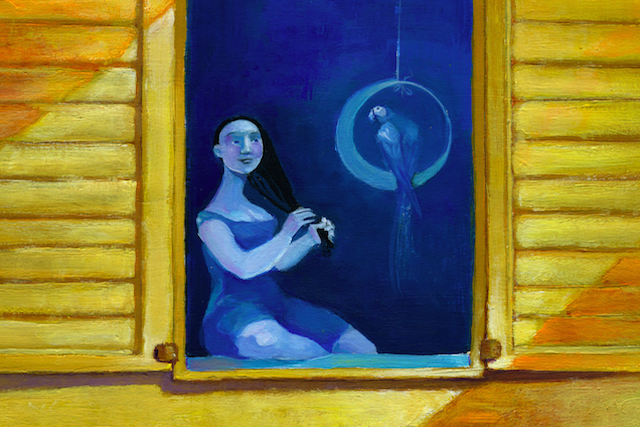
    But you don’t always live up to that potential.

    Something holds you back.

    Something tells you that your ideas are not worth announcing in public. Something keeps you from sharing your interesting stories. Something stops you from giving all you’ve got and taking all you need from your closest relationships.

    Even though you know that you can be so much more, deep down you have a nagging feeling that you are not worthy of greatness, accolade, pure joy, and happiness.

    Low self-esteem is keeping you from living your life to the fullest.

    Who Suffers More from Low Self Esteem—a Shy Person or a Gregarious One?

    I’ve always been gregarious, outspoken, and very extroverted. My husband, on the other hand, is very quiet and introverted.

    When I met him, I used to think he was shy and maybe lacked the confidence to speak up, like I did. Fifteen years of being together has shown me how very wrong I was.

    While I have always bounced back and forth between lack of confidence and overconfidence, my husband has been very even keeled, almost unnaturally so. He doesn’t get fazed by what people say. His decisions are not dependent on what others think. He has such a deep-seated sense of self-worth that nothing seems to affect him.

    Slowly, I’ve come to realize that self-esteem has nothing to do with being gregarious/extroverted or shy/introverted. It comes from a place much deeper, from within yourself.

    As a consequence, there are no quick fix solutions or magic pills that can improve self-esteem overnight.

    On the other hand, if you consciously commit to conduct yourself right, no matter what the situation is, you can permanently increase your sense of self-worth.

    I’ve been putting this theory to test over the past couple of years and have started noticing a much more deep-seated sense of calm within, from which a strong sense of self-worth has emerged.

    Here is a list of six simple commitments that have made the biggest difference to me:

    1. Stop pretending in an attempt to please other people.

    Have you heard the quote “You can fool some of the people all of the time, and all of the people some of the time, but you cannot fool all of the people all of the time”? Knowing that someday you will be “found out” is what kills the self-esteem.

    Hard as it is and vulnerable as you will feel, let go of your pretenses. Just be your authentic self. At first, the fear is crippling, but if you manage to get past the initial fear and take the plunge, it’s so liberating. And that freedom to be who you are, without excuses or pretenses, paves the way for a much healthier self-esteem.

    2. Learn to say no. Say what you mean and mean what you say.

    Often we say yes because of the fear of authority, the fear of hurting someone’s feelings, or worries that we will let someone down. But every time you say a yes that you don’t mean, you’ll end up doing a half-hearted job. And then you are unhappy that you said what you didn’t want to say, and you are unhappy that you did such a lousy job of what you said you would do.

    Break out of that habit. Instead, just say what you mean and mean what you say. You don’t have to be rude about it; just be firm and decisive. Developing the ability to speak your mind in a kind but firm manner, and to really deliver on your promises, will go a long way in building lasting self-esteem.

    3. Grant yourself the permission to make mistakes, and see them as opportunities for growth.

    You can beat yourself up over a failure, or you can give yourself the permission to make mistakes and vow to learn from them. Let’s face it, whichever route you take, you will still make some mistakes in your life. One approach chips away at your self-esteem; the other helps you become a better person. Which sounds like a better choice to you?

    4. Take responsibility for your actions.

    Again, at some point or the other in your life, intentionally or accidentally, you will let others down. When that happens, quit making excuses and accept them as a consequence of your choices. Quit the regret and focus on repair.

    Always be prepared to say “I’m sorry” followed by “How can I fix it?” and make sure you put in genuine effort to fix things in a way that is acceptable to everyone involved. It takes a lot of effort, but a healthy self-esteem is rooted in knowing that you always do the right thing.

    5. Help others.

    No amount of fortune, fame, success, beauty, intelligence, or strength can give you the same sense of personal gratification or a sense of purpose as a genuine “thank you” from someone you help.

    When you stop being so wrapped up in your own worries, sorrows, and melodrama and start being a part of the bigger picture, with a role to play in this universe, your sense of self-worth and self-esteem gets a whole new definition. Give freely. Help whenever you can. You will get more than what you thought you ever needed.

    6. Immerse yourself in whatever you decide to do. Quit worrying about your choices.

    Either do something or don’t. Stop second-guessing your choices.

    For instance, if you want to make some tea, first learn how to make tea. Next gather all the ingredients you need. And then make tea.

    Don’t worry about whether it will come out right. Don’t worry if anyone will like it. Don’t worry about whether you are worthy of making tea. Don’t worry about coffee drinkers. Don’t worry if you will ever get to make tea again. Don’t worry about what you will do after you make tea. Just. make. tea. And when you are done, move on.

    Constantly worrying about your choice as you make the tea will not do any good to you, the tea, or anyone else around you. Immerse yourself in what you do.
    Your self-esteem is a measure of how worthy you think you are. Don’t look outward for affirmations. Set your own expectations of who you should be and then do all you can to live up to those expectations. You have it in you to be the person you can be proud of.

    Commit to it and go become that person!