Tag: resolutions

  • 20 Inspiring Messages to Take into New Year

    20 Inspiring Messages to Take into New Year

    It’s the beginning of a new year, full of promise and possibility. Maybe you have a good feeling about the year ahead and big plans to bring to life. Or maybe you’re coming out of one of the toughest years you’ve ever had, and you’re just hoping this year will hurt less than last.

    I’ve been in both situations before, as I imagine we all have. But no matter our unique situations, a new year often brings a sense of rebirth and hope. Hope that things can change, or that we can change, or maybe that we can just change how we see things. So we can struggle less, enjoy more, and show up more often as the people we want to be.

    With this in mind, I put together this collection of quotes that might comfort, encourage, uplift, and inspire you. I hope these messages help you start your day (and your year!) feeling good about yourself and what’s possible.

  • New Year’s Resolutions Simplified: It’s as Easy as 1, 2, 3

    New Year’s Resolutions Simplified: It’s as Easy as 1, 2, 3

    You and I will probably come across a hundred articles about New Year’s resolutions in 2023 … again. And, if you and I are like the majority—the well-intentioned, regular people who genuinely want change—we will aspire to big things and later get frustrated and give up on the list we made … again.

    But what if we kept it really simple this time? What if we didn’t have to make an endless list and be reminded, by looking at it, of all the things we may fail at again?

    What if we made it as easy as one, two, three?

    Let us do that instead, shall we?!

    1. Make “one” your magic number. Count to one each day, starting now, not from January 1st—NOW! What is the one thing you want and will do today?

    One email or paragraph you will write, or one chapter you will read, or one person you’ll reach out to. Who is the one lucky person you will text or call to tell them how you miss or appreciate them? Or how encouraged you feel by knowing them or how you want to ask forgiveness from them? Who is the one person you can write to or call to laugh about that one fun memory that you only share with them?

    I personally made a commitment to write or call or pray for a person whenever they cross my mind, that same day; I do not wait. There is a reason, I believe, we are reminded of people, and life is so fragile. I don’t want to miss an opportunity and regret not uplifting someone who could have been encouraged, or speaking kindness to someone who could have benefited from it.

    What’s one thing you will do today to move toward a healthier and happier you?

    Maybe it’s just one set of squats while you are washing the dishes; one jump rope you will order and one minute of jumping you’ll do when it arrives; one glass of beer or coke or a sweet drink you’ll replace with water or tea or decaf coffee just once today. Which one item will you change in your menu today for something that is better for your body?

    What is the one happy song you will listen to in the car or on a quick walk that you will take today? What is the one shop you will drive to, parking really far away, so you can get extra steps walking back and forth?

    2. Remember that there are two significant ways that your brilliant mind registers and remembers everything: through words and images.

    Paint clear, vivid, beautiful pictures for your mind of what it is that you want. Think backward; create an image of what your completed accomplishment looks like to you and make it as detailed and as exciting as you possibly can.

    See yourself having arrived at the healthy weight you want, you fitting into an outfit of your desires, hearing your friends and strangers complimenting you on how radiant and healthy and great you look, thinking about how you love taking care of your body inside and out.

    See yourself having completed your degree, project, letter, book, task, whatever. See yourself walking across the stage, people wanting to buy your product, welcoming your project, asking you to give your presentation again, asking you about and enjoying the summary of what you read or learned.

    Imagine yourself buying that house you have painted in your mind and furnishing it and having friends over and laughing and resting in your comfortable space every day!

    See yourself in a relationship you just repaired or found and are enjoying. See how good it is for you and the other person; see and hear the uplifting conversations you are having and the fun activities you are enjoying together. Dream in pictures!

    When talking to yourself, use words that are kind, uplifting, life-giving, generous—not the opposite. Speak in the same way you would to someone you love and care about; someone whose success would make you as happy as your own; someone you want to see happy, encouraged, loved. Talk to yourself in your mind and out loud like that each day and see what happens.

    3. Imagine yourself as a triangle.

    One side is your mind, connected to the second, your heart, connected to the third, your amazing body, with the entire space inside filled with who you really and most profoundly are—your spirit.

    All of you needs to be cared for, attended to, and nurtured. Pay attention to what each part needs and requires. How is it lacking? What is it missing? What one thing can you do today to nurture each part?

    I nourish my spirit through prayer and silence daily, which fills me with focus, strength, and insight, and I always pray for at least one person outside of my family as well. Walking is what helps care for my body during this season of life.

    So there you have it: one, two, three.

    When you get to the end of your day today, be sure to congratulate yourself on that one thing you did, that step you took, and look forward to doing it again tomorrow. Be your cheerleader and encourager and then, over time, you’ll see that change you’ve been looking for.

  • 12 Habits to Adopt to Make This Your Best Year Yet

    12 Habits to Adopt to Make This Your Best Year Yet

    Many of us head into the New Year with big goals and ambitions. We think about everything that seems to be lacking in our lives and imagine ourselves far happier and more fulfilled on the other side of massive change.

    There’s no denying that certain accomplishments can amp up our life satisfaction, but I’ve found that our daily habits are the biggest contributor to our happiness.

    You can have a job that excites you, the best body of your life, and the perfect partner for you, but none of it will fully satisfy you if you don’t also prioritize the daily habits that nurture your overall well-being.

    If you want to feel good about yourself and your life, you need to regularly do the things that make you feel peaceful, joyful, and alive.

    With this in mind, I recently asked twelve Tiny Buddha contributors (all involved in our upcoming Best You, Best Life Bundle Sale) to share one habit worth adopting in the New Year. Here’s what they had to say:

     1. Start the day with positive intentions.

    “The moment I wake up, I do not move. I hold still for several minutes. I contemplate qualities I would like to offer for the day.

    Then I silently repeat the following affirmations:

    I offer this day peace.
    I offer this day joy.
    I offer this day enthusiasm.
    I offer this day kindness…
    (or whatever qualities I would like to offer on that day).

    And I keep going until I feel I am done.

    Some days are harder than others, especially if I wake up very early, still tired, with the prospect of a long day ahead.

    However, this simple, pithy practice sets the right tone. It fills me with gratitude and it firmly places me on the right track.

    From that point on, my day goes well, and everything aligns in the best and highest way possible, even if/as and when challenges arise.”

    ~Personal Growth Teacher Julie Hoyle (juliehoyle.org)

     2. Practice mindfulness.

     “For someone seeking a change in their life—to stop doing something destructive, to start doing something healthier, to become more confident, to step into the version of themselves they know they really are—the single best habit to cultivate is mindfulness.

    Mindfulness is the skill of paying attention on purpose to the present moment without judgment. This is the first step to change. It helps you recognize when you are doing the thing you want to change. It helps you understand when you are stuck. It helps you realize what you are really feeling and thinking.

    It gives you the starting point of your map. You can recognize what is really happening—’Oh look, I jumped to the worst-case scenario again. That made me feel afraid and uncomfortable. So that’s why I am looking for an excuse not to go to the party.’

    From here you are able to step outside those emotions of fear and discomfort and look at the situation objectively. From here, you can create change. You can challenge your thinking. You can reframe the situation. You can remind yourself of where you want to go. You can make a plan.

    We so easily live on autopilot. That’s not because we are lazy. It’s simply the more efficient way for our brains to operate.

    Create a habit, and you don’t have to think about what to do the next time that situation comes up. That frees up energy for your brain to do other things. But efficiency does not equal excellence. This autopilot way of living leads us to not notice what is really going on. Without mindful awareness, we get stuck in our feelings, we ruminate like a broken record, we keep making the same unhealthy choices over and over again.

    It’s a very simple skill—to be aware. But there hasn’t been a strong biological or evolutionary need to cultivate this skill in order to survive which is why most of us do not have this skill naturally. We need to work on it. We need to repeat it over and over until it becomes a habit. But it is so worthwhile.

    It’s actually a very subtle shift in your thinking, yet incredibly profound. Like standing under a waterfall, then taking one small step back out of the water and seeing the waterfall in front of you. Small step, big difference.”

    ~Stress and Anxiety Coach Sandra Wozniki (stressandanxietycoach.com)

    3. Adopt a meditation practice.

    “You know that feeling when you’ve been away from home for a while and then you finally walk in the door? It feels good, right? It’s hard to put into words, but something in your heart opens.

    Home is a place where we can open because we feel safe, warm, and held. It’s a place where we know we can always come back to, no matter how long we’ve been away. There’s a feeling of belonging.

    For me, meditation is like this. A returning home. As my mind begins to quiet, there’s an increasing sense of stillness that comes forward, and my heart responds. Stillness brings a sense of peace, clarity, stability, and a deep sense of connection and being held.

    As we move through this life, we all crave that feeling of home. A foundation. A sense of belonging somewhere.

    We often create a sense of home in the world, in a physical location, to recreate what’s fundamentally accessed through our heart.

    Returning to stillness is a returning home at its most essential level.

    In a world where we’re constantly bombarded by distractions, stimulation, dramas and conflict, it’s easy to forget what home feels like. Add to this a busy, emotionally reactive, and self-judging mind, and it’s easy to forget that a sense of home, peace, and warmth actually exists inside us.

    It does!

    Stillness is always there, in the background of our awareness, ready and waiting to support us, but our mind is usually too busy to notice it. And when there’s drama, turbulence or overwhelm in our life, stillness offers a very stable place to rest. But if we don’t train ourselves to know stillness, then when the drama and turbulence comes, stillness will be hard to find.

    Meditation helps us remember and build our relationship to stillness by getting us out of our head and into our heart. The more we visit stillness through meditation the more it permeates us, which means it’s more available for us in everyday life.

    So, when we’re in a stressful situation it’s a matter of letting stillness hold you.

    Does this mean it will work every time? Not necessarily. But with consistent practice you’ll change your relationship to the things that trigger and drain you, because you’ve chosen to cultivate a different, more important relationship. A relationship to stillness.

    And your heart is the bridge.”

    ~Meditation and Mindfulness Instructor Ben Fizell (peacekeeperproject.com)

    4. Use mantras as affirmations.

    “I’m a big fan of using mantras as affirmations. Sometimes life can feel as though it’s spinning out of control, and our minds can conjure up daunting scenarios that increase our stress levels and add to anxiety. A simple mantra can be super effective in helping to cut through the noise and bring us back to a single focal point.

    One of my favorite go-to mantras is ‘I am safe. I am loved. I am good enough.’ I say this at least three times, further affirming the words with each repetition.

    I recommend creating your own mantra using words that feel grounding for you. Keep it short—a sentence or two is plenty. Using affirming words (especially out loud) can create a healthy and empowering habit of self-awareness and self-care.”

    ~Author and Artist Skylar Liberty Rose (skylarlibertyrose.com)

    5. Play in nature.

    “How you play in nature is up to you. It might mean sitting in your yard, on a balcony, or even next to an open window and allowing yourself to revel in a tree’s stillness or a bird’s melody.

    It might mean adventuring to a new neck of the woods, or ambling down a familiar path while taking the time notice all the little things we usually miss in our hurry or preoccupation: the soft, green moss; the startling blue tail of a lizard half-hidden under a rock; or the curious expression of a wren that’s watching you from the bush next to the trail.

    Not only does playing in nature reduce stress and anxiety and improve overall health, but it can also help us find our way, both literally and figuratively.

    It’s like Rumi says: ‘Everyone has been made for some particular work, and the desire for that work has been put in every heart.’

    We have so few chances in our everyday life to practice following our hearts, however, that most of us have forgotten how to do it. Wandering freely under the open sky, following our curiosity and desire, we learn how to let go of trying to arrive somewhere and discover the joy of simply taking the next step on our own unique path.

    When I began to reconnect with the natural world, I couldn’t help but rediscover my own human nature: my true self, that is; the gifts I have to give the world and where I fit into the ecosystem of life.

    Walking through the woods, I began to realize that just like every other living being on this planet, I have an important contribution to make; that when my mind finally grows quiet, I can hear a soft voice of wisdom telling me what that might be; and that if I listen to that voice, I too can—to borrow Mary Oliver’s phrase—take my place in the family of things.”

    ~Certified Integral Coach Meredith Walters (meredithwalters.com)

    6. Try habit stacking.

     “I highly recommend a self-care practice I call ‘habit stacking.’ This is taking several small habits and putting them all together in one time slot, i.e. first thing when you wake up.

    For instance, you might begin by doing a short meditation, which would lead to drinking a quart of water, followed by ten minutes of stretches, and then maybe preparing a green drink. Habits are motivated by triggers, so each activity stimulates the desire in your body for the next one.

    Do these regularly at the same time for a few weeks, and they will become engrained. Your habit stacks can work at any time, day or night, depending on when you want to create your own self-care zone.”

    ~Author and Speaker Suzanne Falter (suzannefalter.com)

    7. Connect with your body daily.

    “One habit worth adopting in the New Year is to start taking a few minutes every day to connect with your body. Pay attention to how it feels, to how you feel. Consider how you want to feel and what you can do to bridge the gap between the two if there is any.

    This is super powerful because we get so caught up in obsessive thoughts about all the things we think we’re ‘supposed’ to be doing for our bodies (and usually end up not doing) that we never stop to just connect with and listen to what it actually needs.

    This also works for mental health. If you wake up feeling down, angry, stressed, overwhelmed, (etc.), ask yourself, what does my head/heart/soul need today? Often, you’ll notice that you really just need a break. Give yourself that. Or maybe you need to find something that feeds your soul and gets you feeling passionate about something in life.

    Too often we end up going through the motions of life living in survival mode simply because we’re so busy staying busy that we don’t stop long enough to figure out what we need to feel vibrant, joyful, and fulfilled.

    If you struggle with healthy eating, take this one step farther by applying it to food. Take a second before you eat to ask yourself, how is it going to make me feel if I eat this? Do I want to feel that way? Why? This is a super powerful tool because it provides space between an auto-pilot impulse and the action that follows, to make a conscious choice based on what’s best for your body in that moment.

    The other reason it’s super powerful is because it helps you to start noticing if/when you’re purposely punishing yourself with food.

    If you go through those few quick questions and decide to purposefully eat something knowing it’s going to make you sick or to continue eating when you’re already full and know that eating more will make you sick, (and you don’t care), you’re punishing yourself with food. Beginning to recognize when that’s happening is the first step to learning how to change it.”

    ~Cognitive Behavior Coach Roni Davis (ronidavis.com)

    8. Practice breathwork.

    “One habit that I think could benefit many people is to incorporate some form of breathwork into their routine. That could be simple mindfulness meditation, box breathing, or some of the more advanced pranayama work in yoga—whatever works for you. From my experience, just a few minutes a day can have a profound impact on stress levels and your quality of life.

    Whether you’re looking to be a stronger athlete, to support your mental health, to be a more present partner or friend, or be more productive at work, I can’t really think of any areas in life that aren’t improved by adopting a regular breathwork practice.”

    ~Movement Coach Luke Jones (heromovement.net)

    9. Be selective about the news sources you tune into.

    “It’s admirable to want to stay informed about current affairs, especially in an election year, but carefully choose news sources you trust and even then, limit your exposure. There’s no value in feeling indignant for half your day, having arguments on social media that you can never win, or getting angry over events or with people you have no control over. All that achieves is that you hand over your personal power to others who are more than happy to take it.”

    ~Certified Life Coach and NLP Master Practitioner Tim Brownson (adaringadventure.com)

    10. Add gratitude to your “sorry’s.”

    “I don’t just say, ‘I’m sorry.’ I also say, ‘Thank you.’ For example, instead of only saying, ‘I’m sorry I was late,’ I also say, ‘Thank you for waiting for me.’ And instead of merely saying, ‘I’m sorry I was sort of out of it the other day,’ I also say, ‘Thank you for being there for me both during good times—and my not so good times.’

    This subtle shift helps me to feel better about my human glitches. Plus, it also winds up improving my relationships—because I’m sharing my appreciation with people, and gratitude is a good heart connector.”

    ~Bestselling Author and Award-Winning Designer Karen Salmansohn (notsalmon.com)

    11. Talk to strangers.

    “One habit worth adopting in 2020 is talking to strangers. This is a habit I started picking up in 2010, and it has been the best change I’ve ever made in my life.

    Our relationships are probably the second most important determinant of our well-being, trailing only behind our health. All relationships and interactions—including the ones with strangers—play a massive impact on how much you enjoy each moment.

    By talking to strangers, you’ll improve your social skills, get better at connecting with people, and you’ll learn how to enjoy any moment with random people. When you’re able to go to a book club, a bar, or a work conference by yourself and have a good time, your life improves drastically.”

    ~Blogger Rob Riker (thesocialwinner.com)

    12. Get more and better sleep.

    “I have come to learn that the quality of our sleep dictates almost everything in our lives! It has an effect on our mental state, our physical health, our attitudes toward things, our relationships, and ultimately our success in each area of life.

    Sleep has taken a back seat in the world of healthy living with exercise and nutrition being in the spotlight. But all the evidence points to sleep being the foundation of our overall health.

    Science has shown that if we sleep poorly, we eat poorly and exercise poorly too. If we sleep well, we make better decisions, choose better foods, can exercise more effectively, and we can ultimately live a more rewarding, impact, and successful life. It has a domino effect.”

    ~Life and Performance Coach Brendan Baker (startofhappiness.com)

    Do you already practice any of these habits? And are there any habits you’d add to the list?

  • When You Keep Giving Up on New Habits That Are Good for You

    When You Keep Giving Up on New Habits That Are Good for You

    “If you have a bad day, remember that tomorrow is a wonderful gift and a new chance to try again.” ~Bryant McGill

    As I crawled back into bed after hitting the snooze button, my eyes heavy with sleep, I told myself, “You gave up once more” and rolled over back to sleep, annoyed with myself.

    Two months earlier, inspired by the book The Miracle Morning, by Hal Erold, I had taken the habit of getting up early (around 5am) every day to meditate for fifteen minutes, write for thirty minutes, and exercise for thirty minutes.

    When I started the new habit, it felt amazing. I was so proud of myself—I was doing it! On top of the satisfaction of achieving goals that I had set for myself, I really felt the benefit of being productive before everyone wakes up. It had a positive knock on effect on the rest of my life; I was upbeat, motivated, and I was going to work with a spring in my step.

    Then, about two months in, normal life happened: I had been to bed later the previous nights—drinks with colleagues, watching a movie—and tiredness, coupled with maybe the weariness of the new habits, quickly took over. That morning, I did not jump out of bed and I was longing to roll over instead of starting my “miracle morning.”

    If you are a human being like me, I am sure you are very familiar with taking up new habits, only to give them up two or three weeks or months later. The most notorious one is New Year’s resolutions. Who hasn’t promised themselves they’d go to the gym three times a week, they’d stop eating junk food, or they’d stop drinking alcohol altogether?

    We take up new habits, only to let them die away after few weeks.

    Have you noticed how different the feeling is between when you start and when you give up?

    When we start on January 1st, we cannot imagine there will be one more day in our life when we will not jump out of bed to go to the gym. We wonder, “How could I ever not have the motivation? It’s so exciting! And how did I not do it before?”

    Yet somehow, it happens and procrastination becomes the new habit. With procrastination comes guilt, and low self-esteem starts creeping in.

    There’s indeed a very negative effect on your life if there’s constantly a little voice in your head reminding you that you have failed this or that. My aim here is to help you feel good about yourself, even with the fallibility of being human and not being able to sustain new habits.

    You don’t have to beat yourself up for giving up new healthy habits. You’re not the only one out there; we’re all doing it (or not doing it).

    I used to be very annoyed with myself when I stopped a new routine, as it gave the feeling that my goal had not been achieved. However, unless you are in a life-threatening situation and seriously need to change your lifestyle, I think that we need to take a different perspective on things.

    Yes it could be better, but you cannot deny that you have, for whatever small amount of time it happened, spent your life doing something else that was better for yourself.

    Have you given up smoking, only to start again three months later? Think of it this way: for three months, your body was healthier and you’ve probably earned back few minutes of your life. Would it not be better stopping smoking for three months every year rather than not at all? If I told you now that your target is to stop smoking for three months, every year, would that not make it easier to handle?

    There are few ways that we can make these new habits easier to handle. I think we should focus more on the fact that even if we haven’t sustained it, we’ve done something good for ourselves. Here are three main elements you should consider:

    1. Set a limit in time for your new habit.

    If you suspect you will sooner or later give up on it anyway, why not set the end date when you start? This may sound simple, but the big difference is that you are in control of when you stop. This will also make it easier to digest, and you might be more likely to sustain the habit longer than if you hadn’t set yourself an end date.

    I’ve tried the experiment myself. On June 7th, I started a new healthy habit: wake up early, meditate, write, read news. I was of course excited about this new habit, but I thought I’d end up giving up anyway, as I had with all other healthy habits outside of my comfort zone.

    Then I had this idea: What if I tell myself that it’s labeled “summer healthy habits” and that I only have to sustain it until August 7th? Would that not make it easier? You can reduce it to one week if you tend to give up after few days.
    2. Reflect on what you have learned or gained, even if the habit has stopped.

    Stopping doesn’t mean you haven’t done anything productive. For three months, you did something different, and surely your brain or body benefited from it.

    You should also not only consider the direct effects of this new habit, but the fact that you have learned something different and probably raised your self-awareness. Let’s say you decided to stop drinking alcohol altogether. Even if the new habit only lasts a month, you will have learned something about yourself.

    I recently decided to test not drinking any alcohol at all on Friday nights with the colleagues at the pub. Surprisingly, I was as upbeat and enthusiastic as the night wore on, same as when I was drinking on a typical Friday night.

    This was a revelation to me! When I thought that my enthusiasm was related to my alcohol intake, it actually wasn’t; I was “drunk with social interaction.” This is exactly my point: I only did this two Fridays in a row, but I learned something about myself that I can take away for the future.

    3. Step back and reconsider.

    Working at intervals is a healthy process in a lot of disciplines. As a runner, it’s scientifically proven that I’ll be better off alternating fast and slow intervals during a run, and alternating workouts and rest over the course of a training plan, rather than always running at the same pace or running without ever recovering.

    It’s the same for the learning process: When you study for your final exam, it’s well known that taking breaks or moving on to another activity for a while is beneficial for the brain.

    We could even take a broader perspective: Living a healthy life is all about balance. Why not alternate the healthy new habits? Some examples: Stop eating bread for one month, then go back to your usual levels of consumption. Go without alcohol on Friday nights for one month, then stop. Life is also about experimenting different things.

    As I am writing this article today, I’m at the start of a new habit streak. I’ve decided that I will take thirty minutes every day before breakfast to write on my blog. Disruptions in my routine (for example, holidays) are often the breaking point of my new habits, so I’ve decided that I will only keep this new habit for a couple months, until my next planned trip.

    Thinking about stopping this habit that I enjoy so much (mind you, it’s day two!) makes me sad, but after all if I want to keep it going, I can. But at least if I do stop on my planned end date, I won’t feel guilty and unaccomplished, because that was part of the plan. I will feel that I have achieved my goal, even if the habit only lasted a month. Then hopefully I can be excited to take it up again when I come back home.

    It’s great that you are trying to change your life for the better, but it should not have the consequence of making you feel bad about yourself for not sustaining it. If it does, it will create stress and be counterproductive.

    Take small steps toward a healthier lifestyle, enjoy the process, and take time to reflect on what you have learned about yourself. That’s the best way for your body and your mind to benefit from the change.

  • How to Make Progress On the Goals You’re Tempted to Give Up On

    How to Make Progress On the Goals You’re Tempted to Give Up On

    “To create more positive results in your life, replace ‘if only’ with ‘next time’.” ~Celestine Chua

    Most of us start each year with good intentions. We have a list of things we’re going to start or stop doing. The year feels fresh, and it’s time to be the person that we’ve always wanted to be.

    At some point in the year the shine wears off and we start to go back to old patterns and behaviors. Some of us even write off the entire year if we’ve failed at our new years resolutions by the time we hit February, and decide to try again next year. Holding on to the idea that a new year somehow magically makes it possible for us to do better, we postpone change to a later date.

    This is a little trick we play on ourselves; it’s a way to opt out of truly engaging in our lives. We’re effectively cheating ourselves and switching off because it’s too hard to keep showing up.

    I used to do this every year. I’d set myself impossible goals in January and then as soon as I fell off the wagon, it would be game over.

    I’d commit to having no chocolate ever again and then not only eat one but the entire box. I then decided I’d “broken the seal and might as well carry on eating,” I then declared that resolution out of date and postponed it to the following year.

    I’d commit to going to the gym three times per week when I know in my heart that I am not a gym person, and then spend the first six weeks of the year finding reasons and ways to talk myself out of it.

    I’d obsess about maintaining daily writing streaks because I knew I felt better when I journaled every day, but as soon as I missed a day I’d give up and not touch it until I bought yet another brand new journal to write in for the next year.

    My intentions would often fall outside of my circle of influence—for example, deciding that I was going to improve my relationship with my sister by myself, without even talking to her about it so that the onus was on me. Of course, as soon as we had an argument I’d give up because it was “too hard.”

    I was always so hard on myself, expecting that somehow I’d magically become this healthy eating, exercise obsessed, creative and brilliant being just by deciding to do so on the first day of the year.

    Worse still, I wouldn’t acknowledge that I was probably already a creative and brilliant being, who just needed to unlock these qualities from within herself, because I was too busy scolding myself for not maintaining a streak or meeting impossible goals.

    Sound familiar? How do we break this cycle?

    1. Set kinder, more manageable intentions.

    I’ve found that if I want to be healthier, I need to choose a small goal that’s aligned with that rather than something so big it feels too hard to do. So my intention this month, for example, is to do three minutes of meditation every day, or as many days as I can manage.

    The length of time is small so it feels achievable. More importantly, it’s not about having a streak, but about showing up as many days as I can, even if I miss a day or two here or there.

    2. Review regularly and gently.

    I then check in every week and reflect on how it’s going with my intentions. I’ll celebrate the three or four times I managed to actually commit to them, and gently look at how I might be able to increase that number. What’s getting in the way of me meditating seven days a week? Am I rushing too much in the morning? How could I improve that situation? Or do I feel comfortable with the amount I’m doing and can I celebrate that it’s working?

    3. Find a cheer squad.

    I’ve noticed if I’ve told somebody else that I’m going to do something there’s a little more gentle pressure to actually do it. It’s not that the other person would be judgmental if I didn’t, but that I’ve verbalized and created this intention outside of myself—and I know that there’s a cheer squad or cheerleader waiting to tell me what a great job I did.

    4. Become a cheerleader.

    By the same token, supporting other people with their intentions and goals has brought me more focus on my own. Every time members of my online community check in with me to tell me about how they are doing with their intentions so I can cheer them on, it’s a gentle and kind reminder that I also have my own to progress and share with them.

    5. Have a plan for when things go wrong.

    One of the main reasons we give up on things is that we don’t have a plan for when things go wrong. If I come home late because of a hard day and I haven’t already planned a healthy meal that’s easy to make (or already prepared), then it’s almost a guarantee that I won’t have the energy to think about it and will order a pizza. If I haven’t planned for the possibility of this sort of thing happening, I’m not even equipped to deal with it.

    The beauty of this is you learn as you go along. Sometimes things happen that you’re not prepared for and you act out of alignment with your intentions, but then you can look at why it happened (review regularly and gently) and try to put a plan in place for next time.

    There will always be some scenarios you haven’t considered, but the pool will get smaller and you’ll be more prepared to stay true to yourself through adversity or temptation when you have plans in place.

    I now have emergency meals in my freezer for when I get home and feel too tired to think about what to eat. Obviously, if I really want a pizza, I still order one, but it’s this intentionality of making the choice and being prepared that allows me to feel good about that decision.

    6. Remember why you are doing this.

    If it starts to get stressful, then you’re making it too hard. Sometimes I get stressed about not having had time to fit in my meditation practice (mostly because I’ve made the mistake of leaving it until later in the day rather than doing it first thing). Getting stressed about something that is meant to make you less stressed doesn’t make any sense.

    If your goal is to be less stressed and you don’t have time to do the twenty-minute meditation you planned, why not breathe long and deep for one minute or thirty seconds? That counts. If your goal was to go to the gym and workout for an hour but the day got away from you, why not do five minutes of jumping jacks and running on the spot? That counts.

    If you remember your why, you’ll find a workaround that motivates and keeps you going.

    One way you can do this is to ask yourself the question: What would this look like if it was easy?

    Give yourself permission to break this annual cycle. Be gentler with yourself and just show up and do your best. Surround yourself with people who will cheerlead, and commit to learning every time things don’t go to plan. It’s not about whether this is your year. It’s about the fact that this is your life. Go get it with kindness in your heart.

  • How to Set New Year’s Goals You’ll Actually Enjoy Pursuing

    How to Set New Year’s Goals You’ll Actually Enjoy Pursuing

    “Intentions and goals are tools for liberation. But when we use goal-chasing like a hammer, it can beat up on our self-esteem, relationships, and creativity.” ~ Danielle Laporte

    Every year, we set out to reach new goals and change our lives. This may mean finally meeting that girlfriend or boyfriend, achieving the dream body, or increasing our salary. Or maybe it’s all three, and a bit more. Whatever combination of goals we have, they help us see how we want to live out our year.

    But we can get obsessed with reaching them, so much so that we start to lament that we aren’t already where we want to be. Goals may inspire us, but they can just as easily drain us.

    Over time, I’ve come to realize that this isn’t because goals are wrong. It’s because, for many of us, our approach to them is completely misaligned.

    My Story with Conventional Goals

    For four years, I struggled using standard goal setting ideas that got me nowhere. I experienced psychological pressure and pain from always feeling like I would never be enough, until I reached some magically self-created utopia through achieving my goals.

    I never ended up accomplishing most of them.

    I remember desperately working to be fit for a fitness test; training so hard that I ended up giving myself a chronic heel injury that I still have to this day. In reaching for my goals like they’d somehow make me complete, I pushed myself past my limit. With every goal I had, this theme would repeat itself. I went after each goal like it’d make me or break me.

    Maybe growing up in a home with domestic violence, year after year, made me go after my goals with the idea that achieving them would heal me. Maybe feeling out of place every time I visited my divorced father’s home left its mark on me.

    Perhaps it was these early experiences that unwittingly forced me to pursue goals in my adult years with the sentiment that they’d make me “complete.” That I’d finally be okay after I reached X, Y, or Z.

    But eventually, after nearly half a decade, I realized that goals aren’t about belonging, or reaching a safe place. They’re not there so that I can prove myself to anyone, even myself. They’re just there to help me move forward, to grow, and become a better person, however simplistic that may sound.

    It’s through my failures, pains, and wins, and countless hours of study on this topic, that I’ve learned various remarkable secrets to achieving your New Year’s Goals.

    Compass Goals Changed Everything For Me

    Over the course of 2016, I managed to achieve several different goals. They include reading over seventy books, improving my income, traveling to various countries, and reaching something that’s a lot closer to my dream body.

    But more importantly, I achieved my goals in a far more grounded way. Compared to previous years, I felt more excited throughout my journey. I didn’t feel like I was grasping and yearning helplessly, with flailing arms, for my goals. The beautiful side effect of that was that I was less wrapped up in my own bubble, which meant I was finally able to forgive someone who hurt me deeply.

    I share all of this to show you that positive internal change is more than possible, even with the deepest experiences of disappointment—year after year. No matter how many times you’ve felt like a failure before. No matter how many times you haven’t stuck to your goals.

    With a more optimal approach, you can move happily toward your goals with an acceptance of the present—and the recognition that you don’t need to prove who you are to yourself. That will extend itself beautifully to the benefit of those around you.

    Compass Goals vs. Traditional Goals

    A goal becomes a compass goal when it improves your present in a meaningful, exciting way. It’s there to teach you something about yourself and the world, but you’re not too attached to the outcome you’re going after.

    With a series of compass goals, life becomes a mixture of interconnecting wormholes that move you toward greater growth and fulfilment.

    Pursuing goals is a lot like riding a bicycle toward different destinations. You need to know when to speed up, based on the terrain that’s in front of you. You need to know when to slow down, based on the obstacles you eventually come to face. And you have to make those decisions while remembering that you want to get to those various places on time—while maintaining your sanity throughout the journey.

    Even more importantly, you need to know if a goal or destination is even worth going for in the first place. You can’t take a trip to a planned destination lightly, and some goals will take longer to reach. The exploration we’re about to delve into will show you exactly how to decide which of your goals are worth going for, and how to go about pursuing them.

    But first, let’s make something clear.

    Your Life Will Always Be About the Climb

    There’s this idea in our culture that suggests that we’ll magically “make it” once we achieve a certain milestone. It could be anything from releasing a viral video, winning American Idol, or joining an NBA Team.

    Through the slipstream of celebrity culture, with rap songs with lyrics “mummy, I made it,” we’ve been subtly co-opted into this idea that our very sense of self-worth, and who we are, is dependent on reaching some magical dreamland.

    But this is merely an illusion. One that, I regret to say, I succumbed to for over four years. But while reaching a goal can radically improve the quality of your life, it’s not the end-all and be-all.

    Let me use four big goals to show you why you will never “make it” and why you should be thankful:

    • After reading x amount of books in a year, it will be your job to internalize the lessons from what you read so that they lead to an improvement in your character.
    • You’ve gained ten pounds of muscle and feel great. Now you need to make sure you maintain your muscle mass, which means you’ll have to continue training at the gym, in some form, for the rest of your life.
    • Now that you’ve doubled your income, you’ll have to keep working at the same level to maintain your salary.
    • Meeting the love of your life has countless benefits. But now you’ll have to put in time and effort to help make that relationship thrive.

    Every goal achieved brings with it a new set of responsibilities. Life keeps moving forward, regardless of which destination you reach. Once you understand this, you can take goals off the pedestal, so to speak, so that you get after them with greater confidence.

    Qualify your Goal to see if it’s a Compass Goal

    While the destination does matter, compass goals, by their very nature, value the journey just as much. So, whenever you set yourself a goal, imagine you’re about to jump on a bike to set off to a new destination and ask yourself these four questions, before kicking your foot on the pedal:

    The Compass Goals Checklist:

    1. Is this goal something I can see myself pursuing with excitement, despite its difficulty? Does it give me rewards along the way?

    2. Can I write a set of daily or weekly actions that I’ll stick to consistently, adjusting them when necessary until I reach my goal?

    3. Do I have a way of measuring my progress? (Compass—more on this later)

    4. Will I be okay with not getting the outcome I want because I recognize how much value this journey will provide me with regardless?

    The last question (being okay with not reaching the result) helps you relieve an enormous amount of pressure. If you’re okay with not getting the result you want in advance, you don’t live in a make-it-or-break-it paradigm. Instead, you live in a playground that leaves you free to achieve something if you’re willing to do what it takes.

    It’s okay to have burning desires, but they only help us if they’re tempered in the right way. Paradoxically, it’s only by letting go of the outcomes we seek (while working toward them) that we’re freer and likelier to achieve them.

    If you answered yes to all these four questions, then you have successfully created a compass goal.

    Looking back, it’s easy for me to see why I didn’t achieve a lot of the goals I went after. I would have relieved myself of continual heartache had I asked myself these four questions before setting my goals.

    How Many Compass Goals Should You Have?

    You’ll want to pick between no more than three to ten compass goals per year, across the different areas of your life. The tricky part is making sure they’re all aligned with each other. So, as an exaggerated example, you can’t travel across the world for six months and aim to double your income the same year.

    Common Goal Categories

    • Wealth
    • Health
    • Love
    • Knowledge
    • Travel
    • Community

    Compass goals don’t work nearly as effectively unless you write them down with a planned completion date and assign a category to them. You also want to make sure you can see them every day so that you’re continually excited about them.

    Develop a Map for Each Compass Goal

    Writing the goals you want to go for and qualifying them with the four-question checklist is one of the secrets to achieving your New Year’s goals. But for every destination, you need a map.

    Let’s explore three examples to demonstrate how to build a map for each of your goals.

    If it’s your compass goal to burn five pounds of fat, then your map could look something like:

    • My Why: To feel light and athletic
    • Action 1: I eat three cups of vegetables and drink at least eight glasses of water per day
    • Action 2: I go to the gym three times per week and do one cardio session every Saturday
    • Compass: I weigh myself every Monday to keep track of how much weight I’m losing

    If it’s your compass goal to read fifty-two books by the end of the year, then your map might look something like:

    • My Why: To become more knowledgeable on areas that will help those around me
    • Action 1: I listen to an audiobook on one of my commutes to work every week
    • Action 2: I carve out thirty minutes each day in the evening to read
    • Compass: I use Goodreads.com weekly to keep track of the books I am reading

    If it’s your compass goal to increase your salary by $500, then your map might look something like:

    • My Why: To help improve my sense of freedom
    • Action 1: I try to sell three things in my home each month
    • Action 2: I spend one hour a week looking for freelance roles
    • Compass: I write down how much I’ve earned every two weeks to see how much more money I’m making

    There might end up being more to it than that. For the weight loss goal, for instance, you might try to sleep more. For the reading challenge, you might make a list of books you want to read. For the income goal, you might end up negotiating your salary.

    Yet all you need to do is define your compass for each goal (your measuring tool) and write two of the most important actions you’ll be consistently taking, along with your why (your intrinsic motivation)—the rest will happen naturally.

    The four-step plan (map) you outline at the beginning of the year for each of your compass goals is the plan that will get you started. But the closer you get to achieving a goal, the likelier you’ll have to adjust your actions to make continual progress.

    Obstacles may inevitably intervene. You may feel like you’re running out of steam. You might have to take a detour. But by continually using your compasses, you’ll remain ready to make the appropriate adjustments to steer you back in the right direction.

    Why You Need a Compass for Each of Your Goals

    A compass lets you see how close you are to your destination so that you can make adjustments that will take you to your goal faster. Without one, you won’t arrive where you want nearly as quickly, and you might even get lost along the way.

    Using a compass regularly reminds you to stay motivated and on track throughout the year. It encourages you think of creative ideas on how to reach your goals more effectively.

    With the common SMART goals approach, you’re told to set a deadline for each goal so that you’re stretched. But developing a map and compass for each of your goals is more important than having a planned completion date.

    Alas, use deadlines, but use them to fuel your goals rather than constrain you. Also, make sure you don’t give yourself too much time to achieve a goal in a year. The journey, similarly to riding a bike, is a lot more fun where you go faster—and that’s why deadlines are useful.

    To Summarize the Main Takeaways…

    1. Understand the value of your goals; while the achievement counts for something, who you become along the way is more important. Don’t let your goals run you, run your goals.

    2. Realize there is no end-point; achieving goals doesn’t mean “you’ve made it.” You’ll always be striving for growth in different areas of your life.

    3. Every goal achieved brings with it a set of new responsibilities, so be willing to take those responsibilities in advance. Don’t choose a goal lightly.

    4. Qualify your goals with the four questions to determine if you have a traditional goal or a compass goal. A traditional goal will prod at your self-esteem and make you feel unfulfilled along the way. A compass goal is lighter and makes you enjoy the journey.

    5. Pick between three and ten compass goals for each year and categorize them—e.g.: health, wealth, love—so that you can see where they influence your life. Read them daily so that they’re always there to energize you.

    6. Develop a map for each of your goals by deciding on your why, two consistent actions, and your compass. Adjust your actions at the appropriate time if you stop seeing progress through your compass.

    7. Use your compasses for your goals either weekly, or biweekly to continually assess how close you are to reaching them.

    My Last Words

    Many of us make goals more important than sharing love with those around us, living by our values, and appreciating what we have. Over the last half a decade, I’ve come to learn that goals are only worth having if they can enrich our lives right now. Because how we consistently experience the present will always determine the beauty of what we reap.

    I hope this piece helps you go after your goals this year with a renewed sense of vitality and excitement.

    The philosophies in this article were shaped by my life but also by some great authors. I’d like to especially thank: Scott Adams, James Clear, and Danielle Laporte for the way they’ve influenced my thinking.

  • Why Resolutions Don’t Work & How to Create Real, Lasting Change

    Why Resolutions Don’t Work & How to Create Real, Lasting Change

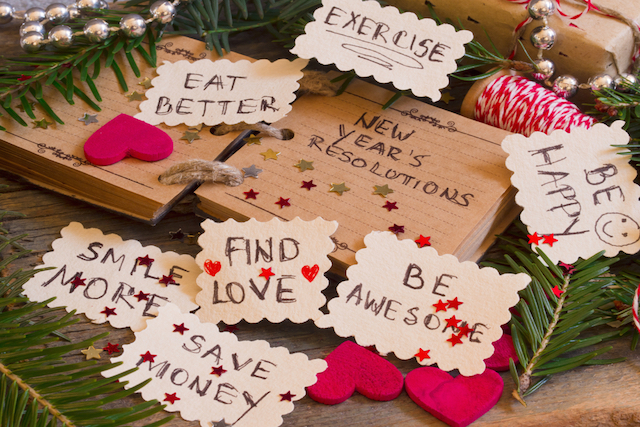
    New Years Resolutions

    “I can affect change by transforming the only thing that I ever had control over in the first place and that is myself.” ~Deepak Chopra

    As the New Year quickly approaches, many of us spend time in review and reflection of the past year’s events and initiate strategic planning for the upcoming year.

    We create and contemplate lists of resolutions, often featuring some of the same goals from the previous year. But we convince ourselves that this is going to be the year for change and transformation.

    So, on January 1st, we arise, excited and committed to our new or repeated goals of exercising regularly, eating healthy, waking up earlier, taking a new class, searching for a new job and career, saving money, releasing bad habits, and the list goes on and on.

    Yet, by Martin Luther King Jr. Day, the thrill and fervor have dwindled, and by mid-year our resolutions have fallen by the wayside—and our lives look exactly as they did the previous year.

    For several years, I was painfully stuck in my own life. I desperately sought change, but did not know how to transition myself out of a city that had been home for eighteen years.

    Although I decided each year that this would be my last year living in New York and that I would find my purpose and calling, each year I found myself renewing my lease and still selling real estate.

    I became increasingly dissatisfied with my life, constantly yearning for the things and people I thought would make me happy.

    But, nearly four years ago, I made the most important decision of my life: to authentically grow and change myself and my life from the inside out.

    Once I began the internal work to create peace and change within myself, through a self-taught meditation and gratitude practice, the external landscape of my life began to slowly change.

    I am now happily living on a paradise island and doing work that fulfills my heart, my life, and my purpose.

    Why Resolutions Don’t Work and Intentions Do

    Wouldn’t it be great if writing our resolutions also gave us the power, discipline, and determination to achieve our goals? Well, unfortunately it doesn’t. Our commitment to our resolutions can fade as quickly as the ink fades from the paper.

    Resolutions do not work for us because more often than not, they include making changes to behavior and objects that exist outside of us. Until we change what’s on the inside, we cannot change what’s on the outside.

    Eventually, we will go back to making the same choices, whether consciously or unconsciously. As the late, sage spiritual teacher, Dr. Wayne Dyer often quoted, “When you squeeze an orange you get orange juice because that’s what’s inside of you.”

    If there’s anger, fear, low self-worth, jealousy, resentment, or other negative beliefs inside of us, even if we attempt to change the skin to our fruit, shine and polish it, or plant and grow it in a different location, what comes out of will still be what’s on the inside.

    A resolution will never create a lasting transformation if we don’t change the root and inside of our fruit (our heart).

    Even the word itself, “resolution,” implies “a firm decision to do or not do something, to be absolutely resolute.” This allows no fluidity or flexibility.

    When we lovingly embrace and accept ourselves, focus our attention on what we want instead of what we don’t want, and set fluid intentions for the New Year, we are more likely to naturally flow toward choices that are aligned with our goals and achieve our desired results.

    8 Steps To Create Real and Lasting Change

    1. Love and accept yourself.

    Change doesn’t come by berating, judging, and criticizing ourselves; it comes from lovingly accepting the things we cannot change and growing each day to change the things we can.

    This does not mean we cannot improve. It means that we are lovable where we are. Wherever we’re starting from is the perfect starting place. Practicing self-love is paramount to creating transformational shifts in our lives.

    Be kind, patient, gentle, and compassionate with yourself. Treat yourself as you would a two-year-old child.

    I used and continue to repeat this powerful affirmation daily:

     “I deeply and completely love and approve of myself. I accept the things I cannot change and grow to change the things I can.”

    Whenever I feel fear, doubt, insecurity, or anxiety, I repeat this over and over silently in my mind and it engenders the most calming effect over me.

     2. Practice self-awareness.

    If we are not aware of our thoughts, feelings, emotions, beliefs, likes, dislikes, or fears, then we are missing the starting place for change.

    Consider spending time in quiet meditation and reflection, asking yourself, “What are my deepest fears and insecurities? Who am I still angry with and whom do I need to forgive? Whose approval am I seeking? Who will I disappoint if I change or succeed? What do I see and feel when I look in the mirror? And where did I learn it?”

    Being fully aware of who we are and what we believe will help us end self-sabotage, make clearer choices, and create change in the present and future. Put on some calming music, light some candles, and bring a journal to your meditation. Write honestly and fluidly. Don’t think too much. Allow the pen to be the speaker of your subconscious.

    3. Change old, negative beliefs into new, empowering beliefs.

    Many of us hold unconscious, negative beliefs that we learned as children from our parents, grandparents, teachers, leaders, cultural and religious institutions, or the media.

    Our actions stem from our beliefs. If our current belief is “I am too old and boring to find happiness,” then our brain will guide us, whether consciously or unconsciously, to find evidence that supports this belief, and our choices will reinforce it.

    We can change this belief by first creating an affirmation that reflects the new belief we want to adopt, such as “I am youthful, healthy, and full of energy and vitality, and my life is filled with joy and pleasure.”

    Then we can search for evidence in our lives to support this different, positive belief, such as “I went for a run this morning,” “I had fun at a party last week,” “I enjoy going to the movies and museums.”

    Additionally, we can make a conscious choice to search for activities and experiences that align with our new belief, such as electing to spend time with friends that inspire and uplift us, taking up a new class or hobby, joining a club or organization, or volunteering with children.

    Through our focused attention, and with time and practice, our new belief becomes embedded into our subconscious minds, and we begin to search for people, opportunities, and experiences that match it.

    4. Focus on what you want, not what you don’t want. 

    I recognized that I was creating my own unhappiness by focusing on the negative. The moment I stopped complaining and focusing on the things I didn’t like about living in New York City, things began to dramatically shift for me.

    By letting go of my own resistance and focusing instead on the important things I wanted to create, a new career and to live by the ocean, I was able to focus on the steps necessary to create that life.

    If we change our mindset, from moving away from something to moving toward something, our thoughts begin to shift and then our actions begin to shift. Then we make choices that align with our new desires. What we give our attention to will always expand.

    5. Practice gratitude.

    Gratitude is the gateway to creating peace and happiness in our lives. It is the starting point to creating change. A grateful heart is a loving heart, which draws more love into our lives.

    I started a gratitude practice four years ago and it changed my mindset completely. I think more loving, positive thoughts, which in turn, create more loving and positive experiences.

    There is always something to be grateful for. Simply writing five to ten things you’re grateful for daily will begin to shift your mindset and move you toward the changes you’re seeking.

    6. Set realistic, achievable goals and take actionable steps.

    Sometimes we seek change so desperately that we set huge goals that we can’t achieve quickly and are left disappointed. But starting with a small goal and growing into a larger goal can often create a more lasting, impactful change.

    Be honest with yourself and set a goal that resonates within you and seems achievable. For instance, maybe start with half of your weight loss goals for the year of 2016. Or save up a portion of the money you would like saved by the year’s end. Maybe plan to have your business plan completed rather than the entire business up and running within a year.

    Rise each day committed to taking an actionable step toward your goals and intentions. It doesn’t matter how small or big the step. Just take a step. It is the series of small steps that create our big steps.

    7. Never say never.

    We set resolutions such as, “I am giving up chocolate,” or “I’m never shopping again.” These statements all start from focusing on the negative of one’s behavior rather than the positive behavior that one hopes to create.

    Furthermore, when we make declarations and commitments like “never” or “forever,” we are more likely to fall short of our goals and expectations. This leaves no room for balance and flexibility.

    Giving up the things we love and enjoy is punishment. Why give up entirely the things we enjoy and bring us pleasure if it’s not harmful to others or ourselves?

    I eat a small portion of chocolate almost every day. Chocolate delights me and I deserve to be delighted. Giving it up entirely will feel like punishing myself. Having a small portion and a balanced diet and exercise allows me to enjoy it guilt-free.

    8. Meditate and visualize.

    For nearly a year, I mediated and visualized myself living by the ocean. I went to sleep with the sounds of the ocean and created a vision board with images of the sea. With consistent focus on my intentions and desires, and taking actionable steps toward my goals, I am now living part-time on a beautiful island .

    When we keep our intentions as our focus and take action from a place of gratitude, we open ourselves up to the people and opportunities to bring us to the change and intentions we desire.

    And lastly, believe in possibilities. Belief alone doesn’t make things happen, but magic unfolds in our lives when we believe in a possibility and work toward it.

    Wishing you much success for a happy, healthy, and prosperous transformation in the New Year!

    New Year’s Resolutions image via Shutterstock

  • Rethinking Resolutions: One Powerful Intention for the Year Ahead

    Rethinking Resolutions: One Powerful Intention for the Year Ahead

    Man with Raised Arms

    “When we are mindful, deeply in touch with the present moment, our understanding of what is going on deepens, and we begin to be filled with acceptance, joy, peace, and love.” ~Thich Nhat Hanh

    In January, what I desire most is to slow down.

    My heart wants to use the New Year as a time to reflect on the year that has passed by—what felt right, what didn’t feel right, and areas of potential growth. And my mind wants to use the New Year as an opportunity to look ahead and discover the ways in which I can improve myself moving forward, based on insights that I gained looking back.

    In the past, many of my New Year’s resolutions involved behavioral changes that I knew would be beneficial—eating better, exercising more, writing more, waking up earlier. But I often found myself in a mental tug of war with my resolutions.

    I struggled with the future mindset that inevitably comes with setting goals. I found myself striving, wanting, sometimes forcing—the very opposite of mindfulness.

    I haven’t quite found the delicate balance of accepting myself and my present moment while simultaneously working toward future goals.

    How do I accept myself and the present moment as is if I am in a mindset of wanting different for myself? How do I find the balance between tuning into my body and heart and meeting ever-changing needs, and staying consistent with the behaviors I have determined I need to bring into my life?

    I am sure there is an evolved state where self-acceptance and self-improvement can live harmoniously, but I have not yet discovered this state of balance. And that is okay. We are all a work in progress, discovering and starting over every day.

    So this year, I am choosing differently for myself. Instead of a slew of resolutions, I am setting an intention. My intention is to live consciously and compassionately in each moment, whatever that moment may bring. 

    This means listening deeply to myself.

    This means:

    • Resting if I am tired.
    • Moving when my body needs to move.
    • Nourishing myself when I am hungry.
    • Stopping when I am full.
    • Silencing my inner critic.
    • Acting with kindness, toward myself and others.

    And the list could go on and on.

    We may not always be able to meet our needs immediately as they arise, but we can still tune into the messages that our body, mind, and spirit send to us, and honor those. This is the blessing of self-care.

    Cultivating compassionate awareness and making choices accordingly feels so much more freeing than a resolution or a goal. I am free to call forth whatever feels right.

    And most importantly, from this place of consciousness, we can meet each other with true kindness. We can connect with strangers and loved ones with an open heart. We can allow generosity and patience.

    We can be with the people and experiences of our lives in a meaningful, present manner.

    But how do we learn how to listen to ourselves in this way? We are so used to staying in our heads and our thoughts, disconnected from the soul of our internal and external experiences. Here are some possible ways to connect with ourselves more deeply in the new year.

    Not all of these tools might be for you, or maybe you might discover your own. Each of us has to walk our path in the way that feels most comfortable.

    1. Slow down.

    For some, this can feel terrifying! We are used to maintaining a rushed pace, often to distract ourselves or for fear of missing out. Play close attention to when you are moving too fast, or are too busy.

    Consider asking yourself whether there is something you are avoiding in your busyness. Say “No” to activities that aren’t necessary or meaningful to you. Choose consciously to block out time on your schedule for rest.

    Create buffers between activities so you are not rushing, and allow yourself time to transition.

    2. Discover quiet.

    The constant noises of our world—people talking, music playing, kids asking, technology beeping—can be loud and intrusive. The voices in our heads—our constant commentary—can be deafening. Turn the volume down, or better yet, switch to silent mode, and allow yourself to just be.

    This is when you can start to become aware of the forces that operate within you. This is when you can feel the beating of your heart, or the sensation of your breath. This is when you can feel how emotions, desires, and aversions come and go like the tide of the ocean waves.

    3. Experiment with meditation.

    Once you feel comfortable with disconnecting, experiment with how meditation feels. Meditation is a way to observe all of yourself in an intimate way. You might start with a brief sitting practice where you focus on the sensation of breathing for a few minutes.

    Don’t put pressure on yourself to meditate in a certain way. Don’t make it another project or goal that you can fail at. Meditation is called a practice for a reason. Find your entry point and build from there.

     4. Allow self-compassion.

    Being with yourself won’t be very fun if you are always criticizing yourself. Make a pact to only use kind, loving words with yourself, the way you would with a child or a favorite friend. Compassion for yourself improves well-being, and is the foundation from which compassion for others can grow.

    5. Live mindfully.

    Practice immersing yourself in your experiences, in a curious, non-judgmental manner. There are several ways to experiment with mindfulness in your life. Try using all of your senses to consciously connect to a mundane experience.

    For example, while washing the dishes, really listen to the sound of the water, feel the slippery soapiness of the dishes, inhale the scent of dish soap. Using our senses to deepen our experience prevents us from ruminating about an argument with our boss or worrying about tomorrow’s crazy schedule.

    Alternatively, if you find yourself waiting, allow yourself to just wait. Put your device of choice away and focus on your breath, or the sensory experience of being where you are. This moment is the only moment that truly exists. Mindfulness allows us to truly live that moment, deeply and intentionally.

    Man with raised arms image via Shutterstock

  • Create Solutions, Not Resolutions

    Create Solutions, Not Resolutions

    New Day

    “What lies behind us and what lies before us are tiny matters compared to what lies within us.” ~Ralph Waldo Emerson

    With the New Year approaching, resolutions are on everyone’s mind.

    I’ve never liked the word “resolution.” As defined in the dictionary, resolution means “a firm decision to do or not do something,” and anyone who’s ever done, well, anything knows that life rarely works like that.

    I prefer to think of my January decisions as New Year’s solutions. Defined in the dictionary as “a means of solving a problem or dealing with a difficult situation,” solutions are useful and practical. Thinking about them now helps us find peace in whatever may happen in the year ahead.

    The best solution I can think of, and one that is especially helpful after the excess of the holiday season, is letting go.

    I often hear stories from people who decide at the beginning of a year that this will be the one when they’ll be able to fix their bodies.

    They want to “fix” themselves; they want to look like their high school pictures or their super fit best friends or whoever’s on the cover of Vogue.

    My feedback for all who are constricted by a negative diet mentality: let go.

    This seems counterintuitive, ironic, cruel, and maybe even ridiculous. You’ve just connected with a powerful desire about what you want your life to be like, and now I’m going to tell you that you have to move forward completely unattached to the outcome of whether you’ll get the life you want and will now be working toward.

    The crux of this philosophy is that in order to get that which we want, we must let go of our need and desire for it.

    This may sound impossible, unattainable, and completely contradictory; however, this is where freedom lies.

    I know firsthand that letting go is the path to freedom and joy. My struggle with weight started when I was a toddler. When I got older, I thought that if I could only lose the extra weight, I would be happy.

    I did lose the weight—a hundred pounds—between my twenty-fourth and twenty-fifth birthdays. I had finally achieved what I thought was my goal; I was thin, so I should be happy, right?

    I was more miserable than ever. I was so worried about gaining the weight back, so scared that I might relapse, that I couldn’t enjoy my newfound health.

    I was stuck living in fear that the future would not be what I wanted, that I would lose control, that my hard work would be for naught.

    It was only when I figured out how to live in the present, how to be focus on the now and not concern myself with worrying about things that had not even yet happened, that I was able to be happy.

    After learning to do that, not only was I content for the first time in my life, but I also was able to keep the weight off without worrying about it. I have kept that a hundred pounds off for twenty-four years.

    We achieve the life we desire when we begin living for the moment, in the moment, and because of the moment. Finding happiness in this New Year will not be an outcome or a result. It is doing; it is being.

    How can your foster this way of being in your life? It begins with looking at those things we desire most and finding the bliss in working toward them in the present—not in achieving them in the future.

    Achievement is still the goal, but ironically, you only get there by letting go of the need for it. (more…)

  • Why We Often Fail with Goals and Resolutions

    Why We Often Fail with Goals and Resolutions

    “The future is completely open, and we are writing it moment to moment.” ~Pema Chodron

    Statistically, a lot of people have given up on their resolutions by now. The definition of a resolution is “a firm decision to do or not to do something.”

    When I examine the firm decisions I’ve made, I can’t help but notice that we all have the same lists. Why is that?

    Could it be that the same media, the same books, and the same friends have written all of our lists? I’m not making a value judgment of these shared desires—I just find it interesting that we all seem to feel the need to include so many of them.

    So now I find myself questioning where my resolutions and intentions are based. Did they come from some other source, or do they reflect my heart’s desires?

    I hadn’t actually made any resolutions for 2011, but for the sake of exploring this idea, I got out a notebook and pen and began writing.

    I looked down and saw—yes, you guessed it—that I had written what appeared to be the universal generic resolution list: exercise more, eat more healthy foods, meditate daily, lose weight, call my mother, etc., etc., etc..

    And although all these desires are good—in fact, they are wonderful and I truly would like them in my life—I was surprised that I felt no real energy reading the list.

    It just felt like another list among hundreds, written and then forgotten. Of course I would have issues keeping these decisions. They held no passion, no energy for me at this moment. They were just lots of words on a piece of paper. (more…)

  • 15 Ways to Change the World

    15 Ways to Change the World

    Heal the World

    “When I do good, I feel good; when I do bad, I feel bad and that is my religion.” ~Abraham Lincoln

    It’s no secret that we live in a world that’s obsessed with wealth, fame, and celebrities. Some call it the “age of narcissism.” I’m not sure I want to label or judge our current circumstances. Instead, like Gandhi suggests, I’ll put my focus on being the change I wish to see in the world.

    I’m planning to mix things up a bit for 2010, and I invite you to do the same. Instead of creating New Year’s Resolutions that are all about me, I’m going to make mine all about others. Instead of trying to increase my own success, I’m going to set others up to succeed.

    My personal idea was inspired by CNN’s “Hero of the Year 2009” given to one ordinary person making an extraordinary difference. CNN’s panel chose Efren Penaflorida as the winner for 2009. He received $100,000 for his organization. You can read about all 10 nominees here.

    Being an everyday hero does far more for you than you may imagine. Some benefits of volunteering include: (more…)