Tag: resist

  • Surrendering Isn’t Giving Up: Why We Need to Accept What’s Happened

    Surrendering Isn’t Giving Up: Why We Need to Accept What’s Happened

    “The first step toward change is awareness. The second step is acceptance.” ~Nathaniel Branden

    I remember the last time I saw him before my world crumbled. I held up my hand with the ASL sign for “I love you” through the window to him as he mouthed the words back and got in his car to leave for work. I found out an hour later that he—my fiancé—had begun cheating on me a month before he had proposed.

    He never fought for me. Even during the course of our relationship, when he would run away due to his insecurities, I would perpetually be the one fixing everything. That should have been a sign. But even as I stood before him and confronted him about his infidelities, telling him we could work it out, his pride was too wild. He didn’t fight for me.

    I am an impulsive and drastic person when I have been hurt. I have a tendency to pick up and move when things have gotten too emotionally rough, looking for the magic pill to happiness in the new places, faces, and experiences. It works for a while…until it doesn’t.

    So I left again. I went from a home-owning, engaged woman in New England to a renting, single, almost middle-aged chick back in my hometown of Los Angeles within three weeks.

    Then everyone around me waited for the other shoe to drop; they watched me closely and expected me to lose it in the middle of dinner, or start crying while watching TV. But nothing of the sort happened, and that’s because I was completely dissociated from the environment around me. I had not accepted a thing that had occurred.

    A month later, I got COVID. I remember in the midst of purging my guts out, I asked the universe to either end it for me or make me better. I was at the mercy of the cosmos, and it was in this total surrender that I began accepting where I was and how I got there.

    In full surrender mode, acceptance has a strange way of finding you without you seeking it out. I began accepting that my relationship was over. I began accepting that I wasn’t, in fact, a failure because I was back in my hometown. I began accepting that I was going to have to pick up what was left of me off of the bathroom floor and start anew.

    More importantly, along with acceptance came personal accountability. I made the choice to end my relationship when push came to shove. I made the choice to sell my house and move across the country. And I was making the choice to pick said shell of a human off the bathroom floor, accept who and where I was at that moment, and move forward.

    I think our natural instinct is to think in circles instead of accepting. We’ll obsess over why something happened, try to find ways to undo it, and exhaust ourselves trying to control the uncontrollable so we don’t have to admit defeat.

    We mistakenly believe acceptance means we can’t feel how we feel—maybe angry or disappointed—or that we’ve given up. Worst of all, we assume acceptance means what happened was okay.

    But that’s not what acceptance means. It simply means you acknowledge reality for what it is and surrender instead of resisting. You lost your teaching tenure because of financial cuts? It’s not okay, but it happened. Your partner left you for someone twenty years younger? Still not okay, but again, it still happened. Your best friend got diagnosed with an incurable disease and is suffering? Nowhere near okay, but it happened.

    Understanding and surrendering to the situation because it happened does not mean that you have to be all right with it or do nothing about it. But at this current moment, what has transpired is already past, and therefore, any move you make is just future planning and action. You cannot change the past; you can merely accept it and go from here.

    As the days continued and my body got stronger, my mind wanted to retreat again. I had to continuously remind myself that I had made these choices, and even though my brain didn’t want to acknowledge that it could do something to hurt itself, I repeatedly told it the situation to get it to finally sink in.

    I sat in my desk chair one day and looked around my new apartment. Even though I had moved most of my stuff with me, nothing seemed familiar.

    I realized that for the months of being in this new space, I still felt like I was just visiting and waiting to go home to my ex-fiancé. Trying to grapple with my new reality, I simply began talking to myself out loud:

    “This is your apartment.”

    “You live in Los Angeles.”

    “You moved here two months ago.”

    “You broke up with so-and-so, and the relationship is over.”

    “You are home.”

    I spoke to myself out loud for about twenty minutes, repeating these phrases over and over with different intonations, until I felt them really settle into the cracks of my cerebral cortex. Since that day, I have not had to do it again, nor have I felt dissociated from my current reality. I was finally able to entirely accept the setting of my life and truly initiate the changes I desired.

    Is it okay that my ex cheated on me? Absolutely not. But it happened. And I can say that now without cringing at the thought. Is it okay that I allowed him to make me feel so unloved that my trauma response flung me back to the west coast? Nope, but at least I’m aware of it and can do things to control my own reactions from here on out.

    All of this means that I am in control now, and it’s purely through taking accountability via acceptance of the situation. Surrendering on the bathroom floor during my bout with COVID may have initiated the wheels of acceptance, but it is continued mindfulness and submission to the present moment that actually ensures that acceptance.

    Whatever happened to you is not okay, but it’s okay to accept it. Acceptance doesn’t mean you’re weak; it means the opposite: You are strong enough to face the reality of the situation you’re currently in.

    Acceptance doesn’t mean you forgive and forget what befell you, but rather that you understand where you are, how you got there, and that you now have the control to make a change.

    And surrendering doesn’t mean you’ve given up. In actuality, it exemplifies that you’re willing to roll with the punches, trust something outside of yourself, pick yourself up off of the bathroom floor, and move forward.
  • The Childhood Wounds We All Carry and How to Heal Our Pain

    The Childhood Wounds We All Carry and How to Heal Our Pain

    “As traumatized children, we always dreamed that someone would come and save us. We never dreamed that it would, in fact, be ourselves as adults.” ~Alice Little

    Like most people, I used to run away from my pain.

    I did it in lots of different and creative ways.

    I would starve myself and only focus on what I could and couldn’t eat based on calories.

    I would make bad choices for myself and then struggle with the consequences, not realizing that I had made any choice at all. It all just seemed like bad luck. Really bad luck.

    Or I would stay in unhealthy relationships of any kind and endure the stress that was causing. Again, I didn’t see what I was contributing or how I was not only keeping my pain going but actually adding to it.

    These are just a few examples of the many ways I ran away from my pain. The real pain. The one below it all. The one that started it all. The core wound.

    The wound of unworthiness and unlovability.

    The wound that stems from my childhood.

    And my parents’ childhoods.

    And their parents’ childhoods.

    But this is not a piece on how it all got started or who is to blame.

    No. This is about me wanting to share how I got rid of my pain.

    Because discovering how to do that changed my life in ways I never thought possible.

    It is something I would love for you to experience too because life can be beautiful no matter what has happened in the past. I don’t want you to miss out on this opportunity. Especially because I know it is possible for you too.

    Hands on the table, I am a psychotherapist and I have been for almost ten years. I also train and supervise other psychotherapists, so I should know what I’m talking about.

    But, let me fill you in on this: There are plenty of professionals who haven’t done ‘the work’ on themselves. I know, I’ve met them.

    And I have met hundreds of people who don’t have any qualifications, but they have done the work on themselves. I know, I’ve felt them.

    Doing the work, in the shortest possible summary, is all about facing your pain. It’s when you stop—or when you’re forced to stop, which is so often the case—and you’re done with running away from it.

    It’s when you finally give up.

    Sounds like a bad thing, right? But it isn’t.

    To heal, you have to see the pain.

    We all think we see it or feel it or know it, but we don’t.

    We know what it feels like to run away from it and the pain and stress that causes. The constant anxiety, the pressure, the breathlessness, the numbness. That’s what we know.

    But that’s not the pain, not the pain of the core wound. Those are the symptoms of not dealing with the wound, of not healing it because you’re too afraid to even look.

    It’s fear that stops us from healing.

    It’s not the process of healing itself that scares us; it’s what we imagine healing means. And it usually is nothing like we imagine it to be!

    Healing just means facing the pain.

    Let me try to make it more practical:

    Do you remember a time when you were very little, maybe three or five, or maybe a little older?

    Do you remember, in your body, how it felt to be misunderstood? How to want something and then not get it? How to be punished for something you didn’t do? How to be shouted at for no reason at all just because someone else was stressed out and couldn’t control themselves?

    Do you remember how that felt?

    I do.

    That’s the origin. All those little incidents when we were too young to understand what was going on, but we made it mean something negative about ourselves.

    Because what was reflected back to us by the world, by the people we loved the most, was that something was wrong with us, that in some way we were flawed, wrong, or bad.

    Our brains were too young to take a different perspective, to defend ourselves from unfair judgments and punishments, and so we took it all in.

    And believing something horrible about yourself that isn’t true hurts. Believing that you’re not good enough hurts. Believing that you’re unlovable hurts.

    It also scares us, and so we no longer feel safe.

    Safe to be ourselves. Safe to love. Safe to be loved.

    We start to hide from ourselves and our pain. We start to hide our truth and inhibit the great humans that we actually are.

    Because in those moments, those moments of misunderstanding, we receive the wrong message—that we are not worthy of being heard, trusted, held, or loved.

    We are pushed away, through being ignored, threatened, or punished.

    And then we start doing that to ourselves.

    We want or need something—just like we needed it then when it was inconvenient to a parent who shouted at us and invalidated what we wanted or needed—and we deny it or minimize it.

    We want to say “enough” and set a boundary with someone—just like we wanted to when we were little but were told we didn’t know what was good for us—but we don’t do it.

    We want to choose what we like or are excited by—just like we tried to when we were young but were told we were being stupid, childish, or silly—but then go for the boring, reasonable option instead.

    We carry the pain on.

    We don’t stop to ask ourselves whether that’s actually what we should be doing.

    We try to avoid re-experiencing the pain from our childhood by treating ourselves in exactly the same ways as we were treated back then.

    We don’t realize that we’re keeping that usually unconscious pattern going.

    The most obvious example I can give you from my life is that I didn’t grow up surrounded by emotionally available adults. So obviously I didn’t become one either. I wasn’t emotionally available to myself, and I didn’t choose emotionally available partners in my relationships.

    As a result, I got to relive my childhood experiences over and over again while not understanding why I kept feeling so depressed, unloved, and worthless.

    I kept the pain going by being closed off to how I was feeling and by choosing partners who would shame, reject, or ignore me and my feelings the same way my parents had.

    But I broke that cycle.

    I broke it when I faced my pain.

    I broke it when I stayed within myself when I felt something, no matter what it was.

    When I felt disappointed that I didn’t get the grade I wanted on an important university assignment, I stayed with that disappointment.

    I didn’t talk myself out of it. I didn’t talk down to myself and tell myself what a useless waste of space I was. I didn’t pity myself or blame my lecturer. I didn’t numb myself by binge-watching Netflix and eating chocolate.

    No, I stayed with the disappointment.

    It was like I was sitting opposite my disappointed three-year-old self, and I stayed with her.

    I didn’t shout, mock her, invalidate her, leave her, or make her wrong for feeling how she was feeling.

    I stayed with her. I saw her disappointment. I saw her pain. I knew what she was making it mean and I stayed with her.

    I didn’t push her away. I didn’t push the pain away.

    And guess what happened?

    It started to speak to me! And it made sense!

    It wasn’t scary or weird or awkward or crazy! It made complete sense.

    And it needed me to hear it, to understand it, and to parent it.

    Just like I parent my children.

    “Of course, you feel disappointed. You have put so much work into this, and you didn’t get the result you wanted. I get it. I’m here to listen to you. I want to understand you.”

    Do you know what that does? It calms you down. Truly.

    It calms you down. It’s such a relief!

    Finally, someone wants to listen! Finally, someone doesn’t turn away from me like I am the biggest threat they have ever encountered. Finally, someone looks at me with understanding and compassion.

    This is what I do with all of my feelings.

    If there is jealousy, I am there for it. I’m not shaming it, not judging it—I’m just here to listen, to soothe, to understand, and to act on it if it feels like that’s what it needs.

    So I turn toward the pain, the feeling; I try to understand what it’s all about and see if there is anything it needs from me, something more practical.

    Does my disappointment need me to ask my lecturer for feedback to improve my work for the next assessment?

    Does my jealousy need me to remind myself how worthy and lovable I am? Or does it need me to choose something beautiful for me to wear because I’ve not really paid that much attention to my appearance recently? Or does it need to speak to my partner because he’s much friendlier with other women than he is with me?

    A lot of the time the pain tries to alert us to doing something we need to do for ourselves.

    By not facing the pain, by not tending to it, we can’t know what it is that it needs us to do—and it’s always something that’s good for us.

    And so we go without what we want and need, and the pain only grows bigger and louder like the tantruming toddler that is only trying to express herself in an attempt to be heard, held, soothed, and taken care of by their parent.

    It’s time to stop doing that to ourselves.

    I did many years ago, and I feel like a different person. The way I live my life is different. The way I feel about myself is different. I no longer go without what I want and need.

    That can’t happen as long as you use up all your energy to run away from the pain.

    The pain is your invitation to do the healing work. It invites you to stay and listen, to find out what’s really going on below all distractions and symptoms.

    What is the feeling that needs to be felt?

    What is the pain that needs to be witnessed and understood?

    And what does it need you to do for it so the core wound can finally heal?

    You have the power to heal it. You are the only one you need to heal it. But you have got to stay and learn to be there for it, learn to be there for yourself.

    That’s it.

    Unlike other people, you don’t walk away. You don’t say no to yourself. You don’t go against yourself and make yourself wrong.

    You stay. You feel it. You give it what it needs.

    And that’s when it heals.

  • How Life’s Daily Challenges Can Actually Be Gifts in Disguise

    How Life’s Daily Challenges Can Actually Be Gifts in Disguise

    “Smile at your patterns.” ~Tsoknyi Rinpoche

    Partway through Eckhart Tolle’s Conscious Manifestation course, I furiously jotted down his teachings about challenges and obstacles to remind myself that they’re not only a normal part of the human experience but necessary for spiritual growth. “Yes!!!!” I wrote in agreement.

    When faced with difficulty, the human tendency is to react and resist, and when we do this, we add suffering to an already difficult situation. This tendency is reflexive within me, and my mindfulness practice has enabled me to either observe the cascading habit pattern as it unfolds, which disentangles me from its snare, or to gently accept what is happening and proceed with calm action and a quiet mind.

    When we can practice acceptance and equanimity, when we can say, “Okay, this is my present moment experience, and I can allow it because it’s already here,” we soften and open in the most tender way. And with this opening, we can receive a bounty of lessons and wisdom that our obstinance so often obscures.

    A few days after listening to Eckhart’s talk, I had to see several doctors and get lab work done to address symptoms I’d been experiencing. The entire week was pockmarked with small difficulties.

    First, the doctor’s office lost my lab sample, so I had to go back and give another one. Then the lab work process got delayed, and in an attempt to access my results, I spent two hours getting transferred between multiple staff members who ultimately said they couldn’t help me.

    At the end of the week, I confronted my last hurdle: I arrived for a follow-up appointment, only to be told that the automated system had canceled it and that the doctor was not available.

    After I explained my situation and expressed my discontent, the medical assistant managed to rebook me with another doctor. I softened, thanked her, and sat down, acutely aware that I’d lost my (spiritual) way.

    With each setback, I was upset and resistant. Like a snake releasing venom, I texted my husband flurries of frustrations, spoke exasperatingly to hospital staff, and felt my body tighten with stress.

    I realized that I only softened to the medical assistant because she told me what I wanted to hear, and within moments, this insight allowed me to look back on the entire series of events with a compassionate and non-judgmental eye. 

    I saw with clarity that in cloying for ease, I only created more difficulty. I saw that I had been behaving as if everything were a threat—like the healthcare system was out to get me—and that the real predator was my own mind. Immediately, I felt an internal release, like a nearly bursting balloon slowly deflating with the prick of a pin. I realized I could stop fighting. I realized that I could choose to surrender.

    After my appointment, I had to go to the lab, and I arrived at what felt like a crowded DMV: people everywhere, red ticket numbers glaring overhead, and a wait that seemed unending. I took a deep breath, pulled a number, and decided that I was going to use the wait—which I now perceived as an opportunity, not a threat—for mindfulness, presence, and spiritual practice.

    I looked around me at all the people. I watched as children caringly pushed their elderly parents in wheelchairs, as a pregnant woman patiently engaged her three children, and as a person laboringly limped to the ticket machine, burdened by a massive leg brace.

    I thought: Everyone is here because they are experiencing some difficulty; everyone has health scares; everyone is taking time out of their days to be here; everyone is waiting.

    I was so touched by the kindness and patience I witnessed. Suddenly, my story became enveloped in everyone’s story. I was them and they were me. I felt a deep kinship—a tenderness that made me feel enveloped in, rather than targeted by, the human experience. 

    As my awareness expanded further and further outside myself, I began connecting with those around me. I told the pregnant woman sitting beside me that I admired her patience, and when she shared that she was fasting for a half day of pregnancy-related lab work, I became even more aware that mindset is a choice.

    I made eye contact with a man whose gentleness I perceived underneath his masked face. We didn’t say anything, but we said everything.

    I kept scanning the room, and I noticed it had transformed from a chaotic, undesirable place, to somewhere I wanted to stay, somewhere I felt deep meaning and connection. Then I noticed that the space did not transform; I simply changed my relationship to it.

    When I left the lab, I was buoyant. I felt energized, connected, and light. I was overwhelmed with the experiential realization that the entire week was a skillfully designed lesson on challenges. I saw what happens when I fight to make them go away, and then I saw what happens when I invite them in, with an open heart and an open mind.

    “Challenges as gifts” left the theoretical world of quotes and concepts and burrowed into my lived experience. It stays there, and reminds me of itself, when I allow it to shine its light.

  • A Life-Changing Insight: You Are Not a Problem to Be Fixed

    A Life-Changing Insight: You Are Not a Problem to Be Fixed

    “I decided that the single most subversive, revolutionary thing I could do was to show up for my life and not be ashamed.” ~Anne Lamott

    I remember one particular clear, cold winter morning as I returned home from a walk. I suddenly realized that I had missed the whole experience.

    The blue, clear sky.

    The lake opening up before me.

    The whisper of the trees that I love so much.

    I was there in body but not embodied. I was totally, completely wrapped up in the thoughts running rampant in my mind. The worries about others, work, the future; about everything I thought I should be doing better and wanted to change about myself… it was exhausting.

    Alive, but not present to my life. Breathing, but my life force was suffocated.

    This was not new. In fact, up until that point I had mostly approached life as something to figure out, tackle, and wrestle to the ground. This included my body, my career, and the people around me. 

    My tentacles of control, far-reaching in pursuit of a better place, said loudly, “What is here now is not acceptable. You are not acceptable.”

    “You can improve. You can figure it out. You can always make it better.”

    But this time, rather than indulging in the content of this particular struggle, I observed the process I was in and realized profoundly that even though the issues of the day changed regularly, the experience of struggle never did.

    And I would continue struggling until I stopped resisting and judging everything and started accepting myself and my life.

    This wasn’t the first time I’d had thoughts like these, but this time there was no “but I still need to change this…” or “I can accept everything except for this thing.” I knew it was 100% or nothing.

    I knew then I only had two choices:

    I could continue to resist reality, which now seemed impossible and exhausting (because it was). Or I could accept myself and the moment and make the best of it.

    “What if there is actually nothing to struggle against? What if I let go of the tug-of-war that I called my life?”

    The choice was before me. The one that comes to people when they have suffered enough and are tired: to put down the arms.

    This doesn’t have to mean accepting unhealthy relationships or situations. It just means we stop living in a constant state of needing things to change in order to accept ourselves and our lives. It means we learn to let things be—and even harder, to let ourselves be.

    Whenever I have a conversation with people who are struggling, I’ve recognized that they have this innate feeling of I should be doing better than this. Or, I should not be feeling like this.

    It might seem obvious that “shoulds” keep us in a contracted position of never-being-enough.

    But I have found that letting them go is not as simple as a quick change of thought.

    It seems like denying ourselves has become the generally accepted and encouraged modus operandi of our culture.

    Denying our feelings.

    Minimizing our pain.

    Hating our body parts.

    This leads to disconnection from the life that is here, the life that is us.

    Self-loathing has become the biggest dis-ease of our time.

    When we are disconnected from who we are in this moment, there is a tension between right here and the idealized self/state.

    This disconnection or gap is a rupture in our life force that presents itself as a physical contraction, a shortness of breath, an inner critic that lashes out harshly and creates a war within. This war contributes to pain, illness, and I’d guess 80% of visits to a medical doctor.

    Even some of the best self-help books promote this gap…

    Don’t think those thoughts.

    Don’t feel those negative feelings.

    Don’t just sit there—you should be doing something to improve yourself and your life

    All of the statements above might seem like wise advice. But we’ve missed the biggest step of all—mending the gap between who we are and who we think we should be so that we don’t feel so disconnected from ourselves.

    Disconnection is the shame that tells you that you’ve got it wrong, that it is not okay to feel or think the way you do in this moment. That you have to beat yourself up so you can improve, be more than you are now, be better.

    That you are a problem to fix.  

    This is the catch-22 of self-help when taken too much like boot camp. Self-help can be helpful, but it can create an antagonistic relationship with our true selves if it doesn’t include a full acceptance of who we are in this moment.

    The belief of “not-enoughness” is at the root of so much physical and emotional pain, and I, for one, have had enough of it.

    What if we allowed ourselves to be, or do, in the knowing that we are okay, that we are doing the best we can, given what we know at this point in time?

    Do you feel the fear-gremlins coming out that tell you that you will lie down on the couch and never get up again? Or perhaps you will never amount to anything or be good enough?

    This is the biggest secret of all: It’s all a lie to keep the consumer culture alive. 

    People who are scared and in scarcity need to consume something outside of themselves to gain fulfillment. But it never really comes because there’s always something new to change or attain.

    It can be so difficult for us humans to accept not only ourselves, but that everything just might be okay in this moment.

    That this feeling is just right. Even if it hurts.

    It’s okay to be right here, right now. Pain is here, and I don’t have to fight it.

    Our relationship with ourselves is the most important relationship we will ever have.

    Because we are truly sacred, no matter how we feel.

    Maybe the only question to ask today is not “What do I need to do to change?” but “How can I love myself, just as I am?”

    Maybe the act of loving ourselves is as simple as taking a breath to regulate our nervous system and come back to the present moment.

    Maybe healing involves not so much changing ourselves but allowing ourselves to be who we are.

    Which is exactly what I did that day when I realized I had missed my whole walk because I was caught up in my mind, worrying about everything I wanted to change. I shifted my focus from the thoughts I was thinking to the feelings in my body. I realized that I was enough in this step, in this breath, and that’s all there is.

    I promise the results of moving into acceptance will feel far better than the shame, disconnection, and cruelty that come from the constant pursuit of self-improvement.

    The truth is…

    You are not a problem to fix.

    You are a human to be held.

    To be held in your own arms and loved into wholeness.

    Take care of your human.

  • Acceptance Is Not Passive; It’s the Path to Peace

    Acceptance Is Not Passive; It’s the Path to Peace

    “The price of our vitality is the sum of all of our fears.” ~David Whyte

    Acceptance by its very nature is imperfect; it’s messy and often unpleasant, while ultimately leading to a place of growth, a sense of freedom, and a life familiar with ease. I know this because I have had a lot of painful acceptance in my life, and it has been crucial to helping me move beyond the stuckness of fear and suffering.

    Years ago, being the natural striving, fun-seeking, achievement-oriented person I was, I ignored the fact that my body felt like a truck had run over it. I pushed, faked, and hid what my body was really feeling… until it all came to a screeching halt.

    Diagnosed with lupus, an autoimmune disease, and a future of chronic pain or worse, I had to give up the impressive job, the active social life, and the self-image that had all propped me up in the world.  And then what was left?

    Instinctively, I wanted to go back to the way things were, to repatch it all back together again.  Fortunately, I inherently felt the impossibility of all of that, and so the work began.

    I started taking a meditation class and then a Buddhist practice, and one day sitting silently, feeling my body breathing, listening inwardly to what was there, the hard, guarding shell around my heart broke.  I had to accept there was no going back to normal, there was only being with what is and opening to where that might lead.

    Acceptance is not resignation. It is not passively giving up. It takes courage and strength.

    I feel it more of a falling inward, dropping into the sensations of what is, recognizing and acknowledging what’s there. A place of empowerment and choice instead of feeling like a victim to chance. It is a beautiful sense of coming home to the body in the present moment, a feeling of wholeness and strength to better face your circumstances, whatever they may be.

    That being said, there were a lot of tears and a lot of pain; in other words, it was messy. A series of small steps, it took a while.

    I had to accept that I could no longer keep up with my carefree, energetic friends as they traveled around the world and partied around the clock.

    I had to accept I would no longer create interesting buildings as an architect or participate in gallery shows as an artist.

    Most difficult of all, I had to accept that I could no longer be the fun-loving, happy person my husband needed—at least not right away.

    I had to accept my life had suddenly taken a new direction and be receptive to the possible changes that this might bring. Receptivity was the key to opening toward inner growth and inner intimacy, as well as a place of gentleness, all new territory for me!

    So what is your experience of acceptance really like? Maybe there is an image or metaphor that best viscerally says “acceptance” to you. To me, it feels like a slow-motion fall into an undercurrent that sweeps me away.

    It can feel quite beautifully poetic as a surrender into what is present, which floods me with a feeling of relief. It is more honest, more pure, less tinged with the shoulds of daily life—as in the pressure to be more productive, to be energetically outgoing, to follow through on all of my perceived responsibilities as a daughter, a wife, a friend.

    Allowing myself to actually be the way I felt, without the weight of someone else’s expectations, was the beginning of moving toward physical and emotional health.

    Rilke writes, “Gravity is like an ocean current that takes hold of even the strangest thing and pulls it toward the earth. We need to patiently trust our heaviness—even a bird must do this before it can fly.”  

    Trusting that the earth will support all of our weight, all of our heaviness, the physical pain and the mental anguish too, brings us to a place of feeling grounded, a place that’s ready to respond with wisdom and compassion, though this does take practice.

    Pulling away from our pain or ignoring a life difficulty is a kind of resistance, a fighting of gravity, and an easy habit that will not heal our difficulties.

    This tiring cycle of the push and pull of resistance makes everything difficult and takes a lot of energy, draining you of anything positive. It’s exhaustive like continuously having a really bad day.

    Resisting that all aspects of my life had changed made the changes much more emotionally painful.  Stuck in this place of denial, I was unable to connect in the ways that nurture deep friendships and that create authentic appreciation for life’s small pleasures.

    Recognizing the inner discomfort, it’s worth asking, “What am I resisting?” And even better “Do I want to be in acceptance mode or resistance drain?” And finally, “What is it that I need to accept?”

    We all hold onto some kind of emotional pain by pushing it away in an effort not to be hurt, which ultimately and ironically keeps this pain very close. But what would it take to let it go? What is it that wants to be acknowledged and ultimately accepted?

    And this pain, whether physical or emotional, leads to tight muscles and tight mental habits, a pattern of tenseness, a pattern of protectiveness that sucks the joy and spontaneity out of your life. Again, not much fun, not much pleasure. Trying harder and harder, like pulling on a necklace or shoestring that is knotted, will only make things worse.

    Embracing life, not just the edited parts of it but all of it, is a place of wisdom and grace. I can find this place sometimes in movement or in meditation, and often these are the same, because as quiet as your body/mind can get in meditation, at all times it is gently moving with every breath. This is the movement that grounds your learning into the very tissues and neurons that make you tick.

    If you can find your learning in the body, feel it in the body, you will not forget your experience or the glimpses of insight just discovered. The dancer Augusta Moore once told me “The breath is the music in the body.” I love this—the dance of life unfolding with each breath.

    So why do we try to hold on so tightly to what was, even though it creates nothing but frustration and pain?

    Once we find the means, whatever this might look like, it feels so damn good to drop the efforting, to accept, to fall apart a little, or perhaps a lot, and then move on, move forward with our new reality and all it has to offer. It can feel so good to allow this deep relaxing in the body, find that place of peace and feeling of liberation.

    And embracing life is what it is all about. We want to respond whole-heartedly, not with dullness or avoidance or anger. The danger lies in blocking too much of our self, guarding against the pain, the fears, or sense of being trapped in denial.

    Staying true to our entire experience allows us to loosen our responses, drop the guard, and be in a place of acceptance. As David Whyte writes, “The price of our vitality is the sum of all of our fears.”

    I have heard it said, and reluctantly have felt this truth, that the body cannot lie. So I invite you to find a quiet moment and listen deeply to what it is your body really wants to tell you, the inner wisdom it wants to share in healing; whether it’s an illness that has taken you down or a broken relationship that feels like it has left you stranded, your body/mind knows how to heal, and acceptance is the key to opening that door.

    With an open heart and a willing mind, really hear what your strongest ally, your body, wants you to know: that this partnership, between the mind and the body is a strong one, it is a relationship that will guide the winds of change with grace and ease. Acceptance helped me learn to listen within, and then trust what I heard, trust just what my personal world was asking me to respond to, and step peacefully forward into that vibrant flow of life.  

  • 4 Ways We Resist Life and Cause Ourselves Pain (And How to Stop)

    4 Ways We Resist Life and Cause Ourselves Pain (And How to Stop)

    Peaceful woman

    “When fear wakes up inside, and there is no place to run away or hide from it, consider it a gift. In all the glory of that discomfort, know there is refuge in surrender.” ~Erin Lanahan

    When I was a freshman in college, I had a wise English teacher. Through everything he taught, he would always circle back to the theme that “life is a constant cycle of tension and release.”

    I heard him say these words over and over, but I didn’t really listen. I wasn’t ready to yet. Still, this simple message always stuck in my memory.

    I used to suffer from anxiety, and trying to predict and control my environment seemed like a viable way to eliminate most, if not all, of what made me anxious.

    I used to experience a great deal of anxiety about being accepted by others. For as long as I can remember, I’ve harbored this painful idea that I am distinctly different from everyone else; and I felt like my differences would hold me back from truly connecting with others and gaining their acceptance.

    Though my anxiety stemmed from the fear of not being accepted, I didn’t realize this consciously. When I was in a bout of anxiety, I felt fearful about everything.

    Since I didn’t feel safe in the world, I tried to manipulate my environment in an attempt to reduce my pain, but the world wasn’t the problem. I wish I had known then that there was nothing I could alter outside of myself that would heal something inside, but I naively tried to do just that.

    In order to keep my anxiety at bay, I would make sure I always had some form of an escape route so I could temporarily slip away from the pain of being myself. I used distraction in the form of television, surfing the Internet, or reading to distance myself from my anxious thoughts.

    I would even get neurotic about things like the amount of light in the room I was in, or needing to be in open spaces. I thought the conditions of my environment dictated my safety.

    Because of this, I would avoid situations where I could not take the steps I wanted to control my environment. Because I developed such strict standards for deeming my environment “safe,” I missed out on a lot.

    I use to avoid social situations. Being around others made the critical voices in my head much louder. I would interpret other people’s silence as disapproval, and I hated having nothing to distract me from this pain. The more I avoided social situations, the harder it became to cope with being around others. Even just going to class could trigger a panic attack.

    Attempting to control my life and to eliminate all painful situations did not cure my anxiety. If anything, it made it worse. So often the dread of doing things I didn’t want to do was ten times more painful than the actual task itself, but I was too caught up in my suffering to realize this.

    The more I tried to push out the bad things in my life, the more I reinforced that they were intolerable, and the worse things began to seem. Slowly, this avoidance trap made my life smaller and smaller. Things became more and more painful, until I felt uncomfortable even at home.

    When my anxiety was at its worst, I began seeing a therapist. She asked me to try to lean toward the things I was afraid of instead of away from them. She told me to accept my pain.

    She helped me understand that the feeling of fear is much worse than the things we fear themselves. She asked me to study the painful thoughts and feelings that I would always try to push away. She told me to accept and just ride the wave of rising and diminishing discomfort.

    This realization made me wonder how much I was unnecessarily suffering.

    How many things in life was I making worse than they had to be? If life really was a constant cycle of tension and release, was I intensifying my hard times by psychologically resisting them instead of just surrendering to them?

    I thought on this and realized that there are some negative things in my life I have control over. For example, if I feel like someone in my life is treating me unfairly, I can choose to speak up and voice this feeling.

    In situations like these, I can take action and make my situation better, but this won’t always be the case. Some situations will be beyond my realm of control. I will never be able to control being stuck in traffic, when I’ll come down with a cold, or whether or not my car will break down. I knew I had to change my relationship with these types of situations.

    I learned that one of my biggest points of suffering came from resisting unexpected things that used up time I’d intended to use in other ways.

    I used to get myself so worked up on nights when I would unexpectedly have to work late and miss out on what I had planned for that evening. Then, not only would I have to deal with tackling the unwanted task(s), but also my self-inflicted pain from thinking how terrible my situation was.

    I really couldn’t control the situation, but I could control my thoughts.

    It wasn’t fun having to change my plans, but it wasn’t worth the stress headache and dismal mood.

    I decided I would start practicing acceptance when life gave me lemons, just accepting where I was on life’s cycle of tension and release. In doing so, I knew one of my biggest challenges was going to be staying aware, so I decided to look for patterns that would help me do this.

    Below are four things signs that I am resisting my life, causing myself to suffer unnecessarily. If you’ve done any of these, as well, recognizing these patterns can help you suffer a lot less going forward.

    1. Self-victimization

    When things don’t go your way, do you feel bad for yourself and dwell on how unfair things are? This is a surefire way to get stuck in a negative feeling. I know; I’ve done this quite a bit.

    When I get dealt something I really don’t want to deal with, I often default to self-victimization. I start thinking, “Why me?” Or, “This always happens to me.”

    I notice myself feeling like negative things happen more to me than to other people. Logically, I know this isn’t the case, but this is a seductive escape that allows me to wallow in self-pity instead of tackling the challenge of acceptance.

    2. Blame

    When something comes up that you don’t want to deal with, do you find yourself blaming others? Do you become less compassionate for the people around you and amplify their faults?

    When life hands me lemons, I start blaming everyone around me who I think contributed to the problem. I think of what else others could have done that would have prevented me from being in the unsavory situation.

    It’s self-centered of me, and in doing so I overlook everyone else’s suffering but my own. I blame others instead of accepting that sometimes things just don’t play out the way I wanted them to. Blame also keeps me stuck in negativity instead of challenging myself to just surrender to what is.

    3. Rushing

    When I find myself rushing, there’s a good chance I’m resisting my reality. Sometimes when I rush it’s because I’m short on time, but more often, I rush when I find a task particularly unpleasant and I’m trying to get it over with as quickly as possible.

    Sometimes I rush because I am trying to make sure I have enough time to relax. I often fear if I don’t get enough time I won’t be able to recharge and handle the stress of the next day. I’ve found that sometimes I don’t get enough time, but I always seem to make it through regardless.

    When I rush, I deny my task the proper amount of time it requires to be done well, and my quality of work is quite poor. Rushing also puts me in a bad frame of mind and stresses me out unnecessarily.

    Try to notice the next time you’re rushing. What are the circumstances? Do you need to be rushing because you are actually short on time? Or are you just trying to spend less time in an undesirable circumstance?

    4. Holding my breath

    Think about the last time you were doing something you really didn’t want to be doing. How were you breathing? Were you breathing freely and deeply? Or shallowly and strained?

    Checking in with my breath has proven to be a great way of keeping myself aware. Nine out of ten times, when I am resisting what is, I start to hold my breath (literally), or at least I don’t breathe as slowly and deeply as I would if I were relaxed.

    Taking deep breaths is great, because it tricks my body into thinking I’m in a relaxed situation, and over time I start to feel like I am in one. This makes settling into acceptance a little easier.

    When discomfort arises in our lives it is counterintuitive to do nothing, but not all struggle is a question to be answered. If we view life as a cycle of tension and release, being in a period of tension isn’t that bad because it’s promised to be followed by a period of release.

    Like a Chinese finger trap, the harder we try to get away from the bad things in our lives, the tighter their hold on us becomes. When we surrender to reality instead of wrestling with it, it frees up our energy to be used in better ways.

    When our minds aren’t tied up complaining about how bad our circumstances are, we can shift our awareness to the good in the situation. We can focus on being in a comfortable environment, we can be grateful for the opportunity to practice acceptance, and we can think about what good things await us after the tense period comes to a close.

    Giving up the urge to try and control my life has really been a wonderful experience. I’ve given up my rigidness in trying to force the bad out of my life. In doing so, I’ve invited the unpredictable bad in, but this has also enabled me to invite in the unpredictable good.

    I’ve come to accept that my life will never be predictable, the good or the bad, but really, I wouldn’t want it any other way.

  • How Fear Melts Away When We Stop Resisting the Present

    How Fear Melts Away When We Stop Resisting the Present

    Fearful Man

    “Whatever the present moment contains, embrace it as if you had chosen it yourself.” ~Eckhart Tolle

    The second hand on the clock ticked to 12 like a base runner returning home. It was 9:00AM on Monday morning.

    Anxiety set in as I stared at the stack of papers on my desk. Budgets needed to be balanced, new clients needed to be obtained, and advertising campaigns needed to be launched for high-profile brands.

    Everybody needed something. It was my first day as an Advertising Executive and I already knew I was in trouble.

    In a few hours I was scheduled to meet with my first client, a Fortune 500 retail brand.

    I was not new to the advertising world, but I was stepping into a major promotion, and this was the first global account I would be directing alone.

    I was terrified. I arrived early for the meeting and waited nervously in the conference room. It was clear during the meeting that this corporation had high expectations and a low tolerance for mistakes.

    I played it cool, but the heat was on. Inside I felt resistance. “I used to be an artist. Now I’m a business executive?” I thought. “How did I get myself into this?”

    I wanted to run away, but I had nowhere to go. The only way to release my fear, I finally realized, was to change my focus. “Stick with it,” I kept telling myself, even when frustration weighed on me like a ton of bricks. “Stick with it.”

    Human beings have evolved a physiological reaction to avoid danger by any means necessary. This impulse compels us to destroy any threat we face; and if the threat is too big to destroy, we opt for plan B. We run.

    This is known as the fight or flight response, a survival mechanism built into our DNA to ensure we don’t get eaten by tigers or beheaded by cranky neighbors.

    In prehistoric times, this response was valuable for our survival. Fast forward to the 21st Century. Today, in many ways, our cultural dynamics have evolved beyond our biological instincts.

    For example, we no longer face the same daily threats we did in paleo, or even feudal, times. But our egos still react to external conflict, however insignificant, with a fight or flight response, causing us to perceive threats that do not exist. We run away, in many cases, from shadows.

    When facing a legitimate threat, the fight or flight instinct is very helpful. But when no legitimate threat is present, the fight or flight response can create fear and anxiety in situations that don’t require either.

    People (myself included) will often sit down on their couch at home and, in spite of the fact that they are perfectly safe, experience feelings of intense worry and anxiety. This anxiety has the tendency to manifest as either fight or flight. It’s in our biological code.

    If we choose fight, we become abusive to ourselves and those around us. If we choose flight, we become absent and disconnected.

    Why do we tend to feel worry and anxiety, even when we are safe? Because we are allowing our emotions to react to a false narrative. The struggle for survival experienced by our ancestors is embedded into our collective unconscious.

    In modern civilization, this narrative expresses itself as resistance to, among other things, the peace of the present moment. Our worry causes us to over-complicate life.

    “Only fools are happy,” our ego says. “I know something is bound to go wrong. And when it does, I’ll be ready.” We resist the present moment. And whenever we resist, we struggle.

    What you resist, persists. But embracing your struggle is the end of fear.

    Running from your environment is like running from a mirror because you don’t like the unhappy face in the reflection. You can run to a different mirror (and another, and another) but you will continue to see the same unhappy reflection until you stop running and start smiling.

    Your environment will not change until you change first.

    It’s normal to feel stuck, but the more you resist the present moment and try to escape, the more stuck you will feel.

    Instead of running, use each moment, especially the bad ones, to practice being fully present. Living in the moment is a habit. The more you practice, the easier it becomes.

    As you continue to live in the present moment, peace and happiness become effortless. Acceptance of the present moment is the end of fear and anxiety.

    It seemed like an eternity, but only an hour had passed. I looked at the clock. 10:00AM. It was still Monday, my first on the job, and I already wanted out.

    I felt threatened and my fight or flight response kicked in. I wanted to run. But I didn’t. Instead, I took a deep breath, walked to the kitchen for a cup of coffee, walked back to my desk, and took another deep breath. Inhale… exhale… inhale… exhale.

    I dove in and embraced my job with abandon, releasing my ego and accepting the present moment. When things went smoothly, I trusted the flow. When things fell apart, I trusted the flow. When I made mistakes (and I made several), I trusted the flow to find a solution.

    I gave my best effort, and released attachment to results.

    Everything changed. Not only did I stop feeling insecure about my job, but I was soon promoted to a leadership role within the company. Were things perfect? No. But changing my perception caused a ripple effect that changed my thoughts and actions, and my environment changed as a result.

    The culture of my agency didn’t change overnight, but as I chipped away at the resistance within myself, the challenges I faced in my environment disappeared in equal proportion.

    We all face fear. This fear triggers our fight or flight response and causes us to struggle and resist the present moment. What if you tried, instead of running from fear, sticking with it?

    Letting go of resistance, especially when you want to resist the most, puts you in a state of flow, and from a state of flow we tune into a wider perspective and access higher levels of creativity, happiness, and peace.

    The moments in your life flow like a stream. By accepting the flow of the moment as it is, this stream will inevitably guide you to the rivers and oceans of your purpose. And one day you will look back with gratitude on the challenges that elevated your environment to align with your intentions.

    Fearful man image via Shutterstock

  • We Can Be Positive Without Repressing Our Emotions

    We Can Be Positive Without Repressing Our Emotions

    “Im stronger because of the hard times, wiser because of my mistakes, and happier because I have known sadness.” ~Unknown

    One day at my part-time job, my supervisor told me that my boss wanted to talk to me. This was completely unexpected, so I was a bit concerned. Everything had been going so incredibly smoothly in my life for the past week or two, and all I wanted was to keep that oh-so-wonderful peacefulness going.

    But when I came into her office, I knew in my entire being that something was off. My stomach clinched up and I could feel my heart starting to sink down to my feet. As she spoke the words, “We are cutting your position, so we don’t need you anymore” I could feel my body wilting.

    It was as if I were a flower that had just been placed out in the middle of the Sierra Desert without any water or trees in sight.

    I could feel the tears in my eyes begin to emerge. I quickly resisted and held them in to maintain my composure and professionalism.

    As I drove home and began to tell my boyfriend, friends, and family what had happened, I noticed that I continued to maintain this composure. No crying. No tears.

    This was a bit weird for me, as in the past year or two it had been incredibly easy for me to breakdown and cry whenever I felt upset, stressed, or overwhelmed with emotion.

    The next day, I shared my bad news once again with some peers. In that sharing I noticed something that I was doing: Every time sadness came up in my being, I denied it by making a comment like, “But this is good because…” or “Well, the good thing is that…”

    I was restricting my emotions with my insistent thoughts telling me to focus on the positive.

    In a world where New-Age positivity is running rampant in the self-help or self-improvement sections of bookstores, it can be easy for us to get so caught up in the “be positive” mindset that we end up repressing our emotions.

    In repressing our true emotions, we end up hurting ourselves more than we would have if we simply expressed them from the get-go.

    However, at the same time, positivity is certainly not a bad thing. Striving to look on the bright side can help us reduce stress and accomplish things that wouldn’t have been able to if we had been sitting around sulking in self-pity, despair, or negativity for weeks or months.

    So, how can we manage to find a balance of living in a positive mindset while still being true to our own emotions?

    When the feeling emerges, just let it out!

    Yes, there may be some circumstances where you may need to wait a bit, but be sure to let it out. If you feel a surge of sadness come over you, cry it out. If you need to talk about your feelings, confide in someone you trust.

    Don’t tell yourself to “look on the bright side.” Don’t tell yourself to focus on all the positive things.

    Just accept the feeling that you are experiencing and allow yourself to release it. You’ll notice that you feel better in doing so.

    When the feelings feel “cleared,” speak to yourself kindly and positively.

    If you lost your job, tell yourself throughout the day, “I am capable of getting another job” or “I may find something even more fulfilling.”

    If you’ve just gone through a break-up, tell yourself, “I am worthy of a supportive relationship” or “I am creating loving relationships in my life.”

    Shifting negative, worrisome thoughts to more empowering ones can help us gradually shift our energy from negative to positive.

    Many self-help authors tell us to “be positive” because having a positive attitude helps us get more out of life. People are attracted to positive energy. And positivity helps keep us motivated to continue doing the things we need to do.

    Remember that some feelings are going to linger—and that’s okay!

    Even if you think you cried it all out or talked it through sufficiently, your feelings may linger.

    You’re always going to experience sadness, worry, anger, and so on. It’s part of being human.

    So remember to acknowledge and accept that. Though there are certainly positive, happy, successful people out there, know that they still have their low moments and hard days too.

    The key to dealing with them successfully is to completely accept whatever you’re feeling, and consciously choose to work through it so you can let it go.

  • Why We Feel Stuck in Life and the Secret to Dealing with It

    Why We Feel Stuck in Life and the Secret to Dealing with It

    It is the way we react to circumstances that determines our feelings.” ~Dale Carnegie

    We’ve all felt like we’re drowning in mud.

    You feel stuck, worthless, and confused.

    You want to move. You should. You have to. But you can’t.

    And then it evolves into anxiety, fear, and overwhelm.

    But what if—just what if—being stuck isn’t the problem, but how we perceive it?

    The Truth About Being Stuck

    Every year, I have periods where I feel “stuck.”

    Yet when I look closer, I see that “being stuck” is a label I give to a natural part of life.

    It’s a time when not much happens. The anxiety comes when I think it should be otherwise. I start to force myself to work, to come up with ideas, and to make things happen.

    And when I don’t get anywhere, I call it being stuck.

    So, what is being stuck except the way I perceive life?

    As I write this, I’ve been in a stuck period for the last few months. The difference is that I struggle less, because I’m beginning to let it be.

    Why We Get Stuck

    You get stuck when you think you should be something you’re not. When you think life should be different than it is.

    I know I’m trying to force myself to do something when words like ”should,” ”have to,” and ”must” enter my mind.

    When I relax and surrender to this quiet period in my life, things seem okay. I see that I can’t control life. I can only notice what life brings to me.

    The Secret to Being Stuck Completely

    Being stuck is like quicksand. The more you try to get out, the deeper you sink.

    My mind wants to push, control, and manipulate. It stems from insecurity. I want to be secure, be loved, and be remarkable.

    I think that if I could just control life, all would be well.

    It’s not until I face reality that things begin to lift. Here are three things I do:

    1. Give up.

    When you’re stuck, surrender to being stuck.

    I notice the thoughts and feelings within me that say that I’m stuck, and that something is wrong.

    If I stay completely in this moment, there is no being stuck. There is only the label of a situation—a label that I’ve invented based on what I think my life should look like.

    When I notice all this going on, I breathe a deep sigh of relief.

    But that doesn’t mean that the feelings go away. I might still feel the anxiety, but it doesn’t have a death grip on me anymore.

    I can see the play of thoughts. I can surrender to what comes.

    And I still fall into resisting, but I’m getting better at letting it be what it is. I’m getting better at enjoying being stuck.

    The funny thing is that when we enjoy being stuck, we’re not stuck anymore, because being stuck was all in our head.

    2. Enjoy yourself.

    There’s always something you feel drawn to do during these periods. You’re not completely stuck, not in every area of your life.

    Right now, I’m reading books. I’m playing with my son. I’m watching movies and TV shows (the British version of Sherlock is amazing).

    And on occasion, I’m writing articles like this, expressing what I feel.

    I do the work I need to do. But then I let myself have fun.

    It’s easy for me to feel guilty during this period because I feel like I’m not doing enough. But I’ve learned to see that I’m doing the best I can.

    It’s another example of getting stuck in the story that I tell myself.

    I am who I am. I’m doing what I can do. That’s enough.

    And right now, that means doing less. The tide will shift soon enough.

    The same is true for you. Do what you can, but go easy on yourself.

    3. Write.

    At times when I feel truly stuck, I write.

    I don’t have a system or structure. I get a piece of paper and I write. I like to write by hand, the old fashioned way. It seems to clear my head more than writing on my computer.

    What I do is write down everything going on in my head. No censoring. No looking back.

    I let everything come out, especially the nasty bits.

    The more I do this, the more I notice repeating patterns. I see how I want to change what is, and how futile it is.

    The more aware I become, the more these things fall away.

    When you truly become aware of what goes on inside of your head, you start to let go because you see how you create your own suffering.

    My Biggest Mistake

    When we resist what is, we suffer. That’s true for anything in life.

    When I try to change what is, I poison myself from the inside out.

    But with time, I’ve learned to see my resistance as a sign to relax. To see that I can only do my best with what I have, then it’s out of my hands.

    There’s no pushing needed. Life lives itself through me, because I am life.

    I am not separate from anything or anyone. I am this planet. I am the stars. I am you.

    I sometimes wonder why we think we are not supported in life. We come into this world through a womb, where we’re supported.

    The trees in the forest are supported. Yet we believe we’re the exception. Are we? I don’t think we are.

    We just think that life should look different than it does. But the fact that life isn’t what you think it is shows that you’re wrong.

    Let Things Be

    Whether you feel stuck for a week or for a year doesn’t really matter.

    You do the best you can with what you have.

    But something I’ve noticed is that the longer I’m stuck, and the more I surrender to it, the more I learn when I come out of it.

    It is the darkest periods of my life that have taught me the most about myself.

    I’ve learned that life isn’t all about accomplishing things. Sometimes it’s about resting and letting things be.

    These periods are no different than the seasons. There’s sun. There’s snow. There’s light, and there’s darkness.

    Once you let it be what it is, things change because your perception changes.

    But beware of making this another thing you have to do. Be kind to yourself. Let yourself be completely stuck.

    And let yourself fight it, because you will.

    It’s all good.

  • Accepting Things for What They Are Instead of Resisting Change

    Accepting Things for What They Are Instead of Resisting Change

    Acceptance

    “What we see is mainly what we look for.” ~Unknown

    Years ago I was fortunate enough to travel on a Mediterranean cruise. I had just graduated from college and was in that difficult transition stage where I didn’t know what would come next. I was looking to relax, but also hoping that some soul searching would lead to clarity, epiphanies, and answers.

    One day I thought I found them on the island of Santorini, Greece.

    Between the blinding whites, the sapphire blues, the sun-kissed streets, and the black-sand beaches, I felt like I had been dropped in a utopia.

    There, where everything was crisper and brighter, my mind felt clear and my heart felt hopeful. I suddenly had the feeling I would find my way and all would be right in my world.

    As I lay on the beach made from volcanic ashes, overflowing with happiness, I knew I wanted to remember the moment, capture that feeling and preserve this place.

    I strolled down to the shore where hundreds of rocks were piled together. They were all jet black, oval shaped, and glistening. I picked some up and felt like I was holding little pieces of paradise in my palms.

    I collected a dozen or so. The plan was to wrap them in a towel, bring them home, put them in a decorative jar, and always be reminded of the beauty of Santorini.

    I imagined my future self, back at home, thousands of miles and hours away from this peaceful sanctuary.

    I thought these rocks would become miniature touchstones any time I was feeling down or confused—that I would look at these black slabs, be transported back to this moment in time, be reminded of Santorini, and feel instantly better.

    When I got home, I unveiled the rocks and immediately felt disappointed.

    These rocks weren’t pieces of paradise anymore.

    Without the shimmering sun and the sparkling Aegean waters, the rocks had lost their magic, their glory.

    All I had in my hands were a pile of greyish looking stones. In the light at home, away from the Grecian sands, I could see the rocks weren’t breathtaking or naturally shiny and they certainly weren’t that memorable.

    They were just…. well, rocks.

    I wasn’t reminded of the feeling on the beach. Instead I was upset that what I wanted the rocks to be was clearly not their reality. Somewhere the rational part of my brain knew this was ridiculous, but I was still angry.

    It wasn’t until recently that I realized how these rocks did in fact, give me a gift. They taught me a few important lessons.

    In life we can have a tendency to take something and try to make it into another thing. Does it work? Sure, sometimes. After all, we can take lemons and turn them into lemonade; we can take a blank canvas and turn it into a beautiful painting.

    But more often than not, we can’t change something into something it’s not meant to be.

    Sometimes, a rock is just a rock. Nothing more. Nothing less. Just a rock. And no amount of wishing, manipulating, forcing. or hoping can change that.

    Isn’t that wonderful?

    Knowing this can help save a lot of energy that gets wasted on frustration and sadness.

    The rocks hadn’t changed—not one bit. My perception of them had. The feelings they evoked and the moment I had in Santorini simply passed. I was stuck between wanting to hold on and having to let go.

    We often try so hard to hold onto something from the past that we miss what’s right in front of us, in the present.

    The same is true for the people in our lives. We sometimes try—accidentally or purposely—to get the people we love to be more of who we want them to be instead of appreciating who they already are. We want them to be who they used to be or who they could be, instead of who they are in the present.

    I remember when I had the realization that one of my oldest and closest friendships was falling apart. There were many reasons for this split, but ultimately I think it came down to the both of us not seeing each other for who we were in the moment.

    We kept trying to squeeze each other into the roles of who we were when we first crossed paths years and years ago.

    We put this pressure on ourselves too. We attempt to perfect a million things, instead of just acknowledging our weaknesses and strengths and working with them. 

    We rarely accept who we are in the present because we are so consumed thinking of who we want to be in the future—or remembering a younger version of ourselves.

    I don’t know what just now made me remember those rocks from Santorini—the ones I didn’t put on a pretty display—but I am glad I did.

    I am grateful for the reminder that we need to accept things or situations for what they are and people for who they are. When we stop looking at everything the way we want to see it, and start seeing it simply as it is, life flows much more smoothly.

    After all, it’s better to let things and people shine where and how they are meant to.

    Woman breathing deeply image via Shutterstock

  • How to Create a Happy Future by Accepting the Present

    How to Create a Happy Future by Accepting the Present

    Happiness

    “Whatever the present moment contains, accept it as if you had chosen it. Always work with it, not against it.” ~Eckhart Tolle

    Imagine if every night you wrote the script for your tomorrow.

    You’d tuck it under your pillow and when you woke up, it would begin unfolding just like you envisioned.

    The man or woman of your dreams would appear in the Whole Foods aisle you were perusing.

    A check for a million dollars would show up in your mailbox, with a note reading “have fun.”

    Your friends and family would call you to tell you how great life was and how awesome they felt.

    Seems pretty sweet.

    But is that what we really want?

    I used to put a lot of effort into becoming a great “manifestor.” I thought I’d be happy if and when I could figure out how to make what I wanted come true.

    This desire was grounded in the belief that reality wasn’t okay as it was. Something had to change in order for me to fully enjoy it.

    I remember crying to a friend because “I sucked at manifesting.” Things weren’t coming true in the way I wanted them to, and they definitely weren’t happening fast enough.

    It seems silly, but I was completely devastated by this.

    I wanted so badly to feel fulfilled in the work that I did, but I only saw one possible way to make that happen—to coach others and own my own coaching business. I refused to do anything else, even though I was struggling financially and didn’t give myself nearly enough time or money to grow a business.

    I also wanted the freedom to travel the world, take my work with me, spend extended time in various places so I could truly experience them, and visit my family whenever I wanted. Again, I only saw that one way to make that happen.

    And it wasn’t working.

    I felt disempowered, hopeless, and stuck.

    The rigid need to make things happen blinded me from the millions of opportunities and beauty all around me. I had missed the whole point of manifesting.

    At the time, Eckhart Tolle was my main man. I was re-reading my favorite book of his, and I’m pretty sure it was in his sweet voice when I finally realized “I’m doing this to myself!”

    So, I took my blinders off and became willing to see other ways. My vision became 360 and I saw possibilities—not just one, but many.

    I can’t say that all of the sudden everything changed for the better, but it did change, and the shaking-up felt good. I was working with, not against, the present moment, and with that came trust and patience.

    Within a year, after a random sequence of perfectly orchestrated events, I received an opportunity to work for a company I adore.

    Surprisingly, I was and am fulfilled by what I do, and guess what? It allows me to travel the world, take my work with me, spend extended time in various places so I could truly experience them, and visit my family whenever I want. Go figure.

    What you truly want can only come to fruition by working with the present moment.

    Life is a wild, adventurous ride, and that is exactly what makes it so beautiful and intense.

    Some days are filled with beauty and joy.

    And others, dreams don’t come true, your car dies, you get rejected, you get a really big, unexpected bill in the mail, or you’re forced to deal with difficult people.

    The thing is, you decide how you want to react when you’re caught right up in the middle of the not so pretty stuff. You always have the choice.

    This is how we create the reality in which we want to live in, moment by moment.

    You may find your reactions defaulting to:

    “Life isn’t fair.”

    “I never get what I want.”

    “Why me?”

    “When am I going to catch a break?”

    These thoughts have an intrinsic rigid resistance to what’s really happening. They are unaccepting of reality.

    By resisting reality, you become disempowered, hopeless, and stuck.

    “What you resist, persists.”

    Have you ever noticed that feeling fat and calling yourself fat never worked as a good strategy for weight loss?

    Or, feeling poor and always saying, “I never have any money!” hasn’t made you rich?

    By resisting, you’re actually creating more of what you don’t want because you’re constantly focused on what you don’t want.

    The only way to create what you do want is full acceptance of what is.

    This is the place where you see possibility instead of limitation. Where you get creative. Where you can see solutions. Where you feel hope and maybe even some peace.

    How do you accept the present moment? You celebrate it. You appreciate it. Even when you don’t feel like it. Especially when you don’t feel like it.

    Small acts of appreciation for the present state can cause giant shifts in your life. You become wildly empowered, creative, and resourceful.

    I’m not saying it’s easy. It’s a moment-by-moment practice. It’s a constant decision to take your power back and remember that you create your life and your happiness, always.

    Here are some things to remember when you find yourself fighting the present moment.

    It’s okay to feel it.

    The more you experience your emotions and the sooner you allow yourself to experience them, the sooner you’ll find yourself accepting the present moment.

    Your emotions are there to be felt, seen, and heard. There’s no power in pushing them away, avoiding them, or pretending that they don’t exist, because they will find a way to come out eventually.

    It’s a priority to truly experience your emotions. This is an act of celebration in and of itself.

    As you feel your emotions, you release them.

    Let’s just say during that time above I cried, a lot. My friends might say all the time.

    I’ve never journaled more, cried more, released more, or talked it out more. As I’m writing this, I can see how that was the first time that I allowed all of my emotions to be fully okay.

    I paid attention to them and I let others pay attention to them. This was beyond powerful and ultimately what led me to face reality and move into a place of empowerment.

    Find the silver lining.

    There will always be a positive result of whatever is occurring.

    Even if it feels completely and utterly negative, I promise you, there’s at least one positive result.

    From the most tragic of situations, we can find hope, help others from our experience, and experience compassion.

    Always take a moment to find the silver lining and acknowledge it.

    Saying “thank you” out loud is so powerfully simple.

    Thank you for my humanity. Thank you for this adventure. Thank you for that one positive thing.

    By experiencing your emotions, seeing the positive, and having a sense of gratitude, you can work with anything the present moment brings you.

    By doing this continually, you are actively creating more and more of what you want in every moment.

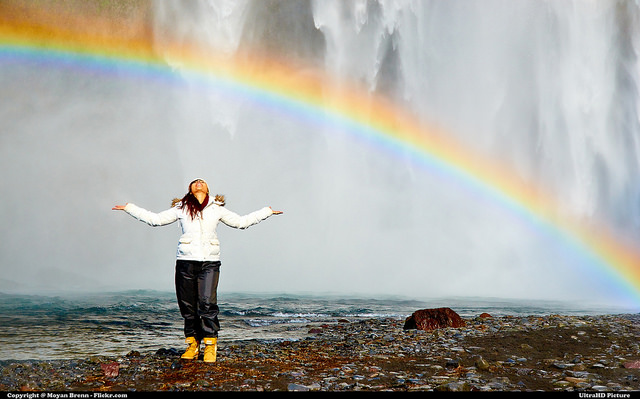
    Photo by Moyan Brenn

  • Stop Waiting for Tomorrow: 3 Ways to Love Your Life Now

    Stop Waiting for Tomorrow: 3 Ways to Love Your Life Now

    “Life always waits for some crisis to occur before revealing itself at its most brilliant.” ~Paul Coelho

    My husband had been unemployed for more than two years before it hit me that I was dealing with it all wrong. During that time, I kept thinking that any day he would find a new job. And every day that went by I was disappointed, frustrated, unhappy, and even angry at times.

    For two years I felt like we were in limbo. I was always thinking, “We’ll do this or that after he finds a job.” Everything seemed to be put on hold.

    But the thing was, it wasn’t on hold. That was my life, and I needed to accept it as it was.

    I finally realized that my life was going on every day, no matter what was happening at any particular moment. My life was not waiting for my husband to get a new job or until our finances were in better shape. Time was marching on.

    Besides just accepting my life as it was, I wanted more. I also wanted to embrace and celebrate my life and be truly happy.

    But how do you that when you feel like you are just barely hanging on? Our biggest problem was financial, and we honestly struggled to pay our bills and sometimes to buy groceries. It was an extremely stressful time. I felt sorry for my kids, my husband, and myself.

    I knew I needed to get away from thinking about money all the time. And I knew I needed to focus on my life as it was in the present, not as I thought it might be in the future. I longed to be happy within the reality of our situation.

    Three steps helped me to rethink my attitude and create a life I loved in that moment, as it was right then and there, instead of always hoping for a better future.

    If you’re also resisting what is, these steps may help you make peace with it and find happiness again:

    1. Take stock of what you have instead of what’s missing.

    When I made lists of what I had and what was missing, it became clear immediately that I had so much! My list included two beautiful daughters, wonderful friends, a roof over my head, a supportive family, a career that I loved, a cute cat, and much more.

    Two things really stood out about my lists. First, my “what I had” list was much longer than my “what was missing” list. And second, I noticed how different the things were on each list.

    The things on my “what I had” list were much more important than what was missing. What was missing tended to be centered on material things. For example, vacations I wanted to take that we couldn’t afford or buying new furniture.

    But what I had was about the things that really mattered in life. Taking stock made me realize that I needed to shift my attention.

    Looking at the list of what I had made me feel like my life was abundant, and I suddenly felt a sense of gratitude.

    Taking stock of where you are and what you have at this very moment can be eye-opening. Chances are you’ll find, like I did, that your “what I have” list is not only longer but also more meaningful than your “what is missing” list.

    2. Focus on what really matters.

    All my attention on our financial problems made me lose focus of what is the most important part of my life: my relationships with family and friends.

    It doesn’t cost any money to cultivate our relationships with others. Cultivating relationships comes down in large part to communicating authentically, engaging in conversations that really mean something and are marked by deep listening and honesty.

    With my daughters, who were both nearing their teens, this meant slowing down and listening to whatever they felt like telling me. Each little morsel of news about friends or school or how they were feeling was a gift that I treasured. And I discovered that the more I slowed down and listened, the more they talked to me.

    I am also fortunate to have a very tight circle of friends who mean the world to me. They cheer me on, listen when I need to talk, and make me laugh. I realized what a precious gift that laughter is. To laugh so hard I cry was another thing to treasure.

    3. Enjoy life’s simple pleasures.

    Instead of thinking about the vacations that I couldn’t go on, I thought about the morning walk I took around a nearby lake where I saw two bald eagles, a crane, and the mountains reflected in the water.

    I focused on my creativity—I played my guitar more and I started a new creative endeavor, collaging, which I absolutely loved. I continued to write and to experiment with painting. Through these creative outlets, I started embracing my life.

    Shifting your attention to simple yet joyful activities is another way to gain a whole new perspective on what you have in your life. Being creative and enjoying nature are two great places to start exploring life’s simple pleasures.

    Once I started thinking about how to live my life to its fullest in the present moment before it completely passes me by, my attitude changed.

    That’s not to say I don’t still have stressful financial moments or a longing to take a family vacation to a distant place, but I am no longer missing out on what is happening in my life. I am embracing the life I have and I am genuinely happy!

    It is possible to embrace your life and find happiness in the midst of crisis.

    When we look at our life with a wide lens, instead of just focusing on financial and career success, we can see opportunities to embrace all of life’s abundance. These can be opportunities to slow down and think about what really matters, what we value most in our life.

    Appreciating the most meaningful gifts in your life may just be the surest path to authentic happiness, no matter what your circumstances are at this moment.

  • Stop Resisting: Surrender to Your Body to Transform It and Your Life

    Stop Resisting: Surrender to Your Body to Transform It and Your Life

    Surrender

    “Whatever you fight, you strengthen, and what you resist, persists.” ~Eckhart Tolle

    Most people don’t realize that your relationship with your body affects your entire life. Why? Because if you are fighting with your body, you are fighting with yourself. And if you are fighting with yourself, you are resisting what you truly desire in life.

    I know too well what it feels like to fight with your body. I had the same fear as most people…

    If I love my body as it is today, it will get worse. I will gain more weight. If I keep my constant attention on it, remind myself hourly how much I don’t like it, it will transform.

    Sure sounds crazy, doesn’t it? Has anyone ever “hated themselves skinny” and had healthy, long lasting results? Or how about the opposite? Has anyone ever “loved themselves fat”? And I am not talking about the love you think you are giving yourself by eating a package of Oreo cookies. I am talking true, authentic love causing the body to gain massive amounts of weight.

    And yet this is our fear: that if we were to love ourselves, love our bodies as they are in this moment, we would get worse. But remember, what you fight you strengthen.

    The more I fought with my body for gaining weight, the more weight I gained.

    Then, one sunny day as I was driving, singing along to my favorite tunes, thinking about what new clothes I wanted to purchase at the mall, I noticed something out of the corner of my eye.

    Before I could comprehend what this thing was, everything went black. To this day, I can’t be fully sure whether everything went black because my eyes were closed or because my airbag deployed, but either way I knew that I was no longer on my path to the mall.

    In what felt like the most extreme game of bumper cars, I finally came to a stop as my Chevy truck flipped on to the side with me on the freeway and my passenger door above me.

    Turns out I was hit by five cars, one car for each lane on the freeway. And although I was able to safely exit my vehicle the next morning, I quickly learned that I was not able to lift my own head and, therefore, couldn’t move freely on my own.

    As I lay on the couch each day, unable to lift my own head, I no longer had the strength to fight against my body and, therefore, my body finally had the ability to let go. And after thirty days of only moving with help to get to and from the bathroom, my body released ten pounds.

    It is safe to say that some people would have gained weight injured on the couch. There are very specific reasons that my body didn’t, one of which was my ability to simply be okay with where I was.

    I wasn’t angry that I couldn’t move. I wasn’t upset that I could no longer work out. I certainly wasn’t fighting with the idea of a much-needed vacation from working. And I decided to treat it as just that—a vacation from my everyday life. The life that I had set up for myself that was so stressful and impossible to maintain.

    I relaxed and enjoyed not needing to do anything but heal.

    I realized that there are more important things in life then losing weight, like being able to lift my head again.

    I allowed my body to rest and stopped punishing it for being the way it was.

    And I finally allowed my body and myself a much-needed break from the stress of trying to lose weight.

    I highly recommend surrendering to your body without being hit by five cars. Here are three tips to get you started:

    1. Become present where you are.

    The first step is to be honest with yourself and admit where you are to establish a starting point for your growth. Otherwise, this would be like trying to drive to New York without knowing if you are in California, Florida, or Mississippi.

    It also follows along with the theme that what you fight, you strengthen. The longer you ignore where you are or pretend you are not where you are, the longer you’ll stay there.

    When you let yourself be in your body without needing to have a different one, you release the resistance and have the ability to move forward toward a life you truly desire.

    When you are desperately clinging to a different body with all your might, convinced that this is what will bring you all the happiness, contentment, and love in the world, you will find that an alternate physical appearance simply doesn’t create the internal feelings you are after.

    Therefore, even if you achieve this physical body that you desire, it will come with a sense of emptiness, as you still must learn how to simply be where you are with full presence and love, no matter what.

    2. Feel your feelings.

    In order for me to find acceptance for myself, I had to feel. I had gone so many months feeling completely numb to everything and then wondering, “Why can’t I just love myself?”

    In order for me to love myself, I had to first admit that I wasn’t happy. In fact, I was out right pissed off. And after a celebratory pity party, followed by many tears, I could finally move forward.
    When we ignore what we feel, we think we can make it go away. However, just the opposite is true. Not feeling our feelings isn’t a way to make sure we never have sadness; it’s a way to start an inner battle for however long it takes you to finally feel sad.

    The minute you admit that you are in fact pissed off, frustrated, and down right suspicious of your body, you will release the resistance, call off the fight, and move toward an overall feeling of lightness.

    3. Find peace and calm.

    It’s no secret that a stressful environment is not conducive for lasting results in your life, yet so many people live each day in a stressed out body, wondering why they can’t release their weight and feel lighter.

    Then to make matters worse, they obsess over their food and spend hours at the gym without even taking a moment to breathe.

    In order to find acceptance for your body and release your weight, you first want to create the most peaceful environment in your body as you possibly can.

    This doesn’t mean you have to lock yourself in a room with your Pure Zen CD for a month; it means you begin to find places in your life where you can introduce more peace and calm easily—for example, your own thoughts and beliefs. Why not zen those puppies out?

    Instead of believing that weight loss is hard and your appetite is too big, why not believe that in the past weight loss has been challenging and now you are open and ready to receive an approach that feels easy and effortless? And your appetite isn’t too big, but maybe you need to learn how to better connect to your body and hear your hunger and fullness cues.

    We tend to take on very stressful thoughts and beliefs about weight that will inhibit our bodies’ ability to release the weight easily and effortlessly. If you believe weight loss is hard, painful, and full of restriction, then it will be. If you believe that weight loss is intuitive, insightful, and transformative, then it will be.

    You get to choose what your weight loss journey looks like. I suggest you choose a path that feels calm and peaceful in order to enjoy each step of the way without being so dependent on the end result to fill you up.

    When you become present with exactly where you are, feel all your feelings, and find your peace and calm, you now have the ability to stop fighting. The battle that you have been facing with your body and weight will finally be done as you wave your white flag and admit that you are tired of the fight.

    This doesn’t mean you aren’t giving up on your true desires. You are deeply aligning with them.

    You are admitting that this whole weight loss thing isn’t something that you want to control anymore. That maybe there is a better way to release your weight that doesn’t suck. And you’re reminding yourself that when you desire something, the ability to have it has to be present.

    Therefore, you have no reason to focus so intently on losing weight anymore. Instead, you get to focus on living your best life in this moment, wherever you are.

    Remember this, you’re not weak or pathetic for surrendering. You are smart and powerful.

    You have the ability to say that you have so much love for yourself that you are willing to do whatever it takes to feel good now, regardless of where you are. And this is the most powerful move you can make for lasting results in your body and your life.

    Photo by Scott

  • How Accepting Your Circumstances Can Help You Find Something Better

    How Accepting Your Circumstances Can Help You Find Something Better

    Happy

    “Accept what is, let go of what was, and have faith in what will be.” ~Sonia Ricotti

    I’m on an old bus in Kathmandu, the capital of Nepal, where I’m staying on a three-month tourist visa. I look through the window at the streets, dirty beyond belief.

    Thick dust in the air mixes with the pollution of exhaust fumes; I see men spitting on pavements and small children with greasy hair roaming the streets in search of people kind enough to give a few coins.

    I witness dirty stray dogs that look like they have rabies, mingling in the crowd; all shops look the same—small, dirty, and grey.

    I resisted it all during the first month of my stay, but this resistance only created misery. Why on earth do I always choose the road less travelled and not stick to the touristy spots, where I could remain blissfully unaware of the reality of Nepal?

    I know the answer to this question; I always knew it. The universe is trying to teach me a lesson of acceptance and non-resistance. I couldn’t learn the lesson as long as I viewed life in Nepal in a judgmental way.

    As soon as I eased into the country and became willing to view it without judgment, a whole new world opened up before my eyes.

    I suddenly saw another side of Nepal: I noticed dirty yet adorable, happy children chasing kites on the green grass plot near the street; I noticed a mother sitting on the road and swinging her child in a loving way; I saw white broad smiles in tanned faces.

    What’s most important, I felt the unity these people experience because they share this unique way of life. Brotherly love is in full swing here, and in India, but nothing of that sort I witnessed in the west.

    I felt the relief people feel to shut away the dust and pollution and enter a peaceful atmosphere of a café to enjoy a latte. I also felt the home-feeling people get sitting on roadsides, sipping over-sweetened milk teas.

    This is what they know and this is what they choose to experience—who am I to judge all this?

    This experience of opening up taught me the importance of non-resistance. When you’re observing everything without judgment and accepting things as they are, you feel completely at peace with yourself and experience real happiness within.

    Many people don’t learn this lesson all their lives, like those stuck in unpleasant circumstances they hate. Until they learn this lesson, they will keep being stuck.

    In India, where I currently live, many expats are stuck. They look shabby, they’re often drunk, and they complain about how appalling the life in India is, and yet they keep living here. Many of them hate the culture, and all their lives consist of resisting the way things are.

    How Acceptance Helped Me Move to a Country That’s Perfect for Me

    I know it’s horrible to be stuck somewhere you dislike and be unable to move on. However, this happens when we resist our circumstances. As soon as we wholeheartedly accept them, the door opens for a change, because acceptance dissolves the limited mindset that prevents us from seeing opportunities.

    When I moved to England from Lithuania, my home country, I got stuck in a horrible town with factories and nothing to do in my spare time except shop in soul-less shopping centers.

    What kept me stuck there was my studies and later a horrible job, which gave me a steady paycheck. I disliked the job, yet I felt comfortable. I was afraid to quit it because I didn’t know if I could find a better one.

    I struggled with these surroundings and I hated them with all my heart. However, when I started reading self-help books, I got convinced that I was where I was because my mindset had attracted me there, and through my resistance I had gotten myself more stuck.

    As I explained before, resistance limited my understanding of the world. I was unwilling to see the positive side of things, and thus I couldn’t spot any opportunities that would have shown me a way out.

    When I realized this, I changed my strategy. I started accepting my situation instead of resisting it. Instead of thinking about how horrible the town was, I tried to be neutral about it, so I wouldn’t channel negative emotions into the situation and thus get more stuck.

    I also decided to channel the emotions of happiness and joy into London, the city I loved, and visited whenever I had time and money.

    Whenever a negative emotion or thought would arise about the town I lived in, I reminded myself that when my mindset changed—when I became more positive and open—I would more easily find a way to move.

    My neutral attitude toward the town I lived in gradually made me see a more balanced view of it and eventually, appreciate the positive aspects. I noticed, for example, that the town had beautiful parks and ponds, and that some people living there were interesting and kind.

    Developing understanding and acceptance opened the doors for a change.

    As I became more open-minded and happier, I started noticing and acting on new opportunities. For example, I came across information about how to start my own business and thus acted on it.

    Within a year or so of this change of mind, I moved to London, which I thoroughly enjoyed.

    This non-resisting attitude made me dissolve some of the limits of my mind and thus I became more intuitive. This intuition eventually led me to the country where I felt most at home—India.

    If I had never learned this lesson of non-resistance, I would probably still be stuck in that horrible town, cursing my situation to this day.

    Wherever you are and whatever you experience, try to be at peace with it. If it’s hard to think positively about your situation, at least don’t focus on the negatives, and instead focus on something you’d like to experience.

    It may help to make a list of things you’re grateful for and the positive aspects of whatever you resist. Focus on those aspects completely, and soon your mind will become more positive and more accepting of your present circumstances.

    This shift in focus will eventually open the door to circumstances that are more empowering and positive.

    Photo by Courtney Carmody

  • Making Changes When the People Around You Resist Your Plan

    Making Changes When the People Around You Resist Your Plan

    Standing Alone

    “The greatest step toward a life of simplicity is to learn to let go.” ~Steve Maraboli

    So I took the plunge. I stated out loud that I wanted to simplify my life.

    I wanted to have a life where what I did for a living and how I lived were more in balance with the person I am and aspired to be. The waterfall effect of that verbal declaration catapulted my life into a stratosphere of change that I am still learning to just “go with.”

    Three weeks after that declaration, I got “downsized” at work. Okay, I thought, the universe is listening, so no turning back now.

    I started with putting my house up for sale. Up went the “for sale” sign.

    Next came the purge. Closets were emptied, for-sale ads were posted, and stuff began to clear out. I donated and sold what seemed to be the physical barrier to my new life of “less is more.”

    Finally came the decision: What did I want to be when I grow up? Who we are and what we do always seemed to melt into one for me, so now I had a clean slate, and the “life worth creating” journey began.

    I scoured the career guides, took all the personality tests, hired a life coach. All the while, my external search for career satisfaction was in misalignment with my new values and the journey I had begun.

    So, I finally decided: No more suits, no more cubicle life, and no more aspiring to climb a ladder that I did not even care about.

    I read a great quote: “Better to be at the bottom of the ladder you want than the top of the ladder you don’t.”

    I decided that I was not searching for a new job; I was creating a life. I wanted to write and share my adventures and experiences along the way. I had a dream of inspiring people to dare to dream and achieve what they once thought was impossible. So the new life career began.

    In all my newness and transformation the one thing I had not counted on was the resistance I would receive from those in my inner circle.

    I guess I had assumed that people would be genuinely happy for me if I were happy.

    Unfortunately, that was not the case. They questioned why I wanted to sell my house and belongings, and worse yet, even give my stuff away. People asked me daily where I was going to live.

    A friend runs a charity that enables physically challenged people to experience outdoor adventure. Fantastic, I thought!

    This was exactly in alignment with what I believed to be an essential part of my journey. A donation of gear to the charity enabled additional people to get out and adventure where they had never before.

    This brought about a series of objections and questions from multiple parties about why I wasn’t selling my stuff rather than donating. I was really starting to think that people were missing the point.

    The largest objection of all came in regards to my career, or lack of a career pursuit. A declaration of not wanting to go back to an office, sit all day under fluorescent lights, and climb the invisible ladder to misery seemed to stun family and friends alike.

    I frequently heard, “But you went to university and have all this experience,” especially from family members who helped fund the academic letters behind my name. No amount of explaining seemed to dull the sound of objections.

    So in all of this, I have managed to stay on course, even if it has been a bumpy road, by learning a few lessons and following a few guiding principles to keep the wolves at bay.

    If you’re also making a life change and experiencing resistance from the people around you, these ideas may help:

    1. Realize that other people’s objections often have more to do with the noise in their heads than the words you say.

    Safety, security, and a certain amount of life predictability cloak the people in my life like Linus’ security blanket.

    As they watched me doing the proverbial running naked down the street thing, throwing caution to the wind after acknowledging that there was no security net, no new career prospects, and that I wanted to create a life based upon writing and adventuring, there came about an incessant need to throw their blankets over my shoulders to keep me safe from my goal of living a life of simplicity.

    Objections are often about other people, not us.

    2. Those closest to you may believe they’re an expert on your life.

    If I had received a dollar every time I heard, “If I were you, I would…” I would already have a steady stream of income coming in. Remembering that I am the expert of my own life and know why I am on the path I am has helped dull the volume of platitudes I heard on a regular basis.

    Trust that you know what’s best for you.

    3. Prove to yourself this you’re making the right choice.

    Some days it felt like I was the weak animal waiting to get preyed on during my transformation into a new life, because as soon as I would show doubt, insecurity, or even waffle a tiny bit on whether I was doing the right thing for me, the people closest to me pounced.

    The best defense to these challenges was proof. As time went by and I stayed on course, their challenges began to decrease in volume. Anyone with doubt became less resistant and some even became satisfied as I became happier and in balance with my new life choices.

    When you stay the course, people start to accept it.

    4. Have a plan.

    I have learned in my new journey that without a plan, I am just a leaf blowing in the wind. It is not enough that I say that I want to make a change. That does not make a parent feel confident in their child’s quest for a new life or allow a partner to have faith that an income will be generated.

    So I have made an actionable plan, with milestones and tangible goals that, when achieved, help reinforce my adventurous journey of a new life.

    Making a plan helps you and reassures the people who are trying to look out for you.

    5. Be patient.

    I’ve learned to have patience with others and myself. Recognizing where people come from, the stories in their own heads, and the story in mine assists in keeping me on track.

    Keeping perspective and learning to let go of other people’s fears and objections enables you to continue on, one step at a time.

    I am by no means an expert on self-help, making life changes, or living a life of simplicity. What I have learned, though, is that other people’s objections can fuel the flame and reinforce our decision to create a new life.

    Photo by Alcino

  • How Accepting Your Pain Can Help You Heal

    How Accepting Your Pain Can Help You Heal

    “Whatever the present moment contains, accept it as if you had chosen it. Always work with it, not against it.” ~Eckhart Tolle

    My partner, Ruth, and I were not happy.

    The inside of her mouth was covered in sores, she couldn’t swallow well, and she was exhausted. The chemotherapy was ravaging her body. Something had to be done.

    When her oncologist, Dr. Patel, came into the room, he perched on his little rolling stool and looked up at her Ruth where she sat on the exam table with her legs dangling.

    She railed against the chemotherapy and what it was doing to her. I seconded her sentiments silently with frequent nods and frowns.

    After some time, Ruth finished her diatribe and crossed her arms, daring Dr. Patel to fix this invasion into the very lifeline of her system.

    His expression had never changed during her speech. He looked at her intently, listening carefully, but his eyes were soft with care and concern. Now those eyes looked deeply into hers.

    “Ruth, don’t resist. Don’t resist the chemotherapy. Allow each drop to enter your body in a healing way and do its work. Resistance does not help you; it only saps your energy. In your treatment, in your work, in all places in your life—don’t resist. Go with whatever comes rather than struggling against it.”

    Ruth and I looked at each other and then back at Dr. Patel.

    Don’t resist? (more…)