Tag: resilience

  • Does It All Feel Too Hard? Tiny Buddha’s Inner Strength Journal Can Help

    Does It All Feel Too Hard? Tiny Buddha’s Inner Strength Journal Can Help

    Do you ever feel like calling into the day? And I don’t just mean work. I mean everything. I mean turning it all off for a while. Freezing the full gamut of this messy human experience—the regrets, the fears, the adulting, the drama. The constant onslaught of anxiety-inducing news and personal problems to face.

    When everyone needs you and everything worries you and nothing helps you feel better, it’s tempting to disconnect. To numb out, shut down, or give up.

    But we can’t, at least not for long. And really, that’s not what we want. Or at least, that’s not what I want when I’m overwhelmed by it all. I don’t really want life to stop.

    When my relationships are triggering, my workload is mounting, and my kids’ needs feel hard to meet, I don’t really want to escape it all. I want to rise above it all. I want to respond wisely and make best of what’s in front of me instead of reacting impulsively and only making things worse.

    I don’t want to disconnect; I want to reconnect—with the still voice inside me that reminds me, if I listen, to breathe, take a step back, and take care of my needs so I can handle whatever life throws at me.

    Because I know I can. After all I’ve overcome, I know I’m strong, and I know you are too. I know, like me, you have stories of trauma, tragedy, and terror. But I also know we all have the capacity to not only handle life’s stressors and challenges but also learn from them and be better for it.

    That’s why I created Tiny Buddha’s Inner Strength Journal: Creative Prompts and Challenges to Help You Get Through Anything.

    I started working on this journal during the height of the pandemic, when I was exhausted from nights with a poor-sleeping toddler, drained from a high-risk, “geriatric” pregnancy, and overwhelmed by a new work project that ultimately failed in the end. And that’s not to mention all the Covid-related concerns and challenges we all had to face.

    I also knew from emails and comments that many of you were grappling with intense challenges and feelings of your own and struggling to get through each day.

    Since working things through on paper has always helped me feel less stressed, more confident, and more in control—all well-known benefits of journaling—I focused on prompts and questions that can help us access our personal power. Exercises that can help us protect our energy, manage our emotions, and take good care of ourselves so we feel our best—and feel prepared for the worst.

    I also put together a companion eBook—a free gift when you pre-order, for a limited time only—with forty of the site’s most helpful posts on overcoming hard times.

    The process of creating this journal was deeply healing to me, as I did each exercise as I went, and I have a feeling it can help you too. This isn’t a book of answers; it’s a framework to help you create your own personal roadmap to resilience so you can not only get through anything but also get the most out of life.

    As a mother to two young children, I’ve often wished I could prevent them from struggling. I’ve spent hours thinking about how I can insulate them from pain and ensure they never hurt as I have.

    But I realized a while back that if I protected them from pain, I’d also prevent them from gaining the wisdom and growth that accompany it. They’d live a flat, one-dimensional life, without the pride and confidence that come from doing hard things; and they’d never feel the sense of purpose we often find when we overcome something that once felt insurmountable and feel a burning need to help others do the same.

    What I really want for my sons, and for anyone I love—including myself—is the strength to handle life’s greatest challenges and the capacity to recycle their pain into something beautiful. Something meaningful. Something that makes all the darkness in life feel like a pathway to the light.

    I believe we all have that strength inside us, even if sometimes it all feels too hard. Even if sometimes we need to shut down for a while. We just need to learn how to access it.

    Whether you’re hurting, healing, or somewhere in between, I believe Tiny Buddha’s Inner Strength Journal can help you do just that. Click here to pre-order and get instant access to Tiny Buddha’s Guide to Overcoming Hard Times: Stories and Tips to Help You Cope with Life’s Biggest Challenges.

  • How I Turned My Disability into Desirability with a Simple Perspective Change

    How I Turned My Disability into Desirability with a Simple Perspective Change

    “Stop thinking in terms of limitations and start thinking in terms of possibilities.” ~Terry Josephson 

    I was affected by the deadly poliovirus when I was six months old. Most people infected with it die. Even today, there is no cure for it. I miraculously survived, but lost my ability to walk.

    During the first twenty years of my life, I evolved through crawling on the floor, lifting my leg with my hands, wearing prosthetics, using canes, and finally learning to walk, painfully, with crutches. As I grew up, I experienced post-polio syndrome, which weakened the other parts of my body.

    Some forty-five years ago, there were no educational or medical facilities in the remote area of India where I lived. That slimmed my chances of getting any education. When I reached the age to go to school, the only way possible was to wear prosthetic braces weighing forty-five pounds on my leg, which was more than my weight. It was incredibly painful to walk while wearing them. In those braces, I could barely take one baby step at a time.

    Experiencing Victim Mode

    The result was me being bullied, left behind, and teased by my classmates all the time. There were times when I had to drag my iron-casted leg back home alone for over a mile using the strength of my stomach muscles. It used to take me two hours, which felt like a lifetime. That cycle repeated for many years, and my emotional pain grew more and more.

    Every time, I asked, “Why me?” The more I asked, the more unpleasant the answers got in my mind.

    Stepping into Fighter Mode

    That misery got me into a fighter mode. I remember that many of the motivational books I read stressed one thing: “Break the walls.” So I secretly subjected myself to the harshest physical exercises, torturing myself, hoping someday I would get better at my disability. But the more I tried, the more my emotional and physical problems escalated—to the point of a breakdown. Charged with much willpower, I did not realize that perhaps I was fighting against the wrong wall. I failed.

    As I see it now, the actual wall that was limiting me was less my physical disability and more my self-limiting beliefs. I had made up unreal, perceived walls in my mind, thinking that I wouldn’t be accepted unless I walked like ordinary people.

    These made-up walls were the ones that were actually stopping me. I was doubly disabled—externally and internally.

    Spotting the Windows

    Every time I was left behind, I made a pact with myself: If I couldn’t walk with my legs, I would walk faster with something else. But the big question was: with what? But then, a simple perspective shift I call “windows through the wallschanged my life and put me on the path of personal transformation to achieve excellence.

    I gradually realized that my disability gave me some gifts I did not recognize earlier. I had no social interruptions, no spoiler friends, and not much mobility. Because of those three things, I had plenty of distraction-free time at my disposal, which was a gifted environment. What could I do with this unique leverage?

    Reading books was the best thing I could do while being contained in a chair. I remember the first book I read, by Dale Carnegie, was much ahead of my age. Soon I mastered poetry, physics, palmistry, psychology, and philosophy while reading any book I could afford to buy or borrow.

    By rigorous reading and learning through science books, I became an engineer at the age of twenty-one, and a year later, I became a technology scientist. It stunned the people who never believed I could do so. The hunger to learn faster led me to earn two doctorates, more than 100 international credentials, and some of the world’s highest certifications.

    “I couldn’t walk with legs—now I teach people how to walk faster in what they do.”

    My lack of speed made me obsessed with gaining it in another area. That became the unique expertise that took me places. I became a performance scientist, helping people speed up their learning and performance skills.

    Not only this, I leveraged my ability to learn and started sharing my learnings with others. My social isolation did not persist, and soon I had one of the largest friendship circles around.

    With my circumstances, I could engage in daydreams that developed my vivid imagination. Soon, a writer inside me woke up. I wrote dramas, stories, poetry, articles, and many things at a very young age. While I could not afford to buy one book then, I have authored twenty books now.

    While glued to that chair, I had similar leverage as other kids—that is, my hands. I developed my skills in painting, drawing, and sketching and received an international award for my art from back then.

    As I reflect back on it, my disability hardly ever got in my way while achieving these things. Rather, it helped me go faster. When I saw my crisis, my disability, my limitations, I did not see them as walls that I should break. Instead, I chose to spot windows among them—windows of opportunities, leverages, and advantages. I’ve leveraged everything my limitations ever offered me.

    Two Important Lessons

    I learned two important lessons in my journey.

    First, not all the walls that seem to be limiting us are real. We need to find the wall that indeed is limiting us and then break it.

    Second, we don’t always need to break every wall because some have windows. No matter the circumstances, we all should focus on spotting the windows.

    Once we change our perspective, we will be surprised at the number of advantages we find in our adversities, desirability in our disabilities, and leverages in our limitations.

    Are We Enough?

    When we experience a loss, we may feel less than others. That’s okay. Sometimes, the crutch I use as an aid for walking reminds me of what I lack. But that’s okay because I wouldn’t be where I am today if it was not for my disability. I think my loss, my disability, defines who I was yesterday, who I am today, and who I am going to be tomorrow.

    However, some of us have been groomed to chant motivational mantras like “I am enough.” It is like convincing our minds that the glass is full, so our minds might stop looking for possibilities.

    But when we realize our glass is half-empty, we become hungry to find windows of leverages in our misfortunes or limitations to fill it up somehow. That’s when we create new possibilities for ourselves.

    Leverage Your Losses

    Think about the losses that you have experienced due to your adversities, failures, or misfortunes. How could you leverage these losses to go from feeling less than others to being a lesson for others?

  • The One Thing You Need to Make the Best Decisions for You

    The One Thing You Need to Make the Best Decisions for You

    “If you are not living your truth, you are living a lie.” ~Joseph Curiale

    Her sobs break my heart. We have all been there. When the relationship starts feeling like a war-torn city as opposed to home.

    I close in for a hug. “You can’t go on like this,” I whisper.

    “Well, I don’t know what to do. Please don’t tell me to break up,” she looks up pleadingly. “I can’t do it. I won’t be able to bear it. I am not as strong as you.”

    A familiar musical refrain from Tina Turner comes to mind albeit with a slight word twist…

    “What’s strength got to do, got to do with it?

    The Oxford Dictionary defines strength as “the emotional and mental qualities necessary in dealing with difficult or distressing situations.” It almost seems as if these set of qualities are innate—something you are born with, like blue eyes or curly hair.

    Those in possession of strength flit about larger than life, surmounting all obstacles without a strand of bother, achieving Herculean glory. They can do just about anything, bear just about anything. Nothing stands in their way.

    That was my assumption as well until I realized some people actually considered me part of this mythical group. My response to that? Utter incredulity.

    I am scared of literally everything. I am scared of public speaking. I am scared of the dark. I am scared of ants. I am scared of meeting new people (I have been known to hide behind bookshelves at loud parties). Most of the time before I start something new or need to do something confrontational, I spend hours under my duvet or eating an entire chocolate fudge cake from Sainsbury’s to soothe my nerves.

    If anything, fear has been my faithful partner since Day One. Yet, despite this, I have made what can be considered difficult decisions; taken risks, explored the paths less traveled, moved myself out of comfort zones, acted contrary to advice from friends and family, etc. And that’s not because I am strong. But it is because I choose courage.

    And courage, my friend, is not strength.

    Courage is Simply Your Truth

    According to American author and professor Brené Brown, an early definition of courage is “To speak one’s mind by telling all, one’s heart.”

    The root word of courage offers a telling clue. “Cor” in Latin or “coeur” in French means—the heart. So being courageous is nothing more than being true to your heart, or in other words, telling your truth.

    But speaking your truth is tough since most of the time, we often aren’t on good terms with our own truths. We get caught up with keeping up appearances, where or who we ought to be, what others expect of us, what is socially acceptable, what is convenient, etc. Our truths wander lost amongst this crowded landscape.

    A long, long time ago, when I was still in the corporate world, my then-boss asked me where I saw myself in a year’s time. I knew he was keen to promote me. And I was convinced I wanted to be promoted as well. After all, I was due one, and well, who says no to a promotion? All I had to do was give the ‘right’ answer—something about wanting to grow further, taking on more responsibilities, I was ready, etc.

    Yet that afternoon sitting across from him, an unanticipated response sprung to my mind instead—“Anywhere but here.

    That floored me. Until that point, it never had dawned on me that I was that dissatisfied at work. I mean, was I deliriously fulfilled? No, but I wasn’t never expecting fulfillment.

    I was comfortable, I loved my colleagues; the money was good and enough to support a lifestyle that I loved. I thought that I had struck a sweet spot; a happy compromise I was willing to put up with for the rest of my life. But my heart apparently seemed to disagree. This sweet compromise started to feel like a huge mistake—as if I was on the wrong train.

    Sometimes when faced with an inconvenient truth, our first reaction is to will it away. And that’s exactly the strategy I adopted. I pleaded with this feeling; tried to cajole it into disappearing. But it never did. It stood, simple and unwavering in the deep cave of my being.

    And that’s what you will realize about The Truth. It comes from the reservoir of wisdom, and like everything from those parts, it never shouts or screams. Your fears do. Your ego will screech. Panic attacks will roll like devastating hurricanes through you. But your truth is like a meditating monk, sitting quietly, waiting for you to catch up with it. A steadfast signal for your life.

    Courage is a Navigation System

    Courage is not a set of qualities. You don’t pursue courage. Courage beckons you. It is your life sat nav or true north (to use a Martha Beck term). A lighthouse that guides you through the sea that is your life.

    It is true what they say, you cannot serve two masters. When you orient your decision-making around what is true to you, fear stops factoring in. It doesn’t disappear from the landscape completely, but it gets more muted in the distinct light of your truth. You will stop moving to whirlwinds of opinions and projected futures. Your life will instead be propelled by your unique, sacred truths.

    I hate having my writing read by other people. It feels like someone has peeled off all the skin on my body, and I stand facing the world with nothing to protect me. Yet I continue to write despite my fear of the cauldron pot of criticism, judgments, and embarrassment because that’s what my heart wants. Writing is what I have do to fully inhabit myself. It is more necessity than a want. Everything else such as my fear and shame fades in significance.

    The Path of Courage

    The path of courage is usually not one of grand feats; it is woefully undramatic. It will never demand you break up today, or else. Instead, it will guide you to go and sleep, sign up for a retreat, dance to Kate Bush, sit quietly to watch the clouds, or even watch a particular YouTube video.

    The path is gentle because your heart is all about love, and gentleness is the language of love. Unsurprisingly, walking the path of courage will also soften you and make you gentler.

    The path of courage is also utterly simplifying. When I centered my life around my heart, I stopped hankering after certain things I had previously assumed I liked or would make me happy like learning a new language, doing tango, traveling, going out with friends, etc.

    It became easier to admit that these activities never actually fed me, and I wasn’t really enjoying them that much. With clarity, no became an easier word to articulate. So did my needs.

    There is no guarantee that the path of courage will lead you to a happily-ever-after. Oftentimes, it will lead you to situations where you will struggle to find meaning. It will drag you through the mud, tempt you to promising roads, and then fling you against a dead-end. But I promise, even when you wander with no map in sight, you will never feel led astray. Or that you are on the wrong train.

    What is courage calling on you to do right now?

  • How to Thrive in Life after Surviving Cancer

    How to Thrive in Life after Surviving Cancer

    “Have a little faith in your ability to handle whatever’s coming down the road. Believe that you have the strength and resourcefulness required to tackle whatever challenges come your way. And know that you always have the capacity to make the best of anything. Even if you didn’t want it or ask for it, even if it seems scary or hard or unfair, you can make something good of any loss or hardship. You can learn from it, grow from it, help others through it, and maybe even thrive because of it. The future is unknown, but you can know this for sure: Whatever’s coming, you got this.” ~Lori Deschene

    Isn’t it amazing how some days are etched in your mind forever and other days are just lost in the wind? One day that is etched in my mind forever is December 27, 2006. This is the day I was told I had breast cancer. While breast cancer is common, being twenty-six years old with breast cancer isn’t that common.

    So here I was, twenty-six years old with breast cancer saying to myself, “Well f*ck, that sure throws off the plans I had for basically anything.” I quickly fell into fear, worry, and “why me?”. I will spare you the details of treatment; it wasn’t any fun. I lost my hair and my dignity and fell into depression when life returned to “normal.”

    Whatever normal is, I was living it. However, nothing was normal. I didn’t know how to live without a doctor’s appointment to go to. I mean, all I wanted was an end to the endless appointments and here I was without them, and I couldn’t figure out what to do.

    So, I took lots of naps because I was exhausted, or so I thought. Well, it turns out I wasn’t exhausted; I was depressed. I was alone with thoughts of wondering when my cancer would come back. I was sucked into a pit of despair that I had never seen before. Who was I becoming? The person who sat in their pajamas all day while I worked from home—yep, that was me.

    I wanted to scream, “I survived cancer, now what?” Where was the manual on how to live after cancer? Who helps me get back to living? I just go back to what I was doing, as if nothing happened? I was tired of saying to myself, “But I’m supposed to feel better, right?”

    As the stream of appointments, scans, lab draws, and phone calls from friends and family continued to slow, I tried hard to be well and remain optimistic. Continue doing my job, walking the dogs, and dragging myself to the gym. Life just didn’t seem real, and depression overwhelmed me for days or weeks at a time. A quick nap turned into a four-hour slumber; my physical body was healing, and my mental body was spiraling downward.

    The difficulty of shifting back to life was not what I expected, and thank goodness for friends. My dear friend Rebecca asked if I wanted to run a half-marathon, but my visceral reaction was no. Then I learned the race took place one year to the date after I finished chemo, so I thought, “Heck yea, take that cancer!” It was perfect timing. One foot in front of the other, I trained for my first half-marathon.

    I kept myself going by trying to run when I could. Running was my go-to mental health fix pre-cancer, and it was starting to work post-cancer too. I remember there were days when I would drag myself to run and come back home in minutes. Then there were days I felt like I had superpowers and it felt so good.

    Rebecca and I crossed that finish line, hand in hand, and celebrated with margaritas and Mexican food, my other go-to mental health fixes.

    So why do I feel inclined to share my story? It’s not just about cancer, depression, running, and margaritas. It’s about making something good come from something bad. 

    Cancer taught me a lot of things. The biggest lesson was to control what I could. That looked like taking a long way home instead of sitting in traffic, not getting worked up about long lines in the grocery store, taking risks like rock climbing in Utah, trying new things like fly fishing in the mountains of North Carolina, singing in my car on the way to work to pump myself up for the day, going on camping trips with my girlfriends, and leaving behind a soul-sucking career.

    I can’t say I am exactly happy I had cancer, but I can’t imagine life without it. It’s a love/hate relationship. Looking back, it was an opportunity for growth and learning that I can do hard things. It was a reminder to focus on being truly alive.

    There is not a guidebook for cancer survivors, no way to time travel to the person you were before your diagnosis, no way to return your body unscathed, or quick way to restore your trust in your body again.  It’s a journey that you must figure out for yourself, one minute, hour, and day at a time.

    You must accept what has happened and discover a new self.

    I learned more in the year after cancer than I had in the previous twenty-six years. You don’t need a cancer journey to do this.

    Life is short; learn to live life to the fullest. However, if cancer is part of your journey back to living, you are not alone in your quest to learn to live again. You can do this. One tiny step at a time, you will learn to truly live again. You will stumble back and take huge leaps forward.

    You can have a life full of purpose, happiness, gratitude, and adventure. Don’t merely survive cancer, thrive after cancer! What are you waiting for? Let’s do this.

  • The Two Sides of Gratitude: When It Helps Us and When It Hurts Us

    The Two Sides of Gratitude: When It Helps Us and When It Hurts Us

    “When life is sweet, say thank you and celebrate. When life is bitter, say thank you and grow.” ~Shauna Niequist

    Imagine if you had a tool that, with no effort or change on your part, could cast a glow around you, exposing hidden gems within your everyday life.

    You do! It’s called gratitude.

    It has the power to light your way through tough times. And it can multiply the good. Of the many tools I use daily, I love gratitude the most. It is so simple to implement and immediately effective. It’s a powerful way to change the world—through seeing, not doing.

    I’ve invested a lot of thought, time, and deliberate action into creating the life I want. But building a life is one thing; relishing it is another.

    Having gratitude allows me to squeeze every last bit of joy from what already exists around me and within me, creating more with no extra effort. Few things in life are simple, practical, and magical.

    Without gratitude, our tendency is to focus on what’s missing. Life is what we choose to see. Without gratitude, we might waste a lifetime searching instead of enjoying.

    Using this practice keeps me out of dark places. There are days when I find myself in an emotional fog for reasons I cannot explain. I used to dwell in those moments, or days, weighted down and powerless. Though I wanted to feel like myself again, I would retreat within rather than allow myself to engage with the world and resurface.

    Gratitude has forever changed that. I possess a knowing (stemming from a consistent gratitude practice) that gifts are all around me, and I use them like a ladder to climb out of my hole. Gratitude shows me I always have choice.

    I choose to want to feel better and then I ask for what I need—a hug, time, inspiration—and then I allow myself to move on. Spending so much time in awe and appreciation for life allows me to see beyond my temporary state. I no longer confuse my present state with my true state of being—joyful, grateful.

    Gratitude doesn’t eliminate all the icky feelings and thoughts, but it absolutely makes me more resilient. It is my springboard. Not only am I aware of my shifting mood, but I actually take the action I need to take in order to come back to my true self.

    Gratitude and I go way back. As a first generation South Asian, it was instilled in me to always see the blessings around me. My family worked hard to give me a leg-up in life: a life with love, education, and opportunity.

    Gratitude also complements my positive nature. But it took me years to realize gratitude also appealed to my younger self because I was a pleaser, a peacemaker, a don’t-rock-the-boater. It turns out gratitude was also a great tool to keep me small. I used it as a ceiling.

    As my dream job turned into a nightmare, I confused fear for gratitude. I could not bring myself to seek a solution because it felt ungrateful. I was so thankful for the opportunity that I endured a hostile work relationship with a superior that belittled and disrespected me. I am not a complainer, I told myself. This is the price I pay for my dream, I thought.

    Gratitude allowed me to settle for less.

    I have avoided conflict by exercising gratitude. In difficult situations, it gave me an out. Have you ever said or thought the following?

    “It could be worse.”

    “At least they didn’t …”

    “I’m so grateful for this job/partner/friend. Who am I to complain?”

    In all of these scenarios, I wasn’t wrong to see the upside. Things absolutely could’ve been worse. But they also could have been opportunities to practice enforcing boundaries, to see my own self-worth, and to imagine new possibilities.

    I wasn’t able to see it then, but it’s clear now. Gratefulness is a powerful tool, but it should never be a way of accepting less than we deserve. It should amplify us, not diminish us. It should be our springboard.

    Gratitude is a way for each of us to find joy, not a way to make excuses for others.

    Yes, I have a loving family, but that’s no excuse to allow or accept disrespectful behavior. Yes, I work for an amazing company, but no, I don’t have to accept a toxic work environment. Yes, I love my partner, but I am worthy of a healthy relationship and love.

    It can be so easy to slip into limiting beliefs, tricking ourselves into thinking we are grateful when we are actually unhappy. Many of us have more than we need and are aware of how many are in need in our communities, near and far. But we serve no one by making ourselves small.

    How do you know when gratitude is limiting or a springboard? Know this: More is never made from less. Putting yourself below someone won’t create lasting joy, love, peace, or happiness.

    Practicing true gratitude requires understanding that we are equals. No one is better. If you hold yourself to the same (not higher or lower) standards as someone else, then gratitude will be your springboard.

    Gratitude is also a way to find what you’re looking for within your current life. It often requires little to no change. When we’re unhappy or unfulfilled we often think we need to get rid of things, maybe start from scratch somehow.

    But the truth is, what we’re looking for is often already in our lives. We must simply possess (or practice) the ability to see it.

    Gratitude also slows things down for me which, in this day and age, is precious. Being able to identify the gifts I have means knowing what’s important to me and taking the time to cherish them. It’s the ability to find my why—why I work hard, why I sacrifice and give of myself… why I am here.

    That’s a lot to gain from one simple act of seeing. How grateful I am to gain so much from a simple practice.

  • You’re Bent, Not Broken: A Mindset Shift That Can Change Your Life

    You’re Bent, Not Broken: A Mindset Shift That Can Change Your Life

    Bent but never broken; down but never out.” ~Annetta Ribken

    I lived for a long time thinking I was broken beyond repair.

    Let me rephrase: I thought I was unloved, unworthy, scarred, and broken. What a package, right?

    It started young, never feeling like I was good enough for anything I did. Being the youngest of the typical modern recomposed family in the eighties, I never knew on which foot to dance and always thought I needed to bend left and right to be seen and loved.

    I carried this baggage under my badge of anxiety, feeling like no one and nothing could ever make me happy, that no one could love the real me, that nothing could ever make me feel worthy.

    It reached a point as I was entering my forties when all I wanted to do was disappear. I wanted to not be who I was. I wanted to die.

    I thought that was my only solution.

    I believed the world would be better without me.

    What I didn’t understand then is that by thinking I was broken, unworthy, unloved, and all the other awful things I told myself daily, I was pouring salt into old wounds that had no chance to mend until I stopped the self-loathing.

    The more I told myself I was broken, the more I was breaking my soul. The more I told myself I was unloved, the less I loved others and opened myself up to love. The more I told myself I was unworthy, the more I interpreted others’ words to mean the same.

    I didn’t know what I could do. I didn’t know how to get out of the storm I was stuck in. I didn’t know what could help me live in the moment and stop hurting from the past or getting scared of the future.

    How do you get out of hurting so much you want to die?

    For me: writing.

    It was the only thing I could do.

    I was losing friends left and right, closing up like an oyster, hurting myself and others with my words and actions—but my pen and paper were my salvation.

    I bled tears and words until the day I could take a step back.

    The pain, the feeling of being broken and unworthy was still here; I could barely look at myself in a mirror, even less love anyone properly. But as I was playing with my pencil not finding words for a poem I needed to write to survive, I kept pushing into a crack it had. And I pushed my nails into it, and I played with it, and picked at it and some more not really thinking what I was doing, desperately trying to find words, until the pencil broke in two.

    No, let me take responsibility—until I broke the pencil in two.

    I looked at the two pieces in my hand.

    I had played with that pencil’s crack until I broke it.

    My fingers kind of hurt, but I smiled.

    This wasn’t me. This couldn’t be me. I really didn’t want this to become me.

    I wasn’t two parts of one entity.

    I was still one.

    And if I was still one, I wasn’t broken, I was just scarred. I was just bent.

    From that moment on, everything shifted.

    I wasn’t broken, just bent. I could learn to love myself again.

    It became like a mantra I repeated daily.

    And if I wasn’t broken, just bent, then maybe I wasn’t unlovable but loved by the wrong people. And maybe I wasn’t unworthy but only surrounded by people who didn’t recognize my worth, or maybe I was blind to my awesomeness.

    And if I wasn’t broken, if I stopped playing with my wounds, then maybe the healed scars could tell a story. And if I could tell my story and help others in any way, maybe, just maybe my pain and hardship and years of anxiety and depression could become more than a feeling of brokenness.

    So maybe I wasn’t broken. Maybe I was indeed just bent.

    It was hard to say it out loud, it was hard to explain, but the moment I shifted my mindset, I felt a relief.

    I knew then I could rise from the traumas I’d gone through. Even the smallest ones.

    I could give myself a second chance at life by healing and sharing my story.

    I wasn’t broken; I was made to break the shell of my past and show that if I could do it, you could too.

    Because here is my biggest secret: I am no one, and I am everyone.

    My story is the same story as most of yours. I didn’t deal with my traumas, and they caught up. I thought I had dealt with the past by putting a bandage on it when I really needed an open soul surgery.

    I thought I could wear a mask and be loved for who I thought people wanted me to be, but this made me feel unloved to the core.

    I thought I was broken when I was only bent by circumstances I needed to untangle. I thought I was unworthy but I was capable of creating art with my scars and shining a light on the most common depression story ever to tell others they weren’t alone and could get out of it too.

    So don’t tell yourself that you are broken.

    Don’t think you need an extraordinary story to help others find their light.

    Don’t believe you are no one, because we are all no one, and we are everyone.

    I’m not a life coach, I’m not selling classes, I’m not even trying to save your soul. I’m just like you, trying to find a light of love and joy. And together, we are healing, and we have a story to write. A story about the power of choosing to see yourself as someone with strength, value, and purpose.

    Change your mindset today. See yourself as just bent, and don’t try to straighten yourself up.

    Allow yourself to be bent, and let the shift happen.

    Broken is irreparable.

    Bent is not.

    It’s not a big difference, but it might change your life.

  • 4 Ways to Save Your Sanity When Life Gets Hard and Overwhelming

    4 Ways to Save Your Sanity When Life Gets Hard and Overwhelming

    “You can’t stop the waves, but you can learn to surf.” ~Jon Kabat Zinn

    In December of 2020, we noticed Mom’s speech seemed difficult. Like she had stuffed cotton balls in her mouth, and someone was restraining her jaw from moving. We asked her about it, she said it was nothing.

    We hadn’t seen each other since we got together over the holidays. On New Year’s Day 2020, we clinked glasses filled with sparkling wine and shared bold predictions about how this was going to be our best year yet (spoiler alert, it wasn’t).

    With every passing week and conversation, it got worse. We brought it up many times, my sister and I. We pleaded with her to see a doctor. We were separated by thousands of miles and a closed border. My sister in Virginia, me in California, Mom in Canada.

    She said no, it wasn’t a big deal, it was getting better (spoiler alert again, it also wasn’t). She insisted she was fine. She could eat, drink, work, and speak. It was all good. She repeated this message as our worries grew. We felt powerless to help, especially in the face of her denial and refusal to get care.

    In March of 2021, I got an odd message on Facebook messenger. It was from a woman who said she worked with my mother, asking me to call her. She had taken my mother to the hospital the night before, where she was admitted for extreme dehydration and exhaustion.

    Her symptoms made no sense to them either, so she endured a battery of tests. Ultimately, it was revealed that what ailed her was amyotrophic lateral sclerosis, also known as ALS or Lou Gehrig’s disease. A horrible progressive nervous system disease that causes loss of muscle control. It is always fatal, with no known cure.

    Her disease first attacked her ability to speak and swallow, an unusual first set of symptoms. When she was hospitalized, she finally admitted she hadn’t eaten a real meal in thirty days and had been able to drink less and less.

    My sister and I are both career women with young families. I work for a tech company. The work is fast moving, complex, and nuanced. I used to pride myself on my “meeting endurance.” I often tackled days with ten to fourteen meetings, with enough energy left to crank out work deliverables, do an intense workout, and spend time with my six-year-old twins.

    With my mother’s diagnosis and the new responsibilities of caregiving during a pandemic, I had to revisit many of my previous beliefs and assumptions. Here’s what I learned. I hope it helps you too.

    Lesson 1: Out with stretch goals, in with baseline goals.

    I’m a (sometimes) recovering overachiever. I have a history of establishing huge stretch goals and basking in satisfaction when I smash them. For years I was motivated by the striving to do more, be better.

    Until I wasn’t.

    With my mother’s diagnosis and the challenges of parenting and working in a pandemic, overwhelm swallowed me whole. It felt like I was surrounded by fuzzy darkness. Like I was moving through molasses.

    I wasn’t alone, of course; mental health issues skyrocketed globally. Rates of depression and anxiety are rising. The term “languishing” was introduced to express the lack of thriving many more experienced.

    I had to rethink my relationship to accomplishment.

    I have given myself a break from stretch goals. I now set what I call baseline goals. Baseline goals are super small, completely achievable objectives. They are daily or weekly practices that have compounding impact when practiced consistently over years. Simply put, baseline goals are the smallest possible thing you can commit to that will support your well-being.

    Instead of an overwhelming big picture, you create a concrete short-term focus.

    Instead of a lengthy, high-intensity fitness routine or a stretch goal (let’s train for a marathon!), the baseline goal is fifteen minutes or more of movement six days a week. Walking counts. Slow yoga counts. Dancing in the living room definitely counts. I can do fifteen minutes.

    Instead of kicking off a complex transformation project (let’s reinvent how we interact with our customers!), the baseline goal is each morning to determine the biggest priority for the day, and the absolute minimum action that needs to be taken. Then do that thing first. I can figure out one priority. I can do one thing.

    It turns out that when you’re super clear on your minimums, it frees up a lot of the capacity used up by trying to do it all. It releases the guilt from impossibly high standards.

    Lesson 2: Separate your future problems from your current problems.

    It has become almost a mantra for me to say, “That’s not a problem I need to solve today.” There are SO. MANY. PROBLEMS. So many decisions to make.

    I had to learn to be discerning about which problems I needed to tackle now and acknowledge that there were many I didn’t have enough information to figure out, so it made no difference to think about them.

    When my sister and I moved my mother into an assisted living community, our minds were invaded by the “what ifs,” and “what will we do when?”.

    “What if she needs more care than they can give?”, “What if we can’t support the costs?”, “What if we need to move her again?”, “What if they close the borders?”, “What if they disallow visitors?”.

    We started asking ourselves, “What problems do we need to solve right now?”.

    The only problem we needed to solve was immediate care and needs. We didn’t need to know the future. We could respond to new needs as they emerged.

    It’s clearly not a healthy long-term behavior to ignore the future, but in crisis, clarifying where action and decisions are needed has been helpful in deescalating anxiety.

    Lesson 3: Self-compassion is the new black.

    There are many days when I feel like I’m failing in every dimension. No matter where I am or what I’m doing, I am racked with guilt and self-criticism because I’m not somewhere else, doing more.

    Self-compassion is when we give ourselves the same kindness we’d extend to a good friend. When the guilt comes (and I haven’t yet figured out how to keep it at bay), and the self-critical talk starts, I pretend I’m talking to a dear friend. I’m doing my best. That’s all I can do.

    Lesson 4: Embrace the suck.

    It’s easy to become overwhelmed. To let my thoughts spiral into fear, worrying about the future in anticipation of what’s to come. I’ve now come to realize that when I do this, I am borrowing problems from the future. I am suffering in anticipation of things that may or may not come to pass.

    All I have to do is be here, now. That’s all. I don’t need to live the future yet; I just need to live the present.

    Jon Kabat-Zinn said, “Give yourself permission to allow this moment to be exactly as it is, and allow yourself to be exactly as you are.”

    And right now, there are many moments that are difficult and painful. And I am often sad, depleted, and upset. That’s okay.

    I can’t skip the hard parts; I have to experience them. And only by experiencing the most excruciating parts can I also fully experience the joyful moments.

    You only ever have to deal with the moment you’re in right now. We can do hard things.

  • 5 Ways to Be Productive with Chronic Illness: How I Built a Business from Bed

    5 Ways to Be Productive with Chronic Illness: How I Built a Business from Bed

    “The master leads by weakening their ambition and toughening their resolve.” ~Tao Te Ching

    How much of productivity advice is ableist? Sure, there are lots of good ideas and concepts in there, but most of it is healthy-body-focused.

    Advice like:

    “Be sure to exercise in the morning.”

    “Get up early before anyone else.”

    “Keep a consistent morning routine of meditation, journaling.”

    “Set aside fixed times in the day to do deep work.”

    “Get dressed and do your hair even if you work from home.”

    “Set goals and stick to them.”

    “Work harder than anyone else around you.”

    I have built a business entirely from bed, entirely from my pajamas, without ever getting up early, without knowing what time my body is willing to get up and function each day, with no schedule at all due to daily changing physical and schedule needs.

    I set goals, but they only get done when they can; I cannot force my body to make anything happen. I might have a few hours a day average of usable time, some days it’s barely usable at all.

    I’m 95-99% bedbound and have been for the last eight years since I started my business. Two of those years I was homeless living in tents, and I spent three more moving from B&B to B&B or hotel to hotel.

    My illness threatens to end everything on a biweekly basis, sending me into a few days of complete inability to function, followed by a trauma shutdown state for a day or two more.

    This is how I have been able to build a successful business in the midst of that, while learning from productivity teachers and adjusting the advice to these circumstances of chronic illness.

    1. Let go of the stress.

    The stress of working is one of the main things that prevents people with serious chronic illness from holding a job or running a business. Having a job that is super flexible has been key to my survival and success. Being able to take on tasks on my own time when I am able, without a deadline, is definitely central.

    But still, it’s been vitally important that I’ve worked on letting go of stress around my work.

    I was very much influenced by a video by Eckhart Tolle on how our thoughts make the situation what it is. It’s the thoughts and engrained associations with those tasks that create stress in the body making some of those tasks more difficult.

    For example, typing a letter to a friend versus typing an easy email for work is technically the same job. Watching a movie that takes concentration versus watching an educational video for work is technically the same job. By remembering this, work-related tasks feel less daunting.

    This is the most difficult item on the list for me, but I’ve made progress. I am still working on it!

    2. Let go of perfectionism.

    Banish this to outer space immediately! This was the best thing I ever did. I don’t have to keep going on a task until it’s done or until it’s perfect. I can keep many moving parts going without needing to do them all perfectly.

    I do focus on excellence in the research and writing for my job, but anything that doesn’t need to be done perfectly, I don’t. If it’s good enough then it’s done.

    You can’t be super productive in very little time and get caught up on anything that isn’t needed.

    3. On that note, let go of any and every task that isn’t necessary.

    This is the only way I have found time to work and is another big thing that can hold someone back.

    Emails that don’t 100% need to be sent or replied to? I don’t do it.

    PMs and messages? I don’t reply to almost all of them.

    Social events (online or even emails) that I can’t make it to, I don’t.

    Keeping up with email newsletters? I don’t.

    Keeping up with the news, nope, can’t do that either.

    Any task that comes my way regarding an account issue, to an order I need to put in, to something I need to clear up or fix with a company or provider, I ask myself if not doing it will not have any consequence. If not, it’s not getting done.

    I have faced the most misunderstanding on the point of not responding to messages. But it’s a matter of survival. I cannot do all of those things and also make enough money to eat and pay my enormous illness-related bills.

    4. Make time in a way that makes sense for you.

    I don’t have very much control over my schedule, but I do have some. I don’t know if my body will function on a given day; I often urgently need to arrange getting medical appointments, medication, or other items needed for survival, and these things can throw off so many of my days.

    But I still arrange my weeks in a way that allows for the best chance of streamlining my schedule and creating time for deep work.

    I ask my caregivers to either come every second day, or at worst, take one day off per week. Some of those off days will coordinate with a “good day” for my body and will result in some time to dig into the larger chunks of work.

    5. Organize tasks by ability.

    I can’t know what my abilities will be like on any given day, so I always have a running tally of at least ten tasks that need to be done that vary in their length, cognitive ability required, concentration ability needed, and stress or annoyance level.

    I usually have about three that are at the top of the list ready to go for good days. My best moments are reserved for deep research and writing, with the smallest tasks reserved for the sickest days, the days with the least amount of concentration ability, or days where I know I will be interrupted a lot.

    I always do something, though, even if it’s just a ten-minute task that day. My entire business success is based on this “just do what I can approach.” But I never choose not to do anything just because it’s a day when I don’t feel great or have good cognitive ability.

    I take some time to think through the tasks at night in the bath and in the morning before I get up from bed.

    Those are my secrets to building a business from bed, and most of these strategies are a far cry from the conventional advice on how you need to schedule your day to be successful.

    A “productive” schedule is one where you can accomplish what you want to in any way or at any speed that you need to.

  • The Beauty in Her Baldness: Why My Mother Was Still Radiant with Cancer

    The Beauty in Her Baldness: Why My Mother Was Still Radiant with Cancer

    “Beauty doesn’t come from physical perfection. It comes from the light in our eyes, the spark in our hearts, and the radiance we exude when we’re comfortable enough in our skin to focus less on how we look and more on how we love.” ~Lori Deschene

    For as long as I can remember, my mom had long shiny silky black hair down to her knees. It was magical in the way that it attracted people and inspired curiosity and connection.

    Everywhere we went, strangers approached her, usually timidly at first with a brief compliment, and then, after receiving her signature friendly head nod and open smile, they relaxed and the questions and comments would pour in as if an unspoken invitation to connect was made and accepted.

    “How long did it take you to grow your hair?”

    “How long does it take to wash it?”

    “It must take forever to dry.”

    “Can I touch it?”

    “Wow, it feels like silk! Annie, come feel her hair!”

    “Does it ever get caught in anything?”

    “You must spend a lot of money on shampoo.”

    Regardless of the comments or the duration of the conversation, everyone always walked away smiling, their step a little livelier, as if the world had suddenly become a better place.

    My mom has a warm, open aura about her. When we’re out in public, she has a way of making people feel instantly valued and appreciated. My sisters and I call it “mom’s juju,” some kind of mystical power that brings out the good in everyone and everything.

    She makes eye contact with strangers and if someone doesn’t avert their eyes away quickly, she nods her head slightly, as if bowing down to them in respect, and offers them a big, generous smile that immediately warms them, causing them to smile back.

    She has a radiant inner happy glow that’s contagious, and over my fifty years of knowing her, I’ve witnessed people shift from closed off and rigid to open and free in a swift, instantaneous moment. It’s almost as if they’ve suddenly been released by a heavy clamp that was holding them down and they stand up taller, happier, lighter… even if only for a moment.

    Mom’s juju makes people come alive.

    It’s ironic that she’s an introvert like me, and I often think about this when I’m out in public.

    I confess that I go into “robot mode” where I forget I’m human and that everyone around me are humans too. I usually do this when I’m short on time and have a specific, focused goal, like grocery shopping.

    I avoid eye contact and deliberately close off my energy, especially when I don’t want to be approached, bothered with small talk, or exchange energy with others. I just want to shop; I don’t want to connect, chat, or stay any longer than it takes me to get my food and leave.

    But my mom, she’s different. She reminds me that I love people and enjoy connecting with them too. She reminds me that it’s more important to connect soul to soul, human to human, than to check off that next thing on my to-do list. She reminds me of the true meaning of the word, “Namaste,” and is the living, breathing embodiment of it.

    The divine in me sees the divine in you.

    When she nods her head upon greeting someone, she’s bowing to the divine in the other person.

    Most people think she’s bowing because it’s an Asian tradition, but to my mom, it’s more than a rote action imposed by a tradition, it’s a gesture of genuine love and respect because she truly does recognize the divine in everyone. And in her recognition of them, they too recognize it in themselves, even if only for a moment, even if they can’t explain it or understand it. They feel different after having the exchange with her.

    My mom’s hair was often the icebreaker for this exchange. It provided an opening for people to approach her.

    Like the sirens in Greek mythology whose singing lured unwary sailors on to the rocks, her hair lured people into a glimpse of their own divinity. They thought they were drawn to her hair, but they were drawn to their own beauty and divinity inside them. The hair was just the seductive song.

    No one knew this, of course, not even my mom.

    To my mom, her hair became something that defined her and her beauty. In a world that has the capacity to tear down anyone’s value, my mom’s hair made her feel unique, exotic, special.

    She enjoyed the attention that people lavished on her hair, and eventually, her self-worth became wrapped up in it, in the same way she would wrap her hair around her neck several times when she was cold.

    In late 2011, my mom was diagnosed with breast cancer.

    Beyond the fear of dying, my mom said that the idea of losing her hair was more difficult than having cancer, and she visualized not only surviving cancer, but surviving it with all her hair intact, despite what the doctors and nurses said.

    If anything could break the rules of science and chemotherapy induced hair loss, we thought, mom’s juju could.

    But after several weeks of chemo, her beautiful long hair started falling out in clumps. It left bald spots that made her look even more sickly and frail, and we realized there are some things mom’s positive juju couldn’t affect.

    Cancer has a way of ravaging you and it doesn’t care who you are or how you feel about it

    On one ceremonious and tearful morning, my mom surrendered to cancer’s command and asked my oldest sister to shave her head.

    It was an emotional, traumatic, and beautiful moment of loss, acceptance, and renewal, all swirled into one, as she watched her hair fall from her head onto the floor, piece by piece, like pieces of her identity falling away from her, and in its place, something different.

    Something clean and pure and unhidden.

    She looked in the mirror and saw herself for the first time—the person she was without the thing that she’d thought made her, well, HER. There was a bald woman staring back at her and she looked even more special, unique, and beautiful.

    I don’t know what my mom was expecting to see after losing her hair. Perhaps there was a part of her that didn’t expect to see anything, as if once she lost her hair, she’d somehow cease to exist. Her identity had been so entwined with her hair that she thought she might be gone too, once the hair was gone.

    But she wasn’t. She was still there. She survived.

    This realization freed my mom. She no longer wrapped her identity (and uniqueness and beauty) around her hair. Cancer made sure of that, it had given her no choice. Any illusion of an old, outworn identity had been swept away with the dead hair on the floor and tossed in the trash.

    She found her new identity—an identity that was based off her inner beauty, not her outer beauty. She discovered she was unique and beautiful without it, and she radiated an inner knowing of this so much so that people started complimenting her on her baldness.

    And she responded with the same signature head nod and grin, but this time, as a free woman, no longer bound by physical illusions of beauty.

    She had become truly free.

    This was the gift of mom’s cancer.

    Cancer has a way of ravaging your false identities and reminding you of what’s real and true.

    Now, eleven years later and cancer free, my mom’s hair has grown back. It’s not the same as it once was, thick and shiny black silk. It’s now thin and gray.

    But a renewed person has emerged, with an even more powerful and radiant juju, and the beauty inside her shines brighter than ever.

  • Why Fibromyalgia Is the Greatest Gift of My Life

    Why Fibromyalgia Is the Greatest Gift of My Life

    “The wound is the place where the light enters you.” ~Rumi

    TRIGGER WARNING: This article contains discussions of difficult topics, including suicidal depression and a fatal car accident.

    I’ve always been an active, athletic person. In my twenties I was huge in tennis, squash, and swimming, and I began every morning with an intense workout that cleared my head and let me confront the day’s challenges with a relaxed, positive attitude. So, when I started experiencing mysterious pains and fatigue that didn’t go away no matter how much sleep I got, my life was turned upside down.

    After two years of doctors’ visits, I finally received the earth-shattering diagnosis: fibromyalgia. My worst nightmare had come true. The doctors told me I would have to stop exercising as all the sports I loved are hard on your joints, and according to them I needed to take it easy. But physical activity was my life, and I quickly found that “taking it easy” was emotionally devastating for me.

    Without my workout routine, my depression and anxiety spiraled out of control. I couldn’t find meaning or purpose in my day-to-day life anymore. The days blurred together, and all the energy I usually released through exercise turned inward, against me, in the form of daily panic attacks.

    Worse than anything was the sense that my body—my best friend and my #1 support system for so many years—had betrayed me. And on top of this, the symptoms of my fibromyalgia were not getting better despite the enormous sacrifice I had made of giving up exercise. In fact, they were getting worse.

    My turning point came several years after my diagnosis, when I was in my early thirties.

    My condition had continued to decline, and I was ready to give up—on my body, on myself, and on life. It’s not something you can really understand unless you’ve experienced it yourself, but I had reached a point where I had no interest and no motivation to go on living. The uphill battle just wasn’t worth it to me anymore.

    I remember the moment like it was yesterday. It was nighttime, pouring rain outside my third-story bedroom. I opened the window, put my head outside, and screamed from the top of my lungs into the howling wind: “Why, God, why do I have to go through this?” Then, overtaken by a sudden urge, I lifted my leg to climb out of the window, to fall to my death and put myself out of this agony.

    At that moment, something happened that I still, to this day, cannot rationally explain. Out of the corner of my eye, I saw a child standing by my side—a child I quickly recognized as the younger version of myself.

    She looked up at me with pleading eyes and begged me to keep going. She told me to go back to my workout, that exercise would be my remedy, and that fibromyalgia, my greatest struggle, would lead me to my destiny.

    I closed my window, feeling like I had just woken up from a dream. That night I made the choice not to give up on my life, somehow knowing my story would not and could not end here. I realized I had more to offer—instead of turning my misery into someone else’s grief, I could turn it into a gift that I could share with the world.

    Although I had promised my friends and family that I would take it easy and not work out anymore, the next day I spent an hour swimming at the public pool. While I was there, I shared my story with a lifeguard who in turn shared some unexpected wisdom with me: “A doctor reads the book, memorizes it, and repeats it to the patient, but the patient knows her body.”

    His words resonated with me. I started doing a mild exercise routine: a few hours a day of swimming, which was easier on my joints than tennis or squash. After a while, I decided to retry some of the other sports I had loved to play before my diagnosis and found that, as long as I was careful, I could enjoy them without too much pain. The trick was knowing my body—learning and recognizing its warning signs, keeping a close eye on how I felt, and not letting myself overdo it.

    The young girl, the one who had stopped me from taking my own life, was right: exercise was my remedy.

    My mental health started to improve, and while I was still experiencing body aches, swollen joints, and all the other joys of my disease, I had a renewed, intentional outlook that made them possible to manage. I couldn’t choose to live my life without pain, but I could choose to live it without suffering.

    I will not lie to you and tell you it was a smooth recovery. I had bad days—days where all I could do was curl up in bed and cry, days spent feeling sorry for myself and angry at the universe. Days where my symptoms got so bad that I forgot all about my positive mindset and the mission I had set for myself, to turn my struggle into something positive and use it to help others.

    I experienced a serious setback when, almost ten years after my diagnosis, I was driving with my best friend and we got into a horrific car accident. I was the one at fault. My friend, who was thrown from the car, ended up being declared brain dead at the hospital; I myself suffered severe injuries that badly worsened my fibromyalgia symptoms, and I was told by doctors that I would likely have to start using a wheelchair if my condition did not improve.

    (Incidentally, while receiving psychiatric treatment for extreme suicidality in the days following my accident, I was also diagnosed with ADHD and dyslexia—a fact that might once have given me consolation or comfort in understanding why I am the way I am, but given the circumstances, only served to depress me further.)

    My physical decline combined with the trauma of causing my friend’s death was more than I could bear, and I again spiraled into hopeless agony. It was one of the darkest periods of my life, even worse than the few years after I was first diagnosed with fibromyalgia. But I did not succumb to misery as I almost had back then. And now, looking back, I see why.

    This disease, and my active and consistent determination to make the best of a bad situation, had given me the best possible tools to deal with whatever hardship came my way.

    I was in worse physical and emotional shape than ever before. But years ago I had made a choice to keep going, and followed through with that choice for many years, and because of this my mind was in perfect shape to keep me from falling apart when I hit rock bottom.

    So I kept going. Through my tears and my pain, I got up each morning and faced the day, whether I wanted to or not. Not only did I continue working out, I became certified as a yoga and Pilates instructor. It was during this time that I got my black belt in Taekwondo, though it took me six years. I even started working as a fitness trainer, finding that my experience with fibromyalgia gave me a unique perspective on physical and mental health that my clients appreciated.

    This realization was the beginning of a much larger realization about the struggles each of us will face in our lives.

    First, setbacks are an inevitable part of any recovery process.

    If you’re not seeing forward progress on a day-to-day basis, that doesn’t mean you’re not still moving forward! I went through long periods of nothing but bad days, but I wasn’t giving up, and that’s what mattered. Continuing to fight is an active choice—you are making progress every day that you choose to stay alive.

    Second, no matter what you’re dealing with, you have the power to turn it into something amazing.

    Fibromyalgia made me a better, more compassionate, and more open person, allowing me to connect with people on a deeper level and help them more than I could before. It opened up opportunities and put me on personal and career paths I would never have followed otherwise. It taught me patience, gratitude, and—more than anything—that I am capable of so much more than I think.

    Fibromyalgia has been the greatest gift of my life, but I need you to understand that it is a gift because I chose to turn it into one. The universe handed me an awful situation, and as you now know, I came close—too close—to letting it destroy me. It was my own decision to turn my pain into the blessing that it has become, for myself and for those around me.

    Life is full of hardships, but the incredible thing about being human is that we have the ability to choose how we respond to them. You can choose to fall apart, or you can choose to turn your pain into a gift.

    What will you choose?

  • How To Make Yourself Stronger When Facing Health Challenges

    How To Make Yourself Stronger When Facing Health Challenges

    “The beautiful thing about setbacks is they introduce us to our strengths.” ~Robin S. Sharma

    This has been the worst year of my life. Financial stress. Relationship problems. Being separated from my family because of the pandemic. Mentally I’m a mess. I thought I had hit rock bottom. But the worst was yet to come.

    I had been ignoring health issues for years and finally dragged myself in for an ultrasound. I already knew I had a fibroid and had booked the ultrasound to check on it. However, as the sonographer explained, I now had innumerable fibroids. They had taken over my uterus and ultimately my life.

    I remember starting to feel numb as she talked me through my scan. I knew there was no other option. I needed a hysterectomy, and I was terrified. I was scared about what this meant for my body and my future, but I also have extremely high anxiety about doctors and hospitals. You can imagine how I felt about surgery.

    One of my favorite motivational speakers, Eric Thomas, talks about how pressure creates diamonds. Just when you think you’ve had enough pressure and all you can bear, life turns up the heat. I felt like I was burning.

    I knew surgery was inevitable and I needed to get my mindset right. As much as positivity eluded me the past year, I had to be mentally and physically strong going into the surgery because I wanted to come out a diamond.

    The Japanese call this kensho, which means growth through pain or finding positivity in life’s challenges. If you want to become a diamond or a stronger version of yourself from whatever you are facing, here are some strategies that will help.

    1. Allow yourself to feel everything. It’s normal.

    When coping with health challenges, you’ll probably filter your feelings with shoulds:

    I shouldn’t feel anxious (angry, sad).

    I shouldn’t act so irrationally.

    I should think more positively.

    I should feel grateful it’s not worse.

    I should hold myself together for those around me.

    Truth is, though, you are going to feel all the emotions. You’re also going to feel your body’s symptoms. It’s easy to get stuck in the pain because, until it stops, it’s hard to see the good in life.

    Give yourself permission to feel everything. If life is continually knocking you down, of course you’ll feel angry. In fact, some anger is probably going to help. It’s the fuel you need to rise up and change things.

    When I started to cry in theatre before surgery, I felt guilty and embarrassed. The nurses kept telling me it’s perfectly normal. And, you know what? It is perfectly normal to feel scared before surgery. It would be weird if you weren’t.

    Allow yourself to feel every miserable thing without the guilt. It’s part of grieving and healing. You may need some time to grieve the loss of something physical or a way of life you imagined that now has to change. You may need to set aside some quiet time to check in with yourself and feel whatever you feel. Grieve what you need to let go.

    But the way you make sure it doesn’t consume you is by allowing yourself to feel the good too. And it’s the good that you want to blow up and make bigger in your mind.

    I bet there are so many little things you can appreciate about your life. You can take a moment to savor a healthy meal or feel the sun on your skin. I find a lot of happiness in my cat’s funny antics and cuddles, so I always make sure I am fully present around him.

    Small goods won’t fix your big problems. Believe me, I know how hard it is to find the positives when anxiety takes over. No amount of mindfulness is ever going to fix the misery of a health problem that confines you to bed or the house. Nor will it take away the physical pain that you have to endure daily.

    But the good can soften the bad and give you strength to keep going.

    2. Build your mental fortitude.

    You have a choice as to how you are going to face this health problem. You can let it take you down or you can use it as an opportunity to become a stronger version of yourself.

    Surgery was inevitable. Anxiety was inevitable. Pain was inevitable. Despite all this, I made a promise to myself that I would face it with strength and hope for a better future.

    Unfortunately, after a really difficult year, I knew I wasn’t in the right headspace for it. I had to start “training my brain” in the same way you might train your body for a big mountain climb or fitness event.

    You can train your brain in a variety of ways. You can get support from positive people in your life. You can get counseling. But you also need something you can do daily on your own.

    One of the best ways to train your brain is through selective use of social media and Google.

    If you Google your health problem, you’ll find positive stories, but you’ll also find a lot of negative and scary information. In my case surgery was inevitable and I knew the risks. Why needlessly worry about outcomes I couldn’t control?

    Instead, I ignored my inclination to over research everything, and in preparation for surgery I decided to read or watch one positive hysterectomy story each day. That’s all I allowed myself to look at. This was one of the best things I did for my mental health.

    I also trained my mind by going for a walk everyday and listening to a motivating video or podcast. This was a way to calm and connect with myself and to keep building my mental strength for surgery and recovery. I really felt the benefits of this practice the day of surgery.

    You have to find videos and speakers that speak to your soul, and everyone will be different. I prefer a tough love approach, and as I mentioned before, one of my favorite speakers is Eric Thomas.

    On the day of surgery, whenever I would feel a wave of anxiety, I would say to myself “pressure creates diamonds.” This idea gave me strength and reminded me that this surgery was a gift I was giving myself so I could have a better future.

    3. Put one foot in front of the other.

    There will be days it seems impossible to get out of bed. You will start to feel better and then you’ll feel worse. You will get overwhelmed and discouraged. No one is perfect, but you can be better day by day even with setbacks.

    In the gym you build strength through progressive overload. This means doing a bit more each time you train. When I coach my clients, I teach them that little steps lead to big results. It’s all about consistency and patience.

    When I was recovering from surgery, I had to apply the same principles. First, I had to learn to sit up. Then I was able to walk around my hospital room. A few days later I was walking around my yard and eventually I started walking down the road. Each day I literally walked a few more steps. I set my sights on being able to walk to a bridge down the road and two weeks post surgery I got there.

    Before surgery I was hitting personal bests in the gym with big deadlifts, squats, and presses. I know it will be a long time before I have that strength again, but I will get there. Step by step I will build myself up to be even stronger than before.

    Along the way I will be patient and kind with myself and give my body what it needs. Some days I have to give in and just sit in the sun with my cat because that’s all I can manage.

    I know how hard it can be to deal with health challenges. Sometimes you have to let yourself cry and feel angry—or whatever else you feel. In the face of setbacks always remember this is your opportunity to get stronger and healthier than ever before. Pressure creates diamonds, and you are on your way to becoming the most beautiful gem.

  • Choose Joy and You’ll See the World with a Brighter Perspective

    Choose Joy and You’ll See the World with a Brighter Perspective

    “We cannot cure the world of sorrows, but we can choose to live in joy.” ~Joseph Campbell

    It’s been just under five years now since I had a head injury that changed my life forever.

    Unfortunately, I spent more than two years going to multiple kinds of therapy and doctors several days a week and ultimately had to stop working. I was devastated.

    I loved my career as a special educator and school administrator. I’d been in classrooms since I was twenty years old, and here I was at fifty-seven, suddenly unable to return to a school in any capacity because of a head injury.

    The first two years, when I wasn’t being transported to therapies and doctors, I was mostly in bed or on the sofa.

    To be honest, it wasn’t just because I was physically hurting so bad—it was because I was emotionally hurting, too.

    I have had a headache every day since that horrible day almost five years ago when the head injury occurred. I have problems with dizziness, vertigo, fatigue, and sleep.

    A neuropsychologist diagnosed me with executive functioning, processing, memory, and recall delays.

    But even these problems were not as bad as the emotional anguish, and the hurt in my soul, once I realized I would never be able to go into a classroom again.

    And sadly, I learned the hard way.

    It was the first Grandparents’ Day at my grandson’s school after my head injury. My husband took off work and picked me up from home, dropped me off at the school doors, parked the car, and then escorted me to our grandson’s classroom.

    I always loved Grandparents’ Day at schools where I worked, as well as at our grandchildren’s schools. I loved greeting the grandparents when they arrived at my schools; some of my most treasured moments were when students would introduce me to their grandparents.

    We always made a big deal out of Grandparent’s Day with our own grandchildren, and I was thrilled to be attending this year because it was one of my first ventures out of the house for anything other than medical appointments.

    I continued to have balance problems, anxiety, panic attacks, vision issues, headaches, and other symptoms from post concussive syndrome and post traumatic stress disorder.

    But my husband was my best support person, so I thought I’d be okay for this outing.

    Until I found myself backed into the corner of a crowded classroom with dozens of grandparents and students, and no way to get out.  And I had a full-blown panic attack.

    Difficulty breathing, sweating, shaking—and near syncope.

    My husband excused us quickly and escorted me through the crowd and out of the classroom immediately.

    I was unable to stay.

    I was devastated.

    The next time it happened, I was attending a basketball game at our granddaughters’ school where they were cheerleading and dancing.

    I thought I could handle the crowds until suddenly the stands started filling up around me and another panic attack left me sweating, shaking, and having trouble breathing.

    Again, my husband escorted me through the crowd and out the building—unable to stay.

    As the appointments became fewer and farther between over time, and the doctors claimed I was improving, I continued my counseling appointments for PTSD.

    I was becoming much better at using coping skills we had practiced weekly for more than two years. But I still struggled.

    I was now doing my physical therapy and vision therapy at home, so I didn’t go to those appointments anymore. I wasn’t seeing the specialists or doctors as often as before.

    I was seeing my counselor remotely because of the pandemic, so I didn’t even get out of the house for that weekly appointment.

    Around the two-year mark, I knew something had to change. The joy in my heart and soul had suffered long enough. In fact, it was probably lost for a while. I needed to find it again.

    I was living half of a life. My career was over because of the head injury, and I was going to retire. My social life was stagnant because I couldn’t drive or be in large crowds.

    But I knew my life was not over and I had much to live for.

    I made the conscious decision to crawl out from under my rock! I was done living a life of seclusion and self-pity without joy in my heart and soul.

    I knew I had to find, and choose joy, from here forward. I was going to work hard on changing my mindset and not allowing what happened to me to control my life.

    As I was coming out from under my rock, friends and family noticed a change. I would explain that I was taking back my life and choosing joy again. People were super proud of me. In fact, I was proud of me.

    But I sometimes discovered that the concept of choosing joy didn’t always resonate with people. They didn’t seem to have the spiritual foundation necessary to understand what I meant.

    So, I started explaining exactly what I was doing—choosing joy as a lifestyle. I shifted my attention and mindset from what had happened to me to all the wonderful things around me—flowers, animals, music, sunshine, and smiles.

    I practiced compartmentalizing like I had done as a school administrator. I used strategies from my counselor to help me put what happened behind me. I had to focus on positive things rather than negative things.

    I made it a point to laugh more—watching more comedies and scheduling time with fun people. It took a lot for me to ask friends or family to drive because I was always the driver—but I did it.

    I even laughed about the mess my house had become during my down time and decided to just pronounce “Bless this mess!”

    Little by little, I worked on cleaning the house and getting organized again. Fortunately, my husband was very patient and understanding during those difficult times. Clothes piled up, bills piled up, and mess piled up.

    I focused on an attitude of gratitude and controlling what I could control—my attitude, my words, my behavior, and my responses to life. I also accepted my imperfections rather than beat myself up for not being perfect (or being able to work anymore).

    The more I talked about choosing joy, the more empowered I felt to take back my life. And I could see and feel more joy around me every day.

    I spent time outside and spent quality time with my family (and my cats). I planned family get-togethers again and learned to live with my headaches and panic attacks.

    I accepted that IT’S OKAY TO NOT BE OKAY.  If I had to cancel something because I was having a bad day, the world would not fall apart. I accepted this fact. And so did my family and friends.

    My whole life shifted.

    My mindset shifted.

    And I felt the joy return to my heart and soul.

    I have now been able to see the value of being retired and love it! I have started making jewelry again. My house is cleaner and more organized than it’s been in twenty years. And I am more functional than I’ve been since the head injury.

    Not because I’m all better but because I have a better mindset. I am choosing joy and it changes everything!

    Some days are better than others.

    It’s still like that.

    Almost five years later.

    But I no longer live under a rock—or in bed under my covers!

    I’ve learned through it all that choosing joy is a lifestyle concept. And I’ve been living it as I recover from my head injury and take back my life.

    I’ve become empowered and confident again because I control how I see the world.

    Joy is a lens through which you see the world. Choose joy and you will see the world from a new perspective.

  • How Life’s Daily Challenges Can Actually Be Gifts in Disguise

    How Life’s Daily Challenges Can Actually Be Gifts in Disguise

    “Smile at your patterns.” ~Tsoknyi Rinpoche

    Partway through Eckhart Tolle’s Conscious Manifestation course, I furiously jotted down his teachings about challenges and obstacles to remind myself that they’re not only a normal part of the human experience but necessary for spiritual growth. “Yes!!!!” I wrote in agreement.

    When faced with difficulty, the human tendency is to react and resist, and when we do this, we add suffering to an already difficult situation. This tendency is reflexive within me, and my mindfulness practice has enabled me to either observe the cascading habit pattern as it unfolds, which disentangles me from its snare, or to gently accept what is happening and proceed with calm action and a quiet mind.

    When we can practice acceptance and equanimity, when we can say, “Okay, this is my present moment experience, and I can allow it because it’s already here,” we soften and open in the most tender way. And with this opening, we can receive a bounty of lessons and wisdom that our obstinance so often obscures.

    A few days after listening to Eckhart’s talk, I had to see several doctors and get lab work done to address symptoms I’d been experiencing. The entire week was pockmarked with small difficulties.

    First, the doctor’s office lost my lab sample, so I had to go back and give another one. Then the lab work process got delayed, and in an attempt to access my results, I spent two hours getting transferred between multiple staff members who ultimately said they couldn’t help me.

    At the end of the week, I confronted my last hurdle: I arrived for a follow-up appointment, only to be told that the automated system had canceled it and that the doctor was not available.

    After I explained my situation and expressed my discontent, the medical assistant managed to rebook me with another doctor. I softened, thanked her, and sat down, acutely aware that I’d lost my (spiritual) way.

    With each setback, I was upset and resistant. Like a snake releasing venom, I texted my husband flurries of frustrations, spoke exasperatingly to hospital staff, and felt my body tighten with stress.

    I realized that I only softened to the medical assistant because she told me what I wanted to hear, and within moments, this insight allowed me to look back on the entire series of events with a compassionate and non-judgmental eye. 

    I saw with clarity that in cloying for ease, I only created more difficulty. I saw that I had been behaving as if everything were a threat—like the healthcare system was out to get me—and that the real predator was my own mind. Immediately, I felt an internal release, like a nearly bursting balloon slowly deflating with the prick of a pin. I realized I could stop fighting. I realized that I could choose to surrender.

    After my appointment, I had to go to the lab, and I arrived at what felt like a crowded DMV: people everywhere, red ticket numbers glaring overhead, and a wait that seemed unending. I took a deep breath, pulled a number, and decided that I was going to use the wait—which I now perceived as an opportunity, not a threat—for mindfulness, presence, and spiritual practice.

    I looked around me at all the people. I watched as children caringly pushed their elderly parents in wheelchairs, as a pregnant woman patiently engaged her three children, and as a person laboringly limped to the ticket machine, burdened by a massive leg brace.

    I thought: Everyone is here because they are experiencing some difficulty; everyone has health scares; everyone is taking time out of their days to be here; everyone is waiting.

    I was so touched by the kindness and patience I witnessed. Suddenly, my story became enveloped in everyone’s story. I was them and they were me. I felt a deep kinship—a tenderness that made me feel enveloped in, rather than targeted by, the human experience. 

    As my awareness expanded further and further outside myself, I began connecting with those around me. I told the pregnant woman sitting beside me that I admired her patience, and when she shared that she was fasting for a half day of pregnancy-related lab work, I became even more aware that mindset is a choice.

    I made eye contact with a man whose gentleness I perceived underneath his masked face. We didn’t say anything, but we said everything.

    I kept scanning the room, and I noticed it had transformed from a chaotic, undesirable place, to somewhere I wanted to stay, somewhere I felt deep meaning and connection. Then I noticed that the space did not transform; I simply changed my relationship to it.

    When I left the lab, I was buoyant. I felt energized, connected, and light. I was overwhelmed with the experiential realization that the entire week was a skillfully designed lesson on challenges. I saw what happens when I fight to make them go away, and then I saw what happens when I invite them in, with an open heart and an open mind.

    “Challenges as gifts” left the theoretical world of quotes and concepts and burrowed into my lived experience. It stays there, and reminds me of itself, when I allow it to shine its light.

  • How I Recognized My Fear of Failure and How I’m Mindfully Overcoming It

    How I Recognized My Fear of Failure and How I’m Mindfully Overcoming It

    “The only way to ease our fear and be truly happy is to acknowledge our fear and look deeply at its source. Instead of trying to escape from our fear, we can invite it up to our awareness and look at it clearly and deeply.” ~Thich Nhat Hanh

    My daughter began taking tumbling classes a week before her eighth birthday. She had been dancing since the age of three, and those classes included instructions for cartwheels and roundoffs. The harder stuff, like the back walkover, required tumbling or gymnastics classes, and she wanted the chance to be able to show off those moves during the annual dance recital.

    My wife wasn’t interested in watching our daughter repeatedly and blindly dive backward in a bendy arch, each time hoping her hands met the ground firmly enough to slow down the momentum of her trailing head and torso. But I was interested.

    Her dancing wasn’t exciting to me at that point because the skills involved weren’t physically challenging yet. That would come later. But each back walkover was a potential catastrophe, and that made them fun to watch.

    Tumbling classes aren’t cheap, and it was apparent to me that a single class a week was a slow way to acquire a skill. So we came to an agreement that we would try to spend at least a little time each day practicing things she was learning in class. This would be like quality father-daughter coaching time except I had no background in tumbling, coaching athletics, or not being an overbearing control freak. I would be the one doing most of the learning.

    A YouTube Tumbling Coach

    Obviously, there’s no technical challenge too complex that it cannot be mastered by watching two or three related YouTube videos by experts whose credentials you have not bothered to verify and are not qualified to assess.

    That’s where my training began—with good intentions and numerous short videos of young girls in leotards plunging backward into smooth backbends while their lead legs fluttered up and over their bodies and their trailing legs followed seamlessly after in a graceful full-body hinge.

    The cheaply produced clips became a source of embarrassment when my YouTube account synched with my work laptop. I remember stammering through an explanation to my students for the video recommendations that followed a TED Talk I had shown them on a classroom projector. They collectively grimaced.

    Not being aware of any of the finer points of the movements only fueled my coaching confidence and my daughter was soon mastering bridge kickovers, then backbend kickovers, and then, a short time later, the back walkover. She would appear at her weekly class suddenly able to easily perform a skill that was out of reach the week before. I loved that.

    Within months, I had assembled a trampoline in the yard without consulting my wife or daughter first.

    The basement’s piles of assorted clutter were repositioned to make room for a large gymnastics tumbling mat. A smaller one was added later as some of the clutter was donated to area charities. A third would eventually stretch the combined mats the length of the room diagonally with the last section rising vertically against the far wall as a protective barrier against my daughter’s growing gymnastics awesomeness.

    With the basement a de facto shrine to her hobby, I was emboldened to live vicariously through my only child’s growing list of technical accomplishments. Which I’m to understand is always completely healthy and never a problem…except when it is.

    Mindful of Being Way Too Much

    Relatively early in our collaboration, I treated my daughter to the sort of pep talk that makes eight-year-olds cry and not want to learn anything from you. It would not be the last.

    She kept working with me though. Even if I occasionally barked at her about her attitude like a stereotypical high school football coach, she still wanted to practice and improve. That willingness to endure my nonsense quickly became important.

    The back handspring was not conquered as easily as the previous dozen or so skills, and that was frustrating for the both of us. We tread water for months, her arms refusing to support the weight of her backward springing body, and she seemed to enjoy our practice time less than before. That was true for me as well.

    It was great being a successful inexperienced, unqualified tumbling coach. The less successful version just felt painfully aware that he wasn’t experienced or qualified to know how to address a repetitive breakdown in form. Do I yell at her arms? Can you motivate an appendage like a drill sergeant? It was a mystery.

    I cannot recall how many YouTube clips, message board recommendations, poorly described alignment changes, and conditioning drills I subjected her to over that time. It was too many and our shared frustration made me harder to be around. But I was confronting the reality of my coaching limitations one failed experiment after the other.

    With hindsight, this was the most important period for our collaboration and my growth as her coach. Nothing was working, progress was invisible, and the only thing I could do was to behave in a way that encouraged her to continue.

    Thankfully, my mindfulness practice was helping me develop my own skills. And those mindfulness skills would help me recognize the detrimental role fear was playing in my coaching.

    Noticing the Fear of Failure Is a Win

    Our time in the basement became a laboratory for my own mindfulness practice. Barely six months after beginning our collaboration, my daughter had lost faith in herself and the process. Just bringing my full presence to her in that atmosphere was a challenging spiritual exercise—especially when I assisted her with repetition after repetition of back handsprings and every part of me wanted to shout at her bending elbows for failing us both.

    The first move for this practice was to go into the basement with the intention to practice mindfulness.

    Yes, if you are a mindfulness maximalist like me you are usually trying to practice bringing a deeper level of attention to whatever you are doing. But more challenging situations can benefit from clearer intentions.

    My next move was to deconstruct the reactions I was experiencing.

    Those reactions consisted of mental images, mental talk, and emotional body sensations. Noticing the sensations that arise when I am frustrated gives me a handhold for dealing with the reaction skillfully.

    The third move was to bring my attention to prominent sensations.

    In those practices, thinking is a sensation, and I would try to get a clear sense of my inner chatter and visuals. Fixing a reactive sensation in attention while supporting your daughter’s lower back as she leaps backward is a bad idea, so I would consciously pause between repetitions.

    The frustrated thoughts and emotions expressed by the body could be embarrassingly dramatic. I was occasionally angry at reality for not honoring my efforts. Did reality not understand how much time I had spent on YouTube?

    Importantly, I didn’t dismiss or dispute the content of my thoughts. I practiced acceptance and non-engagement. The assumption here is that resisting your emotional resistance only creates more resistance, like trying to smother a brush fire with dried leaves.

    That was my fourth move: to have equanimity with what I was feeling.

    Except when I couldn’t. Then I tried to have equanimity with my inability to have equanimity with what I was feeling. Failing that, I tried to have equanimity with my failure to have equanimity with my lack of equanimity. It was equanimity all the way down.

    My fifth and final move was to recognize insight.

    It is easy to dismiss some insights as common sense or something you should have already known about yourself. But that might lead to a missed opportunity to learn and grow, especially if you are already experiencing emotionally immature reactions in response to reality being mean to you.

    The insight that emerged from my mindfulness practice during that period of stagnation was that I was afraid of failure.

    I was afraid that I would fail as a coach and my daughter would fail as a gymnast. And there was nothing I could yell at her elbows to change that.

    I was maybe most afraid that I was teaching an eight-year-old hard work doesn’t always pay off, your best isn’t always good enough, and it isn’t always worth the time and effort to learn how to do hard things.

    Those lessons aren’t entirely wrong, they’re just beside the point. My greatest fear should have been for her to no longer enjoy doing something she wants to do…because of me.

    I knew from the season I ineptly YouTube coached her soccer team a couple years earlier that young children have an incredible ability to still enjoy the things well-meaning adults are accidentally making less fun. But this was different.

    My fears weren’t just making me less effective as a coach; they were sending the message that our time together could only be enjoyable if she was making clear progress. I didn’t believe that and didn’t want her to believe it either. I committed to change my approach.  

    By the time the back handspring became another easy skill, coaching had become a deliberate practice of being present with my daughter. I would encourage her to explore her boundaries and to celebrate her efforts even when they did not represent visible progress.

    Several years later, I still offer myself the same encouragement when my own practice of being present falls short of my expectations, as it often does. To be fully present for the other, even for a moment, we cannot habitually neglect to offer the same openness to our own difficult features. And fear can make those features particularly hard to view with compassion.

    Each time we descend the stairs to the basement, we do so as different versions of ourselves. It is wise to be generous and assume the well-meaning tumbling coaches in all of us are trying their best. There is nothing broken in us that patience, consistency, and the right YouTube video cannot fix.

  • How I Find the Courage to Keep Jumping (Even Though the Net Never Catches Me)

    How I Find the Courage to Keep Jumping (Even Though the Net Never Catches Me)

    “The future never comes. Life is always now.” ~Eckhart Tolle

    “Jump, and the net will catch you.” “Leap, and the net will appear.”

    This piece of writing is to make a case for the following argument: there is NO net.

    Before I put forward my reasoning, please bear with me for a moment while my ego rattles off the times I have jumped (but the net never appeared).

    1. I quit my well-paid marketing role and traveled across the world to pursue a humanitarian dream job. I failed at the job interview and was jobless and in despair in a foreign land.
    2. I invested some of my savings into launching an online e-commerce site selling organic products but was diagnosed with blood cancer shortly after launch and had to give it up.
    3. I threw myself into the wellness industry in an attempt to heal my cancer. Nothing worked, and I ended up on the medication I was desperately trying to avoid.
    4. I poured my heart and soul into a memoir but have, so far, only received nice rejections from the publishing industry.

    Okay, I’m glad that is off my chest.

    Point number 4, my current life situation, has got me thinking about “the net.”

    The writing of my memoir felt different to points 1, 2 and 3. The writing process was one in which there was no outcome attached to it. I simply sat down to write the longings and yearnings and realizations that came from within. Four years of writing from that place flowed, quite naturally, into a book. There was no thought of a net. I just had to write.

    The net came later.

    The net came when I had finished my memoir, and people told me to publish it.

    The net came when I started researching the publishing industry and the how-tos and what-not-to-dos.

    My research began to form a perception. That perception started to develop a belief. A belief that said: to be signed by a literary agent and traditional publisher means you “have made it.” You are literary success. That belief grew stronger with every industry blog I read and podcast I listened to. The ropes of belief grew thicker and intertwined and formed what I perceived to be a net. A net in the form of a book deal from one of the top five publishers.

    My mind whirled and looped with the following thought: If I’m brave enough to share my story, if I jump, the net will catch me, I will get a book deal.

    I believed that thought. And I was brave. I put myself out there. I jumped.

    But, as I write, I have yet to be caught by any net.

    My ego looks back up at points 1 to 4 and screams, “FAILURE! The net never catches me. Stay small!”

    It is easy to get stuck in that stream of thought. That place is familiar. The is an almost comfort there. The ego blankets me with perceived safety—safety in the form of remaining small and quiet.

    But then I remember there is another aspect of myself. A place beyond the ego and beyond even thought. It is my core. My essence. The truest, most authentic part of me. When I carve out time for silence, I remember that place. I bring awareness into the present (without hanging on the past or projecting into the future) and get still. When I do that, the thought of a net dissipates.

    From this place, I see that the net was only a future concept. It was no more than a thought about something great that would happen in some distant time. The net was always only a thought about what success should look like: saving the world, a thriving business, healing from an incurable disease, and now a bestselling book.

    But freedom was found beyond the thoughts about how life should be. And every day, I come home to that place, home to myself. I get pulled into ego. I come back. I get pulled into thought. I remember.

    When my true nature aligns with the present moment, there is clarity in knowing what to do.

    Some moments my children want to play. And sometimes, I feel called to send a pitch off to a literary agent. There is a sense of surrendering to whatever is in front of me. When I’m flowing with life, there is no net. Or more, the net is no longer a result but rather a deep trust that everything will happen as it should.

    I have no idea how my book will be published. All I know is that if I keep coming back to the present moment, those seemingly minuscule steps pave the way for my soul to live out its true purpose: to bring awareness into the present and live life from that place.

    There is no net. There are only small awakened steps. Some steps are ordinary. Some ask us to be excruciatingly vulnerable. It is the latter that can feel like a leap of faith into the ether. But I no longer see those moments as a leap.

    Looking back, it was only ever one step, a simple stride on the path home to myself. Inch by vulnerable inch, moment by conscious moment, that is how I have come to feel whole. It is all perfect, even with a rejection letter to boot.

  • How to Increase Your Sense of Control and Boost Your Resilience

    How to Increase Your Sense of Control and Boost Your Resilience

    “You may encounter many defeats, but you must not be defeated. In fact, it may be necessary to encounter the defeats, so you can know who you are, what you can rise from, how you can still come out of it.” ~Maya Angelou

    When I look back, I am amazed at how differently I dealt with adversity the first few decades of my life.

    Growing up in a stressful home primed me to experience life with caution. Whether it was being afraid of physical harm, loneliness, or failure, I’ve lived my life with an exaggerated fight-flight response to everything. Adversity seemed around every corner, and no one was ever there to save me.

    I developed maladaptive mechanisms to minimize, avoid, or go around the things I was afraid of.

    I became a quiet and obedient kid to avoid my father’s anger.

    I accepted whatever sliver of love my chronically overwhelmed mother was able to give me.

    I settled for the last pick on the team. I quit afterschool theater after I was assaulted on the way home one evening.

    I gave up on art school because my father wanted me to be a teacher.

    I went to a music school as he wanted and quietly accepted my instructor’s abuse.

    On and on, hurt and disappointment became my constant companions, and I learned to just take it. No one seemed to care that I struggled. No one saw me.

    Over time, I learned to accept that the world was just cruel and indifferent to my pain. I learned that I have little control over my circumstances. I learned that I can either fight and fail or stay quiet and survive. I learned helplessness.

    I know now that my childhood wasn’t that unique, but for a kid, it was isolating and debilitating. I thought I was the only one who struggled like this. I felt different, alone, and somehow deficient. I developed low self-esteem and anxiety that soon morphed into this chronic feeling of impending doom.

    I carried that sense of dread and defeat into adulthood. Hypersensitive to stress, I avoided things that would challenge and overwhelm me. I looked to others for permission, approval, and validation. I allowed things without a fight, latched onto any good thing that came my way, and accepted crumbs from others never daring to stand up for myself and ask for more.

    They say that what doesn’t break you makes you stronger but for many—those without a healthy foundation—life’s big and small traumas build up and eventually show up as anxiety, depression, substance abuse, or PTSD. I developed most of these.

    Resilience Can Be Strengthened

    We all respond to adversity differently. Research shows that a loving, emotionally responsive, and supportive environment during childhood fosters psychological resilience throughout life. But even if we didn’t get that strong foundation growing up, we can still build resilience now.

    We can learn to overcome helplessness by increasing our sense of control.

    Finding Peace in the Present Moment

    The most significant practice that allowed me to shift out of state of helplessness and offer me some sense of control was mindfulness.

    Instead of reliving the past—the pain, resentments, and disappointments—or worrying about the future, I could find peace in this moment, right now. I couldn’t change what happened and can’t control what’s to come, but I can decide how I move now. In this very moment, I can control how I respond to life.

    A deep inhale, noticing my child’s smile, the scent of garlic as I cook dinner—I can focus on here and now, fully absorbing life through all my senses, knowing that in this moment I am okay.

    And, if I’m feeling stressed or unsettled, I become curious instead of trying to outrun it. I start paying attention to my body, tracking sensations, observing where I’m feeling tightness, consciously releasing the tension as I breathe in and out. This way, I can help regulate my nervous system and shift the patterns of reactivity. I remind myself to breathe as I ride the wave, trusting the discomfort will eventually pass.

    Learning to Move Through Negative Thoughts

    Once I allowed myself to feel what was going on in my body in times of high stress, I began noticing what I’m thinking and feeling in the midst of turmoil.

    It can be difficult to not get overwhelmed by the negative thought patterns engraved deeply in our minds, patterns we’ve been falling into for decades, without much conscious examination. Looking at those now, I realized how detrimental my mental scripts were to my well-being.

    With the help of my journal, I learned to reframe negative events, bring perspective into my experiences, and focus on what I could learn from them.

    For example, I’ve carried with me this feeling of failure as a young parent. For those first few years, I was living in a constant state of overwhelm, and there was a lot of guilt for not being good enough of a mom, feeling like a fraud and a failure. When I took a step back, I realized there was a multitude of circumstances going against me that made this part of my life extremely difficult, and I was just doing my best.

    I had three children super close together (three under three), which in itself was a Sisyphean task. I had just moved across the country and had no real friends or family to support me. My husband worked long hours, many weekends, often out of state. It was a lot to take on, and I was virtually on my own.

    Looking at this part of my life, I realized I had unrealistic expectations of what it meant to be a good parent. I also realized my perfectionist tendencies and the relentless pressure I put on myself stemmed from my fears of perpetuating generational trauma.

    This way of thinking wasn’t constructive—it was making me miserable. Slowly, I began noticing when these tendencies showed up, and instead of feeding them, I’d just watch them come and go.

    Mindfulness allowed me to move through negative thoughts and memories instead of getting stuck in them. I would observe what was going on inside my mind, breathe through the turbulence offering myself compassion for my struggles, and remind myself that I was doing the best I can. Over time I stopped being so hard on myself, and eventually shifted out of the habit of ruminating for good.

    Enjoying Something That You Do Well

    Spending time doing something that I can do well reminds me how it feels to succeed.

    I have always enjoyed gardening. It is my escape from the hustle and stress of today’s fast-paced world—my garden is my sanctuary.

    Watching my garden transform over the decade from a lot of dirt to where it is today—with all the fruit trees, veggie boxes, shrubs, grasses, and blooming annuals—brings me a sense of accomplishment and fulfillment.

    Finding something that you do well, and practicing it regularly builds confidence, self-esteem, and fortifies a healthy ego. It is imperative to have hobbies that you excel at and can turn to in times of stress or unpredictability.

    Spending Time in Nature

    We live in a world of chronic stress and anxiety. We are always plugged in and on the go, constantly planning, thinking, and doing, all the while feeling disconnected from ourselves and the world around us.

    Modern-day life means living in our heads a lot. To counter that, we need a practice that will ground us and bring us back to balance. And nature is one of the most grounding elements that we have.

    Being in nature down-regulates our nervous system and brings about relaxation. Even a short walk can improve our mood and reduce anxiety. Disconnecting from our daily grind this way—all the responsibilities, worries, and electronics—rebalances our body, mind, and soul. Our problems become less significant and impending. We can exhale, if only for now.

    There are many ways we can ground ourselves in nature this way. Gardening, walking, or even taking care of houseplants can be grounding. I like watering my garden in the evening, repotting plants on Saturdays, and long walks around a lake on Sunday mornings. Find your own natural zen. Soak in nature’s energy as often as you can—it’s healing.

    Caring for and Nourishing Your Body-Mind-Soul

    We can’t be resilient if we are depleted.

    When my kids were little, I barely had time and energy for self-care. I neglected my needs—whether physical, emotional, or mental—just like I was raised to ignore them growing up. Self-neglect is a trauma response, and years went by before I realized I was just perpetuating old wounds.

    As a result, I felt chronically depleted and anxious. Every little mishap or challenge would stress me out, whether it was a kid’s tantrum or packing up for a weekend trip. I was living in a state of chronic overwhelm, emotional dysregulation, and low-grade depression.

    As kids grew older and more independent, my healing turned a corner. I could finally go beyond basic self-care like showers and eating well, and focus on truly nourishing my body, mind, and soul. I now prioritize self-care like my life depends on it because it does.

    Focusing on the basics, I prioritize sleep, movement, and practices that nourish and relax me—long baths, longer walks, healthy food, reading, gardening, music. I rely on boundaries to protect my energy and inner peace. I practice mindfulness and do things with intention. I plan ahead to avoid rushing or multitasking. I fill my own bucket.

    With so much out of our control, caring for ourselves—body, mind, and heart—is the one thing we can do.

    ——

    While challenging times are a given in life and we can’t always change our circumstances, we can have a different relationship with what’s going on outside of us. We can learn to surf the waves if we stay mindful of practices that strengthen resilience. And that is empowering.
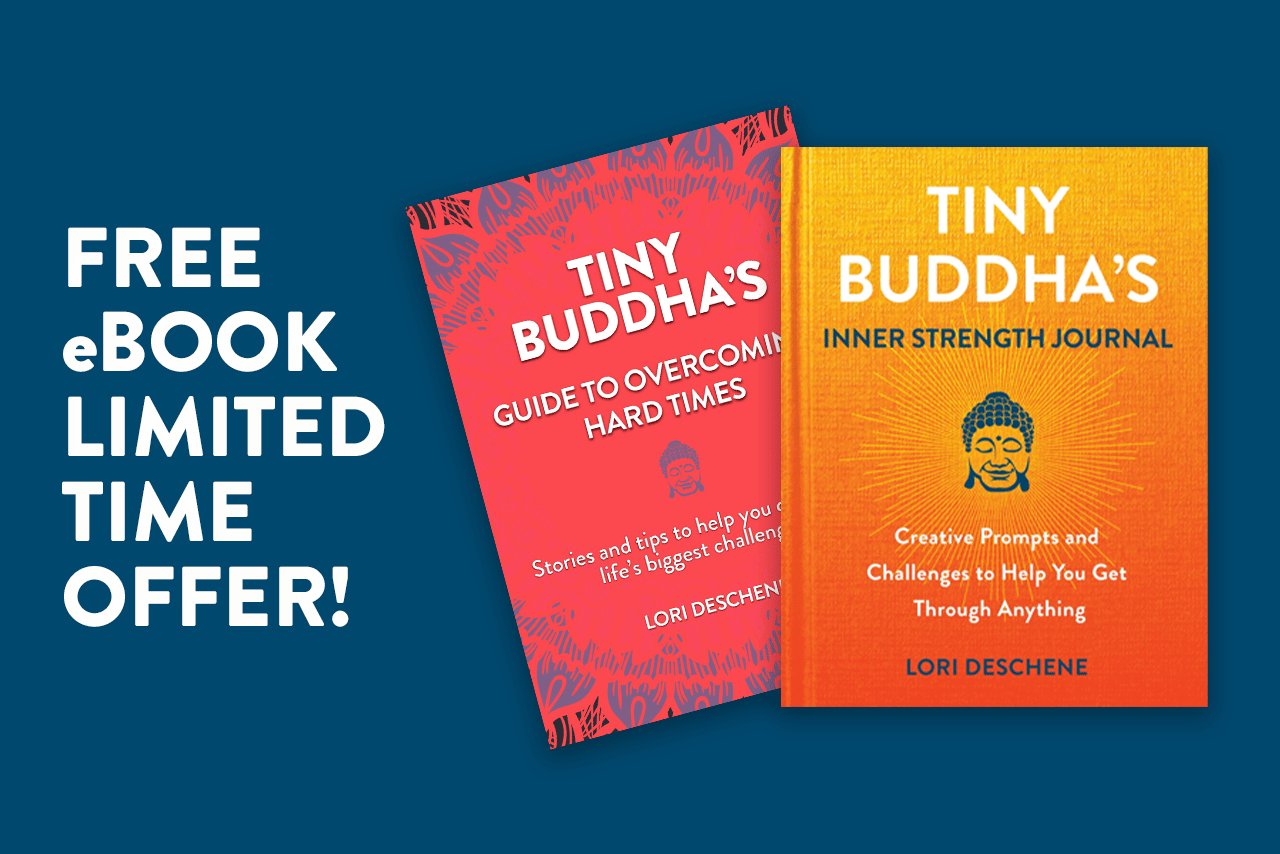
  • The Six Ps: What to Do and Not to Do When Dealing with Setbacks and Failure

    The Six Ps: What to Do and Not to Do When Dealing with Setbacks and Failure

    “Sometimes you get what you want. Other times, you get a lesson in patience, timing, alignment, empathy, compassion, faith, perseverance, resilience, humility, trust, meaning, awareness, resistance, purpose, clarity, grief, beauty, and life. Either way, you win.” ~Brianna Wiest

    “Good as gold,” the cab driver replied as I nervously handed him the $20 bill and asked, “Okay?” He jumped in his cab and drove off.

    I was pleasantly surprised by his politeness, as I was expecting him to argue with me for extra money because we’d gone around in circles searching for the address that I had given him at the airport. These were the pre-GPS days, of course!

    This was the start of my emotional rollercoaster upon arrival in New Zealand as a new migrant.

    The first few days were filled with excitement and happiness. Discovering a new country, meeting friendly people, learning new things—all these experiences made me a wide-eyed migrant seduced by the charms of my new surroundings.

    After a few weeks, the rollercoaster took a downward dive as I started getting frustrated with a spate of rejections. All my job applications brought forth polite rejection letters. The message I was getting was that my lack of local experience made me very unappealing to prospective employers. Nobody was willing to even interview me.

    How was I going to break out of this Catch-22 situation? I couldn’t get local experience without a job, but I couldn’t get a job without local experience!

    After months of fruitless searching, the rollercoaster finally took an upward turn. Driven to despair by the unwillingness of employers to grant me an interview, I decided to enroll in a university to acquire a local qualification in the hope that it might open a door for me. This out-of-the-box thinking got me my first job through a contact from the university. At last, a feeling of joy!

    I felt that my problems had ended, and now I was set for a long and successful career in my adopted country. How wrong I was! It was time for the emotional rollercoaster to start its downward journey again.

    Within a few months, my joy turned to confusion when my employer went from being very pleased with me to finding fault with everything I did almost overnight. I struggled to understand what had changed.

    A little while later I realized that my employer had hired me only to take advantage of a government scheme that subsidized (for a fixed term) employers who hired new migrants.

    My employer blamed me for things that had nothing to do with me and attributed other people’s mistakes to me. His cunning plan was to make my life so difficult that I would quit. That way there wouldn’t be any awkward questions from the government department about hiring me and then firing me within a few months.

    I felt an overarching sense of sadness and disappointment when I realized that my initial thoughts of everyone in my new country being friendly was just an illusion. I learned the lesson that people were people, some good and some not-so-good, no matter what part of the world they were in. I parted ways with my first employer in rather unpleasant circumstances.

    The long period of unemployment that followed created self-doubts in my mind.

    “Did I do the right thing by moving to another country?”

    “Will I ever succeed in finding decent employment?”

    Feelings of regret began to run riot in my mind.

    “Why didn’t I find out more about my employment prospects in this country before deciding to move here lock, stock, and barrel?”

    “I shouldn’t have taken such a big risk.”

    Every time I heard about someone that I knew doing well back home, I felt sorry for myself. I started feeling like I’d made a mistake by moving to New Zealand. As I had burned bridges before migrating, I felt there was no way of going back and restarting from where I had left off.

    By the time the rollercoaster took another upward turn, I had already been in the country for quite a while. It took four to five years for my career to stabilize and for me to start feeling satisfied with my decision to move. When you migrate to a new country, it’s not just the flight that is long-haul!

    I’ve shared the story of my emotional rollercoaster so I can also share my consequent learnings with you. My hope is that if you ever find yourself in a similar situation, you might be able to alleviate your feelings of hopelessness with the realization that you’re not alone and you can get out of any difficult situation with the right mindset.

    THE SIX Ps

    I’d like to encapsulate this journey of going from where you are to where you want to be in terms of “The Six Ps”—three Ps for what one shouldn’t do, and three Ps for what one should do.

    Let’s first take a look at the three Ps to avoid.

    1. Don’t take setbacks or adversities PERSONALLY.

    It’s important to separate your failures from your identity.

    If we take every rejection, setback, and problem personally, our self-esteem takes a beating and we can easily go down the rabbit holes of despair and depression.

    I was rejected over 200 times, without even getting an interview, before I got my first job. While I would never want to be in that situation again, or ever wish that upon anyone, I realize that I was fortunate not to allow myself to get dragged deep into the swamp of feeling worthless. In hindsight, I believe that this tough phase played a key role in building my resilience.

    2. Don’t allow a failure to become all-PERVASIVE.

    A failure or setback in one area of your life should remain contained to that area and not spill over into other areas.

    When my emotional rollercoaster was on a downward slope, it felt natural for me to start linking my failure in landing a job to every other aspect of life in the new country. Negative thoughts started doing the rounds in my mind.

    “I’m a misfit here.”

    “This place is not right for me.”

    “I am doomed.”

    The unfortunate consequence of such pervasive thinking is that it becomes a self-fulfilling prophecy unless you stop this vicious cycle before it becomes too late. Enrolling in a course was the best step I took at that time as it gave my mind something else to focus on.

    3. Don’t think of any adversity as PERMANENT.

    Every crisis in the history of the world has ended. However difficult your challenge might seem, there will always be light at the end of the tunnel. You may not be able to see it from where you are now, but take comfort in the history of the world and assure yourself that your crisis will also have an end.

    My challenge with finding a job as a migrant went on for a long time, but eventually, it did end. If I had adopted a mindset of permanence with thoughts like “I’m never going to succeed here,” my efforts would have waned. When our efforts start to taper off, the desired results start moving further away from us.

    Now for the three Ps to adopt!

    1. Have PATIENCE.

    I’m sure you’ve heard the expression “good things take time.” Have faith in that!

    Some things take longer than we would like. That’s just life. Have the willingness to wait as you keep following the process. Dedicate yourself to the process and allow the results to happen.

    2. Develop PERSEVERANCE.

    Too often people give up just before they’re about to crack the code. The ability to continue our efforts in the face of difficulty or forge through delay in the way of their success is what separates the winners from the also-rans.

    Life is like an obstacle race. Get better at tackling the obstacles and continuing your journey toward your objectives. Take help, reach out for support—do whatever it takes to keep going.

    3. Find your PURPOSE.

    I believe that this third P underpins the other two Ps that you should do to achieve success.

    Without a strong purpose, it becomes easy to give up when the going gets tough. Purpose provides the fuel for motivation.

    Figure out why you want what you want. What is driving you? Go deep, look beneath the surface—sometimes your real WHY can be hidden under superficial WHYs.

    It can be difficult to have patience and perseverance if you don’t know the true purpose behind your goals.

    Life is a journey of ups and downs. Realizing and accepting this fact puts us in a much better position to handle adversities. Most of our disappointment in life comes from having unrealistic expectations.

    If you’re ready to handle the ups and downs of this rollercoaster of life, buckle yourself in and enjoy the ride!

  • How I Get Through Hard Times Using Curiosity, Compassion, and Challenge

    How I Get Through Hard Times Using Curiosity, Compassion, and Challenge

    “Sometimes the worst things that happen in our lives put us on the path to the best things that will ever happen to us.” ~Unknown

    Until I was thirty-seven, I thought I’d led a pretty charmed life: I had a supportive family and good friends, I’d done well academically, always got the jobs I’d applied for, and met and married the perfect man for me.

    In 2013, when I was thirty-five weeks pregnant with my second child, I was diagnosed with stage 3 breast cancer. My baby was induced at thirty-seven weeks, and my chemo started ten days later. In a funny way I was relieved; Okay, I thought, I’ve been seriously lucky up until now that no one has been ill in my life, so if I can survive this, then this is as bad as it gets.

    And that year was bad—moving home, caring for a toddler and a newborn, and going through aggressive cancer treatment was horrendous, but I hunkered down, tried not to think too much about it, and survived.

    In December 2014, literally as we were clinking champagne glasses to celebrate my all-clear results, my husband had a devastating call from his mum in New Zealand. She had just been diagnosed with a rare and incurable cancer. Early the following year my dad was diagnosed with stage 4 bowel cancer, and my mother-in-law died that spring.

    It was at this point I started to feel weighed down with a heaviness. This wasn’t the deal… I’d taken the cancer hit for the team, everyone else was supposed to stay well. I started to lose my trust in the world.

    My urge to control everything and everyone around me, which I now realize I have had since childhood, went into overdrive. I became fearful of change and made list upon list to organize and reorganize my life until I had anticipated everything that might go wrong and put things in place to deal with it.

    My brave dad endured a variety of invasive and aggressive treatments, but his health continued to decline. I could not control what was happening or the sense of loss and grief that at times I felt were swamping me.

    Something had to change: I started journaling, yoga, and meditation. Slowly I felt my anxiety and my panicked grip on my life begin to lessen. I looked inward and I started to notice familiar feelings and patterns, recognized myself responding to roles and labels that I no longer felt to be true.

    There were shifts; very, very small shifts, but with two small children, a husband working long hours, and a dad with rapidly declining health, even small shifts made a difference to my capacity to cope.

    Toward the middle of 2015 my husband started to get awful headaches, nausea, and dizzy spells. He was in a very stressful job, so decided to leave work at the beginning of 2016 to get his health back and decide what he really wanted to do with his life. However, in the spring of 2016 he was diagnosed with an incurable brain tumor. At that stage my children were three and five.

    The next couple of years were consumed by medical appointments for my dad and my husband, alongside the busyness that goes hand in hand with raising young children, but I continued my inner work. I examined my feelings. Was that really how I felt? Had I felt that way before? What helped then, what might help now? Is the story I’m telling myself about this true? What do I need right now?

    In spring 2018 my dad died, in spring 2019 my husband died, and in spring 2020 the UK went into its first lockdown due to Covid-19.

    Every year since 2014 I’ve said to myself, well surely the worst has happened, this year has to be better, and yet each year something else monumental and life-changing has happened. The past seven years have been relentless, and at times I have been overwhelmed by the responsibility of caring for the people I love most in the world.

    People used to hear my story open mouthed and ask, “How do you cope?” I would reply in a way designed to brush them off, remove their focus of attention, and minimize my pain by saying, “Oh well, you know, you just deal with what life throws at you.” I knew that this wasn’t true, but a flippant reply was easier than the truth. After years of continual inner work however, this is my honest reply:

    To boost your resilience, to heal, and to ultimately thrive you have to be prepared to turn over the picture-perfect patchwork quilt of your outer life that you present to the world and take a good look at the messy stiches on the underside.

    You need to be prepared to look at the messiest of those stiches and painstakingly unpick them so that you can find the knots, the tangles, and the imperfections. It’s only when you connect with your authentic self that you’re able to respond to your unique needs in times of crisis and learn what you need to do to foster your own resilience.

    The way of doing this will be different for everyone, but if I could boil it down to one pithy statement it would be to always keep in awareness the 3 C’s: curiosity, compassion, and challenge.

    Here are some ways I’ve applied this in the last seven years to help me, and perhaps these ideas might help you too.

    Allow your feelings.

    Other people are allowed to feel uncomfortable about this, but that is not your responsibility. Your responsibility is to embrace your emotions so you can process them and work through them instead of repressing, denying, or numbing them with substances and distractions.

    In my life this idea of numbing or distracting has taken shape in many ways. One is the compulsion to check my phone rather than sit with feelings of restlessness, boredom, or uncertainty. Sometimes I find myself opening my fridge or cupboard, not because I’m hungry, but because I’m anxious or agitated.

    Recently, I’ve needed to work on sitting with my feelings when I say “no” to someone and worry there will be painful repercussions if I don’t keep other people happy.

    These are all hugely uncomfortable realizations, but offer an opportunity to spot patterns—do I always reach for food after a specific event, do I always reach for my phone when I feel a certain way in my body?

    Once I’ve shown a curiosity about my choices, I can have understanding and compassion for why and challenge myself to do something else. Instead of food can I do some rounds of a breathing exercise? Instead of the phone can I practice some simple yoga poses? Can I pause before saying “yes” to something I know won’t serve me and think of the times I’ve said “no” and there haven’t been negative repercussions?

    Key questions here are: What do I really need, what am I afraid of, and how can I soothe my threat system in that moment before reacting?

    Put your needs first.

    I learned that however much I was needed by other people (and with a dying dad, a dying husband, and two small children I was needed a lot), I had to start the day knowing that at some point I was going to make time to put my needs first.

    Sometimes that was getting up early to enjoy a hot chocolate in peace, often it was taking some quiet time in nature. I joined a gym with a pool because swimming is something I find hugely supportive for my mental health, and I joined an online yoga site as I no longer had the lengthy chunks of time I needed to get to a class in person.

    Embrace ritual and routine.

    Decision fatigue contributes massively to how overwhelmed I can become; routines provide a secure framework for my family to feel supported and give me more energy for the unexpected things that life inevitably throws at me.

    My routine includes:

    • Planning my week ahead on a Sunday—I have a simple document with columns for appointments, reminders, to-do list, and well-being
    • Putting out school clothes and making lunches the night before
    • Having a grocery delivery booked in for the same day and time each week
    • Menu planning and pre-preparing simple meals for the nights of the week that I know will be busy or I am working late

    Put together a well-being toolkit.

    Explore ideas and suggestions that you might find supportive, but don’t feel beholden to it. You don’t need to use all of the tools all of the time. Learning to listen to what you need in the moment (and giving yourself permission to act on it!) is really empowering.

    My well-being toolkit includes…

    • Breathing exercises
    • Journaling
    • Yoga
    • Reading
    • Running
    • Meeting friends for tea
    • Trying out new recipes
    • Sitting still—either meditating, focusing on my breath, or just letting my mind wander

    Build a supportive team around you and know their individual strengths.

    No one person can deliver everything you need. Manage your expectations about what each treasured person can bring to your life and learn who to go to for what.

    Challenge the narratives, expectations, and labels in your life (my 3 C’s).

    Do they still serve you or feel true; where do they come from; what do you need in order to let some of them go

    There were ways I perceived myself and labels others had given me that only addressed the way I presented myself outwardly. By turning over the quilt and looking at the stiches that made up these labels with curiosity and compassion I was able to challenge them.

    For example, am I really “standoffish,” or is that just my defense against crippling social anxiety? Am I really “bossy,” or am I just frightened of how unsafe the world will feel if I lose control? Am I really “capable” or just terrified of asking for help and being rejected?

    I would never suggest this is a simple process, and reaching even a modicum of self-awareness is a daily and never-ending challenge for me. There are no black-and-white answers, so it’s important to become accepting of living in the grey area.

    Ultimately, I believe that approaching each day, every response, every feeling with curiosity invites compassion and understanding, which helps us challenge and address underlying insecurities and outdated narratives that keep us down and stuck.

    Supporting ourselves to see beyond the labels, roles, and responsibilities layered on through our lives allows for the possibility of the emergence of the authentic self.

    This is a work in progress, I am a work in progress, and always will be.

    Some days I am overwhelmed with sadness, a heavy heart, and a sense of loss; some days I awaken already infused with a sense of gratitude and joy. Every day, however, I wake up prepared to be curious and interested, to approach all interactions with myself and others with compassion, and to do what I can to challenge thoughts and beliefs that I don’t want to take into my future. I just know that next year will be a better year.

  • When Life Gets Hard: 4 Lessons That Eased My Suffering

    When Life Gets Hard: 4 Lessons That Eased My Suffering

    “In some ways suffering ceases to be suffering at the moment it finds a meaning.” ~Viktor Frankl

    When life goes sideways, it can be hard to take one more breath, let alone find meaning.

    Trust me. I know.

    In the same year, I had breast cancer, chemo, radiation, and a divorce I didn’t want. There’s more to the story (there always is), but in essence, I lost everything—my health, my love, my home.

    During all of this, I lost sight of myself, quit trusting myself. I was sure I was to blame for everything.

    At the same time, within twenty-four hours of leaving the house I loved, six friends had given me the keys to their houses, telling me I always had a place to stay. My family showed up for me in ways that had me weeping.

    Also during this time, I had two powerful dreams and one still small voice—these three messengers told me the very things I needed to hear to go on.

    My first dream involved someone cooking something delicious in a kitchen. I couldn’t eat what she was making, because taste often goes awry with chemo, but I remember the cook saying, “Honey, there’s more sugar than salt in this recipe.”

    In other words, life’s sweetness would return. Just give it time.

    The second dream I had is that I dropped deep into the earth where every last bit of me was burned away. All that was left was a fierce and shining bone.

    This dream promised me that there was something deep inside that was indestructible, and it had everything to do with fierceness and light.

    And that still small voice? No matter what was happening, deep inside there was this wise and quiet Me who refused to let me be hurt anymore. What do I mean by that?

    I knew I needed something to help me survive, but this grounded Me knew I needed to be intentional about how I chose to survive. Because I wanted to make myself better, not worse.

    I began to write and record mini-meditations. I called them “A Hit of Hope.” A friend told me that the best place to record was in a closet, so there I sat, on top of my shoes, talking into my phone—using my voice and my words to name my pain and to convince myself that things would get better.

    Any human being will have pain and trauma. Any human being will have things happen to them that they would rather avoid. But as long as we are alive, we can know that life will go sideways. In big and small ways, we will suffer. So as much as it pains me to say this, why suffering happens is irrelevant. The only question we can answer for ourselves is how we will choose to be in the midst of pain and suffering.
    While there are still days when the bus of emotions can run me down, and while I have made more than my fair share of missteps in my recent journey, I have learned a few things along the way.

    1. When there are big, and out-of-control life events, radical self-love and emotional recovery are the first order of business.

    When you are hurting, put down the metaphorical gas can or salt or knives. Don’t make the fire any bigger or the wounds any deeper than they already are.

    What do I mean by that? Make choices that keep your head clear, choices that keep your body and spirit safe.

    For instance, a friend of mine, who was going through a divorce at the same time, was told by his best friend, “Just get roaring drunk, and stay that way for three months.” While that might help numb the pain, that kind of behavior would only create more problems in the long run. It would be far more healing to embrace journaling, yoga, or some other form of self-care.

    Also, even if you messed up, don’t beat yourself up. Can you admit to how you contributed to the situation? Absolutely, but think of yourself like a kid on the playground. More scolding and finger wagging usually does little to help the situation. Often, it’s a big ol’ hug that is needed to stop the tears. So, get centered, get settled, and heap loads of love on your hurting self.

    2. You get to feel every ounce of what you are feeling.
    Do not be ashamed of your feelings. A Buddhist concept relates to this: first and second darts. The first dart is the emotion (sadness, fear, anger), and because we are human, it is right and good to let those emotions flow through us.

    The second dart is our reaction to our emotion. Why do I always do this? If I were a better person, I’d… You know the drill. Feel your feelings, so that they can rise up and flow away, leaving you calm and clear.

    3. There is no time to lose, but there is no need to hurry.

    What in the heck does that mean? That bold statement doesn’t mean you should fly into manic or panic mode, but there is nothing like a life-threatening illness to remind a person that this now matters. In fact, this is the only now you are assured of getting. “You never know what’s coming,” a friend often says.
    The idea is to live each day fully. To make the small choices, the day-to-day decisions that bring you the most joy, the most delight. This might mean starting that novel or business, calling that friend you’ve been missing, getting on your bike or yoga mat, or climbing that mountain and yodeling until the grizzlies roar back in response.

    Simply put, there is not one day, one decision that will magically poof us to the good life for the rest of time. There are the small choices that add up—and either bring us toward more wholeness or continue to tear us to bits.

    4. Meaning is what helps us to survive.

    This last one is something Viktor Frankl, a survivor of four Nazi death camps, pointed out. In the worst of the worst, it can feel almost impossible to find meaning, but doing so is essential. It’s here that the why matters.

    When life assails, it can be easy to ask, “What’s the point?” To feel adrift. Untethered. Rocked this way and that by wind and wave, all threatening to pull you under.

    You have to find your why, your meaning, your sense of purpose or intention. What can you—you—do that makes life feel fuller, richer, more vibrant and alive?

    For me, it was helpful to think about active verbs. I wanted to move, create, heal, serve.

    What did this look like? I would work out each morning, because that helped me to feel strong in my own body. Then I would sit down and write my meditations, getting lost in the joy of doing something creative. This process not only healed my own struggling spirit, but I hoped it might do so for others. When I posted them, I did so with the intention of letting them serve others.

    If you have a hard time finding your own sense of meaning, take a look at your life. What do you do that makes you lose time, something you get lost in? That’s often a great indication of what brings you meaning. Or what is something you do that makes you feel better when you are done? How can you incorporate that into your life more?
    If you are still struggling, ask a friend to help you brainstorm. Or take a walk, and let your mind wander along with your feet. Your spirit often just needs some time, space, and quiet to speak deeply to you.
    This might sound like fluffy advice, but it’s not. As Frankl famously said, “He [or she or they] who has a why to live for can bear almost any how.”

    To be clear, this isn’t easy, nor does it happen in a day, a week, a month, or even a year. But create the right conditions and good things are far more likely to come.

    Last week, I happened to be sitting on my front porch. When I got up to go inside and make myself tea, I noticed my orchid in the front window.

    A friend gave it to me before I started chemo. Every morning, I look at it as I sit inside and write, but this was the first time I’d seen it from the outside. From this new perspective, I could see a gathering of buds, pressed up against the window, the direction from which the light comes.

    The soon-to-be blossoms were hidden entirely by the pot and the leaves when I sat inside in my leather chair.

    That orchid offered me a message, just like my dreams. Those flowers showed me a deep and profound truth: sometimes, the blossoming is on the other side.

  • The Wind That Shakes Us: Why We Need Hard Times

    The Wind That Shakes Us: Why We Need Hard Times

    “The pessimist complains about the wind; the optimist expects it to change; the realist adjusts the sails.” ~William Arthur Ward

    I live in the windiest city in the world—Wellington, New Zealand. Perched between the North and South Island, this colorful little city gets hammered by wind. The winds from the south bring cold, and the winds from the northwest seem to blow forever. My body is regularly under assault. But amid all that blustering lies the answer to one of life’s great questions: How do we feel at home in the wind? Or better phrased, how do we live with the hard things that blow our way?

    This research can shed some light.

    The Biosphere 2 was a scientific experiment in the Arizona desert conducted in the eighties and nineties. A vast (and I mean massive) glass dome housed flora and fauna in a perfectly controlled environment. It held all of nature: trees, wetlands, deserts, rainforests. Animals, plants and people co-existed in what scientists thought was the perfect, optimal environment for life—purified air, purified water, healthy soil, filtered light.

    Everything thrived for a while.

    But after some time, the trees began to topple over. When the trees reached a certain height, they fell to the ground.

    This baffled the scientists at first. That is until they realized that their perfect environment had no wind, no stormy torrential weather. The trees had no resistance. The trees had no adversity.

    The scientists concluded that wind was needed to strengthen the trees’ roots, which in turn supported growth. The wind was the missing element—an essential component in the creation of tall, solid, and mighty trees.

    What can this science experiment teach us about real life?

    Everything.

    A life without storms is like the Biosphere 2. Sure, it sounds idyllic. But that’s just a perception. And I fell for it hook, line, and sinker.

    I thought a perfect life would make me happy. And it did, for a while. Good job, great husband, lovely home. But I knew deep down that something was missing. I always had a sense that life was incomplete. I longed for something; I just didn’t know what. It baffled me, just like it baffled the scientists.

    Without knowing it, I, too, had placed a biosphere around my heart. If any pain, any resistance, blew my way, my biosphere stopped it from penetrating. That is until I was diagnosed with blood cancer, and things began to crack. 

    Sitting in the office of a psychotherapist a few months after my diagnosis, nervously hunched and with hands under my thighs, I simply said, “I am really scared about my cancer.”

    That moment that I assumed was weakness turned out to be the exact moment my biosphere, my armor, began to crack.

    My diagnosis, my adversity, was nothing more than an opportunity to step outside of comfort and tell someone I’m scared. It jolted me enough to put me on an unexpected path of inner enquiry.

    Was it scary to open up? Hell yes! I wanted to stay in the biosphere. I really did. I kept searching for comfort within it, but I was unsatiated, and the wind crept in anyway and just grew stronger: I lost someone I loved to cancer, a close friend backstabbed me, my postpartum body broke, more wind, more pain, all while dripping in very small children. Just like those felled trees, I, too, toppled to the ground.

    When I could no longer withhold the wind, when I had to step out of the comfort of my biosphere and talk about my fears and look at my darkness, only then did I grow tall enough to find what I was looking for: I was longing to know the fullness of myself.

    I knew my old habits of perfecting and controlling life to avoid pain, numbing pain, or distracting myself from pain no longer worked. Those strategies did not lead me to the thing I wanted most: completeness. I had to go through the pain. Sit in it. Let it wash over and into me. I had to feel what it’s like to have cancer, be lonely, get hurt, lose someone I love, have a broken body. Only by going through it did I realize I could transcend it.

    Liberation was on the other side of pain. It existed outside of my biosphere. One therapy session at a time, one book at a time, one podcast at a time, one meditation at a time, one hard conversation at a time, slowly, things began to crack. Inch by vulnerable inch, eventually (like, years later), my biosphere crumbled to the ground.

    Brené Brown calls life outside the biosphere “living in the arena.” She said, “When we spend our lives waiting until we’re perfect or bulletproof before we walk into the arena, we ultimately sacrifice relationships and opportunities that may not be recoverable.”

    She also said, “I want to be in the arena. I want to be brave with my life. And when we make the choice to dare greatly, we sign up to get our asses kicked. We can choose courage or we can choose comfort, but we can’t have both. Not at the same time.”

    The courage to be vulnerable is the springboard out of the biosphere.

    If you’re in adversity right now—in lockdown, or the doctor’s office, or separated from a loved one— perhaps your biosphere, too, can no longer protect you from pain. COVID-19 has cracked open our collective armor and shown us how little control we have. It’s hard. It’s painful. But it is also an opportunity. When the outside world is crumbling, the only way is inward.

    When I look back, I see that pain or resistance only ever asked one thing of me—to look at it. It was a nudge (or a shove in my case) to look inward, get vulnerable, talk about my feelings, unpack my darkness, cry, unearth, read, listen, meditate, move forward in my awareness, expand my consciousness.

    And with time, I grew beyond the safety of the biosphere to a height that was inconceivable while I was in it. Without the wind, I would never have seen the height I could reach.   

    This process of unearthing all my fears and darkness eventually lead to a place of power. Now I have the awareness and power to choose when to act from fear and when to ignore it. The wind no longer rules me. I am at home in it—figuratively and literally.

    Living in the middle of Middle Earth has proven one thing: the wind is constant. We can’t avoid hardship any more than we can avoid day turning into night. The hard things in our life will keep on coming—more lockdowns, more sickness, more hurt—and the only way to be at home in the wind is not to fight it, to learn to live with it.

    We have a saying here in Wellington: You can’t beat Wellington on a good day. It’s true. When the sun is shining, Wellington is the most glorious city on earth. The wind has blown away the cobwebs, and majesty remains. The craggy coastlines glitter and the city’s heartbeat thumps and vibrates and enters the hearts of all who live here. On these days, the thrashing wind is forgiven, and we fall in love with our city again. And again. And again.

    Without the wind, there’d be nothing to forgive. There’d be no falling in love process. Life would exist on a flatline. Yes, there would be no gale. But we’d also miss out on awe. Life is both wind and sun, pain and beauty. By staying in the biosphere, we risk missing the magic that sits outside of it.

    I’m so glad I took that first vulnerable leap of faith all those years ago. Life outside the biosphere isn’t scary like I imagined. I didn’t remain on the ground like a rotting felled tree. I grew.

    I grew to a place where the air is clearer. I can breathe. Frustration or hurt or pain isn’t held onto for any sustained length of time. The waves of emotions come in, then go out. I observe it all without a sense of lasting entanglement. Fear is in the backseat. Pain is softened. Beauty is heightened. Love is everywhere, even in the wind.

    Deepak Chopra said, “The best way to get rid of the pain is to feel the pain. And when you feel the pain and go beyond it, you’ll see there’s a very intense love that is wanting to awaken itself.”

    That’s what is waiting for you outside the biosphere.