Tag: resilience

  • How Menopause Exposed the Hidden Trauma I Spent Years Ignoring

    How Menopause Exposed the Hidden Trauma I Spent Years Ignoring

    “There is no way to be whole without first embracing our brokenness. Wounds transform us, if we let them.” ~Sue Monk Kidd

    Menopause flagged up everything unresolved, unmet, and unchallenged and asked me to meet it with grace.

    I’m not saying it was an overnight thing—more like a ten-year process of discovery, rollercoaster style. One of those “strap yourself in, no brakes, no seatbelt, possibly no survival” rides.

    If I’m honest, the process is still unfolding, but with less “aaaaggggghhhhh” and more “oh.”

    Having mentally swapped Nemesis Inferno for It’s a Small World, I can now look back with deep compassion for that younger version of me at the start of perimenopause.  She was the one frantically Googling her way through a vortex of symptoms, never quite able to figure out whether it was a brain tumor or an underactive thyroid gland.

    It all started when I was around thirty-five (for context, I’m now forty-nine). I’d just moved to Brighton from Cheshire to do a degree in songwriting at BIMM and threw myself into it with all the gusto of a twenty-four-year-old; after all, I had it…the gusto, that is.

    That first year was wild, to say the least, but then, the ground beneath me started to fracture.

    My mind would go blank on stage. The keyboard started looking like a fuzzy blob of jelly. My heart would pound through the night for no apparent reason. I gained a spare tire around my middle. I’d walk into town and have a panic attack, clutching the wall of a bank while strangers side-eyed me with pity or concern.

    My libido shot through the roof like a horny teenager. The rage was volcanic, and my poor partner couldn’t even breathe next to me without triggering a tirade (I see the dichotomy too).

    It was a maelstrom of symptoms that even Dr. Google couldn’t unpack, and yeah, neither could my actual doctor, but that’s for another time.

    The real unraveling came when I went on tour with a band at age forty-two.

    It was supposed to be fun-fun-fun, except it wasn’t. It was hell-hell-hell. Ten days, and I slept properly for only one of them. I came home wrecked, assuming that once I returned to my bed and the stability of my beloved, I’d be fine.

    But I wasn’t. That’s when insomnia truly began. I’d ‘learned’ how not to sleep, and now my mind was sabotaging me on a loop.

    In desperation, I booked in with a functional medicine practitioner who ran some lab tests. The results were “low everything,” and that was the first time I heard the word perimenopause.

    I didn’t think much of it at the time—standard denial. But the word lodged itself somewhere.

    Around the same time, I was running a speaker event in Brighton and immersing myself in therapeutic modalities as part of my own healing.

    Music, my first (well, actually second) career, had started to feel more frightening than exhilarating. In my search for calm, I stumbled upon a modality called RTT, a kind of deep subconscious reset done under hypnosis, which changed everything for me and launched me into a new career pathway.

    As I continued learning and applying what I was discovering, a huge lightbulb moment landed:

    “Hang on… A lot of the stories I’m hearing from women in midlife involve more than just symptoms; they involve deep, relational wounds.  I wonder if there’s a link between menopause symptom severity and childhood experiences?”

    So, I turned to Google Scholar to see if anyone else had spotted this link, and sure enough, there it was.

    I came across a 2021 study in Maturitas that found women with higher ACE (Adverse Childhood Experiences) scores were up to 9.6 times more likely to experience severe menopausal symptoms, even when things like anxiety, depression, and HRT were factored in. That blew my mind.

    Another 2023 study from Emory University showed that perimenopausal women with trauma histories demonstrated significantly higher levels of PTSD and depression than those in other hormonal phases. That explained so much of what I was feeling too. 

    And then I found a 2017 paper in the Journal of Clinical Psychiatry showing that women who experienced two or more ACEs were over 2.5 times more likely to have their first major depressive episode during menopause, even if they had no prior history of depression. 

    Finally, a recent 2024 review framed early trauma as a key driver of hormonal sensitivity, especially during life transitions like perimenopause. It helped me see that my struggles weren’t random or my fault; there was something a lot deeper at play.

    But I was still confused. What was the biological mechanism behind all of this?

    Dun dun dah… I found a peer-reviewed paper in Frontiers in Medicine that helped me connect the dots. Take a breath.

    In trauma-exposed women, our GABA receptors become altered. These receptors, which help calm the nervous system, rely on a metabolite of progesterone called allopregnanolone. But trauma can disrupt both our ability to break down progesterone into allopregnanolone and our ability to receive its effects at the cellular level (because the GABA receptors become dysfunctional).

    So basically, that means even if we have enough progesterone, we might not be able to use it properly. The ensuing result is that we become more sensitive to hormonal fluctuations, and we can’t receive the soothing effects we should be getting from progesterone.

    As I began to piece all this together, I was forced to confront something in my own history.

    Because frankly, I thought I had a happy childhood.

    That is, until I came across a concept that stopped me in my tracks. It felt so close to home, I literally clapped the book shut.

    It’s called enmeshment trauma.

    It’s a type of relational trauma that often leads to symptoms of CPTSD (which, just to remind you, tends to flare up during menopause). But the thing is, enmeshment hides in plain sight often under the guise of “closeness.” We prided ourselves on being a close family… too close, in fact.

    I was an only child with nothing to buffer me from the scrutiny of my parents and the emotional load they placed on me. They’d confide in me about each other as if I were their best friend or therapist. I didn’t know it then, but their lack of emotional maturity meant they were leaning on me for unconditional emotional support. I was a good listener and a very tuned-in child.

    I became parentified. Praised and validated for my precociousness, while being robbed of the ability to safely individuate. I was “allowed” to find myself, but the price I paid was emotional withdrawal from my father, equally painful as we’d been so close.

    It was confusing and overwhelming, and I had no one to help me metabolize those feelings. It wired me for hyper-responsibility, anxiety, and guilt. Not exactly the best recipe for a smooth menopause transition, which requires slowness, ease, and softness.

    As a textbook “daddy’s girl,” I unconsciously sought out older men, bosses, teachers, even married guys. Their energy felt familiar. Meanwhile, emotionally available prospects seemed boring, even if they were safer. That attachment chaos added more voltage to the CPTSD pot I had no idea was simmering under the surface of my somewhat narcissistic facade.

    The final ingredient in this complex trauma marinade was a stunted ability to individuate financially. I was still clinging to my parents’ purse strings at age forty-four. The shame, frustration, and despair all came to a head when I dove into the biggest self-sabotaging episode of my life:

    I decided to leave my long-term relationship.

    He was my rock and my stability. But “daddy’s girl” wanted one last encore. And when he refused to take me back, despite my pleading, it was a mess. But, in a twist of grace, my father had taught me grit. How to get out of a hole. And that’s exactly what I did.

    I learned to stand on my own two feet financially. I learned the power of committing to one person and treating them with respect. I learned to set boundaries and become deliciously self-preserving with my energy, because that’s what the menopause transition demanded of me.

    And if it weren’t for those wild hormonal shifts, I’m not sure I’d have learned any of this.

    Through my experience, I’ve come to see that menopause isn’t just a hormonal event. It’s a complete life transition, both inner and outer. A transition deeply influenced by the state of our nervous system and our capacity for resilience and emotional flexibility.

    For those of us with trauma, this resilience and flexibility is often impaired. Hormone therapy can help, yes, but for sensitive systems, it’s only part of the puzzle. And sometimes, it can even make things worse, especially if not dosed correctly.

    As sensitive, trauma-aware women navigating these hormonal shifts, there’s so much we can do to support ourselves outside of the medical model.

    Slowing it all down is one of the most powerful ways we can create space for the ‘busy work’ our bodies are diligently undertaking during this transition. Gentle, nourishing movement. Yoga Nidra. Early nights. Simple, healthy meals. Earthing and grounding in nature. Magnesium baths. Dry body brushing. Castor oil packs. Vaginal steaming. Think: self-care on steroids.

    But perhaps the most radical thing I ever did was to carve out more space in my diary just to S.L.O.W.  D.O.W.N.

    Now, eighteen months post-menopause, I find myself reflecting.

    What did she teach me?

    She flagged up everything unresolved, unmet, and unchallenged.

    She showed me where I was still saying yes to others and no to myself.

    She taught me that I need more space than society finds comfortable.

    She helped me let go of beauty standards and gave me time for rest.

    She absolved me of guilt for not living according to others’ expectations.

    She reframed my symptoms as love letters from my inner child, calling me home to myself.
  • What Finally Helped Me Break Free from Constant Food Noise

    What Finally Helped Me Break Free from Constant Food Noise

    “Between stimulus and response there is a space. In that space is our power to choose our response.” ~Viktor Frankl

    For years, I thought something was wrong with me.

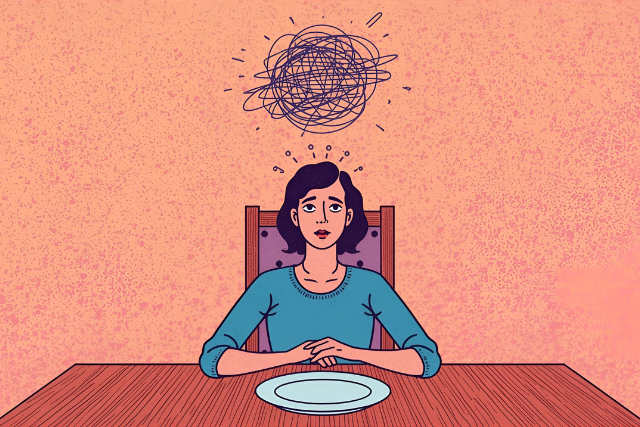
    No matter what I was doing—sitting in a meeting, walking the dog, or watching TV—my brain was busy debating food.

    Should I eat? Shouldn’t I? I could just have one more bite, couldn’t I? What should I eat next? I’ve blown it today, haven’t I? I’ve failed again. Shall I just eat whatever I want and start again tomorrow?

    The chatter was constant. It left me exhausted, ashamed, and convinced that I was weak.

    I told myself it was a lack of willpower. If I just tried harder, surely I could silence it. But the harder I fought, the louder it became.

    The Night Everything Changed

    One night, after a long and stressful day, I stood in the kitchen with the fridge door open.

    I wasn’t hungry. My stomach was full from dinner, but my mind was shouting at me to grab something, anything.

    The noise in my head felt unbearable. It was as if I couldn’t relax until I gave in.

    In that moment, for the first time, I paused. I asked myself a simple question: What am I really hungry for right now?

    The answer wasn’t food. It was comfort. Distraction. Relief from stress I hadn’t dealt with.

    It hit me that food wasn’t the real problem. The problem was the mental chatter about food, what many people now call food noise.

    What I Discovered About Food Noise

    Food noise isn’t hunger. Hunger is physical: your stomach growling, your energy dipping, your body asking for fuel.

    Food noise is mental: urgent, repetitive, often specific. It pushes you toward food even when you’re not hungry, convincing you that you need it to cope or to feel better.

    Learning this was a turning point. For years I had labeled myself a failure. But food noise wasn’t about failing at all. It was about how the brain works.

    Every time I ate in response to boredom, stress, or fatigue, my brain logged it as a “reward.” The next time I felt the same cue, the noise grew louder. The loop repeated itself until it became automatic.

    Understanding this gave me something I’d been missing: compassion for myself. I wasn’t broken. I was human. And if my brain could be trained into these loops, maybe it could be retrained out of them too.

    How I Began to Quiet the Noise

    I didn’t wake up one morning free of food chatter. It quieted slowly, through small practices that I repeated again and again.

    Naming it

    When the thoughts started, I said to myself, “That’s food noise, not hunger.” It may sound simple, but naming it gave me distance. It reminded me I wasn’t my thoughts.

    Pausing before reacting

    At first, I felt powerless against the urges. But I began experimenting with a short pause. Just two minutes. During that pause, I’d sip water, stretch, or step outside. Sometimes the craving was still there afterward, but often it had already passed. That pause gave me back a sense of choice.

    Refuting the chatter

    The hardest part wasn’t the food itself. It was the voice in my head.

    It would say, “You’ve already ruined the day; you may as well keep going.” Or, “One more won’t matter.” I believed it every time, and each binge ended with guilt and shame.

    I finally found help with a cognitive behavioral tool I’d never heard of before: the refutation.

    A refutation is simply answering back to the thought—calmly, clearly, without judgment. It’s like shining a light on a lie.

    The first time I tried it, I wrote my food noise down on paper: “You’ve ruined today, so you may as well give up.” Then I wrote my response underneath: “One moment doesn’t ruin a whole day. If I stop now, I’ll feel better tonight. If I keep going, I’ll feel worse.”

    It felt strange at first, almost like arguing with myself. But slowly, those written words became a voice I could access in real time.
    Now, when the chatter starts, I can hear both sides: the urge and the refutation. And with practice, the refutation has grown stronger.

    Some of the ones I use often are:

    Food noise says: “One bite won’t hurt.”
    Refutation: “One bite keeps the loop alive. Every time I resist, I weaken it.”

    Food noise says: “You can just start again tomorrow.”
    Refutation: “If I wait until tomorrow, I make waiting a habit. The best time to start is now.”

    Food noise says: “You’ve earned this.”
    Refutation: “I’ve earned peace of mind, not more noise.”

    At first, I had to write them down. Over time, they became automatic.

    Self-kindness

    For years, slipping up meant spiraling into guilt and shame. Now, when I give in, I remind myself, “This is hard, and I’m learning.” That kindness keeps me moving forward instead of sinking deeper.

    Each of these practices was like a mental rep in the gym. The more I repeated them, the stronger I became.

    What Quiet Feels Like

    The first time I realized I had gone an entire morning without obsessing about food, I almost cried.

    The silence in my head felt like a gift.

    Quiet doesn’t mean I never think about food. It means food has stopped being the background soundtrack of my life.

    I can work without constant distraction.

    I can sit with my family without guilt.

    I can enjoy a meal without a running commentary in my mind.

    Most importantly, I’ve started to trust myself again.

    The Bigger Lesson

    What I learned from food noise applies far beyond eating.

    Our minds are noisy places, full of chatter about success, relationships, fears, and the future.

    If we treat every thought as urgent and true, we end up exhausted. But if we learn to pause, to name the chatter, and to choose differently, we create space for peace.

    The greatest gift wasn’t just a quieter relationship with food. It was discovering that not every thought in my head deserves a reaction.

    That lesson has changed more than my eating. It has changed how I live.

  • The Unexpected Way Jiu-Jitsu Brought Me Back to Myself

    The Unexpected Way Jiu-Jitsu Brought Me Back to Myself

    “You may encounter many defeats, but you must not be defeated. In fact, it may be necessary to encounter the defeats, so you can know who you are.” ~Maya Angelou

    There was a time in my life when everything felt heavy, like I was constantly carrying around a weight that no one else could see.

    I wasn’t in a crisis, exactly. I was functioning, showing up, doing what needed to be done. But inside, I was struggling to stay afloat—trapped in my own head, questioning my worth, and unsure how to move forward.

    One evening, I walked into a Brazilian Jiu-Jitsu class for the first time. I had no idea what I was doing. I didn’t know the rules, the language, or even how to tie the belt on my gi. But I was drawn to it—maybe because I was desperate for something to pull me out of my mental spiral. I needed structure. I needed challenge. I needed escape.

    What I didn’t expect was that BJJ would become more than a physical outlet. It became a form of therapy. A place where I could reconnect with my body when my mind felt like a battlefield.

    Finding Peace in the Pressure

    On the surface, BJJ looks intense—people grappling, sweating, fighting for control. But underneath, it’s a quiet game of survival. You breathe. You adjust. You adapt. You keep going.

    There were moments when I would be pinned, completely stuck, with someone twice my size on top of me. I’d panic. My breath would quicken; my thoughts would race. But then I’d hear my coach’s voice in the background: “Slow down. You’re okay. Just breathe.”

    That simple instruction saved me more than once—not just on the mat, but in life.

    Over time, I started to notice something: I was calmer outside of training. More patient. More aware. Jiu-Jitsu didn’t fix my mental health overnight, but it gave me tools to deal with the days when everything felt like too much.

    Losing It… and Finding It Again

    Of course, progress isn’t a straight line. After a few years of training, I got injured. Not once—multiple times. Each injury forced me to stop, rest, and reckon with the fear that maybe I wouldn’t return.

    Without Jiu-Jitsu, I felt lost again. That familiar darkness crept back in, and I realized how much I had come to rely on the practice to stay grounded. But eventually, I returned. Slower, more cautious, but more appreciative than ever.

    I realized it wasn’t about being the best or earning stripes. It was about showing up—for myself.
    What I’ve Learned

    I used to think healing meant getting rid of pain. Now I understand it’s more about learning to live with it—and learning how to move with it, not against it.

    Brazilian Jiu-Jitsu taught me resilience, yes. But more importantly, it taught me presence. You can’t be stuck in your head when someone’s trying to choke you out. You have to be here, now.

    That practice of presence changed how I approached everything else—relationships, work, rest. It helped me become someone who doesn’t give up so easily, even when things get hard.

    Why I’m Sharing This

    Maybe you’re not into martial arts. Maybe you’ve never set foot in a gym. That’s okay. This isn’t about Jiu-Jitsu—it’s about finding the thing that brings you back to yourself. That reminds you of your strength when you’ve forgotten it.
    It could be yoga, running, painting, journaling, hiking, music. It could be therapy. It doesn’t matter what it is, as long as it helps you come home to yourself.

    If you’re going through something right now, I want you to know: You’re not weak for struggling. You’re not broken. And you’re not alone.

    Find your mat—whatever that looks like for you. And when you do, keep showing up. You might be surprised at how strong you already are.

  • How to Navigate Loss and Fear and Emerge Resilient

    How to Navigate Loss and Fear and Emerge Resilient

    “New beginnings are often disguised as painful endings.” ~Lao Tzu

    Sailing on a beautiful day in calm seas can feel like a spiritual experience and can convince your senses that life should always be like this.

    My family life was smooth sailing for many years. My husband and I were committed to our family and our responsibilities of building and running our businesses, leaving little time for anything else. Gradually, the weather changed, and we found ourselves in the uncharted, turbulent waters of divorce.

    I was unprepared for the toll it would take. My anxiety caused me to lose weight, and when I felt hypo-glycemic, it was my body’s reminder to nourish myself. I was scared about what life would look like for my three daughters and me and wanted the best for my husband, even though we decided we could not remain together.
    Living separately, we grew to learn how to do things we depended on each other for, such as financial management, cooking, DIY home repairs, etc. We lost some friends, and some family estrangements developed—a ripple effect we didn’t see coming.

    When you lose friends and family members due to divorce or estrangement, it can make you question your worth and stirs up self-doubt.

    Years pass, and life goes on.

    Eventually, we both remarried, and a few years later, my new husband, Bill, was told he had throat cancer. His treatments whittled down his hard-earned military physique to a shadow of his former self.
    During this time, as his caregiver, I was also preparing to take a board exam to practice my profession, and I worked as a science teacher in an alternative school to help make ends meet. The days were incredibly long and hard for both of us.

    Within that year, my father was diagnosed with cancer, which further destroyed our family. His treatments were equally brutal to his body. Eventually, Bill lost his valiant battle with cancer, and my father lost his battle in the following seven months, resulting in two funerals in a year.

    Physically, I was exhausted and gained an unhealthy amount of weight. Whenever I ate, I had gut pain, so I lost the pleasure of eating. Headaches were frequent, and due to a loss of sleep, my energy was so depleted that doing everyday tasks was a burden, never mind having to relocate and downsize yet again.

    I had little support, and this was when I felt genuinely broken.

    In my “brokenness,” I remembered a conversation with a pastor friend who reminded me that life has its seasons: the spring of childhood, the summer of youth, the autumn of adulthood, and the winter of death. So many aspects of life can be viewed that way. With that, I discovered truth in his words and oddly felt an inner peace.

    I grew to understand the phrase “if you hit rock bottom, the only way to go is up” because I hit those rocks hard. I desperately needed to regain my physical, mental, and emotional health, which had been tested repeatedly for years, for myself and my family.

    My sympathetic fight-or-flight nervous system switch never shut off. I realized I had to change that before relinquishing control of my health and well-being, which I have always valued but took for granted.

    Here is what I discovered in my losses and fears, along with some pearls for living with resilience.

    1. Submit to the process.

    Feel the depth of your feelings by allowing them to flow through you.

    When you are in a liminal place, at the threshold of change, it is only natural to have many strong feelings and feelings that you may resist—grief over the loss of a loved one or a relationship, fear of the future ahead, anger that you are in this position, frustration with your own body, or denial of the new reality.

    Feel your feelings and journal to process them or communicate with someone you trust. This is how you start to heal. Far better than suffering silently is being honest with yourself about your feelings tied to the complexities of your process.

    Minimizing yourself or numbing your feelings invalidates the depth and breadth of your experience.

    If possible, consider reframing a sad or difficult experience to put a positive spin on it.

    I may be divorced, but my daughters are the best part of my life. I would not have them if it weren’t for my previous marriage. Also, downsizing into a smaller home improved my financial situation. I rejected it initially, but it made my responsibilities and financial commitments more manageable in the long run.

    Suffering any kind of loss or hardship is never easy and can feel crushing. Meet yourself where you are, go with the flow of your emotions with self-compassion and nonjudgment, and, if possible, open your mind to reframing a negative into a positive result.

    2. Don’t ruminate while looking in the rearview mirror.

    This is so tempting.

    It is so easy to slip into the default pattern of looking at the past when we want our personal losses, challenges, and difficulties to make sense.

    Exercise radical acceptance if you need to accept your life as it is, even if it causes you pain.

    When I learned of radical acceptance, it felt unnatural, something I might have to convince myself to do. But I realized that to be at peace, I could not control everything in my life. Seasons.

    Also, bringing gratitude into your daily life is a valuable, underutilized tool that brings what is good into focus. When we target several reasons for gratitude as a daily habit, we shapeshift our mindset to support our well-being.

    Amassing what has happened to you in the past and bringing it into focus today creates an unnecessary, overwhelming burden. The past cannot be changed, and the future cannot be predicted, but we can choose to accept what is right now.

    This will lessen your suffering and the tendency to look back in the mirror.

    3. Connect with your physical, mental, and emotional needs.

    Prolonged stress affects our hormones, cardiovascular system, gut health, musculoskeletal system, immune health, and every other function and body system with far-reaching, long-term effects.

    There is no reason to neglect or minimize your needs; this is a time to amp up your efforts to honor your needs. Listening to your body’s messages strongly improves your ability to handle and recover from stress.

    When stuck in the stress cycle, mindful self-care practices are even more important to prevent unhealthy habits from forming. Eating nutrient-dense meals, walking in nature, practicing consistent sleep hygiene practices, or spending time with friends or family members who love and support you are effective self-care practices to reduce stress and manage anxiety.

    According to Maslow’s hierarchy of needs, you cannot experience all the potential that your life has to offer if you do not first meet your basic physiological needs. As you meet those needs, you can move through your experience in life more fully, owning and attracting love to you, developing deep connections, and increasing your confidence, self-esteem, and full potential despite setbacks in life.

    It is easy to become more reflexive than in control, an oversight that is not uncommon for highly stressed individuals.

    When I reprioritized myself with self-care practices, my health and well-being improved, as evidenced by my improved blood labs, weight loss, ease of digestion, and increased energy levels. I had a renewed sense of purpose in my work; later in my life, love found me.

    When you connect with your physical, mental, and emotional needs, you can also better honor them in others.

    4. Chart a course that meets your life’s needs at the time.

    Decide what needs to be done to meet important needs. By successfully tending to some of the smaller needs, you can more easily prepare for larger target goals. With that, you develop an adaptable and increasingly more positive mindset.

    Consider small gains as you progress forward.

    As part of my healing and stress management, I knew I could do what I had to do by taking small, manageable, and incremental steps. It was too difficult for me to envision a big-picture view of a whole and healed life following so much loss for a time, but eventually, that changed.

    A day at a time, a week at a time, and a month at a time are now years later.

    Remaining open-minded and building your optimism naturally builds and reinforces your resilience muscle.

    So celebrate the small gains in your life. They naturally lead to more small successes, which builds confidence in planning for larger ones.

    5. Life happens, and when it does, develop a surfing mindset, even if you fear the wind or the waves.

    When the winds of change occur, a sailor must adjust the sail to tack and harness the wind to his advantage. The wind and the waves do not remain the same even on one given day. Sailors hone their skills to have the wind and the waves support their intended direction.

    Life never remains the same. Things constantly change. When they do, step back, breathe, and ask yourself what the next best step is in caring for yourself in the moment and in moving forward.

    Through resilience, you can more easily heal and accept life’s dynamic nature by learning and growing from overcoming challenges and setbacks, and, in the face of uncertainty, you can live more fully with confidence and joy in the present and in the mystery of the future.

    Resilience is a quality that is not earned by having an easy life; rather, it is a testimony to coming through hardship and challenging experiences and feeling whole despite them.

  • 5 Ways to Stay Mentally Strong, No Matter What

    5 Ways to Stay Mentally Strong, No Matter What

    “Have a little faith in your ability to handle whatever’s coming down the road. Believe that you have the strength and resourcefulness required to tackle whatever challenges come your way.” ~Lori Deschene

    My life is unpredictable.

    These days, it feels like I wake up not knowing what obstacles I’m going to be facing or how to manage it all. Is the world getting more challenging, or is it just me?

    There doesn’t seem to be a magic carpet ride to rescue me, or any of us for that matter, ready to whisk us off into the sunset for a rendition of Aladdin’s “Whole New World,” with “shining, shimmering splendor.”

    Do you, like me, wonder, “How is everyone else navigating life these days?”

    Attempting to put my mind into a semblance of order the other day, I pulled out my self-development toolbox. I began digging around to see what I had on hand from all the self-development books and blog posts I’ve read, therapists I’ve seen, and workshops I’ve taken.

    I came up with the usual suspects: Embrace change! Practice mindfulness! Find your purpose! Reclaim your power! While these fab four sound like a great tried-and-true collection, it felt like I was trying to use the rules of Candyland to navigate the fire-breathing dragons in Game of Thrones.

    Help.

    Like so many others I interact with, such as family, clients, and friends, I sense uncertainty building up on a consistent basis. The hardest part is not having the luxury to curl up and shut the shades and hide under the blankets because there are bills to pay, jobs and careers to sit up straight for, and families to attend to.

    So where do I draw confidence in my ability to handle life?

    I think back to my childhood as a Gen X kid. Growing up in a small town on a dead-end street with ten siblings, I had to figure out how to fend for myself from a very young age. Food went quickly, and I had to forage and make sure I got my share. If there was a school project, I had to find odds and ends in the house to paste together and create an appropriate report to present to the class on my own.

    My parents didn’t get down with glue and popsicle sticks. Ever.

    Using the words “I’m bored” got you a broom and baby handed to you, so I kept myself busy and out of sight of the adults. Anytime I needed a ride anywhere, it was up to me to figure out how to get there and home, and I got stranded many times.

    The superpower I developed as a kid so I could survive was resourcefulness.

    This was, by definition, the ability to find quick and clever ways to overcome difficulties and make use of that which others would normally overlook or discard. If I didn’t have what I wanted or needed, I would have to create possibilities using limited or no resources.

    I developed curiosity, an ability to take care of myself, and the determination to find solutions in the face of any adversity and solve problems for myself and my younger siblings. I put together costumes, learned to sew my own clothes, cooked meals, and became an expert storyteller and little-white-lie fabricator.

    Hypervigilance developed so I could figure out how to read the emotional state of the adults, who were consumed with their responsibilities and their own unfulfilled dreams. Keeping out of harm’s way, such as avoiding my father’s wrath or the teacher’s punishment, became my expertise. Friends were everything, and they, along with the outdoors, helped me have a pretty incredible childhood with lots of fun memories.

    What I learned from my childhood is this: It’s not always a lack of resources that is the problem; it’s a lack of resourcefulness that causes failure.

    There are resources that we think we need, such as money, the right technology, the right contacts, enough time, the best lawyer, etc., and while there’s truth to that, we struggle because we lack the ultimate resource—which is emotional resourcefulness, something we could all access. When you dig deep and utilize your emotional resources,you can get almost any other resource on earth.

    It’s Time to Develop Emotional and Practical Resourcefulness

    Here are my five tips to stay mentally strong and navigate anything that comes your way in life.

    1. Use what you have.

    When I was a kid, no one went to the store to buy me supplies, trendy trinkets, or even necessities like pajamas, pencils, and enough socks. We used and reused what we had around.

    Even when I can afford things I need, I like to take a look at my Amazon cart and double check to see if I have anything at home that I could makeshift or ask a neighborhood WhatsApp group for. You’d be surprised at what people offer up for free, both goods and services. You just have to ask.

    Bartering works as well. I have gotten vacations paid for, kids’ school tuition in exchange for marketing services, and plane tickets for use of my home for a night or two.

    2. Develop your hustle.

    If I wanted the latest thing the other kids had or wanted to go for pizza with my friends, I babysat, raked leaves, and hustled my grandmother for money. I found that if I played her a song on the piano and told her I was the best and prettiest in my class, she would give me $5. It made us both happy!

    Obtain invitations by befriending people you admire and want to be like. Worm your way into communities of your choice by shopping in those neighborhood grocery and coffee shops and talk to people there. Sign up for training and meetings in the town-run parks and recreation centers in those neighborhoods as well. Don’t stop the hustle mindsetwherever you go.

     3. Practice self-talk.

    All through my childhood, I used to constantly tell myself, from the top bunk bed in a crowded bedroom with my sisters, that one day I would be a writer like I read about in my favorite book, Anne of Green Gables. I knew I would one day sell my stories and have the money I wanted. I do that today!

    When I would see things around me that I didn’t like, and there were many, I reminded myself that I would one day be like the well-dressed women in my mother’s magazines: colorful clothes, big white smiles. Seek outside inspiration for this and speak positive, goal-oriented dialogue to yourself.

    When something is not as you would like, tell yourself, “I don’t like it, it’s an inconvenience, and it’s temporary.” Not BUT it’s temporary; say and, or furthermore. “And it’s temporary.” That’s how you talk to yourself, according to former prisoner of war Edith Eger, author of The Choice. “No matter what happens, it’s temporary and I can survive it.”

    4. Trust your intuition.

    Trust that you have the intuition to figure it out. We made it home from school, found our friends outside to hang out with, kept ourselves alive, and sensed when to avoid dangerous adults (most of the time).

    Trust that your instincts will kick in at the precise moment needed, and it may be last-minute, but you’ll always figure it out.

    5. Know that you have a unique purpose.

    I knew my purpose was to be a writer, and I did a good job on my writing assignments in grade school. Never underestimate your power to make a difference with your talent or your purpose, and believe that you have something to offer the world—and offer it.

    I used to volunteer for just an hour a week at a recovery center when I was at my lowest, just to feel purposeful, and I reaped magical rewards from that experience.

    Bonus Tip: Build a Support System

    No one can navigate life’s challenges alone, and building a strong support system is crucial for mental strength. As a Gen X kid, we had our friends on the street to hang out with all the time; we were always there for each other.

    Surround yourself with people who uplift and inspire you. Share your thoughts and feelings with friends or family members (and/or professionals) that you trust, who can provide valuable perspectives along with emotional support. Having a support system not only lightens the load but can also reinforce your much-needed mental fortitude to develop a strong mind.

    While life is unpredictable, by incorporating these five practices into your life, you can build a foundation of mental strength that will serve you well in any circumstance.

    Remember, staying mentally strong is not about avoiding challenges but about facing them head-on with resourcefulness, courage, resilience, and a positive attitude. With these tools in your arsenal, you’ll be better equipped to navigate the unpredictable journey of life and emerge stronger on the other side.

    “Know that you always have the capacity to make the best of anything. Even if you didn’t want it or ask for it, even if it seems scary or hard or unfair, you can make something good out of any loss or hardship. You can learn from it, grow from it, help others through it, and maybe even thrive because of it. The future is unknown, but you can know this for sure: Whatever’s coming, you got this.” ~Lori Deschene

  • One Thing We Need to Survive Crisis, Loss, and Trauma

    One Thing We Need to Survive Crisis, Loss, and Trauma

    “What man actually needs is not a tensionless state but rather the striving and struggling for a worthwhile goal, a freely chosen task.” ~Viktor Frankl

    A couple of years ago, I was sitting in my little mountain cottage, writing away on a new novel. It was a cold and dark February afternoon. So, first, I felt pleasantly surprised when I saw something bright lighting up behind me: I thought it was the sun coming out. But when I turned around, I noticed that my porch was on fire!

    Before I knew what was happening, I was standing out in the snow in my slippers, looking back at the entrance and facade completely engulfed by flames.

    It was like a near-death experience. My mind quickly took an inventory of all the things that were inside the cottage now burning down—pretty much all of my personal belongings. However, in that moment, I realized that nothing else mattered but the manuscript I’d been working on.

    Hours later, after the fire-brigade had left and I took one last look at the charcoaled ruins of what used to be my home, I finally got into the car with Marius, my border collie. (The car key survived by nothing short of a miracle.)

    I was on my way to my mother’s house, nearly 100 miles away, where I would, or so I thought, crash, cry, get drunk, whatever. Any sort of self-care—bathing in chocolate or drugs, massive allowance for self-pity— seemed justified under these circumstances.

    Luckily, it occurred to me that some meditation and self-hypnosis may be a good idea also. And as I tried, I immediately received some deeper intuition about what to do.

    A voice of inner wisdom (or Higher Self, if you want to call it, that has access to cosmic intelligence) gave me some rules to follow in order to remain in a high state of mind, despite the misfortune that had happened.

    These were the rules given to me:

    • Do not, under any circumstances, drink alcohol.
    • Eat a vegan, fresh fruits and vegetables-based diet. Cut all sugar. Your system is under shock and won’t be able to eliminate the toxins without further damage.
    • Go to the gym every day and work out for an hour, vigorously. That will flush out the stress hormones and make you stronger.
    • For now, forget about the house. Live as simply as you can and concentrate on the project that carries the highest energy and greatest hope for the future; i.e., writing your novel. Make it your highest priority, give it regular time and attention, and protect the space in which it is happening.

    For sure, these were words of tough love. Wouldn’t it be, in moments of a great crisis, loss, or trauma, only natural to seek comfort and distraction? However, I’ll remain forever grateful to have received this different kind of inspiration at the right time. Otherwise, it would have been too easy to fall into a dark pit of self-pity, victimhood, and destructive patterns.

    In Andersen’s fairy tale The Little Match Girl, the orphaned child is trying to make a livelihood by selling matches on the street. It’s winter and she’s suffering from the freezing cold, so eventually gives in to the temptation to light one of those matches to warm her hands.

    In the moment of ignition, she feels like being back in her late grandmother’s living room, cozy with a fireplace, roast dinner, and a luminous Christmas tree. Her short-term escape, however, has a price. She gets addicted to lighting the matches; eventually, she wastes all her merchandise and dies. So can we, if we give in to temporary temptations of relief, live up all our resources, and slowly waste away.

    There is, however, a high path out of a crisis. Etymologically, the word crisis goes back to the Ancient Greek κρίσις, which means decision. In moments of great danger, loss, or threat, we are forced to focus our attention and see what really matters

    To me, it was in the moment when I stood there out in the snow, watching my house burn, that I realized what was the most important thing. Even before that, I took writing seriously, but only in the crisis did I learn to prioritize my soul’s calling against all odds.

    The essential question of decision that arises from the crisis is:

    Do we let our lives be determined by the trauma of the past, or do we have a future vision strong enough to pull us forward?

    Once I was at a conference on consciousness where a very interesting idea was brought forward.

    Many of us have heard of entropy: the tendency of closed physical systems to move forward in time, toward increased levels of chaos. (For example, an ice cube being heated up to liquid water (increased entropy as molecules are freer to move) and then brought to a boil (as the molecules in the vapor move around even more randomly.)

    It is, however, less often discussed that—following from the mathematical equations—there also must be a counterforce to it.

    This counterforce is called syntropy. Being the symmetrical law, it moves backward in time toward increased levels of harmony.

    It has been suggested that if entropy governs physical (non-living) systems, syntropy must be true for consciousness (life), which hence, in some strange and mysterious way, must be (retro-) caused by the future.

    Although intriguing, first, this sounded very much like science-fiction to me…

    However, when I began to think about it deeper, I realized how much practical truth there was in this. Psychologically, the future indeed can have a tremendous harmonizing and organizing effect on our present lives.

    Think, for instance, of an athlete who spends several hours a day swimming up and down the pool. When you ask them why they do that, they say because they are training for the Olympics. The Olympics is in the future, but it causes the swimmer in the present to follow an organized and structured training regime instead of just fooling around all day long.

    The life-saving effect of having a worthwhile future goal has been documented ever since the early days of psychology.

    World famous psychotherapist Viktor Frankl observed his fellow sufferers while incarcerated in Nazi concentration camps. Later, he taught that those who had a purpose to keep on living (e.g., a study or manuscript to complete or a relationship to rekindle) were also the ones most likely to survive even under those horrendous circumstances.

    Having worked for years with battered women, I made similar observations. In hypnotherapy we have a set of techniques under the umbrella of future life progressions, which gives the subconscious mind a chance to explore alternative futures. In one exercise, the women were asked to just imagine that overnight a miracle happened, and they were now waking up in their best possible future.

    Shockingly, the individuals most resistant to change were the ones who could not imagine any future day different from their current reality. As it turned out, even more important than healing the trauma of their past, was to teach their brains to imagine a new future

    If we want to take the high path out of a crisis, we must learn that—to imagine our future in the best possible way. It begins by focusing not on the trauma, the pain, and the past, but on the single thing that feels most valuable and worthwhile to pursue in our lives. Once we have found that, our worthwhile goal will serve as a light tower for us to safely sail into the future, no matter how obscure our present circumstances are.

    And what is my most worthwhile goal, you may ask. Ultimately, as Viktor Frankl also said, that is not something we must ask, rather realize that in life it is we who are being asked: “In a word, each man is questioned by life; and he can only answer to life by answering for his own life; to life he can only respond by being responsible.”

    What will your best response be?

  • I Don’t Know Who I Am: How I’m Finding Myself Again After the Abuse

    I Don’t Know Who I Am: How I’m Finding Myself Again After the Abuse

    “When you turn the corner / And you run into yourself / Then you know that you have turned / All the corners that are left.” ~Langston Hughes

    Nearly two years ago I left a long-term controlling and abusive relationship.

    I didn’t know that I was in one. I just knew that I was desperate.

    Abusers take everything away from you. I don’t just mean your money or your home or your children, although they take those as well. I mean everything, including your sense of self.

    Toward the end of the relationship, I wrote in my journal: “I have nothing. Nothing. No future. No family. No home. Nothing. I don’t know what to do any more. There seems to be no hope.”

    When I first left I had nowhere to go. I stayed in a hotel for a while and then moved to a pay-by-the week residence. I genuinely could not see any future for myself at that time.

    When you read about leaving an abusive relationship, there is a lot of information about how hard it is to leave. It takes someone, on average, seven attempts.

    It also can be dangerous to leave. Abusers escalate their behavior when they fear that they are losing their control over you. These are important things to be aware of.

    What nobody seems to talk about, and perhaps there are good reasons why, is how hard it is to recover once all the dust has settled.

    I have spoken to the police and been to court and had some excellent support from a domestic abuse charity. I have been to support groups. I feel like I’ve processed a lot of the abuse and that I am now able to move on from that trauma.

    I have a truly amazing therapist, who recognized the situation I was in even when I was trying to hide it from myself. He helped me escape. I credit him with saving my life.

    I have my own flat now that feels safe. I live in a nice area. I’ve made new friends and I am starting to feel part of the local community.

    But two years on from this relationship, I still don’t know who I am.

    Someone recently asked me what I like to watch on TV. I have no idea. I surrendered all TV-watching decision-making to my ex-partner because he had a tantrum if I put something on that he didn’t like.

    I don’t know what I want to do for a job. Up until recently, I worked in my ex-partner’s field, even though it is a field I know little and care less about, because that’s what he wanted me to do. I don’t know what I care about.

    Why am I telling you this? Because I am certain that I am not alone, but sometimes I feel very alone. And if you out there reading this also feel this terrible confusion about who you are and what you want to do, and you also feel alone, I want to tell you something…

    You are not alone.

    This is normal. This is okay. Not okay in the sense that it’s enjoyable or good, but okay in the sense that it is an understandable consequence of your journey.

    You don’t have to feel like there is something especially wrong with you that you aren’t now skipping through the fields gleefully enjoying your freedom. Hooray! I can do whatever I want!

    This is, I think, what people expect a domestic abuse survivor to do once they’ve gotten away from their partner. It’s what I wanted to do. The idea of finally having the freedom to do what I wanted was so exciting.

    It fell down pretty quickly when I realized I didn’t know what I wanted.

    Other than pancakes. I love making and eating pancakes. Hot pancakes with fresh lemon juice and sugar.

    And therein lies an anchor that you can use to start rebuilding yourself and your life.

    Start with something small.

    When you are rebuilding yourself, it feels like this should be profound. You should find out what your values are. What your aspirations and dreams are.

    This is like running a marathon without having done any training. You can’t start with the massive things. Start with the small things.

    What do you like to eat for breakfast?

    Even that is a big question for me because my ex-partner controlled my eating. I wasn’t always allowed to have breakfast. He didn’t do mornings, and if I woke him up making breakfast, he’d start screaming and threatening suicide.

    One day I discovered by pure chance that I like pancakes. And I am sure of this. This is something small but something solid and real.

    I can use this with other things in my life, to find out whether I like them or not. Do I feel about this the way I feel about pancakes? It sounds ridiculous but it works for me.

    It’s okay to change your mind.

    This is a big one. When your life has been unstable because you’ve been constantly gaslit, and subject to the shifting and changing rules that a controlling person indulges in, you want stability.

    You want things to stay the same. And you think that who you are and what you want should stay the same.

    Pro tip: It doesn’t. Not even for “normal” people. And your mind has been infected with the thoughts and ideas of another person.

    When you ask yourself what you want, sometimes it’s not your voice that replies. You may not recognize this at first. Later, you think, wait, that doesn’t feel right anymore.

    You can change your mind. It’s okay. It’s normal.

    I desperately wanted a cat for months. I bored everyone to tears telling them how much I wanted a cat. I looked up pictures of cats and mooned over cats and planned out names for my cats.

    Now I don’t want a cat. Not that I don’t like cats, I just don’t feel ready to take on the commitment of a pet. And that’s okay.

    Try stuff out.

    Do you really like chocolate, or is it that your ex-partner liked chocolate? How do you know?

    Try it out.

    Do you like to sing? Try that out.

    Maybe you find that you love to sing and you hate chocolate. Great. You’ve learned something about yourself.

    I like pancakes, chocolate, and singing. I do not like marmalade.

    Give yourself time.

    I am eternally thankful that a lady in one of my support groups said, “It took me about six years to start feeling like myself again.” At that point I was about nine months out of the relationship and convinced I was a failure because I still felt completely unstable.

    At this two-year point I catch myself feeling frustrated with myself for not having made more progress. Come on, Lily. Why don’t you know what you want to do with your life yet?

    I don’t know because someone emptied out my mind and filled it with their ideas. And made the consequences for thinking differently from them completely catastrophic. I am still scared to hold the “wrong” opinion, even though these days nobody is going to throw heavy objects if I do.

    My brain was rewired over a long period of time and it’s going to take time for me to fix that. This is okay. It’s not fun. It’s hard work. But it’s okay.

    In the meantime, I am going to sing, make pancakes, and eat chocolate.

  • “But He Never Hit Me!” – How I Ignored My Abuse for 30 Years

    “But He Never Hit Me!” – How I Ignored My Abuse for 30 Years

    “People only see what they are prepared to see.” ~Ralph Waldo Emerson

    Abuse is a funny thing. I don’t mean humorous, of course.

    I mean the other definition of funny: difficult to explain or understand.

    Abuse shouldn’t be difficult to understand. If someone is mistreated, we should be able to clearly point a finger and proclaim, “That is wrong.”

    But not all abuse is obvious or clear-cut.

    I was abused for most of my adult life and didn’t know it.

    Crazy, right?

    Let me state it again: I was abused and didn’t know it.

    I only saw what I was prepared to see.

    Is That Really Abuse?

    I’ve read enough biographies and seen enough movies based on true events to know what physical abuse looks like. But broken bones and bruises are only one kind of abuse.

    Through deep discovery with a therapist who cradled me protectively, I can now say with certainty that I have suffered abuse in several forms:

    • Emotional
    • Financial
    • Sexual
    • Spiritual

    Yes, abuse comes in many forms.

    It is often invisible.

    My abuser was my husband—the very person who was supposed to love me more than anyone.

    A man I started dating when I was seventeen years old and married when I was twenty-two years old. We were married for thirty-one years.

    He never was physically violent. He never screamed at me or called me names. That abuse would have been more obvious.

    His abuse was subtle and manipulative.

    Invisible.

    What People See

    Imagine you stand outside to watch the day end with a beautiful sunset.

    A friend stands next to you and remarks, “What a beautiful green sun.”

    “Green?” You scoff, “The sun is orange and yellow like a big ball of fire. It isn’t green. Maybe you should get your eyes checked.”

    A neighbor overhears your conversation and joins in. “It certainly does look magnificent tonight. That is my favorite color. Emerald green with shades of lime.”

    You wonder why two people suddenly think the sunset is green. Could they be playing a joke?

    You squint your eyes, looking at the sun critically. You see an orange ball surrounded by yellow haze shooting out until it blends into the ocean-blue sky.

    No green.

    You overhear more conversations around you. Everyone is talking about the green sun.

    A kid cruises by on his bike. “Look how green the sun is today!” He shouts and points up in the sky. Everyone murmurs their appreciation of the view.

    You slowly begin to think maybe you are the one that is confused. Maybe you aren’t seeing things right.

    You keep hearing that the sun is green, but you don’t see it. Maybe there is something wrong with your eyes.

    And just like that, your perception has changed. The next time you look at a sunset, you look at it differently. You’re going to be looking for green instead of the oranges or yellows.

    You only see what you are prepared to see.

    Abuse is a lot like that.

    The more you are told something, the more you believe it.

    I was told I was worthless, and I believed it. I didn’t argue against it. I didn’t see it as abuse because it didn’t fit in with my idea of abuse.

    My Abuse

    The abuse I suffered was so manipulative and deceitful that I didn’t see it coming. I was belittled and bullied. I slowly lost who I was while I fed my husband’s constant need for validation.

    These are the words I often heard:

    • You’re too emotional.
    • That’s not what I said. You never remember things right.
    • Are you cheating on me?
    • You’re too sensitive.
    • The husband’s role is harder than the wife’s.
    • It’s a good thing you have me–who else would love you?
    • I never said that. Why do you always twist my words?
    • Your body doesn’t belong to you, it belongs to me.
    • Why do you always make me feel bad about myself?
    • Remember when you messed up that one time? Let’s talk about that again.
    • Most women are better… and I got stuck with you.
    • Women just aren’t as smart as men.

    Thirty years of these statements left me feeling inadequate. Worthless. Hopeless.

    I wondered why I couldn’t be a good enough wife.

    If you read through those sentences above, you may see the obvious gaslighting that was going on.

    Classic gaslighting.

    My husband made me think I was ‘wrong’ about everything in life. I was too emotional and sensitive. I had a good body but didn’t want to have sex 24/7. (He called that false advertising.)

    I was not allowed to ask him questions about things like our finances and savings … or I was questioning his manhood.

    If I asked an innocent question, such as if he was going to have to work on Christmas Eve, he would chastise me for making him feel bad.

    My husband used my faith to control me. He would cherry-pick bible verses and common ideologies to support his authority over me.

    And then he made me feel like I was overreacting and ridiculous.

    What’s worse, I began gaslighting myself!

    I would chastise myself for not being his ‘ideal’ woman.

    I blamed myself for not being a perfect wife who could take care of everything in the home, raise three children, hold down a job, and take care of his mother who lived with us… all while fighting lupus—a progressive autoimmune disease.

    I felt like a failure.

    And then something happened…

    The House of Lies Falls

    Thirty years is a long time to live in ignorance. When I finally realized what was happening, my whole world collapsed around me like a brick building in an earthquake.

    The blindfold was finally taken off my eyes.

    In the span of four months, I discovered every heartbreaking lie my husband told me. And there were mountains of lies.

    First, he hadn’t had a job in over fifteen years.

    Every day he would tell me goodbye and go to a “job” he didn’t really have. He had lied about his job so convincingly that he had made up fictitious friends and co-workers, and even told stories about them.

    We didn’t have health insurance. He hadn’t filed taxes. He hadn’t filled out financial aid for our college-aged children. We didn’t even have car insurance.

    We had no savings. No retirement. We had been living on my meager income. We made ends meet because we were living with his mother.

    He missed many events because of his “job”: soccer games for the kids, concerts, school programs, church events. I lived like a single mother because his non-existent “job” demanded so much of his time.

    He has never given me an answer as to why he did this. But honestly, could there be an answer that would be forgivable?

    He confessed he had a porn addiction. He was watching porn every day. This skewed his sense of reality.

    This is why I was never good enough for him. He expected a porn star for a wife.

    Then came the infidelity…

    The Final Straw

    It’s not going to be a surprise to hear he was cheating on me.

    When I first learned of all the lies, my husband tried to maintain that he had been faithful to me. Well, when everything about him was revealed to be a lie, I couldn’t blindly believe him anymore.

    He finally broke down and confessed that he had been cheating on me since we began dating over thirty years ago.

    He thought he should win some brownie points because he never had a girlfriend, so he hadn’t cheated emotionally. I wasn’t too impressed.

    He had sex with over fifty people. Fifty!

    I can’t count how many times over the years he accused me of cheating on him. Now I understand why; it’s called projecting. He was projecting his own guilt on me. All the things he did, he assumed I must have been doing as well.

    And the cherry on top? He said he cheated because I didn’t fulfill him.

    In a nutshell, he cheated, accused me of cheating, and then blamed me for his cheating.

    There is no coming back from that.

    A Shift in My Thinking

    My ex-husband has narcissistic personality disorder (NPD). He is a pathological liar and a sex addict.

    He can’t think beyond taking care of his immediate needs and desires.

    But here is where I had to change my thinking: He didn’t act maliciously. Atrociously and carelessly, yes. But not with malice.

    There is something wrong in his brain, a disconnect. His emotional intellect is a cross of a horny teenager and a petulant child.

    I know I’ll never get a sincere apology from him. (How can you really be sorry about lying for thirty years?) I will never fully understand the way he thinks because his brain doesn’t work the way most people’s do.

    And that’s okay.

    I don’t have to understand him to heal, move on, and live a peaceful life.

    My perception has changed. I do not accept the blame for his issues and shortfalls. It is not my fault.

    This shift in my perception did not come overnight. It has taken a lot of time, and I was helped by an awesome therapist.

    In fact, during one session, my therapist had me write in big letters on a piece of paper: I didn’t do this. That visual reminder helps me view the situation through a new lens. Now:

    I no longer accept abuse.

    I no longer ignore abuse.

    I will never again be abused.

    No one can convince me that the sunset is green today. I see the golden oranges and yellows as they really are. I am prepared to see clearly.

    But He Never Hit Me

    Remember the second definition of funny: Difficult to explain or understand.

    This whole situation is funny; it is impossible to explain or understand.

    It’s abusive.

    The only good thing to come of this is the shift in my perspective. I am now important in my life. I am the top priority.

    I remember telling my story to a friend. He listened kindly, and then asked THE question in hushed tones. “Did he ever hit you?”

    Dumbfounded, I shook my head no.

    “Well, thank God he didn’t cross that line. Then you’d have so much more to heal from.”

    This friend wasn’t being flippant. He just spoke out loud what many people think: Abuse is visible.

    But I now see abuse as it really is—hurt, harm, and mistreatment that can be visible but is often invisible.

    Scars of Abuse

    I wish I could show the marks his abuse has left on me.

    I’d love to reveal how my self-worth has been chipped down to sawdust. Or how my self-confidence has been beaten down by fear and panic.

    The wounds on my heart are deep and scored like an ancient oak tree; no amount of repair work can erase the damage that has been done.

    The bones of my joy have been broken and re-broken too many times to properly set anymore.

    Scars sheathe the joints of my freedom from the bondage of “til death do us part.”

    And the gentlest, softest part of my soul is shaded dark by bruises.

    No, he never hit me. But great damage has been done all the same.

    I am an abused woman.

    I am a victim.

    But I am a survivor.

    And my story is just beginning. I walked away from my abuser and am embracing a new life, a life where I am in charge.

    I call the shots.

    My scars may not be visible to the eyes of people who don’t know what to look for. But they have forged a new woman who is strong, courageous, and much, much happier.

  • How Grieving My Parents’ Divorce (20 Years Later) Changed Me for the Better

    How Grieving My Parents’ Divorce (20 Years Later) Changed Me for the Better

    “There are years that ask questions and years that answer.” ~Zora Neale Hurston

    At the age of thirteen, my childhood as I knew it came to an end. My parents sat my brother and me down at the kitchen table and told us they were getting a divorce. In that moment, I could acutely feel the pain of losing the only family unit I knew.

    Although my teenage self was devastated by this news, it would take another twenty years for me to realize the full extent of what I had lost. And to acknowledge that I had never fully grieved this loss.

    While divorce is so common in the United States, it is not a benign experience for children or adolescents. In fact, divorce is even considered a type of adverse childhood experience, or childhood trauma, that can have long-term behavioral, health, and income consequences. Children of divorced families have an increased risk of developing psychological disorders, attaining lower levels of education, and experiencing relationship difficulties.

    However, not all divorce is equal and will impact children in the same way. And if the children still feel loved, protected, and supported by the parents following the divorce, this can act as a buffer against long-term harm.

    But in many cases following a divorce, parents are not in an emotional or financial state to continue meeting the children’s needs at the same level as prior to the divorce. In these circumstances, children are less likely to receive the emotional support needed to properly grieve—which is what I personally experienced.

    After receiving news that my parents were planning to divorce, I did begin the grieving process. I was in denial that they would actually go through with it. Then I felt anger that they were uprooting my entire world. And then after the anger settled, I remember pleading with them for weeks to stay together. But I think I got stuck somewhere in the stage of depression, never being able to fully reach acceptance.

    Then, twenty years later, after a series of stressful life events, I realized how much the divorce of my parents still impacted me—and how I still had grieving to do. So, at thirty-two years old, I faced a childhood head-on that I had spent my entire adult life attempting to avoid. And I gave myself everything that the thirteen-year-old me had needed twenty years ago but had never received.

    I gained social support through my husband, friends, and therapist. I showed myself compassion. And after two decades, I finally gave myself permission to grieve the childhood and family of origin that I never had and never will.

    I believe the reason that divorce can be so harmful for children is because there is a prevalent belief that children are resilient and they’ll always bounce back. When provided the right support and care, this may be true. However, children don’t have the emotional maturity to manage their emotions on their own when experiencing such an intense loss. This is particularly true when the divorce precipitates or is accompanied by other types of adverse childhood experiences.

    Since divorce can oftentimes lead to intense upheaval and disruption in the family structure, this makes children more susceptible to other types of trauma. Financial difficulties, abuse from stepparents, or a parent suddenly becoming absent can all amplify an already distressing situation for a child. And since children are programmed to rely on their parents for survival, what may seem like a mildly stressful incident for an adult could feel life-threatening for a child.

    I never fully grieved and accepted my parents’ divorce because I lacked the social support I needed to do so. And since the breakdown of the family also led to a breakdown in parenting, I was focused on survival, not grieving. However, it took me many years to realize that my parents were also focused on survival, which can take precedence over ensuring your children are prepared for adulthood. 

    I know my parents did the best they could with the tools they had at the time. But it has been difficult to understand why a parent wouldn’t do everything in their power to shield their child from trauma.

    I was not old enough to understand that it was mental illness and substance abuse that caused a parent’s partner to go into violent rages. My parents had to pretend everything was normal for their own survival—all while neglecting to consider the long-term impacts of trauma during such formative, developmental years.

    To avoid the instability and chaos of the post-divorce homes, from the age of fourteen, I bounced around living from friend’s house to friend’s house. And by the age of sixteen, I had left school and was working nearly full-time in restaurants.

    I didn’t have any plans for my life, but working gave me a sense of safety and an alternate identity. No one had to know that I was a teenager from a broken home living in a trailer park. They only cared that I came in on time and did the job.

    Looking back, it’s clear that my desire to leave school and work was very much a means to gain some control over my chaotic and troubled home life. I felt as though I had to support and protect myself because I had no one to fall back on. And this has been a consistent feeling throughout my life.

    When I began the process of grieving my parents’ divorce as an adult, I realized how many of my beliefs about the world and myself were connected to the aftermath of this traumatic experience.

    My early years instilled beliefs in me that the world is not a safe place—and that I’m not worthy of safety or protection. And it was through the process of grieving that I realized that the thirteen-year-old girl that feared for her safety was still inside me wanting to be heard and comforted.

    I wanted to tell her that she had nothing to fear. But that wouldn’t be the truth. Because the decade following the divorce would be filled with intense distress and tumult. And she would be expected to endure challenges beyond her years.

    While I couldn’t tell her that she would have nothing to fear, I could tell her that she would get through it with courage. And she would become an adult with the ability to love, and a devotion to the health and preservation of her own marriage. And that she would put herself through college and grad school and have a professional career and travel the world.

    I could tell her that some stressful life experiences in her early thirties would open up wounds that she had kept closed for decades. But that she would be strong enough to constructively deal with her past and accept the loss of a childhood cut too short. And that through this journey, she would learn to forgive and show compassion—to herself and to others.

    Grieving my parents’ divorce changed me. I’m no longer waiting for the other shoe to drop. And I’m no longer blaming myself for a truncated childhood. I’m also learning that the world is not as scary and unpredictable as I’ve spent my entire adult life thinking it was.

    I’ve discovered that while there was a point in my young life when I experienced hardships that exceeded my ability to cope, I now have all the tools I need inside of me. And I know that it is possible to reach a point in life where you are no longer focused on surviving but rather on thriving.

  • Looking Back: The Silver Linings of the Pandemic and Why I’m Grateful

    Looking Back: The Silver Linings of the Pandemic and Why I’m Grateful

    “You gotta look for the good in the bad, the happy in the sad, the gain in your pain, and what makes you grateful, not hateful.” ~Karen Salmansohn

    The 2010 decade was difficult for me. Hardly a year went by without someone close to me passing away.

    When the tragic decade started, I was in the midst of my residency training and free time was a luxury I did not have. When I graduated and became an attending physician, I was too busy caring for patients on my own to take a break.

    In 2018, my world was shattered when one of my best friends died unexpectedly. The sudden shock of it left me feeling helpless. To counter my feeling of despair, I worked even harder to take care of patients in need.

    Shortly afterward, my father-in-law was diagnosed with a recurrence of his cancer. Over the next year, my husband and I spent whatever free time we had flying across the country to see him. We watched as he slowly deteriorated until he took his last breath in 2019.

    Instead of slowing down, I kept on. It seemed like the more I needed a mental health break to grieve, the harder I worked to suppress my grief.

    When the world stopped due to COVID-19, I too was forced to take a pause. With the whole world quarantined, I finally had the time to heal my broken heart.

    With more time at home, my husband and I found ourselves taking more walks, cooking more meals, and openly talking about our feelings. We visited with family over FaceTime and Zoom and shared stories about those who were now gone.

    We found joy in the small things: a sunrise, a bird’s song, and even just a cup of tea. With the past vastly different from what we were living through and the future feeling so uncertain, we were finally living in the present.

    Though the pandemic brought with it so much suffering and sadness, I found unexpected gratitude in the midst of it:

    Gratitude for the time that we had with our lost loved ones before COVID-19.

    Gratitude for the extra time to spend with one another now.

    Gratitude for the technology that allowed us to stay connected with our family and friends.

    Gratitude for the reminder that life is fragile and that “taking it slow” is sometimes necessary.

    Gratitude for the chance to take a step back and reflect on the important things in life.

    Surprisingly, I realized that I felt gratitude for COVID-19.

    It’s been the darkest of times. I’m devastated by all the lives lost and all the other losses people have experienced. The course of humanity has changed, and likely not for the better.

    But I’ve found solace in the silver linings that have emerged from the pandemic—things that will stay with me long after the virus has passed. I am far more grateful today than I have ever been and with it comes a sense of peace and a newfound strength to carry on.

    My father-in-law, for instance, died peacefully at home surrounded by his loved ones. For a year, we were able to join him at his medical appointments and also create new memories. We arranged for a family trip to Mexico so he could enjoy warmth in the wintertime with his sons and brothers.

    These otherwise normal events would not have been possible during the beginning of the pandemic. If he had passed away a year later, we wouldn’t have been able to say goodbye the way we did. I’m grateful for the quality time we had.

    During the pandemic, I finally grieved my best friend’s death. Instead of keeping myself busy to distract from it as I had done before, I now had time to truly process and feel his loss through the five stages of grief. I think about him at least once a day but instead of feeling sorrow, I’m usually thinking about how he would guide me through this new normal.

    While the pandemic is not something to celebrate, it has certainly opened my mind. I never would have thought that something so awful could bring about so much healing and hope.

    COVID-19 made it very clear that life is too short to worry about the little things. Life is too precious not to enjoy every moment, especially with our loved ones. When we choose to be grateful for all that we have, we open ourselves up to more joy, peace, and connection.

    While we may not be able to control our circumstances, we can control how we react to them. We can choose kindness, understanding, and empathy for ourselves and others.

    Did someone just cut me off in traffic? It’s okay, maybe they’re rushing to the hospital to see a loved one. I hope they make it there safely!

    Is the Wifi connection poor again? No worries, I can use this time to read a book.

    Did I make the wrong decision? It’s okay, I’ll learn from it and make a better choice next time.

    Reframing our thoughts to focus on the good, no matter how small, can have a powerful effect on our mood and outlook. Things that would otherwise be frustrating or upsetting are suddenly not so bad.

    For all of us, COVID-19 has taken away so much. But if we can find a way to look for the positive and cultivate gratitude then we can find happiness amid hardship. We can come out of this stronger, kinder, and more connected to the people and things that matter most.

    I’ve developed several good habits during the pandemic. I now journal every day writing about all the things that made me happy. Whenever I spend time with friends and family, I give them my undivided attention. I enjoy my work—I treat my patients as I would my family and consider it a privilege to be part of their care. I’ve also been taking more time for self-care and nurturing my creative pursuits.

    The world has changed and so have I. I am grateful for the life lessons and growth.

  • 9 Things I Would Tell My Younger Self to Help Her Change Her Life

    9 Things I Would Tell My Younger Self to Help Her Change Her Life

    “You are one decision away from a completely different life.” ~Mel Robbins

    At twenty-six years old, I lost my dad to suicide. I was heartbroken and so angry.

    My dad was not the best. Ever since I was little, he would criticize everything I did. I was never good enough for him, and I was a place he discharged his anger through emotional insults.

    It never stopped, and I was always on high alert around him. Right until the moment he took his life.

    He could also be loving, kind, funny, and warm, but my nervous system could never relax around him. He was a Jekyll and Hyde. I never knew what behavior would set him off.

    Then all of a sudden, he was gone.

    I was angry because he had caused me a lot of pain growing up, and now he had left me.

    I was angry that I loved this man so much and felt such deep pain without him. It made no sense to me. Surely my life should be better now that his constant abuse was over.

    But it was just the beginning of my emotional breakdown. Children love their parents unconditionally, no matter how we are treated. But if our parents project their pain on to us, we end up not loving ourselves.

    Now that the abuse had stopped, it was time to deal with all the emotional wounds he’d inflicted over the years.

    But I resisted this and got stuck. I struggled in romantic relationships, unconsciously dating versions of my dad.

    I was full of self-hate. He may have died, but his criticism was very much alive in my head! And I was the one now persecuting myself for everything.

    I may have loved him, but I had no love for myself, as he had taught me that I wasn’t worth that.

    I felt powerless and in so much pain. I numbed this pain with the tools he had given me—wine, TV, food, and caretaking others. I had the busiest diary so I would never have to feel.

    I had no idea how to stop feeling so awful and like I was doomed for life because of this childhood trauma I had suffered. I was in denial that I had even experienced childhood trauma.

    The man who had caused me the pain had gone, so why did I feel the same, if not worse?

    I would lie in bed at night with this huge ache, longing to be loved by someone but looking for it in all the wrong places.

    I felt trapped in my emotions and like there was no way out.

    I sit in my front room now, over fifteen years later, in a life I didn’t think was possible, in a home that feels safe and peaceful. No longer abusing myself. Doing a job that I love and married to the most amazing man.

    I feel like life is a gift and there is no dream I cannot make a reality. That pain that kept me awake at night is no longer there but replaced with love for myself, and even for my dad.

    If I could go back in time, I would tell myself these nine things to get me moving forward to the life I’ve since created. If you also grew up with an abusive parent, my list may help you too.

    1. It was not your fault.

    We put our parents on a pedestal as children because we have no choice. We need them to survive. When my dad persecuted me for not being quiet enough or not pleasing him, I translated that as “I am not good enough” and that everything was my fault.

    We often take all the blame when our parents mistreat us. But what were their stories? How did they grow up? Did someone teach them how to balance their emotions?

    I see now that my dad was struggling. He was grieving the loss of his parents and a difficult childhood. He was not given any tools to manage his emotions. He was shown how to lash out and project them. He was shown how to drink to numb them out.

    He would come home from a job he felt he had to do, feeling tired and stressed, and blame others to help himself calm down.

    Realizing this helped me let myself off the hook. It has also helped me forgive him, which has brought me peace. I started to understand him and his traumas. He was repeating a pattern of survival that his parents had taught him.

    This is generational trauma, and it wasn’t his fault. But it was his responsibility to keep his children safe, which he didn’t fulfill because he had no idea he was traumatizing them!

    2. Reparent the wounded child within.

    The versions of me that still hurt and felt this ache to be loved still lived within me, many years later. The seven-year-old who was shouted at for being too loud, the thirteen-year-old who didn’t study enough, and the twenty-five-year-old that wasn’t there for my dad. All these parts of me had unmet needs and were in pain.

    We can’t change the past, but we can go back in time in our imagination and be the parent we needed.

    I have imagined taking baby-me out of the house where I was born to live with adult me. Telling my parents to get some therapy and sort themselves out before they can have the baby back.

    I’ve imagined holding her and telling her how special she is. Over time, this helped that deeper pain to heal.

    3. Work on self-love.

    I was always seeking love and validation outside of myself.

    I was never taught or shown that self-love and self-care are necessities. You have to be able to fill up your own cup in order to love others.

    I would tell my younger self to take a step back from pleasing others and finding a man. I would tell her to focus on giving herself the love she longed for.

    For example, speaking to myself with love and kindness, having quality alone time, buying myself gifts—these were all things I longed for from a man, but I needed to start doing them for myself.

    I needed to spend time every day giving myself love and listening to my needs, not ignoring them. Do I need rest? Water? A healthy meal? To just breathe? To be in nature to calm my anxiety?

    Learning to listen to my own needs and fulfill them took time. It felt unnatural. It was a new behavior I had to repeat every day, and then soon enough it became second nature.

    4. Get to know your shadow.

    We all have parts of us that are dysfunctional and behaviors that are not serving us.

    For me, it was emotional eating, drinking wine, pursuing emotionally unavailable men, and caretaking my family. The last two made me miserable.

    But I blamed the men and my family for being needy. I didn’t take responsibility for my own behavior.

    I felt powerless over how others treated me. I was trapped in this victim state, and then I would numb with food and booze.

    Getting to know my shadow and recognizing my toxic behaviors were the first two steps to change.

    When a man didn’t treat me well, I stopped trying to prove my worth and changed my behavior to move away from the relationship.

    When it hurt, I learned how to love myself instead of chasing someone else’s love.

    Ask yourself: What am I doing that hurts me? Then work on a step-by-step plan to change the behavior. Baby steps are key in this process, as you can get overwhelmed by trying to do too much at once.

    5. Get support.

    It takes time and work to change toxic behavior and heal. I would give my younger self permission to get help when I was struggling with a change. For example, giving up toxic relationships and booze was a real challenge for me. Finding people who had already been through the transformation I was seeking was so valuable.

    Sometimes this would mean listening to a podcast or reading a book, blogs like this one, or posts on social media, and other times it would be investing in working with someone who had already done the work.

    When you work with someone who’s already made the change you’re seeking, they can outline the steps they took, which saves time and energy and makes you feel less alone.

    6. Get in your body.

    I once was a floating head and very disconnected from my body. It didn’t feel safe to feel fear, so I had to be that way to survive my life!

    I would tell my younger self to slow down and notice how her body feels. That it was safe to do that now.

    For example, certain relationships made my heart race out of fear. This was a sign that they weren’t good for me.

    I would also tell her to find ways to bring the body back into balance by discharging the stress and fear.

    For example, breathwork techniques, movement, and Emotional Freedom Technique (EFT) tapping all help us process our emotions rather than running away from them.

    7. It’s safe to speak your truth.

    I have always been incredibly loyal in relationships. Growing up with a dad who was awful meant I had few boundaries and expectations in relationships. This was the only way I could have some form of a relationship with my dad.

    I would let my younger self know it is okay to step back or walk away from relationships that don’t feel good or safe, even family.

    I would let her know that she can always express her truth in relationships and explain when a boundary has been crossed, but that also it’s okay to walk away. Especially in relationships that feel unsafe and abusive.

    8. Celebrate all your progress.

    A journey of healing and transformation takes time! It’s a marathon, not a sprint. It’s so important to celebrate the smallest of wins daily. For example, “I meditated every day this week,” or “I said no to an invite so I could take care of myself when I used to say yes all the time.” Change starts small and grows big.

    At the beginning especially it is so important to track everything because it feels like such a mountain to climb. It will motivate you to carry on. Seeing the little changes shows your efforts are paying off.

    Younger me didn’t have a family that celebrated small wins and growth. They focused on my imperfections and were highly critical. By celebrating myself, I help that little girl feel enough!

    9. Set intentions and dream big.

    Each month, set little goals to improve your life and keep you moving forward. This could be for your personal growth, relationships, physical health, emotional health, money, love, or work.

    Make the goal super small, for example, “In January, I will not text my ex.”

    You may want to set an intention to take better care of yourself. Break this down into daily tasks to repeat for the month. And if you don’t know what you need to work on, maybe your task for the month is to read a book to help you find out.

    With intention you can create the life you dream of. But often we don’t know what our dreams are. Get still and explore what would bring you happiness.

    I think of younger-me who looked out of her bedroom window wishing for a safe home.  I think of that little girl and the life she deserves. A full, fulfilling life, just like I’d want for my own child. This has helped me to dream bigger to create a life that is not only safe but also makes me happy.

    You too deserve an amazing life! Not a life stuck in patterns of surviving and playing it small, but one where you heal and thrive. Your parents treated you the way they did not because you were not enough but because they were wounded. You were always enough, and now you have the power to take daily steps to change your reality so it is not longer tainted by trauma.

    I have the most incredible life now, and it has and continues to be a journey of healing. I wish I would have done these things sooner, but it’s never too late to take the first steps on a new path! There is hope, and I believe in you.

  • How to Show Up When Nothing About Your Life Is Perfect

    How to Show Up When Nothing About Your Life Is Perfect

    “I saw that you were perfect, and so I loved you. Then I saw that you were not perfect, and I loved you even more.” ~Angelita Lim

    I’m not a perfect parent. I’m not a perfect partner. I’m not in perfect health. I’m not a perfect friend. And I’m far from perfect with my finances.

    Hell, nothing about my life is perfect. And guess what? I’ll never be able to attain perfection in those areas. And I’m sorry to say it, but neither will you.

    Don’t be fooled by calling yourself a perfectionist. Perfection as a destination is what causes procrastination. And for most of us, it’s nothing more than an excuse to avoid putting in the work, because why try if we don’t have the skills to be perfect?

    Unfortunately, this belief that we can attain perfection is bullshit. It’s an idea adopted from the school system. Grades were meaningless because they had nothing to do with effort. They were a simple way of ticking boxes for the masses.

    Conversely, a meaningful life comes down to your effort when no one is watching.

    What did you do today? Did you show up? Did you make an effort to be a better parent, a better partner, be in better health, a better friend, and better your finances?

    No effort = No progress = No reward.

    We can’t put off living our lives hoping that someday these areas will magically be perfect.

    Yesterday is dead and gone. Tomorrow is nothing more than a dream. So focus on today.

    You’re living right now. This is your chance to be better.

    Want to be a better parent? Want to be a better partner? Want better health? Want to be a better friend? Want better finances?

    Start by putting your phone down and giving each area your undivided presence.

    Be with your kids. Be with your partner. Be with your health. Be with your friends. Be conscious with your money.

    Perfection is horribly discouraging because who the hell has time for their ideal two-hour morning routine? I sure as hell don’t. With a kid who isn’t in daycare, running a business, and paying bills, many days feel like I’m flying by the seat of my pants.

    And that’s also why many of us fail to progress on what’s meaningful. If you get stuck in an all-or-nothing mentality, it almost always means you’re doing nothing.

    But suppose you did something radical and showed yourself empathy in these moments. In that case, you’ll change the entire trajectory of your life by simply showing up.

    Don’t have time to go to the gym? Don’t have time to do an at-home workout? Don’t have time to go for a walk? Don’t have time to do ten squats and a few pushups?

    Pick your kid up, throw on some Taylor Swift, and throw a dance party, you crazy fool.

    Change the scope of what you deem a win for the day.

    When you accept that perfection is impossible, you can get down to the actual work of making improvements because you’ve given yourself a way to show up every damn day.

    Every action you take (or don’t take) is a vote toward the person you’re becoming. Don’t discount the truth that small actions create colossal change.

    Think of a single vote: In a democracy, a single vote can be the deciding factor in an election, which can have significant consequences for the direction of a country.

    Think of a small spark: A small spark can ignite a large fire, which can have severe consequences for people and the environment.

    Think of a tiny seed: A tiny seed can grow into a large plant, providing food, oxygen, and habitat for various living things.

    Think of a simple idea: A simple idea can lead to development of a new technology or product that changes how people live and work.

    Think of a single word: One word or phrase can spark a movement, change public opinion, or inspire others to take action.

    Dedicate today to taking one small action on something that matters to you, even if it’s just five minutes and feels insignificant.

    This small, simple, single step you’ve been putting off could be the catalyst for the explosion that propels you forward and transforms your life (and the world) for the better.

    You got this.

    You deserve a better life.

  • How to Make Things Better When It Seems Like Everything Is Going Wrong

    How to Make Things Better When It Seems Like Everything Is Going Wrong

    “You can never be happy if you’re trapped in the past and fearful of the future. Living in the present is the only way to be happy.” ~Unknown

    Have you found that the local and world events of the last couple of years have taken their toll on you and your family and friends? With fires, floods, shortages of food, fuel, and medicine, illnesses, job losses, and more, all occurring in a short space of time, it can be hard to find anyone who has not been affected in some way.

    Many people are experiencing feelings of hopelessness and living in constant fear about the future. And unfortunately, if not managed, over time these feelings can lead to depression, anxiety, and numerous other health conditions.

    We’ve all heard that a build-up of stress hormones in our body contributes to illness, but how can we possibly improve our health when we are living in survival mode and feel like the situation is hopeless?

    I lived this way for most of my life, wishing I could clone myself a million times so I could get on with changing the world, but feeling sad and frustrated knowing that I could not, no matter how hard I tried.

    I was also in my own little bubble of survival, working way too many hours to prove to myself I could be a mum and have a career and save the world, all while my health was deteriorating.

    From time to time I found myself thinking, why is it that no matter how hard I try to make things better for myself and my family, something else always comes along and makes everything worse? I was always striving, not even for perfection, but to make things better.

    I really wanted a different way, to live a life without the stress, struggle, fear, and health issues.

    Fortunately, a friend introduced me to the benefits of guided meditation and how to shift your mindset, and once I understood how powerful these practices could be in helping me to improve my quality of life, I didn’t look back.

    Even though it was a struggle for a while, as I made the changes I needed to make—which included restructuring my business, moving three times in twelve months, managing my chronic health issues, and working through the trauma—I have now found a place where I can notice and find joy in the small things, and I have hope for the future.

    I learned that, if we can keep a positive outlook and focus on ourselves and how we respond in any situation, we can change how we feel about everything. But how can we do this when we are feeling stuck?

    The first thing to realize is that you can’t change others. You can only change yourself and the way that you respond or react.

    You can only alter the choices you make in your life and how you can make the world a better place. And the good news is you don’t need to do anything big to do that.

    What if you can find small ways to improve:

    • Your relationships with family and friends. (For example, by being more present and listening to their interests and needs.)
    • Your kindness and care in relating to people you meet. (For example, by questioning your judgements rather than reacting immediately.)
    • The way you feel about yourself. (For example, by expressing gratitude for everything you’re doing right.)

    What if you can change the way that you look after your environment in your home and community?

    What if doing these things has a flow-on effect to everyone else you meet?

    What if you say or do something, even a seemingly small thing, that makes others feel more love and joy?

    What if they then go on to change something about themselves that gives them more joy and happiness in their lives?

    What if each person pays it forward a little more?

    We are so much more powerful than we think. Just by changing our perceptions and our actions we have an exponential effect on the people around us.

    Did you know that your thoughts and memories are just perceptions of your reality, based on your own life experiences, with some unconscious conditioning thrown in? Every single person in this world experiences life in a different way based on their past, as well as patterns of behavior that developed from a need to feel loved, nurtured, or a sense of belonging as a young child.

    Studies have even shown that people who witness an event, e.g., a crime, will always have a different interpretation of what happened compared with anyone else, because we all have our own biases. Often, our memories, when compared with actual video footage of the crime, will be completely inaccurate.

    How does this relate to you and lowering your stress and anxiety?

    It means that in any given moment you can choose how to perceive the events going in your life, in the community, and world around you.

    You can choose to wallow in fear and frustration about things that are outside of your control, or you can choose to empower yourself by focusing on the good and all the things within your control. Like the things that make you feel better. Because when you feel better, you do better, for everyone and everything around you.

    Ask yourself, what do I need to do to feel more joy and happiness and hope?

    Be consciously aware of your thoughts and notice what comes to you. What do you want to keep and what does not serve your own happiness and joy?

    For me, I decided to stop spending as much time looking at news feeds and social media. Most of it is not positive or just made me feel like I was inadequate, so I cut it right back.

    I actively sought to change conversations with family and friends that were fear-driven, by changing the subject. Unless the person really wanted help or advice that was going to support them in moving forward.

    I also made the decision to stop working so hard and enjoy whatever time I have left on this earth. I decided to focus on things that bring me health and happiness.

    Here are some of the things I like to do to feel happier, healthier, and more hopeful. Feel free to take what works for you and leave the rest. If none of these resonate, then take some time to sit and ask yourself, what can you do differently? What makes you feel good?

    • Take a bath.
    • Call a friend.
    • Play a musical instrument or create some art.
    • Listen to music.
    • Find a space on your own, even for just a few minutes, and use some gentle background music to soothe your mind and help you gather your thoughts. Doing this can often help us release the tension, even just a little, and give us some space to work out what is important to us.
    • Spend some time creating a dream board, a bucket list, or even a list of things you’d love to have or do in your life. Even though it might seem like some of those things are impossible to achieve, writing down our dreams and desires can lift our mood and gives us hope and something to look forward to.
    • Plan a treat for yourself or your family—go out for ice cream and sit by a river, lake, or beach; find a recipe that you and your family would love and work together to make it; or take a bike ride.
    • Find a spot to sit outside and observe nature and the world around you. Notice something you’ve never looked at properly before. Observe and appreciate its beauty. Look at it like a child might, with wonder and curiosity.
    • Don’t be afraid to ask someone to support you or to help out, whether it’s for a chat or some physical assistance. Most often, people are more than willing and enjoy helping. You just need to ask.

    Choose just one thing that you can do differently to improve your mood and outlook and commit to making it happen. Trust the ripple effect will happen and be proud that you are making a difference for yourself and others.

  • How I Learned the True Meaning of Strength After My Son’s Death

    How I Learned the True Meaning of Strength After My Son’s Death

    “Breathe. Let go. And remind yourself that this very moment is the only one you know you have for sure.” ~Oprah Winfrey

    I tried to stay strong after my fifteen-year-old son Brendan died in an accident. It shattered my world. The shock of it numbed me but when that wore off, I knew I needed to be there for my husband and two other children. Zack and Lizzie were only ten and thirteen and needed my strength. So, I built a wall around my heart and pushed through my day. I went back to work, teaching piano students in my studio.

    But at night my throat burned from unshed tears. My neck muscles ached from holding myself rigid. I had half-moon bruises across my palms; I didn’t even realize I spent the day with my hands clenched in fists, my nails digging into my flesh.

    Still, I stayed strong. Until Matthew ran into my piano studio and I discovered the real meaning of strength.

    Each week he burst into the room, eager to play me his new song. He was a six-year-old boy with freckles bouncing across his cheeks. He threw his bag onto the table, uncaring that books and pencils slid out. He wiggled onto the bench and grinned at me before crashing his hands into the keys.

    He played me his own story about aliens and a spaceship that hopped from planet to planet. He threw his whole body into his song, attacking the keys until he built a wall of sound that screamed throughout the room.

    I smiled. “I love your story.” I gave him a sticker that he proudly placed on his shirt. But then I reached for my lion.

    Leo the Lion was a stuffed animal that sat on the shelf above my piano. He was so soft that students couldn’t resist reaching up and stroking his velvety fur. His arms and legs—filled with tiny beans—drooped over the shelf.

    Sometimes, he sat on the side of the piano, listening to a student play when they felt a little shy. Other times, I put him on a student’s shoulders. Make him fall asleep, I’d whisper, a gentle reminder to keep their shoulders relaxed and down.

    With Matthew, I reached for the lion so I could teach him how to play loud and soft. Playing soft requires a lot of control. Students lean in gently, their fingers brushing the keys, like tickling with a feather. They’re so tentative they barely make a sound. But not when it comes to playing forte.

    Most students love to play loudly. They crashed their fingers into the keys, digging into the note until it sounded like a punch. I wanted the note to sound full and rich, but not like a scream.

    I pulled down Leo and wiggled him so that his arms flopped around. I lifted one lion arm up and let it drop down on its own. “Leo doesn’t try to attack the  keys,” I said. “He just lets the weight of his arm fall into the keys.”

    I let his paw fall a few times on Matthew’s arm so he could feel the weight. Then I put a rubber bracelet around Matthew’s wrist and gently lifted his arm up by the bracelet. I held it up in the air. “Don’t try to fight it when I let go. Just let your arm fall.”

    It was hard for him to let me direct his arm. He couldn’t let it just flop around. “You have to give up control,” I said. “Let me move your arm and then just let it go.” After a few times, he surrendered to the weight of his arm and let it fall into the keys. He looked up at me and grinned.

    “That’s the secret to playing forte,” I said. “Forte actually means strength in Italian. And in order to play a note with strength, we need to give up control. We lift our arm and then let go.”

    And that’s when I realized I was doing strength all wrong

    I tried to stay strong by controlling my grief. I stood tall and stiffened my shoulders, my muscles tight. I swallowed my sorrow until I could barely breathe. And still, I didn’t surrender to the weight of grief. I stayed strong. And if I couldn’t, I hid inside my house and let myself shatter. I refused to let anyone see me without my shields.

    But Leo the Lion reminded me that I had the wrong definition of strength. Staying strong can mean surrendering to the pain. It can mean being strong enough to let go and show my heart even when it’s filled with sorrow.

    I needed to learn how to let go. It didn’t come easy for me. Just like Matthew, it was something I needed to practice over and over.

    I started with becoming more aware. I scanned my body for signs of tension, knowing it was a sign of emotions trapped within my tissues. I stayed patient with myself, just like I did when Matthew played with too much force. I reminded myself to be aware of the tension without judging it.

    I no longer swallowed my emotions. Instead, I leaned into them, naming each one, acknowledging their presence. I felt the tension in my shoulders. Yes, this is grief. I felt the muscles in my arms quiver. Yes, this is anger. I felt my stomach tied in knots. Yes, this is anxiety.

    Once I acknowledged my emotions, it became easier to release them. Some days, I meditated and then journaled. Or I walked in the forest, listening to the leaves whispering in the wind. I wrapped myself in a blanket and listened to music, sinking into each note until it melted away some of my feelings. And some days, I simply let myself sit in sorrow without judging it as a “bad day.”

    I’m not perfect. There are days I forget and put on my mask of strength and pretend everything is fine. But just like my students, I’ve learned it’s a practice. When I forget, I remind myself to stay patient. And I keep Leo the Lion on my shelf as my reminder what strength really means. I stop trying to stay in control. I surrender to my feelings.

    I stay strong by letting go.

  • How I’ve Redefined Success Since ‘Failing’ by Traditional Standards

    How I’ve Redefined Success Since ‘Failing’ by Traditional Standards

    “Once you choose hope, anything is possible.” ~Christopher Reeve

    When I was a child, I wanted to save the world. My mom found me crying in my bedroom one day. She asked what was wrong, and I said, “I haven’t done anything yet!” I couldn’t wait to grow up so I could try to make a difference.

    At fourteen, I joined a youth group that supported adults with disabilities. We hosted dances and ran a buddy program. I helped with projects at state institutions and left saddened by the conditions for the residents. I planned to work at a state institution.

    As a senior in high school, I was voted most likely to succeed. It was unexpected, like so many things in my life. I hoped to find meaningful work that helped others.

    My first year at Ohio State, I fell head over heels in love and married the boy next door. A month after my wedding, newly nineteen, I started my first full-time job as manager of a group home for men with developmental disabilities. I never finished college.

    At twenty-three, I was officially diagnosed with depression after my first baby, but the doctor didn’t tell me. I read the diagnosis in my medical record a few years later. I grew up in the sixties with negative stereotypes of mental illness. I didn’t understand it, and I thought depression meant being weak and ungrateful. I loved being a new mom, and I wanted the doctor to be wrong.

    I was a stay-at-home mom with three young children at the time of my ten-year high school reunion. The event booklet included bios. For mine, I wrote something a bit defensive about the value of being a mom since I didn’t feel successful in any traditional way.

    At thirty, I experienced daily headaches for the first time. I tried natural cures and refused all medication, even over-the-counter ones, while the headaches progressed to a constant mild level. I kept up with three busy kids, taught literacy to residents with multiple disabilities at a state institution, and barreled on. I thought I understood challenges.

    At forty, I went to a pain clinic at Ohio State and received another depression diagnosis. This time it made sense. The diagnosis still made me feel vaguely ashamed, weak. Still, I rationalized it away.

    Which came first, the depression or the headache? Maybe it was the headache’s fault. Anti-depressants were diagnosed for the first time, which managed my depression. Until…

    When I was forty-two, I fell asleep at the wheel with my youngest daughter Beth in the passenger seat. She sustained a spinal cord injury that left her paralyzed from the chest down. I quit my job at the institution to be her round-the-clock caregiver.

    Beth was only fourteen when she was injured. However, she carried me forward, since between the two of us, she was the emotionally stable one. She focused on regaining her independence, despite her quadriplegia. I let her make the decisions about her care and her future. Sometimes we need someone strong to lead the way.

    Every day, every hour, every minute of our new life felt impossibly uncertain. New guilt and anxiety merged with my old issues of chronic pain and depression. Increased doses of my anti-depressants did not prevent me from spiraling down. There was no light at the end of the tunnel. No hope of light.

    I put a tight lid on my feelings, which was a challenge by itself. I didn’t want to give the people I loved more to worry about. I also felt that if I gave in to my emotions, I wouldn’t be able to function. And I desperately needed to help Beth. That’s what mattered the most.

    I started counseling several months after the car accident. At the first session, I thought I would find a little peace, with more ahead. It wasn’t that simple. I felt like a failure, and thought I failed at counseling, too, since I didn’t improve for some time. I should have reached out for help right after Beth’s injury.

    Weekly counseling helped me, along with my husband always being there for me. However, Beth was the one who showed me how to choose hope. I watched her succeed after failing again and again, over and over, on her quest to be independent.

    Beth and I shared unexpected adventures, from our small town in Ohio to Harvard and around the world. She has had the most exciting life of anyone I know. She’s also the happiest person I know because she finds joy in ordinary life, and that’s the best kind of success.

    Since I was voted most likely to succeed in 1976, I learned that success encompasses so much more than I originally thought. Things like being married for forty-five years to my best friend. Raising three great kids. Working meaningful jobs and helping others. Volunteering and mentoring. And learning meditation to better cope with chronic pain.

    Today, my depression is mostly managed with prescriptions, which also feels like a kind of success. I’m no longer ashamed of my depression. It’s part of who I am, and I know for a fact that I’m not weak or ungrateful. There’s light at the end of the tunnel, a bright light.

    Hope is an incredibly powerful thing. And if you never give up? Hope wins.

  • Giveaway: New Inner Strength Journal – A Tool to Help You Get Through Anything

    Giveaway: New Inner Strength Journal – A Tool to Help You Get Through Anything

    The winners have been chosen! If you see your name here, please email me at email@tinybuddha.com so I can send you a copy. The winners (chosen at random) are:

    Hi friends! Today, I’m running a giveaway for my new Inner Strength Journal.

    I created this journal because I know life isn’t easy for any of us.

    Maybe you’re in a dark place right now, perhaps healing from trauma, illness, addiction, or loss. Or maybe things have always been hard for you, and you don’t know much longer you can go on.

    Whatever you’re going through, you have the capacity to not only get past it but also grow through it and even find something good in it.

    Tiny Buddha’s Inner Strength Journal can help you do just that.

    Including writing and doodle prompts, challenges, and colorable quote pages, the journal will help you create your own personal roadmap to resilience so you can change what you can and make the best of the rest.

    How to Enter the Giveaway

    To enter to win one of three free copies, leave a comment sharing a quote, mantra, reminder, or word that helps you when times get tough.

    You can enter until midnight PST on Monday, October 17th.

    ~~~

    “This little book was surprising for me but totally what I needed at this moment. For me this one is more like a journey than a book, and in these trying times, I think it’s exactly what we need to center ourselves and build inner strength in ourselves and project it to the world.” ~Joselyn Moreno

    “Tiny Buddha’s Inner Strength Journal by Lori Deschene is the companion you will want as you weather the personal struggles of the day to day.” ~Andrea Pole

    “This may be my favorite journal I’ve picked up. All the prompts really made me pause and think before I answered them. I also loved that each section started with a lovely quote.” ~Joni Owens

    “As someone that loves to journal, I have found this journal to be very insightful and helpful. Beautifully written HIGHLY RECOMMEND.” ~Michelle Wightman

    ~~~

    If you’d like to grab a copy now, for yourself or a friend who’s going through a hard time, you can find the journal on Amazon.

  • How I Kept Going When I Wanted to End My Life

    How I Kept Going When I Wanted to End My Life

    “When you’ve reached rock bottom, there’s only one way to go, and that’s up!” ~Buster Moon, from the movie Sing

    When I first heard this saying, as I was watching the movie Sing on my way to another continent, a small light bulb lit up inside me. As I sat with this sentence, I came to the conclusion that I couldn’t agree more.

    After hitting my own rock bottom a couple of years ago, I know that once you get there, there is no place you can go that is lower. It’s the final breaking point.

    And if there is anything I have learned about the final breaking point, it’s that you have two choices: either give up or start over.

    This theory can apply to many aspects of life, like when you’re in a job or career that is no longer working, so you hit rock bottom in a health crisis or a mental breakdown. You have a choice: Be insane and keep going, when you know deep in your heart and gut that this decision isn’t right, or “give up” and finally pursue the career or job that you have always wanted.

    Sometimes, rock bottom gives us a good reflection point on what is no longer working in our life, as well as the opportunity to change. But what happens when your rock bottom is wanting to end your life?

    I remember it clear as day. It was summer 2020, during the Covid-19 pandemic, and I was working remotely from home, like many others. Nothing was unique about my situation, except the fact that I had ended a very toxic, karmic relationship just three weeks into a global pandemic.

    The things that most people do in order to get over a breakup—like see friends and go out and have fun—were all things the whole world had to put on pause. Oh, and top of that, I was worried about dying from Covid.

    I never realized the effects lockdown could have on my mental health. While I am naturally introverted, there is a significant difference between being forced to stay in and choosing to do so.

    I realized that I had hit rock bottom during a beautiful summer day. I was outside, staring into my backyard, when I realized that I felt nothing. I no longer wanted to live, and I could no longer see the beauty and miracles of everyday life.

    I was disappointed that I woke up every single morning, because that meant another day that I had to muscle through. Another day that I had to survive. While I’ve had bouts of depression my entire life, I never came as low as I did then.

    By the end of the summer, I knew I had two options: I was either going to save my life or end it. But I also came to a humbling moment when I knew I couldn’t do it myself. I needed therapy. No one else could help me through this except a professional that could help me dissect my feelings, trauma, and emotions, as well as myself.

    Starting therapy was a blow to my ego, as I imagine it is for many. It’s sitting there, across from your therapist, when they ask you, “Why are you here?” knowing damn well that you are there so that you don’t die. That you don’t want to suffer anymore. That you are wondering, “Why am I even suffering? Am I just being overdramatic?”

    There are so many hard truths that you learn about yourself through therapy. But also, so many enlightening things, like the fact that it wasn’t your fault you endured abuse, gaslighting, and manipulation in past relationships. Even though you thought it was.

    Or that trauma literally shuts off the frontal cortex of your brain, especially when you are in “fight or flight” mode, because your body is just trying to survive. This is why there are so many memories that, to this day, I cannot remember. They are little black holes in my brain history.

    When you’re in therapy, you don’t notice the gradual changes at first. It’s not until months down the line that you start to notice that little things are bringing you joy once again.

    How the sun, in the cold harsh winter, after days of cloudiness, brought a small smile to your face. Or how you realize that you no longer partake in OCD behaviors that you thought you could never break before starting therapy. Or how your irrational fears are no longer at the forefront of your mind anymore.

    While not everyone will notice these changes, you will. And you will then start to think about how and why you didn’t start therapy sooner. How and why you didn’t choose yourself sooner. Do not berate yourself; this was all part of your journey.

    If there is anything that I have learned by wanting to die, it was that inadvertently, I also wanted to live. I just no longer wanted to live my life through the same suffering and stories. The body, mind, and soul can only sustain pain for so long before it can no longer do it anymore.

    One of the most pivotal things about my life, hands down, was my rock bottom because, as the saying goes, I could only go up from there.

    Up doesn’t mean that you change your life drastically in one day, or even a couple of months.

    Sometimes up is showering after a week of not having the energy to do it. Sometimes up is allowing yourself to feel a slight feeling of joy again, after months and months of darkness. Sometimes up is remembering to eat again, because you never had the appetite to eat when you were at your lowest.

    If you’re struggling right now and can’t get out bed, I’m not telling you that you are wasting your life. You are not. Even in the depths of suffering, this is all a part of your journey.

    But I can tell you this: Living—not merely existing—is a choice made of lots of little choices. Like the choice to get help. The choice to believe things can get better. The choice to do the little things that help you feel better. And the choice to recognize the small wins along the way.

    Other people can support you, but no one can make these choices for you but you.

  • 5 Ways to Use Movement (Not Exercise) to Support Your Mental Health

    5 Ways to Use Movement (Not Exercise) to Support Your Mental Health

    “Nothing is more revealing than movement.” ~Martha Graham

    It seems like only yesterday that I was at home with a newborn, a kindergartener, two dogs, and a husband who, just like me, was working from home, when we were thrown into the unthinkable COVID19 pandemic.

    It didn’t take long for the stress and tension to build in my body. The feeling of instability, uncertainty, and fear, not to mention the post-partum anxiety, took its toll on my body as it became more rigid, bound, immobile, and frozen.

    All the ways I had relied on movement as exercise were taken away, adapted to in-home and Zoom learning, which unfortunately did not work for my schedule or home life. It was the first time in a long time that I was not able to incorporate dance into my week.

    It seemed very hard to expand, stretch, even breathe, and that’s when it hit me. A little voice inside said, “You need to practice what you preach!” I needed to redefine movement and focus it on my mental health; connecting to movement for emotional well-being and not just for physical activity.

    When most of us think of movement we think of exercise. While all exercise is movement, not all movement is exercise.

    There are so many ways our bodies move, even involuntarily, that contribute to not only how we feel but what we think. Science tells us that molecules of emotion exist throughout the body, so wouldn’t it make sense that in order to manage those emotions, we need to tap into all the ways to move the body that houses them?

    First, let’s look at what movement is. Movement is anything that allows the body to change position or relocate. This can be something as grandiose as running a marathon, or a resting heartbeat, blood pumping, even breathing. All of these examples involve parts of the body or the whole body shifting its position.

    So, with this in mind, how are you moving right now? Now ask yourself, how is this movement impacting my mood in this moment? Is it supporting a healthy mindset or perpetuating a habit or behavior that contributes to a negative thought pattern?

    In my case, as mentioned above, my movement was very limited, confined, and rigid. It was often impeded by another person, my newborn, who through no fault of his own needed me for survival. I neglected my own body’s needs and it took a toll on my mental health.

    Changing the way you think or even feel actually comes down to changing how you move. So what can be done? Here are five ways you can use movement to support your mental health.

    1. Focus on your movement right now.

    When we focus on our movement in the present moment, we minimize the anticipation of what’s to come, which is often tied to fear or anxiety. We also mitigate dwelling on the past, which can harbor feelings of guilt and doubt.

    Every movement is an opportunity to be in the moment, because every moment is found in movement.

    Bring to mind one part of your body and simply become aware of its shape, how much space it takes up, if it has any rhythm, or even the lack of movement present. Begin to shift this part of the body in small ways and explore how this part moves.

    I began to recognize that my body was closed and tight. So I intentionally made an effort to check in with my posture, giving myself an opportunity to stretch and expand in my body to counter the negative effects I was experiencing.

    2. Cross the midline of your body.

    When we engage in any cross-lateral movement, like walking, marching, or giving ourselves an embrace, we encourage one hemisphere of the brain to talk with the other. This boosts neural activity across the corpus collosum, which increases neuralplasticity, otherwise known as the brain’s ability to change. This allows new pathways to develop which directly corresponds to our emotional resilience, ability to problem solve, and think critically.

    Begin by giving yourself a big hug or simply touching opposite hand to opposite knee. You could also try exercises or yoga poses that require you to cross your midline, like side bends, windmills, or bicycling while lying on your back.

    3. Move your spine.

    When you engage in movement of your spine, you tap into your self-awareness. This vertical plane of the body houses our core; beliefs, identity, moral compass. Bringing attention to the spine and any way it is able to move gives us the opportunity to become more aware of our inner world, how we feel, and what we need.

    Keep in mind that you do not have to be flexible, but gently explore all the ways you are able to move your spine, rib cage, and even hips.

    I like to start my day from the comfort of my bed, lying on my back, bringing my knees into my chest, and hugging my legs. As I tuck my chin, this allows my spine to curve as I attempt to connect head and tail.

    4. Play with timing and space.

    We move in familiar ways because we like comfort, even it that comes at a price for our mental health.

    Our bodies tend to stick to a certain timing, pace, and even shape as we move through our world. When we change up the timing and shape or the space our bodies take up, we begin to challenge our minds by moving out of our comfort zone. This can be uncomfortable, but done in small bouts and with ease, can increase our window of tolerance or ability to manage stress.

    Notice the natural pace of our movement (walk, gesture, etc.) and try speeding it up and/or slowing it down. Same thing with space, can you take up more space? How does that feel?

    5. Move more, not better!

    Increasing all the movements at our disposal makes us more resilient in our minds. When you only move in so many ways, then you can only think in so many ways.

    When we move our bodies more, in new and unfamiliar ways, building a robust movement vocabulary, we increase our ability to transition through life, manage challenges, or at the very least, begin to connect with ourselves in a different way. This can lead toward more self-compassion and empathy.

    When I began moving more throughout my daily life, I had more compassion for myself and my children, who were also struggling to make sense of the world, just like me. I could model my own need for regulation and safety in my body, and as a family we were better for it.

    Your body, and its movement, is your greatest resource for emotional well-being and mental wellness. It often starts with noticing all the ways your body currently moves and inviting in new ways of moving whenever possible.

    There is no wrong way to do this, as it is an individualized practice designed to harness your own mind-body connection. Furthermore, it’s not the movement alone that matters but the execution as well. Being mindful and intentional as you engage in this practice is vital.

    Integrating the aforementioned tips into your lifestyle is a guaranteed way to A.C.E. your mental health. By becoming more AWARE of our movement, we can CHALLENGE our current behaviors and EXPAND our minds in order to live more emotionally regulated lives.

  • Coping with the Grief of a Layoff: 5 Tips If You’re Looking for a Job

    Coping with the Grief of a Layoff: 5 Tips If You’re Looking for a Job

    “Every new beginning comes from some other beginning’s end.” ~Seneca

    We are in such a hard season of the economy, and the implications of people getting laid off are so real and unfortunately painful.

    No matter how competent or qualified you are, the job search process is hard. And even when you know your layoff was due to reasons completely outside your control, it still hurts.

    The fear, instability, and uncertainty about what your next job will be or when it will come to fruition are emotionally unsettling, and our collective toxic positivity conditioning isn’t always helpful.

    Yes, it’s true that most of us have more to be grateful for than we can feel in the moment, but our hard feelings are valid and need space to be felt.

    I was recently let go from a role that felt like a dream job when I signed my offer letter, and yes, I have healed from that pain, but I had to feel my way through all of it versus simply “thinking positive.”

    I had multiple layers of emotions even before I was let go. First, there was the disappointment that the job wasn’t what I thought it would be, then there was the grief over a chapter of my life ending without knowing why and the lack of closure.

    Despite our difficult feelings, we have the capacity to heal, reconnect with ourselves, and rediscover what needs to come alive during these often-painful seasons of transition. But we have to give ourselves permission to be real—to be honest with ourselves more than anybody else—and we also need tremendous amounts of self-trust and self-belief in a season that feels rife with self-doubt.

    Here are some thoughts that may be helpful if you were let go and are looking for a new job.

    1. Acknowledge what you are feeling.

    You have full permission to feel whatever you’re feeling right now. Feeling your feelings doesn’t make you weak; it makes you brave. And there is a difference between giving yourself permission to feel and move through them versus getting stuck. I am advocating for the former.

    Maybe you had a vacation planned that will now need to be canceled and you’re feeling disappointed, or you may be the sole breadwinner of your family and you’re feeling scared. Maybe you never had a chance to say goodbye to your coworkers, and you’re grieving the loss of those daily connections. Maybe you had the world’s best manager, and you are heartbroken to no longer be working for that person. All of your feelings are valid.

    2. Take care of yourself.

    It can be very tempting to spend every waking minute tweaking your resume, applying to jobs, or doing informational interviews. Prioritizing a few simple self-care basics can go a long way to sustaining your momentum. A thirty-minute walk, some mindfulness practice, and coffee with a friend in real life are all simple but powerful ways to help you stay grounded in what truly is a hard season.

    This can feel obvious, but during our hardest times especially, with uncertainty in the environment, it can be easy to go into a narrative of “I don’t deserve rest” or “I haven’t earned a break.” But here is the truth: Rest, downtime, joy, fun, and play are your birthrights. You don’t have to earn them, and they can actually be effective components of your achievement strategy since they all help you feel and be your best.

    3. Audit your learnings.

    Being a bit distant from the day-to-day work grind can be a good time to reflect on your learnings, who you are as a person, employee, and leader, and what’s truly next for you versus what you think you should be doing next.

    There is a difference, and even if you can’t go for the former, there is power in naming what you want so that you can find components of the “want” even in your “shoulds” and potentially build toward something that will be even more fulfilling.

    Take a moment and think about your peak moments of aliveness in your journey and how can you bring more of them where you go next. What skills do you most enjoy using? What contribution would you feel most proud to make? What are the environments and who are the leaders that bring out the best in you?

    As for me, I had long wanted to work for myself and start my own small business. Being laid off meant I could take something that I had been doing on the side and turn up the dial to do more of it full-time.

    4. Build a solid strategy.

    Once you have a sense of what you want for your future, create a routine and strategy to give your day structure and ensure you’re putting your energy in the right direction.

    There’s no one-size-fits-all strategy. It all depends on your field, aspirations, personality, the season of your career, and more. There are lots of areas where you can invest your time—job fairs, informational interviews, cover letters, job applications, resumes, networking events, and more, so make sure you have a plan while also leaving room for some serendipitous wins so you can prepare for any new opportunities that come your way.

    The important thing is to be proactive instead of reactive. It’s easy to let your fear-based brain run the show, as you scroll through social media and see what other people are doing. Focus on your goals, create a solid plan to work toward them, and stay patient and committed. It’s not a sprint, it’s a marathon, so be intentional, have a plan, and stay focused so you don’t get discouraged or burnt out.

    5. Invite support.

    And finally, my favorite, invite support, not because you are weak and can’t do it alone but because we all do better in community and connection. Find a friend in a similar situation so you can support each other and hold each other accountable. Or hire a career coach or a therapist if you can or join an online support group. Surround yourself with other humans who want to lift you up and are skilled at bringing out the best in you.

    I hope you know that you are not alone on your journey. There are so many humans across the globe navigating this uncertainty every day, unsure of when our economy will recover, when they will find a job, or how long they will be able to hold onto the job that they have at hand. Know that you are doing real hard work with everything happening in our world and the collective grief and trauma we have all experienced as a human species over the last two-plus years.

    I hope you can see your own brilliance, talent, and wisdom and build up the courage to share it bravely with the world.

  • Dealing with a Big Disappointment: How to Soften the Blow and Move On

    Dealing with a Big Disappointment: How to Soften the Blow and Move On

    “New beginnings are often disguised as painful endings.” ~Lao Tzu

    In the middle of a storm, it is difficult to see any way out. But on the other side, we usually can recognize a silver lining—something we gained from the experience that enhanced our lives in some way.

    When my husband unexpectedly died and left me a single mother to three young children, I could not conceptualize anything good coming out of it.

    Yet, years later, I am here to tell you that the gutting, heart-wrenching experience taught me invaluable lessons that have helped me to not just survive but actually thrive, finding more happiness when I never thought I would again. Although I wish that experience never happened, I also would never trade the person I am today. Life is funny in that way.

    There have been many setbacks and impending feelings of disappointment. Losing loved ones, the end of relationships, professional rejections and mishaps, parenting flops, general life blunders. All of it.

    Each time I survive a setback, I learn something new and I get better. I become wiser when I seek to understand the lesson and reflect on the experience. I realize that these moments of disappointment have a lot to offer me in personal growth.

    However, in order to get to this place, you must take care of your disappointment. It helps to study human nature and the common responses during these emotions, so you can recognize the pitfalls and be proactive about responding to your disappointment in a nurturing, positive way.

    Most recently, when a relationship ended, I knew immediately that I had to make sure my disappointment didn’t turn into something bigger and darker. I learned from previous experiences what not to do.

    Disappointment—what happens when your expectations are not aligned with reality—can be emotionally and physically painful. But when it turns into devastation, it becomes destructive and crushing, potentially putting you in danger.

    Disappointment is a little hole you can jump over or fill in with some effort. Devastation is a deep trench that is difficult to escape and will require monumental effort. The trick is to take care of it before it becomes insurmountable.

    After my husband passed away, it felt like my wings had been clipped. In a second, I lost my best friend, partner, colleague, and source of unfaltering support. I suddenly found myself having to stand on my own two feet with nobody to root me on, and I felt unconfident and unworthy.

    It took me a while to consider dating. When I did meet someone, I had high hopes for that first relationship. I wanted so badly to experience the security of a stable relationship with a committed partner, the kind I had with my husband. I overlooked the fact that not everyone shared those expectations.

    Unfortunately, this person wasn’t the right one. It was disappointing to feel like I’d wasted my time on someone with whom the stars did not align. I was not prepared to deal with the letdown.

    I felt wronged by the universe for being in a predicament that I thought shouldn’t have happened in the first place. If only my husband hadn’t passed away, I wouldn’t be in this ridiculous, embarrassing situation of trying to re-enter the dating field as a single mother in the early years of her middle age.

    I spiraled into self-pity, wondering why me and why not other people. It was triggering to see others in relationships and wonder why they didn’t have to suffer the way I felt our family had. It can feel isolating and lonely when nobody in your social circles is in the same boat.

    That’s the thing about disappointment. We take it so personally. In reality, everyone has their own share of it; we just aren’t privy to seeing all of the ways it manifests in other people’s lives. We have tunnel vision with the realities we spin in our minds.

    That relationship riddled me with self-doubt, which felt embarrassing because I knew I had already experienced more serious loss than that. Still, I wanted to dissect all of the details and ruminate over what happened, what could have happened, and what might have happened.

    I let it linger too long instead of severing ties when I should have. I let the experience reinforce negative thoughts, like the ones where I told myself that I would never find anyone, that I wasn’t good enough, or that I didn’t deserve another chapter.

    This was a classic case of me not taking care of my disappointment. I let my expectations go wild and I took the disappointment as a crushing blow to my ego. I internalized the pain and let it grow, feeding it irrational thoughts and reactions to perpetuate the negative emotions.

    There is a better approach.

    Disappointment is inevitable and natural, but there are ways we can soften the blow to help ourselves heal and move through the feelings instead of getting stuck in them. When we learn to not hold on so tight and let go, seek joy, and imagine the road ahead, we help ourselves dilute the disappointment until it no longer hurts us.

    Letting Go

    First and foremost, learn to accept what you can control and what you can not. This is paramount to taking care of your disappointment. Holding on to a reality that does not exist only makes your wounds fester.

    I keep a journal, and it serves as an outlet for me to dump my thoughts into. I can go back to previous entries, and it is usually then that I make connections and realize that the grass was not always greener. I did this recently with a breakup, and I read, in my own words, about the red flags that I didn’t heed, which helped give me perspective as I processed what happened.

    When we feel disappointed, our levels of neurotransmitters (serotonin, dopamine) go down. We experience emotional and sometimes physical pain as a result. The first night after my most recent breakup, my chest felt heavy, making it difficult to breathe as I struggled to fall asleep that night.

    Even though I knew on an intellectual level that it was absolutely for the best, I couldn’t get over the feeling that I had done something wrong and, even worse, that I had wasted my time again. I find myself defaulting to toxic habits: lashing out, looking for ways to hold on, giving the situation too much benefit of the doubt, and trying to rescue something that was not there anymore. In a disappointed state, we tend to fall into irrational thinking and unsavory reactions in an effort to make the pain stop.

    We have to learn to wrap our minds around the impermanence of disappointment—it won’t hurt this bad forever—and let it go, instead of desperately digging in our heels. At this stage, there’s nothing more important than acknowledging how you feel, but then moving on and adjusting your expectations.

    Find Varied Sources of Joy

    The old adage “don’t put all of your eggs in one basket” applies here. The person that got away, the job you lost, or whatever happened to cause your disappointment was not the only source of your joy. Or at least it shouldn’t have been. You are a person with many interests, and you are going to find your dopamine and serotonin elsewhere.

    If you don’t have any hobbies, now is the time to explore and perhaps learn something new. This will help redirect your attention away from the disappointment and also make you feel good. It’s always a good idea to fill your happiness bucket, and now is the perfect time.

    Some questions to consider:

    • What did you used to do in the past that made you happy?
    • What have you always wanted to do?
    • What can you do now that you couldn’t do before?

    For me, I decided I wanted to finish some projects I had kept on the backburner when I was busy in a relationship, and I decided to learn pickleball to meet new people and go back to pilates, which I had stopped pre-pandemic and never resumed.

    Conceptualize the Road Ahead

    Disappointment is not the end of your road. You are not stuck in a dead end. You simply encountered a bump in the road and there is a way out.

    First, figure out what you want in your life in terms of priorities and values. I spend a lot of time doing this, but when I encounter disappointment, I still find myself swerving off the path and bombarding myself with negative thoughts. I have to consciously separate the disappointment from my identity, and keep reminding myself that I am not what I lost.

    I remind myself of the goals I have, ones that still exist even in the face of loss. Sometimes we need to adjust these goals and find other plans or even go in new directions, but you are still a person with aspirations, hopes, and dreams that belong to you. Disappointment doesn’t get to take that away from you.

    It helps me to create lists of the small action steps I need to take to achieve these goals. I call them “bite-size” actions. Teeny, tiny steps.

    For example, I made a “glow” list after my most recent breakup, with all of the things I wanted to do to enhance and better my life. It included tasks as small as getting my nails done and as big as setting up an investment account. Check items off your list and build your grit and perseverance as you prove to yourself how strong you are.

    Also, embrace an abundance mindset. There are more fish in the ocean. There will be job opportunities you can’t even conceptualize right now. Trust they are out there and be open to these possibilities. Seek them out.

    When I get a writing rejection, I try to reframe it as a learning opportunity, trusting that there will be more opportunities to submit my work and I will get better with practice. You don’t get one shot and you’re done. There are an infinite amount of opportunities still waiting for you to explore.

    Bottom line: Disappointment is an opportunity to grow your emotional resilience. It’s a chance to get stronger and intentional about your life, evolving into a better version of who you were yesterday.

    One way to approach your disappointment is to remember seven-year-old you. How would you talk to that child? What advice would you tell seven-year-old you?

    Treating yourself with compassion and patience, while firmly steering yourself back into a positive direction, will help you overcome the many forms of disappointment you will inevitably encounter.

    I’m human, so disappointment still stings even with all of the work I have done. But utilizing these tools have helped me navigate through negative feelings, enabling me to heal more quickly and move on toward new sources of joy.

    I like this quote by Peter Marshall. He said, “When we long for life without difficulties, remind us that oaks grow strong in contrary winds and diamonds are made under pressure.”

    Never forget that you are a diamond, nothing less.