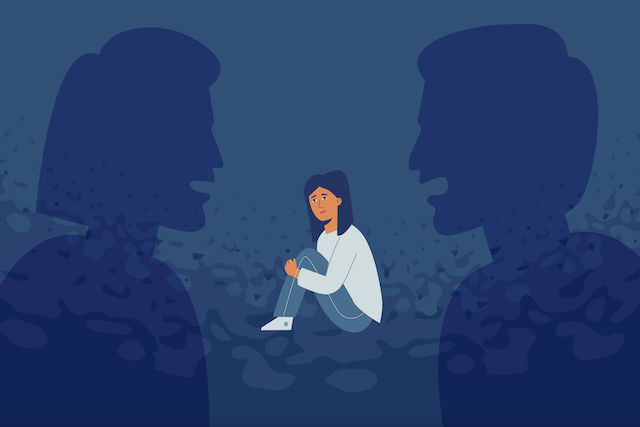
Tag: resentment

  • How I Got Free from the Trap of Resentment

    How I Got Free from the Trap of Resentment

    “Jerry, there is some bad in the best of people and some good in the worst of people. Look for the good!” ~George Chaky, my grandfather

    I was seven when he said that to me. It would later become a guiding principle in my life.

    My grandfather was twenty-one when he came to the US with his older brother, Andrew. Shortly afterward, he married Maria, my grandmother, and they had five children. William, the second youngest, died at the age of seven from an illness.

    One year later they lost all of their savings during the Great Depression of 1929 when many banks closed. Two years afterward, my grandmother died from a stroke at the age of thirty-six.

    As I grew older and learned about the many hardships my grandfather and family of origin had endured, his encouragement to look for the good in people would have a profound impact on me. It fueled a keen interest in trying to understand why people acted the way they did. In retrospect, it also had a lot to do with my becoming a therapist and author.

    Easier Said Than Done

    As a professional, I am able to objectively listen to my therapy clients’ stories with compassion and without judgment. However, in my personal life, I’ve often struggled to see the good in certain people, especially some elementary school teachers who physically and emotionally abused me and male peers who made fun of my small size.

    In my youth I often felt humiliated, but not ashamed. I knew that for them to treat me that way, there must have been something wrong with them. But it still hurt.

    I struggled with anger and resentment for many years. In my youth, I was taught that anger was a negative emotion. When I expressed it, certain teachers and my parents punished me. So, I stuffed the anger.

    I Didn’t Know What I Didn’t Know

    When I was twelve, I made a conscious decision to build walls to protect myself from being emotionally hurt. At the time, it was the best that I could do. Walls can give one a sense of safety, but walls also trap the pain inside and make it harder to trust and truly connect with others.

    About that same time, I made a vow to myself that I frequently revisited: “When I get the hell out of this house and I am fortunate to have my own family, I will never talk to them the way my parents talked to each other and my sister and me.” I knew how I didn’t want to express my emotions, but I didn’t know how to do so in a positive and healthy manner.

    Stuffing emotions is like squeezing a long, slender balloon and having the air, or anger, bulge in another place. In my late twenties, individual and couples counseling slowly helped me begin to recognize how much anger and resentment I had been carrying inside. They would occasionally leak out in the tone of my voice, often with those I wasn’t angry with, and a few times the anger came out in a frightening eruption.

    “Resentment is the poison we pour for others that we drink ourselves.” ~Anonymous

    I heard that phrase at a self-help group for families of alcoholics. After the meeting, I approached the person who shared it and said to her, “I never heard that before.” She smiled and replied, “I’ve shared that a number of times at meetings where you were present.” I responded, “I don’t doubt that, but I never heard it until tonight!”

    The word “resentment” comes from the Latin re, meaning “again,” and sentire, meaning “to feel.” When we hold onto resentment, we continue to “feel again” or “re-feel” painful emotions. It’s like picking at a scab until it bleeds, reopening a wound.

    Nowhere have I ever read that we should like being treated or spoken to unfairly. However, when we hold on to resentment, self-righteous indignation, or other uncomfortable emotions, it ties us to the past.

    Holding onto resentment and grudges can also increase feelings of helplessness. Waiting for or expecting others to change gives them power over my thoughts and feelings. Many of those who I have held long-standing resentment for have died and yet can still have a hold on me.

    When we let go of resentment, it frees us from much of the pain and discomfort. As author John E. Southard said, “The only people with whom you should try to get even with are those who have helped you.”

    I’ve continued to learn how to set healthier and clearer boundaries without building walls. I’ve learned that I don’t have to accept unacceptable behavior from anyone, and I don’t have to go to every argument I am invited to, even if the argument is only inside my head.

    Still, for a long time, despite making significant progress, periodically the anger and resentment would come flooding back. And the thought of forgiving certain people stuck in my craw.

    When people would try to excuse others’ behavior with statements like “They were doing the best they knew how,” I’d say or think, “But they should never have become teachers” or “My sister and I had to grow up emotionally on our own!”

    Forgiving Frees the Forgiver

    For a long time now, I have started my day with the Serenity Prayer: (God) Grant me serenity to accept the things I cannot change, courage to change the things I can, and the wisdom to know the difference. It has helped me try to focus on today and what I can control—how I think, feel, and act. Sometimes I get stuck, and all I can say is, “Help me let go of this anger.”

    “When we forgive, we heal. When we let go, we grow.” ~Dalai Lama

    I frequently hear the voices of many people who have helped, supported, and nourished me. I hear my wife’s late sister, MaryEllen, a Venerini nun, saying, “Jerry, the nuns treated you that way because that was the way they were probably treated by their superiors.” She validated my pain and planted another seed that slowly grew.

    I’ve also heard that “hurt people hurt people.” At times, I would still lash out at innocent people when I was hurting. I desperately wanted to break this generational cycle. I’ve learned that I don’t have to wait for other people to change in order to feel better.

    I am learning that everyone has a story, and I can practice forgiveness without excusing what they did or said.

    Forgiving is not forgetting. Forgiving liberates me from the burden of resentment, helping me focus on connecting with supportive people and continuing to heal. Letting go of resentment cuts the ties that bind me to the past hurts. It helps me be present today where I can direct my time and energy toward living in the present instead of replaying old pain.

    For the past year I have made a conscious effort to start each day by asking my Higher Power, whom I choose to call God, “Help me be grateful, kind, and compassionate to myself and others today and remember that everyone has their own struggles.” This has become one of the biggest turning points in my travels through life.

    You Can’t Pour from an Empty Cup

    I have learned that taking care of myself is one of the most effective ways to stop resentment from building up. When I neglect one or more of my needs over time, I’m quicker to snap, less patient, and more likely to take things personally. Who benefits from my self-neglect? Not me, and certainly not my spouse, children, coworkers, or others. When I am H.A.L.T. (hungry, angry, lonely or tired) or S.O.S. (stressed out severely), I usually don’t like being around me either.

    Self-compassion also weakens resentment’s hold, making it easier to be compassionate with others. Remembering that we’re all works in progress helps me treat myself and others more gently.

    I often think about my grandfather’s words, “Look for the good.” Self-care and self-compassion help me to see the good in myself as well as in others. I can dislike someone’s actions or tone of voice and also recognize they’re not really about me.

    I actually have a Q-tip (representing “quit taking it personally”) taped on my desk to remind me that someone else’s actions or words are likely the result of their own struggles. It helps me to “catch myself,” and instead of taking things personally, I try to remember that everyone has a story.

    Gratitude Puts Everything in Perspective

    There are days when I am faced with great or even overwhelming challenges, when it would be easy to default to anger—with other people or with life itself. On those days, I might notice a beautiful sunrise or feel touched by the love and kindness of others. Practicing gratefulness helps me to see life as both difficult and good. It is like an emotional and spiritual savings account, building reserves that help me to be more resilient during the rough patches in life, even when I feel wronged.

    Specifically focusing on what I am grateful for each day also helps me heal and gives me periods of serenity. It empowers me to try to approach my interactions with others in a warm and caring manner while respecting my and their personal boundaries, which keeps small misunderstandings from growing into resentment.

    Gratefulness and compassion toward myself and others take practice. It’s not a one-and-done thing. It’s like learning any new skill—the more I practice, the more it becomes a positive habit and feels more like second nature.

    Without repeated practice, old, undesirable thoughts and patterns can come back. When I neglect self-care, I am most vulnerable to quickly regress.

    I also need to be vigilant when things seem to be going well within and around me. I can become overly confident, trying to coast along and slack off from practicing gratitude and compassion.

    I have been unlearning many things that no longer work for me. I have unlearned “Practice makes perfect,” replacing it with “Practice makes progress, and I will do my best to continue to learn, grow, and be grateful, one day at a time.”

    I don’t always get it right, but every time I choose compassion, understanding, or gratitude over resentment, I am more at peace and more connected to everyone around me.

  • How to Forgive That Earlier Version of You

    How to Forgive That Earlier Version of You

    “Forgiveness is an action, which your mind can never understand. Your mind’s sole intent is to balance the books. In issues of morality, it only wants to get even. Therefore, practice forgiveness every day if only in trivial matters. This is an excellent way of tempering the mind and empowering the heart.” ~Glenda Green

    Recently, seemingly out of nowhere, I had thoughts about a relationship that ended many years ago. I started to remember some things I had said, emotions I had felt, and things I had done. I cringed.

    What could suddenly make me think of those things now? I pondered it for a few minutes, then put it out of my mind. But when I had those same thoughts a few weeks later, I decided to take a deeper look.

    That deeper look took me back even further to another relationship now decades gone by. And I cringed some more. This time not just because of things I had said or done. This time I winced at the painful experiences I’d endured and the hurtful words others had said.

    Why this unexpected trip down memory lane?

    After much reflection, I concluded that those memories were surfacing now because I was still holding onto that energy somewhere in my body and energetic field. They were coming up now because they were ready to be released.

    For that, forgiveness for myself was required.

    I cringed at those memories because the person I am now, in this present moment, would not have said or done those things. Forgiveness was possible when I realized that the person I was then could not have done any differently.

    Here’s why: Our thoughts and actions are a function not only of our level of awareness but also the sum total of every assumption, belief, and experience we have had up until that moment. That past version of me was at a different level of awareness—one shaped by years of unprocessed abuse, anger, and trauma.

    The years of personal inner work I have done since that time, and the greater awareness that resulted, brought me to this current moment of forgiveness as the next step in my own evolution.

    It’s easy to beat ourselves up when we realize we haven’t completely let something go. I am certainly guilty of this. Many of us have done years of inner work, only to discover that a single issue could have multiple layers yet to clear.

    If we still have an emotional charge around an event or person from our past, we can start by forgiving the fact that we are still emotionally triggered by it.

    We can forgive ourselves for the role we played in that unhealthy dynamic. Then we can forgive that partner for the hurtful and destructive thoughts, words, and actions that occurred.

    Forgiveness does not mean condoning the actions of another. It also doesn’t mean forgetting what happened or putting a superficial coat of positivity on that person or situation.

    Instead, forgiveness is about accepting whatever happened and reclaiming peace for ourselves.

    Forgiveness is a gift we give to ourselves. We can forgive ourselves for not knowing better at the time. We can forgive ourselves for having carried the mental and emotional burden for so long.

    Those things, however unpleasant, happened for a reason. We gained valuable wisdom by having had those experiences. They shaped us as the people we are now.

    So, how do we forgive?

    Simply telling ourselves, “I forgive you” as a thought is often not enough. We need to believe that we deserve forgiveness and then feel that forgiveness, anchoring it in our body. The more senses we involve in this process, the better.

    Here’s a six-step process to release the stuck energy around forgiveness. For best results, go to a peaceful place in nature where you can take a walk.

    Step #1: Visualize the person or event as an energy you’ve been holding in the pit of your stomach. It is a hard, dense energy.

    Step #2: Begin your leisurely walk. As you walk, tune into this dense energy in your gut that represents that person or event that is calling for forgiveness. Feel it.

    Step #3: Now visualize the peaceful, vibrant, and loving energy coming from the natural world all around you—the sun, the wind, the trees, plants, and flowers. Breathe that energy into your body and feel it fill your lungs and nourish every cell. With a few more deep breaths, imagine that the healing energy from nature has filled your heart space as well.

    Step #4: Next, direct that loving, peaceful energy from your heart down into your belly. You can place a hand on your stomach to assist with this process. Visualize the loving energy from your heart and hand softening and breaking up those hard energies housed in your belly.

    Step #5: After a few minutes, as you continue walking, imagine that each step you take loosens the dense energy even more, allowing it to slowly move down from your belly and into your legs with each step. Continue walking until you sense that those particles of dense energy are completely out of your belly and are now at the bottom of your feet, ready to be released.

    Step #6: Find a place in nature to stop and remove your shoes. Place your bare feet on grass, soil, or sand. With your feet on the earth, visualize sending that energy from the bottom of your feet down into the earth, where it is instantly neutralized and composted. Give gratitude to the earth and to your body for assisting in this forgiveness and release process.

    This forgiveness practice is equally powerful—and important—when it is directed at yourself. Rather than bringing to mind a specific event or person from your past, you can visualize the person you once were, starting with ten years ago.

    Recall how you lived your life back then, including how you thought about yourself, about the people around you, and about the world at large. Notice what has changed from who you were then to who you are now.

    Forgive that earlier version of you. You did the best you could given your circumstances and level of awareness at the time.

    Visualize the energy of that former you moving down your body and out the bottom of your feet. Let nature take it for composting.

    Now breathe in more peaceful, healing energy from nature. Let it fill your lungs, your heart, and your belly.

    To conclude the practice, look around you with fresh eyes. Take in your surroundings as if for the first time. Feel appreciation for the stronger, wiser person you are now.

  • Breaking Free from Resentment: My Journey to Finding Peace

    Breaking Free from Resentment: My Journey to Finding Peace

    “Resentment is like drinking poison and hoping the other person dies.” ~Saint Augustine

    For years, I was unknowingly poisoning myself in nearly every relationship—whether romantic, work-related, or friendships. It always followed the same pattern: I’d form a deep attachment, throw myself into the relationship, and give endlessly, hoping that if I gave enough, they’d appreciate and value me.

    But instead, it felt like they just took and took, leaving me secretly seething with anger and frustration while I smiled on the outside.

    I was doing all the running—couldn’t they see that? Couldn’t they see how hard I was trying? Over time, the exhaustion would set in. Eventually, I’d burn out from the one-sided effort and just give up, walking away hurt and angry, convinced they had wronged me.

    Each time, I added another person to my mental list of people I couldn’t trust. With each disappointment, I trusted fewer and fewer people.

    To protect myself, I started putting up walls, convincing myself I didn’t need anyone. I told myself I was fine on my own. I’d always be the first to step in and help family or friends, but I wouldn’t allow them to help me. I refused to be vulnerable because, to me, vulnerability meant risking rejection. I believed I could do it all on my own—or at least that’s what I told myself.

    When COVID hit, isolation wasn’t a choice anymore—it was forced upon me. Suddenly, I was alone, with no one to turn to because I had pushed everyone away. That’s when I realized just how much resentment had poisoned my life.

    Fed up with the weight it placed on my life, I decided to confront it head-on. I let myself fully feel the resentment, allowing it to wash over me like a wave. It wasn’t easy—leaning into those emotions was painful, raw, and uncomfortable.

    But in that moment, I realized I wasn’t just angry with a few people—I was carrying resentment for almost everyone in my life, even my own mother! The bitterness had been poisoning me for years, and it became clear that it wasn’t just affecting my relationships—it was poisoning my peace.

    That’s when I made the decision to stop drinking the poison. I realized that I had been giving so much power to other people—power over my emotions, my happiness, and even my health. But I didn’t have to. I didn’t need to wait for anyone to apologize or change; I was responsible for my own healing, and I wasn’t going to let others’ actions control my life anymore.

    Self-Realization: The First Step to Letting Go

    Self-realization was the first, and perhaps most difficult, step in battling my resentment. For the first time in my life, I stopped running from the pain and leaned into it instead.

    I started using EFT (Emotional Freedom Techniques) to peel back the layers of emotions I had been burying for years. Through tapping on specific points, I was able to release trapped feelings and bring clarity to the surface. Each tapping session was like lifting a weight off my chest, but it was also incredibly uncomfortable.

    I had to confront memories I had long avoided and acknowledge the emotions I had hidden from for so long.

    What shocked me the most was realizing that I had never given anyone a chance to correct the wrongs I thought they had done. I assumed people knew I was upset, and when they didn’t magically pick up on it, I silently resented them.

    Saying that now, it sounds so ridiculous—how could I have expected people to read my mind? Yet for years, that’s exactly what I did.

    So, I began reframing the narrative. Instead of focusing on how others had let me down, I asked myself: What could I have done differently in those situations? How could I have influenced a different outcome?

    The more I reflected, the more I realized that I had the power to change the dynamics of my relationships. It was a breakthrough—I didn’t need to wait for someone to change or apologize. I had the power to heal myself.

    Testing My New Mindset

    Soon after this realization, I had an opportunity to test my new mindset. I had invited my mum and sister on a weekend getaway, something that meant a lot to me.

    A few weeks before the trip, they both backed out. The old me would have smiled and said, “No problem, that’s fine,” while secretly adding their names to my mental list of people who had wronged me.

    But this time, I did something different. I spoke up. I calmly explained how much it hurt that they were canceling on something so important to me.

    To my surprise, neither my mum nor my sister had any idea their actions would hurt me. They explained that, because I had always been so independent, they didn’t realize how much this trip meant to me.

    For the first time, we had a genuine, open conversation about our feelings, and it actually brought us closer.

    Instead of silently seething and letting resentment build, I communicated honestly, and the outcome was liberating.

    I realized that so much of the pain I had carried in the past could have been avoided if I had just voiced my feelings. That conversation was a powerful reminder that I have the power to shape my relationships, and that sometimes people just don’t know how we feel unless we tell them.

    Moving Forward: Letting Go and Staying Free

    After learning to let go of years of resentment, I realized that staying free required new habits. I needed to guard against falling back into old patterns, so I came up with a few strategies to help.

    First, I ask myself three key questions:

    1. Is this really worth my peace?

    2. Did they intend to hurt me, or could there be another explanation?

    3. What can I do differently in this situation?

    These questions help me pause, reflect, and reframe my thoughts before resentment has a chance to take root. I no longer jump to conclusions or internalize every slight.

    And then there’s my secret weapon—whenever I feel those old feelings of resentment bubbling up, I silently sing the Disney song “Let It Go” to myself!

    I know it sounds silly, but it’s incredibly effective. The moment I start humming that tune, it interrupts my spiraling thoughts and stops me from obsessing over whatever hurt I’m feeling.

    By the time I’ve finished the song in my head, the urge to hold onto those negative feelings has usually passed, and I can move forward with a clearer mind.

    It’s a lighthearted strategy, but for me, it’s a reminder that I have a choice. I can cling to the bitterness, or I can, quite literally, let it go.

    Letting go isn’t always easy, but it’s always worth it. The next time you feel resentment creeping in, remember, forgiveness isn’t for them; it’s for you. It’s time to free yourself from the weight of carrying that poison.

  • I Thought I Was Protecting My Peace, But I Was Just Avoiding Conflict

    I Thought I Was Protecting My Peace, But I Was Just Avoiding Conflict

    “Embracing our vulnerabilities is risky, but not nearly as dangerous as giving up on love and belonging and joy—the experiences that make us the most vulnerable.” ~Brené Brown

    If the title of this post gets under your skin, don’t worry, it gets under mine, too. I have a fierce aversion to conflict. That doesn’t mean I won’t engage in it, but it does mean that I’m very open to any suggestion that might give me license to not engage in it.

    So, when I learned the phrase “protect your peace,” I found myself particularly drawn to it.

    The concept of protecting your peace is one of conflict avoidance. It connotes the idea that some arguments are not worth having, and some people are just not worth arguing with.

    Protecting your peace, in those cases, means choosing to disengage for the sake of your sanity. You end the conversation, block their number, and go no contact.

    And believe me when I say there are literally so many circumstances in which this is the correct and proper route to take. I refuse to waste my breath on someone who isn’t listening—particularly if they’re also committed to causing me pain. I have found protecting my peace in those cases to be a very effective tool that I wield generously.

    That said, l do sometimes wonder if the idea of protecting my peace has become an excuse to avoid any conflict—even the kind that I probably need to address head-on. It’s just so damn seductive to think of never having to tangle with other people. If someone hurts or disrespects me, I get to protect my peace!

    I can just walk away without acknowledging what they did. I can even feel good about it because I’m protecting my peace, after all.

    But what lesson am I teaching myself and others when I do that? What message does it send when I allow the idea of “protecting my peace” to turn me into a doormat for other people to step on? At what point does protecting my peace become disrespecting myself?

    Almost three years ago, my husband and I separated and were on the brink of divorce. Our marriage had been through too many hardships for one couple to bear, and the anger and resentment we’d built up toward each other was destroying the steady love we once shared. We weren’t sure if separating could save the marriage, but we decided to give it a try.

    During the six months we were separated, we both spent a lot of time in therapy confronting the ways we were both showing up negatively in the relationship. For me, it was stuffing my feelings and exploding later instead of speaking about them when they were still manageable.

    In the name of “keeping the peace” I was fostering resentment, hostility, and even fury. My refusal to communicate my needs and feelings was poisoning both me and my marriage from the inside out.

    What kept me silent was a simple yet devastating truth: I believed that speaking my needs and standing up for myself when things were difficult made me a cantankerous or difficult person. Perhaps, if I’m really honest, I didn’t think anyone would want to put up with me if I came with expectations—if I insisted on being treated the way I deserve.

    So, I gulped down the burning tonic of hurt and disappointment and called it “protecting my peace.” Doing otherwise would have meant stirring up “conflict,” and if I created conflict, then why would my husband (or anyone, really) want to put up with me? By avoiding conflict, I could carry on pretending like everything was fine while I built a wall of resentment, one brick at a time, between me and the person I loved most in the world.

    A very hard lesson I’ve only just begun learning is that sometimes standing up for myself is the route to peace. Sometimes holding people accountable for their behavior is how I teach them and myself what I’m worth. While avoiding conflict might feel good in the short term, in the long term it can have disastrous consequences for my self-esteem.

    I can attest firsthand that it already has.

    Not only that; extreme conflict avoidance can also affect my social well-being. Although conflict is never pleasant, conflict resolution can be very pleasant indeed. It’s what allows me to reclaim relationships, heal wounds, and grow together with the people I love instead of apart. If I let myself become too rigid in my conflict avoidance, I only stand to alienate ourselves from others. This is a lesson that, if I hadn’t begun learning sooner, would have cost me my marriage.

    I am learning, slowly but surely, how to articulate my difficult feelings. I’m finally summoning the courage to say the hard things, to speak up when I’m hurt or upset, and to clearly and kindly say what I need instead.

    In doing so, I am watching my relationships begin to thrive like never before. Most importantly, both through this work and the work my husband has done in his approach to our relationship, we have saved our marriage.

    It’s not always easy. In fact, sometimes speaking up creates more discomfort in the short term than stuffing things down like I used to. But for once, I am finally showing up fully and authentically.

    I have stopped swallowing poison and instead have begun giving myself the healing salve of self-expression. Despite the momentary discomfort that comes with allowing conflicts to come to the surface, the long-term joy of conflict resolution and mutual understanding always wins out.

    I guess, like most things, protecting our peace without avoiding healthy conflict and dialogue is about finding balance (which, I’m learning, is a skill we appear to be losing as a society). We have to learn when to protect our peace, when to stand our ground, and how to know the difference between the two. For now, I have a few questions I ask myself when deciding which path to take.

    This list of questions needs further thinking and perhaps some retooling, but here’s what I’ve got so far:

    1) Is this person someone I want to remain in a relationship with?

    2) Do I trust this person to listen to me if I share how they made me feel?

    3) Do I think there might be long-term damage to my self-esteem and self-image if I let this go unaddressed?

    4) Is it safe for me to engage in this conflict?

    If the answer to these questions is yes, I will summon the courage to engage in the conflict. I know that the conflict still might not be resolved, but at least I’ve done my best. If the answer to these questions is no, I am better off protecting my peace and walking away.

    Maybe I’ll schedule a phone call with a trusted friend or a session with my therapist to talk through my feelings about the situation. At least then I will get some validation and empathy, which will help me keep my self-esteem intact. I’m not saying it’s going to be easy, but with time, I do think having a system in place will help me find a balanced approach to handling conflict.

    I owe it to myself to try. And so do you, dear reader.

  • A People-Pleaser’s Guide to Reclaiming Your Life: 6 Ways to Say No

    A People-Pleaser’s Guide to Reclaiming Your Life: 6 Ways to Say No

    “Self-love, self-respect, self-worth: There’s a reason they all start with ‘self.’ You can’t find them in anyone else.” ~Unknown

    Have you ever found yourself stuck in the “yes” trap, even when your gut screamed “no”?

    I have.

    We people-pleasers struggle with boundary crushers, and there are a lot of them out there continuously knocking over the barriers we put up!

    But here is a secret I have learned: I’m allowed to say “no” without drowning in guilt. In fact, it’s a vital part of my self-care journey to give myself permission to freely say “no.”

    Empowerment of “NO”

    Saying “no” makes me, a people-pleaser, feel guilty.

    I wonder, “Am I being selfish? Am I letting people down?”

    It’s tough, but it is essential that I set firm boundaries to protect my time, resources, and mental health. Trust me, I need to look out for myself because nobody else is going to do it for me.

    One of the most powerful tools I have at my disposal is the ability to say “no.”

    It may seem paradoxical, but embracing the closed “no” has opened my life in a transformative way.

    “No” Was Not Allowed

    My people-pleasing ways were cultivated during my childhood when I was supposed to do as I was told, not question authority, and be compliant.

    I was praised as being a good girl, an obedient child, the gold-star-sticker student.

    Prioritizing others’ needs and desires over my own became the norm.

    But here’s the big problem: Children do not stay little. We morph into adults.

    As I grew and matured, it was difficult to switch gears to be able to stand up to bosses, romantic partners, and friends. It was easier to just give in.

    But it didn’t turn me into a gold-star-sticker adult.

    This constant self-sacrifice led to burnout, resentment, and a loss of my own identity.

    Saying “no” is like reclaiming a piece of myself I’ve neglected for far too long. It seemed foreign at first, but practice has helped me harness the power of this miraculous word.

    6 Ways I Say “No”

    1. The Direct Approach

    Picture this: A friend asks you to help them move on your only day off this month. You feel compelled to say, “Sure, I can do that.” But what if you just don’t have the time?

    I will use the direct approach and say, “No, I can’t do that.”

    I’m not required to give more explanation than that. No means no; that’s it. Initially, this approach felt uncomfortable to me because that isn’t how a good, obedient child should respond.

    But I am not a child.

    I’ve learned that being direct respects my own boundaries.

    2. The Delayed Response

    Sometimes, in the heat of the moment, it’s challenging to gauge whether a “yes” or a “no” is the right response. That’s where the delayed response comes in handy. It buys extra time to be able to think through the decision process.

    For example, I had an old coworker who was always asking me to help with projects that weren’t my own. As a people-pleaser, I strive to make everyone happy, but I found that she soon began to expect my help.

    I began utilizing the delayed approach by saying, “Let me look over my workload and get back to you on that.”

    This allows me to avoid impulsively saying “yes” until I consider whether or not adding to my current workload is even possible.

    3. The Grateful Decline

    I went through a phase when I was obsessed with homemade cinnamon rolls. And they were amazing! But my recipe was one that took a couple days to complete because I had to allow time for the dough to rise twice over twenty-four hours. That, plus slicing and rolling individual rolls, made it very time consuming, although the results were worth it.

    Well, people began asking me to make my “famous cinnamon rolls” for tons of parties and special occasions. Suddenly, my special-event-sweet-treat was being requested regularly. I appreciated the compliment but found I just didn’t have the time or energy to provide them for every party I was invited to.

    This is where the grateful decline comes in handy. Instead of just simply saying “no,” I say, “I appreciate your thinking of me, but I can’t do it this time.”

    This method shows gratitude for the request while respectfully declining. It’s a soft, sweet “no.”

    4. The Alternate Offer

    I had a neighbor who would occasionally ask me to help with her puppy when she had long workdays or extra meetings. I enjoyed the little guy and was happy to help.

    But when my neighbor asked me to pet sit for a weeklong trip she was going on, I had to seriously think about my answer.

    Puppies are a lot of work!

    I knew I didn’t have the bandwidth to spend hours each day devoted to walking and playing with the puppy. Instead, I offered to take just one shift of puppy care per day. This allowed me to be helpful while maintaining my boundaries.

    5. The Diplomatic Approach

    I never want to hurt anyone’s feelings or appear harsh, but I still need to be able to say “no.”

    Guess what? I don’t owe anybody a detailed explanation. This is when it’s important to be diplomatic.

    As a writer, I get asked all the time to help with writing and editing. Sometimes I can, and do, help. But other times I just don’t have the time.

    Someone I know recently asked me if I could help her college-aged student write a paper. I had a busy week, so I said, “I have too many other commitments at the moment.” End of story! I conveyed that my plate was full without making it personal.

    6. The Empathetic Decline

    Lastly, the empathetic decline allows me to acknowledge the other person’s needs and feelings while maintaining my boundaries.

    A friend recently asked to borrow money. Usually a generous person, I am just not in a position to be able to give right now. I had to say, “I understand your need, but I have to say ‘no’ right now.” This response shows compassion while also respecting my own boundaries.

    My Not-So-Secret Weapon

    Learning to say “no” is my secret weapon in the quest to recover from people-pleasing. It’s not about being selfish or uncaring; it’s about establishing boundaries and regaining control over my own life.

    Remember, saying “no” isn’t a rejection of others; it’s an affirmation of yourself and about valuing your time, energy, and well-being. Using these techniques has made setting boundaries less daunting and has freed me from the “yes” trap. Go ahead and embrace the power of “no,” and take control of your life.

  • How I Learned the Power of Letting Go After My Father Developed Dementia

    How I Learned the Power of Letting Go After My Father Developed Dementia

    “There is beauty in everything, even in silence and darkness.” ~Helen Keller

    When I was eleven years old, I would force myself to stay awake until the wee hours of the morning.

    I was severely anorexic at a time when eating disorders were considered an “inconvenience” you brought on yourself. Anorexia was dismissed as a rich, white girl’s disease (although we were certainly not rich)—a disease that was easily curable with a prescription for a chocolate cake.

    Although my emaciated body was a dead giveaway of my condition, it was school that noticed the change in me first. My once stellar grades began to slip, and I was falling behind in the advanced academic and art program I was a part of.

    “Just eat already,” my teachers would tell me, and when I tossed my lunch into the garbage, I’d be sent to the nurse’s office to watch The Best Little Girl in the World. Again.

    At home, grape-flavored bubble gum and bouillon cubes were my foods of choice. I did toe-touches, crunches, and jogged at least four times a day, passed out some mornings, and hid my body under layers of flannel shirts on the hottest August days. But even as my disease raged, home was still my refuge, a place where my eating disorder could take its hair down and run wild.

    Thankfully, both my parents worked full-time and often through dinner, so mealtimes weren’t much of a struggle. And when we did eat together, I became as much of a master at hiding my food as I was at hiding my body.

    I was also smart. Or maybe conniving is a better word. A weekly trip to Friendly’s for ice cream (the irony of that name!) fooled my overworked parents into believing that I was fine.

    Puberty had simply shaved off any “baby fat” I had, they reasoned. What they didn’t know was that puberty never had a chance with me. No sooner did my period appear, I starved it away.

    But even with the ice cream trips and their growing awareness, I still felt fairly safe at home.

    Until that one moment that changed everything.

    On a sunny, unremarkable fall day (Isn’t that what Joan Didion tells us? We are most surprised by those tragedies and traumas that happen on “normal” and “beautiful” days…?), my father surprised me by picking me up early from school.

    Hurrying to the office for dismissal, there was a tiny, naive part of my eleven-year-old self that thought maybe he was surprising me with a trip to Disney World.

    That’s what happened to my friend, Mary, the previous year. When she returned from her impromptu trip, she was sporting tanned skin and a perpetual grin. She then spent most of our fifth-grade year with mouse ears glued to the top of her head.

    But there was no Magic Kingdom for me. Instead, without so much as an inkling as to where we were going, my father hustled me into his car, and we drove away. Sitting next to my father, a man who held all the power over me, my stomach ached as I wondered what was about to happen.

    My weak heart pounded in my chest, and as we drove, I prayed it wouldn’t give out. Catching a glimpse of my ashen skin and white, cracked lips in the rearview, I knew that I was nothing more than a stray dog in a shelter, ripped from my cage by a complete stranger, wondering if I was about to be put down, thrown into a fight, or worse.

    Finally, we arrived at our destination, a medical center in a strip mall. As soon as we walked through the front door, I gagged on the thick scent of medicine and grape lollipops that hung in the air. Without a second to catch my breath, I was whisked into a doctor’s office and onto a scale.

    Looking down her nose at me, the doctor snapped, “You’re too skinny. You need to gain weight.” While I stood there on the scale, she turned to my father and diagnosed anorexia nervosa.

    Then she looked at me. “If you don’t eat,” she warned in a sharp tone, “we’ll have you put in a place for ‘girls like you’.” She then informed me that once I was locked in that wretched prison of force-feedings and shackles (as I imagined it), I wouldn’t see my family again until I was “fixed.”

    When we returned to the car, my father spoke the first words he had said to me all day: “So? Will you gain weight?”

    “Yes,” I answered, too frightened to fight. Too scared to advocate for myself. Too terrified to tell him that this wasn’t a choice. I wasn’t choosing to starve myself; I was sick.

    But even if I had spoken, he wouldn’t have understood. No one did.

    From that moment on, I knew that I was completely alone. That’s when I began to stay up way past midnight, quietly jogging in place. I’d stop only to press an ear to the door, straining to hear what my parents were saying. Would they send me away? To that place?

    “I’ll never let it happen,” I assured myself. I would die before I’d go to a place where I was literally stripped of myself.

    For the next few years, the games continued, and although there were always doctors and threats, I kept myself just alive enough to stay out of that particular treatment center.

    ****

    Flash-forward almost forty years, and today, my father is an old man with dementia.

    As the Universe sometimes works in strange ways, I am now one of his primary caretakers. Although our relationship was strained for many years and I missed out on the experience of having a strong male figure in my life that I could trust, he did walk me down the aisle, and I am here for him now that he needs help.

    My father doesn’t remember that day that will forever be burned into my brain. He doesn’t remember the hell I went through the years that followed—the fear, the insecurities, the isolation, and the self-inflicted bruises I sported because I hated myself so very much. More than anything, he was, and is, clueless of the real battle scars—the ones that lay deep inside.

    He doesn’t know that that one “unremarkable fall day” when he pulled me from school started a negative spiral in my life, a time when I began aligning with damaging beliefs and inflicting self-harm.

    All he knows now is what his dementia allows him to—if the sun is out, if the squirrels ate the peanuts he tossed to them, and whether or not I am there to help him; to deliver his groceries, to take him out on drives, and to care for him.

    Yes, this could easily be the ultimate story of revenge, but years of teaching and practicing yoga have brought me down a different path.

    The path I have chosen is the path of letting go.

    Truthfully, my father’s dementia has left me no choice but to let go, at least of some parts of my life. I’ve needed to let go of expectations, of attachments to the outcome, and even, sometimes, like in those moments when he calls me “Sally,” my own name and identity.

    But in letting go, I have found that his disease has brought some gifts as well. I’ve learned to slow down and appreciate the daisy he wants to admire, the flock of chickadees darting in and out of a bush he’s watching, and the feel of the cool fall air on my face as I help him to and from a doctor’s appointment.

    Letting go has allowed me to experience all those things that I was previously too busy to appreciate. As Helen Keller said, “There is beauty in everything, even in silence and darkness.”

    But letting go because of his dementia wasn’t enough.

    I had to let go for me, too.

    To let go of the toxic weight from the past, I released that moment when everything changed, all those years ago.

    How? By simply deciding to put the weight down—and not just with regard to that event, but in all aspects of my life.

    Was it easy? No. But it was doable.

    In letting go, I didn’t worry about forgiving (although it is an important step for healing), or seeing someone else’s perspective. I simply unhanded my tight grip on all the “wrongs” I had endured and still carried with me, as well as all those things for which I blamed myself.

    Every one of us will live through events, some that we consider positive, and others, not. The only control we have is in how we deal with the circumstances we’ve been given.

    We can choose not to shoulder the burden, and to unpack those weights we’ve been carrying. We can close our eyes, breathe deeply, and tell ourselves, “I will put that weight down.”

    That’s where our true power lies.

    Have I forgotten my past? Of course not. But I have let it go, and in letting go, I have reclaimed an important relationship with my father, and more importantly, with myself.

    By letting go, I have released my suffocating grip on life, and reclaimed my personal power.

  • 4 Things I Needed to Accept to Let Go and Heal After Trauma

    4 Things I Needed to Accept to Let Go and Heal After Trauma

    TRIGGER WARNING: This post references sexual abuse and may be triggered to some people.

    The truth is, unless you let go, unless you forgive yourself, unless you forgive the situation, unless you realize that the situation is over, you cannot move forward.” ~Steve Maraboli

    My family immigrated to the U.S. from India when I was sixteen. Being Indian, my traditional family expected me to have an arranged marriage.

    At twenty-two, as a graduate music student, I fell in love with an American man. When my family found out about our secret relationship, they took me back to India and put me under house arrest. For a year.

    That year of imprisonment and isolation was severely traumatizing. I shut down from my acute distress and pain. I dissociated from myself, my truth, my power, my body, my heart, and my sexuality.

    Two years after they let me out, I escaped to the US but was emotionally imprisoned by my past. I lived dissociated, afraid, and ashamed for eighteen years. Eventually, I broke free from an abusive marriage and my family.

    Since then, I have been on a path of healing and empowerment.

    Beginning my healing journey was like walking through a long, dark tunnel. I was and felt like a victim but was determined to heal.

    To heal from dissociation, I needed to feel again. I felt the bottomless grief, loss, and heartbreak of all that I didn’t get to experience and enjoy.

    I faced and began to address my childhood history of sexual abuse.

    I set boundaries with my family. I started therapy and studied psychology. I learned my mother is a narcissist and my father an enabler.

    Coming from a traditional patriarchal, colonial culture, I had grown up with codes of obedience, sacrifice, and duty. I questioned and challenged my deep internalized beliefs of who I am, what I can do, and what is possible for me as a person of color.

    I learned about my rights. Growing up in India, I had a very different understanding of my rights than those born in Western countries.

    Therapy helped me reconnect with my body, with my needs, wants, and desires. I learned to identify and feel my sensations and emotions. I learned to discern who and what was safe and what wasn’t safe.

    I learned to listen to and trust myself and become more embodied through my dance practice. This allowed me to dance out my rage, shame, grief, and everything I had disconnected from and suppressed. I came alive and opened to pleasure and passion.

    I’ve struggled with low self-worth, people-pleasing, caretaking, perfectionism, fear, shame, guilt, and codependency. One of my most painful realizations was that my inner critic had become as severe as those who abused me. I continue to practice being kind and gentle to myself, loving myself and my inner child and encouraging my artistic self.

    In relationships, it has been hard for me to discern whom to trust and not trust. I had an emotionally abusive marriage and have given my power away in relationships. In romantic relationships, I projected my goodness and integrity and supported my partners’ dreams instead of my own.

    I have finally learned that I can choose myself and honor my needs, wants, desires, dreams, and goals. I continue to shed other people’s projections that I internalized. I am realizing that I am worthy of and can have, dream, aspire for, and achieve what white women can. And finally, I believe in my goodness, of others, and of life.

    Having emerged from the long, dark tunnel of healing, every day is a triumph for my freedom and a priceless gift. Every day I have the opportunity to be true to myself, face a fear, shift a perspective, and love, encourage, and enjoy myself.

    Acceptance

    There are so many steps and milestones on the journey of healing. Of the five stages of grief, acceptance is the final one.

    Acceptance is a choice and a practice. Acceptance is letting go, forgiving yourself and others, and honoring, claiming, and loving every twist and turn of your journey. Acceptance is treasuring all you have learned from your experience no matter how painful it was and how meaningless it seemed.

    Here are some things I have learned to accept.

    Accept the deep impact of trauma

    Coming from a family and culture that valued perfectionism and purity, I wasn’t aware of and wanted to gloss over and hide my trauma, shadow, and coping behaviors. Because I could live a life that seemed relatively high-functioning, I was ashamed to admit and address my childhood sexual trauma to myself for years. I was afraid and ashamed to share my trauma with others because I didn’t want to be seen as broken, damaged, or crazy.

    Once I acknowledged and faced my sexual trauma, I began my healing journey. Healing and acceptance mean seeing, claiming, and loving each and every part of ourselves, however broken or ashamed we feel. As we do that, we liberate ourselves from believing we needed to fit into other people’s ideas to be loved and accepted.

    When we don’t admit and accept our traumas, we can cycle through life alive but not living, succeeding but not fulfilled, and live according to programs we’ve inherited but not from our truths. As a result, joy, pleasure, passion, and true power escape us.

    Accepting that I didn’t get to have the life and dreams I expected

    As a victim, I was stuck in grief, loss, anger, denial, disillusionment, blame, and resentment. Life seemed unfair.

    These feelings are natural after trauma, especially extended severe trauma. But despite years of therapy and healing, I continued to cycle and swim in them and didn’t know how to not have those feelings.

    I was fighting to accept what I had lost. I kept ruminating on who I might have been and what my life would have been like had it not been interrupted or derailed. It was how my subconscious mind tried to control and “correct” the past to have the outcome I desired and stay connected to my past dreams.

    I was tightly holding on to what I had lost—to who I was then and my dreams. I was terrified that if I let go of what was most precious, I would be left with nothing.

    But the reverse happened. When I decided to let go of my past dreams, regrets, and lost opportunities, I stepped into the river of life anew, afresh, and in the now. I opened to who I am now and what is possible now.

    We don’t let go of trauma because, on a deep level, we believe we will condone what happened, and forget or lose what was so precious.

    Not letting go keeps us stuck like a monkey clutching peanuts in a narrow-mouthed jar. We don’t want to let go of what we had then for fear that we will be left with nothing at all. It keeps us stuck in blame and resentment. It keeps us from joy, pleasure, and possibility.

    But to live and breathe and come alive again, we need to unclench our past. By no means is this forgetting, or condoning, but allowing, receiving, and welcoming new, fresh beginnings, possibilities, and life.

    Accepting the character, mental illness, and wounds of my abusers

    Though my family had been brutal, my inner child wanted to believe in their goodness. I couldn’t accept that people I loved, who were supposed to love, care for, and protect me, could treat me that way.

    I was in a trauma bond and in denial. I had to come to terms with and accept that my mother is a narcissist and my father an enabler. And that the rest of my family only looked the other way.

    I had to let go of my illusion of my family, see through the fog of gaslighting, and accept the truth of who they are.

    Acceptance is learning to see our abusers with clear eyes beyond our expectations, illusions, and stories of what we needed and desired from them, and who we want them to be.

    No matter what was done to or happened to me, I am responsible for my life.

    Staying stuck in a cycle of blame, resentment, and anger told me I wasn’t taking responsibility for myself.

    After severe trauma, it’s painful and challenging to look at ourselves and realize that we played a part in it. Trauma is something that happens to us, but we are the ones who make conclusions about ourselves, others, and life because of it. My beliefs and perspectives about myself, especially about my self-worth, self-esteem, body, and sexuality, drastically changed after the trauma.

    I had to take responsibility for creating my beliefs. I needed to accept every time I didn’t choose, value, and honor myself and my gifts. I realized that just as I had adopted others’ projections of myself, creating a negative self-perception, I could shift to regard myself in a positive light.

    Accepting my part in my trauma set me free from blame and resentment. And it set me free from the power my abusers had over me and my connection to them.

    Acknowledge what I don’t have control over

    My inner child and I wanted to believe in the goodness, love, and protectiveness of my family and partners. But I have no control over who my parents, family, and culture are, or their mental health, values, and behaviors. I had no control over my culture’s beliefs and attitudes toward women and sexuality.

    Because of deep shame from childhood abuse, I felt bad at my core and had a low sense of self-worth. Subconsciously, I tried to control how I was seen. I lived a life acceptable to my family and culture and followed what the world defined as successful, believing it would make me feel good about myself and be accepted and loved.

    But my happiness, freedom, and success lie in my own truth. I learned to honor and follow that. I learned to mother and father myself. I learned about mental illness and mental health and reached out for support from therapists and friends.

    As I let go of trying to please others, pursuing my own needs, talents, and interests, I found myself, my joy, and my purpose.

    Forgive myself

    Looking back, I see so many roads I could have taken but didn’t. I see many ways I could have taken help but didn’t. I was filled with regret for past choices and decisions. I was angry with and judged myself.

    We can be our own harshest critics. I needed to forgive myself.

    I learned to see and be compassionate with my inner child and younger self, steeped as she was in family binds and cultural beliefs. I learned to hold her with tenderness and love for all the ways she didn’t know how to protect and choose herself. And for all she wanted but didn’t know how to reach for and have, for what she wanted to say and do but couldn’t or didn’t.

    As I held my younger selves with understanding, compassion, and love, and forgave them, they began to trust me and offer their gifts, which allowed me to open to joy, innocence, freedom, and play again.

  • 11 Important Things I’ve Learned in 11 Years of Marriage

    11 Important Things I’ve Learned in 11 Years of Marriage

    “A great marriage is not when the ‘perfect couple’ comes together. It is when an imperfect couple learns to enjoy their differences.” ~Dave Meurer 

    My husband and I will soon be celebrating our eleventh anniversary. By no means do we have the perfect marriage or are we the perfect couple. Over our eleven years of marriage, I’ve recognized a few critical areas needed to build a solid and lasting union as a couple.

    Here are eleven things I’ve learned in eleven years of marriage.

    1. Communicate.

    In the early days of my marriage, I was terrible at communicating my feelings with my husband. Rather than sharing what was bothering me, I suppressed my feelings, hoping he would read my mind.

    Over the years, I’ve learned that my spouse is not a mind reader, and if something is bothering me, I need to talk to him about it so change can occur.

    Both parties must be willing to communicate openly for a marriage to succeed.

    Admit when you both are not aligned with each other. You don’t always have to compromise or give in, as doing this will make only one of you happy. Instead, find common ground by communicating your feelings honestly and looking at things from each other’s perspectives.

    2. Support each other.

    As a couple, we’ve always supported each other’s dreams—big or small.

    Last year, my husband needed to move across three provinces for work.

    While I didn’t see that in our future and wasn’t a fan of moving, I knew what it meant for him.

    He’s always been an enormous support and constantly encourages my growth in business and my personal life. Without a shadow of a doubt, I knew I needed to stand by him and make a move, so we did!

    Even when difficult, we must give each other support to grow.

    3. Apologize to each other.

    I’m not always the best at apologizing, but I’ve improved over the years. I’m mature enough today to say, “I’m sorry” or “I apologize for XYZ.”

    In the past, I was way too proud to say I was sorry or even acknowledge I was wrong, but over the years, I’ve learned to apologize rather than start a small conversation and carry on as usual without owning or acknowledging the argument.

    Saying I’m sorry shows that we validate each other’s feeling and are willing to work through our disagreements.

    Saying I’m sorry also promotes that we are a mistake-making couple, willing to improve ourselves while lifting each other up.

    4. Set boundaries with relatives.

    Relatives love giving their two cents in relationships.

    We had a lot of comments from relatives regarding when we should start a family. The choice to exclusively breastfeed both of our kids also got a lot of criticism (especially with the first one).

    The most recent was when my spouse had to move across the country due to work, his parents suggested he shouldn’t.

    We learned the importance of setting boundaries with family members early as a couple—being brave and bold enough to say, “Thanks for the advice; however, we will make a decision best suited for our season of life and our family.”

    5. Have common goals.

    My spouse and I are total opposites. But I believe that our differences complement each other.

    Not all of our goals are the same. My husband has his personal goals, and so do I. But we, as a couple, have common goals and key areas we agree upon. For example: how we raise our kids, invest our money, spend our time, plan vacations, give gifts, and so forth.

    6. Make time for each other.

    As a couple with two young kids, we are constantly interrupted. That’s the season of life we are in, and we openly embrace that.

    In fact, we enjoy incorporating our kids into almost everything we do, spending as much time as possible with them.

    However, once the kids are asleep, we spend an hour or so every night intentionally chatting and catching up before heading to bed.

    7. Don’t judge or criticize each other.

    After eleven years of marriage, I’ve realized there’s always going to be something he does that irritates me. Likewise, some of my actions will annoy him. It’s an inevitable part of being married.

    I no longer get frustrated when he changes and leaves his PJs on the bed. Instead, I put them in the hamper for him.

    Paying attention to all your spouse’s quirks and quickly getting annoyed will only hinder you from seeing their endless good qualities.

    8. Show interest in learning more about each other.

    When you’ve been with someone a long time, it’s easy to assume you know everything about them, but there’s always more to learn and understand, and curiosity can keep a relationship fresh and exciting.

    Even though we’ve been married for over a decade, there’s still so much to be known.

    I’m always interested in learning more about my spouse, listening attentively to him, and noticing what triggers him when he’s looking at the news, or what is of interest to him when he’s playing a game, watching a movie, or playing with the kids.

    9. Choose not to keep score.

    Tit for tat never works well and is quite unhealthy for any relationship.

    Of course, both people should have time and the ability to nurture their own interests. But if you think you need to find a new adventure as some sort of payback for your partner golfing all afternoon, you’re probably breeding resentment.

    10. Avoid running to your parents or best friend to complain about trivial matters.

    Arguments in marriage are inevitable, and disagreements can be healthy. I believe they provide an opportunity to learn something new about each other.

    The more people you involve in your affairs, the more complicated things get because it’s tempting to let them influence you instead of making the choice that’s right for you and your relationship.

    When spouses sit together and have an honest, open, thoughtful conversation, they can understand each other better.

    11. Be playful.

    Over eleven years of marriage, I’ve recognized the importance of not always talking about mundane activities and things happening worldwide. Our hearts can easily become heavy when we focus on everything that’s going on in the world.

    As a couple, you must take a moment and indulge in life’s light-hearted, playful side. Sometimes, for us, this involves looking at funny TikTok videos together or sending funny text messages to one another.

    This allows us to add joy and bring a much-needed sparkle into our life.

    Marriages are not always easy. We’ve got stats to prove it, right?!

    Today, I feel blessed and thankful to be entering another year of marriage with my husband.

    I’m ready to learn, grow, and aspire to be the best version of myself while supporting him to be the best version of himself.

  • Freedom Is the Space Between Each Judgmental or Righteous Thought

    Freedom Is the Space Between Each Judgmental or Righteous Thought

    “It is inner stillness that will save and transform the world.” ~Eckhart Tolle

    Life is hard. Impenetrable at times. How can we use our spirituality to navigate through the density of life?

    That question inspired this piece of writing. And my navigation tool is almost effortless; I feel compelled to share it.

    When my mind is churning and burning with thoughts and fears and worries, I take myself off to a quiet place, get still, and watch my mind. I wait for the tiny gap between each thought. Bingo.

    That space, that little gap, is freedom in its truest, purest form. It is the birthplace of peace. And every time I enter that space, I am no longer at war with anything. Despite what madness may surround me, that place always remains untouched. It is like an infinite reservoir of strength and love—one that feels like, well, freedom.

    How I came to find that reservoir is a long and nuanced story (that’s why I wrote a whole book about it), but I’ll try and give you the nutshell version.

    Essentially, to even find it, I had to first get to the point where I was so disillusioned—with my cancer, with people, with the system, with the greed, with the house chores, with the destruction of the planet, with war, and with life full stop.

    Little did I know it then, but that disillusionment was freedom’s gateway.

    For so long, I looked to ‘the other’ as the source of my disillusionment.

    Sometimes ‘the other’ was a person, sometimes it was a situation—my cancer, the pandemic, the person who I believed had wronged me, the political party; anything or anyone that caused a disturbance to my happiness fell into this bucket.

    Of course, it felt good to blame cancer, that person, or the pandemic for my woes, at least on the surface. Yet the blaming was also the root of my suffering. The biggest wars I’ve had in my own life were when I was trying to get ‘the other’ to yield / change / admit they have it wrong so I could live in peace.

    But the true source of my disillusionment was never with them. When I stopped waiting for the situation to change and shifted my attention to my mind, I observed something that floored me at first: my own righteousness.

    Staring back in the mirror were my tendencies to be correct, envy, judge, complain, and win. That mirror revealed one simple truth: I was adding to the war I desperately wanted to end. I had arrived at the place where I was simply fed up—no longer fed up with life but rather fed up with the suffering caused by my very own mind.

    The challenges and hindrances of life may have taken you to a similar point—the point where you’ve had enough. Before freedom is even possible, this stage is necessary, essential even.

    The world is unsatisfying. So, now what? This is freedom’s front door. It is the opening to the very core of your being. When we have had enough of looking outside for contentment, only then do we look inward. This is where the rubber meets the road.

    But we have to go deeper—beyond the mind, beyond our thoughts about what is right vs. wrong, left vs. right—to our essential oneness.

    And, as a collective, I think we get there by asking ourselves one simple question: Do I want peace or war?

    If it is peace, we must start with the peace in our minds. In all the frenzy, it is possible to simply stop and enter into the space between every thought. Rest there for a few scared moments. Feel the ease wash over every cell of our being. Come home to that again and again. Life doesn’t need to be any different to enter that space.

    That space is freedom. And true freedom is not bound in any person or situation. Freedom is what sits underneath the war. It is found in the tiny gap between every righteous and non-righteous thought; it occurs through stillness.

    From this stillness, I’ve learned (yes, the hard way) that we can speak our truth, but now we speak it without the need to control any outcome.

    For example, rather than trying to force my husband to read a spiritual book instead of opting for Netflix—as if I know what’s right and best for him—I can respect him for where he is at in his inner journey. I still act. I still suggest books. But my happiness is not dependent on his choice.

    Instead of being angry at a friend who hurt me, I can step out of my righteousness and cultivate empathy for where she is at in her life. I still reach out. I still attempt resolution. But my peace is not dependent on her response.

    I throw my seeds of truth, dug up from the depths of my heart, out into my family and the world. Sometimes they land in the fertile soil of ‘the other,’ and sometimes they don’t. So be it. It is action without criticism, judgment, blame or control—without the war. I had found a place within where I could look at ‘the other’ and feel compassion and even love instead of anger and annoyance.

    Eckhart Tolle says, “It is inner stillness that will save and transform the world.”

    I couldn’t agree more. Because from that place, from the silent stillness within, war is not escalated but instead averted.

    So, to anyone feeling disenchanted, I want to honor you and say one thing: The freedom your soul is aching for is within arm’s reach. It is as close as your breath, as close as the space between each of your thoughts.

  • Why Judging People Is Really About You (Not Them)

    Why Judging People Is Really About You (Not Them)

    “It’s easy to judge. It’s more difficult to understand. Understanding requires compassion, patience, and a willingness to believe that good hearts sometimes choose poor methods. Through judging, we separate. Through understanding, we grow.” ~Doe Zantamata

    Why doesn’t he say something?

    I was sitting at the dinner table with my partner and friends. Everyone was interacting and talking to each other, except my partner. He was just sitting there quietly. I had to admit, this situation made me very uncomfortable.

    Why was he so quiet? We had been dating for over six months and normally, when it was just the two of us, he was very talkative, we had vivid discussions, he knew his opinions and was not afraid to speak his mind. But now, at a dinner with friends, he was a shadow of his normal self.

    To be honest, I felt a bit embarrassed. What would my friends think? Did they quietly judge him too? Did they think he was boring and uninteresting?

    When we got back home, I was irritated and annoyed. Have you ever had that feeling, when all you really want is to be brutally honest with someone? To explain exactly what they did wrong and explain how they should behave instead? I wanted to lecture him. To tell him this: “It’s rude not to interact at social gatherings. It’s weird. Can’t you behave? It’s sloppy! What’s wrong with you? What’s your problem?” 

    I didn’t say those things to him. Instead, I allowed what had happened to sit with me for a few days. Slowly, I started turning that finger I was pointing at him toward myself. Maybe this wasn’t all about him, maybe it had something to do with me?

    That’s when it struck me. He wasn’t having a problem. I was!

    I realized that my upbringing had given me certain values and “truths” about relationships and social interactions. This is how you behave: You actively participate during conversations, anything else is considered rude. You ask people questions and share stories during social gatherings; otherwise, people will think that you’re uninterested. That’s what I learned growing up.

    Because my partner wasn’t acting in accordance with what I had been taught, I judged him. Instead of asking myself why he was behaving the way he was, I put labels on him. When we came back home, I had, in my mind, labeled him as rude, boring, self-conscious, and not living up to the standards I wanted in a boyfriend.

    Now, eight years later, I know that my husband was quiet during that dinner because he needs more time with new people before he’s fully comfortable. He didn’t do it because he was rude. On the contrary, I know he cared deeply about me and my friends, he was just showing it in a different way.

    When I understood this, I knew that my judgment really had nothing to do with him—it was all about me. In judging my partner, I realized that I most of all judged myself. My judgment was never about him—it was about me.

    This insight did not only bring me more compassion, less judgment, and more closeness in our relationship, it brought me a new perspective and new values that made my life better.

    Below you’ll find the steps that I followed:

    1. Identify: What judgment do you make about someone?

    The first step is to be aware of the judgment(s) you make about other people. In my case, it was thoughts like “He’s rude and awkward,” “I’m better than him at interacting socially,” and “Maybe we’re not a good match? I need someone who can interact socially.” Often judgments include a feeling of you being superior, that you know or behave better than other people.

    Just become aware of the judgments you’re making (without judging yourself for having them). This is the first step in transforming the judgment.

    2. Ask yourself: How should this person be instead?

    In the specific situation, ask yourself how you think the other person should be or act instead. According to you, what’s the best behavior in the situation? Be honest with yourself and write exactly what comes to mind, don’t hold yourself back here.

    In my case, I wanted my partner to be fully involved in the conversations. I wanted him to be talkative, interested, and curious about my friends.

    3. Go deeper: Why is it important to be this way?

    Be curious and ask yourself, why is it important to be or act in the way that you prefer? If a person doesn’t act that way, what does it signal about the person? What is the consequence of not being or acting in the way you desire?

    For me, social skills translate into good manners and that you can behave appropriately. I used to think that people that weren’t behaving in the “right” way, according to my viewpoint at the time, weren’t taught well by their parents. I labeled them as uninteresting and not contributing to the group. (Now, I know better, but more on that soon).

    4. Spot: What underlying value is your judgment coming from?

    Ask yourself what underlying values and beliefs that are fueling your judgments. What’s the story you’re telling yourself about the specific situation? Be brutally honest here.

    In my case it was the following: Being unsocial is negative and equals weakness. Not being socially skilled is awkward and weird. It means that you are less—less capable, less skilled, less smart/intelligent, and ultimately less worthy. (Just to clarify, this was my judgment and insecurity speaking, and it’s obviously not the truth).

    From my upbringing I had learned that social skills are highly valued. I was taught to be talkative, to engage in social interactions, and to articulate well. If you didn’t live up to these expectations, you felt inferior and less worthy.

    5. Make a choice: Keep or replace your values?

    When you have defined your underlying values and beliefs, you have to make a choice: Either you keep or replace them. And the crucial questions are: Are your values and beliefs serving you or not? Are they in line with your moral standard and aspirations?

    I chose to replace my values. Instead of valuing people based on social skills, I chose to replace that value with acceptance, respect, curiosity, and equality. As much as I didn’t want to judge someone for their skin color, gender, or ethnicity, I didn’t want to judge someone based on how they behave socially.

    Instead, I made a conscious choice to accept and respect all individuals for who they are. And to be curious and kind, because in my experience, every person you meet can teach you something.

    Transforming Judgment to Your Benefit

    Looking back at that dinner with my partner, I was so close to falling into the trap. To get into a fight where I would hurt my partner badly and create a separation between us. It took courage to turn the finger of judgment I was pointing towards him and to turn it towards me instead.

    I realized that my underlying values and beliefs had consequences, not only for the people close to me, but also for myself. They implied that if someone has a bad day and doesn’t feel like interacting, that this is not okay. That others and I are not allowed to be ourselves and to show up just as we are (talkative or not).

    I realized that the values that my judgment stem from did not only make me judge my partner, they also made me judge myself. I was not allowed to just show up. I realized that my upbringing had given me a sense of insecurity and uncertainty. Sure, I had learned how to interact and be the center of attention. But the underlying painful feeling was there. I had to be an entertainer. I had to always be smiling and in a good mood. I had to be curious and ask other people questions.

    If not, I’d be excluded. I felt that I was only accepted when I was happy, outgoing, and enthusiastic. That was stressful and it didn’t make me feel safe.

    Also, to my surprise, once I stopped judging my partner, he became more social and talkative at social gatherings. Why? Because previously he’d probably felt my judgmental look, and that made him even more uncomfortable and introverted. When I stopped judging he felt acceptance and respect. And that, in turn, made it easier for him to be himself, even at social gatherings.

    The bottom line is this: When you judge someone it always comes back to you. What I discovered was that because I judged others, I was also very hard on myself. The more I have worked on this process, the more forgiving, accepting, and loving towards myself I have become.

    Next time you find yourself judging someone else, stop and reflect. Follow the five steps and remember: it’s key to be honest, vulnerable, and curious.

    Free yourself from the chains of judgment and allow acceptance, compassion, and liberation to enter—both for yourself and others. You got this!

  • How Not Setting Boundaries Serves Our Primal Need for Acceptance

    How Not Setting Boundaries Serves Our Primal Need for Acceptance

    “When we fail to set boundaries and hold people accountable, we feel used and mistreated.” ~Brené Brown

    I used to believe that others didn’t have healthy boundaries. They didn’t know where to draw the line, and I was the victim of overbearing people. People that would always cross the invisible line.

    When people crossed that line, it left me feeling uncomfortable, exhausted, and resentful. It felt wrong in my gut, but I never knew how to communicate it or change it until later in life. Lack of boundaries seeped into every part of my life, personal, professional, and everything in between.

    For example, an ex-boyfriend assumed it was okay to borrow my car. I wanted to be nice and easygoing, so I let it slide until I found myself walking home in the middle of the day from a long work shift. The same ex-boyfriend also moved in with me during a difficult life transition for him, and I thought being supportive meant letting him stay.

    I struggled with staying up late to talk a friend through her troubles night after night, even though I knew I needed to rest and felt depleted. In many cases, she wasn’t listening and was unaware of how long we had been speaking. I wanted to be helpful and caring and thought that it was the right thing to do.

    I also felt afraid to speak up with friends on subjects I was passionate about and would keep quiet when a friend said something that I didn’t agree with because I didn’t want to rock the boat or receive her judgment of my different opinion.

    In work situations, not setting boundaries meant I made myself overly available and overly responsible.

    I had a boss that would call me during off hours to complete a task he wasn’t able to do during the day. My instinct was to ignore, yet the people-pleaser in me wanted to be a “good” employee. I also went above and beyond finding my own replacements when I left jobs so that the transition would be smooth, and my co-workers wouldn’t have to bear any extra weight with my leaving.

    I’d continuously find myself offering and accepting situations that left me stressed out and resentful and would wonder why other people didn’t notice.

    I blamed others until I realized that it wasn’t anyone else’s job to guess what I was thinking or feeling. It wasn’t their responsibility to change to suit me; it was my responsibility to change to suit myself—my truest self, the part of me that felt confident enough to be honest, communicate, and trust that it was okay to do what was best for me.

    My problem with boundaries wasn’t that other people kept crossing the invisible line. It was that the line was invisible. I needed to start setting boundaries with myself. That meant recognizing that I struggled with setting boundaries because I felt safe and secure when I over-gave. I felt loved and worthy.

    After realizing why I struggled with boundaries and empowering myself to learn more about my unhealthy pattern of people-pleasing, setting boundaries became about facing my fears around others’ approval or disapproval.

    Being able to say no to people I loved or jobs I cared about might come at a cost to me. Would they ultimately love and accept me even if I didn’t meet their needs, or would they abandon me?

    In most cases, the communication or conversation wasn’t so dire; however, the fear I felt was big. After years of habitually putting others first and pleasing, I had to have the courage to disappoint others and even lose relationships that no longer fit.

    Thankfully, when I faced my fear of speaking up and potentially being abandoned, I was mostly met with unconditional love and support. In fact, most of the judgment came from myself and not from others. The pain I felt wasn’t about them, it was about me.

    To overcome my fear, I spent time journaling and listening to my heart. I spent time getting to know myself and accepting myself. I realized it was safe to be myself and that the relationship that mattered most was the relationship with myself. When I started to love and accept myself, I no longer searched for love acceptance through approval of others.

    I had to reach a point when honesty with myself and honoring my deepest desires became non-negotiable. Continuously going above and beyond for others left me angry and lonely. I wasn’t able to be authentic, so even if I was accepted by others, it was impossible for me to feel good.

    If you struggle with setting boundaries, speaking up for yourself, or saying no, begin by asking yourself why. What part of you desires to put others first? What are you truly afraid of? And are you willing to face your fears in order to meet your needs and create more reciprocal relationships?

    In order to communicate our needs to others we need to be clear with what they are first. That means taking the time to understand what is most important to you and what helps you feel your best.

    If, like me, you’re afraid of being abandoned, you can overcome your fear of rejection by understanding where it stems from and taking the time to nurture and soothe it. Then taking initiative and getting clear with what you want (and don’t want) won’t be a problem any longer.

  • Dear Parent of an Estranged Adult: What Might Repair Your Relationship

    Dear Parent of an Estranged Adult: What Might Repair Your Relationship

    Dear estranged parent,

    I know it’s not easy to feel cut off from your child when you still feel love and maybe even remorse. I know you might feel confused about why your adult child is so upset, and you might even feel angry and wrongly accused.
    Perhaps there’s some truth to that. I don’t know why your child cut ties with you, but I can share a little of my own experience and then offer some tips that might help, regardless of your unique situation.

    So why did your son or daughter cut you out of their life?

    I can’t speak to the specifics of your situation, but I can offer you some insights from my own experience and I can talk about common themes expressed by my community of estranged adults.

    Before I go any further, I need to remind you that everyone remembers and experiences the same events differently. For example, you might remember the fun family trip to Disneyland where everyone was together and had a good time, but your son or daughter might remember getting yelled at or you and your spouse fighting.

    I’m not trying to invalidate your feelings but simply to remind you to be open to the possibility that your child may remember or may have experienced events differently.

    I tried to have a relationship with my parents for many years before I made the hard decision to cut them out of my life. I would seek validation for my academic accomplishments, but all they would notice were the mistakes I’d made, and they would repeatedly highlight them.

    I’m not saying I was perfect, but a little love and affirmation would have gone a long way. Each rejection left me feeling hurt. I questioned my self-worth and became depressed. Still, I tried to maintain a relationship with them, despite the fact that it took a toll on my health.

    I showed an interest in my mother’s life, and every time I came back to visit, I did my best to be helpful around the house and attend to their needs in any way I could.

    My parents would criticize me repeatedly, even in front of friends and family members, and I was left feeling smeared and demeaned. All of my actions were met with judgmental negativity.

    If I tried something new, my father would list all the reasons why he thought I was going to fail, while my mother would take sadistic joy in my failures. My parents never wanted anyone to see the good in me or even to allow me to see the good or the potential within myself. I was always a failure in their eyes—a common theme among estranged adults.

    My parents also repeatedly failed to respect my boundaries and at times would list off reasons why I could not have the ones I had set. They often guilted me for having boundaries or even basic needs.

    My parents never admitted the hurt they caused me. They never admitted the years of abuse and neglect. It was always somehow my fault. They were also unwilling to listen or allow me to have a productive conversation about my feelings. Again, I’m not saying I’m perfect, but I didn’t deserve to be treated in the manner I was during my formative years.

    Each time I would invite them to come visit me or take an interest in my life they gave me a list of reasons why they couldn’t come or why I was not good enough for them to bother caring.

    Each interaction cut me deeper, causing me to get depressed and shut down.

    When I got engaged, my father listed all the reasons why he thought my relationship would fail, and my mother expressed frustration at the thought of having to help me plan a wedding. I couldn’t force them to care, and the tremendous emotional effort I was making was taking a toll on me. I felt I had no choice but to accept that the relationship I so desperately wanted would never be and let go.

    For me, this was the right decision because it freed me from the bondage of hope that one day I might be good enough and it allowed me to live a meaningful and happy life.

    I must reiterate that there is a reason your son and daughter has cut you out of their life because no one would make this decision lightly.

    If you care about rebuilding a healthy relationship with your estranged child, these are some steps that you can take.

    Realize that people remember events differently and be open to seeing their perspective.

    Sometimes we remember things so differently that we’re inclined to deny the other person’s reality. Please don’t do this, as it will only create walls and cause them to recoil and pull away.

    If your child says they did not like it that you pushed them into doing sports and only cared about them winning games, don’t shut the conversation down by saying “You were good at sports.” If your child says that you always criticized them about their weight, don’t tell them that you were trying to help them lead a healthier lifestyle.

    Listen and try to understand their point of view. Simply allowing them space to share how they experienced their childhood can help them feel heard and respected.

    If it helps, keep communications in writing to start.

    Oftentimes, it’s hard to really hear what someone is saying when you feel attacked, accused, and emotional. If conversations are upsetting both parties, try communicating by e-mail so that you can read and reread what they have to say in order to digest the message being communicated. Try your best to understand their experiences and empathize with them whenever you can, and odds are they’ll be more willing to do the same for you.

    Avoid being critical.

    You may not agree with your child’s lifestyle or their actions, but repeatedly criticizing and voicing your disapproval will only cause them to pull away. Don’t call them names or make reference to their past failures. Work on being supportive and providing them with validation whenever possible.

    This might be hard to do if you feel they’re being critical of you. Criticism tends to shut people down—on both sides. But replacing criticism with validation can help heal old wounds.

    Be self-reflective.

    It can be hard for anyone to take a critical look at themselves and examine their actions in order to admit that they’ve harmed someone. This can be a painful process that forces you to see yourself in a new light. Sometimes, as painful as it is, it has to be done.

    This doesn’t mean that you are inherently bad. Most people parent as they were parented and repeat harmful patterns without realizing it.

    It takes tremendous courage to examine yourself and admit that you caused pain. Remember you don’t need to do this alone. Seeing a trained counselor or psychologist can help you understand yourself better.

    Take responsibility for your actions.

    Many estranged adults, myself included, never felt we got the apology we longed for. If you have wronged your adult child, even if you feel you were a good parent on the whole, own up to your mistakes and apologize. This simple act will go a long way toward rebuilding the relationship.

    Respect boundaries.

    It can be tough to honor a firm boundary when you feel an urget need to talk things out. But you can’t force someone to hear you until they’re ready. If your son or daughter has said that they don’t want to see you for the next month, don’t show up at their door. This will only leave them feeling intimidated and disrespected and cause them to pull away.

    Be willing to change your behavior.

    If your son or daughter has described behaviors of yours that bother them, make a conscious effort to change. Show them that you are capable of taking their constructive criticism and applying it. Listing off ways that you think you have changed isn’t enough. Your actions need to speak for themselves.

    This is, of course, a two-way street. Adult children are also capable of doing things that upset their parents. And in a perfect world, they’d hear you and make changes too, if necessary. But you can’t control their behavior—only your own.

    Understand that distance isn’t always permanent.

    Sometimes we need to take a break from family and friends in order to heal from childhood trauma and focus on our own health and well-being. This is a natural part of the healing process. If you have been asked to give your son or daughter space, honor their request.

    Never use guilt.

    As harsh as this might sound, your adult child doesn’t owe you anything. By inflicting guilt on them—telling them they should have a relationship with you because you’ve done and sacrificed so much—you invalidate their feelings and exert power and control that could cause them to pull away even further. It’s far better to create a new relationship from a foundation of mutual understanding than try to force one on a foundation of guilt and shame.

    Don’t try to buy them back.

    If your child asks you not to send gifts or give them money, don’t. You might think the gifts are a way to repair the relationship, but this never works and only breeds resentment. Estranged children can also see gifts as a means of exerting power and controlling, forcing us to feel obligated to have a relationship we do not feel comfortable having. Relationships can never be bought.

    Offer to go to therapy.

    This can feel intimidating at times, but your willingness to go will send a strong message that you’re open to rebuilding a healthy relationship. Many times it can be easier to talk about sensitive subjects in front of a trained neutral third party that can help us work through our emotions and misunderstandings. If your child declines your invitation to go to therapy, see a therapist on your own.

    Allow for growth and change.

    Some of the healthiest relationships we will ever have grow and change as we do. Don’t expect your child to like the same things or act the same way as they did before; this is simply not realistic. You must adapt and grow as they do and be open to the fact that the relationship may change.

    If all else fails, work on accepting the situation.

    Not every story has a happy Hollywood ending. Sometimes all we can do is accept the choices other people have made, let go, learn from the experience, and move on with our lives. If your child insists that they cannot have a relationship with you, respect their choices, as painful as this may be. Don’t contact them repeatedly. Remember that nothing in life can be forced, not even relationships.

    I’m not saying that parents are solely responsible for healing broken relationships with their children. We have to do our part too, but often we’ve tried for years only to feel invalidated, disrespected, and rejected.

    Had my own parents done any of these things it might have been possible to reconcile with them and work together to heal.

  • No One Was Coming to Save Me: The Insignificance I Felt as a Kid

    No One Was Coming to Save Me: The Insignificance I Felt as a Kid

    Never make the mistake of thinking you are alone—or inconsequential.” ~ Rebecca McKinsey

    I can still remember it as vividly as if it happened yesterday.

    Our kitchen was small. Only enough room for a few people, and there were four of us kids scrounging to get our hands on the rest of the leftovers. It wasn’t a fight, but I can say with certainty that there was an underlying assumption that whoever got their hands on it first was able to claim it, so there was competition.

    I grabbed my spoon first and then went to the fridge to get my food when my dad grabbed the spoon out of hand.

    “Dad! Give it back!” I said in my most rude teenage voice.

    Not a second passed and his hand met my cheek with a blow that knocked me to the floor. There must have been a loud noise as I flopped to the floor, hitting the dishwasher, because my mom, who was doing laundry, came running inside to see what was going on.

    I lay there helpless on the floor, not struggling but also not fighting.

    I looked up at my mom, who looked back at me, then at my dad. She gave a sigh of disapproval, turned the corner, and walked away.

    Still on the floor, I looked up at my brother who was eating at the bar that faced where I was lying. He looked at me chewing his food, continued to eat, and said nothing.

    This was the first time I remember feeling alone. It was a reminder that hit me like a ton of bricks that nobody was coming to save me… nobody. 

    Of course, this reality check didn’t come without consequences. It most certainly left a hole in my heart and closed off parts of me that later became nearly impossible to break. But I survived. I just learned to survive without the parts of me that were open to love and compassion.

    While the trauma of getting hit by a parent has repercussions, I believe it was the ignoring of suffering that had more catastrophic consequences for me.

    Having both parents fail me at the same moment and then looking up to see my brother carrying on with his life as if nothing was out of the ordinary was complete devastation for me.

    In that moment, it was a reminder of my worth, and it was a reminder of my insignificance within my family. 

    And that became my voice for a large part of my life.

    It’s funny, though, because I never remember feeling alone as a kid, and it’s probably just because I never understood what that even looked like. It took years of trying hard to sit with my feelings to understand that what I was feeling was insignificance. Years.

    Not having the vocabulary around my feelings made normalizing them so difficult. Now I can look at what I was feeling with confidence and not give it more weight than it deserves. I can label it, feel it, look at it objectively, and move on without taking it personally.

    Today I realize that feeling lonely, unseen, and insignificant was simply a product of emotionally immature parents, not a reflection of who I was. But as a kid, I internalized it as a problem with myself because I couldn’t properly label it and assign meaning to it. Instead, I made what I was feeling a part of my character, and thus I subconsciously became a magnet for all the things that would validate that “character flaw” in myself.

    I dated people who treated me like crap and sought out mean guys. I had friends who were hurtful. And all the while I felt like I had a problem that made me unlovable.

    And I’m not gonna lie, I’m a lot of “too-much-ness” for a lot of people, but emotionally mature people cannot just handle me, they can love me too. Because while I am a lot, I’m also full of a lot of love too.

    I tell this story because I realized that naming our feelings is foundational to learning to communicate without projecting blame onto others. This isn’t just true for children going through a difficult time. This is true for many of us adults who just never learned the vocabulary around what certain feelings even look like.

    When we own our feelings, we’re less likely to blame other people for causing them because we understand where they originated and know it’s our responsibility to work through them.

    My feelings of insignificance will probably never go away when it comes to my relationship with my family. Mother’s Day was difficult for me this year because it brought back those same feelings of loneliness (and a bit of sadness), but they no longer hold the same weight. I now can see my feelings at face value without judging myself and my character as a result.

    Instead, I know that…

    I am not insignificant, and I am worthy of love. And that is why I have created a life full of love and meaning in my own family.

    My “too-much-ness” is only “too much” for those that don’t have the ability to see the beauty in me. And that is why I surround myself with only those who see me through a lens of love.

    There is value in learning what our feelings are, defining them, recognizing what they look like, and realizing how they can run us ragged if left unchecked. If you do one thing this year, learn about your feelings so they no longer can control you.

  • When You Strongly Disagree with Someone: How to Find Common Ground

    When You Strongly Disagree with Someone: How to Find Common Ground

    “The truth you believe and cling to makes you unavailable to hear anything new.” ~Pema Chodron

    I was recently having dinner with a group of friends, and I casually mentioned that I’ve been making more effort in my life to help prevent climate change.

    Across the table, someone looked straight at me and said, “You know human-induced climate change isn’t real, right?”

    I was shocked because I’ve known this person for years, and we’ve always agreed on important topics in the past. I immediately shot back with, “Umm, yes it is!” and proceeded to tell him exactly why he was so wrong.

    I’ll spare you the gory details, but let’s just say the rest of the conversation didn’t go well. It gradually got more and more heated until we were the only two people talking (read: yelling) at each other across the table.

    In the end, someone shut the argument down by saying, “You’ll just have to agree to disagree.” We both took the hint, retreated into our corners, and glared at each other for the rest of the evening.

    A few days later, I was relating the incident to another friend. In all honesty, I was looking for an ally who would help stoke my righteous indignation. But instead of nodding and agreeing with me, she said, “It sounds a lot like you were trying to force your beliefs on him and got mad when he wouldn’t back down.”

    This comment stuck with me, and over time I was forced to admit she was correct. I was so caught up in being right that I had refused to accept anyone could believe differently. Even worse, emotion had completely taken over, and I’d made no effort to find common ground or try and see things from a different perspective.

    In hindsight, I’ve realized I was missing the larger truth that we all believe we are seeing the world as it should be. Our entrenched beliefs become part of our identity because they help us make sense of the chaotic world we live in. And when someone holds a radically different view to our own, it shakes the foundation of our own beliefs and makes us feel off balance and insecure.

    But the good news is, no matter how differently you see the world from someone else, there’s always a way to find some common ground. Here are six tips I’ve learned to help have productive, respectful conversations and open your mind to different perspectives.

    1. Focus on the outcome.

    When you get bogged down arguing about specifics, take the argument up as many levels as you need until you find common ground.

    For example, in the case of climate change, we could have both easily agreed that the environment is important and we want to leave the world a better place for our kids. We just have different views on how to get there. This is a great way to reset the conversation because you’re focused on discussing the outcome rather than winning the argument.

    2. Understand their perspective.

    Learning the underlying reason why someone believes something can help you see a different side of the issue. It might not change your mind, but it will help you treat the other person with more empathy and give you fresh ideas to discuss.

    For example, someone’s refusal to accept climate change might be caused by concern about the negative effects it will have on their life. Maybe transitioning to renewable energy means they will lose their job or be forced to change their lifestyle in ways they don’t want to accept.

    If you can understand these underlying concerns, you’ll be much more likely to find common ground and have a productive discussion.

    3. Separate emotion from logic.

    A stressful argument can hijack the prefrontal cortex—the part of the brain responsible for critical thinking and decision-making. When this happens, you go into “fight or flight” mode and become more likely to react emotionally, think less creatively, and say things without thinking them through.

    The next time you find yourself getting angry or defensive in an argument, take a step back and try to de-escalate your emotions by acknowledging them. Once you’re feeling more logical and calm, you can start to look for common ground again.

    4. Practice active listening.

    Active listening is a communication technique that involves hearing, paraphrasing, and responding to what the other person is saying. It’s an essential skill for finding common ground because it shows that you’re genuinely interested in understanding their perspective.

    The next time you’re in an argument, try repeating back what the other person has said in different words to make sure you’ve understood them correctly. Then, add your perspective to what they’ve said. For example, “I can see why you feel that way, but I also think…”

    5. Be mindful of your own biases.

    We all have biases—it’s part of being human. We want to win arguments, be right, and be liked, so it’s easy to fall into the trap of only listening to information that supports our point of view.

    In this case, I was forced to admit that I haven’t actually read any of the climate change research myself. My beliefs are almost entirely based on existing in a bubble with other like-minded people who reinforce those beliefs.

    Exposing yourself to different perspectives—even if you don’t agree with them—can help you think more critically about your own beliefs. It might even help you find common ground where you thought there was none.

    6. Remember that differing views are important.

    If everyone agreed on everything, the world would be a pretty boring place. But even more importantly, differing ideas help to push society forward. They challenge us to think critically about our own beliefs and come up with new solutions to problems.

    So the next time you find yourself in an argument with someone, try to see it as an opportunity to learn and grow rather than a chance to prove your point. You might just be surprised at how much common ground you can find.

  • Dear Everyone Who Tells Me I Should Reconcile with My Parents

    Dear Everyone Who Tells Me I Should Reconcile with My Parents

    “You are allowed to terminate your relationship with toxic family members. You are allowed to walk away from people who hurt you. You don’t owe anyone an explanation for taking care of yourself.” ~Unknown

    You might think I’m a monster because I don’t have a relationship with my parents. I don’t spend holidays with them; I don’t call them and reminisce; they don’t know pertinent details about my life, my friends, my family, my work, or even the person I have become. Do these facts shock you?

    It is possible that you have only known loving, supportive parents. Parents who were open to discussing and negotiating your relationship, respecting your boundaries, and truly being a part of your life. That’s probably why you can’t understand how I don’t feel the same way about my parents.

    When you learn that I don’t have a relationship with my parents your instinct is to deny my reality. You try to tell me that my parents love me unconditionally, that my mother still cares about me, and that my parents acted out of love for me. You assert that I should try and reconcile with my family, and tell me over and over that I will regret it if I don’t.

    I don’t agree that they love me unconditionally, that they still care about me, that their actions are based on good intentions, or that they abused me in order to make me a better person. I am sorry if this upsets you or challenges your understanding of what a family looks like.

    You become aggressive telling me that I should try harder, that I should adapt and be accommodating and compassionate toward my parents. You tell me that I should forgive them for the things I claim they have done to me and tell me over and over that forgiveness will lead to peace and healing.

    But you don’t get it; I have already healed by not having them in my life, by accepting my painful reality.

    You think that I should call my parents and have a reasonable conversation that would magically lead to a Hollywood ending filled with apologies, validation, love, and reconciliation. You believe that if I do this, I will have the family I have always wanted, and our relationship will be stronger, healthier, and more supportive.

    I need to stop you and be firm. Your lack of understanding about my situation is re-traumatizing me. I cannot contact my parents and reconcile with them. Do you think I didn’t try to have the conversations that you’re suggesting? Don’t you realize that I tried so hard to adapt, to do what they wanted, to apologize and accommodate my parents, yet nothing ever changed? I was never enough!

    Each interaction affirmed how much they despised me, how little they thought of me, and how reluctant they were to listen to me, get to know me more, or even to take the time to understand where I am coming from. Over and over, I tried harder and harder, my heart breaking each time. The picture of the perfect family shattering off the wall and the reality of my family becoming clearer and clearer.

    These were not parents who loved me unconditionally the way parents should love their child. These were parents that might love me if I was better at school, did more for them around the house, and accomplished something they could brag about to elevate their own social position.

    These were not parents who could be bothered to get to know the person I had become, because they believed they knew the flawed, evil monster they had conjured up in their minds. Yet I was not the evil monster; I was an adult child desperate to have a healthy relationship with my parents. I was a teenager who made a few mistakes, and finally I was an adult who saw and understood the family dynamics clearly and accurately.

    Cutting contact with my parents was one of the hardest choices I have ever had to make in my life. Contrary to what you may think, I did not wake up one morning and decide that I did not want to have a family anymore. Rather, I woke up one morning and realized that if I didn’t end the relationship, I would continue to get hurt by my parents for the rest of my life.

    Cutting contact with my parents, formally known as estrangement, allowed me to accept the reality of my situation and build a life that led to self-validation and healing.

    This path has been painful, and there are times when I question whether I did the right thing. However, there are also times when I realize how much better my life is without my parents’ lack of compassion, respect for my boundaries, or willingness to work with me to have a healthy relationship.

    Each time you cling to the Hollywood notion of reconciliation, you traumatize me. I know that I can’t have a relationship with my parents because this relationship will never be healthy. Yet each time you suggest I reconcile you cause me to question myself.

    Questioning myself is something I have grown good at over the years because society does not affirm my choice as socially acceptable, nor does it condone the reasons I chose to cut contact in the first place.

    Questioning myself and my own self-worth is something my parents helped me to become very good at over the years. You see, I couldn’t be doing what was best for me because to them, I was wrong, I was a bad person, and I never remembered situations and events accurately.

    Maybe you don’t mean to cause me to question myself, but each time you bring up reconciliation and the notion that the relationship with my family could be fixed it takes me back into that space. I’m forced to remind myself of all the reasons why I had to cut contact. I’m forced to relive the painful conversations and the intense, overwhelming longing for apologies, validation, and love I know I will never get from my parents.

    Before you tell me I need to see things differently and that most relationships can be fixed, I’m going to stop you. I’m going to remind you that it is hard for people to change. It is much easier for people to say that they have changed in order to save face or absolve themselves of any feelings of guilt and anguish.

    People don’t change for others; they change for themselves because they realize that there are benefits to adjusting their behavior. An uncaring, disconnected parent is not likely to change for a child they never really could love.

    I know that my choices make you feel uncomfortable. I took your family picture and I broke it into a million pieces, pieces that can never be put back together. I challenged your notions of the loving, supportive, forgiving family because that is not my reality, although for your sake, I am glad if that is yours.

    Don’t tell me that time can heal all wounds or that time fixes relationships. Time has taught me that I made the right choice.

    Incredible longing still washes over me when I see some of you interacting with your parents. You have support, love, and mentorship from your family that I will never know. Instead, I will look through the window at the seemingly perfect family, at your family, longing to know what it feels like to be loved and supported the way that you are.

    I will always feel the pain of not having that picture as my own. Part of me will always question why I was not worthy enough to have it in the first place. A piece of my heart will ache with pangs of longing, longing I have learned and accepted is a natural part of life when you don’t have parents who are loving and supportive.

    Don’t downplay my pain or deny my lived experiences. Don’t tell me that how I feel now will not be the same way I feel six months or six years from now. I don’t mean to be harsh, but you have not lived my life or walked in my shoes, and I am relieved for you.

    Don’t remind me that my siblings have a great relationship with my parents, so therefore, I might be able to improve my relationship with them.

    Let me remind you that in families like mine, not all children are treated the same way

    Some children are the golden children, showered with love and support, while others are the neglected children who are barely noticed yet continue to maintain contact in the hopes that one day the relationship will improve. Other children within the toxic family system are scapegoats. Scapegoats are not really loved, and are blamed for things beyond their control.

    In adulthood, some children in these families choose to deny the reality of the dysfunction because society teaches us that everyone needs a family. They choose to hang on and stay in touch with uncaring parents because the alternative choice is so stigmatizing and painful.

    Stop! Don’t remind me of the way my mother acted when you were over at my house growing up. Don’t tell me that she treated you well over the years and was very interested/invested in your life. Please don’t tell me she asks about me every time she sees you or that she has no idea why I cut contact with her.

    I don’t want to hear about how kind my father was. I don’t want to relive backyard barbecues where my parents acted kind and hospitable. You see, they acted.

    Toxic parents can often be kind, compassionate, and caring to everyone else except for their own children. Behind closed doors, when you and the rest of the world were not watching, they were very different people.

    You may have seen them treating me with kindness or pretending that they cared. This was all an act. I don’t want to show you who they really were behind closed doors because I doubt that you will believe me. I know this makes it harder to understand my perspective, but I don’t want to live in the pain of the past. I want to dwell in the present and look to the future with an open heart and an optimistic mind.

    Let me reiterate this: the choice not to have family is both stigmatizing and painful. The pain and stigma flow from not being understood. From assumptions that there must be something wrong with me for cutting contact, that I must be inherently bad or have done something catastrophic to deserve to be cast out of the family.

    Let me shatter that picture again. The only thing I did wrong is challenge your understanding of a loving supportive family.

    Let me ask you something: If your friend criticized and judged everything you did and did not accept you as a person, would you stay friends with that person?

    What if I told you that after interactions with that friend you were anxious, your entire body hurt, you felt like you did something wrong, you couldn’t sleep, and you questioned your judgment? You replayed the interaction over and over in your head each time, remembering more of the abusive comments, the judgmental actions, and the dismissive words you had endured during your visit.

    Could you really stay friends with that person? No, you couldn’t. So why are you encouraging me to reconcile and stay in contact with my parents given that this is how they make me feel? Is it so hard for you to grasp that an unhealthy relationship can occur between family members?

    Hold on tight to your family picture, but don’t ask me to repair mine. Instead, understand and accept my shattered picture.

    Don’t ask me to cut myself with the shards of glass through forgiveness, reconciliation, and false hopes of unconditional love and acceptance. I’m sorry if what I’ve said makes you feel uncomfortable. Society makes me feel uncomfortable each time I am asked to deny my reality, pick up a piece of glass, and expose my family wound that you could easily help me heal by accepting it.

  • 3 Painful Consequences to Overgiving and People-Pleasing

    3 Painful Consequences to Overgiving and People-Pleasing

    People-pleasing, overhelping, overgiving—we can give it lots of different names, but the consequences of putting yourself last all the time are generally the same.

    You may have been raised to see giving and helping as virtuous things. And hear me say, they are. I believe wholeheartedly that it’s a beautiful thing to serve, support, and help others. However, people-pleasers don’t always know when to draw the line; they give and give almost as if they have an endless supply of time, energy, and resources.

    Surprisingly, people-pleasing is often about control. It’s rooted in your need to try and boost your own self-esteem, avoid conflict, and manipulate the environment into what you need it to be to feel at ease.

    But I can assure you, there are vast and detrimental consequences to working so hard to please and appease others. I know firsthand. My overgiving, overhelping ways were rooted in my deep need to be seen, supported, and cared for. I’ve experienced fried adrenal glands not once, but twice from pushing so hard to say yes to everything but me.

    Let me share with you some of the costs of overgiving and people-pleasing now.

    Deep Resentment

    The more you try to please those around you, the less time you have for yourself and the things you need and desire, which then leads to feeling resentful.

    If your needs aren’t being met by those around you (because, let’s face it, most people-pleasers aren’t being honest and telling our people what we need), it can cause deep hurt and anger.

    It’s not other people’s job to read our minds. It’s our job to speak our truth and be honest, but often, we fail to do so. So when they don’t intuit or “just know” our needs, we start becoming resentful toward them too. “Arghhh, how can they be so uncaring?”

    Anger then takes hold. Resentment is what happens when we stuff or suppress that anger (common for the people-pleaser—remember, we need to keep the harmony at all costs, so speaking on behalf of our anger is major a taboo!).

    And once resentment kicks in, that’s when the illness of bitterness seeps in and festers. Resentment is what leads to long marriages and relationships of contempt, rolling eyes, and “staying together for the kids.” It leaks out as criticism, defensiveness, and snarky side comments. It explodes in the kitchen at a random comment (that actually isn’t random—it simply pressed on the already existing wound).

    Loss of Identity

    People-pleasers spend a great deal of time editing themselves—so much so that they lose sight of who they really are.

    When you’re always trying to please other people, you often hide yourself or morph into behaving like other people to get what you want. You’re a master chameleon, an expert at being anyone… other than you.

    This was my ammo 100%. I didn’t know who I was because I had spent decades trying to be what I thought others wanted me to be. It was the only way I knew how to keep myself safe. I had spent years feeling like I was unlikable, didn’t fit in, or that I wasn’t smart enough. So I simply bought into the notion that I had to go along to get along.

    This led me straight down a path to never understanding what I enjoyed, liked, disliked, or needed because I rarely made any choices for myself. I didn’t put aside time for myself and explore new things because I had no idea what those things might be. So I just didn’t. I continued in my pattern of pleasing and appeasing to my own detriment.

    Loss of Intimacy/Loss of Relationships

    For a typical people-pleaser, their relationships often look one-sided.

    Let me guess, you’re the one that:

    • Plans outings
    • Is the listening ear
    • Is the shoulder to cry on
    • Everyone calls when they need something
    • Is always “holding space for others”

    This makes you feel needed, wanted, valued, and important. But when you stop to think about it, you realize you’re not getting the same in return.

    It’s not hard to see how this leads to short-lived relationships following a set pattern:

    Joy and fun at first, then you start to feel exhausted, then resentment creeps in, followed by mild confrontation and the inevitable parting of the ways. (And I know because this is a pattern I followed more times than I care to confess).

    There came a point where I had to get honest about the depth of my friendships. Yes, many were fun. But they lacked the support and intimacy that I longed for. No one ever asked about me and what I had going on. No one ever held space for my hurts and frustrations in life. I often felt emptier when I came home from spending an evening together than I did when I left.

    Fear kept me in those relationships long past their expiration dates. I didn’t walk away sooner because I was too scared to be alone.

    I noticed that I held back from being honest and sharing myself with them. I didn’t think I could be intimate or vulnerable, so at some point, the relationship simply expired. Just like a carton of yogurt that gets pushed to the back of the refrigerator, it saw its final date.

    As I was growing and healing, I began to see that the people I had chosen to be in relationships with were no longer healthy for me. My soul was healing, and I was learning to align with relationships that felt honest and authentic.

    Speaking your truth and asking for what you need doesn’t make you a selfish person. It makes you a real person with real needs, and real relationships are only formed when we are willing to be… you guessed it, real.

    It’s okay to want to help and support people. I’m not telling anyone to be a jerk and to never lend a helping hand. However, you need to know where to draw the line; you need to find a balance of helping them and you.

    We all matter. We all have needs that matter. And the only way to get our needs met is to be honest about them—and to set healthy boundaries that honor them.

    Boundaries are not about saying no all the time and demanding things of other people. Boundaries are about knowing where the line is for you and communicating that line in a way that is firm and compassionate so you can flourish and thrive.

    When set correctly, boundaries give both people a choice as to what happens next in the relationship. It’s okay sometimes to walk away. But it’s also okay to stay in the relationship and practice honesty and intimacy if that feels right. When you start to become familiar with boundary-setting, your intuition will guide your next steps.

    Trust yourself. I know from being a recovering people-pleaser that this step alone can be so challenging, as we don’t really know who we are, so how do we trust ourselves? But that small, still voice within has always been there, guiding and leading. The difference is, now you’re listening.

  • How to Mindfully Temper Road Rage and Make Driving Less Stressful

    How to Mindfully Temper Road Rage and Make Driving Less Stressful

    “Smile, breathe, and go slowly.” ~Thich Nhat Hanh

    As a Lyft driver, I once spent significant time out on the road—a setting rife with provocations and stressors.

    Driving can feel like a constant challenge to employ mindfulness instead of giving way to destructive emotions like impatience and frustration. Meditation can be difficult to practice when you’re navigating a vehicle (demanding as both activities are of your full attention)—try channeling all your senses into it, and you’ll likely plow over a pedestrian or end with your car in a ditch.

    Navigating the road mindfully, though, doesn’t have to mean closing your eyes or adopting any of the other classic “meditative” stances. I think it involves something simpler: momentary detachment—both from everything that’s happening around you and from your own internal reactions as you watch from an ever so slight distance while they ebb and flow.

    Here’s some of what I’ve learned about maintaining equanimity when out there on the stress-inducing road.

    The importance of keeping in mind that sometimes there’s something we’re not seeing.

    Driving down Market Street through downtown SF, I once noticed a number of pedestrians stopped inside the crosswalk in the middle of the street. They didn’t have the right of way; the light was red for them and green for us drivers who were trying to get through. Cars were honking.

    For maybe a second my impulse was to add to the honk melee. Then I took a closer look and saw what was actually going on: a lady had dropped her bags, causing their contents to spill to the pavement. The people in the street were passersby who had run to help her pick them up.

    Once they were finished, I noticed how they stood and raised their hands in apologetic gestures [to the perturbed honkers] that seemed to say both “Just wait one minute please” and “Sorry, sorry, sorry.”

    Witnessing this got me thinking about how often in this fast-paced world we jump to reactivity before even understanding what’s going on first. We’re especially primed to do this out on the road, I think.

    As Shankar Vedantam said on his podcast Hidden Brain, “This woman didn’t bump into you maliciously; she’s blind. This soldier standing in formation didn’t pass out because he doesn’t have what it takes; he’s diabetic and needs his insulin. This woman isn’t heartless because she didn’t help the elderly person who had fallen; she’s paralyzed from a spinal cord injury.”

    Often in life, crucial pieces of a larger whole are unavailable to us—yet sometimes we act or respond as if under the assumption that we have access to all of them.

    Particularly when a driver in front of me is moving very slowly, or randomly stops, I sometimes feel the impulse to honk. I wonder why they’re being “so inconsiderate.” I ask them, in my head, if they’ve forgotten where the gas pedal is located. My immediate instinct is to cast blame on whoever’s holding me up.

    Yet I have to remind myself that I’m missing information. Maybe the driver in front of me is stopping to let someone cross the street. Maybe there’s a red light in front of us that I can’t see. Maybe… [insert any other number of possibilities here].

    I can’t see any of that though.

    I’ve also been on the receiving end; for instance when I stop to let a baby animal cross the road. Unable to see the road-obstructing animal, the cars behind me get annoyed and honk their disapproval.

    Willingness to admit when I am wrong (similar to the point above).

    Once when driving home across the Richmond Bridge, I thought there were only two lanes, which led me to assume that the guy next to me was cheating by driving along the shoulder.

    In response, my mind wove an entire narrative involving an entitled driver that does whatever he wants—weaves in and out, causing near collisions; uses the shoulder as his own lane, so that he can accelerate past the mass of stopped cars before cheating his way back into the pack once he’s gained a clear edge.

    To the driver he has endangered [through this behavior], who has responded by honking, he says, “Why don’t they just chill out?”

    I pictured the people out there who engage in similar behavior when not in their cars. The ones with blinders on to their own actions, who maybe call out others for “being too sensitive” while refusing to acknowledge their contribution to eliciting this supposedly sensitive response from them.

    Outraged, I honked at the driver—yet he kept driving along the “shoulder.” I shot him a look of disbelief; he didn’t look back. He seemed to not have even registered that my honk was directed toward him.

    That’s when I realized why: the “shoulder” was actually a legitimate lane.

    Remembering I’ve been wrong in the past helps me practice equanimity when I’m tempted to get outraged on the road.

    Practice forgiving mistakes.

    I think about those cars that get stranded in the middle of the intersection during high-traffic hours—usually because the light turned red when they were halfway through it. I think about how the cars around them often unleash an ambush of honks to signal their disapproval.

    I say this to myself when I’m about to become an angry honker: The trapped driver made a mistake. He or she is probably already aware. Your honk won’t teach him something he doesn’t already know.

    I realize that all my honk would have added was more noise to an already overly raucous road, compounding the driver’s shame while maintaining my own stress and self-righteousness.

    On somewhat of a side note, I’ve noticed how at times the most reckless drivers can also be some of the most intolerant of other drivers’ mistakes. One time a man who’d been driving eighty on a commercial street seemed very disgruntled when I changed into his lane (even though my doing this wouldn’t have been a “near miss” to someone who’d been following the speed limit).

    First he slammed the brakes. Then he wove theatrically around me into the lane next to us. From there he proceeded to change lanes three more times in the course of one block, dodging cars like they were opponents in a high-speed chase video game.

    If we can remember we all make mistakes, it will be easier to offer other drivers grace.

    Practice gratitude. When you do have a smooth ride, acknowledge it to yourself. Hold onto that moment and remember how it felt.

    A metaphor comes to mind each time I drive over a trafficless bay bridge (which happens very rarely but when it does, feels magical). Cruising over the smooth pavement without a car in sight conjures a wintery, white Christmas feeling.

    This calming and cleansing sight contrasts starkly with the default state of the freeway: normally a long stretch of cars, constant reminders of overpopulation and limited resources. It feels similar to gliding down a ski slope when the snow is fresh, pristine, newly plowed, and un-scuffed by other skiers.

    I made a note to be grateful for it.

    Even machines like Siri can be recipient to your gratitude. When traffic clogs the freeway, for example, I appreciate how she escorts me onto an alternative route. On one, we drove down bucolic side roads past fields of sunflowers while country music played from my car speakers (and bugs splattered against the windshield). On another, a river gushed a few feet away from us, providing a peaceful backdrop both visually and auditorily.

    Don’t force it, but when a moment that might be worthy of some gratitude does present itself, register it (even if it’s extended toward an inanimate object). Acknowledge it, if only to yourself.

    Humanize the other drivers around you.

    I think part of what exacerbates and heightens road rage is the ease with which we’re able to dehumanize the drivers we’re sharing the road with because we see cars first, people second. Attuning to certain visual cues, though, can reinstate a human component.

    I’ve found that making eye contact with another driver can at times quell any road rage that’s starting to bubble on my end. Other little things, like keeping my corgi stuffed animal visible, also help (when drivers get mad, the sight may calm them).

    One time when driving, I came upon a car stopped in the middle of the road. Just as I was about to get annoyed at the hindrance, a little Latino boy eating an apricot stuck his head out the car window. Juice dribbled down his chin while he waited for his dad to fix their car (which was why they were stopped). The innocent sight instantly calmed me. It was almost Hallmark-card level of sweet and centering.

    Another “tempering” visual cue: when a dog sticks its head out the window to feel the breeze against its face. Irritation was beginning to mount one day when I saw them: those big, brown eyes—opened wide, earnest, and slightly damp—shining above a golden snout in the back window.

    Once again I was calmed, my anxiety diffused by our eye contact—reminded that we’re are all flesh and bone, even when stress pushes us to reduce each other to the metal contraptions we cart ourselves around inside of.

    Take your time, Sir. I’m just going to have a moment with your sweet fur baby in the meantime, if that’s okay…

    In the absence of visual cues, use your imagination.

    Whenever I start to feel impatient with the slow driver in front of me, but I can’t see their face (or no other visual cues are present to temper the impatience), I take a deep breath. Then I gently counsel myself to envision the human inside the car.

    The specifics of whichever person pops into my head don’t really matter. What matters is that I recognize their humanity and extend patience toward whoever does.

    If that doesn’t work, try picturing one of your family members. What if the driver was your uncle, or your kind elderly neighbor, or your mom? Use your imagination to see inside the 2,000 pound metal machine that’s obstructing your path. Draw features onto the faceless foe inside it. De-objectify its operator.

    Driving and traffic can be stressful and draining. During the times when it feels like the surrounding cars and I are basically just crawling to our destination, I feel like I might as well be outside the car, pulling it with a rope—at least that way I’d get some exercise and Vitamin D.

    Sometimes I wish someone would invent a car feature that would allow the driver to switch to “pedal mode.” It’d be a great way to release endorphins through exercise (thereby reducing stress levels) during these inherently stressful situations.

    Until those innovations get brought into existence, though, we can work on controlling our own internal responses to whatever external road frustrations come our way.

  • How I Overcame Shame from Sexual Assault and Began to Love Myself

    How I Overcame Shame from Sexual Assault and Began to Love Myself

    “Our lives begin to end the day we become silent about things that matter.” ~Martin Luther King Jr.

    It was Saturday, August 29th, 2020, when I admitted to myself, for the very first time, that I was a victim of sexual assault as a child.

    Twenty-five years of complete denial that this ever happened, and suddenly all I could think of was the fact that my innocence was taken at the age of five. “Why now?” I wondered. “Why does it suddenly matter? Was I so resentful of my trauma that I denied its existence altogether?”

    Between the ages of five and eight, I was repeatedly molested by a family member. Although I wasn’t sure what was happening, I knew two things: This felt pleasurable, and therefore, there was something inherently wrong with me.

    I carried this shameful image of myself into adulthood, unaware of how it impacted my self-esteem, my sexuality, and my overall perception of myself as a woman.

    As the sexual abuse eventually ended, so did any thoughts about it. No one knew that it had ever happened, and I planned for it to stay that way.

    From the time I became sexually active, I struggled. I never felt safe while being intimate, even when I was with my ex-husband. I always carried this feeling of shame, and the more pleasure I felt from having intercourse, the more shame I experienced.

    When I finally stopped denying that I was a victim of sexual assault, I knew there was no coming back. Once I became brave enough to admit the truth and accept the discomfort of it, I remembered all those times when the assault took place. It was terrifying and intimidating.

    I felt disgusted, shameful, and angry. I was upset that this event was suddenly present in my life. My plans were to build my online business, make money, and have fun with friends, while making sure I consistently whitened my teeth and maintained my Florida tan.

    Instead, I was forced to face my demons and address the truth I’d buried so well. All I could think of was “What’s wrong with me?”

    For many victims of sexual assault, especially young children who can’t comprehend what’s happening, it’s easy to develop a belief that we are sick, dirty, undeserving, and not enough. We develop a strong survival mechanism where we pretend, guard up, in some cases become promiscuous while self-sabotaging any real connection with anyone else.

    Our trauma supports the belief that we can’t trust anyone, everyone is out to get us, and that feeling any pleasure for ourselves is bad and sinful.

    What I couldn’t wrap my head around, and what also brought unbearable shame, was the pleasure I felt when the assault happened. Logically, it didn’t make sense to me.

    These were my thoughts: “I didn’t do anything about it, and there wasn’t any force or rebuttal present. I let it happen over and over, and in a sense, I enjoyed it. How can I ever say that I am a victim of sexual assault? If it was wrong, I would do something. Instead, I did nothing. There must be something wrong with me.”

    What you just read is a common thought process for many victims of sexual assault. It is why we stay silent; why we let the shame grow each day and exercise self-hate full force. Many of us truly believe that there is something inherently wrong with us, and this is where speaking your truth and seeking help comes into play.

    Shame was probably the most intense emotion I observed, but I wasn’t sure how to deal with it. So, as a master in denial, I let it go, again. Or so I thought.

    A year went by, and nothing happened. I kept the truth hidden and didn’t talk about it too much while convincing myself that I’d already addressed it and all this messiness was behind me.
    Then a few months ago one of my friends mentioned the nonprofit RAINN—the nation’s largest anti-sexual violence organization that helps survivors and victims of sexual assault heal and recover.

    I knew this information showed up in my life for a reason. My shame was still present, and my sense of unworthiness wasn’t subsiding. It was time to call their hotline and get help.

    I dialed and hung up four times before I was brave enough to stay on the phone. The process was easy, and I was able to get a counselor within a few days, at no cost.

    It was time for my first session. I was nervous and guarded, but I clicked with my counselor, so it eventually became easier to open up and start sharing.

    At first, we started addressing the elephant in the room: How could I feel pleasure while being sexually assaulted, and would my shame ever go away?

    I learned in my recovery that arousal during a sexual assault is common. It is one of the best-kept secrets that prevent us from speaking up, sharing our trauma, and breaking the shame once and for all.

    We are terrified that no one will understand us and will judge us instead. Considering the amount of judgment and shame we already exercise daily, the idea of criticism and more shame is just too much to bear. Therefore, we stay silent and often let the shame get out of control.

    Although I am not a doctor and can’t impress you with some Ph.D. explanation, here is what I now understand:

    Being aroused during any form of sexual assault doesn’t mean we want it, it doesn’t mean we consent, and it certainly doesn’t mean there is anything wrong with us. Physical pleasure is a natural bodily reaction, even during sexual assault.

    As I progressed with my sessions, I was able to open up about things I never said out loud. Things like excessive masturbation during childhood or using self-pleasure and intercourse in my adult life to punish myself and feel disgusted. Without seeking help and getting a counselor, I might have never been able to overcome my self-destructive beliefs.

    This is the best part about therapy: it provides a safe space to say the things you’ve kept inside. And that, in and of itself, provides healing.

    During my therapy, I learned some powerful coping skills. Things like recognizing my triggers, soothing myself with compassion while drowning in self-hate, pausing, taking a step back, and reevaluating the situation before it gets out of control. These skills were especially useful when I spiraled into one of my shame attacks, wanted to punish myself, or felt overwhelmed by self-judgment.

    I learned the importance of self-love in this process; how to approach myself when feeling defeated, sad, upset, or shameful. Mostly, I understood the universal truth every victim of sexual assault needs to understand and focus on: Recovery requires us to stop questioning what’s wrong with us and instead face what happened to us.

    At the time of this writing, my therapy sessions are coming to an end. If I were asked what’s been the most impactful part of my recovery, I would say it’s the ability to speak up and share my story while exercising empathy and compassion for myself.

    As Brené Brown said, the best way to break the shame is to speak about it with those who deserve to hear our story—people we trust, people who have been through the same or similar situations, and people who are educated enough to understand our trauma. People who aren’t afraid to offer empathy and hold space while withstanding the discomfort of the conversation.

    Although my therapy is ending and the time to run solo is approaching, I know that to heal, I must commit and stay committed to my recovery. I understand now that healing is available to all of us, and all it takes sometimes is five minutes of courage to make a phone call and say, “I need help.”

    As my recovery progresses, my hope for living a happier life grows each day. I am beginning to understand that no matter what I go through or how deep my trauma is, I can make different choices and live my life from the most empowering place that’s available to me—from within.

  • Why Judging People Hurt Me and 5 Things That Helped Me Stop

    Why Judging People Hurt Me and 5 Things That Helped Me Stop

    “It’s very easy to judge. It’s much more difficult to understand. Understanding requires compassion, patience and a willingness to believe that good hearts sometimes choose poor methods.” ~Doe Zantamata

    In the past, judgments kept me safe. They reassured me that I had worth. That I was right. That I was good. I believed I knew the “right” way to live.

    I felt I could clearly see the truth of matters. I didn’t understand why others weren’t always able to grasp the truth that I saw. However, the real truth was that my inner world was full of turmoil.

    Since adolescence, I went about my day with a certain level of tension in my chest. It was almost imperceptible, but always there. I felt I was constantly fighting the world, the universe. I tried to control it, to mold it to the way I saw things. I judged anyone who didn’t follow my vision of right and wrong.

    I spent a lot of time arguing and judging. Politics, religion, even school board meetings—they all elicited strong judgments from me. Judging others felt OH SO GOOD for a minute. That’s the kicker. Inevitably, though, the negative energy of the judgments left me feeling irritated or angry.

    Why was I judging so much? Because I believed that missteps should be punished. My judgments were just that. I thought punishments were critical to learning. To growing.

    The reality was that the person I was judging was mostly unaware of my judgy thoughts. My judgments weren’t resulting in positive change. When I sat down and actually thought about what punishments accomplish, I realized that no one needs to be punished in order to change. I saw that I was operating from a false “truth.”

    What I hadn’t understood was that the only person I was punishing when I judged was myself. I was poisoning my body, my mind, even my soul, with anger.

    What is clear to me now is that when I judge, I create division. When I judge someone, I am saying “I’m here and you’re over there.” I’m thinking, “I’m right and you’re wrong.” The problem is—they are thinking the same thing!

    I experienced the wisdom of the introductory quote in what turned out to be a pivotal moment in my spiritual journey.

    I was a witness to an unpleasant argument about vaccines between two friends. I started to feel the tension in my chest increase. I began to judge and felt the need to jump in and share my “right view” with them.

    Then I centered. I became still. And I saw two moms who were scared. Two moms who loved their children. Two moms who were just trying to do their best. The tension fell away. I stopped judging and felt compassion for my two friends instead.

    My inner world changed. The tension was replaced with expansion. I felt peaceful. I felt love.

    There is a concept in Buddhism called “the right view.” The “right view” is often described as the perspective that doesn’t cause suffering. I’ve also heard it described as “all views, or none at all.”

    I’ve learned that we filter all external information through our own personal experiences, knowledge, and traumas before coming to a conclusion. Our inner world and patterns determine our reactions. This is why we can all receive the same information and still come to different conclusions. None are right, and none are wrong. They are just different paths.

    In the past, I would have tried to convince you that my path was right. I wouldn’t allow you to be who you were. I wanted you to be who I wished you to be. I would have judged you.

    I don’t know about you, but when someone judges or shames me, I don’t change. I dig my feet in. It’s not a very effective communication technique.

    Instead of judging, if we try to understand each other and allow each other to be who we are, we foster acceptance rather than division. We have compassion rather than judgment and our inner world changes. We feel an inner peace within.

    It’s important to note that not judging someone doesn’t mean you condone what they’re doing. It also doesn’t change the consequences of their actions. It just allows you to keep your inner world peaceful.

    So, how did I get here?

    First, I learned to meditate and find that place of stillness within me.

    Second, I learned how to find that place of stillness with my eyes open. These first two steps allowed me to create a space between an event and my emotions. This moment (or space) allowed me to respond rather than react. In this moment, the truth will often become clear.

    Third, I practiced catching myself judging. I would take a moment and hold the person in compassion instead. I would try to understand them. I would allow them to be who they are rather than who I wished.

    Fourth, I saw that punishments don’t work. Judging others or ourselves doesn’t facilitate growth. It creates tension and division.

    Finally, I discovered that judging ties you to the past. To past patterns, reactions, and impressions. I’m judging based on my personal past experiences. I learned to let go and to forgive things in my past. I knew if I didn’t, nothing would change.

    The result was inner peace. My chest doesn’t feel tight anymore. In fact, it feels like there is an open, shiny jewel in place of the tension. Love flows through me daily. I see the bliss of the present moment. I spend less and less time in the past.

    When someone says something hurtful to me now, I try to pause and center. I bless them. I know when people are suffering that suffering often spills out onto others. I hold them in compassion. I understand that they are doing the best they can.

    I’m also not perfect. I do still catch myself judging. I am also doing the best that I can.

    I challenge you to try leading with compassion. First, compassion for yourself. We are all learning and growing. Then compassion for each other. See what happens to your inner world.

    It is easy to judge; it’s much harder to try and understand.

  • Dear Mom and Dad, Thank You for the Years of Trauma

    Dear Mom and Dad, Thank You for the Years of Trauma

    “When you finally learn that a person’s behavior has more to do with their own internal struggle than you, you learn grace.” ~Allison Aars

    I’m writing this to say thank you for the trauma you caused me since I was born. You might be thinking that I’m being sarcastic, but that’s far from the truth.

    Let me explain why I have such gratitude for the pain and trauma you created in my life. Also, please understand that I forgive you.

    Dad, I want to start with you because you’re no longer living. I know you’re now able to see the pain you caused.

    When I witnessed the violence between you and mom, it caused years of anxiety and depression. I was no longer able to have friends at our house for fear violence and your drunken, angry rages might happen again.

    That caused me difficulty in making friends, and that stayed with me for many years. It also taught me to pretend everything was okay and that we had a “good” family. I learned to live a lie.

    Your depression made me believe there was something wrong with me. I thought I was the reason you rarely wanted to be around us. I falsely learned I was unlovable.

    Your portrayal of being the victim in all of life’s situations taught me that others are always to blame for anything that goes wrong in life. Your self-hatred taught me to hate myself too.

    The explosions of anger taught me that’s how you handle life. For years, I blew up on people when I was angry, then pretended it never happened. That cost me romantic and friend relationships for many years.

    The embarrassment of your drunk episodes in public caused me a tremendous amount of shame. Not until I got much older, did I realize I shouldn’t be ashamed of something I had no control over.

    Your absence throughout my teenage years resulted in seeking negative, unhealthy attention from men. When you attempted a return in my early twenties, you shamed me for being emotionally and physically scared of you.

    Every new friendship or romantic relationship I had brought such dread. I knew at some point I’d be asked about my family.

    Since I was emotionally unhealthy, I attracted unhealthy people. So, explaining how my alcoholic father wasn’t in my life was never received well.

    The shame I had was only increased as I was told, “that’s your father. You should forgive him. Let him be in your life.”

    Oh, how that brings up such sadness. I think about all the times I attempted to reconnect with you throughout my twenties. Each time I had high hopes that you’d changed, only to be let down further each time.

    To say I had “Daddy Issues” was putting it lightly. Those “Daddy Issues” showed up in very harmful ways. I struggled with men in authority in work environments because of you. I don’t even have to mention again how much you affected my dating life.

    Now, it’s time to address Mom and the trauma she caused. Also, I’m going to tell you how the two of you as a unit, also caused a lot of my trauma.

    Mom, I have so much to say about the deep, emotional pain you caused and continue to cause. I used to think many of my struggles were a result of Dad. The older I get, the more I realize you’re responsible for more of my pain than Dad ever was.

    Since I was just talking about the trauma Dad caused me, let’s talk about how you handled that. You taught me to pretend bad things never happened. Pretend everything is okay and no matter what, never talk about it.

    The fear, shame, depression, and anxiety that caused was more than any child should ever endure. Not only that, but when I told you I was depressed as a young teen, you belittled me. Your response was that I had nothing to be depressed about and “to get over myself.”
    All of that was incredibly painful, but there’s much more. Your inability to love me and show me affection was the biggest pain of all. Still to this day, even after having done so much healing, I’m still uncomfortable if somebody tries to hug me, other than my husband or baby.

    You taught me to never show others that life is hard. Instead, act like we have a good life and that we’re the perfect family. I cringe just even typing that because it’s far from the truth.

    As you know, because I’ve told you many times, marrying the man you chose after the divorce was also incredibly traumatic. Your happiness was your priority, not me.
    I was a teenager. I still needed my mom, even though we had our issues. It appeared that I was tossed aside for him. You gave up on me. I was free to do anything I wanted to do because you were occupied with him.
    I thought that was so much fun. Looking back, I realize how unhealthy and out of control I was. I had no rules and could do anything I wanted, and I did.

    I’m still amazed that you married another alcoholic, but you refuse to acknowledge that. On top of that, he despises me and your entire family. I still remember having to load my little nieces up in their pajamas with no shoes to escape one of his childish tantrums aimed at them.

    I could go on about my major life events you chose to miss because of him. As I mentioned, he made it clear that he hated me. I even remember you saying, “If you ever make me choose between him or you, I will always choose him.”
    That still brings such sadness and pain. Being a mother now, I can’t imagine any circumstance where I’d choose anybody over my child. However, I see how different we are.

    Mom and Dad, it’s now time to talk about how your unhealthy, dysfunctional marriage caused such pain. I never saw love between you.

    What I saw was the two of you growing further and further away from each other. I saw that neither of you attempted any healing or got me help for the trauma you created.

    Instead, we were supposed to ignore all the bad stuff. Never talk about it, no matter what. When I attempted to talk about my struggles and feelings, I was labeled as “dramatic” and “ridiculous.”

    Healthy love and healthy relationships are two of the most important things parents should teach their children. Yes, I’m aware that very few parents actually do that.

    That gets me to the gratitude I have for you both. The trauma you created is something in which I’ll forever be thankful.

    Yes, you wouldn’t think that based on all that I have written thus far. I’m just asking that you bear with me.

    For years, I was an angry person and mad at the world. Underneath that anger was depression and a belief that I was unlovable, not good enough for anything.

    Due to my childhood trauma, I needed deep healing and years of therapy. I started that in my late twenties.

    That process took me several long, hard years. I’m so grateful for the pain you caused. Also, your never getting help gave me guidance in how to do things differently.

    The generational trauma has stopped with me. I will not pass on the behaviors that you both taught me.

    As I continue my healing work, I can easily see the pain that both of you endured. I know that pain resulted in your hurting me. So, I’ll address you both individually for that.

    Dad, I have such love and compassion for you. I know your father was an incredibly abusive alcoholic. He put so much of his not good enough stuff, those feelings of never being good enough, on you, which left you swimming in your insecurities.

    I am pretty certain that your father hated himself. That’s probably how you learned to hate yourself, as I did from you.

    When I think about your true soul identity, I see a soul with such love. Your true soul was kind and loving.

    I remember you driving a girl home on my soccer team that you coached. It was always seemed odd that you dropped me off at home before taking her home.

    Now, I know why. She lived in a dangerous area for us to be in, especially at night. The only way she could play soccer was if she had transportation.

    You risked yourself driving her home but made sure I was safe. I know I have your loving nature. I love that about myself.

    The reason you were an alcoholic was your own childhood. Sadly, you didn’t learn a better way. You repeated what you were shown.

    It may seem odd but thank you for the life you chose resulting in my “daddy issues.” That was a beautiful gift that I needed.

    Without that, I wouldn’t have married a loving, emotionally healthy man. Also, I wouldn’t have started my healing journey. Self-love would’ve never existed.

    As for the childhood trauma you had, I know now you’re at peace. I know you’re proud of what I’m doing in life to heal the generational trauma you left and helping others do the same with my work. Just know the generational trauma will not continue.

    Mom, it’s taken a lot more time to have gratitude for the emotional pain you caused. That’s probably because that pain is more recent and still occurs.

    However, I now see the reasons you did all you did and continue to do. Acknowledging reality would be too much for you. You would crumble.

    Also, I’m aware that your mother was unable to nurture and show you affection. You truly didn’t know how to love me in a healthy way.

    I know that you’re not well emotionally. For that, I have such love and compassion. I’ve been there. It’s miserable.

    Mom, I also know that you were taught that your image was the most important thing in life. Your behaviors to “protect” your image were simply your way of trying to prove to yourself and others that you were happy.

    Due to the trauma, I had from both of you, I was able to learn how to create a life I truly love. Seeing both of you being so miserable showed me that I wanted more for myself.

    The pain you two caused resulted in many beautiful things for me. The two things I’m most proud of in my life are results of learning to do things in a different way than I was shown.

    Finding an emotionally available, loving, supportive husband was one of my biggest struggles. Fortunately, you two gave me a blueprint for what I didn’t want.

    Many people follow in their parents’ footsteps when choosing a partner. Since the two of you showed me how an unhealthy marriage can destroy your life, I did a lot of healing before deciding to marry.

    My gratitude for the emotional pain I endured from you two, led me to a promise to myself. I’d never have a child until I was in a good place with the ability to be a loving, nurturing, emotionally available mother.

    Without that pain, I’d have never known how to meet my child’s emotional needs. There would’ve been no knowledge of what my baby needs from me.

    For me, that’s the most beautiful gift you could have given me. Raising a baby who experiences unconditional love, acceptance and nurturing ends that generational trauma.

    Yes, there are times where intense sadness and anger still pop up. However, I’ll continue to do my healing work that allows me to come back to this place of gratitude for you both.

    So, hopefully you both see how much love and gratitude I have for you. At your soul levels, I know you have love for me. Showing that was not easy for either of you. Being lost in your own traumas meant you had no clue how to heal.

    I truly thank you for creating the pain that led me to this beautiful life. Not only was I able to heal, but I’m now able to pass that on to the world through the work I do and raising my baby.

    It’s taken me many years to say and truly mean this, but I wish you both peace and love. You both deserve that.

    I know that neither of you intentionally caused me such pain. Also, apologies aren’t something either of you’ve ever been capable of giving.

    That’s okay. Again, I know your own trauma prevents that. I forgive you anyway.

    In conclusion, I love you both. Thank you for all you put me through because I now have a wonderful, happy life. That’s not something many can say.

    Thank you for the hard lessons. Thank you for creating me. Thank you for being who you were or weren’t to me.

    That was needed for me to now sit here with love in my heart for you. Forgiveness and gratitude are two things you both deserve.

    Love,

    Mary Beth