Tag: relax
-
An Ode to Solitude: The Beauty of Just Sitting
“I never found a companion that was so companionable as solitude.” ~Henry David Thoreau
Meditation makes you realize it’s not so much the silence as it is the not being around people that’s so profound. No human interaction, a human break if you will, is its own simple kind of joy.
Who knew that as a species who can’t function without the social ties of community, it is solitude that re-charges us and gives us the strength to go out into the big, bad world and interact with that lovely mess I like to call humanity?
In our hyper connected, overworked, extroverted, always-on-the-go American culture, the very idea of solitude can seem anathema to what we as Americans hold dear. The mere possibility that a person would skip out on social gatherings or not respond to work emails on the weekends because they want some alone time seems downright un-American.
For most of my life I was (and still am, I admit) a quintessential “busy person.” I pretty much came out of the womb with a list of things on my to-do-list, and as I got older that to-do list became longer… and longer… and longer….
But that was the way I liked it. Each time I ticked off a box I’d get a sense of satisfaction, a rush not unlike I imagine one feels after doing a line of cocaine or popping some ecstasy tablets. And, as with most drugs, once the satisfaction of accomplishing something on my list wore off, I would work on accomplishing the next thing, chasing that next rush, and so on and so forth, ad infinitum.
I made the drug comparison purposely, because the constant need to be doing something can feel like an addiction if taken to the extreme. After each line on my to-do-list was checked off I couldn’t wait to add ten more things.
And, not surprisingly, my incessant busyness was reinforced at every turn. It encouraged me to get good grades and load up on the extra-curriculars in high school, which in turn helped me get into an ivy league school for college, which then helped me get into a highly competitive medical school program… you get the gist.
But once in medical school I kind of reached a breaking point and realized this treadmill life where I never gave myself a break was not sustainable.
It was fitting then, that around this time I started to learn about meditation. I find it ironic that in the hyper competitive, fishbowl of an existence that is medical school I found the one thing that advocated the exact opposite.
Once I started going to meditation classes and getting better at being in the present moment, I began to gain some introspection, which made me rethink this whole busyness thing.
I actually started to worry a bit about my poor little restless soul and wondered if this is what it was going to be like for the rest of my life. This constant need to fill my days with something—anything—so I wouldn’t have to face the vast emptiness of doing… well, absolutely nothing. It was unfathomable to me.
Living alone, however, made me change my perspective. As I got older and could afford to live without roommates, this whole world of solitude opened up.
At first it was terrifying. As busy as I am, even I couldn’t fill every second of my waking days, so the restlessness grew stronger and stronger, until I thought I might explode.
But once I got past this obsessive need to always be doing something, I loved it. I could just sit, literally. I started to feel like I had all the time in the world.
Actually, I started to feel like time itself didn’t even exist anymore, and I could just sit there, forever, in my wonderfully empty apartment on my wonderfully empty couch with my wonderful self for company. I noticed that a previously unknown feeling started to make its way into my life. I believe they call this feeling serenity.
A recent Pew Research Center survey asked: How important is it to you to have times when you are completely alone, away from anyone else? My answer: as important as being around people.
In all my reverence for solitude, the fundamental truth is that solitude vs. sociability doesn’t have to be an either-or equation. They are both necessary if one wants to be a healthy, functioning adult. It’s just that we as Americans have way more of the sociability than the solitude.
A wise person once said, “Don’t just do something, sit there.” So take some time out of your busy schedule each day to just be.
No computer, no phone, no Internet, no TV, no music, no reading, no talking. Just you and your own crazy thoughts.
Though it may be terrifying at first, you might be surprised at what you find lurking in the deepest corners of your mind. Peace, joy, forgiveness, clarity? There’s only one way to find out.
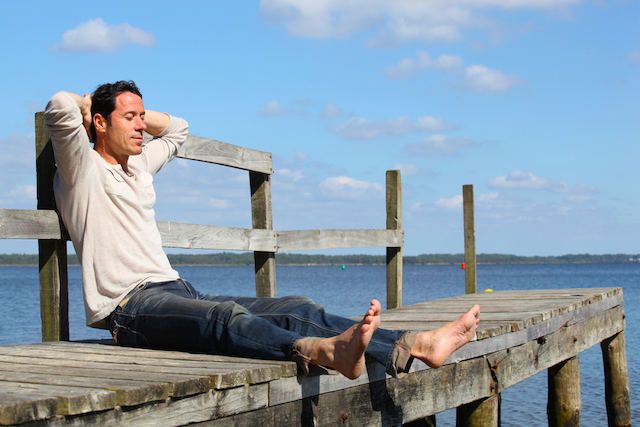
Man sitting on pier image via Shutterstock
-

4 Simple Ways to Slow Down So You Don’t Rush Through Life
“If you surrender completely to the moments as they pass, you live more richly those moments.” ~Anne Morrow Lindbergh
Throughout my life, a deep voice within has constantly asked me to slow down.
Don’t get me wrong; I thrive when I have deadlines, when I have to push myself to get somewhere. I love being quick in what I do.
However, over the last ten years of living like a workaholic and then having to find a semblance of quiet after the birth of two adorable babies, I have begun to realize that being quick in what we do is in itself not worrisome; feeling rushed is.
I began experimenting with slowing down after several episodes of sickness that resulted from the stress I accumulated in my rushed life.
The struggle between being in ten places at once and being in just one place at one time was immense.
Even today, I still feel the urge to check my mobile and send out a quick email as I walk my little ones to the park. Yet I cannot stand to miss the little tumble walk of my toddler and my big talking kindergartner as I walk with them.
Slowing down just a little has taught me the power of pausing and gathering perspective.
This is an invitation from my deeper self to yours to slow down, just for a few moments, to pause and breathe. Here are four simple ways to do that.
1. Morning drink.
For most of us, the morning tea or coffee has become somewhat of ritual that we rush through. Just for today, allow the morning drink to wake you gently. Sit with it as if you were participating in loving yourself.
Eventually, allow your morning beverage to help you set an intention for your day, gently and with care.
Set an intention about how you want to feel during the day, and after you finish your morning drink, intentionally rise and take good care of the cup that helped you slow down and gather perspective.
2. Write/journal.
Experiment with writing. When you take a few moments of your day to write, you allow for space to pause and reflect. You slow down the speeding thoughts of what is to be and what should have been to accept what is now.
Write about the sense of feeling rushed in your everyday life and how you struggle to balance. Write then about how you yearn to feel and how that life you yearn for can begin now.
3. Pause to observe.
In this moment, pause and look around you.
On the surface of things there might be chaos—the tooting of horns from the street, your children screaming for you, or your coworkers having an argument. Take a deep breath anyway, look around, and see how there is stillness in the objects around you.
The earth that is bearing us; the furniture, still and sturdy; the air, present and quiet. Observe the nature of stillness around you and allow your thoughts and actions to slow down just a little.
4. Embrace now.
In any given moment there are one or more things around us that we like, be it the color of the blinds or people around us that we love. And yet, we are often overwhelmed by the things that happened to us or the things that didn’t happen.
In this moment, identify three things you like. Once you identify them, allow the realization to sink in and enjoy it for a few seconds before you move on. Hence starts the experience of slowing down to embrace now.
Experimenting with slowing down is an invitation to try out living in the now, because honestly, it is a pain to live in the past and too scary to think about the future.
Now is all we’ve got. And experimenting with these practices helps us be everything we want to be in a more quiet, peaceful, and joyful way—in a more present way, with deep intention.
There is utter beauty in taking refuge in our senses, in opening up to the small miracles that we always rush through. Take a day or more to experiment with slowing down and, as difficult as it may be, you’ll find it expands the time that we often think we lack.
Woman drinking coffee image via Shutterstock
-
Letting Go and Enjoying Annoying Situations
“Never forget: This very moment, we can change our lives. There never was a moment, and never will be, when we are without the power to alter our destiny.” ~Steven Pressfield
This week I had the pleasure of waiting in a queue. Now, that is not normally something that I would be able to say, as I’m not the most patient woman.
The queue was for the immigration department in Chiang Mai, Thailand—a busy place full of people who were stressed because they were unsure about where to get a number for their place in the queue, unsure if they had the right paperwork, unsure of how long the process would take, and unsure if their right to stay in the country would be extended.
Friends had warned me that I might be sitting in that crowded room for hours, so I had come prepared with postcards to write and a notepad to write my next newsletter. I did neither of those things.
Instead, I sat on the uncomfortable blue plastic chairs, observed the people around me, and observed myself. I watched people get grumpy and impatient. I watched the staff trying to do their job well while dealing with grumpy and impatient people.
I watched myself getting nervous about whether I had all of the documents that I would need to get my extension.
I watched myself getting impatient as the staff didn’t call the first number in the queue so that processing of applications could begin, right on the dot at 8.30AM. I was number fifteen.
I watched myself itching to ask the first person processed how long they would now have to wait for their passport to be stamped and returned to them.
Then I made a decision. None of this really mattered. Perhaps I would have to come back again if I had the wrong documents. Perhaps the queue would move at a crawl. Perhaps I would have to wait a long time to actually get my passport back. Perhaps I wouldn’t get an extension at all.
None of these things were inside my control, so I made the decision to let it all go. To sit quietly. To enjoy the time not doing anything “constructive.” To let my mind wander. To have a brief conversation with the family next to me, the kind you have when you don’t speak much Thai and they don’t speak much English but you understand each other perfectly.
My decision turned a stressful experience into a relaxing and, dare I say, enjoyable one. I even played a game with myself to guess the time that I would be able to leave. I guessed 10:00AM. I left at 9.55. Not bad at all!
This experience showed me that there is a massive difference in how I feel when I deliberately choose to view a situation in a different way.
I know that in the past in situations like this I wasn’t even aware that I had a choice as to how I felt. It’s taken some hard lessons and a growth in awareness to realize just how much influence I can have over my own feelings.
It turned out that the Universe had a reason for keeping me in that queue for as long as it did. As I was cycling back to the countryside, where I volunteer at a dog shelter, I came across a puppy in the middle of the road.
Five minutes either side of that moment and I might have missed the puppy or, worse still, have come across a tragedy on that busy country road.
I was able to get close enough to pick him up. I then had a dilemma; how would I get him back to the shelter, which was an hour’s walk away on a sweltering hot day?
Using my well-rested and relaxed brain, I came up with a solution. I emptied the contents of my bike’s basket into a bag I fashioned out of what I had, and then tied the puppy up in a spare shirt so he couldn’t wiggle about. Into the basket he went.
He sat in that basket the whole bumpy ride back to the shelter with the calmness of one who knew that this situation was outside of his control. He is now taken care of and was adopted after only nine days in the shelter.
The lesson I learned is that we always have a choice about how we feel about a situation. Even if we initially react poorly, we still have the power to change what we think and do next. It’s simply a matter of changing what is going on internally and making a conscious decision.
This week I’m grateful that I had the pleasure of waiting in a queue.
Woman in a waiting room image via Shutterstock
-
4 Faulty Beliefs That Cause You to Push Yourself and Do Too Much
“Slow down and everything you are chasing will come around and catch you.” ~John De Paola
Do you ever work past the point where you know it’s time to stop? Where your body, heart, and soul are saying, “Ah, enough already,” only you can’t hear them because your mind is pushing you on?
And have you ever pushed to such an extent you become physically and/or mentally sick?
My hand is raised.
Working hard and pushing the boundaries can be stimulating and rewarding; the problem comes when there’s an imbalance for extended periods.
Meditation and silence are increasingly advocated as ways to find balance in today’s hyper-connected, “always on” world. But for those of us with a propensity to work till we drop, there’s more to it.
These four common, though faulty beliefs get to the heart of why it can seem so hard to stop, rest, and rejuvenate.
Faulty Belief # 1: I have to keep going.
It’s easy to think you have to keep going, when usually, you don’t.
“I have to finish my degree.”
“I have to … ”
“I have to …”
The human mind loves to make plans and stick to them, no matter what. The problem is that our mind thinks these things will strengthen our identity and make us feel good.
This is reinforced by a world focused on achievements, not one that values us for just being.
It’s often easy to just stop or change course. But we don’t; we become rigid.
Dogged determination can be useful, like when writing a book, or even this article; if I stopped every time it got difficult, I’d never finish anything. But sometimes the plan isn’t a good one. Sometimes such determination isn’t healthy or useful.
I spent years thinking the road to “success,” and therefore happiness, was a college degree. But that’s all it was, a thought, a belief. A rule I’d made for myself that simply wasn’t true.
Who knows if leaving college would have been a less painful route; I just wish I’d seen it as a viable option. Would it have been such a bad thing to get my Masters degree in six years instead of five? Or to not get it at all?
If you’re feeling strung out, ask yourself, do I really want to do this—not just the assignment, but the degree; not just paying the mortgage, but the house?
Take notice of what your gut is saying. Can you feel what the right thing for you is?
And even when there are things you have to do—though really there are very few and they usually involve caring for dependants—they can often be modified so you can reduce your load.
Keep an eye out for long held beliefs and notice how uncomfortable it feels to consider a new tack.
It feels scary to go against what your mind says. Why? Because you don’t know what’s going to happen. But in truth, you never do.
Faulty Belief #2: I’m essential.
No, you’re not.
Handsome, talented, and deeply lovable, yes. But essential? No.
This is a bit embarrassing, but a few years ago if you’d said to me, “You have to come to my party because it won’t be as fun without you,” I would have believed you.
I could have just arrived back from a two-month trans-arctic trek and I’d still have hobbled in on frostbitten toes trying to be funny and charming. Aside from suffering from an extreme case of self-importance, I didn’t want to let people down.
I thought I needed a reason to say no. A real reason. Not just, “I feel like writing poetry tonight.” Something big.
“I have the mumps.”
“I’ll be in Fiji.”
But saying no and taking time out isn’t selfish. Putting other people’s needs ahead of your own, especially long-term, doesn’t help anyone. It’s dishonest, it makes you feel resentful, and you miss out on the wonderful things that happen when you rest.
Consider that you’re not as essential as you think you are. Delegate. Get help where you need it.
(This applies in the workplace too.)
Your friends will understand. They want you to look after yourself. And the party/school reunion/church fete you don’t want to go to—everyone will get along just fine without you.
The only thing you’re essential to is you.
Faulty Belief #3: My mind is a wise guide.
Most of us are brought up to believe our thoughts are the best guides for our life. And so we spend our days and weeks doing what seems logical.
—If I go to the party, people will like me and be there for me when I need them.
—If I get a bigger car/taller horse, I’ll get a prettier girlfriend.
(You probably won’t, you know. You might just get one that cares more about your car/horse than you.)
The problem is—as you may know—the mind is inherently insecure. It wants you to take the safest route, following others or repeating what you always do.
If working without adequate rest has been modeled as the way to be successful, or if you habitually push yourself hard, then your mind will want you to continue doing this.
Thankfully, there is another side to us that is often a better guide than our mind. Our heart. I’m not talking about the romantic heart—though this is part of it—but the bit of us that knows, deep down, what’s right for us.
The challenge is our heart speaks more quietly than our intellectual side, often in the form of a hunch or deep knowing. And because the guidance doesn’t always appear logical, we can easily dismiss it.
For instance, when you have the idea that you’d like to write songs, that is your heart. The thought you get immediately after, saying, “You can’t even play an instrument,” that’s your mind.
When I get an inclination to rest, my mind almost always thinks it’s a bad idea.
But the more I practice ignoring my mind’s taskmaster-like tendencies, the more I trust my inner wisdom. Not only do I feel more refreshed and enthused, I get ideas and see opportunities I miss when I’m in full swing.
Faulty belief #4: There’s something wrong with me that keeps me going so hard.
I used to wish I was the kind of person who naturally moved more slowly, and who didn’t wake in the morning with their “on” switch already dialed up.
I don’t think this anymore. (Well, not often)
I’ve come to believe there’s nothing wrong with emerging at the end of the day weary and happy. I love my energy and enthusiasm and good intentions. Finding balance isn’t about trying to stop that flow, but working with it.
I have to factor in stops. Things like turning off my phone and laptop in the evening, going hiking in the weekend, or even something as simple as doing the laundry in a relaxed, pottering way.
For those times when it’s harder to shift gears, try just sitting, staring into space. It’s a great way to reconnect. Looking at things like social media, does it recharge you or make you feel discharged?
Celebrate your zestiness! But look after yourself too. You really will get more done and you’ll feel better while you’re doing it.
And when you forget and overdo things—my hand is up again—don’t worry. It’s no big deal. Us over-workers also tend to overwork at being hard on ourselves!
Photo by Gerry Thomasen
-
Let Go of Shoulds and Stress and Let Yourself Do Nothing
“When you try to control everything, you enjoy nothing. Sometimes you just need to relax, breathe, let go and live in the moment.” ~Unknown
I am a recovering doing addict. My whole life I have been committed to getting things done. I do, do, do until I can’t do no more.
I have a very clear memory of myself in college, sitting at an evening lecture. I am not paying attention at all. I am writing a huge, long to-do list on the back of a blue folder.
Things keep popping into my mind, things that must get done right away. I must capture them on this folder so they don’t escape me. All that matters is the list in that moment. I don’t listen to a word that is being said.
Scraps of memories like this one, some from earlier in my life, remind me that I have always been like this. This way of moving (or running?) through my life is not new. It is woven into the fabric of my being. And it has worked well for me in a lot of ways.
I have lived in different cities, held many jobs, traveled all over the world, and started my own business. But there’s a darker flip side to it too, one that drives me into a frenzy of action more often than not. I am growing weary of it. It’s exhausting—the doing and the shoulds and the have tos.
About a year ago I decided I wanted to change the way I am in the world. I wanted to transform myself from someone who was always stressed out and striven toward the next thing to a centered, joyful, fun, and more loving person.
I had recently started my own business and was feeling devastated that I wasn’t enjoying it. Just like every other job I’d had, I was working myself into a stressful mess each day. I was at the end of my rope and didn’t know what to do. When I spoke with my life coach that week, I shared that I felt like I needed to be broken wide open for things to change.
During our session that day she suggested I put everything on hold and carve out a week to just be. No work, no doing, no nothing—just being. “But,” I proclaimed, “what am I supposed to do?” And she replied, “Well, Megan, you’ll just have to figure that out.”
I trusted her deeply and she had never led me astray. Plus, I was desperate. So I decided to go along on this adventure and deemed it the “Week of Being.” I wasn’t sure what to do that first day, so I went to the movies. I figured I’d ease myself into the whole doing nothing thing with some mindless entertainment.
I sat in silence a lot that week. I meditated, listened to music and Buddhist teachings, took walks, read, and laid on the floor of my living room doing absolutely nothing. Slowly, I felt the stress and anxiety fall away. It dawned on me that none of the things I told myself I had to do in life were real. They were all completely self-fabricated.
At the end of the Week of Being, I had a vision of myself in the middle of a labyrinth. I looked down and in my hand I was holding a smooth black stone. I had arrived at the center, and when I looked around I realized there was nothing there…nothing but me.
In my journal from that day I wrote, “I had it backward these thirty-eight years. I thought the doing was what was most important. So the doing often led me down a path of anxiety and stress and even more doing. But it’s in the being where all of the answers lie. Taking care of myself, being in the present, accepting the now—that’s the answer. It’s the only thing I need to focus on. The rest of life will fall into place.”
It was a powerful week. It has shifted me onto a path of allowing more being into my life and letting go of some of the doing. It’s a simple concept really, but it’s not always easy.
It takes practice every day and sometimes I forget the lessons. But I am committed to this process, however long it may take. I know how to get things done, after all, even changing myself.
Lessons from the Week of Being
You can change yourself.
If you have a vision of who you’d like to become and are committed to the work, change is possible.
Do less. Be more.
Practice the art of doing nothing. Take some time each day to lie on the couch or stare out the window. When waiting for a friend at a coffee shop or riding the bus, just sit and do nothing. Don’t fill every moment with action.
Change is not a linear process.
Sometimes you may find yourself reverting back to your old habits and patterns. This is normal. Change doesn’t happen all at once. The good news is that every time you have a relapse, it feels worse and worse. This means you are changing! Get back on course and be easy on yourself.
When you take care of yourself, you are a better person.
Taking time to care for yourself will help you have more energy for others. When you are calm and centered you are a better partner, sister, friend, and parent.
Allow your actions to arise from a place of centered being.
Mindful action is far more powerful than flitting from thing to thing. When you live your life from a deep place of peace you are able to bring about profound change.
Photo by ChrisHayesPhotography
-

When You Still Don’t Know What You Want to Do with Your Life
“If you worry about what might be, and wonder what might have been, you will ignore what is.” ~Unknown
Sitting at my kitchen table, I can’t help but ask myself over and over again how I got to be here. Just yesterday it seems I was sitting with my family for dinner, discussing my college plans and a future that seemed so far away from the comfortable and naïve life I always knew.
Now, I am graduating from college and embarking on the unknown journey that is “the real world” with what seems like no preparation whatsoever. Well, I wouldn’t say that. If they had beer pong tournaments or sorority trash talking in this “real world,” I would be more than prepared.
The funny thing about life is that it’s set up to always be preparing us for something.
Elementary school gets us ready for junior high school, which prepares us for high school, which prepares us for college, which prepares us for this “real world.” We are set on this path right from the start and told to follow the path to get us to where we need to be.
But what society doesn’t seem to understand is that humans aren’t designed to stick to one path. Humans are free flowing, always changing, and always moving. One moment we can be so joyful we want to start a flash mob in the middle of the train station, and the next we can be disheartened and hopeless.
Our feelings are ever changing and ever flowing, as are our thoughts, beliefs, interests, and our relationships with others.
Maybe this is why when we are told to pick a major, a job, or a career, we are ultimately faced with the hardest challenge of our life. We spent our whole lives preparing for this moment, after all. The decided fate of what we will spend our whole lives doing.
When I was faced with the big decision of picking my major and future career four years ago, I was at a standstill. I had so many interests, how was it possible to pick just one? Being the over analyzer I naturally am, I contemplated for a long time, measuring the pros and cons of each profession. I planned and thought, and planned some more.
But it was when I was on a road trip with my family to Colorado, when I had finally stopped planning and thinking, that everything made sense to me.
I was sitting in the car next to my little brother, who has autism. He is nonverbal but probably smarter than any average thirteen old; people just don’t see him how I do.
Pondering about life, as I had nothing else to do in a twenty-five-hour car ride, everything suddenly made sense.
Speech therapy, where I can help people like my brother whose intelligence is underestimated due to his autism, suddenly became my purpose. I can’t explain the feeling other than it seemed like my brother was set on this planet to be my brother and to help me find this purpose in life.
It turned out all that time contemplating my future had gone to waste, because I didn’t need to contemplate at all. I just knew, and the beauty of it all was that it came to me when I was doing absolutely nothing.
So this is where the great plan idea doesn’t quite have it right.
We spend our whole life in preparation. We don’t realize that while we’re planning, we’re missing out on the important things in life. While we’re planning, we’re missing out on the opportunities to relax and let the plan come to us.
We’re missing out on valuable time spent living our lives worry-free and stress-free. Nobody needs a plan or a set path to get to where they need to be, because where you need to be is where you already are.
Being someone who is in the process of growing up, I can confidently say that I believe humans never really “grow up.” But I do believe that humans are constantly growing and changing to be the best selves they can be. People have multiple purposes in life, not just one.
So take those risks. Venture onto different paths; explore the paths that may seem far-fetched or unrealistic. Travel the world, start a business, do the things that are pulling you toward them.
I strongly believe everything happens for a reason, and if you have an instinct to do something, there is a reason for that feeling.
When you become confused about life, can’t make a decision, or are anxious about having a plan, take a deep breath and remember that life is a journey, not a destination. There is no plan required in life. The only thing required is to keep an open mind and go with the flow.
You never know what might hit you when you are relaxed and doing nothing, and what instinct will draw you to your next adventure.
It’s important to have faith in yourself and know that our internal selves are more powerful than we think.
If we can trust ourselves, knowing that we don’t need anything external to give us answers, everything will come together. Remember, you know yourself better than anyone else, even if you don’t think you do.
-
Why We Stay Busy When We’re Not and The Benefits of Doing Nothing
“Doing nothing is better than being busy doing nothing.” ~Lao Tzu
How many times in a day do you tell yourself you are busy and have too much to do? In a week? In a month?
How many of those times are you actually busy doing “nothing”? You know the “nothing” that I am talking about—the nothing that means you are watching hours of mindless TV, roaming the internet, or playing a game that you can’t seem to tear yourself away from on your smartphone.
I’ve been there and done that, and I still do it sometimes. I know what it’s like to feel drained and tired and want a break from real life for a bit so that you can recharge and refresh yourself.
And I know what it’s like to choose to tune out/zone out/disconnect instead, and how that ends up causing you to feel even more worn out and overwhelmed than before you took that so-called break to do “nothing” for a while.
We tell ourselves that it’s okay to do “nothing” and that we deserve some downtime, but we really don’t believe it and that’s why we choose to occupy that time with activities that don’t allow us to recharge. We want others to believe that we are as busy as they are, so we distract ourselves with those mindless tasks.
I resisted “doing nothing” on its own for a long time without realizing it. I tried to do it while reading a book and watching TV and texting friends (yes all at the same time) and I burnt myself out.
I couldn’t focus anymore and I had trouble completing my work when I needed to.
I told everyone that I was busy and stressed out, but I really wasn’t doing what I was supposed to be doing, and my workload was getting larger and the quality of my work was decreasing, all because I wouldn’t give myself permission to take a genuine break and “do nothing.”
It wasn’t until I left a stressful work situation and took some time to travel in South America for a few months that I learned the difference between being busy “doing nothing” and just “doing nothing.”
It was there that I was challenged to just be, as I was traveling by myself, didn’t have any work to bury myself in, and there was no TV or phone to distract myself with.
It was scary at first to be alone with my own thoughts and feelings, and I actually felt anxious, as I experienced sadness, anger, and worry without any way to divert my attention from them. However, as those feelings came up I was able to deal with them and release them, and that was what allowed me to feel rested and recharged.
Even better, when you stop distracting yourself, you also get to enjoy your comfortable feelings such as excitement, happiness, and joy on a more intense level.
Now you don’t have to leave your job and travel to South America to learn how to just do nothing; there are ways to experience this in our everyday life.
For example, we don’t give ourselves permission to take a walk in the park and notice the changing leaves. Instead, we check in with a friend or work on our cell phone and let them know we are busy “exercising.”
We don’t give ourselves permission to enjoy a cup of coffee or a glass of wine with a friend as we talk about how grateful we are for what we have. Instead, we meet with a friend after months of trying to schedule something and end up trying to compete over who is the most overwhelmed.
We don’t give ourselves permission to have fun with our family at the beach, where the only thing we should worry about is remembering to put sunblock on. Instead, we get annoyed by our kids who want to play with us while we try to read “that book” that everyone is raving about, that we have no interest in but feel like we are supposed to read.
Well let me share something with you: All of those things that you keep busy with when you say you are “doing nothing” are distractions.
They are distractions that are preventing you from connecting with others on a deeper level. They are distractions that are actually contributing to your feelings of exhaustion and unease.
I want to challenge you to try doing nothing for a while. Spend some time just being where you are and enjoying this downtime either by yourself or with others. Tell yourself that it’s okay to spend some time really, truly “doing nothing.”
Now, you may be figuring out how to do nothing, and I don’t want you to waste your time worrying about that, so here are some ways to try this “doing nothing” thing out:
Sit on a park bench and enjoy the fresh air, take a nap if you need some extra sleep, enjoy a cup of coffee out while you spend some time people watching, call a friend or family member and only talk about happy events in your lives, lie in your backyard and watch the clouds roll by, or get lost in a magazine or a few chapters of a funny book.
It doesn’t matter which “nothing” you choose, just make sure that you will not be distracted so that you can benefit from it (that means keeping your cell phone far away from you or even turning it off).
This may feel uncomfortable for you the first few times you do this. There are some things that you can do to make this easier for yourself.
Put this into your calendar just like you would a haircut, a doctor’s appointment, exercise, or any other type of self-care.
Also, before you start this process, give yourself permission to set the intention that you will be doing nothing and are okay with that.
There are a bunch of benefits that you will get to experience when you release your need to stay busy, which include feeling relaxed and less stressed, decreased tension, increased focus, improved connections with others, and a greater appreciation of all that you have.
Isn’t time you let yourself reap the benefits of really, truly doing nothing?
-
Let Yourself Be Instead of Pushing to Get Things Done
“When you try to control everything, you enjoy nothing. Sometimes you just need to relax, breathe, let go and live in the moment.” ~Unknown
Recently I went to an annual fall retreat for my graduate program. This was exactly what my heart was longing for up until this point. I felt overworked by school and overwhelmed by the busyness of the city and suburban life. I needed something different, something that would help me feel more grounded and at ease.
We went out to Middle-of-no-where-on-top-a-mountain, California, where the only sign of civilization was the four-way highway down below. I’m originally from Middle-of-no-where, Illinois, so being in nature felt like home to me.
I’m very familiar and comfortable with nature, and I felt I had been greatly neglecting that deep desire to connect with nature once again.
This was not the first time I felt disconnected. During my eighteen months living abroad in Korea, I hardly spent time in nature. With so many buildings, cars, and people, I felt easily overwhelmed with other people’s energy and completely out of balance.
Many of us feel this way in our modern day technology and go-go-go lifestyles. We tend to feel drained, tired, easily irritated, and stressed.
Because of this imbalance, I noticed it was common to have fleeting thoughts like:
“Agh, why the heck can’t I find a parking spot?!”
“Darnit, I’m going to be late. People, get out of my way!”
“Why on earth does this line have to be so long?”
Though I noticed that many of these thoughts come and go rather quickly, the energy produced from them would “stick” and make it harder to be present.
These types of thoughts are very common because our habitual minds (or egos) want things done now rather than to simply be during the experience and get things done in our own time.
Our ego is the part of us that likes to reject the moment and focus on the future rather than accept what is in the present so we can experience joy.
So rather than being anxious and frustrated about not finding a parking place, we accept the moment and trust that, regardless of this minor obstacle, everything is wonderful and as it should be.
Although my intention for the retreat was to feel relaxed, rejuvenated, and refreshed, by the end of the day I didn’t quite feel this way. I felt my time there wasn’t long enough. I wanted to spend time being present with the sound of the crickets and to marvel over the smells of nature so much more.
Despite my inner longing for more time to connect with nature, I felt my responsibilities were forcing me to go back.
However, once I returned to suburban life, I didn’t fall into typical morning and day routine. I kept feeling my body pushing me to do something else. I woke up and went for an early morning walk. This time, without my phone—just my keys.
As I walked, I noticed and marveled over the large evergreens outside of my apartment. I noticed the maple leaves on the ground with beautiful fall colors. I listened closely to the sound of water fountains and allowed myself to feel peace from the sounds.
This peaceful feeling carried into the afternoon, when I avoided watching television or doing any work. Rather, I simply did yoga—and not in a structured, routine video kind of way but simply a “do the move I feel I need to do right now” kind of way.
I realized I didn’t need an escape from the city; all I needed was an escape from myself—my own mind. All I needed was to just sit back, relax, and just be without any motive or push to do things.
In our society we are hardwired to always be doing something. We tell ourselves that we have to go grocery shopping, do laundry, take out the trash, exercise, work, study, watch TV, and so on. How often do we do things without the pressure to do but rather to be?
Why don’t we simply be when we take out the trash? Why don’t we simply be when we exercise? Why don’t we simply be when we clean our house or apartment?
To “simply be” means to be connected. Ultimately, it doesn’t matter what we are doing but rather the feeling behind the action. In other words, what thoughts are you having during the activity?
Are you in your mind, rejecting the moment, or accepting what is? Are you complaining about having to do the activity or are you making the most of it? Are you all preoccupied with all the other things you need to do today or are you simply being present with what you are currently doing?
When we reject, complain, or are preoccupied with thoughts about the past or future, we create this inner pressure within ourselves that causes the symptoms of stress. However, if we simply accept what is and choose to enjoy and really take in what life has to offer, at that moment, then we can be stress-free.
When we let go of the need to push and “get things done now,” we can actually enjoy ourselves. When we choose to accept the present moment, we can then experience a sense of peace, calm, and joy of life. We can enjoy the moment for what it truly is.
Think of all the various things you need to do today, tomorrow, or this week. What tasks can you shift yourself from “pushing to get it done” into simply allowing yourself to be so you can simply enjoy the moment?
Perhaps you can focus on the present while…
- Exercising
- Cleaning the kitchen floor
- Doing dishes
- Watering your plants
- Feeding your pet
- Walking in the morning
- Driving to work
When we choose to let go and just be in the moment, we can fully enjoy what life has to offer us right now, with no formal nature retreat required!
I challenge you to choose a daily task this week where you are going to try to simply be while doing it. What can you start doing today to help you be more present?
Photo by Hartwig HKD
-

5 Tiny Steps to Move Away from Unnecessary Busyness
“It’s not enough to be busy; so are the ants. The question is: what are we busy about?” ~Henry David Thoreau
I’m sitting on my porch watching the line of ants trail up the wall until the black line above me starts to fade into the roof. I wonder what they think about.
Do they question the busyness of their tiny lives? Are they determined to get somewhere, or do they just focus on each tiny step forward? Do they fear the long road ahead?
I remembered learning from my mother—when my sister and I were homeschooled in third grade—about ants’ inability to see with their eyes. I remember my mother telling me that ants see through their sense of smell.
In order to better learn how they saw, my mother placed small pieces of homemade brownies around the house and covered our eyes with blindfolds. Hungry and determined, my sister and I scrambled around the house on all fours, sniffing for our hidden treasure.
While I am still grateful for this lesson my mother taught me about ants, I am starting to recognize a more important lesson that has taken a bit longer to learn.
In high school I spent countless hours with my head down studying and using my hands for various volunteer organizations. In college I worked tirelessly from class to work to home.
Little did I know I was just like the ants marching toward some destination, but I was blind as to where I was going and why.
It wasn’t until I reached complete burnout in my young professional career that I really started taking a look at the time I spent staying busy and getting things done. I had to take a step back and look at what I was doing with my time.
In my younger years I could push through mild illnesses to finish term papers and tests, so I thought this would be the case with my career.
But long hours of keeping busy at work and extracurricular activities turned into days, weeks, months, and years until my body forced me to stop.
I suffered a neck injury that kept me from my job. In search of the answer as to how I injured my neck, I went from doctor to doctor and they told me the injury was merely overwork, not enough rest, and too much stress. The doctors simply directed me to stop being so busy, something that is much easier said than done.
Since the injury kept me from work, chores, exercise, and most of my demanding activities, I faced the startling realization that I had to slow down. I had to start questioning why I was keeping myself so busy.
I discovered that if I stayed busy I could ignore the pain I felt of not being good enough. I recognized that if I continued to do things, I thought I would like myself more. I recognized that I didn’t love myself for just being me.
That injury saved my life. It made me question why I was busy.
I still have to come back to Thoreau’s question: What am I busy about? What are we all busy about?
First, ask: What am I doing in the day that does not serve me? Do I need to spend three hours every weekend cleaning the house or can my family divide, conquer, and clean in only one hour?
Do I need to spend two hours each day updating my social media status or can I update my profile once a week? What am I willing to sacrifice for internal sanity and calm?
Second, ask: Why do I do all that I do? You might be shocked to see that you cling to a number of superfluous tasks for money, pride, power, or recognition.
Third, ask: What would happen if I stopped doing this? Clearly, if you abruptly quit your job you might face immense challenges. Maybe start by identifying something small to erase from your over-packed day.
Be as specific as writing down each hour in your day to see where you spend most of your time and what you can remove from your day. You might surprise yourself when you see how much television you watch or how much time you spend driving around to do errands.
Tiny Steps to Move away from Unnecessary Busyness
1. Challenge yourself to take a few minutes to stretch your legs or to close your eyes and concentrate on slowing down your breathing.
Clearing your head and slowing down your heart rate will allow for clearer thinking, planning, and decision-making.
2. Take a step back and look at your life from another perspective, as if you were a friend or a colleague looking at it.
It can help you let go of emotional attachments and see why you are hanging onto pointless tasks and activities that once appeared significant.
3. Pay attention to your dreams.
Besides my strong advice to take a nap everyday (something we should continue to do no matter how old we are) our dreams can be indicators of many things in our lives if we slow down to recognize what they are telling us.
4. Unplug.
Limiting use of computers and cell phones can open up many more hours of free time, creativity, and relaxation.
5. Allow yourself to feel and be mindful.
Do you feel tension in your shoulders? Are you clenching your jaw?
When we are busy, we forget to feel what’s going on with our own bodies. Let us not be the ants, blind to our own lives, oblivious to what’s in front of us.
Let us continue to question why we “do.” There are some things that are important to “do” in life, but there are also times when it’s important to just “be.”
It is up to us to take more breaks in our busy days and really ask, why am I doing this? Does it matter?
Tonight I decided to stop working a bit early. I did not respond to all the emails in my inbox. Instead, I asked myself what I want to do tonight and why.
I spent my evening reliving my childhood and made a fresh batch of brownies. I savored each bite knowing there is really nothing left for me to do but sit back and watch the trail of ants.
-
When You Feel Terrified: Come Out of the Panic Zone
“Fear is a natural reaction to moving closer to the truth.” ~Pema Chodron
Are you as scared as I am?
I’m terrified.
I’m not talking horror movie terrified either. This isn’t the kind of scared where you jump, but then realize it’s just your friend who’s surprised you. This isn’t even the kind of scared when you realize you left your iPhone in a public bathroom.
This is the kind of scared where your gut churns and churns. You feel shaky, hungry, and out of sorts. It’s a visceral, palpable fear.
Who’s Afraid Of the Big Bad… ?
You’re probably wondering what it is that I’m so afraid of. Perhaps my house is haunted? It isn’t. Perhaps I have a stalker? No. Zombie apocalypse? Seriously, I wouldn’t be blogging at a time like that.
I’m scared because I’ve decided to work full time on my own business. It’s a big step to start your own company and even bigger when you decide to do it without a “back-up job” net. If you have any doubts, let me assure you it’s mind numbingly scary.
What if I can’t get clients? What if no one wants to read my blog or my books? What if I fail miserably, pathetically? What if my family and girlfriend abandon me because I have shamed them beyond repair?
Change is Scary
A bit too dramatic? Yes, very much so, but whenever we start to transform our lives it’s scary. Risk and vulnerability are essential qualities of transformation.
Deep and fundamental change requires us to step outside of our comfort zone. The trick is not to step too far out. We need challenge, but we don’t need panic.
Get In The Zones
There are 3 zones that can describe most of our experiences.
1. The Cool Zone. This is where we know the landscape, can predict many outcomes, and function with some sense of ease.
2. The Change Zone. This is where our edges are being pushed, we might feel slightly uncomfortable, and there’s a bit of pressure, but we can handle it.
3. The PANIC ZONE! This zone is all like AHHHHHH!! We are freaked out and we tend to react, shut down, or run away. (more…)
-
Rituals for Renewal: 7 Steps to Lower Your Stress
“Every day brings a choice: to practice stress or to practice peace.” ~Joan Borysenko
Every day I meet with people who are stressed and want things to be different. I also encounter people who are so distressed they’ve accepted suffering’s dominion over their life. Almost all, however, are interested in the concept of change.
Still, taking small, conscious steps toward a healthier emotional, mental, and physical life can sometimes seem overwhelming. More people have told me “I’m so busy—I can’t fit one more thing into my day!” than not. But what’s the alternative? It’s being just happy enough to be miserable.
Take it from me. Early in my career, I decided to take a position with a new for-profit, up-and-coming business, determined to climb the professional ladder quickly. Immediately I moved my family from our safe, rural life to fast-paced, competitive Washington, DC.
I became obsessed with work, committed, and my boss recognized my energy level and capacity to manage by awarding me with, of course, more work.
At the time, I took this as a compliment; I saw it as evidence that I was achieving a goal. I did not recognize what my work was extracting from me physically, emotionally, and mentally until, ironically, I took a long overdue vacation.
Walking out to the pool, my wife mentioned that we had forgotten the suntan lotion. Offering to retrieve it, I suddenly began to feel dizzy as I approached the lobby, anxious waiting for the elevator.
I was sweating in the air-conditioning, and there was a sense of impending doom as I approached our room. I was afraid to walk inside, fearful there might be a blinking red light on my phone indicating a message from my boss about work.
Seeing no red light, I was able to breathe again and regain my balance. But the truth was clear: The red light was a metaphor. If I didn’t begin caring for myself, soon enough I would be in a van with red lights whirling all around me. (more…)
-

Live the Beach Lifestyle Everyday

“The time to relax is when you don’t have time for it.” ~Sydney J. Harris
I live on a beach, and I don’t mean in a box under the boardwalk. Rather, my home is just about 60 seconds away. People tell me I’m lucky when they find out that the beach is basically my backyard.
This implies that we all randomly end up living in places strictly by chance, and that my being here is purely accidental. I obviously chose to live here. But beyond that, the beach life can be a choice, even if you don’t live near one.
I was walking on the boardwalk the other day and realized that I felt as if I were on vacation. Not because I was at the beach, but because of the attitude behind my thoughts. Even though I have lived here for five years, there are always new people to meet and new things to do, so every day can be a vacation.
When was the last time you explored the town you live in or a neighboring town? That could be a fun journey and an escape from the everyday grind, couldn’t it?
“My life is like a stroll on the beach…as near to the edge as I can go.” ~Thoreau
Perspective Buster
Why is it that we can wait in line at Disney World for an up to an hour for a ride that will last (maybe) three minutes without complaining, but we cannot endure waiting five minutes at the bank or post office? What’s the difference?
Is it our first time in one of these waiting stations? Did we really expect to go right in and out of the bank? Or the doctor?
That’s unrealistic isn’t it? So why the impatience? It’s our attitude that makes the difference.
Yes, there were times when we have quickly gone in and out of the post office or bank, but that is not the norm. Instead it’s a pleasant surprise.
My thinking is this: If you don’t have enough time allotted to go on your errands or you can’t stand to wait for a few minutes, then don’t go.
Save yourself (and others) the aggravation. Now, it’s likely that you will eventually have to go, and there will be times you will have to wait, so it may be best to change your attitude and your thoughts. Let your dreams take you away. (more…)
-
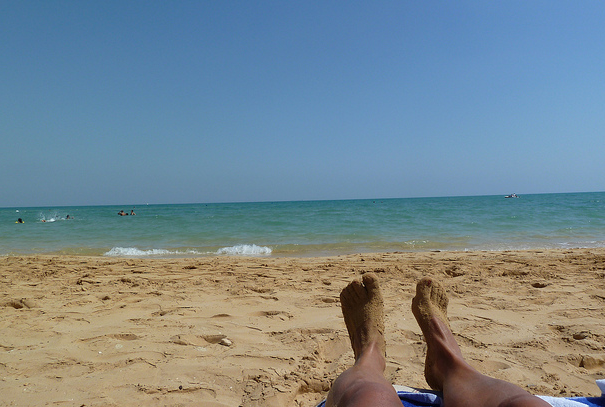
How Doing Nothing Helps You Get More Done
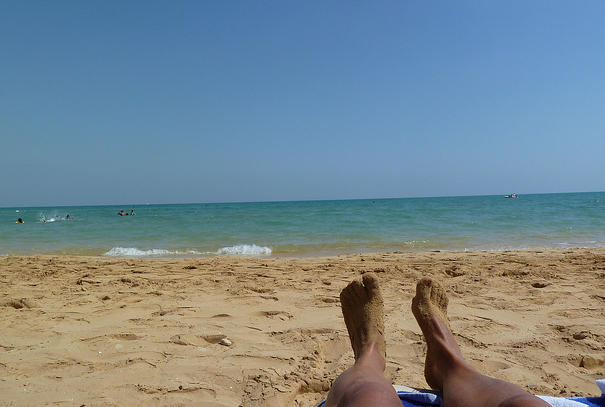
“The time to relax is when you don’t have time for it.” ~Sydney J. Harris
Have you ever been “insanely busy”?
That’s been my world for the last two weeks. Not only have I been writing posts for my websites and creating meditation products for my subscribers, I’ve also been busy planning the end of year music events at the school where I work.
During this time I discovered something that helped me stay on top of things and keep my productivity high: I started making appointments to do nothing. Sometimes I scheduled this time at work, sometimes at home.
If I’m struggling to write posts, articles, or plan music workshops, I find that allowing myself time to do nothing and let my mind unravel brings many benefits. The main ones are creating new ideas and finding solutions to problems that have been unsolved for a while.
Doing nothing feels like the complete opposite of being productive, but after you’ve tried it you will see how effective it can be. Why do you think Google adopts a company policy that has an emphasis on allowing their staff so much free time?
A lot of people say that they are too busy to do nothing. Yet those same people will happily invest hours in front of the television, or spend plenty of time fretting and worrying about something without allowing themselves the pleasure to just be.
I’ve noticed that an hour slumped in front of the TV feels very different than one hour sitting in the park.
Actually, doing nothing can be a great investment into your personal well-being and something worth making time for.
It doesn’t take a huge change in your lifestyle—perhaps just a change in your thinking—and once you experience the benefits you will be more likely to make it a regular part of your schedule.
I have two preferred methods for doing nothing, and they can both be of great benefit.
The first way is to forget feeling guilty and to just take the time to zone out. Unplug from the internet for a while, stare out of the window, or just into space, and luxuriate in a special time of doing nothing. (more…)
-
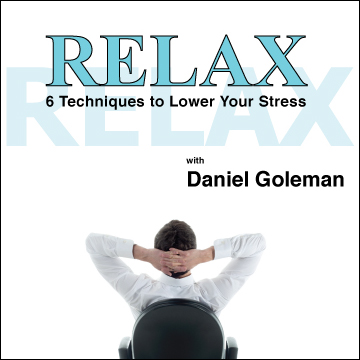
CD Giveaway, Relax: 6 Techniques to Lower Your Stress
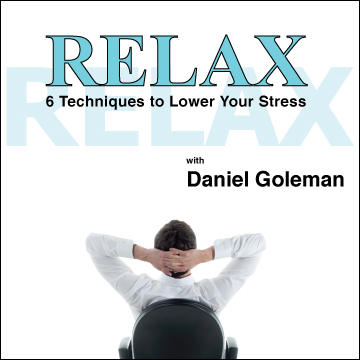
Update: The winners for this giveaway have already been chosen. Subscribe to Tiny Buddha to receive free daily or weekly emails and to learn about future giveaways!
The Winners:
Last year, a representative from More Than Sound reached out to me to share the publishing company’s new mindful driving CD, Awake at the Wheel.
As someone who frequently deals with Los Angeles traffic, I especially appreciated the opportunity to hear and share a CD focused on making the roads more peaceful.
Recently, More Than Sound connected with me again to introduce their latest offering, a CD by emotional intelligence expert Daniel Goleman titled Relax: 6 Techniques to Lower Your Stress.
I’m grateful for the opportunity to share it with you and offer 5 free copies as a giveaway!
The Giveaway
To win one of 5 free copies of Relax: 6 Techniques to Lower Your Stress:
- Leave a comment on this post.
- Tweet: RT @tinybuddha Giveaway – Relax: 6 Techniques to Lower Your Stress http://bit.ly/vr9r6O
You can enter until midnight PST on Friday, November 11th. If you don’t have a Twitter account, you can still enter by completing the first step.
About Relax: 6 Techniques to Lower Your Stress
Chronic stress can disrupt almost all of your body’s processes. It’s been shown to increase the risk of numerous health problems including heart disease, sleep issues, digestive complications, fatigue, depression, anxiety and obesity.
Daniel Goleman, Harvard-trained psychologist and author of Emotional Intelligence, developed Relax, a 45-minute audio program to help listeners effectively and naturally reduce stress. Since there’s no one universal antidote to stress relief, Dr. Goleman’s guided session offers several exercises to suit a variety of personal preferences:
- Deep breathing exercises
- Deep muscle relaxation techniques
- Guided auto suggestion exercises
- Relaxation countdown
- Breath focus and tension release techniques
- Breath count exercises
Learn more about Relax: 6 Techniques to Lower Your Stress at More Than Sound. You can also “like” the Facebook page for Relax for stress reduction tips. -

10 Ways to Let Go of Work on the Weekend
“One day your life will flash before your eyes. Make sure it’s worth watching.” ~Unknown
Sometimes, for me, it’s not a matter of if I’ll work on the weekend; it’s a matter of how.
On the one hand, I’m committed to being mindful and creating balance in my life.
On the other hand, I have a lot of dreams and goals and I enjoy giving my all to pursuing them. Even if it sometimes means I write on a Saturday or edit on a Sunday.
I’ve decided that what’s most important is not to create a black-and-white understanding of which days I work and which days I don’t, but instead, to be sure I have sufficient time for play and to focus on fully enjoying it.
This way, I may devote a couple hours in the morning to work, but it doesn’t dominate my thoughts through the afternoon and evening.
There are no rules to this whole life thing. There’s no choice that’s good or bad. But there are choices that cause more pain than others. For example: obsessing over work, clients, contacts, and colleagues instead of truly enjoying your downtime, however short or long it may be.
If you sometimes let work-related stresses bleed into Saturday and Sunday, these tips might help you let go and relax, even if just for pockets of time: (more…)