Tag: relax

  • Why You Can’t Relax and How to Let Yourself Rest

    Why You Can’t Relax and How to Let Yourself Rest

    “Rest and be thankful.” ~William Wordsworth

    A few years ago, I caught myself doing something that made no sense.

    It was late evening, my kids were asleep, the house finally quiet. I’d been counting down to this moment all day—dreaming of sinking into the couch, wrapping myself in a blanket, maybe even reading a book without distractions.

    But when I lay down and closed my eyes, something inside me lurched. Within seconds, I reached for my phone. I didn’t even have anything urgent to check—just mindless scrolling. Five minutes in, I was already half-sitting up, wondering if I should fold the laundry or answer one last email. Before I knew it, I was back on my feet, tidying up the kitchen.

    I remember thinking, why can’t I just rest?

    The Invisible Weight That Keeps Us Restless

    Maybe you’ve felt this too. You plan a quiet evening—maybe a bath, a book, or just lying down in silence—but your mind buzzes with things you should be doing instead.

    Did I reply to that message? Should I wipe down the counters? Maybe I should check my notifications—just in case.

    It’s so easy to blame ourselves: I have no discipline. I’m addicted to my phone. I can’t sit still. But the truth is, our difficulty with rest runs deeper than bad habits or busy schedules.

    Sometimes our bodies and minds have learned that stillness isn’t safe.

    Why Does Rest Feel So Uncomfortable?

    I used to think I was just bad at relaxing—like I’d missed a class everyone else had taken. But over time, I realized there were reasons why lying still felt so wrong.

    Here’s what I’ve learned—and maybe you’ll see yourself here too.

    1. We equate stillness with danger.

    Deep down, part of our nervous system still believes we’re in the wild—where lying still too long could make us vulnerable. Even if our physical world is safe, our inner world might not feel that way.

    Many of us grew up in homes where we had to stay alert—watching moods, avoiding conflict, keeping busy to feel useful or unnoticed. Being on guard felt safer than relaxing.

    Even now, when the house is calm, our bodies may still whisper: Don’t settle. Something could happen.

    2. We tie our worth to doing.

    Growing up, I learned that being “good” meant being helpful—doing the dishes before being asked, getting top grades, staying busy. Rest wasn’t modeled as something normal; it was a luxury you earned only after everything was done perfectly.

    So when I lie down on the couch, an old voice pipes up: Have you really done enough to deserve this? Even now, I still catch myself folding laundry at 10 p.m. or working on my blog instead of just letting myself rest.

    3. Rest brings up uncomfortable feelings.

    Stillness creates space. And sometimes, that space fills with things we’d rather keep buried—worries we ignored all day, sadness we don’t want to name, thoughts that make us feel alone.

    So instead of resting, we keep busy. We scroll, clean, or half-watch TV while half-doing chores. Movement feels safer than meeting whatever rises in the quiet.

    4. Our brains crave the next hit.

    Our world feeds this cycle. Apps, notifications, endless news—tiny dopamine bursts that keep our minds buzzing. Even when we’re exhausted, our brains crave just one more swipe, one more update.

    So when we try to rest, it feels like a mini withdrawal. The silence can feel almost unbearable.

    The Good News: Rest Is a Skill We Can Relearn

    If you see yourself in any of this, you’re not broken. There’s nothing wrong with you. Rest just feels unfamiliar because your body and mind learned to survive without it.

    The good news is you can gently retrain yourself to feel safe doing nothing. Not by forcing it—but by meeting your restlessness with small, doable shifts.

    Small Ways to Make Rest Feel Safe Again

    1. Start tiny.

    I used to think rest meant lying still for an hour—meditating, deep breathing, total quiet. That was way too much.

    Instead, try building up your tolerance for stillness in small ways:

    Sit for ten slow breaths before grabbing your phone in the morning.

    Pause for a few seconds before switching tasks.

    Lie down for two minutes with your eyes closed before bed.

    I started with just a few slow breaths while breastfeeding. It helped both me and my baby settle a bit more.

    Tiny moments teach your body: Stillness doesn’t have to be scary.

    2. Notice the thoughts that rush in.

    Sometimes when we try to rest, thoughts pop up:

    You’re wasting time.

    You should be doing something useful.

    Just one more thing, then you can relax.

    When you notice these thoughts, name them. Gently remind yourself: Rest is useful. Doing nothing is not the same as being nothing.

    3. Give your body a gentle cue.

    Rest doesn’t have to mean lying statue-still. If stillness feels like too much, try calming your nervous system with small, soothing actions:

    Sip warm tea and notice its warmth. I love slowly brewing tea and taking a moment just to smell it before I drink.

    Wrap yourself in a blanket and sway gently.

    Sit in a rocking chair. Rocking can feel safer than stillness.

    4. Turn rest into a ritual.

    It helps to make rest intentional—a small, predictable act of care.

    Maybe you light a candle when you sit down. Or play soft music. Or put away your phone and focus on the warmth of a bath.

    A ritual makes rest feel like a gift, not wasted time.

    5. Let discomfort be there.

    Sometimes when we rest, feelings surface—sadness, guilt, unease.

    Instead of pushing them away, practice sitting with them for a few breaths.

    Try telling yourself, “I feel restless. That’s okay. I don’t have to fix it right now.”

    Like any feeling, it passes more easily when you stop fighting it.

    What Rest Really Means

    When I look back, I see that my struggle with rest wasn’t really about laziness or distraction. It was about trust.

    Learning to rest means trusting that the world won’t fall apart if we stop. Trusting that we’re worthy, even when we’re not “useful.” Trusting that what rises in the quiet won’t destroy us.

    It’s not easy work—but it’s gentle work. And every tiny moment you spend just being—without doing, fixing, or producing—teaches your body a new truth: You are allowed to rest.

    If you find yourself mindlessly reaching for your phone when you planned to do nothing, pause. Take one deep breath. Feel the weight of your body on the couch. Remind yourself: It’s safe to pause.

    Rest is not the opposite of living. Rest is what lets us show up fully for life.
  • Rethinking Productivity: Less Hustle, More Harmony, More Energy

    Rethinking Productivity: Less Hustle, More Harmony, More Energy

    “The flame that burns twice as bright burns half as long.” ~Lao Tzu

    I can hear the voices now:

    “You should be disappointed in yourself” (for not taking the SATs in seventh grade).

    “Don’t be lazy like [fill in a not-so-studious sibling/cousin]!”

    “You need to work harder or else you’ll fall behind.”

    “Always be analyzing, analyzing, analyzing!”

    “We need to improve our operational efficiency or ELSE.” Or else what?

    My mind became a boiling stew of negative self-talk, heavy thoughts, and beliefs that didn’t serve me. Throughout my entire life, from an immigrant Asian family to corporate leaders fixated on metrics, the voices have been consistent:

    You’re not doing enough.

    From a young age, I’ve been indoctrinated (without consent) into the school of thought that “you better work hard or you’ll get left behind.” I got sucked into the hustle and grind culture and became fixated on productivity.

    But it never felt enough. The promotions, the raises, the accolades, the praise—they never satisfied the part of me that felt like I was never enough. There was the constant, compulsive need to do MORE.

    As the productivity gurus say, you need to master time management. But while striving to manage time, I realized this:

    Time was really managing me.

    Any time I freed up from being more efficient, I’d fill up with more busyness. I constantly spent my energy on the past or the future. Never in the present moment.

    Eventually, I burned out. Life became miserable. It sucked the joy out of life.

    During my lowest point, one evening, I sat at a local park and stared into the abyss. Questioning the meaning of existence and why I wasn’t enjoying life anymore.

    In a miraculous moment, a two-year-old toddler waddled toward me with boundless joy and hugged me. It’s a moment I’ll never forget.

    The toddler’s mother apologized to me. With a softened heart, I reassured her, “Please don’t apologize. I needed that.”

    The greatest teacher I could have had at that moment was a two-year-old who barely knew his right hand from his left. The lesson? My achievements don’t define my self-worth. Self-acceptance isn’t determined by how much I’ve accomplished. Love is unconditional.

    And that began the journey of rethinking my life. And rethinking productivity.

    It wasn’t until I began examining my inner world more consciously that I was able to rewire my programming and shift the paradigm completely.

    Through individual therapy work, meditation, and letting go of old beliefs, I learned the very thing so innate to each and every one of us:

    We are enough.

    Nothing more to do. Nothing more to be. Just enough. Always enough.

    The next truth I gained along the journey was that I could still be “productive” and enjoy my life.

    In the rough landscape of hustle culture, we often find ourselves racing against the clock, trying to squeeze an extra drop of efficiency out of every second. As a result, it sucks the soul out of our lives.

    If this were a cooking show, we’d be moving around the kitchen at a frantic pace strictly following the ultimate recipe: “success.

    Yet somehow, through all our hustling and bustling, we lose sight of the most important ingredient: energy.

    Energy is everything.

    It’s how we show up in the world. How we show up for each other. How a two-year-old toddler joyfully embraces a stranger. 

    Without our vital energy, we can’t be our best selves and do our best work. We can’t create that culinary masterpiece that evokes joy in the world.

    While it’s something kids have naturally, we adults need to relearn what this feels like.

    As reality has it, the relentless push toward productivity often leads us to a paradoxical outcome: burnout; a state of emotional, physical, and mental exhaustion; and working from a depleted place (no energy) that creates work that feels… lifeless. 

    Following the cooking metaphor, let’s consider a more harmonious approach to getting things done.

    Sprinkling Life Energy into the Productivity Stew

    If you had more energy in your mind, body, and spirit, how could that change the dynamic of your work? Whether that be launching a new side hustle, finally writing that book swimming in your head, or striving toward that next promotion at work, how could more energy serve you?

    Like savoring each sip of an aged pinot noir, we can fully experience the gift of the present moment. And through this embodied place, we create from a place of inspiration filled to the brim with energy.

    Here’s how we can sprinkle this goodness into our day-to-day.

    Pause for a Breath

    Before diving into the deep end, take a moment to just breathe. A deep breath can be like a mini vacation for your brain, and it’s much cheaper than a flight to the Bahamas.

    Focus on the Entrée and Prepare Fewer Side Dishes

    By zeroing in on what truly matters, we can devote our full attention to fewer, more meaningful tasks. Consciously doing less can create more impact. Surprise!

    Balance, The Secret Ingredient

    In the recipe for success, “doing nothing” (aka rest)  is the unsung hero, rejuvenating our minds and preventing us from becoming crispy around the edges.

    Self-Compassion, The Essential Seasoning

    It’s okay if we don’t create our best work at first. It’s okay to not meet our own personal expectations when we’re trying something new. Sprinkle a little self-compassion and patience into the mix and remember that every chef has burnt a dish or two.

    Find Joy in the Cooking Process

    Life can be messy. We’re human after all. Embracing the mess in the kitchen leads to creativity and, sometimes, the most delightful surprises. Did you know chocolate chip cookies were created by mistake?!

    We need to understand that our life journey is not linear. When we make mistakes, it might feel like we’ve failed or gotten off track. We might feel incredibly confused. But it’s the experience of moving through this confusion that leads us to clarity.

    So be open to making mistakes. Be open to making a mess, and try to have fun while doing it. This might lead you closer to your goals than you’d expect—or open up new possibilities you didn’t even know to imagine.

    Stirring in Small Changes

    Remember, it takes time to develop new habits. Adapting this new recipe of productivity doesn’t mean a menu overhaul overnight. Start with small, incremental steps—perhaps a morning ritual that includes a moment of gratitude, a new activity that allows you to disconnect and recharge, or a three-minute dance party with yourself. Anything that brings you back to presence.

    Change simmers slowly but once established, it can create sustainable results: a sense of peace, fulfillment, and harmony—and it’s well worth the effort.

    The Balanced Plate of Productivity and Well-Being 

    By incorporating moments of mindfulness, rest, and self-care, we create a more sustainable approach to work and life. And as a byproduct, we’re gifted with longevity.

    By letting go of the fixation of time management and producing results, we paradoxically earn more quality time in our lives to do the things we love and truly care about. Because we have more energy for them.

    After over twelve years of working in the corporate world, I’ve decided to step away from the nine-to-five job and enter the world of entrepreneurship. As you might know, starting your own business is like walking into uncharted territory. It can be both exciting and scary, simultaneously. And unlike a corporate job, which defines the parameters of how productive you are, as an entrepreneur, you create your own.

    This paradigm shift has led me to embrace the tips I’ve mentioned here in this article. Not only has rethinking productivity saved my sanity, I’m actually enjoying the work I do for the first time in a long time. I feel more alive. Fueled with more energy. And I’m having more fun. Now that’s a recipe worth keeping.

    If you’re ever finding yourself lost and confused in this world so fixated on productivity, do what a two-year-old toddler does and see the wondrous world with curiosity, wonder, and awe. And remember you are worthy regardless of what you achieve.

  • How I Stopped Carrying the Weight of the World and Started Enjoying Life

    How I Stopped Carrying the Weight of the World and Started Enjoying Life

    “These mountains that you are carrying, you were only supposed to climb.” ~Najwa Zebian

    During a personal development course, one of my first assignments was to reach out to three friends and ask them to list my top three qualities. It was to help me see myself the way others saw me.

    At the time, my confidence was low and I couldn’t truly see myself. I didn’t remember who I was or what I wanted. The assignment was a way to rebuild my self-esteem and see myself from a broader perspective.

    As I vulnerably asked and then received the responses, I immediately felt disappointed. All three lists shared commonalties, specifically around responsibility. The problem was, I didn’t see responsibility as a positive trait. In fact, I didn’t want to be responsible; I wanted to be light, fun, and joyful.

    Though I understood that my loved ones shared this trait in a positive light—as in I was trustworthy and caring—intuitively, I knew responsibility was my armor. I used it to protect and control while, deep down, I wanted to be free and true to myself.

    I didn’t trust life. I found myself unable to let go out of fear of what may or may not happen to myself and others. I let my imagination run loose in dark places and believed if I thought my way out of every bad scenario or was on guard, I could somehow be prepared to meet the challenges that arose.

    I thought that if I oversaw everything, it would get taken care of correctly and then I’d be safe from the pain of life. The pain in life was not only my own, but my family’s, the local community’s, and the world’s. I wanted to plan and plot a way to fix everything so that everything would be perfect.

    I saw myself as a doer—a person that takes actions and makes stuff happen. I relied heavily on pushing myself and coming up with solutions and, at times, took pride in my ability to work hard, multi-task, and be clever. With time, however, I felt resentful and exhausted.

    Over the years it became too heavy a burden. My shoulders could no longer carry the weight of the world, and I was incapable of juggling so many balls. I had to let go.

    There were so many things that were out of my control, including situations that had nothing to do with me, and yet there were so many people I loved and so many dangerous possibilities.

    Living in a state of constant responsibility meant I had to be alert; I had to be on guard. I was never present and thus unable to have fun. I didn’t understand how to enjoy life while being responsible. I saw these as competing desires and ended up avoiding joy totally.

    I believed I could save joy for a vacation or that wedding coming up next month. I always postponed joy until later so that I could resume being responsible.

    However, being a doer and taking responsibility for things that were not in my direct control had consequences. I was unhappy and drained, constantly wondering why I couldn’t just relax and enjoy life.

    Even when I went away on a vacation, I was unable to calm my mind and have fun. I told myself once x,y,z was taken care of, then I’d feel calm, but then something new would come up and I’d be thinking about that instead of enjoying my trip.

    This left me with a powerful realization: I felt safer feeling anxious and tense than I did feeling happy.

    In some twisted way, it served me. At the time, being happy was too vulnerable, while being on guard for the next catastrophe felt safer. This was not how I wanted to continue living life.

    I wanted to remove the armor. I wanted to trust and enjoy life, and I wanted to believe that whether or not I was on top of everything, things would work out.

    I knew that I could be responsible without carrying the weight of the world on my shoulders. That I could be dependable and caring without being stressed or serious. Those were expectations I had falsely placed on myself, and it was up to me to remove them.

    Once I realized that solving the world’s problems was harming my health and that I was choosing fear over joy out of a false sense of security, I decided to give myself permission to feel the discomfort and vulnerability of happiness. In doing so I found the courage to let go, trust, play, and love life.

    I began setting boundaries with myself. The person that had placed the badge of responsibility on my shoulders was me, and I had chosen to do it out of fear, not love. I had to let go of knowing everything that was going on in other people’s lives and the world and take space from social media, friends, and family to make space for me.

    I began to cultivate joy by practicing presence daily and taking the time to do things I enjoyed doing.

    I took yoga classes, watched comedy shows, went to the beach, and continued personal development courses.

    I learned that although I was great at multi-tasking and pushing through, it wasn’t what I wanted. I wanted to courageously follow my dreams and enjoy my precious life.

    That meant that I had to feel the uncertainty, sadness, and danger of life’s circumstances without jumping in to fix anything. I had to take a step back and bring awareness to my thoughts so I wouldn’t unconsciously join the merry-go-round of solving problems.

    I was a beginner at all these things, but the more I practiced, the more joy I experienced, and this spread onto others. Surprisingly, friends would tell me how I inspired and helped them—not by solving their problems but by being bold enough to enjoy my life.

    If you want to enjoy your life but stress yourself out trying to save everyone from pain, begin to set boundaries with yourself. Stay in your lane and focus on the areas you have direct control over—your attitude, your daily activities, and your perspectives.

    Try slowing down, investing time and energy into activities that light you up. You can’t protect anyone from what’s coming in the future, but you can enjoy your present by letting go and opening up to joy.

  • Why It’s So Hard to Just Rest and Why We Need to Do It

    Why It’s So Hard to Just Rest and Why We Need to Do It

    “If you don’t give your mind and body a break, you’ll break. Stop pushing yourself through pain and exhaustion and take care of your needs.” ~Lori Deschene

    In November of 2021, my autoimmune issues flared up. My doctor and I are still unsure which of my conditions—rheumatoid arthritis or fibromyalgia—was the culprit, or if they were acting in cahoots, but the overall achiness and debilitating fatigue were a solid indication that something was more active than usual.

    I woke up tired, needed naps, and often ran out of spoons—a phrase familiar to many with chronic conditions, based on a gorgeous essay called “The Spoon Theory” written by Christine Miserandino.

    While I may not know the reason, the one thing that was certain was that my body was demanding rest.

    Do you have any idea how hard it is to just rest?

    I mean it.

    Knowing that I needed rest did not grant me the immediate ability to actually pull it off.

    I would sit down to watch a show and find myself trying to multitask. Or I would attempt to put off a nap like a recalcitrant toddler. Instead of throwing myself on the floor in a tantrum, I was trying to “push through” so I could finish typing an email or move a load of laundry into the dryer.

    Even with a body and brain that were crying out for rest, it was difficult to allow myself to do it. In the end, I had to reparent myself in order to be able to rest, enforcing stopping times and rest periods.

    Those of us in the western world, especially here in the United States where I live, are programmed to be productive. We are told—and we tell ourselves—all of the things that we “should” be doing in order to be busy. Work in all its forms, from job tasks to errands to chores, is what we are “supposed” to do.

    We are conditioned to be productive and to stay busy from the time we are young. We hear people say things like “I’ll rest when I’m dead” and “no rest for the weary.” We are exhorted to “pay our dues” and “put in the work.”

    If we were somehow fortunate enough to avoid the overt messaging about staying busy and working hard, most of us received those messages indirectly by watching the people in our lives.

    We watched our parents come home from work with arms full of grocery bags, only for them to fix dinner while putting groceries away. Or we were asked what we were doing and made to feel wrong if our answer to the question was a child’s honest “nothing.”

    Long after dinner, once everything was cleaned up or tidied and it was “time to relax,” we watched our parents do additional work, both paid and unpaid. Or we watched them knitting, ironing, or puttering around the house.

    We have been told that we have to “work hard” in order to succeed. That “nothing good comes easy.” That we shouldn’t stop when we are tired, but only when we are “done.”

    Sitting down and resting is not prioritized. Those who decide to rest often must justify it: they have to have earned the right to rest.

    Rest doesn’t only mean sleep, although sleep is a large part of it. It also includes sitting comfortably doing not much of anything at all.

    It could mean listening to music or watching TV or meditating. Or perhaps working quietly on a jigsaw puzzle or craft or reading a book or article. Maybe playing solitaire, or looking out the window, or journaling.

    In the fall, as I was struggling with my autoimmune flare, it occurred to me that I should rest more. I was so accustomed to overriding my body’s signals that I hadn’t realized how far I’d pushed myself.

    When I tapped into how my mind and body were truly feeling, I was shocked to find that my mind and body were almost buckling, on the edge of collapse.

    I waited to notice what was happening until I’d reached the point where I was unable to do many tasks in the day at all. A banner day during that time might have involved doing a single load or laundry or cooking dinner for my husband and me.

    I was so fixated on staying busy that I could no longer assess my need for busyness in an honest manner. I had lost the ability to tune into my body to find out if it needed to move and stretch, or even to stretch out and sleep.

    Had I continued to push ahead for much longer, I’m certain that I would have fallen ill. As it was, I was dealing with brain fog, fatigue, and both joint and muscle pain, all of which made life unpleasant.

    It is easy to see now that I should never have allowed things to get to that state, but fatigue and pain and brain fog have a way of teaming up on you so that you can’t clearly assess much of anything. Nevertheless, when I hit the edge of collapse and burnout, I realized that some serious rest was in order.

    I essentially cleared my calendar for at least three weeks. I cleared my work calendar of appointments, scheduled some brief blog posts and emails, and took time off.

    It was torture at first.

    For one thing, my husband was still getting up and heading out into the world to teach tai chi and qigong classes, so he was modeling “proper” work behavior. For another, I discovered that I was incapable of “just resting.”

    I had to relearn how to listen to my body to discover what it needed. 

    I also had to reprogram my thoughts about rest as being an inherent right that we all hold, and not a reward for productivity.

    I also had to learn how to actually do it.

    I did all of the things I listed earlier as forms of rest, from naps to puzzles to sitting quietly. It was ridiculously difficult.

    I had to almost force myself to limit myself to single-tasking, which is doing one task at a time. That was especially hard if the task was mechanically simple, such as watching a television show. My inner monologue would kick up, chastising me for “just sitting there,” urging me to “be productive.”

    In those moments when I decided that rest meant watching a movie on TV, I sometimes sat on my hands to make sure that I didn’t pick up my phone or a crossword puzzle or something else. I often put my phone on silent and deliberately left it in another room, just to reduce temptation.

    Full disclosure: Even with taking affirmative steps to single-task, I didn’t always manage. I did, however, learn through reinforcement that there was nothing likely to arise in an hour or two of time that required me to give up on resting and take immediate action.

    I realized that in many ways, I was retraining my nervous system to allow itself to relax. It was so used to being in a state of alertness that resting and allowing it to have some time off took some getting used to.

    What I learned when I started to budget rest into my days was that I could start to tell more easily what signals my body was sending. It became easier to converse with my brain and body to find out how they were feeling and what they needed.

    It sounds a bit dissociated when put that way, but I have never felt more integrated than I do now. At any given moment, I can pause, tap into what I am feeling (mentally and physically), and act on my own needs in ways that are more nurturing and caring than before.

    When I realize that I am losing focus on a project—perhaps while typing a blog post or planning a workshop—I no longer push through. Instead, thanks to months of practice, I pause and check in with my brain and body. Thanks to practice, I can quickly ascertain whether I need to take a simple break, to get up and walk around for a bit, to take a walk outdoors, or to stop for the day.

    I am learning to embrace the idea that rest is an inherent right, not something that needs to be earned. It is no longer something that occurs only once I have pushed myself until the point of collapse. 

    As it turns out, the more I lean into rest and build it into my days, the more energy I have to actually accomplish all the things I want to get done in life.

    When I add time off or breaks during the day, I find I have better focus when I need to be working on a task. When I include rest in my days, I have the energy to exercise in the morning and also make a good meal for dinner.

    I invite you to join me in adding actual breaks into your day, where you do nothing “productive” at all. No catching up on phone calls or emails or texts—just rest. I’d love to hear if and how it works for you.

  • Free 7-Day Sleep Challenge: Meditations, Tips, and Tools for a Restful Night

    Free 7-Day Sleep Challenge: Meditations, Tips, and Tools for a Restful Night

    Does stress cause sleepless nights, or does a lack of sleep cause stress?

    Both have been true for me, especially since becoming a parent, and I’m guessing for you too.

    When life gets challenging, it’s hard to shut your brain off at night.

    You know it’s important to get a good night’s sleep. You know you feel better in the day when you’re well-rested. But it’s hard to relax, physically and mentally, when you have a lot on your mind. It’s like there’s a tornado inside your head, and all the sheep-counting in the world couldn’t pull you out.

    And when you haven’t gotten adequate rest, it’s hard to function and deal with, well, anything. You feel on edge, easily irritated, and perhaps both foggy and jittery—like you can’t think clearly, and yet you can’t stop thinking… because you have a lot to do and figure out, and you can’t afford to stop just because you’re tired.

    If you’ve experienced your share of restless nights and exhausted days, and you’d like to improve your sleep routine, I highly recommend the 7-Day Sleep Challenge, from Mindfulness.com.

    This challenge was designed to help you make good sleep a lasting habit so you can become a healthier, happier you.

    Led by mindfulness teacher and international speaker Cory Muscara, the challenge provides daily emails with practical advice to quickly improve your sleep, nightly audio coaching sessions, and a corresponding meditation for each, to guide your mind and body toward better rest.

    This FREE 7-Day Sleep Challenge is for you if:

    • You can’t go to sleep at night, and you wake up tired
    • You wake up in the middle of the night and lie there for hours trying to get back to sleep
    • You feel reactive throughout the day and small things set you off
    • You don’t have the energy to do the things you enjoy
    • You frequently complain about lack of focus and poor memory
    • You are ready to make good sleep a habit

    Benefits of Better Sleep

    When we get the recommended seven-plus hours of sleep, we enjoy a wide range of benefits:

    • Increased focus and productivity
    • Strengthened immune system
    • Lower risk of heart disease and stroke
    • Decreased risk of diabetes
    • Improved memory
    • Decreased stress, anxiety, and depression
    • Balances excessive weight fluctuations
    • Decreased risk of chronic diseases

    Life is just plain better when you’re well-rested.

    You feel calmer, more energized, and better able to focus and enjoy your day, and you’re far less likely to say and do things you’ll  later regret. Which means good sleep not only boosts your physical and mental health, it can also improve your relationships.

    And odds are you’ll also feel better about yourself when you’re showing up as the person you want to be—not an easily irritated zombie who can’t wait to collapse into bed (only to toss, turn, and stress about how few hours you have left to sleep before another draining day).

    Ready to sleep your way to a healthier, happier you? Click here to take the FREE 7-Day Sleep Challenge and get the tools you need to wind down and fall asleep more easily and get the restorative rest you need to be your best!

  • Conscious Escapism: The Benefits of a Spiritual Cheat Day

    Conscious Escapism: The Benefits of a Spiritual Cheat Day

    “The road to excess leads to the palace of wisdom… You never know what is enough until you know what is more than enough.” ~William Blake

    Many people discover spirituality through suffering. I found the path due to years of depression, anxiety, and psychosis. Part of the awakening process is identifying behaviors, traits, habits, or thoughts that don’t serve you. As your behavior changes, so does your diet. Not just what you eat, but everything you consume, including what you listen to, watch, read, and pay attention to.

    Orthorexia is the term given to an unhealthy focus on eating in a healthy way. This sounds like a paradox, as a healthy diet improves overall health. However, there’s a tipping point—eating well can become an obsession. You might develop anxiety around eating junk food, and your desire to eat well influences your social life, or you feel guilty for the times you indulge.

    Your spiritual diet isn’t free from its own form of orthorexia. A healthy spiritual diet—such as a practice of meditation, reading spiritual texts, spending time in nature, serving others—boosts your spiritual health. But there is a tipping point.

    What if you guilt yourself for wanting to spend an evening watching Netflix? Or eating without being mindful? Or being distracted and unfocused? Or not having the energy to serve? Or not catching yourself before reacting in anger?

    What if when you feel anxiety, you don’t want to journal or meditate or unpick and dissect its root cause? What if you don’t want to spend the energy to “raise your vibration” or reframe your thoughts? What if all you want is to eat ice cream or go out with friends or have a glass of wine or watch the Champions League?

    The time will come where you no longer crave junk food, for the nourishment of the path itself satiates you more than anything. Until this point, rather than trying too hard to resist, it’s much more beneficial to allow yourself to indulge, and give yourself the occasional treat, without guilt or shame.

    Unconscious Escapism vs. Conscious Escapism

    In psychology, escapism is defined as a behavior or desire to avoid confronting reality. I place escapism into two categories: unconscious and conscious. This is an important distinction, because most people who practice meditation and mindfulness are, to some degree, aware of when they are engaging in unhelpful behavior.

    Unconscious escapism lacks self-awareness. It is a default, auto-pilot reaction to certain uncomfortable feelings. It’s not wrong, or bad, it’s just a way we learn how to cope. But in the context of spiritual growth and healing, unconscious escapism perpetuates suffering. It distracts us from discomfort and ultimately distracts us from ourselves.

    However, conscious escapism explores and acknowledges underlying emotions with compassion, before choosing to indulge. Maybe you’re just tired or require a feeling of comfort, or simply want to enjoy a movie. All of these options are okay, and don’t make you any less “spiritual.” Quite the opposite: choosing to do a mindless activity can be a great act of self-compassion.

    Conscious Escapism Is the Cheat Meal

    Conscious escapism is choosing conventional distractions, knowing the occasional cheat meal doesn’t reflect your overall diet. It’s acknowledging where you’re at and allowing yourself to lean on mechanisms behaviors that provide temporary solace, fully aware this isn’t the ideal solution.

    To get physically fit, a manageable and balanced routine and diet are better than an extreme, high-intensity routine and crash diet. Start off with high intensity, you’ll likely burn out and return to old habits. Instead, as you progress and form new habits, you might increase the intensity, or find that eating well becomes easier.

    There’s no reason the spiritual path has to be any different. Over the years, I’ve experienced the extremes of depriving myself due to the belief around a spiritual person wouldn’t… (get angry, eat nachos or other unhealthy food, binge watch Netflix when feeling down, argue with their partner, enjoy buying new clothes, curse, procrastinate on tackling their finances…)

    It’s only when I allowed conscious escapism that I’ve discovered what really benefits me.

    Mostly, I was encouraged to try this route by supportive friends and family who could tell I needed time off. I’ve always pushed myself, I’ve always placed high standards on myself, and these traits of perfectionism were absorbed into my spiritual practice.

    Over time my need for conventional escape has reduced. But that doesn’t mean I won’t skip a meditation session or watch a few episodes of Community to lighten my mood if it feels right to do so. Going too far in the other direction creates a feeling of stress or even resentment towards my practice, a result of spiritual orthorexia.

    The Spiritual Diet and Discernment

    A word of warning: Conscious escapism isn’t an excuse to choose the path of least resistance. The ego can hijack this concept, too, weaving a narrative of deceit that finds excuses and reasons as to why you deserve to not meditate, or why your unique spiritual path is finding enlightenment through Game of Thrones.

    Be cautious of this and apply the principle of a standard diet. Understand which foods are good and which aren’t. I know that a healthy diet requires me to eat well most of the time. I know that if I always indulge in high-fat, high-sugar junk food, it’ll lead to reduced health. But I know the occasional treat is fine.

    Knowing when to indulge and when to do the work is a matter of trial and error. It takes time, practice, and self-honesty. It requires self-compassion for the moments you over-indulge, knowing sometimes the road to excess leads to the palace of wisdom.

    When you find momentum with your practice, you might experience a tendency to go all-in. The joy and inspiration that comes from meditation, or spiritual discussions, or insights, or noticing areas of growth or healing, create a sense of wanting more. You might feel the spiritual path is your life’s calling, and you’ll do all you can to honor it.

    This is beautiful, and it’s worth appreciating the innocence of this intrinsic motivation. However, I’m here to tell you—you can take the day off. You can breathe, pause, and take time away from growth or development.

    You can, unashamedly, give yourself permission to indulge in conscious escapism.

  • 20 Powerful Self-Care Quotes to Help You Feel and Be Your Best

    20 Powerful Self-Care Quotes to Help You Feel and Be Your Best

    Hi friends! I decided over this long holiday weekend to give myself a break for some much-needed self-care, which I imagine we could all use right now.

    We’ve all been pushed, stretched, and challenged this year. We’ve all given our all, done our best, and perhaps wondered at times if it was good enough.

    That’s the thing about difficult times—we often make them so much harder by expecting a lot from ourselves, pushing ourselves, and beating ourselves up when we fall short.

    We expect ourselves to always be happy. Or productive. Or confident. Or present. Or there for other people.

    We expect ourselves to always be at the top of the game even if we sometimes put ourselves at the bottom of our priority list.

    But we can’t possibly be all of these things all the time, because we’re not perfect, we’re human. And to be human is to be messy, inconsistent, and full of contradictions. To have days when we knock it out of the park and days when we stare at the park from our window. In pajamas. With chocolate stains. If we even make it to the window at all.

    If you can relate to any of what I wrote above—if you hold yourself to a ridiculously high standard, push yourself to the point of exhaustion, or drain yourself trying to be everything for everyone—take a few minutes to reflect upon these twenty self-care quotes. Read them, absorb them, carry them into your day. Because you deserve a break. And you need it to feel and be your best.


  • Slow Down and Relax with ZoneOutTV (100 Free Subscriptions!)

    Slow Down and Relax with ZoneOutTV (100 Free Subscriptions!)

    Every now and then you just need to shut off—shut your phone off, shut your brain off, and give yourself a little space to simply be. We all do, especially now.

    Let’s face it, it’s been a crazy year, with the pandemic, economic upheaval, and social justice conflicts, not to mention the upcoming election.

    It’s always a good idea to create time and space for mindfulness and relaxation, but it’s even more imperative when life gets extra stressful and chaotic.

    If you, like me, need a little help unwinding and quieting the voice in your head, I suspect you’ll love ZoneOutTV. I know I do. And I’m grateful the team has offered 100 free annual subscriptions to the Tiny Buddha community.

    “ZoneOutTV is what you turn on when you’ve had enough… enough news, enough politics; enough social updates; enough email; enough texts. ZoneOutTV is your refuge from being programmed, sold, directed, educated, informed, and manipulated. When it is time to slow down, relax, and enjoy we are here for your soul.”

    About ZoneOutTV

    ZoneOutTV is an easy, drug-free escape from anxiety and insomnia with gentle sounds, message-free content, and virtual travel to beautiful places.

    The expanding series of simple, beautiful videos with natural sounds features a vast range of hour-long and infinite-loop episodes of beautiful environments, natural habitats, fun critters, and surprising locations.

    This subscription-based service—accessible via Roku, FireTV, AppleTV, Xbox, Desktop, laptop and mobile—features content in various categories, including:

    • Nature
    • Urban
    • Animals
    • Holidays
    • Lifestyle
    • Guest Artists
    • Sleep

    New episodes are published monthly, providing a wide variety of options to calm and soothe your busy mind, along with free monthly sample episodes, available without requiring any personal information.

    ZoneOut is nothing like regular TV. You can watch your favorite videos on a loop, for meditation, reading, holiday celebrations, and so forth; you can adjust your settings to play all videos in a given category; or you can choose from the wide variety of sleep episodes, carefully crafted with dark screen visuals and gentle relaxation inducing natural sounds, for a non-drug insomnia solution.

    You can use your TV with a timer to help you relax into sleep, use your smartphone with headphones to help calm your mind, or use the web version in a separate browser while you’re working to help create mental quiet and boost your productivity.

    Get a Free Year of ZoneOutTV

    The first 100 readers to redeem this coupon code will get a free one-year subscription (valued at $49.99):

    TINYBUDDHA

    This code is valid through August 31, 2020. You can redeem it by clicking here, then clicking on “start free trial” on the top right of the page. From there, click on “monthly” on the left, then enter your info on the right and check the “promo code” box. After you’ve entered your info and promo code, click “Apply.” Then click the big yellow “Redeem now” button below the form and you’ll be all set!

    If you’re reading this after all 100 subscriptions have been redeemed, you can still enjoy the service at no cost by signing up for a free 60-day trial, using the code TINYBUDDHA30.

    I hope you enjoy ZoneOutTV as much as I have!

    **Though this is a sponsored post, you can trust I only promote products and services I love and can easily personally recommend.

  • The Importance of Doing Nothing (and No, You’re Not Too Busy)

    The Importance of Doing Nothing (and No, You’re Not Too Busy)

    Relaxing

    “Doing nothing is better than being busy doing nothing.” ~Lao Tzu

    Whether it’s chores or children, to-do lists or bucket lists—let alone work—modern life moves at a demanding pace. It’s a hamster wheel and, unlike our beloved family pet, we’ve decided it’s not fun.

    But as a society we revel in being busy all the time. We consider those who do nothing on the weekend to be dull or lazy. We don’t have time to chew the cud. If William Henry Davies thought his lot “had no time to stop and stare,” he should turn in his grave and see what’s happened since.

    Somewhere along the lines, it’s become more than acceptable to live at an unhealthy pace—it’s become “cool.” Instead of saying, “Very well, thanks,” when people ask how we are, today we roll our eyes and reply proudly, “Hectic!”

    Where we live, lots of mothers rock up at school, claiming they’ve had four hours of sleep, have no time to walk the dog, and have already been to the gym at 6am. They set the bar high! I feel inadequate if I’m not still replying to emails at 8pm. My phone stays on all night next to my bed in case someone needs me. Every day. Even on holiday. Especially on holiday.

    Our house burned down a few years ago—moments after we’d left with our new baby. The fire started in our bedroom where her cot was at the end of our bed.

    A lot of the very important stuff we’d gathered around us was lost—clothes, photos, furniture. We knew our attachment to our losses would cause us pain, despite having walked our spiritual path for years.

    Buddhism teaches us that attachment causes suffering, so our lesson here was to let go. Our belief system helped avoid the useless “Why me?” type questions that plague us when things don’t seem fair.

    No one was hurt. We dug deep, counted our blessings, and tried to go with the flow of things. And we realized (because it was months before we missed “that pair of shoes” or “my favorite” CD) that most of the things we battle for, in the end, we don’t miss at all.

    I also realized that much of what I busy myself with all day does matter, but much of it does not. If I don’t do it, it makes no difference. No one notices! But for me, and many people I know, because our poor addled brains are never allowed to switch off, we are often unable to see which is which.

    This way of living is not good for us. Trying to juggle everyone’s balls is not good for me! Coloring with my five year old is—if I’m doing it wholeheartedly, mindfully, rather than keeping half an eye on the clock and the other half on the mobile attached to my side. She can color inside the lines; I can’t because I’m not concentrating.

    Cortisol, the stress hormone, is as addictive as adrenaline and long been indicated in serious diseases like cancer and stroke. It keeps you awake at night, depletes the adrenal glands, and leads to chronic fatigue.

    My husband, once a gym obsessed high-flyer in the corporate world, collapsed burnt out before he was thirty.

    He had to completely reassess the demands he made on his body and mind and dramatically scale back both his work commitments (which saw him constantly flying all over the world) and his fitness regime. He learned to relax, something he was not good at.

    It has taken him years of practice to heal, and he still suffers chronic fatigue if faced with long, stressful situations.

    A wise man once told us, “The mind is like a bucket of dirty water. The more you stir it, the harder it is to see what is in there. If you stop stirring and let it settle, the muck will fall to the bottom and you will be able to see the clear water.”

    But admitting that you want to settle isn’t easy in a society that only respects those who can keep it up 24/7. When everyone else is competing to see who’s the busiest, it’s hard to say, “I’m not doing anything this weekend.” People think we’re rude or that something’s wrong.

    But it’s vital to rest your brain and body. So here’s my advice. Start small. Start now. You have five minutes to spare. (Yes, you do). Only five minutes of meditating can help calm your mind so you can comfortably relax and do nothing, without feeling anxious.

    Meditating is as simple as breathing. You can do it before breakfast, in the bathroom, in your garage. Focus on the flow of breath in and out of your body, the movement of air, the rise and fall of your chest.

    When a thought creeps into your head (and it will), acknowledge it and release it. Bring your focus back to your breath.

    The more you practice this technique, the easier it will become and the longer you will go without such thoughts bothering you. At some point they will slow down and the quiet space between them will grow. You can do it anywhere, whenever you sit still for five minutes—on the train, in the bath.

    Breathe and watch the muck fall to the bottom of the bucket.

    Learning the precious art of being un-busy will calm you. It will give you greater clarity, focus, and concentration for times when you need the energy. It will improve the health of your mind and body, and probably even your bank balance.

    So, do you have five minutes?

  • 8 Simple Ways to De-Stress and Rejuvenate When You Can’t Take a Vacation

    8 Simple Ways to De-Stress and Rejuvenate When You Can’t Take a Vacation

    “If you let go a little, you will have a little peace. If you let go a lot, you will have a lot of peace.” ~Ajahn Chah

    It’s a common theme—jobs keep piling up, new problems arise, and deadlines are nearing. Taking time out for yourself to de-stress and rejuvenate is so far down the to-do list you don’t even consider it a possibility.

    But the long-term effects of putting yourself last are real, especially because they take a while to show. They creep up slowly until one day you’ve burnt out.

    When I was in this position, it didn’t end too well. The combination of dealing with long-term insomnia, hairdressing full-time, and studying led me to exhaustion.

    I had adrenal fatigue and my body was so tired that everything hurt. My eyes were constantly stinging, head continuously throbbing, and my muscles were always sore from never getting the rest they needed.

    I eventually quit hairdressing, because there’s only so long you can function as a zombie with sharp scissors in your hand, but I left to pursue my own business which brought with it even more work.

    I had to find a way to recharge constantly throughout the day if I wanted to keep up with such an involved career.

    You are your own most valuable asset, and no matter how important another task is, if you don’t dedicate some time to yourself, you’ll burn out. The harder you push, the harder you’ll fall.

    I learned how to find time to dedicate to me while working, studying, and sleeping only two hours a night. I’ll show you how you can do it, too.

    1. Let go of shoulds.

    Let go of telling yourself you should do certain things. If it’s not a necessity, don’t overthink it.

    Shoulds are guilt trips disguised as obligations, which add to extra stress and eat up time. Even if you don’t do anything else I mention in this post, let go of telling yourself you should do tasks you don’t need to do, or even want to do.

    The ones I constantly struggle with are “I should get up earlier to get more work done, I should do yoga every day, I should spend less time on my phone.” Whenever I catch myself saying these, I smile and simply reword it: “I should do whatever makes me feel good right now. What is that?”

    Sure, there are times when we need to push ourselves to make healthy choices. But if you’re too tired to go to the gym and it would make you feel good to take a walk through the park, that gets the job done too.

    This one change in perspective will make you feel lighter and happier throughout the entire day.

    2. Find a short, relaxing exercise routine.

    Whether it’s stretching exercises, yoga, or a moving meditation, a short routine like this is ideal.

    You address three things in one go: You give yourself fifteen minutes to yourself, you get your blood flowing to your head and around your body, and you relax and stretch out your tight muscles.

    Rather than choosing a fifteen-minute power yoga session to “make it worthwhile,” find something that feels good that allows you to feel centered. Don’t worry about how many calories you’ll burn; this is purely for pleasure.

    There are plenty of guided videos on YouTube, so you don’t even need to go to a class to reap the relaxing benefits.

    3. Spoil yourself.

    No matter how small it is, get out of the house and get something done that makes you feel good.

    Haven’t brushed your hair properly in a month? Go to the salon and get a hair treatment. Shoulders are tired and achy? Get some acupuncture or a massage.

    Even when the budget doesn’t allow for a indulging, remember that you are fully qualified and capable of looking after yourself!

    Try soaking your feet in a tub of hot water with epsom salts while listening to a podcast, relaxing music, or an audiobook. You want this to be an enjoyable timeout so listen to your body and let it tell you what it wants.

    4. Get away for a day.

    You may genuinely not have time right now to leave for a day, but what about if you committed to going in three weeks’ time? Could you aim to get everything done before then or book the rest in for when you return?

    Changing scenery and getting away from your usual routine will do wonders to your mind. Leave everything and decide that on this one specific day nothing else matters.

    5. Set yourself a daily routine.

    I first learned about efficient daily routines from a book called The Miracle Morning. In a nutshell, this routine consists of completing the six most efficient personal development practices, every single morning.

    These include meditation, affirmations, visualization, exercise, reading, and journaling.

    I read The Miracle Morning when I had insomnia. Falling asleep before 3am was a “good night,” so the idea of getting up an hour early wasn’t even something I’d consider. But I knew there was something to it.

    So instead of mornings, I would find time during the day to complete these, and not always all at once, either. Ten minutes of reading on my lunch break, ten minutes of exercise when I got home, ten minutes of journaling and visualizations before bed, and so on.

    If I ever found myself sitting there doing nothing (or worse, mindlessly flicking through social media!) I would try to complete another one.

    Though this wasn’t the “correct” way to do it, it introduced me to a world of self-love and forgiveness. I forgave my mind for not falling asleep when I needed it to, I forgave myself for the anger I felt when I was tired and cranky every morning, and I decided to give myself the love I deserved.

    By doing these short practices throughout the day you prove to yourself you’re worth this time to serve you. And the best part is that it doesn’t require a big chunk of time to benefit.

    “The moment you accept responsibility for EVERYTHING in your life is the moment you gain the power to change ANYTHING in your life.” ~Hal Elrod, The Miracle Morning

     6. Find a hobby.

    What is something you love to do? Something you’re yearning to do, but don’t?

    Can you find a community group that does this on a regular basis? Imagine connecting with likeminded people while doing something you love.

    When you reconnect with an activity you enjoy you’ll fall in love with how it makes you feel, which means you’ll make it a priority to do regularly.

    Whether it’s an art class or salsa dancing, fulfill this desire you have and it’ll naturally lead to letting go of stress.

    7. Leave criticisms and gossip; express gratitude instead.

    We’ve all been there, even though we know it makes us feel terrible and accomplishes nothing.

    Instead, talk about your latest achievements or something fabulous you noticed someone else doing. Tell your friend that you love what she’s been doing lately, and ask her what she’s learned from it.

    Not only might you learn something new, but showing gratitude and appreciation is the quickest and easiest way to feel excited and alive.

    Do you ever notice how you light up when you’re pumped about something? How you start talking three times faster and can’t even express in words how happy it makes you?

    We could all benefit from raising each other up and celebrating accomplishments and it would lead to building strong, happy, and powerful relationships.

    8. Find a song that makes you go places.

    You know the ones that give you goose bumps and make you forget about the rest of the world for those few minutes? Keep those songs handy, whether they’re on your phone or saved in YouTube. Then when you need a break all it takes is to plug your earphones in and listen.

    You don’t always need to do something to fix a problem; sometimes all it takes is to let go, surrender, and let your problems and stresses melt away.

    Dedicating time to yourself is essential to de-stress and rejuvenate. And as you can see, these ways are achievable no matter how busy you are.

    The aim is to do small, purposeful practices throughout the day to truly make your moments count. Which one will you start on first?

  • How to Use Self-Care for a Brighter, Less Stressful Life

    How to Use Self-Care for a Brighter, Less Stressful Life

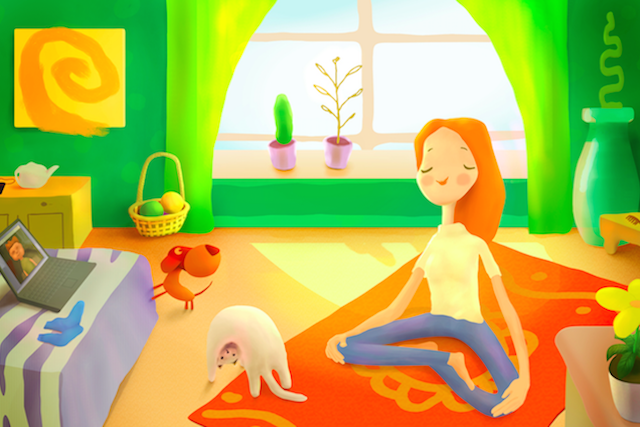
    Girl Doing Yoga

    “The time to relax is when you don’t have time for it.” ~Sydney Harris

    I was working myself into the ground and I knew it. Balancing a full-time job, my fledgling business, studies, home life, and relationships, I was constantly feeling the pressure and slowly, the cracks were showing.

    I was exhausted, I was argumentative, I wasn’t taking care of my health, and my business had transformed from my creative outlet to a source of incredible stress.

    I kept thinking, “I just need one day to relax, just one day!” but even when I had the chance, I couldn’t let go of the pressure I was allowing to take over my life. I felt like I was stuck in a never-ending cycle and I couldn’t escape.

    Of course, I knew I needed to take better care of myself and my health. Deliberately not getting enough sleep so I could work more, skipping yoga to write articles, eating breakfast at lunch time and relying on coffee could only ever take me so far.

    Eventually, I realized that if I wanted to create a life I loved, I needed to start taking self-care a little more seriously. Even though I was ticking the boxes professionally and in my business, I knew I wanted so much more that that.

    What about adventure? What about long baths and good books? What about eating regularly and moving my body? What about sleeping in and taking my dog for walks? I was replacing all of these things that light me up with a cycle of stress, fear, and overwhelm.

    It was time to change.

    I started off small, with a daily five-minute meditation. I figured that no matter what was happening, I could take just five minutes for myself each day!

    After a couple of days, I started to notice how much I was looking forward to my meditations. They refreshed and refocused my mind, uplifted my spirits, and gave me the chance I needed to take a break (even if it was for just a short time).

    As I noticed how these meditations positively affected the way I felt, the way I worked, and the way I thought, I decided it was time to dive deep into this mindful, self-care thing. And I haven’t looked back.

    To bring more mindfulness and self-care into your own life (even when you’re busy!), feel free to try the tips below!

    Take a deep breath, regularly.

    It really is amazing what a simple breath can do! Whenever I’m starting to feel overwhelmed or stressed, my first act of self-care is to take one deep breath. Straight away, I feel any tension in my body begin to release.

    Sometimes that simple breath is enough to refresh and refocus. Sometimes I feel like I need to take a few more breaths. Sometimes I realize that I need a proper break because I’m feeling so overwhelmed that I won’t be doing my best work anyway.

    The beauty of taking a deep breath is that it’s one of the shortest forms of self-care I know! Even if I were to practice it fifty times a day, it would still only take a minute or two, altogether.

    The other wonderful thing about deep breathing is that you can do it anywhere, at anytime. Whether you’re halfway through an exciting meeting, on the cusp of finishing a project, dealing with conflict, or anything in between, you can allow yourself to take that little bit of time to breathe.

    Journal with gratitude.

    Embracing gratitude is another simple way to show yourself some meaningful self-care and inject happiness into your day. I noticed that the more I looked for things to be grateful for, the more I found.

    The wonderful thing about keeping a gratitude journal is that it starts to train your mind to notice the good in your life. Whether you have a safe home, access to nutritious food, an encouraging support network, a healthy body, a beloved pet, or a stable job, gratitude helps you to acknowledge those wonderful things.
    Before I started deliberately practicing gratitude, it was natural for me to focus on the negative aspects of my life because I believed that’s how I would fix them.

    If I kept thinking about not having enough money, it would drive me to make more. If I focused on not going to the gym often enough, I would guilt myself into showing up. If I noticed the things which weren’t going well at work, I would motivate myself to make meaningful changes.
    While that kind of thinking can be useful sometimes, it’s important to keep our eyes open to the good things, too. Our strengths. Our family and friends. Realizing that even if we want more, we actually do have enough.

    Simply note down a few things you’re grateful for at the end of each day to start flexing that powerful gratitude muscle!

    Listen to your body and its needs.

    You know when you’re exhausted, but there’s just one more email to answer? Then, you realize that the dishes need to be washed. And you really should take a shower… Suddenly, it’s after midnight and your alarm is set to go off in less than six hours and just the thought of another exhausting day tomorrow is enough to make you want to cry.

    It doesn’t have to be like that.

    Yes, life gets busy. There might be lots of things to do. However, I noticed that my life started to feel a whole lot lighter when I decided to prioritize my needs above everything else.

    When I’m tired, I try to head to bed early or take a nap. When I’m hungry, I eat. When I’m feeling particularly stressed, I go to yoga or meditate.

    All I had to do was start listening to my body and choosing to honor what it was telling me.

    After all, the emails can wait until morning, I can ask someone else to do the dishes and as for a shower—well, that’s what dry shampoo and deodorant is for!

    Learn to say no.

    There’s a big reason why I often had so much going on that I felt like I was drowning—I just couldn’t say no.

    Not only did I struggle to say no to others, I also found it harder to say no to myself. New idea for an upgrade to my website? Sure. Home-cooked meal and dessert? Why not. Exercise? Of course.

    Learning to say no to others, but more importantly, to myself, was one of the biggest stress relievers and forms of self-care I’ve found.

    It’s quite simple, really. “No, thank you.” You’re allowed to say it! You know you want to…

    Go for a mindful walk.

    Sometimes, we just need a good, old break. Time to be alone, away from technology, in nature and in the moment.

    There are several ways to go for a mindful walk, but my favorite method is to really tune into my sense of sight.

    You can easily try this, too. When you go for a walk, notice all the things you can see. What colors are there around you? What have you not seen before? What does the weather look like? Which natural things do you notice? What about man-made things?

    Simply choose to experience the wealth of sights around you for a refreshing, mindful walk.

    Bonus tip: Remember, you’re in charge, here.

    If self-care is something you want, or need, then go for it! Do what feels good for you, lights you up, and reduces stress and overwhelm.

    If one minute a day is all you can manage, that’s okay!

    If you need a week to unwind, take a break and do some of your favorite things, that’s okay, too!

    It’s entirely up to you.

    Girl doing yoga image via Shutterstock