Tag: rejected

  • How to Heal from Rejection (Without Getting Down on Yourself)

    How to Heal from Rejection (Without Getting Down on Yourself)

    “This is a moment of suffering. Suffering is part of life. May I be kind to myself in this moment. May I give myself the compassion I need.” ~Kristen Neff

    The handsome man I was dating sat on the easy chair to tell a difficult story. We were in my loft, and he was avoiding eye contact. I studied the symmetry of his jaw as he spoke.

    “I did something stupid,” he said.

    I thought he was confiding in me. Maybe this intimacy would bring us closer. Maybe his eye had wandered but he was choosing me. I leaned in.

    There was someone else, but not in a way I ever would have guessed. The ugliness of his admission was at odds with my glowing perception of him.

    Adding to my cognitive dissonance, at the end of his tale I was stunned to hear the words, “and that’s why I can’t see you anymore.”

    My hands shook. I set my wine glass down on the coffee table. We’re all flooded with stress hormones during separations because we’re social creatures. My body felt like it was drowning. I had daydreamed this man would be a buoy to reach for and hold me in safety during life’s challenges. Instead, he put on his coat.

    “I’m sorry,” he said, with genuine sentiment. Then he left, slipping away into the night, leaving me alone on my sofa in the riptide of emotion.

    I was at once disappointed, disheartened, sad, betrayed, and scared to be alone. Yet in light of his revelation, I was also relieved.

    I’d been broken up with before, but this time there was no punishing blame put upon me, and the shame was all his. For the first time I could see rejection as impersonal. It had nothing to do with my worth, value, or actions. It was about where he was at in his life, the recognition that I wasn’t in that same place, and the fact he didn’t want to take me.

    Nor did I want to go there. His story was that he lost his cool while DJing a wedding on the weekend. A woman kept pestering him to play a song he’d already played. When she became irate and shouty he spit on her.

    Her friends called the police, who charged him with assault. Spitting on someone is a criminal offense. It’s also disgusting and degrading. Now he was dealing with the legal consequences, something he was taking responsibility for on his own.

    My brain said, “This breakup is for the best,” while my body processed the rejection as a bereavement. Our fun concert dates, record shopping field trips, and song sharing were over. He was gone, and so was the hopeful promise of our budding relationship. The indulgent illusion and fantasy of early-stage dating evaporated in an instant.

    Alone on my sofa I wrapped myself in a fuzzy blanket, sipped wine, and watched a movie. I don’t remember which one. I was numb. But after that my rejection coping veered off the usual script.

    The Old Post-Rejection Story

    There’s a standard RomCom break-up montage—you know the one. The star of the story gets dumped then self-destructive. She gets drunk, sends the messy message she shouldn’t, wallows in her pajamas with unkempt hair, and eats pizza and ice cream until a bestie intervenes. Then she hits the gym, regains confidence, gets a new look, and is all set for a surprising meet cute with someone else.

    But what if after a rejection you could skip the self-sabotage?

    To sail through rejection, you’d have to see it as not personal, as I did with my crush. You’d also need to know it’s not perfect by perceiving people and situations as flawed, the way things really are. And you’d need to accept that nothing’s permanent and not be attached to outcomes. You would go in and out of relationships like a graceful butterfly, with no ego, expectations, fantasy, or old baggage.

    In other words, you’d be a learned Buddhist, or Eckhart Tolle. I don’t know about you, but I’m nowhere near there yet in my conscious evolution.

    But there’s another way to process rejection as an adult that also sidesteps the hapless drunken humiliation and numb hiding. It’s so simple we don’t do it, or if we do, we don’t apply it enough. We have to love ourselves.

    Why Loving Ourselves Heals

    It’s taken me a long time to learn that self-love is not just cheesy sentiment. It’s more than a positive mental attitude or a meme from RuPaul’s Drag Race. Active self-love is self-soothing, and for those of us who’ve ever felt inadequately comforted, seen, heard, or understood (i.e., virtually everyone), this concept can be hard to grasp.

    I didn’t fully appreciate self-soothing until a few years after that breakup with the handsome spitter, when I moved to a new city by myself. In the lead up to the move I was so busy planning and packing I didn’t fully feel my myriad feelings. It wasn’t until I arrived and unpacked that I grieved the loss of my friendships and familiar comforts I’d grown used to. It was like I’d broken up with a whole city.

    Then, facing the pandemic on my own, without my full support network, I took a deep dive into neuroscience, reading everything I could about resilience, anxiety, and burnout. In the process I discovered Kristen Neff’s groundbreaking research on fierce self-compassion.

    I learned the reason rejections and losses are so painful is that the separation triggers all the times we’ve felt bereft before. We feel this in our bodies, which sound alarms. We typically react with fight, flight, freeze, or fawn reactions, and our minds spiral. We might blame or shame ourselves, twisting “this isn’t working,” “things change” or other impersonal reasons into harsh feelings of “I’m bad,” “I’m unworthy,” or “I’m not enough.”

    If we act with self-love and compassion instead, we acknowledge the pain and sadness we’re feeling. We comfort ourselves like we would a sobbing small child—with soothing actions that calm down our activated nervous systems.

    What We Get Wrong About Self-Love

    In adulthood our attempts at self-soothing too often numb the pain instead of healing it. We blanket ourselves in escapist binge watching or video games. We reach for another glass of wine or something stronger. Or we overwork to exhaustion. Sitting with difficult emotions we’d rather avoid is too uncomfortable and scary.

    But the worst thing we can do is to take our raw, unprocessed emotions and lash out at someone else. That’s when feelings turn into reactivity and abusive behavior, like spitting on someone or harassing them with tirades of vitriol. That’s when hurt people lose it and hurt others.

    That means the corollary is also true: the best thing we can do for ourselves, families, friends, partners, communities, and the world is to feel our feelings fully and ride them, surf-like, to shore. To do that we need to be present and aware and know how to take care of our emotions through self-soothing. That’s healing.

    Self-Love Practices That Really Work

    Self-soothing is about being in your body, not checking out or judging yourself harshly. I’m still a novice at self-soothing, but so far, the methods that work for me are:

    -Wrapping myself in a self-hug, or rubbing my upper arms

    -Breathing in quickly and then releasing a long, sigh-like exhale at least three times

    -Standing up and shaking out my hands, shoulders, arms, and legs, or dancing it out

    -Taking a moment to notice as many details as I can about where I am (colors, sounds, smells)

    -Breathing in steam from a hot cup of tea or a warm bath

    -Listening to calming music

    -Lighting a candle to watch it sparkle

    -Going for a walk

    -Doing gentle yin yoga

    When I try to think my way through rejection I either spiral into rumination or shut down. Telling someone what happened can help make sense of it and provide validation. But the only words that truly salve the sting are loving reassurances we tell ourselves, like: “You’re okay. I’ve got you. You’re safe.” In this way, repeating positive affirmations can help too.

    Remember It’s a Process!

    One important thing to know about self-soothing is that it takes time! In our rushed, busy-is-better culture we don’t gift ourselves with time-outs enough. That’s why we’re so often on the edge and reactive. But self-soothing in the moment we feel the first sting of rejection completes the stress cycle faster. It takes less time to heal by self-soothing than we’d normally spend ruminating, numbing, or fuming.

    And when you soothe yourself, you might see new ways to connect with others. I didn’t date the handsome spitter again, but by not taking our breakup personally I didn’t build up a wall of shame or blame against him either. We became friends and continued seeing concerts together until I moved to my new city.

    Everything changes. Along with the best, the worst things are always going to happen. Loved ones leave or die. Opportunities are fleeting. Material possessions break or fade. There’s grief in losing the familiarity of a home you once lived in, even when it’s time to move on. Remember you’ve still got yourself to live with.

    Loving yourself is a reason to keep going, find joy wherever you can, and attract more love. Loving yourself is the rescue buoy that’s always there. It’s the soft soothing comfort and calm power you’ve always longed for.
  • 6 Things to Remember When You Feel Anxious in Your Relationships

    6 Things to Remember When You Feel Anxious in Your Relationships

    “Our anxiety does not come from thinking about the future, but from wanting to control it.” ~Kahlil Gibran

    Relationships have always been anxiety-inducing for me, and I know it stems from my childhood.

    As a kid I would often silently mouth words I’d just said, hearing them in my mind and evaluating whether I’d said something stupid or wrong. I was always afraid of saying something that might make someone upset.

    Junior high was a particularly rough time in my life. I was insecure and had low self-esteem, and I was desperate for approval from other kids, which made me an easy target for bullying.

    To make matters worse, an authority figure in my life told me, “If I was your age, I wouldn’t be your friend.”

    I had always believed there was something wrong with me, but at that point I was certain that no one would like me, let alone love me, if they really knew me. But I also felt deeply lonely in my little bubble of self-loathing and envied the popular kids. The likable kids. The kids who didn’t seem so clingy and awkward, who seemed to easily fit in.

    Thus began an internal battle I’m guessing many of you know all too well: the deep desire to feel seen and secure juxtaposed with the feared being judged and rejected.

    As I got older, I found myself in all kinds of unhealthy relationships, making friends with other emotionally damaged, self-destructive women, thinking they’d be less likely to judge me, and dating emotionally unavailable men, whose behavior reinforced that I didn’t deserve love.

    I was always afraid they were mad at me. That I did something wrong. That they might realize I was too needy and eventually walk away.

    And it wasn’t just in my closest relationships that I felt insecure. I also felt a deep sense of unease around their friends—when we all went to a party or bar, for example. It all felt like a performance or a test, and I was afraid of failing.

    Constantly in fight-or-flight mode, I tried to numb my anxiety in social situations with alcohol. Far more times than I care to admit, I ended a night black-out drunk, only to wake up the next morning to mortifying stories of things I’d done that I didn’t recall.

    The irony is that this jeopardized my relationships—because people had to babysit and take care of me—when I was binge-drinking mainly because I was scared of being rejected.

    Maybe you can relate to the extreme anxiety I felt in relationships. Or maybe for you, it’s less debilitating, but you worry, nonetheless.

    Whatever your personal experience, perhaps it will help to read these six things—things I wish I understood sooner.

    1. Your anxiety is likely about more than just this one relationship.

    Even if the other person has said or done things that have left you feeling insecure, odds are, your anxiety stems from your past, as was true for me.

    We all form attachment styles as children; many of us become anxiously attached as a result of growing up with abusive, neglectful, or unreliable caregivers who aren’t responsive to our needs. If you often feel anxious in relationships, you might be stuck in a pattern you formed as a kid.

    2. If the other person is emotionally unavailable, it’s not your fault, and not within your power to change them.

    It’s tempting to think that your behavior is responsible for theirs, and if you do everything right, they’ll give you the love you crave. On the flipside, you might constantly blame yourself when they withdraw. You said something wrong. Or did something wrong. Or it’s just you being you—because you are wrong.

    But emotionally unavailable people have their own painful pasts that make them act the way they do. It started way before you, and it will likely continue when your relationship inevitably breaks under the strain of too much tension.

    Instead of trying to earn their love and prove you’re worthy, remind yourself that you deserve love you don’t have to work for. And that it’s worth the wait to find someone who is willing and able to give you their all.

    3. Things might not be as they seem.

    While some people truly are pulling away and looking for an easy exit, other times we just think they are.

    When we fear abandonment, we often read into little things and assume the worst. We over-analyze text messages, worry about a change in tone or facial expressions, and generally look for signs that we might have upset someone. But there’s a good chance that thing you’re worrying about has nothing to do with you.

    Maybe they’re not texting back right away because they’re afraid of writing the ‘wrong’ thing to you. Maybe they haven’t called recently because they’re going through something hard. Whatever you’re interpreting as proof of imminent rejection, consider that you might have it all wrong.

    4. Sometimes anxious behavior creates a self-fulfilling prophecy.

    When you’re feeling anxious, you might cling, act controlling, or argue over minor issues that make you feel neglected or rejected—all behaviors that can cause someone to withdraw. I can’t even count the number of times I caused unnecessary drama because I assumed that because I felt insecure, someone else had done something to make me feel that way.

    Everything changed when I recognized I could pause, recognize how I was feeling (and why), and then choose to respond from a place of calm awareness.

    If you can learn to recognize when you’re feeling triggered, you can practice regulating your own nervous system—through deep breathing, for example—instead of inadvertently pushing the other person away.

    5. Often, the best thing you can do is sit with your anxiety.

    This one has been hard for me. When I feel anxious, my instinct is often to seek reassurance from someone else to make it go away. But that means my peace is dependent on what someone else says or does.

    Ultimately, we need to believe that our relationships are strong enough to handle a little conflict if there truly is a problem–and that if our relationship isn’t strong enough to last, we’re strong enough to handle that.

    6. Sometimes when someone is pulling away, it’s actually in your best interest.

    People with an anxious attachment style will often try to do everything in their power to hold onto a relationship, even if someone isn’t good for them.

    In my twenties I spent many nights crying over emotionally abusive men, some of them friends with benefits who I hoped would eventually want more; others, men I was dating who thought even less of me than I thought of myself.

    The wrong men always left me because I didn’t see my worth and wasn’t strong enough to leave them first. And the pain was always unbearable because it reinforced that I wasn’t lovable—just as I’d feared all along.

    Though it can be agonizing when someone triggers an old abandonment wound, letting the wrong person walk away is the first step to believing you deserve more.

    As someone with deep core wounds, I still struggle with relationship anxiety at times. I don’t know if it will ever go away completely. But I know I’ve come a long way and that I’m a lot stronger now.

    I also know that when I inevitably feel that familiar fear—the racing heart, the sense of dread, the triggered shame coursing through my trembling veins—I will love myself through it. I won’t judge myself or put myself down or tell myself I deserve to be hurt. I may fear that someone might abandon me, but no matter what happens, I won’t abandon myself.

  • Why I Never Fit in Anywhere and the One Realization That’s Changed Everything

    Why I Never Fit in Anywhere and the One Realization That’s Changed Everything

    “Don’t force yourself to fit where you don’t belong.” ~Unknown

    When I was young, I was a real daddy’s girl. He was so proud of me and took me everywhere with him.

    When my parents got divorced and my dad moved away to start a new life with a new family, I didn’t understand why he left, as I was still a child. I thought that he didn’t love me anymore. I felt abandoned and rejected. Perhaps if I’d been better behaved, prettier, cleverer then he wouldn’t have left me?

    Until recently, I didn’t realize the impact that this has had on my adult relationships.

    Because I fear abandonment and rejection, I’ve struggled to fit in and make friends.

    I had a relationship with an older man who was very similar to my dad. I hoped that he would provide me with the love and affection that I didn’t get from my father and would heal my wounds. However, while things started off great and I thought I had found the one, since the relationship felt like home and was so familiar, he was actually emotionally unavailable, just like my dad, and unable to commit.

    When he started to pull away, this triggered my insecurity. This caused me to pursue him more, as I desperately wanted this relationship work.

    I tried to change myself into what I thought he wanted. I became clingy and jealous, which only drove him further away. When the relationship finally ended and he found someone else, I couldn’t understand why he could love her but not me. What was wrong with me? It confirmed my greatest fear, that I was unlovable and unwanted.

    This pattern continued to follow me in my relationships, which left me feeling more unloved and rejected.

    So I threw myself into my career. I had done well academically, however, I struggled to fit in and make friends there too.

    I was good at my job, but I didn’t feel valued or appreciated and I was often ignored, excluded, and ostracized by my fellow team members. My workplace became a toxic environment. I was bullied, which led to anxiety and depression, and I couldn’t face going into work. Eventually I was let go, as they said I could no longer do my job.

    Since my identity was tied up with being a successful career woman, when I no longer had a career, I didn’t know who I was. What was my purpose in life now? I was at the halfway stage of my life with no family of my own and no job. I took everything that other people had said and done to me very personally.

    I shut myself away at home. I didn’t go out or socialize. I was on medication for anxiety and depression, and I just wanted to stay in bed. What was the point of getting up? I was worthless, I had no value, no one wanted me, I didn’t fit in anywhere. I couldn’t love myself, as others didn’t love me. I had no self-esteem and no confidence to try to start again.

    I had therapy, read lots of self-help books and articles, and did guided meditations. Although I could relate to everything, I struggled to apply the things I had learned to myself.

    As I spent time alone, listening to relaxing music, I had a lightbulb moment. I couldn’t see straight before then because I was so emotional. However, I am naturally a very logical and analytical person, and good at solving problems, which is why I was good at my job.

    The idea came to me that if I took the emotions out of my issues, then I could see them in a logical and rational way and try to solve them like any other puzzle.

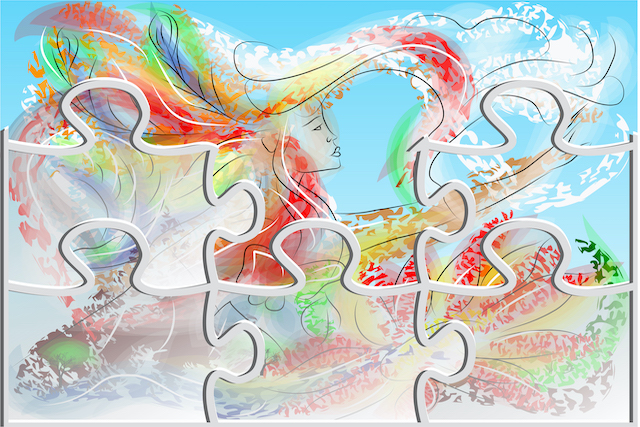
    And then I thought, what if I saw my whole life as a jigsaw puzzle? It’s a perfect analogy, really, since my lifelong struggle has been fitting in.

    Visualizing Our Lives as Jigsaw Puzzles

    Each of us start with just one piece—ourselves.

    When we start the puzzle at birth, it is easiest to join the first two pieces together—ourselves and our family.

    As we grow up, we try to find other pieces that fit—friends, romantic relationships, jobs. We may be lucky and find other pieces that fit perfectly straight away, but more often than not we struggle to find the right pieces, and in our frustration, we may even try to force two pieces together that don’t actually fit. However, if we do this, we find over time that none of the other pieces seem to work together.

    No matter how much time we have already invested in this ill-fitting piece—be it an unhealthy relationship or a job that doesn’t align with our purpose and values—we will eventually realize that we have to accept reality and remove the piece that we tried to force to work. This is the only way to make room for a new piece that will fit perfectly into place. A piece we won’t even try to find if we’re too attached to the one that doesn’t fit.

    This doesn’t mean there’s something wrong with us, or the other piece we tried to force to fit, which means we don’t need to blame ourselves or them. We simply need to recognize we don’t fit together, and then learn the lessons we need to learn to stop repeating the same patterns.

    This also doesn’t mean that we made a mistake with the ill-fitting piece. Every time we try to make the “wrong” things fit, we learn the value of taking our time to find the right piece.

    Sometimes we learn that we need to focus on another area of the puzzle first—if, for example, we realize we need to take a break from relationships so we can build up our self-esteem and learn to love ourselves first.

    And sometimes when we’re having difficulty with one section of the puzzle, like love, we recognize that we need to focus on a different area instead, where it might be easier to find the right pieces—like our career or social life, for example.

    When we connect with like-minded people who have similar hobbies or interests and enjoy our company, we feel better about ourselves and start to realize how great we truly are.

    If we change jobs to something we love, that shows off our strengths and enables us to succeed, this improves our confidence and helps us realize that we’re good enough and we do add value.

    Once we become happier with ourselves and other areas of our life, we’ll send out more positive vibes into the world and attract the right kind of people. And we’ll have enough self-worth to recognize people who are not right for us and not waste our time.

    If we don’t do these things, we may complete the puzzle, with all the elements of our life neatly in place and find that we have a piece left over. That piece is you or me, and it doesn’t fit because it was in the wrong box and never meant for this puzzle.

    That was why we struggled to fit in—we chose things in all areas of our lives that were never right for us. So the problem wasn’t us, it was where we trying to force ourselves to fit.

    It may feel daunting to start over, but when we find the right puzzle we belong to, everything stops feeling like a struggle because we slot easily into place. We will end up with a different picture than we originally imagined, but it will feel much better, because our piece will finally fit.

    Where Am I Now?

    After spending half my life struggling to fit in and complete my jigsaw puzzle, I have realized that I am the piece left over, and it’s now time to start again and find the right puzzle that I belong to. This time, I’m starting with the most foundational pieces first—self-love, self-confidence, self-worth.

    There was never anything wrong with me. I just needed to recognize my patterns so I could stop trying to force things that weren’t right. I know my pieces are out there. And so long as I let go of the wrong ones, I know, in time, I’ll find them.

  • What to Do If You’re Single and Feel Like You’re Missing Out

    What to Do If You’re Single and Feel Like You’re Missing Out

    “Hope for love, pray for love, wish for love, dream for love…but don’t put your life on hold waiting for love.” ~Mandy Hale

    Going to weddings alone, with no plus-one to take along with you. Watching the couples dance, thinking, “Will there ever come a time when that is me on the dance floor?” Going on holidays alone, with no partner to share memories with. Listening to stories of friends’ weekends away, as a reminder of just how solitary your own weekends are. If you are anything like me, you might recognize these signs of single life.

    “Will my situation and circumstances ever change?” I’d think as I struggled to fall asleep at night. I’d hold a pillow as a source of comfort, yet this too disappeared in the morning, when I woke up alone to face the day.

    Many single people think like this, yet rarely voice these thoughts. But sometimes we hit a turning point when we start to see everything differently—and then start to act differently.

    The turning point for me came one Saturday morning. After I had gotten dressed and ready, I sat down on a chair next to my bed. A photo of a couple friends was in front of me. They were on holiday, with smiles on their faces, standing under a bright blue sky with a clear blue sea behind them.

    As I looked at this picture of serenity and happiness, I had a sinking, empty feeling in my stomach. I thought, “God, will that ever be me?” I looked down in front of me and felt a sense of despair, worried about what my future held but paralyzed as to what I could do about it.

    At that moment I thought, “Enough.” I walked to the bathroom and looked in the mirror. I was tired of feeling sorry for myself. I was tired of watching the world go by. I was tired of the sad thoughts going around in my head like goldfish in a fishbowl.

    I asked myself then, “What do I have to be upset about?” I had a roof over my head, clothes on my body, and food in my mouth. That’s not to say it’s not normal to long for companionship when you’re single; it’s just that I had focused so much on what was wrong with my life that I hadn’t focused on what was right about my life. And I’d also focused on what was wrong with myself—as if there must have been something wrong for me to be single for so long.

    Until I became my own cheerleader, how could I expect others to start cheering for me? I decided then and there to take action. If I wasn’t happy with myself, I had to go out and change, and do things to change. Not just daydream and hope life would turn around by itself.

    So, what did I do?

    I’ve worked on enjoying my single life more and joined some dating apps to “get in the ring.” The results have proven mixed. Like with all things in life, there are good days and bad days. But on the whole, it’s been a positive experience because I’ve met some great people in my search for the person who ‘gets me.’

    I’ve realized we can only experience true happiness in life if we focus on ourselves instead of waiting for others to focus on us. People can join us for our stories, but we cannot expect them to complete our stories for us. We make our own paths in life. Walking on paths well-trodden will never be as satisfying as carving paths of our own, however rocky or imperfect they may be.

    So, what helped me move ahead? Here are four things that may help you:

    1. Work on loving yourself and your life.

    Work on yourself before trying to attract somebody else. As a natural result of working on yourself you will exude a glow of confidence. Your zest for life will radiate from your face, and you will naturally look and feel better to others.

    Work on developing positivity in your life. Embrace what you have, not what you wish you had or what your neighbor has. Read more, study more, travel more. Exercise for twenty minutes a day, try cooking one new dish a week, read or watch something every day that inspires you.

    Why should people get to know you? Evaluate the qualities you like about yourself and sing your own praises in your head each time you doubt how worthy you are.

    2. Be proactive.

    Join a few dating apps, take a few chances, take the time to connect with people. Bumble and Hinge are easy to use. You’ll meet new people and engage a new mindset.

    Get active and make the effort to swipe for a few minutes each day. What’s more, enjoy the process. Look beyond the photos. Recognize that there is a whole person behind the photo if you are willing to give that person a chance. Look for the gold in the profiles.

    3. Pay more compliments.

    If you see something you like on a profile, don’t be afraid to say it. You could make somebody’s day with your words. It costs nothing and it could provide just the lift they need. And the beauty of giving compliments is that you’ll likely get some in return—things people may have thought but otherwise not shared if you hadn’t gone first—which can help radically build your self-confidence.

    4. Focus on achieving one big goal a month.

    Write down twelve goals for each of the twelve months in the year. Buy a paper diary and write down how you are going to fill your time for the next week. Do something you wouldn’t ordinarily do. The person you seek should not compensate for all the things you are not; they should be an extension of all the things that you are. The more you live life, the more life you will have to share with a significant other.

    Review your progress once a week. Ask yourself, are you making too much time for people that do not have the time for you? Ruthlessly discard the things that don’t make you happy (people, pursuits, things) and selfishly embrace the things that do. Be generous with others and selfish with yourself.

    So, in summary, what can you do to improve your dating life?

    Treat yourself with the care you would treat a friend, broaden your mind and your approach when using dating apps, compliment freely, and give yourself one big thing to look forward to each month.

    True happiness in life can only be experienced when we focus on inside joy, not when we look for external fixes. Invite people into your life to join your life story, not to build your life story. Be your own cheerleader first to allow others to cheer for you.

  • If You’re Insecure and Afraid of Rejection Like Me…

    If You’re Insecure and Afraid of Rejection Like Me…

    “How brave the moon shines in her skin; outnumbered by the stars.” ~Angie Welland-Crosby

    I have this reoccurring dream where I am about to teach a yoga class. I stand to teach, and no one is paying any attention to me. They are all distracted or in deep conversation with one another and have no interest in engaging in the class.

    As I begin, one by one the students get up and leave. I am mortified and discouraged, though I continue to teach anyway.

    I wake up from the dream with a sinking feeling in my stomach and heaviness in my heart. Rather than indulge and spiral into sadness, I turn directly toward the aching.

    “Where is this coming from?” This is the question I ask myself as I dive into self-healing. Just as the body has the ability to heal itself on a cellular level when injured, we too have the ability to heal our emotional wounds.

    I have never been fired, from a job or relationship. I have always been the one to leave. This is not something I take pride in, rather I see a pattern that has developed over the course of my life since childhood.

    When I receive criticism, my insecurities are triggered. It must be because I am not good enough, as an employee, teacher, friend, partner. Clearly there is something wrong with me. My instinct in these situations is to run, to leave before anyone discovers my flaws, before I feel more hurt.

    I fear being abandoned or rejected, so at the first sign of conflict I retreat, like a turtle that goes into its shell the moment it senses danger.

    When I look back at my past I am left with overwhelming grief. As I peel back the layers further, I see more clearly the origins. Beliefs deeply rooted in childhood and cemented in adolescence. False beliefs of being replaceable, unworthy, not enough.

    Underneath the protective armor is an extremely sensitive and hurt little girl.

    A girl whose older sister locked her out of her room and refused to play.

    A girl who was teased by neighborhood kids for being weird.

    A girl whose best friend started an “I hate Shannon club” in fourth grade.

    A girl who always saw her friends as smarter, prettier, cooler, and more likeable.

    A girl who was desperate to be accepted.

    These deeply rooted wounds need proper acknowledgement in order to be healed.

    When we feel vulnerable or hurt, we tend to close off our hearts, gossip, turn to anger, or run away rather than address the discomfort. None of these behaviors will heal our emotional wounds. They are only temporary means of alleviating the pain. In order to break these old, conditioned patterns, first we must identify where the feelings are coming from.

    When We Feel Rejected

    Let’s face it, people can be mean. We ourselves can be mean.

    It can be hurtful and scarring to be left out, rejected, or on the receiving end of another’s harsh comments or behavior. But often, it isn’t as personal as we think. Often, others hurt us because they themselves are hurting. Perhaps it isn’t even intentional and the other is unaware they are inflicting pain.

    When we look beneath the surface of rejection, we ultimately discover feelings of fear and abandonment. But we can choose to change how we think about rejection, and consequently, what we feel.

    While we can’t control what other people think, say, or do, we can control how we receive and perceive. We get to choose whether we allow another’s comments to define who we are or how we feel about ourselves.

    There are some situations where walking away is the right thing to do. But not out of fear, spite, or in defense, but rather from a place of surrender and acceptance.

    We can redirect our energy to people and situations that are positive and enriching. Mutually loving relationships and situations where we treat one another with kindness, support, and encouragement. Where, rather than tear one another (or ourselves) down, we lift each other into the highest version of ourselves.

    There are countless situations that can trigger feelings of unworthiness, but I’d like to focus on two specific ones that have been particularly challenging for me.

    When a Relationship Ends

    Whether we chose to leave or not, there is often a deep sense of loss when a relationship ends. These feelings of loss can reappear at any time after we think we have moved on, especially when we witness someone else taking our place. A place that once made us feel special, valued, adored.

    I experienced this as I watched my ex’s new girlfriend move into a home that was once mine. The feeling of being replaceable. Even if ultimately, a relationship isn’t good for us and is no longer what we want for our future, watching someone move on can bring up grief and insecurity.

    Rather than indulge in these feelings, we can choose to be happy for the other. Happy they have found love and comfort in someone else. Happy at their own ability to heal and move forward with their life.

    Not always easy when we haven’t found love or comfort in another, we haven’t healed, and we aren’t moving forward with our own life. What makes it even harder is that we often reject ourselves when we feel rejected by someone we loved. The antidote? Focus on finding love and comfort in ourselves to reinforce that we are still worthy of love, and we don’t deserve to be or feel rejected—by anyone, including ourselves.

    When We Compare Ourselves to Others

    Jealousy is a destructive emotion and can be triggered by an off-hand comment, a sideways look, or a social media post.

    We are happy and content one moment, the next our ex updates their Facebook status to “in a relationship,” or we see a post from someone who appears to be doing better in life, and we are sent into a downward spiral that involves stalking profiles, comparing ourselves to another, anger, questioning our decisions, feelings of regret… the list goes on.

    In order to overcome the green-eyed monster, we must stop comparing ourselves to others and see our own unique gifts.

    Often it is the desire to be someone special that drives unhealthy behavior and thought patterns. Consider this: You already are special. You already are good enough, just as you are. Without having to change or do anything different. You can stop trying to be good enough and allow yourself to just be.

    When I recently experienced conflict in an interpersonal relationship, I was talking with my mom and I said to her in defeat, “I just try so hard to be a good person.”

    She said to me, “Well then stop trying. You already are a good person. You don’t have to try, it’s who you are.”

    The truth is, no one has come before you or will come after you with your exact qualities. You don’t need to prove yourself to anyone else or to yourself. The fact that you even exist is a miracle. What a gift. Allow who you are to shine, and allow others to shine, without insecurities, jealousy, or fear. Our true gifts are revealed when we recognize we are each perfect just as we are.

    It’s Time to Write a New Story

    Those old stories from childhood, the hateful words on the playground or rejection from others, they don’t fit any more. They never did. We unfortunately allowed them to mean something about us and replayed the same story over and over again. As adults we have the ability and awareness to see and break these old patterns.

    Just recognizing our old stories is a great first step. The next step is to create new stories that better align with who we want to be and how we want to feel. And the last step is supporting those new stories with our perceptions and interpretations.

    Instead of interpreting a breakup or layoff as proof of our unworthiness, we can tell ourselves there’s something better out there for us—and we deserve it. Instead of expecting people to reject us, we can focus on all the reasons we’re worth accepting, and recognize that if they don’t, it’s their loss.

    We can also help ourselves engrain these new stories by surrounding ourselves with people who support, value, and encourage us.

    As I continue on my own path to healing, I am so grateful for an amazingly supportive boyfriend and network of friends and family (including my sister, who has become my best friend over the years), as well as an incredible puppy who teaches me the meaning of unconditional love daily (I highly recommend a dog for healing emotional wounds). Even when I retreat or fall into old patterns, I continue to be surrounded by people who accept me, challenge me, lift me, and inspire me to be the best version of myself.

    My new dream goes like this: I show up to class to teach yoga and students arrive ready and willing to practice. They are engaged and excited to be there, and so am I. I am no longer insecure and fearful of rejection or abandonment. In this new dream, I give everything I have and allow my gifts to shine. In doing this I give others permission to do the same.

    We are the authors of our own story. The kind of story where we get to live our best life. We can rewrite our story if it no longer fits as we continue to grow and evolve on our path. What will your story say about you?

  • What I Now Know About Rejection and How It’s Set Me Free

    What I Now Know About Rejection and How It’s Set Me Free

    “If someone does not want me, it is not the end of the world. But if I do not want me, the world is nothing but endings.” ~Nayyirah Waheed

    Rejection means a lot of things to a lot of different people. To healthcare professionals, it may mean immunological incompatibility, a body not accepting a transplanted tissue or organ. To a couple that wants to adopt, a rejection letter can be discouraging and devastating news. To a writer, rejection can come in the form of submitting your precious work that you slaved over to a publisher and being told it didn’t quite make the cut.

    I struggle with rejection, and I am no stranger to it. I’ve been rejected for numerous jobs, I’ve lost out on scholarships, I’ve had friends dump me, and boys tell me they don’t like me. It’s impossible to be a human in this world and not experience rejection.

    The hardest form of rejection for me is social rejection. It hurts much more than any other form of rejection because it feels like definitive proof that there is something undeniably wrong with me. Something is wrong with me, and that has just been confirmed by someone else. All of the doubts and shame that have been floating around in my brain finally become real.

    They only invited you to the party because they felt sorry for you. You aren’t cool enough to date that person. Your friends only tolerate you. Who do you think you are? They were bound to find out eventually.

    This fear of rejection has caused more consequences for me than the actual act of rejection itself. This often happens in life, the fear of something being more potent and powerful than the thing we are actually afraid of.

    It’s the anxiety of going to the dentist resulting in sleepless nights and panic attacks. Then when you get there, you realize that it takes thirty minutes and all you need is a routine clean.

    It’s lying in bed at night going over potential disastrous scenarios of your public speech or work presentation, creating a spiral of panic and dread.

    It’s avoiding going to parties, dates, and events because you’d rather avoid any sort of risk, even if it means missing out on the rewards.

    It’s common knowledge that being thirteen years old is one of the worst stages of life for most of us. You feel awkward in your body, your self-esteem is at an all-time low, and you feel misunderstood by the world, especially your parents.

    When I was thirteen, my family decided to move up north to a small beach town, and I started a new school. It was a Christian school that had a shining reputation. I naturally expected it to be filled with loving and kind Christian kids who would accept me with open arms. This was not the case.

    Thirteen-year-old boys are cruel. They immediately heard my Canadian accent and constantly mocked me for it. Growing up, girls are told that when boys are mean to you it’s because they like you. With that mentality, it’s not that surprising that so many women choose to stay with men who treat them like garbage. I’m not sure if these boys had crushes on me, or they just saw an awkward ginger girl who was very out of place and decided to pounce.

    The girls, on the other hand, already had established friendship groups and were not looking to expand, especially to a girl who didn’t fit their cookie cutter Christian image.

    Apart from my very obvious physical differences, I also had very different views to the kids and teachers at the school. I was brought up in a Christian family, but I was still allowed to make up my own mind about issues in the world.

    Being a lost thirteen-year-old who felt very disconnected and dislocated, I gravitated toward the world of feminism and social justice. Sexism and misogyny enraged me, and I found an online community of other women who weren’t afraid to speak their truth and challenge the status quo. It became my whole world, because I had nothing else to subscribe to.

    I was outspoken about my beliefs. I was a proud feminist, I was pro-choice, and I supported LGBT rights. All of these things were completely taboo and blasphemous at the school I went to. I was immediately considered to be the “bad egg,” further ostracizing me from the rest of the school.

    My only friend was Emma, my one shining light in a sea of hostility and judgment. We were kindred spirits, and we felt like it was us against the world. Due to our closeness, rumors started that we were lesbians (the worst sin you could commit at a Christian school, clearly). I remember one kid refusing to share his food with me because I was gay, and another kid spitting on me during P.E class.

    This was the first time in my life I had experienced full on social rejection, loud and clear. Of course, I had experienced exclusion and rejection before that, but never to such an extreme, and none with the clear message of “You are wrong. You do not belong here.”

    And at that vulnerable age, when I was already deeply struggling with self-esteem and teenage angst and disorientation, it had a devastating effect on me.

    I dreaded going to school, I spent lunches sitting alone in a bathroom stall, and I was constantly on the verge of tears. I didn’t even feel like the teachers accepted me or even “saw” me. Even the school counselors felt unsafe; I knew they had ulterior motives and would never truly understand what I was experiencing.

    I only lasted a year and half at that awful school, finally gaining the courage and motivation to leave after some very valuable counseling sessions from an outside source. I moved schools to a public high school, which on paper sounded rougher around the edges, but I truly thrived there.

    My grades soared, I became involved with extracurriculars, I became a prefect, I won awards and scholarships. I found lifelong friends who accepted me, and teachers who became mentors and saw the value and potential in me. I graduated feeling joyous and triumphant.

    Though I had such an awful experience at the Christian school, I had made a change and things got better. It was a confirmation that life could be good, and it wasn’t all loss and rejection.

    The thing is, even though we may feel we’ve moved on from painful experiences, they can still be triggered in our everyday lives and interactions. We can instantly be transported back to those vulnerable and lowest points of our life, and our behaviors and thoughts can still be products of that time.

    Though my schooling experience had a happy ending, I now realize that I am deeply afraid of rejection. I still have this fear inside of me that there is something inherently wrong with me, and once people find that out, they will leave me. This is only made more salient due to this clearly false belief that my suffering and my pain is unique and everyone else in the world seems to have it figured out.

    Though I know this to be logically false, because I am in my own mind, it feels so much more believable and real. Social media, especially Instagram, is known to do this. People can project any image they want out into the world. They show the highlight reel of their lives, the best of the best. They show how much fun they are having, how many friends they have, and how happy they are. How can you not be fooled by that?

    I know that we are all imperfect. We all have insecurities, anxieties, and shame. Brené Brown says “everyone has a story that will break your heart. And, if you’re really paying attention, most people have a story that will bring you to your knees.” When I am at my lowest, I am so preoccupied with my own all-encompassing suffering that I disconnect from the rest of the world.

    I forget that our pain and suffering is actually a connective tissue between us all. Fear of rejection is not a unique phenomenon that I have just discovered. It is an age-old problem that plagues so many of us. It stops us from taking risks, from being vulnerable, and from pursuing our creative passions.

    I notice this fear of rejection creeping up into so many areas of my life. I became more of an “idea” of a person than a real person. I put up barriers so that people won’t get to see the real me. I notice myself embellishing the cool aspects of my life and personality when I’m on a first date, and though we all do that naturally on a first date, I know it stems from a fear of rejection.

    If someone takes longer to reply to me than normal, or their tone changes when texting me, I interpret it as a sign that they are no longer interested or that they hate me. We all see memes about this circulating on Instagram, no doubt a coping mechanism, but it can be truly debilitating.

    The sign of a resilient person, someone whose self-esteem comes from within rather than external validation, is even when you are rejected, it doesn’t break you. You have enough self-worth to know that rejection doesn’t define you, if anything it makes you stronger. If you don’t get invited to a party, if your friends decide to not invite you out, if your Tinder date ghosts you, you are still you.

    My favorite actress/comedian Jenny Slate said in an interview, on constantly drawing and redrawing the picture of who you want to be, “You have to be limber. Every shape that you will be bent into, whether you do it to yourself or you are blown by the wind or someone comes in there and breaks you in half, is still you. No version of myself is permanent, but sometimes those bad parts are trying to fool me into thinking they are permanent.”

    I will never be able to control my life and what people think of me. There will be people who write me off before they even bother to get to know me. There will be people who treat me like sh*t simply because they can. There will be many moments that I could perceive as evidence that there is something wrong with me. But now I know that it’s not true.

    I will always be me, and I can decide if I want to treat rejection as a death sentence or a form of new life.

  • The Wounds of Rejection Heal With Self-Love and Self-Awareness

    The Wounds of Rejection Heal With Self-Love and Self-Awareness

    “There is no magic cure, no making it all go away forever. There are only small steps upward; an easier day, an unexpected laugh, a mirror that doesn’t matter anymore.” ~Laurie Halse Anderson

    It began in elementary school. I was a chubby immigrant with a thick accent and hand-me-down clothes. I so badly wanted the other kids to like me, and I had no idea why everything I said and did seemed to push them away.

    My jokes and comments would trigger awkward silences or ridicule—especially in groups. Those moments were traumatizing, but they were also confusing. How could I make them like me?

    As I learned English, I found some company in the schoolyard, but I continued to be bullied for my weight, my clothes, my face that turned red so easily. It didn’t help when I started going through puberty at age nine, younger than every other girl in my class.

    In elementary school, I remember walking home one day when two boys followed me, calling out things like “Put on a few pounds this year, haven’t you?” I remember staring at my feet, putting one in front of the other, walking home as fast as I could.

    The wounds of being rejected, bullied, and ostracized buried deep. I never felt safe unless I was completely alone.

    In high school, I remember walking home once and realizing that a popular guy from a grade above was walking behind me. He didn’t say anything to me, but my heart started beating wildly, and I became hyperaware of my arms swinging back and forth. How awkward were these long appendages coming out of my body! How awkward was I!

    Even though I would walk home as fast as I could, I didn’t feel any safer around my family. In my parents’ house, emotional expression wasn’t encouraged or accepted. The only safe place was alone with myself.

    But as time went on, the anxiety I felt about other people’s opinions of me crept into my alone time too. I worried. I ruminated. I overanalyzed.

    It was difficult to live in fear all the time, so I developed all kinds of ineffective habits that helped me feel in control. I starved myself. I lied. I got addicted to anything I could get my hands on.

    I’ve been on a long journey of healing—not only the toxic ways I had learned to avoid feeling discomfort around other people but also the scars that caused that discomfort in the first place. The path has been long and hard. I’m still walking it.

    I’ve learned a few things that have been helpful. For example, I’ve learned to find the thoughts that trigger anxiety in social situations and question them. I’ve found the places in my body where I tense up when I think this way, and I’ve learned how to relax them.

    I’ve learned that the feeling of rejection won’t kill me (while running from it almost did). I’ve learned to sit with all kinds of uncomfortable emotions without running away.

    I’ve learned to reduce my overall anxiety levels with exercise, lower caffeine intake, journaling, mindfulness, and lots of alone time.

    I’ve learned that working out before social occasions lowers the chance of being triggered. I’ve learned that allowing some time afterward to replay social situations in my head actually helps—as long as I give myself a time limit and wrap up with some self-loving thoughts when the time is done.

    I’ve learned that, sometimes, I should actually take the advice of my self-judgment and change how I talk to people. I’m still learning about which advice to take and which to leave. I’ve learned to be gentle with myself while I figure it out.

    When I first went a few months without falling into a deep self-judgment hole, I thought I was cured. I thought I would feel free in social situations forevermore. But life had other plans.

    I have learned to think of social anxiety and fear of rejection as allergies. I’m allergic to thoughts like “Do they like me? What should I do to make them like me? What did I say wrong? What should I do so they don’t think I’m weird?” Most of the time, I can avoid falling into old patterns. I hear those thoughts and think, “Nope, I’m allergic to that. That’s not good for me.”

    But sometimes, I don’t catch the thoughts until it’s too late. Or I start having them when I’m tired or stressed out. Or I experience a series of rejections and don’t have enough time to process through them before my emotions and thoughts weave into a tight downward spiral.

    It happens. It happened last week. It lasted for four days. I’ve learned to forgive myself, be gentle, and know that I’m doing my best.

    I have friends with celiac disease who experience side effects for at least a few days when they eat gluten. At that point, the damage has already been done. The only thing they can do is not make it worse. So that’s what I try to do as well.

    I try not to judge myself for being stuck in self-judgment for a few days. That makes it easier to deal with. I try to think of it as my mind being swollen and sick. It needs time to heal. It needs love and patience. It doesn’t need more of the thing that made it sick in the first place.

    Each time my mind gets swollen with judgment, I have an opportunity to talk to myself with love, patience, and kindness. I also have an opportunity to learn more about myself. I try to extract some wisdom out of each period of suffering.

    I used to want to get rid of this for good, but lately, I’m realizing that maybe I never will be. Maybe it really is like an allergy. No matter how well I can learn to avoid the things that make me feel horrible, they will always be bad for me.

    Although these episodes are still unpleasant, I no longer feel helpless when they come. I’ve been practicing. I feel a sense of accomplishment each time I can navigate through periods of self-doubt with self-love and honesty.

    I can’t control what makes me sick, but I can be a kind, loving nurse to myself when I get that way. And that gives me some sense of control over the situation.

    I couldn’t control what happened in the past. And I’ve realized I can’t control my triggers in the present. But I can control how I respond to those triggers. And if I fail to respond differently, then I can control how I respond to that failure.

    However small, there is always room for a choice. And instead of focusing on what I can’t do, I’m trying to focus on what I can.

    It’s a hard road. If you’re in the middle of a similar journey, I hope you’ll cut yourself some slack and give yourself some credit for how far you’ve come. You’re doing the best you can, and that’s more than enough.

  • The Big Little Secret to Rejection: How to Get Past It Quickly

    The Big Little Secret to Rejection: How to Get Past It Quickly

    “I am good at walking away. Rejection teaches you how to reject.” ~Jeanette Winterson

    Rejection is something that can impact all the big parts of our lives—friends and loved ones, education, jobs, and romantic relationships. It can change how we see ourselves, paralyze us into not taking chances, and even make us give up on pursuing our dreams.

    There’s a lot of wonderful advice out there about rejection, but I wanted to share a bit of a different perspective. It’s a simple perspective I was lucky enough to hear a long time ago but have only just begun to truly believe and practice. And wow, is it a revelation.

    I was a short-term contract worker for a very large, very popular media company for ten years. Through time it became obvious that no matter how hard I worked, I couldn’t seem to get up the ladder.

    Many of my colleagues were progressing and getting hired as permanent staff, whereas it would take me months to even land a contract. When I asked for extra training to shoot and edit or offered to write scripts, I was refused. My ideas either fell by the wayside or were given to others to work on.

    As time went on, they inexplicably put less and less trust in me. So I worked harder and harder to try and prove myself and spent all my spare time teaching myself skills and making the content that I so desperately want to do at work. I was exhausted and demoralized, and I eventually began taking anti-anxiety medication.

    It was a bewildering experience because I did a great job and was conscientious. Why was this happening to me? What was I doing wrong?  

    It all came to a head after a particular campaign for kids that I was hired to steer from behind the scenes, given my insider experience and knowledge about the campaign topic. Nine months later, when the campaign was extended, my job was just given to someone else less suitable.

    When an email went around to the department announcing the new appointment, my co-workers were as confused as I was. I heard, “Why aren’t you heading this up, Amanda?” at least nine or ten times that day. I had no answer.

    In a fog, I got up from my desk, left the building, and walked into the courtyard. And just then, something clicked in my head. I finally got it. They simply didn’t want me.

    They had been telling me this for ten years. And I had been ignoring it.

    I looked back at the building—at all the people in the windows, happily busy doing their thing—and suddenly it was like there was a flashing neon light saying, “YOU DON’T BELONG HERE!” I burst out laughing. How could I have missed this the whole time?

    We do this type of thing a lot, don’t we? How many times have we refused to see we’re being rejected, no matter how obvious?

    It’s so easy to react to rejection with our egos. We think, “How dare you!” or “I’ll show you I’m right for you.” We need to be right. We need that validation at the expense of that part of us that knows our worth and is powerful enough to walk away.

    Consider this situation that most, if not all, of us have experienced: We date someone, really enjoy it, and see a lot of potential with them. But after a few weeks or months, we begin to feel a noticeable shift on their part.

    Maybe they start texting less often, or they aren’t as excited to see us, or they are less available, or they close themselves off a bit. It throws us for a loop, doesn’t it? We may even panic a bit. So we react by assessing the situation, reading between the lines, trying a bit harder, asking friends for advice, and Googling articles that make us feel better about what’s going on.

    We give this person all of our headspace while we try and figure things out when, deep down, we know exactly what the problem is. They just aren’t feeling us. But we try to convince ourselves that if they just give us a little more time, take a chance on us, they will come to the magical conclusion that we are actually perfect for one another.

    Is this strategy in any way healthy? Does it work? Does it make us feel better? Of course not.

    So here’s the big little secret about every rejection we’ve ever had in our lives. Once we realize and accept it, it can change the way we feel about every past rejection and change the way we see rejection in the future. Ready?

    When someone rejects you, for whatever reason, it’s because you two aren’t a good fit—they just saw it first. Eventually, you would have seen it as well. The fact that they acted on this early realization is actually a blessing because they are saving both of you from wasting time.

    It doesn’t matter why they are rejecting you. Often it is purely about themselves and their issues. So why spend the time worrying about the reason?

    Of course, not every rejector is honest and upfront about their feelings. In fact, many are afraid of confrontation, so they reject in an indirect way. But even when this happens, if we are honest with ourselves, we can admit that we ignored the signs in the single-minded pursuit of what we wanted.

    But if we can understand and appreciate the secret of rejection, we can better recognize the signs when we see ourselves in the same situation in the future. Think of the time, effort, and energy we can save with acceptance!

    So what happened with that media job crisis? After I stopped laughing and went back into the building, I gave them my notice. While I worked that last month, my eyes were opened, and I began to understand that the company was right all along.

    I didn’t belong there because my life perspective and the things I valued did not align with them. That’s why I had struggled there for so long.

    They saw it first, and I saw it eventually.

    After I left the company, I was free to do all the things I really wanted to do, in my own voice. I’m finally a television writer who has begun making short films about mindfulness to help others. This never would have happened if I had stayed at that company and worked trying to fix their constant rejection.

    If only I had done it sooner rather than spend ten years hoping to be accepted by someone who didn’t appreciate me!

    So the next time you are rejected, instead of immediately reacting, consider the situation. Accept your rejector’s judgment that you don’t fit, because they are right.

    Of course, it may still hurt a bit. In fact, it may hurt a lot. But if you keep reminding yourself that you would have eventually come to the exact same conclusion, and if you allow yourself to be grateful for the time and further hurt you have just been saved, you will be much better equipped to negotiate where you go from this point.

    And best of all, you’ll be free to find a place—be it a job, a friendship, or a romantic relationship—that honors who you really are and allows you to thrive, grow, and make the most of your unique gifts and perspective.

  • Dealing with Rejection: It Doesn’t Mean That You’re Not Good Enough

    Dealing with Rejection: It Doesn’t Mean That You’re Not Good Enough

    “The best way out is always through” ~Robert Frost

    I was trembling as I hung up the phone. He’d dumped me.

    It was as if, while I was watching a murder mystery at the edge of my seat, the electricity had gone out. Poof! I wasn’t going to get to see the end of the movie, and I had no control over when the lights would come back on.

    I felt the fangs of rejection sink into my heart like a merciless tarantula. My mind, which is normally going 500 miles an hour, came to a halt. Suddenly I felt nothing. Frozen. I had no thoughts. Total shock. The poison of the rejection spider slowly oozed into my bloodstream, paralyzing me in my seat.

    “Get up! Get up now!” I heard the voice in my mind say. For some reason, it seemed as if moving could unfreeze my emotions.

    I did get up, but stood there as if I was listening to the strange noises coming from the kitchen in the middle of the night. Waiting for someone to tell me that I was “punked” and that he was going to call me back to tell me that it was just a silly joke. Then we were going to make up and live happily ever after. That did not happen.

    “We create what we defend against.” ~Marianne Williamson

    We had a few close breakup calls before, and I always felt like I dodged a bullet when we ended up in a smooth place. Apparently, we had used up all the close calls reserved for us.

    It was official: I was just not good enough. I was too broken to be loved. No one was going to love me forever. Um, can I get that in writing as well? I did. An email followed his phone call. It was as official as an IRS letter arriving on a Friday afternoon.

    The words I had dreaded, protected myself against at all costs from the man who had professed his undying love for me: “Banu, you are too this and that. So I am out.” He said he was sorry.

    Clingy is not sexy, nor is desperate. I had become both. All because I had not done the work to correct a limiting belief that runs in almost every human being on the planet: I am not good enough.

    In the following days and weeks, as my emotions defrosted in the scorching heat of heartache, I felt a strange sense of relief. Finally, it had happened. I was still alive. Still breathing. Still able to work, bathe, and feed myself.

    There was no news coverage on CNN about how my heart was broken, nor did the ending of my relationship break the Internet. Life went on for everyone as usual, except for me. It was the beginning of my freedom and I didn’t know it.

    I had feared being broken up with all my life because, deep inside, I believed that I wasn’t good enough. That belief was so deeply ingrained in me that I had finally created it.

    I was always the one to end a relationship because the fear of the other shoe falling would tap out my nervous system sooner than later. The guy could barely recognize the confident woman he fell in love with, who now was an emotional wreck, clinging to him for dear life.

    “A person often meets his destiny on the road he took to avoid it.” ~Jean de La Fontaine

    I am convinced of one thing: People come into our lives as mirrors of who we are.

    If we don’t recognize our worth, causing us to seek validation and approval from others, the world mirrors that, and we meet people who don’t see our worth either.

    Rejection seemed like death to me. It was. It was the death of my old self and the birth of a new era of new choices, thoughts, and beliefs about my own self-worth.

    It was unfair to tie my sense of self to the approval of one man. Unfair to both parties, in fact. What if he had died in a car crash? Was I going to become worthless then?

    The gift of getting dumped was that I saw that I could still stand on my two feet and manage not to turn to drugs and alcohol to numb the pain. I allowed myself to feel, journaled to process what was coming up, and paid attention to the self-negating stories I was telling myself.

    You would think that it would be devastating when you are rejected for the very things that you perceive are your biggest flaws. It wasn’t.

    The blessing is that, once we get through the disappointment, anger, and pain, if we are willing to look at the truth of the situation, we will find the door that has been left unlocked, leading us to freedom and our self-worth.

    And it is not the “He was a jerk anyway; it’s his loss” kind of freedom. It’s the “I am worthy of love, and I’ll be darned if I leave my sense of worth in someone else’s hands again” kind.

    It’s about making a commitment to value ourselves, and living as if we do. This affects our choices, from what we eat, what we wear, and how we behave to how fast we get up after we fall.

    “The world is a mirror, forever reflecting what you are doing, within yourself.” ~Neville Goddard

    Looking back, I could see that I had set myself up for rejection so that I could learn that my own self-rejection hurts more than someone else’s.

    I had been unknowingly rejecting myself for the things he recited as he said his final words. He was a perfect mirror.

    And the healing wasn’t going to come from someone telling me how wonderful I am fifty times a day. It was goi­ng to come from me believing it and living it. The importance of self-love and self-appreciation was the lesson.

    Through this experience, I got some insights into rejection by a love interest, which you might find helpful:

    1. Everyone experiences rejection.

    Even the hottest, most intelligent, most successful people on the planet get cheated on or broken up with. If you think that your size 10 body, your negative bank balance, or your dead end job are the reasons why you might be rejected, think again.

    If physical perfection or success could guarantee that we never get broken up with or experience heartache, no fashion model or mogul would know what rejection feels like. That’s not the case, is it? It’s a common human experience, and though it can be painful, what hurts more is the belief that rejection says something about our worth.

    2. Trying to be something we’re not just to please someone else is essentially rejecting ourselves.

    Because then we don’t get to discover who we are and be that person. We get stuck in the role we know they want us to be. We cheat ourselves of an authentic existence.

    What people like or need is strictly personal to them and dependent on where they are in their lives. If someone rejects you because they want something else, that doesn’t mean there’s something wrong with you. It just means they’re not the right match for you.

    3. Once you experience rejection and work through it, the fear loses its sting.

    If someone chooses to not be with you anymore, and you use the experience as an opportunity not to reject yourself, you are getting to a place where you will know that you will be okay no matter what.

    You get to a place where you think, “Too bad it didn’t work out. I can see what I need to heal and change more clearly now. It hurts, but I am okay.” You can only go up from there. Unfortunately, we can’t get there without going through it.

    “The best way out is always through.” ~Robert Frost

    Rejection is a part of life. If you have experienced it, consider yourself lucky. You now know that you can survive it. If you have not, believe me when I say this: You will be okay. And perhaps, as it did for me, rejection can lead you to a deeper sense of self-love and self-acceptance.

  • How to Heal From Rejection: 5 Steps to Soothe the Pain

    How to Heal From Rejection: 5 Steps to Soothe the Pain

    Feel Alone

    “Never confuse a single defeat with a final defeat.” ~F. Scott Fitzgerald

    I spent years training as a psychologist, waiting for the day I would graduate and finally have time to explore my second passion—writing.

    When I opened a private practice I left my mornings free, and over the next fourteen years I wrote six screenplays, two novels, and a children’s book. But mostly I wrote letters, thousands of them, to agents, editors, and producers, asking them to read my work.

    They rejected every manuscript I sent them.

    After fourteen years of rejection, my mood, my confidence, my motivation, and my hope of ever being published or produced were fading. I felt too drained, too wounded to continue writing. I knew I needed to heal.

    Since I was a psychologist, my first move was to check out the latest research on rejection. I was especially curious to see if anything was known about why rejections cause such strong emotional pain. (As we all know, social and romantic rejections can be excruciating.)

    What I found was rather surprising. Functional MRI studies have revealed that the same areas of the brain become activated when we experience rejection as when we experience physical pain. In other words, rejections hurt because they literally mimic physical pain in our brain.

    I also discovered there are five things we can do to soothe the emotional pain rejections elicit, as well as to speed our psychological recovery:

    1. Stop the bleeding.

    One of the most common reactions people have to a rejection is to become self-critical. We list all our faults, lament all our shortcomings, and chastise ourselves endlessly. Romantic rejections cause some of us to employ an inner dialogue so harsh that it verges on abusive. We then convince ourselves we somehow deserve it.

    Yet, by kicking our self-esteem when it’s already down, we are only making our psychological injury worse, deepening our emotional wounds, and significantly delaying our recovery.

    2. Revive your self-worth.

    The best way to restore confidence, motivation, and especially self-esteem after a bruising rejection is to use a self-affirmation exercise. Self-affirmations remind us of our actual skills and abilities and by doing so, affirm our value in the domain in which we experienced the rejection.

    The exercise has two steps. First, make a list of qualities you have you know have value, and second, write a brief essay about one of them. (I wrote about what I believed was my strongest attribute as a writer—my perseverance.) By writing a couple of paragraphs about one of our strengths, we remind ourselves of what we have to offer and revive our self-esteem.

    3. Connect to those who appreciate and love you.

    Getting rejected also destabilizes our ‘need to belong,’ which is why we often feel so unsettled and restless after a romantic or social rejection. Our need to ‘belong’ dates back to our days of living in small nomadic tribes, when being away from our tribe was always dangerous and sitting among them was a source of comfort.

    One way to settle ourselves after a rejection is to reach out to our core group—be they friends, colleagues, or family members—to get emotional support from them and remind ourselves we’re valued, loved, and wanted.

    4. Assess potential changes.

    At times we might need to reassess our strategy, especially after multiple rejections (or in my case, many hundreds).

    Perhaps the friends who’ve fixed us up with romantic prospects who are never interested aren’t the best matchmakers. Maybe our online profile or pictures need to be updated, or it’s possible we’re getting rejected from potential jobs because we need to brush up our interview skills.

    My own aha moment (an insight that was obvious to everyone except me) came when a writer friend said to me, “Fourteen years, huh? Have you thought maybe you should skip the novels and write about psychology, since you know, that’s what you do…?”

    5. Try again soon.

    Another common reaction to rejection is to avoid any situation that might expose us to additional pain. We might not want to date for a while, or go on new job interviews, or make new friends, or in my case, start another writing project.

    But that’s an impulse we have to fight.

    Avoiding situations only makes us more fearful of them. Hesitant as I was to start writing again, I decided to heed my friend’s advice. I did a few months of research and started writing again. This time, it was a non-fiction proposal for a psychology/self-help book.

    I held my breath and sent it to an agent. She liked it and submitted it to several publishing houses.

    They did not reject it.

    Rejection is a form of psychological injury, one that can and should be treated. The next time your feelings hurt after a rejection, take action, treat your emotional wounds, and heal.

    Photo by Tanya Little

  • Start Building Confidence in Yourself Without Trying to Be Perfect

    Start Building Confidence in Yourself Without Trying to Be Perfect

    Screen shot 2013-02-19 at 5.57.23 PM

    “The outer conditions of a person’s life will always be found to reflect their inner beliefs.” ~James Allen

    I know now that I don’t have to be perfect. I don’t even have to try to be perfect. I used to think that things did not come to me because I did not try hard enough. Not true!

    The truth was, I was sabotaging myself.

    In college in Switzerland, instead of going to that school event or even answering the people who tried to talk to me, I shut myself down and ignored people.

    I was afraid of being rejected so I rejected life first. I did not think that I had anything to offer the world. I wasted a tremendous opportunity to see that world and meet unique people.

    It was only when I graduated that I realized that everything I wanted was knocking at my door, and I was choosing not to answer. Then I knew I had to change.

    I had to find something to believe in—and I was that something. I also ultimately had to forgive myself for repressing myself for so long. This is a journey that I am still on.

    I destroyed my early journals, wrought with misdirected messages, but writing once again became my resolve. A chance reading of a book on Zen changed my outlook as I began to meditate and calm my mind.

    Meditation is so powerful; it allows you to embody you, as you are. You see and feel yourself, and know deep down that you are alright. From that place of peace you can find the seeds of change.

    From there I started to build my life. I joined an amateur theater company, found a job I loved, got into and finished graduate school, and began to write on a new blog. Now I have to the bravery of self-reflection, the support of friends around the world, and the beginnings of my PhD in Humanities.

    I am far from perfect, but I am happy. (more…)

  • Reframing Rejection: Getting Rejected Doesn’t Always Have to Hurt

    Reframing Rejection: Getting Rejected Doesn’t Always Have to Hurt

    Rejected

    “Remember that sometimes not getting what you want is a wonderful stroke of luck.” ~Dalai Lama

    When I entered college, I knew exactly what I wanted to do with my life. I was going to be an actuary, just like my sister.

    Judy had just graduated, and she loved her job. My sister and I are very similar (both of us are math nerds, for example), so I knew I would love it too.

    While my school didn’t have an Actuarial Science major or any formal preparation for the career, I was able to get ahead, passing the qualifying exams at a rapid clip. And just as I was supposed to, I got a prestigious internship at a big consulting firm the summer after my junior year.

    Life was good. I loved my internship. I was being paid handsomely. And I was doing well, as indicated by my performance review.

    When the summer was over, all I had to do was wait for the call, the job offer, and I’d be set for life.

    That was the plan, at least.

    Of course, things never quite work out as planned. So when the phone call eventually came, it wasn’t with a job offer, but rather the only rejection out of our six-person internship class.

    While it was disappointing, I knew that with my great qualifications I would get an offer from another big company. In fact, I had connections at some competing firms, which I was sure would lead to another comparable job.

    I did everything I had to do. I interviewed perfectly, and no one else who was interviewing for the same positions had passed as many exams as I had.

    Yet somehow, it wasn’t good enough. By Christmas, I had gotten rejected from every single company I had applied to.

    I wasn’t sure how to feel. Of course, I felt pretty bad. But then, I kind of didn’t.

    You see, I was never able to study abroad in college. My roommate spent five months living in Jerusalem, and I was jealous. Suddenly, I was presented with the opportunity to remedy my #1 regret.

    And now, nearly a year later, I am living in Netanya, Israel, teaching English and having a great time. Out of rejection came a wonderful opportunity for me.

    Perhaps I’m just lucky. I certainly am grateful for the way things turned out. That being said, there is a mindset behind turning rejection into good fortune, and that mindset can be developed. (more…)