Tag: recharge

  • How I Reclaimed My Introversion as a Superpower Instead of Feeling Inadequate

    How I Reclaimed My Introversion as a Superpower Instead of Feeling Inadequate

    “We are each gifted in a unique and important way. It is our privilege and our adventure to discover our own special light.” ~Mary Dunbar

    “I don’t want to sit by Teresa. She doesn’t talk.”

    Ouch.

    I was ten years old and at a fundraising dinner for my travel softball team.

    It was that dreaded moment after I had gotten my plate of chicken, mashed potatoes, and green beans, and had to choose a seat at a big table.

    I sat down next to my teammate, whom I looked up to. She was two years older than me. She was fierce and badass. She said what was on her mind. She didn’t take shit from anyone.

    Clearly, she didn’t feel the same about me because in response to my sitting next to her, she said, “I don’t want to sit by Teresa. She doesn’t talk.”

    This happened twenty-three years ago, but I remember it so clearly, partly because comments like this one were not unfamiliar to me during my childhood. They had taken other forms, like: “Why don’t you talk more?” “Why are you being so quiet?” “What’s wrong?”

    Despite the frequency with which I received these comments, I was always caught slightly off guard by them because my mind was far from a quiet place.

    At the fundraising dinner, I remember thinking, “Was I really not talking? I guess I’m having a full-on conversation with myself in my head.”

    I remember noticing all the different types of people at the dinner. All the shapes and sizes of bodies. I remember how loud it sounded and how hectic it felt. Some people were rushing to fill their plates with chicken and mashed potatoes. Other people were standing in the corner, waiting until the line died down. Little kids were running around. Chairs were being moved and screeching across the floor. I was wondering why we had to do a silly fundraiser dinner.

    I was dreading that moment when I had to fill my own plate and choose somewhere to sit. I was conscious of how our team was dividing up into the usual cliques. I was unsure of where I belonged. I remember how uncomfortable I felt in my ten-year-old body.

    So, when my teammate commented that I didn’t talk, I was initially confused because my mind was very active. Then I was hurt and immediately started to question what was wrong with me.

    And I froze. Now I certainly wasn’t going to talk!

    If you’re introverted, quiet, or shy, then you know the debilitating effect such comments can have, especially as a kid.

    Through my teenage years and into my adult years, this incident, and many others, shaped the belief about myself that I was too quiet, which was really the big underlying belief that something was wrong with me. 

    I felt the pressure to bend and contort myself to fit the mold of a world that seemed more suited for the bold, loud, extroverted people than for the cautious, quiet, introverted ones.

    In high school, I remember hanging at friends’ houses so lost in my own head, spiraling about what I should say, which usually resulted in me freezing and not saying anything at all.

    In college, I tried to fix my inadequacy with drinking because I found that with a little liquid courage, I could open up and be “normal.”

    As an adult, I would hide out in the bathroom at conferences so I did not have to engage in awkward pleasantries with a stranger at a high-top table eating stale muffins and drinking bitter coffee.

    I didn’t really have a fear of talking, sharing, or raising my hand in class or in a meeting. It was that in-between time of socializing and small talk that was paralyzing. I felt like this time was for cracking jokes and witty comments, and I felt woefully unable to do such things.

    But now, at thirty-three years old, I have overridden that internal narrative of fear and inadequacy, and I have written a new story that is grounded in intuitive knowing. It’s a knowing that…

    1. My quietness is connected to my perceptiveness, and together, these are two of my greatest strengths.

    I am able to read the energy of a room of people and quickly intuit their needs and desires (sometimes!). My quietness also makes me an expert space holder for my clients.

    2. My grounding earth energy is welcome and appreciated.

    Just yesterday, I reconnected with a friend from high school, and she told me how she always admired my silent power.

    3. My verbal contributions to groups are few but thoughtful.

    Numerous people have told me that they know when I talk, they want to listen, because it will be something thoughtful and meaningful.

    4. Non-verbal communication that comes from deep within the body is sometimes even more powerful than words.  

    I have full-on conversations with strangers through the eyes alone, and sometimes these conversations leave me feeling fuller and more connected than any verbal conversation ever does.

    To uncover these knowings, I excavated my inner landscape through all the usual routes—you know, journaling, meditating, running, breathing, dancing. Let me pause on that last one. If there’s one thing I know for sure in this life, it’s this: dance more.

    I begin every morning by dancing to one song. During this practice, I deepen my connection to my body, to myself. Through dance, I express parts of myself that I am unable to express in words. I have released physical tension and overcome limiting beliefs simply by dancing them out. Sometimes our fears and worries are simply energy that needs to be moved through the body.

    Dancing is also about embodiment. We can do all the mindset work to overcome our beliefs, to understand why we are the way that we are, but at some point, we have to stop trying to fix ourselves and simply be who we are. And dancing is one of my favorite practices of being.

    I want to leave you with a few thoughts:

    Nothing is wrong with you. There is no “right” way to be or to express yourself, except for the way that feels true and safe for you. Each of us is a unique being with a multifaceted personality, and sometimes, we are full of paradoxes. We get to be introverted and extroverted, courageous and cautious, feminine and masculine. 

    Lastly, for those of you who do not identify as being an introvert, here are a few things that I want you to know about me, an introvert:

    1. If I am quiet, do not assume something is wrong. In fact, when something is wrong, I will clearly and boldly speak up about it.

    2. Don’t mistake my introversion for aloofness or pretentiousness. I am actually deeply aware of, engaged with, and inspired by all that is happening around me. I am simply taking it all in.

    3. I love people. And I also need time to recharge after socializing.

    4. When you call me out for being quiet at a social gathering, it feels like I’m being attacked. (Well, it used to feel this way, not so much anymore because I am confident in my quietness now.) But please trust that I will speak when I want or need to.

    5. At social gatherings, I love sitting back and observing. It brings me joy.

    6. Small talk is hard for me. But it does not mean I look down on small talk.

    7. Sometimes it takes me a little longer than others to formulate a response to a question. So have patience with me.

    Extroverts (and all who are reading!), I want to know about you too. Feel free to drop any things you want me to know about you in the comments below.

    Here’s to me being me, and you being you, and us being connected through it all.
  • The Exhausted Extrovert: How I Stopped Worrying About How People See Me

    The Exhausted Extrovert: How I Stopped Worrying About How People See Me

    “When we allow ourselves to be vulnerable, we are not pretending, we are not hiding—we are simply present with whatever is going on inside us. Ironically, it is this very feeling of authenticity that draws people to us, not the brittle effort of perfectionism.”  ~Maureen Cooper

    Most people in my life would call me an extrovert, and I often refer to myself with that label as well. On the surface, I appear friendly, talkative, and enthusiastic, and those characteristics became part of my identity at an early age. I enjoy being around other people and value my interpersonal relationships.

    I also participate in a variety of social groups and remain connected to friends near and far despite our busy schedules. I have often attributed my love of people to the fact that I am an only child who always wanted to spend more time with kids my own age.

    Despite my friendly nature, I usually felt drained after social interactions, especially when they involved large groups of people. I dreaded small talk, mingling at parties, and attending events where I was the only new person in the group.

    For example, my anxiety was sky high when I met my husband’s large group of close friends for the first time. I felt intimidated because they had all known each other since preschool, which automatically made me feel like an outsider. As a child and young adult, I tended to avoid situations where I felt uncomfortable, preferring to focus on the environments and people that I already knew.

    Even in familiar social situations, I still often came home feeling depleted. I enjoyed myself during these events but required a lot of downtime to fully recover and feel like myself again. This reaction confused me because I thought extroverts craved and felt energized by social interactions. 

    I struggled to classify myself because neither introvert nor extrovert truly matched my personal experience. I often felt torn between wanting to attend social events and worrying that I would feel exhausted afterward. These conflicting desires prompted me to explore the reasons why being social fed and depleted my soul at the same time.

    This journey would hopefully allow me to develop a deeper level of self-awareness and learn how to take better care of myself. As I paid more attention to my thoughts, feelings, and behavior at social events, I noticed that I was hyper focused on how I came across to others. I wanted to be liked, make a good impression, and be viewed as fun.

    I frequently wondered what people genuinely thought of me, including friends that I had known for years. I also worried a great deal about others’ feelings and wanted to make sure that everyone was having a good time. As the host of parties or gatherings, I went out of my way to ensure that the house was spotless, the food options were plentiful, and the environment was comfortable.

    I avoided choosing group activities out of fear that people would not like my decisions and from a desire to be known as the “easy-going, chill friend.” Even when I wasn’t the host, I found myself studying everyone’s reactions to see if they were happy and had their needs met fully. I made it my responsibility to take care of everyone even though no one asked me to be the superhero.

    If someone wasn’t in a good mood or a conflict arose, I immediately intervened to be the peacemaker or crack a joke to lighten the mood. I also did my best to keep the focus and attention away from me. I acted like an interviewer, asking other people endless questions and rarely sharing about my own life.

    I hated any silence within the conversation and would quickly fill it by bringing up a new topic or giving compliments. I began to realize that even my closest friends didn’t know much about me because I was so guarded with them. My fear of boring others, seeming conceited, or talking too much prevented me from being honest and authentic.

    For most of my life, I thought these behaviors were typical and even smart ways to be a good friend. I wanted others to accept me and enjoy being around me, but my ways of accomplishing these goals left me exhausted at the end of the day. Upon realizing how I navigated social interactions, I chose to examine why I needed these techniques and how they affected my view of interpersonal relationships.

    Up until this point, I believed that my behaviors were simply proof of my strong social skills, compassion, and emotional intelligence. I also assumed that most people thought and acted similarly to me because it was so natural and automatic in my life. In reality, my behavior involved coping strategies that I had developed from an early age due to an intense fear of being left out, disliked, and alone.  

    I came to learn that as an empath, I needed to set emotional boundaries to prevent myself from becoming depleted. A healthy empath holds space for another person’s emotions and experiences without making it their responsibility to fix, save, or protect the person. In order to be accepted and liked, I became a chameleon who adapted to any environment, didn’t speak up, and focused on pleasing everyone else at my own expense.

    In doing so, I didn’t allow people to get close or learn about the real me. My outward focus on how everyone else was thinking, feeling, and acting left me exhausted and overwhelmed because I took on their problems as my own. I remained fearful to share my true opinions, make any decisions, or take up space in social settings.

    Fading into the background felt safer, easier, and more comfortable to me, but it didn’t allow me to relax and be fully present. I constantly scanned the environment for any issues, working to please others and control what people thought of me. On top of that, I made it a priority to appear easy, effortless, and relaxed so that no one would see my internal struggles.

    I didn’t want to appear stressed, tired, or unhappy because I could possibly be viewed as “needy” or “too much.” My hypervigilance only intensified when I was around new people because I desperately wanted to make a good first impression and earn their validation. After a social gathering lasting only a few hours, it was no wonder that I felt so drained and needed to recharge.

    I began to realize that while I do love people and enjoy interacting with others, these situations would be more fun if I slowed down, checked in with myself, and focused on being truly present. I needed to practice turning the spotlight on myself for the first time, making choices and doing activities that worked for me. 

    When I allowed other people to manage their own feelings rather than jumping in to fix, save, and protect them, it freed up more time and energy for me. I also allowed myself to open up and engage fully in conversations, sharing small details at first and allowing other people to carry the conversation. These behaviors showed me that it was safe to take up space and let people get to know me.

    Instead of blending in and always going with the flow, I could practice offering my opinion, choosing a restaurant or a movie for the group, and turning down social opportunities when I was tired or uninterested in the outing.

    I knew that I needed to take these steps slowly because they would require courage, and I didn’t want to give up out of overwhelm. I also begin learning to trust that people wouldn’t abandon or reject me for speaking up and setting boundaries.

    And if I did lose friendships or people didn’t love everything about me, I could handle that reality and survive. My mantra became “I am not for everyone, and that is okay.”  

    Since that time, I have made strides toward relaxing, being present, and releasing control, allowing myself to “just be.” Some days and situations are easier than others to practice this new mindset. But now that I have self-awareness and understanding, I can more easily catch myself when I engage in people pleasing behaviors to earn love, praise, and acceptance.

    I pause, take a deep breath, and remember that I am allowed to take up space, that I deserve to have fun and be myself, and that my needs, feelings, and opinions matter. In doing so, I enjoy social interactions, even with new people, more than I ever did. And that has made all the difference for a social butterfly like me.

  • 5 Simple Yet Essential Self-Care Tips That Can Change Your Life

    5 Simple Yet Essential Self-Care Tips That Can Change Your Life

    “Never be ashamed to say, ‘I’m worn out. I’ve had enough. I need some time for myself.’ That isn’t being selfish. That isn’t being weak. That’s being human.” ~Topher Kearby

    Years ago, my extended family, who I am very close with, migrated from Vietnam to America as permanent residents. Four separate families had a couple of kids in each family. They are nice, kind, and loving people, and their kids were super cute and respectful.

    My relationship with my extended family has taught me a lot of lessons throughout my life so far, but this was one of the most impactful ones to date.

    Throughout the first few years of their residency here in the USA, they struggled with the language barrier and navigating an unfamiliar setting. As with most people who choose to migrate to another country, it was challenging for them to learn how to adapt to their new normal here in the United States.

    I couldn’t bear seeing them struggle, so I decided to step in to help them through this huge transition they were facing. I took them to most of their doctor’s appointments, brought them to work on time, helped them out with school conferences for their kids, and supported them in the completion of other tasks that they weren’t able to do on their own.

    I didn’t see this as a burden at all. In fact, I was having fun helping them because I love them so much.

    If you’re like me, you will understand this. When I am helping people that I care about, I tend to forget about taking care of myself. Slowly, this began to be the case.      

    The love I have for my family fueled my energy, which made me overlook the importance of caring for myself. Sure enough, after a while of supporting and caring for my family through their transition, I started to feel emotionally depressed and physically drained.

    I couldn’t find an explanation for why I was feeling this way, so I decided to check in with my doctor. My doctor explained that I had nothing to worry about regarding my physical health.

    After determining that I was healthy, I realized that there must have been a deeper explanation for why I was feeling that way. That’s when I knew my exhaustion was coming from overly helping and caring for my family. After all, I was taking on responsibility for everything in their lives from the little things to the important things.

    At this point, there was a little voice inside my head saying that it was time to sit down with myself and re-evaluate how I was spending my time and energy. Deep down I knew that this would be the only way for me to feel healthier and happier.

    For the sake of my well-being, I decided to implement positive change in my life, Once I did, I was amazed at how my physical and emotional well-being began to improve.

    I didn’t want to leave my family hanging, so I made sure that I took the time to show their kids what they needed to know so that they could help their parents and themselves. I knew that they had other family members that were willing to step in when they needed assistance with tasks.

    It took me a while to make this decision because I didn’t want to leave them without ensuring that they would be cared for. Thankfully, their children were confident taking over some of the tasks and helping their parents and their own families with the transitions that they were making.

    Sometimes, setting healthy boundaries with the people you care about also comes with setting a boundary with yourself.

    You cannot control how other people will react to your choices, no matter how badly you would like to be able to. With that said, it will bring you comfort knowing that you are doing what is best for you.

    In my case, I knew I needed to take better care of myself. I also took comfort in knowing that the choices I made for myself wouldn’t bring harm to anyone else. In time, I hope that my family will come to understand; but if they don’t, that’s okay too.

    I will always be wishing the best for them and sending them the brightest blessings in their life, regardless of if it is from a distance or up close.

    It was through this experience that I learned that the best way to care for others is to begin with caring for yourself. This may seem selfish or unnatural at first. However, with time, you will find that you are more capable of adequately caring for others when you are well cared for yourself.

    Once you master the art of self-care, you will find that you have more time and positive energy to put toward caring for those around you. Here are a few tips on where to begin on your journey toward self-care.

    1. Stay in touch with your feelings.

    If you’re honest with yourself about how you feel, you’ll be better able to meet your needs. It can be a challenge to be truthful with yourself and others about your feelings, but if you don’t, you’ll end up burnt out and resentful. This was my first step toward taking care of myself: telling my family I was feeling depleted.

    Ask yourself: How do I feel about how I currently spend my time? Am I honoring my needs and priorities? How do I feel about how much I give in my relationships? Am I overextending myself or giving more than I receive?

    2. Spend time with others.

    You can’t spend all of your time alone and remain emotionally healthy. Part of self-care is surrounding yourself with people who uplift, encourage, and support you.

    The ideal amount of human contact varies greatly from one person to another. No matter how much of a loner you might be, though, spending time with others matters because human connection brings happiness, joy, and belonging.

    When I realized I needed more time for reciprocal relationships, I set out a schedule to hang out with some of my closest friends.

    Call some of your friend or relatives to catch up, and ask them to get together. You’ll feel more connected, and if you open up about what’s going on in your life, you’ll be able to receive support instead of always being the one who gives it.

    3. Spend quality time alone.

    When you spend time alone, you’re able to get in touch with yourself on a deeper level. You get to reflect, introspect, and make a plan for anything that needs to change in your life. This will help you accomplish your goals, and you’ll feel more grounded as a person.

    Again, how much time you need to spend alone is an individual preference. It can be hard to refuse requests or say no to gatherings, but if you find the right balance for you, you can stay connected to other people while keeping up with your personal goals.

    4. Exercise regularly.

    When I decided to prioritize myself, I committed to keeping myself active and in shape. I personally enjoy weight training, pilates, dancing, and taking long walks by the lake. Not only do I feel physically stronger, I have more energy and get a boost of feel-good chemicals every time I exercise.

    Any physical activity is better than nothing, but you’ll feel a lot better if you can devote thirty minutes each day to movement, whether you play a sport, dance, or participate in a group exercise class. Your body is designed to move, so when it’s not using its potential, it creates stagnation.

    5. Manage stress.

    Take frequent breaks throughout the day to relieve tension and restore your energy before tackling your next task. Check in with yourself regularly to look for signs of stress, including physical exhaustion, getting irritated easily, having a lack of focus, and mindlessly eating junk food.

    When you notice your stress level rising, practice deep breathing or utilize any other relaxation methods that work for you.

    I generally like to get a massage, go for a walk, meditate, and journal. I like to write out all the stress on paper and burn it away.

    Another stress relief practice that I often do is chanting. It’s a healing method to help you clear any worries, stress, fears. When I chant for a period of time, my energy always shifts, bringing me back to a more grounded state.

    If you take on other people’s energy, you may want to practice energy cord cutting. This can be as simple as visualizing yourself detaching a cord connecting you to someone who drains you.

    Practicing forgiveness for yourself and others is also a powerful stress-release method. I highly recommend the Ho’opononopo practice; if you’re not familiar with it, you can go on YouTube and look it up.

    The quality of your self-care is a great barometer of your overall well-being, and it can keep you firing on all cylinders. If you’re feeling down and out, give extra attention to your self-care. You deserve the time and attention. A regular self-care practice also demonstrates that you truly recognize your own worth.

  • How to Get Comfortable Being Alone and Get the Most Out of Solitude

    How to Get Comfortable Being Alone and Get the Most Out of Solitude

    “The act of sitting down is an act of revolution. By sitting down, you stop that state of being: losing yourself, not being yourself. And when you sit down, you connect to yourself. And you don’t need an iPhone or a computer to do that. You just need to sit down mindfully and breathe in mindfully.” ~Thich Nhat Hanh

    The day my ex-wife moved out was also the day when our dog moved out and when I was laid off from my bankrupt ex-company. It felt like everything around me had suddenly died. Many of our common friends and loved ones distanced themselves from me, and I felt abandoned.

    As I took my first few steps through the rubble, I felt the full force of this new solitude that was now forced upon me. And it wasn’t going anywhere soon.

    I immediately lost my appetite and my desire to cook. I started taking irresponsibly long hot showers and baths till my skin burned. I decluttered. I threw away pictures and memorabilia, love notes and cutlery, teabags and cushion covers. I stopped vacuuming.

    But I continued running. I started reading. I read anything that looked like it held a secret to end my suffering.

    I lost interest in my job. I’d wake up every morning with dread, sometimes not sleeping entire nights.

    I kept running. I got faster and stronger. I also got injured and had to stop. The darkness stayed even as the days started to get longer. While I lived abroad, the second wave of covid had just hit back home. One of my best friends from childhood died. Also a cousin. A friend lost his father and never saw the body. My dad got very sick and almost died. I sank further.

    But I kept meditating in solitude. Every time the void of existence hit me with boredom, anxiety, and restlessness, something deep within forced me to continue sitting through it. It started feeling familiar. And I slowly started to come back to life. My sense of taste returned. I started cooking again. I started having friends over.

    Still, some days I would collapse on the floor and cry till I got thirsty. Then I’d hydrate and go back to my laptop to run the next zoom meeting, smiling through it.

    I realized what a shell of a person I was now that my ex-wife had left me. At the same time, I continued to befriend the solitude and get comfortable with my aching heart—to sit with it, have a conversation with it, and see what it had to say and what it had learned.

    I was starting to get to know myself from a brand new perspective. It was almost like getting to know this new person who had been living in the basement all these years and I had no idea! And this person sure was interesting!

    The solitude soaked in all my tears so I could laugh again with people. It became my duvet in the winters, my picnic blanket in the summer. The solitude and I would often do karaoke at 7:00 on a Sunday morning till the neighbors started complaining. We went on bike trips together, dipped in cold lakes, went to eat at buffets, and sat through boring dates.

    It became my best friend when there was no one around. It taught me to write, to read, to think, to philosophize, to know what’s good for me, to love everyone unconditionally, and to be kind.

    It showed me things as they truly are and caught me when I was being judgmental. It took away my anger and my desperation. It carried my dreams and filled me with hope.

    Solitude has the power to teach us about ourselves. It is the gym where we must go to train.

    A century ago, people would look forward to solitary periods of relaxation on their porch after a long day of work. But today, we devote most of our conscious time to the pursuit of feeling connected with other people, either offline or online. A simple notification instantly pulls us away from the present moment. We are constantly everywhere but here and now. But our true self lives in the here and now, though we seem to spend less and less time with it.

    In the raw moments of loneliness that succeed a breakup or a bereavement, when we have nowhere to run, we encounter our true self. Like I did. And it was scary. It felt like sitting in the corner of a dungeon with a chain locked around my ankle as a stranger towered over me. I wanted to run away, but there was nowhere good enough to run to. I went scuba diving in the tropics, but my broken, ghost-of-a-self found me under water too.

    The key to cultivating fearlessness in these moments is getting to know yourself through solitude. It means deliberately taking time out to sit alone so you feel comfortable with yourself, connected to yourself, and at peace with yourself.

    To practice solitude, try this.

    1. Think of your favorite meditative activity.

    Ideally, it should involve interaction with physical objects, not digital ones. And definitely not a phone or something with a screen. It should be mundane and not involve rational thinking. This provides the ideal setting for your true self to emerge. An example is doing the dishes, focusing on your breath, or just sitting out in the garden, hearing and seeing what’s around you.

    2. Set aside a fixed time during the day.

    This is especially important if you are just starting out, because a strict regime is helpful to cultivate a habit. A good time is early in the morning. A recent study showed that early morning is the ideal time for alpha wave activity in the brain, which is associated with restful attentiveness. But depending on your schedule or your routine, any other time of the day is good enough to start with. Start with ten minutes and slowly make your way up to an hour. There’s no right or wrong duration, but the more the better.

    3. Start with an intention.

    Make a decision to consciously choose solitude. Embrace it like it’s your best friend. Know that it is good for you, that it is the right thing for you. That there is nothing better you’d rather do right now, and no one more important to talk to than yourself.

    Most importantly, don’t get too serious. Develop a sense of joy, a sense of humor about the whole thing.

    Sometimes it all may seem impossible, especially when painful memories and a sense of loss come back with profound pain. It may feel hopeless as the thoughts and feelings overwhelm you. But believe that those thoughts and feelings are like a movie playing in your head. They do not define your reality in the present moment. Do not let them consume you.

    Believe you are the mountain in the storm. And when the thoughts and feelings eventually pass, which they will, come back to your practice. Develop almost a blind devotion to it in the beginning, because it may take many sittings to feel the first signs of solidity and bliss coming back.

    If you are finding it tough to start by yourself, go to a local yoga or meditation class and work on your basic form. Then come back and try it again.

    4. Start enjoying your company whenever the opportunity arises.

    As you start building a regiment for solitude, you will start to appreciate moments to yourself. While you wait for your friend at the subway before you head to that party together. While you wait for your favorite burger to arrive after deciding to eat out by yourself.

    Think of those fleeting minutes as a gift, as an opportunity to see if you can appreciate the world around you. Wait before you flip out your phone or put on your music. Can you see how solid and calm you feel now, compared to before? How rich the world around you is? Give yourself a high-five for putting in all those hours of solitude practice.

    And if by chance that solitude is forced upon you by a tragedy or unforeseen event, even better! Because when your heart is broken it’s the most open, and ripe for new wisdom and the richness of the world to take root. Acclaimed author and Buddhist nun Pema Chödrön says, “To stay with that shakiness—to stay with a broken heart, with a rumbling stomach, with the feeling of hopelessness and wanting to get revenge—that is the path of true awakening,”

    Be deliberate. Be disciplined. And you will soon get to know the most interesting person you have ever met! One who will always be with you, no matter what else you lose.

  • Alone Doesn’t Have to Mean Lonely: How to Be Happy by Yourself

    Alone Doesn’t Have to Mean Lonely: How to Be Happy by Yourself

    “Sometimes, you need to be alone. Not to be lonely, but to enjoy your free time being yourself.” ~Unknown

    First, let’s be clear, being alone is different than feeling lonely. The feeling of loneliness can arise even if you are not alone, or you can be alone and not feel lonely. It all comes down to the meaning your mind creates at that moment in time.

    In my twenties being alone was something so triggering that I would find any distractions I could come up with to avoid it: partying, unhealthy relationships, constantly being on the go and busy… Being alone meant not being good enough—not good enough to have friends, not good enough to be in a relationship, not good enough to be loved…

    I have learned over the years to truly enjoy my own company and now find being alone rejuvenating—most of the time. However, during the time of isolation and disconnection we have all lived in the past couple years, my old patterns and limiting beliefs around being alone have brought back that old, familiar discomfort with solitude on a couple of occasions.

    Even if you’ve gotten to a point where you enjoy being alone most of the time, solitude can trigger some discomfort. Let’s explore ways to stop the mind from creating unnecessary pain, and learn how to enjoy being alone in those triggering moments.

    1. Honor those feelings.

    First and foremost, listen to what is happening within. As soon as you feel that a situation triggers difficult emotions (sadness, discomfort, anxiety…), take a breath and observe what the trigger was.

    Maybe you came home from work to an empty apartment. Maybe you saw a happy family on the street, and you are going through a divorce. Maybe you spent some time on social media and saw families reunited for holidays, whereas you are away from family.

    2. Do not distract yourself.

    Take a breath and choose not to turn to whatever habits you might have developed to distract yourself from those uncomfortable feelings. Maybe you tend to open the fridge and eat, maybe you tend to turn on your mobile phone and scroll on social media, maybe you numb with alcohol, TV, or anything else.

    Just pause.

    Take a breath. Or two. Or three.

    3. Trust.

    Trust that you can handle the emotions that are there to be felt.

    Observe the emotions’ flow, the movement of energy, with no resistance. Observe with curiosity and kindness the sensations within the body. Where are they located? Do they have a certain texture or color? What type of sensations arise? Tightness? Contraction? Sweating? Your heart beating faster?

    4. Observe the thoughts and beliefs that make the feeling worse.

    Observe where you mind goes.

    Maybe you equate being alone with being miserable.

    Maybe you think being alone means “nobody loves me.”

    Maybe you equate being alone with being a failure or a burden.

    Maybe you think being alone means “I will always be alone.”

    As I mentioned before, I associated being alone with not being good enough.

    All our beliefs come from what we’ve experienced or learned in the past. Maybe your grandmother was alone and perceived as a burden because everyone had to take care of her. Maybe in your family there was a big emphasis on being social, outgoing, and fun, going out and having friends around, and being alone meant being some type of loser.

    Maybe your expectations are coming from the culture of the society you live in, expecting you to be married, having kids; and if this is not the model you are living, you might feel disappointed or you might think others might be.

    Maybe it’s the optics that bother you most. “What would people think if I spend New Year’s Eve alone? What would people think if I am not married by thirty-five?”

    5. Reframe what being alone means to you.

    Once you observe those thoughts and beliefs and the negative impact they have on your state of being, give yourself permission to choose different beliefs.

    Are those beliefs absolute truth? Or are they a construct of your mind and society? Are those constructs serving you well? Do you know someone who is single and happy? Do you know someone who chose to be alone for New Year’s Eve and enjoyed it? Are any of your single friends happy and free? Don’t you long sometimes to be alone, quiet, at peace

    Are you ready to let go of those beliefs? If so, take a breath and make the decision that those beliefs are gone for good. Visualize them dissipating into the air as you breathe out.

    Maybe reframe being alone as being free. Doing anything you would like to do, when you want to do it. Maybe being alone means being strong and independent.

    Maybe being alone means being quiet, being at peace. Maybe being alone is simply giving yourself time to rest and rejuvenate.

    The truth is that being alone only has the meaning you create for it, so choose a better belief. A belief that serves you right here, right now.

    6. Do more of the things that energize you.

    Now that you’re not attaching a meaning to being alone, learn to enjoy your own company by doing things you love to do, on your own.

    • Go for a walk in nature. Nature has a way of bringing you back to your true self, your natural self, to a state of balance and peace. Nature is non-judgmental. Nature is beautiful. And you are nature. So spend time outside. In winter, in summer, on a rainy or sunny day. Breathe, look, observe, feel.
    • Read an inspiring book from one of your favorite authors or spiritual teachers.
    • Listen to the music you love and give yourself permission to dance.
    • find a guided meditation that you truly enjoy and cultivate a peaceful, elevated state of being.
    • Move your body. Yoga is one of my favorites because it is a full mind-body-spirit practice, but anything from rock climbing to dancing could work—or any type of exercise you enjoy. Get the energy flowing.
    • Sign up for something you always wanted to do or learn, online or offline, like painting classes or singing lessons.

    Being alone doesn’t have to mean being lonely if you stop judging yourself and let yourself enjoy your solitude.

  • How to Prevent Burnout: 15 Simple Self-Care Ideas to Help You Recharge

    How to Prevent Burnout: 15 Simple Self-Care Ideas to Help You Recharge

    “It’s okay if you fall apart sometimes. Tacos fall apart, and we still love them.” ~Unknown

    Do you often find yourself saying, “I just have to get through this week…” and then that turns into every week? I know I do.

    Between work responsibilities, chores, and spending time with family and friends the calendar can start to fill up quickly. Unfortunately, there was a time in my life where I let those activities push self-care off my to-do list, leaving me constantly feeling exhausted and burned out.

    Before this experience, I always thought burnout was predominantly mental, not necessarily physical. But then I experienced a major wake up call.

    Recognizing the Signs of Burnout

    A couple of years ago, I was working long hours and filling my hours after work with hobbies, chores, and time with my significant other. This constant activity started to take a physical toll on my body.

    I felt tired all the time.

    I had gained ten pounds in a short amount of time. I was experiencing constant joint pain and headaches several times a week. Sometimes I would even get chest pain and a fever.

    Naturally, these physical symptoms were alarming, so I went to see my doctor. She thought I may have some kind of serious issue, so she sent me to get some bloodwork.

    As I waited for the results, I felt nervous. The prospect of facing a serious health issue in the midst of all of the other overwhelm I was experiencing felt like more than I could handle.

    When I got the email notifying me that my test results had come in, I took a deep breath and opened it.

    Everything was all clear. At first, I felt confused. How could nothing be wrong when I felt so sick?

    My diagnosis? Stress and burnout.

    After talking it over with my doctor, we determined that my lack of time to relax was causing me to feel so burned out that I was feeling physical symptoms in addition to the mental symptoms. I felt a little stunned. Could stress really cause me to feel that physically sick?

    Overcoming Burnout and Finding Relief Through Self-Care

    I knew then that I needed to change my lifestyle.

    Previously, I often turned to unhealthy ways of coping with stress like treating myself to fast food for dinner… every night.

    I would also have trouble falling asleep because it was difficult to turn my mind off at the end of the day. I wasn’t getting enough sleep and compensating with caffeine throughout the day instead of improving my sleep habits.

    As I started investing more time on self-care, I started to feel more like myself again. I was feeling rested, and those physical symptoms of burnout started to go away.

    If you’re also feeling burned out…

    Take items off your to-do list.

    Because burnout often stems from feeling overwhelmed by our schedule and how much we need to get done, I started by taking non-essential tasks off my to-do list and leaning on my support system. For example, asking my significant other to take care of dinner.

    Downsizing my to-do list allowed me to set a more realistic schedule for myself, so I was able to lower my expectations on how much I should accomplish every day.

    I learned to forgive myself for not completing everything on my to-do list. When feeling burned out, it’s important for us to be gentle with ourselves if the quality and quantity of what we accomplish isn’t up to our usual standards.

    It can be difficult to say no to people at first, but the more we do it the more comfortable we start to feel with letting others know we don’t have the bandwidth to support them right now.

    It’s also important to be realistic about time frames and what needs to be accomplished every day. When creating a to-do list and schedule, also estimate how long it will take to complete each task to avoid agreeing to too much.

    Take time to rest and relax.

    When feeling burned out, it is so important to give ourselves space to rest and recover.

    If we are feeling sick or experiencing physical pain from burnout, we need to take time and care to treat these ailments.

    It’s also important to mentally rest and recover. It can be easy to fall into a habit of coming home from work and watching Netflix on the couch all night. I used to drown out the stressful thoughts of everything I needed to get done by distracting my mind with TV shows and social media.

    Now, instead of binge-watching shows or scrolling, I make sure to spend some quiet time relaxing.

    Sleep is also really important in preventing burnout and exhaustion. If we find ourselves cutting back on sleep to make room for items on our to-do list, that tells us that we might be biting off a little more than we can chew.

    Find the right self-care activities.

    Self-care activities help us mentally decompress from the stressful impact of our daily schedule. Self-care isn’t just about relaxing, it’s about caring for yourself physically, mentally, and emotionally so you feel energized and strong enough to handle whatever the next day throws at you.

    Physical self-care ideas:

    • Do some yoga to stretch your muscles, reduce body aches, and help you get a better night’s sleep.
    • Get a massage to ease muscle tension and relax your body.
    • Hydrate to increase your energy and flush out toxins.
    • Eat a healthy meal to aid your digestion and boost your immunity.
    • Schedule a check-up with your doctor to stay on top of potential health issues.

    Mental self-care ideas:

    • Read a book to get lost in a story and give your mind a break from worries.
    • Take a mental health day to reconnect with yourself.
    • Unplug from technology for a while to find peace and stillness in the present.
    • Do a craft to boost your mood and get into a state of flow (research has shown crafting is a natural antidepressant!)
    • Listen to a podcast for inspiration, education, entertainment, or all three.

    Emotional self-care ideas:

    • Journal to identify and process your emotions.
    • Meditate to create space between your thoughts, emotions, and reactions.
    • Talk to a therapist to work through feelings you find difficult to address on your own.
    • Make a list of five things you are grateful for to boost your hope and optimism.
    • Set healthy boundaries for yourself to ensure you’re not taking on other people’s feelings.

    The key is finding self-care activities that are enjoyable and leave us feeling recharged and refreshed. That means getting clear on what works for you, knowing that may change on a day-to-day basis.

    Don’t choose activities that might be mentally or physically draining when you’re already feeling burned out. Today you might feel like running, tomorrow you might feel like walking, the next day you might feel like napping. Ask yourself what you need right now, then honor what you find, without judgment.

    There Is Hope

    We all feel burned out at times, because we all go through phases when life gets busier than usual. Just know there’s a light at the end of the tunnel if you release your high expectations of yourself, set boundaries around your time, and give yourself permission to put your well-being at the top of your priority list.

  • Feeling Burnt Out? Meet Toxic Productivity & Grind Culture with Rest

    Feeling Burnt Out? Meet Toxic Productivity & Grind Culture with Rest

    “Caring for myself is not self-indulgence, it is self-preservation, and that is an act of political warfare.” ~Audre Lorde

    When you hear the word “productive,” you likely think of something positive: busting through that work assignment, making your house sparkly clean, or crushing your hobby.

    Productivity is what we all aim for, right? On workdays and even on our days off, we seek to make something happen.

    Grinding and hustling are seen as admirable, and something to work toward, always.

    If we fall short, we beat ourselves up, and sometimes even drag ourselves off the couch to force ourselves into productivity. We feel if we don’t complete all of the tasks, we’ve failed. We set crazy high expectations for ourselves then hate ourselves when we don’t meet them.

    What would happen if we scaled back, even just a little? What if we included rest in our practice?

    It seems we’d fall apart, we’d become piles of mush, not contributing to society or our own lives. This is bullsh*t. Toxic productivity grinds us down, not forward.

    The need to be productive all the damn time impedes our ability to enjoy life and take a breather once in a while.

    I’m not saying that all productivity and hustle are bad. I’m saying the culture around needing to be a robot of a human, producing 24/7, is what gets us into trouble.

    I’m guilty of it myself. When I got my first big girl job out of college, I worked for a fancy tech start-up. I was amped to be given so much responsibility at age twenty-three, so I worked all the hours I could to prove I was capable.

    The “work hard, play hard” culture was pushed at my job. After all, we had a ping pong table, avocados in our snack room, and bean bag chairs to nap on. Who needs an apartment when you’ve got everything at work?

    That was my mindset. I grinded, early mornings and late nights, extra coffee and minimal sleep. It was almost cool to be working in the office on a Saturday.

    I had a coworker who slept at the office multiple nights a week. We all thought she was crazy, but I wasn’t far off.

    On top of all my work, I had a gazillion hobbies. I was running a blog, playing hockey, volunteering at my meditation center, attending twelve-step meetings, and trying to date.

    The grind never ended. When did I rest? Never. Rest was for the wicked.

    It all eventually caught up to me when, one dreary winter evening, I sat in my therapist’s office sobbing about how I didn’t want to be alive anymore. I had burned the candle at both ends for too long, and it had all become too much.

    I was sent to a mental hospital, and my whole life came crashing down. I had been institutionalized for two whole weeks when I began to reconsider my life.

    “Is this what I want for myself?” I thought. “Can I even keep going like this?”

    The answer was no. My work and life patterns were not sustainable. I couldn’t keep “yes-ing” everything and everyone.

    Something had to give. I was bursting at the seams, with no coping skills to tie me together again. With no choice, I had to give up my job and submit to my healing.

    For a year, I didn’t work a full-time job. It was very unlike me. I was privileged to get on disability and was able to take the time to pick apart my life to find what wasn’t working.

    What I found to be toxic was the grind, or the pursuit of always needing to be doing something. It ate away at me and my perfectionist tendencies, always wanting to be the best.

    Instead, I embraced rest. I know I’m privileged in this because not everyone has the same chance to do such a thing. Some have no choice but to work forty-plus hours a week.

    Still, even now, with a full-time job, in grad school, in a relationship, and with several hobbies, I carve out space for rest. I know how important it is to my overall well-being.

    I do this by giving myself some space on a certain day of the week to just do nothing. I have full permission to kick back and do whatever I please: nap, read a book, watch tv, lay in the grass. The point is to not have to be productive for some time.

    Not only do I give myself an entire day, I try to carve out moments all throughout the week where I can just take a deep breath and be. Whether that’s getting up for a stretch or walk from my work computer or cuddling with my roommate’s cat for a moment, I enjoy life.

    Life isn’t just about how much I can produce. Being able to rest is essential to being the best human I can be and enjoying this short amount of time I have on Earth.

    The way that I suggest to drop the grind culture and toxic productivity is to examine your life. Ask yourself these questions:

    • Am I pushing myself beyond my limits?
    • Do I have too much on my plate?
    • How am I beating myself up?
    • What can I prioritize?
    • Where can I include more rest?

    Take a look at your life and see where you fall victim to toxic productivity. But don’t be overscrupulous! The point is to peek, not scour.

    With this information, you can make informed choices that intentionally include rest. Rest is the way out of this mess. Sometimes my productive brain even tells me, “If you rest, you’ll be able to work harder!” Maybe, but that’s not the point.

    The point is we need to recharge. There’s a reason why we sleep almost a third of our lives; we need the respite. Look at working out, one needs to rest in order to rebuild.

    Our bodies are sending us cues left and right that it’s what we need to do, but we often don’t listen until it’s too late and our gauge is past empty.

    You don’t need to wait until you’ve been hospitalized to rest. You can choose it today, in whatever increment makes sense for you. I promise it’s worth it.

  • How Spending Time Alone Helped Me Overcome My Loneliness

    How Spending Time Alone Helped Me Overcome My Loneliness

    “If you’re lonely when you’re alone, you’re in bad company.” ~Jean-Paul Sartre

    I have spent most of my life surrounded by people, which is probably why I never realized I was lonely. For the majority of my adult life, the only quiet times I had to myself were the very start and very end of the day. Otherwise, my mind was inundated with chatter, notifications, and distractions.

    This constant noise let me mask the depths of my loneliness. I was bombarded with texts and distractions at all times, but I lacked deeper connections. As the years passed and I grew busier and busier, I found that I actually took steps to reduce my alone time. I’d watch TV until I fell asleep; I’d check my work emails first thing in the morning.

    Looking back, the situation was obvious—I was terrified of being alone with my own thoughts—but at the time, I just thought I was being productive, or simply didn’t like being bored.

    I didn’t realize my problem until my laptop suddenly broke. One chilly afternoon, when I was curled up on the sofa, ready for some New Girl, it unexpectedly powered off, and I was faced with my own reflection in the black screen. My phone was out of charge.

    Without distractions, work, or social media filling up my mind, I came to the abrupt realization that, despite all my activities and invites, I was deeply lonely. And that was making me profoundly miserable without even realizing it.

    That afternoon, I found out I was terrified of being alone. I looked at my relationship with myself and found it lacking.

    The prospect of being stuck in my own company was so scary to me that it jarred me into action. I’d gotten so good at filling my mind with chatter, I didn’t know who I was when I was alone. I was definitely one of the many Americans who spend more than five hours a day on their phones, according to a 2017 State of Mobile report—never really alone, after all. But I didn’t know how to start being less lonely.

    I didn’t want to only rely on others, so I made a plan to build my relationship with myself.

    I decided then to be mindful about my intentional alone time. First, I figured out when I had space to be with myself. Then, I identified the times I found it hardest to be alone. Finally, I picked out the obstacles.

    That left me with a solid three-point strategy: I had roughly three chunks of time during the day when I could have mindful alone time. My mornings and evenings were roughest for me. And my phone was the primary driver in stopping me from my goals.

    My plan was to have three sections of alone time: active alone time, time meditating, and time doing something that didn’t involve a screen. But before I did any of that, I had to remove the biggest obstacle: my phone.

    Even though it kept me connected to the world, it was holding me back from developing a deeper relationship with myself. I spotted that I used it most in the morning and the evening, so I invested in an old-fashioned alarm clock and decided on a strict no-screens-after-9:00pm rule.

    Normally, my morning started with me staring at my phone’s notifications. Instead, I got up and went for a fifteen-minute walk in my neighborhood. At first, it was boring—I was desperate for distraction. But the more I did it, the more I found myself capable of noticing birdsong, thinking about my plans for the day, unraveling the tangled feelings of the day prior, and looking forward to my first cup of coffee.

    I also worked in a five-minute meditation. At the time, meditation was new for me, so I figured that five minutes would be short enough for me to start getting into the habit. I quickly realized I needed to invest in an app to do guided meditation, which really helped me stay consistent and get actual benefits from it.

    Finally, I filled my evenings with reading and painting. Both of these activities are manual, which meant that I couldn’t check my phone while I was doing them. I was able to rediscover my love of books, and while I’m not very good at painting, the process of producing tangible art helped patch the gap in the evenings when I normally would reach for my phone.

    Research proves that loneliness is harmful for your physical and emotional well-being, but you don’t necessarily have to look outside yourself to cure your loneliness.

    All my habit changes pointed to one final conclusion: You can’t depend on others to feel better about yourself. Learning to be okay with being alone was crucial to my journey with myself. You can’t begin to work on real relationships with others until you have a solid relationship with yourself.

    For me, it took one crucial moment to bring home the reality of the situation. From there, I needed to actively carve out alone time—not just time without other people physically present, but time without distractions, notifications, phone calls, or emails.

    Time that belonged just to me.

    Finally, it did take tweaking. I tried to do it with my phone, but realized it was impossible, so I removed it. I originally tried to do a half-hour walk, but the time away from any devices stressed me out. When I began meditation, I thought I could do it without an app, but found I spiraled into negative thought patterns or fell asleep.

    My point is, I didn’t get it right on the first try. The most important thing for me was that moment of realization. From there, I was able to keep trying until I found methods that worked for me. The results were amazing in the long run. I have a better image of myself, and I’ve found my relationships with others have improved.

    Because I’m dedicated to feeling my feelings instead of drowning them out in a blur of notifications and escapes, overall, I’m more present and self-aware than I used to be, which helps keep me more self-accepting and centered. Nowadays, when things get rocky—and that does happen, as an unavoidable part of reality—I’m able to draw from my reserves and go with the flow.

    It was uncomfortable, it was difficult, it was frustrating, but it’s definitely been worth it.

  • 25 Things Introverts Want You to Understand About Them

    25 Things Introverts Want You to Understand About Them

    “Solitude matters, and for some people, it’s the air they breathe.” ~Susan Cain

    We live in a culture that celebrates extroversion and sees introversion as a weakness or something to overcome.

    If you’re an introvert, you may have grown up believing there was something wrong with you. You may not even have realized there’s a word for your personality type, that 26 to 50% of the population falls under that umbrella, and that our brains are actually wired differently than extroverts’ brains.

    According to Scott Barry Kaufman, the Scientific Director of the Imagination Institute (which sounds like the coolest place in the world to work), it all boils to down to the neurotransmitter dopamine.

    When our brains release dopamine, we feel more motivated to strive for external goals and rewards, like a raise or an ever-widening social circle. Though we all have the same amount of dopamine in our brains, the reward center is more active in extroverts. That’s why an extrovert might feel energized and excited anticipating a social event, while introverts might feel over-stimulated.

    We introverts rely on a different neurotransmitter, acetylcholine, which makes us feel good whenever we turn inward—something we’re much better able to do in calm environments, with minimal external stimulation.

    Yes, I said “we.” I’m a proud deep thinking, quiet-time needing preferrer of profound conversations over small talk. I’d rather dissect the meaning of life on a rooftop below a starry night, with one close friend by my side, than scream over loud music amid a rowdy crowd at a party or in a bar.

    For years, I felt like a loser because I have fewer friendships than most and spend more time alone. But it’s not that I’m less likable than other people (or at least, I hope that’s not true). It’s just that I detest forced socialization, superficial relationships, and feeling the pressure to ‘perform’ for a group.

    While I’m beyond relieved to finally recognize my personality type isn’t a character flaw, I appreciate when the people around me understand and value my nature as well. And I know I’m not alone.

    I recently asked the introverts within Tiny Buddha Facebook community what they wish people understood about them, and their responses all sounded like pieces of my own internal monologue. Below, I’ve shared a small selection of the 1,000+ comments that came in.

    If you’re an introvert, this list might put into words what you’ve thought many times—from all different angles, while enjoying various solo activities. If you’re an extrovert, this will hopefully give you a little more insight into how your introverted friends feel, what they want and need, and why they do the things they do.

    25 Things Introverts Wish People Understood About Them

    1. I’m never lonely. I love, love, love the time I spend alone (or just with my immediate family). It feeds my soul. ~Kim Kay

    2. I would rather have a deep conversation with one or two people than small chit chat with twenty-five. I value quality over quantity. ~Lyle Hatch

    3. I’m not grumpy or unsociable, I just don’t know how to do small talk. Also, I’m not boring or uninteresting; you just never initiate deep conversations with me. ~Natashia Lee

    4. I do not enjoy forced conversation and situations. They only make me want to retreat back to my own space. Just let me sit back to observe, and I will decide if I should join in. ~Michelle Bush West

    5. I do not think I am better than you. ~Kimmie Nielsen

    6. I mean what I say and only speak when I have to say something. ~Roland Laufer

    7. Not wanting to hang out is not personal. I need way more down time and rest than other people may, and that doesn’t mean I’m lazy. ~Dani Hughes

    8. We’re not all social butterflies; we’re more like social caterpillars. We take a while to open up. When we do, we can either be like a butterfly around you, but if things go south we’ll want to stay in the ‘wrapped up’ phase forever! ~Carole Ann Rickerd

    9. Canceling plans with people less than twenty-four hours beforehand has nothing to do with them and everything to do with my self-care. ~Sahej Anand Kaur Khalsa

    10. Just because I’m not all smiley and enthusiastic doesn’t mean I’m not happy. ~Brandon Logan

    11. When you mention how quiet I am because I don’t talk much in large gatherings or make a big deal when I do speak, it just makes me feel self-conscious and retreat more into myself. ~Angela Eaves

    12. I cannot be “on” when you want me to. There are times when I can join the conversation or party, and times when I simply cannot. ~Sabree Johnson

    13. Just because I’m an introvert doesn’t mean I’m anti-social or stuck up. It just takes me longer to recover from events and big groups of people. ~Angela Stewart

    14. I deeply care and empathize with so many people in my life, even those that I don’t know personally. I can’t ‘turn it off.’ Going home is my way of avoiding overworking my emotions. It’s so I can rest up and be a good friend, colleague, employee, and citizen tomorrow. ~Jayme Taylor

    15. My silence in group conversations isn’t aloofness, indifference, or lack of personality. I’d just rather get to know you one-on-one before I start revealing my thoughts and opinions. ~Amanda Perrett

    16. Just because I’m not loud and don’t share my feelings with everyone in sight, it doesn’t mean that I don’t have them. Quite the opposite. I feel things very deeply. ~Liz Szentendrei

    17. I’m not a flamboyant personality, but I have as much substance as the next person. ~Terrie Lynch

    18. Sometimes I just want to walk in silence, but I am neither sad nor lonely. ~Debra Temple

    19. Just because we keep to ourselves, or we are not talkative, does not mean we do not have an opinion or are less intelligent than others. ~Tony Solis

    20. Just because I’m quiet doesn’t mean I’m upset or mad, so there’s no need to keep asking me “Are you okay?” That gets very tiring. ~Linda Burton

    21. I’m not talking because I don’t have anything worthwhile to say and I’m fine with the silence. ~Amber Lockey

    22. Sometimes I may act extroverted, but it’s kind of a survival skill I’ve adopted in an extroverted-centered world. Still leaves me feeling mentally exhausted and drained. And feels unnatural. ~Dalas McCown

    23. If you ask a question and we don’t respond right away we are thinking through every possible response, how you might react to each response, if it is actually the truth, and then we might get distracted and eventually ponder the meaning of life … even if you just asked how we are doing. ~Michelle Cobley

    24. I don’t hate people. I just save my energy for genuine interactions. ~Sharon Stewart

    25. I want to be invited! I may not always go or have the ability to stay long, but it doesn’t mean I want to be entirely left out. ~Diana Rouge

    Extroverts, is any of this news to you? And introverts, is there anything you’d add to the list?

  • An Ode to Solitude: The Beauty of Just Sitting

    An Ode to Solitude: The Beauty of Just Sitting

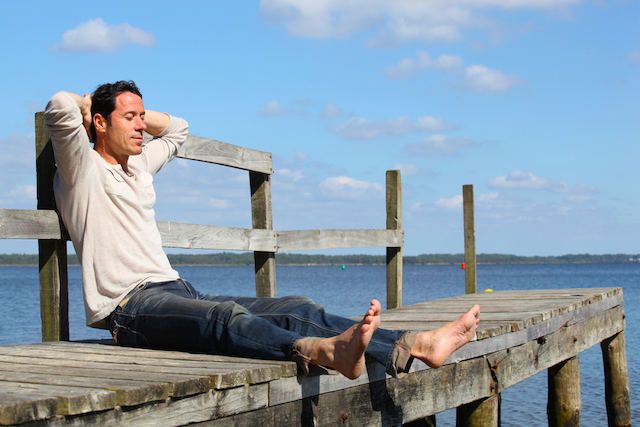
    Man sitting on pier

    “I never found a companion that was so companionable as solitude.” ~Henry David Thoreau

    Meditation makes you realize it’s not so much the silence as it is the not being around people that’s so profound. No human interaction, a human break if you will, is its own simple kind of joy.

    Who knew that as a species who can’t function without the social ties of community, it is solitude that re-charges us and gives us the strength to go out into the big, bad world and interact with that lovely mess I like to call humanity?

    In our hyper connected, overworked, extroverted, always-on-the-go American culture, the very idea of solitude can seem anathema to what we as Americans hold dear. The mere possibility that a person would skip out on social gatherings or not respond to work emails on the weekends because they want some alone time seems downright un-American.

    For most of my life I was (and still am, I admit) a quintessential “busy person.” I pretty much came out of the womb with a list of things on my to-do-list, and as I got older that to-do list became longer… and longer… and longer….

    But that was the way I liked it. Each time I ticked off a box I’d get a sense of satisfaction, a rush not unlike I imagine one feels after doing a line of cocaine or popping some ecstasy tablets. And, as with most drugs, once the satisfaction of accomplishing something on my list wore off, I would work on accomplishing the next thing, chasing that next rush, and so on and so forth, ad infinitum.

    I made the drug comparison purposely, because the constant need to be doing something can feel like an addiction if taken to the extreme. After each line on my to-do-list was checked off I couldn’t wait to add ten more things.

    And, not surprisingly, my incessant busyness was reinforced at every turn. It encouraged me to get good grades and load up on the extra-curriculars in high school, which in turn helped me get into an ivy league school for college, which then helped me get into a highly competitive medical school program… you get the gist.

    But once in medical school I kind of reached a breaking point and realized this treadmill life where I never gave myself a break was not sustainable.

    It was fitting then, that around this time I started to learn about meditation. I find it ironic that in the hyper competitive, fishbowl of an existence that is medical school I found the one thing that advocated the exact opposite.

    Once I started going to meditation classes and getting better at being in the present moment, I began to gain some introspection, which made me rethink this whole busyness thing.

    I actually started to worry a bit about my poor little restless soul and wondered if this is what it was going to be like for the rest of my life. This constant need to fill my days with something—anything—so I wouldn’t have to face the vast emptiness of doing… well, absolutely nothing. It was unfathomable to me.

    Living alone, however, made me change my perspective. As I got older and could afford to live without roommates, this whole world of solitude opened up.

    At first it was terrifying. As busy as I am, even I couldn’t fill every second of my waking days, so the restlessness grew stronger and stronger, until I thought I might explode.

    But once I got past this obsessive need to always be doing something, I loved it. I could just sit, literally. I started to feel like I had all the time in the world.

    Actually, I started to feel like time itself didn’t even exist anymore, and I could just sit there, forever, in my wonderfully empty apartment on my wonderfully empty couch with my wonderful self for company. I noticed that a previously unknown feeling started to make its way into my life. I believe they call this feeling serenity.

    A recent Pew Research Center survey asked: How important is it to you to have times when you are completely alone, away from anyone else? My answer: as important as being around people.

    In all my reverence for solitude, the fundamental truth is that solitude vs. sociability doesn’t have to be an either-or equation. They are both necessary if one wants to be a healthy, functioning adult. It’s just that we as Americans have way more of the sociability than the solitude.

    A wise person once said, “Don’t just do something, sit there.” So take some time out of your busy schedule each day to just be.

    No computer, no phone, no Internet, no TV, no music, no reading, no talking. Just you and your own crazy thoughts.

    Though it may be terrifying at first, you might be surprised at what you find lurking in the deepest corners of your mind. Peace, joy, forgiveness, clarity? There’s only one way to find out.

    Man sitting on pier image via Shutterstock

  • 40 Ways to Give Yourself a Break

    40 Ways to Give Yourself a Break

    “Health is the greatest possession. Contentment is the greatest treasure. Confidence is the greatest friend.” ~Lao Tzu

    It’s common among overachiever types: We like to push ourselves.

    Sometimes it’s to get from A to B. Sometimes it’s to create the illusion of change when really, you’re just spinning your wheels. Sometimes it’s simply to avoid standing still and accepting the moment as it is.

    All that pushing can feel so smart and productive—until you’re exhausted, overextended, overwhelmed, or otherwise ready to snap. I’ve felt all these things before.

    There are days when I try to be everything to everyone and do more than I can reasonably accomplish, but I know there’s only so much my body, mind, and spirit can take.

    Since it never seems to work to shout, “Stop the world, I want to get off,” I’ve come up with a few simple ways to give myself a break when I need it.

    If you feel physically, mentally, emotionally, or even digitally exhausted, these tips may help: (more…)

  • 6 Compelling Reasons To Spend Some Time Alone

    6 Compelling Reasons To Spend Some Time Alone

    “There are times when alone is the best place to be.” ~Unknown

    Some people think it’s awful to spend time alone—that it means you’re antisocial or no one needs you.

    Some people feel sad and lonely when they don’t have company every evening or weekend.

    But being alone doesn’t mean that no one needs you. And it can actually be quite useful to take some time to yourself.

    I am almost thirty. This is an age when you start to rethink your whole life, trying to understand what you should change or improve, what you should do next, and what specifically you need in your life.

    I felt this way a couple of months ago.

    I thought I’d achieved nothing in my almost thirty years, and I felt I should have changed something but couldn’t figure out what or how.

    I had to cope with my feelings, but the everyday chaos of my life didn’t allow me time to concentrate on myself.

    The decision came like a bolt from the blue—to spend some time completely alone.

    When you’re alone, nothing prevents you from listening to your inner voice, heart, and mind.

    Here are a few other benefits of spending time in solitude.

    1. It’s a great opportunity to recharge.

    We often try to make people around us happy and help them work through their feelings. This can be emotionally draining.

    For example, I have one friend who lives abroad, who comes online to talk to me only when she feels bad and wants to share all her problems with me. It takes a lot of energy and makes me sad and frustrated.

    Time spent alone helped me take a break from constant interaction with other people so I could recharge.

    2. It’s a good time to think and reflect.

    Life moves at a crazy speed. It doesn’t often give us time to stop and reflect. When alone, you have a great opportunity to focus on yourself.

    Thanks to my voluntary solitude, I had a chance to question whether I was moving in the right direction, I’ve realized what I should change in my life, and I’ve finally found time to relax and meditate.

    3. It’s a chance to understand what really makes you happy.

    When you spend time with other people, you often have to make compromises. There’s always a chance that what you want may not coincide with others’ wishes. When you’re alone, it’s only you who decides what to do.

    Do you want to spend the whole day lying on the beach? Go! Do you want to visit that contemporary art exhibition? There’s no reason to skip it. As for me, I’ve finally visited the city of my dreams, Prague. None of my friends ever had the time, money, or desire to go with me, but that no longer mattered.

    4. It makes you more productive.

    It can be fun and exciting to spend time with friends, but it can also distract you from things that are important to you, like exercise, hobbies, a long-delayed book, and unfinished work.

    Spending some time alone can be a good opportunity to make progress toward your personal goals.

    5. It makes you more self-reliant.

    We often seek approval from friends, colleagues, and family members before we take action or make a decision. There are times when it’s necessary to do this, but there are also times when it’s possible to act without consulting others first.

    When you’re alone, you’ll learn how to make decisions without anyone’s help. This was difficult for me at first, but in time I became more self-reliant.

    6. It teaches you to value people who are close to you.

    When you regularly take time for yourself, it becomes even more enjoyable to engage with others, as you’ve given yourself time and space to miss their company.

    Don’t be afraid of being alone. Very often it helps us understand who we are, what we want, and what we can do to become better people.

  • How to Reduce Stress and Focus More on What Truly Matters

    How to Reduce Stress and Focus More on What Truly Matters

    “Beware the barrenness of a busy life.” ~Socrates

    Did you ever wish you could just take off from work and get away from it all?

    This past summer I had the opportunity to do just that.

    I was wrapping up a twenty-four-year career in the Air Force and had saved up two months of vacation time. So my wife and I decided to visit Rio de Janeiro and live by the beach.

    The tropical weather was everything you would expect it to be: sunny, warm, and gorgeous.

    But surprisingly, the time off gave me so much more.

    Being away from the daily grind of work prompted deep reflection on my part. As a result, I came to some unexpected insights about my career and my life. The lessons I learned are:

    Ambition can make you miserable.

    When you’re on the fast track, you’ve always got this nagging, stomach-knotting anxiety that you’ve got to go and make it happen or else you’ll be left behind, unable to take your place at the table of materialistic plenty. Worse yet, you start to worry that others will elbow you out and grab your share.

    For sure, our competitive society is full of this kind of attitude. And it’s easy to get pulled into it yourself.

    I’m not saying that ambition is bad—especially when pursued for good reasons, like taking care of yourself and improving your state in life.

    But the dark side of ambition is that it can pile on the stress. Remember that knot in the stomach I talked about?

    I learned that only when you take a break from the grind can you realize the impact of your ambition on your spirit.

    Only then can you discover what’s driving you and sort out whether it’s truly important or not.

    For my part, I discovered that “climbing the ladder” in an organization was no longer important to me.

    What emerged as most important was using my strengths and experience to coach leaders, help them solve their problems, and make their own marks.

    You may be more stressed than you realize.

    After about two weeks of sleeping in and waking up to the sound of waves and tropical birds, I realized the knot in my stomach was gone. What’s more, I didn’t realize how big of a knot it was.

    A good chunk of the stress knot was present because of my own doing.

    For many of us, this knot of stress is the price we pay for trying to make a living and get ahead. The price includes responsibilities that bear down on you. Maybe over time your health and wellness starts to slip away.

    The next thing you know you’re in the grind.

    But what’s being ground up is you.

    At this point, I learned I had a choice: I could go back to the grind or I could use the strengths I developed over my career to serve others in a more balanced way.

    I’ll give you one guess what I chose.

    You really don’t need a lot to live well.

    While we were in Rio, my wife and I rented a tiny one-bedroom studio apartment. All of our household goods had been packed up and stored, so the sum total of our possessions amounted to a couple of suitcases of clothes.

    And that was plenty. In fact, it was more than enough.

    Living this stripped-down lifestyle removed the hidden burden of having material things to worry about. I’m talking about things like a house, two cars, furnishings, bikes, golf clubs, lawn mowers, washers and dryers, and all the other things we buy to simplify our lives.

    The radical downsizing opened me up to experience the rhythm of a simpler life.

    And it wasn’t boring at all.

    On the contrary—with the hustle, bustle, noise, and possessions gone, I had time to notice the little things that make life rich and enjoyable.

    Like the cooling ocean breeze or the small monkeys that jumped from branch to branch in the trees outside our apartment window.

    Like connecting more with family, friends, and the transcendent.

    Living with less clears away the clutter of our go-go modern lives and allows us to get reacquainted with our authentic human selves.

    The Big Lesson: Taking Time Away to Reflect Can Change Your Life

    Extended time away from work can improve your life. It certainly did mine.

    However, my circumstances were unique. For the vast majority of people, getting away from work for an extended stretch is a challenge.

    So what can you do to incorporate reflection in your life?

    If you can’t take extended time off, you can take small breaks. These breaks can come in all shapes and sizes such as:

    • Meditation
    • Turning off the TV
    • Setting aside your smartphone
    • Journaling
    • Going on a hike
    • Taking a run
    • Getting away for a weekend

    Use these small breaks to progressively gain perspective on what truly matters.

    Even these little breaks away from the routine will bring insight and understanding. Over time, they will grow into tools that you can use to transform your life.

    Plan your small breaks (or a big one) now.

    And move toward a life that is simpler, less stressful, and more fulfilling.