Tag: receiving

  • What Happened When I Let Go of My Big Plan

    What Happened When I Let Go of My Big Plan

    “Surrender to what is. Let go of what was. Have faith in what will be.” ~Sonia Ricotti

    Turning fifty felt like a milestone worth celebrating—a time to honor myself, reflect on my five decades of life, and embrace the journey ahead.

    For someone who had never believed I was worth the fuss of a big celebration, choosing to honor myself in this way felt like a profound shift. I wanted this celebration to affirm that I am worth the effort and expense.

    The way I envisioned this milestone? Hosting a retreat for women like me, who were born in 1975 and at a similar life stage. But what began as an exciting idea turned into a chance for surrender, growth, and unexpected self-discovery.

    The Vision: A Retreat for Reflection, Celebration, and Pampering

    The idea hit me all at once, clear and undeniable. Why not create a customized birthday retreat experience to mark the milestone? The retreat would be intimate, luxurious, and restorative—a space where women could reflect and celebrate together.

    I spent weeks researching, contacting venues, and considering every detail meticulously:

    • A stunning eco-conscious venue blending luxury with nature
    • A top-rated plant-based chef to nourish us
    • Thoughtfully designed activities that honor our individual and collective needs, including a group birthday celebration and opportunities for deep introspective work

    The host venue I found was a gem, exceeding my list of must-haves, but it was meeting the owner of the venue that felt truly serendipitous.

    From our first conversation, we shared a kindred energy that was both grounding and inspiring, and I knew I was meant to find her. Our connection felt like a sign—one that I wouldn’t fully understand until much later.

    I joyfully secured the dates with a deposit, brimming with excitement to share this beautiful offering with others.

    Every Project Has Its Challenges, Right?

    Despite my enthusiasm, something didn’t feel quite right. The response from my friends and acquaintances was lukewarm. Cost and personal preferences were barriers for some, and others simply didn’t resonate with the idea.

    From others, I received unsolicited advice that the retreat just wasn’t compelling. My ego bristled at their comments, interpreting them as doubts in my capability and vision.

    Adding to this, I encountered bureaucratic issues and had to navigate compliance with the retreat regulating body in my province, bringing unexpected stress and layers of complexity I hadn’t anticipated. If this piece wasn’t sorted, the retreat would put me in the red beyond what made sense.

    I believed in my vision, though, or at least, I believed in that strong feeling of alignment I had whenever I spoke with the retreat venue owner.

    After perseverance and more hours of work, I was able to solve the compliance issue. I also revised the retreat to reduce the cost to attendees and broaden the audience to include women born in 1974 and 1976, editing all of the marketing materials and recosting everything.

    After my modifications, I informally launched to my circle again, and this time… drum roll please… more crickets.

    A Moment of Truth: To Let Go or Double Down?

    I knew that the retreat would be magical for the right women, but I considered calling it off anyway. Anyone who’s marketed a retreat knows it’s no small feat. To make it happen, I’d need to pour in more time, energy, and finances—yet something in me just didn’t want to.

    When I really tuned in, the idea of letting go and surrendering to the quiet message my heart was sending brought an unexpected sense of relief.

    My ego whispered reasons to keep pushing forward: proving the doubters wrong, justifying the time and money I’d already invested, and showing myself I could make it work. But my heart’s quiet, persistent voice urged me to release it.

    The Gift of Letting Go

    After weeks of introspection, I made the decision to cancel the retreat. It wasn’t easy—old patterns of shame and fear of failure surfaced, and I had to really sit with them. But over time, I found peace with my choice.

    Since I had planned so far ahead, I was able to redirect my deposit toward attending a retreat at the same venue—this time, for myself.

    And THAT decision changed everything.

    The retreat opened up a new path in my healing journey, guiding me toward a piece of the puzzle I’d been trying to figure out but hadn’t yet understood. The deep connection that I felt with the retreat host made sense in a new way. She was meant to be one of my guides, and I would be returning to retreat with her many more times in my future.

    A Powerful Learning

    My experience also highlighted an area of growth asking for my attention. In my professional life, giving of myself is at the heart of what I do. I continually work on myself to strengthen my capacity to hold space for others to do their work.

    I love this calling deeply, and I receive so much in return for my giving—but I’ve realized that I still struggle outside of this context with receiving. That is, receiving without feeling the need to give something back. I also find it hard to surrender to others caring for me and holding space for me to be my messy, human self.

    The truth is, my intention behind planning the retreat was misguided. I convinced myself I was finally allowing myself to deserve a celebration, but I still felt I had to earn it by planning something for others. Yes, I would enjoy it, but I would be receiving through giving—which is beautiful, but not the same.

    By trusting my intuition and listening to the message from my heart—that I didn’t need to pursue this—I gave myself permission to let it go. And in doing so, I recognized a deep need to learn how to truly receive.

    What better way to mark the transition into my fiftieth year than by learning this essential self-care skill?

    My Takeaways from a Lesson in Letting Go

    1. Find the value.

    Letting go can feel like you’ve wasted your time, money, or energy when you don’t ‘achieve’ the outcome you set out to create, but if every experience carries value, then it’s not a waste. In my case, I gained impactful insights into the women I serve, learned how to navigate retreat regulations in my province, and met a pivotal person on my path to healing.

    2. Trust your intuition.

    Letting go of control created space for something unexpected: a profound healing experience and invaluable clarity and guidance that wouldn’t have happened otherwise. My decision to cancel wasn’t analytical—it was intuitive. But leaning into that inner voice led me to something far more meaningful than the original plan. I got what my heart knew I needed, not what my thinking self thought that I needed.

    3. Honor the balance of giving and receiving.

    Letting myself receive requires surrender. And while offering space for others to receive is deeply fulfilling, allowing myself to be cared for fills a far-reaching need I hadn’t fully acknowledged. As I enter this milestone year, I realize that true wholeness comes from honoring both sides of the equation.

    Trusting my heart and letting go is an ongoing practice for me, as it is for many women who have been socialized in a ‘fixing’ and ‘doing’ culture such as what is typical of North America.

    The gift of remembering to trust was a deeper understanding of what I truly need in my next phase. Sometimes, the most powerful way to meet our needs is to stop striving and simply allow ourselves to receive—both from others and from the wisdom of our own intuition.
  • How to Find the Gold When Everything Falls Away

    How to Find the Gold When Everything Falls Away

    “To stay with that shakiness—to stay with a broken heart, with a rumbling stomach, with the feeling of hopelessness—that is the path of true awakening. Sticking with that uncertainty, getting the knack of relaxing in the midst of chaos, learning not to panic—that is the spiritual path.” ~Pema Chödrön

    Sixteen years ago, when everything familiar fell away, I felt desperate for spiritual answers. I bartered with a woman who called herself a quantum healer. When I explained I didn’t have enough money to cover rent, bills, and food, she scoffed, “Well, you have to have money to be spiritual.”

    Say what, now?

    In our culture, this myth is pervasive, yet we only have to look at the life of the Buddha (or Jesus or Muhammad) to see that’s untrue. The Buddha left a life of wealth and privilege in order to awaken.

    What this woman probably meant was that people need money to attend retreats in exotic locales, or to purchase expensive courses on manifestation, or to hire coaches who promise them seven-figure incomes.

    To awaken to our true nature requires nothing. It doesn’t even require a teacher, because life is the teacher.

    For many of us, spiritual growth is propelled by a falling away of everything familiar, including income. Admittedly, it’s difficult to focus on spiritual growth when we’re hungry or facing other survival challenges. The paradox is that these can be a crash course in awakening if we allow them to be.

    In my experience, these challenges are designed to humble our egos and show us that all our doing and egoic effort aren’t going to work; only surrender can. Begging and taking a victim stance (historically, one of my areas of specialty) doesn’t work either.

    The Jedi trick is to find peace despite all this, to discover the freedom of emptiness, or, as it’s called in Christianity, “the peace that surpasses all understanding.”

    Prioritize Inner Peace

    “If you get the inside right, the outside will fall into place.” ~Eckhart Tolle

    One year, despite sending 200+ emails, I couldn’t find work. If I hadn’t felt so frustrated, the sheer volume would have made it comical.

    Then, after listening to many, many hours of Eckhart Tolle’s talks, I decided to stop trying so hard. I began practicing a fierce form of presence, staying only on the razor’s edge of this very moment, because to consider anything other than the present moment brought panic.

    I prayed and meditated near-constantly, which helped me become aware of even the smallest signs of grace: seeing the first cherry blossom on a tree, making eye contact with a starling, or receiving a free baguette from a local baker. Each of those moments—and thousands more—brought inexplicable joy.

    In those moments, I felt deeply connected to the network of life. I’d believed I needed a baseline of money to feel inner peace, yet without money, I’d found inner peace anyway.

    The moments that brought up immense fear in our relative world became expansive in the absolute. When I fully accepted and inhabited each moment, life showed me the next step. And the next.

    Life isn’t quid pro quo. Capitalism is. Whatever we put out always comes back, though not always in the same form.

    How to Find the Gold When Everything Falls Away

    Cultivate joy with a giving practice.

    In 2014, amidst a round of financial challenges, I heard about the 29-day Giving Challenge, based on Cami Walker’s book 29 Gifts: How a Month of Giving Can Change Your Life. The book is based on instructions she received from a medicine woman named Mbali Creazzo. The idea is to give something away freely every day for 29 days—and also to pay attention to what flows in.

    These gifts don’t have to be material, though it helps to give what you would like to receive. Because I was hungry and behind on rent and bills, for me, that was money.

    One day, I was able to purchase a $10 gift card for the local grocery store, and I gave it to a woman I saw frequently on the street. Other times, when I was down to less than $5, I left a dollar coin on a wall where children love to climb.

    Being broke had made me feel less than human. Recognizing that I could help someone feel seen and valued again, even briefly, was a revelation. Knowing that a child would find that dollar made me smile all day.

    Giving became, and remains, the most euphoric practice I’ve ever had. This isn’t virtue-signaling or bragging; it completely transformed my life, or rather, the way I experience life.

    We all need something, and we all have something others need. That’s the definition of interdependence.

    Many times, I gave patience, directions, or thanks. Other times, when I could afford it—and this is still one of my favorites—I would leave a chocolate bar on a public bench with a note that read, “Please accept this random act of chocolate.”

    Other times, I wrote notes on Post-its with words I needed to hear and placed them in public areas. Things like “You are loved” or “You make a difference in the world.” Writing each of these gave me a hit of dopamine and helped me feel more like a part of the world rather than forgotten.

    Try community giving.

    For several years, I bartered with an independent coffee shop to be able to eat one meal a day.

    Inspired by an Italian trend called caffé sospeso, we created a practice of “suspended coffee.” If a customer was financially able, they could pay ahead for someone else’s coffee. If someone wanted a coffee but couldn’t afford it, they could request a “suspended coffee.”

    Being able to co-create a giving practice that benefited everyone in the community made me giddy.

    At the same coffee shop, baked goods were typically thrown out after two days. I began taking bags of leftover muffins, scones, and banana bread to a local soup kitchen, where they were a treat for guests more often served soup and stale bread.

    On holiday weekends, instead of throwing out food, we gave whatever pre-made salads remained, as well as day-old baked goods, to people in transitional housing.

    I was flat broke and trying to pay off a five-figure debt, $10 at a time. These giving practices evoked such joy in me that my anxiety about money all but disappeared (okay, mostly). And when that happened, life stepped in to support me.

    Be open to receiving.

    What does it mean to be open to receiving? A complete lack of resistance to what is. Many people feel resistant to receiving financial help because there’s a myth in the dominant culture that accumulated wealth equals an individual’s value, and not having money makes someone ‘less than.’ Those are both false human constructs.

    It’s important not to give in order to receive, nor to give because you believe you have to. Those cancel out the energy of giving. If you can give freely, though, miracles unfold.

    For me, these ranged from a neighbor who spontaneously offered me money to cover rent to an acquaintance who gave me the cash back from her credit card so I could pay down more of the five-figure debt. I saw clearly that flow is always at work in the world. And I stopped feeling ashamed about receiving.

    Giving helps me see what I do have: people who care about me, a roof over my head, a meal that day. It gets me out of my head and my ‘poor me’ stories.

    To my delight, giving helped me rediscover the feeling of oneness, emptiness, or “the peace that passes all understanding.” Because I felt so peaceful, I felt less resistant to my own situation, and that allowed the situation to change.

    We think of items and money as “ours,” but really, we’re just stewards. Indigenous cultures have known for millennia what we settler-descendants need to learn: What we have is to be shared with others, not hoarded.

    Money Can Make Us Forget

    Once income began flowing in, I was mortified to discover how easily I slid back into wanting to keep what I had (after all, I rationalized, it wasn’t much). I began grasping again and believing in the collective delusion of stability. Awareness—access to the experience of emptiness, oneness, or the “kingdom of heaven”—shrank.

    My ego had been so thoroughly humbled, even fractured, during the broke times that it grasped at anything that could help it rebuild a sense of identity—which is antithetical to emptiness and peace.

    It’s not just me. Sociologist Paul Piff, Ph.D., of the University of California, Irvine, ran a game-based experiment in which he found that “rich” players hoarded their fake wealth far more than “poor” players, who tended to be more generous. This aligns with research that demonstrates that, on average, wealthier people donate less than their less-affluent counterparts.

    By maintaining a giving practice, I can reconnect with that expansive feeling of joy at being able to meet someone else’s need, whether that’s a friend, a stranger, or some random child walking along a wall who finds a dollar coin.

    It’s a Process and a Practice

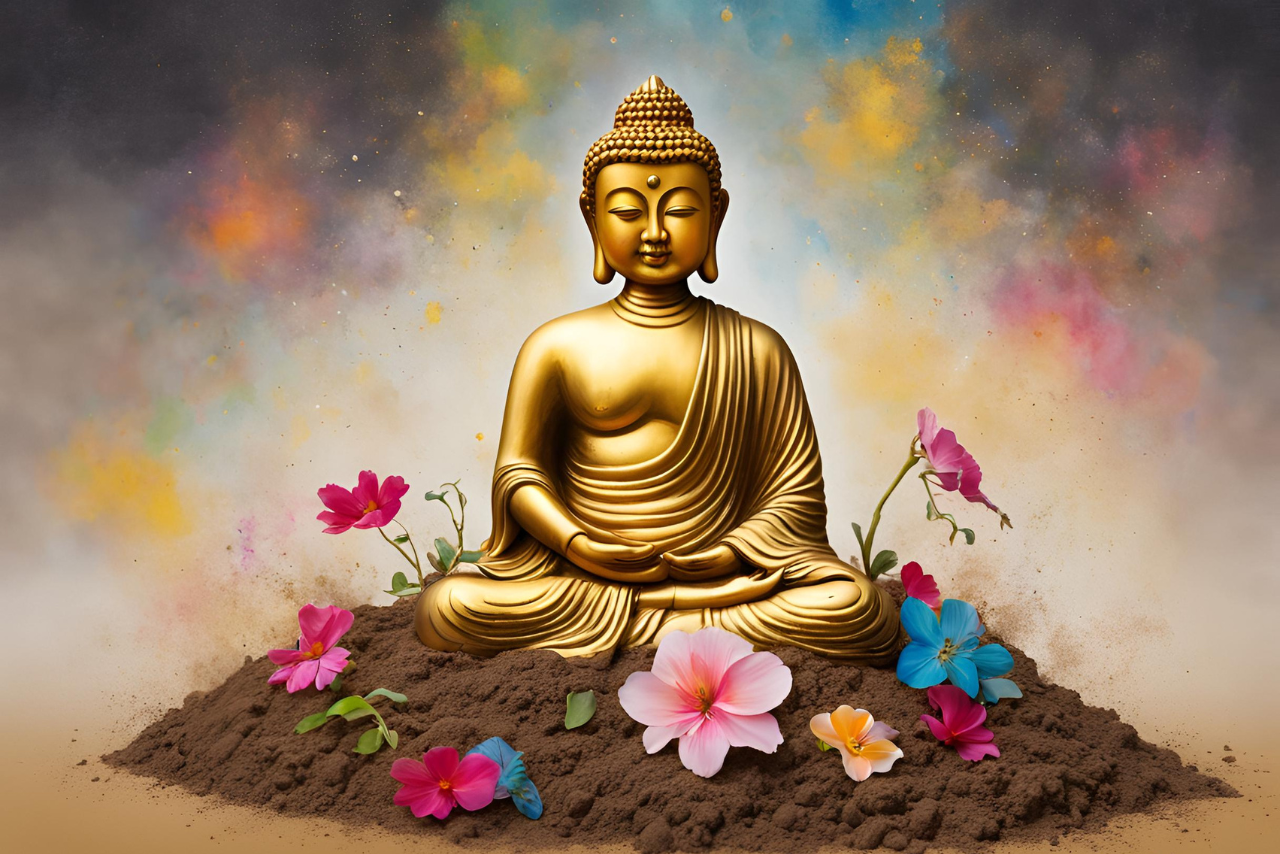
    The gold in the title of this post refers to awareness. That is the experience that all spiritual teachings point toward (and which no words can capture).

    When things fall away, life is inviting us to awaken. As long as we resist what is, the doorway remains closed. When we prioritize inner peace and then generosity, miracles can happen.

    After nearly three years of bartering with the coffee shop, I was offered a contract—out of the blue—that helped me pay off the five-figure debt within six months. This was unusual, though not unheard of.

    More typically for me, and probably for many, when we give from what we have, smaller amounts begin to come in that enable small payments or a few days of groceries. It doesn’t always come back as money. Receiving food by bartering with the coffee shop was a complete gift to me. Be open to different ways of receiving.

    It’s not easy when things fall away, but it is an opening. If we can learn to prioritize inner peace, let go of our egos, and become part of the flow, we can find peace and even happiness greater than we ever imagined.

    If you’re hungry and broke, the apps Too Good to Go (US/Canada), FlashFood (US/Canada), and OLIO (global) may be able to help.

  • 3 Painful Consequences to Overgiving and People-Pleasing

    3 Painful Consequences to Overgiving and People-Pleasing

    People-pleasing, overhelping, overgiving—we can give it lots of different names, but the consequences of putting yourself last all the time are generally the same.

    You may have been raised to see giving and helping as virtuous things. And hear me say, they are. I believe wholeheartedly that it’s a beautiful thing to serve, support, and help others. However, people-pleasers don’t always know when to draw the line; they give and give almost as if they have an endless supply of time, energy, and resources.

    Surprisingly, people-pleasing is often about control. It’s rooted in your need to try and boost your own self-esteem, avoid conflict, and manipulate the environment into what you need it to be to feel at ease.

    But I can assure you, there are vast and detrimental consequences to working so hard to please and appease others. I know firsthand. My overgiving, overhelping ways were rooted in my deep need to be seen, supported, and cared for. I’ve experienced fried adrenal glands not once, but twice from pushing so hard to say yes to everything but me.

    Let me share with you some of the costs of overgiving and people-pleasing now.

    Deep Resentment

    The more you try to please those around you, the less time you have for yourself and the things you need and desire, which then leads to feeling resentful.

    If your needs aren’t being met by those around you (because, let’s face it, most people-pleasers aren’t being honest and telling our people what we need), it can cause deep hurt and anger.

    It’s not other people’s job to read our minds. It’s our job to speak our truth and be honest, but often, we fail to do so. So when they don’t intuit or “just know” our needs, we start becoming resentful toward them too. “Arghhh, how can they be so uncaring?”

    Anger then takes hold. Resentment is what happens when we stuff or suppress that anger (common for the people-pleaser—remember, we need to keep the harmony at all costs, so speaking on behalf of our anger is major a taboo!).

    And once resentment kicks in, that’s when the illness of bitterness seeps in and festers. Resentment is what leads to long marriages and relationships of contempt, rolling eyes, and “staying together for the kids.” It leaks out as criticism, defensiveness, and snarky side comments. It explodes in the kitchen at a random comment (that actually isn’t random—it simply pressed on the already existing wound).

    Loss of Identity

    People-pleasers spend a great deal of time editing themselves—so much so that they lose sight of who they really are.

    When you’re always trying to please other people, you often hide yourself or morph into behaving like other people to get what you want. You’re a master chameleon, an expert at being anyone… other than you.

    This was my ammo 100%. I didn’t know who I was because I had spent decades trying to be what I thought others wanted me to be. It was the only way I knew how to keep myself safe. I had spent years feeling like I was unlikable, didn’t fit in, or that I wasn’t smart enough. So I simply bought into the notion that I had to go along to get along.

    This led me straight down a path to never understanding what I enjoyed, liked, disliked, or needed because I rarely made any choices for myself. I didn’t put aside time for myself and explore new things because I had no idea what those things might be. So I just didn’t. I continued in my pattern of pleasing and appeasing to my own detriment.

    Loss of Intimacy/Loss of Relationships

    For a typical people-pleaser, their relationships often look one-sided.

    Let me guess, you’re the one that:

    • Plans outings
    • Is the listening ear
    • Is the shoulder to cry on
    • Everyone calls when they need something
    • Is always “holding space for others”

    This makes you feel needed, wanted, valued, and important. But when you stop to think about it, you realize you’re not getting the same in return.

    It’s not hard to see how this leads to short-lived relationships following a set pattern:

    Joy and fun at first, then you start to feel exhausted, then resentment creeps in, followed by mild confrontation and the inevitable parting of the ways. (And I know because this is a pattern I followed more times than I care to confess).

    There came a point where I had to get honest about the depth of my friendships. Yes, many were fun. But they lacked the support and intimacy that I longed for. No one ever asked about me and what I had going on. No one ever held space for my hurts and frustrations in life. I often felt emptier when I came home from spending an evening together than I did when I left.

    Fear kept me in those relationships long past their expiration dates. I didn’t walk away sooner because I was too scared to be alone.

    I noticed that I held back from being honest and sharing myself with them. I didn’t think I could be intimate or vulnerable, so at some point, the relationship simply expired. Just like a carton of yogurt that gets pushed to the back of the refrigerator, it saw its final date.

    As I was growing and healing, I began to see that the people I had chosen to be in relationships with were no longer healthy for me. My soul was healing, and I was learning to align with relationships that felt honest and authentic.

    Speaking your truth and asking for what you need doesn’t make you a selfish person. It makes you a real person with real needs, and real relationships are only formed when we are willing to be… you guessed it, real.

    It’s okay to want to help and support people. I’m not telling anyone to be a jerk and to never lend a helping hand. However, you need to know where to draw the line; you need to find a balance of helping them and you.

    We all matter. We all have needs that matter. And the only way to get our needs met is to be honest about them—and to set healthy boundaries that honor them.

    Boundaries are not about saying no all the time and demanding things of other people. Boundaries are about knowing where the line is for you and communicating that line in a way that is firm and compassionate so you can flourish and thrive.

    When set correctly, boundaries give both people a choice as to what happens next in the relationship. It’s okay sometimes to walk away. But it’s also okay to stay in the relationship and practice honesty and intimacy if that feels right. When you start to become familiar with boundary-setting, your intuition will guide your next steps.

    Trust yourself. I know from being a recovering people-pleaser that this step alone can be so challenging, as we don’t really know who we are, so how do we trust ourselves? But that small, still voice within has always been there, guiding and leading. The difference is, now you’re listening.

  • 3 Things I Realized When I Stopped People-Pleasing and Let Myself Receive

    3 Things I Realized When I Stopped People-Pleasing and Let Myself Receive

    “Until we can receive with an open heart, we are never really giving with an open heart.” ~Brene Brown

    The honest truth about needing to please is that we do it to make other people happy. We will sacrifice everything and anything to put a smile on another’s face and lighten their load, while ours keeps building.

    The only problem is that while helping others makes us feel good, it’s almost addictive until we are burnt out. And giving and pleasing others starts to come from a place of resentment.

    I’ve been there!

    There was a time when I used to come up with a thousand reasons why I couldn’t leave the house. I was desperate to get to a yoga class and claim an hour away from being a mum, wife, friend, and entrepreneur.

    But instead, I prioritized keeping my kids happy and did everything I could to avoid the onset of a tantrum and also made sure my husband sat down to a delicious, home-cooked meal each night. And when the kids were napping, I would use that time to do a little work.

    The routine started to get boring. I complained daily. I was grumpy and irritable.

    Yet the days kept coming and I started to drag my feet. The tasks were mundane and never-ending, and they started to get on my nerves. I’d lash out at the washing machine or slap together a half-assed attempt at dinner. And I wasn’t just overextended and resentful in my home life. My clients were taking advantage of me, and my friends sucked my energy dry.

    I kept showing up for everyone around me—striving to keep the peace, to keep them happy, while I was worried that I might let them down or wasn’t living up to their expectations. Yet with a whole lot of hindsight, I discovered that I had placed all this pressure on my shoulders myself.

    Denying myself a sixty-minute yin yoga class was the stupidest thing I had ever done. It still sounds ridiculous now. But at the time, I couldn’t see any solutions. I had tunnel vision and it didn’t revolve around me.

    I felt like I didn’t deserve the break.

    I felt responsible for everyone around me.

    I was unsure what would happen if I left our house for an hour and what I would walk back into after leaving my two young kids alone with my husband.

    Each afternoon, I was an emotional wreck by the time my husband came home. Being the problem solver that he is, he encouraged me to go and find a class—as if it was that simple. I thought, “What does he know anyway? He has no idea about all the things I still have to do.”

    But I eventually realized he was right. I needed a break, and I had to get out of my own way and take it.

    Finding a class was easier than I had imagined. There were loads to choose from and all kinds. I settled on a 4:30 p.m. class on a Friday, that was only a five-minute bike ride away.

    I remember walking through those yellow doors to find only me, two other people, and a smiley yoga teacher.

    Ahhh, I relaxed. I rolled out my mat and lay down because it was a yin restorative practice. We lay there for what seemed a lifetime. I spent it fighting with my mind to not think about what might be happening at home, my to-do list, my kids, the grocery list, my work… Thankfully, we finally got moving and I started to tune into the music.

    The class was literally six poses of deep stretching and rest, and it was a challenge to surrender instead of extending each pose.

    My mind focused on how to allow my limbs to soften even in a standing pose that we held for a good five minutes. Not collapsing took every ounce of concentration I had.

    I took big belly breaths, in to fill my lungs and out to gently soften.

    In the final fifteen minutes we had a deep meditation (savasana), with the yoga teacher coming around to us individually, massaging the back of our necks to the bottom of our skulls. She finished it off by pressing her two warm hands down on my shoulders as if she was pushing me back into the ground. Tears began streaming down my face as she walked away.

    I had fully surrendered and left my mind to be in the present moment, and her touch released the stress and burden I was carrying. It was an intense moment, and I felt joyful and at peace. I had literally forgotten that I had to return to my family only minutes later.

    That class changed me as a mother and a wife.

    I went back every week religiously after that. I saw the power of connecting with my breath and myself. Because that one hour reset each week was enough to fill up my cup and change how I was showing up for myself and others.

    My daily chores didn’t bother me anymore. I had more love to give my kids and partner. I had a renewed sense of energy. When someone asked for help, I had the capacity to give because I wanted to instead of seeing it just as another task I had to do.

    Once I learned to receive, which meant surrendering my responsibility and need to control and allowing myself a little love, I discovered that I often denied myself other things, like going out for walk or catching up with friends. And this is where I had to lean in deeper and question what it means to receive. Here is what I realized.

    Accepting Help

    It is not a sign of weakness to ask for help or receive it, and I don’t need to prove myself or my worth through giving.

    I really felt like I was doing life alone, taking on the responsibility of everyone around me and driving myself into the ground. People would make kind gestures to help, but I would often shut them down with an “I’ve got it covered, thanks.”

    The day my husband stepped in to wash the dishes after I shared that I had a looming deadline, he practically threw me out of the kitchen. I felt so guilty, like I should be the one doing them, not him.

    What I thought was a one-time deal has now lasted three years. It has lightened my load, and our relationship has been better because I no longer feel like I’m the one doing all the things.

    Accepting help is receiving an energetic exchange with someone that wants to offer support. So take it.

    Acknowledging Compliments

    Too often, I would deflect when someone would say something nice to me. I found it uncomfortable, and it made me question their ability to see what was really happening.

    I didn’t feel like I deserved a compliment because I didn’t see myself like others did. I didn’t feel worthy of being praised, so I brushed it off with, “No worries, it was nothing,” “I would do it for anyone,” or “This old thing? I bought it on sale five years ago.”

    Learning to receive a compliment showed me that I could be honored and celebrated for who I am and that there was nothing to be ashamed of. I thought that people who received compliments looked nothing like me and were doing more important work than little old me. But I learned that compliments are praise, and we all deserve to feel seen, heard, and acknowledged.

    Realizing I’m Not Responsible for Everything

    Here was my greatest lesson, which was letting go of my need to control all situations. The responsibility I carried, because I felt it was my job to make everyone happy, was costing me my physical and mental health along with my relationships.

    When I released the control, it created space for things to happen without my interference. It provided space for me to see how others could step up and take responsibility, for mutual needs and their own. It gave me permission to invest in my own well-being.

    Instead of over-giving, fixing, and manipulating, I stood back. From here I could see that life is a two-way street where we exchange our energy with one another. This allows us to give from a full, nourished heart, and this is much more satisfying than giving from a sense of fear and obligation.

    Opening our hearts to receive eliminates our tendency to over-give. When we give without our full presence, we are not showing up fully for ourselves or for other people.

    We all love to support the people we care about, but we need to receive just as much as we give, creating a balance that never leaves us feeling drained or that we “should” be doing something.

    Do you find it hard to receive? What helps you let go of control and fill your own cup?

  • How to Overcome Ultra-Independence and Receive Love and Support

    How to Overcome Ultra-Independence and Receive Love and Support

    “Ultra independence is a coping mechanism we develop when we’ve learned it’s not safe to trust love or when we are terrified to lose ourselves in another. We aren’t meant to go it alone. We are wounded in relationship and we heal in relationship.” ~Rising Woman

    Do you feel like you have to do everything on your own?

    Is it difficult for you to ask for and receive help in fear of being let down?

    Have you ever heard the expression “Ultra-independence may be a trauma response”?

    If this is you, I get it; that was me too.

    Please know there isn’t anything wrong with you. I lived most of my life this way. This way of being was a survival strategy that kept me safe, but it was also very lonely. I lived in a constant state of anxiety, and it wore me out physically because I thought I had to do everything myself.

    We often become ultra-independent because we don’t trust others and/or we may not feel worthy of being loved and supported. Or, we may believe that by denying support from others and doing things ourselves we’ll gain love and acceptance, because we’re not being a burden.

    Maintaining connections and receiving support from others are basic human needs. If we’re saying we don’t need anybody, that’s often coming from a part of ourselves that wants to protect us from hurt, abuse, criticism, disappointment, or rejection.

    If we even consider the possibility of wanting, needing, and/or receiving support from other people, something in us may say, “No way, it’s not safe,” so we keep these thoughts at bay.

    We may think that if we ask for anything then we’re weak or being too needy, and that’s codependency. But we’re not meant to do everything on our own; there is such a thing as healthy codependency.

    Ultra-independence may also be an extreme unspoken boundary, so, what may be important is to learn how to set healthy boundaries so we can feel safe in situations where we thought we’d lose ourselves.

    Sometimes we feel the need to be ultra-independent because we don’t feel safe being vulnerable and letting people in, because if we do, they may see our flaws and insecurities, or they may trigger our unresolved traumas and wounds.

    We may be carrying deep shame, and we don’t want to feel it or have others see it, so we stay away from connecting with and receiving support from other human beings.

    One of the hardest things to fathom is that, although we’ve been hurt in relationships, in supportive relationships we can experience healing and a sense of safety. 

    That didn’t make sense to me, because in my relationships I often experienced criticism, hurt, rejection, and being screamed at for having natural human feelings and needs.

    A part of me wanted support and connections, but another part of me was afraid, because as a child it made my father angry when I asked  for anything. It was hard living in a world where I felt all alone, believing I had to do everything on my own while watching everyone else receive support and connect with their family and friends.

    For me, being ultra-independent eventually led to denying and suppressing my needs and feelings because it got too overwhelming to try to do everything on my own, especially at such a young age.

    At age fifteen I became anorexic, and I struggled with depression, anxiety, and self-harm for over twenty-three years.

    In the midst of that, at age twenty, I let my guard down and got a boyfriend, who I thought loved me because he bought me anything I wanted, but there were strings attached. If I didn’t do what he wanted he would take back the gifts. He became obsessed with me, waited outside of my house when I wouldn’t talk to him, and would draw me in again with gifts and words of seduction.

    This left me confused. “Do I only receive support and things when I’m a slave to somebody?” I wondered. After I finally broke up with him, I made a vow to myself that I would never receive anything from anyone again. 

    I got the opportunity to heal that vow later in my life when I went to Palm Springs with a friend. We were playing the slot machines and he put in $20. I told him “It’s your money if we win.” We won $200 on the first spin, and he told me, “Cash out, you won.”

    When I cashed out, I chased him around the casino, trying to put the money in his pocket. I didn’t want to receive from him because I thought, “Then I owe him, and he owns me.”

    Thankfully, he’s someone I can share anything with, and we talked about it. He told me he knew my struggle, that he didn’t want anything in return, and that it makes him happy to give to his friends and family. This experience helped me see things differently.

    My healing journey really began at age forty when I started learning how to reconnect with myself, my needs, and my feelings and started healing the trauma I was carrying. I also learned how to ask for support, which wasn’t easy at the beginning; some people got mad at me, and some people were happy to fulfill my requests and needs.

    Instead of blaming and shaming myself for believing I had to do everything on my own, I made peace with the part of me that felt it didn’t need anybody. By listening to its fears I started understanding why it thought I needed protecting.

    It revealed to me the pain it felt of being rejected, hurt, and screamed at for having human feelings and needs, and that it didn’t want to experience that pain again.

    As I listened to this part of myself with compassion, I acknowledged and validated the fear and pain it experienced, thanked it for doing what it was doing, and let it know it was now loved and safe.

    I asked it what it really wanted, and it said, “I want to have true connections. I want to feel safe with and receive support from others, but I’m afraid.”

    This younger part of me was stuck in perspective from my childhood wounding and the experience with the guy I was dating. By giving this part of me a chance to speak and tell me its intentions, I was able to help it/me have a new understanding and feel loved and safe.

    I also began to have a more realistic view of who is and who isn’t safe, instead of seeing no one as safe based on outdated neuro programming stemming from my past traumas, hurts, and pains.

    Being ultra-independent did help me heal from all those years of struggling with anorexia, depression, and anxiety. Even after twenty-three years of going in and out of hospitals and treatment centers and doing traditional therapy and nothing working, I finally took my healing into my own hands, and yes, I did most of it on my own.

    However, even doing it on my own, I found it was also helpful to be in a loving and supportive environment with people who didn’t try to fix, control, or save me.

    We’re not meant to be or do life alone, but being alone can be comforting if we fear being hurt by others. 

    This doesn’t mean we should force ourselves to ask for and receive support from others, especially if we’re afraid; it means we need to create a loving and caring relationship with ourselves and understand where the need to be ultra-independent is coming from as a first step toward letting people in.

    A great question to ask yourself is “Why is it not okay for me to receive support?” Be with that part of you, allow it to show you what it believes, and take time to listen with compassion. Then ask it what it really wants and needs.

    Receiving support isn’t about being totally dependent on others, that’s just a setup for frustration and disappointment; it’s also important to learn how to be independent and meet our needs. This isn’t either/or, it’s both.

    Learning how to connect with our feelings and needs and how to communicate them and make requests is also important.

    For instance, if you’re going through a challenge and you would like support from someone, you can say, “I’m having a hard time right now, and I would really like someone who I can talk to, someone who will just listen without trying to change me or my situation. Is that something you would be willing to do?”

    If this feels impossible for you, it might help to repeat some affirmations related to letting people in and receiving support. If some of these don’t resonate yet, instead of using “I am” start with “I like the idea of…”

    I am worthy of being supported and loved.

    I am worthy of having heartfelt connections.

    It’s safe for me to have this experience.

    I am worthy of being seen, heard, and accepted,

    I am worthy of being loved and cared for by myself and others.

    I am worthy of shining authentically,

    I am worthy of receiving help and support.

    There isn’t anything you need to earn or prove. You are worthy because you are beautiful and amazing you.

    If you’re shutting people out because of your past traumas, as I once did, know that you don’t need to do everything on your own just because you were hurt in the past. Some people may let you down, but there are plenty of good people out there who want to love and support you—you just have to let them in.

  • When Helping Someone Becomes Unhealthy: Why You Can’t Always Say Yes

    When Helping Someone Becomes Unhealthy: Why You Can’t Always Say Yes

    Helping Hand

    “When you ask for what you need and receive what people and the world have to give, you reduce stress and gain energy.” ~Amanda Owen

    It started out innocently enough. The guy I was dating (let’s call him Eric) was applying to jobs, and I, a writer, could help him with cover letters and applications. I offered to help and thought nothing of it. It seemed like a simple thing to do for someone I cared about.

    A few weeks later, Eric had some car trouble and I lent him my car. He drove it around for a week and returned it with less than a quarter tank of gas. Not really awesome of him, but not worth getting angry over. After all, he just had to pay for car repairs and I knew that money was tight for him.

    Then one night, Eric and I had plans to hang out. I texted him when I was leaving my house to say he could expect me in twenty minutes.

    He replied asking if I could bring two rolls of paper towels with me. Kind of a weird request, but okay…I obliged. When I got to Eric’s apartment and asked why he had me bring paper towels, he shrugged and said that he had run out.

    At this point in the story it is probably worth mentioning that Eric lived across the street from a convenience store, where they sell (wait for it…) paper towels.

    I wish I could say I ended things there, but this pattern continued until Eric had moved into my house, taken over two spare rooms, parked himself permanently in front of the TV playing video games, and relied on me to cook, clean, and buy all food and supplies for the household.

    Eric kept saying he’d pay rent, but never seemed to have the funds, and I knew he made less money than I did so I didn’t press the issue.

    He rarely paid when we went out for dinner or drinks; I usually picked up the tab for both of us because I just wanted to get out of the house. I was frustrated, but trying to be supportive and “help” someone through a hard time.

    Then after a year and a half I finally started to see (and feel) how damaging this relationship dynamic was.

    Eric not only mooched off of me for material things, but he was also draining all of my emotional energy. I’m not sure he was even aware of what he was doing. He was just so bad at managing his own life, coping with hardships, and being an adult that my earnest effort to help him positioned me as his crutch. 

    This situation is not uncommon; I think we all sincerely want to help when our loved ones are struggling. But there has to be a limit. You simply can’t get caught up in giving so much that your own need for support and caring is squeezed out of the relationship entirely.

    The lessons I learned from my experience with Eric can be summed up in four ways:

    1. Don’t brush off the “little” things.

    It’s easy to make excuses for someone, especially if they’re charming and you genuinely care about them. But be aware of how much laxity you’re granting.

    Small things you may be tempted to ignore for the sake of being nice or keeping the peace do have a cumulative effect. If you’re constantly talking yourself into feeling better about someone’s behaviors, it’s time to speak up.

    2. Set boundaries and hold the other person accountable.

    Just because you can help in a situation doesn’t mean you have to. When you let someone take advantage of your kindness or generosity, you’re setting a dangerous precedent. When someone goes too far in asking something of you, tell them how their request makes you feel and explain why you are choosing not to grant it.

    3. Ask for stuff.

    Don’t forget that it is important for the other person to understand and respond to your needs, too. If asking for what you want is difficult, start small. Ask them to change the radio station if you don’t like the song, or ask them to hold your hand in public if you need more affection.

    Practicing with low-stakes requests will help build confidence for when you need to ask someone to meet your larger needs and desires.

    4. Check in with yourself often.

    Avoid the pitfall of making the other person the star of the relationship while you play supporting cast. Make a habit of taking time for yourself, reflecting on how the relationship makes you feel, and noting areas of imbalance you need to address. If being with someone is draining you financially or emotionally, it’s time to make changes.

    Being in the constant role of caregiver is not just a disservice to you, but a detriment to the relationship itself.

    When two people are not on equal footing there’s no room for a real connection to flourish. It’s always a wonderful thing to show kindness and support to a loved one—just be sure to keep a portion of yourself that’s just for you.

    Help vector illustration via Shutterstock

  • We All Deserve to Receive What We Need (and It’s Not Selfish)

    We All Deserve to Receive What We Need (and It’s Not Selfish)

    Woman with Open Arms

    “We think that we have to learn how to give, but we forget about accepting things, which can be much harder than giving…Accepting another person’s gift is allowing him to express his feelings for you.” ~Alexander McCall Smith

    We all know the importance of giving. In fact, it feels rather nice to give to others; we have all experienced that warm glow in the stomach when we do something thoughtful for another person or exchange kind words. To make someone smile is one of the best feelings in the world.

    But sometimes, do we get so caught up in the giving that we forget to receive? And in doing so, do we give too much?

    I have always been a people pleaser.

    My parents were divorced when I was five years old. It was a complicated situation, one that I didn’t fully understand as a child.

    My sister and I grew up with our grandparents, having contact with our dad during holidays, while the contact with our mum dwindled down to nothing.

    I hadn’t realized until recently that my five-year-old self felt completely abandoned by my parents. We never talked about the situation as a family; feelings were not something you shared, so they stayed bottled up.

    I grew up with the belief, deep down, that my parents left me because I wasn’t good enough.

    As a consequence, I tried my best to be as agreeable as I could to everyone around me. This meant having no opinion, going along with what others wanted all the time, not communicating my needs, and trying my best not to upset anyone.

    Then maybe, I would be good enough to love. This was pretty exhausting.

    I developed OCD for a period of time, frequently staying in the bathroom for hours, performing hand-washing rituals until my hands were raw and brushing my teeth until my gums bled.

    If I performed these rituals, bad things wouldn’t happen anymore. My granddad, who developed terminal cancer, eventually gave up his battle to the disease after a long period of suffering, and the rituals stopped.

    Instead, I sunk further into depression.

    As a result of my negative thinking patterns and my deeply held beliefs, I fell into a series of damaging relationships.

    Just wanting to be loved, by them, by anyone, I desperately tried to make things work with guys who were either not right for me or, more often than not, emotionally unavailable. I was replicating the relationships that I had known from my childhood.

    Relationships are equal give and take, not the constant giving that I had developed in the hope of making people love me back. Instead, ironically, this pushed people away.

    The thing was, I was desperately looking for love, when deep down, I didn’t like let alone love myself. Secretly, I believed I didn’t deserve to be loved. I wasn’t good enough for anyone; what could I offer to anyone?

    I would sleep with men early on in the relationship, figuring that giving my body was the only thing of worth that I could offer.

    It all came to a head when yet another relationship failed. Each time, the other person ended the relationship, which dealt a blow to my already fragile sense of self-esteem.

    I’d slide into depressive episodes with scary frequency, when I would cry constantly, finding it a mammoth task to even just get out of bed, having no interest in life and isolating myself from people.

    Then one day, I had serious thoughts of ending my life. It was then that I knew it was time to change.

    Reaching out and receiving the help I needed was the best decision of my life. I spoke to my GP who referred me on to a Cognitive Behavioral Therapy counsellor.

    This time, I was completely honest about what I was feeling; I told them about the suicidal thoughts, about not wanting to be here anymore so I wouldn’t feel the constant pain.

    It felt like a weight had been lifted. I was able to tell them everything. I have had counselling before, but it hadn’t been right for me. Like most things, you need to keep trying until you find what speaks to you.

    CBT, which challenges negative thoughts, helped me to realize that I was automatically thinking negatively. It showed me that my thoughts were not fact. I started to understand about my deeply held beliefs, which colored everything I thought.

    Above all, it showed me that I actually had needs and wants; there were things that I wanted to do with my time and not just go along passively with other peoples’ decisions.

    In giving all my time and attention to others and not taking the time to receive back from them, I was hiding from the fact that I didn’t feel I was worth other peoples’ efforts.

    I was hiding from myself that I had deep-rooted issues that needed to be dealt with—and that I needed people to help me to do this.

    There are a few things that I have learned through therapy:

    1. Show yourself that you are worth caring for by starting to care for yourself.

    A tendency of people pleasers is to give relentlessly without a thought for themselves. Take time for yourself, pamper yourself—do something kind for yourself each day.

    2. Allow others to help you when it is needed, and don’t be scared to reach out.

    You can start with small things, like asking a friend to pick up a parcel for you when they are passing the shop.

    3. Surround yourself with people who help make you feel good about yourself.

    I’m so lucky to have an incredibly supportive and loving sister who listens to me and helps when times are tough as well as good. Spend as much time as possible with people who reinforce your self-worth, not bring it down.

    4. Say “no” occasionally.

    It’s important to assess what your needs and wants are and communicate these with people. Saying “no” sometimes does not make you selfish; it means you are taking care of yourself, and you will attract more respect from others as a result.

    5. Keep a positive journal.

    Note anything that happens that makes you feel good—positive feedback from a boss, a kind word from your friend, a compliment from a stranger—and remember to accept these, not dismiss them.

    6. Think about what you want from life.

    Think about what makes you tick and therefore a more contented person, able to receive from others.

    I’ve discovered my passion for photography, which has built up my confidence and therefore lessened my need to please people all the time.

    7. Don’t be scared to have an opinion.

    Occasionally, we really don’t mind either way. But if you do genuinely have an opinion on something, don’t be scared to speak up. People want to know the real you, not someone you think they want.

    I am working through this journey of self-discovery, and no doubt, always will be.

    I am learning to accept the good things that people do for me and the kind words they say. I’ve realized that you don’t have to be perfect for people to love you. You don’t have to constantly give for people to want to spend time with you.

    I am enough.

    For the first time in my life, I’m devoting the time and attention I normally would reserve solely for other people to myself. You don’t want to forget about others, but you also don’t want to forget about yourself.

    In doing so, I’m building up my sense of self-worth and becoming more able to accept love from others. And just maybe, I’m also letting that other person feel a warm glow in their stomach too.

    Woman with open arms image via Shutterstock

  • The Ripple Effect of Kindness, an Inspiring Video

    The Ripple Effect of Kindness, an Inspiring Video

    Giving is always receiving, and kindness is contagious. What ripples can you make today?

  • You Are Worthy of Receiving: 10 Things to Let into Your Life

    You Are Worthy of Receiving: 10 Things to Let into Your Life

    Let Light In

    “Happiness is really a deep inner satisfaction and approval” ~Francis Wiltshire

    At the start of the year many of us make resolutions about what we want to give up, what we need to let go—from quitting smoking (did that 20+ years ago), to cutting back on alcohol (a work in progress), to cutting back on not-so-healthy foods (also in progress), to letting go of past “demons.”

    There’s a lot to be gained by letting go of past pain, by breaking bad habits. But what if we thought more in terms of what we might welcome into our lives—what we might be open to receiving?

    Even diet companies cash in on this positive psychology. Don’t talk of losing weight, but gaining health; think of eating a delicious salad rather than sacrificing that block of chocolate.

    But how often do we convince ourselves that we must do all the hard work of letting go and giving up before we are worthy to receive?

    I’ve always been better at giving than receiving, so when it comes to letting go and letting in, I’ve focused on what I needed to give up, to let go, the work I needed to do in order to be better.

    I’ve put the pressure on myself to self-heal rather than asking for help. I haven’t always been open to receiving compassion and love, since I wasn’t sure I deserved them.

    And conversely, I’ve given more and more of myself in the hopes I might thus be worthy of receiving, which is not genuine giving anyway.

    I did this especially when I was going through infertility, but I still find myself doing it now—making deals with myself to let go of fear, pain, and jealousy and to give more love, understanding, effort, and then surely I’ll be deserving of what I want.

    The letting go proves you are strong and the giving proves you are good—don’t they? (more…)

  • 5 Reasons to Stop Keeping Score in Relationships

    5 Reasons to Stop Keeping Score in Relationships

    Back to Back

    “It’s one of the most beautiful compensations of life that no man can sincerely try to help another without helping himself.” ~Ralph Waldo Emerson

    During my freshman year of college, my group of friends would always hang out in my room.

    For the most part, I enjoyed playing host.

    Then certain things started to bother me. People would constantly be eating my snacks, and I would constantly be cleaning up after them when they left.

    Day after day, I would provide my friends with food. They would make a mess eating it while sitting on my bed. And they wouldn’t clean up after themselves.

    Perhaps this sounds trivial to you, but over time I found it very annoying.

    And after a few months of this, I became resentful toward my friends.

    The problem here was that I couldn’t help but “keep score” in my relationships with them.

    What do I mean by this?

    Every time I gave my friends food, I would mentally record it, and expect to get something of equal value in return.

    In my mind, I was giving way more than I was getting.

    And then every once in a while when they would come in and offer me some of their food, I felt even worse.

    “How can they think that this is enough after all I’ve given them?”

    If they thought they were giving me a sizeable gift, then suddenly I felt obligated to pay them back to keep the balance in my favor.

    In hindsight, I see how disturbed this way of thinking is. But at the time, it all made sense to me.

    Keeping score got me nowhere, other than feeling bad and deteriorating my relationships.

    This kind of mindset is toxic. It causes nothing but harm.

    Think about your own life and your own relationships. Chances are you are keeping score in some of them.

    And I bet it’s having the same effect on you. (more…)

  • Learning to Receive: 5 Steps to Opening Up

    Learning to Receive: 5 Steps to Opening Up

    Arms Open

    “We must never forget that it is through our actions, words, and thoughts that we have a choice.” ~Sogyal Rinpoche

    I grew up deep in the “Bible Belt” in Texas, and along with that came the teaching that certain beliefs were never to be questioned. This kept life simple and reduced choices, but it also left me with the baggage of dogmas I no longer accept.

    One of the mainstay beliefs was “It is better to give than to receive.”

    Somehow, this one has held on in my head, in my heart, deep in my innermost belief system. Never mind that it makes no logical sense—to give requires someone to receive, so for someone, it must be better to receive. I just don’t know who that person is.

    All my life, I have practiced giving religiously, even while longing to receive. I even wound up with a career in the “Gift Industry”—talk about commitment!

    I could be counted on not only to give material and monetary gifts, but also to give my time, my support, and my skills. And then I would be angry for feeling depleted, all the while still giving.

    No one ever taught me how to receive. Not a compliment; I am a master at countering any comment with insight about all my faults. Not a gift; I immediately feel the need to give something in return, preferably bigger. Not a kindness; I wave people away from helping me in a grocery line, no matter that I am dropping bread as I speak.

    How could I have gone through so much life and have no experience with such a fundamental act as the ability to receive?

    As I begin to examine this, I realize for me receiving involves vulnerability. When I give, I feel in charge. When I receive, I feel less. (more…)

  • Review & Giveaway: The Power of Receiving

    Review & Giveaway: The Power of Receiving

    Hand Open to Receive

    Sometimes in the name of being good we forget to be good to ourselves. We put so much energy into meeting other people’s needs that we fail to meet our own. And yet that doesn’t change that we have needs; it just pushes us to deny them or to find manipulative ways of getting them met.

    For the longest time, I felt certain that good people put everyone else first. They stretch themselves, bend over backward, and even completely exhaust themselves if it means making everyone else happy.

    I also thought giving would naturally invite reciprocity. Inevitably, after months of martyrdom, I’d feel frustrated that other people weren’t returning that kindness and meeting my expectations. The truth is that it wasn’t their job. It was my job to take care of my needs.

    And it’s the same for all of us: only we can make the choice to receive.

    Knowing firsthand how challenging it can be to find a balance between giving and taking, I was excited to read Amanda Owen’s new book The Power of Receiving.

    On the surface, it may seem like a book about putting yourself first, but it’s so much more than that.

    The Power of Receiving is about being able to receive without feeling obligated or indebted. It’s about finding the courage to be your authentic self so that you can invite other people’s genuine acceptance. And it’s about identifying and receiving the dreams that will fulfill you, professionally and personally. (more…)

  • The Art of Receiving

    The Art of Receiving

    “Appreciation is an excellent thing. It makes what is excellent in others belong to us, as well.” ~Voltaire

    Halloween is the coming attractions preview of the holidays. Those little witches, ghosts, and goblins will soon morph into angels, wise men, and reindeer, and the candy you gave in October will give way to more expensive gift-giving in December.

    While the old proverb tells us it is better to give than receive, countless people bemoan the absence of grateful receivers. Thank you letters seem to be a relic of the past and expressions of gratitude are often drowned out in a sea of complaints about what is wrong with the world.

    When you get back nothing or little in response to what you give, it’s natural to feel mystified or even resentful. Interestingly, our culture spends a lot of time on the value of giving, while little attention is paid to receiving. Yet, for every giver there is a receiver. And when something is not received well—whether it is candy, a gift, or a compliment—we notice!

    With a little time left before the holiday season arrives, it’s not too late to strengthen your ability to receive and help your children brush up on their receiving skills. Here are three simple steps that will help you receive as well as you give: (more…)