Tag: real

  • The Strength I Found Hidden in Softness

    The Strength I Found Hidden in Softness

    “You can’t heal what you won’t allow yourself to feel.” ~Unknown

    I used to act strong all the time. On the outside, I looked like I had it all together. I was competent, composed, and capable. I was the one other people came to for advice or support.

    The stickiness was that my version of strength created distance. I couldn’t allow myself to appear weak because I was terrified that if I let myself break down, I wouldn’t be able to pull myself back together.

    Maybe underneath it all, I was so fragile I might actually break.

    So I held it in. All of it—my grief, my fear, my loneliness. This is what strong people do, right?

    I learned to be strong early because I had to.

    My mother was depressed and suicidal for the younger years of my life. From a young age, I felt like it was up to me to keep her alive. I became the caretaker, the one who made things okay, even when nothing was.

    My father left before I was born. I didn’t meet him until I was six, and when I did, it wasn’t safe. He was abusive and schizophrenic. One time, he tried to strangle me. That moment embedded something deep: every moment is a risk. To survive, I learned to stay alert, in control, and numb.

    Later, my mum entered a same-sex relationship—a bold move in the eighties, when that kind of love wasn’t accepted. Her partner, a former homicide detective turned trauma therapist, was emotionally volatile and narcissistic. My home didn’t feel safe. There wasn’t a lot of room for me to be a child.

    So, I became hyper-responsible. A perfectionist. A fixer. I micromanaged not only my life but also the emotions of others when I could. My version of “strength” became what I hid behind and my identity.

    But underneath it all, I was scared. My “strength” was survival, not freedom.

    Years later, I moved to Australia and found myself with a friend in a power vinyasa yoga class. It was hot, sweaty, and intense. I hated it. The carpet smelled. The teacher talked the entire time. I was angry.

    And then it hit me: I was always angry.

    Beneath the appearance of having it all together, I was exhausted and resentful. The yoga mat didn’t create these feelings—it just revealed what I had been carrying all along.

    That night, something shifted. I realized my “strength” wasn’t really strength; it was my wall. A wall that had kept me safe but also kept me from feeling.

    So, I kept going back. First to yoga, then to a deeper journey of healing.

    The process came in layers.

    Along my healing journey, I explored many different modalities. The first was EFT (emotional freedom technique), where I touched emotions I had buried for decades. Later, kinesthetic processing showed me that it was safe to feel everything—every emotion, every memory—through my body. This was the beginning of softness integrating into my life, not just as an idea, but as a lived experience.

    For so long, my strength had been armor—the courage to survive. But softness opened something new: the courage to thrive, because my heart was no longer closed.

    There was no single breakthrough, no magic moment.

    With each layer that fell away, I began to replace resistance with openness, walls with connection. Slowly, I came to trust that softness wasn’t something to fear—it was something I could lean into.

    And what I learned is this: my healing required softness, which meant vulnerability and allowing myself to fully feel.

    Softness isn’t weakness.

    It’s staying open when everything in you wants to shut down.

    It’s allowing yourself to be seen without the mask.

    It’s choosing presence over performance.

    True power isn’t control. It’s vulnerability. It’s feeling your way through life and trusting yourself—trusting your thoughts, your decisions, and your impulses so you stop second-guessing and stop relying on constant external validation. Trust allows you to act from clarity instead of fear.

    It’s trusting your body, noticing what nourishes you versus what depletes you, and setting boundaries without guilt. It’s trusting life’s natural flow, letting go of the pressure to force things to happen according to a strict schedule. It’s trusting your own inner truth. Trust and softness go hand in hand; the more you trust yourself, the more you can stay open and present without fear.

    If you’ve been holding it all together for too long, maybe strength doesn’t look like pushing through. Maybe it looks like slowing down. Like taking a breath. Like feeling what’s been waiting to be felt.

    And maybe, just maybe, your sensitivity isn’t something to hide or harden.

    Maybe your sensitivity is your superpower.

    In a world that teaches us to be strong, brave, and unshakable, we can forget that our greatest wisdom often comes in stillness.

    It comes when we soften. When we listen. When we let go of who we think we should be and come home to who we already are.

    Strength isn’t about being unbreakable. It’s about being real.

    When I started listening to myself, I realized how often I had ignored my own needs and desires, pushing through life according to what I thought I “should” do. I learned to honor my feelings, trust my instincts, and make choices that nourished me instead of drained me. As a result, my relationships deepened, my confidence grew, and I found a sense of ease and flow I never thought possible.

    Sometimes the greatest thing you can do for yourself is listen to the quiet, unchanging wisdom within you and trust what you hear.
  • From Awkward to Authentic: How to Show Up as Your True Self in Love and Life

    From Awkward to Authentic: How to Show Up as Your True Self in Love and Life

    “Don’t make yourself small for anyone. Be the awkward, funny, intelligent, beautiful little weirdo that you are. Don’t hold back. Weird it out.” ~Unknown

    You know that moment when you’re mid-conversation, and your brain throws up a flashing neon sign that says, “Abort mission! Abort mission!”

    Meanwhile, you’re left replaying your words like a bad karaoke performance, cringing at every note.

    Or when you’re swiping through dating profiles and mutter, “Why does everyone here look like they’re auditioning for a toothpaste ad?” We’ve all been there. Here’s the thing… we’re so darn busy trying to present a polished, “perfect” version of ourselves that we forget to actually be ourselves, and that’s where the magic happens. Really!

    Authenticity isn’t just some woo-woo concept; it’s scientifically proven to make you more magnetic! When you show up as the real you, things start to shift—in a good way. Let’s ditch the awkwardness and get real, like, laugh-at-your-own-texts and wear-mismatched-socks real.

    A few years ago, I found myself staring at my reflection, frustrated by the need to always have it all together.

    I’d perfected the art of appearing confident, but inside, I felt disconnected from myself, from others, and even from love. That’s when it hit me—my constant reacting to situations, trying to please people, and molding myself into what I thought would be attractive was working against me.

    First, I stopped reacting and started being proactive. Instead of waiting for people to validate me, I took ownership of how I wanted to show up.

    I made sure my actions matched my words. (That’s the true definition of authenticity after all.)

    If I said I valued deep connections, I wasn’t going to hide behind small talk anymore.

    If I said I was looking for a meaningful relationship, I wasn’t going to waste my time with people who were just looking for something casual.

    Then, I gave my dating profile a reality check. No more vague “I love travel, laughter, and good company” fluff.

    I got specific about who I was, the good, the quirky, and the deal breakers. I made it easy for the wrong matches to filter themselves out before we even got to the first date.

    The result? Instead of random, lukewarm connections, I started attracting men who actually got me…

    Me! The real me! Men who read my profile and thought, “Yes! This is my kind of woman.”

    And you know what? It worked. (Insert my no rhythm happy dance)

    My advice? Get clear on your ‘you-ness.’ What makes you you? Is it your laugh-snort combo? The way you know every word to a nineties boy band song? Whatever it is, own it.

    Authenticity isn’t about being flawless; it’s about being aligned with your values and showing up in a way that feels true. Vanessa Van Edwards calls it your “connection currency,” and trust me, it’s priceless.

    Think of your values as your personal Wi-Fi signal. The stronger it is, the more clearly the right people will find and connect with you. No buffering needed.

    Jot down three values you live by, whether that’s kindness, humor, or never skipping dessert. Now ask yourself: Am I living them loud and proud, or are they stuck in airplane mode?

    Ever felt like you’re auditioning for America’s Got Talent on a first date?

    Nobody’s handing out trophies for Most Impressive Overthinker. The harder you try to impress, the more disconnected you’ll feel. People connect with realness, not rehearsed lines or “look-how-cool-I-am” antics.

    The right people don’t need you to dazzle them. They need you to make them feel comfortable. So, lean into being a little awkward; it’s endearing.

    Remember, connection over perfection!

    Next time you’re meeting someone new, replace “What if they don’t like me?” with “What if I don’t like them?” Now you’re the main character. How good does that feel!

    Here’s a fun fact: Your body language speaks before you do. Slouching and crossing your arms? You might as well wear a sign that says, “Don’t talk to me.” Meanwhile, open, confident body language says, “I’m approachable, and I know where the snacks are.”

    Master the “power pose” before any big moment. Stand tall, hands on hips, channel your inner superhero. Two minutes, and you’ll feel unstoppable (or at least like you can handle small talk).

    Nobody connects over surface-level fluff. People want stories that make them feel something, whether it’s a belly laugh or an “OMG, me too” moment. Share the time you accidentally texted your boss instead of your crush or how you once tried to “play it cool” and tripped over your own feet. Vulnerability wins.

    Vulnerability doesn’t mean oversharing. It means inviting someone into your world, not dragging them into your emotional baggage claim.

    If you’re ever in doubt, ask yourself: Would I enjoy hearing this story? If yes, share away. If no, maybe save it for your diary.

    Perfection is overrated. (And exhausting, to be honest.) Did you spill coffee on your shirt before a date? Laugh about it. Did you accidentally wave at someone who wasn’t waving at you? Congratulations, you’re human. Studies (and common sense) show that people find you more relatable when you own your imperfections.

    Think of your quirks as your personal brand. The spilled coffee? That’s your logo. The laugh-snort? Your tagline. Embrace it. It’s unforgettable.

    My first attempt at online dating was like trying to start a campfire in the rain—awkward, messy, and definitely not warm. My profile had over-filtered photos (hello, Insta face!) and a bio that could’ve been written by an HR bot. It attracted matches, sure, but none who actually matched me. I was looking for MY person.

    Then I stopped trying to be someone else and just showed up as myself: goofy, outdoorsy, and a little obsessed with Nutella. My bio became a reflection of my real personality, and my photos were candid moments that made me smile. It worked. The real, authentic matches started rolling in… real, warm, lovely men! Yes, they exist.

    Showing up as your true self doesn’t mean you’ll click with everyone, and that’s the point. Authenticity isn’t about being liked by the masses; it’s about finding your people (or your person) who love you for you.

    So, go ahead, wear the mismatched socks, tell the terrible joke, and let your quirks shine. Because when you’re real, the right people don’t just notice you; they remember you.

    Because your quirks aren’t just lovable… they’re magnetic.

  • The Freedom of Being Ourselves (Whether Others Like Us or Not)

    The Freedom of Being Ourselves (Whether Others Like Us or Not)

    “Be yourself. Everyone else is already taken.” ~Oscar Wilde

    “Cringey” is what my kids called it. Me? I was just being Sam.

    After hitting “post” on my highly emotive Instagram video—one of those more-than-one-minute jobbies that winds up on Instagram TV—I closed the app and had a brief moment of panic. Maybe I said too much? Maybe I screwed myself by being too honest? Too open? Too… vulnerable?

    A few hours after sharing that five-minute, tear-filled video on not giving up on our dreams, I still didn’t have the courage to log back in to see how many followers I’d lost. Or to even delete the thing, because that would also require logging back in. I pressed on with my day and chastised myself for this classic case of Sam Oversharing.

    Dammit. When will I learn?

    To combat my feelings of anxiety, I usually resort to hitting the trails. The very act of putting one foot in front of the other soothes my worrying soul, infusing me with renewed perspective. So that’s what I did, the day I thought I shared too much: I went for a walk.

    And as is often the case, I began to see things a little more clearly after asking myself three questions:

    1. What were my intentions in sharing the video?

    2. Did I have something insightful and authentic to offer?

    3. Why did it matter what anyone else thought?

    Let me break it down for you, because I had an epiphany that seems so on the nose, I’m almost embarrassed to write about it. How could it not be more obvious?

    The answer to those three questions all circled back to one simple truth: I was just being myself. That’s it. 

    In the process of being ourselves, we let others see us for who we really are. Turns out, I’m an over-sharing, comfortable-with-vulnerability, sometimes dramatic, heart-on-sleeve gal, fraught with insecurities and rich in idiosyncrasies.

    I eat way too many chips, talk openly about my hormones and hairy legs, and appear to care deeply about the validation of others. It’s nice to meet you.

    Look, it isn’t the first time I’ve put myself and all my weirdness on display. I’ve a long history of posting about my Gong Show life and subsequently surviving the fallout.

    That time I was trapped in my new boots at the Toronto airport, yanking on a broken zipper while holding up the line as exasperated travelers sought to help pull them off. I wrote about it.

    That time I thought the dog was missing but had merely forgotten him in the car after he accompanied me on a midnight procurement trip for junk food. Shared it.

    Or when I left my sixteen-year career in finance. I wrote a short novel for that Facebook status, carefully crafting the narrative in case anyone decided to judge me for starting fresh.

    Other times, I’ve taken to the socials to passionately air my opinion on topics near and dear, like shaming the local news media for missing a triumphant story of international competitive success with my kids’ gymnastics team. Turns out, there was something printed after all, I just didn’t see it. So, let’s add “impulsive” to the list of adjectives defining me, and “one who doesn’t always do her homework.”

    My point is this: I’ve come to the conclusion that instead of wincing every time I share something, or show how I actually feel, I’m going to embrace it. I am who I am, and if it makes you uncomfortable, then you can move on. No hard feelings. 

    Since accepting that my unfiltered ways are simply me, I’ve felt unsurpassed freedom. If I get to be me, and it turns out that you like me, well, alright then! If I get to be me, but you shuffle along, that’s cool, too. The people who understand me are the people who are still here. I don’t need everyone and their damn dog to like me. I’ve been there, tried to do that, and it’s exhausting.

    But if we aren’t hurting anyone in our quests to truly be ourselves, why aren’t more people living this way? Maybe it’s because we assume that being ourselves just doesn’t cut the mustard. We’ve been conditioned to believe we aren’t shiny enough, young enough, rich enough, educated enough, or informed enough to exist in today’s performative world.

    And I’m tired of it, quite frankly.

    Part of the reason I left my career last January was this deep yearning I felt to live unapologetically. As myself.

    Although much of my time as a financial advisor was rewarding, I often felt stifled, required to behave as a version of myself that didn’t line up. I had to shove the real Sam back inside myself. Keep a lid on her. Keep her quiet for compliance and reputational reasons. I maintained this through all of my thirties and half my forties until I nearly broke.

    Over this last year, however, I’ve discovered a tremendous shift in what matters to me. Now unencumbered, I’m exploring my true self without any muzzle or handcuffs.

    If I want to submit a piece I’ve written and say how I really feel, I’m going to do that. Because I can. If I want to dive deep into my creativity to see where it leads, I will.

    For me, the pandemic has also illuminated some habits that were inadvertently hurting me. Being stuck at home has shown me that I’m actually quite introverted. I enjoy time to myself and often find it challenging to give my energy to people outside my family. This is just the truth. Pre-pandemic, however, I’d say YES to almost any invitation because my boundaries around my own mental health were not prioritized over the feelings of others.

    Now, if I don’t feel like Zoom-zoom-zooming, I’m more empowered to just say it like it is. “You know what? Not feeling it today. Still love you, but no. I’ve got a date with Netflix and a bowl of Tostitos. Let’s talk next weekend.”

    I used to view this as selfish. But what I’ve learned is I’m not doing anyone any favors if I show up cranky for something I really don’t want to be at. Because I’m a terrible faker—let’s add that to the list of why I am the way I am.

    I’ve also discovered that I am legit a wandering soul. I know this for sure, because the travel embargo has wreaked havoc with my natural tendency to hit the road. And I will no longer apologize for this passion of mine. Yes, I’m grateful for all the blessings and beauty of my own backyard, but you know what? I’m allowed to miss the wider world. It’s part of what makes me me, and I will no longer water it down.

    Because I don’t want to be an actress. Contrary to the world we live in, where every dish we eat, trip we take (okay, the ones we used to take), outfit we assemble, animal we groom, it’s all up for display, but we showcase only the best versions of our lives.

    We don’t want people to see behind the curtains… The dirty dishes strewn everywhere (check). The dental floss we tossed on the floor instead of in the garbage (check). The bottom half of our attire (long undies with holes in them). We take great pains to ensure that how we represent ourselves is attractive, enviable, and meeting a standard that says we have it all together.

    The thing is, I’ve decided wholeheartedly to embrace my obvious not having it all together. See, I know the truth—nobody has it all together. The second I accepted this universal tenet I became far more comfortable just being me. 

    And that has led to a feeling of freedom I’m just now starting to taste.

    I believe this is what everyone wants: freedom. If we are privileged to live in a world where we can show up as ourselves, that is a gift. For sure, not everyone has access to it. Some live in a world where they must hide their beliefs, their gender identities, dilute their dreams or worse, battle through atrocities the likes of which we have nary a concept.

    So, if we are lucky enough to live in a society where we can show up as ourselves so long as we aren’t hurting others, shouldn’t we be rushing to do so? Isn’t it our duty to interact with people in a richer, more authentic, more emboldened way? Aren’t you tired of trying to be someone else?

    It’s not that I don’t value growth. As long as we’re human, we will always strive for improvement. But there isn’t anyone else in the whole wide world like us. Everyone else is already taken. Therein is our own version of a superpower: an essence of what we can contribute because we are ourselves, not in spite of it.

  • Drop the Mask: The Freedom of Living an Authentic Life

    Drop the Mask: The Freedom of Living an Authentic Life

    “It takes courage to grow up and become who you really are.” ~e.e Cummings

    Here is an unsettling idea: Most of us are not who we think we are. We are not the people we bring to work; we are not the people we show to our parents and children; and sometimes we are not the people we show our friends.

    Most of us go through our entire lives wearing a series of masks.

    We have different masks for different purposes and occasions: the “perfect” mask of someone who’s always strong, positive, and together; the professional mask for today’s meeting; the expert mask that we put on when teaching or advising; the malleable and energetic one we put on when selling our skills or flogging our wares.

    Our masks become so comfortable we lose awareness that we are wearing them. But make no mistake, the masks we wear are not who we are.

    Those masks that we put on to protect ourselves, that we reach for to be taken seriously, that we don because we think we should be that soft-spoken, outgoing, or strong, these masks are not who we are.

    Beneath our masks are real, sentient human beings, people with opinions and passions, people who can be angry and impatient; human beings who can be deeply empathetic and compassionate.

    If we want to be reminded of what a real-life, uncensored human looks like, spend some time with a baby. These little cherubs laugh with their whole bodies, and they do it frequently and loudly. They cry with gusto, their bellies expanding like a balloon when they are building up to a real howl.

    If they are already talking, they voice their opinions clearly and honestly. “Don’t like it. Want more. No, not going.”  

    Their questions are beautiful and profound because of their honesty and completely untarnished way of experiencing the world.

    Most of all, when watching these little humans, we can observe that wherever they are, whatever they are doing, they are fully in it. We work our whole lives to recapture this authenticity and ability to be present.

    Some time early in our development, something tragic happens. Maybe it happens the first time we are given signals that being jealous of a sibling is not appropriate, that crying when we are hurt is being dramatic, or that being loud is annoying. We get signals that the way we are behaving is not making the adults around us happy.

    Little by little, bit by bit, we adopt socially acceptable behaviors, facial expressions, voice volumes, and agreeable ideas that harden into a series of masks.

    In any given moment, our truth lies beneath the masks we wear, sometimes screaming for oxygen. We work really hard to stuff our truth down, to temper ourselves to fit in, to follow the rather rigid rules of social acceptability.

    We need to be authentic to fully express ourselves in the world. When we try to stuff down our inner voice or pretend it doesn’t exist, it fights back. Stuffed inside our body, repressed feelings can lead to depression, insomnia, physical pain, and if we continue, diseases like cancer and heart disease. This is real. Inauthenticity makes us sick.

    Thankfully, our authentic selves have enormous strength. I say thankfully because these breakdowns of our coping mechanisms often lead us to our greatest insights about ourselves.

    The people I know who are fully and authentically themselves have been led there by difficult events, by a crisis that shook their world, by insights that have loosened their masks long enough to reveal the people underneath waiting to breathe and live life fully.

    This has definitely been my experience. My divorce was a crisis point. Although it was over a decade ago, it remains the most transforming single event of my life. In an instant, any ideas that my former life had created were blown to smithereens.

    I saw with glaring clarity how the married person I had become was a role I was playing. For years I had been editing my behavior and my dreams to fit what I thought I was supposed to be. I wasn’t even sure who that person was, but I knew she was more patient and her energy was smaller, and it didn’t overwhelm people.

    Worse, I began to understand that I didn’t even know who I was. I’d been wearing the mask of Olympic athlete, public figure, wife, and mother for so long that I wondered if I was still in there.

    When my marriage blew up, I was possessed with renewed energy. This wasn’t because my husband was a rotten guy who had kept me under his thumb; this was because the pain, the upheaval, and the shock of what had happened broke my mask in one fell swoop. A life crisis put me back on the path of discovering my authenticity.

    If all this sounds a little hokey to you, think about something really difficult you have experienced, like the loss of a loved one, the loss of a job, or the end of a primary relationship. Often in these times of extreme crisis, we make deep connections with others—the friends that support us, the sister who holds our hand by a parent’s deathbed. In crisis, people can drop their masks and simply reach out for one another, human to human.

    There is something so magical and refreshing about this connection that many people never come back fully into their mask-wearing afterward. Life has new meaning, and the desire to live connected and live authentically becomes a motto for life.

    When I shredded the masks I was wearing, I found myself filled with creative energy. It turns out that all that pretending is pretty exhausting. When I stopped trying to be who I thought I was supposed to be, it was like I plugged my soul into a current of electric life energy. I started writing books, taking courses, painting, studying yoga, and doing all sorts of things I didn’t consciously know I wanted to do.

    Through the pain of upheaval and loss, I freed myself of the personas that I’d layered on top of my authenticity for decades.

    Reconnecting with my truth was a new and exciting adventure as well as a coming home. In terms of my mental and physical health, I believe coming home to myself saved my life. It could save yours.

    So say what you really feel. Make the choices you really want to make. Forget who you think you’re supposed to be and let yourself be as you are. At the very least, finding the courage to reconnect with the self inside yourself could be the single most liberating act of your life.

  • Let Other People See the Awesome Person You Are

    Let Other People See the Awesome Person You Are

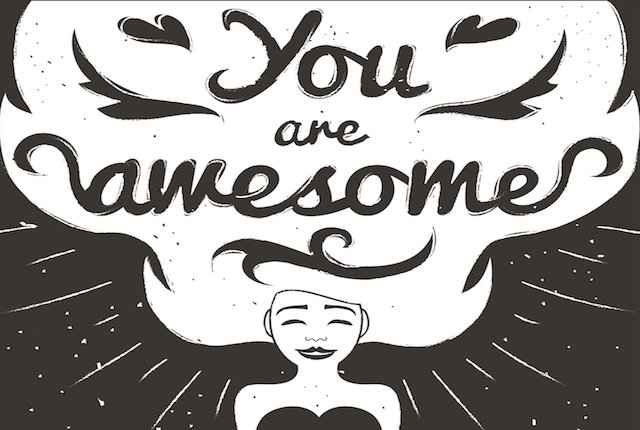
    You Are Awesome

    “Sometimes I panic; what if nobody finds out who I am?” ~Billy Joel

    At home, you want to go out and be social. When you’re out being social, you want to go home and be alone.

    At home you feel free, joyful, and ambitious. You’re smart, funny and insightful. Out in the real world, you’re quiet, non-confrontational, and you struggle to connect with others.

    That person you remember from being home alone is a thousand miles away, and you feel like a shell of yourself.

    Does this sound like you? Why does this happen? Who are you really? How will anyone ever know how you feel on the inside?

    First, some good news: All of those wonderful thoughts you have about yourself? They’re true. How smart, funny, and attractive you are? Yes, yes, and yes. I’m not just blowing smoke. We all are amazing at our core, at our true essence.

    What about the negative thoughts? Are those true, too? Here’s more good news: No, those are misconceptions. Simply misunderstandings and wrong interpretations of life situations.

    You know, and I know, that the real you—you at your core—is awesome. If you feel compelled to read on, then this is ringing true for you. Good.

    For years in my teens and twenties, I felt this wonderful person inside me at all times. I was most able to connect with this person when I was alone. This made me an introvert, I suppose. But put me out with people or in a crowd, and I lost that person.

    He was nowhere to be found—hidden behind a plethora of uneasy thoughts and the desire to escape and be alone again.

    At parties, I was the guy who found a quiet spot and stayed there. Unless, however, I was drunk, which was the only way I let my guard down enough to let people see who I really was.

    And that’s exactly the key here—letting people see who you really are.

    As kids, we all did this quite easily. We had not yet learned to censor ourselves or hide our true feelings. We had not yet learned to fear for our well-being in social situations and cope with that by putting on masks or pretending to be things we’re not.

    I specifically remember as a teenager, that going into tenth grade, I made the firm decision to be someone I was not. I pretended to be more social, more outgoing, and more confident, but it was all an act.

    I felt like a fraud. It wasn’t based on true feelings of confidence and the desire to connect with others. It was based on not wanting to be socially ostracized or bullied. I did my best to imitate the behavior of others, and it was exhausting. I preferred to be alone.

    Due to the positive feedback I received from my peers, however, this new effort became an unconscious habit. I spent years and years automatically hiding who I really was, and giving people only a shell of what I am or how I think.

    Shockingly, many years later, I realized that nobody really knew me. And looking back, whose fault was that? Mine. I took my short-term survival tactic of not being myself and made it a lifestyle. It was a Band-Aid that I adopted as a permanent part of my skin.

    So how do we change this now? It’s a pattern so ingrained in ourselves that many of us aren’t even aware we do this. It’s just “normal.”

    So the first step is to become aware. Are you the same person out and about that you are at home? Do you want to be? Great, we’ve gotten that far.

    Next, what’s preventing that? The awesome person we feel like inside—what’s preventing us from letting others see that? The answer is our fears.

    What are fears? At their core, just thoughts. For example, social ostracism. It feels unsafe to be a social outcast, which is why many people seek to avoid it.

    So what if you change your thought about this? What if you began to think, “It’s okay and it’s safe not to fit in with certain groups”? When you change your thought about this, your fear will dissipate. Sometimes slowly, sometimes quickly.

    Once you reach a certain level of awareness, further thoughts and realizations will dawn on you as never before.

    You’ll realize that it’s emotionally painful to subject yourself to the company of people who won’t accept you for who you are. Shortly after that, you’ll come to understand that the awareness and pain are really first steps toward finding those who will accept and appreciate you.

    And it’s fine that some people won’t accept or appreciate you. That’s just life; nobody is perfect. It’s best to let that go and move on to better things.

    These new understandings will have a momentum all their own, and each one will transform your mind, piece by piece, to a new place and a new feeling.

    If you’re the kind of person that can change their mind wholeheartedly on a dime, you can move forward quickly.

    If you’re the kind of person who has to stick their toe in the pool first to gauge the temperature, then their knee, then their leg, it’ll take some time and trial and error for you to commit to changes in thought.

    But once you’ve changed your thought, once you’ve removed your fear about letting others get to know the real you, you’ve opened doors and windows to who you really are—that wonderful, witty, loveable person you’ve always known yourself to be.

    In time, the gap you feel between when you are alone versus when you are out and about with people will shrink. You’ll even consider thoughts like “maybe I’m not really an introvert,” as your desire to let people connect with the real you grows.

    As a bonus, you’ll make stronger, deeper connections with people, because the connections will be with the real you, not a shallow exterior you’ve held onto for so long.

    Many of your current relationships will change for the better, and you’ll begin other relationships anew. These bonds, and the newfound ability to express the real you and let others see it will increase your enjoyment of life and positively affect your experience of it. Your life will be forever better.

    You are awesome image via Shutterstock

  • We Are All the Same, So There’s No Reason to Hide

    We Are All the Same, So There’s No Reason to Hide

    Woman in a Mask

    “One of the most calming and powerful actions you can do to intervene in a stormy world is to stand up and show your soul. Struggling souls catch light from other souls who are fully lit and willing to show it.” ~Dr. Clarissa Pinkola Estés

    It’s taken a long time for me to be comfortable with being completely myself.

    Most people who meet me now see a strong and confident woman. Yet, underneath that confidence there is still a little girl in me that is scared. I’ve accepted that she is always going to be a part of me; however, I have learned to take responsibility for her care instead of giving that to other people.

    When I meet new people, I suspect either they are relieved to talk to someone who is transparent and real, or they are uncomfortable with my directness.

    I imagine it’s not always a matter of instant like or dislike on their end, but sometimes it feels that way to me. Either way, I’ve had to learn to not let others’ reactions influence how I show up in the world.

    I spent a good part of my life as a chameleon, changing myself to try to fit in and be accepted.

    Being the youngest of four in my family meant I was left out, teased, picked on, and blamed by my older siblings. As a result, I turned out to be a geeky kid in junior high and high school, lacking any confidence or sense of self-worth.

    I walked with a funny lurch, had a bit of a speech impediment, and tried so hard to be liked that I achieved the opposite. In high school the kids all called me a dog and barked when I walked down the hall. I was the brunt of the jokes for every classroom clown.

    The late 1970’s in the heart of Southeast Texas was not a good time or place for a pre-teen to question her sexual orientation. My science teacher, who had become a friend, no longer wanted me in her class when she suspected I had a crush on her.

    The vice-principal of the school said I was sicker than I thought I was and needed professional help.

    My chemistry teacher told the group of popular girls if they didn’t stop talking he was going to make Shannon sit with them.

    We all know kids are cruel, but in Bryan-College Station, meanness wasn’t limited to by age.

    I’d make out with boys in the hallways or back of the school bus trying to prove I wasn’t gay. I started seeing a psychologist. I put up with the cruelty of my teachers and students because there was nowhere to escape.

    If people look closely they can still see glimpses of the young girl who kept her head down and slumped her shoulders trying not to be seen. She is still with me today. Defeated without any outs, however, she had only one choice if she wanted to live. And that was to stand up for herself.

    Because it’s difficult for me to do this, I can sometimes come across kind of loud, directive, or bossy. Early on I learned to put on a good show and convinced myself that self-confidence is the key to success. Years of trying so hard not to care whether people liked me eventually integrated into a strong persona.

    Underneath it, however, still lived that little girl in me desperate for love and approval. For most my life she’s been in control. Like a puppet master, she’s pulled the strings behind my mask, seeking out someone or something to be her salvation. She was great at staying well hidden but in control.

    All she ever wanted was an end to her suffering. All her searching and orchestrating was always been about finding a way to stop the pain. She didn’t know the strings she pulled were putting me right back into the frying pan. How could she know that by latching onto other people she’d end up more hurt?

    It took a lot of personal development, self-help, spiritual woo woo reading, seminars, retreats, workshops, relationships, therapists, self-analysis, journaling, crying, screaming, pleading, praying, rationalizing, and running for me to finally understand: Latching onto anything will only bring more suffering.

    When we keep parts of ourselves locked away and behind a mask, we only give them more power and control.

    Finding my authentic voice has meant holding myself with compassion and learning to accept all of who I am.

    Letting go of my need to be perfect and my self-judgment isn’t something I’ve been able to do once and be done with. It’s something I have to do over and over again.

    I can let down my mask and be real because I believe at our core we are all the same.

    I believe we all want love and approval. I also believe that it is only by giving that to ourselves that we can give it to each other.

    Woman hiding behind mask image via Shutterstock

  • Getting Real in a World of Fake

    Getting Real in a World of Fake

    Selfie Image

    “Nobody wants to be lonely. Everybody wants to belong to a group. The crowd is essential for the false self to exist. The moment it is lonely you start freaking out. Particularly in the West they have not discovered a methodology to uncover the real. To be an individual is the greatest courage. It does not matter that the whole world is against me. What matters is that my experience is valid. Don’t die before realizing your authentic self.” ~ Osho

    Authenticity. Courage. Vulnerability. We hear these words so often they’ve become a part of our daily language. But how often do we stop to investigate what they actually mean?

    I grew up within the gates of a fundamentalist religion that didn’t just discourage conformity, it taught us daily to demonstrate our opposition to the status quo. We were trained to speak about the awkward and practice the uncomfortable, sometimes in the face of hostile reactions.

    And so it was that, as a child, I learned the skill of both living boldly and sticking my foot into a person’s door so they would listen to what I had to say.

    Over the years, my vantage point became one of lone observation, both within my own “tribe” and when I was at school.

    I organized most people’s behavior into some variation of a desire for acceptance by their group. They wanted to follow a leader, or less often, to be one, all out of fear that if one is not accepted, one is somehow less worthy.

    At the time, I didn’t understand the great sacrifice people made for acceptance, stuffing away their uniqueness and covering it with a superficiality that was pleasing and likeable.

    Eventually, I left my own cloistered tribe after concluding that true radicalism is one’s ability to be courageously real—not in a bid to be different and unique, and therefore, somehow superior, but only to live according to what one believes.

    If you are on a path of seeking the real and avoiding the fake:

    1. Keep connected with the opposite of your tribe.

    We selected our friends because they make us feel good and they share similar tastes and desires. But with no challenge to our status quo, we risk losing out on vital learning.

    Our brain schemas are designed to accept familiar information and discard what doesn’t fit with our versions of reality. This makes for groupthink that ranges from boring to dangerous.

    Akin to the Facebook feed that caters to more of what we already like and know and creates homogenization, our tribe, bless them, are also prone to unconditionally support us, even when we are being unwise or thoughtless.

    While their support may feel good, it is also a disservice when they reinforce our faulty thinking and don’t question our actions.

    I have come to see a good friend as someone who can hold me kindly but boldly in the space of our relationship and ask, “What on earth are you thinking?”

    So don’t ditch all your old friends (unless you need to), but do challenge your viewpoints by talking and listening to the person you think is weird, reading the book that makes you shift uncomfortably, and exploring the activity that evokes a bit of fear.

    Instead of rejecting new ideas outright, play with them, think them through critically, and then keep or discard them.

     2. Start being real with people.

    The greatest challenge here is that we first have to be real with ourselves. This means becoming unmasked and accepting our strengths and foibles without shame.

    Only then can we begin to be real with others, because there will be nothing of us to hide.

    If we can accept our full, awkward humanity, then we can learn how to extend ourselves openly into what aligns with us and feels right, our purpose.

    We will know when to say “no” and when to say “hell yes.” We will speak our minds and take scary steps not because we have lost all sense of fear, but because we know we can be afraid and do it anyways.

    And we can meet conflict directly, without the misalignments that grow from avoidance, denial, and gossip.

    Speaking of gossip, when we are being real, we won’t do it.

    When we hear it, we will state that if a person has a problem with someone else, they should speak to them directly. And we will have no part in cliques that exclude others. Instead, we will seek other intrepid explorers, who also embrace life with the exclamation, “let’s be free of all of that.”

    3. Be in life instead of capturing it for Facebook, Instagram, or Twitter.

    I don’t know about you, but I reject the idea of capturing all of our sacred moments for social media instead of living them. And I battle with this personally, because I’m a documenter, but I favor tipping the scales toward real.

    In the movie The Secret Life of Walter Mitty, the famous and elusive photographer Sean O’Connell, played by Sean Penn, travels to the Himalayas for a shot of a rare snow leopard. Mitty tracks him down, and the two of them, perched out on a mountaintop, wait for the cat, who finally makes an appearance.

    Instead of taking the shot, O’Connell moves from the camera and watches. When Mitty asks him when he’ll take the photo, O’Connell replies, “Sometimes I don’t. If I like a moment. I mean me, personally, I don’t like to have the distraction of the camera. I just wanna stay… in it… right there. Right here.”

    You likely already know why this moment is valuable: it’s the only thing that’s real.

    You know exactly what you are losing. The tender touch your lover just gave you that you absentmindedly ignored. Lost. The book that lays on your lap unread, your son having placed it there long ago until he tired of waiting. Lost.

    Real time, with all its tastes, smells, and sensations, is irreplaceable. You have a choice each moment about who, and where, you want to be.

    4. Be in nature.

    If where you want to be is real, then immerse yourself in the greatest antidote for fake that we have in a social media obsessed, email-, text-, and like-checking society. Leave your phone alone when you are with the mountains, trees, or by the lake, with your beloved, your friends, or your little ones. It is rude and dismissive of their essence and humanity.

    Besides, at the end you lose out. Because there is no amount of screen time that can rival the pleasure of just one kiss, blowing all the wishes off a dandelion, or a deep breath of mountain pine.

    Selfie image via Shutterstock

  • Take Off the Mask: 6 Tips to Be More Authentic

    Take Off the Mask: 6 Tips to Be More Authentic

    “Being who you are is another way of accepting yourself.” ~Unknown

    Years ago I struggled to be authentic. I was a consultant who worked with senior people in big organizations. As a black female fresh out of graduate school, I was frequently the youngest, the only woman, and the only minority in the room.

    Because I was so different from those around me, at least on the surface, I was concerned about how other might perceive me. So I put a lot of effort into portraying myself in ways that I thought would increase the odds of others accepting me.

    To make sure others wouldn’t underestimate me, I led with my intelligence, saying things to let them know how smart and knowledgeable I was and downplaying my fun-loving side.

    To make sure I wasn’t seen as militant or overly sensitive, I stayed quiet in response to comments that ranged from a little over the line to blatantly offensive.

    To make sure others felt at ease, whenever I was asked to talk about myself, I stuck with the most innocuous and middle-of-the-road stories that I knew were most similar to the other person’s life experiences.

    And here is a small, but classic example: Even though I had been yearning to own a snazzy smartphone case for years, I stayed with a neutral black one so I would be seen as suitably conservative instead of too girly or flamboyant. (Yes, I had it bad!)

    The irony of all of this was that, although this approach caused me to be seen as someone who was bright, competent, and capable, it didn’t exactly help me forge deep connections with other people.

    After all, how could it? The person they were connecting with was only a tiny fragment of who I was and, in some cases, a completely inaccurate portrayal.

    When I reflected on it, I realized that, while it was convenient to be able to say that I was behaving that way due to the demands of being in an unwelcoming corporate environment, the truth is, I did it in other places as well.

    Every time I agreed to do something I didn’t really want to do out of a sense of obligation, I was being inauthentic.

    Every time I didn’t ask for what I needed in a relationship, I was betraying myself.

    Every time I put on an aura of having it all together when in reality, I was feeling vulnerable and scared, I was putting on a mask.

    One day, after biting my tongue for the nth time at work regarding an innovative idea I had that I thought others wouldn’t agree with, I decided enough was enough. At that moment I committed to stop hiding “this little light of mine” under a bushel.

    Instead, I was going to unleash my true self into the world.

    Okay, perhaps unleash is a little inaccurate—it’s not like I became Sasha Fierce over night. But what I did do was take what felt like little risks in displaying my authentic self.

    I experimented by being more assertive and sharing my true opinions.

    I let my humorous side come out and told funny stories about my family and my life when I was at work.

    I said no to things I didn’t feel like doing—even a party that was going to be thrown in my honor that I didn’t really want to attend.

    I put a hot pink rhinestone case on my smartphone.

    So, what happened? Honestly, not much on the negative side of things. There might have been the odd person who felt a bit of discomfort in the moment when I disagreed with him, but it certainly wasn’t anything long-lasting or life-shattering.

    Instead, the results have been overwhelmingly positive.

    I feel lighter and more true to myself. I have deeper relationships, because it’s as if a veil has been lifted, and the people around me get to see who I really am. I’m more likely to get my needs met because I’m not relying on the other person having ESP to figure them out.

    And at work, instead of making others uncomfortable, being more authentic allowed me to build deeper connections. Instead of just seeing me as a brain in a jar, others began to see me as a whole person, a thought leader from whom they could learn, who had interesting things to talk about.

    It has made all the difference in my life and created a richer, happier, more fulfilling existence.

    If you are struggling to let your authentic self shine, here are some tips you might find useful.

    1. Imagine your older self sharing life lessons with you.

    Imagine your older self having a conversation with your present self. Perhaps this older version of yourself is on his or her deathbed, and s/he is giving you advice about how to live a fulfilling life.

    What would s/he say to you? Would s/he suggest that you spend the rest of your life dulling your shine, or would s/he tell you to be true to yourself?

    2. Check in with yourself.

    If you have been behaving inauthentically for a long time, you might feel out of touch with your true feelings and desires. Journal and meditate to get back in touch with yourself.

    Allow yourself to feel your emotions, and be curious about them. What are they telling you that you need to do? How can you become more of your true self?

    3. Start small.

    Commit to taking small steps toward being more authentic. Speak up about things you normally wouldn’t. Assert yourself. Ask for something you want. You don’t have to transform yourself overnight. Recognize that it’s a process.

    4. Be prepared for others’ reactions.

    Remember that others are likely unaware of the extent to which you might be stifling yourself. So, as you behave differently, recognize that they may need to adjust to the new you. While the responses I got were overwhelmingly positive, sometimes others didn’t quite know what to make of it. That’s okay.

    5. Don’t use authenticity as an excuse for bad behavior.

    I have worked with some clients who have been rude or disrespectful to others, and explained it away, saying, “I’m just being honest” or “I have to be authentic.” You can be authentic and kind at the same time. Be respectful.

    6. Recognize you can tolerate discomfort.

    Research shows we tend to overestimate how long and intense our unpleasant feelings will be in response to a negative event. So, even if others don’t respond positively to everything you do, know that it probably won’t be as bad as you are anticipating.

    Finally, keep in mind this wonderful quote by Oscar Wilde, “Be yourself; everyone else is taken.”

  • Why Self-Compassion Is the Key to Being Our Authentic Selves

    Why Self-Compassion Is the Key to Being Our Authentic Selves

    Arms Outstretched

    “To be beautiful means to be yourself. You don’t need to be accepted by others. You need to accept yourself.” ~Thich Nhat Hanh

    I was raised in a family where outward appearance and reputation were important. Standing out was only encouraged if it was within the bounds of what was considered “normal.”

    No one ever explicitly told me, “What other people think of you is more important than being your true self,” yet that’s what I learned to believe. It became my mission to be accepted by others, because I thought that only then would I be worthy of love.

    I spent most of my middle school and high school years pretending to be somebody that I wasn’t. I would “chameleon” to blend in with people around me.

    I suspect that due to my less-than-stellar acting skills, a lot of people could tell that I was being phony and didn’t want to hang out with me. This only increased my hunger for external validation and acceptance.

    At the age of thirteen, I attended my first personal development seminar.

    It was an incredible experience for me, and when I was in the seminar room, something inside of me came alive. Being in that space awakened my passion for personal development, a passion that has only grown over the last fifteen years.

    In the next decade that followed, I’d spent more than 350 hours participating in personal development seminars, and in July 2009, I finally received the honest feedback that would change my life forever:

    I showed up as arrogant, selfish, self-righteous, superior, and judgmental.

    The feedback hit me like a ton of bricks. I was simultaneously composed and totally shocked.

    I was composed because I knew that people experienced me in those ways: I was a condescending know-it-all with judgment by the boatload, and little tolerance for people “doing it the wrong way” (not my way). My demeanor was often cold and closed off, and I could easily insult people where I knew it would hurt.

    I was shocked, because when I received that feedback from somebody that I’d met less than six hours earlier, I felt completely vulnerable. I didn’t know what to do with myself in that moment of being completely exposed.

    The walls that I’d created to “protect” my authentic self were only pushing (or rather, shoving) everyone else away. I finally decided to make a change. And thus began my journey of rediscovering my true self.

    To say that it was a battle would be a grave understatement. The little voice inside my head had gotten really good at convincing me of “truths” that were actually just thoughts based in my false beliefs about reputation and acceptance.

    Lying to myself had become such a subconscious process for me that bringing it into my consciousness on a daily basis was a struggle.

    Right after receiving the feedback, I’d keep “be authentic” on the forefront of my mind for a few days at a time. But more often than not, my commitment to being authentic would slowly fade behind my decades of pretending to be somebody else, and I often wouldn’t even notice the shift.

    When I’d realize that I wasn’t being perfectly authentic, every moment of every day, I’d go into beat-up mode and would berate myself for being a failure.

    My new awareness seemed like a game of lose-lose: if I ventured out into authentic living and slipped back into my old ways, I’d go into beat-up mode; if I acted like I was okay with being my pretending old self, I’d feel sick to my stomach about who I was pretending to be. I didn’t know how to win that game.

    I spent a couple of years on the rollercoaster ride of stepping out and being authentic, slipping back into my old ways, and beating myself up about it; it was exhausting. But then I learned that personal development isn’t a switch, it’s a journey.

    I couldn’t just turn off my old behaviors and turn on some new authentic behaviors.

    Creating lasting change would take commitment, practice, and most importantly self-compassion.

    Commitment meant truly committing myself to being authentic, and doing it for nobody else but me. And practice meant making conscious choices to set my authentic self free instead of staying in the box I’d built for myself.

    The self-compassion piece was the most important because it determined whether or not I wanted to pick myself back up, dust myself off, and give it another go.

    If making a mistake was only going to end in me beating myself up about it, then I’d rather not have even attempted it. But if making a mistake was met with a desire to learn, and then re-approach my ways of being in a new way, it was a much easier choice to make.

    Throughout my journey of discovering and living as my authentic self, I have experienced moments of immense joy and freedom, which have encouraged me to continue moving forward.

    One of my most impactful experiences of letting my authentic self shine took place at the end of November 2013, when I shaved half my head.

    One of my friends shaved part of her head in mid-2013, and I loved how it looked. I thought it was a perfect combination of sexy and tough. I immediately wanted to shave my own head, but hesitated…for six months.

    I thought, “What are other people going to think when they see you? Everyone is going to judge you. People are going to think that you’re weird.”

    The little voice in my head was going crazy. My head and my heart weren’t coming to an agreement because that little voice was repeating phrases I’d heard my entire life.

    But one day—and I can’t remember exactly when it happened—I just decided to do it. I knew that deep down in my heart I wanted to, so I refused to let that little voice stop me anymore. If people were going to think that being my authentic self was “weird” then so be it!

    I wish I could say “and then I shut the little voice up forevermore and lived happily ever after,” but that wouldn’t be true. My little voice was screaming when I finally sat down to get my head shaved. But I just chose to acknowledge the screaming and shave it anyways.

    After it was all done and I looked in the mirror, I fell in love. I fell in love with me! For the first time in my life, I felt completely aligned in my outward appearance and my inner authentic self. I felt free.

    Sure, people stare at me in public. But I just smile and walk on by. Everyone has an opinion about my hairstyle, but there’s only one opinion that matters—mine. And I love it!

    That was one of the biggest and most tangible steps that I’ve taken toward letting my authentic self truly shine. Now, if I start letting to the voice inside my head get to me, I can just look in the mirror or touch the shaved part of my head to remind myself of who I really am.

    One of my biggest lessons throughout my head-shaving experience was this: when I limit myself because of my fear of what others might think of me, I’m limiting what I think of me. When I truly embrace my authentic self, I am free.

    Abraham Maslow said, “What is life for? It is for you.” I’m finally living my life for me, and I’ve never felt more empowered, joyful, or authentic.

    How are you holding yourself back?

    Would you be making different choices in your life if you weren’t worried about the acceptance of others?

    How different do you think your life would be if you stepped outside of your comfort zone one time every day?

    I encourage you to get uncomfortable and to let your authentic self shine. You might be surprised at how freeing it can be.

    I certainly was.

    Photo by AJ Leon

  • How to Be Your Real Self and What’s Been Stopping You

    How to Be Your Real Self and What’s Been Stopping You

    Hiding

    “The more of me I be, the clearer I can see.” ~Rachel Andrews

    This past year has felt a lot like I was running through a supermarket, naked.

    But not as chilly.

    As a life-coach for women, one of my brilliances has to do with supporting women in showing up fully as their shining, marvelous selves—and guiding them through all the work of facing fears, looking at self-worth, re-training brains to focus on abundance and feeling powerful, vs. scarcity and victim-hood, and so many other powerful pieces.

    I make no secret out of the fact that I have had to do all this myself in order to lead women through their own work.

    And working on visibility—showing up as my unique, in-progress, human self—has been at the center of most of the deeply transformational work I’ve had to do in the last year.

    As I’ve worked on building my ability to serve women, I noticed that I, myself, was hiding from shining fully. I was not showing up authentically, not speaking my whole truth, not reveling in who I am and how uniquely different from other coaches I am (as each one of us is!).

    Why was I hiding? What was going on that I was standing halfway in the shadow, afraid of shining in my brilliance, afraid of being 100% revealed as who I am and what I’m here to say?

    I was hiding for several reasons:

    • I had stories about what a successful female business owner “looked” like—and I wasn’t it.
    • I had stories about how I handle (or don’t handle) money—and deep fears about my ability to be responsible if I made a lot more money.
    • I had stories about showing up as an example of a woman building a life I love living because I told myself women wouldn’t look at my life and want to create something similar.
    • I had deep, unhealed wounds from being little, when I felt like I wasn’t seen or heard, when I felt like making my needs known didn’t necessarily get them met.
    • I also found powerful fears around being seen that were created as a pre-teen walking around the streets of NYC and feeling like a target for verbal abuse from men, which made me shrink myself really small so I wouldn’t be attacked.

    When you figure out what’s keeping you from showing up, you can learn how to heal it and move forward, into the light of what you love.

    Why might visibility as your authentic self be important for you?

    • Visibility as your authentic self enables you to create work you love.
    • Visibility as your authentic self allows you to form satisfying romantic relationships and rewarding and supportive friendships.
    • Visibility as your authentic self affects your ability to be generously compensated for the work you do.
    • Visibility as your authentic self affects your ability to create healthy boundaries for yourself.
    • Visibility as your authentic self reflects in your self-care and health—how clear you are about what you need, and then how fully you’re able to ask for what you need and prioritize it for yourself.

    Here’s what I’ve learned:

    The more authentic, honest, and visibly I show up in my life, my business, my friendships, my parenting, and my relationship, the better everything gets. Because everything I create is being built on a rock-solid foundation—a foundation of who I am at my wonderful, loving, talented core.

    And that stuff doesn’t wash away.

    So why are you hiding? See if any of the following reasons resonate for you:

    • It didn’t always feel safe for you to be visible.
    • You’re afraid you might offend, alienate, or intimidate people if you show up authentically.
    • People might not like you, might be jealous of you, or might get angry at you if you said what you think.
    • Success is terrifying.
    • You’re afraid of failure.
    • You have stories about why you’re not _____ enough to be who you are, have what you want, do what you love.
    • You’ve spent so much time hiding who you are, you’re not even sure what’s underneath anymore.
    • Who has time to be authentic?

    Take a second and write down for yourself, right now, how hiding from visibility or your authentic self has seemed to serve you.

    Now, write down how letting go of any fear or resistance to showing up fully you could serve you—what might become possible if you were to show up fully, 100% visible, and authentically you? What might be yours?

    When you are able to see how it once might have served you to hide, to be small, to stay quiet, you’ll be able to begin the work of releasing those old fears and beliefs and step out, into your light.

    Photo by findingtheobvious

  • Becoming More Authentic: Accept Yourself and Forget Approval

    Becoming More Authentic: Accept Yourself and Forget Approval

    “It takes courage to grow up and become who you really are.” ~E.E. Cummings

    For most of my life, I was a chameleon. I stayed under the radar, hoping I’d blend in and not draw attention to myself. I was full of self-doubt, so I molded my personality and beliefs based on my company. I traded my authentic self for the security of being liked by my family and friends because of my fear of being judged.

    By suppressing my opinions, I was perceived as easygoing, but at what cost? I disrespected myself by allowing others to influence major decisions in my life. I didn’t trust myself to make choices for myself.

    I withheld what I needed from others and was unable to communicate my emotions. My frustration of not being heard turned into anger whenever I did share my feelings with my family and significant other. In return I experienced anxiety, guilt, shame, anger, and self-loathing. That was a huge price to pay so others would accept and like me.

    I become addicted to my story of the “broken girl” who compromised her integrity because her voice and emotions were neglected by her parents. I used my victim story to serve as an excuse for my bad behavior.

    If I was “perceived” as a victim, I didn’t have to be held accountable for my bad choices.

    I learned how to use others to get the love and attention I didn’t give myself. I defined my self-worth by comparing myself to others. I tried to be perceived as “perfect,” so I created unattainable standards that left me disconnected.

    During my mid twenties I became tired of worrying about being inconsistent and acting differently around different people. I became disconnected to others and wasn’t able to cultivate meaningful relationships.

    It requires real vulnerability to be authentic. What if I show my true colors and people don’t like the real me? Honestly, even as I write this article and think about people reading about my flaws it scares the bejesus out of me.

    By twenty-seven, my life looked great from the outside, but on the inside I was on the verge of a breakdown. I was ready to create a more meaningful and fulfilling life.

    I realized the world needs us to show up and share our gifts.

    There is more risk hiding our gifts from the world than expressing them. Our unexpressed ideas, dreams, and gifts don’t go away. They destroy our worthiness and confidence.

    There is no shortcut to authenticity. It requires commitment and real inner work. I dove deeply into my emotional mess and started feeling the pain I had repressed. I made the daily commitment to take the following steps to be more authentic:

    Step 1: Forgive and love yourself.

    I had to forgive myself for my past mistakes. My ego enjoyed replaying my bad choices and punishing me by making me feel unworthy of love. By cultivating kindness towards myself, I honored and accepted the past, learned my lessons, and started loving myself.

    What you can do: Consider how you can learn from your past so you can do better going forward. Always be kind to yourself because you can only ever do your best. Be content with that.

    Step 2: Be willing to make a change and own your mistakes.

    I found the willingness to embrace my imperfections and share them with others. I started speaking and writing about my challenges through my vlogs on my website. I had to acknowledge some unpleasant truths about myself. The biggest one was admitting I enjoyed my “victim” story. I felt it served me by getting me sympathy and attention from others. By humbly owning my mistakes, I repaired my self-worth and confidence.

    What you can do: Commit to making a change. Get clear and admit why you hold on to your pain. Why do you think it serves you?

    Step 3: Create a daily practice.

    I created a daily practice of living authentically. I took care of my mind, body, and spirit and nurtured a loving relationship with myself. I looked to those who already lived authentically and noticed a pattern of traits they master. Below, I’ve listed the most common attributes all authentic people share.

    What you can do: If you feel disconnected or unable to speak your truth, identify which traits you need to cultivate in your life and create an intention to become authentic. Do the necessary inner work to reconnect to your truth and your authenticity will radiate through you.

    The traits I’ve identified as common to authentic people:

    Mindfulness.

    Authentic people accept their life experiences and feel the emotions that arise. They don’t repress their feelings and let them fester up. Anxiety and guilt arise from not being present. If we doubt our ability to handle challenges in the future, we create anxiety. Guilt results from feeling bad about past mistakes or people we have hurt. Authentic people experience life challenges from a place of love, forgiveness, and gratitude.

    Self-respect.

    Authentic people are impeccable when they speak to themselves, about themselves and others. They are mindful of the energy behind words and believe they are worthy of love and peace of mind. They have a healthy approach to life by knowing there will always be naysayers, and their opinions don’t matter.

    Courage.

    Authentic people create their own rules based on the standards that resonate with them. They have the courage to live their lives based on what they believe is right. This type of empowerment gives them the inner strength to withstand temptation and build self-confidence. When you have the courage to share your shame and guilt, they no longer have power over you.

    Boldness.

    Authentic people don’t allow their fears to prevent them being themselves. If you are focused on being true to yourself in every moment, you are less concerned about the potential for rejection from others. Nothing is more liberating than being yourself as fully as you know how.

    Being authentic is a daily practice. It is a moment by moment choice of embracing your truth and being fearless enough to share it with the world. When you have nothing to hide and you can freely be yourself with everyone, there is a profound peace and confidence you will exude to the world.

  • Find the Courage to Be You: 4 Ways To Live Authentically

    Find the Courage to Be You: 4 Ways To Live Authentically

    Feeling Free

    “Live your beliefs and you can turn the world around.” ~Henry David Thoreau

    Authenticity is a buzzword these days. We hear all kinds of advice on how to live it, breathe it, and get more of it. Maybe this is because we are actually drowning in inauthenticity.

    Advertising bombards us with promises of bigger, better, faster, and easier. But the dream life of effortless comfort and problems that fix themselves is just a fantasy, a running away from the truth of life:

    Everything is impermanent.

    Right now, at this moment, this life is all we have.

    More and more people are fearlessly embracing this truth. As a result they are living their lives in accord with what their hearts are telling them rather than what the dominant paradigm dictates as “safe,” “normal,” and “true.”

    People are beginning to live their dreams with more passion and purpose than ever before. The focus isn’t on money or the accumulation of things but on living with integrity. And though it’s not the always the easier road, they are far happier for it.

    This is the kind of happiness we all crave. I know I do.

    We know in our hearts that there is something missing in our lives these days. But we also know that life can be rich, deeply satisfying, and meaningful.

    I just got back from a yearlong sabbatical in India.

    At the end of it all, I was riding the overnight bus from Dharamsala to Delhi on my way home.

    In front of me were a dwindling savings account and an uncertain future. But as I looked out the window at the Himalayas shrinking into the distance, I didn’t feel one scrap of regret at all.

    I had done what I has set out to do, and I felt more satisfaction and sense of accomplishment than I had at any other time in my life.

    Five years ago, if you had told me I would be living in a foreign country, learning a foreign language, I would have laughed in your face. I was so bogged down with my own insecurities and fears that I couldn’t even have imagined such a thing.

    I lived my dream of spending a year in India because I worked hard on making it happen. I set a clear goal and faced all of the challenges to that goal with an open mind and the determination to overcome them.

    But most importantly, I listened to my heart.

    My heart told me this: I had to do it. And what’s more, if I didn’t I would have regretted it for the rest of my life.

    But learning how to listen to your heart takes practice and effort. It’s not as simple as it sounds. But it’s not impossible either.

    So what are some steps you can take to start listening to your heart and living a more authentic life?

    Here are four of them that work for me.

    1.  Slow down.

    Slowing down is a meme that seems to be (ironically, very quickly) working it’s way through the culture these days.

    Supposedly, we need to be taking it easier, to be letting go of the compulsion to work ourselves to the bone every hour of our lives.

    But one look out the window during rush hour traffic and we see that’s exactly what most of us are still doing.

    It’s not that we shouldn’t work hard or be productive. Goodness knows, as a writer I’ve got to spend a lot of time in the chair.

    But we need to honor the fact that down time is essential if we really want to get in touch with our authentic selves.

    So listen to this: Finish this article then take a long, deep breath. Close your laptop and go for a walk. Go in a direction you’ve never taken before and just take your sweet time.

    Give yourself some space to be you.

    2. Unplug.

    We live in a world drenched in information. Whatever we want to know, we can find out instantly. This can be very exciting and even useful.

    But one of the things that prevent us from staying in touch with our true selves is the constant barrage of cultural programing we are dosed with everyday.

    Advertisements, news programs, and television shows all tell us what and how to think, what products to buy, what opinions are in style, what life goals we should be achieving.

    It’s not necessarily that Big Brother is watching us, but it’s good to unplug from all of this from time to time and give your own voice a chance to pipe in.

    So take a break from the intake of information. Pick a time during the day, or even a whole day off during the week, to turn off the computer, the television, the radio.

    Take some time to listen to what you really think and feel.

    3. Explore and experiment.

    Part of the reason that we live inauthentic lives is that we get stuck in a rut. We lull ourselves into a false sense of security by following the same old routines.

    New ideas and experiences are what keep us fresh and alive. Our authentic selves thrive on them, and when we expose ourselves to new things we have the opportunity to grow.

    Visiting new places, putting ourselves in new situations, exposing ourselves to new points of view can all challenge us to understand who you truly are.

    So get out of your rut. Even if it just begins with ordering something different off the lunch menu, make an effort to keep an open mind to what possibilities are out there waiting for you.

    4. Cultivate fearlessness.

    Living authentically doesn’t always mean a life of comfort and bliss. Often it means just the opposite.

    When we show our true selves to the world, when we dare to live our dreams, we might just run into many obstacles we didn’t expect.

    We might experience ridicule. We might find that our authentic life isn’t what we expected at all.

    We might even “fail.”

    But what is “failure” but the opportunity to learn and grow?

    If you are truly being authentic then you may find that even the falling down is more fulfilling than anything that’s normally considered to be “success.”

    So work with challenges from a place of fearlessness. Know that even if you fall down, this is impermanent too. You can always get up and start anew.

    Living authentically takes courage and bravery. During the past year in India I met a lot of inspiring people.

    Some of them had packed up their families to pursue their dreams of traveling the world. Some were there were, like me, learning a new language only because they knew it would enrich their lives.

    Many more were devoting themselves to a spiritual way of life that, despite its uncertainty and difficulty, was far more fulfilling than anything they had tried before.

    I truly believe that we all have this kind of courage and bravery hiding somewhere inside us. And if you just take the time to look, you will find that you do too.

    Photo by Summer Skyes 11

  • Dare to Live: 10 Unconventional Ways to Be True to Yourself

    Dare to Live: 10 Unconventional Ways to Be True to Yourself

    Smiling

    “It takes courage to grow up and become who you really are.” ~E.E.Cummings

    Have you ever had a clear sign of who you really are and then totally ignored it?

    Maybe it required too much change or taking a big risk. Maybe you were scared to have to convince a loved one how much you needed this. And so you rationalized that “it wasn’t the right time.” Convinced yourself to “be sensible and put it off for a while.” I know how this feels, because I did it too.

    I was twenty-one then, and in my third year of medical school. We were in one of our first psychiatry classes, and the professor was demonstrating to us a patient with conversion disorder.

    I was hooked. In no other class had I been so completely absorbed. I fell in love with a big thud, reading everything I could on neuroscience and the brain.

    Although exhilarating, in my mind, this was also a disaster.

    You see, my dad was (and still is) a prominent eye surgeon who owned several hospitals and had been waiting to hand over his empire to me. My falling in love with psychiatry wasn’t part of this plan.

    I was raised in a culture where kids obeyed their parents. No questions asked. Even more so if you are the first born; added points if you were female. Unluckily, I was both. And so I ignored the sign and buried my desires.

    Then, tragedy hit and my mother unexpectedly died. And just like that, life was turned topsy turvy.

    That’s when I realized that planning to fulfill obligations first and then chase dreams is an illusion. Even the heady immortality of youth is sobered by meeting death up close. I developed this urgent, almost desperate need to be fully alive and true to myself in the time I had left on this earth.

    It has been more than ten years now since I took the plunge. I have become a board certified psychiatrist in the U.S, my siblings have grown and my dad and I have made up.

    But I would not have changed this journey, difficult as it was in some ways, even if I had the chance. Because it taught me, through trial and lots of errors, how to become real.

    Everyone’s journey is unique. And so this is in no way a generic prescription. These things happened to work for me and I share them with the hope that some may help you in your travels as well.

    1. Cherish those special friendships.

    I had (and still have) friends who knew and loved me unconditionally. This is truly invaluable. Make and keep good friends and be honest with them. They can be your moral compass during stormy times. Not just psychologically, but literally, like in share-her-last-sandwich-while-reading-poetry-on-long-afternoons kind of support.

    2. Don’t hate those who stumble; we all do sometimes.

    It would have been so easy, and actually it was, to hate my dad for a while. But as time passed, I was able to see his side too. This guy was so poor while growing up that he had only one meal a day and wore torn rags to school.

    He had to sneak to elementary classes from his day job herding sheep. From there, he had risen to be one of the top surgeons in the country and built an empire. Me rejecting it felt personal, like I was rejecting him.

    We all make mistakes. It’s part of being human. If you can, forgive and allow compassion into your relationships. It makes the ride more beautiful.

    3. Take responsibility for your own life.

    This is the beginning of self-esteem. Although stuff happens, ultimately you are responsible for your actions.

    When we deeply and utterly understand that to be true, life takes on a whole new meaning. Whatever has happened until the past moment is gone. This present moment is again yours. And you have the power to do whatever you want with it.

    4. Have a big vision and keep your goals aligned with your vision.

    I struggled with this one for a while. First, I had no big vision. In fact, I didn’t even know what that meant. So my goals and actions went in circles for a while.

    Make sure to know what kind of person you want to be and what kind of job/life you would like to lead. Then shape your short-term goals so it is moving you in that direction (or at least not away from it).

    5. Remember that death makes life real.

    In the words of Steve Jobs, “Remembering that you are going to die is the best way I know to avoid the trap of thinking you have something to lose. You are already naked. There is no reason not to follow your heart.”

    Death can come at any moment, to any of us. We don’t have forever to be who we are. In fact, we owe it to ourselves and those we love to be truly alive and authentic in each moment. It is the only legacy we can be proud to leave behind.

    6. Don’t worry too much about making mistakes.

    It is better to have tried and failed than to not have tried at all. Think and analyze your decisions carefully, but once you feel reasonably sure you have made a good choice, just trust yourself. Be bold and go forth into the wilderness.

    Whatever happens, you will have gained an experience from it that only the courageous can boast of.

    7. Know your strengths.

    You are unique. There is only one you in this entire universe. No one has exactly your strange and magical mix of genes and experience. Learn what makes you tick. And keep building on that. You will make wonderful things happen.

    8. Be kind to yourself.

    We all mess up once in a while. When it happens and you finally catch on, drop your ego, admit your mistake fully, and make amends. Learn from it so you don’t repeat that same lesson again. Then forgive yourself and move on. Life is hard and we are not made to be perfect.

    9. Be in the moment.

    This present moment is alive and full of potential. Learning to be mindful has helped me tremendously by keeping me in my life, as it happens.

    Whether you are playing, sleeping, working, lazing, watching TV, or hanging out with someone you love, give your awareness to it 100%. I highly recommend a daily mindfulness practice. It has changed the way I relate to life.

    10. Don’t forget to laugh.

    It has gotten me through many a sticky situation. And created hours of pure fun. Include as much good humor in your day as legally possible. And that’s a doctor’s order. 🙂

    So dear readers and future friends, don’t wait to be who you are. You are special and there is a reason you are on this earth. No matter what your situation is, there is something you can do today to move toward your true self.

    Dare to live; your dreams are counting on you.

    Photo by Mourner