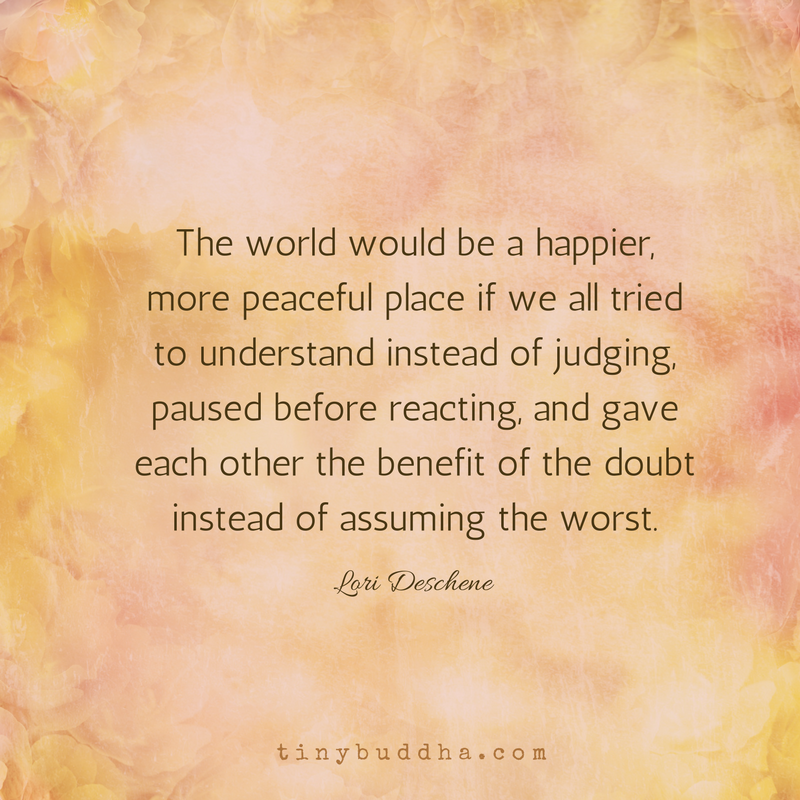
Tag: Quotes
-

May You Have Many Worries
“I vow to let go of all worries and anxiety in order to be light and free.” ~Thich Nhat Hanh
My mother was what you might call a “professional worrier.” She worried with skill, power, and acumen.
She could incisively hone in on the most seemingly benign situation and find within it some kernel of trouble to worry about. Money. Health. Household. Children. Travel. Work. You name it, she worried about it. A lot.
That is until my father was diagnosed with cancer.
When my father became ill, my mother changed radically, and apparently overnight. Faced with the potential of the greatest loss of her life, she found that she was suddenly free of the many worries that had plagued her for all those many years.
In the wake of the most terrible news imaginable, the many troubles that had been burdening her suddenly fell away, like a heavy winter coat on an unexpectedly warm day. So, strangely and without warning, in the midst of a terrifying life-threatening crisis, my mother became a more light-hearted person.
-
10 Happiness Tips for People Who Have Been Hurt
“Pain is inevitable. Suffering is optional.” ~Unknown
Maybe someone hurt you physically or emotionally. Maybe you’ve survived something else traumatic—a natural disaster, a fire, an armed robbery. Or maybe you’ve just come out of a trying situation, and though you know you’ll eventually recover, you still feel pain that seems unbearable.
Whatever the case may be, you’ve been scarred and you carry it with you through many of your days.
Most of us can relate on some level to that feeling. Even people who excel at taking personal responsibility have at least one story of having been hurt. Though some of us have endured more serious situations, you really can’t quantify or compare emotional pain.
To a teenager who just had her heart broken, the pain really seems like the end of the world. In fact, Livestrong estimates that every 100 minutes, a teenager takes their life—and that the number of suicides in high-income families is the same as in poor families.
Presumably, not all of those teens have suffered incomprehensible tragedies. What they have in common is pain, born from different adversities and circumstances.
When you’re hurting some people might tell you to “let it go,” as if that’s a valid solution. They may say “it’s all in your head” and assume that reasons away the pain. But none of that will help you heal and find happiness from moment to moment.
Like everyone, I’ve been hurt, in both profound and trivial ways. I’ve had to to acknowledge my feelings, process them, and then find ways to work through them so I could let go and move on. Here’s what helped me do just that.
1. Define your pain.
It’s not always easy to identify and understand what’s hurting you. Some people even stay in abusive relationships because it’s safer than acknowledging their many layers of pain: the low self-esteem that convinces them they deserve abuse, the shame over being treated with such cruelty, and the feeling of desperation that convinces them there’s no real way out.
The first step toward finding happiness after having been hurt is to understand why you were hurt, to get to the root of everything that makes the memories hard.
2. Feel and express that pain.
There’s no guarantee that you’ll be able to communicate how you feel to the person who hurt you, and if you can, there’s no guarantee they’ll respond how you want them to. Say what you need to say anyway. Write in your journal. Write a letter and burn it. Get it all out.
This will help you understand why you’re hurting and what you’ll do in the future to avoid similar pain, so you can feel empowered instead of victimized.
Research has actually proven that people who focus on lessons learned while journaling find the experience more helpful than people who don’t.
3. Try to stay in the present.
Reliving the past can be addictive. It gives you the opportunity to do it again and respond differently—to fight back instead of submitting, to speak your mind instead of silencing yourself. It also allows you to possibly understand better. What happened? Where did you go wrong? What should you have done?
Regardless of what you think you should have done, you can’t do it now. If you have post-traumatic stress disorder, you may need professional help to avoid revisiting the incident. If you don’t, you need sustained effort. Fight the urge to relive the pain over and over. You can’t go back and find happiness there. You can only experience that now.
4. Stop rehashing the story.
Sometimes we tell a sad story over and over again as a way to avoid moving on from the past.
It may seem like another way to understand what happened, or maybe it feels helpful to hear someone say you didn’t do anything wrong and you don’t deserve to hurt. And it’s okay if you need that for a while.
But if you do this for years it keeps you stuck living your life around a memory and giving it power to control you.
No amount of reassurance will change what happened. You can’t find happiness by holding onto a painful story and letting it control your life. You can only find happiness when you let it go and make room for something better.
If telling your story empowers you and helps other people, then by all means share! Only you know where you are mentally and emotionally and whether telling your story is hurting or helping you.
5. Forgive yourself.
Maybe you didn’t do anything wrong but you blame yourself. Or maybe you played a role in creating your current situation. Regardless of what happened, you need to realize that what you did is not who you are. And even if you feel immense regret, you deserve to start today without carrying that weight. You deserve a break.
You can either punish yourself and submit to misery, or forgive yourself and create the possibility of happiness. It comes down to whether you decide to dwell or move on. Which do you choose: anger with yourself and prolonged pain, or forgiveness and the potential for peace?
6. Stop playing the blame/victim game.
Maybe you were a victim. Maybe someone did horrible things to you, or you fell into an unfortunate set of circumstances through no fault of your own. It still doesn’t serve you to sit around feeling bad for yourself, blaming other people. In fact, it only holds you back. You can’t feel good if you use this moment to feel bad about another person’s actions.
The only way to experience happiness is to take responsibility for creating it, whether other people made it easy for you or not. You’re not responsible for what happened to you in the past but you’re responsible for your attitude now. Why let someone who hurt you in the past have power over your present?
7. Don’t let the pain become your identity.
If everything you do and all your relationships center around something that hurt you, it will be harder to move on. You may even come to appreciate what that identity gives you: attention, the illusion of understanding, or the warmth of compassion, for example.
You have to consider the possibility there’s a greater sense of happiness in completely releasing your story. That you’d feel better than you can even imagine if you’d stop letting your pain define you. You can have a sad story in your past without building your present around it.
8. Reconnect with who you were before the pain.
It’s not easy to release a pain identity, particularly if you’ve carried it around for a long time. It may help to remember who you were before that experience—or to consider who you might have become if it hadn’t happened.You can still be that person, someone who doesn’t feel bitter or angry so frequently.
If you want to feel peaceful and happy, start by identifying what that looks like—what you think about, what you do, how you interact with people. Odds are this process will remind you both how you want to be and how you don’t want to be.
9. Focus on things that bring you joy in the moment.
You don’t have to focus on completely letting go of your pain forever; you just have to make room for joy right now. Start simple. What’s something you can enjoy in this moment, regardless of what pain you’ve experienced? Would sitting in the sun bring you joy? Would calling your sister bring you joy?
Don’t think about the totality of the rest of your days. That’s a massive burden to carry—haven’t you hurt enough? Just focus on now, and allow yourself a little peace. You’ll be surprised how easily “nows” can add up when you focus on them as they come.
10. Share that joy with other people.
We often isolate ourselves when we’re hurting because it feels safer than showing people our vulnerability. What we fail to realize is that we don’t have to feel vulnerable all the time. We can choose certain people for support, and then allow ourselves time with others without involving our painful stories.
You can share a meal, a movie, a moment and give yourself a break from your anger or sadness. You don’t have to carry it through every moment of your day. Don’t worry—if you feel you need to remember it, you’ll still be able to recall it later. But as you allow yourself pockets of peace, shared with people you love, you may find you need that story a lot less.
***
To be clear, you have a right to feel whatever you feel. And you don’t have to rush through your sadness or anger. We all need time to process our feelings. But there comes a time when we need to consciously choose to heal, let go, and move on. It’s a process, and it won’t be easy. But you deserve it.
Everyone deserves to feel happy. Everyone deserves a little peace. One more thing we all have in common: we can only provide those things for ourselves.
Photo here.
**This post has been expanded to clarify a few crucial points.
-

10 Ways to Be Great Today
Earlier this week I wrote a post about the pursuit of greatness. I highlighted how it can sometimes create stress when it manifests as fear that we’re not good enough and might never be.
In reviewing the reader comments, I felt a sense of deep appreciation for knowing so many truly great people. And I imagined there were far more of them who didn’t comment—some who may not realize just how great they are.
I decided to put together this list based on some of my favorite related quotes. If you’re looking to nurture greatness, these tips may help you do just that—or they may help you recognize the extraordinary impact you already have on the people around you.
1. Be a source of kindness.
“Men are only as great as they are kind.” ~Elbert Hubbard
We all want to live in a world where people are compassionate, understanding, and kind. Every time we treat someone this way, we do our part to create that kind of world.
2. Treat everyone equally.
“The true measure of a man is how he treats someone who does him absolutely no good.” ~Samuel Johnson
There’s another saying that suggests we should be nice to people on the way up because they’re the same people we’ll meet on the way down. But there’s a more important reason to treat people well: We all thrive together when we stop fixating on “up” and “down” and choose to stand beside each other.
3. Remember that actions speak louder than words.
“Great thoughts speak only to the thoughtful mind, but great actions speak to all mankind.” ~Theodore Roosevelt
Most of us have ideas to make a difference in the world—and we can do these things if we’re willing to act as much as we think and talk. Take your plans out of your head and off the page, even if with just one small step. Wherever you are in the process, that’s the opportunity to be great. (more…)
-
5 Ways to Find Your Balance
“Happiness is not a matter of intensity but of balance, order, rhythm and harmony.” ~Thomas Merton
The yoga class I attended yesterday included a number of balance posts, from simple tree pose to a “floating” ardha chandrasana. I am not certain why, but I was struggling to find a steady balance on one side.
I arrived late feeling flustered, and my mind was spinning and worrying as we worked our way into the flow. I had to struggle to make my gaze steady, and I was starting to beat myself up for the wobbling on my left leg.
Then I had a realization: This is really the whole point of balancing poses, if not yoga itself. The point is simply to be with yourself, no matter where you are at that moment. Or, as Thich Nhat Hanh said, “Smile, breathe, and go slowly.”
Later, I thought a lot about balance and how we are always trying to find it in our lives. I talk with patients about it almost every day, and no one seems to feel they have it under control. (more…)
-
Create Your Own Happiness: Make Feeling Good Your New Religion
“If you’re happy, if you’re feeling good, then nothing else matters.” ~Robin Wright
I have this morning ritual: I sit in my living room and write down all the things I love about my life. It’s not really that elaborate. My list is usually quite simple.
This morning I wrote about how much I love my new accountant, how grateful I was that the sun came out today, how good it felt to be sore from the yoga class the day before, and how much I enjoy watching my dog play with her toy.
I do this because I know that what you focus on grows, so why not focus on growing the parts of life that I love?
I once had a teacher who would always tell me, when faced with a decision, “choose life.” I took this to mean: make the decision in the direction of expansion, creativity, joy—life.
In my morning ritual, after writing everything I love about my life, after I’ve gotten into a juicy state of appreciation, I then direct the energy forward by writing what I want in my life.
It might be limited traffic if I’m going to be on the road that day, or gaining clarity on something I need an answer to. Or it might be inspiration for a project I’m working on or money flowing to pay my taxes.
Or it might be something more universal—I want the Haitians to have shelter and a roof covering their heads before the monsoon.
We are so conditioned to be at the effect of our lives that we often forget the power we wield to be the cause. Sometimes the simple act of stating what we want begins the process of creating that end. This is why making a decision is so powerful. (more…)
-

3 Steps To Practice Acceptance & Have a Peaceful Life
“Every day may not be good, but there’s something good in every day.” ~Unknown
I was in a motorbike accident in 1987. The physician in the emergency room delivered the bad news and told me the right knee cap had cracked. That day changed my life forever.
How could I accept that I wouldn’t ever be able to run again?
The physical injury took years to heal, and a lot of time passed before I slowly started to accept my new situation. In the meantime, I got depressed.
Life Can Be Beautiful
That might seem like an ironic heading coming after the preceding line, but hear me out. Life is beautiful every time you’re able to accept something that has gone wrong. When you can feel good on the whole even though things aren’t going your way, you know emotional freedom. What more could you ask for?
The opposite would be the guy who shouts in despair, “Not again, for God’s sake!” when his sports car breaks down in the middle of nowhere or needs thousands of dollars of work on that car. Neither is a fun situation to be in. But what about people that don’t even have food to eat?
It’s all about perspective, isn’t it? Are you looking at life through Ray Bans or from a refugee camp? We must learn to see and appreciate what we have and shift our attention from what we’ve lost. (more…)
-

On Starting Over Simply: When It’s Time to Take on Something New
“When I let go of what I am, I become what I might be.” ~Lao Tzu
Ever since my birthday in December, I’ve been changing things up. I think it’s good once in a while to take inventory and make new decisions.
You don’t always have to analyze why you decided to do something or where you went wrong or where it all started. Sometimes, you can just stand where you are, decide you want something different, and then do something about it.
I realized in doing this, even though change can be scary, it can sometimes feel downright refreshing!
The thing we sometimes don’t realize is how in charge of our lives we really are. We think change has to come from the outside—that we have to be the recipients of change. Something needs to happen to us before do something about it.
You have to lose weight because your blood pressure is too high. You have to look for a new job because you got laid off. You have to move because your job requires it.
But what if you initiated the change in your life because it was simply time?
Time to get in shape. Time to earn a living that makes you happy. Time to follow that passion you’ve kept buried for so long. Time to eat healthier. Time to wake up earlier. Time to get out there socially. Time to overcome a fear that has been inhibiting us from living fully.
What if it was simply time to start making some new decisions?
This weekend I decided it was time to upgrade my wardrobe. I invited a friend who appeared to know how to dress beautifully and cost effectively, to help me shop.
Not really following the trends, myself, and consistently picking the same boring wear, year after year, I promised her that I would let her pick out the clothing and that I would keep an open mind. I sat in the dressing room while she brought me jeans, blouses, jackets, dresses, and skirts in all styles I would never (ever) choose for myself.
“I would never wear that in a million years,” I would say about the fluffy blouse on the hanger.
“Humor me,” she’d say, “and try it on.”
“I could never wear this out,” I would tell her looking in the mirror at the skirt.
“Really?” she’d look at me. “Why not?”
And what it came down to was this: I was uncomfortable. Uncomfortable in a new look. Uncomfortable in feminine clothing. Uncomfortable to be caught dead in anything different than I was used to.
But after enough of “humoring” her chosen styles, I actually came to appreciate the new look. After discovering new ways of layering, mixing and matching, and getting comfortable with simply being uncomfortable, I became oddly satisfied.
I was finally braving a new wardrobe!
And then came the real test: When we returned to my place she looked at my closet and said, “Okay, now we need to make room for this clothing. Mind if I get rid of some of this old stuff?”
I watched as she threw out my longtime favorite turtleneck (“too boxy,” she said), my well-worn clogs (“these have seen their day”), my new sweater (“this does nothing for your figure”), my crocheted sweater (“it’s grandma clothing”), while the pile kept building on the floor.
To ease my discomfort she said, “These are just my suggestions. You can keep what you want.” But I knew she was right. It was time. And so, before having the day to change my mind, I bagged up the old clothing and got it ready to donate.
There’s something refreshing about taking on a new look or a new challenge or a new habit. There is a feeling of empowerment that comes from making a new decision.
Because the thing is, you are not just taking on the new activity. You are taking on your life. You are deciding to be the one in charge.
I say in 30 Ways to Live Out Loud, “We are not victims of circumstances. We are victors of circumstances.” And isn’t this a better place to be?
This same weekend of changing out my wardrobe, I got an email from my sister in LA. She tells me there is a thirteen-mile marathon happening in Healdsburg that I should look into. I don’t run. I haven’t run in years. But I checked it out.
It’s the most beautiful time of year on the most scenic route in the wine country. How could I not participate?
So I signed up. And I signed her up. Because now I have a good excuse to get into shape and hang out with my sister.
Starting over doesn’t have to be difficult. It can be immediate and adventurous and exciting. It can be intoxicating and exhilarating and fun.
And it can be all of these things starting with just one decision. Just one.
Have fun with it. Let it work for you. Decide what isn’t working. Make a new decision. Begin again.
Or said another way: Discover. Create. Play. And then discover once more.
Photo by jenny downing
-
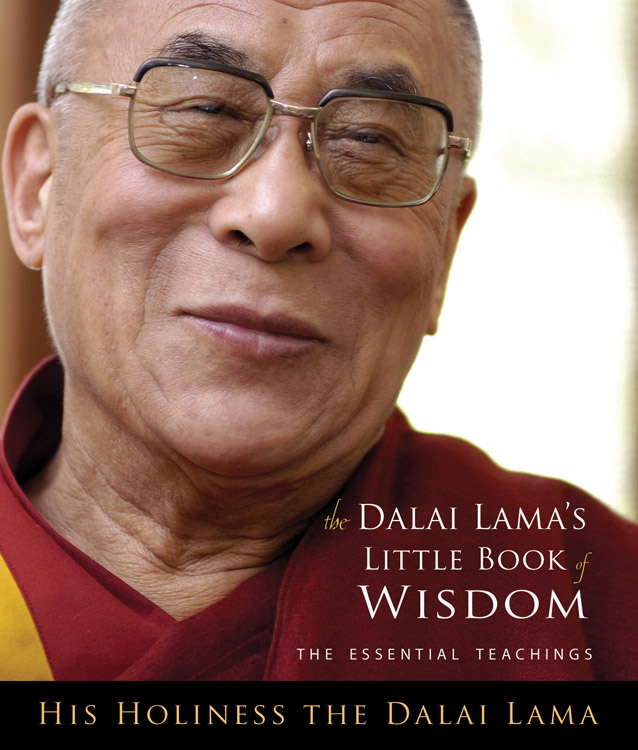
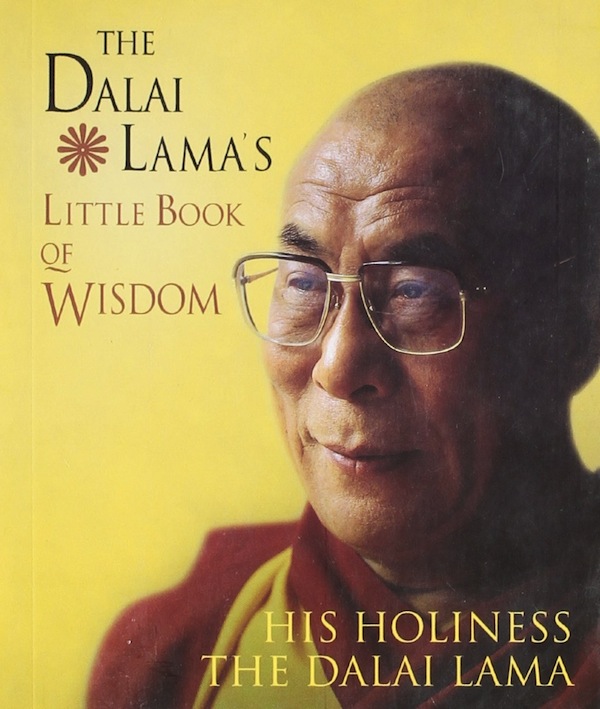
The Dalai Lama’s Little Book of Wisdom: Review & Giveaway
 Update: The winners have already been chosen for this giveaway:
- Josh Kimbell
- Rob Ruddle
- Nathan Atkinson
One of the founding principles behind Tiny Buddha is that simple wisdom, when applied, can have a huge effect on happiness, mindfulness and peace—not just for you, but also for the people around you.
The most helpful ideas might not seem so simple in the context of our complex lives; but oftentimes, we make things more complicated than necessary by filtering them through a negative attitude or thinking too much and applying too little.
That’s makes The Dalai Lama’s Little Book of Wisdom so compelling: it’s simultaneously profound and simple. It provides some of the most helpful of the Dalai Lama’s teachings in palatable, bite-size chunks.
Having had a copy on my nightstand for over a year, I couldn’t have been more excited to receive three copies to give away to readers.
The book offers insights about finding contentment, dealing with anger and emotions, transforming the mind, and more; and concludes with a question and answer section that addresses how to apply Buddhist wisdom to real life.
Many of the highlighted passages in my copy have come to you via the Tiny Buddha Twitter stream, and more likely will down the line.
As the book flap reads: (more…)
-

10 Ways to Slow Down and Still Get Things Done
“In a gentle way, you can shake the world.” ~Gandhi
Both the industrial and digital revolutions promised increased productivity, meaning people could work less and live a more balanced life. We all know that’s not how history has played out.
Even as technology advances, we work longer hours than ever and ironically, struggle financially and accrue more debt with each passing year.
If you haven’t noticed adverse effects on your personal relationships or the other areas of your life, you’ll likely keep plowing full-steam ahead and only stop when you have a compelling reason.
So here’s my proposition: Work as often as you damn well please! It’s your life; these are your moments to fill and hopefully enjoy.
But if you find yourself feeling stressed or detached from the present moment—if you sense life is passing you by as you scramble to get more—you may benefit from one of these ideas to slow down throughout the day.
1. Eat slowly.
This is a tough one for me. I devour food, always have. But I’ve found that eating more mindfully can be a meditative practice.
Chew every bite more, analyze tastes like you’re a foodie, and generally savor the experience. It likely won’t add more than ten minutes to your meal time, yet it will give you the chance to seep into the moment.
2. Do nothing for fifteen minutes after waking up.
Have you ever opened your eyes and immediately pulled out your iPhone or laptop? Or how about this: Do you roll out of bed two seconds after waking, having already created a ten-item to-do list in your head? Taking five or ten minutes to just lay with your thoughts allows you to ease into your day without such a sense of urgency.
3. Stare at a photo online instead of reading an article.
We’re knowledge seekers, which is a great thing. The more we learn, the more we understand and grow. However, the digital era presents a unique challenge: With so much information available, it’s tempting to seek knowledge far more often than you apply it.
Instead of learning something new on your lunch break, kick back and appreciate a beautiful image. Stillness is the answer to many of the questions you’ve been asking.
4. Choose an activity you usually multi-task and do only that.
Choose one task to complete mindfully today and maybe add to that tomorrow. My favorite is folding laundry. It’s warm, clean, and, most importantly, done!
Since I have an overactive mind, I need to tell myself certain things to stay in the moment: Enjoying this moment is my only task; there is nowhere to get to—only right now to be; nothing exists but this laundry in front of me (obviously not true, but it keeps me grounded).
5. Stare at your turned-off-TV for ten minutes before turning it on.
A lot of us fill our downtime binge watching our favorite shows. Absorbed by external stimulation, you miss out on the opportunity to connect with yourself, and before you know it, hours have gone by and you have to get back to work. Or your kids. Or dinner.
Before you get to your show, take a few minutes to just sit there and breathe. Use the screen as a canvas for visualization. Project your daydreams onto the tube, and sit with that for a few.
6. Block a half-hour of unplanned time in your planner.
Don’t plan to take a walk or meditate (although those aren’t bad ideas). Instead, plan to do whatever you end up doing. Get up, walk around, and see where that takes you. Maybe you’ll end up helping your neighbor wash his car, or playing jump rope with your niece. Nothing makes you feel present like spontaneity.
7. Write Parkinson’s Law somewhere you can see it often: “Work expands to fill the time available for its completion.”
Maybe you really need more than ten hours a day to get everything on your to-do list done. Or maybe you’re stretching your work to fill longer hours because society associates so many positive things with busyness. This saying reminds me to limit my work and still get it done so I can then focus on other things.
8. Notice the sights when you drive.
Have you ever watched a frantic driver bob in and out of traffic, passing and merging, only to find him right beside you at the red light? If road rage saves time, it’s generally not much, and it usually isn’t worth the stress it creates. Play some soothing music; notice license plates, bumper stickers, and the scenery; and allow yourself to enjoy this time.
9. Metaphorically toss your phone in the ocean for a half-hour every day.
I love the classic movie scene where the overworked protagonist tosses her phone into the ocean, or a fountain, or out the window and reclaims her sense of freedom. It’s not easy to disconnect from our always-on world, but the benefits of being unreachable make it worth the initial discomfort.
10. Say no.
Saying yes can open you up to new possibilities, but saying no can give you a chance for me-time: an hour when you don’t have to keep any commitments or please anyone else, or a half-hour when you can just kick back and do absolutely nothing.
—
Small changes throughout your day can slow down your pace without killing your productivity. Go ahead and keep getting things done. Just remember you don’t need to do it all in a panicked state of stress. If you find a more peaceful process, you’ll likely be both happier and more effective.
Photo by Nicholas A. Tonelli