Tag: pushing

  • When You Stop Forcing, Life Flows

    When You Stop Forcing, Life Flows

    “You don’t have to force the flow—sometimes your only job is to soften and let go.” ~Unknown

    For most of my life, I was obsessed with getting everything right. Planning. Controlling. Anticipating every outcome so I wouldn’t be caught off guard. I saw life as a kind of puzzle: if I just made the right moves in the right order, I’d get what I wanted. Peace, success, love.

    But life doesn’t work that way.

    The more I tried to control it, the more I felt out of alignment. I would burn out trying to make things happen. When something went wrong, I blamed myself for not anticipating it. I couldn’t relax because I was always tightening the reins, trying to steer the unknown.

    Then one day, something cracked.

    It was the winter of 2021. I was staying in a quiet village in southern Portugal, trying to piece my life back together after a painful breakup and the collapse of a startup I had poured years into. I’d gone there thinking solitude and fresh air would help me reset.

    But nothing felt right.

    I couldn’t focus. I couldn’t meditate. I couldn’t even enjoy the ocean—something that once brought me pure joy. Instead of peace, I felt stuck and overwhelmed. My mind replayed every decision I’d made over the past few years like a courtroom drama. “If only you’d done this.” “You should have seen that coming.” “You’ve ruined your shot.”

    I sat on the beach one evening as the sun went down, feeling completely defeated. I remember watching the waves crash rhythmically against the rocks. They didn’t care about me or my mistakes. They weren’t rushing or apologizing. They were just… doing their thing.

    That’s when it hit me.

    Nature doesn’t force anything. A wave doesn’t strive to be taller. A tree doesn’t try to grow faster. They exist in a kind of trust—a natural cooperation with life. And somehow, despite all that ease, they thrive.

    What if I’m the one disrupting my own flow by trying to control everything?

    It wasn’t a lightning bolt. It was more like a soft whisper inside. But something shifted.

    I started asking myself a new question each morning: “What would happen today if I didn’t try to control anything?”

    I didn’t have to force myself to do nothing. I still worked, moved, made decisions. But I tried to stay present rather than five steps ahead. I let myself feel uncertain without reaching for solutions right away. I listened more—to myself, to life, to the quiet.

    And over time, I noticed something strange. My anxiety started to fade—not all at once, but like a fog lifting. I stopped catastrophizing every decision. I felt a little more at peace, even if nothing around me had changed.

    That’s when I began learning what I now call divine flow.

    To me, divine flow is the current of life that we can either resist or surrender to. It’s not passive. It’s not about “doing nothing” or abandoning effort. It’s about cooperating with something deeper—something beyond just logic or planning.

    It’s learning to recognize that there are seasons for pushing and seasons for resting. That sometimes what looks like a setback is actually an invitation to realign. That clarity often comes when you stop chasing it.

    There’s a trust that builds when you live this way.

    You realize you don’t need to have everything figured out. You can still move forward with intention—but without gripping so tightly.

    Since then, I’ve built a life more aligned with who I am. I started creating wellness events focused on community and connection rather than perfection. I met people who inspired me simply by being themselves. I even learned to show up vulnerably, like I’m doing now, without needing everything to be polished or impressive.

    I still have moments where I fall back into old habits—where I try to force outcomes or fix everything too quickly. But I catch myself faster now. I’ve learned that tension is usually a sign that I’m out of the flow.

    If you’re in a space where things feel hard or disconnected, here are a few gentle invitations that helped me reconnect with the flow:

    • Let yourself feel lost. You don’t need to rush to “figure it out.” Sometimes the most fertile growth happens in the spaces where we allow ourselves to feel confused and uncertain.
    • Listen more than you analyze. Instead of trying to force answers, sit with your questions. Journal. Walk. Let thoughts come without needing to trap them.
    • Release the timeline. Things don’t have to happen on your schedule. You’re not late. You’re not behind. You’re just unfolding.
    • Ask for signs—but don’t cling to them. Sometimes life will whisper directions when you’re quiet enough to hear. But the key is to listen without expectation or pressure.
    • Come back to your breath. When your mind spirals, anchor into the present. One breath. One step. One moment.

    We can’t always choose what happens to us, but we can choose how we meet life. With resistance—or with curiosity. With fear—or with trust.

    These days, I still sit by the ocean when I can. I still watch the waves. I remind myself that there’s a rhythm beneath everything—and that my only real job is to stay soft enough to feel it.

    Maybe that’s all we ever needed to do.

  • Trusting the Pause: When Patience Is Better Than Pushing

    Trusting the Pause: When Patience Is Better Than Pushing

    “The most powerful thing you can do right now is be patient while things are unfolding for you.” ~Idil Ahmed⠀ 

    I still remember my last year of college vividly. I was frustrated and disheartened after my application to study abroad was rejected. I had been obsessed with exploring the world through academia, convinced that further study was the best way to achieve my dream.

    While most of my peers were preparing to enter the workforce, I envisioned a different path for myself—one that involved research, intellectual growth, and ultimately a career in academia.

    However, there was one major obstacle: my English proficiency. Since English is not my native language, I struggled to meet the minimum IELTS score required for my application. My first attempt was a disaster. I scored poorly in the speaking part and barely passed the writing section. I never expected it to be this difficult.

    The test was expensive, making it impractical to retake the test multiple times without the confidence of passing it. I felt trapped. If I failed again, I had no backup plan—I had not applied for any jobs, fully investing myself in the dream of studying abroad. The dilemma weighed heavily on me: Should I continue pushing myself to pass the test and secure a scholarship, or abandon my dream and focus on competing in the job market?

    Both options felt like dead ends. I was not good enough to pass the test, nor was I prepared to compete for jobs.

    In my frustration, I sought consolation in books. I read some spiritual books in hope of finding peace. That was when I encountered Rumi’s quote, which he quotes from his mentor: “When I run after what I think I want, my days are a furnace of distress and anxiety. If I sit in my own place of patience, what I need flows to me, without pain.”

    The words struck me deeply. I realized that I had been fixated on a single path, convinced it was the only way to reach my goal. I had never considered any other alternatives.

    I have been a fan of Rumi since high school. When I entered college, I found even more of his works that resonated with me. During this time, I also became interested in spiritualism and self-awareness. That is also when I started practicing meditation as part of martial arts training.

    I decided to take Rumi’s wisdom to heart. Instead of obsessing over the problem, I stopped forcing a solution and, for the first time, embraced stillness.

    It felt unproductive at first, but gradually, I began to understand something: If I was not ready for my dream at that moment, then perhaps it was not meant to happen yet. I accepted that progress would not come instantly and that my journey was not over just because I had hit a roadblock.

    Stillness reduced my anxiety and my self-deprecation at least. It restored the feeling that I was alright, and the sky was still above me. Amidst this realization, a friend from high school called me. She asked if I had graduated, and when I said yes, she mentioned a vacant teaching assistant position at her school.

    I sat up straight. I had a degree in education, so yes, teaching is my forte. More importantly, this particular school is an international school where most of the students and the teachers are expatriates.

    I did not fully understand it at the time, but I felt that this was exactly what Rumi means by “what I need flows to me, without pain.” So I said yes without hesitation.

    Long story short, I got the job. As a teaching assistant, I basically helped the main teacher to prepare the learning material and assisted the students with their work. The environment immersed me in English—I spoke it all day, read documents, read books, and wrote reports in English, improving my English significantly.

    Eight months after I started working at that school, I retook the test. I felt truly confident. The anxiety was gone, and I knew I would at least meet the minimum score. The test was, as Rumi promised, painless. I did not achieve the perfect score, but it was more than enough. I felt relieved, and I knew that the biggest obstacle had been eliminated.

    The test I took was just the beginning of my journey to studying abroad. I completed all the required administrative processes and secured a spot at my desired university just three months after the test. I was also accepted into a scholarship program, so within a year of my initial uncertainty about my future, I experienced a joy that I had never imagined before. Everything fell into place, and I realized it was meant to happen at that time.

    Patience, I realized, is the best cure for anxiety. Yet, most of us—including me at that time—struggle with it. The urge to take control and rush toward our goals is overwhelming. We are always taught to push, to strive, to achieve. Surrender and waiting are never part of the curriculum.

    I now believe that while ambition is important, relentless pursuit is not always the answer. Patience is not about giving up; it is the ability to wait while still focusing on the target. I think it is similar to a lion when it hunts its prey. The lion remains still, observing, waiting for the perfect moment to strike. A predator understands that patience is the key to success.

    So patience is not passive. It is an active projection of trust and readiness. Through this particular experience, I started to understand the differences between stillness and doing nothing.

    When I relax and allow myself to slow down, an alternative path emerges. What I once considered a detour—getting a job—ended up being the very thing that helped me to reach my goal. By not chasing my dream directly but rather waiting patiently while doing something else, I ultimately found my way.

    Now, whenever I am in pursuit of something, I remind myself to pause. I take a step back, observe, and ensure that the odds are not stacked against me. If they are, I wait patiently and explore other possibilities. Because sometimes, the best way forward is to stand still.

  • Working on Impatience and Appreciating Its Gifts

    Working on Impatience and Appreciating Its Gifts

    Man Running

    The real voyage of discovery consists not in seeking new landscapes, but in having new eyes.” ~Marcel Proust  

    It’s taken me a while, but I have finally learned to appreciate aspects of my own impatience.

    For a long time I did not like this quality about myself. I am still working on becoming more patient, because impatience and I go way back.

    I was impatient to get out of high school, so I fast tracked that whole experience.

    I was impatient to get working, so I started working when I was fourteen.

    I was impatient to finish university, so I rushed through it, while working up to thirty-five hours a week, not stopping to enjoy myself or have fun.

    My daughter was impatient to be born, so she came early, and so did my son.

    I wanted to move up the corporate ladder fast, so I sprinted and pushed and worked all kinds of crazy hours that come with being in the world of technology consulting for a global fortune 500 organization.

    And then I got sick.

    My body got tired of me pushing, and shoving, and not pausing even for a second to pay attention to its cries for help. Illness forced me to stop everything and pare my life down to the basics.

    I got diagnosed with some fancy labels like chronic fatigue syndrome, depression, fibromyalgia, and eventually an even fancier label, PTSD.

    Even getting dressed and making my kids meals felt like climbing Mount Everest.

    I let shame take over for a little while, and I hid from the world, the career I had worked so hard to build, my family, and even my kids; hiding in bed while they were at school and haphazardly pulling myself together before they came home.

    After a few months, my own innate personality started to come through and my impatience reared its head out of the fatigue, depression, and piles of laundry.

    I wanted my life back. I was not going to write off my future in my early thirties, and be resigned to my couch and bed, while my children were waiting for their tired mother to wake up and play.

    I got myself into therapy. I wanted no part of taking drugs. It was a personal choice that to this day, I don’t regret. It’s not for everyone. It felt right for me.

    I worked with therapists, healers, and naturopathic/homeopathic doctors; I tried Chinese medicine, acupuncture, all kinds of massage and bodywork and energy treatments, and spent thousands of dollars on nutritional supplements and testing.

    I worked with shamans and took trips to silent retreats, meditated, wrote, drew and doodled in my journal, danced to 5Rhythms, moved with hula hoops and even travelled to the Amazon looking for answers.

    The thing is, during much this time, I felt a huge amount of shame for my impatience. My healer/teacher/therapist and every other practitioner would smile with understanding for my impatience to get healthy and feel better.

    They would urge me to be patient and encourage me to honor the timing of my own body.

    They were right. I knew this, too. But the rational part of me wasn’t always the one in charge.

    I often felt like time was running out. I had a life to get back to, and it was passing me by every day that I lacked the energy and the mental clarity to fully live it. The body aches and pains and other physical discomforts didn’t make it any easier either.

    Eventually, the wiser part of me got it.

    Our body does have its own wisdom. It does speak, and we need to pause to listen in order to learn the language that each of our own bodies uses to speak to us. And this is not something that would have typically been taught to us while we were in school.

    While it’s wise to work on our impatience, we can simultaneously appreciate its gifts.

    The biggest gift I received by working with my impatience was perseverance. I didn’t give up. I continued to search for answers to my health conditions. I was obsessed with wanting to know the answers to my many questions. Why did I get sick? What was the root cause? Why did my body start to shut down on me?

    Impatience gave me the drive to keep going, even when it felt like I wasn’t making much progress.

    And impatience gave me hope. Each time I felt like I was taking one step forward, to be brought back ten, I would explore new healing options and get excited about the possibility of it working.

    I used to beat myself up for being impatient with myself, for how long it was all taking, and for finding it difficult to sit and meditate. I wished so many times that I could be more Zen-like and graceful in the way I met my health challenges.

    Many times sitting across therapists and healers and other wise people I had hired to be on my healing team, I would feel like that squirmy little kid in class. You know, the one who sat constantly moving in their seat, waving their hands about the air, hardly able to contain themselves because they had so much to say.

    I was that kid in an adult’s body. I wanted my healing team to know everything I was doing. I wanted them to know everything that I knew, had tried, and discovered so that that there would be no wasting time. All they had to do was tell me what I needed to do next, and I would get on it.

    Seven years later, I’m now better. I don’t identify myself through those same labels I was once diagnosed with. I have learned to tune in and listen to my body, and navigate my inner world and some dark alleys that I never knew existed.

    Through this process, I have transformed my wounds into wisdom, discovered my life’s purpose, and continue to use the insights to course correct, and live my life making conscious choices as best I can.

    I am grateful for the role that impatience played in my journey from illness to wellness. I am enjoying my second chance at life with my children, and doing my best to be a present mother. I am teaching my children these same tools of awareness and self-regulation by the way that I meet life, them, and myself.

    Though I could have done without the restlessness, I truly believe that without the persistence that resulted from my impatience, I might still be lying on a couch in my living room, napping.

    So, here’s my invitation to you: If you are like me and have been beating yourself up over your impatience, take some time to review how your impatience has helped you in your life.

    How has your impatience been a friend or a blessing?

    How has it allowed you not to give up when you desperately wanted to?

    How did it help you to not take ambiguity or “no” for an answer, and propel you to find your own truth?

    You might be surprised and grateful at what you discover!

    Man running via Shutterstock

  • 4 Faulty Beliefs That Cause You to Push Yourself and Do Too Much

    4 Faulty Beliefs That Cause You to Push Yourself and Do Too Much

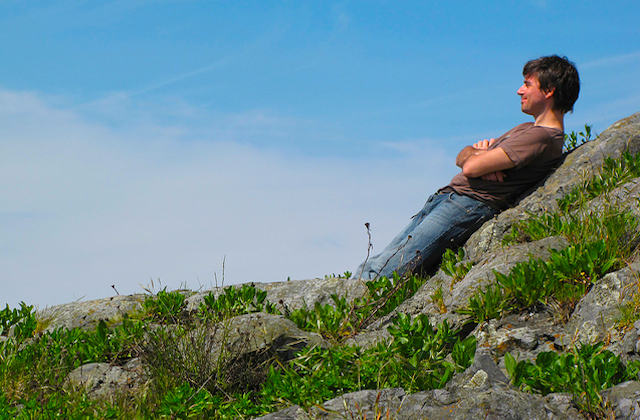
    Relaxing

    “Slow down and everything you are chasing will come around and catch you.” ~John De Paola

    Do you ever work past the point where you know it’s time to stop? Where your body, heart, and soul are saying, “Ah, enough already,” only you can’t hear them because your mind is pushing you on?

    And have you ever pushed to such an extent you become physically and/or mentally sick?

    My hand is raised.

    Working hard and pushing the boundaries can be stimulating and rewarding; the problem comes when there’s an imbalance for extended periods.

    Meditation and silence are increasingly advocated as ways to find balance in today’s hyper-connected, “always on” world. But for those of us with a propensity to work till we drop, there’s more to it.

    These four common, though faulty beliefs get to the heart of why it can seem so hard to stop, rest, and rejuvenate.

    Faulty Belief # 1: I have to keep going.

    It’s easy to think you have to keep going, when usually, you don’t.

    “I have to finish my degree.”

    “I have to … ”

    “I have to …”

    The human mind loves to make plans and stick to them, no matter what. The problem is that our mind thinks these things will strengthen our identity and make us feel good.

    This is reinforced by a world focused on achievements, not one that values us for just being.

    It’s often easy to just stop or change course. But we don’t; we become rigid.

    Dogged determination can be useful, like when writing a book, or even this article; if I stopped every time it got difficult, I’d never finish anything. But sometimes the plan isn’t a good one. Sometimes such determination isn’t healthy or useful.

    I spent years thinking the road to “success,” and therefore happiness, was a college degree. But that’s all it was, a thought, a belief. A rule I’d made for myself that simply wasn’t true.

    Who knows if leaving college would have been a less painful route; I just wish I’d seen it as a viable option. Would it have been such a bad thing to get my Masters degree in six years instead of five? Or to not get it at all?

    If you’re feeling strung out, ask yourself, do I really want to do this—not just the assignment, but the degree; not just paying the mortgage, but the house?

    Take notice of what your gut is saying. Can you feel what the right thing for you is?

    And even when there are things you have to do—though really there are very few and they usually involve caring for dependants—they can often be modified so you can reduce your load.

    Keep an eye out for long held beliefs and notice how uncomfortable it feels to consider a new tack.

    It feels scary to go against what your mind says. Why? Because you don’t know what’s going to happen. But in truth, you never do.

    Faulty Belief #2: I’m essential.

    No, you’re not.

    Handsome, talented, and deeply lovable, yes. But essential? No.

    This is a bit embarrassing, but a few years ago if you’d said to me, “You have to come to my party because it won’t be as fun without you,” I would have believed you.

    I could have just arrived back from a two-month trans-arctic trek and I’d still have hobbled in on frostbitten toes trying to be funny and charming. Aside from suffering from an extreme case of self-importance, I didn’t want to let people down.

    I thought I needed a reason to say no. A real reason. Not just, “I feel like writing poetry tonight.” Something big.

    “I have the mumps.”

    “I’ll be in Fiji.”

    But saying no and taking time out isn’t selfish. Putting other people’s needs ahead of your own, especially long-term, doesn’t help anyone. It’s dishonest, it makes you feel resentful, and you miss out on the wonderful things that happen when you rest.

    Consider that you’re not as essential as you think you are. Delegate. Get help where you need it.

    (This applies in the workplace too.)

    Your friends will understand. They want you to look after yourself. And the party/school reunion/church fete you don’t want to go to—everyone will get along just fine without you.

    The only thing you’re essential to is you.

    Faulty Belief #3: My mind is a wise guide.

    Most of us are brought up to believe our thoughts are the best guides for our life. And so we spend our days and weeks doing what seems logical.

    —If I go to the party, people will like me and be there for me when I need them.

    —If I get a bigger car/taller horse, I’ll get a prettier girlfriend.

    (You probably won’t, you know. You might just get one that cares more about your car/horse than you.)

    The problem is—as you may know—the mind is inherently insecure. It wants you to take the safest route, following others or repeating what you always do.

    If working without adequate rest has been modeled as the way to be successful, or if you habitually push yourself hard, then your mind will want you to continue doing this.

    Thankfully, there is another side to us that is often a better guide than our mind. Our heart. I’m not talking about the romantic heart—though this is part of it—but the bit of us that knows, deep down, what’s right for us.

    The challenge is our heart speaks more quietly than our intellectual side, often in the form of a hunch or deep knowing. And because the guidance doesn’t always appear logical, we can easily dismiss it.

    For instance, when you have the idea that you’d like to write songs, that is your heart. The thought you get immediately after, saying, “You can’t even play an instrument,” that’s your mind.

    When I get an inclination to rest, my mind almost always thinks it’s a bad idea.

    But the more I practice ignoring my mind’s taskmaster-like tendencies, the more I trust my inner wisdom. Not only do I feel more refreshed and enthused, I get ideas and see opportunities I miss when I’m in full swing.

    Faulty belief #4: There’s something wrong with me that keeps me going so hard.

    I used to wish I was the kind of person who naturally moved more slowly, and who didn’t wake in the morning with their “on” switch already dialed up.

    I don’t think this anymore. (Well, not often)

    I’ve come to believe there’s nothing wrong with emerging at the end of the day weary and happy. I love my energy and enthusiasm and good intentions. Finding balance isn’t about trying to stop that flow, but working with it.

    I have to factor in stops. Things like turning off my phone and laptop in the evening, going hiking in the weekend, or even something as simple as doing the laundry in a relaxed, pottering way.

    For those times when it’s harder to shift gears, try just sitting, staring into space. It’s a great way to reconnect. Looking at things like social media, does it recharge you or make you feel discharged?

    Celebrate your zestiness! But look after yourself too. You really will get more done and you’ll feel better while you’re doing it.

    And when you forget and overdo things—my hand is up again—don’t worry. It’s no big deal. Us over-workers also tend to overwork at being hard on ourselves!

    Photo by Gerry Thomasen