Tag: Purpose

  • Rethinking What Really Matters: The Four Most Important Things in Life

    Rethinking What Really Matters: The Four Most Important Things in Life

    “Life is short. Focus on what matters and let go of what doesn’t.” ~Unknown

    Our most precious commodities are not our smartphones, 3D TVs, brand new cars, or even our big and impressive houses.

    Our most precious commodities can’t be found at the bank. They can’t be ordered online. The truth is, they are on a very short list.

    Amongst our most precious commodities are our purpose, time, health, and our relationships.

    How I Came to This Conclusion

    Several years ago I realized I was accumulating more in my life. More things that didn’t really matter to me or speak to me on a spiritual level. More commitments I wasn’t really passionate about keeping. This was all leaving me feeling a little flat and unfulfilled. It felt like something was missing, but I wasn’t sure what that something was.

    A period of fairly deep reflection followed. I then started to take some action based on this reflection. Amongst other things, that action has meant:

    • I have made good on long-term dreams to write creatively
    • I have realized I value freedom and flexibility over the ability to just earn more, and I now seek out ways of living accordingly.
    • I have accumulated fewer material possessions but enjoyed more (travel and holidays, events, life experiences).
    • I have concerned myself a whole lot less with the need to keep up with others (a toxic and empty competition if ever there was one).
    • I have set up my own micro-business so I have more control over what work and clients I say yes and no to.
    • I have met and married a partner in travel and adventure.
    • I have embraced aspects of simplicity, 80/20, and other powerful concepts into my life.

    The upshot of these and other changes has been that the quality of my life has improved significantly. I certainly don’t have everything figured out (spoiler: no one does!), but my compass in life is much more in tune with somewhere I actually want to get to now.

    Alongside this period of internal reflection, I started to question lots about life.

    I started to weigh what I thought I wanted with what I actually wanted. I started to question what I was really seeking. Whether I was on a path that would get me there. Whether I had people in my life that could support me emotionally along the way. I started to question what it was to be successful and fully explore my own definition of it, not just follow a second-hand version.

    I also started to question whether what I thought was important in life was really important at all. I reframed my life and came to the conclusion that there are several areas, commodities if you will, that are vitally important to how we feel, that need careful attention.

    This is what led me to the realization that our purpose, time, health, and relationships are amongst our most precious commodities. Such a simple and obvious realization, you may protest. Well, if that’s the case, how is it that we let these suffer so frequently?

    Purpose

    Purpose is our why. It drives our actions. It fuels our passion. It encompasses our work, our relationships, and our approach to living our lives. It wraps around everything we do. It means living our lives in an intentional way. It gives our lives a sharper focus.

    Our why is what keeps us going when life gets tough.

    Our why gives life extra meaning and richness.

    If we’ve lost our way and are struggling with our why, we can ask ourselves several related questions:

    • Where am I’m trying to get to?
    • What lights me up and gets me excited?
    • What’s my reason for getting up in the mornings?
    • What do I want more of in my life?
    • What do I want less of in my life?

    The answers to these questions can be revealing and can lead us back to the core of what really matters most to us. Listen to these answers and use them as a guiding light. Revisit them often

    Time

    We all have the same number of hours in our day. Why do some of us run around, constantly stressed, complaining we “don’t have time,” while others seem to approach life in a relaxed and happy state but still get plenty done?

    Though we all have responsibilities and obligations, this often comes down to choices.

    Many of us make poor exchanges on our time on a daily basis. Each time we say yes to something, we are effectively saying no to something else. The problem is, we often say yes to too much. This is where a balance starts to tip.

    Instead of feeling in control of our calendar, our time is all accounted for. We rush from this commitment to that, never really feeling like we’re truly present at any of them. We squeeze evermore into our days but feel we have less and less time to do the things we really want to do, or see the people we want to see. We have less space left for ourselves.

    Time is a finite resource; once spent, it’s gone. We can’t get time back, but we can be selective and intentional with the time we have.

    We can take control by saying yes to less and appreciating the white space in our diary. We can protect our precious time for the activities and people that give our lives the most meaning and joy.

    Of course, reclaiming your time isn’t always this simple. Some of us are working several demanding jobs in order to pay the most basic of bills. Maybe we are bringing up a young family, caring for aging parents, or perhaps looking after a loved one who has physical or mental health challenges.

    Finding time for anything in these scenarios can be especially tough. Even if we do have time, we feel a heavy sense of guilt if we spend it doing something for ourselves, because it seems selfish. Besides, exhaustion can hit us right when we have these small windows of time, and sleep or the TV may beckon.

    If we’re limited in this way, a good start is to find small pockets of time to invest in our passion projects, our hobbies, and ourselves. Five minutes here, half an hour there can add up over a period of time.

    Though we may be caregivers or breadwinners for others, we need to remember to care for ourselves along the way. We can do this without neglecting our responsibilities. In fact, the more we can look after our own well-being, the better equipped we are to be of service to others.

    Another step that we can take is to try to change our situation. Maybe we can work closer to home or look to simplify and reduce our bills, and perhaps even work a little less. In the case of loved ones with challenges, maybe we haven’t exhausted our options in terms of additional help (from friends, family, or care groups).

    These are all tough and very real challenges some of us face, and I will not make light of them here. All any of us can do is look to make the very best of our situations and be grateful for what we have instead of focusing on what we don’t have. Sometimes we need a little outside support from others to help us along. Where there is a will, there can be a way.

    Health

    So many of us take our health for granted until we have a reason not to.

    We neglect exercise and then wonder why our bodies complain when we need to climb a flight of stairs. We neglect our diet and then wonder when all this extra weight crept up on us. We neglect our mental health and then wonder why we’re always stressed.

    We can be kinder on ourselves. We can add regular movement to our lives. Walking, the gym, bodyweight exercises, yoga—it all counts and can all be mixed up. Our bodies are made to move, not sit humped over laptops or in front of TVs all day. Embrace the ability to move.

    Eating healthily can also be simple and enjoyable. We can base most of what we eat on plants (fruits and vegetables). If we eat meat, we can treat it like a side dish and ensure most of the rest of our plates are filled with a rainbow of vegetables. No foods need be off limits, and we can still make space for the odd discretion. Healthy eating can and should be delicious eating, and should never feel like drudgery.

    Being outside more, eating well, and making time to decompress can all help our mental health and general feelings of well-being. We can be gentler with ourselves by ensuring we make time to reset occasionally.

    Regular check-ups with our doctors can help pick up the early signs of anything nasty, but we can also do our best to make the most of what we have by trying our best to look after ourselves.

    Relationships

    Our modern obsession with being busy leads many of us to feel we don’t have enough time in our days. This is a particularly sorry state of affairs when it means we “don’t have time” for our relationships.

    The truth is, all this busyness just might be something we have had a hand in creating. This may not be welcome news, but it does mean we can also step back from it and live another way.

    Our friends, family, and loved ones are what really add spark to our lives. We need to make the time to foster these relationships. Being busy is fine, if we’re busy with the things and people that mean the most to us.

    Our relationships are our bedrock, our foundation. We need to nurture them with the love and attention they really deserve.

    Purpose, time, health, and loved ones. These are truly the things that make us richer and make life more complete. Let’s treat them accordingly.

  • Are You a Multipotentialite? What to Do When You Have Many Interests

    Are You a Multipotentialite? What to Do When You Have Many Interests

    “I think a singular identity isn’t very interesting, and I’m a little bit more multifaceted as a person than that.” ~Catherine Opie

    Are you a person who gets inspiring ideas every day? Do you wake up, galvanized with such thoughts, only to end up feeling sore as the day ends because you failed to act on these bright morning ideas? Perhaps you also end up blaming yourself and feeling guilty for not having taken any action.

    Then welcome to the world of multipotentialite, a word I first encountered when I heard a TEDX talk by Emilie Wapnick. In her talk, Emilie talks about the challenges multipotentialites face and how to embrace them.

    Multipotentialite Defined

    So who is a multipotentialite? The urban dictionary defines it as “somebody who has potential in multiple fields.” Sounds cool, right? It seems that such a person would lead a meaningful life. They’d never get bored, as there would always be something to catch their fancy.

    Unfortunately, it doesn’t usually work out that way. How do I know? I happen to be one.

    I am a software engineer turned writer, counselor, web designer, and trek guide. I haven’t stuck to any particular field, so I cannot say I am an expert or a specialist—words the world loves.

    I detest family gatherings. Do you know why? People around me talk about promotions and their success while I talk about beginnings. I don’t mind; I’m a learner. But it’s difficult to explain to your family, who wishes to see you settled in your career, that you have multiple interests.

    Without a supportive environment, several things can go wrong. Here are some of them.

    Great ideas but no follow through

    You get plenty of ideas, so much so that it becomes overwhelming. There are countless things you’d like to do right away. Sometimes it’s difficult to choose, for fear that you’ll leave it mid-way. Or you have a desire to do a multitude of things, all at once. Or the dissatisfaction of the earlier half-finished projects may bog you down, so you don’t start at all.

    You’re labeled “irresponsible” or “afraid to commit”

    You begin to feel that you’re not a responsible person because you don’t stick to anything. After all, hasn’t it been drilled into you that success depends on your level of commitment? And a lack of commitment could mean anything from not being serious to being irresponsible and careless.

    The blame game

    You start blaming yourself. The pressure to perform and stick to one particular career or task intensifies. It may be a self-created vortex, or others around you will contribute to the pressure by saying things like, “get serious” or “discipline is just what you need.”

    Not fitting in

    Finally ,you realize you don’t fit in. You start feeling something’s wrong with you, that you’re not like other “normal” people around you who commit to doing things. You believe you’re different and feel you don’t belong anywhere. This can also lead to loneliness or a sense of being alone in the world.

    Disappointments greet you

    When you’re unable to come up with a goal for yourself, it can hurt. You know you’re ready to put in the hard work, but goals keep changing, as nothing interests you for long. The hurt and disappointment can erode your self-confidence, as well.

    The matrix

    Yet you try. You keep searching for that single purpose that will make you feel whole again. Maybe you feel there’s something out there that is “you”—something that’s meant especially for you. You only have to find it and then you’ll be okay. Beware: This path is full of lies.

    The feeling of being abnormal

    You begin searching for mental disorders on the web. Maybe this is a symptom of a condition, or maybe it signifies a psychiatric illness. The web is extremely helpful here, as it displays twenty or more different disorders that you could box yourself into.

    You suppress

    You start sticking to a goal even if it kills you. You wake up day after day reassuring yourself that things will work out in the end. The suppression does not get you anywhere. Instead, you feel a disconnect, an overwhelming feeling that something is missing.

    So this, in a nutshell, is the world of multipotentialites.

    In spite of their vulnerabilities, multipotentialites can get a lot done. They’re generally quick learners who are able to grasp varied things, a strength that they could capitalize on. In a team they can come up with innovative ideas; the jack-of-all-trades does not lack solutions. Belief in yourself is the only thing that’s missing. Well, that and a couple of other things.

    Trust that the dots connect.

    Nothing ever goes to waste. The skills you learn along the way will help you in the future.

    For a brief period I got a job as a travel writer when a magazine editor realized that I had explored quite a number of places within my city.

    A web design course helped me juggle multiple roles at a start-up that was always short on staff.

    The counseling degree gave me a better understanding of people around me. It also helped when my friend needed a student counselor for her tuition center.

    So my skills were put to good use and I sometimes got paid too, without any conscious effort on my part.

    Take small steps.

    A quote by Katie Kacvinsky sums this aptly. She says, “You need to be content with small steps. That’s all life is. Small steps that you take every day so when you look back down the road it all adds up and you know you covered some distance.”
    Especially when you have hundreds of things that you would like to do, it helps to make a list. Write down your desires and start with one of them. That’s it. Don’t expect anything except the desire to learn.

    When you feel saturated, stop and proceed to do the next thing on your list.

    The list will grow and so will you. Drop the expectations that you need to finish the project. It’s the learning that counts for you.

    Looks for creative ways to contribute.

    Maybe you could utilize your skills to earn more, by writing in your particular field, coaching, or even speaking. The important thing is not to give up on your interests; instead, look at them closely and see how you can proactively pursue them to better your situation. This removes the pressure on you and you start feeling less anxious.

    Connect with people who can relate.

    Joining a like-minded community helps put things in perspective. Forums and websites like Puttylike, started by Emilie, can help you restore your faith in yourself and move ahead in your life.

    In the end it’s all about perspective. A quote by George Carlin sums it rather well.

    “Some people see the glass half full. Others see it half empty. I see a glass that’s twice as big as it needs to be.”
    So choose to focus on your strengths. Success will surely follow.

  • The One Purpose We All Share in Life

    The One Purpose We All Share in Life

    Purpose

    “We are each gifted in a unique and important way. It is our privilege and our adventure to discover our own special light.” ~ Mary Dunbar

    I sat staring at myself in the mirror.

    All I saw was failure.

    And for the first time in a long while, I cried.

    All I could think about was having to get up the next morning and force myself through another day. Force myself to put on a smile and pretend to be happy. Force myself to act like everything was moving in the right direction.

    I’d been putting on this façade for months by this point.

    My fitness business was finally growing at a good rate after years of struggle, finances were the best they’d been in a while, and I felt like I was helping a lot of people.

    Yet I felt stuck, broken on the inside, and like I was massively holding something back in terms of what I had to offer the world.

    And in that tear-filled moment with the mirror, I knew I had to let go of the business and life I had worked so hard to gain momentum with.

    I spent the next year trying to work out what the hell was going on. I suppose you could say I was trying to find myself, but the cliché-ridden nature of those words makes me cringe even now. So I prefer to say “working s**t out.”

    I stepped back, traveled, sought connection, read, listened to podcasts, and dug deep into my soul for answers to questions I had previously written off as too time wasting for a busy business owner to deal with.

    But a key question that kept coming up for me was “what is my purpose?”

    I would muse on this for days, weeks, and months at a time, desperately trying to figure out the answer and looking for some Eureka moment.

    Almost every book I read, every podcast that I listened to, and every video I watched all seemed to keep coming back to this question in some roundabout way. Each moment of consumption giving me more information on systems, steps, and questions to find out what my purpose is on this earth and what I am “here to do.”

    I became obsessed.

    And in that obsession I created confusion.

    Who was I? What did I want to start? What did I want to talk about? How could I help and serve others without draining my own life force?

    After traveling to various parts of Europe and South East Asia, connecting with others and trying to figure my own stuff out, I still felt completely lost. Like I was just wandering the globe, going from place to place without any reason, and simply shuffling through life with a black hole continually expanding inside of me.

    I would dive into things headfirst and keep them going for a few weeks before deciding I was on the wrong path. Some idea would catch my eye and I’d take steps forward before getting bored and slacking off.

    Until one day I had what I lovingly like to call a “f**k it” moment.

    I just couldn’t take any more listening to other people tell me how to find this purpose thing that was supposed to be so great.

    I’d gone from never thinking about my purpose, to being obsessed with finding it, to just getting fed up with it all. In fact, I was pissed off that all these other people seemed to be living “in line with their purpose” while I was left stuck and still asking questions.

    It was like when you’re a kid and your weird uncle does that crappy magic trick, and you just want him to tell you how he did it so you can stop trying to figure it out and get on with your life.

    Then almost as soon as I gave up trying so hard, things became a lot clearer.

    And I started to realize what a poor, vague, nothing kind of question it is to ask “what is your purpose?”

    Because, when it really comes down to it, we as human beings all have just one, universal purpose.

    To create.

    Think about it. We create thoughts and knowledge and content and books and podcasts and TV programs and websites and furniture and iPhones and apps to go on those iPhones and other phones to rival those iPhones and slightly bigger iPhones we call iPads and all sorts of other inventions and relationships and businesses and lives for ourselves….

    We even create other human beings!

    But we also create fear and negativity and judgment and perfectionism and evil and other bad stuff.

    So “What is my purpose?” is actually a pretty poor question when it comes to the kind of answer most of us are really looking for. The answer to that is simply to create.

    This brought a huge perspective shift for me. All of a sudden, I stopped asking myself the same question over and over again and expecting a different answer every time.

    Now I had a new question: What did I want to create?

    Screw purpose! Screw this elusive, intangible, nothing of a question. What did I want to create? And I mean really want to create?

    No longer did I feel like I had to find this one thing that I was put on this earth to do. No longer was I searching for this magic moment that would give me a sign that I should definitively label myself as this or that.

    All I had to start doing was creating something, anything, several things that would make me feel purposeful.

    But this then posed another problem.

    What did I want to create?

    It’s all well and good saying to go create something, but if you don’t know what or how then it’s still meaningless. Surely, if we truly want to feel purposeful, we must know ourselves first.

    So I took a deep internal dive again. Only this time, with this new angle to my questioning at the helm.

    I wanted to look deep into the depths of my heart and soul in order to find out what was really in there. To peel back all the pretending, all the bravado, and all the BS so I could just know what was really going on in there.

    I asked myself about my beliefs, my fears, what I love, what makes me feel passionate, what doesn’t, my strengths, my weaknesses, and what I would say to the world if I had everyone’s attention for just fifteen minutes.

    I wrote everything down, even if it was uncomfortable. And I didn’t settle for superficial, meaningless answers.

    But the biggest thing of all, the thing that opened my eyes the most, was getting clear on my values.

    Our values are the very essence of who we are as individuals. They are what guide us when it comes to making decisions so that we don’t end up feeling like a tangled mess inside. And they act as our inner compass when it comes to what we should create and put into this world.

    So the act of creating something that made me feel purposeful became rather straightforward.

    What knowledge or skills or expertise do I have in my head and heart? What do I love? And how can I bring all this together to create something that helps and serves others?

    Suddenly, discovering “my purpose” became inconsequential.

    Why do we need this one, single purpose? The real answer we want to that question, the feeling we want to garner, comes from creating purposeful and meaningful things. Things that make us feel like we are adding to the world and like we are helping in some way.

    But we can only know what we class as “meaningful” and “purposeful” if we take the time to discover ourselves and know who we are.

    So, if you’re like me and have struggled, or are struggling, with this whole purpose thing, I invite you to just give up looking. Instead, try going deep with yourself on two questions:

    1. Who am I?

    2. What do I want to create?

    Maybe shifting your perspective like this can help get you unstuck, as it did with me.

    And it may enable you to go and create something truly meaningful, whichever way you define that yourself.

    Now, I know there may be some people out there to whom this all seems a bit over the top, or maybe even irrelevant.

    We all have jobs or businesses to focus on, bills to pay, families to feed, and general life stuff going on. Thinking about all the bother of creating this big, elaborate, purposeful thing may be pretty close to bottom of the to-do list for a lot of people.

    But that’s the thing—it doesn’t need to be a big, elaborate thing. You could choose to create happiness, or connection, or laughter, for example.

    Sure, you could create a billion-dollar company, an international movement, or a charity helping millions of people. Or you could create joy by volunteering at a children’s hospital, or by making it your personal mission to lift other people’s spirits when they’re feeling down.

    We don’t need to go into this with an attitude of having to create something huge and entrepreneurial if we don’t want to.

    We can garner that feeling in smaller, yet equally as significant, ways.

    Simply bringing ourselves to the present moment and asking “What can I create right now that would make me feel purposeful and meaningful?” can be pretty powerful.

    Start small. And maybe you’ll get hooked from there.

    Because, after all, we are all worthy of feeling purposeful. We just need to decide what this looks like to us.

  • Why We Don’t Need to Worry About What’s Missing in Our Lives

    Why We Don’t Need to Worry About What’s Missing in Our Lives

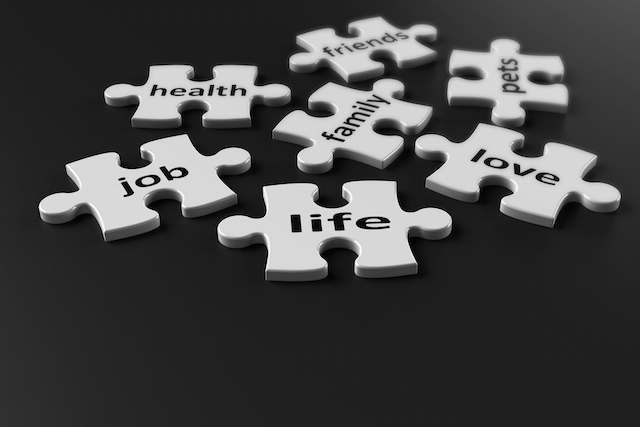
    Life is like a puzzle..Life consists of many components, 3d rendering

    “Don’t compare your struggles to anyone else’s. Don’t get discouraged by the success of others. Make your own path and never give up.” ~Unknown

    My recent breakup was the most painful experience of my life. More painful maybe than it should have been, as it came at a time when a lot of things weren’t going as I hoped they would.

    The road to healing seemed so much steeper and longer when all of these things also needed to be ‘fixed.’

    As I approached my thirtieth birthday, I found myself back living at home with my parents and at a crossroads in my career. I was suffering from anxiety and felt as though my life had little purpose. Things just weren’t supposed to be this way. This was not part of the plan.

    I knew that I needed to make some serious changes, but I was overwhelmed by the sheer size of the task in my hands.

    It wasn’t just my heart that had smashed. It was as though my life was a jigsaw that had just been broken into a million pieces. And I had to recreate the picture.

    So I started as you do with a jigsaw.

    I slowly picked up the pieces, one by one, and tried my best to slot them together.

    It wasn’t an easy task. Sometimes I couldn’t find the piece that I was looking for. Often, it seemed like the small sections I had completed would never properly fit together. There were many times I got frustrated and felt like abandoning the project all together.

    Yet somewhere along the way the picture started to take shape.

    I focused on my mental health and explored mindfulness. I devoted time to new hobbies and joined a sports club. I revisited my childhood passion for writing. I spent quality time with old friends and enjoyed getting to know new ones. I got a puppy.

    Bit by bit, I picked up the pieces and worked hard to create something new.

    After a while I could start to recognize some serious progress. I was still a long way off finishing the jigsaw, but it was getting easier to work on it. I was feeling much stronger, feeling a new sense of hope that one day I would get there. I had caught a glimpse of what the picture could become.

    Yet despite my best efforts, the holes in the picture haunted me.

    I was acutely aware of the parts that were missing. Months had passed, and some of the main pieces still evaded me, the ones that I saw as being crucial to my picture. It weighed on me greatly.

    Without these pieces, I felt that the jigsaw could never really make sense. Instead of concentrating on the pieces I had, I spent a lot of my time searching for these middle pieces. The others just didn’t hold as much value. At least, that’s how I chose to view it.

    Then one day, I cast my thoughts back to the start of my jigsaw journey.

    I remembered how utterly lost and frightened I had felt at that time. How overwhelming the whole process ahead seemed. And I realized just how much of the picture had appeared without me really noticing it. I considered how inconceivable this progress had seemed at the start, how proud I should be that I had managed to get this far.

    But once again, the missing pieces came into focus.

    On a night out with friends, talk naturally revolved around our jigsaws. I was already acutely aware that theirs were at a more advanced stage to mine. Engagements, mortgages, weddings, children.

    I observed, sadly, how many of their milestone pieces were already secure. An acute reminder that I still had so many to find.

    I wondered if I would ever find them or if my jigsaw would just remain incomplete forever. Still a jigsaw of sorts, but not as it should look. I was happy for my friends’ success. I just worried that I seemed to be so far behind.

    But then, as the conversation continued, I made another observation.

    It seemed as though there were parts of their jigsaws that were also still incomplete. These may have been the outer parts, the ones not quite at the center, but they were parts of the jigsaw nonetheless—parts that I, myself, had managed to obtain but perhaps had taken for granted.

    Through hard work and determination, I had successfully made the career transition that had once seemed impossible.

    My lowest points had strengthened my relationships and showed me that I had people who I could really count on.

    My period of reflection had taught me a lot about myself and what I wanted from life.

    I had developed my own interests as an individual and become more independent.

    I acknowledged that these were also a significant part of the picture, and that a jigsaw had many different pieces and everyone still had work to do. I realized that while I was busy concentrating on my missing pieces, I had neglected to appreciate the value of these other ones.

    While I was busy feeling ashamed of its hollow middle, others may just have been noticing how my corners were taking shape. To me, my jigsaw didn’t look as I wanted it to, but that didn’t mean that it looked the same to everyone else. And it didn’t make my success any less admirable.

    Viewed with a less critical eye, they would see a jigsaw that was slowly but surely taking shape, albeit a little slower than their own. A jigsaw at a different stage but with lots of potential. If I shifted my perspective, I might just notice how all the pieces were starting to connect.

    We are all completing a jigsaw of our lives at any given moment. Some of us are further ahead; some of us are a little bit behind. Sometimes a tremor comes along that will damage a piece of the picture, or may even dismantle it completely.

    In that case we must start to rebuild it again, maybe even from scratch. Sometimes we may never find a missing piece and the jigsaw must be appreciated without it. To destroy the whole jigsaw because of one missing piece would be to sacrifice a lifetime’s effort.

    The important thing is that, as we work side by side to do this, we must not let each other’s “success” deter our own progress. We have all been given slightly different jigsaws, some appear easy, some harder, but they will all have their unique challenges. And in the end, each one creates a beautiful picture. A result that is completely unique.

    How someone else constructs their jigsaw will not be the same as your approach. Some people dive straight in and fill in the middle, but then can find it a bit more difficult to fill out the edges. Some like to sort out all the pieces carefully before they even start.

    Some will have help completing their jigsaw, but that just makes it more of an achievement for those who manage to complete it alone. Your jigsaw is your masterpiece. It does not have to look like anybody else’s, nor does it have to be completed in the same way.

    Approach it your own way, and be sure to credit yourself for each part that takes shape. You can glance at others’ jigsaws now and again, but don’t let this put you off yours. No one knows what life holds in store for us, so comparison is a futile exercise.

    Support others and celebrate their progress, trusting in your heart that they will do the same for you as you move forward. Your time will come. You may even inspire others along the way.

    Try not to worry about how the picture will turn out, but enjoy the process and the excitement of seeing it revealed. You may think that you know what the picture will be like, only for it to turn out completely different. But either way, at the end, you will look back and see that they were all made perfectly. That your final picture is beautiful and as it was always meant to be.

    As it stands my jigsaw is still incomplete, but I am choosing to view the process differently. I am consistently working on the smaller pieces and these are bringing me much greater satisfaction.

    They are starting to give the whole picture a lot more meaning now that I’m not fixated on the gap in the middle. I now have much more appreciation for the value of these pieces. I know that I will look back one day and see that these were a lot more vital than I initially thought.

    I am also choosing to trust that the bigger pieces are on their way. I look forward to the days when they will slot easily into their rightful place, surrounded by a sturdy framework.

    With hindsight I can see that first jigsaw just wasn’t working out for me. Although painful at the time, the shake-up was necessary. There were pieces that were never going to fit, no matter how much I wanted them to. I like to believe that there is a reason why my jigsaw needed to be reconstructed in this way.

    For now, though, I have decided to be present and just enjoy the process. Because the reality is that we only get one jigsaw, and I want to make the most of the one I’ve got.

    I have a feeling that it’s shaping up to be a good one.

  • How to Live Out Loud: 8 Lessons for an Authentic, Empowered Life

    How to Live Out Loud: 8 Lessons for an Authentic, Empowered Life

    Woman on car vacation travel waving

    “To be yourself in a world that is constantly trying to make you something else is the greatest accomplishment.” ~Ralph Waldo Emerson

    Growing up, I was shy, bullied often, or ignored because I couldn’t stand up for myself.

    My parents, immigrants from Colombia, South America, bequeathed me an inheritance of brown skin, brown eyes, and a language full of emotion. Nothing like the world I was thrown into.

    I started kindergarten not knowing a word of English, trying to find my place in a sea of white faces. I stood out like a fly in milk.

    I was teased and ostracized in class and during recess, until the nuns stopped the torture. I grew up smart and pretty, and over the course of my life, that got me by. I learned to hide my self-doubt behind my looks and mind.

    For years, I tried to adapt to a world I felt I didn’t belong to. I felt like a chameleon, turning a different shade of color based on the situation.

    The pressure to fit it was greatest after college. I bought into the “more is better” philosophy. Status and material possessions became my goal. I became successful playing a game I thought I was winning while losing my individuality and creative spirit.

    A Shift To Authenticity

    As I have advanced in age, I have learned a few things about being authentic. My outlook on life changed after the birth of my son and the two years I spent as a full-time mother. I no longer craved attention or felt the need to belong. The playfulness of my childhood returned to my life through my son.

    Reflecting back on this critical phase of my life, I realized that what brought me into a mature assessment of my values was a combination of three things.

    First, I spent time in meditation and quiet reflection, often in nature. Being in nature connected me to a spiritual source within me, and that became the origin of my personal power and confidence.

    Second, I remembered how to play. It may sound frivolous, but play is learning. When you play, you tap into joy and creativity, uninhibited by judgments and criticism. Play opens the imagination, and this is the beginning of manifesting your dreams.

    Third, I began to spend more time on what I cared about and less time on what I call my “shoulds.” I can always tell when I am out of harmony with my true nature by asking myself if I am doing something because I feel I should do it or because it inspires and energizes me.

    How to Create An Authentic Life

    Currently in my fifties, I now make choices that align with my values, even if it displeases someone else. I continue the practices I began when my son was young to stay attuned to what matters most to me in the present moment.

    I learned that unless I placed value on myself, no one would value me. I’ve become less tolerant of ignorance, unkindness, and victimization.

    I have been able to identify a set of practices that sustain and nourish me. These practices lead to an authentic, empowered life.

    Because I practice these lessons, I live an extraordinary life traveling between two countries, doing work that is location independent, and having the flexibility to express myself creatively in ways that benefit others too.

    Lesson 1: Begin to see yourself as more than what you have allowed yourself to believe.

    Spiritual activist Marianne Williamson wrote, “Our deepest fear is not that we are inadequate. Our deepest fear is that we are powerful beyond measure.” I see how true this is for me.

    Reach beyond your comfort zone to discover the hidden potential within. Do whatever you find difficult to do, and discover that you possess more power than you had allowed yourself to believe.

    I learned this lesson walking through the rainforests of Ecuador with a family of shamans. There I was, sweat pouring down my face, frizzy hair and mud all over me, trying to keep up with five native shamans on a “walk” through the Ecuadorian rainforest.

    I would never have believed I could do this. I always thought I wasn’t strong enough or brave enough to go into a raw and natural setting and survive. I came out of the experience transformed, asking myself, “If I can do this, then what else am I capable of?” That lesson helps me tap into my power to overcome the challenges that I face every day.

    Lesson #2: Make a commitment and trust that life will hand you the curriculum required to meet it.

    It takes courage to commit to something bigger than yourself.

    You may be committed to being a change agent or building a business that has a significant social impact. You may be a community activist taking on the politics of making change happen in your community. You are thrust into a leadership commitment that exceeds your capacity, but because you have the vision and the drive, you step up to the challenge.

    These larger commitments force you to adapt to the challenge and to bring forth all of your creative potential in service of a larger vision. Life becomes the classroom, and the commitment becomes your coursework.

    For years, I dreamed of building a retreat center in Ecuador, a haven for individuals to reflect and renew their lives and to resolve the unresolved questions of their lives. Every time I thought of doing this, the daunting nature of such a project made me take a step back. After years of dreaming, I decided the time was now to commit, or this would always remain an unfulfilled dream.

    I could not remain the most comfortable version of myself, the one that played it safe, and succeed at this project. I had to develop my capacities as a leader, a project manager and a visionary to manifest this dream. The project became my curriculum, and Ecuador became my classroom.

     Lesson #3: Courage is the active engagement of fear.

    Fear is the one thing that stops you from living an empowered, authentic life. You wonder what people may think of you, or you fear losing acceptance and relationships if you are vulnerable and authentic. You listen to the gremlin telling you that you are not enough. You stop trying and growing.

    You have three choices: You can allow fear to stop you, ignore it, or engage and transform it into the energy that propels you forward.

    Think of fear as a message to pay attention, telling you that there is something you need to address. For example, your fear might be showing you that you need to challenge your people-pleasing nature, or you need to work on your self-confidence.

    Engaging your fear positively allows you to anticipate problems and find solutions. It causes you to focus on the essentials to achieve remarkable outcomes. Distractions fall away, and you can accelerate your goals.

    Courageously engaging your fear allows you to transform its negative energy into the positive energy of movement.

    Lesson #4: Become the center of your universe.  

    What does it mean to become the center of your universe? It means you make a choice for your well-being first and foremost. It is a conscious choice for self-care. It is a way of loving yourself.

    You begin making healthy choices such as choosing to get enough sleep instead of staying up all night. You choose to eat healthy and nourishing food instead of skipping meals or eating junk food. You choose to have life-affirming, respectful, and loving relationships. These are all ways to express how much you value yourself.

    This expression of self-love is the foundation for self-esteem, self-confidence, and self-care. Without it, you cannot create an authentic and empowered life.

    Lesson #5: To grow, you must embrace the fullest expression of yourself. 

    If you let others define you, you will never know yourself and you will never find peace and happiness. You will always live someone else’s version of your life story. You will never know your beauty and greatness by being someone you are not. The incongruence between how you live and who you are will cause dissonance, distress, and disease.

    Seek out people and activities that bring forth that creative expression of your heart and soul. If you want to go on a cross-country trip or spend a month taking cooking classes in Italy, find a way to do that. If you want to stay close to home, learn a craft, play a musical instrument, or attend literary lectures. These all have the potential of sparking your creative potential.

    These are not frivolous pursuits, although some may claim that they are. These are ways of opening yourself up to the inspiration that leads to an authentic life.

    The things that inspire you will attract the right relationships, the right work, and the right life for you. 

    Lesson #6: Myth: You have a purpose in life. Wrong!

    Seek self-knowledge; discover your true nature and purpose will find you. As you age, what you care about will change. That’s how you grow and evolve. You will discover that there are many ways, not just one way, to express yourself authentically.

    Be attentive of when you feel depleted or when you feel yourself struggling. Notice when you feel energized and inspired, when your passion is ignited. These are all clues to what you want to include or exclude in your life.

    Asking, “What is my purpose?” leads you through a maze to nowhere. Stop looking for your purpose and start looking deeply in the mirror to know yourself first.

    Purpose is the result of being authentic and living in harmony with that.

    Lesson #7: Engagement coupled with reflection brings clarity.

    A good friend recently asked me, “How did you decide to move to Ecuador, even part-time? I’m trying to make some changes in my life, and I don’t know how to begin.”

    I thought about it and realized I had combined two ways of being that seem to be in opposition of one another, but together they form a powerful method to go through transitions.

    I thought a lot about what I wanted and I spent time observing myself here and in Ecuador to find the truth about what I wanted out of my life now. I tried new things, like living in Ecuador for three months and leveraging technology to be able to work remotely, to see how I could design this new life that was calling to me.

    This combination of reflection and action is like creating the journey, one step at a time, as you’re walking it. Simply reflecting on a change doesn’t work any better than thoughtlessly moving from one activity to the next.

    Taking one action, reflecting on it, adjusting, and then taking another action creates the steps to living an authentic life. Eventually, you will arrive at your destination.

    Lesson #8: Make curiosity your greatest ally.

    Being curious is opening yourself up to something new. Leading an authentic, empowered life means learning new things about yourself and the world all the time.

    It requires a high level of self-awareness and an enhanced quality of attention to gather the insights that teach you how to design your extraordinary life. Curiosity is the way you engage life as the adventure it is.

    I believe that until we become authentic in the way we work and live, we will not be able to find real joy, fulfillment, and happiness. It is only through an authentic life that we can empower ourselves to do the work we were meant to do in the world.

    If you feel like you are leading a stranger’s life, you probably are. You can change that. It takes courage and being around the kind of people who appreciate and love you.

    Everything you believe about yourself holds the possibility of being less than the truth. What if those beliefs are the source of your unhappiness? Consciously choose to believe something more empowering, and it will change your life.

    You deserve to be you in your fullest expression. You deserve to wake up each day feeling confident and healthy and loved. It starts with you. Start now.

  • Create an Extraordinary Life: 5 Questions to Ask Yourself Daily

    Create an Extraordinary Life: 5 Questions to Ask Yourself Daily

    Woman thinking

    “We have one precious life: do something extraordinary today, even if it’s tiny. A pebble starts the avalanche.” ~K.A. Laity

    Do you have a vision of a life you want to lead?

    Doing work that you enjoy, being happy, healthy, and having great relationships?

    You probably have your own idea of what an extraordinary life means. But how often do you feel that you are living that life?

    Life is bound within the confines of our schedules, our money, and our limited resources.

    There are many things that you want to do, or want to be, but most of the time you tend to go with the flow, putting things off for later. Either because you are too busy, or because you feel that you lack the means to do so.

    What if that’s not true?

    What if you are mistaken about the limitations you think you face? What if you can do much more—starting today?

    What if, by just asking yourself a few questions every day, you could become happier, healthier, and much more successful?

    For me, an extraordinary life is not about being in a permanent vacation in Vegas or having millions in the bank. My vision is not of any particular destination, but a journey. It’s a life where I am content with what I have yet strive for more. A balance of the present and the future.

    Last year was one of the best years of my life. And I could make it so because I was able to look past what I had assumed to be major limitations that were holding me back.

    A Dream on the Backburner

    Since I was ten years old, I wanted to visit Scotland.

    Filled with breathtaking natural beauty, fascinating legends, rich history, incredible medieval architecture, wonderful people, and divine food, Scotland is one of the most enchanting places on Earth.

    I had glimpses of it all my life through travel shows, books, and movies –Braveheart, The Water Horse, the legend of the Loch Ness monster, R.L. Stevenson’s stories, and more.

    For me, this was not just about a vacation. This was connected to the very core of my identity—to my sense of freedom and adventure; to my love for art, beauty, and a desire to live a life of meaning.

    The trouble was that I was running a startup business and I was always either too busy or had too little money to spend on personal matters.

    My wife and I had this grand vision of a luxury trip to Scotland, when we would have enough time and money. We really didn’t want to go on a regular trip because we wanted it to be ‘extraordinary.’

    One day all that changed. But not in the way I had expected.

    A Simple Bit of Wisdom

    I came across a bit of simple but powerful wisdom by bestselling author Marshall Goldsmith. He spoke about asking ourselves daily questions about things that really matter to us:

    Did I do my best to (be or do something) today?

    The question might seem simple, but it has a very powerful impact. It will make you examine your life and your perceived limitations. It will prompt you to take personal responsibility for your life.

    I became intrigued and began to ask myself one particular question that he recommended:

    Did I do my best to be happy today?’

    Asking this question made me more cognizant of taking responsibility for my own happiness. Initially, it prompted me to practice gratitude every day. But then came a big revelation.

    A Revelation

    Over a couple of weeks, I began to think more deeply about my life. I really began to wonder, what would make me more fulfilled right now? And the same answer kept repeating itself: I had to go to Scotland.

    And then, I thought, why not? Why am I putting off something that means so much to me?

    My wife and I were planning a trip for the next year, but many ‘next years’ had elapsed without us taking action.

    Over the next few days, we did some serious research and realized that it wouldn’t really be as expensive as we had thought. Besides, there are ways to save, like staying in AirBnB instead of a hotel.

    Soon after, we were standing in the medieval city of Edinburgh!

    Nothing can prepare you for the magic when you actually land in that mesmerizing city. Traveling through the Highlands, visiting castles, and taking a boat ride on the legendary Loch Ness was far more beautiful than I had ever expected.

    And it all began by asking a simple question every day. Honestly, if I hadn’t asked that daily question, we would have put off our trip again for ‘next year.’

    The Power of the Question

    A meaningful question has the power to prompt you to take a close look at your life and your actions. It directs you to take responsibility for your success and happiness. So what other questions can you ask that have the power to change your life?

    I will share four more daily questions that you can ask yourself about different areas of your life. Each of these questions has the power to transform your life. But first…

    A Word of Caution

    Don’t expect an earth shattering revelation when you ask any of these questions for the first time. You will only realize the profound power of these questions once you begin asking them for at least a few days. But over time, these questions can truly make your life extraordinary.

    Ready? Let’s begin.

    Here are four more daily questions for living an extraordinary life.

    Improving your Career

    Are you less than satisfied with your job?

    Most of us are, or have been. Few of us feel completely fulfilled at work.

    However, what’s also true is that few of us consider themselves to be responsible for their happiness at work.

    Ask yourself, “Did I do my best to enjoy my work today?”

    Asking this will prompt you to make a sincere effort to enjoy your work.

    The moment you take this responsibility, it will become easier for you to connect with people, resolve conflicts, take more initiative, and lend a helping hand to a colleague.

    Over time, taking personal responsibility will drive better results, reduce your stress, and bring you more recognition and success.

    Improving Health and Fitness

    Do you tend to ignore your health because you are too busy? Do you make fitness resolutions without ever sticking to them?

    Ask, “Did I do my best to stay healthy?”

    This question will provide you with the energy to persevere.

    Eating better, going for a run every day, or even changing simple habits like taking the stairs instead of the lift takes time and effort to build.

    It is important to do your health habit a little every day till it becomes second nature.

    By asking this daily question you will remind yourself to take the small steps toward everyday health—eat a fruit, skip the rope, or sit down to meditate for a few minutes

    It will also give you the assurance that you can succeed despite your lack of time or inconsistency in the past.

    You realize that all you need is some extra effort and perseverance. Let the question be your inspiration every day.

    Improving Relationships

    Do you often find yourself involved in a disagreement or a conflict?

    Conflicts are one of the biggest sources of stress. How much easier would your life be if you had a way to resolve conflicts quickly, or even better, prevent them from occurring in the first place?

    Ask, “Did I do my best to understand people?”

    Most conflicts happen because people fail to understand each other. Because we fail to see the other person’s viewpoint, or appreciate their interests. Before you can truly make the other person understand you, you must understand him or her. Why not take the first step yourself?

    Designing your Life’s Purpose

    Do you ever feel a lack of clear purpose? Or that there is a special purpose to your life, but you don’t know what it is?

    There have been times when I have felt the same. It’s not unusual to question the direction your life is taking.

    But have you considered that you don’t really have to discover a special purpose in life?

    What if you can design your purpose every single day? What if your life has multiple purposes, the same way we have multiple roles in life—a spouse, a parent, a friend, an employee, a citizen, a human being.

    What if you just strived to be a person who attempts to do the best in one or more of these roles – everyday?

    Ask yourself, “Did I do my best to find meaning in my life today?”

    Out of all the above questions, this is probably the most powerful of all. Take the responsibility of finding meaning in your life every day. I believe that meaning already exists; we just don’t recognize it. Well, now you can—every day.

    It’s All Up to You

    I believe that life is a gift. Life itself is extraordinary.

    All of us will not find equal success in relationships, work, finances, or health. However, we can choose to do the best with the limited means that we have. We can choose to make a sincere effort to live life to the fullest every single day.

    These are just a few daily questions that can take you in the direction of creating an extraordinary life.

    What areas of your life do you want to focus on? What daily questions will you ask yourself?

    Woman thinking image via Shutterstock

  • The Easy Path to Purpose: Forget “Should” and Do What You Love

    The Easy Path to Purpose: Forget “Should” and Do What You Love

    Stop Dreaming

    “Your daily life is your temple and your religion. When you enter into it take with you your all.” ~Khalil Gibran

    In my mid twenties I found out I had a mass on my pituitary. I was told it could be cancer, it could be benign, it could be a cyst—we wouldn’t know until my doctor performed a surgery to remove it. This surgery meant I could go blind, be on lifelong hormone replacement therapy, or even die.

    I don’t want you to wait until something bad happens to dedicate time to things you love.

    Countless people I meet share the same story over and over again when I tell them I’m an artist:

    “I was told I was good at drawing, but Dad wanted me to be a doctor,” “It reminds me of my love of the theatre. I keep thinking about joining our local community theatre, but I never seem to get round to doing it.”

    It seems calling oneself an artist triggers a longing for creative expression in many.

    How can we find and follow our inner guide?

    While waiting for the big day of surgery, I hid away in the basement of my sister’s home. I painted for perhaps my last time. I painted for the pure joy of painting. For perhaps the first time in my life I didn’t hear a bunch of “shoulds” running around my mind. I painted as a channel, connected to whatever source gave me the inspiration for that work.

    The world around us communicates a whole lot of expectation on our lives. We have pressures to stay connected, to succeed, to travel, to be the perfect parent, to somehow “balance” our life, all while eating green smoothies, cooking homemade fresh organic meals, and exercising regularly.

    That’s a whole lot of “shoulds.” Unfortunately, and often, people wait until something bad happens in their life that helps them see the big picture and realign with their own personal hopes, dreams, or even calling.

    Cultivating Purpose Step 1: Reflect on What You Want

    Rather than wait for bad things to happen, why not start reflecting on this today? Sit in a quiet, meditative space or partner with a good friend. Ask yourself: What is important to me? What makes me feel like I’m successful or living a “balanced” life?

    Is the slow food movement important to you and your lifestyle? Maybe it’s about teaching your children to be mindful. These are all modes of creative expression; creativity isn’t just about art.

    Somewhere, at some point, our culture has become hell-bent on achievement. It’s about outcomes that include white picket fences, degrees from prestigious institutions, and a bottom dollar.

    This is why countless high school students have told me they can’t take an art class, or their favorite creative writing class, or insert your creative interest here. The achievement, the honors, and keeping up with outside notions of success are more important than what our heart calls us to do.

    Once the day of my surgery came I felt free; there was no more waiting and wondering. Thankfully, my surgery went well—no cancer, no blindness, no hormone therapy. I returned to work as an art teacher and kept thinking about those paintings. Something had shifted in me.

    An opportunity to enter my work for a young artist award fell into my lap shortly thereafter. I jumped at the chance to have my art be part of it.

    I entered those paintings into a competition with VSA arts and won a money award for being a finalist. My work toured the USA for two years and included exhibition at the Smithsonian and the Kennedy Center for the Performing Arts.

    I knew all along I wanted to be an artist, that making art and teaching art would fill me up. But I battled with accepting that part of myself for years. It took adversity for me to advance to the next level of my work and life. It took adversity for me to take action.

    Cultivating Purpose Step 2: Make Different Choices

    Don’t wait for bad things to happen to do the things you love. Write down one thing you’d love to experience or explore. What are three tasks you can take this week to help you realize it?

    Make a public announcement about your goal to someone or a group of people who can hold you accountable. Creating external urgency can be a great motivator to start working toward the things you love.

    I spoke with a cancer survivor about my painting experience, and he articulated something I had felt but didn’t know how to put into words: When you know you have a strong chance of dying and the last thing you might ever do fits into the two days before you, you make different choices.

    Too many voices about how I should make art and if I should make art at all had clouded my mind. But in the days before my surgery those voices were silent. Who cared if it didn’t hold to anyone’s standards? There was no one to impress anymore. I was painting for me.

    My friend said he created his best art while he fought cancer. It opened this door that freed him of expectation, external pressures—those “shoulds.” He’s found the trick since that time to be: How do we cultivate and keep that perspective now that we’ve survived?

    My life ebbs and flows with my ability to treat life preciously. I know I’m lucky to be here but it’s easy in the ruckus of everyday life to lose sight of our limited time. Familial pressure, work, myriad circumstances can make us lose sight of what we feel called to do with our time.

    Cultivating Purpose Step 3: Stay Connected to Your Inner Guide

    I’ve found a way to help me check back in and harness that powerful inner guide. Every night I journal and I write down six things to focus on in my next day. (It’s called the Ivy Lee Method). I always include a task directly related to my personal interests, and I place this as my first priority.

    Secondly, I do that work in the first part of my day. For me this can mean dedicating twenty minutes to a morning yoga practice or even just fifteen minutes to my art. My mind is open and receptive in the morning. The day’s obligations have yet to cloud my mind or heart. I’m open to possibility and to learning. And my spirit feels honored.

    Making room for our sometimes secret, creative interests can change our lives.

    We don’t need permission from anyone to dive into those hopes and dreams we’ve had since children. To be human is to be creative. Creativity isn’t just about art. Creativity includes the contributions we give the world when we set out to do what our hearts call out for us to explore.

    There is a shift happening in society. We are beginning to recognize and celebrate the importance of mindfulness, of listening to our heart, our body, our mind. People are slowly feeling license to express their true selves. But we are only at the beginning.

    I had to wait until a life threatening health problem before I could fully own my artistic voice. But once I did own my voice, I had work recognized by VSA Arts and exhibited at the Smithsonian. What could I have accomplished if I started painting “for me” sooner?

    What could you accomplish today if you practice being present and truly listen to that inner voice of guidance and support?

    We treat life like a race, but I wonder, what exactly are we racing toward? What could you accomplish if you didn’t wait for your dreams, but you decided to start right now, today?

  • 9 Basic Needs We Have to Meet to Feel Happy and Alive

    9 Basic Needs We Have to Meet to Feel Happy and Alive

    “No person, no place, and no thing has any power over us, for ‘we’ are the only thinkers in our mind. When we create peace and harmony and balance in our minds, we will find it in our lives.” ~Louise L. Hay

    Seven years ago I felt a tangible sense of despondency about where my life was heading.

    Having ended a six-year relationship, I found myself alone, feeling isolated, often with only a bottle of wine (or two) for company on a weekend. For the first time ever I wondered if I had depression.

    After weeks of feeling helpless and sitting on my sofa crying, I decided enough was enough and started taking action to turn my life around.

    In doing so I discovered the “Human Givens Basic Needs.” Suddenly, everything made sense to me.

    I realized I didn’t have depression; I just hadn’t been meeting my basic needs in a healthy and balanced way.

    Working through the basic needs, I scored myself a number between one and ten for each, with ten being fully met.

    After taking action and pursuing a new diploma, I reflected on how much better I was meeting my basic needs for control, creativity, and stimulation, and how much happier and alive I felt as a result.

    I also recognized that I was meeting my need for status in a new way, as people were amazed when I told them what I was studying.

    Seven years on, I have never forgotten the basic needs. Every six months I take a few hours to do a stock check of my life to see how well I am meeting each of the needs, and where I need to take action or do something different.

    At the moment I am training for my third marathon, which is meeting so many of my basic needs in one hit!

    People tell me how awesome it is that I am running a marathon (attention and status), I look after my body better (mind/body connection), I have a goal (purpose), and I’m doing something positive with my time (creativity, stimulation, and sense of control).

    As we head into the New Year, I’d invite you to take an evening, curl up warm, put on some music you enjoy, and take a stock check of your life.

    Look at each of the different needs and mark out of ten (ten being fully met) how well you are meeting each one, and how.

    Where you are not meeting a need fully, don’t worry. Instead, think about what actions you can take to improve this area, and write down some steps to achieving that.

    Rather than trying to improve every area of your life all at once, I suggest focusing first on meeting one need that would make a considerable difference in your life, and then moving on to another.

    Like me with my marathon, you may find that while meeting one need, you end up meeting others naturally as a result.

    Finally, put your stock check or action plan somewhere you can see it daily.

    Take a Stock Check of Your Basic Human Needs

     1. The need for attention

    We need quality attention from the people in our lives. More and more people in the world live alone. Unless your needs are being met elsewhere, a lack of attention can lead to low self-esteem, feelings of loneliness, and a lack of connection.

    Join a meet up group, do an evening course, join a fitness group—anything that gets you out there and talking to like-minded people.

    2. Mind-body connection

    The way we look after ourselves physically directly impacts our psychological well-being. Feed your body good food and you’ll feel good. (That doesn’t mean pizza and wine!) Get out in the fresh air and get moving to get your serotonin and endorphins levels pumping, making you feel more alive.

    3. Purpose and goals

    Having a purpose or goal adds meaning to your life. Sign up for a 5K charity run, take up a night class, or volunteer for a local charity. Use your time to do the things you enjoy.

    4. Connection to something greater than ourselves

    A sense of connection to like-minded people or others who share your perceptions and work for a common goal is important. I chose to run one of my marathons for a homeless charity, for example.

    It may be being part of a group raising awareness about a shared cause, or working for an organization that shares your values.

    5. Creativity and stimulation

    Boredom and a lack of achievement can leave you feeling unsatisfied and depressed. Spending time reading about a subject that interests you, learning a new skill or craft, or doing anything that stimulates the creative part of your brain will see you feeling happier and more stimulated.

    6. Sense of security and safety

    Without a sense of security and safety you can feel anxious. You don’t have to own your home to feel secure. Security can come from having a supportive partner and family or even changing your beliefs about what security and safety mean to you.

    7. Intimacy and connection

    It’s important to feel that at least one person really knows you for who you are. Intimacy and connection don’t require a romantic partner; it can just be a close relationship with someone, even your pet!

    8. Sense of control  

    Feeling that you have no control in a given situation or in life can lead to feelings of hopelessness. In some cases people will over-control to compensate for feeling helpless. Trying to control people and situations you have no influence over will only suck your energy. Control the one thing you can—you.

    9. The need for status

    Being recognized for your talents helps meet your need for status. Take action to do something you have always wanted to do, such as a jewelry-making course, signing up to a sporting group, taking up dressmaking, or volunteering your talents where they would be well received.

    Small changes in your life can create a big ripple effect, and, like me, you may be surprised by how much happier, healthier, and alive you will feel as a result.

  • How to Rekindle Your Passion for What You Do

    How to Rekindle Your Passion for What You Do

    “I would rather die of passion than of boredom.” ~Vincent van Gogh

    I rolled my eyes when a new set of emails popped up in my inbox. Will the messages ever stop? I remember the early days of the Internet, when it was actually a thrill to receive a new message.

    What used to be exciting had become not only boring, but downright annoying.

    That’s when I realized that what I considered my “treasures” had become burdens over time.

    And while it wasn’t a big deal to see my old favorite pair of jeans in the donation pile, I became terrified when one day I woke up and, instead of feeling energized by what I do, I felt dread.

    There were more than thirty items on my to-do list.

    My passion had turned into an endless stream of tasks. My inspiration was at peril, and I couldn’t let that happen.

    Here are the five steps I followed to rekindle the passion for what I do. This process worked for me, and it might work for you, too.

    1. Take a break.

    Although it may seem that your busy schedule doesn’t leave room for a break, it is possible to fit in a few hours, days, or even a couple of weeks off if you really want to.

    Think about past situations when you had to take time off because of illness or a family emergency. Somehow you were able to manage. Treat your break as a top priority so you can make it happen.

    Your break shouldn’t be an escape from your dreadful day-to-day activities, but the opportunity to get a fresh perspective of where you are and where you want to be.

    Now, I make sure to schedule twenty-minute breaks throughout the day, and I reserve one day a week for a day outing or a fun get-together with friends. My best ideas come to me right after taking time off!

    2. Go back in time.

    During your break, bring yourself back to the beginning of your current business or occupation.

    What used to excite you the most?

    What did you want to learn?

    What kind of future did you envision?

    What new experiences did you have and what did you learn from these experiences?

    When I answered the questions above, I realized that my busyness had taken me away from doing what I love most: inspiring others.

    3. Figure out what’s different now.

    Now it’s time to return to the present and compare your current situation to those first exhilarating days doing what you do.

    If you feel as though motivation has left you, it’s likely that you can relate to one of the following:

    • What used to be a new skill or a challenge has become something you could do in your sleep.
    • Your responsibilities have multiplied, and you find yourself overwhelmed with endless tasks.
    • You did a reality check, and concluded that you’re not likely to attain your previous, ambitious goals.
    • You’re not learning anymore, just doing the same thing over and over again.
    • Your interests or values have changed, and what you’re doing isn’t a good match anymore.

    Doing this exercise helped me realize that feeling overwhelmed was killing my inspiration.

    When you determine what is different now, you’ll have the clarity you need to move on to the next step in the process.

    4. Introduce changes.

    Complaining, feeling sorry for yourself, hoping to someday get rid of your business, or counting the days until you retire so you can finally do something you love are not choices that will lead to a happy and fulfilled life.

    You know what you want.

    You know what is missing.

    Now you must take action.

    You could delegate mundane tasks so that you could fully utilize your strongest skills.

    You could learn a new skill to help you advance toward your highest, original goals.

    You could find a mentor who’s been where you are and who would provide expert guidance as you make changes.

    You could find a supportive community of like-minded colleagues to brainstorm exciting ideas and meet new people.

    You could add new products or services to your business or switch to a new occupation that matches your current values and interests.

    I decided to outsource a few of my time-consuming, menial tasks and set aside more time to write, a source of personal joy and my favorite way to inspire those around me.

    Now, it’s your turn: Choose action steps that tackle whatever is bringing dissatisfaction into your life and killing your passion.

    Especially at the beginning, implementing any of these changes will feel uncomfortable, but the initial discomfort will be replaced with a sense of excitement and rekindled passion.

    5. Schedule your next break.

    Fuel the passion for what you do by scheduling regular checkpoints where you’ll take a step back and plan new changes if necessary.

    In time, you’ll experience a steady feeling of satisfaction and wellbeing. You’ll get out of bed every morning knowing you’re making a difference and following your passion!

    What changes are you planning to make so that you can rekindle the passion for what you do?

  • How to Make the Most of the Time You Have

    How to Make the Most of the Time You Have

    Woman with Clock

    “Without giving up hope—that there’s somewhere better to be, that there’s someone better to be—we will never relax with where we are or who we are.” ~Pema Chödrön

    There are twenty-four hours in a day. This is true for you, me, Obama, and Oprah. Yet, I often feel like there are things that I would love to do… if I only had enough time.

    I used to spend my days in a frenzy.

    At my worst, I woke up at around 4:45 to meditate for an hour, then go to the gym, rush off to my twelve-hour law job worried that I would be late for my first meeting, eat at my desk, cancel coffee dates and dinner dates because something urgent came up, take a cab home at 10:00 or so, go to sleep, and do it all again the next day. There was no space.

    On the one hand, you could say that I was making the most of my twenty-four hours. After all, I was getting a lot done! But was I really? Each task that I was doing was focused exclusively on getting it done so I could move onto the next one.

    It was all about checking off items on the list, and moving forward to some elusive time or place when I would have… time.

    Thankfully, I have now changed my relationship with my precious twenty-four hours. Here is what I do to make the most of the time that I do have:

    1. Notice the words “I don’t have enough time.” Change the language.

    We’ve established that we all have the same amount of time. So why dwell on the obvious? Instead, be honest with yourself. If there is something that you are not doing, you are choosing not to.

    When someone asks you to meet up and you say no, when you forego a workout, when you wish you could get a massage but can’t fit it in, recognize that you’ve made a different choice with your time today.

    You could say, “I would love to, but I have another commitment.” Be present with that. Notice how it feels to have made that choice. Perhaps, you will make a different choice next time.

    2. Know what your priorities are. Stick to them.

    Today, I know clearly what my priorities are. And they are so simple.

    • Stay healthy—physically, mentally, and spiritually. I make time for about one hour of yoga and meditation daily six days a week.
    • Spend time with my friends and family. I’ve foregone promotions so I can work reasonable hours, have dinner with my family every day, and spend time with my husband in the evenings. When I make a commitment to meet a friend for coffee or lunch, I stick to it and say no to other things that come up, with very few exceptions.
    • Be kind and helpful to others; be of service. In the hours that I am at work, I try not to procrastinate or complain. I am present with whatever task or person is presented to me, and do my best to help. I give my full attention to what is happening in the moment, and use my skills and talents to assist to the best of my ability.

    By knowing my priorities and sticking to them, I know I am making the best of my twenty-four hours. I am consistently doing things that are important to me, and that I feel are making a contribution in some way.

    3. Let go of what others think of you. Repeat. Repeat. Repeat.

    Sticking to your priorities will involve a whole lot of saying no. No is a complete sentence. You will get better at it. People will respect you for it.

    On Monday, I am starting a new job. I am terrified and I have heard that it is a gruelling environment, and people tend to work late at night and on weekends.

    I am still planning to work from 8:30-4:30. I have already mentioned this to my new boss, and she agreed. At the same time, I’ve already been copied on e-mails that fly back and forth at 10 pm or 5 am.

    The advice I have gotten, that I hope to follow, is to pause before responding to these after-hours e-mails. I will ask myself: Is it really necessary for me to respond right now, or can it wait until the morning? My guess is that 95% of the e-mails can wait.

    This approach, if I’m able to stick to it, will likely have a few outcomes:

    a. A lot of people will be unhappy that I’m not responding right away. They may not like me

    b. Eventually, they will accept it.

    c. If I do great work in the hours that I am available, they will learn to respect my choice.

    Another possible outcome is that it will be a disaster and I will have to leave and go to another job. That is okay too. My choice to use my twenty-hour hours in a way that supports my priorities of health, human connections, and service is well worth it.

    4. Stop worrying about your “purpose.”

    I tend to spend a lot of my time worrying about what to do with my time. Is this really the best career for me? Should I go back to school? Am I using my best skills? Is there something else I am meant to be doing? Am I fulfilling my potential? Am I living wholeheartedly and making the world a better place?

    This is a huge waste of time for me! When it comes down to it, you live your life how you live your days. If you live your days, your moments, your hours well, you will spend your life well.

    So stop worrying about your “life,” and bring your attention to what this day brings. Love all of it. Your purpose is not to change the world, but to experience it fully in all its ambiguity.

    5. Enjoy the most mundane tasks. Do them with joy.

    There are many activities throughout the day that we may call a “waste” of time. Being squished like a sardine in the subway. Brushing your teeth. Standing in line at the grocery store. Doing the dishes… again.

    Yet, let’s return to this concept of the twenty-four hours. They are what they are. However we are spending them, they are of equal value. We can’t waste them; we already have them. We are not “wasting” time; we are forgetting to experience it.

    One of the most common difficulties people have in starting a meditation practice is that they don’t have enough time. Yet, these moments of “wasted” time are the perfect activities for meditation!

    Next time you are in a “time-wasting” activity, bring your attention to your breath. Settle into whatever it is that you are doing. Notice your feet supported by the earth beneath you. Notice your posture, relax the shoulders, open your heart.

    Notice your mind wandering to whatever you have to do next, or whatever didn’t yet get done today. Let the thoughts go and return to your breath. Rest in the preciousness of this very moment. You may just find that you have all the time you need.

    Woman with clock image via Shutterstock

  • Stop Waiting for Permission to Live the Life You Want to Live

    Stop Waiting for Permission to Live the Life You Want to Live

    “One day your life will flash before your eyes. Make sure it’s worth watching.” ~Unknown

    I know you.

    You’re smart. You’re driven. You’re a “good girl/boy.” You found out a long time ago that life goes more smoothly for people who follow the rules, so you learned the rulebook inside out.

    People expected things from you, and you made it your job to live up to those expectations—and probably beat yourself up inside when you fell short.

    But now you’re stuck, the way anyone who has spent their life making other people happier than they make themselves gets stuck.

    You wish you could go back to school to study what you really love doing, or maybe you want to start your own business, or buy a camper and drive cross-country, or move to a big city. Or quit your high-stress, high-paying job and instead do simpler work for less money that makes you look forward to getting out of bed every day.

    And every once in a while, when you’re not busy getting your to-do list checked off or giving your time to the people in your life who always seem to need you—when things get real quiet—you feel absolutely desperate.

    You hear the clock ticking, and it’s the ticking off of the moments of a life that’s passing you by.

    You see a whole string of days ahead of you. Out of bed. Off to work. Watch the clock. Count the hours ‘til the weekend. Rejoice on Friday evening. Lament on Sunday night. Repeat.

    Nothing new. Nothing real. Nothing joyful.

    You know, somewhere inside you, that there has to be more than this.

    I know you. I am you.

    I realized not long ago that I’ve spent my entire life waiting for permission. Because I’m a good girl, you see. In my twenties I felt the burning desire in my heart for something more than a go-nowhere nine-to-five office job and the bar on the weekends.

    I wanted a career as a singer. Travel. Excitement. Adventure. Heart-stopping moments of bliss.

    And I wanted somebody—anybody—to tell me that it was okay, that I should go ahead with it. I don’t mean Oprah or some random person speaking to the masses. I wanted somebody who knew me to give me the green light.

    Guess what? It never happened, and it never will. Why? Because nobody can give us permission but ourselves.

    Nobody outside ourselves knows what’s going on in our hearts, no matter how we try to explain.

    Have you ever found this to be true? You can try and try, but there’s a nuance, a depth of desire, that’s impossible to describe. It has to be felt, and nobody else can feel it but the person whose heart is burning.

    So we wait. We wait for permission. Many of us die waiting for it.

    I don’t want to die waiting for it. Do you?

    It’s time for us to come out of our shells and admit that we want more. Let’s be honest with each other and ourselves about what we want out of life. Let’s truly support each other and push each other and not take any excuses.

    And let’s stop taking guff from the rest of the world—the ones who are still too afraid to leave the status quo behind. If that’s really what they want, let’s bless them and then move the heck on, because life is too short to be wasted on wondering what somebody else thinks of us.

    We simply have to be the heroes of our own lives. I’m willing to dust off my cape and step into that role.

    Are you?

    Here are some bits of resistance that will probably come up for you once you decide to reclaim your hero status. (Because you were totally the hero of your own life when you were a kid; you just forgot. Don’t worry. It’s totally cool. Most of us forget!)

    This is too hard.

    No, it’s not easy. But what’s easier—living a beige life for endless (yet all-too-short) years, or accepting discomfort in the present in order to live the technicolor dream life we yearn for?

    There comes a time when we have to move through what’s hard in order to get to “What took me so long to get started?” This is growth, and growth can be uncomfortable, but it’s always worthwhile.

    I’m too old to get started.

    This logic makes absolutely no sense, yet I’m willing to bet there’s no one who hasn’t told themselves this at some point.

    Guess what? If school is going to take you four, five, or six years, you’ll just get that much older anyway, whether or not you go to school. Wouldn’t you rather be happier and feel more accomplished at that point, or would you rather just feel older?

    What will ______ think?

    Listen, nothing anybody does or thinks or says to or about us has anything to do with us. It’s all about their own hang-ups, insecurities, and jealousies.

    We all apply the filter of our own experiences to what we see other people doing with their lives, and chances are our interpretation of even the people closest to us is way off base.

    People won’t accept me.

    I can’t even be flippant about this because you’re probably right. There will likely be at least one person who can’t get on board with your authentic vision for your life. But you know what? For every one person who can’t understand you, there are fifty people who will—you just haven’t met them yet.

    This isn’t the right time.

    Fact: There will never be a right time. Waiting for the right time is just a form of procrastination that stems from fear. Now is the time to get moving. You’ll figure things out as you go.

    Am I crazy?

    No. You’re finally sane. It’s the version of you who believed life was meant to be a boring slog-fest that was crazy.

    Is this even worth it?

    Yes. A million times, yes.

    So, are you ready? Let’s do this. Let’s reclaim our dreams, and when we do, we’ll inspire others to do the same.

    Because life is too short to be spent waiting for permission to get started.

  • How to Discover the Work That Will Bring You Joy and Purpose

    How to Discover the Work That Will Bring You Joy and Purpose

    “The meaning of life is to find your gift. The purpose of life is to give it away.” ~David Viscott

    You are a seeker. Searching for more of life. More joy. More depth. More connection. More happiness.

    Our generation is not willing to settle for meaningless existence. Just to get by, just to keep it all together. It doesn’t interest us any more.

    We want more freedom. Especially in the realm of our work.

    But it can seem like a long road between ‘here’ and ‘there.’ From this job, from this life into… the unknown.

    We know there is deeper purpose to fulfill, so we start to ask ourselves the question…

    What Would Make Me Happy?

    Four years ago I started asking myself this question. And I was coming up with nothing. Silence. Not good.

    I was working as a successful hospital pharmacist, moving up the ladder into management. I made great money and was well respected and efficient. But I was unhappy.

    My professional dissatisfaction had become physical, and my body was speaking to me with symptoms of severe nausea. Sugar consumption was at an all time high and I had to get out.

    But where to go? What would make me happy? What would I rather do?

    I had no idea.

    If you too are at career and life crossroads, you are likely asking yourself this question too. What would make you happy?

    And perhaps, like me, you won’t be able to answer the question at first. Or, if you do dream up a solution it involves distant countries, foreign adventures, and escape. And in your heart you know that’s not the answer.

    You desire a life that you don’t need a holiday to “escape from.”

    You desire a life that is the destination.

    When I first asked myself this question—what would make me happy?—the hospital pharmacist had no clue.

    I was going through the motions of life and finding pleasure in its various pursuits, but there was nothing that really lit me up. Nothing that really sang to my heart.

    And I was frustrated. How was I so numb to life that I couldn’t answer the simple question in a meaningful, not just fly-by-the-seat-of-your-pants kind of way?

    So I rephrased the question from “What would make me happy?” to something more achievable. “What am I curious about?”

    I removed the pressure for this next job to be “the thing that made me happy” and I created space for possibility.

    Every single possibility that sparked a trace of passion or happiness was followed, and it looked like:

    Could I sell antiques? Let me investigate… Perhaps organizing weddings? Or bake bliss balls?

    Maybe I could be a yoga teacher? The list goes on…

    And something remarkable began to happen. I found the more I explored, the more I got to know myself again.

    The more I discovered what didn’t make me happy, the closer to joy I felt.

    The more I became sensitized to what really lit me up, the clearer my direction felt.

    Create Space

    By this stage the desire for change was relentless. The pain of going on, in the current incarnation of my work, was greater than the fear of stepping into the unknown.

    And so I stepped. I reduced my pharmacy job hours and I created space for more possibility, more curiosity, and more purpose to flow into my life.

    When we are busy, the sheer inertia of our day often takes over. Our habits of keeping everything on track, worshiping the goddess of busy, and forgetting to prioritize our pleasure become the norm.

    And these are the same habits that we see to re-write.

    But re-calibration needs space to occur.

    Just like downloading new software to your computer, and waiting for the re-boot to happen, this upgrade takes time. And patience. And the screen will go black for a while.

    We have to be open and willing to sit in the black void while the download is received, while the new paradigm is created. We have to create the space for desire to arrive.

    And keeping busy doesn’t create space. It just creates more of the same.

    Essentially, if you keep on doing what you’re doing, you will keep on getting what you’re getting.

    Stop Reward-Consuming and Clear Your Debt

    At this point in my journey, and in the journey of so many others, money always comes up as ‘the thing.’

    I have expenses. I have a mortgage. I couldn’t possibly live on any less income. It feels risky.

    I hear you.

    But what price do you place on your joy?

    Consider this. The busy paradigm most us live in isn’t overflowing with joy or purpose. So we learn to compensate with treating ourselves to this restaurant, that holiday, this new wardrobe, and that green smoothie every time we are out.

    We find rewards to compensate for our unhappiness, because our consumption increases proportional to our dissatisfaction with life.

    These ‘rewards’ become just that. Rewards. To keep our heads above the surface in a career or life or relationship we don’t otherwise find joyful.

    What if, with the creation of space and the following of your curiosities, you could create more joy, with less stuff?

    I’m not saying that your new joy-filled job is going to pay less. In fact, I would argue that you will probably earn more (I do). But in the short term, your change of direction takes investment. Investment in yourself.

    During my own transition period of creating more space and following my curiosities there were two essential and practical outcomes:

    • I stopped mindlessly consuming. I started investing solely in myself and what nurtured me.
    • I cleared my debts so I felt free to follow my desires, wherever they led.

    And with time, space, and curiosity I felt ready to face the big question.

    What Is My Purpose?

    I started to feel into: What is this concept that we call purpose? How did she get it? And how can I get there?

    So many nights I sat with this question.

    During one of these soul-searching nights I read a quote from the Dali Lama where he said, “The purpose of life is to be happy,” and I realized the truth.

    No one job can define my purpose. No one choice, or label, or career can be my purpose.

    Purpose cannot be defined by one thing. Purpose is a choice that I make every day. A choice about how I show up in the world.

    When I show up with my heart open and I follow my desires, my truth, my passion, my happiness and I share that with the world, I am living my purpose.

    Purpose = sharing my passion with the world.

    This definition of purpose isn’t restricted to one career or one choice. It’s a simple choice every day.

    I can show up as pharmacist Jenna sharing my passion and live a life of purpose.

    I can show up as kinesiologist Jenna sharing my passion and live a life of purpose.

    Which means the more I open my heart, the more I follow my passion, the more I serve through that passion, the more purpose I find in life.

    But following your passion might not manifest as a career at first. Because purpose is more than a job.

    It’s a way of living.

    And often when seeking transformation, the change has to happen within before it manifests out in the world.

    Connecting with your deep passion, which knows how to answer the question “What would make me happy?” fills you up from within. And when that vessel is full, it overflows.

    Into the service of others and into jobs and careers and meaning in the world.

    Which is what we are seeking. More joy. More depth. More connection. More happiness.

    You are the only one who can make the choice, the space, the commitment.

    Choose yourself.

  • Imagine Living a Life You Don’t Need to Escape From

    Imagine Living a Life You Don’t Need to Escape From

    Happy Man

    “Instead of wondering when our next vacation is we should set up a life we don’t need to escape from.” ~Seth Godin

    I was a senior human resources professional at the biggest company in New Zealand. I had a great team of people, a flash company car, and got to stay at the posh hotels and dine at the nicest restaurants.

    I was paid more than I thought I’d ever earn, I had a house overlooking the beach, and got to vacation at some fantastic destinations. My life had all the hallmarks of success from the outside, but inside there was a hole in my soul.

    I didn’t know what I wanted to do when I left school (or even a decade after), but I was taught what success looked like—a high salary, job security, a fancy title, and the higher up the ladder you went, the better. But my experience didn’t really fit this model.

    I’d had a feeling for some time that the corporate world wasn’t for me.

    In the morning I struggled to put on my work shoes and dress for the office, preferring to be bare foot on the beach in my shorts.

    I hated being stuck inside. Some days I’d never get to go outside my office. It just didn’t seem like me, but it paid well and every time I got promoted people would tell me how great it was.

    Eventually I had enough of climbing the ladder, pretending to be important, checking emails at 10pm, attending back-to-back meetings, commuting in city traffic jams, and sitting for hours in front of a computer screen, my phone constantly going.

    I would sit in meetings talking about strategies and adding value while looking outside, daydreaming of where I’d rather be.

    I was exhausted, unhappy, and I kept getting sick. It wasn’t so much the stressful job that tired me; the really exhausting part was pretending to be something I wasn’t, committing to things that didn’t matter to me, and selling out on my values and purpose.

    The further I climbed, the more I earned, and the more successful people told me I was, the unhappier I became. I had a full bank account but an empty soul. I thought there must be more to life than that.

    When I told people I did not find my job fulfilling, they looked at me like I had two heads.

    “Why would you expect it to be? It pays the bills; that’s its purpose. There isn’t anymore.”

    For a moment I thought maybe I wasn’t being grateful. I was lost in the cycle of wanting more; perhaps I was looking for greener grass? There was only one way to find out, so I took the leap, quit my job, and walked away.

    Many people thought I was brave for making the decision to leave such a good job without any qualification to do anything else and no other job to go to. Many more thought I was crazy.

    But I’m not the only one. Lots of people are now choosing to put their health and quality of life before work and seeking balance. We are beginning to wake up to the fact that it’s important to live our values and spend our days doing things that matter to us.

    Of course, you don’t always have to quit your job to achieve this. There are those who are happy in their work and love what they do, and if that’s you, I salute you.

    For those yet to find that, don’t panic. Think about what you’re good at, what makes you tick, and what you enjoy the most and begin to bring those changes into your life.

    We can all feel trapped in our day jobs, whether it be for the perks, the status, the career progression, or just the need to pay the bills. These are all forms of security, and it’s one of the reasons we spend so long in jobs we can’t bear.

    There is a natural fear of the unknown, a new job, having to retrain, the need to pay the bills.

    A journey of a thousand miles begins with a single step. Whether it’s updating your resume, meeting with recruitment agents, looking at home study courses, budgeting your finances, or sitting down and setting some goals, the key is to make a start.

    Taking a risk into the unknown is scary but also liberating. We are motivated and excited by change, but at the same time it can send us running back to the things we know. It’s all too easy to find excuses to put off making a change and stay where it feels safe.

    We perceive security in our pay checks and the things familiar to us, even if they don’t make us happy, but as Einstein said, “Insanity is doing the same thing and expecting different results.”

    I did this for years. Every time I was forced into a change of job I would tell people, “I might try something different this time and do something I really enjoy,” but the call of the familiar pulled me back to the corporate world (not to mention the money I needed to pay the rent and the fact that I wasn’t qualified to do anything else).

    I used to spend my days looking forward to long weekends and vacations. Now I have a life I feel I don’t need to vacate from.

    When I left the corporate world I spent my new found freedom learning to be a yoga teacher, living in Ashrams, and undertaking meditation retreats. I can now put that knowledge and my passion into what I do every day.

    I feel like I help and inspire people, although it’s not all butterflies and rainbows; I earn less, have to get up earlier, and sometimes I don’t know when or where the next job is coming from. But my work is part of my life now rather than an inconvenient interruption to it.

    It keeps me fit and healthy, I get to travel and meet like minded people, and for the first time I feel there’s a purpose and reason to what I do, and it’s a wholesome one.

    I firmly believe in the mantra “Do what you love and love what you do and you will be successful.” I always wanted a job you could turn up for in yoga pants and a hoodie and the best of all, you don’t have to wear shoes!

    Happy man image via Shutterstock

  • Don’t Wait Until the End to Wake Up to Your Life

    Don’t Wait Until the End to Wake Up to Your Life

    Man in a Cave

    “Dont be afraid of death; be afraid of an unlived life. You dont have to live forever; you just have to live.” ~Natalie Babbitt

    My friend died recently.

    I saw him just a few hours before he died too. He stopped by my office as he had done numerous times before to say hello. I’d seen him go through various challenges and come out better. His life was great, and the future looked bright. And I was happy for him because he had worked so hard to get to this place.

    My friend died that night in a freak accident.

    I was stunned. Why him? Why now when he had so much to live for?

    As I was dealing with the sadness and shock of this sudden loss, I remembered the gift of life and the precious few moments we had with each other.

    I hope these reminders will help you treasure each moment with yourself and with others:

    1. Slow down.

    Most of us live our lives like someone who always drives on the freeway. We get to our destinations faster, but when we avoid the slower country roads, we miss out on the beauty of the land and the people.

    We get so caught up in our busy schedules and our to-do lists that we lose out on the ordinary moments that we often disregard as meaningless or unproductive.

    When my friend died, the realization that I would never experience his impromptu visits again hit me hard. I just assumed I would see him the next day, as I had done countless times before.

    I now understood how precious the moments we did have were. I understood that beauty is in each moment of my own life—that I don’t have to wait for the peak moments to feel alive, happy, or loved. I can slow down and enjoy all the blessings of being alive right now.

    2. Learn to talk about death.

    Our society doesn’t face the reality of death too well. We live like we will never die. We fail to plan and prepare. We put off the important things until it’s too late.

    Why? It’s scary to talk about, and it’s emotionally taxing to think about.

    I remember being intensely afraid of death as a child. I’d been to a few funerals, and the sight of dead bodies was something that haunted me. Sometimes I still struggle with thinking and talking about death until it hits close to home.

    The sudden death of my friend reminded me of why talking about death with your loved ones is so important. If I died today, will my family be taken care of? Will my spouse know my funeral and burial wishes?

    Talking about death allows us to make plans for the inevitable event so that those closest to us can know what to do when we die. They will be going through enough heartache, so helping them to feel prepared will ease their burden.

    3. Embrace uncertainty.

    Like death itself, we are often petrified to embrace uncertainty. That’s understandable. One of our basic human needs is to feel a sense of control in our lives. Taken too far, the desire for absolute certainty can be harmful.

    As a recovering perfectionist, I know about overreacting if plans don’t go exactly as expected. I would become irritable or lose focus. My sense of well-being was often diminished by relatively minor detours from my plans.

    But I’ve learned over the years that the most amazing thing about uncertainty is how we can be blindsided by joy. If we avoid uncertainty, we deprive ourselves of all of the wonderful possibilities that can come from the unexpected.

    And while the unexpected is also bound to bring pain, it’s from that pain that we find nuggets of wisdom to help us grow emotionally and spiritually.

    Though death itself is the one ultimate certainty, when and how it comes is unknown. Just like my beloved friend, I will die—on a day, time, and manner not of my choosing.

    Embracing this ultimate uncertainty frees me emotionally to live in the present where I am more likely to be happier and fulfilled.

    How do you embrace uncertainty? Start by looking for joy in the most unexpected places. Look for it when you’re afraid, upset, discouraged, or sad. And recall the times when you were surprised by joy. The more you do this, the less you’ll fear the uncertain because you’ll know that joy is always within reach.

    4. Live with purpose and meaning.

    Why do you do what you do? Is it to please others or because you find meaning in it?

    Because we push death to the fringes as a society, we are often out of touch with our own mortality. With each passing second, we grow ever closer to the day we will die. We put off our own dreams and desires to some unknown future date that may never come.

    Bronnie Ware, a palliative care nurse, recorded the top five regrets of the dying. At the top of the list was this regret:

    “I wish I’d had the courage to live a life true to myself, not the life others expected of me.”

    The death of my friend prompted me to think: What would be my number one regret if I were dying today? Would I have the above regret? Would you?

    If you’re struggling to create meaning in your life, start by thinking about the kind of person you want to be. Finding meaning is more about being than doing. The latter helps, but your being follows you, regardless of what you are doing.

    5. Be generous with your love.

    During their funerals, we always talk about how much these people affected us during life. Why can’t we tell them when they are alive?

    I often think back to the last day I saw my friend. What would I have done or said differently had I known I would never see him again? A part of me felt unresolved. I wished I had a chance to simply offer a few words of appreciation.

    When we lose someone, we’ll frequently have unresolved feelings—regrets about the unsaid, the harsh words we wish we could take back, or the things we wished we could have done to ease their pain.

    But don’t let this stop you from telling the important people in your life how much you love them. Small acts of kindness and selfless giving are also essential ways of expressing love.

    Visible and concrete expressions of love will be a soothing balm when faced with loss.

    Wake Up To Your Life

    Let’s be honest. The vast majority of us are driving on the freeway of life. We’ve fallen asleep behind the wheel, lulled by the seemingly endless highway that stretches in a straight line to the horizon.

    No matter how long the highway may seem from where we are, it will eventually come to an end. Don’t wait until the end to wake up to your life.

    Roll down the windows, get off the highway, and take the unbeaten path.

    Be present to the gift of your life in this very moment.

    Be courageous by being true to yourself.

    And be grateful for the ways death teaches us to live.

    Man in a cave image via Shutterstock

  • When Your Dream Dies and You’re Not Sure What to Do Next

    When Your Dream Dies and You’re Not Sure What to Do Next

    Woman with Guitar

    “You are never too old to set another goal or to dream a new dream.” ~C. S. Lewis

    My wake-up call came at a friend’s wedding about seven years ago. Somebody asked me what I did for a living, and I answered truthfully: I’m a singer in a rock band. She thought it was cool, but I went into a rant about why it wasn’t.

    “Creative work is definitely more perspiration than inspiration. The constant travelling and playing late night gigs is exhausting. The ‘business’ side of ‘music business’ is a joke,” I fumed.

    On and on I went. As you’d expect, she was pretty shocked. But it was her words to me that made me stop in my tracks: “Wow, so much anger!”

    What had happened to me? My dream of living off my music had come true. It was a childhood dream of mine, and I was one of the lucky few who were actually living that dream.

    Yet, I was angry and bitter. I felt like I wasn’t in control of my own life and my own decisions, because I didn’t own my time, my location, or my money. I felt like my band owned me, because the band always had to come first.

    I realized that my dream wasn’t my dream anymore. Something that once filled me with excitement and passion had become a burden. It was time to find a new dream.

    These changes are inevitable in life. You might have experienced the same when you’ve had to let go of a big and important dream.

    Maybe a relationship proved to be more painful than fulfilling and you had to scrap your big dream of starting a family.

    Or maybe starting a family suddenly made your dream job feel meaningless, and spending twelve hours a day at work felt like missing out on something far more important.

    Maybe you were a serious athlete and an injury forced you to quit your sport.

    These were things that you worked hard for, and making the decision to leave them behind can feel like cutting off the most important thing in your life. Now what?

    Finding that next thing to fill the void of the Big Dream proved to be a lot harder than I expected. I experienced grief, emptiness, and a total lack of direction. I felt I was wasting my life.

    Suddenly I had all this time in my hands that I could have used for other things, but I didn’t know what those other things were. Everything felt a bit pointless. The big picture was missing.

    The dream used to be my goalpost, something that always showed me the direction. Without the dream, I lacked motivation and the reason to do anything.

    So how do you dig yourself out of that hole? How do you find that spark again? This is what I did.

    Give yourself time.

    Give yourself enough time to let the old dream die first. Allow yourself the emotions of grief, anger, depression, and loss. It can be tempting to dismiss those feelings and jump headfirst into a new project, but process the death of the old dream first.

    Allow yourself to just be. Take walks, write a journal, spend more time with friends. Empty yourself from your old routine and just live one day at a time.

    This can be hard if you are driven and goal-oriented, but sometimes it’s good to give yourself room to clear the table. Allow yourself enough time and space so that your new dream has the space to appear.

    Try new things.

    Your new direction and purpose might be radically different to your old one. Give yourself an opportunity to explore completely new things. Mingle with different people, travel to new places, read books you would have never touched before.

    You may find a whole new world that you never had time to discover before because you were so immersed in your old dream. This is the time to give yourself a chance to experience something new.

    Don’t force yourself to the next thing. Instead, keep an open mind. What else does this wonderful world have to offer us?

    Be honest with yourself.

    Spend time in learning more about the person that you truly are. What is it that you really want in life? Have you changed as a person?

    It’s so easy to go with what other people say or make decisions based on other people’s expectations. Maybe things broke down for a very good reason. Your old dream didn’t serve the person you are now.

    Re-define the dream.

    Ask yourself brutally honest questions. What does real success look like for you? What is it that truly makes you happy?

    Maybe you want more time, not more money. Maybe you crave more freedom, not a more demanding job. When you become really clear about what is important to you in life, you will find the first clues about what your new dream will look like.

    For me, it was incredibly important to let go of the old dream that didn’t serve me anymore. Feeling angry and bitter is far worse than feeling lost and empty for a while. Change is difficult, but enduring a period of pain is the path to turning things around.

    Sometimes the new dream and the new direction can be found in the most unexpected of places, but that’s what starting over is all about.

    It took me a while to find my mojo again, but once I did I felt like anything was possible again. Life changes, we change as people; it only makes sense that our dreams change too.

    I found a new balance and a new direction when I started to diversify my ideas of success. Achieving the dream shouldn’t be about sacrifice and pain. Instead, it should be about daily joy.

    What you do every day is what your life becomes about. The dream is just your idea of the future. Focusing on enjoying the every day will lead you to that next Big Dream that is right for you.

    Woman with guitar image via Shutterstock

  • Changing Your Trajectory to Live a Life of Purpose

    Changing Your Trajectory to Live a Life of Purpose

    Live on Purpose

    “It takes courage to grow up and become who you really are.” ~E.E. Cummings

    For a long time, I felt disconnected from my life. I’d spent most of it on autopilot, either regretting the past or dreaming about the future.

    I regretted being too afraid to read an essay at the monthly open mic near me for all those years. I thought a lot about writing without actually writing.

    I dreamed about a future me, totally transformed with much better hair, eagerly writing at a sunny cafe, the words flowing through my fingers easily, flawlessly.

    My approach to finding purpose in my career has been to pause, pay attention, and appreciate the journey. It’s subtle, like changing the trajectory of a rocket—a small adjustment or a few shifts make an enormous difference in the end result.

    Pause.

    My dad used to urge me to find my “calling” and offer my gifts to the world. This always intimidated me. What was my calling?

    To answer such a question, you have to relax and give yourself space, even if it’s just a breath. Before you decide to drop everything and make a drastic career move, pause.

    Take time to explore what makes you tick. What activities motivate you and give you moments of flow? What tasks drain you? Cut through the layers of caked on assumptions like: “I can’t consider taking a pay cut” or “A lateral move means I have failed.” Start your journey by stopping and letting go.

    For me, I’ve always both known I loved writing and that I would obviously never be qualified enough to do it professionally.

    I have been journaling since kindergarten, writing for as long as I’ve been able to. I have simultaneously been telling myself that under no circumstances should I dare to think of being an actual writer. I’m not smart enough or well-read enough or disciplined enough to make such a claim. A nice side trick, sure, but not something I could ever pursue professionally.

    Pay attention.

    Once the dust settles, you can start building self-awareness. It’s hard to find our purpose because we don’t really know ourselves. We don’t know what we genuinely like to do or why we do what we do. We never question what influences us.

    We end up in a career because our parents approved of it, because we thought it would be safe or because it was easy enough.

    There are many ways to develop self-awareness. Along with meditation, I recommend checking out a variety of online tools, including Imperative’s Purpose Pattern. Also, consider taking a look at StrengthsFinder, The Artist’s Way, The Enneagram Institute or Myers Briggs.

    If you are immediately turned off at the thought of self-reflection exercises, just notice that and be curious about it. Resistance is a powerful teacher when we pay attention.

    For me, I just started to notice that little naysayer voice. At first, I just heard it louder and louder. You are so not a writer. Nope, not a writer. Don’t even think that you ever could be.

    Eventually, I noticed how repetitive and boring it was. You are so not a writer. Nope, not a writer. Ugh—you again?! Don’t believe everything that you think.

    My friend sent me a job description for a “Communications Specialist.” I immediately laughed at her email. “I’m not qualified for that!” You are so not a writer. Nope, not a writer.

    A few hours later, after recognizing this stale voice as the same one that had been annoying me for years, I applied anyway

    Appreciate the journey.

    Humans are much bigger than cubicle walls and far more expansive than the margins of resumes.

    School, unfortunately, tends to instill a “ladder climbing” mentality—get good grades to get a good GPA to get a good job.

    What were you taught a “successful” career looks like? High pay? Stability? Title? If we are constantly focused on getting enough points to get to the next level, we will miss out on everything.

    I knew early on I wanted to work in the nonprofit sector as, what I assumed would be, a clear path to “make a difference” and “do good.” Of course, I immediately realized how fraught all those rosy intentions were, and how messy this business of “making things better” is.

    Like me, you may still get trapped worrying about if you’re “making a difference” in an appropriately prestigious enough way. You may still get trapped longing for stability and a sense that you are important in some way.

    Some research shows people are happier when they are present with their current experience, no matter what it is.

    Appreciate the mental grappling you’re doing, appreciate the uncertainty you feel, appreciate the questions you have. It all means you are alive and growing! Try to have compassion for those grappling with these questions too. He or she may be sitting in the cubicle next door.

    For my dad, it was always critical that I figure out what gifts I had to offer the world and offer them. Your gifts do not belong to you; you have to share them with the world.

    What he didn’t tell me is how much vulnerability and courage you need to actually do this. First, to acknowledge that yes, you have something unique to offer! (Terribly inconvenient.) Second, to actually offer it for people to accept or reject. (Terrifying.)

    While this idea of sharing my gifts was terrifying, it has also become the central theme of my career. I’ve now worked at several nonprofits helping people do just this by volunteering their talents to give back. And what an incredible way to give back!

    To me, volunteerism is one of the most underestimated resources we have. It seems quaint and suspiciously simple when, in fact, it’s revolutionary. Generosity sets things in motion. It creates a path where one wasn’t possible before. Unlike money, it doesn’t get used up—it renews itself. Magic. I guess this was what my dad was trying to tell me all along.

    Finding your purpose is most likely not going to be a “lightning strikes” moment. My experience has been much more nuanced, not linear and more red-ruby-slipper-like.

    Deep down, you already know what drives you; you just need to let it surface. (Hint: it might be the thing you are avoiding or too afraid to consider.) Nevertheless, the answer is waiting for you. Are you ready to find it?

    Live on purpose image via Shutterstock

  • Why Happiness and Purpose Cannot Be Found In A Bucket List

    Why Happiness and Purpose Cannot Be Found In A Bucket List

    “There is no need to reach high for the stars. They are already within you. Just reach deep into yourself!” ~Unknown

    Bucket lists. One hundred things to do before you die. Twenty-five-before-twenty-five. Thirty-before-thirty. New Year’s resolutions.

    You name a goal-setting list, I’ve written it.

    In fact, I can remember writing a list of yearly goals in my journal as young as nine years old. (I can even remember what some of them were, but that’s a secret between me and my younger self, bless her heart.)

    Universal wisdom teaches that one of the keys to a beautiful life is to set and reach goals.

    And setting goals is what I did, year after year.

    I learned to sew my own dresses. Took up photography. Mastered the art of cooking. Traveled across Europe. Read the classics. Started yoga classes. And documented every bit of it on social media (reaffirming my ‘success.’)

    So why did the cup of my soul feel so empty? Why did my life feel so uncomfortable and constraining, like an ill-fitting, itchy sweater? Why did the grey days merge into one long blur, until another year was over with little improvement in my overall happiness?

    Because I was taking my lead from the status quo, my peers, and the media as to what constituted happiness and success instead of following my intuition and inner guide.

    Because I was making my way through a random and disjointed collection of activities and achievements rather than stepping back and looking at the overall picture of who I wanted to be and how I wanted to live my life.

    Because I was putting my happiness off until a day in the future where I had ticked off a suitable number of goals in my life rather than realizing that the present day was already filled with so much magic, excitement, beauty, simple joys, and goodness. And I had absolutely every reason and means to be happy and overflowing with contentment right here and now.

    But above all, I always ended up feeling empty, despite my ambition and goal-kicking, because of one major misunderstanding about the nature of life: I was looking to external sources for happiness and a sense of fulfilment instead of anchoring my happiness and meaning within.

    It’s not that goals and achievements are bad to have or even unnecessary, but they are the icing on the cake of life. And so, while they are nice-to-haves, your happiness and self-worth should not be dependent on them.

    I realized that your value as a person shouldn’t fluctuate up and down based on whether you have a relationship, a house, an esteemed career, a slim figure, or a Facebook list full of friends.

    You are inherently worthwhile and enough, and you win at life simply by being here. By being you in this very moment, a once-in-a-humankind combination of natural aptitudes, interests, passions, and quirks.

    With this kind of thinking, it dawned on me that, while goals and dreams are incredibly positive and worthwhile, maybe they should be seen as secondary to your higher purpose in life: to be you.

    To get in touch with your soul through life experience, meditation, movement, being in nature, service, and being lost in the flow of doing things you love.

    To fall deeply in love with who you are.

    To grow into the highest embodiment of you.

    To love and accept and give to and forgive everyone you encounter.

    To pick yourself back up and try again whenever you fall short of that highest version of you.

    To eat your favorite foods, dance to your favorite music, laugh to your favorite jokes, wear your favorite clothing, read your favorite books, and work, date, live, create, indulge, and adventure in ways that feel good to you.

    To become fully alive and benefit the world with your gifts.

    The most surprising thing was, the more I let go of external goals and focused on self-love, soul-care, and the field of diamonds within me, the more external success seemed to come more naturally.

    As a kind of by-product of taking care of my internal world, my external world has continually transformed in beautiful and amazing ways.

    We need not fear that by giving up some of our goal-chasing time for self-discovery, time alone, and soul-nourishing activities, we’ll end up living a lesser life. My experience has shown me that the exact opposite is true.

    I urge you to take a moment today to shift your focus away from reaching for the stars, to the stars already within you. Feel them. Breathe them. Embrace them. Thank them. And remember them as you go about the rest of your day.

  • A Message for Those Who Feel Lost and Are Looking for Answers

    A Message for Those Who Feel Lost and Are Looking for Answers

    “Wherever you go, there you are.” ~Jon Kabat-Zinn

    On June 24th I got in a cab at the corner of 72nd and Broadway headed to JFK, hauling two huge suitcases full of medications, bug spray, sunscreen, gluten-free foods, a bug tent (really), and cheap cotton clothing.

    I checked in, made my way to the gate, and embarked on a twenty-four-hour flight to Ho Chi Minh City, Vietnam.

    Months of confusion and identity crisis brought me here.

    Almost a full year ago, after returning from performing with a national tour that ended up being a lot less fun than I’d dreamed and having a foot surgery right after, thanks to a doctor who made just a little mistake, I decided I wanted to try going off of Zoloft. I had been on it for the better part of six years to help with anxiety and depression.

    This marked the beginning of what I am now referring to as my “quarter-life crisis.”

    I started working with a life coach, began a dedicated daily meditation practice, joined a yoga studio, broke up with my boyfriend of three years, and read Brené BrownMark NepoTara Brach, and Byron Katie.

    I went to a million and one auditions, suffered some major loneliness and isolation living in a studio apartment in a Manhattan winter, began letting my ex-boyfriend back into my life, and after several months of this, working so hard to keep myself afloat, I felt 100% lost.

    I began asking hard questions, like “Why are you in showbiz? Are you just trying to prove something? Was this ever what you really wanted to do? Do you even like New York anymore?”

    I sat in my apartment and ruminated, oscillating between feeling God profoundly (life is beautiful! Look—God is in that steam coming out of your humidifier!) and feeling painfully hopeless.

    On one of my few gigs last spring, I was chatting with the make-up artist about her travels to Southeast Asia the previous summer.

    She told me about the nonprofit organization she taught English with. Before she went to Vietnam, she felt uninspired and “over it”; after, she felt like a new person. A light went off inside—maybe this is what I need to do!

    In May I applied, and within weeks I had been interviewed and invited to join the trip to Duc Linh, a rural region about 100 miles northeast of Ho Chi Minh City. I had five weeks to make up my mind, get my act together, and either board the plane or not.

    I was terrified, but I said yes. I hoped that this trip would bring me some answers and force me to grow in the ways I needed to in order to make it through this no-mans-land of confusion, and into the next chapter of my life.

    Duc Linh was nothing like I imagined and nothing like described. I taught English to a group of teenagers and some adults, and spent afternoons playing with little kids of all ages. They absolutely embraced me; it was unconditional love at first sight.

    I felt simultaneously alone and isolated there, as well as overwhelmed by human interaction. The kids would yell “LOW-RAH!” as I walked by, run up to me, adorn me with flowers, touch my clothes, touch my hair, touch my armpits, and hold my hand, all while chattering away in Vietnamese.

    I kept a blog and drafted posts that I assumed I would fully write and publish in a week or two, once I had learned some amazing, life-changing, clarifying lessons.

    I couldn’t wait for several Oprah-worthy “aha!” moments. Those drafts remain drafts, and the “aha” moments came in smaller, less expected ways.

    There was no “Aha! I want to be a (insert amazing profession that totally makes sense and clearly was my calling all this time)!”

    It was more like “Aha! I can ride on the back of a bike with a fifteen-year-old kid who doesn’t speak my language, have no idea where we are going, and have an amazing adventure in a rambutan garden!”

    Or, “Aha! I can become ‘big sister’ to a little girl and boy (Chi and Bao) without having a single conversation.”

    And, probably the biggest one, “Aha! You are enough just as you are. They don’t care that the National Anthem you sang for them on the Fourth of July was totally off-key and had some improvised lyrics; they don’t care that you are a sweaty, frizzy mess; they don’t even care that you can’t speak their language: they love you just for being here.”

    For the first time in my privileged life, I was exposed to an impoverished world, to kids who had no idea what the heck I was talking about when I said “Broadway!?” and who looked at photos of Central Park and said “Wow! It’s like a resort!”

    They wore the same clothes every day and played outside barefoot in the dirt. They slept in houses with tin or straw roofs and anywhere from one to four walls.

    But they were happy. They were beautiful, and giving, and constantly smiling. I realized that the things I thought were important and necessary were not. I realized that the first world doesn’t hold the key to happiness anymore than the third world does.

    My concerns in Vietnam were much more immediate than my American QLC (Quarter Life Crisis) concerns.

    I recalled my QLC problems and thought man, what a luxury to be able to think about that nonsense! If I had a working shower and a bed and a quiet space, I would be perfectly happy!

    After spending a month in Vietnam, I became completely amazed at the life I live.

    In Man’s Search for Meaning Viktor Frankl writes, “A man’s suffering is similar to the behavior of gas. If a certain quantity of gas is pumped into an empty chamber, it will fill the chamber completely and evenly, no matter how big the chamber. Thus suffering completely fills the human soul and conscious mind, no matter whether the suffering is great or little. Therefore the ‘size’ of human suffering is absolutely relative.”

    When I first returned from Vietnam I was overwhelmed with gratitude for my life, but over time the normal anxieties crept back in.

    The confusion I experienced before I left Vietnam was still there, waiting for me in my apartment on 72nd and Broadway, saying, “What, you think you can just leave me here all summer and I would move out?”

    Before I left for Vietnam, I had a great plan of how the following months would play out. I would learn a lot, grow heaps, and hopefully figure out my life purpose over the course of the month spent there (so reasonable).

    Afterward, I would return to the city a new woman with new dreams and plans and a clear sense of purpose and direction. I would write a captivating article all about my transformation and it would be inspiring, motivational, and amazing.

    Everything in my life up to that point would make sense, and I would look back on the last few years and say, “Ahhh, I see why all that happened. It was all to bring me here to this amazing place of self-actualization and peace.”

    Alas, there is no amazing conclusion, no way to tie this piece with a clarifying bow.

    Of all the lessons learned this summer, the greatest one may be “Wherever you go, there you are.”

    I’m still here, confused, and lost and scared—but maybe that’s okay.

    Maybe all we can do is be where we are, do our best, and go out on a few limbs, not for the sake of finding answers, but for the sake of fully living.

  • When You Lack Focus and Direction: Stop Looking for Your “Thing”

    When You Lack Focus and Direction: Stop Looking for Your “Thing”

    “More important than the quest for certainty is the quest for clarity.” ~Francois Gautier

    Isn’t it funny—and annoying and brilliant—how often things turn out to be nothing like we thought they would?

    Six years ago I was recovering from a breakdown and reacquainting myself with my long dormant artistic side, and I remember spending a lot of time wondering what my “thing” was.

    You know, that one specific thing in this life that I was destined to do to be fulfilled, and ideally from which I would earn a comfortable living.

    I had always loved creativity, and particularly art, and had always wanted that to be my thing; I would be an artist, sell my work, and live comfortably on the proceeds.

    There were a couple of problems with my plan, however. One was my upbringing, which told me that art was unrealistic as a way to make a living. As a result, I had done all sorts of things that were nothing to do with my original dream, many of which I hated (hence that final breakdown).

    That mindset is not at all unusual in Western culture and is something many of us have to move beyond, but there was something else too.

    I could not seem to pin down my love of art and creativity to one single focus. I experimented endlessly, on my own and in classes, with everything from acrylics to oils, from printing to sculpture.

    And still I kept thinking, how will I ever know which is my thing? What’s the one thing I’ll be really good at and so endlessly enthused by that I won’t continue this constant dabbling?

    How will I ever be a credible artist if I paint in a different style every time I put brush to canvas? How will I ever fulfill my dream of making a living doing what I love when I seem so scattered and unfocused?

    Since no clear answer was forthcoming at that point, I just kept going.

    Sometimes I envied those who seemed to be born already knowing what their thing was, like my friend who always knew she’d be a vet. I thought they must have or know something I didn’t. That perhaps there was something wrong with me for being so fickle and apparently unable to settle on just one thing.

    But as it turns out, that seemingly flighty, unfocused, shallow dabbling was an essential part of the story, and not at all the waste of time I feared.

    I learned two key things about what I’ve come to see as the “myth of the thing.”

    1. There is what you are passionate and curious about and would do for free (and often do), an

    2. There are all the ways in which that comes through you.

    You are like a prism, full of your own unique mix of colors that join together to radiate a single beam—you.

    In my experience, it’s unhelpful and limiting to assume that you’ll whittle it down to a single thing or work it out with your mind. After all, your mind has no real knowledge of your heart.

    Your “thing that is not a thing” is already there inside you, but without taking action over and over from a place of curiosity and passion, you won’t give your personal and utterly unique filter a chance to make itself known.

    I’ll always be insatiably curious and I think that’s a fantastic trait to have, not a handicap. Today, I love to paint, draw, write, bake, tend my plants, make things, research, gather and share information, read books and blogs, spend time at the beach, explore spirituality, travel, and learn whatever I can about whatever catches my magpie eye.

    You might think I’m still dabbling. But all those things feed and become my thing that is not a thing.

    So what is my “thing”? It’s being what I can’t help being. It’s being curious and creative; it’s exploring, playing, demonstrating and sharing what I learn through the filter of art and creativity; it’s helping, supporting, and encouraging people to find their own unique ways to express themselves creatively.

    It’s doing what I’d do anyway and letting it evolve into something that feeds both me and others, and yes, it’s even starting to bring in an income. I am an artist, only in many more ways than the single one I envisaged.

    My magpie eye isn’t hindering me from finding my thing; it’s part of how my thing manifests. That realization has changed everything, and my life is infinitely richer for it.

    Without it, I would not have tried or learned so many things. I would not now have both a wealth of techniques and experiences and ideas to share, nor the understanding and empathy that comes with having trodden the messy meandering path myself. Both of those important factors unexpectedly became part of my work now.

    While there are many things we all know to do to help us find out who we really are and what we’re here to do, like journaling or meditation, I have found the following also helpful in my quest.

    It takes time, so give it time.

    I know that’s hard, especially if you feel stuck in an unfulfilling job or other restricting life situation. Patience and perseverance will stand you in good stead, so do what it takes to cultivate them. (I suggest a spiritual or energy practice.)

    Widen your view.

    Your “thing” won’t only show up in the obvious places. My creativity doesn’t just appear in the studio; it’s in how I put a meal together, how I arrange my desk, how I use my day, right down to the tiny moments.

    Listen to intuitive nudges.

    Have you developed an unexpected interest in historical fiction? Head to the library. Do you have a sudden urge to grow something? Visit the garden center.

    Not only might you find what you think you’re looking for, you also increase the chances of discovering something new that contributes to your clarity or brings a new opportunity. 

    Think of a task you do regularly that you find mundane.

    Ask yourself, what could I change about how I approach this to make it fun or interesting? How can I apply my unique way of seeing the world here? It could be a mindset change, an intention or affirmation, or it could be the actual physical way you perform the task.

    I have a system for folding my laundry that allows my mind to roam freely for a few minutes; that inner roaming brings in new ideas and insights. Thus laundry becomes not something that wastes my precious time but something that enhances it and brings me more into who I am.

    Stop looking for that elusive “thing.” Start living your life in all the ways that are exciting and interesting to you, right down to the tiny daily details. Explore, create, discover, absorb.

    With some thought and imagination you can do this within your current job, with your children, when you’re doing daily tasks. It doesn’t have to be grand and time-consuming.

    And then you will find that your thing is simply who you can’t help being. The more of your unique inner rainbow you reveal, the more it will become clear who you are and what you are here to do. Just be prepared for it to look a little different—and a lot more beautiful—than you thought.