Tag: Purpose

  • How I Saved Myself by Surrendering When Everything Fell Apart

    How I Saved Myself by Surrendering When Everything Fell Apart

    “And here you are, living despite it all.” ~Rupi Kaur

    “I surrender!” I said this mantra out loud as my life was spiraling out of control.

    I had spent a summer in college as a camp counselor separated from my fiancé. He sent me no letters and did not keep in touch. Still, I held on. By the time I came back home, we were broken. I had also realized he was emotionally abusing me. It took that separation to make me see it.

    I realized I had been truly alone in the relationship. I was never lonelier than being with someone who refused to listen to me. A summer of independence brought me a new love of solitude, but it also made me realize I didn’t have a soulmate in him after all.

    I was forced to face that this life wasn’t perfect. I wasn’t perfect. But… I was enough. I needed to believe that to keep moving.

    When I said my mantra of surrendering, I was on a rollercoaster of emotions. I didn’t know where my life was going. The wedding planning ended. He called it off through text. I was left emotional and without closure. I didn’t know what would happen next. I just decided to be curious rather than try to control it.

    I woke up to the fact that I didn’t have to know everything. I had to just trust. This both terrified me and propelled me forward. I didn’t know if things were going to be okay, but I knew I would make meaning out of whatever would happen.

    I wanted to teach youth how to surrender too. I figured that would be my legacy since it had healed me of so much in life.

    I had already applied to graduate school, and I would start at Brandeis very soon. I was worried about being on top of it all while going through this heartbreak. I was a Type A student, president of four clubs and an honors student. I didn’t exactly have time for love back then, but I didn’t realize I had a choice to let my ex go if I wasn’t satisfied. I put too much effort into trying to make it work when it wouldn’t.

    I didn’t see that my effort to make everything work was actually blocking better things from coming my way. In other words, I had to stop holding on so tightly to life. I had to let go. I had to surrender to survive. I had to go with the flow to find my flow. I had to learn how to be happy for no reason other than to simply be.

    When I did that, my whole life opened up for me. I practiced radical acceptance and realized my place in this world mattered. I stopped white-knuckling through my problems and pain. I stopped waiting for love and decided to love myself. I started to see myself as capable and good no matter how others mistreated me. I decided by letting go, I would not give up. I made a promise to myself to always be authentic.

    Life didn’t go as planned. I left Brandeis MAT program for teaching because I realized I didn’t want to be a high school English teacher anymore. It was the hardest decision of my life because I also did not have a backup plan.

    So, I surrendered again. And again and again through it all.

    I surrendered when I found other ways to help youth. I surrendered through a bipolar breakdown and a relapse to the hospital years later. I surrendered when I went on disability and all expectations of my life were changed. I surrendered through bad side effects to meds and awful doctors. I surrendered all through my life because I knew despite how hard things could be, I was still doing good. I was still helping others. I was still waking up each morning appreciating being alive.

    It came down to the simple things. I didn’t need certain labels or popularity. I needed to rest, to do nothing sometimes. To breathe. To just live.

    I saw myself as rising in my own ways.

    I realized I couldn’t look back. Here’s what I held onto instead:

    1. Finding Purpose

    When I let go of my need to control, I became more mindful. I started to think about how I wanted to spend my time. Was it for achievements or authenticity?

    I had nothing, so I had nothing to lose when I left Brandeis. Serendipitously, I had a branding internship the same time a brand manager of a large TV personality discovered me. The internship taught me how to manage my own image and ideas while the manager wanted to simply own me like a puppet master.

    I had a choice. I could live on my own terms or have someone take over my life. I turned down advances from this man. I wasn’t going to fall for the same red flags as I did with my ex-fiancé. I let go; I surrendered.

    I decided to make my own way and live authentically as a person, not a brand, sharing my story along the way. I used my mental health journey to help end stigma and my writing for sharing insights on life.

    I did not let walking away from the brand manager stop my story. Instead, I redefined it for myself. I was enough as I was. I didn’t need anyone to discover who I was meant to be. I would live my life for me.

    My purpose became in proving him wrong, that I could make it on my own. Then, it became for me, to show myself I was worth it. I focused on living in the moment and just following my passions without a plan. That’s what saved me. But it wasn’t the only thing.

    Purpose dawned on me one day while I was simply walking my dog through the woods in my backyard. I listened to birds chirping. I grounded myself by looking up at the blue sky. I touched the bark on the trees. I felt my inner voice beckoning me to love this life as it was, not as I wanted it to be. I didn’t have to do anything. I just had to be in this moment. That’s all life was asking of me.

    It took simplicity to make me realize my purpose wasn’t just a to-do list. It wasn’t fixing everything. It wasn’t mastering every skill. It wasn’t making things work when they wouldn’t.

    I had to separate myself from the “shoulds.” I had to find the gift in what I was going through. In taking the time to do nothing but think, far away from a stressful schedule, I realized that my purpose was to be happy without needing a reason to be. That took a different kind of bravery.

    2. Forgiveness

    I wasn’t able to move on from the injustices of my life very easily. I had anger in me from living under others’ control and abuse. I had loss, which I felt every day, etched into my skin. I knew what it was to be alone. I had settled too often and always saw the best in people.

    I grew up walking on eggshells surrounded by abusers. It was an endless pattern I stopped in my twenties. After my ex-fiancé left me, I found a new type of strength. I realized the only power anyone could ever have over me was the one I consented. No one could steal the core of who I was. No one could take certain things away. No one could define me but me.

    I took my power back through forgiveness. It didn’t happen right away. I meant “I love you” to my ex, but then I realized it was governed in fear. Fear of doing this life on my own.

    Sometimes life makes you continually face the very thing you’ve been avoiding. You keep getting redirected to it even as you resist. You find yourself with the same lessons you needed to learn before.

    There’s a quote that reads “You repeat what you don’t repair.” Well, I was there. I was back there constantly in my anger and hate of those who I thought stole something from me.

    But when I decided to forgive them, I released it. I gave it back to the universe and pulled my heart from the chaos. They didn’t deserve it. It wasn’t for them. It was for me. I had to let them go and surrender so I could heal myself. I forgave myself in the process, too, for not knowing enough, for not seeing the truth.

    My heart wanted to hold onto the anger so that I could do something with it. I soothed it, though, with self-compassion. I made meaning of the events of my life by helping others through similar things.

    That meant I had to say goodbye. Goodbye to those who didn’t know me enough to love me right. Goodbye to the me that was in survival mode and didn’t know I could just let go and live. Goodbye to the dark nights of the soul where I felt like giving up and suicidal ideations crossed my mind. Goodbye to the past. Goodbye to the insecurities. Goodbye to the pain. Goodbye to the worst of it all.

    And then I said it. “I forgive you.” I salvaged myself from the wreckage of the storms I had suffered. I pulled myself out of the ruins of an old life. I realized I was the one who decided my fate. I was the captain of my soul. I was finally free.

    3. The Reason

    I found my way by allowing myself to go on the detour. I realized that I was meant to go down the wrong road so I would be sure of the right one. My road was brilliant, one of authenticity, that uplifted me above all that I had gone through. I was able to look at my life and see what really mattered. I suddenly knew what I was here to do.

    I was here to share my gift. Any insight I could. To love.

    I started volunteering, writing, speaking to youth, and advocating for mental health awareness.

    I stopped living in the stigma of struggling and became open about my story.

    I surrendered to what was happening.

    I stopped fighting every little thing that came my way.

    I didn’t need to know what would happen with the lives I touched and the good things I did along the way. I just had to follow my path hoping others would follow it too, making it a little easier for someone else.

    All I had to do was surrender—be still, quiet my mind, allow rather than resist, let go, and find myself even when losing it all.

    Surrendering isn’t easy. In fact, it’s one of the hardest things we can do. That’s because we want control. But sometimes, surrendering is seeing uncertainty as beautiful. We don’t have to know what lies ahead in order to move forward.

    What will you do when you surrender, stop fighting reality, and allow yourself to live in your life as it is?

    Can you improve a situation, share a kindness, give to a greater cause, become a better you, and build a better world? Can you dream of doing such things? That is the first step to resilience. Focus on the beauty found in the broken situation and in you. Focus on the light you can bring into the darkness.

    It doesn’t take away from the horror of any hardship to believe in yourself and your ability to make change from it. That takes its own grieving time. But during that time, you can’t let it consume you. The tragedy that befell you, the heartbreak that happened, the hurt inside that you can’t let go… they are indeed senseless. Hence, it is imperative you don’t get stuck on asking why, as many do.

    Instead of viewing yourself as a victim, it’s time to be a victor. Overcome the odds. Let what hurts and irks you be the fuel to your fire.

    Hardships do not define us.

    What you have been through, your circumstances, do not define you.

    There will be days where you need to prioritize self-care and forgiveness for who you had to be to get to this point. Maybe you were white-knuckling through the pain in your self-care journey, maybe you did what you did in order to survive, but the good news is that today is a new day for you.

    Hold space for the sacred gift of simply being alive on those days.

    It works like a cycle. You will feel all the emotions on the spectrum, which means you will feel anger and sadness and doubt, but you will also feel joy and love and hope again the longer you hold on, the more patience you practice with yourself.

    A reason not for why this happened but why to go on will come to you.

    That reason is everything.

    When you want to give up, that’s when you say, “I surrender,” which isn’t the same thing. Giving up is shutting down. Surrendering is letting go.

    When you surrender, you don’t need things to work out a certain way. You accept life as it comes, which leads to a breakthrough. When you give up, you breakdown. Surrendering is the sacred step to realizing your full potential. It’s realizing you are your own hero, and you must not stop now.

    When you let go, you realize everything could change tomorrow. All it takes is choosing this very moment and living it. Mindfully surrendering is about releasing your fears and doubts so you can see clearly and letting the light come through.

    Don’t wait for life to change to create peace, joy, and purpose. Choose to make the best of what you have in your life, right now as it is. Surrender. Say the words, and it will change your life.
  • A FREE eBook for Women Who Feel Stuck, Dissatisfied, and Restless

    A FREE eBook for Women Who Feel Stuck, Dissatisfied, and Restless

    Hi friends! As you may know, I’m a big fan of Evolving Wisdom, a site that offers virtual courses and workshops, along with countless free resources and audio seminars, to help people create real, lasting change.

    With this in mind, I was excited when the team recently reached out to me to share a free resource from Evolving Wisdom cofounder Claire Zammit, PhD, whose mission is to empower women to fully express their gifts and talents.

    As someone who once felt painfully stuck—confused about what to do with my life and not good enough to try even if I knew—I understand what it’s like to feel dissatisfied, and powerless to change it.

    I know what it feels like to languish in discontent day after day, wanting a sense of passion, purpose, and connection, but not knowing where to start, or how to get out of my own way.

    And I get the soul-sucking sense of despondency that comes from feeling unseen, unheard, and unvalued.

    I also know there are millions of other women out there who feel all these same things—smart, caring, talented women with so much to give the world… if only they could get past the internal blocks that prevent them from living a life of creativity, purpose, love, and impact. (And men too, I know…)

    If you can relate and you’re ready for change, I have a feeling you’ll appreciate Claire’s FREE eBook, The Feminine Power Breakthrough.

    Over the past two decades, Claire has helped millions of women all over the globe create fulfilling, impactful careers and lives.

    In this short but powerful guide to getting unstuck, she shares both stories and exercises to help you break through your inner glass ceiling, access your intuition, and finally do something exciting and meaningful with your life.
    She also provides access to a free companion seminar to help you get the most from the eBook.

    Who Is The Feminine Power Breakthrough For?

    The Feminine Power Breakthrough is for you if you’re eager to feel:

    • Connected to your passion, purpose, and who you are when you feel most like yourself
    • Unshakable self-confidence and the power to bring your dreams to life
    • Magnetic and open to receiving love, support, and appreciation from those around you
    • Connected to your intuition with clarity about your next steps and the pathway forward
    • Fully expressed with your greatest gifts and talents unleashed and recognized and rewarded by others
    • Seen, heard, and fulfilled, with the knowledge you’re making a profound impact on the world at large
    • Secure in the knowledge that you’re living up to your potential and being the best you that you can be

    Studies show that people who have a greater purpose live longer, happier lives. But there’s another compelling reason to prioritize your dreams and create a meaningful life that you love: when you step into your power and use your gifts, you help make the world a better place for all of us.

    That’s one thing that really stuck with me from The Feminine Power Breakthrough—the idea that we can all create tremendous value for the world if we first recognize that we’re valuable. It’s only when we recognize our worth and potential that we’re able to open ourselves up to the opportunities and support that can help us make the mark we want to make.

    If you’d like to download the free eBook and see how it can help you evolve and thrive, you can access it here.

    I hope it’s helpful to you!

    **Sorry for excluding you on this one, guys. I generally aim to be inclusive with everything I write and share, but I enjoyed this eBook too much not to pass it along!

  • Why We Need to Be Present to Enjoy Our Lives, Not Just Productive

    Why We Need to Be Present to Enjoy Our Lives, Not Just Productive

    “Presence is far more intricate and rewarding an art than productivity. Ours is a culture that measures our worth as human beings by our efficiency, our earnings, our ability to perform this or that. The cult of productivity has its place, but worshipping at its altar daily robs us of the very capacity for joy and wonder that makes life worth living.” ~Maria Popova

    I was high on productivity. I had one full-time job, two part-time jobs, and a side hustle. I was getting everything done. Sounds perfect, right?

    Then I started hating my life.

    I had read enough books and articles to tell me how I was not doing enough. Enough self-help gurus had told me that what I needed to do was max out every single hour I had to be minutely close to being “successful.”

    My co-workers often got intimidated by my jam-packed calendar. I don’t exaggerate when I say that every minute of my life was scheduled. Sheldon-level scheduled, with dedicated “bathroom breaks” and everything.

    I ran three to-do lists: daily, weekly, monthly. This was my way of setting out for maximum efficiency. I said “yes” to my boss so often I had become his favorite. Work-life balance, what’s that?

    Tasks were flying off my list like never before—so many horizontal breakthroughs! I wore this as my badge of honor for a while, this art of getting it all done. And why not? I was rewarded for it in money, praise, promotions, awe.

    But then it didn’t feel so great. Instead, I became downright miserable.

    Why Busyness-Productivity Is A Mirage

    I don’t claim that productivity is bad. Doing fulfilling work by minimizing distractions and getting deep focus is truly rewarding.

    But it is crucial to stop and question why you’re doing what you’re doing. It is necessary to pause and reflect on the value of your tasks and actions. Otherwise, productivity translates to useless busyness.

    When I became this productivity freak, I never stopped to ask if any of the things I was doing were giving my life meaning. I was doing a demanding full-time job that didn’t provide me any purpose. My days became a blur of mindless task completions. My mind, heart, and soul were absent from my work. Any given Monday didn’t look so different from a Tuesday three weeks prior.

    And it wasn’t even like I was happy.

    I was meeting all my deadlines, but I was spending no time with my family. There were enough accolades to prove all my achievements but not enough art to fulfill my soul. I answered every email I received within twenty-four hours, but I hardly focused on long-term self-growth.

    On the outside, my life never looked better. But on the inside, I was worse than I had ever been. Distraction, schedules, irritability, and deadlines were the monsters that ruled my life.

    After a month-long burnout, I hit the problem nail in the head. I knew I needed to move on. But how? I resolved to take a calculated leap of faith. I found a client willing to pay me for my freelancing services for at least two to three months and made a thick emergency fund by cutting out on expenses. Then, I quit the unfulfilling full-time job and gave my heart to work that I truly found meaning in. I stopped making productivity my goal. I opted to choose presence instead.

    Presence > Productivity

    I read Annie Dillard’s, The Writing Life, in which she memorably wrote, “how we spend our days, is of course, how we spend our lives.”

    After reading this book, I realized that productivity would only be fruitful when coupled with presence. I knew then that presence was what would make my rewards meaningful.

    What is presence? Presence is the art of being in the moment, the luxury of pausing, the virtue of stillness. It is being alert, aware, and alive to this moment.

    There’s a reason why our culture runs for productivity instead of presence. Productivity helps us shut away from reality. It keeps us “busy” into a future that is yet to manifest.

    It is so much easier and convenient to take the shield of productivity against the beautiful, buoyant, and sometimes disruptively painful present.

    Performing one task after next gives us an excuse to not fully live, not completely concentrate, not unbiasedly accept.

    I used to be that way—trying to avoid the truth that I was not finding my work meaningful. I wouldn’t accept that this job was emptying me slowly, living in denial of a reality I was living. Was I not getting things done? I was, more than ever before. But was I happy? I had never been more unhappy with my own choices.

    Being productive every minute of every day meant I could avoid the fact that many of my friendships were depleting, toxic, and unhealthy. I was lying to myself that it was all to have a good social life. In reality, I would go out of my way to avoid being alone, to avoid answering the big questions pertaining to my life that can only be answered in solitude.

    But coupling our actions with productivity and presence can have an astounding effect on our lives. It can make every task we do driven with intention, purpose, and meaning. Presence is what helps us reap the internal rewards that come with doing fulfilling work.

    Choosing Presence

    If you are anything like me, choosing presence over productivity can take some practice. Productivity was my normal mode of operation. It was easy; it came naturally. But opting for presence in my actions wasn’t so simple.

    The art of being present and intentional in all my tasks was like writing with my non-dominant left hand. I searched for help and stumbled upon Tim Ferris. He often says to think of your epitaph to cut through all the noise and maze of productivity. It is a way to find out what truly matters to you by getting a super-zoomed out version of your life.
    As morbid as it sounds, that is what I did. I imagined what I would like to carve on my epitaph, and the important stuff came into a laser-sharp focus:

    I needed to write. I needed to make time for solitude, for serendipity, for hobbies. I wanted to create more memories with my family. I wanted to let go of draining friendships and put all my energy into relationships that filled me with fulfillment, meaning, and growth. Taking it one step at a time, I decided to hand in my resignation. I landed my first writing gig in under two weeks.

    And hey, it’s not like I don’t struggle to write with my left hand anymore. But I am growing each day. It takes some practice and effort to make room in your calendar to “be present.” I am learning to be uncomfortable by turning the volume down of “getting things done.”

    I have noticed that it is the minor changes that count. It is taking a little more time to craft that email mindfully. It is that courageous “no” to a project that can help you surpass your quarterly KPIs but take away from your family time. It is choosing to take a soothing fifteen-minute walk break over checking off another mindless to-do list task.

    Presence is a process. It requires the discipline to focus on the present moment when productivity pushes you to see a non-existent future. Presence is your un-busy existence of utterly unadulterated joy. It is your creativity’s cradle. It is your time to just be.

    So do it. Make the hard choice. Live your life with presence to help you find joy in the now instead of pushing toward some destination in the future. None of us really know where the future will bring us, but we can all choose to enjoy the scenery along the way.

  • How I Found My Place in the World When I Felt Beaten Down by Life

    How I Found My Place in the World When I Felt Beaten Down by Life

    “Some people are going to reject you simply because you shine too bright for them. That’s okay. Keep shining.” ~Mandy Hale

    After I finished school, I was excited about moving forward with life.

    I thought about the career that I hoped to have, where I hoped to live, and the things that I wanted to accomplish.

    After starting off as a secondary high school English teacher and becoming disappointed with the ongoing changes in the public school system, I went to graduate school for law. I thought it would open up a lot of possibilities, but it did not.

    I never had any dream of being an attorney in a courtroom. Instead, I always wanted to work in Europe or South America with people from different cultures, nationalities, and backgrounds. I wanted to make a positive difference in a humanitarian way by working with people personally to implement change and improve their lives.

    Life had something different in store for me, though. I ended up being rejected endlessly, well over a thousand times for every application that I sent out over a period of years.

    Disillusionment set in. There was the feeling of “why even continue to try anymore?” As the rejections piled up, friends that I had known for years began leaving as well. Their calls and visits became less frequent. They moved on with their lives, careers, marriages, and kids.

    I felt left behind and rejected not just by jobs, but by life in general. The hurts and betrayals were leading me to lose my passion and enthusiasm. Then there were the callous remarks from friends, people in the local community, when I asked if they knew of a position, former professors who couldn’t assist in any way now that I’d graduated, college career center advisors, and even extended family members.

    It took time, but I finally came to the realization that those who were endlessly rejecting me weren’t the ones who really mattered. I would keep shining brightly with or without them.

    Here are the four things that helped me to finally “reject” the non-acceptance and rejection that I was experiencing from others.

    1. Realize that “there is no box.”

    Our background, degrees, friends, teachers, families, and the larger culture as a whole try to get us to conform to a narrow set of parameters. If you went to school to be a teacher, you have to be a teacher.  If you studied to be an auto mechanic, you have to be an auto mechanic. And you have to live in this place or this country, because that’s where your family have always lived.

    Someone once told me, “there is no box.” Society tries to “box” us in and to restrict us to defining ourselves within certain narrow limits. However, I realized that there really is “no box,” and that I could apply my skills and talents in other ways and in other places.

    I didn’t have to conform to where I was or seek acceptance from those who were currently around me.

    I started meeting new people and looking at other places and countries, and I stopped trying to seek the acceptance of those who had already decided that they weren’t going to accept me for who I was. The employers, institutions, and agencies told me I was  “overqualified” or that that there were “many qualified candidates” and I hadn’t been considered, or they’d keep my resume on file.

    It was as though no matter what I accomplished and no matter how hard I worked, it was never “the right skill set” or “enough” for the particular place or person that I was submitting to.

    In a way, I came to accept their rejection, because I knew that the answer was getting out of my box and realizing that someone else would be more than happy to accept me for who I was.

    2. Let go of the need for approval by others.

    Letting go of the need for approval opens up exciting new doors. We are finally free to be who we really are.

    I wanted to live up to the expectations of family and society. I think that’s why it hurt so much to receive so many rejections over such a long period of time. I wanted to be “successful” according to society’s expectations. I wanted to follow the path of what everyone told me was a “regular” and “secure” life.

    I’ve since realized that I get to define success for myself.

    Success, for me, means doing what I love—teaching, reading, traveling, meeting and working with people from throughout the world, studying languages, and experiencing different cultures.

    Everything changed for me when I decided to live my life on my terms now rather than looking for a company, agency, government institution, or some other entity to provide me with the chance or opportunity. I wasn’t going to wait for permission from someone or something else.

    I also realized I can use my skills in the world outside of the narrow and limited context of the jobs and people who were rejecting me.

    For example, I can teach, and I can work to help others, but it doesn’t have to be within the rigid structure of the public education system.

    I can use the skills that I’ve acquired to be a global citizen and to learn and grow every day without confining myself to the parameters of one place, country, or culture. I can be an amalgamation of all of them, as I continue to grow as a person, both personally and professionally, but on my own terms, not those that are dictated to be by someone or something else.

    As I let go of the need for others to approve of me, my world expanded, because now I could go after those things in life that I was passionate about rather than just trying to conform and satisfy others.

    3. Start journaling.

    Journaling and connecting with our true selves, and what really brings us joy, can make us value ourselves again in spite of any opposition and rejection that we experience from the world.

    It can also help us reconnect with the things we used to love when we were younger—the passions we lost after going through years of school and trying to do what we thought we had to do in order to be successful in the eyes of society.

    Journaling helped me get back to my uniqueness as a person and was what really motivated and inspired me. It helped me pay attention to what made me happy again and those things that I’d really like to do or accomplish.

    I was inspired by my experiences in the world that were outside of my comfort zone and by the rich and varied cultures and experiences that were waiting out there. As I continued journaling, I also realized I’d always been inspired by the possibility of teaching and helping others, but in an international capacity.

    As a result, I’ve had the opportunity to help students with autism, to teach English to students and adults internationally, and to write for a variety of places abroad that did accept and value my work. However, I would never have explored these aspects of myself if I had been accepted by those who were rejecting me. Which means really, their rejections were blessings in disguise.

    4. Support those who support you.

    “Your circle should want to see you win.  Your circle should clap the loudest when you have good news.  If they don’t, get a new circle.” ~Wesley Snipes

    We can reject rejection by supporting those who support us through both the good and the more difficult times in our lives. Why support those who are only there for you when life is good?

    The hard times made me realize who really was on my side. The people who stayed with me and continued to believe in me supported me through both the victories and the disappointments. There was a tremendous difference between those individuals and others who no longer answered calls or emails, except when I was “successful.”

    Now, I may not have as many friends as I once did, but those that I do have are an important part of my circle and people that I can rely on.

    Someone once told me, “Now I know who the true believers are.” I feel that way about those who have proudly celebrated my successes and have also been there for me during my darkest moments.

    I hope you’re fortunate enough to have people in your life who genuinely support you, even if it’s only one person. If you don’t, try to open yourself up to new people, and stop giving your energy to people who accept you conditionally or regularly disappoint you. Creating a supportive circle begins with that first step of making a little room.

    It wasn’t easy for me to overcome rejection and non-acceptance, and I still struggle with it at times. No one wants to feel left out or like a failure. But I’ve realized I can only fail by society’s terms if I accept them—and I don’t.

    Instead, I’ve rejected the “box” other people tried to impose on me, gotten outside my comfort zone, let go of the need for approval, started rediscovering what excites me, and shifted my focus to those people who have always supported me, regardless of what I’ve achieved. And I’m far happier for it.

  • How I Live My Life Purpose Without Doing Anything Big

    How I Live My Life Purpose Without Doing Anything Big

    “You know how every once in a while you do something and the little voice inside says, ‘There. That’s it. That’s why you’re here’ …and you get a warm glow in your heart because you know it’s true? Do more of that.” ~Jacob Nordby

    Mornings running the busy roads with the echo of what this one or that one said, lying in my bed in the middle of sunlit days staring at a bamboo plant on my dresser, seasonal jobs, getting all dressed up for waste-of-time employment fairs, scribbling in my notebook when my spirit demanded I fight back—at the rejection letters, at the no responses, at the feeling that I simply wasn’t good enough—this is what a lot of my twenties was made up of, but that’s not all.

    I had moments in those seasonal jobs that lit my unique spirit and showed me exactly what I loved and cared about.

    In everything I took action on there were hints of a young woman crying out: “This is a puzzle piece of who you are right here. This is important. Take notice!”

    The rejection letters led to setting myself free through concerts, unforgettable trips, and quality time with those closest to me, and they gave me more writing inspiration.

    The time alone, not feeling that I fit in with any of my peers and that my life wasn’t progressing along the traditional trajectory I was witnessing, pushed me to dive into my emotions and think about what I truly value.

    I wrote it all down. It turns out that all the tears and isolated fears pushed me into creating stories and poetry that are all about love and are essentially a quest to understand and care for each other more.

    In spending so much time alone with my feelings and knowing deep down that there must be others who feel this way too, I developed an even more empathetic nature that caused me to want to reach out to others more than ever before.

    But it took me a while to focus less on the destination and recognize the value in the journey.

    The moment I graduated I felt this compulsion and desire, which I believe stemmed from my past imprinted insecurities, to define myself immediately. I needed to figure out right away who I was going to be, lock it all in.

    No one tells you when you’re setting out on your life that no one’s story works that way.

    I thought life would just tick along like checking off items on a to-do list, especially through witnessing the social media highlight reel of my peers. I didn’t make the connection that it was, in fact, their highlights.

    I only saw a part of the character in these peers of mine, and honestly, who would tune into that show? Who would want to see a perfect life played out day after day with no one being challenged to see how they rise to the occasion and come out an even more beautiful form of their unique self?

    I had watched so many soap operas and TV dramas by that time, and yet, I did not understand that this was clearly not the full picture, just as I was only showing my highlight reel. I wasn’t going around telling everyone about the pain and loneliness I felt. I wasn’t posting about the dozens of rejections I had received.

    Maybe if we did post all of these things we would be more mentally at peace, but at the same time, I think that would also cause us to stagnate as we communicated all our troubles and injustices constantly.

    What we want isn’t always what is best for us. If we were able to be so open, I don’t believe we would be propelled into action through having to sit in those feelings and figure out how we’re personally going to step up and out of a situation to create our own unique story.

    I basically played the victim many times when I would see what I thought was my peers so effortlessly checking off milestones on their personal to-do lists. So, what did I do?

    In some indignant notion that I would be missed, I went on and off Facebook more times than I could ever count, thinking when I came back on, things would be different, and I would be validated when joining my community once again. That’s not what I received, and that’s not what I truly needed.

    I believe this loneliness and question of ones’ life purpose can come at any time. This just happened to occur for me in my twenties, and I’m glad I’m beginning to understand why I felt all that I did.

    I believe we are all unique. None of us are replaceable, and we all have the capacity to fulfill many purposes in our lifetimes, through different stages, as our priorities, interests, and values change.

    I am a very different person than the confused young woman of my twenties because I no longer search for my purpose, as if it’s this one big thing I need to figure out. Instead, I follow what I love and fixate on all the good I have in my life.

    I constantly focus in on all that I am grateful for. I keep a record of my achievements. I read my favorite books over and over again. I watch my favorite TV shows, which are still teen dramas, I must confess. I look at art and listen to music that ignites my spirit.

    When I’m feeling stuck, movement is key, whether it’s running or doing household chores.

    I know that I am following my purpose as long as my heart feels that I am being true to myself.

    I still get insecure. I don’t think that will ever go away, and maybe it’s one of those things you don’t want that is in fact good for you. Without my insecurities, I wouldn’t have to keep reaffirming what I am passionate about, and without reaffirming, there’s a chance I could lose myself.

    I found through searching for my purpose in what I refer to as my “crossroads period” in my twenties that it’s not one thing to be achieved, one path to be fulfilled. My purpose is a continuous journey of loving those closest to me and deeply following what my heart tells me.

    I believe in the search for my purpose I was also able to identify the kind of people I want on my team, the kind of people I want in my life. These people are few and rare but as true as can be.

    I know that the overriding purpose of everyone’s life is to discover your people and keep them close. They will be your guideposts and your encouragement to fulfill the passionate enormity your life is meant to embody.

    This family of mine is what keeps me moving forward and holding the belief that I am living a life of purpose simply by loving and being loved by them, regardless of what else I do with the time I’ve been given.

  • Why I Ignored Morgan Freeman’s Advice on How to Live My Best Life

    Why I Ignored Morgan Freeman’s Advice on How to Live My Best Life

    “Don’t be pushed around by the fears in your mind. Be led by the dreams in your heart.” ~Roy T. Bennett

    When I was a college senior, God, or the voice of God (aka Morgan Freeman) came to my campus to give a talk. At the end of the talk, I beelined toward the mic set up in the aisle of the auditorium, excited to ask my question and for him to share his wisdom with me.

    “Hi, thanks so much for being with us today! As a college senior trying to figure out what to do next, I was wondering if you have words of advice for me and other people in my shoes?”

    “Follow your heart.”

    I’d be lying if I said that I wasn’t disappointed by his answer. “Follow your heart” sounded trite, and I felt like my next-door neighbor could’ve told me that. There was definitely a feeling of, “Tell me something I don’t know.” I was expecting a lot more, especially from a man who has played God!

    That was almost a decade ago. Now, with hindsight, I can see that those three words were packed with complexities, and though a seemingly simple ask, people have trouble following through. Why is that?

    Based on my experiences and what I’ve witnessed in others around me, the main reason is as follows: Despite knowing what it is that we truly want, we let our fears get in the way. Whenever fear crops up, our mind, which is evolutionarily designed to protect us from any form of perceived danger, kicks into high gear, drowns out the inner voice that stems from our heart and rationalizes going down a different path instead.

    For most of us, we abandon our dreams and end up following a path of “certainty”—one that usually comes with some sort of financial stability.

    Case in point: When I was a college senior, what I really wanted to do was apply to law school so that I could become a public interest lawyer.

    I had taken (and enjoyed) several law classes and interned at the Legal Aid Society, helping clients fight eviction cases against their landlords. I found the work to be incredibly meaningful and wanted to continue doing it. However, as a first-generation low-income college student, I didn’t know how to reconcile the cost of law school with a public interest lawyer salary, in addition to the expectation that I was going to come out and make “good” money because I went to a “good” school.

    This is when my brain kicked in and convinced me to go into consulting instead. I rationalized this decision by telling myself that consulting would expose me to different industries and enable me to learn, and that after two years, if I wanted to, I could still apply to law school. (In case you were wondering, I ended up hating consulting and never applied to law school, though for several years, I wondered what life would’ve been like had I went down that path.)

    Having gone through this experience and reflecting on Morgan Freeman’s response to my question, I’d like to share some steps that you can take to make it easier for you to follow your heart:

    1. Determine your values and live your life accordingly.

    When you know what your values are, any time you make a decision, you’ll know it’s the right one if it aligns with your values. Take a moment to reflect on the following questions:

    What are three to five values that are important to you? You can find a list of core values here.

    How can you incorporate your values into your day-to-day life?

    For example: One of my core values is personal growth. There have been times when I’ve been scared to take on new opportunities (e.g.: pursue a consulting gig in Zimbabwe). In those situations, in deciding what to do, my guiding question was, “Which decision will allow me to grow?”

    I said yes to Zimbabwe, despite the fears of traveling solo and staying for an extended period of time in a developing country with which I had zero familiarity. However, in choosing to take on the opportunity, I discovered how I had hyped up the fears in my mind and my experience in Zimbabwe instilled in me the courage to buy a one-way ticket to India a few years later.

    2. Do the things that make you happy.

    This seems like a no-brainer; however, it’s actually very easy for us to skip out on the things that bring us joy because other things in life get in the way (working too much, taking care of other people around us, etc.)

    When you actively carve out the time to do the things that make you happy, you are then able to access a different state of mind where new ideas and ways of thinking (that are authentic to you) will pop up because in your happy state, you’re not bogged down by your day-to-day anxieties and worries that stem from the mind.

    Some of the things that make me happy include taking long walks, handwriting letters, and playing with dogs. When I do these things, I’m not only happier, I also get flashes of inspiration for work. New ideas come to me when I let myself do the things that I enjoy—this phenomenon is akin to having shower thoughts.

    3. Pursue your interests and take it step-by-step.

    Maybe you’re considering taking that writing class? Perhaps you’re not sure because you don’t consider yourself a writer and are worried that everyone else in the class will be better than you. Ignore the voice of judgment and follow your intuition—sign up for that class!

    It’s easy to feel discouraged when we look at other people around us who are fifty steps ahead of us at the thing that we’re interested in pursuing and think, “Why bother?” However, the reality is that everyone starts somewhere. If you don’t start today, time will pass anyway and a year from now, you’ll be exactly where you are today if you don’t try.

    The more steps you take toward what speaks to you, the more likely they’ll add up and lay the path for you to follow your calling.

    As an example, in 2017, I rediscovered yoga, something I had first tried several years ago, but didn’t enjoy. Slowly, I built up my yoga practice—I was going to yoga classes, which then turned into yoga retreats and festivals. Before long, I had a strong desire to go to India to complete Yoga Teacher Training (YTT).

    I had no idea what would result from YTT—I wasn’t even sure if I wanted to be a yoga instructor. However, I knew that, at the very least, I wanted to complete YTT for myself because that’s how much I valued yoga! Through the process of YTT, I discovered that I do, in fact, want to teach yoga to others.

    “Follow your heart” is a short and simple phrase, yet it may seem like a tall order for many. May these three steps help guide you to pursue the dreams in your heart.

  • How I Found the Secret to Happiness in the Jungle

    How I Found the Secret to Happiness in the Jungle

    “Happiness is when what you think, what you say, and what you do are in harmony.” ~Mahatma Gandhi

    I’d like to bring it one step further and say, “Happiness is when what you feel, what you think, what you say, and what you do are in harmony.”

    Some people may argue that there is no need to add in “what you feel,” but I think there is. There is a difference between feeling and thinking.

    For example, I thought I wanted to be a travel writer, I said I was going to be a travel writer, and I did travel writing. By definition I should have been happy. But I wasn’t.

    Deep down I didn’t really want to be a travel writer, and my heart knew it. I liked writing and I liked traveling, and my thinking brain put the two together to come up with a career.

    Last October I flew to Mexico with three of my best mates. I had a writing gig in my back pocket and I also had my own personal blog, which I planned to keep updated. We would be spending three months traveling from Mexico all the way to Costa Rica, so I was sure to have plenty of material to write about.

    But only two weeks into the trip, I realized I didn’t like having to write about my travels, especially while I was still traveling. I much preferred immersing myself in the experiences rather than having to constantly step back from them to analyze each experience and write about it.

    It felt forced and unnatural. There was too much structure and not enough time to let thoughts simmer in my mind in order to make distinct connections. Another downside was that I would need to spend time alone in cafés each morning to write.

    This often led me to miss out on other great things that my friends were doing. While we were in Guatemala, I even missed the chance to see a jaguar in a local sanctuary, one sight I had been really hoping to experience.

    I soon gave up on travel writing and any efforts at blogging while I was traveling. I knew there would be plenty of time to write when I got home after I had time to digest it all.

    I realized that just because something makes sense in my head, doesn’t mean it’s what my heart truly wants. Deep down I feel like I knew I wouldn’t enjoy much of the hidden aspects of travel writing. But my head outplayed my heart’s instinct and only showed me the upsides and possibilities.

    So in order to be truly happy you must have harmony with what you feel in your heart, not just your head. Your heart must be aligned with your thoughts, words, and actions. And the heart should be the one that initiates the rest. Thoughts, words, and actions should follow what you feel in your heart.

    Maybe Gandhi implied this in his quote, but I feel it necessary to say it explicitly. The world we live in today can get muddled and complex, so having a guiding mantra that is specific can help direct us.

    The Call to Return Home

    Earlier this year I returned home to Ireland after spending a total of two years and three months traveling. While I was away, I spent plenty of time tapping into what my heart truly wanted for my future.

    There were moments where I wondered if I even wanted to return home. I thought about continuing the traveling lifestyle, seeing the whole world. I could work odd jobs when I needed more cash.

    When I think about it, I’m sure I would’ve been able to enjoy myself if I continued traveling. But the reason I didn’t choose it is because my heart wasn’t in it. My heart was yearning for that return home to Ireland.

    I was eager to return to my family and get started with my mission to reimagine Ireland’s education system. I believe education should empower young people to find love, joy, and fulfilment in their lives, not just prepare them for a limited number of careers.

    When My Calling Was Blinded by Pleasure

    There were many moments on my travels where I got caught up in the fun of drinking with good friends and I wondered if I really did want to go home to pursue this mission. One particularly memorable moment was when I was volunteering in the Treehouse hostel in Nicaragua.

    As I sat overlooking the jungle canopy, sipping on a cold beer after one of our wild jungle rave parties, I watched the morning sun pierce through the trees. I felt its warmth sooth my face, and any worries about the future were washed away as the refreshing beer slid down my throat. Tropical house music gently bounced from the speakers, and I was surrounded by friends who were all chatting and laughing.

    This is paradise, I thought. Why would I leave? Why put all my efforts into something that wasn’t guaranteed to give me immediate joy?

    I didn’t owe it to anyone to reimagine Ireland’s schools. Why not just live a carefree lifestyle, traveling to new places and finding new groups of friends to drink with and beautiful girls to chase?

    Seeing Things Clearly 

    Looking back now, I realize the endorphins rushing through my body were tricking me into believing I needed to seek more instant pleasures like these and forgo my grander visions. But once I sobered up and the newly made friends and beautiful girls disappeared, those feelings of joy wore off, only to be replaced with a profound feeling of emptiness.

    Deep down I yearned for real connection and a sense of purpose. Something I knew could only be found in a great love or a great mission.

    The freedom I felt in the jungle was euphoric, but I knew that it couldn’t be sustained. There was a fire in my belly that couldn’t be ignored. Moments of pleasure could dim the flame for a while, but they could never put out that spark that was pushing me to do something more.

    Don’t get me wrong, I really enjoyed my travels. I indulged in many pleasures and had a great time while doing it. I had lots of amazing experiences, met tons of great people, and learned countless lessons along the way.

    I’ve experienced the most blissful peace on top of mountains and the most painful loneliness at the bottom of them. My time spent traveling was an important part of my journey through life. One that I’ll always remember and always be grateful for.

    However, I knew that making the pursuit of pleasure my aim in life was dangerous. It was always destined to lead to a life of addiction and misery. I’m aware pleasure can bring me joy and satisfaction in the moment, but I also know those feelings never last.

    Where True Happiness Exists

    I am not saying I am giving up pleasure altogether, I still love drinking and things like sex and nice food are great too! I’m just putting my heart’s mission in front of my mind’s pleasure pursuit. My mission is what will bring me lasting joy and fulfilment.

    My casual indulgences in pleasures will simply bring me all I expect from them. Momentary pleasure.

    I urge people to experience the fullness of life through travel. Try the things you’ve always dreamed of trying. Indulge in pleasures and enjoy them in the moment. Just remember that the joy they bring will not last forever.

    Lasting joy and fulfillment must come from within. When you are living in line with what your heart believes is right. When what you think, say, and do is in harmony with what you feel. Pursue that great love or that great mission when they ignite inside. When you do, you won’t need to seek happiness. Happiness will find you.

  • How to Open Your Eyes and Make the Most of Life

    How to Open Your Eyes and Make the Most of Life

    “The real voyage of discovery consists not in seeking new landscapes, but in having new eyes.” ~Marcel Proust

    I was asleep for the first thirty-two years of my life. I was jolted awake when my daughter was born unable to sustain her own breath.

    I sat beside her in the NICU helplessly every day for three months, unable to hold or feed her due to her fragility. I watched as she endured two surgeries before six weeks of age.

    She was diagnosed with a rare muscular disease that required significant medical intervention and around-the-clock nursing care. In those first few months following her birth, the picture of the life I had painted with its carefully selected colors and images, began to bleed into unrecognizable shapes around me. This was my awakening.

    Awakening happens when the veil drops away and we discover we have very little, if any, control over what happens outside of ourselves.

    It’s easy to believe in the fallacy of control when things go according to our predetermined plan. It’s much harder when things do not align with the image we have painted for ourselves. When we don’t get the promotion we have worked so hard for, the lover we have pined for, or the healthy child we always dreamed of. What happens to our happiness when we attach ourselves to these external outcomes?

    Before my awakening my self-worth was tied to the success of my career, the balance of my bank account, and whether others approved of my life and my choices. I had to take a close look at myself and dive deep. What was my heart telling me? I broke open.

    I left a marriage and a job that I had let define me for over a decade. I pursued a path of practicing and teaching yoga. I learned to appreciate the many gifts and lessons my daughter offered me each day. I watched her overcome physical limitations and grow to become a beautiful, sweet, and sassy little girl, full of humor and enthusiasm for life.

    Every day she would wake up and exclaim “I’m so excited!” Whether it was school, errands or a stroll through the park, she saw the beauty of each moment.

    We can never fully realize our potential if we are too stuck in tunnel vision to see the vast expansiveness of possibilities that exist.

    What if not getting that promotion leads us to our true passion? Or that unrequited love creates space to meet our soul partner? Or the disabled child we did not plan for wakes us up to the things in life that truly matter?

    If we’re consumed by our idea of what we want our life to be, or we wallow in disappointment when things don’t go to plan, we close ourselves off from all the blessings that lie before us.

    How can we expand our own perception of reality and surrender to our path?

    1. Stop blaming.

    Every decision you have or have not made has led you exactly where you are. So often we play the blame game with accusations of “this is their fault” or “they made me feel this way.”

    Though we may have been victims in the past, and we didn’t get to choose our circumstances as kids, as adults we are responsible for our own emotions and circumstances. When we choose to no longer hold a victim mindset, we are empowered to take the reins of our own life and make choices in line with our highest path.

    2. Focus on the now.

    When we put our energy into thoughts of past regrets or future fears, we often suffer anxiety or depression. When we shift our thoughts to the present moment, we tune into the blessings that are happening right now. Yoga and meditation are great tools for practicing presence. The more we remain present with each moment as it comes, the less fear and anxiety we experience.

    3. Connect to nature.

    Nature heals. It’s that simple. Go outside. Put your bare feet on the Earth. Dig your hands in the dirt. Climb a tree. Look at the star-filled sky. Learn from the reliability and consistency of nature. The sun always rises and sets each day. The seasons change without fail. These truths remind us of the divine timing of everything, and we too are a part of this universal tapestry.

    4. Connect with a friend.

    We are social creatures. We crave connection—whether it’s FaceTime or face to face. While it is often necessary to go inward, sometimes what we need is to get out of our own head and spend time connecting with a close friend. Practice complete presence. Laugh and be silly. Cry and be vulnerable. Be real. Engage in friendships where you can show up exactly as you are, without judgment. Choose interactions and connections that leave you feeling lighter.

    5. Give to others.

    Often when we feel sorry for ourselves, the best way to get out of our “woe is me” space is to do something kind for someone else. There are so many ways we can give back to others or to the community. Get involved in charitable work. Send a care package to a loved one. Send your energy into something that creates a shift from your own perceived problems to helping those around you.

    6. Live with purpose.

    Engage in work that lights you up. You may already have a career that’s driven by passion and purpose. Or perhaps you have a side gig or hobby that fills you up. It could be drawing or playing music, teaching, or coaching others. Say yes to things that bring you joy and a sense of purpose. Say no to things that drain your spirit, unless they’re responsibilities you can’t neglect, and it will be much easier to find time, even if only small windows.

    7. Establish a daily gratitude practice.

    Gratitude is a daily choice. We can focus on what is missing or we can choose to focus on the blessings right before us. Put pen to paper. It can be something small, like a morning cup of coffee, or something more grandiose, like the ability to love and be loved. Focus your energy on what you are grateful and shift from a mindset of lack to one of abundance.

    Waking up is a process that unfolds the moment we decide to relinquish control and surrender to the flow of life.

    I was asked again to surrender when my daughter passed away at the age of four. Even with deep grief and loss in my heart, her memory floods me with so much light that it is impossible to go back to sleep. Every time I feel sorry for myself or worry about things outside of my control, all I have to do is think of her. Her life illuminated my own path to self-love and surrender.

    The more we trust our own path, the more peacefully we can navigate our way through this world. In each moment we can choose gratitude over disappointment, love over hate, abundance over lack, and trust over fear. Through these daily choices our original painting will transform into a landscape more magnificent than we ever could have dreamed of.

    What are you not seeing because you are seeing what you are seeing? Are you ready to awaken to the illuminated path that is unfolding right before you? All you have to do is open your eyes.

  • What to Do If You Want More Purpose, Passion, and Meaning

    What to Do If You Want More Purpose, Passion, and Meaning

    “I don’t believe people are looking for the meaning of life as much as they are looking for the experience of being alive.” ~Joseph Campbell

    Do you ever feel like there’s got to be more to life? More purpose, passion, meaning—whatever your word of choice is?

    It’s happened to me twice. The first time was during the early years of my legal career, and the second time was just a few years ago (after battling an aggressive breast cancer).

    Each time I craved more meaning, yet these two experiences couldn’t have been more different.

    When it happened to me as a young lawyer, I didn’t know what to do.

    I’d wanted to be a lawyer since I was ten years old, and there was purpose behind the choices I’d made up to that point. Decisions that had gotten me where I was, such as:

    1. Majoring in economics (with a business minor) in college because I wanted to be a business lawyer, and
    2. Choosing corporate finance law because my ability to quickly see patterns and solutions was beneficial to structuring deals.

    In the early days of my career, I had a deep sense of fulfillment. But over a period of four years, that gradually changed.

    I didn’t realize how bad it was until the morning I stepped off the office elevator and suddenly felt like I couldn’t breathe. I was having a panic attack.

    I walked to my office, shut the door, and cried. That’s when I admitted to myself that I felt trapped in a purpose-less life that I’d worked hard to create.

    And that brought questions such as: How could I have once felt passionate about this life? Had I been wrong? If not, what had changed?

    After allowing my self-doubt to paralyze me from doing anything for a few months, I finally decided to do something about it.

    I wrote down a laundry list of things that I didn’t like about my life, which included:

    • Regularly working eighty-plus hours per week (for over a year)
    • Averaging only five hours of sleep per night
    • Feeling like I was easily replaceable and wasn’t making enough of an impact in the work I did
    • Not having spent meaningful time with friends in over a year
    • A wandering mind that was almost never present
    • Snapping at my husband (a lot!) for no real reason and being sour with peers who interrupted my work

    My list of woes was embarrassing, and I didn’t like who I was becoming. But it provided me with a roadmap for how to fix my problems. Moreover, it helped me recognize what purpose really is.

    Up until that point, I’d been looking externally for solutions and thought that I needed to find my true calling.

    The idea that purpose comes from one thing is a myth. And so is the idea that you find your purpose. You don’t find it; you create purpose in life by:

    • using your strengths to make an impact (in an enjoyable way),
    • aligning your life around your core values, and
    • having a sense of belonging.

    Let’s talk about what these mean and how I course corrected in each area.

    1. Utilizing your strengths to make an impact (in a way that’s enjoyable)

    Most people understand that purpose comes (at least partially) from making an impact. But there’s more to it than that.

    If you want to make an impact that’s meaningful, then you need to utilize your skills to the best of your ability (and that requires that you enjoy what you’re doing). That’s how you get and stay motivated.

    My problem was that I felt like my strengths weren’t being fully utilized in the work I was doing—and that I was stuck in the same role, stagnating.

    So, I asked to do more and sought out work from new people. Eventually, I changed firms to work in a different area of corporate finance that was better suited to my abilities.

    2. Aligning your life around your core values

    Core values are principles that make you uniquely you. They affect how you see the world around you and how you make decisions (even if you’re not consciously aware of it).

    When your life doesn’t align with your values, you’ll feel like something’s missing.

    One of the biggest reasons I was so unhappy was because I wasn’t living according to several of my core values. One of my values is family—not only was I not spending much time with them, but I wasn’t exactly present when I did.

    Another one of my values is to connect (which, for me, means connecting deeply with those around me and to stay connected with myself). My quest to do more and work harder make that almost impossible.

    I felt disconnected from family, friends, and peers alike. And my lack of sleep and high stress made it difficult to understand my own thoughts and emotions.

    To fix this, I first set work boundaries and reduced my workload.  Then, I prioritized self-care and time with family and friends.

    3. Feeling that you belong

    Having a sense of belonging is key to happiness. It brings meaning to your life.
    Belonging includes feeling needed, accepted, and loved. To have a sense of belonging requires active effort on your part. It requires that you seek to connect with other people that give you a sense of belonging.

    Unfortunately, the way in which we live often disconnects us from one another. We choose technology over in-person contact and hurry through life to get to the next thing.

    That’s what I had been doing. I was disconnected from those who had always understood me, and even worried that they wouldn’t understand what I was going through. But how could they when I rarely saw or talked to them?

    Luckily, this was fixable—the things I was already doing to better connect with family and friends helped to increase my sense of belonging. Plus, I rejoined organizations that I’d previously been too busy for (and missed).

    This experience gave me a blueprint to follow for life.

    One that helped me figure out why I craved more meaning in life after battling breast cancer (turns out that how I defined one of my core values—service—had changed). But the second time was different because I was confident that I could figure it out.

    It’s easy to get caught up in society’s expectations while climbing the ladder of success that’s set before you. Don’t let that happen, as you’ll likely lose yourself.

    Instead, use the blueprint above to help you create a life that’s meaningful to you.

  • Everything Seems to Be Falling Apart… Because It Is

    Everything Seems to Be Falling Apart… Because It Is

    “A bird sitting on a tree is never afraid of the branch breaking, because its trust is not on the branch, but in its own wings. Always believe in yourself.”  ~Unknown

    If you’ve ever stopped and thought, “What the hell am I doing?” or “How did I end up here?” believe me when I tell you that you are one of many—including me.

    Feeling lost is stressful enough, but what about when we disappoint ourselves more than anyone around us? What do we do when we have no sense of direction or purpose, and dwindling confidence in ourselves?

    I haven’t yet figured it all out, but that’s just fine. That’s the point exactly, that we don’t have to figure it all out right now. You can be hurting and healing at the same time, they’re not mutually exclusive.

    I found myself in what would be one of the darkest moments of my life at the ripe age of twenty-five. My girlfriend of five years and I split up as I was planning to propose, an F4 tornado destroyed my hometown, and I quit a successful job in advertising all in a matter of months.

    The truth is, I wasn’t happy in my relationship (even though I told myself I was over the years and through a myriad of fights). I wasn’t truly happy in my career. And I was missing a lot from life in general.

    So I took a hard look at myself—twenty-five, single, jobless, and feeling empty. Not empty in the lonely sense of the word. Empty in that I would wake up in the middle of the night and not see her next to me. Empty in that all my peers were on life’s highway setting goals for themselves, breaking them, and setting new ones thereafter.

    Every opportunity that I had been afforded, I took advantage of and excelled in. But I never found that one thing that fueled the fire in my heart. I don’t think I ever discovered my passion. By twenty-five, surely I must have been getting close, right?

    Many of my friends knew exactly what they wanted to do from a young age. Deep down, I envied that. To know my purpose was what I longed for. So why was I not one of those that automatically knew?

    I don’t yet have that answer, as you might’ve intuited, but I have found two things to be true thus far:

    1. Yes, some people know what they want early in life. But they are the exceptions to the rule.

    Many successful people we know today found success later in life. Stan Lee started the Marvel Universe at thirty-nine, Charles Darwin wrote On the Origin of the Species at fifty, and Grandma Moses began painting at seventy-eight years old.

    Then there are the countless people you’ve never heard of—and probably never will—who found meaning and passion later in life, or found it, lost it, then found it again.

    2. Maybe we are meant to do more than one thing.

    It’s our understanding of success that helps us define when we’ve reached it. Rather than think of success as one destination, we can choose to see it as the car ride from spot to spot, each equally exciting.

    So how do you recover when you feel as though life took you, chewed you up, and spit you back out? You don’t… at least not really.

    I stumbled upon a great quote a few days ago that read, “When people say recovery, you typically think of returning to how you were before. But there is no going back. You do not merely recover, but reinvent yourself. You become something completely different from what you were before.”

    I read that over and over until I felt the wisdom shiver itself into my bones.

    Many times we take a step back from situations to recover, when in fact what we may need to do is reinvent ourselves if we can no longer return to what we used to be.

    It’s not a negative thing, to reinvent who you are. In fact, it’s one of the most liberating experiences you will ever have. You just have to let yourself.

    If you’re anything like me, you are your own biggest critic. And although this can help us keep ourselves accountable, it can prevent us from broadening our horizons. We internally set limits for ourselves based on past experiences, thinking that we can only go as far as we’ve already been. When you learn to let go of the things that no longer serve your purpose but only hinder you, then can you truly soar.

    Let yourself gain new talents and explore new things outside of your comfort zone.

    Sometimes it’s important to let go of the oars and simply float the river. So often we try and paddle upstream when in reality we’d be better off letting the river guide us downstream, to where we haven’t been before.

    Think back to every missed opportunity that you were disappointed with. Many (if not all) of those so called missed opportunities were actually guideposts. Even the accomplishments that didn’t last served their purpose. They were not meant to last, they were only meant to change you.

    What if I would’ve gotten married? I would have never had the opportunity I have right now to move away to Colorado and explore new horizons.

    What if that Tornado wouldn’t have hit my hometown? I used that as a chance to rebuild my home from the ground up, when I wanted to remodel anyway.

    And if I had stayed in the security of advertising? Sure, things would be financially stable, but instead I chose to finally pursue my passion for teaching.

    So yes, every single experience in life is an opportunity for growth, whether it lasts forever or not.

    I had a baseball coach in high school who would always say, “We learn more from the games we lose than the ones we win.” I carry that with me to this day. Maybe it’s because we analyze more when we lose, or maybe it’s because it forces us to change our game plan for next time. But trust that next time, you’re starting from experience, not from zero.

    So trust that when everything seems to be falling apart, new things are coming together. But you have to be open to embrace them. Simply float the river. The point of life is not in the destination, it is in the journey. But we are led to believe that life is serious and that it must be leading us to some grand destination.

    I’ve found that life is more like a dance. No dancer points to a spot on the dance floor and says, “That’s where I must end up at.” The whole point of the dance is the dance.

    So I’ll leave you with three things that I’ve found help me on this journey I find myself on:

    1. Name three good things about your day.

    At the end of each day, speak aloud three good things that happened. They don’t have to be grand, just the little wins we often overlook. I helped my friends move, I beat my time in the mile, etc. These help remind me that in the middle of the storm, there are still accomplishments in the day and things to be thankful for. That, in turn, can change your mood and set the tone for tomorrow.

    2. Exercise and eat healthy.

    How you feel is tied closely to the food you consume. Make it a point to eat healthier and to exercise. This won’t only improve your mood, but also your self-confidence and overall health.

    I’ve found that whenever life throws challenges at me, one constant that I can count on is the gym. When I’m working out, nothing outside of those four walls matters. It’s my escape, if you will.

    3. Keep a journal.

    Although life is about the journey, having a sense of direction can anchor us when we’re feeling lost.

    Write down what you want (out of your next relationship, out of life, etc.). Jot down your thoughts, fears, and feelings as you sit with uncertainty and find a way forward. Journaling is cathartic and can help ease much of the pain. It can also help you feel a sense of progress. One of my favorite things to do is to look back on old entries, which can help me see how far I’ve come.

    So no, this isn’t the end for you. You will survive and you will look back one day and be so proud of yourself for doing what you thought to be impossible. How do I know? Because if you’re reading this, you still believe in yourself. You still have hope that there are exciting new chapters left to be written, even if you don’t yet know what to do, or how.

    As I stated at the beginning, I don’t have it all figured out just yet, but that’s okay. I don’t know where this journey will lead me, but I know it will be exciting and filled with adventure. And in the process, I hope that you too, will find whatever is it that fuels that fire in your heart. Don’t give up, don’t give in.

    So yes, ultimately everything seems to be falling apart, but I’m finally starting to see that it’s because something better is coming together. Trust your journey, and even if the branch breaks when you sit on it, your wings will help you soar to new heights.

  • What I Did When I Felt Lost and Purposeless

    What I Did When I Felt Lost and Purposeless

    “A good traveler has no fixed plans and is not intent on arriving.”  ~Lao Tzu

    About a year ago, I came across an e-course titled “Find Your Purpose in 15 Minutes.” I found this course during a time when purpose was something I was actively looking for. For the first time in my life, I wasn’t sure what to do next, and without anything to work toward I was looking for a new motivation to pull me forward.

    The e-course I stumbled upon represents a society increasingly concerned with fulfilling its destiny. There is an unsettling pressure, particularly from the self-help community, to live a life of purpose. And when I couldn’t find my destiny, let alone fulfill it, a sense of failure washed over me.

    Now, I cannot tell you whether it is possible to find your purpose in 15 minutes, because I never purchased the e-course. But I can say it is entirely possible to find meaning in a purposeless life.

    The Appeal of Purpose

    Purpose can provide an answer to the question “Why am I here?” It can give you a sense of direction and drive forward in life.

    Some people might find purpose in meaningful work, using their skills and talent to serve the needs of the world. Others find purpose in raising a family, caring for loved ones, or being an active member of their community.

    Having a purpose will make you feel like you are doing what you’re supposed to do. Like you are living out your life’s mission and making a contribution.

    In a world where most of our basic human needs are met, I suppose it’s no wonder that we are now looking to become more deeply fulfilled. When you no longer have to struggle for mere survival, it’s only natural that you pause and ask yourself what it’s all for.

    The Problem with Purpose

    Living a purposeful life sounds wonderful, and I’m not here to devalue anyone’s purposeful existence. Rather, I would like to remind those that haven’t found purpose yet that life can be meaningful and fulfilling without it.

    The problem with purpose is not at all the actual purpose, but rather our intense attachment to finding it. Doing work we love, contributing to the world in a meaningful way, and leaving our mark has become such a prized endeavor that I can often sense a deep existential worry creep into conversations with my peers.

    For example, I’ve noticed that many of my friends feel angsty when they don’t know what to do next in life or when they aren’t sure if their current endeavors are what they’re meant to do. I too have felt uncomfortable with the fact that I am not serving the world in big and meaningful ways.

    We seem to collectively feel that if we don’t have some grand end-goal to fulfill we are somehow failing at life. And with this, we are passing on the opportunity to create a meaningful life without having a purpose.

    The Alternative to Purpose

    This is where I would like to offer an alternative. Not to purpose itself, but to the glorification of purpose and the frantic gold-rush that we have embarked on to find that one thing in life that will bring us meaning and fulfillment.

    I do believe that living a meaningful life is important. Having no sense of why you are even on this planet can feel restless at best and nihilist at worst. But instead of anchoring yourself in finding purpose, I suggest you anchor yourself in values instead.

    Personal values are guides that can help you navigate the road map of life, even if you don’t know where you’re heading. More importantly, they’re a lot easier to find than purpose.

    Think of a few people you admire. What values do they exemplify? Courage, empathy, ambition? If you look up to anyone, it’s most likely not because of their achievements, but rather their character, which has helped them reach those achievements. What in their character would you like to improve in yours?

    Personal values allow you to live anchored in what is meaningful to you, whether that’s serving others, being brave, or taking radical responsibility for your life. Values, unlike purpose, allow you to infuse meaning into every present moment rather than only finding meaning in one noble cause.
    If you value kindness, for example, then living from a place of kindness can transform mundane daily activities into opportunities to be kind. A boring job can become a playground where you practice your kindness. And an annoying family member becomes your opportunity to show up with compassion and consideration.

    My Journey with Purposelessness

    I used to navigate life with a sense of urgency, always moving forward in an attempt to fulfill my mission in life. I would set goal after goal, convinced that once I had achieved them a sense of meaning would arise.

    But as I worked through the common milestones in life, the meaningfulness never came. So I would continue to set new goals, certain that I just hadn’t found the one thing yet that would make me feel whole.

    When I was stuck at a major crossroads last year, I slowly shifted my focus from finding my purpose to adding meaning to the everyday. A year later, I still don’t know what I am meant to do in life, but I am content to live in the question for now. To sit with purposelessness.

    In the meantime, I find meaning in cultivating my character by living out my values. Personally, I value courage, tenderness, and depth at the moment, so I use everyday activities and challenges to put these values to practice.

    The value of tenderness, for example, encourages me to soften my inner self and stay open to life in the face of hardships. I try to cultivate this part of my character by always being compassionate with others, particularly those who challenge me. I also practice tenderness through self-compassion, allowing myself to be weak and vulnerable at times when staying strong is not the compassionate option.

    I live a life of courage not only by doing things that scare me, but also by truly listening to what my heart wants and speaking my truth. Nurturing courage has faced me with some nerve-racking situations, such as quitting a job that no longer fulfilled me, but rising to those situations has given me the strength to forge a life that feels true to who I am.

    Lastly, I try to cultivate a sense of depth in my life. Rather than scrolling through Instagram, I often spend hours getting my teeth stuck in an interesting book. And rather than traveling the world, I have made it my mission to revisit old favorites over and over again. To get into the nooks and crannies of a city I know well, sucking out the last little marrow from its foundations, offers me a deeper way of traveling not found in weekend getaways or exotic backpacking trips.

    Nurturing these values has given me the chance to see each and every moment as an opportunity to grow and develop my character. While I’m figuring out the why for my life, values keep me on track with the how. And, unlike purpose, I can swap out and play with my set of values as much as I’d like.

    Perhaps one day I will stumble upon my purpose. Or perhaps I will look back on my life in old age and finally recognize that I had been living my purpose all along, and finally understand what it was all for. But for now I am simply curious to experience life as it unfolds, finding meaning along the way by anchoring myself in values.

    If you’re currently feeling a little lost in life, then know that it is okay to sit with that feeling. Know that it is okay to not fix away this feeling in 15 minutes. And know that if you simply show up every day with an open mind and unfold your soul into the tapestry of possibilities, your path will be full of meaning and wonderment, even without that illusive thing called purpose.

  • How to Make Your Life Matter (Even If It Lacks Purpose and Direction)

    How to Make Your Life Matter (Even If It Lacks Purpose and Direction)

    “The purpose of life is to live it, to taste experience to the utmost, to reach out eagerly and without fear for newer and richer experience.” ~Eleanor Roosevelt

    Calm yourself down. It’s okay. All is well.”

    I clung to the sterile white table while the laboratory was spinning around me.

    “It’s just an anxiety attack. It will be over soon.”

    I closed my eyes and took a deep breath, forcing my lungs to expand against the tightness in my chest. Cold sweat trickled down my spine as I battled the all-consuming feelings of overwhelm, panic, and disappointment.

    My life was going nowhere.

    How had this happened? I thought I had a plan.

    I had chosen a promising career in science to make a positive contribution. I’d dedicated myself to changing the world, gaining recognition, and creating a legacy. So my life would matter.

    And yet, I felt empty. Aimless. Unhappy.

    I was stuck in a pointless treadmill of work, eat, sleep, repeat. I had no social life, no hobbies or passions. I focused solely on my research, hoping to enrich other people’s lives.

    But instead, I added to pharmaceutical companies’ profits. I made no difference to anybody. And I was way behind in my career compared to other people my age.

    I lay awake at night, disillusioned and frustrated, beating myself up for my miserable failure, drowning in hopelessness, anxiety, and worries.

    What if I died tomorrow without leaving a mark on the world? Vanished without a trace, my insignificant life instantly forgotten?

    What if my existence was meaningless?

    I stood in the middle of the deserted lab, tears streaming down my face. Everybody else had left to enjoy their evening. Their lives had direction, happiness, purpose. They counted.

    What was wrong with me?

    As despair washed over me, I knew I couldn’t go on like this. I had to find my true purpose in life. Before it was too late.

    My Hopeless Search for Purpose and Direction

    After my fateful (and humiliating) breakdown in the lab, I embarked on a quest to find my true purpose, determined to make my life matter.

    I studied countless blog posts, articles, and self-help books. Desperate to discover the secret to filling my life with meaning, I absorbed every piece of information available on the topic.

    Most writers agreed that we have to focus on the things we love, and use them to contribute to society.

    The problem was that I had concentrated all my time and effort on pursuing an academic career. It had seemed a sensible choice at the time, with excellent prospects of achieving purpose and impact. But it had never been my passion.

    And I was now at a dead end, without a clue about what I loved, because my whole life was purpose-driven.

    I never went for a walk in the sun unless I could pick up some shopping on the way. I never spent time in the garden unless I could pull out some weeds at the same time. And I had abandoned my favorite hobbies of jigsaw puzzles and crochet because I thought they were useless activities.

    I felt guilty and lazy when I wasted precious time on them. Time that could be spent doing something productive and significant.

    For months, I obsessed over finding something I loved that also had purpose, but nothing I felt passionate about seemed important enough to lend meaning to my life.

    Growing more anxious, frustrated, and desperate by the day, I prepared myself to settle for an unfulfilling half-life, devoid of purpose, meaning, and direction. Maybe I had no purpose; maybe my life was too irrelevant to matter.

    But then, a thought popped into my mind that changed everything.

    What if the crucial question wasn’t “What’s my purpose in life?” but “Why is having purpose so important to me?”

    My True Motivation for Seeking Purpose in Life

    Having purpose enriches us. Knowing we can use our gifts to improve our community, better society, and enhance people’s lives, we experience joy. A deep feeling of satisfaction, connection, and fulfillment.

    But, as I dug deeper, I discovered that none of this really motivated my relentless search. At least not primarily.

    The truth was that I so desperately sought purpose in my life because, somehow, I believed that I had to justify my existence.

    It was as if I didn’t deserve to live if I didn’t have a purpose. As if I was unworthy of love and happiness until I could offer something useful to the world—until I had important achievements and contributions to show for myself, and was somehow special, somehow more.

    So, the pursuit of purpose became the sole purpose of my life. And my failure to identify what could give my life meaning left me feeling pointless, stressed, and ashamed.

    All because of one devastating misunderstanding.

    The Tragic Reason Why We Obsess About Our Purpose

    I spent my entire life chasing my purpose—desperate to achieve the one important contribution to mankind that would make me special, that would earn me recognition and approval and justify my existence—because, deep down, I believed that I was worthless.

    I considered myself an empty vessel, devoid of value and significance. I assumed that I had to gain worth through my accomplishments, successes, and qualifications. That I needed purpose and a clear direction in order to gain some worth and finally deserve happiness.

    The absence of purpose in my life created a painful worth deficit. I felt inferior to others who made valuable contributions and earned admiration, approval, and status.

    I mattered less. I was irrelevant because I was useless to society.

    It was my perceived lack of worth that made me feel empty and meaningless. And the only cure I could see was to find that extraordinary purpose that would make me worthy.

    So, I searched more and worked harder. I sacrificed every activity that didn’t seem meaningful and important enough to increase my worth, irrespective of how much I loved it.

    Foregoing all joy, I burnt myself out hunting for my purpose. So I could prove that my life mattered. So I could convince the world of my worth—and my right to exist.

    In the process, I missed the purpose of my life altogether.

    The Empowering Secret to Living a Worthy Life

    I thought I would never be useful enough to have worth, which meant my life would never matter, but I was wrong.

    And I realized it on the day I first cradled my newborn daughter. Looking down at the tiny bundle in my arms, there was no doubt in my mind that she was worth. That she deserved all the happiness and love in the world.

    Yet, she had no accomplishments to her name. She’d made no contributions to mankind and society. She had no concept of purpose, goals, or direction.

    Yet she mattered, simply because she existed.

    In this very moment I understood that we cannot have worth. It’s not something we earn, gain, or lose.

    Worth is the essence of our being. An absolute, inherent, unchangeable part of who we are.

    We are worth personified. Every one of us is 100% worth. From the day we are born to the day we die. And beyond.

    Having a purpose, a goal to work toward, can enhance our life, add to our happiness, and enable us to contribute to the world. But it won’t change anything about our worth, which is unconditional, unlimited, and independent of our actions.

    Success, accomplishment, and focused direction won’t increase our worth. And failure cannot diminish it.

    Because we are worth. We are wonderful expressions of life. And as such, we matter.

    Finding a Way Out of Worthlessness

    And so, five years after the day in the lab that started my journey, I abandoned my unhealthy quest for purpose and focused on accepting my true, inner worth instead.

    Countless times a day I affirmed: “I am worth.”

    I reminded myself of my infinite worth every time I felt useless. I repeated the affirmation when I struggled with my meaningless, aimless existence. And I tried to remember the truth whenever I beat myself up for not being important enough.

    At first my mind resisted, stressed by the change of priorities.

    Too many years it had held the belief that I was worthless, and that purpose was a prerequisite for worth and, ultimately, happiness.

    I ignored it as well as I could, stubbornly affirming my worth, over and over again.

    And step by step, day by day, my understanding of my true worth grew, and the compulsive need for purpose weakened.

    Until one day I was liberated. I felt free to explore my passions, enjoy all my unproductive hobbies, and fill my entire house with crochet doilies. Without guilt, without feeling I was wasting my time on idle indulgences.

    I even found joy in my profession as a scientist once the crushing pressure to achieve, outperform, and impress had been lifted. Once I no longer expected it to give me purpose.

    And I could relax. Knowing that, sooner or later, some purpose would reveal itself to me, without having to be forced, simply because I was focusing on the things I loved.

    The Liberating True Purpose of Your Life

    When I was convinced of my inherent worthlessness, I sought purpose as a means to deserve happiness, while I abandoned the things that actually made me happy because they lacked purpose!

    Looking back, the irony makes me cringe.

    I now believe the purpose of life is to be happy. To grow, thrive, and experience life to the full. To worry less about our achievements, productivity, and the meaning of our life and to prioritize the things we enjoy.​ Even if they serve no purpose at all.

    Because the only way to make your life matter is to make it matter to you. To know your true worth and contribute your unique perspective to this world.

    So, be kind and compassionate. Take care of your loved ones, and yourself.

    Help and support others. Not because you have to earn worth, but because you want to improve their lives.

    And do what you love as often as you can. Walk in the sun, sit on the beach, lie in the grass. Just because it feels good.

    Do it without feeling guilty or beating yourself up for the lack of purpose. Without fear over whether you are important enough, useful enough, influential, significant, or deserving enough.

    Because, at the end of the day, purpose can add to your happiness, but it’s not a prerequisite for it. You don’t need a mission, purpose, a direction for your life to be worth living.

    You don’t have to justify your existence or prove your worth. Not to your parents or your family; not to your friends, your boss, or society.

    Not even to yourself.

    Because you are worth personified. You matter. Right here, right now.

    And as long as you enjoy walking your path, no matter how aimlessly, your life has meaning.

  • Life Lessons from a Wanderer: From Lost Boy, to Carnie, to U.S. Marine

    Life Lessons from a Wanderer: From Lost Boy, to Carnie, to U.S. Marine

    “Yesterday I was clever, so I wanted to change the world. Today I am wise, so I am changing myself.” ~Rumi

    How did this happen?

    I remember the wind tearing at the walls of my tent, bending the humble, graphite rods almost double. I was burrowed down in my sleeping bag, which was one of my sole possessions in life, along with that tent, a pack of books, some canned food, $200, and clothes.

    I dug even lower and thought—what the hell am I going to do?

    It was sometime in October of 1994. I was camped by a dry creek bed amidst some old, twisted mesquite trees and the fall winds of the Mojave were starting to muster.

    And by starting to muster, I mean they began to violently gust fifty to sixty miles an hour.

    All I could hear was the flapping of that pitifully thin material. It wasn’t even full dark outside yet. I could barely hear myself think the sound was so close to my head. I hunkered down miserably and hoped I would have an intact tent come morning.

    It was starting to get cold.

    I was twenty-one.

    Now how I got to that desert creek bed, in that tent, on that cold October night, was a study in the term “failure to launch.”

    Big time.

    After I graduated high school, neither my family nor I saw how I could afford to go to college despite my grades and aptitude. So I semi-decided that I should just get out there in life and see what happened. I was certain I was fairly educated, college or no college, about people and life and the way things worked.

    And I was also quite certain I wasn’t going down either the roads my father and mother had taken. Apparently, it was time to blaze some new trails.

    I was probably on a “spiritual path,” I told myself.

    No doubt, in great part, because no one could actually tell what sort of other path it might be.

    I was a little cocky, a little rebellious, and a lot upset that the world hadn’t offered me up anything better than this despite my hard work in school, but no worries, I thought—I would make my own destiny. No one was going to keep me from the fine, successful, strong person I envisioned myself quickly becoming.

    I took off with a lopsided grin and all the bravado of youth and inexperience. I knocked around in my home state of Oregon a little bit, did some landscaping, worked as a box boy, chased some women, and tried out some different towns, which all proved to be a lot like the one I came from.

    And then, after a couple of slow years that went fast, more on a whim than anything, I joined up with a carnival company touring through Eugene, Oregon.

    Yeah, I became a carnie.

    For three months I traveled down the west coast of America, blowing into town, setting up stands and rides, asking people all weekend to give me a dollar for three throws of a dart in the balloon booth.

    I met a crazy Aussie, worked beside a man with track marks on his forearms so bad I asked him if he had been burned, got offered drugs of all kinds, sex of even more kinds, and generally had a rollicking, somewhat desperate, entirely surreal time.

    As we rolled into Phoenix, Arizona at summer’s end—the last major stop and a good moneymaker—I got off that wild ride. Life on the road is rough, no matter how glamourous it might look in movies. Rougher when you’re with tough folks.

    I wasn’t quite carnie-tough, if I’m being honest.

    And then, with no better options, I caught myself a ride a few hours upstate to a town called Quartzsite. During summers it’s not much, but it blossoms by tens of thousands during winter. Retirees from all over drive down in RV’s to enjoy resting their cold bones for a while.

    It had a scrappy feeling, like a big, desert flea market. My kinda place, I figured. I looked around, bought a handful of paperbacks, and hiked several miles north to set up my tent by that creek bed.

    And a few weeks later, in the quiet of late summer, living in my tent, I started really thinking and I realized, to my dismay, I didn’t know what to do next. I thought I should probably make my next move, but somehow I just couldn’t.

    Day by day, it got harder to get through an afternoon. But still I sat there, growing more and more hollowed-out, besides the shore of that long-dead stream.

    I imagine now I must have gone into some kind of mystic survival-mode. I was contemplating my navel, but so deeply, so close to myself, I could no longer understand how or why the outside world moved. I had no plan, and had you asked me even to just fake one for eating’s sake, I wouldn’t have been able to.

    And it was no terribly enlightened, uber-in-the-now thing (though there are certainly gifts I still carry from the experience.) I could just no longer conceive of how to move myself physically.

    I didn’t have enough resources for any false move. I didn’t have enough inspiration to march out and preach to the masses, spiritual journey or not. I had completely wandered off any beaten track and had apparently found the end of the road.

    I think the technical term is “stuck.”

    And I’m sure a part of me just wanted a cup of coffee and to sleep in a real bed for a few nights.

    I had been swimming through life for years, just fast enough not to go under. I hadn’t thought much about what direction I was swimming or that I might be going twice as far as needed in the wrong direction. I didn’t consider the fact I might get tired and sincerely assumed if I just kept going I would be okay.

    But now I had stopped, awkwardly and seemingly by chance, but it was a very, solid stop nonetheless.

    And then, the wind began to howl.

    Out in my beloved desert, where it had been just me and the earth and the sun for a quiet moment of weeks, suddenly, there was this other insistent, aggressive element. One I couldn’t avoid or outrun.

    Tearing, shoving, and grasping at my poor, little world…

    And it didn’t end that night. It didn’t end the next day or the next night either. Those winds tore at my tent for three whole days.

    THREE DAYS.

    I crawled out from my tent the morning of the fourth day like some primal, man-child, almost disbelieving the sky god had let the world and its creatures live after all.

    The air was slightly shimmery and fantastic feeling, as it will be in desert mornings, and the rocks were hard under my bare feet, though I scarcely noticed. Slowly, faintly, I could hear myself begin thinking small, tentative thoughts again.

    I was cold, but nothing like the last few nights.

    Damn was I hungry.

    But then, suddenly, in that strange air, I just got it. I understood completely, peacefully even, I didn’t have the ability to tell myself what to do with my days anymore. And what’s more, I understood I was not going to get that ability back soon or without help.

    Right then, I just accepted it as fact. Not a judgment to be found anywhere.

    Maybe it was acceptance?

    I remembered how often I had left jobs and places and people behind the past few years because I didn’t want to be told what to do. Or because I was surely doing something mysterious and noble—wandering the earth like a soul-nomad, convinced mere survival activities had far less value than my greater journey (nose up in the air here).

    It was all very romantic in one sense surely, and I recommend it in measured doses. It was also cold, hard, hungry work.

    And I realized, that strange, cold morning, perhaps it was time now to consider being “bossed” by someone.

    Preferably someone who knew what they were doing.

    So I did what any sane person would do.

    I joined the Marines.

    Six weeks later, even hungrier, perhaps a little worse for wear, I stepped off the bus at Marine Corps Recruit Depot, San Diego, and into the most decision-less, disciplined, bossed around few months of my life.

    The beds weren’t good and the coffee wasn’t either. But there was food.

    And most of all, I relished my twelve weeks in boot camp, my four weeks combat training, and three more weeks of specialty schooling before I shipped off to Camp Fuji, Japan. And yes, I was a little unique in this perspective among my fellow recruits. I just honestly enjoyed having made a decision that took away all my other decisions and gave me time to re-learn the shape of a day.

    Slowly, very respectfully, I drifted back into the fuller stream of life.

    Of course, there were moments over the ensuing years when I worried I had exchanged no boss for approximately 230,000 aggressive, semi-socially challenged ones. Until I realized no one questions the Marine working twice as hard as everyone else—they promote him and then follow his orders.

    And moments when I questioned why the lost boy from Oregon who packed books instead of more food into the desert would be carrying a gun for a living. Until I realized so much of civilization still relies, unfortunately or not, on walls and the men who stand on them. And I loved so much of the world—those snowbirds, my fellow wanderers, my mom, the green of Oregon, the bright blue and sand of a desert day.

    And even times when I worried there was some sort of “loss of innocence,” that I had rushed too much perhaps. Until I realized the world will take us all in its time—fast or slow, makes no difference. What we can aspire to is an understanding of our mortality and purpose on the trip—some sense of value beyond ourselves and shaping of our own ends.

    I learned that wandering can be done with purpose. And sometimes it is done without purpose—for the sake of being a wanderer. Both have their place. Both will end.

    I learned that a “spiritual path” doesn’t preclude a job or pride or a family or a home or a business or a new book. The wandering simply goes on through other incarnations—new costumes for the old player if you will. It is the powerful essence of the questions that drive us forward, not the solace of a particular answer.

    I learned that the mind is full of doubts, and like our ancestors before us, we often fear the night. But I also learned that the heart has its own wisdom and can find us a path if we are still, if we listen even when we are afraid to hear.

    I learned that the sun comes up again, every single day—a new day always dawns. Make it your touchstone. It is only our insistence and fear and driving urgency in darkness that keeps us from the peace of new light.

    I learned that the world will love bossing you around—be it managers, Marines, loved ones, or society in general. And the only antidote is to “boss” yourself better than they can. No one messes with the person working twice as hard as everyone else.

    I learned that a person must own themselves completely and “be the boss” of their living each day. And I learned that there are times, sometimes, when we absolutely won’t know how to do that. When we will fail in the endeavor and must find some trusted help until we slowly remember how to again.

    I learned that the best boss for me is ultimately me. But I also had some very, very good “bossing” teachers along the way.

    And when I do forget myself (as we all may, when wandering) and how to be my own boss—when I find I am scared or running up against another’s will or losing momentum or lost in a desert of dying, summer days…

    I still myself and remember the howling wind. I remember the wild, reaching shadow-fingers across my tent walls under the rising of a bright, cold moon.

    I burrow deeply, arranging my blankets, my books, and all the things I love best closer to me as I prepare for the storm.

    And I let the wind howl and bear down on the thin walls of life. I let it reach for me, as it will always seek to, and I find stillness in my heart. I know answers might not come soon and the night may be long.

    And I grow calmer yet, understanding the question I have now is much more than I have asked before, knowing I might need to find help or let another show me a new way forward.

    And I smile a little, maybe, remembering the promise of that fourth day sun and what I must have looked like emerging from my fraught, little shelter and how bright the morning was and how many amazing new questions it brought.

    And then, then I listen some more.

    Here is wishing you happy wandering, happy bossing, and happy listening, always.

  • Why You Can Stop Searching for Your Purpose Now

    Why You Can Stop Searching for Your Purpose Now

    “The purpose of life is to live it, to taste experience to the utmost, to reach eagerly and without fear for newer and richer experience.” ~Eleanor Roosevelt

    For some of us, like me, the question, “What is my purpose?” creates a ton of anxiety and a feeling that our self-worth is being undermined.

    It’s hard to escape this question because everywhere we turn, finding our purpose and living on a large scale seem to be the main themes of the day. The mounting pressure created by social media and the need to have it all figured out by a certain date exacerbate this search.

    I used to succumb to that pressure, until I said enough and changed my entire outlook on life.

    During my moments of deep reflection, I have found that the answer to this question is as fluid and as complex as life itself.

    Our purpose isn’t really one thing. I think our purpose is multi layered, rich and yet simple, and it should not be pigeonholed into one career or grand master plan, though some of us commit ourselves to one purposeful path. I also believe that our purpose can change throughout our lives.

    I believe that our deepest purpose is to discover our true nature, to cherish our true selves, to listen to the call of our soul, to heal the wounds that keep us in the shadow, to become more compassionate, to love the ordinary as well as the extraordinary, to serve, and to enjoy doing nothing from time to time.

    When we discover ourselves, our purpose reveals itself naturally.

    How do we discover ourselves? We experiment every single day. We become our own scientists. We start to pay attention to what brings us nourishment and joy. We pay attention to what feels natural. Purpose is not one thing; it’s everything.

    I like to call myself a lawyer by day and spiritual warrior by night, but the truth is that I am a light warrior all day.

    Despite the fact that my current career may not be the highest expression of my true calling, which is to teach, my current career has undoubtedly taught me many lessons about helping people, having integrity (go ahead with the lawyer jokes, I will laugh along with you!), becoming a great listener, and also counseling others.

    These are all virtues of a teacher, so even though I am not a full-time spiritual teacher yet, I still get to bring the energy of a teacher to my everyday life—not only in my job, but also in my home and family life.

    I am an aunt, niece, spiritual seeker, friend, sister, daughter, partner, and so much more. I am not just a lawyer. And I am living my purpose every day by bringing the qualities of a spiritual teacher to everything that I do and everything that I am.

    Our default thinking leads us to believe that having a purpose involves something on a grand stage or having a large audience with whom to share ideas, but that may not be your calling or your day-to-day purpose. Your purpose can be manifested in so many different ways.

    Take being a parent, for example. It’s the greatest job and blessing in the world. I am not a parent, but I have happily been involved in my nephew’s and niece’s life since the day they were born. I can appreciate the enormous responsibility one undertakes when they say yes to becoming a parent.

    Recently, I had this very conversation with my sister-in-law. She has a yearning desire to share a great message with the world and help others heal, but at the moment her hands are full because she is a super full-time mom. We came to the conclusion that her purpose right now, meaning today, is to raise four beautiful angels, which she is doing so beautifully.

    I told her I could not think of a greater purpose. Giving endlessly, serving, giving your heart, time, and energy to the well-being of precious souls. Perhaps a few years down the road that will change when she has more time on her hands. In the meantime, motherhood is teaching her many things that one day she may use to help spread her message.

    So even if you’re doing something you don’t want to be doing and you’re in the middle of transitioning to something else like me, your purpose is to be present to whatever is happening in your life right now.  

    Being present helps us learn about ourselves, because the truth is that we are always preparing for the next step, which is sometimes a mystery. So don’t take one second for granted. Every minute of your life means something.

    Another great piece to add to this discussion about purpose is patience. I never really understood divine timing until this year. I believe life unfolds perfectly for each of us. If we can stay present, our purpose will never evade us.

    I also believe that we do not arrive at one single destination. So, today, and only today, your purpose is to find as much joy and magic in the little moments as possible, even if you are having a tough day. This day is here to teach you something too. Your purpose is to find and honor the lesson. Your purpose is to allow your life’s plan to unfold perfectly for you.

    There’s no need to put more pressure on ourselves to think about our purpose because we can’t get there by obsessing about it anyway.

    Life is multi-faceted. You are a rich, dynamic, beautiful spark of life. You are not just one thing, and your life is not just about one thing or one career. You are so much more than that.

    So find your purpose in being a friend, daughter, son, partner, activist, or in being your own best friend. Find your purpose in loving who you are. You are an original creation and, I believe, here for a reason. You are here to do all the beautiful things that I just described, and to do them with intention and consciousness.

    The world needs you just because you’re here. Do not worry about the limitations in your head about time or age. You are here to contribute. You have your own unique expression, your own way of thinking, your own preferences, and your own feelings. Honor all of who you are. Walk down the street and smile. That may be your purpose for today. I assure you there are people that need you, and you them.

    Enjoy the mundane—the drive to work, the meal preparation, the chores. Connect with yourself daily, honor your feelings, and follow your inner guidance, your nudges. Life is always sending us messages.

    We do not need to look anymore or find anything. We came here to experience the gift of being alive and that is truly our purpose.

  • How to Pick Your Best Idea (Especially If You Suffer from Idea Overload!)

    How to Pick Your Best Idea (Especially If You Suffer from Idea Overload!)

    “It’s not about ideas. It’s about making ideas happen.” ~Scott Belsky

    In virtually every human pursuit, from personal growth to the arts to business, ideas and the execution of those ideas is what drives us forward.

    And when it comes to ideas, there are basically two kinds of people:

    • Those who struggle to come up with what feels like good ideas
    • Those gifted with a ton of ideas, but who struggle to pick the right idea to pursue

    And because struggling stinks, the good news is that no matter which of these two camps you’re from, what follows can help you.

    As for me, I come from camp #2. Ideas come to me in waves, and when the waves hit they’re like tsunamis. I’ve got the debris—dozens of notebooks and countless sticky notes, napkins, even birch bark with my barely legible notes about the idea on them—stuffed in manila envelopes to prove it.

    My problem, however, used to be that when it came time to work on a new thing—in my case a new article, video, book, or business, for example—I’d review all my ideas and feel… CONFUSED AND OVERWHELMED.

    Because there were actually many ideas scribbled in my notebooks and stuffed in my manila envelopes that were good. And how on earth do I pick just one idea? Especially if I was going to be investing significant amounts of my time and energy into it.

    Sometimes this overwhelm led to my inertia. Walking away entirely and not getting anything done for hours, days, even weeks on a few occasions because I was stifled by the choices.

    More often, this overwhelm lead to me choosing something, starting it, then abandoning it, because this other idea actually seemed better after all. Until I’d abandon that, too, for the next better idea. And so on.

    If ideas that I started but never finished were worth money, I’d be a billionaire.

    Ugh.

    I finally realized I had to step back and figure out the healthiest approach to pick the right ideas to pursue. And to make a really long story short (a story involving extensive research, lots of trial and error, journeys to wizards in far-off lands, fighting ogres, and more), here’s what I discovered.

    It’s Not Just About What You’re Good at or What You Know 

    When it comes to choosing the best ideas to pursue, some common advice is to pick what you’re good at or know about. And okay, that’s well-intentioned.

    However, I’ll bet you’re good at a lot of things.

    Just like I’m good at a lot of things.

    For example, I am good at showering, arguing with customer service agents, and carrying many bags of groceries from the car at one time (it’s an ongoing dangerous quest of mine to try to carry them all at once no matter how many there are).

    I’ll also bet that, like me, you could become knowledgeable about and good at other things, with a little to a lot of effort depending on the thing, if you really wanted to.

    The problem with this advice is that it encompasses such a wide range of possibilities that it’s usually little help at narrowing down your best ideas. And many if not most of your ideas likely fall under the umbrella of things you already know or are good at anyway.

    It’s Not Just About What’s Profitable or What Other People Want

    If you’re in business, or you’re working on something that you want other people to desire in any way, these common criteria for choosing your best ideas certainly matter.

    However, they should always be a secondary part of the choosing equation. If you just choose to pursue ideas that others’ want, but that you personally aren’t fired up about doing, the result is always mediocre at best (if you’re somehow even able to complete execution of those ideas in the first place.)

    Far more important is the most important criteria you’ll discover below.

    It’s Not Just About What You’re Passionate About

    It’s also common advice to pick the ideas you are passionate about. But while this gets closer to the most powerful factor, this advice can also be too vague to actually help you narrow down to find and pick your best ideas.

    Because again, like the advice to do what you’re good at, you are likely passionate about many things. And most if not all of the ideas you do have are all related to what you are passionate about anyway. It’s kind of like being handed a big plate of different cupcakes, all of which you love, and being told to choose the one you love. Really? Well-intentioned, but not necessarily helpful.

    It’s About What REALLY BUGS THE HELL OUT OF YOU

    This, I have discovered, is as magic as it gets for both discovering and picking the best idea to pursue.

    As you may be surprised to see, all the best ideas—those with the most inherent energy in them to drive you forward to making the ideas a reality—start with this question: What really bugs the hell out of you?

    There are, of course, many different phrasings of this question that may ring more for you, depending on who you are, such as: What would you most love to improve, within yourself or out there in the world? Or, what really effing pisses you off?

    And to help you fully understand why this is so powerful, let’s use you as an example.

    Let’s say you are very interested in your personal growth. You read blogs, magazines, books, and more on the topic.

    And you’d just love to feel less anxiety, boost your self-esteem, overcome procrastination, less lonely, make more money, and … and… and…

    BOOM!

    Those are all separate ideas you have. And while your desire to execute on all of them is admirable, it’s also a recipe for failure at all of them. Because you are human, and you cannot possibly achieve all that. You’ll likely bounce around all these ideas, sometimes for years, and not apply yourself to actually achieving any one of them.

    So instead… ask what aspect of yourself really bugs the hell out of you the most. Sure, you’d like to improve in every area of improvement there is, but what particular area most gnaws at you? What one thing would you most like to improve about you?

    Whatever you answer, that is the personal growth “idea” you need to pick and focus on.

    Asking this one big question works in every professional and personal area of life where you are trying to generate the best next idea to work on. Here are some more examples:

    Computers are great, but what bugs the hell out of me the most is that they look so ugly and their operating systems are confusing! Heres my attempt to change that—I think Ill call it the Apple!

    “It bugs the hell out of me that there’s so much negativity pouring out of mainstream media. It makes the world seem like such a dark and helpless place! So out of all these ideas I have, I’m going to choose to create a documentary film about little-known people who are working hard to reveal what is good in the world and empowering people!”

    “The whole house needs to be cleaned. But that disaster area called the garage bugs the hell out of me the most, so that’s what I’m going to work on today.”

    Or in the case of me and this very article you are reading: It bugs the hell out of me that so many of the individuals and organizations I work with are stifled by ideas, like I was. Because that means so many great ideas that could help our world arent even being created. So Im going to share with them the best way Ive discovered to develop and pick the best ideas!

    Whether you feel like you’ve got no ideas, or a thousand ideas to pick from, pinpointing the zig that you most want to zag is simply the most powerful way to generate and choose that best next idea to work on.

    Not only will it provide you the most motivation to keep working at it, but if your idea is to be experienced and/or purchased by others, chances are great that:

    1. Many out there are just as bothered by that thing that bugs you the most, and will embrace your solution.
    2. More than any other idea you could pursue, your energy and drive will shine through those ideas you pursue with this as your #1 criteria.

    Make a List. Check It Twice.

    Consider making lists of the things that really bug you.

    (Don’t worry, it doesn’t have to be a complete list, there’s no such thing. The beauty is that it will never be a complete list, because the world and your brain will happily keep serving up new things to bug you, which is something to actually be grateful for!)

    Go ahead and categorize them by the different areas of your life.
    Make one for yourself, where you might add things like your excess body fat that drives you nuts, your guilt at cheating on a spouse, your pain at being cheated on, or your anger at a cruel parent.

    Make one for social issues, where you might add things like the polarization in politics, the boring buildings being built these days, people talking on cell phones in a theater, or even the ugly shoes most women are wearing.

    Make one for your work, your home, and any area of your life as you see fit.

    Then check it twice. Or three times.

    Check it to see which of these problems really, really bug you the most. If you have a huge stash of ideas like I do, match your “Bugs the Hell Out of Me” lists against these ideas.

    Which most excite your senses? Which ones most make you want to leap out of your chair and do something?

    In each area of your life, in whatever mediums you work in, you’ve now got a clear road map of the best ideas to pursue. (If you are in business, for example, you can now further narrow down by secondary factors such as how profitable it might be, much it will cost to develop the idea, etc.)

    So the next step is to go do it!

    Drive that frustration with so many boring buildings into planning the next Taj Mahal. Pour the pain that comes with being cheated on into a quilt. Develop a sensor that automatically silences all cell phones in theaters (please!). Choreograph a dance that shows us, directly or abstractly, what happens from so much political polarization.

    This is a very powerful way to both create and pick your best ideas and drive them to completion. Please share it with others, because we need more great ideas that become a reality. And please share your thoughts on this with me. =)

  • Sometimes the Safe Path is Not the Right Path

    Sometimes the Safe Path is Not the Right Path

    “As soon as you trust yourself, you will know how to live.” ~Johann Wolfgang von Goethe

    When I was a kid, I wanted to be an artist. I loved to draw, especially, and even took art classes on the weekends when I could. For fun.

    Obviously, being an artist isn’t a viable career (or so everyone in my life told me in subtle and not so subtle ways), so instead of going to college to delve deeper into drawing or painting or sculpture, I went the safe route: art teacher.

    Well, after a few semesters I decided I didn’t want to be an art teacher, so I went another safe route: graphic design. Unfortunately, I didn’t enjoy graphic design that much, most of the technical/pre-press stuff was way over my head (and interest level), and I turned down the one full-time job I was offered after college.

    Since I was only twenty-one, adventure seemed appropriate. I moved to Vermont to work at a ski lodge, I drove cross-country, I lived in a tiny apartment in Montana, and then I lived in a tent for a while. It was awesome.

    After that I went back to the safe stuff. I worked in an office here, I worked as an event coordinator there, then back to another office job.

    I don’t want to make it seem like I’ve always just automatically chosen the thing that felt the safest, the most conventional, since the travels of my early twenties, because I certainly haven’t.

    I quit a “good” job because it made me miserable and I wanted to get trained as a life coach.

    I quit another well-paying job (that made me absolutely batty and went against all of my core beliefs) in order to stay home with my daughter, even though it seemed like there was no way to afford to do so. (We made it work.)

    I started making art again, with real gusto and zeal, even though it doesn’t really make any sense beyond my own deep desire to do so.

    Recently, though, I faced what feels like my biggest What-My-Heart-Wants Vs. Take-the-Safe-Path challenge ever.

    After going in circles and wondering if I should bother trying to make art my main “thing,” I decided that I should apply to graduate school to become a school counselor. Because you can’t make a living as an artist, as you’ll remember.

    Counseling has always interested me, I like kids, and I would have the summers off to do the thing I really like, which is, well, you already know this: art.

    I spent a while researching the career and working on convincing myself I’d be able to find a job and that it would be the right fit for me. I applied about six months before applications were due and then pretty much forgot about it.

    That is, until the deadline rolled around. I knew I’d hear something shortly after February 1st, and then there it was, an email inviting me to a four-hour group interview.

    I can sum up the way I felt about going to this interview with one word: Ugh. I texted a friend and told her if someone else was in my position and felt the sucking feeling I was having, I’d tell them not to go.

    I kept thinking, though, that I should go, “just to keep my options open.” You know, to be safe.

    Before I went, I hooked up with a coach to talk me through some of what was going on in my head. What stands out to me the most about our sixty-minute conversation is that I said going to school felt like the safe option.

    When she asked me what really, truly felt safe to me, in my soul, I said I felt the safest when I was in my living room, art supplies set up, light flowing through the windows, creating something.

    Still, though, I went to the group interview. I was surprised by it; I enjoyed meeting the current students, the professors seemed lovely, and I was impressed with the program.

    I also learned how competitive the program was—of the eighty something people there, only about thirty would get in. I didn’t think I had a chance.

    I was wrong about that. In fact, I was included in the first round of applicants; a top pick. That made me, or at least my ego, feel really good.

    My husband was out of town for work at the time, and we agreed to discuss it when he got back. After a lot of back and forth, I decided to accept.

    I mean, I’d be taking on probably $18,000 in debt, but I’d have an almost guaranteed job when I finished! And I’d have a state pension! And I’d have summers off!

    The other thing? Multiple people who have known me for a very long time told me what a great fit school counseling was for me. I used other people’s excitement about it to continue to believe that this was the right thing to do.

    But then some weird stuff started happening. Conversations with my husband would often end with him saying, completely unprompted, “I wish you didn’t have to go to school.” Spiritual teachers who mean a lot to me started popping up on my Facebook or Podcast feed telling me things that I needed to know, like how to really follow my soul’s calling.

    I felt like the Universe was trying to tell me that going to school was not right for me, despite seeming like the safe option. I understood that if I went, I’d be giving up what I had dreamed for myself and even my family, and that I’d be one step farther away from listening to my true self.

    So I decided to withdraw.

    I knew I wanted out, but every time I went to send that official email, I got scared. I kept thinking about what I’d be giving up (Stability! A pension! A “real” job!).

    Finally, after a month, I did it. I sent the email from my phone while I was sitting on the floor in the living room, light pouring in the windows, a painting I was working on in front of me. I did it before I could think too hard about it.

    Since then I’ve felt a variety of things. Sometimes fear, sometimes joy, sometimes worry, sometimes nothing much.

    I wish I could tell you that in the month since I withdrew I’ve become a beloved artist who makes money constantly. I wish I could tell you that everything is working out perfectly. So far, though, I’m just practicing going toward what feels good and away from what feels bad.

    I have faith now, faith that I’m following the right path for me. That picking something because it looks good on paper is absolutely not a reason to do something, even if other people tell you it is.

    When I look back on this journey, what I see is a woman who wants what’s best for herself and her family, so is following the steps that she thinks will bring her what everyone else will see as success, and I can’t say I blame her. I’m just glad she changed her mind.

    I want everyone to know that the safe path isn’t always safe, and it isn’t always right, and that only you know what’s the next step, but only if you listen closely. Here are some ideas for tuning in.

    1. Listen to your body.

    I just can’t understate the importance of this one. I’ve known for a long time that bodies are way better guides than minds, but sometimes I lose track of it.

    I knew, for sure, that school was wrong for me because every single time I thought about starting in the fall my body, especially my chest, clenched into a tight ball. A message like that is the body saying loud and clear “wrong direction.”

    2. Stop listening to your thoughts.

    Just as you want to start listening to your body, you want to stop listening to your mind and your thoughts.

    I know, it seems weird, because our brains are supposed to be all rational and smart and stuff, but so much of what goes on up there is completely based on fear. We worry about money, we worry what our family will think, we worry about dying alone. Those fears are just words, and if you let them lead you away from what you truly want, you’re going to be in trouble.

    3. Do it a little at a time.

    If you’re enmeshed in a career or relationship or financial situation that’s been going on for years and years and you have tons of people relying on you, it probably doesn’t feel so easy to just say, “Eh, I don’t want to do this anymore.”

    That’s why you do one small thing at a time. If your body is giving you ulcers because you hate your job so much, but it feels like a fluttering butterfly when you think of taking a photography class, take the photography class. Try one small thing at a time, building toward the life that you really want.

    4. Never buy into the idea that the safe way is the right way.

    If you find yourself thinking anything along the lines of, “Well, that’s boring, but it’s a smart career to get into” or “He’s from a prominent family and would be a smart choice,” run! Or at the very least, slow down and check to see what your body and heart are telling you.

    I’ve said it before and I’m sure I’ll say it again: This whole being human thing is hard. I believe that it can be delightful and joyful and wonderful, but it takes work.

    We have to push against societal norms that tell us we should do things a certain way. We have to get clear on what we want and be willing to pivot when that changes. We have to be flexible; we have to be aware.

    My goal is to choose what feels good for me. I hope that you’ll do your best to choose what feels right for you, too, even if it’s not what other people think is safe.

  • 10 Things I Wish Someone Would Have Told Me When I Was 18

    10 Things I Wish Someone Would Have Told Me When I Was 18

    “Do the best you can until you know better. Then when you know better, do better.” ~Maya Angelou

    Can you remember what it was like?

    Becoming an adult. Having to take responsibility for your life. Having the world opening up to you. Having to suddenly start making decisions and setting a clear direction for your life.
    Exciting, yet terrifying and confusing all at the same time.

    Looking back, there are things you wish you’d known, right? Here are some things I’ve learned that I wish someone would have told me when I was eighteen.

    1. You don’t find meaning; you create meaning.

    For a long time, I was constantly looking for what I was “meant to do” in life. Doing so can feel overwhelming, confusing, and shame-indulging. But here’s what I discovered: Finding is passive; it means that something or someone has to show up in order to get what we want. It’s outside our control.
    So, instead of finding meaning, it’s better to create meaning. To indulge ourselves in projects and activities that feel meaningful to us. When we do this, we go from passive to active. From lacking control to gaining control.

    2. You’re not fixed; you’re always growing.

    I used to think that I was given a set of talents, skills, and behaviors. That was until I realized that I wasn’t wired fixed, but changeable.

    If I want to be happier, I just have to shift my focus. Maybe that means writing a gratitude journal, expressing my appreciation toward others, and practicing seeing things from a positive perspective.

    Since you’re always in growth, you don’t need to be scared of failing, as everything is a stepping stone to a new talent, skill, or behavior.

    The same applies for what we’re good at. If you want to be a writer, then start writing. If you want to be a successful entrepreneur, then start reading, acting, and thinking like one. That’s the beauty of it all—you’re the creator of you.

    3. Carefully choose who you take advice from.

    People love giving advice. But here’s the thing: People don’t give advice based on who you are, but on who they are. If someone had a great experience starting a business, they’re likely to encourage you to do the same. However, if someone had a horrible experience with the same thing, they’re likely to, perhaps not discourage you, but at least point out things that can go wrong.

    Here’s what I’ve found to be useful: Take advice only from those who have made the same journey (or a similar one) that you want to undertake.

    4. You don’t need to know your passion.

    “Follow your passion.” How many times have you heard this message and thought to yourself, “Argh, but I don’t know what my passion is!” Or, “I have too many passions and I don’t know which one to choose.” In general, I think this is rather crappy advice. For me, it caused more harm than good, because frankly, it stressed me out.

    If you know your passion, that’s great. If not, don’t worry. Instead of focusing your attention on finding your passion, start following your curiosity. Just like a scavenger hunt, what pokes your curiosity is the next clue. And like Elizabeth Gilbert perfectly laid it out: “If you can let go of ‘passion’ and follow your curiosity, your curiosity just might lead you to your passion.”

    5. Buy experiences, not things.

    I used to spend a lot of time thinking about what type of designer bag I’d purchase. Don’t get me wrong, I love beautiful things and have no problem buying them. But I’ve learned not to put my happiness in them.

    When I think back on my life, what I remember are the beach parties in the Dominican Republic, the soirées I spent with friends in Paris, and the walks with my sister in Central Park.

    Experiences are what change us. They help us open up doors to new people, cultures, perspectives, and potentially a whole new world. So, invest your money well.

    6. Life is always now, not tomorrow or next week.

    Oh gosh, if I had a nickel for every minute I’ve spent either worrying about the future or contemplating my past. It would probably make up more time than what I’ve spent in the present. Pretty bizarre, no? And I know I’m not alone when I say that.

    Our mind loves pulling our attention from the present moment. But this is where life is taking place.

    We can’t have a full experience when our body is in one place and our mind is somewhere else (like sitting in a meeting thinking about what to eat for dinner). And that’s why we’re here, right? To experience life fully. So be present, allow those thoughts about the past and future pass by, just like clouds in the sky.

    7. Don’t confuse means goals with end goals.

    Vishen Lakhiani did an amazing video where he explained what I didn’t get for so long: end goals and means goals.

    End goals define an outcome that describes exactly what you want. This can be seeing your children grow up, being truly happy, and traveling around the world. Means goals can be about getting into a specific university or company or making a certain amount of money. They are there simply to support your end goals.

    When I became uncomfortable in my “dream job” in Paris I couldn’t understand why. It included everything I’d ever dreamed of: a good paycheck, travel, and fun colleagues. But I had confused a means goal with an end goal. What I truly wanted was to start a business where I could create, contribute, and connect with other people.

    8. Connections, not grades, are the key to success.

    Growing up, I was really focused on getting good grades. I thought that good grades would be the key to a successful life. They’ve helped me to open up doors, but the game-changer hasn’t been my grades, it’s been my connections.
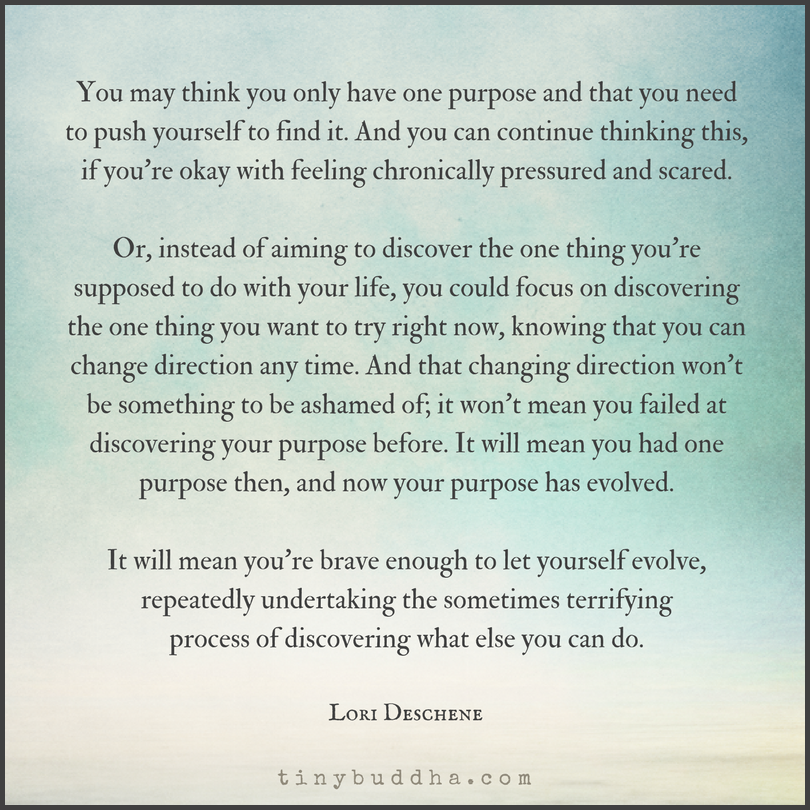
    Knowing the right people and connecting on a deeper lever is much more powerful than anything written on a piece of paper. Mind you, this, of course, depends on what kind of opportunity you’re after. But, for me, looking back, what served me during my years at university wasn’t the grades I got; it was the connections I made.
    That’s how I’ve landed jobs, speaking opportunities, and have been featured on podcasts–things I otherwise never would have heard of or been considered for.

    9. Everyone is doing the best they can.

    I truly believe this. Everyone, no matter how annoying, self-destructive, or provoking they might seem, is always doing the best they can based on their mood, experience, and level of consciousness.

    I used to get angry or upset if someone was rude, pessimistic, or didn’t deliver projects on time. Today, I know that I’m not in the position to judge. I don’t know what they battle. I don’t know what’s really going on in their life. All I can trust is that if I was in their shoes, I might do the same thing. This perspective has saved me a lot of energy that I previously used to waste.

    10. Know your “why.”

    Often, we place a lot of focus on what we do or how we do it. Seldom we ask why we do it. If I would have dug deeper in my “why’s” when I was eighteen, I would have connected more to my desires. Like this:

    Question: Why do I want to get this education?
    Reply: Because I want to get a good job.

    Question: Why do I want to get a good job?
    Reply: So that I can earn good money, work on something I enjoy, and get a nice title.

    Question: Why do I want that?
    Reply: Because I want to feel secure and free, to explore the world, to create things, to feel respected, and to connect with myself and others.”

    When I got clear about my “why” it became obvious to me that I wanted to work with people, have my own business, and to be able to work from anywhere in the world.

    Digging into the “why” really narrows down what’s important. Not having a clear “why” proves that what we’re aiming at isn’t worth pursuing.

    Eventually, Everything Will Make Sense

    Sometimes we stumble and fall. Sometimes the road is rocky. Sometimes we question if everything will make sense in the end.

    Looking back at your eighteen-year-old self, what would you tell them?

    To be easier on yourself?

    To stop worrying and have more fun?

    To trust that everything happens for a reason and that things will work out?

    From this perspective, what do you think an older version of yourself would have told you today?

    To be easier on yourself?

    To stop worrying and have more fun?

    To trust that everything happens for a reason and that things will work out?

    You get the point.

    As Steve Jobs said, “You can’t connect the dots looking forward; you can only connect them looking backwards. So you have to trust that the dots will somehow connect in your future. You have to trust in something – your gut, destiny, life, karma, whatever. This approach has never let me down, and it has made all the difference in my life.”