Tag: Purpose

  • How I Stopped Worrying About Running Out of Time to Achieve My Goals

    How I Stopped Worrying About Running Out of Time to Achieve My Goals

    “The only thing that is ultimately real about your journey is the step that you are taking at this moment. That’s all there ever is.” ~Alan Watts

    One thing that is promised to each one of us in life is death. No one will avoid dying or feeling the pain of losing others. From a young age I remember being aware of this fact, and it scared me.

    As I got older, I began to feel a sense of pressure that I was running out of time and loss was imminent. The thought of losing my loved ones and the uncertainty of what may happen worried me. I wanted to avoid the feelings of loss and limitation, so I unconsciously began to move faster.

    There was a deep fear that if things didn’t happen fast, they would not happen at all and that I wouldn’t have enough time.

    Faster became better, and I started the hamster race of working hard to achieve my dreams. Whether that was finishing school, starting a career, being in a healthy relationship, starting a family, being fit… even my spiritual journey became a race to happiness that only existed in the future!

    I realized later in life that this mindset was born out of fear—the fear of loss, the fear of the unknown—and protection from these fears was a quick accomplishment. It created an immense amount of stress and suffering because all goals and dreams take time to build.

    I believed sooner was better, and if it wasn’t fast then it wasn’t happening at all. I began to find reasons for why it wasn’t happening—that I was not good enough, life was unfair and hard, and it was not possible for me. Each time I repeated these limiting beliefs, I took one step away from my dreams and developed more anxiety.

    This led to a cycle of starting, quitting, and then searching for something different. I would garner the courage to start something new only to fall flat on my face when it didn’t happen. The cycle of shame would repeat, impacting my mental health and my ability to move forward.

    I wanted to see proof that I was achieving my goals and searched for tangible evidence to feel good while simultaneously ignoring all the wonderful things that were right before my eyes. Like living near the ocean, spending time with my loved ones, talking walks along the coast, having meaningful conversations with friends, and enjoying moments of quiet with my favorite cup of coffee. These mean so much to me now.

    I wanted the degree, the paycheck, the happy photo of me surrounded by friends, rather than the silence of uncertainty and the impatience I felt in the present. My fear of time took away the only real time that existed, the now.

    When I slowed down and paused, I realized that I had experienced so much growth and expansion in all the years I’d thought I was wasting time. Every roadblock had challenged me to change. In fact, my anxiety, fear, and disappointment around my slow progress led me inward to heal my relationship with time.

    Though many of my dreams did come true, I was only able to recognize them when I slowed down and let go of the “when.”

    I was able to achieve this by practicing meditation, breathwork, and awareness. With time and consistency, the present moment became filled with color, and its beauty swept me away from the ticking time bomb of the future. I began to enjoy each step of my journey, whether it was the beginning or end.

    With the gift of hindsight, I can see that it is not about the “when” but about the “what.” What I’m doing right now in the present. The number of negative and limiting beliefs I placed upon myself and the shame I felt were due to an emphasis on always “thinking forward,” and a lack of being with myself in the present.

    The truth is when we let go of our misconceptions of time and follow our dreams patiently, we see that time is not against us; the process is a necessary part of our journey.

    The time it takes to reach our goals is not empty; it is filled with learning and unlearning so that we find ourselves. In the end it is not the achievement that leads to freedom, but the wisdom that comes from living life.

    If we make the present moment our friend rather than our foe, we can experience and appreciate our present journey rather than focusing on our arrival.

  • Has Your Path in Life Meandered? Why It’s Okay to Take the Nonlinear Route

    Has Your Path in Life Meandered? Why It’s Okay to Take the Nonlinear Route

    “Even when we think we have things figured out and everything is going to plan, it can all change in a moment. Inspiration fades. Beliefs transform. Goals shift. Life happens. And that’s the thing. Life is not linear.” ~Aly Juma

    I was maybe around nine years old. My dad and I were working with orange play-doh in the shed next to the garage that we used for arts and crafts. Dioramas stood on either side of us—one with an underwater scene from The Magic School Bus, the other a solar system complete with styrofoam planets. Through the window the wind rustled our wooden swing-set.

    Taking the play-doh in my hands, I blobbed it into the shape of a hill.

    “It’s the hill between us and Aunt Maria,” I announced to my dad as it took form.

    Earlier that day we’d visited my aunt and cousins, who lived in a town that required crossing a tunnel through the hills to get to.

    My dad helped me carve out the tunnel. Then we chiseled the winding roads that seemed to coil up and down from one side of the hill to the other.

    I realized we’d never been up on those roads. I was curious to know if cars could drive across them, so I asked my dad. He told me they could.

    “Why don’t we ever?” I wondered aloud.

    It seemed like it would be fun—going up, down, and around all those curves. I wondered what we might see along the way. I wondered if it would feel like a Disneyland ride.

    “It’s very pretty up there,” my dad said. “But going through the tunnel gets you there much more quickly.”

    **

    As I got older, I realized I liked taking the hillier route in life.

    Those who had their mind made up seemed to zoom through a tunnel. My more meandering route looked quite different.

    My life after graduating from college included moving to Uruguay for a year, taking a job in social work upon returning, then driving Lyft for two and a half years before becoming a Spanish interpreter. I had a lot of time to write, practice my hobbies, and figure out my next move during this stretch of time.

    The Lyft driving in particular was a move that some might have seen as aimless and unambitious. Yet it felt like the best option for me then—a point in time when, with unresolved issues to heal, I needed freedom, flexibility, and control. Few other jobs offered those things.

    I enjoyed riding the wave of adventure wherever it took me.

    One time, after delivering flowers to an Uber Eats client in the Outer Sunset neighborhood of San Francisco on a rare sunny day, I went for a glorious barefoot jog along the beach.

    Another time I ended up at a cafe in Turlock where tables were barrels, next to windows that peered out at a street that looked plucked from the 1800s.

    Still another time I found myself at a storybook cafe attached to jacuzzis that cafe-goers could rent for an hour.

    When people asked, “Why would you want to drive Lyft?” or “Why would you want to live that lifestyle?”, small moments like these made up part of my answer. The freedom in my schedule (part of the independent contractor lifestyle) allowed them to happen. I learned to be a treasurer of beauty in random places and unexpected moments.

    **

    Sometimes unanticipated events can derail even our best laid plans. There are so many things we can’t control, and practicing flexibility can help soften the blow of this.

    Let’s say I’d planned to give a couple of quick rides before ending at a cafe to study for my Spanish interpreting test—but then a passenger requested a ride that was longer than I’d anticipated. In order to still meet the studying need, I’d translate passengers’ conversations into Spanish in my head.

    I also joined 24 Hour Fitness so that no matter where I ended up, a workout facility would never be too far out of range. (Whichever was closest by the end of my last ride was the one I’d work out at.)

    I was reminded that there are multiple paths to meeting our needs. To not wall myself off to doing this in unconventional or creative ways. The more adamant you are about the “hows,” the likelier you’ll be to neglect meeting them altogether. I learned to choose instead to satisfy them in a perhaps less conventional (albeit un-ideal) way.

    When we aren’t flexible, we become victims to our circumstances. This can lead to learned helplessness.

    **

    For anyone who’s still not quite sure where their life is headed, or feels like they’re trekking the hilly meandering route:

    You don’t need to immediately—or ever—commit yourself to the rat race. Sometimes you just don’t know what’s right for you. And it’s okay to take time to figure it out.

    I’ve learned that we don’t need to be the car shooting straight through the tunnel. The tunnel may be the quickest, most straightforward commute. But there are so many ways to arrive at your ultimate destination. Our route can be like the alternative, unexplored roads over the hills.

    Remind yourself that your ultimate goals probably aren’t to live aimlessly and hedonistically. You just haven’t figured out what your ultimate goals are yet. Maybe it’s taking you a little longer to get there. And that’s okay.

    Keep listening to your intuition until it takes you where you need to be. Maybe your path is to keep moving, until eventually you arrive at your wiser end goal. And maybe once on it, you won’t look back—because no one forced you onto it. You arrived there on your own. It happened when it was supposed to.

    And if your ultimate goal is to aimlessly and hedonistically, that’s okay too. There’s no wrong path in life—just what feels right to you.

  • How to Live Your Dharma (True Purpose): The Path to Soul-Level Fulfillment

    How to Live Your Dharma (True Purpose): The Path to Soul-Level Fulfillment

    “Dharma actually means the life you should be living—in other words, an ideal life awaits you if you are aligned with your Dharma. What is the ideal life? It consists of living as your true self.” ~Deepak Chopra

    From the moment I finished high school until my late twenties, I had “purpose anxiety.”

    I wasn’t just confused and missing a sense of direction in life; my lack of purpose also made me feel inadequate, uninteresting, and lesser than other people.

    I secretly envied those who had cool hobbies, worked jobs they loved, and talked passionately about topics I often didn’t know much about.

    I even resented them for living “the good life” and kept wondering, “Why not me?”

    Until it was my turn.

    What it took to begin embracing my purpose—or dharma, as I prefer to call it—was one thing: love.

    Let me explain.

    The 4 Keys to Living Our Dharma (Purpose)

    The Sanskrit word “dharma” has many meanings and most commonly translates to “life purpose” and “the life we’re meant to live.” I believe there are four main keys to living our dharma.

    1. Cultivating self-worth: the essential first step.

    I was bullied in high school, and as a result, I had very low self-esteem for many years. Looking back, I realize that feeling that low self-worth prevented me from embracing my dharma.

    Why?

    It was because I was too focused on trying to be liked and too worried about what other people thought of me to be in touch with my authentic self. I put all my energy into doing everything I could to look “cool” and be accepted by others rather than what my soul wanted to do, explore, and experience.

    The essential idea is that embracing our dharma requires living authentically. As Deepak Chopra says, “[dharma] consists of living as your true self.”

    The issue is that it can be difficult to express and live your truth when you feel inadequate, unworthy, and perhaps even unlovable. The risk of being rejected seems too high, and it feels unsafe.

    So the first step to living our purpose, I believe, is cultivating radical self-love. It’s a bit of a “chicken and the egg” situation because having a strong sense of purpose increases self-esteem, but low self-esteem makes it hard to embrace our purpose. It’s best to develop both simultaneously.

    Here are a few ideas to cultivate self-love that have helped me:

    The first one is meditation.

    Part of meditation is about allowing ourselves to become aware of and observe our own thinking. When we meditate, we disidentify from our thoughts and get to experience glimpses of who we truly are—of our essence—which is loving and infinitely worthy. As a result, we naturally start loving and accepting ourselves more. Meditation has undoubtedly been the number one thing that has improved my self-esteem.

    Another thing that has helped me is self-care.

    As I said, I didn’t have many friends in high school and spent much of my time alone. So I started going to the gym after school to do something with my time and be around people (even if I didn’t talk to them). Exercising regularly led to eating healthier and taking better care of myself in several other ways.

    I find that self-care is a practical way to cultivate self-love. When you take care of yourself, you show that you care about yourself. Over time, you start genuinely feeling the self-love you are showing yourself and believing it.

    The last (effective but cringy) thing that helped improve my self-esteem is an exercise that a therapist recommended.

    Here’s how it goes: In the evening, stand in front of the mirror and—looking at yourself in the eyes—say, “I love you, [say your name]. I love [say three things you like about yourself], and you deserve all the good things life has to offer.” Try it for thirty days; it may change your life.

    2. Being in touch with and following your inner compass.

    Jack Canfield says, “We are all born with an inner compass that tells us whether or not we’re on the right path to finding our true purpose. That compass is our joy.”

    Often, we seek purpose outside of ourselves, as if it’s some hidden treasure we need to find. But, as Mel Robbins puts it, “You don’t ‘find’ your purpose; you feel it.” What feels good—expansive, joyful, intriguing, exciting, or inspiring—to you?

    That’s an important question because, according to numerous spiritual books I’ve read, those things we enjoy are clues guiding us to our dharma.

    The main difficulty is usually differentiating our true desires from the ego’s “wants” and the desires that come from conditioning. The ego wants to feel important. It’s afraid of not being “good enough,” so it feels the need to prove its worth.

    The “wants” that come from conditioning consist of what our parents and society have told us we “should” do. If we follow those “shoulds,” even though they don’t align with our authentic selves, we risk waking up one day and realizing that we’ve climbed the wrong ladder and lived our life for others instead of ourselves.

    Here’s something that helps me differentiate those desires.

    Make a list of all the things you want to have, do, experience, and become in the next few years.

    For each item on your list, ask yourself why you want it. Is it because you feel the need to prove something or want to feel important or perhaps even superior to others? That’s the ego. Is it because you think that’s what you “should” do? That’s likely conditioning. Is it because it makes you feel alive? That’s your heart.

    To live our dharma, we must follow our heart’s desires—the things we genuinely love. This requires authenticity and courage.

    3. Savoring the experience of being alive.

    Another aspect of dharma is loving life—living with presence and appreciating the experience of being alive. There are a few things I find helpful here:

    The first idea is to keep a “Book of Appreciation,” as Esther Hicks calls it. Every day, take five minutes to journal about what you appreciate about someone, a situation, or something else in your life.

    To savor life, we must also be present. In A New Earth, Eckhart Tolle states that true enjoyment does not depend on the nature of the task but on our state of being—we must aim for a state of deep presence.

    He recommends being mindful when attending to even our most mundane tasks. I also like to go on long walks and observe (with presence) the natural elements around me—like the clouds passing in the sky, the smell of trees after the rain, and the sensation of the sun’s rays on my face.

    And, of course, having a daily gratitude practice is always a winner!

    4. Extending love through joyful service.

    Dharma is also about sharing—extending love. One of the best ways to contribute to the collective is to share our gifts in a way that’s enjoyable to us.

    We all have natural gifts—things that come easier to us than to others. Some people are good at writing, while others are great leaders or excel at analyzing data. Perhaps you like to create, manage, nurture, delight, support, empower, listen, guide, or organize.

    There’s also another, more profound aspect of contribution that comes from being rather than doing. I remember a passage from a book I read many years ago (I can’t remember what book it was) that went something like this:

    “Your contribution [to the collective] is your level of consciousness.”

    A higher consciousness radiates greater love, and one of the best ways to uplift others is by being a loving presence.

    Dharma: The Bottom Line

    Bob Schwartz, the author of Your Soul’s Plan and Your Soul’s Gift, says, “We are here to learn to receive and give love. That’s the bottom line.”

    This involves loving ourselves, others, and life in general, and also following our heart—doing things we genuinely love.

    I don’t know about you, but this perspective on dharma feels good to me. It has freed me from my “purpose anxiety.”

    I hope it can serve you too.

  • It’s Okay to Have No Purpose Beyond Being and Enjoying This Moment

    It’s Okay to Have No Purpose Beyond Being and Enjoying This Moment

    “I don’t believe people are looking for the meaning of life as much as they are looking for the experience of being alive.” ~Joseph Campbell

    I was sitting on my yoga mat with my legs stretched out in front of me. I bent forward into a fold, puffing and clenching my jaw as I extended my fingertips toward my toes. I was growing angrier by the second.

    A slew of sour thoughts marched through my brain.

    This is stupid. I thought yoga was supposed to be relaxing. I’m so out of shape. Other people have no trouble with this pose. This hurts. Why bother doing yoga at all? It doesn’t work.

    My mat resistance was strong at this moment, but it was also indicative of a much larger problem. Doing the pose “right” wasn’t the issue here; it was my belief that unless I could bend a certain way, I wasn’t progressing in my yoga teacher training.

    I wasn’t meeting my goal. I wasn’t being “productive.”

    And surely, there was no greater sin than that.

    A Collective Fungus

    The idea that you aren’t worthy unless you are producing results has seeped like insidious black mold into every facet of our modern lives.

    We are pressured to always be making goals, going somewhere, or achieving something. “Doing nothing” is scorned as lazy. Pursuing a hobby with no monetary value or social esteem is deemed a waste of time.

    You only have a certain number of days on this planet. If you don’t spend them hustling, you’re of no use to anyone.

    You’re writing a novel? Well, have you published it yet? How much money did you get for it?

    Oh, you’ve taken up jogging? Why? Are you planning on running a marathon? What are your weight goals?

    Don’t you want to leave a legacy behind? Don’t you want people to read off a list of impressive accomplishments at your funeral?

    But the truth is that the most meaningful things that happen to us in life have no clear point.

    You can’t cash in on the beauty of a sunset. There’s no “purpose” to stargazing. Listening to a song that transports you out of time and space doesn’t pay the bills.

    Moments like these are born from joy and wonder, and they are what give our lives meaning. It’s time we gave ourselves permission to feel them.

    1. Schedule time to do nothing.

    Once I realized how much the burden of being productive was curdling my overall joy in life, I started setting aside time to simply “be.” For me, this involved sitting on my porch with a glass of wine in hand, trying to simply be present to what was going on around me.

    No phone, no music, no screens.

    What became very apparent, very quickly, was how restless I grew without any busywork. I felt guilty and slothful. What was the point of just sitting here, enjoying the scenery? I should be out there doing something.

    But I did my best to ignore such feelings, and I continued to show up for these pockets of allotted rest. What I noticed was that gradually, the shame began to melt away. The more I gave myself permission to do nothing, the more I felt my spirit expand in the space I had created for it.

    These boozy relaxation sessions on the porch were only one way to cultivate gratitude and stillness. I tried other things as well, like bringing a more presence-focused—and less goal-oriented—attitude to my yoga practice.

    The “5-4-3-2-1” meditation was another helpful centering practice. It goes something like this:

    Take a moment to look around and note five things you see. Then note four things you hear, three things you can touch, two things you smell, and one thing you can taste. You can mix and match what senses go with which number.

    These moments of “being time” will look different for everyone. The point is to take a moment to note what is happening around you right here, right now.

    Let go of the shame that is so often attached to being “unproductive.” Give yourself permission to do nothing, even if it’s just for a few minutes a day.

    2. Abandon the idea that “self-love” means “selfish.”

    Granting yourself the grace to “be” is an integral component of self-love—a complicated and guilt-provoking term for many of us because we have so often been told that “self-love” is the same thing as “selfishness.”

    This misconception is yet another way our society has prioritized “hustling” over inner peace, and such an attitude often leads to the tragic dismissal of our own feelings and boundaries.

    Labeling self-love as selfish doesn’t stem from a healthy consideration of those around you, but from a devaluing of your own humanity.

    Self-love is the recognition that you have inherent value as a human being who takes up space on this beautiful green and blue marble.

    In practice, it means doing things that reinforce this truth—in whatever way nourishes you emotionally, mentally, and spiritually.

    For me, it means eating greener and doing yoga. It means respecting my creative process by resting so I don’t burn out.

    It means giving myself permission to let go of relationships that are ruled by guilt or fear. It means practicing embodiment through breathing exercises and checking in with my mental health.

    These are my ways of practicing self-love. They don’t have to be yours. Pay attention to what makes you feel free and joyous. Then go do that.

    Try to embrace that fact that you are worth prioritizing, every day, until this idea blossoms into your lived reality.

    3. Give yourself permission to not have a “purpose.”

    Have you ever been in a job interview and had the person sitting across from you ask, “So where do you see yourself in five years?’

    Well, consider this your official letter of permission to have no clue what you’re doing in five years—or even one year. You don’t even have to know what you’re doing tomorrow.

    The only “purpose” we have as human beings is to move toward and reflect love. There are a lot of different ways to do this, and everyone deserves the space to discover the path that is right for them.

    Ultimately, life is about joy, not productivity or the subjective goalposts of success. Grant yourself the grace to exist in this world. Being alive is a miracle.

    You are enough simply because you are.

  • Why Many of Us Chase Big Dreams and End Up Feeling Dissatisfied

    Why Many of Us Chase Big Dreams and End Up Feeling Dissatisfied

    “A dream written down with a date becomes a GOAL. A goal broken down into steps becomes a PLAN. A plan backed by ACTION makes your dreams come true.” ~Greg Reid

    We all have dreams, some of them really big. And if we are serious about achieving these dreams, the next logical step is to set a goal, make a plan, and start taking action.

    But we are missing out on one very important step in the dream-creating journey.

    This step is one that has taken me, personally, two decades to come to realize. And my first clue came from my kids’ bedtime story book, of all places!

    Down in the depths of the ocean lived a sad and lonely whale who spent his days searching and searching for the next shiny object, never feeling complete or fulfilled in his quest for more. Then one day, stumbling upon a beautiful reef, a clever little crab stops him and asks:

    “You are the whale that always wants more. But what are you really wanting it for?”

    We seem to spend our whole lives setting goals and planning out our dreams, but we rarely stop to ask ourselves what we want these things for. What do we want the new car, job, promotion or house for?

    If we stopped to think, and if we were really honest with ourselves, we would all have a similar answer. Because our goals and dreams often boil down to the same underlying human need for significance: to feel good enough, valued, validated, accepted, loved, or worthy.

    Most of our goals are essentially attached to our need to feel good enough in the eyes of others and ourselves.

    The Missing Step of Having an Unattached Goal

    Having an unattached goal is the missing step in our dream-living process. It is such an important step for two simple reasons. When we have goals that are conjoined to the need to be good enough, we can only end up with one of two finish-line photos:

    • You on the podium with the winning medal around your neck, but looking around at the next shiny medal to chase, not fulfilled by your achievement.
    • You not crossing the finishing line, with an “I’m a failure” sign around your neck, left with an even bigger hunger for validation and self-worth.

    Cease the Endless Quest for More

    Just like in the children’s book The Whale Who Wanted More, a typical pattern is to chase goal after goal, finding that we are never satisfied for long and continually hatching plans for the next shiny object to chase.

    It makes complete sense when you realize that these goals are forged together with the need for significance, acceptance, or validation. Because if we don’t fill those needs first and instead use our goals to meet them, there is no car, house, promotion, or partner that will. And we will always be looking for that next thing to meet those needs.

    Cease the Self-Sabotage

    Self-sabotage was my MO for many years. Just like an ironsmith beating his flame-red metal into shape, I had beat and bent my purpose so that it would fulfill what I lacked in self-worth and what I secretly craved in acceptance and validation. I would be enough only when I achieved my purpose-related goal.

    And here’s the kicker—I not only needed to live my purpose in order to fulfill my need for significance, I also had to swim against the undercurrent of feeling like I wasn’t capable of actually doing it.

    The fear of failure was so real, because if I failed at this I wouldn’t get the validation and worth that I needed. So any time I felt like failure was in sight, I would give up and hatch a new plan to reach my purposeful goal, and in doing so, sabotage my own path to it. My way of seeing the world had become: better to keep the dream of a possibility alive than have the reality of failure come true.

    The Question That Opened My Eyes to My Attached Goals

    I lived for twenty years under the guise of a pure purpose, a burning flame to help others. And though that was very much part of my drive and work over the years, it was subtly intertwined with the need for recognition and “becoming someone.” And it had slowly and silently transformed into a shackle for self-worth and significance.

    About a month or two after reading that bedtime book to my children, I heard a question that split my tug-of-war rope in half; a question that left my goal on one side and my self-worth safely on the other. It gave me the separation, distance, and freedom I needed to be me and to go after my goals with no emotional agendas, just pure passion and purpose.

    And the magic question was:

    If you don’t get what you want, what would that mean about you?

    When I first heard that question, my answer came so quickly:

    I’d be a failure.

    It seemed like a simple mathematical truth to me: don’t achieve my life-long goal equals failure. What other answer could there possible be?

    As it happens, there is only one right answer to this question. And it wasn’t the one I gave. The right answer sounded simple. There was nothing complicated about it, but it just didn’t sit, settle, or disperse in any way. It just kind of hung there in front of me, just waiting for something to happen.

    And something did happen, about a week later.

    I was running through my typical pattern: the way I would always approach my purpose-related goals and how, after seeing and concluding that nothing would ever come from my efforts, just give up.

    But that day, I suddenly remembered the question, if you don’t get what you want, what would that mean about you?

    And more importantly, I remembered the right answer:

    Nothing.

    Yes, you read that right. The right answer is nothing. Not getting what you want changes nothing about who you are. You are still you.

    You are still worthy. You are worthy, whether or not you achieve your goal. When we tie so much meaning and worth to what we are trying to achieve it becomes a huge block. And we end up chasing that goal or that dream for all the wrong reasons: so that we don’t feel like a failure; so that we feel loved, accepted, and recognized.

    Your goals do not complete you. You are complete whether you achieve them or not.

    When you truly feel that not getting what you want means absolutely nothing about you, you know that you have an unattached goal. And when you have an unattached goal, you are free to go after it without those typical self-sabotaging patterns and to enjoy achieving your goal when you reach it.

    A dream written down with a date becomes a GOAL. A goal broken down into steps becomes a PLAN. A plan backed by ACTION makes your dreams come true.

    But a dream unattached to your self-worth is the real dream come true.

  • How Embracing a Good Enough Life Gave Me the Life of My Dreams

    How Embracing a Good Enough Life Gave Me the Life of My Dreams

    Acknowledging the good that you already have in your life is the foundation for all abundance.” ~Eckart Tolle

    It was perfect. Well, almost.

    I was doing the work I love, with someone I love, my two boys were thriving, and we seemed to finally be on the road to retirement. What could possibly be wrong with this picture?

    A lot, apparently.

    I was waking up worried and unsatisfied. Always feeling like life was missing something, like I was missing something, not doing enough, asking: How can my business be better? What will my kids do next year? Is my partner gaining weight? Did I run yesterday?

    Anxiety crept into my mind and contracted my body before I had a chance to get ahead of it. It was an unease that something just wasn’t quite right. And if it was, then it wouldn’t be for long.

    I knew enough about neuroscience and anxiety to know what was happening.

    Negative thoughts are a protective pattern that come from scanning our environment for potential threats.

    Our ancestors were wired this way to survive, thankfully, and we are probably in the first generation that can even talk about the word “abundance,” at least in this part of the world. The intergenerational trauma of feeling unsafe is in the recent past and runs deep in our DNA, especially for women.

    But even armed with all the knowledge of trauma and all the best practices of breathing, meditation, and yoga, there was still a missing link.

    My worries seemed trivial given the war that was raging in the world. It seemed self-indulgent to want more, to even consider that this was not enough. Even when it felt enough, it was because all the factors were lining up in that moment, but it felt precarious, like a house of cards—even though I knew it wasn’t.

    All the self-help books promised I could “reach for my dreams” and “have my best life ever” if I only changed my habits and my mindset and lived like I thought all the people around me were.

    In fact, I was so busy working on my life that I felt exhausted and still felt like I wasn’t doing or giving enough. Even when deciding what charity to donate to, to help those in need, I felt like I had to choose the “right” one!

    It was through my work with people in chronic pain that one day something shifted. I was teaching about the difference between acceptance and giving up in the search for a cure, and I said something like “It’s not so much what you are doing but how you are doing it.”

    Doing something from a place of pressure and intensity, with a worry about making a mistake or not getting it right, creates fear. Fear creates more fear in the end, and it creates pain.

    My inner perfectionist gasped and took a step back. She was outed.

    Not only did I see how my inner perfectionist had been running the show, I knew that if I wanted to negotiate with her, I was going to have to come from a different energy other than “getting this right.”

    She had helped me; she had worked so hard to stay on top of everything and got me through some tough times.

    She had guilted me when I felt like a bad mother, a bad friend, a less-than therapist, or a mediocre spouse and showed me all the ways I could be better. She even lent her expertise to my family, telling them how they should behave, what they should eat and not eat, and how they should conduct their lives.

    This was sometimes done directly, but she also worked coercively behind the scenes through people-pleasing, manipulation, and other passive-aggressive behaviors.

    She was based in fear and shame as a trauma response, learned early on in my childhood years, that told me my authentic self was clearly not good enough. So I employed her services to keep me safe, help me fit in at school, get good marks, and be an all around “good girl” on the outside. But the inner pressure of a perfectionist is unbearable and soon morphed into an eating disorder when life felt out of control.

    Many of us live in a nasty triangle that can be difficult to see and even more difficult to disrupt. It goes: shame-inner critic-perfection, and it balances itself precariously inside our mind and body leaving its imprint of “not good enough” to guide our lives.

    This is compounded by a culture that primes us to feel like we’re not okay and there is always something to buy, change, or fix, because it is not normal to just be okay.

    Even though my trauma happened decades ago, the vestiges remained. I could not quite relax into my life without something or someone, mostly myself, feeling “not quite good enough.” I also found this same core belief to be at the root of many if not all of my clients’ struggles with anxiety, depression, and chronic pain.

    It was the constant feeling of being here but wanting to be… somewhere or someone else. A knee-jerk resistance to life or an inability to truly sink into all life has to offer without finding fault or a hiccup somewhere. Or worse, thinking that I had to earn my worth by doing more and being more, and all without effort!

    Not. Good. Enough.

    Not good enough for what? For whom? This is an unanswerable question because it is a lie. But it is one thing to know that and another to let my inner perfectionist know I was safe now and she could take a backseat because, well, I’m good enough.

    I thought about the times I felt free and at peace.

    I thought about the people I knew whose lives had the biggest impact on me.

    I had a chat with my future self twenty years from now about the qualities she had, how she moved, and what she valued.

    And it came down to a word: simplicity.

    Here is where I had to tread carefully. My inner perfectionist would make finding simplicity very, very complicated and approach it with an all-in attitude, as she did everything: live in a tiny house, two chairs, two sets of cutlery, and a bed.

    No, there had to be another way, an easier way.

    It turns out, it was the easiest way possible: Embrace what is here now.

    What if everything was good enough, just as it is, in this moment? What if I was good enough, just as I am, in this moment? What if my body, my health, my relationships, all the ways I tried, were just good enough?

    It felt radical, revolutionary. It felt like I was disrupting all my programming about what it means to live a good life. It was not the energy of giving up or rationalizing that I didn’t deserve more and I should settle for less. It wasn’t even the energy of gratitude or appreciating what I have and how privileged I am.

    It was the opposite.

    Embracing my life as good enough busted the myth of inferiority and superiority that tells us some people are more or less worthy than others. It let me relax into the fact that we are all doing the best we can with what we know at that moment. If I was good enough, then others were too.

    It busted the myth of needing more and being more, because I didn’t have anything to prove to anyone. It also busted the myth that if I truly accepted my life as it is, I would just lie down on the couch and never get up. Again, the opposite happened.

    Energy was freed up for more of what I love, not what I should do. Worry and struggle were replaced with self-forgiveness.

    Embracing my life as good enough gave me the doorway I needed to a quality of life I couldn’t imagine.

    I realized I was good enough to show up just as I am.

    I realized I was good enough to set boundaries around what and who aligned with me.

    I realized I could write, speak, and create in a messy, fun, good enough way.

    I realized I was good enough to rest.

    I realized I was good enough to embrace my own wants, needs, and desires.

    I realized I was already good enough for pleasure right here and now in a million ways I couldn’t see before.

    I realized my life was not about being better, improved, fixed… it was about being who I am, and that was enough.

    I realized I could work less and make more money.

    I realized my body was a remarkable organism that was to be loved and held, not manipulated.

    I realized that every decision I made was right for me because it was good enough.

    I realized that struggle was never meant to be my life, but giving, loving, and contributing were.

    I realized I was already good enough to live a life of joy, comfort, and ease.

    One of the most beautiful parts of this is looking in my children’s eyes and knowing that they, too, are so perfectly good enough just as they are. They don’t need to prove their worth to anyone.

    Embracing my good enough life has allowed me to enter my life, just as I am, and has turned “good enough” into “how good can it get?” It gave me the safety I needed to “do what I can, with what I have, where I am” (Theodore Roosevelt).

    Can you imagine a world where everyone knew they were just good enough? Where we all lived life from a place of forgiveness, grace, and compassion for ourselves?

    What are you already good enough for that life is just waiting to give you?

  • Living a Meaningful Life: What Will Your Loved Ones Find When You Die?

    Living a Meaningful Life: What Will Your Loved Ones Find When You Die?

    “At the end of life, at the end of YOUR life, what essence emerges? What have you filled the world with? In remembering you, what words will others choose?” ~Amy Rosenthal

    Most people believe sorting through a loved one’s belongings after death provides closure. For me, it provided an existential crisis.

    After glancing at the angry sky in my father’s driveway for what seemed like hours, I mustered up the courage to crack open the door to the kitchen. The eerie silence stopped me in my tracks. Wasn’t he cooking up a storm in this cluttered kitchen just a few days ago?

    I started with the mounds of clothes and cuddled them gently before pitching them. The sweet aroma of his fiery cologne still lingered. The air smelled just like him.

    My father’s belongings served as physical reminders of how he spent his time on Earth. Some of my favorites included:

    A weathered yellow newspaper clipping of his parents. Cherished family photos, with him grinning ear to ear. A collection of homemade cookbooks. Framed quotes such as Mi casa es su casa. A prestigious Pottery Barn leather chair, distressed by puppy claw marks. Nostalgic t-shirts from the early 90’s.

    Chipped and heavily-used Williams-Sonoma platters. An entertainment center that mimicked a NASA operation center, with 70’s CDs left in the queue. Invitations to neighborhood block parties. An embroidered apron which read “World’s Best Grill Master” paired with still fresh barbeque sauce stains.

    Homemade recipe cards with quirky quotes like “It’s good because it’s cooked on wood.” An entire closet of camping gear. Leftover birthday celebration goodies. Glazed pottery from local North Carolinian artists. Entertaining sports memorabilia on full display. And a tender card from me:

    Dear Dad,

    You’re the best dad ever! I hope you have a birthday filled with tasty BBQ, blaring seventies music, and a pepperoncini pepper to start the day off right. Thank you for being there for me. You are my hero. I can’t wait to celebrate with you this weekend!

    My father collected items that brought him joy, and, clearly shared them with others.

    While you may not know him, or think you have anything to do with him, you do.

    You will be him one day. We will all be him one day. At some point, someone will rummage through our drawers. Scary, isn’t it?

    Weeks later after organizing his possessions, I returned to my lavish apartment with cloudy judgment. As soon as I arrived, I dropped my luggage near the door and waltzed into my closet. The items that once made me proud, made me nauseous. If someone rummaged through my keepsakes, they would find:

    A closet full of color-coordinated designer brand clothes. Scratched CDs listing my favorite nineties bands. An entire drawer filled with vibrant, unused makeup. A high-end collection of David Yurman rings, necklaces, and bracelets. Wrinkled Nordstrom receipts. An assortment of gently used designer handbags. And, pictures of fair-weather friends scattered throughout.

    Do you know what they all had in common? Me.

    ME! ME! ME!

    Comparing my life to my father’s led to a life-changing decision. Should I continue to splurge on meaningless items or start completely over?

    After a moment of contemplation, my life mirrored a blank slate. Products related to “keeping up with the Jones’s” were no longer my jam. Instead, my money was reserved for incredible moments that produced long-term joy and warm memories.

    My new spending habits derived from the following financial values:

    • Seek experiences that make me feel alive.
    • Purchase life-changing products.
    • Invest in creative hobbies that I’m proud of.
    • Provide others with joyous moments.
    • Initiate celebratory activities.
    • Make financial decisions out of love.

    With a little trial and error, I traded in frivolous shoulder bags for top-rated camping gear. Saturday shopping days transformed into baking Sundays. And most importantly, I went from feeling not enough to experiencing fulfillment.

    Twelve years later, I’m happy to share that I continue to evaluate my purchases using a “Will this make a good memory?” lens. In retrospect, mending my financial habits was one of the best decisions I’ve ever made.

    Why? I’m no longer impressed by status. I prefer art, learning, and the outdoors over any invitation to shopping. In return, my life is filled with purpose, meaning, and long-term satisfaction.

    What I know for sure is that most commodities on their own overpromise and underdeliver, unless we intentionally create an evocative memory with them. Materialistic purchases provide us with fleeting moments of happiness. On the contrary, curating beautiful moments with others delivers long-term joy.

    While you won’t find many luxurious products in my house now, you will find:

    A four-person picnic backpack for sunny days at a park. Bird feeders galore. A fine assortment of tea to share with others. Homemade bath bombs for birthdays. Color-coordinated self-improvement books. Aromatic sea salt exfoliants that replicate a spa experience. Cheery holiday decorations.

    An assortment of various vision boards and bucket lists. Seasonal candles galore. A bathroom drawer filled with citrus soaps, shampoo, and lotions for overnight guests. A collection of homemade scrapbooks featuring beloveds.

    An emerald green trekking hiking backpack for outdoorsy adventures. Crinkled Aquarium tickets. Handwritten family cookbooks. Seeds for a blooming garden. Hygge and cozy themed library nooks. A bright blue hybrid bike, for nomadic quests. A closet full of board games. And my most prized possession of all, a sentimental card from my darling father, John:

    Happy Graduation, Britti!

    I am proud of who you are and proud to be your dad. I like how you hold your head high. You are becoming a beautiful young woman and fun to be around. You have taught me things. You are so important to me. I treasure our time together and will always be here for you! It’s not always easy, but, you have a lot of love around you. I hope that life keeps blessing you. Keep spreading your wings and following your dreams!

    Love, Dad

    The real question is, when someone organizes your belongings, what will they find?

  • How the Deathbed Meditation Can Bring You Clarity, Purpose, and Joy

    How the Deathbed Meditation Can Bring You Clarity, Purpose, and Joy

    “Death may be the greatest of all human blessings.” ~Socrates

    There’s a lot of beauty and value in positive, light-and-love approaches to mental, emotional, and spiritual well-being.

    But I challenge you to go a little deeper and to face something we’re all going to experience eventually:

    Death.

    I know this may sound macabre, bizarre, or downright unappealing. But hear me out!

    There is a certain power and beauty in consciously visualizing and meditating on one’s death.

    What could be more awakening and more revealing than putting your current self into the perspective of your dying self—into your last few moments?

    Such a precious practice helps to bring a stunning clarity and crystalline focus to everything going on in your life.

    Indeed, what is referred to as the “deathbed meditation” helps you to:

    • Figure out what is most important to you
    • Let go of old pains and hurts
    • Focus on what brings you joy
    • Find your true life path
    • Uncover your hidden gifts

    As humans, we tend to live our lives as though they will never end. From one day to the next we live in a kind of autopilot mode where we take everything (and everyone) for granted.

    The deathbed meditation is a powerful practice you can incorporate into your life whenever you feel lost, stranded, stuck, out of focus, or simply aimless.

    My Experience With the Deathbed Meditation

    I’ve always been someone who desperately needs a strong purpose in life.

    But something happened last year that tossed me into a dark existential crisis where I questioned (1) what my place in the world really was, (2) why old wounds were rising to the surface, and (3) why I felt so lost—despite having a strong self-care and spiritual practice.

    With the advent of COVID-19 and the retriggering of old traumas, I felt empty inside.

    You know that feeling of falling and not having anything to catch you? That’s how I felt.

    Witnessing the suffering in the world and in my own circle of family members, I realized something major: “I could die tomorrow.”

    I realized this isn’t a groundbreaking thought; we all have it at some point (I know I have). But in that moment it felt like a lightbulb went off in my head—I suddenly realized that the key to finding the answers to life was to contemplate something so few people dare to approach: death.

    The answers I received from that subsequent deathbed meditation have guided my life, reawoken my purpose, and fuelled me with vision ever since.

    How to Practice the Deathbed Meditation

    Doing the deathbed meditation is an act of radical self-love. There, I said it!

    Why radical? The deathbed meditation is radical because it’s rarely mentioned or practiced by anyone (that I’m aware of) due to its intimidating nature.

    But let me assure you that the answers you can potentially find are so soul-nourishing, so meaningful, so profound, that you will be overjoyed that you courageously took this step.

    Before you embark on this inner journey, please ensure you have a neutral mind—we don’t want minds that are feeling down or frazzled or unhappy for any reason (that will bias your discoveries).

    When you’re ready, let’s begin:

    1. Focus on feeling safe and relaxed.

    Before you begin your deathbed meditation, find a space in your house that feels cozy. You might like to place a blanket over you and a pillow behind your head for extra comfort. Draw the blinds or curtains and ensure the atmosphere is dark.

    It’s important that you feel safe and relaxed so that your heart and mind can open up and gain the most from the meditation.

    Place a blindfold, sleep mask, or cloth over your eyes so that you can’t see anything. Then take some gentle, natural, grounding breaths and settle yourself.

    2. Find some funereal music (optional).

    Some people prefer their meditations to be totally silent, but if you’d like to set the mood, find some funereal music (or music that would be played at a funeral) to prepare your mind for the scene.

    Again, do whatever makes you feel most safe and comfortable. If you prefer total silence, that’s okay too.

    3. Visualize yourself on your deathbed, surrounded by loved ones.

    In your mind’s eye, imagine that you only have a few minutes (or hours) left to live. You feel comforted and at peace with your loved ones surrounding you.

    What kind of room are you in? What kind of bed or seat supports you? Focus on some kinesthetic details to help enrich the visualization.

    4. Ask yourself, “What was I most happy to have done in life?”

    Take some moments to reflect on this crucial question: What were you most happy to have done in your life? Let images and scenes play out in your mind for as long as needed.

    This powerful question will help you to hone in on what truly matters in your current life. If you’re struggling with making an important decision or finding a life direction, this simple question could be the key to unlocking deep truths residing within you.

    5. Ask yourself, “What did I regret not doing?”

    Regret is a natural part of life, yet many of us shy away from it, trying to sweep it under the rug. To avoid accumulating too much regret, ask this simple question within your deathbed meditation: What did you regret not doing?

    Let any thoughts, images, memories, or scenes run through your mind’s eye. Take special note of them.

    6. Ask yourself, “What is the most important thing in life to me, above all else?”

    Values are what guide our lives, and yet we are often totally unaware of them. By asking the question, “What is the most important thing in life to me, above all else?” we come to understand, truly understand, what we value deep down.

    Take a few moments in your deathbed meditation to contemplate this question, letting it sink into the recesses of your mind, heart, and soul. The answer you discover can have the potential of shifting, expanding, and empowering your entire life.

    7. Thank your loved ones and end the meditation.

    Once you’re done asking all or some of the above questions, smile warmly to your loved ones and thank them for their presence in your life. Then, when you’re ready, return to the room you’re in, get up very slowly, and do a big stretch.

    You might also like to drink some water to ‘emotionally digest’ your experience.

    The deathbed meditation has been one of the most powerful tools in my life for getting straight to the heart of what I most love, cherish, value, and need.

    After all, what else can put things in perspective other than our own mortality?

    If you’re feeling confused, lost, or in need of direction, I highly recommend that you try this unique meditation at least once. You might be surprised by how intensely transformational such a practice can be!

  • How I’m Honoring My Values Even Though I Have Conflicting Priorities

    How I’m Honoring My Values Even Though I Have Conflicting Priorities

    “No matter what kind of stuff you tell the world, or tell yourself, your actions reveal your real values. Your actions show you what you actually want.” ~Derek Sivers

    I need to be a productivity rockstar if I stand a chance of accomplishing everything important to me.

    There’s a book I want to write, a course I want to create, and a chance to work with an award-winning author that has given me endless projects I want to pursue.

    These are exciting, but they’re creating a ton of anxiety in my life.

    Why?

    Because they’re at odds with being the kind of dad I want to be.

    Time is your most valuable resource as an entrepreneur.

    Time is also your most valuable resource as a present, attentive, and loving parent.

    When I look at the progress I’m making on my work projects, I can’t help but feel like a failure at the end of the week.

    It feels like I’m slacking.

    It feels like I’m being lazy.

    I’ve worked my ass off to get to this point, and now I’m letting it slip through my fingers.

    But what’s most important to me?

    My daughter, Willow.

    It’s a harsh realization to wrestle with because I find my work meaningful. My work gives me purpose. I don’t have some bullshit job I don’t care about anymore. I wake up feeling like I have something to offer the world. That feels light years away from the guy who didn’t care if he lived or died in his twenties.

    I’m not failing to get things done because I’m lazy. I say this, but holy hell, is it ever hard for me to internalize. I feel like a failure for not making progress on opportunities I would have killed for a few years ago.

    Except I’m not experiencing failure, am I?

    I’m experiencing what it means to battle with the beast that is priorities.

    I might not be crushing it as an entrepreneur, but I’m damn proud of the dad I am.

    And even though I feel like I “should” be doing more with my business, it’s not predictive of what I’ll be able to do in the future.

    Willow won’t be a kid forever.

    Whenever I read a particular Cherokee proverb, it stings with the bite of a rattlesnake because it serves as a reminder of what steals my happiness: “Don’t let yesterday eat up too much of today.” It speaks to where I find myself when I drift back into feeling like I’ll never be productive again.

    Whenever I start thinking about what I was able to accomplish in the past and how little it feels like I’ve done since becoming a father, it reminds me that my priorities are different now. But it’s also bringing about a shift in what I think it means to accomplish something with my day.

    Every day we go in and out of emotions based on the thoughts consuming us. Focusing on what we can’t do creates hopelessness; when we focus on what we can do, it creates motivation and a sense that the world is full of possibility. This is why our emotions are such a rollercoaster.

    It wasn’t until I noticed that I was putting entrepreneurship and being a dad at odds that I recognized I was the one creating the painful emotions I was struggling with.

    The better I can learn to manage my fears rather than react to what scares me, the better I can handle these moments when I feel feel like I’m a failure.

    My fear is justified. It makes sense that I’m fearful that I won’t be able to support my family if the business disappears.

    But is the fear based on fact? Not at all.

    All of my clients have expressed that they love working with me. The author I mentioned before said one of the things she admires about me most is my willingness to live true to my values.

    It’s okay to be fearful. It’s a natural part of life that keeps us alive. But if we don’t bring awareness to our fearful thought patterns, they will continue to haunt us.

    If I don’t admit that I have competing priorities, I can’t possibly expect to experience peace of mind in either area of my life. And calmness is the elixir that makes me a creative, innovative entrepreneur and a present and engaged dad. A far cry from the stress case focused on expectations and outcomes, putting me in a position to base my worth on how busy I am.

    We’re all farmers in the business of planting seeds. The more pressure we put on growth, the less we’ll see development because we’ll be too anxious to do anything effectively—and we also won’t enjoy any of it. We’ll be so busy worrying about our wants for the future that it will be impossible to appreciate what we have in the present.

    It’s a life-changing approach for work and an even more powerful way to parent when we remove the pressure of outcomes tied to a timeline. The results you experience in either area are far less important than the commitment to fully showing up, aligned with what you value. Then we’re not racing and stressing but creating a sustainable approach that honors all the things that give us a meaningful life.

  • Why You Should Stop Looking for Your Purpose and What to Do Instead

    Why You Should Stop Looking for Your Purpose and What to Do Instead

    “The meaning of life is to find your gift. The purpose of life is to give it away.” ~Pablo Picasso

    Twenty years is a long time when you know you’re meant to be doing something, but you don’t quite know what it is or how to go about doing it.

    To cut a two-decade story very short, I found the seeds of my purpose when volunteering in a hospital playroom with pediatric cancer patients in Romania one summer when I was twenty years old. And, though I have made many an attempt over the years, I am only now beginning to truly live the purpose I’ve felt a fire for these past two decades.

    Purpose anxiety is a common twenty-first century affliction. 

    So many of us today seem to struggle with this quest of finding our purpose. And then there’s the other side of that search; when you actually find what it is you’re here to do, how do you go about living it? And if you feel called to do something that feels so much bigger than yourself, how do you go about living up to that vision?

    I have struggled with both the before and after of finding my purpose. In the end, it took one small change to terminate my two-decade to-and-fro, and to finally start living my purpose  Though it might seem such an insignificant detail, what kept me stuck for so long was the word purpose.

    Purpose is just a seven-letter word, but it has a huge emotional charge.

    Purpose conjures up so many ideas, ideals, shoulds, and fantasies before you even start to consider what yours is. The pressure is on from the get-go. And this pressure isn’t conducive to finding it.

    The other thing about the word purpose is that it seems to live outside oneself—like something lost that you have to find. Another commonly used word for purpose is calling. It has the exact same effect. It’s like something is out there somewhere, guiding you to it, and you have to go on a search to find it.

    What finally set me free was changing the word purpose to another.

    I clearly remember the moment when I made this change in vocabulary and it all just clicked. I was, maybe quite cliché, looking out onto the horizon while walking along the beach and at the same time wrestling with my purpose-related demons.

    That day I seemed to see deeper than ever before into my patterns of self-sabotage and self-doubt, my fear of failure, and what failing would mean to my self-worth. And I remembered something I had heard recently about coming at life from the perspective of what we can give instead of what we can get from it.

    I realized that the dark clouds of fear and doubt had made me lose sight of the reason I was on this path in the first place. And I knew I had to get back to my purpose roots—to get back to just giving.

    The simple word swap was from purpose to gift.

    From that very moment I stopped chasing my purpose and started focusing on giving my gift.  With such a profound change in my attitude and action from such a simple change in terminology, I started reflecting on how powerful each word was and what shifts in perspective came from the switch.

    Here are three lessons I have learned from replacing the word purpose with gift.

    1. You finally end that external treasure hunt.

    When you change “What’s my purpose?” to “What’s my gift to share with others?”, the magnitude of the question diminishes. Your gifts live within you. You don’t have to look elsewhere to find them.

    So it no longer feels like a treasure hunt with no tools; instead, it becomes a realization that a purpose isn’t a mystical calling that visits us one day in a beam of light. It is quite simply a path of giving our gifts to the world.

    2. You realize that you don’t need to live just one true purpose.

    The trap of looking for our purpose is that we assume it’s just one big treasure chest that we are on a voyage for.

    When I made this subtle change in vocabulary, I suddenly saw that not only did I know what my gift was, but I realized that I had multiple gifts that I wanted to share (including writing). When we look at it as sharing our gifts, we realize that there are so many ways we can live purposefully, and that it can all be part of our purposeful journey through life. So the anxiety of “but is this my true calling?” diminishes.

    3. Those feelings of self-doubt or fear around doing something bigger than yourself break away.

    Over those twenty years my purpose had taken on a life of its own. If fact, you could say that living my purpose had become my purpose! I had built it up so much in my mind that, in the end, it felt an almost impossibility to make come true. I can’t tell you the number of times I froze at the first hurdle for fear of not living up to the 4D vision I had in my head. I felt incapable of bringing my purpose to life.

    But the day I flipped purpose on its head and started seeing it as merely sharing my gift with others, I instantly knew that I was so very capable of that. And the fear, self-doubt, cold feet, and self-sabotaging all just seemed to fade.

    So for anyone reading this who identifies as a purpose-seeker, I invite you to try being a gift-giver instead.

    Because after all, the point of purpose is to live it, not look for it.

    What gifts do you have to share with the world?

  • Searching for Purpose? 5 Ways to Embrace Not Knowing What You Want

    Searching for Purpose? 5 Ways to Embrace Not Knowing What You Want

    “Omnipotence is not knowing how everything is done; it’s just doing it.” ~Alan Watts

    We sometimes hear of remarkable people who just knew what they wanted to become from a young age. I, however, was not one of them.

    When I was about eight years old, I told my cousin that I wanted to become a scientist. Looking back, I find that pronouncement baffling since I wasn’t particularly interested in science at the time. What I did love doing, though, was making art.

    My interest in art eventually led me to study graphic design. I thought that design would be a perfect fit since I’m creative and logical. But at a certain point, I realized that while design made some sense logically, it didn’t feel right to me.

    I wondered, how could I have put so much time and effort into something I didn’t enjoy doing? It was only much later that I recognized my error: I believed that I had to have everything figured out completely.

    Embracing Not-Knowing

    What do you do when you realize what you worked so hard to attain isn’t what you want anymore? In this situation, many feelings may come up. I felt despair, fear, anger, resentment, sadness, hopelessness, and desperation.

    These powerful emotions can overwhelm us and bring us into a state of paralysis. I remember wanting to pivot, but seeing numerous obstacles before me. If I make a drastic change now, I will have to start from zero, I thought.

    I believe those thoughts and emotions stem from putting too much emphasis on the need to know. In the book The Overweight Brain, Lois Holzman, Ph.D., describes how our obsession with knowing “constrains creativity and risk-taking, keeps us and our dreams and ideas small, and stops us from continuing to grow and learn new things.”

    As Holzman explains, infants don’t know much of anything. However, they grow tremendously in a relatively short period. They can develop this way by “not-knowing growing,” which one does through play.

    Learning to Play Again

    Let’s think for a moment. When you play a game, do you want to know what will happen next? If you did, then the game wouldn’t be any fun—there would be no point in playing it.

    After working for seven years in my full-time job, I ended up quitting with nothing lined up and no idea of what to do next. Leaving your day job like this isn’t something I would suggest to everyone. But for me, it felt like the best thing to do at the time.

    Taking a risk like that was exhilarating. I felt like a newborn child, free to explore the world and its possibilities again.

    Before I made that decision, I used to sit in my office thinking, once I figure out what I want to do, I’ll be able to take some action. But I didn’t need to figure anything out. I just needed to begin by exploring.

    As I tried many new things, I gained insight into who I was becoming. By interacting with the world with openness and curiosity, I found the clarity I needed to create my life with purpose.

    Five Ways to Embrace Not-Knowing

    So, how do you start embracing not-knowing to realize your true potential? Here are five ways for you to consider.

    1. Question your situation.

    Notice the assumptions you’re making about what is and isn’t possible. Like a child, be curious about what opportunities are already available at this moment. Instead of thinking, “Things can’t change because (some reason),” ask yourself: “I wonder what would happen if I said this… looked that way… went over there… tried this and that…?”

    2. Take tiny risks.

    You don’t have to quit your job to find a sense of purpose. Once you’ve identified the possibilities by questioning your situation, see what would happen if you did something different.

    For example, if you’re passionate about diversity, inclusion, and belonging, how can you contribute to supporting that in your current role, or even outside your job? Perhaps you can spark a conversation about it with a few people. Because the risk is low, you may feel a rush of excitement from breaking your regular pattern.

    3. Alchemize the experiences you’ve gained.

    If you lose interest in something you worked hard for, realize that it wasn’t all for naught. Think instead, “Okay, so this is how I feel about it right now. How can I transmute this thing by combining it with other elements to produce something new and life-affirming?”

    For example, I already had design and writing skills. I also had an interest in anthropology, psychology, learning, and human development. So, I tried to combine my existing skills with my interest in learning and human development to become an instructional designer. That pivot eventually led me to join a team in designing an online course that teaches intercultural skills to internationally trained professionals.

    4. Give an improv performance.

    If you’re a person who feels the need to plan everything, see if you can give an improv performance of a different version of yourself. For example, you can perform the version of yourself that finds the unknown exciting. Go out and walk like that version of you, speak like that version of you, listen like that version of you, eat like that version of you.

    If it helps, imagine that you are an actor in a movie scene.

    5. Do something unexpected.

    Do you have a routine that you follow? What if you broke out of that routine for one day? Choose a day when you have no plans and do something that would surprise people who know you well. Maybe you will end up having a conversation with a total stranger and make a new friend.

    Final Thoughts

    From my journey, I’ve learned that not knowing what we want isn’t a sign that something’s wrong. It’s an invitation to walk the path of self-discovery. The journey is not a straight line—there are twists and turns, and sometimes we find ourselves at crossroads.

    Remember that we are constantly in a state of becoming. We can shape each instance of our life by choosing to stay open, be curious, and explore the world with a sense of child-like wonder, which releases us from the confines of the mind.

    Living this way, we give ourselves the space to grow into our true potential.

  • How I’m Coping with Grief by Finding Meaning in My Father’s Death

    How I’m Coping with Grief by Finding Meaning in My Father’s Death

    “Life has to end, love doesn’t.” ~Mitch Albom

    Before we dive into the dark subject of death, let me assure you, this is a happy read. It is not about how losing a loved one is a blessing but how it can be a catalyst to you unlocking big lessons in your life.

    Or maybe it is—you decide.

    To me, this is just about a perspective, a coping mechanism, and a process that I am personally employing to get over the loss of a loved one.

    My dad and I were best buds till I became a teenager. Then my hormones and “cool life” became a barrier between our relationship. I became busy and distant, and so did he. It continued until recently.

    My dad’s health went downhill fast in a couple of months.

    I could see him waning away, losing himself, losing this incessant war against so many diseases all alone. We (my family and friends) were there for him, trying to support him with whatever means possible.

    But maybe it was his time

    The last time I saw my father he was in a hospital bed, plugged into different machines, unable to breathe, very weak. It felt like I was in a movie—one of the ones with tragic endings. And the ending was indeed tragic.

    I clearly remember every single detail of the day my dad passed away. I remember how he looked, what the doctor said, who was around me, how my family was, and how fast it all happened.

    It shattered me. Losing a parent is something you can never prepare yourself for, ever.

    I was broken. I had people around holding me together, but I could only feel either of the two feelings: anger or sadness.

    Where did he go? How fragile are we humans? Did he want to say something to me that day? Was he in pain? Was there something I could have done for him? Why is death so bizarre? Why do people we love die and leave this huge vacuum in our lives?

    It’s been four months since he passed away. And now, I think I see why.

    I have come to the realization—due to the support of my therapist, my family, my partner, and my friends—that death is meaningless until you give it a meaning.

    Let me explain that.

    Usually, after experiencing the loss of a loved one, we go through a phase of grief. How we deal with death and experience grief is a very personal and subjective experience.

    I cannot outline tips for all; maybe your therapist or a mental health professional can guide you better on this.

    But, in my experience, grieving and dealing with death come with a bag full of opportunities. I don’t mean to give death a happy twist. To set the record straight, I believe death sucks.

    Losing a loved one feels like losing a part of yourself. It is a difficult, painful, deeply shaking experience that no one can prepare you for.

    However, in my experience, grieving is a process with many paths. A few common paths are:

    • I experienced losing a loved one, so I will now respect life even more.
    • I experienced losing a loved one, and it was awful, everything is awful, and I wish I was dead too.
    • I experienced losing a loved one, and I don’t know how to feel about this yet.

    I was on the third path.

    I constantly felt the need to be sad, to grieve, to lie in bed and cry all day

    But interestingly, there were also days when I felt that I needed to forget what had happened, live my life, and enjoy it as much as I could, because #YOLO (You Only Live Once).

    I felt the pressure to behave and act a certain way. Now that my dad was no more, I needed to act serious, mature, responsible. Now that my dad was no more, I needed to stop focusing on going out, partying, and taking trips with friends and instead save money, settle down, and take better care of my family’s health.

    I did not know how I was supposed to feel or to grieve.

    Then one night, the realization hit me. (Of course, all deep realizations happen during nighttime, you know it.)

    Maybe death is meaningless until I provide it a meaning—a meaning that serves me to cope, to grow, and to let go.

    After reading several books, sharing this with loved ones, talking to my therapist, and journaling about this realization for several days, I realized another significant thing.

    The process of finding meaning in death is like any other endeavor—you try several things until one works out.

    So, I laid out all possible meanings that seemed logically or emotionally sound to me.

    And here came the third great realization: Our loved ones want nothing but the best for us. Honoring yourself, investing in yourself, making yourself a better version of yourself is the best way to honor your lost loved ones.

    No matter how complicated our relationships with them were, people who genuinely loved and cared about us would want us to love and take care of ourselves.

    My dad cannot say it to prove me right on this, but I am pretty sure all he wanted was to see his family happy. See me working on myself, getting better at taking care of myself, and growing into a better human being.

    So, after this perspective shift, things became simpler.

    Now, death is no longer meaningless to me.

    My dad’s death brought me the golden realization that it’s time to upgrade myself, make myself better, and maybe implement some of his best values into my value system.

    I have reflected upon this for weeks. I have started working on this too.

    On a micro level, I am aware and conscious of how sucky death is. I saw it pretty close, but I now grasp the value of life. I am grateful for this newfound respect for life, however cliched that might sound. And on a macro level, I also know that even my death can also serve a purpose to someone’s life; it could help them ponder, reflect, and probably set things right for themselves.

    The moral of the story is that death is dark and sad but can also be beautiful. It is just a matter of perspective.

    It can be the storm that rocks your boat and makes you drown, but it can also be the light that guides you back to your purpose.

    This last section is for people who are grieving right now. I am aware that I cannot fathom what you are going through; losing a loved one is personal and subjective. But I wish to help you out in whatever little capacity I can.

    Here’s a quick list of things that are helping me. If you do decide to give these things a try, please share your experience in the comments.

    Write everything down—your memories, your frustrations, your feelings.

    Every time you think of that person, pull that thought out of your mind and put it onto the paper, even if it is just in one line. When faced with a loss, we often shut down and avoid our feelings instead of acknowledging how the trauma of losing a loved one is affecting us. Putting your feelings onto paper will help you work through them so you’re better prepared to handle the next set of challenges life has in store for you.

    Seek professional help in whatever form you can.

    Why? Because a professional is much better equipped than your friends and family. You can see a therapist and reach out to your friends for help too.

    Do what you feel more than you feel what you do.

    There will be times when you feel like doing something unexpected and fun, but once you start doing it, you will feel guilt, shame, and self-judgment. Doing what you feel like doing and not overthinking about how you are feeling while doing it allows you to let go. Read this again to understand it better.

    Keep track to remain patient.

    Grieving and getting over a loved one’s death requires a long process for many of us. It can get frustrating to constantly and consciously work on it. But if you can maintain a log of your progress— your tiny steps like making an effort to socialize, sitting with your feelings, or writing about your thoughts and sharing this with someone you trust—this can keep you aware, grounded, and patient for the long ride.

    Lastly, live your life.

    Circling back to the original theme, your loved ones just want you to be happy. So do things that make you happy. This could be as simple as getting an ice cream from the same place you used to visit together and reminiscing on the good times. Or as radical as getting your ducks in a row, showing up for that job interview, taking care of your body, joining the gym, and working on your mental health as well.

    At the end of the day (or life), we are all going to be floating in a pool of our memories, so make memories and enjoy life.

    And try finding the meaning of death. Ensure that meaning makes you rise one step above and closer to the person your loved ones imagined you to be. #YOLO

  • How to Thrive in Life after Surviving Cancer

    How to Thrive in Life after Surviving Cancer

    “Have a little faith in your ability to handle whatever’s coming down the road. Believe that you have the strength and resourcefulness required to tackle whatever challenges come your way. And know that you always have the capacity to make the best of anything. Even if you didn’t want it or ask for it, even if it seems scary or hard or unfair, you can make something good of any loss or hardship. You can learn from it, grow from it, help others through it, and maybe even thrive because of it. The future is unknown, but you can know this for sure: Whatever’s coming, you got this.” ~Lori Deschene

    Isn’t it amazing how some days are etched in your mind forever and other days are just lost in the wind? One day that is etched in my mind forever is December 27, 2006. This is the day I was told I had breast cancer. While breast cancer is common, being twenty-six years old with breast cancer isn’t that common.

    So here I was, twenty-six years old with breast cancer saying to myself, “Well f*ck, that sure throws off the plans I had for basically anything.” I quickly fell into fear, worry, and “why me?”. I will spare you the details of treatment; it wasn’t any fun. I lost my hair and my dignity and fell into depression when life returned to “normal.”

    Whatever normal is, I was living it. However, nothing was normal. I didn’t know how to live without a doctor’s appointment to go to. I mean, all I wanted was an end to the endless appointments and here I was without them, and I couldn’t figure out what to do.

    So, I took lots of naps because I was exhausted, or so I thought. Well, it turns out I wasn’t exhausted; I was depressed. I was alone with thoughts of wondering when my cancer would come back. I was sucked into a pit of despair that I had never seen before. Who was I becoming? The person who sat in their pajamas all day while I worked from home—yep, that was me.

    I wanted to scream, “I survived cancer, now what?” Where was the manual on how to live after cancer? Who helps me get back to living? I just go back to what I was doing, as if nothing happened? I was tired of saying to myself, “But I’m supposed to feel better, right?”

    As the stream of appointments, scans, lab draws, and phone calls from friends and family continued to slow, I tried hard to be well and remain optimistic. Continue doing my job, walking the dogs, and dragging myself to the gym. Life just didn’t seem real, and depression overwhelmed me for days or weeks at a time. A quick nap turned into a four-hour slumber; my physical body was healing, and my mental body was spiraling downward.

    The difficulty of shifting back to life was not what I expected, and thank goodness for friends. My dear friend Rebecca asked if I wanted to run a half-marathon, but my visceral reaction was no. Then I learned the race took place one year to the date after I finished chemo, so I thought, “Heck yea, take that cancer!” It was perfect timing. One foot in front of the other, I trained for my first half-marathon.

    I kept myself going by trying to run when I could. Running was my go-to mental health fix pre-cancer, and it was starting to work post-cancer too. I remember there were days when I would drag myself to run and come back home in minutes. Then there were days I felt like I had superpowers and it felt so good.

    Rebecca and I crossed that finish line, hand in hand, and celebrated with margaritas and Mexican food, my other go-to mental health fixes.

    So why do I feel inclined to share my story? It’s not just about cancer, depression, running, and margaritas. It’s about making something good come from something bad. 

    Cancer taught me a lot of things. The biggest lesson was to control what I could. That looked like taking a long way home instead of sitting in traffic, not getting worked up about long lines in the grocery store, taking risks like rock climbing in Utah, trying new things like fly fishing in the mountains of North Carolina, singing in my car on the way to work to pump myself up for the day, going on camping trips with my girlfriends, and leaving behind a soul-sucking career.

    I can’t say I am exactly happy I had cancer, but I can’t imagine life without it. It’s a love/hate relationship. Looking back, it was an opportunity for growth and learning that I can do hard things. It was a reminder to focus on being truly alive.

    There is not a guidebook for cancer survivors, no way to time travel to the person you were before your diagnosis, no way to return your body unscathed, or quick way to restore your trust in your body again.  It’s a journey that you must figure out for yourself, one minute, hour, and day at a time.

    You must accept what has happened and discover a new self.

    I learned more in the year after cancer than I had in the previous twenty-six years. You don’t need a cancer journey to do this.

    Life is short; learn to live life to the fullest. However, if cancer is part of your journey back to living, you are not alone in your quest to learn to live again. You can do this. One tiny step at a time, you will learn to truly live again. You will stumble back and take huge leaps forward.

    You can have a life full of purpose, happiness, gratitude, and adventure. Don’t merely survive cancer, thrive after cancer! What are you waiting for? Let’s do this.

  • The False Comfort of Having More: Finding Peace in Living with Less

    The False Comfort of Having More: Finding Peace in Living with Less

    “Be a curator of your life. Slowly cut things out until you’re left only with what you love, with what’s necessary, with what makes you happy.” ~Leo Babauta

    As a kid, I remember begging my dad to take me to Burger King, Wendy’s, McDonalds, and any other number of fast food restaurants. Their food was okay, but that’s not the main reason I went. The toys were what beckoned me.

    Each chain offered different ones, some of which interested me more than others. The Mini Nintendos at Taco Bell? I was there. Assemble your own Inspector Gadget at McDonalds? Count me in on that Happy Meal.

    I remember gleefully jotting my Christmas lists inside the Grinch who Stole Christmas ornament-shaped notepad I’d extracted from beneath a soggy container of fries at the bottom of my Wendy’s kids’ meal bag.

    When Burger King came out with Pokemon toys, I raced on over. My goal was to get enough Poke balls to strap to every belt loop—because people in class, pedestrians sharing the street with me, and my family at home all needed to know how serious, esteemed, and accomplished of a Pokemon trainer I was.

    Meanwhile, the neglected burger and the remainder of fries glistened untouched beneath the fluorescent lights, off to the side.

    Ever since I was little, surplus brought me comfort.

    An all-in kind of girl when it came to my belongings and collections, I threw myself into the hobby of collecting and amassing—everything from Archie comics to souvenir pennies to Pepsi cans featuring photos of different Star Wars characters (which my mom hated and my cat enjoyed swatting around, only to be startled by the noise whenever they crashed against the ground).

    My room contained surplus—whether that was after a trip to the library with my mom, or from Beanie Babies scattering the floor. Bobbleheads crowded my shelves. Shot glasses that I used as cups for my dolls and stuffed animals during our play tea parties did as well.

    So did the pages of my angsty adolescent diary. One poster of Aaron Carter or a single pin-up of J.T.T. didn’t cut it for me—I had to fill the entire wall. How I managed to not feel unsettled falling asleep under the watch of so many prepubescent boy eyes still mystifies me.

    Material surplus as a child became surplus of a more abstract kind as a young adult. People, experiences, a large social circle, and nonstop activities took the place of physical objects. These grown-up versions of childhood collections served the same function my clutter once did.

    I scheduled back-to-back activities, unnerved by the thought of banking on solely one interaction to sustain me though the day. My schedule was constantly full.

    Where Does the Drive for More Come From?

    Reasons for “hoarding mentality” are numerous. I can see looking back now how surplus brought me comfort as a kid. Material excess likely allayed feelings of solitude.

    At one point I even wrote in my journal: “I believe many of us collect to fill voids. More means never going without, never living in scarcity. More confers safety. More means escaping alone-ness. If I just keep accumulating more more more, maybe at some point I can let out all this breath I’ve been holding in.”

    Our cultural climate likely also contributed. It capitalizes upon low self-worth and generalized ennui to sell the message that solutions and relief lie in consumption—consume more to fill the emptiness, may as well be their mantra.

    Additionally, I believe we create surplus when we don’t trust. We don’t trust what we have is enough. Or we don’t trust it’s good enough.

    I think about all the unfinished drafts on my computer over the years. Littering the pages were paragraphs of clumsy prose and scattered ideas, all chucked into the document and then abandoned.

    One paragraph on racial inequality. Introduction, scattered thoughts…  abandoned.

    Two paragraphs of a fiction piece on a one-night stand. Introduction, rising action… abandoned.

    I didn’t trust the voice. I didn’t trust the content. I didn’t trust the direction the piece was going in. I didn’t trust anything about it—so abandoning it felt like the comfortable, somewhat logical option.

    After fleeing it and attempting to start anew, I didn’t trust in the voice of this draft either, so I fled that one as well. Abandonment seemed the common trend, syntactically if not thematically. And over time all these abandonments, fueled by lack of trust, left surplus in its wake.

    I once compared the scatter-focused to the hyper-focused work style: More cups for the scatter-focused worker means less likelihood of failure—because if one’s not working, they can always shift focus to another. A half-finished project isn’t a failure. It just hasn’t been completed yet.

    Or think of it as putting your eggs into different baskets. You don’t want to put too much pressure on any one friend; instead, you spread your efforts onto multiple so that no one gets overwhelmed.

    It’s similar to the way some scatter-focused workers might view tasks. Dividing our attention amongst various simultaneous assignments takes pressure off any single one of them, reducing the likelihood of “botching it.” Because if one’s not working, they can always shift attention to another.

    Some of us who allow surplus into our lives may have difficulty with letting go.

    I grow attached to the things I write, for instance, even if I know they’re bad. A weak sentence, or a paragraph wherein the phrases are all jumbled together and not working in unison—even as this clunky tangle of words on the screen makes my head spin, I still fear hitting that delete button and watching my ideas vanish completely.

    I fear hitting it because even in their imperfect expression, they were still my ideas, born in a moment of generativity. I was adding something to the world, however small and insignificant, when I spawned them.

    Is Surplus Bad?

    I’m not trying to say that surplus is inherently bad; many people not only can successfully juggle multiple commitments, but likely even have to in order to stay afloat in this increasingly demanding world.

    What I am saying is that sometimes the hoarding mentality can prevent us from mindfully attending to what’s directly in front of us.

    As I came to find through my own later life experiences, “‘more” can sometimes feed disconnection.

    I once drove a Lyft passenger who, together with his wife, fostered twenty-two cats—a number he said was a “manageable amount.” He said that he didn’t think he could take in any more.

    “It’s very hard, because we want to say yes to all of them,” Jacob said, “But we’ve also got to think about how many we can realistically care for.”

    He then quipped, “Crazy cat ladies get a bad rap because they’re too idealistic. They’re in over their heads even, is what I’d say. She’s crossed the threshold from cat lover to cat addict.”

    We talked about the point at which a loving impulse turns into an addiction. About how even if the addicted person started out loving the thing they’re now addicted to, once compulsion has replaced it, love may no longer be at the center of the equation anymore.

    Jacob’s saying that he “wouldn’t be able to love fifty-six cats” resonated with me. I recalled how back when I had only one or two Pez dispensers, I really treasured them. They meant more to me. We had as close to an intimate connection as is possible for a human and a chunk of plastic to have with one another.

    The more my supply multiplied though, the less connection I felt with any single one of them.

    Looking back now, I’m just glad those Pez were inanimate objects rather than living creatures with needs and pain receptors—because they surely would have felt the sting of negligence under my care.

    ~~

    Becoming more aware of the roots of these tendencies has helped me to gradually shift them.

    The past few years I’ve slowly and steadily fengshui-ed many of the items accumulated throughout my past. The Pez dispensers were the first to go—to a customer through eBay.

    Next it was 1,050 of my 1,075 Archie comics (I kept a few as souvenirs from childhood, for nostalgic purposes). Writing I’d always found too difficult to part with, I’ve slowly recycled as well (after salvaging whichever remnants I saw some potential value in).

    I’ve sought more one-on-one interactions, careful to not plan too many in too short a period of time—both to preserve my energy and give each encounter the attention I feel it deserves.

    As minimalist Youtuber Ronald Banks said, “Minimalism is living with more of what matters by choosing to want less of what doesn’t.”

    When I do find myself starting to accumulate—be that material items or events on my social calendar— I ask myself questions now. Questions like, Am I saying yes to have one more item to add to my stash? Or because I genuinely connect and derive meaning from it?

    Are my motives extrinsic and escapist—tied more to bolstering my image or avoiding an uncomfortable emotion? Or are they intrinsic and self-actualizing—aimed toward the purpose of connecting?

    I wouldn’t say I’m a minimalist now, but I have become a bit more intentionally resistant toward what I now regard as the false comfort brought by surplus. I realize now I don’t need more things, more friends, more projects, more commitments. I just need to recognize when I’m trying to fill a void and instead focus more on the things I value most.

  • No, You Don’t Have to Work Harder: The Truth About Finding Success

    No, You Don’t Have to Work Harder: The Truth About Finding Success

    “Ease is the sign of grace in everything.” ~Marty Rubin

    Work harder. Never give up. Believe in yourself. Get out of bed earlier. Shout self-affirmations in the mirror. Adapt the habits of “highly successful” people…

    How many times have we heard those things? In award speeches, articles, self-help books… All those who have made it seem to imply this: If you just work hard enough, long enough and believe in yourself, you will be successful.

    But, like…will you though?

    I can’t disagree entirely. It’s not that these things don’t contribute to success. They can. But they get way more credit than they should, overshadowing some just as, if not more, valuable ingredients.

    You see, all these golden nuggets have one major flaw: sample bias. A lot of successful people might subscribe to the idea that hard work equals success because they like to believe that they are where they are because they earned their place.

    It’s nice to think that everyone gets what they deserve, after all. But that does mean all this well-meant wisdom completely ignores the part of the Venn diagram containing those who are just as good and worked just as hard but aren’t successful. What are their thoughts? Obviously, we don’t know, because we don’t hear much from those who don’t make it.

    But you’re in luck! Because I have experienced spectacular failure in one career path as well as found some success in another. I know people that have made it as well as people that haven’t gotten to where they hoped they would. And after spending decades on this planet overthinking, overanalyzing, philosophizing, and most of all failing epically I have discerned that, in the end, there’s one real tip for success that lies at the foundation of it all…

    Ease.

    What?

    Yes. Ease. In perhaps a cruel trick of the universe, I’ve found that the things that come easier to us are the things we can find most success in.

    I have seen it with actor, writer, make-up artist, and filmmaking friends. I have seen it with different friends pursuing the same thing where one found success and the other less so. I have experienced—and dear Lord felt—it in my own life.

    The cruelest of it all is that we can’t fake ease. We can tell ourselves that we’re cool and we’re chill and it’s all easy, but if we don’t deep down also believe—nay, know—this to be true, it still won’t work. Perhaps cruel is not the right word. It just is.

    However, there are some things you can do. Things that not only help you find success but perhaps most importantly help you pursue it in a healthier, saner way. Things that help keep you a happy person.

    So, here goes…

    Find Something You’re Actually Great At

    Stupidly obvious yet deceivingly hard: Pick something you’re actually really good at. It’s hard because the things we’re good at and the things we want to pursue aren’t always aligned. On top of that it’s not always easy to be honest with yourself about what you’re naturally good at. But there are clear signs when you’ve found your talent:

    People will tell you. People other than friends or family will compliment your skills or tell you to pursue it professionally. And you just know; you have that feeling you understand something implicitly. Like it’s your thing.

    And when you first start to endeavor things, you get all these encouraging signals. This is something that’s beautifully described in Paolo Coelho’s The Alchemist, but I’ll give you a more down-to-Earth tale: my own humble life experience.

    Once upon a time I wanted to be an actress and spent over ten years seriously pursuing an acting career. But it was always a struggle. There was always a lot of negative energy around it. Nobody ever said, “Wow, you were so good!” after a play. No acting teacher ever said, “You’ve got talent.” I never felt like I had a deep, intrinsic connection to acting.

    I wasn’t bad, I was just average. Sometimes less than that. Sometimes more. But acting was tangled up with my true, eternal love for film so it was hard to cast it aside. And as I was fully into the “never quit” and “just work harder” mindset I continued on…

    And on…

    And on…

    In contrast, my writing and specifically my directing career started off disgustingly easy. Not just in contrast with my own flailing attempts at an acting career but in contrast as well to peers in my new field.

    Now I’m not saying I didn’t work hard, or I didn’t encounter obstacles.

    I spent countless late nights and weekends writing and developing and learning on top of working a full-time job and have wanted to curl up in bed and cry all day on plenty of occasions. But the difference is that these obstacles, rejections, and heartbreaks were balanced with wins. The work paid off every once in a while. It flowed naturally. I just had to keep swimming. In a wild, rocky river, yes. But not upstream.

    I know this is a tough sell as a “tip” because it’s not really something you can do too much about.

    In this world of life-is-what-you-make-it and you-can-do-anything-you-set-your-mind-to thinking we have trouble accepting that sometimes, some things are inalienable truths. Such as that we may not be that amazing at the thing we want to do.

    But it’s better to accept it and find something you are good at, because yes, you can put in those 10,000 hours, and yes, hard work does beat talent. But having to outwork others with talent puts a lot of strain on something—which is the antithesis of ease. And things that are strained or surrounded by negative energy have a hard time taking off, unless they’re coupled with confidence, which brings us to the next tip:

    Find Something You’re Confident in

    Confidence breathes ease into all things. If you’re confident, you might not even have to be that good at the thing you’re pursuing. Confidence helps you relax and focus on the task. Confidence helps you enjoy the task. And confidence can convince people you’re the person for the job—whether that’s justified or not.

    Okay, it does depend somewhat on what you’re pursuing of course: convincing someone you’re the best abstract sculptor is perhaps easier than convincing someone you’re the best at, say, Olympic sprinting. However, most things aren’t—or can’t—be measured as precisely as Olympic runs. Consequently, even a decent but confident theoretical physicist might still be more successful at securing research grants than an amazing but insecure one.

    It’s a bit of an Emperor’s new clothes thing. In this world of constant change, grey areas, and uncertainties, we like to believe those who claim to have answers. Those who can give us a sense of security in this chaotic world. And confident people implicitly promise us those things.

    Confidence plus great skill is the best combination of course, but not a necessary one. You see, among the confident people are another overshadowed part of the aforementioned Venn diagram. Opposite those talented, hard workers who haven’t found success is a group of not-that-talented, not-that-hard-working folks who have found success.

    Of course, confidence does need to be backed up by something. Something like a bare minimum of skill, a ton of privilege, or both… Confidence can make up for a lot but not for everything, not long-term. See Exhibit A: Elizabeth Holmes. (Google her if you don’t know her story!)

    Find Something That Sparks Joy

    In the words of the great philosopher Marie Kondo: find something that sparks joy.

    This is important for various reasons. Pursuing something for reals—no matter how good or confident you are—is going to lead to moments of rejection and failure. Of self-doubt and heartbreak. The only way you’re going to get through all that and persist, until the end, is if the thing you’re doing brings you such joy that you can’t let go of it. That you’d keep doing it even if you didn’t find success in it.

    Joy enables you to enjoy the journey instead of only being focused on the results, and consequently creates lightness and ease. Joy is infectious and attracts people, which helps create more opportunities. And perhaps most importantly, joy makes you happier.

    Don’t get me wrong, I know many people are willing to put up with and tolerate lots of heartbreak and rejection without much joy or encouragement in between, all in the hopes of making it one day—a day that will make all that pain and suffering worthwhile. I was one of these people for years. It’s the whole #thehustle and #thegrind mindset.

    But here’s the thing: First of all, it squeezes all the ease and flow out of things, making the chance of success slim regardless. But most of all, if basically you’re willing to let something in your life treat you like an abusive partner, you have to wonder if perhaps there’s something more going on. Something more than passion, perseverance, and ambition.

    Which ties into the following…

    Disentangle Your Goals from Your Identity

    I consider my passion for writing and directing a huge part of who I am and a huge part of my life. It occupies most of my waking hours, my imagination, and a lot of my conversations. It’s how I spend my days and pay for my rent. It’s how I built character. How I grew as a human being. However, don’t bring yourself down or build yourself up by equating your value with the culmination of your accomplishments. Don’t make your dreams your entire identity.

    If you’re the aforementioned type who just goes and goes and goes no matter the heartbreak and absence of joy and happiness, there might be some identity entanglement. Some veiled other reason you’re pursuing your goal. Something unconscious igniting your admirable persistence. A need for validation perhaps. Or healing. Or the belief that achieving your goals will solve all life’s other problems.

    I’ve seen this with a lot of aspiring (and successful!) artists and experienced it myself as well. It’s almost always caused by something rooted in childhood trauma and therefore is absolutely not something you should chastise yourself for. But it is a good idea to check in with yourself. Who are you without your ambitions? There’s so much more. Your creativity, your humor, your empathy, your karaoke skills, your gorgeous hair, or I don’t know: your knowledge of Mesolithic birds.

    Your goals and dreams are way too fragile to be the foundation of your identity and way too out of your control. Even if you do find success while all entangled, it will only turn out to be a heartbreaking disillusion, and rather than solving your underlying issues they will instead grow at the same rate of your success. So, while you may feel as though your raison d’être is your dream, as though your goals are you, try to put it in perspective. It can be BIG. But it can’t be everything.

    Create a Full Life

    While the first few tips were perhaps of the harder kind—the ones genetics and deeply-rooted cognitions partially dictate for you—there is one easier thing you can do to create, well, ease (one shot for every time I mention “ease!”): Create a full life.

    By “full” I don’t mean clog up your schedule 24/7. I mean make your life fun, whatever “fun” means to you. Live. Sign up for pastry chef courses, hang with friends, build furniture, make love, learn Jiu jitsu, draw, join a sports team, read all the Proust volumes, meet new people, travel, love-live-laugh, etc.

    Dreams get more space to breathe and become less strained when they become less important in our head. Not unimportant, but less important. Because we’re busy with being a parent or competing in a grill-master competition or whatever. Other interests and pursuits take off the pressure, make us realize we’re more than our goals, and help us enjoy the task at hand.

    Define Success for Yourself

    Last but definitely not least. I was once told this by an actress who had been told it by a teacher: Before you do anything, define what success means to you. Is making a living off of creating fairy jewelry on Etsy enough, or do you need to become the world’s biggest supplier of fairy jewelry and have three mansions on three continents? One is not better than the other, though it might take longer.

    It’s important to think about what success looks like to you because if you don’t, you may always continue reaching for that next bar. You may lie on your deathbed alone clamoring for the things yet to be achieved, completely blind to those you have. Okay, dramatic, but you get the point.

    You may forget to realize and congratulate yourself on the success you already accomplished. On the wins along the way. You may forget to relax and find some feeling of contentedness. And if that’s not the ultimate goal of success, what is?

    All About Ease

    So I’ve been rambling about how it seems a degree of ease is key to finding success, but what is it about ease? What is this cruel trick of the universe that somehow lets us find more success in things that come easier—whether by function of our confidence, talent, joy or by them simply being less important to us? I don’t claim to know why this is. I’m a mere mortal who after two years of the pandemic still can’t remember to bring a face mask everywhere. But I do have some theories.

    I believe the role of ease in success is a little bit like our relationships with people. Wanting and needing a lot from people (even if they want to give it) suffocates them. It surrounds all our interactions with a tense and negative energy that leaves the other person little space to give and please us on their own terms. The weight of our expectations crush their freedom and spontaneous generosity and eventually their willingness to be in a relationship with us at all. Even if we give everything we have.

    Especially if we give everything we have.

    Healthy relationships are give and take. Constant unprompted giving without anything in return alerts people that there’s a disconnect from reality. That perhaps you’re not engaged with the actual person in the relationship but only with what they mean to you. What you want them to be. They’ll escape either because the burden of carrying everything is too big or treat us increasingly worse in the hopes we’ll do the escaping ourselves. The latter was the case with my acting “career.”

    I think it’s the same with goals and dreams. When we cling to our goals and desperately need things from them, we strangle them.

    A clogged fountain cannot flow. Finding ease lessens the strain, injects positive energy, and gives whatever you’re pursuing room to breathe. And goals need positive energy and room to breathe to be successful. They need room to breathe to find different ways—including unexpected ones—to help us succeed and need positive energy to attract people to create these ways.

    I know all this all sounds very spiritual and vague for someone who opened with science and sample bias. But hey, all science once started out as esoteric endeavors that were considered philosophy at best, so… In absence of proper science to describe these things we should be able to freely theorize in perhaps more mystical terms.

    What is your take on all this? Have I forgotten an important tip? Do you have experiences that affirm my hypotheses? Or ones that debunk it? I’d love to hear.


  • How Following Someone Else’s Path Can Lead to Depression

    How Following Someone Else’s Path Can Lead to Depression

    “Your anger? It’s telling you where you feel powerless. Your anxiety? It’s telling you that something in your life is off balance. Your fear? It’s telling you what you care about. Your apathy? It’s telling you where you’re overextended and burnt out. Your feelings aren’t random, they are messengers. And if you want to get anywhere, you need to be able to let them speak to you and tell you what you really need.” ~Brianna Wiest

    Overcoming depression was one of the hardest yet most rewarding experiences of my life. I didn’t understand it when I first started struggling at eighteen, so I let years go by, accepting my state and letting life pass me by, following what I was told was the right path. Listening to my peers and family on career, relationships, money matters, and keeping up with the world. But my illness only grew stronger.

    Later, as I deconstructed social systems and economies through my academic studies in political science—which really meant exploring human nature and society values—I began to make connections to my environment and my upbringing. It gave me the foundation to question everything I was accepting “as is.”

    I slowly began to pull apart my life, moral by moral, value by value, questioning not only my peers but also my family’s interpretation of life.

    I was not very liked, but nevertheless, I became inquisitive. Every time I felt triggered, I went back to the drawing board to reconstruct another lesson. I decided to live my life as an experiment. Over time, I learned four valuable lessons about overcoming my depression, which I will share with you here:

    1. De-construct what you were taught and build your life around your own values and morals.

    As children, we learn what other people teach us is right. This can make it challenging to identify and build our lives around what we believe is right for us personally.

    When I was younger, there was a certain path I was told to take because the path I wanted to follow was difficult. I know that my family did not want to see me get hurt. But as I became my own person, I struggled to make sense of things because my experiences differed from how others had experienced their own life.

    I felt alone with no one to relate to. Then I realized that my values and morals had been passed onto me, and they did not fit with what I actually wanted. My morals and values had been shaped by thoughts, opinions, and experiences of my parents, family, and friends. I had to de-construct what all of this meant for me and recreate these guidelines for myself.

    Depression is a cry for help. As famously stated by Jim Carrey, it is your body telling you, “f*ck you, I don’t want to be this character anymore.”

    I realized that all my experiences were incorrectly matched with my actual values and morals, and hence my personality was not authentic, it was simply how I molded myself according to my surroundings.

    We each have our own version of the “good life.” For some, it means getting a fancy nine-to-five job, getting married, and “settling down.” For some, it means travel, eat, repeat. I realized early on I was following someone else’s idea of the “good life” instead of my own.

    2. Don’t live someone else’s plot and story, write your own one day at a time.

    It took years for me to realize that I was not living my life, I was trying to live a perceived notion of what I thought life “should be.” I was always forcing experiences to fit into this box of what life was supposed to be so I could justify them.

    It is like writing an academic argumentative paper. You try to find primary sources that align with your viewpoint and argument so you can use them as references. The problem was that my references (what I was taught to value) did not align with my argument or viewpoint (what I actually wanted).

    So of course, I hit depression. My life made no sense. It was a hard break on a highway with oncoming traffic.

    Human beings are afraid of uncertainty. We are afraid of not knowing where life will take us, not having direction. It is easier to follow a route with directions. It’s difficult to just take your car, hit the road, and hope for the best.

    I decided to hit the road, literally. I would go on long drives with no destination. Living in Alberta, Canada, the Rockies were nearby, so I would pack my bags and just drive, until I found a place I wanted to stop at. I would reach the British Columbia border and realize I’d been driving for hours. But because I had no destination, the drive was enjoyable, it was therapeutic. Imagine if we all lived our lives this way.

    Because we want to make sure we have our retirement plans figured out, to not end up hungry and broke, we spend all our lives trying to create a life that we will enjoy eventually, without enjoying our current life.

    There was a time in human history when it was necessary to live in survival mode, but that time is not now. I won’t argue that money doesn’t buy happiness, because I definitely needed gas money. But, while we create a plan to make money, support ourselves, and save for retirement, we need to enjoy the moments—because our story is always unfolding right now.

    3. Don’t wait until you become who you want to be to love yourself.

    I used to believe that I needed to become a certain version of myself before I could approve of who I was. Before I was worthy of love, I needed to become someone first.

    I thought I would love myself more if I was smarter. So I became smarter, I got two degrees, but I still felt less than. Then I thought if I became a model, I would feel proud of who I was. So I became a model, but I never came around to loving myself even though I was encouraged externally. Then I thought that if only I had a nice job and more money, I would love myself. So I got a nice job and made more money, but it did not cure my disease.

    No matter who I was or what I tried to be, I kept pushing the prize further and further away. I just would not let myself “make it.”

    I finally looked back at my collection of prizes and recognized how insignificant they all were. No wonder I wasn’t impressed with myself. The point was not to become a certain person so I could love myself, the point was to love myself enough to do and be what I want. To respect myself enough to only reach for prizes that are meaningful to me.

    My collection should be an extension of myself, I am not an extension of them. I define what my accomplishments, character, and life look like, I am not defined by those things.

    I realized that to truly love yourself means to respect yourself. Respect and love yourself just as you are right now as you evolve into who you can be.

    When you give yourself that unconditional respect and love, you tend to move toward things that align with you.

    I moved toward a career in public service. I moved toward writing. I moved toward taking things slowly and enjoying my days. I also became a morning person. I can proudly say this is me and I love myself, even as I evolve further.

    4. Live life with purpose and meaning.

    It is so easy to follow a straight path, doing whatever is expected of you. But to dig deep to find a path that feels right for you provides a high that even drugs can’t replace.

    It does not matter whether you choose to be a humanitarian, a writer, or give up capitalism to become a monk. What matters is that you build a life that suits your personality and aligns with your own morals and values.

    Meaning gives us all a life worth living.

    Human beings are emotional creatures, far more so than other species, hence our life must be ruled by purpose, or we will feel dead inside. Regardless of your profession, make time to do things that excite you and give you a sense of purpose.

    To have purpose and meaning in your life you don’t need to do huge things like leading a nation or moving across the world to be a doctor without borders. Those are noble and great things. But purpose and meaning are personal to you.

    Somebody I know once asked a representative of the United Nations how to get a job with them because they wanted to make a difference in the world. She answered, rather than trying to save the world by being in the UN, do things that make you feel you’re making an impact even if it is just in your local area. We can apply that to our everyday lives.

    Purpose can simply mean you choose to live your principles as a kind person, to others and to yourself by not engaging in negative self-talk. It could also mean building genuine relationships instead of trying to fit into crowds that are clearly not meant for you.

    Staying true to yourself is living life with purpose, and you never know, you might just end up at the United Nations anyway.

  • Living Without a Grand Purpose: Why I Find Meaning in the Little Things

    Living Without a Grand Purpose: Why I Find Meaning in the Little Things

    “Ironically enough, when you make peace with the fact that the purpose of life is not happiness, but rather experience and growth, happiness comes as a natural byproduct. When you are not seeking it as the objective, it will find its way to you.” ~Unknown

    I have always enjoyed helping others. Ever since I can remember, my empathic nature has led me to feel what others are feeling and to try and assist them to the best of my ability. Serving others has always been a point of pride for me.

    I have built my entire life around the idea that my life serves a greater purpose in the universal machine. My suffering and the life experiences I’ve had are leading me toward a grand destination, where I can look back and finally make sense of everything that’s happened and feel fulfilled. I’ve held this belief for so long and internalized this message so deeply that to think of any alternatives seems insane.

    Can I share a secret with you? I am terrified that I might be wrong about all of it. Maybe my life didn’t align to fulfill some sense of greater purpose. Maybe my experiences, good and bad, held no other significance other than to propel me forward into the unknown.

    Nothing I have ever set out to do has worked out in the way I imagined it would. And now I am in my thirties, and I have no idea what I’m doing. What do you do when you have no sense of direction or purpose? Why has the universe left me this way? I’d like to share my story with you…

    I joined the Air Force in my early twenties to get away from my small town. The military paid for my education, and I was able to start a career while I was young. I wasn’t excited about my career field in the slightest though. I was a communications officer, and I hated computers.

    I wanted to connect with people and help them. I also wanted to assist my faith group in sponsoring the first Pagan chaplain in the Department of Defense. I asked the universe for guidance, and I received what I thought was an unequivocal ‘yes.’ So, I attended seminary and trained to become an ordained minister.

    Fast forward several years, and my health changes after I give birth to my son. I can no longer serve on active duty, so I decide to change goals to become a chaplain for the Department of Veteran’s Affairs. I serve two years in two separate VA hospitals as a student chaplain; supporting people in crisis, teaching groups, learning about mental health care, and serving veterans of all walks of life. I apply to many chaplain jobs within the VA, and none of them work out.

    My family and I relocate several times. I apply to chaplain jobs wherever we go, and nothing works out. It is now two years after I finished my time at the VA hospitals. I ask the universe for guidance again, completely stumped as to why my efforts to be a chaplain have not panned out despite my best efforts.

    I hear about life coaching, and research acquiring a life coaching certification. The skills are similar to what a chaplain does, and if I start my own business, I can focus on a specific population to serve. In my time at the hospitals, I have realized I connect with and love helping veterans. I create my own coaching business aimed at helping veterans with trauma and post-traumatic stress disorder (PTSD).

    A year goes by. I have attended business seminars, marketing classes, hired my own coach as a mentor, and created all of my social media accounts and a website. I put out content and throw myself into networking with non-profits and influential people. I end up with one paying client and I am burnt out emotionally and professionally after nine months of consistent effort.

    My emotional health starts to deteriorate. I feel dejected, useless, and I feel like a failure. I am so good at helping people when given the chance, but it feels like the universe is conspiring against me. In other words, I have internalized the notion that my self-worth is dependent on what I can do for others rather than my inherent worth.

    Where did this come from? Why do I feel this way? I sit down and unpack this. I realize after some reflection that my tendencies to want to help everyone else is deeply rooted in the idea that I am not worthy. Many times throughout my life I was unwanted and abandoned (I have a history of abuse), and that sets up a shame spiral within me that I have perpetuated by my need to feel loved and wanted.

    I feel if I am not serving some purpose, or giving to others in some way, then I am not fulfilling my duty in life and I am worth nothing. How many of us can relate to these feelings? And what can we do about them?

    I had a heart-to-heart with my friend about this, and she made me realize several things. How do we truly know what the purpose of our life is? How do we know we weren’t meant to be kind to one person, or to step in at the right time to say something and then our lives are complete to be enjoyed till the end of our days? Do we really know what life is about, or is it a complex web of experiences and feelings with no designated plan?

    I’ve given thought to these questions, and I find comfort in the answers I find in the little things: Coffee in the morning on my back porch. Helping my son with his homework. Cooking a nutritious meal for my family. Having a conversation with a friend when they are in need of support.

    I have to be intentional about not letting my mind wander to the “what if?” and “am I doing enough?” narratives in my head and take each day as it comes with what I can do in the now.

    I am slowly warming up to the realization that my worth is not dependent on what I do for people. My only responsibility is to live my life to the best of my ability, with experiences and personal growth being my primary focus. I don’t actually know if my life has a grand purpose, and for now that is okay. I find meaning in the little things.

  • When the Pursuit of Happiness Makes You Unhappy: Why I Stopped Chasing My Dream

    When the Pursuit of Happiness Makes You Unhappy: Why I Stopped Chasing My Dream

    “We must be willing to let go of the life we planned so as to have the life that is waiting for us.” ~Joseph Campbell

    From as far back as I can remember, I was enchanted with music. One of my earliest memories is of circling a record player while listening to a 45 rpm of Simon & Garfunkel’s “Mrs. Robinson.” I made my public singing debut in the third grade, performing Kenny Rogers’ mega-hit “The Gambler.” I sang it a cappella at a school assembly, even though I technically didn’t know all the words.

    At home, I devoured my dad’s records and tapes (pop, show tunes, classical, “oldies”), and started building my own collection at the age of nine (early ‘80s Top 40, and hard rock). For fun, I made up my own bits and pieces of songs and wrote the lyrics down in a notebook.

    After much begging, I finally got my hands on a guitar at the age of thirteen and began lessons. Having discovered The Beatles a year or so before, music became nothing short of an all-out obsession. I practiced relentlessly, paying for my lessons with a job I took at a local record store at the ripe young age of fourteen (I was in there so often they eventually hired me), and within a couple of years began my first serious attempts at songwriting.

    My musical heroes provided such joy, comfort, catharsis, and inspiration during my teenage years that it was only natural for me to emulate them and develop an overwhelming desire to have a music career of my own. Performing for my peers in social situations tended to generate lots of positive attention, which fed my already ravenous appetite to succeed that much more.

    Music also became, for me, a way to mitigate the typical insecurities that come with being a young person.

    In college, I would habitually wander around the dorm with my guitar and offer spontaneous concerts for anyone who would listen. It was a great way to test out new material and connect with others, and few things in life gave me as much pleasure as singing and playing.

    I recall a coffeehouse gig I played on campus that received such a positive response, there was simply no turning back. Being so appreciated for doing something I already loved to do was a euphoric high, so I sought out performing opportunities—formal and informal—even more compulsively.

    Somewhere along the line, music and entertaining became not just my passion, but the thing that made me feel worthwhile. The guitar was like a superpower—with it, I could be wonderful. Without it, I was insignificant.

    After college, I moved to Nashville—a mecca for songwriters of all stripes—and dove headfirst into the music scene. I lived frugally, worked whatever day jobs I needed to, and spent the bulk of my energy on making music and attempting to get a career off the ground.

    I wrote new songs, performed at writer’s nights all over town, and befriended and sometimes shared living quarters with like-minded musicians.

    I recorded a studio demo that was rejected or ignored by seventy-five different record companies. But to me, these rejections were simply part of the dues-paying process and made me feel a spiritual kinship with my heroes, all of whom endured similar trials on their way to eventual success.

    My closest songwriter friends and I became our own mutual-admiration-and-inspiration society, and helped each other endure the slings and arrows that are par for the course pursuing a career within something as notoriously difficult and fickle as the music industry.

    One Sunday morning, I received a call from a DJ who hosted a show on my favorite local radio station, Lightning 100. “What are you doing this evening?” he asked.

    Apparently, he liked the demo I had sent him.

    To my amazement, that same day I found myself on the 30th floor of the L&C Tower in downtown Nashville with a king-of-the-world view of the city, being interviewed live on the air. The DJ played two of the three songs on my demo over the airwaves during my visit. I shouted gleefully in the car afterward and headed straight over to my closest friends’ apartment (they had been listening from home) to share my giddy excitement with them.

    Without record company backing or interest, I ended up financing and overseeing the recording and production of a full-blown studio album myself, while working full-time.

    Once the album was complete, I started my own small label to release it, and quit my day job so I could focus full-time on working feverishly to get it heard. I became a one-man record company (and manager and booking agent, to boot), operating out of my bedroom and sending copies of my finished CD (this was the ‘90s) to radio stations, newspapers, and colleges nationwide. I followed up with them by phone (this was still the ‘90s) in the hopes of securing airplay, reviews, and gigs.

    I contacted hundreds of colleges and universities—mostly on the east coast where the concentration was highest—to book my own tour.

    The idea was to play as many gigs as humanly possible at schools large and small, driving myself from one to the next, selling CDs, and building up a mailing list along the way. This would allow me to eke out a living doing what I loved, in the hopes of gaining greater exposure, building a fan base, and ultimately establishing a bona fide career as a musician/performer.

    It was an incredibly exciting time, but also stressful and intense. I did get some airplay on radio stations around the country, and received some reviews of the CD, but not many. I was racking up debt, working obsessively, and putting everything on the line to make my dream a reality. On the practical side, I figured that whatever attention the CD did or did not attract, I would experience life on the road and most likely at least break even, financially speaking.

    After months of relentlessly following up with the 182 schools that gave me the green light to send my promotional materials, things were looking increasingly bleak. My points of contact frequently changed hands (and were often students in unpaid roles), and promising deals fell apart.

    When all was said and done, I ended up with a single, solitary booking to show for all my efforts. One. This would be the extent of my “tour.”

    What I had not anticipated, aside from such dismal results, was the toll this would take on me. I was exhausted in every way imaginable: physically, financially, emotionally, creatively. Most significant, though, was the toll on my spirit. I had believed that if I just worked hard enough, I would succeed, on at least a modest level. These results suggested otherwise.

    I never expected, regardless of the rejections I had accumulated, to ever stop trying, as this was the only thing I wanted to do with my life. But now it seemed I had no choice. I could barely get out of bed.

    I soon learned that even though I had dutifully kept up with my share of the rent, the housemate I was renting from had apparently not been paying the landlord! A notice I found showed that we were many months delinquent and faced potential eviction at any moment. I needed to find a new place to live. And a new job. All of which would have been a nuisance but doable, had I been my normal self. Alas, I was not. I was a wreck.

    On a phone call with my mom, she said, “Why don’t you just come home?”

    In what was perhaps the biggest testament to my desperate state, I could not come up with a better option. I moved back into my childhood home—for me, the ultimate concession of defeat.

    I had completely lost my way, my direction, my purpose, my drive. A huge part of my self-worth had been tied up in my success—both artistically and commercially—as a musician. I had defined myself by this identity and pursuit. What was I, who was I, without it?

    Though I struggled greatly with accepting it, I found that I had no more energy, zero, to invest in my dream. The immediate task at hand was climbing out of depression. And debt.

    It took a couple of years before I felt the urge to re-engage with life in ways that reflected my natural enthusiasm. Even then, the desire to resume the pursuit of a music career was gone. But once I started to regain a degree of emotional and financial stability (a boring office job helped this cause tremendously), I took some tentative steps in new directions. I enrolled in a few adult education classes, including an acting class that was quite fun and led to trying my hand at some community theater.

    Hiking had been a key factor in my recovery, so I joined the Delaware Valley Chapter of the Appalachian Mountain Club and began hiking with groups of other folks rather than just going out in nature by myself. This led to being invited on my first-ever backpacking trip, which proved to be life-changing and sparked an even greater love of the outdoors.

    Feeling better, and finally regaining a sense of possibility for myself, I moved out to California and did a lot more exploring, both inwardly and outwardly.

    In the twenty-plus years since, I have done things I never imagined I would do, broadening my palette of interests and life experiences in ways that no doubt would have completely surprised my younger self. I also met an incredible partner and got married.

    In other words: I made a life for myself, and became a much happier person, despite never having realized my dream of being a professional musician, nor of even having achieved any notable career success in some other domain.

    Though I abandoned my pursuit of music as a livelihood, I never stopped loving music.

    Over the years I have performed in a variety of settings, sometimes for pay but more often just for the love of it.

    I have shared my passion for music with numerous guitar students, played for hospital patients as a music volunteer, been an enthusiastic small venue concertgoer and fan of ever more artists and styles, continued developing my own skills on guitar and even began taking classical piano lessons.

    I will never stop loving music. The difference is that I finally learned to love myself, regardless of any success in the outer world of the music business or lack thereof.

    We all, to varying degrees, seek external approval, appreciation, recognition, and validation from others, and it can be momentarily pleasurable to receive these things. Being dependent upon them, however, (not to mention addicted to them!) is a recipe for persistent unhappiness.

    The Buddha teaches that all our suffering stems from attachment. While it is perfectly normal and human to desire things, our desires are endless and never satiated for long.

    If we make our own happiness or sense of self-worth dependent upon things going a certain way, then we are signing up for misery. The more tightly we cling to our notions of what should be, it seems, the more profound the misery.

    The good news, as I have learned, is that life is so large that it does not need to conform to our meager ideas about what can make us contented, happy, or fulfilled. It is large enough to contain our most crushing disappointments and still make room for us to experience meaningful and satisfying lives, often via things we never would have expected nor could have anticipated.

    My twenty-something self would likely not have believed it, but I lovingly send this message to him anyway through space and time: It is possible to be happy and live a fulfilling life even if your biggest dream fails to come true. Hang in there! I love you.

  • Why “Find Your Purpose” is Bad Advice and What to Do Instead

    Why “Find Your Purpose” is Bad Advice and What to Do Instead

    “The meaning of life is to find your gift. The purpose of life is to give it away.” ~Pablo Picasso

    I was fifty-two when I found my purpose. I wasn’t even looking. It literally just smacked me upside the head. That’s a funny thing about life. It throws things your way, and you either grab them and run with them or you turn a blind eye and walk on by.

    I used to turn a blind eye. I don’t anymore. These days I’m taking in all that life tosses my way. The good, the bad, and the ugly.

    How My Purpose Found Me

    I had just left an abusive relationship and declared bankruptcy. You could say my life was a complete mess. I had also just hit rock bottom and was starting the grueling climb out. It was frustrating and exhausting.

    During my healing and self-discovery journey I did something that changed the entire course of my life. I started volunteering at a homeless shelter.

    I’ll be honest with you, I did that for two reasons. One was selfish. The other, humanitarian (and sincere).

    I desperately needed to take my mind off all my problems, and I figured the only way to do that was to surround myself with people whose problems were way bigger than mine. And it worked. But something else happened.

    I fell in love with the homeless people I met and found a deep sense of purpose. Phew! I sure didn’t see that coming.

    I then made it my mission to do more of that. Help people, all people, even animals. I just wanted to help everyone and everything anyway I could, as often as I could.

    I had found my purpose, and that was to do my part to make the world a better place.

    I Never Understood the Meaning of “Find Your Purpose”

    I honestly thought that phrase was overrated and overused.

    It seems to suggest purpose is something outside ourselves that we miraculously stumble upon someday. “Oh, did you hear? Mary found her purpose today.”

    And it also creates a lot of stress and pressure to hurry up and figure it out. “I’m still looking for my purpose, and I’m frustrated that I’m having such a hard time with this.”

    I couldn’t understand why everyone was desperately seeking their purpose. I was just trying to navigate life the best way I knew how in order to have inner peace and be happy, while others were searching for this holy grail.

    I questioned myself. Should I be looking for this too? Do I need to find it before I die? Will my life be incomplete if I don’t? Will I die with regret then?

    I was confused. What’s the big deal about finding your purpose? It was starting to freak me out.

    My Aha Moment

    After my first night at the homeless shelter, I knew without a shadow of a doubt that I wanted to do that for the rest of my life. Just give and serve and make people happy. I wanted to turn frowns upside down and get hugs and make people’s lives better, any way I could.

    Did I finally discover my purpose without even realizing it? Was this what everyone was talking about?

    I assumed it was. I assumed that this was it! I’d found my purpose and now my life was complete. Or was it?

    I was puzzled by something.

    Isn’t This Everyone’s Purpose?

    I couldn’t understand why me serving homeless people and helping humans and critters in any way I could was some special purpose.

    Shouldn’t we all be doing that? As humans sharing the same planet in the galaxy, shouldn’t we all be doing our part to help other human beings (and critters)?

    It’s more than that, though. It’s so much bigger than that. It’s about finding joy and peace in knowing you did your part to make the world a better place.

    That’s what the definition of purpose should be.

    Stop Looking for Your Purpose

    Maybe we should just ditch the word purpose and replace it with something that doesn’t sound so foreboding. Maybe instead of saying, “I’m trying to find my purpose in life” we should try saying, “I’m doing my part to make the world a better place.”

    It just has a nicer ring to it.

    There’s so much anger, hurt, hatred, and frustration in the world today. The world needs more love. People need more love. When we see things and people through the eyes of love and compassion something magical happens.

    We understand, we don’t judge, we feel for each other, and it brings us all one step closer to having inner peace and joy.

    So how can you make the world a better place?

    What special gift, talent, or skill do you have that you can offer the world?

    It doesn’t have to be what you do for a living, though that’s clearly the ideal, since we spend so much time at our jobs. Maybe it starts as something you do on the side and grows over time. Or maybe it doesn’t, but maybe having something that fills you up will help make your 9-5 more tolerable.

    The important thing is that you find some way to help people that leverages your unique passions and interests. Then even if you don’t love your job, you’ll feel a sense of meaning, and you’ll feel good about yourself and the difference you’re making.

    Maybe you love animals and can volunteer at a shelter.

    Maybe you make people feel good about themselves by simply sharing kind words to strangers.

    Or maybe you’re passionate about  knitting or sewing or singing and you can find ways to use those talents to brighten other people’s lives. I mean, the possibilities are endless.

    We need to do more things that spread joy, hope, and love to the people around us, even if it’s something small. Sometimes it’s the smallest acts that have the biggest impact.

    If you’re stressing about the fact that you are getting older and haven’t found your purpose yet, stop. It’s overrated. Instead, find ways to serve and in turn, inspire others to serve.

    It’s not about finding your purpose. It’s about living your life to the fullest and knowing at the end of the day that you did your very best to make someone else’s day brighter and better. It’s about doing that every day until you die. That’s a life well-lived. And if you want to call that your purpose, so be it.

  • How a Simple Action Word Can Guide You Through Even the Hardest Days

    How a Simple Action Word Can Guide You Through Even the Hardest Days

     “Our intention creates our reality.” ~Wayne Dyer

    What if you only had one thing you needed to accomplish today? One over-arching objective that encapsulates the multiple items on your to-do list or the meetings on your calendar? One word that you set in the morning and carry throughout the day to stay in focus and on purpose?

    Actors know that in order to convey a story well, they have to play an action versus an emotion. There has to be a verb involved in order to act. This might include something like provoke, seduce, destroy, or flatter, versus trying to portray an adjective such as humble, confident, or sad, which read neither truthful nor clear on stage or film.

    Simple action words, kept at the forefront of thought, can be powerful allies in keeping our thoughts, intentions, and actions clear as we move throughout the day.

    If you have a morning meditation, study, or stillness practice, the action word can come out of inspiration gained there and can be targeted to what the need of the day is calling for. Words might include focus, bless, or harmonize to name a few.

    What matters is that the word sits as an overlay atop the to-dos and the schedule for the day so that it infuses all of those seemingly disparate actions with a unified purpose, intent, and energy.

    If you hold a verb like harmonize at the top of your mind as you go about the activities of your day, you’ll see how the action of that verb seeps through in your tone, what you say, and how you treat people.

    I have seen action words come in handy when working with public speakers and executives giving presentations because they help to focus the energy, the intention, and the message.

    Most people don’t get up in front of others just to hear themselves speak. Most have an objective that is often obscured by data or too many slides. Identifying an action word at the outset of content creation, and keeping it top of mind as the story develops, is a simple and powerful way to keep a talk on track and achieve the objective the talk wants to achieve.

    Examples might include: motivate them to make their number, inspire them to serve in their community, or educate them on the hazards of too much sitting.

    I remember a time pre-Covid, where holding one word simply helped me to breathe through a perfect storm week of overwhelm and over-scheduling.

    I was in the middle of a tight-turnaround project with a grueling Fortune 10 client that demanded late nights. I was in tech week for a play opening in Silicon Valley. I was preparing a talk for an L.A. entertainment company, which required air travel, and I was trying to be present for a much-needed (and non-refundable) workshop getaway with my husband.

    While all of these commitments were of my choosing and were essentially positive when viewed separately, they were crashing and colliding in my mind. I couldn’t find the hours or the space that each seemed to need.

    My habitual physical reaction to such overwhelm is to lie awake in bed consecutive nights ruminating, catastrophizing, and fixing. And we all know that fixing anything in the middle of the night or during a day following a night of no sleep is about as effective as pouring hot water into a chocolate teapot.

    The word I leaned on? Surrender. I had to surrender the outcomes I wanted, or believed I needed, in order to relax and breathe.

    A wise mentor once used a golfing analogy to say that all we can do is execute the perfect swing and let the ball go where it will. By surrendering, I was allowing the balls to go where they would. I would show up and do the best I could do with each piece one by one as the demands arose and release the outcomes. The word surrender is also a powerful antidote to cortisol surges of stress. And it’s a great word to hold before bed if sleep stress is an issue.

    Holding an action word in mind can be applied to problems and demands as they crop up during the day. Try applying a word like release to traffic jams, cranky customers, or impatient bosses. Calling up the word to the forefront of thought can re-focus how you want to show up in the world. Or the moment. Scribble it on a post-it note and stick it to your monitor, workspace, or dashboard where you can prominently see it to be reminded throughout the day.

    In our distracted, hyper-connected world, sometimes the simplicity of one little word can help to cut through the mental static.

    Be.

    Serve.

    Listen.

    Simple in form, powerful in practice. Choose a word and lean on it for a full month. Or pick three verbs that define your year. Or change your mind at lunchtime and come up with a new verb for the second half of your day. The only rules are to choose something, keep it alive in your thinking, and ensure it is a verb so that it’s actionable.
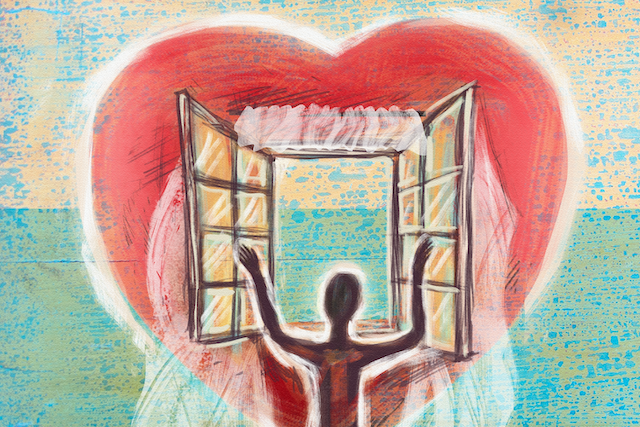
    My favorite three verbs right now? Connect. Release. Love.

    What are yours?