Tag: Purpose

  • How to Reconnect with What You’re Hungry For

    How to Reconnect with What You’re Hungry For

    “And the day came when the risk to remain tight in a bud was more painful than the risk it took to blossom.” ~Anaïs Nin

    What is it about us that makes us wait for permission? To do what we want. To be who we are. We wait until we’ve “earned” it, until we’re thinner, smarter, more talented. Until we’re finally good enough.

    Everyone has dreams, right? Some want to travel. Some want to write a book. Others dream of running a marathon. Or something smaller: a bold haircut. Or something bigger: quitting a job that drains you.

    And still, we wait.

    We wait for someone to say, “You’d look amazing with short hair.” Or for someone to nod at our resignation plans and say, “Yes, you should go for it.” That’s when we feel allowed. That’s when we move.

    I know that waiting. I’ve lived it.

    Finding My Voice

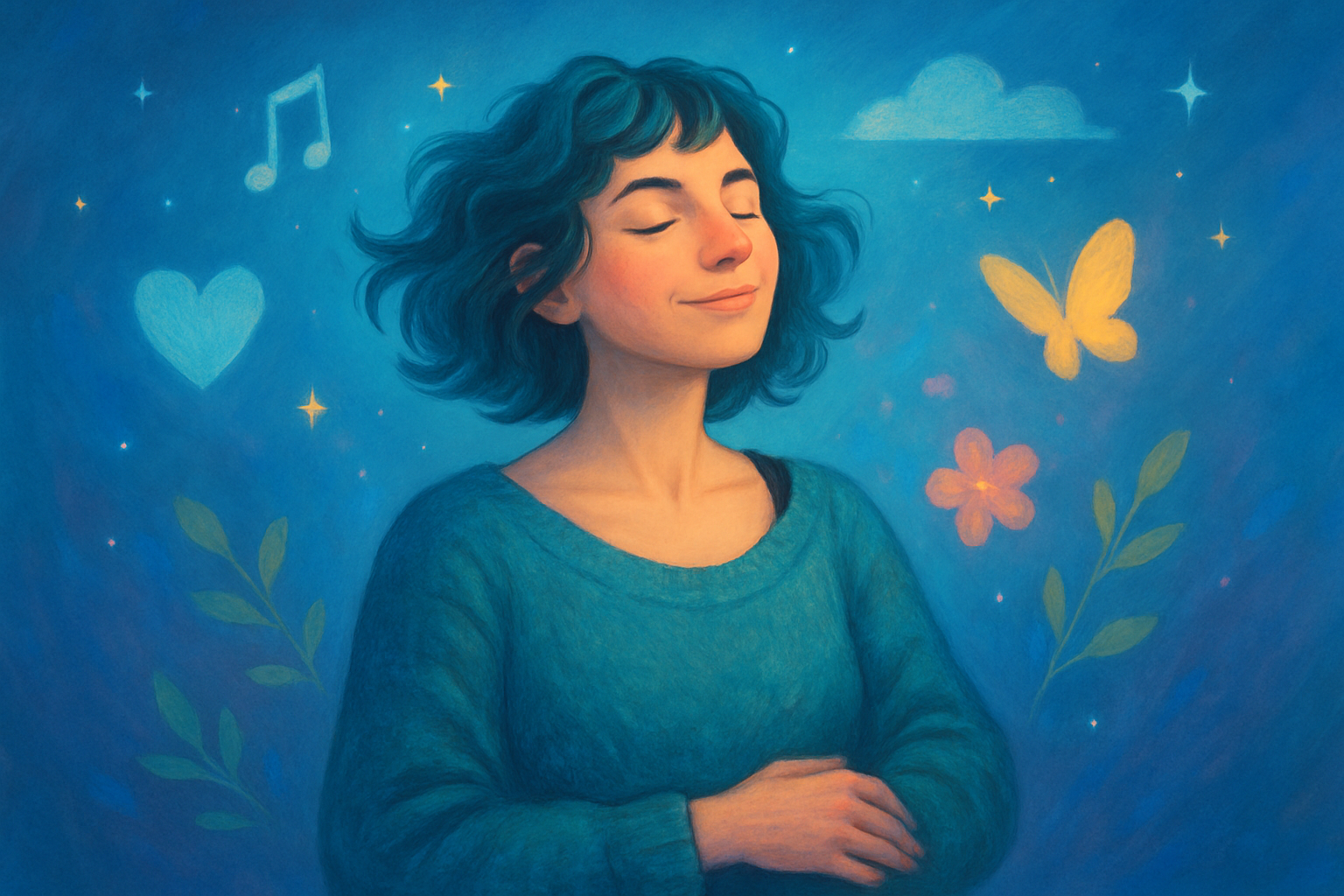
    As a kid, I sang constantly. But no one praised it. My family was mostly annoyed. So I stopped. I only sang when I was alone. Later, in a shared student flat, I stopped altogether, afraid of bothering others again. It never occurred to me that I could choose it for myself.

    Only last year, at twenty-eight, did I realize that I still loved singing. Deeply. I didn’t need a record deal or an audience. I just needed to sing. So I signed up for lessons.

    And something shifted.

    The envy I used to feel toward other singers disappeared. I no longer needed to watch from the outside, admiring those who gave themselves permission to take up space. I was finally doing the thing I had always wanted to do.

    The Power of Permission

    That small, seemingly impractical thing changed how I saw everything. Because it wasn’t about singing, really. It was about permission. It was about allowing myself to follow what lit me up, even if no one else understood it, even if it didn’t look productive or impressive.

    The more I sang, the more I felt connected to myself. Singing wasn’t just a hobby. It became a practice of self-connection. A form of expression that didn’t require explanation. A way to feel my emotions directly. A space where I didn’t have to be “good,” just real.

    I kept thinking: Why did I wait so long? Why did I assume I needed someone else’s approval to do something that made me feel so alive?

    And that made me wonder: What else are we not doing because we don’t think we’re allowed to? What are we hungry for—not in our stomachs, but in our souls?

    From Productivity to Presence

    The world is full of beauty. There’s so much to explore, to feel, to create. Colors to wear, places to visit, ideas to follow. And yet, so often, we’re taught to value productivity over presence. We’re encouraged to measure our worth by how much we do, not how deeply we live. Even joy is shaped by consumption—buying more, doing more—rather than simply being with ourselves.

    As an empathic child, I learned to listen closely. I became good at being helpful, at making others feel better. I was insecure and eager to be liked, especially by the louder kids, the ones who seemed confident and sure of themselves. I felt like a shadow, orbiting them like a small planet around a bright sun.

    Without realizing it, I gave others a lot of power. Their approval made me feel like I belonged. But I wasn’t truly seen, because I only said what I thought I was supposed to say. I adjusted, adapted, and slowly drifted away from myself.

    Now, as I reconnect with who I really am, I notice how strong and steady my voice feels. It’s warm and grounded. And the more rooted I am in myself, the more I want to reach out to others—not to prove anything, but to share something honest. From a place that feels real.

    Becoming My Own Sun

    Singing, writing, exploring my inner world—these practices make me glow. As strange as it sounds, they help me see who I am. They help me ask: Who am I circling? Who am I waiting for?

    Or maybe, just maybe, I’m no longer circling anyone. Maybe I’ve become my own sun.

    A few years ago, I didn’t know I could feel this steady, this full. That it could all be sparked by something as ancient and simple as using my voice is nothing short of awe-inspiring.

    Why It Matters

    For a while, I wondered, why is it so important that I feel good? Why does it matter that I sing, that I write, that I want to be heard? Isn’t that selfish? Isn’t it enough to live quietly and be kind?

    I struggled with that. But I’ve come to believe this: when we’re connected to ourselves—truly, deeply—we show up differently. More honestly. More gently. More powerfully. Not just for ourselves, but for others. Using your voice, in whatever form it takes, isn’t just about being seen. It’s about being aligned. And from that place, it’s easier to love, to give, to create something real.

    I’ve also noticed how much I admire expressive people. I love watching them, listening to them, the ones who dare to use their voices and share their insights. Through them, I see myself more clearly. I understand life better. Not just through psychology or theory or polished words, but through colors, soft fabrics, melodies, laughter, and tears.

    I never imagined I could be one of those people. Someone who creates something raw and real from lived experience. Someone who turns ache and wonder into something that touches others.

    I didn’t think I was talented enough. I didn’t think anyone would care. I didn’t think I had permission. But now I know: I have to try. Because when I don’t, I feel numb. A little lost. It’s like the light dims—not completely, but just enough that I start to question who I am and what I’m meant to do in this world.

    An Invitation

    I’m deeply grateful if my work resonates with anyone. But more than anything, I hope it encourages others to tune into themselves too—to share what’s on their minds, vulnerably and tenderly, as artists, as friends, as strangers, as humans.

    Because I believe this now: when we find and express our true voice, we open the door to real connection. That’s what I’m hungry for. Not just to shine, but to sit beside you in the light and in the dark.

    So let me ask you:

    What are you hungry for, not in your stomach, but in your spirit? What’s calling to you quietly, again and again?

    When I talk to friends or clients, I often notice that many can’t answer this question right away. When our wishes, desires, and creative longings have been ignored or even shamed for years, they tend to go quiet.

    But that doesn’t mean they’re gone.

    Ways to Reconnect with What You’re Hungry For

    Here are a few gentle ways to rediscover what you might be craving, deep down:

    Look back at your childhood.

    What did you love to do, naturally and freely? What made you lose track of time?

    Notice what you do when you’re procrastinating.

    What are you actually drawn toward? I used to hum and sing unconsciously while avoiding tasks. Now I see that as my creative energy trying to reach me. What’s tugging at your sleeve?

    Pay attention to envy.

    Who do you envy, and why? Envy can be a compass, pointing you toward a part of yourself that’s longing to be seen or expressed.

    Try something unexpected.

    Take a class you never thought you’d sign up for. Explore a new hobby that feels exciting or strange or slightly scary.

    Follow what feels warm, light, alive.

    It doesn’t have to be big. A color that makes you smile. A conversation that lights you up. A song you keep playing on repeat. That spark matters.

    You don’t need permission to begin.

    You just need curiosity. And the courage to listen to the quiet, persistent part of you that’s been whispering all along.
  • Redefining Extraordinary: How I Found Joy in the Everyday

    Redefining Extraordinary: How I Found Joy in the Everyday

    “Joy comes to us in moments—ordinary moments. We risk missing out on joy when we get too busy chasing down the extraordinary.” ~Brené Brown

    I started going to my local gym a few months ago to prepare for a strenuous hike.

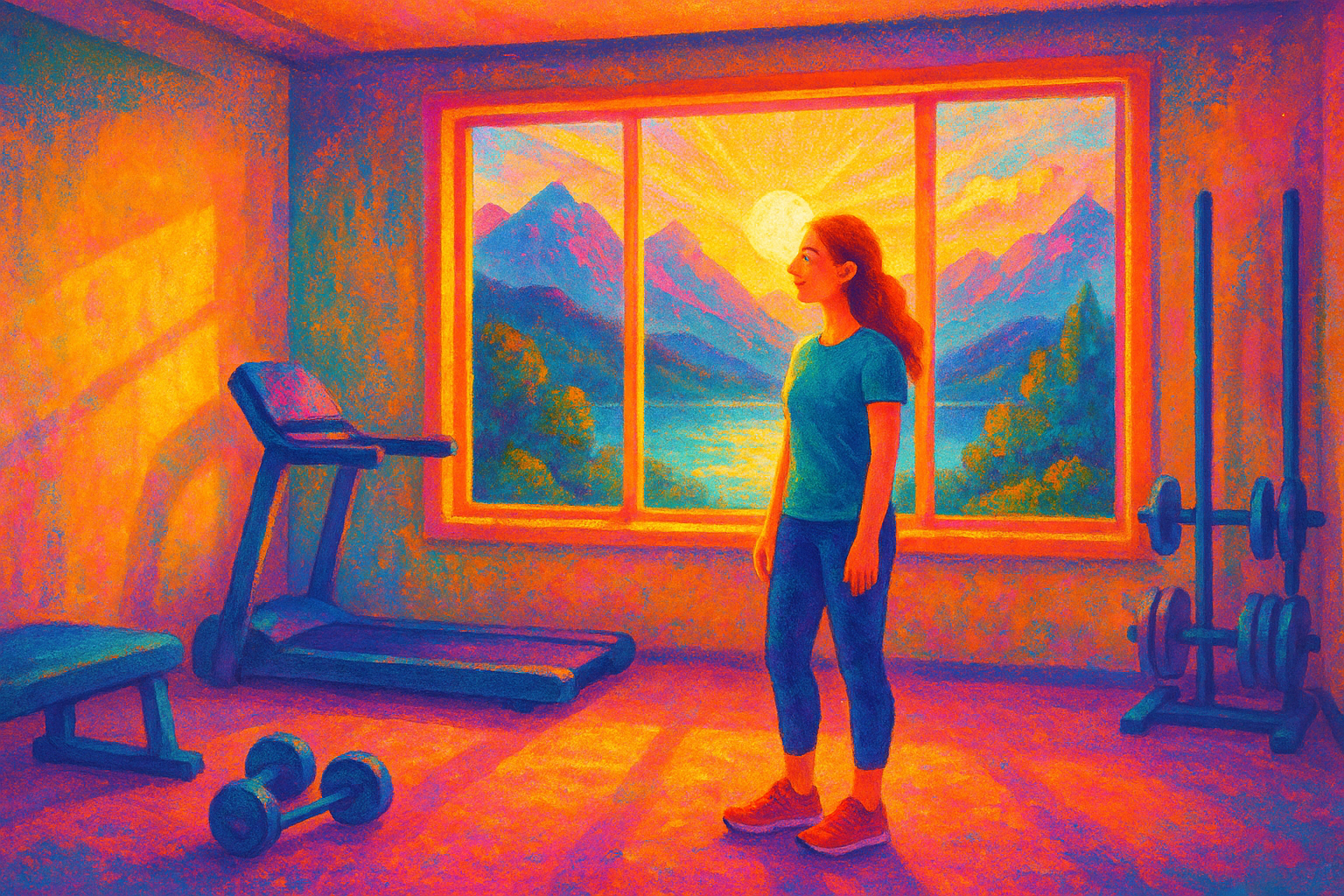
    The gym is a tiny place, located on a quiet street in the middle of a small town. It doesn’t have any fancy accommodations or instructors leading classes. It doesn’t even have showers or lockers to store my bag.

    It does have a few treadmills, free weights, weight machines, and regulars who can lift really dang heavy weights.

    Now, I’m not someone you would usually find in a gym. Let me put this in context: my lowest grade in school was in physical education. I quickly grasped long division and read complex stories, but I probably still could not get the volleyball over the net.

    As you can imagine, the gym was not a fun place for me.

    I imagined everyone silently judging me. I worried about what to wear. I was so clumsy from nerves that I even had trouble opening the gym door.

    The regulars, mostly men, seemed huge and intimidating. I felt small and weak.

    I stayed on the treadmill in the corner for six weeks. Headphones on. Head down. “I don’t belong” on repeat in my mind.

    It was a battle with myself to get out of the car every time I visited, but I somehow found the courage to make it to the treadmill. I imagined the joy I would feel when I finally made it to the top of the mountain.

    Finally, after six long weeks of walking on an incline, my husband and I flew across the country to complete the hike. It was the longest distance and highest elevation (and quickest descent) I had ever experienced.

    I honestly thought I wasn’t going to make it in some parts. On two occasions, I had to sit down to avoid fainting.

    My muscles screamed. I panted and wheezed and sweated. But we climbed.

    And we climbed.

    And then, when I thought we had reached the top… we unfortunately had to climb some more.

    Finally, after several hours, we made it to the end of the trail. The summit opened up around us, and I instantly forgot my exhaustion. Every minute of struggle felt worth it for what stood before us.

    It was a bright, clear day, and miles of rocky peaks were visible. A blue lake twinkled below. The sun reflected off a small glacier to my right. Everything was still and, even with other hikers around, incredibly quiet.

    My husband and I spoke in whispers as we ate our peanut butter sandwiches, and I realized I had flown across the country and hiked a mountain in an intentional search for extraordinary.

    If I am really honest with myself, I’ve been searching for extraordinary my entire life.

    I know I am not the only one. Many of us high-achieving perfectionists often find ourselves frustrated. Not only do we want to experience extraordinary; we also want to be extraordinary. We have an innate desire to live a life of contribution and meaning.

    We often feel like we are not doing enough. We feel we should be doing more. We think we need to be there instead of celebrating where we are right now in this moment. And even when we do accomplish something, it often doesn’t feel like enough for long. Our constant striving reinforces the belief that we ourselves are not enough unless we’re achieving something big.

    This desire serves us well. We are individuals known for our ability to get things done and make an impact on those around us; yet we can be so forward focused that the right now can feel underwhelming and, well—for lack of a better word—quite ordinary.

    Lately, I’ve held these beliefs under a microscope and really examined their hold on me. What makes a moment extraordinary? Do I really need a product, a summit, for the moment to have meaning? How many people must I impact before my life “counts?”

    I’ve discovered extraordinary moments are like the summit of my hike, which also means they are fleeting. It is not long before your shins are killing you as you make the steep descent. It is not long before the extraordinary moment becomes nothing more than a memory and, on occasion, a beautiful photo.

    I am realizing that maybe the extraordinary doesn’t have to be limited to the peak. Perhaps it can also be found in the hike. Maybe it was in the moments I gasped for breath. Maybe it was even in the mundane gym sessions I completed in the weeks leading up to the hike.

    Those moments pushed me outside my comfort zone and allowed me to grow stronger. Those gym sessions prepared me so I could show up in the moments of the hike where it got really hard. Isn’t that, in itself, pretty extraordinary?

    I have returned to my local gym. Only now, I have moved from the treadmill in the corner.

    Now, several times a week, you will find me with a barbell in my hands. You will see me celebrating incremental growth—a few additional reps, a bit more weight, or maybe even just celebrating the fact that I showed up today despite my fear.

    In a way, I guess the quest for the extraordinary has led me to appreciate these moments of ordinary. I am finding myself appreciating consistency and routine. I find myself appreciating incremental progress over the huge gains.

    That’s not to say that I don’t still chase extraordinary. In fact, I have a trip planned in a few short weeks to find views like I have never seen and to push myself in new ways. I am sure it will be extraordinary.

    Yet, I also am starting to find joy in the small, everyday tasks. I am starting to see meaning and purpose infused in every action. I’m now on a quest to appreciate just how extraordinary the ordinary can be.

  • Don’t Postpone Your Life: Why We Need to Live Fully Now

    Don’t Postpone Your Life: Why We Need to Live Fully Now

    “Life doesn’t allow for us to go back and fix what we have done wrong in the past, but it does allow for us to live each day better than our last.” ~Unknown

    It’s funny how from one day to the next your entire world, the core of your belief systems, and the way you live life just change. It’s even funnier how sometimes you don’t even notice it happening until it already has. One day you wake up and realize you are brand new, your old self has been lost, and your new self has been found.

    Let me take you back to when it all changed for me…

    I lived in the typical box of a straight-A, hardworking, overachieving, need-to-be-it-all/do-it-all kid. From someone who grew up with scarcity as a looming cloud haunting me through each and every decision, the foundation of my mindset, specifically regarding “success,” was built on outward achievements. Almost as if checking off boxes outside of me would somehow magically bring me a sense of inner peace.

    When I was in first grade, I got my first 100 on a test instead of 102 with extra credit. To most people, especially children, this is still a perfectly acceptable grade. (And it’s only first grade—who cares, right?)

    I did. I cared so much, too much. I had a complete meltdown, beating myself up over not being good enough/smart enough, all because of one single extra credit question. I felt as though I needed to punish myself for not being perfect, so clearly, I was a little bit ambitious, to say the least. With two accepting and supportive parents, this high-strung striving for greatness was fully self-inflicted.

    Within me lived a desperate need to work hard now so that I could enjoy later. I embraced the idea of not enjoying life until xyz had been completed in both the most impactful and most irrelevant life decisions.

    When you are so deeply immersed in a cycle of unachievable reward systems, when do you ever have a moment to truly enjoy life? By constantly striving for an unattainable life in the future, I learned that there will always be something more you could be doing, and this can prevent you from living a full life in the present. Doing in the now forever trumps the pleasures of later.

    With these beliefs strongly in place, I was on the road to overworking at a job I didn’t align with for the sole purpose of enjoying a few moments here and there on days off actually doing what I liked—what made me feel alive. And unfortunately, this is the expected lifestyle of many people nowadays.

    It was mine for a period of time, and this mindset stuck with me for years… until it all changed, of course.

    During this whirlwind of unhealthy looping behaviors, life outside of me was still existing. Waves were flowing, cycles were ending, the sun was rising, and my grandma was deteriorating with Alzheimer’s disease.

    This is the moment that set in motion the unlearning of my past beliefs and the implementation of my current values. Her disease was the divine trigger that initiated the switch from me doing life to living life.

    To take you through my grandparents’ journey, bring to mind those “movie loves” that you think can only exist in the realm of make-believe. The love that you can feel just from watching from afar. My grandparents were the expression of that. Young love—regardless of age.

    He was a man with three jobs, and she was a working woman taking on the rather heavy load of raising two children. They put their current time on the line for a better future for their kids—the ones they had and the ones that lived inside themselves.

    Before a time when I existed, they lived out the mindset I once so heavily believed in. My grandparents worked hard, that blue-collar-hard, so that when the time came and life had settled down, they could finally enjoy the life they had been waiting for.

    As the work had ended, it was as if life had begun. With the well-earned money, these lovebirds traveled the world and were eager to see it all. And that was the plan—work hard now, play hard later… until later was met with sickness and, therefore, was never lived.

    My grandfather was a fit man watching his own body betray him as cancer entered and his hope left. And somehow this, as I observed, had been less painful than watching the woman he had created a life with forget who he was.

    My grandmother went from a lively, active woman to a child needing to be fed, dressed, and bathed. With my grandfather battling his own health issues and trying to take care of my mentally lost grandmother, it was as if none of it mattered. The money, the time, the hard-work—just like that, gone.

    Watching the regret, pain, and heartbreak weigh so deeply on the ones I loved, a shift, more like a full-body revolution, began to swirl within me. Nothing is more uprooting than seeing someone who has lived an entire life from start to finish have regrets of not living sooner.

    This pivotal moment shook me to my core; it woke me up in both a startling and subtle way. The regret looming in the air served as a reminder that life is meant to be lived today.

    I was forced into the understanding that I can’t, nor do I want, to save my life for later. To enjoy after, to live and to feel in the future. Because what if my “later” ends up like theirs? Unfinished and lost, remaining only in their dreams, not in their realities.

    With these heavy understandings, slowly, my approach to life began reflecting this lesson. The lesson that later may never come, that life doesn’t wait for you.

    So, here I am today. Writing to you from Italy as a girl who packed up her life and left one day. As a girl with dreams to feel, experience, create, and truly live.

    My plans of making lots of money, going to school, and creating a career that wouldn’t fulfill my heart and soul died. The experience of seeing the world, making big and brave decisions, and laughing my way through heartbreak and massive transitions—that is being alive. I feel alive. This life that was once so trapped in a box, a box that wasn’t for me, that made me small—it is gone now.

    Today, I live freely and fully not only for me but also for them. For my teachers that came to me in the form of grandparents, for the souls that made me realize and recognize my own. Even though they are no longer here, I am living this life for them.

    Life takes turns we can’t anticipate, turns that live outside our realm of fathom. We don’t know where we will be, who we will be with, and what we’ll be doing there. But what we do know is that we need to be there for it, wholly and fully, with our hearts and souls.

    Later might not look the way you expect—it might not be there at all. So take the chances, even if you’re scared. Play in the rain to feel alive, sing at the top of your lungs, and dance like nobody’s watching. Because there is nothing like living in the now. It is all we have.

  • Live a Life You Love: The Magic of Following Joy

    Live a Life You Love: The Magic of Following Joy

    “Some people are empowered by travel and some are inspired by the warmth of home. Some thrive in the spotlight and some feel called to support those who are on stage. Some people are comfortable half-dressed and cussing like sailors and others prefer modesty and gentleness. The thing is: we are all empowered and inspired in different ways, and it’s not our job to decide what that looks like for anyone else.” ~Brooke Hampton

    In 1992, the Olympic Games were on, and my dad was glued to the screen. He called me over to watch with him, and though I didn’t know it at the time, that moment would change my life.

    I remember seeing a woman in the pool, dancing in sync with music, her movements flowing effortlessly in and out of the water. It was called synchronized swimming, and it was the most beautiful thing I’d ever seen. I couldn’t look away. Something about her presence, the grace and joy in her movements, stirred something deep inside of me. At that moment, I knew I had to try it for myself.

    Swimming became my world. It brought me a joy I hadn’t known before—a feeling of connection to something outside of myself that felt complete inside. I found a piece of myself in that water, and for years, it became a constant source of fulfillment.

    Yet, as I reached a certain level of skill, I found myself at a crossroads. I was eighteen, faced with a choice: Should I keep swimming at an elite level, or follow a “normal” path, going to college and pursuing a “real” career like everyone else? Society made it clear which path was practical and expected, and I felt an unspoken pressure to comply.

    Ultimately, I chose the “safe” option. I quit swimming and studied to become a registered nurse. For a while, I felt proud of my decision. Nursing is fulfilling work, and I was recognized by others as someone with purpose, even as a “hero.” I had stability, respect, and everything I thought I was supposed to want.

    But there was something else there, too—a quiet emptiness that I couldn’t ignore. It was a gnawing feeling, like I’d left a piece of myself behind, a piece I couldn’t get back. Despite the appreciation I received as a nurse, I felt a deep, lingering question: Is this all there is?

    In the hopes of filling that gap, I decided to try something completely different. I began training in aerial arts, just for fun. But soon enough, “just for fun” grew into something more. Aerial arts opened up a part of me I had shut away—the part of me that felt fully alive. And the more I trained, the more I realized that I wanted this for real. My passion was strong enough that, in my thirties, I received a contract as a professional circus performer.

    For the first time since my swimming days, I felt whole. But with this new identity came new judgments and doubts. I was no longer seen as a nurse with a “real” career but as a dreamer. People couldn’t understand why I’d left a stable job with a retirement plan to fly high on silks. I began to question my purpose… again!

    Then, one day, I noticed something powerful. I’d grown used to seeing the delight on children’s faces in the audience, but as I looked closer, I saw the same spark of joy in the eyes of adults. I realized that I was offering something important, something they didn’t get to experience often. I was giving them a moment to feel wonder, to escape the weight of their daily routines.

    In that moment, I saw my purpose clearly—I was there to bring joy, not just to children, but to everyone watching.

    Years later, I married and had two beautiful children, a joy unlike any other. But as I adjusted to my new life, I found myself struggling again with that same emptiness, though now it was tinged with guilt. I had so much to be grateful for—a loving family, two amazing kids. How could I feel this way? I was thousands of miles away from my family and community, exhausted and trying to survive the challenges of motherhood. I knew I was losing myself again. I could feel it.

    My husband noticed the heaviness in me, and one day, he brought me a gift: a set of paintbrushes and a blank canvas. He encouraged me to try something new, to see if it might help me reconnect with myself. I hadn’t painted since childhood, and I had no idea if it would help, but I picked up the brush. That one small act rekindled something in me that I thought was gone. For the first time in years, I felt excited, inspired, and awake.

    Painting became my new way of following joy, and as I created art, I felt my purpose deepening. I was bringing beauty into the world, creating pieces that I could share that might spark joy in someone else. Art allowed me to process my own emotions and express my inner world, which made me feel whole again.

    Reflecting on this journey, I realize that joy has been my compass all along. Life can take us on unexpected paths, and sometimes, society’s expectations steer us away from our true calling. But when we listen to that inner voice, when we follow what brings us joy, we find a direction that feels right—even if it doesn’t make sense to everyone else.
    Here are a few insights I’ve gathered along the way:

    Joy can be a powerful guide.

    If we let it, joy can show us where we need to go, even when the path isn’t clear. It’s worth listening to that pull and letting it be our compass.

    Embracing change can lead to fulfillment.

    Choosing joy often means stepping into the unknown. It can mean letting go of what’s “practical” and taking a risk on something uncertain. But each change brought me closer to who I am meant to be.

    Life’s journey sometimes brings us full circle.

    I started with swimming, returned to performance in a new way, and finally found a place in art. Sometimes, joy leads us back to things we once loved but left behind. When we accept that, we open ourselves up to growth and fulfillment.

    Looking back, I’m grateful for the courage it took to keep listening to my intuition. It led me through nursing, aerial performance, and eventually, to the canvas, each step revealing more of who I am. I’ve learned that when we allow ourselves to pursue joy—whatever that looks like—we move closer to the life we’re meant to live.

  • I Might Fail, but Time Won’t Just Pass Me By

    I Might Fail, but Time Won’t Just Pass Me By

    “It’s not about time, it’s about choices. How are you spending your choices?” ~Beverly Adamo

    You hit a point in life after which choices seem to become less and less reversible. As if they were engraved in stone.

    No matter how many motivational posts about following your own timeline and going at your own pace cross your Instagram wall.

    No matter how much you try to convince yourself that it’s never too late to start a new career, move into a new house, or find the right person. It’s not that you don’t believe it—it just does not work for you. It’s okay for other people to follow their dreams and dance to their own rhythm. But not for you.

    You feel like you’re in school again, falling behind.

    The more you tell yourself that you don’t have to live up to anyone’s expectations, the more you realize the only person you’re afraid to disappoint is the one looking back at you in the mirror.

    I used to listen to this song that goes,

    I wake up in the middle of night

    It’s like I can feel time moving

    And I did. I did wake up at 3:00 a.m., haunted by question marks.

    And to think that I was doing everything right! I had graduated, moved in with my boyfriend, and started working as a teacher. I had a spotless resume.

    Still, I was obsessed with the idea of time moving. Of time unstoppably reaching the point after which I simply would’ve had no choice but to stop seeing my situation as temporary and resign to the fact that no greater idea had come to my mind—and that I was stuck with that.

    With my daily life in the classroom.

    Now don’t get me wrong. I am not one of those people who ended up teaching because they couldn’t get a better job. On the contrary, teaching has always been my passion. It still is.

    The classroom, on the other hand…

    There was not a single day in my four years as a teacher during which I really thought this could be a good fit for me in the long run. Not once.

    There were bad days, good days. “Easy” classes, tough classes. Small victories, daily failures. Parents who wanted to sue me and students who wanted me to adopt them—one of those end-of-the-school-year letters still hangs on my fridge. But each and every one of those days, I knew I wanted this to be temporary.

    I didn’t want to stay in the classroom forever.

    It’s hard to pin it down. All I wanted to do was to be myself and teach something I love. But, as a teacher, you and your students don’t exist in a bubble. You’re very much intertwined with the complicated, emotionally loaded context of the classroom. So, you’re forced to impersonate the role of the Teacher.

    Unlike me, the Teacher was able to come to terms with the pressing matter of relevance. I knew that most of the curriculum I had to teach, and the way in which I had to teach it, was so far removed from the reality of my students that no amount of interactive lesson plans and student-centered methodologies could help me get the point across.

    As the Teacher, I was supposed to feel comfortable in the role, to identify myself with it rather than question it every step of the way. I just didn’t feel at ease. As a facilitator, as a guide, as a tutor, I’d always felt whole—not as a teacher. As much as I admired and respected those who did, I couldn’t do the same.

    I really, really did everything I could to solve my issues.

    I tried to fake it ‘til I made it. I read all the books. Attended all the courses. Shared my thoughts.

    Every time I told someone how I felt, they would reply with all the right things.

    That it’s just the first few years, until you get used to it, and I’m sure it is true—for me.

    That you’re actually really doing something for the kids, that you’re making a difference—and I don’t doubt that teachers do make a difference. Just not me.

    That you need to come to terms with the fact that, no matter what your job is, it is not supposed to be fun or fulfilling. But, as whiny as it might sound, that’s what I needed it to be.
    Maybe not perfect, maybe not idyllic, but please, please, please not meaningless.

    And then the intruding thought: “What, ‘cause you’re special? ‘Cause you’re too good to just get by, day in and day out, like everyone does?”

    I’ve always worried about being difficult, and I really wanted it to work, so that sensation of having to crawl into someone else’s skin every day when I got into the classroom—I just tried to push it aside. To swallow it down and get myself together.

    Still, it was there, and the only way to stop it was to think that it could be temporary after all.

    Just until you find a better job.

    Just until you come up with something else.

    Just until you find out what the hell is wrong with you.

    The only thing that managed to distract me was studying. I would come home and study, trying to keep my mind alive, trying to keep it dreaming, trying to keep it learning.
    I invested time and money, draining all my energies. I was constantly tired from the effort of basically being a full-time student on top of a full-time job. Luckily, I had the support of my boyfriend—later, husband—who had no idea what it all would amount to but could see that I needed it.

    It’s not like I had a project, though. I ached for meaning. I needed to learn something that felt real to me.

    That’s how I started to dig into languages. Here was something that felt relevant, immediate. You could learn it and use it straight away. You could communicate—something I just wasn’t able to do in my classroom teaching.

    I passed exams. I passed more exams. I kept piling up certificates and prayed that one day it would all start to sort of look like a plan. Before it was too late, before I had to admit to just being an overachieving, overqualified teacher.

    I knew the danger—some people, when they’re unhappy, just give up and become passive. Others, like me, do the opposite. They keep spinning their wheels because, as long as you’re busy, you don’t have to face the reality of how you feel.

    That’s what hit me every time I woke up at three am. How much time did I still have to change tracks? How long before it was too late for me?

    It’s like I can feel time moving

    I wish I could tell you that I finally found my way and that this is a story of success. The truth is, I don’t know if it will ever be.

    Last Christmas I suddenly realized my personal hourglass had run out of sand. I just knew that if I set foot again in the classroom in September, it would no longer be temporary. I felt this was my last chance to try and do something different before giving up for good.

    I stopped waiting for the universe to reveal its mysterious plans and took my fate into my own hands. Teaching outside the classroom was something I had always vaguely dreamed of doing but never dared to.

    What if I’m not good enough?

    What if I don’t earn enough?

    What if it feels even worse than in the classroom—and would that mean that the problem was really just me all along, no matter what I do and where I do it?

    What if I messed up my plan B, too? What then?

    I just finally said, “To hell with it.” There must be a bit of truth in all those Instagram motivational posts, right?

    As of now, I am trying to build a career as a tutor and language teacher for adults, and I have no idea if I am going to make it.

    I closed my eyes and jumped right in, expecting the water to be icy cold, but it wasn’t. I braced myself for the anxiety this new uncertainty would bring with it, just to find that I actually feel at peace.

    There are plans to make, problems to solve, no financial stability, and no guarantee of success—something my perfectionist self can hardly manage. And still, it feels far less daunting and menacing than time slowly gnawing at me.

    I wish I could tell you that this story has a moral.

    That you should stop listening to good advice and common sense and just follow your gut, and that you may be surprised by how much unexpected support you receive or how little you need.

    That you shouldn’t try so hard to be something you’re not.

    That there are many ways to find meaning, and no one can tell you how to do it for yourself.

    That sometimes giving up takes more courage than sticking with something that doesn’t fulfill you.

    But, to tell the truth, I don’t feel like it was brave of me to change paths. It wasn’t about choosing the easiest or the hardest thing—it was about choosing the honest thing.

    I wish I could tell you I no longer wake up in the middle of the night, but the truth is, I do, because I’m so caught up in this new adventure that I really can’t stop jotting down ideas and looking for job opportunities.

    I know I don’t have to prove myself to anyone, and I also know that I can’t help but feel like I should, and that’s okay too.

    I know I might fail, and I’m not so bold as to plainly say I don’t care if I do. I actually do care, a lot.

    But one thing’s for sure—I no longer live in the fear of time passing me by.

  • Why Relationships and Service to Others Matter More Than Money

    Why Relationships and Service to Others Matter More Than Money

    Whatever possession we gain by our sword cannot be sure or lasting, but the love gained by kindness and moderation is certain and durable.” ~Alexander the Great

    I remember when I was younger, my relatives on my mother’s side would visit our house almost weekly—not to check on us but to borrow money. We lived in a long house, with relatives and neighbors occupying different rooms, and since we were at the innermost part, they had to walk in to reach us. My parents were so accustomed to these visits that the moment they saw certain relatives, they knew what they wanted.

    The conversations varied. Sometimes, my mother quietly gave them what they needed, but other times, there were heated arguments. I would hear shouts like, “You’ve changed ever since you married your husband!”—as if my mother was responsible for supporting them even though they had their own families.

    My closest childhood friend was my niece, who was two years younger than me (my mother was born later than her first cousins, which explains the small age gap) and grew up in a wealthy family. We never fought, yet I remember sulking a few times because of hurtful remarks about money her relatives made to me.

    I’ll never forget when her uncle said she shouldn’t be gullible around me, as I might ‘take advantage’ and try to get money from her. I was just twelve or thirteen at that time, when all I was concerned about was playing or studying. I did not understand the feeling back then, but the comment stung deeply.

    It’s understandable that people who grew up in a rich family were protective of their wealth (as they should since they worked hard for it). But seeing relatives pointing guns at each other over money was shocking to me as a child.

    I was young and neutral; however, I remember being asked by one side not to visit the other anymore, which I regret to this day. The latter side had always been supportive and loving, cheering me whenever I won awards, especially when I graduated as valedictorian in grade school. I never got to say goodbye to my uncle when he passed away; I deeply wished I was less ignorant of what was happening and stayed in touch.

    These early experiences taught me how money can strain or even destroy relationships. Thankfully, my parents made sure I never felt we lacked for anything, and so our lives did not center around money. When I earned money from competitions or special awards, my mother let me decide what to do with it; I usually end up keeping it in my savings.

    I grew up valuing simplicity, seeing money as a necessity for survival rather than the focus of my life. Even after working for seven years, I still get asked why I choose to commute or live simply when I have the means for more. I attribute it to knowing there are far more important things than money.

    My Reflections about Money in Different Areas of Life

    During the pandemic, when life slowed down and people were forced to reflect, I came across a course called The Science of Well-Being from Yale University. The course emphasized that, contrary to what we often believe, it’s not money, high-paying jobs, or material possessions that bring lasting happiness. Instead, science confirms it’s the simple things—social connections, kindness, gratitude, exercise, and sleep—that truly bring joy.

    The course affirmed to me what is important and helped me further reflect on my life. Here are some of my thoughts and the questions I ask myself to stay grounded.

    1. Relationships

    Genuine relationships are not built on money but on shared experiences, both good and bad. While money might enable certain experiences like travel, the most meaningful bonds are often formed just by being present with one another.

    For me, I prefer to keep a small circle of people I trust, knowing they will be there for me whether I have money or not.

    2. Lifestyle

    Lifestyle isn’t about the luxury brands you wear but about how you present yourself. Do you really need a Louis Vuitton bag when you could invest in things that bring more value to your life and fit them in a simpler, less expensive bag? Sometimes, flaunting wealth creates barriers, making others hesitate to connect with you.

    As a commuter, I also value practicality—I wouldn’t want to risk losing something expensive just to show off.

    3. Work

    Work is necessary for survival, and we spend a large part of our lives doing it. But is it just about earning money, or should it also be about finding purpose and joy in what you do?

    I have met many people who keep chasing higher salaries, but I wonder—when does the chase end? Once you reach your financial goal, will you still be happy if you’ve sacrificed your health, well-being, or peace of mind? No job is perfect. If there was a perfect job, everyone would be doing it.

    4. Health

    As cliché as it sounds, “Health is wealth.” Money can buy expensive food, but does that guarantee good health? It can buy medicine, but could your illness be linked to unhealthy habits that money enables, like indulgence in luxurious but unhealthy foods? Sometimes, the cheapest and simplest foods—like vegetables—are the healthiest. So, is it just about money?

    5. Life/Purpose

    Life is short. Do you think your purpose is to simply accumulate money for your own benefit?

    I’m grateful to my parents for instilling in me the value of education—of constantly learning and striving for excellence, among anything else. I’m also thankful for an environment that showed me what not to focus on, and now I aim to use my blessings—whether through writing or my work in data—to help others.

    When Alexander the Great, one of history’s greatest military generals, was on his deathbed, two of his dying wishes were to have his wealth displayed on the path to his grave to show that he couldn’t take any of it with him and to have his hands hang out of his coffin, signifying that he would leave this world empty-handed.

    In the end, we only leave behind the marks we make on others. I hope you choose to touch at least one life with kindness and love rather than pursuing wealth alone.

  • I Had Enough: What’s Happened Since I Quit My Job

    I Had Enough: What’s Happened Since I Quit My Job

    “Sometimes, the bravest thing you can do is walk away from the things that no longer serve your growth or well-being.” ~Unknown

    I’ve always been a very independent person with an adventurous spirit, so no one was surprised when I moved away from my small town in Ontario, Canada, to become a nanny in Spain the second I graduated from high school.

    It was a whole new world with ancient streets, delicious food, and friendly people. I knew that I had made the right choice to adventure away from the place where I was raised.

    I’m someone who has itchy feet. It’s been difficult to stay in one place for any length of time. Over the last twelve years, I’ve lived all over the map, from Spain to Calgary, Alberta, and most recently in Vancouver, British Columbia.

    The town where I grew up is known for its brutal winters, quiet neighborhoods, and having “not much to do” there. So naturally, I spent my twenties looking to live in any place that was as different as possible from that boring town where I was raised.

    The first time I had visited the west coast, I thought: Why would anyone live anywhere else in this country besides here? The mountains, the ocean, the active lifestyle, the endless options for outdoor adventure… I fell in love with it and ended up spending almost a decade of my life as a West Coast girl.

    During this time, I got a university degree and, shortly after, landed a job at a tech company, where I was earning a salary that I didn’t ever think would be possible for me.

    At first, the job was a positive feature in my life: I learned all kinds of skills I hadn’t had the opportunity to develop before. I was given promotions and eventually was put in a position to lead a team, something I ended up really enjoying. But over time, I started to notice little things that made me question whether I was really happy.

    I remember having a conversation with a close friend about a year and a half into the job, where I expressed strong discontentment for my work. My friend, the wise woman she is, immediately validated my concerns and gave her opinion that I should really quit this job.

    I remember thinking, how shortsighted of her. Doesn’t she realize if I quit, I won’t be able to make this salary again? I have bills to pay and people on my team at work who need me.

    Fast forward; another year flew by, and things only got worse. I was working ten-hour days consistently, and I developed stomach pain and started having migraines. My weekends were bogged down by thoughts of the mess I would return to on Monday morning.

    My friends and family continued to call out how this job was not constructive for me and let me know that I wasn’t the same “light” person I used to be. My mother in particular did not like that I was no longer writing or doing anything creative anymore as a result of my energy being sucked away by this job.

    After many nights of sleeplessness due to the nature of this massive decision, I finally decided to act. Now, in case anyone is reading this and is in a similar situation, I want to share just how difficult this decision was for me.

    I wasn’t able to hear feedback from my family and friends and immediately quit my job. No, there were many months in the middle where I would flip-flop. I think leaving a job is the same as leaving a relationship—only you will know when you are truly ready.

    Quitting this job was one of the most difficult things I’ve done in recent years. I had spent countless days and nights weighing the pros and cons of my decision, thinking about the team members involved. Who would I be putting in a tough situation? Would the company be able to replace me? Would I be upsetting team members, my boss, the CEO? Was I a failure for quitting? Did this burnout say something about my value as a worker, as a person?

    When I finally turned in my resignation, I was stunned to learn that nobody really cared. I thought for sure I would hear from the folks I worked with after I left, but it has now been several months, and I have heard from no one.

    In the middle of this decision-making process, I was in close contact with my mother. She is an amazing woman who lives on her own in a quaint, lovely house in the small Ontario town where we’re from. The town that I spent years dreaming about leaving. So, when she heard I was thinking of quitting my job and suggested I could move back home and live with her, naturally, I was offended she would even suggest the idea.

    Move back in with my mom? What would everyone think of me? Thirty-one, jobless, and living at home?

    But over time, to everyone’s surprise, especially my own, I started to warm up to the idea. Living alone in a big city, working a difficult job, and providing everything for myself for the last fourteen years was catching up to me. I was exhausted and lonely.

    So, in March this year, I packed up my apartment in beautiful North Vancouver, fit what I could into my Toyota Corolla (including my border collie mix, Rex), and drove across the country, back to small town Ontario.

    In a lot of ways, being back in my hometown is weird. There is definitely less to do here than in big Canadian cities. Instead of spending my weekends with friends, I usually spend them with my mom’s friends or my siblings. Instead of hiking epic, world-famous mountains, I walk in the trails along the street where we live. It is a quiet life, much different than what I’ve left behind.

    But at thirty-one, after the last decade of independent living and the last few years of this difficult job, I welcome the quiet life with open arms.

    I traded long days and late nights working remotely, feeling stressed and isolated, for sleep-in mornings with my dog and forest walks where I’m not checking my watch because I need to make sure I get back for a meeting at 1 p.m.

    Now, instead of trying to find time in the day to eat a meal, I cook big dinners that I get to share with family and friends. I now get a hug from my mother every morning instead of only once a year at Christmas.

    We’ve all heard the cliches about life being short, time with family being invaluable, money isn’t everything, etc.. But isn’t it true that cliches are cliches for a reason.

    We know that days on this earth are not promised for any of us. I didn’t want to be thirty-one years old, working in a lonely apartment, giving my energy to a company that didn’t care about me for another ten years.

    While the decision was difficult, especially in this economy, I will say it is amazing how many doors open when you free your mind from the mental gymnastics of a toxic job and the decision-making of whether you should leave it.

    My life looks different now: I’ve started writing again (look, you’re reading one of my articles now), I’ve started a master’s program, and I’ve got plans to become a fitness instructor, something I’ve always wanted to do but haven’t had the time.

    Of course there are unknowns in my life, and I don’t know if I will live in this small town forever. But for now, it’s given me invaluable time with my mother and family, a place to rest and recover from years of working a very stressful job, and a chance to start a few new projects that make me feel like “me” again.

    If you are in a similar predicament, and if you are lucky enough to have some of the same privileges that I do, I recommend that you allow yourself a break. This doesn’t have to mean moving back in with your parents. It could also mean leaning on your partner for a while if that’s an option. Or utilizing savings for a bit, if you have any, to give yourself time to focus on what really matters and figure out what’s next.

    Family, health, and happiness should always come before the corporate grind, society’s expectations of you, or any amount of money. I hope this serves as a reminder.

  • My Path to Purpose and an Unexpected Impact

    My Path to Purpose and an Unexpected Impact

    I wanted to be Mary Tyler Moore’s “Mary Richards” TV character from the 1970s. She had exactly what I wanted: independence and an exciting life! But growing up as the first girl in a traditional Italian family, I knew she was not the right role model.

    Nonetheless, I ignored the expected path (much to my parents’ dismay) and spent twelve years in corporate America becoming Mary. That is, until two questions rocked my world. I dramatically left my job, career, and Mary for a more purposeful path that was mine, and I never looked back.

    As a nine-year-old girl in front of the TV memorizing my idol’s every move, I could never have imagined this would be my story.

    As a successful television marketing executive in New York City, I had everything Mary had: a thrilling job in a big city, a pretty apartment, a fabulous wardrobe, a fun best friend, and co-workers like family. But one afternoon, while sitting alone in my pretty apartment in the big city of New York, my life changed forever when I heard an inner voice quietly yet clearly ask me:

    “If this is the next thirty years of your life, is this enough?”

    I was thirty-eight years old, and I knew all the voices in my head, but this one felt like it came from a deeper place and was located a little lower. In a millisecond, I knew the answer: No, something was missing. And I also knew what that something was—children.

    My mind went right to a recent TV news report where police and social workers were storming an apartment to remove children who were being hurt. I called the police and asked where they brought these children. They told me about the emergency shelters in our city for children who were abandoned and abused.

    Within minutes, I began calling these shelters, instinctively asking if I could visit in the evenings with storybooks to read to the children before bedtime. For several weeks, I showed up at the shelters, sitting on the floor in my business suit, with the children forming a crescent circle around me. I felt more personally grounded and connected to these children with every visit.

    The group of children was never the same, but in their silence, they all looked to me for comfort and safety. I never wanted to leave. One night after story time, I followed the staff to the bedroom.

    The children slowly climbed onto couches and futons. Some were crying as the compassionate caregivers tried to comfort them. But I didn’t see what I remembered as a child in my own bed. There were no hugs from moms or dads, no snacks, whispers, or prayers. There was no changing of their clothes from the tight or soiled clothing they arrived in.

    As I watched the children try to comfort themselves and each other, the words that tumbled out of my mouth were, “Can I bring the children pajamas next time?”

    The next week, after I read their stories, I gave each child a brand new pair of pajamas. One little girl, about six years old, refused to take a pair of pink PJs from me. Her hair hung in lopsided pigtails, she wore a stained top and a pair of too-short lavender pants, and extra-large sneakers flopped as she walked.

    She watched me for a long time, and when I finished with the others, I tried again to give her the cozy pink pair. She again shook her head. I knelt and whispered, “See how soft these pajamas are? Go ahead and feel them. You can keep them always.” And as she gingerly brushed her hand gently across a sleeve, she asked me wearily,

    What are pajamas?”

    My mind raced. What?? I looked up at the loving aid next to her, who mouthed to me, “She doesn’t know what pajamas are.” And I found myself explaining to this precious girl what pajamas are. She took them slowly and went into the bedroom with the aid. As I collected myself and reached the door, I turned back and saw her waiting for me to see her in her new pajamas, a small smile forming on her lips.

    I took a leap of courage, and the Pajama Program was born. My purpose found me.

    Learning how to recognize and harness your heart voice is the key. Although it only takes a minute to hear it, it takes a while to trust and follow it.

    So, how do you trust that voice? I was stunned and had to collect myself before I even thought about what I had heard. I was alone, but I looked around cautiously to see if someone else was there. There was no one. But I already knew who asked that question—it was me, just in an unfamiliar voice.

    Learning how to recognize and harness your heart voice is the key. Although it only takes a minute to hear it, it takes a while to trust it and follow where it takes you. What happens next can catapult you into the unknown. But if you follow it, you will feel more fulfillment and joy than you ever have.

    Going from corporate executive to nonprofit founder was daunting, but after much fear and doubt, thousands of sleepless nights, and tears that could fill the Atlantic, I overcame challenges that I thought would ruin everything. Sometimes you just have to do it afraid.

    I met each turn with faith, determination, and moxie. I had found my purpose, and a chain of events set in motion by a little girl is creating a legacy we can only attribute to the magic of the human connection.

    It’s not the power of one that changes things; it’s the power of ONE ANOTHER that moves mountains and moves people.”

    How do you go from “hearing a voice” to not only changing your life but also the lives of others? Each of us has a purpose. We know we have found it when our interests are turned outward and our natural desire becomes to lift others up by creating something that makes a lasting impact on all of us.

  • Lessons from a Late Bloomer Who Wanted to Be Famous

    Lessons from a Late Bloomer Who Wanted to Be Famous

    “You are not too old and it is not too late.” ~Unknown

    I’ve been indecisive since I was a child. When I was small, I wanted to be a ballet dancer. My parents even bought me a ballerina cake topper for one of my birthdays. As I grew a little older, I wanted to be a singer, which led me to go to a performing arts high school. I even learned how to read music notes and play a little piano during my time at that school.

    I believe my desire to be a singer was influenced by my experience being bullied in school. I wanted to feel loved and thought I could get that through becoming famous and gaining fans. This is behavior you’d expect from children, as they have such wild imaginations.

    I couldn’t make up my mind on what I wanted to be when I grew up, but I was certain that whatever career I had, it would be a successful one. I was excited about the day I would become a successful grownup.

    By the time I became a legal adult, however, I no longer wanted to be a dancer or singer. I have scoliosis, so that would have made it difficult for me to become a professional ballerina. Dancing was never really my talent anyway. And I don’t have a bad singing voice, but it’s not exactly professional singing material. I still enjoy singing every now and then, though.

    Despite letting go of my childhood dreams, I still wanted to be well known in some way. I just didn’t know how I was going to achieve this. It didn’t matter to me that I was unsure of what career I wanted to go into. I was still young and had time to decide. Time flies, though, and before I knew it, I was a grown adult, pushing forty years old.

    Being indecisive was cute and acceptable when I was a child, but I was a grown adult who was still undecided about her career. I wasn’t even a young adult anymore. I was definitely not where I thought I would be at this age, and I felt embarrassed.

    By forty, people are usually settled in their careers and have at least a few years of experience under their belts. Many celebrities start their careers early and are retired by forty. Even those who don’t retire around that age could retire if they wanted to, because they’ve earned so much.

    This is what I thought was in store for me. I thought by the time I hit twenty-one years old, I would be making a lot of money and helping my parents. With the way the cost of living has gone up, it was a stretch to think I could be so financially secure that young, but I thought for sure I would be there by forty.

    Today, I am still undecided about my career. I am still doing some soul-searching to figure out what I want to do with my life. And I often feel I’m too old to still be struggling with finding a career.

    Many of my peers have established careers already. This often makes me feel terrible about myself, but then I remind myself that I don’t need to be in the same place as my peers or any of the celebrities around my age.

    It’s okay if I don’t have my career figured out yet, and I know I’m not alone in working on and discovering myself later in life.

    One family member of mine loves art, and she does a lot of research on different famous artists. She often shares her research with me, and one particular artist stood out to me—the Japanese artist Yayoi Kusama.

    Yayoi Kusama was born in 1929. She started to receive a lot of attention for her art in the 1960s, but there was a new appreciation for her art in the 1980s. She started to receive even further recognition during the 2000s.

    Yayoi Kusama’s story shows that a person can become successful at any age, even in their older years. Her story is an example to everyone that it is never too late to live your dream.

    She’s not the only artist or celebrity to become successful in her older years.

    Judi Dench is a household name worldwide, but she only started acting on the big screen in her sixties.

    Comedian Lucille Ball started staring in her iconic show, I Love Lucy, in her forties.

    Morgan Freeman played the roles that turned him into a sought-after actor during his fifties.

    The late, critically acclaimed Toni Morrison published her first book, The Bluest Eye, at thirty-nine years old.

    Singer Susan Boyle became a viral sensation at the age of forty-seven thanks to her time on Britain’s Got Talent.

    Many celebrities found acclaim later in life, and their stories are inspiring to me. But I realize now that success doesn’t have to mean notoriety.

    There are lots of people out there who go back to school later in life and find new paths that bring them joy and meaning, enabling them to touch lives regularly.

    I personally have been dealing with depression, and my therapist has changed my life for the better. She is not world-renowned, but she gets fulfillment in life by helping people with mental illness.

    And though I don’t have a career I feel passionate about right now, I’m often told my smile is beautiful, and that it made someone’s day brighter. Maybe that’s its own kind of success.

    There is nothing wrong with fame or desiring it; however, I now know that becoming famous isn’t the only way to be successful and find purpose in life.

    I’m still discovering what my dream is and what I’m meant to do with my life. However, I’m realizing that is okay.

    I’m also realizing that success can mean different things to different people, and there is no timeline for finding passion or purpose.

    So, if you are a late bloomer like me, know that it’s okay. Don’t compare yourself to others. We all move at our own pace, and we all have our own unique path to meaning and making a difference.

  • How to Find Your Ikigai (and More Purpose and Joy)

    How to Find Your Ikigai (and More Purpose and Joy)

    “We all have two lives. The second one starts when we realize that we only have one.” ~Confucius

    According to Gettysburg College, the average person will spend 90,000 hours working in their lifetime. For many of us, it seems that the answer to Mary Oliver’s famous question, “What is it you plan to do with your one wild and precious life?” is work. So why do so many of us stay in jobs we don’t enjoy?

    For three years, I had a job that made me feel restless and disengaged. On paper, it was the right fit. It aligned with my experience in education administration, an industry I fell into through a mutual friend in college. But in reality, the culture at the company made it difficult for me to feel comfortable there or have any life outside of work.

    When I was on the clock, it was constantly go, go, go. I was expected to work several weekends in the fall, summer, and spring, sometimes from home and sometimes traveling for conferences. I often worked early mornings and late evenings for a good, but not great, salary (I worked for a nonprofit), and there was no overtime.

    Because of this, I was extremely guarded about my few free weekends, preferring to use them to recharge quietly at home. I felt resentful when a family member or friend would ask me to visit, feeling so burnt out from my day-to-day that I had nothing left to give them.

    My coworkers infrequently took paid time off, and sometimes they were denied. I once asked to take a Friday off for a close family friend’s wedding and was told it wouldn’t be feasible. I spent the five-hour car ride to the venue working from the passenger seat.

    I frustratedly turned my phone off at the rehearsal dinner, which was at 8:00 p.m. on Friday, after receiving a message from my boss. When I did get to take time off, I was often asked to get online or help my boss out over the phone. I heard from her while on the beach for a friend’s bachelorette trip, in a rental for a family vacation, at my aunt and uncle’s house for Thanksgiving, and even in a remote mountain town in Italy.

    I started googling things like “how to combat burnout,” “what to do if you don’t like your job,” “how do I keep working overtime but not feel like ice cream on a ninety-degree day?” and “does my dog still love me just as much if I don’t have time to play with him every morning?” Somehow, in one of my Google spirals, I came across the concept of “Ikigai.”

    A Japanese philosophy meaning “reason for being,” Ikigai encompasses finding fulfillment in the intersection of what you love, what you are good at, what the world needs, and what you can be paid for.

    It asks, “Why do you get up in the morning?” and suggests that your career should be the answer if you’re living your Ikigai. Not only was my job not the reason I woke up in the morning (that honor goes to my two-year-old golden doodle, Nemo), but it was also the reason I hit snooze and rolled back under the covers to hide from the day for a bit longer.

    So I quit. It wasn’t as simple as that—it took a lot of work and quite a bit of luck, but I ended up redirecting to a new path that fits my lifestyle much better. When thinking about why I get up in the morning, reading was one of the first things to come to mind—I devour several books a week, and nothing makes me happier than a few quiet hours with a coffee and written words—so editorial work felt like an encouraging place to start.

    Now, I work as an editorial manager for a small company only two miles from my house. I’m doing work that I enjoy with people who I like, and I never work weekends. I’m not sure yet if I’ve found my Ikigai, but my current work allows me to explore what I love while allowing me time to cultivate hobbies and give some thought to what I genuinely enjoy.

    I’m not alone in my longing for purpose and my need to follow a career path that fits me. A 2021 Gallup report found that 60% of millennials and 57% of Gen Z are open to new job opportunities, with a significant portion saying that their primary driver is the desire for meaningful work.

    Unlike many boomers, who value financial security above all else, young people today are more likely to leave jobs that don’t provide a sense of purpose or opportunities for personal growth. A 2019 study by MetLife found that 74% of boomers considered financial security and benefits to be the most critical factors in a job, compared to only 54% of millennials.

    In our culture, we’re expected to choose a career in our early twenties, before we know anything about the world or ourselves, and climb the same ladder forever, seeking prestige and financial gain. But that standard is changing.

    Young people are choosing to leave their jobs to pursue their dreams, whether that means pivoting to a new career path, going freelance, starting their own business, or traveling. Like me, they are unwilling to put up with poor work-life balance and work that is not meaningful for them. They seek jobs that offer personal fulfillment, align with their values, and provide a sense of purpose.

    How Do You Find Your Ikigai?

    So, how do you find your Ikigai? It’s not a one-day revelation but a journey of self-discovery. It requires thought, preparation, and reflection. Here are five steps you can take to work towards your Ikigai.

    1. Set aside time for self-reflection.

    Engage in self-reflection to understand your passions, strengths, and values. Tools like journaling or personality assessments can help clarify what drives you.

    Use journaling prompts like these:

    What activities make you lose track of time?

    What do people often ask for your help with?

    What are your strengths and talents?

    When were you the happiest, and why?

    2. Experiment.

    Try different activities, volunteer, or take on side projects to explore your interests and see what resonates with you. Some trial-and-error may be necessary to gather insights into what fulfills you.

    Here are some options you can explore:

    Take on new hobbies or volunteer roles.

    Attend free workshops or community events.

    Collaborate on projects that interest you.

    Join an interest group in your community.

    3. Set goals and make plans.

    Consider your passions and strengths and use them to develop actionable goals. Create a roadmap with clear steps to reach these goals. Setting specific goals will enhance your motivation for change and give you something to work toward and look forward to.

    Try setting SMART goals. That means they’re:

    Specific

    Measurable

    Achievable

    Relevant

    Time-Bound

    4. Seek feedback.

    Ask mentors, peers, or professionals in your areas of interest for feedback. Talking to the people who know you best can give you insights into parts of yourself that you may not have noticed, including what lights you up. Talking to people who know the industry you’re interested in can help you decide if it’s right for you before you pivot entirely in that new direction.

    Consider the following suggestions:

    Ask your friends and family about their perceptions of your strengths and passions.

    Ask your boss at work what they feel you do best and what you seem to enjoy.

    Seek informal mentors who can offer advice and guidance.

    5. Embrace continuous learning.

    Commit to lifelong learning through courses, reading, and other educational activities. Staying curious and open to new knowledge can help you adapt and thrive in your pursuit of purpose.

    The following books have been helpful to me as I’ve looked for my purpose:

    Ikigai: The Japanese Secret to a Long, Happy Life by Héctor Garcia and Francesc Miralles

    Braving the Wilderness: The Quest for True Belonging and the Courage to Stand Alone by Brené Brown

    Thing Again: The Power of Knowing What You Don’t Know by Adam Grant

    Additional Philosophies for a Happy Life

    Ikigai, at its core, is the search for contentment. As you’re searching for your Ikigai, several other philosophies can help you find fulfillment in your daily life:

    Hygge is a Danish concept that, according to Country Living, “encompasses a feeling of cozy contentment and well-being through enjoying the simple things in life.” Hygge emphasizes creating a warm atmosphere. It is about finding happiness in everyday moments and fostering community and togetherness.

    Lagom is a Swedish philosophy that translates to “not too little, not too much, just right.” Lagom encourages a balanced, sustainable lifestyle and making conscious choices that lead to contentment without excess. It’s about finding harmony and satisfaction through simplicity.

    Friluftsliv translates to “open-air living” and is a Norwegian concept that celebrates outdoor life and nature. Friluftsliv emphasizes the importance of spending time in nature for mental and physical well-being. It encourages outdoor activities and connecting with the natural environment as a source of joy, relaxation, and a sense of purpose.

    Final Thoughts

    I’ve seen firsthand how many young people, me included, are increasingly leaving traditional jobs in search of more fulfilling and flexible careers, fueled by the grind of poor job quality and the longing for personal and professional growth. Embracing concepts like Ikigai has been transformative for me, and it can also be a good reminder for others.

    By actively seeking our purpose and using strategies to find what truly drives us, we can navigate our career paths with greater clarity and joy. This journey isn’t just about finding a job—it’s about creating a life that resonates with us and what we value most. After all, we only have one life.

  • If You Haven’t Found Your Purpose: How to Feel Good Anyway

    If You Haven’t Found Your Purpose: How to Feel Good Anyway

    “The person who lives life fully, glowing with life’s energy, is the person who lives a successful life.” ~Daisaku Ikeda

    We’ve all heard the phrase “find your life purpose.” It gets thrown around so much nowadays. Many of us have been in what feels like an eternal quest to find it, especially if we’ve been feeling stuck, lost, and out of alignment. Finding our purpose then becomes an almost obsessive search for the solution that will solve all our problems.

    We’ve been led to believe that a life purpose is a single thing, a calling that we’ll be passionate about, and that we’ll know deep inside that we’ve found it. With it, we’ll feel accomplished and fulfilled and, instead of feeling stuck, we’ll have our answer as to what we’ll do day in and day out, giving meaning to why we’ve been put on this planet Earth.

    On the flip side, we believe that without one, we’ll live an uninspired, lackluster life. Without one, we’ll feel out of alignment and be forever stuck.

    But what if I told you that’s not true? That what you think you know about finding your life purpose is, in fact, the thing that’s keeping you stuck, and that you can stop searching for your life purpose and still be fulfilled?

    I know this may sound like a big claim. But after close to two decades of trying to find my own life purpose, I’ve finally learned that a life purpose is not an actual destination and much less the final step. It’s more about a general feeling than a tangible single thing we do. Let me explain.

    I used to be the poster child for doing everything right and by the book. You gave me directions, I followed. I did what I was told to do, no questions asked. I studied what I thought was a sensible career choice and would be expected from a straight-A student that loved math (bachelor’s and master’s in economics, thank you very much).

    My interest in finding my purpose first started during what I thought was my last semester at university. As I thought was expected from a math nerd like me, I was doing the honors stream in economics and needed the approval of the head of the department to graduate. Turns out that, even though I had chosen an elective as per the instructions in the program rule book, the head felt my choice was too “easy” compared to what my peers had chosen and, as such, could not let me graduate from the honors program.

    I had to either graduate from the regular economics stream or stay an extra semester to do a more “difficult” course. (Spoiler alert: I did the extra course and did my master’s too, even though I knew deep down that was not what I really wanted to do. I did it because that’s what I thought I should do.)

    Now, you may think (and I don’t blame you here—these are my thoughts too now in hindsight), what was the big deal about that? Just finish school and get on with life!

    But for me, at that moment, my world came crashing down. It was then that I realized for the first time how I was defining my worth based on what I did and what others thought of me instead of from within. And that single event catapulted me to a journey of self-help and self-discovery that has now spanned twenty years.

    The quest to find my life purpose thus began.

    After graduation, I was feeling so lost that I became obsessed with finding my purpose, sure that once I’d found it, I’d stop feeling so stuck and uninspired, with life just passing me by. I yearned for my life to have meaning and was determined to find my purpose to get that.

    For the next few years, I read books about how to find your purpose. I listened to podcasts and talks and even attended workshops. I was convinced that I’d eventually stumble on that thing that I was so passionate about and naturally good at that I could dedicate my life to doing it.

    I asked myself what I liked to do and made lists. I asked others what they thought I was naturally good at. I took personality tests. Had my natal chart read. I even looked back to what I enjoyed doing as a kid in hope of finding my nugget of gold.

    I tried it all, going down my list like at a grocery store: baking, creative writing, dancing, etc. The trouble was, regardless of what I did, as time advanced, I still felt lost and misaligned. In the meantime, I had to pay my student loans, so finding my purpose took the backseat as I worked in perfectly good jobs that paid the bills.

    Fast-forward more than a decade later, and I was keenly aware that I had spent the last fifteen years working in corporate, feeling lost and stuck in a career I did not want, in jobs that didn’t fulfill me at all, leading a perfectly good normal life, married and with kids.

    I had renewed my search for my life purpose with more vigor than before but kept hitting dead ends. Why couldn’t I have a passion that I could easily gain my life purpose from? What was so hard about finding a purpose that would help me get out of the rut and plug me into the fulfillment and inspiration I so desperately yearned for? Where was my purpose?

    And then the unthinkable happened: I lost a very dear friend.

    Her passing really shook me to the core. I closed off and broke down, letting myself mourn and feel all the feels. I asked myself some hard questions. If it had been me, would I feel like I’d lived to my fullest? Did I have any regrets? There’s nothing scarier than realizing that I was not living how I wanted to and that the main reasons were my doubts and my fears.

    So, in true YOLO (you only live once) form, I made the decision to shake things up. I closed the door on finding my purpose and focused on living my present day-to-day life.

    If I only had now, what was it I really wanted to do and have, and if I did have it all, how would I love to feel? And what did I need to do to feel that way today?

    I dug deep and anchored myself to this vision of how I wanted to feel day in and day out and, based on that, I learned how to create goals and intentions with feeling. I finally understood the importance of making my decisions to ensure I kept or created this feeling I was aiming for, as opposed to making decisions thinking only about an actual end goal.

    You see, it’s amazing how in truth we’re not necessarily chasing a particular thing (e.g., a different dress size, a promotion, a house, completing a marathon, etc.) but instead the feeling that achieving that will create within us (e.g., feeling fulfilled, worthy, peaceful, juicy, complete, etc.).

    When you focus on creating that feeling instead of achieving a particular outcome, you realize that it really doesn’t matter what you do as long as what you’re doing is, in essence, making you feel the way you want to feel. In other words, it’s making you feel good inside.

    In the end, maybe it isn’t, for example, losing weight that’ll make you feel really good (or happy, worthy, loved, etc.) but instead, changing how you talk to yourself daily when you look in the mirror. Focusing on creating that feeling right now will help you make decisions that will feel good and, as a result, help you do things that feel in alignment.

    I also learned ways to quiet my mind chatter, turn down the volume on my inner critic, and become my biggest cheerleader. I learned how to tune in with my body and energy and pause when I need a break. I learned how to build confidence and developed strategies that help me get out of the freeze “deer in headlights” mode I get into when I’m scared and help me get moving forward instead.

    And guess what happened? I realized that I had created a balance and flow to my life that felt good to me. I felt aligned, fulfilled, and motivated, exactly how I thought I would feel had I found my purpose.

    Throughout this journey, I learned that having a life purpose is not about doing something in particular. It’s actually all about aligning your daily actions with your values and desires. Simply put, your life purpose (and everyone else’s, for that matter) is to make sure that every day, you’re living your life in integrity with what you believe in, what you value, and how you desire to feel in this life. That’s it.

    It doesn’t matter what you do, what your career or passions are. It doesn’t even matter if you don’t have one particular passion or career. As long as you are always creating the feeling you want with each action you take daily, you’re living with purpose. And there’s nothing else you need to do.

    Embarking on a quest to find your purpose leads you to believe that answering your soul’s call to live your most aligned and vibrant life is a straight line. That you simply need to tune into your soul to discover that particular something that you can dedicate your life to, the magic bullet that will solve it all. And nothing could be further from the truth.

    You don’t need to find a life purpose to get unstuck and feel inspired and aligned. You simply need to get super clear on what’s truly important to you, what you really need and want, and how you’d feel having all that, and then take daily actions in alignment with creating this feeling.

    Once you do this on a regular basis, you’ll be amazed at how inspired and fulfilled you’ll feel. You won’t feel stuck. You’ll never have to worry again about finding your life purpose because you’ll be living with purpose daily. And that’s what really counts.

  • How I Found Purpose When I Lost It at Work

    How I Found Purpose When I Lost It at Work

    “The mystery of human existence lies not in just staying alive, but in finding something to live for.” ~Fyodor Dostoyevsky

    When I was in my last semester of college in 2016, I got my first paid job working in libraries as a childrens library assistant. I can remember the passion and sense of purpose I initially felt when taking this job. The idea that, every day, Id be helping foster a love of reading in kids felt like a worthwhile career.

    Reading supports cognitive development in children. It enhances language skills and improves concentration. It encourages creativity and even fosters empathy, as it introduces children to worlds they otherwise would not know of. Suffice it to say, this seemed like the kind of career that would give me purpose, something I always looked for when selecting a career path.

    When I began working as a childrens assistant, I felt that sense of purpose. The library I worked at was big. There were kids constantly coming into the beautiful childrens room, with its high ceiling and numerous colorful shelves full of books. I eagerly tried to help each one find that one book that would spark excitement and, hopefully, a love of reading.

    I also got to run fun childrens programs, like a yoga class, a baking class, and a writing club. And I ran a story time for babies twice a week. Seeing the children enjoy these programs together, socialize, and view the library as a community place enhanced my sense of purpose. I was doing something meaningful, something that benefited the community.

    As time went on, I knew my end goal was to be a youth services librarian, not just an assistant. I knew in that position I could make the biggest difference. I would be the one in charge of the childrens and teen departments, and the books and programs each one offered. I started applying for these positions until finally I got offered one.

    Going into this job, my sense of purpose was strong. I was excited at all the possibilities open to me with these new responsibilities. I was ready for this next step.

    And for the first couple months, things were great.

    The library had no director. Instead, there were two employees acting as co-interim directors. The library was very small. We all got along, though, and helped each other out.

    However, a new director was eventually hired, and I quickly realized we didnt mesh well. She was a micromanager, and I felt very limited and restricted by her. She also followed her own agenda and even censored the books I put out to meet her own beliefs. This goes against the library systems belief of intellectual freedom and was a huge red flag to me.

    There were many days when I came home crying, and my anxiety skyrocketed. I even passed out once at work due to the level of stress I was experiencing. I wanted to quit, but knew I needed to find a new job first. Every day, I felt sick going into work. My sense of purpose of working in libraries with children was fading.

    There was one day in particular that sent that sense of purpose crumbling. There was a preschool above the library, and the kids were scheduled to come down to the library for a story time. I remember feeling anxious about this, as Id never done a story time for such a large group of kids before. However, I had always felt I did well conducting my story times in the past, so I used this to ease my anxiety.

    The kids came down and I gave it my all. I ended up having a great time reading to them. Yes, they were a big group, but they seemed engaged with the story, and I finished feeling certain Id done a good job.

    My boss, however, felt differently. She berated my story time, telling me I didnt engage the kids at all. She then proceeded to show me a video she took of my story time and began pointing out everything she felt Id done poorly.

    I can take constructive criticism, but what she was doing was anything but constructive. She didnt like my book choices, my song choices, my interaction with the kids. She then started putting down my personality, saying Im too quiet and not cut out for this position.

    I felt destroyed. Something Id once felt great purpose doing no longer felt that way. I suddenly felt I wasnt cut out for this job. I started severely doubting my abilities.

    Eventually, I got a new job, again as a youth services librarian. I am still currently at this job, and things have improved. I have a director who is fair, and there are days when I feel a sense of joy, such as when I run a fun and successful program or help a child find a book that they are excited about reading. However, that sense of purpose I once felt regularly as an assistant is not often there.

    For this reason, I decided to begin looking for that sense of purpose elsewhere, such as in hobbies outside of work like writing and art. These things never fail to evoke a sense of purpose in me when I do them. I get in a state of flow when writing or painting, and I feel a sense of purpose in the creative process.

    My ultimate goal with writing and creating art is that, upon completion, I will have something unique and beautiful to share with the world. The idea of others reading or seeing my work and connecting with it gives me a reason to create. Life, to me, is all about connection.

    Ive also found purpose in my relationships. Fostering my relationships is one of the most important things in my life. I have a wonderful circle of family and friends, and enriching my relationship with them gives me purpose. Without relationships, life is lonely. The people in my life I am closest to have helped shape who I am as a person. They challenge me to be the best version of myself.

    Since knowing my husband, for example, I have grown as a person in many ways, and fostering the love we have is so important to me because sharing my life with him gives it meaning. I also find purpose in being there for my loved ones and supporting them when they need me.

    My dog gives me purpose too. Taking care of her gives me a reason to get up in the morning. I need to feed her and walk her and, above all, love her.

    I dont feel the same purpose I once felt at work. Thats not to say Ill never feel it again. In time, hopefully it will come back. What losing my sense of purpose in work, though, has taught me is that purpose doesnt exist solely in a job.

    There are other forms of purpose outside of work like hobbies, family and friends, and pets. Purpose can come from many places. You just have to be willing to open yourself up to these different possibilities.

  • How I Found My “Why” in Life After Struggling for Years

    How I Found My “Why” in Life After Struggling for Years

    “Your purpose in life is to find your purpose and give your whole heart and soul to it.” ~Gautama Buddha

    Each time I start a new course, training, or venture, the teacher or leader asks me “why?” “Why are you here?” “Why are you taking this course?” “What’s your ‘why’?” “What’s your purpose?”

    And I’m never prepared.

    You’d think by now, after all the years of working on myself and studying, I would have an answer on the tip of my tongue.

    Yet, I find “why” to be a difficult question to answer.

    I have wondered, “Do I really not know? What’s the block?”

    Then it dawned on me.

    The reason I find it difficult to answer the “why” question is because I don’t have just one.

    I have so many whys and I’m motivated by so many things that my head just gets overwhelmed and rolls up into a ball when I think I have to come up with just one.

    So I get stuck, draw a blank, and can’t answer the question.

    This was an enlightening insight for me because previously I thought I was only allowed to have one purpose.

    Yes, allowed.

    I would take what the authors, teachers, and books told me about purpose very seriously. I thought they really meant I could only have one all-encompassing purpose, and that’s that!

    So I spent a great deal of time trying to figure that big purpose out, to find, as one teacher guided me, the “why that could make me cry.” To no success.

    It was a relief when I realized and accepted how multi-faceted my purpose actually is.

    It doesn’t make it wrong, bad, or insufficient. It makes me smile and relax and allows me to enjoy the many aspects of my being.

    It has brought me a stronger sense of inner peace also, by letting go of trying to fit myself into a mold that someone else made.

    That’s right. I am breaking the mold and creating my own one.

    Here’s what I mean by a multifaceted purpose.

    Purpose #1: Personal Growth

    Without a doubt, I am driven by my relentless interest in growing as a person in all aspects of my life.

    For example, I read a lot about health and fitness. I’ve been doing CrossFit for over four years. I’m always adjusting my diet to find one that works even better for me. I love growing into the best health and fitness version of myself.

    The vision of myself at a CrossFit class when I am ninety is a huge motivator for me. I don’t ever want to be a burden on my loved ones. That’s wrapped up in this “why” also.

    I have studied psychology, trained as a therapist, and been in different forms of therapy my whole life. There are amazing emotional teachers and healers who I follow.

    I am always striving to grow into the happiest, most well-balanced person I can be who is kind, supportive, and loving to myself and others.

    My spirituality is my rock. I have meditated for over forty years. I have read spiritual books and studied ancient texts in school. I listen, I learn, I try. I hope to keep raising my consciousness forever.

    And I learn about my craft, my work, my business. I never stop learning.

    Yes, indeed, personal growth is one of my “whys” in life.

    Purpose #2: Fulfilling My Potential

    I have always had the idea that I was capable of much more.

    I was an athlete as a child. I played and watched a lot of sports.

    I was uplifted and excited when I saw people breaking records and pushing themselves beyond what anyone thought was possible.

    And I loved the arts. I was mesmerized by ballet dancers doing extraordinary things on stage. And musicians performing at their best. Even paintings by remarkable painters took my breath away.

    It’s genius that I was seeing. People pushing themselves to be the very best they were capable of.

    The idea that humans, meaning me too, could excel in that way fascinated and captivated me.

    I want to do that too. Fulfilling my potential is a huge “why” in my life.

    Purpose #3: Making a Difference

    I want to alleviate suffering in the world.

    Perhaps seeing my parents suffering with sadness and depression and not being able to help them fuels this purpose.

    Even so, my drive to alleviate suffering has evolved into something very satisfying and motivating.

    It is the cornerstone of my work; it colors all my relationships. It gives me a reason that is beyond myself.

    Being of service is another way of looking at this particular “why.”

    I’ve noticed that if I’m not careful, my first two “whys,” personal growth and fulfilling my potential, will keep my focus a little too self-centered.

    I really do want to be a catalyst for positive change in people. It’s also pretty clear that I’m not driven to go out there to actually change the whole world.

    At times, I have felt some guilt for not being more active for social change.

    But over the years, I have come to understand that the change I help facilitate in the world is very personal, individual, and intimate. And that’s okay.

    Whether it’s friends, family, or clients, nothing feels more meaningful to me than seeing someone’s whole energy shift, burdens lift, and excitement return to their faces.

    Pretty sure my love of alleviating suffering counts as part of my life purpose.

    So let’s try this again.

    “What’s your why?” you ask?

    “It’s personal growth, fulfilling my potential, and alleviating suffering in others.”

    That just makes me so happy. There is such a life lesson here in my awareness of my multifaceted purpose.

    We are so influenced by others’ teachings that sometimes we forget to look deep inside ourselves for the answers we seek.

    Yes, we can learn wonderful things from the stories and studies of people, yet our truest and most profound learnings must come from within.

    Rather than taking lessons at face value, we must explore them, put them on like a new piece of clothing to see how it fits, how we look, if it suits us, and if we really like it.

    We want guidance to resonate with us. That means it’s in alignment with our nature.

    Having one purpose just didn’t fit me. I’m not a one-size-fits-all kind of person.

    And now, allowing myself to be myself, to recognize and embrace my multifaceted purpose, has given me much more inner peace.

    The internal struggle with myself has subsided.

    I get to be who I am, regardless of what the experts may teach.

    Uh oh, I think I may have landed on another “why.” What’s my purpose in life?

    Purpose #4: To be myself

    I love it.

  • Feeling Pressured to Follow the Crowd and Become Someone You’re Not?

    Feeling Pressured to Follow the Crowd and Become Someone You’re Not?

    In a world that pressures us to conform and toe the line, it can be hard to live a fulfilling, authentic life.

    We can easily spend years trying to be someone or something we’re not—checking off all the right boxes, meeting everyone’s expectations—all in a bid to gain approval from society, our peers, our parents, and even ourselves.

    But this comes at a steep cost to our well-being. Not only do we lose ourselves and slowly disconnect from everything that brings us joy and meaning, but we can also end up hating ourselves for struggling to measure up… when ironically, we don’t even really want the things we’re pushing ourselves to achieve. We just think we’re supposed to attain them.

    If any of this sounds familiar to you (and I suspect it does for most of us), I think you’ll appreciate this heartfelt letter from Tiny Buddha contributor Antasha Durbin Solomon’s book, Are You on the Right Track? A 101-Day Guided Journal from the Universe.

    I hope it serves as a reminder that the best person you can ever be is yourself.

    Letter 71: Living an Authentic Life

    Dearest One, 

    You could spend your entire life pretending to be someone you’re not, all in a bid to gain acceptance from others. But when your journey comes to an end, you’ll pull off the mask you’ve been wearing and realize you wasted your life playing pretend. 

    Or you can make the conscious decision to take the path less traveled and live authentically as yourself. This takes courage, especially in a world that programs you to believe that money, beauty, and recognition are the most important things in life. 

    Let this letter serve as a reminder that your time on Earth is limited, but you are not. Don’t waste another second pretending to be someone you’re not. Embrace your uniqueness and every attribute that makes you who you are. Explore your interests. Build upon your passions. And spend your time—your greatest currency—in whatever way truly serves you. 

    You get one shot at this life. Make yours count. 

    With endless love,

    The Universe 

    Are You on the Right Track? is truly a treasure trove of inspiration and motivation. Each letter offers simple yet powerful reminders to help you take back your power and live a purpose-filled life. And the journal prompts can help you dig deeper and make meaningful change, one step and one day at a time.

    To access the full journal and all 101 letters, click here. When you buy the book (eBook or paperback), you’ll receive free enrollment in Antasha’s popular online course, “21 Days of Energy Healing for a Happier, Healthier Life,” which typically costs $49.99. To gain access:

    Antasha will then provide you with an access code and course link.

    I hope you enjoy this transformational journal as much as I did!

  • How I Found a Beautiful Purpose by Giving Up the Search

    How I Found a Beautiful Purpose by Giving Up the Search

    “You and your purpose in life are the same thing. Your purpose is to be you.” ~George Alexiou

    We all play a pivotal role in society. But I’ve toyed with the New Age spiritual notion that we all have a unique purpose on Earth to fulfill—a purpose for which we have chosen to be here.

    I used to wonder if I could only be happy if I found this one resounding and elusive purpose.

    If I knew my soul’s purpose, I believed my life would suddenly have endless meaning and vitality. Once I found my purpose, I would leap out of bed every morning and dance around the kitchen, singing as I made my morning coffee. Because my soul had found its purpose, I’d have everlasting joy and fulfillment.

    So, like so many before me, I started to seek. Seek, search, and seek some more. Years and years of it. Countless sleepless nights. Thousands of the same personality quizzes and career quizzes. “What should I do with my life?” quizzes. Can anyone else relate, or was this just me?!

    On top of this, I was dissecting my astrology natal chart. Calculating my life path number in numerology. Doing a million courses to kickstart my new life.

    It was exhausting and relentless.

    And can I tell you what I found after years of seeking, questioning, fumbling, stumbling, searching, forming realizations, and having epiphanies? I found immense confusion. 

    And you know what happens when one domino falls? That small, single impact creates a river of destruction, consuming everything else in its path.

    So, in innocently seeking meaning and purpose, I ended up finding severe, debilitating anxiety. Month-long panic attacks. I was brutally wounded by depression. I felt deep pangs of loneliness and helplessness, and I also developed a constant need to know how everything in my life would turn out.

    There were nights when I prayed that I would fall asleep and never wake up again because I felt helpless, unimportant, and utterly useless. I felt like I had failed at life. Failed at being a human. I couldn’t find a purpose or meaning in life, so why should I be here? I didn’t deserve to be here.

    I constantly needed to seek more answers, read more self-help books, do more “find your purpose” workshops, and hire more life coaches to gain more qualifications. I developed an incessant need to find what I was supposed to be doing with my life. Because I felt entirely worthless and inherently unlovable without it.

    Why could I just not find happiness or joy? Why could I not see this one thing I was supposed to do in my lifetime?

    I was seventeen when I discovered the spiritual self-help path. All the crystals, the angel’s cards, and the yoga community felt so good back then. It felt like a secret, magical, alternative world I had found.

    However, now, after ten years of going down this route, I sometimes wonder if it’s brought me more harm than good.

    I missed out on a massive chunk of my life when I could have been going with the flow, allowing my life to naturally unfold. Instead, I became paralyzed by and obsessed with this notion of finding purpose and meaning in my life.

    Then one day a coach asked me why I needed to keep searching. What did she mean “NEEDED to”?!

    It hadn’t occurred to me that this was all a choice. I thought it was something I was obliged to find.

    I realized that my need to obsessively devour information about my identity and my purpose was actually an attempt to cover a huge, gaping wound.

    The wound that said, “I am not worthy as I am; I am not enough as I am. I am not lovable as I am.”

    *Mic Drop*

    This realization touches a deep chord inside most of the human population. It is drilled into us from childhood that we must achieve, do, create, and pursue to be worthy.

    Whether that’s the dream body, the dream job, the dream car, or the dream house. Taking X amount of vacations or having Y number of children.

    Society today is like a tug of war. We are pulled in every direction. Told that every choice available is right and wrong. 

    “Get this latest electric car; gas is out of date. You’ve got to go to college to be successful. No, don’t; be an entrepreneur and start a business instead. Every body is a bikini body… but you’re lazy if you don’t work out at the gym. Get married young and have kids before it’s too late! Actually, wait until you are older and wiser until you settle down. Travel the world, but save all your money. Invest as early as you can to prepare for the future. But also, life is short; we could all die tomorrow, so always live today like it’s your last!”

    AHHHHHHH!

    And we wonder why we are living in an age of confusion!

    Finding our own truth and unique pathway in this society is the hardest thing we can do.

    That’s why so many people are being roped into this fantasy that we will be happy once we achieve all these things, including finding a purpose. The purpose is another thing we can reach to make us feel fulfilled.

    I realized I was trying to put a plaster on a wound the size of the gap between two tectonic plates.

    I decided that instead of continuing to search, I would give up on everything I’d been following for the past ten years. It was scary. This path was all I had ever walked down. What did it mean to stop seeking? What would I do if I didn’t need to find a purpose? Would I be lost? Would I feel fulfilled? Would life have no meaning, or maybe would I just melt into fragments of my own self-loathing for giving up?

    Despite all this fear and uncertainty, I knew it was my only option.

    I was tired. My nervous system was fried, my brain was scrambled, and I was done. I was just fully done.

    So I decided to stop paying my life savings to coaches and doing every course and qualification I could find. I stopped reading self-help books. I stopped fretting about everything that I put in my body. I just started doing whatever I wanted to do. It was the most liberating thing I’ve ever done. 

    Most importantly, I stopped listening to anyone else telling me what I should or shouldn’t be doing. The only opinion that mattered was my own.

    Slowly but surely, within this liberation, I started to find some peace. A peace I hadn’t fully experienced before regarding the direction of my life. I started becoming more open to allowing life to naturally unfold. Allowing opportunities and ideas to present themselves as and when I was ready.

    Obviously, I am human, and I am still very much on my everlasting healing journey. There are so many days when I still try to control, grasp, and plan the future and make everything less uncertain. However, once you start to embrace uncertainty, you can look forward to the unknown because you realize that uncertain things aren’t always negative things. In fact, uncertainty can be exciting.

    If we knew everything we needed to know, there would be nothing left to explore.

    What if the purpose of it all was to get to know yourself? Build yourself. Strengthen yourself. Cultivate a human being you are proud of. Or just a human being that you love and are compassionate toward.

    And I don’t mean proud of what you own or do. Proud of who you are. Do you like yourself as a human being? Where is there room for improvement? Are you kind? Do you listen carefully when others speak? Are you patient or gracious? Do you have or want to build a relationship with God/the universe/the divine?

    These are the huge life questions we could be asking ourselves. These things give us more self-love and purpose than anything else. And best of all, it’s sustainable and everlasting. These things can’t be taken away from us once cultivated.

    What if the purpose of every human life was just to have a human life?

    What if our purpose is just to be here? Now. As we are. Experiencing the full spectrum of the human experience. 

    The joy, the grief, the pain, the peace, the sadness, anger, and happiness, the laughs and the cries, the profound pain of grieving the loss of a loved one when your heart feels like it will explode out of your chest and paint the world in darkness. To feel the joys and tummy-rupturing combined with howling cackles of laughter shared between friends.

    Being human is to feel. And to love and to express.

    What if the sole purpose of us being here is to experience that fully?

    This isn’t found in buying your dream car or house, but it can be if you want it to. It’s not necessarily found in a career or traveling the world, but it can be that if you want it too!

    That’s the beauty of this life! You can do whatever you want to do! And you should.

    If that means working as little as possible and devoting time to your hobbies, then do it. If that’s striving to become the next billionaire, then do it.

    But remember to experience being human on the way.

    Don’t forget that the only satisfaction you’ll get in life is when you befriend and master your internal world.

    I started journaling around this topic and asking myself questions that drew out who I wanted to be in this life. Here are four statements and questions that have helped me. 

    1. Change the question from “What do I want to DO in this life?” to “Who do I want to BE in this life?” It’s a simple but profound alteration.

    2. Change “What is my purpose?” to “Do I want to impact the world while I’m in it? If yes, what cause means the most to me, and how can I make a little contribution?” Maybe you join an activist group or start signing petitions.

    3. Ask yourself where you would go and what you would do if you were unlimited. The answer here indicates your true pleasures and enjoyments. Try incorporating more of them into your life if you can.

    4. What would you do if you could do any job in the world? Or if money were no issue, how would you live your life? How would you fill your days? Most people think they would lie on a beach all day drinking. But I promise you, day in and day out, that gets old really fast.

    So spend time really thinking about this. What would you actually do? What would you want to do with all that spare time? This indicates what you would be doing if you didn’t let limiting beliefs get in the way and shows you what you would choose to do if you had time and freedom.

    My personal answers to these questions were to spend time in nature. Be with animals at a sanctuary and travel the world volunteering. Learn all about new cultures and study philosophy and esoteric topics.

    I realized I had to realign my life. I didn’t have to seek something external. I needed to alter the train tracks of my life so that it was pointing to my north star again.

    No pressure, no more seeking. No more searching (in this context). However, I do love to learn, read, and study.

    But by giving everything up and rejecting all that I thought I ‘should be,’ I found my way home to the things I already am.

    They are simple, humble, and honest. I no longer feel I need to change the world to be worthy of love. Or achieve huge, great milestones to be seen as successful.

    Doing the simple, little things that make life worth living does the job and is already more than enough.

    These things may grow and change with me as I evolve. And that’s wonderful. Purpose is not a fixed destination. Purpose is a journey; you carry it with you, and it changes as you grow and change.

    All you need to do is check your internal compass on where you want to go next.

  • 4 Things to Try When You Want Change but Don’t Know What to Do

    4 Things to Try When You Want Change but Don’t Know What to Do

    “If you get stuck, draw with a different pen. Change your tools; it may free your thinking.” ~Paul Arden

    For a year and a half, I could feel a career shift coming. I had worked hard to cultivate a career I loved, but I began feeling disconnected from my work. The meaning I had originally felt from it was no longer there. Each time I started a new project, I felt tired and unmotivated.

    At first, I thought it might be burnout. So I took a few weeks off to see if I could reset myself into feeling excited about my work again. But when I returned, I felt the same. The things that I had built my career around, that previously gave me energy and meaning, no longer resonated.

    I thought about the type of work I did daily and couldn’t imagine myself still doing it ten years from now. But what could I imagine myself doing? I had no idea.

    I struggled and strived to figure out what a career shift might look like. I read several books, including Finding Meaning in the Second Half of Life by James Hollis (Ph. D.), but while I resonated with the ideas in several of them, I still felt no closer to an answer.

    I became very intentional about noticing when things gave me energy. At one point, I went to a dinner party where someone brought tarot cards and gave me a reading. It was so energizing! I went home and immediately ordered the same set of tarot cards. I began learning about them and started doing readings with friends and at parties.

    “What does this mean? Should I become a tarot card reader?” I thought. But that didn’t resonate for a variety of reasons.

    By this point, I was telling everyone who would listen that I was “directionless.” It was a new label I used often. When someone asked what I did for work, I would say, “Meh, I’m directionless.”

    Well-meaning friends and acquaintances started offering their opinions of what I should be doing next. I even googled, “How to make a career change.” I felt like I was walking around in a black fog where I could barely make out what was ahead of me. Sometimes I could see a slight shape—a glimmer of something that gave me energy. But what did it mean? And how could I use that information for what was next?

    I went through a cross-country move to a location where I had no friends. Because of this, I had more time to myself than usual. I spent each day going inward and connecting to my body through meditation, simple somatic practices, like stimulating my vagus nerve, and parts work.

    Finally, I realized that the answer was never in my head. It was in my body—wisdom that had been blocked by all the thoughts and old beliefs that had formed, and parts of me that wanted to protect me and keep me safe.

    I found that a part of me didn’t want a career change because it was too scary and unstable. Instead, it wanted to stay with what was known, dependable, and safe. I befriended this part and worked through the fears. As I spent more and more time going inward, the answer appeared clearer and clearer. It had been there all along, and finally, I was able to access it.

    If you’re feeling stuck, here are a few things to try.

    1. Identify parts that may be trying to tell you something.

    If you are feeling stuck, there may be a “part” of you that is keeping you there to protect you. These parts are often created during childhood when we might not have had as many resources as we do now.

    For example, maybe you learned during childhood that being seen by others can be unpredictable and dangerous. So a “part” of you could have been created that helped you make decisions based on that information. Now, as an adult, you likely have more resources, but that information never got to the “part” that was created.

    So, let’s say that you want to write a book and you just can’t seem to move forward. No matter what you do, you’re staying stuck. Why? One reason might be because this “part” knows that if you write a book, you will be seen by others, and based on experience, that can be unpredictable and dangerous. So it prevents you from stepping out and taking risks where you might be seen. You may not even be aware of this part consciously. Yet it could be there, working day and night to protect you.

    2. Meditate.

    Being stuck can sometimes prompt negative thoughts, such as “What if I’m stuck forever?” or “I’m not good enough.” These thoughts can then lead to negative emotions, which can then make us feel even more stuck and overwhelmed. It’s a vicious cycle. Meditation can help you break out of this cycle and receive clarity, which can help you find direction and move forward.

    Set a time each day to meditate. It doesn’t need to be that long—even just ten minutes is enough. If you have trouble sitting silently, you could search for a guided meditation on YouTube.

    Make it part of your routine and do it at the same time each day to keep momentum going. Doing it at the same time each day will help it become part of a habit and make it easier to remember.

    If you start thinking while you’re sitting silently, that’s okay! Just come back to your breath. You don’t need to be perfect. You just need to cultivate some stillness and silence. This practice helps you drop out of your mind and into your body, where so much wisdom lives.

    3. Stimulate your vagus nerve.

    Your vagus nerve regulates your entire nervous system. When your vagus nerve is activated, it helps calm your nervous system, which helps shift you into a more creative, open state of being. It is from this state that you can more easily access wisdom within yourself.

    There are a variety of ways to stimulate your vagus nerve. Because the vagus nerve is connected to your vocal cords, humming or singing is one way to achieve this:

    1. Focus on your breath and notice anything you feel in your body. Maybe you feel pressure on your chest, a pain in your neck, a burning in your throat, etc.
    2. Breathe in deeply.
    3. As you exhale, say “Voo” out loud for the entire length of the exhale.
    4. Sit and notice how your body is feeling now. Is there any difference?
    5. Continue steps two through four until you feel a shift.

    4. Change your environment.

    Have you ever taken a trip to a new place or gone on a great hike and felt a sense of renewed inspiration, clarity, or presence? The reason for this is because we grow when we’re out of our comfort zone.

    Being in a new environment, meeting new people, and having new experiences takes us out of our comfort zone, opens our minds, and provides us with the opportunity to grow and learn more about ourselves. It shakes things up from our normal day-to-day experiences.

    Get out into nature or go on an overnight getaway. It doesn’t need to be something fancy—anything that will get you out of your current space can help shift the stuckness.

    Is there an area of your life where you feel stuck or don’t know what to do? Which of these actions most resonates with you? Or, do you have an action you typically take that works best?

  • 5 Ways to Explore the World and Feel Excited About Life

    5 Ways to Explore the World and Feel Excited About Life

    “Twenty years from now you will be more disappointed by the things you didn’t do than by the ones you did do. So, throw off the bowlines. Sail away from the safe harbor. Catch the trade winds in your sails. Explore. Dream. Discover.”  ~Mark Twain

    In 2022, I wanted to quit my job and didn’t know why. I was about to embark on a six-week trip to a country I’d always wanted to visit—New Zealand—to work in sports TV production. I loved the people I worked with, the company I worked for, and the buzz I got from live TV. Still, it wasn’t enough. I needed to explore these feelings further.

    That word “exploration” was the key. It took me back to 2004, when I was in a hostel in Laguna Beach, an eighteen-year-old girl travelling alone. When I was growing up, I didn’t want to follow the traditional route of going to university just to find a corporate job, climb the career ladder, and retire with a good pension. The perfect path for many was not an option that excited me.

    I was travelling around the U.S. West Coast, hoping to find adventure and opportunities, but I knew I’d need to start seriously thinking about my future and next steps when I returned to London.

    I sat on Huntington Beach and spent some time thinking about what I wanted my life to look like. I wanted to work for a reputable company that could offer me travel opportunities. I couldn’t identify what I wanted to do with any precision, but I knew that was a good starting place.

    A few days later, on July 7, I was awakened in the early morning by a fellow Brit who informed me that terrorists had just attacked London. For the rest of the day, I was glued to the BBC, watching the tragedy unfold. In between the journalism, adverts depicted BBC correspondents working all over the world, and that’s when I thought the BBC might be the company for me.

    Several months later, I returned to London and applied to be a production team assistant for a BBC sister company. To my astonishment, I got the job. I was so excited! A new job, new people, and new opportunities.

    During my first week, I overheard my boss speaking on the phone with a friend in the BBC Sport division. She was preparing to travel to Germany to spend six weeks working on the FIFA World Cup. My mind exploded. That was the job I yearned for. I wanted to work in sports and travel to the most spectacular events on earth.

    I asked my boss if she could find out whom I could contact to get a foot in the door in that department. It wasn’t straightforward, but after several attempts and emails to their senior production manager, I was asked to come in for a coffee and informal chat.

    Fast forward eighteen years. I’ve travelled the globe to work on the biggest sporting events, from World Cups in South Africa and Brazil to the London Olympics, Euros in Poland and Ukraine, umpteen Formula 1 and Formula E races on five continents, sailing regattas off the coasts of Australia and the US, cricket in the Caribbean and New Zealand. And that’s just a partial list.

    Travel has shaped my life in so many ways. It has impacted my outlook on life, perspectives, relationships, and goals. It has taken me out of my comfort zone time and time again and allowed me to be inspired by new things.

    I have loved my job and still do, mostly, to this day. So it was a surprise to me when I felt the urge to hand in my notice.

    Truth be told, throughout my career, I’ve always been restless. I have consistently sought out new opportunities within the framework of my role. I’ve moved between companies, permanent contracts, temporary contracts, and freelancing. I’ve trained to become a teacher, left TV to work on sports documentaries, returned to TV, become a tutor as a side job, and set up my own business.

    It wasn’t that I was unhappy in TV production. I just love exploring and presenting myself with new learning environments. That eighteen-year-old in me who never wanted to follow the common path society can push us down still lives within me. And I wouldn’t change her for the world. If I’d never explored different paths, I never would have had the courage to create a lifestyle around my passions, purpose, and skills.

    Exploration is one of the greatest purposes of humankind. Everything we know about the world comes from those who explored before us. Discoveries in medicine, science, technology, religion, geography, space, and philosophy have changed the world for the better. They have led to greater equality of race and gender, alleviation of poverty, advances in health and education, tolerance and peace, and preservation of the environment.

    The world is constantly changing and developing because of our need to explore and continue learning, growing, creating, building, making, connecting, debating, and trying new things.

    So, if you’re feeling stuck and want more fulfilment in your day-to-day, it might be helpful to remember there’s a whole world out there to discover. Our time on Earth is finite. Life should be lived, explored, and enjoyed. Through exploration, you might just stumble across that sweet spot that lights you up and creates a new path for your future.

    Here are three reasons why I believe exploring and discovering new opportunities could be the recipe for a more fulfilled life:

    1. Exploration is a natural requirement for humanity.

    It is as necessary as warmth, love, food, and shelter. Exploration has been the driving force behind humankind since the dawn of time because it is at the centre of everything we do. We explore everything we do from the moment we are born through play, travel, work, speaking, writing, experimenting, singing, and interacting with each other. Let alone the preciousness of exploring the world through the eyes of our children.

    From religion to literature, politics to science, and design to philosophy, we are constantly asking questions and searching for new ways to develop our minds and abilities. There is no end to exploration. It is the driving force behind our survival as a race.

    2. Exploration creates more self-awareness, which I believe is a critical aspect of meaningful living.

    It allows people to understand their strengths, weaknesses, and areas for growth. By becoming more self-aware, you can gain a deeper understanding of your passions, values, and goals, and can make more intentional choices about how you live your life.

    3. Exploration inspires us and gives us hope for a better future.

    There is a vast world outside waiting to be explored. It offers adventures to be experienced, endless possibilities, stories to be created, and dreams waiting to come true.

    Having a curious and hungry mind allows you to discover goals and options that will bring you more fulfilment and happiness. You can chase your dreams with the comfort of knowing that it’s possible to understand almost anything. By constantly learning, you see what’s possible for yourself and others and alter your perspective of the world.

    Exploration doesn’t have to involve big steps such as quitting your job, moving countries, or travelling the world seeking adventure. Instead, we can seek exploration in our every day, and the good news is there are plenty of opportunities to explore and seek purpose wherever you are in life.

    Here are five ways you can implement exploration into your everyday lifestyle immediately.

    1. Look at your passions and interests and find a way to get more involved in them.

    Whatever interests you—art, animals, baking, singing, decorating, driving, teaching, embroidery, music, or sports to name a few—find a way to go and explore how to implement this into your daily or weekly routine.

    This could be interning, volunteering your time, picking up a book, subscribing to a podcast, emailing someone who is successful in that field, or taking a class. Getting involved in this area will open up your creative channels. The key is to allow yourself permission and time to experiment.

    2. Be spontaneous and get out of the humdrum routine and predictability of your daily life.

    Play a different radio station on your way to work, choose a brand new restaurant or cuisine on the weekend, walk a different route around your park, order something completely different off the menu, or choose a different vegetable to cook with each week. There are always surprises and fascinations in store for us if we are open to exploring new ways; we never know what we will discover.

    3. Connect with new like-minded people.

    You never know what conversation might spark a new thought or perspective. You can find inspiration from one word, a smile, or an interaction that can change your outlook on a situation. For example, buying from a local business instead of a corporate chain allows you to get to know the owner and the story behind their product. Their story might just inspire your exploration journey.

    4. Even if you can’t pack a suitcase and fly to far-off destinations, that doesn’t mean you can’t transport your mind to them.

    Movies, documentaries, TV shows, and books can all transport you into new worlds and cultures. Next time you settle down with a good book or in front of the TV, why not choose a new genre and be open to learning new things?

    5. Your clothes are one way to show the world what you stand for and who you are.

    Fashion has a huge impact on your mindset, mood, and confidence. Experiment with different clothing, mix and match what you already have, and play around with what makes you feel most confident so you’ll want to get out in the world and explore.

    We can open the door to exploration in everyday life. After all, the reason for your exploration is not to discover your life’s purpose. The purpose of your life is to live it!

    Exploration is a continuous journey toward self-improvement and personal growth that allows you to live a life that is fulfilling and meaningful to you. Don’t give up on exploring what you want and pursuing your dreams. Your life is what you make it, and it’s worth trying to make it what you want it to be. So go! Explore and discover. Embrace the journey and enjoy the ride!

  • How To Make Peace with Regrets: 4 Steps That Help Me Let Go

    How To Make Peace with Regrets: 4 Steps That Help Me Let Go

    “Under any circumstance, simply do your best, and you will avoid self-judgment, self-abuse and regret.” ~Don Miguel Ruiz

    The other day, I told my adult niece that I regretted selling my downtown condo several years ago.

    “On no,” she said. “You told me back then that you were finding the lack of light was getting to you. You weren’t happy there.”

    I had no memory of that until she reminded me. And surprisingly, it lifted a great deal of my painful regret around it. It helped me change from regret to recognition that I’d made the right decision.

    That got me thinking about other things I regretted. Am I remembering them correctly, or am I revising history? In other words, am I suffering needlessly?

    Memory is a funny thing. We don’t usually remember all the details of a situation. We pick and choose.

    For example, my regret around selling my condo focused on missing its cool location, being aware of how the value had increased, and reflecting on the many fun times I had with friends and family there.

    My memory did not include how much construction has been going on in that location these past years, how my two favorite restaurants closed, and how the best neighborhood coffee shop in the world went out of business.

    My regret, my emotional pain, was based on very limited data, some that isn’t even relevant anymore.

    Isn’t that interesting?

    Is it possible that all our regrets don’t take into account enough information to help us feel more at peace with these painful situations?

    I decided to sit and reflect on some of my other regrets. Would it be possible to alleviate some of my suffering by broadening my perspective on them?

    Here’s how I made peace with my regrets:

    Step One: I reviewed the regret and thought about all the things that were going on at the time of the disappointment.

    For example, let’s take my early career as a singer/songwriter. When I looked back on it, I felt regret, deep emotional pain over never recording an album of my songs.

    There was a lot going on in those years surrounding my career. Specifically, I was never totally happy. I spent more time reading self-help and spiritual books than practicing my craft.

    I had a hard time relating to other musicians. And I really had a terrible time with the record company executives and producers. I didn’t like how they treated me.

    I even had my manager ghost me. And that was way before we even knew what ghosting was.

    In addition, I was on the road a lot, playing in smokey bars, which was really challenging given that I neither smoked nor drank.

    And because I spent a lot of time as a solo performer with just me and my guitar, I spent way too many days, nights, and weeks alone in strange communities, eating in bad restaurants, because that was all I could afford.

    Hah! You see how remembering the details around the regret can be so eye-opening? Until I did this exercise, I honestly had forgotten about all of that.

    Step Two: I reflected on how this bigger picture influenced the outcome that I was currently regretting.

    There was nothing very inspiring or exciting about the day-to-day grind of being a musician on the road for me.

    Everything seemed very hard. Finding places to play, driving long distances, meeting with executives who were judging me and my music, dealing with agents and other musicians, and missing my family.

    It was all hard. And I didn’t like it.

    I dreamed of finding colleagues who would help me to fulfill my potential as an artist. Except for a small handful, the ones I worked with seemed much more interested in furthering themselves.

    I felt used.

    Ugh!

    And although I enjoyed the time I spent living and working in New York City and Los Angeles, I was a Canadian citizen and unable to obtain a proper work visa.

    That meant I would go back and forth across the border often, keeping my fingers crossed that I wouldn’t get caught!

    Step Three: I explored another way to look at the situation, often called “reframing.”

    Reframing is exactly what it sounds like. If you had a frame, maybe 24” x 24”, and you placed it on a very large painting, you would be focused on the section of the painting within the frame.

    But what about the huge picture all around it? If you moved the frame, you’d see another piece of the picture.

    And if you expanded the frame to be the full size of the entire canvas? Now you’d see a very different picture.

    We can reframe situations in our life this way. By moving the frame around, and especially by expanding it, we simply see a different picture of reality.

    As I reflected on all the things that were going on with my early musical career, I began to see the bigger picture. And guess what? I felt the pain of regret lift from my heart.

    Of course I quit that career!

    Of course I was unhappy!

    Of course I didn’t get to fulfill my goal of creating an album. The situation was not going to support that, no matter how hard I tried.

    Step Four: I made peace with what was once a regret.

    Certainly, sitting here now with an MP3 of my songs in album form seems like a great thing.

    But there was always a good chance that it was not going to be something I was proud of. I didn’t have the support structure to make that happen.

    And what happened instead of sticking with my music career?

    I came back home to my family, went back to school, and had the best time learning, writing, and studying topics that I found inspiring and fascinating.

    Coming back to school gave me the chance, as an adult, to explore who I really was, find my true passions, and commit to how I might share those passions with the world.

    University was the best time of my life.

    Conclusion

    This exercise has helped me heal. I no longer have emotional pain around what I used to see as a disappointment for my life.

    I have insight now that leads me to believe that the music business was not my passion, not my purpose, and would never have made me happy.

    This great insight provides me with great relief. I have found peace where once there was the emotional pain of regret.

    I hope you try these steps for yourself and learn how to make peace with your regrets.

  • 7 Lessons from My Father That Have Made Me a Better, Happier Person

    7 Lessons from My Father That Have Made Me a Better, Happier Person

    “A father is neither an anchor to hold us back, nor a sail to take us there, but a guiding light whose love shows us the way.” ~Unknown

    I couldn’t understand his grateful mindset, especially given his obvious rapid decline. My dad was dying. None of us could reconcile a life without our mentor, hero, spouse, brother, uncle, friend, and champion of cheesy dinner table games.

    But it was coming, and we all knew it. Still, he’d tell us he’s “counting his blessings, not his struggles.” This from a man with a failing liver and ammonia on his brain.

    When that fateful morning arrived, my mom and I were in direct alignment with him. We’d stayed by his bedside all night, watching for any changes to his breathing. It seemed to settle—at least, the rattle was gone. Soon, we were also unable to breathe as we watched him slip away to his next chapter.

    He didn’t really look like himself, but he looked peaceful. I felt an immediate panic that I’d left unanswered questions on the table. About his past. About my grandparents that I never knew. About how to maneuver through an uncertain future… Do we lock in for the longer-term mortgage rate? Do we renovate the house now, never or in a few years? Do we pull our kid out of school for an epic family adventure?

    Dad would know these things.

    Despite my aching heart, I’ve realized over the last few months that my dad left us with a legacy of Golden Rules. These will pop into my head randomly, but sometimes I wonder… It seems whenever I long for his wisdom, I hear his voice whispering:

    “Count your blessings, not your struggles.”

    Easier said than done, right? But we can all find something to be cheerful about. My dad weathered deep pain in his last month of life. His leg cramps were the worst! It was torture to see him suffer, but more torturous to witness his declining cognitive function.

    Because my dad was a capable, super-human of a man. He built companies from nothing, organized events to support our city, and could relate to anyone he ever met. To watch him struggle with his phone, and to hear his slurred, slowed-down speech, killed me. And yet… Even ten days before his last day on earth, he continued to believe he was lucky.

    “If it weren’t for my liver disease, I wouldn’t have all these check-ins by my grandkids!” 

    “If it weren’t for the ammonia on my brain, I wouldn’t have had all this extra time with you, Sammy.” (I’d taken a leave of absence from my serving job to be more available.)

    His courageous outlook inspires me to do better. Instead of lamenting my long list of grievances, I can choose to focus on the good in my life. I’m healthy. My kids still think I’m cool. My husband supports my new business gig. I’ve let my gray grow in and have been told it’s not “that cringy.” I believe in myself. I have a lot to be grateful for.

    “You can’t teach a lamb to bark.”

    For years, I tried to mold my youngest daughter into the person I thought would be her best self. I fought her incessant quest to be online, even though she had some prodigious knack for beating all the levels in her games. I pushed playdates on her, because they seemed “age-appropriate” and a “better use” of her time when all she wanted was to be alone.

    I’d lecture her on speaking up; I’d answer for her whenever adults put her on the spot; I’d correct her sometimes quirky behaviour; I’d badger her for not opening up to me.

    The list goes on.

    One day, for reasons related to my nephew and not my daughter, my dad politely informed the family that “you can’t teach a lamb to bark.” It took us a beat, but then it sunk in.

    My kid is an introvert. She should not be shamed into behaving more gregariously. My kid likes gaming, and she’s good at it. Why should I take that away from her if we have some healthy boundaries in place? She doesn’t want to be forced into social situations just because other kids her age want that. My kid is a lamb. I should not expect her to bark.

    “Sit on an emotional email for a day or two.”

    This rule saved my bacon countless times over my sixteen-year career in finance. In the heat of some frustrating situation—often defied by any sense of logic—I’d craft seething emails to send to our head office. In my rookie years, I sent some of them and regretted the fallout immediately.

    Having an emotional response to disappointing news is a natural reaction; it’s part of our humanity to feel. But he would always say, “Sammy, imagine your email is printed on the front page of the Globe & Mail [our national newspaper]. Make sure you’ve digested everything first and given yourself the space to think critically.”

    His technique led to dozens of phone calls rather than heat-infused emails whose tone could potentially be misinterpreted. Or I’d sit on them and just never hit send, later realizing, my knee-jerk reaction would have set off a chain of even more difficult situations I’d rather avoid.

    Then there were those that I would send. I’m proud of them… because I was able to express myself from a place of patience, time, and space. Our initial reaction to things does not always end up as the final say.

    “No amount of past trauma can hold you back if you can forgive and find purpose.”

    As a young boy, my dad was molested by a close family member for years. He repressed this abuse, until one day, the world he built to hide his unconscious pain crashed down on all of us.

    The details are difficult to relive. He was accused of some terrible things. He lost his high-powered position in finance. He’d been living a double life, fighting a sex addiction that had manifested out of his childhood trauma. Something none of us, including him, knew anything about. I was eighteen at the time. I thought for sure my mom would leave him. I remember thinking we would lose the house, and that there could be no way through this.

    When his hidden truth rose to the surface, he began to dig into his past and we watched him fight to keep the family together; rebuilding, restoring, and recovering. In his quest to prove himself worthy, he took on a new purpose. He was not going to let his past define him. He was going to forgive. And he was going to help other male survivors of sexual abuse.

    It was hard for us to watch him speak so candidly about his addiction and past. But the more open he was in his speaking engagements, the more courage he passed onto others who’d been suffering in silence. To witness my father rise above and advocate so passionately has taught me the greatest life lesson around: we have more power than we realize.  

    If we don’t like the chapter we’ve written, we can start a new one. We can make productive choices to use our pain in the service of others. We do not need to stay victimized.

    “Just say the truth.”

    If I had a dollar for every time I pulled my dad’s sleeve and asked, “What should I say to this person, Dad?” I’d have a lot of extra dollars! It used to annoy the Bejesus out of me, because his blunt reply seemed to come without any actual consideration.

    One day early in my career, I was in “a slump.” I hadn’t managed to secure any prospect meetings in weeks and was feeling lousy about myself. Desperation exuded out my pores. I did have one appointment coming in, though; he was a friend of a friend. But I thought for sure he’d already have his financial ducks in a row. He was a doctor, after all.

    About an hour before the meeting, the sweat stains began to show through my tailored navy blazer. What could little old me possibly do to help this guy? I was certain our mutual friend had called in a favor to get him to meet with me.

    “Dad, what do I even say to him?”

    “Just say the truth.”

    “That I’m a rookie and nervous to meet him?”

    “Yup.”

    “Not helpful, Dad.”

    As it turned out, I went with his whole “say the truth” guidance, which seemed to immediately disarm this nice man. And as that turned out, he gave me a chance to review the plans he had in place. I wound up saving him money and replacing his unreliable ‘parachute’ with a more airtight solution.

    My relationship with this client eventually morphed into a specialization in looking after physicians’ insurance needs. He told me it was my down-to-earth nature and zero “know-it-all” attitude that led him to trust me.

    Since then, I come back to this favorite line of Dad’s anytime I begin to concoct an excuse for backing out of plans. It’s easier to say it like it is: “I bit off more than I can chew; can we reschedule?”

    “You can’t steal second without leaving first.”

    That was my dad’s shortened version of the Frederick B. Wilcox quote, “Progress always involves risk; you can’t steal second base and keep your foot on first.” Dad loved a good baseball analogy!

    I’ve applied this to my life countless times when mulling over whether to take a chance. I used it when I was twenty-four, after being dumped by my fiancé just months before our wedding. Ended up dragging my sad ass to the city we were going to start our lives in, without having secured a job. I told myself I was young and had nothing to lose. That I’d figure it out. And I did.

    I used it when my husband and I opted for expensive fertility treatments. We knew it was a crapshoot, but we wanted another child. On the other hand, the money we had set aside made us feel secure. Thank God we took that chance. Our little Saffron was born nine months and two weeks later.

    The highest stakes use of this mantra came when I began to dread going into work several years ago. I felt like a hamster on the treadmill, always under pressure and in hot pursuit of a carrot I could never reach. If it wasn’t my insomnia, the leaking left eye and chronic stomach aches were enough to tell me something needed to change.

    I’d had dreams for the future, but no real battleplan. I knew, however, if I sold my business, I’d have a little runway to try my hand at reinventing myself. Still, I clung tightly to security. I was the main breadwinner and couldn’t be so foolish.

    I ended up walking away, deciding life was too short to hate my Monday through Friday for another fifteen, twenty years. Others had managed to reinvent themselves. Surely, I could, too.

    That chapter in the Book of Sam is still unfolding, and I don’t consider my reinvention reckless. I consider it vital to my life force. If I’d kept my foot on first base, I’d still be there… looking off in the distance at second… wondering if I could make it. That wondering would haunt me. I’d rather know I tried than skip it altogether.

    “Don’t wait until funerals to tell people they’re special.”

    More than a decade ago, a friend of ours lost his battle with cancer. He was a legend in the business and a close pal of my dad’s. He lived in another city, and though we’d meet for focus groups once a year, we regretted not having the chance to tell him how special he was.

    When Randy died, Dad took immediate action. He invited some clients over for a dinner at his and my mom’s home, motivated to seize the day. At first, I thought it was bizarre he’d bought these wigs and weird hats at some costume store, insisting we all don something ridiculous while we ate our meal.

    But when that client was killed in a plane crash a few months later, I finally got the message. We cannot wait to let someone know they matter.

    On December 2nd, 2019, I walked into a so-called ‘networking’ event thinking, “Just a few more of these and then this career and I are done!” Instead, it was a surprise retirement party,” hosted by my dad, in honor of me.

    I was floored. Instead of thinking about himself and the impact my leaving would have on his succession plan, my dad got busy concocting a farewell party. He flew in my sister from out west. Colleagues from down east. Clients were there. He managed to assemble every special person in my life, and I spent the evening listening to people tell me that I mattered.

    It was like a reverse funeral. Let’s call it, the death of my career… cheered on by those I loved and had helped in my years as a financial advisor. I could cry thinking about the effort he put into this special evening.

    If my dad were alive right now, I think he’d be proud to know these lessons have sunk in. But just like you, I’m a work in progress. I’ll be needing his guidance as I continue to walk my new path. So, to all the dads that have shown up for their children, thank you. Not everyone has had this blessing in their life.